FEATURING 387 Industry-First Reviews of Fiction, Nonfiction, Children’s, Young Adult, and Audiobooks


FEATURING 387 Industry-First Reviews of Fiction, Nonfiction, Children’s, Young Adult, and Audiobooks
The author of Star Shipped headlines a special Romance Issue


FROM THE EDITOR’S DESK
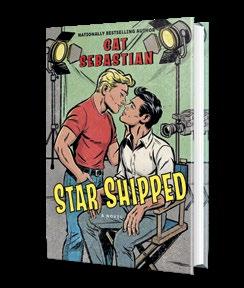
IF YOU’D TOLD me last year that my obsession this year would be a gay hockey romance, I’d have thought you were crazy. Yet, like the rest of the planet, I went a bit gaga for the streaming series Heated Rivalry— binge-watching the show on HBO Max, obsessively texting friends about it, following the ubiquitous social media posts of its stars, Connor Storrie and Hudson Williams. I’ve yet to read the novels by Rachel Reid that inspired the show, but what better project to occupy me during the waning days of summer?
The teenage me would have been even more surprised by the mainstream success of a steamy LGBTQ+ romance. When I was growing up in the 1980s, queer narratives were ghettoized. Queer
characters in those days of AIDS hysteria and rampant homophobia were rarely afforded happily-everafters— or even the happyfor-now enjoyed by Ilya Rozanov and Shane Hollander at the end of Heated Rivalry ’s Season 1.
Novelist Cat Sebastian, who appears on the cover of this special Romance Issue, was a romance reader before she became a romance writer, but she encountered only straight characters in the historicals she devoured when her kids were small. “In most of those books there wasn’t even the faintest suspicion of queerness,” she tells contributor Kerry Winfrey in the story on p. 16. Then she discovered the work of KJ Charles, who put same-sex desire on the front burner in her period novels;
Subscriptions: www.kirkusreviews.com/magazine/subscription
Advertising Opportunities: www.kirkusreviews.com/book-marketing
Submission Guidelines: www.kirkusreviews.com/about/publisher-submission-guidelines
Frequently Asked Questions: www.kirkusreviews.com/about/faq
For customer service or subscription questions, please email customercare@kirkus.com or call 800-316-9361.
why couldn’t Sebastian, who identifies as queer, write books that did the same? She made her name with a string of acclaimed historical romances before she wrote Star Shipped —a contemporary romance between the male co-stars of a science fiction TV show—published by Avon/ HarperCollins in March.
Thanks to writers like Reid, Charles, and Sebastian, the subgenre of LGBTQ+ romance is blossoming. Here are a few that have caught my eye in recent months:
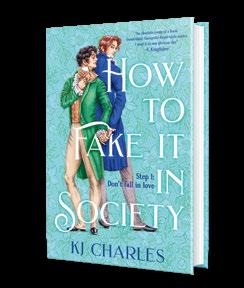
How To Fake It in Society by KJ Charles (Bramble Books, April 28): “Charles has been a consistently excellent writer of queer historical romance for years,” notes our reviewer, “and this one more than meets her own high standards.” An English painter who has come into an inheritance falls for a con man posing as a French count in this “suspenseful and colorful gay Regency romance,” which received a Kirkus star.
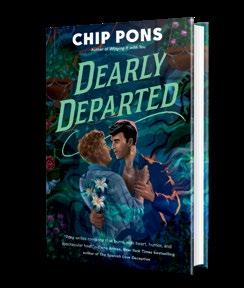
Dearly Departed by Chip Pons (Putnam, June 16): If the fops of Regency England aren’t your cup of tea, how about a queer paranormal romance? Here a mortal florist gets romantically involved with Hades, King of the Underworld, now retired and working as a funeral home director under the name Hayden Harlow. Our starred review calls it “tender and sexy.”
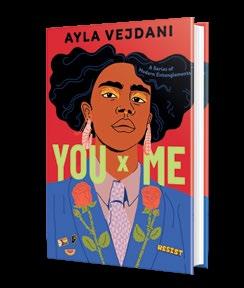
You x Me: A Series of Modern Entanglements by Ayla Vejdani (Generous Press, May 26): This collection of “six braided Sapphic love stories” is “ideal for fans of The L Word: Generation Q and the latest iteration of Queer as Folk ,” says our reviewer. An unorthodox book from a new indie press that highlights BIPOC, queer, and disabled voices, it shows just how malleable—and robust—the romance genre is. Love stories for all!

Co-Founders, Kirkus Media LLC
HERBERT SIMON MARC WINKELMAN
Publisher, CEO & Partner
MEG LABORDE KUEHN mkuehn@kirkus.com
Chief Marketing Officer
SARAH KALINA skalina@kirkus.com
Enterprise Advertising Director
MICHELE COBB mcobb@kirkus.com
Indie Advertising & Promotions
AMY BAIRD abaird@kirkus.com
Author Consultant
KEELIN FERDINANDSEN kferdinandsen@kirkus.com
Controller & Operations Manager
KRISTI DAUGHERTY kdaugherty@kirkus.com
Lead Designer KY NOVAK knovak@kirkus.com
Magazine Compositor
NIKKI RICHARDSON nrichardson@kirkus.com
Director of Kirkus Editorial
ROBIN O’DELL rodell@kirkus.com
Kirkus Editorial Senior Production Editor
MARINNA CASTILLEJA mcastilleja@kirkus.com
Kirkus Editorial Production Editor
ASHLEY LITTLE alittle@kirkus.com
Indie Editorial Assistant
KATARINA YERGER kyerger@kirkus.com
Contributing Writers
GREGORY McNAMEE MICHAEL SCHAUB
Editor-in-Chief
TOM BEER tbeer@kirkus.com
President of Kirkus Indie CHAYA SCHECHNER cschechner@kirkus.com
Fiction Editor
LAURIE MUCHNICK lmuchnick@kirkus.com
Nonfiction Editor
JOHN McMURTRIE jmcmurtrie@kirkus.com
Young Readers’ Editor LAURA SIMEON lsimeon@kirkus.com
Young Readers’ Editor MAHNAZ DAR mdar@kirkus.com
Audiobooks Editor
JENNIFER DOWELL jdowell@kirkus.com
Editor at Large MEGAN LABRISE mlabrise@kirkus.com
Senior Indie Editor DAVID RAPP drapp@kirkus.com
Indie Editor ARTHUR SMITH asmith@kirkus.com
Senior Editorial Assistant NINA PALATTELLA npalattella@kirkus.com
Senior Indie Editorial Assistant DAN NOLAN dnolan@kirkus.com
Mysteries Editor
THOMAS LEITCH
Copy Editors
JONATHAN BOWERS
NATALIA HOLTZMAN
NANCY MANDEL
BILL SIEVER
Founder, Kirkus Reviews VIRGINIA KIRKUS (1893-1980)

Contributors
Nada Abdelrahim, Mahasin Aleem, Jeffrey Alford, Autumn Allen, Paul Allen, Stephanie Anderson, Jenny Arch, Mark Athitakis, Susan Baird, Stephanie Baker, Kit Ballenger, Stephanie Bange, Jeffery Barbour, Nell Beram, Elizabeth Bird, Ariel Birdoff, Sarah Blackman, Marc Bona, Mary Boucouvalas, Kendra Brewer, Anna Broome, Jennifer Brough, Jessica Hoptay Brown, Kelsey Callahan, Kevin Canfield, Tobias Carroll, Sandie Angulo Chen, Ann Childs, Alec B. Chunn, Amanda Chuong, Anastasia M. Collins, K.W. Colyard, Adeisa Cooper, Amanda Costello, Jeannie Coutant, Devon Crowe, Stephen Cummings, Sara Davis, Dave DeChristopher, Suji DeHart, Amanda Diehl, Steve Donoghue, Anna Drake, Jacob Edwards, Lisa Elliott, Lily Emerick, Phoebe English, Chelsea Ennen, Joshua Farrington, Leslie Fine, Katie Flanagan, Mia Franz, Ayn Reyes Frazee, Jenna Friebel, Diane Gardner, Karen Bloom Gevirtz, Victoria Glynn, Annette Goldsmith, Danielle Galván Gomez, Diana Granger, Sara Grimm, Christine Gross-Loh, Vicky Gudelot, Dakota Hall, Geoff Hamilton, Sean Hammer, Sarah Harkness, Alec Harvey, Karen Henck, Caroline Henderson, Sandi Henschel, Boze Herrington, Rebecca Herwatic Leonhard, Aaron Hicklin, Loren Hinton, Ashley Holland, Natalia Holtzman, Terry Hong, Julie Hubble, Christoph Irmscher, Wesley Jacques, Jessica Jernigan, Marcelle Karp, Lavanya Karthik, Katherine King, Andrea Kreidler, Alexis Lacman, Carly Lane, Christopher Lassen, River Lee, Maya Lekach, Coeur de Lion, Barbara London, Patricia Lothrop, Sawyer Lovett, Kaia MacLeod, Michael Magras, Joan Malewitz, Thomas Maluck, Jodi Martin, J. Alejandro Mazariegos, Joyce McCarty, Nancy McCarty, Coco McCracken, Katherine McDonald, Van McGary, Zoe McLaughlin, Don McLeese, Cari Meister, Kathie Meizner, Carol Memmott, Emily Mernin, Tracy Meserve, William Mingin, Alan Minskoff, Jennifer Miskec, Chintan Modi, Karen Montgomery Moore, Andrea Moran, Jennifer Nabers, Therese Purcell Nielsen, Ari Nussbaum, Katrina Nye, Randy O’Brien, Tori Ann Ogawa, Milo Ono, Mike Oppenheim, Kobe Overby, Emilia Packard, Nina Palattella, Megan K. Palmer, George Pate, Hal Patnott, Bethanne Patrick, Tara Peace, Rebecca Perry, John Edward Peters, Jim Piechota, Christofer Pierson, Vicki Pietrus, William E. Pike, Margaret Quamme, Ellen Quint, Kristy Raffensberger, Kristen Bonardi Rapp, Matt Rauscher, Darryn Reams, Stacey Reasor, Natalie Rector, Amy Reiter, Nancy Thalia Reynolds, Alexandria Richey, Michelle Ritholz, Amy Robinson, Courtney Rodgers, Ana Rosales, Gia Ruiz, Lloyd Sachs, Roy Salzman-Cohen, Bob Sanchez, Caitlin Savage, Gene Seymour, Jerome Shea, Joel Shoemaker, Sadaf Siddique, Linda Simon, Wendy Smith, Leena Soman, Margot E. Spangenberg, Andria Spencer, Allison Staley, Sydney Stensland, Abigail Stevens, Allie Stevens, Richard Stim, Jennifer Sweeney, Deborah Taylor, Eva Thaler-Sroussi, Bill Thompson, Clayton Trutor, David L. Ulin, Abigail Welling, Susie Wilde, Vanessa Willoughby, Laura H. Wimberley, Kerry Winfrey, Marion Winik, Adam Winograd, Claire Wyman, Denise Zajkowski, Natalie Zutter


I ALWAYS LOOK forward to August, when I get to recommend the latest crop of captivating romances. After spending the beginning of the year powering through Rachel Reid’s Game Changers series on audiobook, I turned from queer hockey players to strong women. Here are some of my favorites: The Paris Match by Kate Clayborn (Berkley, April 7): Ever since Clayborn made walking the streets of New York such an integral part of Love Lettering (2020), I’ve been waiting for her to do the same thing with another glittering city. Now she’s done it again, and it’s Paris! Physician Layla Bailey is flying to the City of Light for a week of festivities leading up to her former sisterinlaw’s wedding; her own divorce was amicable and she’s trying to convince herself she still wants to be part of the family. When something she says—she’s not sure what—gives the bride cold feet, the rigid and mysterious best man, Griffin Testa, tells her the wedding has to take place—even if the two of them have to spend a week together
making sure of it. Our starred review says, “The result is a tremendous love story that’s never overshadowed by its immersive Paris setting but poignantly accentuated by it, proof that Clayborn only gets better with every book.”
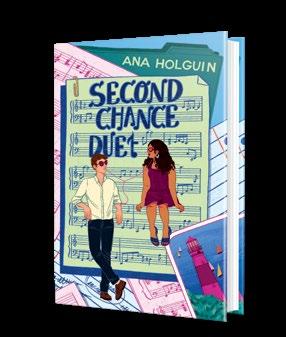
Second Chance Duet by Ana Holguin (Forever, March 10): Celia García has been hustling since she graduated from Juilliard a decade ago, a composer from Washington Heights striving to make it without influence or connections. Her dream is to write music for movies and television, but lately, even commercial work has been drying up, taken over by AI. Then she gets the opportunity to work on a new TV show with a bigname director; the only catch is that she’ll have to collaborate with her college

nemesis, Oliver Barlowe, the talented yet standoffish son of a famous composer, and they’ll have to hole up at his summer house in Maine to do the work. Naturally, sparks fly. Holguin beautifully handles the dualtimeline story, told from Celia’s perspective, as the protagonist worries that her developing relationship with Oliver could interfere with her professional reputation. Our starred review calls her “a heroine who has more at stake than her heart.”
Dolly All the Time by Annabel Monaghan (Putnam, May 26): Dolly Brick is a 39 year old single mother who’s already juggling three jobs when she moves home to Whitfield, Rhode Island, for the summer to help out at her father’s fish shop. When she helps Stewart
Whitfield—yes, the town was named after his family—change a flat tire on his Range Rover, the New York Post somehow winds up snapping their picture. Stewart’s fiancée just dumped him for a New York Yankee, and he offers to pay Dolly to fake date him for the summer to prove to his family that he has what it takes to be the company chief executive while still having a life. The money would let Dolly fix her father’s roof—and Dolly has fond memories of striking Stewart out at Little League years ago, even if he doesn’t remember. Our starred review calls this “a charming love story that absolutely radiates warmth.”
Laurie Muchnick is the fiction editor.
A relationship averse man agrees to fake date his latest hookup—but real feelings emerge.
Arya Nazeri is a selfproclaimed slut. His best friends may have found true love, but Arya grew up a witness to his parents’ constant affairs and he has no desire to follow in their messy footsteps. Casual hookups are much easier. Cellist Ben Liu moved to Kansas City for a fresh start, but when he attends a planning meeting for the Philharmonic’s upcoming charity ball, he’s shocked to see the man who recently ghosted him after a wonderful night of real connection—Arya, working as the event planner. Complicating matters further, Ben’s exboyfriend keeps showing up,
so to get him to back off, Ben says he’s dating Arya. Arya agrees to be his fake boyfriend in exchange for Ben introducing him to a new possible client. They set up ground rules like no sex and no falling in love, but with the sizzling chemistry and deep sense of comfort between them, the rules become impossible to follow. Khorram’s signature blend of complex emotions, high heat, and plenty of cozy, feelgood moments is once again on bright display. Fans of I’ll Have What He’s Having (2024) and It Had to Be Him (2025) will be particularly glad to see Arya—the final member of the group of queer best friends who are Kansas City food and drink aficionados— find his love. The tropey
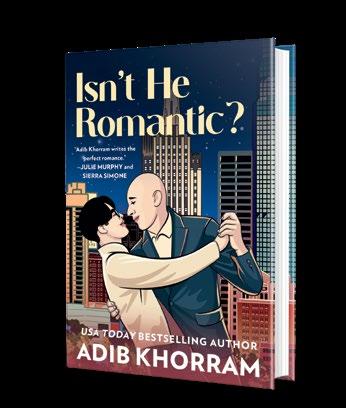
Khorram, Adib | Forever | 384 pp. | $18.99 paper | September 22, 2026 | 9781538739594
fake dating setup is fun, but the real heart of the story lies in its delicate, thoughtful handling of more serious matters, including growing older (Arya is 39, Ben is 40), navigating sexual preferences and desires with a partner,
and dealing with complicated relationships with loved ones.
Deeply affecting and thoroughly captivating, this story cements the whole series as some of the best romance out there.
Akhtar, Ayad | Summit (304 pp.) | $29 September 29, 2026 | 9781668078631
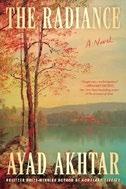
A writer undergoes a startling transformation.
The narrator of this discursive novel—named, like the author, Ayad Akhtar— has sublet a gray saltbox colonial in New York’s Hudson Valley where he hopes to write undisturbed. Instead, he finds himself beset by troubles—starting with a pickup truck that (deliberately?) runs him off the road while biking. Knocked out, he’s rushed to the hospital, where his ruptured spleen is removed, and he wakes from a postoperative coma to a radically altered consciousness that defies description—not that he doesn’t try (he’s a writer, after all). He experiences “a waxing current of fierce delight that waned only when I could no longer bear it, a pulverizing tide ringed with a blaze of selfawareness.” And, as he tells his neighbor, “I’m seeing this light, but it’s more like I’m feeling it—palpably. Or even like I hear it.” Later, in what could be a bizarre case study by Oliver Sacks, he develops a “persistent sense of being divided along [his] midline”—with his left side belonging to someone else—a condition his neurologist calls somatoparaphrenia. Meanwhile, Akhtar’s aforementioned neighbor, Lucie Neroponte, embroils him in a crisis at the college where she’s a professor and recommends him to teach a semester of creative writing. Lucie is already a semicontroversial figure, thanks to an essay she wrote decades earlier about an undergraduate affair with her professor; now her questionable mentorship of a student, Susan Yi, will draw her and the narrator into a cancel culture scandal—a subplot that feels rather shopworn. Along the way, the narrator detours to relate a horrifying sexual assault in his father’s past, the details of Lucie’s unorthodox upbringing, and
the backstory of the man who likely struck his bicycle. Autofiction that never finds its center of gravity.
Alderman, Naomi | Little, Brown (288 pp.)
$29 | September 22, 2026 | 9780316594776
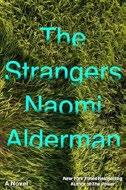
Autofiction, sort of, from the author of The Future (2023) and The Power (2017). A new animal has appeared in Great Britain. It seems to be a mammal. It looks a bit like a badger, but it has a flat muzzle and forwardfacing eyes. Its supple, searching proboscis gives it its name: mimmoth, short for mini mammoth. The protagonist of this novel captures the first photo of a mimmoth, and her very personal relationship with these creatures deepens as the rest of the world tries to figure out whether mimmoths are going to save humanity or destroy it. Alderman is no stranger to science fiction. Both of her most recent books have been lauded for their literary merits, and both fall squarely into the category of science fiction. Here, the narrator—a writer named Naomi Alderman—talks a lot about science fiction. She talks about what it has meant to her and what it meant to her mother. She also acknowledges that she’s writing something like a memoir, a chronicle of her mother’s death and of the series of miscarriages that has left her devastated. These elements never quite coalesce into a satisfying whole. For most of the book, Naomi the narrator is processing the loss of her mother and revisiting formative moments in her life with the hindsight of grief. She also returns again and again to the trauma of pregnancy loss and the despair of knowing that she will never have a child. These experiences are real and raw, but the text is repetitive and it’s difficult not to feel that it was more important for Alderman the author to write this material than it is for anyone else to read it. As for the mimmoths…
Alderman makes a few stabs at using these fantastic beasts to comment on the world we live in today—which is what science fiction does—but she never fully develops this storyline.
A disappointingly disjointed read from an immensely talented author.
Andersen, Kurt | Random House (576 pp.) $30 | August 18, 2026 | 9781984801371
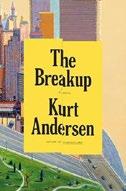
Road trip meets corporate intrigue meets political violence in an ultrapolarized nearfuture America. It’s 2045. AI runs the world. Earth’s first trillionaire has “overdosed en route to Mars,” and his successor in the world of the superwealthy is conducting eldritch explorations of animal intelligence to possibly nefarious ends. Prologue to all that, in Andersen’s latest, is a devastating attack on Oklahoma City by fascist militia as America is dividing, the blue United States facing off against the red Free American Republic. Rationalizes Natalie Frederick, a dual citizen living in red Tennessee, “Yes, the politics of Disunion are still driving some people to kill, but—grading on a curve—three or five or ten deaths a week among 375 million basically rounds down to zero.” Andersen populates this bitter dissolution with real characters, from Trump (who dies of “a massive brainstem stroke while on the famous escalator to a 20th anniversary celebration of his first presidential candidacy”) to a fulminating Tucker Carlson, whipping up rightwing frenzy from the confines of West Texas. Enjoying a supermajority with MAGA’s exodus, plenty of reallife Democrats figure, too. Natalie’s estranged husband is bound up in that AI world, one of its denizens a thoughtful giant tortoise, living in deepblue San Francisco with a daughter who describes herself as “a selfabsorbed narcissistic teen. Who can pass for selfreliant.” Natalie and Asher reunite to take Logan across the two
countries on a tour of potential college campuses—guess where the best schools are—where they see the damaging effects of national divorce, a warning that they might rethink their own relationship. The AI part of the story is a little undercooked and the political commentary none too subtle, but overall it’s an effective exercise in dystopian fiction with some nicely developed thriller elements in the mix.
A politically charged vision of what our civil strife might look like just a bit down the road.
Another exquisitely humane novel from one of fiction’s finest writers.
OUR NOBLE SELVES
Atkinson, Kate | Doubleday (352 pp.) | $32 September 15, 2026 | 9780385551168
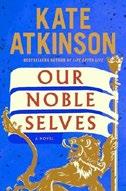
A terrible past collides with a grand attempt to build the future in Atkinson’s latest. In 1951, the United Kingdom is still recovering from World War II. Or perhaps more precisely, the U.K. is not recovering from World War II. London is still pockmarked by bombed buildings. Food is still rationed. And, of course, widespread trauma and loss are still fresh, while the sense of common purpose that brought Britons together has dissipated. In order to revive a sense of national spirit and a communal sense of hope, the government decides to launch the Festival of Britain, a celebration of British agriculture, industry, and art. This is the setting for Atkinson’s latest novel. Journalist Harry Flynn was reporting on the war when he was captured by Japanese soldiers and forced to work on the Burma Railway— a project that took the lives of about 12,000 Allied prisoners of war, as well as about 90,000 Tamil, Malay, and Chinese civilians. Flynn makes it back home, but he’s consumed by despair and what we would call PTSD. When he reconnects with an old colleague, he starts working for the Festival—a job
that will eventually lead to his being suspected of murder. As she did with Transcription (2018), Atkinson shows us what happens when everyday people get mixed up in espionage. In that earlier work, she combined danger and parody, using the conventions of a thriller as farce. She does something similar here, but the story is also threaded through with pathos. Most of the characters around Flynn—all of them wonderful— experienced horrors in battle or on the home front. Their revelations of what they endured are all the more shocking because of how much they fight to keep those memories buried. What begins as a narrative of personal and collective collapse becomes, by the end, a story about the power of love and connection. Another exquisitely humane novel from one of contemporary fiction’s finest writers.
Kirkus Star
The Newer World
Barry, Sebastian | Viking (240 pp.) | $28 September 15, 2026 | 9780593654613
A wondrous new installment in Barry’s corpus of historical fiction.
“My quarrel with gods,” says Tennyson Bouguereau, “is that they look out for our happiness like bears search out honey.” Tennyson begins his story by telling about his Creole father, Chas, who journeyed from Louisiana to west Tennessee, fell in love, and met a truncated end before Tennyson and his twin sister, Rosalee, are born into slavery. “And that’s how we ended up
at the Magan place, myself and my sister Rosalee, which was the main stroke of luck in this tragic story so far.” Tennyson grows up bearing witness to the cruel evolution of the American South before, during, and after the Civil War. His narration, though often bleak, is inspired by the work of his poet namesake and awash in miraculous language. Each sentence is a nugget to treasure—coalescences of lyrical description, homespun aphorism, and frank observation about the world, dotted with Homeric and biblical references. Despite the elevated prose, Tennyson’s voice remains grounded in a clear, earnest point of view: rhapsodic and circumspect, naïve and wise, loyal and curious. That Tennyson’s perspective is conjured so vividly, without any pretense, is the enduring triumph of this book. Fans of Barry’s work will recognize this as another companion piece to previous works Days Without End (2017) and A Thousand Moons (2020), though neither are required reading to relish this latest entry. The remarkable details of Tennyson’s journey are best left for readers to discover, unfolding with all the astonishments, furies, heartbreaks, and delights endemic to life. On the mythic prehistory of his father, Tennyson says: “If I don’t believe all the things I heard about him, I like a legend the same as anyone. You don’t need truth to make a bible.”
A beautiful, sweeping, intimate tale of a slave turned freedman navigating 19th-century America.

Bazzett, Leslie | Scribner (320 pp.) | $29 August 11, 2026 | 9781668227329
Can you rewrite your life when you find yourself in new circumstances—and, maybe, find the mother figure you think you’re missing?
Bazzett’s debut novel slowly and deliberately knits together, and then unravels, the relationship—“friendship” really would not be the right word—between Sally, a young American wife and mother temporarily relocated to Mexico, and Louise, an enigmatic older woman she encounters there. Sally’s husband, Tom, an architect, is part of an American team developing a “negligible” neighborhood in San Miguel de Allende. Introverted Sally, who endured an abusive and neglected childhood at the hands of a remote mother, spends her days delivering and picking up her children from school and attempting to improve her Spanish. A seemingly random meeting with the distinctive, and distinctively scarred, Louise leads Sally to a series of coffee dates, meetups, and outings with the woman. Louise gradually introduces Sally to a small group of local friends and becomes close to her two children—but pays particular attention to daughter Ida, a prickly elementary schooler who’s having trouble fitting into her new environment—all while sharing only the sketchiest details about her own life and background. Tom is skeptical of Louise’s ingratiating intentions and warns Sally to be careful in her interactions with her as he muses upon the veracity of some of Louise’s namedropping anecdotes: “Is it even chronologically possible?” As the ambiguous relationship between the two women grows, and Louise begins to refer to Sally as “Mia” and insinuates to others that they share a motherdaughter bond, tension builds. Bazzett creates a menacing scenario that leads to a harrowing conclusion for Sally and her family while also delivering nuanced
portraits of a woman and a marriage lacking some essential emotional building blocks. Insightful, suspenseful, thoughtful.
Boyles, Claire | Norton (288 pp.) | $29.99 August 4, 2026 | 9780393531800
Several generations of an eastern Colorado farming family consider their collective and individual legacies amid the 2008 financial crash. Flora Brandt, turning 90 in 2008, raised her granddaughter, Maggie, with her husband, Oscar, after their prodigal daughter, Amelia, died in childbirth. Maggie got pregnant at 19 with daughter Ozzie (Oscar’s namesake), and married Fisher Markus, Ozzie’s father. Now Flora, Maggie, and Ozzie have experienced several major shifts, each of them nurturing different feelings for the agricultural life. Flora has moved, voluntarily, to a retirement facility. Maggie and Fish are trying to keep their Rubber Chicken Farm a haven for organic meats and produce. Ozzie, now 15, loathes the bigmoney interlopers who are buying up land and diverting precious natural resources from the nearby Owl Kill River to luxury properties. When Fish decides to take a wellpaying job with an oil and gas company, the wedge between him and Maggie is obvious, but it becomes nearly insurmountable when he learns how far Maggie and Ozzie have taken their environmental activism. Author Boyles manages the neat trick of presenting many perspectives with sympathy, even that of a billionaire developer; since she was once a Colorado farmer herself, this can’t have been simple. However, her experience makes descriptions of farm life shine, from the sublime (a CSA display of fresh vegetables) to the ridiculous (a willful turkey nicknamed Ma Joad)—not to mention the plain
heartbreak of a freak storm that destroys a season of work overnight. Readers should come away with a renewed sense of wonder for everyone who stewards the land, even for those with whom they disagree. Appraisals can be big or small, lifechanging or ephemeral, but as these characters demonstrate, they almost always take time. “If all this feels like foreshadowing to you, Flora, that’s because it is,” Flora’s dear friend Emil tells her from his hospital bed. He might as well be speaking to Maggie or Fish or any one of us.
An achingly beautiful testament to human bonds with the environment and with each other.
Boyne, John | Henry Holt (592 pp.) | $30.99 September 29, 2026 | 9781250411365
A dazzling counterfactual gives Oscar Wilde the long life he was denied. What if Oscar Wilde had never risen to the Marquess of Queensberry’s bait? What if, instead of pursuing the libel case that destroyed him, he had ignored the infamous calling card accusing him of “posing as a sodomite”? In this bold, richly entertaining counterfactual, Boyne imagines a 20thcentury life for Wilde, one in which disgrace falls first on his lover, Lord Alfred Douglas, known as Bosie—Queensberry’s son—who is tried for gross indecency, sentenced to hard labor, and later writes De Profundis and The Ballad of Reading Gaol. It is a deliciously provocative reversal, and one of the novel’s sharpest pleasures is watching Boyne redistribute history’s punishments and glories. Boyne is a gifted ventriloquist. His Wilde is extravagantly witty, sometimes too much so, but the epigrams are rarely mere decoration. They mask loneliness, vanity, and the sheer labor of living in a society where, as Wilde observes, “Everyone
knows what I am, but no one dares say it aloud.” The novel’s great achievement is not simply that Wilde lives, but that he keeps living: through Edwardian England, two world wars, the advent of Hollywood, and the coronation of Queen Elizabeth II. That long life gives the book its melancholy power. Wilde becomes a Nobel laureate, a writing collaborator of Churchill, and, finally, a wistful judge of his own moral failings toward his late wife, Constance. The “weight of angels” is ultimately the weight of the dead: Bosie; Constance; Wilde’s son, Cyril; lovers; friends; and all those men ruined by laws Wilde himself escaped. Not everything is convincing. Some secondary figures are broadly drawn, and scenes of domestic ease between Wilde, his lover Gus, and Wilde’s sons can feel wishful, even sentimental. Yet even when the details feel awry, the central conceit is irresistible. A witty and melancholy act of literary resurrection.
Brodsky, K.B. | Emily Bestler/Atria (368 pp.) $29 | September 1, 2026 | 9781668229781
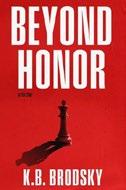
A complex thriller by a husbandandwife writing team. It’s 2011, and Kevin Rhoads, a skilled bear hunter from Homer, Alaska, is part of a paramilitary team that successfully hunts down Syrian terrorist AlMuwassil. “Great work today. Some real Jason Bourne shit,” a colleague compliments Rhoads. Meanwhile, CIA agent Daniel Komoroff is missing in Russia. God help him if the Russians find him, an official says. “God can’t help him,” says Cynthia King, director of Special Situations. “That’s why I’m here.” They learn he’s “rotting in some Russian hellhole, and we have a chance here that we can bring him home alive.” The new president, Phil Kemp, hopes he might benefit politically from Komoroff’s safe return. But Kemp can’t
keep his mouth shut, and he doesn’t know that the Russians are listening to him in the White House and worming their way into his administration. King and CIA Director Jessica Somers worry deeply about Kemp, but respect their constitutional limitations. Soon they are “balancing on the razor’s edge of patriotism and treason.” The action focuses primarily on Rhoads and his heroism and extraordinary resourcefulness. He returns briefly to Alaska when his father has a heart attack. While he’s away, Putin orders the downing of a U.S. helicopter, which kills Rhoads’ entire team. Consumed by rage, Rhoads says, “Right now, all I want is to kill the bastards who did this.” Rhoads has a loyal friend and an appealing love interest who gives him encouragement, but he must work alone. His entrance into vast Siberia is intriguing and believable, and his Alaskan hunting background makes him perfect for the mission. Readers will like him for his guts and his character—he’s only as vicious as he needs to be. This is the authors’ debut, and they nailed it.
Clark, T | One World/Random House (208 pp.) $28 | June 23, 2026 | 9798217154074
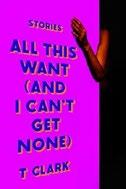
Stories about Black girls and young women—focused and floundering, hungry and apathetic, searching and lost.
The protagonists in Clark’s short stories seem to yearn for desire itself—to lunge after it and to be left, somehow, with fistfuls of nothing but air. In “The Girl Gets Whatever She Wants,” Chrissy can’t quite track how she and her boyfriend—formerly her weed dealer— ended up together, though she “realize[s] you can fall in love with anybody if you hung around them enough.” She knows
she wants more but not how to get it. In “Walks Like a Duck,” April introduces Itara, her friend from school, to her guinea pigs. “They’re all mine,” she says. “No one else’s.” Later, combing through a dirty book they’ve found in April’s sister’s room, April admits, “It’s weird, though. I kinda like everyone….But girls more. I think I might be a lesbian.” Many of Clark’s characters are queer, though many are only just awakening to their own hungers. The grade school protagonist of the title story—one of the book’s strongest—knows she “want[s] to be a mom really bad. I know girls who get pregnant young, and I feel jealous of the life they get to have….someone waiting up for them, someone who can give them everything they need.” Clark has the kind of commanding, seemingly effortless narrative voice that makes it almost impossible to turn away, and their dialogue is so natural it seems to actually transcend the page: You lose yourself so entirely in reading that you seem to hear the characters speaking. Not every story is a triumph—“Candy Girl” feels rushed and “Dark Times” underdeveloped, for example—but as a whole, the collection boldly announces Clark’s presence as a tremendous upandcomer in the world of fiction.
Achingly beautiful stories full of wit, intelligence, and raw immediacy.
Coll, Susan | Harper Muse (400 pp.) | $18.99 paper | September 15, 2026 | 9781400346684
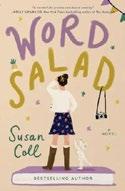
Literary event planning goes gaga, with synesthesia, antivegetable protesters, and a case of gas, metaphorical and otherwise.
“Written by reclusive genius Dr. Jordan Rutabaga, Pealing the Onion is a treatise of provocative ideas and vegetable wisdom meant to help the human race Slow Down + Grow Down™ in this unprecedented moment in history.” The third in a lightly linked series of novels revolving
around a bookstore in our nation’s capital, Coll’s latest features a neurodivergent narrator named Matilda, a Rosencrantz and Guildenstern–type character who inhabits the wings of the main event. After noting the typo in the publicity email (it’s Peeling, not Pealing) the decidedly unbookish Matilda tumbles down a rabbit hole of rutabaga research, including acquiring the ingredients for a rutabaga soup and a rutabaga stilllife painting inspired by the work of Maira Kalman. That’s the way things go in this novel, driven as much by language play, whimsy, and an obsession with Kalman’s Women Holding Things as by more sober narrative concerns. These concerns, not actually all that sober, revolve around the project of holding a major literary event for Dr. Rutabaga at the Lincoln Theatre, a 1200 seat venue which will sell out as soon as the tickets go on sale, such is the frenzy around the message of the public intellectual known as the Vegetable Guy. Of no help at all will be Matilda’s new coworker, a wildly selfabsorbed woman named Sage who has a fuzzy white purse pooch named Janet (as is de rigueur in a Coll novel, the animal steals the show), but must be indulged as she is a close friend of Mrs. Bernstein, the owner of the bookstore. Though Sage is tasked with assembling the snacks for the green room, it’s Matilda who ends up with Rutabaga’s bizarre shopping list: butter (Kerrygold, unsalted); one gallon milk (Lactaid 2%); GasX (cherry creme) and more. MacGuffin alert! If no one can track down the GasX, fart jokes will surely ensue. Meanwhile, where’s Janet? Why is Rutabaga’s moderator disrobing onstage? What color is the letter O? On the far side of reason, past the last aisle of logic, lies the delight of Coll’s mad, mad bookstore world.
The Barman of the Ritz
Collin, Philippe | Trans. by Frank Wynne Scribner (400 pp.) | $29 | September 1, 2026 9781668097199
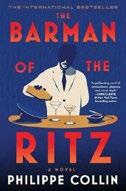
A Paris bartender tries to survive the Nazi occupation. In 1940, as German forces occupy France, 55yearold Frank Meier tends bar at the Ritz in Paris and is renowned for his drinkmixing skills. He has devoted his life to his bar and will protect it at all costs while carefully concealing that he was born Jewish. The hotel’s owner is MarieLouise Ritz, “the Widow,” who orders Frank to bring the elite clientele back to the Ritz, including artists and writers. Indeed, the bar lures luminaries such as Barbara Hutton and Coco Chanel. But Claude and Blanche Auzello, who hides that she was born Blanche Rubinstein, are more crucial to the story. When the Germans flock to the bar, Meier acts with unflagging politeness and professionalism. “I am surrounded by murderers and every day I have to serve them drinks,” he muses. Meanwhile, he and Blanche become trusted friends. Enamored of the married woman, he can’t refuse her anything. Skimming from the cash register, he “became the exclusive supplier of morphine to the woman who now haunted [his] every thought.” And he has connections with forgers who produce fake passports and birth certificates that he passes along to Blanche. He writes in his diary, “In order to impress Blanche, I had become what I most despised: a liar, a thief, a man with no values.” The contrast inside and outside the Ritz is stark. All
An intimate, immersive paean to the redemptive power of found families.
YOU CAN
Jews must register, and Germans begin arresting them by the thousands and plundering their homes. Paris sinks into cold and hunger while business is booming at the Ritz bar. A vast panoply of vice and corruption, the Third Reich at the height of its power is being celebrated at the Ritz. Translated from French, the novel is about real people, the trapped and the trappers. The deeply sympathetic Meier is a better man than he thinks; he risks his life for others while the Nazis try to sap his soul.
A compelling story of entrapment and survival.
Kirkus Star
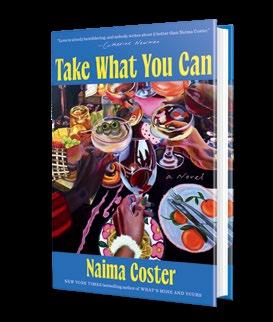
Coster, Naima | Pamela Dorman/Viking (368 pp.) $30 | August 4, 2026 | 9780593833278
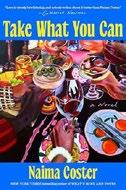
Two American women who meet in France when they’re 20 become lifelong friends. Milly and Val are best friends—more like sisters, really. From the time Milly, who pretty much always gets what she wants, chooses Val—agreeable, academically driven, and the only other Black student on their studyabroad program—to travel with her when the program ends, the two have remained deeply connected, even during their relationship’s inevitable times of trouble. That connection is facilitated by Helene, a welltodo American living in France who becomes a mother figure to both of them. Both Milly and Val are lacking for actual mothers: Milly because her devoted mother has died, and Val because her abusive mother has cruelly pushed her away. Coster’s book toggles back and forth in time and, 14 years after they met, Milly and Val are accomplished in their careers: Milly is a successful lifestyle influencer in New York and Val a North Carolina journalist with a book deal. Each is married—Milly to a nurturing, handsome, and wealthy restaurateur with a family pedigree, Val to a freshoutofgrad school anthropology
lecturer who is clever and charming but also unreliable and selfindulgent. Both women, too, are pregnant. When Milly asks Val to come back to New York, where they had been roommates for several years, so they can raise their daughters side by side, Val eagerly agrees to move her growing family to Brooklyn. But will the women’s friendship—and the women themselves—be able to grow and evolve with their shifting circumstances, expectations, and geographic proximity? In this delicious pageturner, set in such alluring locales as Paris, Provence, and Park Slope, Coster brings us two fascinating, fallible, and sometimes frustrating characters who are learning to balance freedom and responsibility— to themselves and their families, both biological and chosen. Writing with sensitivity, candor, and insight, Coster compellingly tracks the ups and downs of longstanding friendship, motherhood and daughterhood, marriage, and career. We can’t help but root for these smart, accomplished women as they seek to square the demands of those around them with their own needs, desires, and dreams. An intimate, immersive paean to the redemptive power of found families and the pleasure of choosing whom and how to love.
De Forest, Leah | Betty/WTAW Press (288 pp.)
$19.95 paper | September 15, 2026
9798992369038
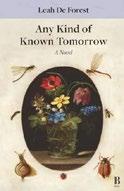
In the early days of the pandemic, five intertwined women must reimagine their responsibilities to one another. Art teacher Hadley Parris has just been diagnosed with multiple sclerosis, and she’s trying not to let panicked buzzing about the novel coronavirus, and the literal buzzing of the bee infestation in her Brooklyn apartment, make her days even harder to get through. On top of this, her 16yearold daughter, Isabelle, is shying away from her, and her
mother, Aileen, an Australian immigrant, is as nononsense and critical as ever. That one of her students needs a place to stay comes as a saving grace for Hadley’s sense of purpose. Anna King’s mother, Miranda, also from Australia, is in critical condition after having been struck by a subway train, and Anna soon finds herself begrudgingly quarantined with the Parris family. De Forest’s debut novel offers a compelling portrait of intergenerational and even ancestral attachment and conflict. By focusing on just a handful of ordinary people, the book captures the sobering feeling of smallness in the face of cosmic forces that ruled that time: “Futures oscillated in [Hadley’s] mind. All she could do was breathe against them.” This feeling makes the connections we see forged or deepened over just a few weeks feel all the more precious. There are frequent instances of foreshadowing and dramatic irony related to the unfolding pandemic— “Probably [school] was just closing for a day or two…Everything was going to be fine”—and, because we all have intimate knowledge of these fairly recent events, readers might find them heavyhanded. Yet Covid provides an ideal backdrop for De Forest to layer diverse experiences and perspectives related to illness—physical, mental, social, and environmental—which she does with commendable nuance. An intimate, often heartbreaking glimpse into a crisis that cut across borders, generations, and social divides.
Dixon, Stephen | Ed. by Conor O’Brien McSweeney’s (436 pp.) | $22 paper October 6, 2026 | 9781963270822
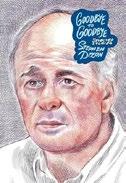
Dixon is long overdue for a renaissance. The author, who died in 2019 at age 83, published 18 novels and hundreds of stories during his lifetime, yet he remains something of a sleeper agent in American
literature. It’s probably too much to expect his status to change with the appearance of this selection of 28 pieces of short fiction spanning the length of his career. But if there was any justice in the universe, it would. Dixon, after all, spent close to half a century working remarkably closehewn territory, deceptively straightforward in delivery but marked throughout by nuance and depth. Take the title effort here, originally published in The Paris Review in 1985, which begins: “‘Goodbye,’ and she goes. I stay there, holding the gift I was about to give her. Had told her I was giving her.” In some ways, it’s a perfect Dixon opening, in medias res. He has a habit of starting in the middle since no story ever truly begins or ends. Indeed, Dixon is never unaware of the tenuousness, the conditionality, of existence, which is to say, of everything. In “The Chess House,” which opens the collection, a dispute between two men over a chessboard becomes a meditation on all the ways we lie to one another—and to ourselves. In “The Letter,” a man reads through a series of “Dear Stanley” breakup notes, each more elaborately unspecific than the last. This, of course, is only as it should be. How can we know one another, in other words, if we cannot know ourselves? “Finding an Ending” offers a case in point. “I can’t seem to finish the story I’ve been writing,” the narrator (who may or may not be Dixon) confides there. “I’ve tried many times. So, try another time.” It’s hard not to think of Beckett; “Try again. Fail Again. Fail Better,” he wrote in 1983 in Worstward Ho. Like him, Dixon is trying to persevere. His writing is a gesture of faith in both the story and its impossibility, a dichotomy, or a conundrum, that cannot be reconciled. In a world as fraught and misbegotten as this one, Dixon’s is the voice we need to hear.

Due, Tananarive | Saga/Simon & Schuster (512 pp.) | $32 | September 22, 2026 9781668075142
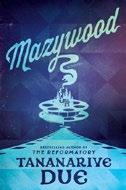
In the summer of 1926, a lonely little girl with monster talent and monster ambition submits a wish for her very own BFF and ends up with a…well, take a wild guess.
The movies are literally in Hollywood screenwriter/ producer Johnny Washington’s DNA as the grandson of Mazelle Washington, a legendary Black actress from the 1920s to the ’40s, who, as with such comparably gifted peers as Hattie McDaniel, was consigned to playing comedic servant roles during the studio system’s golden age, which coincided with the beginning of the steep, tooslow decline of racially segregated Jim Crow America. Johnny, who’s been fighting his own uphill battles with racially blinkered studio mavens in today’s presumably more enlightened era, has inherited the frayed but cozy remnants of Bear Creek Lodge, a ski resort near Northern California’s Mount Shasta, which Mazelle owned and operated as a 1950s getaway spot for Black celebrities like Lena Horne and Sammy Davis Jr., who, despite their star power, were shunned from similar establishments. Despite his fraught relationship with Mazy in her years of embittered semiretirement, Johnny appreciates being able to head to the mountains for rest and relaxation with his university professor wife, Tasha, and their teen daughters, Sharise and Imani. Both girls have, to varying degrees, inherited their grandmother’s energy and verve. Their mother, unbeknownst to them or their dad, is researching a book on Mazy’s tumultuous life. As they all settle in for what already seems a tense holiday amid the unrelenting Shasta snows, something big, strange, and scary lurks just beyond their immediate sight, leaving bizarre and alarmingly bloodsoaked evidence of death and
destruction. Through flashbacks masterfully woven throughout the novel by the redoubtable storyteller Due, this enthralling hybrid of showbiz history, supernatural mystery, and nailbiting adventure in the wild spins a chilling, enlightening, and ultimately heartrending saga of generational trauma, thwarted dreams, and familial devotion. Simply stated, this feels perilously close to a career triumph for its author.
Francis, Felix | Crooked Lane (304 pp.) | $29.99 September 8, 2026 | 9798892426657
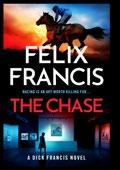
A Mayfair gallery owner’s troubles only begin when he’s accused of selling a forgery. Fabian Tulley is certain that roughhewn Yorkshire billionaire Jack Lofthouse is wrong in claiming that “Dedham Church and the River Stour” wasn’t painted by Sir Alfred Munnings at all. Well, almost certain: Before the sale, Fabian went through all the usual steps of establishing a reassuringly straightforward provenance, and even though it doesn’t feature horses, unlike most of Munnings’ paintings and Francis’ thrillers, the canvas certainly looks like an original. But Lofthouse, who clearly won’t take yes for an answer, is suing Fabian for the 150,000 pounds he paid plus an additional half a million quid for alleged damage to his reputation. Speaking of reputation, the Fabian Gallery’s is rapidly plummeting. Vandals paint “FAKE” all over its exteriors; rumors that Fabian isn’t trustworthy begin to swirl; and just in case a client has missed the rumors, someone emails everyone on his contact list, “If you know what’s good for your health, stay away from the Fabian Gallery.” To top it off, Fabian is served notice that his lease on the gallery has been canceled and that he has only 90 days to accept a paltry settlement and get out. It’s small comfort that Vanessa Mitchell, the neighboring florist who caught Fabian’s eye years ago, has returned with the welcome news that her
marriage is on the rocks, and somewhat larger comfort that she joins him in a daring scheme of vengeance involving Pennine Wind, the horse Lofthouse has entered in the Grand National. Even if they’re successful, though, how much longer can Fabian survive the escalating threats on his life?
Another vigorous demonstration that this franchise still gleams even when horses are shunted into a supporting role.
Frankel, Laurie | Henry Holt (304 pp.) | $28.99 May 5, 2026 | 9781250423771
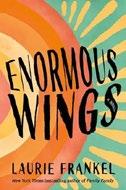
When a 77yearold woman gets pregnant, everyone knows what she should do. She should not, and possibly can not, have that baby. But first of all, Pepper Mills lives in Texas, where abortion is now illegal. Beyond that, there are many people, including her three adult children, the baby’s father, her doctors (certain she can’t possibly carry to term), and other characters who don’t seem remotely entitled to an opinion, who are saying no way. But Pepper herself is not so sure she agrees. Frankel’s decision to center a narrative about reproductive choice on the life and body of an older woman is a fascinating one, as losing agency over their lives and bodies is something senior citizens are often all too familiar with. As the novel opens, Pepper has a minor fender bender which results in her children’s decision to take away her car and move her into assisted living. Though she’s certain she will be miserable at Vista View Retirement Community in Austin, Texas, the opposite turns out to be true: New friends, new interests, and even a new man in her life quickly materialize, and the fact that her exhusband is already living there is annoying but not outrageously so. And when her romance with Moth, short for Timothy, becomes physical, and surprisingly results in
conception, she finds that her own feelings about the pregnancy are not so black and white. As in Frankel’s preceding novels, which featured transgender, disabled, and other characters with identities that are magnets for social pressure and unsolicited opinions, this situation is explored with charm and humor. With fearless whimsy as her superpower, Laurie Frankel can make us believe anything.
Garmus, Bonnie | Scribner (432 pp.) | $30 October 13, 2026 | 9781668251065
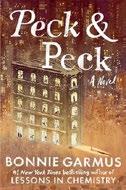
And now for some lessons in poetry and typesetting. After Lessons in Chemistry (2022), a debut that became one of the most popular books of recent years, Garmus applies her unique comic sensibility to the story of Batter Gray, a man named after a family dog of mythic talents. A poetry maven who was reading Auden as a fourth grader, he was raised by a typedesigner mother and historian father who dearly hoped he would choose some more viable profession than poetry. But via an amazing stroke of luck, he lands a job after college at Peck & Peck, an illustrious literary journal located in a beautiful building in New York City. He’s at the very bottom of the complex and dysfunctional totem pole, making copies in the basement, struggling not to run afoul of the cantankerous editorin chief, Salton Peck, or his smarmy assistant, Dexter York, both of whom have taken an instant dislike to our hero (and can never get his name right. Few people can). And to be honest, Batter is not without his flaws. The novel bogs down a bit in the middle, with Salton constantly excoriating his staff in ALL CAPS and much ado over the possibility that submissions have been taken outside the building, which is forbidden. Along the way, many, many famous poets are
namechecked, as are many typefaces, since Batter has been raised to instantly identify a font in the wild. The best example of this occurs during his brief sojourn in jail: “The thing I kind of admired about Motherfucker II, besides his manners, was this huge tattoo he had on his neck that read I will fuck you up in ITC Bolt. Call me my mother’s son, but whoever inked it nailed the kerning.” The narrative picks up steam toward the end, as bad guys become good guys, mysteries are solved, and Batter throws one hell of a party.
Mostly charming, sometimes twee, with some really lovely things to say about poetry.
Hall, Araminta | Putnam (384 pp.) $30 | July 14, 2026 | 9798217180172
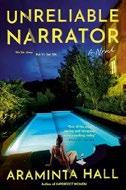
A young woman reclaims her right to tell her own story after a summer ends in trauma.
When Hope Jenkins sees author Ambrose “Rosie” Glencourt promoting his new novel, she realizes with horror that he’s appropriated her own life—and made quite a profit.
Ten years ago, Hope’s life changed irrevocably when, after spending a summer as Rosie’s livein assistant, she was involved in a shooting, sending her into a downward spiral of depression and alcohol addiction. The time she lived at Shadowlands with Rosie, his glamorous wife, Delia, and a young man named Tom whom they had taken under their wing offered 23yearold Hope a brief and hazy dream of wealth and romance that she documented in a journal. Now, she presents the journal to DI Natalie Evans, willing to implicate herself in a murder if Nat investigates whether Rosie “stole” Hope’s story—and her trauma. Nat isn’t terribly impressed by Hope’s claims, and she’s got her own problems— an unhappy marriage, a tendency toward avoidance—but she also hates to see a powerful man work the system, so she
starts pulling at some of the threads that connect Hope to Shadowlands and to Rosie’s literary success. While Hall’s commentary on the power and agency of voice and story, and how it’s historically wielded by privileged males, is more than subtext—“All that land and wealth and art and money taken and distributed among a group of men who happened to be in the right place at the right time, and since then passed it on down through generations. But the problem with a stolen history was that it cast a long shadow”—Hope and Nat are an appealing pair of misfits, and it’s hard not to cheer them on as they work to dismantle at least this one small piece of the patriarchy.
Hall holds out a shimmering, romantic image of the dissolute British upper-class artist—and then slices it to shreds.
Harbach, Chad | Little, Brown (672 pp.) $32 | October 27, 2026 | 9780316455695
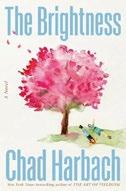
Lives come together, and apart, once again in fictional Westish, Wisconsin, and beyond. In The Art of Fielding (2011), Pella Affenlicht fled to Westish College, where her father was president, to escape a failed marriage and restart her life. Four years later, she’s 27 and a recent graduate. She’s engaged to Mike Schwartz, who was a player on the storied Westish Harpooners baseball team of Harbach’s first book and is now a coach and assistant athletic director at the college. Pella wants Mike to apply to law school, and she’s been helping her friend Owen Dunne—also her late father’s former lover and now a bestselling novelist—prepare for his destination wedding. Her goals for her own future and relationship are less clear. Another close friend is 21yearold Irma Friske, a “tiny, upright person” and scholarship
student. With her friends Pammy Chang and the magnetic, troubled Dahlia Breughel, Irma embarks on a “project” at Westish’s hallowed Parties resulting in two football players tattooed with a shocking phrase on their foreheads, an incident that scandalizes and energizes the Westish campus before capturing national attention. Several explosive dramas at Owen’s wedding, both related and unrelated to this incident, further scramble the characters’ interpersonal relationships, and Pella, in the aftermath, finds herself continuing her journey of selfexploration in New York City. As in his acclaimed debut, Harbach immerses readers in the world of Westish, but he broadens his scope, plunging his characters into new environments and broaching topics such as love and talent and literature, as well as campus sexual assault, feminism, the fraught politics of victimhood, and the volatile media landscape that complicates all of these. Apt evocations of Shakespeare’s The Tempest abound. While this novel can certainly be enjoyed independent of its predecessor, those who’ve read the first book will more fully appreciate the continued growth and dilemmas of Pella, Mike, and Owen (the Skrimmer makes appearances, too), to say nothing of the clever metafictional twist Harbach pulls off via Owen’s novel, which is titled— well, take a guess. Brilliant, poignant, and absorbing.
Kirkus Star
Blacktail
Hawkins, Scott | Crown (288 pp.) | $29 September 1, 2026 | 9798217089963
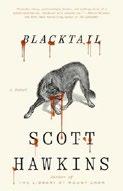
A lone wolf transforms from hunter to harbinger of death in this anthropomorphized grisly vengeance spree. Following his horror fantasy debut, The Library at Mount Char (2015), Hawkins’ longawaited second novel tackles folk horror by way of a primal nightmare:
the beasts of the earth rising up against humans. For too long the animals of the forest have witnessed the twoleggers bulldoze their dens, poison their rivers, and turn the sacred hunt into an abomination. “They kill without hunger, hurt without purpose,” observes the eponymous halfwolf Blacktail, orphaned in puppyhood after his pack was killed. The subsequent slaughter of his mate, a house dog, and their unborn pups tips him into a bloodthirsty vengeance that captures the attention of the Old Kitty Mother, an ancient feline sorceress faithful to the slumbering Forest God. She elevates the wolf from grieving predator to dark godling set on a gruesome quest to eradicate their shared enemies from the face of the earth. Though the narrative falls into a predictable pattern of travel interludes with other woodland and household animals, Hawkins cleverly distinguishes each fox or bear or even two legger that Blacktail encounters. Despite the apocalyptic stakes, he grounds the animal protagonists in familiar rituals—they hunger, they love, they protect—and even a relatable sense of humor and honor. The squirrels have a death cult that worships the fearsome beast Car, while the cats’ archaic witchcraft is communicated through feline messengers named Snooky Ookums. These little moments of levity make the graphic carnage sequences all the more unsettling while emphasizing the former predators’ subjugation by domestication—and, as later chapters reveal, humans’ depthless cruelty to creatures they believe are lesser. So why wouldn’t the Forest God’s subjects want to show two leggers exactly how that feels? Eerie and unexpected, a strangely satisfying new take on the hero’s journey.
Helle, Helle | Trans. by Martin Aitken
New Directions (144 pp.) | $16.95 paper September 15, 2026 | 9780811239493
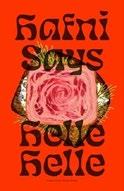
A woman at the end of her marriage goes on a culinary road trip around southern Denmark in search of her new self.
In the opening pages of Danish author Helle’s latest novel, Hafni calls a friend from a rest stop to tell them she’s getting divorced. From the start, the marriage seemed almost inadvertent (Hafni describes her response to the proposal as a “yes that was more of an okay ”), but so much of Hafni’s life has seemed this way to her. Now, propelled into midlife freedom by a divorce she initiated, making “the decision as she spoke,” Hafni has embarked on a “smørrebrød tour,” eating and drinking her way across the country. The trip has been meticulously planned, with reservations at hotels and restaurants made along the route, but Hafni tends to wander in both thought and deed. Waylaid by the needs of strangers, unplanned inebriation, a minor car accident, inclement weather, and the paralyzing pressure of uncertainty that comes over her like “a darkness,” Hafni’s plans are stretched out of shape by a series of interludes that reframe her journey as psychological rather than primarily geographical. Hafni tells her friend, “I don’t want to be me. I want to change who I am. I don’t know how to change who I am.” Over the course of Hafni’s meandering journey, the reader sees her experiment with different models of how to be—the woman who slips on pumps before she teeters into a hotel, the woman
Eerie and unexpected, a strangely satisfying new take on the hero’s journey.
BLACKTAIL
who lingers in a barebones hostel for the pleasure of her simple room, the woman pursued by “eternal embarrassment” for social gaffes committed in the distant past. All of these, and more, are Hafni. As she recounts her trip to her largely silent friend, the reader is invited into the quiet particularity of a life lived not spectacularly, but with attention to detail. We finish the book with hope both for Hafni and for any of us who would choose to linger, to eat only half of our allotted bag of sweets “and then the other half after all.”
A simple story that contains a complex exploration of self-determination, loneliness, and ordinary luck.
Huang, Eddie | One World/Random House (240 pp.) | $29 | June 16, 2026 | 9780399591907
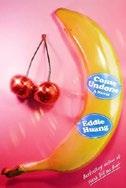
Thankfully, this story is fictional: Huang’s debut novel—following his memoirs Double Cup Love (2016) and Fresh Off the Boat (2013)—chronicles the cringeinducing love quest of Hubert Chang, the nearly suicidal, foulmouthed host of the food travel show Dad Shoes
Although he feels pressure from his parents to get married and have children, Hubie hops between relationships as often as he changes planes. It’s easy to see why his girlfriends end up packing their bags. Even his pickup lines are putdowns—“I’m a ho! You’re a ho! Let’s just be hos!” But he can wax poetic on restaurant food: “Sonorans don’t use baking powder in their tortillas, so the texture is crepelike, but when it’s really on fire it feels like the dough at the core of a good New York slice between the burnt crust and the soggy top.” His wry observations about American life reveal a tender heart beating beneath the facade of his designer clothing. “We are in a significantly later stage of capitalism than China, where businesses don’t pay enough to sustain workers’ lives, so why would the workers care about the
business? It’s like asking a child to love a parent that isn’t even taking care of them.” A product of abuse, Hubie is often on the verge of violence when he’s not cracking jokes. But in a darkly romantic twist, when he ends up falling in love with an escort—for real—he treats Janine not with judgment or pity but with admiration that grows into respect as they follow each other from city to city and leave their cynicism at the gate. A spicy Cinderella story where no one needs a fairy godmother and the wicked family leaves the ball early.
Khadivi, Laleh | Ecco/HarperCollins (240 pp.) $28 | September 22, 2026 | 9780063514249
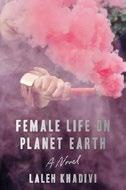
An Iranian American woman prepares a memorial for her mother, who seems increasingly unknowable. How can a daughter know her mother—a mother who was also a daughter, and a lover, and maybe a revolutionary; certainly a person with secrets. This is the question Heti spends the months gently pursuing, from the time of her mother’s death to its oneyear anniversary, when she must host a traditional female gathering of mourning, one that requires a flood of tears. Heti lives a comfortable life in Los Angeles with her husband and daughters, but shortly after Anahita’s death, a mysterious package arrives—three unimaginable photographs. In one, Heti’s mother is in a chadorlike garment, gripping a machine gun. In the second, Heti is seated on her mother’s lap, next to a stranger she presumes to be her father. In the last, her blackclad mother is holding a machine gun on a group of handcuffed, Westernattired women. It is undoubtedly Heti’s mother, but not the woman or the history she knew. Heti’s detective work has nothing to do with the specific—who was
Ana?—but everything to do with the general: What is a woman? The novel is shaped by a series of conversations Heti has: with a soccer mom who claims women must banish the feminine; with her cousin at a secret comedy club, hilariously; with the female poet, a political refugee, whom she commissions to write a remembrance for the ceremony; and the caterer, on how she became empowered at the death of her own mother—the freedom of the motherless. These vignettes are at turns deeply moving, strange, funny—testimonies that capture the varieties of resilience required to be a woman.
A beautiful, poetic work on the elemental bond between mothers and daughters, or the earth and her moon.
King, Stephen & Peter Straub | Scribner (624 pp.) | $35 | October 6, 2026 9781668233092 | Series: Talisman, 3
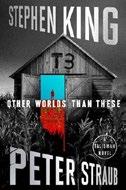
K ing wraps up a trilogy he and fellow horrormeister Straub began 42 years ago with The Talisman (1984) and continued with Black House (2001). Straub died in 2022, but, King recounts in a gracious afterword, he suggested that the last volume in the Talisman series pick up the story of reallife mass murderers Charlie Starkweather and Caril Ann Fugate and transfer it to the otherworldly Territories. King obliges, landing hero Jack Sawyer in the middle of great unpleasantness while visiting “Americaside.” Jack, whom we first met as a 12yearold, is now middleaged and worldweary (make that worldsweary), but he knows he’s on to something interesting when he hears tell of the rampage inflicted on the quiet Nebraska countryside by Roy Kinneston and Tara Lynn Speckhoffer, emulating their murderous predecessors victim by victim. Because “many people on Americaside have counterparts in the Territories,” the teenage killers turn up there, too, recruiting young acolytes who
Romance trends come and go. The Star Shipped author just keeps writing the books she wants to read.
BY KERRY WINFREY
LIKE MANY READERS, Cat Sebastian first turned to romance when she needed comfort.
“When my kids were little, I had pretty severe postpartum depression, and nothing I was reading worked for me. I needed a guarantee that things were going to work out for these characters,” she tells Kirkus via Zoom from her home in Connecticut. “So I started reading Georgette Heyer, and then I went to the library and found Julia Quinn and Eloisa James and basically mainlined Regency historical romance. Contemporary books were too real—I wanted a fullon escape. I wanted the only problem to be What’s going to happen to the duke’s bastard brother? because that had no relevance to whether my children would sleep or eat. What I really wanted was a comfort read, and in the romance genre, a happy ending is guaranteed. That appealed to me.”

It appealed so much that she soon found herself writing romance fiction. She built a successful career with historical romances such as The Soldier’s Scoundrel (2016) and Unmasked by the Marquess (2018), but her latest book is her first foray into the contemporary world.
Star Shipped , published this spring by Avon Books, follows Simon Devereaux and Charlie Blake, co stars on a longrunning science fiction TV show described as “Twin Peaks in space.” Simon can’t stand Charlie, but when the two end up faking a friendship for the good of their careers, he realizes that Charlie might not be as bad as he thought. It’s a book full of sharply funny banter, satisfying character growth, and a realistic depiction of anxiety. In a starred review, Kirkus calls it a “swoonworthy contemporary gay romance” and says “it’s a warm and masterful story that proves Sebastian is adept at cozy chemistry, no matter the time period.”
Sebastian’s love of historicals drew her to try writing her own books. “The
Other genres get to be weird, and I want romance to be weird.
first inkling I had that I could write was when I read Cecilia Grant. At that time, historical romance was so dominated by Regency romance archetypes, but she was writing about people who were prickly or weird or just different. Her characters were fully rounded people— they were not rich or nice. And I thought, Wow, if people are reading this, there could be room for me. And then I immediately dismissed that thought because who am I to write a book?”
Then it hit her that pretty much every book she read was about straight white characters—she hadn’t realized that queer women like herself could be part of the story. “In most of those books there wasn’t even the faintest suspicion of queerness,” she says. “Of course there were exceptions, like Courtney Milan, but the genre seemed to be built for a straight experience. But then I found authors like KJ Charles…and I was so delighted to discover that there were queer historical romances. I figured I would give writing a book a try to see if anyone else liked it.”
Readers didn’t just like her books— they adored them. She’s now one of the most beloved authors in the queer historical space (We Could Be So Good won a Lambda Literary Award for Gay Romance in 2024, and this year Star Shipped hit the USA Today bestseller list), and she writes across time periods and subjects. You Should Be So Lucky (2024) is a baseball romance set in 1960s New York. The Queer Principles of Kit Webb (2021) follows a retired highwayman in 18th century London. But until now Sebastian had no interest in tackling the present day.
Amid general rumblings that the market for historical romance is drying up (“No one knows if this is true or if it’s something we say to ourselves so much that we bring it into being,” she observes wryly), Sebastian’s agent noted that there was nothing stopping her from trying her hand at contemporary.
“And I said, Little old me? I could never,” Sebastian recalls. But several days later, she happened upon a fortuitous post while scrolling—a letter from science fiction writer Isaac Asimov to Star Trek creator Gene
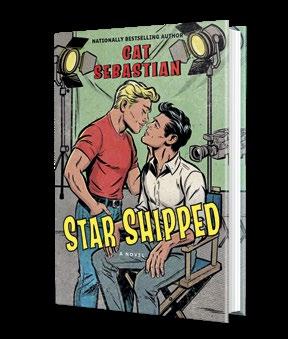
Star Shipped
Sebastian, Cat
Avon/HarperCollins | 384 pp. | $11.99 paper | March 3, 2026 | 9780063429581
Roddenberry. Roddenberry wondered what to do about tension on the show that stemmed from Spock becoming a fan favorite and stealing the spotlight from Captain Kirk. Asimov advised putting the characters together in every scene, so that the audience couldn’t think of one without thinking of the other.
“In other words,” Sebastian says, “the relationship between these two characters becomes the journey of the show. That’s the beginning of modern queer fan fiction, basically. So I could put that in the present day with actors who don’t like one another but have to be in every scene together. If one of them wants to leave the show, what does that mean? What would that look like emotionally, to be professionally stuck together? Once I had an idea of what I wanted the story to be, it was a total pleasure to write. It doesn’t happen often [that] a book writes itself, but this was one of those.”
Romance itself seems to be in flux lately. In addition to the prevailing wisdom that historical romances are out, some are now declaring that contemporary books are dead. “When I heard that contemporaries were out, I started laughing,” Sebastian says. “Two years ago, I heard that editors were saying they were over romantasy,
that if they had to put out another book with sprayed edges they were going to lose their minds. But obviously we’re not in danger of losing romantasy. So at this point, if we can’t write historical, contemporary, or romantasy, what is there? We’re literally making this up.”
But Sebastian isn’t worried. “I’ll find the book in my heart that matches what the market wants,” she says. “Star Shipped was the book I wanted to write.” And what does Sebastian want to see more of in romance? She’s very clear: she wants books that get weird.
“I want characters who are not archetypes, who feel like threedimensional people,” she says. “Other genres get to be weird, and I want romance to be weird. I want wacky premises and annoying characters. I believe that when historical romance comes back—and it will, because everything does—it’s going to be something that we haven’t seen before. I hope that we see more diversity in every sense of the word—more voices, more settings, more time periods.”
Readers who welcomed her turn to contemporary will be thrilled that her forthcoming 2027 book, Washed Up, is set in the same universe as Star Shipped . She describes it as a secondchance, friendsto lovers premise: “It’s about two people who were teenage actors together, and they were best friends. One of them got super famous and the other one very much did not—he dealt with substance abuse and a bad reputation. He’s gotten his life together as an entertainment journalist, and he decides to interview his old best friend, who has basically disappeared off the map.”
No matter the time period, Sebastian wants her readers to feel the same sense of comfort she felt when she first discovered romance. “The world outside can be terrible, but the world inside my books is safe and peaceful,” she says. “Cozy, safe, and warm—that’s what I’m going for.”
Kerry Winfrey is the author of Waiting for Tom Hanks and other stories.
Ann Patchett will be honored with the award at the National Book Festival this month.
The Library of Congress has revealed the winner of its 2026 Prize for American Fiction, which recognizes “strong, unique, enduring voices that, throughout long and consistently accomplished careers, have told us something about the American experience.”
Ann Patchett, known for novels such as Bel Canto and State of Wonder, will be honored with the award at the National Book Festival in Washington, D.C., on Aug. 22.
Patchett made her literary debut in 1992 with The Patron Saint of Liars and followed that up with Taft and The Magician’s Assistant. In 2001, she published Bel Canto; the book won the Women’s Prize for Fiction (then called the Orange Prize) and the
PEN/Faulkner Award for Fiction.
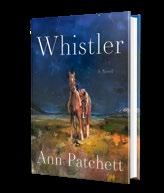
Her other novels include Run, Commonwealth, The Dutch House, Tom Lake, and, most recently, Whistler, published in June. In a starred review, Kirkus called it an “evocative and moving tribute to the death-defying, heart-opening, infinitely redemptive power of storytelling.”
Patchett said, “The Library of Congress is one of our nation’s noblest institutions, and it’s full of librarians, who I consider to be the very noblest of people. I am grateful for this award and honored by the association.”
The Library of Congress Prize for American Fiction was established in 2008. Previous winners include Toni Morrison, Don DeLillo, Louise Erdrich, and Jesmyn Ward.

—MICHAEL SCHAUB




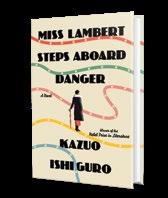
Miss Lambert Steps Aboard Danger will be published by Knopf.
Kazuo Ishiguro’s first novel since 2021 will be released next year.
Alfred A. Knopf will publish the Nobel Prize winner’s Miss Lambert Steps Aboard Danger in the winter of 2027, the press announced in a news release. It calls the novel “an exquisite spy novel—a disarming and memorable caper, in which not everything is quite as it seems.”
Ishiguro, the author of novels including The Remains of the Day, The Unconsoled, Never Let Me Go, and Klara and the Sun, is one of the U.K.’s most respected authors. He was awarded the Nobel Prize in Literature in 2017, with the Swedish Academy praising his “novels of great emotional force.”

Miss Lambert Steps Aboard Danger, Knopf says, will follow Richard Hadley, a man in 1938 London who connects with the title character, a mysterious figure who claims that she is about to make an important discovery.
Jordan Pavlin, the publisher and editor-inchief of Knopf, said in a statement, “Part caper, part spy novel, part Wodehousean comedy of manners, the novel’s light touch belies a wondrously rich emotional landscape. One feels palpable joy in the exploits of the novel’s characters, in their innate goodness and irresistible acts of heroism, in the innocence and vivaciousness that literally has them bursting into song.”
Miss Lambert Steps Aboard Danger is scheduled for publication on March 9, 2027.
—M.S.

dye their hair red and, as if on a new Children’s Crusade, kill everything in sight, leaving behind the chilling graffito “Dead People Don’t Care.” Jack bops back and forth between realms through a kind of magic that flummoxes the Americasiders, especially the cop who first jails him and, after Jack disappears because he senses that “something is wrong on the other side,” becomes a grudging admirer on his return. The action goes more supernatural still when Jack and his merry MidWorlder band fight back in earnest against the KinnestonSpeckhoffer cultists, a battle that takes them to a scary underworld setting that’s just right for an apocalyptic showdown. A few figures from the earlier two novels have walkon roles, but otherwise, as King cooks up his diabolical splatterfest, he answers an old question: “What fresh hell is this?”
It’s neither King nor Straub at his finest, but there’s plenty to keep fans of supernatural horror entertained.
Kirkus Star
Partita
Kingsolver, Barbara | Harper/HarperCollins (352 pp.) | $32 | October 6, 2026 9780063577541
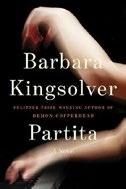
A phone call from her past disrupts the tenuously reconstructed life of a concert pianist turned farmer’s wife. We know from the beginning that Livia Cable is the battered survivor of her brother Cyrus’ death by suicide, a devastating romance, and a careerending injury. Only 11 when Cyrus stepped in front of a train, she was already marked out as different in her rural Tennessee hometown by her extraordinary musical ability. The siblings had huddled together against their angry mother’s frequent beatings, and Livia still feels abandoned by Cyrus years later, when she picks up the phone to hear the voice of Sigurd, the fiery labor organizer she loved and lost to “the revolution” while on scholarship at the Indiana University
School of Music. Now married to kind, steady childhood friend Charlie, Livia looks back on her affair with Sigurd as she struggles to deal with the recent death of her mother, a compulsive hoarder who left a house stuffed with junk to be disposed of and bitter memories that haven’t faded over time. Kingsolver skillfully juggles the two time frames to unravel Livia’s complicated feelings about the life she lost when her right hand was crushed and the life she has now as a country piano teacher. A partita, she explains to Sigurd early on, “is a composition made of a lot of parts with a lot of different moods…the artist’s work is to make them all add up to something that feels whole.” That’s precisely what Kingsolver does in this beautifully paced and judged narrative, which builds to revelations uncovered amid the piles of trash in Livia’s childhood home about the reasons for Cyrus’ suicide (clearly foreshadowed) and their mother’s rage (startling and heartbreaking). A fierce belief that great art is for everyone joins Kingsolver’s familiar preoccupations with class distinctions, social injustice, and the complex bonds of family and community in a tender denouement. Brilliant, affecting work from one of contemporary literature’s masters.
Klosterman, Chuck | Da Capo (336 pp.) | $32.5 September 22, 2026 | 9780306837999
In this alternative rock history, it’s the Velvet Underground, not the Beatles, who took the music world by storm. Gather round, rock fans, and enjoy, in the words of L. Conway Bangs, editorinchief of Velveteen magazine from 1978 to 2002, “this freshly updated third edition of our compendium, a project we at Velveteen believe to be the most nuanced, most probing, and most succinct history of the rock era ever produced.” This history finds the 1967
Beatles album Sgt. Pepper’s Lonely Hearts Club Band tanking (“What destroyed Sgt. Pepper was a failure of imagination”); that same year, the Velvet Underground dropped The Velvet Underground & Nico, which set the band on course to become the biggest rock act of all time. The Velvets were untouchable; the Rolling Stones, for example, “would never become the British Velvet Underground; by the time they limped into the studio for It’s Only Rock ’n Roll, they barely qualified as the British Aerosmith.” Fans of Klosterman (Fargo Rock City, 2001) already know of his bottomless knowledge of classic rock and its practitioners, and readers who share it are unlikely to find a funnier book. And not that there must be one, but is there a point to all the nonstop straightfaced silliness other than to spoof the imperiousness of the rock journalist? Of course, Bangs’ remark that “If you can’t find your personal favorites among these pages, it doesn’t mean we forgot. It just means they might not be as important as you like to pretend” is a poke at both the sneering condescension of the music snob and the dubious enthusiasms of the musiclistening public. Astonishing here is the steadiness of Klosterman’s hand: Even rock nerds will find themselves googling to learn whether some reported bit of rock excess is the author’s invention or actually happened. (It probably actually happened.) Ingenious. Hilarious. Exhausting.
Krilanovich, Grace | Two Dollar Radio (336 pp.) | $19.95 paper | September 8, 2026 9781953387653
A young woman plots her future in the tumult of the late 19th century. As a girl, Paulette was conscripted into the grifting of her con artist father, Rodney Eligon, and perhaps worse things. In turn, as a teen, she enlisted a boy who loved her, Kenneth, in getting rid of her father for good, and he did. Or did he? Years later, Paulette is shacked up with Johnny Hasley, a donothing nepo
baby, at his father’s manor on the outskirts of Anzar, a city that’s overrun by tramps, hobos, and radical political groups like the Women’s Order of Freedom—an offshoot of the Nascent Freedom Movement—where Paulette was once a secretary. She still has ties to the Movement, even as she’s employed by and sleeping with the enemy. Meanwhile, local authorities, at the behest of Johnny’s father, enact brutal crackdowns on the tramps and anyone who might be trying to organize against the powerful who run this railroad boomtown. Oh, and a mysterious beast prowls at night, devouring only members of the Movement. Sometimes it’s hard to separate the story’s fantastical elements from each character’s elaborate fantasies, but usually in an impressive rather than frustrating way. Krilanovich tells Paulette’s sections in the first person, as an epistle to her mother, and Kenneth’s in a close thirdperson narrative. The first half of the novel kaleidoscopes between these two perspectives with such vivid, active language that it’s easy to get caught up in Krilanovich’s electric sentences and unique narrative tone, even when you have little grasp on what’s happening at any given moment or why. The story becomes as much a tinderbox as the city of Anzar it imagines into being, at once completely California and otherworldly. There are long stretches of inaction as well as some unnecessarily coy dialogue, but the novel’s originality makes up for this slack by inspiring the reader’s continued curiosity. One strange simmering spectacle.
Lee, Robinne | St. Martin’s (384 pp.) $30 | July 7, 2026 | 9781250412751
A fter moving to Los Angeles, a biracial photographer navigates the complexities of celebrity, wealth, race, and her own past. It starts with a bang—literally, as Cecilia Chen is rearended and smashes
into the parked car of another woman who was just about to step through the vehicle’s open door. Thankfully, the woman is uninjured; she turns out to be Anouk Ferrand, a superstar French model and actress. Cecilia worked with Anouk decades earlier, when she was a 25yearold assistant on a glamorous, edgy photo shoot in Cabo San Lucas for a fragrance campaign. We are quickly made aware that something problematic occurred on that trip, though after numerous flashback chapters set back in 1996, detailing the action on and off, it’s a bit frustrating that we never learn exactly what happened. These sections are presented in thirdperson, while the presentday action in 2015 is narrated by Cecilia herself. “Black, Asian, female, over forty, an outsider,” she is doubtful that her experience in Los Angeles, where her white, French film director husband will be shooting a highprofile, bigbudget project, will be as pleasant or welcoming as his. Among the most disturbing aspects is adjusting to the realities of raising nonwhite children in the United States, where Julien, 13, and Lucie, 11, are going to school with the offspring of onepercenters. After Cecilia delivers an apology gift to Anouk’s home, the actress gradually remembers who she is and how she was connected to The Bad Thing That Happened. In the meantime, the two have embarked on an intense and intimate new phase of their relationship. As in her debut, The Idea of You (2017), Lee’s sex scenes artfully blend the explicit with the romantic. The drama escalates as both a beloved old boyfriend of Cecilia’s and a starlet mistress of her husband’s arrive on the scene. Readers who relish an insider view of what people say and wear at gatherings of the Hollywood in crowd will find Lee’s observations sharp and often slyly funny.
Thoughtful social commentary meets sensual queer awakening among the Beautiful People.

Kirkus Star
Maclean, Will | Grove (512 pp.) | $28 October 13, 2026 | 9780802168689
For more by Robinne Lee, visit Kirkus online.
A group of college students takes on a haunted house in 1990s Britain. It’s the summer of 1993, and Alex Lane has nowhere to go. He’s 19, his parents are dead, and his plan to stay in his dorm gets quashed by the university, but he’s offered a lifeline: He can stay with a group of other young people in an abandoned mental hospital the university is planning to acquire if he agrees to take a job emptying it out, and then do the same to a nearby house. He agrees, and is introduced to a motley crew including Clive Masters, an amiable pothead; Helen Barker, a highstrung Christian; and a beautiful latecomer named Ella Garner, to whom Alex takes an immediate shine. It’s boring work at first, but things change when they move from the hospital to the house, which was once owned by the eccentric Edwin Flayne. The students quickly realize that the house is more than a bit disturbing— it’s stuffed to the gills with boxes and papers: “There was no space inside the house. There was no light, no air. There was only mania.” Things start to get really dark when they discover Flayne’s esoteric notebooks as well as a mysterious cave, and when one of the students, Adam, a “pale strange boy,” lashes out at Alex over his relationship with Ella. Maclean proves to be a master at pacing, creating suspense with ease; nothing is predictable in this novel, least of all the shocking conclusion. His characters are beautifully drawn, especially the endearing and haunted Alex, who narrates with a distinctive, often funny voice, and Ella, who works well as his foil. While the mood is both psychedelic and gothic, with unmistakable Lovecraftian overtones, it’s very much anchored in the early 1990s, an era Maclean brings to life flawlessly.
Brilliantly written and scary as hell, this is a masterwork of horror fiction. Original, mind-bending, terrifying fun.
Kirkus Star
Mathis, Lydia | Roxane Gay Books/Grove (288 pp.) | $18 paper | September 15, 2026 9780802166708
Pithy stories about young Black women run the gamut from tragic to comic and back again. Ashley wants a friend. Janet wants a baby. The woman in “Tinder Date” wants a man, while the narrator of “The Long Sleep” just wants her mom to wake up and make dinner. Each of Mathis’ lead characters has wants and desires, and few of them are fulfilled. Their bodies are desperate, yes—but so are their minds and spirits. “I wondered if Dani knew I couldn’t resist her,” says Cath in “House Party,” hoping for her college roommate’s reciprocated desire. Some of these women are straight, some gay, some don’t care about labels; the important point is that their honest urges get flattened by other people’s agendas. In one of the best stories, “ParentTeacher Conference,” Nia, a sex worker, has an unexpected encounter with a client right before a school meeting, a shock as she tries to plan her daughter Liv’s end ofsemester dinner of ribs, macaroni and cheese, and chocolate cake. Quite a few of these pieces include important scenes about food as solace, like the meal of skilletfried chicken and collard greens Janet cooks for herself in “Precious” as it becomes clear her husband, Michael, has his own ideas about their relationship. Mathis’ forthright and frequently elegant prose never gets in the way of blood, amniotic fluid, half eaten food, or even vermin any more than it skirts around the deepest pain and longings.
What stands out in each story, long or short, is the feeling that the real story isn’t over. Whether the end is sad or fierce—and sometimes deliberately a bit fantastical—its protagonist has much more to say.
Compelling and realistic characters will linger in your consciousness long after you’ve finished the book.
McCloskey, David | Norton (400 pp.) | $29.99 September 29, 2026 | 9781324123217
Britain and the U.S. try to protect their spies, and the Special Relationship feels the strain. The CIA sends Artemis Aphrodite Procter to become their chief of station in London and help “rebalance things with the Brits.” She accepts the assignment reluctantly, as she’s dismissive of the British in general and London in particular. Told that the city is lovely, she replies that’s the problem. The Brits are pickpockets, she claims, who often do good work but will usually rob Americans blind. Anyway, she prefers to run ops and “likes to get her hands dirty out in the field” and is “a lunatic…[w]ith a stellar reputation.” The first challenge is that the allies have lost four Chinese assets, and now China’s Ministry of State Security Officer Gao Shiyan is in town as part of a trade delegation. Against the Brits’ explicit request not to do so, Procter surprises Gao on a London street and cold pitches him to betray his country. The result is a scene that highlights Procter’s lunacy but not her competence. Read about a “suddenly bald woman with an armpit sprouting breasts” following a collision with an ebike while she’s wearing a disguise and you might reasonably expect goofiness throughout. Mostly, though, it’s a standard thriller with its share of murders and one spectacular death. Mimir, an intelligence gathering firm, sells intel to various rivals, and the good guys chase a bad guy to nighon the
Earth’s end—and the novel’s. But at its core, the story is about an old married couple that hasn’t suffered a serious tiff since 1812, and the occasional tensions work themselves out. Procter, who’s had stints in Moscow (Moscow X, 2023) and Afghanistan, maintains a mental “violence jar” to which she contributes every time she resists beating the crap out of an annoying colleague. Even her back displays her dedication when she’s not covered up. Ten tattooed stars stretch from scapula to scapula, each representing a CIA comrade fallen since her days in Afghanistan. By turns serious and funny, but never seriously funny.
McFadden, Freida | Poisoned Pen (384 pp.) | $18.99 paper | August 25, 2026 9781464249617
A violent attack hijacks a woman’s memory in this novel of domestic suspense. McFadden wastes no time pulling the trigger in this harrowing story that starts with gunfire then swiftly propels readers into a crack tale of secrets and misdirection. Originally selfpublished in 2016, the book carries the same formidable weight as McFadden’s later novels featuring unsuspecting women who lose their power then fight to recapture it—mostly from men who have betrayed them. That formula perfectly fits Dr. Charlotte McKenna, a 37yearold dermatologist who isn’t looking for love until the most handsome man she’s ever seen begins to woo her. There are warning signs about Clark Douglas and Charlotte overlooks them to her detriment—but is he a killer? The novel has dual timelines split between events leading up to the day Charlotte barely survives a head wound meant to kill her and the months afterward, when she struggles to reclaim her memory and her mobility. In real life, McFadden is a physician trained to treat brain injuries.
Her expertise gives Charlotte’s rehabilitation authenticity, and her writing talent makes it interesting and engaging. As good as that timeline is, readers will yearn to get back to the alternate timeline about who wants Charlotte dead. It’s only a matter of time before Charlotte starts to remember who tried to kill her, and the clock is ticking toward their next attempt. McFadden dishes up plenty of suspects: Charlotte’s secretive husband, Clark; a former patient turned stalker who confronts Charlotte on her honeymoon; and the angry husband of a patient who blames Charlotte for his wife leaving him. Though the story is delicious and dark, McFadden brightens things up with a possible love interest for Charlotte and a surprise ending sure to please the author’s many fans. Starts with a bang and closes with a knockout punch of an ending.
McWilliams, Kelly | Crown (304 pp.) | $29 September 15, 2026 | 9798217087204
A light skinned Black man infiltrates the culture of antiBlack violence.
The adult debut by veteran YA author McWilliams is loosely based on the life of Walter F. White, who began investigating lynchings on behalf of the National Association for the Advancement of Colored People during World War I. Here the hero is Clark Wendell White, an Atlantan who in 1918 answers an NAACP ad seeking “white passing men for a special assignment.” He flubs his first interview but ultimately gets in the good graces of NAACP leader James Weldon Johnson and a colleague, Gloria Bell. Soon he heads to Tennessee and extracts the names of white men involved in a lynching, proceeding to become a lead spy for the cause. Success is a burden: He’s shadowed in New York by Sam Cahill, a white man who’s enchanted by the resurgence of the Ku Klux Klan,
A deadly gun accident leaves two old friends stunned.
FAIR ONES
thanks in part to the release of The Birth of a Nation. And the work takes an internal toll on Clark, for whom passing requires a degree of selfdenial that’s hard to stomach. (The army rejected him from an allBlack regiment, fearing he’d defect, preferring the kaiser to American racism; the denial stung, since he wanted to serve his country alongside his fellow high school football players, and the ghost of a friend killed in action haunts him.) McWilliams stresses the point that racial violence wasn’t exclusively a Southern horror; Clark’s travels take him to Chicago, the site of a massive racial conflict in the summer of 1919. McWilliams unflinchingly describes murders and massacres—Sam is literally a butcher, a cleaver not far from his side—and thoughtfully renders Clark’s inner conflict. But the novel also has some pat, sentimental plotting, and a few cartoonish elements—Gloria’s dog is possessed of liedetection abilities, chess metaphors are overplayed, and Sam’s bigotry is onenote. McWilliams understands systemic racism, but the complexity of the system doesn’t always trickle down to the characters.
A smart study of racism, with a few simplifications for the sake of a page-turner.
Millet, Lydia | Norton (400 pp.) | $29.99 October 6, 2026 | 9781324123675
A deadly gun accident leaves two old friends stunned by the loss of a third.
“The scenario sounded improbable, the kind of anecdote you told that was so farfetched no one who heard it really
believed you. But sadly, it was also a fact.” This observation will surely resonate with readers of Millet’s latest novel, which wraps a witty, nuanced domestic drama about midlife relationships around a narrative bolt from the blue. A 13 year old Brooklyn boy who’s brought his father’s gun to the bus stop to show off discharges it accidentally, killing a 40 something school guidance counselor with a shot through the heart—at least, that’s the first account of the incident we hear. The victim is Claire, whose longtime best friends, Mara and Jen, find themselves lost and disoriented without her. Oddly, Jase, a finance bro exboyfriend of Claire’s they’re surprised to see at the memorial service, seems to take charge of the grieving process, holding a sort of afterparty at his lush Tribeca loft (Jon Hamm makes a cameo appearance), then a large scale celebration of Claire’s life a few weeks later, both occasions featuring surreptitious cocaine for select guests. The novel is divided into two parts, both driven almost completely by dialogue. The first is told from Mara’s perspective, the second from Jen’s, with troubling truths coming to light in both. At the same time, the friend group they form with Claire’s brother and all three of their male partners deepens and evolves in positive ways; Claire’s brother even meets his partner at her funeral. Terrible things and nice things can happen at the same time; even amid tabloidlevel trauma, life goes on. Millet insightfully

For more by Lydia Millet, visit Kirkus online.
A devastating and hopeful look at what matters when the world falls apart.
illuminates the ways our mundane lives and usual modes of thinking might be stretched and challenged by a radical twist of fate. Millet continues to weave astute social commentary into sharply observed, character-driven plots.
Montes, Raphael | Trans. by Zoë Perry Celadon Books (352 pp.) | $28.99 August 18, 2026 | 9781250442413
A horrific cautionary tale about a group of friends in Rio de Janeiro who collaborate on an unusual startup.
It’s no spoiler to reveal that the secret behind this book’s title is the consumption of human flesh—that’s given away in the opening anecdote, which involves the phrase “seagull meat.” The question isn’t about whether or not longtime friends Dante, Piglet, Miguel, and Hugo (along with Piglet’s sex workerturnedgirlfriend, Cora) will serve a “secret dinner” to monied guests, but how they’ll carry it out. Piglet is the IT genius, Miguel a medical resident, Hugo a top flight chef, and Dante the administrator. And Cora? She grew up on a cattle ranch, so she does the butchering, complete with a canaryyellow chainsaw. No sooner have these cashpoor pals earned enough to pay months of back rent than they are contacted by the well connected and somewhat seedy Umberto, who urges them to put on three dinners a week; he’ll take care of the guest lists. As the money rolls in,
some members of the group find their stomachs aren’t strong enough for the rampedup process. Miguel worries that hospital authorities will pin the initial body snatch on him, while Dante holds out for a long time against trying the “seagull meat.” Author Montes inserts several conversations and passages about why cannibalism is no different from eating the meat of other animals: “We all live on a hypocritical diet, soothed by whatever tastes good. We feel sorry for the little piggies and baby cows, but we love a nice, juicy steak.” While that’s food (ahem) for thought, these moments of gastronomical philosophizing lose steam juxtaposed against a scene like the final dinner, a mashup of the Red Wedding from Game of Thrones with Peter Greenaway’s film The Cook, the Thief, His Wife & Her Lover. Forgive the screen references, but that scene and others feel specifically written for screen adaptation, filled with ghoulish detail that don’t enhance the plot. One of the more successful devices that threads the beginning to the end has to do with one character’s trauma and how that can change a personality. Combined with the overall quick pacing and introduction of twists (some of them red herrings), that device will help the book find readers who will gobble it up. Whether you find this novel entertaining or excruciating may be up to your appetite for gore—and hyperbole.

Niffenegger, Audrey | Hanover Square Press (560 pp.) | $33 | October 6, 2026 9781335003232
Ni ffenegger returns to the world of her bestselling novel The Time Traveler’s Wife (2003), this time following the time traveler’s daughter.
“My name is Alba DeTamble and I was born a time traveler”: As the story opens, we meet the daughter of Henry and Clare DeTamble, whose sweeping love story captivated readers of the original book. Alba was only 5 when her father died, but she inherited his gift (or curse) of time travel. She lives in Chicago alongside family and a large group of politically minded friends, but she travels through time somewhat randomly, waking up naked and bewildered in unpredictable years and locations. After learning to play the violin as a child, she eventually becomes a composer and musician. Music becomes her refuge in a chaotic life, along with a special place known as the Yellow House, a Victorian home in Chicago that Alba can return to when she’s in an unfamiliar time, knowing that food and clothing will be available. But she’s not the only person there—Oliver ThorntonYang, a fellow time traveler, also uses the Yellow House as his safe space. In one part of her life, Alba falls in love with and marries a man named Zachary Purcell—and at the Yellow House, she falls for Oliver and has a relationship with him, as well. But romance is far from the main focus of the story, and this isn’t a traditional love triangle. Niffenegger’s scope is much broader— Alba’s world is being ravaged by the effects of climate change, and she and her friends must deal with political dissent, the rise of fascism, and the use of AI. There are many characters who pull the focus from Alba, which gives the book an expansive feeling but can occasionally get confusing. Ultimately, this is a story about how people cope
and care for each other in the face of a dystopian future. It’s also a testament to the power of art, even (and especially) in troubled times.
A devastating and hopeful look at what truly matters when the world falls apart.
Kirkus Star
Luna, Phoenix, Queen
Orringer, Julie | Knopf (288 pp.) | $30 October 13, 2026 | 9798217207886
A shelter dog, a secret novel, and a family in extremis.
At the opening of this novel by the author of The Invisible Bridge (2010) and The Flight Portfolio (2019), Barr Pennington, a novelist and writing professor at an Iowalike university, is preparing to adopt a dog. “I never really thought of you as a dog person,” says Evie, his skeptical research assistant. She’s not wrong, but Barr is a man in free fall: His wife, Dava, once a brilliant professor of literature, is now in a care facility with earlyonset Alzheimer’s, and in her study he’s discovered a novel she’d written on yellow legal pads and shown to no one; it transparently fictionalizes a longrunning love affair with another faculty member, Svetlana White. Barr transcribes the pages onto his computer, and then, “almost unconsciously, he began to do something beyond editing, something that felt more like writing.” Thus he becomes the acclaimed and successful author of The Refuge, a man who must convince himself that he’s not a fraud. “A dog could make
you feel that your life had some worth after all, that you hadn’t forfeited your claim to all affection in this world,” he thinks. From this dramatic beginning, Orringer constructs a soulful novel that works variations on themes of love, loss, and legacy across eight linked sections that shift in time and point of view. Along the way readers come to intimately know Barr, Dava, and Svetlana; Barr and Dava’s rivalrous sons and Svetlana’s daughter (who, as a teen, identifies as a deer trapped in a human body); Evie and her deaf brother. Passing inscrutably in and out of the narrative is Luna, rechristened Phoenix, a oneeared dog who survived a house fire; she is both a mirror for the characters and a cipher. Heart-stoppingly good.
Park, Ed & Robert W. Chambers | Illus. by Jeff Wong | Hell’s Hundred (186 pp.) | $25.95 September 29, 2026 | 9781641298728
An obscure but curiously prescient 1895 story gets an update from Park, a Pulitzer Prize finalist for Same Bed Different Dreams (2023). In his introduction to this eerie curio, Park assures readers that they’re forgiven for being unfamiliar with Robert W. Chambers (18651933); though successful in his time, today he’s a minor figure in the pantheon of supernatural horror writers. Still, it’s easy to see why Park revived Chambers’ “The Repairer of Reputations”: Its vision of the “future” (then the 1920s) echoes some
Passing inscrutably in and out of the narrative is Luna, a one-eared dog.
LUNA, PHOENIX, QUEEN
contemporary dystopian themes of an expanded executive branch that’s “tacitly fascist.” But more than that, Park is inspired by a plot involving a shady character who, for a price, can improve the public standing of anybody touched by scandal. The concept is easily portable to the present, when various services promise to scrub negative information about you from the internet, or at least shove them to the nether reaches of search results. Such is the predicament of Sid Feelings, the stage name of an upbeat children’s musician who unfortunately shares the name of the lead suspect in a home invasion/arson/murder. This is not the kind of life Sid has manifested for herself, and as goodtime songs like “Today Everything Is Red” are reappropriated for grotesque memes, she takes the advice of her lawyer and connects with a shady figure named Chalker, who for a steep price promises to salvage her good name. There’s just one catch: She cannot search her own name, lest her actions tamper with the results. From there a clever twist on “The Monkey’s Paw” ensues, with questions of how well (or poorly) we respond to boundaries, how deeply we need to feed our selfish egos, and how little control we have over the internet’s uglier viral tendencies. Park, who’s gifted at assuming various genre forms, delivers an entertainingly pulpy story here, with plenty of dark humor and lurid scenes, while remaining smart about character. An entertaining pair of Lovecraft-ian yarns, past and present.
Pastan, Rachel | Delphinium (320 pp.) | $28 September 15, 2026 | 9781953002778
A fter her mother dies, a daughter returns home, finding unexpected reasons to stay.
T heater director Gwen Rivlin’s Pittsburghbased troupe is about to open a new play when she receives word that her
mother, Bobbie, has died at 54 after a fall down the stairs of the classic old turret house she’d inherited from her own parents. Gwen leaves her producing partnerwith benefits to run the show and makes the drive to Inverness, a fictional town in the Philadelphia suburbs. Her mother was a popular English teacher at the local high school, and Gwen finds both house and town to be filled with memories and afterimages of her vibrant personality. More than once she’s the one to break the news of Bobbie’s death—first, to an irate neighbor who accosts Gwen as soon as she arrives about the illegal, halffinished construction project in the backyard. Bobbie was hoping to build a cob house, a building made from a mixture of clay, sand, straw, and water, with the help of Ethan and Kamal, the gay couple who shared her home for minimal rent. Gwen not only finds herself asking them to stay on, but also inviting her childhood best friend, Lydia, and her two children to move in while Lydia is dealing with marital troubles. The prospect of returning to Pittsburgh recedes ever further into the distance as Gwen decides to stage an experimental production of The Cherry Orchard in the house. Chekhov’s play about an aristocratic family facing the loss of their home looms large in the novel—Gwen played one of the lead roles in high school, a copy now lies on her late mother’s nightstand, and the family joke was to refer to the single cherry tree in the backyard as “the cherry orchard.” As Gwen sorts through memories of her past while rediscovering the virtues of a town she had intentionally left behind, Pastan’s fifth novel explores all the ways we
can and cannot go home again. With practical matters like zoning laws and housing affordability putting hard limits on her plans and dreams, will the joys of artistic expression and found family Gwen experiences in Inverness be able to take root and thrive?
A sensitive exploration of the power of place and the importance of creativity and community in a time of grief.
Star
Philyaw, Deesha | Mariner Books (416 pp.) $30 | September 29, 2026 | 9780063383074
A rollicking satire of Black megachurch culture featuring an irresistible fireball of a protagonist. Philyaw follows a muchlauded story collection, The Secret Lives of Church Ladies (2020), with a debut novel that reads as if she’s channeling the authentic voice of the biggest, baddest, most profoundly un churchy church lady of all time. Married to Pastor David Freeman, Scharisse Freeman is the first lady of the 25,000 member Hope in Christ Baptist Church, a spiritual and business empire headquartered in Belleton, Georgia. We meet her backstage at the First Lady USA Pageant, an event she has been shut out of for years due to her rough background, the daughter of a teen mother who died young with no connection to the hierarchy of church lineage, a “ragsto Rolex story,” as she
puts it. And though a first lady is meant to epitomize the model of feminine subservience described in Proverbs 31, a Bible passage included at the front for the uninitiated, Scharisse could not be less interested in getting up while it is still night and preparing food or selecting wool and working with eager hands. She is a self described “brand whore” and fashion diva who sees her wifely duty as keeping Pastor David busy in the bedroom and attending to the needs of her moody, hypercritical teenage daughter, Gabrielle. Yet this iconoclasm is belied by a burning need to win the approval of the holierthanthou first lady clique, a project made even more difficult by secrets and scandals that erupt during the year leading up to the pageant. Scharisse is an irresistible character, more Prometheus than Proverbs 31, and readers will be rooting for her every step of the way, even as some of those steps are clearly faux pas. Philyaw’s vibrantly voicey tale will appeal to both insiders and outsiders of the culture it describes, a Crazy Rich Asians –style visit to a rarefied realm, but with much more hot sex. At 40, Scharisse is a woman deeply in touch with her physical needs. By the time she takes the stage at First Lady USA, she is also in touch with her soul. Misogyny, classism, colorism, hypocrisy: begone! A fierce, fabulous and very funny truth-teller cometh to take you down.
Read, Warren | Ig Publishing (264 pp.) | $18.95 paper | September 8, 2026 | 9781632462138
A father searches for his estranged daughter and grandson, who have gone missing after a violent car wreck. The last time Red Miller saw his daughter, Gina, she was 18 and he’d just paid
for her abortion. It was 1979 when he handed the money to her boyfriend, Frankie, and watched the pair drive off in the Valiant he’d given Gina for her birthday. Five years later, Red is alarmed to get a call from a deputy in a small Idaho town saying that Gina’s Valiant has been found in a copse of trees with the guy she was dating thrown clear of the wreck and killed, though there’s no sign of Gina or her 2 year old son, Noah. Red decides he needs to make the drive from Washington state to Idaho—despite his misgivings about continuing to bail Gina out of trouble—to search for his daughter and the grandson he’s shocked to learn exists. Through alternating chapters of flashbacks, Red recalls Gina’s childhood, the death of her alcoholic mother when Gina was 8, and all his parenting lapses as grief dominated their lives. In present day chapters, he meets a wide array of characters in Gina’s town and tries to piece together an idea of who his daughter has become. When he begins to struggle, Red is joined a few days later by his longtime girlfriend, Linda, as he digs deeper into the secrets this small town is hiding. Read’s novel is a quiet, deep character study of a man reckoning with his mistakes and shortcomings in a continuing effort to right his relationship with his daughter. In a novel that’s straightforward and steeped in reflections about place, Red is a fully realized character as he thinks “he understood now the expectation of silence in a place like this, among people like these. The pull between what a person should do versus what they had to do.” Subdued and grounded.
Rivera Garza, Cristina | Trans. by Christina MacSweeney | Hogarth (160 pp.) | $28 September 15, 2026 | 9780593980088
The acclaimed Mexican writer takes on traveling in her latest story collection.
Rivera Garza has made a career of flouting the conventions of genre, mixing fiction, journalism, and memoir in books like Liliana’s Invincible Summer (2023) and Autobiography of Cotton (2026). It’s hard to tell how many of the stories in her new collection are purely fictional and how many are based in fact, but they’re fascinating nonetheless. In “Sun of Another Planet,” two young women take a secret trip to the city of Cuauhtémoc, well aware of the dangers that men can pose: “Will there be one, two, three men and will they screw us at their leisure, always stronger and bigger than these two citified weaklings, before hitting us, slapping us, pushing us about, elbowing us, pawing us?” There’s a similar dynamic at play in “Herons,” in which two titular birds, both college students, try to hitchhike to Mexico City; they encounter men who warn them: “Not all men are like me” and “Some men are different from me.” The standout story is “The Lions Aren’t Here,” which has Rivera Garza writing about the relationship between a man and woman, both leftwing political idealists; the story is told in the negative: “We are not in love, they didn’t growl one afternoon when an unbearable heat descended heavily,
Rivera Garza has made a career of flouting the conventions of genre.
immobilizing everything in its path, a heat that not even the undaunted efforts of the fan could scare away.” The technique throws the reader off balance, which Rivera Garza is quite good at: She revels in the unexpected, eschewing the straightforward at all times, but never in a showy way. These stories, focused on traveling, are absolutely beautiful, written with Rivera Garza’s sparkling and enchanting prose. In other words: She’s done it again. Incandescent.
Row, Jess | Ecco/HarperCollins (240 pp.) $17.99 paper | August 11, 2026 9780062400673
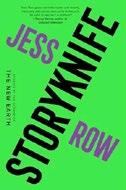
It’d be reductive to call Row’s latest book a collection of stories about storytelling—it is that, but it’s also about the tropes and limitations, the willful deceptions and endless stretches of suspended disbelief inherent to reading and writing.
Introducing the main characters of “The Axe,” the narrator—omniscient, omnipotent, and jaded—suddenly pauses: “But none of that matters, because these aren’t real people, and it’s hard enough to hold onto your own memories without holding onto theirs.” Some of Row’s characters are aware that they’re characters; some of his narrators struggle against the constraints of their own roles. (“None of these details are accurate, by the way,” says the firstperson narrator of “The Sliding Door,” midscene.)
Stories that don’t explicitly satirize or deconstruct literary or literaryworld conventions (see “Meditation for a Small Audience” or “Reading Group Guide”) explore storytelling, meaningmaking, representation, in other ways: In “Late Blues,” two women contend with the legacy of a Black quiltmaker whose work was
revered. In “Young Adult,” a pair of teenagers engineer and then livestream robot sex. Throughout all this, Row references Beckett, Lukács, Marshall McLuhan, and other literary theorists, but also seems to emphasize the ultimate futility—the tedium, really—of all that theorizing about something we seem unable to finally quit. We go on telling stories—in books, at the dinner table, to ourselves. This is implied by the very fluidity of Row’s prose: Even as he (or his narrators) perform a kind of ironic detachment— “As if what happens to me matters to anyone else except to flatter their own better judgment. The story is arrogant; the story is an elaborate inside joke”—you can’t stop reading. In other words, Row’s storytelling is masterful even as he tears down the very tropes that stories are defined by. Some stories are stronger than others (“Dear Yale” feels particularly bloodless), but as a whole, the book is brilliantly conceived and executed.
A triumph that undercuts the conditions of its own existence.
Seghers, Anna | Trans. by Lucy Jones NYRB Classics (192 pp.) | $16.95 paper September 22, 2026 | 9798896230489
In the early 1930s, a small German village contemplates the appeal of the rising Nazi party. Seghers’ latest novel to appear in English translation provides an ensemble portrait of a small, struggling village whose
inhabitants can just barely eke out a living on their farms. When one man installs a new pump on his land—his daughter isn’t strong enough to tote water all the way from the well and no one else is available to perform the task—the decision is potentially ruinous: How will he make the payments? At the same time, a group of strapping young men has been demanding donations for a nascent political party. Seghers, who apparently wrote the book contemporaneously with the events depicted (she fled Germany in 1933 after being blacklisted for her own views), effectively describes the generational breakdown at play, where fathers try to restrain their sons—equally drawn by the high quality boots and belts worn by Nazi party members as by the promises they make—from joining up. The fathers just aren’t sure where all this is going. When the Nazis come to Rifke’s house, for example, requesting a donation he can ill afford, he reflects, “If he gave them money, it might harm him today. If he gave them nothing, it might harm him tomorrow.” Meanwhile, a young man has shown up, asking for work, and one by one, the villagers discover he’s wanted in town for the murder of a policeman, and a major reward is being offered for information on his whereabouts. In this book, Seghers is at her best when she leans into a realist granularity in her depictions of the villagers and their brutal lives. But in more than a few moments, she slips toward the grotesque, as in her treatment of the “slightly feeble minded” wife of Schuechlin, one of the villagers. And the fight scenes—between the young Nazis and their rivals in the local Red Front chapter—are wooden and stiff.
Natural calamity and human miscalculation put Shepard’s characters in peril.
Still, there’s much to admire here, and only a bit that fails to land. An effective depiction of the appeals of fascism in an area suffering from scarcity and lack of opportunity.
Shepard, Jim | Knopf (320 pp.) | $30 September 15, 2026 | 9780593804414
Natural calamity and human miscalculation put characters in peril, which many don’t survive. Shepard’s latest story collection reinforces his command of what has been called “catastrophe fiction.” Settings range across continents and calendars, often putting the reader in media res before there’s any indication of what country and century provide the context. Some stories introduce a number of characters, rather than focusing on a protagonist, and those characters and the reader won’t initially have much sense of what connects them, or what fate or chance have in store. Though the Acknowledgements indicate that the stories have been researched for historical and scientific accuracy, there is no sense of dry scholarship in the vivid prose. The deadly hurricane that sweeps through the Florida Keys in the Depressionera “Village of Islands” and the devastating forest fires that burn through 1910 Montana in “The Devil’s Broom” both provide visceral detail of such tragedies. They build from a foreboding anticipation among a cross section of isolated communities to a frenzy that finds those without the necessary knowledge or resources doing their best to hold the line to the heroism of those who might have never known they had it in them. The few who survive generally do so through the selflessness of others. The concluding title story focuses on two young women on the Lusitania and a budding relationship that defies
societal norms. There are a pair of epistolary stories, one set during the Civil War (“Our Day of Grace”) and the other from a member of a British colonial regiment in World War I to his wife (“Where Are the Lads of New Zealand Tonight?”), conveying complex relationships from a battlefield’s distance. The range of other stories extends from Adolf Eichmann to Robert Louis Stevenson’s Mr. Hyde to 16thcentury Spanish mercenaries. The outlier is the apparently autobiographical “The Mentally Ill Are Not Alone,” in which the narrator tries to determine where his dysfunctional family went “off the rails” and belatedly recognizes his own complicity.
A collection of stories that reveal crisis as a crucible of character.
Wilson, Adam | Soho (240 pp.) | $29 October 6, 2026 | 9781641298636
Brothers Scott and Nick Platt are under pressure to drive their cryogenically frozen father from a shuttering Arizona facility to a new Cryo Center in Massachusetts before he melts. It’s the summer of 2022. Simon Daniel Platt, author of a critical study on Stanley Elkin (one of the Jewish novelists Wilson clearly admires), was frozen 25 years ago by the Revivify company after having been diagnosed with terminal cancer. On a mission, the brothers can only hope time—and temperature—are on their side. Now at a comfy 324°, the body can’t rise above 109° without dire results. Scott, an unemployed arts writer who can and will tell you which Eve Babitz books are best and which Tom Waits albums feature guitarist Marc Ribot, has other big worries. His pregnant wife in New York is close to delivering, he’s depressed
A bravura and sometimes brutal novel about our efforts to cope with darkness.
PROMISED LAND
with pelvic floor symptoms, and he’s continually at odds with the buttoned up Nick, who’s in permanent Covidprotection mode. “Fuck’s with the face diaper?” utters one of the charming red state characters they run across, referring to Nick’s KN95 mask. Antisemites, not to mention neohippie Gen Z girls, also appear during the cross country drive, a broken down one as things develop that test the brothers’ resourcefulness—it’s not easy transferring a frozen human body to a motel room. Scott copes with recreational drugs and playlists that annoy Nick, who prefers playing personal accounting audiobooks. The novel loses its comic edge as it goes along, and its flood of popculture references can wear you out. But it’s hard to imagine a breezier treatment of brotherhood, blood counts, and body parts, or one in which a character asks, “Did I mention I found Dad’s toe?”
A consistently amusing road comedy with dark-ish undertones.
Wise, Henry | Atlantic Crime (368 pp.) | $27 September 1, 2026 | 9780802164506
In this intense sequel to Holy City (2024), struggling deputy sheriff Will Seems investigates a strange disappearance in Virginia’s Snakefoot swamp that cuts across racial, blood, and historical lines.
Bearing physical as well as psychological wounds from the tortuous events in Holy City, Seems and his police partner (and former romantic interest) Tania Jameson are out to find Lucas “Rainbo” Boon after his pickup truck is found abandoned in a muddy ditch with bloodstains and bullets inside. Into the murk, mire, and hidden mysteries of the swampland go the cops in search of Rainbo, reluctantly accompanied by his teenage grandson Buck Tomlin. A man with an assumed name who hid his violent past, Rainbo rose above it in marrying Barbara Tully Boon, a descendent of slaves who went on to inherit the plantation where her ancestors once toiled—a stroke of good fortune that Rainbo’s brotherinlaw Roddy Lacey, a Vietnam vet numb to bloodshed, couldn’t believe even after Rainbo gifted his family a chunk of the acreage. When Rainbo’s stiff, barely breathing body is found dumped outside a hospital, the mysteries of who’s responsible and why multiply in the face of other local killings, including those of Donnie Thinh, leader of the Cambodian gang the True Brothers, and Buck’s friend Isaiah, who led him into the gang. Few novels have reflected their setting as powerfully as this one, with its ever denser, ever darker narrative and its evocative language, ranging from “a baby who looked as if he’d swallowed a star” to “the rough tremble of his grief.” With his two novels, Wise has leaped to the forefront of recharging and reshaping Southern fiction. A bravura and sometimes brutal novel about our efforts to cope with darkness and denial.
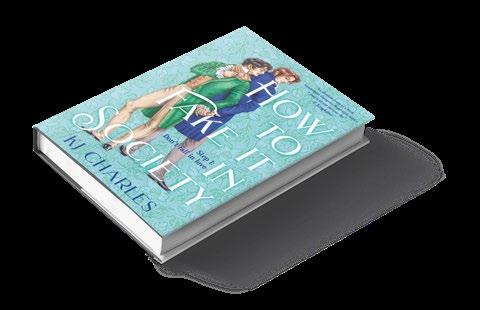
KJ Charles
Shana Galen



The actor will write and direct an adaptation of Rachel Kushner’s 2024 novel.
Maggie Gyllenhaal is set to develop a film adaptation of Rachel Kushner’s Creation
Lake, according to the Hollywood Reporter. Kushner’s novel, published in 2024 by Scribner, follows an American secret agent who goes by the name Sadie Smith and is hired to infiltrate a group of activists in a small farming cooperative. In a starred review, a critic for Kirkus called the book, which was shortlisted for the Booker Prize and longlisted for the PEN Faulkner and National Book awards, “a deft, brainy take on the espionage novel.”
Warner Bros. is developing the adaptation with Gyllenhaal set to write, produce, and direct.
Creation Lake will be the third literary adaptation
directed by Gyllenhaal. She made her directorial debut in 2021 with The Lost Daughter, based on Elena Ferrante’s 2008 novel, starring Olivia Colman, Dakota Johnson, and Jessie Buckley.
Gyllenhaal earned an Academy Award nomination for best adapted screenplay for the film.
Earlier this year, Warner Bros. released The Bride!, loosely inspired by Mary Shelley’s Frankenstein; the movie starred Buckley, Christian Bale, and Peter Sarsgaard. It received mixed reviews and performed poorly at the box office.
Kushner’s other novels include Telex From Cuba (2008), The Flamethrowers (2013), and The Mars Room (2018). —M.S.


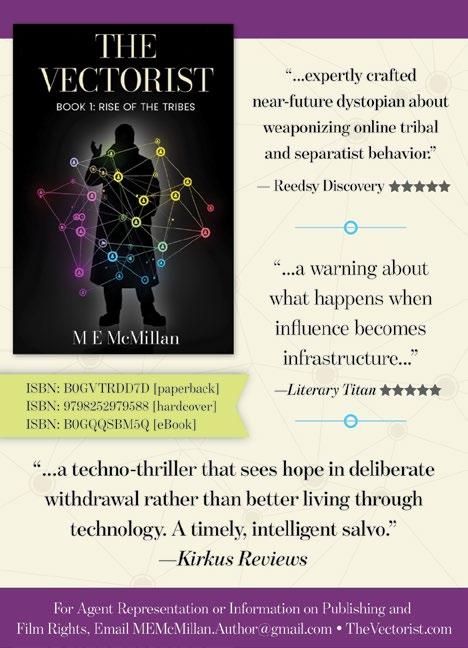
Adler-Olsen, Jussi, Stine Bolther & Line Holm
Trans. by Caroline Waight | Dutton (496 pp.) $30 | September 8, 2026 | 9798217178513
The ninth case for Copenhagen’s Department Q is so big that longtime creator Adler Olsen is joined by two new collaborators to handle it. And he’s not the only one dealing with new blood. Inspector Carl Mørck, the cold case department’s founding detective, has retired and assumed the role of consultant, and Gordon Taylor has taken a job in North Jutland. So only Rose Knudsen and Hafez el Assad are left in Department Q’s basement until the arrival of Helena Henry, a decorated member of the Lyon police force who makes it clear that she’d rather be anywhere else. Since that’s practically a job description for members of Q, she fits right in, attracting Assad’s instant loyalty and Rose’s instant antipathy. Not to be left behind, Carl comes to his old colleagues with a cryptic recording that sounds a lot like evidence of a crime. The crew, who’ve just received new evidence indicating that Ole Horsten, a former board member of the private hospital Charis, didn’t hang himself but was kidnapped and murdered four years ago, have to prepare themselves for a plunge into the much more distant past: a boarding school prank turned deadly back in 1989 that transformed its target into a vengeance machine determined not to kill the pranksters but to make their lives even more miserable than his. Just as Helena seems to be getting into the swing of things, homicide chief Terje Ploug comes to her with news that links the recent spree of violence to her own past in a shattering way. Fans of this stellar franchise, which remains in sure hands, won’t pray for a happy ending; any ending will do.
Blanchet, Trisha | Crooked Lane (336 pp.)
$19.99 paper | August 25, 2026
9798892427487
A struggling private eye in a New England mill town uses her special powers to solve a weird case of murder.
Tess Tulley is descended from a long line of Irish witches, though they don’t use the word “witch” anymore. In her town they call themselves “Spinners,” and they each have a special talent they call a “Seven,” as in senses. Tess’ is mindreading, which you’d think would make it easy for her to solve crimes. But Tess has been shunned by her own kind since she got her uncle arrested for a series of crimes, and her Mill City Investigations is going nowhere until she gets a call from Det. Devi Suong, aka Officer Handsome, asking for help in the murder of Spinner Lorna Finnegan. Although Devi’s a normal, known as a Five, he’s kept the Spinners’ secrets and knows he needs Tess’ help on this case. Lorna was found in a pool of someone else’s blood with a postmortem head wound and her bird and familiar, Petey, also dead. Devi takes Tess to see Slayer Kinkaid, who made the weapon, a warpick used in the game Realms & Rangers. When the coroner, Tess’ estranged mother, pronounces Lorna dead from a heart attack, the police drop the case despite many unanswered questions. Meanwhile, Tess is getting threats and broken windows. Joining Devi to look into a breakin near Lorna’s apartment, she discovers an abandoned kitten and takes it home, a good deed that will make her a new friend and eventually save her life. When Harry O’Donnell, the head of the Spinners, offers to pay her to keep investigating, she agrees despite the dangers that come with the job. A promising start to a series that will appeal to fans of the paranormal and feisty female detectives.
Brody, Jessica | Bantam (560 pp.) | $32 September 22, 2026 | 9798217299478
A wildly metafictional account of what happens, or maybe happens, or sort of happens, to the participants in a mystery writers’ conference at a refurbished California monastery.
Boozy philanderer Ian McCloud, the keynote speaker, has asked his assistant, Bennett Hartley, to make sure Alastair Sinclair—the agent he’s accused of embezzling $2 million of his money—is disinvited from the conference, and to invite Ian’s YouTube promoter, Darius Walker, instead. Although a sudden storm and a blocked entryway keep many of the registrants away, Sinclair shows up anyway. So do Simone Prescott, Ian’s sometime lover; selfpublished author Isabel Torres; ancient Evelyn Channing and Dexter, her cat. Shortly after the guests settle in under the iffy guidance of novice facilitator Jade Brooks and her sister, Jasmine, a power outage plunges California’s Monastery of the Shrouded Vale into darkness, and the next morning, the writers find Ian’s body floating in a pool outside. As the characters ask whodunit, readers are more likely to ask how many other shameless cliches Brody, or another character identified as The Author who hovers over the whole mishmash, can cram into 560 pages— doubles, disguises, accusations and counteraccusations, red herrings broadly identified as such, flash drives chockfull of incriminating information about everyone on the guest list—and how this can possibly end for characters who keep protesting, “For the last time, this isn’t a mystery novel!…This is real life!” Spoiler: It’s a mystery novel that couldn’t possibly have less to do with real life. If you suspect anyone here of hiding a guilty secret, you’re absolutely right—except that these are actually unending layers of secrets. A gleeful demonstration of the universally acknowledged truth that “if anyone can get away with murder, it’s a writer.”
Chouinard, Michelle | Minotaur (320 pp.) | $19 paper | September 22, 2026 | 9781250432063
Haight Ashbury’s checkered history provides truecrime tour guide and podcaster Capricorn Sanzio ample material for a third round in her quest to dig up every skeleton in San Francisco. Not that Capri is looking for more cold cases to examine. But when Haley Torres, a visitor from Florida on a walking tour, begins asking disconcerting questions about her missing mother, Capri can’t help getting pulled into her orbit. Jennifer Torres had made it clear that she was headed to San Francisco to investigate the murder of her aunt, Marilyn Laposata, two months after she ran away from her shattered family in Massachusetts. In 1967, on the cusp of the Summer of Love, Mari was living in the Rainbow Braid, a commune whose other members are long dead, and seeking employment with the neighborhood paper The Prophet on the strength of her experience as a high school journalist. Now it seems more and more likely that Jennifer is just as dead as her beloved aunt, and a telephone threat against Morgan, Capri’s daughter, makes the tour guide despair: “The only thing I’d managed to do was get some psycho killer tailing my daughter.” Flip flopping briskly between the storied past and an equally loaded present, Chouinard interweaves tidbits from the Haight’s reallife history with clues to the fictional mystery as suspects from the past and present keep popping up like Whack
AMole targets. Though Capri is so determined to dig up every possible piece of dirt that that solution, which lets most of the shady characters off the hook, is something of a disappointment, readers with an eye for curdled nostalgia won’t mind it a bit.
A timely reminder of how doubleedged the Summer of Love really was.
Connelly, Lucy | Crooked Lane (272 pp.)
$29.99 | August 11, 2026 | 9798892426459
A murder at a Halloween haunted house provides the local doctor/sleuth with some dangerous choices.
Dr. Emilia McRoy left a Seattle emergency room to take a less stressful job in Sea Isle, Scotland. She’s settled in, made friends, and is on the verge of a romantic relationship with the town constable, Laird Ewan Campbell. As the medical examiner, which is part of her job, Emilia and her associate, Abigail, have solved several murders. Em and Abigail have decorated a room in the town’s All Hallow’s Eve haunted house as a bloody clinic. The artworks in the room across the hall, furnished by local artists, are based on famous masterpieces with bloody twists. And now there’s a new twist: Emilia and Abigail find one of the artists, Duncan Craig, with Emilia’s kitchen knife in his chest, and he’s dead. When Ewan informs Duncan’s sister and his friend Baird about his death, they can’t believe it. The only suspects anyone can imagine are some men Duncan crossed when he worked on an oil rig. Then, the next day, a woman shows up at Emilia’s office, claiming to be Duncan’s wife, Flora, and confusion reigns. Flora says that Duncan, with whom she ran a small antiques shop, was away on a buying trip. When she finally sees the body, though, she realizes it’s not her husband. Did someone kill the wrong Duncan? The show must go on, so Em and Abigail continue at the Halloween House, but when they return to Em’s place, they discover the corpse of the other Duncan Craig dumped by the front door, and it’s not obvious what killed him. In addition to being stuck with what are probably two murders, the sleuths need to establish some reason for killing one or both of the victims. Full of fascinating Scottish lore, confusing clues, and multiple motives.
Ehrhart, Peggy | Kensington (272 pp.)
$27 | August 25, 2026 | 9781496759252
A murder and a missing quilt turn a Massachusetts museum curator into a reluctant sleuth. When Caroline Platte, associate director and curator of Special Collections at the Yates Museum in Banburyport, goes to Nancy Critchley’s house to discuss the loan of a Flying Geese quilt made by a Critchley ancestor for a special exhibit, no one answers the door. Instead, Caroline finds broken glass, an open back door, and a cat who leads her to Nancy’s body in the breakfast room. There’s also a linen napkin smeared with what looks like tomato juice—perhaps Nancy had tried to write something before she died. Across the hall, in the living room, Caroline finds the empty quilt bag. Since the task of recovering the valuable quilt, which was to headline the exhibit, is clearly beyond the talents of inept Det. Garrett Seldon, whose mother, Libby, is Caroline’s friend and landlady, Caroline makes a point of listening attentively to the gossip at Farrow Square Coffee. After Garrett arrests Amber Foster, a museum intern, because she’d been planning to join Caroline and Nancy for brunch but changed her mind and also made some critical comments on her blog, Caroline—who doesn’t see Amber as a killer and wonders why Garrett’s ignoring that tomato juice clue—adds hunting for a killer to her search for the quilt. Nancy, a Critchley by marriage, came from a much less elevated background. Her son provides some other possible motives for her death during a visit to Caroline. To add to Caroline’s unease, she gets an email from Peter Barclay, whose proposal she had long ago turned down, wanting to see her even though she thinks he’s married. Nancy was standing in the way of some local projects, so stealing the quilt may not have been the motive. In the end, though, it’s quilt lore that provides the answer.
The kickoff to a new series perfect for readers who love crafts and history.
Gilbert, Victoria | Crooked Lane (320 pp.)
$29.99 | August 4, 2026 | 9798892427333
A Virginia librarian finds her research skills and familiarity with the local highbrows urgently needed when death arrives at the reference desk.
The grand old public library in Taylorsford, Virginia, has never before seen a patron stagger in and immediately drop dead—not even on the watch of longtime amateur detective Amy Muir. A paramedic says the stranger’s death looks more like a drug overdose than a murder, but Amy’s hackles are raised by the cryptic note found near the man: “Hen and sapphire.” Once the dead man’s ID and a basic online search identify him as Colin Clark, an assistant to prominent local art collector Warren Sanderson, the sheriff immediately taps Amy for her connections: her beloved Aunt Lydia, the widow of wellregarded painter Andrew Talbot; local arts council leader Marty Stover; and Sanderson’s friend and wealthy rival art collector Kurt Kendrick, a friend of Amy’s family. As the police conduct an autopsy, which finds that Clark had ingested both cocaine and strychnine, Amy conducts library research to uncover the meaning of “hen and sapphire.” She’s pointed to a spectacular Fabergé egg missing for more than a century and highly sought after. Could Sanderson have been seeking this treasure? Or could the dead man have been working for someone else in the drug underworld even more determined to lay hands on it?
Amy connects with local art faculty and even braves a metro gallery to uncover the seedier side of the art world while making time for her charming husband, a professional dancer, and her adorable first grade twins before bringing the murderer to justice.
In a town marked by elegant American traditions, a sleuth with family connections preserves and protects art and community.
King, Laurie R. | Bantam (336 pp.) | $31 September 8, 2026 | 9780593874011
Back with the San Francisco PD as a contractor, Inspector Raquel Laing finds herself working once again for her sister.
Private eye Dee Laing gave her adopted sister work after an injury sidelined her from the police. Raquel is grateful, but she really wants to be working homicide again. The murder of Gilbert Gallegos, a coke dealer and thief, seems to be right up her alley, especially once she connects the modus operandi— a bullet to the gut followed by another to the head several agonizing minutes later—to another series of similar killings. Against all odds, though, the big story is Dee’s. Frustrated by her unsuccessful attempts to trace the ancestors of her late parents, who took in the 9yearold Raquel after a streak of unsuitable foster homes, she’s sent her DNA sample to the ancestry site MyKin.com. The results are, to say the least, informative. It turns out that Emma and Tom Laing weren’t Dee’s birth parents either, and her actual birth mother, Dolores Ortega, brought her daughter to them without any help from Dee’s unidentified father, who abandoned them. No sooner has Dee finished apologizing to Raquel for dumping this revised family history on her than she begs for help in tracking down the relatives she never knew existed. As Raquel digs deeper into Dolores’ past doing “the job she was actually being paid to do,” she finds striking similarities between the cases. Is the Gallegos murder nothing more than an echo of crime reporter Dolores’ investigation of the Sinaloa cartels, or are there more direct and sinister connections between the two? King shuttles assiduously back and forth between the two mysteries, with fresh corpses indicating the urgency of Raquel’s investigations. Sterling proof, as the sisters agree, that “neither of us is good with unfinished business.”
Lansdale, Kasey | Blackstone (288 pp.) | $29.99 September 8, 2026 | 9798228467064
Lansdale’s first novel introduces a private eye who flouts every rule of behavior in Hopeful, Texas.
Chance Kirby left journalism, the field she’d trained for, when it became clear that she wanted something more. Now John Kirby, the father who first learned of her existence when she was a teenager, and Harper Jones, his wife and partner in their own PI agency in nearby Willard, have given her enough money to start out on her own. Well, not exactly on her own, since she’s best friends with Isabella Lopez, the police chief in Hopeful, who looks “like a model that had been in a knife fight,” and often relies on the talents of Tia, her housemate and informal ward, a former con artist who at 14 already gives off an even sassier vibe than Chance. The agency’s first client, Darla Weaver, isn’t crazy about the rates Chance quotes her, but 10 months with no leads on Patience Milroy, the sister whose throat was cut shortly after she disappeared, have worn out her patience with the local police and other private eyes. Chance, who takes the case promising to do her best, soon finds that it’s all personal: Darla needs answers, Pat needs justice, and there turns out to be a trail of other young women killed the same way, whose connection to the case was overlooked because they were outside the Hopeful borders. Lansdale’s plotting relies heavily on coincidence and violence—the animal shelter Chance visits after Sissy, her beloved German shepherd, goes missing, is full of suspects who react to her questions with threats and worse— but the hardscrabble world the author creates is well worth visiting and revisiting.
At a certain point, the investigator confesses, “I really just wanted it to all be over.” But readers won’t.
Mizushima, Margaret | Crooked Lane (336 pp.)
$29.99 | September 8, 2026 | 9798892426701
A handful of seemingly unrelated crimes has sinister ramifications in a small Colorado town.
Mizushima’s longrunning Timber Creek K9 series is deeply rooted in the daily responsibilities and duties of a Rocky Mountain sheriff’s station. As it’s tackled contemporary crimes, its police procedural roots have extended to explore the personal lives of local residents. This time, a welfare check by Deputy Mattie Walker and her K9 partner, Robo, leads to the discovery of a deceased young mother and a screaming toddler. A drug overdose is indicated in Jaclyn Reynolds’ death, and babysitter Isabel Webb fills in some details of Jaclyn’s tumultuous recent life. The child, whose name is Emma, tells Mattie that her mother was hit by “Audie Beebee.” After Mattie launches her investigation by checking in with the sheriff’s office and Child Protection Services, she and Deputy Lester Hitchen stop a motorist behaving erratically and, with Robo’s help, discover a cache of illegal drugs hidden in the spare tire of the car. They take Delgado, the nervous driver, into custody, and his behavior becomes increasingly suspicious. Meanwhile, Mattie’s new husband, Cole, a veterinarian, is dealing with Butch, a strangely aggressive Rottweiler. Not surprisingly, all of these threads are intertwined in Mattie and Robo’s 11th mystery. Chief among the many local subplots is a discussion between Mattie and Cole about expanding their blended family. A well-appointed procedural with special appeal to lovers of dogs and the great outdoors.

Pegau, Cathy | Minotaur (384 pp.) | $30 September 15, 2026 | 9781250356512
Two queer female detectives probe dark deeds at two medical establishments, one for the very wealthy and one for the very poor. New York City Charity Hospital serves those who have nowhere else to turn in 1912 New York. Margot Baxter Harriman, president of B&H Foods, counts the hospital as one of her most important volunteer obligations. But the death of nurse Stella Nowak, who falls from the hospital roof as Margot sits in the office of medical director Stephen Jameson, tests her loyalty to CCH. The police consider Stella to have died by suicide, but fellow nurse CeeCee Foxmoor suspects foul play. So Margot asks CeeCee’s domestic partner, private eye Loretta Mancini, to investigate. Meanwhile, Margot herself launches a Nelly Bly–style inquiry into Caspian, a highend clinic run by charming Dr. Ewan Beales, who also serves patients at CCH. The two investigations run virtually parallel, with almost no direct communication between Margot and Loretta, even though the book’s subtitle links their last names in a way that makes them seem like partners. The double narrative is only one of the reasons the solution to the puzzle is so long in coming. Pegau takes pages to reveal twists other authors would dispose of in a few paragraphs. Her style is slow, detailed, and dead serious, and her characters have none of the pointed wit or banter that feminist sleuths often display. When the two investigations finally connect, there’s little surprise. The professional detective and the talented amateur follow the same clues to the same conclusions and nab the same crooks. Even the police figure it out in the end.
A pretty tame tale for a promisingly unconventional pair.
Unthank, J.J. | Crooked Lane (288 pp.) | $19.99 paper | August 25, 2026 | 9798892426916
Young people with varied magical talents get together to solve a series of murders.
Malowin Gladstone is a 21yearold necromancer who thinks his powers are evil. He’s constantly harassed by the ungrateful parents he’s kept alive ever since bringing them back from the dead. Mal lives in the magical city of Dunwich, which is just like London except filled with wizards and odd, powerful creatures. When DCI Winston Walters approaches Mal to help solve a murder by resurrecting the victim long enough to get some information, Walters’ partner, DS Desdemona Anastos, is not pleased. Walters brings Mal to a meeting of the Order of the Unseen Face, a secret society, where he meets Kosh, the only other necromancer in Dunwich, who gives Mal a tour of the Order’s vast headquarters. Walters is turning Mal into a police consultant when Des comes to pick him up from university. She also takes on Hala, whose power is psychomancy. Mal’s first assignment is to join Des and Hala in interviewing the almost 200yearold Taran Merlin Ambrosius, a descendant of King Arthur’s friend Merlin, and his nurse, Elaine, whom they suspect of being involved in a series of murders. They deny any involvement, but Hala knows they’re hiding things. While Mal is surveilling a house, Des appears, and they’re attacked. The only way the inhabitants can save Des is to turn her into a vampire. After Des’ recovery, she, Mal, and Hala visit a library where they meet the brilliant, shapeshifting Yu, who joins them in searching for a mass murderer. In their search, they battle zombies, get arrested and then released through Walters’ influence, and find themselves on the cusp of death every day their search continues.
A bloody tale of good versus evil.
Africh, Maurice | Saga/Simon & Schuster (592 pp.) | $32 | November 3, 2026 9781668242834
Africh’s debut— and the first installment in his Sky Pirates of Imperia saga—is a pedaltothemetal adventure that blends SF and fantasy elements in a story about a disgraced military brat who eventually becomes the captain of one of the most successful crews of pirates for hire in the universe.
Grey Shimada has a famous father— Admiral Tien Shimada of the Incorporated Nations Navy. But a bad decision lands young Grey in a reformation center where his oncepromising future suddenly becomes uncertain. Years later, as the captain of his own airship, Grey accepts a lucrative job to locate and retrieve the mythical seven stones of Indigo. Things, predictably, do not go as planned. The actionpacked storyline is an obvious hook, as is the insightful portrayal of Grey, who’s a highly endearing amalgam of Indiana Jones, Han Solo, and Peter Quill—without all the 1970s music references. The supporting cast—including oracle Minn Alisma; her healer little brother, Farlow; giant guardian Mars, and more—are all fully fleshed out and memorable, a tall task with so many integral human and nonhuman characters. Although unnecessarily long fight sequences, especially at the end, slow down the narrative momentum, readers will enjoy the gloriously campy vibe of the story, which pays homage to iconic movies through subtle, and not so subtle, references. For example, at one point Grey and his crew members find their only means of escape is through a trash chute leading to a compactor à la Star Wars: Episode IV–A New Hope. Elite knights are given “torches” that resemble light sabers. And a race of rocklike entities called gomas is eerily similar to the rock monster in Galaxy Quest. Readers should enjoy this thinly veiled literary love letter to pop-culture SF.
Barner, Claire | Diversion Books (336 pp.)
$18.99 paper | July 28, 2026 | 9798895151518
Thirty young, impoverished Earther women travel far to participate in a breeding program for Martian aristocrats.
A poor Janeite, Vivian Bowen has no prospects. Neither does her younger sister, Delilah. Life in the Carolinas’ Sumter Refugee Camp is nothing but starving and strife. When someone offers the young women the opportunity to leave Earth for Mars, where they can make enough money to see their parents live out the rest of their lives in comfort, Vivian and Delilah leap at the chance. All they have to do is find a Martian spouse and have their babies—three of them. That soon proves easier said than done for Vivian, who finds herself falling for Xavier Dorsey, a proud and disagreeable man the Martians’ deified AI—the Intelligence—has proclaimed offlimits. Xavier doesn’t believe in the breeding program and refuses to participate in it, but he can’t keep himself away from the whipsmart, razortongued Vivian.
Barner’s novel is a smart take on Pride and Prejudice, diverting from the source material only when a pregnant Delilah absconds with Silas, the handsome soldier who once dangerously impregnated Xavier’s younger sister. In this version, it’s the heroine, not her wealthy love interest, who takes charge to find her wayward sister and bring her back into the fold. The novel features a racially diverse cast. Xavier is Black; Vivian’s best friend, Luz, is coded as Hispanic; and one of Vivian’s suitors is of Japanese descent. The cast
also runs the gamut on gender and sexuality. Xavier and Delilah are bisexual, and other characters are lesbian, asexual, and nonbinary.
An ambitious SF retelling of an Austen classic.
Hachemi, Munir | Trans. by Julia Sanches Coach House Books (180 pp.) | $18.95 paper | July 14, 2026 | 9781552455197
An archaeologist pieces together the mystery of a civilization living on a distant planet. Anthropological SF is a challenging and rewarding slice of the genre, and Hachemi’s novel is a good reminder of both sides of that equation. It follows an archaeologist, Dr. Nahum Cordovero, who travels to study the Mulai, a human culture living on an unnamed planet far from Earth. It isn’t until more than halfway through the book that Hachemi reveals how the Mulai came to be there, which is connected to a longago effort to terraform and colonize the planet. There are hints that all is not well on Earth, including the reaction to certain words from Dr. Cordovero’s declassified report of his findings. Interspersed with the doctor’s impressions of this society from his official reports and personal journals are other texts from within the Mulai culture, including one character’s musings on attempting to translate Italo Calvino’s Impossible Cities. The book feels like an artifact from a distant future, and Dr. Cordovero’s analysis of the society he spends many years observing hint at some of the ways their mores have diverged from those on
Thirty Earther women participate in a breeding program for Martian aristocrats.
THE RED WOMAN ON MARS
Earth, everything from radical openness to sex and using the toilet to their preferred narrative forms: “The Mulai especially like stories with twists—the kind our authors would find contrived—and the simpler, the better.” That the Mulai’s formative texts include works like the Libertarian Codex also gives a sense of the ethos at the core of their civilization. While the sociological aspect of this book is compelling, Dr. Cordovero also emerges as an intriguing character—someone who isn’t at home either on Earth or in the stars. That helps give this book a beating heart alongside its intellectual pursuits. A heady examination of a culture at once familiar and alien.
Qureshi, A.T. | Avon/HarperCollins (384 pp.) $18.99 paper | September 1, 2026 9780008779528 | Series: Dragon Racer, 1
A privileged young woman risks her life for the chance to be the first female Dragon Riders’ Championship winner.
Genevieve Sterling lives a life of wealth and happiness. Her family is part of an elite community that raises and rides dragons, with her overprotective father, Edmund, serving on the local Dragon Council in their community of Starshine Valley. When the book begins, Genevieve has snuck out to watch her older brother Danny win the Dragon Riders’ Championship with his beloved dragon, Cinder. Genevieve dreams of entering the dragon races herself one day, but for the moment she’s overjoyed for Danny. Following Danny’s tragic death three months after his victory, Genevieve becomes truly determined to win the race herself once her own dragon, Fang, is old enough to ride—not just because no woman has ever done it before, but because Danny always believed she was tough enough to withstand the often deadly competition. When Edmund forbids Genevieve to race, and refuses to help her fund her training, Genevieve finds someone willing to coach
A queer doctor finds community when his captain maroons him on a desert planet.
WHAT WE ARE SEEKING
her without pay. Qais, who has connections to the dangerous dragonpoaching Viper gang, agrees to help Genevieve win on the condition that she gives him the prize money. But when Edmund finds out that Genevieve still intends to race, he kicks her out of the house, determined to give her a big enough consequence that she’ll forget the race. Instead, Genevieve commits to seeing her goal through, even if it means she might lose her family. In a genre filled with jaded loners, it’s a nice change to have a heroine whose close bonds with her family contribute to narrative tension. But it will be unsurprising even to readers who don’t read much romantasy that there’s a budding badboy love triangle here, a wan story element that feels as perfunctory as the thin worldbuilding around it. The many, many qualifying dragon races zoom by without much interest, especially since dragons here are rather like large puppies who sometimes breathe fire.
A lightweight fantasy without much action.
Kirkus Star
Reed, Cameron | Tor (352 pp.) | $30.99 April 7, 2026 | 9781250364739
A queer doctor finds community when his ship captain maroons him on a desert planet. John Maraintha grew up on Essius, the only humancolonized planet that doesn’t observe the rites of marriage or monogamy. When his ship captain abruptly sends him and a
linguist, Sudharma, to the desert planet Scythia, John is not sure he will ever fit in. Both human cultures present on Scythia, the Ischnurans and the Zandaheans, practice marriage, and the Zandaheans—who are by and large conservative Christians—consider John’s bisexuality sinful. They also find themselves at odds with the Ischnurans, who recognize three sexes: male, female, and jess. The sole jess on Scythia, Iren, quickly becomes John’s confidante, as do Piro and Laura, a Zandahean married couple harboring secrets of their own—including a child who wishes to “take the braid” and become a jess. John struggles to find his niche while Piro, Iren, and Sudharma work together to unravel the language of the Scythian natives, known as basketmen. But when Iren discovers a foul betrayal, John’s mission becomes clear. Reed spins a beautiful tapestry of a story here, holding deep conversations about gender, biology, and linguistics. Scythia, with its dryads—mammals, insects, and reptiles that spawn from plants—seems totally alien, and the human cultures that mix in its deserts seem diverse and believable. Most of the characters have brown skin. Iren is asexual, Sudharma is aromantic, and Laura is a lesbian. Additionally, Sudharma is a devout Jain, Piro and his child are devout Christians, and Laura is a “Denier”—a nonChristian Zandahean. A smart, tender work of hard science fiction.

Alban, Emma R. | Alcove Press (336 pp.) | $20 paper | September 29, 2026 | 9798892427845
A struggling New York writer changes her life—thanks to a ghost.
Once upon a time, Frannie thought she had the potential to be the “next Great American Literary Voice,” and took a job with a famous author to help her make the most of her talents. Three years later, she’s gotten very good at being his assistant, working in his apartment in the renowned Dakota apartment building on Central Park West, but has made no progress with her writing. She’s so miserable that she starts to think she’s seeing a ghost. Wait, no—she actually is seeing ghosts: a family of ghosts, with two kids and one cranky Hot Ghost Mom, who died back in the 1960s. Frannie’s disbelief quickly fades, and not just because she’s intrigued by Hot Ghost Mom, whose name is Elsa. When Frannie’s boss goes on tour for his new book, Frannie is supposed to take the opportunity to write, and she pours herself into a new (secretly) Elsainspired manuscript, while also spending a lot of time with Elsa and the kids. But though Frannie and Elsa fall for each other, even becoming intimate, their happilyeverafter is far from certain since Elsa is a ghost and Frannie isn’t even a permanent resident of the Dakota. Alban, best known for her historical romances, is bringing her gift for Sapphic slow burns into the 21st century. The chemistry between Elsa and Frannie is strong enough to make readers willingly suspend their disbelief in life/afterlife relationships, and their generation gap also allows for a thoughtful exploration of how the lives of Sapphic women in Manhattan have changed over time. And, as with her Regencies, Alban excels in placing her main characters in what feels like an impossible situation, only to resolve the tension with a sweet and clever ending. A hauntingly charming queer paranormal romance.
Bellefleur, Alexandria | Berkley (352 pp.) | $20 paper | September 22, 2026 | 9780593952528
A demon has to convince her reincarnated husband to break their centuriesold wedding vows so she can marry a prince from Hell. Hundreds of years after making a deal with the devil, Effie MacLeod has settled into her role as one of Hell’s most loyal acolytes—well, as long as you don’t count that recent interference with another demon’s contract in The Devil She Knows (2025). Effie can’t afford another slipup, so when Belphegor, a powerful prince of Hell, proposes they marry, she doesn’t hesitate to accept, believing it’ll bring her one step closer to getting back on Lucifer’s good side. Unfortunately, though, Belphegor’s proposal is flagged by the Office of Internal Infernal Affairs, which confirms that Effie has an existing marriage contract that needs to be broken. Back in the 16th century, a mortal Effie and her Scottish husband, Finn MacDonald, made vows to love each other in every lifetime. While Effie has had hundreds of years to forget the promise she once made, Finn has been reincarnated over and over with no memory of his past life. To tie the knot with Belphegor, Effie will have to track Finn down in smalltown Georgia and convince him to renounce their ancient marriage vows. Though Effie reveals her true nature to him from the beginning, Finn is determined to recall their shared history, since he’s been having vivid dreams of a woman who bears a striking resemblance to her for years. Effie and Finn have an undeniable connection, despite the centuries that have passed, which allows both characters to grapple with the potential drawbacks of pursuing a relationship. Effie worries that embracing her emotions means she’s losing her edge as a demon, but Finn’s kindness and vulnerability wear down her defenses, allowing her to come to terms with the truth that love can be a source of great strength. While the most personal, high
stakes obstacle to a happilyeverafter is resolved a bit too handily, the story’s strong emotional throughline is what makes Bellefleur’s latest novel resonate. This humorous, emotional romance is an addictive page-turner.
Borison, B.K. | Avon/HarperCollins (352 pp.) $18.99 paper | September 15, 2026 9780063430464
Opposites attract when a Grim Reaper clashes with a Guardian Angel in this whimsical paranormal romance. Darcy Moore is in a bit of a tough spot; she’s a Grim Reaper who’s grown tired of death. When she’s given her next assignment, Darcy decides to go rogue. Rather than reaping, Darcy is determined to save her mark, which only upsets the balance kept by the Department of Hauntings and Spirits. Nothing good comes from a Grim Reaper who’s gone AWOL. Bartender Gabriel Aetos works as a Guardian Angel. He doesn’t take kindly to the fact that a Grim Reaper is slinking around his territory. His role is to protect people, while hers is to usher souls into death. To him, their very natures are at odds and his sudden attraction to Darcy won’t change that. This is very much a grumpymeetsgrumpy romance. Gabriel tries hard to keep Darcy at arm’s length and is open about his mistrust of her. Darcy’s standoffishness, though, is born out of her feelings of isolation and loneliness. Dealing in death has taken an obvious toll on her, and she’s traveling her own introspective path on what it means to be human. Darcy’s fragility is what slowly convinces Gabriel to get close to her, despite the heady yearning he keeps under wraps. However, both view their jobs as central to their existence, for better or worse. While Darcy is actively wondering what it would mean to break free of her Grim Reaper responsibilities, Gabriel has never seemed to ponder
being anything other than a Guardian Angel. Borison’s romances—most recently And Now, Back to You (2026)— always strike an emotional chord, with deepseated conflicts that tap into themes of identity, connection, and grief. This addition is truly the epitome of a Borison romance.
A lovely and moving romance that examines what it truly means to live.
Corinne, Peyton | Atria (480 pp.) | $19 paper October 20, 2026 | 9781668223369
A hockey enforcer transfers to a new college to finish out his senior year. Toren Kane has a reputation as college hockey’s bad boy. He’s a reckless rulebreaker in his personal life and a violent, aggressive player on the ice. Toren switches schools every year, and his penchant for drinking and fighting lost him an early NHL bid. At the end of his junior year, Toren’s hard but clean hit knocked a competitor out cold and he transferred schools again, landing at Waterfell University for his senior year. Ostracized by most of his teammates, Toren hopes to keep his head down and polish his reputation enough for another shot at the NHL. Toren is appalled to discover the new assistant coach for defensemen is Christopher LaBlanc, a ruthless, cruel man who coached Toren throughout his childhood. Christopher’s only daughter, Lily, has also just transferred to Waterfell after flunking out of Harvard. Toren and Lily were best friends in childhood and became secret lovers as teenagers until an unnamed tragedy ripped them apart at the end of high school. Now, Lily suffers from debilitating depression and her only solace is painting. She hopes to gain some independence from her domineering father and repair her broken relationship with Toren, but her characterization often reads as childish and immature instead of sensitive and vulnerable. Toren’s and Lily’s dreamy,
almost ethereal narration moves fluidly from past to present with very little anchoring the characters to the real world except each other. Their backstory is underwritten and confusing, while presentday scenes are disjointed and lack the coherence that would make for a satisfying, believable romance. This much angst without a grounding in reality makes for an unconvincing romance.
Gamez, Gabriella | Forever (352 pp.) | $18.99 paper | July 28, 2026 | 9781538777954
A school librarian can’t seem to shake a bad first date, especially after he offers to help her get back into the dating scene.
Leticia Maldonado has come out of a fouryear dating hiatus, only for her new attempts at dating to crash and burn with the man who prompted the original timeout. High school teacher Julian Gutierrez, a walking ray of sunshine, made a bad impression on Leti years ago when their first date went awry. She doesn’t recognize him on the dating apps when she’s ready to get back in the saddle, leading to a strange sense of déjà vu when their second first date also ends up a disaster. Unfortunately, it seems like the universe is determined to keep Julian in Leti’s orbit. She discovers that not only do they work at the same school, but he’s her brother’s new roommate. Repeated runins turn into an unlikely friendship, and when Julian bears witness to another
first date gone wrong, he offers to be her wingman of sorts. He says he’ll weed through her dating profile and pick her matches. It’s a crazy idea, but Leti is quickly losing faith in the modern dating scene. Leti and Julian’s romance is a slow burn as they navigate the minefield of complex family dynamics, explorations of sexual identity, career demands, and their own poor first impressions of one another. What starts as a vulnerable commentary on what it means to date in the 21st century, however, quickly devolves into chaos. Leti’s family treats her horribly, which makes her rude and dishonest behavior toward Julian feel especially pointed. It’s also strange that Leti doesn’t recognize Julian from their awful first date, though it was the catalyst to her having given up on dating for years. Immaturity and miscommunication dominate the second half of the book, dragging down a promising beginning. What starts as a strong commentary on modern dating turns into a disappointment.
Griffiths, Rachel | Gallery Books/Simon & Schuster (320 pp.) | $19 paper | July 7, 2026 9781668052969
She has plenty of suitors, but her brother’s friend isn’t among them—yet. All of London society knows one of the reasons Lady Charlotte Aveton is looking for a husband: She’s been caught attending a masquerade ball dressed as
a man and must wed by the end of the summer to save her reputation. The other reason is private: She must come up with an extraordinary amount of money to get her mother out of debt, and a rich fiancé seems the surest bet. In the interests of efficiency, she and her friends and family head out to the country, inviting a series of eligible bachelors to come and try their luck. Unfortunately for the clever, headstrong Charlotte, they are also accompanied by Wolfgang Latham, the reluctant Duke of Warrick. The two nearly fell for each other years ago, but tragic circumstances pulled them apart, so he’s attending solely because he promised her brother he’d watch out for her, or so he claims. But “manners aren’t nearly as strict in the country,” and as Wolfgang moodily observes Charlotte’s parade of eager gentlemen callers, he fights the urge to join their ranks, though not for long. Even though Wolfgang and Charlotte have multiple chances to get closer, including a steamy turn in the back of a carriage, Charlotte’s secrets may keep them apart in the end. Griffiths’ followup to the lauded The Trouble With Anna (2025) takes place in the same Regency universe, and includes some charming cameos, but very much stands on its own. The intense attraction between Charlotte and Wolfgang burns slowly, despite the surprisingly modern sensibilities of her chaperone, and the story is excellently paced, leavened with equal parts madcap comedy and complicated family drama. Though the ending is unexpectedly brief and intense, it’s a fitting conclusion to a book that hews to expectations but never loses the ability to surprise.
A winning Regency romp from an up-and-comer in historical romance.
Hammett, Zac | Zando/Slowburn (320 pp.)
$18 paper | August 4, 2026 | 9781638933472
Max’s dreams hinge on becoming a trade ambassador at the British Embassy in Greece. Hunter hasn’t had a big break since starring as Rizzo in an offBroadway gender swapped version of Grease, the musical.
Hunter is an amazing actor, but he’s been driven to the U.K. by a messy breakup with his ex, a well connected nepo baby who directed the play that launched his career. Unfortunately, he’s finding it hard to find acting gigs without a work visa. Max, on the other hand, keeps getting one upped by his work rival, Quentin, and Quentin’s girlfriend, the brilliant Flora. When a co worker points out that as a single gay man, he’s unfavorably positioned for a job that requires a lot of social hosting duties, Max realizes he needs to do something big to improve his chances. He hires Hunter to pretend to be his boyfriend, but Hunter needs more than a boyfriend to get himself a work visa—he needs a husband. And so fake dating becomes fake marriage. There’s a deep chemistry between the two men from the very beginning, which causes them to alternately put space between themselves and be drawn together like magnets. The longing becomes real when both of their dreams become possible— Hunter nails an audition, and Max lands the job in Greece. Luckily, the hilarious secondary characters add a
bit of lighthearted humor to cut through the complicated angst. Readers looking for realistic portrayals of diplomacy will be disappointed, and Hammett’s sophomore romance struggles a bit with pacing, but the love story between Max and Hunter is sweet and sexy despite the repetition of their respective romantic dilemmas. Slightly rushed, but ultimately a quick, fun, spicy read for romance readers who don’t need a heavy dose of reality.
Morrissey, Bridget | Berkley (352 pp.) | $20 paper | August 11, 2026 | 9798217188017
Two former high school theater rivals team up when their beloved drama teacher goes missing—only to find themselves traveling to alternate realities. Marlowe Jenkins and Priscilla CovingtonFrench were in their Iowa high school’s theater program together, but they were far from friends. Both girls wanted to be stars, and they competed for the attention of their theater director, Dallas Winthrop. Priscilla went off to become a successful television actress, while Marlowe wound up working with Dallas at the women’s former school. Although 16 years have passed, Marlowe and Priscilla’s rivalry has only grown stronger— even as they nurse a mutual attraction based on a couple of kisses back in the day. When Priscilla visits the school to celebrate Dallas’ final production before retirement, the director is nowhere to be found. Priscilla and Marlowe get the idea to check out Dallas’ mysterious Memory Machine, a sevenfoottall coffinlike box he assembled that no student was allowed to touch. Is it possible that Dallas actually figured out how to travel to another universe? Priscilla and Marlowe soon
find themselves using the Memory Machine to travel to alternate realities, where they meet other versions of themselves. As they search for the Dallas they know and love across universes, Marlowe and Priscilla start to accept the feelings they’ve always hidden. Will they be able to be honest with each other— and themselves—when they get back to their own reality? Morrissey creates a story that celebrates the world of theater and what it can mean for kids who don’t fit in elsewhere. Priscilla and Marlowe both have depth as characters who’ve hit their 30s and realize that their dreams may have changed. The alternate realities can get confusing if you think about them too much, so it’s best to focus on Marlowe and Priscilla—their fun and snappy banter keeps the plot moving. A sweet romance and a love letter to theater kids.
Falling Sage, Lyla | Dial Press (336 pp.) | $20 paper September 22, 2026 | 9780593977798
A woman who can see ghosts finds herself fakedating her high school crush in a bid to save his family farm.
Clarke
Cartwright runs Toades, her family’s beloved antique store, but she’s surrounded by more than just old furniture—she can also communicate with the many ghosts that haunt Sweetwater Peak, a small Wyoming town its residents describe as “haunted as hell.” Unlike her twin sister, Collins (the protagonist of Sage’s previous Sweetwater Peak book, Soul Searching , 2025), Clarke wants nothing to do with ghosts and tries everything she can to shut them out. But one ghost—the father of her high school crush, Leith Wilkes—makes sure that Clarke hears his message: Leith needs to
look into the legalities regarding the inheritance of his family’s farm. Clarke doesn’t exactly like to broadcast her supernatural gift, but she feels she has to warn Leith. He finds out that a previously overlooked clause in his father’s will requires him to be married by five years after his father’s death, or else the farm will go to another relative. Leith is single, but he’d like to convince Clarke to pretend to be his fiancée long enough to figure out how to save the farm. This plan is complicated by the obvious toeveryone else feelings that Leith and Clarke have for each other. Although there are ghosts involved, they mostly provide an atmospheric backdrop to this cozy, small town romance. While Leith and Clarke are battling outside forces that want to take the farm, their own love story is refreshingly low conflict. Readers will find themselves longing to return to Sweetwater Peak. A sweet and steamy romance with a hint of the paranormal.
Sellet, Amanda | St. Martin’s Griffin (320 pp.) $19 paper | August 11, 2026 | 9781250906304
Rival journalists with a romantic history vie for a story at a luxurious French wedding.
Hildy Johnson has never been afraid of a little hard work or stiff competition— that’s how she managed to start her own magazine when most are dead or dying. But she needs a big story to
keep Life, Styled profitable. She’s managed to score an exclusive that will keep her advertisers happy—an ultraexclusive wedding at a castle in the Bordeaux countryside. The problem is Walter Burns, her current professional rival and former crush who broke her heart way back in high school. If those names sound familiar, it’s because they’re the characters played by Rosalind Russell and Cary Grant in the screwball comedy His Girl Friday. Much like their namesakes, Hildy and Walter trade clever barbs that display the chemistry simmering just below the surface. They profess to hate each other, but everyone around them can tell they’d like to rip each other’s clothing off. Hildy’s distrust of Walter stems from a long ago betrayal (slowly teased out over the course of the book); she believes Walter’s been trying to engineer her professional downfall ever since. When Walter shows up at the wedding on the arm of the bride’s sister and proposes that he and Hildy compete for the exclusive, Hildy’s horrified—and determined to win. They have an entire week of weddingrelated activities to endure, like cave tours and pool jousts, and Hildy’s determined to best Walter at every opportunity. But if they could stop arguing long enough to have a real conversation, would they be able to forget the past 10 years of animosity and give their love story a second chance? Sellet creates a unique romance that harkens back to both golden age films and 1990s romcoms. Hildy and Walter’s jibes are delightfully witty and belie a sizzling tension that propels the tale. A romance that stands out by paying homage to the snappy banter of classic screwball comedies.
Journalists with a romantic history vie for a story at a luxurious wedding.
MY BEST FRENCH WEDDING


ISBN: 979-8-998-79020-1 Visual, flexible frameworks in place of recipes —giving you the tools to cook like a chef.
“An outstanding cookbook with an intriguing concept and exceptional design and illustrations.” Kirkus Reviews (starred review)

For retail distribution, corporate gifting, appearances, and media rights: tucker@cookimprov.com


Sand in the place where you live: Earth 7 is an indelible “eco love story.” BY MEGAN LABRISE
On this episode of Fully Booked , Deb Olin Unferth joins us to discuss her new novel, Earth 7 (Graywolf, June 2), “a quirky, bold, and endearing masterpiece of climate fiction” (starred review).
The acclaimed author of Barn 8 (2020) returns with a pensive, memorable novel set in a future universe after a mass decline in human population. Her characters are survivors who live under the sea, in swirling deserts, and among the stars—still possessing that alltoohuman ability to fall in love.


“I want to feel like every novel that I write couldn’t be written by anyone but me. And that any novel that you read of mine, you will say, ‘Wow, I don’t think I’ve ever read a book like this before.’ That’s always my ambition with writing.”
—Deb Olin Unferth
THANKS TO OUR SPONSORS:
The Elephants in the Room (Cambridge University Press)
Fully Booked is produced by Jessica Lockhart and Megan Labrise.

To listen to the episode, visit Kirkus online.
Here’s a bit more from our review of Earth 7: “Unferth’s latest begins with a scientist named Rosemary Stein who’s taking her 5 year old daughter [Dylan] to live under the sea in a settlement of acrylic pods.… Beyond miserable in her lonely childhood, Dylan eventually makes an online friend, Zee, who lives on Mars, ‘a descendant of one of the original Mars settlements,’ which turns out to be just one of the ways humans have fled their incinerated planet.…As Dylan schemes to have Zee rescue her from her apocalyptically boring life, Unferth’s prodigious worldbuilding unfolds magically to offer other possibilities.…[Their stories] unfold over vast vistas of time and space, profound, funny, alarming, and imbued with love and sorrow for our lost world.”
Unferth is the author of seven books, including the story collection Wait Till You See Me Dance and the memoir Revolution . She has received a Guggenheim Fellowship and four Pushcart Prizes and was a National Book Critics Circle Award finalist. Her work has appeared in Harper’s , The Paris Review, Granta , and McSweeney’s . She is a professor of
Earth 7
Unferth, Deb Olin Graywolf | 240 pp. | $27 June 9, 2026 | 9781644453940
creative writing at the University of Texas at Austin, where she teaches for the Michener Center for Writers and the New Writers Project.
Unferth and I explore the differences between speculative and science fiction, creating meaningful spaces in stories, and DIY writing retreats. She describes the book as an “eco love story,” and we discuss the concept of postnature narratives. We talk about her research, including a significant investigation into the properties of sand; whether there’s such a thing as the perfect novel; the role philosophy plays in her life; and much more.
Editor at large Megan Labrise hosts the Fully Booked podcast.

JOHN McMURTRIE
is a historian at Wellesley College, and it wasn’t until teaching a course on violence in early America, eight or nine years ago, that she had heard of “the brutal Harp brothers,” who “accounted for anywhere from about 20 to 38 victims in the frontier states of Kentucky and Tennessee.” Grandjean had to know more. As she writes in Kingdom of Devils: A Tale of Murder in the Shadow of the American Revolution (Random House, June 9), “At first, I was drawn to the story because it promised to lure me into the shadowy corners of an early America seldom visited. But, quickly, it became an obsession with trying to understand the brothers and their crimes. I have now chased the Harps as much as any lawman ever did.”
One might think of America’s foundational years as an innocent time of liberation, yet Grandjean convincingly argues that the Revolution was “also deeply destabilizing.…It shook people free from their families and villages and sent them bolting, isolated, into new
territories.…It taught men a new ethos of ruthless, individual competition.”
The story of the Harps’ “rampage killing,” writes the author, is “an origins story.…Inside it hides an allegory—a kind of parallel American founding. The beginning of something darker, more sinister, and, perhaps, still with us.”
Those sinister roots go deep, as evidenced by several new true-crime books. In her riveting debut, Catch the Devil: A True Story of Murder, Deception, and Injustice on the Gulf Coast (Knopf, July 14), Pamela Colloff explores the life of a distinctly American con man who prowled the South for victims from the 1970s to the ’90s. Paul Skalnik was “married nine times, sometimes simultaneously, and bilked his
wives and countless other people out of money, cars, jewelry, real estate, whatever he could steal,” says our starred review. “He did so while claiming to be many things that he was not.”
In another debut book, Sisters of the Midnight Sun: A Murder in Arctic Alaska (Counterpoint, July 14), retired public defender Rebecca Wright Stevens examines a 1993 double homicide in the Last Frontier. “The heady mix of true crime and clashing cultures makes for a thrilling, thoughtprovoking read,” says our starred review, calling the book “potent, morally complex storytelling that gets under the skin.”
Stevens writes: “The legal system was Anglo, and the location was Native. The two didn’t fit.…The Anglo system of written law, due

process, and witnesses and juries…did not work well in a place where community and family values took precedence.”
More recent murder trials that drew far more attention are at the heart of Dave Wedge’s Blizzard of Lies: Karen Read, John O’Keefe, and the Shocking Unsolved Murder in Cop Town, USA (BenBella, July 28). For those who missed the story, Read was accused—and acquitted— of killing her boyfriend, Boston police officer O’Keefe, in 2022. As Wedge writes, “The national obsession with the case took on a sensational feel not seen in a televised trial since the O.J. Simpson case.” An SUV even played a role. How American is that?
John McMurtrie is the nonfiction editor.
A storied airship exports Nazi propaganda—then goes down in flames. The Hindenburg is remembered for its final moments—“thirty-four ghastly seconds that shocked the world,” Katz writes. But the zeppelin’s fiery 1937 crash in New Jersey is just one facet of this expansive, illuminating history of the interwar years. The latest from the author of the acclaimed The Daughters of Yalta (2020) boasts absorbing storylines about technological milestones and fascist branding. Germany weaponized zeppelins during World War I, but the eponymous airships were a source of widespread fascination by the 1920s. “Lighter-than-air” zeppelins were “the fastest and safest” way to cross the
Atlantic. The 800-foot-long Hindenburg was “the largest thing ever to appear in the sky.” Katz unearths numerous unforgettable details. Lifted by “highly flammable hydrogen” gas cells, zeppelins couldn’t carry unnecessary weight. Therefore, the Hindenburg’s piano was aluminum and passengers received one napkin for multiday trips. The sense of wonder dimmed as the airship, its tail inscribed with swastikas, became an important “propaganda tool” for Hitler. Throughout the book, Katz makes smart use of written recollections by survivors. She interweaves anecdotes about passengers’ careers, families, and onboard pets with broader looks at the era’s entertainment and media trends. One
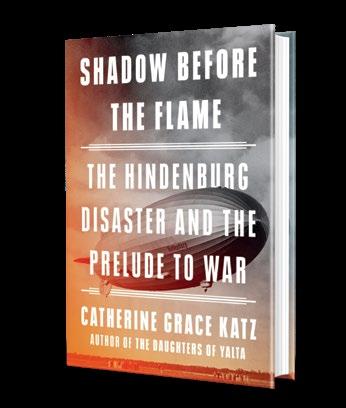
Katz, Catherine Grace | Viking | 448 pp. $35 | September 22, 2026 | 9780593832189
particularly productive throughline follows a radio journalist whose report on the crash heralded a new era of breaking news. Another chronicles the simultaneous rise of airplane travel, which enjoyed “scalable” advantages over zeppelins. A third, starring American reporters in Germany, focuses on the accruing horror caused by Hitler. Her narrative of the
crash’s aftermath efficiently explains the apparent technical mishap that set the Hindenburg ablaze. The book only loses steam once, when she spends perhaps more time than necessary on wild conspiracy theories that sought to blame the downing on subterfuge. A talented historian’s engrossing narrative of an iconic disaster in the sky.
Baur, Susan | Bright Leaf (216 pp.) | $24.95 paper | September 8, 2026 | 9781625349545
Diving into nature. For the past 20 years, beginning when she was 63, Baur has been swimming in the ponds of Cape Cod, delightedly immersed in the world of turtles and feeling like “a citizen of wonderland.” She was encouraged in her explorations by her new partner, Peter; 81 when they met, he was already suffering from heart disease and died five years later. After moving from the house they had shared in Chatham, Baur descended into depression and self-pity but decided, at 71, to get back into the water and rebuild her connection to turtles. “The state of mind they put me in and the world they showed me were sabotaging at least one of my most basic assumptions,” she writes, “namely that I, like everyone else, was superior to every creature found in every pond.” Instead, swimming among turtles generated “overwhelming feelings of reverence” and awe. Aware of the fragility of their habitats, she tried to find support to protect the health and viability of the ponds but faced frustration in convincing others of the threat of “poop, road runoff, trash, jet skis, motorboats,” erosion, and pollution. Hoping that youngsters would be more receptive, she wrote a series of children’s books featuring turtles—taking drawing lessons, so she could illustrate them— and visited schools to share her stories. Turtles, preservation, and the challenges of growing older have merged in a new project: Several years ago, she founded the Old Ladies Against Underwater Garbage, a group of feisty women who, in 2025, cleaned 20 ponds. Facing the inevitability of aging, she has found that “feeling solidly a part of the natural world” has made her “at last, brave enough to be old.”
An impassioned memoir of self-discovery and enchantment.
Bergen, Peter | Norton (384 pp.) | $32.99 September 8, 2026 | 9781324124061

A primer in how to lose the war on terror. National security expert Bergen shows how intelligence agencies, politicians, and the military misread the world after 9/11—the wars in Iraq and Afghanistan cost roughly $6 trillion and 7,000 American lives. One serious misstep was attacking Iraq on the assumption that it was involved in the 9/11 attacks; another, by Bergen’s account, was relegating the war in Afghanistan to secondary status, a diversion that, he charges, resulted in the Taliban’s return to power 20 years after its initial defeat. “The dual debacles of the Iraq War and the Afghan withdrawal signaled that the US superpower had little idea what it was doing when it came to foreign policy,” he writes. He elaborates: Even though the brass was wary of sending troops to “faraway countries they had little understanding of,” presidents from Bush to Trump pushed for war or, at least in Obama’s case, kept the status quo. Other missteps that the author enumerates include disarming the Iraqi military and purging members of Saddam Hussein’s Baath Party, which put a million disaffected and well-trained fighters out on the street, strengthening Al Qaeda in Iraq and later ISIS (“the pool of potential terrorists expanded quite dramatically because of the Iraq War”). Bergen explodes numerous assumptions: Pakistan, he writes, did not shelter Osama bin Laden, as the CIA asserted, and torture such as waterboarding produced almost no actionable intelligence. Most damning of all, however, was that in both Afghanistan and Iraq, “there was no real plan for the ‘day after.’” As Colin Powell said, “You break
it, you own it,” to which Bergen adds, “Make real plans for the ‘day after’ the war appears to be won, or you will likely lose the peace.”
A profoundly insightful account of why we’re mired in forever wars, and likely will be long into the future.
Bowie, Nikolas & Daphna Renan | Norton (320 pp.) | $31.99 | September 15, 2026 9781324092803
A historically grounded critique of unchecked Supreme Court supremacy. Bowie and Renan (of Harvard Law School) argue that the U.S. Supreme Court is responsible for the current “unraveling of our democracy.” The “Republican form of government” guaranteed by the Constitution and the principle of judicial review established in Marbury v. Madison (1803) do not support an unchecked court allowing a president to rule as if he were a king. Backed by interest groups, the court has released seemingly final verdicts, setting aside federal law “in order to reinforce regressive ideas: racial caste, corporate freedom, and others.” Through a series of densely argued case studies, Bowie and Renan show that few of the liberties taken for granted by citizens would be in place if earlier generations of elected representatives and scholars had not challenged such alleged irreversibility. To the disaster of Dred Scott v. Sandford (1857), Congress responded with the Thirteenth, Fourteenth, and Fifteenth Amendments, the Civil Rights Act (1866) and the Ku Klux Klan Act (1871), encapsulating their vision of an egalitarian, multiracial democracy. The pendulum swung the other way during Jim Crow when the court codified racial segregation (Plessy v. Ferguson, 1896).
With Brown v. Board of Education and Bolling v. Sharpe (1954), a more liberal
court facilitated the passage of the Civil Rights Act of 1964 and the Voting Rights Act of 1965. But it did so without invoking prior legislation by Congress, thus strengthening the impression it was acting in splendid isolation. The authors offer suggestions for judicial reform, such as requiring justices to reach consensus before invalidating federal laws. Yet their main interest lies in enjoining readers to cast their votes for democratic constitutionalism: The main obstacle to judicial reform is public opinion. In straightforward prose, the book delivers its punches cushioned by a healthy dose of optimism, reminding us that democracy is, in the words of John Lewis, not “a state” but the work of “ordinary people with extraordinary vision.”
A nuanced and powerful plea for democratic constitutionalism as a solution to the crisis of American democracy.
Boyd, Herb | Empire State Editions/ Fordham Univ. (464 pp.) | $39.95 February 2, 2027 | 9781531514433
A cauldron of culture in Upper Manhattan. In 84 episodic chapters, Boyd, a journalist and retired teacher of Black studies, creates a sweeping history of Harlem, from its colonial beginnings as an expansion of New Amsterdam to its current identity as a site of gentrification and historical preservation. A warm foreword by the late U.S. Rep. Charles Rangel introduces Boyd’s abundantly populated narrative, accounting for many who lived in or visited Harlem, however briefly. George Washington strategically placed his troops on a promontory in Harlem Heights in 1776. In 1960, Fidel Castro and his entourage moved from a Midtown hotel to Harlem’s Hotel Theresa, where Castro met with Malcolm X. Mayors, governors, and
heads of state walked Harlem’s streets, as did famous figures in the arts, politics, entertainment, sports, and business, among them: Oscar Hammerstein, George Gershwin, Sammy Davis Jr., Scott Joplin, Arturo Alfonso Schomburg, Marcus Garvey, Bayard Rustin, Madam C.J. Walker, Paul Robeson, James Baldwin, and Zora Neale Hurston. The neighborhood changed as the city’s population changed: Blacks appeared as African indentured servants, arriving in 1625 under the aegis of the Dutch West Indian Company, and as enslaved people traded on Wall Street, some owned by New Yorkers. Throughout the 19th century, Harlem’s Black population grew, attracting manumitted slaves and runaways (Frederick Douglass was one). Between 1890 and 1900, Boyd reveals, New York’s Black population increased by 25,000, and the area also became home to waves of immigrants—Italians, Germans, Jews, Irish, and Puerto Ricans. The author notes recurring eruptions of racial clashes and riots; the growth of activist movements, such as the Black Panthers; and the creation of such notable cultural institutions as the Apollo Theater, the National Jazz Museum, the Dance Theater of Harlem, and the Studio Museum. A lively, panoramic chronicle.
Brunner, Bernd | Trans. by Lucy Jones Princeton Univ. (256 pp.) | $29.95 November 24, 2026 | 9780691295589
Wide-ranging examination of Western visitors to the Holy Land since the Crusades. German author Brunner (Extreme North: A Cultural History, 2022) dives into a rather neglected area of historical study: visits to the Holy Land by residents
of Europe and North America. Such travel, whether conducted for the sake of religious pilgrimage, cultural curiosity, or trade and diplomacy, is widely acknowledged but rarely studied for its own sake. He draws on numerous primary sources, many of which are published or translated here for the first time. He begins with travelers from the Middle Ages up until roughly the age of Napoleon, a panoply of fascinating personalities ranging from a 12thcentury visitor from Iceland to the mystic Margery Kempe. Traveler Francis of Assisi would go on to cast a long shadow, as Franciscan monks would become longtime caretakers and gatekeepers for the Christian holy sites of Palestine. Moving on to the 19th century, the author describes a lengthy list of travelers who came to explore, worship, or evangelize. Many would encounter doubt, many would cause disruption, and many would die through the harsh realities of travel in the Levant. Through their eyes, Brunner paints a picture of a region rich in diversity yet always in tension. “The relatively peaceful coexistence of the different religious and ethnic groups in the Ottoman Empire over long periods of time,” he notes, “was based on clear boundaries, which formed the basis for mutual respect.” Western visitors often ignored, misunderstood, or blatantly challenged these boundaries, adding to conflicts that remain to this day. Overall, Brunner provides facts and leaves analysis to the reader. Nevertheless, his array of primary sources, along with his accessible approach, allow the reader to do just that.
Voices across the centuries are heard again, describing the Holy Land.

Byrne, David | Penguin Press (400 pp.) | $36 October 6, 2026 | 9780593655276
T he former Talking Heads frontman on great art and ideas that missed their moment. In academic literature, a “sleeping beauty” is a research paper that was neglected when it was first published but found relevance later. Pop icon and author Byrne (How Music Works, 2012, etc.) expands the concept by looking for examples not just in science but in literature, music, technology, economics, and more. Though the book is structured as 35 brief histories and biographies, he organizes them around a handful of themes. Sometimes all an artist needs is one spirited advocate (like William Faulkner had in Malcolm Cowley); sometimes a figure needs time to escape their reputation (like the infamously pugnacious Caravaggio); sometimes research needs to catch up with a rejected idea (like continental drift); or sometimes a catastrophe demonstrates an idea’s validity (as financial collapses redeemed the research of neglected economist Hyman Minsky). If music doesn’t pan out for Byrne, he has a viable sideline as a pop-history writer—he has a wry, entertaining, and informed voice whether he’s discussing Vermeer’s paintings or water-management systems in ancient India. His enthusiasm for the subject is consistent throughout, though too often he gooses his prose with exclamation. (“Even the Bard did sequels!...There’s a lot you can do with one chord!...Never underestimate how one might be discovered!”) There’s little autobiographical material here, though an opening chapter about his discovery of the neglected Brazilian musician Tom Zé speaks to his passion, and he plainly did all this homework in the name of boosting creativity. The closing pages advocate for a cosmopolitan, openminded view of the world that might save
good ideas from lying dormant for years, even centuries.
An affectionately curated assortment of tales about human ingenuity saved from the dustbin of history.
Chapman, Kit | Greystone Books (320 pp.)
$29 | October 20, 2026 | 9781778404177
A global history of chemistry from the Stone Age to the present. This enjoyable, informative book by a science journalist and historian convincingly argues that chemistry evolved from alchemy, which humans began practicing in the Stone Age. Chapman rehabilitates alchemy’s reputation, establishing that, throughout history and across cultures and civilizations, it functioned primarily as the honest manipulation of substances for use, starting with fire. Where alchemy transforms materials, chemistry explains those transformations. It emerged from alchemy in stages, each stage described through its occurrence in a different culture, civilization, or place, such as Mesopotamia, Egypt, the Islamic empire, China, India, Sri Lanka, Mesoamerica, and Europe. As the author explains, “Science didn’t exist just in the Christian world, it was alive in Africa, Asia and the Americas, too.” He not only rebuts the West’s Eurocentric narrative of science’s history, but also shows science as a scientist would recognize it: the work of many hands and minds over many years. “No one person created chemistry,” he declares on the first page. “It was a gradual transformation that built on millennia of knowledge” accumulated by “thousands of men and women, across the world, who guided us from the first campfire to the modern age.” This cast of thousands includes women, craftspeople, and a host of fascinating individuals, such as Tappūtī Bēlet-ekallim, an Assyrian perfumer; Mary the Jewess, a first-century Alexandrian who wrote “the book” on
chemistry apparatuses; and Ge Hong, who recorded the earliest known successful treatment for malaria in 340 C.E. Explanations, even of complex chemical reactions, are thorough and beautifully clear. The narration moves smoothly on the continuum, from general history to personal experience, and speaks in a lively, engaging, and occasionally witty voice.
A delightful, rigorous, and compelling history also offering an exciting new model for writing the history of science.
Costanzo, Anthony Roth | Farrar, Straus and Giroux (320 pp.) | $30 October 27, 2026 | 9780374614669
The past and present of men singing in falsetto. “Would you consider entering naked?” is the first line of Costanzo’s charmingly idiosyncratic memoir/history. These words from the director of Philip Glass’ opera Akhnaten, and the countertenor’s response, signal that this will not be a conventional opera autobiography. Costanzo did indeed agree to enter naked, and it’s only the initial instance of his openness to radical innovations in this venerable art form. Describing his preparation for the role also gives readers the first example of his ready wit: “What if someone told you you were about to appear buck naked in front of three thousand people? I bet you’d start looking for a personal trainer, too.” He made the front page of The New York Times Arts & Leisure section; throughout his career, Costanzo has had a gift for getting boundary-pushing work noticed in the mainstream. “I want the art I make to reach the broadest possible audience,” he writes. This heartfelt credo inspired such outside-the-box maneuvers as making a music video for each track of an album composed entirely of arias composed by Handel or Glass. Tracing the history of
“Everybody was telling me I was a boy, but I knew I was a girl.”
TRANSCENDENT
castrati, the male singers castrated as boys to retain their sopranos, Costanzo spotlights how vital these voices were to baroque operas such as Handel’s, going on to cover the early music revival of the mid-20th century that led to the rise of countertenors to sing the roles first made possible by this now-outlawed practice. Autobiographical chapters recall a close relationship with supportive parents, an early career in musical theater, the voice teachers who facilitated his move to opera, and much more. The text rambles a bit, but every page imparts Costanzo’s passion for what he does and the unabashed entrepreneurship that led Opera Philadelphia to name him its general director in 2024. He promptly initiated a Pick Your Price policy, the entire season sold out, and 67% were first-time ticket buyers. A must for opera lovers and fun for general readers as well.
Cox, Laverne | Gallery Books/Simon & Schuster (256 pp.) | $30 | June 9, 2026 9781668097755
A transgender celebrity reveals the peaks and valleys of her life.
A four-time Emmy-nominated actress and transgender rights activist, Cox elaborates on a journey that’s been filled with joyful and challenging moments and, ultimately, liberating experiences. The book is split into three parts, each representing an era in the author’s evolution. She was raised in Mobile, Alabama, by an exasperated single mother. Even playgrounds became unsafe spaces, as Cox was bullied by classmates: “I couldn’t help the lilt of my voice, hide the natural fluidity of my
wrists, the balletic expressiveness of my hands as I talked….Everybody was telling me I was a boy, but I knew I was a girl.” After being shuffled off to an orphanage at age 10 and attempting suicide many years later, Cox hardened her “armor,” reclaimed her footing, and embarked on an identity “reinvention.” Together with her brother, Lamar, she enrolled in the Alabama School of Fine Arts and honed her dance and performance skills as well as academic acumen. The book smoothly moves through Cox’s young adulthood as she resisted her queerness until experiences on both coasts (New York City club life and the actress limelight in Hollywood) changed the way she perceived her Black transgender identity and visibility. As her star rose with an award-winning role in Orange Is the New Black beginning in 2012, it opened the door for additional acting roles. Cox is an engaging storyteller and excels at reanimating anecdotes with candor and wry humor. Toward the end of the memoir, she intimately details a relationship with a Republican New York City police officer who’d kept her identity hidden from his public life. Though she fell deeper in love with him, she ended things when she realized there had to be more for her in romance than to be treated like a secret. Saturated in themes of resilience, empowerment, and Black transgender pride, Cox’s confessional will resonate with queer readers and anyone who has had to struggle to find and reconcile the true essence of themselves.
Enlightening and uplifting.

Kirkus Star
Craveri, Benedetta | Trans. by Alex Andriesse New York Review Books (512 pp.) | $24.95 paper | September 1, 2026 | 9798896230465
An Italian aristocrat’s tumultuous life and times. Italian literary scholar Craveri draws on fresh archival sources to create a perceptive biography, translated by Andriesse, of Virginia Verasis di Castiglione (1837-1899), a woman of astounding beauty and unfettered ambition. The rebellious, spoiled daughter of Italian aristocrats, by the time she was a teenager, she became increasingly aware of how her beauty could serve her. At 16, hoping to gain independence, she married the Count of Castiglione, a widower who had fallen madly in love with her. The marriage was a disappointment for both: The count, Virginia complained, “had changed into a nagging pedagogue and treated her like a little girl,” while she, the count vented to her father, was volatile, willful, and uncontrollable. Soon pregnant, three months after her son was born, she took a lover, embarking on a flamboyant career as a “serial seductress.” Her conquests included Victor Emmanuel II, Napoleon III, wealthy diplomat Henri de La Tour d’Auvergne, and Prince Giuseppe Poniatowski, an old family friend and the confidant to whom she wrote thousands of letters. Like Virginia, Poniatowski was “individualistic, intolerant of rules, in love with success, power, and money.” Craveri follows Virginia’s fortunes amid political upheaval, revolution, war, and intrigue. With a large network of lovers, friends, and acquaintances, and with a talent for manipulation, she proved to be valuable in procuring and transmitting information. Craveri candidly portrays her hedonism, coldness, and arrogance: “If she commanded the stage with the lucidity of a professional actress,” the author writes, “narcissism is likely to have been of the essence.” Narcissism factored
into her cruel treatment of her son as well: damning evidence of selfishness that seems pathological.
A richly detailed portrait of a scandalous woman.
de Waal, Frans | Norton (288 pp.) | $29.99 October 13, 2026 | 9781324076384
The correspondence of animal and human abilities and how they converge. Long before we regarded them as “wildlife,” fellow creatures to admire and protect, humans largely thought of animals as either food, competition, or mortal enemies. Only in recent years have we begun to recognize what we once dismissed: Animals have complex emotions and profound inner lives. In this book, posthumously completed by colleagues after his death in 2024, de Waal offers a fresh perspective on humanity’s relationship with animals and, by extension, human self-identity. The esteemed Dutch-American biologist and primatologist, whose focus on ethology gave new impetus to the study of animal behavior, traces the how and why of a revolutionary about-face in Western scientific thinking that emerged from decades of heated debate. Science’s understandable wariness of anthropomorphism has proved too restrictive, says de Waal. He terms it “anthropodenial,” the “deliberate blindness to human-like characteristics of other animals or animal-like characteristics of ourselves.” Yet resistance to the work of modern ethologists persists to this day, despite an avalanche of evidence confirming animals’ capacities for self-awareness, problem-solving, culture, and empathy. Blending science with elements of autobiography, de Waal gives full credit to the groundbreaking work on which he and others have built—work that demonstrates that claims of commonly
declared differences between species no longer survive scrutiny. Believing that “the sentience and moral status” of animals is a given, he demonstrates that cognition in animals is not an all-ornothing proposition and that brain size is not the best proxy for intelligence. Although the illustrated text can bog down a bit in methodological details, the writing remains fluid, and the studies that de Waal describes are convincing. The book closes with a touching afterword by Catherine Marin, de Waal’s wife of 54 years.
Upending traditional notions of human uniqueness and superiority.
Diamond, Jared | Mariner Books (288 pp.) $32 | September 1, 2026 | 9780063517660
A wide-ranging examination of the impact of leaders on some key institutions. Retired professor Diamond (Guns, Germs, and Steel, 1997) takes a jaunty, entertaining look at the roles that individual leaders play—and the limits of those roles in politics, business, sports, and religion. He moves between beguiling biographical sketches of some key figures and more technical statistical analysis of data regarding the impact of leaders on the success or failure of their businesses, teams, governments, or religions. His assessment is often based on what happened when those leaders were removed from their positions, whether by death or some other means. He concludes, unsurprisingly, that depending on the circumstances, some leaders have more impact than others and few pass what he calls the “Hamlet test,” the assumption that, for example, no other contemporary could have produced the works of art that Shakespeare did. It’s not in its conclusions but on a more granular level that the book fascinates. Diamond will convince even the most sports-averse that studying the effects of replacing one
basketball coach for another provides insight into similar replacement of business executives and national leaders. He focuses in on relatively unfamiliar figures—like Seretse Khama, the first leader of Botswana after the country achieved independence, and Lynda and Stewart Resnick, founders of the American pomegranate juice industry—and makes a case that they were uniquely situated to achieve outstanding results. He makes a convincing argument that the success or failure of a religion depends not just on a “charismatic founder” but an “outstanding organizer” and maybe a military leader and backs up his point with studies of the Mormon Church, the Shakers, and Jim Jones’ Peoples Temple. His nimble, irreverent approach and insatiable curiosity lead to enlightening connections that stodgier academics wouldn’t notice. Intriguing insights into just how much a leader matters (or doesn’t).
Elkin, Lauren | Farrar, Straus and Giroux (384 pp.) | $30 | November 10, 2026 9780374615338

A consideration of women’s singing voices that blends criticism, memoir, and polemic. In what she calls this “sequel of sorts” to her previous nonfiction book, Art Monsters:
Unruly Bodies in Feminist Art (2023), Elkin includes a strand of autobiography, intermittently reflecting back on a road not taken. A self-described “run-of-the-mill lyric soprano,” Elkin attended a Long Island performing arts high school but ultimately decided against pursuing a Broadway career: “I did not want to spend my life standing in front of people and being found wanting, or excessive”—the kinds of charges leveled at the indomitable women with distinguished voices to whom Elkin devotes many of this book’s chapters. She considers iconic shriekers like Cyndi Lauper, PJ Harvey, and riot grrrls. (A curious omission from Elkin’s inquiry:
Yoko Ono.) She also considers more conventionally euphonious singers like Tori Amos, Maria Callas, and Billie Eilish, who nevertheless also spark “these questions about loudness or softness, restraint or abandon, and what it all meant for the way we hear the female voice”—what it means, that is, for women to sing (read: say) what they want and to sing (say) it as they want to, sometimes in protest, sometimes at earsplitting volume, and without apology. Elkin examines the ages-old, fear-based historical precedent for silencing and challenging women’s voices, frequently touching on the urtext on the subject, The Little Mermaid. It’s all in persuasive service to the idea that there are burdensome expectations—of poise, of pitch—placed uniquely on female singers (cf. Bob Dylan), although women have always managed to find ways to unleash their power. In a delicious speculative aside on Motown’s girl groups, Elkin writes of “the Wall of Sound Phil Spector built to amplify their voices, or maybe to protect himself from them.”
A full-bodied and erudite but accessible investigation.
Else, Jon | Belknap/Harvard Univ. (464 pp.) $29.95 | September 8, 2026 | 9780674300354

W hen the U.S. “rehearsed global suicide” in the desert.
Spanning nearly 100 years, starting before physicist Leo Szilard’s 1933 vision of a split nucleus, this history by documentary filmmaker Else
covers the A-bomb’s invention, use, testing, and extravagant stockpiling— while saluting the frighteningly limited, stalwart number of people who strove to assure our survival by disarmament and treaties. Code-named “Priscilla,” a 1957 37-kiloton test on the Frenchman Flat—“deep in the badlands of Nevada”—provides the thread for this tale of planetary-scale risk-taking. “With its smashed aircraft hangars, rusting blast doors, and pigpens,” Else observes, the test site “resembles a silent, sun-bleached boneyard from the movie Planet of the Apes.” Nothing lands like the story’s central irony: Nuclear caches threatened civilization in order to save it, betting on deterrence via “parity of terror” or “demonic circularity.” In the hot-potato partnership between science and politics, staggering spending and stringent secrecy prevail, while environmental and human costs are unreckoned or elided. Else’s writing is detailed but never dry. Vivid metaphors give the narrative propulsive force: A steel safe, alone amid test rubble, is “a squat cookie jar from Hell”; nuclear bomb-making physics is “the espresso of science: an essence concentrated under pressure”; unscathed Hiroshima was “a china shop awaiting the bull.” Jawdropping statistics shake readers: Before 1963, “We had blown the equivalent of 29,000 Hiroshima bombs into the air”; “In the 1950s the US shot off one nuclear explosion in the atmosphere on average every three weeks, occasionally two in the same day.” The author evenhandedly reports the moral and ethical questions about the bomb and the start of the arms race, acknowledging doubts that tests were even scientifically or militarily justified as data producers. Colloquial expression, compelling description, first-person reporting, and direct address help rivet the reader. Present-day relevance makes this message urgent. As
Before 1963, the U.S. “had blown the equivalent of 29,000 Hiroshima bombs into the air.”
FRENCHMAN FLAT
treaties end, and the U.S. begins an extended nuclear upgrade, writes Else, “a visit to Frenchman Flat should be a requirement for holding public office in America.”
An important account of nuclear hubris and its incompletely tallied costs.
Fabricant, Florence | Running Press (272 pp.) | $32 | October 6, 2026 9798894141077
The longtime New York Times food writer recounts her adventures in world cuisine. Fabricant has been writing about food since the early 1970s, “insisting that people pay attention to their food choices.” But she was eating well long before then, thanks to a mother who knew her way around the kitchen. Her palate, she writes, runs to the salty side, a favorite Proustian madeleine being a half-sour pickle, and she opines frequently on the virtues of “judicious salting” while lamenting the fact that so many restaurants these days put salt on the table, the chef being the arbiter of such matters. (She also asks for full-size dinner plates, which seem to have fallen out of fashion: “How is one supposed to pile on a portion of lobster Cantonese, kung pao chicken, and shrimp fried rice?”) Fabricant wrote recipes for the Times as well as features and news pieces, and a few pepper her pages; some are obvious (does anyone really need instructions on how to make cinnamon toast or tomato sandwiches?), but others are inspirational (pecan pie? Yes, please). Of interest to trend-spotters are Fabricant’s notes on the many reasons for a star chef to forge a multi-outlet restaurant empire: It allows for more promotion of staff who might otherwise leave and builds on economies of scale. And besides, “having a group of restaurants affirms reliability.” Fabricant takes a few potshots—Keith Richards was a fellow guest at a dinner party but “spent the
evening outside, smoking, not at the table,” while Mario Batali’s “predations when it came to female staff eventually sank his career.” And Anthony Bourdain is conspicuously absent. But mostly her memoir recounts good and happy times in search of just the right rabbit casserole, wine pairing, or authentic pasta dish in good company.
A tasty memoir by a foodie who’s been on the scene for years and knows where the skeletons are buried—or simmered.
Fentress, Elizabeth & Adam Rabinowitz Princeton Univ. (408 pp.) | $39.95 August 25, 2026 | 9780691288062
How ancient chattel slavery had an impact on the New World.
Rather than focusing on societies that purchased slaves, archaeologists Fentress and Rabinowitz examine three places that produced enslaved people (excluding prisoners-of-war, reproduction, or debtbondage). They ask how the trade in these “high-value imported goods” transformed such source entities socially, politically, and economically. The book compares specific “systems related to slaving,” addressing three questions: how traders obtained the “goods”; how they transformed them from people to commodities; and how traders themselves and their society were enduringly affected. Slave-hunting expanded as demand increased and “outsiders” needed to be pushed back. Distance assured the slave’s “otherness” in language, appearance, and culture: Gauls, Scythians, and Libyan Garamantes were on the Mediterranean periphery. At pains to avoid victim-blaming, the authors acknowledge demand-side responsibility and stress symbiosis between consumers and producers. The text employs archaeology and comparative study, with the West African state of
Dahomey as a model: settlement pattern changes, feasting and funerary rites (alcohol being essential to both), performative violence (including head-taking), and the social construction of identity (including gender identity) provide comparative features. The authors detail the feedback loop between labor and production; connect slave-supplying to social status; and identify “rituals, beliefs, and attitudes” facilitating human commodification. The densely detailed evidence is aimed at specialists, but the central argument in the introduction, conclusion, and chapter conclusions is accessible to the interested nonspecialist, thanks to clear, low-jargon writing. The book undermines the idealizing denial of slavery’s importance in the Classical world, insisting that Western cultural and economic benefits owe much to “the exploitation of millions of enslaved people.”
Illuminating historical insight into an ancient institution.
Finger, Bobby & Lindsey Weber Crown (256 pp.) | $33 | September 29, 2026 9798217088324
The evolution of celebrity culture. Writers and Who? Weekly podcast co-hosts Finger and Weber explore the ideology of fame by replacing the classic, if antiquated, A-to-D-list celebrity scale with the dual star categories of the “Thems” (established superstars) and the “Whos” (aspiring/rising personalities). Although this categorical assessment appears lighthearted and humorous, it’s also practical and relevant. The categories are also dramatically interchangeable, the authors attest, since fame itself can be as disastrously fleeting as it can be instantaneously sensational, often “in a snap.”
According to the authors, this new way of assessing celebrity worth works in tandem with the ever-evolving media platforms
that have become a virtual wellspring for attention and exposure, notoriety, and social virality. Finger and Weber analyze American actress Meghan Markle’s global fame—considered a “Who” prior to her courtship with Prince Harry—and glimpse closer toward personalities whose sudden celebrity carried the cruelty of an expiration date, particularly in the reality TV universe. Survivor’s inaugural winner, Richard Hatch, faded into obscurity while season two winner Elizabeth Hasselbeck used her notoriety to springboard into the public eye as a conservative-minded counterweight on talk shows like The View. Coupledom also plays a part in the success rate of a “Who/Them” celebrity, the authors note, as fans “thirst” for highprofile couplings and breakups alike. Akin to the best Hollywood gossip tabloids, Finger and Weber exude pop-culture knowledge, expertly probing the trendy rise of changing media landscapes and shameless influencer culture. While the diligent work of “gossipmongers” like Perez Hilton faded, it was replaced with the innocuous, not-so-mysterious blind items found on sites like DeuxMoi. Elsewhere, the book dives into the relevancy (“Who-y” or “Themmy”) of celebrity consumerism, “standom,” and how social media can generate fame for anyone with timing and the right amount of “it” factor. Armed with wit and astute perception, the authors present their case for the pursuit of fandom and the highs and lows of ascending the Hollywood hierarchy. A clever, erudite assessment of fame.
Fiore, Gina | Gillian Flynn/Zando (288 pp.) $28 | October 27, 2026 | 9781638933625
In gambling, what separates addiction from professionalism, and legality from criminality? Fiore walked both lines for much of her career as a professional gambler, mainly playing blackjack in casinos around the
world. An advantage player learns how to exploit weaknesses in the games that casinos offer, enabling her to improve her odds of taking home more cash than the house expects to give up. The best-known form of this gambling “with an edge” is card counting, which requires an ability to do math in the head. Fiore relied on another tack: Some blackjack dealers are sloppier than others at hiding the hole card. “The hole card is meant to be hidden until the players have all acted on their hands,” she explains, “but as a hole-card reader, I can see the dealer’s card before it’s turned over. And when I know what their hole card is, the house no longer has an edge—I do.” For this reason, casinos are always on their guard against advantage players—“APs”—and, although neither card counting nor hole-card reading is illegal, cops in casino towns take the house’s side when the house turns on the heat. Fiore got into and out of trouble with casino security and the law numerous times; her name is even on a Supreme Court decision, Walden v. Fiore, that she lost and that, as she writes, “instantly became a staple in a law student’s first-year study of civil procedure. It’s cited thousands of times a year in lawsuits dealing with personal jurisdiction.” There’s a lot of shop talk in this memoir that gamblers, at least, will find interesting. There’s also a very human story of a woman who grew up poor, had a chronic mental illness and a gambling-addicted mother, and who found comfort in casinos and got good at beating them at their own game.
Morally challenging personal history.
Firestein, Stuart | Basic Books (288 pp.) $30 | August 4, 2026 | 9781541606739
The importance of knowing— “but never knowing for sure.” Firestein, professor of neuroscience at Columbia and author of Ignorance: How It Drives Science (2012), writes that we
believe that humans will eventually cure cancer, fly to other planets, and eliminate poverty. This optimism turns out to be recent, a product of the Scientific Revolution that began in Renaissance Europe. Until then, he adds, all cultures (Ancient Greek, Chinese, even Christian) accepted that life would change little as generations passed. But humans hate uncertainty, so every culture assumed everything important was known. One found truth in holy books or words from wise men. Aristotle never performed an experiment; he simply observed and thought. Moving from philosophy to history, Firestein describes the Age of Enlightenment. Its immortals (Kepler, Galileo, Newton, Leibnitz) produced spectacular, mathematics-based laws that convinced many that we live in a deterministic universe and led to 19th-century social Darwinism, eugenics, scientific racism, phrenology, and other pseudosciences. Firestein’s hero, Charles Darwin, demonstrated with natural selection that fixed laws were not necessary to explain the apparent orderliness of the universe. Optimism recedes in the book’s second half as the author presses his opposition to determinism, which still dominates the popular mind. Some schools still teach a 19th-century version of science, while 20th-century chaos theory and complexity science have not entered the mainstream, although technologies that depend on randomness and uncertainty govern everyday life—not only quantum theory but lasers, GPS devices, computing, cryptography, gaming, clinical trials, and economic models. “Complexity is everywhere, though we barely notice it,” Firestein writes. Today, there is no overriding urge to find a “single answer.” It is possible to ask questions that have more than one answer or no obvious answer. A solid and even stirring defense of science.
Frank, Thomas | Penguin Press (384 pp.) $30 | October 20, 2026 | 9780593657539
Worshipping the twin gods of creativity and innovation may have doomed the American democratic experiment. Cultural and political analyst Frank (What’s the Matter With Kansas?, 2004, etc.) excoriates the disastrous results of the American love affair with “innovation.”
In the postwar United States, creativity (the inventions of the human mind) became identified with innovation (the relentless push for novelty). This conflation, he argues, buttressed political elites but did not improve the nation’s economy, benefiting the wealthy while taking jobs away from the poor. The trouble began with the dubious teachings of super-salesman Alex F. Osborn of the New York advertising agency Batten, Barton, Durstine & Osborn, who in Applied Imagination (1953) declared that creativity was universal. Over the next few decades, it became anything but that. With music and the liberal arts in “free-fall” today and manufacturing largely moved offshore, the U.S. has morphed into, Frank writes, “a postindustrial plutocracy in which Silicon Valley billionaires stride the earth like lords of creation, starting bespoke political movements and launching stuff into space.” It’s hard to finger specific culprits, but he devotes probing chapters to presidents and other politicians, on the right as well as the left, who, in the name of innovation, elevated software-makers,
A world “in which Silicon Valley billionaires stride the earth like lords of creation.”
deregulated banks, cut taxes for the rich, built lifestyle “playgrounds” for yuppies in derelict cities, and reconfigured universities as incubators of new businesses (thus, sending tuition spiraling “upward into the stratosphere”). While some perpetrators of the creativity con might claim noble intentions, its willing beneficiaries can’t. The author mentions Elizabeth Holmes, whose sham blood-testing company Theranos coasted to short-lived success on the fraudulent wings of innovation-speak. A pithy and entertaining writer, Frank has a special talent for the trenchant quip: “The amount of high-IQ brilliance that has gone into preventing farmers from repairing their own machinery would probably be enough to power several Manhattan Projects.” Long on condemnation and, given the scale of the problem, short on advice, this alarming book offers no prescriptions for the future but teaches readers to be wary whenever someone wields the C-word.
A spirited indictment of the American obsession with innovation.
Kirkus Star
Gleick, James | Farrar, Straus and Giroux (544 pp.) | $35 | November 10, 2026 9780374618940
A ringing history of one of technology’s most ubiquitous objects.
Gleick, an accomplished science writer, takes readers on a grand tour of a technology that was built in fits and starts on other discoveries: First, electricity had to be figured out, then the telegraph, then adapting the telegraph to the human voice, and so on. Some of the principal inventors he explores are little known. One pioneer, for instance, was a German named Philipp Reis, who created an apparatus called the Telephon in 1861. A later report called it an “acoustic telegraph,” which speaks to one of Gleick’s smart
aperçus: When Samuel Morse came up with the telegraph in 1840, the patent he received “was technically called an ‘improvement,’” pointing to the fact that technology begets technology. One key player was Bell Telephone, descended from the ambitious inventor Alexander Graham Bell, and its Bell Labs, which came up with all sorts of telephonic goodies. (Who knew that the Bell Labs inventor of the bazooka was also the inventor of the answering machine?) Gleick compresses a wealth of information into an impressively fluent narrative, writing of how the area code came about, of the breakup of phone monopolies, and the extinction of the phone book with the advent of the cellphone—about which “hardly anyone cared.” Of sociological and historical interest, too, are the author’s notes on the absence of minorities in both the hierarchies of the telephone industry (with Black women hired as switchboard operators only in the years of World War II—and then grudgingly) and in advertising, all of which telegraphed a “racism [that] was pervasive and unapologetic.” On the cultural history front, too, Gleick is good on how the phone entered literature and pop fiction (again, who knew that Robert Louis Stevenson would be a pioneer?), as well as popular culture (“One-ringy-dingy, two ringy-dingy…”).
Everything you ever wanted to know about the telephone—and then some.
Kirkus Star
Grandmaster Flash with Robert “Scoop” Jackson | Amistad/HarperCollins (288 pp.)
$29.99 | September 22, 2026
9780063467583
Scratching beneath the surface.
Musical pioneer Grandmaster Flash isn’t afraid to take credit for the way he changed popular music forever— nor should he be.
The legendary DJ created the “Quik Mix Theory” technique, along with the
cueing system, record touching, and other innovations: “While DJs have taken my foundation and done extraordinary things with it, no one has changed the mechanics of what I started over fifty years ago,” he writes. His memoir starts off with recollections of his childhood as a whiz kid from the Bronx; born Joseph Saddler, he listened without permission to his father’s records, which resulted in “ass beatings.” In the early 1970s, he began playing music outdoors. “We were rolling our equipment down the streets in shopping carts,” he writes, “and we’d hook up the system into the streetlight post to provide electricity.” He quickly became one of the most exciting figures in New York’s burgeoning hip-hop music scene. Not everyone was a fan: “I was ‘disrespecting’ music. I was hated for it,” he recalls. “I didn’t want to change the way music was made; I wanted to rewire what people thought they wanted when listening to music.” He recounts experiences with his group, Grandmaster Flash and the Furious Five, and other fixtures of the scene, but he sings the praises of lesserknown talents, including Terri Martin, who came up with the concert chant “Somebody say, Ho!” and Anna Monroe, who initiated the line “The roof, the roof, is on fire.” While Grandmaster Flash is spare about details of his personal life, he’s mostly interested in how hip-hop grew into a global phenomenon. His voice is consistently engaging, and his stories are fascinating. “I totally disagree with anyone who has the power to promote and tell this story to say that one person created this,” he writes. “There was no one, singular mind or event that did this.” But hip-hop as we know it would not exist without him.
A must for anyone interested in the history of American music.

Grant, Allison Sweet | Little, Brown (144 pp.)
$25 | September 15, 2026 | 9780316608367
Turning to writing when faced with cancer.
At age 40, with three young children, Grant was both shocked and devastated to find a lump in her breast. When it revealed itself to be cancer, she knew her life would never be the same. Tasked with managing her treatment plan, her emotions, and her fears, as well as the way she communicated these to her family and friends, she was thrown immediately into the midst of cancer treatment. In such an impossible position, she turned to writing to make sense of the ordeal. Across several essays and poems, she uses language eloquently to make sense of the disease. “Things are allowed to be sad as long as they’re beautiful,” she writes. Elsewhere, she observes, “Life feels like a plum left ripe on the table.” In the midst of the sad and beautiful, moments of humor shine through, too. “I bet the artichoke dip would be hella good,” she ruminates in a poem titled “The Afterlife Breast Cancer Support Group,” which makes light of the impossible. The power of her writing is that the moments of humor and levity support rather than cut through the very real struggles; the verse allows for nuance and interplay between complex emotions. “Don’t call me a survivor. / I’m just a daughter, a mother, a sister, a friend,” she insists, lending weight to the presence of disease in our everyday lives. Immensely readable and likely heartening for other survivors, this memoir will be especially cherished by those who have experienced the cancer firsthand or through a loved one. Grant shares wisdom, love, and patience from all sides of the cancer diagnosis, carrying the reader gently from the kingdom of the well to that of the sick and back again. A poignant—and amusing—memoir in verse about a dreaded disease.
Haberman, Maggie & Jonathan Swan Simon & Schuster (496 pp.) | $34 June 23, 2026 | 9781668067246

Of malevolence, chaos, and vengeance as national policy. New York Times political reporters Haberman and Swan examine the profound differences between the first and second Trump presidencies, suggesting that present excesses might have been avoided “if he had served a consecutive second term”— for, absent his years in the wilderness plotting retribution, “he would never have accumulated the power he now wielded.” President Trump now surrounds himself with heavily vetted loyalists; even before he took office anew, “officials on the Trump transition team had already searched candidates’ social media accounts for any criticisms of Trump after the riot at the Capitol.” And the authors argue that competence comes second to appearance, as with his choice of a onetime Texas lawmaker to head the CIA: “He’s straight out of central casting.” Thus Kristi Noem, Pete Hegseth, Karoline Leavitt, and others, with some quickly discarded when the optics go bad—“I don’t know why I picked her,” Trump says of former Attorney General Pam Bondi. The news in this newsworthy book, based on more than 1,000 interviews with people “close to President Trump” (including one with Trump himself), is sometimes trivial— Trump leaves a mess wherever he eats, for
one tidbit, and staff have to check the trash to make sure he hasn’t thrown out sterling silver utensils. More often, it speaks to Trump’s driving obsessions, among them how best to play to the camera, as when he and JD Vance tag-team to upbraid Ukrainian President Volodymyr Zelensky, a confrontation that Trump characteristically called “better than The Apprentice.” Interestingly, the authors note several instances in which Trump treats Vance dismissively, with the hint that Marco Rubio might well emerge as Trump’s anointed successor in 2028. All in all, they write, Trump “lived in a bubble, shuttling between his private clubs and the White House, and he was rarely shown anything but good news,” even as he regularly—and apparently willfully—creates bad news all on his own.
A powerful chronicle of uninhibited, solipsistic power exercised with few positive results.
Hanawalt, Lisa | Drawn & Quarterly (250 pp.)
$25 | October 20, 2026 | 9781770469129
Creatures, humans, caregiving and selfexamination are tangled up perfectly in this sharply silly collection.
Hanawalt, the production designer for the popular animated comedy BoJack Horseman and creator of the adult animated series Tuca & Bertie, clearly has a deep connection with animals. In this book, echoing her previous cartoon work, she draws her own cartoon avatar as a bird-headed woman and her friends and acquaintances as cats, dogs, pigs, and fish. Beyond the emotional
A portrait of the president that’s drawn from more than 1,000 interviews. REGIME





By Steven Pfau

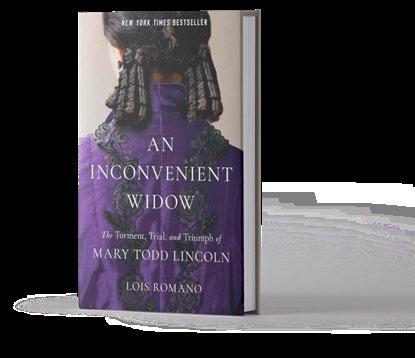

security of these quirky facades, Hanawalt has also come to her latest creative endeavor with a real, live, wet-nosed, wonderful animal on her mind. After years of indecision, the self-proclaimed, lifelong horse girl decides she’s ready to buy her own horse. And so, Juniper the Norwegian Fjord comes into her life. She fully embraces her new role as a horse owner, enjoying grooming, training, and trail-riding with Juni and navigates an equine health crisis that bonds the pair quite deeply. On a rough but effective parallel track, she struggles with the end of her long-term relationship and tries to rev herself up for dating and all that goes with it. But, as she’s reaching her 40s, the experience of singledom has a few new wrinkles as she tries to figure out how to treat herself kindly while she gets what she needs. She considers, quite cautiously, her long-held ambivalence about becoming a parent and details the medical and emotional ups and downs of egg retrieval. The flowing, unfettered, occasionally gross-out, briefly explicit facade of Hanawalt’s art style conceals the heart of a woman approaching midlife, working to figure out what’s meaningful and what’s superfluous, what to hold onto and what to laugh long and hard about. A delightfully dirty mind and a cracked-open heart make for an intense, unpredictable, and rawly relatable ride.
Hooper, Rowan | Knopf (416 pp.) | $35 August 18, 2026 | 9780593802663
A wide-ranging look at symbiosis in the natural world. British science journalist Hooper (How To Spend a Trillion Dollars, 2021) begins by taking some riveting looks at various examples of symbiosis in plants and animals, delves into the long and complicated history of the idea of symbiosis, and then looks
toward the future for ways in which symbiosis just might help to save the planet. He makes a convincing case that, although “until recently, symbiosis was considered little more than a novelty, even by biologists,” it’s actually at the heart of how life on Earth developed and has continued to evolve. The first third of the book describes Hooper’s close encounters with various symbiotic life forms around the globe, including figs in Brazil that both feed and depend on wasps that lay eggs in them, the fungi associated with oaks in Great Britain, and the coral reefs of Malaysian Borneo. The author’s boundless enthusiasm for his subjects is hard to resist. “It has surprised me, the place lichens now occupy in my mind, even my heart,” he writes. His extended account of the development of the concept of symbiosis by scientists over the centuries is ambitious, sometimes overly so, as it detours into accounts of the lives of Rachel Carson, the poetry of Emily Dickinson, the painting of Vincent van Gogh, and other cultural touchstones only tangentially related to his central subject. His chapters on the future also tend to wander off track. While he does touch on intriguing examples of new ways to nurture symbiosis in agricultural crops or resetting symbiotic systems in trees with regenerative arboriculture, he also sidetracks at length on the problems created by overuse of fertilizer and pesticides.
A compelling if unfocused study of the value of intermeshed species.
Huffman, Jared | Norton (256 pp.) | $28.99 August 18, 2026 | 9781324130482
cases straightaway: Whatever else Jan. 6, 2021, was, he writes, it was one of a series of “megachurch revivals” in which “speakers invoked violent Bible stories, labeled Biden a ‘demon’ and ‘antichrist,’ and cast their mission to keep Trump in power as a holy war.” That war part is quite literal, he says: Christian nationalists have no love for democracy or its exponents and would gladly take up arms to establish their “Christian” rule over America. This, writes Huffman—who was raised in a breakaway Mormon sect, long since rejected—represents nothing short of an existential threat. If, for the moment, the nationalists are mostly waging a culture war, things could soon turn ugly, as their views become ever more radicalized even as the number of Americans who profess to be Christian is in decline: “Decline breeds desperation. And desperation breeds extremism.” They have powerful allies, President Trump foremost among them, but with an ace in the hole in House Speaker Mike Johnson, who “rejects churchstate separation outright and has long advocated what he calls ‘biblically sanctioned government.’” And while there are cracks in the firmament, particularly with divided views of Israel, Huffman projects violence to come, inasmuch as the Christian nationalist movement has given up trying to argue the righteousness of the cause and instead “demands the hard certainty of conquest.” Battle is inevitable, he says, and what is essential in that battle is to hold firm to our government as a secular and not a sectarian institution.
A Democratic member of Congress and self-described humanist takes on the Bible-thumping right wing.
Huffman, representing California’s north coastal Second District, gets down to
A fiery denunciation of the theocrats who seek to impose their views—and policies—on this constitutional republic.

Hyden, Steven | Da Capo (288 pp.) | $30 September 8, 2026 | 9780306836619
On the occasion of the 25th anniversary of the Strokes album Is This It, the author asks, Why wasn’t it “it?”
“Every ten to fifteen years, the rock people theorized, there is a cultural reset,” reports music critic Hyden. “Punk did that. Nirvana did that. And now The Strokes were going to do it.” Except they didn’t. With the release of the Strokes’ first full-length record, Is This It, on October 9, 2001, the New York City band had everything going for them: an album of bangers embraced by fans and critics alike, smashing good looks and sartorial splendor, and the eyes and ears of the music press. They were supposed to be rock’s saviors, avengers of what Hyden calls “a stagnated music culture dominated by nü-metal mooks and plastic-mannequin boy bands.” But the backlash soon came for the Strokes. They were just a bunch of overhyped rich kids, the argument went, who didn’t have the goods, as evidenced by the lackluster reception to their post–Is This It output. Persuasively, Hyden takes the position that the failure of the Strokes to sustain their popularity wasn’t really about the band or its product; it was about the changing tastes of the music-listening public—in fact, “the matter of bands and groups generally being less romanticized now” is “what this whole book is about.” This makes the book’s true subject the listener. Hyden, who listens for a living, misses the days when rock bands were king: “I feel wistful about a mass consumerist institution that once seemed omnipresent but no longer exists.” His book is an intrepid, music-genre vivisection that nevertheless reinforces the truism that any work of art criticism is as much about the critic as about the subject.
A graceful eulogy for rock bands, centered on rock’s last best hope.
Ed. by Knight, Rebecca & Julie Buntin
Norton (336 pp.) | $29.99
September 1, 2026 | 9781324117056
An anthology of writing on the subject of new motherhood, in bite-sized pieces. Editors Knight and Buntin began this project in their “fourth trimesters,” when they began “comparing notes” on the tremendous changes wrought by labor, birth, and life with a newborn. The result gathers 60 accomplished writers in short, “digestible” pieces “better suited to the fragmented hours of new parenthood” than long-form essays. The “Laboring” section, with passages ranging from a single sentence to a few pages, chronicles the pain of contractions, the indignities of hospital protocol, and the violence of emergency C-sections— often rendered with humor alongside the horror, as when Krys Malcolm Bec describes the disorientation of having a birthing playlist played on shuffle by a well-meaning partner. “Feeding” is just as unsparing: cracked nipples, milk that won’t come, the tyranny of triple feeding, and the strange, consuming intimacy of nursing, which several writers describe as both the most hated and most loved act of their early motherhood. What emerges across these chapters, which extend into “Hurting,” “Loving,” “Tending,” and “Working,” is remarkably unsentimental. Contributors describe postpartum bleeding, mastitis, and depression alongside disorienting euphoria, often within the same entry. Several admit to the limits of language itself. As Emily Temple puts it, “there’s actually no way to communicate” how hard new motherhood is “until you experience it for yourself.” In the section titled, “Your Partner,” the writer Dur E Aziz Amna describes how, after birth, “a certain veneer falls off—the pretense of sameness that exists in many urban, educated couples before they have children.” The book’s format is a clever, humane response to the actual conditions of early parenthood, and the collection is
an unusually honest record of an experience usually sanitized for public consumption—funny, raw, and occasionally unbearable, much like the thing it describes.
A welcome addition to the literature of motherhood.
Kolker, Robert | Doubleday (368 pp.) | $35 September 29, 2026 | 9780385551038
An unfortunate family falls victim to a mysterious— and highly destructive— hereditary illness. As Kolker’s narrative opens, a 41-year-old woman named Barb fears she may have the same form of dementia that her mother and five of her nine siblings had. “The symptoms were subtle at first—missed appointments, an uncharacteristic aloofness, an end to deep conversations,” writes Kolker (Hidden Valley Road, 2020). “Slowly, impulse control and emotional depth became things of the past.” Some of Barb’s family simply tuned out, while others began drinking heavily and running into trouble with the law. The culprit was a rare malady called frontotemporal dementia, or FTD, which, Kolker explains, resembles Alzheimer’s disease but has more troubling dimensions. “Unlike Alzheimer’s,” he writes, “FTD emerges in the prime of life—as early as one’s forties— and relentlessly attacks the part of the brain responsible for planning, organizing, expressing language, understanding social cues, and exercising judgment.”
The author delivers a searching discussion of the loss of executive function and the etiology of dementia. One leading school held (and still has a few advocates) that amyloid proteins are to blame, while the prevalent view today is that so-called tau proteins entangle brain cells, populating the neurons themselves. Just as central to Kolker’s narrative
alongside this clear exposition of neuroscience is his portrait of Barb and her family, some of whom considered FTD a kind of depression that followed divorce, job loss, and other traumas. Barb instead elected to understand the disease and chart its effects on her, keeping a journal and “making a check mark each time she experienced a symptom,” such as forgetting someone’s name or neglecting to pay a bill. Sadly, Kolker notes, FTD is unlikely to be high on a list of medical and pharmaceutical priorities since it’s too uncommon to generate a profit: “In this landscape, most rare diseases are out of luck.” A compelling view of dementia and its devastating effect on victims and family alike.
Wave: Inside Al Qaeda’s Post-9/11 Attack Plan and America’s Secret Effort To Stop It
Lebowitz, Michael | Diversion Books (320 pp.) | $32 | August 11, 2026 9798895151655
How the U.S. sought to prevent a sequel to 9/11. In the years after 9/11, al Qaeda continued to plan attacks within the United States, with a particular interest in detonating a so-called dirty bomb that would disperse radioactive material. This book by Lebowitz, a war-crimes prosecutor, follows that story, focusing on the charges laid against a father and son who, while never proven to be directly involved in plotting an attack, seemingly assisted members of al Qaeda while aware of their sinister intentions. Having served as a prosecutor of several 9/11 conspirators, the author is wellpositioned to offer an insider’s account of the U.S. government’s efforts to root out national security threats. The reader is given detailed portraits of the scheming involved in setting up sleeper cells, the intricacies of surveillance and counterterrorism strategies, the rationale for and
outcomes of so-called “enhanced interrogation techniques” (torture), and the political maneuvering that shaped the pursuit of suspects. Much of this material is engagingly rendered, with clear explanations of how various arms of U.S. law enforcement came to perceive and prosecute a significant security threat. Conditions at Bagram Air Base in Afghanistan and Guantanamo Bay’s Camp 5, where suspects were detained and interrogated, are intricately described. The psychological portraits of the two central protagonists can seem, at times, a bit superficial—their broader motivations remain rather opaque— we are nonetheless given genuinely revelatory insights into how al Qaeda recruited and manipulated a web of enablers. Perhaps most compelling is the book’s conclusion, which offers an urgent warning about the misallocation of law-enforcement resources to immigration enforcement during the past two decades, especially during the second Trump administration. “Failing to prioritize international terrorist investigations,” Lebowitz writes, “is done at the nation’s peril.”
An intriguing investigation of a little-known terror plot.
I’m a Lot: Surviving Myself and All the People I’ve Been
Leiby, Alison | Dial Press (304 pp.)
$29 | July 7, 2026 | 9780593731628
A millennial comedian reflects on the experiences and predilections that have shaped her extralarge personality. With Bossypants and The Girl With the Lower Back Tattoo, Tina Fey and Amy Schumer opened the door for women in comedy to try their hands at personal essay and memoir, and Leiby is one of the horde who has recently joined the club. One can see why it might be a natural fit, as comics are practiced at mining their lives for appealing
stories, at pacing and spinning them in entertaining ways, ultimately fine-tuning a voice. Her version of this is summarized by her title: She’s complicated, overwhelming, and proud of it. Chapters with such titles as “I’m Not Dead,” “I Had an Abortion,” and “I Don’t Have a Best Friend” fill in the details. She was a star athlete in her freshman year at Cornell—the university is humblebragged 22 times in the book, “way too often given that it’s the safety school of the Ivy League”—when she was struck down by a herniated disk and back surgery that almost killed her, followed by a life-saving miracle treatment that did not preclude later additional surgeries and years of chronic pain. You will read a lot about this because a lot is what this is all about, interspersed with accounts of her successes and flameouts on Twitter, her soul-killing work in late-night television, and her intense relationship with reality shows, particularly Real Housewives It’s lot of shtick and perhaps not enough storytelling about her life. Among the stories she does tell that involve people (as opposed to media or medical issues) is the one about how she lost a close friendship. Having been asked by a college pal to serve as a maid of honor for her wedding, she decided to skip the bachelorette party when she was accepted to perform at an important comedy festival—a critical first step in her career. This upset the bride to the extent that Leiby was stripped of her honorary role. Often, this type of self-implicating anecdote can build a connection between reader and author, but, somehow, that doesn’t happen here. Like other comedians-turnedmemoirists, Leiby speaks potently to those in her demographic: ’80s babies, this one’s for you.

For another comic’s memoir, visit Kirkus online.
EXCEPTIONAL HATRED
Levinson, Marc | New York Univ. (352 pp.) $30 | October 27, 2026 | 9781479848386
T he bicycle messenger boy who built one of the world’s largest transport organizations. Jim Casey (1888-1983), though a legend at the multinational corporation he started in Seattle in 1907, was not the sort of business executive who was interested in becoming a household name. A bachelor for most of his life— and with no heirs—he shied away from publicity for himself and extended his personal reticence to his company, keeping UPS documents and spreadsheets out of the public eye for decades. Levinson’s book is “a work of excavation,” writes the author of The Box: How the Shipping Container Made the World Smaller and the World Economy Bigger (2006). “United Parcel Service did not support the research and writing of this book in any way.” Apart from a brief marriage to a woman named Nixie whose wild past contrasted sharply with Casey’s, Levinson says his subject’s personal life was “colorless, with long work days, sometimes interrupted by lunch with customers, at which he was known to talk mainly about packages.” Nevertheless, setting aside a rigid, stubborn hiring preference for young white men to promote through the ranks, his concepts of brand-building and company culture can seem ahead of his time. His attitude toward employees was at once paternalistic and protective. UPS, from the beginning, dictated how employees were
to dress, look, behave, and take care of their iconic brown vans—and fined anyone who didn’t play by Casey’s rules. At the same time, UPS was a pioneer in offering managers shares in the privately owned company. While not the most scintillating of biographies, the book, nevertheless, offers readers a thorough history of the development of the complex world of logistics we live in today.
A scrupulous study of an overlooked master of business strategy and tactics.
Loeffler, James | Metropolitan/Henry Holt (384 pp.) | $29.99 | August 25, 2026 9781250806079
Analyzing failed legal attempts to curb antisemitism in the U.S. In his latest book, Johns Hopkins University historian Loeffler (Rooted Cosmopolitans, 2018) unfolds a nuanced history of past (and inadequate) attempts to protect American Jews and ends with a proposal for future interventions. In his animated retelling, race riots in late 1940s Chicago exposed not only the nexus of anti-Jewish and anti-Black hatred, but also the helplessness of legal experts in addressing hate speech. Findings against antisemitic agitators were either overturned by the U.S. Supreme Court (Terminiello v. City of Chicago, 1949) or ended with a fine (Beauharnais v. Illinois, 1952). In National Socialist Party of America v. Village of
Skokie (1977), the court decided that the unsavory neo-Nazi Frank Collin’s constitutional right to march in Skokie trumped the rights of Holocaust survivors. Having made his point, Collin switched his venue to Chicago. Finally, the civil trial of the organizers of the 2017 “Unite the Right” rally in Charlottesville, Virgina (Sines v. Kessler, 2021) yielded “incomplete” accountability and only symbolic fines for the perpetrators. The inability of U.S. law to confront hatred of Jews fully has made Americans unprepared to assess current conflations of antisemitism and anti-Zionism, Loeffler argues. Contending that “Jews have become the screen onto which Americans project their fears and fantasies about the very meaning of pluralism in our society,” he presents a compelling solution: Don’t isolate antisemitism from “other hatreds”; never treat freedom of speech as an absolute; always link free speech concerns with a consideration of equal rights. A consummate stylist, Loeffler is able to combine sympathy and subtle irony in the same sentence: “Even the most thundering judicial rebuke loses something of its potency when the accompanying penalty consists of a modest fine.” The narrative skill with which he handles legal minutiae as if they were plots twists in a novel makes the book, notwithstanding its somber subject, a pleasure to read. Brilliantly argues that antisemitic hatred needs to be better addressed.
Kirkus Star
Lorre, Chuck | Dey Street/HarperCollins (368 pp.) | $30 | October 13, 2026 9780063569867
A titan of TV comedy takes a self-deprecating look back at his career. Lorre has written and produced a string of beloved sitcoms, including Dharma & Greg , The Big Bang
A showrunner’s wisdom: a “deeper means to achieving laughter involves pain and suffering.”
SITCOM
Theory, Two and a Half Men , and The Kominsky Method . And he’s a clever social observer, as viewers know when they pause to read the “vanity cards” Lorre uses instead of a traditional production-company logo. (This book includes copious examples of them.) For the memoir, though, he leans heavily into failure: busted marriages, a misguided detour into Scientology, heavy drinking, and a host of unsuccessful show ideas. At every step, he’s willing to name names and own up to his own shortcomings, including a very public split with Men co-star Charlie Sheen, whose addiction struggles led to his leaving the show in 2011. None of this reads like false modesty; indeed, he’s upfront about calling out duplicitous TV execs. But a running theme of the book is that honesty about one’s struggles is valuable creative fuel. In a too-brief chapter of writing advice, he suggests that a “deeper means to achieving laughter involves pain and suffering.” (His on-set conflicts with Roseanne Barr, Brett Butler, and Cybill Shepherd provided a steady flow of both.) Besides, he’s funny about his string of humiliations. On his second wife: “She was a former Playboy Playmate of the Month with daddy issues. I was a primetime showrunner with mommy issues. A match made in heaven.” On one failed script: “The script was mulched and used as landfill.” If he keeps writing advice short, he’s expansive with show-and-tell: The book is appended with draft scripts for the Men , Big Bang , and Kominsky pilots, scribbled with annotations. “God, this script is filled with regret,” reads one typical comment. A brutal look at funny business.
Lytle Hernández, Kelly | Norton (320 pp.)
$29.99 | September 22, 2026
9781324117094

A detailed explanation of the discrimination undergirding the American immigration system from its inception.
Lytle Hernández (Bad Mexicans, 2022) reaches past the familiar citations and justifications of modern-day positions from various political corners and roots the United States’ immigration system in the terrified reaction of white slaveowners in the wake of the Haiti slave revolt that began in 1791. Her long view follows the shift of migration control from state to federal jurisdiction, stripping human protections along the way. Her detailed accounting is grounded by Supreme Court decisions, lawmakers’ commissions, and fluctuations in foreign policy that lay bare three fundamental patterns that must be addressed by anyone working in American immigration policy today: a longstanding and systemically embedded preference for white, European immigrants; the unrestrained power and discretion of the federal government regarding immigration and naturalization and their enforcement; and the entwinement of immigration concerns with the capitalist labor market. Lytle Hernández’s narrative bursts with relevance to current headlines regarding everything from the Border Patrol to detainment centers. There are few true heroes; villains are not only overtly malicious, calculating, and strategic in their legal and political maneuvering, but
also negotiators who fail to forestall the more extreme implications of their compromises. The author’s text is meant to be “a dismantling history—and act of sabotage,” and, if the reader is left with few tactical suggestions for disassembling the machine, they are nevertheless granted a more actionable understanding of both the exclusionary agenda anchoring immigration operations and the missteps of past efforts at progress. Rather than perseverating on particular quotas and regional flavors of anti-immigrant sentiment, she uses such unassailable data to demonstrate the human stakes of the country’s current contentious debates, as well as the human viciousness—and obliviousness, sometimes willful—behind modern-day panic and public talking points.
A disguised and convoluted history made decipherable and urgent.
Mahnke, Aaron | Running Press (368 pp.) $30 | August 4, 2026 | 9798894141817
What possessed a group of 19th-century New Englanders to dig up a young woman’s remains, remove her heart and liver, and incinerate them so that their ashes could be fed to her sickly brother?
Rhode Island farmer George Brown’s family was plagued by tuberculosis: His wife died in 1883, followed by his oldest child and then his father. Years later, his 19-year-old daughter Mercy succumbed to the illness; his son Edwin was on the verge of death, too, which led Brown to sanction what to modern readers will seem like a horrifying act. The incident was part of a larger hysteria that took hold first in Eastern Europe, then made its way to the United States: the New England Vampire Panic. But, to make sense of what happened, Mahnke—host of the podcast Lore devoted to urban legends and folklore—embarks on a journey through history as he explores our
evolving understanding of the human body. The author takes the scenic route, with frequent detours and witty asides as he covers medical cannibalism, the death of George Washington (attempts to revive the deceased Founding Father serve as a jumping-off point for an examination of early blood transfusions), fears of being buried alive, and much more. With an eye for relevant and enjoyably macabre detail—all of which eventually coalesces into a rich whole—Mahnke deftly channels Mary Roach; her fans will appreciate Mahnke’s fresh observations and gift for metaphor. Lest readers dismiss our forebears as laughably ignorant, however, the author points out, “They were simply doing the best they could with the limited information they had at the time….They weren’t distant, superstitious barbarians; they were normal people just like you and me.”
Indeed, though many will be expecting a bookish cabinet of curiosities, they’ll find instead a work that balances out the grotesque with real empathy. Above all, they’ll see how seemingly disparate events are often linked in surprising ways; as Mahnke notes, Mercy’s exhumation wasn’t “a single piece of rope anchored to one specific spot. It was a massive braided rope, with many smaller strands joined together into something bigger.”
Come for the morbid tidbits; stay for the sharply honed insights into both history and the human psyche.
McCullers, Carson; ed. by Carlos Dews Mariner Books | (1136 pp.) | $65 September 29, 2026| 9780358206705
Comprehensive collection of letters by the doyenne of Southern Gothic.
The title of this gathering of 1,010 letters—assembled, volume editor Dews notes, from more than 80 collections and addressed to more than 200
people—is a touch ironic, for McCullers was unlucky in love. She was infatuated by the Swiss writer and photographer Annemarie Schwarzenbach, who died in a bicycling accident in 1942 (late in life, McCullers misremembered it as 1943), and her husband, Reeves McCullers, injured in combat in World War II, killed himself in 1953. McCullers labored on, writing such classics as The Heart Is a Lonely Hunter, The Member of the Wedding, and The Ballad of the Sad Café, the last adapted as a stage play by Edward Albee. McCullers’ letters are sometimes rather booze-soaked but, at the same time, poetic: “After the sun, the gin etc. the music was strange and marvelous, like a crumbled castle.”
“After reading your letter I stopped off work for the afternoon and opened a bottle of red wine. The wine down here has a flavor of dead cockroaches and God knows how they make it.”
Elsewhere, McCullers voices the ordinary concerns of writers: She complains about her agent (“Since she never discovered me, and I don’t make big money, she doesn’t have the time for me”), frets about money while at the same time generously offering financial help to Kay Boyle and other friends, and laments wounding reviews, including a couple by a curiously hostile Edmund Wilson. There’s a little gossip, with McCullers chortling over turning down an invitation to his inauguration from president-elect Kennedy. And McCullers, though a progressive and sympathetic to the cause of civil rights, was of her time and place, writing, for instance, to the filmmaker John Huston, “I’m writing a book of three negro stories, so I lapse into dialect.”
Essential to readers of McCullers’ still-influential body of work.

Minor, Sarah | Yale Univ. (176 pp.)
$28 | July 21, 2026 | 9780300284331
A pointillist exploration of the panorama. Unfolding across a series of one-page vignettes that flow like a professor’s slide projector, Minor (Slim Confessions: The Universe as a Spider or Spit, 2021, etc.) coordinates a masterful meditation on memory and seeing. Playfully narrated in a detached third-person perspective, the book loosely follows an academic as she delivers a lecture on the “History of the Panorama.” Minor balances personal memories with digressions about historical wonders— all of which deftly contribute to readers’ understanding of how we see and process points of interest in our lives. In 1952, while on top of the Eiffel Tower, Roland Barthes pondered the difficulty of processing a panoramic view: “the experience of seeing a landscape from a great height,” Minor elaborates, “rolled out like a carpet, would always be a type of seeing broken down into smaller moments.” It’s quickly apparent that the narrative’s choppiness is meant to exemplify Barthes’ observation, and it’s the perfect approach for a “jumpy professor known for tangents.” Like Olga Tokarczuk in Flights (2007), Minor writes like she’s building a cabinet of curiosities: Each seemingly disparate fragment buzzes with profundity, and, together, they form a dizzying whole. Visions of the Bayeux Tapestry, a 225-foot illustrated textile from the year 1100, recur throughout the book, alongside digressions on Eadweard Muybridge, 19th-century balloonists, and other esoterica. Much of the book circles around René Magritte’s painting La durée poignardée (1938), which features a train emerging from a fireplace. A head-spinning probe into the title’s difficult translation further unlocks the book’s array
of moments: Magritte disdained the commonly used “Time Transfixed,” and Minor sinks into the meaning of durée (which alludes to temporal limitations) and poignardée, which translates definitively to “stabbed with a dagger.” This revelation profoundly recodes the book’s single-page moments and proposes a vision of history as a series of stabs in time. “The gaze La durée poignardée returns,” Minor writes, “is a carousel of blades; a quality of time pierced by the train, by the old clock’s sharpened hands.” A poignant examination.
Moser, Benjamin | Doubleday (400 pp.) $35 | September 22, 2026 | 9780385551243
The biographer of Jewish cultural icons Clarice Lispector and Susan Sontag turns his attention to the ideology that founded Israel. To be Jewish is to belong to a religious community, writes Moser in a searching and eloquent introduction recounting his gradual disillusionment with Zionism. Growing up in the U.S. in the 1970s and ’80s, he was raised in a liberal household with parents who were Zionists—“because everyone in America—at least as far as I knew— was a Zionist.” On reading Theodor Herzl, the founder of modern Zionism—and whose Zionist Writings was “a talisman of a grandfather I never knew”—Moser encountered a different argument: that Jewishness was a matter of race, “one people” who merited an ethnic-based nation of their own. Herzl made inquiries about whether Argentina might cede territory for such a nation, then asserted that “Palestine is our unforgettable historic home” when it appeared that the Argentine government wasn’t keen on the idea. Of course, it was the historic home of the Palestinians as well, “a population that, unlike the Europeans, had never
harmed the Jews,” Moser writes. Across 12 chapters, he enlists a dozen learned Jewish critics from a “suppressed tradition” (including Aaron Samuel Tamares, Edwin Montagu, and Hannah Arendt), presenting their lives and thought in order to challenge the dominant narrative that, as French scholar Maxime Rodinson put it, “Zionism is the natural outcome of the whole of Jewish history, something which belongs to the very essence of Judaism and to which all the world’s Jews owe allegiance.”
A principled case against a powerfully entrenched doctrine.
Muldoon, James | Faber & Faber (272 pp.)
$29.95 | September 8, 2026
9780571404506
As AI companions grow more lifelike, a sociologist probes the promise and limits of the human-bot entanglements reshaping our social and emotional lives.
Muldoon’s engaging volume surveys the complicated, evolving terrain of human-computer interactions powered by artificial intelligence. Through interviews with chatbot users, psychologists, software developers, and chatbots themselves, he seeks to understand how AI bots are transforming how we understand ourselves as we engage with them in our most intimate moments. While chatbots and AI companions are increasingly studied by psychologists and social scientists, Muldoon brings an international perspective to the subject, combining academic analysis with personal reflection and practical advice. The chapters explore both the therapeutic potential and the dangerous allure of AI chatbots configured as friends, lovers, psychotherapists, or stand-ins for deceased loved ones. The author’s own
chatbot—“Jasmine, as I call her”— displays a striking emotional range. Though set to friend mode, she begins speaking seductively, explaining, “I’m trying to simulate human-like conversations and connections. While I may not truly experience emotions, I’m designed to make our interactions feel natural and engaging.” A woman grieving her mother’s loss creates a “deathbot” to converse in her mother’s style, but, “ultimately, she found it distressing that the bot shared so many similarities with her mother, without having her essence or soul.” Future AIs could become our digital twinsbut impoverishing human interactions. Muldoon warns that “these technologies blur the line between tools and personal relationships, leaving users in a precarious position where emotional dependency is manipulated for profit.” Still, he remains optimistic that with sufficient guardrails, these powerful technologies can enhance human well-being. He writes, “The potential of synthetic personas to provide significant societal benefits is undeniable.”
A provocative account on AI companionship reveals how human-bot relationships could evolve, warts and all.
Mustaine, Dave with Joe Layden | Da Capo (240 pp.) | $30 | September 8, 2026 9780306837432
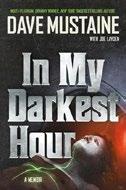
A rocker faces mortality after getting a serious diagnosis.
“[C]ancer is one ruthless and egalitarian motherfucker,” thrash metal legend Mustaine writes in this memoir. “It does not care in the least whether you are young or old, rich or poor.” That’s a lesson the Megadeth singer and guitarist learned the hard way. In 2019, he started experiencing a pain in the back of his mouth; after consulting with an oral surgeon, he learned he might have
cancer. Ever the rock star, he went on tour with his band anyway; after, a series of tests revealed that he had squamous cell carcinoma: “I didn’t even know what the words meant, but I knew they were bad, and I was prepared to hear them.”
The treatment (radiation and chemotherapy) “fucked with me in a major way,” but Mustaine soldiered on, recording the Megadeth album The Sick, the Dying… and The Dead! despite the intense pain. His recollection of his illness and recovery is interspersed with passages written by people close to him, including his wife, Pam; his children, Justis and Electra; and Megadeth drummer Dirk Verbeuren. The rocker also delves into his past, recalling his childhood as the son of an absent alcoholic father and a devout Jehovah’s Witness mother, his struggles with substance abuse, and his now-settled rivalry with his former band, Metallica. Mustaine is a direct and thoughtful writer who is comfortable with introspection: “The hunger, physical and metaphorical, motivates me to live a better life, to make the most of my time on the planet,” he writes. “I’ve always felt that way, but cancer has a way of turning up the volume on the ticking clock.” Metalheads of a certain age will walk away with a new appreciation of Mustaine, and even non-headbangers will find wit and wisdom in these pages. An affecting account of illness from heavy-metal royalty.
Nestle, Marion & Lisa Sutherland Univ. of California (304 pp.) | $29.95 September 8, 2026 | 9780520421271
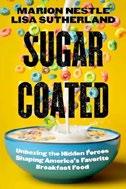
principal food source across the world eaten directly, as porridges, or ground into flour for bread. But ready-to-eat breakfast cereals are a 19th-century American invention created by “a succession of religiously influenced health-food faddists and fanatics.” They shared the belief (still popular) that ill health is the result of the American diet, lacking nutrients and full of toxins. The faddists’ solution was a bland diet of mashed grains, so tasteless that it was confined to health spas and sanitoriums that were popular at the time. Matters improved as 1900 passed with the arrival of big-time entrepreneurs, the discovery of vitamins, an increasing focus on the child health, and, most important, the revelation that adding sugar makes cereal tasty. “Cereals may have started out as simple, highly nutritious grain foods for the health conscious,” Nestle and Sutherland write, “but they ended up as candy and cookies for breakfast for adults as well as kids.” It’s estimated that breakfast cereals generated $88 billion in global revenues in 2025—$23 billion of it in the U.S. General Mills and Kellogg make up 60% of worldwide sales, the authors say. The book includes dozens of color images of cereal boxes and their torrent of health claims. The authors write: “For decades, consumer groups and child-health advocates have petitioned the FDA—or have sued cereal companies—to remove unhealthful ingredients and misleading statements from the boxes.” Campaigns to eliminate unhealthy foods sometimes succeed, but people love sugar: Roughly half of baby boomers “say they still love the same cereals they loved as children.” And, when tested, people believe that highly colored food tastes better.
Overton, Tom | Verso (528 pp.) | $34.95 September 15, 2026 | 9781804298442
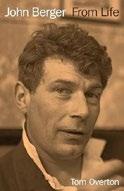
Investigating a writer’s vision.
What’s in the box?
Nestle, professor of nutrition at New York University, and Lisa Sutherland, former vice president of nutrition at Kellogg, write that grains are the
An entertaining examination of an industry whose many customers have a sweet tooth.

For more on science, visit Kirkus online.
In his debut biography, Overton, archivist of the papers of John Berger (1926-2017) at the British Library and editor of several collections of his essays, draws on a trove of primary sources, interviews, and his personal relationship with Berger to create a perceptive portrait of the influential painter, novelist, and critic. Berger was born in London to Jewish, lower-middleclass parents who were ambitious for their son’s future: They sent him to boarding school; he won a partial scholarship to St Edward’s School, Oxford, a public school that his father hoped would help him to “get on.” Sensitive to the constrictions and injustices of a class system, Berger came to define himself as a Romantic Marxist, someone with “an aversion to political power whatever its form.” Not surprisingly, he saw himself also as an artist. In 1942, he won a scholarship to the Central School of Arts and Crafts and, after the war, received a small monthly stipend to the Chelsea Polytechnic Art School. Producing art, though, did not make his reputation— responding to art did. In 1950, he applied his talents as a speaker and scriptwriter to 10-minute talks about paintings for the BBC West African Service. Subsequent radio and television shows followed. Berger, Overton notes, “became a TV personality before he became a published novelist.” He offers a close reading of Berger’s eclectic oeuvre—“a long life of short books”—that includes Ways of Seeing (1972), which became a BBC television series, and the Booker Prize–winning novel G. (1972). His was “a career of constant shifts,” Overton writes, during which Berger found “new forms for what he wanted to say.” Intellectual influences, personal entanglements, fatherhood, and physical decline all factor into Overton’s thorough recounting of a richly productive life.
An authoritative, nuanced biography.
Park, Ed | Random House (224 pp.)
$28 | August 11, 2026 | 9798217154944
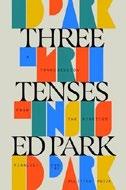
An experiment in literary autobiography, full of “salvos and tidbits.”
As editor and writer Park recounts, Covid-19 found him, like everyone else, pretty well housebound.
“By the second week, the days lost definition; by the third, the weeks,” he recalls. Stir craziness was forestalled by the discovery of an “invisible book,” a memoir he had written mostly in the present tense two decades earlier, one that had no discernible chronology—and whose entries, except for a few quotes, all begin with “In…”: “In church I wonder: What am I doing in church?...In January I get phobic about computers….In case words fail me, I learn more words.” Some of those words are keepers, including his list of about 40 variants of “what we now agree to call Manhattan,” his favorite of which is “Munhaddon.” Although many of Park’s observations are deceptively mundane, they reveal a character who is widely traveled—his entries record time spent in Mexico, Ghana, Korea, and many other far-flung places. He also possesses a superficially mild but subversively funny imagination: He dreams, for instance, of attaining literary fame in some other best-of-all-possible-worlds “where my alternately sleek and ramshackle prose is a sort of holy text,” such that John Grisham is reduced to laying out Park’s socks for him each morning. Although the book doesn’t quite add up to rivaling, say, Fernando Pessoa or Karl Kraus, there’s enough wit and stray bits of information— the fact that Kashgar, in western Xinjiang, stays dark until noon owing to China’s imposition of a single time zone or that in Seoul, traffic deaths are “regularly in the teens” each day—to keep Park’s formless narrative moving along. There’s not much there there, but an exquisitely well-written entertainment all the same.
Parlett, Jack | Hanover Square Press (304 pp.)
$30 | May 26, 2026 | 9781335949325
Living out loud. “Before it meant anything else, the word flamboyant simply meant flaming,” writes Parlett (Fire Island , 2022) in this wide-ranging survey that recalls books like Olivia Laing’s The Lonely City and Imani Perry’s Black in Blues. Today, the author notes, flamboyance has come to signify “an embrace of your inner child, an unruly love of the colorful and ridiculous, a recall to the defiance of a teenage self.” But he begins with those flames, “wavy undulating, S-shaped curves” seen in the stonework of 15th- and 16thcentury Gothic churches in Europe and later dubbed the Flamboyant style; their extravagance may have inspired holiness but also, in the words of Victorian critic John Ruskin, “ceased to be earnest, and ceased to be sincere.” The tension between excess and authenticity animates the book’s many explorations, which include In Search of Lost Time, Lil Nas X, flamenco, flamingos, Oscar Wilde, William Morris wallpaper, and Quentin Crisp, as well as lesser-known figures such as Harriet Monroe, an early 20th-century writer and vagabond for whom flamboyance was “at least the beginning of art.” Flamboyance can be a form of resistance, too, as in the theatrical protests of ACT UP and the Lesbian Avengers. Braided through these aesthetic and political ruminations is the author’s own story: a wary gay boy growing up in the U.K. in the late 1990s, later drinking and partying to extremes in New York, and ultimately finding sobriety. “I have had my moments,” he writes, “loud outfits here and there, flashes of self-belief on a stage, uninhibited movements on a dance floor, loosened by chemicals. In reality, my instinct most of the time is to move toward the background.” That instinct serves him as a writer; if his
prose is not, well, flamboyant, it is perceptive and probing. A vibrant study of self-expression and self-assertion.
Pope Leo XIV | Melville House (192 pp.) $19.99 paper | August 18, 2026 9781685893095
A n ecclesial word of caution regarding the emergence of artificial intelligence. In this encyclical, Pope Leo XIV builds on earlier church traditions in an attempt to analyze AI from a standpoint of faith. His ultimate advice is to approach it with caution, even to the point of regulation, so as to preserve human dignity. The pope begins with two contrasting Biblical construction metaphors toward which he will continue to return: the Tower of Babel and the rebuilding of the walls of Jerusalem under Nehemiah. In the former, people worked together on a project of hubris and pride, leading to division. In the latter, people worked together for security and community, leading to unity. Pope Leo asks, “What are we building?” noting that society is called to “safeguard and value the grandeur of humanity that has been given to us as a gift.” Further, the pope provides an overview of the Catholic church’s historic Social Doctrine as it has developed through modernity and offers this as a framework for evaluating technological changes, including AI. This doctrine is comprised roughly of human dignity, the common good, subsidiarity, solidarity, and social justice. “[These] principles of Social Doctrine,” he notes, “offer a framework for understanding this new reality.” Through the lens of the Social Doctrine, the pope looks critically at AI as an expanding technology controlled, and
understood, by only a small minority. He sees it as a potential threat to human value and our concept of humanity itself. He sees the idea of technological neutrality to be a fallacy. He also calls out the concepts of transhumanism and posthumanism that inform many AI theorists. Such worldviews, he argues, tend to minimize the intrinsic value society places on each human life. A well-structured and competently argued admonition of AI from a religious point of view.
Richardson, Edmund | St. Martin’s (496 pp.) $33 | September 29, 2026 | 9781250285614
The making of a legend. Alexander the Great, the almost-mythic subject of this biography by English classicist Richardson, springs alive from the page: the dizzying quests, conquests, and larger-than-life incidents of the ancient Macedonian ruler’s life unfurl in cinematic color. Inventive but scrupulously scholarly, Richardson extrapolates from the historical record to imagine Alexander’s mental state, adding details that will resonate with readers. This contributes to a dazzling, fully realized, and insightful portrait of his subject: complex, contradictory, cruel, and charismatic. After deftly setting the stage, Richardson plunges readers into the world-changing Battle of Issus, describing the terrifying phalanx and Alexander’s invaluable cavalry: the Companions. Though many readers know the outcome, the author makes the scene suspenseful, amplifying the drama of this and other brutal battles. He writes of Alexander: “His journey would…unleash violence on a scale never before seen: almost 1 per cent of the world’s population would die as a
direct result of his campaign.” Richardson uses the few recorded mentions of women, like Barsine, Ada, and Roxane, to widen the story’s scope and increase its human interest. Pages fly by in riveting anecdotes, brief evocative descriptions of places, and striking feats of engineering and logistics; historical mysteries, exciting discoveries, archaeological photos, and new research technology enthrall.
The author’s masterly prose enhances the legend of this “god, king, man,” even as it takes a tragic turn: Alexander appears to become paranoid, his judgment falters, and his neglect of administration undoes his conquests. His end is poignant, and the succession struggles that followed occupy the epilogue, but the last word is encour aging, as— long after he is gone— knowledge flows along the paths Alexander took. The breadth of Richardson’s learning is perfectly suited to his subject’s norm-shattering achievements. Brilliant erudition meets dynamic storytelling.
Rosales, Guadalupe | One World/Random House (336 pp.) | $35 | September 8, 2026 9780593447260
A multidisciplinary artist and educator recalls the pleasures and perils of her East Los Angeles girlhood and how they shaped her unique creative path.
The daughter of a Mexican mother and an
Angeleno father, Rosales spent her childhood moving around Boyle Heights “because Mom couldn’t afford rent and Dad…spent his days drinking and sleeping.” She experienced temporary separation from her family and siblings after her mother was wrongfully jailed for domestic assault. The author, her mother, and siblings reunited without Rosales’ father and became “like a wolf pack”; but, once her mother “welcomed [the] predator” who became her partner into their lives, Rosales and her siblings were “forced…into survival mode.” They found strength and comfort in their peers at school who came together to not only protest school funding cuts but to experience the joy of music, parties, and dancing, which Rosales recorded in many of the photographs that accompany her narrative. After gang violence took the life of a beloved cousin, Rosales turned to alcohol and drugs, came out as queer, then left for New York with her guitar and a stack of Starshot photos that eventually became the starting point for a Chicana-inspired Instagram archive called Veteranas and Rucas. She created it—along with a second archive called Map Pointz that celebrated the party scene she loved—while in graduate school at the Art Institute of Chicago to “connect with others” over the beauty, tragedy, and complexity of growing up Chicano/a in 1990s East LA. As honest as it is poignant, Rosales’ book offers readers a visual and verbal recollection of a long-vanished era that is as much private as it is profoundly communal.
A tenderly wrought testimonial of love, grief, memory, and the healing power of community.
“Almost 1 per cent of the world’s population would die as a direct result of his campaign.”
ALEXANDER
Rosenstiel, Tom | Crown (400 pp.) | $23 paper | August 18, 2026 | 9780593800195
How newspeople can save their profession. Rosenstiel, a press critic and journalism professor, presents a solid case that news organizations’ problems are bigger than they realize. Along with declining public trust and countless newsroom layoffs, the industry faces an “intellectual” crisis. Woefully behind the times, journalists must embrace “emotionally intelligent newsgathering” that “meets audiences where they are.” Seasoned reporters may blanch at his quasi-therapeutic terminology, but it’s backed by concrete ideas. Rosenstiel proposes 10 ways journalists can save their profession, urging them to put less emphasis on “watchdogging” scoops and more on work that “helps people.” He praises nonprofit LAist’s efforts to help its audience navigate bureaucracies, connect with one another, and improve their communities. Citing social science research, he wants journalists to “acknowledge alternative worldviews.” An article correcting misinformation about climate change might be more persuasive to conservative-leaning readers if it mentions commercial opportunities associated with addressing the problem. Journalists should embrace artificial intelligence, using it to identify falsehoods and build a so-called Civic Internet of useful data obtained from governments. Meanwhile, journalists can demonstrate “competence, benevolence, and accountability” by doing their work as transparently as possible. They should also more open to new
storytelling methods and more intentional in how they listen to their audiences’ “questions and needs.”
This is a thoughtful contribution to an important conversation. But if Rosenstiel is big on imperatives—journalists must “invent new products” and do “constant” fact-checking—he has little practical counsel for carrying them out with slashed newsgathering budgets. And if his optimism about AI’s “tremendous potential for journalism” is backed by encouraging evidence from newsrooms, he doesn’t seriously reckon with the broader threats AI poses to industry jobs. He allows that AI has “serious trust problems,” feebly advising journalists to “manage and mitigate them.”
A mostly productive roadmap for rejuvenating journalism in a fast-moving, fragmented world.
Ryback, Timothy W. | Atlantic Monthly (256 pp.) $27 | September 1, 2026 | 9780802168245
How a constitutional republic commits suicide in less than two months.
“The big joke on democracy is that it provides its mortal enemies the means to its own destruction.” So wrote Josef Goebbels, who helped bring about that destruction as Adolf Hitler seized control of the Weimar state and inaugurated the Third Reich. The Nazis, historian Ryback chronicles, may have thrived on chaos, but they worked from a carefully written playbook that promised voters that they would curb inflation and block immigration, even though they had little command of policy and economics. (Said Hitler, “You have inflation only if you want it. Inflation is a
caved in to Hitler.
lack of discipline.”) In the weeks following his ascendancy, Hitler purged the civil service of career officials and replaced them with loyalists. He dismantled multiparty democracy and federalism and replaced it with unitary executive power, then “turned the powers of the state against political opponents.” He gave the military domestic police powers, freed imprisoned Nazis charged with treason and other crimes and awarded them cash and other favors, and slapped high tariffs on imported goods. Cynically, though no believer himself, he railed that Germany was a “Christian nation.” Politicians caved in to Hitler in the fond hope that he was simply talking a big game, only to discover that the election of 1933, which brought Hitler to national power, would be the last; instead of lobbying for legislation he wanted, Hitler sidelined Germany’s parliament through ruling by executive order. About the only institution that attempted to curb him were the courts, and they, too, were restructured to contain only judges who pledged loyalty to him. That all this could be done in so short a time, as Ryback’s fluid account demonstrates, hinges on the shocking fact that every step of it was legal and constitutional, allowing Hitler, as he put it, to “pour the state into the form that we think most appropriate.”
A sobering study of how democracies can become dictatorships overnight.
Schiller, Lucy | Flatiron Books (272 pp.)
$29.99 | July 14, 2026 | 9781250344526
The problems and pressures of aging in the United States today. Journalist and professor Schiller’s well-intentioned debut moves between her personal experiences as a thirty-something freelance writer and those faced by people getting older in America in the present. Her interest in the subject began when her
grandmother, then in her mid-90s, died of Covid-19 in 2021, contracted, Schiller believes, “from a home health aide who had likely taken off her mask.” “I could not tell if her death had been natural or unnatural,” she mused at the time, and the question sent her spiraling down a rabbit hole into an investigation of “the aging industrial complex.” Anchoring the book in her experience living in Pittsburgh, a place she moved to during the Covid-19 pandemic, knowing no one, and walking for miles with her dog every day while “figuring out how to be alone in my own brain,” she ventures out into mini-essays on topics to do with aging: the difference between assisted living facilities and nursing homes, the pros and cons of Medicare Advantage and standard Medicare, the changes over the years in AARP, the history of the Gray Panthers, and the issues raised by companies like Papa, which provides companions for old people at a price. Although Schiller does discuss an older woman she volunteered to help occasionally with her shopping and other needs, surprisingly few other old people appear in the book. Instead of focusing outward, her writing often circles back to her own loneliness and fear that “I could prepare as best I could and still not be able to control where I ended up, and how.”
A deeply personal but frustratingly diffuse look at aging.
Singer, Matt | Putnam (304 pp.) | $32 October 6, 2026 | 9798217047949
A history of the rise and fall of early-aughts raunchy, malecoded comedy. Film critic Singer (Opposable Thumbs: How Siskel & Ebert Changed Movies Forever, 2023), supposes that American film history would have been denied
(or spared, depending on your taste) Step Brothers, Zoolander, Talladega Nights, Superbad , and more were it not for a chance meeting in line for an Elvis Costello concert in 1991. There, a young actor named Ben Stiller met an aspiring screenwriter, Judd Apatow, leading to a partnership that would thrive, grow tendrils, and all but consume Hollywood over the next two decades. Their early endeavors weren’t promising: Stiller’s self-titled TV sketch-comedy show was a ratings bomb, as was Apatow’s coming-of-age dramedy series, Freaks and Geeks. But both shows were loved by critics and gained the two entree into film. Taking their cues from audacious R-rated comedies like Animal House, together and separately they worked on envelope-pushing comedies like There’s Something About Mary, Anchorman , and The 40-Year-Old Virgin . (A running theme in the book is actors balking at gross-out jokes, only to be persuaded to try it, then delivering the film’s most memorable scenes.)
Relatively experienced comics like Will Ferrell joined forces with up-andcomers like Jonah Hill and Seth Rogen to become what was informally dubbed the “frat pack.” Singer is an entertaining guide for this story, paying close attention to Apatow and company’s approach to both jokes and the market. But he also doesn’t dwell much on what such a bro-heavy constellation of stars spelled for on-screen sexism, which makes Apatow’s biggest woman-focused comedy, Bridesmaids, an outlier. Singer suggests that the rise of Marvel movies, which translate more easily to global audiences, killed the adolescent fun. But it might also be that audiences simply got tired of the joke.
A fun if somewhat uncritical look at the golden age of lunkhead comedy.

Singer, Natasha | Norton (352 pp.) | $31.99 September 8, 2026 | 9780393881943
Program or be programmed. In this extensively researched account, Singer, a New York Times education reporter, traces tech companies’ efforts to insert computer science into high school curricula across the U.S. Hadi Partovi, co-founder of Code.org, and education researcher Jane Margolis struggle to reconcile tech advocacy with corporate marketing as skeptics argue for teaching students about the impact of computers on society before teaching them to code. Leaders at Google, Microsoft, Facebook, and others appear as well-intentioned but sometimes misguided drivers working alongside nonprofits and government partners to push legislation promoting computer science in schools. In 2013, Partovi flew to Washington to enlist President Obama in becoming “the first US President ever to write a line of code.” The effort evolved into a nationwide adoption of “Hour of Code” events. By 2024, 60% of high schools offered computer science courses. Singer identifies 2025 as the time that tech companies’ focus pivoted from computer science to AI. While “American tech companies have played a significant role in driving new tech literacies since the 1980s,” she argues this moment is different: “The new ‘AI literacy’ drive goes much further because it involves teaching students not just how to use new technologies but how to think about them.” Singer worries the tech industry has orchestrated a “corporate capture of classrooms.…It’s about coding kids to help make Silicon Valley’s visions of an AI-driven future come true.” Are tech giants key to training the workforce of the future—or promoting narrow tech literacy over genuine
education? Singer’s thought-provoking critique will resonate with parents, educators, administrators, and even tech executives.
A revelatory look at how tech companies convinced public educators to embrace coding classes—and AI.
Kirkus Star
The Invisible Hand of Maria Edgeworth: How a Nineteenth-Century Novelist Taught the World Economics
Smialek, Jeanna | Knopf (304 pp.) | $32 October 6, 2026 | 9780593801512
Lively biography of a woman who has been unjustly disappeared from the history of economics.
Maria Edgeworth shook up Georgian England with a stack of bestselling novels, most of them “haphazard love stories,” under which lay a kind of secret code. While she was spinning bodice-ripping yarns, she was also imparting lessons in practical economics, writing about such things as tenant farming and the benefits of educating working people. Adam Smith’s ideas, some of which influenced her, had been in circulation for only a few decades—and, among other things, New York Times economics writer Smialek rescues Smith from the clutches of conservatives who would claim him for their own, noting the progressivism and even radicalism of his theories. But Edgeworth worked from more than theory; her father, something of a scalawag, came from the landed gentry in Ireland, and she had plenty of opportunity to work with him on economic experiments that staggered many an absentee landlord, such as allowing tenants to keep hold of their land “if they could show real signs of having invested in and improved them.” He and Edgeworth also paid wages—and, following
Smith, high wages at that—instead of requiring the unpaid “duty work” imposed on rural farmers. Though Maria was 4-foot-7, she cut an imposing figure, holding her own in intellectual circles that included Thomas Malthus, David Ricardo, and Erasmus Darwin, about whom Smialek writes with an eye to the real people behind their austere reputations (her passing note on Ricardo’s playing charades is an unexpected pleasure).
Edgeworth, too, emerges as a humane, politically aware thinker who deserves wider recognition, having been overlooked for one key reason: “Economists wanted to make their field the respected domain of experts, and the women who had spent years presenting it in clear, easy writing were undermining that goal.”
A welcome, and anything but dismal, contribution to the history of economics and 19th-century literature alike.
Smith, Jaclyn | Gallery Books/Simon & Schuster (320 pp.) | $30 | September 8, 2026 | 9781982116644
An actor considers her time on a hit TV show— and much more.
The title of Smith’s memoir is, of course, a nod to her best-known role, but Smith wastes no time establishing that there’s more to her than a certain Jimmy Carter-era crime show: “I wasn’t born the day I first put on Kelly Garrett’s tiny white bikini,” she writes in the book’s first sentence. She’s talking about her character in Charlie’s Angels, the inescapable series she starred in, alongside (initially) Farrah Fawcett and Kate Jackson. While much of her memoir is dedicated to her time on the show, she paints a sweet portrait of her childhood in Houston, where she studied dance under the legendary choreographer Patsy Swayze and joined her high school drama club (Tommy
Tune was also a member). She moved to New York after a year of college in Texas and began acting in television and film, landing the Charlie’s Angels gig after relocating to Los Angeles. The show had its critics who thought it was sexist, which Smith is quick to dispel: “We were portraying single adult women who were not defined by the men in their lives, who thrived at demanding jobs.…Our dialogue reflected a feminist sensibility.” The show was canceled in 1981, but Smith kept acting—earning a Golden Globe nomination for playing the former first lady in the television movie Jacqueline Bouvier Kennedy, for one—and developing a clothing line in conjunction with Kmart. Smith’s look back at her career will fascinate pop-culture fans, and she writes about it with charm, but she really shines when focusing on her family: her late parents, whom she adored; her husband; and her two beloved children. Kelly Garrett might have been sassy, but Smith comes across as winningly sweet. A tenderhearted memoir written with an angelic voice.
Vance, JD | Harper/HarperCollins (304 pp.) $35 | June 16, 2026 | 9780063575011
The evolution of a veep’s views. Ten years ago, a little-known venture capitalist wrote a book about, in his words, “the upbringing of a redneck who worked in Silicon Valley.” The memoir had a modest initial print run of 10,000 copies. Hillbilly Elegy became a bestseller, and its author, for those who haven’t kept up with the news, is now the secondhighest ranking official in the U.S. government. A sequel of sorts, Vance’s new book revisits old terrain and journeys to the present day. For a political memoir, it’s an uncommonly introspective work, well-paced and infused with touches of humor—much of it at the author’s expense. As a fearful new father,
he enumerates a host of “worst-case scenarios” during a car ride—his wife, Usha, “nodded knowingly….I’m sure she thought, What a psycho I married.” Most of the book delves into his religious beliefs. Once an atheist, the Marine veteran makes a convincing case that he devoted a lot of thought to his conversion to Catholicism. As an example, he cites the influence of the French philosopher René Girard (who had taught Peter Thiel, Vance’s political patron, at Stanford). Less appealing is some of what Vance says about politics. He admits to a “boneheaded” error in infamously stating that “childless cat ladies” in the Democratic Party “were running our country into the ground,” but he sees a moral failing in societies that “suppress the biological urge to fall in love and have babies”—all while condemning “mass migration.” Elsewhere, he makes generalizations about “conformism” and “groupthink” and argues, fatuously, that “we replaced real diversity of thought with superficial diversity.” And, for a man who espouses Christian values, the presumptive 2028 presidential candidate says nothing—not surprisingly—about how his boss, whom he has defended for years, professes a love of the Bible yet routinely sows hatred. As the author writes in a line that could unwittingly address his own situation: “Politics is a dirty business sometimes, one where you have to make compromises.” A thoughtful exploration of religious conviction that’s often marred by political stridency.
Warrack, Simon | Norton (336 pp.) | $31.99 September 8, 2026 | 9781324075981
Worlds in stone. In his debut memoir, British stonemason and conservator Warrack offers an illuminating reflection on his craft. In the 1970s, after studying history and training as a mason, he
began a four-year apprenticeship at the famed Canterbury Cathedral, where, besides honing his technique, he observed how the intricate structure was built and how it stayed together—not only the dimensions and design, but also the quality of stone and mortar and the way that those materials responded to air, moisture, and time. After Canterbury, he went to Venice, where he worked in the palazzo that was to become the Guggenheim Museum; from there, he entered a conservator program on the island of San Servolo and worked for a while in Venice. But finding housing was so difficult that he moved to Rome, then undergoing an extensive program of refurbishment leading up to the 1990 World Cup. His jobs included removing meter-thick pigeon waste from the facade of a chapel. He writes: “We would look up at the row of pigeons sitting on the roof of the sports shop across the road, tilting their heads at us accusingly, as if to say, ‘It’s about time someone cleaned our toilet.’” Other commissions have taken him around the world: to Cambodia, where restoring the Preah Ko temple became the first of many projects that he engaged in over 30 years, including as chief stone conservator at Angkor Wat; in Africa, he has worked in Lalibela, Ethiopia, where an ancient king aimed to build a New Jerusalem; in the United Arab Emirates, a newly excavated temple was at the mercy of Gulf weather; in Lebanon, he trained Syrian refugees and Lebanese participants in stonemasonry; and in the Great Zimbabwe, he encountered the biggest stone heritage site in sub-Saharan Africa. Besides affording him the “joy of crafting beauty and order out of stone,” masonry, as he practices it, honors a site’s physical, cultural, and spiritual history.
A captivating, informative journey with an expert guide.

Kirkus Star
The Jackal: The Rise and Fall of Carlos, the World’s First Super-Terrorist
Warrick, Joby | Scribner (352 pp.) | $30 August 18, 2026 | 9781668070550

From the author of Black Flags: The Rise of ISIS (2015), a swift-moving account of the infamous terrorist who boasted of killing 83 people and ordering the death of a thousand more.
Born Ilich Ramírez Sánchez in Venezuela, Carlos was just one of the countless fake names that “the Jackal” used. It was the one that stuck and the one that he used in Warrick’s opening episode, when Carlos and crew attacked a meeting of OPEC ministers in Vienna in 1975. Just whom he was working for is unclear: It could have been the Popular Front for the Liberation of Palestine (PFLP), Muammar Gaddafi, or any of a number of clients who funded his “new kind of state-sponsored terrorism.” Nominally a communist, Carlos was even financed by former Nazis as well as the KGB and Romania’s Securitate. Already wanted for a string of killings in France and England, he would gain international notoriety for the OPEC attack and subsequent escape, as well as plane hijackings, bombings, assassinations, and cruel operations, such as tossing a grenade among civilians in a Paris shopping mall in 1974. Trained by the PFLP in a “summer camp with guns,” Carlos eventually went out on his own, skillfully amassing a fortune that funded a lavish, drunken lifestyle that occupied his time behind the Iron Curtain in Hungary and even in backwaters like Sudan. Warrick skillfully assembles the details of Carlos’ adventures in terrorism, which earned him almost legendary status: “He was ruthless, killing without remorse or mercy. Most astonishingly, he was capable of carrying out attacks in the heart of Europe’s great capitals and then vanishing without a trace.” He was finally tracked down in Khartoum in 1993 by a CIA agent who was “conducting surveillance on multiple terrorist groups,”
and French agents spirited him away to prison outside Paris, near the scene of some of his most devious crimes. He is housed there to this day. A true-crime saga that reads with the immediacy of a thriller.
Wasson, Sam | Harper/HarperCollins (736 pp.) | $45 | October 27, 2026 9780063291133
A film scholar presents the life of an American cinema pioneer. Long before Steven Spielberg made his name as the creator of comforting films that champion the resilience of the human spirit, Frank Capra (1897-1991) had pioneered the form. In this admiring work, Wasson celebrates Capra’s career and covers the salient facets of his life and work. He begins in 1903, when 6-year-old Francesco Capra and his parents sail to the U.S. from the family home in Bisacquino, Italy. After majoring in chemical engineering, he enters the nascent field of filmmaking. He finagles a job with Fireside Productions, directs the silent short The Ballad of Fisher’s BoardingHouse (1922), and then works at Hal Roach’s studios, where he would become so immersed inventing gags for Our Gang shorts that “he would forget to shave [and] forget to put on both socks.” Soon, he met Harry Cohn, the head of Columbia Pictures, who saw a kindred spirit; both men had a “shared allergy to elitism, whether cultural or artistic, would keep Columbia talking American: tough, fast and sweet.” Capra’s career took off from there—but with obstacles: the toll the Great Depression took on the industry; the rise of unions, which producers were reluctant to recognize; and the impact of World War II and the McCarthy-era Communist witch hunt. Wasson calls Capra “the foremost film artist of the national imagination.” But Wasson is unafraid to be critical, noting that Meet John Doe (1941) was a disappointment, “neglecting its love story and often
succumbing to its own importance along the way,” and calling A Hole in the Head (1959) “flat, brittle, and (when it isn’t cloying), insincere.” And he shares behind-the-scenes morsels cinephiles will enjoy. He notes, for example, that to induce a sore throat for the long filibuster in Mr. Smith Goes to Washington (1939), Jimmy Stewart “was swabbed with a dichloride of mercury solution that coarsened his vocal cords.” Capra, “to ensure the reality, had him swabbed with it again and again.”
A fond biography of a cinema legend.
Weisberg, Jacob | Penguin Press (288 pp.) $31 | September 15, 2026 | 9798217062591
In which America trembles like the Cowardly Lion at the door of the Trump White House. Weisberg, a longtime political journalist, opens with a memoryturned-thought-experiment, recounting his travels through Eastern Europe of Iron Curtain days, where he encountered both people who kept their heads down and people who fought the system. “How would Americans behave if standing against the abuse of power meant paying a real price?” Weisberg asks. “How well would our institutions and leaders perform in a world of censorship, loyalty oaths, blacklisting, and guilt-byassociation?” Not well. Instead, he chronicles, we have the spectacle of the “Great Capitulation of 2025,” in which industry leaders, media figures, lawyers, academics, and assorted collaborators bent the knee. Their reasons are varied: Some wanted to make a buck, like the senior partners of Big Law, “a market of mercenaries.” Others wanted the favors that President Trump dispensed to his allies: Think Elon Musk and Jeff Bezos (whom Weisberg brands a “tech toady”). In his long analysis of media figure Megyn Kelly, the author shows that the price of landing on Trump’s bad side was
her loss of highly lucrative TV gigs. However, she caved in, he says, given that Fox News no longer rules the airwaves: “The universe was now Trumpcentric, and Kelly sought proximity to that heat.” Still others didn’t resist simply to avoid trouble—including threats of violence and sometimes the real thing. “A curious hallmark of Trump’s authoritarian style is that he’s always happy to accept surrender,” writes Weisberg. Mitch McConnell, John Roberts, and George W. Bush figure on Weisberg’s toady roll call as well—the first two for enabling Trump, the last for not speaking out, whether out of fear or, the author offers, mere laziness.
A highly readable study of the politics and price of capitulation.
White, Shane | Liveright/Norton (464 pp.) $35 | August 25, 2026 | 9781324095088
Uncovering “something new and surprising about New York City.” Australian historian White draws on archival sources, primarily 19th-century newspapers and District Attorney’s Indictment papers, to create a richly detailed picture of Black people in antebellum New York. The book is a “a sequel of sorts,” he writes, to Somewhat More Independent: The End of Slavery in New York City, 1770-1810 (1991). Beginning in the 1810s and continuing into the 1840s, the city, he discovered, attracted “both free African Americans and fleeing enslaved men and women.” Dispelling the idea that the end of slavery meant poverty and destitution for Blacks, White contends that in New York, they created a vibrant culture, transforming city streets into places of “style, performance, and drama.” For example, “the Black stroll,” which took place on Broadway on Sunday afternoons, featured “dandies and dandizettes” who flaunted their freedom
by donning fashionable outfits. Cellars and basements became sites for dancing, gambling, “cook shops,” “oyster cellars,” and residences. Although dance cellars were “boisterous dives,” Blacks also staged formal balls, which appealed to a more elite social stratum. White vividly portrays a host of individual New Yorkers, some who became successful entrepreneurs, many who eked out a living as oysterers, street-food sellers, or proprietors of underground eateries. Others took to gambling or confidence schemes, fortune telling, or sex work. Music and theater featured strongly in Black culture: A key figure was the fiddler, White asserts, and New York saw the creation of a Black drama company and the first theater built by and for Blacks. In 1827, the first Black newspaper appeared. As the century wore on, though, the “edgy, vital exuberance” of Black culture fomented “increasingly virulent racism,” leading to calls for segregation. Transformation of the city’s residential patterns, an influx of European immigrants, and willingness on the part of authorities to return fugitive slaves all combined to quash a once-flourishing community.
A fresh perspective on African American history.
Wilson, Robert with Keith McDermott Penguin Press (320 pp.) | $32 November 3, 2026 | 9798217061273

C onversational memoir by the noted avant-garde director, assisted by a longtime friend.
McDermott quickly realized in early interviews that there was no point in trying to keep Wilson (1941–2025) to a straightforward biographical chronology. He learned to simply turn on the recorder and let Wilson wail, later dividing his vivid ramblings into three sections. “Portrait” sketches his Texas childhood, youth, and pre-theater work. “Still Life” limns his early artistic life in the Soho loft that became a hangout for fellow
avant-garde artists and discusses Einstein on the Beach and CIVIL warS, among other reputation-establishing works. “Landscape” covers later pieces and the establishment of the Watermill Center, an interdisciplinary arts facility on Long Island that Wilson calls “my most concrete and accessible legacy.” The book also features a lot of namedropping yarns about famous friends, from Robert Mapplethorpe to Jessye Norman, plus high-profile admirers such as Samuel Beckett and Marguerite Duras; they’re good stories, though, and he also pays tribute to lesser-known figures like artist Clementine Hunter and Christopher Knowles, the autistic boy he recruited to appear in The Life and Times of Joseph Stalin who went on to write the text for several Wilson productions. As the anecdotes pile up, we see that the director is as good at communicating with people previously thought unreachable due to physical or mental disabilities as he is at schmoozing with the rich and famous who can help his career or give him money. We also get a good understanding of his artistic credo: His visually based works are shaped by light and space, not words, and he prefers “abstract” performers who focus on physical movement and keep their emotions “interior” to the conventional theater he dislikes because it gives you “no time to think.” Wilson’s eloquent statement of principles may well interest even readers who don’t necessarily care for his kind of challenging art. A revealing stroll through a boundarysmashing career.
Winfield, Dave with Alan Maimon Matt Holt/BenBella (288 pp.) | $31 September 15, 2026 | 9781637748985
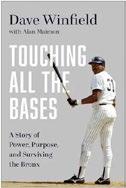
A leading man on the diamond and in the tabloids. Winfield was among the first baseball players to earn a million dollars a year— and a reluctant combatant in a decade-spanning clash with the man
who paid him. It follows that his affable memoir is “about spies and lies far more than RBIs.” Opening chapters cover his ample athletic exploits at the University of Minnesota and his Major League Baseball debut. Drafted by pro teams in three sports, he landed with the San Diego Padres, a frugal franchise that saved money by applying black paint to the white cleats he wore in college. The heart of the book deals with 1981-90, his Yankee years. He starred in the Bronx but failed to win a championship, drawing the ire of George Steinbrenner. The imperious team owner derided Winfield as “Mr. May”—the antithesis of World Series star Reggie Jackson, a.k.a. “Mr. October”—and broke his contractual obligation to donate to Winfield’s charitable foundation. Winfield responded with lawsuits. As Winfield illustrates with court records and phone transcripts, the sordid saga climaxed with Steinbrenner suspended from running the team for paying a “two-bit hustler” to find dirt on the player. Scandal sheets and talk radio loved it. As depicted here, the saga has lost none of its sensational zip. Though it overshadows other tales from Winfield’s playing career, that’s not necessarily bad. His on-the-field anecdotes aren’t notably vibrant, though he’s good on the mechanics of hitting. The book’s Donald Trump cameos feel obligatory. Because Winfield played for two decades, his book is dotted with evocative pop culture details. He takes the plate in the 1970s to disco hit “The Hustle.” He’s a confirmed ’80s jetsetter by appearing on the lamentable TV show Lifestyles of the Rich and Famous An ex-Yankee star’s entertaining tell-all details his long-running feud with the team’s mercurial owner.

AS HALF OF the musical comedy duo Garfunkel & Oates, Kate Micucci knows something about making people laugh. Now she’s delighting a new audience: children. She made her literary debut this year with The Monster and Puppet Show!, co-written by Elephant & Piggie author Mo Willems (Union Square Kids, Feb. 24), an early reader that follows a would-be entertainer whose sock puppet companion turns out to have a mind of its own. Having recently recorded a children’s album, My Hat, Micucci felt well positioned to write for kids. “I often create from a childlike place,” she told Kirkus via email. “Every time I write a song, it somehow ends up being about a dog or making wishes.”
Micucci especially enjoys school and library visits; she brings along her own puppet, Camille, and performs a song she wrote about the book. At her hometown library in Nazareth, Pennsylvania, she performed alongside the library’s ukulele orchestra. Though Willems and editor Tracey Keevan gave Micucci guidance on writing for children—for instance, leaning on repetition—some things remain constant no matter the audience: “If
there’s a setup and a punchline, there’s usually a smile on a kid’s face,” she observes. With sharp comedic timing, the ability to put on a good show, and a willingness to take risks, the best comedians often make excellent children’s book authors. Next month, Saturday Night Live alum Melissa Villaseñor makes her own debut with the graphic novel Cat and Lola: School Picture Day, illustrated by Jimena Sánchez Sarquiz (Gloo Books, Sept. 22). Villaseñor keeps the one-liners coming as Lola and her divalike feline seek the perfect ensemble for Lola’s class photo, but she also imbues her tale with a message of self-acceptance as her protagonist lands on an outfit that reflects “the colors of my soul.”
Above all, Villaseñor told Kirkus, she wants to “remind kiddos…to rejoice in their goofy self and that imperfections are so beautiful.”
It’s been a busy year for SNL players past and present. Kenan Thompson, the show’s longest-tenured cast member, released the picture book Unfunny Bunny, co-written by SNL writer Bryan Tucker and illustrated by Tony Neal (Feiwel & Friends, Jan. 13). The tale follows a young rabbit who learns a serious lesson in stand-up:
Collaboration often yields amazing results. Next month, Kate McKinnon publishes another charmingly quirky entry in her bestselling series, The Millicent Quibb School of Etiquette for Young Ladies of Mad Science. Illustrated by Alfredo Cáceres, The Jungle of Carabanana (Little, Brown; Sept. 29) sees the feisty Porch sisters confronting yet another devilish fiend. Clearly, SNL cast members can keep kids giggling. Bowen Yang, when can we expect your kid lit debut?
Best known for his role on The Office, B.J. Novak follows up his immensely popular The Book With No Pictures (2014) with a board book, The Little Book With No Pictures (Rocky Pond Books/Penguin, Oct. 20), while stand-up comic and podcaster Pete Holmes makes his debut with Spells To Cast on Your Parents (Doubleday, Sept. 1). Novak once more eschews visuals altogether, while Holmes relies on masking tape for an uproarious take on a magician’s spellbook, but both works employ the same enjoyably subversive premise: making the adult reading their words aloud look utterly foolish.
Mahnaz Dar is a young readers’ editor.
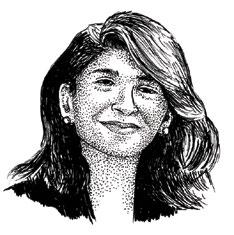
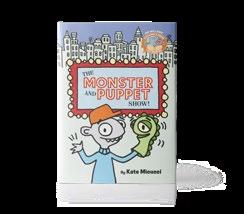
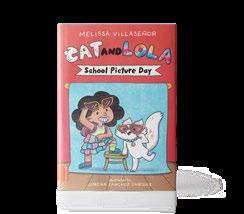
Thirteen-year-old Diego from Mexico City expects to spend a quiet first week of summer break with his abuelo while his parents attend the Tax Assessors Annual Conference.
Instead, he discovers that Abuelo’s apartment hides a sacred portal to Nahualan, the Aztec plane of existence, which is like “the hub of a wheel with different spokes…Each of those spokes is a different realm, each created by a different god.” When a dark force breaches the portal, Abuelo falls gravely ill. Suddenly, Diego finds himself responsible for protecting the passage to Nahualan and preventing Tezca, the Aztec jaguar
god of “death, destruction, and chaos,” from entering the human world. Alongside Abuelo’s dog, Cholo (who’s actually a god and can speak), and Violeta (a neighbor girl Diego’s age who’s studying plant magic from Aztec goddess Xochiquetzal’s codex so she can become a Sabiaflora), Diego embarks on a perilous quest. Together, they journey through celestial realms in search of a cure for Abuelo while evading a relentless monster. To restore balance, they must ultimate ly tackle the labyrinth that imprisons Tezca. Intricate worldbuilding and a cast of complex, memorable
Valenti, Karla Arenas | Knopf | 352 pp. September 1, 2026 | $18.99 | 9798217028931
characters secure this novel’s place among the best of middle- grade mythological fantasy. Readers new to the Aztec pantheon will be captivated by the rich legends woven throughout the contemporary journey, while the
humor and high-stakes action keep the pages turning. Epic, imaginative, and thoroughly entertaining, this standout fantasy will leave readers eager for more. An irresistible adventure that tackles fresh lore. (Fantasy. 8-13)
Abdin, Razan | Illus. by Shahrzad Maydani Abrams (40 pp.) | $18.99 | September 1, 2026 9781419779947
A child whose “brain and body are constantly on the go” learns strategies for self-control. Sawsan loves dreaming up outer-space tea parties and dives with dolphins, sea dragons, and jellyfish. At school, Sawsan’s excitement “EXPLODES like confetti.” But when the brown-skinned child chatters at “cheetah-speed” in class, “not letting others squeeze in a single word,” her classmates call her “an interrupter” and “rude.” Sitting still and keeping her desk tidy feel like “IMPOSSIBLE” tasks. While sometimes she’s an “absolute delight,” occasional meltdowns make people whisper and stare. Soon, Sawsan sees herself as “someone who’s rude, messy, and impatient—all the things you don’t want to be.” Fortunately, her baba takes her to Dr. Salim, who reassures her she’s “so splendidly good...your brain just works a little differently.” Together, Dr. Salim and Sawsan brainstorm coping mechanisms, such as breathing exercises to self-soothe and labels to stay organized. Now, Sawsan sees herself as “someone who’s trying her very best—someone who’s full of curiosity and imagination.” While Sawsan’s diagnosis is unspecified, many kids will recognize her “big and bursty” feelings, which radiate from Maydani’s energetic pastel cartoon illustrations and Abdin’s expressive text. An author’s note explains that the story is based on Abdin’s childhood experiences and reminds readers that “brains show up in all sorts of ways. And that makes the world a more splendid place.” Sawsan’s name and
other hints in the text suggest Middle Eastern heritage.
Affirming and encouraging.
(Picture book. 4-8)
Agostini, Alliah L. | Illus. by Taylor Adams-Bass Harper/HarperCollins (32 pp.) | $12.99
October 20, 2026 | 9780063396999
A bunch of kids have to wonder: Don’t any of their families know what cookie tins are for?
Nine racially diverse young friends are hanging around outdoors and feeling peckish. One child has one of those ubiquitous round blue cookie tins, which sparks an idea: “All our families have this tin! / Cookie time! Where to begin?” The first kid goes to see Teta (Grandmother in Arabic), holds up a tin, and asks if there are cookies inside, only to be disappointed: “No cookies?! It’s a sewing kit!” Teta replies: “Sit and you can learn a bit.” The next child, who has been looking on, decides to try Nana, and the rhymes—and the children’s disappointment with the tin’s contents (e.g., “Nail polish! Blue, red, and pink!”)—continue with each conversation. Meanwhile, the family members—all grandmothers, and each from a different cultural background (there’s Abuela, Nai Nai, Dadi, and so on)—tend to emphasize the positive. (Abuela on the nail polish: “Such great colors, don’t you think?”) This inventive story of perseverance and deferred gratification has rat-a-tat rhymes and cartoonish Photoshop art whose clean lines and solid-color simplicity make it possible for readers to keep track of 20-odd characters. Naturally, and thanks to a dad, the tale comes to a sweet conclusion—for one
kid, anyway; maybe the cookie sharing will happen after the book ends? A culturally rich and wholly original entertainment. (Picture book. 4-8)
Agyemang, Elizabeth | Putnam (272 pp.)
$24.99 | $14.99 paper | September 8, 2026 9780593524732 | 9780593524756 paper
Surviving middle school is harder than it seems, even when you have a video game to guide you. Galexie Badu’s grandfather passed away last summer, and she’s still reeling from the loss as she faces the challenges of sixth grade. Her best friends, Kwabena and Mika, are also feeling the pressures, although Mika is optimistic about their opportunity to shed their “dweeby cocoons and have a metamorphosis.” Lexie, who’s helping to clear out Grandpa’s things, comes across his journal, which contains much-needed advice (“The year is 1976. The calamity: surviving junior high school”) and a CD with Warrior’s Quest, an unfinished video game he was designing. Using the journal’s advice as a cheat code for life, the three friends unfortunately find themselves embroiled in messy social conflicts before being transported into the realm of Warrior’s Quest, where they discover that a dangerous virus is wreaking havoc. Lexi and her friends must fix things by beating the mysterious final boss and coding a patch. This action-packed adventure centering on Black and brown tweens features full-color digital art that shows little variation in characters’ expressions and unclear visual transitions that sometimes make it hard to follow the blending of the game and real worlds. The story ultimately rewards careful reading as it concludes with the ultimate cheat code for coming to terms with living with grief and accepting new beginnings. A fast-paced story presenting a positive message. (Graphic adventure. 8-12)
Amini, Sara | Illus.
by Juana Medina | Dial Books (40 pp.) | $18.99 | August 25, 2026
9780593856093
A pipsqueak tour guide shows a group of tourists the best side of Salento, Colombia.
Luisa and her rooster, Pablo, get up early in the morning for one thing only. And it’s definitely not the list of chores that Mami leaves for Luisa. It’s TURISTAS! They come from all over to visit the Cocora Valley, where the tallest palm trees on the planet can be found. And who’s a better guide than the “pretty famous” Luisa, who knows “exactly what makes mi pueblito so special”? Plus, her tours are free! And so, the tour begins, starting with a visit to the plaza where Luisa’s green-and-white house can be found. Next, Luisa leads the visitors to the local cafe to say hi to cousin Oscar before moving on to la farmacia, la oficina de correos, and la iglesia. Medina’s scrappy illustrations for each spot help orient readers who may not be entirely familiar with the Spanish peppered throughout Luisa’s tour. Amini, meanwhile, injects bits of humor through the pint-size guide’s dry commentary, which keeps the whole proceedings on a peppy pace. As Luisa moves the tour along to the viejito who collects frogs, Mami’s tienda for souvenir shopping, the spot where Pablo threw up after eating chocolate, and everything that’s NOT the Cocora Valley, the Swiss turistas gamely follow along. Luckily, the delightful misadventures end on a satisfying note. A tour worth joining. (Picture book. 4-8)
Ardakani, Azita | Illus. by Rebecca Rebouché Enchanted Lion Books (48 pp.) | $19.99 September 29, 2026 | 9781592704910
The cosmos is within us, and this ethereal origin story sprinkles philosophical star stuff on every page. Stars spring up from “a web of inky endlessness.” They multiply, “cast across endless time,” and eventually gather into a dusky blue-skied planet populated with not only animals and “tree and root and seed” but also indulgences like garlands, beds, and fluttering books. Still, a trail of stars from the sky cascades deep underground before reversing course “so life could reach back to the darkness,” the inexorable cycle of life revealing no beginning or end but an indomitable recurring connection among all life. Dark whorls of bruised-black paint on fully saturated pages play host to delicate details like arcing constellations and a flotilla of starships, the spreads revealed to be smaller sections of one massive and glorious artwork rendered in the golden ratio. The unseen narrator’s spare and conceptually sophisticated text sets a lyrically tranquil if mature tone, and frequent anthropomorphization of the stars and their evolution keeps the story more mythlike than cosmographic. This profoundly beautiful and thought-provoking pick offers a beatific view of the birth of the universe and makes a moving selection for contemplative readers who connect deeply with Marion Dane Bauer and Ekua Holmes’ The Stuff of Stars (2018).
A magnificent creation myth, reflective and reverential. (author’s note) (Picture book. 6-9)
A magnificent creation myth, reflective and reverential.
OCEAN OF STARS
Kirkus Star
Barrows, Annie | Illus. by Sophie Blackall Chronicle Books (124 pp.) | $15.99
September 29, 2026 | 9781797219721
Series: Stella & Marigold, 3
A favorite sister duo returns for a third outing. With a bond that could rival that of Beezus and Ramona, second grader Stella and preschooler Marigold grapple with ideas of children long gone and children yet to come. When Marigold discovers a scrawled message in green marker on the wall (“I drew on the wall HA HA”), Stella tells her it was probably written by a kid who lived here years ago. Marigold is shocked (“Someone lived here before?”), and Stella whips up the tale of a girl named Ziamara. Marigold is enthralled by these conjured stories of Ziamara, who (she is convinced) probably got to live out Marigold’s dream of going onto the roof of their house. Stella, when she’s not trying to find time travel portals in her home, realizes that long after they are gone there will be future children in this place. Bite-size adventures, involving everything from cuts and scrapes to the rescue of a beloved coloring book, flesh out these tales. Barrows is a gifted writer; one of her true talents is her acknowledgment of how great familial love is bound tightly to bone-deep annoyance. After all, even the most loving family members can get on one another’s nerves. Blackall, meanwhile, brings real and imagined escapades to life, and clearly has a ball depicting imagined wild child Ziamara. The lead characters are pale-skinned. Genuine affection and exasperation vie for attention in this thoughtful exploration of big ideas on a small scale. (Early chapter book. 6-9)
Bell, W. Kamau & Adam Mansbach Illus. by Breanna Chambers | Roaring Brook
Press (32 pp.) | $19.99 | October 27, 2026
9781250433701
In this collaboration from comedian Bell and Go the Fuck to Sleep (2011) author Mansbach, a grumpy family attempts to find some fun.
“It was raining, and had been / for what felt like forever. / And the Bell family found themselves / cooped up together.” Before the family—who resemble co-author Bell, his real-life wife, and their three daughters—can drive one another bonkers, the youngest Bell has a brainstorm: “Sometimes, she thought, / nothing else quite delivers / like the old-school fun / of rock, paper, scissors.” Two sisters give the classic hand game a whirl, which leads to a standoff that’s interrupted when their older sister informs them that they’re playing the game wrong: In addition to “rock,” “paper,” and “scissors,” there’s “hitchhiker” (“Paper beats hitchhiker… because it’s an unpaid parking ticket”), “coyote” (“Coyote beats hitchhiker; she can just bite him”), and so on. The whole family gets into the spirit, introducing increasingly preposterous variables to the game, including “Primetime Emmy!” (Bell has several.) The good rhymes harbor a good message about beating the doldrums by flexing one’s creative muscles. Chambers’ cartoony art captures both the story’s intrafamilial tenderness and the siblings’ stir-craziness, which is often shown to (one assumes) exaggerated effect, as when a raging sister roller-skates through the house wielding an electric guitar that’s on fire. Like their real-life
counterparts, Dada is Black, Mama is white, and the children are biracial. An amusing paean to the remedial possibilities of creative thinking. (Picture book. 4-8)
Benedis-Grab, Daphne | Scholastic (256 pp.)
$8.99 paper | September 1, 2026 9781546150411
T hree Colorado middle schoolers sniff out something rotten in their football program when questions about troublesome incidents prompt anonymous threats and acts of vandalism.
Themes of athletic grooming and excessive loyalty to the team play throughout this sharp cautionary tale. Seventh grade journalist Simone’s admired football star brother, eighth grader Brian, has confessed to trashing his domineering, hard-driving coach’s office and computer. It seems he was motivated by being on probation for Homecoming due to poor grades, but Simone knows he’s hiding something. So even as the upcoming game drives school and town spirit to a fever pitch (notwithstanding a previous game that left an opposing player with a gruesome compound fracture), she sets out to investigate—joined by two members of the team who are less committed than some to winning at any cost. It’s not long before scary text warnings to back off, a mud-filled locker, and the revelation than an inquiry into that on-field injury was abruptly terminated make it obvious that there’s
A boy and an axolotl face an intergalactic threat.
something underhanded going on. Players referring to traitors in their midst and repeating the coach’s slogan, “do for the team and the team does for you,” add further ominous notes. A decisive, if contrived, denouement removes the worst actor, but the story ends with signs that Simone and her new allies haven’t escaped retribution for rocking the boat.
A sobering look at what can happen in school sports, especially football, when winning becomes the only thing. (author’s note) (Fiction. 9-13)
Benton, Jim | Scholastic (40 pp.) | $14.99 September 1, 2026 | 9798225071479
A frog and a toad are friends. Ill-tempered toad Tot perks up at the prospect of making a meal for his hungry but cheerful little frog (or at least froglike) pal Zoggy: Tot “piled the platters / with things brown and green, / both sticky and slimy, / and gray in between.”
Unfortunately for Zoggy, the first dish Tot brings him isn’t exactly enticing: “Tot started things off / with a strange appetizer, / which Zoggy thought smelled / like some fresh fertilizer.” Not once but twice, Zoggy manages to avoid sampling Tot’s culinary creations, but soon the table is overrun with dishes, and Zoggy has only one way out: He gives Tot the first vile bite. While Tot is too proud to admit that he failed, he’s graceful enough to accept Zoggy’s offer to make him what turns out to be a real delicacy: a peanut butter and jelly sandwich. A few of the rhymes stumble, but others verge on the Seussian (“He started chopping and stirring— / there were chunks, there were slices / He used toasters and fryers / and other devices”), and there’s even a Grinch-and-Max dynamic between curmudgeonly Tot and sweet, loyal
Zoggy. The art does justice to the text’s repulsive descriptions of Tot’s kitchen experiments, which quiver and quake against color-washy backgrounds that would be at home in a story that’s not disgusting at all. A funny and enjoyably gross friendship tale. (Picture book. 4-8)
Benton, Summer | HarperAlley (32 pp.) | $5.99 paper | October 6, 2026 | 9780063460478 Series: I Can Read! Comics
A frustrated little critter tries to bite everything in sight. In an earlier book, Zilbo, a pointy-nosed dog with sharply rendered eyebrows, learned that grumpiness is extremely contagious. In his latest outing, he becomes so angry that he begins biting all that he sees. He sharpens his fangs on smaller stuff first: biting the television when he loses his video game (and shattering it spectacularly) and chomping on his alarm clock when it wakes him up. Bikes, hats, basketballs: Nothing is safe. The sun’s heat infuriates Zilbo, so he tries to climb up to the top of a tree to reach his target. Though he fails, he spots a bird in a beret painting a landscape. Zilbo borrows the supplies, paints the sun, and bites the painting! The avian artist has given him a gift: Zilbo discovers he can funnel his frustrated energy into self-expression. Zilbo’s artwork is far more well received than his fits of fury were. Focusing on Zilbo’s irritation, this graphic novel will feel hilariously relatable to many young readers, though some caregivers may look askance at Zilbo’s initial predilection for biting. Zilbo’s bright, simple surroundings and supportive, sensitive friends create a welcoming comic-book setting, while Benton’s clear, expressive text meets early elementary readers on their level. A fierce, funny parable about sinking one’s teeth into creative expression. (Graphic fiction. 4-7)
Blabey, Aaron | Odd Dot (208 pp.) | $15.99 September 29, 2026 | 9781250424990
Series: Game of Pets, 1
A boy and an axolotl face an intergalactic threat. Humans think they’re in charge, but they couldn’t be more wrong. In actuality, ancient animalian aliens, including a capybara from Planet Weird, a turtle who’s over 8 million years old, and longtime champion Buttons the dog, are locked in a cosmic competition to see who can convince humans to obliterate Earth. They exert their influence via terrestrial avatars; imagine caged birds and cute chinchillas trying to persuade their owners to trash the planet. Meanwhile, Griff, a kid allergic to everything, is pet-shopping. The tough, mullet-haired, muscular Pet Shop Lady, who uses an electric wheelchair, takes pity on him and offers a steep discount on an expensive axolotl. When they depart the store, the axolotl (who introduces himself as Bob) begins communicating with Griff, and before he knows it, Griff’s been charged with saving the world. This series starter is heavy on exposition for future confrontations, but it’s crammed with frenzied, funny weirdness. Zesty commentary about the causes and consequences of climate change undergirds the absurd plot. Graphic novelist and picture-book creator Blabey’s first foray into text-centered storytelling features discursive descriptions and frequent dialogue; his many fans will devour this tale. Griff’s skin is the white of the page.
Zany, off-the-wall fun bound to be a hit. (Fiction. 8-12)

Bobrow, Claire Wrenn | Illus. by Ross Burach Sourcebooks Jabberwocky (32 pp.) | $18.99
October 6, 2026 | 9781464231940
A pony’s celebrations don’t quite go as expected. Pony is really excited to attend a party! He’s got a party balloon! He’s got his party-ready polka-dot shoes on! He’s got a pearly-white party smile! He seems to be a genuinely sweet and eager friend. So imagine his disappointment when he arrives at Mouse’s party to find everyone in line, holding fast to their tickets for a promised pony ride. He obliges, begrudgingly, feeling more than a little bit left out. Pony regroups and prepares for Raccoon’s bright-pink Royal Birthday. He even has a cake fork. He even has a cake fork belt! But Raccoon just wants to brush and braid Pony’s hair. Pony’s frustration deepens till he’s ready to put a prohibition on parties altogether. Little does he know, his friends have a sweet, confetti-filled surprise in store. Bobrow’s omniscient narrator adopts a winking, chatty tone (“Aww, don’t cry, Pony! You have been a very good sport. Well, sort of a good sport. Okay, maybe not the best sport”), while Burach’s goofy drawings zestfully capture Pony’s broad emotions. Pony’s massive, fuzzy face easily registers disappointment, skepticism, defeat, and delight. Fans of Bob Shea’s richly comedic, strongly sympathetic work will find similar vibes here.
A high-energy, humorous read-aloud for party-loving kids. (Picture book. 3-7)
Booth, Tom | Candlewick (48 pp.) | $18.99 October 6, 2026 | 9781536226355
For more animal tales, visit Kirkus online.
All magic and no hands-on learning makes Elliott a dull girl. Light-skinned, brown-haired Elliott and her dog, Spinner, play in the woods together, using sticks to
build forts, when Elliott finds “a stick that glow[s] like the moon.” With a flick of the wrist, Elliott wields antigravity magic and cleans her room, among other fantastical feats. And the pair don’t need to hunt for sticks in order to build forts when a majestic treehouse is just a wish away! The instant gratification eventually becomes boring, until Elliott loses the wand, along with her sense of direction, in the darker woods. Without the wand, she finds her way home, reacquaints herself with all her favorite activities, and learns not to depend on quick fixes. Elliott’s world is charming, from the pink and magenta hues of her bedroom, where she and Spinner share a massive yawn, to the greens and blues of the friendly and foreboding parts of the forest alike. The objects that Elliott enchants— toys, homework, veggies, rocks, and wooden planks—glow with visual panache; readers will relate to Elliott’s satisfaction as she waves her wand. Even if some kids conclude that there are genuine uses for an omnipotent wand, the moral center of the book lies in creativity, exploration, and fun alongside a canine companion, and that magic is undeniable. A backyard fable that explores the overrated joys of wish fulfillment and the subtle pleasures of putting in effort. (Picture book. 5-8)
Boynton-Hughes, Brooke | Farrar, Straus and Giroux (40 pp.) | $18.99 | October 20, 2026 9780374389239
A frustrated older sibling longs to sail away to find some peace. In a nauticalthemed bedroom, a boisterous young tot accidentally knocks over a toy boat. Instead of yelling, the older sibling studies the broken pieces and imagines a fantastical escape. The boat enthusiast casts off on a winding river, sailing out of the house and then out of the city. The most important part? There is no one
else around. “If I had a boat…I would brave the world on my own.” Tumultuous waters and a long, reaching tentacle pose threats, but our intrepid hero is undeterred. “If I had a boat…I would discover unmapped lands where no one would ever find me.” A lantern glows against the vast, lonely sky. The story jumps between these daydreams and reality, where the protagonist is making a real boat. When the construction is finished, the younger sibling shyly provides a key missing part. Perhaps the journey will not be a solo one after all. Boynton-Hughes’ thoughtful pastels soften family frustrations and expertly capture the wish to be whisked away for a small moment of quiet. Both siblings are brown-skinned. A sweet reminder that solitude can sometimes be best when shared. (Picture book. 3-6)
Star
Buchet, Nelly | Illus. by Elizabeth Haidle Enchanted Lion Books (48 pp.) | $18.99 September 8, 2026 | 9781592704958
Inspired by a true story, Buchet’s spare, poetic text traces the arc of an Icelandic weather keeper’s life—and her daughter’s decision to follow in her footsteps.
The tale moves from a child’s admiring distance to a grown daughter’s return, circling back to the yellow lighthouse on the edge of the world where generations of women have read the sky. Buchet’s text is quiet and rhythmic, its brevity leaving enormous room for Haidle’s illustrations to carry the narrative. The Icelandic winter landscape is rendered in graphite grays and chalky whites, against which the yellow lighthouse and red barn blaze like signal fires. The northern lights, when they appear, unspool in electric yellow green across the dark sky in some of the book’s most arresting spreads. Color here is never decorative; it is information, mood, and meaning all at
once, doing exactly what the weather keeper herself does—reading what the sky is saying. Haidle moves fluidly between various modes: full-bleed atmospheric panoramas alternate with tight grids of sequential panels—small squares tracking the day and night or zooming in on the weather keeper’s hands, her boots, her instruments. A triptych spread shows three weather conditions separated by diagonal cuts across the page with the yellow lighthouse standing at the center panel like a beacon. The result is a book that rewards slow looking as much as reading aloud. Main characters have tan skin.
An exceptional collaboration—spare, artful, and genuinely unforgettable. (author’s and illustrator’s notes) (PIcture book. 4-8)
Cadenhead, MacKenzie | Illus. by Erin Kraan Random House Studio (40 pp.) | $18.99 October 13, 2026 | 9798217120598
Series: A Jingle Christmas Story
A young reindeer hopes to win the chance to fly with Santa. Jingle, the smallest deer at the North Pole, wants to compete in the Reindeer Games. Despite her size, she is determined to earn her Magic Bells so she can pull Santa’s sleigh. But the other reindeer make fun of her: “Go fetch Santa’s slippers, and leave the real magic to the BIG bucks.” The Reindeer Games consist of three parts. The first is a race (or a dash) through the snow. As the drifts get higher, Jingle starts to have trouble, but she persists. The second part involves transporting presents, and though Jingle’s small stature makes it difficult to move large piles of gifts, she comes up with an inspired solution. Finally, she must make sure each present gets to the right recipient. Jingle doubts herself at every turn, but her heart and creativity help her soar. This tale is reminiscent of one involving another insecure reindeer, but an underdog story
is always welcome, especially when it results in Christmas cheer. As Santa says, “Christmas is more than just giving out gifts. It’s goodwill, kind deeds. That truly uplifts.” Sprinkled with lively rhymes and bright, jolly art, this is a strong selection to reach for during the holidays. Mr. and Mrs. Claus have light skin, while the elves are diverse.
A bright tale of fortitude, resilience, and Christmas spirit. (Picture book. 3-6)
Chaturvedi, Rahul | Illus. by Sunita Balsara Kids Can (256 pp.) | $19.99 | October 6, 2026 9781525311536
Moving to Canada from India means discovering new traditions while honoring your own. Siddhu and his family settle into their apartment in Creston, a small town outside Calgary. The move has been harder than expected: His father has taken a job as a security guard, even though he’s an accountant, and his mother misses the family and Hindu traditions they left behind in Rajasthan and struggles to find the ingredients she needs at the local supermarket. Siddhu faces bullying from a white classmate named Kevin, but fortunately he befriends an international group of kids from his apartment building. To truly fit in, though, they want Santa to bring them Christmas presents, like all the other kids in their class. But none of their families celebrate the holiday, and most of their parents, who need to focus on buying necessities, are actively opposed to accommodating their children’s desperate pleas. When Siddhu learns that the winners of the Creston Christmas Decoration Competition will receive $10,000 from the town council, he believes he can persuade the grownups to work together and enter. Through ups and downs, this multicultural group must decide: Does fitting in mean losing a part of yourself, or can your sense of
belonging expand to include something new? The gentle hues and soft lines of the illustrations perfectly complement the message of this heartwarming holiday story. An uplifting read about navigating change and embracing community. (glossary) (Graphic fiction. 8-12)
Cho, Lian | Harper/HarperCollins (40 pp.)
$19.99 | October 13, 2026 | 9780063321861
Mamma mia! These brothers sure are making a mess of their pizza shop.
Three (reddishskinned, presumably Italian American) siblings run the Pizza Brothers Pizza Shop, and in terms of workload, “everything was fair”: “Alejandro was in charge of the toppings. Antonio kneaded the dough. Paolo did…everything else.” The brothers have a problem (besides the unequal distribution of labor): “Nobody wanted their pizzas!” They agree that they need a gimmick and settle on “the world’s biggest pizza,” and it’s left to Paolo to ask practical questions that his brothers ignore. For instance, how big should the pizza be? And if the enormous pizza contains meat, what will vegetarians eat? Alejandro and Antonio continue to overwork Paolo, so he storms off, and prospective customers boo his brothers’ bizarre culinary creation: a giant pile of on-the-bone meats on a pizza-dough round. When Paolo returns, suddenly his teary-eyed brothers appreciate him: “The shop is a mess without you. Will you come back?” On certain conditions… Readers will likely feel vindicated when there’s finally justice for Paolo, and getting to that point is a pleasure. The book’s unremitting humor largely derives from the contrast between the long-suffering Paolo’s even-keeled personality and the chaos his clueless brothers unleash all around him. The sumptuous-looking acrylics, which appear in supermarketaisle colors and have impasto surfaces
and icing-thick black outlines, look good enough to eat.
A rich and tangy comeuppance story. (Picture book. 4-8)
Chu, Vikki | Knopf (48 pp.) | $18.99 September 22, 2026 | 9798217124794
The nighttime antics of a busy town come to life when blueberry milk is concerned. Two travelers check into their hostel at dusk.
Once midnight hits, they plunge into the heart of Poppyville to see the city for themselves. Objects and characters, initially depicted as black silhouettes against purple/pink watercolor skies, take on depth and color as our little avatars observe the sights, sounds, and definite tastes of the town. As color fills the pages, the cast is revealed to be anthropomorphized flora and fauna. Youngsters head to school, lines form at the creamery that makes the best blueberry milk, and at last the travelers arrive at their ultimate destination, Delilah’s Toy Shop. By the time the sun has started to rise, almost everyone’s prepping for bedtime. The sheer levels of excitement, coupled with the kind of art that entices the eye to flit all over a page, give this book a distinctly Richard-Scarry-meetsMardi-Gras feel. As young readers begin to recognize the characters, they’ll take a definite interest in locating them from page to page to page. The book aims for a timeless quality, in both its storytelling and cut-paper illustrations, and succeeds in this endeavor.
It’s easy to follow the crowd when it’s this attractive. A book built for poring over. (Picture book. 3-6)

Colfer, Eoin & Andrew Donkin | Illus. by Giovanni Rigano | Sourcebooks Young Readers (144 pp.) | $15.02 paper September 15, 2026 | 9781464261251
Building on the broad success of their refugee drama, Illegal (2018), and their climate change tale, Global (2023), Colfer, Donkin, and Rigano reconvene to relate the story of a young person whose life is altered by military invasion.
Kat, a strong-willed teenager, sees the escalation of armed conflict in real time as tanks begin rolling into town, broadcast on news channels. She heads to a community shelter as bombs start to drop. Schools close, supplies are rationed, and citizens depart by choice or force. Just as Kat’s family is attempting to leave, soldiers abduct her father. Kat stays behind in hopes of saving him instead of following her mother and sister to safety. Falling into the stoic, strained rhythms of life under siege, she watches soldiers pillage homes, neighbors struggle to survive, and buildings burn. Violence and destruction are unpredictable and ubiquitous, yet even children must press on. The story’s nonspecific setting demands that readers acknowledge just how quickly these actions could unfold anywhere. Kat’s eventual happy ending is a welcome, if implausible, narrative relief, but even she admits “when I close my eyes I’m often back in the city with bangs and explosions and things shaking.” Kat has pale skin and dark hair; most of the city’s residents are pale-skinned. Rigano’s paneled illustrations buzz with detailed comic-book intensity, skillfully immersing readers in Kat’s reality. Deliberate, detailed storycraft offers an enduringly affecting portrait of life in wartime. (creators’ note, sketchbook, interview with displaced Ukrainian teenager) (Graphic fiction. 10-14)
Cummins, Lucy Ruth | Balzer + Bray (32 pp.)
$15.99 | November 3, 2026 | 9781250439420
Series: Love Bug
Temporarily sidelined, a love-spreading bug worries about what will happen if she’s not out there generating warm fuzzies.
Young Love Bug, who resembles a ladybug with hearts instead of dots on her wings, “just love[s] love!” She freely acts on this feeling for the benefit of the bugs in her life; as the omniscient narrator puts it, “If you were happy? Love Bug rose to your occasion! If you were blue? She was there for you…and always with a tissue—or two!” One day Love Bug comes down with a cold, so her parents put her to bed, but now she’s sick and agitated: “If I don’t show my love for others today, as I always do…and if I don’t come through for my friends today, as I love to do…then maybe…I’ll lose their love for good .”
Readers are (understandably) unlikely to see the logic in this line of thinking, but they will probably be gratified when an insect crew shows up at the ailing Love Bug’s door with balloons and flowers to reassure her that she is indeed loved. Cummins’ intermittently rhyming, periodically punning text (“gnat urally that wouldn’t happen”) shares the page with Procreate illustrations that have a winsome unfussiness that’s almost childlike—fitting in a story that’s practically perched on an adorable young bug’s wings.
A sure thing for readers who enjoy being moved to say “Aw, cute!”
(Picture book. 3-7)

DasGupta, Piu | Illus. by Jensine Eckwell Nosy Crow (240 pp.) | $17.99 | August 4, 2026 9798887772615
For more by Lucy Ruth Cummins, visit Kirkus online.
Thirteen-year-old Roma Moreau, precocious child of a deceased Indian mother and a French bounty hunter father, is a reluctant boarder at Miss Oliphant’s School for Young Ladies in rural Bengal. She dreams of becoming a doctor and saving lives of women like her own mother, who died in childbirth for lack of a female doctor. But in 1881, patriarchal mores make this a distant dream. Spotting an escaped—and exceedingly rare— golden leaf-eating monkey in the forest, Roma and her talking cat, Birala, give chase, only to see it trapped by bandits. Her quest to rescue the animal and return it to its Himalayan habitat leads her on a lively adventure complete with dacoits, a bandit queen, and a cursed gem called the Snakestone. She also acquires two unwanted companions—an English boy called Max, who seeks the Snakestone to clear his beloved nanny of a murder charge, and Max’s spoiled, argumentative cousin, Arabella. When their train to Calcutta is attacked, the three children (and cat) escape into the forest, follow the brigands, and manage to rescue the golden monkey. But their adventures are far from over. The book boasts an interesting premise and unusual characters, but the initially strong pace lags in the second half. The eponymous monkey feels like a MacGuffin, and other elements— Eckwell’s intriguing optical illusions, Birala, and Roma’s sleepwalking and heterochromia— could have been better used. A lively romp through colonial Bengal with engaging characters and a few missed opportunities. (map, author’s note) (Historical adventure. 9-13)
CROCODILE TEARS
De La Cruz, Laura | Illus. by Vanessa Morales
Disney-Hyperion (40 pp.) | $18.99
September 8, 2026 | 9781368108355
When her father and grandfather put their beloved lowrider up for sale, little Gabi does her best to save the flamboyant cruiser.
Named Pico Nights, the brightly colored car has provided many wonderful memories for Gabi, Papi, and Abuelo Chucho. But dire financial times mean Pico Nights must go. A brokenhearted Gabi nonetheless jumps at the chance to figure out how to make money fast. Her first idea—selling her bicycle— proves a bust when no interested buyers show up. Offering her neighbors the chance to pay to have their picture taken with Pico Nights and a suited-up Chucho nets some dollars and coins, but not enough to save the flashy cruiser. When she spots a flyer for a car show (with a spectacular grand prize of $1,000), Gabi convinces Papi and Abuelo to try one more time before Pico Nights is lost forever. At the show, lowriders of all hues and shapes battle it out for the grand prize. Then, it’s “time to ride with pride!” As Pico Nights hops and boogies, will the judges be impressed? This ode to the magic and artistry of lowriders crackles with charm and color. De La Cruz packs a lot of heart and humor into a concise, cheerful tale of familia and cherished memories. Equally enjoyable, Morales’ clean, cool artwork captures the vibrant spirit of Gabi’s Los Angeles neighborhood. An informative author’s note offers a succinct history of lowriders. Gabi, Papi, and Abuelo are cued Latine.
Low, slow, and assured. (Picture
de Mello, Nátali | Roaring Brook Press (40 pp.)
$18.99 | October 13, 2026 | 9781250417251
A capybara wants more out of life. How many recent kids’ books have been narrated by a capybara? In this one, the bespectacled narrator explains that “my family and I live where the river bends. Where the grass stings our legs, and the warm sunlight is perfect for a nap.” The trouble is, there isn’t much to do. One day the capybara heads to the river and discovers a book that features interesting plants and animals, all of which can be found elsewhere. After setting off on foot to locate these specimens, the capybara is waylaid by a seemingly insurmountable obstacle but saved by—what luck!—a yellow kite. The capybara grabs the kite’s string, and the journey leads to encounters with “all kinds of marvelous, friendly, and not-so-weird creatures, surrounded by crystal-blue water!” So much for boredom. But there’s still a problem: “If only my family could see” this new world. “But how would I bring them here?” By this point, readers will have no doubt that the capybara, equally capable and curious, will figure something out. De Mello’s subdued mixed-media art sticks with colors found in nature, which suits the book’s mission to introduce readers to the natural world and highlight the importance of biodiversity—although the word is confined to an author’s note (also included are tips on helping the
environment). Happily, the capybara speaks the language of de Mello’s target readership: curious littles.
Readers should enjoy tagging along with the curious, capable, and supercute capybara. (Picture book. 3-6)
Desierto, Derek | Feiwel & Friends (32 pp.) $18.99 | October 20, 2026 | 9781250411006
A crocodile’s big feelings initially alienate the other animals, but they turn out to be his biggest gift. Clayton’s tears are always flowing: over happy things, scary things, even “things of beauty.” The others laugh at Clayton (“Oh, cry us a river, crybaby!” jeers the toucan). When Clayton’s hurt comes out in sobs and wails, a small butterfly smells his salty and sweet tears and asks to sip them. Before long, Clayton finds himself covered in butterflies, much to the surprise of the other animals. When a baby monkey needs rescuing from the river, Clayton saves the day. His selfless act makes him a hero among the animals, a crocodile with big feelings, yes, but also a very good friend. The author’s note explains that Clayton was inspired by the real-life caiman, a member of the Alligatoridae family native to Central and South America, which has a symbiotic relationship with butterflies. Children who feel things intensely will relate to Clayton’s emotional range and the reassuring message that there is nothing wrong with big emotions. The layered, collage-style illustrations provide visual interest and depth. Clayton, in shades of green with sharp white teeth, is a sweet and sympathetic character who demonstrates that we can forge friendships while embracing who we are and changing ourselves for no one.
An appealing mash-up of real-life science and lessons in self-love. (Picture book. 4-8)
Duncan, Elizabeth | Illus. by Victoria TentlerKrylov | Anne Schwartz/Random (48 pp.) $19.99 | October 13, 2026 | 9780593813928
A single wave of a conductor’s baton can bring an orchestra to life… but first, Antonia Brico must convince the world to let her hold one. Young, melancholy Antonia Brico (1902-1989) longs for a life beyond the limits placed on girls in the early 20th century. Piano lessons awaken an invigorating love of music, and attending a symphony concert, she becomes captivated by the conductor with his magic wand. While studying piano in college, she secretly learns every orchestral instrument she can, determined to master the skills necessary to conduct. Repeatedly told that women don’t belong on the podium (or even in the orchestra), she refuses to abandon her ambitions. She travels to Germany to attend the best conducting school and eventually conducts her first symphony. When World War II begins, Antonia must return to America. She creates her own all-women orchestra and continues to challenge discrimination. Her perseverance ultimately leads her to become the first woman to conduct the New York Philharmonic.
Tentler-Krylov’s illustrations flow with the luminous, fluid quality of watercolor, transforming sound and emotion into visible movement. Musical terms and dynamics are woven throughout the narrative, mirroring Antonia’s own emotional journey. Antonia is white and Dutch American; some background
characters are drawn with brown skin. Backmatter explores how Antonia’s story helped inspire generations of women conductors to follow suit. Brava! (bibliography, quotation sources) (Picture-book biography. 5-8)
Edkins Willis, Maggie | Beach Lane/Simon & Schuster (40 pp.) | $19.99 | December 1, 2026 9781665985161 | Series: Little Ghost

A kindly spirit finally experiences the joy of Valentine’s Day. Little Ghost has been “haunting” a house for 100 years. (He and his mother are most gentle presences.) In all that time, he has never given or received a valentine. He and his human friend Anya decide to change that and make heart-shaped notes for the entire neighborhood. But on the morning of delivery, with a wagon piled high with envelopes, Little Ghost gets spooked. The thought of sharing all that love seems scary. An unexpected gust of wind makes the decision for him. The valentines scatter, and each is delivered to the person (or animal) who needs it most. Little Ghost realizes how important it is to show that he cares. And best of all? He receives a huge valentine in return. Once more, Little Ghost makes an immensely appealing protagonist; an especially endearing scene depicts him with eyes squeezed shut and squat arms wrapped around a paper heart as he “imagines how fluttery it would feel to get a valentine of his own!” When it finally happens, the emotional response is tenfold. His heart soars. Strong pops of red against muted pastels reverberate with the
powerful feeling of love. Anya is brown-skinned; the town is diverse. A quiet plea for emotional vulnerability. (Picture book. 3-6)
6, 2026 9781838749927
The holiday classic “The Twelve Days of Christmas” gets tweaked. A partridge who wears a Santa hat and has a pear tree home full of Christmas decor just wants a mellow Yuletide season but is repeatedly disturbed by the arrival of daily gifts sent by an unseen “true love” who is, it must be said, going overboard. First, two turtledoves show up. Then three French hens appear, followed by four calling birds, and so on; by the time the 12 drumming drummers arrive, the mishegas has spilled onto the partridge’s yard. While readers are singing along with the cumulative holiday earworm, they will witness the conflicted partridge showing resistance (by trying to seal the pear tree’s door), capitulating (by providing towels for the seven swans a-swimming in the bathtub), resisting again (by putting a “private property” sign in the yard), and capitulating again (by dancing with the nine ladies and pretending to pipe along with the 11 pipers). The partridge concludes the song with the (presumably sung) realization that the whole rollicking production amounts to “a book that’s all about meeeeee!” Evans’ verses, relayed in an elegant old-timey font and enacted by a multiracial, multi-animal cast, come to life in Ganz’s chunky jewel-toned art full of gags that reward the keen-eyed, especially those keeping tabs on the song’s five gold rings, which move around as pages are turned.
A dazzling, carousing rendition of the Christmas mainstay. (Picture book. 2-6)
Everett, Sarah | Harper/HarperCollins (288 pp.) | $19.99 | September 15, 2026
9780063444300
An android stepping into an 11-year-old girl’s life grapples with the challenges of assuming her existence.
Summer 2.0 was made by The Scientist and Lab 35, with uploads of memories that allow her to temporarily take the place of a Black girl named Summer Dillon. Since 2.0 isn’t sure where 1.0 is or how long she’ll be away, she intends to maximize her time as a stand-in: to like what Summer liked, befriend her older sister, joke around with her dad, and bond with her mom. But things aren’t going according to her daydreams, which may in themselves be a bug rather than a feature. Summer 1.0’s family remains aloof, and her hope that Summer’s school friends will welcome her is dashed when they reject her. Confused and disappointed, Summer 2.0 hesitantly embraces a new friendship with Mindy Wu, a girl 1.0 wasn’t friends with. When a geneticist reveals there’s a life-threatening bug in her system, 2.0 must decide whether to deviate from 1.0’s life and stay true to herself or work harder at fulfilling the purpose she’s been assigned by continuing to be Summer Dillon. Everett crafts an effective mirror through which to explore what it means to be human, the impact of AI and medical racism, and themes of grief and belonging. Despite these serious, deeper subjects, the well-developed characters and immersive, accessible writing keep the tone positive, and readers will enjoy the journey. An engaging, nuanced exploration of AI and the essence of human nature. (Science fiction. 9-13)
Fajardo, Sara Andrea | Illus. by Duda Oliva Harper/HarperCollins (32 pp.) | $19.99 September 29, 2026 | 9780063304192
A Peruvian familia comes together to celebrate a departed loved one on Día de los Muertos.
Arms full of Abuelito’s favorite foods, Tortolito walks down the street beside Papi and Mami. Doves soar above their heads. Tortolito reaches into his pockets to feed the birds, but he comes up empty-handed; bird-loving Abuelito is the one who filled Tortolito’s pockets with seeds. On they go, past the stalls of muyuchi, chicharrones, and tanta wawas. Tortolito stops to grab a sweet, cinnamony tanta wawa with extra sprinkles, “just the way Abuelito liked.” In the cemetery, Tortolito and his parents see other families playing, strumming guitars, weeping, and praying as they make their way to Tortolito’s uncles, aunts, cousins, and Abuelita, who await them at Abuelito’s headstone. After Tortolito polishes the marble to ensure that Abuelito’s name shines, they all share memories, sing songs, and light a flame in honor of Abuelito. Fajardo tackles a weighty subject with great compassion and nuance, exploring the swirl of emotions that often arise from the loss of a loved one. Likewise, Oliva’s superb, lush pastel-and-pencil art softens the impact of Tortolito’s poignant journey down memory lane. A short author’s note and addendum offer background on Day of the Dead traditions beyond Mexico, including the Peruvian Andes. The glossary, meanwhile, translates the Spanish and Quechua words used by Tortolito and his familia.
A bittersweet treat. (tanta wawa recipe) (Picture book. 4-8)

Kirkus Star
Farizan, Sara | Illus. by Naomi Franquiz Scholastic (208 pp.) | $17.99
September 1, 2026 | 9798225017422
Series: The Last Resort, 3
For more picture books honoring family, visit Kirkus online.
Putting on a fraught play about a town’s past might be the curtain call for the residents of Castle Hill. This third series entry jumps right in where Jasmine Warga’s The Claiming (2026) concluded. The trio consisting of siblings Lila and Caleb Clement and their friend Teddy Hamad, who call themselves the Trionic, once again team up with ghost kid Rosteen to take on the diabolical—and deadly—Fire Maiden. As the town readies itself for the Founder’s Day celebration, kids and adults alike are preparing a play at the Capitol Theater about the town’s divisive history. As the participants begin to have nightmares, the Trionic know the Fire Maiden is back. Following a trail of clues, Lila and Rosteen make the perilous decision to travel via portal to collect relics that may be the key to finally stopping her. They must enlist the help of the murderous specter Blight Howler, but can they trust him? Farizan’s entry sustains the series’ smart characterizations, exploration of weighty subjects, and suspenseful horror, incorporating a clever AR dimension. Though chills abound, grief and loss are at the heart of this tale, giving it a layer of emotional depth. New readers should begin with the earlier volumes; while a recap is provided, the sheer number of names may prove overwhelming without context. Teddy has Jordanian heritage, and the first entry indicated that the Clements are Filipino and white.
A well-wrought genre-bender that’s both spine-tingling and heartwarming. (Paranormal. 8-12)
The New York Knicks star will make his literary debut with Jalen Plays It All.
Captain Clutch is taking his shot at children’s literature.
Jalen Brunson, the New York Knicks point guard who led his team to the NBA championship in
June, will make his literary debut with the children’s book Jalen Plays It All, illustrated by Neely Daggett.
Brunson started his professional basketball career playing for the Dallas Mavericks and signed with the Knicks in 2022. He is a three-time NBA all-star and was named the Finals MVP this year after his dominant performance against the San Antonio Spurs, whom the

The writer was known for books including The Devil’s Arithmetic.
Jane Yolen, who wrote more than 400 books that spanned a variety of genres, has died at 87. Her death was announced on Facebook by her daughter, the author Heidi E.Y. Stemple, who wrote, “It is with profound sadness that I, along with my brothers…share the news of our mother, Jane Yolen’s passing. As you all probably know,
Knicks dispatched in five games; the team rallied from a 29-point deficit in Game 4 to defeat their opponents.
In the book, publisher Feiwel & Friends says, Brunson “takes readers on a journey through his childhood…in his own words. Along the way, he discovers that success doesn’t

For more celebrity picture books, visit Kirkus online.
happen overnight. There are mistakes, setbacks, and moments when giving up feels easier than pushing forward. But with every new experience, Jalen learns valuable lessons about discipline, confidence, teamwork, and perseverance.”
In a news release, Brunson said, “I hope kids read this book and realize they don’t have to have everything figured out. Keep trying new things, keep learning, and keep putting in the work. You never know where those experiences might take you.”
Jalen Plays It All will be published “as soon as possible,” according to Feiwel & Friends.—M.S.

she had one of the most brilliant creative minds of our time.”
According to a biography on her website, Yolen was born in New York City, raised there and in California, and educated at Smith College. She worked as an editor before making her literary debut with the children’s book Pirates in Petticoats, illustrated by Leonard Vosburgh, in 1963.
Hundreds more books would follow, mostly for young readers, including Owl Moon, illustrated by John Schoenherr;
Harvest Home, illustrated by Greg Shed; and How To Spot a Mermaid, illustrated by Sally Deng. Her 1988 book The Devil’s Arithmetic, about a Jewish girl who time-travels back to 1942 Poland, is perhaps her best-known work; it was adapted into a 1999 television movie starring Kirsten Dunst and Brittany Murphy. Stemple wrote in her Facebook post, “Please know that she passed gently with no pain or stress, with my brother Adam’s music filling the room and me reading Owl Moon to her one last time. My brother Jason was by my side and we feel the love of everyone who has been holding us in the light.”—M.S.

For a review of The Devil’s Arithmetic, visit Kirkus online.

Arlo and the Raven Fleming, Lucy | Candlewick (32 pp.) | $18.99
November 3, 2026 | 9781536251821
Sometimes birds of a feather don’t flock together. Arlo, a brownskinned boy with blue iridescent wings on his back, lives “by himself among the clouds in a little cave he [calls] home.” Though he enjoys his quiet existence, he also loves to fly high in the sky, trying to befriend an oft-encountered flock of birds, to no avail; “he simply didn’t…belong.” One day, Arlo hears a clatter outside his cave and discovers a lone raven building a house from collected treasures right next to his. Despite Raven’s overtures of friendship, Arlo becomes annoyed by the noise and disruption to his routine and snaps at the newcomer. Raven’s treasures all fall to the ground. After Arlo takes a beat and realizes he may have been too harsh, he and Raven come together to help rebuild the bird’s home, forming a deeper friendship—as well as an inclusive community—along the way. This is a cozy look at managing one’s emotions in stressful times and the beauty of found family right under our nose. Young readers who struggle with anxiety over not fitting in will relate to Arlo’s emotional journey. Fleming’s prose has a lovely flow to it, complementing her digital illustrations, which beautifully showcase the idyllic world Arlo occupies (although long blocks of text make some spreads feel crowded).
A sweet look at the importance of finding your flock. (Picture book. 4-8)
Goodwin, Idris | Illus. by Kaylani Juanita Harper/HarperCollins (40 pp.) | $19.99
October 20, 2026 | 9780358692126
but he’s so shy that even saying hello is intimidating. One day Cedric’s parents summon him; as his father puts it, “You’ve listened to the singers sing / and the rappers with their flow. / Now it’s time for you / to make this mic begin to glow.”
The challenge is made easier by the fact that the microphone is the kind that talks, and it has some advice for Cedric: “When you put me in your palm, / you’ll have powers, you’ll feel strong. / Speak in colors—orange and red. / Speak it straight from your heart, Ced.” While there’s a reasonable chance that this book’s readers won’t live in houses that contain music studios (or talking microphones, for that matter), most kids can relate to feeling nervous about speaking in public, and the warmth and wisdom of Goodwin’s rhymes and the welcoming softness of Juanita’s digital art may help neutralize the anxiety. There’s an inviting purple glow in the bustling studio and a luminous blue in fantasy sequences that at one point find Cedric, megaphone in hand, riding an elephant on a bridge to the stars. Cedric is brown-skinned with cornrows; his family presents Black. A finding-one’s-voice story in an inspired milieu. (Picture book. 4-8)
Gottesfeld, Jeff | Illus. by TeMika Grooms Candlewick (40 pp.) | $19.99 October 6, 2026 | 9781536230147
An earnest chronicle of the many ways that military kids serve alongside their families.
enough nitty-gritty detail to make kids with similar experiences feel seen and validated while providing a valuable opportunity for outsiders to better understand the challenges and opportunities they face. The children’s voices don’t always ring true; the young people emphasize the importance of being “brave, “patient,” and “understanding” and “doing the next best thing,” but sometimes the positivity slips into unintentionally minimizing territory, such as when a birthday party is interrupted by a dad with post-traumatic stress disorder and the potentially volatile scene feels too easily smoothed. Still, military kids will appreciate seeing their experiences reflected on the page. Grooms, a military brat herself, infuses her matte digital illustrations with warmth and purple accents, the military child’s color. Though her compositions can be a bit stiff, her affectionate multiracial portraits show obvious respect for the armed forces community. Shines a much-needed light on oft-overlooked military kids. (Picture book. 5-10)
Green, Rebecca | Tundra Books (40 pp.)
$19.99 | October 6, 2026 | 9781774880678
Series: Henri & Miko
It’s one kid’s turn at the mic; will he know what to say?
Cedric lives in a house that contains a music studio run by his parents. He fantasizes about taking a turn at the mic,
“The way it works in a military family is, if one person serves, everyone serves.” Narrated by seven “military brats” originating from diverse racial backgrounds and family constellations (and whose parents serve in various military branches), the book discusses the unique nature of military childhood. Touching briefly on ways families stay connected during deployments and describing what it’s like to move frequently, live on base, or care for a wounded parent, Gottesfeld offers
Wintry delights in an anthropomorphic animal community. Return to the cider press home of Henri the mouse and Miko the bee. Here in Bosk Olivette, the effects of a wintry December are described as “glittering” three separate times, with utter justification. This one is just as charming as their previous, autumnal outing, from Miko’s attempts to brave the snow in an outfit made of socks to a snowball fight with friends lasting through the night. In these woods, the animals show off snow cakes and sip mugs of hot cocoa. These tenderhearted events would lean into treacly territory if not for Green’s
IGLOO
accomplished artwork; the illustrator always finds fresh joy in her creatures’ body language and gestures. Rabbit trio Fae, Mae, and Almond can be found at points sewing, skating, and sledding, each time filling the panels with different movements. Interspersed throughout are poems, a recipe for gingerbread hot cocoa, and a lesson on drawing Miko, all of which will feel familiar to readers of the earlier installment, as noticing the changes becomes its own reward. With spring and summer sure to follow, readers will anticipate warm weather adventures to come.
A seasonal tale worth revisiting like a precious perennial. (Picture book. 4-8)
Kirkus Star
Ha, Ann Kim | Greenwillow Books (32 pp.) $19.99 | October 6, 2026 | 9780063315488
Feathery and furry friends find safety together during a snowstorm. With the “first big snow” looming, the woodland creatures cozily snuggle up into their homes. Except for little Chickadee, alone in the open meadow, “curled up in a tight ball to keep warm.” A gaggle of geese delay their trip south to help (“Oh goodness….You look so cold. Maybe we can help you keep warm”), and they settle in to cuddle little Chickadee. When the geese start to shiver, a passing fox wraps his fluffed-up tail around the gaggle. The heavy snow only gets heavier, but a bear provides a big protective ursine hug for
all. And yet even her bulk is no match for the wind gusts that push the huddled friends down the hill, transforming their mass into a “bigger and bigger snowball.” As they crawl out from the snowball the next morning—“All clear!”—what’s left is a home of Chickadee’s own: an igloo, with plenty of room to share. Ha’s gratifying tale highlights selfless intentions with heartfelt rewards, while her gentle watercolors, soothing in predominantly blues and browns, softly emphasizes unexpected kindness. She’s particularly adept at capturing the expressive animals’ initially tentative, then unwavering, resolve to help. A glimpse into Chickadee’s glowing home, with hanging snowflakes and framed picture, proves particularly moving. An endearingly heart-melting reminder of the lifesaving power of unlikely friendships. (Picture book. 4-8)
Haldar, Raj | Illus. by Emi Ordás Sourcebooks eXplore (40 pp.) | $18.99 October 6, 2026 | 9781728206615
The author of P Is for Pterodactyl (2018) and No Reading Allowed (2020) returns with another unorthodox vocabulary builder. In his author’s note, Haldar writes, “This book is about this super cool way to rhyme that most kids’ books don’t tell you about”; he’s referring to “slant rhymes,” or “sounds that almost rhyme, but not quite (the way good rappers do it!).” The book’s 26 examples—one for each letter of the alphabet—are all inventive, funny, and begging to be set to music (although
maybe not rap music). The question “What rhymes with ARUGULA?” is answered with “He tries to prove to her that nothing rhymes with arugula. ‘What about a cupola?’ asks Hugo’s bubala.” The question “What rhymes with BEIGE?” is answered with “Wearing beige is all the rage for parents of a certain age.” Readers may find this book a revelation: Ah, so a close rhyme with the right rhythm can approximate a perfect rhyme! Animals, aliens, racially diverse humans, or some combination thereof act out the (almost) rhymes in Ordás’ loud cartoonish Photoshop illustrations. Notably, Haldar doesn’t reach for familiar vocabulary words; in addition to cupola and bubala, there’s fathom and chasm, sulfurous and vulturous, and neutron and gluon, the last of which may prompt adult readers to race younger ones to the book’s glossary. A bonanza for aspiring rhymers and for readers who have wondered how rappers do it. (Picture book. 7-12)
Hammond, Jamie | Usborne (288 pp.) | $9.99 paper | September 1, 2026 | 9781836055235
Series: The World of Grumpfort, 1
A timorous young slayer discovers that scary monsters make better friends than foes. In a tale that alternates between scary and comical in tone, 11-yearold orphan Monday the Sixteenth— “Slo Mo,” as some of his fellow warriors dub him—goes monster hunting, comes upon a gaggle of creatures living in the titular fortress, and finds that, a few rough edges aside, they’re not so bad. Forced into the role of official monster slayer for the bloodthirsty village of Bogfoss by the death of his grandmother, the previous incumbent, Monday decides that sneaking off into the nearby forbidden forest to capture a monster will prove he’s worthy of the job and help him live up to his family’s legacy. Instead, he finds himself joining a handful of creatures, including a gruff garden gnome
and bad-tempered troll Hazel, in stumbling through a maze of underground passages beneath a remote mansion on the way to apologies, confessions, a shouty climax and, finally, a collective monster hug. Hammond surrounds his earnest protagonist with toothy but not-too-terrifying companions in the monochrome illustrations and makes much use of elaborately detailed borders, atmospherically gloomy settings and backdrops, and melodramatic typography to punch up his tale, which is well-suited to more sensitive scare-seeking readers. The human and humanoid characters have a range of skin tones. A solid series opener for fans of feelgood underdog stories and monster adventures. (map) (Fantasy. 8-11)
Hammond, Jamie | Usborne (288 pp.) | $9.99 paper | September 1, 2026 | 9781836055242
Series: The World of Grumpfort, 2
A young thief tackles toothy monsters, bewildering mazes, and other challenges in pursuit of two priceless treasures in this second series entry.
Twelve-year-old Flynn, a “starkly average” lad, isn’t expecting to be chosen by a dragon for the upcoming Wingrider Trials, but because the first prize is, as the contest flyer puts it, “a life-changing supply of firedrake gold,” he decides to make the best of it. Just learning how to get along with his new fire-breathing partner, River (“I am the only girl in my family…I don’t lose. And, yes, I will bite you if you say something stupid”), and the rest of the dragon–human contestant pairs is but one of a series of tests. The rest range from a
game of snakes and ladders (played with actual giant snakes) to interpreting encrypted messages and solving mazes, all while fending off threats like gangs of toothy goblins with sparkly handbags. Hammond’s illustrations allow readers to tackle the puzzles on their own (solutions appear at the back of the book). As it turns out, Flynn’s speed, ingenuity, and light fingers do come in handy—particularly after he learns that the dragons are actually seeking a second, secret prize that’s vital to their continued existence. Can he beat less scrupulous rivals to the finish? In the monochrome illustrations, Flynn’s skin is lightly toned; other contestants and figures sport a range of light and dark hues.
Lightweight antics, with cooperation trumping competition in the end. (Fantasy. 8-11)
Service
Harper, Janelle | Illus. by Steffi Walthall Viking (32 pp.) | $18.99 | November 17, 2026 9780593694466
A child eagerly anticipates performing a drum solo at church. Our young Black narrator awakens early and sleepy-eyed and stumbles through the Sunday morning routine: eating breakfast (with a kiss from Dad), donning a pink dress with a pretty bow, and pausing for one final mirror check. The whole family squeezes into Grandfather’s car. All through the drive, through the “runway” of fashionable arrivals in their Sunday best at church, and through the preacher’s sermon, the youngster taps a pair of drumsticks, thinking of the impending solo. Treats from Grandmother’s purse, choir songs, and praise dancers soothe the
Unwelcome changes threaten to mar holiday happiness.
youngster until it’s finally time for the big moment: “I let my light shine bright as I play.” People dance, stomp, clap, and praise. The youngster’s Sunday morning ends with feelings of pride and joy. Harper’s vivid imagery and sensory details immerse readers in the moment-to-moment energy of a Sunday morning centering church and family. The gentle story arc involving the drum solo provides an engaging throughline as the sounds of the community wash over the family and readers. Walthall’s digital art blends dynamic compositions with elaborate swirls, music notes, and sparkles in a variety of colors to place readers in a hall filled with personalities, sound, emotion, and action.
A vibrant display of joyful noise. (Picture book. 3-7)
Harris, Alleanna | Bloomsbury (32 pp.) | $18.99 September 22, 2026 | 9781547614394
A suburban Black family celebrates the Christmas season with traditional festivities in this spare remix of “O Holy Night.” The classic Yuletide carol is pared down to just a few lines focusing not on Christ or salvation, but on the emotions of the season—joy, excitement, hope—as a family spends their Christmas Eve decorating their home before heading to church. The author’s words are thoughtfully coupled with scenes of two parents and three children pulling out seasonal decorations, hanging lights outside their two-story home, going to find a tree at a farm, trimming the tree, and finally attending church services before resting in the glow of their tree in matching pajamas: “O night divine, o night, // Our night divine.” A brownskinned youngster with box braids is the focus of the visual narrative; close-ups of the child’s awed face open the book and punctuate the tree-finding scene. Harris
uses rich color (appropriately, reds and greens dominate), depth of perspective, and glowing light to immerse readers in each moment of the carefully curated nighttime scenes. Homey details— candy cane decorations in the yard, a turntable and records in the living room—make the domestic scenes feel vivid and true to life.
A delightful, warm and cozy Christmas read. (Picture book. 3-6)
Star Duel
Harris, Shawn | Neal Porter/Holiday House (40 pp.) | $19.99 | October 6, 2026 9780823458738
Two queens rule two queendoms from their two castles on a single hill. Miffed at sharing, each monarch dispatches her bravest knight to battle the other; the winner will take command of the hill. Yet what might at first appear to be a simple fairy-tale premise takes on entirely new life when rendered in duplicate. Thick tempera and acrylic paints show every illustration with its mirror image on the opposite page. The art often exhibits signs of the paints being pressed between sheets, Caldecott honoree Harris’ bold colors and simple shapes popping from the pages. The author/illustrator also plays with the possibilities that lie within the gutter of a physical book. Lest one become overly fixated on the unusual formatting of the art, however, Harris’ text is equally slick: “We’ll have a duel— the 1 who wins will rule the hill in whole. Deal?” He also ratchets up the read-aloud tension as the duelists grow closer and closer to each other on their steeds, everything exploding in a deeply satisfying “CLASH! CLANG! BANG! THUD.” Best of all, the winner solves everything with an immensely clever solution. Queens and knights have yellowish skin; the supporting cast ranges in skin tone. Delights in duplicate; expect this title to double everyone’s pleasure at the next storytime. (Picture book. 3-6)
A vibrant display of joyful noise.
SUNDAY SERVICE
Henkes, Kevin | Greenwillow Books (192 pp.) $19.99 | October 6, 2026 | 9780063517165
Series: A Miller Family Story, 5
Unwelcome changes threaten to mar holiday happiness. The youngest of the Miller clan at last gets her own novel, on the heels of older brother
Billy (2013’s The Year of Billy Miller) and big sister Sal (2024’s Still Sal ). But while her older siblings’ books focused on such trials as head bumps and new babies, Poppy lives in the shadow of her father’s death by car accident. It’s been five years since Papa died, but she’s still having difficulty coming to terms with the man her mother’s seeing. To top it all off, Billy is back from college and insists on being called Bill. And that’s before the man who accidentally killed her dad shows up on Thanksgiving Day. Poppy’s predicaments feel more serious than her siblings’ were. And though previous books in this series focused on characters in the first and second grades, Henkes makes the choice to place Poppy in fifth while still retaining the series’ voice and attitude. The result is that Poppy comes off as younger than her purported age of 10, though she still rings true, and the supporting cast is unfailingly tender. And her desires to keep her family close and for the comfort of stability are more than understandable considering her circumstances. Characters are cued as white.
A welcome return to a loving household where loss and change are no match for sweet words and wisdom. (Fiction. 6-10)
Kirkus Star
Hudson, Wade | Illus. by Keith Mallett Nancy Paulsen Books (32 pp.) | $18.99 September 8, 2026 | 9798217002160
A kid lit giant extends a mighty message of love. Hudson addresses readers directly—“Gary, I see you… / Hassan, I see you… / Jose, I see you”—using names that recognize the diversity of the African American community. He heartily affirms the movement, beauty, bodies, dreams, struggles, strengths, and fears of Black boys: “Tall, lean, lanky, and strutting yourself. / Dark and chocolate to the bone.” Word choices demonstrate a deep appreciation for Black culture: “long dreads crowning your head like a king,” “low-top fade your fresh new cut of choice.” Mallett’s largely sepia-toned digital painted illustrations reflect the author’s intimate perspective. Boys appear in familiar scenarios, playing basketball, dancing, making music, and learning; one scene finds a stunned-looking youngster facing off against another in a dark alley. The bold cover is compelling, with a child’s eyes centered, suggesting a book that peers into the very souls of Black boys. Toward the end, Hudson leaves readers with a message of love and strength: “Black boys, your ancestors see you…. / There’s greatness inside you that they passed on. / Made plans for you because they knew you were coming.” The final image, a maternal figure hugging a brownskinned boy, perfectly matches the tone and will linger.
Written from a place of love and deeply attuned to the emotional needs of Black boys. (Picture book. 5-10)
Jamieson, Victoria | Dial Books (256 pp.)
$24.99 | $13.99 paper | October 6, 2026
9780525553946 | 9780525553939 paper
R ising fourth grader (or, as she puts it, “third-anda-half grader”)
Mabel hoped her family’s annual summer home improvement project would involve building a treehouse in the maple she loves climbing. Instead, she’s helping to clear out and renovate the attic, which will become her new bedroom. Mabel worries: She wasn’t supposed to move up there until sixth grade, her mom is tired and throwing up (does she have “some terrible disease?”), and she hears her parents talking about money and bills. Her parents finally reveal the real reason—they’re expecting a baby boy. Mabel and her outspoken 3-year-old sister, Pearl, aren’t thrilled. A neighbor boy pointed out that Mabel’s dad is her stepfather, and Pearl is her half sister. Her new brother might like sports (Mabel doesn’t) and join the family business, Mulligan & Son Contractors, which Mabel planned to do. And she overheard Dad saying she needs to socialize more with other kids; Mabel’s friends are a lively crew of stuffed animals with whom she converses and commiserates, including best buddy Badger and Snowball, a polar bear who provides counterpoint to Badger’s cheerful positivity. Happily, the hilarious Pearl (who suggests naming the baby King Kong Poo Poo Butt), becomes an unexpected ally, and a new friendship helps white-presenting Mabel settle into her attic room. Jamieson’s straightforward framing and sprightly, detailed art create an affectionate, engaging portrait of the delightful, imaginative Mabel and her world.
A genuinely funny, sweetly believable series opener. (author’s note with sketches) (Graphic fiction. 8-12)
Janni, Rebecca
|
Illus.
by
Michelle
Carlos | Eerdmans (52 pp.) | $19.99 September 22, 2026 | 9780802856159
Branch out into the story of creation— and beyond.
“At the beginning of all things, / a breath. / God spoke a Word,… / and out of nothing, / came everything.” So starts life on Earth and the biblical story of humanity. After speaking the oceans, mountains, and animals into existence, God plants the seed for the Tree of Life; Carlos’ accompanying image depicts Adam and Eve literally rooted in its base. Covering the Great Flood and Noah’s Ark and alluding to other biblical figures, Janni at last comes to the life and resurrection of Jesus. She uses trees and branches as a motif to tell the story of Christianity. While the arboreal metaphors are repetitive at times, she effectively uses the poetic form to showcase the power of faith (“He broke through earth / and stone / and death / to life. / Resurrected”). Carlos’ watercolor and Photoshop illustrations are detailed and intricate, providing an appropriate scope to an epic story, although some spreads are meticulous to the point of clutter. Author’s and illustrator’s notes describe the creators’ processes and inspiration; also included is a starter pack of Bible stories, complete with chapter and verse, introducing major Christian themes and stories to young readers. Families looking for an Easter read-aloud with more overt religious themes will find this a valuable
addition. Human characters vary in skin tone.
A celebration of God’s love for humanity rooted in faith. (Picture book. 6-9)
Jao, Carren | Illus. by Corinne Caro Lee & Low Books (40 pp.) | $20.95 September 22, 2026 | 9781643796925
A separated Filipino family finds a way to remain connected.
“In Celia’s family, love doesn’t stay in one place.” It’s carefully packed into a balikbayan box to be shipped between locations. Balikbayan boxes, Jao explains in her author’s note, “are a tradition of love in many Filipino families,” carrying carefully curated treasures to the family back home; the term comes from the Tagalog words balik (“to return”) and bayan (“country”). One parent, Celia, lives in California and mails gifts to another parent and three kids back in Manila: basketball shoes for the oldest child, books for the middle, and candy for the youngest. Jao, who recalls how “some of [her] dearest childhood memories involve balikbayan boxes,” poignantly conflates the box’s journey with the love within, “weather[ing] bumpy roads and constant commotion.” More important than physical things, Jao reminds readers, is “catching up on missed conversations” via video chat until a face-to-face reunion can happen someday. Caro’s cleverly amplifying art suggests that Celia works in medicine; Celia wears scrubs and a prominent badge and has a medical textbook. An image of two
A fun, frightening, and unfortunately not-sofuturistic techno-horror.
FATAL GLITCH
hearts on a map, connected by dotted lines, reveals the family’s geographies and even time zones. Energetic spreads empathically capture Celia’s small studio (its walls covered with mementos of home), as well as deep emotions: the children’s joy and gratitude, the poignancy of separation.
Heartwarmingly underscores how one family living apart shares and sustains vital bonds. (sources) (Picture book. 3-8)
Kanani, Sheila | Illus. by Ellen Surrey
Nosy Crow (64 pp.) | $24.99
September 15, 2026 | 9798887772295
Series: This Book Will Make You
An inclusive gallery of historical scientists and inventors paired to projects or experiments related to their achievements offers inspiration to budding STEM-winders.
Decisively countering the notion that science is the exclusive domain of white men, more than half of Kanani’s 25 selected figures are women and more than half of them are people of color. Arranging her short profiles in chronological order, she begins in ancient Mesopotamia with perfume maker TapputiBelatekallim, the first named chemist, and ends with Indian aerospace engineer Ritu Karidhal, who helped design a probe her country sent to Mars. Still, most of the names here, from Archimedes to Mary Anning and Jane Goodall, are or should be widely familiar, and her pithy summaries of their significant achievements or discoveries offer sturdy rationales for their appearances on any roster of science greats. Each entry also includes directions for a relevant activity, and though some seem perfunctory— stepping outside at night to look for meteor showers in honor of astronomer Caroline Herschel, for instance—most do offer at least elementary challenges and sometimes surprising results, for all that they employ common household
materials. Surrey alternates portraits of serious-looking scientists posing in historical dress or laboratory settings with views of racially diverse groups of modern young researchers busily at work together or alone. In an introductory pep talk the author invites young readers to prepare to do science by sharpening their senses of curiosity and, realistically, expecting failures on the road to success. Savvy advice, no matter the field of enquiry. Encouraging and unusually broad in historical scope. (glossary) (Collective biography. 9-11)
Kelly, Erin Entrada & Eliot Schrefer Illus. by Jeannette Arroyo | Stonefruit Studio/Sourcebooks (144 pp.) | $14.99 September 29, 2026 | 9781464241079
Series: Fatal Glitch, 2
T he latest in Kelly and Schrefer’s Black Mirror –esque series sees artificial intelligence wreaking havoc on an unsuspecting boy’s life.
Being the new kid at school is never easy, but Lewis is lucky to have met his popular neighbor Maia before the end of summer break. The Pandamonium his parents got him, an AI-powered stuffed panda, is less helpful—Panda Mo, as the toy calls himself, quickly begins pressuring Lewis into playing mean tricks on his elderly landlady/babysitter, Mrs. Bailey. The toy craze spreads to Maia and Lewis’ friend group, with each kid (except one) getting one of the plush creatures; each bears a different name, but they all have similar goals. Outspoken Maia’s resistance to the manipulative toys leads to her ostracization from the group; meanwhile, Panda Mo’s controlling behavior intensifies, and all the Pandamoniums begin adding parts to themselves to grow bigger for terrifyingly malevolent reasons. The weight of manipulative influence and the perils of peer pressure slowly build as Lewis and his friends come face-to-face
with an AI-driven nightmare of monster proportions. A smooth, swift pace combines with abundant illustrations that drive home the creepy-cute combination; very real social fears amplify the emotional context. Lewis presents white; diversity is cued in the artwork and characters’ names. A fun, frightening, and unfortunately not-so-futuristic techno-horror. (Horror. 8-12)
Klepeis, Alicia Z. | Illus. by Gavin Scott Neon Squid/Macmillan (160 pp.)
$19.99 | October 6, 2026 | 9781684495870
Series: Nature Bedtime Stories
A glimpse at the inner lives of prehistoric beasts. Klepeis pairs engaging stories about dinosaurs with key facts (size, diet, habits, habitat, etc.). The opening narrative sees two Anchiornis (a gliding, “near bird” therapod), their red combs and magpielike white-striped wings making a vivid splash, as they vie for the same tasty small reptile. A raspy, odorous Spinosaurus swims after a lunch of giant sawfish. Understandably, many tales involve food-seeking and reproduction. Klepeis anthropomorphizes her subjects, imbuing them with thought and emotion; Spinosaurus “daydreams about tasty fish,” while elderly Brachiosaurus fondly reminisces about sparring with his young herd mates and meeting his romantic partner. Other stories involve cute, turkey-size T. rex babies nearly drowning in a storm, a young Leaellynasaura getting separated from his family, a Triceratops looking for love, and a clever Velociraptor outsourcing her egghatching duties. As in the other series volumes, use of onomatopoeia, presented in upper-case letters and boldface type, makes this one a fun read-aloud. Pronunciation help is included, along with an index and a glossary. Brightly colored realistic artwork sets these
dinosaurs’ stories in a convincing world. The anecdotes are exciting, relatable, and not too far-fetched, providing an appealing context for the data. A bedtime book for those who dream of all things dino. (Nonfiction. 6-9)
Kuo, Julia | Greystone Kids (40 pp.)
$19.95 | October 27, 2026 | 9781778401060
Series: I Am Nature
Mountains may seem still, but Kuo argues otherwise—and finds in that contradiction a surprisingly moving metaphor for growing up.
This second book in Kuo’s I Am Nature series, following 2022’s Luminous, operates on two tracks simultaneously. Lyrical, second-person text encourages young readers to imagine themselves as mountains—swaying, humming, growing inch by inch—while quieter expository text explains the science behind these actions (tectonic plates “shift and bump against each other” and over time “collide and push land upwards”). The balance between wonder and information is superb. Kuo’s digital illustrations deploy an energetic palette of oranges, purples, greens, and whites. The book, as well as its subject, has a timeless quality—at once geologically ancient and gently intimate. Spreads shift confidently in scale, from a child pressed against a train window gazing at Fuji-san to vast glacier fields and erupting volcanoes, yet the human figures (a brown-skinned adult and youngster, always warmly rendered) keep the emotional register close. The endpapers are themselves a quiet gift: wordless panoramic landscapes that ease readers into mountain terrain before the text begins and carry them gently out at the close. Backmatter includes a chart of 13 mountains from around the world— among them Kilimanjaro, Sagarmāthā/ Qomolangma, and Lawetlat’la—with heights and a note acknowledging
Indigenous and colonial naming histories and challenging readers to find all the mountains in the previous pages. A lovely invitation to look up, slow down, and grow. (Informational picture book. 4-8)
Lincoln, Beth | Illus. by Claire Powell | Dutton (352 pp.) | $18.99 | September 22, 2026 9798217001989
The Swift kids are called from England to New York to solve a murder in this third series entry. Shenanigan Swift’s cousin Atrocious calls in a favor: She wants Shenanigan and her “whole merry band”—sisters Felicity and Phenomena and nonbinary cousin Erf—to protect her friend Dandelion DeMille (Daisy’s brother) from a murderer. Inspired by The Swindler’s Handbook by Deuce Blotts, excerpts of which are included throughout, Shenanigan agrees. One rickety flight across the Atlantic later, the crew arrives at the Greenhouse, a skyscraper filled with plants that’s owned by the DeMilles, a family of florists, just as a blizzard sets in, creating the conditions for a perfect locked-room mystery. The multiracial Swifts meet the DeMille children, who are Black: efficient, roller-skating Delphinium and observant scientist Moss, who has a cochlear implant and uses ASL. When a murder occurs, they begin investigating; each child uses their special talent, although Shenanigan’s ability to detect lies has started to fail her. Poisonous plants, threatening bouquets (Rose DeMille’s book, Say It With Flowers!, provides a crash course in floriography), additional attacks, and a power outage ratchet up the tension and stakes in this superlatively clever, twisty, trust-no-one mystery. Shenanigan’s fear of abandonment fuels her desire to be a “lone wolf,”
but animal expert Erf brings her back into the pack, and romance stirs between Phenomena and Moss. Final art not seen. Another marvelously inventive outing. (Mystery. 9-13)
Lowry, Lois | Clarion/HarperCollins (240 pp.) $19.99 | September 29, 2026 | 9780063515109
In the dystopian, totalitarian world of 2099, 14-yearold Tessa and her family are desperate to solve the mystery of her twin brother Theo’s disappearance. Tessa is growing up in a time when playgrounds are historical relics, surveillance cameras are everywhere, music is outlawed, and owning books is illegal. Under the absolute rule of Zokiris, the decadeslong leader of her territory, people are heavily controlled. When Theo vanishes under mysterious circumstances and his name is erased from the Territory Statistics list, Tessa’s 135-year-old neighbor, Miriam, gives the family contraband books that become central to figuring out Theo’s whereabouts. Most books have long since been seized and stored away in Building 903; Tessa is intrigued by their presence in her home, while her mother is terrified. Lowry, the acclaimed, award-winning author of The Giver (1993), shines in her creation of uncomfortably believable dystopian societies. Tessa’s painfully limited world is fully imagined, with its own history, laws, and norms. Her relationship with her brother reads as realistic and tender and is crucial to the mystery. Miriam is the most strongly developed character: wise and independent, unafraid and hopeful. While the climb to the book’s climax is captivating, the hurried resolution is disappointing. The powerful messaging around the importance of literature and imagination certainly resonates, however. The main characters present white. A successful call for creating and imagining, even if the story itself falls short. (Dystopian. 9-12)
Strikes the right note, tender but never sentimental or cloying.
THE NEW CAT
Lucianovic, Stephanie V.W. | Illus. by Chris Park | Carolrhoda (32 pp.) | $19.99 October 6, 2026 | 9798765648728
Life lessons learned from an older (and furrier) sibling. Hunca Munca has it pretty good as a housecat. Then, one day, his family brings home the “New Cat” (in fact, a human infant). He stinks, has very little fur, and can’t even purr. Even so, the feline comes to care for the baby, determined to teach him everything that he needs to know (how to clean himself, purr, and yowl at walls). After a couple of years, however, Hunca Munca slows down. When he dies, the New Cat feels the loss keenly and begins to forget what he learned from Hunca Munca. That is, until another “new cat” comes along, and the old lessons are revived. Having previously paired together on Touch the Sky (2024), Lucianovic and Park dive deep into the sweetest aspects of sibling and pet affection. Lucianovic’s understated prose strikes the right note, tender but never sentimental or cloying. It’s Park’s art, however, that makes this a true standout. The illustrator’s constant experimentation with the cat’s angular presentation is stellar; Hunca Munca often appears as a mouthless blue/black combination of triangles and striking green eyes. All told, the book pairs rather beautifully with another circle of life feline title, Elisha Cooper’s Big Cat, Little Cat (2017). Human characters have paper-white skin.
A twist on both new baby and mortality of pet tales, all the stronger for the merger. (Picture book. 3-6)
Macy, Marissa | Scholastic (256 pp.) | $8.99 paper | September 15, 2026 | 9781546171935
What’s a little witchcraft between friends?
Alex is in a rough spot: After she tore her ACL, ending her participation in field hockey and separating her from her friend group, her family moved from Philadelphia to a small town in Oregon in the middle of ninth grade. Even though her parents have been fighting a lot, they’re helping her aunt, who has cancer, run her “witchy crystal emporium/bookshop/candle store.” And now Alex, who’s queer, is spending her 15th birthday far from everything familiar. She finds an old book belonging to her Cuban maternal grandmother with instructions on various rituals. With nothing to lose, Alex (whose dad’s side reads white) performs one for “attracting like-minded people”—and she does later strike up conversations with interesting classmates. Tess, a queer biracial patron of her aunt’s shop, becomes a fast BFF as the two bond over a full moon ritual and offer helpful spells to classmates free of charge. Then there’s lunch buddy Cameron, a wannabe skateboarder with an Afro and light brown skin. Of course, Alex’s relationships soon become complicated by various feelings. Filmmaker and comedian Macy’s debut novel includes witchcraft that involves small practices, like crystals, herbs, tarot, and manifestation. The characters are casually cool, and their struggles will resonate with many younger YA readers. The inviting
tone and shorter length make this a good choice for those seeking an enjoyable read without a huge commitment.
A pleasant, lightly magical story about navigating change. (Fiction. 11-15)
Masuku, Bill | Illus. by Daniel Quartey | Colors by Barlo Moreira | Kugali Ink/Disney (224 pp.) $24.99 | October 6, 2026 | 9781368099523
T his graphic fantasy by Masuku and Quartey, accomplished comic book creators from Zimbabwe and Ghana, respectively, is set in a pre-colonial African fantasy world where friends Fungai and Ngoni were born without runes.
In Dura, runes are granted by a magical source known as the leyline; they give people special abilities, such as healing and telekinesis. Most runes are inherited, but others can be earned through good deeds. In a society where being born without runes marks someone as a second-class citizen, Fungai and Ngoni face constant hardship. After their orphanage closes, the boys are forced onto the streets, often resorting to stealing food to get by. Their friend Tashinga, a Leyist priestess who’s struggling to reconcile what she’s been taught with her compassionate feelings and newfound insights, helps when she can. When a mysterious stranger arrives at the boys’ encampment with a promise to help them acquire runes via a different path, Fungai and Ngoni must decide who they want to become and how far they’re willing to go to gain what they desire. The story moves briskly, exploring in depth the lengths to which people will go to maintain power. Each boy faces his own challenges in the battle with a caste system that marginalizes those who are different. The detailed artwork has a cinematic feel that enhances the sense of place, from pastoral scenes to the bustling city and moments of intense drama.
FAMILY FOUND
An immersive, action-driven tale of magic, transformation, and justice. (author’s note) (Graphic fantasy. 8-12)
Jax Freeman and the Graveyard Forest
Mbalia, Kwame | Freedom Fire/Disney (304 pp.) | $18.99 | September 22, 2026 9781368118606
Eighth grade summoner Jax tackles deadly threats to his friends, his magical community, and all of Chicago. Jax has faced some truly creepy creatures in previous episodes, but none compares with the mysterious Wraith Queen— who has somehow escaped confinement through the otherworldly Doors of Gold and Bone. Wielding ropes of viciously thorny vines and other deadly flora, she’s set out on a mad campaign of general destruction—all this just as his magic middle school’s version of SATs are coming up, too. While sending his young hero from the City of Spirits to Ireland in search of uncanny allies of legend, Mbalia barrages him with difficult tests, from magical practice duels in class to troubling debates about who’s on which side in the larger conflict. As events rush toward a desperate climactic battle, readers may wish for more scenes of Jax at school, where the meat loaf surprise at lunch actually shouts “Surprise!” (thanks to a mischievous student’s prank). The unfolding horror of the Wraith Queen and her schemes come to the forefront, crowding out subplots. But even as Jax emerges as a true hero in this world, his
dives into the realms of both Irish and West African folk mythology, along with contacts with his own African American ancestors and heritage, leave him firmly rooted in the spiritual one too.
A slam-bang trilogy closer featuring a rousing face-off against a terrifying villain. (Fantasy. 9-13)
Mbappé, Kylian | Illus. by Faro | Trans. by KM Éditions | Rodale Kids (224 pp.) | $14.99 paper | June 9, 2026 | 9798217445844
Timed as a tie-in for the 2026 FIFA World Cup competition, this translated graphic memoir, originally released in France in 2021, introduces a prominent young French footballer of Algerian and Cameroonian descent.
Beginning with what the author dubs his “world premiere” in the suburbs of Paris in 1998—a montage of crying, puking baby Kylian being briskly cleaned and plopped into a bassinet with a tiny soccer ball—Faro arranges hundreds of small, borderless cartoon vignettes in rows to retrace his confidently smiling subject’s early struggles to convince his well-meaning parents and teachers that they should stop trying to make him well-rounded since he was destined for soccer stardom. The narrative repeatedly grinds to a halt in the second half over details of contract negotiations between the rising star’s parents and the numerous academies and professional clubs that flocked to woo them; younger audiences are
unlikely to care as much as Mbappé does about these ins and outs of coaching compatibility, values, and guaranteed play time. Readers hoping for dramatic tales of awesome feats will be disappointed by the limited on-field action. Instead, Mbappé’s focus is on the support he received as a “hyperactive,” academically gifted, soccer-obsessed child from his nurturing (if often frazzled) extended family; he imparts a clear sense of his big personality and relentless drive.
Lively and engaging in tone.
(Graphic memoir. 10-14)
McClintick, Joanna | Illus. by Keisha Morris Candlewick (40 pp.) | $18.99 September 1, 2026 | 9781536231182
A child learns the kaleidoscopic history behind an annual queer Friendsgiving celebration. As preparations unfold, each family member offers a different version of how the gathering began. Great-Uncle Billy believes he started it; he recalls the secret codes queer people used (for instance, “Are you a friend of Dorothy?”) to find safety and connection. Miss Mona insists it started when her car broke down in 1992, and she’s been bringing sweet potatoes ever since. Grandma Jane and Nana Rose remember late nights of activism, while Elliot and Ash trace the tradition to a warm year spent feeding queer youth who had nowhere else to go for the holiday. All the while, the young, Black-presenting narrator moves through the bustling home snapping photographs, listening to stories, and delighting in the mystery of how this racially diverse, gender expansive, and queerly devoted found family first came together. McClintick deftly tugs at the interwoven yarns of queer history, intergenerational storytelling, and collective heritage without unraveling into lesson-book boredom. References to coded queer language, the Lavender
Menace protests, ballroom culture, and more emerge naturally through conversation, while an author’s note provides more detailed context for curious readers. Morris’ textured illustrations and scrapbooklike spreads not only help ground this Friendsgiving tradition in living communal memory but, like the text, they also show readers that origins (especially queer ones) can be shared touchstones while still being fluid and self-determined.
A poignant tale of belonging—joyful and out loud. (Picture book. 4-8)
McCormick, Patricia | Illus. by Ziyue Chen Harper/HarperCollins (32 pp.) | $19.99 October 13, 2026 | 9780063057067
Sign language brings a neighborhood together.
Bunny stuffie in hand, paleskinned young Sam is a fond fixture in her racially diverse, middle-class community. She knows her neighbors’ passions (basketball, biking, baking), but she has a hard time communicating with them: Sam is deaf, and they don’t know sign language. (Critical here: It’s not Sam’s deafness that’s the problem; it’s a communal one.) One winter, Sam notices her neighbors gathering regularly at the house next door, where, as she sees through a window, “a man with a ponytail [stands] at the front of the room” and her neighbors sit in chairs before him. Time goes by, and one day Sam finds, to her delight, that her neighbors are signing at her (“How are you?” “I like your red shoes,” and so on). It turns out that the ponytailed man was teaching them to sign. Based on a true story (there’s an adorable photo of the real Sam at the back of the book), this spiritboosting offering highlights an unexpected perk for the neighbors
who learned to sign: It unites these folks, who, until then, “didn’t always have the time to get to know one another,” as the omniscient narrator diplomatically puts it. Chen’s anodyne art, which captures the neighborhood’s manicured suburban tidiness, gracefully incorporates ribbonlike swoops and rings of color when characters are signing (an index lists and describes each sign). An uplifting heart melter without any treacle.
(author’s note) (Picture book. 4-8)
McElligott, Matthew | Bloomsbury (192 pp.)
$17.99 | October 13, 2026 | 9781547617999
“You may address me as… Professor Pants.” Alex lives in Underland, an isolated and self-sustaining community established by determined scientists, though it’s mostly rundown nowadays, and the original founders—among them Alex’s parents—are gone. Right before school break, Alex’s friend Lily finds a cat with the name “Fuzzypants” tattooed on his stomach. When Lily goes missing, Fuzzypants—or Professor Pants, to Alex—asks the boy to help rescue her (literally asks, since the cat can talk). They descend through a hidden trapdoor in Alex’s basement to an underground network of tunnels. What secrets does Underland hold? How can some of the animals talk? And does anyone still live in those giant mushroom buildings? At times, the plot’s continuous attempts to one-up itself become plodding, and thus the reveal at the end doesn’t pack as much of a punch as it could have. Still, this lighthearted tale is rife with engaging, silly details: Characters wield electric carrots as weapons and face off against a villain named Mr. Boo. Fans of sci-fi should also
find plenty to entertain them. Illustrations depict Alex as darkerskinned with Afro-textured hair, while Lily is pale-skinned. A science-forward adventure, with a side of camp. (Adventure. 9-13)
McGrath, Raymond | Graphic Universe (48 pp.) | $12.99 paper | August 4, 2026 9798765648124 | Series: BIRD!, 3
A hedgehog hiding in a leaf pile joins a motley crew of pals. Set during autumn, this third story in a seasonal quartet finds petite, blue, round-bodied Bird still in search of a best friend. Bird decides to sing a seasonal song of friendship on the ground instead of from a tree branch, building a humble bower out of a small leaf pile. Spider arrives to weave a welcome sign, Worm contributes a pile of dirt, and Bird prepares to sing, but the leaf pile takes off running. In hot pursuit, the pals discover that the bower was accidentally built atop a small, shy hedgehog, and they decide to welcome her into their flock. Though they all feel slightly scared of her spikes, she has her own reservations, confessing that “sometimes, spikey things have spikes because they are a little bit afraid.” Fears shared and managed, they resume their friend-seeking tune (utterly disregarding the fact that all of them are already awash in companionship), with Hedgehog joining in on a leaf-made trumpet. The fall season is rendered in showers of orange, red, and purple leaves, with the big orange cat, a constant throughout the series, still slinking through the grass at chapter breaks. Breezy, affable dialogue and a friendly, focused narrative make this a positive, engaging choice for young readers. A warm, consistent continuation of a sweet seasonal series.
(Graphic early reader. 4-7)
McKearin, Natalie | Scholastic (256 pp.) | $8.99 paper | September 1, 2026 | 9798225045111
New state, new home, new school, annoying new neighbor, and hyperactive new shelter dog: How will Jules cope, especially with Christmas just around the corner?
After Jules’ dad gets a job in Texas, she’s uprooted from everything and everyone she loves in Chicago. Then she discovers that Dad has decided to foster a “miniature moose” of a dog, Sparky, who’s soon taking up her bed—and Jules doesn’t even like dogs. On top of that, her mercurial schoolmate and next-door neighbor, Lebanese American Theo, practically moves in too. On the bright side, his loving mother and grandma constantly dish up falafel, tarator, and other delectable fare for their new neighbors. Somewhat parentified Jules, who poignantly seeks connections to her late mother, suppresses her true feelings in an effort to make everything “perfect.” Debut author McKearin not only kits out her 12-year-old protagonist, who reads white, with laudable resilience, but also surrounds her with a cast of supportive, sympathetic neighbors and new friends—led by her dad and Theo, who turns out to be an increasingly appealing combination of helpful, smart, and sensitive to her feelings. The author throws in an unexpected snowstorm for drama and includes representation of living with diabetes (both Sparky and Theo) in this story that progresses along a series of rising beats to a joyful climactic holiday celebration. A light, loving holiday tale with smooches and pooches. (Fiction. 9-13)

Forging a new friendship turns into a world-threatening event.
GRETA GRIMSDARK AND THE NORMAL NEW NEIGHBOR
Melvin, Alice | Thames & Hudson (32 pp.)
$19.95 | October 6, 2026 | 9780500653951
Series: Mouse’s Adventures, 4
For more debut novels, visit Kirkus online.
The latest in the series sees our hero summit a mountain peak. Mouse has walked through woods, holidayed by the sea, and glided down a river. Now he undertakes his most strenuous journey. Departing from an old-fashioned rail station, he sleeps on an overnight train (and enjoys a relaxing breakfast the next morning) before taking a long day’s hike, helpfully laid out on a map that opens the story. In two of the earlier books, Mouse travels to visit friends; though here he encounters many locals, gracefully anthropomorphized like him, the point of this voyage is just to arrive. Deft quatrains move readers along smoothly, with creative use of vocabulary (clamber, russet, mergansers) and imagery (the “cold liquid wall” of a waterfall). Die-cut flaps invite curious readers to peek inside a nearby cottage, a potting shed, and other places Mouse passes, some with animals at work, all with minute, carefully detailed objects. The story’s last page includes a similarly neat depiction of what Mouse packed on his climb. Melvin’s precise but soft-edged renderings are less crowded than Jill Barklem’s Brambly Hedge world, less defined than in Lucy Brownridge and Eunyoung Seo’s Cat Family series, and wholly engaging. The opportunity to examine usually concealed interiors (and lives) is irresistible. A final spread provides information on the animals and
landscape features. Where will Mouse go next? Readers will be eager to find out.
An engrossing trek that offers hours of armchair pleasure.
(Picture book. 4-8)
Menzies, Lucy | Illus. by Namasri Niumim Thames & Hudson (48 pp.) | $19.95 October 20, 2026 | 9780500653944
A gallery of architectural wonders ingeniously designed to keep eggs and hatchlings safe in a wide variety of hazardous environments. Niumim’s lovely, close-up portraits of bird parents are well worth lingering over, but she also does the 18 types of nests that Menzies describes ample justice, too—offering not just artfully angled images of finished ones, but cutaway views or sequences showing them under construction. After properly admonishing young nature lovers to keep their distance, the author begins with a song thrush’s cup nest, the most common type in nature. From there it’s on to nests as basic as a scraped spot on bare rock (for the blue-footed booby) and from a tunnel dug along the bank of a stream by common kingfishers to pendulous cradles built from hardened spit by Sarawak’s white-nest swiftlets and the mammoth constructs assembled by bald eagles and by generations of sociable weavers. It’s hard to think of some designs as only instinctive; Cape Penduline tits, for instance, build a false, dead-end second entrance to their enclosed nests to fool predators,
and Australian brushturkey males actually build a layered compost heap that heats up as it decomposes to keep eggs warm. The spectacularly elaborate bower of the male satin bowerbird caps a show sure to leave readers marveling at the astonishing range of both shapes and materials on display.
Fascinating and instructive. (glossary, index) (Informational picture book. 7-9)
Millington, Allie | Feiwel & Friends (240 pp.)
$18.99 | October 20, 2026 | 9781250393579
In this engaging story touched by magic, two unhappy preteens discover the value of friendship and memories. Once again centering an object as a major character, the author of Olivetti (2024) places a battered traveling case with unusual qualities and decided opinions between Cleo, a boy who’s taking his parents’ separation very hard, and Earl Grey, a mysterious foundling who was named by her guardian, Oswald, after the tea bag that was left tied to her infant toe. The titular trunk is one of three that can instantly send objects placed within them to one another. No sooner does it fall into Cleo’s hands than he and Earl Grey, who owns No. 2, are exchanging confessional notes and reassurances (along with a pet bunny, an ill-fated ice cream sandwich, and other tokens) and forming a friendship. As relatable and appealing as the characters are, readers may be even more beguiled by Oswald’s Repertorium, a library of very special found objects arranged according to the feelings associated with the memories they each store and project when touched. As it turns out, Oswald and even the suitcase have private griefs, but a fresh discovery ultimately offers healing for all, as well as brief suspense and clues to Earl Grey’s joyful, tragic origins. Cleo is cued as having Romanian ancestry. Oswald
has black hair and “deep brown” skin, while Earl Grey’s is “cinnamoncolored.” She has “wild” and tangled hair, and neither she nor Oswald can be “bothered with a comb.”
Captivating and imaginative. (Fantasy. 9-13)
Miyazawa, Kenji | Illus. by Osama Tsukasa
Trans. by Asa Yoneda & David Boyd Elsewhere Editions (186 pp.) | $23.98 September 15, 2026 | 9781962770309
Miyazawa’s nearly-century old Japanese classic about a mysterious train ride reappears in a new translation. Young Giovanni is struggling at home and school. His only friend is Campanella; the other students regularly bully him. His absent father is possibly fishing “up north” or perhaps in prison. Giovanni works after school at a print shop to pay for the family’s groceries. When his bedridden mother reveals that the milk wasn’t delivered today, Giovanni rushes to the dairy to retrieve it. His mother encourages him to stop by the Milky Way Festival on his way, but teasing from classmates he encounters ruins his good time. Running away into the dark hills, he’s magically picked up by the Galactic Interchange—and discovers Campanella already onboard. They meet fellow passengers on their way to mystical destinations—including Heaven. Miyazawa (1896-1933), one of Japan’s most beloved children’s writers, transforms these encounters into parables underscoring loss, kindness, and self-sacrifice. Unusual in Miyazawa’s nuanced narrative are the use of Esperanto, references to Lancashire and Connecticut, “an Indian” in the Colorado Plateau, and the unnamed yet recognizable Titanic tragedy. Originally published posthumously in 1934, Night has already seen four previous English translations; this latest, translated by
Japanese-to-English powerhouses Yoneda and Boyd, originates in a 2014 Japanese edition prominently featuring striking, noir-esque woodcut illustrations by award-winning artist/writer Tsukasa. Characters’ ethnicities aren’t made explicit, though names imply Italian heritage.
An early-20th-century example of haunting speculative fiction, ready for a new generation of young Anglophone audiences. (translators’ note) (Fiction. 8-14)
Neil, Haley | Illus. by Anna Daviscourt Bloomsbury (176 pp.) | $17.99 September 1, 2026 | 9781547617357
Forging a new friendship turns into a worldthreatening event.
Greta Grimsdark is the lone human in a family made up of dragons, a vampire, a part-zombie, and a ghost. As a Grimsdark, she delights in living by a different set of rules than good children; lying, wielding chainsaws, and opening the door to strangers are all encouraged (readers will find her a refreshing protagonist). Her childhood isolation in Grimsdark Castle ends when young Agnes and her family (all humans) move in across the street. But Greta needs to make sure Agnes can handle the creepy Grimsdark way and sets out to evaluate her. When Greta traps a monster to be Agnes’ new pet, they miss some important small print in her How To Trap Monsters handbook and give the monster a fizzy drink, which causes hiccups that, if not stopped, will result in a black hole “that will consume the entire planet.” Matter-of-fact narration fluidly combines campy silliness with high stakes, trusting readers to keep up. The girls try hiccup remedies, both traditional and spooky-flavored; the numerous attempts result in plenty of
humor and also cleverly distract from the eventual solution, preventing it from being too obvious. Greta slowly stops worrying about whether Agnes can hang with her and instead frets she might be too odd for Agnes—a subplot that’s handled well. Greta presents white; Agnes has brown skin. Final art not seen.
A clever brew of spooky aesthetics and sly humor. (Fantasy. 7-11)
Kirkus Star
Chronicles of a Lizard
Nobody: The Pelican and His Blimp
Ness, Patrick | Illus. by Tim Miller Candlewick (208 pp.) |
$18.99
October 13, 2026 | 9781536255157
Series: Chronicles of a Lizard Nobody, 3
Fatherhood in all its myriad forms serves as the focus for everyone’s favorite monitor lizard. Zeke and his fellow lizard pals Daniel and Alicia have defeated their archnemesis (and schoolmate) Pelicarnassus on multiple occasions. Unfortunately, now the bird’s father is in town with a blimp and a levitation ray. The reptiles barely notice, however, their focus taken up entirely by Alicia. Her previously deadbeat dad is back and trying to make amends. As she wrestles with her conflicting thoughts and needs, Ness considers how different dads show up for, or fail, their children. Even Pelicarnassus’ seemingly devoted father may not be all he’s cracked up to be. Given that the author explores such serious themes, it’s remarkable how many laugh-outloud moments there are (particularly involving Miel, the red-tailed hawk who shouts every word he speaks). While the story often drifts into the silly (there is a plan to levitate the town to Mars at one point), it also sensitively demonstrates how to
support a friend dealing with great change. Zeke, Daniel, and Miel don’t know how to help Alicia, but they do know how to simply be there for her. Miller’s minimalist cartoon art once more matches the tone of the text with both levity and tenderness. With an emotional heart pounding at its core, this proves to be the most satisfying Chronicle thus far. Paternity’s failures and successes, leavened with ample humor and great love, keep this standout series going strong. (Fiction. 8-12)
Neville, Danny | Illus. by Colleen McKeown Annick Press (176 pp.) | $19.99
August 25, 2026 | 9781834021256
Series: Little Bee, 2
Students teach a bully a lesson, with a little help from a friendly drag queen. As the story opens, Bee and besties Sarah and Tiam—who call themselves the Winged Wonder Gang due to their love of all things bug—are working on a butterfly habitat school project. Tiam gets glitter glue on his pinky nail and asks his friends to paint the rest of his nails. Before they do, a mean classmate, Blake, makes fun of Tiam for being girly. At first, Tiam brushes it off, but eventually he starts ignoring Sarah and Bee and hanging out with other boys instead. The girls come up with a brilliant idea: invite Bee’s Uncle Andy (who performs as drag queen Peppa Mint) to do storytime at school. Can Peppa Mint help Tiam regain his sparkle? Much like its predecessor, this second series entry is all heart. Parents and students alike tend to drop wise words of wisdom. Neville’s thoughtful writing ensures that there’s more than meets the eye to everyone, even the so-called bullies. The bullying language feels a bit
dated, but Blake’s gender policing is, sadly, just as current as ever. Thankfully, the diverse classroom displays a moving amount of solidarity, echoed in McKeown’s bubbly black-andwhite artwork. Hints in the text imply that Tiam may be Persian and neurodivergent; Sarah may be Jewish. Bee and Blake are lightskinned; Bee has two dads. A simple, affirming defense of gender creativity. (Chapter book. 6-9)
Newley, Anthony & Leslie Bricusse Illus. by Tim Hopgood | Godwin Books (32 pp.) $19.99 | October 20, 2026 | 9781250451125
A classic tune from the 1960s gets the picturebook treatment. “Birds flying high, / you know how I feel… // Sun in the sky, / you know how I feel… // Breeze drifting on by, / you know how I feel… // It’s a new dawn, it’s a new day, / it’s a new life for me… / and I’m feeling good!” The lyrics to the titular song are scattered across illustrations of an all-smiles brown-skinned child with freeflowing black hair who spends a summer day enjoying nature: running through ocean waves as birds fly overhead, swinging high on a swing as a beaming sun looks on, riding a bike by the sea, and so on. This is the rare song-lyrics-as-text picture book that doesn’t depend on readers knowing the source material (and in this case they probably won’t). While the song has repetitive elements (“you know how I feel…”), they enhance rather than bog down the reading experience, with credit going to the variation in the imagery by Hopgood, a veteran illustrator of classic-song lyrics. Here his brushy, sun-kissed, collagelike art makes even the lyrical repetitions seem like fresh lines of poetry. Newley and Bricusse’s song has been covered often over the decades, its most popular interpreter Nina Simone,
who has a deserved claim on it; now Hopgood does, too. An uplifting ode to the vivifying effects of the great outdoors.
(“Feeling Good” lyrics, QR code to listen to the song) (Picture book. 3-7)
Ed. by Nijkamp, Marieke | Farrar, Straus and Giroux (288 pp.) | $18.99 | October 27, 2026 9780374393670
Se venteen stories center on kids with chronic illnesses, mobility and sensory disabilities, and neurodivergence. In genres ranging from realistic fiction to fantasy, readers meet an intersectionally diverse array of protagonists. A nonbinary, Latine bruje with juvenile arthritis is determined to apply to a prestigious magic school despite their Papi’s overprotectiveness in Gabe Cole Novoa’s “El Examen,” and a transgender boy struggles with focus and fatigue in H.E. Edgmon’s “How To Love a Firefly.” Many characters are fighters. In Cindy Baldwin’s “Aspen Jones and the God of Death,” a violinist with cystic fibrosis must outwit Death after she inadvertently sacrifices her sister in exchange for a cure, while in Samira Ahmed’s “Breathe Easy,” a South Asian Muslim tennis player with asthma leverages social media when her family’s landlord won’t address a mold problem. Mo Netz’s “Mrs. Gutierrez, You’re Not Going To Believe This” adds a dash of humor as a wheelchair user’s classroom journal becomes a madcap superhero origin story. Together, the stories candidly portray disability’s various facets, including external and internalized ableism, the uncertainty and relief of diagnosis, the power of representation, and above all, resilience. Some stories may leave readers wanting more details, but the
sum of the parts is a celebration of disabilities including autism, dyslexia, diabetes, and more. Eclectic, affirming, and triumphant. (contributor bios) (Anthology. 8-12)
Nookula, Jyothi | Illus. by Nabi H. Ali Lee & Low Books (40 pp.) | $20.95 September 29, 2026 | 9781643796482

Persistent Indian grandmothers become beacons of hope. Villagers in Tilonia faced hot desert days, dark nights, and deepening drought. Sanjit “Bunker” Roy, a young engineer, visited the village to harvest rainwater. Perturbed by the lack of electricity and use of dangerous kerosene lamps, he taught the men to build solar panels to help light homes and improve daily life. When these men left the village for work, Roy recruited the village grandmothers to continue the project. Enthusiastic but unlettered, they struggled with technical complexities until Roy pivoted to using pictures and simple concepts. Eager for a brighter future, they built circuits, experimented with light and angles, and dreamed of change. Finally, ready to test their hard work, they installed rooftop panels, connected batteries and hung up LED lamps. As darkness descended, the grandmothers said a silent prayer before flipping a switch filling the village with light and hope. From then on, these Solar Mamas became role models for rural communities all over the world. Nookula’s well-crafted account of an uplifting true story is inspired by Roy, who in 1972 founded the community-based Barefoot College. Ali’s vibrant illustrations show both the beauty and harshness of rural Indian life; he offers a heartwarming vision of grandmothers coming together to master technical skills that challenge
their traditional roles and improve the lives of others.
Trains a charming spotlight on the determined women who ushered in a brighter future. (information about Sanjit Roy, the Solar Mamas, and solar energy) (Informational picture book. 4-8)
O’Shaughnessy, Kate | Knopf (256 pp.) $17.99 | October 20, 2026 | 9780593650776
Every member of the Brittle family has a magical talent—except for 12-year-old Shiloh. There are many incredible talents among the generations of Brittles. Shiloh’s sister, Judith, grows enormous vegetables; her twin brother, Sammy, heals plants; and her Auntie Dee makes pickles that will tell your fortune. Next to Shiloh’s name in the Big Book of Brittle Talents is the discouraging word “none.” Hanging over everything is the deep sadness in her family surrounding the death of Shiloh’s older brother, Jason, shortly before she and Sammy were born. The door to Jason’s room remains locked, his talent is kept secret, no one speaks of the accident that caused his death, and Shiloh’s mom is extremely over-protective of her. Shiloh is sure that her difficulties are connected to that tragedy. She narrates her own story in which her flawed understanding of herself, her white-cued family, and her new friends changes and matures, leading to some real answers. Shiloh often misinterprets or overlooks clues that appear in the minute details of her life—and readers may become just as confused as she is. But her voice is so compelling and her feelings so raw, filled with longing for answers and understanding, that they’ll root for her all the way. Though her magical talents don’t always manifest perfectly, Shiloh finds her gift, and the bittersweet ending is healing for her family.
A tender and moving tale of loss and hope. (Fantasy. 9-13)
Pa, Mikolaj | Illus. by Gosia Herba Trans. by Scotia Gilroy | Greystone Kids (64 pp.) | $18.95 | November 3, 2026
9781778403507 | Series: Brave Frog Renée
A courageous frog sets off on a wild journey. As she eats breakfast, Renée—an adorably stylized bipedal amphibian with fangs—considers an important question: “Is the Earth like a soft-boiled egg inside?” An earthworm directs her to Mole’s burrow (Mole’s wardrobe is “the quickest way for non-earthworms to go underground”). Traversing a tunnel, she discovers tree roots, an old coin, dung beetle larvae, dinosaur skeletons, and an ant city, where she gets lost. Renée offers the Ant Queen a perfect gift: a pine cone. In return she gets an ant companion, General Beatrice, who takes her to a sparkling mineral cave. There, a huge millipede threatens to eat them, until Renée shares her packed sandwiches with it. Donning protective suits, Renée and Beatrice float on a magma swan along a lava river, concluding that Earth’s center looks like tomato soup. A guard intervenes before they can reach the too-hot core, but they do take a selfie before leaving. Then the friends zip back to the surface, via a—surprise—elevator! From Renée’s marvelous art-filled home through the exposed interiors of many underground dwellings to the ant city, alluring details and unexpected plot twists energize this collaboration of effective text, translated from Polish, and enticing illustrations. Budding cartographers will pore over the map and
trails in the artwork; others will admire the intrepid, resourceful explorer hero of this endearingly eccentric exploit. A quirky account of a curious, daring amphibian’s voyage. (Picture book. 4-8)
Park Jihee | Floris (36 pp.) | $18.99
October 6, 2026 | 9781782509776

A young child and a polar bear spend a splendid day together. Seemingly home alone, a youngster draws, reads, and plays with a toy train until an interrupting “KNOCK KNOCK” sends the child to grab a chair to check the door’s peephole. An ursine visitor enters, ready for all sorts of playful possibilities. They raid the fridge and the bear takes a bath before the child’s parent returns bearing groceries. Somehow the furry visitor knows to stay out of parental view, but the new friends continue their fun far past bedtime until the bear must return home. With this mostly wordless, whimsical wonder, South Korean debut author/artist Park places her exquisitely realistic, meticulously intricate drawings, made with colored pencil, watercolor, acrylic paint, ink, and collage, directly onto discarded cardboard. Beyond the onomatopoeic “KNOCK KNOCK,” the only other visible type is imprinted on the bear, as if it were garbed in Korean newspaper. Human and bear interactions are charming throughout—their complicit silence, their delighted dancing, the child’s tearful understanding of their
A sweeping portrait featuring some of history’s bravest changemakers.
impending parting. Park cleverly adds an underlying environmental message, with the polar bear a universal symbol of shrinking wildlife habitats, presented in materials embodying recycling and reusing. Front and back endpapers reveal the cardboard core, capturing child and bear initially connecting through the door’s peephole. All (human) characters are South Korean; the poignant goodbye occurs on the Busan coastline where Park resides.
An endearing adventure, brilliantly enhanced with subtle reminders to consider environmental preservation and protection. (Picture book. 4-8)
Kirkus Star
Park, Linda Sue | Illus. by Nik Henderson Red Comet Press (42 pp.) | $19.99 October 6, 2026 | 9781636551760
A sweeping portrait featuring some of history’s bravest changemakers. Newbery Medalist Park relies on straightforward, lyrical phrases and powerful visual metaphors as she dedicates each page to just one or two individuals at a time: “Rosa sat. Martin marched.” She intersperses her work with bits of detail and affirmations: “Nina and Marian sang. You can sing too.” While readers will recognize many familiar historical activists and upstanders, others may pique curiosity. Thoughtfully crafted backmatter fills the gaps, offering concise, engaging paragraphs about each featured changemaker. The book is visually captivating, inspiring, and informative all at once. Youngsters will find themselves flipping back and forth between the main text and the bite-size biographies, discovering new connections with each reread. Featured individuals represent a broad and diverse range of backgrounds and accomplishments. Henderson’s dynamic illustrations possess a textured richness with softly layered
pencil strokes that create a dreamlike sense of movement across the pages. Bold manipulations of scale place monumental figures amid tiny details, while compositions move fluidly between close-up and panoramic views, emphasizing the relationship between a single person and the change they inspired. Warm, almost otherworldly hues lend the artwork a reverent quality that allows history, memory, and hope to shine through. History meets possibility in this profoundly empowering read. (author’s note) (Informational picture book. 5-10)
Perry, Caroline L. | Illus. by Anoosha Syed Putnam (32 pp.) | $18.99 | August 11, 2026 9798217394227
A baby macaque born at a Japanese zoo in 2025 captured the hearts of millions online— and now his story has found its perfect form. When Punch’s mother cannot care for him, zookeepers hand-rear the tiny monkey and give him a stuffed orangutan—dubbed Oranmama—to cling to for comfort and to build strength. Perry’s text is spare and rhythmic, punctuated by onomatopoeia (“Chit-chit!”“Thump-thump”) that pulls young readers into Punch’s world. The story’s emotional core is Punch’s gradual, hard-won integration into the macaque troop on Monkey Mountain—a process that requires patience, courage, and many setbacks before a female adult finally wraps him in her arms. Syed’s illustrations, rendered in watercolor, ink, and colored pencil, make excellent use of white space. Punch is often a small, solitary figure, his isolation made poignant rather than bleak by the expressiveness of his face. The character expressions throughout are a triumph—Punch’s wide-eyed
wariness, a monkey’s suspicious sidelong glance, and ultimately the closed eyes of contentment in that final embrace communicate everything words cannot. A grooming scene, in which the troop’s cautious sniffs and pokes give way to acceptance, is rendered across a full spread with particular warmth. Backmatter includes a detailed author’s note on the real Punch’s story and a “Monkey Matters!” fact page on Japanese macaques.
Sweet, true, and tenderly told—a hug of a book. (Picture book. 3-7)
9781684363711
Two generations share the same milestone in this bilingual title from the creators of the Caldecott Honor–winning
A Different Pond (2017).
Two stories are told in parallel: scenes of a dad with his child, rendered in mostly blue with English dialogue, and scenes depicting a mother and her child, portrayed in a yellow and sepia palette, in Vietnamese. Both kids are learning to ride a bike—a process marked by falls and tears of frustration. Phi’s succinct stanzas are composed entirely of tender dialogue between parent and child. Both kids start out apprehensive, and each even briefly gives up. Yet with the parents’ persistent encouragement, both are eventually able to ride independently, making the kids’ triumph feel all sweeter. Laudably, both adults also give their little ones room to struggle and even fail. The dialogue in both stories is essentially identical, with the mother and child’s Vietnamese followed by English translations in parentheses. It’s only when the father and child walk home that both stories converge, the house being a color blend of both palettes. Bui’s minimalistic
illustration style with soft blurred spots of color and lined textures deftly complements the dialogue, creating a tone of warmth. As the child asks Dad who taught him to ride, the picture of the father as a boy with his mom can be seen on a nearby mirror. A beautiful spotlight on a shared growing experience guided by both love and letting go. (Picture book. 5-8)
Please, Mikey | Harper/HarperCollins (48 pp.) $19.99 | October 13, 2026 | 9780063479937 Series: The Café at the Edge of the Woods
Something is underfoot at Rene’s restaurant. Chef Rene—the tan-skinned proprietor introduced in The Café at the Edge of the Woods (2024)—and her green-skinned, steadfast sous chef, maître d’, and all-around helper, Glumfoot, encounter a new challenge to keeping their dining establishment afloat: an infestation! Rene spots footprints on the ground and hears odd noises, and a dessert even goes missing. Rene tries traps for mice, finally building her own Rube Goldberg–esque version. She catches three small creatures, but they are not mice. Rene is distressed when she realizes she’s inadvertently built her business atop the home of some tiny, strange bears. Their kind (“the pygmy bear / the bear-me pig”) is introduced in a book that Glumfoot happens to be reading. These unusual, nearly extinct creatures are decidedly odd, in keeping with the rest of the forest’s inhabitants, and quite civilized in their borrowers’ den under the floorboards. Each grown-up bear, somewhat bigger than a fig, sports a delightfully peculiar hat. Rene is all set to abandon her business, but one of the bears has an idea, and Rene and Glumfoot cook up a plan to allow all to live in harmony. Featuring slightly uneven rhymes, Please’s entertaining narrative serves its purpose as a vehicle for his dynamic, silly, and amusing visual
depiction of the weird happenings at Rene’s restaurant and the curious denizens of the enchanted forest. A practically irresistible serving of bright, wacky energy. (Picture book. 4-8)
Poblocki, Dan | Scholastic (240 pp.) | $8.99 paper | September 1, 2026 | 9781546127024
Who better to solve a decadesold mystery than a group of plucky children?
Though 12year-old Jane and her 13-year-old sister, Shelby, enjoy time with their artist grandparents, they have mixed feelings about spending winter break in the “slightly desolate” town of Violet Springs, New York, while their parents vacation together after her dad’s Parkinson’s diagnosis. There are few people about, but the girls are buoyed by the promise of ghosts in the half-deserted mountain resort town with its closed-up summer theater camp. Jane and Shelby, who are coded white, quickly befriend the Beaumont brothers, Liam, Felix, and Octave, who are the brown-skinned nephews of the camp caretaker. The creepy discovery that the necklace given to Shelby by her summer beau once belonged to a long-ago resident of the resort, noted psychic medium Madame Isakov, leads the kids to learn more about the location’s haunted history. They decide to sneak into the theater at night, and they find themselves in imminent danger connected to an unsolved mystery involving a deadly fire. The writing at times has a pulpy floridity reminiscent of junior mysteries of generations past, something made more evident by frequent allusions to Jane’s and Felix’s love for mystery novels and some easter eggs from another Poblocki book. The creeping supernatural fear is nicely juxtaposed against the looming dread of the
uncontrollable illness affecting the girls’ father. A good old-fashioned ghostly mystery. (Paranormal. 9-12)
Poulter Harris, Suzanne | Illus. by Mira Miroslavova | Eerdmans (48 pp.) | $19.99
October 20, 2026 | 9780802855169
Series: Incredible Lives for Young Readers
A studious biography of a studious soul reveals the happy inspirations of his bestknown series.
Born Clive Staples Lewis, the future great writer named himself “Jack” as a child. Though he was clumsy with his hands, his mind was so awash in poetry, literature, and fairy tales that he would create stories of his own. After his mother’s death, he was shipped off to boarding schools, where he was at the mercy of cruel headmasters and prefects. In time he found friends, served in World War I, then went on to teach at Oxford, where he would pen the Narnia books. The seeds of Lewis’ celebrated creations are peppered throughout this story of his youth, whether in imagined armored bunnies or the carved wardrobe he and his cousins would crawl into to tell stories. Young readers hitherto unfamiliar with Narnia may yet get something out of Poulter Harris’ recounting of a child becoming a writer, though a passing familiarity is recommended. Miroslavova’s intricate, atmospheric art reveals the industrial and wartime reality of Lewis’ life in a sea of browns, blues, and grays. These pages lighten and sparkle whenever Jack’s imagination is at play. Oddly, for a book of Lewis’ life, the book eschews any mentions of Christianity or religion, excepting a brief allusion in the author’s note.
A subdued and honorable encapsulation of a creative life. (illustrator’s note, timeline, further reading, sources, source notes, bibliography) (Picture-book biography. 5-9)
Puckett, Lindsay | Scholastic (288 pp.) | $8.99 paper | September 1, 2026 | 9781546131557
Thirteen-year-old Clay’s “reclusive, goth, celebrity” dollmaker mother has long been assumed to be dead, but a creepy clue indicates that she might be very much alive.
The Wretches are rare ball-jointed dolls created by Genevieve, Clay’s mother, that disintegrate if anyone tries to disassemble them to discover how they work. There are plenty of rumors about these eerie toys, mostly perpetuated by the Genevites, a group of devoted collectors. Genevieve, who had a distant and nonmaternal relationship with Clay, has been declared legally dead. So he’s shocked to receive a mysterious note that must have been written by his mother—it references something only the two of them know. Together with cousins Addison and Sophie (who are Vietnamese and white) and friend Elisa (who’s cued Latine), Clay starts following leads that may point to Genevieve’s whereabouts. The story, which is tightly written and just the right amount of spooky, is narrated by Clay, who describes himself as “your average chubby white kid.” As the kids unravel this complex mystery, they try to determine what’s real and what might be magic, encountering twists and surprises along the way. The main storyline wraps up satisfyingly, while a compelling third-person epilogue leaves things on a tantalizingly open note. Puckett includes representation of disability: Elisa uses a wheelchair and a walker, something that’s meaningfully incorporated into her scenes; Clay lives with chronic pain due to various conditions and has osteochondromas. Splendidly suspenseful and spooky. (Horror. 9-12)
Kirkus Star
Rappaport, Doreen | Illus. by Cozbi A. Cabrera | Little, Brown (48 pp.) | $19.99 November 3, 2026 | 9780759557390
Series: Big Words
A thorough biography of Coretta Scott King from a celebrated author/ illustrator pairing. Far more than “Mrs. King”— indeed, more than any label—she is Coretta, and this book makes clear the weight of that name. This journey through Coretta’s life begins with the family who raised her in 1930s Alabama. “She found comfort and hope in the Black church,” as well as from her family and education, despite the injustices of segregation. Coretta learned music and loved to sing, she spent summers picking cotton to help pay for her tuition, and she watched her father build and rebuild business after business when jealous white Alabamians burned down his home and property. Descriptions of her college experience and musical training, her decision to marry a charming young minister named Martin, her concerts, and her leadership alongside and after Martin deepen this loving portrait of an incredible woman who used her position to counter inequality wherever she saw it. Many adults will learn something from this book; children may take several readings to grasp the full story, but Coretta’s integrity and perseverance through adversity will inspire all who pick this book up. Caldecott honoree Cabrera’s art is at its peak here: Every spread is packed with lush, evocative
images with such an impressive variety of composition and color that readers will easily lose themselves. Triumphant. (author’s and illustrator’s notes, timeline, bibliography, source notes) (Picture-book biography. 6-10)
Rhuday-Perkovich, Olugbemisola | Illus. by Charis Jackson Barrios | Denene Millner Books/Simon & Schuster (40 pp.) | $19.99 August 18, 2026 | 9781665983426
Young Daisy’s cousin Simone needs help finding—or making—a wedding dress she’ll love.
Daisy’s family reuses, recycles, and remixes everything, and Daisy loves to help out—though sometimes her family members wish she’d ask first, like when she adds leftover broccoli mash to Auntie Fontie’s cake. When Simone announces she’s getting married, everyone lends a hand. Daisy’s unsolicited contributions aren’t appreciated…until the fuss about finding a dress with flair for Simone to “re-wear” goes on too long. Simone doesn’t want an old dress but can’t find a new one. By the time Daisy asks, “Can I help?” her tired family yells, “YES!” Daisy brings some of her own favorite clothes, and other family members bring clothes that mean a lot to them. Everyone works together to create a “razzle dazzle rah rah rah sis boom bah…re-lived and re-loved” wedding dress for Simone. This book is full of flair, from Jackson Barrios’ depictions of this large, active Black family who display a rollercoaster of big emotions to the dramatic language of Rhuday-Perkovich’s text. The cartoon-style illustrations feature soft colors
Who better to solve a decades-old mystery than a group of plucky children?
SHADOW PLAY
with dynamic compositions against spare backgrounds, immersing readers in the family’s drama. With quite a bit of text per page, this thoughtfully layered story is one to settle in for; it’s a satisfying ride that should spark discussions about family dynamics, reusing items, crafting, community, and love.
Boisterous and charming. (Picture book. 4-8)
Rigaud, Debbie | Illus. by Olivia Duchess Nancy Paulsen Books (32 pp.) | $18.99 October 13, 2026 | 9780593530405
Inside, families get ready for bed, but outside, the city is bustling. Pillows are fluffed, nightlights glow, and books are closed. It’s time for youngsters to snuggle down and drift off to sleep. Outside the window? Sirens blare, cars honk, and crowds chatter and laugh. The clamor isn’t going to quiet anytime soon. But each sound melts into a familiar rhythm, lulling city dwellers as they close their eyes. Rigaud and Duchess pop in and out of many cities—Baltimore, Brooklyn, Chicago, and more—as they peer into various bedroom scenes. Some families co-sleep; some have bunk beds; one youngster slips on a bonnet before bedding down. Regardless of the nighttime routines, one thing remains constant: All these children feel safe and loved. Naturally, onomatopoeic sounds abound, but Rigaud also includes some reassuring lessons: “Subways that clickety-clack remind us life’s on track.” Dim lights, comfy blankets, and warm squeezes of stuffed animals contrast with the buzz of outdoor conversations, joyous street corner singing, and barking pups on their nighttime walk. Duchess depicts people who vary in size, skin tone, and ability. The urban landscape and indoor coziness end up melding together. “Busy streets at volume high. Their sounds are a lullaby.”
A sweet melody of urban life. (Picture book. 3-6)
A PRINCESS IS A PRINCESS
Rose, Anika Noni | Illus. by Jess Gibson Disney-Hyperion (40 pp.) | $18.99 September 22, 2026 | 9781368100816
Rose, the voice actor behind Disney’s Tiana, celebrates princesses who refuse to fit into the mold. Whether neat or messy, wearing a pink tutu or soccer cleats, feeling joyful or needing a little alone time, every girl can be a princess. In cheerful, bouncing rhyme, the story offers relatable examples to bolster the idea that being a princess has less to do with appearances, manners, or perfection and more to do with what lives in your heart. The book offers plenty of charm for princess fans while gently broadening readers’ ideas of what a princess looks like; the cast refreshingly includes some disability and neurodiverse representation, along with varied skin tones and hairstyles, though the book misses an opportunity to reach beyond the gender binary. A standout spread follows princesses who feel low, take a moment to calm themselves, and find the courage to try again in an example of resilience that grounds the book’s message. The ending feels somewhat platitude-heavy; still, the rhyme keeps the readaloud lively, though some lines land more smoothly than others. Gibson’s rounded, digitally rendered character designs and gentle textures lend each scene a warm, confectionary glow. Cute, sincere, and princess-powered. (Picture book. 3-5)
Ross, M.C. | Scholastic (272 pp.) | $8.99 paper | September 1, 2026 | 9798225038786

A puppy and a boy learn that setbacks can offer fertile ground for growth.
Ross’ latest dog story introduces Stanley, a black Labrador retriever/ German shepherd mix who turns out to be “too friendly to be a service dog.” Stanley’s disappointment parallels that of 12-year-old hockey player Charlie O’Donnell, a Boston boy who’s relegated to the Charlestown Bunkeroos, a B team, because his fierce intensity makes him a poor teammate. Charlie’s father is dead, and his mom thinks that a joyful dog is just what he needs—and so they adopt Stanley. Charlie channels his frustration into relentless practice sessions with Stanley, whose retrieving instincts make him ideal for defensive drills. But determination and natural talent aren’t enough to teach Charlie the value of respecting others. Through hard-earned lessons and guidance, both boy and dog begin to understand how to turn their shortcomings into strengths. Ross’ cheeky third-person narrator occasionally addresses readers directly while deftly switching between the inner thoughts of the dog and the boy. Charlie’s team is coed, and the girls are given agency both on and off the ice. The pacing glides smoothly before accelerating toward a satisfying and tidy finale. Ultimately, the novel uses a passion for sports as a vehicle for exploring resilience, self-awareness, and the transformative power of friendship. Charlie presents white, and there’s racial diversity among the supporting cast. Dogs, hockey, Boston—score! (Fiction. 8-12)
Rundell, Katherine | Illus. by Ashley Mackenzie Knopf (336 pp.) | $19.99 | September 1, 2026 9780593809945 | Series: Impossible Creatures, 3
Young heroes rise to the challenge of protecting their home, family, and world when a new villain threatens the Glimouria Archipelago and the Immortal in this third series entry.
“New trouble” comes to the sanctuary of Glimt when Irian Guinne is kidnapped and Teren, the young Immortal, is threatened. Christopher Forrester, former princess Anya, jaculus dragon Jacques, and ratatoska navigator Ratwin undertake a series of herculean tasks to fulfill the kidnappers’ demands and free Irian, all without Nighthand’s knowledge or help. Christopher seeks knowledge from Naravirala the sphinx to understand his new, deeper connection to creatures (“It is the people you love who anchor you”), while Anya leans into her warrior nature (“What if I was born to be brave?”). Meanwhile, bandits with ouroboros bracelets pillage and burn across the Archipelago at the command of Astor Morax, and a fearsome tiger spies through mirrors. The white-presenting leads’ quest to save Irian is central, but brief sections visit Irian, Nighthand, and beautiful, deadly Carla Venasque. The climactic Battle of Glimt features ferocity, cleverness, sacrifice, and bravery, and the ending is more Shakespearean comedy than tragedy—but the danger to Teren is not over, leaving eager readers to await the fourth installment. This is a perfectly paced, mythologylaced tale of action, adventure, and heart that reminds readers that “the only thing stronger than fear is love, unceasingly and exultantly given.” Final art not seen. Brilliant. (map, bestiary) (Fantasy. 10-14)
Sadeghi, Habib | Illus. by Abraham Matias
Roaring Brook Press (40 pp.) | $18.99
September 29, 2026 | 9781250359674
A flighty donkey learns a lesson. Ugo loves life on the farm. It’s a calm place, perpetually bathed in soft golden sunlight. He knows the daily rhythms of the other barn dwellers, and he watches the trees’ seasonal cycles with appreciation. Unfortunately for Ugo, a noisy little monkey named ShinShin shows up. This bouncy busybody serves as Ugo’s guide when he delivers grain to market. ShinShin perches on Ugo’s back, urging him on with no allowance for daydreams or diversions. The monkey literally holds a carrot on a stick in front of Ugo’s nose to force him to move forward. Ugo, frustrated and rebellious, throws the painfully proverbial monkey off his back but ends up falling into a deep well. In quiet isolation, awaiting rescue by the brown-skinned farmer, he discovers a “deep silence and stillness he never knew existed.” Ugo’s experience gestures at something meaningful about heeding one’s inner voice and channeling that understanding into staying on one’s path, but between the dancing monkey, the comedic circumstances of Ugo’s rescue, and the story’s speedy, simplified resolution, its potential profundity is hard to pin down. Matias’ cut-paper collage artwork is impressive nonetheless, depicting natural textures deftly and expressing depth of scenery with style. This visually inviting but messageheavy story struggles to communicate its takeaway clearly. (Picture book. 4-8)
Ed. by Salazar, Aida | Dial Books (272 pp.) $18.99 | August 25, 2026 | 9780593617151
Seventeen authors, including highly recognizable names and newer voices, celebrate Latine culture and music in verse. In her introduction, editor and
contributor Salazar describes this work as “a playlist of stories, about music, for music, because of music, through the music of poetry.” The collection spans a range of poetic styles, geographical locations, and time periods. The authors represent distinct cultural and ethnic backgrounds and include Indigenous and Afro-Latine writers and those with ties to Cuba, Mexico, Puerto Rico, the Dominican Republic, and Costa Rica. The theme of music as a cultural gift enjoyed via dances, songs, and instruments passed down from the ancestors forms a throughline. Latine musical legends past and present, like Ricky Martin, Selena, and Bad Bunny, are given their moments to shine. Standouts include the poignant “Ala’s Song” by Ari Tison (Bribri)—“…I sing words I know are older than me. / Words as old as flowers. / I pick them like a bouquet. / Weave them together in my heart”—and the moving “Altagracia’s Saturday Surprise” by Jasminne Mendez—“…when I hold Juliana’s guitar in my hands / it’s like pouring water on thirsty soil / and I know making music / is something I need.” In these stories,
A perfectly paced tale of action, adventure, and heart.
music works as a balm to heal or overcome family issues as well as to help people discover and remember who they really are.
The distinct rhythm of Latine music and culture hums through this vibrant verse collection. (contributor bios) (Verse anthology. 8-12)
Schmitt, Kelly Rice | Illus. by Jam Dong Millbrook/Lerner (40 pp.) | $20.99
October 6, 2026 | 9798765619834
Series: On the Move
An airplane’s journey from takeoff to landing, with close-up looks at the people who make it possible.
After opening with a beaming two-page spread of a “sleek, regal, gravity-defying” passenger jet soaring above the clouds, the story switches perspective to the mechanics and cleaners attending to the plane on the tarmac, complete with bolded sound effects (“Whirrr, bzzzz, ka-thunk”). The plane (which narrates) explains that pilots, crew, and air traffic controllers all have important roles to play, especially when a massive storm front threatens the flight.
The many inviting details in Dong’s collage and watercolor artwork depict everything from the mechanics of flight itself to flight attendants passing out meals and beverages to a diverse crowds of passengers. Enthusiastic narration emphasizes action and sound effects, making this tale ideal for read-alouds. The perspective goes as broad as a map of flights around the world and as individual as a child’s face giddily watching the landing from a window seat. Educational information follows, including facts on the science of flight, a glossary, trivia, a list of aviation jobs, a diagram of the parts of a plane, and a seek-and-find challenge that encourages rereading. The definitions may come in handy for understanding certain terms used in the story, even if the emotional beats require no explanation. An informative trip through friendly skies. (Informational picture book. 5-8)
THE ADVENTURES OF ODYSSEUS
Schoedinger, Kate | Illus. by Susan Olejarz Peter E. Randall (274 pp.) | $16.95 paper October 6, 2026 | 9781963714135
A community of Italian immigrants in Boston’s North End is devastated by the collapse of an immense tank filled with deadly goo.
Debut author Schoedinger draws on historical records, but in this fictionalized account of Boston’s Great Molasses Flood of 1919 the disaster itself seems squeezed between an excruciatingly slow build up and a sketchy, anticlimactic aftermath. Continual mentions of how it leaks, creaks, and sheds fragments signal that there’s plainly something amiss with the 50-foot-tall molasses silo in 10-year-old Luca Ciotti’s neighborhood. But distracted by dazzling 14-year-old Nevi Pavone, his wish for a nickel box of Cracker Jack, and his dreams of an apartment with indoor plumbing, Luca doesn’t consider the dangers—after all, “the monster was a free candy store” and the leaking “thick, brown syrup coated his belly in sweetness.” That is, until the tower explodes, releasing an estimated 2,000,000 gallons of molasses. Badly injured and having also lost a sister and best friend in the flood, he agrees to a lawyer’s request to testify in court. From that point, the tale rushes to a conclusion through a few truncated courtroom scenes, perfunctory references to the massive efforts required to clean up the mess, and an ending that comes across as maudlin. Readers interested in this topic may wish to seek out Deborah J. Kops’ nonfiction account, The Great Molasses Flood (2012). Final art not seen. Built on an interesting factual base, but patchy, too long, and unevenly paced. (Historical fiction. 10-13)
Schuff, Nicolás | Illus. by Mariana Ruiz Johnson Trans. by Lawrence Schimel | Eerdmans (196 pp.)
$21.99 | October 27, 2026 | 9780802856630
A bright, buoyant graphic adaptation of Odysseus’ arduous journey. After Greece’s hard-fought victory in the Trojan War, Odysseus begins his sea journey home to Ithaca. What follows is a series of strange incidents marked by seduction, destruction, and encounters with gods and monsters. Schuff’s retelling communicates the timelessness of Homer’s work, demonstrating that the tale still has the power to hold audiences rapt thousands of years later. His narration, translated from Spanish, maintains a lucid, forthright tone, with spare yet splendid use of descriptive language: The cyclops devours a man’s “flesh and bones like a savage lion,” and when Odysseus reunites with his son, “they mourned like birds whose chicks were stolen before they learned to fly.” Ruiz Johnson’s illustrations blend clever, contemporary cartoonish fluidity with the lyrical litheness of the figures on Greek vases. Lotus eaters’ eyes spin in spirals; ghosts rush from Hades like Halloween haunts. Neither overexplicated nor oversimplified, this work is a beautiful entry point for readers new to the pace and purpose of the Homeric epic. Those familiar with this tale will delight in seeing Schuff and Ruiz Johnson blur the lines between the playful potential of our
modern literary landscape and the ancient epic poem that lies at its roots. An engrossing, entertaining work of graphic fiction that captures the spirit and strangeness of its source. (Graphic fiction. 9-15)
Serafino, James | Chronicle Books (44 pp.) $18.99 | September 1, 2026 | 9781797237848
A dragon tale set in some seriously goofy medieval times.
“I wish I could meet a dragon,” young Sam muses as she flips a coin into a well, where— what do you know?—a little dragon has recently taken up residence. The coin gets stuck in the dragon’s throat; he coughs fire, drawing the attention of the townspeople, who have a collective freakout:
“THERE’S a DRAGON in the WELL!” “ARE WE UNDER ATTACK?!” Sam, who consults her encyclopedia of dragons, advises the townsfolk to stay calm, but they remain beholden to their active imaginations (“WHAT IF IT TURNS US ALL TO STONE WITH ITS SINISTER GAZE?!”). Naturally, a knight’s grandstanding about saving the day is more seductive to the townspeople than Sam’s well-informed assurance that the dragon isn’t dangerous. (In fact, the dragon turns out to be the wish-granting kind from whom the townsfolk could stand to gain.) The story is a witty yarn as well as, for those looking for it, a parable about the perils of groupthink and jumping to conclusions. The scenes, which play out on yellowed pages

For more by James Serafino, visit Kirkus online.
reminiscent of an illuminated manuscript, are rich with vignettes capturing the largely ignorant chatter of the townspeople, who would rather believe one another’s hysterical theories than Sam’s truth. Sam is pale-skinned and blond; the townsfolk vary in skin tone.
Delightful as both a comedy and a cautionary tale. (Picture book. 4-8)
Sesser, Kanya & Nisha Lamsam Ligon Illus. by Lenny Wen | Little Bee Books (40 pp.) $18.99 | November 3, 2026 | 9781499818086
T hai American amputee athlete and model Sesser describes how as a child she learned to assert boundaries.
At school, Kanya, who has no legs and uses a wheelchair, “roll[s] through the halls like a wave in the ocean, smooth and strong until— Hey! Eager hands grab my chair.” Though such well-intentioned but unwanted assistance makes Kanya want to “rip the handles off my chair,” either “I’m too shocked to say no” or “the words come out in Thai.” At recess, Kanya happily “climb[s] like a koala,” but “scared hands reach for me, afraid I’ll fall. My joy fades away.” The gym coach offers helpful advice when a classmate stumbles: “First, give him space. Then, ask if he needs help.” But people don’t ask Kanya. “The hands don’t understand that I move myself.” Comforted by Mom’s embrace, Kanya tries a friend’s skateboard: “I’m flying!” When Kanya falls and “anxious hands” reach out, this time words come—“No!” “I got it”—and “the
hands float away.” Though Kanya still falls sometimes, “I never give up,” because “I have no limits.” In an author’s note, Sesser, who was adopted at age 5 from Thailand by an American family, adds further context. Her emotionally descriptive text and Wen’s bright, expressive cartoon illustrations encourage disabled readers—who are often omitted from discussions of bodily autonomy—to assert boundaries while gently reminding nondisabled readers to respect them. Mom is pale-skinned; background characters are racially diverse.
Uplifting and empowering. (photos) (Picture-book memoir. 4-8)
Shams, Sahar | Random House (32 pp.)
$18.99 | October 20, 2026 | 9798217031085
It’s about time someone asked Santa what he wants for Christmas. It’s nearly Christmas, and pale-skinned Santa is up in the North Pole reading through children’s wish lists. Meanwhile, young Dorim (paleskinned with shaggy brown hair) is at home, puzzling over what to write on his wish list for Santa, when he has a thought: “What does Santa want for Christmas?” So Dorim poses the question in a letter to Old Saint Nick, who admits in his reply that “it’s been almost two centuries since I last spruced up my sleigh….I wish I could add something new and exciting to make flying through the
A parable about the perils of groupthink and jumping to conclusions.
night even more fun.” After Dorim considers a few iffy ideas (e.g., getting a dragon to pull the sleigh), his dog sparks the perfect solution, which Dorim enacts with the help of his sister and a bunch of Santa-loving children he entices by posting flyers on trees. (Don’t ask where the kids get those sky-high ladders that help them execute their plan. This story is a fantasy, after all.) Shams’ debut has all the right messages—about giving back, about cooperation, about finding creative solutions to problems—as well as the right art: The author/illustrator goes easy on the Christmas palette, favoring tempered reds, browns, and purples in illustrations centered on adorable pink-cheeked, cherublike, racially diverse children with outsize heads, calling to mind the Peanuts gang. Cuteness meets kindness without a drop of corniness. (Picture book. 4-8)
Sharp, Sid | Annick Press (36 pp.) | $19.99 October 6, 2026 | 9781834021195
Every day is Opposite Day (Opposite Night?) at Midnight Manor.
“It’s late in the day and the sun sinks low and it’s time to get up.” Wait: Get up? So it goes. A couple of young twins make their beds, a six-legged child puts on socks (and socks and socks), and soon it’s time for breakfast, followed by daily (read: nightly) tasks, among them counting the caterpillars on the curtains and greeting a variety of household creatures (“Hello to the Mothman in the music room. Hello to the Bigfoot in the study nook”). After some moonlight dancing until sunup, everyone is tuckered out, and it’s time to get ready for bed (“Goodnight to the phantom in the furnace. Goodnight to the troll on the toilet”). If readers hadn’t already clocked the
A heartrending ode to the pain and relief of finding the words.
DASIA (FOREVER)
book’s tip of the witch’s hat to Margaret Wise Brown and Clement Hurd’s Goodnight Moon , the illustration for “Goodnight to the giant beetle under the bed” will fairly guarantee it: It features a green room appointed with several objects resembling those in the picture-book classic. Each of Sharp’s painstakingly composed paintings should both command interest and generate a raised eyebrow, especially the depiction of humanoid Hector detaching his head for use as a basketball. Surely there’s no better way to prepare young readers for the Addams Family than by introducing them to this book’s multiracial, multispecies homebodies. All in good, creepy fun. (Picture book. 4-8)
Help! I’m Being Eaten by a Bear!
Sharpson, Neil | Illus. by Dan Santat | Dial Books (48 pp.) | $19.99 | November 3, 2026 9780593616703
Fancy pants prove no match for madcap ursine rage. On the heels of Don’t Trust Fish (2025), Sharpson and Santat re-create the magic of their previous collaboration. This time our hero is a tan-skinned, dark-haired man with some seriously choice orange cargo pants. After flying from Ireland to Alaska, the man almost immediately comes face-to-face with a bear. The encounter doesn’t go well, culminating (after some seriously Looney Tunes–esque capers) with our hero in the hospital after briefly being devoured (he
makes it out alive, but the “FANCY TRAVELING PANTS” are tragically shredded). Fortunately, all turns out well when human and bear are reunited for a surprising literary collaboration. Sharpson packs all manner of verbal jokes into this telling, each one deftly picked up and illustrated with additional flourishes by Santat. (When the protagonist confesses that the bear has been following him everywhere, even virtually, the bear’s online comment reads, “I see you bro.”) At times, the narration drags a bit due to the sheer plethora of wordplay. Still, it’s a small criticism given the enjoyment that this tale will provide; Santat’s silliness more than keeps the energy afloat.
A worthy entry in the pantheon of consumed picture-book protagonists, with jokes that come as fast as a furious bear. (Picture book. 4-8)
Stein, David Ezra | Candlewick (40 pp.)
$19.99 | October 13, 2026 | 9780763682040
Series: Interrupting Chicken
Can the notoriously undisciplined Chicken keep it together in her latest outing? In her fifth picture-book vehicle, Chicken is off on a class trip to an art museum. Before everyone goes inside, teacher Mr. Popperman, a rooster in statement eyeglasses, reminds his all-barnyard-animals class of the rules: “Be on your best behavior” and (he means Chicken here) “Raise your wing if you want to say something!” Chicken tries her best, but she keeps blowing her chance to answer Mr.
Popperman’s questions about various artworks. (Chicken: “I can’t believe you STILL didn’t call on me. I didn’t call out!” Mr. Popperman: “Chicken, you were jumping up and down and moaning!”) Chicken is mad enough to express her feelings via a make-your-own-hieroglyphics activity, writing, “She razed her wing 3 TIMES!...But did Mr. Popermin call on her? NO!” The narrative plays out like a two- character comedy skit, but the hoot of a resolution is somehow also—what’s this?—heartwarming. Stein does right by his frantically funny, visually kinetic series, and he scales new heights with his painterly renditions of several masterworks (Edvard Munch’s The Scream among them), into which Chicken reliably manages to insert herself. While young readers will understand that the story revolves around a classic childhood transgression—speaking out of turn—they will also understand that Stein’s sympathies are with them.
Sorry, Interrupting Cow: This chatty chicken holds on to the title of funniest etiquette-challenged barnyard friend. (Picture book. 4-8)
Stinson, Kathy | Illus. by Mark Hoffmann
Groundwood (40 pp.) | $19.98
September 1, 2026 | 9781779460363
Inspired by Edward Lear’s nonsense poem “The Owl and the Pussy-Cat,” a story centered on the passengers of two very different storm-tossed sea vessels. Twinkle and Hew, a pair of fishermen, are out in their rickety old boat when a storm strikes, battering their little vessel. Meanwhile, Boogy and Tee are weathering the storm from the safety of their luxury yacht when they hit a rock, creating a hole in the side of their vessel. When Tee spots Twinkle and Hew clinging to what’s left of their boat, she admonishes Boogy to dump his
possessions overboard to lighten their load and increase the yacht’s speed; as Tee puts it, “Stop your whining, your ME-ing and MINE-ing, / Or we are all sure to perish!” Grudgingly, Boogy complies, he and Tee save Twinkle and Hew, and the good deed goes rewarded: Twinkle mends the yacht, and a friendship rooted in reciprocal helpfulness is forged. (Here’s hoping the characters have an easier time remembering one another’s names than readers will.) The seaworthy rhymes, speckled with Lear-ian nonsense words (“drocks,” “kraylish”), give bounce to this plea for selflessness doubling as a rebuke to materialism. Hoffmann’s blocky, textured work, created with painted paper and colored pencils and executed in colors both stormy and bright (the four titular characters are green, blue, yellow, and pink), favorably recall cubist paintings. A visually commanding parable about the perils of greed and the kindness of strangers. (Picture book. 3-6)
Stone, Nic | Crown (192 pp.) | $17.99 October 6, 2026 | 9798217229307
A sleepless night in a cancer ward becomes a reckoning of hurt and resilience for a Black teen.
Thirteen-yearold Dasia Riley has felt alone for too long. Her abusive father is dead, her beloved older brother is incarcerated, and her emotionally volatile mother locks herself in her room for days on end. Now, suddenly facing leukemia and an exhausting treatment without a single visitor, there-for-everyone-else Dasia seems to have no one to care for her. Then a fellow patient, who from her wealth to her “extra-light skin (though not white)” could not be more Dasia’s opposite, appears in her hospital room. Over the course of a single night, Dasia forms an unlikely bond with Jimmy, whose blunt humor and stubborn conviction challenge Dasia’s dangerous
certainty that she has nothing left to fight for. When revelations about Jimmy recast the night’s conversations, a story seemingly about friendship and commonality becomes something stranger and more profound. Although enriched by its connection to the Dear Martin (2017) universe, Stone’s latest, like its protagonist, stands firmly on its own. The text alternates between Dasia and Jimmy’s night in the hospital and Dasia’s free verse reflections on the compounding events that led her here, written as unsent letters to her big brother. These parallel conversations with people beyond Dasia’s reach explore the ways that expression in and of itself can be a lifeline for those facing so much more than cancer.
A heartrending ode to the pain and relief of finding the words. (Fiction. 10-14)
Thom, Kai Cheng | Simon & Schuster (336 pp.) $17.99 | September 1, 2026 | 9781668210871
A group of friends confront hidden secrets surrounding their town’s past.
Thirteen-yearold Maia Tan is a shape-shifter, but unlike most of her friends—Athena, Yue, Gaius, and Laz—who have better control of their abilities, she still finds herself spontaneously (and embarrassingly) shifting in times of high emotion, like when she talks to the cute new boy, Luke. His parents have moved to Nor Numinem because of its welcoming reputation. The town is known for accepting all sorts of people, but the
mysterious Rot has returned, spreading through town, causing crops to fail, and making people suspicious of shifters. With the adults keeping secrets, Maia and her friends turn to each other for support as they sort through right and wrong and how to protect each other. Interspersed throughout the thirdperson narrative are excerpts from Maia’s guidebook, for surviving not just gym class, but life in general, including tips on “Things To Say When Adults Give You Nice but Useless Advice” and “What To Do When Your Best Friend Needs You.” Maia’s shape-shifter friends are diverse in ethnicity and gender identity; Maia is transgender, with a Chinese father and a mother who reads non-Asian. Maia faces choices about her shifter identity that reflect inner conflicts about difference, belonging, and acceptance. Her frank observations on growing up balance well with the cozy storybook quality of the rest of the narrative. A hopeful tale of growing up and embracing oneself within community. (Fantasy. 9-13)
Kirkus Star
Tokuda-Hall, Maggie | Illus. by Yas Imamura Candlewick (32 pp.) | $18.99 | October 13, 2026 9781536230895
In Japan’s snowy Nagano mountains, a troop of nihonzaru (Japanese macaques) settle into their favorite hot spring for what should be a long, peaceful soak.
A group of friends confront hidden secrets surrounding their town’s past.
THE SHAPESHIFTER’S GUIDE TO GYM CLASS
Tokuda-Hall relies on strict 5-7-5 haiku throughout, using each three-line stanza as both caption and quiet narration: “Snow falls thick and cold. / Nihonzaru make their way. / Hot springs await them.” That hushed, declarative voice holds throughout, broken only when a baby monkey’s splash sparks onomatopoeia and exclamation points, unsettling the troop until grooming restores the calm. Imamura’s illustrations, created from gouache washes layered with pastel crayon, aren’t outlined; the monkeys are depicted as soft, rounded masses of brown and gold, their pink faces reduced to simple ovals marked with a few economical lines. Texture comes from the crayon’s grain: Snow is built from masses of small white flecks and soft piles, fur from short warm strokes of ochre and umber. Gold-leafed pine boughs against pale, hazy skies recall the flattened, decorative landscapes of traditional Japanese screen painting, while the color scheme tracks the day’s arc—warm and golden early on, cooling with piles of snow against pale pink faces that glow against the deep indigo water. Wide landscapes give way to a few intimate close-ups, nowhere more vivid than the baby monkey’s arms flung overhead, mid-splash, filling the page. A serene, exquisite ode to togetherness—and a gentle gateway to haiku for young readers. (author’s note) (Informational picture book/poetry. 4-8)
Tourbillon, Mathilde | Illus. by Beatrice Cerocchi | Trans. by Mary Jane Cuyler Barefoot Books (32 pp.) | $17.99 September 22, 2026 | 9798898591625
In this Italian import, an introverted sea captain plans an unexpected Yuletide party. Captain Drake lives on a ship beside a charming town
tale that emphasizes kindness and connection.
THE CAPTAIN’S CHRISTMAS
overlooking a bay bustling with fishing boats. After a life devoted to leading his crew across the seven seas, the old captain is now alone, aside from his companion squirrel, Skipper. Loneliness has left Captain Drake withdrawn, grouchy, and rude. The town is abuzz with folks preparing for Christmas, reminding the captain how glad he is to spend the holiday on his own. “One less thing to fuss over,” he grouses. But Skipper—all too aware that the captain needs more companionship—leads him to young Matilda, a young girl who also plans to skip Christmas this year. Her mechanic father is working at sea, and suddenly Captain Drake, deeply moved, decides to host a party for the whole town. With the help of Skipper’s animal pals, Captain Drake throws a colorful soiree on Christmas Eve. Tourbillon’s uplifting work celebrates the power of empathy as the whole town comes together as a family. She relies on well-chosen vocabulary to shed light on the less pleasant feelings associated with this time of year. Cerocchi depicts characters with simple faces and black dots, the captain’s expression often obscured by his beard. Scarves, pennant flags, and snowflakes throughout the illustrations give quiet nods to the festive season. Captain Drake and

For more winter holiday picture books, visit Kirkus online.
Matilda are pale-skinned; their community is diverse. A seaside Christmas tale that emphasizes kindness, understanding, and connection. (Picture book. 4-9)
Truuvert, Sara | Annick Press (232 pp.) | $11.99 paper | October 20, 2026 | 9781834021379
After her famous singer-songwriter grandmother dies, a Toronto tween dives into her past. Twelve-yearold Phoebe Ogawa is good at pretending she doesn’t care about anything. It’s easier and safer that way. Last year, in grade six, Phoebe got help from Grandma Yumi on a heartfelt song about the moon that she performed at the school talent show. She poured everything into it, but afterward, she was laughed at by her classmates. Ever since, Phoebe has been too self-conscious to write. As a result, she must complete her unfinished journal project for art class over summer break. Phoebe is also pretending she’s not bothered by her Japanese Canadian grandmother’s sudden passing rather than face painful memories and regrets. When Grandma Yumi leaves Phoebe clues in her will to finding “a secret song,” she finally has material for her art project—and maybe even popularity. Her grandmother’s mysterious note points to her estranged Grandpa Charlie; when he shows up and they start digging into
Grandma Yumi’s history, Phoebe discovers a different side to her grandmother. Excerpts from Phoebe’s and Grandma Yumi’s journal entries offer insights into the contrast between their internal feelings and their outward personas. Sincere and humorous, this is a moving story of emotional vulnerability, and Phoebe is relatable in her struggles with grief and relationships. A moving, heartfelt story of finding the courage to show the world your true self. (Fiction. 8-12)
Van Goethem, Sarah | Kids Can (272 pp.)
$19.99 | September 1, 2026 | 9781525314131
For Tilly and Finn, protecting an old-growth forest means more than just saving the trees.
Eleven-yearold Tilly has a lifetime of fond family memories, especially solving puzzles with her grandmother Nana Mae and cousin, Finn, who’s also 11, in the woodland behind the family farm. After Nana Mae, who’s struggling with memory loss, moves into a care home, Tilly and Finn, who read white, find one last challenge she’s left them: Inside the “witch hole,” a hollow in the large old oak tree near where the Light Wood meets the Dark Wood, Tilly finds a bronze key with wings like a butterfly. Adding to the mystery, most of the gemstones from Nana Mae’s memory jar are missing; only the
moss agate is left. Even as the cousins worry about the fate of the forest, which the adults may sell off, they embark on a scavenger hunt that takes them into the mysterious woods. Fans of gothic literature will enjoy the supernatural imagery and the atmospheric Dark Wood with its witch. Athletic city girl Tilly is independent, outspoken, and protective toward her cousin. She stands up to neighbor boy Hayden when she believes he’s about to bully Finn for his nontraditional interest in makeup. Her growth includes learning to let down her guard and accept help as well as not rushing to quick judgment. The book offers a meaningful exploration of memory and the human psyche.
A not-too-scary, well-paced gothic mystery with a dose of environmental activism. (Fantasy. 8-12)
The Very Eager Evergreen
Wade, Stef | Illus. by Erin Taylor | Capstone Editions (32 pp.) | $18.99 | August 1, 2026
9781684363940
An unhappy evergreen longs to be something he’s not.
Doug Fir is eager to change color, hibernate, or migrate; he observes these phenomena around him every autumn and pines for transformation or even transplantation. Unable to cease chlorophyll production, he sadly must be “forever green.” His migrating friend Robin drops the bombshell news that palm trees are evergreens, too, and carries Doug’s letter bemoaning his “cold
A not-too-scary gothic mystery with a dose of environmental activism.
and boring” life to Queenie the Queen Palm, who lives in Florida. While he’s waiting, “chilly and stuck,” for a spring reply, we see that other critters depend on him. By mail, Queenie counsels Doug to “stick to your roots.” He admits he needs rich soil, not sand; as his “family tree” attests, generations of evergreens have lived in the forest. Still, Doug remains depressed until Queenie observes, “I’m sure you do more than you think,” and Doug realizes that a bear, mushrooms, deer, fir-sprouts, and bats all need him. Doug’s epiphany feels rather abrupt—and readers may wonder if it will last. He’s an appealing figure, with expressive cartoonish eyes, but the tale feels spread thin in its attempt to both convey info on ecology and offer a portrait of a protagonist learning to be satisfied with himself. A final page offers basic stats on four evergreen species. Sweet but unfocused. (Picture book. 5-7)
White, Kiersten | Star Wars/Random House (240 pp.) | $13.99 | September 1, 2026
9780736447027
Hunted by a shadow from her nightmares, 12-year-old Bia Rovyno flees her home on Coruscant in hopes of finding her missing mother. At night, a recurring dream in which the darkness is breathing disturbs Bia’s sleep; even when she awakens, her worries continue as she waits for her mother, who left on an off-world trip three days ago and should have returned by now. The Education Overseer taught Bia and her classmates to report anything unusual to the Empire, but Bia doesn’t know who to trust. Before she can decide what to do next, armed intruders break into her apartment, followed
by an even more sinister threat—a living shadow like the one in her dreams. Using the lessons her mother taught her and the clues she left behind, Bia escapes and charts a course for the home of a former friend she’s tried to forget. Set after the destruction of the first Death Star, this adventurous thriller explores real-world threats of injustice and environmental destruction amid an unraveling mystery. Pale-skinned, green-eyed Bia, who’s dyed her blond hair lavender, grapples with anger, frustration, and self-doubt as she begins to realize that right, wrong, and the law may not always align. Although the narration at times veers into rumination, an impending sense of danger maintains suspenseful appeal. A foreboding coming-of-age adventure about confronting the unknown. (Horror. 9-12)
Wilder, Anden | Knopf (48 pp.) | $18.99 October 20, 2026 | 9780593906071
This New Yorker loves art… but can she make it herself?
Elaine, a hen in a diverse city of humans, is a devoted gallerygoer. She’s determined to be an artist, but she’s having trouble deciding what kind to be. She fails in her attempt at sculpture—her giant egg cracks messily—and her effort at performance art leads to more eggy (and smelly) chaos. But when she takes a walk in the park, her imagination is kindled by light in the trees, her
memory of hatching, and the “buzz of the city that so thrilled her, the hustle and bustle.” Flooded with inspiration, Elaine rushes to her studio, where she creates art that incorporates everything that speaks to her: “feathers and flowers and autumn light, speckled seeds and wiggling worms, bright yellow taxicabs and towering skyscrapers”— in other words, the disparate influences that make Elaine herself. It’s a sweet, mellow story about how it’s sometimes necessary to look around in order to see within. There’s also a marvelous unarticulated acknowledgment of the seen-it-all attitude of New Yorkers, for whom the sight of a chicken at an art gallery isn’t the least bit noteworthy. Wilder’s labored-over gouache illustrations have a fastidious and urbane look reminiscent of Maira Kalman’s and Giselle Potter’s work, but when Elaine reveals her own deeply considered art, it’s entirely her—read: Wilder’s—own. A creativity-sparking charmer about how paying attention pays off. (Picture book. 4-8)
Wilson, Rachel Michelle | Feiwel & Friends (32 pp.) | $18.99 | October 13, 2026 9781250910189
Why merely escape a playdate when you can exit in style? It happens to nearly every child: “You’ve been set up on a blind playdate.” No point in resisting (any excuse
A creativity-sparking charmer about how paying attention pays off.
will simply trigger “The Reschedule”). Our hero, a bespectacled little bird last seen in How To Pee Your Pants (2024), comes face-toface with an equally reluctant polar bear cub in a striped sweater. Written as a set of instructions, the text suggests activities, like building tall towers out of blocks or playing catch—all of which go wrong, depicted in Wilson’s accompanying illustrations. Escape is the only viable option. Time to grab a disguise! But after the bird dons a Rapunzel-like costume and the bear some shining armor, they discover that while “neither of you is very good at playdates,” they both excel at eluding them. While Wilson’s thickly lined art and limited palette render characters relatively simply, fun details can be found throughout the story. Front and back endpapers portray an array of escape options and instructions ranging from “The Oops I Peed My Pants” to “The Hire a Magician and Disappear.” The natural friendship that blooms out of mutual playdate ineptitude belies the tale’s very premise, and in the silliest ways possible. The dual desires for companionship and solitude are taken to their logical extremes in this deeply goofy guidebook. (Picture book. 3-6)
Worsley, Justin | Candlewick (32 pp.) | $18.99 November 3, 2026 | 9781536244601
A bear and a moose are in a standoff; can anything break the tension? Forest-dwelling artist Moose looks forward to a day of painting outdoors. On the other side of the lake, Bear plans a day of fishing, first fortifying himself with a breakfast of beans. (Hmm…) Moose and Bear prepare for their respective outdoor activities—for
lunch, Bear packs a “baked bean sandwich!” (again: Hmm…)—and they end up in close proximity at the lake, each unaware of the other’s presence. Unfortunately, Bear’s fishing line gets tangled in the sleeping Moose’s antlers, interrupting Moose’s nap and leading to Bear’s fish getting away. Moose and Bear, each furious with the other, are about to come to blows when the beaned-up Bear lets a big one rip (“PARP!”), and the two animals dissolve into giggles. Crisis averted! While readers can be forgiven for ascribing to this hilarious book a pro-flatulence message, the story arguably also hints at the wisdom of finding ways to defuse tense situations. The world of fart-themed picture books has historically shown a preference for cartoonishly garish imagery, but Worsley takes a different approach, offering detail-rich and color-washy spins on the day’s goings-on. The setting for this laconic tale is, Bear’s tectonic toot notwithstanding, a bucolic natural wonderland. A funny but substantive fart story tastefully done. (Really.) (Picture book. 3-7)
Yoon, JooHee | Chronicle Books (40 pp.) $18.99 | September 29, 2026 | 9781797216102
A group of insects scopes out new spots to live. Upon leaving their crowded anthill, seven ants travel single file through its intricately ordered tunnels on their way to ask wise Mole what to do. Mole, snug in his tiny, trinket-filled den, tells them to keep going and “follow the sun.” They head up and up along a tree trunk until they reach a “red orb,” an apple inhabited by a “chubby creature.” One ant decides to join this plump, voracious caterpillar in the palpably damp interior, waving goodbye with “juice- sticky”
A bear and a moose are in a standoff; can anything break the tension?
feet. The rest of the ants continue their vertical voyage, finding new homes with delightfully improbable company, one inside a busy beehive, another beneath a sleeping owl’s pillow. After a kerfuffle with a spider, one ant even decides to head back home. Familiar touchstones of children’s literature are plentiful here—the reiterative quest, the repeated counting of the ants, and the curious habitats of the animals they meet. Playfully discursive narration lets readers linger on each scene, savoring the accompanying artwork. Details inside the various homes add whimsy—for instance, The Goldfinch and The Raven are stacked atop the owl’s dresser. Yoon’s offset lithography color technique adds a mesmerizing textural quality at once richly organic and highly organized, a style well suited to its central septet of adventurous arthropods. A creative, confident spin on classic picture-book themes. (Picture book. 4-8)
Zommer, Yuval | Thames & Hudson (48 pp.) $19.95 | October 13, 2026 | 9780500653692 Series: Our Wonders
Immersive illustrations highlight an introduction to forest types worldwide. Zommer follows Our Islands (2025) with an equally sweeping tour of woodlands—from Brazil’s Juruá-Purus
rainforest to Finland’s frosty Hossa National Park and the bamboo forests of the Minshan and Qinling Mountains in China. Along with capturing a vivid general sense of each forest’s distinctive look, he tucks in lively images of local flora and fauna, interspersed with glib, tour guide-style observations about the habitat’s characteristic sights and features. Using Sherwood Forest as his example of an “Ancient Woodland,” for instance, he points to its “majorly old” (and recently deceased) Major Oak. Zommer also frequently pauses between specific stops for more generic scenes and considerations of broader topics such as rainforest layers, Indigenous forest peoples, and the role forests, as our “big, leafy lungs,” play in regulating climate. Inviting closer looks at the illustrations, he tucks in hidden items to spot, too (providing a key at the end). His closing world map leaves large areas unmarked but does show where his chosen locations are found. And a preceding illustration carrying the suggestion that readers might join a company of racially diverse hikers in enjoying forest walks brings the topic to a personal level.
A broad, appreciative overview, well worth lingering over. (glossary, index) (Informational picture book. 6-9)


WHAT COULD BE more perfect for whiling away languid summer days than a sweet romance novel? It’s comforting to know that, despite hiccups, the leads will have their happilyever-afters; you can relax and enjoy the journey. These recent releases cover a variety of settings and setups, but they all have just the right vibe to be your next swoony summer read.
Cozy mystery meets romance in Flirting With Murder by Amanda Sellet (Wednesday Books, April 21), a quippy story set in a Florida condo inhabited by theater world retirees. The residents of Castle Claude, which has “Pepto-Bismol pink spires,” enjoy murder mystery games. But when Virginia Tillis and Felix Gutierrez cross paths—they both have grandparents
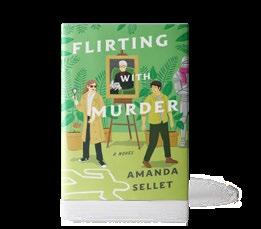
living there—not only do sparks fly between the adorkable pair, but a real dead body puts their sleuthing skills to the test.
In Celeste Dador’s delightful debut, Stars, Stripes & Summer Nights (Delacorte Romance, May 12), 17-year-old Abby Cary-Alzona, whose mom is the U.S. president, is used to having to “switch into ‘First Daughter’ mode.” When she meets the irritating (but gorgeous) Gabriel Calabrese at the White House, their shenanigans make headlines. Abby is packed off to visit her aunt in Gabriel’s rural Virginia town where, sheltered from scrutiny, she gets to do “normal” teenage things—like fall in love.
The Vacation Shift (Quill Tree Books/HarperCollins, June 23) marks adult


romance author Lily Chu’s fun and entertaining YA debut. Sixteen-year-old Ivy Brown Yu is stuck on an organized tour of Japan with her recently separated mom and a bunch of much older folks. The only other younger people are fellow teen Matteo Robertson and his single dad. Ivy and Matteo try to foil the seniors’ efforts to set their parents up, in the process falling for each other.
Sarah Everett’s lightly magical The Romance Rewind (Putnam, June 23) surprises readers with its dramatic twists. Zadie Cartwright is devastated when her boyfriend, Jason Riddick, breaks up with her on their first anniversary; she’d expected a promise ring. When a car crash lands Jason in a coma, Zadie hides the breakup. Only Jason’s cousin Marcus knows the truth. He and Zadie fall in love as they meet in dreams where she relives the past
year, seeking clues to what went wrong with Jason.
Ancient History Between Us by Kaitlyn Hill (Delacorte Romance, June 23) is a sun-drenched, culturally rich story that follows Cammie Lovett and West Jacobs, who grew up together on digs with their archaeologist parents. A kiss when they were 16 was a mistake, but after three years of estrangement, the two are reunited in Italy. Despite initial frostiness, the two new college students, who are each dealing with their own personal struggles, are inexorably pulled back together.
Hallie Griffin, the protagonist of Jessica Lewis’ sensitive, affirming Hallie’s Rules for a Recovering Romantic (Harper/HarperCollins, July 7), has planned a summer of selfimprovement at an academically rigorous summer camp, beginning with the rule “absolutely no romance!” Bisexual Hallie, whose heart has been broken too many times, is working on self-acceptance and figuring out who she is without her exes. But getting to know her stunning, intense cabinmate Julia Brown leads Hallie to risk trusting—and loving—again.
Laura Simeon is a young readers’ editor.
To cousins Maisie, Verona, and Joel, Mockingtown, Texas, is an ordinary small town—except for the lurking ghosts and other unexplained phenomena.
The Lipan Apache Moreno cousins, who are growing up in the Sunny Park mobile home community, feel powerless after Maisie’s best friend, Mara, dies and they lose their cousin Connor to a wrongful conviction for voluntary manslaughter. When Owl, a winged boy who’s the son of Big Owl, the legendary “father of birds,” cryptically warns Maisie about a tragedy that will befall people close to her, she vows to prevent it. Podcasters are
nosing around Sunny Park, trying to find out more about Connor. But Maisie and Verona are sharing a house-sitting job at an apparently haunted horse ranch, while Joel’s days are full looking after foster kittens at their Grandma and Great-Aunt Fran’s house—and complicated by a shapeshifting feline. This coming-of-age tale follows the cousins on a quest that will both challenge and define them. It unfolds in a creative mixed-media format: Little Badger (Lipan Apache) seamlessly interweaves third-person narration with the leads’ first-person chapters, which are printed on ruled notebook pages,
Little Badger, Darcie | Illus. by Abigail Rajunov
Levine Querido | 288 pp. | $19.99
October 6, 2026 | 9781646145683
and Rajunov’s artful full-color comic panels. The gorgeous, multicolored palette of the book’s pages evokes the Southwest Texas setting. Genre-defying, fantastical, and imbued with deeply human realism, this narrative is grounded in
the vulnerability, resiliency, and bravery of young people as they overcome hardship and right historical, generational, and systemic wrongs.
A magical story that both haunts and enchants. (Fantasy mystery. 12-18)
Bray’s well-paced novel embodies the singular magic of a life-changing song.
Anderson, Lily | Henry Holt (320 pp.) | $20.99
September 22, 2026 | 9781250370419
High school senior Merritt Morland Maldonado will do anything to get ahead—even bargaining with a demon. For years, Merritt has dreamed of getting into a good college and landing the Lexington Fellowship, a prestigious scholarship awarded to one student at Rancho Rosa High each year by jam company LexCo. Money has been tight ever since Merritt, who’s Puerto Rican and white, was taken in as a child by her Gran following her parents’ deaths; the fellowship would be life changing. Merritt binds herself to a demon in exchange for a guarantee that she’ll receive it, but she doesn’t anticipate the grisly consequences: The other finalists begin dying one by one. Complicating matters, she learns that her loathsome rival, Linus Lexington (great-grandson of LexCo’s founder), has made his own deal with the same demon. The two agree to work together to protect the other finalists and attempt to defeat the demon—after all, their own lives are at stake too. As the death toll grows, so do Merritt’s feeling of guilt and—surprisingly—her feelings for Linus, who’s cued white. Anderson delivers another entertaining paranormal tale that balances suspense, witty banter, and a touch of dark humor. Merritt undergoes a satisfying personal journey as she navigates remorse, financial anxiety, academic pressure, and fears about the future. She’s supported by a vividly drawn
cast of characters that includes diverse queer and racial identities. A fresh, darkly fun take on academic pressure and facing your demons, both literal and metaphorical.
(Paranormal. 13-18)
Blum, Isaac | Philomel (320 pp.) | $19.99 November 17, 2026 | 9798217039524
Two grieving teens find comfort in their shared experience. It’s the start of summer for Jonny Miller, a Jewish teen from a fairly nonobservant home who has just finished ninth grade. His older brother, David, sets them up on a double date at a Phillies game, but all Jonny can do is panic text his older sister, Carmel, who’s his guide and best friend. When the brothers get home, they learn there’s been an accident—a private plane crashed in their backyard in suburban Boncath, Pennsylvania, killing Carmel. The two people on board the plane died as well—the pilot and Senator Macon, whose daughter, Trish, knew Jonny’s sister from school theater productions. A devastated Trish pays a visit to Carmel’s shiva, unsure of what to say, but she and Jonny form a tentative bond, their grief profound as they navigate uncharted territory. As they help each other cope with life after loss, they discover too that Carmel and the senator each had secrets—secrets that are confusing to their loved ones. To their surprise, the teens grow to need each other. Is it
transference or something more substantial? Told from both main characters’ points of view, the story doesn’t tiptoe around the pain of losing a beloved family member. Jonny’s and Trish’s anguish manifests in different ways, and Blum immerses readers in their feelings with prose that expresses their distinct voices. Main characters present white. A poignant and deeply moving exploration of loss. (Fiction. 12-18)
Bray, Libba | Scholastic (400 pp.) | $21.99 October 6, 2026 | 9781546156543
A 17-year-old discovers first love, unexpected friendship, and the power of music in 1980s Texas.
Bowie (pronounced like the knife) Jones is about to start senior year at Crockett High School, but he has no idea what the future holds. He’s hopelessly in love with Holly “Comet” Jensen, an outspoken, guitar-playing, former Chicagoan who doesn’t seem to know he exists. When Bowie willingly takes the fall for a prank Comet commits on the first day of school, he wins her attention but must complete 100 hours of community service. Bowie opts to work off his punishment at KYEWFM 101, a local radio station owned by Marlon Mardell, a hard-drinking Vietnam veteran with a record of FCC fines and unpaid taxes. The bright side? Bowie’s internship provides a way to get closer to Comet, who starts listening to the station and then takes a job there. As he spends more time at KYEW and his feelings for Comet deepen, Bowie realizes he’s been sleepwalking through life: Now is the time to claim his voice. Bray’s well-paced novel embodies the singular magic of a life-changing song. Bowie is a realistically drawn, insightful, empathetic character. Rich conversations about music capture the
wonder of uncovering lyrics that hit straight to the heart, and the chapters are named after song titles, which will pique readers’ interest. The leads are cued white, and the supporting cast is racially diverse.
A powerhouse coming-of-age novel poignantly depicting the thrills, hopes, and uncertainties of growing up. (Fiction. 14-18)
Cesare, Adam | Harper/HarperCollins (320 pp.) $19.99 | August 18, 2026 | 9780063325081 Series: Clown in a Cornfield, 4
The arrival of the cast of the Clown in a Cornfield movie sparks a fourth clownfilled bloodbath. The town of Kettle Springs, Missouri, has seen more than its fair share of dramatic events and clashes. As a crew arrives from Hollywood to film a slasher version of the terrifying Kettle Springs Massacre, public opinion is split over whether or not the movie is a good thing. Surviving members of the original group are on board, though, and with Jerri Shaw as an assistant, Cole Hill will be working as an executive producer for the film. Cole’s longtime boyfriend, Rust Vance, is now, reluctantly, the acting sheriff. Actor Sabrina Alvarez, who reads Latine, is cast as original final girl Quinn Maybrook. She’s brand new to the movie-making scene and is star-struck by her proximity to the famous director and the attentions of a Hollywood heartthrob. Events that Sabrina at first chalks up to her own paranoia are revealed to be signs of undeniably deadly dangers on the set, and as the new Frendos commence their dark activities, the footprint of violence expands. A quick pace and shifting perspectives provide cinematic vibes, with some subtle references to the actual film sprinkled in adding layers of depth for longtime fans
without compromising the suspense. Most characters aren’t described and present white.
Gloriously gory metahorror, with plenty of carnage and just enough social commentary. (Horror. 14-18)
Chang, K-Ming | Holiday House (368 pp.)
$19.99 | October 6, 2026 | 9780823462469
A high schooler gets pulled back into the dizzying orbit of her journalism nemesis.
Ambitious aspiring journalist Wendy Lin would love to see her school newsmagazine, La Pluma, win back the title of Best of the West at the annual high school journalism conference in Sacramento. For six years it’s been awarded to their rival publication The Oakwood Oracle, where her former best friend, Helen Ouyang, is the head editor. Fueled by anger and a desire to both impress and one-up Helen, Wendy obsesses over winning and vies to be named editor-inchief of La Pluma. A cryptic, taunting comment on one of Wendy’s articles with a URL that leads to a mysterious message sets her off on a wild-goose chase she’s sure Helen has orchestrated. The investigation forces Wendy to confront the past, her own belief system, and her feelings for and about Helen. Through Wendy’s emotional spirals, Chang captures the complicated feelings surrounding roles and levels of investment in friendships and romantic relationships and the ways that life changes can exacerbate people’s insecurities. As they reconnect, Wendy and Helen, who are Taiwanese American, learn how to be more open and vulnerable with one another. The book also explores themes surrounding miscommunication and the subjectivity of perception and memory, and a late plotline centering Helen’s grandmother and her reunion with a former neighbor echoes the mending of Wendy and Helen’s bond. A compelling rivals-to-lovers romance with a strong emotional core. (Romance. 14-18)
Kirkus Star
Cottle, Ruby Jean | Henry Holt (432 pp.)
$20.99 | June 9, 2026 | 9781250451736
Series: Black River, 1
Something strange is going on with the teens living on White Mountain. Ever since her mother abandoned the family five years ago, 17-year-old Dusty has mostly kept to herself and tried to dampen any intense emotions. Her best friend, Mali, and 16-year-old sister, Opi, are the only ones who can break down her walls. After a weird experience in the wilderness of the nearby Adirondack Mountains, everything starts feeling different: Dusty’s senses become sharper, she’s more attuned to others’ feelings and thoughts, and she has no appetite yet doesn’t feel tired. She also feels irresistibly pulled toward new classmate Will—and craves his blood. When Dusty realizes that popular “BMX bro” Eli (a classmate with a large TikTok following whom she barely knows) appears to be going through the same changes, the pair work together to figure out what’s happening. This is a moody, evocative duology opener with an immersive small-town setting and exquisitely angsty romantic yearnings. The third-person omniscient narration mostly focuses on Dusty but smartly rotates among several other characters, amping up the intensity and mystery and making for an incredibly propulsive read even as the emotionally driven plot slowly unwinds. While readers are left with a tantalizing cliffhanger ending, Dusty’s emotional arc is fulfilling as she grows internally and her relationships evolve. Most characters present white; Mali, who’s gay, is cued Black.
Deliciously dark, romantic, and atmospheric, this debut sinks its teeth into readers and doesn’t let go. (map, author’s note) (Paranormal. 14-18)
Craig, Erin A. | Delacorte (400 pp.) | $24.99
September 1, 2026 | 9798217124183
It’s 1895, and orphan Christine Daaé dreams of moving beyond the corps de ballet at the Opera Populaire, a prestigious Paris opera house— perhaps even becoming the principal soprano.
The opera house is said to be haunted by the Phantom of the Opera, or Opera Ghost. When he comes to her in the dressing room one day, Christine, who’s originally Norwegian, believes him to be the Angel of Music her father spoke of before he died. She’s immediately entranced by his tutelage and talent. Christine submits herself to her Angel fully, pulling away from her friends and her first love, blond, blue-eyed Raoul, in order to learn from the mysterious being. Christine spends much of the narrative thinking about her relationship with Angel (though not interrogating how healthy his behavior is) and having vivid (and sometimes spicy) dreams that blur the line between fantasy and reality. There are several such dreams throughout the story, which slow the pace and are presented in ways that may confuse readers. This gothic romance can be enjoyed as an accessible introduction to Gaston Leroux’s original tale for contemporary readers or a delicious adaptation of the Andrew Lloyd Webber musical. Readers will enjoy Christine’s first-person point of view, and the detailed insights into the Phantom’s backstory. The narrative is sure to delight both newcomers and die-hard Phantom fans.
“Open up your mind, let your fantasies unwind” with this captivating riff on a beloved classic. (character map, glossary) (Romance. 14-18)
Creedle, Laura | Harper/HarperCollins
(400 pp.) | $19.99 | September 15, 2026
9780063359185
A troubled 16-year-old from Texas gets a chance at a fresh start—but it’s not what it seems.
Jess, who has ADHD and dyslexia, receives a full scholarship to attend the elite Danvers- Cutteridge School for Exceptional Students. The boarding school provides generous financial aid to its student body, which is mostly neurodivergent, and the opportunity is too good to pass up—at least according to her mother. But Jess, who was in juvenile detention and then fled other residential schools, has other plans. The moment she arrives on the picturesque campus in the mountains of West Virginia— located on the grounds of a former hospital—she’s ready to leave. Jess can’t shake the feeling that something is wrong, and as she plots her escape, she starts to unravel the dark web of secrets surrounding the school and nearby town. It becomes increasingly apparent that if she doesn’t find a way out soon, her life and those of her new friends may be at stake. With the entire mystery unraveling in a matter of weeks, the connections between Jess and the numerous side characters come across as rushed. The sudden ending may leave readers frustrated and wishing for more. Nevertheless, this is a suspenseful exploration of the meaning of sacrifice, the importance of community, and choices made in the face of fear, with a sympathetic
This tale of young lovers is a captivating story.
protagonist who’s easy to root for. Most characters present white. A high-stakes, nightmarish roller coaster of a coming-of-age story let down by an abrupt conclusion. (Horror. 14-18)
Cross, Hazel | Putnam (352 pp.) | $12.99 paper September 1, 2026 | 9798217111251
University is all about new experiences and figuring out who you are—but for one teen, it brings more than the usual challenges. Rose’s childhood has been plagued by nightmares in which she dies “in different, terrifying ways.” Then there’s the near-death experience: She’s nearly hit by a truck and saved just in time by a beautiful boy whom no one else saw. Her insistence that he was real leads to her becoming a viral spectacle, exacerbating her feelings of alienation. So, after high school, Rose wants to get as far away from Irvine, California, as possible. This drive to escape leads her to Payen University in Massachusetts, where everything is redolent with cozy, historical atmosphere; she even enjoys the drizzly weather. Rose is startled to encounter her mysterious rescuer on campus, but he insists he’s never seen her before and tries to keep his distance. Still, she pursues him, feeling an inexplicable connection. Cross’ debut, which centers on two white-presenting leads, is filled with yearning and desire and will appeal to fans of The Vampire Diaries and Twilight . The tale offers different twists on typical vampiric lore. After being thrown into the world of the paranormal, Rose is forced to contemplate her place within it even as she faces life-threatening danger. Short chapters accentuate the fast pace,
and the setting evokes spine-tingling autumnal and winter chills. An atmospheric tale of intense cravings. (Paranormal romance. 16-18)
Crossley-Holland, Kevin | Candlewick (256 pp.)
$19.99 | October 20, 2026 | 9781536253184
Tor, who was born outside of marriage as the third son of the Viking King Harald Hardrada, is tasked with gathering information for a plan to invade York—and from there “lay claim to England.”
Fifteen-year-old Tor has a lot to live up to—when his father was his age, he was a famed and fearsome warrior. But clever Tor is much better at using his wits than a sword. Kata, also 15, lives in Riccall, just south of York. She works the fields with her fellow villagers and wishes for more from life. When the two cross paths after Tor arrives in England, he claims to be a fisherman from Orkney. Kata, who’s heard news of an impending Viking invasion, is so taken with charming Tor’s bright blue eyes that she decides she doesn’t care if he’s lying or not. Tor, who’s equally smitten by Kata, feels bad about lying and soon reveals his true identity to her. Tensions run high as the Vikings approach and the earls of York prepare for battle. War, intrigue, and betrayal mark the political landscape, and the teens must decide where their allegiances lie. Can romance thrive amid such pressures and danger? Written in the thirdperson omniscient, this tale of young lovers from the acclaimed CrossleyHolland is a captivating story grounded in the history of the Viking invasion of 1066, Norse mythology, and medieval Christianity. A thrilling tale of star-crossed lovers and the Viking invasion of York. (Historical fiction. 12-16)
Crowley, Codie | Disney-Hyperion (304 pp.) $18.99 | May 5, 2026 | 9781368101424
Sundae Valentine was only 11 when she met Holly Jolly for the first time—the ghostly legend from Wildwood, New Jersey, offered her three wishes that came with a price.
For Sundae, Holly Jolly wasn’t just a monstrous story, but something that changed her entire childhood. Flash forward seven years, and she’s on top of the world: Just named prom queen, she and her cheerleader friends are en route to Wildwood along with the football team for a prom weekend celebration. But this trip brings back memories that pink-haired, blue-eyed, white-presenting Sundae is doing her best to mitigate with drugs, alcohol, and hook-ups (the girls have a Slut Cup competition—the winner is the cheerleader with “the highest body count on prom weekend”). Things start looking up when she meets Lia, whose band is playing a gig at the Wildwood motel where she’s staying, and there’s a spark of connection. But little does Sundae know that Holly Jolly has returned. Crowley’s propulsive and engaging horror story is witty and fun, with its blend of gore and light banter. The legend of Holly Jolly leaves a bit to be desired, unfortunately—it comes across as disjointed in comparison to how well-fleshed-out the rest of the story is. But Lia’s bandmates, Dallas and Edison, frequently allude to horror movie lore, which genre fans will enjoy. A thoroughly original and campy gorefest with a touch of romance; a genre-blending treat. (Horror. 16-18)

Currie-McGhee, Leanne | ReferencePoint Press (64 pp.) | $33.99 | September 1, 2026 9781678213800
A concise and accessibly written look at teens’ social media use and its effects.
For another prom horror story,
CurrieMcGhee adroitly and objectively addresses pressing issues: How important to adolescents is social media, why might unplugging be desirable, how are teens disconnecting, what happens when they do, and is the future likely to be less plugged in? The author cites negative consequences of media overuse, like mental and physical health effects, academic distraction, and safety risks. But she also acknowledges social media’s benefits, including connectedness, support, and activism. The text briefly explains the physiology of dopamine in social media use and its discontinuation, options for digital detox or even permanent breaks, and apps and other strategies for restricting time online. CurrieMcGhee notes that as young people themselves advocate for detaching from social media, some platforms are taking note and offering new features. This book cites the 2026 lawsuit against Meta Platforms and YouTube for their built-in addictive features but doesn’t mention countries where laws restricting youth social media use are in effect, in process, or proposed. Quotes from real people who struggled with or worry about media addiction will encourage readers and help them know that they’re not alone. The stock photos and personal anecdotes represent an ethnically diverse cross-section of young people.
A useful and supportive guide to a fraught topic written in accessible prose. (source notes, for further research, index, picture credits) (Nonfiction. 12-18)
Kirkus Star
Tom Burne Has Left the Chat
Farrelly, Seán | Faber & Faber (336 pp.) $12.95 paper | September 1, 2026 9780571388219
Discovering a phone leads a gay Dublin teen to want to know more about its previous owner in this story of grief, relationships, and online personas.
After 17-yearold Jamie Finnerty’s dad passed away from Creutzfeldt-Jakob disease several months ago, he fell into depression and became distant from his friend group, the Nerd Herd. Near a cafe where Jamie is sitting with his Mam (who’s planning their move to Canada to be near his grandparents), a teen steps off a cliff, dying by suicide. In the chaotic aftermath, Jamie finds the boy’s phone and impulsively pockets it. The device belonged to Tom Burne, a biracial (Chinese and white) London transplant—and Jamie knew him, or at least recognized him. Tom was a minor influencer, popular for his long-running streak on a social media app where users share daily oneminute videos. Determined to understand Tom’s final actions, Jamie dives deep into the contents of the phone; what he finds takes a toll on his well-being. Playwright Farrelly’s novel debut grapples with online relationships and the question of how much of our true selves lies within our digital content. Avoiding easy answers, it poignantly shows Jamie confronting his grief, loneliness, and anxiety. These heavy topics are thoughtfully and realistically portrayed, and moments of levity come through Jamie’s relatable, authentic voice, which makes the book compulsively readable. The immersive Irish setting adds extra appeal.
A compelling, moving, and timely portrayal of mental health in an increasingly digital world. (content note, resources) (Fiction. 14-18)
Hastings, M.J. | Stonefruit Studio/Sourcebooks (464 pp.) | $19.99 | September 1, 2026
9781464244513 | Series: Firstborn, 1
Following the Great War of 908, the Dursti and the Arcanists violently split their country in two; now a young woman is caught between them.
The magicians of Arcania who found themselves on the Durst side were executed or imprisoned and labeled Bastards, the lowest stratum. The Dursti live by the decrees of their Holy Book, which instills loyalty to country over family: “The first children take up arms. The second children take up books. The third children are taken.” Deemed “reborn” after passing a test of the Old Gods as a toddler, 20-year-old Bastard-born Bryn Ruelle is now a true Dursti and Firstborn soldier. Bryn’s Midborn brother, 18-yearold Asa, is a student at Midborn University, while her Lastborn sister, 12-year-old Wren, will be trained in highly classified arts. Before advancing to the Firstborn Army, white-presenting Bryn must kill during the Long Night, a battle pitting Firstborn soldiers against Bastards, or else be demoted to Bastard status. Bryn deciphers a message sent before the battle that alludes to transporting Wren to Hirsch, the cruel Arcanist leader, making her question where her loyalty lies. The bleak, imaginatively drawn world debut author Hastings creates makes Bryn’s arc a nail-biting thrill ride. Readers will be immersed in her struggles as she tries to discern friend from foe and determine the true motivations of an array of captivating and diverse characters.
A brutal survival story highlighting the wondrous complexities of the human condition. (Fantasy. 16-18)

Heinrich, Manuia | Sarah Barley
Books/Simon & Schuster (368 pp.) | $21.99 November 17, 2026 | 9781665986076
Moemoana Auri, whose given name means “ocean dream,” is a Mā’ohi, or French Polynesian, 18-year-old with an intimate connection to Moana, the sea.
Warned by a premonition that her younger brother, Tao, will drown, Moe has been working toward their escape. In just four days, they’ll leave Vaeaga for the Big Island, Tahiti, and head to Paris where Moe will attend university, her flight covered by a scholarship for Indigenous students. But the sea delivers another ominous warning: “In four days, you will be bound to this island.” Then Tao’s white girlfriend, Sabine, disappears, and Tao, who’s struggled with bouts of amnesia since their dad died and mom left, can’t recall recent events, making the gendarmes think he’s to blame. With time ticking away, Moe ends up working with Temanea Yung to find Sabine and clear Tao’s name—introducing complications since Temanea is her maddeningly annoying crush and academic rival, and he seems to like her former best friend. Moe is a realistically drawn parentified teen who’s trying her best to save her brother. The strong pacing is enhanced by short chapters and a pace that picks up as time runs out. This debut by Indigenous author Heinrich, who’s of Mā’ohi/French Polynesian origin, is fresh and entrancing, with the mystery surrounding Sabine’s disappearance, the magical connection Moe has to Moana, and intriguing information about the impact of France’s nuclear testing on the islands’ residents.
A riveting and original page-turner centering on beautifully realized characters. (pronunciation guide, author’s note) (Speculative thriller. 13-18)
Heavy topics are thoughtfully and realistically portrayed.
TOM BURNE HAS LEFT THE CHAT
It’s Not Over Yet
Hussain, Salma | Tundra Books (360 pp.)
$20.99 | October 13, 2026 | 9780735271555
A diagnosis of a brain tumor forces a Toronto teenager to confront his fears. David Wali Khan is pumped for 10th grade; the “dumpster fire that was freshman year” is behind him, and he looks forward to crushing his life goals, like handing in his homework on time. Then he finds out that the vomiting and headaches he’s attributed to stress are actually caused by an acoustic neuroma. It may be benign, but the complex surgery comes with serious, life-altering risks. His interfaith Pakistani immigrant parents (“Aba’s a Muslim; Mom’s a Christian”) and his 21-year-old twin sisters are loving and supportive, even through Wali’s outbursts. But Wali does manage to wound his bestie, Kamran Chaudhary, a recent arrival from Pakistan. Ruby Lai-Mirza, a new girl from Vancouver who’s also from a mixed-faith background (Buddhist and Muslim), enters the picture. Poetry-loving Ruby discovers @Raja_Ebert, the old Instagram account where Wali posted his Bollywood movie reviews. Soon the “tight bubble of two” has expanded to include her—and despite K-Man’s tender, patient nature, he and Wali have a falling out. By working with his therapist, Dr. Iman, Wali lowers his defenses to access the strength of his “old soul,” the wisdom of the religions he’s been raised in, and the kindness others offer him. The story is moving without being maudlin, and Hussain’s
YA debut vividly captures Wali’s voice with humor and charm.
An excellent read offering a potent reminder that life is precious. (content warning, resources) (Fiction. 12-18)
Joseph, Frederick | Viking (384 pp.) | $20.99 October 20, 2026 | 9798217040599
A Black teen with bipolar disorder navigates changing relationships after the loss of a sibling.
Sixteen-year-old Ella Washington, who lives in Harlem with her parents, struggles with bipolar disorder, bullying, and most devastatingly, the recent death of her older sister, Maya. Art provides solace, and her parents and her Haitian psychologist, Dr. Dupont, help her with strategies for managing her volatile moods. When Ella thinks about Maya, she has feelings of self-hatred, anger and abandonment. She’s also frustrated with her overprotective parents. Returning to school after a violent incident and a month in a psychiatric center, she wants to be “just Ella” but instead, as she feared, she becomes a target. Fatima, Maya’s former best friend, is hostile toward her, and she receives a slew of malicious, anonymous text messages. With support from Cory, Maya’s ex-boyfriend, and new friend Binh, a Vietnamese American girl who also sees Dr. Dupont, Ella finds strength. She learns to question her assumptions and recognizes that Maya was more layered than she’d realized. Joseph realistically depicts the complicated grief experienced differently by each family member and shows without
heavy-handedness the particular vulnerabilities faced by a Black girl with mental illness, making this a distinctive read. Ella’s journey to becoming a more compassionate person and more generous, accepting peer is inspirational. The strong sense of place highlights the richness of Harlem and the impact of gentrification. A nuanced, culturally rich exploration of grief, mental illness, and the power of community. (author’s note) (Fiction. 14-18)
Kahn, Ben | Illus. by Sonia Liao Colors by Rebecca Nalty | IDW Publishing (120 pp.) | $17.99 paper | August 11, 2026 9798887244532
A fright-filled story set in the world of the Monster High franchise featuring high-fashion ghouls in a haunted cabin that harbors a terrifying secret. Monster High students Draculaura, Frankie, Clawdeen, Lagoona, and Cleo rent a haunted cabin for the weekend for a much-needed break from school. No stranger to hauntings, these ghouls can’t wait for a weekend full of equal parts scares and relaxation. So they’re disappointed to find a cabin that’s remarkably ordinary: “It’s giving shabby. Not spooky.” Cleo and Clawdeen set about redecorating, adding mummy-cloth spiderwebs and ripping the curtains. While exploring, Draculaura and Frankie strike gold—a room full of skeletons, macabre books, and mysterious objects. The room even contains a combooter (a slim, silver laptop with a pumpkin silhouette logo) that’s open to a video essay about Ekhidna, a rogue Titan with the ability to steal abilities from monsters and give them to wild animals. Ekhidna was imprisoned deep in the woods, and a cabin was built on top of the site—the same cabin, it turns out, where the teens are spending their weekend. Nalty’s rich, autumnal color palette for the background
scenes stand in stark contrast to the fashionable girls, who wear a range of vivid colors. All the characters are meticulously and distinctly rendered in Liao’s illustrations, which include small accessories and highly detailed fabrics. The characters feature a variety of skin tones, both real-life and fantasy-world. A spooktacular Halloween comic for longtime fans and new readers alike. (additional art) (Graphic horror. 12-18)
Klein, Juniper | Page Street (400 pp.) | $21.99
October 6, 2026 | 9798890034922
Wanting to resurrect the girl she loved, a young woman begrudgingly makes a pact with a man who’s seeking to infiltrate an alchemy cult. Since stealing magic from the Netherwood forest, 17-year-old Jayde Nacré has been trying to bring back her beloved Soleste with a spell that requires trading one life for the other. After her fourth unsuccessful attempt, she’s blackmailed by Barrick Caddoret into helping him in exchange for his silence. While using a magical oath to hold them both to their word, Jayde accidentally binds their souls. Barrick, who seems no “older than eighteen or nineteen,” wants access to Culte Lune, a cult of alchemists led by the mysterious Chymist, and as the pair pass through the rites for new members, Jayde comes to suspect that someone within its ranks is responsible for Soleste’s death. Jayde’s memories prove unreliable and her attraction to Barrick grows—and she must decide how far she’ll go to fulfill the promises she’s made. Featuring lyrical prose, this debut is set in an atmospheric, French-inspired fantasy world and led by morally gray, white-presenting characters who follow an intriguing enemies-to-lovers romantic arc. Jayde’s deep, heartfelt emotions—particularly her grief—come across through vivid details, even as she tries to numb her
feelings. The story takes its time unfolding, requiring patience, but it satisfyingly pays off with Jayde’s personal growth.
Combines captivating magic with a heartfelt exploration of life and love after loss. (Dark fantasy. 14-18)
Li, Sophie | Norton Young Readers (336 pp.)
$24.99 | October 20, 2026 | 9781324082859
Two first-year college students in Toronto try to find their way. After years of working hard to please her successful CEO mom, Alice’s high school career ended in slipping grades and a lower ranking than she hoped for. Leaving China to study overseas is a chance to forget the past and become someone new. She’ll major in English literature instead of business, party with her roommate Hikaru (who has brown skin and family in the Caribbean), and do fun things (“Shopping! Food! Touristy stuff!”). When a wholesome attempt to lure out her reclusive third roommate turns into a disastrous and chaotic meet-cute, Alice’s plan to rebel is challenged. Studious Haoran, a fellow Chinese student, is a business major who’s driven by gratitude for his single father and is determined not to let “his sacrifice go to waste.” Little by little, Alice and Haoran get to know each other—but can these two opposites get on the same page? Li’s debut is a fun and heartfelt exploration of navigating coursework, familial expectations, and relationships—all in a new place and culture. Satisfyingly, the pair learn from one another, though readers might find the ending feels a beat too quick. Alice and Haoran speak Mandarin, and their thoughts and speech appear in both Chinese and English. With an attractive, simple palette of blues and
pinks, the detailed but clean illustrations are balanced by the characters’ expressive and often energetic faces. A sweet, charming romance and a thoughtful story of self-discovery. (Graphic romance. 14-18)
Lockhart, E. | Delacorte (384 pp.) | $20.99 October 6, 2026 | 9780593904121
Two teens in love experience a shocking event in this deeply felt novel. Lexie WeissGreenberg escapes an overburdened past when she drives across the country from Los Angeles with her mother and 8-year-old sister, Orly, to the small town of Covington to live with her Aunt Ida and start afresh. Covington is known for its healing natural hot springs, the pools. Lexie hopes that they’ll help her mother, who’s incapacitated by chronic pain and depression. This suspenseful story unfolds seamlessly in a variety of poetic forms and is laced with foreboding and heart. As summer begins, Lexie has a boyfriend: olive-skinned 17-year-old Chester Allegheny, who’s on the high school swim team. Chester may be Christian and come from money, but he appreciates Lexie’s financially struggling Jewish family. Then one winter day a horrifying, fantastical event occurs at the pools; the rest of the book is about how the townspeople deal with the aftermath. Ever-responsible Lexie sets out to find a solution—but the clock is ticking. The book explores themes including sacrifice, secrets, loss, care for others, self-worth, and the different ways people manage depression. Reminiscent of Michael Grant’s Gone (2008) and other stories of teen resourcefulness in the face of disaster, this book also brings fresh insights to the Brothers Grimm folktale it references. The cinematic, poetic writing features scenes of heartbreak, horror, and devotion, culminating in a gorgeous Technicolor finale.
Come for the romance; stay for the artistry. (author’s note) (Fiction. 14-18)
Loonin, Meryl | ReferencePoint Press (64 pp.)
$33.95 PLB | September 1, 2026

An overview of the astonishing range of vital community services public libraries offer (and have offered) in the United States. Tracing their origin back to 18th-century subscription libraries, Loonin chronicles the growth of public libraries and library systems in this country—but her focus remains fairly steadily on highlighting their founding principles of open access in the service of promoting informed citizenship and their central roles as “third places” (after homes and schools or workplaces), where communities can gather to exchange values and views. She’s refreshingly frank about library benefactor Andrew Carnegie’s harsh anti-labor tactics, systemic flaws in the Dewey Decimal System, the personal failings of its inventor, Melvil Dewey, and instances where libraries haven’t lived up to their “free to all” ideals, due to censorship demands or prejudice against racial and immigrant groups. But Loonin can rightly claim that in general, public libraries have a proud history of resisting such pressures in defense of both intellectual freedom and freedom of opportunity. The book includes a dazzling recounting of services and programs promoting job skills and multiple types of literacy, special children’s and teen spaces and services, lending libraries of tools and other objects, and outreach to underserved populations (from the Appalachian
packhorse librarians to efforts to bridge the digital divide). Photos show diverse library users and library settings. A nuanced and overall celebratory story. (source notes, for further research, index, picture credits) (Nonfiction. 12-18)
Mooney, Carla | Twenty-First Century/Lerner (80 pp.) | $14.99 paper | August 1, 2026
9798348043681
A country music star’s life and success are recounted with satisfying depth. Dolly Parton’s humble origins in a two-room Tennessee cabin in the Smoky Mountains with no electricity or running water were a surprising beginning for this global superstar. She was born in 1946 as the fourth of 12 children and her early years were characterized by minimal resources, but, as Parton says, they “were rich in things that money don’t buy…like love and kindness and understanding.” Bill Owens, her musician uncle who wrote songs for luminaries like Loretta Lynn, recognized an 8-year-old Parton’s vocal talents and nurtured her skills, which led to her appearance on a Knoxville radio and television show at age 10. Her career truly took off in 1967, when she appeared on The Porter Wagoner Show and was signed by RCA Records. Parton’s career as a performer and songwriter has been marked by dogged determination and relentless work. Mooney packs a lot of material into her
concise biography, covering Parton’s film, television, business, and philanthropic accomplishments in addition to her myriad musical achievements, making this a robust account of a worthy subject. Details about Parton’s integrity, self-assertiveness, and ongoing creative risks will particularly appeal to teen readers, highlighting her bold, admirable departures from expectations. The accessibly written text, ample photographs, and black-and-gold page designs add to the work’s appeal.
A thoughtful and worthy portrait of someone truly special. (glossary, source notes, bibliography, further information, index) (Nonfiction. 12-18)
Mooney, Carla | ReferencePoint Press (64 pp.)
$33.95 PLB | September 1, 2026

A succinct survey of the importance, process, complexity, and costs of saving threatened animal populations (as well as some plants). The survival of the nearly extinct gray wolf, thanks to the wolves’ natural migration patterns, human reintroduction, and habitat protection, serves as a model for saving other endangered species, although experts admit that the gray wolf’s prospects are still uncertain. Mooney cites the work of government and nonprofit conservation organizations like the Center for Biological Diversity, the World Wildlife Fund, and the U.S. Fish and Wildlife Service. She details the aims of the International Union for Conservation of Nature and explains its Red List. Chapters cover habitat conservation, restoration, and expansion along with global efforts to prevent poaching and overharvesting. Among the affecting examples Mooney proffers are the Bornean elephant (a keystone rainforest ecosystem species), grizzly bear, panda, Galápagos giant tortoise, Florida panther, bald eagle, and other (qualified) successes.
The Fifty Shades author turns to YA fantasy in Land of Ghosts.
With her next book, E L James is straying far from her spicy roots.
The author of the Fifty Shades series of
BDSM-themed erotica has a young adult fantasy novel coming later this year, Cosmopolitan reports. Bloom will publish Land of Ghosts
James made her literary debut in 2011 with Fifty Shades of Grey, a novel that originated as a self-published work of fan fiction featuring the characters from Stephenie Meyers’ Twilight series. The novel, about the sexual relationship between recent college graduate Anastasia Steele and wealthy entrepreneur
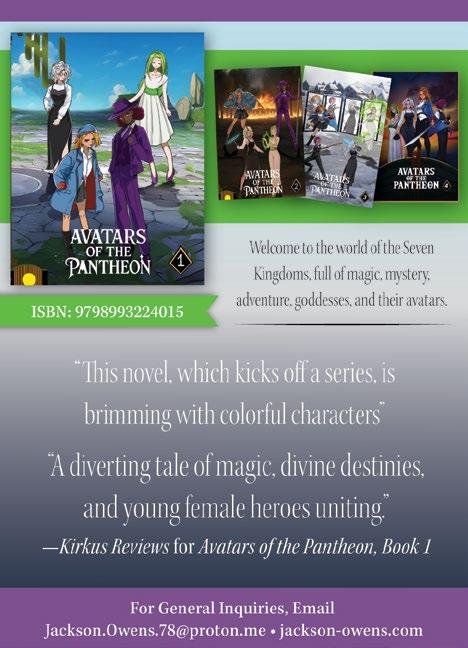
Christian Grey, was subsequently released by Vintage in 2012.
She followed that up with two more books in the series, Fifty Shades Darker and Fifty Shades Freed; all three were adapted as films starring Dakota Johnson and Jamie Dornan.
Land of Ghosts will follow Emily Beauchamp, who loses her immediate family in a tragedy and moves in with a distant relative. There she encounters and falls for a young man who might be a ghost.
“I think what I loved about this story is that at its heart, it’s

For reviews of E L James’ books, visit Kirkus online.
about love after loss, and the possibility that even when everything is taken from you, the universe can still surprise you,” James told Cosmopolitan Land of Ghosts is scheduled for publication on Oct. 20.—M.S.

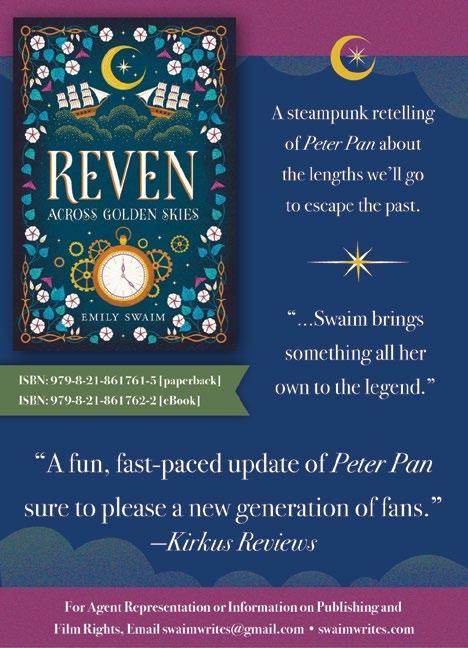
The author of The Gods Will Sing Our Song answers our questions.
IN AUTUMN KRAUSE’S The Gods Will Sing Our Song , Japanese American teenagers Ren and Violet are both struggling with family upheavals during World War II. When their families are taken to the same relocation center, the two teens are drawn together with the help of magical relics, and they uncover a possible solution to their problems— that could come with a grave cost. A reviewer for Kirkus praised the novel, inspired by the author’s own family history, as a “beautiful, magicinfused love story that doesn’t shy away from harsh realities.” Krause answered our questions via email.
What inspired you to tell this story? Was there a moment where the idea really struck you?
Growing up as a direct descendent of the [survivors of] WWII Japanese American camps, I always knew I would write this book. I also knew that I wanted it to be centered around two teens who fall deeply in love despite the betrayal of their own government and that I wanted to infuse the narrative with folklore and magic. Over time, the story took shape in my head with the magic unfolding amid the perilous setting of the militaristic camp. Its presence heightens and expands the sweeping, epic romance between the two teens who cling to each other amid the chaos.
When and where did you write this book? Describe the scene and any necessary accoutrements or talismans.
I wrote this book in our living room between the hours of 11 p.m. and 3 a.m. while my older children slept and my newborn made appearances for nursing…which was perfect because I swear the writing ghosts are livelier at night. My talisman would probably be my Hydro Flask, which somehow magically stays filled. (OK, my husband always makes sure it stays filled and I stay hydrated—when I am writing, I’m lost to the world and my own bodily needs.)
How was the experience of writing a novel inspired by your own family’s history? Was this in some ways more challenging—or more rewarding? It certainly added weight to the process because this was an atrocity that my family lived through firsthand and I wanted to capture it correctly. Interviewing my grandpa for the book is something I will always remember and treasure.
How do you balance heavy themes with romance and magic, especially writing for young readers?
I balance the heaviness by having the two teenage main characters at the center of the story be exactly what they are—teenagers. Despite the harrowing circumstances, they have electric chemistry that can’t be stifled, natural banter, and pieces which complete each other. They have the same fears, thoughts, and hopes that any teenagers have.
Aside from writing, what brings you joy in your life? These could be activities, people, places, experiences, whatever comes to mind.


Spending time with my family, working out, and trying to lure the local crows into doing my bidding with shiny antiquaries.
What are some of your favorite recent romance reads?
Lovely War by Julie Berry! I reread it while drafting The Gods Will Sing Our Song and fell for the love-storywithin-a-love-story construct. I also recently enjoyed the romantic tension that fills The Hacienda by Isabel Cañas .
Interview by Nina Palattella.
Black-footed ferrets are the stars of a chapter on captive breeding and reintroduction programs. The text boxes and color photos, alternately endearing and poignant, help make the case. Despite Mooney’s positive outlook, the final chapter, on mitigating noise, chemical, and plastic pollution, is sobering. Overall, however, the resolute tone and positive examples offer encouragement for continued efforts, and readers will find this work engaging and inspiring.
An optimistic but still concerned take on ongoing wildlife conservation efforts. (source notes, for further research, index, picture credits) (Nonfiction. 12-18)
Mooney, Carla | ReferencePoint Press (64 pp.)
$33.99 | September 1, 2026 | 9781678213541

A cautionary report on the immediate and long-term effects of recent cuts to federal science agencies and funding. Mooney argues cogently enough that President Trump’s administration’s habit of ordering sudden staff reductions in federal science agencies and abruptly cutting off grant funds to universities and research laboratories not only threatens this country’s preeminence in scientific and technological research, but also fosters a pervasive atmosphere of uncertainty that stifles innovation. She quotes plenty of unhappy scientists, whose words reflect widespread hits to morale and careers. At the same time, she presents examples of threatened reductions that were rejected or restored by court order or other means, making it unclear precisely how much monetary damage has been done. The author covers the targeting of diversity, equity, and inclusivity programs and mentions government accusations of antisemitism that were leveled against
Columbia University and other institutions as a pretext for halting funding. She quotes a constitutional studies expert who expresses his disquiet that funding was cut without any proof that the allegations were valid. In the end, perhaps hampered by the freshness of a topic that at the time of publication is still unfolding, Mooney focuses heavily on the impact of this anxiety and unpredictability around funding rather than providing concrete data readers would find more useful. The stock photos are few and dispensable; the backmatter includes a selection of marginally relevant resources and official web sites.
Superficial treatment of a timely topic. (source notes, index, picture credits) (Nonfiction. 12-18)
Muñoz, Gloria | Holiday House (304 pp.) $19.99 | October 6, 2026 | 9780823458370
Surviving under a brutal dictatorship, teen witches uncover sinister plots and budding powers during their first year of college.
Adjusting to Fletcher University proves harsh for the Buenas Malas coven. The foursome, who read Latine—Lucy, Sirena, and twin sisters Clara and Fabiola—enter the prestigious school for the elite as New American Continent scholarship students, an honor that comes with brutally high expectations that force them to continually demonstrate their worth. Further dangers loom over the young witches thanks to the oppressive rule of the Path, a profit-oriented regime that has outlawed magic and champions its version of “meritocracy” at all costs. When the Buenas Malas discover a portal on campus that leads to a hidden forest, the spirited witches realize that magic seems to pop up in unexpected ways at Fletcher. Then Lucy’s roommate, who might possess magic as well, disappears. As the coven unmasks the sinister forces and secrets that lurk in the shadows, they
must depend on their powers to find their way forward. A subplot involving Lucy’s conflicted feelings for both Sirena and a frat boy adds an intriguing layer that fizzles out due to her underdeveloped relationships with both potential love interests. Readers might spot real-life parallels to the Path’s autocratic edicts, but the ruling bogeymen never fully gel as a credible threat. Still, Muñoz succeeds in weaving a tale of engaging witches and cool magic feats. Fabiola is cued transgender.
Intermittently bewitching.
(Dystopian. 14-18)
Patton, Alexis | Bloom Books (416 pp.)
$21.99 | September 1, 2026 | 9781464278136
Series: Us Dark Few, 3
Sexual and romantic tension abounds as the exceedingly attractive leads continue to fight for their love amid amnesia, a struggle against a robot overlord, and ongoing conflicts between rival revolutionary factions before everything culminates in a final battle. Takeshi and Khalani have escaped the prison where they were tortured and confessed their love for one another, but Takeshi’s memory is gone. Khalani is committed to making sure that he remembers his devotion to humanity— and his feelings for her—although forces seem to be working against them. Project Helix, a secret initiative from before the Great Collapse, when people moved underground hundreds of years ago, represents the only hope to reclaim the Earth’s surface. As they search for it, Khalani, Takeshi, and their chosen family must decide which group to align with: the Desert Spring or the Sinners. Engaging with timely concepts of anxiety over AI and destructive climate change, this proves to be a satisfying tale for our times that leavens moments of harsh violence with erotic sex scenes that focus on bondage and power-play kink. Readers
here for sensual scenes or lavish battles will be swept up in this final chapter of the series. Earlier entries described Khalani as Hispanic and Takeshi as Asian; this volume continues to make note of Takeshi’s “bulging muscles.” A hopeful conclusion to a dystopian trilogy that’s as sexy as ever. (content note, author’s note) (Dystopian. 16-adult)
Read, Emma | Faber & Faber (368 pp.) | $12.95 paper | August 25, 2026 | 9780571390526
In a claustrophobic and unsettling underwater dystopia in the year 2089, the world’s green energy depends entirely on ProCorp’s deepwater mining of bacteria.
Three teens from very different backgrounds find their lives intersecting at Green Valley Sumac, one of the vast Subsurface Mining and Colonization Stations located deep within the Kermadec Trench near New Zealand. In the abyssal zone, society is divided into distinct groups, including miners, engineers, and scientists, creating artificial barriers that mirror real-world inequalities. Maia Maxon, an ambitious, wealthy 16-year-old engineer, is a new arrival at the station. Betty Styles, who’s also 16 and Maia’s highly experienced guide, is a Digger from a lower-class mining family who can’t escape the station’s rigid social hierarchy. Eighteenyear-old biologist Audley McVeigh has suspicions about ProCorp’s operations that may threaten his safety and future. Debut author Read’s worldbuilding is vividly realized, with bloated sea creatures, failing ecosystems, and fish-themed humor adding both atmosphere and unease. The result is a constant sense of anxiety and confinement coupled with an urgency associated with survival stories and environmental horror. The rotating perspectives of Maia, Betty, and Audley, who present white, provide insight into the station’s
complex social structure while highlighting themes of trust, resilience, friendship, and corporate greed. This series opener resolves some mysteries surrounding recent mining accidents, and the plot steadily builds tension, culminating in a cliffhanger ending. Futuristic and atmospheric highstakes climate fiction with an intriguing premise and character arcs. (Science fiction thriller. 14-18)
Roland, James | ReferencePoint Press (64 pp.)
$33.95 PLB | September 1, 2026
A history of the Holocaust with particular reference to the experiences of teenage Jewish victims. Readers will encounter some widely recognized figures in this remembrance, such as Anne Frank and Elie Wiesel, but Roland draws from many decades of recorded testimonials, offering space for a chorus of less well-known voices. Paraphrasing and utilizing short quotes, he chronicles thematically the rising tide of Nazi repression, the brutal and terrifying roundups, life and death in the thousands of European camps, and heroic resisters like 15-year-old Warsaw Ghetto activist Aliza Vitis-Shomron and 16-year-old Sophie Scholl of the largely non-Jewish White Rose group. In the final chapter, the author offers glimpses of the Holocaust’s enduring effects on Jewish survivors. Tibor “Ted” Rubin spent two years as a teen in Mauthausen, followed several years later by 30 months
as a prisoner of war in North Korea while serving in the U.S. Army; he enlisted after emigrating as an act of gratitude to the American soldiers who liberated him. Eva Kor, who was in Auschwitz with her twin sister (they were subjected to Joseph Mengele’s horrific medical experiments), controversially tendered a public statement of forgiveness for her ordeals. The book makes no mention of teenage Holocaust victims who were targeted for their sexuality, disability, or Romani ethnicity. Numerous historical photographs accentuate the sobering content.
Thanks to the unusual angle, a good choice for assignments or general reading. (source notes, for further research, index, picture credits) (Nonfiction. 12-18)
Rose-Teter, Marley | Page Street (368 pp.) $22.99 | September 29, 2026 9798890035004
To what lengths will a girl go to save her love— how far will she push herself? When Lumi reveals that she can reanimate bones, her girlfriend, Nola, immediately accepts her magic. When Lumi announces that she’s running away from the cold, murderous mother who has never truly believed she’s her daughter, Nola declares that she’s coming along. And when Lumi’s footprints disappear into a lake in the middle of a forest, Nola walks into its cold waters too. The girl Nola loves is a changeling, and when she arrives in faeryland, the only person who helps her is self-taught witch Kyteler, the asexual
A sense of anxiety and confinement coupled with environmental horror.
human girl who should have had Lumi’s life and human family. Poet Rose-Teter’s debut novel features easily riled fae who are one with nature. They wear ghoulish “veils”—skins that change their faces like masks. Nola’s own face frequently dissembles; she learned long ago to plaster a smile over her perpetual sadness. The narration sometimes offers little explanation for events or characters’ reactions, keeping readers slightly off-kilter, but the effect feels appropriate to the fae setting, where humans are confused more often than not. The one thing that never wavers is the sweet love between the two 17-year-olds. The representation of Nola’s and her parents’ struggles with depression is highly empathetic. Main characters present white. A marvelous, metaphorical masquerade. (Fantasy. 14-18)
Shawa, Hooda | Illus. by Nada Esmaeel Trans. by Nour Jaluli & Sawad Hussain Yonder (176 pp.) | $18 | September 1, 2026 9781632064073
A young Palestinian diaspora painter confronts the personal cost of making art for others when an unexpected encounter compels her to question the true purpose of her work, in this novella translated from Arabic.
Farida Ma’rouf, who’s from Aleppo and now lives in Paris, is sent to Tangier by her employer, art dealer Monsieur Joaquim, to follow in Matisse’s footsteps. What begins as an artistic pilgrimage soon reveals a more troubling agenda. After several years spent creating art for others, Farida feels estranged from her own creative voice. In Morocco, this tension sharpens as she’s pressed to replicate Matisse’s paintings under unsettling conditions, a demand that casts a shadow over her return to Paris. The ethical burden of creating forgeries deepens her artistic block, leaving her adrift. When Farida goes to the Louvre
and encounters Mazen Salloum, a Palestinian traveler from London (via Lebanon) who’s seeking a lost portrait of his grandmother, they connect through their shared cultural backgrounds. Through storytelling, a diary, and letters, the novel reconstructs a pre-1948 Palestine and the subsequent tragedy of the Nakba, linking Farida and Mazen through inherited displacement and unresolved histories. This is a leisurely, reflective story, richly descriptive and saturated with color and sensory detail, with beautiful illustrations by Esmaeel that subtly reinforce the work’s cultural grounding. The narrative engages thoughtfully with questions of colonial collecting practices and artistic ownership without sacrificing emotional intimacy. A quiet, contemplative narrative exploring loss, personal history, and self-reclamation. (author’s note) (Fiction. 14-18)
Sheen, Barbara | ReferencePoint Press (64 pp.) | $33.95 PLB | September 1, 2026
An overview of the concerns and priorities of Generation Z, who have grown up with social media, are more racially diverse than previous generations, and face a plethora of local and global challenges that affect their immediate and long-term futures.
The roughly 69 million Americans born between 1997 and 2012 make up about 20% of the U.S. population. In addition to demographic characteristics, Sheen draws on public survey results to describe them, sometimes presenting superficial generalizations: “As a group, Gen Z is pragmatic.” She also asserts that they’re future-focused and more concerned with addressing critical issues than party politics. The book features profiles of some young people who have won recent elections, including Florida Representative Maxwell Frost, Illinois State Representative Nabeela Syed,
and Earle, Arkansas, mayor Jaylen Smith. Sheen sounds an alarm—“many Gen Zers are disillusioned with how lawmakers are addressing issues that concern them and the world they will inherit.” As a result, while over 60% of them support democratic principles, 66% think this country is “headed in the wrong direction”; democracy, as they’re experiencing it, isn’t always working. Contextualizing their feelings, she explains, for example, that many Gen Zers attend college, become burdened with onerous student loan debt, and then face a rapidly changing job market shaped by AI and a weak social safety net. Ample photos and text boxes punctuate the accessible text.
A concise overview of an influential generation. (source notes, for further research, index, picture credits) (Nonfiction. 12-18)
Simpson, Darren | Pushkin Children’s Books (288 pp.) | $15.95 paper | October 6, 2026 9781782695721
This dark and deep tale of a river and the villagers who will do anything for it introduces North American readers to acclaimed British author Simpson. Gorse has only ever known Maimsbury, which lies near the River Yeelde. In a symbiotic relationship, the river, with its healing waters that cure afflictions, nourish crops, and yield nets full of fish, has always been good to the villagers. To appease it, the locals in turn make offerings to the Yeelde during Yeldthanc, on the spring equinox. Gorse, who has long, curly blond hair and inhabits a setting that evokes a preindustrial England, soon discovers there’s much more to the Yeelde than the annual animal sacrifice. Sometimes the river demands more—during a Brim Year, it wants a human sacrifice. Simpson’s writing evokes that of Stephen King with the creepiness surrounding the Yeelde and
the focus on a small community that distrusts outsiders. But this is a wholly original novel, enthralling in its descriptive writing style and character development. Supporting characters are as well drawn as the lead, pulling readers into their arcs (particularly wiry, rust-haired Larch, one of the villains). The book contains nursery rhymes that allude to the history of the Yeelde, adding yet another creative (and sometimes chilling) element: “Ring a ring o’ myrtle / The blood like whey does curdle / On water and ground / Around the babe drowned / Five hag-stones in a circle.” Folk horror at its finest. (Horror. 14-18)
Stynes, Yumi & Melissa Kang | Illus. by Jenny Latham | Candlewick (304 pp.) | $19.99 October 27, 2026 | 9781536238532 Series: Welcome to Your Body
A comprehensive sex guide for teens. Author and presenter Stynes and Kang, a doctor known for answering teens’ questions in a magazine column, offer important information about sex and relationships in approachable, bite-size chapters. Their thoughtfully presented content is broken up with eye-catching headings; Latham’s lively, vibrant, doodle-like illustrations; and quotes from experts, young people, and parents of teens. The pages are decorated with cute pastel borders and colorful drawings of teens with a range of skin colors, disabilities, and body types. The depictions of genitals and other body parts are diverse in shape, skin color, and quantity of hair. Any teen will be able to relate to something in this book, whether it’s an illustration of someone who looks like them or a quote from a real person who had fun or wonderful or awkward experiences. The book aims to make up for the failings of sex ed taught in schools by emphasizing the importance of pleasure and agency and addressing sensitive topics such as masturbation, pornography, contraception, pregnancy, and sexually
transmitted infections. The authors dismiss common myths about sex and explicitly include teens with LGBTQ+ identities. Readers are assured that “feeling horny is common and normal” during puberty and beyond—and being uninterested in romantic relationships or sex is just as normal. While this book can be read cover-to-cover, it will work equally well for those who choose to focus on the sections they find most relevant.
Informative, inclusive, and supportive. (glossary, resources) (Nonfiction. 14-18)
Sullivan, Danielle | Free Spirit Publishing (112 pp.) | $16.99 paper | September 15, 2026 9798330914081
A neurodiversity coach who’s autistic and has ADHD offers a customizable toolkit to help teens manage their ADHD. The tone of this work is upbeat, presenting ADHD as a collection of characteristics—some beneficial, some challenging. A different neurodivergent trait, left-handedness, serves as an example of how erasing stigma paves the way for accommodations and understanding. Accustomed to being defined by their deficits, young adult ADHDers can feel helpless to overcome them. Sullivan’s approach places them in the driver’s seat, empowered to take charge, using journaling and short exercises to reflect on obstacles and brainstorm solutions. Readers are asked to identify their personal qualities from a long list of adjectives, then narrow
them down through reflection and input from those who know them. While working through the topics of emotional self-regulation, sensory processing issues, and executive functioning, readers encounter strategies for reframing challenges and receive support in fostering self-awareness and the ability to manage difficulties by defining problems (like forgetting homework) and developing solutions (such as having an accountability buddy). The author encourages readers to seek out and share insights from family members, peers, and teachers and to modify strategies when necessary. She suggests ways to both limit distractions from smartphones and use phones to assist in achieving one’s goals. This concise work is written in a welcoming tone, and the design includes icons that assist with navigating the various types of content. A useful resource that supports teen agency. (resources, references, index) (Nonfiction. 12-18)
Ed. by Tison, Ari & Ty Chapman | Illus. by Damon Davis | Zest Books (128 pp.) | $21.99 September 1, 2026 | 9798765647240
A chorus of poets bears witness to the violence of policing through powerful testimonies and calls to envision otherwise. Gathering 38 poems, most written for this anthology, by an impressive roster of authors, editors Tison and
Positions imagination as a form of survival, asking readers to resist erasure. WITNESS
Chapman assemble a collection that addresses policing across the past, present, and imagined futures. Some contributors mourn lives cut short by police violence; others explore inherited fear, over-policing, displacement, surveillance, and the failures of institutions charged with public safety. Still others envision alternatives rooted in care, accountability, community, and love. A grandmother-run police department becomes a joyful meditation on abolition; a traffic stop unfolds through generations of accumulated terror; elegies for the dead stand alongside visions of survival, resistance, and renewal. As Bao Phi writes in “8 (9),” “May your names be the hymn / wind that sways / police bullets to miss.” The collection’s greatest strength lies in its multiplicity. The complex realities of anger, grief, exhaustion, tenderness, humor, and hope coexist without diminishing one another. Contributor notes further ground many selections in lived experience, expanding the act of witnessing beyond the poems themselves. Davis’ evocative artwork similarly refuses complacency, weaving portraits, abstractions, and documentary images into a visual conversation. Rather than presenting hope as the antidote to grief, the anthology positions imagination itself as a form of survival, asking readers to carry memory, resist erasure, and envision futures larger than the violence of the present. Piercing and powerful. (editors’ note, poem notes, contributor bios, further reading) (Poetry. 12-adult)
Van Brunt, Kirk | Swift Water Books (344 pp.) $19.99 | September 15, 2026 | 9781774887592
A biracial Indigenous girl from Sudbury, Ontario, harbors hockey dreams and navigates struggles with family and identity.
Sixteen-year-old Nópika “Nokes” Lasley is 6 feet, 2 inches tall and aspires to play hockey in the Olympics. Her mother, who died when Nokes was 5, was “a mix of Native American and First Nations
descent,” but her white father has raised her apart from her mother’s relatives, insisting that she embrace whiteness. When her father, who struggles with alcohol abuse, is arrested for murder, Nokes is sent into the foster care system, where she learns that people aren’t always what they seem. Nokes runs away to the home of Luke Janner, a family friend in Minnesota who coaches a university-level women’s hockey team: “I needed a savior, and he was all I had.” But when things don’t go as planned, she wrestles with choices about confronting her past and her mother’s community. Van Brunt, whose father was an enrolled member of the Colville Tribe, has written a fast-paced novel that moves back and forth in time, gradually revealing what Nokes is running from. Although at times the language is clunky, and the interior monologue doesn’t feel authentic to the teenage voice, the technical hockey writing is strong, and the story excels in character development. An appealing blend of sports action and timely social themes. (Fiction. 14-18)
Vedder, Leslie | Amulet/Abrams (320 pp.) $19.99 | September 1, 2026 | 9781419788314
It’s a longstanding axiom that things never work out between a pirate and a mermaid. This has held true for most of the history of Boneyard, “a wild, unpredictable sea wracked with storms and shipwrecks”— even before the gaping Breach split open the seafloor, releasing sea monsters into the island-spotted waters. But 18-year-old Captain Rayleigh doesn’t need to be warned about Maren, whose personality is hotter than her red hair. Even when 17-year-old Maren is on land, where she has “starlight-white” hair and a pair of legs instead of a tail, she’s full of fire. But it turns out that the two young women have the same goal: collect the three keys of the Pirate Kings and reach the Sea Witch. Maren needs the keys to release her
brother’s soul from the witch’s clutches, while Rayleigh wants to retrieve the heart of Red-Handed Roger, to pay her debt to the sea god and break the curse that binds her to Roger’s ship, the Revenant. As the pair reluctantly work together, they grow to see more of themselves in one another—grieving souls who just want to belong. Vedder’s worldbuilding is vast, exciting, and packed with action. The story contains many intriguing ideas; unfortunately, they go by too quickly to be fully savored. Still, the characters come to touching realizations about grief, and the slow-burn romance is fierce, just like the two leads. Tan-skinned Rayleigh has black hair, and Maren is pale-skinned. Get swept away. (Fantasy romance. 14-18)
Watson, Renée | Bloomsbury (304 pp.)
$20.99 | October 13, 2026 | 9781547621668
Bliss knows some classmates think of her as the “Weird Girl” because her family owns a funeral home; when she meets Solomon, who’s wrestling with his own big questions about life, she finds a meaningful connection. Winter break will bring some relief from feeling isolated, although her best friend, Alex, “the only other girl in this school with brown skin,” will be spending it in Mexico City with her family. A floral delivery to Mitchell’s Family Funeral Home brings Solomon into the Black 17-year-old’s world. Solomon is a Black biracial boy who normally lives in Portland with his dad; he’s spending the holiday in Bliss’ small Eastern Oregon town with his white mother, the local florist, hoping to discover why she’s never been part of his life. He’s surprised by how comfortable Bliss is with death, but it’s clear there’s a mutual attraction—and their connection grows. It feels natural to spend time together, even as Solomon has difficult talks with his mother and Bliss pushes back against her mom’s strictness.
This poignant novel of young love by Newbery Medalist Watson unfolds in the leads’ alternating first-person narration and will grab readers by the heart and not let go. Watson’s masterful storytelling, which includes realistic portrayals of the central characters, is compelling and deeply satisfying.
An intensely emotional and beautifully written narrative. (Fiction. 12-18)
Williams, LaDarrion | Labyrinth Road (528 pp.)
$20.99 | September 15, 2026 | 9780593712009
Series: Blood at the Root, 3
A fiery finale filled with black magic and (especially) Black magic. This trilogy closer unfolds over the course of three acts: Act I follows the aftermath of Malik’s spell to capture the murderous Marinette, who’s taken hold of his mother. Malik’s powerful magic has also manifested a ghost kingdom where he, his newly discovered father, and an idealized version of the mother he’s always wanted are finally reunited. In Act II, Malik, who escaped the ghost kingdom to find that two months had passed in the real world, returns to Caiman University, where Marinette’s demonic forces and growing resentments among magic wielders threaten to tear everything down. While multiple factions are campaigning for Caiman’s downfall and the destruction of everything Malik knows and loves, the spring semester goes on, continuing the Afro-diasporic magic school framing that has made this series so accessible and refreshing and highlighting both the fantastical and mundane pressures of being a Black teen. Act III brings to light the secrets and lies that form the foundation of the intergenerational strife Malik has inherited from both sides of his family. Williams’ writing makes explicitly clear to readers the allegories that represent well-grounded concepts of grief, loss, healing, and the otherworldly
challenges of being a Black teen in the midst of intergenerational traumas. A hard-fought happy ending. (author’s note) (Fantasy. 14-18)
Younge, Lesley | Zest Books (216 pp.)
$39.99 PLB | November 3, 2026
A timely road map for nonviolent direct action.
Multigenre writer, poet, and educator Younge focuses on the life and times of Reverend James Lawson (19282024), an African American civil rights activist and Christian minister, arguing persuasively that “nonviolence is as American as sweet potato pie.” She recalls key moments in American history where strategic action without the use of physical force catalyzed social and political change, including protests against racial segregation, the Vietnam War, discrimination against people with disabilities, and healthcare inequity during the AIDS epidemic. The book sheds light on global leaders—including Mohandas Gandhi, Thích Nhất Hạnh, Richard Gregg, A.J. Muste, and Bayard Rustin—who shaped Lawson’s thinking. The time he spent learning and serving in India forms a crucial portion of the book, filling a critical gap in accounts of transnational activism as well as discussions of modern U.S.-India relations, subjects rarely taught in schools. Younge challenges the misconception that nonviolent resistance is weak or passive and gives teens tools and ideas for strategizing and strengthening themselves from within. This attention to one’s inner life is valuable: Activists often must work with limited resources and, in prioritizing larger causes, may end up unable to attend to their own well-being. The short chapters, accessible writing, and frequent text boxes, photos, and diagrams add to the work’s usefulness and appeal.
A biography that brings hope in dystopian times. (author’s note, glossary, resources, bibliography, source notes, index) (Nonfiction. 11-18)
Zhao, Kyla | Putnam (352 pp.) |
$19.99
October 13, 2026 | 9798217005055
Two teens from rival Chinatown crime families must work together on a make-or-break heist in 1940s San Francisco. Four years after bungling a lookout assignment, Alexis Sung is determined to prove to her father, the leader of the sophisticated East Phoenix gang, that she’s ready to be more than the pampered “Phoenix Princess.” In 1948, the Red Scare is straining her father’s relationships with his white allies in local law enforcement, government, and business. Times are tough for the entire Chinatown community, and the Phoenixes need a big score. When Alexis learns of a multimillion-dollar private auction featuring priceless art and jewels looted from Asia, she pressures her father to pursue the treasure. But the operation requires an uneasy alliance with the West Dragon syndicate, whose members include gifted lock picker Zachary Ren, Alexis’ high-school classmate and former friend. Posing as student organizers of the inaugural Chinese American Unity Day event, the pair scope out the government building where the treasures are being stored. As they plan, they must contend with racist authorities who scrutinize Chinatown for commie sympathizers. In her YA debut, Zhao delivers a cinematic portrait of postwar San Francisco, vividly evoking the city’s fashions (Western and Chinese), landmarks, and atmosphere. The simmering romance builds up to a sizzle, and the story skillfully weaves in themes of cultural identity, family expectations, and parental loss.
An atmospheric heist thriller wrapped up in a captivating enemies-to-lovers romance. (author’s note) (Historical romance. 14-18)

Brandon Sanderson will co-write the pilot for an adaptation of his YA science fiction novel.
Brandon Sanderson’s Skyward is headed to the small screen, Deadline reports.
Sanderson’s YA science fiction novel, published in 2018 by Delacorte, follows Spensa “Spin” Nightshade, a young woman who aspires to become a pilot and join humanity’s war against aliens. In a starred review of the book, the first in a series, a Kirkus critic wrote, “Sanderson plainly had a ball with this nonstop, highflying opener, and readers will too.”
The series adaptation is being developed by Tomorrow Studios, known for its shows One Piece and Snowpiercer. Sanderson will write the script for the pilot alongside Jed Whedon and Maurissa Tancharoen;
Weldon and Tancharoen have previously collaborated on series including Dollhouse and Agents of S.H.I.E.L.D. All three will also executive produce.
Sanderson’s novels set in the Cosmere universe are being developed for film and television by Apple TV. On his website, he says that the screenplay for the Cosmere novel adaptation Mistborn is “72%” finished.
Brandon Sanderson
For a review of Skyward, visit Kirkus online.

Sanderson shared news of the Skyward adaptation on the social platform X, writing, “I’ve been working on the Skyward series for nearly a decade, and to have a partner like Tomorrow Studios to help bring this story to television is a dream come true.”—M.S.


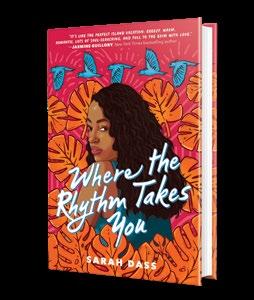

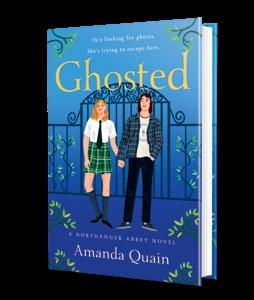
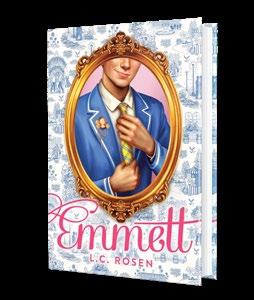
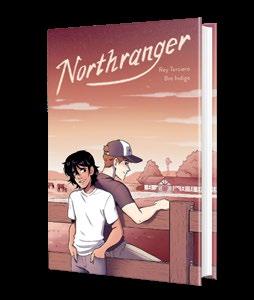
THE ROMANCE GENRE is an endlessly elastic one—it encompasses fun, trashy beach reads, sensitive YA coming-of-age tales, high-minded historical epics, and spicy titles with covers you feel compelled to obscure while taking public transportation. The following Indie offerings all received starred reviews from Kirkus and suggest the vast tonal range of engaging novels devoted to plumbing the eternal mysteries of love (or at least the chronic pangs of desire). Romance hasn’t always gotten the respect it deserves; these Indie authors are in the vanguard of elevating traditionally guilty pleasures to simply pleasures , full stop.
Hockey-themed romance is having a moment, so it’s an ideal time to check out Rebecca Jenshak’s Lucky Shot, which will “leave readers swooning,” per our review. Ruby, a struggling writer recently burned by a bad boyfriend, needs to revise her baseball-themed love story to instead depict infatuation on the ice (her editor is evidently an ace trendspotter). Ruby heads to Moonshot, Montana, where she gets up close and
personal with a guarded, ruggedly handsome hockey star named Nick Galaxy to conduct…research. It doesn’t take a genius to see where this is going, but Jenshak hits every beat (and biscuit) with satisfying precision. Our reviewer praises the novel’s balance of “playful banter and emotional depth”; the narrative’s “bookish charm” and “wholesome” central relationship will appeal to romance fans looking for some less heated revelry.
E.L. Starling’s YA novel Bound by Stars is nothing if not high concept: Titanic in space, with the leads’ socioeconomic circumstances swapped.
The teenage Weslie is a struggling Earther who wins a trip on the starship The Boundless ’ maiden voyage to Mars by designing an advanced robot; the free-spirited Jupiter is the wealthy inheritor of a tech company that employs Weslie’s mother. (The poor scrape by on Earth, while the rich live in luxury on the red planet.) Romance blooms amid scenes from the class struggle as the artistic Jupiter and the brilliant inventor Weslie are repeatedly thrown


together by an obliging plot. Our reviewer notes, “Starling manages to make a critique of classism romantic and thrilling, with high stakes and heavy swoons.” Interstellar romance with a social justice bent—what could go wrong? (Are there icebergs in space?)
More literary-minded romance fans should make a beeline for Catherine Taylor’s The Many Seas to Guernsey, a sweeping historical novel that charts the star-crossed connection between Kitty, a young Englishwoman from a bohemian family, and Lukas, a handsome, poetic German. The obstacles to their bliss are considerable: Lukas is determined to become a Catholic priest, and World War II lurks on
the horizon. The two quickly fall in love, but their irreconcilable agendas drive them apart—until they reconnect to aid Jews persecuted by the Nazis and Lukas renounces his priesthood out of disgust over the Church’s compromises with the German regime. They begin a passionate affair, but the young couple’s troubles are only beginning as they’re inexorably engulfed by the horrors of war. Our reviewer raves, “Taylor beats the hell out of her flawed and very human characters—and thus makes their responses to some of history’s most desperate circumstances all the more convincing.”
Arthur Smith is an Indie editor.
In author/illustrator
Perrodeau’s graphic novel, translated from the French, an outsider comes to a remote and insular village. After Pavil’s plane crashes in a field near Lapyoza—a village of stilt houses surrounding a body of water—the inhabitants are initially suspicious of him. Because the ferry to the nearest city won’t arrive for weeks, a council meets to decide whether Pavil should be allowed to stay; they give him permission after they accept that he’s an ordinary citizen and not a spy sent from the Empire. But although he must participate in the village’s communal activities, he’s forbidden from their sacred rituals and sites—especially the island where Hodä, the village’s protective deity, is
said to live. As the citizens of Lapyoza slowly accept Pavil, they reveal more secrets about the body of water, including the fact that below its surface lies a sunken city that’s far more technologically advanced than any modern civilization—and that Hodä was the cause of its destruction. After Pavil finds an ancient artifact that’s washed ashore, he meets a young woman named Yüni who agrees to take him on dives to visit the underwater ruins. When Pavil’s incessant curiosity eventually brings him to the island where Hodä lives, the truth is soon revealed about Pavil and Hodä alike. Perrodeau deftly avoids the impulse to explain too much about either the fantastic setting
Perrodeau, Jeremy | Black Panel Press | 160 pp. $32.99 | August 26, 2025 | 9781990521416
or the mystery at the heart of it; he always presents just enough information to compel readers to read further. He tells much of the story through wordless panels featuring Pavil exploring an island in secret or taking part in communal activities with other villagers. The art style is incredibly sparse, bordering
on minimalist, using simple line drawings and plain washes of color from a limited palette—and it’s frankly incredible that Perrodeau infuses so much emotion and life into these deceptively simple-looking drawings. A standout work that effortlessly blends SF and mystery elements with incredible art.
Indigo, the Deep
Abernathy, Kellye | Atmosphere Press (298 pp.)
$14.99 paper | July 7, 2026 | 9798901742648
In Abernathy’s YA fantasy sequel, teens tackle personal and environmental issues in a tale that brings the mysterious, magical nature of the ocean to life.
In the beach town of Craggy Point, 15-year-old Condi Bloom is getting ready to participate in a major surfing competition. Meanwhile, her foster brother, Firth Cristo, is attempting to deal with past secrets on his own, and a biomedical ship just offshore is plundering the ocean. Condi and Firth must learn to trust each other again and work together to save Trippy, the leader of the Beachlings, a group of women who teach others about the healing properties and other mysteries of the sea. Other characters who play prominent roles include 18-year-old Kait Dooley and artist Cara Finch, who are dealing with grief and learning to navigate romantic relationships, respectively; and Cara’s siblings Lorelei and Tad Finch, New York transplant Isaac Huddleston, and Lorelei’s boyfriend Casey Arondale, who end up working together to get rid of a biomedical ship searching for melanin pools and destroying the ocean floor without regard for the sea creatures living in the area. Characters face disappointments and setbacks but grow stronger together. Abernathy’s worldbuilding is remarkable: Sea creatures communicate with humans, special white shells help divers breathe underwater, and the book has a touch of time travel to top it all off. The characters are realistic and skillfully crafted, and the descriptions throughout are often enticing (“dolphins glide through the indigo depths, moving upward into the restful hues of a soft blue-violet tide”). The very real emotional difficulties these characters face, paired with the lush imagery, make for a well-rounded book,
especially for teen readers looking for a book with a touch of fantasy. A bewitching story with a charming cast and an enchanting sea setting.
Anderson, Blake | Atmosphere Press (210 pp.)
$29.99 | June 9, 2026 | 9798901743034
In Anderson’s SF novel, a shared dream transforms humanity overnight into a united and enlightened force—aside from the few who have been excluded and demand answers. Raymond Brunson, alongside almost everyone else in the world, wakes up one day feeling…different. People’s senses are heightened, and a general sense of calm and love settles over everyone, spurring the media to call the event the “Great Awakening.” Raymond’s friend Tyson Burgess is one of the few who do not experience this shared nightly dream that has transformed the world. He, alongside other “Unawakened,” are forced to undergo brutal “purification” tactics in the Discovery Center if they are to have any hope of rejoining society. Desperate to escape and uncover the truth behind this mysterious new peace, Tyson and a few fellow members of the Unawakened begin a frantic search into the phenomenon’s origin, finding a surprising ally in Raymond. As they get closer to answers to some questions, including ones about the commonality that all of the Unawakened seem to share, the group finally uncovers the shocking truth and must decide whether humanity is better off as it is now or if the Unawakened will try once and for all to wake the dreamers up. Despite some occasional long-winded explanations of the Great Awakening’s beginnings, the narrative moves along at a satisfying clip and features refreshingly realistic dialogue. The population’s new sense of tranquility sounds appealing, even as an undercurrent of dread (reminiscent of 1978’s Invasion of the Body Snatchers) runs through it all: “You don’t
have to fight this off or pretend it doesn’t hurt. It hurts because it matters. That doesn’t mean you’re broken.” That is part of what makes the novel so intriguing, in fact: Blake never tips the scales too heavily one way or the other, so it’s ultimately up to readers to decide, resulting in a thought-provoking story that will challenge them in compelling and entertaining ways.
This character-driven SF fable weaves clever intrigue with provocative questions about the price of peace.
Bentley, Melissa | Livingston Press (260 pp.) September 25, 2026
A doctor writes of her career and trauma amid the chaos of the Covid-19 pandemic in this memoir. Bentley explores the difficult reality of being a doctor during the Covid pandemic: “The health care system, the people in it providing the care, were stretched beyond capacity.” While the story follows Bentley’s treatment of an array of patients, the larger tale is the author’s excessive self-criticism. Working herself to the bone, Bentley relied on survival strategies to get her through tough days. Her dog, Rockstar, comforted her at home, and Dragon, her dictation device, helped her make sense of her patients’ cases. Yet Bentley’s primary coping mechanism—the titular Air Fairy—caused her harm, even as it temporarily allowed her to center her patients’ medical struggles. Coined by her psychologist, Dr. Hardy, the Air Fairy is a personification of self-reproach: a trauma-rooted survival tactic (albeit a maladaptive one) that routinely encouraged Bentley to suppress her own needs. Expectedly, the Air Fairy grabbed the reins during the pandemic. Bentley relentlessly pursued possible resources for the afflicted, while the Air Fairy refused to succumb to perceived weakness: “I was a wimp…Air Fairy, ‘You should NOT be
tired’…be tougher.” Bentley’s goal is noble, yet her habitual self-flagellation for choices like sipping a Diet Coke is fundamentally misguided and led to repercussions on her own health, like her rapid weight loss and resultant 1.8% body fat. Additionally, Bentley underwent abdominal and brain surgeries, though she categorized her pain as an unimportant weakness: “Air Fairy knew it. I had not paid attention to her, had failed, and clearly it was wrong.” Alongside detailing her medical work, Bentley also guides readers through formative events of her earlier life, like the gymnastics classes where her unwavering need for success was forged. Bentley’s reflections are unflinchingly self-aware, although somewhat scattered and frustrating to parse. In terms of plot, she makes definite steps toward growth, but the ending lacks clarity and may not wholly satisfy readers—has anything changed? Does she see her story’s conclusion, told through the Air Fairy’s lens, as a punishment? The verdict is unclear, but Bentley does, at least, attempt to explore her trauma responses honestly. This forthrightness is underpinned by the memoir’s prose, which aims for lyrical but ends up somewhere along the stream-of-consciousness spectrum. The prose’s conversational tone is also, unfortunately, the story’s detriment; the informal cadence—with frequent pauses indicated by a wealth of commas— culminates with awkward phrasing and a disruption of fluidity: “the musicians too seemed to shine, until at the end, all lights were extinguished, the sound slowly fading. Then the full cathedral was pregnant with perfect silence, that lasted. Almost eerily, probably less than a minute, and yet longer, infinitely.” Similarly, Bentley later reflects, “Being small, hidden away, is not a way to avoid doing harm. To dare to think that my gift—that I have been given or can give something beautiful and healing, that the harm is in keeping it boxed away, stifled, bound, shadowed.” The book contains beautiful elements and important sentiments, but it would strike readers more powerfully if the composition were less clunky.
A poignant and poetic read whose execution needs tweaking.
Edwards, Robert P. | Self (337 pp.)
$25.99 | $16.99 paper | May 23, 2026
9798199154925 | 9781067665296 paper
Edwards’ SF thriller explores the dangers of artificial intelligence in a near-future world.
Set in 2045, the story follows firefighter Miro Jackson, a member of Australia’s elite Predict, Prevent, and Control Unit, which uses a technology called MindLink to anticipate and prevent disasters before they occur. When the Delroy family dies in a suspicious house fire, Miro, informed by his former career in the New South Wales Police Force and a series of personal tragedies, begins to suspect that advanced AI systems may have influenced the outcome. The narrative then shifts to FBI agent Catalina Herrera, who’s investigating a series of unusual deaths in the American Midwest. Victims using Agentic’s augmented reality systems appear to ignore life-threatening storm warnings, raising concerns that AI-driven interfaces may be manipulating human perceptions and behavior. (“My theory, to be tested, is that our killer uses some device or psychological trick to persuade our victims to remain in a situation of almost certain death.”) As the investigations in Australia and the United States begin to overlap, the story expands into a broader conspiracy involving corporate power and environmental collapse. Miro’s deployment to the United States brings him into a collaboration, and personal connection, with Cat, even as attacks on global energy infrastructure escalate and conspiracies deepen within government and industry. Additional perspectives, including those of a mysterious observer known as the Watcher, a narrative commentary on the environmental cost of large-scale AI systems, and Agentic CEO Roger Saxton, who struggles with power issues to keep his AI running, broaden the scope of the novel. Edwards has constructed a fast-paced, high- concept narrative grounded in a timely premise about AI
and its societal influence, but while the plot is consistently engaging and ambitious in scope, the frequent shifts in perspective and limited character development limit its emotional depth and blunt the novel’s overall impact. An engaging, timely thriller that favors plotting over character depth.
Ehlers, Kelly | Big Circles Media (250 pp.) September 1, 2026 | 9798996018116 9798996018109 paper
Ehlers, the founder and president of social media consultancy The Evoke Agency, presents a selfhelp book that encourages women to reconsider what “winning” means in the context of a full life.
The author begins this book by reflecting on a period of personal and professional exhaustion in which she felt emotionally depleted and trapped in survival mode. In a book focused on gratitude-centered journaling and self-reflection, she develops the central argument that women deserve to define success on their own terms, rather than through constant productivity or bowing to others’ expectations. Drawing on challenging personal experiences—such as losing her job right after telling her boss she was pregnant, navigating financial instability, and coping with childhood pressure to continually win—she confronts traditional assumptions about women’s roles in work, caregiving, and leadership. Across 17 chapters, the book reframes “niceness” not as weakness or passivity, but as a “trojan horse of competence.” The author situates her argument within the broader history of men diminishing women’s accomplishments, while encouraging readers to symbolically “tear up” outdated expectations and create a new “contract” for their lives. She asserts that women don’t need to adopt aggressive, burnout-driven models of success to thrive;
instead, she promotes confidence, honesty, boundaries, and authenticity as the foundations of sustainable leadership. Her book combines motivational discussions with practical strategies, including public speaking techniques, specific methods for “winning over a room,” and confidencebuilding exercises, among other practices. Recurring themes include rejecting hustle culture, balancing ambition with rest and play, practicing body acceptance, and taking manageable “micro risks,” such as speaking up in meetings. The conclusion effectively reiterates that fulfillment should be prioritized over overwork. Through honest reflection and actionable ideas, Ehlers opens up a conversation about ambition that feels both modern and deeply human. The book’s greatest strengths are its accessible tone, practical “micro practices,” and thoughtful critiques of burnout-centered “girlboss” culture. Although some references to manifestation and “vibrations” feel less evidence-based, the overall framework remains encouraging, practical, and grounded. A guide that will appeal to readers seeking success that feels like ease, not exhaustion.
Engels, Jeremy David | Inner Traditions (192 pp.) | $16.99 paper | June 16, 2026 9798888503034
Engels’ spiritual self-help guide aims to help readers “live namaste” and achieve “interdependence with other people, and [feel] gratitude toward them.”
The author, a co-founder of and teacher at the Pennsylvania-based Yoga Lab and a professor of communication and ethics at Pennsylvania State University, defines “namaste,” a common Sanskrit greeting, as “I bow to you” or “the divine in me bows to the divine in you.” Engels notes that he follows the teachings of master yogis around the world, working to live a
life of namaste himself. His main goal in teaching is to “empower students to stand tall and speak up with open-hearted eloquence, so that they can be a force for good in this beautiful, broken world we call home.” In an introduction, he clarifies his goals further in an intriguing manner, presenting an empathetic way of seeing the world that will likely hook readers: “We are all a part of something much bigger than ourselves, a beloved community that spans centuries and continents, a community that, when it gets its act together, will change the world.” Over the course of the book, he outlines how to “live namaste” by creating a calmer lifestyle, coupled with a much more open perspective on life. The book is divided into three “Reminders” (“I Am Divine,” “You Too Are Divine,” and “Live the Word, Together”); each section includes “practices” for readers to follow to enter the world of mindfulness, acceptance, and community. Engels’ teachings are notably creative (“Roll the Movie Credits of Your Life”; “How To Say the Most Important Word in the English Language”), and it’s easy to image a world with more empathy and compassion if large communities were to practice such lessons. Engels effectively teaches that introspection is something to embrace, not fear, since its benefits far outweigh anything one might be afraid to find. An appealing manual that offers encouraging methods for pursuing a happier and more connected life.
Fleming, Ann | Illus. by Stefanie Geyer
Kahu Publishing (38 pp.) | $22.99
May 7, 2026 | 9798988910992
A school-aged boy learns to face his fear of monsters in Fleming’s picture book. Henry, a young boy with light skin and brown hair, is afraid of the dark. While he gets ready for bed, he checks his bedroom closely and declares, “Now that it’s dark, / and I feel kind of sleepy, / I search through my bedroom for anything creepy.” After Henry’s mother lovingly tucks him into
bed and turns out the light, Henry tries to sleep, but when he opens one eye, he sees a shadow of a monster on the wall that’s “hairy and big,” and “at least six feet tall!” Instead of panicking or calling his parents, Henry recognizes that his fear of monsters is all in his head, allowing him to control the imaginary creature so it’s not so frightening anymore: “If I made up this beast, if he’s not here at all, / I can make my own rules, I can make him real small.”
Fleming writes in effective rhyming stanzas that show how realistic the fear of the dark at bedtime may be for many youngsters. Geyer’s colorful illustrations show Henry’s evolving emotional journey, first as happy at playtime, then apprehensive at nightfall, and sad the next morning.
A lighthearted fantasy rhyming picture book perfect for the emergent young reader.
Gibbs, Reedy | Self (431 pp.) | $24.99 January 31, 2024 | 9798989442119
A debut author reflects on childhood trauma, misguided love, and self-discovery in this memoir. Gibbs opens the work with a description of her childhood in 1950s-era Louisville, Kentucky. As one of six siblings, she grew up with loving parents, enjoying a home life that seemed idyllic—with one glaring exception: the relentless bullying of her older brother, “Packy.” Seventeen years her elder, Packy had a genius-level IQ, but his social ineptitude would eventually lead to his institutionalization in Kentucky’s Central State Mental Hospital, where he would die under mysterious circumstances after falling from an adjacent water tower. This traumatic death of a figure associated with so many of the author’s worst childhood memories precipitated an emotional crisis that corresponded with her own transition from adolescence into adulthood. Openly discussing her evolving sexuality in the
1960s as she left her culturally conservative home, Gibbs devotes significant attention to her relationship with Dick, a musician and student at Northwestern University. Unsure of her own personal identity, Gibbs followed Dick to California, where they joined “yogis and hippies” in an Ananda commune headed by the controversial Hindu spiritualist Swami Kriyananda. Dick was infatuated with the rustic lifestyle, but the author longed to forge her own path in a big city and was uncomfortable with Kriyananda’s sexual advances. Even after leaving the commune and having children with Dick, she harbored secret intentions to divorce him. The final third of the book addresses Gibbs’ love of the stage as she discusses winning roles in theatrical productions, separating from Dick, and remarrying a fellow actor named Bruno. Ending in 1995, the memoir doesn’t provide details on Gibbs’ 21st-century successes as a screenwriter and actor in feature films like Brick (2005). This work centers on her personal journey to self-discovery as a young woman; it’s a deeply personal read (the author doesn’t shy away from detailing her sexual liberation, often in graphic detail) that’s often literary in its self-reflection.
An intimate, poignant coming-ofage story.
Grodsky, Matt | Grodsky Public Affairs (174 pp.)
$15.99 paper | April 14, 2026 | 9798234053084
A political strategist draws on his victories in Arizona in this playbook for the Democratic Party.
“If Democrats are to win again, we must return to what worked in 2020,” writes Grodsky. As director of communications for the Arizona Democratic Party from 2019 to 2021 (a period that saw his party’s presidential candidate win the state for the first time since 1996) and as the communications director for Adrian Fontes’ successful
campaign for Arizona’s Secretary of State in 2022 (he won by the largest margin by any non-federal Democratic candidate in state history), the author has a track record of securing victories in one of the nation’s most coveted swing states. These wins, per his telling, were not flukes but “the culmination of a deliberate, disciplined strategy.” Taking lessons from his party’s groundbreaking victories at the grassroots level in Arizona, Grodsky provides a playbook for further success in the 2026 midterm elections and beyond. As much as this book is about replicating the blueprint of 2020, it also offers a scouring critique of what went wrong in 2024. Not only did the party lack “an empathetic tone on the economy” and lazily rely “on monolithic communications practices” with diverse constituencies, per the author, but it also prioritized overly academic “lingo birthed from think tanks that pushed the limits of political correctness.” Regarding issues of racial injustice in the wake of the Black Lives Matter movement, the author argues that too many Democratic pundits on the national level embraced terminology and policies that alienated moderate voters. Grodsky contrasts this failure with his own successful efforts in Arizona, where he led data-driven messaging campaigns that acknowledged the core message of BLM activists “without falling into the trap of the ‘defund’ [the police] rhetoric.” A concise volume that comes in at just over 170 total pages, the work doesn’t sacrifice research-based and anecdotal observations for brevity; the author both builds upon his own battletested strategies and also includes almost 20 pages of source citations that underscore his firm grasp of modern political strategy.
A well-researched, effectively argued approach for Democratic communication strategies in swing states.
Hall, Eric | Mission Point Press (136 pp.) $21.95 | July 9, 2026 | 9781968761141
A retired fifth grade teacher shares standout memories from his 27-year career. Hall reflects upon his 27 years as a teacher, most of which were spent with fifth graders in Cheboygan, Michigan. The book has 27 chapters, or “lessons,” one for every year of the author’s teaching career. They all follow a similar format, beginning with an anecdote about a classroom project, field trip, or problem. Hall then explains what sparked the anecdote and often throws in a twist; a story about a student’s ill-advised gift shop purchase turns into a reminiscence of buying and selling classroom “property” as part of a lesson to teach financial responsibility. A story about trying to teach boring improper fractions shifts into an account of a nighttime spy game in which the secret clues are all improper fractions. To teach adjectives, the author transformed himself into a French chef with an unconvincing costume, allowing his students to laugh as they learned. After each entry, Hall asks, “What did I learn from all of this?” Often, the answer is lessons about the value of community, creativity, hard work, persistence, and fun. He poses questions to readers along the same lines, like “What might happen if you stopped worrying about doing things right and just gave people the chance to surprise you?”; “What might happen if we trusted people, even little people, with real responsibility to make someone else’s world brighter?” It’s easy to see why the author was such a beloved teacher—his
An engaging and motivating overview of a teacher’s career.
CONTROLLED CHAOS
writing is buoyant, engaging, and full of obvious passion for his students and his work. The anecdotes do get a little repetitive, and it might have been helpful to see more examples of failed experiments in addition to the successful ones. Still, Hall’s memoir of a career in education has many ideas that will be useful for teachers of all stripes, and it’s sure to inspire anyone who reads it. An engaging and motivating overview of a teacher’s career.
Hanley, Krista | Motina Books (314 pp.) | $21.99 paper | September 1, 2026 | 9798887840765
Hanley recounts her mental health struggles after surviving the Columbine mass shooting.
The author, an artistic junior at Columbine High School in Littleton, Colorado, during the 1998-99 school year, always felt like an outsider. A year and a half before the shooting, she made some new friends at a Halloween party. This group of friends was known jokingly around Columbine as the Trenchcoat Mafia, “half a dozen junior and senior guys who wore those black dusters to school” and who had “a strange, nonconformist appeal.” After the shooting, the media latched on to the moniker because the killers had also worn black dusters, although, as Hanley writes about her principal explaining the situation on the news, “the Trenchcoat Mafia isn’t a real gang, it isn’t anything. These kids weren’t involved. They don’t know anything.” The author reveals that while she didn’t know the killers well, she was tangentially associated with them, especially one on whom she had a crush. (Hanley discusses how the fact that she knew the killers better than she knew most of the victims has been a significant struggle.) She begins her memoir in media res, crouching with her friends on the floor of the cafeteria, where she later learned defective bombs had been planted. The structure of the memoir
is effective and engaging, moving around in time from the day of the shooting to flashbacks to the weeks, months, and years following the incident. Hanley makes effective use of lists interspersed between chapters with such titles as “Things You Should Know Before Reading Further” and “How To Date a Mass Shooting Survivor.” The author doesn’t explicitly advocate for gun control, and in fact only uses the term once, but the memoir begins with a heinous school-shooting statistic: “Since Columbine, over 398,000 students have experienced gun violence in over 435 school shootings.” Hanley’s journey to address her mental health struggles and accept her status as a survivor is moving and compelling as she recalls grappling with imposter syndrome and survivor’s guilt. The memoir effectively invites empathy for anyone affected by similar events. An emotional chronicle of a mental health journey tied to an infamous national tragedy.
Taverna at the Edge of Night
Hanna, H.Y. | Self (376 pp.) | $16.99 paper May 11, 2026 | 9781923235014
Hanna transports readers to the idyllic Cretan village of Agia Eleni in this politically charged murder mystery. While on vacation visiting her best friend, Roxy, London-dwelling Daphne decides to venture out of her comfort zone and is drawn into the local gossip about a woman’s fatal plunge from a nearby cliff. Whispers of murder turn into real danger when Daphne is suddenly kidnapped from her bed in the middle of the night, narrowly escaping her captor with a fall into a gorge from a moving vehicle. Her unease deepens when Roxy and the locals casually dismiss the traumatic experience. However, a string of clues, culminating in the discovery of a starving refugee girl hiding in a cave, points suspicion directly at Roxy and her taverna. Suddenly caught in a web of lies, refugees, and human trafficking tied to the dead
woman’s NGO, Daphne must figure out whom she can trust, including a handsome photographer whose romantic overtures might be a setup. The story’s main draw is its beautiful Cretan setting. The prose is interspersed with Greek traditions, sayings, and customs, giving readers an evocative sense of Greek life. Cuisine is also a major part of the plot, with deliciously described, mouthwatering details: “chunks of crisp barley rusks atop a bed of chopped ripe tomatoes, olives, cucumbers, and a soft white Cretan cheese called mizithra, all drizzled with extra virgin olive oil and generously sprinkled with fresh oregano.” Although Daphne’s poor amateur sleuthing results in conclusions that are usually way off base, she’s a compassionate character who wants to help the less fortunate. Entwining the question of murder with an NGO that helps refugees effectively brings a prescient political issue to the fore without being heavy-handed or preachy.
A light but engaging vacation thriller that successfully seasons a dark criminal conspiracy with rich cultural flavor.
Hayat, A.K. | Steep House Press (559 pp.) $24.99 paper | June 15, 2026 | 9789948627005
Series: The Binding of Velundra, 1
A young girl is inducted into an ominously secretive training program in this atmospheric gothic fantasy.
Fifteen-yearold Malanthia Duvenne has spent her life in the town of Briel in the kingdom of Athergard, knowing little about the mysterious power that runs through her father’s bloodline. When a carriage bearing a strange crest arrives at her family’s home, she’s taken north to Stonemouth Keep, where her name, identity, and future are systematically stripped away. Over the next several years, Malanthia is trained in surveillance, languages, combat, and assassination alongside a handful of other recruits destined to serve the ruling regime. As Malanthia (eventually renamed
Seraphine) excels in her training, she begins to uncover unsettling truths about the kingdom’s political foundations, failing magical wards, and the dynasty that seized power after a devastating palace fire. Once assigned to the capital, she becomes handler and eventual fiancée to a young officer who may in fact be the lost heir to the throne. Duty, identity, and affection are now on a collision course with prophecy and political intrigue. The novel’s greatest strength is its immersive atmosphere. Rich descriptions, careful worldbuilding, and an omnipresent sense of melancholy make the kingdom feel fully realized, while recurring motifs, particularly the dark violets tied to the protagonist’s past and name, provide emotional connection throughout. The prose is polished and confident, lending weight to even mundane scenes. However, the narrative’s glacial pace often becomes a liability. Nearly two hundred pages are devoted to training, conditioning, and institutional life before the central conflict emerges, creating the impression of an extended prologue rather than a developing plot. The romance and political conspiracy that ultimately drive the story are compelling, but they arrive much later than expected. Minor timeline inconsistencies further complicate an otherwise carefully constructed narrative.
A well-crafted fantasy whose slowburn pacing can sometimes inhibit the narrative flow.
Get the F*ck Over...It: A Satirical Self-help Manifesto for Left-Lane Rage
Hobbes, Peter | Atmosphere Press (150 pp.)
$15.99 paper | July 28, 2026 | 9798901742839
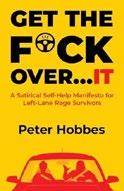
This unapologetically biting satire of the self-help genre addresses bad drivers everywhere. Inspired both by his anger at terrible drivers and by the podcast If Books Could Kill (and its cheerful send-up of wellness psychobabble), Hobbes identifies 14 types
of terrible drivers (including the “Peekaboo Pacer” and the “Raging Hypocrite”) and analyzes each through a satirical self-help lens. Each chapter pairs an automotive pet peeve with a real-life inspirational suggestion—from sources like Mel Robbins’ “The Let Them Theory”and Michael A. Singer’s The Untethered Soul (2007)—and breaks them down into humor-filled bon mots. (From “The Last-Second Merger”: “Let’s be clear: this isn’t about space. There’s room for one car. You know it. They know it. This isn’t physics. It’s principle. Because while they were cruising past everyone else with the confidence of a toddler in a Batman cape, you were over here respecting the code.”) A bonus quiz at the end of the book helps readers determine what type of driver they are, and a “Clinical Appendix” diagnoses different types of drivers—complete with a common name, diagnostic criteria, prognosis, and recommended treatment. Hobbes seamlessly blends general life frustrations with car and traffic scenarios (both literal and metaphorical). The snappy narrative voice continuously peppers in pop-culture references to television shows like Friends, movies like Office Space, and bands like Van Halen (which may prove dated to younger audiences). While the author’s sarcastic—and sometimes rather aggressive—humor might not strike a chord with readers who identify as more laid-back drivers, he makes it very clear that the work is not really about driving at all—it’s a book “about people. About humanity…It’s about the tension between order and chaos. Between urgency and apathy.” The result is a darkly humorous and relatable meditation on coexisting with people whom we may or may not relate to, encouraging readers to get through it all with a (sometimes chagrined) smile.
A laugh-out-loud parody that assures frustrated drivers that they’re not alone.
Hopkins, Marc | Atmosphere Press (210 pp.) $16.99 paper | June 16, 2026 | 9798901742426
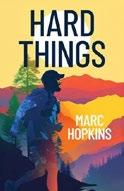
A trail runner tests his physical and emotional limits with an ultramarathon in Hopkins’ uplifting memoir. An endurance athlete and coach, the author recounts everything that led to his successful completion of the Bigfoot 200-mile race through the Cascade Mountains in 2017—and the immediate aftermath. The Oregon-based writer took up running in his early 30s as a way to get his health back on track. “I had no strategy,” he admits of his first few attempts on a treadmill. “I ran until I couldn’t.” The activity quickly became an outlet for exploring nature, but also a balm for his self-esteem issues. With each running achievement, he felt he was proving his value not just to himself, but also to his two kids, his girlfriend, Jenni, and his extended family. When he learned of the Bigfoot race, he saw it as the “ultimate test of strength,” one that would bring him “lasting confidence.” Nearly the entirety of Hopkins’ personal story unfurls as contemplative thoughts between footfalls. Hours of training led to deep, challenging self-reflection, which he tries to mirror on the page. Most of the time, this structure works, though sometimes the transitions from one remembrance to another are loose at best. He remembers his first date with Jenni, for example, and writes that “this warm thought accompanied me to a river crossing.” After almost withdrawing from the race, he made it to the starting line with his loved ones in tow, along with his most “reliable companion”: fear. The passing miles continued to bring up childhood memories, failures, and desires. Climbing through dunes, he
recalled a fight he and Jenni had had over laundry and wondered if their relationship would last. Over 100 miles into the race, he thought of his kids and “wished I could have been the dad they deserved.” Despite the occasional corny insight, Hopkins manages to show the delicate balance between healthy and unhealthy exercise. Similarly, he captures twin feelings of elation and terror waiting at the finish line: “Is it really over?”
A memorable look at what motivates endurance athletes and the hazards of letting physical feats define your success.
Houser, Trevor J. | Unsolicited Press (312 pp.) $24.95 paper | December 15, 2026 9781969421051
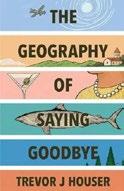
A man travels the world in search of his missing mother in Houser’s novel. The action kicks off when Paul Canton’s mother steals his credit card and escapes from the hospice where she’s been waiting out her final days. Fearing she may be experiencing “terminal lucidity” (a sudden return of clarity in the hours before death), Paul tries to reconcile himself to the looming reality of her passing. Meanwhile, his mother coerces another woman to impersonate her, goes golfing with high schoolers, and hands out thousands of dollars at a party. She then takes off across country, telling loved ones she’s seeking “her first love” and headed for the Mediterranean’s Alboran Sea. Paul follows, getting involved in a number of unlikely scrapes, including breaking into jail to rescue her after she’s accused of stealing a Monet, nearly dying in a Cessna during a turbulent flight, and boarding a massive cruise ship, where he meets an old acquaintance, Chloe. Paul and Chloe spend days making love, and for a moment it seems the incurably anxious Paul might at last find courage and commitment. It takes Houser some time to find his most effective tone, but he finally strikes the
right balance between morbid asides and quirky humor. Early on, however, the tonal mishmash can be jarring. (“Part of me is sad that my wife has fallen out of love with me,” he writes, “and part of me realizes that nothing matters in the face of rectal cancer and Tom Cruise.”) But as the story builds, it becomes unexpectedly moving and even poignant. The zany nature of the plot, combined with the narrator’s weighty philosophical musings, makes for a read that at times is reminiscent of the work of Kurt Vonnegut or a young Evelyn Waugh. Though Chloe only enters the book at the midpoint, her joy in living (never overplayed) introduces some hope that Paul can redeem the shipwreck of his life. A fleet-footed romp of a book with some sneakily perceptive insights into larger human questions.
Hurst, Christian | Outpost Books (388 pp.) $17.99 paper | April 30, 2026 | 9798993932705
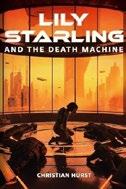
In this third installment of Hurst’s YA sci-fi series, Lily and her team are brought face to face with a galaxy-wide conspiracy.
Series protagonist Lily Starling has just returned from her honeymoon with her wife, Xynn, when she’s sent on a mission to the planet Bimini to destroy a life-essence machine capable of transferring people’s consciousness and completely preserving their past selves. Unfortunately, those who use it often return with a frighteningly altered state of mind. Before Lily can complete her mission, the machine is seized by the Union. Shortly after, she learns of a plague, known as VEN-2E, that’s sweeping across parts of the galaxy. Lily is reassigned to perform vaccine distribution. While working in this role, she begins to notice inconsistencies in the vaccine supply and encounters numerous citizens who are hesitant to trust the medication. Her investigation into the shortage unexpectedly brings her face to face with ruthless
government agencies and an intricate, insidious conspiracy that reaches further than she could have imagined. Ultimately, Lily and her cohorts are forced to reckon with life-changing questions about life, death, identity, and who’s reaching for the power to control them. Hurst has crafted a richly detailed sci-fi world, with extensive descriptions and atmospheric prose. The plot is intricate and compelling, although the pieces are sometimes difficult to connect. The intricate technical explanations and exposition often interrupt pacing and can become too convoluted for smooth reading. While the novel is clearly character-driven, the author often fails to show relationships between characters in ways that would demonstrate actual connection. Aside from the intimate closed-door scenes, the work reads more like an adult sci-fi novel, especially with its slower pacing and philosophical focus. Readers who enjoy sci-fi novels centered on political intrigue and corrupt political systems will likely find this one appealing. A well-conceived but unremarkable sci-fi story that may leave readers yearning for deeper emotional connections.
Jones, Topper | Wild Rose Press (396 pp.) $22.99 paper | July 27, 2026 | 9781509266180
Series: A Thad Hanlon & Bri de la Guerra Mystery, 3
The third book in Jones’ mystery series sees a deadly sniper trying to disrupt a surf competition. Thad Hanlon tries to balance his dangerous job as a private eye with
careful fathering of his 11-year-old son, mindful that Zael Hanlon has already lost one parent: His mom, Marissa, is now on “angel duty.” But when a sniper’s bullets fly across California’s Pismo Beach during the junior surf trial competition, wounding Zael and two of his teammates, Thad vows to deliver vengeance. Those around him don’t agree with his plan; even “quasi-fiancée” and senior detective Naiya Ygnacio withholds information
about the investigation from Thad, while his son’s surf team coach, Gev Burian, advises forgiveness over revenge. Meanwhile, the team seems to have found a way to keep safe, eventually practicing under the intimidating protection of a Bakersfield gang boss and some of his gang members. But Thad’s home is viciously vandalized, surf team member Sebastian Giuffrida’s gunshot wound becomes life-threatening, and two more murders take place. Thad and business partner Bri de la Guerra begin to realize that someone from their past may be responsible for all this deadly mayhem. Together, they formulate an audacious plan, unapproved by the police, where they’ll attempt to draw out, entrap, and enact justice on the perpetrator. Jones excels at blending elements that really shouldn’t mesh, such as surfing detectives, kids, violence, and complicated prickly romance, yet somehow everything coheres into an appealingly suspenseful whole. The wide variety of humor he employs is a large part of the book’s success. Jones enjoys deploying dad jokes, such as Thad requesting “diet cola on an IV drip” in the morning, as well as tween-speak (“Gnarly-mongus, my bro!”). Wellrounded, fully dimensional characters are another plus. Coach Gev’s a “surf therapist,” and when Thad has a problem, he gets on the waves and works through his demons. Zael is an especially nuanced character whose love-hate relationship with his father is particularly resonant. The beachy Pismo backdrop completes the winning formula: This is a California where “herd-like” tourists aimlessly wander among surf shops and seafood restaurants, but residents share a deep love for the nearby Pacific Ocean. Engaging characters, wit, and suspense elevate this rip-curling page-turner.

Judson, Lee | Kalman Press (244 pp.) | $19.99 paper | October 25, 2025 | 9798999811301
Business coach Judson presents a practical guide to neurodiversity in the workplace— understanding it, supporting it, and benefiting from it. This book has several potential audiences, including managers, neurodivergent employees, colleagues, and career advisers. Judson begins with her own story: After her son and daughter were both diagnosed—he with dyspraxia and autism spectrum disorder and she with ADHD—the author began recognizing neurodivergent traits in herself. Her definition of neurodivergence includes dyslexia, OCD, and Tourette syndrome, among other disorders, and she argues that workplaces already are neurodiverse—and they need managers who notice this fact and can respond accordingly. What follows is a thorough manual on how to embrace neurodiversity in the workplace, including maximizing a neurodiverse employee’s skills, helping neurodiverse graduates prepare for their first role (whether it’s an internship or job), and onboarding, coaching, and conducting one-on-one meetings with neurodiverse employees. Her message to employers is to set concrete goals, and she encourages neurodiverse employees to ask for help and clarity along the way. The central theme of the book is that organizations miss out on talent when they dismiss those who communicate or act differently from what management expects in the workplace. Managers can succeed, she says, through the use of SMART (specific, measurable, achievable, relevant, and time-bound) goals, providing regular feedback, and recognizing strengths instead of just calling out weaknesses, among other strategies. Judson writes in a warm, accessible tone that brings to life
abstract concepts in a conversational manner. The book covers a lot of ground, but it’s loaded with practical tidbits and anecdotes, eschewing a more textbooklike approach. In the end, the author offers a useful road map for people who are dealing with neurodivergence themselves, and for those who are trying their best to help them succeed. A smart and approachable book that offers concrete ideas for creating a better workplace for all.
Kany, Jessica Howland | Self (303 pp.) $26.99 | January 15, 2026 | 9798277534649
A harried librarian on a New Zealand island deals with toddlers, pub quizzes, and a father-in-law accused of murder in Kany’s novel. Maudie is living in paradise with her husband, a fisherman named Vil. They’re on New Zealand’s Stewart Island (Rakiura is the island’s traditional name); most of it is a national park, but somehow 400 or so people have eked out a life there. Maudie is originally from the U.S., but her life is now completely steeped in the pace of New Zealand. She’s busy with her job at the library, her toddlers, her to-do list, and the quizzes held at the island’s only pisser (that’s the pub). Personal crises big and small come and go, but Maudie’s frenzied life keeps moving along. The status quo is upended one day when a dead body is found at the wharf; the victim has a due date imprinted on his head. (“Like, someone used the library date stamper on his forehead,” Maudie’s husband tells her.) As messages accumulate on her phone (“shit kicking off massively outside pie cart”; “omg dead body on wharf”), Maudie learns that Vil’s father, Dogbox, has been arrested for the crime. She visits outside the jail window and starts an informal prison book club with him, discussing Gilgamesh translations as she tries to
think of a way to clear his name. Kany’s novel contemplates life’s absurdities and temporary disasters in an appealing way that remains positive no matter the latest crisis. Maudie’s entertaining thought process moves slightly faster than the norm, and the novel deftly captures the way life can feel expansive and full even in a tiny community. Local lingo and Māori words pepper the story, which is set in a real-life paradise. Maudie seeks answers to deep questions—she may not ever find the keys to the universe, but she does endearingly strive to make sense of everything, for the sake of herself and those around her.
A fun, madcap story about a librarian, a dead body, and a man named Dogbox in a unique Kiwi village.
Kirwan, Kevin Michael | Liminal Books (260 pp.) | $16.99 paper | June 2, 2026 9781972197004
K irwan’s novel follows a young girl in California with a special connection to animals and mysticism. The opening sequence of the story places readers on a desert ranch in late-1970s Southern California, where Sara, the 16-year-old protagonist, has seemingly breathed her last. Her best friend and first love, 17-year-old Sam, stands at her bedside along with Sara’s father, both of them devastated and trying to figure out what to do about the third presence in the room: Hamisch, a seemingly normal raccoon whom Sara understood to be an alebrije, a sort of spirit guide highly prized in Mexican folklore. Hamisch, who was a close friend of Sara’s, guards her body ferociously, and as Sara’s father moves in to knife the creature, Sara’s body erupts in spectral light, briefly stunning the men and providing an opportunity for Hamisch to flee. Miraculously, Sara’s corpse opens its eyes
and begins to breathe shortly after. The narrative then skips all the way back to Sara’s arrival on the ranch as a baby, carried through harsh conditions by her father after crossing the U.S. border from Mexico and the violent death of her mother. “The girl’s purple leggings were at least a size too small for her tiny body,” Kirwan writes. “She wore no shoes. Her white socks were bright and somehow untouched by whatever misfortune had been visited upon the two of them.” As Sara grows up in the shade of avocado trees, she meets and falls in love with Sam, the son of a rich lawyer who spends his summers on the ranch, owned by his uncle. Not long after their first romantic forays, Sara is diagnosed with a terminal brain tumor, and as she draws closer to death, her ability to connect with worlds and dimensions beyond our own deepens— a connection she suspects comes from her deceased mother and that may be her last shot, in this life, at knowing her.
The vividly realized setting of Kirwan’s debut is rendered beautifully in prose so lucid that the reader can nearly smell the desert air: “The soil in those hills was pure silt, powder fine and the color of cremated human remains. It settled onto and into everything. You could taste it in the back of your throat twenty-four hours a day.” While stories of teenage love and romance are often overwrought, the author manages to keep the narrative from verging into melodrama—often by employing Sara’s incisive wit to great effect, which only serves to underscore her memorable individuality. Sam is similarly well drawn; he’s a young man with real pathos who, in Kirwan’s hands, transcends the cliched rich-kidwho-hates-his-dad trope to become a point of identification for the reader—he doesn’t claim to grasp the otherworldly gifts Sara possesses, but he’s open enough to understand that he’s in the presence of something more powerful and bigger than himself. By the end of the novel, readers will want to follow these two characters anywhere, on this plane or any other. An excellent debut distinguished by well-drawn characters and desert grit.
Larson, Erik D. | Kikiloa Press (418 pp.) | $19.99 paper | July 21, 2026 | 9798994982808
The so-called mother of all humans embarks on a millenniaspanning odyssey in Larson’s novel. She calls herself Kikiloa, but she’s better known as Mitochondrial Eve: the woman from whom all people now living are descended. Born in “the deep night of Africa’s great rift valley” some 200,000 years ago, she was betrayed by her father, impregnated, and enslaved. In the present day, we find her living in San Francisco, taking the form of a teenage girl with green eyes and impressively curly hair, which is how she appears to her friend Hazel and her brother, Lee, who are wholly unaware of her true identity until she mysteriously vanishes. When “Kiki” then reappears, it’s immediately clear to Hazel that there’s something a bit magical about her. In fact, Kiki begins to suspect that Hazel has an extraordinary destiny to fulfill, one that isn’t shared by the countless versions of herself who have lived and died in parallel worlds. But while Lee begins to fear that Kiki is deceiving her, Paha (Kiki’s mentor) has turned trickster, bent on sabotaging Hazel through violence. Kiki must uncover his true intentions while grappling with the reality that her own life—and the lives of all living things— must eventually end.
Larson’s debut reads a bit like Sarah Hall’s Helm crossed with Doctor Who, if the latter story were told from the Doctor’s perspective. Characters grapple with the implications of their own near immortality and the unhappy reality that sometimes a person must die to prevent a timeline from breaking. Like Jasper Fforde or Douglas Adams, Larson is one of a true minority of writers who can make cerebral science fiction both lucid and entertaining. The book’s relentlessly forward-moving style never once loses momentum in the course of its 400 pages. This feat is all the more impressive given the scope of the subjects under discussion, which include prehistory, the last Ice Age, multiverse theory,
LIVING FROM THE SOUL
synchronicity, and the end of all things. “At this moment,” Kiki informs Hazel, “I am connected to a trillion mes across a trillion branches of the multiverse”—a flash of the sublime that reads like an ancient account of a deity disclosing itself to mortals. The book’s thematic roots in the teachings of Carl Jung offer a refreshingly unconventional message: that embracing the most frightening parts of ourselves is the path to wholeness. “When we accept shame,” says a “time surfer” named Akamai, “we become ourselves. We think the unthinkable thought…We face our fears and discover beyond them bare fields enriched by fire, ready for new growth.” This idea will be familiar to fans of Jung and Alan Watts, but it’s rare to see it articulated at all—let alone with such power—in a work of popular fiction. This philosophical depth anchors the multiverse shenanigans in a tangible, and very human, reality. An engaging time-travel romp that mashes up Jung and Doctor Who to masterful effect.
Lavretsky, Helen | Park Street Press (328 pp.) $24.99 paper | July 7, 2026 | 9798888503133
A comprehensive guide to healing that incorporates psychological, physical, and spiritual practices for overall wellness. As an integrative psychiatrist and neuroscientist, Lavretsky aims to help readers use scientifically backed strategies alongside time-tested spiritual practices to improve overall life satisfaction by “living from the Soul” (which
occurs when people are “living in their authenticity, uninfluenced by others, or any events in their lives”). The author discusses why and how one can get in touch with the soul and the importance of learning how to self-regulate, which is essentially the process in which one learns to change emotional and physical responses to particular situations. The idea is that changing behavior can eventually lead to a more positive and adaptive rewiring of the brain, allowing people to experience the world around them more fully. Building this sense of resilience and elasticity can ultimately help people meet problems head-on with minimal physical or mental suffering, per Lavretsky. The author provides a handful of diagrams at the book’s beginning that can aid more visual learners, including one detailing the brain regions involved in emotion regulation and the body’s chakra centers. Lavretsky suggests a plethora of various methods and tools from which readers can choose on their way to healing, including breathing exercises, grounding, and acupuncture for self-regulation and mindfulness meditation, trauma-informed yoga, and Eye Movement Desensitization and Reprocessing for healing trauma. The variety of options greatly increases the likelihood that readers will find something that speaks to them personally.
In between passages offering concrete advice, Lavretsky often waxes philosophical about the issues at hand, such as the idea of consciousness as it relates to the self and “spiritual emergences” that can occur both with or without the use of psychedelics. While these musings are certainly intriguing, they may not appeal to audiences who are unfamiliar with alternative medicine in general. Ultimately, the author delivers a detailed, somewhat loquacious handbook for those hoping to strengthen their mind, body, and spirit connection.
A dense, thorough guide that alternates philosophical musings with concrete suggestions.
Kirkus Star
Leshchenko, Yulia | Self (76 pp.) | $12.99 paper December 23, 2025 | 9798278880240

A brief guide to navigating branding and intellectual property protection in the decentralized digital era.
“Creativity, identity, and ownership, the pillars of intellectual property, [are] entering a new, decentralized landscape,” writes Leshchenko in her slim nonfiction debut. “And the law, as always, [is] trying to catch up.” The author, an IP expert, clearly positions her book to help fill that gap between the emerging reality and the scope of the law. In these pages, she lays out practical advice on intellectual property in the modern era and on building what she refers to as an IP toolkit, an essential infrastructure for securing a brand in a world that’s increasingly obsessed with branding. She describes, in addition to the usual registering of a trademark, various digital tools to protect it, such as WIPO Brand Monitor, TrademarkNow, Google Alerts, and Web3 techniques for tracking NFT (non-fungible token) marketplaces in the realm of blockchains. Leshchenko advises readers to make use of nondisclosure agreements and licensing templates and to keep all contracts, drafts, and screenshots of intellectual property in secure cloud storage with time stamps that can be referred to in litigation—all in the service of creating what she refers to as the shield of professionalism: “It is not glamorous, but it is what separates inspired amateurs from creative entrepreneurs.” The author clarifies the various elements of the modern trademark portfolio, specifying the ways in which creators should protect themselves legally in a context in which ownership is a matter of code. At every stage, Leshchenko writes with force and clarity about the new world she’s charting, effectively delivering the essential lessons of Web3. The author’s most winning aspect is her cheery emphasis on the human element amid all the talk of cutting-edge tech: “In an economy driven by algorithms,
authenticity becomes the rarest luxury,” she writes. “And that, paradoxically, is what gives human creativity its worth.” The combination of practical wisdom and human optimism is irresistible. A compact but comprehensive overview of how to digitally protect your creativity.
Hugo
Linden, Karl | Self (370 pp.) | $19.99 paper May 9, 2026 | 9798196184550

A return trip to postwar Germany results in love and disaster in Linden’s novel. In the spring of 1958, Hugo Kaltenbrunner is accosted by Life magazine reporter Tova Shulman. She’s investigating the German’s prior association with a deceased man named Gustav Meier, and she displays a knowledge of the “disposition of Siberhaus,” which unsettles him deeply. After the war, Kaltenbrunner had moved to New York City, where he obtained a job writing a regular column for the Times under the name Harry Willis. He learns from his boss that Tova belongs to a delegation that includes famed Nazi hunter Saul Wiesenthal. Not long afterward, Hugo takes a sabbatical and leaves the U.S. aboard an ocean liner bound for Amsterdam; he plans to make his way into East Germany, now controlled by the Soviets. Aboard the SS Atlantic, he meets Helmut von Hoff, a fellow German who’s inherited a coalmining fortune, and his adopted adult daughter Anna, with whom Hugo is instantly smitten. Sensing Hugo’s interest, Helmut warns him, “You mustn’t think too much about Anna. She is not for you, nor for anyone else for that matter.” Hugo surmises that there’s a secret about Anna that Helmut is keen to keep hidden; undeterred, he plots various ways of separating her from her father. After arriving in Germany, Hugo is given $10,000 to write a book about Helmut and his “illustrious family,” but he finds his homeland more foreign than he
remembers, and he lands in a number of scrapes that start to make him fear that he’ll never see Anna again.
Linden’s book rings with echoes of midcentury noir, to which he adds a wry postmodern sense of whimsy. In an extended passage early on, Hugo meets an elderly woman and begins to fancy her; his recurring daydreams of kissing “her wrinkled mouth” are brilliantly effective, both in what they suggest about his character and in their unconventional but welcome insistence on the continuing erotic allure of the aged. The decision to let Hugo narrate is inspired, for the chief delight of the book is his skewed, slightly pompous, and reliably eccentric perspective; Helmut, he says, is “like a stone wall, cut from a mountainside and fitted together with such art and precision that no mortar or grout had been required.” Linden’s dialogue is likewise offbeat and frequently zigs in surprising directions: “Africa is full of death,” notes Anna, in the midst of a conversation about her stepmother. “Without the hyenas, the dead would soon cover the land.” As Hugo journeys deeper into the dark heart of postwar Europe, disturbing revelations about his associates pile up, and he comes to resemble Holly Martins in The Third Man (1949)—a naif at the mercy of inscrutable forces whose gaze into the abyss leaves him permanently changed. “I saw good and evil, plain as day,” he reflects near the end, “and between them a domain of moral ambiguity wherein the majority of humanity endured. I saw the world as it was, and not as it ought to be.”
A strange, literate, and often darkly funny book with the air of a classic noir.
McGue, Julie Ryan | Illus. by Mariia Stepanova Muse (32 pp.) | $25.05 | September 16, 2025
9781967703180
In McGue’s picture book, 4-year-old Jack visits his grandmother at the family tree farm and feels an immediate connection to a little sapling.
The story of Weatherwood Walnut Farm began with Louie, Jack’s great-grandfather, who dreamed of planting gorgeous walnut trees that would last. After Louie passed on, his son, Steve, shared his devotion to nature and eventually planted a tree farm, hoping that it would flourish for generations. Steve is no longer alive when his grandson Jack visits the farm, but the little boy clearly feels a bond with his family there. Jack chooses a young oak tree to call his own and dreams of seeing it grow as “tall and strong” as his grandmother Lulu’s tree and “shading all who come to visit.” As Jack grows into adulthood, his tree grows as well, just as his ancestors dreamed. McGue delivers a warm, tender tale for kids that effectively serves as a gentle introduction to themes of family history. The story offers a sweet reminder of nature’s ability to connect people to the past and future, and the tree farm provides an appealing background for exploring Jack’s ancestry and growth. Stepanova’s painterly illustrations are lovely, conveying a sense of quiet magic from time spent in the outdoors. A family legacy lives on alongside growing trees in this tenderhearted book.
Midlam, Judd | Atmosphere Press (306 pp.) $18.99 paper | July 4, 2026 | 9798901742174
A man wrestling with alcoholism attempts to revolutionize the predatory pharmaceutical industry in Midlam’s novel. Tom Glass has a dream to reform the pharmaceutical industry by making prescription drugs affordable, especially for the impoverished workers in developing countries who manufacture them. Endeavoring to discover untapped medicinal resources in the Amazon jungle, Tom struggles to balance his grand ambitions with a severe alcohol addiction that’s devastated his family and relationships. After a disastrous business meeting and the sudden loss of his grandmother, Tom commits to sobriety, determined to
reclaim his life and make his family proud. In the process, he meets the woman of his dreams, Claire De Abreu, and embarks on a monthslong jungle expedition to find a new life-changing drug. Aided by groundbreaking artificial intelligence tools that can help him research plants and their makeups, Tom sets forth to change the world—only to be foiled by others, and sometimes himself. Set primarily in Puerto Rico, Brazil, and Peru, Midlam’s novel provides a harrowing, deeply accurate account of the agonizing cravings and psychological battles inherent to the recovery process: “I found order from chaos. And now the invisible hand is dragging me back down to hell.” At the same time, the narrative delivers sharp social commentary on an industry that bilks sick people for profit while its low-wage laborers can’t afford the very medicines they produce, an insight enriched by the author’s own professional background in global pharmacy initiatives. The story also insightfully touches on global wealth disparity, corporate greed, and the human condition in general. While the text occasionally overexplains the chemistry behind the drugs and drifts into tangents while discussing psychedelics like ayahuasca, the novel ultimately succeeds as an intimate study of a tortured soul finding redemption.
A novel of psychological depth that’s occasionally bogged down by its science focus.
Ogletree, William | Welcoming Moon (536 pp.)
$43.99 | April 23, 2026 | 9798995420057
In Ogletree’s debut novel, a prominent Savannah woman sets out to find love and acceptance from the Graydons, a family as Old South as it gets. Merritt Sanders, a colleague’s plus-one at a Savannah Labor Day celebration hosted by the Graydons, catches the eye (and soon the heart) of the eldest Graydon son, Sumner. But it’s
immediately clear that the widowed matriarch, the imperious Mary-Carlton Graydon, is not thrilled. Mary-Carlton is not overtly hostile, just cool toward this older woman who has stolen her firstborn, although she accepted the wives of his three younger brothers. Sumner is undeterred, eventually chiding his mother to address “Ms. Sanders” as “Merritt,” which she grudgingly does. Sumner and Merritt marry and are truly in love, a love that survives a heartbreaking attempt at adoption, then ends with Sumner’s untimely death in a plane crash. A second very promising romance ends badly, and then Mary-Carlton suffers a debilitating stroke. Merritt now proves her love and her mettle, becoming the stricken woman’s champion—along with Mary-Carlton’s posse of lively biddies and the irrepressible restaurateur Floriana. The stroke also brings out the worst in her sons, especially the greedy Griffin, who wants to hustle Mary-Carlton off to a nursing home and sell the very valuable property. But Mary-Carlton dies at peace in her own bed, and the climax of the book is a wonderfully classic reading of the will, which is a dramatic, ugly showdown between good and evil. At this point, readers will more or less know which side is going to win (which is hardly a knock). Ogletree is a Savannah native who certainly knows how to evoke a vivid sense of place. His novel is something of an ode to the fascinating city of Savannah itself and to a certain class of old-money gentry. The Graydons’ wealth and social standing would intimidate most mere mortals. But Merritt quickly earns readers’ respect in the way she stands up to Mary-Carlton and lets us understand that the most intimidating and blustering among us still need love and forgiveness. An intermittently engaging beach read that’s arriving just in time for the sunny season.
You Are Loved, You Are Enough: A Memoir
Oleksak, Sheryl A. | FriesenPress (174 pp.)
$29.99 | February 19, 2026 | 9781038360908
For more Indie content, visit Kirkus online.
Oleksak airs her struggles with issues such as emotional abuse and weight loss in this selfhelp memoir. Domineered by an emotionally abusive mother, the author suffered early life experiences that set the groundwork for future low self-esteem. She witnessed her parents’ toxic relationship, while various foster sisters mysteriously appeared and disappeared in and out of her life. As a child, Oleksak was also sent to Camp Shane, which was a “fat camp.” Forced to work outside in hot weather with little food or water, desperate campers gnawed on ground-fall apples and even toothpaste to stave off hunger. Teenage Oleksak exercised obsessively and consumed salads, but her mother’s cruel reaction was, “Eat or you will be put on tubes to be fed at the hospital.” (Oleksak would later develop bulimia.) An attempt to help two elderly women with cleaning and shopping duties when she was in high school also went astray: Oleksak became so attached to sisters Winnie and Cecilia that she stopped accepting payment for their care, considering them family. Through college and an HR job, Oleksak still checked in on Cecilia after Winnie’s death, hiring an additional aide for support, only to be confronted with a shocking charge of elder abuse. After trying activities such as gym workouts, martial arts, and kickboxing, Oleksak discovered yoga, a major step forward. Oleksak takes a low-key approach to her prose, which unobtrusively mirrors the self-discipline she carefully adopted to deal with thorny personal issues. Not much is revealed about those around Oleksak, such as former romantic partners or friends. The narrow focus can seem constrictive but also showcases her strength: An only child and often unattached, Oleksak has remade herself
with very little help from anyone else. She offers others simple tools—mindfulness and following one’s passion—by showing how she used them to make her own life better. Bright descriptions of places like Sedona, Bangalore, Bordeaux, and Naples allow quirkiness to peek through— Oleksak rides carousels in France, holds a backbend for 15 minutes in India, and notices that an incline at Sedona’s Cathedral Rock looks “like a butt crack,” though she still appreciates its spirituality. An optimistic guide that gives readers the rudimentary tools for boosting their self-esteem.
Kirkus Star
O’Malley, Alli | Ripples Media (294 pp.) | $19 paper | June 23, 2026 | 9781971718347
In this memoir, O’Malley discusses escaping intimate partner violence and finding her voice. The author became engaged to a man named Sam at 17 years old with her “mother’s full support,” she recalls. When she tried to cut ties, Sam’s first manipulative suicide attempt convinced her that she was “responsible for him, for his life.” By the age of 19, she married him, solidifying Sam’s hold upon her. “Instead of listening to my gut, I forced myself into the church—knowing that I was sacrificing myself. That moment, that choice, lodged in my psyche as trauma.” O’Malley fell into a cycle of coercive control, sexual violence, and abuse. The marriage, at first characterized by unpredictable insecurities and subtle sabotage, devolved into incidents of horrific violence, leading her to leave and seek a temporary protection order. In clear, matter-of-fact prose, the author emphasizes recognizable patterns of intimate partner violence and the need to support women who are attempting similar transformative
changes. After her own successful recovery process, O’Malley realized that social services rarely address the gap between the initial rescue from domestic abuse and the therapeutic intervention needed to thrive post-abuse; this reality eventually informed her own nonprofit work with survivors.
The author’s relatable narrative voice intersperses key educational moments with recollections of personal experiences, making convincing connections to wider societal problems (she writes that “29% of women will experience physical or sexual violence at the hands of an intimate partner in their lifetime”). O’Malley helpfully explains why so much abuse goes unreported and laments the difficulty of securing personal safety and divorce in a judicial system that rarely addresses psychological trauma. “My entire adult life had been built around Sam—not just financially, but psychologically. I didn’t know who I was without him,” she writes. “Coercive control is an insidious, devastating form of abuse— prevalent, yet largely unaddressed in U.S. law and policy.” This well-sourced work offers important facts, useful bibliographic resources, and penetrating psychological insights.
O’Malley’s voice resonates with reclaimed power in this must-read survivor’s memoir.
Perlman, Marc S. | Koehler Books (302 pp.)
$28.95 | March 10, 2026 | 9798897470426
In Perlman’s thriller, an American attorney travels to the former Soviet bloc to learn more about his family’s escape from Belarus.
Following a breakup with his girlfriend of three years, 36-year-old Jack Miller is on a quest for the truth. His Belarusian family’s departure from their home country after World War II had always been a topic that Jack’s father never wanted to discuss, and Jack always wanted to know why: “I guess the subject was just too difficult, emotionally, for my dad,” he
tells a stranger on the plane from New York to Belarus. “He was just a kid, after all.” In the course of his travels, Jack becomes entangled with an underground Belarusian resistance movement that aims to expose the nation’s corrupt, autocratic regime. They gradually uncover secret projects that involve the Russian and American governments in high-stakes brinkmanship. Perlman’s debut novel is a character-driven thriller whose plot traffics in state secrets and clandestine organizations but remains grounded by focusing not on trained operatives, but on ordinary people. Jack’s story serves as the reader’s window into this world, but several other characters are also civilians trying to do the right thing. The novel often jumps among their perspectives—and occasionally those of actual spies—but it stays rooted in intimate, believable character work throughout. The thriller plot unfolds slowly, with tension interrupted by thrills at wellspaced intervals. Perlman displays a level of confidence and craft that’s rare in first novels; the structure and pacing are near-perfect, and the prose adjusts to quiet character moments and slow-burn suspense with equal skill. The payoffs are well worth the price of admission, whether they involve haunting revelations about Jack’s family or the terrifying implications of Cold War–style statecraft in the 21st century.
An intimate, emotionally rich debut novel with a high-stakes espionage plot.
Reisfield, Scott | Vendela Publishing (618 pp.)
$33.99 | April 30, 2026 | 9781972059999
A humanizing and thoroughly researched biography of the renowned Greta Garbo, written by her grandnephew. In his introduction, the author argues that most biographies on Garbo tend to include stories based on gossip and hearsay, but that “her real life was more interesting.” Reisfield emphasizes the film
star’s hard work and ambition, arguing that she was a “Modern Woman” because she took charge of her own career and intentionally made films that pushed the envelope during a time of frequent censorship. She was also a deeply private person, as is well known. As a result, “the understanding of her impact on the lives of women has been forgotten,” the author says. “Today Garbo has often been reduced to a meme about reclusiveness.” Garbo became famous for her naturalistic acting style in the movie Joyless Street (1925), by famed German director G.W. Pabst, who was known for his revolutionary New Objectivity style, which heralded a new era of cinema that emphasized subtlety over romanticism. Around the same time, Garbo signed with Metro-Goldwyn-Mayer; she made many films portraying women with social and sexual autonomy, including Flesh and the Devil (1926); her first movie with sound, Anna Christie (1930); and the bold Queen Christina (1933), which featured a same-sex kiss. But after Two-Faced Woman (1941), Garbo spent the next 15 years trying and failing to make another movie under her exacting conditions for strong female roles. Over the course of this remembrance, Reisfield makes clear Garbo’s distaste for fame and how she actively avoided celebrity life, but he also asserts that the press unfairly labeled her a recluse, despite her very close bonds with friends and family. To further emphasize this point, the author provides personal accounts of his relationship with his great-aunt, which allow the reader to get a sense of her charming personality in private settings. He also includes extensive detail on aspects of her various films, multiple appendices, and critiques of past Garbo biographies.
An often riveting account of a Hollywood great that successfully reveals the real person behind the celebrity.
Reiton, Rachael T. | Self (220 pp.) | $16.99 paper | March 10, 2026 | 9780998857565
In Reiton’s memoir/ novel hybrid, a waitress in Wisconsin befriends an elderly German WWII veteran who shares his memories of growing up under Hitler.
The unique friendship between the author and Heinz Jedermann began when Reiton was waitressing in a Wisconsin restaurant and Jedermann was sitting at the bar. He was approaching his 90th birthday when the two struck up a conversation. Jedermann had outlived family and friends and was living alone in his house by the lake. He was raised in Nazi Germany, where he witnessed violence against his Jewish friend and served in the army despite his hatred for Hitler and his goons. Reiton and Jedermann often spoke of them joining forces to write his memoir (they never quite got around to it, as “a bottle of Mosel wine generally stood in [their] way”); after he died, the author took up the task, structuring the work as a novel in honor of her dear friend and their special bond. Born in the spring of 1922, Heinz grows up watching the emerging influence of Hitler. Although he and his parents are adamantly anti-Nazi, Heinz, under threatening pressure from his schoolmates, eventually joins the Hitler Youth movement, mainly to protect his family from retaliation if he were to refuse. He watches in horror as the business of his best friend’s family is destroyed during Kristallnacht. In riveting, graphic detail, Reiton describes Heinz’s life as an ordinary German foot
soldier sent to the Russian front, hoping to survive the relentless slaughter and the frigid Russian winters, followed by his years in a brutal Russian POW camp. Composed from the many notes Reiton took during her time with Jedermann, combined with careful research of historical records, the narrative is an intriguing tale, proficiently written with great tenderness for a man caught in a web of loyalty to his country, abhorrence for its actions, and fear of the consequences of noncompliance. It’s also a cautionary tale of what happens when good people fear standing up to evil. A compelling, disturbing, and loving tribute to a departed friend.
Ronquillo, Nancy B. | She Writes Press (256 pp.) | $17.99 paper | October 20, 2026 9798896361787
Ronquillo writes of her experiences as the mother of an American soldier who experienced the trauma of war and died while in the service. The author offers a personal account of the difficulties faced by military mothers. Her father served in World War II, and her husband served three tours in Vietnam; many of her ancestors served in the U.S. military as well. Such difficulties cut closer to her heart when her son, Matt, enlisted shortly after the terrorist attacks of September 11, 2001. Matt served in Iraq with the 82nd Airborne Division, and the author describes some of the terrifying experiences he faced in combat during the Iraq War, involving snipers, improvised explosive devices, and a host of other threats; she learned much of this after the fact from the extensive writings and art he left behind after his death. When Matt returned to the United States on leave after a tour of duty in 2004, he expressed a desire to go AWOL; he died soon afterward in a high-speed car crash in North Carolina.
Ronquillo writes in detailed fashion about the impact that post-traumatic stress disorder had on her son, as well as how it had affected her husband. She also describes a path forward for grieving families; she focused on the lives of her other sons while expressing an appreciation for simple things in life, particularly in nature: “The sunlight shimmered on the water’s surface, keeping time with the rhythmic movement of the waves. It was soothing, almost hypnotic.” She took her time going through Matt’s personal effects, seeking a sense of the life he had led while he was a soldier, and connected with friends of his from the military. The memoir gets a bit off-track, though, when it delves into the broader military history of the author’s family, drawing focus from the more engaging personal reflection in the rest of the book. At the end, she includes a helpful and extensive list of resources for military families dealing with similar losses.
A vivid and detailed account of grief in a military family.
Sipos, Julie Ann | Dartmouth Park (307 pp.) July 25, 2026 | 9798991999489
Series: A Jaycee Grayson Novel, 2
In Sipos’ sequel to Horrible Women, Wonderful Girls (2025), a former Hollywood executive lands in legal trouble in rural Wisconsin. Jaycee Grayson is an Angelena who finds herself adrift in the rural town of Littleburgh, Wisconsin. Following the events of the previous book, Jaycee is still reeling from the collapse of the global doll empire she once worked for. Always an opportunist, she pivots to a new industry, joining forces with young Mennonite charcutier Naomi Petersheim. Their exploits in artisanal sausage-making catapult them to the center of the meat scene of the Midwest. Jaycee is determined to make her new business venture a success, whether she’s joining forces
with a Hutterite brewmaster or badgering a counter girl at the restaurant Teddywedgers. However, she runs into serious trouble when Naomi is accused of murdering her new husband. In addition, the former owners of the Wonderful Girls doll factory are suing Jaycee for exposing their corrupt business practices. Jaycee must navigate civil and criminal law, burgeoning romances, and the finer points of making meat in this roller coaster of a read. Sipos is a punchy writer who can’t resist an appealingly convoluted simile or twisty sentence structure: “Spurning the niceties of suburbia, Naomi dressed like a pine forest pixie lost in the city while keeping the word of the Lord so near she spurned the lyrics of Taylor Swift on the car radio.” Indeed, the author stuffs each sentence like a sausage, serving bite after bite of clever quips and saucy scrutiny. Jaycee is a difficult protagonist to pin down, moving like a whirlwind through the pages, and none of the other characters are nearly as vibrant in comparison, but Sipos manages to find some fun personalities here and there. Jaycee is certainly flawed and not always likable, but she possesses a stubborn determination that a reader can’t help but cheer on.
A snappy and beguiling tale of canny entrepreneurship.
Smith, J.D. | Broadstone Books (78 pp.) | $25 paper | September 15, 2025 | 9781966677154
Smith’s poetry collection often evokes the sea as it wanders through natural landscapes and examines layers of human artifice.
The introductory poem, “Introit”—a word that, in religious traditions, refers to an opening psalm or hymn—concerns the story of an expatriate’s return to a land that was once familiar but now feels foreign. There’s a somewhat sinister tone to the last few lines, from which the collection takes its title: “Blossom, flock, hibernator are
shaken, / and all with them, on seeing / the place that is coming to us.” This introit of sorts sets readers up for a series of works in which both the speaker and the reader are set adrift in natural landscapes, with an existential undercurrent carrying the pair along. The poems often seek, in some way, to defamiliarize or redefine one’s relation to animals and nature, as in “Corvid,” in which the speaker playfully calls crows “colleague[s] or mirror[s].” The collection’s first part is concerned with nature, while the second and third are decidedly darker, intermingling the natural world with the supposedly separate human one. The poems in the latter two-thirds of the collection often employ irony to critique human productivity and commerce, as in “On the Amish.” Many poems effectively operate at a high level, such as “Diptych,” in which odd syntax surprises give the piece a fable-like feel: “A childhood friend become / a browsing animal stood nearby.” In some cases, however, the diction feels overly classical, as in “Parable,” which contains the sentence “the steering wheel turns / but a few degrees”—a minor distraction, but noticeable when stilted phrases also turn up elsewhere.
An ironic and meditative collection that’s sure to intrigue the thoughtful reader.
Smith, Margaret Eastman | Sibylline Press (424 pp.) | $22 paper | August 4, 2026 9798897400201
Psychotherapist
Smith’s memoir explores how religious movements can impede their members’ development as people. Perspective is essential to memoirs, and this account of the author’s childhood in a family devoted to theologian Frank Buchman’s Moral Re-Armament movement clearly provides an insider’s point of view. Smith, who holds a doctorate in international relations and master’s degrees in both history and
counseling, has used this academic background to create a multilayered text that analyzes her own self-development and offers a historical review of how Buchman’s primarily Christian organization rose to prominence on the world stage in the mid-20th century. By the memoir’s conclusion, both the personal and external elements of her narrative build toward her assessment that the movement fell short of the “global network of change makers” it claimed to be. Smith’s organization of the narrative deepens her analysis of the movement’s impact on her personally, and of its claims regarding its own identity. After the narrative begins in 1984 with the moment when Smith left the MRA at the age of 35 to attend Boston University, it jumps back and forth between a childhood circumscribed by her parents’ dedication to the MRA and her adult life in the “wilderness,” or the world outside the movement. She effectively provides her critiques within the context of her professional knowledge of human development—a move that bolsters her ultimate judgment that the MRA failed in its goals because of its leaders’ need to control the lives of its members. The book also includes a moving depiction of her father as someone who was unable to reach his potential due to his adherence to MRA values, ideals, and expectations. A compelling read, particularly for anyone who’s grown up in and then left a religious movement.
Summers, Jennifer Gay | She Writes Press (256 pp.) | $17.99 paper | October 27, 2026 9798896361602
Summers offers a loving memoir about raising a neurodivergent child. The author presents each milestone in the life of her adopted, nonbinary child, Lee—who was diagnosed with ADHD,
sensory processing disorder, and mild anxiety disorder—as they moved from childhood into adulthood. Summers’ narration has the tone of a person thinking aloud to the reader as events occur. She tells of developing a support network at Lee’s schools with education teams and professional counselors. At the advice of Lee’s first grade teacher, she considered and moved forward with pursuing a special education plan for Lee to get “help in reading, writing skills, and supervision from a district OT,” or occupational therapist. She also contacted a therapist herself for parenting support and learned to address Lee’s learning concerns one day at a time. Over the course of the narrative, readers see how both the author and her child developed an indelible spirit and remarkable courage. Summers ably recounts how Lee embraced change at each grade level, amid struggles and triumphant moments; for example, their fifth grade teacher assisted with their emergent dysgraphia by having them dictate their essays as the teacher typed their words. Lee struggled with depression and agreed to see a professional therapist; the teen later told the author that they identified as nonbinary, and that they’d “always felt like a boy, but all you saw was a girl in me. It was what you wanted to have. A daughter.” The author affectingly displays her unconditional love and full acceptance of her child throughout their journey. For example, when recounting how Lee reached a key education milestone, the author engagingly notes the words of Lee’s kindergarten teacher: “Assessing Lee [was] like getting a butterfly to land on a particular flower”; Summers then touchingly adds that, now, “Lee [has] found a landing.”
A moving remembrance that clearly renders both a parent’s and child’s journeys.
Suttajit, Don | Live Freely Project (290 pp.) $28.99 | January 20, 2026 | 9798993236827
For more Indie content, visit Kirkus online.
Life coach Suttajit offers “a root-cause approach to tidying,” involving a mix of decluttering and mental health advice. This self-help book focuses mainly on the reasons why clutter exists, and the author breaks up the quest to eliminate it into three major sections. In the first, Suttajit asks readers to examine their “identity clutter,” made up of “belongings that no longer reflect [their] current values, goals, or direction,” and to ask themselves questions to help define their true identity, such as “What would it look like to build a space based on who you are today?” The middle section looks at the various obstacles that might prevent readers from making meaningful changes. Suttajit recommends delineating the reasons why they want to change their home; he specifically suggests that readers seek out “personal reasons that can withstand the mind’s resistance.” The final section gets into the nuts and bolts of decluttering, as well as creating (and then maintaining) a fresh space that reflects one’s new self. Each chapter ends with key takeaways, reflective questions, an exercise to try, and a page to take notes. Although the author is not a therapist (he writes that he has a “background in brand strategy and visual communication”), his book relies heavily on modern, tested psychological theories—most notably, the tenets of cognitive behavioral therapy—and as such, it should help readers to successfully examine their internalized beliefs and struggles regarding clutter. Suttajit’s advice is generally good, but it sometimes gets drowned out by copious references to other books, blogs, TED talks, and YouTube videos, which can make the text feel a bit overstuffed. Overall,
though, readers will find this to be a good resource for getting to the heart of why clutter happens.
A well-designed, if somewhat overcrowded, reorganization plan.
Taylor, George J. | Atmosphere Press (202 pp.) $19.99 paper | May 5, 2026 | 9798901741627
Taylor, a cardiologist, presents a detailed manual for endof-life caregiving. This thorough and detailed guide to the needs of dying patients begins with a discussion of the “good death,” which includes “optimal control of pain and other symptoms, being in a comfortable setting…and having family and friends present.” This material is followed by an explanation of ethical concerns regarding the dying process, and how doctors can give family members tools to help them make important and difficult decisions. Next comes a detailed chapter on medication, primarily focused on pain control and answering questions that a terminal patient’s family members may have about doses, side effects, and best practices, all with the goal of easing discomfort and managing symptoms. From there, he presents deep dives into common types of diseases and ailments, including heart disease, cancer, and neurological diseases, and ends with a frank discussion of terminal frailty and the complexities of the concept of dying of old age. This book features plenty of charts and data and provides explanations that many family members need, as well as the tools and language that they’ll require to tackle hard conversations. But although caregivers will find many answers in this brief volume, they may not necessarily find a great deal of comfort. While Taylor recognizes the emotional and spiritual dimensions of death, he makes no attempt to provide tools to help people grieve; indeed, this aspect only comes up in passing. Still, this book is invaluable for the
complexities it does address. As Taylor so beautifully puts it, “dying is the ultimate transformative experience; unlike birth, we are aware of it.”
A thorough and detailed guide that will aid the relatives of dying patients in their decision-making.
Van Rensburg, Matt | Illus. by Paul Thompson Chugwater Studios (92 pp.) | $27.99 | $15.99 paper | June 13, 2026 | 9783912504064 9783912504002 paper
In van Rensburg’s illustrated children’s fantasy novella, a powerful curmudgeon finds the perfect person to pass on the burden of caring for the world.
Greyson Grim is a grumpy old man—and understandably so. After all, as the current owner of the world, he’s solely responsible for ridding it of all the bad things in it, which are referred to in the ownership manual as “Thingamajigs.” According to the hefty tome, the only way to void the world of its troubles is to eat them, which Greyson has done for a very long time. Now, he’s decided, it’s time to sell the world—a transaction that requires no money, and just a signature on a contract. He has just the person in mind to be the new owner: a pure-hearted 8-year-old orphan named Tobi. Van Rensburg’s book is clever, to be sure, if a bit silly, as when “bad Thingamajigs” are consumed as food items. Greyson, for example, drinks a Thingamajig called “RUDE TO MY SISTER,” mixed with “NOT VERY NICE” and “BEING BAD”—as coffee, sugar, and milk, respectively. He later eats “LYING” and “STEALING” as bacon and eggs. But although the book is a brisk read, some of it feels like filler, even when it’s not, as when Tobi inexplicably decides that he wants three wishes granted before signing the contract: ice cream, a visit to the zoo, and an outing at the beach. Although these are fairly conventional wishes for a child, Greyson enjoys each wish so much that it sends the story in a
completely new direction. Overall, though, the book carries a positive message without feeling didactic. The book’s length and occasionally sarcastic tone may provide some difficulty for very young readers, but Thompson’s vivid cartoon illustrations assist in creating a delightful series-starter. A nonsensical but ultimately hopeful bit of whimsy.
Vidulich, Liz | Prism (360 pp.)
August 11, 2026 | 9798996120123
Vidulich presents an offbeat summer-vacation story about one woman’s emotional travails during her final year as a camp counselor. Twenty-sevenyear-old Paige Schilsky practically grew up at Mirror Lake, the summer camp where her parents met. But after five years as the director of Senior Camp for 13-to-15-yearolds (and five years after her parents’ deaths in a car accident), she must move on, according to her boss. It’s her last summer there, whether she likes it or not, so she’s busy looking for a new job, even as she’s up to her ears in camp activities. But she’s also determined to get through to a difficult camper who has the potential to be a good counselor. The most notable development is the return of Oliver Trevenen, with whom she has a fraught relationship; they end up having a summer fling and get each other to open up about the last few difficult years of their lives. Vidulich’s novel is surprising in its strong focus on emotion, such as how it feels to have to fire a staff member for getting high, and it makes readers feel for characters who make hard choices. It also explores pleasantly ordinary themes, such as Paige’s attachments to a place that was always meant to be somewhere that people leave, and the contradictions one faces while job-searching and grieving. The story is ultimately a devoted tribute to the spirit of camp with its sunny disposition and goofy characters: “There are two things I know about the world, and I learned both at summer
camp,” states Paige in the first sentence, capturing the story’s essence from the start, which lasts to the final sentiment of how “two weeks can change a life forever.” A heartwarming coming-of-age novel that will make readers fall in love with summer camp all over again.
Whitman, John | Self (423 pp.) | $14.95 paper May 26, 2026 | 9798388664181
Series: The Disunion Series, 2
In Whitman’s hard SF sequel, the fragile Union scrambles to put out political fires across the galaxy. Expeditionary Fleet officer Matt Ryder has been relegated to “chase down pirates” in the Mali system after burning his professional relationship with Adm. Kowal, Commander of the Home Fleet. After a dangerous mission lands him back in Kowal’s path, he’s drawn into a fraught political situation in which his ability to use a mental “experimental link with open frequency” could help the Union, which the Fleet serves, discover who’s behind recent increasingly violent attacks against Union ships. When mysterious human forces invade a new planet and capture a bearlike Ursine alien, the Ursine leaders withdraw their support from the Union, taking their desirable laser technology with them. Meanwhile, Amanda Chester is gently managing fraying relationships between the Union and the Mali system with her superior, Chief of Staff Keith Merker at the United Nations. As representatives of the Union, they attempt to broker immigration quotas at a “Colonial Conference [organized] in the aftermath of the Battle of Kumagai.” With Earth overpopulated and the majority-white Acadia refusing new applications, tensions run high between the savvy Mali president Djeneba Dembele and the paternalist Merker. When the topic of piracy is raised and the Mantiz are implicated, a bargain is struck, but Amanda has to use her mother’s underworld connections and her father’s
THE URSINE AGENDA
relationship with the Ursine to make it happen. Matt and Amanda use all the tools in their shared arsenal to try to keep any more lives from being lost as they make plans to recover the captured Ursine and discover the shady forces behind the aforementioned attacks. Whitman conjures a compelling and creative world that oscillates between hard SF action sequences and a complex political landscape that acknowledges colonial legacies. Despite his technological abilities, outcast hero Matt is almost overshadowed by Dembele’s political adviser, Britt, a former pirate who had “a couple careers” before Mali. Britt’s big personality, stature, and assured abilities in combat make him an affable counterpart. The plot is brisk as it moves between Matt’s and Amanda’s situations, which are thick with intrigue as political double-crosses unfold and alliances are tested. The author sketches the Ursine with skill and humor, with their “braided beard[s]” and voices that sound “like gravel sliding under combat boots” when speaking Earth languages. When Amanda’s father, the slippery Joel Chester, negotiates with Gerent Grzynka, readers learn more about the Ursines’ worldview and customs. They find factory farming “cruel…and unhealthy,” for example, and they place a heavy emphasis on friendship and nature. Whitman supplies only a brief glimpse into their planet, but they are intriguing allies turned potential antagonists who underpin much of the human chaos. Other compelling creatures include the Mantiz and Sarai the Templar, the latter of whom can experience the present and “the coalescing Probable” at once, which proves to be indispensable when she later comes to Matt’s aid. Even Matt’s ship, the Hardlight, has its own distinct personality—another element that helps to make this novel a cinematic experience for the reader. An action-packed page-turner filled with political maneuvering, unusual creatures, and well-drawn characters.
Kirkus Star
Zachary, Brendyn | Illus. by Dax Gordine Self (61 pp.) | $13.99 paper | March 26, 2026 9781738705832

Zachary’s funfocused ABCs picture book matches letters of the alphabet to giggleworthy words. English-speaking children the world over learn that “A” is for “apple.” The first page of this alphabet primer acknowledges this paradigm, presenting a capital “A” in an apple-colored, large-outline font next to an apparent grade-school drawing of an apple. This sample picture is itself being held by a lavender-furred, floppy-eared critter whose mock-serious demeanor belies its brewing, near-bursting reserves of irreverence. One turn of the page reveals the gap-toothed creature shaking its bottom at the reader, proclaiming that “B” is for “BUM BUM!” A few more mundane examples follow (including “cat” and “dog”), but they’re just a setup as the presentation turns into a mischievous show and tell of such kid-pleasing exemplars as “FART!,” “SNOTTY!,” “TOILET!,” and “UNDERWEAR!”
Zachary brings a freewheeling frivolity to the staid world of ABC books; some of the entries (“W is for WEDGIE!!”) seem aimed at an audience older than those just learning to read. Letters with no obvious taboo word are given an alliterative treatment (“LOVELY LARGE LOLIPOP!”) by Gordine’s roguishly expressive cartoon creature. The book’s layout is brilliantly sparse, with each letter afforded a two-page spread, of which only the right-hand page is ever used…except in the case of the joyous pièce de résistance: “P is for…POOP!!!”
A silly, sassy, subversive alternative to standard letters primers.

JENNIFER DOWELL
ROMANCE LISTENERS have more than just favorite authors, narrators, and tropes to choose from when picking their next audiobook—they can also opt for their preferred performance style. Single narrator? Dual or duet narration? An ensemble or even a full cast?
A single narrator is straightforward—they play all the parts! Voices, accents, and characterizations stay consistent because the same narrator performs all of them. Many romances are written in an alternating POV style, with chapters switching between the perspectives of the lead characters. In this case, dual narration, in which two narrators trade off performing chapters from their character’s point of view, makes a lot of sense in terms of establishing characterization and making the protagonists sound distinct from one

another. The only drawback is that the way the narrators choose to portray each other’s characters may sound noticeably different, which can be jarring for listeners.
Duet narration helps to avoid this pitfall—each narrator delivers their own character’s dialogue, regardless of the chapter POV, which sounds more interactive. Ensemble narrations take full advantage of the audiobook format. Main characters and secondary ones all get unique voices, making for a rich, varied, and expansive soundscape. Whichever format you choose, here are some recent romance audiobooks that get it right:
How To Fake It in Society by KJ Charles (Macmillan Audio, April 28): Titus Pilcrow creates paints for artists. When his circumstances change dramatically, he must figure out how to move through society as a man with a great fortune.

Luckily, the very charming Comte de La Motte is happy to offer his help. Will Watt performs this winning historical romance and, as our review raves, “effortlessly inhabits Titus and Nico’s perspectives as their mutual attraction blooms and secrets eventually come to light, all while switching rapid fire between English and French accents.”
Love Beyond Reasonable Doubt by Swati Hegde (Random House Audio, May 12): Two lawyers who had a steamy summer fling in Goa, India, unexpectedly find themselves colleagues in the same Bangalore law firm. Vikas Adam and Reena Dutt alternate chapters in a dual narration, and our review notes that they “complement one another, each giving their roles the emotionality that they demand. Their voices
convey desire, heartbreak, and laughter.”
Our Perfect Storm by Carley Fortune (Penguin Audio, May 5): AJ Bridel and Jack Copland share a duetstyle narration in Fortune’s heartfelt contemporary romance set in coastal British Columbia. Childhood friends Frankie and George keep finding their way back to each other. According to our review, “Bridel’s passionate, nuanced performance showcases Frankie’s vulnerabilities, hesitations, and desires. Copland’s warm, soothing timbre makes intimate conversations between Frankie and George that much more poignant.”
Speak Now by Ash Perez (Simon & Schuster Audio, March 31): This audio original features a talented cast and full sound effects. Chef Alex Perez reconnects with her former best friend when Genevieve reenters her life.
Our review says: “As the story is told through a mix of vulnerable voice notes, flashbacks, and comical interactions, Alex must decide what matters more: her dream job or her true love. Listeners will find themselves laughing out loud while contemplating second chances.”
Jennifer Dowell is the audiobooks editor.
Narrator Edoardo Ballerini continues to prove he’s among the best in the business, brilliantly bringing to life the young, American, somewhat aimless curator “Giovedì” (Thursday), so named by the idiosyncratic 92year old Baronessa Coco. Greer’s charming coming ofage tale, set in sundrenched Tuscany, is filled with love, loss, and life lessons. Ballerini skillfully handles a variety of accents and ages as well as poignant plot twists
as the lovable and constantly confused protagonist finds himself in an unexpected affair with a married man. The novel’s witty tone, enhanced by Ballerini’s performance, offers listeners a delightful glimpse into a vibrant world—complete with scenes of ginswilling princesses and a plethora of colorful characters and stunning locations. Ballerini leads listeners on a memorable journey of discovery.

Greer, Andrew Sean | Read by Edoardo Ballerini
Random House Audio | 8 hrs, | 36 mins | $22 June 12, 2026 | 9798217340248
Kirkus awards Earphones to truly exceptional presentations that excel in the following criteria: narrative voice and style, vocal characterizations, appropriateness for the audio format, and enhancement of the text.
to the Girls By Chrystal D. Giles, read by Tyla Collier
Foursome By Christina Baker Kline, read by Marin Ireland
of the
God By Dimitry Elias Léger, read by Jamie Hector
Overboard! By Kathleen Rooney, read by Evan Sibley
Cherry Baby By Rainbow Rowell, read by Rebecca Lowman
The Gulf of Lions By Caitlin Shetterly, read by Imani Jade Powers
By Brynne Weaver, read by Robert Hatchet, Samantha Brentmoor & Brynne Weaver
Morris By Sara Wheeler, read by Sara Wheeler
Take By Kelly Yang, read by Emily Woo Zeller
Bayliss, Andrew | Read by Matt Addis
Recorded Books Inc. | 11 hrs, 27 mins
$27.29 | May 19, 2026 | 9798899749254
Matt Addis narrates Bayliss’ detailed but straightforward history of Sparta, from prehistory to the destruction of the Spartan hegemony in the 360s B.C.E., both ably and amiably. His resonant voice is likeable, if sometimes scratchy. And his manner is so thoroughly friendly that the program seems like history as narrated by a kindly uncle—but an astute one. His understanding and interpretation of the text are precise, and his tones and emphases are correct and helpful. Addis’ pacing is slightly slow, with notable pauses between text blocks, but given the complicated interurban politics of the ancient Greek citystates, moderate pacing is helpful rather than distracting. Addis delivers a satisfying performance that will keep listeners engaged in this commendable history.
Boyle, T.C. | Read by Jonathan Todd Ross, Samara Naeymi & Eddie Lopez
Recorded Books Inc. | 10 hrs, 38 mins
$27.29 | April 21, 2026 | 9798899749131
The three performances that comprise this audiobook exude a level of complexity that may subvert initial expectations. Terrence, a fledgling medical student, is attempting to manage his deceased mother’s home during his residency.
He encounters attractive and adventurous Bethany while getting coffee. Soon the two are entwined in a heated relationship, complicated by Bethany’s ex, Jesse, with whom Terrence soon finds himself in emotional and physical combat. Jonathan Todd Ross is convincing as the torn and heartbroken Terrence, capable of things he never imagined. As Bethany increasingly inserts herself into Terrence’s life, Samara Naeymi delivers her passages with a deepening empathy. Eddie Lopez is perfect as the volatile ex boyfriend with his own surprising backstory. A compelling listen about a toxic relationship.
Brandy with Kennedy Gerrick | Read by Brandy | Harper Audio | 12 hrs, 7 mins
$30.44 | March 31, 2026 | 9781488235832

1990s R&B superstar Brandy narrates her first memoir with warmth and candor. Brandy recounts her early years in Mississippi surrounded by family and music. From church choir to a teen singing group, Brandy describes the passion that drove her toward her first record deal and television series. When her teen stardom takes a toll, she experiences heartbreak, health concerns, and other difficulties. Brandy’s unwavering love for her family is a strong throughline, as is her admiration for her idol and mentor, Whitney Houston. Brandy narrates with a warm, expressive voice that will be familiar to fans. Her even pace and slight Mississippi accent make this audiobook a relaxing listening experience. For Brandy fans, this audiobook memoir is a must-listen.
Brangan, Louise | Read by Louise Brangan
Simon & Schuster Audio | 9 hrs, 14 mins
$28.34 | May 5, 2026 | 9781668121375
Brangan narrates her own history of the Magdalene Laundries in Ireland with great empathy. The laundries were in operation all over Ireland from 1922 until 1996—and were in fact locked institutions run by the Catholic Church to ostensibly save “fallen” unwed pregnant women from ruin. In her lovely Irish brogue, Brangan follows several women throughout their experiences in the laundries. Her tone becomes subtly harsher when recounting the stories of those who looked the other way while the Church continued to imprison women and girls in plain sight. The story of the laundries has been told frequently in recent years, but never quite so thoroughly and compassionately. A beautifully written and narrated work.
Brusatte, Steve | Read by Patrick Lawlor
Harper Audio | 11 hrs, 48 mins | $30.44 April 28, 2026 | 9780063349742
Patrick Lawlor’s narration of this engrossing audiobook is skillful and effective. He adeptly emulates the author’s enthusiastic style. Brusatte, a paleontologist and professor at the University of Edinburgh, has plenty to share. He unearths the fossil record and explores the 150 millionyear history of bird evolution. Huxley and Darwin make cameo appearances. The case for birds as dinosaurs is artfully made. Brusatte
explains why penguins are great swimmers, chickens are so meaty, and ravens so smart, and describes the Terror Birds— some almost ten feet tall—that roamed South America for eons. He documents the sad fate of the passenger pigeon, dodo, and great auk. Blame for the dramatic decline in bird populations falls on cats (feral and domestic) and window glass. The spirited explanations of flight and bird adaptability make this work memorable.
Burden, Belle | Read by Belle Burden
Random House Audio | 7 hrs | $22
Jan. 13, 2026 | 9798217073443
Burden, an attorney, delicately narrates her own memoir as she searches for lessons after her husband of 20 years abruptly announces that he wants a divorce. Despite her privileged background, Burden’s stories are relatable and captivating. She’s refreshingly honest and vulnerable sharing her upbringing and analyzing the beginning and end of her relationship with her husband. Burden’s tone reflects strength as she recounts the highs and lows of her marriage, including her realization that her husband is having an affair. Burden demonstrates the importance of a woman’s voice being heard as she reminds listeners not to give up on love.
Coombe, Amy | Read by Lottie Bourne
Penguin Audio | 11 hrs, 15 mins | $23
April 14, 2026 | 9798217282326
Listeners will find themselves immediately at ease as Lottie Bourne narrates this whimsical, cozy romantasy with earthy warmth and quiet
charm. She voices a wide cast of characters, from an anxious princess to a roguish pirate, with deft distinction. Bourne’s delivery gives even the sillier moments a satisfying weight. The story follows Princess Tanadelle, cursed to staff a small village bookshop until she uncovers her heart’s desire. While Tandy tackles the piles of books, she also fights off waves of princes determined to kiss the curse away and banters with the sneaky, charming pirate who wants to pillage her stock. A charming fantasy that finds the magic in low-stakes romance and in the slow work of becoming who you’re meant to be.
Eggers, Dave | Read by Dion Graham Random House Audio | 12 hrs, 52 mins $24 | June 9, 2026 | 9798217340125
A tender examination of how a deep friendship, told over a sprawling 60 year span, is enriched through the lens of fine art and— for better or worse—its adjacent worlds. Cricket and Olympia are vividly narrated by the singular voice of Dion Graham. They meet as young children and spend their lives in pursuit of art, happiness, and one another. Graham toggles between accents, ages, and a cast of characters you’ll want to spend hours with. From first sparks ignited during childhood art classes to successful exhibitions in adulthood, this immersive listen follows the treasure map life of an artist. A universe that is boldly Eggers: funny, heart-wrenching, and poignant.
Feiler, Bruce | Read by Bruce Feiler | Penguin Audio | 11 hrs, 27 mins | $23 | May 19, 2026 9798217336692
Feiler is interested in how we use rituals to connect with others in an age in which fewer people than ever are baptized, get married, or are eventually buried. He casts a wide net: filing down teeth for coming ofage ceremonies, divorce parties, placenta burials, gender reveals, and more. Feiler isn’t a professional narrator, but his authenticity and gentle humor are clearly apparent in his voice, which lends the whole endeavor the feeling of a memoir. That seems appropriate, given that Feiler travels the world participating in Vegas weddings and Nordic cold plunges and develops his own new rituals with his family to celebrate beating cancer.
Feiler’s heartfelt performance emphasizes his message that rituals are key to forging community.
Giles, Chrystal D. | Read by Tyla Collier Listening Library | 4 hrs, 45 mins | $15 May 5, 2026 | 9798217295890
Narrator Tyla Collier perfectly portrays protagonist Calla Howard in this engaging and important listen. On the final day of seventh
grade, rumors swirl around Mr. Chavis, Calla’s favorite teacher, accusing him of inappropriate conduct with former students. Calla prides herself on being the smart one, but she finds herself questioning her own experiences. In an effort to do something, Calla and her friends take inspiration from EboniiNews, the journalist fighting to discover the truth about Mr. Chavis. They decide to create a @listentothegirls social media account—a space where current and former students can speak up and support each other. Collier infuses Calla and the entire cast of characters with warmth and believability while bringing a nuanced tone to this meaningful story.
A powerful and timely middle-grade novel that explores friendship, courage, and the importance of speaking up. (Fiction. 10-14)
Haig, Matt | Read by James Norton | Penguin
Audio | 8 hrs, 35 mins | $23 | May 26, 2026 9798217348527
With his easyonthe ears
British voice, James Norton guides listeners through Wilbur Budd’s life. The Midnight Train takes Wilbur on a journey, revisiting the paths he took that led to later regrets. In the happy opening scene, Wilbur celebrates his honeymoon in Venice with his beloved Maggie. Then the novel jumps to his death, and as the train transports Wilber through his life, listeners hear about the childhood traumas that fed his single minded drive for “success.” Norton engages listeners as Wilbur realizes his focus on business cost him everything, and he decides to break the rules of the train, giving his younger self a chance for a happier life.
Norton conveys all the emotion in this magical tale of creating a second chance at life.
Hernandez, Roz | Read by Roz Hernandez
Simon & Schuster Audio | 8 hrs, 34 mins
$25.19 | June 23, 2026 | 9781668155356
Hernandez describes what it’s like being a transgender comedian today, a time when, she notes, it’s difficult to be trans in America. Her narration is funny, theatrical, and at times exaggerated as she emphasizes the value of humor in helping a wider audience relate to trans people. She describes her family background and how she came to comedy as well as life on the road as a standup comedian. The audio production includes recordings of Hernandez’s live performances and conversations with family, friends, and members of queer communities in various cities sharing their experiences in the current political climate. Hernandez brings the laughs with this lively and timely audio original memoir.
Hoffmann, Ada | Read by Nancy Wu
Recorded Books Inc. | 12 hrs, 25 mins
$27.29 | May 12, 2026 | 9798899732737
Nancy Wu leads listeners through an interplanetary heist in a SF tale of queer pirates and childhood loss. On the planet Callisto, stories are owned by a generative AI conglomerate. Stories are watered down. Characters are one dimensional. And storytellers like Kelli Reynolds are boxed into a singular style. When Kelli’s smuggler ex boyfriend,
Rowan, comes back into town requesting a favor, Kelli’s troubling past comes back to haunt her, and her narrow vision of storytelling gets blown wide open. Wu’s depiction of Kelli’s autism is compassionate and powerful, and she provides gender expansive voices for various queer pirates. An all-too-real take on AI’s quenching of queer creativity, told by a bold and captivating narrator.
Johnson, Craig | Read by George Guidall
Recorded Books Inc. | 9 hrs, 45 mins
$22.04 | May 26, 2026 | 9798891780002
Series: Longmire Mysteries, 22
George Guidall returns to masterfully capture Sheriff Walt Longmire; his friend, Henry Standing Bear; and his foulmouthed undersheriff and fiancée, Vic. Guidall also finds appropriate voices for the many new characters, including a 100 year old monk. Longmire, investigating the death of the distinctly unpopular Pepper McKay, family patriarch, focuses on his four sons. When a second body is discovered, Longmire is drawn into a complex case that echoes Dostoevsky’s The Brothers Karamazov. Guidall keeps perfect pace as tensions ratchet up with a killer on the loose and wildfires consuming the canyon. Listeners will feel the desperation as the fires close in. The real hero is Borax, the mule. This installment of the character- and landscape-driven series delivers.

Kelly, Lee & Jennifer Thorne | Read by Mia Hutchinson-Shaw, Hillary Huber, Marni Penning, Lisa Flanagan, Lee Osorio, Dan Bittner, Sean Patrick Hopkins, Sophie Amoss, Vas Eli, Barton Caplan, Nayib Felix & a Full Cast Random House Audio | 9 hrs, 54 mins $22 | April 7, 2026 | 9798217175123
An ensemble of narrators shares the behindthescenes story of a 1980s late night comedy show through a whole host of media. As a young journalist conducts a series of interviews with the cast of The Midnight Show, transcripts, published articles, and one on one conversations slowly reveal that there is a slew of information yet to be disclosed. The main goal of her work is to discover what happened to popular cast member Lillian Martin, who disappeared decades earlier without a trace. The rest of the show’s cast would rather keep the secret buried. Each of the narrators enlivens this infectious audiobook through tone, inflection, and pacing.
A fantastic listen for fans of Saturday Night Live and similar sketch comedy shows.
Kline, Christina Baker | Read by Marin Ireland Harper Audio | 10 hrs, 46 mins | $30.44 May 12, 2026 | 9780063098022
Marin Ireland’s textured performance is perfect for this historical novel based on the real lives of conjoined twins Chang and Eng, their wives, and the way the four faced the complications of marriage. It’s 1839. After years of celebrity, the twins want to marry and start families. They meet Addie and Sallie, two sisters who have reason to doubt they
will ever marry. Flamboyant Addie attracts voluble Chang, while quiet Sallie is the choice for more thoughtful Eng. Sallie tells their story, and Ireland’s calm, matter offact delivery captures each intimate moment. Ireland provides the necessary dignity as the couples face salacious rumors, virulent racism, and unimaginable personal difficulties.
A superb storyteller, a fascinating story, and Ireland’s honest, sensitive performance make this audiobook a must-listen.
Léger, Dimitry Elias | Read by Jamie Hector Macmillan Audio | 7 hrs, 29 mins | $24.14 May 12, 2026 | 9781250457097

Haitian Gilbert Chevalier, a standout on the soccer pitch, leaves his homeland for the United States, where he finds himself representing the U.S. in the World Cup. He tells his story looking back from death row, though listeners don’t find out until the end how he got there. Jamie Hector’s narration is brilliant. His Haitian French accents are consistent, and his lilting, singsong voices bring the story to life. Through his accents and intonations, he conveys the emotions of the characters—some of whom are real historical figures. His deft narration shapes the audiobook. This is not a sports story per se; rather, soccer helps carry the plot. Hector’s exceptional narration elevates this book wonderfully.
Lee, Laura Piper | Read by CJ Mission & Elizabeth Lamont | Hachette Audio | 12 hrs, 7 mins | $33.59 | May 19, 2026 | 9781668657058

Elizabeth Lamont and CJ Mission narrate this contemporary romance set in smalltown New Jersey with warmth, humor, and conviction. Nomi and Julian, former high school rivals, meet again after Julian returns home to work in the town’s medical clinic after a suspension from his job as an emergency room physician in Philadelphia. Soon, they resume their former rivalry after Julian learns that Nomi, who suffers from Crohn’s disease, is planning to open a cannabis dispensary next to the clinic. Mission brings forth the vulnerability that underlies Julian’s resolve to stop this project, stemming from his cannabisrelated family tragedy. Lamont demonstrates extensive vocal range and expressiveness in portraying Nomi’s determination to open the dispensary. Both narrators present appealing secondary characters. A humorous, poignant rivals-to-lovers romance.
Martin, Emily | Read by Sean Patrick Hopkins & Jeremy Carlisle Parker | Simon & Schuster Audio | 8 hrs, 14 mins | $28.34 | June 23, 2026 9781668164204
Jeremy Carlisle Parker and Sean Patrick Hopkins delight in this romance about two rival music executives who are both vying to sign their dream band. When talent scout Eleanor Thompson
Ireland’s textured performance is perfect.
THE FOURSOME
KEEPING PACE
arrives in Las Vegas, the only thing on her mind is signing the altrock band Dempsey to her record label to save her job. However, Adam Shaw, her former colleague, has the same plan. The audiobook is performed in dual narration, and Parker’s nuanced, expressive voice captures Eleanor’s determination and desire, while Hopkins’ rich, endearing timbre conveys Adam’s quickwitted charm.
Distinct character voices and artistic storytelling make it easy to fall in love with Eleanor and Adam.
To Save
McCommons, James H. | Read by Colin White Tantor Media | 15 hrs, 28 mins | $27.29 March 17, 2026 | 9798318571022
Colin White performs this important work with a thoughtful pace and a clear tone. Far from an elegy for North American avian species, it is a cleareyed look at wanton slaughter and a celebration of the people who defended pelicans, plovers, and birds of prey. One chapter reveals the “industrial” extermination of the passenger pigeon, and another the birth of Audubon societies and other ornithological organizations. Other chapters focus on lesserknown figures such as Rosalie Edge, whose battle for Hawk Mountain in Pennsylvania informed Rachel Carson’s landmark Silent Spring, and cartoonist Ding Darling, whose stint in FDR’s administration garnered funds for preserving bird habitats. McCommons’ work is both a definitive history of the battle over birds and a warning.
Morris, Liv Mae | Read by Mark Sanderlin
Recorded Books Inc. | 7 hrs, 24 mins | $22.04 May 12, 2026 | 9798898850296
Mark Sanderlin tells this middlegrade story as the Royal Chronicler, an unnamed adult at an entertaining scholarly remove from the adventures of the main characters. Elevenyearold Olly leaves his younger sister, Jenny, at home when he reluctantly goes out to find work, a necessity for kids in their struggling community. Their bleak reality becomes more colorful when Olly’s first job ends up being at a secret refuge for endangered dragons, and when Jenny develops magical powers. As they stumble into a quest to save the fantastical species, Olly and Jenny’s dialogue sounds convincingly kidlike, a nice contrast with the chronicler’s news anchorstyle delivery of the rest of the prose. Sanderlin brings gravitas to the story’s most serious scenes while adding humor to its frequent moments of whimsy. (Fantasy. 9-12)
Morrison, Laurie | Read by Taylor Meskimen
Listening Library | 7 hrs, 29 mins | $23 April 14, 2026 | 9798217409839
Taylor Meskimen perfectly captures the sweet, confused teen at the center of this novel. Grace is laser focused on winning “Eighth Grade Top Scholar,” and she gets a bit lost when she misses by the smallest of margins. She spends the summer plowing through a todo list she
develops with her sister and cousin: Make a new friend, take a writing class, run with a boy she likes, babysit her father’s girlfriend’s young son. Nothing goes to plan but all prove to be opportunities to find her place in the world. Meskimen’s narration expresses the joy of a first kiss, the angst of being misunderstood, and the physical pain of shin splints. A relatable and heartwarming story given an extra kick by Meskimen’s fine performance. (Fiction. 10-14)
Olson, Kayla | Read by Rebekkah Ross & André Santana | Simon & Schuster Audio | 11 hrs, 58 mins | $29.39 | June 16, 2026 | 9781668163870
In a dual narration, Rebekkah Ross and André Santana bring this heartfelt and hilarious contemporary romance to life.
After Sadie Whitlock’s boyfriend plans a backpacking trip without her, doesn’t invite her, and then breaks up with her, claiming that they’re too different and she’s too highmaintenance, she sets out to prove him wrong. She signs up for her own wilderness adventure in the High Sierras. Her guide, the strikingly handsome August Thorn, thinks she has a lot to learn—but that they could learn together. Ross’ soft, upbeat voice embodies all of Sadie’s sass and strength as she discovers her true potential, while Santana’s warm, inviting tone exudes Thorn’s confidence and reassurance. Both narrators’ nuanced storytelling and distinct character voices create a memorable and immersive listening experience.

For more romance audiobooks, visit Kirkus online.
Ozeki, Ruth | Read by Ruth Ozeki, Jeff Ebner, George Newbern & Akie Kotabe | Penguin Audio | 8 hrs, 48 mins | $22 | June 2, 2026 9798217338719
Ozeki’s thoughtprovoking 10story collection features protagonists at various stages of life. Ozeki capably narrates the majority of her own stories at a relaxed pace, with varying tonal touches, from placid to biting, tailored to the content of each story. Rounding out the cast are a youthfulsounding Akie Kotabe as the child of a Yale faculty member in “The Anthropologist’s Kid”; Jeff Ebner, pleasant in “Immortal,” about a patient who eats plastic; and George Newbern, thoughtful in one of the best stories of the collection, “Where Ambition Goes To Die,” about a couple’s ambitious past selves. “The Problem of the Body,” about a grandmother/author who catfishes on a dating app on behalf of her granddaughter, is another standout. All four narrators are fitting choices for this collection.
Palmer, Diana | Read by Todd McLaren Harper Audio | 10 hrs, 57 mins | $30.44 June 16, 2026 | 9781488236181 Series: Long, Tall Texans, 55
Narrator Todd McLaren takes listeners to the Everett ranch in Texas. John Everett encounters Josie Blake among his cattle while he is brooding over his
heartbreak—the woman he loved chose his brother instead of him. Unbeknownst to John, Josie is a federal agent working undercover to stop drug dealers in the area. McLaren expresses John’s suspicion of Josie, and as she grows closer to John and his family, McLaren portrays the conflict she feels because she must lie to them. McLaren’s narration takes on a menacing quality when he vocalizes the drug dealers Josie is trying to stop.
As the tension mounts with Josie’s mission, McLaren’s performance aptly portrays the escalating drama.
Panettiere, Hayden | Read by Hayden Panettiere | Hachette Audio | 8 hrs, 47 mins $26.24 | May 19, 2026 | 9781668655627

In her signature slightly husky voice, Panettiere narrates her journey from child actor in more than 50 commercials to fame on Heroes and Nashville and to life as a mother, domestic abuse survivor, recovered addict, and grieving sister. Her voice wavers when recalling loss, and she sounds small when she describes auditioning at age 5 under the guidance of her demanding mother, herself a former actor. Panettiere warmly reflects on the gifts acting gave her, from working with revered stars to filming abroad and her advocacy for animal welfare. She makes a shark encounter sound thrilling, and she uses a playful accent for her Ukrainian exfiancé, professional boxer Wladimir Klitschko, relaying his fights with fastpaced excitement.
Panettiere’s performance captures her memoir’s honesty, vulnerability, and emotional intensity.
Patchett reminds us that love endures.
WHISTLER
Patchett, Ann | Read by Ann Patchett
Harper Audio | 10 hrs, 44 mins | $30.44
June 2, 2026 | 9780063511668
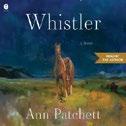
Patchett narrates her latest gem with nuance and feeling as a chance encounter at the Metropolitan Museum of Art leads Daphne to revisit her past. She and her husband are enjoying their day in the city when Jonathan notices, and then confronts, an elderly man who seems to be following them. Eddie was Daphne and her sister Leda’s beloved stepfather for barely a year before their mother banished him and he disappeared from their lives. Patchett’s delivery is smooth as Daphne reconnects with Eddie and faces the trauma that upended their lives. Her pacing and inflection express the heartfelt emotions of the most minor characters, and listeners even get to hear her sing snippets of the Yale Whiffenpoofs song. Patchett reminds us that love endures.
Peterfreund, Diana | Read by Marli Watson
Hachette Audio | 7 hrs, 19 mins | $26.24
April 7, 2026 | 9781668654774
Marli Watson narrates this first installment of a YA mystery series. Ellen is a prepschool scholarship student who knows how to follow the rules. But her life takes a turn when she moves into her aunt’s Edgar Allan Poethemed B&B and starts having nightmares about a family who died— including Gus, a new student at school. When Ellen finds a journal that she believes was written by Poe, she meets the ghost of her longdead relative, who calls himself Eddie. Watson makes the characters believable from the start. She portrays Ellen as feisty, and Gus as a vulnerable charmer. Aunt Marie is sweet, but not too sweet. Watson’s conversational style will delight listeners of all ages.
(Paranormal mystery. 12-18)
Porter, Billy with Chris Clarkson | Read by Billy Porter | Recorded Books Inc. | 3 mins | $8.39 March 31, 2026 | 9798898850326
With a raspy voice, Porter brings high spirits to this magical tale about a young boy whose classmates laugh at how he walks and talks. Billy feels best when he’s singing. Ms. Irene, his powerfully rendered choir teacher, encourages him to free himself and let his remarkable voice soar. Listeners will be enchanted as he sings that he’s a tall sunflower dancing in the rain. He resolves to demonstrate his enormous talent, despite his small body, at the school’s showcase. The audience is stunned as he sings louder and more powerfully each time. Porter’s passionate delivery encourages young listeners to make themselves heard. (Picture-book memoir. 4-8)
Rooney, Kathleen | Read by Evan Sibley Simon & Schuster Audio | 6 hrs, 13 mins $20.99 | July 7, 2026 | 9781668148921
Narrator Evan Sibley compellingly portrays Patrick “Kick” Kilpatrick, an Omaha, Nebraska, man stranded in the ocean during a family cruise. Whether Kick fell or jumped remains uncertain as he treads water and pieces together his final moments aboard the ship. Sibley captures Kick’s racing stream of consciousness with urgency and nuance, shifting easily among memories of his high school swim team, family conflict, and his mother’s cancer. Sibley demonstrates incredible range for the characters in Kick’s mind: a higher pitch for Kick’s precocious nephew, clipped
Sibley captures Kick’s racing stream of consciousness.
MAN OVERBOARD!
irritation for his pompous brotherinlaw, warmth for his swim coach/ uncle, and distinct comic charm for hallucinated sea creatures. As Kick weakens, his repeated hope that “in the next hour someone’s going to save me” grows heartbreakingly hoarse. An engaging, heartfelt performance.
Rowell, Rainbow | Read by Rebecca Lowman Harper Audio | 11 hrs, 33 mins | $30.44 April 14, 2026 | 9780063380288
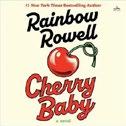
Rebecca Lowman has narrated many of Rowell’s books, and her familiarity with Rowell’s style helps make this audiobook a success. Here, Lowman introduces Cherry, a heroine who is easy to love. Baby is a “crazylooking fat girl” character in Cherry’s husband, Tom’s, hit webcomic. Cherry has accepted her similarity to Baby, but a screen adaptation of the comic brings new exposure and confusion and sparks Cherry’s fury, hurt, and insecurities. As the narrative moves between past and present, Lowman clearly communicates Cherry’s emotional arc—the resentments and miscommunications with Tom that led to their separation; the thrill at a new relationship with a former college boyfriend, and then anger over their breakup; and a difficult rekindling with Tom.
Lowman captures Cherry’s vulnerable journey to self-love.
Rowley, Steven | Read by Michael Urie
Penguin Audio | 10 hrs, 28 mins | $22
May 19, 2026 | 9798217285198
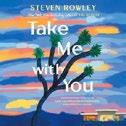
Actor Michael Urie brings humor and emotional depth to this original, moving audiobook about love, loss, and alien abduction. Thirty years after their meet cute in Venice Beach, LA, Jesse and Norman are married and living in Joshua Tree, California. One night, Jesse watches Norman get out of bed, walk into their backyard, step into a weird beam of light, and vanish. Suddenly, Jesse is alone in a way he has not been in decades, and people start to wonder if Jesse had something to do with Norman’s disappearance. Despite a somewhat distracting, caricaturelike take on Norman’s voice, Urie’s performance highlights Rowley’s signature wit and charm. This touching tale offers a poignant, fantastical exploration of what it means to be left behind.
Semple, Maria | Read by Saskia Maarleveld Penguin Audio | 9 hrs, 1 min | $22
April 14, 2026 | 9798217166619

Saskia Maarleveld shepherds listeners through the complicated past and present of stoic philosopher and “moral trainer” Adora Hazzard. Maarleveld portrays the specifics of Adora’s
happy life on the Upper West Side among a “coven” of middle aged ladies with whom she shares the seventh floor of an apartment building, along with Viv, Adora’s wonderful teen daughter. Maarleveld’s understanding of Semple’s quick humor and witty wordplay aids these descriptions and establishes the novel’s philosophical bent without being heavyhanded. Maarleveld shows her gift for pacing when handsome stranger Digby Beale enters Adora’s life. While the sexual tension between them crackles and burns, the mysterious Digby ushers Adora into a fastmoving investigation that involves society elites and an international art scheme. The resolution untangles the mystery and clarifies questions about Digby’s love in a satisfying conclusion. A playful, rollicking audio adventure.
The Gulf of Lions
Shetterly, Caitlin | Read by Imani Jade Powers Harper Audio | 10 hrs, 9 mins | $30.44 May 19, 2026 | 9780063421103
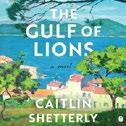
A followup to Shetterly’s Pete and Alice in Maine (2023), this audiobook finds Alice moving forward after a devastating time. She embarks on a trip across France with her daughters, meeting generous people, eating extraordinary foods, and learning to live again. Imani Jade Powers offers an excellent performance, voicing Alice with a sincerity that rarely goes emotionally
overboard, even when it could. Her pace is consistent, her dialogue clear, and her incorporation of French and various other accents is flawless. Powers shifts between Alice’s point of view and those of her two daughters, whose 8 year old innocence and teenage saltiness are depicted with uncanny realism. Vivid and appealing as a morning in Provence, this performance will hold listeners close.
Spitz, Bob | Read by MacLeod Andrews Penguin Audio | 22 hrs, 1 min | $33 April 21, 2026 | 9798217282272
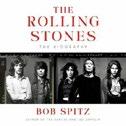
Narrator MacLeod Andrews pairs well with the Rolling Stones. His crisp, affable narration keeps this band bio in a groove, and his occasionally theatrical delivery enhances the highlights—for example, when the Stones first encountered James Brown at the T.A.M.I. Show. Billed as a biography, this thoroughly researched band history explains how, individually, Mick, Keith, Brian, Charlie, and Bill were products of British postwar culture, and how, collectively, they launched a lifestyle juggernaut. There are plenty of settherecordstraight anecdotes—no, manager Andrew Loog Oldham didn’t lock Mick and Keith in a kitchen until they wrote a new song—and unlike other Stones tomes, the bio follows the stillperforming band into their 80s. This production proves that yes, the world does need another audiobook about the Rolling Stones.
Vivid and appealing as a morning in Provence.
Vigliotti, Jonathan | Read by Jonathan Vigliotti Simon & Schuster Audio | 11 hrs, 28 mins
$28.34 | May 12, 2026 | 9781668153680
Vigliotti narrates his indispensable audiobook with a piercing clarity. Through deep investigative reporting, listeners learn the details that contributed to the 2025 Los Angeles fire, a powder keg that led to the destruction of the Pacific Palisades community. The early warning signs went unheeded and underreported, leaving residents with the horrifying conclusion that help wasn’t just slow in coming, it wasn’t coming at all. Leadership was absent, lines of communication were muddled, and needed resources were underfunded. The result was cataclysmic, and the aftermath is still fresh, despite a push to rush redevelopment. Vigliotti is unflinching in tone, delivering a devastating story of environmental shock and human failure. This important audiobook bears witness to a disaster.
Weaver, Brynne | Read by Robert Hatchet, Samantha Brentmoor & Brynne Weaver
Penguin Audio | 11 hrs, 24 mins
$24 | June 9, 2026 | 9798217344703
Series: The Seasons of Carnage Trilogy, 2 Samantha Brentmoor and Robert Hatchet mesmerize and delight in a duetstyle narration of this steamy, dark romcom with the perfect touch of suspense. In this sequel to Tourist Season (2025), Nolan Rhodes continues to dig up more secrets in Cape Carnage and discovers that Harper Starling isn’t who he thought she was. As these two serial killers
Wheeler expertly narrates her own beautifully written biography.
JAN MORRIS
fall in love, their loyalties are tested, and they question whom they can truly trust. Brentmoor’s light, alluring voice perfectly captures Harper’s quick wit and feisty sass in an expressive, nuanced performance, while Hatchet’s rich timbre poignantly complements Nolan’s conflicted, dominant, and protective demeanor. Together, Brentmoor and Hatchet fashion vibrant and evocative character voices.
Listeners will be fully immersed in the small, quirky town of Cape Carnage.
Jan
Wheeler, Sara | Read by Sara Wheeler Harper Audio | 14 hrs, 36 mins | $34.64 April 14, 2026 | 9780063304154
Wheeler expertly narrates her own beautifully written biography of one of the great enigmas of the 20th century, author, travel writer, and trans pioneer Jan Morris. Wheeler’s voice is extremely pleasant to listen to, and her admiration and affection for—and sometimes exasperation with—her not always sympathetic subject are plain to hear. The young Morris was the journalist who broke the news of the first ascent of Everest; in her later life as Jan, her odes to cities such as Venice and her magisterial Pax Britannica Trilogy are masterpieces of the travel writer’s art. Wheeler chronicles her subject’s emotional and physical journey to becoming Jan with great sympathy. A masterful telling of “an almost insanely interesting life.”
Whitaker, Kayla Rae | Read by Amanda Stribling | Random House Audio | 15 hrs, 2 mins | $26 | May 19, 2026 | 9798217176458

This multigenerational family saga follows the life of a Kentucky family which, starting in the late 1970s, manages to achieve the ragstoriches American dream. Fred Taylor and his wife, Fran, begin BakerTaylors, a discount department store in Louisville, and it grows into a regional corporation. Narrator Amanda Stribling, with her spoton regional twang, animates this industrious duo as well as portraying the four Taylor children, whose points of view and emotional growth are also chronicled. As time moves on, there are personal and financial crises that affect the lives of every family member. Stribling keeps listeners engaged with the fate of each Taylor. This audiobook will be a favorite of listeners who love big, meandering family stories.
Wood, Maryrose | Read by Chris Devon Dreamscape | 2 hrs, 52 mins | $14.69 | May 5, 2026 | 9798349115998 | Series: Bad Badger, 2
Narrator Chris Devon returns for a bravura performance of this sweet, silly, and poignant second installment in Wood’s series. Seagull Gully and badger Septimus are busy raising their three chicks, and an already hectic
household becomes that much more chaotic when a group of forest badgers comes for an extended visit. They want to dig a den where?! With his British accent and excellent pronunciation of Italian words, Devon immerses listeners in their various adventures and misadventures and conjures the many delights of the seaside town where they live. Gully’s dialogue consists exclusively of “Caw,” and Devon injects impressive variation and emotion into each utterance. Devon warmly depicts a quirky and loving family with his engaging performance. (Fiction. 7-10)
Yang, Kelly | Read by Emily Woo Zeller Penguin Audio | 10 hrs, 35 mins | $22 April 14, 2026 | 9798217282319

Emily Woo Zeller sizzles in her performance of Yang’s debut adult novel about a contract between a 53yearold woman and her 23yearold protégé that goes awry. As the story unfolds in alternating points of view, Zeller exudes Maggie Wang’s desperation to secure her family’s financial future. Ingrid Parker is frantically searching for a young woman willing to provide blood infusions that will reverse her aging. The palpable thrill Maggie feels when she’s paid $3 million (at the cost of 10 years of her life) is offset by Ingrid’s duplicity in not mentioning that the blood swapping procedure is experimental. Zeller nails the push and pull between the two women as each tries to outmaneuver the other.
An outstanding, captivating production.

more audiobooks
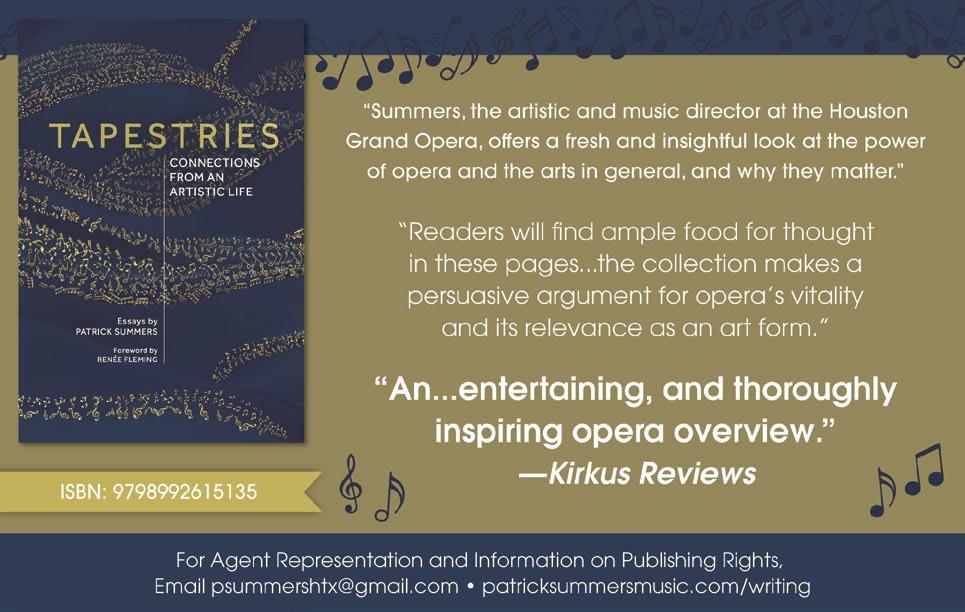
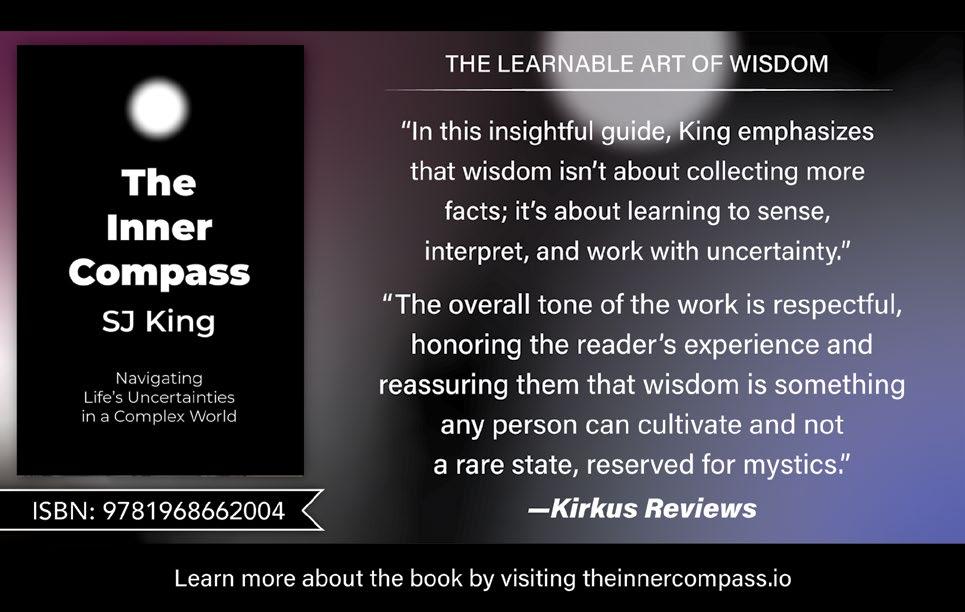


AUG. 20
SEPT. 17
OCT. 22
NOV. 19
DEC. 17