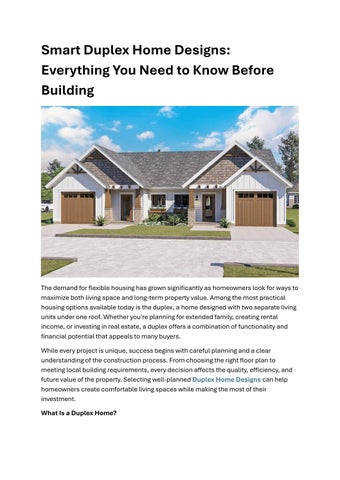
A duplex is a residential building divided into two independent homes that share a common wall or structure. Each residence typically includes its own entrance, kitchen, bathrooms, bedrooms, and living spaces, allowing occupants to enjoy privacy while remaining under one roof.
Unlike apartment buildings that contain multiple units, a duplex consists of only two homes. Owners may choose to live in one unit while renting the other or use both residences for family members. Because of this flexibility, duplexes have become a practical solution for changing housing needs.
Why More Homeowners Are Choosing Duplex Living?
Housing priorities have changed considerably in recent years. Rising property prices, changing family structures, and the increasing desire for passive income have encouraged many buyers to consider duplex construction instead of traditional singlefamily homes.
A duplex creates opportunities that standard homes often cannot provide. Owners can generate rental income, provide independent housing for relatives, or simply increase the overall utility of their property. In many cases, the ability to serve multiple purposes makes duplex ownership a financially sound long-term decision.
Planning Successful Duplex Home Designs
Every successful duplex project begins with careful planning. The design phase involves much more than creating attractive floor plans it requires balancing functionality, privacy, comfort, and compliance with local building regulations.
Modern Duplex Home Designs focus on creating two independent homes that each feel spacious and comfortable. Designers carefully consider room placement, natural lighting, ventilation, storage, parking, and outdoor living areas to ensure both residences offer a high quality of life.
After the conceptual plans are completed, architectural drawings, engineering documentation, permit approvals, and budgeting follow before construction begins. Proper planning during these early stages often reduces delays and helps prevent costly design changes later in the project.
Technology also plays an important role in modern home planning. Energy-efficient materials, sustainable construction methods, and smart home features are increasingly incorporated into new duplex developments to improve comfort while lowering longterm operating costs.
Advantages of Building a Duplex
Building a duplex offers several practical benefits for homeowners and investors alike.
• Creates an opportunity for rental income.
• Maximizes the use of available land.
• Provides flexible housing for extended families.
• Increases long-term investment potential.
• Offers more privacy than many shared housing options.
• Can improve future resale appeal through versatile living arrangements.
Who Should Consider a Duplex?
A duplex is suitable for a variety of homeowners because it adapts well to different life stages and financial goals.
First-time buyers often appreciate the ability to offset mortgage expenses through rental income. Investors value the opportunity to generate returns from two residences on a single property. Families may choose duplex living to keep aging parents or adult children nearby while preserving everyone's privacy.
Professionals planning for retirement also find duplex ownership appealing because it offers flexibility. One residence can provide personal housing while the second serves as an income-producing asset or future accommodation for family members.
What Happens During the Building Process?
Building a duplex follows a structured sequence that begins long before construction equipment arrives on site.
The process usually starts with evaluating the property, determining feasibility, and preparing a realistic budget. Designers then create detailed plans that satisfy both the owner's goals and local building requirements.
Once approvals are secured, construction progresses through foundation work, structural framing, roofing, plumbing, electrical installation, insulation, interior finishing, and landscaping. Throughout each stage, inspections help ensure the building meets applicable safety and construction standards.
Communication between the homeowner, builder, architect, and contractors remains essential throughout the project. Addressing questions early and monitoring progress regularly can help reduce delays and maintain construction quality.
Duplex House vs. Other Residential Options
Choosing the right type of home depends on personal priorities, future plans, and financial objectives.
A duplex house provides greater flexibility than a traditional single-family home because it supports two independent households. Owners can occupy one residence while renting the other, creating income opportunities that are generally unavailable with standard homes.
Townhomes offer attached housing but often include homeowners association rules that limit customization. Condominiums provide convenience but typically involve shared ownership of common spaces and monthly association fees.
A thoughtfully planned duplex building design gives homeowners considerably more control over the property's layout, appearance, and long-term functionality. Unlike many production homes, custom duplex designs can be tailored to fit individual lifestyle needs while maximizing land use.
Important Considerations Before You Build
Although duplex construction offers numerous advantages, careful preparation remains essential.
Local zoning regulations determine whether duplex development is permitted on a specific property. Budget planning should also include allowances for unexpected expenses, material price changes, and potential construction delays.
Design quality deserves equal attention. Effective sound insulation, convenient parking, functional storage, and private outdoor areas contribute significantly to long-term occupant satisfaction. Working with experienced professionals throughout planning and construction helps minimize costly mistakes and improves the finished result.
Homeowners should also think beyond immediate needs by choosing layouts that remain functional as family circumstances or market conditions change over time.
Frequently Asked Questions:
1. What is the biggest advantage of owning a duplex?
The ability to combine personal housing with rental income makes duplex ownership attractive for many homeowners and investors.
2. Can Duplex Home Designs be customized?
Yes. Most duplex projects are designed to match the property's dimensions, local regulations, and the homeowner's lifestyle preferences.
3. Is building a duplex more expensive than building a single home?
Construction costs are generally higher because two residences are being built, but the additional income potential and increased property value often improve long-term returns.
4. How long does a duplex construction project usually take?
The timeline depends on project size, permitting, weather conditions, and construction complexity. Planning and approvals are important parts of the overall schedule.
5. Is a duplex suitable for multi-generational families?
Absolutely. A duplex allows family members to live close together while maintaining separate and private living spaces.
Final Thoughts
A duplex represents more than simply adding another residence to a property. It offers homeowners greater flexibility, stronger investment opportunities, and practical solutions for changing housing needs. By focusing on well-planned Duplex Home Designs, evaluating every aspect of the duplex building design, and understanding how a duplex house compares with other housing options, buyers can make informed decisions that support both their current lifestyle and future goals.
Careful planning, realistic budgeting, and quality construction are the foundations of every successful duplex project. With the right approach, a duplex can provide lasting comfort, financial value, and adaptable living for years to come.
Contact Us:
• Name: King Homes NSW - HomeWorld Leppington
• Address: https://maps.app.goo.gl/k1HbyQNz9JamUXq39
• Phone No: +61287950022