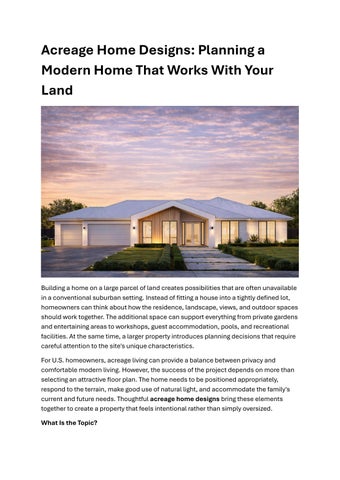
Acreage Home Designs: Planning a Modern Home That Works With Your Land
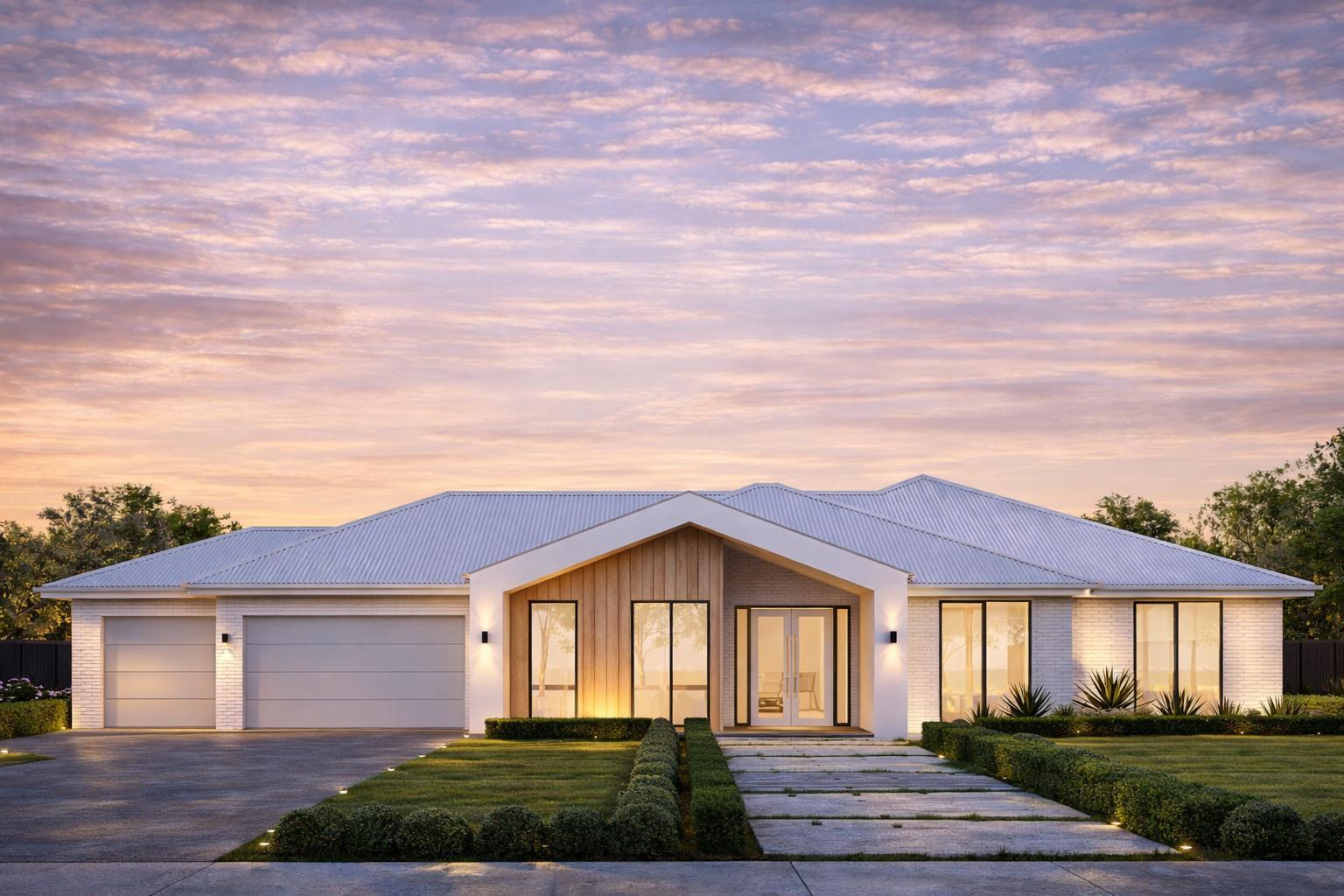
Building a home on a large parcel of land creates possibilities that are often unavailable in a conventional suburban setting. Instead of fitting a house into a tightly defined lot, homeowners can think about how the residence, landscape, views, and outdoor spaces should work together. The additional space can support everything from private gardens and entertaining areas to workshops, guest accommodation, pools, and recreational facilities. At the same time, a larger property introduces planning decisions that require careful attention to the site's unique characteristics.
For U.S. homeowners, acreage living can provide a balance between privacy and comfortable modern living. However, the success of the project depends on more than selecting an attractive floor plan. The home needs to be positioned appropriately, respond to the terrain, make good use of natural light, and accommodate the family's current and future needs. Thoughtful acreage home designs bring these elements together to create a property that feels intentional rather than simply oversized.
What Is the Topic?
An acreage home design is a residential concept created for a property with substantial land surrounding the main dwelling. Unlike a typical subdivision home, where the lot size and neighboring buildings often dictate the home's position, an acreage property may offer more flexibility in determining where and how the residence is built. The design process considers the house as part of a larger environment. The location of the driveway, the direction of the best views, the position of trees, the movement of sunlight, and the relationship between indoor and outdoor areas can all influence the layout. The goal is to create a home that feels naturally integrated with its surroundings.
Acreage properties also provide opportunities to plan beyond the main residence. Depending on local regulations and the property's characteristics, homeowners may be able to incorporate detached garages, studios, workshops, guest accommodations, pools, gardens, or other lifestyle features. When these elements are considered from the beginning, they can form a cohesive property rather than a collection of separate additions.
Why People Choose It?
Space is one of the clearest advantages of acreage living. Families may have more room for children to enjoy outdoor activities, pets to explore, or adults to pursue hobbies without disturbing the rest of the household. The additional land can also create separation from neighbors, making the property feel quieter and more private.
Another reason people choose large properties is the opportunity to personalize their surroundings. A homeowner who enjoys gardening may want extensive planting areas, while someone who works on vehicles or enjoys woodworking may prioritize a substantial workshop. Families who frequently host guests might prefer a home with generous entertaining areas that flow directly into outdoor spaces.
Acreage living can also support a long-term lifestyle strategy. With careful planning, the property may be able to accommodate changing family circumstances over many years. Flexible rooms, private guest areas, adaptable living zones, and additional structures can all contribute to a home that remains useful as household needs evolve.
How Acreage Home Designs Should Respond to the Property?
Successful acreage home designs start with the land itself. Before choosing a particular layout, homeowners should understand the property's topography, orientation, soil conditions, drainage, access, utilities, and environmental characteristics. These factors can determine where construction is practical and how the house should be positioned.
The direction of the home is especially important. Proper orientation can help maximize natural daylight and improve the relationship between interior spaces and the surrounding landscape. Living areas may be positioned toward attractive views, while
bedrooms can be located in quieter parts of the property. Outdoor spaces can also be placed strategically to provide shade, shelter, or privacy.
Terrain should be viewed as part of the design opportunity. A gently sloping site may allow for stepped landscaping, terraces, or different levels within the home. A property with mature trees might inspire a layout that preserves those features rather than removing them. When the design works with the land instead of fighting against it, the finished home can feel more connected to its environment.
The same principle applies to outdoor living. Patios, covered porches, decks, pools, and gardens should be planned in relation to the home's primary rooms. A kitchen that opens toward an outdoor dining area, for example, may create a more practical entertaining experience than an outdoor space positioned far from the home's main activity zones.
Benefits
• Greater privacy: Large properties can provide more distance from neighboring homes and roads.
• Flexible use of space: Homeowners may have room for workshops, gardens, guest areas, recreation, or additional structures.
• Lifestyle customization: The home and landscape can be designed around hobbies, family routines, and personal priorities.
• Improved outdoor living: More land creates opportunities for patios, pools, gardens, and other exterior spaces.
• Future flexibility: A well-planned property can adapt to changing family and lifestyle requirements.
Who It's For?
Acreage living can be an excellent choice for families who want more space than a standard residential lot can provide. Parents may appreciate the freedom to create dedicated outdoor areas, while homeowners with pets or active lifestyles can benefit from having more room around the house.
It may also appeal to people who want to combine residential living with personal interests. Gardening, equestrian activities, workshops, home-based businesses, and outdoor recreation may all be easier to accommodate on a larger property, subject to local regulations.
However, acreage is not automatically better simply because it offers more land. Homeowners should consider how much property they realistically want to maintain and whether the location provides convenient access to schools, employment,
healthcare, shopping, and other services. The best property is one that fits the owner's lifestyle rather than simply offering the largest possible lot.
What to Expect?
Developing an acreage property can involve more planning than building in an established subdivision. Depending on the location, the project may require detailed assessments of soil, drainage, grading, access, water supply, wastewater systems, utilities, and local planning rules. These considerations can influence both the home's location and the overall construction budget.
Site access deserves particular attention. A long or steep driveway may require additional engineering or drainage measures, while remote properties may present challenges for construction deliveries and equipment. These issues should be considered before finalizing the home's position.
Homeowners should also plan the surrounding property at an early stage. The location of garages, driveways, outdoor entertaining spaces, gardens, fences, pools, and potential future structures can affect how the main house functions. A site plan that considers all these elements together can help prevent conflicts later.
Acreage House Plans vs. Standard Suburban Layouts
The main difference between acreage house plans and standard suburban layouts is the level of site-specific planning involved. A typical suburban home may be designed around a relatively predictable lot with established roads, utilities, and neighboring properties. An acreage home often has to respond to more variables, including irregular boundaries, slopes, natural vegetation, long access routes, and expansive views.
A conventional floor plan can still be suitable for an acreage property if its orientation and proportions work well with the land. However, adapting the design to the site may produce a better result. For example, a home with large windows might be positioned to capture a scenic outlook, while service areas could be placed on the side facing the driveway.
For homeowners seeking an elevated level of finish, luxury acreage home designs may incorporate spacious primary suites, large kitchens, multiple living areas, extensive glazing, premium outdoor entertaining zones, and architectural features tailored to the site. Even so, luxury should be based on quality and functionality rather than size alone. A carefully planned home with efficient spaces can provide greater long-term value than an unnecessarily large residence.
Risks & Considerations
Acreage construction can bring additional expenses that are less common on conventional lots. Extensive site preparation, utility connections, private wastewater
systems, long driveways, retaining walls, drainage work, and landscaping can all contribute to the final project cost. Homeowners should establish a realistic budget that accounts for both the house and the broader property.
Planning and zoning requirements can also vary significantly between locations. Restrictions may apply to building setbacks, accessory structures, environmental areas, flood zones, fire protection, septic systems, or land use. Researching local requirements before purchasing or designing the property can help reduce unexpected complications.
Long-term maintenance is another factor. A large property may require regular mowing, tree care, fencing repairs, driveway maintenance, irrigation, and upkeep of additional buildings. Homeowners should consider these responsibilities alongside the lifestyle benefits of acreage living.
FAQs
1. What should I look for when selecting an acreage property?
Consider the site's topography, access, drainage, utilities, soil conditions, orientation, zoning, and proximity to essential services. These factors can influence both the feasibility and cost of building a home.
2. Do acreage homes need to be large?
No. The ideal size depends on the household and how the property will be used. A moderate-sized home can work extremely well on acreage when its layout is efficient and its relationship with the land is carefully planned.
3. Can I customize an acreage home to suit my lifestyle? Yes. The additional land often provides more opportunities to create specialized spaces for hobbies, entertaining, recreation, gardening, or guests. Any proposed additions should be checked against applicable local regulations.
4. Are acreage homes suitable for multigenerational families?
They can be. A larger property may provide enough room for flexible floor plans, private guest suites, or separate structures. Thoughtful planning can help multiple generations share the property while maintaining an appropriate degree of privacy.
5. What are luxury acreage home designs?
These are typically high-end residences designed around the scale and setting of a larger property. They may include premium finishes, expansive living areas, sophisticated outdoor spaces, and architectural features that emphasize the surrounding landscape.
6. How can I make an acreage home easier to maintain?
Focus on practical landscaping, durable exterior materials, efficient irrigation, accessible service areas, and a manageable amount of lawn. Designing the property with maintenance in mind from the start can reduce ongoing work.
Final Thoughts
A large property gives homeowners the freedom to think beyond the boundaries of a conventional house. The most successful acreage projects use that freedom thoughtfully, considering how the home should interact with the landscape, where outdoor spaces should be located, and how the property might evolve over time.
Whether the goal is a relaxed family residence, a private rural retreat, or one of the more sophisticated luxury acreage home designs, the process should begin with a careful understanding of the land. The right combination of site planning, practical architecture, and lifestyle-focused design can transform a large parcel into a comfortable and cohesive place to live.
Ultimately, the strongest acreage property is not necessarily the biggest one. It is the one where the home, land, and daily routines complement each other. By choosing an appropriate layout, considering future needs, and addressing site challenges early, homeowners can create a residence that makes the most of its surroundings while remaining practical for years to come.
Contact Us:
• Name: King Homes NSW - HomeWorld Leppington
• Address: 21/23 Cato Cct, Leppington NSW 2179, Australia
• Phone No: +61287950022