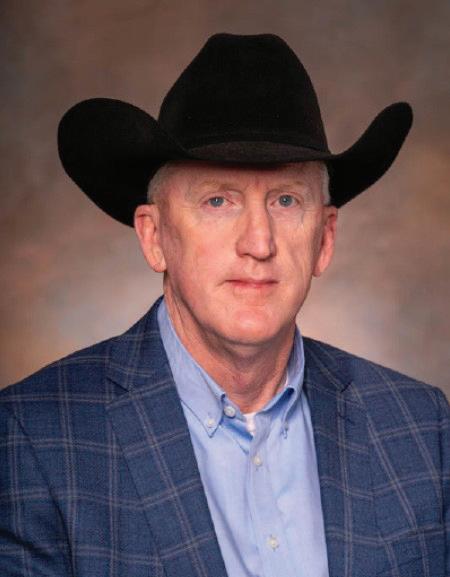
Dr. Rick Machen, PhD
Executive Director; Robert J. Kleberg, Jr. and Helen C. Kleberg Endowed Chair
he fall semester is off to a roaring start. Students returned safely from internships with Deseret Cattle and Timber in the Florida Panhandle, Cobalt Cattle Feeders at Kismet, Kansas and the Australian Agriculture Company, headquartered in Brisbane, Australia.
Three new students arrived early August and have assimilated in to the system. Cheyenne, Cooper, and Salvetti are featured in an article that follows.
The first Managing the Wildlife Enterprise lectureship was held August 21-22 at the Erma Center in Riviera, TX. Feedback from the 68 participants indicates the learning opportunity a resounding success. Thanks to Dr. Abe Woodard (Range and Wildlife Scientist with East Foundation) for providing leadership and being the primary presenter.
Joining Abe as presenters were fellow wildlife management professionals Justin Feild (Senior Wildlife Manager for Ag Reserves, Inc. Ranching Division) and Roy Ludick, a licensed professional hunter from Zimbabwe who is also the Property Coordinator for Matador Resources Company here in Texas. The lectureship concluded with Texas Agrilife Extension Ag Law Specialist Dr. Tiffany Lashmet discussing legal considerations for wildlife enterprises.
Special thanks to sole sponsor Lyssy and Eckel Feeds. After lunch on day one, Charles Eckel shared a practical, science-based approach to wildlife nutrition. Lyssy and Eckel has served the feed needs of livestock producers and wildlife enthusiasts since 1945. They have stores in Poth, George West, Hondo, Llano, and Roosevelt.
Speaking of fall events, put the 22nd annual Holt Cat® Symposium on Excellence in Ranch Management on your calendar for November 6-7. Beef industry dynamics are changing rapidly; resilient consumer demand and a reduced cattle inventory are fueling record high cattle prices. To occupy feedyard pen space and sustain beef production, cattle are being fed longer, resulting in record heavy harvest weights. What impact are these changes, particularly carcass weights, having on system production efficiency?
The segmented beef industry seldom affords a concise glimpse of the entire system. For symposium, we have assembled an impressive lineup of industry experts who will provide insights from consumer perspectives to seedstock selections. As the agenda came together and we finalized speaker commitments, even they as seasoned professionals, were excited about this look at the entire system, from conception to consumer. For a look at the detailed agenda, visit: krirm.tamuk.edu/symposium.
Continued on page 6
700 University Blvd., MSC 137 Kingsville, TX 78363
361-593-5401
361-593-5404 fax krirm@tamuk.edu krirm.tamuk.edu
Rick Machen, PhD, Executive Director; Robert J. Kleberg, Jr. and Helen C. Kleberg Endowed Chair Emily Stribling, Editor
Chair: John Alexander, Jr., King Ranch, Inc.
James Clement, III, Beggs Cattle Company
Caroline Alexander Forgason, Robert J. Kleberg, Jr. & Helen C. Kleberg Foundation
Heath Grigg, King Ranch, Inc.
Jeff Hildebrand, Hilcorp Energy Company
Shelby Horn, Abell Livestock Co.
Rick Machen, PhD, King Ranch® Institute for Ranch Management
Jim McAdams, McAdams Cattle Co.
Shad Nelson, PhD, Texas A&M University-Kingsville
Clint Richardson, AgReserves, Inc.
Jason Van Tassell, Wilson Cattle Co.
Neal Wilkins, PhD, East Foundation

2 | A New Start to the Academic Year New students, a successful new lectureship and two new faculty join the KRIRM team.
4 | Listening, Leading and Networking: KRIRM Alum Tyler Gardner '20 Gardner approaches ranch management with a keen interest in understanding and a commitment to never stop learning.
7 | 22nd Annual HOLT CAT® Symposium on Excellence in Ranch Management ‒Impacts of Beef Carcass Size on System Production Efficiency The 2025 Symposium will be held November 6-7, 2025 in Riviera, TX 8 | New Students Ready for Professional Growth and Development KRIRM Class of 2027 begin their graduate school journey.
| Education & Innovation Livestock Grazing and Wildlife Conservation
| What's Over the Horizon?
We asked nationally recognized livestock market economists to weigh in regarding what to expect on the other side of this bullish market.
| Rancher Learning Opportunities 2026 KRIRM Event Schedule
Sustaining our ranching heritage through education, innovation, and outreach. We are determined to educate leaders who will make a positive difference in ranching and ensure that our hard-earned heritage is not lost.
KRIRM ALUM TYLER
By Kindra Gordon
Tyler Gardner approaches ranch management with a keen interest in understanding and a commitment to never stop learning. For him, success is not just about managing cattle or land; it’s about asking questions, listening, and understanding the “why.” Gardner believes thoughtful observation and curiosity are as critical as hands-on experience.
Equally important is the power of connections. He counts networking among a ranch manager’s most important assets. For Gardner, the ability to reach out to colleagues, mentors and peers is essential for navigating challenges and keeping a ranch operation resilient.
A native of Star Valley, Wyoming, Gardner grew up on a family dairy operation. By high school, he gravitated toward beef cattle and horses, often day-working and riding colts for neighboring ranchers. Those experiences set his foundation learning about cattle health, animal handling, range management and different ranching systems.
This path led Gardner to the University of Wyoming where he earned a Bachelor’s degree in Animal Science with a focus on Range Management in 2014. A summer internship during college at the Rex Ranch in Nebraska led to full-time employment
"I used to think big ranches had all the answers, but now I know even the largest operations have questions. Don’t think you’re the only one going through something. Usually, there are others— so find them and work together.” – Tyler Gardner '20
after graduation. There, Gardner worked with a large crew and a large number of cattle with both spring and fall calving herds. He honed his skills in grazing management, animal health as well as ranch budgeting.
During his five years at the Rex Ranch, Gardner worked with several colleagues who had attended the King Ranch® Institute for Ranch Management (KRIRM) and recognized how the program had benefitted them. As well, Gardener is appreciative of a foreman he worked with who set high expectations. Gardner says, “I owe Kory a lot for where I am at today. He really took the time to help me learn and grow. It was not always fun or easy, but it was always worth it. I have adopted several of his management and leadership practices into my management style.” Eventually, Gardner sought out the KRIRM program. He knew the pool of applicants would be competitive, but hoped for the opportunity for a new level of learning and leadership.
The call came, and Gardner, his wife and young family moved to Kingsville, TX to begin the KRIRM program in Fall 2018. The coursework in systems thinking, finance, human resources and leadership – alongside applied internships on large ranching operations – broadened Gardner’s horizons. He credits the KRIRM program for expanding his ability to think critically about ranch management, and for building enduring relationships with faculty and fellow alumni—connections that continue to shape his management approach.
In May 2020, Gardner graduated from KRIRM and moved to Red Lodge, Montana, where he joined Sunlight Ranch as one of four livestock managers under KRIRM alum Jason Van Tassell ['12]. This role offered insights into operational styles and livestock systems while reinforcing the value of collaboration and mentorship.
In 2023, Gardner’s career path took him home to Wyoming as ranch manager of the TA Ranch near Saratoga. The ranch, owned by a third-generation family headquartered in Fort Worth, includes 2,700 mother cows, 500 yearlings, and a significant grass and hay enterprise. The TA Ranch sits in a high desert ecosystem that often brings heavy winters and dry summers. About 10% of the ranch is irrigated meadowland, which produces all the harvested feed. Calving occurs in May and June, followed by fall weaning and shipment of calves by mid-November.
Gardner stepped into a well-managed operation and worked closely with the previous manager to understand the system. “I felt like the quarterback of the previous Super Bowl champions,” he says with a laugh. And adds, “There’s not a lot of low hanging fruit to address because the ranch has been well-managed…I haven’t turned anything big on its head.” Rather, Gardner says, “I've strived to learn the system and learn the why. Also, I recognize the ranch employees have a lot of knowledge to give, and I've worked to gain their trust and give them autonomy.”
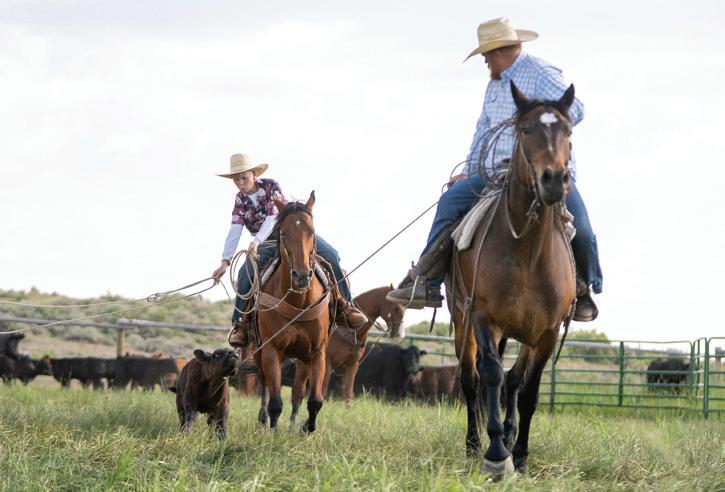
The TA Ranch crew includes three full-time cowboys, two seasonal workers, and two caretakers who assist when family members visit. Gardner describes the owners as deeply connected to the land and cattle, spending summers on the property and enjoying fall hunting. He shares weekly reports with the board and appreciates their emphasis on profitability and operating the ranch as a working business.
Looking ahead, Gardner is watching the market closely. “The cattle market has been really good, and barring black swan events—like a pandemic or a processing plant fire—I anticipate it to continue, at least for a while,” he says. “We all know the market will come down, so we need to be prepared to ride it to the bottom with the least amount of financial damage. When it comes to forecasting, all we can do is make our best educated assumptions.”
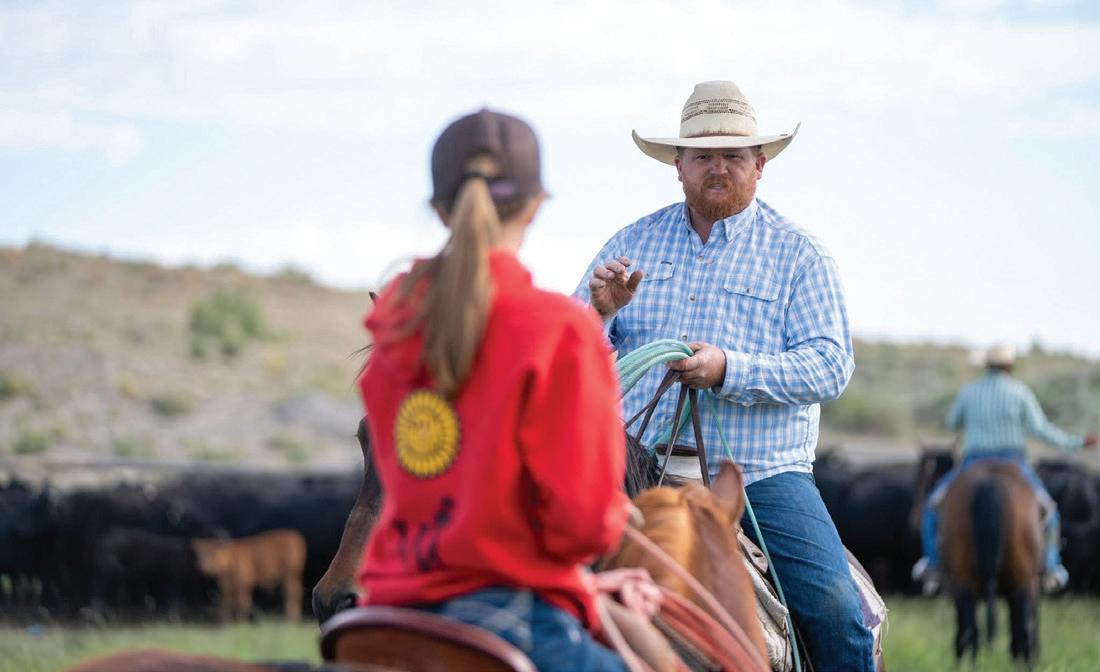
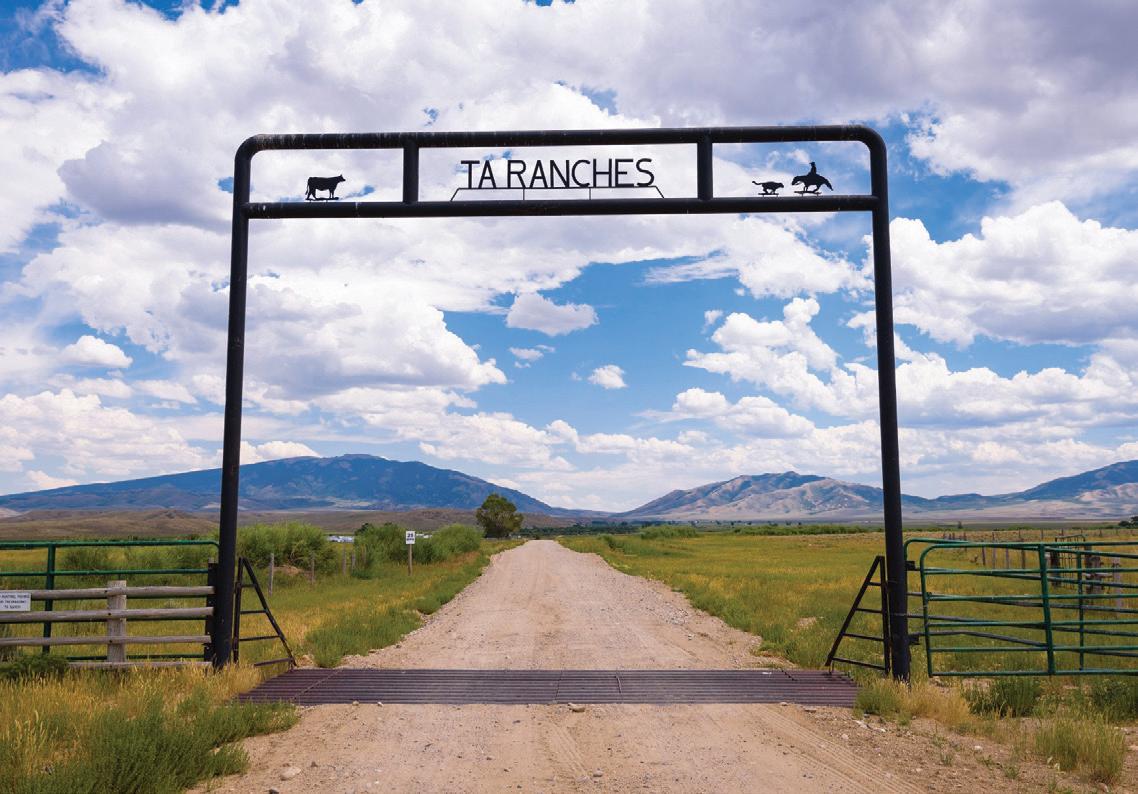
Gardner became the ranch manager of TA Ranch near Saratoga, WY in 2023. He values the knowledge of employees and success of the ranch to-date.
He is monitoring several factors – including hedging, livestock risk protection insurance (LRPs) and cattle-on-feed reports – and anticipating strategic pivots. “You have to be looking at a few different options to maximize revenue,” he states.
Specifically, Gardner monitors the heifers-on-feed report closely to gauge herd expansion. For example, the ranch may run heifers to yearling age, then AI them to sell as bred heifers. Open cows also provide flexibility: they can be put on feed, re-bred as fall calvers, or offered as recipients for embryo transfer programs. “There are all kinds of options to consider,” Gardner says.
For now, the TA Ranch’s priorities include profitability, building a strong employee team, reinvestment in infrastructure, and improving calf uniformity through bull genetics. Expansion is possible if the right opportunities arise.
All that being said, Gardner doesn’t pretend to have all the answers for the future. A guiding principle he carries from his KRIRM courses and previous work experiences is that “there is no silver bullet.” He explains, “What works for one operation won’t necessarily work for another.” He points out that ranch management is complex and context-specific with diverse systems, and marketing approaches that are ever changing.
That’s why networking has become one of his most valuable tools. Gardner regularly taps into KRIRM alumni, mentors, and even a nationwide rancher group on Snapchat to exchange ideas and market insights. “I have many colleagues and mentors to call to keep a finger on the heartbeat of the market. We discuss where we think it’s going and where the good buys are.”
Most recently, Gardner and fellow KRIRM colleagues have started a ranch managers group across Wyoming, Colorado, and Montana. Eight managers meet twice a year: Friday features a half-day ranch tour, and Saturday is devoted to discussing industry topics—everything from daily operations to carbon credits.
He continues, “This has allowed more personal interaction with cohorts. As a manager, you can feel isolated on your own ranch. KRIRM showed me the importance of having a good network. It’s fun to stay connected. And, it’s important to gain knowledge
and continue to learn. I’m a people person and learn best from others’ examples."
Gardner concludes, “Don’t feel stagnant—understand the why in your operation. Meet others and seek to understand their why. I used to think big ranches had all the answers, but now I know even the largest operations have questions. Don’t think you’re the only one going through something. Usually, there are others—so find them and work together.”
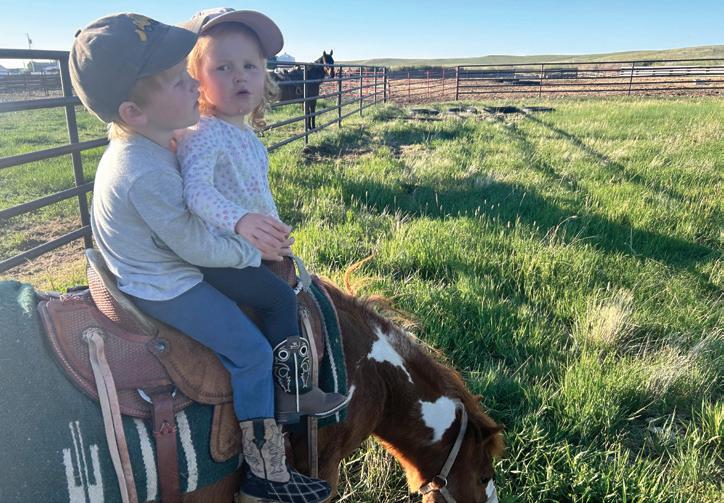
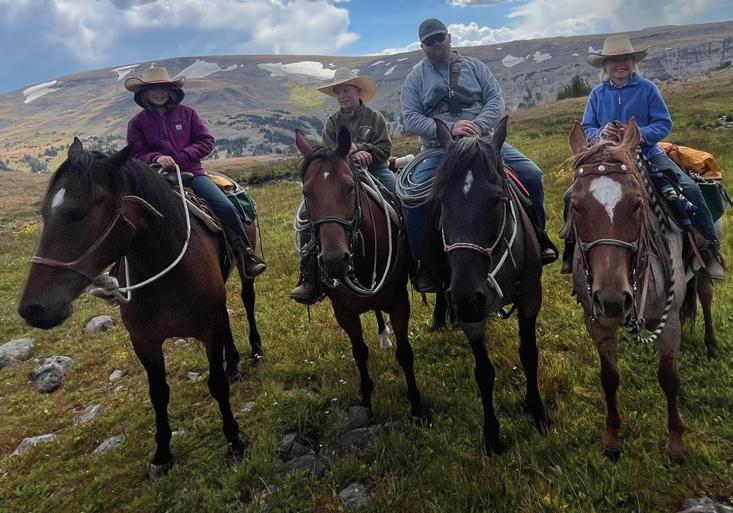
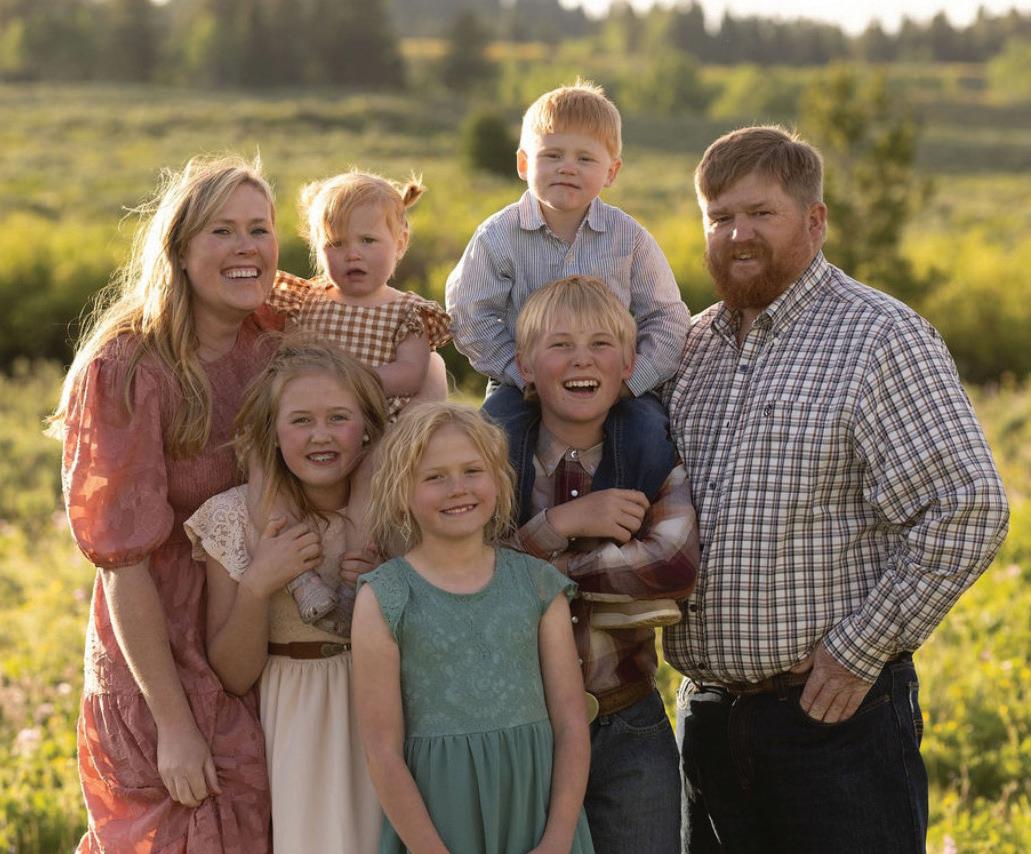
Tyler and his wife Katie, also a Wyoming native, wanted their five children to have deep Wyoming roots. They attend school in Saratoga, about 20 miles from the TA Ranch, and the family enjoys ranch life.
Lastly, I am pleased to announce the addition of two faculty to the KRIRM team. Effective September 1, Drs. Fidel Hernandez and Ben Turner will officially assume partial faculty appointments with KRIRM.
Dr. Fidel Hernandez, is a Regents Professor, Research Scientist, and the inaugural Sue and Radcliffe Killam Endowed Chair in Wildlife, Livestock and Habitat Interactions. Fidel is transitioning from the Alfred C. Glassell, Jr. Endowed Chair for Quail Research in the Caesar Kleberg Wildlife Research Institute.
Fidel was raised on a working ranch in Kinney County, on the western fringe of the Edwards Plateau and has worked on numerous ranches across the western U.S. His international experience includes being awarded a teaching-and-research Fulbright award to teach classes in rangeland and wildlife management with the Institute of Patagonia and University of Magallanes in Chile and to investigate rangeland and wildlife sustainability on grazed Patagonian steppe.
Dr. Hernandez is an active member of the Society for Range Management and is currently serving as President of The Wildlife Society. He will be teaching a graduate level grazing
management course, mentoring KRIRM students, serving on graduate committees and continuing his research with CKWRI focused on wildlife-livestock interactions.
Dr. Ben Turner is an Agribusiness and Environmental Science Associate Professor and the inaugural KRIRM Laura and Robert Underbrink Chair in Agribusiness.
Ben’s research focuses on systems analysis of agroecosystems, decision making in natural resource management contexts, and development of teaching, learning, and decision-support tools for educators, agricultural producers, or policy makers.
Professionally, Ben is a member of the Society of Range Management, the Soil and Water Conservation Society, and the System Dynamics Society. Ben teaches courses in agribusiness and ranch management, including the graduate-level RAMT 5351 - Systems Thinking in Ranch Management. Ben mentors KRIRM students, serves on KRIRM graduate committees, and leads the Systems Thinking lectureship.
Please join me in welcoming Drs. Hernandez and Turner to the KRIRM Team.
22ND ANNUAL HOLT CAT® SYMPOSIUM ON EXCELLENCE IN RANCH MANAGEMENT
NOVEMBER 6-7, 2025 || RIVIERA, TEXAS
THURSDAY, NOVEMBER 6, 2025
12:00 PM Registration & Networking
1:00 PM Welcome & Introductions
1:15 PM The Consumer and Beef Quality: Is there any indication consumer pursuit of quality beef will wane?; Danette Amstein, Managing Principal, Midan Marketing
2:00 PM Reshaping the Meat Case: New Cuts, Better Value; Kaylee Greiner, Manager, Retail & Foodservice Engagement, Texas Beef Council
2:45 PM Break
3:15 PM Packer Perspective on Carcass Size: What are the limitations?; Glen Dolezal, PhD, Retired Assistant Vice President, Cargill Protein
4:00 PM Feeder Perspective: Impacts of longer days on feed & what are the limitations?; Justin Gleghorn, PhD, Director of Cattle Risk Management, Cactus Feeders
4:45 PM Speaker Panel Discussion
5:15 PM Adjourn
5:30 PM Social Hour - Erma Center Patio
6:30 PM Prime Rib Dinner
7:30 PM Recognition and Texas Farm Credit Certificate Awards
FRIDAY, NOVEMBER 7, 2025
7:00 AM Coffee & Pastries 8:00 AM Health Challenges: Impacts of longer days on feed and bigger cattle on feedyard health management; Miles Theurer, DVM, Research Director, Veterinary Research & Consulting Services
8:45 AM Cow-calf: Should cow size change, and if so, how?; David Lalman, PhD, Extension Beef Cattle Specialist, Oklahoma State University 9:30 AM Break
10:00 AM Seedstock: How will pursuit of heavier harvest weight and higher quality impact your selection decisions?; James Henderson, Co-Owner, Bradley 3 Ranch
10:45 AM Speaker Panel Discussion 11:15 PM New World Screwworm Update
12:00 PM Lunch 1:00 PM King Ranch Tour
5:15 PM Adjourn
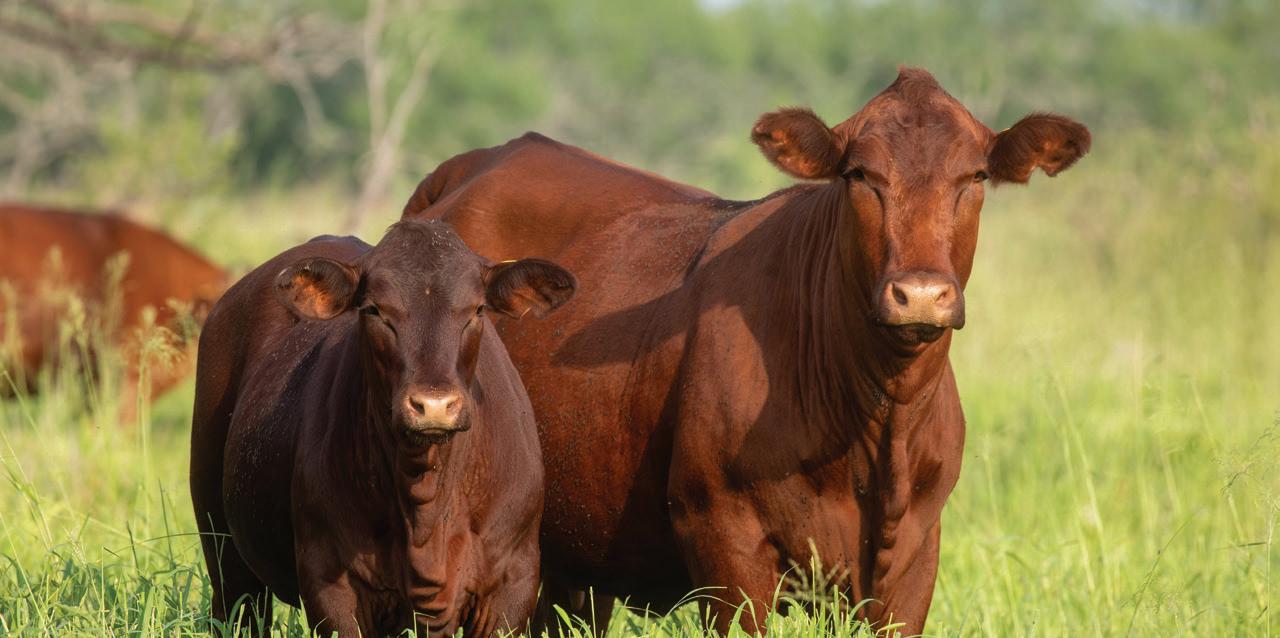
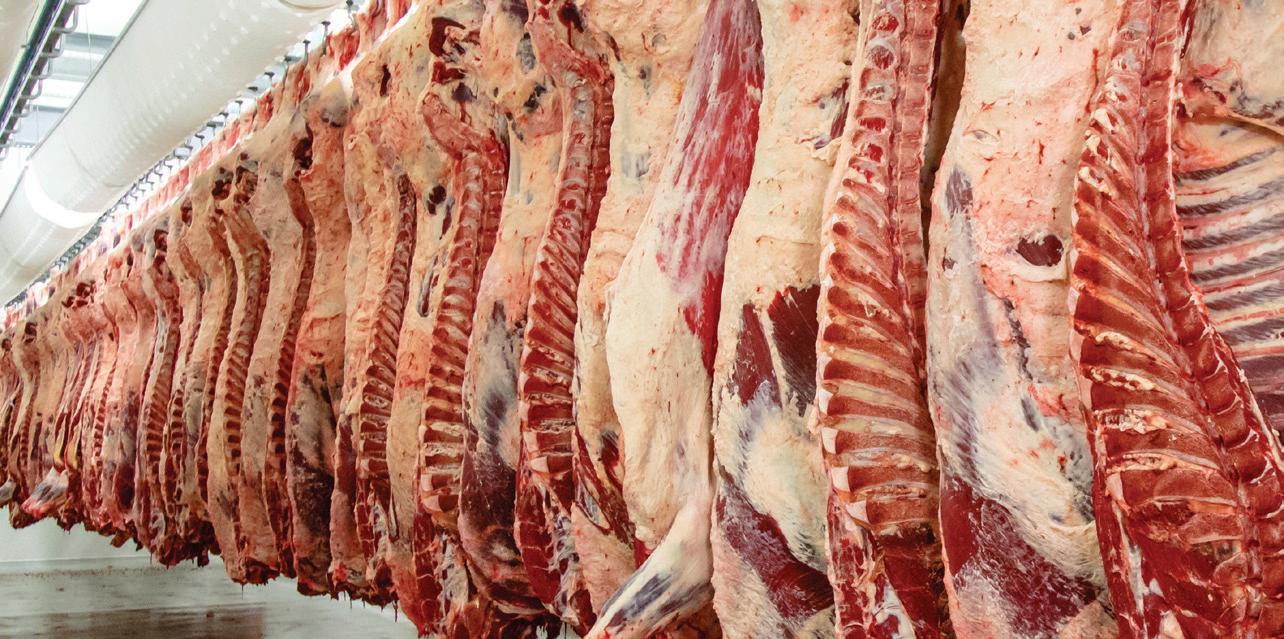
With the lowest beef cow inventory since 1962, the industry continues to produce recordlarge quantities of the highest quality beef in the world. Cattle are being fed longer and to heavier finished weights than ever before. Consumer demand is driving fed and feeder cattle prices to record highs, weekly. Deepen your appreciation for the US beef system and the future impacts of current production and marketing changes at our annual symposium.

Here!
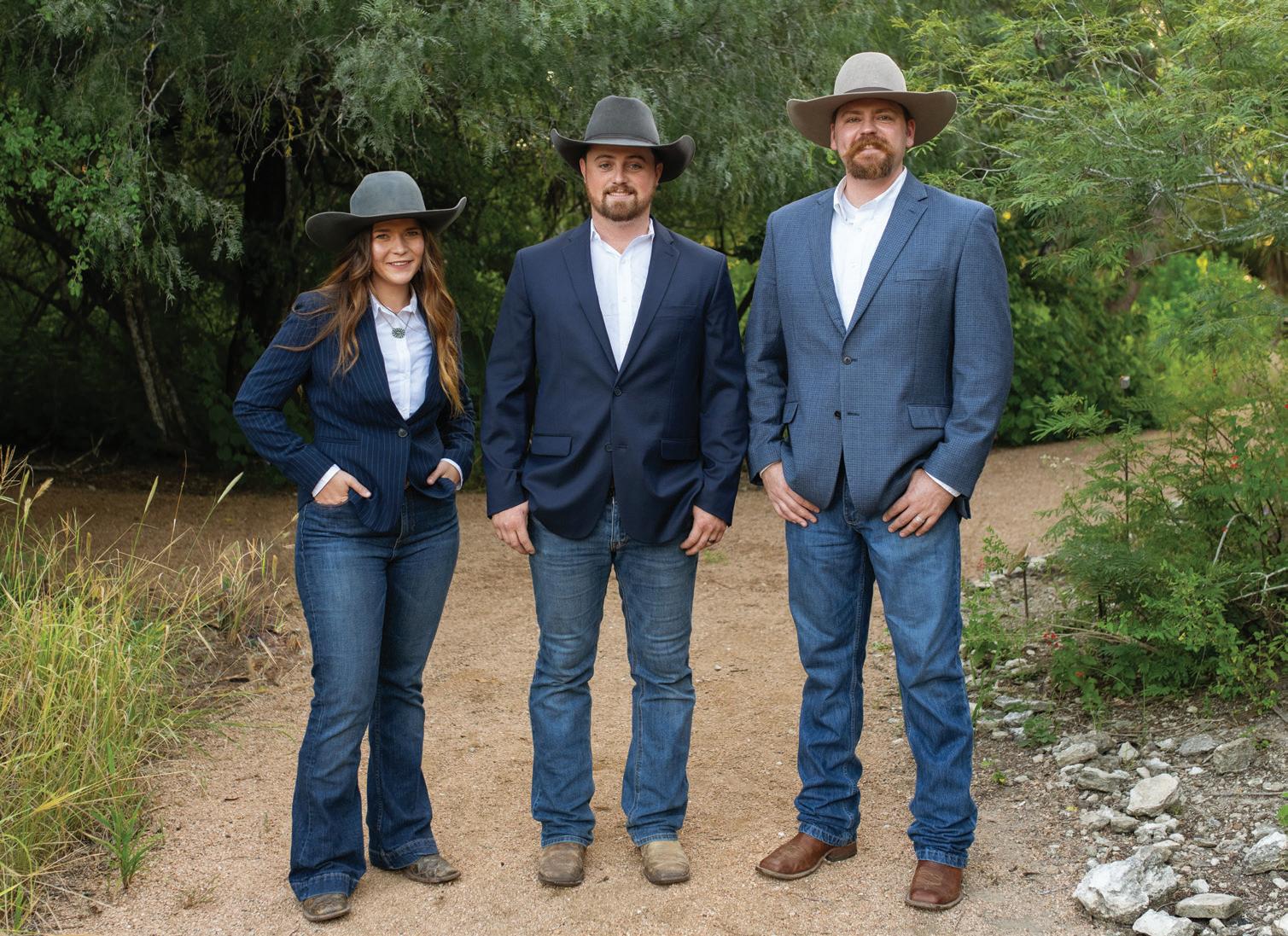
By Emily Stribling
At The King Ranch® Institute for Ranch Management (KRIRM), we teach those with ranching experience to become progressive leaders and exceptional managers. Three new graduate students – Salvetti D’Ascoli, Cooper Larson and Cheyenne Young – join the ranch management master’s program this fall and begin the journey toward advancing their careers in the ranching industry. With unique backgrounds and experiences, they are all coming to the program with an excitement to learn through real-world projects and experiences.
D’Ascoli was raised in Arvada, Colorado and attended Colorado State University (CSU) where he pursued a dual major in animal science, with a focus on beef and feedlot production systems, and agricultural business. During his time at CSU he became involved in various clubs and organizations such as Alpha Gamma Rho, Collegiate Cattlemen’s Association, and Ag Council which further fueled his desire to pursue a career in ranching. D’Ascoli worked throughout his collegiate career to gain additional experience. He consistently worked for Leachman Cattle of Colorado gaining valuable seedstock experience in addition to completing multiple internships with Walter Angus and the Rex Ranch. “This was a very formative experience for me,” reflects D’Ascoli, “I gained invaluable livestock and horsemanship experience while learning from very knowledgeable, experienced people.”
Upon graduation in December of 2021, he began working for Five Rivers Cattle Feeding at the Kuner yard, a 100,000 head feedlot east of Greeley, Colorado and eventually settled into the role of assistant yard department manager. In January of 2023, he transitioned to working for the Wilson Flying Diamond ranch, a commercial cow calf operation in Nebraska.
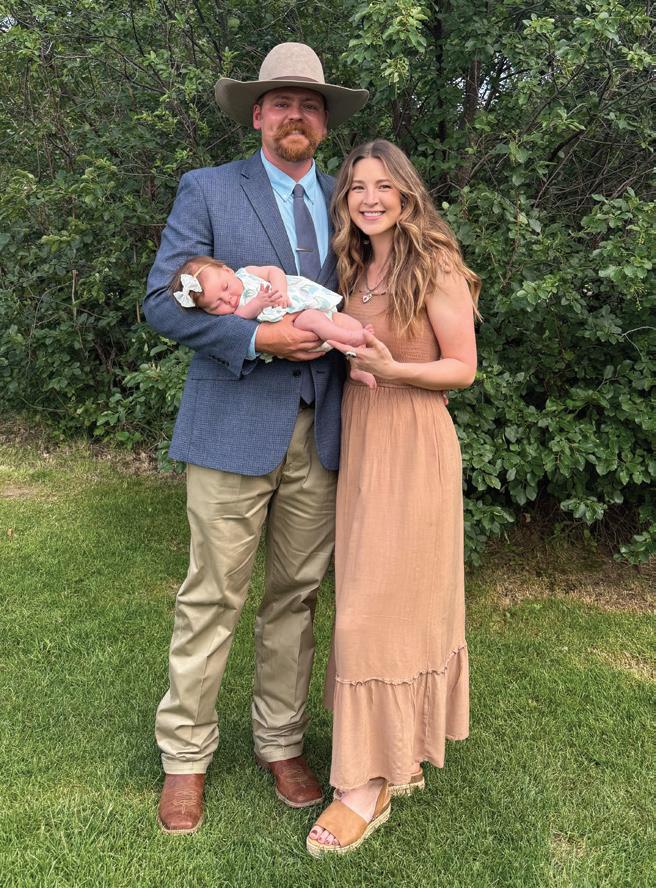
D'Ascoli is anticipating the benefits of applying a systems thinking approach in both his personal and professional life.
D’Ascoli was introduced to the KRIRM program through multiple professors at CSU as well as during his time at Leachman Cattle of Colorado. He further began considering the program after working for alumnus Austin Anderson [’09] at the Rex Ranch. He began networking with other KRIRM alumni and attended a lectureship in 2022. “I am a firm believer in being a lifelong learner and surrounding yourself with people better than you,” says D’Ascoli. “There is no place like the Institute where you can continue your education surrounded by some of the best minds in the industry, whether it be faculty or the network around the program.”
A core component of the KRIRM program is implementing a systems thinking approach to management, a skill D’Ascoli is looking forward to learning and exercising over the next two years, “I’m looking forward to applying this approach to many aspects of my life both professional and personal.” In addition, he notes the desire to hone his business and technical skills around accounting and finance and looks forward to the extensive networking opportunities.
D'Ascoli has relocated to Kingsville, Texas with his wife, Grace and their daughter, Lyndie Joy, who he describes as “the light of our lives.” It is their long-term goal to raise their family in this industry and lifestyle with the ultimate goal of being a ranch manager. “I am very passionate about the beef industry and horsemanship,” he says, “I hope to be lucky enough to continue to chase those passions throughout my career.”
Raised on his family’s small farm in northern Idaho, Larson has been around agriculture his entire life; however, team sports were his first passion, specifically, baseball. He continued playing baseball into college in Walla Walla, Washington before transferring to the Univeristy of Wyoming where he completed his undergraduate degree in mechanical engineering. During his time in Wyoming, he began working for Lazy T Ranch in Ten Sleep. “It was there that my passion for ranching and agriculture began to take shape,” recalls Larson. “I started as a ranch hand and worked my way up to running the hay production followed by running the cow herd over the span of six years.”
Larson first learned of KRIRM from alumnus Seb Killpack [‘24] during his summer internship at Lazy T Ranch. “He and I worked side by side throughout the summer and he informed me of all the opportunities and experience he had gained at the Institute,” says Larson. He was intrigued at the opportunity to expand his working knowledge and gain invaluable connections within the industry.
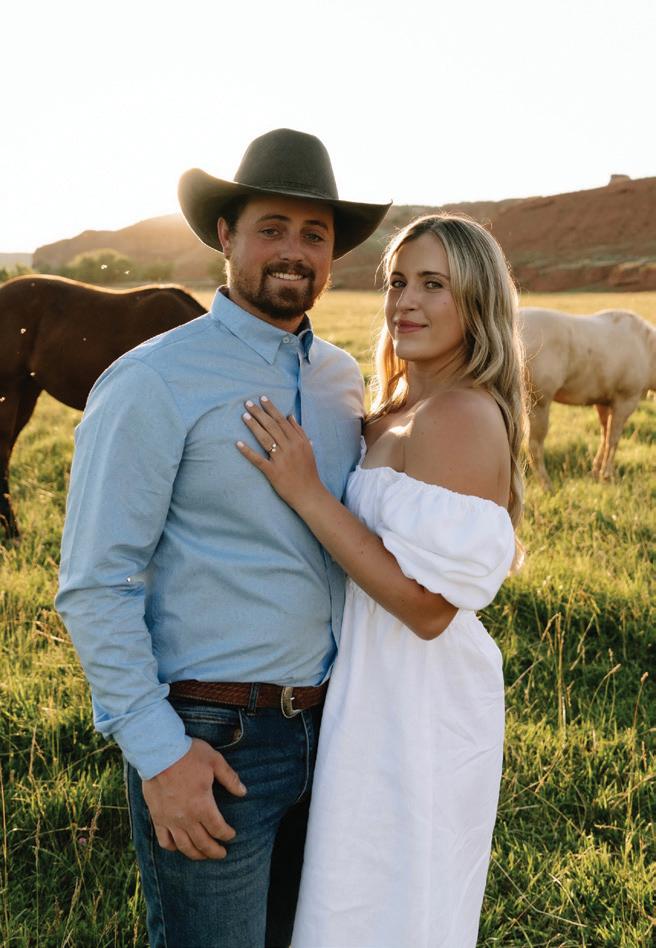
professional employees that are on their way to being the top of their field.”
Larson and his wife Caroline, an accomplished author, are recently married and met while working together in Wyoming.
Growing up on a large cattle ranch in north-eastern Utah, Young has always had a heart for agriculture and ranching. She began growing her own herd of cattle at fifteen through a youth loan offered by Farm Service Agency and gained further hands-on experience working as a ranch hand at Ensign Ranches. After graduating with her bachelor’s degree in agricultural education from Utah State University in 2020 she began her teaching career. She mainly taught agricultural mechanics courses in addition to animal science and veterinary science classes.
Over the next two years, he hopes to gain insight and understanding across all aspects of the ranching industry. He also looks forward to improving his ability to communicate and advocate for the industry at all levels through the projects, presentations and networking afforded throughout the program. When asked about long-term goals, he says they are general, “I want to pursue excellence to work at the highest capacity possible.” This is what ultimately led him to deciding to apply to the program stating, “The Institute pursues these goals within their program and produces
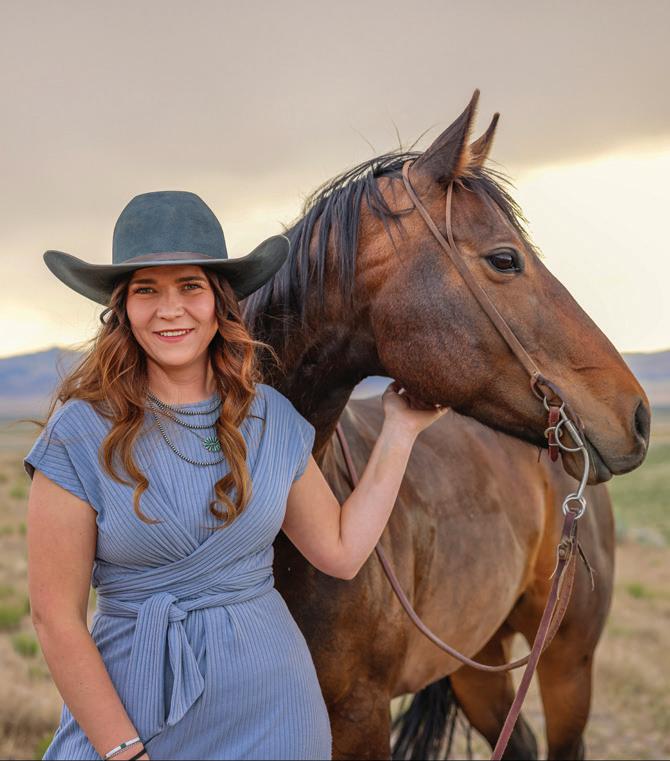
Young is eager to get back to her ranching roots and hopeful for the opportunities ahead.
Young was introduced to the Institute through her brother and KRIRM alumnus, Ethan Young [‘22]. “After spending the last 5 years in a classroom I was eager for a change and to get back to my ranching roots,” reflects Young. With an interest in furthering her education and moving away from academia, attending KRIRM seemed to be the best next step for her career. “When looking ahead to where I wanted to be in the next 5 years, I knew I wanted to be on a ranch,” says Young. “KRIRM was the way I was going to be able to accomplish this goal. I am excited to immerse myself in the industry and learn through this program.”
Like many students entering the program, Young is looking forward to diving in to the business aspects of ranching and deepening her knowledge of finance and accounting. She also hopes to build a network of industry professionals during her time at the Institute to help achieve her long-term goal of gaining a job within the industry whether that be at a producer level or elsewhere.
Young is a proud aunt to two nephews, one niece and another on the way. Her family has been extremely supportive of her attending KRIRM and look forward to her success.
By Fidel Hernández, PhD
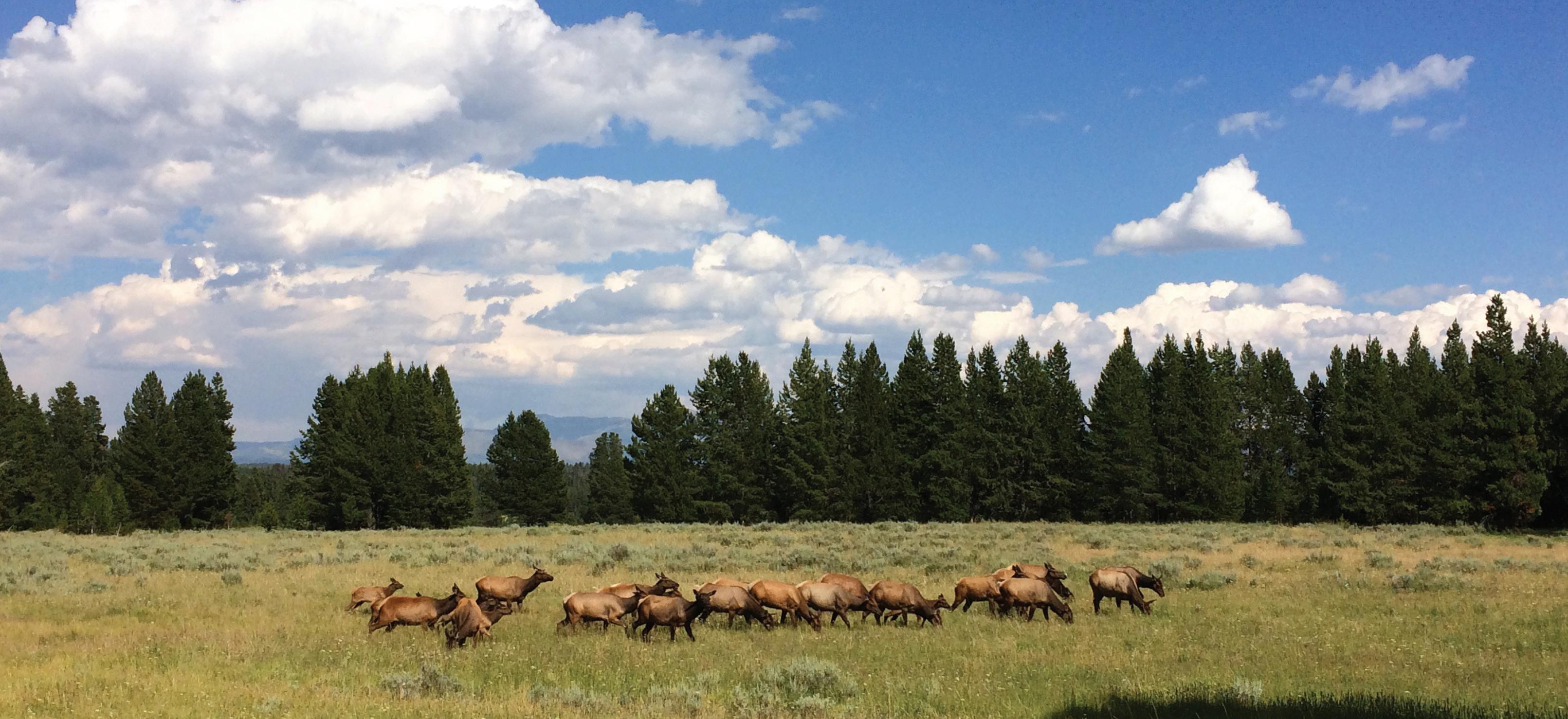
The history of livestock grazing and wildlife conservation is an interesting love-hate novel. Livestock grazing in the U.S. historically has been viewed in a negative light within the conservation world. The truth, however, is that livestock grazing and conservation can be compatible. So why does a negative connotation of grazing exist among some conservationists?
Much of this negative perception of grazing among the general public—as well as some professionals—has its roots in how the story of livestock grazing unfolded in the western U.S. In order to better understand how grazing may be implemented in a manner compatible with wildlife conservation, a brief account of the history of livestock grazing is important to provide a historical and cultural context of the issue.
During the turn of the 20th century, few policies existed to govern livestock grazing on western rangelands. The discipline of rangeland management had not formalized, and the science to properly manage rangelands (and any grazing occurring on them) was virtually non-existent. Consequently, considerable mismanagement and overuse of rangelands occurred as a result of livestock grazing during this time period. In the late 1800s, an estimated 35‒40 million livestock occurred in the 17 western states. Harsh winters in the Great Plains and Palouse Prairie in the 1880s, and severe drought in the Southwest during 1890s, resulted in considerable livestock losses due to starvation, with up to 85% loss of livestock in some areas. Catastrophic events such as these precipitated the end of free-ranging livestock and the beginning of fencing and hay production. It also triggered policies such as the Forest Reserves Act of 1891 that restricted grazing on forest lands and the Taylor Grazing Act of 1934 that ended unrestricted use of the last remaining unattached lands of the West. This latter
Act was championed by the livestock industry and ranchers concerned about the rangeland degradation that had occurred during the turn of the century.
The 1930s to 1960s was a period of alignment of livestock production with what at the time was the concept of sustainability, namely, the consistent production of animal products from year to year without deterioration of the grazing resources. Rangeland conditions on lands under the Taylor Grazing Act generally improved given that grazing was being managed. During the 1960s, a growing environmental movement, coupled with new federal policies, began complicating the socio-ecological landscape from a livestock grazing perspective. The Multiple Use Act of 1960 required the Forest Service to manage lands for a suite of uses including grazing, timber, wildlife, and recreation. In addition, the National Environmental Policy Act of 1969 required environmental impact statements of management actions occurring on federal lands, and the Endangered Species Act of 1973 required federal agencies to protect wildlife listed as endangered. Although all the above polices were implemented with the same common goal of conserving our country’s precious rangeland and natural resources, the conditions were set for conflicting perspectives between livestock grazing and conservation. Intense debates between livestock producers and environmental advocacy groups were common during the 1970s through 1990s.
Such complex history of livestock grazing in the U.S. helped to create a bad perception of the practice among the general public and conservationists. Fortunately, however, the many ecosystem goods and services that rangelands provide to society beyond livestock grazing such as water and air purification, nutrient cycling, climate stability, and biodiversity are areas
where livestock producers and conservationists are finding common ground. Many conservationists today appreciate the value of rangelands in providing all these services to society and recognize the important role that ranchers play in the conservation of our natural resources. How can livestock grazing be compatible with wildlife conservation?
There are at least two venues whereby livestock grazing and wildlife conservation can find compatibilities. The first involves the use of livestock grazing as a tool to manage wildlife habitat. Wildlife have certain habitat requirements in order for populations to persist such as the need for bunchgrasses for nesting or fawning cover, forbs and browse for forage, or open, sparsely vegetated areas for breeding displays. Broadly speaking, wildlife habitat is characterized by vegetation communities that are high in plant species diversity and heterogenous in vegetation structure. Livestock grazing can be used to manipulate the vegetation to create such habitat conditions. Implementing a grazing management approach to enhance wildlife habitat requires knowledge of the habitat needs of the wildlife species of interest, as well as knowledge of plant community dynamics in response to disturbance. Fortunately, ample knowledge generally exists on both fronts thanks to established disciplines of rangeland and wildlife ecology.
A second approach where livestock grazing can be compatible with wildlife conservation involves livestock producer-conservation organization partnerships that help each other achieve mutual goals. One example of such partnerships involves conservation grassbanks. Conservation grassbanks are a relatively new practice that emerged near the start of the 21st century. The practice involves conservation organizations setting aside areas for conservation that ranchers gain access to graze their livestock at discounted rates in exchange for implementing conservation measures on their own land. These agreements provide a win-win for both parties: ranchers can graze livestock on fresh rangelands at discounted prices thereby not only resting their land but also increasing their bottom line, while conservation organizations are able to implement conservation practices on more acreage beyond their protected area thereby increasing their conservation footprint and impact. A well-known and successful example of this approach is the The Nature Conservancy’s grassbank on the Matador Ranch. The Matador Ranch grassbank consists of 60,000 acres in central Montana whereby ranchers in the area access grass-rich pastures to graze their cattle in exchange for adopting conservation practices on their own property. It is a way for The Nature Conservancy to successfully conserve grasslands, provide thousands of acres of habitat for declining grassland birds and numerous other wildlife species, and help preserve the ranching heritage of the area. It is a novel way to implement conservation while helping the local ranching community and earning their good will.
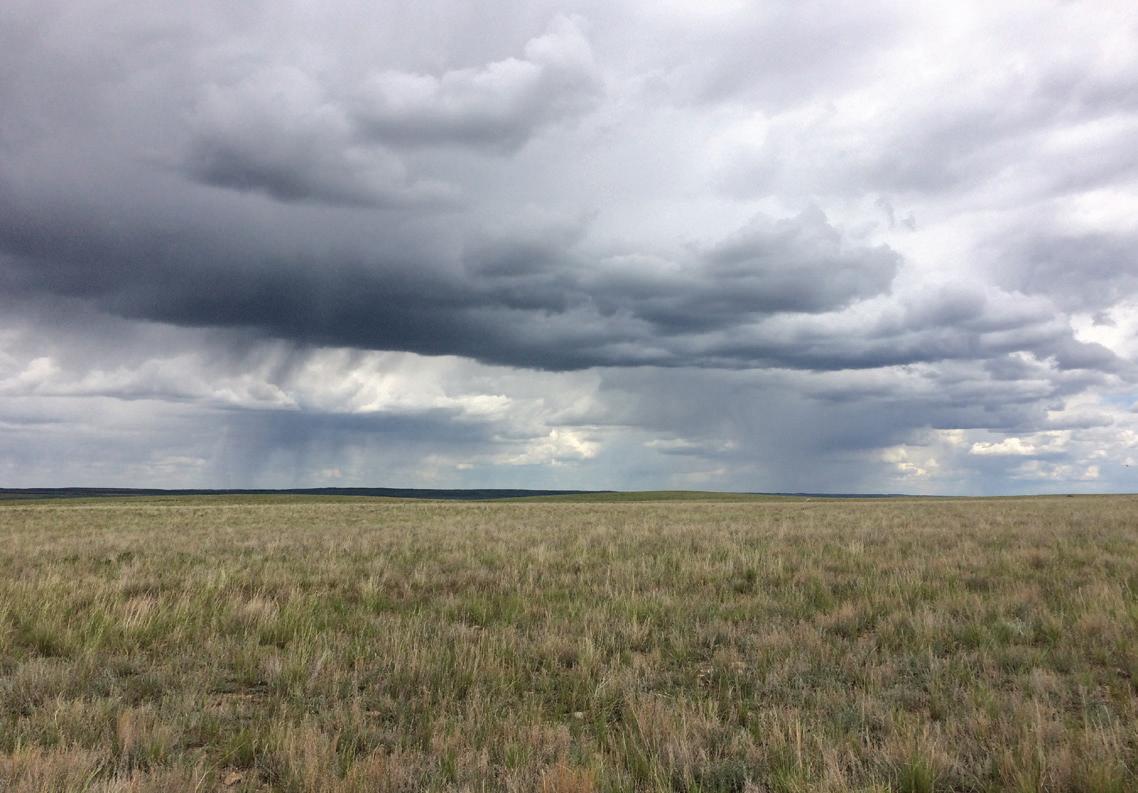
Conservation grassbanks are a creative practice that can help livestock producers and conservation organizations find common ground. Photo by Fidel Hernández.
The history of livestock grazing and wildlife conservation certainly is a complex one. It is one characterized early on by overuse of rangeland resources, conflict, and discord. However, it also is one that has experienced rangeland recovery, a finding of common ground among disputing parties, and successful rancher-conservationists partnerships. In a society where people are becoming increasingly interested in where their food comes from and the proper stewardship of livestock, land, and community, the future looks promising for finding new, creative, and beneficial compatibilities between livestock grazing and wildlife conservation.
Gripne, S.L. 2005. Grassbanks: bartering for conservation. Rangelands 27: 24‒28.
Holechek, J.L., R. D. Pieper, and C. H. Herbel. 2011. Range management. Principles and practices. 6th Edition, Prentice Hall, Upper Saddle River, New Jersey.
Sayre, N. F. 2023. A history of North American rangelands. Pages 49-74 in L. B. McNew, D. K. Dahlgren, and J. L. Beck, editors. Rangeland Wildlife Ecology and Conservation. Springer, Switzerland.
Vavra, M. 1998. Public land and natural resource issues confronting animal scientists and livestock producers. Journal of Animal Science 76: 2340‒2345.
Vavra, M. 2005. Livestock grazing and wildlife: developing compatibilities. Rangeland Ecology and Management 58: 128‒134.

By Derrell Peel, PhD and James Mitchell, PhD
Surely these are unprecedented times in the beef business. Fueled by strong consumer demand and a relatively short supply of cattle, prices for cattle of all ages and weights continue to chart all-time record high prices.
Market watchers and participants are in unanimous agreement that the fed cattle market will mark a high at some point. Speculation about what that ‘top’ price will be runs rampant. Certainly, the upward trend in prices has been uncharacteristically steep. Of even greater interest to market participants is what the price trend will be on the other side of this peak price. Obviously, anticipation of the slope of that downhill trek is weighing heavily on decisions being made in all sectors of the beef industry.
Using the analogy of hikers traversing a hill as an illustration, several nationally recognized livestock market economists were asked two questions:
What will the trek down the other side of the [market price] hill look like?
What indicators do you suggest using to forecast the topography on the other side of the peak?
"It is prudent for producers to give some thought to the timing of the market top and the backside of this price cycle, but it is important to enjoy and take advantage of the ride in the meantime.”
– Derrell Peel, PhD
Two were bold enough to offer their insights: Dr. Derrell Peel, Professor and Extension Specialist for Livestock Marketing, Oklahoma State University Extension and Dr. James Mitchell, Assistant Professor and Extension Agricultural Economist, University of Arkansas.
Special thanks to Drs. Peel and Mitchell for sharing their insights.
RESPONSE FROM: DERRELL PEEL, PHD
Questions about the cyclical peak in cattle prices and the trajectory of prices past the peak depend on factors that are unknown at this time. We do not yet have any definitive indication of a cyclical bottom in cattle inventories - let alone the path of herd rebuilding to follow. The timeline of prices to the top has yet to be established and therefore speculation about the path of prices after the peak is widely variable at this point.
Industry response to rising cattle prices has been uncharacteristically slow to this point.
The sharp decrease in beef cow slaughter (down roughly 40 percent since 2022) is enough to stabilize the cow herd at the current low level. The beef cow inventory could be fractionally larger in 2026. However, the small beef replacement heifer inventory (down about 27 percent from the cyclical peak in 2017) means that prospects for herd growth in 2026 are very limited. Unless heifer retention accelerates late in 2025, herd growth in 2027 will also be limited.
The beef cattle industry appears to be on a slow path of rebuilding. Prices are expected to peak after heifer retention
begins and will move higher into 2026 (depending on the pace of heifer retention) and perhaps beyond. A sharp peak followed by a pronounced drop seems unlikely at this point. Prices are likely to remain elevated for much of the remainder of the decade with a gentle peak somewhere along the way. However, the front end of the process has not yet started so the path is subject to change and must be monitored for new developments.
It is prudent for producers to give some thought to the timing of the market top and the backside of this price cycle, but it is important to enjoy and take advantage of the ride in the meantime.
Cattle prices have reached record highs in 2025. Many are wondering not only when prices will peak, but also how steep the eventual decline will be. It’s natural to look to history for answers—specifically 2014-2015, the last time cattle prices reached comparable levels. While 2014 and early 2015 were marked by exceptionally strong prices, the sharp downturn in the fall of 2015 has many wondering about a repeat scenario.
The cattle cycle is the primary driver of cyclical price changes, and much will depend on the rate and magnitude of the cattle inventory rebuild as the next cycle begins. I expect the rebuild to be slower and that cattle numbers will not reach levels of the previous cycle, due to two factors: higher interest rates and increased beef production per head.
Herd expansion will look different depending on the starting point. Some producers are re-entering the industry, others are rebuilding half or more of their herd, and for some it’s business as usual. Rebuilding could involve borrowing money depending on your scenario, and today’s interest rates are far higher
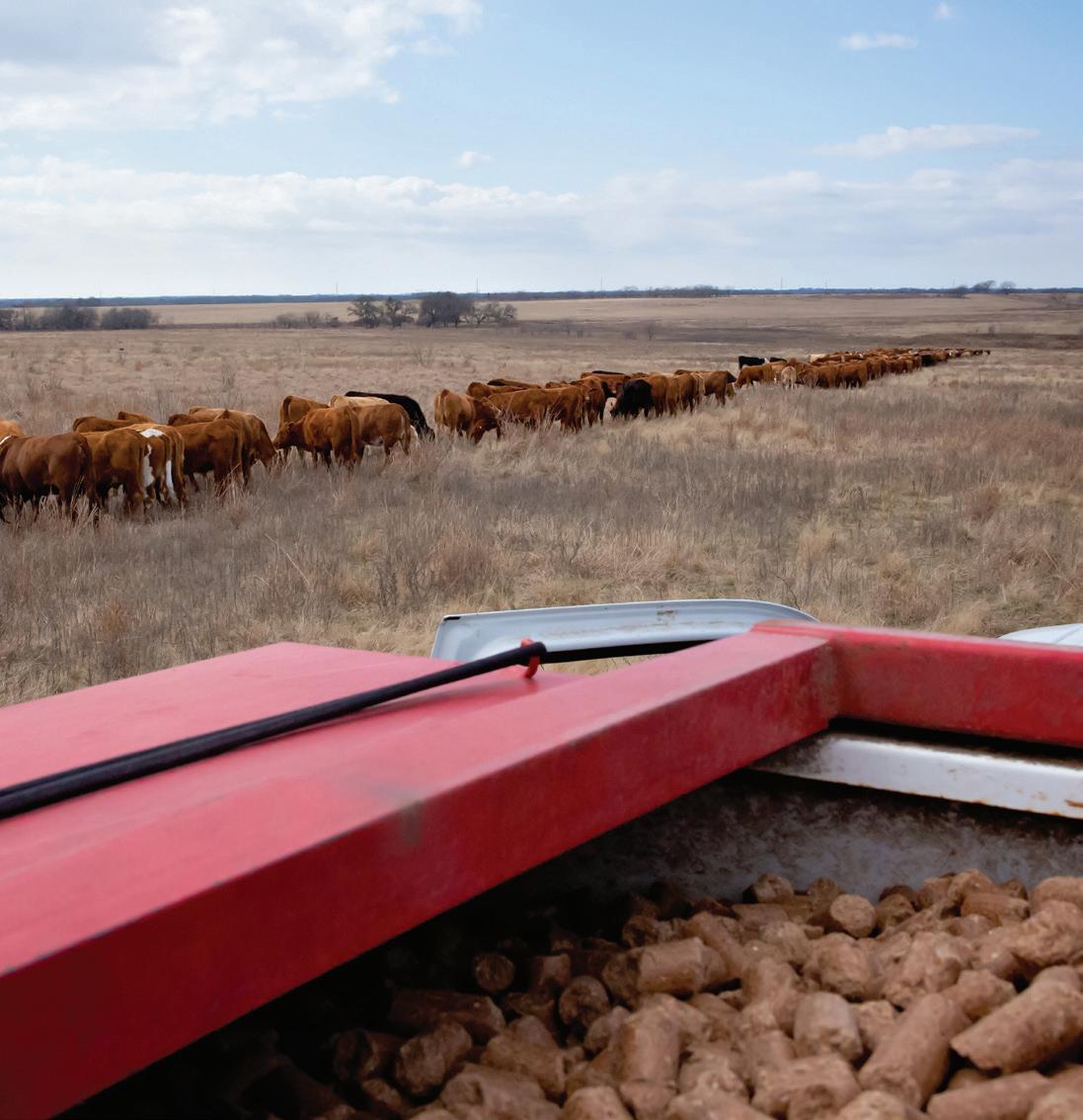
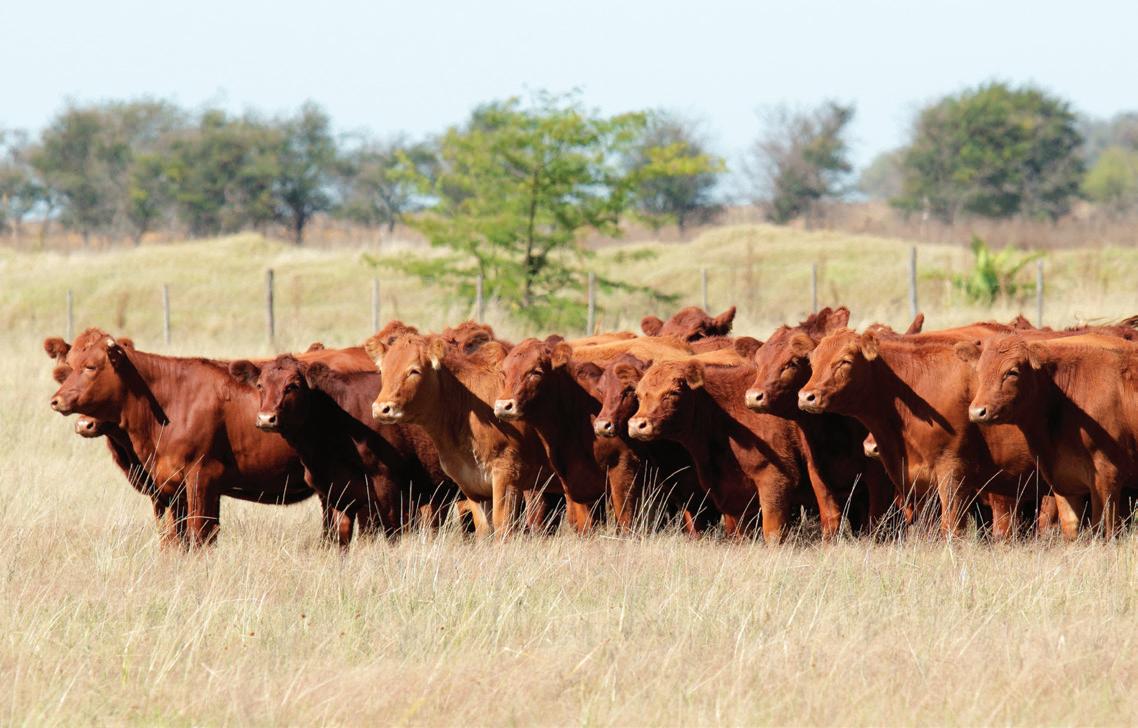
Higher interest rates and increased beef production per head may slow the cattle inventory rebuild with future cattle numbers not expected to reach that of the previous cycle.
than in 2014-2015. Data from the Federal Reserve Bank of Kansas City’s Survey of Terms of Lending to Farmers show effective rates on non-real estate livestock loans averaging 7.3% in early 2025, compared with 4.3% in 2015.
At the same time, productivity gains have reshaped the industry. Despite having 7.86 million fewer cattle in 2024 than 20 years earlier, the U.S. produced 2.27 billion more pounds of beef. According to USDA’s National Agricultural Statistics Service, year-to-date fed steer dressed weights in 2025 average 944 pounds—25 pounds heavier than 2024 and 52 pounds above the 2019-2023 average. The U.S. cattle sector continues to produce more with less.
These factors suggest the next cattle cycle could look very different from the last.
The Applied Nutrition Strategies for Grazing Livestock Lectureship is a practical, in-depth program designed to help ranchers improve livestock performance through better nutrition. Topics will cover every stage of production—including cow, calf, bull, and weaned calf (preconditioning) nutrition—as well as feeding strategies for sheep and goats.
Whether you're managing a cow-calf operation or running a multispecies ranch, you'll gain real-world insights and leave with tools to support animal performance, health and ranch profitability.
The KRIRM lectureship series offers numerous lectureships per year and are designed to teach current and dynamic topics in the ranch management industry. Our lectureships apply to a range of people and organizations in the ranching industry: from ranch owners and managers to cowboys and accountants, as well as any agriculture stakeholder who is a lifelong learner.
Lectureship courses are offered online and in-person in Kingsville, Texas, and other locations across the U.S.


To view this year’s event schedule and to register for events, please scan the QR code or visit: krirm.tamuk.edu/outreach
With a generous donation in 2008 from Texas Farm Credit, the Texas Farm Credit Certificate in Advanced Ranch Management was established for ranchers and landowners wishing to complete multiple rancher learning events. This certificate prepares stakeholders to deal with complex issues in today’s ever-changing ranching industry. The lectureships are designed for anyone directly or indirectly involved in the ranching industry. Our goal is to educate ranch managers, as well as educators, ag loan officers, accountants, landowners, extension service employees, consultants, and professionals with NRCS, BLM, and others.
Qualification for this certificate requires*:
•
Four KRIRM Lectureships
• *within a three-year period
Two annual KRIRM HOLT CAT® Symposia on Excellence in Ranch Management
Most 2026 events will be simultaneously delivered in-person and online.
Instructor: Robert Wells, PhD
Applied Nutrition Strategies for Grazing Livestock Lectureship
January 15-16, 2026
Kingsville, TX & Online || $300
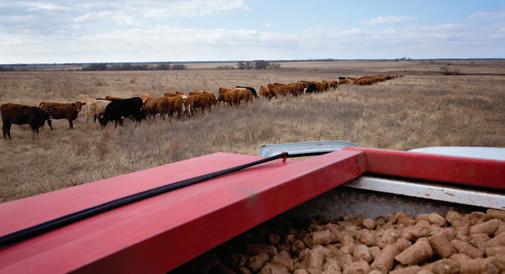
The Applied Nutrition Strategies for Grazing Livestock Lectureship is a practical, in-depth program designed to help ranchers improve livestock performance through better nutrition. Topics will cover every stage of production—including cow, calf, bull, and weaned calf (preconditioning) nutrition—as well as feeding strategies for sheep and goats. Whether you're managing a cow-calf operation or running a multi-species ranch, you'll gain real-world insights and leave with tools to support animal performance, health and ranch profitability.
Application of Advanced Genetic Technology in Beef Cattle Lectureship
February 27-28, 2026
Kingsville, TX & Online || $300
Instructor: Bob Weaber, PhD & Matt Spangler, PhD
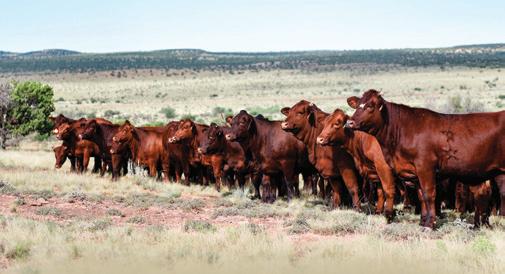
Genetic technology in the beef industry changes so rapidly, it becomes a fulltime task for producers to keep up. In this workshop, participants will revisit basic genetic principles and be introduced to the new technology. Beef cattle genetics experts will teach the use of new tools and how to apply advanced genetic technologies in the real world of seedstock and commercial cattle production.
Managing the Cow-Calf Business Lectureship
March 16-17, 2026
Location: TBD || $300
Instructors: Rick Machen, PhD, Robert Wells, PhD, Tylor Braden, John Hutcheson, PhD
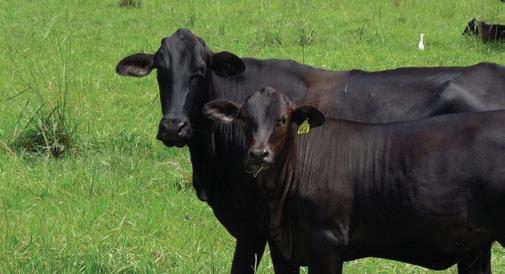
Managerial decisions in the cow-calf business that involve number gathering and crunching can be overwhelming. This lectureship provides fundamental skills used by successful ranch managers. You will learn by working through scenarios that include budgeting, determining stocking rate, and marketing calves to managing labor, depreciation, and purchased feed cost.
Sponsored by: Merck Animal Health
Lead Instructor: Ben Turner, PhD
John B. Armstrong Lectureship on Systems Thinking
August 10-12, 2026
Kingsville, TX || $400
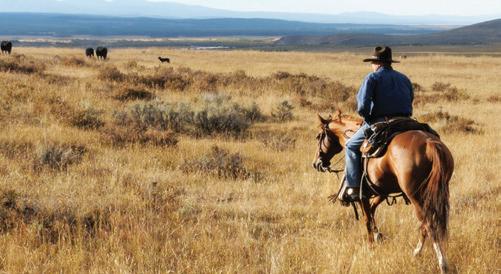
Systems Thinking is a language for learning and action that helps us understand more deeply how organizations and complex systems, like ranch management, really function. The concept of systems thinking examines the links that make up every component of a system. Understanding these links is critical to successful ranch management. The John B. Armstrong Lectureship on Systems Thinking teaches principles, processes, and tools that will empower you as a natural resource manager to better understand and communicate the interrelationships in dynamic natural systems.
Managing Farm and Ranch Employees Lectureship
September 18-19, 2026
Kingsville, TX & Online || $300
Lead Instructor: Bob Milligan, PhD
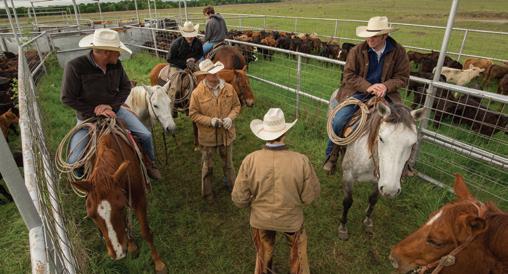
An informal poll of ranch and business managers across the US identifies their #1 challenge – communication and managing people. Ranch resources do not self-manage, so managing employees is certainly as important as the stewarding of animal and natural resources. This lectureship offers tips and coaching for managers on recruiting, hiring, retaining, and evaluating talented employees. Participants will assemble a preferred employer skill-set that enables leading employees to be productive team members, experience personal growth, and accomplish business goals.
Holt Cat® Symposium on Excellence in Ranch Management
November 5-6, 2026
Kingsville, TX & Online || $150
The highlight event of the year is the Institute’s annual symposium held the first Thursday/Friday of November that features a timely topic or issue facing the ranching industry. Past symposia have included discussions on ranching in the 21st century, stockmanship, sustainability, succession planning, business management of hunting enterprises, horse program success, beef marketing, and more.
The KRIRM lectureship series offers between 4 to 8 lectureships per year. Lectureships listed beside are anticipated to be held in 2027.
700 University Blvd, MSC 137
Kingsville, TX 78363

Over the past two decades, 59 times the Institute has produced well trained animal and natural resource managers who are making a difference. Students with a passion for ranching and the desire to improve themselves, their business, and this industry are the core of the King Ranch® Institute for Ranch Management.
Prospects for this program live and work among you – family members, friends, employees, and neighbors. You likely recognize their talent and potential. Help them achieve their career goals and potential as a management professional.
Point them in our direction, or point us in theirs and we will pursue them. Thank you for investing in the future of this great industry.

For more information about our master's program, scan the QR code above or visit: