



1. A radical technology collective reimagining public spaces through the amplification of Black, Brown, Indigenous, and Queer histories— creating digital monuments that honor untold stories and forgotten truths.
2. A community of storytellers, technologists, and cultural workers building tools for narrative justice and collective memory.
28 Partners
KINFOLK'S RESPONSE
107
Augmented Reality (AR) Monuments Created by Kinfolk
5.4k
Guests registered for community programs
1.1B Total reach
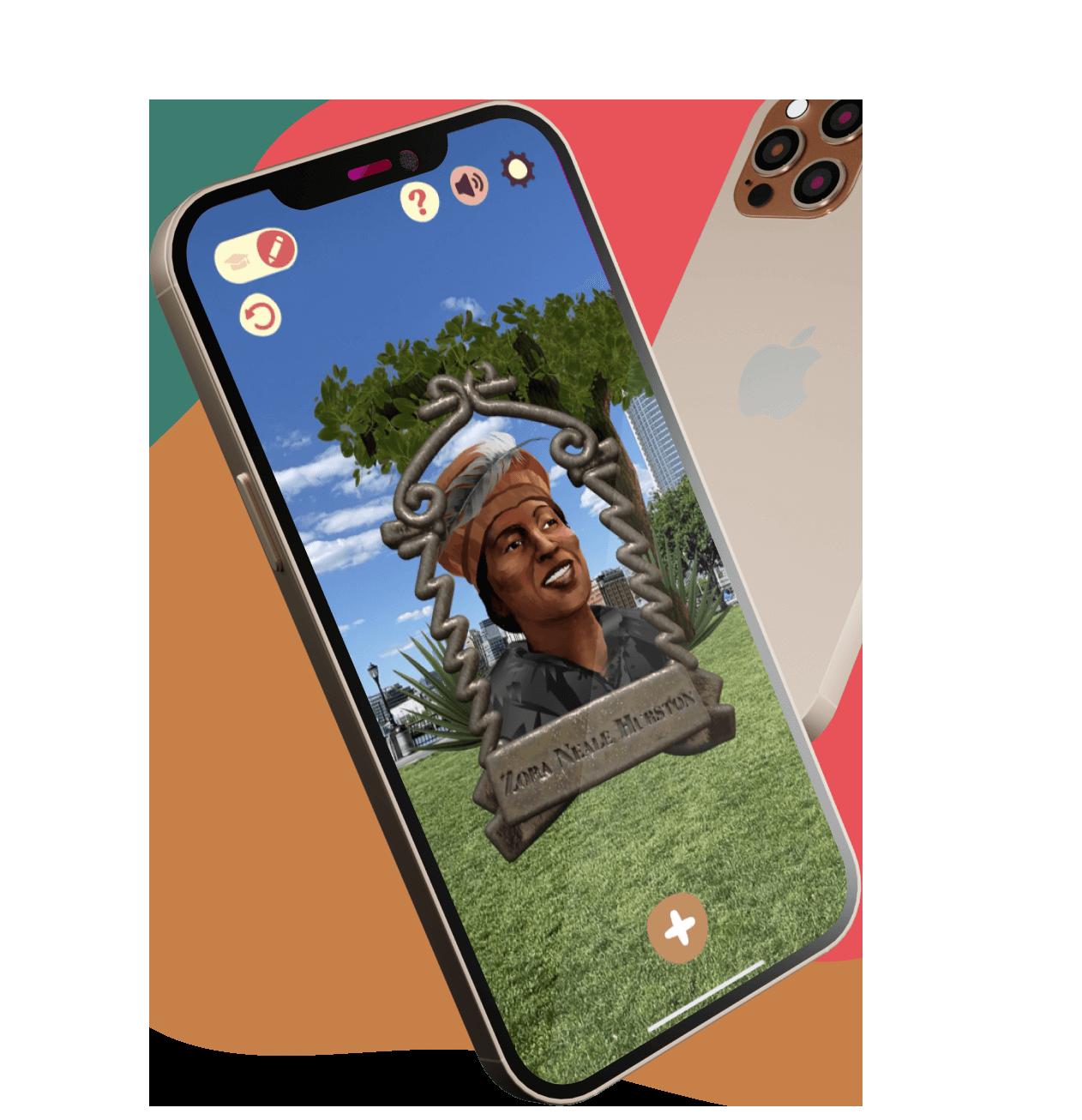
80k+ App Downloads
20 multidisciplinary artists commissioned
GEOGRAPHIC REACH: App used across App used across all
50 States
INAUGURAL KIN FESTIVAL:
160M+ moments of reach
141 Countries
“I was introduced to Kinfolk and left thinking about the future we want to live in through art, tech, and community.”
In the 18th and 19th centuries, across the Americas, enslaved people who escaped bondage built hidden autonomous communities in swamps, mountains, and dense forests. These maroon settlements were laboratories of self-determination. Fugitives reconstructed entire social orders outside the reach of plantation logic. They governed themselves. They kept their own time. They developed agricultural practices suited to terrain that slaveholders couldn't navigate. In doing so, they preserved what the plantation sought to annihilate: language, spiritual practice, kinship structures, and collective memory.
Maroonage is a history and a way of life that I keep close as a guide for the generations-long journey Kinfolk is on. I often think about what it means to build in the aftermath , in the ongoing wake of centuries of deliberate forgetting. The maroons did not wait for the plantation to collapse. They built what they needed to survive, on their own terms.
In the present day, we operate in a country where the monument landscape actively distorts collective memory. Kinfolk began in 2017 with a question about a single statue. What we have built since is a refusal to leave the question of public memory in the hands of the people who have spent four centuries actively obstructing it.
That same refusal still stands as we grapple with the expansion of the feudal domains of technology. The companies building the largest cultural systems of our lifetime are gathering up community knowledge, language, music, photographs, oral histories and feeding them into machines that are not accountable to the people who made them. The same logic that turned black bodies into property and land into commodities is now turning our culture into training data. We refuse to participate in that exchange on those terms.
What Kinfolk is building is something different. We are on a path to co-creating an alternative outside of the existing imagination of white supremacy and colonialism. A space that lets communities preserve and share their memory on our own terms, in environments where we are safe, in ways that empower us rather than extract from us.

The question we are sitting with now is how to design systems that honor it? What needs to be visible? What needs to be private? What needs to move between people without ever touching a server we do not control?
We are not the first to ask these questions. Indigenous communities have been building data sovereignty frameworks for decades. Black archivists and digital humanities scholars have been arguing for community curation long before we existed. Our work sits inside a longer movement, and together, we can establish a way for this movement to find each other, support each other, and build something more durable together than any one of us could alone.
If you are reading this, thank you for being part of this! I leave you with this quote from Dr. John Henrik Clarke:
"History is a clock that people use to tell their political and cultural time of day. It is a compass they use to find themselves on the map of human geography. History tells them where they have been and what they have been, where they are and what they are. But most importantly, history tells a people where they still must go and what they still must be."
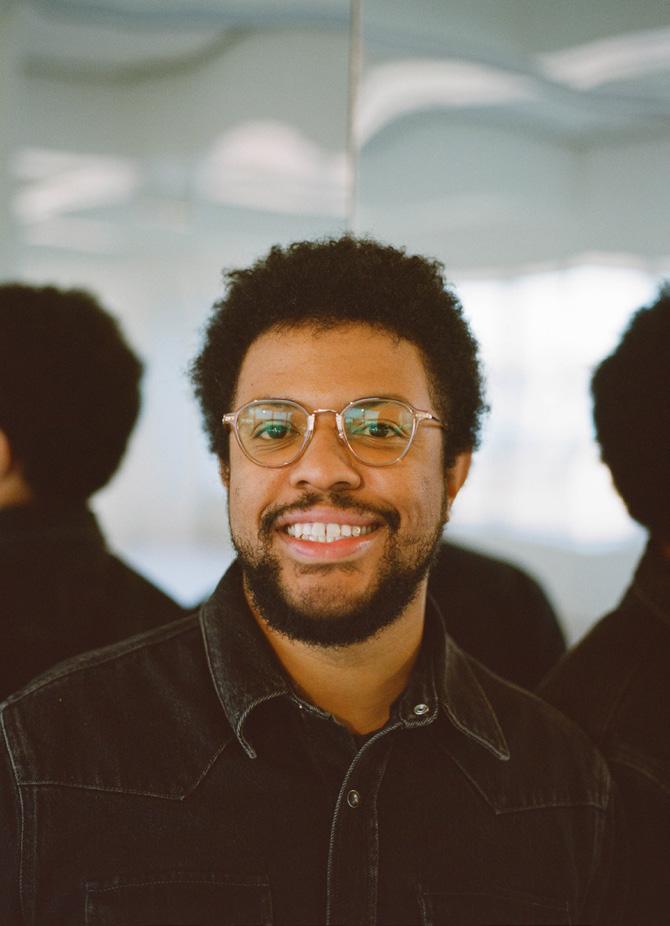
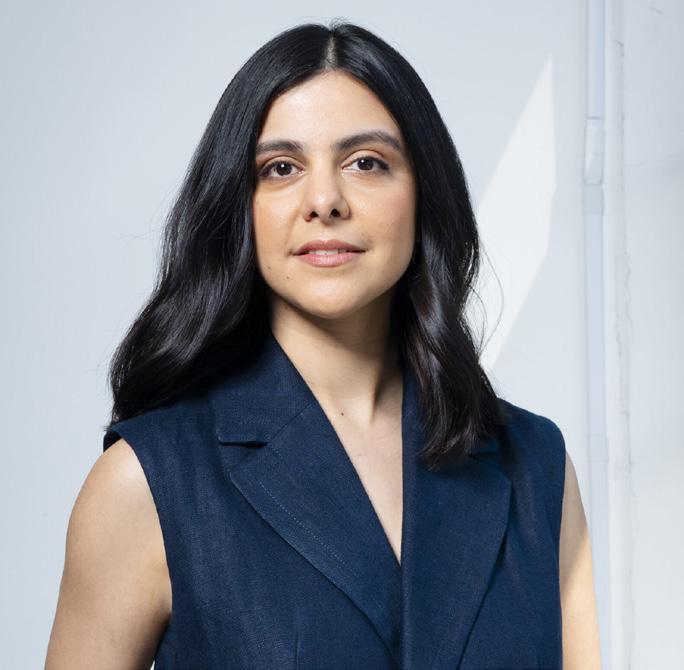
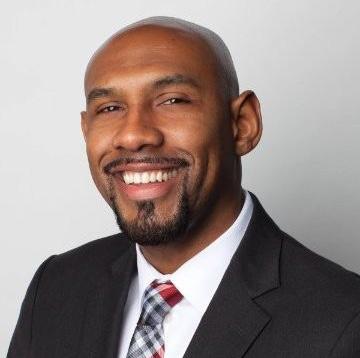
idris brewster Executive Director
In the wake of 2016, as the election of Donald Trump signaled a resurgent obsession with white grievance and historical revisionism, the country’s streets and squares became battlegrounds over memory itself. Confederate monuments, long-standing symbols of terror, domination, and myth, were suddenly defended with renewed ferocity, revealing how deeply power clings to the stories it tells about the past. For many of us, this moment made painfully clear that history was not only being misremembered but actively weaponized.
In 2017, Kinfolk was born out of that rupture: a refusal to accept a public landscape that honored colonialism while erasing Black, brown, indigenous, and queer lives; a recognition that monuments are living policy tools that shape our collective imagination.
Kinfolk took shape in the public domain (the streets) where education, protest, and public memory converge.
Where We’ve Been: Rooted in Memory, Reaching for Tomorrow
Throughout it all, we have remained agile and grounded, fueled by a team rooted in community and driven by ancestral vision. Building on our team’s deep expertise in emerging technology, human-computer interaction design, and community organizing, we built our platform from the ground up. Alongside our technological innovations, we were one of the first augmented reality experiences activated at MoMA, won the Special Jury Prize at the Tribeca Film Festival, and collaborated with communities across more than 25 states. Through hundreds of partnerships, from grassroots collectives to major cultural institutions, we have built a foundation for a platform for counternarratives that centers Black, Brown, Indigenous, and Queer voices.
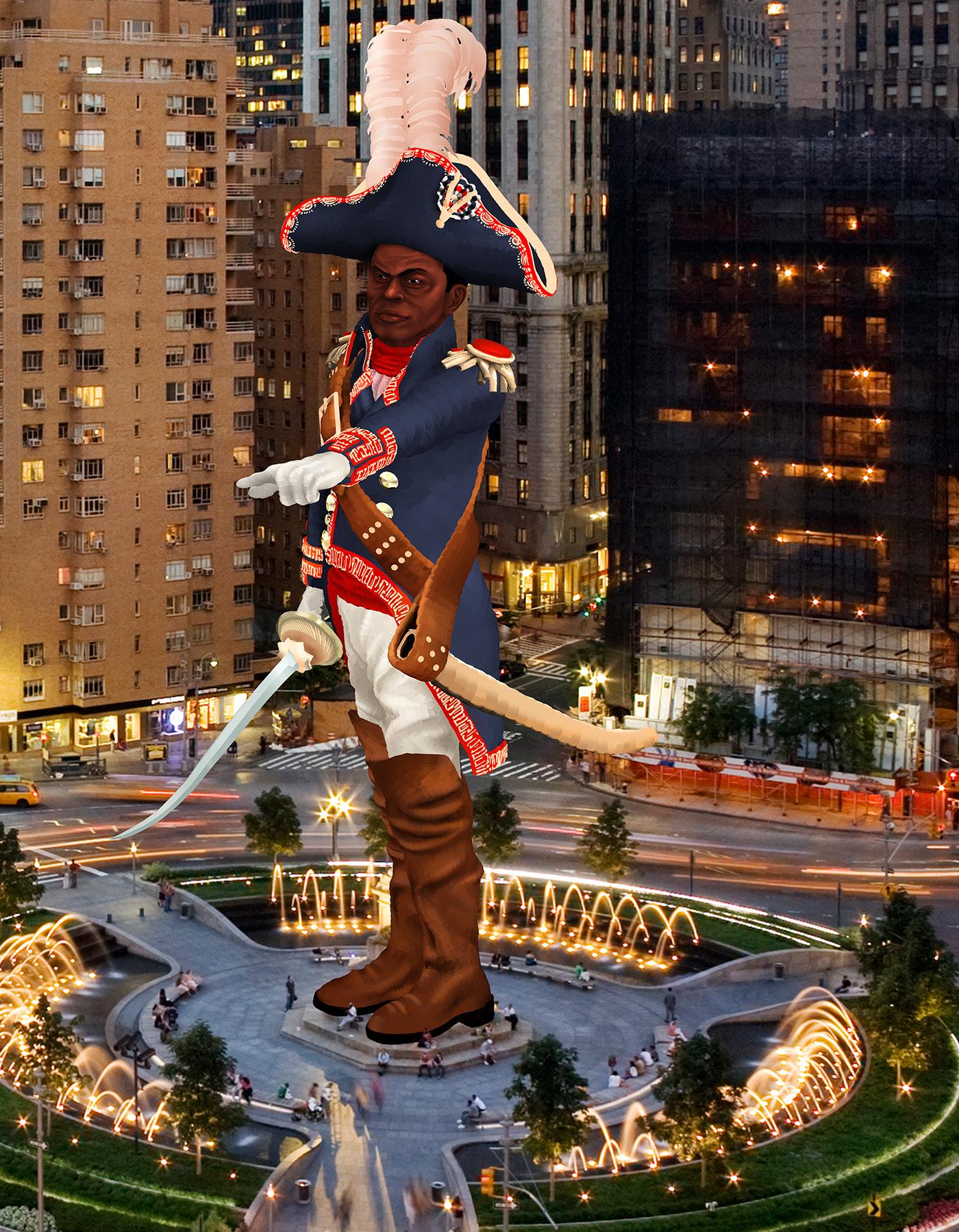
We began on the frontlines of a campaign to remove the statue of Christopher Columbus at Columbus Circle in NYC.
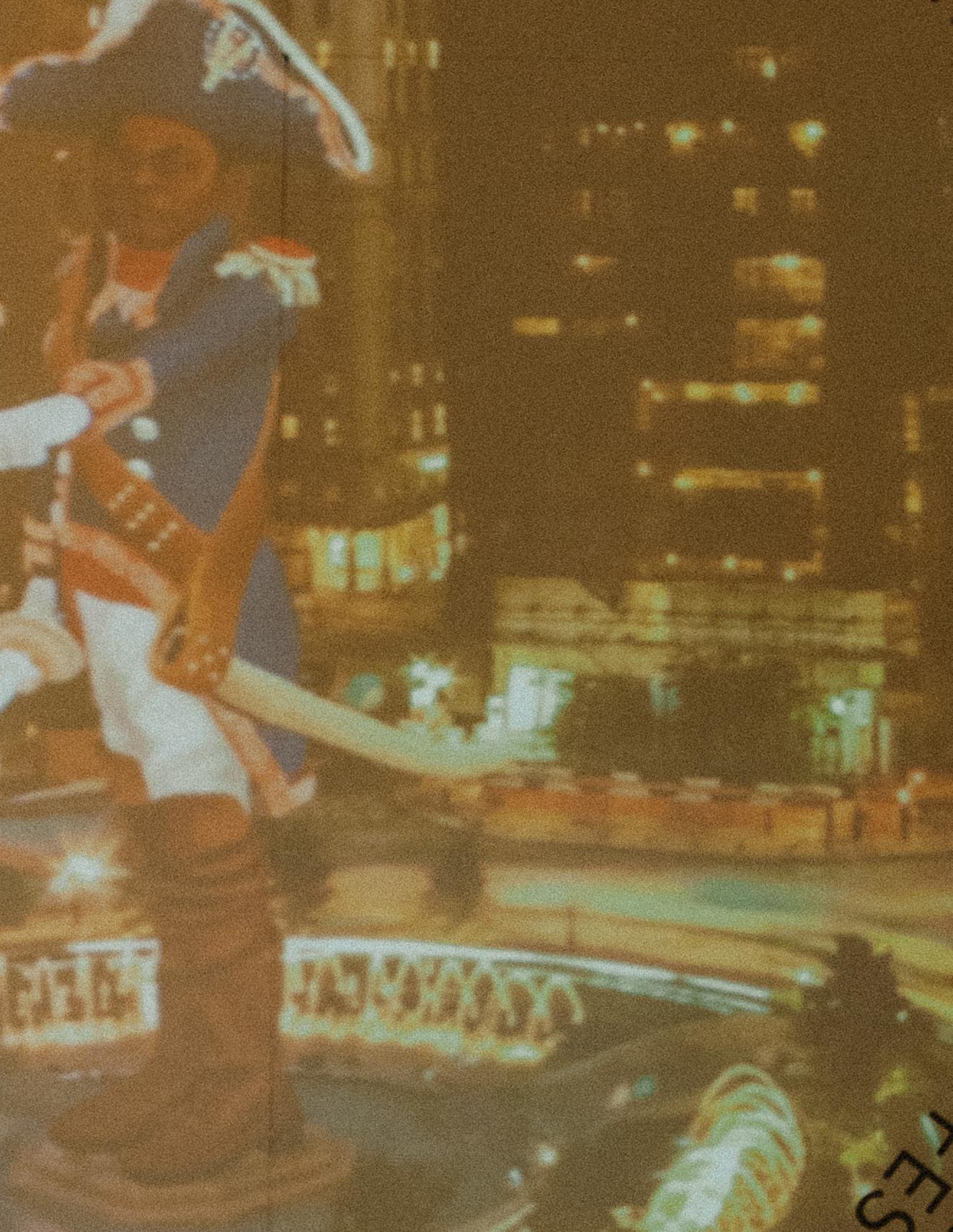
We turned our frustration into fire. We hosted teachins, organized performance interventions, and, when institutional inaction tried to stall us, we bypassed gatekeepers by creating our own alternative: a digital monument to Toussaint L’Ouverture to rise over the Columbus statue.
Using augmented reality (AR), we were able to reimagine a site that honored colonialism into a site that represents our communities fight for liberation. We understood early that if our stories weren’t going to be honored by traditional means, we’d build the means ourselves. Kinfolk emerged from that commitment as a cultural technology collective dedicated to reclaiming the past and reimagining the future through art, education, and storytelling.
We’re creating space for untold stories to breathe. Every line of code we write, every story amplified, every community we engage is an act of radical redemption.

2018—19
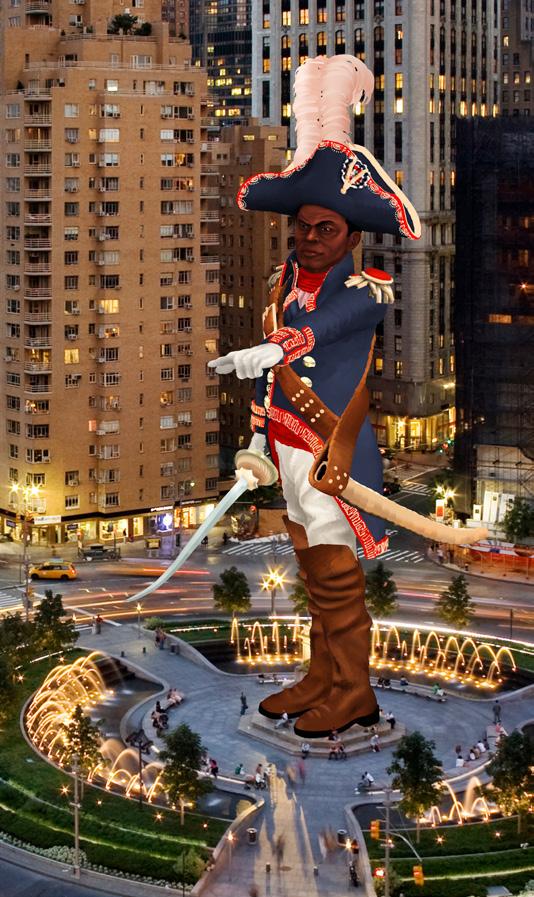
→ Toussaint L’Ouverture monument created
→ New Inc & EyeBeam residency program
2020—21
→ 1st version of the Kinfolk App
In 2025, Kinfolk expanded its work into a collective memory platform, one that uses AR monuments as entry points into deeper engagement with history, community memory, and civic imagination. The monuments remain central to our work; they now live within a larger ecosystem: community voice collections, archival workshops, public programming, and tools for communities to document and govern their own narratives.
This evolution emerged from what we learned in the field. The monuments draw people in. They create wonder and encounter. But what happens after someone lowers their phone? We found that the most powerful moments came when the AR experience opened into something larger: a conversation about family history, a connection to an archive, a desire to contribute one’s own story.
2022—23
→ Anchored business in 3D models
→ National partnership events
→ Expanded into independent schools & educational conferences
2024—25
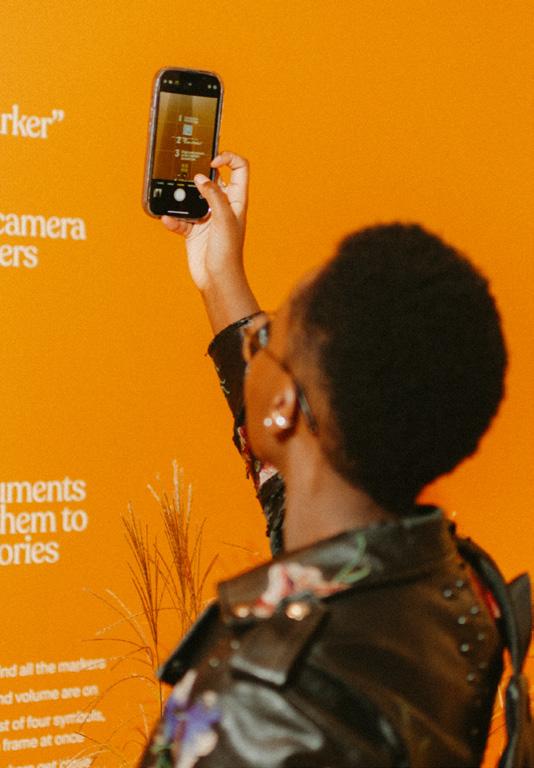
→ Kinfolk App used in all 50 States
→ Kinfolk awarded App of the Day on Apple’s App Store.
→ NYC AIDS Memorial Partnership Launched
→ Dreaming with the Archives initiative Launched
→ Community Memory Fellowship - first cohort launched
→ Launched KIN: A Festival of Memory and Imagination
→ Released For Those Who Come After in partnership with the Baldwin Estate
We tested this expanded approach through public exhibitions (Portals of Remembrance with the NYC AIDS Memorial, Dreaming with the Archives at Brooklyn Bridge Park, KIN: A Festival of Memory & Imagination at South Street Seaport), regional partnerships that brought co-created monuments and archival projects to Los Angeles, Philadelphia, New Orleans, the Bay Area and more, and the Community Memory Fellowship, which supported local storytellers in building community driven immersive experiences rooted in memory justice.
Looking forward, our focus for 2026 participatory engagement. We’re building ways for people to participate in the Kinfolk ecosystem directly, to contribute their archival materials and stories without needing specialized skills or technology, all while retaining ownership. Right now, there are community archives across the country doing powerful, vastly underfunded work; there are families holding histories in boxes, in recordings, in memory. We want to create spaces to draw awareness to those initiatives and allow our community to engage directly with that information. The goal isn’t to build one central archive. It’s to create connective tissue between the community archives, local institutions, and individual memory workers already doing this work. A way for people to encounter stories across identities and geographies, see the threads that connect them, and find their way to the communities and organizations holding those histories.
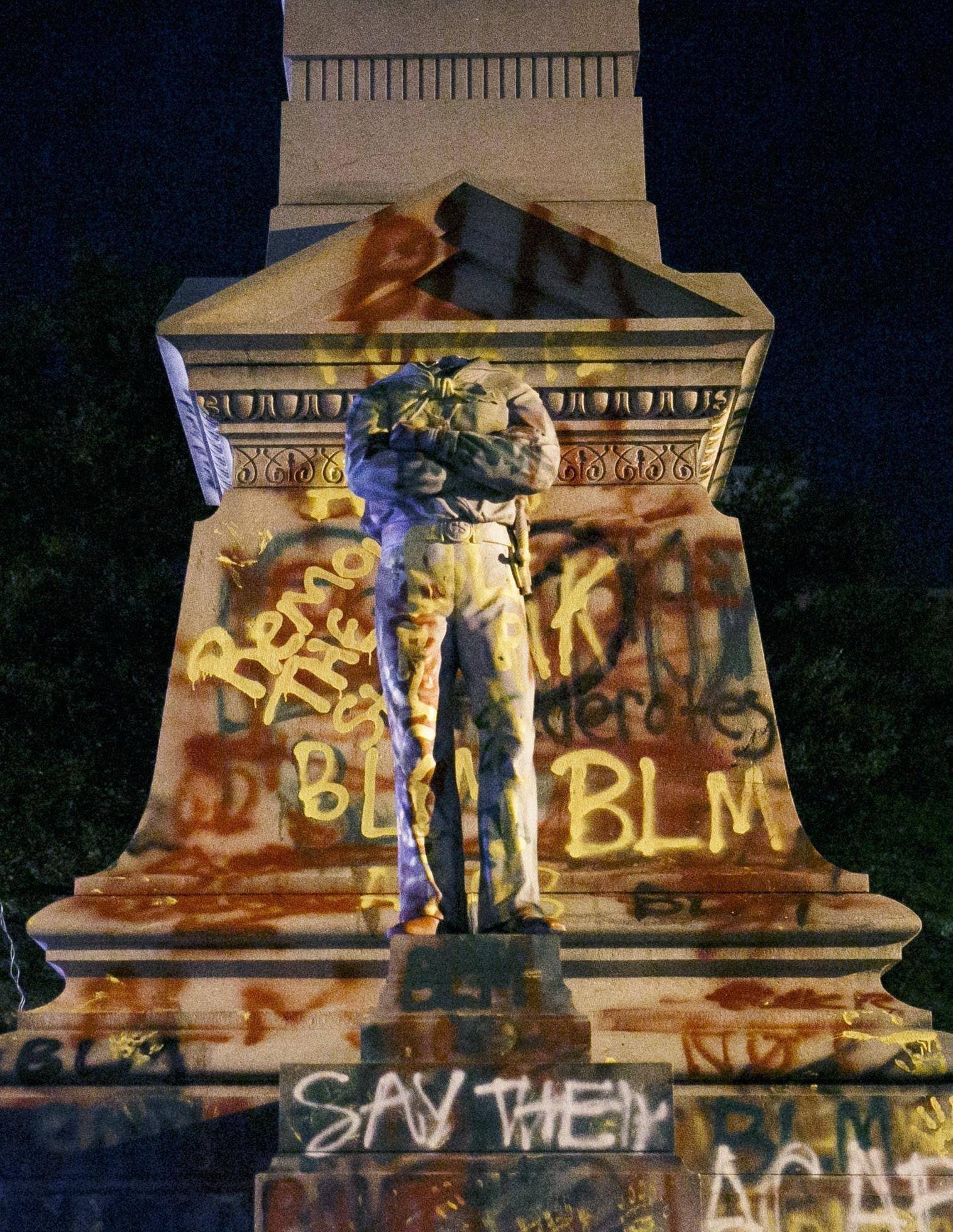
For over 400 years, Black, Brown, Indigenous, and Queer communities have been systematically written out of America’s public memory.
The monuments, street names, textbooks, and archives that should tell the stories of our ancestors instead tell stories of conquest, colonialism, and exclusion.
Only 0.5% of the 48,178 U.S. public monuents honor people of color. 1
3x
More
Confederate monuments than monuments to Black, Indigenous, or Brown leaders. 1
As students of history, Kinfolk notices patterns over time. The current wave of censorship is not accidental. History is currently being erased. Monuments, like the Kennedy Memorial Center, are being renamed. Threats to the federal recognition of Black History Month, MLK Day, and Juneteenth signal a broader erosion in how history is acknowledged and honored at the national level. From book bans to the edification of destructive figures, these are not isolated acts. They reflect an intentional effort to silence, rewrite the national narrative, minimize the violences of the past, and obscure the communities that fought for liberation.
Without access to full, complex, and truthful histories, new generations are denied the tools to understand the present — and thus transform the future. When our histories are hidden, our futures are stunted. When our stories are stolen, so too is our right to belong. Without our stories, we are made invisible in the very public spaces and collective consciousness we helped shape.
36 states have introduced or passed laws restricting the teaching of race, gender, and systemic oppression. 2

Over 1,600 books banned
in 2024, mainly those telling Black, Brown, Indigenous, and Queer stories. 2
→ Communities lose their past and their power.
→ Public spaces celebrate oppressors instead of liberators.
→ A new generation grows up without the full truth.
KINFOLK’S RESPONSE
As the battleground for historical memory intensifies, Kinfolk rises as a vital counterforce.
Monument Landscape Excludes Us
Books and Curricula are Banned
We build digital monuments Brown, Indigenous, and Queer histories - free, accessible, everywhere.
Public Space is Weaponized
We create a living, breathing collection community memory through AR, community voice, art, and radical imagination.
→ 100+ AR monuments built across 6 states
→ Community-powered archive of community voices, 3D artifacts, and radical storytelling
→ Partnerships with artists like Hank Willis Thomas, Derrick Adams, and Wangechi Mutu
→ Kinfolk app active in all 50 states
We transform parks, sidewalks, and everyday streets into portals of belonging and collective
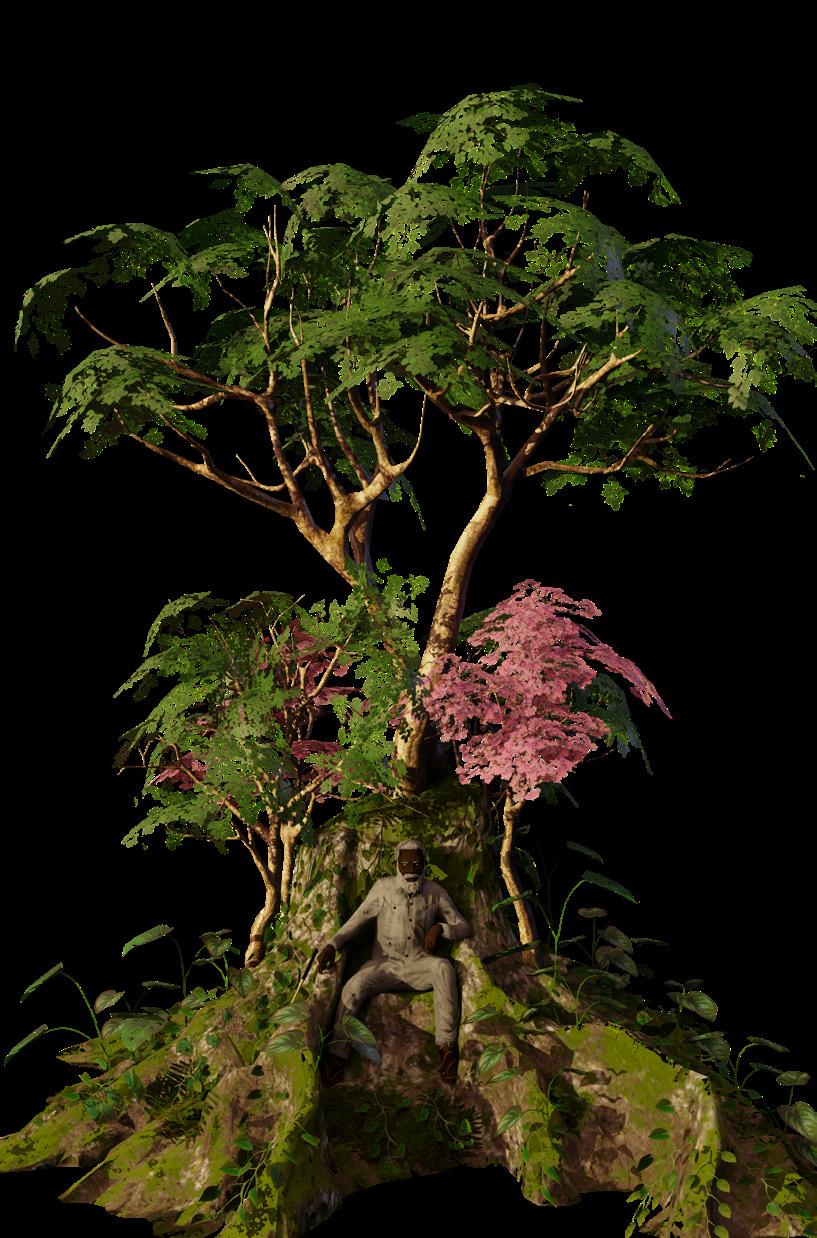

Dream with us. Reclaim with us. Shape public memory with Kinfolk.
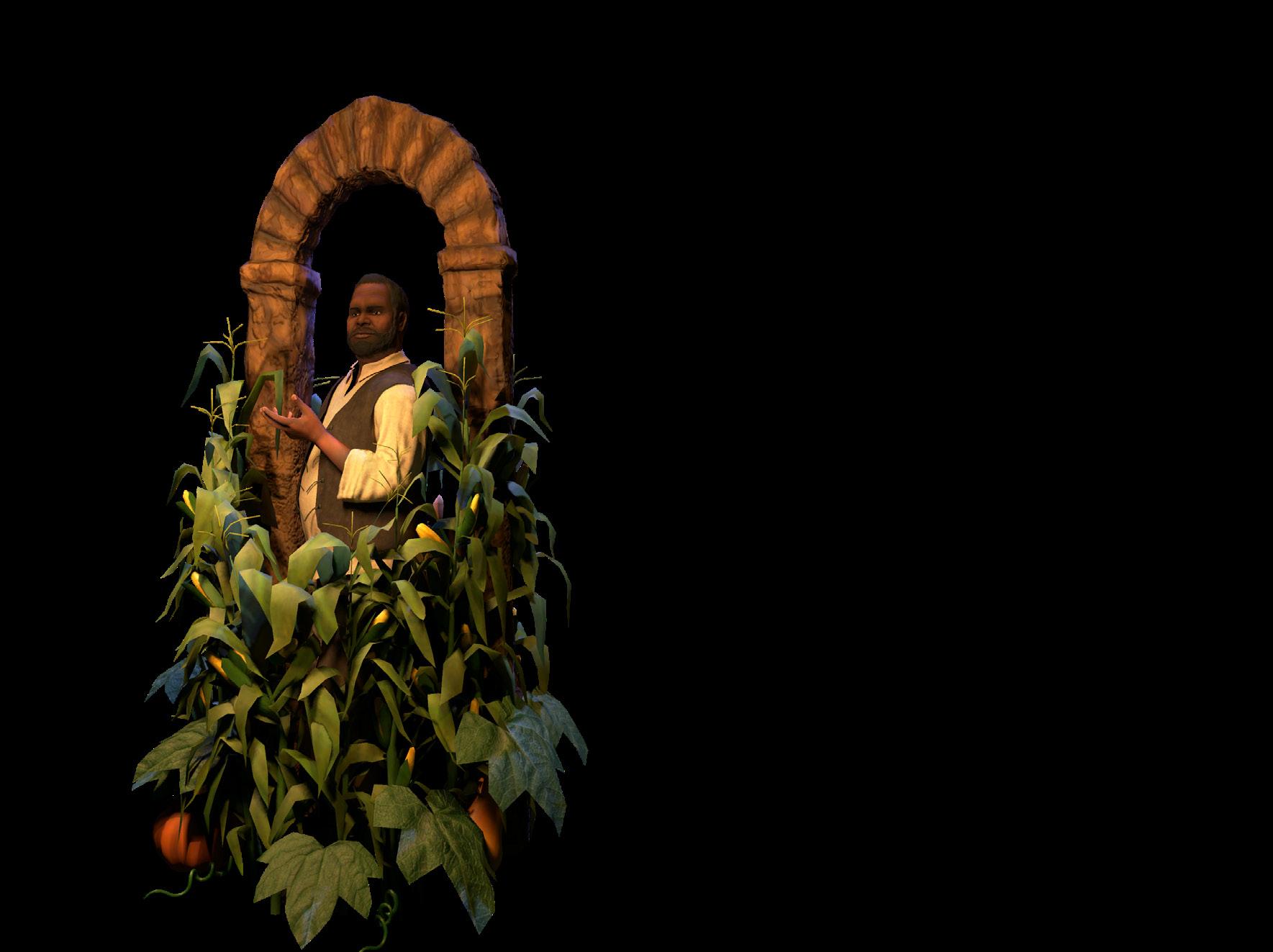
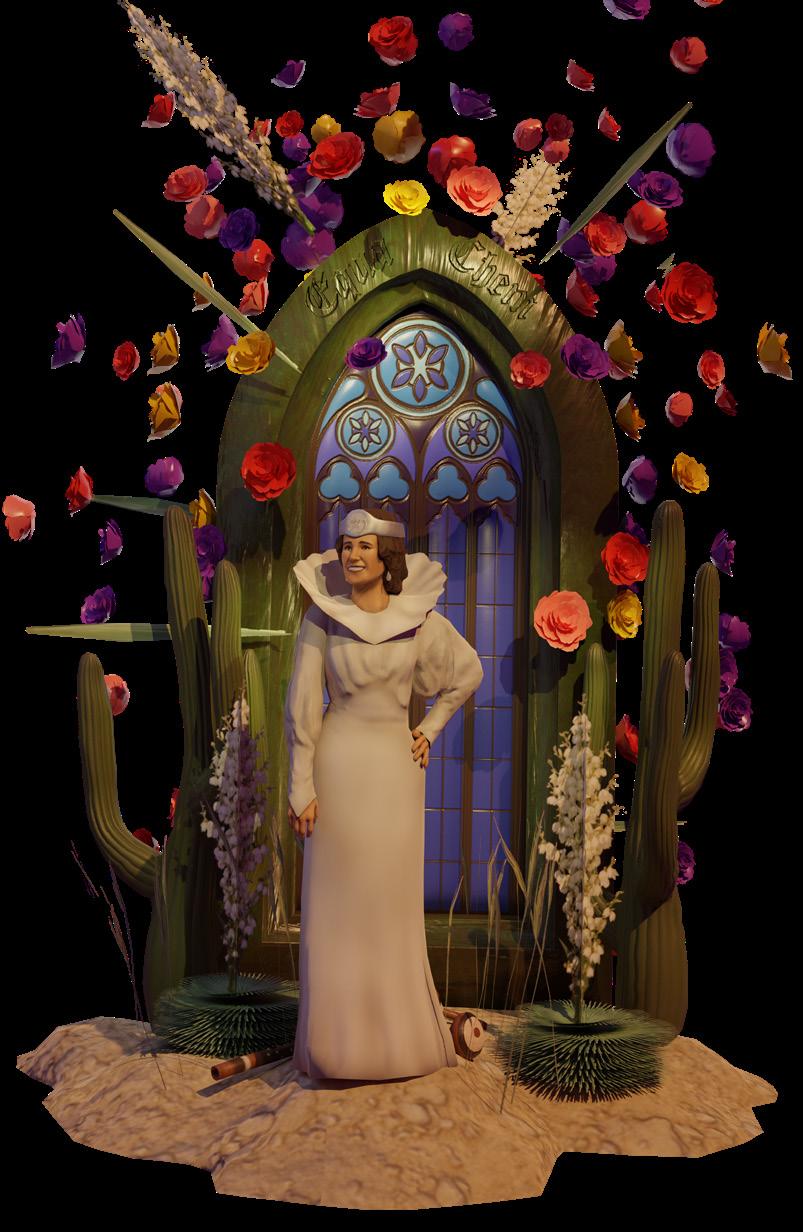

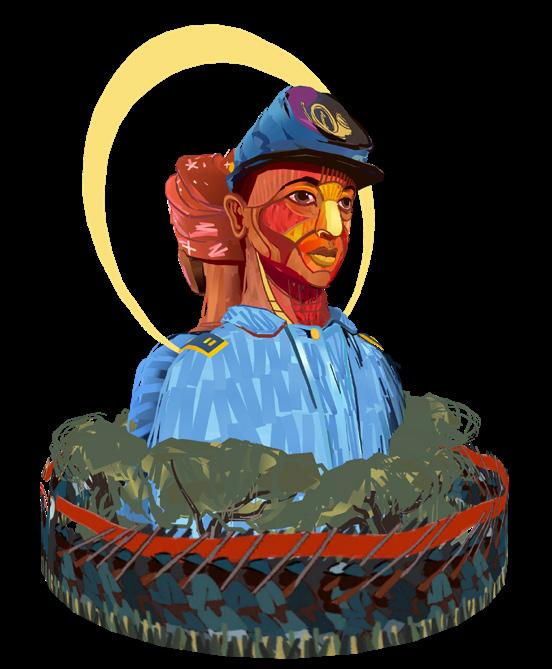
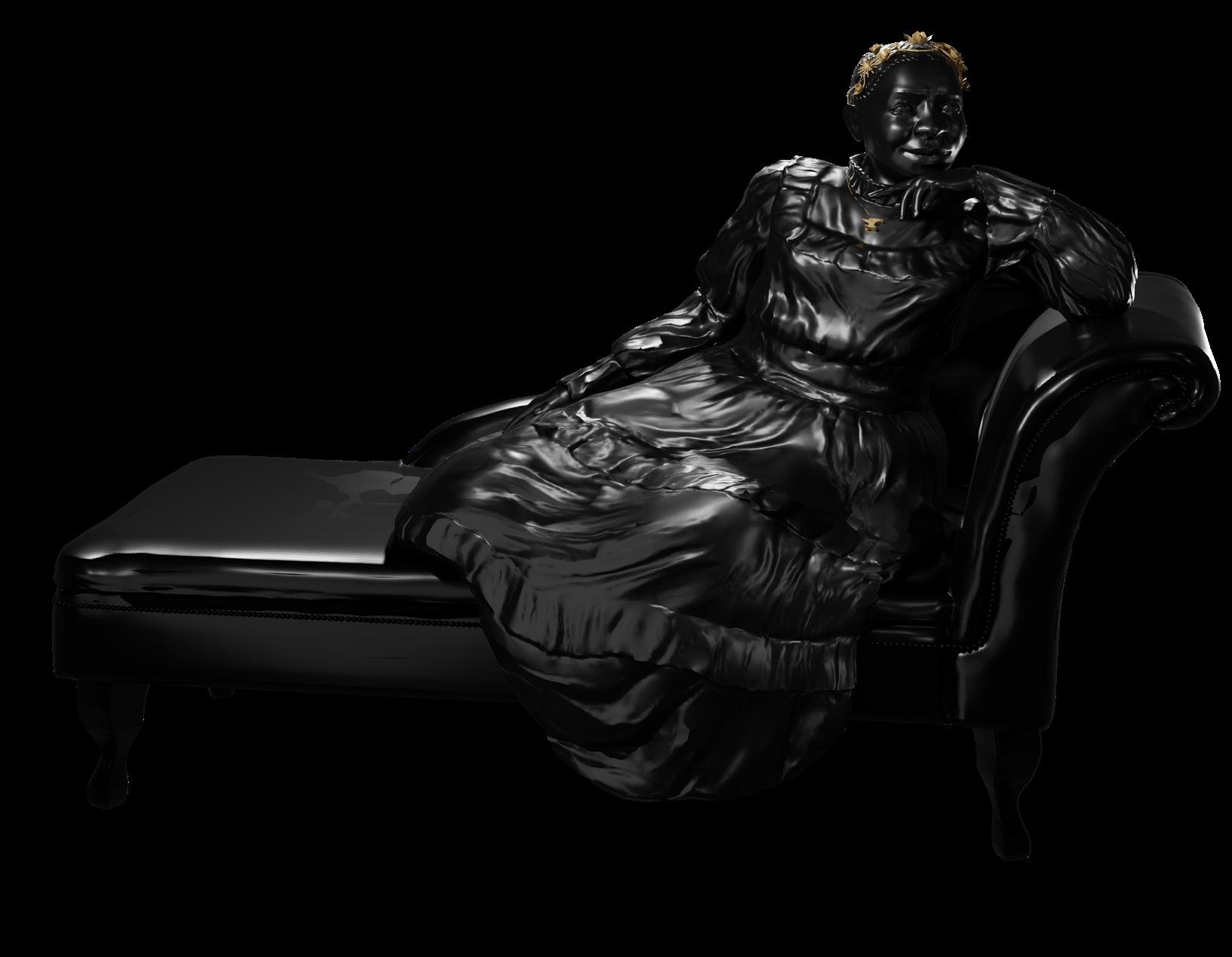
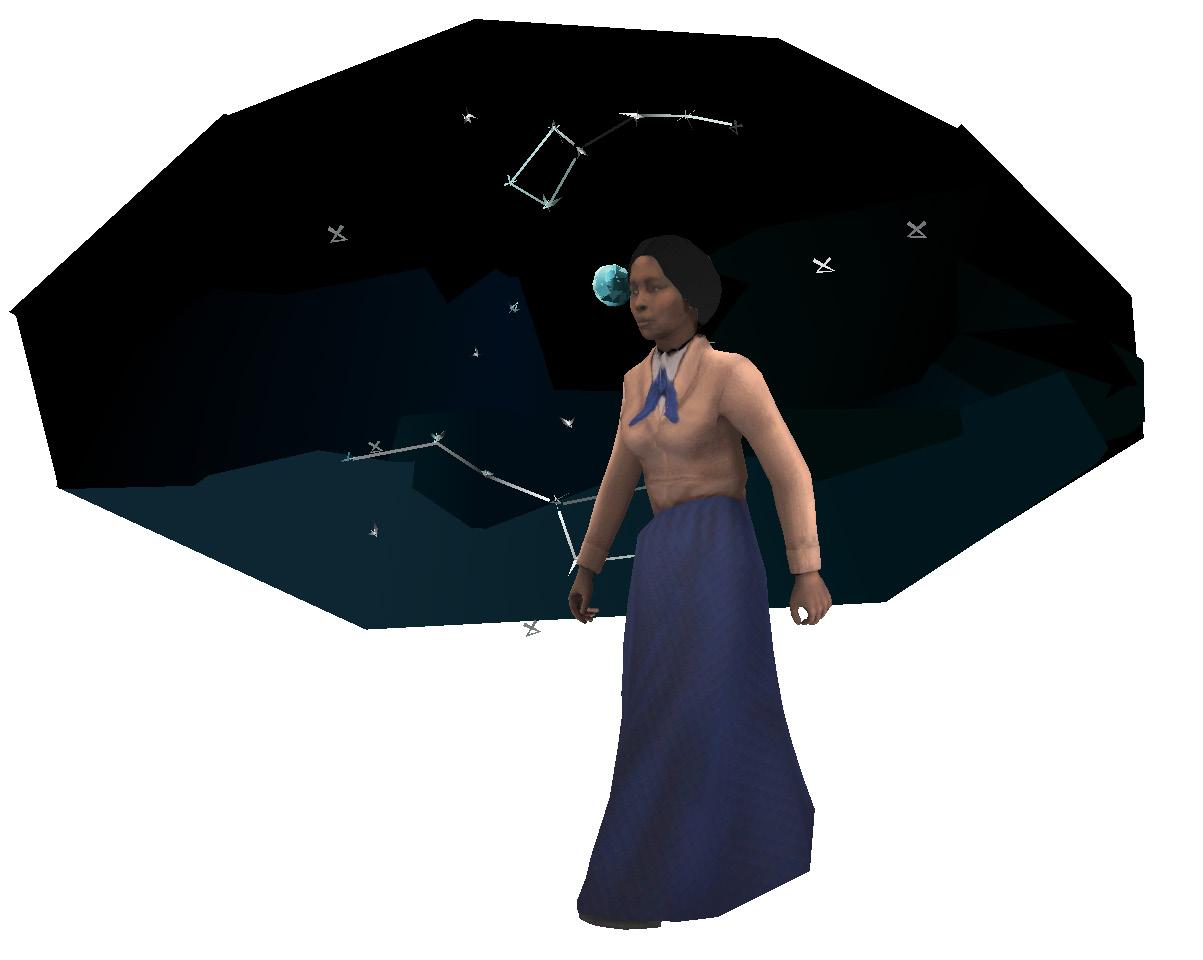

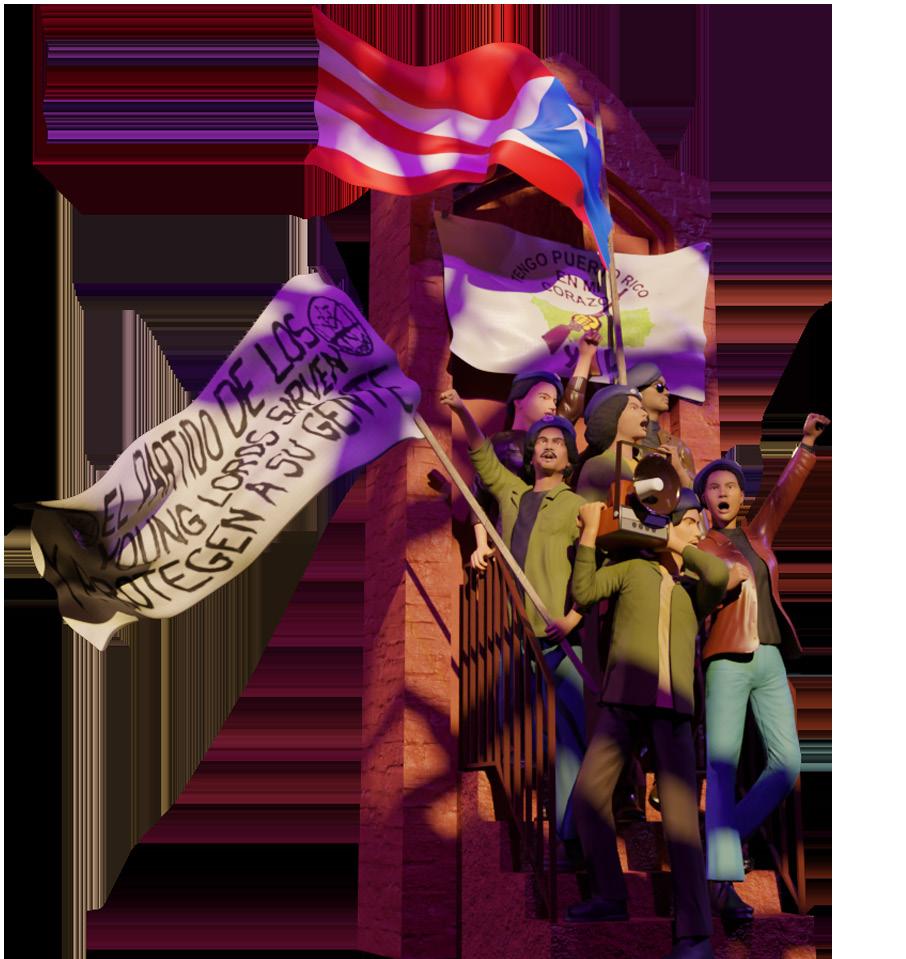
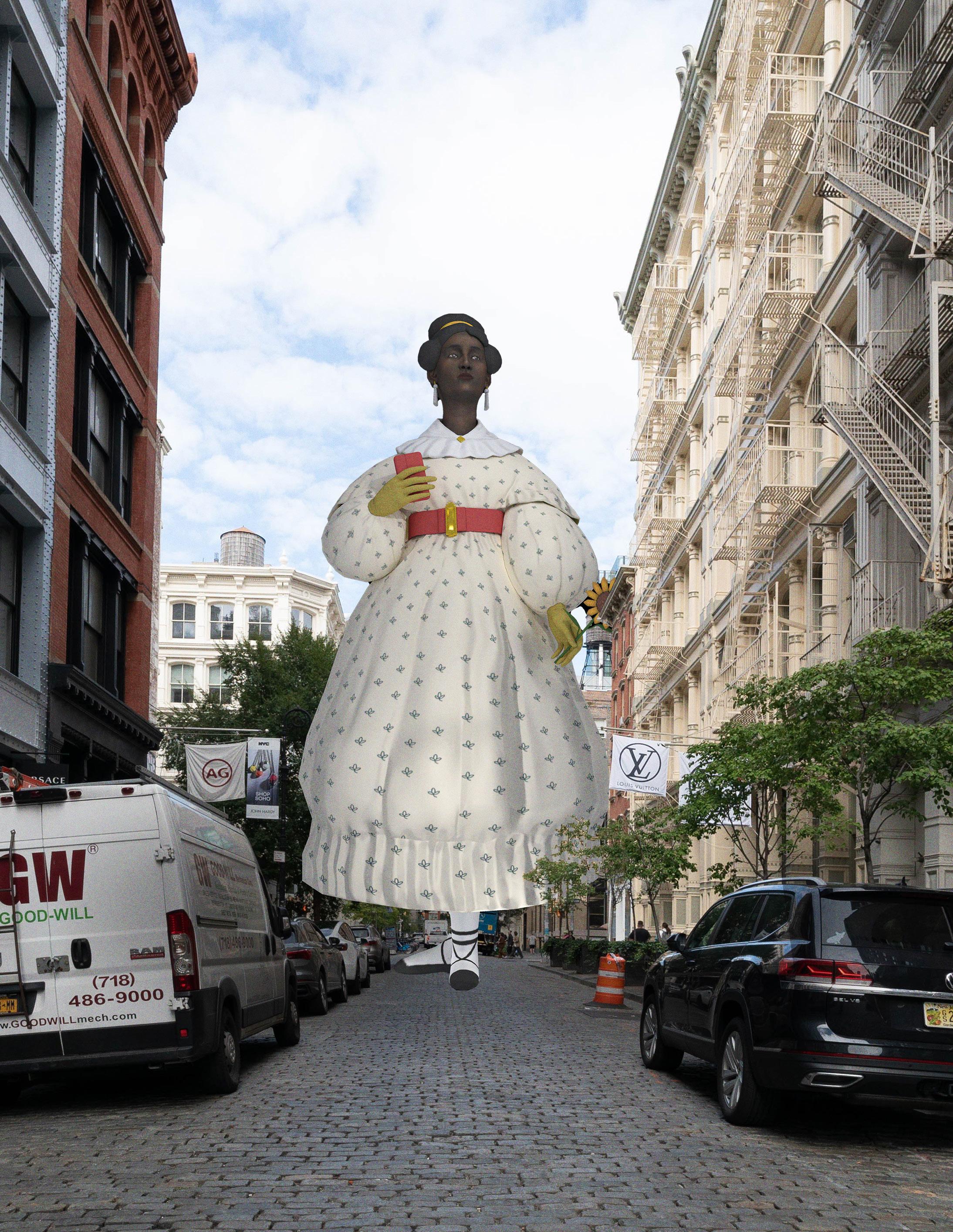
At Kinfolk, we dream with the community to build living archives and future possibilities.
Kinfolk’s approach is grounded in a three-tiered narrative infrastructure designed to root historical storytelling in community while amplifying its resonance nationally.
is where we partner with communities to gather oral histories, cultural archives, and visions for the future. Through Community Imagination Workshops, memory salons, and intergenerational storytelling sessions, we co-create archives that emerge from and belong to the places and people who shape them.
transforms these collected stories into site-specific digital monuments using augmented reality. Our AR app allows people to walk their neighborhoods and encounter histories in the places they happened, layering memory directly into the land.
amplifies local stories through media: social storytelling, podcasts, public exhibitions, editorial writing, and resourcesharing through our newsletter. What begins as hyperlocal becomes part of a national conversation about whose histories count.
This strategy is intentional, values-driven, and rooted in evidence. Research shows that immersive, emotionally engaging stories activate key psychological processes, such as empathy, moral reflection, and perspective shifting, which increases the likelihood of belief and behavior change. 3, 4
Experience undertold stories that center Black, Brown, Indigenous, and Queer histories.
Feel emotional resonance— empathy, pride, discomfort, or connection.
Reframe their understanding of history, identity, and systems of power.
Collaborate by exchanging lessons, stories, ideas, and resources to build collective momentum.
Partnerships/ Co-Creation Process
• Community Members
• Storytellers/Artists
• Institutions
Key Program Offerings
• Walking Tours
• Museum Exhibits
• Public Arts Exhibits
• Public Programming
Act to transform dominant narratives, challenge systemic injustice, and build a more equitable future.
To bring this continuum to life, Kinfolk activates four core strategies that move people from memory to movement:
Educate through critical programming and place-based experiences that spark reflection and deepen understanding.
Immerse in environments that surround them with emotion, place, and perspective.
Amplify the work, stories, and lived experiences of others, especially those historically silenced
Connect generations, geographies, and identities to foster solidarity, reveal shared struggles, and affirm our collective power

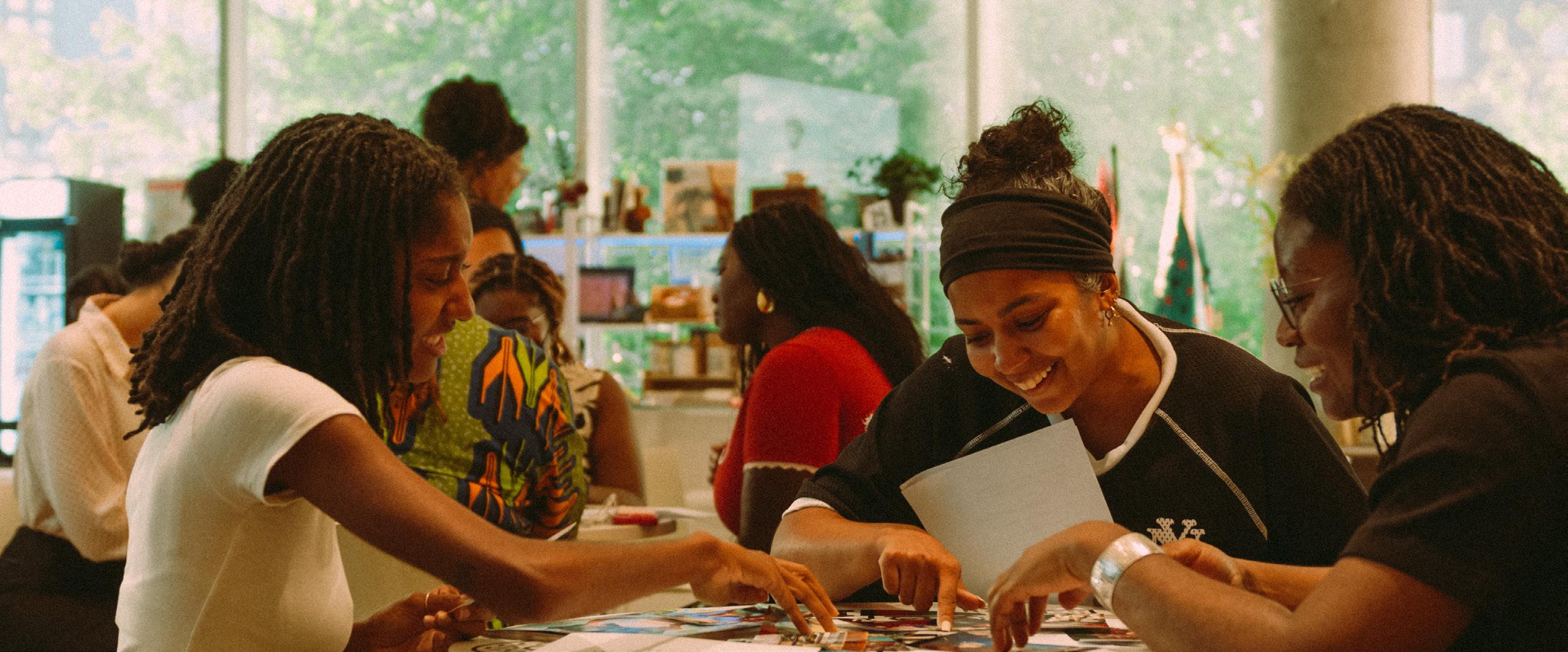
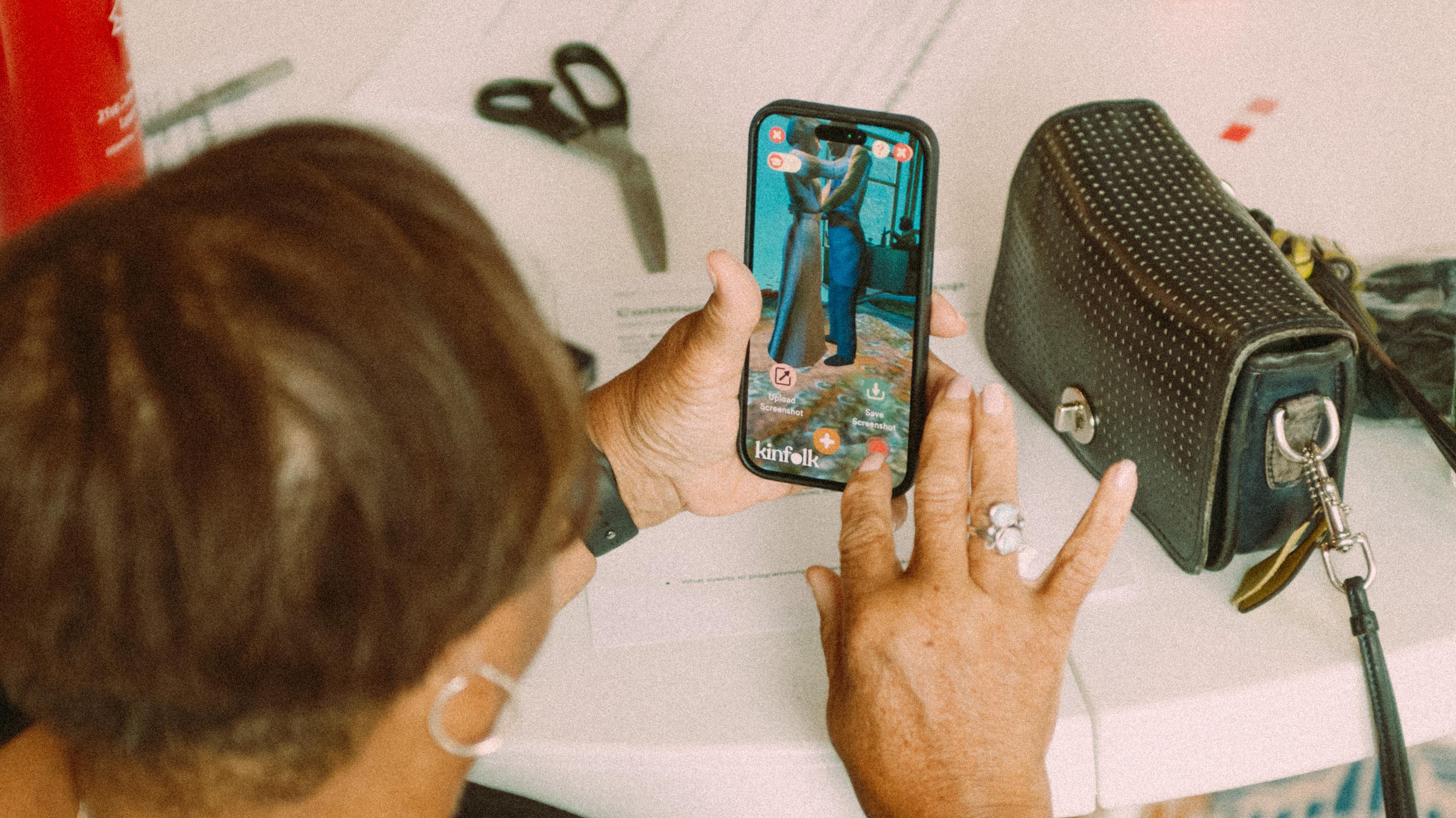

Each project begins with deep relationship-building. Over 3–6 months, Kinfolk works closely with local leaders, artists, and residents — gathering community voices, hosting imagination workshops, and grounding the project in the community’s lived experience.
The culmination of each 3–6 month journey is a public launch event — an activation where the community comes together to unveil the monument, celebrate their stories, and reclaim public space. In addition, we hold recurring walk.
Kinfolk’s narrative infrastructure model is deeply rooted in collaboration and inclusivity. We take a regional approach, building deep partnerships across the country, prioritizing relationships with community organizations that are grounded in the lived experiences and cultural legacies of Black, Brown, and Queer communities.
Through collaborative co-creation sessions, the community sets the creative direction. Our Kinfolk team then transforms these visions into hand-drawn digital monuments.
Throughout the process, we collect community voices, images, and cultural artifacts, often through communityled workshops. These materials are preserved in Kinfolk’s digital archive, building a living library of community memory for future generations.
These Zones of Imagination offer pathways for partners and participants to contribute their stories to the Kinfolk platform:
Reclaim and preserve cultural histories through community storytelling and archives, ensuring marginalized experiences are protected and passed on.
Ensure equitable access to technology and uphold community control over data and digital resources.
Strengthen community-led efforts to reclaim public spaces through shared mapping and decision-making rooted in Indigenous sovereignty.
Hold institutions accountable for past and ongoing harms while supporting generational healing and material restoration.
Imagine liberatory futures led by Black, Indigenous, Latinx, Asian, and Queer communities in which worlds are built from lived experience and collective possibility.
AR is the medium that lets us do what our ancestors have always done: layer memory onto land while breaking free from the systems that have long determined who gets to be visible, who gets to belong, and whose histories are allowed to stand. AR lets us return narrative power to the people.
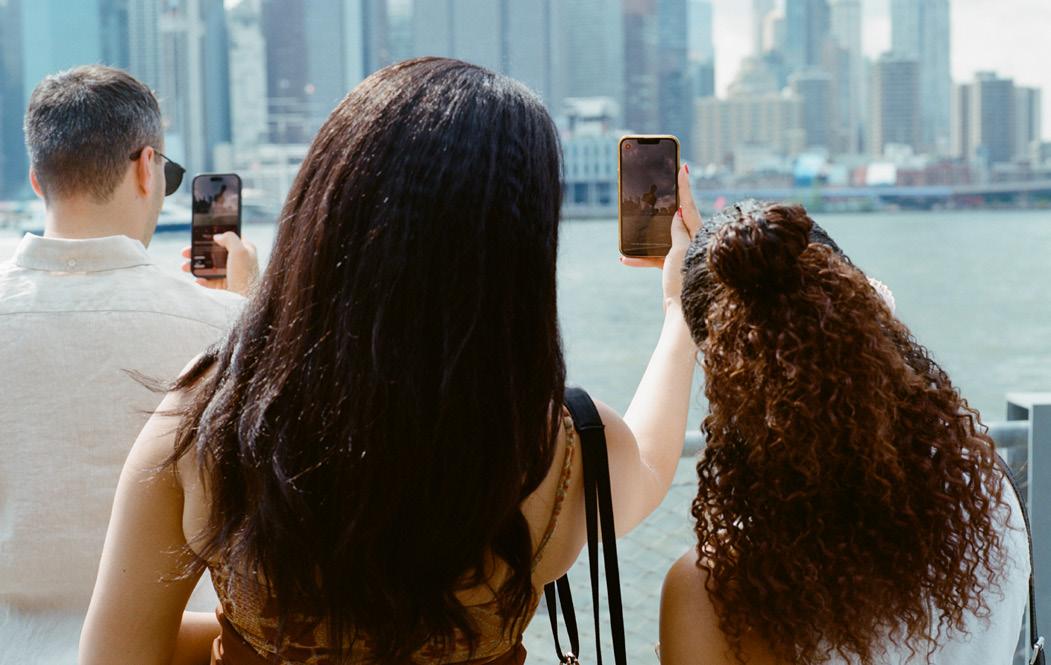
Traditional tech spaces often exclude BIPOC and Queer artists. Kinfolk’s AR platform opens the door. Through our artist residencies, community collaborations, and national partnerships, we equip artists with hands-on access to emerging technology, creating pathways for creative expression, digital literacy, and public recognition that could otherwise be out of reach.
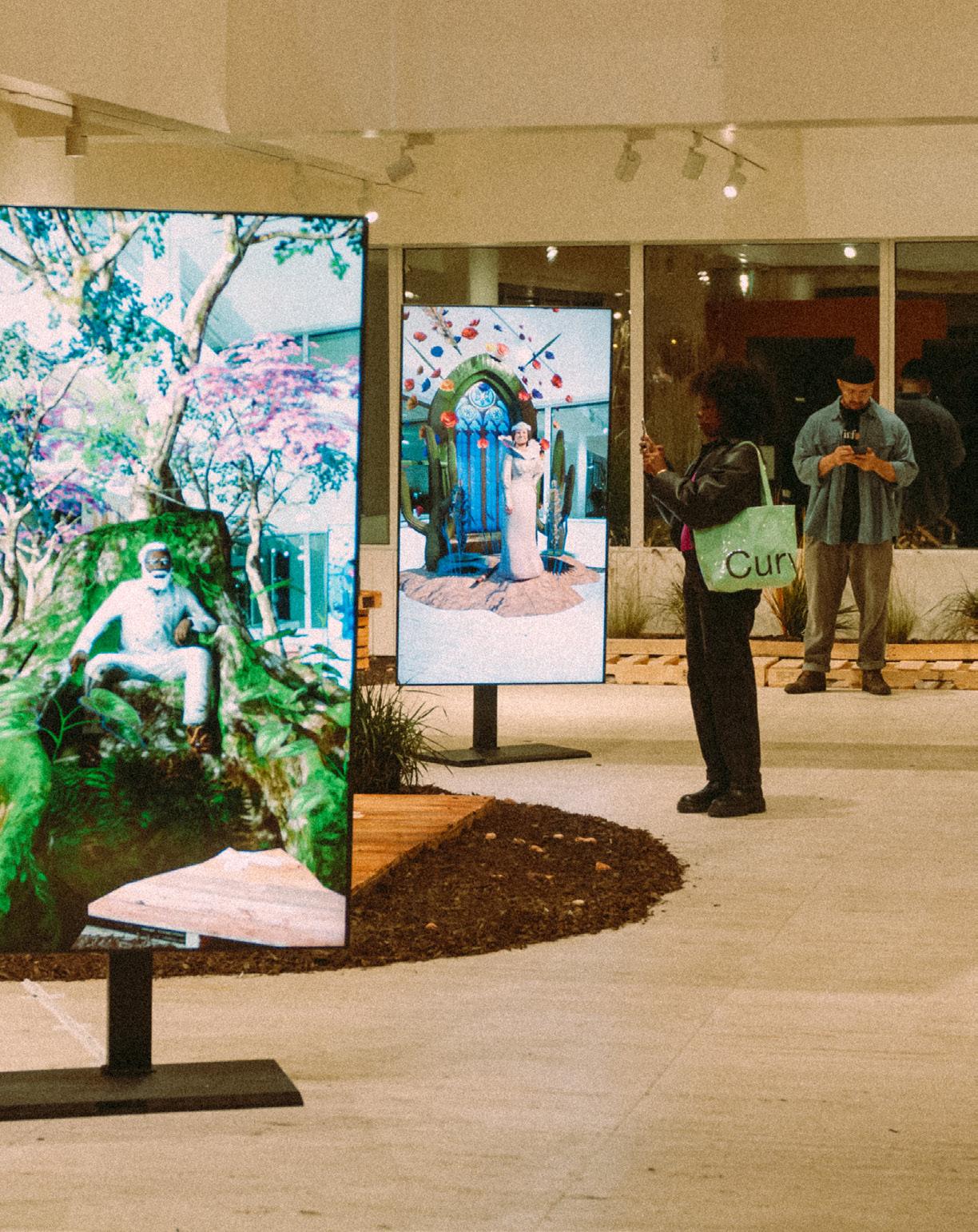
→ Art-based interventions have been shown to foster collective identity and agency, and to support community engagement and collective action in historically underrepresented communities 5,6, 7
AR empowers communities to transform the landscape in real time, placing their own stories, ancestors, and histories directly onto the land that shaped them. In neighborhoods facing gentrification, displacement, and historical erasure, AR becomes a civic tool: a way for residents to make their presence visible, protect cultural memory, and reimagine public space on their own terms.
→ Black and Latino households are 1.3 to 1.4 times as likely as White households to experience limited technology accessibility. This persistent digital inequality threatens to widen achievement gaps and reproduce inequality across generations. 8
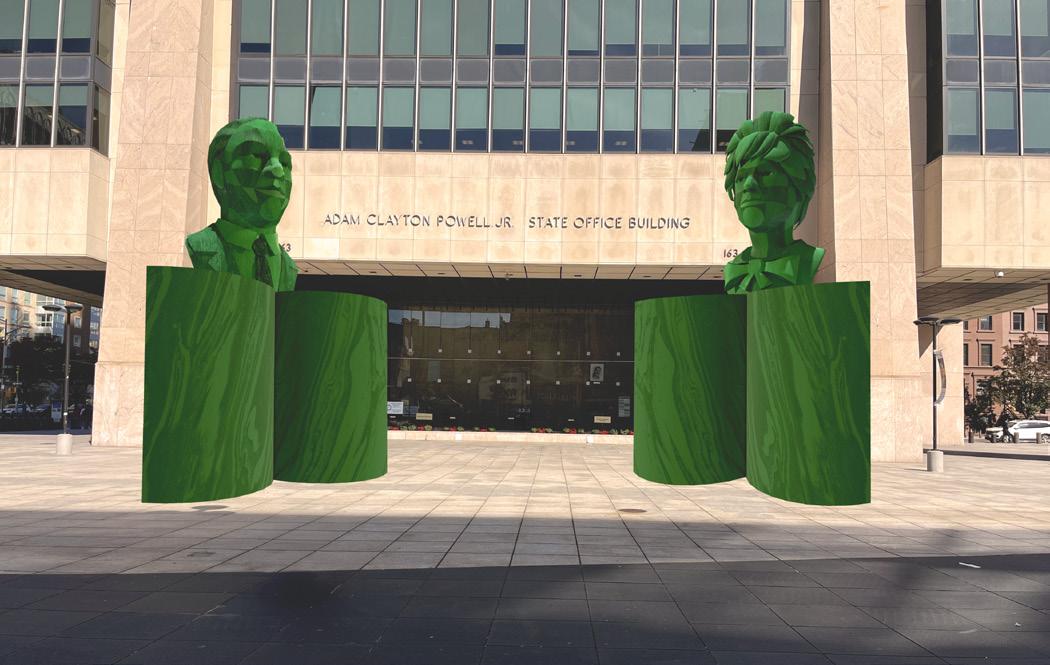
Unlike traditional monuments, which freeze a single story in time, AR holds context, nuance, and multiple voices. Each monument can incorporate narrated biographies, archival documents, video, sound, and community contributions. This allows them to become a living archive that grows and adapts with each generation.
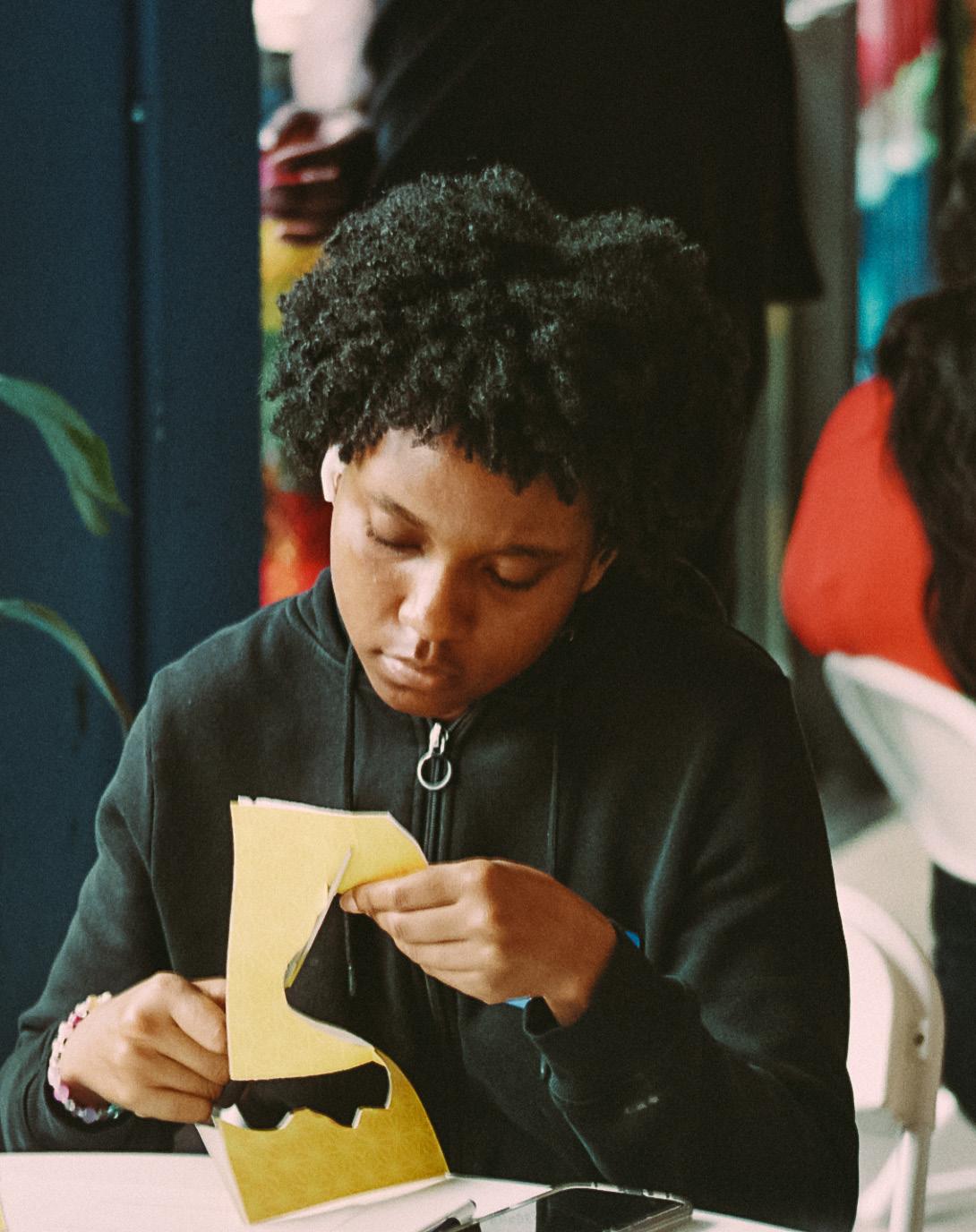
Physical monuments require years of approvals, funding battles, and political negotiations that typically privilege established institutions. AR cuts through those barriers. Because digital monuments are not governed by the same restrictive processes, communities can build, install, and share their histories without waiting for permission from the systems that once excluded them.
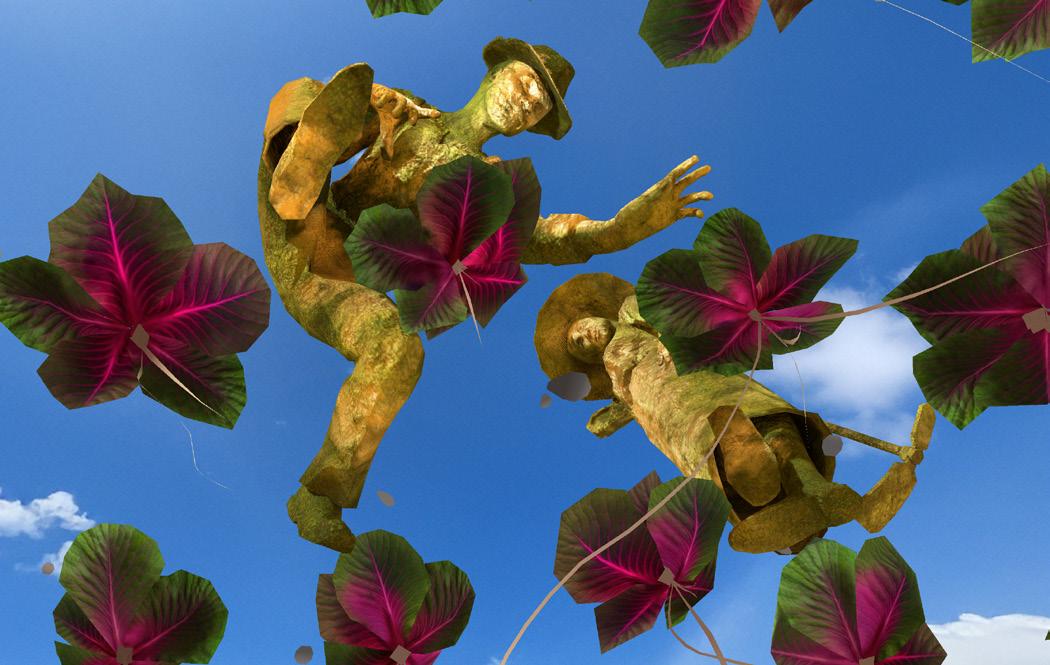
Young people learn through immersion, interactivity, and play. AR turns neighborhoods into outdoor classrooms, helping individuals explore local histories while building critical thinking, creativity, and civic consciousness. AR ensures these narratives remain accessible, especially in states where history is being censored.
→ Embodied learning, especially when supported by AR, enhances understanding. AR fosters deeper cognitive engagement and improved concept retention by making abstract ideas tangible, immersive, and collaborative. 9
In 2025, Kinfolk launched Dreaming with the Archives, a multi-city initiative that uses emerging technology to fuel imagination, cultural preservation, and social justice. This moment marked a pivotal evolution in Kinfolk’s journey, expanding beyond standalone AR monuments into the cultivation of interconnected narrative ecosystems. Grounded in Kinfolk’s five Zones of Imagination, the initiative frames technology as a tool for memory work, one that surfaces ancestral knowledge, activates collective power, and supports communities in imagining and building more just futures.
Collaboratively created AR monuments (designed with partners, artists, and community contributors) to uplift overlooked histories and figures. These digital monuments appear in public spaces as well as in your living room, combining ancestral memory with emergent technology to broaden who is honored and how.
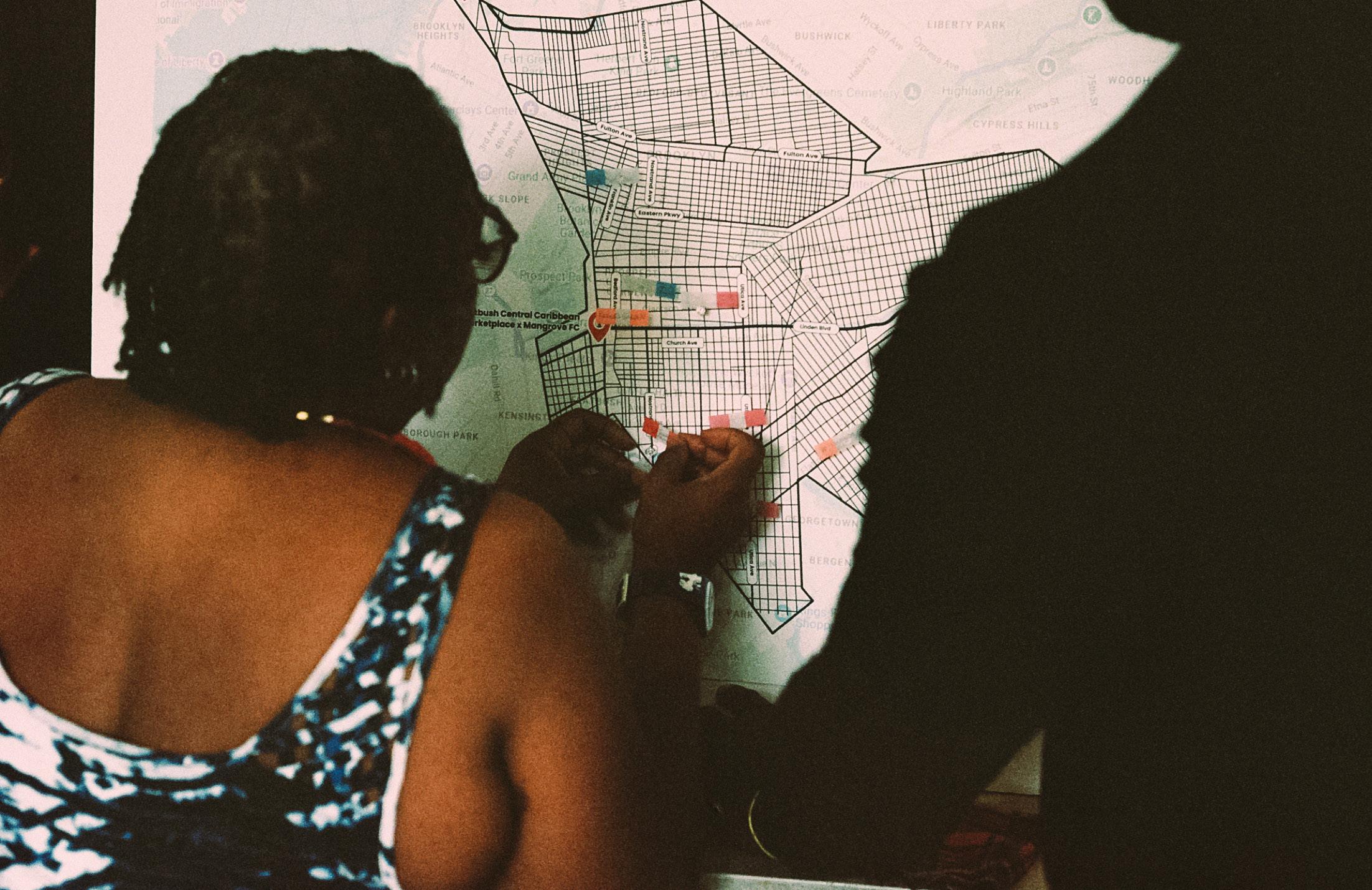
Participatory mapping sessions that redefine imposed boundaries, rename neighborhoods, and identify sites of history, memory, and possibility. These gatherings surface hyperlocal spatial knowledge, transforming maps into living documents shaped by those who call these places home.
Virtual knowledge-sharing sessions led by community elders, activists, griots, and cultural practitioners. Teach-ins connect historical context with contemporary movement work, offering tools for preservation, storytelling, and cultural resilience in the face of ongoing erasure.
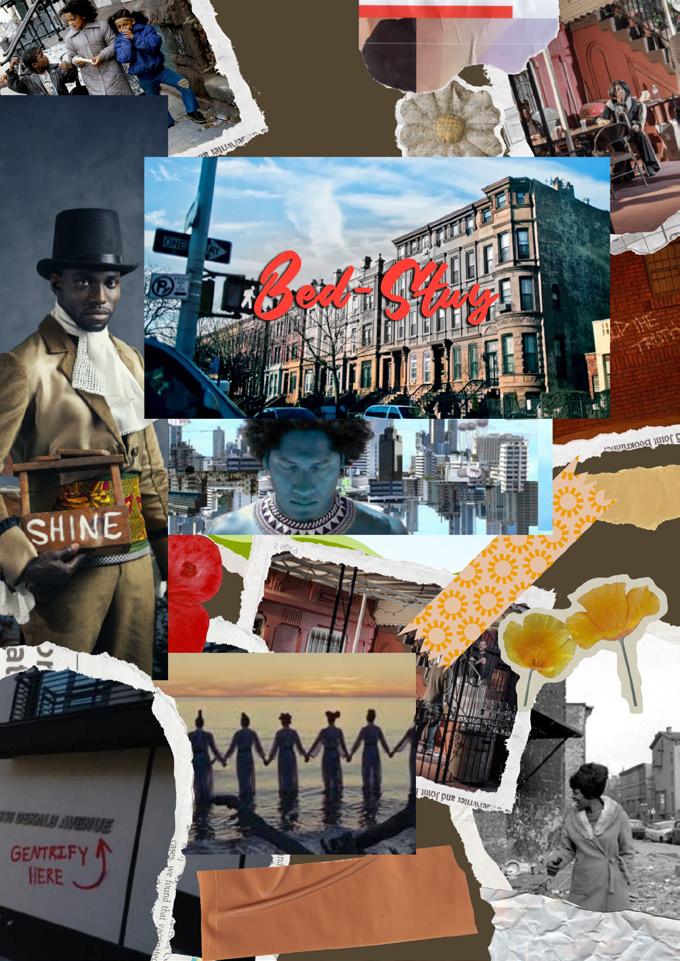
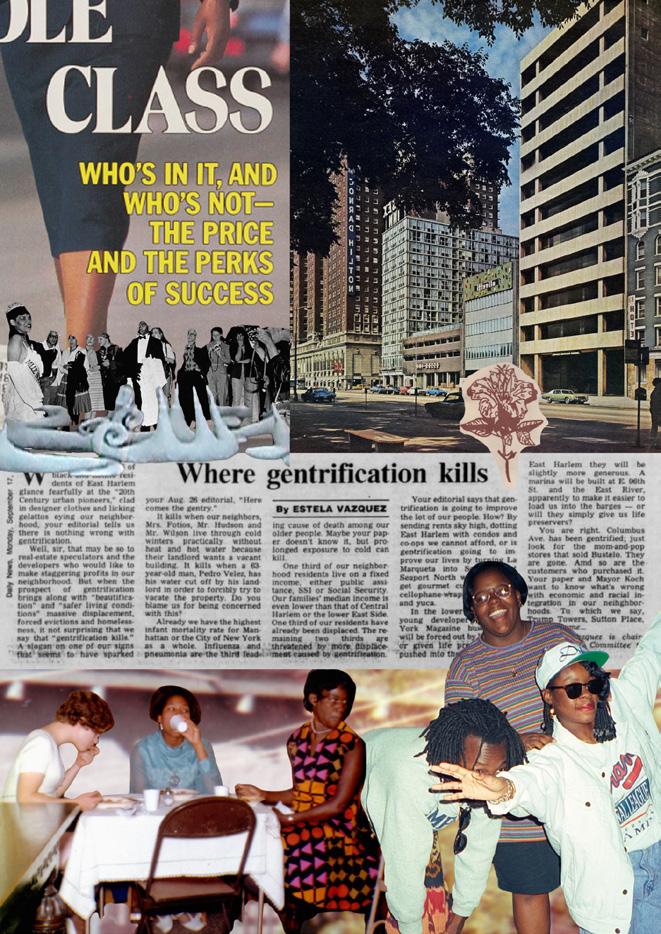
Interactive workshops where community members experiment with the Kinfolk app and prototype ideas for future digital monuments. Through collage and creative play, participants combine local knowledge with emerging technology to envision new ways of preserving their histories and cultural lineages.
Location-based tours that blend physical exploration with digital storytelling through the Kinfolk app. Participants encounter AR monuments, archival materials, and neighborhood histories that rise from beneath their feet. This engagement fosters deeper community stewardship for public memory and local monument ecosystems.
Intimate gatherings that pair films with facilitated conversations about memory, justice, and the technologies shaping our cultural future. Each salon becomes a space for reflection, storytelling, and community envisioning, deepening narrative connection across generations.
Through our Story-to-Action Continuum, Kinfolk has built one of our most valuable assets: a rich dataset of historically marginalized voices. Our 100+ immersive experiences and our 50+ partnerships have generated community voices, cultural knowledge, and archives, all created through consent-based processes that prioritize community ownership.
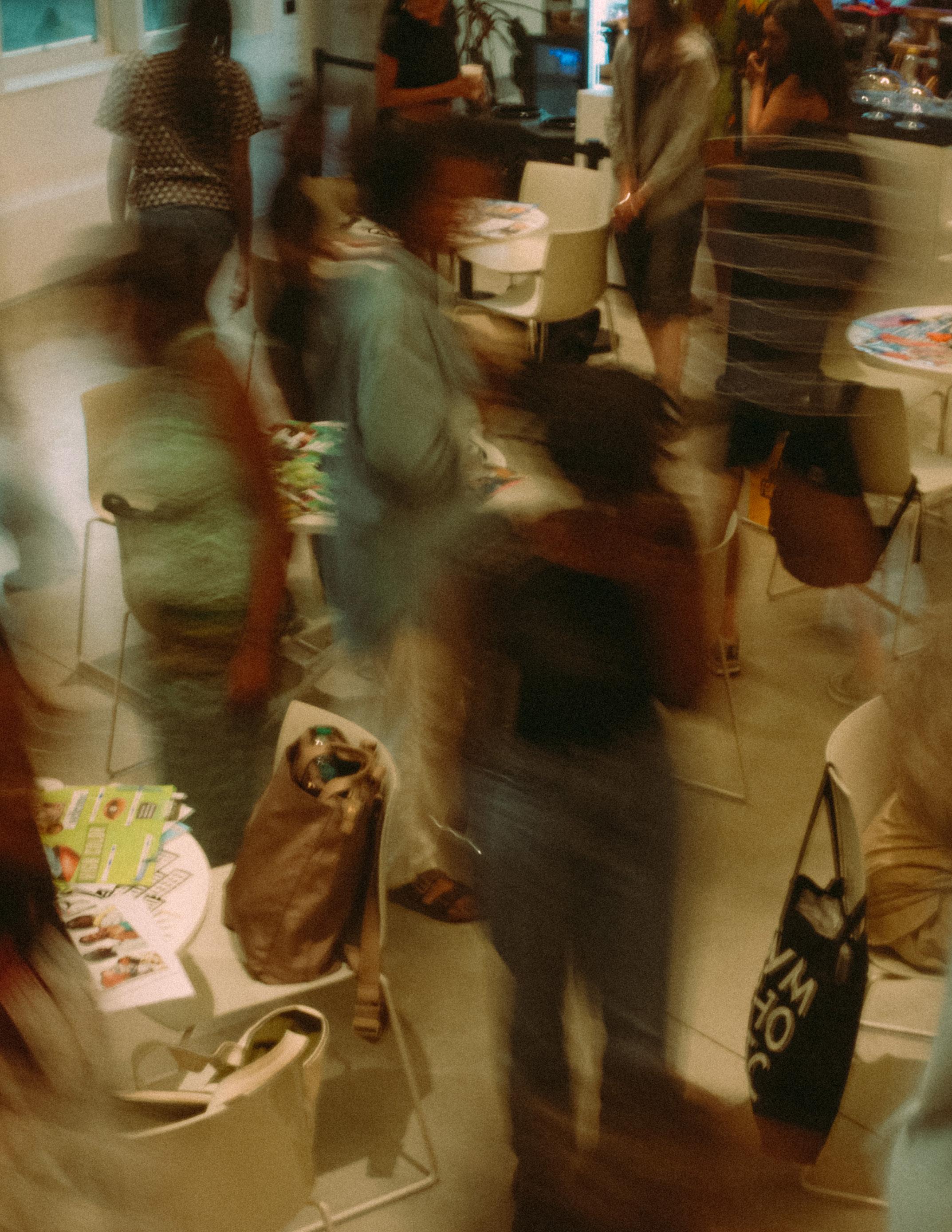

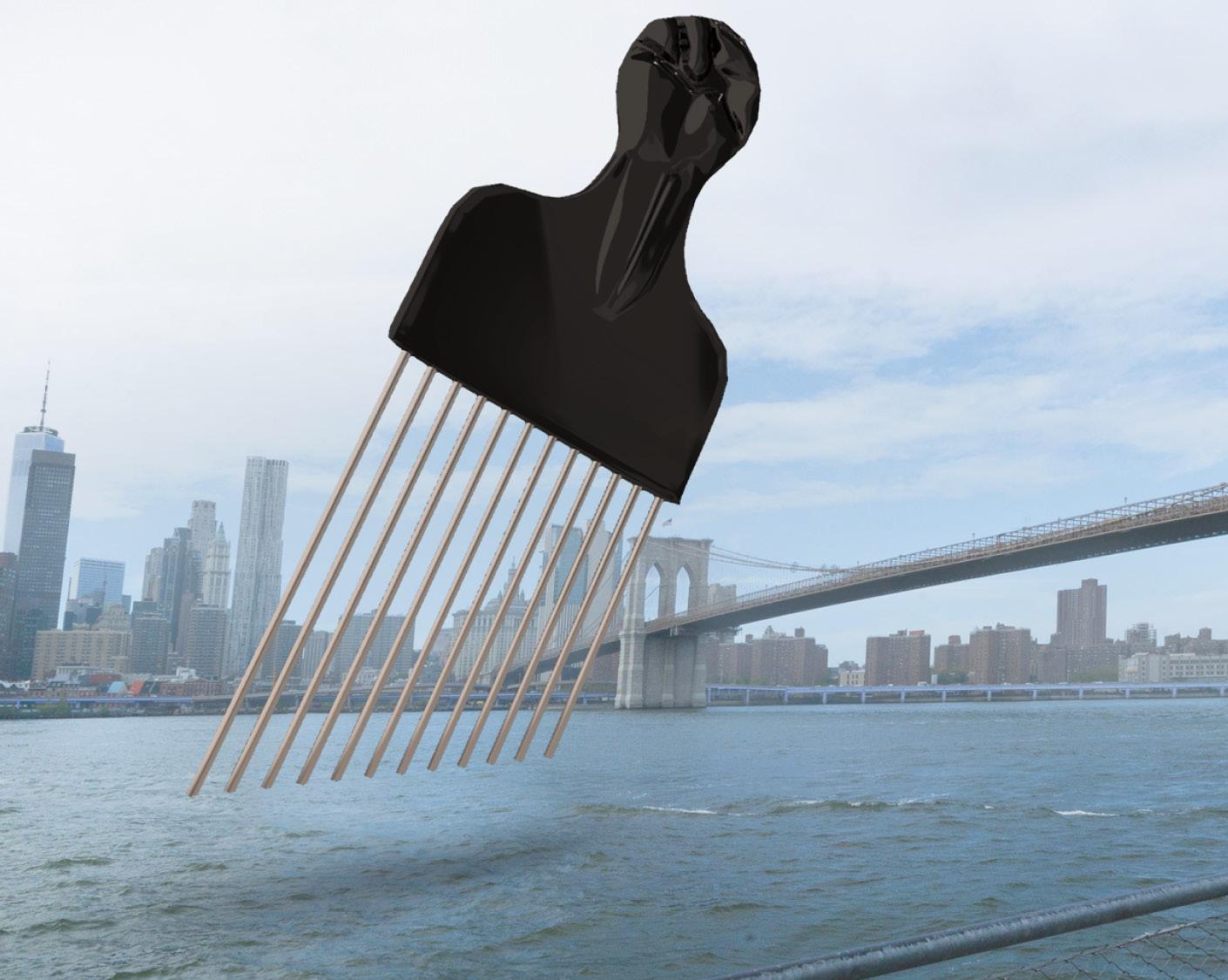
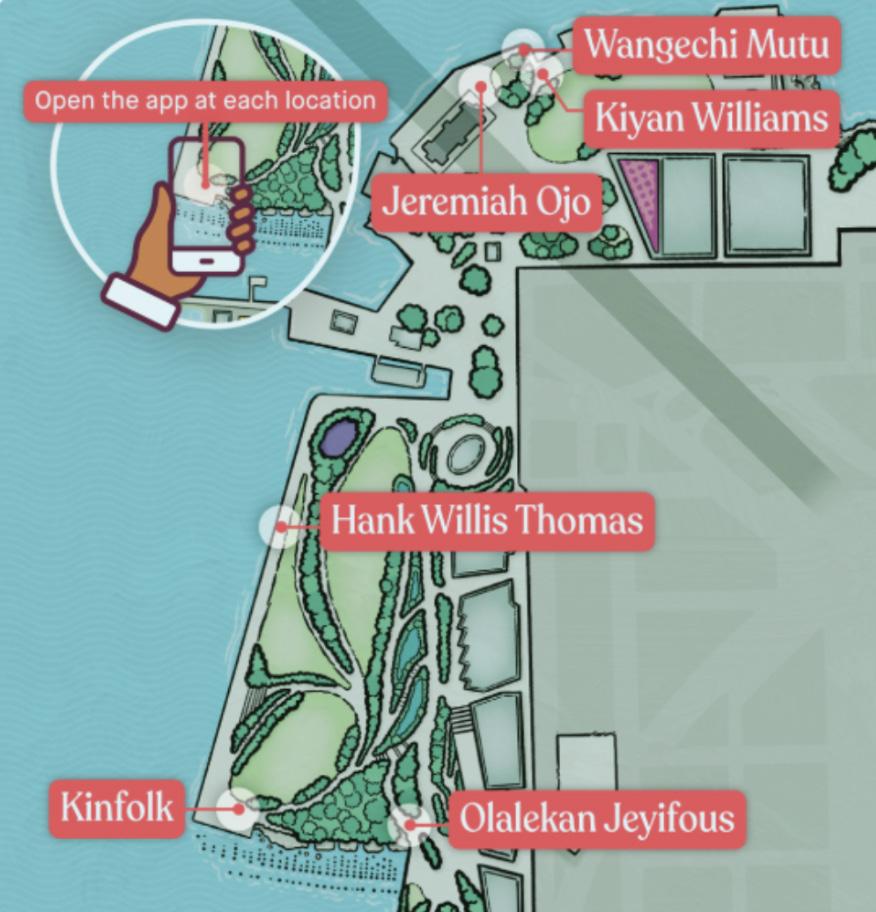
Kinfolk opened the first public portal of Dreaming with the Archives by transforming Brooklyn Bridge Park (BBP) into a landscape where history, imagination, and possibility converged. This exhibition marked the inaugural activation of our year-long, multi-city initiative to return historical agency, collective memory, and creative power to the people.
From June 19 to August 30, visitors stepped into an AR world shaped by artists Ari Melenciano, Olalekan Jeyifous, Kiyan Williams, Wangechi Mutu, Jeremiah Olayinka Ojo, and Hank Willis Thomas. Their digital works honored the region’s abundant flora and fauna, the skilled laborers (enslaved and free) who built Brooklyn, the migrations and music that shape the borough, and the diasporic histories that refuse to disappear.
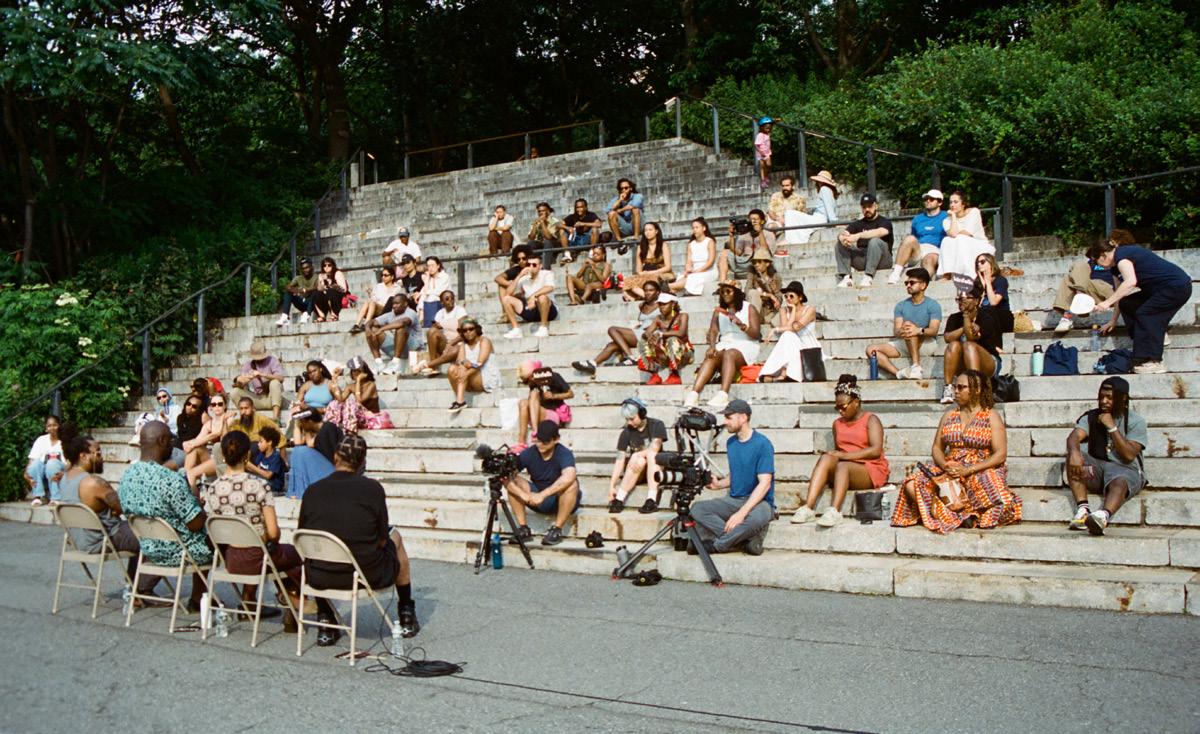
The exhibition at BBP and the subsequent community workshop affirmed that when communities are invited to see themselves in the archive and to dream beyond it, public memory becomes a liberatory tool. Across walking tours, panels, and AR engagements, community members added their voices and reflections describing moments of surprise, recognition, and emotional resonance:
→ 87% of respondents reported learning histories or details they hadn’t known before
→ 94% of respondents reported experiencing emotional resonance (i.e., pride)
→ 94% of respondents agreed that they “saw themselves” in the stories shared
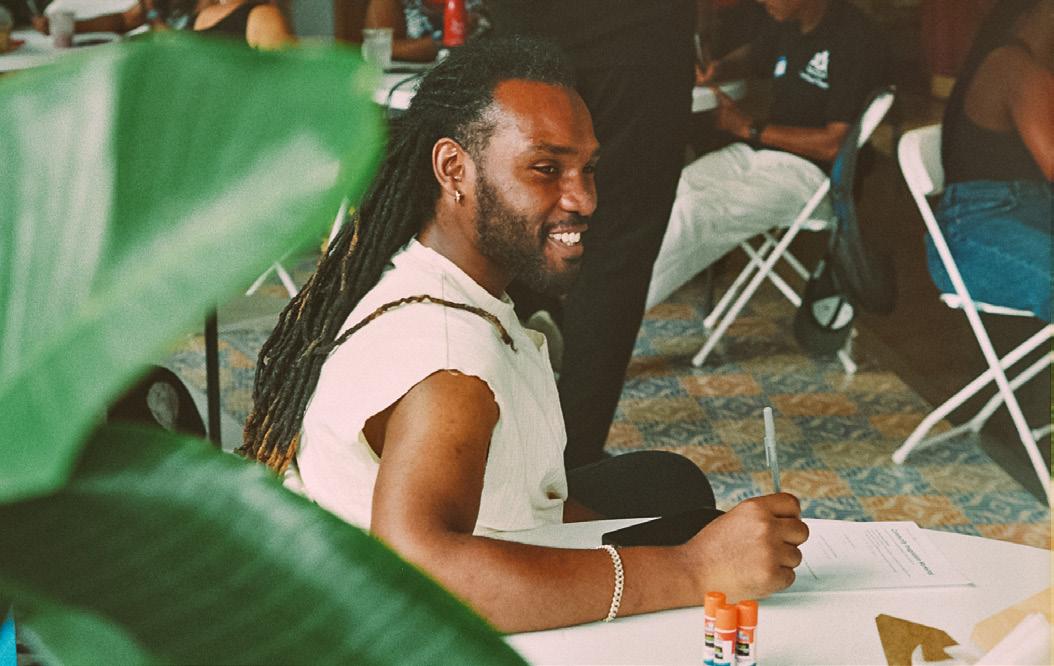
Accessibility and shared authorship guided the summer’s public programming. Across three months, Kinfolk and BBP offered multiple entry points for collective learning and imagination:
→ Opening weekend artist panel, moderated by American Artist, exploring AR as a tool for reclaiming public space.
→ Guided walking tours that grounded visitors in the park’s layered histories through site-specific AR monuments.
→ Workshops, teach-ins, and sonic gatherings, including a closing celebration that connected Brooklyn’s past, present, and future through sound and movement.
These activations deepened public understanding of the work, created multisensory pathways into the exhibition, and fostered conversations on the histories and dreams of Black, Indigenous, and Queer Brooklyn residents.
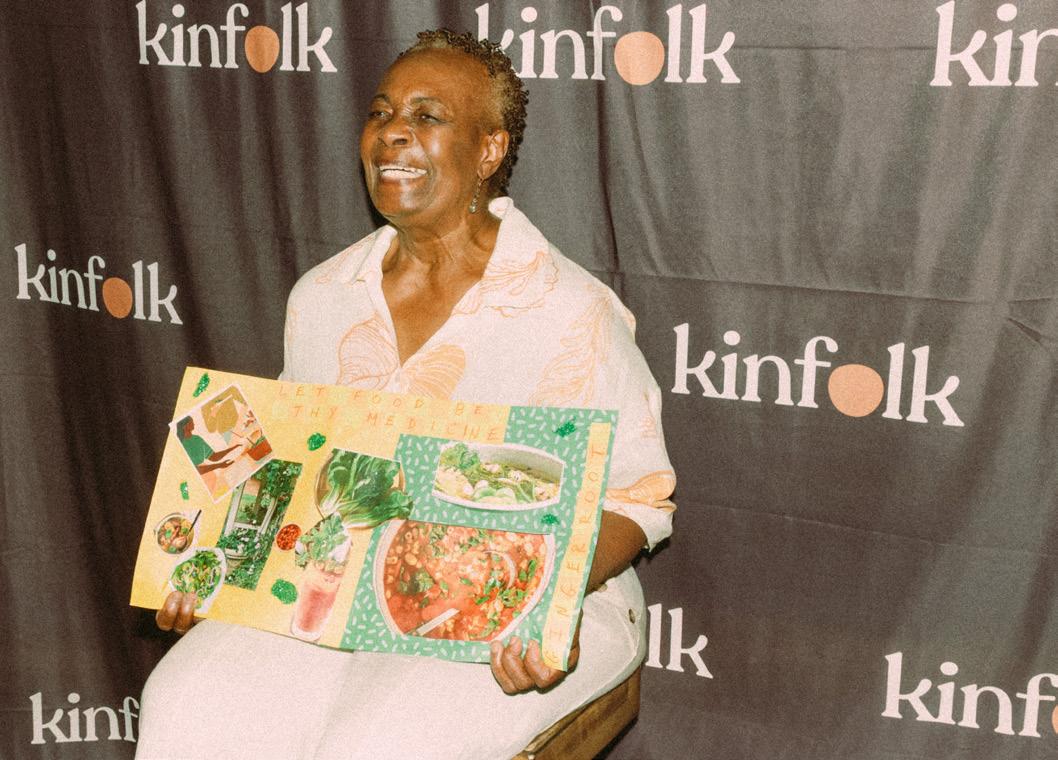
“ Loved the workshop and the ability to use my hands to craft.
“
This event made me think differently about the interaction of technology and nature. I think being in the park and then seeing something like that, super kind of advanced high tech in the same space, seeing, like, dragonflies fly around and then see, like, [digital] monuments in the same spot. It’s like the merging of kind of natural ancestral technology with kind of new Kinfolk technology. Again, it blew my mind. I’ll say it again. It was amazing. Fantastic.
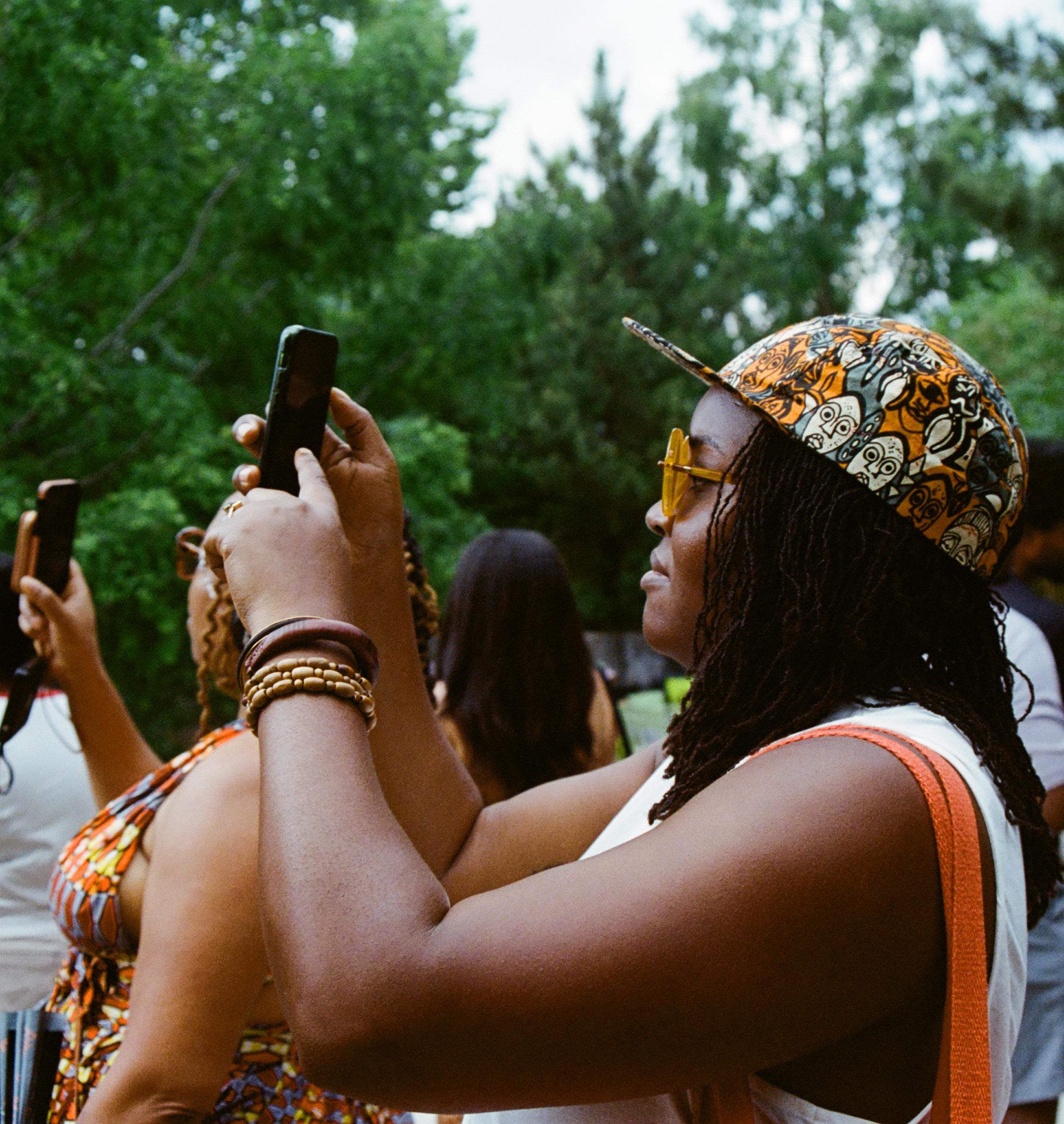
“ This is such an innovative way of informing the community of its history. Thank you for this.
The CMF was created to strengthen the narrative infrastructure at the heart of Kinfolk’s mission. Designed as a pilot, the fellowship lays the groundwork for a scalable model.
At its core, the program is built to:
Kinfolk launched the inaugural Community Memory Fellowship (CMF) to grow a national network of community archivists and digital storytellers who shape how histories are remembered, shared, and made accessible. The fellowship invites community archivists, historians, librarians, griots, and socially engaged artists from Black, Indigenous, Latinx, Asian, and Queer communities to collaborate with Kinfolk to steward local narratives and explore how emerging technology can support ethical, community-driven public memory.
Kinfolk’s CMF is based on a simple idea: narrative power should be in the hands of the people. Fellows play a vital role in ensuring that community knowledge is integrated into the collective memory infrastructure we are developing. This infrastructure is designed to be locally grounded, culturally rooted, and technologically enhanced.
→ Expand and enrich Kinfolk’s AR platform with stories sourced directly from the communities whose histories have been overlooked or erased.
→ Explore the ethical use of AR and emerging technologies as tools for narrative change, ensuring that innovation aligns with justice, accountability, and consent.
The CMF is a nine-month program supporting fellows with stipends, research funding, AR development support, and cross-disciplinary mentorship. Fellows dedicate 5–10 hours per week to working remotely, with opportunities for on-site engagement. Each fellowship includes:
Kinfolk AR Labs
Collaborative sessions with Kinfolk’s product and 3D teams to experiment with interactive storytelling, archival content curation, and AR prototyping.
Archives-in-Practice Workshops
Skill-building sessions led by cultural memory workers such as Sharon Mizota and Zakiya Collier, focused on archival ethics, community curation, and cultural stewardship.
→ Establish a national network of community memory workers, including storytellers, archivists, griots, librarians, and cultural practitioners, who can strengthen local archives and guide how memory is preserved and shared.
Together, these goals position the CMF as a cornerstone of Kinfolk’s long-term narrative justice ecosystem.
Community Research & Story Collection
Fellows gather archival research materials, conduct interviews, and engage local residents through participatory methods.
Community Imagination Workshops
Fellows share the history, research, and intentions behind their digital monuments while guiding participants through collage, hands-on experimentation, and creative play. Community members envision new methods for safeguarding their cultural lineages, enabling them to challenge imposed narratives and shape future additions to the archive.
Public Launch & Showcase
Fellows debut their AR projects through community events, walking tours, and exhibitions, including activations at Brooklyn Bridge Park and Kinfolk’s KIN 2025 Festival.
When Jeremiah Olayinka Ojo (He/Him) stepped into the CMF, he brought with him a lifetime of practice as an artist, cultural entrepreneur, educator, and public historian.
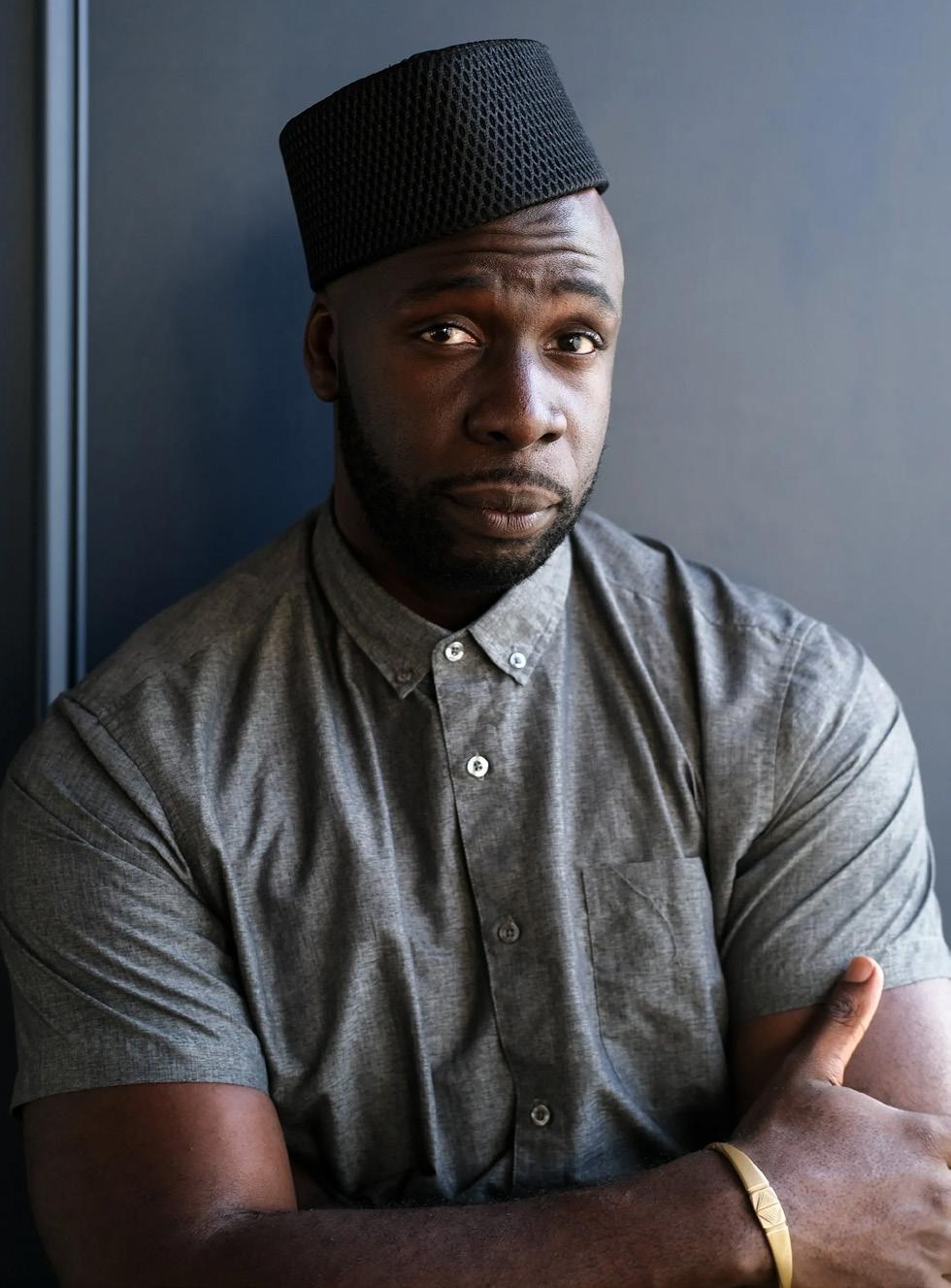
Born in Louisville, raised in Atlanta, and shaped by six years in the “People’s Republic of Brooklyn,” Jeremiah arrived with a deep reverence for Black cultural production, diasporic memory, and the everyday architectures that hold our stories. “I’m a Nigerian American artist, public historian, preservationist, educator, and cultural entrepreneur,” he shared, naming the layered identities that inform every corner of his work.
For Jeremiah, the fellowship offered something rare: the chance not only to research Black history, but to build a monument that could carry that history into the future. It was an opportunity “to be an artist more formally,” to center his own creative practice after years of supporting and shaping the visions of others.
What emerged from this journey is a monument unlike anything in the Kinfolk archive: an underwater reimagining of a 19th-century Brooklyn oyster house owned by two free Black entrepreneurs, Johnny Joe and Louisa Britton Joseph.
Jeremiah’s monument began in the archives. He spent hours at the Center for Brooklyn History, the Schomburg Center, and the Municipal Art Society. “I spent so much time at the Center for Brooklyn History they were like, ‘You want a desk?’” he laughed.
It was there that he discovered the history of Joseph’s Oyster House, a Black-owned restaurant operating in what is now DUMBO in the early 1800s. For nearly forty years, during a period when many Black New Yorkers were still enslaved, Johnny and Louisa created a thriving culinary and social hub.
Their story, like so many of Brooklyn’s Black histories, had been buried beneath development, gentrification, and the slow passage of time.
Jeremiah recognized in their story an opportunity to both preserve historical facts and ignite the imagination in areas where the archive remained silent.
He entered what he called the realm of historical fiction:
“There are base facts. But what else was happening? These were two Black folks who opened a successful restaurant for 40 years…
So instead of just showing an oyster bar, I started imagining what they could have experienced.”
From that question, a world began to form.
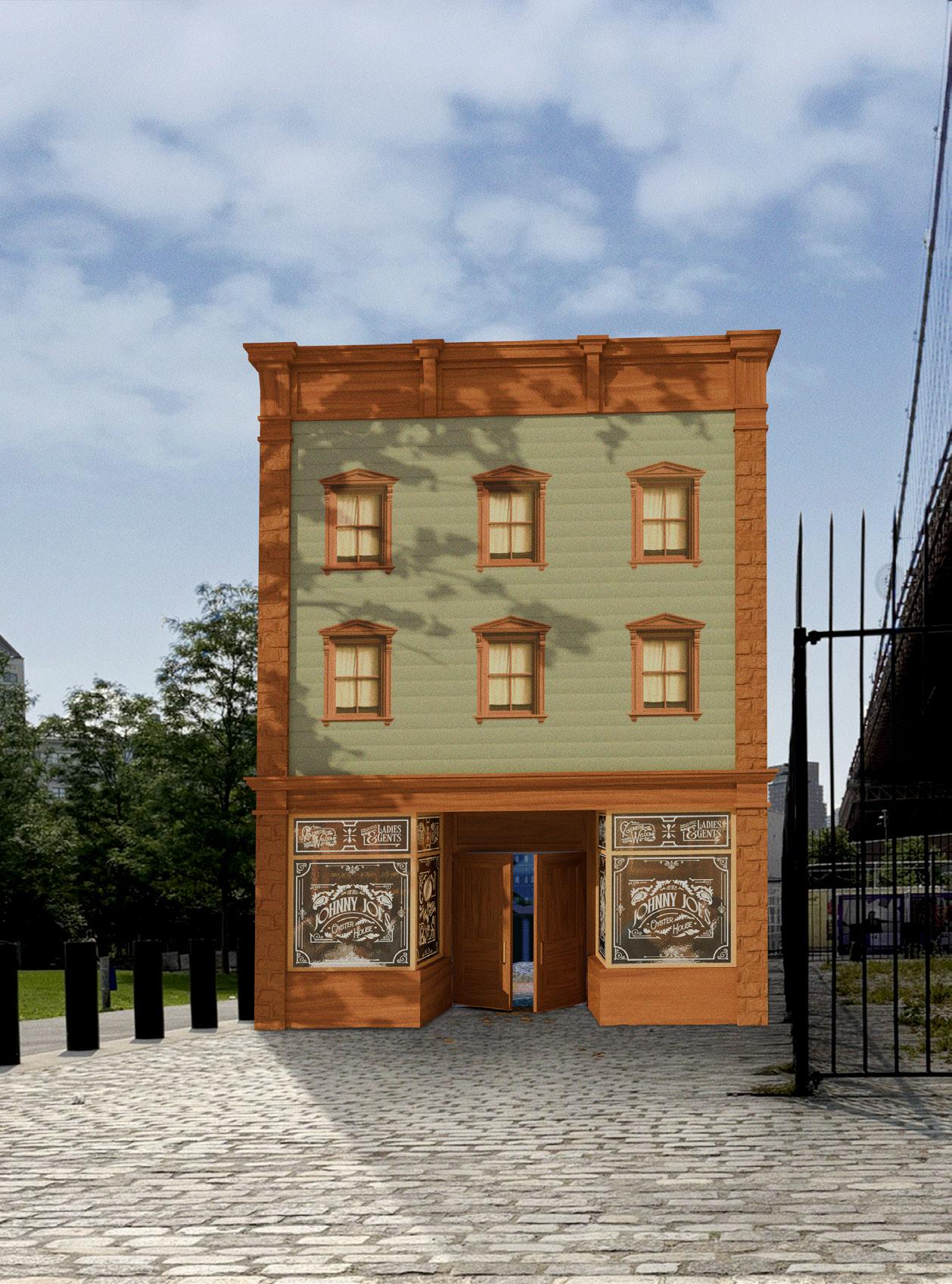
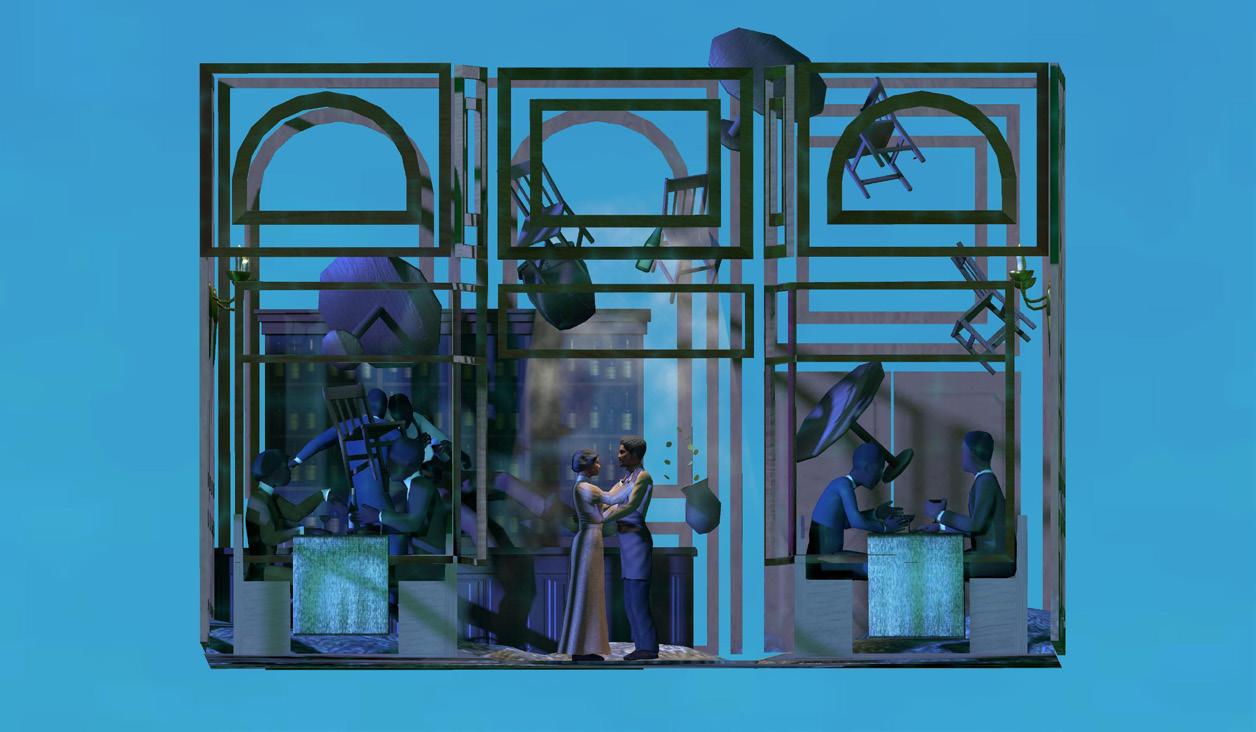
When Jeremiah first began imagining the monument, the images were literal: a building facade, an interior dining space. But the Kinfolk AR Labs unlocked a different palette.
“They got me to think more imaginatively,” he said. “Not just the historical facts… but the possibilities.”
He played with AI renderings, used the Kinfolk app to test scale in Brooklyn Bridge Park, and iterated through dozens of forms. The breakthrough occurred when he linked water, a spiritual medium for Black people throughout the diaspora, to the oyster house itself.“It made me think of Atlantis,” he said. “Oysters, water, how Black people have journeyed… I wanted it to be happy Black people drinking champagne, eating oysters, dancing to Caribbean music.”
He envisioned:
→ Floating piles of gold coins symbolizing the couple’s economic ingenuity
→ Oysters drifting like relics and offerings
→ The ‘Tanbouyé or Big Drum’ Martinique Drum. An instrument used to create liberatory music by enslaved Africans
→ Dancers suspended in joyous motion
→ A submerged interior glowing with warmth rather than loss
Jeremiah has always been a collector of stories — through photography, oral histories, community facilitation, and archival work. In the interview, he reflected:
“Art is for the people. It’s meant to be shaped, reworked, stepped on, revived.”
Through the monument, he wanted audiences to feel surprise, joy, and recognition. He wanted viewers to step into the underwater oyster house and feel the aliveness of Black life in early Brooklyn: —its sophistication, its music, its elegance, and its defiance. His intention was for the AR experience to act like a portal, a soft disruption in the landscape of Brooklyn Bridge Park:
A reminder that the ground beneath our feet is layered with Black stories, Black labor, Black dreams, and Black futures.
As a result of this art piece, the osyter a staple on every menu in New York, became imbued with historic significance. Connecting palettes, histories, and context one oyster at a time.
Kleaver Cruz (They/Them) joined the CMF as an artist, writer, educator, and cultural worker, bringing with them a life shaped by language, lineage, and curiosity.
“My name is Kleaver Cruz. My pronouns are they and them… I grew up in the uptown section of New York City between Washington Heights and the Bronx. I’m an educator, writer, artist,” they shared, naming the constellation of roles that inform every layer of their work.”
From an early age, words shaped Kleaver’s world. As a child, when others dreamed of becoming doctors or athletes, they wanted to be “an author,” drawn instinctively toward the written word and the work of making meaning. That longing, paired with a deep commitment to community storytelling, would eventually grow into The Black Joy Project, a digital and real-world affirmation that Black joy is resistance, and a global practice in storytelling, archiving, and world-making.
The CMF offered Kleaver something their work had been building toward for years: a structured space to explore the crevices of history, those “dusty spots that get less light and care but are brilliant all the same,” and to bring that brilliance into the public sphere through emerging technology.
What emerged from their fellowship journey is Para Lélia, an AR monument that honors the Afro-Brazilian philosopher, anthropologist, and activist Lélia de Almeida González, who was a towering figure whose work on améfricanidade reframed the Americas as a collage of Black and Indigenous histories, languages, and cosmologies.
The story of this monument begins with a feeling: “Guided by an intuitive, spiritually-led impulse that had been stirring for years, I followed a thread of music, language, and curiosity that led me back to Brazil in the spring of 2025,” they explain.
While learning Portuguese, they encountered Lélia’s writings and felt an immediate jolt of recognition. “I was blown away… I couldn’t believe there was somebody 50 years ago writing about things I felt like my nerdy side quest was trying to make sense of,” they recalled.
That moment became the spark for the fellowship project: a desire to bring Lélia’s brilliance (still underrecognized across the diaspora) into an immersive, accessible, public form.
I was seeing how the sausage is made, but it still wasn’t clicking,” they stated. What made the difference was showing the app to people in Brazil, witnessing their excitement, watching the technology become a bridge rather than a barrier. This shifted the project from theory to embodiment. In the design phase, new possibilities opened:
→ The opportunity to merge their analog collage work with Kinfolk’s 3D modeling
→ Learning how to visually translate Lélia’s gestures, expressions, and presence
→ Collaborating closely with Kinfolk designers to marry 2D archival textures with 3D forms
→ Collaborating with Lélia’s living family
Within the monument collage, you’ll notice
→ the continents of the so-called Americas and Africa to signal Lélia’s pan-Africanist beliefs
→ Puzzle pieces on either side of the image to signal the work of bringing these “separated” communities together.
→ Various flowers that can be found in Brazil as an homage to Lélia’s first book, “Primavera Para as Rosas Negras”
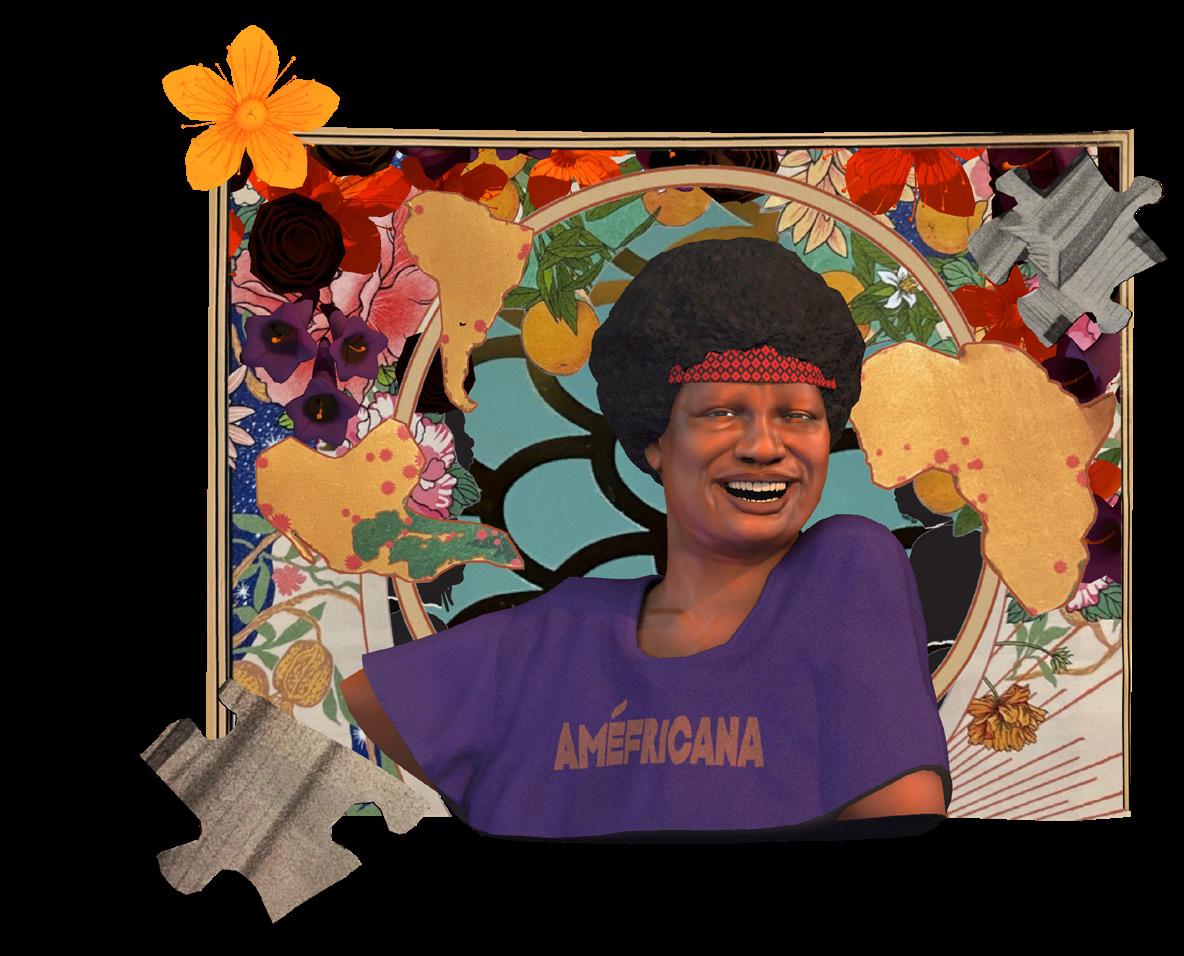
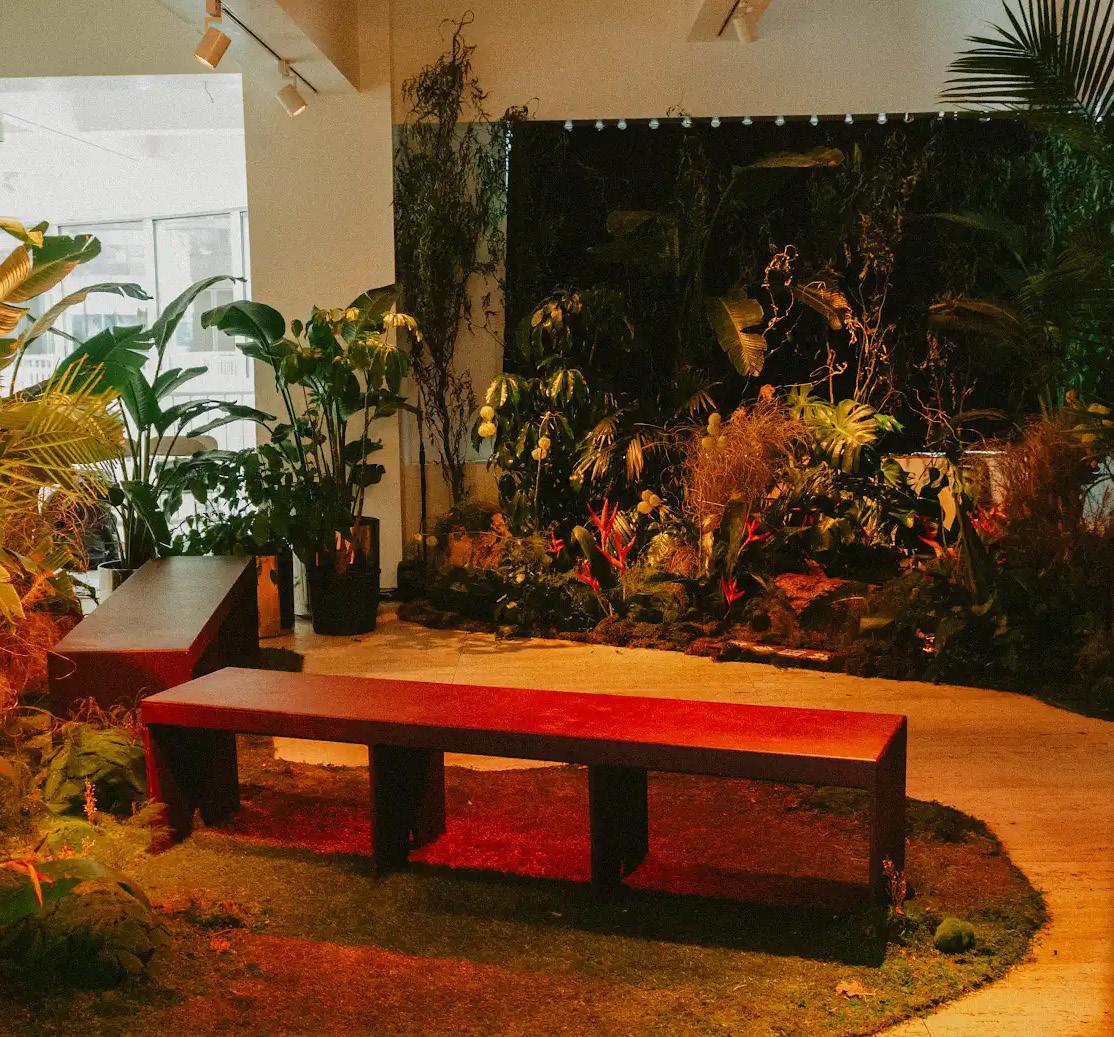
Para Lélia extended beyond the Kinfolk app into a multisensory physical exhibition, allowing audiences to step into the philosophical and cultural world of Lélia.
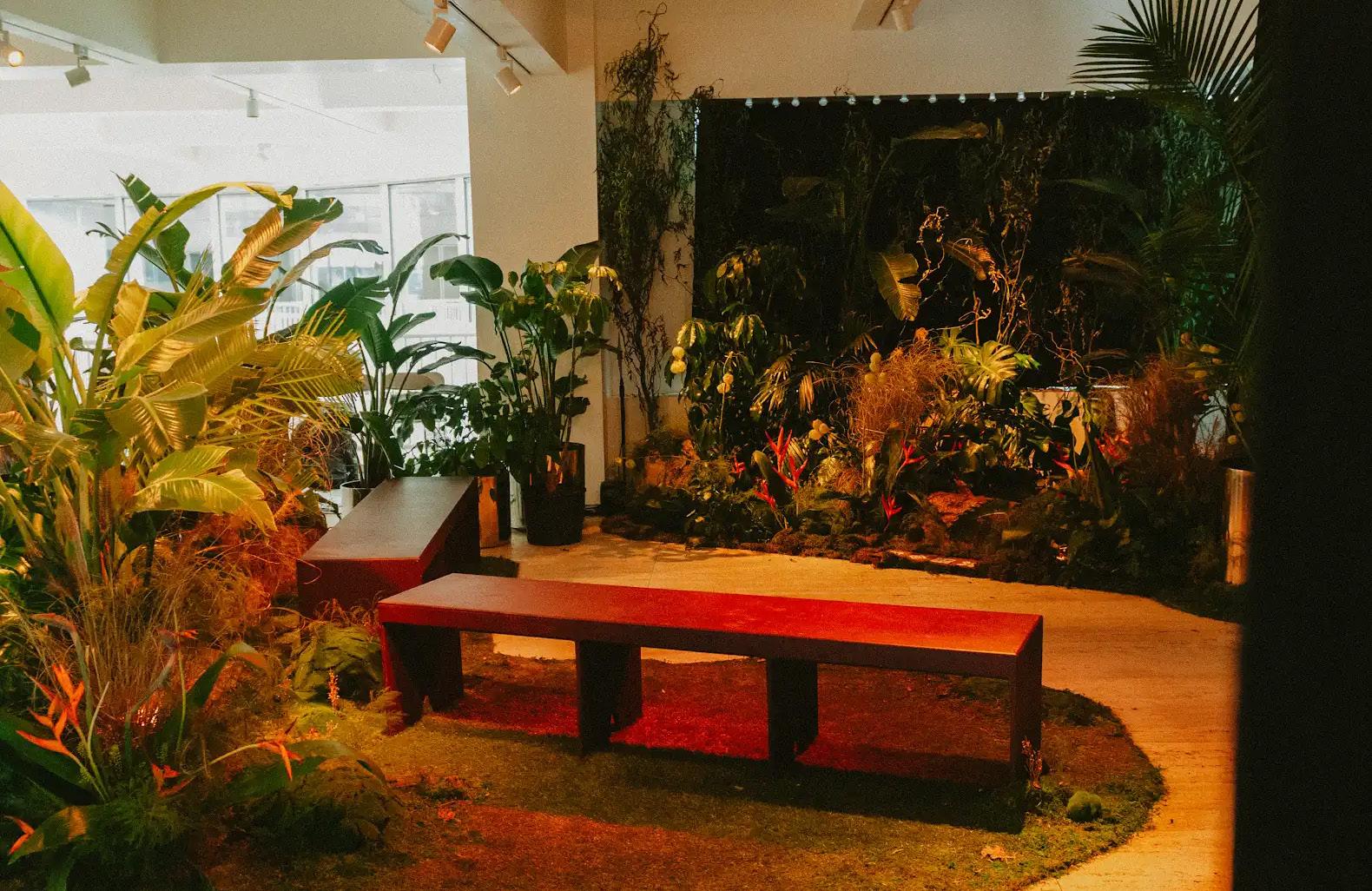
A large-scale projection path reimagined Rio de Janeiro’s pedra portuguesa sidewalks through the lens of améfricanidade, animating patterns, archival textures, and diasporic symbols beneath visitors’ feet. Surrounding the projection, real flora, natural materials, and layered textures grounded the installation in the environments that shaped Lélia’s intellectual and spiritual lineage.
To deepen the sense of embodiment, the exhibition incorporated scent design, filling the room with fragrances inspired by Brazil’s coastal and urban landscapes. This blend of projection, plant life, and scent created an immersive atmosphere that allowed viewers to encounter Lélia’s ideas through movement, sensation, and memory. The result was a living monument, a space where the theory of améfricanidade could be felt, not just understood, inviting visitors into a collage of histories, languages, and possibilities.
Kleaver hopes audiences experience Para Lélia as a “collage of voices, histories, and possibilities”. They also hope viewers leave with curiosity: about González, about Brazil, about the Black feminist lineages that have shaped the hemisphere.
Importantly, Para Lélia is not merely a tribute. It brings forward a revolutionary thinker whose ideas feel even more urgent today than when she first wrote them.
Through this activation, Kinfolk ties the Americas together, with similar yet distinct histories, to show the global reach and connection to the need to preserve our histories.
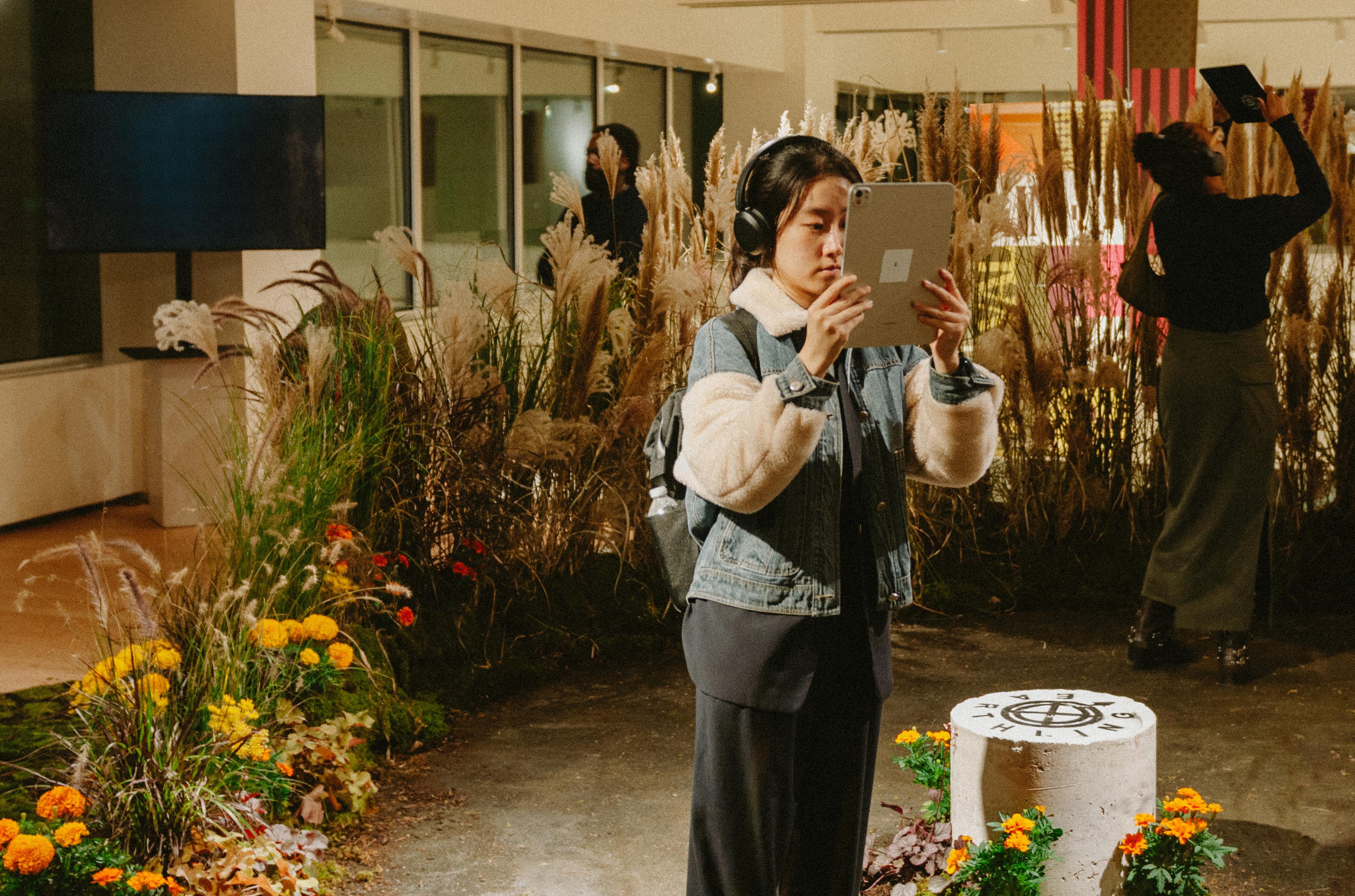
Over four weekends from October 10 to November 2, 2025 | WSA, NYC
KIN: A Festival of Memory and Imagination (KIN 2025) was a cultural festival that transformed public space into a living, breathing archive that resists erasure by centering collective memory, imagination, and care. It operated as a cultural counter-spell, slowing time, restoring narrative power to communities, and creating hands-on pathways to the stories, wisdom, and monuments needed to imagine more just futures. Rather than treating the archive as static, KIN 2025 invited thousands into an embodied experience of memory through sound, movement, food, rest, dialogue, and immersive technology, convening artists, educators, technologists, elders, and youth across four weekends in a shared space designed for connection, reflection, and communal repair.
The festival space was composed as an ecosystem of interconnected environments, each functioning as a portal into collective memory while contributing to a shared atmosphere of rest and reflection. Immersive experiences unfolded across three guiding themes (Home, Earth, and Dreams), each offering a distinct entry point into memory and imagination:
Earth: Sensory landscapes that reconnect visitors to ancestral memory embedded in land, inviting reflection through touch, movement, and deep listening to the stories carried by place.
→ Preservation Park: A living landscape of Kinfolk’s AR monuments that situates preservation as an embodied practice, where walking among past works alongside soil and live plants becomes a meditation on memory as something cultivated and protected in community.
→ Para Lélia: A multi-sensory AR experience rooted in diasporic memory, where projected pedra portuguesa pathways, living plants, natural textures, and scent design inspired by Brazil’s landscapes come together to embody Lélia Gonzalez’s concept of amefricanidade as something felt through movement, land, and the senses.
→ The Futures We Tend: A participatory orchard where the soil becomes an archive, inviting visitors to contribute their voices and imagine what liberated communal spaces might grow into.
Home: Intimate, familiar spaces where everyday objects and rituals hold layers of personal history, grounding visitors in the textures of lived experience while nurturing imagination.
→ For Those Who Come After: A contemplative, tactile space inspired by James Baldwin’s living room, where reflection becomes an act of return, inviting visitors to sit with memory, authorwship, and inheritance, alongside an AIpowered typewriter that enables deeper engagement with Baldwin’s ideas and legacy.
Dreams: Liminal, immersive environments where past, present, and future converge, allowing personal and collective memory to surface through symbolism, imagination, and ancestral wisdom.
→ There Goes Nikki: A cosmic, poetic encounter with Nikki Giovanni’s voice, where Black memory expands beyond the present moment, carrying visitors into a dreamscape of liberation, possibility, and boundless imagination.
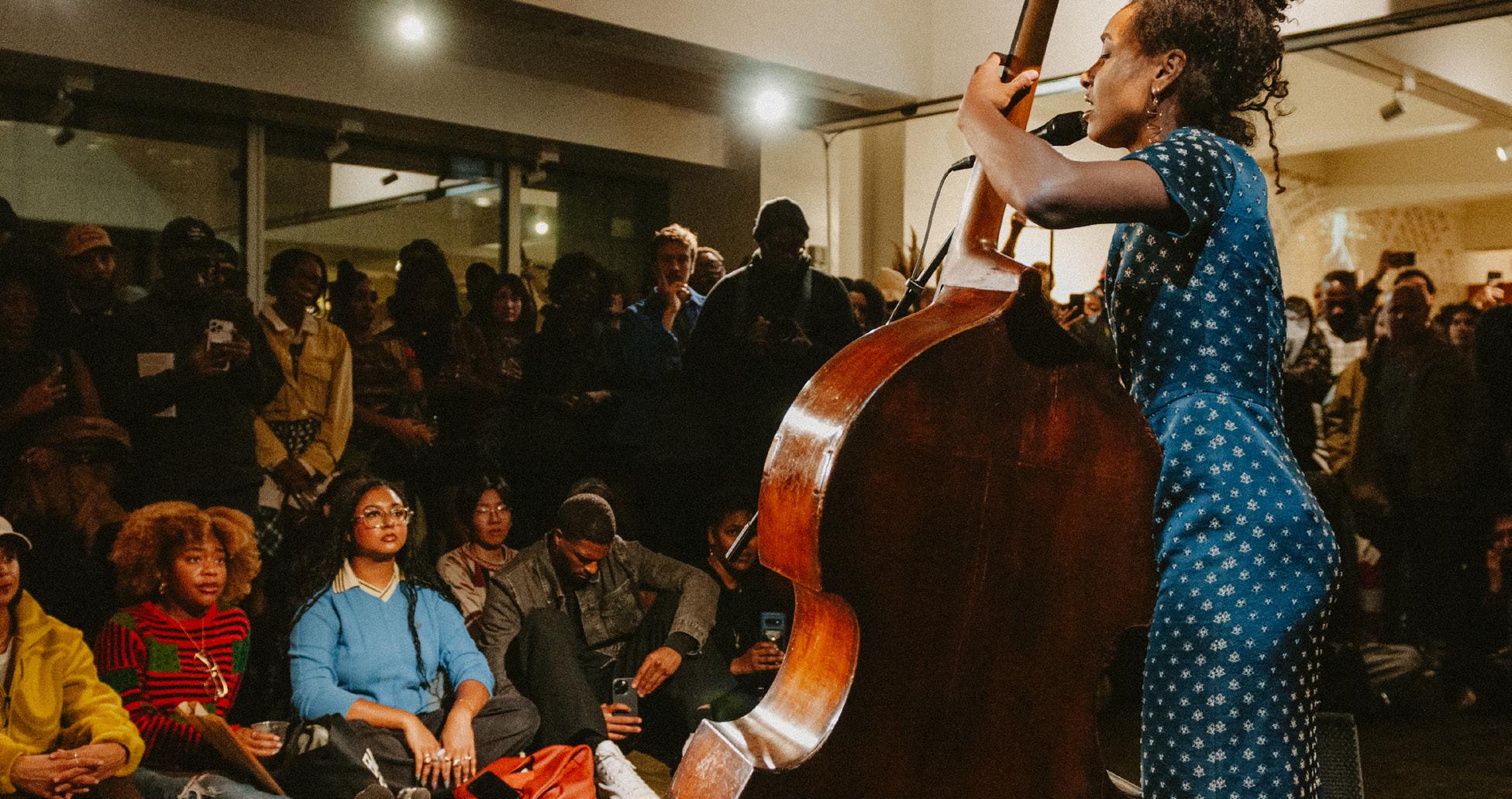
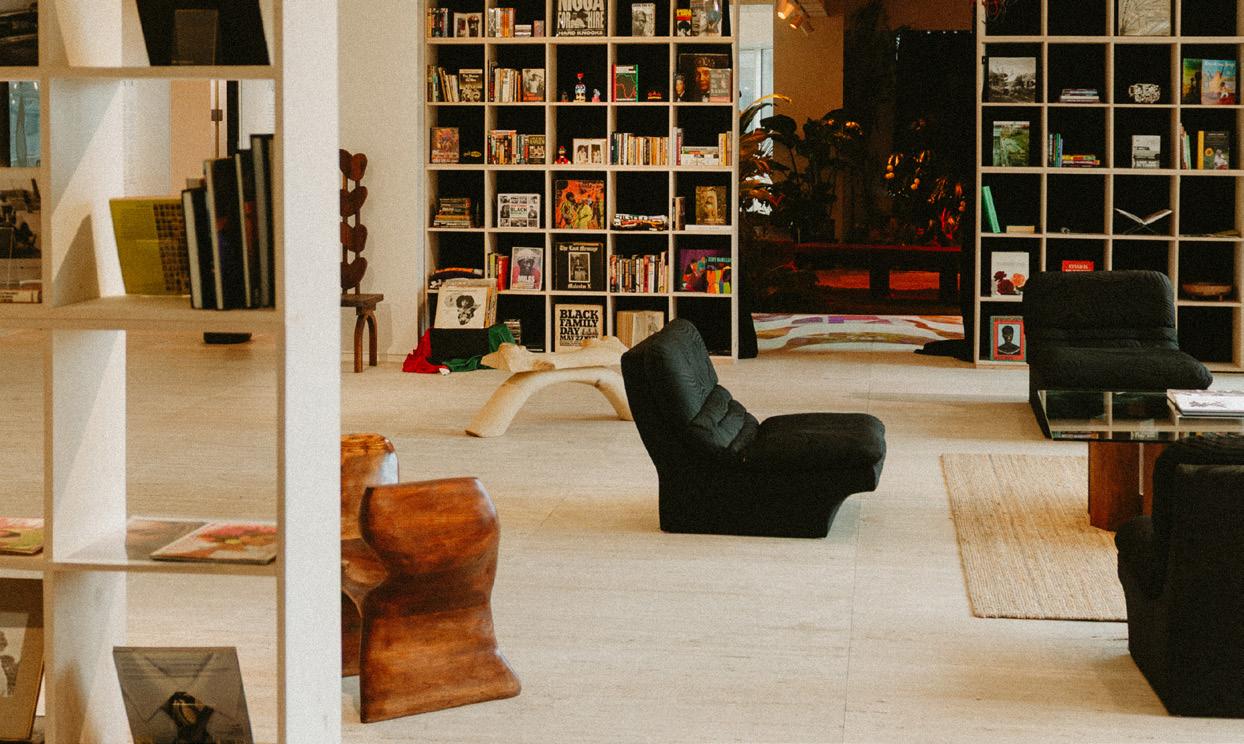
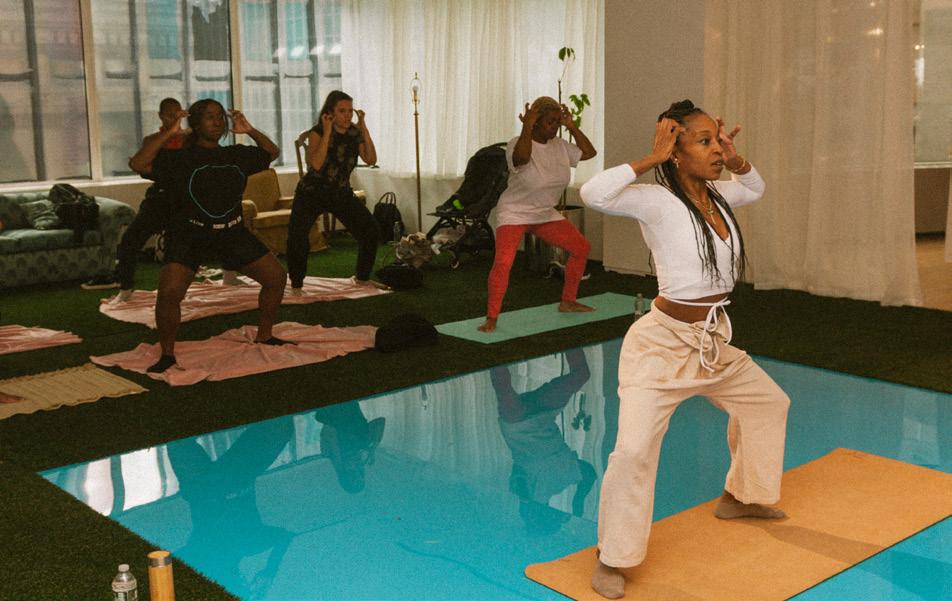
Beyond its immersive installations, KIN 2025 cultivated communal “third spaces” where visitors were invited to linger, gather, and connect. Through shared meals, performances, archival engagement, and spaces for rest and reflection, the festival positioned care, creativity, and collective presence as essential practices of memorymaking expressed through:
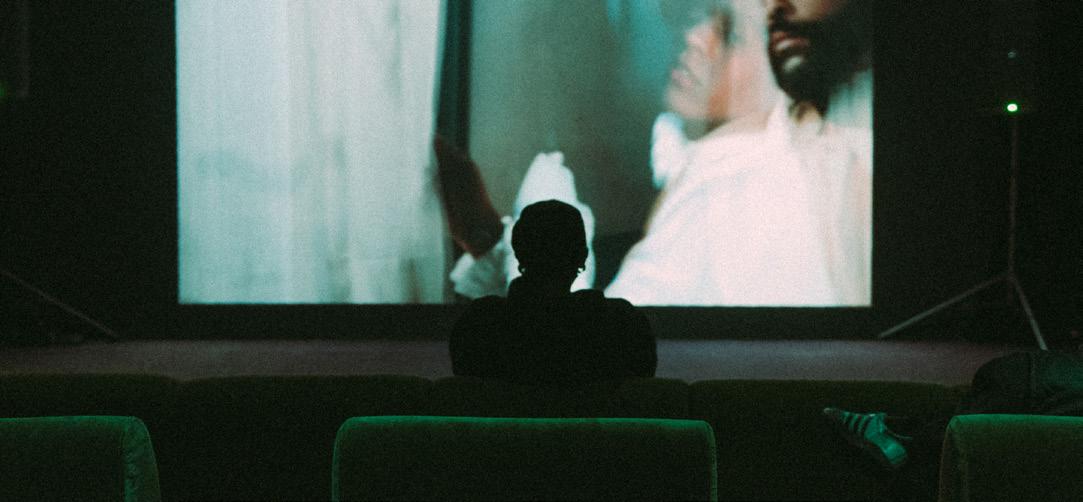
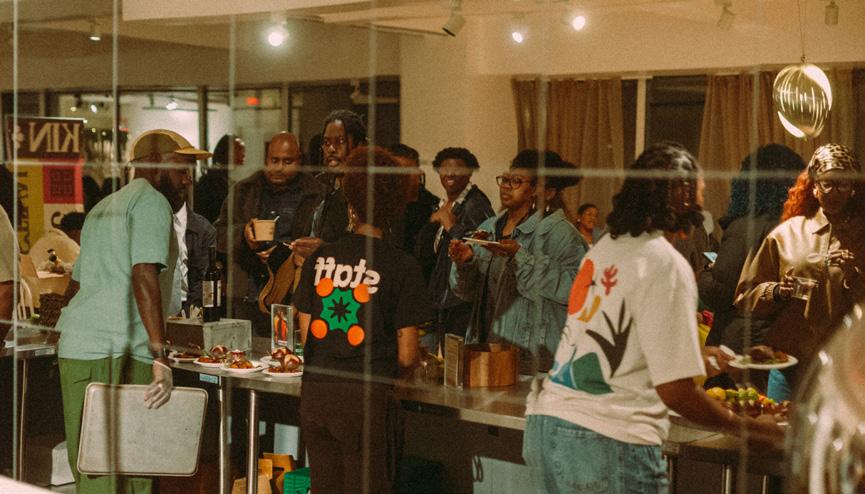
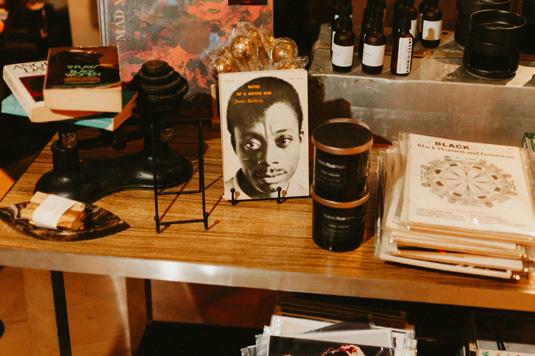
a. Performance Space: Music, movement, and dialogue as collective expression
b. Reading Room & Archives: Hands-on engagement with memory and preservation
c. Projection Room: Film and talkbacks fostering reflection and shared understanding
d. Meditation Space: Rest and stillness as practices of care and resistance
e. KIN Café: Food as ancestral archive, sparking intergenerational connection
f. Marketplace: Everyday artifacts extending the archive into daily life
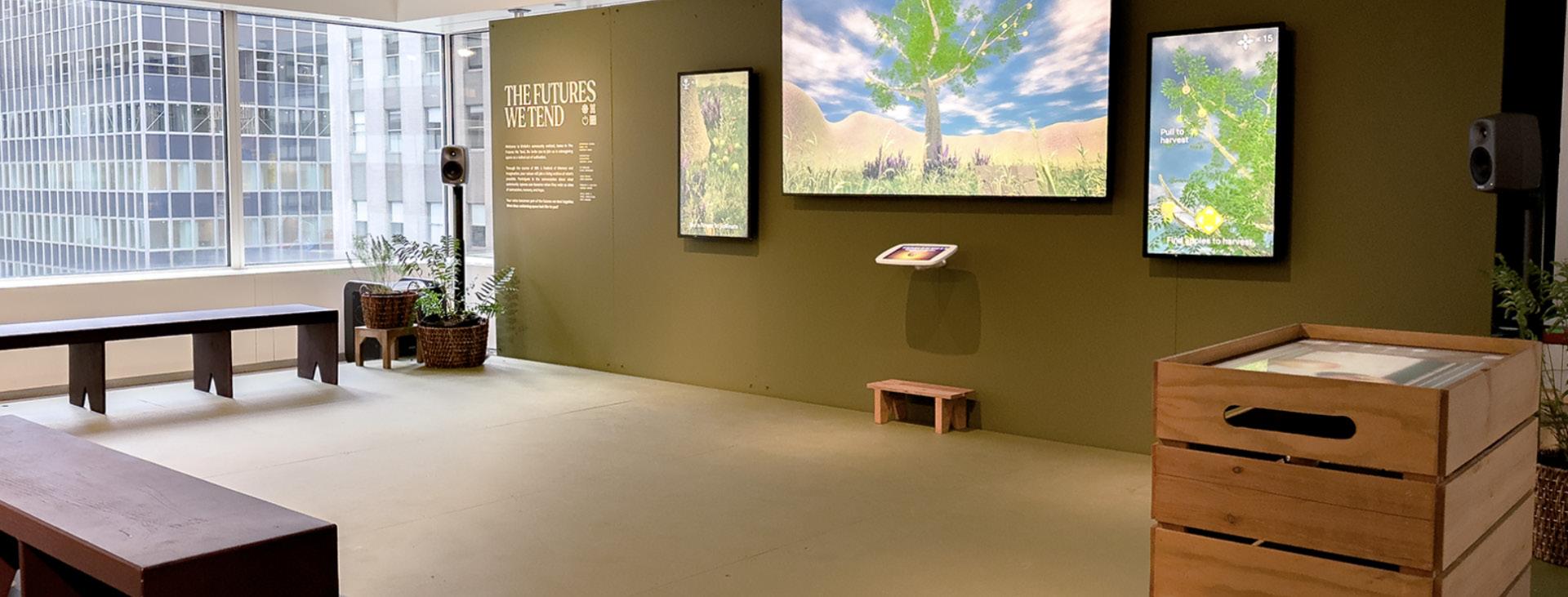
The Futures We Tend is an interactive multimedia installation developed through Kinfolk’s communitycentered R&D process, exploring how technology can support communities in preserving and amplifying their own stories. Presented within KIN 2025, the installation took the form of a living orchard, which served as an emergent archive where visitor voices became seeds for imagining shared, liberated futures.
Rooted in collaboration with storytellers, archivists, and educators, the project was shaped through focus groups, interviews, and surveys across diverse communities. This process surfaced key needs: preserving stories before they are lost, creating embodied and accessible ways to engage history, and ensuring meaningful cultural representation. These insights informed the installation’s design, where participation, care, and memory converge through the act of tending a shared archive.
Over the course of the festival, visitors contributed more than 300 responses to the prompt: What does reclaiming space look like to you? Participants seeded their voices as digital fruit, tended the orchard through interactive gestures, and explored an apple crate with contributions organized into themes such as empowerment, memory, community, and renewal. The installation became a site of gathering and reflection, where visitors lingered, returned with others, and extended the experience beyond the space through conversation and sharing. In this context, technology served as an enabling layer that amplified community voices, preserved individual contributions, and supported the process of collective meaning-making. Responses reflected a shared desire
for belonging, healing, and self-determination:
→ “It looks like growing roots, watering my spirit, and stretching my wings.”
→ “Using indigenous wisdom to shape the future.”
→ “Breaking the rules. I want to use space in ways it was not assigned to be used, respectfully. I want to occupy space in a way that wasn’t planned or decided. I want to enter spaces where I’ve been deemed not allowed. I want to feel incredibly present, activated and inspired, and I want to be”
Reclaiming space means to restore senses of activation, recommuning with flora, fauna, and each other as a means of healing and convening with our distant relatives. To restore soil. To read together. To play together. Cook for each other. Share seeds. This is resilience nested in reclamation.
The Futures We Tend demonstrates the potential of community-driven, living archives as a form of narrative infrastructure. As Kinfolk expands this work, the installation points toward future applications in public spaces, digital platforms, and replicable methodologies that center ethical, participatory storytelling and collective imagination.
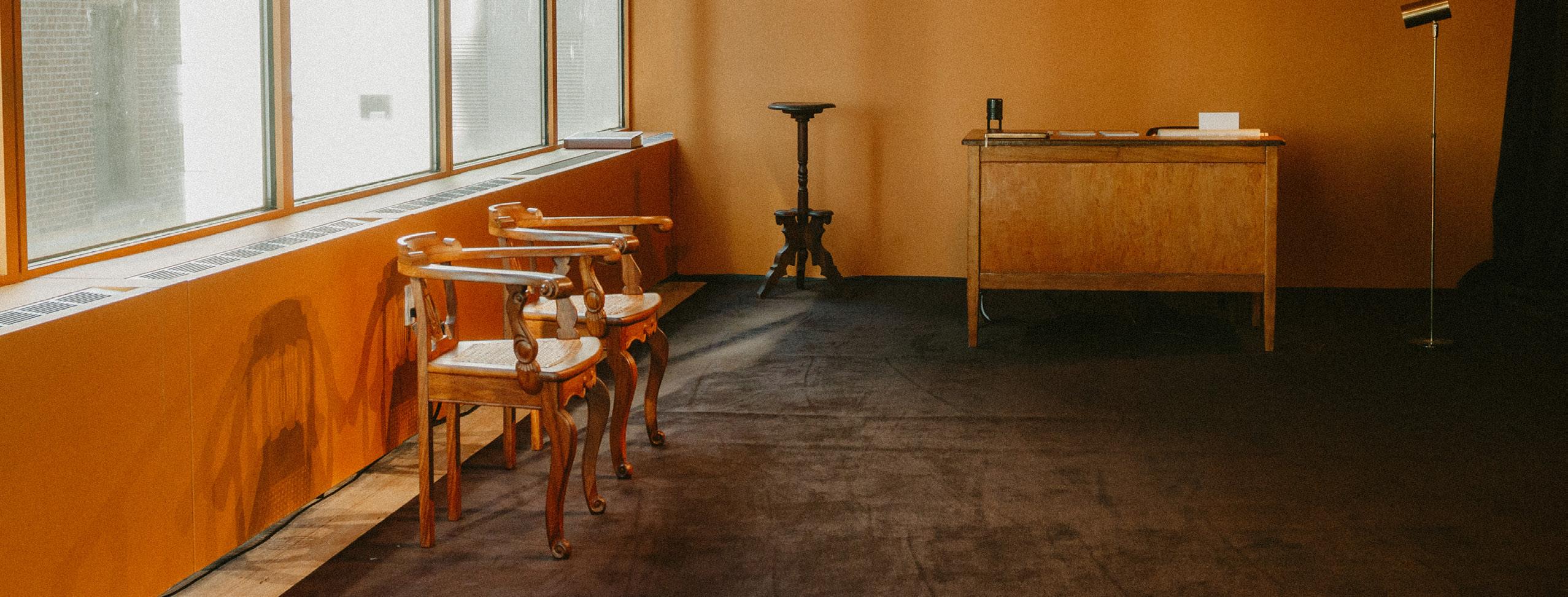
For Those Who Come After transforms James Baldwin’s archive into an intimate space of guidance and intergenerational dialogue. Presented within KIN 2025 and catalyzed by Baldwin’s centennial, the installation centers on M.A.V.I.S. (Memory, Ancestry, Voice, Insight, Spirit), an AI-powered typewriter situated within a living room inspired by Baldwin’s personal spaces. Visitors posed questions and received responses drawn directly from his writings, creating a reflective encounter with his enduring ideas on identity, justice, and liberation.
Rooted in collaboration with the Baldwin United Fund and scholar Dr. Frank Leon Roberts, the project established a clear ethical foundation: technology would not simulate Baldwin’s voice or generate new language in his style. Instead, Roberts curated a dataset from lesser-known Baldwin materials, organized thematically to guide meaningful engagement. In partnership with Innergalactic, this scholarship was translated into an immersive experience, demonstrating how humanitiesled design can expand access to cultural memory while preserving integrity.
The installation recreated a living space Baldwin might have once occupied: a television screening his 1971 conversation with Nikki Giovanni, a listening station with records from his collection, and M.A.V.I.S. positioned as a site of dialogue. Visitors typed personal questions, received responses grounded in Baldwin’s writings, and drew from cards including Wisdom, Courage, and Love, with each offering cited quotations. The slow, tactile process of typing, waiting, and holding the printed exchange transformed the archive into a space of contemplation, where reflection became an act of return.
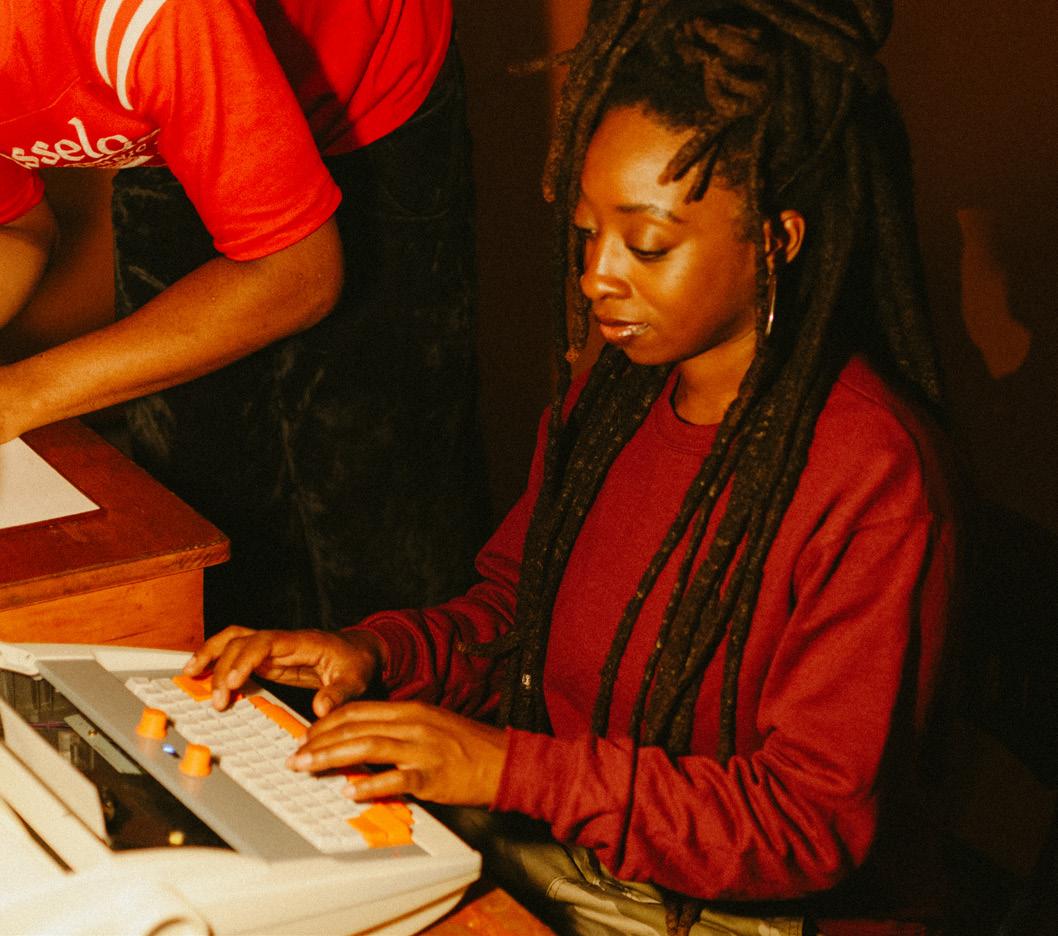
Over twelve days, visitors lined up for intimate sessions, drawn to the emotional and tactile resonance of the experience. Typing on the typewriter, pulling cards, and sitting within the space created a deeply embodied encounter with Baldwin’s legacy. Participants lingered, returned, and shared their experiences, engaging across generations with questions of identity, justice, and belonging. Responses were grounded in curated texts with clear citations, ensuring fidelity to Baldwin’s words. The design emphasized restraint and care, allowing visitors to engage directly with the archive while technology quietly supported connection, reflection, and discovery. Notably, audiences who typically approach AI with warranted skepticism engaged comfortably with M.A.V.I.S. The project was also featured in The New York Times, contributing to broader conversations about ethical AI in the humanities.
For Those Who Come After establishes a replicable model for humanities-led AI: one where experts curate, stewards maintain control, and technology connects people to original voices rather than generating imitations. As the project evolves, Kinfolk is expanding this work through a web-based platform (launching in private beta in 2026) and exploring partnerships with cultural institutions, archives, and communities seeking to activate their histories through ethical, participatory tools.
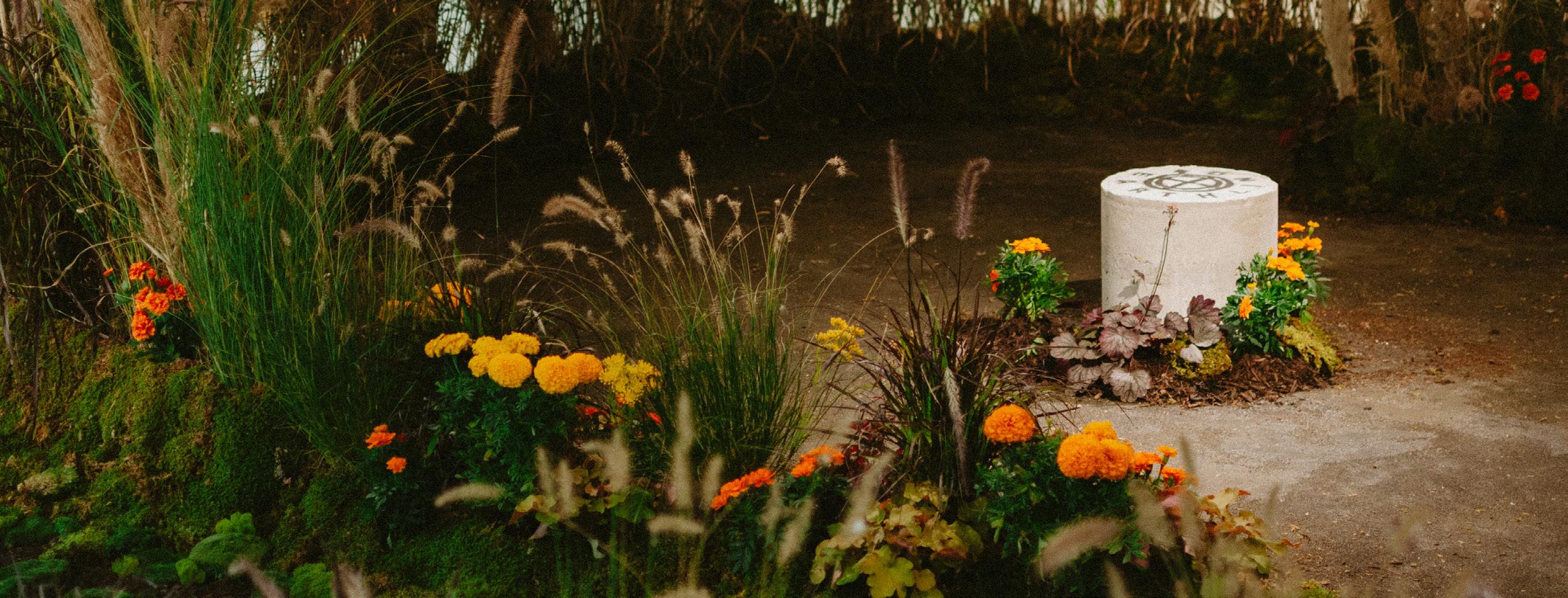
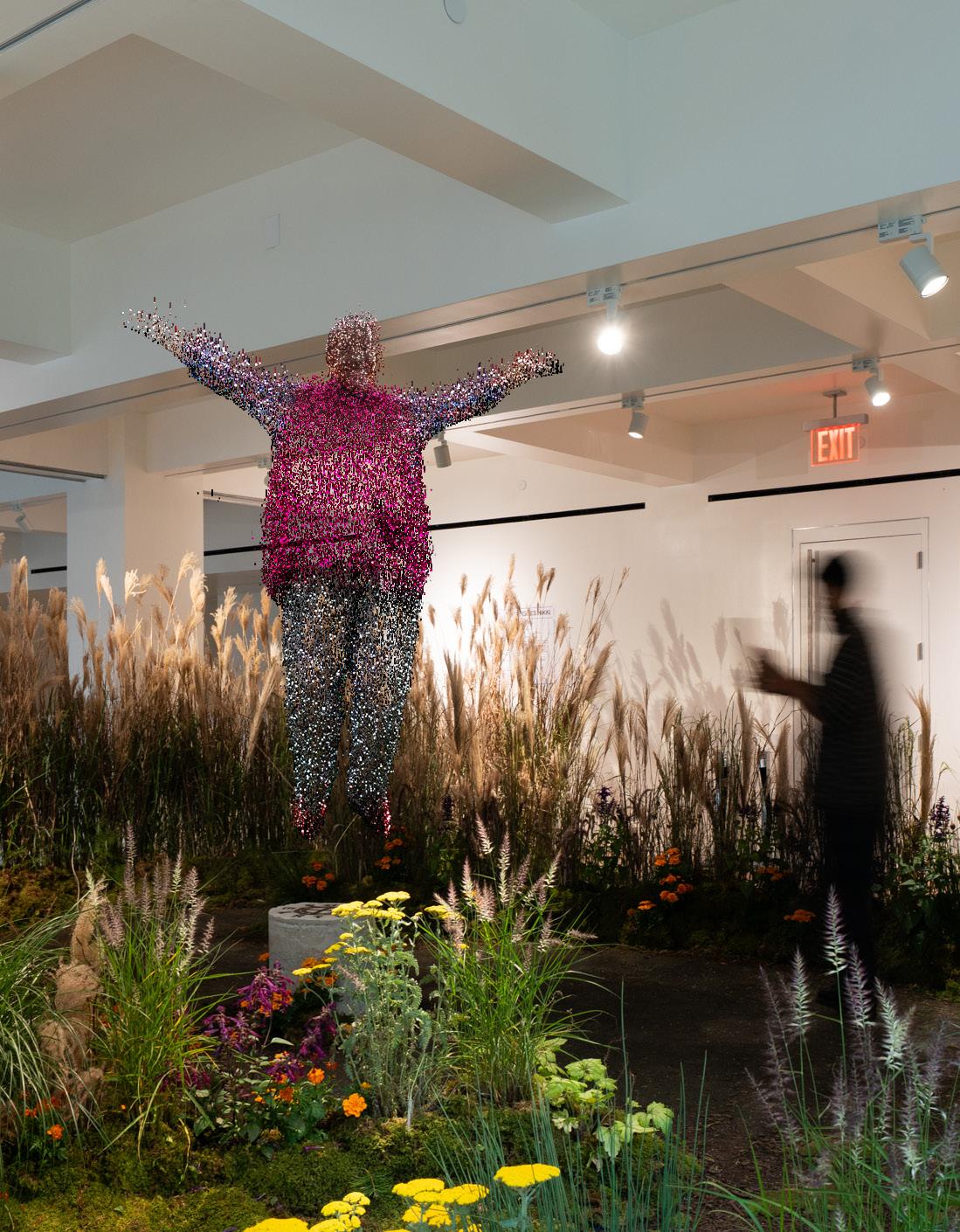
There Goes Nikki is an immersive AR ode honoring the legendary poet, activist, and intellectual Nikki Giovanni in which she recites her poem “Quilting the Blackeyed Pea (We’re going to Mars)”. Set against a cosmic backdrop and guided by her voice, the experience leads viewers on a journey through Black memory, imagination, and liberation. As a featured installation at KIN 2025, guests were welcomed into an experience that blends nature, technology, and storytelling.
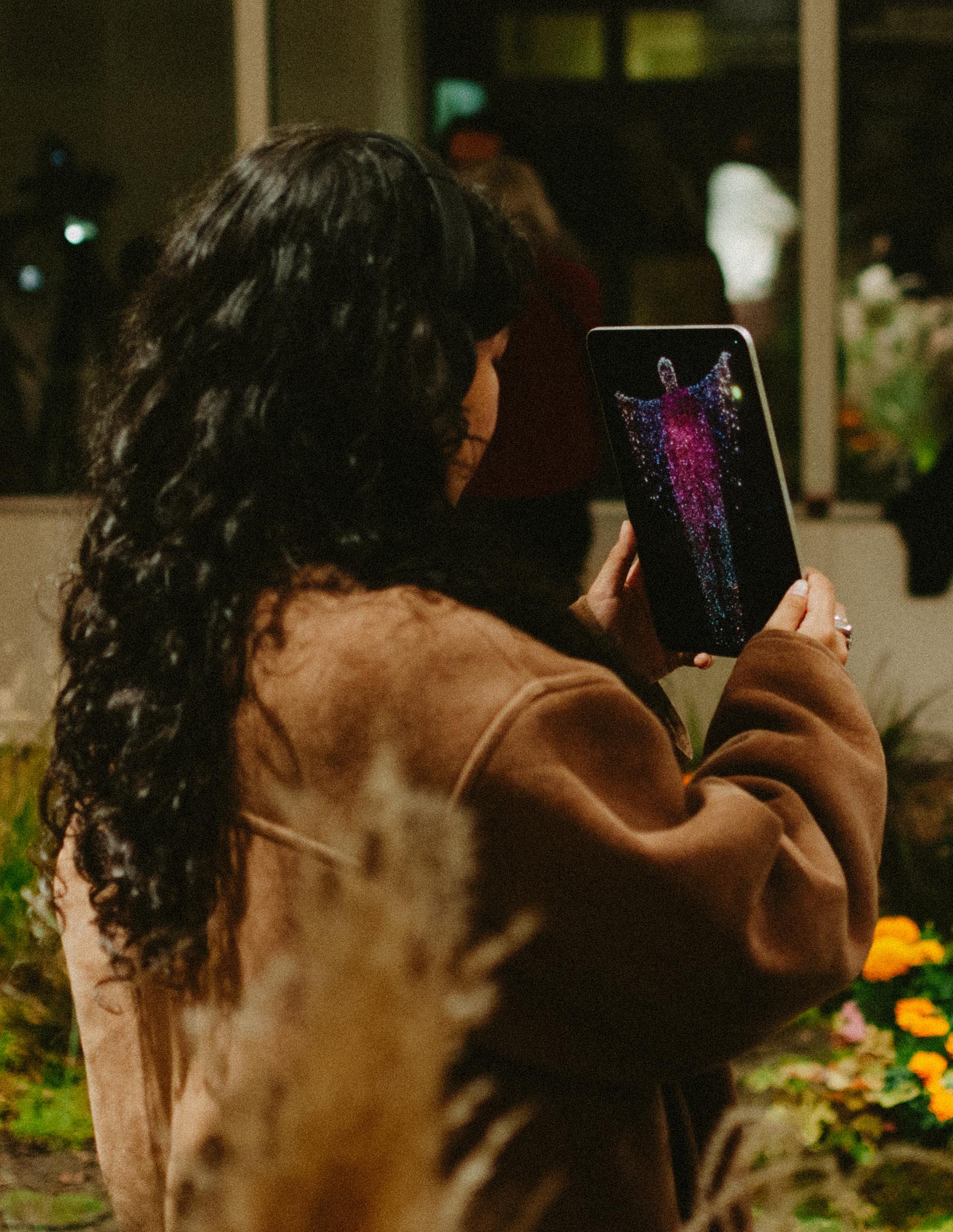
At Kinfolk, we have had the honor and privilege to work with our living elders and families of our ancestors. Working with Nikki was the experience of a lifetime; these projects hold so much weight, emotion, and importance. There is no other option but to treat these legacies with care and intention. That is why we had to pull out all the stops when she graciously opened up her life to us. We used a technology called volumetric capture to create a “hologram” of Nikki reciting her poem, portraying Nikki in a realistic style. People who have engaged with There Goes Nikki often express how the experience feels spiritual for that exact reason; reading the poems off the page is one thing, but being able to feel as if you are there in the room with a poet as they read directly to you is one of a kind.
The smell of fresh flowers gently embraced the senses as a spiral garden of live African marigolds and greenery fashioned into an altar to the late famed poet. The spiral, reminiscent of diasporic patterns and cosmic cycles,
invites viewers into a reflective, almost sacred space where Nikki’s image and voice become a portal.
A short video introduces Nikki and her legacy of work, preparing viewers for the intergalactic journey. Adorned with an iPad and headphones, viewers are given a new lens through which to view the space as AR visuals and a gentle soundscape blend into the physical world. As Nikki’s voice begins reciting her poem “Quilting the Black-Eyed Pea (We’re Going to Mars)” themes of space, memory, water, the transatlantic slave trade, and Black futurism become the guiding narrative for the journey from Earth to the oceanic past and finally to the stars. We conclude with a reflective offboarding video that further grounds viewers in Nikki’s imaginary landscape.
There Goes Nikki is more than a technical innovation, it’s a creative departure grounded in nature, family, reverence and radical Black imagination.
There Goes Nikki began as a partnership with the documentary film Going To Mars: The Nikki Giovanni Project and its directors, Joe Brewster and Michele Stephenson of Rada Studio. This partnership showed us what becomes possible when a film's impact campaign extends beyond the theater. Whether rooted in the life of a living elder, a place, or a moment in history that rarely surfaces in public memory, we believe immersive technology and community-centered design can turn a film into a living monument that brings the community in to experience the film in new ways. Moving forward, we are actively seeking partnerships with filmmakers, distributors, and impact producers who want to bring the stories and histories woven into their work directly to the communities those films were made for.
KIN 2025 demonstrated Kinfolk’s ability to operate simultaneously as a deep community experience and a highvisibility cultural platform.
160,300,714 moments of
Across press, digital platforms, email, and in-person engagement, KIN 2025 emerged as a widely shared cultural moment, amplifying stories rooted in Black, Latinx, Asian, Indigenous, and Queer community memory on both national and global scales.
If reach tells us how far KIN 2025 traveled, time tells us how deeply it resonated. The experience was intentionally designed to support both:
→ Short, meaningful encounters for casual or first-time visitors
→ Long, layered journeys for those who wished to stay
On average, users interacted with four to five AR monuments per visit in the Preservation Park section of the exhibit, placing AR monuments, reading the biographies and archival material, and returning to multiple monument stories in a single session.
→ Press and Earned Media
National and cultural outlets
including The New York Times, NY Magazine, anwd ELLE Decor carried KIN 2025 into millions of homes.
→ Digital and Owned Platforms
Social media, newsletters, and app stores extended the festival beyond a single visit.
→ In-Person Programming
Thousands gathered at WSA for workshops, performances, screenings, and communal experiences.
This layered distribution ensured that KIN 2025 was encountered across contexts (online, in community, and in conversation).
Beyond visibility, the festival fostered deeper connection, transforming attention into sustained participation.
→ 1,256 new app downloads during the festival period
→ 963 new event calendar (Luma) subscribers opting into ongoing connection
→ 212 new newsletter signups choosing continued dialogue
These conversions represent a shift from encountering KIN 2025 as an event to recognizing it as a living ecosystem of memory and care.
→ Up to 2 hrs of total time spent across one or more sessions
→ Engagement with many, if not all, of the 10 AR monuments, often revisiting the same stories.
→ Deep reading of archival materials cards, extended exploration, and return behavior over multiple days.
→ Kinfolk’s flexible approach enabled visitors to follow their own rhythm, which opened pathways to sustained engagement.

KIN 2025 invited reflection, with 167 visitors sharing their experiences with us, resulting in the following survey results that provide support for our storyto-action continuum.
87% of respondents agreed or strongly agreed that “I learned about a history or perspective that I was not previously aware of.”
92% of respondents agreed or strongly agreed that “The stories were told in a way that felt genuine and respectful.”
A defining goal of KIN 2025 was to help visitors move beyond isolated historical facts toward a clearer understanding of how history lives inside contemporary systems.
This result reflects Kinfolk’s community-centered methodology: stories told with communities, grounded in lived experience rather than abstraction.

86% of respondents agreed or strongly agreed that “This experience helped me understand how historical events are connected to the systems and realities we face today.”
Rooted in Kinfolk’s Story-to-Action Continuum, this experience guided participants from encounter to potential action.

90% of respondents agreed or strongly agreed that “I am more motivated to support efforts that preserve excluded histories and promote equity.”
93% of respondents agreed or strongly agreed that “I plan to share what I experienced or learned with others.”
Participants articulated this desire plainly:
“I loved this, bring more to different cities so we can experience and connect all across the diaspora!”
KIN 2025 extended beyond a festival, serving as:
→ A proof of concept for immersive, community-authored narrative infrastructure
→ A field intervention demonstrating ethical uses of immersive tech for public memory
→ A scalable model adaptable for museums, schools, libraries, cities, etc.
This sharing impulse, combined with repeat visits, app downloads, and social amplification, positions KIN 2025 as a multiplier, extending impact through personal networks and ongoing engagement.
As one participant wrote: “I love the work that you guys are doing. I was introduced to Kinfolk and left thinking about the future we want to live in through art, tech, and community.”
1. Monument Lab. (2021). National monument audit. Mellon Foundation.
2. PEN America. (2024). Banned in the USA: The growing movement to censor books in schools.
3. Green, M. C., & Brock, T. C. (2000). The role of transportation in the persuasiveness of public narratives.Journal of Personality and Social Psychology, 79(5), 701–721.
4. Mezirow, J. (1991). Transformative dimensions of adult learning. Jossey-Bass.
5. Reñosa, M. D. C., Perry, K. E., Srivastava, S., Rawat, A., Orth, Z., Tran, P. B., et al. (2025). Representation, activism, health promotion, and communication: The role of art in advancing global health and social justice. PLOS Global Public Health, 5(1), e0004761.
6. Ke, Z. (2025). Values and challenges of participatory art in urban and community development: a 10-year systematic review. Frontiers in Sociology, 10, 1571383.
7. Ngo, B., Lewis, C., & Maloney Leaf, B. (2017). Fostering Sociopolitical Consciousness With Minoritized Youth: Insights From Community-Based Arts Programs. Review of Research in Education, 41(1), 358-380.
8. Ong, P. M. (2020). COVID-19 and the digital divide in virtual learning, Fall 2020. UCLA Center for Neighborhood Knowledge.
9. Mansour, N., Aras, C., Staarman, J. K., & Alotaibi, S. B. M. (2025). Embodied learning of science concepts through augmented reality technology. Education and Information Technologies, 30(6), 8245-8275.

There is a particular kind of grief that attaches to photographs found in antique stores. Someone’s grandmother, someone’s wedding day, someone’s child in a christening gown. The images survive but the names have detached. This is what happens to memory without infrastructure.
We think about the community archives across this country doing powerful, underfunded, largely invisible work. We think about families holding histories in boxes, in recordings, in the minds of elders who won’t live forever. The next phase of our work asks what it would mean to create conditions for these scattered holdings to find each other.
We are building participatory infrastructure: tools that allow people to contribute their stories directly, retain ownership of what they share, and see their histories in relationship to the histories of others. The goal is connective tissue. A way for someone in Los Angeles researching their family’s migration to encounter the work of a community archive in New Orleans, and for that archive to know their holdings have traveled, have mattered, have reached someone they couldn’t have anticipated.
In 2026, we deepen our presence in three cities. New York remains our anchor. Chicago becomes a second site, where we are building partnership with the Rebuild Foundation around the Johnson Publishing archives. A third city will emerge from relationships already
forming. We expand the Community Memory Fellowship, supporting more local practitioners in building their own monument projects. We continue developing Community Voice tools, the infrastructure that lets people contribute stories in their own words, on their own terms. And we mark America’s 250th anniversary by asking whose stories have been told and whose have been deliberately obscured.
The political environment makes this work harder and more necessary. Book bans continue. Curriculum restrictions multiply. The communities we serve face material pressures that technology alone cannot address. We hold this tension. We proceed anyway.
And still there are people who want to tell their stories. And still there are communities building archives in church basements and spare bedrooms. And still there are young people who encounter a history they didn’t know and feel something shift.
We are building for them. We are building with them. We are building toward a future where the infrastructure of public memory belongs to the people whose memories it holds.
Kinfolk’s work has been generously supported by donors who believe in preserving arts, culture, and advancement for future generations. By investing in the future of arts, technology, and history, we are not only able to preserve history by creating instrumental infrastructure networks of memory, collectivism, and education. By activating the archives we are able to shape the future. We are proud to have our work upheld by the following organizations:

Mellon Foundation
Omidyar Network
MacArthur Foundation
Hearthland Foundation
AGOG
Ford Foundation
Liberation Ventures

Growhouse
Gabrielino Tongva Tribe
Nasher Sculpture Center
Project Say Something - Alabama
Broad St. Community Connections
Community Book Center
Montalvo Arts Center
Black Quantum Futurism
GirlTREK
Black Gotham NYC
Noname Book Club
Stonewall National Monument Visitor Center
Children's Creativity Museum
National Center for Civil and Human Rights
The Clemente Soto Vélez Cultural &
Educational Center
NYC AIDS Memorial
Brooklyn Bridge Park
NYC Tourism
New Museum/NEW INC
ONX Studio
Lefferts House
Rada Studio
Museum of Modern Art
The Aspire Higher Foundation House
Black Film Archive
Black Women Radicals
Baldwin Family Estate