State of the University
February 2026
Timothy E. Sams, Ph.D. President
February 2026
Timothy E. Sams, Ph.D. President
1.Year in Review
a. Divisional Reports
b. Athletics
c. Information Technology
d. Campus Safety
e. Other Updates
f. 60 Anniversary
2.Budget, Enrollment & Advancement
3.SUNY System Update
4.Capital Projects
5. Looking Ahead
a. Performance Planning
b. Leadership Concerns
c. Putting Students at The Center of our Future
d. STEAM Advancement
e. AI to EI Initiative
a. Student Success and Academic Momentum
b. MSCHE
c. Professional Developmen
6. Achievements & Appreciation
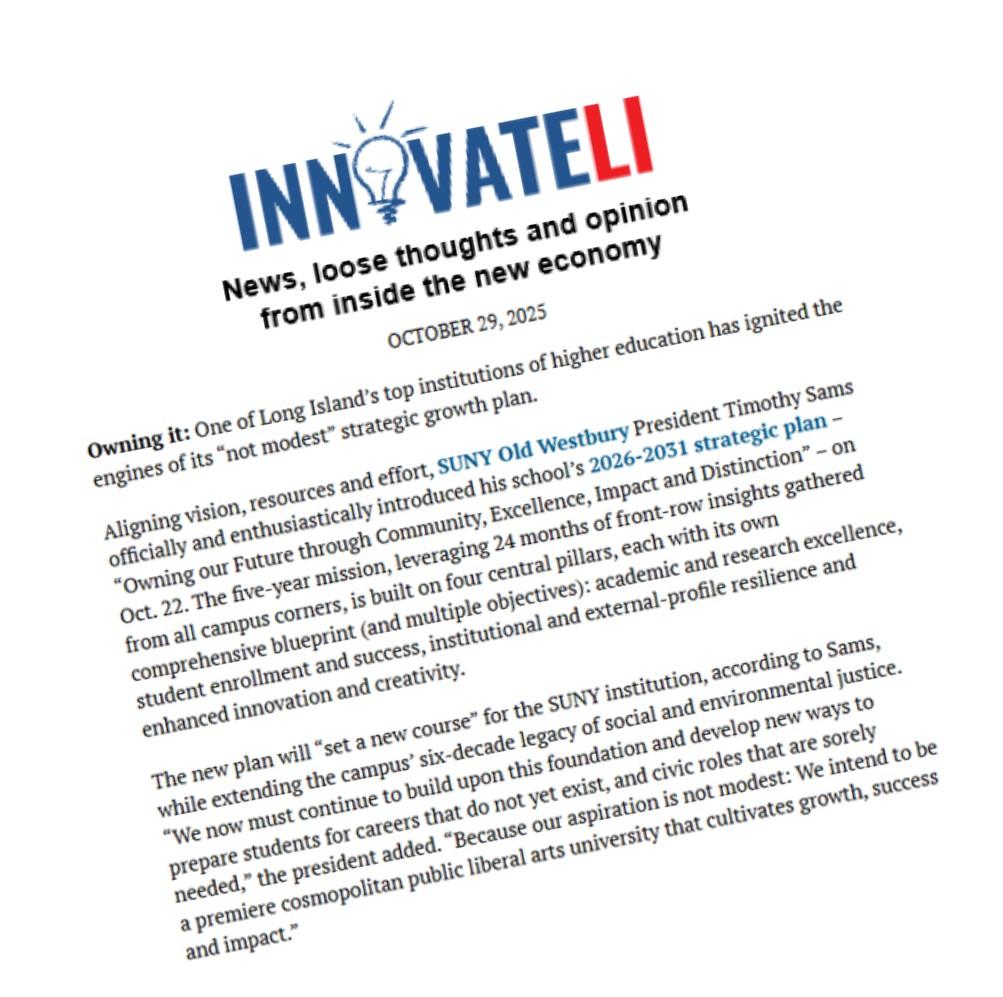
• New Strategic Plan
• Enrollment & Housing are up
• Employee compensation is up
• Branding is improving
• Our faculty continue to be productive
• Launching new & high impact programs
• Our budget is fully funded

• Enrollment (The Cliff)
• Fluctuating student success metrics
• Budgetary (State/Fed.) instability
• Employee Satisfaction
• Curriculum pressure/competition
• Higher Education Competition
• Rate of change
• Capacity vs Need

Updating and revising curriculum to meet student interests and job market needs:
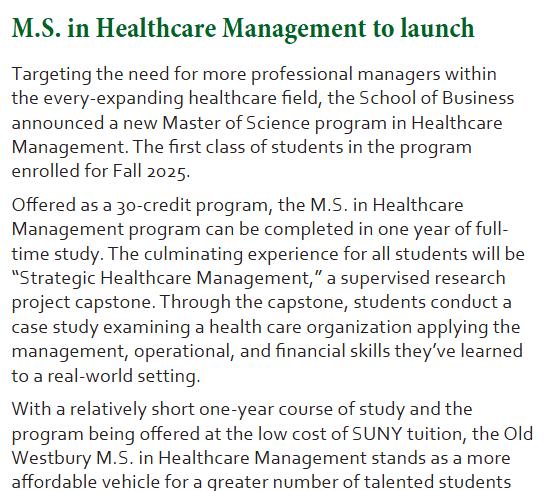
• Launch of M.S. in Healthcare Management, continuing move into healthcare and expanded work opportunities
• Approval received for M.S. In Teaching English as a New Language
• B.A. in Data Analysis and A.I. approved by SUNY for submission
• SOE launched a new Residency Program in partnership with the Academy Charter School in support of the M.A.T. Mathematics program
• LOIs submitted for programs in media production, integrative neuroscience, and applied behavior analysis
• Expanded OW STEAM interdisciplinary offerings
• AI literacy leadership growing through workshops and credit-bearing courses
• Back-to-School Reception, 9/16/26
• Faculty Teaching and Learning Forum, 1/22/26
• Record investment in faculty development
• TRICE Room opening
• Expanding the impact of CETL Redoubling efforts to promote student access and success:

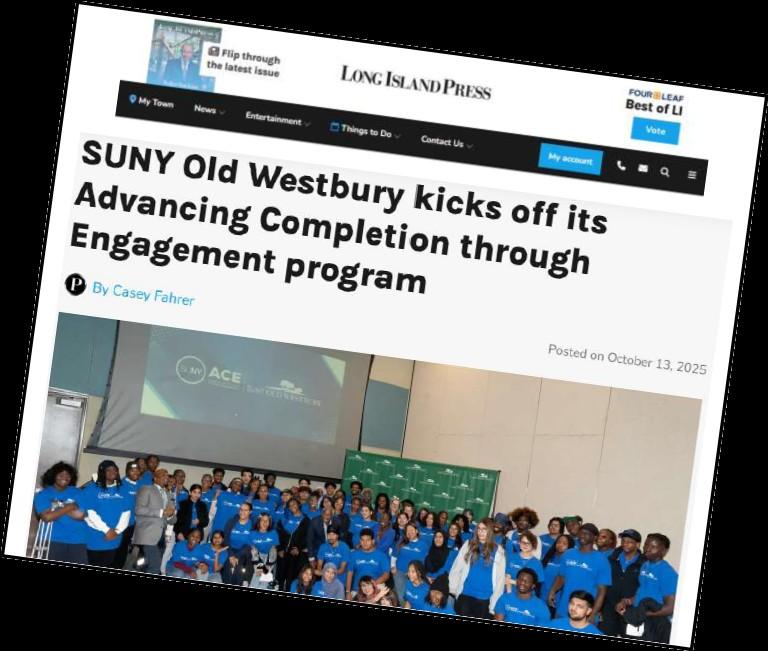
• First class of ACE scholars admitted in Fall 2025
• Growth in EOP program
• Participation in the SUNY Academic Momentum program
• Expansion of library digital collections and archival access
• $170K for "Nursing Education Pathway, to expand our partnership to grant more Old Westbury graduates seamless transfer into SUNY Downstate
A c a d e m
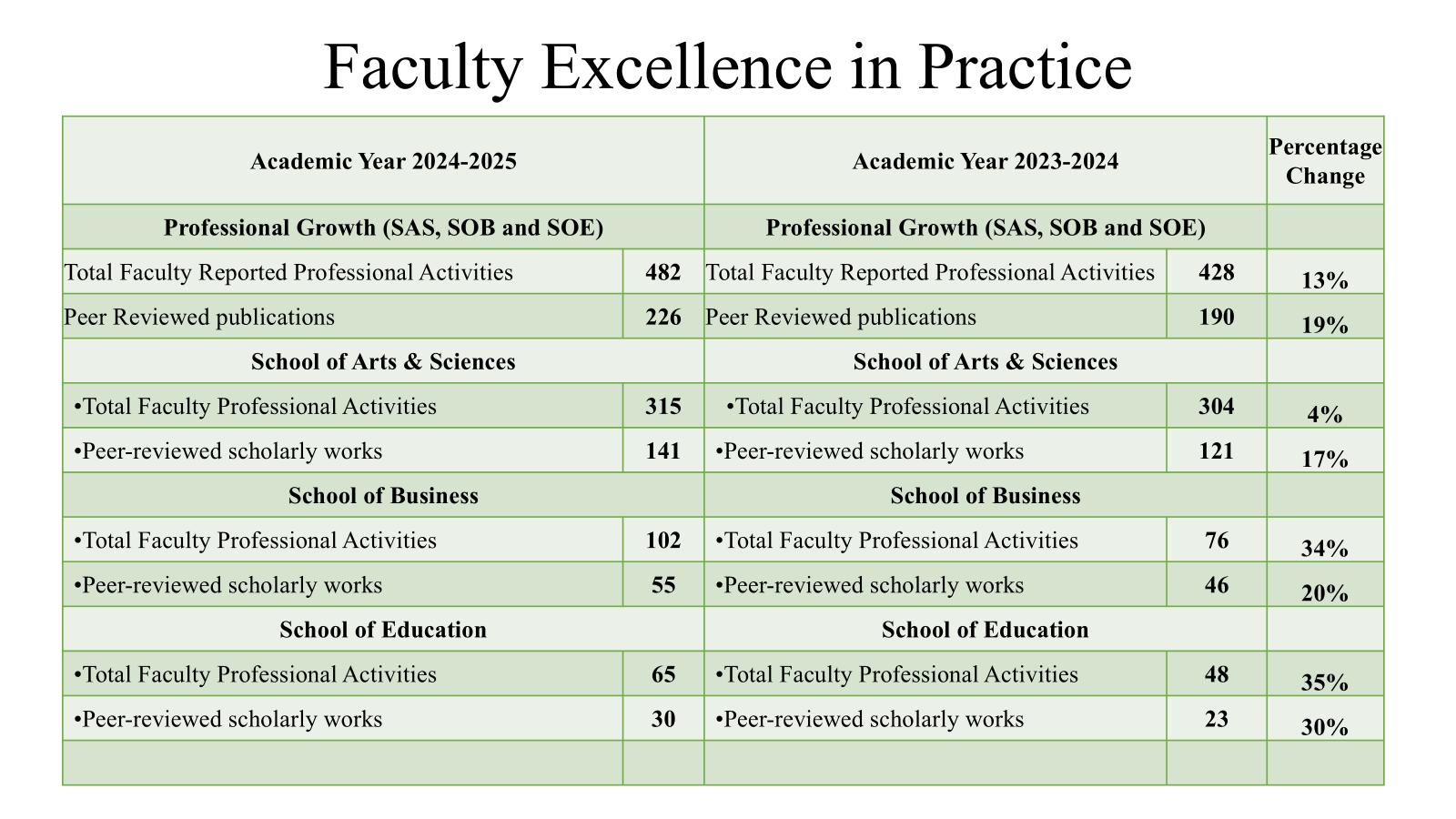
Source: Annual Faculty Reports AY 2024-2025 and AY 2023-2024
5,000,000.00
• Lowered accessibility-related errors on the public website from 3.04 per page to 0.01 per page
• Launched "Viewpoint with Dennis Quaid" segment regarding SUNY Old Westbury, (incl. national TV ad, running nationally on public television stations)

• Enhanced social media programming (incr. viewership and engagement)
Highlights
• Completed the new Strategic Plan
• Launched Inaugural Founders Day Updates
• Compliance Updates
o Finalizing the College-Wide Emergency Response Plan
o Emergence Response pocket guide
o Emergency Guide materials (distribution Spring 2026)
o Establishing the comprehensive OW Policy Repository
o Completing the NCAA Compliance Review of Athletics infraction
• Child Care Program Expansion and Upgrades
o Invested $100,000 for educational materials, kitchen upgrade
o Enrollment is now 73
• Re-launching Presidential Committee as we speak
security system
• Serving 1,700–2,000 students and family members per month through food, emergency aid, and case management
• OW- selected as one of three SUNY campuses for targeted housing stability support through SUNY’s Individualized Technical Assistance (ITA) for Housing Insecurity Initiative
Expanded Mental Health and Medical services
• ~300 Counseling Visits and 470 Medical Visits per month
• Increased prevention efforts (Narcan, CPR, and wellness programming)
• Zero serious incidents

Updated Code for Student Conduct (with College Council):
• Student rights, residential life, health and wellness, safety and accountability aligned with SUNY and national standards
Collaboratively supported over 600 students:
• Disability services
• Medical withdrawals
• Structured return-to-study pathways
Expanded Career Readiness
• Increased paid internships, travel stipends, and employer engagement
• Engaged a branded print recruitment materials campaign
• Expanded the campus tour program by 27% year over year-especially in NYC
• Expanded representative visits through EAB RepVisits
• Implementing Slate Events to track recruitment activity and engagement- improved efficiency, consistency, and follow-up
• Redesigned the transfer orientation experience in response to student feedback and barriers to completion
o Added a checklist
o Used Slate to distribute and reinforce events and coordinate “check-out” process
o Result-increased collaboration and reduced student “run around”
• Expanded use of CollegeVine, to encourage earlier student decision
o Targeted prompts and text messaging
o Summer email campaigns to increase transfer orientation participation
• International Admissions-increased applicant engagement
o Improved coding and workflows, applicant communication, and timeliness of key processes (transcripts, test scores, and visas)
o Improved international recruitment through targeted digital marketing, virtual events, and communications
a n a g
Renewed the Stay on Long Island Initiative-OW, Nassau and Suffolk County Community Colleges
• Offer three half-tuition scholarships with a 50% housing discount to selected transfers
Strengthened the partnership with the Westbury, Hempstead and Long Beach School Districts…
• Guidance Department Engagement (Westbury)
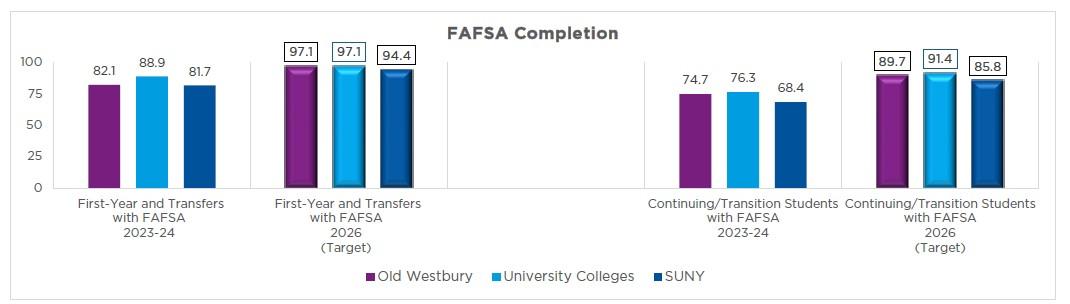
• FAFSA completion and financial aid events Veterans Support
• Selected as a participating campus in SUNY’s Veteran Enrollment and Support Internship Program, recognizing SUNY Old Westbury’s strong veteran support infrastructure
• Received a $5,000 SUNY award to fund a paid student veteran internship for Spring 2026, supporting professional development and veteran recruitment efforts
• Launched a Student Veterans Association chapter
• Established SALUTE Honor Society
• Opened Veterans Lounge
• Improved efficiency, data use, and applicant experience
• Improved Slate training, application review workflows, configurable joins, and portals and landing pages
• Launched campaigns—using Slate, CampusESP, and CollegeVine, to increase awareness of academic programs, campus life, and student support services.
• Leveraged Slate portals to streamline application and onboarding processes in collaboration with Orientation
o Portals provide centralized communication, clearer next steps, and seamless transition from application to enrollment
• Orientation leadership and Marketing rewrote Delivery queries and communications to improve recruitment messaging
• Launched Orientation Portal in Slate, differentiated by student type (first-year vs. transfer)
o The portal provides a centralized, reusable hub for tasks and information, reducing reliance on unread email communications and laying the groundwork for future integration with Brightspace and single sign-on functionality
• Increased giving rate by 307% (’25 vs ‘24) in giving, and participation by 207% (’25 vs ‘24) in donor participation thru the New York State Tax Credit program (allows donors to make charitable gifts while also receiving both State and Federal tax credit)
• Held 2025 Own Your Future Gala-for scholarships and critical funds with nearly 300 guests, Honorees included former Governor David Paterson, TheDream.US, and retired professor Dr. Thomas DelGiudice
• Launched new scholarships:
o Alonzo L. McCollum Memorial Scholarship honoring the former EOP Director
o Nerva Jean-Pierre Memorial Scholarship in honor of the dedicated alumnus
o Arfa & Faroque Khan Scholarship from a OWCF board member
o Jeffrey M. Sissons Memorial Scholarship-a $400,000 commitment to provide full, 4-year scholarships to students from the New Cassel community
• Over 25% of the Class of 2025 participated in the inaugural Class Gift Campaign. Contributions support studentfocused initiatives, and donors received Philanthropy Cords and OW Alumni Pins
• Alumni Homecoming Weekend celebrated 60 years of Old Westbury, united alumni across generations for a weekend of spirited celebrations, networking, and music. The tailgate served as the centerpiece of engagement, reinforcing community bonds and making this milestone event one of the most memorable to date. With nearly 500 participants in the Tailgate Experience alone, the weekend was an exciting and engaging
•Appointment of Vice President for Institutional Excellence
•Weekly DEI Newsletter
•Support for MOU and MOA development
Business and Finance
• Installed Advanced geothermal heating/cooling system, reducing fossil fuel reliance
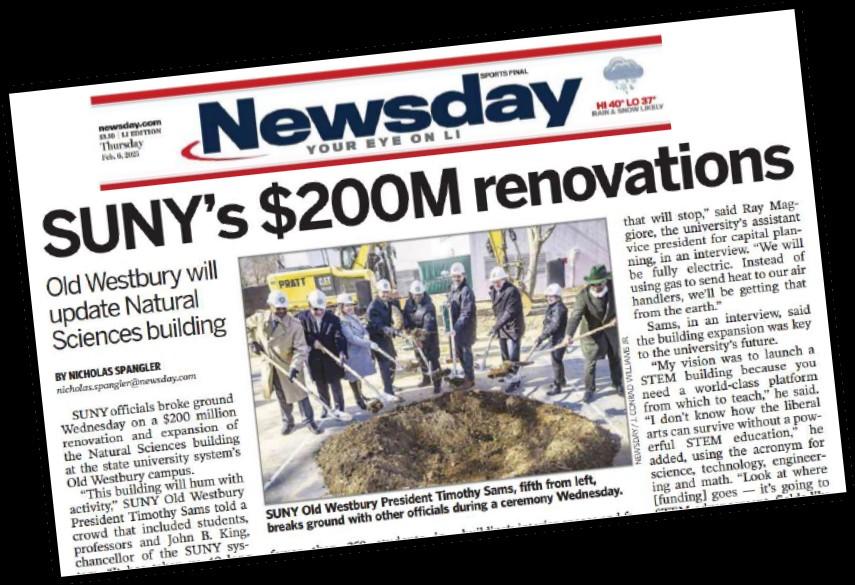
• Began Natural Sciences Building renovation with a permanent Annex (Phase 1)
• Revamped Facilities Rental-resulting in 26% increase in facility rental revenue
• Acquired a new shuttle bus (first in over 8 years)
• Completing critical infrastructure repairs (roads, grounds, safety systems, AV roofs)
• Strengthened technology infrastructure with a Banner mobile platform and automated workflows
• Found Recruitment Violations
o Representative offered full-tuition aid to 10 SAs
o Coach engaged rep without notifying Athletics Admin.
o Coach did not monitor or act upon rep’s actions
o OW failed to withhold 2 SAs prior to their reinstatement
• Negotiated Resolution
o $1,250 fine
o 1 year probation
o Vacation of wins with ineligible SAs
o 1 year show cause order for head coach (recruitment restrictions)
o Permanent disassociation with rep
• Additional measures
o Co Sr. Leadership, COS-VP (operations), and VPSA-DOS (student experience)
o Establishment of anthletics Advisory Committee that reports to the President
n T e c h n o l o g y S e r v i c e s
• In September, many experienced unreliable access to the internet, for a week, due to outdated software. Problem was eventually corrected.
• Uneven customer service coverage, due to staffing fluctuations
• Undetected server and service monitoring issues and outages that affect users
• Need for ongoing training and skills enhancement of IT staff for new technologies
• Need to Strengthen leadership and succession planning within IT to ensure consistent strategic direction and operational oversight
Intervention
I have asked the EVP/COS to partner with CFO/VP-Adm. to provide additional executive support to address the above from a leadership standpoint.
-Membership on ITGAT
-Focus on IT leadership-making key advancements and achieving outcomes
C a m p u s
a t e A c t i o n Situation
• In Fall ‘25, an armed robbery, unauthorized visitors in the Residence Halls and vandalism of bathrooms in the Campus Center have prompted changes in our campus safety protocols with respect to police presence, identification procedures, and access control.
Intervention
• UPD has increased foot patrols (with strict enforcement regarding unlawful activity) in the residence halls in coordination with Residence Life Staff.
I m m e
• UPD has increased patrols in the Campus Center during the evening hours.
• Police personnel will regularly request college IDs from individuals (faculty, staff and students) and deter unauthorized entry into residence.
• UPD and Student Affairs are collaborating on a strategy to hire additional safety/security personnel for late evening and overnight security in the residence halls.
• Active Oversight & Accountability
C a m p u s
v e m e n t s
• Comprehensive Door Access System Audit
• Audit underway
• Immediate repairs of faulty locks, card readers, and alarms
• Review of access control performance to identify long-term upgrades and redundancies
• Operational Enhancements
• Ongoing evaluation of patrol patterns and staffing
• Continuous adjustments based on real-time data, incident trends, and student traffic patterns
• Continued collaboration between UPD, Residence Life, Facilities, and Community Standards
I m p r
• Community Partnership, Prevention & Messaging
• Reinforcement of shared responsibility of safety among university members.
• Clear expectations around residence hall access and reporting concerns.
• Continued emphasis on timely communication, visibility, and responsiveness.
• Ongoing Commitment
• Campus leadership remains focused on prevention, rapid response,
Situation: Classroom Tension
• Faculty concerns over classroom recording and incivility
• Increased classroom tension and distrust Intervention
• Campus Recording Policy created and moving through approval channels
• Adoption of Civility and Community Statement is being finalized
Situation: Slowed Hiring
• Hiring process is too slow Intervention
• Cabinet will be refining and shortening the process (completed Spring semester)
Situation: Data Disclosure
• Non-critical data of 700 former employees shared among other SUNY professionals
•60 Year Logo Contest Spring 2025
•Charter Day June 10, 2025
•Fall Convocation September 10, 2025
•Panther Pride Homecoming September 29 - October 5, 2025
•Inaugural Founders Day Luncheon, November 12, 2025
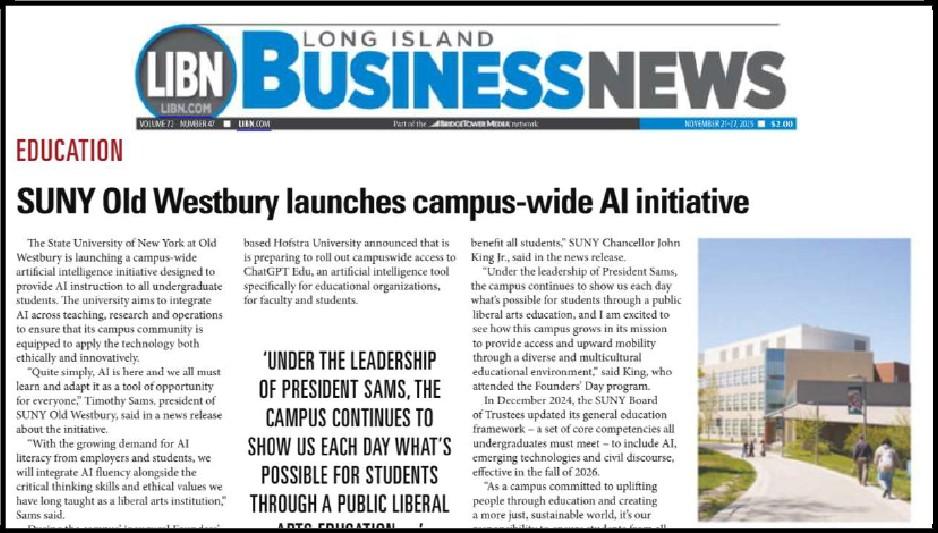
•Inaugural Founders Day Keynote Address & AI Initiative November 12, 2025
•Archival Exhibit Opening, Gallery Walk, and Reception November 12, 2025
• Giving Tuesday 60 years of Impact December 2, 2025
•Reflections through the Decades December 3, 2025
•The School of Arts and Sciences panel included Dr. Laura Anker, Dr. Robert Hoyte, and Dr. Lisa Whitten. December 3, 2025
•Presidential Medal Spring 2026
•Own YOUR Future Gala April 16, 2026
•46th Convocation to Honor Academic Excellence April 23, 2026
Achieved by…
• Maintaining expanses in line with prior years
• Strategically applying state aid to employee raises and student programs (while phasing out outdated ones)
• Limiting reliance on reserves
The ‘25-’26 budget gap is approximately $3.3M
• Includes $7M in unfilled vacancies
• Accounts for:
o Employee raises
o SUNY increase
o Enrollment increase
• Budget gap will be filled by “Reserves”
o (Goal is to reduce to $2.3M in reserves (MSCHE))
2024-2030
• Approx. $11M (~$2M/year) increase in PSR-raises
• SUNY Financial Model - 2024-2030, approx. 200 student/year increase –approx. 5400 in 2030
• Erase reliance on reserves in FY ‘27
Cost of Attendance Committee, CFO & PBC(SPAAR) will continue to monitor & manage closely
-I am instructing PBC to reduce reliance on reserves by $1M this year and erase the reliance in our FY’27 budget.
1) We will manage budget with a goal to discontinue use of reserves over next two years • Increase revenue (PPB, Partnerships), refresh & launch academic programs, increase retention, increase housing & rentals. Maintain OTPS
manage personnel at the $7M gap level, until new and expanded funding

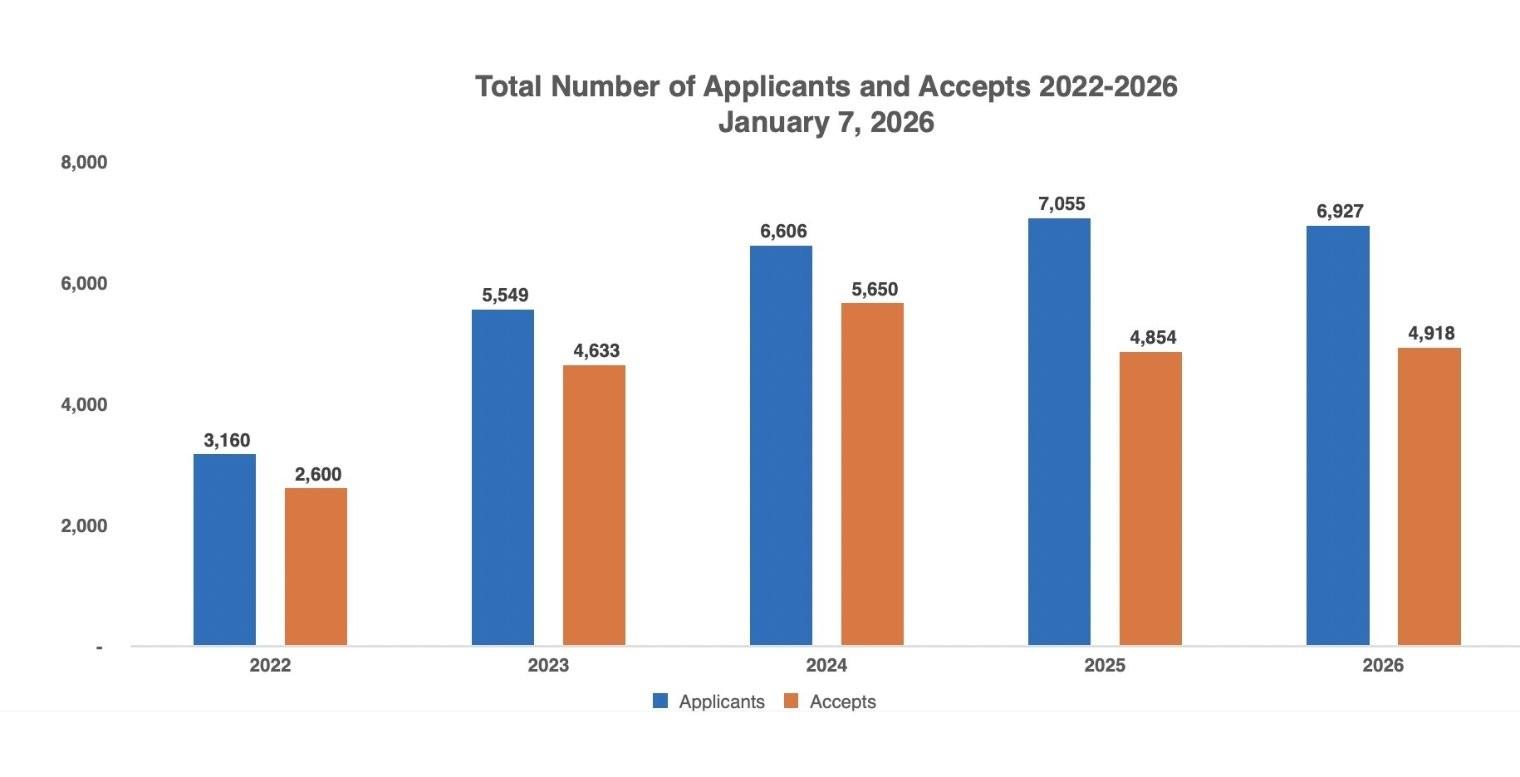
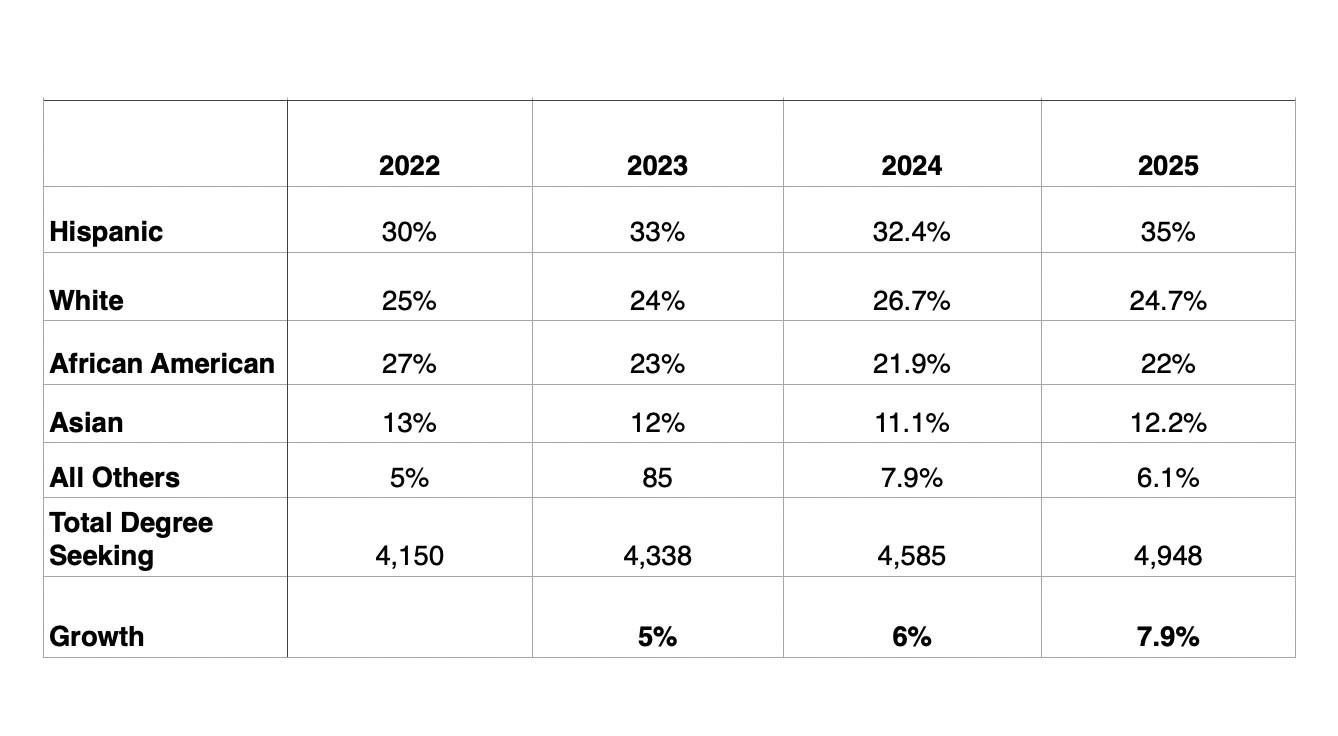
1) SUNY enrollment is up for third consecutive year
2) This year’s budget will be more lean than in prior years
a) Looking for contractual obligation funding
3) Enrollment
a) Academic Momentum
b) Enrollment Cliff
I) trad. age down, nontrad. age up
a) Lisandra Ramos
b) Martha Santana
c) Angela WambuguCobb
• $54 M for operating cost, to maintain the State-operated Resident Undergraduate tuition freeze
• 100% funding floor for Community Colleges to prevent them from losing nearly $65M in State funding,
• $8.5M to expand SUNY Reconnect to provide free Community College to eligible adults (careers in logistics, air traffic control and transportation, and Emergency Management)
• $8M additional for ASAP|ACE (10,000 for Fall ‘26)
• Funding to double the Empire State Service Corps to 1,000 SUNY students,
• Funding for additional paid, career-connected internships as SUNY
• $595M in critical maintenance capital funding ($50M more than traditional), $10B backlog
• Continue to support SUNY’s hospitals ($50M each) and
(medium sized projects)
• Replace Non-Compliant Fire Stairs, H Wing (approximately $500,000)
• Replace HVAC in Clark Offices (approximately $500,000)
• Police Booth Replacement (FY24–25, $300,000)
• Replace NAB Boilers (FY24–25, $1.2 million)
• NSB Phase 1 Renovation
• NSB Phase 2 Addition Design
• Replacement of Emergency Generators (Campus Center and Student Union)
• Demolition of Academic Village A
• NSB Phase 3 Renovation (major request for 2026)
• Facility Master Plan Clark Gym Full Renovation
• Maguire Theater Renovation
• Campus Center Wing Renovations and HVAC Systems
• Turf Soccer Fields
• Campus Greens Infrastructure Replacement
• Heat Plant Full Renovation, with the option of preparatory SUBOA-funded interior clearing

• SUNY Old Westbury Natural Sciences Building Renovation and Addition Summary
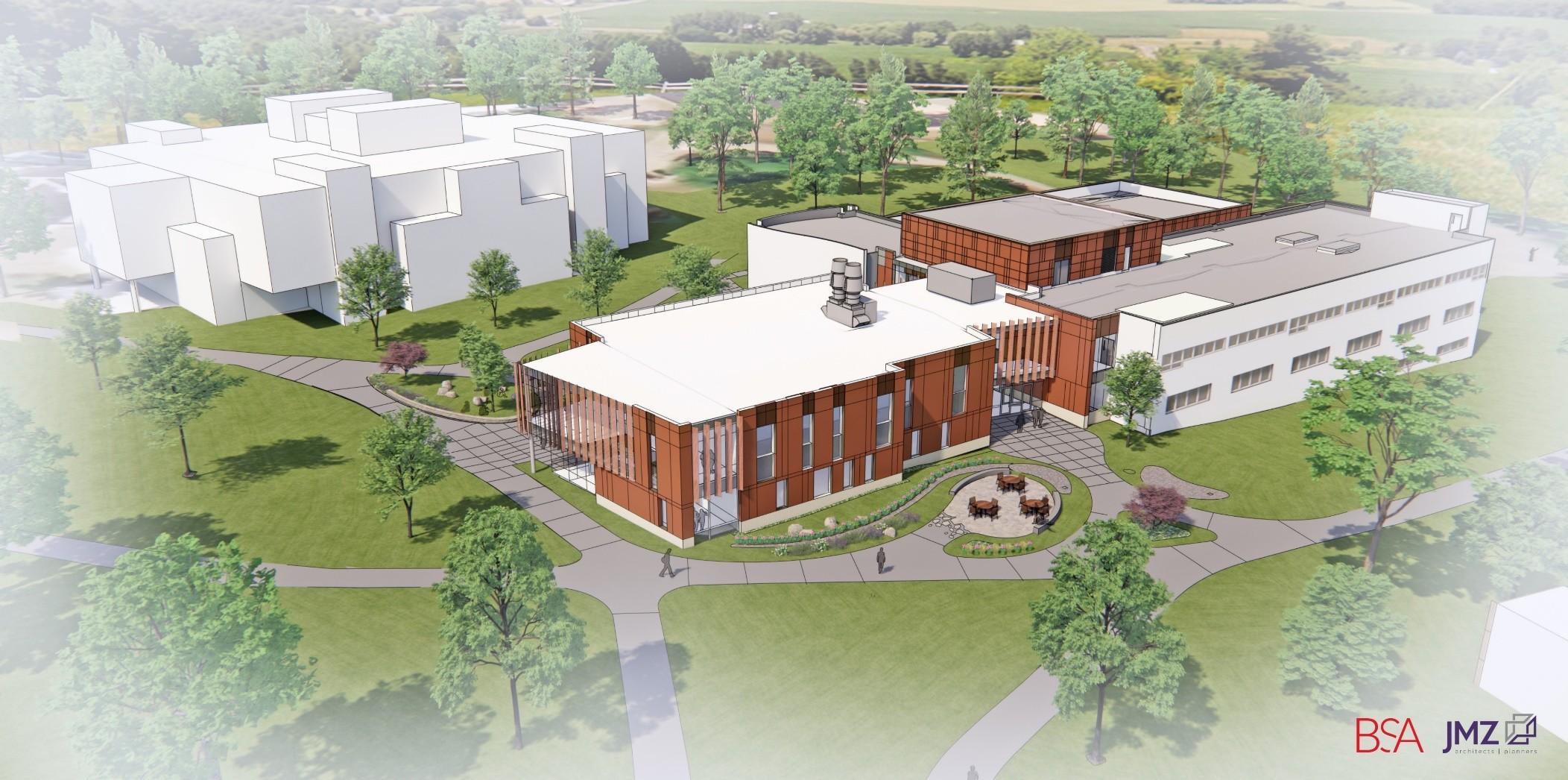
Phase 1 – Renovation of partial existing Natural Sciences Building, including modernization of biology, chemistry and physics teaching labs and lab support, new added research labs, greenhouse and replace building systems.
Construction Starting 2024 / Completion 2027
Geothermal Wells – located under the Student Union Parking Lot to serve the Natural Sciences building.
Starting 2025 / Completion 2026
Annex Labs & Vivarium Buildings – to house teaching labs, vivarium during construction of Phase 1, research labs during construction of Phase 3
Construction Starting 2025 / Completion 2026
Phase 2 – Building Addition including new teaching labs, support spaces, commons space, collaboration spaces
Anticipated Construction Start 2027
Phase 3 – Completion of renovation of existing Natural Sciences Building, including teaching labs, classrooms, research labs, lab support and office spaces.
Anticipated Construction Start TBD
• Enrollment pressures (including “Cliff” & International) and our ability to respond
• Digital content accessibility
• Siloing and need for more collaboration
• Administrative and process bottlenecks (internally, and within SUNY)
• Budget sufficiency
• Limits, execution and planning around technology, infrastructure, fleet, systems and equipment
• Overreliance on adjunct faculty
• Staffing shortage and impact upon service delivery
• Student demands/needs outstripping capacity
• Constrained resources and increasing costs

• Unlocking fundraising capacity/growth through innovation and use of mission
• Political attacks on higher education's independence
• Devaluing Higher Ed. and degree
• Impact of the “Big Beautiful Bill”student loans, ROI, regulations
• Reduction in philanthropic behavior
Reliance on Reserves ($3M) must decrease/erase
Current Reality:
• We are matriculating 100% of the students we can get (48505000) based upon present curriculum
• We need 500 more untraditional students
• Our programs are capturing their capacity in their present state
• We need more dynamism in present curricular offerings
• We need new programs to attract different students
• We need to increase scholarship funding
How we get there:
Create more dynamic academic programs
• Faculty activity that leads to new programs that are:
- Interdisciplinary
- Market responsive
- Targeted toward new populations
- ROI conscious
• Faculty productive synergy
All faculty professional development
Faculty Dinners at President’s House Repository that supports ongoing discourse
Launch new strategic programs
• Upcoming Announcements
- Enrollment
- Brand
- Social Justice
- Marketability of graduates (ROI)
Expand revenue streams
• Leverage physical assets
• Expand partnerships
• Raise more scholarship dollars
1) Financial ROI
a)Lifetime earnings
b)Cost of degree…relative to earnings
c) Payback period… STEM (3-7 yrs.); Bus./Health (5-10 yrs.); Arts/Hum. (10-20 yrs)
2)Employment & Career ROI
a)Access to jobs
b)Career Resilience
3)Non-Financial ROI
a)Skills Development (Critical Thinking, Written and Oral Com., Problem Solving, Information Literacy)
b)Social and Network Capital
c) Health, Civic & Life Outcomes
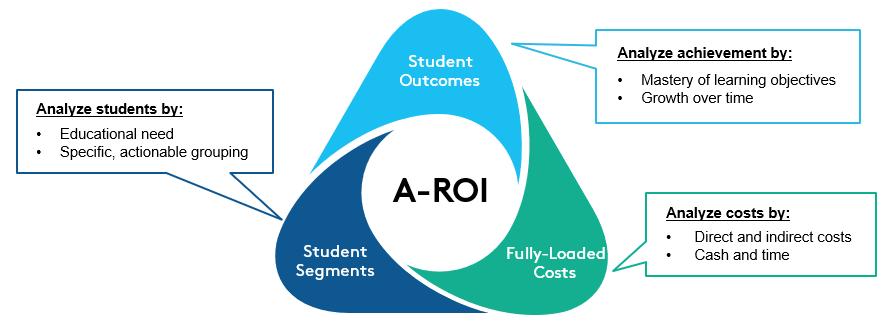
(ChatGPT; AAA&S, AACU, Fed Reserve, College Board; GU Center on Ed. & the Workforce, U.S. BLS)


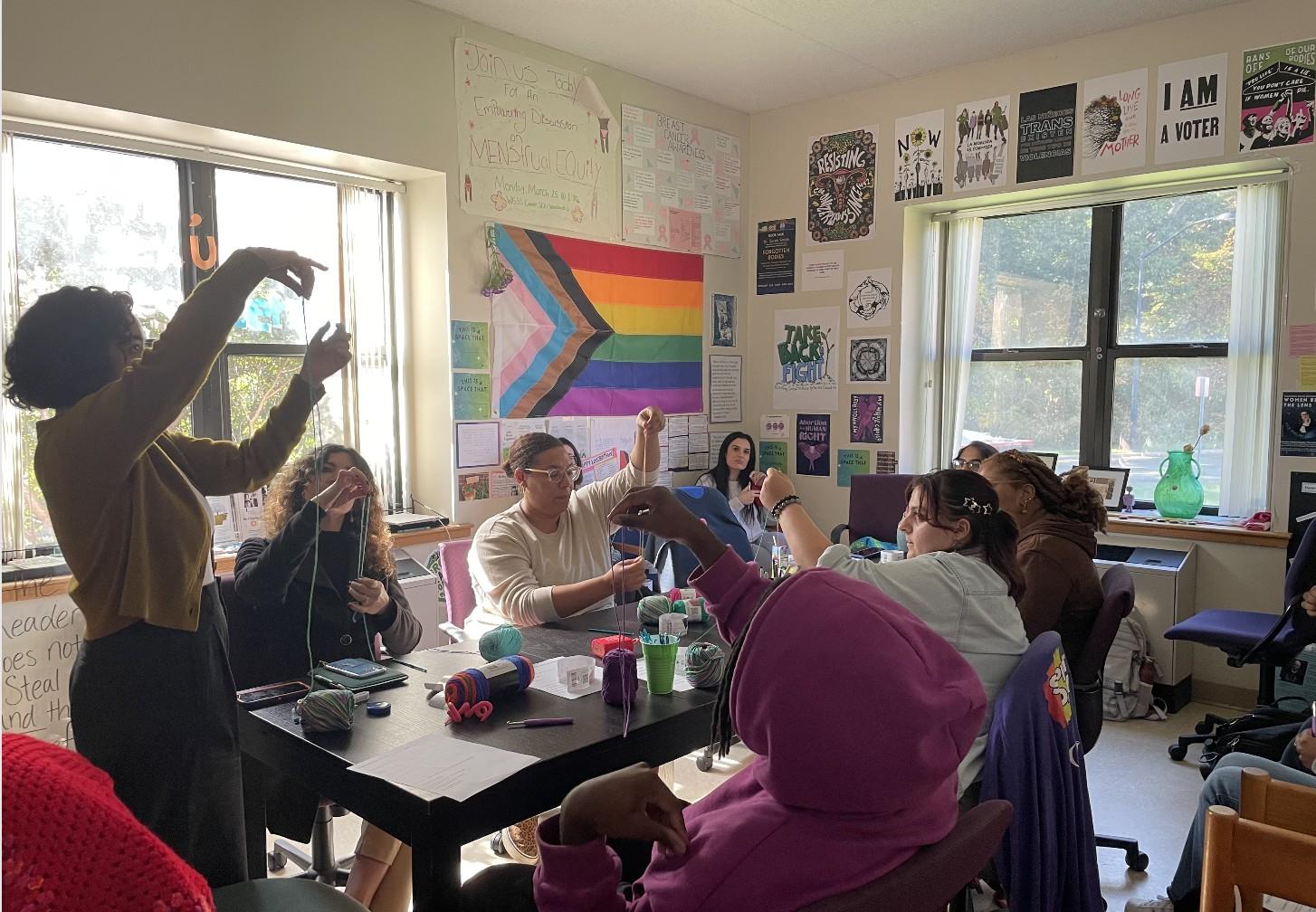
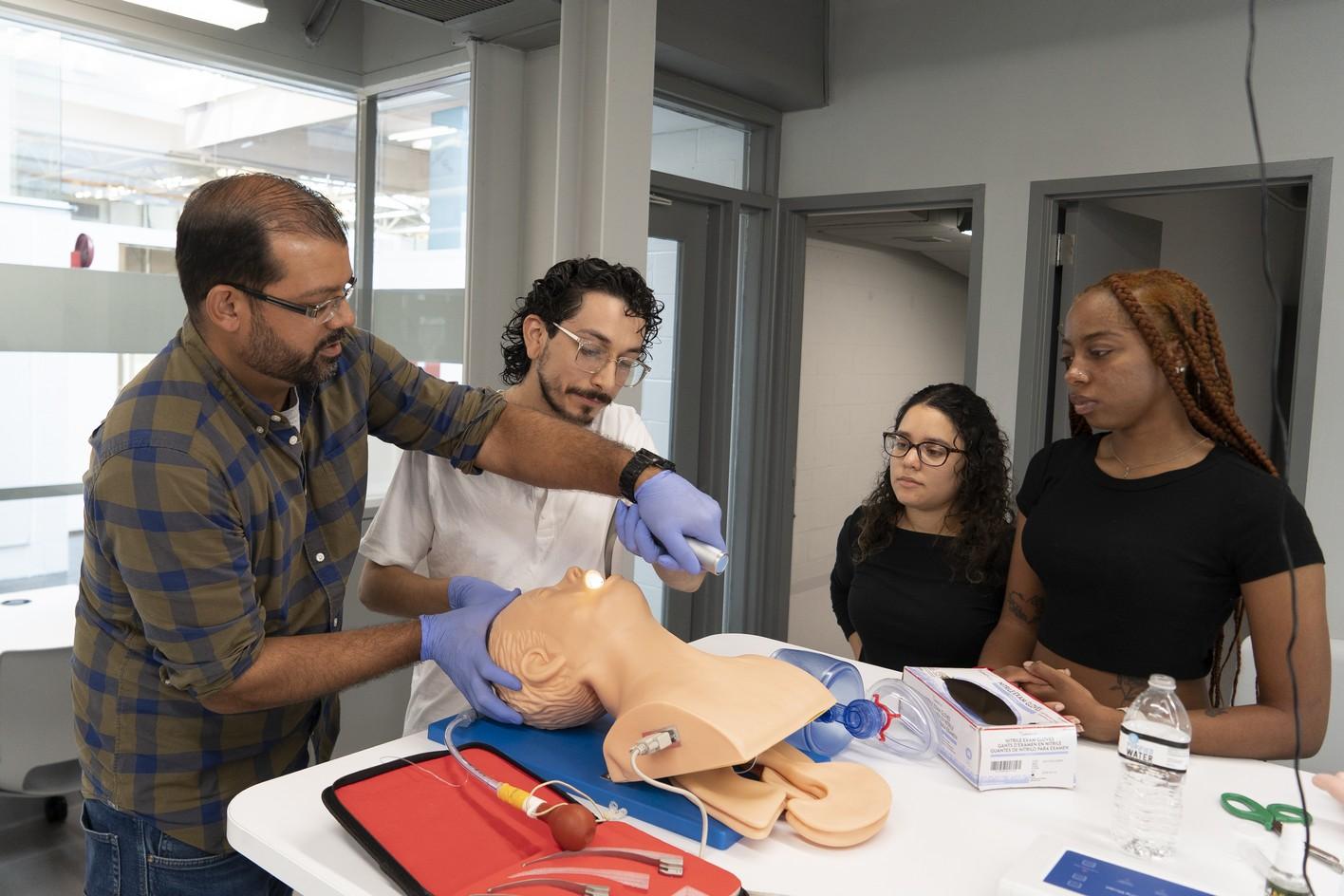
AI & big data are remaking our society. Students need practical fluency—prompting, data reasoning, model limits, and verification.
Chip manufacturing, cybersecurity, networks, and tech literacy are rising quickly. Modern STEAM education includes an awareness of the role chips, secureby-design thinking, and responsible data use play in all aspects of modern life.
Biotechnology and new MedTech are reshaping every aspect of our society Groundbreaking technologies have opened new avenues to heal and support wellness and new career paths.
Greentech is allowing for a sustainable world while preserving our environment New York State is leading the way with many lucrative career options in green power generation throughout the region
Human-centered innovation: empower every student to use AI and emerging technologies ethically, creatively, and confidently—so opportunity grows across majors, careers, and communities.
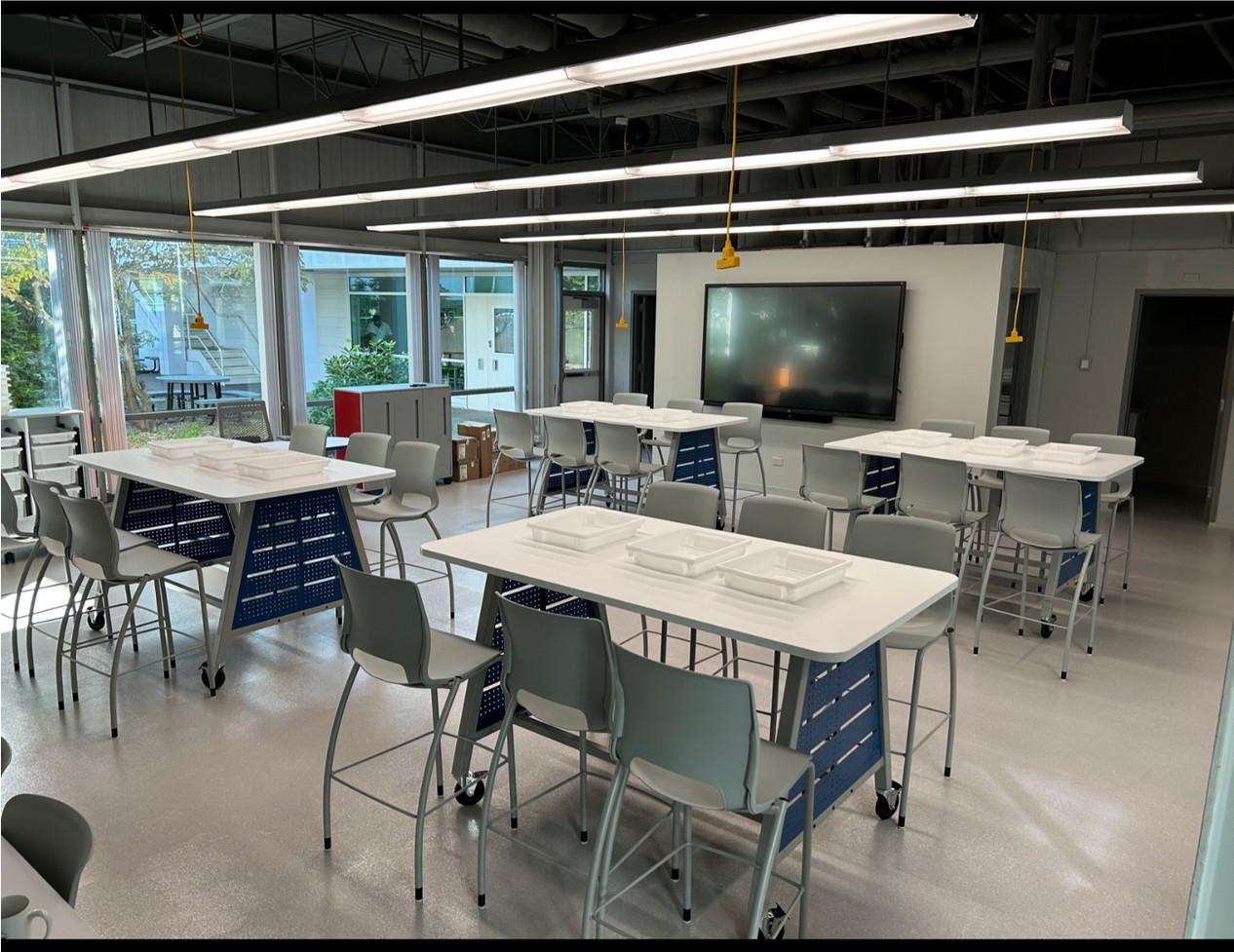
Scale + reach across the curriculum. Current momentum and measurable impact:
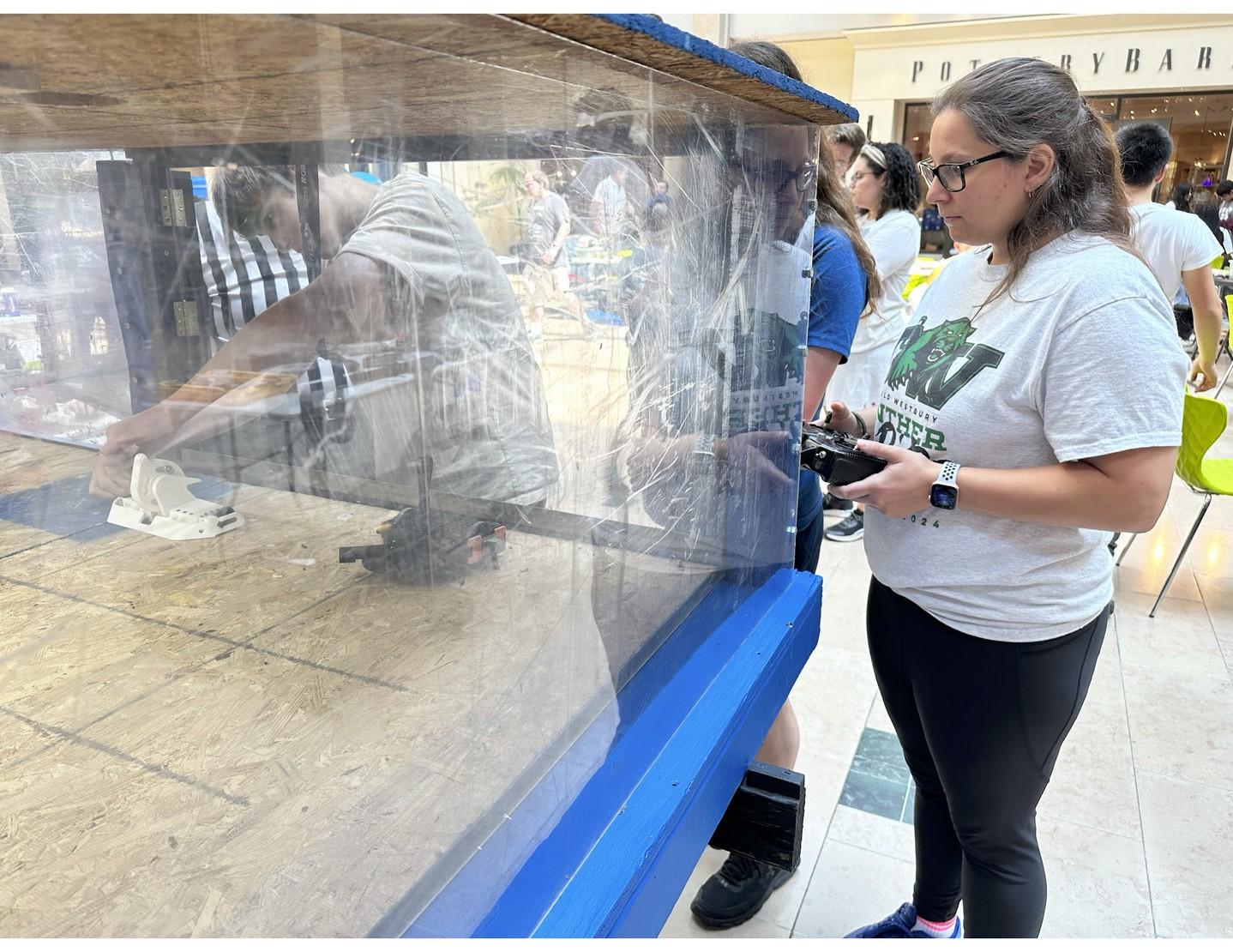
• 62 OW STEAM courses taught to 1,255 students—spanning sciences, health, business, and the arts.
• 112 students and 21 faculty fellows engaged in research, experiential
• learning, and innovation.
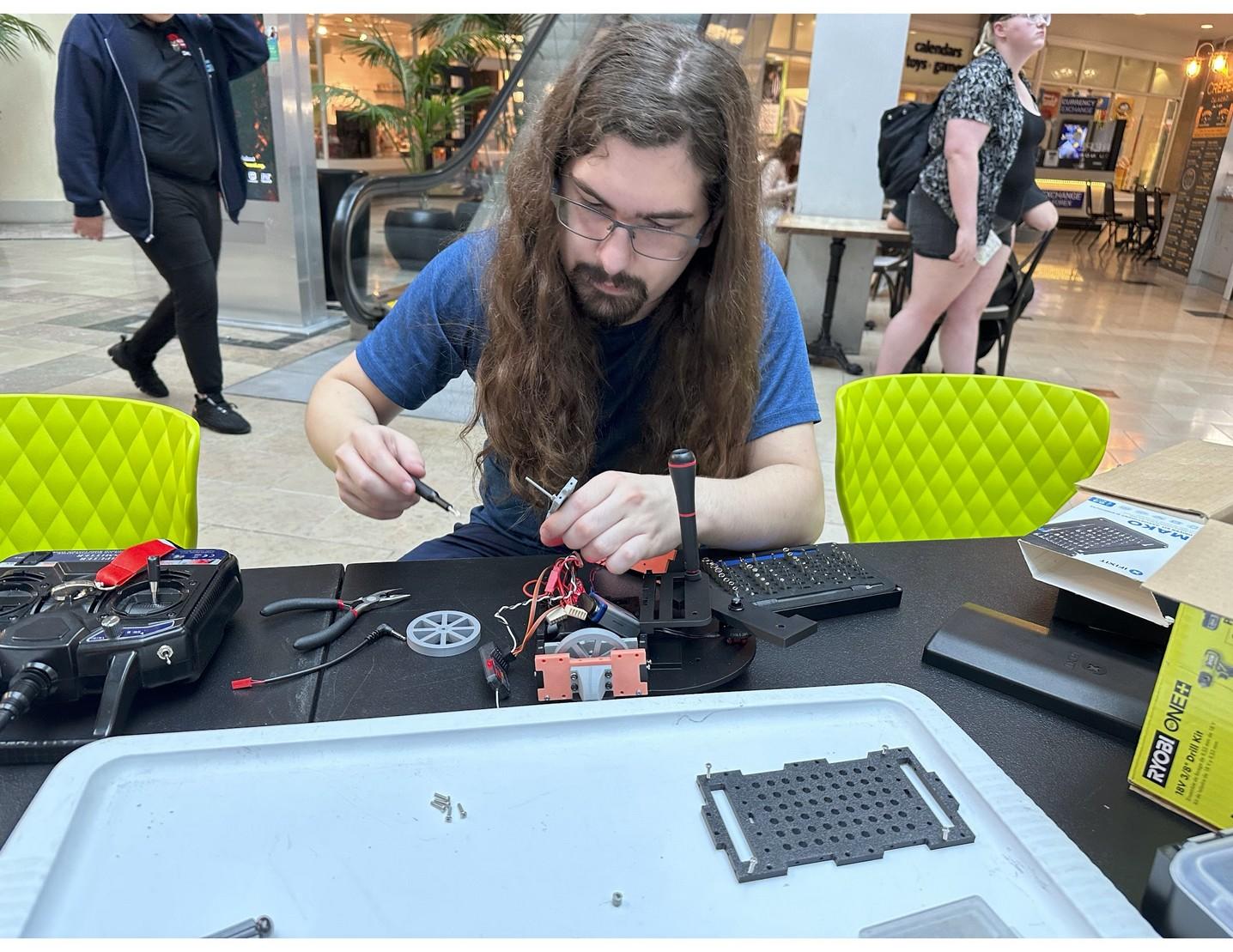
• New Makerspace completed!
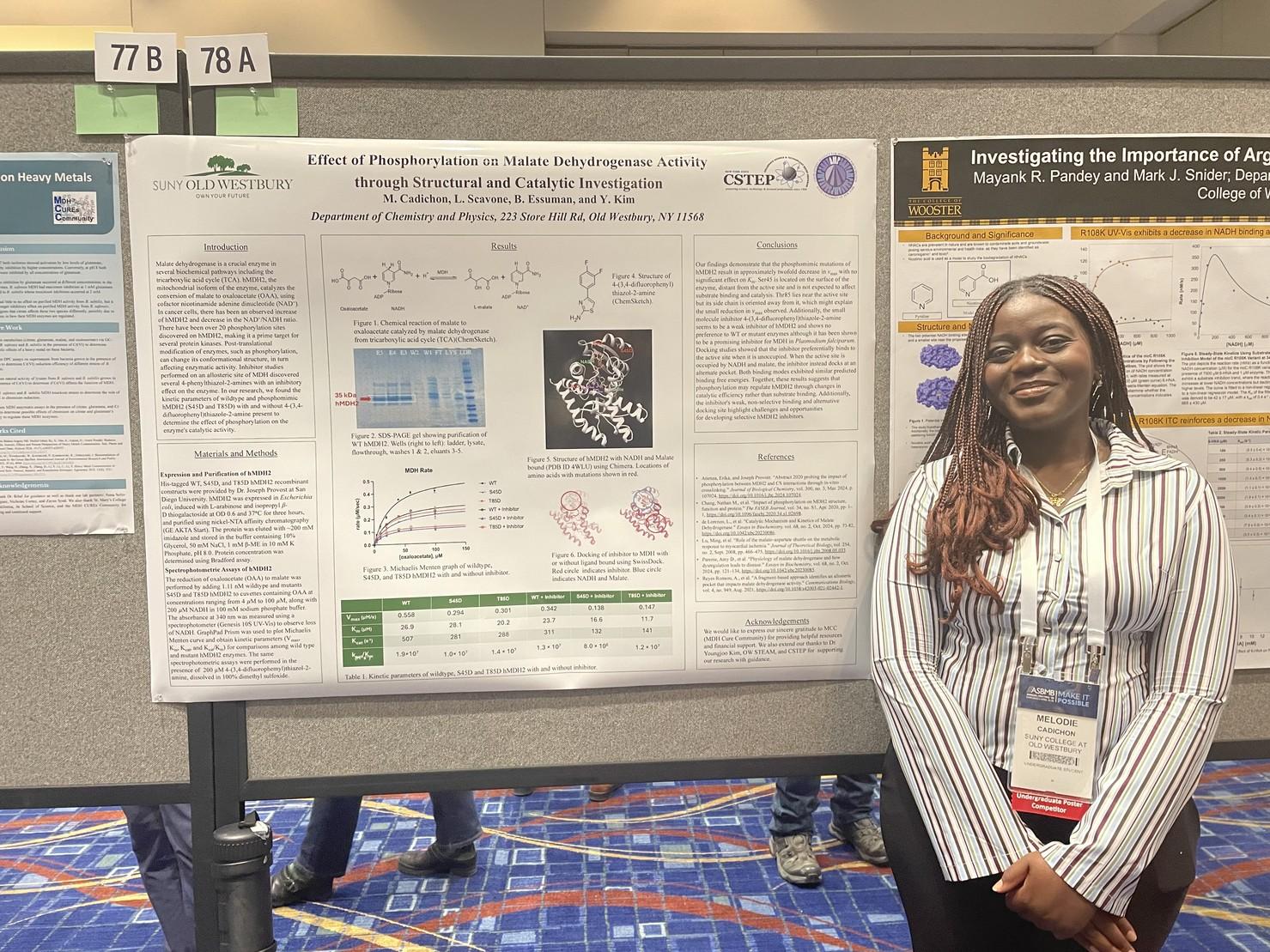
• Research Day and SUNY SURC
• 27 student awards and $36,500 disbursed to accelerate research and conference participation.
• $1.87M federal STEAM grant supporting inclusive pathways.
• Partnerships with Brookhaven National Laboratory and Northwell Health expand applied learning and career pipelines.
Opening doors to advancement through human-centered, AI-enabled STEAM—so opportunity scales across majors, careers, and communities.

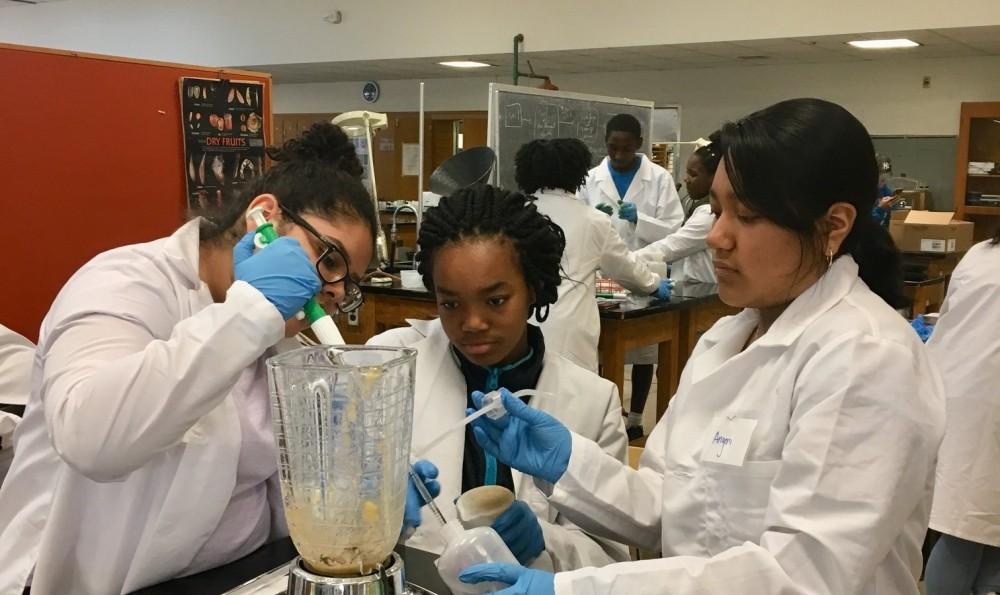
1) AI + Emerging Tech Fluency
AI literacy and data reasoning embedded across STEAM.
Practice with modern tools (analytics, simulation, creative AI) with verification and integrity built in.
2) Experiential Learning at Scale
Project studios, makerspaces, and communitybased research.
More mentored research, paid experiences, and capstones that produce portfolio-ready work.
3) Partnerships that Convert Learning to Opportunity
Internships/co-ops, employer mentoring, and applied challenges with BNL, healthcare, and industry partners.
Stackable micro-credentials aligned to regional workforce needs.

AI readiness for every graduate
• AI + data fluency embedded across general education and majors
• Clear standards for verification, integrity, and responsible use
• Secure-by-design thinking (privacy, cybersecurity, data stewardship)
Pathways that open doors to advancement
• Internships, co-ops, and employer/civic partnerships at scale
• Research-to-career pipelines with BNL, healthcare, and regional employers
• Stackable credentials leading to high-growth careers and graduate study


Portfolio-based learning that signals readiness
• More project studios, labs, and makerspace experiences
• Capstones producing artifacts: code, prototypes, research, media
• Student work connected to real problems and community impact
Faculty innovation + student support at scale
• Faculty development for AI-enhanced teaching and assessment
• Advising that connects skills → experiences
→ careers
• Support structures that sustain belonging and success in STEAM


At our 60th-anniversary celebration, I issued a 'Moonshot' call to our campus to actively and positively respond to the global developments in Artificial Intelligence.
I tasked a newly created Al Taskforce to deliver a roadmap. Today, in consultation with them, I am
Policy, Guidelines & Governance
• Institute & Departmen
t Policies
• Ethics & Compliance
Teaching, Learning & Pedagogy
• GenEd Al Literacy
• Classroom Integration & Syllabi Templates
• Microcredentials
Al Skills, Training & Workforce Development
• Skills Development for Students, Faculty & Staff
• Al Workshops & 'Responsible Use' Guides
Infrastructure & Tools
• Central Hub for Al Systems & Resources
• Campus Al Tools Audit & Infrastructure Gap Analysis
The Institute is charged with creating an Al curriculum for all students, encompassing:
• Al literacy
• Social and ethical use of Al
• Discipline-specific Alenabled courses
• A research or experiential-based Al experience
Senior Leadership
Leadership is necessary in the following areas:
Research and Innovation
Campus AI Czar
AI Education Quality and Continuous Improvement
• A career-oriented
Our Mission & Social Justice
AI in Service of
"I hereby charge the Institute to infuse throughout all its efforts a focus not just on practical and technological means of developing and using Al but on the essential question of how Al can be used ethically and sustainably to advance the cause of social justice in

1. Financial Stress
• High tuition and living costs
• Insufficient financial aid or loss of aid
• Needing to work long hours while studying
• Unexpected expenses (medical, family emergencies)
2. Academic Difficulty
• Poor preparation from high school
• Struggling with course rigor or workload
• Low grades or academic probation
• Mismatch between student skills and major 3. Lack of Engagement of Belonging
• Feeling social Isolated
• Difficulty forming friendships or connections
• Limited involvement in campus activities
• Feeling disconnected from
4. Mental Health and WellBeing
• Anxiety, depression, or burnout
• Stress from balancing school, work, and personal life
• Lack of access to mental health support
7. Institutional Factors
• Poor academic advising
• Inflexible course schedules
• Large class sizes with little support
• Lack or responsiveness to student needs
5. Unclear Goals or Major Mismatch
• Uncertainty about career goals
• Choosing a major that doesn’t align with interests or strengths
• Loss of motivation or purpose
8. Transfer Rather Than Drop Out
• Students leaving one institution to attend another
• Often categorized as attrition even though education continues elsewhere
6. Family and Personal Responsibilities
• Caregiving responsibilities
• Family pressure or expectations
• Relationship challenges
• Health issues (personal or family)
9. First-Year Transition Challenges
• Difficulty adjusting to independence
• Time management issues
• Culture shock (especially for first-generation or international students)
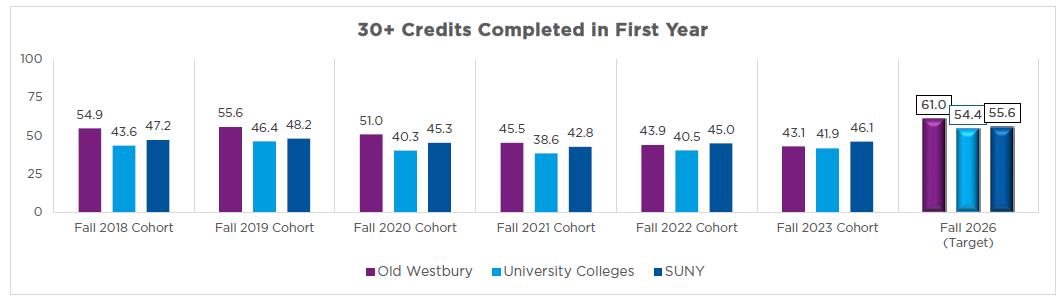
• ACE Program (SUNY)
• Academic Advising-undergraduate professional advising (F’26), to facilitate our Academic Momentum effort
• Academic Momentum (SUNY)
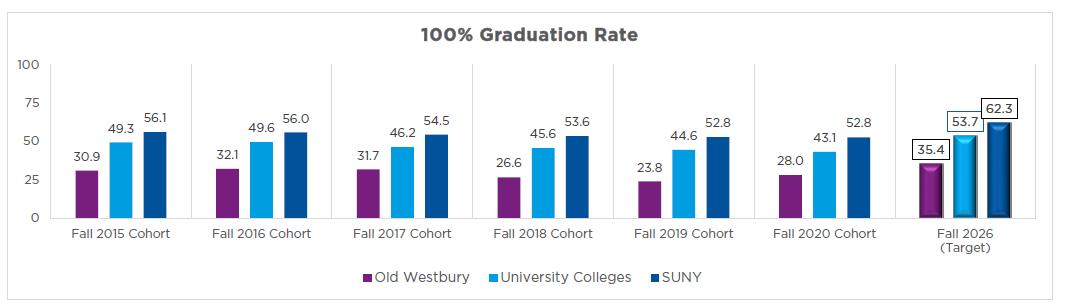
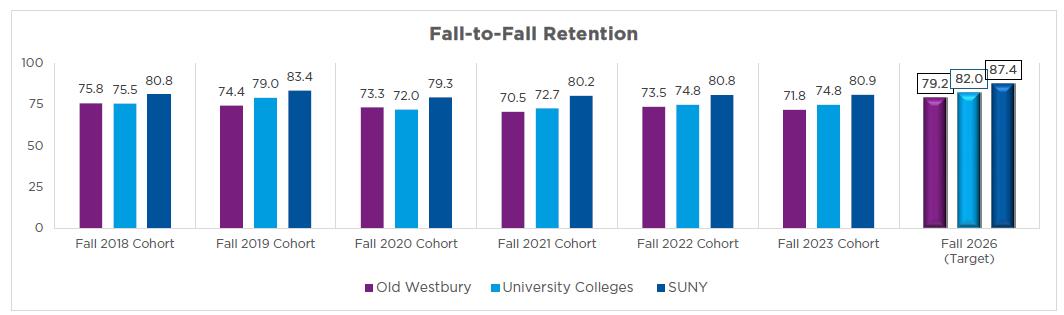
‘25-’26 OW Goals :
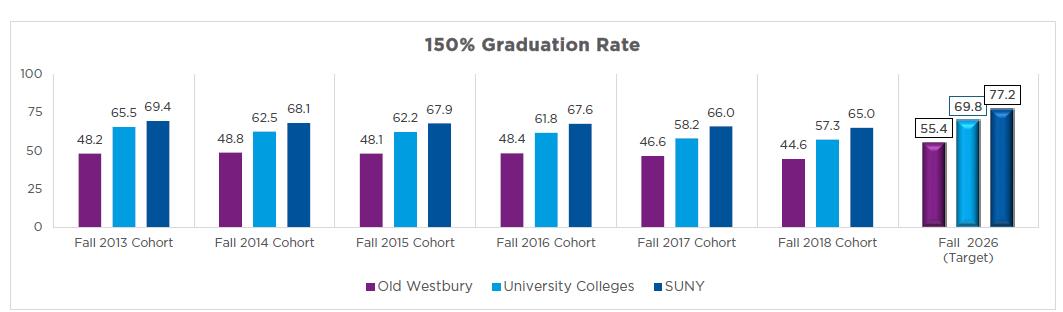
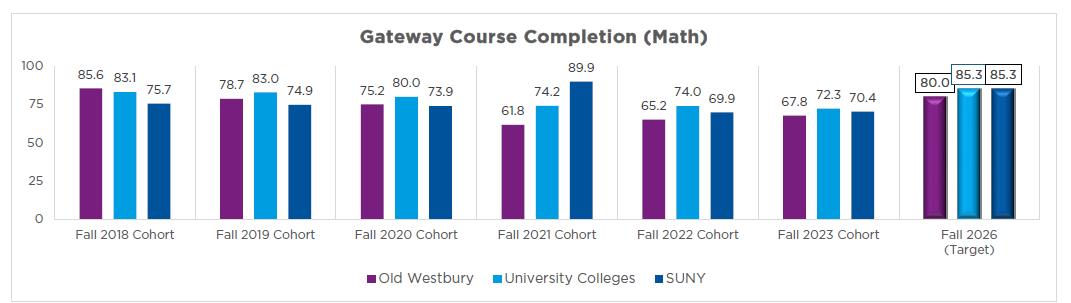
A. 80% Retention Rate
B. Improved Graduation Rate
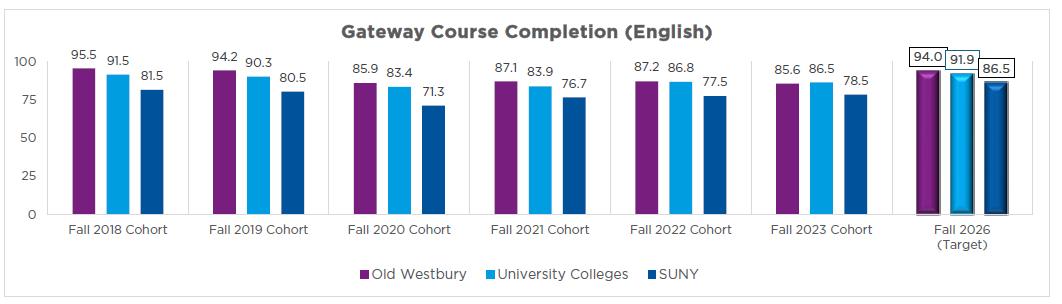
C. Raise Gateway English Completion in Year One (low DFWs)

c a d e m i c
( S U N Y )
c a d e m i
( S U N Y )
S U N Y )
c a d e m i c
S U N Y )
• SUNY Old Westbury has launched its Middle States SelfStudy, a rigorous, evidence-based process culminating in reaffirmation of accreditation in 2028.
• This is more than compliance—it is a collective opportunity to affirm our mission, demonstrate impact, and shape our future.
Accreditation sustains:
• Institutional credibility and public trust
• Federal financial aid eligibility
• Strategic planning and continuous improvement
• This work belongs to all of us. Every voice, every unit, every role matters.
• The Self Study Process is governed by a Steering Committee and seven standards-based Working Groups, supported by the Logistics and Communications Committee and the Compliance Committee.
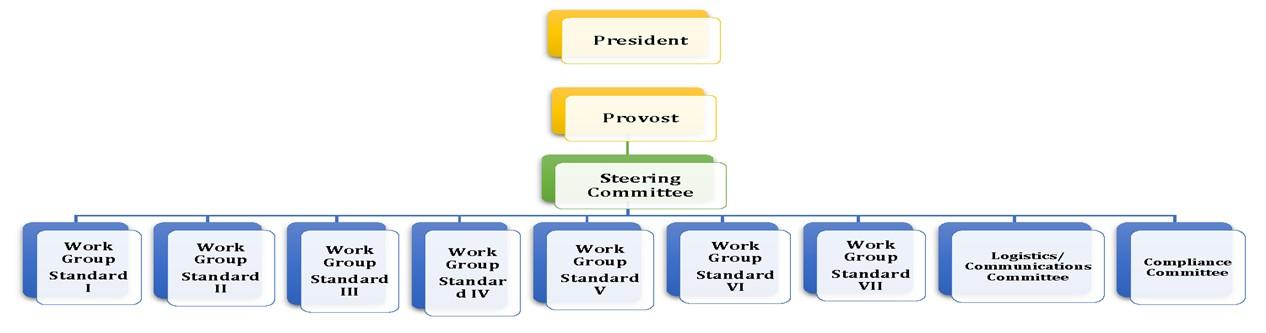
• Work Group Members represent every stakeholder group. That includes not only faculty and administrators but also students, alumni, and community members.
• Faculty–staff co-leadership ensures shared accountability and disciplined execution.
• Evidence is centrally collected, validated, and analyzed to meet MSCHE expectations.
MSCHE Reaffirmation of Accreditation | 2025–2028
2025–2026 | Design & Approval
• Self-Study Design development and MSCHE approval
• Formation of Steering Committee and Working Groups
2026–2027 | Evidence & Analysis
• Evidence collection, assessment, and draft chapters
• Closing the loop through planning and improvement
2027–2028 | Final Report & Evaluation
• Final Self-Study submission
• Fall 2028 MSCHE Evaluation Visit
2025–26
Design & MSCHE Approval
2026–27
Evidence & Draft Chapters
2027–28
Final Report & Visit
• Everyone has a role to play—our collective engagement will define our success.
This year will be bumpy
• State and Federal funding
• Global Affairs
• Immigration policies
• Attack on Higher Education
• General uncertainty
• I will not write missives. I will guide our response, maintain safety and support
Let’s make it a year to remember
• Transformative
• Stay true to our values
• “Safe Place”
• Take care of our students-support through their challenges
• Take care of each other
• We have a lot on our plate, let’s focus… avoid distractions