Kimbell Kids
FALL 2026 | FOR YOUNG ART LOVERS
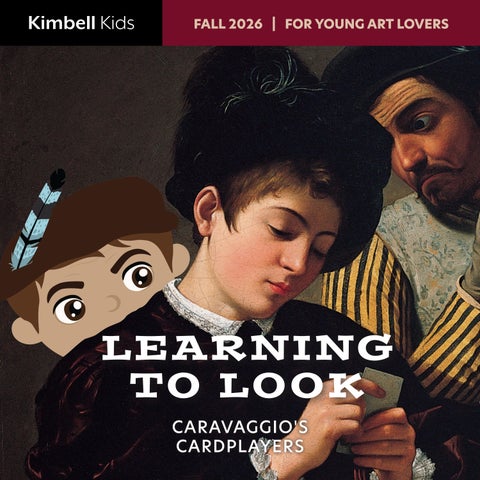
LEARNING TO LOOK CARAVAGGIO'S CARDPLAYERS
L E AR N I NG T O L O OK CARAVAGGIO'S CARDPLAYERS
Hi, friends! Do you like to tell stories? Who are your favorite characters? Where do they live and what do they do? Do you imagine grand adventures from beginning to end? At the Kimbell, you will find a world-famous painting by Caravaggio, who lived in Italy over 400 years ago. He loved to show stories that were full of excitement, imagination, and action. What will you discover about Caravaggio’s cardplayers?
In This Issue Caravaggio in Rome
Touch, Texture, Tricks
Meet the artist who changed painting forever.
Imagine how different textures might feel.
The Drama Unfolds
What Will Happen Next?
Look closely to explore the story.
Draw a picture that adds to the adventure.
Tell-Tale Details
Explore More Together
Sketch details that catch your eye.
Discover more artworks at the museum.
Diagonals and Contrasts
Follow visual clues to find more drama.
New Words Detail
A small piece of information or a tiny part of a bigger thing
Diagonal
A slanted line that is not straight across or up and down
Drama
A type of story that is usually exciting or serious, often acted on the stage
Fame
When someone or something is very well-known by many people
Texture
How an object or surface feels or looks
Caravaggio in Rome
As a young man, Caravaggio moved to Rome to become a great painter. Soon, everyone was talking about his talent for dramatic storytelling. Fellow artists admired how he painted scenes and textures that looked almost real. Others complained that he painted everyday people with mismatched outfits and dirty fingernails. Wherever he went, Caravaggio found fame and trouble. His bold style changed painting forever.
Tell-Tale Details Caravaggio includes important clues that help to tell the story. Which details catch your eye? Draw a few in the space below.
Above: Portrait of Caravaggio (Michelangelo Merisi) on a 100,000 lire banknote from Italy
The Drama Unfolds What do you notice first? A finely dressed young man looks down at his cards. Does he see what is happening around him? An older man peers over the young cardplayer’s shoulder and signals with a raised hand. A third person stares across the table, leaning closer with a hand full of cards. What else is he doing?
Diagonals and Contrasts
One young man wears a dagger, hinting at possible danger. It creates a diagonal line that points directly at the other cardplayer. Look for more diagonals. Caravaggio also used contrasts of light and shadow on faces and in the background to build excitement.
Touch, Texture, Tricks Notice the gloves with cut fingertips? This clever trick allows the shadowy older man to feel cards with secret markings. Caravaggio helps us to imagine touch and texture in other ways, like dirty smudges on the man’s unbuttoned vest or the soft wisp of the ostrich feathers in the younger cheat’s hat.
What Will Happen Next? What if the board game falls off the table? Will the young cheat switch his cards to win the game? Will the cardplayer on the left realize what is happening? Caravaggio brings us close to the table and invites us to decide how we would act in this situation. Use the space below to show how you imagine the next part of the story.
Artwork by: ________________________________________________________
Explore More Together Discover connections with other artworks in the Kimbell's permanent collection.
Caravaggio’s paintings inspired many artists across Europe, including the French painter Georges de La Tour. Find his painting of cardplayers. What did he learn from Caravaggio? What’s different?
Sleeves were important fashion statements for both men and women. Caravaggio’s cheat wears emerald-green sleeves tied with ribbons to show the white fabric of his undershirt. What other fancy sleeves will you find?
How many hats with feathers can you find? Which would you like to wear?
Find more exciting stories. Where will those adventures take you?
Details: Georges de La Tour, The Cheat with the Ace of Clubs, c. 1630–34, oil on canvas. Kimbell Art Museum; Jan Gossart, Portrait of Hendrik III, Count of NassauBreda, c. 1516–17, oil on canvas. Kimbell Art Museum; Frederic Leighton, Portrait of May Sartoris, c. 1860, oil on canvas. Kimbell Art Museum; Yosa Buson, Landscape with a Solitary Traveler, c. 1780, hanging scroll. Kimbell Art Museum
Visit kimbellart.org to view artworks online.
Coming Up for Kimbell Kids Kimbell Kids Drop-In Studios Selected Saturdays, 1–1:45 pm
Pictures and Pages Selected Tuesdays, 10:30–11:30 am
First Thursday Sketching Tours Selected Thursdays, 10:30–11:30 am
Family Festival Sunday, January 10, 2027
Spring Break Art Extravaganza Tuesday–Friday, March 16–19, 2027
Visit Studio A Located in the Piano Pavilion Children (ages 5 and younger) and their favorite adults can play and learn in this sensory-friendly community drop-in space. Free; open during regular museum hours.
Caravaggio, The Cardsharps, c. 1596–97, oil on canvas. Kimbell Art Museum
Special Exhibitions Photography’s First Century: Masterworks from the Bibliothèque nationale de France October 4, 2026–January 17, 2027
Treasures of the Pharaohs March 14–September 19, 2027
Thomas Gainsborough November 14, 2027–March 19, 2028 Youth education programs are supported by the Lowe Foundation Endowment for Kimbell Kids.
Learning to Look Learning to Look is a free, biannual publication designed for young art lovers. Each issue explores one object from the Kimbell’s permanent collection with engaging graphics, fun facts, and prompts to encourage close looking, personal connections, and creative expression.
Want to receive future Kimbell Kids publications and news? Scan the code to join our mailing list.
LEARNING TO LOOK LE A R NI NG AN ANCESTOR HERO TO CENTRAL L O OK FROM AFRICA