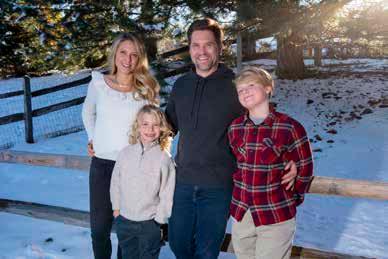
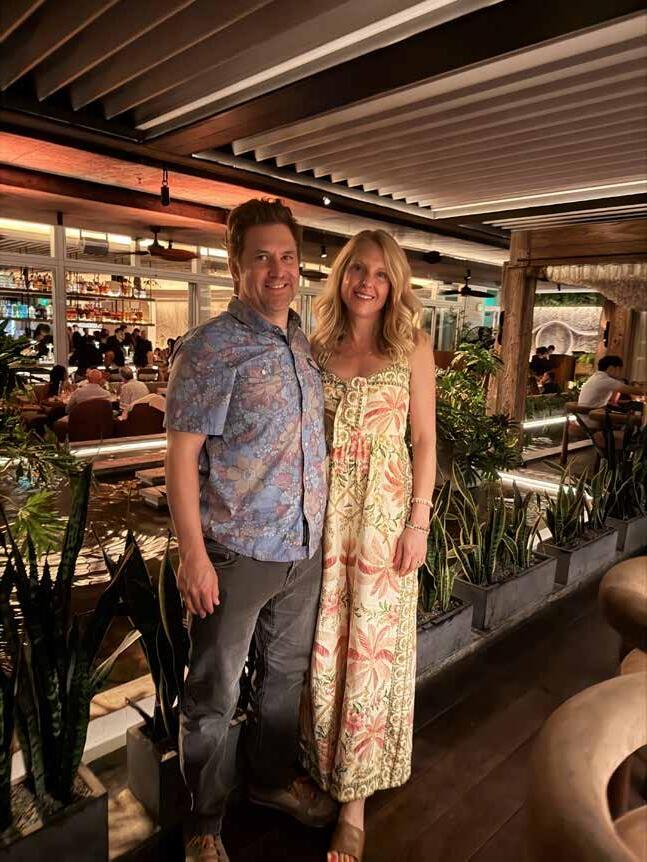
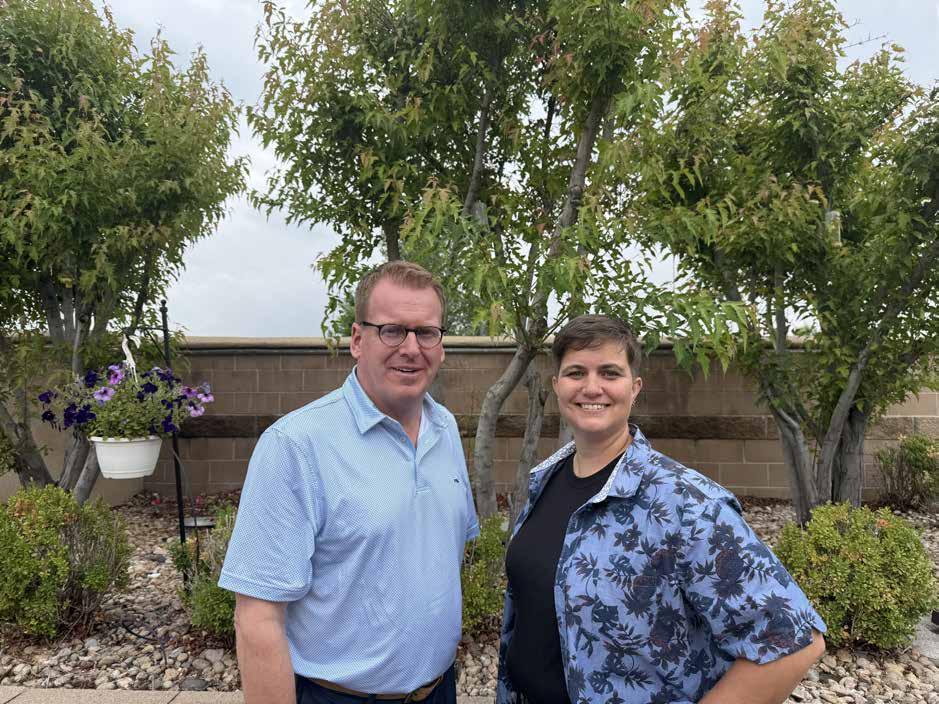
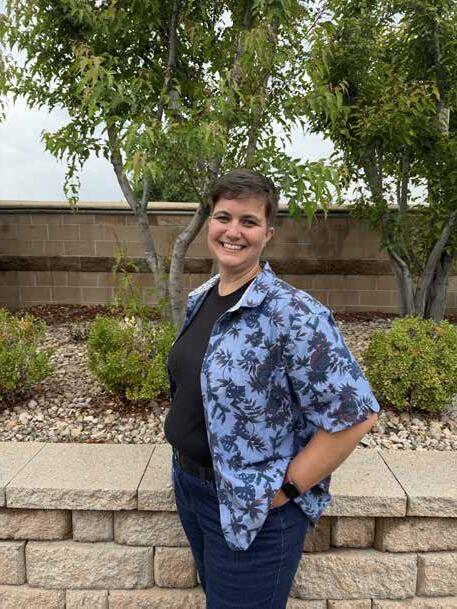
and her husband, Brian, first met more than 20 years ago while working together at the real estate training company that launched both of their careers. Today, Brian works in mortgage lending, giving the couple a unique understanding of the industry from both sides of the transaction.
“We’re able to support each other and understand what the other person is going through,” Rachel says.
Together they are raising two sons, Deker and Evan, who keep the family busy with competitive sports, skiing, swimming, and year-round activities.
“Parenting is really fun and really challenging,” Rachel says. “The boys are very different from each other, but they are absolutely my joy.”
The family spends as much time outdoors as possible, enjoying hiking, mountain biking, paddleboarding, swimming, and Colorado’s incredible mountain lifestyle. In 2025, they added Lily, a beloved dog Rachel affectionately calls their “sweet muffin,” to the family.
Final Thoughts
Looking back, Rachel realizes that every job she ever had prepared her for this one. Selling Girl Scout cookies taught her persistence. Selling Cutco knives taught her confidence. Years spent listening to clients, neighbors, and friends taught her empathy.
Twenty years into her real estate career, those lessons still guide her every day. Markets will rise and fall. Technology will continue to evolve. New
challenges will inevitably emerge. But Rachel knows one thing will never change: People will always need someone they can trust.
And that’s exactly the REALTOR® she has spent the last two decades becoming.
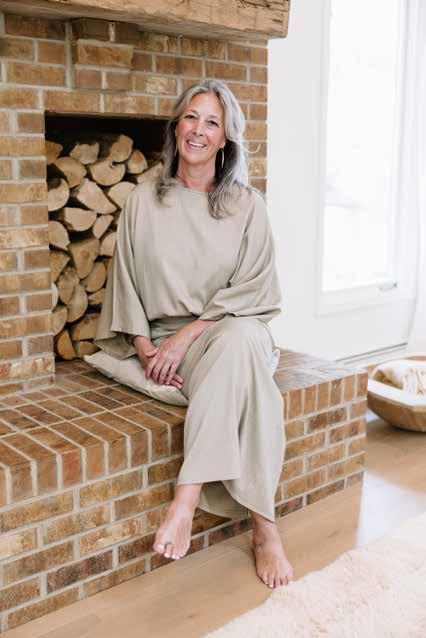
“I had a child who needed a stay-at-home mom,” Kristi says. “Real estate allowed me to do both.”
After beginning her real estate career nearly a decade ago, Kristi worked with respected firms including RE/MAX and Colorado Landmark before finding her home at milehimodern.
The move felt natural.
“I was called to work for milehimodern because of their level of integrity and collaboration,” she says. “The leadership and coaching are unparalleled!”
For Kristi, milehimodern is much more than a brokerage. It is a community of exceptionally talented professionals who believe in elevating one another. The collaborative culture mirrors the same values she strives to embody throughout her life.
“The brilliance of the people at milehimodern is its greatest strength,” she says. “Everyone brings unique experiences, perspectives, and expertise. Together, we create something far greater than any of us could accomplish alone.”
She believes that commitment to excellence is reflected in every aspect of the company, from its design-forward marketing and thoughtful storytelling, to the elevated client experience that has become synonymous with the brand.
“There is an elevated way of doing business at milehimodern,” she explains. “You see it in how properties are presented, how clients
HOMES HOLD ENERGY.
SOMETIMES PEOPLE JUST NEED HELP SHIFTING THAT ENERGY TO CREATE A PLACE WHERE THEIR HEARTS CAN SETTLE.”
are cared for, and how agents genuinely support one another.”
For someone who has spent her life building connections, supporting others, and creating beautiful, intentional spaces, the culture was a perfect match.
In many ways, the brokerage reflects the same belief that guides Kristi’s approach to community: when people come together and share their strengths, everyone rises.
For Kristi, every move, every home, and every major life transition is connected to a human story. She understands that behind every real estate transaction there may be excitement and possibility, but there also may be uncertainty, grief, fear or reinvention. She understands because she has walked through those moments personally.
She leads with compassion, presence, and connection.
Committed to the Community Kristi and her daughter have long supported organizations that strengthen the Boulder community, including local theater and arts programs, small farm educational programs, and creatives. Ryanna, now 18 and recent graduate from a Waldorf inspired performing arts high school, grew up going to Waldorf schools that are immersed in performance, creativity, and community involvement.
“We’ve been part of that community her whole life,” Kristi says. “It has shaped the way we show up in the world.”
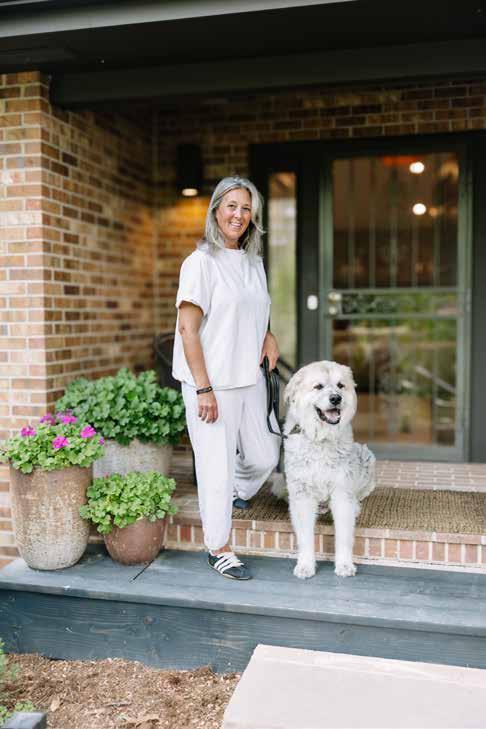
Even their beloved dog, Pace’, a 125-pound Great Pyrenees/Colorado Mountain Dog, whose name means “peace” in Italian, reflects the atmosphere they immerse themselves in.
“Pace’ is an important part of our family life. He goes everywhere with us. Everyone knows and loves him. People call him the gentle giant,” Kristi says.
Peace, creativity, and connection are recurring themes throughout Kristi’s life. They’re also reflected in her passion for design.
“It’s amazing how much our environments affect us,” she says. “When your home is aligned and intentional, everything flows better in every aspect of your life.”
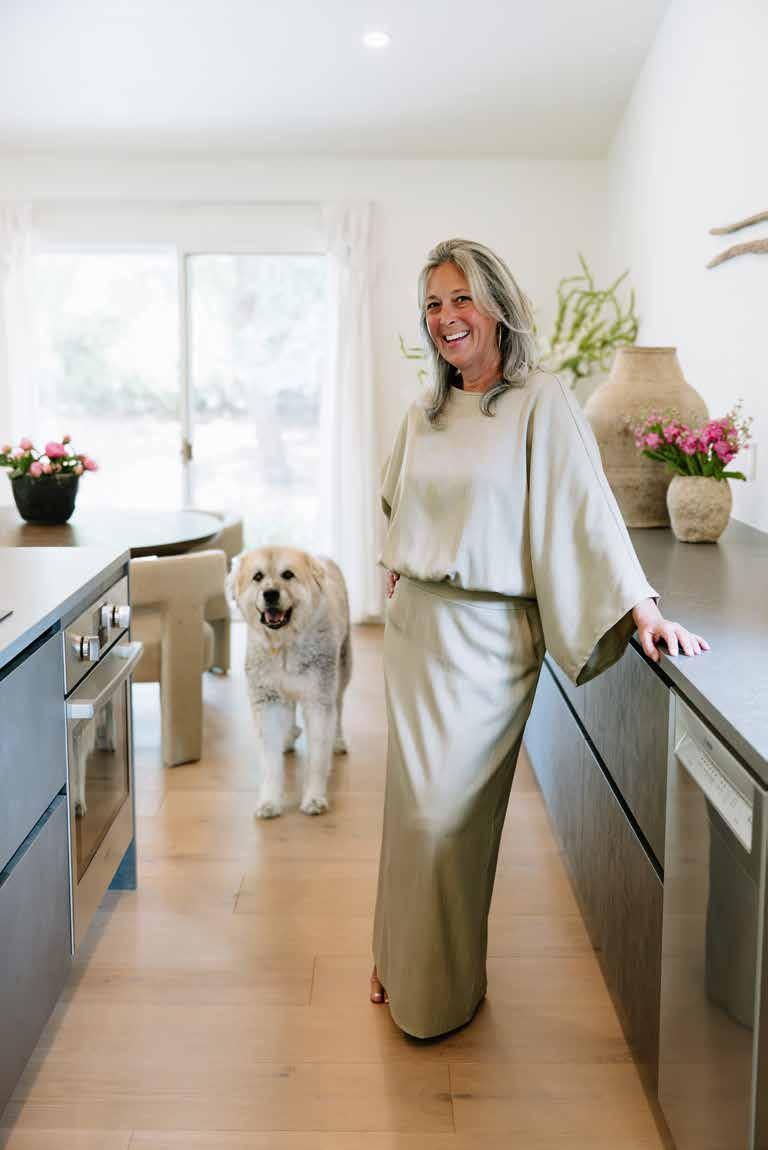
Kristi finds her passion in helping people reimagine spaces. She recently completed a major renovation of her own home (the latest of many full renovations she has immersed herself in) and loves helping others see possibilities they might otherwise miss. Her design style is intentional and the aesthetic leans towards minimalism; curating spaces that evoke serenity.
“Homes hold energy,” she explains. “Sometimes people just need help shifting that energy to create a place where their hearts can settle.”
That creative eye has become one of her trademarks. As a certified stager, she loves helping clients prepare their homes for market. “My sister curates the most amazing pieces. It has been so much fun collaborating with her
on many of my projects,” she says. But her passion extends well beyond staging. Home edits have become a part of her daily practice.
Whether she’s helping refine a room, supporting a local nonprofit, introducing people who can help one another, or showing up for a friend, her motivation remains the same: connection.
Through her work and her service, she’s the person quietly helping others succeed.
In an industry often focused on numbers and transactions, Kristi offers something different. She reminds us that real estate is ultimately
about people, belonging, and supporting environments where individuals, families and communities can thrive. In a world that feels increasingly disconnected, that kind of investment matters.
Because when someone dedicates their life to lifting others up, something remarkable happens.
Every boat in the harbor rises.
Tara ARMIJO
&
Are Better Together Jill MULLER
This Mother and Daughter Duo Leads the Way in Real Estate
BY ELIZABETH MCCABE
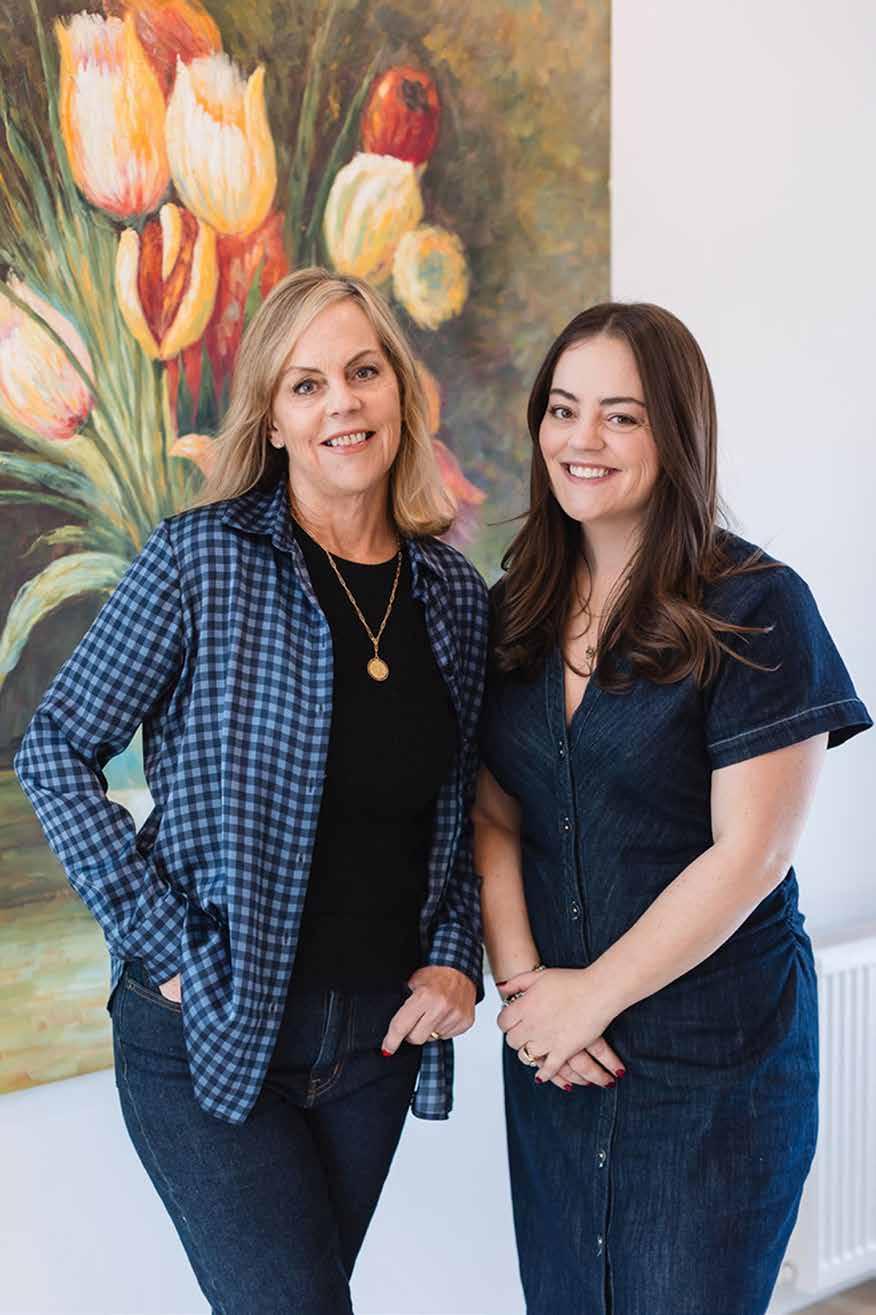
When the global economy fractured in 2008, the ground vanished beneath the fine art industry overnight. For two decades, Jill Muller and her husband ran a highly successful wholesale art publishing business, generating five million dollars a year in sales and supplying elite galleries from San Francisco to Miami. But as the banking debacle unfolded, galleries shuttered and discretionary spending evaporated. Jill found herself at a crossroads at 50 years old: watch her life’s work dissolve, or reinvent herself entirely.
At that exact time, her daughter, Tara Armijo, was preparing to attend the University of Colorado Boulder. Needing to secure student housing for Tara in a volatile market, Jill stepped into real estate as a buyer. That’s when she saw a spark of opportunity.
“I had been in sales my whole life,” Jill recalls. “I thought, ‘If I can sell art, I can sell houses.’ It’s not the same, but I knew art wasn’t going to survive, so I got my license in 2010. I had to think outside the box.”
Jill targeted her marketing toward out-of-state CU parents looking for properties for their college-bound children. This brilliant niche strategy launched a powerhouse second career. For over a decade, Jill thrived as an independent agent across Colorado’s Front Range. But by 2022, managing a demanding, purely referral-based business on her own became overwhelming. Getting closer to retirement, she needed a partner who shared her standards.
Enter Tara.
Navigating the Seasons of Life
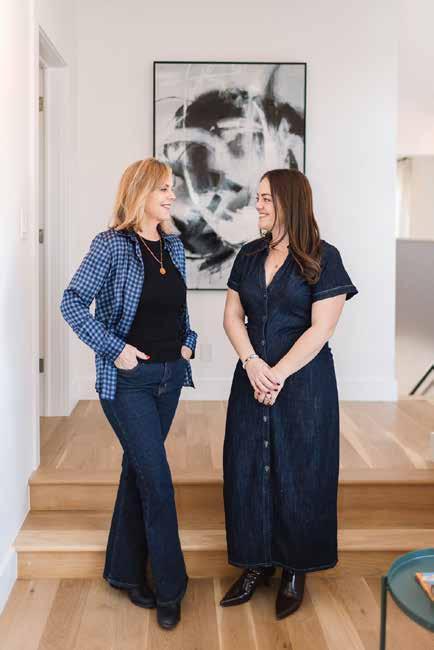
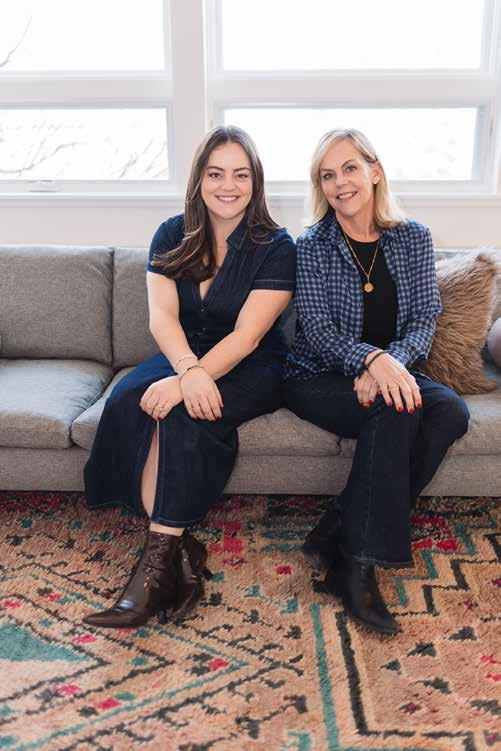
Working together has fundamentally reshaped their family dynamic, bringing mother and daughter closer than ever.
“We joke all the time that she can never fully retire now,” Tara laughs. “We talk every single day because of the business. When I was in corporate marketing, we were close, but we certainly weren’t communicating daily. Because we are family, we can give each other honest feedback and vent openly. We get to bond over something beautiful every single day.”
That family safety net is about to become more critical than ever. Tara is currently balancing a packed life: she is a mother to 4-year-old Woods and 2-year-old Davie, manages a bustling career, and is expecting her third child this October.
“Working with family is an incredible blessing because the level of trust and respect is already absolute,” Tara says. “When
I had Davie, I was attending a closing with my mom nine days later. This time around, having her as my partner means I can actually enjoy a real maternity leave knowing my clients are completely protected by someone who shares my exact values.”
Even Jill’s husband, Mark, who is fully retired and loves taking Jill on international trips to destinations like Marbella, Madrid, and Lisbon, occasionally nudges Jill to step back completely. But Jill isn’t in a rush to step away. Real estate keeps her energized, sharp, and connected to the community. When she isn’t navigating contracts or practicing yoga, Jill is often seen volunteering throughout the community alongside her certified service animal, a golden retriever named Daisy, visiting local libraries to help young children practice reading.
Authentic Growth
As Tara looks toward the future, she reflects on the steep learning curve of the industry and the quiet confidence she has earned.
“During my first two years, I had major imposter syndrome,” Tara admits candidly. “I would ask myself why anyone would hire me when I’ve only been doing this for a year or two. But as you work through complex transactions, you realize how much care and strategy you truly bring to the table. I recently closed a transaction over $3,000,000 completely on my own, which felt like a massive professional milestone.”
Despite that success, Tara isn’t interested in the hyperaggressive, high-volume grind that characterizes many top producers. Her philosophy is entirely grounded in the present season of her life.
“I have two toddlers and a third baby on the way. My focus is entirely on meticulously taking care of my direct circle of people,” Tara notes. “If you take extraordinary care of the individuals right in front of you, the future business takes care of itself.”
Whether they’re helping clients navigate one of life’s biggest financial decisions or simply showing up for someone who needs encouragement, both women believe relationships are life’s greatest investment.
One brings experience. The other brings innovation.
Together, they’ve built a business grounded in trust, strengthened by family, and focused on people above everything else.
That’s a legacy that will outlast any transaction.
Jill Muller: 303-941-6927, jmuller@milehimodern. com
The kitchen continues to evolve beyond its traditional role as simply a place to cook. Today’s homeowners are designing kitchens that serve as gathering spaces, work areas, entertainment hubs, and extensions of their overall home style. Industry experts predict several design trends will continue to gain momentum throughout 2026, blending beauty, practicality, and comfort.
Blending Traditional and Modern Styles
One of the strongest design movements remains the transitional kitchen. This approach combines classic design elements with clean, contemporary features, creating spaces that feel both timeless and current. Homeowners are increasingly choosing designs that avoid extremes, favoring a balanced look that works well for years to come.
Highly themed styles such as farmhouse or Mediterranean kitchens have become less dominant, while flexible, mixedstyle designs continue to appeal to a wider audience.
Warm Neutrals Continue to Lead
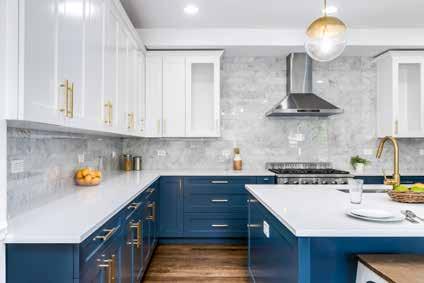
Although bold colors often receive attention in design magazines, neutral palettes remain the preferred choice for many kitchens. Whites, grays, taupes, browns, and soft blacks continue to dominate cabinetry, countertops, and finishes.
At the same time, homeowners are beginning to introduce more color through accents. Shades of green and blue are particularly popular, appearing in backsplashes, islands, wallpaper, decorative accessories, and painted cabinetry.
Natural Wood Cabinetry
Remains
Popular
Wood cabinetry continues to make a strong statement, particularly lighter species such as white oak. Its clean grain and warm appearance fit well within both modern and traditional homes.
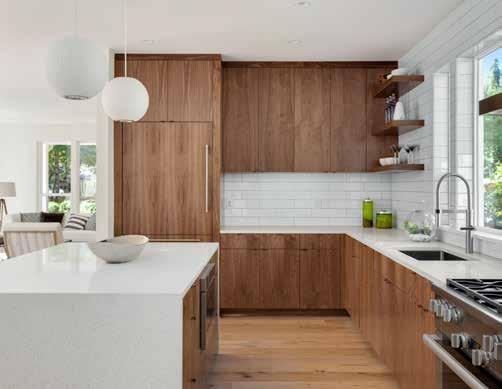
Darker woods, including walnut, are also gaining interest as homeowners seek richer tones and added contrast. Flat-panel cabinet doors and streamlined designs remain highly desirable, while classic shaker styles continue to hold their place as a versatile option.
Many new kitchens also feature floor-to-ceiling cabinetry and integrated appliances that blend seamlessly with cabinet panels for a clean, uncluttered appearance.
Quartz Takes Center Stage
When selecting countertops, homeowners increasingly favor materials that combine durability with attractive design. Quartz remains one of the most popular options because it offers the appearance of natural stone while requiring minimal maintenance.
Quartzite is also becoming more widely used, offering
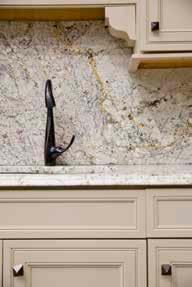
natural beauty and strength. Traditional granite continues to lose some popularity, while marble, although still admired for its elegance, is often avoided because of its higher maintenance requirements.
Lighter countertop colors paired with darker cabinetry are especially popular, along with matte and honed finishes that provide a softer appearance than highly polished surfaces.
Seamless Backsplashes Gain Attention
Tile remains a dependable and attractive choice for kitchen backsplashes, particularly ceramic and porcelain options that offer durability and easy maintenance.
However, more homeowners are choosing continuous stone surfaces that extend from the countertop up the wall. These seamless backsplashes create a sleek appearance, reduce grout lines, and contribute to a more modern, streamlined kitchen design.
Durable Flooring Choices
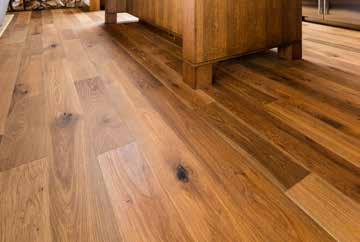
Flooring selections continue to emphasize practicality and warmth. Wood-look materials and engineered wood flooring
are especially popular because they provide the appearance of hardwood while offering improved durability and easier maintenance.
Larger planks and wider boards are increasingly common, helping rooms feel more spacious while minimizing visible seams and grout lines.
Lighter wood tones and warm neutrals remain favored, contributing to a bright and inviting atmosphere.
Kitchens Designed for Everyday Living
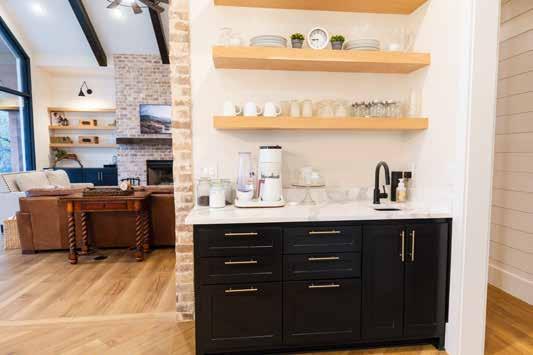
Today’s kitchens are becoming highly personalized spaces that support a variety of daily activities. Dedicated beverage stations, coffee bars, and entertaining areas are increasingly common features.
Additional functional spaces such as pet feeding stations, homework areas, home office nooks, and mudroom connections are also gaining popularity. These additions reflect the growing role of the kitchen as the central gathering place within the home.
As homeowners continue to prioritize comfort, convenience, and versatility, kitchen design in 2026 appears focused on creating spaces that are both beautiful and highly functional.
THE TRUTH ABOUT
SOLAR
Why One Colorado Company Is Helping REALTORS® Stop Cringing at Solar Panels
BY ELIZABETH MCCABE * PHOTOS BY JULIA COLLARDSON
Mention solar panels during a real estate transaction and watch what happens.
The seller insists the system adds tens of thousands of dollars in value.
The buyer worries they’re inheriting a financial nightmare. The agent braces for paperwork headaches, transfer delays, and unanswered questions.
Somewhere along the way, solar earned a reputation as real estate’s four-letter word.
Kate Collardson is determined to change that.
With more than 20 years of experience in
the solar industry, Kate has seen firsthand how misinformation, confusion, and fear can overshadow the very real benefits solar can provide homeowners. That’s exactly why she and cofounder Matt Essig launched Solar Service of Colorado.
“Our goal is to help real estate agents have a better relationship with solar,” Kate explains. “Solar tends to be a four-letter word in real estate. I’m trying to make it the fiveletter word it deserves to be.”
Education is paramount to changing people’s perceptions about solar. While many people assume solar automatically complicates a transaction, Kate believes most concerns stem from one simple problem: homeowners, buyers, and even agents often don’t fully understand what they’re looking at.
“Take a deep breath,” she says. “There’s no reason to be
afraid of a home just because it has solar.”
In fact, solar can offer significant advantages.
For homeowners, it can reduce monthly electricity costs and help protect against future utility rate increases. When paired with battery storage, solar can even provide backup power during extended outages caused by storms, extreme weather, or grid failures.
Yet misconceptions continue to dominate conversations.
One of the biggest myths? That every solar lease or
third-party ownership agreement is automatically a bad deal.
“I’ve seen many arrangements that provide tremendous value to homeowners,” Kate says. “Just because a system is leased doesn’t mean it’s a bad situation.”
Another common misunderstanding is that solar systems don’t need inspections. Kate strongly disagrees. “If there’s solar on the home, it should always be inspected.”
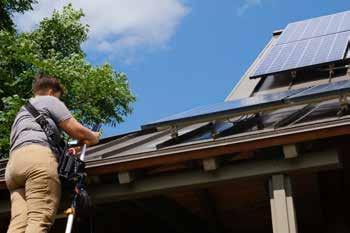
That’s where Solar Service of Colorado has carved out a unique niche. Rather than selling solar systems, the company specializes in inspecting, repairing, maintaining, and evaluating existing systems, particularly those installed by companies that have since gone out of business.
For Kate, inspections are the missing piece of the puzzle.
A traditional home inspection may identify a cracked solar panel or visible damage, but it rarely tells the whole story. What buyers and agents really need to know is whether the system is producing
the energy it’s supposed to produce, how much life remains in the equipment, what warranties are still active, and whether the system was installed properly.
That’s exactly what Solar Service of Colorado provides.
The company’s comprehensive inspections dive deep into system performance, ownership structure, monitoring capabilities, warranties,
paperwork, and overall condition. The result is a detailed Spectora report that gives buyers, sellers, and agents a clear understanding of what they’re dealing with before a transaction moves forward.
“People are making decisions without having all the information,” Kate explains. “Our job is to help everyone understand what they have and whether it’s working as efficiently as it should.”
The service has become increasingly important as the solar industry matures.
Over the past two decades, solar adoption has exploded across the country. But with that growth has come another challenge: orphaned systems.
As incentives changed and competition increased,
some solar companies left the market or closed their doors entirely. Homeowners who purchased systems from those companies suddenly found themselves without support when problems arose.
“We call them orphaned systems,” Kate says. “A homeowner knows something is wrong because their electric bill suddenly goes up, but they don’t know who to call.”
Unfortunately, many installers are reluctant to work on systems they didn’t originally install, leaving homeowners frustrated and without answers.
Kate saw the gap and decided to fill it.
Rather than walking away from those systems, Solar Service of Colorado steps in to provide inspections,
repairs, maintenance, and guidance. The company also helps homeowners transfer monitoring systems, understand warranties, and navigate the complexities that often accompany solar ownership.
For REALTORS®, the service can be especially valuable.
A solar inspection can remove much of the uncertainty surrounding a transaction, provide documentation for potential buyers, and demonstrate that a system has been professionally evaluated. In many cases, that transparency can transform solar from a perceived liability into a legitimate selling feature.
home system, it requires maintenance, education, and periodic evaluation. But Kate believes the conversation around solar needs to evolve from fear and assumptions to facts and understanding.
Her advice to agents is simple: don’t avoid the conversation. Instead, ask questions. Learn how the system works. Understand the ownership structure. And most importantly, get it inspected.
“Whether it’s the buyer or the seller, everyone benefits from knowing exactly what they’re dealing with,” Kate says.
For Kate and the team at Solar Service of Colorado, that’s what this business is all about: bringing clarity to a rapidly growing industry and helping homeowners, buyers, and REALTORS® make informed decisions.
Because sometimes the biggest problem with solar isn’t the system on the roof. It’s the misconceptions surrounding it.
And the benefits of solar extend beyond individual homes.
According to Kate, solar has quietly become one of the most cost-effective energy resources available today.
Twenty years ago, the idea that solar could compete with traditional power generation seemed almost impossible. Today, utilityscale solar projects are often less expensive to build than new coal, natural gas, or nuclear facilities.
“Solar is one of the fastest and most cost-effective energy resources available to us,” she says.
That doesn’t mean solar is perfect. Like any major
COINCIDENCE
OR GOD’S PHARMACY?
BY DR. FELICIA SANTELLI
Did you ever look at a food and think it resembled a body part? Many of Nature’s foods do resemble human body parts. Nature gives us clues about how to nourish our bodies, since those foods are often used to support the body part they look like.
So, the two-look similar. Coincidence? Probably not! There are no accidents in Nature.
Nature often provides visual clues about the nutritional benefits of foods—a concept historically known as the “Doctrine of Signatures”. Many plant-based foods closely resemble the specific organs they support. For centuries, this idea suggested that nature provides visual clues about which foods support which organs.
People looked to nature for remedies to relieve suffering from various ailments. Maybe it was a well-planned biological design that ancient healers were able to rely on a plant’s appearance for clues to its medicinal properties because they found that some plant foods resemble the body parts they benefit.
Dioscorides, a medicine practitioner in ancient Rome, was believed to have said: “The Herb Scorpius resembles the tail of the Scorpion and is good against his biting.”
The general idea developed that “a like could bring good benefit to what it looked like,” or something that resembled something would be suitable for that ailment. It became a widespread belief, with many thinking that the divine intentionally made these signatures
in the leaves, flowers, or roots to help cure the ailments of mankind.
The concept of relying on the plant’s appearance for clues to its medicinal properties has existed since ancient times in many cultures, including Native American herbalism, Indian Ayurveda, traditional Chinese medicine, Greek medicine, and African herbalism.
When we understand this synchronicity, it gives us and intuitive approach to using ‘food as medicine’ and shows us how our food choices can relate to our health and well-being.
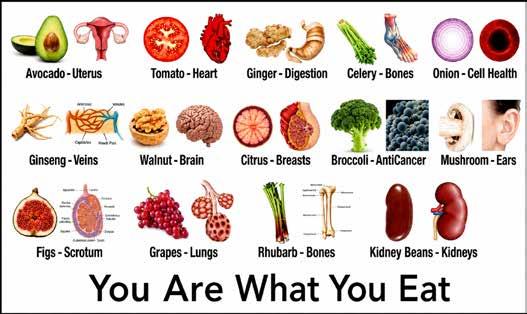
Here are a few examples of researched foods that look like the body parts they benefit.
Avocado - Uterus
The ‘light bulb’ shape of the avocado looks like a uterus and supports its health. Avocadoes are a good source of folic acid, which can reduce the risk for cervical dysplasia, a precancerous condition. It helps the health and function of the womb and cervix and helps balance hormones. Interestingly, it takes exactly nine months to grow an avocado from blossom to ripened
Tomato - Heart
When cut open, tomatoes resemble the four chambers of the heart. Tomatoes contains Lycopene, a plant chemical that reduces the risk of heart disease and several cancers. If you mix them with a little fat like olive oil or avocado, it greatly boosts the body’s lycopene absorption. Experiments have shown that lycopene helps counter the effect of unhealthy LDL cholesterol
thereby helping to prevent coronary heart disease.
Ginger – Stomach (Digestion)
Root ginger often looks like the stomach, so it is interesting that is biggest benefit is aiding digestion. It calms the stomach, cures nausea, and helps with motion sickness. Gingerol is a phytochemical with the ability to prevent nausea and vomiting.
Celery – Bone or Rhubarb and Bone
Long, lean stalks of celery look just like bones and are good for them. They target bone strength. Celery is a good source of silicon which is part of the molecular structure that gives bones their strength. Bones are around 23% sodium and celery is high in sodium If you don’t have enough sodium in the diet, the body pulls it from the bones which makes them weak. Celery replenishes the skeletal needs of the body.
Onions and Body’s Cells
Onions look like the body’s cells. Research shows onions help clear waste materials from all of the body cells. They also produce tears which wash the epithelial layers of the eyes.
The phytochemicals in onions improve the working of Vitamin C in the body which improves immunity. They also contain chromium which helps regulate blood sugar.
Ginseng and Veins
Ginseng not only resembles the nervous system but supports it by reducing stress. It protects nerve cells from damage and promotes nerve cell survival and regeneration. Ginseng acts as an adaptogen helping the body to manage physical and psychological stress naturally.
Walnuts and Brain
A walnut looks like the brain with a left and right hemisphere and
YOU ARE WHAT YOU EAT
upper and lower chambers. Even the folds and wrinkles resemble the neo-cortex of the brain so it’s no wonder it is nicknamed ‘brain food’. Walnuts develop many neurotransmitters for brain function. Walnut extract was found to break down the proteinbased plaques associated with Alzheimer’s disease.
Citrus - Breasts
Orange and grapefruit look like the mammary glands and can assist the health f the breasts moving the lymph. Grapefruit contains limonoids which can inhibit development of cancer in breast cells.
Broccoli and Cells
The tiny green tips of a broccoli head look like hundreds of cancer cells. Eating broccoli was found to reduce the risk of prostate cancer.
Mushrooms - Ear
Mushrooms are one of few foods that contain Vitamin D which is important for healthy bones even the tiny ones in the ear.
Figs - Scrotum
Figs hang in twos when they grow. Fig seeds increase the motility of male sperm and the numbers of the sperm which help to overcome male sterility.
Grapes - Lungs
Clams - Testicles
Our lungs are made up of branches of small airways that end up with tiny bunches of tissues called alveoli. These structures which resemble bunches of grapes allow oxygen to pass from the lungs to the blood stream. Grapes have been shown to reduce the risk of lung cancer and emphysema. Grape seeds contain a chemical called proanthocyanin which may reduce the severity of asthma triggered by allergies.
Beans - Kidneys
Kidney beans heal and help maintain kidney function and they look exactly like the human kidneys.
Not shown on the chart:
Carrots and Eyes
Sliced a carrot and it looks like an eye, the pattern of the iris. Carrots contain vitamins and antioxidants, like beta-carotene that decrease the chance of macular degeneration and reduces the risk of developing cataracts.
precancerous condition. It helps the health and function of the womb and cervix and helps balance.
Sweet Potatoes and Pancreas
The sweet potato not only resembles the pancreas but promotes healthy function in the organ. It is high in beta-carotene which is an antioxidant that protects all tissues of the body including the pancreas from damage associated with cancer or aging and balances the glycemic index of diabetics.
Almonds and Eyes
Clams, which have a resemblance to testicles are also good for the male sex organs. They contain folic acid and zinc which improves the effect of semen.
Red Wine - Blood
Red wine is a source of antioxidants and polyphenols, including resveratrol, and looks like blood. It helps protect against LDL cholesterol which can cause heart disease. Red wine contains a blood-thinning compound which reduces blood clots associated with stroke and heart disease.
Olives - Ovaries
Olives, not only resemble an ovary, but assist the health and function of the ovaries.
The ‘light bulb’ shape of the avocado looks like a uterus and supports its health. Avocadoes are a good source of folic acid, which can reduce the risk for cervical dysplasia, a
which foods heal which parts of the body.
This idea dates to ancient Greece and was particularly popular in European herbal medicine during the 16th and 17th centuries. Herbalists believed that God (or nature, depending on the tradition) had marked plants with signs to guide humans toward their proper use.
An almond and a human eye look similar. Almonds contain vitamin E which is essential for skin, hair, and eyes. It is a rich source of monounsaturated fat which helps in lowering cholesterol. Almonds also contain selenium, an antioxidant.
‘The Doctrine of Signatures’
After seeing these examples, we may begin to believe ‘The Doctrine of Signatures’ which is a traditional concept that suggests the appearance, shape, or color of a plant can indicate its medicinal use. Nature provides visual “signatures” or clues about
It’s important to understand that while the philosophy was based on symbolism rather than science, many of the traditional food-organ pairings turn out to be scientifically valid.
The shape doesn’t create the healing property. The fact is that these foods happen to contain specific nutrients, antioxidants, and compounds that support not only the specific organ they resemble but also the whole body.
Coincidence or God’s Pharmacy? You choose! The Doctrine of Signatures is mentioned in literature on medicinal plants, also. The theory is that certain physical attributes of plants serve as signs to indicate their therapeutic value. For more information on this:
I am not advocating any supplements or a particular treatment. I ask that you keep in mind that all the information given is just my web research. It is only meant to give you the basic history and knowledge to hopefully whet your desire to learn more by doing your own research. One must do ‘due diligence’, researching more information than I am able to provide here in order to make a knowledgeable, individual and personal decision as to which route to follow.