critical communication
Deciphering Associations and organizations
Many local and national organizations work to bring out the best in summer camps and public, private and boarding schools by identifying schools that meet certain standards through accreditation. These groups also set policies, research educational advancements and offer services to the educational communities both in Atlanta and in georgia. The following are just some of the associations and organizations you should know in your search for the best educational experience for your child.
AdvancED
www.advanc-ed.org
The parent organization for the Southern Association of colleges and Schools, AdvancED advances education excellence through accreditation and school improvement.
The Association of Boarding Schools (TABS) www.boardingschools.com
This organization of 300 boarding schools serves
the professional development needs of boarding schools and provides information to potential students and their families.
Association of Christian Schools International (ACSI) www.acsi.org
AcSI strives to enable christian educators and schools worldwide to teach effectively using christ-centered curricula and programs.
Association Montessori Internationale (AMI) www.montessori-ami.org recognizes schools that strongly adhere to Montessori principles and practices.
Atlanta Area Association of Independent Schools (AAAIS) www.aaais.org
Although not an accrediting agency, AAAIS is an affiliation of independent schools and operates under analogous principles and a common code of ethics.
Department of Education (DOE) www.doe.k12.ga.us
A statewide, policy-driven organization governing the public school system of education in georgia for grades k-12, the georgia DoE operates under the direction of the state superintendent of schools.
Georgia Accrediting Commission (GAC) www.coe.uga.edu/gac gAc offers four levels of approval: preparation status, provisional accreditation, accreditation and accreditation with quality.
Georgia Association of Christian Schools (GACS) www.gacs.org uses generally accepted indicators of quality, voluntary self-improvement and peer review to measure christian schools.
Georgia Association of Private Schools for Exceptional Children (GAPSEC) www.gapsec.org
This state organization of independent schools for students with learning disabilities maintains a code of ethics and shares information about programs at member schools.
Georgia Charter Schools Association (GCSA) www.gacharters.org
A membership organization whose mission is to be an effective advocate and service provider for all charter public schools in georgia.
Georgia Independent School Association (GISA) www.gisaschools.org
An association of private, independent and parochial schools throughout the state whose mission is to advance excellence and collaboration among private, independent and parochial schools.
Georgia Professional Standards Commission (PSC) www.gapsc.com
A state organization responsible for setting and applying high standards for the preparation, certification and licensing of georgia public educators, as well as conduct of teachers and staff.
Georgia School Boards Association (GSBA)
www.gsba.com
The gSbA provides leadership and services to georgia’s 180 elected boards of education, developing processes and programs to help local school boards continuously improve and use data effectively.
National Association for the Education of Young Children (NAEYC)
www.naeyc.org
The nAEyc focuses on the quality of educational and developmental services for children, from birth to age 8, including day care and pre-k centers.
National Association of Independent Schools (NAIS) www.nais.org
This association values and works to maintain the independent nature of each member school by promoting high standards of educational quality and ethical behavior.
National Association of Private Special Education Centers (NAPSEC) www.napsec.org represents private specialized education pro-
grams and their leaders by promoting high-quality programs and services for individuals with disabilities and their families.
National Christian School Association (NCSA) www.nationalchristian.org
An organization that accredits member schools, overseen by a board of administrators from christian schools and universities.
Southeastern Association of Boarding Schools (SABS) www.sabs.org
An organization committed to promoting boarding education opportunities in the Southeastern united States.
Southern Association of Colleges and Schools (SACS) www.sacs.org
Member schools meet research-based standards and maintain continuous school improvement and quality assurance.
Southern Association of Independent Schools (SAIS) www.sais.org
Members meet quality standards, receive peer evaluation and implement a school plan focused on strategic improvement.
For more information about these and other organizations and associations that ensure quality education among camps and schools, visit the websites of the georgia Department of Education (www.k12.ga.us) or the u.S. Department of Education (www.ed.gov).
corner
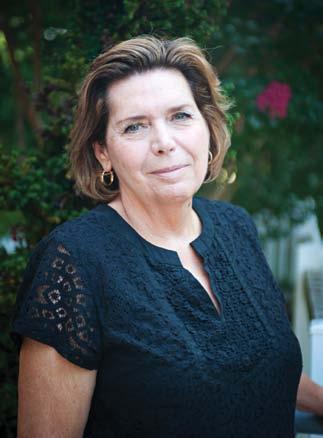
Jan Deason
Head of School & Administration, Arbor Montessori School
Jan Deason has been the head of school and administration at Arbor Montessori School since 2008. She is also currently on the board of the Montessori Administrator’s Association, an international association of Montessori headmasters. previously, she has served as president of the Montessori Administrators of georgia and an elementary school teacher.
What is your educational philosophy?
Montessori, naturally! It’s a scientifically proven, developmentally appropriate philosophy that’s been around for more than 100 years. In addition to that, kids love it. They get to follow their interests, feed their curiosity, exercise independence and develop responsibility. our students love to go to school. what could be better than that?
What do you love most about your job?
The children. Our school spans 18 months to 14 years, so I can watch a child go from learning to walk to (almost) learning to drive! I also love working with our wonderful teachers in supporting our families.
How can parents best contribute to the education process?
listen to your child’s teacher! They are the experts in kids your child’s age and can be a huge resource for you. Take advantage of any parent education opportunities
your school offers. The more you know, the more you and your teacher can work in tandem. Volunteer. A strong school community has a direct impact on the quality of your child’s education.
What advice would you offer parents about their children’s education?
Follow the child. Encourage your child to pursue his or her interests and passions. bring education home, not through worksheets but through exposure to art, music, nature and anything and everything your
THE ESSENTIALS:
ARBOR MONTESSORI SCHOOL
Emphasis: To develop the unique capabilities of each child through supportive relationships, joyful learning and meaningful work.
Year Founded: 1970
Grades: preschool-8th grade
Students: 293
Avg. Class Size: 26
Tuition Range: $9,060-$18,100
Accreditations or Affiliations: AAAIS, AMI, SAcS, SAIS
Location: Decatur, georgia
Contact: 404-321-9304, ArborMontessori.org


room setting. Others may teach average or even above-average learners while also offering additional programs and classes for students with learning differences.
How to Tell if Your Child Has a Special Needs Situation
First, it’s important to identify your child’s issues. Students who exhibit average or above-average intelligence but often seem distracted and don’t perform well in a traditional classroom setting may be struggling with dyslexia, Asperger’s syndrome, ADHD or some other disorder that affects their ability to learn effectively. Also, disruptive or aggressive children may be exhibiting frustration brought on by a learning disability.
If you suspect your child may have a learning disability, it’s critical to have
him or her evaluated by a mental health professional. A diagnosis is crucial in order to address the child’s educational needs.
After a Diagnosis: What’s Next?
A professional evaluation is crucial in order to evaluate your child’s educational needs.
If your child is diagnosed with a learning disability and attends public school, talk with the principal, school counselor or another administrator about developing an Individualized Education Program (IEP). All public schools are required to create an IEP for students with learning disabilities who meet special education requirements. An IEP is a document that specifies your child’s learning situation and educational needs and outlines a course of action for teachers and other professionals to follow to help make sure your child learns to the best of his or her ability. u
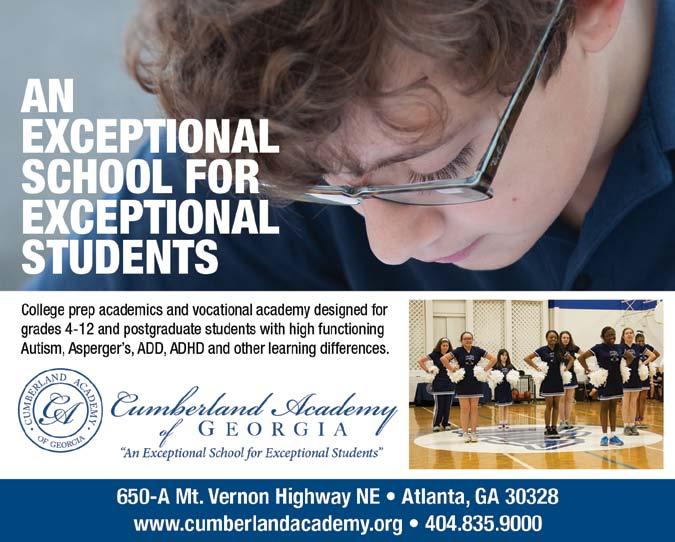
If you feel your local public school isn’t the right environment for your child, or simply want to explore all your options, there are many quality independent schools in the metro Atlanta area devoted to helping children with special needs and learning issues. Visit the Georgia Association of Private Schools for Exceptional children’s website (www.gapsec.org) or our listings for special needs schools on page 106 to help you with your search.
How Do I Find the Right School?
All special needs schools are not the same. the first step is to identify those schools that can address your child’s specific learning difficulty, and offer the level of special needs instruction that you (and perhaps a professional) feel is best for your child.
You may be more comfortable enrolling your child in a school that focuses specifically on his or her issue, or you may want a more diverse environment where he or she can interact with many different kinds of students. Familiarize yourself with the different options offered by each kind of school.
traditional independent schools that offer special needs programs as part of a larger curriculum can offer that kind of environment, but may have larger class sizes than schools that specialize in specific learning disabilities. these kinds of schools may also focus more on academics than on the therapeutic aspects of special
needs education. Independent special needs schools can offer more individualized instruction and a more structured and predictable environment, and are likely to address nonacademic issues such as social skills and self-esteem.
As you begin searching for the right school for your child’s situation, here are some questions to keep in mind:
• Will your child fare better in a school that focuses on his or her specific learning disability, or would you rather that he be able to interact with students with a wide range of learning capabilities?
• Does the school serve a specific age range, or work with students on all grade levels? Many students with learning disabilities have trouble transitioning to new schools.
Continued on pg.20 u
Identify those schools that can best address your child’s specific learning difficulty.

• Does the school offer a variety of extracurricular activities, including arts and sports programs?
• Is the school accredited? If so, by which organizations?
• Is the staff certified to instruct special needs children, or those with your child’s specific learning difficulty?
• Does the school focus more on academics or on addressing the child’s therapeutic needs?
Financial Assistance
Many independent special needs schools participate in the Georgia Special needs Scholarship program (GSnS), a school choice program available to special needs students attending Georgia Public Schools. the program offers funds to off-
set tuition and fees at participating private schools authorized by the State Board of Education. According to the Georgia Department of Education, scholarship amounts range from $2,500 to $13,500, with an average amount of around $6,000. the Quality Education Expense credit program provides another scholarship option. Donations are made to an organization known as a Student Scholarship Organization (SSO), which uses the money to award scholarships to students in pre-K through grade 12. Many schools also offer their own scholarships or tuition assistance programs, as well. contact individual schools for details.
For more information on special needs schools and resources, please see our listings on page 106.
COMMON SPECIAL NEEDS TERMS
Asperger’s Syndrome: A developmental disorder on the autism spectrum, characterized by high intelligence, impaired social skills and repetitive patterns of behavior and interest.
Attention Deficit Disorder (ADD): A strain of ADHD (see below) marked by a difficulty maintaining focus or concentration and frequent or consistent fatigue. ADD differs from ADHD in that hyperactivity or impulse-control issues are markedly decreased.
Attention Deficit Hyperactivity
Disorder (ADHD): A chronic condition that includes hyperactivity, impulsive behavior and a difficulty keeping one’s attention focused.
Autism: A developmental disorder that affects the ability to communicate and interact with others, accompanied by rigid, repetitive behavior patterns.
Dyslexia: A learning disability that impairs one’s ability to read.
Georgia Association of Private Schools for Exceptional Children (GAPSEC): An organization of independent schools serving students with learning disabilities and differences.
Georgia Special Needs Scholarship (GSNS): A school-choice scholarship program for special needs students being served by an IEP in Georgia public schools.
Individualized Educational Program (IEP): A written statement that outlines the needs of a public school student with learning disabilities and creates a customized plan for meeting those needs.
Individuals With Disabilities Education Act (IDEA): the federal law that governs how states and public education agencies that accept funding under the law address the educational needs of students with disabilities.
Learning Disability: A neurological condition that affects how one processes information. learning disabilities can impede reading, writing, speech, math, reason, memory, attention, coordination, social skills and emotional maturity.
Multisensory Instruction: An educational approach involving the use of all of a child’s senses, not just sight and hearing, to help with understanding concepts and solving problems.
Response to Intervention (RTI):
A process used by educators to help identify and address the needs of students experiencing behavioral or educational challenges.
Student Scholarship Organization (SSO): An organization authorized by the state of Georgia to receive funds and award scholarships under the Georgia Quality Education Expense credit program.


FINDING THE PERFECT FIT
HOW TO CHOOSE THE RIGHT SCHOOL FOR YOUR CHILD
BY DANIEL BEAUREGARD
Enrolling in a new school is an important moment in a child’s life. Whether it’s elementary, middle or high school in a public, independent or religious setting, finding a nurturing and challenging institution is crucial.
Atlanta offers a wealth of school options, including college-preparatory, cultural-immersion and experiential-learning. The variety means parents need to know what type of school they’re looking for and the options available.
“The process is far easier when families know what they are looking for in a school,” says Brian Uitvlugt, vice president and director of admissions at Eaton Academy in Roswell.
MAKING A LIST
Before visiting any schools, make a list of the most important qualities and programs they should have, ranging from a particular course of study to a strong athletics or music program. Create a list of


the child’s academic, social and emotional strengths and needs. Then compare and contrast the offerings of different schools and how they match to the list.
“Factors such as student-to-teacher ratio, extracurricular offerings, availability of before-and-after care, quality of the curriculum and the variety of programs offered will vary significantly from school to school,” Uitvlugt says.
One of the best ways to ensure that a school meets a child’s needs is to include the child in the selection process. Start by asking the student about subjects he or she is passionate about or finds difficult, what hobbies, sports or outdoor activities he or she enjoys and, for teens, if they have specific career goals and post-secondary plans.
cational consultant and founder of Williams Educational Consultants, a Roswell firm that assists parents in making school choices.
Ensure that a school meets a child’s needs by including them in the selection process.
Learning about the quality public schools in an area is another good place to start. Begin by finding out which schools serve the neighborhood by checking the local district’s website, says Courtney Burnett, community liaison for City Schools of Decatur. Parents can also visit the Georgia Department of Education’s website (doe. k12.ga.us) to easily compare public schools in their district with other systems in the state.
“If the entire family gets involved, then the process becomes an opportunity for positive growth and can lead to success,” says Wendy Williams, an edu-
If you want to explore independent schools that may be a good fit, the websites for the Atlanta Area Association of Independent Schools (AAAIS) and the Georgia Independent School Association (GISA) are good places to start. Another great resource is the “At-a-Glance” information starting on page 38, which

includes features, information and statistics for independent schools which are included in this publication.
PAYING A VISIT
After doing your homework, visit each prospective school that’s on your list. Spend time with the staff and students, and make sure that you speak with parents as well.
Parents can also request that their child shadow another sutdent at the prospective school.
“Oftentimes, schools will offer special potential-parent tours,” says Burnett. “These are great to see the school, meet the administration and see classrooms in action.” Many schools encourage parents to make appointments for personal tours as well, and they invite prospective families to attend openhouse events that offer an overview of the school’s climate and offerings. During visits, parents and children should ask questions to determine if the school fits their
own personal needs and education goals.
It’s also important to learn about a school’s mission and values, and to get a feel for how the students and adults will interact. “I highly recommend that families should attend sporting events, plays or musicals to learn about a school’s community and athletic or artistic talents,” Williams says.
Parents can also request that their child shadow another student at the prospective school. “It is very important for the parents and the student to get their own feel of the school’s ‘vibe,’” Uitvlugt says.
After each visit, sit down with the student and create a chart of each school’s strengths and weaknesses. Along with academic and extracurricular offerings, factor in such elements as travel time to and
from the school, classroom and school size and, for an independent school, the costs involved. Review finances to determine what commitment the family can reasonably make and whether or not to seek scholarship support.
SEEKING OUTSIDE HELP
So many factors play a role in choosing a school that parents may want to consider hiring an educational consultant, either to help review options or to give another perspective. Williams says her goal is to make the selection process easier. She visits local schools to understand an institution’s academic rigor and social personality.
Educational consultants offer services ranging from school assessments to student needs assessment and test preparation. The Independent Educational Consultants Association’s website (iecaonline.
com) offers an exhaustive list of educational consultants, as well as resources for parents.
In the end, says Burnett, choosing a school is a personal decision, and parents must do what they think is best for their child and the family. By taking time to think about and investigate the different options, and to ask the right questions of teachers, staffers and parents, the right choice can be made for everyone.
HELPFUL RESOURCES
Georgia Department of Education doe.k12.ga.us
Atlanta Area Association of Independent Schools aaais.org
Georgia Independent School Association gisaschools.org
Independent Educational Consultants Association iecaonline.com


COLLEGE PROCESS ADMISSIONS ACING THE
TIPS TO HELP YOUR CHILD STAND OUT FROM THE CROWD
BY ANNA BENTLEY

It’s a topic on the minds of many highschool students and their parents: college admissions. With an evergrowing number of prospective college students—and an average of seven to 10 applications per student—colleges are seeing more competition than ever before. So, how do students stand out in the sea of applicants? According to some of metro Atlanta’s college and admissions counselors, the strongest applications are ones that show a pattern of success—and a little personality.
Going Above and Beyond
The most important aspect of a student’s application is his or her academic record. Strong academic performance is important, as well as the relative rigor of the class load. Admissions officers value strong grades, but they also consider classes taken in the context of classes offered at particular schools.
“We really want to focus on seeing that a student has challenged themselves and taken rigorous classes in high
school,” says Patrick Winter, senior associate director of admissions at the University of Georgia. “And the same also goes for extracurricular activities,” says Winter. “It doesn’t necessarily matter what they do as much as that they demonstrate that they’re doing something with their time, whether that’s volunteering, whether that’s working, whether that’s doing a service project. We want to see that someone recognizes the fact that they’re doing something above and beyond the minimum that is expected of them.”
Does it matter how many extracurricular activities a student participates in, or how many internships he’s completed by graduation? Not necessarily. For admissions counselors, the most important thing is the level of effort. Students stand out by making an impact—not just participating—in their activities, no matter how many they choose.
To show further initiative, Nancy Beane, college counselor at northwest Atlanta’s The Westminster Schools, encourages her students to get involved
“I think the most important thing is for students to honestly be themselves.”

in activities related to their interests and communicate that in their applications.
“If you’re interested in engineering or medicine, what have you done that might lend itself to that kind of major?” she says. “Have you done a robotics program if they have it at your school? Are you in the science bowl? What have you done that really speaks to that?”
Authenticity Matters
“I think the most important thing is for students to honestly be themselves, to be authentic and to be honest,” says Jessica Jaret Sant, director of college counseling at The Lovett School, an independent K–12 school in northwest Atlanta. “Kids often write about or do what they think an admissions person wants to see or hear instead of whatever it is that they
really care about. We hear questions all the time about, ‘How much community service do I need?’ or, ‘What do you think an admissions counselor wants to hear in my essay?’ when the reality is that the most refreshing students in those pools are the ones who are just comfortable enough to be who they are.”
Before joining The Lovett School, Sant was an admissions counselor at Emory University and the University of Georgia. She recalls students that spoke in an authentic voice and presented themselves as they were—successes, failures
gacollege411.org going2college.org princetonreview.com petersons.com
and all—were some of the most memorable candidates.
The Written Element
When it comes to completing essays, the advice for students is clear: Answer the question asked. Use your own voice and writing style. And check for typos and mistakes before submitting—better yet, have someone else review it, too. While students should thoughtfully consider the question asked, they should be careful not to overthink it, too. “It doesn’t have to be something that’s earth-shattering,” says Beane. “Whatever means something to them is what they should write about.”

ers who can speak to that student’s ability to overcome adversity the best.”
Ultimately, the application that stands out is the one that is organized, conveys a sense of personality and shows a history of academic performance and initiative. Says Winter, “Usually the best predictor of future success is past success, and so when we see students that have been involved in things in high school that demonstrate interests beyond academics, that’s a good indicator that that’s a student who is going to be engaged with our campus.
Essays are also a great chance for students to show a side of themselves not represented in other parts of their application. Sant recommends that students take this opportunity to let the reader learn more about their personality, their values and who they are as an individual.
For letters of recommendation, Beane and Sant recommend seeking teachers from the student’s junior or senior year, and preferably one humanities teacher and one math/science teacher. And while students might be tempted to choose teachers who saw them at their best, Sant recommends considering teachers of classes students have struggled in instead.
“When I was reading applications, the best letters of recommendation that I read were from teachers who actually observed the student struggle and overcome,” she says. “It’s those teach-
“Every college wants students that are going to be successful academically, and that is always overwhelmingly the most important factor. When we have thousands of applicants that all predict to be successful students, we want to round out the class with students that are going to be leaders on campus, that are going to get involved in things and that are going to really make the most of their experiences here.”
WHAT PARENTS CAN DO TO HELP
Here are some ways you can help nudge your student in the right direction.
• Check in with your child’s college counseling department or guidance counselor to ask about his or her progress.
• Encourage your child to polish her resume by pursuing community service, like a church mission trip to another country.
• Help your child choose extracurricular activities that complement each other and show personal growth and commitment.

THE METHOD
MONTESSORI
ALLOWING CHILDREN TO DEVELOP AND LEARN AT THEIR OWN PACE
BY H.M. CAULEY
Navigating Atlanta’s educational landscape means discovering many types of schools with descriptions that may sound somewhat familiar; magnet, charter and special needs are just a few. One kind of school that’s gaining more popularity in the metro area is Montessori, named for Maria Montessori, an Italian physician and educator.
These independent schools are rooted in the concept that children learn best through hands-on exploration that they follow at their own pace. The first such school, opened in Rome in 1907, was so successful that Montessori shared her methods with other educators, resulting today in more than 20,000 schools in 110 countries around the world.
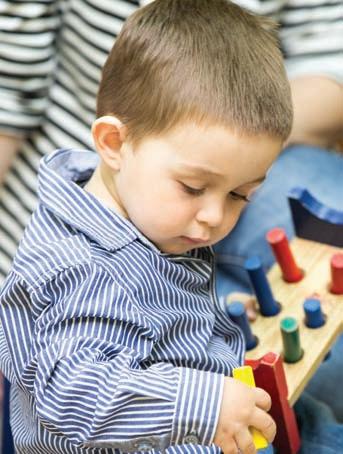
children realize that potential early on. At Johns Creek Montessori, children work in groups ranging from 15 months to 3 years old, or from 2 and a half to 6 years. “Children are free to explore activities that interest them and may work on as many activities as they like,” Harold says. “While the teacher moves from one to another, giving individual attention and observing what the child is most interested in and focused on.”
“That helps us determine what lessons to give in the future to build on those particular strengths,” says Harold. “There’s a lot of freedom, but also a lot of structure.”
That mix of freedom and structure allows teachers to pay attention to changes in the development of their students and to adapt their lessons accordingly. It’s an approach that helps students grow not just academically, but personally.
“A lot of people and schools talk about whole-child education,” says Jan Deason, head of school at Arbor Montessori, which teaches toddlers to teens in

the Decatur area. “That’s been Montessori’s belief from the very beginning.”
Teaching the Whole Child
Educating the whole child extends to topics that may not be part of a textbook curriculum, explains Patricia Craft-Heuer, director of education at Village Montessori School in Roswell.
“It’s about learning socially—learning grace and courtesy lessons,” she says. “It’s learning about the world, that people are the same and have the same needs—housing, food, clothing. That sort of approach helps alleviate prejudice, which is important if the goal is to create children of the world. They need to learn about other countries and how people live there.”
Part of that understanding comes from learning and emulating positive character traits such as respectfulness,
“What it really comes down to is making the child the Center.”
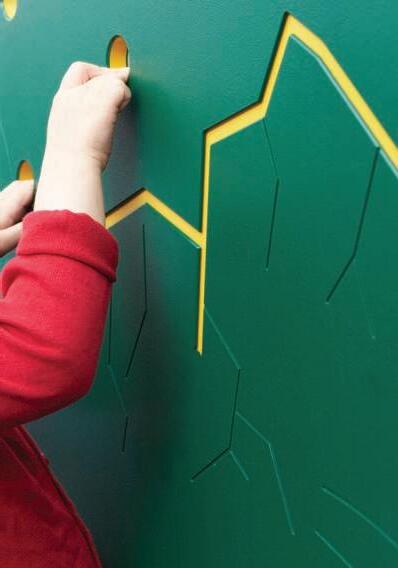
kindness and helpfulness. “All of us here try to be good examples by living character education,” says Craft-Heuer. “It’s not just someone saying, ‘Do this, and you’ll be a good person.’ Children pick up on examples. They see the respect we have for everyone, from the youngest child to the principal. Even concepts of being helpful and loving are ingrained at a very young age.”
Making the Child the Center
But before considering a Montessori education, parents should be prepared to ask questions. Not all Montessori schools are the same, and since the term is not trademarked, any school can refer to itself by that name. Some may claim to follow an “alternative” or “hybrid” Montessori program, or offer Montessori instruction for just some part of the day.
The typical signs of a “true” Montes-
sori school include a comprehensive, allday Montessori curriculum, open classrooms free of desks, and classes of 15 to 30 students grouped by age. Another reliable sign of a school’s adherence to Montessori principles is certification: Montessori teachers are trained and certified in the Montessori method. What’s more, schools that have been accredited by organizations such as the Association Montessori International (co-founded by Maria Montessori) and the American Montessori Society have been determined to operate in accordance with Montessori standards.
“While some Montessori schools may differ in size, age range and approach, in the end, they offer a unique educational experience that other schools don’t,” says Deason.
“Montessori is very individualized,” she says. “It offers a child the chance to be in a multi-age classroom where situations naturally occur and problems get solved. We teach problem-solving and mediation skills at a young age. And we are in partnership with parents, all for the good of the child. What it really comes down to is making the child the center.”
To find a list of Montessori schools included in this publication, turn to the Montessori Schools section on page 105.
FOR MORE INFORMATION
Arbor Montessori School 404-321-9304, arbormontessori.org
Johns Creek Montessori School of Georgia 770-814-8001, jcmsog.com
Village Montessori School 770-552-0834, vmschool.com
American Montessori Society 212-358-1250, amshq.org
Association Montessori International USA 703-746-9919, amiusa.org
metro atlanta area map
REGIONS FOR INDEPENDENT SCHOOLS N
For features of independent schools, turn to Education At-a-Glance on pg. 40. For public school system information by county, turn to pg. 84.
3 3
2
2
1 1
5 5
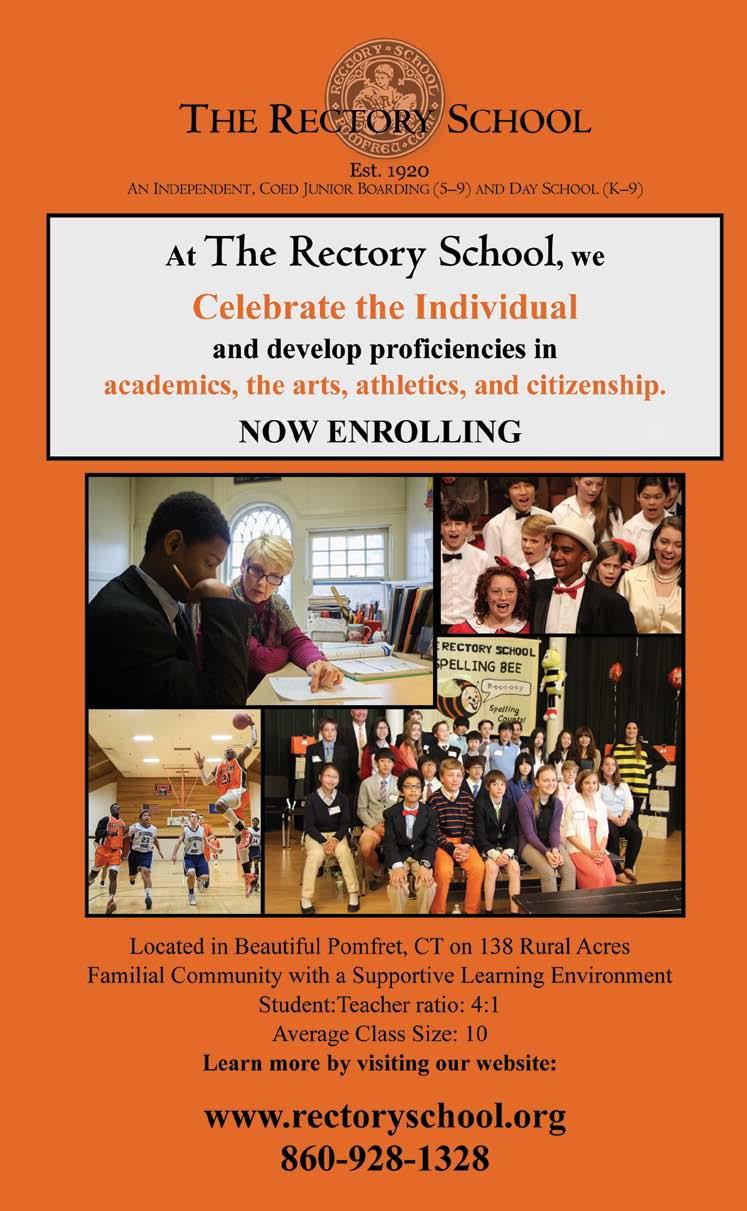
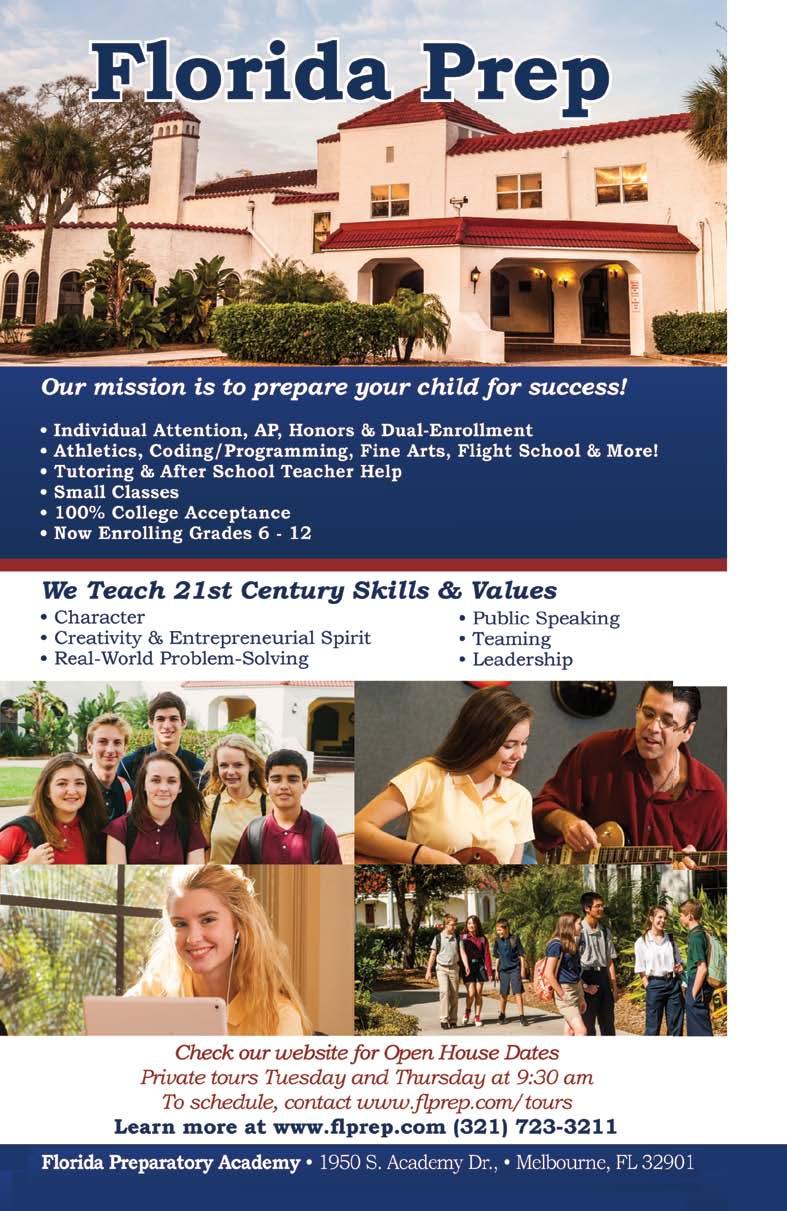
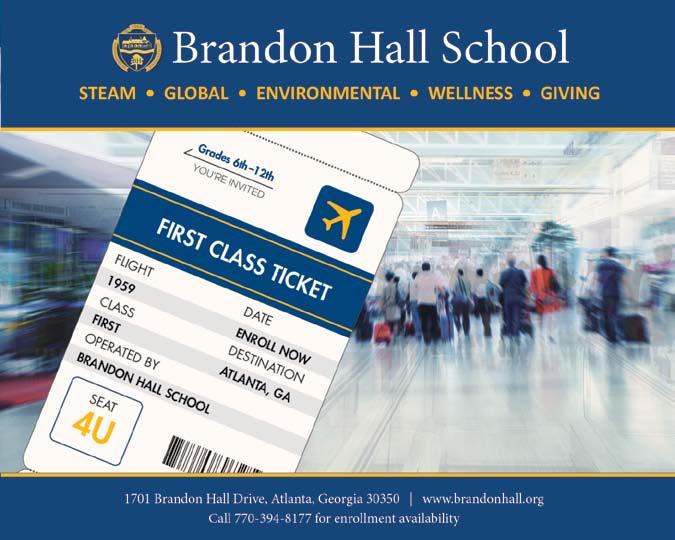
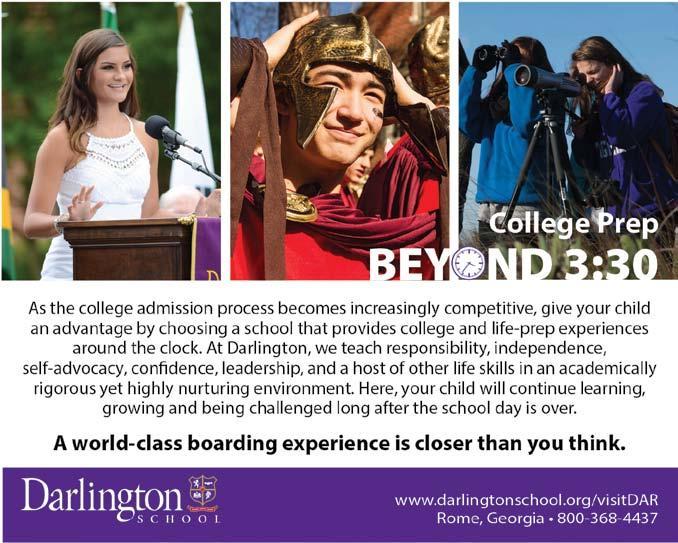
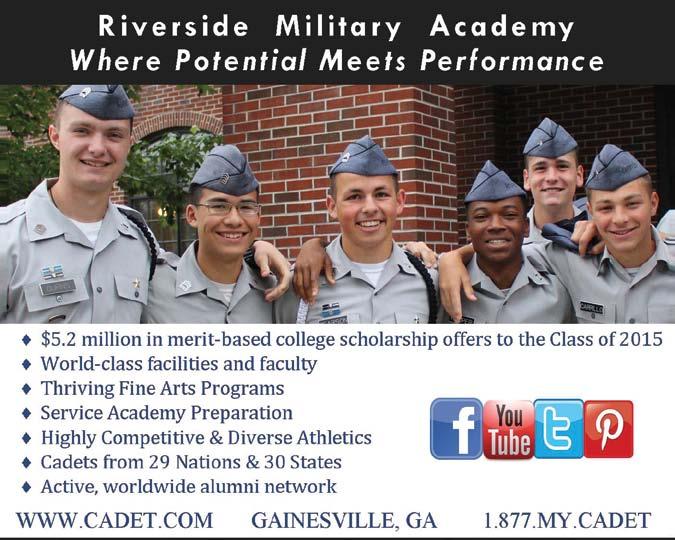
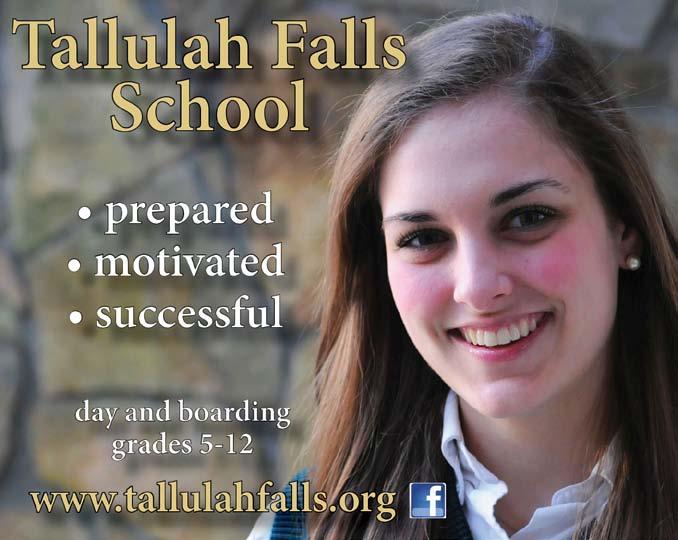
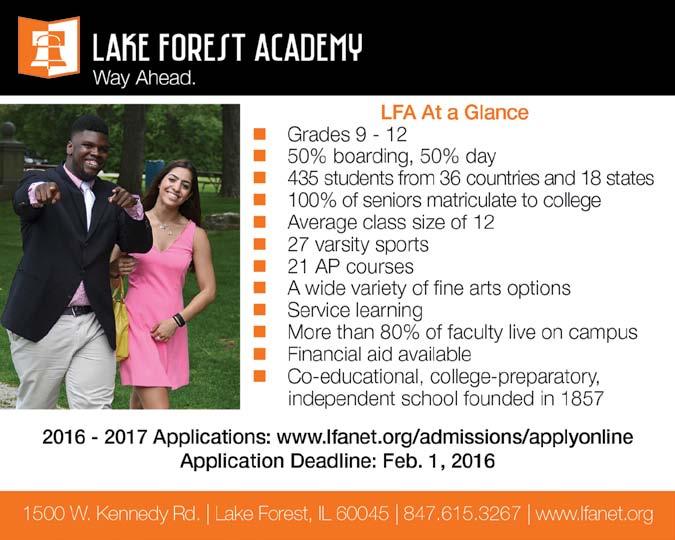
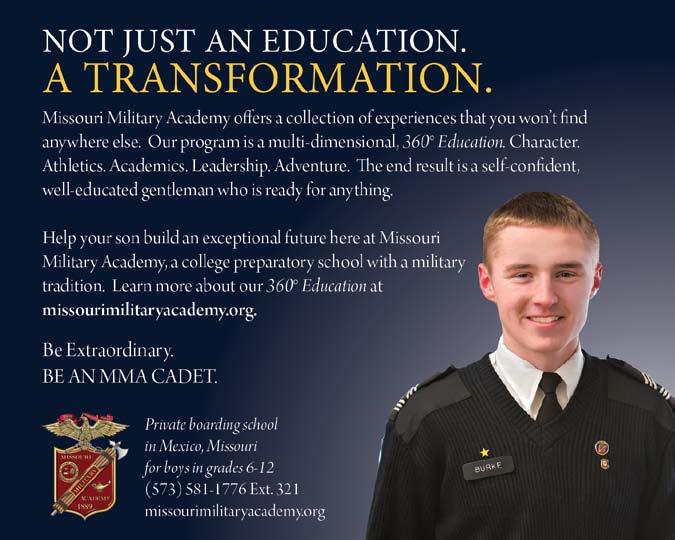
Boar ding Schools Connecticut, Florida, Georgia, Illinois, Missouri, North Carolina, Virginia
School County Guide
Educational Resour ces T utoring, Summer Camps and Activities, Field Trips and Education Programs.
REGION 4: Atlanta South/ Southeast/Southwest Carr olton, Fairburn, Fayetteville, Locust Grove, Metr o-Atlanta, Newnan, South Fulton
REGION 5: Atlanta West Acworth, Forest Hills, Kennesaw, Marietta, Smyrna-Vinings Area
REGION 3: Atlanta East Athens, Candler Park, Dacula, Decatur , Midtown, Northeast Atlanta p.66
REGION 1: Atlanta North/Northwest
Alphar etta, Buckhead, Crabapple, East Cobb, Marietta, Roswell, Sandy Springs
REGION 2: Atlanta North/Northeast
p.53
Alphar etta, Brookhaven, Cumming, Dunwoody, Flowery Branch, Johns Cr eek, Northeast Atlanta, Peachtr ee Corners, Suwanee p.61
Education At-a-Glance
INDEPENDENT SCHOOLS
REGION 3: ATLANTA EAST
Education At-a-Glance
INDEPENDENT SCHOOLS
REGION 5: ATLANTA WEST
Education At-a-Glance
INDEPENDENT SCHOOLS
77 bOARDING SCHOOLS








independent schools
Marietta Beautiful parks, charming streets, 19th-century Victorian homes and historic sites make Marietta a desirable place to call home. Residents enjoy the vibrant downtown square, with its many restaurants, antique shops and happenings.
Woodstock Located in Cherokee County, Woodstock is, as locals say, “where modern amenities meet old Southern charm.” Historic Olde Towne pays a continual tribute to Woodstock’s pioneers through vintage shops and good old-fashioned Southern hospitality.

TWEETIE L. MOORE, Founder


BUCKHEAD
BUCKHEAD

Nurturing

Independent Schools
Alpharetta Offering exceptional shopping, entertainment and dining, Alpharetta also boasts many awardwinning parks and numerous housing options.The city is also home to a 12,000-seat outdoor concert venue, the Verizon Wireless Amphitheatre.
Chamblee This DeKalb County suburb attracts diverse residents, thanks to its International Village, a 394-acre neighborhood that is home to people representing more than 30 countries. Chamblee’s Antique Row is the South’s largest antiques area.



Flowery b ranch
Johns Creek Montessori sChool of GeorGia
Sowing the Seeds of Organic Learning


Multiage, vibrant learning communities
Montessori certified teacher in every classroom
School leadership team with advanced academic degrees
Flexible academic program schedules
• Scientifically designed, hands-on, multi-sensory learning materials
• Uninterrupted blocks of work time that inspire organic learning
• Extracurricular activities including art, music, ballet and sports offered in school
6450 East Johns Crossing • Johns Creek, GA 30097 770-814-8001 • www.johnscreekmontessorisog.org

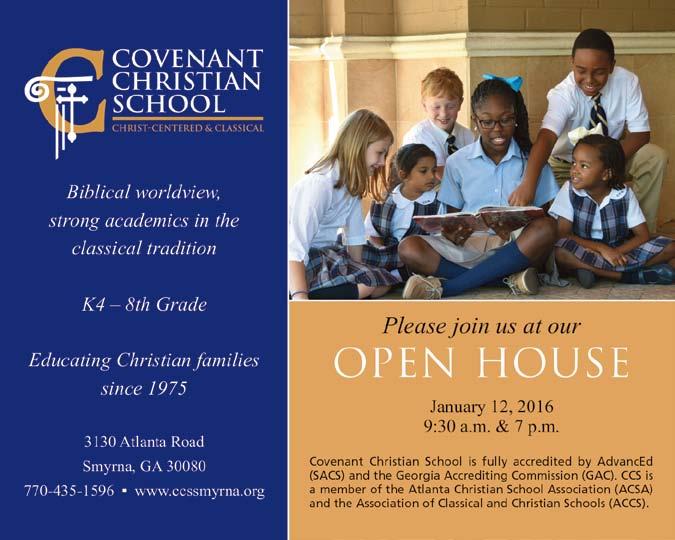
Perimeter School is a covenant Christian community, where students know they are loved, love to learn, and learn to serve.
Call to register for a tour, a classroom visit or for our Investigating Perimeter School Class and begin exploring why Perimeter School is the best choice in private, Christian education.
Contact Lori Azemar at 678-405-2307, lazemar@perimeter.org www.perimeterschool.org

Victory World Christian School is a
1 Pre-K (4) through 5th grade elementary program
1 High curriculum standards & creative learning environments
1 Interactive Technology in every classroom (whiteboards & laptops)
1 Rosetta Stone Spanish in all classes
1 Extracurricular Activities (ballet, jazz, chorus, drama, Tai-Kwon-do, piano)
Independent Schools
Decatur A great mix of history and modernity, Decatur is home to more than 200 shops, restaurants, galleries and performance venues located along tree-lined streets. Events take place throughout the year at the city’s historic downtown square.
Stone Mountain With a revitalized downtown and a variety of familyoriented activities, Stone Mountain has much to offer. The city’s four city parks, as well as Stone Mountain Park, make this one of the cleanest and “greenest” areas in Metro Atlanta.
candler park • athens
midtown • decatur



Independent Schools
Ne I ghborhood S of Note
East Point The up-and-coming east Point area combines the charm of a small town with conveniences of a big city. Residents enjoy the city’s prime location near Hartsfield-Jackson Atlanta international Airport, MARTA and downtown Atlanta.
Fairburn less than half an hour from Atlanta, Fairburn is filled with historic buildings and boasts a peaceful, smalltown atmosphere. The city is home to the annual Georgia Renaissance Festival and the local campus of Georgia Military College.



BAR TO W
Independent Schools
FULTON
Acworth Just 35 miles northwest of Atlanta, Acworth is convenient to the city while offering its own unique smalltown appeal. Its historic downtown is a charming mixture of past and present. Surrounded by Lake Acworth and Lake Allatoona, this thriving city is a popular destination for fishing, boating and many other
activities.
Douglasville A quick trip west of Atlanta on I-20, Douglasville has easy access to all that Atlanta offers—including Six Flags, 10 minutes away—but plenty of its own charm, too. Listed on the National Register of Historic Places, Downtown Douglasville’s historic district is an outstanding example of a turnofthe- century southern railroad town.
F orest hills • acworth

St. Thomas More School
Oakdale, Connecticut
BOARDING SCHOOL DIRECTORY
TThere are many benefits of a boarding school education. Boarding schools are an option for students seeking a more independent learning experience. Because students generally live on campus, learning takes place in and out of the classroom almost on a 24-hour basis.
When selecting a boarding school, it is important to visit the school campus, but representatives from many boarding schools visit Metro Atlanta throughout the year—contact each school for specific dates. u
here are many benefits of a boarding school education. boarding schools are an option for students seeking a more independent learning experience. because boarding school students generally live on campus, learning takes place in and out of the classroom almost on a 24-hour basis—learning about life is just as important as learning about subjects. Due to the availability of faculty throughout the day, boarding school students can get the academic help they need as well as mentoring assistance.
when selecting a boarding school, it is important to visit the school campus, but representatives from many boarding schools visit Metro Atlanta throughout the year—contact each school for specific dates. u
Boarding Schools
Boarding School


ATlAnTA’S School SySTEMS
Avariety of improvements and innovative programs in georgia’s public school systems have resulted in many stellar elementary, middle and high schools across the Metro area. Different school systems feature specialized programs and academic opportunities, such as magnet, charter, vocational or alternative schools to suit their respective students, parents and communities. however, despite variations in programming and academic offerings, all public schools must offer the core curriculum as determined by the georgia board of Education. here is a county-by-county guide to Metro Atlanta’s public school systems. For more information about the georgia Department of Education, call 404-656-2800 or visit www.gadoe.org. u
BarTOw
Board of Education
770-606-5800
www.bartow.k12.ga.us
Number of Schools Elementary 12 Middle 4
Board of Education
770-479-1871
www.cherokee.k12.ga.us
Total # of Students: 13,873
Spending per Student: $8,478
What’s New
2014 Average CRCT Scores
3rd: (R) 846.48 (M) 849.24
5th: (R) 841.74 (M) 844.99
8th: (R) 844.84 (M) 828.82
2015 Average SAT: 1439
Top 3 Schools by Average 2015 SAT Score
Adairsville High 1454
Woodland High 1450
Cass High 1 411
Bartow County Schools was awarded the Golden Radish Award, an award given to recognize farm-to-school programs. The school district has worked to educate its students on nutrition as well as agriculture.
2014 Average CRCT Scores
3rd: (R) 852.84 (M) 849.89
5th: (R) 845.97 (M) 850.95
8th: (R) 855.71 (M) 847.27
2015 Average SAT: 1560
Board of Education
www.clayton.k12.ga.us
Total # of Students: 39,810
per Student: $7,690
What’s New
Top 5 Schools by Average 2015 SAT Score Cherokee High 1588 Woodstock High 1587 Sequoyah High 1564 Creekview High 1564 Etowah High 1550
Hickory Flat Elementary School was named a 2015-2017 National PTA School of Excellence thanks in part to its launching a school-wide and community-wide #BeKind initiative.
2014 Average CRCT Scores
3rd: (R) 831.37 (M) 820.27
5th: (R) 830.51 (M) 823.75
8th: (R) 839.07 (M) 816.07
2015 Average SAT: 1251
Top 5 Schools by Average 2015 SAT Score
Elite Scholars Academy 1394 M.E. Stilwell School of the Arts 1369 Forest Park High School 1303 Riverdale High School 1264 Lovejoy High 1261
What’s New
Drew High School graduate Julie Bustamante has been accepted into the Governor’s Honors Program at Valdosta State University. She plans to major in visual arts.
COBB
Number of Schools
2014 Average CRCT Scores
3rd: (R) 849.19 (M) 847.19
5th: (R) 846.30 (M) 850.44
8th: (R) 853.94 (M) 841.35
2015 Average SAT: 1516
Top 5 Schools by Average 2015 SAT Score
Board of Education 770-426-3300 www.cobbk12.org
Total # of Students: 111,412
Spending per Student: $7,909
What’s New
Wheeler High School counselor Sumana Moudgal was given the 2015 Yale Educator Award.
COwETa DEkaLB
per Student: $7,900
Board of Education 770-254-2800 www.cowetaschools.org
What’s New East Coweta Middle School Nurse Rhonda Smits was named the 2015 Georgia School Nurse of the Year. This is the first time a Coweta County school nurse has been given this honor.
What’s New
The DeKalb County School System has launched a new initiative: of Family Engagement on Demand (FAM-FLiX). The program provides parents with 24/7 access to streaming videos to support their children’s learning.
DOUGLaS
2014 Average CRCT Scores
3rd: (R) 842.51 (M) 841.06
5th: (R) 839.63 (M) 845.35
8th: (R) 846.31 (M) 826.06
2015 Average SAT: 1358
Top 5 Schools by Average 2015 SAT Score
Douglas County High 1447
Alexander High 1369
Chapel Hill High 1357
Lithia Springs High 1287
New Manchester High 1278 DOUGLAS
What’s New
New Manchester High School teacher Casey Bethel was named the 2015-2016 Douglas County Teacher of the Year. Bethel will represent the county in the Georgia Teacher of the Year recognition program.
# of Students:
per Student:
What’s New
Average
1537 Top 5 Schools by Average
Flat Rock Middle School student Joey Hunter was one of 110 students chosen to serve on State School Superintendent Richard Woods’ 2015-2016 Student Advisory Council.
(R) 857.77 (M) 876.26
(R) 864.16 (M) 863.01
2015 Average SAT: 1577 Top 5 Schools by Average
What’s New
Forsyth County’s Johns Creek Elementary School was one of eight Georgia public schools named as 2015 National Blue Ribbon Schools. Johns Creek Elementary is the fifth Forsyth County school to achieve National Blue Ribbon status.
Board of Education 770-229-3710 www.spalding.k12.ga.us
Total # of Students: 94,711
Spending per Student: $9,511
What’s New
2014
2015 Average SAT: 1558
Top 5 Schools by Average 2015 SAT Score
High 1784
High 1689
Creek High 1678
High 1669
High 1668
Fulton County School officials have broken ground for two new elementary schools—Derrick Road Elementary School and Esther Jackson Elementary School. Both schools are slated to open in August 2016 and will hold 850 students.
1324 Top 2 Schools by Average
What’s New
Four Griffin-Spaulding County teachers are being inducted into the school system’s Hall of Fame. Nancy Gresham, Margery King, Juliette McCann and Lemuel Watkins are the third group of teachers to be inducted since the Hall of Fame was established in 2013.
2014 Average CRCT Scores 3rd: (R) 849.60 (M) 855.45 5th: (R) 846.72 (M) 855.98 8th: (R) 856.10 (M) 850.92
2015 Average SAT: 1497
Top 5 Schools by Average 2015 SAT Score
1848
1579
1570
1562
What’s New Brookwood High School’s marching band was invited to participate in London’s New Year’s Day Parade in 2017. The parade follows a 2.2-mile stretch.
Board of Education
770-534-1080 www.hallco.org/boe
HENrY
Total # of Students:
Spending per Student: $7,570
What’s New
2014 Average CRCT Scores
3rd: (R) 839.26 (M) 838.64
5th: (R) 836.83 (M) 839.05
8th: (R) 847.56 (M) 835.06
2015 Average SAT: 1404
Top 5 Schools by Average
2015 SAT Score
North Hall High 1551
Chestatee High 1428
Flowery Branch High 1426
West Hall High 1337
Johnson High 1332
Three Hall County School students have been named National Merit Scholarship Semifinalists: Abbie Cliché, Andrew Hathcock and Nicholas Wheeler.
HaLL PUBLIC SCHOOL COUNTY GUIDE
Total # of Students: 40,925
Spending per Student: $7,547
What’s New
Board of Education
770-957-6601
www.henry.k12.ga.us
PaULDING
2014 Average CRCT Scores
3rd: (R) 843.68 (M) 839.93
5th: (R) 842.83 (M) 842.38 8th: (R) 849.88 (M) 832.09
2015 Average SAT: 1382
Top 5 Schools by Average 2015 SAT Score
Union Grove High 1553 Ola High 1452 Eagles Landing High
Two Hall County students took top honors in the Young Georgia Authors Competition: Jada Smith at Austin Road Elementary School and Rowen Quisenberry at Eagles Landing High School.
2014 Average CRCT Scores
3rd: (R) 847.49 (M) 851.07
5th: (R) 841.34 (M) 848.57
8th: (R) 846.89 (M) 835.53
2015 Average SAT: 1386
Top 5 Schools by Average 2015 SAT Score North Paulding High 1439 East Paulding High 1416 Hiram High 1352 South Paulding High 1347 Paulding County High 1339
Board of Education 770-443-8000
www.paulding.k12.ga.us
What’s New
Ella Hutchins, a fourth grade teacher at Russom Elementary School, was one of 150 teachers selected to attend the Mickelson ExxonMobil Teachers Academy in New Jersey. Hutchins was chosen from a pool of 1,500 applicants.
HALL
of Schools
2014 Average CRCT Scores
3rd: (R) 843.33 (M) 853.16
5th: (R) 839.63 (M) 846.31
8th: (R) 846.66 (M) 828.38
2015 Average SAT: 1332
Top 3 Schools by Average 2015 SAT Score
ROCKDALE
Board of Education
Total # of Students: 15,812
Spending per Student: $8,396
What’s New
Rockdale County High School was named a 2015 Advanced Placement Honor School for AP Success & Support, AP Merit, AP STEM and AP STEM Achievement. rOCkDaLE
770-483-4713 www.rockdale.k12.ga.us
aTLaNTa PUBLIC SCHOOLS
What’s New
A new Atlanta Public Schools Training Facility opened in August at Booker T. Washington High School. it boasts a full-time certified trainer, upgrades to the existing training room and supplies.
www.bufordcityschools.org
What’s New
2015 Average SAT: 1524
Buford High School seniors Young Joo Choi and Alex Hood were named National Merit Commended Scholars. Their individual PSAT scores put them among the top 5% out of more than 1.5 million students nationwide who took the test last year.
CITY SCHOOLS OF DECaTUr
Board of Education
404-371-3601
www.csdecatur.net
Spending
2014
What’s New
2015 Average SAT: 1581
Clairemont Elementary School has been named one of the 41 Most innovative K-12 Schools in America. The school was chosen from a pool of 140,000 K-12 schools in the United States. it received an award and other items to show off the honor.
GaINESvILLE CITY SCHOOLS
Board of Education
770-536-5275
www.gcss.k12.net
(M) 828.48
2015 Average SAT: 1353
Total
What’s New
Gainesville Middle School student Anna Ralston was the PreTeen intermediate Pageant Winner at the America’s Youth on Parade USA and World Twirling Championships. That means Ralston is the best baton twirler in the country among 10- to 12-year-olds.
MarIETTa CITY SCHOOLS
Board of Education 770-422-3500 www.marietta-city.org
Total
2014 Average CRCT Scores
3rd: (R) 842.69 (M) 845.89
5th: (R) 840.44 (M) 842.42
8th: (R) 846.19 (M) 825.60
2015 Average SAT: 1476
What’s New
Two Marietta Center for Advanced Academics teachers are finalists for the Presidential Award for Excellence in Math and Science Teaching in their respective subject areas. if they win, fourth-grade mathematics teacher Stormi Johnson and fourthgrade science teacher Susie Throop will meet President Barack Obama and receive $10,000.
EDucATIonAl rESourcES




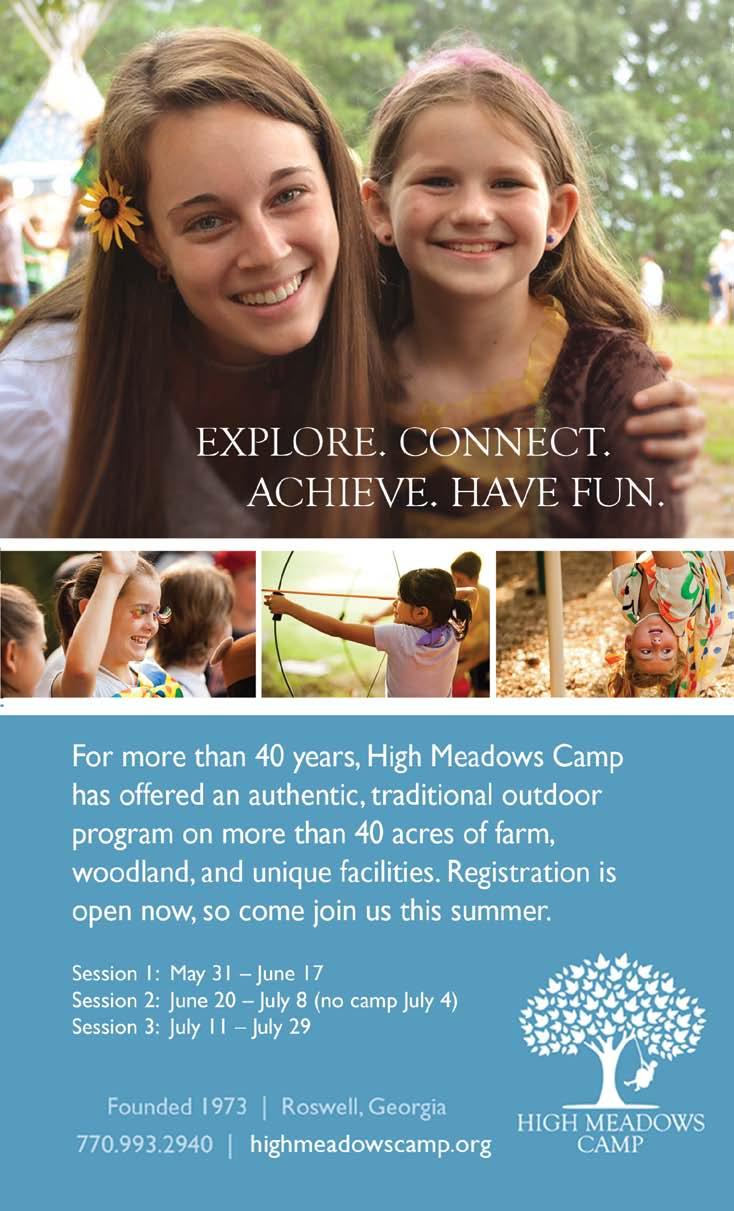
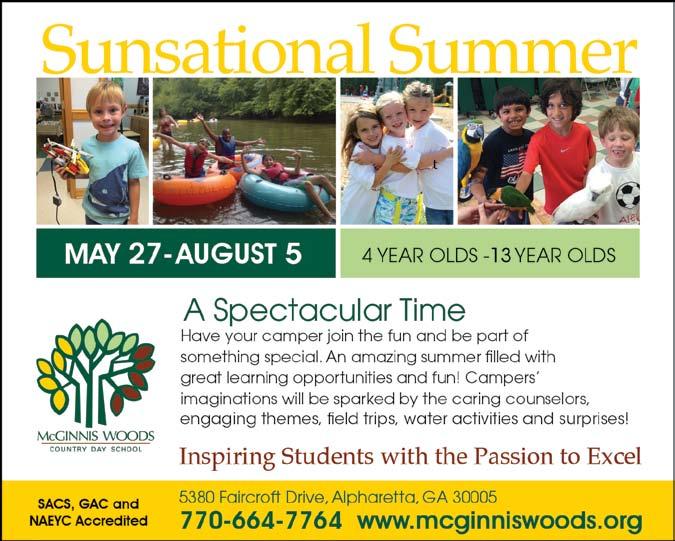
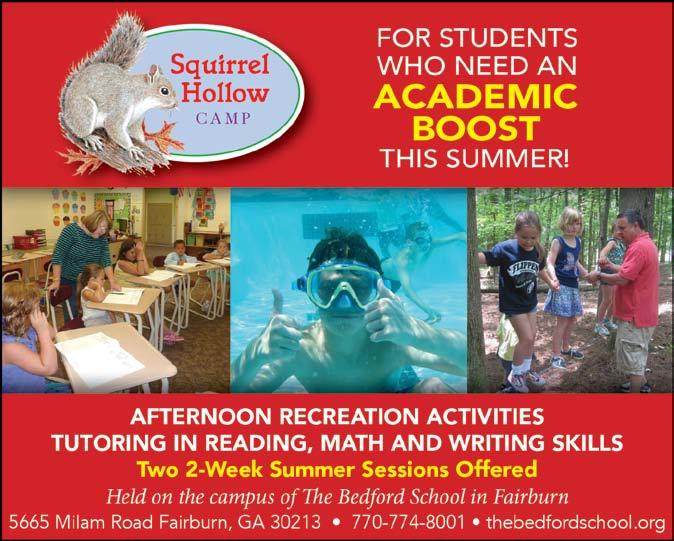
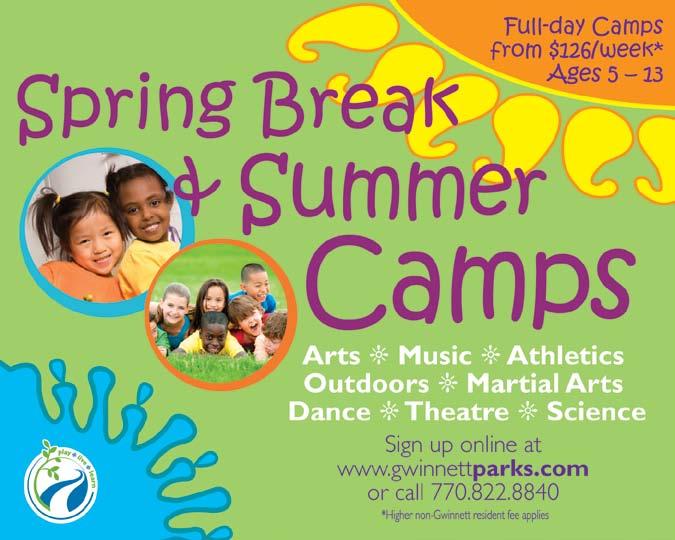
S UMMER C AMPS & A CTI

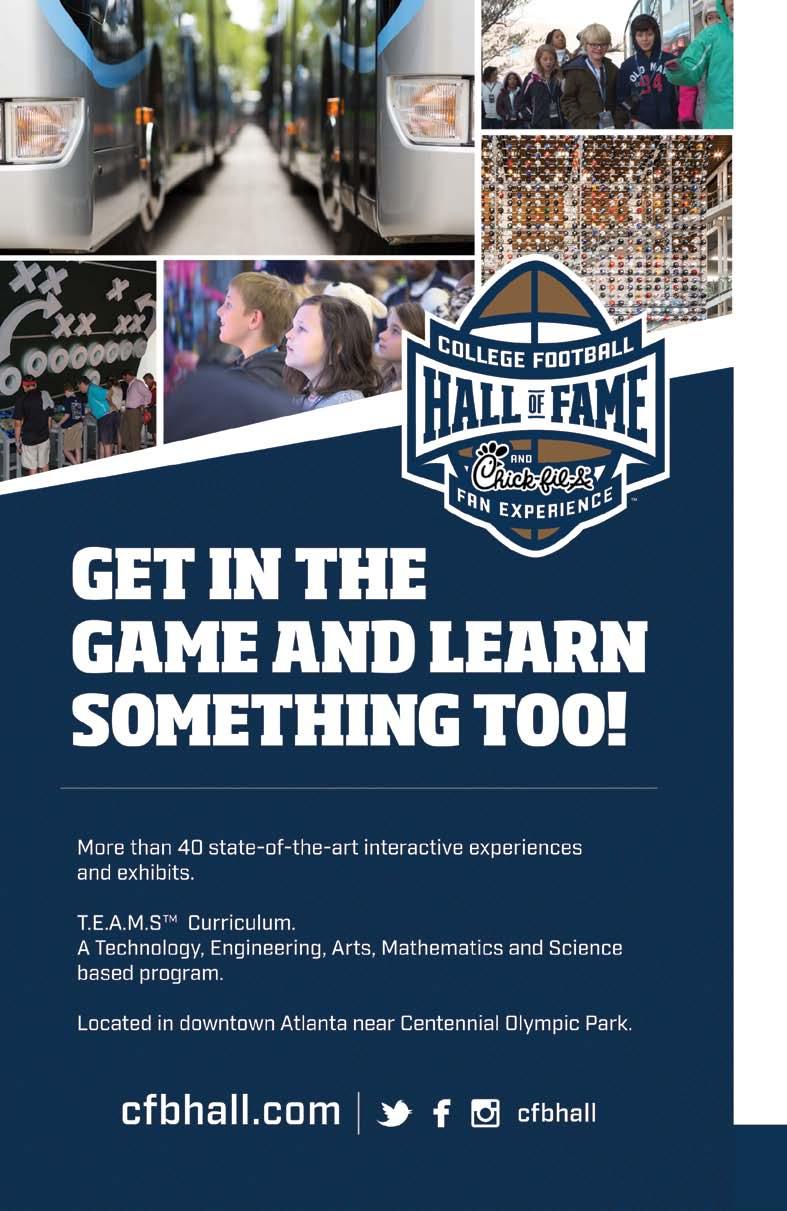
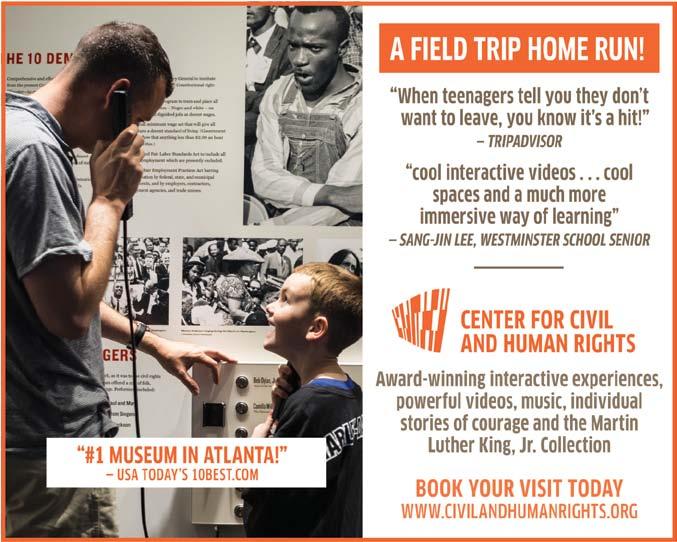

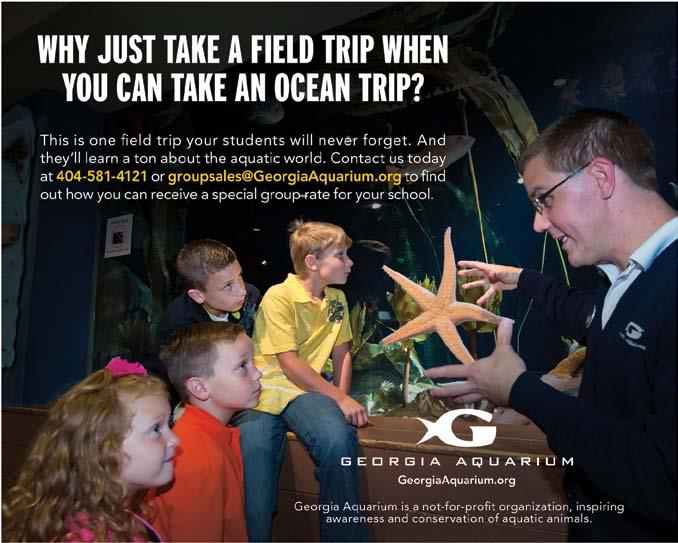
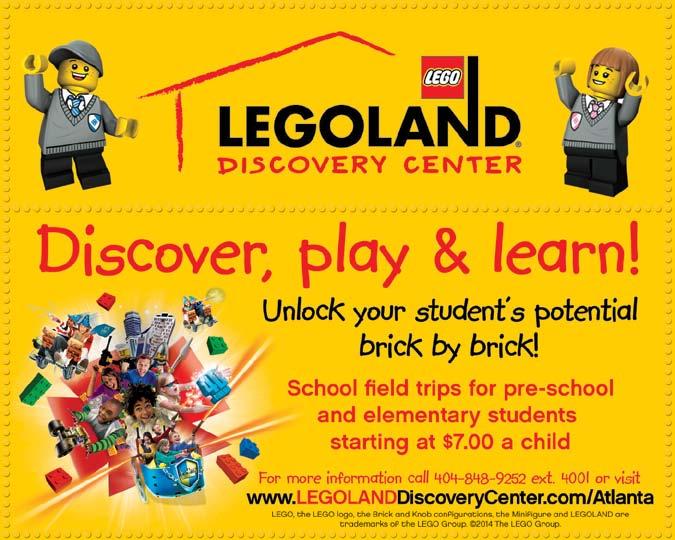

•
•



ADVERTISER INDEX
Boarding Schools
Field Trips & Education Programs
ADVERTISER INDEX
Summer Camps & Activities
Special Needs & Learning Difficulties
Tutoring
Study Skills







It’s elementary, actually. See, every time you play the Lottery, you’re helping our kids get one step closer to their dreams. For over 20 years the Georgia Lottery has contributed more than $16.7 billion to education. On top of that, more than 1.7 million HOPE scholars have gone to college and more than 1.4 million four-year-olds have attended a Lottery-funded Pre-K Program. Add those numbers up and, well, let’s just say that’s a hair-raising number of happy kids.