• Does the school offer a variety of extracurricular activities, including arts and sports programs?
• Is the school accredited? If so, by which organizations?
• Is the staff certified to instruct special needs children or those with your child’s specific learning difficulty?
• Does the school focus more on academics or on addressing the child’s therapeutic needs?
Financial Assistance
Many independent special needs schools participate in the Georgia Special Needs Scholarship program (GSNS), a school choice program available to special needs students attending Georgia public schools. It offers funds to offset tuition and
fees at participating private schools authorized by the State Board of Education. According to the Georgia Department of Education, scholarship amounts range from $2,500 to $13,500, with an average amount of around $6,000.
The Qualified Education Expense Tax Credit program provides another scholarship option. Donations are made to an organization known as a Georgia Student Scholarship Organization (GaSSO), which uses the money to award scholarships to students in pre-K through grade 12. Many schools also offer their own scholarships or tuition assistance programs as well. Contact individual schools for details.
For more information on special needs schools and resources, please see our listings on page 82.
RISING TO THE CHALLENGE
WHAT LOCAL SCHOOLS ARE DOING TO KEEP KIDS SAFE AMID THE PANDEMIC
BY JUSTINE LOOKENOTT
The COVID-19 pandemic has brought challenges and changes to many parts of our daily lives over the past several months, from working in offices to grocery shopping to dining out. One of those areas facing the most significant challenges has undoubtedly been education.
When lockdown began in the spring, parents, teachers and students found themselves in unfamiliar waters as they adapted to
virtual instruction. Since the start of a new school year, with state restrictions eased, schools are adopting different measures to teach students effectively and keep them safe.
REMOTE VS. IN-PERSON CLASSES
Over the summer, the big questions on most parents’ and teachers’ minds were: What will the new school year look like?
Will there be in-person learning? If so, what will that look like? And what safety measures will be in place?
The answers vary from one public school system or independent school to another.
Fulton County Schools started the year on Aug. 17 with all students remaining at home and learning online through a program called Universal Remote Learning.
“It is important our families know we have been preparing for this scenario,” Superintendent Mike Looney said in a statement. “We learned a great deal last spring. We saw what was working and what was not, and we used feedback from our parents, students and staff to make changes in how instruction would be delivered remotely. There will be more rigor, more accountability and more support. Teachers also are receiving more training so they can successfully deliver meaningful instruction in a remote environment.”
providing a remote option for parents who prefer to keep their children at home for the time being.
TEACHERS ARE RECEIVING MORE TRAINING SO THEY CAN SUCCESSFULLY DELIVER MEANINGFUL INSTRUCTION IN A REMOTE ENVIRONMENT.
Meanwhile, a number of independent schools have also adopted a hybrid approach that combines remote and in-person instruction. Some, like Woodward Academy and Wesleyan School, began the year with the lower grades attending classes on campus every day and the higher grades rotating between in-person and remote instruction every other day—while providing a fully remote option for those students whose parents want it.
“Wesleyan offers all families grades K through 12th the option to choose 100% virtual instruction,” says Jennifer Copeland, assistant head of school for external affairs.
Starting Sept. 8, the school system began a five-phase approach to return to full face-to-face classes and reached Phase V on Oct. 14.
The DeKalb County School District also started the school year with remote learning, but distributed a survey to parents in early September asking for their input on the possibility of reopening schools. In October the school system delayed its plan to return to in-person classes, citing a rise in COVID-19 cases.
Gwinnett County Public Schools started with all-digital learning at the beginning of the school year, and began phasing students back into the classroom in late August, while
The Marist School, an independent Catholic school for grades seven through twelve, is also rotating students. “Half of our student body is on campus on any given day while the other half is learning at home,” says James Byrne, vice president of enrollment and operations.
Other independent schools opted to begin the year with in-person classes for all grade levels. Springmont School, a Montessori school with students from 18 months of age through eighth grade, offered some exceptions for students in first through sixth grades. And Lyndon Academy, an independent school in Cherokee County serving kids from kindergarten through high school, offered a remote learning option for families who prefer it.
Learning pods, groups of three to 10 students gathering at one family’s home
where a teacher, tutor or parent leads instruction, has traditionally been used for home-schooled children. But during the pandemic they have been utilized by public and independent schools’ parents this past spring and again this fall for school systems that delayed their return to in-person classes.
KEEPING STUDENTS SAFE
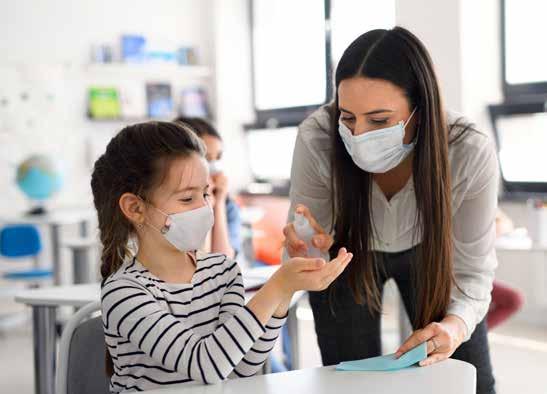
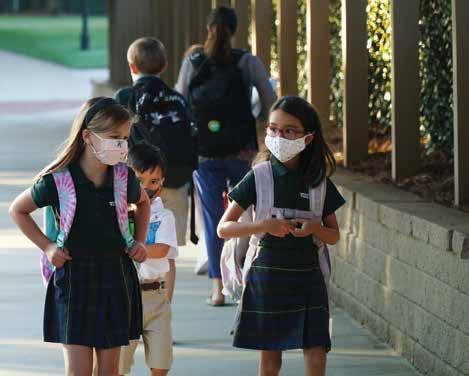
For those schools that have opted for some form of in-person learning, extra safety measures have been adopted.
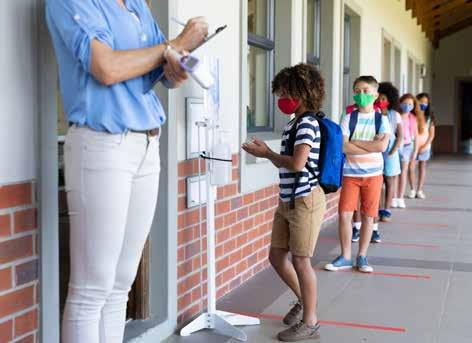
Safety protocols at Gwinnett County Public Schools include requiring all students and staff to wear masks or face coverings, and to isolate and send home anyone with a temperature of 100.4 or higher. Schools are also limiting visitors, serving lunch in classrooms rather than cafeterias and staggering lunch, playground and class-change schedules to minimize large groups. Buses are cleaned and sanitized after each morning and afternoon route.
At Springmont, groups are limited to 12
or fewer students, and masks are required for all staff and students over the age of 2. The school also uses “hand-sanitizing stations, a hand-washing schedule, physical distancing, Plexiglass barriers, daily health screenings, temperature checks, staggered arrivals and departures, and enhanced air filtration,” says Julie Strickland, marketing and communications manager.
At Marist, temperature checks are performed upon arrival at the school. Desks in classrooms are more spread out, and students enact special cleaning protocols at the end of every class.
For these safety measures to work, however, schools need parents to do their part. That means encouraging safe practices at home.
Woodward asks its families to sign a Health and Wellness Family Pledge, which gives an outline of the school’s changes in response to the pandemic and a commitment to each other in the school community.
“We recommend that parents model
safe, healthy and appropriate behaviors at home so that their children have an easier time adjusting to the ways in which our academy has adjusted to COVID-19,” says Amy Morris, Woodward’s director of strategic marketing and communications. “We want our students to recognize the importance of wearing masks, frequent handwashing, along with following physical distancing recommendations at home as well as at school.”
FOR THESE
SAFETY
MEASURES
TO
WORK, HOWEVER, SCHOOLS NEED PARENTS TO
DO THEIR PART. THAT
MEANS ENCOURAGING SAFE PRACTICES AT HOME.
place once things return to normal—whenever that might be and however it might look—remains to be seen. But at least some of the changes schools have put in place are likely to stay for the foreseeable future.
“We will likely stay the course and keep Lyndon Connect”—Lyndon Academy’s online learning platform—“up and running indefinitely,” says Peter Murdock, the school’s chief operations officer and business manager.
ROLLING WITH THE CHANGES
Of course, it’s one thing to make substantial changes to a school’s day-to-day operations, and quite another for everyone to successfully adjust to those changes. But despite the challenges the pandemic has presented, schools have seen teachers and their students rise to the occasion.
“I’ve seen Bitmoji classroom environments”—online classrooms with personalized emoji avatars—“created by teachers that inspire creativity and excitement,” says Shumuriel Ratliff, media relations manager for Fulton County Schools. “I’ve been copied on emails from students to their teachers and principals thanking them for the new aspect of learning where they feel more engaged and empowered.”
Whether these new measures remain in
Because the pandemic is a fluid situation, it’s important for parents to continue to engage with their child’s school or school system to keep up-to-date on any changes to their safety protocols or instruction plans. Staying informed of the latest developments is the best way to help ensure that your child gets the education they need while remaining safe.
STEPS TO TAKE TO PREPARE EARLY ROAD to College
BY MICHELLE BOURG
Attending college has long been a cornerstone of the American dream, and the majority of students hope to do so. But the path to getting there is a winding and long one: educators and college admissions officers recommend that planning for college begin when a child reaches sixth grade. For modern families, the three keys to navigating the path to college successfully are being proactive, organization and communication.
OFF TO A GOOD START: MIDDLE AND JUNIOR HIGH SCHOOL
In Georgia, the concept of proactivity has been mandated with the BRIDGE (Building Resourceful Individuals to Develop Georgia’s Economy) Act, which helps students select a focused study plan by providing career counseling and regularly scheduled advisement beginning in sixth grade. (For more
information, visit the Georgia Department of Education website at gadoe.org).
Students begin by taking the Career Cluster Inventory and creating a YouScience portfolio to track their BRIDGE activities. During the spring of their eighth-grade year, students must select a career area and draft a corresponding course of study called an IGP (Individual Graduation Plan) in consultation with parents, counselors and teachers.
Parents should communicate with their children about school performance and its impact on a future career by discussing possible career interests and helping them to develop good study habits, identifying academic areas that need improvement.
The PSAT 8/9 offers a snapshot of a child’s academic strengths and weaknesses so families can create a plan of action.
STAYING THE COURSE: NINTH AND TENTH GRADES
As high school begins, parents and students should establish a good relationship with the guidance counselor and work with him or her to select prerequisite courses for advanced-level work. If any subjects are
giving difficulty, additional help should be sought in order to be up to speed going forward. It’s critical to maintain grades and test performance, as colleges look at a student’s entire high school career.
Sophomore year is when the first standardized placement tests are taken; 10thgraders may take the PSAT 10 or the ACT prerequisite PLAN test. Qualified students should look into the MOWR (Move On When Ready) program, which enables qualified Georgia high school students to take college courses and receive both high school and college credit.
Co-curricular participation is one of the most memorable parts of the high school experience and a key factor in college
CO-CURRICULAR PARTICIPATION IS ONE OF THE MOST MEMORABLE PARTS OF THE HIGH SCHOOL EXPERIENCE AND A KEY FACTOR IN COLLEGE ADMISSIONS.
admissions. Students should try some out now and find one or two they will enjoy long-term. This is also a good time to begin satisfying the community service graduation requirement. Parents should monitor their child’s schedule to ensure that academics and co-curriculars remain in balance.
While the nitty-gritty of financial planning is still in the future, during freshman year families should start to discuss financial aid, scholarships and the student’s responsibilities, if any. A good place to start is by visiting the website of the Georgia Student Finance Commission (gafutures.org) for some further information.
By the end of the year, Georgia ninthgraders must complete a supervised investigation of at least three potential careers and record them in their GCIS portfolio. The summer between ninth and 10th grade is when research into college options should
begin, with a file kept on each school to compare later.
Over summer break, students should make a list of desired criteria to guide their college explorations and intensify their research into different schools.
THE HOME STRETCH: 11th AND 12th GRADES
In junior year, the pace for college-bound students intensifies dramatically, and life will seem like a non-stop parade of deadlines. Standardized tests begin with the PSAT in October, and it takes discipline to balance studying for tests, keeping up with regular coursework, extracurricular activities and volunteer or employment responsibilities. Regular family meetings will keep everyone on the same page—making a weekly pizza date to talk things over will also carve out some quality de-stressing time. Using a
family organization phone app such as Cozi or even a large-format wall calendar makes keeping track of test dates and application deadlines easier.
Now is the time to begin evaluating colleges in earnest. Under BRIDGE, Georgia students must investigate at least three postsecondary institutions and record the information in their GCIS portfolio by the end of junior year. Using the list of personal criteria and the school information they’ve gathered, students should make a ranked list of potential schools and make appointments to visit several. It’s also a good point to begin requesting letters of recommendation from respected mentors. Meanwhile, parents should begin reviewing the financial picture and making a budget.
The summer between junior and senior year is critical; in addition to working on jobs or internships, students need to finalize their list of schools and visit as many as possible, begin crafting application essays, organize financial aid info and consider applying early decision to the top schools on the list.
As senior year begins, students and their families have to hit the ground running. The SAT (and if applicable, the ACT) must be taken as soon as possible; it’s important to
USING THE LIST OF PERSONAL CRITERIA AND THE SCHOOL INFORMATION THEY’VE GATHERED, STUDENTS SHOULD MAKE A RANKED LIST OF POTENTIAL SCHOOLS AND MAKE APPOINTMENTS TO VISIT SEVERAL.
check the SAT subject test schedule, as some tests are only given on select dates. There may be final campus visits to make even as the essay and application process is in full swing, and it’s imperative to maintain grades and class rank, as colleges scrutinize these carefully. As the year progresses, students must track acceptances, and if placed on a waitlist for their top choices, consider applying to schools with later deadlines.
Parents will also be busy, as financial aid applications are time-consuming and must be completed as soon as possible. If their son or daughter has applied to both public and private schools, it will be necessary to complete both the FAFSA (Free Application for Federal Student Aid) and the CSS (College Scholarship Service) Profile. As acceptances are received, families will need to compare the aid packages offered as they work together toward a final decision.
It’s been a long road, but as the portfolio is finally closed with the entry “College,” at last it’s time to raise a toast at the graduation party and savor the accomplishment. All too soon it will be time to shop for those dorm supplies.
HELPING YOUR CHILD LEARN EFFECTIVELY
BY SUSAN FLOWERS
here are many elements that contribute to a student’s educational success, including finding the right school, building a strong relationship with your child’s teachers and even encouraging a child’s participation in extracurricular activities. But one of the most important components of a thriving educational career is the establishment of good study habits. Educational achievement hinges on parental involvement that evolves to fit the child’s needs, from the first day of first grade to high
school graduation and beyond.
Communication with your child is critical, both when establishing a study routine and afterward, to ensure that things go smoothly. That means not only telling a child to do his or her homework, but to learn their existing study habits in order to help improve them.
“Encourage them to think about what their own learning styles are,” said Dennis Freeman, co-founder of In-Home Tutors. “Some children do really well visually. Other children are more like auditory learners. If you’re an auditory learner, have your
mom quiz you verbally for a test. If you’re a visual learner, take some scrap paper and take some notes.”
Mary K. Olszewski, The Lovett School’s director of executive functioning, said, “The best advice that I can give parents is to be consistent with their children when implementing and developing new strategies and skills. Consistency is key; it is necessary to recognize that habits do not form overnight.”
WHERE AND WHEN TO STUDY
Observing where your child does his or her homework is a good place to start. Experts agree that a well-defined homework area is crucial.
“Find a place where your child can do his/her work as a student and nothing else,” said Marist Academic Center Associate Director Libby Ayoob, who teaches the school’s Skills and Strategies for Success classes. “Students need a routine workspace. In the workspace there should be all the materials a student needs. …The area needs to be away from distractions.”
Even more important than where your student studies is when. Sitting down to study at a consistent time every day reinforces it as part of the child’s everyday routine. What time of day that takes place depends on finding your child’s best time of day to focus and concentrate. Many educators recommend immediately after school, before your child becomes too tired to study effectively.
As for how long a child should study, that will vary depending on the child’s grade level and workload. In general, setting aside an hour each day is a good place to start. Start with brief periods of study, punctuated by short breaks.
“The ideal amount of time to focus is 20 minutes,” Ayoob said. “Taking a fiveminute break then resets their focus and
attention, allowing their brain to be far more effective.”
After that, she stresses a break of no longer than five minutes, as longer break periods lead to reduced concentration.
PARENTAL INVOLVEMENT
Organizing your child’s study time is another major step. Have him or her write down objectives for each day’s session, and keep a log so that he or she can see their results. Encourage them to break larger tasks into smaller ones to make them seem less intimidating.
“Encourage your child to schedule times for studying, and then set a timer,” Ayoob said. “By planning study times, students can focus on one task at a time, eliminating all distractions.”
With students taking online classes amid the COVID-19 pandemic, she recommends students set goals for participation.
“The best way for your child to monitor his/her attention in a remote class is active student responding. The student can set their goals to participate two times per class and/or write notes while the teacher lectures (try to write a bullet point per PowerPoint
slide, or two bullets points per three-minute time period, etc.),” said Ayoob, adding having your child get a “study buddy” for each of their classes to compare notes is “an effective form of studying.”
If your child is involved in extracurricular activities, tests and special projects can get lost in the shuffle of practices, games and lessons. Keep a calendar in a common area such as the kitchen, so that preparation for a Friday spelling quiz can be a priority throughout the week.
Another key area of communication is making sure your child gets adequate rest. Lack of sleep eventually wears down a child’s cognitive abilities, making effective studying difficult.
Proper nutrition is just as important. “I have read and believe multiple articles on children’s nutrition,” Freeman said. “If you can send your child off to school with a protein-packed breakfast instead of a Pop-Tart you threw into the toaster at the last minute, that is good for their brain and lends itself to a more productive morning at school. When they come home from school, have a snack for them that’s not too sugary before they dive into homework.”
But keep in mind that while parents should always be available, parent and
child should work toward the child’s independence.
“Additionally, I suggest creating and integrating a daily after-school routine, so students can manage their time more efficiently,” Olszewski said. “Routines should include organizing class materials, packing the bookbag the night before and completing homework and studying. Allow students to help in designing this routine, so they take ownership and are more willing to execute the plan.”
OTHER RESOURCES
Many schools have research labs or special programs designed to assist students. Lovett’s Academic Resource Center offers a learning specialist program that assists with time management, study skills and other learning strategies. Similarly, the Academic Resource Center at Pace Academy helps students develop strong learning habits.
Last but not least, don’t forget the most important figure in your child’s school life—the person who teaches him or her every day. “I don’t think there’s ever anything wrong with the parent having a relationship with teachers,” Freeman said. “So, whether that means shooting an email or taking them aside at the school open house, just to let them know what’s going on, that will make the teacher more likely to communicate with the parent.”
At every stage of a child’s education, motivated parents can do a great deal to ensure academic success. Paying attention, creating structure and giving children the space they need can go a long way toward putting your young scholar on the right path.
TIPS FOR EFFECTIVE STUDYING
1. Before beginning a study session, have your child write down the goals for that day’s study time.
2. Have your child study at the same time each day.
3. Keep a daily log so that your child can track his or her progress and accomplishments.
4. Major projects and papers can be intimidating for children. Help your child get started by breaking large tasks into small, doable pieces. This practice will also help your child to form good habits and avoid procrastination.
5. Don’t overload or overschedule your child to the point that studying is secondary to extracurricular activities.
metro atlanta area map
REGIONS FOR INDEPENDENT SCHOOLS N
For features of independent schools, turn to Education At a Glance on pg. 32. For public school system information by county, turn to pg. 68.
REGION 4: Atlanta South/ Southeast/Southwest Fairburn, Fayetteville, Locust Grove, Metro-Atlanta, Sharpsburg/Peachtree City
Educational Resources Tutoring, Summer Camps and Activities, Field Trips and Education Programs.
REGION 5: Atlanta West Buckhead, Kennesaw, Powder Springs, Smyrna, Smyrna/Vinings
REGION 1: Atlanta North/Northwest
Buckhead, Chastain Park, Crabapple, Holly Springs, Marietta, Milton, North Buckhead, Roswell
REGION 2: Atlanta North/Northeast Alpharetta, Brookhaven, Cumming, Dunwoody, Johns Creek, Peachtree Corners, Roswell
REGION 3: Atlanta East Ansley Park, Athens, Dacula, Decatur, Midtown, Morningside, Northeast Atlanta
REGION 3: Atlanta East Athens, Dacula, Decatur, Norcross, Watkinsville
Education At a Glance
REGION 1: ATLANTA NORTH/NORTHWEST
2: ATLANTA NORTH/NORTHEAST
ATLANTA
NEIGHBORHOODS OF NOTE
Roswell With its mix of stately neighborhoods and new developments, its quaint downtown area and miles of trails that meander through forests and along the Chattahoochee River, Roswell attracts many families and nature-loving residents to its city limits.
Sandy Springs Newbie, Sandy Springs became its own city in 2005, and multitudes of boutiques, bars and restaurants line Roswell Road, its main thoroughfare. Residents also enjoy the community’s many family-centered events held throughout the year.
CHASTAIN PARK • CRABAPPLE
HOLLY SPRINGS
NORTH BUCKHEAD • MILTON
Our students are given amazing experiential learning opportunities with the whole student in mind. By offering a blended learning program TCS can adapt to change as necessary while fostering academic success.
ACADEMY
NOW ENROLLING
A Challenging Approach to Education that Features:
• Socially Distant In-Person Classes
• Online Classes with Teachers Live On-Camera
• Customized College-Prep Programs for K-12
• Flexibility in Scheduling
• STEAM-Oriented Classrooms
• Attention to Individual Needs
• Supportive, Nurturing Environment
• 5:1 Student: Teacher Ratio
ATLANTA NORTH • NORTHEAST
Independent Schools
REGION
NEIGHBORHOODS OF NOTE
Norcross Founded in the late 1800s as a resort town for wealthy Atlantans, Norcross is Gwinnett County’s second oldest city. Today, with over 8,000 residents, it is a quiet city filled with upscale yet charming residential and retail developments.
Cumming Called the “Gateway to Leisure Living,” Cumming offers the best of small-town living, but in recent years, it has seen rapid commercial and residential development, attracting many new residents with its prime location near the magnificent Lake Lanier.
Serving children in grades Kindergarten to High School with language, learning and social challenges.
Call for a private tour
Teachers deliver a regular-education curriculum combining:
• Georgia Standards and National Core
• Differentiated Instruction
• Community-Based Experiences
• PE, Art, Foreign Language, Theatre and Culinary Arts
• Technology in every classroom
Rolling Admissions. Fully Accredited GAC. Few openings remain for 2020-2021
ATLANTA EAST
Independent Schools
NEIGHBORHOODS OF NOTE
Stone Mountain More than just a mountain park, Stone Mountain also refers to a charming community of antique shops, art galleries and restaurants. Residents of Stone Mountain enjoy natural scenery and miles of walking and biking paths available in the nearby park.
Lawrenceville Strolling the brick-paved sidewalks in the revitalized historic downtown of Lawrenceville, you’ll feel instantly at home. Chartered in 1821, the city has gone through many changes over the years but has maintained its gracious small-town Southern charm.
ATLANTA EAST
Independent Schools
Independent Schools NEIGHBORHOODS OF NOTE
East Point The up-and-coming East Point area combines the charm of a small town with conveniences of a big city. Residents enjoy the city’s prime location near the Hartsfield-Jackson Atlanta International Airport, MARTA and Downtown Atlanta.
Newnan Established in 1828 and home to more than 30,000 residents, Newnan is one of the fastest-growing cities in Georgia. It has many new residential developments and boasts six historic districts on the national register filled with stately Southern homes.
College Park College Park is home to a small-town main street and the busiest airport in the world—Hartsfield-Jackson Atlanta International Airport. The city is attracting young professionals and families by combining the historic elements with new developments.
Fairburn Less than half an hour from Atlanta, Fairburn is filled with historic buildings and boasts a peaceful, smalltown atmosphere. The city is home to the annual Georgia Renaissance Festival and the local campus of Georgia Military College.
LOCUST GROVE •
Independent Schools
FULTON
NEIGHBORHOODS OF NOTE
Kennesaw Home to the popular Kennesaw Mountain National Battlefield Park, the city of Kennesaw takes pride in its excellent recreation opportunities and parks, rich history and thriving downtown. Kennesaw State University is well known for academic programs in business, education, and nursing.
Smyrna With its unique charm, the city of Smyrna offers many fresh, trendy lifestyle options, and the Market Village plays host to numerous restaurants, bars and upscale shops. Known as the “Jonquil City,” because of the thousands of jonquils that flourish in gardens and along the streets in early spring.
ATLANTA WEST
There are many benefits of a boarding school education. Boarding schools are an option for students seeking a more independent learning experience. Because students generally live on campus, learning takes place in and out of the classroom almost on a 24-hour basis.
When selecting a boarding school, it is important to visit the school campus, but representatives from many boarding schools visit Metro Atlanta throughout the year—contact each school for specific dates.
Boarding Schools
FLORIDA
GEORGIA • FLORIDA
george school is where you are
• More than 40 advanced (AP and IB) courses •
• Comprehensive college counseling program •
• 25 varsity sports, state of the art facilities •
• Financial aid and merit aid available •
• Distance-learning ready •
• 240 acre campus •
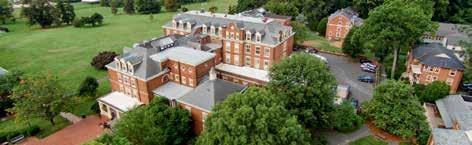
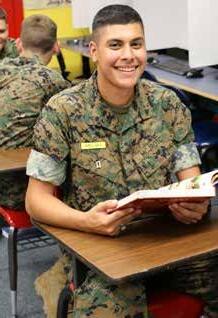
MARINE MILITARY ACADEMY
Harlingen, TX
Marine Military Academy is forging the youth of today into the leaders of tomorrow.
The school’s purpose is to inspire positive academic, physical and moral growth in every cadet. To achieve this, it provides a disciplined, distraction-free setting that allows cadets to focus on their educational and personal development.
The school’s mission is to develop disciplined, morally strong, college-ready young men who are prepared for responsible leadership. Its vision: Marine Military is globally recognized as a premier college-preparatory school for adolescent men on course to achieve their post-secondary education and career goals.
Its values are as follows: 1. Honor: Cadets are held to the highest ethical and moral standards. Respect for others is essential. 2.
Courage: Cadets will face their fears and overcome them. They will do what is right no matter the consequences. 3. Commitment: Cadets strive for excellence and never give up. Duty to others is fundamental.
Marine Military is located at 320 Iwo Jima Blvd., Harlingen, TX 78550. For more information, call 956-423-6006 or visit mma-tx.org.
At Marine Military Academy challenge leads to growth and growth leads to success. By providing a college-preparatory curriculum in a structured, disciplined and focused setting, our cadets rise to new heights as scholars and leaders. No other school can unlock a boy’s potential like MMA. The sooner he starts, the sooner his transformation begins.
Top 5 Things
Atlantans May Not Know About McCallie
Atlanta is the #1 CITY for McCallie Alumni & Students. Atlanta is home to more McCallie Men than any city outside of Chattanooga.
McCallie’s campus is just 2 HOURS FROM ATLANTA in Chattanooga, TN. No matter the occasion it’s a quick trip up I-75 to McCallie.
3 The 3 MOST POPULAR COLLEGES for McCallie Alumni from the Class of 2020 were TENNESSEE, AUBURN, and YALE. In total, 165 McCallie graduates attended 82 colleges & universities in the US and abroad.
McCallie serves 4 MEALS PER DAY. Boys eat – and they eat a lot! In addition to breakfast, lunch & dinner, McCallie serves a 4th Meal at 9:30 PM.
McCallie fielded 5 STATE CHAMPIONSHIP TEAMS in 2019. In 2019, our tennis, soccer, swimming, cross country, and football teams all brought home state championship titles. 2 1 4 5 Ready to learn more? Visit mccallie.org/inquiry
MCCALLIE SCHOOL
Chattanooga, TN
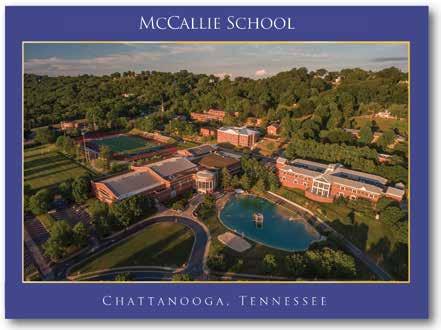
Since 1905, McCallie’s all-boys environment has allowed the school to take a deliberate approach in meeting the unique needs of its students. Whether it’s serving a fourth meal because boys never seem to fill up at dinner or offering experiential and collaborative classes, McCallie is built to give boys a firstclass experience.
In 2019, Newsweek rated McCallie as the No. 68 STEM program in America and highest among all private schools in Georgia, Tennessee, the Carolinas, Virginia, Kentucky and Maryland. While this provides just one example of the caliber of McCallie’s curriculum and faculty, the school takes great pride in balancing academic rigor with nurturing support. Their learning center and writing center are home to eight full-time staff dedicated to helping boys give their best in the classroom.
McCallie’s 265 boarding students hail from 27 states and 12 countries (over 40 from Georgia), and living on campus provides them with more opportunities to expand their horizons outside of the classroom. Boarding students can participate in over 175 opportunities offered through
the Weekend Activities program each school year, and boys also don’t mind the extra sleep they get before classes begin at 8:55 a.m.
With 46 sports teams competing in 15 interscholastic athletic programs, nearly twothirds of McCallie students participate in at least one sport, and many of their teams have earned national recognition and rankings. Extracurricular opportunities don’t stop with sports, though. In fact, McCallie offers over 50 additional afternoon activity options, as well as a robust music program that includes over 300 boys each school year. Whether it’s theater, robotics, tennis, yoga, beekeeping, outdoor programs, rocketry, e-sports, science research or entrepreneurship — there’s something for every boy at McCallie.
Above all, the school’s dedicated faculty and staff seek to inspire and guide boys to become not only the best students, athletes and artists they can be, but they also seek to instill in them the qualities that will make them the best men they can be.
McCallie is located at 500 Dodds Ave., Chattanooga, TN 37404. For more information, call 423-493-5848 or visit mccallie.org.
SPOTLIGHT ON METRO ATLANTA’S SCHOOL SYSTEMS
Avariety of improvements and innovative programs in Georgia’s public school systems have resulted in many stellar elementary, middle and high schools across the metro area. Different school systems feature specialized programs and academic opportunities, such as magnet, charter, vocational or alternative schools, to suit their respective students, parents and communities. However, despite variations in programming and academic offerings, all public schools must offer the core curriculum as determined by the Georgia Board of Education. Here is a county-by-county guide to metro Atlanta’s public school systems. For more information about the Georgia Department of Education, call 404-656-2800 or visit gadoe.org. u
CHARTER SCHOOLS
CHARTER SCHOOLS
BARTOW
BARTOW
Board of Education
770-606-5800
bartow.k12.ga.us
CHEROKEE
Number of Schools Elementary 12 Middle 4 High 3
Career Academy 1
Transitional Academy 1
Total # of Students: 14,202
Student Spending: $9,115
2019 Mean Georgia Milestone Scores:
3rd: (ELA) 510 (M) 529
5th: (ELA) 515 (M) 516
8th: (ELA) 511 (M) 503
2020 Average SAT: 1025
Top 3 Schools by Average
2020 SAT Score
Woodland 1045
Adairsville High 1029
Cass High 999
What’s New: Woodland Middle School Media Specialist Sabrina Price has launched WMS BOOKHUB, a program that allows distance-learning students to receive library materials through curbside delivery. Students can place an order for books through their school’s online catalog.
2019 Mean Georgia Milestone Scores:
3rd: (ELA) 522 (M) 545
5th: (ELA) 531 (M) 538
8th: (ELA) 535 (M) 514
2020 Average SAT: 1100
Board of Education
770-479-1871
cherokeek12.net
CLAYTON
Total # of Students: 44,422
Student Spending: $8,985
Top 5 Schools by Average 2020 SAT Score
Cherokee High 1114 Creekview High 1110
Etowah High 1102
Sequoyah High 1100 Woodstock High 1097
What’s New: Hasty Elementary School Fine Arts Academy has been designated as a Common Sense Certified School for Digital Citizenship. Lori Brackett and Sarah Munroe created the schoolwide plan that earned this certification.
2019 Mean Georgia Milestone Scores:
3rd: (ELA) 488 (M) 507
5th: (ELA) 497 (M) 493
8th: (ELA) 501 (M) 486
2020 Average SAT: 943
Top 5 Schools by Average 2020 SAT Score
Elite Scholars Academy 1078
M. E. Stilwell School of the Arts 1043
Morrow High School 985
PUBLIC SCHOOL COUNTY GUIDE
clayton.k12.ga.us
Total # of
Lovejoy High School 948
Jonesboro High 945
What’s New: Clayton County Public Schools now hosts Be Inspired with Beasley: A Podcast for Clayton County, featuring the superintendent/CEO of schools, Morcease J. Beasley.
PUBLIC SCHOOL COUNTY GUIDE
COBB
Number of Schools Elementary 65
2
24
10
2
2019 Mean Georgia Milestone Scores:
3rd: (ELA) 521 (M) 533
5th: (ELA) 531 (M) 526
8th: (ELA) 534 (M) 523
2020 Average SAT: 1107
Top 5 Schools by Average
2020 SAT Score
Walton High School 1272
Alan C. Pope High School 1195
Lassiter High School 1195
Kell High School 1061
Board of Education
770-426-3300 cobbk12.org
COWETA
Board of Education
770-254-2800 cowetaschools.net
DEKALB
Board of Education
678-676-1200 dekalbschoolsga.org
Total # of Students: 119,817 Student Spending: $9,556
Wheeler High School 1160
What’s New: The new Cobb Innovation and Technology Academy is designed to immerse students in hands-on training programs.
Number of Schools
19 Middle 6 High 3 Charter & Career Academy 2 Alternative 2 Centre for Performing and Visual Arts 1
Education 1
Total # of Students: 23,799 Student Spending: $9,045
2019 Mean Georgia Milestone Scores:
3rd: (ELA) 525 (M) 532
5th: (ELA) 530 (M) 525
8th: (ELA) 536 (M) 535
2020 Average SAT: 1082
Top 3 Schools by Average
2020 SAT Score
Northgate High 1118
Newnan High 1076
East Coweta High 1059
What’s New: The Georgia Department of Education has provided funding for Coweta County Schools to equip 27 buses as Wi-Fi hotspots to provide reliable internet service to those students learning remotely.
Number of Schools
Elementary 69 Middle 17 High 19 Charter 5 Magnet 3 Centers, Special Education and Alternative 24
Total # of Students: 110,413 Student Spending: $11,565
2019 Mean Georgia Milestone Scores:
3rd: (ELA) 496 (M) 511
5th: (ELA) 506 (M) 502
8th: (ELA) 506 (M) 496
2020 Average SAT: 990
Top 5 Schools by Average
2020 SAT Score
Chamblee Charter High 1177
DeKalb Early College Academy 1156
DeKalb School of the Arts 1144
Dunwoody High 1128
Lakeside High 1108
What’s New: A $7,500 grant from Teach On Project was received by Druid Hills teacher Matthew Ruben, awarded for demonstrating increases in student achievement, enhancement of student selfesteem and collaboration with community stakeholders.
DOUGLAS
Board of Education
770-651-2000 dcssga.org
Board of Education
770-460-3990
fcboe.org
FORSYTH
Board of Education
770-887-2461
forsyth.k12.ga.us
Total # of Students:
29,253
Student Spending:
$9,566
2019 Mean Georgia Milestone Scores:
3rd: (ELA) 511 (M) 520
5th: (ELA) 520 (M) 510
8th: (ELA) 522 (M) 504
2020 Average SAT: 1002
Top 5 Schools by Average
2020 SAT Score
Alexander High 1035
Chapel Hill High 1032
Douglas County High 1018
Lithia Springs High 956
New Manchester High 946
What’s New: The Douglas County School System has signed a contract to purchase the GreyStone Power headquarters building. The district will relocate its central office to this new location, along with more than 40 other department employees.
2019 Mean Georgia Milestone Scores:
3rd: (ELA) 544 (M) 544
5th: (ELA) 549 (M) 535
8th: (ELA) 551 (M) 541
2020 Average SAT: 1124
Top 5 Schools by Average
Total # of Students: 21,174
Student Spending: $10,447
2020 SAT Score
McIntosh High 1209
Starr’s Mill High 1161
Whitewater High 1090
Fayette County High 1050
Sandy Creek High 1044
What’s New: Oak Grove Elementary has completed several improvements. Renovations include a new music room and gym, new conference rooms and an updated cafeteria.
2019 Mean Georgia Milestone Scores:
3rd: (ELA) 550 (M) 562
5th: (ELA) 555 (M) 568
8th: (ELA) 556 (M) 534
2020 Average SAT: 1161
Top 5 Schools by Average
2020 SAT Score
Total
Lambert High 1226
South Forsyth High 1202
Denmark High 1175
West Forsyth High 1135
Forsyth Central 1105
What’s New: Forsyth County Schools’ SAT scores surpassed state and national public schools for the class of 2020. Out of the 181 school districts in Georgia, the district’s 2020 graduates had the highest SAT score among county districts and those that tested more than 250 students.
PUBLIC SCHOOL COUNTY GUIDE
DOUGLAS
Board of Education 470-254-3600 fultonschools.org
Board of Education
770-229-3700
spalding.k12.ga.us
Board of Education 678-301-6000 gwinnett.k12.ga.us
Number of Schools
59
Total # of Students: 101,671
Student Spending: $11,072
2019 Mean Georgia Milestone Scores:
3rd: (ELA) 521 (M) 534
5th: (ELA) 531 (M) 528
8th: (ELA) 522 (M) 512
2020 Average SAT: 1078
Top 5 Schools by Average 2020 SAT Score Northview HS 1282 Chattahoochee HS 1233 Johns Creek HS 1220 Cambridge 1206 Alpharetta 1189
What’s New: Fulton County Schools has partnered with the Fulton County Board of Health to introduce an online COVID-19 reporting portal for parents. It allows families to notify both the board and the district of a COVID-19 risk involving their student.
Number of Schools
2019 Mean Georgia Milestone Scores:
3rd: (ELA) 486 (M) 506
5th: (ELA) 502 (M) 495
8th: (ELA) 507 (M) 496
2020 Average SAT: 967
Total # of Students:
Top 2 Schools by Average
996
929
What’s New: Griffin-Spalding County School System dismissal hours have changed. The instructional day still begins at the same time as in previous years, but students are dismissed 20 minutes earlier. At the high school level the schedule was adjusted to take minutes from transition time between classes so students have the same opportunity to master the curriculum.
2019 Mean Georgia Milestone Scores:
3rd: (ELA) 523 (M) 535
5th: (ELA) 528 (M) 533
8th: (ELA) 532 (M) 494
2020 Average SAT: 1097
Top 5 Schools by Average 2020 SAT Score
Gwinnett School of Math, Science, and Technology 1361 North Gwinnett High 1195
Gwinnett Online Campus 1145
Brookwood High 1143 Mill Creek High 1131
What’s New: Six Gwinnett County public schools have earned a combined total of nearly $50,000 in BOSCH STEM grants from the Bosch Community Fund.
HALL
Board of Education
770-534-1080 hallco.org
HENRY
Board of Education
770-957-6601
schoolwire.henry.k12.ga.us
PAULDING
Total # of Students:
28,732
Student Spending:
$9,354
2019 Mean Georgia Milestone Scores:
3rd: (ELA) 507 (M) 517
5th: (ELA) 514 (M) 509
8th: (ELA) 486 (M) 500
2020 Average SAT: 1045
Top 5 Schools by Average
2020 SAT Score
Flowery Branch High 1079
North Hall High 1064
Chestatee High 1044
Cherokee Bluff 1036
Johnson High 1036
What’s New: Agricultural students in the Hall County School District will greatly benefit from a $50,000 Cargill Cares Grant awarded to the school system by Cargill.
2019 Mean Georgia Milestone Scores:
3rd: (ELA) 503 (M) 517
5th: (ELA) 512 (M) 508
8th: (ELA) 517 (M) 493
2020 Average SAT: 1010
Top 6 Schools by Average
2020 SAT Score
Total # of Students:
Ola High 1074
Union Grove High 1099
Woodland High 1017
Luella High 1005
Dutchtown High 991
Eagles Landing High 991
What’s New: The 1,000-seat Henry County Performing Arts Center at Fairview opened in September.
2019 Mean Georgia Milestone Scores:
3rd: (ELA) 515 (M) 527
5th: (ELA) 527 (M) 519
8th: (ELA) 512 (M) 511
2020 Average SAT: 1032
PUBLIC SCHOOL COUNTY GUIDE
Board of Education
770-443-8000
paulding.k12.ga.us
Total # of Students:
Top 5 Schools by Average
2020 SAT Score
Paulding County High 1058
North Paulding High 1042
East Paulding High 1032
South Paulding High 1024
Hiram High 989
What’s New: The Paulding County School District was awarded
$3.9 million by the Georgia Department of Education in Year One of a five-year grant for Literacy for Learning, Living and Leading in Georgia (L4GA). The funds will be used to implement literacy initiatives at all grade levels at schools throughout the district. In 2018, the district received $4.5 million for a similar initiative.
HALL
ROCKDALE
Number of Schools Elementary 11
ROCKDALE
Board of Education
770-483-4713
rockdaleschools.org
ATLANTA PUBLIC SCHOOLS
Total # of Students: 18,511
Student Spending: $9,924
2019 Mean Georgia Milestone Scores:
3rd: (ELA) 500 (M) 512
5th: (ELA) 514 (M) 500
8th: (ELA) 519 (M) 508
2020 Average SAT: 974
Top 3 Schools by Average 2020 SAT Score
Rockdale High 1024 Heritage High 989 Salem High 933
What’s New: Rockdale Career Academy recently received a $5,000 donation from Warner Bros. Entertainment as part of community outreach efforts and workforce development for the growing film and entertainment industry in Conyers and Georgia.
Board of Education 404-802-3500
atlantapublicschools.us
of Schools
Total # of Students: 58,359
Student Spending: $15,917
2019 Mean Georgia Milestone Scores:
3rd: (ELA) 500 (M) 518
5th: (ELA) 507 (M) 507
8th: (ELA) 510 (M) 495
2020 Average SAT: 934
Top 5 Schools by Average 2020 SAT Score
Atlanta Classical Academy 1151
Grady High 1112
KIPP Atlanta Collegiate Academy 1067
North Atlanta High 1033
Charles R. Drew Charter High 968
What’s New: Lisa Herring has been sworn in as the new superintendent of Atlanta Public Schools. A Georgia native and Spelman College graduate, Herring brings more than 25 years of progress and achievement in urban public-school systems across the Southeast.
BUFORD CITY SCHOOLS
Board of Education
770-945-5035 bufordcityschools.org
Number of Schools
Elementary (K-1) 1 1st-3rd Grade Academy 1 4th-5th Grade Academy 1 Middle 1 High 1
Total # of Students: 5,113
Student Spending: $10,560
2019 Mean Georgia Milestone Scores:
3rd: (ELA) 539 (M) 553
5th: (ELA) 538 (M) 550
8th: (ELA) 559 (M) 564
2020 Average SAT: 1125
What’s New: In response to the need to level digital equity for its families, Buford City Schools implemented a 1:1 digital technology initiative at the beginning of the school year, assigning and distributing Chromebooks to each student.
CITY SCHOOLS OF DECATUR
Board of Education
404-371-3601
csdecatur.net
Total # of Students: 5,701
Student Spending: $11,681
2019 Mean Georgia Milestone Scores:
3rd: (ELA) 562 (M) 559
5th: (ELA) 560 (M) 551
8th: (ELA) 549 (M) 524
2020 Average SAT: 1170
What’s New: The Georgia Historical Society has officially accepted the application by students of Decatur High School’s Black Student Union to erect a marker in downtown Decatur at the spot where Martin Luther King Jr. was illegally sentenced to a chain gang after being falsely charged with driving without a license 60 years ago. The event was a key turning point in the Civil Rights Movement.
GAINESVILLE CITY SCHOOLS
Board of Education
770-536-5275
gcssk12.net
Total
of
2019 Mean Georgia Milestone Scores:
3rd: (ELA) 487 (M) 509
5th: (ELA) 495 (M) 500
8th: (ELA) 478 (M) 493
2020 Average SAT: 990
What’s New: The students of New Holland Knowledge Academy are enjoying their new playground, installed in time for the 202021 school year. The academy hosted a variety of special events and activities to raise over $17,000 toward the structure, with contributions from the district’s school board and other community partners providing the final funds to reach the $20,000 goal.
MARIETTA CITY SCHOOLS
Board of Education
770-422-3500
marietta-city.org
Total # of Students: 9,721
Student Spending: $11,875
2019 Mean Georgia Milestone Scores:
3rd: (ELA) 512 (M) 524
5th: (ELA) 518 (M) 515
8th: (ELA) 519 (M) 507
2020 Average SAT: 1067
What’s New: The Engineering Drafting and Design Program at Marietta High School has been awarded program certification status by the Georgia Department of Education. Only those programs that have successfully undergone rigorous reviews by business and industry leaders are recognized with this distinction.