Right Educational Experience for
Your Child
CHARTER SCHOOL A tax-supported public school that is independently run, allowing for greater educational choice for parents in the community.
ExPERIENTIAL LEARNING An educational approach using applied, hands-on methods of learning.
INTERNATIONAL BACCALAUREATE (IB) A specifically designed comprehensive academic program emphasizing traditional disciplines while instilling a global perspective in its students.
MAGNET SCHOOL A public school that offers a specific or enhanced curriculum designed for students of special interest or ability.
MONTESSORI A school following the principles developed by Dr. Maria Montessori focusing on the unique individuality, self-reliance and independence of children.
SPECIAL NEEDS A school or program for children who have mild-tomoderate learning differences. It usually features smaller class sizes, individualized attention and multisensory learning methods.
ACCREDITATION official certification that guarantees a school provides an education of a reasonably high quality. schools must prove levels of quality and maintain continuous standards of improvement.
ACT An alternative to the sAT, this national college admissions examination consists of subject area tests in English, Mathematics, Reading and science, with an optional 30-minute writing test.
ADEqUATE YEARLY PROGRESS (AYP) A measure of year-to-year student achievement on statewide assessments as required by the n child left Behind Act.
CRITERION-REFERENCED
COMPETENCY TESTS (CRCT)
Tests designed to measure how well students in grades 1 through 8 acquire the skills and knowledge described in the georgia performance standards.
EARLY CHILDHOOD EDUCATION
Education that applies to children from birth to age 8, focusing specifically on their development, including physical, emotional, sensory, communicative, cognitive and social needs.
GEORGIA HIGH SCHOOL WRITING
TEST A test in which 11th grade students are asked to produce a composition in response to an on-demand writing prompt. The test is a prerequisite for graduation.
GEORGIA PERFORMANCE
STANDARDS statewide standards of academic content for all subjects k-12, to which every school must adhere and on which students are annually tested.
HOPE SCHOLARSHIP (Helping Outstanding Pupils Educationally)
A scholarship in georgia, funded by the georgia lottery, that rewards academically achieving students with financial assistance to attend eligible public and private georgia colleges and universities.
Did You Know:
More than $7.7 billion in HOPE scholarships have been awarded to Georgia students since 1993.
MISSION/PHILOSOPHY A statement outlining the guidelines a school follows to achieve its goals or maintain performance standards.
NO CHILD LEFT BEHIND ACT
A federal law passed in 2001 designed to ensure that all children have a fair and equal opportunity to obtain a high-quality education and meet state academic standards of proficiency.
NOTIFICATION DEADLINE
The date by which an independent school notifies families of the acceptance of a child for enrollment to the school.
OPEN HOUSE An event held at a school, at which parents can learn more about the school and its offerings.
PSAT A standardized test that offers students practice for the sAT Reasoning Test and allows them to qualify for the national Merit scholarship program.
REPLY DEADLINE The date by which parents must notify an accepting school of their commitment to enroll their child.
SAT This standardized test measures the critical thinking, writing and mathematical reasoning skills of students planning to attend college.
SECONDARY SCHOOL ADMISSIONS
TEST (SSAT) The admissions test that many independent schools require students to take in order to be considered for enrollment.
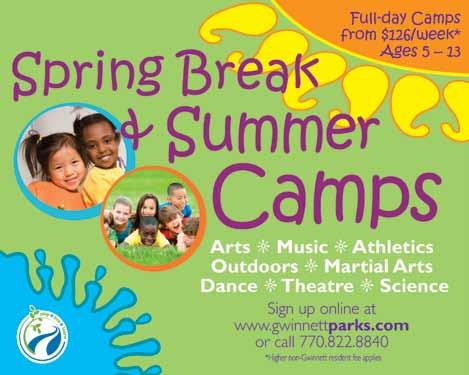
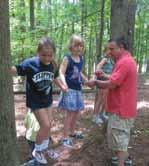
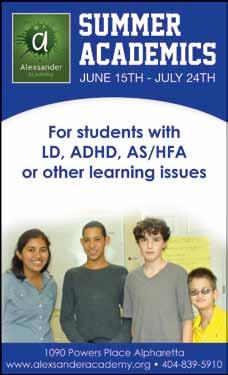
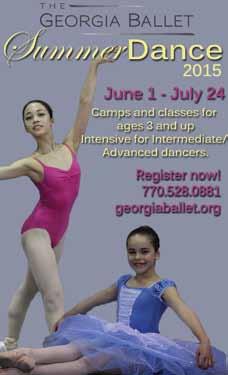
SUMMER CAMP A common destination for children and teenagers during the summer, at which they can participate in a variety of activities or classes.
critical communication
Deciphering Associations and organizations
Many local and national organizations work to bring out the best in summer camps and public, private and boarding schools by identifying schools that meet certain standards through accreditation. These groups also set policies, research educational advancements and offer services to the educational communities both in Atlanta and in georgia. The following are just some of the associations and organizations you should know in your search for the best educational experience for your child.
AdvancED www.advanc-ed.org
The parent organization for the southern Association of colleges and schools, AdvancED advances education excellence through accreditation and school improvement. American Camp Association (ACA) www.acacamps.org
Accredits camps that meet industry-accepted and
government-recognized standards, educates owners and directors and establishes guidelines.
The Association of Boarding Schools (TABS) www.boardingschools.com
This organization of 300 boarding schools serves the professional development needs of boarding schools and provides information to potential students and their families.
Association of Christian Schools International (ACSI) www.acsi.org
AcsI strives to enable christian educators and schools worldwide to teach effectively using christcentered curricula and programs.
Association Montessori Internationale (AMI) www.montessori-ami.org
Recognizes schools that strongly adhere to Montessori principles and practices.
Atlanta Area Association of Independent Schools (AAAIS) www.aaais.org
Although not an accrediting agency, AAAIs is an affiliation of independent schools and operates under analogous principles and a common code of ethics.
The Council of International Schools (CIS) www.cois.org
The premier organization in international education for the accreditation of schools and the development of best practices.
Department of Education (DOE) www.doe.k12.ga.us
A statewide, policy-driven organization governing the public school system of education in georgia for grades k-12, the georgia DoE operates under the direction of the state superintendent of schools.
Georgia Accrediting Commission (GAC) www.coe.uga.edu/gac gAc offers four levels of approval: preparation status, provisional accreditation, accreditation and accreditation with quality.
Georgia Association of Christian Schools (GACS) www.gacs.org uses generally accepted indicators of quality, voluntary self-improvement and peer review to measure christian schools.
Georgia Association of Educational Leaders (GAEL) www.gael.org
This statewide umbrella organization of six professional associations provides unity among school leadership organizations in georgia.
Georgia Association of Private Schools for Exceptional Children (GAPSEC) www.gapsec.org
This state organization is for schools that serve students with learning issues.
Georgia Charter Schools Association (GCSA) www.gacharters.org
A membership organization whose mission is to be an effective advocate and service provider for all charter public schools in georgia.
Georgia Independent School Association (GISA) www.gisaschools.org
An association of private, independent and parochial schools throughout the state whose mission is to advance excellence and collaboration among private, independent and parochial schools.
Georgia Partnership for Excellence in Education (GPEE) www.gpee.org
This nonprofit organization of business, education, community and government leaders aims to shape policy and reform public education in the state.
Georgia Private School Accreditation Council (GAPSAC)
www.gapsac.org
Association of k-12 private schools whose students are recognized and approved by the georgia DoE for transferring credits to public schools on the same basis as students from public schools.
Georgia Professional Standards Commission (PSC) www.gapsc.com
A state organization responsible for setting and applying high standards for the preparation, certification and continued licensing of georgia public educators, as well as
conduct of public school teachers and staff.
Georgia School Boards Association (GSBA) www.gsba.com
Representing georgia’s 180 elected boards of education, gsBA provides leadership and services to local school boards.
National Association for the Education of Young Children (NAEYC) www.naeyc.org
The nAEyc focuses on the quality of educational and developmental services for children, from birth to age 8, including day care and pre-k centers. It is a national network of more than 300 local, state, and regional affiliates, and a growing global alliance.
National Association of Independent Schools (NAIS) www.nais.org
This association values and works to maintain the independent nature of each member school by promoting high standards of educational quality and ethical behavior.
National Association of Private Special Education Centers (NAPSEC)
www.napsec.org
Represents private specialized education programs and their leaders u
by promoting high-quality programs and services for individuals with disabilities and their families.
National Christian School Association (NCSA) www.nationalchristian.org
An organization that accredits member schools, overseen by a board of administrators from christian schools and universities.
National Council for Private School Accreditation (NCPSA) www.ncpsa.org
A consortium of several private school organi-
zations dedicated to preserving the integrity of the accreditation process for thousands of private schools across the nation.
Southeastern Association of Boarding Schools (SABS) www.sabs.org
An association of 23 boarding schools committed to promoting and supporting boarding education opportunities in southeastern states, including the carolinas, Alabama, Tennessee, georgia and Florida.
Southern Association of Colleges and Schools (SACS) www.sacs.org
Member schools meet research-based standards and maintain continuous school improvement and quality assurance.
Southern Association of Independent Schools (SAIS) www.sais.org
Members meet quality standards, receive peer evaluation and implement a school plan focused on strategic improvement.
For more information about these and other organizations and associations that ensure quality education among camps and schools, visit the websites of the georgia Department of Education (www.k12.ga.us) or the u s. Department of Education (www.ed.gov).
Headmaster’s corner
Dr. James H. Benson President, Riverside Military Academy
Dr. James H. Benson, colonel, usMc (Ret), became president of Riverside Military Academy in 2009. Before that, he served as president of the Marion Military Institute in Marion, Ala., and as vice president for administration at Bridgewater college.
What is your educational philosophy?
At Riverside, we educate the student in body, mind and spirit, and develop grounded young men of substance who are prepared to lead and succeed in a dramatically changing world begging for ethical and decisive leaders.
How can parents best contribute to the education process?
Riverside and cadet parents are engaged in a partnership for cadet success. A parent liaison/coordinator team of 11 parents works arduous hours serving the needs of our cadets and their parents, many of whom live too far to visit frequently.
How is the field of education changing?
Top-down education policy has taken autonomy away from the classroom teacher. simultaneously, recess and physical education periods have been reduced or eliminated completely to the detriment of student physical fitness, social skills, fair play, and much more.

What advice would you offer parents about their children’s education?
I am a proponent of private education. nonetheless, I realize that it is not within the financial means of all families. Thus, I recommend that parents be strong advocates of school choice and seek charter school education if at all possible. The ability to educate and develop young people with less political and top-down school board direction gives the school the flexibility to deliver an education that meets the needs of all students.
THE ESSENTIALS: RIVERSIDE MILITARY ACADEMY
Emphasis: preparing ethical young men of character for success in college and in life.
Year Founded: 1907
Grades: 7-12
Students: 470
Avg. Class Size: 15
Tuition Range: $19,325 - $32,200
Accreditations or Affiliations: sAIs; nAIs, AMcsus, TABs
Location: gainesville, ga.
Contact: 770-538-2938, www.riversidemilitary.com
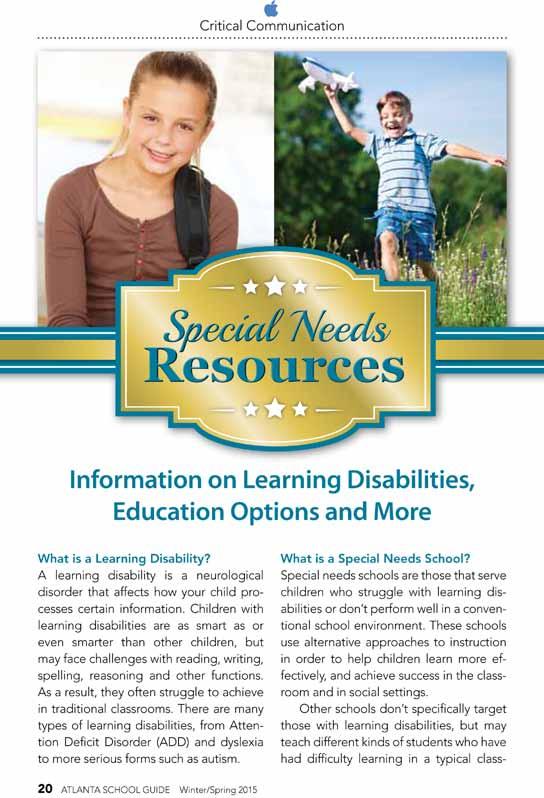

room setting. others may teach average or even above-average learners while also offering additional programs and classes for students with learning differences.
How to Tell if Your Child Has a Special Needs Situation
First, it’s important to identify your child’s issues. Students who exhibit average or above-average intelligence but often seem distracted and don’t perform well in a traditional classroom setting may be struggling with dyslexia, Asperger’s syndrome, Adhd or some other disorder that affects their ability to learn effectively. Also, disruptive or aggressive children may be exhibiting frustration brought on by a learning disability.
if you suspect your child may have a learning disability, it’s critical to have
him or her evaluated by a mental health professional. A diagnosis is crucial in order to address the child’s educational needs.
After a Diagnosis: What’s Next?
A professional evaluation is crucial in order to evaluate your child’s educational needs.
if your child is diagnosed with a learning disability and attends public school, talk with the principal, school counselor or another administrator about developing an individualized education Program (ieP). All public schools are required to create an ieP for students with learning disabilities who meet special education requirements. An ieP is a document that specifies your child’s learning situation and educational needs and outlines a course of action for teachers and other professionals to follow to help make sure your child learns to the best of his or her ability. u
if you feel your local public school isn’t the right environment for your child, or simply want to explore all your options, there are many quality independent schools in the metro Atlanta area devoted to helping children with special needs and learning issues. Visit the Georgia Association of Private Schools for exceptional children’s website (www.gapsec.org) or our listings for special needs schools on page 114 to help you with your search.
How Do I Find the Right School?
All special needs schools are not the same. the first step is to identify those schools that can address your child’s specific learning difficulty, and offer the level of special needs instruction that you (and perhaps a professional) feel is best for your child.
You may be more comfortable enrolling your child in a school that focuses specifically on his or her issue, or you may want a more diverse environment where he or she can interact with many different kinds of students. Familiarize yourself with the different options offered by each kind of school.
traditional independent schools that offer special needs programs as part of a larger curriculum can offer that kind of environment, but may have larger class sizes than schools that specialize in specific learning disabilities. these kinds of schools may also focus more on academics than on the therapeutic aspects of special
needs education. independent special needs schools can offer more individualized instruction and a more structured and predictable environment, and are likely to address nonacademic issues such as social skills and self-esteem.
As you begin searching for the right school for your child’s situation, here are some questions to keep in mind:
• Will your child fare better in a school that focuses on his or her specific learning disability, or would you rather that he be able to interact with students with a wide range of learning capabilities?
• Does the school serve a specific age range, or work with students on all grade levels? Many students with learning disabilities have trouble transitioning to new schools.
Continued on pg.24 u
Identify those schools that can best address your child’s specific learning difficulty.

COMMON SPECIAL NEEDS TERMS
Asperger’s Syndrome: A developmental disorder on the autism spectrum, characterized by high intelligence, impaired social skills and repetitive patterns of behavior and interest.
Attention Deficit Disorder (ADD): A strain of Adhd (see below) marked by a difficulty maintaining focus or concentration and frequent or consistent fatigue. Add differs from Adhd in that hyperactivity or impulse-control issues are markedly decreased.
Attention Deficit Hyperactivity
Disorder (ADHD): A chronic condition that includes hyperactivity, impulsive behavior and a difficulty keeping one’s attention focused.
Autism: A developmental disorder that affects the ability to communicate and interact with others, accompanied by rigid, repetitive behavior patterns.
Dyslexia: A learning disability that impairs one’s ability to read.
Georgia Association of Private Schools for Exceptional Children (GAPSEC): An organization of independent schools serving students with learning disabilities and differences.
Georgia Special Needs Scholarship (GSNS): A school-choice scholarship program for special needs students being served by an ieP in Georgia public schools.
Individualized Educational Program (IEP): A written statement that outlines the needs of a public school student with learning disabilities and creates a customized plan for meeting those needs.
Individuals With Disabilities Education Act (IDEA): the federal law that governs how states and public education agencies that accept funding under the law address the educational needs of students with disabilities.
Learning Disability: A neurological condition that affects how one processes information. learning disabilities can impede reading, writing, speech, math, reason, memory, attention, coordination, social skills and emotional maturity.
Multisensory Instruction: An educational approach involving the use of all of a child’s senses, not just sight and hearing, to help with understanding concepts and solving problems.
Response to Intervention (RTI):
A process used by educators to help identify and address the needs of students experiencing behavioral or educational challenges.
Student Scholarship Organization (SSO): An organization authorized by the state of Georgia to receive funds and award scholarships under the Georgia Quality education expense credit program.
• Does the school offer a variety of extracurricular activities, including arts and sports programs?
• Is the school accredited? If so, by which organizations?
• Is the staff certified to instruct special needs children, or those with your child’s specific learning difficulty?
• Does the school focus more on academics or on addressing the child’s therapeutic needs?
Financial Assistance
Many independent special needs schools participate in the Georgia Special needs Scholarship program (GSnS), a school choice program available to special needs students attending Georgia Public Schools. the program offers funds to off-
set tuition and fees at participating private schools authorized by the State Board of education. According to the Georgia department of education, scholarship amounts range from $2,500 to $13,500, with an average amount of around $6,000. the Quality education expense credit program provides another scholarship option. donations are made to an organization known as a Student Scholarship organization (SSo), which uses the money to award scholarships to students in pre-K through grade 12. Many schools also offer their own scholarships or tuition assistance programs, as well. contact individual schools for details.
For more information on special needs schools and resources, please see our listings on page 114.
• SACS & GAC Accredited
• Social Skills
S UM ME R C AM P PR OGRAMS
• O pen Enrollment
• Athletics, Drama, Chess
• SB10 Approved
• Low Student-Teacher Ratio
• S pecial Education Teachers
• Private Tours Available by Appointment






Asking the Right
Questions
By H.M. Cauley
After accepting a position as head of school at Atlanta Girls School last spring, Ayanna hill-Gill found herself on the opposite side of the educational visit. this time, she was the one visiting local institutions to find the right fit for her own two children. And the
questions she asked were the same ones she’d heard so many times as head of the Purnell School in new Jersey.
“coming from out of town, we wanted to make sure the curriculum was what my kids were accustomed to, so there would be a smooth transition,” she says.

When searching for the right school for your child, there’s no more important part of the process than asking questions of the faculty and staff. From a school’s educational philosophy to its test scores and what it serves for lunch, it’s crucial to get as much information as possible to help you make the right decision. But what questions should you ask?
ASKING ABOUT ACADEMICS
nicole evans Jones, principal of toomer elementary, encourages parents to take the time to consider just what they want their children to learn.
“the course offerings and the extracurriculars may not fit your child’s needs,” she says. “look at the course of study and talk about what the kids are learning.”
“the biggest factor to consider in any school decision should be student inter-

What are the profiles of the school’s graduates?
est,” says Kari Schrock, principal of the international Academy of Smyrna, an international Baccalaureate charter school. “it’s important to know your child’s strengths and areas of growth, especially as they get older, so they have the opportunity to explore courses they might not have in other locations.”
one of the first things parents often ask about is a school’s academics. When interviewing schools for her kids, hill-Gill made sure to focus on the curriculum.
“For instance, i wasn’t familiar with what [one school] used for math, so i asked to see some lessons to get a sense of the objectives,” she says.
“it also helps to ask about profiles of graduates—stories about successful alums and what they’re doing can give parents an idea of what their child might look forward to.” u

Questions about college are often on the minds of parents visiting Killian hill christian School in lilburn.
“Some parents want to know the percentage of kids who go on to college, and the colleges they choose,” says headmaster Paul Williams.
it’s also important to ask about teachers, says hill-Gill, who inquired about class size and the balance of full-time and part-time teachers during her search.
“the teachers’ experience levels are very important, too,” says Williams. “Ask how much they’ve taught and find out about their qualifications. in the private schools in particular, there can be a broad spectrum of experience. And ask about student/teacher ratio as well. that’s very important.”
COMMUNITY AND COST
even today’s public schools offer a range of choices and a level of involvement that parents should be aware of.
What are the teachers’ experience levels?

“the greatest change i’ve seen in 21 years in education is that, today, parents do have a choice,” says Kari Schrock. “there are charter schools where there didn’t used to be, and there are many magnet programs that allow children choice, so it can be confusing.”
Whether you’re investigating a public or independent school, Schrock suggests
asking just what it means to be a part of the school’s learning community. “i encourage parents to dig deeper to know what the school represents,” she says. “As a charter school, we have a charter, and i urge them to read it.”
other questions relating to a school’s community include: Are uniforms required? is there transportation for students who live some distance from the school? And what, if anything, is required of parents?
“For instance, we require a minimum number of volunteer hours for the parents,” says Schrock. “Some families have no interest in doing that, so it makes a difference in their choice of school.”
one important topic, whether you’re interviewing a traditional public, charter or independent school, is funding.
“Are there boosters, foundations or stakeholders who support the school?” asks Jones. “You can learn a lot about a school by how well it welcomes that kind of support.”
“tuition is one of the distinguishing features of a school,” says Williams of Killian hill. “Some have added-on fees for any activity outside the classroom; others, like ours, have all those costs built in. But many parents don’t ask about the fees.”
VISITING IN PERSON
the very first thing parents should consider when selecting a school, says Jones with toomer elementary, is the feel. this is best evaluated by a school visit, which can demonstrate all aspects of the school’s culture, from its safety and security procedures to how open and enthused the staff and faculty are.
“it’s how you are greeted, not just in the office but in the halls,” she says. “do the kids and teachers seem happy? Are they excited to talk about their school?
You should see some visible evidence of parental involvement, from volunteers in the classrooms to PtA sign-up sheets on the walls.”
“it’s hard to tell a school’s culture just from its website,” says hill-Gill. “When you step foot on a campus, you can get a sense of the mission and you can find out what makes them different. i look at how people address each other, what the vibe is when people are walking in the halls. do they welcome you when you visit the classroom?”
And if possible, bring your child along when you visit, she adds. “i think it’s important to have them involved in the process.”
After discovering as much as possible about a school, the final decision about whether or not to enroll a child there comes down to one thing, she says. “it’s all about fit; you want the best fit, and only you know what works best for your child.”
10 QUESTIONS TO ASK
1. What is the school’s educational philosophy or mission?
2. What are its safety and security procedures?
3. how does the school help students meet grade-level standards?
4. how is technology used at the school?
5. does it offer strong arts or extracurricular programs?
6. how do students fare on the SAt and other standardized tests?
7. how does it work with students with learning difficulties or other challenges?
8. does it have gifted/talented or other programs for exceptional students?
9. how do students get to school?
10. is the school accredited, and if so, by which organizations?

EASING INTO MIDDLE AND HIGH SCHOOL MOVIN’ ONUP
BY WHITNEY BRENNAN
The transitions to middle and high school can be daunting for both children and parents. And the stress of those transitions is only compounded when you’re relocating to a new city. New middle and high school students enter larger schools and have to learn to cope with more peers, new social hierarchies, new teachers and unfamiliar subjects. And they also have to deal with becoming the youngest students in the school—again.
While some stress will always accompany the move to middle and high school, there should be excitement, too, as the change also means the possibility of new friends and new extracurricular activities. The good news is that there are strategies for making the transition easier for both you and your child.
COMMUNICATION IS KEY
First, communication is key. Talk to your child and find out what concerns he or

she has about moving up to middle or high school. Some of the most common concerns of new middle school students are being late, getting lost, failing, more challenging schoolwork, being bullied and taking tests. As these students transition into high school, their concerns change to making good grades, taking final exams, difficult classes, turning work in on time and preparing for college. However, not all children have the same concerns. Your child may be more worried about what you expect from him or her, as well as making friends, peer pressure or getting into trouble. Discuss the transition with your child and ask them how they feel about the change so you can better understand their worries.

Discuss the transition with your child and ask them how they feel about the change.
Second, make sure you and your child are familiar with the new school and its
transition resources. Many metro Atlanta schools host an orientation or open house, which can be particularly helpful. These events typically allow students to meet teachers and other students, receive copies of their class schedules, and, most importantly, familiarize themselves with their new surroundings. In addition, some schools also provide families with information packets that include materials about peer pressure and middle or high school expectations, student handbooks with the school’s guidelines, and an outline about what to expect on the first day of school. Middle and high schools also usually feature more extracurricular activities that allow your child to make friends and explore new interests, so find out as much as possible about what your school has to offer. u

Of course, transitioning doesn’t end once school begins. Some middle and high schools offer peer programs that pair incoming sixth- and ninth-graders with older students who are available to answer questions, help younger students navigate the school, open lockers, etc. At the very least, these older peers give younger students the comfort of knowing they have someone to turn to during those tough first months. Teacher mentoring, small group Q&A sessions and academic counselors also are great resources.
Part of moving up to middle school and high school means schoolwork will become more challenging.
come more challenging. As a parent, your job is to help ensure that your child successfully navigates this new academic landscape. Grading systems might change to a letter grade or a 100-point scale, and assignments will be tougher, so be sure to meet with your child’s new teachers at the beginning of the year to inquire about tests and exams, grading policies, and exactly what will be expected of your child.
SCHOOLWORK AND COUNSELING
Part of moving up to middle school and high school means schoolwork will be-
It’s important to ask about homework. How frequently will it be assigned? How much time will your child be expected to spend on it? Will the homework be graded for accuracy, or will the teacher just check to make sure it was completed? The more information you and your child have
about expectations at the new school, the more at ease you both will feel.
High school students should also be encouraged to think about what they want to do after they graduate. If they plan to attend college, they’ll need to choose college-preparatory courses that will help them to achieve their goals, and perhaps advanced placement classes as well. Maintaining good grades is more important than ever for high school students, to increase their chances of attending the schools of their choice. School counselors are a great resource for helping students prepare for life after high school.
Most importantly, continue to meet regularly with your child’s teachers throughout the year. It’s essential to know how your child is doing so you can provide the assistance he or she may need.
In addition to parent-teacher conferences, many metro Atlanta schools offer online programs where parents and students can monitor grades. Ask school administrators what options are available for tracking your child’s progress. Teachers also understand that the transition to middle or high school can be difficult, so if your child is feeling overwhelmed by the amount of schoolwork, discuss this with your child’s teacher; they may be able to help your child better organize his or her assignments.
A smooth transition to middle and high school is critical to your child’s future academic success. Armed with the information you need to help your child know what to expect—and what’s expected of him—you’re much more likely to help ensure that the transition is as seamless as possible.


FIT BODIES, SHARPER MINDS
REGULAR EXERCISE CAN IMPROVE ACADEMIC PERFORMANCE

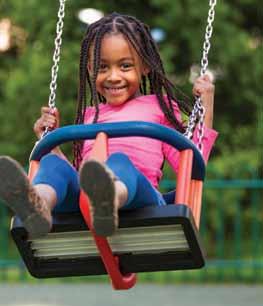
BY BOBBY SCOTT Headmaster of Perimeter School in Johns Creek


At the end of each school year, I have a chat with my eighth-grade boys. This is the last grade of our school, so this is sort of an exit interview. “So guys,” I ask, “over the last 9 years here, what did you like and what did you not?”

It’s an enjoyable time, usually humorous. Comments range from “We want rock band classes” to “The toilet paper is too rough.” The comment I receive most often, however, is, “Don’t ever remove the eighth-grade daily recess—we need it!”
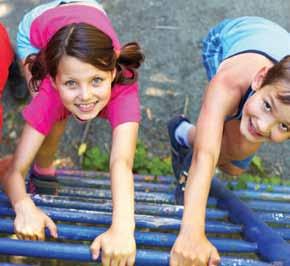
That 30 minute respite is unique. It is non-orchestrated, free, and active play time, very “old school.” Daily, students’ heart rates rise. There’s no waiting for turns, no referees, and unless the weather is extreme, the recess is held outside.
Perimeter School began this tradition in 1983, long before the current re-
search supporting the idea that exercise during the school day correlates to higher academic achievement. Now, studies show that educators can no longer overlook the benefits of play. Occasional P.E. classes are not cutting it.
Are you familiar with BDNF, IGF – 1, VEGF and FGF-2? No, they’re not codes for a free Starbucks coffee. These are substances that renew and stimulate the growth of new brain cells, increasing our ability to learn. According to research summarized in Spark: The Revolutionary New Science of Exercise and the Brain, by John J. Ratey, M.D., these proteins are increased significantly by exercise, resulting in optimized alertness, attention and motivation; stimulated nerve cells, allowing for the increased logging of new information; and elevated development of new nerve cell growth. u


Studies are increasing throughout the U.S., finding the same simple result: higher fitness levels = higher academic success.
A few years back, the success story of School District 203 in Naperville, Illinois gained attention. Eighth-graders in the district took the TIMSS (Trends in International Mathematics and Science Study) test in 1999. TIMSS high scores are typically dominated by students in Singapore and other Asian nations. Naperville students finished above Singapore— placing first in the world in science and sixth in math.
Ratey attributes that success to the district’s “unique approach to physical education.” One noteworthy example of that approach is “Zero Hour,” a beforeschool exercise class at Naperville Cen-
tral High School, open to any students willing to take the challenge.
At the encouragement of P.E. teacher Neil Duncan, students who typically spent most of their time outside school in front of some sort of screen signed up. In one semester, the exercising students’ test scores increased in reading and comprehension by 17 percent over those of their peers who slept in.
Studies are increasing throughout the U.S., finding the same simple result: higher fitness levels = higher academic success. The FitnessGram study conducted by the California Department of Education showed that fit kids doubled their
academic test scores when compared with kids who did not exercise.
This raises some questions that need to be addressed. An important one is, “Are we talking about ‘jocks?’ Does my child, who has no interest in sports, have little chance to improve academically?”
The answer is that fitness has little to do with athletic prowess. Your child doesn’t need to become an athlete to see results.
Going back to Naperville, Neil Duncan was surprised to find that as he began to record the heart rates of kids during exercise, many of the slowest students had the highest aerobic heart rates. It was not athletic skill, but faithful, consistent exertion over time that produced results. The exercise itself did not increase the scores. Instead, the activity enabled students who studied and prepared for their classes to perform at a higher level.
Recent studies on brain function are going beyond academics, finding kids can also reduce stress, anxiety, depression, and symptoms of attention-deficit disorder through increased physical activity.
At Perimeter School, our teachers are also excited to see the results in their own lives and classrooms. But it’s important to remember that regular exercise, learning and growing require a lifestyle change, not just for children, but for adults as well. As parents and educators, we must be willing to set an example to inspire a healthier new generation. By developing healthier habits and encouraging our children to do the same, we can help them make changes that will benefit them throughout their lives.
Bobby Scott is the headmaster of Perimeter School in Johns Creek.

metro atlanta area map
REGIONS FOR INDEPENDENT SCHOOLS N
For features of independent schools, turn to Education At-a-Glance on pg. 40. For public school system information by county, turn to pg. 90.
3 3
2
2
1 1
5 5
Boar ding Schools Alabama, Connecticut, Georgia, Illinois, Kentucky, North Carolina, Tennessee
Public School County Guide
Educational Resour ces T utoring, Summer Camps and Activities, Field Trips and Outreach Programs.
REGION 4: Atlanta South/ Southeast/Southwest
Atlanta South, Altanta Southeast, College Park, Eagle’ s Landing, Fairburn, Locust Grove, Newnan, South DeKalb, South Fulton
REGION 5: Atlanta West Acworth, Forest Hills, Kennesaw, Lithia Springs, Marietta, Smyrna
REGION 1: Atlanta North/Northwest
REGION 2: Atlanta North/Northeast
Alphar etta, Buckhead, Crabapple, East Cobb, Marietta, Roswell p.53
Alphar etta, Brookhaven, Cumming, Dunwoody, Johns Cr eek, Norcross, Northeast Atlanta p.61
REGION 3: Atlanta East Ansley Park, Athens, Candler Park, Dacula, Decatur , Lawrenceville, Lilburn, Midtown
Education At-a-Glance
INDEPENDENT SCHOOLS
REGION 1: ATLANTA NORTH/NORTHWEST
REGION 2: ATLANTA NORTH/NORTHEAST
Education At-a-Glance
INDEPENDENT SCHOOLS
61 REGION 3: ATLANTA EAST
REGION 4: ATLANTA SOUTH/SOUTHEAST/SOUTHWEST
Education At-a-Glance
INDEPENDENT SCHOOLS
82 bOARDING SCHOOLS

WIN TwO TICKETS TO A BROADwAY SHOw AT THE FOx THEATRE!*
Gender: F M
Age:
under 20 20-29 30-39 40-49 50-59 60+
Marital Status: single Married # of children: ______________________ Ages : ______________________________
The primary reader of this publication is: Mother Father student other ___________________________
Who is the primary decision maker for your child’s needs?
Mother Father
other _____________________________
Highest level of education completed: High school some college college graduate Masters +
Employment Status: Full Time part Time
Retired
At-Home parent
Annual Household Income: under $25,000
Your Opinion Matters
Your input is essential to the continued quality of our publication. Please help us by completing the following survey, making a copy of this page and mailing it to 200 Market Place, Ste. 230, Roswell, GA 30075, or faxing it to 770-649-7463. This information will not be used or provided for any sales or marketing purposes. Thank you!
What is your current dwelling status? own, House Rent looking to buy a home own, condo/loft/Townhome Relocating to Atlanta other ______________________________
What is most important in your search for a school?
location Tuition
Test scores school size
Mission/philosophy sports
Extracurriculars other ______________________________
What section(s) of this guide did you find most useful? critical communication school Region sections
Articles public school guide
Education At-a-glance
Educational Resource guide other _____________________________
What resources are you looking for in this guide? (Check all that apply.)
Early learning summer camps
private schools
Tutors public schools
$25,000-$49,999
$50,000-$74,999
$75,000-$99,999
$100,000-$124,999
$125,000 +
Will you choose a school or resource from this guide? yes no Name _____________________________________________________________________ Address
Field Trips special needs
Higher Education
Boarding schools
Homes & neighborhoods other______________________________
How often will you look for a new school for your child over the years? (Check all that apply.)
Before preschool Before kindergarten Before primary school Before Middle school Before High school Higher Education other________________________________
How far in advance are you initiating your search for a school? 1-3 months 4-6 months 7-9 months 10-12 months
More than 1 year
How long will you keep your current issue of Atlanta School Guide? 1-3 months 4-6 months 7-9 months 10-12 months
More than 1 year
How often will you refer to your current issue?
How many adults in your household will be referring to this information?
How did you receive your copy of Atlanta School Guide?
*Each completed survey received will be entered into a random drawing to be held on May 31, 2015. All entries must be received by this date. The winner will be notified upon selection.
independent schools
Roswell With its mix of stately neighborhoods and new developments, its quaint downtown area and miles of trails through forests and along the Chattahoochee River, Roswell attracts many families and nature-loving residents to its city limits.
Sandy Springs Newbie, Sandy Springs became its own city in 2005, and multitudes of boutiques, bars and restaurants line Roswell Road, its main thoroughfare. Residents also enjoy the community’s many family-centered events held throughout the year.

TWEETIE L. MOORE, Founder


BUCKHEAD


BUCKHEAD

Marietta • roswell

RegIon
ATLANTA NORTH • NORTHe
Independent Schools
Norcross Founded in the late 1800s as a resort town for wealthy Atlantans, Norcross is Gwinnett County’s second oldest city. Today, with over 8,000 residents, it is a quiet city filled with upscale residential and retail developments.
Cumming Called the “Gateway to Leisure Living,” Cumming offers the best of small-town living, but in recent years, it has seen rapid commercial and residential development, attracting residents with its prime location near Lake Lanier.


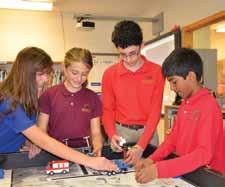



Friendships & Life Skills

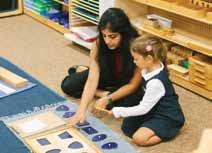








HNS CREEK

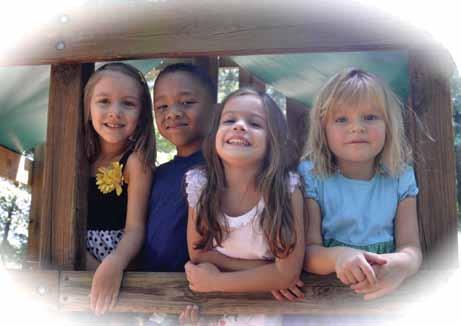




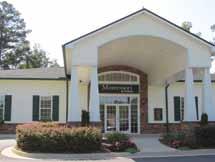
Victory World Christian School is a
1 Pre-K (4) through 5th grade elementary program
1 High curriculum standards & creative learning environments
1 Interactive Technology in every classroom (whiteboards & laptops)
1 Rosetta Stone Spanish in all classes
1 Extracurricular Activities (ballet, jazz, chorus, drama, Tai-Kwon-do, piano)


Independent Schools
Stone Mountain More than just a mountain park, Stone Mountain also refers to a charming community of antique shops, art galleries and restaurants. Residents of Stone Mountain enjoy the miles of walking and biking paths available in the nearby park.
Lawrenceville Strolling the brick-paved sidewalks in the revitalized historic downtown of Lawrenceville, you’ll feel instantly at home. Chartered in 1821, the city has gone through many changes over the years but has maintained its small-town Southern charm.
athens • ansley park
DECATUR



Independent Schools
Ne I ghborhood S of Note
Newnan Established in 1828 and home to more than 30,000 residents, Newnan is one of the fastest-growing cities in Georgia. It has many new residential developments and boasts five historic districts filled with stately Southern homes.
College Park College Park is home to a small-town main street and the busiest airport in the world—Hartsfield-Jackson Atlanta International Airport. The city is attracting young professionals and families by combining the historic elements with new developments.

A LTANTA So UTHEAST







BAR TO W
Independent Schools
FULTON
Kennesaw Home to the popular Kennesaw Mountain National Battlefield Park, the city of Kennesaw takes pride in its excellent recreation opportunities and parks, rich history and thriving downtown. Kennesaw State University is well known for academic programs in business, education, and nursing.
Smyrna With its unique charm, the city of Smyrna offers many fresh, trendy lifestyle options, and the Market Village plays host to numerous restaurants, bars and upscale shops. Known as the “Jonquil City,” because of the thousands of jonquils that flourish in gardens and along the streets in early spring.

KENNESA w
KENNESA
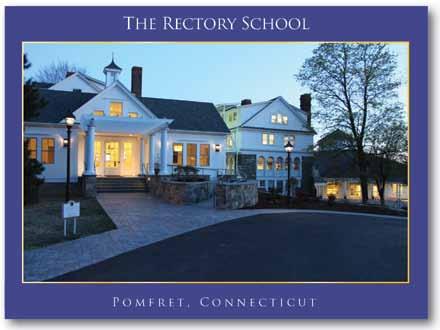

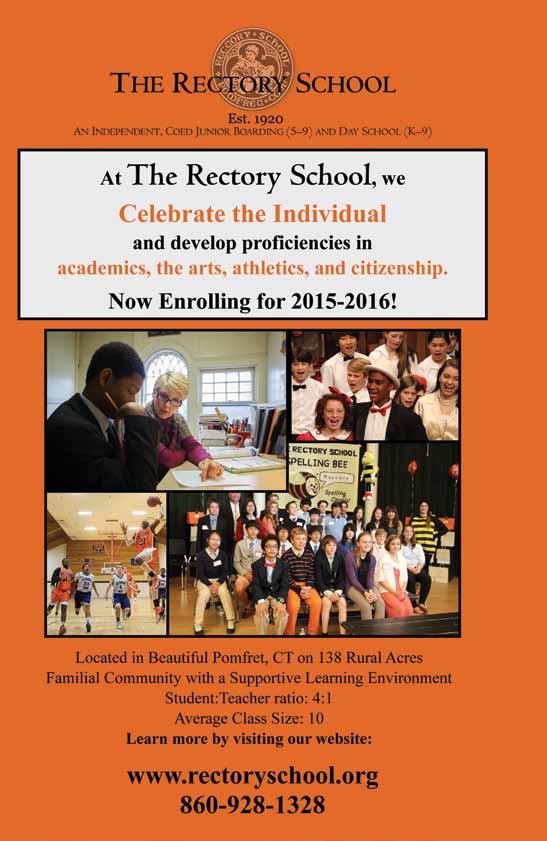
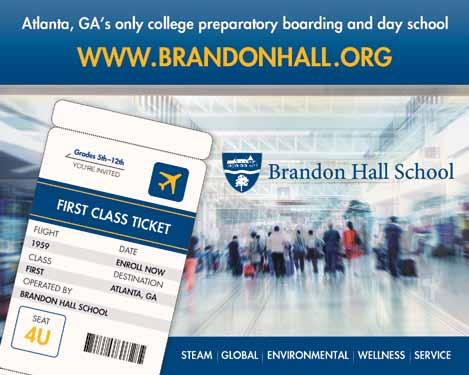
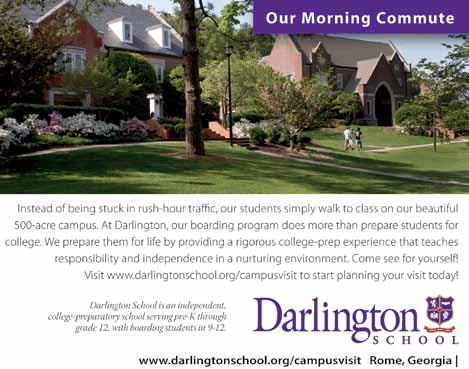
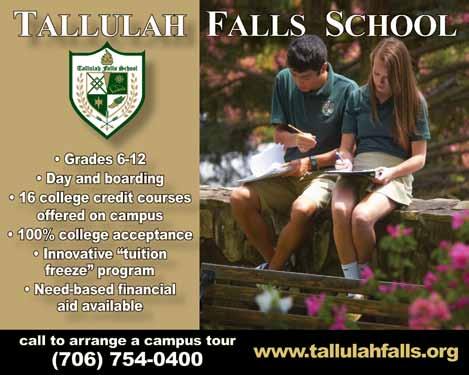
There are many benefits of a boarding school education. Boarding schools are an option for students seeking a more independent learning experience. Because students generally live on campus, learning takes place in and out of the classroom almost on a 24-hour basis.
when selecting a boarding school, it is important to visit the school campus, but representatives from many boarding schools visit Metro Atlanta throughout the year—contact each school for specific dates.
Boarding School
georgia • a laba M a






Avariety of improvements and innovative programs in georgia’s public school systems have resulted in many stellar elementary, middle and high schools across the Metro area. Different school systems feature specialized programs and academic opportunities, such as magnet, charter, vocational or alternative schools to suit their respective students, parents and communities. However, despite variations in programming and academic offerings, all public schools must offer the core curriculum as determined by the georgia Board of Education. Here is a county-by-county guide to Metro Atlanta’s public school systems. For more information about the georgia Department of Education, call 404-656-2800 or visit www.gadoe.org. u
Time-tested approach. Brand new choice.
Atlanta Classical Academy, a tuition-free charter school, will serve Kindergarten through 9th grade in the 2015-2016 school year.
Content-rich, liberal arts approach emphasizing virtuous living, traditional learning, and civic responsibility
Open-enrollment process begins January 2015. Families must reside within the Atlanta Public Schools district to attend.
LEARN MORE!




bartow
Board of Education
770-479-1871
www.cherokee.k12.ga.us
What’s New
2014 Average CRCT Scores
3rd: (R) 846.48 (M) 849.24
5th: (R) 841.74 (M) 844.99
8th: (R) 844.84 (M) 828.82
2014 Average SAT: 1438
Top 3 Schools by Average 2014 SAT Score
Woodland High 1481
Adairsville High 1428
Cass High 1399
Adairsville Elementary made the Georgia DOE’s 2014 list of Reward Schools for academic progress among Title 1 Schools. Taylorsville Elementary was honored for performing among the top 5 percent of schools in the state.
2014 Average CRCT Scores
3rd: (R) 852.84 (M) 849.89 5th: (R) 845.97 (M) 850.95 8th: (R) 855.71 (M) 847.27
2014 Average SAT: 1563
Total # of Students: 39,269
Spending per Student: $7,432
What’s New
Top 5 Schools by Average 2014 SAT Score Etowah
Cherokee County’s Class of 2014 exceeded state and national averages on the ACT. The county’s average score was 22.6, above the national average of 21 and the state average of 20.8.
2014 Average CRCT Scores
3rd: (R) 831.37 (M) 820.27
5th: (R) 830.51 (M) 823.75
8th: (R) 839.07 (M) 816.07
2014 Average SAT: 1278
Top 5 Schools by Average 2014 SAT Score Elite Scholars Academy 1410
What’s New
A new charter school, Du Bois Integrity Academy, has been approved by the State Charter Schools Commission and is scheduled to open in time for the 2015-2016 school year.
What’s New
$8,096
2014 Average CRCT Scores
3rd: (R) 849.19 (M) 847.19
5th: (R) 846.30 (M) 850.44
8th: (R) 853.94 (M) 841.35
2014 Average SAT: 1515
Top 5 Schools by Average
1602
1588
Board of Education 770-426-3300 www.cobb.k12.ga.us
Brumby Elementary and King Springs Elementary schools have been named 2014-2016 Schools of Excellence by the national Parent-Teacher Association. Cobb
What’s New East Coweta High School and northgate High School were named among America’s most challenging high schools by The Washington Post in its 2014 index of the nation’s top secondary schools.
1228
Top 5 Schools by Average
The Wadsworth Magnet School for High Achievers has been named by the u.S. Department of Education as a national Blue Ribbon School. It is one of 12 schools in Georgia to receive the award.
DEKALB
COWETA
COBB
DoUGlaS
2014 Average CRCT Scores 3rd: (R) 842.51 (M) 841.06 5th: (R) 839.63 (M) 845.35 8th: (R) 846.31 (M) 826.06 2014 Average SAT: 1351
Top 5 Schools by Average
Board of Education 770-651-2000 www.douglas.k12.ga.us
What’s New
Annette Winn Elementary and north Douglas Elementary were honored as 2014 Reward Schools by the Georgia Department of Education for improving the performance of all students on statewide assessments over three years.
Board of Education
770-460-3535 www.fcboe.org
What’s New
Seniors from McIntosh, Sandy Creek, Starr’s Mill and Whitewater High schools have been named semifinalists in the national Achievement Scholarship Program.
South Forsyth Middle School was named a 2014 national Blue Ribbon School by the u.S. Department of Education. It is one of only 337 schools in the nation to receive the honor.
Board of Education
770-229-3710 www.spalding.k12.ga.us
Total # of Students: 93,357
Spending per Student: $9,561
2014 Average CRCT Scores
3rd: (R) 849.92 (M) 854.45
5th: (R) 846.85 (M) 858.36 8th: (R) 852.16 (M) 843.92
2014 Average SAT: 1567
Top 5 Schools by Average 2014 SAT Score northview High 1779 Alpharetta High 1704 Johns Creek High 1691 Chattahoochee High 1680 Milton High 1654
Board of Education
678-301-6000 www.gwinnett.k12.ga.us
What’s New
Four Fulton County educators were honored as among “the best of the best” by the Atlanta Families’ Awards for Excellence in Education. Each received a $7,500 prize.
2014 Average CRCT Scores
3rd: (R) 839.31 (M) 840.84
5th: (R) 832.59 (M) 835.32 8th: (R) 838.91 (M) 817.80
2014 Average SAT: 1372
Top 2 Schools by Average
2014 SAT Score Spalding High 1440 Griffin High 1283
What’s New
Elizabeth Watkins, nina Williams, Melton Jones and Chappelle Wesley Calhoun have been selected as inductees to the Griffin-Spalding County School System Educator Hall of Fame.
2014 Average CRCT Scores
3rd: (R) 849.60 (M) 855.45
5th: (R) 846.72 (M) 855.98
8th: (R) 856.10 (M) 850.92
2014 Average SAT: 1505
Top 5 Schools by Average
2014 SAT Score
Gwinnett School of Math, Science, and Technology 1912 north Gwinnett High 1644 Brookwood High 1607
Peachtree Ridge High 1566
Parkview High 1557
What’s New
Two new Gwinnett schools have opened their doors for the 2014-2015 school year: north Metro Academy of the Performing Arts, a charter school, and northbrook Middle School.
$7,626
2014 Average CRCT Scores
3rd: (R) 839.26 (M) 838.64 5th: (R) 836.83 (M) 839.05 8th: (R) 847.56 (M) 835.06
2014 Average SAT: 1413
Top 5 Schools by Average
What’s New
Chestnut Mountain Creative School of Inquiry has established the Pam Burel Character Award, named for the school’s assistant principal, who died of lung cancer in August 2014.
Board of Education
770-957-6601
www.henry.k12.ga.us
What’s New
Students Chidera Osuji and Tarik Powell have been named national Achievement Scholarship Semifinalists, while Anna Latimer and Jason Lin have been named national Merit Scholar Semifinalists.
2014 Average CRCT Scores 3rd: (R) 847.49 (M) 851.07 5th: (R) 841.34 (M) 848.57 8th: (R) 846.89 (M) 835.53
north Paulding High School was awarded the Superintendent’s Cup in September. The award goes to the high school with the best overall sports program for the school year.
HENRY
HALL
2014 Average CRCT Scores
3rd: (R) 843.33 (M) 853.16
5th: (R) 839.63 (M) 846.31
8th: (R) 846.66 (M) 828.38
2014 Average SAT: 1331
Top 3 Schools by Average
ROCKDALE
Board of Education
770-483-4713
www.rockdale.k12.ga.us
Total
What’s New
In September, Rockdale County Public Schools approved a plan to purchase Apple and Dell tablets for pre-K through third-grade classrooms, and for high school teachers.
www.atlanta.k12.ga.us
What’s New
West Manor Elementary School unveiled its newly renovated school library, sponsored by Target Corp. and the Heart of America Foundation, in September. The library boasts 2,000 new books, 25 iPads, a flat-screen TV, and a school broadcast video system.
859.25 5th: (R) 844.22 (M) 855.83 8th: (R) 855.16 (M) 858.18
2014 Average SAT: 1504
What’s New
Buford High School’s musical theatre classes won the 2014 Shuler Hensley Georgia Lottery Video Contest with their music video, “Hope for the Journey.”
Board of Education
404-371-3601
www.csdecatur.net
Total # of Students: 3,695
2014
2014 Average SAT: 1583
What’s New City Schools of Decatur’s composite score on the 2014 ACTs exceeded the state and national average. The system’s average score was 23.9, up from 22.7 in 2013.
GaIneSvIlle
Board of Education
770-536-5275
www.gcss.k12.net
2014 Average SAT: 1367
What’s New
Gainesville High School coach Bruce Miller marked his 200th career head coaching victory in September. He has won more than 130 games with the GHS Red Elephants, including a state championship.
2014 Average SAT: 1455
What’s New
Dunleith Elementary School and Communities in Schools, a dropout prevention program, were selected by the Georgia Board of Education to receive the 21st Century Community Learning Center grant, worth more than $1 million over five years.



S UMMER C AMPS & A CTI







F IELD T RIPS & oUTREACH




IELD T RIPS & oUTREACH



F IELD T RIPS & oUTREACH

ADVERTISER INDEX
Boarding Schools
Early Education
Field Trips & Outreach Programs
ADVERTISER INDEX
(Continued from Previous Page)
Resources
Services
Special Needs & Learning Difficulties
Summer Camps & Activities