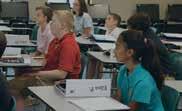
room setting. Others may teach average or even above-average learners while also offering additional programs and classes for students with learning differences.
How to Tell if Your Child Has a Special Needs Situation
First, it’s important to identify your child’s specific challenges. Students who exhibit average or above-average intelligence but often seem distracted and don’t perform well in a traditional classroom setting may be struggling with dyslexia, Asperger’s syndrome, ADHD or some other disorder that affects their ability to learn effectively. Also, disruptive or aggressive children may be exhibiting frustration brought on by a learning disability.
If you suspect your child may have a learning disability, it’s critical to have him or
her evaluated by a mental health professional. A diagnosis is necessary in order to address the child’s educational needs.
After a Diagnosis: What’s Next?
A professional evaluation is crucial in order to evaluate your child’s educational needs.
If your child is diagnosed with a learning disability and attends public school, talk with the principal, school counselor or another administrator about developing an Individualized Education Program (IEP). All public schools are required to create an IEP for students with learning disabilities who meet special education requirements. An IEP is a document that specifies your child’s learning situation and educational needs and outlines a course of action for teachers and other professionals to follow to help make sure your child learns to the best of his or her ability. u
If you feel your local public school isn’t the right environment for your child, or simply want to explore all your options, there are many quality independent schools in the metro Atlanta area devoted to helping children with special needs and learning issues. Visit the Georgia Association of Private Schools for Exceptional Children’s website (www.gapsec.org) or our listings for special needs schools on page 98 to help you with your search.
How Do I Find the Right School?
All special needs schools are not the same. The first step is to identify those schools that can address your child’s specific learning difficulty, and offer the level of special needs instruction that you (and perhaps a professional) feel is best for your child.
You may be more comfortable enrolling your child in a school that focuses specifically on his or her needs, or you may want a more diverse environment where he or she can interact with many different kinds of students. Familiarize yourself with the different options offered by each kind of school.
Traditional independent schools that offer special needs programs as part of a larger curriculum can offer that kind of environment, but may have larger class sizes than schools that specialize in specific learning disabilities. These kinds of schools may also focus more on academics than on the therapeutic aspects of special
needs education. Independent special needs schools can offer more individualized instruction and a more structured and predictable environment, and are likely to address nonacademic issues such as social skills and self-esteem.
As you begin searching for the right school for your child’s situation, here are some questions to keep in mind:
• Will your child fare better in a school that focuses on his or her specific learning disability, or would you rather that he or she be able to interact with students with a wide range of learning capabilities?
• Does the school serve a specific age range, or work with students on all grade levels? Many students with learning disabilities have trouble transitioning to new schools.
Continued on pg 18 u
Identify those schools that can best address your child’s specific learning difficulty.
• Does the school offer a variety of extracurricular activities, including arts and sports programs?
• Is the school accredited? If so, by which organizations?
• Is the staff certified to instruct special needs children, or those with your child’s specific learning difficulty?
• Does the school focus more on academics or on addressing the child’s therapeutic needs?
Financial Assistance
Many independent special needs schools participate in the Georgia Special Needs Scholarship program (GSNS), a school choice program available to special needs students attending Georgia public schools. The program offers funds to off-
set tuition and fees at participating private schools authorized by the State Board of Education. According to the Georgia Department of Education, scholarship amounts range from $2,500 to $13,500, with an average amount of around $6,000.
The Qualified Education Expense Credit program provides another scholarship option. Donations are made to an organization known as a Student Scholarship Organization (SSO), which uses the money to award scholarships to students in pre-K through grade 12. Many schools also offer their own scholarships or tuition assistance programs as well. Contact individual schools for details.
For more information on special needs schools and resources, please see our listings on page 98.
an occupational therapy service
Paul Barton
Holy Innocents’ Episcopal School
Head of School at HIES since 2014, Paul Barton has participated in both the Klingenstein Visiting Heads Fellowship at Teachers College, Columbia University and the Kellogg Executive Scholars Program at Northwestern University. He holds a master’s in education, administration and supervision from DePaul University, and an M.A. in liberal education from St. John’s College.
What is your educational philosophy?
A great education offers breadth and depth. Breadth offers a myriad of opportunities in academics, arts, athletics, character development and service. Depth allows a child to discover and develop passion(s) that ignite curiosity, joy and the love of learning.
What do you love most about your job?
I love the “light bulb” moments...I am privileged to witness these moments over and over again in classrooms, on theatrical stages and on athletic fields.
How can parents best contribute to the education process?
By supporting and partnering with the school and by helping children to advocate for themselves.
How is the field of education changing? Education, like our world, is changing at an unprecedented rate and scale. It is becoming the schools’ responsibility to give
kids the tools to thrive in such a dynamic, competitive environment.
What advice would you offer parents about their children’s education?
Much research has been given to the lessons from failure and healthy risk-taking… but rarely do we as parents or as educators do enough to create a safe space for kids to be “gritty” and adventurous. Parents, like schools, need to let kids experience failure and disappointment and help them to learn and grow from it.
THE ESSENTIALS: HOLY INNOCENTS’ EPISCOPAL SCHOOL
Emphasis: Developing in students a love of learning, respect for self and others, faith in God, and a sense of service to the world community.
Year Founded: 1959
Grades: PK3-12
Students: 1376
Avg. Class Size: 15
Tuition Range: $11,370 - $27,870
Accreditations or Affiliations: SACS, SAIS
Location: 805 Mt. Vernon Hwy. NW, Atlanta GA 30327
Contact: 404-255-4026, hies.org
BY MICHELLE BOURG
l i ke to teach your child
EDUCATORS SHARE THEIR JOYS AND STRUGGLES
Teaching has to be one of the most rewarding professions there is. Helping to mold the next generation, seeing “the light come on” when they finally grasp an elusive concept, watching as their confidence and skills grow day by day— teachers cite all these things as what has inspired them to enter the field and what continues to motivate them in the classroom during every school year.
But, just like parenting, teaching doesn’t occur in a vacuum. There’s a whole world of opinions, regulations, interruptions—in other words, life—to be negotiated. And also just like parenting, there are things about the role that teachers wish others knew, but don’t often have the opportunity to talk about. Some of these things might surprise you while others you, as a parent, will surely recognize.
One of the first things that teachers want parents to know is that they’re on
the same team: both parties want kids to not only get the best education possible, but also to be well rounded and happy. Teachers know that parental involvement is crucial to this process, and welcome parents’ questions and input. They stress that the lines of communication are always open, something some parents don’t always take advantage of, whether due to unfamiliarity with the process or simply discomfort with the idea of bridging a gap in communication.
Bentley Monk, a music teacher who taught at the middle school level for four years in the Cobb County School District and who now teaches in the Grand Canyon Unified School District in rural northern Arizona, believes that communication is at the heart of improving education not just for individual children but also for bet-
TEACHERS WANT PARENTS TO KNOW THAT THEY'RE ON THE SAME TEAM.
"I WANT EACH AND EVERY CHILD IN MY CLASSROOM TO SUCCEED."
tering the system: “Our convenience-based society has got children and parents alike so disenfranchised with working harder and smarter that we find ourselves in a deepening educational hole. Unless we have a true open, honest conversation without political and emotional biases then this problem will get worse, not better, no matter what.”
Ron Clark, noted educator and founder of the Ron Clark Academy in Atlanta,
noted in an essay published on CNN that many teachers reported experiencing situations in which parents viewed them as an adversary: someone only looking to point out mistakes or deliver bad news when there’s a bump in their child’s educational path. But as part of your child’s education team, teachers want you to know that they always have your child’s interests at heart, even when there’s a difficult situation
be discussed. “I want parents and students to know that I care deeply,” says Danise Fields, a sixth-grade science teacher at Woodward Academy in College Park. “If I have to tell a parent something that is difficult to hear, I feel their worry and pain.”
David Roth, an Upper School English teacher at Woodward Academy, agrees: “I want each and every child in my classroom to succeed—end of story. u
When I sit in a parentteacher conference to discuss a student's progress, my hope is that parents see the intent and the care. When students and parents see faculty and staff members as humans, rather than “grading machines,” I think it changes the understanding of why we are all here in the first place."
One thing parents may find surprising is that teachers believe that children should be allowed, sometimes, to fail. “Childhood is the best time to make mistakes,” says Trey Veazey, assistant head of lower school at the Walker School in Mari-
etta. “It can be tough... to watch a student grapple with misunderstandings, but there is great triumph to be found—for both the teacher and the learner— when the picture comes into focus.” Tiffani Listenbee of Woodward's middle school English department agrees:
IT MAY SURPRISE PARENTS THAT TEACHERS BELIEVE THAT CHILDREN SHOULD BE ALLOWED, AT TIMES, TO FAIL.
“Middle school is a time to figure (out) how you learn. This comes with productive struggle. This experience occurs more often than making an A.”
As Monk puts it, “You have to fall down to get back up again.” His experience teaching in divergent environments has shown him that challenge and success are universal principles.
“Both school systems have shown me that children can learn when they are presented with a rigorous curriculum that challenges them to achieve, but isn't beyond their scope of how it applies to their future.”
Just like parenting,
WHEN PARENTS AND TEACHERS ARE PARTNERS, IT BUILDS A SOLID FOUNDATION FOR STUDENTS.
teaching has its frustrations and heartaches, but in the end, it’s one of the most meaningful roles in life. When parents and teachers see themselves as partners in the educational process, as opposed to “providers” and “consumers,” the relationship becomes
not only more pleasant and productive, but also builds a foundation for students to learn and achieve, which is the real purpose of it all. When parents take advantage of the ways offered by teachers to communicate or proactively open a dialogue, that partnership can flourish. While time is at a premium for everyone, taking time to go beyond the “script” at a parent-teacher conference, such as talking about a child’s habits, peer relations and events at home, can give both parties invaluable insight into the things that factor into academic performance.
But what teachers would most like us to know is how much they genuinely care about every one of their students. As Carrie Edmison, a Primary Academy academic technology teacher at Woodward, expresses it: “While they are not my children, I often refer to them that way. My children. I think about how to reach them, how to help them see the giftedness I see in each of them, and how to…help them discover how much they matter in this world. It was clear from my first hectic day as a teacher that I will never be perfect at this, but I set my sights on being better for my students each day. I try to be the teacher your child deserves.”
LEFT OUT OF THE IN CROWD DEALING WITH SCHOOL CLIQUES
Things are going well:
your children are enrolled in a good school, doing well in their classes and seem to be happy. Then one day, your second-grader comes home in tears after finding out she was the only one not invited to Susie’s birthday party. Or your usually gregarious high-schooler becomes withdrawn and is noncommittal when asked about his friends. They’re experiencing something virtually every child encounters at some point during their school years: cliques.
The fact that kids hurt others by shunning them is unfortunate, but it’s also likely inevitable; humans are social animals, with an innate need to define themselves in
BY MICHELLE BOURG
relation to a social group. As kids are growing up, it’s sometimes a bumpy road as they learn to define themselves outside of their first social group— their family.
Cliques differ from friend groups in being based not on mutual interests and values, but instead on a sense of insecurity. Unsure of their own social standing, members band together to maintain an appearance of popularity, with leaders who determine who and what is “in” and “out.” They often create a vortex of peer pressure that sucks others in, prompting even unattached individuals to behave in ways they wouldn’t on their own, such as mocking or gossiping about a friend. And even well-liked kids who befriend those less popular or who “don’t follow the rules” aren’t immune to being subjected to gossip or shunned by them.
Cliques are particularly prevalent during middle school and junior high, when pre-teens are focused on establishing their place in the social order. However, parents and educators are increasingly reporting exclusionary behavior as early as preschool, as children compete for playmates’ attention at earlier ages. While girls are most often associated with cliques, boys are also affected by them, although usually not until high school. The good news is that generally, most of these secret clubs have faded by the
time high school graduation rolls around. What should you do when your child finds him or herself left out of “the in crowd?” While rejection always stings, there are some actions you can take to ensure that your child maintains his or her self-esteem and is able to forge genuine friendships:
BE PRESENT FOR YOUR CHILD:
Offer advice if asked, but most of the time, what kids are looking for (and need most) is just for you to be there for them and to lend a listening ear.
friends and improve his or her confidence, something that in turn attracts friends.
RESPECT, BUT DON'T GET CAUGHT UP IN, YOUR CHILD'S NEED TO BE ACCEPTED: Don’t trivialize your child’s pain, but also don’t make it your mission to fix things by trying to buy your child’s way into a group with things like clothes or the “right” set of expensive headphones, and don’t express any distress you’re feeling by speaking badly of other children or their parents in front of your
THE FACT THAT KIDS HURT OTHERS BY SHUNNING THEM IS UNFORTUNATE, BUT IT'S ALSO LIKELY INEVITABLE.
SHARE YOUR EXPERIENCES:
If cliques affected you as a kid, show your child that it’s a universal experience by talking about it. Also, books like “Harriet the Spy” or movies like “The Breakfast Club” are entertaining ways to convey messages of self-esteem and empathy.
DISCUSS THE SOCIAL DYNAMICS:
Explain the motives behind exclusion and point out that members of cliques who don't conform to the group's unwritten "rules" often find themselves among the excluded.
TALK ABOUT TIMES THAT YOUR CHILD MAY HAVE DISLIKED
SOMEONE: Remind them that not everyone will be their best friend, and also that feelings often change.
ENCOURAGE OUTSIDE ACTIVITIES:
Getting involved in an activity that he or she is interested in, whether at school or outside of it, will help your child meet new
child. Model respectful behavior, and remember that children quickly identify attempts to curry favor for what they are.
TALK TO YOUR CHILD’S TEACHER:
If your child has difficulty making or keeping friends, talk to a teacher that sees him or her regularly to get a sense of social dynamics in the peer group and how your child interacts with others. It’s possible your child is unwittingly exhibiting behaviors that antagonize others, such as boastfulness or attention seeking, that can be modified with gentle coaching.
MONITOR ONLINE ACTIVITY:
With the internet, issues no longer stop at the front door. Being aware of your child’s online activity and social media accounts may offer clues to what’s going on at school.
WHEN IT’S YOUR CHILD DOING
THE EXCLUDING: If you find that your child is part of a group that is engaged in exclusionary behavior, it’s important not to be confrontational, as this will likely result in only reinforcing the pattern as your child
tries to assert his or her independence from you and strengthen ties to the peer group. Instead, find ways to work themes of empathy and inclusion into your conversations: Ask about times when your child was hurt or excluded by others, and how that made him or her feel. Ask how they imagine others feel when this happens to them.
Another thing you can do is to help your child expand his or her social circle. Encourage him or her to take part in activities, sports or classes that will involve interacting with new kids. (Always a good idea, even when things are rosy with your child's social scene). Also, while it doesn’t work to try to actively break up a clique, you may want to talk to a teacher about mixing things up in the classroom by changing seat arrangements or assigning different pairs or groups to work together on projects.
It’s never too soon to discuss values with your child and model behaviors of healthy self-esteem, empathy, and inclusiveness. Encouraging kids to remember the Golden Rule will go a long way toward helping them negotiate cliques throughout their lives, whether they find themselves “in” or “out.”
the curve
LE A R NIN G
STRATEGIES TO HELP YOUR CHILD STUDY BETTER
BY MICHELLE BOURG
You check in on your kids, and it’s a typical scene: Your oldest is buried in a book and oblivious to “Sesame Street” blasting from the TV as your middle child recites along. Meanwhile, your youngest has taken the game controller apart. All children have their own ways of processing information, or what educational theorists commonly call learning styles. By getting a sense of how your child learns best—his or
her learning style—you can help them study and learn more effectively to achieve and build on success at school.
Over the past 30 years, extensive research has been conducted on learning styles: a 2004 study found more than 70 different learning style systems quantified in literature. These systems typically recognize as few as three and as many as eight different styles, but usually at their heart are
STUDIES RECOGNIZE AS MANY AS EIGHT DIFFERENT LEARNING
three core modalities: visual (associating images with information), auditory (listening to and repeating information) and kinesthetic (typically processing information through touch and manipulation, but also using gestures or movement while learning). Many systems, such as the VARK model (Visual, Auditory, Reading/Writing, Kinesthetic), include reading and writing as a separate style. Some also make distinctions between solitary and group learners.
You can likely determine much about your child’s style through observation and from asking a teacher for his or hers; this can be particularly helpful in getting an idea how your child learns in a group. Several of the leading learning-style systems have online questionnaires, or you can ask a teacher or guidance counselor about more involved testing.
Once you have an idea how your child learns best you can incorporate some simple study strategies to work with his or her tendencies:
STYLES.
Visual learners:
Visual learners are observant, detail-oriented and often gifted mimics. They absorb info readily from diagrams, charts and pictures and enjoy puzzles, flash cards and workbooks. They tend to struggle with creative writing and figurative thinking.
With your visual learner, incorporate educational videos, draw pictures together or use objects to illustrate concepts like addition and subtraction. Encourage writing down the steps in a math problem to see the processes. Help them develop visual memorization cues, like the old “knuckle trick” for the days in the months of the year. Help them practice converting these images to words quickly by making it a game with a timer.
AUDITORY learners:
Auditory learners are the ones who “talk your ear off.” They like to “talk problems out” and frequently sound words out when
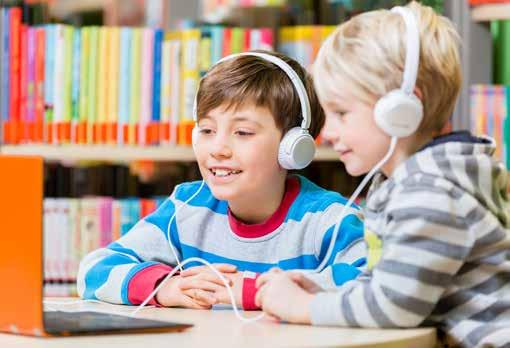
reading. As a result, they’re often phonetic spellers. Writing is a struggle for them at times, and they need practice sorting visual material for better performance on tests. Encourage your auditory child to read aloud. Review material by playing “question and answer,” and encourage him to explain or restate what he’s learned after a study session. Books on tape or other audio or video recordings are also useful. Auditory learners often learn well in group situations and enjoy having a study partner or homework coach available.
KINESTHETIC learners:
These are the kids who are always being told, "Don't touch that.” They’re often physically active and frequently need practice sitting still and listening. For this type, stock up on supplies like clay, blocks, models and globes. Break study sessions into short blocks of time, and let your child move around as he studies. Since this type of learner’s need for movement can be distracting to others, help him develop ways to “fidget quietly”—doodling in the margins of his notebook or squeezing a rubber ball or marble in his pocket.
Reading and Writing (Verbal) Learners:
These are the most "typical" learners; the ones with the class notes everyone wants to borrow. They frequently prefer learning alone at their own pace.
Encourage a verbal learner to write out notes, paraphrasing concepts into her own words and using bullet points. Even writing out the steps in a math problem can help cement the concepts mentally. When working with charts or graphs, have them write the data being conveyed.
Closely related to the idea of learning styles is the concept of metacognition, or thinking about one’s own thought process. Studies have shown that having students think about and discuss their study strategies improves their study on future exams. After an exam or project, talk with your child about what study methods helped and which didn’t, and build future study sessions on the successful methods.
It’s important to note that preferred learning modes can change over time, and don't determine ability in a given subject: a reading and writing learner may in fact be more adept at math and science than creative writing. Also, an individual child will likely exhibit a mix of styles and benefit from adopting a variety of study techniques, depending on the subject and how he or she feels at the time. But knowing your child’s learning style can be a useful tool in helping him or her achieve academic success.
For more information on learning styles and tests and questionnaires to help determine your child’s style, visit: vark-learn.com learning-styles-online.com learningstyles.org
metro atlanta area map
REGIONS FOR INDEPENDENT SCHOOLS N
For features of independent schools, turn to Education At a Glance on pg. 32. For public school system information by county, turn to pg. 80.
3 3
2
2
1 1
5 5
Boarding Schools Arkansas, Connecticut, Florida, Georgia, Massachusetts, New Hampshire, New York, Virginia
Public School County Guide
REGION 5: Atlanta West Emerson, Kennesaw, Powder Springs, Smyrna, Smyrna-Vinings
REGION 4: Atlanta South/ Southeast/Southwest Douglasville, Fairburn, Fayetteville, Locust Grove, Metro-Atlanta p.67
p.62
REGION 1: Atlanta North/Northwest
p.36
Alpharetta, Buckhead, Canton, Crabapple, East Cobb, Holly Springs, Marietta, North Buckhead, Roswell, Sandy Springs, West Cobb
REGION 3: Atlanta East Ansley Park, Athens, Dacula, Decatur, Midtown, Morningside, Northeast Atlanta
Educational Resources Tutoring, Summer Camps and Activities, Field Trips and Education Programs. Athens, Dacula, Decatur, Lilburn, Midtown, North Briarcliff, Watkinsville
Education At a Glance
INDEPENDENT SCHOOLS
36 REGION 1: ATLANTA NORTH/NORTHWEST
REGION 2: ATLANTA NORTH/NORTHEAST
Education At a Glance
INDEPENDENT SCHOOLS
55 REGION 3: ATLANTA EAST
Education At a Glance
This information reflects the latest available data at publication time. Please confirm with each individual school.
INDEPENDENT SCHOOLS
*KEY:
Religious Affiliation: B = Baptist CC = Catholic
C =
E = EpiscopaL J =
ND = Non-denominational P =
Q = Quaker RC = Roman Catholic
BOARDING SCHOOLS
REGION 1
ATLANTA
Alpharetta Once a small farming community, Alpharetta’s growth has exploded in recent years, and the North Fulton city is now one of Atlanta’s most affluent neighborhoods, creating the perfect mix of country living and lots of city amenities.
Woodstock Located in Cherokee County, Woodstock is, as locals say, “where modern amenities meet old Southern charm.” Historic Olde Towne pays a continual tribute to Woodstock’s pioneers through vintage shops and good old-fashioned Southern hospitality.
BUCKHEAD
BUCKHEAD
EAST COBB
HOLLY SPRINGS
SETTING A NEW STANDARD IN EDUCATION
ROSWELL • NORTH BUCKHEAD
REGION
ATLANTA NORTH • NORTHEAST
Independent Schools
NEIGHBORHOODS OF NOTE
Duluth A successful mix of small-town charm and booming economic growth, Duluth plays host to many major corporations and is also home to numerous golf clubs, private tennis clubs and parks. The city prides itself on accommodating a growing, diverse population.
Dunwoody A popular community among young and established professionals alike, Dunwoody is often referred to as the “tennis set” neighborhood because of its numerous recreational outlets. Its location provides suburban living close enough to the city.
Serving children grades K to High School with language, learning and social challenges.
• Collaborative project-based learning
Differentiated group instruction
Community-Based instruction
• PE, foreign language, fine and culinary arts
2018-19
BROOKHAVEN • CUMMING
DUNWOODY
FLOWERY BRANCH
JOHNS CREEK
Sowing the Seeds of Organic Learning
JOHNS CREEK • NORTHEAST ATLANTA
ROSWELL • PEACHTREE CORNERS
Independent Schools
NEIGHBORHOODS OF NOTE
Decatur The county seat of DeKalb County, Decatur’s small-town charm revolves around the Courthouse Square, which features trendy restaurants and shopping, entertainment options and special events, including its annual summer beach bash.
Lawrenceville Located in the heart of Gwinnett County and known as “Crepe Myrtle City,” Lawrenceville is Atlanta’s second oldest city. Its historic downtown square, which has been revitalized, is home to a variety of shops, restaurants and community events.
ATLANTA EAST
DACULA • ATHENS
Grades K - 8th
Independent Schools
NEIGHBORHOODS OF NOTE
McDonough One of the fastest-growing neighborhoods South of Atlanta, McDonough is the county seat of Henry County and features many historic structures around its town square. The city has ample green space and is a favorite destination for antique shoppers.
Peachtree City A master-planned city comprised of several smaller villages, Peachtree City’s many amenities include golf courses, lakes and an amphitheater. The city is renowned for its network of golf paths connecting its neighborhoods.
FAIRBURN
• LOCUST GROVE
Independent Schools
FULTON
NEIGHBORHOODS OF NOTE
Acworth Surrounded by two lakes and 12 parks, Acworth offers plenty of recreation opportunities. Located 35 miles northwest of Atlanta, the town is convenient to both I-75 and Highway 41. Acworth is designated as a Georgia Main Street City.
Douglasville Located west of Atlanta on I-20, Douglasville has easy access to all that Atlanta offers. Listed on the National Register of Historic Places, Downtown Douglasville’s historic district is an outstanding example of a turn-ofthe-century southern railroad town.
ATLANTA WEST
KENNESAW • EMERSON
KENNESAW • POWDER SPRINGS
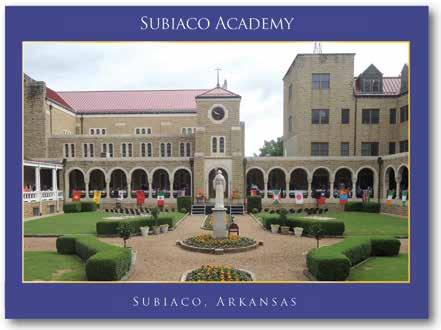
There are many benefits of a boarding school education. Boarding schools are an option for students seeking a more independent learning experience. Because students generally live on campus, learning takes place in and out of the classroom almost on a 24-hour basis.
When selecting a boarding school, it is important to visit the school campus, but representatives from many boarding schools visit Metro Atlanta throughout the year—contact each school for specific dates.
Boarding Schools
ARKANSAS • CONNECTICUT
SPOTLIGHT ON METRO ATLANTA’S SCHOOL SYSTEMS
Avariety of improvements and innovative programs in Georgia’s public school systems have resulted in many stellar elementary, middle and high schools across the Metro area. Different school systems feature specialized programs and academic opportunities, such as magnet, charter, vocational or alternative schools to suit their respective students, parents and communities. However, despite variations in programming and academic offerings, all public schools must offer the core curriculum as determined by the Georgia Board of Education. Here is a county-by-county guide to Metro Atlanta’s public school systems. For more information about the Georgia Department of Education, call 404-656-2800 or visit www.gadoe.org. u
BARTOW
Number of Schools
2017 Mean Georgia Milestone Scores:
3rd: (ELA) 507 (M) 517
5th: (ELA) 509 (M) 511
8th: (ELA) 511 (M) 504
2017 Average SAT: 1041
Board of Education
770-606-5800
www.bartow.k12.ga.us
CHEROKEE
Total # of Students: 13,524
Student Spending: $8,955
Top 3 Schools by Average
2017 SAT Score
Woodland High 1068
Cass High 1039
Adairsville High 1015
What’s New Bartow County Schools have launched a first-of-itskind hotline enabling residents to report illegal activity or threats against a county school, student or staff member through an anonymous phone call, text or email.
2017 Mean Georgia Milestone Scores:
3rd: (ELA) 519 (M) 536
5th: (ELA) 523 (M) 532
8th: (ELA) 528 (M) 517
2017 Average SAT: 1122
Top 5 Schools by Average 2017 SAT Score
Board of Education
770-479-1871
www.cherokeek12.net
Total # of Students: 42,275
Student Spending: $8,704
Sequoyah High 1148
Woodstock High 1142
Cherokee High 1131
Creekview High 1120
Etowah High 1104
What’s New More than 500 students competed in the Cherokee County Elementary Science Olympiad, participating in 18 events that encourage creative team problem solving using science knowledge. Four teams moved to the state competition.
2017 Mean Georgia Milestone Scores:
3rd: (ELA) 482 (M) 502
5th: (ELA) 493 (M) 491
8th: (ELA) 499 (M) 489
2017 Average SAT: 964
Top 5 Schools by Average
2017 SAT Score
Elite Scholars Academy 1083
M.E. Stilwell School of the Arts 1023
Morrow High 975
Lovejoy High School 969
PUBLIC SCHOOL COUNTY GUIDE
Total
Forest Park High 968
What’s New The district has created Summer T.I.M.E. (Thrive, Inspire, Motivate and Engage), a series of free, fun summer learning experiences for students in grades K-11.
PUBLIC SCHOOL COUNTY GUIDE
Board of Education 770-426-3300 www.cobbk12.org
COWETA
Board of Education
770-254-2800 www.cowetaschools.net
DEKALB
Board of Education 678-676-1200 www.dekalbschoolsga.org
Number of Schools
2017 Mean Georgia Milestone Scores:
3rd: (ELA) 519 (M) 523
5th: (ELA) 526 (M) 523
8th: (ELA) 529 (M) 519
2017 Average SAT: 1082
Top 5 Schools by Average
2017 SAT Score
Walton High 1242
Lassiter High 1189
Pope High 1164
Wheeler High 1153
Kennesaw Mountain High 1146
What’s New A group of 32 Griffin Elementary students were selected to participate in GoIT, a program designed to develop proficiency and confidence in STEM-related skills.
2017 Mean Georgia Milestone Scores:
3rd: (ELA) 514 (M) 523
5th: (ELA) 516 (M) 516
8th: (ELA) 523 (M) 534
2017 Average SAT: 1080
Top 3 Schools by Average 2017 SAT Score
Total # of Students: 22,164 Student Spending: $8,794
High 1102
Coweta High 1070
High 1068
What’s New The Lee Middle School math team took first place for the fifth consecutive year at the West Georgia regional MATHCOUNTS competition at the University of West Georgia, earning a spot at the state finals.
Number of Schools
2017 Mean Georgia Milestone Scores:
3rd: (ELA) 490 (M) 502
5th: (ELA) 498 (M) 494
8th: (ELA) 498 (M) 494
2017 Average SAT: 973
Top 5 Schools by Average
2017 SAT Score
Total # of Students:
DeKalb School of the Arts 1170
Chamblee Charter High 1131
Dunwoody High 1110
Lakeside High 1098
DeKalb Early College Academy 1068
What’s New The district has purchased approximately seven acres of Pleasantdale Park from the county, enabling it to replace the current Pleasantdale Elementary School with a new 900-seat campus without moving or impacting area students.
DOUGLAS
Board of Education
770-651-2000 www.douglas.k12.ga.us
Total # of Students: 26,537
Student Spending: $8,671
2017 Mean Georgia Milestone Scores:
3rd: (ELA) 504 (M) 514
5th: (ELA) 510 (M) 509
8th: (ELA) 513 (M) 511
2017 Average SAT: 1001
Top 5 Schools by Average
2017 SAT Score
Douglas County High 1053
Chapel Hill High 1010
Alexander High 1008
Lithia Springs High 983
New Manchester High 951
What’s New Burlington Stores, Inc. has made a $10,000 donation to Douglas County Schools’ Bright Star Elementary to celebrate the opening of the chain’s new Douglasville store. The check was presented at a surprise assembly at the school.
2017 Mean Georgia Milestone Scores:
3rd: (ELA) 534 (M) 542
5th: (ELA) 533 (M) 534
8th: (ELA) 543 (M) 543
2017 Average SAT: 1116
Board of Education
770-460-3535 www.fcboe.org
FORSYTH
Total # of Students: 20,089 Student
Top 5 Schools by Average 2017 SAT Score
McIntosh High 1202
Starr’s Mill High 1142
Whitewater High 1116
Sandy Creek High 1080
Fayette County High 1039
What’s New Three students from Fayette County and McIntosh High Schools took first place at the SkillsUSA Georgia State Leadership and Skills Conference, qualifying for nationals. Number of Schools
2017 Mean Georgia Milestone Scores:
3rd: (ELA) 542 (M) 553
5th: (ELA) 547 (M) 560
8th: (ELA) 549 (M) 561
2017 Average SAT: 1142
PUBLIC SCHOOL COUNTY GUIDE
Board of Education
770-887-2461
www.forsyth.k12.ga.us
Total # of Students:
Top 5 Schools by Average 2017 SAT Score Lambert High 1187
South Forsyth High 1186
West Forsyth High 1127
North Forsyth High 1117
Forsyth Central 1091
What’s New Thirty-three Forsyth County students were named as finalists in the Governor’s Honors Program, a four-week summer program designed to provide intellectually gifted and artistically talented high school students educational opportunities not available during the school year.
Number of Schools
2017 Mean Georgia Milestone Scores:
3rd: (ELA) 514 (M) 527
5th: (ELA) 521 (M) 522
8th: (ELA) 523 (M) 517
2017 Average SAT: 1037
Total # of Students: 95,647 Student Spending: $10,609
Top 5 Schools by Average 2017 SAT Score
HS 1227
HS 1191
Creek HS 1183
HS 1162
HS 1157
What’s New A $5,000 grant from the Lowe’s Toolbox for Education program will enable students from Riverwood International Charter School to create an outdoor classroom and garden for interdisciplinary learning.
GRIFFINSPALDING
of
2017 Mean Georgia Milestone Scores:
3rd: (ELA) 486 (M) 504
5th: (ELA) 495 (M) 498
8th: (ELA) 494 (M) 486
973
Top 2 Schools by Average
What’s New Superintendent James D. Smith held two town hall meetings with panel discussions to discuss campus safety issues and security measures with the public.
Board of Education 770-229-3700 www.spalding.k12.ga.us
Board of Education 678-301-6000 www.gwinnett.k12.ga.us
2017 Mean Georgia Milestone Scores:
3rd: (ELA) 514 (M) 529
5th: (ELA) 520 (M) 526
8th: (ELA) 527 (M) 499
2017 Average SAT: 1084
Top 2 Schools by Average 2017 SAT Score
Gwinnett School of Math, Science, and Technology 1315 North Gwinnett High 1168
High 1135
Creek High 1131
Ridge High 1115
What’s New Select students will take part in the Gwinnett Youth Commission, learning about the workings of county government and receiving leadership and personal development training.
HALL
Board of Education
770-534-1080 www.hallco.org
HENRY
Board of Education
770-957-6601
www.henry.k12.ga.us
PAULDING
Number of Schools Elementary 14 Middle 5
6 Charter 11
Total # of Students: 28,008
Student Spending: $8,505
2017 Mean Georgia Milestone Scores:
3rd: (ELA) 498 (M) 510
5th: (ELA) 505 (M) 508
8th: (ELA) 509 (M) 507
2017 Average SAT: 1034
Top 5 Schools by Average 2017 SAT Score
North Hall High 1084
Flowery Branch High 1074
Johnson High 1037
Chestatee High 1014
West Hall High 1003
What’s New The Cherokee Bluff middle and high schools will open this fall, and newly drawn attendance zones will balance attendance and provide pre-K classes at all elementary schools.
2017 Mean Georgia Milestone Scores:
3rd: (ELA) 500 (M) 511
5th: (ELA) 508 (M) 505
8th: (ELA) 517 (M) 498
2017 Average SAT: 1012
Top 5 Schools by Average 2017 SAT Score
Total # of Students: 42,146 Student Spending: $9,016
Union Grove High 1105
Ola High 1082
Eagles Landing High 1037
Woodland High 1025
Dutchtown High 1016
What’s New Five Henry County high schools have been named to the Georgia Department of Education 2018 Advanced Placement Honors Schools list.
PUBLIC SCHOOL COUNTY GUIDE
Board of Education
770-443-8000
www.paulding.k12.ga.us
Total # of Students:
2017 Mean Georgia Milestone Scores:
3rd: (ELA) 514 (M) 525
5th: (ELA) 518 (M) 514
8th: (ELA) 516 (M) 506
2017 Average SAT: 1027
Top 5 Schools by Average 2017 SAT Score
North Paulding High 1057
East Paulding High 1027
Hiram High 1020
Paulding County High 1019
South Paulding High 1011
What’s New The Paulding County School District app is now available as a free download for all mobile devices, enabling subscribers to stay connected to the district and receive messages, alerts and district news.
HALL
ROCKDALE
Number of Schools
ROCKDALE
Board of Education
770-483-4713
www.rockdaleschools.org
ATLANTA PUBLIC SCHOOLS
Total # of Students: 16,265
Student Spending: $9,941
2017 Mean Georgia Milestone Scores:
3rd: (ELA) 503 (M) 515
5th: (ELA) 508 (M) 506
8th: (ELA) 507 (M) 499
2017 Average SAT: 978
Top 3 Schools by Average 2017 SAT Score
Rockdale High 1015 Heritage High 999 Salem High 920
What’s New Six Rockdale County schools have been named to the Georgia Department of Education Reward Schools list, an honor given to top-performing Title I schools.
Board of Education
404-802-3500
www.atlantapublicschools.us
Total # of Students: 51,063
Student Spending: $15,625
2017 Mean Georgia Milestone Scores:
3rd: (ELA) 493 (M) 506
5th: (ELA) 501 (M) 502
8th: (ELA) 499 (M) 486
2017 Average SAT: 961
Top 5 Schools by Average 2017 SAT Score
Charles R. Drew Charter High 1105
Grady High 1087
North Atlanta High 1062
Booker T. Washington High 1021
Carver Early College 1002
What’s New The district is building additional days into the schedule designated as potential make-up days to prevent disruption by inclement weather during the school year.
BUFORD CITY SCHOOLS
Board of Education
770-945-5035
www.bufordcityschools.org
Number of Schools
Total # of Students: 4,690 Student
2017 Mean Georgia Milestone Scores:
3rd: (ELA) 534 (M) 545
5th: (ELA) 528 (M) 539
8th: (ELA) 545 (M) 552
2017 Average SAT: 1157
What’s New Buford High School teams won state titles in girls’ basketball and boy’s traditional wrestling for the second consecutive year. The girls’ track and field team also took its firstever state title, while the girls’ soccer team was state runner-up.
CITY SCHOOLS OF DECATUR
Board of Education
404-371-3601
www.csdecatur.net
Total # of Students: 5,105
Student Spending: $11,026
2017 Mean Georgia Milestone Scores:
3rd: (ELA) 548 (M) 551
5th: (ELA) 550 (M) 551
8th: (ELA) 549 (M) 541
2017 Average SAT: 1145
What’s New Students at Westchester Elementary recently facilitated their student-led conferences, communicating their growth in reading or writing and mathematics, as well as music, art, P.E. and Spanish. They students also shared their progress in the district’s Habits of Scholarship, including craftsmanship, perseverance, and collaboration.
GAINESVILLE CITY SCHOOLS
Board of Education
770-536-5275
www.gcssk12.net
Total # of Students: 8,287 Student Spending: $8,714
2017 Mean Georgia Milestone Scores:
3rd: (ELA) 485 (M) 504
5th: (ELA) 498 (M) 502
8th: (ELA) 508 (M) 514
2017 Average SAT: 1014
What’s New Based on the number of students and their scores in AP classes, Gainesville High School was recognized by the Georgia Department of Education as a 2017 Advanced Placement Honors School, earning AP STEM, AP STEM Achievement, AP Humanities, and AP Access and Support distinction.
MARIETTA CITY SCHOOLS
Board of Education
770-422-3500
www.marietta-city.org
Total
of
$10,545
2017 Mean Georgia Milestone Scores:
3rd: (ELA) 506 (M) 519
5th: (ELA) 516 (M) 517
8th: (ELA) 512 (M) 505
2017 Average SAT: 1057
What’s New The Governor’s Office of Student Achievement has named three schools from the district to the list of Georgia’s top 218 highest-performing schools. Two received platinum level designations: Marietta Sixth Grade Academy for Greatest Gains and Marietta Center for Advanced Academics.
PUBLIC SCHOOL COUNTY GUIDE
EDUCATIONAL RESOURCES
SUMMER CAMPS & ACTIVITIES
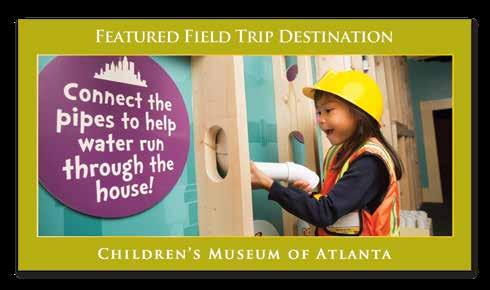
At Children’s Museum of Atlanta, children from infancy to age 8 find a very special world designed to stimulate their natural powers of creative thinking, problem solving and artistic expression. Exciting exhibits, developed in alignment with state and national Core Performance Standards, set kids’ imaginations free as they learn about history, social science, health, the environment, the arts and more. To learn more, see page 95 or visit childrensmuseumatlanta.org