Atlanta’s Leading Education Resource Summer/Fall 2019
PUBL IC SCHOOLS A COUNT YBY-COUNT Y GUIDE TO METRO AT LANTA SCHOOLS
Use This Guide HOW TO 4 Easy Steps!
Find an Independent School in
We gratefully thank our advertisers for their support of Atlanta School Guide
Publisher/President
PATRICK KILLAM
Editor
JACKSON STEWART
Marketing & Promotions
JEFF THOMPSON
Account Directors
MARIA ALEXANDER BRIAN PICHOT
Contributing Writers
LARRY ANDERSON, DONNA NEALE, JON ROSS, MARY WELCH
Metro Atlanta Area Map
To search for independent schools by region or neighborhood, turn to page 38 and use the color-coded map to direct you to each region’s page number.
Education At a Glance
Once you’ve selected your region of interest, the charts beginning on page 40 include a comparison of features for each school in that region, along with the page number for each school’s ad.
Region Maps and Listings
Divided into regions of Atlanta, the color-coded maps beginning on page 43 provide each school’s location and page number for their ad.
Advertiser Index
To find a school or resource by name, turn to the advertiser index on page 105 to find the appropriate page number. 1 2 3 4
TO ADVERTISE CALL 770-992-0273
Space closing for Winter/Spring 2020 issue: October 11, 2019
For additional copies, further information or advertising, please contact:
KILLAM PUBLISHING, INC. P: 770-992-0273 F: 844-706-1545
info@killampublishing.com AtlantaSchoolGuide.com
Trends and Happenings in Georgia Education
What You Need to Know to Stay Up to Date With Atlanta and Georgia Education
Harvester Christian Names New Head of School
Harvester Christian School has selected Rick Johnson as its new head of school. Johnson arrives with more than more than 35 years of experience in Christian and independent school education, most recently serving as headmaster at Springwood School in Lanett, Ala. He is also a celebrated athletic director and basketball coach, having recorded 625 wins and eight state titles.
Atlanta School Is State’s First All-Girls STEM School
The Coretta Scott King Young Women’s Leadership Academy was recently accredited as a science, technology, engineering and math (STEM) school by AdvancEd. The school, a part of the Atlanta Public Schools system, is the first all-girls
middle and high school in Georgia to receive the accreditation.
Woodward Academy Debate Wins State Championship
Mona Mahadevan and Malachi Robinson, both seniors at Woodward Academy, won their fourth consecutive state championship for debate at the Georgia Forensic Coaches Association State Championships in late February. Mahadevan and Robinson were also the top two individual speakers at the tournament, winning first and second place, respectively.
Local Student Accepted to Dozens of Colleges
Jordan Nixon, a senior at Douglas County High School, has received national attention after being accepted to more than three dozen colleges. Nixon was also awarded more than $1.6
million in scholarships. Congratulations, Jordan!
Westminster Coach Named National Coach of the Year
Scott Snyder, head coach of the varsity boys soccer team at The Westminster Schools, was recently awarded the 2018 National Coach of the Year Award by United Soccer Coaches. Snyder has served as the school’s soccer coach for 20 years, and won eight Georgia High School Association state championships.
Local Schools Ranked Among State’s Best Metro Atlanta schools dominated the rankings in Niche.com’s lists of the state’s best public and independent schools.
Gwinnett School of Mathematics, Science & Technology, Northview High, Walton High, Alpharetta High, North Gwinnett High, Lambert High, South Forsyth High, Johns Creek
High and Chattahoochee High were among the top 10 public schools, while The Westminster Schools, Pace Academy, The Paideia School, The Lovett School, Woodward Academy, Athens Academy, Atlanta International School, Holy Innocents Episcopal School and The Marist School were named among the top 10 private schools.
Local Students Win Big at Math Tournament
Andy Zhang of Greater Atlanta Christian School and Adam Hordines of Lawrenceville’s Mountain View High School won first place in their divisions at the annual Jay Cliett
and Bill Kipp High School Mathematics Tournament at Georgia Southwestern State University. Greater Atlanta Christian, Brandon Hall School and The Heritage School were also among the winners.
DeKalb Student Wins
$25,000 Science Prize
Zoe Weiss, a senior at Lakeside High School in DeKalb County, was named one of 40 finalists in the Regeneron Science Talent Search in April, winning a $25,000 prize. Weiss created an algorithm to detect rare cell types to help in diagnosing disease. She is the first Georgia student since 2014 to be a finalist in the
competition, a national science and math competition for high school seniors.
Gwinnett Students, Teachers Honored at STAR Awards
Students and teachers from Gwinnett County public and independent schools were recognized at the Student Teacher Achievement Recognition (STAR) program’s annual luncheon. Among the 29 schools represented were Buford High School, Covenant Christian Academy, Greater Atlanta Christian School, Hebron Christian Academy, Killian Hill Christian School, Providence Christian Academy and The Wesleyan School.
Education 101
Terms to Know in Your Search for the Right Educational
Experience for Your Child
CHARTER SCHOOL A tax-supported public school that is independently run, allowing for greater educational choice for parents in the community.
EXPERIENTIAL LEARNING An educational approach using applied, hands-on methods of learning.
INTERNATIONAL BACCALAUREATE (IB)® A specifically designed comprehensive academic program emphasizing traditional disciplines while instilling a global perspective in its students.
MAGNET SCHOOL A public school that offers a specific or enhanced curriculum designed for students of special interest or ability.
MONTESSORI A school following the principles developed by Dr. Maria Montessori focusing on the unique individuality, self-reliance and independence of children.
SPECIAL NEEDS A school or program for children who have mild to moderate learning differences. It usually features smaller class sizes, individualized attention and multisensory learning methods.
ACCREDITATION Official certification that guarantees a school provides an education of a reasonably high quality. Schools must prove levels of quality and maintain continuous standards of improvement.
ACT An alternative to the SAT, this national college admissions examination consists of subject area tests in English, Mathematics, Reading and Science, with an optional 40-minute writing test.
COLLEGE AND CAREER READY PERFORMANCE INDEX (CCRPI) Georgia’s annual tool for measuring how well its schools, districts, and the state are preparing students for the next educational level.
EARLY CHILDHOOD EDUCATION
Education that applies to children from birth to age 8, focusing specifically on their development, including physical, emotional, sensory, communicative, cognitive and social needs.
GEORGIA MILESTONES Tests
designed to measure how well students in grades 3 through 12 acquire the skills and knowledge outlined in the state-adopted content standards.
HOPE SCHOLARSHIP (Helping
Outstanding Pupils Educationally)
A scholarship in Georgia, funded by the Georgia Lottery, that rewards academically achieving students with financial assistance to attend a degree, diploma, or certificate program at eligible public and private Georgia colleges and universities.
EVERY STUDENT SUCCEEDS ACT
(ESSA) A federal law passed in 2015 replacing the No Child Left Behind Act, designed to ensure that all children have a fair and equal opportunity to obtain a quality education and meet state academic proficiency standards.
PSAT A standardized test that offers students practice for the SAT Reasoning Test and allows them to qualify for the National Merit Scholarship Program
SAT This standardized test measures the writing and language, reading and mathematical reasoning skills of students planning to attend college.
SECONDARY SCHOOL ADMISSIONS
TEST (SSAT) Assesses the verbal, math, and reading abilities of students seeking to enroll in an independent school.
Communication
Deciphering Associations and Organizations
Many local and national organizations work to bring out the best in summer camps and public, private and boarding schools by identifying schools that meet certain standards through accreditation. These groups also set policies, research educational advancements and offer services to the educational communities both in Atlanta and in Georgia. The following are just some of the associations and organizations you should know in your search for the best educational experience for your child.
AdvancED advanc-ed.org
The parent organization for the Southern Association of Colleges and Schools, AdvancED advances education excellence through accreditation and school improvement.
The Association of Boarding Schools (TABS) boardingschools.com
This organization of 250 boarding schools serves
the professional development needs of boarding schools and provides information to potential students and their families.
Association Montessori Internationale (AMI) ami-global.org
Recognizes and provides support, training and development to schools that strongly adhere to Montessori method principles and practices.
Atlanta Area Association of Independent Schools (AAAIS) aaais.org
Promotes the highest standards and best administrative practices for accredited independent schools in the Atlanta metro area. Department of Education (DOE) gadoe.org
A statewide, policy-driven organization governing the public school system of education in Georgia for grades K-12.
Georgia Association of Christian Schools (GACS) gacs.org
Uses generally accepted indicators of quality, voluntary self-improvement and peer review to measure Christian schools.
Georgia Association of Private Schools for Exceptional Children (GAPSEC) gapsec.org
This state organization of independent schools for students with learning disabilities maintains a code of ethics and shares information about programs at member schools.
Georgia Independent School Association (GISA) gisaschools.org
An association of Georgia’s private, independent and parochial schools, dedicat
ed to serving the professional growth, advocacy and interscholastic needs of member schools.
National Association for the Education of Young Children (NAEYC) naeyc.org
A professional membership organization working to promote high-quality early learning for all young children, birth through age 8, by connecting early childhood practice, policy, and research.
National Association of Independent Schools (NAIS) nais.org
A membership association
providing research, leadership and governance guidance and professional development opportunities for school and board leaders in U.S. independent schools.
National Association of Private Special Education Centers (NAPSEC) napsec.org
Represents private specialized education programs by promoting quality programs and services for individuals with disabilities and their families.
Southern Association of Colleges and Schools (SACS) sacs.org
The recognized regional accrediting body for both public and private schools in the eleven U.S. southern states.
Southern Association of Independent Schools (SAIS) sais.org
Provides accreditation services, professional growth opportunities and leadership development programs for 375 independent U.S. schools.
For more information about these and other organizations and associations that ensure quality education among camps and schools, visit the websites of the Georgia Department of Education (www.gadoe.org) or the U.S. Department of Education (www.ed.gov).
room setting. Others may teach average or even above-average learners while also offering additional programs and classes for students with learning differences.
How to Tell if Your Child Has a Special Needs Situation
First, it’s important to identify your child’s specific challenges. Students who exhibit average or above-average intelligence but often seem distracted and don’t perform well in a traditional classroom setting may be struggling with dyslexia, Asperger’s syndrome, ADHD or some other disorder that affects their ability to learn effectively. Also, disruptive or aggressive children may be exhibiting frustration brought on by a learning disability.
If you suspect your child may have a learning disability, it’s critical to have him or
her evaluated by a mental health professional. A diagnosis is necessary in order to address the child’s educational needs.
After a Diagnosis: What’s Next?
A professional evaluation is crucial in order to evaluate your child’s educational needs.
If your child is diagnosed with a learning disability and attends public school, talk with the principal, school counselor or another administrator about developing an Individualized Education Program (IEP). All public schools are required to create an IEP for students with learning disabilities who meet special education requirements. An IEP is a document that specifies your child’s learning situation and educational needs and outlines a course of action for teachers and other professionals to follow to help make sure your child learns to the best of his or her ability. u
If you feel your local public school isn’t the right environment for your child, or simply want to explore all your options, there are many quality independent schools in the metro Atlanta area devoted to helping children with special needs and learning issues. Visit the Georgia Association of Private Schools for Exceptional Children’s website (www.gapsec.org) or our listings for special needs schools on page 106 to help you with your search.
How Do I Find the Right School?
All special needs schools are not the same. The first step is to identify those schools that can address your child’s specific learning difficulty, and offer the level of special needs instruction that you (and perhaps a professional) feel is best for your child.
You may be more comfortable enrolling your child in a school that focuses specifically on his or her needs, or you may want a more diverse environment where he or she can interact with many different kinds of students. Familiarize yourself with the different options offered by each kind of school.
Traditional independent schools that offer special needs programs as part of a larger curriculum can offer that kind of environment, but may have larger class sizes than schools that specialize in specific learning disabilities. These kinds of schools may also focus more on academics than on the therapeutic aspects of special
needs education. Independent special needs schools can offer more individualized instruction and a more structured and predictable environment, and are likely to address nonacademic issues such as social skills and self-esteem.
As you begin searching for the right school for your child’s situation, here are some questions to keep in mind:
• Will your child fare better in a school that focuses on his or her specific learning disability, or would you rather that he or she be able to interact with students with a wide range of learning capabilities?
• Does the school serve a specific age range, or work with students on all grade levels? Many students with learning disabilities have trouble transitioning to new schools.
Continued on page 20 u
Identify those schools that can best address your child’s specific learning difficulty.
COMMON SPECIAL NEEDS TERMS
Asperger’s Syndrome: A developmental disorder on the autism spectrum, characterized by high intelligence, difficulty with social situations and repetitive patterns of behavior and interest.
Attention Deficit Disorder (ADD): An outdated term used to refer to the inattentive form of ADHD, in which a person is typically inattentive or distractible, but not hyperactive or impulsive.
Attention Deficit Hyperactivity Disorder (ADHD): A brain-based syndrome affecting the regulation of functions including attention, concentration, memory and impulsivity.
Autism Spectrum Disorder: A developmental disorder affecting the ability to communicate and interact. Symptoms include repetitive behaviors; intense, narrow interests and sensory sensibility.
Dyslexia: A learning disability that impairs specific language skills, particularly reading.
Georgia Association of Private Schools for Exceptional Children (GAPSEC): An organization of independent schools serving students with learning disabilities and differences.
Georgia Special Needs Scholarship (GSNS): A school-choice scholarship program for special needs students being served by an IEP in Georgia public schools.
Individualized Educational Program (IEP): A written statement that outlines the needs of a public school student with learning disabilities and creates a customized plan for meeting those needs.
Individuals With Disabilities Education Act (IDEA): The federal law that governs how states and public education agencies that accept funding under the law address the educational needs of students with disabilities.
Learning Disability: A neurological condition that affects how one processes information. Learning disabilities can impair reading, writing, speech, math, reason, memory, attention and coordination, as well as social skills and emotional maturity.
Multisensory Instruction: An educational approach involving the use of all of a child’s senses, not just sight and hearing, to help with understanding concepts and solving problems.
Response to Intervention (RTI): A process used by educators to help identify and address the needs of students experiencing behavioral or educational challenges, based on screening, instruction and assessment.
Student Scholarship Organization (SSO): An organization authorized by the state of Georgia to receive funds and award scholarships under the Georgia Qualified Education Expense Tax Credit program.
• Does the school offer a variety of extracurricular activities, including arts and sports programs?
• Is the school accredited? If so, by which organizations?
• Is the staff certified to instruct special needs children, or those with your child’s specific learning difficulty?
• Does the school focus more on academics or on addressing the child’s therapeutic needs?
Financial Assistance
Many independent special needs schools participate in the Georgia Special Needs Scholarship program (GSNS), a school choice program available to special needs students attending Georgia public schools. The program offers funds to off-
set tuition and fees at participating private schools authorized by the State Board of Education. According to the Georgia Department of Education, scholarship amounts range from $2,500 to $13,500, with an average amount of around $6,000.
The Qualified Education Expense Credit program provides another scholarship option. Donations are made to an organization known as a Student Scholarship Organization (SSO), which uses the money to award scholarships to students in pre-K through grade 12. Many schools also offer their own scholarships or tuition assistance programs as well. Contact individual schools for details.
For more information on special needs schools and resources, please see our listings on page 106.
Ande Notkes
Head of School, Midtown International School (MIS)
Ande Notkes has two decades of experience in education and educational administration. Her many years abroad and her multicultural family at home reinforce her passion for globally minded education in the strategy and day-to-day practices of MIS. She holds a bachelor’s degree in liberal arts, a master’s degree in philosophy, and most recently completed her MBA at Emory University.
What is your educational philosophy?
Gifted students thrive when every decision centers around the idea that no one waits to learn. Creative problem-solving is the crux of all learning at MIS, as students learn to think critically and deeply, to collaborate and take in multiple perspectives.
What do you love most about your job?
I love seeing what happens when we don’t put limits on learning. I love, love, love hearing the students talk about their thinking and learning. Their excitement and engagement are palpable when you walk in our doors.
How can parents best contribute to the education process?
Our motto of “No one waits to learn” doesn’t just apply to students. Parents’ attendance at our weekly parent education events creates alignment between school and home. Students who feel like their parents “get” them are more successful.
How is the field of education changing?
There seems to be a grassroots movement to really see and value each child as they are. I’m excited to see what can happen when every student feels a connection to their teachers and the student experience is placed at the forefront of decision-making.
What advice would you offer parents about their children’s education?
Every child has a voice. Teach them to use it to advocate for themselves and to be fearless in their pursuit of learning that works for them.
MIDTOWN INTERNATIONAL SCHOOL
Emphasis: Atlanta’s home for globally minded, gifted learners.
Year Founded: 2013
Grades: K-12
Students: 250
Avg. Class Size: 12
Tuition Range: $22,000-$24,000
Accreditations or Affiliations: AdvancED, GAC, NAIS, NAGC
That stress can come from many places. Most students want to perform well on tests, so a little anxiety is natural. On top of that, children—especially teenagers— can be subject to a swirling mass of emotions, causing them to doubt and criticize themselves. They may feel pressure to perform as well as their friends. And then they may feel pressure from their parents, especially when it comes to the SAT, which many colleges and universities use to measure a student’s readiness for college.
The type of test can matter a great deal. Standardized tests can be especially very stressful.
TALK ABOUT THE PROBLEM
The first thing to remember is that stress is contagious. As the parent of a child facing a test, try not to stress out about that test yourself. Children take cues from their parents all the time, and sensing your stress and anxiety can add to their own.
Instead, talk to your child about the pressure they may be facing. Ask them how they’re dealing with it, and ask follow-up questions. Do they know what specifically is making them anxious about this test? Is it a lack of preparation and planning that caused a bad outcome on the test? Do they feel extra stress because of the high expectation of others? Are they trying too hard to compete with their peers? The more a child understands the source of their anxiety, the easier it is for them to put those fears in perspective and work to overcome them.
THE FIRST THING TO REMEMBER IS THAT STRESS IS CONTAGIOUS. AS THE PARENT OF A CHILD FACING A TEST, TRY NOT TO STRESS OUT ABOUT THAT TEST YOURSELF.
They’re different from typical tests, with rigid rules and timing. The teacher may act differently on the day of a standardized test, as they’re allowed less flexibility than they might use in a normal classroom setting. Midterms and final exams also carry more importance and expectation, and therefore more stress, than other tests.
Whatever the reason, tests—and the stress they can cause—are a reality in school environments, and typically at every grade level. A little stress can play a positive role in test-taking, when it motivates a child to push toward a positive outcome. But too much stress can negatively affect a student’s performance, not to mention the effect it can have on their health. So what can parents do to help children deal with test-related stress?
Talking about stress with parents or others can help. Stress-related anxiety does the most harm when kept bottled up inside. Encourage your child to share their feelings about it.
It’s also important to make sure you know what tests your child has coming up and when. This can help you help your child prepare for upcoming tests, of course. But it can also help the child to know that you’re aware of what they’re dealing with.
WAYS TO WORK THROUGH STRESS
It’s possible to help your child work through some of their stress. But first, you need to recognize the signs. Do they quickly change the subject or grow irritated when you ask
about upcoming tests? Do they display a loss or lack of appetite? Do they get headaches?
If your child is dealing with stress while studying, allow them to pause, relax, take some deep breaths, and then push on with the job at hand. A variety of activities can help to push stress to the side, whether listening to classical music, taking a walk, or even petting the family dog or cat. And believe it or not, dark chocolate has been shown to fight the stress hormone cortisol, to release endorphins, and to have an overall relaxing effect.
BE PREPARED
No matter what test your child is preparing to take, there are some things he or she can do to make the experience easier and less intimidating.
It may sound obvious, but preparation is key. Keeping up with schoolwork and
DURING THE TEST
• Come prepared. Bring the proverbial No. 2 pencil (or better yet, two!), and a calculator or whatever else you’ll need.
• Stay relaxed. Don’t panic. Take deep breaths to relax and maintain a positive attitude.
• Have a plan, and execute it. Go through and answer the easiest questions first, or the ones that have the highest point value. Then come back to the rest as time permits. Read questions carefully and pay attention to details.
• Use all your time. Don’t compete to finish first, or worry about when others finish. Don’t rush, but pace yourself. If you have extra time at the end, use it to check over your work to avoid careless mistakes.
homework in the days and weeks leading up to a test can help reduce a child’s fear that they’re not ready. “Cramming,” or trying to catch up on a ton of information immediately before a test, can be ineffective, and only cause more stress.
Help your child maintain good study habits, which can strip away the stress of testing and replace it with confidence. Encourage them to manage their study time effectively, review their basic skills and work on improving their vocabulary. Avoid distractions and don’t try to multitask: Think of the brain as a spotlight that can only focus on one thing at a time.
Determine what will be covered on the test. The more a student knows about what to expect from a test, the less anxiety he or she is likely to feel. Always go to review sessions, and try not to miss class the last day right before the test.
Try to determine the test format in advance. How long will it be? Will there be an essay portion? What’s allowed and what’s not? Will they lose points for a wrong answer?
If your child is facing a standardized test, the student should take one or more practice tests if possible, reading each question carefully and identifying key words so that they understand exactly what the question is asking. Encourage your child to evaluate multiple-choice questions, eliminating each answer until only the correct one remains.
Above all, make sure your child maintains a positive attitude, gets enough sleep and has a proper breakfast on the day of the test.
Excessive stress is not inevitable when students face a test. With the right physical and mental preparation, your child can process their stress, minimize the effects, and put it in its place.
SPECIAL NEEDS SCHOOL
SELECTING THE RIGHT FIT FOR CHILDREN WITH LEARNING DIFFICULTIES
BY MARY WELCH AND DONNA NEALE
Choosing
a school
for
your child can be a complex process for any family, but it’s especially true if your son or daughter has a learning disability or struggles to learn effectively in a conventional school setting. Identifying the nature of your child’s difficulties and sorting through available educational options can be very daunting tasks.
Fortunately, the Atlanta area boasts a large number of public and independent schools equipped to address the challenges
that these students can face, from specific disabilities such as autism, dyslexia, and speech and hearing difficulties to emotional and behavior disorders.
IDENTIFYING THE ISSUE
The first step to securing the best education for your struggling child is to pinpoint his or her issues. If your student exhibits average or above-average intelligence but doesn’t perform well in a traditional classroom setting, there may be a diagnosable
reason such as dyslexia, attention deficit hyperactivity disorder (ADHD), Asperger’s Syndrome, or vision or hearing difficulties. Don’t be afraid to request a professional evaluation.
“When parents and teachers are concerned about a bright student struggling to learn and gain skills, a comprehensive psycho-educational evaluation is often recommended,” advises Amy Zaring, director of Woodward Academy’s Transition Learning Support Program, which helps students with learning difficulties develop the skills they need to successfully navigate a collegepreparatory curriculum. “The evaluation report provides a profile of the child’s abilities, weaknesses, processing areas that will support or inhibit learning, as well as social, emotional, or attentional strengths and needs. Comparing these scores to specific areas of academic achievement begins the road map of the child’s learning profile.”
When choosing an evaluator, Catherine Trapani, Ph.D., head of The Piedmont School of Atlanta, advocates thoughtful decision-making. “Take the time to find
out about the professional’s credentials, including where the professional received education and training, the kind of childhood disorders they were particularly trained to evaluate, and how long they have been working in the field,” she says. “An important question would be to ask whether the evaluator offers assistance to the parents in determining the next steps to implement the recommendations that arise from the evaluation. If they do not, move on.”
If your child’s testing results in the diagnosis of an eligible special education disability, and your child is currently enrolled in a public school, an Individualized Education Program (IEP) statement will be developed. The Individuals with Disabilities Education Act requires all U.S. public schools to provide an IEP for learning-disabled students who meet special education requirements. Working with the parents, the educational system creates an IEP that details how the child learns, sets measureable goals, and outlines what teachers and other professionals can do to help the student learn much more successfully. u
SEARCHING FOR THE RIGHT SCHOOL
When interviewing potential schools, ask questions about learning techniques, environment, and focus. “Is the school more geared for students with strong academics and poor social skills,” asks Betsy Box, admissions director and director emeritus of The Bedford School, “or is it more for students with learning disabilities who learn in different ways?”
For instance, some schools are tailored to a specific disability. The Schenck School serves students with dyslexia, while The Piedmont School of Atlanta serves typical and bright children with autism, learning disabilities, and attention deficits. Mill Springs Academy and The Howard School cater to students with learning difficulties who plan to go to college. The Cottage School focuses on overall adult success, providing a comprehensive college preparatory curriculum as well as vocational and special “hands-on” classes for students with mild to moderate learning difficulties.
Other schools don’t specifically target those with learning disabilities, but have programs in place to help those students.
Woodward Academy, for example, provides a unique learning environment for students with mild to moderate dyslexia, dysgraphia and dyscalculia (among other diagnoses) within a conventional college preparatory school setting. Its Transition Learning Support Program allows younger students to learn the same curriculum as other Woodward students, but the material is taught in ways that suit their individual needs and learning styles. The program aims to equip these students to merge into the traditional classroom for high school.
Parents will want to take other factors into consideration, as well. Are the teachers certified to instruct special education or special-needs children? Is the school accredited? If so, by which organizations? Does the school offer financial assistance or scholarships? Are there a variety of sports, after-school activities and/or arts programs? Are there summer programs? Does the school serve a specific age range, or work with students on all grade levels?
As you begin compiling your short list of potential schools, don’t be shy about consulting with professionals. Your child’s doctor, counselor, or specialized tutor may have advice about school programs that relate to your child’s needs. Look into foundations or local support groups for your child’s disabilities and make connections with others who have traveled your path. Their experiences can prove invaluable.
“Go deeper and consider the lifelong goals of the family,” says Trapani. “What do you want for your child in adulthood and what do they need to achieve that long-term goal?”
MAKING A DECISION
Visiting the schools you’re interested in is a crucial step, as talking to the staff will give you a sense of how they interact with their students.
Make an appointment, and come prepared. In addition to the results of a psychological exam or an IEP, bring a sample of the child’s schoolwork and a willingness to candidly discuss your child’s needs. “Parents should be prepared to talk about their child’s preferred learning style and environment and what will interest and excite their child outside of the classroom,” Woodward’s Zaring says.
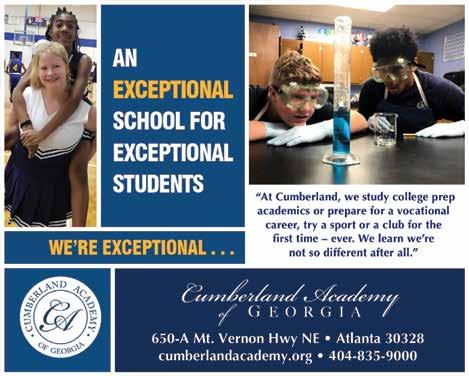
Ask questions. Take notes. See for yourself if the physical setting and overall atmosphere make you and your child feel comfortable. “Parents can tour the school and see the learning taking place,” says Debbi Scarborough, co-founder and headmaster of the Cumberland Academy of Georgia. “They know their child and will get a sense of if the child’s going to fit in.”
Zaring agrees. “Including the student is a wonderful way to hear likes and dislikes,
THE COTTAGE SCHOOL
as well as interests and passions,” she says. “A student’s reaction to a school tour or shadow day can be informative and exciting.”
Once parents have done the work and gone through these important steps, the final choice may be easier than they think.
“Parents know their children better than anyone,” says Box of The Bedford School. “There may be more than one school that could be appropriate for your child. Go with the school that you think will work best for your child. Go with your gut.”
For additional information on learning disabilities and special needs resources, including a list of common terms, please see our Special Needs section on page 16. For a list of special needs schools in this publication, turn to page 106.
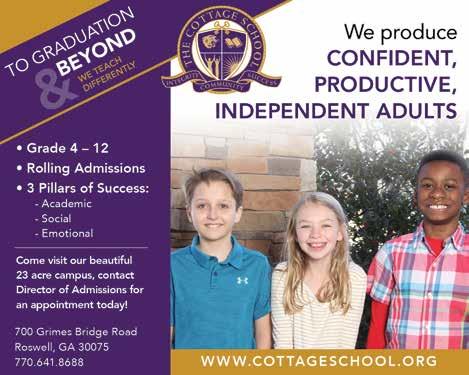
Building a sense of self for students with special learning needs through academic and experiential programming, The Cottage School (TCS) prepares individuals for fulfillment of their true potential as confident, productive, and independent adults.
The Cottage School provides an educational environment for students with learning differences in grades 4-12. It prides itself in meeting the student where they need to be met. It also recognizes that all students learn differently, so it teaches differently.
Based on three pillars of success. academic, social and emotional, TCS school offers:
• Small class sizes (10-student average) for individualized learning.
• Customized education plans for every student.
• A work-based, incentive-based model that teaches life skills.
• A year-round sports program that encourages all students to participate.
• A required post-secondary plan that insures continued success after graduation.
Come visit the beautiful 23-acre campus and contact the director of admissions for an appointment today. For more information, call 770-641-8688 or visit cottageschool.org.
BENEFITS OF A
CatholicEducation
When considering educational options for their children, many parents may overlook one popular option: Catholic schools. But there are a number of reasons why parents might want to consider a Catholic education for their child.
For parents who were raised in and are still active in the Catholic church, of course, grounding their son or daughter
CONNECTING STRONG ACADEMICS WITH FAITH
BY JON ROSS
in the moral teachings of their faith can be extremely important. But these schools can offer benefits that may be attractive to parents who belong to a different faith, as well. Fortunately for those parents, the metro Atlanta area offers many excellent options.
STRONG ACADEMICS
Catholic schools function much like other independent schools. Teachers at these
schools are certified and complete continuing education courses. And many are well-rounded professionals with experience in both public and independent school environments.
What’s more, many Catholic schools offer first-rate academic programs that give students an advantage when applying for colleges, in addition to high-quality athletic and extracurricular programs.
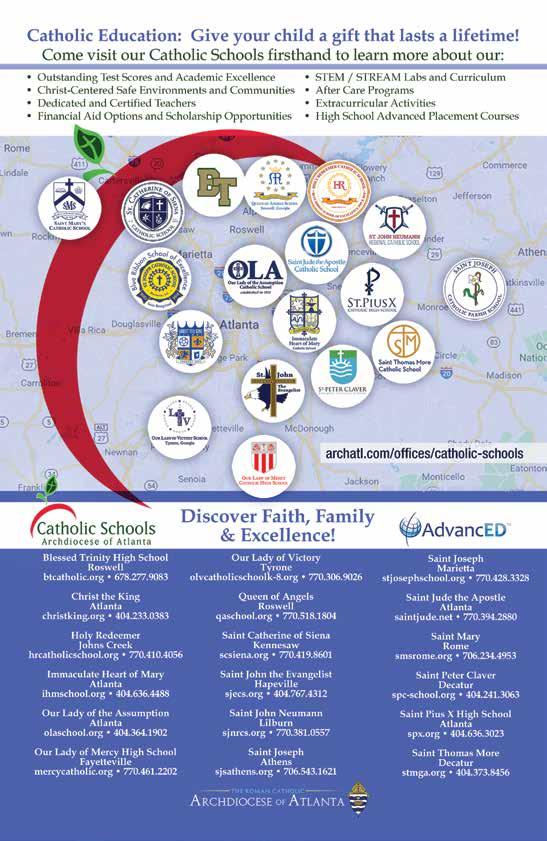
“We have a pretty rigorous curriculum,” says Brian Dooling, director of marketing and enrollment at the Roman Catholic Archdiocese of Atlanta’s Office of Catholic Schools, which oversees 18 schools under the umbrella of the Archdiocese in the metro Atlanta area, Athens and Rome. (Not all Catholic schools in metro Atlanta fall under the Archdiocese’s jurisdiction.)
Two of the Archdiocese’s schools, Christ the King School and Holy Redeemer Catholic School, were named 2018 National Blue Ribbon Schools, a distinction awarded each year based on academic excellence.
According to Dooling, the Archdiocese’s schools benefit from a 100 percent gradu-
ation rate, and its students achieve better test scores than their peers in public and independent schools. “We have excellent results with regard to getting our kids into the colleges of their choice,” he says.
That strong academic grounding is part of what appeals to parents who aren’t members of the church. Non-Catholic students make up about 14 percent of the student body at Archdiocese schools, according to Dooling.
TEACHING THE FAITH
One of the main advantages of a Catholic education is that parents can rest assured that their children are being raised in the teachings of their church. While religious curriculum can vary, parents curious about Catholic education options can look at these schools as providing students with a weekday extension of the church experience. Students will graduate from Catholic high schools, and progress from religious elementary schools, with a strong foundation in Catholic teachings.
“Daily exposure to the Catholic faith is
MANY CATHOLIC SCHOOLS OFFER FIRST-RATE ACADEMIC PROGRAMS THAT GIVE STUDENTS AN ADVANTAGE WHEN APPLYING FOR COLLEGES, IN ADDITION TO HIGH-QUALITY ATHLETIC AND EXTRACURRICULAR PROGRAMS.
important to developing a strong religious foundation,” Dooling says. “Non-Catholic parents who choose our schools for their children cite the moral formation that their children receive and the importance of service to others, which allows students to live the faith they are learning.”
That moral formation is incorporated into every facet of a child’s education, says James Byrne, vice president of enrollment and operations at Marist School in Atlanta. Students receive an excellent education and benefit from an array of extracurricular activities from athletics to STEMfocused teams, all with a perspective that reflects the teachings of the Roman Catholic Church.
“I think what Catholic schools can clearly offer is a grounded set of moral teachings and emphasis,” he says. “It’s the focus on God and how that is connected
in our study of math and our play on the football field. You can’t separate them.”
Marist, like other Catholic schools, encourages parental participation in a child’s religious education. “We want families where faith development is important to them, and might be as important as the other pieces that every school emphasizes,” Byrne says.
Academics and religion blend together at Catholic schools, but community service is just as important. During Holy Week leading up to Easter Sunday, Jerry Raymond, principal at Saint Thomas More Catholic School, devoted his time to helping his students complete a service-oriented project to help address the needs of less-fortunate Atlantans. Students spent that Thursday morning creating “blessing bags”—small sacks full of toiletries and snacks—to keep in their cars and pass out to the homeless. u
WEIGHING THE COST
Academics and a strong moral center are important factors to consider. But for many parents, the cost of that educational experience can make all the difference. Those parents may be pleasantly surprised to learn that in some cases, tuition at a Catholic institution may be less expensive than at a secular independent school.
“The main misconception is that Catholic school—it’s not affordable,” says George Wilkerson, principal at Our Lady of Victory Catholic School, a K-8 school in Tyrone.
Many different factors can go into a school’s tuition, including its size and the quality of its academics and other offerings, so making a direct, apples to apples comparison can be difficult. Still, a Catholic education may cost much less than parents might expect.
Also, like independent schools, some Catholic schools offer financial aid to help defray the cost of tuition. “We try to make [tuition] affordable to as many families as we can,” Wilkerson says, noting that students at Our Lady of Victory receive an average of $3,500 in financial assistance.
FINDING THE RIGHT FIT
Once you’ve weighed the benefits of a Catholic school education and decided to go down that path, there’s still the matter of finding the right school for your child. The best way to get a feel for whether a particular school is a fit for your child is to take a tour, says Raymond of Saint Thomas More. Your child can examine the academic and extracurricular offerings, and you can ask questions of the faculty and staff. Getting a feel for the academic curriculum, and the way the school teaches its faith, will help you get a sense of how the school might prepare your child for all aspects of life.
After visiting his school, “Parents realize that their child, Catholic or non-Catholic, will get a very good education here,” Raymond says.
FOR MORE INORMATION
• For a list of schools in the Roman Catholic Archdiocese of Atlanta visit archatl.com
• For additional Catholic school options, see our list of Catholic school advertisers on page 105.
HOLY SPIRIT PREPARATORY SCHOOL
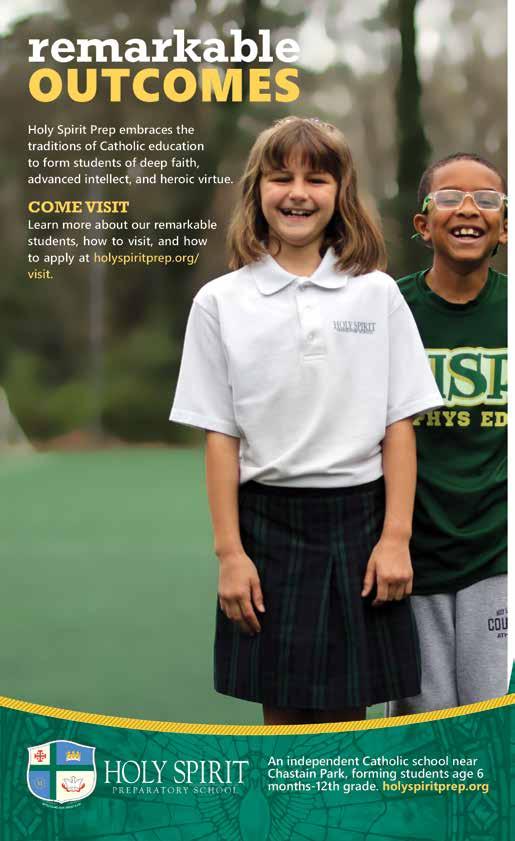
Holy Spirit Preparatory School (HSP) embraces the traditions of Catholic education to form students of deep faith, advanced intellect, and heroic virtue. The young but accomplished school is one of the few independent Catholic schools in the Atlanta metro area. It serves students from 6 months old all the way through 12th grade, so it’s perfect for families. Because it maintains a smaller enrollment than most independent schools, HSP finds the right place for each student—channeling them to the right club, the right gifted classes, the right team— and the right college fit after HSP. The school is all about personalized learning, small class sizes, and forming students in “mind, body, and soul” in a family of faith and learning. For all these reasons and more, it’s been repeatedly named one of the top Catholic schools in the country by the Catholic Education Honor Roll. For more information, call 678-761-7992 or visit holyspiritprep.org.
ST. JOSEPH CATHOLIC SCHOOL
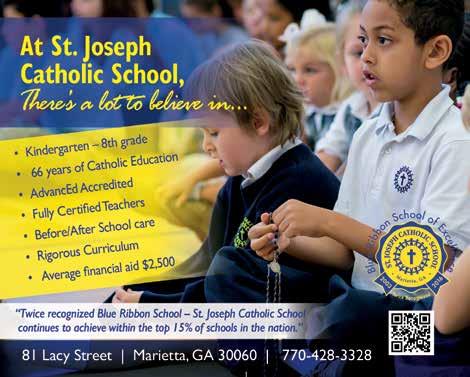
Celebrating more than 65 years of Catholic education as a K-8 school, St. Joseph Catholic School is a twice-recognized National Blue Ribbon School of Excellence! Located in Marietta, the school draws students from Cobb, Cherokee, Paulding, and Fulton counties and strives to educate the whole child through its curriculum. One key to the school’s success is the dedicated, certified faculty and staff. By continuing to use new methods of instruction, combined with programs such as OrtonGillingham, Wilson Language, Touch Math, and STREAM activities, the school offers a rigorous curriculum for its students. In addition to the core area subjects, the school offers instruction in the fine arts, offers support for learners with differences, has an extended care program, and extra-curricular activities. A rigorous curriculum, certified teachers, and a supportive environment—as one of our parents stated, “How wonderful to drop your child off at school and know that she is being cared for by such a lovely, capable teacher!” Come experience St. Joseph Catholic School—“Educating the mind… Expanding the heart.” For more information, call the school at 770-428-3328, or visit stjosephschool.org. You can follow the school at Facebook/sjcs.marietta, Twitter/SJCS_ MariettaGA, or Instagram/sjcs_marietta.
SAINT THOMAS MORE CATHOLIC SCHOOL
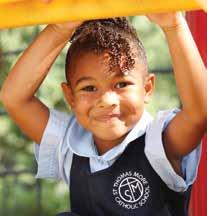
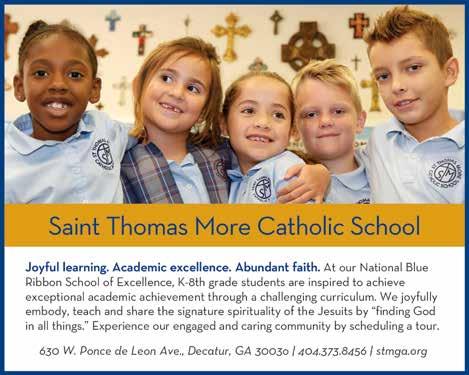
What sets Saint Thomas More Catholic School apart? From the moment you step on the campus, you can feel a difference. Joy is abundant! Its community thrives in living out the school mission to be “a joyful learning community reaching out to the world as the hands of Christ.” As a National Blue Ribbon School of Excellence, it provides an academically challenging and rewarding learning environment. As a Catholic school in the Jesuit tradition, Saint Thomas More is committed to the Jesuit ideals of academic excellence, service of faith, promotion of justice, and education of the whole child—mind, body and spirit. It strives to inspire a global sense of understanding and compassion for others and the courage to put its faith into action. Founded in 1950 and located near downtown Decatur, Saint Thomas More Catholic School offers kindergarten through 8th-grade students an academically excellent education grounded in the Catholic faith. Discover how it feels to be part of the STM family—schedule a tour today. For more information, call 404-373-8456 or visit stmga.org.
SPECIAL PROMOTION
TREATING DEVELOPMENTAL SENSORY AND BEHAVIORAL INTERVENTIONS
Services
Occupational Therapy for children with mild to moderate issues, inclusive of, but not limited to PDD, ADD, ADHD, Autism, motor and sensory delays, sensory integrative dysfunction, and more. Exclusive Provider of: WIN® Write Incredibly Now® Handwriting Program CHILD/PARENT ADVOCACY
IEP/504 accommodations help! KNOW THE FACTS BEFORE YOU SIGN!
WIN® Handwriting and Sensory Social Skills Camp OT, Art, music yoga included HANDWRITING & SOCIAL SKILS
An Occupational Therapy based sensory-motor camp for handwriting skills and sensory regulation social skills!
REGISTER AT PACE ACADEMY—forms on line at www.paceacademy.org/programs/summer-programs or call Beth Singleton,Pace Academy Summer Camp Director at 404-240-9130. Possible funding GA Community Services 404-634-4222 ask for Nicole Brickhouse
Handwriting, Sensory Skills, Homework Organization our specialities! Year round treatment and evaluative services available
metro atlanta area map
REGIONS FOR INDEPENDENT SCHOOLS N
For features of independent schools, turn to Education At a Glance on pg. 40. For public school system information by county, turn to pg. 87.
3 3
2
2
1 1
5 5
Boarding Schools Connecticut, Florida, Georgia, Massachusetts, Mississippi, New York, Pennsylvania, Tennessee, Virginia
REGION 4: Atlanta South/ Southeast/Southwest Douglasville, Eagle’s Landing, Fairburn, Fayetteville, Locust Grove, Metro-Atlanta p.72
REGION 5: Atlanta West Austell, Downtown Atlanta, Kennesaw, Marietta, Smyrna, Smyrna-Vinings
Educational Resources Tutoring, Summer Camps and Activities, Field Trips and Education Programs.
REGION 1: Atlanta North/Northwest
Alpharetta, Buckhead, Crabapple, Holly Springs, Marietta, North Buckhead, Roswell p.53
REGION 2: Atlanta North/Northeast
Alpharetta, Brookhaven, Johns Creek, Peachtree Corners, Roswell
REGION 3: Atlanta East Ansley Park, Athens, Dacula, Decatur, Midtown, Morningside, Northeast Atlanta
REGION 3: Atlanta East Athens, Dacula, Decatur, Inman Park, Lilburn, Morningside, Stone Mountain, Watkinsville
Education At a Glance
INDEPENDENT SCHOOLS
43 REGION 1: ATLANTA NORTH/NORTHWEST
2: ATLANTA NORTH/NORTHEAST
Education At a Glance
This information reflects the latest available data at publication time. Please confirm with each individual school.
INDEPENDENT SCHOOLS
58 REGION 3: ATLANTA EAST
72 REGION 5: ATLANTA WEST
Education At a Glance
This information reflects the latest available data at publication time. Please confirm with each individual school.
INDEPENDENT SCHOOLS
*KEY:
Religious Affiliation: B = Baptist CC =
C = Christian E = EpiscopaL J = Jewish M =
Q = Quaker SA = Seventh-Day Adventist
BOARDING SCHOOLS
REGION 1
Independent Schools
NEIGHBORHOODS OF NOTE
Roswell With its mix of stately neighborhoods and new developments, its quaint downtown area and miles of trails that meander through forests and along the Chattahoochee River, Roswell attracts many families and nature-loving residents to its city limits.
Sandy Springs Newbie, Sandy Springs became its own city in 2005, and multitudes of boutiques, bars and restaurants line Roswell Road, its main thoroughfare. Residents also enjoy the community’s many family-centered events held throughout the year.
BUCKHEAD
BUCKHEAD
BUCKHEAD • CRABAPPLE
HOLLY SPRINGS
ROSWELL • NORTH BUCKHEAD
ROSWELL
REGION
ATLANTA NORTH • NORTHEAST
Independent Schools
NEIGHBORHOODS OF NOTE
Norcross Founded in the late 1800s as a resort town for wealthy Atlantans, Norcross is Gwinnett County’s second oldest city. Today, with over 8,000 residents, it is a quiet city filled with upscale yet charming residential and retail developments.
Cumming Called the “Gateway to Leisure Living,” Cumming offers the best of small-town living, but in recent years, it has seen rapid commercial and residential development, attracting many new residents with its prime location near the magnificent Lake Lanier.
Serving children in grades Kindergarten to High School with language, learning and social challenges.
Call for a private tour
Teachers deliver a regular-education curriculum combining:
• Georgia Standards and National Core
• Differentiated Instruction
• Community-Based Experiences
• PE, Art, Foreign Language, Theatre and Culinary Arts
• Technology in every classroom
Rolling Admissions. Fully Accredited GAC. Now accepting students for 2019-20
Sowing the Seeds of Organic Learning
BROOKHAVEN • JOHNS CREEK
JOHNS CREEK
PEACHTREE CORNERS • ROSWELL
ATLANTA EAST
3
Independent Schools
NEIGHBORHOODS OF NOTE
Stone Mountain More than just a mountain park, Stone Mountain also refers to a charming community of antique shops, art galleries and restaurants. Residents of Stone Mountain enjoy natural scenery and miles of walking and biking paths available in the nearby park.
Lawrenceville Strolling the brick-paved sidewalks in the revitalized historic downtown of Lawrenceville, you’ll feel instantly at home. Chartered in 1821, the city has gone through many changes over the years but has maintained its gracious small-town Southern charm.
ATHENS • DACULA
DECATUR
DECATUR • INMAN PARK
WATKINSVILLE • MORNINGSIDE
Grades K - 8th
STONE MOUNTAIN
Independent Schools
NEIGHBORHOODS OF NOTE
Newnan Established in 1828 and home to more than 30,000 residents, Newnan is one of the fastest-growing cities in Georgia. It has many new residential developments and boasts six historic districts on the national register filled with stately Southern homes.
College Park College Park is home to a small-town main street and the busiest airport in the world—Hartsfield-Jackson Atlanta International Airport. The city is attracting young professionals and families by combining the historic elements with new developments.
DEKALB
FAIRBURN • EAGLE’S LANDING
FAIRBURN & PEACHTREE CITY
LOCUST GROVE •
ATLANTA WEST
Independent Schools
FULTON
NEIGHBORHOODS OF NOTE
Kennesaw Home to the popular Kennesaw Mountain National Battlefield Park, the city of Kennesaw takes pride in its excellent recreation opportunities and parks, rich history and thriving downtown. Kennesaw State University is well known for academic programs in business, education, and nursing.
Smyrna With its unique charm, the city of Smyrna offers many fresh, trendy lifestyle options, and the Market Village plays host to numerous restaurants, bars and upscale shops. Known as the “Jonquil City,” because of the thousands of jonquils that flourish in gardens and along the streets in early spring.
SMYRNA-VININGS
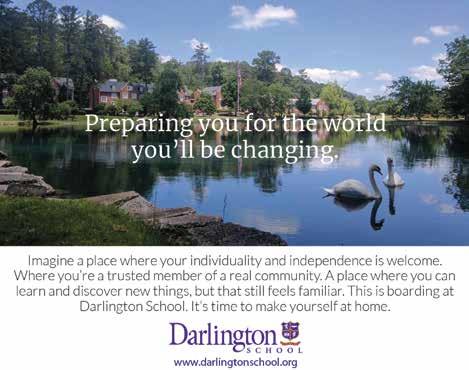
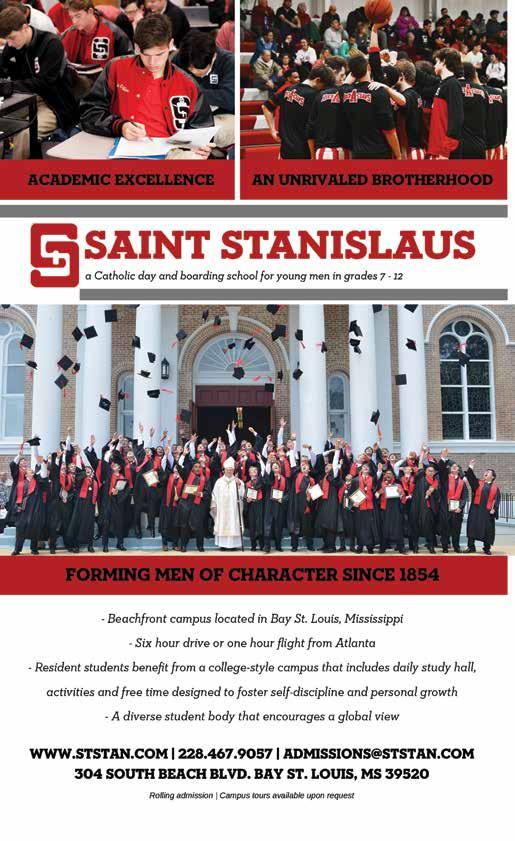
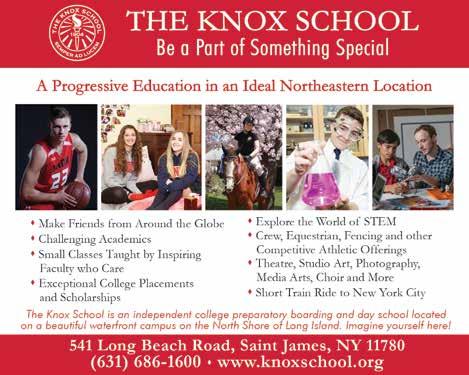
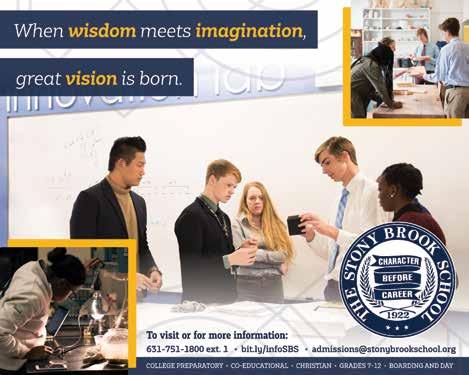
There are many benefits of a boarding school education. Boarding schools are an option for students seeking a more independent learning experience. Because students generally live on campus, learning takes place in and out of the classroom almost on a 24-hour basis.
When selecting a boarding school, it is important to visit the school campus, but representatives from many boarding schools visit metro Atlanta throughout the year—contact each school for specific dates.
Boarding Schools
FLORIDA
GEORGIA
GEORGIA • MASSACHUSETTS
MASSACHUSETTS
NEW YORK
SPOTLIGHT ON METRO ATLANTA’S SCHOOL SYSTEMS
Avariety of improvements and innovative programs in Georgia’s public school systems have resulted in many stellar elementary, middle, and high schools across the metro area. Different school systems feature specialized programs and academic opportunities, such as magnet, charter, vocational, or alternative schools to suit their respective students, parents, and communities. However, despite variations in programming and academic offerings, all public schools must offer the core curriculum as determined by the Georgia Board of Education. Here is a county-by-county guide to metro Atlanta’s public school systems. For more information about the Georgia Department of Education, call 404-656-2800 or visit www.gadoe.org. u
PUBLIC SCHOOL COUNTY GUIDE
The Academic Focus for the International Academy of Smyrna 2019-2020
What is our mission?
Developing Scholars who are Change Agents, Critical Thinkers and Global Citizens
How will we accomplish our mission?
Rigorous Instruction
Data-driven Instruction
Experiential Learning
Service Learning Projects
Spanish in all Grades 5th/6th Grade Global Academy
Strong Stakeholder Involvement
Who are we?
We are the International Academy of Smyrna!
Visit our website: http://www.iasmyrna.org/ Now Enrolling Contact ias.admissions@iasmyrna.org
PUBLIC SCHOOL COUNTY GUIDE
BARTOW
Board of Education
770-606-5800
bartow.k12.ga.us
CHEROKEE
Number of Schools
12
4
3 Career Academy 1
Transitional Academy 1
Total # of Students: 13,524
Student Spending: $8,955
2018 Georgia Milestone Scores:
3rd: (ELA) 510 (M) 524
5th: (ELA) 515 (M) 518
8th: (ELA) 510 (M) 508
2018 Average SAT: 1046
Top 3 Schools by Average 2018 SAT Score
Woodland 1051
Cass High 1050
Adairsville High 1033
What’s New Based on results from last year’s AP course offerings and exams, Adairsville, Cass, and Woodland high schools were once again named AP STEM Schools by the Georgia Department of Education. Woodland High School earned an additional designation of AP STEM Achievement School.
2018 Georgia Milestone Scores:
3rd: (ELA) 520 (M) 541
5th: (ELA) 527 (M) 534
8th: (ELA) 528 (M) 514
2018 Average SAT: 1122
Top 5 Schools by Average 2018 SAT Score
Board of Education
770-479-1871
cherokeek12.net
CLAYTON
Total # of Students:
Woodstock High 1134
Etowah High 1128
Creekview High 1127
Cherokee High 1115
Sequoyah High 1111
What’s New The Cherokee County School Board approved the appointment of five new principals to fill vacancies for next school year, as well as a new head football coach for Creekview High School.
2018 Georgia Milestone Scores:
3rd: (ELA) 481 (M) 507
5th: (ELA) 493 (M) 492
8th: (ELA) 498 (M) 484
2018 Average SAT: 962
Top 5 Schools by Average 2018 SAT Score
Perry Career Academy 1077
Elite Scholars Academy 1060
Charles Drew High School 1058
M.E. Stilwell School of the Arts 1034
Morrow High School 1025
What’s New The Clayton County Board of Education approved a relaxation in the high school dress code for most students in grades 9-12 in exchange for higher academic expectations.
Board of Education
770-426-3300 cobbk12.org
COWETA
Board of Education
770-254-2800 cowetaschools.net
DEKALB
Board of Education
678-676-1200 dekalbschoolsga.org
2018 Georgia Milestone Scores:
3rd: (ELA) 518 (M) 527
5th: (ELA) 527 (M) 522
8th: (ELA) 530 (M) 518
2018 Average SAT: 1107
Top 5 Schools by Average
2018 SAT Score
Walton High School 1262
Lassiter High School 1204
Alan C. Pope High School 1203
Kennesaw High School 1172
Wheeler High School 1147
What’s New Six students from the Cobb County School District recently earned first-place medals at the Georgia Student Technology Competition. An additional nine students placed second.
2018 Georgia Milestone Scores:
3rd: (ELA) 513 (M) 523
5th: (ELA) 520 (M) 518
8th: (ELA) 526 (M) 532
2018 Average SAT: 1082
Top 3 Schools by Average
2018 SAT Score
Northgate High 1109
Total
East Coweta High 1089 Newnan High 1044
What’s New Two Coweta County teachers have been named as Veterans of Foreign Wars 2018-19 Georgia Teachers of the Year for exemplary commitment to teaching U.S. history, citizenship and patriotism.
2018 Georgia Milestone Scores:
3rd: (ELA) 485 (M) 503
5th: (ELA) 499 (M) 497
8th: (ELA) 499 (M) 492
2018 Average SAT: 998
Top 5 Schools by Average
2018 SAT Score
Chamblee Charter High 1172
DeKalb School of the Arts 1142
Lakeside High 1136
Dunwoody High 1131
DeKalb Early College Academy 1111
What’s New Two DeKalb County School District high school students have earned entry into the prestigious Coke Scholars Class of 2019. Both will receive a $20,000 college scholarship as well as inside-out leadership training.
DOUGLAS
Board of Education
770-651-2000
douglas.k12.ga.us
Number of Schools
Elementary 20 Middle 8 High 5 Centers 3 Charter 1
Total # of Students:
2018 Georgia Milestone Scores:
3rd: (ELA) 503 (M) 519
5th: (ELA) 515 (M) 514
8th: (ELA) 518 (M) 509
2018 Average SAT: 1005
Top 5 Schools by Average
2018 SAT Score
Chapel Hill High 1056
Alexander High 1033
Douglas County High 1029
Lithia Springs High 979
New Manchester High 937
What’s New Twenty-seven Douglas County schools will now serve a free evening meal after school hours to students still on campus for the B.A.S.E. After School Program or other approved academic activities.
2018 Georgia Milestone Scores:
3rd: (ELA) 533 (M) 545
5th: (ELA) 539 (M) 536
8th: (ELA) 543 (M) 543
2018 Average SAT: 1142
Board of Education
770-460-3535 fcboe.org
FORSYTH
Total # of Students:
Top 5 Schools by Average 2018 SAT Score McIntosh High 1210 Starr’s Mill High 1172 Whitewater High 1134 Sandy Creek High 1091 Fayette County High 1053
What’s New Six members of the Family, Career and Community Leaders of America (FCCLA) chapter at Starr’s Mill High earned top scores in their competitions and are advancing to the national level. Number
2018 Georgia Milestone Scores:
3rd: (ELA) 545 (M) 561
5th: (ELA) 550 (M) 565
8th: (ELA) 549 (M) 558
2018 Average SAT: 1167
Top 5 Schools by Average
Board of Education
770-887-2461 forsyth.k12.ga.us
Total
2018 SAT Score Lambert High 1221
South Forsyth High 1201 West Forsyth High 1149
Forsyth Central 1113 North Forsyth High 1112
What’s New Members of the Forsyth County Board of Education unanimously approved an $85 million bid from Carroll Daniel Construction to build East Forsyth High School, to be located off Jot Em Down Road and Claude Martin Drive, and slated to open in the fall of 2021.
DOUGLAS
Board of Education 470-254-3600
Board of Education
770-229-3700
spalding.k12.ga.us
Board of Education
678-301-6000
gwinnett.k12.ga.us
Total # of Students: 95,647
Student Spending: $10,609
2018 Georgia Milestone Scores:
3rd: (ELA) 512 (M) 529
5th: (ELA) 524 (M) 526
8th: (ELA) 517 (M) 508
2018 Average SAT: 1091
Top 5 Schools by Average
2018 SAT Score
Northview HS 1275 Chattahoochee HS 1240
Johns Creek HS 1224
Alpharetta 1212
Cambridge 1184
What’s New The Budget Services Department of Fulton County Schools has been honored with the Government Finance Officers Association Award for Best Practices in School Budgeting for fiscal 2017-2018, one of just six districts nationwide to win this award.
2018 Georgia Milestone Scores:
3rd: (ELA) 481 (M) 504
5th: (ELA) 492 (M) 497
8th: (ELA) 501 (M) 491
2018 Average SAT: 974
Top 2 Schools by Average 2018 SAT Score
What’s New The Griffin-Spalding Board of Education voted 4-0 to approve two new school administrators and two new central office administrators for the 2019-2020 school year, including a principal for Anne Street Elementary, an assistant principal for Griffin High School, a new Director of Student Services, and a new Director of Special Education.
2018 Georgia Milestone Scores:
3rd: (ELA) 519 (M) 534
5th: (ELA) 527 (M) 529
8th: (ELA) 528 (M) 500
2018 Average SAT: 1102
Top 5 Schools by Average
2018 SAT Score
Gwinnett School of Math, Science, and Technology 1364 North Gwinnett High 1200
Brookwood High 1154
Parkview High 1150 Mill Creek High 1148
What’s New McClure Health Sciences High School opens this fall with a curriculum and facility that mirror real-life medical schools, giving students knowledge and skills to succeed in health sciences.
HALL PUBLIC SCHOOL COUNTY GUIDE
Board of Education
770-534-1080 hallco.org
HENRY
Board of Education
770-957-6601
henry.k12.ga.us
PAULDING
Number of Schools
Elementary 11 Middle 6 High 6 Magnet 11
Alternative 1 Career 2
Total # of Students: 28,008
Student Spending: $8,505
2018 Georgia Milestone Scores:
3rd: (ELA) 497 (M) 515
5th: (ELA) 510 (M) 511
8th: (ELA) 492 (M) 500
2018 Average SAT: 1054
Top 5 Schools by Average
2018 SAT Score
North Hall High 1109
Flowery Branch High 1072
Johnson High 1064
Chestatee High 1042
West Hall High 1013
What’s New Nine Hall County students have been selected from more than 3200 applicants as finalists or alternates for the Georgia Governor’s Honors Program for the summer of 2019.
2018 Georgia Milestone Scores:
3rd: (ELA) 495 (M) 510
5th: (ELA) 506 (M) 505
8th: (ELA) 513 (M) 492
2018 Average SAT: 1010
Top 5 Schools by Average 2018 SAT Score
Total # of Students: 42,146
Student Spending: $9,016
Union Grove High 1110
Ola High 1071
Woodland High 1051
Eagles Landing High 1022
Stockbridge High 1016
What’s New Winter End of Course performance data shows that Henry County students increased the percentage of those scoring in the Proficient and Distinguished levels in six of the eight tested courses.
2018 Georgia Milestone Scores:
3rd: (ELA) 512 (M) 524
5th: (ELA) 518 (M) 517
8th: (ELA) 500 (M) 511
2018 Average SAT: 1040
Board of Education
770-443-8000
paulding.k12.ga.us
Total # of
Top 5 Schools by Average
2018 SAT Score
North Paulding High 1059
South Paulding High 1046
Paulding County High 1032
East Paulding High 1027
Hiram High 1019
What’s New AdvancED, the national organization that accredits school systems, colleges and universities, has renewed the district’s accreditation for five years. The evaluation of the district was overwhelmingly positive: it received a score of 353 out of a possible 400 points, ranking it among the highest-performing districts for all institutions evaluated by AdvancED.
HENRY
HALL
ROCKDALE
Number of Schools
ROCKDALE
Board of Education
770-483-4713
rockdaleschools.org
ATLANTA PUBLIC SCHOOLS
Total # of Students: 16,265
Student Spending: $9,941
2018 Georgia Milestone Scores:
3rd: (ELA) 498 (M) 515
5th: (ELA) 512 (M) 505
8th: (ELA) 509 (M) 501
2018 Average SAT: 995
Top 3 Schools by Average
2018 SAT Score
Rockdale High 1023
Heritage High 992
Salem High 937
What’s New Heritage and Rockdale County High Schools have been named 2019 Advanced Placement Honors Schools for offering rigorous college-level classes to their students.
Board of Education
atlantapublicschools.us
Total # of Students:
51,063
Student Spending: $15,625
2018 Georgia Milestone Scores:
3rd: (ELA) 492 (M) 513
5th: (ELA) 504 (M) 508
8th: (ELA) 504 (M) 492
2018 Average SAT: 997
Top 5 Schools by Average
2018 SAT Score
Grady High 1128
North Atlanta High 1085
Charles R. Drew Charter High 1058
Carver Early College 1020
Maynard Holbrook Jackson High 955
What’s New Grady High School’s award-winning debate team, the Jesters, competed at Valdosta High School for the Georgia Forensics Coaches Association (GFCA) Varsity State Speech and Debate Championships, where they captured their 10th consecutive state title.
BUFORD CITY SCHOOLS
Board of Education
770-945-5035
bufordcityschools.org Number
Total # of Students: 4,690
Student Spending: $9,621
2018 Georgia Milestone Scores:
3rd: (ELA) 542 (M) 559
5th: (ELA) 536 (M) 550
8th: (ELA) 544 (M) 552
2018 Average SAT: 1142
What’s New The Buford High School Literary team won the Georgia High School Association State Literary Meet, securing their eleventh consecutive state championship. BHS is the only school in the history of GHSA to win eleven consecutive victories in Literary.
PUBLIC
CITY SCHOOLS OF DECATUR
Board of Education
404-371-3601
csdecatur.net
of Schools
Total # of Students: 5,105
Student Spending: $11,026
2018 Georgia Milestone Scores:
3rd: (ELA) 552 (M) 554
5th: (ELA) 551 (M) 542
8th: (ELA) 553 (M) 532
2018 Average SAT: 1162
What’s New City Schools Decatur is on track to finish its new upper elementary school on Talley Street in July, serving grades 3-5. The school board’s next priority for the district is likely to be strategizing how to finance and implement the building of a new Early Childhood Learning Center to accommodate the growing enrollment needs for young students.
GAINESVILLE CITY SCHOOLS
Board of Education
770-536-5275
gcssk12.net Number of Schools
Total # of Students: 8,287
Student Spending: $8,714
2018 Georgia Milestone Scores:
3rd: (ELA) 480 (M) 508
5th: (ELA) 495 (M) 499
8th: (ELA) 481 (M) 496
2018 Average SAT: 1000
What’s New The Gainesville City Schools Student Success Center is on track to open during the 2019-2020 school year. It will be housed at Gainesville High School, and is designed to be a hub for student resources as the district seeks to “educate the whole child.” Families will have access to counseling, therapy, college and career counseling, and academic support.
MARIETTA CITY SCHOOLS
Board of Education 770-422-3500 marietta-city.org
of Schools
Total # of Students: 9,183
Student Spending: $10,545
2018 Georgia Milestone Scores:
3rd: (ELA) 509 (M) 522
5th: (ELA) 517 (M) 518
8th: (ELA) 510 (M) 504
2018 Average SAT: 1072
What’s New All Marietta City School bus drivers and monitors attended a three-day training to become certified by the American Heart Association in CPR, first aid and Stop the Bleed. WellStar Kennestone Hospital has partnered with MCS by providing Stop the Bleed Kit for each of the district’s school buses, making Marietta City Schools the first in the nation to equip its fleet with these kits.
EDUCATIONAL RESOURCES
Ways to Enhance your Child’s or Student’s Learning