

































Learning in the Classroom









1 2 3 4
Metro Atlanta Area Map to search for schools by region or neighborhoods, turn to page 36 and use the color-coded map to direct you to each region’s page number.
once you’ve selected your region of interest, the charts beginning on page 38 include a comparison of features for each school in that region, along with the page number for each school’s ad.
divided into regions of Atlanta, the color-coded maps beginning on page 43 provide each school’s location and page number for their ad.
Advertiser Index to find a school or resource by name, turn to the advertiser index on page 120 to find the appropriate page number.
We graciously thank our advertisers for their support of the Atlanta School Guide
Publisher/Editor In Chief PAtrick killAm
Editor melAnie GibbS
Marketing & Promotions michAel thomPSon
Account Director lAcey JAmeS
Contributing Writers ruth e dávilA
dAWn SloAn doWneS Wendy dunhAm lucy mercer
TO ADVERTISE CALL 770-992-0273
Space closing for Summer/Fall 2011 issue: April 22, 2011
Atlanta School Guide, Winter/Spring 2011, Volume 6, Issue 1 Published bi-annually by killam Publishing, inc., 200 market Place, Suite 230, roswell, GA 30075. Atlanta School Guide assumes no responsibility for errors, changes or omissions. information may have changed since press time, so please verify all information when contacting a school or educational resource. reproduction in whole or in part of any elements of this publication is strictly prohibited without the written permission of the publisher. © 2010 killam Publishing, inc.
For additional copies, further information or advertising, please contact:
P: 770-992-0273
F: 770-649-7463
pkillam@killampublishing.com
www.atlantaschoolguide.com
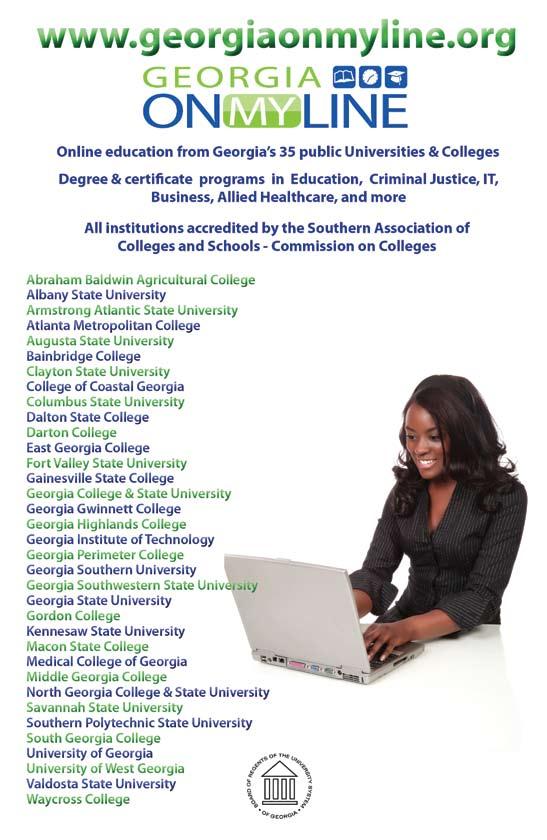
A private, co-ed research university in a world-class city.
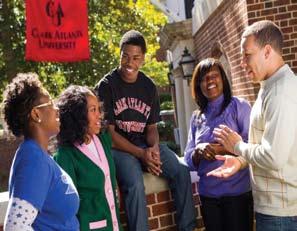
Clark Atlanta University (CAU) is a private university located in the historic heart of Atlanta, Georgia. Designated as a Research University/High Research Activity by the Carnegie Foundation for Teaching, CAU is as steeped in cutting-edge research and critical thinking—from cancer research to global supply chain management—as we are in our own rich history.
Our alumni include individuals who have leveraged their educational experiences at CAU to become leaders who continue to change the world for the better. For more than
a century, the men and women of Clark Atlanta have been making history and making a difference! Below are just a few: Henry O. Flipper was the first AfricanAmerican graduate of West Point. Poet James Weldon Johnson, writer of “Lift Every Voice and Sing,” also was a U.S. ambassador. Educator Dr. Marva Collins forever revolutionized American education.
Tony Award-nominated Director Kenny Leon set the stage for his career on our campus. Decide how you would like to change the world. Then, choose to enroll at Clark Atlanta University.


CAU is the largest of the nation’s UNCF institutions, and the largest, only co-ed university in the prestigious Atlanta University Center.
Our 4,000 students are engaged in 80 areas of study in our four schools and five Centers of Excellence. CAU offers the bachelor’s, master’s and doctorate degrees.
In addition to being academically competitive, national business and consumer publications rank CAU as one of the best buys in education.
Immerse yourself in diverse campus activities, from NCAA athletics to Greek life, and from producing for our TV and radio stations to marching in our awardwinning band!
Choose how you want to change the world. Then choose Clark Atlanta University.
Find us online at www.cau.edu or call our Admissions Office at 800-688-3228 or 404-880-6605. Email us at cauadmissions@cau.edu.
Visit our campus: 223 James P. Brawley Drive, SW Atlanta, GA 30314
key: i = indePendent School, P = Public School
6-10MONTHS AWAy
• Determine your child’s needs and expectations. I,P
• Research open house dates. I,P
• Inquire about each school’s admissions process. I
3 MONTHS AWAy
• Schedule any required health tests or immunizations. I,P
• To determine your school zone, use the county’s Web site or call the System directly. P
5 MONTHS AWAy
• Narrow down your choices. I,P
• Submit application and fees by the deadline. I
4 MONTHS AWAy
• Make a final decision and send in your acceptance to the school of your choice. I
2 WEEKS AWAy
• Find out what documentation is required for registration.
• Complete registration forms and file with school.
DAy Of CLASS 1ST
1 WEEK AWAy
• Attend registration or orientation. P







• Prepare your child by making sure he or she gets a good night’s sleep, adheres to the dress code and is on time. I,P















• Let us help you find a hotel close by for your overnight stays in the Atlanta area.
• Visit the Welcome Center below the Anne Frank Exhibit for area information and itinerary ideas.
• Call us today to start planning your next school trip!



New exhibit in Sandy Springs: Free to the public

Born on June 12, 1929, Anne Frank was a German-Jewish teenager who was forced to go into hiding during the Holocaust. She and her family, along with four others, spent 25 months during World War II in an annex of rooms above her father’s office in Amsterdam, the Netherlands. Her diary was first published in 1947. Today, her diary has been translated into 67 languages and is one of the most widely read books in the world. More than 600 photographs chronicling Frank’s life from 1920’s Germany to her exile, hiding in Amsterdam, all the way to her death in the BergenBelsen concentration camp.


Visit the Exhibit at 5920 Roswell Rd., Suite A-209, 770-206-1447.
Hours: Monday: Closed; Tuesday–Thursday: 10 a.m.–-4 p.m.; Friday: 10 a.m.–2 p.m.; Saturday–Sunday: 12–4 p.m.


Dates subject to change. Please check with your local school district for updates. T = Traditional Calendar y = Year-round Calendar


ec. 17-Jan. 3



MAYJUN
Feb. 21


ec. 20-Jan. 3 d ity, dekalb, Gwinnett, hall, Paulding
ec. 20-Jan. 4 ity (t), buford city, douglas, Forsyth, Griffin-Spalding, henry, rockdale city (y), cherokee, clayton, cobb, Forsyth
dec. 22-Jan. 4 coweta
dec. 23-Jan. 4 Fulton, marietta city
Jan. 17 All
Feb. 14-18 decatur city, rockdale
Feb. 17-21 clayton
Feb. 18-21 Atlanta city (t), buford city
Feb. 18-22 Forsyth
Atlanta city (y), dekalb, Fulton, Gwinnett, hall
Feb. 21-25 cherokee, cobb, coweta, douglas, Fayette, Forsyth, Griffin-Spalding, henry, marietta city, Paulding
Apr. 4-8
Apr. 1-8 douglas
Apr. 18-22 Griffin-Spalding
may 20
Atlanta city (t, y), buford city, cherokee, clayton, cobb, coweta, decatur city, dekalb, Fayette, Forsyth, Fulton, Gwinnett, hall, henry, marietta city, Paulding, rockdale
Apr. 22 Gwinnett
clayton, dekalb, hall
may 24 Atlanta city (t) may 25 cobb, Forsyth, Griffin-Spalding, Gwinnett may 26 buford city, rockdale
may 27 cherokee, coweta, decatur city, douglas, Fayette, Fulton, marietta city, Paulding
June 3 Atlanta city (y)
oCTFEB
Open Houses oct. to mar., in general Application Deadlines late Jan. to late Feb., in general
JANJUN SAT
dates apply to both public and independent schools. For registration deadlines, visit the appropriate Web sites.
Jan. 22, mar. 12, may 7, June 4 www.collegeboard.com
SSAT Jan. 8, Feb. 5, mar. 5, Apr. 9, June 11 www.ssat.org

20 Years of Supporting Sound Bodies, Minds, and Choices
Caron’s Student Assistance Program (SAP) ACKNOWLEDGES the many challenges that face youth today and CUSTOMIZES innovative programs to meet the specific needs of each school. We utilize outcomes-based best practices that benefit over 70,000 students, teachers and parents annually.

This innovative tobacco cessation/reduction program addresses the unique needs of adolescents. Participants plan, prepare and develop the skills to find their own success through the quitting process.
Learn more about how Caron’s SAP programs can make a difference in your school and community.
What you need to know to stay up to date with Atlanta and Georgia
Statistics from the Southern Association of independent Schools (SAiS) show that the percentage of Georgia private school students receiving financial aid is rising, and the amount of that aid is increasing as well. in 20012002, 9.2% of students received financial aid, and the average amount was $4,776. in 2009-2010, 11% of students received financial aid, and the average amount was $8,788. See www.nais.org.
nearly three of four students in the class of 2010 took the SAt last year, placing Georgia in the top 10 participation rates in the country, according to the Georgia department of education. minority participation continues to increase, 44.6% this year, up from 35% five years ago.
over the past six years, Georgia students posted a 97% increase on scores on Advanced Placement (AP) exams, according to the Georgia department of education. this compares to a 52% increase nationwide. in the same period, Georgia showed a 106% increase in the number of AP public school test-takers, compared to a 56% increase nationwide.
Private schools are signing up to be part of the Georgia tax credit Scholarship Program, which offers a dollar-for-dollar tax credit to individual or corporate donors. the funds are earmarked for scholarships for needy public school students to attend private schools. For information, call 404-651-7358 or see www.doe.k12.ga.us.
Georgia students will receive fitness assessments beginning in the 2011-2012 school year, according to the Georgia department of education. the Georgia Student health and Physical education (ShAPe) partnership will administer the pilot program for fitness assessments in five school systems: bibb, hall, Gwinnett, lowndes and White counties. For information call 404-651-7358.
the SAt can be the most important four hours in a high school student’s career. the college board offers free resources to prepare students for the test, including practice exams and a test Question of the day. For more information, contact the college board at 866-756-7346 or see www.collegeboard.com.
CHARTER SCHOOL A tax-supported public school that is independently run, allowing for greater educational choice for a school community.
EXPERIENTIAL LEARNING An educational approach using applied, hands-on methods of learning.
INTERNATIONAL BACCALAUREATE (IB) A specifically designed comprehensive academic program emphasizing traditional disciplines while encouraging an international perspective.
MAGNET SCHOOL A public school that offers a specific or enhanced curriculum designed for students of special interest or ability.
MONTESSORI A school following the principles developed by dr. maria montessori focusing on the unique individuality, self-reliance and independence of children.
SPECIAL NEEDS SCHOOL A school or program for children who have mild-to-moderate learning differences. it usually features smaller class sizes, individualized attention and multi-sensory learning methods.
ACCREDITATION official certification that guarantees a school provides an education of a reasonably high quality. Schools must prove levels of quality and maintain continuous standards of improvement.
ACT An alternative to the SAt, this national college admissions examination consists of subject area tests in english, mathematics, reading and Science, with an optional 30minute writing test.
ADEQUATE yEARLy PROGRESS (AyP) A measure of year-to-year student achievement on statewide assessments as required by the no child left behind Act.

CRITERION-REfERENCED COMPETENCy TESTS (CRCT)
tests designed to measure how well students in grades one through eight acquire the skills and knowledge described in the Georgia Performance Standards.
EARLy CHILDHOOD EDUCATION
education that applies to children from birth to age eight, focusing specifically on their development, including physical, emotional, sensory, communicative, cognitive and social needs.
GEORGIA HIGH SCHOOL GRADUATION TESTS (GHSGT)
All students seeking a Georgia high school diploma must pass four content areas as well as the Georgia high School Writing Assessment.
GEORGIA PERfORMANCE STANDARDS Statewide standards of academic content for all subjects k-12, to which every school must adhere and on which students are annually tested.
HOPE SCHOLARSHIP (Helping Outstanding Pupils Educationally)
A scholarship in Georgia, funded by the Georgia lottery, that rewards academically achieving students with financial assistance to attend eligible public and private Georgia colleges and universities.
Did You Know:
About 6 million students are enrolled in U.S. private primary and secondary schools.
MISSION/PHILOSOPHy A statement outlining the guidelines a school follows to achieve its goals or maintain performance standards.
ACT
A federal law passed in 2001 designed to ensure that all children have a fair and equal opportunity to obtain a high-quality education and meet state academic standards of proficiency.
NOTIfICATION DEADLINE
the date by which an independent school notifies families of the acceptance of a child for enrollment to the school.
OPEN HOUSE An event held at a school, at which parents can learn more about the school and its offerings.
PSAT A standardized test that offers students practice for the SAt reasoning test and allows them to qualify for the national merit Scholarship Program.
REPLy DEADLINE the date by which parents must notify an accepting school of their commitment to enroll their child.
SAT this standardized test measures the critical thinking, mathematical reasoning, and writing skills of students planning to attend college.
SECONDARy SCHOOL ADMISSIONS TEST (SSAT) the admissions test that many independent schools require students to take in order to be considered for enrollment.
SUMMER CAMP A common destination for children and teenagers during the summer, at which they can participate in a variety of activities or classes.
many local and national organizations work to bring out the best in summer camps and public, private and boarding schools by setting policies, serving as advocates, researching educational advancements, identifying schools that meet certain standards through accreditation or by offering services to the educational communities both in Atlanta and in Georgia. the following are just some of the organizations you should know in your search for the best educational experience for your child.
AdvancED www.advanc-ed.org
Parent organization for Southern Association of colleges and Schools, Advanced advances education excellence through accreditation and school improvement American Camp Association (ACA) www.acacamps.org
Accredits camps that meet industry-accepted and
government-recognized standards, educates owners and directors and establishes guidelines.
The Association of Boarding Schools (TABS) www.boardingschools.com
this organization of 300 boarding schools serves the professional development needs of boarding schools and provides information to potential students and their families.
Association of Christian Schools International (ACSI) www.acsi.org
AcSi strives to enable christian educators and schools worldwide to effectively teach using christ-centered curricula and programs.
Association Montessori Internationale (AMI) www.montessori-ami.org recognizes schools that strongly adhere to montessori principles and practices.
Atlanta Area Association of Independent Schools (AAAIS) aaais.org
Although not an accrediting agency, AAAiS is an affiliation of independent schools and operates under analogous principles and a common code of ethics.
The Council of International Schools (CIS) www.cois.org the premier organization in international education for the accreditation of schools and best Practice development.
Department of Education (DOE) www.doe.k12.ga.us
A statewide, policy-driven organization governing the public school system of education in Georgia for k-12, the doe operates under the direction of the State Superintendent of Schools.
Georgia Accrediting Commission (GAC) www.coe.uga.edu/gac GAc offers four levels of approval: preparation status, provisional accreditation, accreditation and accreditation with quality.
Georgia Association of Christian Schools (GACS) www.gacs.org uses generally accepted indicators of quality, voluntary self-improvement and peer review to measure schools.
Georgia Association of Educational Leaders (GAEL) www.gael.org this statewide umbrella organization of six professional associations provides unity among school leadership organizations in Georgia.
Georgia Association for Private Schools for Exceptional Children (GAPSEC) www.gapsec.org this state organization is for schools that serve students with learning issues.
Georgia Charter School Association (GCSA) www.gacharters.org
A membership organization whose mission is to be an effective advocate and service provider for all charter public schools in Georgia.
Georgia Independent School Association (GISA) www.gisa-schools.org
An association of private, independent and parochial schools throughout the state whose mission is to advance excellence and collaboration among Georgia’s independent schools.
Georgia Partnership for Excellence in Education (GPEE) www.gpee.org this non-profit organization of business, education, community and government leaders aims to shape policy and reform public education in the state.
Georgia Private School Accreditation Council (GAPSAC)
www.gapsac.org
Association of k-12 private schools whose students are recognized and approved by the Georgia doe for transferring credits to public schools on the same basis as students from public schools.
Georgia Professional Standards Commission (PSC) www.gapsc.com
A state organization responsible for setting and applying high standards for the preparation, certification, and continued licensing of Georgia public educators. Prepara-
tion and conduct of public school teachers and staff.
Georgia School Boards Association (GSBA) www.gsba.com
representing Georgia’s 180 elected boards of education, GSbA provides leadership and services to local boards of education.
National Association for the Education of young Children (NAEyC) www.naeyc.org the nAeyc focuses on the quality of educational and developmental services for children, from birth to age eight, including daycare and Pre-k centers. it is a national network of over 300 local, state, and regional affiliates, and a growing global alliance.
National Association of Independent Schools (NAIS) www.nais.org the association values and works to maintain the independent nature of each member school by promoting high standards of educational quality and ethical behavior.
National Association of Private Special Education Centers (NAPSEC) www.napsec.org represents private specialized education programs and their leaders u
by promoting high quality programs for individuals with disabilities and their families.
National Christian School Association (NCSA) www.nationalchristian.org Administrators from accredited schools, university educators and public schools preside over the accreditation process for ncSA.
National Council for Private School Accreditation (NCPSA) www.ncpsa.org
A consortium of several private school organi-
zations dedicated to preserving the integrity of the accreditation process for thousands of private schools across the nation.
Southeastern Association of Boarding Schools (SABS) www.sabs.org
An association of 23 boarding schools committed to promoting and supporting boarding education opportunities in Southeastern states, including the carolinas, Alabama, tennessee, Georgia and Florida.
Southern Association of Colleges and Schools (SACS) www.sacs.org member schools meet research-based standards and maintain continuous school improvement and quality assurance.
Southern Association of Independent Schools (SAIS) www.sais.org members meet quality standards, receive peer evaluation and implement a school plan focused on strategic improvement.
For more information about these and other organizations and associations that ensure quality education among camps and schools, visit the websites of the Georgia department of education (www.k12.ga.us) or the u.S. department of education (www.ed.gov).

headmaster’s corner
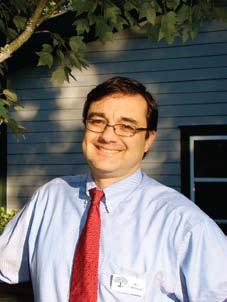
When Jay underwood joined high meadows in July 2010 he brought energy, enthusiasm and a wide ranging background, from college admissions counselor, to classroom teacher—including teaching english in ecuador—to public school administrator and private school head of school. now he is a great advocate for independent schools, presenting workshops and authoring papers on education topics.
What is your educational philosophy?
children thrive best in an environment in which adults engage them actively and care for them deeply. Adults should model for children what it means to be a learner by asking questions, challenging assumptions, and reflecting upon mistakes.
What do you love most about your job?
I love working collaboratively with others —both adults and children—to grow toward a life of fulfillment and purpose, both as individuals and as professionals.
How can parents best contribute to the educational process?
Parents can help their children enjoy a rich life by keeping nurture, structure and latitude in balance. And by maintaining a sense of humor along the way!
How is the field of education changing?
We are beginning to question our assumptions about what we should teach and how
we should teach it. the memorization of facts, dates, and formulas is not enough to prepare children for an uncertain and everchanging world. Perhaps most importantly, they need to learn how to solve new problems by working collaboratively with people from different backgrounds.
What advice would you offer parents about their children’s education? look for a school that encompasses a philosophy and approach that is consistent with your beliefs and values. And make sure that the people who spend time with your children seem fundamentally happy!
THE ESSENTIALS:
Emphasis: interdisciplinary approach to learning year founded: 1973
Grades: PS-8th
Students: 405
Avg. Class Size: 20
Tuition Range: $4,841 - $14,981
Accreditations or Affiliations: nAeyc, SAiS, SAcS, ib
Location: roswell
Contact: 770-993-2940
www.highmeadows.org

The designation “highly qualified” means that the teacher has full certification or licensure by the state, a bachelor’s degree, as well as demonstrated competence in both the subject(s) taught and teaching skills. Parents of public school students can request verification of teacher qualifications under law by writing a letter to their school’s administrator asking for the information.
While the qualifications required to teach at private schools vary based on the school and its affiliations, most do require their teachers to be state certified, hold a degree, and exhibit a high level of teaching competence.
There is no single governing body that certifies private school teachers or accredits independent schools. While teacher certification requirements vary according to accrediting body, most state and national private school accrediting organizations do require schools to validate teacher quality and provide opportunities for professional development.


Since 2006, under Federal law, public schools are required to ensure that all teachers are “highly quali ed.”
As in public schools, if parents of private school students have questions or concerns about teacher qualifications they should talk to administrators about accreditation standards, professional development, and teacher retention to get a sense of the school’s policies regarding teacher qualifications.
Dr. Jana Dresden, an Early Childhood Education Specialist and Director of the Office of School Engagement at the University of Georgia’s College of Edu-
cation, and a parent of three children herself, reminds parents to keep in mind that parents and teachers are partners, not adversaries. “We’re all on the same side when it comes to educating children and we all need to recognize that we [parents and teachers] are the ones closest to the children … it is imperative that we work together.”
Dresden points out that even an “expert” like herself can misjudge a teacher, but offers her thoughts on what parents should consider when deciding if a particular teacher is a good fit. “Does the teacher encourage a sense of community or does she foster competition? Does the teacher focus solely on test scores

or does he create opportunities for real learning? Do the kids in a particular class seem interested, engaged, and happy to learn?”
Those same standards apply not just to teachers but to schools as well, says Dresden. She suggests looking for schools with a broader purpose than achieving high test scores, then exploring further to determine if their specific curriculum and teaching methodologies seem like a good fit for your child.
Another area of consideration for many parents today is the technology available to help enhance classroom learning. From supplementary lectures made available via podcast, laptops, and smartboards, many Atlanta area schools offer the most cutting edge technology available.
Marist School, an independent Catholic school that has been operating in
Many Atlanta area schools o er the
most cutting edge technology available.

Atlanta for over 100 years, recently abandoned the 70 PCs in its eight science labs for 70 “thin client” workstations from Wyse. Thin clients display programs and applications that run on network servers rather than on the local computer, making them less expensive to maintain and operate—as well as more secure—than the older technology. The school’s library also houses an additional 25 Wyse thin client workstations with servers that allow students to log in from home and complete assignments remotely.
Meanwhile, Woodward Academy, one of the largest private schools in the United States, has been working with Atlanta architecture firm Perkins + Will to create a wireless campus
“The trend in both public and private schools,” says John Poelker, Associate, Perkins + Will, “is to get away from the computer lab model where students

leave their classroom to use a computer. Today, schools are embracing a more collaborative learning model that encourages a more fluid transition between technology and traditional learning. We’re creating wireless campuses that allow students to work together in small groups and learn from each other. At Woodward, we’ve created ‘soft spaces’ like cybercafés that allow students a casual area where they can sit and work together in a relaxed atmosphere.”
Poelker points to another example of innovative thinking in utilizing technology in school design in the “near Atlanta” area. “Whitfield County’s Coahulla Creek High School was built with collaborative learning in mind and utilizes projectbased labs modeled on the Apple Store’s Genius Bar® where you have roving experts. In this case the experts are teachers, and students work individually or in small groups at their own pace. Teachers don’t simply lecture, but are available to answer questions and help students as needed. Nearly every client we’re working with on new projects is moving to a similar model.”
Yet to some, the two most critical technologies a teacher has at his or her disposal are e-mail and a class web site.
“Many of the best teachers today are utilizing these two basic technologies to communicate with parents and share vital information like homework and class projects in an efficient manner,” says Dr. Lesley Coia, Director of Teacher Education and Chair of the Education department at Agnes Scott College. “What
should matter to parents is not smartboards, but how effectively teachers communicate with them and with their students.” Coia urges parents to form partnerships with their child’s teacher and with their child. She says, “If everyone works together for the good of the student, communicating openly and respectfully, you’ll have a more successful student, as well as happier parents, and teachers who feel supported.”
While there is no magic formula to help parents identify the most qualified teacher or perfect school for your children, by taking the time to ask the right questions and communicate openly about your concerns with teachers and administrators, you can help your children make the most of the learning opportunities afforded them in almost any environment.
What to do if you find that your child’s teacher isn’t the best fit:
teacher. Share your concerns and work together to develop a plan to help your child succeed.
respectful manner.
child’s specific interests, strengths, weaknesses, and any changes you’ve noticed.
are partners with a common goal. Work together toward your child’s success.
do not begin to see change, schedule appointments with your school’s administration.
in 2008, the State of Georgia passed the Private School education tax credit, allowing up to $50 million for private pre k-12 student scholarships each year. Part of this law created Student Scholarship organizations, such as Pay it Forward Scholarships. Pay it Forward Scholarships provides scholarships to attend any accredited private school in Georgia through their innovative “Pay it Forward” scholarship program.
the trademarked Pay it Forward program allows donors to provide a scholarship for an anonymous student and to suggest a student to be con-
sidered for a Pay it Forward scholarship donated by an anonymous donor.
When the donor files their taxes, the State of Georgia will reimburse them 100% of their state tax liability up to $2500 per year. in addition, it is also a charitable deduction on your federal taxes.
because only $50 million is available each year, the funds are likely to run out quickly. if you would like to submit your student for a Pay it Forward Scholarship and donate a scholarship to an anonymous child, go to www.Payit ForwardScholarships.com.


BY RUTH E. DÁVILA
As you investigate education choices for your children, you will want to consider many factors in your quest for the right school. One key area to explore is accreditation, which can be a quality assurance method. Schools voluntarily seek this seal of approval from private agencies to indicate that they have met certain standards. But, what are those standards, and how are they evaluated? More importantly, how does accreditation impact your child’s chances of success?


Accreditation is a process whereby a school gains recognition for excellence through a vigorous examination process, which is both self-reflective and confirmed by external educators,” says Damian Kavanagh, vice president of accreditation and school services for the Southern Association of Independent Schools (SAIS).
Today, a majority of schools hold an accreditation. From a practical standpoint, it is a common currency to navigate the school system. Accreditation comes into play at two junctures: when your child transfers to another school or applies for college. If you are in the process of moving your child from one school to another, you may already be seeing how school accreditation can impact your child.
According to the Georgia Board of Education, all public schools must accept transfer credits from any school accred-
ited by one of three agencies: the Southern Association of Colleges and Schools (SACS), the Georgia Private School Accreditation Council (GAPSAC) and the Georgia Accrediting Commission (GAC). So if you select an independent school accredited by one or more of these, you can be assured your child’s credits would transfer into Georgia’s public schools, should you make another change in the future.
The simplest way to find out whether a school is accredited is to check with the school via its website, in person or by phone. If the accreditation’s validity is in question, double-check with the accrediting agency directly.
Most Georgia schools are accredited through SACS, one of the six major accrediting agencies in the United States, through its parent company, AdvancED. Several other agencies operate locally, regionally and nationally. These range
from faith-based to those specializing in the accreditation of independent schools, like SAIS. For more about these, and other, accrediting agencies and associations, turn to “Deciphering Associations” on page 16 of this issue.
Even though some accrediting bodies are called “agencies” and others “associations,” they function similarly. The main distinction is that associations typically offer a membership option to schools before they complete the accreditation process. Schools might pursue membership for networking and professional development. Membership, however, is not to be confused with accreditation.
Accrediting agencies generally follow the same standards when evaluating schools (see the “7 Golden Rules” sidebar accompanying this article). Areas span from financial stability to a focus on improving
student performance. Religious accrediting associations evaluate additional factors, ensuring the school reflects the theology and values at hand.
With nearly identical standards, the real differentiator among agencies is their approach to the peer review process. At a minimum, an agency should require that at least one evaluator review the school. A more thorough process— and the prevalent practice—is to conduct reviews by a panel of educators.
SAIS compiles a peer group of diverse backgrounds, pedagogy and school cultures to visit applicants. These groups usually consist of a school head, a business manager, a couple of teachers and an administrator.
Often schools boast accreditation from more than one body to re ect their compliance with di erent persepectives.
In addition to evaluating documents and other evidence, SAIS reviewers sit down with students at the lunch table and in the classroom. They try to attend a cultural event, like
a play. And they talk to various stakeholders, such as parents, board members and neighbors.
Often, schools boast accreditation from more than one body to reflect their compliance with different perspectives. For example, a Christian school might belong to SACS and the Association of Christian Schools International (ACSI).
Independent schools in Atlanta routinely seek dual accreditation from both
Although each agency differs in its peer review process, accrediting agencies generally follow these same guidelines when evaluating schools.
1: Vision & Purpose
The school establishes and communicates a shared purpose and direction for improving the performance of students and the effectiveness of the school.
2: Governance & Leadership
The school provides a governance, leadership and organizational structure that promotes student performance and school effectiveness.
3: Teaching & Learning
The school provides research based curriculum and instructional methods that facilitate achievement for all students.
4: Documenting & Using Results
The school enacts a comprehensive assessment system that monitors, documents and uses results to improve student performance and school effectiveness.
5: Resources & Support Systems
The school has the resources and services necessary to support its mission and purpose and to ensure achievement for all students.
6: Stakeholder Communication & Relationships
The school fosters effective communications and relationships with and among its stakeholders.
7: Commitment to Continuous Improvement
The school establishes, implements and monitors a continuous process of improvement that focuses on student performance.
SACS and SAIS. As the largest regional body, SACS grants a sense of universality to the accreditation, while SAIS ensures that the independent school context is considered. SAIS acts as the lead agency in dual accreditation with SACS and with the ACSI.
Eastside Christian School is undergoing the rigorous process to seek accreditation from SACS and ACSI. Although the school has been operating successfully for 27 years and has been accredited by the State of Georgia “With Quality,” Head of School Judith Cripps says this accreditation will give ECS “validation in the culture.”
Accreditation also eases eligibility for financial aid and college scholarships like HOPE.
Kennesaw State University receives a bevy of new applicants each semester. While transcripts from accredited schools are easier to review, the university doesn’t automatically rule out students from schools without accreditation, for acceptance or aid.
“There is a portfolio method (exhaustive curriculum review) for students who graduated from non-accredited high schools,” says Susan Blake, associate dean for Enrollment Services and executive director of University Admissions. “We require additional testing from them, since we would not be able to verify their college preparation,” Blake adds.
Covering 11 states, SAIS is the largest independent school accrediting agency. Independent schools compose a vibrant mosaic, from parochial to prep schools. Schools accredited by SAIS “do amazingly great work with their students and have created unique opportunities for students to learn, grow and become excellent citizens of their community,” says Kavanagh of SAIS.
The Atlanta Inter national School (A holds two accredita tions: nationally through SACS/SAIS and globally through the Council of International Schools. Headmaster Kevin Glass says, prior to external re view, AIS’ self-study illu minated areas for syner gy throughout the pre-K to grade 12 curriculums. For example, it sparked the idea of team teaching certain subjects or linking certain projects with those in other units. “We will always review, revise and upgrade how we’re integrating and inculcating technology into a student’s experience,” Glass says. Some schools belong to religious or approach-based associations, depend-

ing on the particular school’s focus. For example, to prepare students with 21st century skills and a multidimensional worldview, AIS offers the International Baccalaureate program at all grade levels. Such programs complement, rather than substitute, accreditation.
the end, Kavanagh says, parents should seek the school that’s the best fit for their child. Accreditation is not likely to be the central consideration, but it is a good indicator that the school strives to improve every year. “Like our students, whom we expect to grow and change as they grow older, we expect schools to do the same thing.”





Today’s society and culture have altered family life, many say tipping it out of balance. Parents and teachers put pressure on kids to achieve academically. More children are being enrolled in organized sports and extracurricular activities at times when, traditionally, they would have been enjoying unstructured down time, play time, and family time. When these after-school activities and the ever-increasing amounts of homework are done, what time is left for relaxation?
t’s not that sports, extracurricular activities and homework are bad for kids; in fact they need and benefit from them, but in moderation. If you’re in the process of making education choices for your children, don’t forget to factor extracurricular activities, homework and unstructured time into your decisions. Striking that balance is becoming harder for parents, and it’s a fine line to walk as you choose a school.
Gina Kantor, a second grade teacher at Garrison Mill Elementary in Marietta, thinks kids are on a treadmill. “Down time is crucial for creative expression. It provides the opportunity for imaginative play,” she says. “We want to foster children who will mature into adults who can think outside of the box.”
“Children need unplanned time to practice exercising choice, renewing their senses, and for simply being,” adds Jay


Underwood, Head of School for High Meadows School in Roswell. “When our hearts beat there is space in between; when we breathe our lungs expand and contract. Life has a rhythm all its own that includes ample recovery along with activity.”
Too many organized activities and not enough unstructured ones hurt processing skills.
If children aren’t given time to relax and regroup, what is the outcome? “When children are on the go the whole time they don’t know how to stop and think,” says Garrison Mill school counselor Jennifer Ofiara. “Schools can do their part by limiting what is expected of them after school, but parents should not let family time be all about their kids’sports or activities.”
Too many organized activities and not enough unstructured ones hurt pro-

cessing skills, adds Mike Cook, 2010 Teacher of the Year at Sixes Elementary in Canton. “Children need time to sit and think so they can process all they have been exposed to,” he says.
At the same time, Cobb County school system prevention specialist and consultant Jeff Dess knows how valuable sports and extracurricular activities are for young people. “They give them a chance to socialize, learn how to play, and learn how to work as a team,” he says. “Some kids struggle educationally but can do well in a different field. They need to be given the opportunity to feel good about themselves and feel success.”
Kids with poor social skills also benefit from the team-building spirit of sports,
according to Ofiara, who adds that nonathletic children can shine in other areas such as music and the arts. Furthermore, Kantor says that sports teach kids to cooperate for the greater good, get exercise, and think on their feet.
Sports are necessary for the full development of children, but homework is more controversial. Ofiara agrees with research findings that recommend the ideal amount corresponds to 10 minutes per grade level. First graders do 10 minutes per night, second graders do 20 minutes, and so on.
“Short periods of meaningful homework are very beneficial,” says Cook. “If a child is struggling on a particular subject, extra work on that topic can only help. But it should not last for several hours a night nor interfere with family time.”

children must act, play, compete and perform in multiple areas to ‘keep up,’” warns Jerri King, Head of School at First Montessori School of Atlanta. “Research, trends observed by family therapists and the common practices in college acceptance does not support the perceived benefits of over-involvement. While children may have the tendency to over-commit, balance is sustained when adults provide the necessary limits and expectations regarding school work and extracurricular activities.”
“Homework topics should be connected to what the child is doing in class to make it beneficial,” adds Dess. “Right now I believe young people are getting too much homework.”
Achieving balance takes effort. Ofiara says parents should observe what is going on, read cues from their children, and make changes if necessary. “Are you stressed out from driving your kids all over? Are your kids crying because they have too much homework? Are they having tantrums?” she asks. “If family life is stressful then you must change it by slowing down the pace.”
Ultimately, parents must be the ones to make wise choices for their children.
“Parents must reject the notion that
Today, Dess sees more young people stressed out and anxious than ever before. “Parents can help by identifying and recognizing their child’s gifts, no matter what they are. They should expose them to new opportunities, but listen to who they are and not push them into something they don’t enjoy. If we balance emotional and social well-being with academic performance, then academic performance will benefit.”
Looking for balance for your child at school? Here are some questions to ask:
extracurricular involvement?
my child’s grade level?
child is learning in class?
school day?
area map
For features of independent schools, turn to e ducation At-a-Glance on pg. 38. For public school system information by county, turn to pg. 93.
2 2
1 1
5 5
3 3
Boarding Schools Alabama, Florida, Georgia, New Jersey, New York, Tennessee, Texas, Virginia
Educational Resources Early Learning, Tutoring, Summer Camps, Field Trips and Outreach Programs
REGION 4: Atlanta South/ Southeast/Southwest
Atlanta South, College Park, Conyers, East Point, Fairburn, Grant Park, Locust Grove, Newnan p.78
REGION 5: Atlanta West Atlanta, Collier Heights, Kennesaw, Marietta, Powder Springs, Smyrna
REGION 1: Atlanta North/Northwest
Acworth, Alpharetta, Buckhead, Kennesaw, Marietta, North Buckhead, Roswell, Sandy Springs p.55
REGION 2: Atlanta North/Northeast
Alpharetta, Cumming, Duluth, Johns Creek
Norcross, North Fulton, Roswell, Sandy Springs p.61
REGION 3: Atlanta East
Athens, Dacula, Decatur, Lilburn, Midtown, Monroe, Morningside, Oak Grove, Stone Mtn.
SdA =
This
=





Alpharetta Once a small farming community, Alpharetta’s growth has exploded in recent years and is now one of Atlanta’s most affluent neighborhoods, creating the perfect mix of country living and city amenities.
Buckhead A development group is currently creating what is being referred to as the Rodeo Drive of the South, where luxury retailers and high-end restaurants will be the feature. Luxury condos offer residents city living at its finest.






































Duluth A successful mix of small-town charm and booming economic growth, Duluth plays host to many small businesses and major corporations and is also home to numerous golf clubs, private tennis clubs and parks. The city prides itself on accommodating a growing, diverse population.


Dunwoody A popular community among young and established professionals alike, Dunwoody is often referred to as the “tennis set” neighborhood because of its numerous recreational outlets. Its location provides suburban living close enough to the city, plus shopping and dining options.




















Decatur The county seat of DeKalb County, Decatur’s small-town charm revolves around the Courthouse Square, which features trendy restaurants and shopping, entertainment options and special events, including its annual summer beach bash.
Lawrenceville Located in the heart of Gwinnett County and known as “Crepe Myrtle City,” Lawrenceville is Atlanta’s second oldest city. Its historic downtown square, which has been revitalized, is home to a variety of shops, restaurants and community events.







Primary through Middle School (2 1/2 - 14 years)
Tours: 11/19, 12/9, 1/7, 1/20, 2/4, 2/10
Open House:
2998 LaVista Road, Decatur, Georgia 30033





























McDonough One of the fastest-growing neighborhoods South of Atlanta, McDonough is the county seat of Henry County and features many historic structures around its town square. The city has ample green space and is a favorite destination for antique shoppers.




Peachtree City A master-planned city comprised of several smaller villages, Peachtree City’s many amenities include golf courses, lakes and an amphitheater. The city is renowned for its network of golf paths connecting its neighborhoods.











































Kennesaw Home to the popular Kennesaw Mountain National Battlefield Park, the city of Kennesaw takes pride in its excellent recreation opportunities and parks, rich history and thriving downtown. Kennesaw State University, the third largest university in Georgia, is well known for academic programs in business, education, and nursing.
Smyrna With its unique charm, solid government and city services, the city of Smyrna offers many fresh, trendy lifestyle options, and the Market Village plays host to numerous restaurants, bars and upscale shops. Known as the “Jonquil City,” because of the thousands of jonquils that flourish in gardens and along the streets in early spring.








There are many benefits of a boarding school education. boarding schools are an option for students seeking a more independent learning experience. because boarding school students generally live on campus, learning takes place in and out of the classroom almost on a 24-hour basis—learning about life is just as important as learning about subjects. due to the availability of faculty throughout the day, boarding school students can get the academic help they need as well as mentoring assistance.
When selecting a boarding school, it is important to visit the school campus, but representatives from many boarding schools visit metro Atlanta throughout the year—contact each school for specific dates. u








































Diverse
Advanced
Outstanding
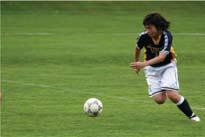
Competitive and Club Athletics
Support for students with learning differences









Avariety of improvements and innovative programs in Georgia’s public school systems have resulted in many stellar elementary, middle and high schools across the metro area. different school systems feature specialized programs and academic opportunities, such as magnet, charter, vocational or alternative schools to suit their respective students, parents and communities. however, despite variations in programming and academic offerings, all public schools must offer the core curriculum as determined by the Georgia board of education. here is a county-by-county guide to metro Atlanta’s public school systems. For more information about the Georgia department of education, call 404-656-2800 or visit www.gadoe.org. u

According to the Georgia department of education, a charter school operates according to the terms of a charter, or contract, that has been approved by the local and state boards of education. the school is held accountable by the state for meeting the performance-based objectives laid out in the charter, as well as state curriculum standards; however, students, parents and teachers enjoy more decision-making freedom.




Board of Education
770-479-1871
www.cherokee.k12.ga.us

Board of Education
770-473-2700
www.clayton.k12.ga.us

Board of Education
770-426-3300
www.cobb.k12.ga.us
Spending per Student: $7,438
What’s New
2010 Average CRCT Scores
3rd: (R) 849.59 (M) 842.97
5th: (R) 836.98 (M) 844.17
2010 Average SAT: 1582
Top 5 Schools by Average 2010 SAT Score etowah high 1679 cherokee high 1606 creekview high 1584 Woodstock high 1544 Sequoyah high 1533
cherokee county School district placed fourth in the nation for 2010 in the national School Boards Association’s Annual digital district Survey (large Student Population category).
2010 Average CRCT Scores
3rd: (R) 827.14 (M) 823.44 5th: (R) 821.02 (M) 827.15
8th: (R) 828.95 (M) 812.89
2010 Average SAT: 1259
Top 5 Schools by Average 2010 SAT Score
hS 1250
What’s New
clayton county’s graduation rate has been higher than the state average for three consecutive years. For 2009-2010 82% of the district’s schools made Adequate Yearly Progress (AYP).
2010 Average CRCT Scores
3rd: (R) 841.21 (M) 842.35
5th: (R) 836.15 (M) 848.32
8th: (R) 843.31 (M) 833.96
2010 Average SAT: 1523
Top 5 Schools by Average 2010 SAT Score
George Walton high 1711 Wheeler high 1655 Alan c. Pope high 1653 lassiter high 1633 harrison high 1577
What’s New cobb county high school students posted their sixth consecutive score increase on the Act, and the percentage of seniors taking the Act has grown by 10% over the same time period.

Board of Education
770-254-2800 www.cowetaschools.org
Total # of Students: 22,138
Spending per Student: $8,053
2010 Average CRCT Scores
3rd: (R) 837.12 (M) 835.91
5th: (R) 832.13 (M) 836.33 8th: (R) 838.74 (M) 823.80
2010 Average SAT: 1503
Top 3 Schools by Average 2010 SAT Score northgate high 1524 newnan high 1508 east coweta high 1478
What’s New coweta county high schools’ average on the Verbal and Math sections of the SAt was 1020 in 2010, three points above the national average of 1017 and 42 points above the average of all Georgia schools combined. Number of Schools

Board of Education
678-676-1200 www.dekalb.k12.ga.us
Total # of Students: 101,079 Spending per Student: $8,187
2010 Average CRCT Scores
3rd: (R) 830.29 (M) 821.71 5th: (R) 823.89 (M) 825.36 8th: (R) 830.08 (M) 813.40
2010 Average SAT: 1328
Top 5 Schools by Average 2010 SAT Score chamblee
What’s New deKalb county School System entered into an articulation agreement with deKalb technical college, affording students the opportunity to earn 12 college credits upon completion of the Small Business development Pathway.
Number of Schools
2010 Average CRCT Scores 3rd: (R) 835.88 (M) 834.21 5th: (R) 830.08 (M) 830.26 8th: (R) 834.78 (M) 812.91



770-651-2000 www.douglas.k12.ga.us
2010 Average SAT: 1342
Top 4 Schools by Average 2010 SAT Score Robert S. Alexander comprehensive high 1403 douglas county high 1351 chapel hill high 1324 lithia Springs high 1290
What’s New in its first year, douglas county college and career institute had 180 high school students participate in 11 college and two high school programs. WGct certificates were awarded to 181 high school students dually enrolled in college classes.
Board of Education

770-460-3535 www.fcboe.org

Total # of Students: 21,426
Spending per Student: $8,441
What’s New
2010 Average CRCT Scores
3rd: (R) 854.14 (M) 858.41
5th: (R) 841.75 (M) 856.78
8th: (R) 848.62 (M) 843.76
2010 Average SAT: 1547
Top 5 Schools by Average 2010 SAT Score
Mcintosh high 1624
Starr’s Mill high 1617
Whitewater high 1518
Fayette county high 1491
Sandy creek high 1436
Fayette county’s new school superintendent, dr. Jeffrey Bearden, superintendent of MSAd 35 in city eliot, Maine, will take the helm in January. he replaces dr. John decotis, who retired after serving 11 years as superintendent.
2010 Average CRCT Scores
3rd: (R) 855.06 (M) 860.46
5th: (R) 845.84 (M) 864.13
8th: (R) 851.06 (M) 848.10


770-887-2461 www.forsyth.k12.ga.us
2010 Average SAT: 1571
Top 4 Schools by Average
2010 SAT Score
South Forsyth high 1623
north Forsyth high 1515

Spending per Student: $7,868
West Forsyth high 1559
Forsyth central high 1545
What’s New



u.S. doe selected Forsyth county Schools as one of 49 grantees for a $4.7 million investing in innovation (i3) grant. FcS is the only recipient in Georgia and one of 12 school districts in the nation to be a grantee.
Number
2010 Average CRCT Scores
3rd: (R) 842.03 (M) 844.00
5th: (R) 835.89 (M) 844.52
8th: (R) 842.84 (M) 832.77
2010 Average SAT: 1580


Total # of Students:
Spending per Student:

Top 5 Schools by Average
2010 SAT Score
northview high School 1728
Alpharetta high School 1719
chattahoochee high 1687
Milton high School 1650
Riverwood international charter School 1640

Fulton county’s statewide dominance of the SAt continues, with more than a third of its high schools scoring in the state’s top 25. northview high School has the highest SAt score in Georgia among schools with large numbers of test-takers.
2010 Average CRCT Scores
3rd: (R) 830.18 (M) 829.41 5th: (R) 823.29 (M) 833.05 8th: (R) 830.43 (M)
2010 Average SAT: 1319



Board of Education
770-229-3700
www.spalding.k12.ga.us

Top 2 Schools by Average
per Student:
What’s New
Griffin-Spalding county School System is receiving $3.1 million through Georgia’s Race to the top award. the Race to the top fund rewards states that are creating conditions for education innovation and reform.
2010 Average CRCT Scores







Board of Education
678-301-6000
www.gwinnett.k12.ga.us


3rd: (R) 839.88 (M) 842.99 5th: (R) 833.76 (M) 846.85 8th: (R) 841.16 (M) 836.19
2010 Average SAT: 1532
Top 5 Schools by Average 2010

What’s New



named one of the highest performing urban districts in the country for the second consecutive year, Gwinnett county Public Schools won the 2010 Broad Prize for urban education, the largest education award in the country.


2010 Average CRCT Scores 3rd: (R) 834.06 (M) 828.84 5th: (R) 827.42 (M) 828.14 8th: (R) 832.22 (M) 815.63
2010 Average SAT: 1467
Top 5 Schools by Average 2010 SAT Score
1558
What’s New lanier charter career Academy provides hall county high school students in hall county the opportunity to gain handson skills in the hospitality industry. the oaks @ lanier charter career Academy features businesses operated by students.


2010 Average CRCT Scores
3rd: (R) 837.69 (M) 828.76




6-12) 1
770-957-6601
www.henry.k12.ga.us
5th: (R) 831.28 (M) 831.69
8th: (R) 837.17 (M) 821.07
2010 Average SAT: 1394

Total # of Students:


Spending per Student:
Top 5 Schools by Average 2010 SAT Score eagles landing high 1500 union Grove high 1491 ola high 1484 Woodland high 1392 dutchtown high 1375

What’s New



the henry county Board of education has named dr. ethan hildreth as Superintendent of Schools effective January 1, 2011, after retirement of Superintendent Michael Surma.
Number of Schools
2010 Average CRCT Scores
3rd: (R) 839.21 (M) 840.85
5th: (R) 831.87 (M) 841.90
8th: (R) 835.90 (M) 819.33

Total
2010 Average SAT: 1367
Top 4 Schools by Average 2010 SAT Score
Board of Education
770-443-8000
www.paulding.k12.ga.us

What’s New
Kindergarten students at P.B. Ritch elementary blast off with Mission Possible. each kindergarten student in the district received a t-shirt with their graduating class of 2023 on it. Mission Possible begins in kindergarten and ends when the student graduates.
2010 Average CRCT Scores
3rd: (R) 836.83 (M) 836.25
5th: (R) 832.56 (M) 841.75
8th: (R) 835.60 (M) 821.27
2010 Average SAT: 1399
Total
Total # of Students:
Spending
What’s New
Top 4 Schools by Average 2010 SAT Score heritage high 1470 Salem high 1369
Rockdale county high 1324
Rockdale Magnet School for Science & technology 1790
Rockdale county Public Schools has met AYP for the fifth consecutive year, and 100% of its schools also made AYP. internationally accredited, many of the system’s schools have received governor’s honors and awards for high achievement.
Board of Education
404-802-3500
www.atlanta.k12.ga.us Number of Schools elementary 55 Middle 16 high 25
Total # of Students: 47,789
Spending per Student: $13,463
Board of Education
770-945-5035
www.bufordcityschools.org
of Schools
2010 Average CRCT Scores
3rd: (R) 826.87 (M) 819.18
5th: (R) 821.57 (M) 823.16
8th: (R) 826.90 (M) 810.59
2010 Average SAT: 1239
Top 5 Schools by Average 2010 SAT Score
henry W. Grady high 1482 north Atlanta high 1442
Benjamin e. Mays high 1329 early college at carver 1320
Frederick douglass high 1266
What’s New
the latest urban school reform initiative developed by Atlanta Public Schools is the effective teacher in every classroom (etec) program. the district’s etec program establishes actions to identify, recruit, mentor, develop, foster and retain effective teachers. it also includes a state-ofthe-art assessment tool to provide real time performance indicators for educators.
Total # of Students: 2,933
2010 Average CRCT Scores
3rd: (R) 846.41 (M) 858.12
5th: (R) 830.95 (M) 846.83 8th: (R) 842.57 (M) 835.15
2010 Average SAT: 1496
Board of Education
404-370-4400 www.csdecatur.net
Total # of Students: 3,209
2010 Average CRCT Scores
3rd: (R) 853.33 (M) 848.87 5th: (R) 848.16 (M) 850.91 8th: (R) 849.73 (M) 840.33
2010 Average SAT: 1513
of Education
Total # of Students: 8,011 Spending per Student: $9,254
2010 Average CRCT Scores
3rd: (R) 835.88 (M) 837.60
5th: (R) 829.22 (M) 835.26
8th: (R) 833.81 (M) 820.82
2010 Average SAT: 1481
What’s New
Buford high School is one of 15 schools recognized by the Georgia Partnership for excellence in education for high graduation rates. Qualifying schools have at least an 85% graduation rate and maintain a 10% improvement over six years.
What’s New city Schools of decatur broke ground on the site of what will become the district’s new 4th and 5th grade academy— formerly Fifth Avenue elementary. the school is scheduled to be completed by the beginning of the 20112012 school year.
What’s New the Marietta city school district was one of only two school districts in metro Atlanta and one of 27 school districts statewide with 100% of its schools making Adequate Yearly Progress (AYP) in 2009-2010. the district overall also achieved AYP.