Find an Independent School in
We graciously thank our advertisers for their support of the Atlanta School Guide
Publisher/Editor In Chief PAtrIck kIllAM
Editor MElAnIE GIbbS
Marketing & Promotions MIchAEl thoMPSon
Account Director lAcEy JAMES
Contributing Writers WhItnEy brEnnAn lIndA burdEtt
Metro Atlanta Area Map to search for schools by region or neighborhoods, turn to page 32 and use the color-coded map to direct you to each region’s page number.
Education At-a-Glance
once you’ve selected your region of interest, the charts beginning on page 34 include a comparison of features for each school in that region, along with the page number for each school’s ad.
Region Maps and Listings
divided into regions of Atlanta, the color-coded maps beginning on page 37 provide each school’s location and page number for their ad.
Advertiser Index to find a school or resource by name, turn to the advertiser index on page 106 to find the appropriate page number. 1 2 3 4
Space closing for Winter/Spring 2012 issue: october, 21, 2011
Atlanta School Guide, Summer/Fall 2011, Volume 6, Issue 2 Published bi-annually by killam Publishing, Inc., 200 Market Place, Suite 230, roswell, GA 30075. Atlanta School Guide assumes no responsibility for errors, changes or omissions. Information may have changed since press time, so please verify all information when contacting a school or educational resource. reproduction in whole or in part of any elements of this publication is strictly prohibited without the written permission of the publisher. © 2011 killam Publishing, Inc.
For additional copies, further information or advertising, please contact:
P: 770-992-0273
F: 770-649-7463
pkillam@killampublishing.com
www.atlantaschoolguide.com

Caron Treatment Centers Student Assistance Program
20 Years of Supporting Sound Bodies, Minds, and Choices
Caron’s Student Assistance Program (SAP) ACKNOWLEDGES the many challenges that face youth today and CUSTOMIZES innovative programs to meet the specific needs of each school. We utilize outcomes-based best practices that benefit over 70,000 students, teachers and parents annually.

Adolescent Tobacco Cessation Program – Project CONNECT
This innovative tobacco cessation/reduction program addresses the unique needs of adolescents. Participants plan, prepare and develop the skills to find their own success through the quitting process.
Learn more about how Caron’s SAP programs can make a difference in your school and community.
timeline for Finding a School
Prepare for enrolling your child in school
kEy: I = IndEPEndEnt School, P = PublIc School
6-10MONTHS AWAY
• Determine your child’s needs and expectations. I,P
• Research open house dates. I,P
• Inquire about each school’s admissions process. I
3 MONTHS AWAY
• Schedule any required health tests or immunizations. I,P
• To determine your school zone, use the county’s Web site or call the System directly. P
5 MONTHS AWAY
• Narrow down your choices. I,P
• Submit application and fees by the deadline. I
4 MONTHS AWAY
• Make a final decision and send in your acceptance to the school of your choice. I
2 WEEKS AWAY
• Find out what documentation is required registration.
• Complete tion forms and file with school.
• Prepare your child by making sure he or she gets a good night’s sleep, adheres to the dress code and is on time. I,P DAY OF CLASS 1ST
1 WEEK AWAY
• Attend registration or orientation. P

SizzlingFamilySummer Fun
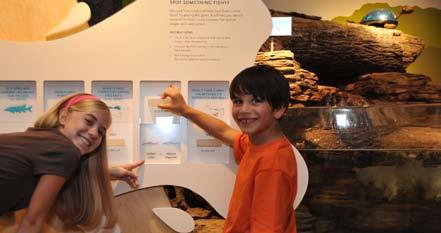
Chattahoochee Nature Center in and around Sandy Springs, GA!
e Chattahoochee Nature Center invites you to experience the new Interpretive Center for the Chattahoochee River Watershed. e Discovery Center has interactive exhibits, live, native animals, native plant gardens, and more! For more information, visit www.chattnaturecenter.org.

4th Annual Chattahoochee River
Make a big splash at the coolest event this summer on Saturday July 30, 2011 from 9 a.m. to 4 p.m. in Sandy Springs, Georgia. Float from Morgan Falls Dam to Powers Island in a kayak, canoe, or ra down the Chattahoochee River. Following the oat, enjoy food, live music, cra s, and selfguided hikes at Powers Island.

Anne Frank in the World Exhibit
Visit our Anne Frank in the World Exhibit located right above the Sandy Springs Welcome Center. More than 600 photographs chronicle Frank’s life from 1920s Germany all the way to her death in a Nazi conentration camp.

Important dates
Dates subject to change. Please check with your local school district for updates. T = Traditional Calendar Y = Year-round Calendar


UBLIC SCHOOLS



FALL BREAK


OF Y) r enry, Paulding ity
Aug. 4 douglas
Aug. 8 Atlanta city (T), clayton, coweta, dekalb, Fayette, Griffin-Spalding, Gwinnett, hall
Aug. 11 Forsyth, Marietta city
Aug. 15 cobb, Fulton
Sep. 19-23 cherokee, Paulding
Sep. 12-16 decatur city, henry
oct. 4-7 rockdale
oct. 10-11 Atlanta city (T), coweta
oct. 10-14 Griffin-Spalding
Sep. 26-30 Atlanta city (Y)
oct. 7-10 dekalb
oct. 10 douglas, Gwinnett, Marietta city
All others, not applicable
oct. 13-14 clayton
oct. 14-18 hall
oct. 17 Fulton
oct. 21 Fayette
oct. 31 Forsyth
THANKSGIVING BREAK
nov. 21-nov. 25 Atlanta city (T,Y), cherokee, clayton, cobb, coweta, decatur city, dekalb, douglas, Fayette, Forsyth, Griffin-Spalding, Gwinnett, henry, Marietta city, Paulding, rockdale
nov. 23-nov. 25 Fulton, hall
INDEPENDENT SCHOOLS
Open Houses oct. to Mar., in general
Application Deadlines late Jan. to late Feb., in general
TESTING DATES
oCTDEC SAT
oct. 1, nov. 5 and dec. 3
dates apply to both public and independent schools. For registration deadlines, visit the appropriate Web sites. SSAT oct. 15, nov. 12 and dec. 10 www.ssat.org
www.collegeboard.com
trends and happenings in Georgia Education
What you need to know to stay up to date with Atlanta and Georgia education
Recognition for Notre Dame Academy
notre dame Academy was featured on “Profile Series,” a discovery channel documentary. the duluth campus is the first catholic elementary school to earn the International baccalaureate Primary years Programme credential. See www.ndacademy.org.
Charter School Conference
charter school leaders and teachers will converge on Atlanta June 20-23 for the national charter School conference. Events include a reception at the Georgia Aquarium, and an address by u.S. Secretary of Education Arne duncan. Visit www.nationalcharter conference.org.
Grants for Education
In these tight economic times, parents seeking funds to support their schools can turn to lowe’s Educational Founda-
tion, which offers toolbox for Education grants for parent-initiated efforts, benefiting k-12 public schools. In 2010, 17 grants were awarded to Georgia schools. call 704-758-4337, or go to www.tool boxforeducation.com.
Avossa Named Superintendent
In April, robert Avossa was named superintendent of Fulton county Schools. Previously, Avossa was chief Strategy and Accountability officer for the c harlotte-Mecklenburg system.
Appealing College Scholarships
not happy with your financial aid offer? Appeals for college scholarships are possible. Atlanta families who need assistance preparing students and finances for college can find help by contacting www.edulaunchpad.com. Young Writers Institute
Area students can hone their gift for writing through programs of the Atlanta young Writers Institute. one opportunity is AyWI’s Summer Writing Intensive, which challenges rising 10th – 12th grade students to investigate the many facets of storytelling and the writing process. call 404-509-9400 or visit www.aywi.org.
ASO Education Program
the Atlanta Symphony orchestra recently sponsored the “When I Play Music” campaign to raise $300,000 for its education program and initiatives. the ASo reaches more than 45,000 students and educators annually. Visit www.atlantasymphony.org.
GSU Receives Award
Georgia State university recently became a Silver level member of Partnership for a Sustainable Georgia. www.gsu.edu.
PUBLIC EDUCATION POLICY CHANGES
HOPE Program Changes
Students in Georgia colleges and universities should be aware of changes in the hoPE scholarship program, approved by the Georgia General Assembly during its 2011 legislative session. Among other modifications, hoPE award and grant amounts now will be adjusted annually based on lottery revenue.
Pre-K Modifications
under the same legislation, Georgia’s lotteryfunded Pre-k program also
is undergoing changes. In fall 2011, the six-and-ahalf-hour Pre-k program becomes a four-hour program.
GHSGT Phase-Out
current mandatory tests for high school students to receive a diploma will be phased out beginning with the 2011 freshman class, under a plan approved this spring by the State board of Education. the elimination of this test, will require that high school students pass all eight of their
end-of-the-year tests before graduating. Scores on the year-end tests will account for 20% of a student’s final class grade.
Math Modifications
In spring 2011, the State board of Education approved the recommendation to allow four discrete math courses to be taught to high school students who may be struggling with the current integrated math curriculum. the four new courses are taught with a more traditional delivery.

At Andrew College. We believe that success starts with a strong academic foundation. As a private two-year college related to The United Methodist Church, Andrew offers four academic divisions and 40 different challenging programs of study:
• Fine Arts (art, drama/theatre and music programs)
• Humanities
• Math and Science
• Social Sciences
Education 101
Terms to know in your search for the right educational experience for your child
CHARTER SCHOOL A tax-supported public school that is independently run, allowing for greater educational choice for a school community.
ExPERIENTIAL LEARNING An educational approach using applied, hands-on methods of learning.
INTERNATIONAL BACCALAUREATE (IB) A specifically designed comprehensive academic program emphasizing traditional disciplines while encouraging an international perspective.
MAGNET SCHOOL A public school that offers a specific or enhanced curriculum designed for students of special interest or ability.
MONTESSORI A school following the principles developed by dr. Maria Montessori focusing on the unique individuality, self-reliance and independence of children.
SPECIAL NEEDS A school or program for children who have mildto-moderate learning differences. It usually features smaller class sizes, individualized attention and multisensory learning methods.
ACCREDITATION official certification that guarantees a school provides an education of a reasonably high quality.
ACT An alternative to the SAt, a national college admissions examination consisting of subject area tests in English, Mathematics, reading and Science, with an optional 30-minute writing test.
ADEqUATE YEARLY PROGRESS (AYP) A measure of student achievemen as required by the No Child Left Behind Act.
CRITERION-REFERENCED COMPETENCY TESTS (CRCT) tests to measure how well students acquire the skills and knowledge described in the Georgia Performance Standards.

GEORGIA
PERFORMANCE STANDARDS Statewide standards of academic content for all k-12 subjects, to which every school must adhere and on which students are annually tested.
HOPE SCHOLARSHIP A lottery-funded scholarship in Georgia that rewards academically achieving students with financial assistance to attend eligible Georgia colleges and universities.
NO CHILD LEFT BEHIND ACT A 2001 federal law designed to ensure that all children have a fair and equal opportunity to obtain a high-quality education and meet state academic standards of proficiency.
NOTIFICATION DEADLINE the date by which an independent school notifies
families of the acceptance of a child for enrollment to the school.
PSAT A standardized test offering students practice for the SAt and allowing them to qualify for the National Merit Scholarship.
REPLY DEADLINE the date by which parents must notify an accepting school of their commitment to enroll their child.
SAT this standardized test measures the critical thinking, mathematical reasoning, and writing skills of students planning to attend college.
SECONDARY
SCHOOL
ADMISSIONS
TEST (SSAT) the admissions test that many independent schools require students to take in order to be considered for enrollment.

communication
deciphering Associations and organizations
Many local and national organizations work to bring out the best in summer camps and public, private and boarding schools by setting policies, serving as advocates, researching educational advancements, identifying schools that meet certain standards through accreditation or by offering services to the educational communities both in Atlanta and in Georgia. the following are just some of the organizations you should know in your search for the best educational experience for your child.
American Camp Association (ACA) www.acacamps.org Accredits camps that meet industry-accepted and government-recognized standards, educates,and establishes guidelines.
The Association of Boarding Schools (TABS) www.boardingschools.com this organization of nearly 300 boarding schools serves the professional
development needs of boarding schools and provides information to potential students and their families.
Association of Christian Schools International (ACSI) www.acsi.org AcSI strives to enable christian educators and schools worldwide to effectively teach using christ-centered curricula and programs.
Association Montessori Internationale (AMI) www.montessori-ami.org
Founded in 1929, AMI recognizes schools that strongly adhere to Montessori principles and practices.
Atlanta Area Association of Independent Schools (AAAIS) aaais.org
Although not an accrediting agency, AAAIS is an affiliation of independent schools and operates under analogous principles and a common code of ethics.
Department of Education (DOE) www.doe.k12.ga.us
A statewide, policy-driven organization governing the public school system of education in Georgia for k-12, the doE operates under the direction of the State Superintendent of Schools.
Georgia Accrediting Commission (GAC) www.coe.uga.edu/gac GAc offers four levels of approval: preparation status, provisional accreditation, accreditation and accreditation with quality.
Georgia Association of Christian Schools (GACS) www.gacs.org uses generally accepted indicators of quality, voluntary self-improvement and peer review to measure schools.
Georgia Association of Educational Leaders (GAEL) www.gael.org
this statewide umbrella organization of six professional associations provides unity among school leadership organizations.
Georgia Association for Private Schools for Exceptional Children (GAPSEC) www.gapsec.org
this state organization is for schools that serve students with learning issues.
Georgia Independent School Association (GISA) www.gisa-schools.org
Association of private, independent and parochial schools whose mission is to advance excellence and collaboration among independent schools.
Georgia Partnership for Excellence in Education (GPEE) www.gpee.org
this non-profit organization of business, education, community and government leaders aims to shape policy and reform public education in the state.
Georgia Private School Accreditation Council (GAPSAC) www.gapsac.org
Association of k-12 private schools whose students are recognized and ap-
proved by the Georgia doE for transferring credits to public schools on the same basis as students from public schools.
Georgia Professional Standards Commission (PSC) www.gapsc.com
A state organization responsible for setting and applying high standards for the preparation, certification, and continued licensing of Georgia public educators. Preparation and conduct of public school teachers and staff.
Georgia School Boards Association (GSBA) www.gsba.com representing Georgia’s 180 elected boards of education, GSbA provides leadership and services to local boards of education.
National Association for the Education of Young Children (NAEYC) www.naeyc.org the nAEyc focuses on the quality of educational and developmental services for children, from birth to age eight, including daycare and Pre-k centers. It is a national network of over 300 local, state, and regional affiliates.
National Association of Independent Schools (NAIS) www.nais.org the association values and works to maintain the independent nature of each member school by promoting high standards of educational quality and ethical behavior.
National Christian School Association (NCSA) www.nationalchristian.org Administrators from accredited schools, university educators and public schools preside over the accreditation process for ncSA.
Southern Association of Colleges and Schools (SACS) www.sacs.org
Member schools meet research-based standards and maintain continuous school improvement and quality assurance. Its mission is the improvement of education in the South through accreditation.
Southern Association of Independent Schools (SAIS) www.sais.org
Members meet quality standards, receive peer evaluation and implement a school plan focused on strategic improvement.
For more information about these and other organizations and associations that ensure quality education among camps and schools, visit the websites of the Georgia department of Education (www.k12.ga.us) or the u.S. department of Education (www.ed.gov).
headmaster’s corner
billy Peebles
Headmaster, The Lovett School
now in his seventh year as headmaster of the lovett School, billy Peebles lends his desire to nurture and encourage students to service on boards for organizations like breakthrough/Atlanta, the council for Spiritual and Ethical Education, and the American Association for Gifted children. not only an administrator, Peebles also has enjoyed teaching American history for almost 25 years.
What is your educational philosophy? I believe fervently in young people and in their capacity and desire for academic excellence, for community, and for service. Good schools nurture that capacity and desire.
What do you love most about your job? The people—able and idealistic students, talented and devoted faculty, and enormously supportive parents.
How can parents best contribute to the educational process? by working with schools in partnership toward the realization of our mission: nurturing excellence of mind, body, spirit, and character. I urge parents to work diligently to understand fully all that the school is seeking to do toward fulfilling its mission.
How is the field of education changing? Education, like life in the 21st century, is more fragmented. A constant challenge

is to provide students a holistic, focused experience that does not get overly fragmented by a proliferation of information, communication, and technology.
What advice would you offer parents about their children’s education? consider carefully the variety of great school options available in our community and make sure there is strong alignment between parental expectations and values and the mission and purpose of your child’s school.
THE
ESSENTIALS: THE LOVETT SCHOOL
Emphasis: An education rooted in learning, character, and community.
Year Founded: 1926
Grades: k-12
Students: 1,575
Avg. Class Size: lower-20; Middle-18; upper-15
Tuition Range: $18,470-$22,020
Accreditations or Affiliations: SAcS, SAIS, nAIS, AAAIS, SSAtb, JAtP
Location: northwest Atlanta
Contact: 404-262-3032 www.lovett.org

Parental
INVOLVEMENT

S U CC ESS
BY WHITNEY BRENNAN

Whether your child is entering a new school or you are simply looking for new ways to be involved in your child’s life, one of the most important things you can do for your children is to make sure they have a solid support system. Perhaps the two most important parts of their lives will be you, the parent, and their school. Getting involved in your child’s education unites these two aspects.

To many people, parental involvement means attending a class field trip or volunteering in their child’s classroom for a day. Although these types of participation certainly contribute to a child’s educational success, there are many other ways to get involved—and getting involved doesn’t always mean going to the school. Getting involved also means encouraging education at home as well as getting to know your child’s school. Research consistently shows that it’s important for parents to get involved in their child’s education. And as a parent, perhaps one of the most important benefits of getting involved is feeling more confident in your
child’s learning environment.
Indeed, there is much evidence to support the idea that parental involvement improves a child’s academic achievement and contributes to future life successes. The National Education Association (NEA) reports that parental involvement results in fewer absences, improved behavior and increased educational success. This is true regardless of the parents’ income, education level or cultural background.
Similarly, the National Coalition for Parent Involvement in Education (NCPIE) credits parent participation with increasing a child’s grades and test scores and improving his or her social skills. Stu-
dents with parents who are actively involved also are more likely to enroll in higher-level courses and attend a postsecondary school. Parent participation also increases a child’s self-esteem and motivation—benefits that not only contribute to academic success, but to other life successes.
However, the child, of course, is not the only one who benefits from a parent’s involvement. Participation also benefits the parents. For example, if participation leads to higher grades, improved test scores and better school attendance, then a parent’s confidence in his or her child’s school increases. In addition, involvement may strengthen the bond between parent and child because parental participation may initiate more parent-child discussions, especially about school. Parents also have a higher selfesteem when involved in their child’s education because when the child is more successful, the parent feels as if he or she is making a valuable contribution to this success. By helping their child with school, parents may also advance their own skills and education level.


with fund-raisers, class parties and field days; offer to be a guest speaker in a classroom; grade assignments; read with students in the classroom or library; or assist with a school performance or play by making costumes or painting scenery. Some schools may have committees that need parent representatives. But there’s more to parent participation than volunteering at school.
Clearly, it is important for parents to participate in their child’s education. But, as a parent, how can you participate—and how can you find a school that welcomes this participation? There are many ways to get involved—both at school and at home. Of course, parents can act as chaperones on class field trips or volunteer in their child’s classroom. They can also help
It’s just as important—some believe it is more important—for parents to get involved in their child’s education at home. At-home participation is important for students of every age, but it perhaps becomes more important for middle and high school students who often do not want their parents to go to their school. No matter the age, always let your child know you are interested in his or her edu-

cation and that success in school matters to you. Give your child a curfew on school nights as well as on weekends; ask your child about his or her day at school; read with your child; check homework every night, making sure your child understands the assignments; provide him or her with a quiet place to study; and help your child stay organized by setting regular times to complete homework as well as working out a schedule to help your child avoid last-minute preparation. Make sure they have their books, homework and projects, and then take them to school or make sure they get on the bus. Of course, as your child gets older, he or she may require less direct involvement, but always let him or her know that you value education by asking about school. If you are searching for a new school, take note of programs schools might offer to encourage parental involvement. Be sure to find out how the school measures a child’s progress as well as how that
progress is communicated to parents— because getting involved also means communicating with the school. If your child already is in a school, but you don’t know these things, it’s never too late to ask.
Find out whether you can request regular meetings so you can stay informed about your child’s progress. Will you be able to ask the teacher any questions you may have about your child? Take the opportunity to email your child’s teachers if this option is available. Some schools may offer innovative programs—like online applications to monitor grades or automated phone calling systems—to further communication between parents and the school.
There are many ways to be involved in your child’s education beyond volunteering at school. Research different types of parental participation so that you’re aware of your options. Visit Web sites of reputable sources, such as NEA, NCPIE or the National Parent Teacher Association, to find ways to get involved. Ask co-workers and friends for suggestions. Most importantly, ask potential schools how parental involvement is encouraged. By becoming move involved in the ways you can, you’ll have more confidence in your child’s success at school as well as in his or her future.
TOOLS PARENTS CAN USE
The National Education Association makes available through its web site a series of two-page guides that provide parents and caregivers with fundamental tools to encourage their children’s success in school.
1. Go to www.nea.org.
2. Click on the “Tools and Ideas” dropdown.
3. Select “Promising Practices” and choose “Parent Resources” on the left.

Open HouseInsight
CHILD
The term “due diligence” is most often thought of in a business or legal sense. In its simplest form—applying the utmost care and responsibility to a task—it describes the effort that should be invested in all major life decisions. So when choosing a school for your children, to ensure that the right decision is made, due diligence is really just par for the course.
How can you feel confident that all of your “i”s have been dotted and your “t”s have been crossed? Start with contacting schools for more information—brochures, facts, figures and statistics will give you a general idea about potential schools. Talk to your friends and other parents for their recommendations. All of this information is helpful, and it will help you to pare down your list, but it certainly isn’t the only information on which you should base your decision. The next step in your research, and perhaps the most important one, is to discover the real school, the one behind the numbers and stats. The easiest way to do this is by attending an open house.
These information sessions provide the perfect opportunity to do hands-on research and determine whether a school “feels” like the right fit. “Attending an open house is one of the best ways to get to know a prospective school,” says Patricia Craft-Heuer, Direc-
tor of Admission, First Montessori School of Atlanta. “It is an opportunity to meet faculty and staff as well as the Head of School and administration.” In addition, as Rebecca Williams, Director of Marketing and Communication of Mount Pisgah Christian School, says, “You’ll also have the chance to talk to parent volunteers and current students to discover what sets that particular school apart.”
Good Open Houses give parents an opportunity to see different areas of the campus and learn about the whole school, not just the class for your child.
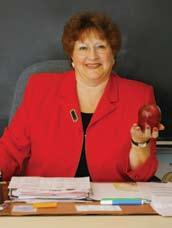
“When attending an open house, parents can learn certain important subtleties about a school,” Craft-Heuer continues. “Notably the school culture is evident at an Open House. You will get a feel for the school which will help you decide if it is the right place for you. All hosts at the Open House should be enthusiastic and helpful to their guests. Is the atmosphere relaxed or formal? Is the facility well maintained? Is the Open
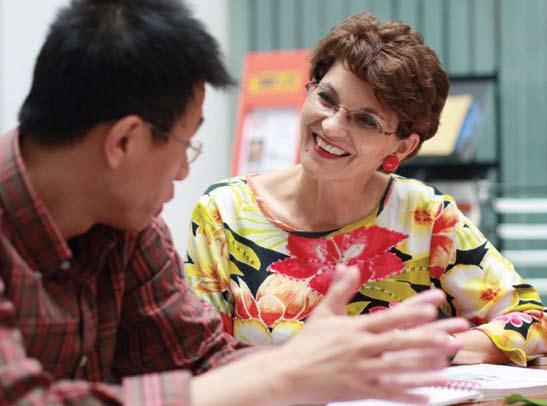
House well organized?”
She likens attending an Open House to buying a new home and asks, “Can you see your family there?”
While the format of a school’s open house may vary from school to school, the intent is always the same: to give prospective parents a sense of what the school is all about on a day-to-day basis. Many open houses offer tours of the school to familiarize parents with the classrooms and the school’s overall atmosphere. Parents are often broken up into smaller groups for the tour—this is an excellent opportunity to speak on closer terms with a school representative.

presentations by administrators, teachers, students and parents.
“It’s important for parents to attend our open houses because it gives them a chance to hear about our curriculum and meet the people who are responsible for bringing it to life each day. The opportunity to tour the facility while school is in session enables parents to observe a typical day and see the interaction between teachers and students.”
Lynne Floyd, Eastside Christian School Director of Development, says that at her school, open houses include
In addition to a tour of the campus, an open house provides a chance to interact with administrators and teachers. Faculty and staff such as the principal, headmaster or director of admissions will usually speak about the school and also welcome questions. Often, PTA members, parents of current students or current students
themselves are on hand to speak about the school from their perspectives. Be an active listener throughout this process, but remember that this is your chance to ask questions that are pertinent to your family and your child in particular.
“Talk to the teachers, administrators, parent volunteers and current students to discover how each child’s potential is maximized through hands-on learning, engaging curriculum, exploration opportunities, individualized instruction, and relationship-building,” advises Williams.
“Parents should pay attention to the response of the students to their teachers and their enthusiasm for learning,” Floyd continues. She adds that parents should explore issues like campus safety, after school care, special needs, medical issues, teacher certification and accreditation. “Parents should also ask about where students have enrolled following graduation from a particular school. Parents should inquire about test scores, advanced classes as well as the availability of remedial classes. They should find out how the transition into the school is handled.”
Public and private schools schedule open houses differently from each other. In August, right before school begins, public schools often hold a new student registration, which may serve as an open house, at which they offer students the chance to see the school they will be attending. Private schools begin holding open houses typically from October through March for the following school year. Contact the schools of your interest for more information about their open house schedules and determine whether an appointment is necessary. Various schools may also offer alternative options for you to get to know the school, such as personalized tours or having your child
attend for a half-day, so ask each school what is available to help you make the best decision.
Although researching for the right school can be overwhelming, remember that through due diligence, you’ll feel ready to make the decision. Once you’ve conducted preliminary research, visited the schools, met the key players who will be involved in your child’s education and determined which schools seem to be a great fit, you’re sure to feel confident in the decision you make.
“Making a decision on what school your child will attend is one of the most important things parents do,” says CraftHeuer. “Attending an Open House is part of the process of making an informed decision.”
For more information about open house dates and other details for select independent schools, turn to the At-aGlance section beginning on page 34.
QUESTIONS TO CONSIDER AT AN OPEN HOUSE
outside of class?grams are there to accommodate this need? from the teacher on how my child is doing?
zations? outside of the classroom?
munity service?
classroom?

Making Movethe
Easing into Middle and High School
BY WHITNEY BRENNAN
Transitions to middle and high school can be daunting to both children and parents, whether they are in an independent school or a public school setting. New middle and high school students usually enter larger schools and have to learn to cope with more peers, new teachers and unfamiliar subjects, as well as becoming the youngest students in the school—again.
While some stress will always accompany the move to middle and high school, there should be excitement, too, as the change also means the possibility of new friends, new extracurricular activities, and more freedom. The good news is that there are strategies for making the transition easier for both you and your child.
First, good communication is key. Find out what concerns your child has about moving up. The National Middle School Association says the main concerns of new middle school students include being late, getting lost, failing, more challenging work, being picked on and taking tests. As these students transition into high school, their concerns change to making good grades, taking tests/final exams, difficult classes, preparing for college and turning in work on time.
trouble. Discuss the transition with your child so you can better understand their worries.

Make sure you and your child are familiar with the new school and its transition resources.
Second, make sure you and your child are familiar with the new school and its transition resources. Most schools host an orientation/open house for students. The sessions typically allow students to meet teachers and other students, receive copies of their class schedules, and familiarize themselves with their new surroundings. In addition to hosting orientations, some schools also send information packets to families that include materials about peer pressure and middle/high school expectations, student handbooks with the school’s guidelines and an outline about what to expect the first day of school. Middle and high schools usually offer more extracurricular activities that also allow your child to make friends and explore new interests, so find out as much as possible about what your school has to offer.
However, not all children have the same concerns. Your child may be more worried about what you expect, making friends, peer pressure or getting into
Of course, transitioning doesn’t end once school begins. Some middle and high schools offer peer programs that pair incoming sixth- and ninth-graders with older students who are available to answer questions, help younger students navigate the school, open lockers, etc. But at the very least, these older peers give younger students the comfort of knowing they have someone at the school to turn to during those tough first months.
Teacher mentoring, small group Q&A sessions and academic counselors are also great resources.
Part of moving up to middle school and high school means schoolwork will become more challenging. As a parent, your job is to help ensure your child succeeds academically. Grading systems might change to a letter grade or 100-point scale, and assignments will be tougher, so meet with your child’s new teachers at the beginning of the year to inquire
It is important to ask about homework— how much, how frequently, and how it will be graded.
about new expectations and grading policies. It’s important to ask about homework—how frequently will your child have homework; how much time will he or she be expected to spend on homework; will the homework be graded for accuracy, or will the teacher just check to make sure it was completed? The more information your child has about expectations at the new school, the more at ease he or she will feel when they arrive.

High school students also should be encouraged to think about what they want to do after they graduate. If they plan to attend college, they need to choose classes, such as college prep, advanced placement, etc., that will help them reach

their goals. They need to maintain good grades to increase their chances of attending the schools of their choice.
Most importantly, continue to meet regularly with your child’s teachers throughout the year. It’s essential to know how your child is doing so you can provide the assistance he or she may need. Along with parent-teacher conferences, many Metro Atlanta schools offer online programs where parents and students can monitor grades. Ask what options are available for tracking your child’s progress. Teachers also understand that the transition to middle or high school can be difficult, so if your child is feeling overwhelmed by the amount of schoolwork, discuss this with your child’s teacher; they may be able to help your child better organize his or her assignments.
The National Education Associa-
tion suggests students’ grades typically drop when they enter middle school, and ninth-graders have a higher risk than older students for dropping out, so it’s critical to create a smooth transition to middle and high school for your child’s future academic success.
TRANSITION ADVICE
Parents and children can find advice about transitioning to middle and high school through these resources:
American School Counselor Association www.schoolcounselor.org
National Education Association
www.nea.org
PBS Kids www.pbskids.org/itsmylife
Scholastic www.scholastic.com

atlanta area map
REGIONS FOR INDEPENDENT SCHOOLS
For features of independent schools, turn to Education At-a-Glance on pg. 34. For public school system information by county, turn to pg. 84.
2 2
1 1
5 5
3 3
Boarding Schools Alabama, Connecticut, Florida, Georgia, Illinois, Maryland, New York, North Carolina, Texas, Virginia
School County Guide
Early Learning, Tutoring, Summer Camps, Field Trips and Outreach Programs
REGION 4: Atlanta South/ Southeast/Southwest Atlanta South, Conyers, Eagle’s Landing, East Point, Fairburn, Fulton County, Grant Park, Locust Grove, Newnan, South Atlanta p.68
REGION 5: Atlanta West Atlanta, Collier Heights, Kennesaw, Marietta, Powder Springs, Smyrna
REGION 1: Atlanta North/Northwest
Alpharetta, Buckhead, Kennesaw, Marietta, North Buckhead, Roswell, Sandy Springs p.46
REGION 2: Atlanta North/Northeast
Alpharetta, Gainesville, Johns Creek, Norcross, North Fulton, Roswell, Sandy Springs p.51
REGION 3: Atlanta East
Athens, Dacula, Decatur, Lawrenceville, Lilburn, Midtown, Monroe, Morningside, Stone Mtn.
Education At-a-Glance
This information reflects the latest available data at publication time. Please confirm with each individual
1:
46 REGIon 2: ATLAnTA noRTH/noRTHEAST
Education At-a-Glance
This information reflects the latest available data at publication time. Please confirm with each individual school.
51 REGIon 3: ATLAnTA EAST
Education At-a-Glance
This information reflects the latest available
REGIon 5: ATLAnTA wEST
boARDInG SCHooLS
Marietta Beautiful parks, charming streets, 19th-century Victorian homes and historic sites make Marietta a desirable place to call home. Residents enjoy the vibrant downtown square, with its many restaurants, antique shops and happenings.
Woodstock Located in Cherokee County, Woodstock is, as locals say, “where modern amenities meet old Southern charm.” Historic Olde Towne pays a continual tribute to Woodstock’s pioneers through vintage shops and good old-fashioned Southern hospitality.






marietta • north buckhead






REGION 2
Independent Schools
Alpharetta Offering exceptional shopping, entertainment and dining, Alpharetta also boasts many awardwinning parks and numerous housing options.The city is also home to a 12,000-seat outdoor concert venue, the Verizon Wireless Amphitheatre.
Chamblee This DeKalb County suburb attracts diverse residents, thanks to its International Village, a 394-acre neighborhood that is home to people representing more than 30 countries. Chamblee’s Antique Row is the South’s largest antiques area.




norcross • north

Independent Schools
Decatur A great mix of history and modernity, Decatur is home to more than 200 shops, restaurants, galleries and performance venues located along tree-lined streets. Events take place throughout the year at the city’s historic downtown square.
Stone Mountain With a revitalized downtown and a variety of familyoriented activities, Stone Mountain has much to offer. The city’s four city parks, as well as Stone Mountain Park, make this one of the cleanest and “greenest” areas in Metro Atlanta.
ATLANTA EAST
dacula • athens

DECATUR
DECATUR



decatur • lawrence

Hope Springs
CHRISTIAN LEARNING CENTER

(Dyslexia, ADHD, ADD and processing di culties).


midtown • monroe

Independent Schools
NE I GHBORHOOD S OF NOTE
East Point The up-and-coming East Point area combines the charm of a small town with conveniences of a big city. Residents enjoy the city’s prime location near Hartsfield-Jackson Atlanta International Airport, MARTA and Downtown Atlanta.
Fairburn As host of the Georgia Renaissance Festival every year, Fairburn offers a rich cultural heritage, along with its small-town atmosphere. Also, the Atlanta Campus of Georgia Military College has opened its new doors in the Fairburn Educational Complex.

LLEGE PARK





Pre-K through High School Morning Care and Aftercare
Student –Teacher Ratio 1:14 Individualized Curriculum
Grades 1-9
Ability
south atlanta • locust

Independent Schools
FULTON
N E I GHBO R HOOD S OF N OTE
Acworth Surrounded by two lakes and 12 parks, Acworth offers plenty of recreation opportunities, including the Cobblestone Golf Course, one of Golfweek’s 2010 Best Municipal Courses. Located 35 miles northwest of Atlanta, the town is convenient to both I-75 and Highway 41. Acworth is designated as a Georgia Main Street City.
Douglasville A quick trip west of Atlanta on I-20, Douglasville has easy access to all that Atlanta offers—including Six Flags, 10 minutes away—but plenty of its own charm, too. Listed on the National Register of Historic Places, Downtown Douglasville’s historic district is an outstanding example of a turn-ofthe-century southern railroad town.

“When student’s Know who they are, Understand how they learn and can Lead with Godly wisdom they are truly mature and equipped for life long success.”
6th - 12th grade Accredited Small classes Amazing results Out of the box teaching
TLE Christian Academy gave me the chance I was longing for…A school with no drama, bullies, or cliques. Here I am respected, my teachers allow me to work at my own pace. It’s like being tutored in a class setting. Now I can pursue my professional aspirations even gain practical experience, which gives me a competitive advantage. is is the chance I wanted and the environment I thrive in.”
-Ross Wilson, 10th grader
2721 Summers St. NW, Kennesaw, GA 30144




boArdInG School
dIrEctory
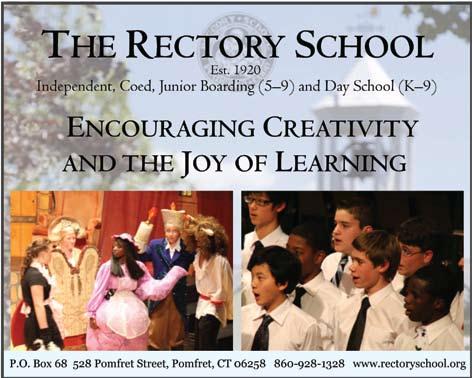
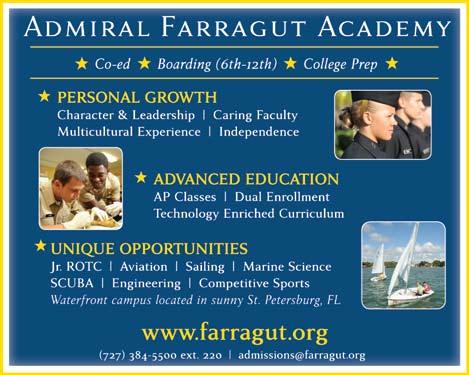
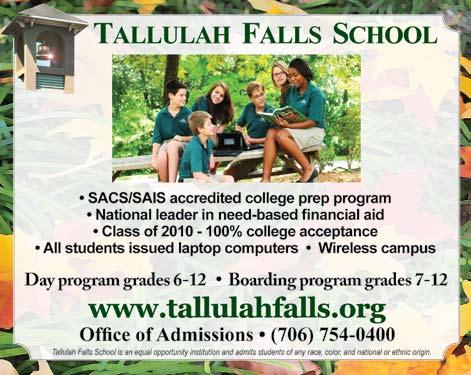
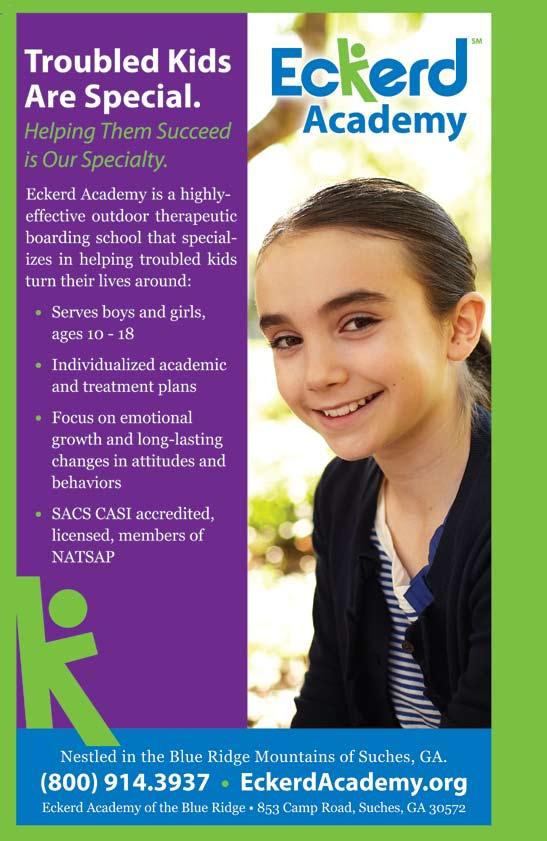
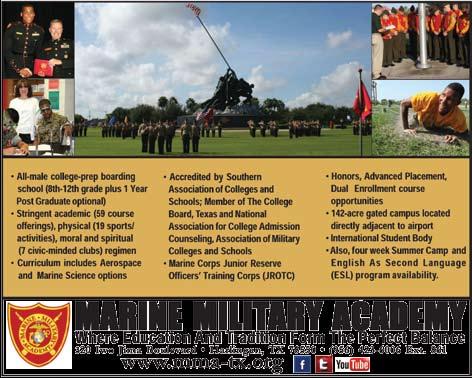
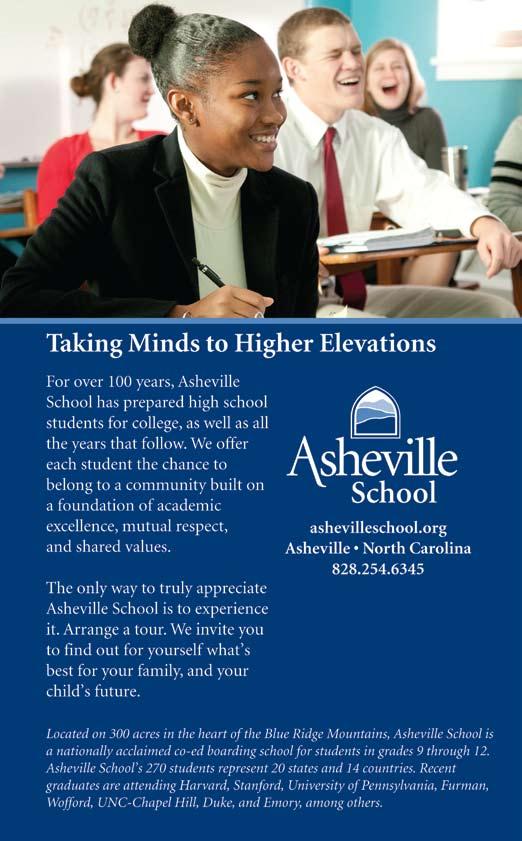
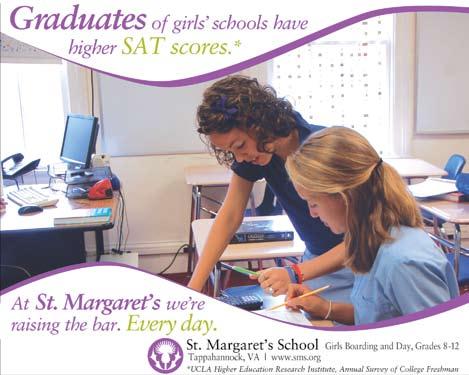
There are many benefits of a boarding school education. boarding schools are an option for students seeking a more independent learning experience. because boarding school students generally live on campus, learning takes place in and out of the classroom almost on a 24-hour basis—learning about life is just as important as learning about subjects. due to the availability of faculty throughout the day, boarding school students can get the academic help they need as well as mentoring assistance. When selecting a boarding school, it is important to visit the school campus, but representatives from many boarding schools visit Metro Atlanta throughout the year—contact each school for specific dates.
boarding School Directory







SPotlIGht on MEtro AtlAntA’S School SyStEMS
Avariety of improvements and innovative programs in Georgia’s public school systems have resulted in many stellar elementary, middle and high schools across the Metro area. different school systems feature specialized programs and academic opportunities, such as magnet, charter, vocational or alternative schools to suit their respective students, parents and communities. however, despite variations in programming and academic offerings, all public schools must offer the core curriculum as determined by the Georgia board of Education. here is a county-by-county guide to Metro Atlanta’s public school systems. For more information about the Georgia department of Education, call 404-656-2800 or visit www.gadoe.org. u
CHARTER SCH oo LS

CHEROKEE
Board of Education
770-479-1871
www.cherokee.k12.ga.us
Total # of Students:
Spending per Student: $7,438
What’s New
2010 Average CRCT Scores
3rd: (R) 849.59 (M) 842.97
5th: (R) 836.98 (M) 844.17
8th: (R) 844.79 (M) 831.55
2010 Average SAT: 1582
Top 5 Schools by Average 2010 SAT Score
Etowah High 1679
Cherokee High 1606
Creekview High 1584
Woodstock High 1544
Sequoyah High 1533
All five eligible Cherokee County high schools were named to the state’s 2011 AP Honors list as Science, Technology, Engineering and Math (STEM) Schools.
2010 Average CRCT Scores
3rd: (R) 827.14 (M) 823.44
5th: (R) 821.02 (M) 827.15
8th: (R) 828.95 (M) 812.89
2010 Average SAT: 1259
Top 5 Schools by Average 2010 SAT Score
Board of Education
770-473-2700
www.clayton.k12.ga.us
What’s New
Clayton County student performance exceeds the state’s average in the district’s graduation rate, and eighth-grade and eleventh-grade writing assessments
2010 Average CRCT Scores
3rd: (R) 841.21 (M) 842.35
5th: (R) 836.15 (M) 848.32
8th: (R) 843.31 (M) 833.96
2010 Average SAT: 1523
Top 5 Schools by Average 2010 SAT Score
George Walton High 1711
Wheeler High 1655
Alan C. Pope High 1653
Lassiter High 1633
Harrison High 1577
Board of Education
770-426-3300
www.cobb.k12.ga.us
What’s New
Since 2004, the overall number of Cobb County students taking Advanced Placement exams increased from 2,501 to 7,063, an increase of 182%! The District was recently named to the College Board’s Advanced Placement Achievement List.
COWETA
Board of Education
770-254-2800 www.cowetaschools.org
Spending per Student: $8,053
What’s New
2010 Average CRCT Scores
3rd: (R) 837.12 (M) 835.91
5th: (R)
2010 Average SAT: 1503
Top 3 Schools by Average 2010 SAT Score Northgate High 1524 Newnan High 1508 East Coweta High 1478
Coweta County’s Evans Middle School, Western Elementary School, Northgate High School, Brooks Elementary School and Arbor Springs Elementary School were all recognized for improvement and achievement during the 2009-2010 school year.
Number of Schools
Board of Education
678-676-1200
www.dekalb.k12.ga.us
DOUGLAS DEKALB
Board of Education
770-651-2000
www.douglas.k12.ga.us
2010 Average CRCT Scores
3rd: (R) 830.29 (M) 821.71
5th: (R) 823.89 (M) 825.36 8th: (R) 830.08 (M) 813.40
2010 Average SAT: 1328
Top 5 Schools by Average 2010 SAT Score Chamblee High 1628 Lakeside High 1617 DeKalb School of the Arts 1526 Druid Hills High 1513 Dunwoody High 1497
What’s New Four of DeKalb’s Engineering and Technology Education instructors at Arabia Mountain High School completed Engineering and Technology Education Industry Certification through the Georgia Department of Education and the Society of American Military Engineers.
Number of Schools
2010 Average CRCT Scores 3rd: (R) 835.88 (M) 834.21
5th: (R) 830.08 (M) 830.26
8th: (R) 834.78 (M) 812.91
2010 Average SAT: 1342
Top 4 Schools by Average 2010 SAT Score
Robert S. Alexander Comprehensive High 1403 Douglas County High 1351 Chapel Hill High 1324 Lithia Springs High 1290
What’s New Douglas County’s fifth high school, New Manchester High School, will open for the 2011-2012 school year with grades nine through twelve. It has 102 classrooms and the state has designated the school capacity at 1,975 students.
FAYETTE
Board of Education
770-460-3535
www.fcboe.org
FORSYTH
Board of Education
770-887-2461
www.forsyth.k12.ga.us
FULTON
Board of Education
404-768-3600
www.fulton.k12.ga.us
Spending per Student: $8,015
What’s New
2010 Average CRCT Scores
3rd: (R) 854.14 (M) 858.41
5th: (R) 841.75 (M) 856.78
8th: (R) 848.62 (M) 843.76
2010 Average SAT: 1547
Top 5 Schools by Average
2010 SAT Score
McIntosh High 1624
Starr’s Mill High 1617
Whitewater High 1518
Fayette County High 1491
Sandy Creek High 1436
The system’s Exceptional Children’s Program received the Pacesetter Award for the eighth consecutive year. It identifies the school system as a leader for outstanding efforts to improve the performance of students with disabilities.
2010 Average CRCT Scores
3rd: (R) 855.06 (M) 860.46
5th: (R) 845.84 (M) 864.13
8th: (R) 851.06 (M) 848.10
2010 Average SAT: 1571
Top 4 Schools by Average 2010 SAT Score
South Forsyth High 1623
North Forsyth High 1515
West Forsyth High 1559
Forsyth Central High 1545
What’s New
All FCS middle schools offer high school credit for two courses to select students. In 2011-12, the course offerings that carry high school credit will be expanded to include all students.
Number of Schools
Total # of Students:
Spending
2010 Average CRCT Scores
3rd: (R) 842.03 (M) 844.00
5th: (R) 835.89 (M) 844.52
8th: (R) 842.84 (M) 832.77
2010 Average SAT: 1580
Top 5 Schools by Average
2010 SAT Score
Northview High School 1728
Alpharetta High School 1719
Chattahoochee High 1687
Milton High School 1650
Riverwood International
Charter School 1640
What’s New
Thirty-four schools in Fulton County are being highlighted for improving and promoting academic excellence. The Single Statewide Accountability System awarded the schools in two categories, Greatest Gains and Highest Performance.
FAYETTE
FORSYTH
FULTON
Board of Education
770-229-3700
www.spalding.k12.ga.us
GRIFFINSPALDING GWINNETT
2010
2010 Average SAT: 1319
Top 2 Schools by Average
per Student:
What’s New
The Griffin-Spalding County School System is a Race to the Top system, with schools nationally recognized for character education and Blue Ribbon excellence and accredited with quality by SACS-CASI.
2010 Average CRCT Scores
3rd: (R) 839.88 (M) 842.99
5th: (R) 833.76 (M) 846.85 8th: (R) 841.16 (M) 836.19
2010 Average SAT: 1532
Top 5 Schools by Average 2010 SAT Score
Board of Education
678-301-6000
www.gwinnett.k12.ga.us
What’s New
The work of GCPS counselors at seven schools have earned their program’s national distinction. The American School Counselor Association presented six schools with the “Recognized ASCA Model Program Designation,” while a seventh school has been recertified.
2010 Average CRCT Scores
3rd: (R) 834.06 (M) 828.84
5th: (R) 827.42 (M) 828.14
8th: (R) 832.22 (M) 815.63
2010 Average SAT: 1467
Top 5 Schools by Average
2010 SAT Score North Hall High 1558 Chestatee High 1519 West Hall High 1466 Flowery Branch High 1456 Robert W Johnson High 1419
Board of Education
770-534-1080 www.hallco.org
What’s New
Two educators from the Hall County System were honored for being “Masters in Teaching-Life Changers at Work.” They are Cindy White from Da Vinci Academy and Darrell Skogman from Chestatee High School.
HENRY
Board of Education
770-957-6601
www.henry.k12.ga.us
PAULDING
Total # of Students: 40,300
Spending per Student: $6,968
What’s New
2010 Average CRCT Scores
3rd: (R) 837.69 (M) 828.76
5th: (R) 831.28 (M) 831.69
8th: (R) 837.17 (M) 821.07
2010 Average SAT: 1394
Top 5 Schools by Average
2010 SAT Score
Eagles Landing High 1500 Union Grove High 1491 Ola High 1484
Woodland High 1392
Dutchtown High 1375
A study conducted by the Center for American Progress evaluating “educational productivity” ranks Henry County Schools in the highest level on the Basic ROI (return on investment) measure of educational productivity.
2010 Average CRCT Scores
3rd: (R) 839.21 (M) 840.85
5th: (R) 831.87 (M) 841.90
8th: (R) 835.90 (M) 819.33
Board of Education
770-443-8000
www.paulding.k12.ga.us
ROCKDALE
Total
Board of Education
770-483-4713
www.rockdale.k12.ga.us
What’s New
2010 Average SAT: 1367
Top 4 Schools by Average 2010 SAT Score East Paulding High 1395 Hiram High 1364 South Paulding High 1363 Paulding County High 1346
Paulding County School District is among the 388 public school districts in the nation being honored by the College Board with a place on its Advanced Placement (AP) Achievement List.
2010 Average CRCT Scores
3rd: (R) 836.83 (M) 836.25
5th: (R) 832.56 (M) 841.75
8th: (R) 835.60 (M) 821.27
2010 Average SAT: 1399
Top 4 Schools by Average
2010 SAT Score
Total
Spending
What’s New
Heritage High 1470
Salem High 1369
Rockdale County High 1324
Rockdale Magnet School for Science & Technology 1790
The SkillsUSA chapter from Rockdale Career Academy earned 17 gold medals at the 2011 State Leadership and Skills Convention, the first time that one school won first place in every live media event.
HENRY
PAULDING ROCKDALE
ATLANTA CITY
Board of Education
404-802-3500 www.atlanta.k12.ga.us
Number of Schools
55 Middle 16 High 25
Total # of Students: 47,789
Spending per Student: $13,463
BUFORD CITY
Board of Education
770-945-5035 www.bufordcityschools.org
of Schools
1
2010 Average CRCT Scores
3rd: (R) 826.87 (M) 819.18
5th: (R) 821.57 (M) 823.16
8th: (R) 826.90 (M) 810.59
2010 Average SAT: 1239
Top 5 Schools by Average 2010 SAT Score
Henry W. Grady High 1482
North Atlanta High 1442
Benjamin E. Mays High 1329
Early College at Carver 1320
Frederick Douglass High 1266
What’s New Parkside Elementary School will represent Atlanta Public Schools in NASA’s 2011 Teaching From Space Reduced Gravity Education Program. Teachers Ronnie Thomas and Bejanae Kareem are scheduled to participate in this year’s NASA program. They will conduct an experiment involving the impact of various gravity conditions on bubbles.
Total # of Students: 2,933
per Student: $10,198
2010 Average CRCT Scores
3rd: (R) 846.41 (M) 858.12
5th: (R) 830.95 (M) 846.83
8th: (R) 842.57 (M) 835.15
2010 Average SAT: 1496
DECATUR CITY
Board of Education
404-370-4400 www.csdecatur.net
Total # of Students: 3,250
2010 Average CRCT Scores
3rd: (R) 853.33 (M) 848.87 5th: (R) 848.16 (M) 850.91 8th: (R) 849.73 (M) 840.33
2010 Average SAT: 1513
MARIETTA CITY
of Education
Total # of Students: 8,011 Spending per Student: $9,254
2010 Average CRCT Scores
3rd: (R) 835.88 (M) 837.60
5th: (R) 829.22 (M) 835.26
8th: (R) 833.81 (M) 820.82
2010 Average SAT: 1481
What’s New Buford City’s Buford Elementary School met adequate yearly progress (AYP) for the seventh consecutive year. Due to this honor, Buford Elementary has been recognized as a Georgia T itle I Distinguished School.
What’s New City Schools of Decatur will open its new 4th and 5th grade academy, 5th Avenue 4/5 Academy, at the beginning of the 2011-2012 school year. The district’s former 4th and 5th grade academy will become a K- 3 school.
What’s New State School Superintendent Dr. John Barge named Marietta Center for Advanced Academics a 2010 Georgia School of Excellence in Student Achievement. MCAA is one of 11 schools recognized as a Top 10% school.
EARLY EDUCATI on


EARLY EDUCATI on

Academic Advantage Tutoring

SUMMER ACADEMY
Open enrollment begins May 30th




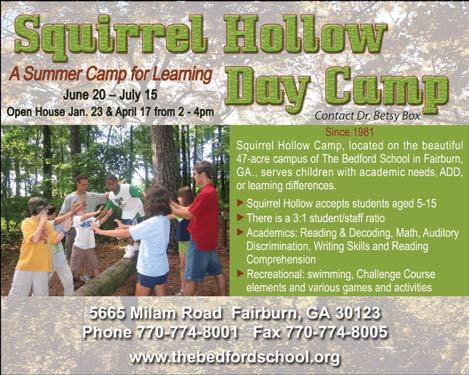
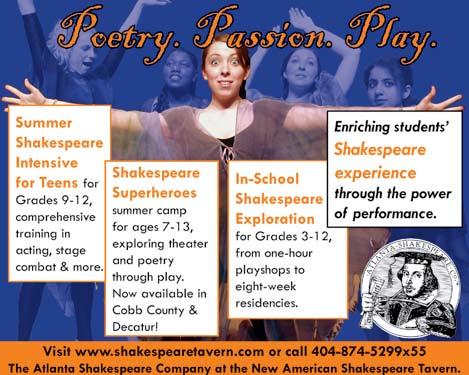
SUMMER CAMPS
rams • summer


Field


Field


ADVERTISER INDEX