





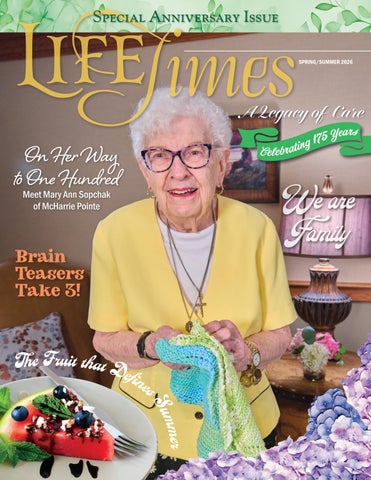

Spring and summer bring special energy to the McHarrie Life campus. As flowers bloom, neighbors gather outdoors, and the days grow longer, we are reminded how important community and connection are to living well at every stage of life.
This year makes the season even more meaningful as we celebrate a remarkable milestone — 175 years of caring for older adults in our community. Since 1851, Syracuse Home Association, now known as McHarrie Life, has served generations of residents and families in Baldwinsville and the surrounding Central New York Community.
Syracuse Home at McHarrie Place Health & Rehabilitation Center
McHarrie Towne Independent Living
Syracuse Home at McHarrie Place Health & Rehabilitation Center
Admissions: 315-638-2521
Over nearly two centuries, many things have changed—healthcare has advanced, our campus has grown, and new services have been introduced to meet the evolving needs of older adults. Yet one thing has remained constant: our commitment to providing compassionate care for those we are privileged to serve.
McHarrie Life Foundation
Wellness at McHarrie Life is about far more than healthcare. It includes opportunities to stay active, engaged, and connected. Whether it’s participating in fitness classes, enjoying a walk on campus, attending a social gathering, or sharing a meal with friends, these everyday moments help create a vibrant community where people truly feel at home.
Our incredible staff and volunteers play a vital role in making this possible. Their compassion, dedication, and professionalism ensure that every resident receives not only excellent care but also the warmth and respect that define our culture.
As we reflect on 175 years of service, we are deeply grateful to the many individuals who have helped shape this organization — residents, families, employees, volunteers, donors, board members, and community partners. Your support has enabled McHarrie Life to remain a trusted and caring presence in Baldwinsville for generations.
While we honor our past, we also look forward to the future. Our focus remains on enhancing wellness, independence, and quality of life for everyone who calls McHarrie Life home.
Thank you for being part of this remarkable journey.
With Gratitude,
Mark Murphy, CEO
McHarrie Pointe Assisted Living Residence
Admissions: 315-638-2525
Sage Court
Admissions: 315-638-2525
McHarrie Independent
Memory Care @ McHarrie Pointe
McHarrie Towne Independent Living
Admissions: 315-638-1172
To request information about our programs, please call 315-638-2521 or visit our website at www.mcharrielife.org.
Syracuse Home at McHarrie Place Health & Rehabilitation Center
LifeTimes is a publication of McHarrie Life Senior Community 7740 Meigs Road Baldwinsville, New York 13027 315-638-2521
LifeTimes Editor: Kelly O’Neill-Rossi Director, McHarrie Life Foundation
McHarrie Life Foundation
McHarrie Foundation
McHarrie Assisted Residence
If you would like to add/remove your mailing address information, please email krossi@mcharrielife.org.
McHarrie Life Senior Community is a not-for-profit organization that offers a continuum of healthcare programs and services for older adults including; independent living at McHarrie Towne, assisted living and memory care at McHarrie Pointe, and short-term rehabilitation and skilled nursing care at McHarrie Place. All programs and services are conveniently located at 7740 Meigs Road in Baldwinsville, New York.

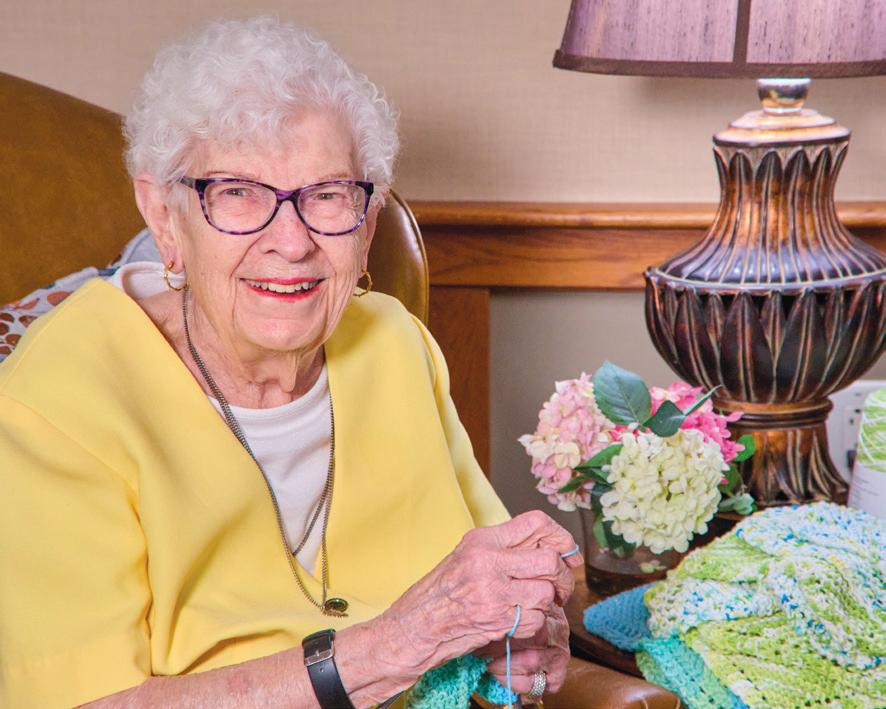


By: Peg Northrup, Development and Fundraising Manager
Reaching a 175-year milestone is an extraordinary achievement for any organization, but for a senior care community it represents something even more profound: generations of trust, service, and an unwavering partnership with its community.
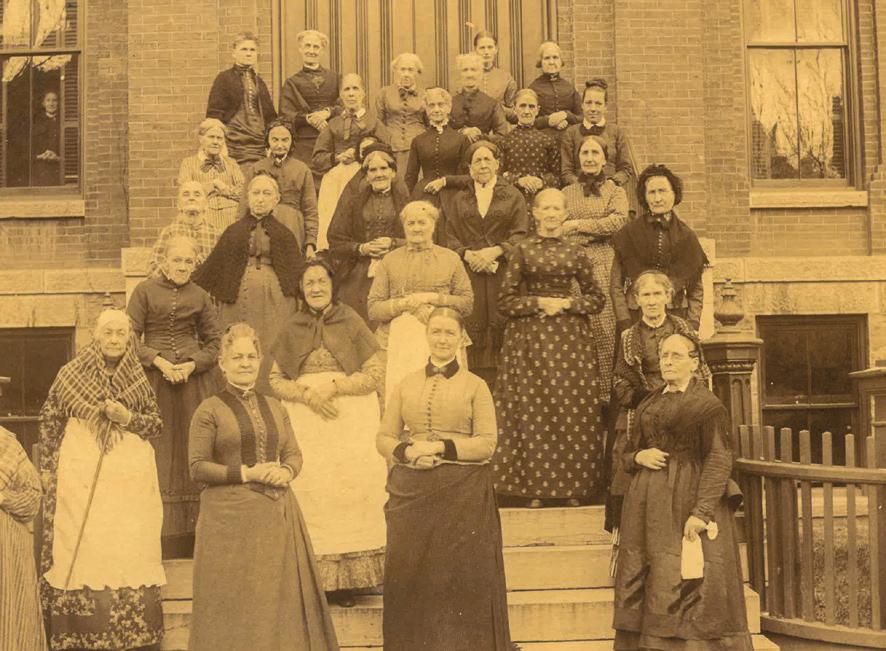
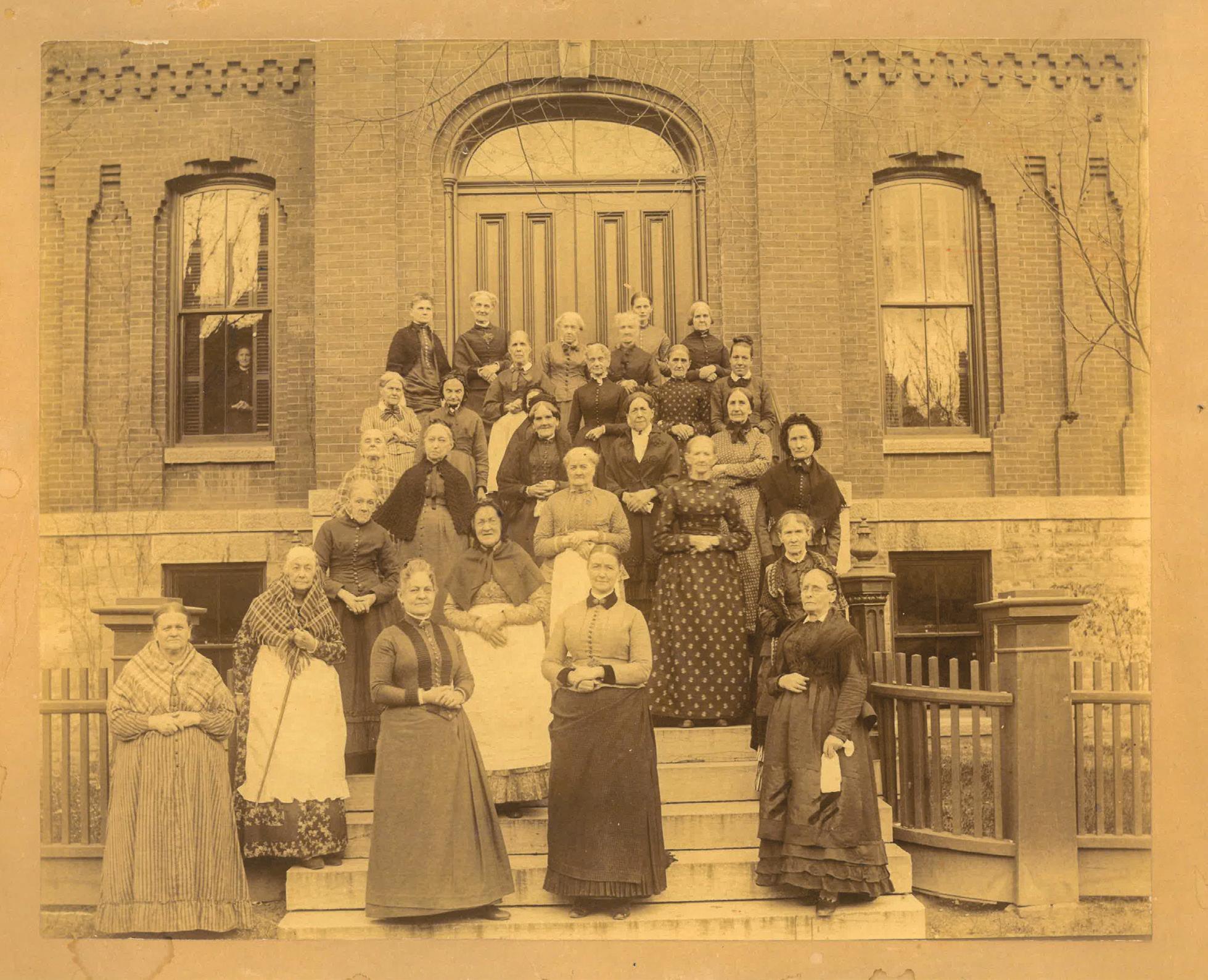
In 1851—just as the City of Syracuse was experiencing early growth and transformation— a group of concerned and compassionate women set out to open a community residence with a simple but powerful mission: to provide care, safety, dignity, and comfort to aging and infirmed women who had nowhere else to turn. The founders, driven by a deep sense of civic responsibility, were united by a vision to create a residence that would feel less like an institution and more like a home. Their efforts led to the opening of Syracuse Home at the corner of Townsend Street and Hawley Avenue, planting the seeds of a legacy that would endure for nearly two centuries.
Throughout wars, economic shifts, and societal change, Syracuse Home remained a stable and compassionate presence in service to Central New York. While community needs prompted the organization’s many expansions, community generosity funded them. Donations of supplies poured in from the community and fundraising efforts were well supported. In time, the organization’s mission broadened to offer a home-like atmosphere to all seniors in need of care.
Syracuse Home transformed over the years to
become McHarrie Life Senior Community— a resident-centered organization offering a full continuum of senior care on a 140-acre campus in Baldwinsville. Residents are supported by caregivers, skilled professionals, and volunteers who honor their stories, celebrate their strengths, and respect their dignity.
Families continue to entrust their loved ones to McHarrie Life because they recognize the devotion, warmth, and expertise that defines every resident interaction.
Dianne McLean, the daughter of a resident, has partnered with care teams at McHarrie Life as her mother’s needs changed. “The compassionate care our mom receives gives us peace of mind—we know she is being well taken care of. She enjoys interacting with the other residents and participating in many activities, including bingo, craft-making, and more. We were so happy she was encouraged to participate and that she is treated like family. We are extremely fortunate to have this level of skilled quality care in our community.”
This historic 175th anniversary offers an opportunity not only to celebrate achievements but also to look ahead with renewed purpose. As the region’s aging population grows and healthcare needs increase and become more complex, McHarrie Life will remain committed to meeting the region’s needs, delivering excellence through each of its services and programs.
As we celebrate 175 years of service, we honor all who built this legacy and all who

will continue it. Our dedicated staff will carry forward the tradition of compassion that has spanned generations.
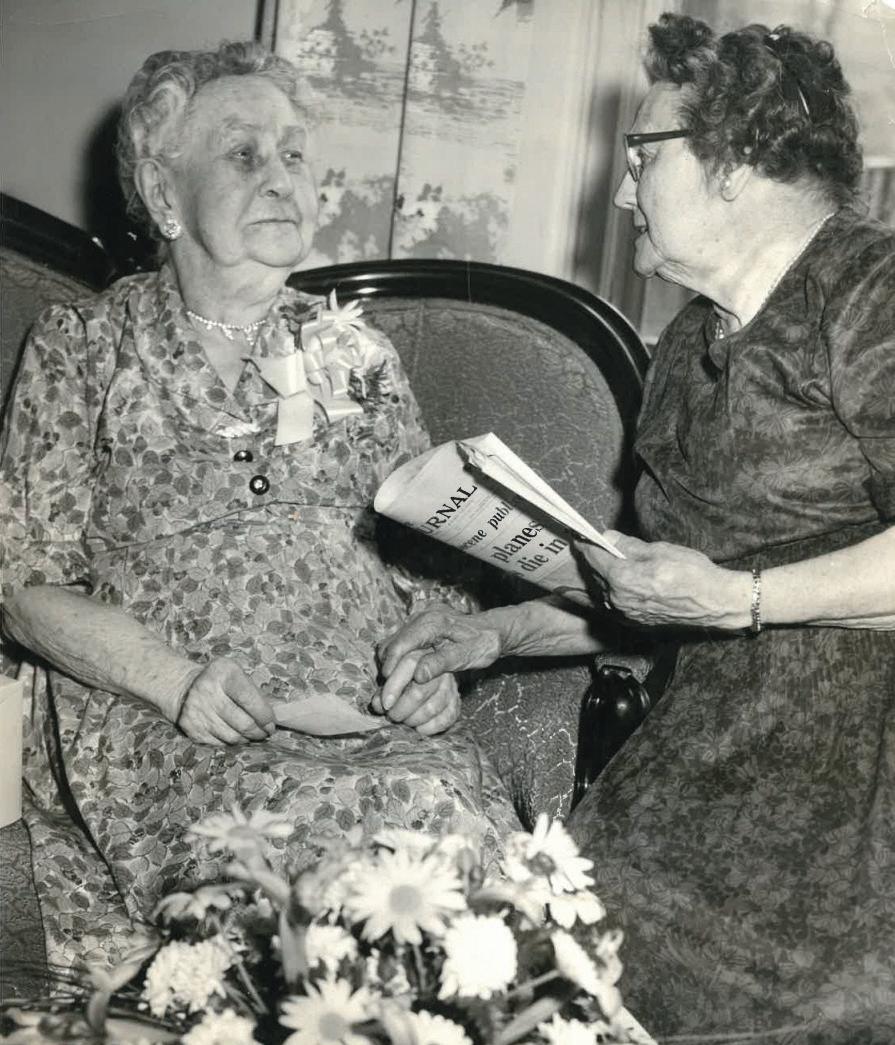
Doris Hildebrandt is a McHarrie Life resident who has also served its mission as a volunteer and member of its Foundation Board of Directors. “The women who founded Syracuse Home 175 years ago cared deeply—for people in need and for their community. That spirit of caring has been so evident to me in my 24 years as a resident here. McHarrie Life is a community of wonderful people who genuinely care.”
McHarrie Life Senior Community has stood as a testament to what is possible when a community comes together with a shared

mission. Its story is one of resilience, vision, and dedication and is a reminder that compassion can shape not only individual lives but also unify a community.
Generosity has sustained the mission of McHarrie Life Senior Community. For 175 years, community contributions have helped ensure we can provide care beyond what public reimbursement alone cannot support.
We invite you to consider making a monetary gift to McHarrie Life in honor of our 175th anniversary. You may use the envelope provided in this magazine or visit our website at mcharrielife.org/donate.
How do I know it’s time to move my mom or dad into an assisted living facility?
Deciding to move a parent into assisted living is emotional and often complicated. There isn’t one single sign, it’s usually a pattern of changes that suggests they need more support than can safely be provided at home.
Key indicators to watch for:
● Safety in the home: frequent falls, leaving the stove on
● Decline in personal care or unkept home: Poor hygiene, home becoming unsanitary
● Decreasing memory or cognitive changes: Getting lost while driving, repeating questions frequently
● Care needs increasing beyond what family can provide: Caregiver burnout, increasing medical complexity
● Frequent hospitalizations or health decline: Multiple ER visits, noticeable frailty
● Social isolation or depression: Loss of interest in activities, increased loneliness

What are the main areas to look at when choosing an assisted living facility?
Choosing an assisted living facility is about comfortability, safety, and quality of life, not just the building itself. The best decisions usually come from evaluating several key areas:
● Quality of care and staffing: Nurse availability and staff turnover
● Dining experience and nutrition: Appealing meals, accommodations for special diets
● Activities & engagement: Full varied activity calendar, evidence that residents participate
● Cleanliness and environment: No strong odors, clean and homelike. Not institutional feeling
When is assisted living no longer an appropriate housing option?
Assisted living is designed for people who need support with daily activities but not ongoing skilled nursing care. It becomes inappropriate when care needs exceed what the setting is licensed for or staffed to safely provide. McHarrie Pointe has layered licensures that can allow residents to age in place. However, here are the main signs that a higher level of care (often skilled nursing or specialized memory care) may be needed:
● Extensive medical or skilled nursing needs: Unstable or frequently changing medical conditions, complex wound care, IV therapy or tube feeding
● Advanced dementia with high behavioral needs: Aggression that puts self or others at risk, total dependence for most activities
● Total or near-total physical dependence: Requires two-person assistance for transfers, bed bound or chair bound, extensive assistance with activities of daily living
● Safety risks that are not manageable: Repeated falls despite interventions, unsafe swallowing with high aspiration risk

A Self-Assessment Guide from McHarrie Pointe Assisted Living
Making decisions about future care is deeply personal. Assisted living is not about losing independence — it’s about gaining support, safety and peace of mind. This self-assessment is designed to help you reflect on your current needs and determine whether it may be time to explore assisted living.
Assisted Living Self-Assessment Checklist
Check any statements that apply to you within the past 3–6 months.
Safety & Mobility
1 I have fallen or nearly fallen.
1 I feel unsteady walking, especially at night.
1 I avoid stairs because they feel unsafe.
1 I worry about what would happen if I fell and couldn’t get help.
1 I feel anxious being alone overnight.
Personal Care
1 Bathing or showering feels difficult or unsafe.
1 Dressing or grooming has become challenging.
1 I sometimes skip personal care tasks because they feel overwhelming.
Medication & Health Management
1 I forget to take medications or take the wrong dose.
1 Managing multiple medications feels confusing.
1 I’ve had recent emergency room visits or hospital stays.
1 My physician has expressed concern about me living alone.
Meals & Nutrition
1 I skip meals because cooking feels like too much work.
1 I rely mostly on convenience foods.
1 I’ve lost weight without trying.
Home Management
1 Housekeeping or laundry is difficult to keep up with.
1 Home maintenance feels unmanageable.
1 Bills or paperwork feel overwhelming.
Social & Emotional Well-Being
1 I feel lonely or isolated.
1 I go for several days without meaningful social interaction.
1 I no longer participate in activities I once enjoyed.
Impact
1 My family expresses concern about my safety.
1 I rely heavily on family for daily tasks.
1 I worry about being a burden.
0–3 checkmarks: Planning Ahead
You may be managing well, but early planning can provide peace of mind. Learning about senior living options before they are needed allows you to make thoughtful, informed choices.
4–8 checkmarks: Exploring Support Options
You may be experiencing increasing challenges that could benefit from additional support. This is often a good time to talk with your physician, involve family and begin exploring assisted living options.
9 or more checkmarks: Reassessing Living Arrangements
Multiple concerns in safety, health or daily functioning may indicate that living alone is becoming difficult or unsafe. A professional assessment and conversation about assisted living can help determine next steps.
At McHarrie Pointe Assisted Living, decisions are guided by a nonprofit mission focused on service, dignity and quality of life. Our role is to provide honest information, thoughtful assessments and compassionate guidance — helping individuals and families make the choice that is right for them.
Exploring assisted living does not mean making an immediate change. It simply means giving yourself options, support and peace of mind for the future.
To find out more about the services and licensure that McHarrie Pointe offers, please call our office at 315-638-2525 or visit our website at www.mcharrielife.org.
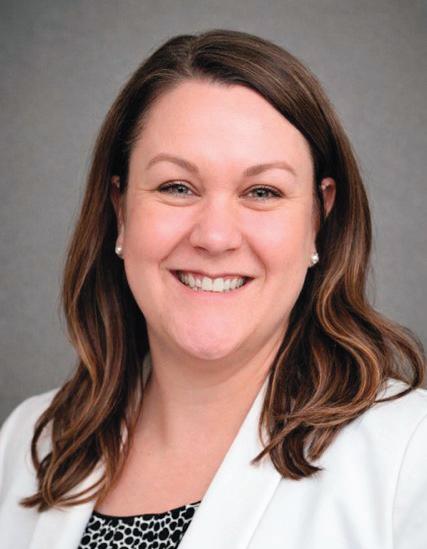
Maggie Reap, Director of Residential Services, McHarrie Pointe Assisted Living
MARY ANN SOPCHAK
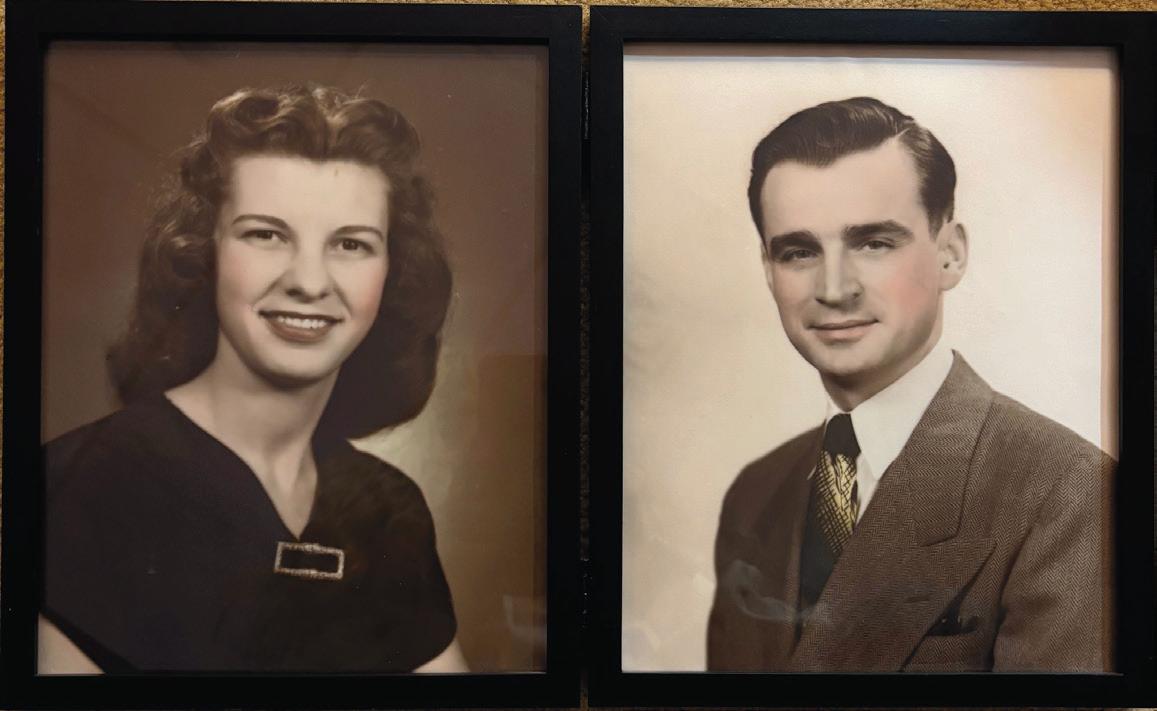
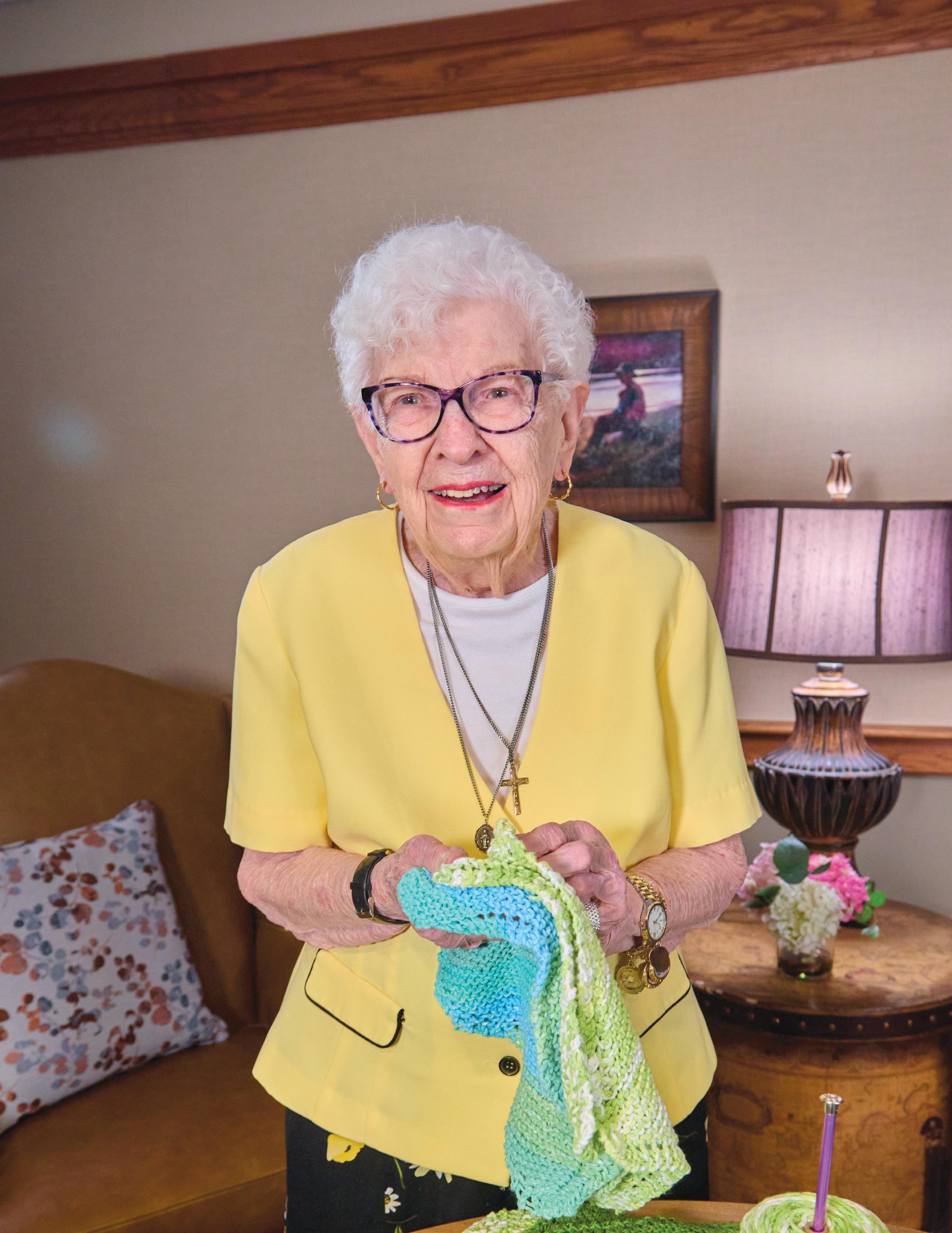
What is her secret to living to age 96? “Well, to be honest, I had no idea I would ever live to be this old!” laughs McHarrie Pointe resident Mary Ann Sopchak.
Life over the past (almost) 100 years certainly has had its peaks and valleys. Her father died in an automobile accident when she was nine. It was traumatic for her family, and even more devastating when social services arrived to place her and her siblings in foster care. “My mom was a tough German, and she refused to give up her children. She went on to raise us alone.”
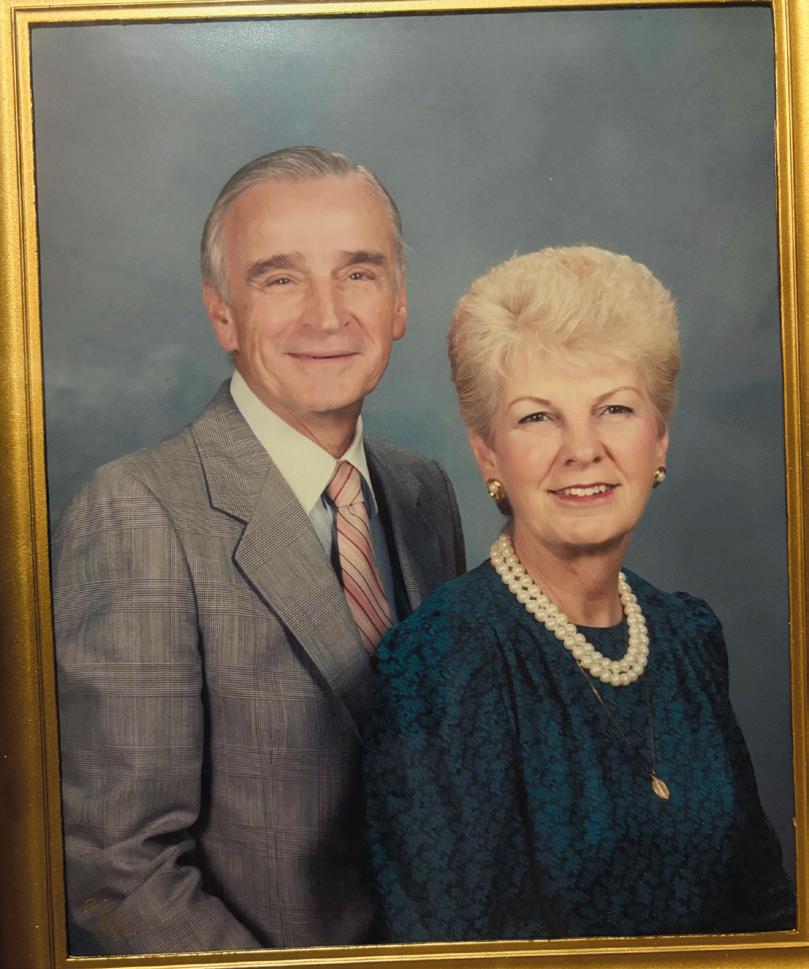

The local community rallied, and Mary Ann’s family received clothing and food donations from their church, and neighbors donated bushels of food from the market every week. “We were a family of nine, all my siblings were born 18 months apart. We were so fortunate that the owners of our rental home gave it to us, so my mother could afford to stay and raise us there.”
Mary Ann grew up in Syracuse and attended St. Anthony’s High School. She met her future husband, Michael, when she was 18. “He was eight years older than me and had served in the United States Army and fought in World War II. He was a college student at Syracuse University when we met in the cafeteria of Upstate Memorial Hospital. I worked in the kitchen, and he delivered food trays to the patients.”

While they were dating, Mary Ann attended CCBI business school. “I learned many skills, including typing, shorthand, check writing, bank ledgers, and how to properly answer phones, sit up straight, serve coffee, and take notes in a meeting.”
During their courtship, Michael spent all his savings on memorable dates with Mary Ann. They frequented the Persian Terrace at Hotel Syracuse to enjoy cocktails, dinner, and dancing. “One of our most indelible dates was a day trip to Sea Breeze Amusement Park in Rochester. I had never been on a train ride before, and Michael surprised me with my first train ride to the park.”
After a one-year whirlwind courtship, Michael and Mary Ann were married in a simple ceremony at St. Anthony’s Church in 1948.
They settled into their new home in North Syracuse in 1949 to start their family. Over the next 20 years, Michael and Mary Ann had nine children—Michael, John, Thomas, Daniel, William, Barbara, Carl, Mary, and Dawn.
“We lost our daughter, Barbara, to Down Syndrome. “Back then, we were encouraged to send her to Rome State School for care. We visited her every Sunday until she passed away when she was two. It was my most painful, regretful experience of motherhood. I’ve always wished I had kept Barbara at home with us until her passing.” Her son, Dr. Michael Sopchak, passed away in 2023 after a battle with cancer.
Family life in the 1950s at the Sopchak household was busy and always bustling with activity.
Mary Ann gave the children daily chore charts, and everyone pitched in to help at the family home. “We had modern conveniences like a large refrigerator, dishwasher, and microwave that made life easier when feeding a large family. I also had a large garden, so I did a lot of canning and freezing. I loved gardening.”
To this day, Mary Ann believes that her lifelong dedication to organic gardening helped her live well into her 90s. She also made a lifetime commitment to daily exercise. “I walked every day back and forth to our children’s school, volunteered as a room mother for each child, and attended exercise classes in the evening.”
When Michael came home from work, he rolled up his sleeves and took an active part in raising their children, unlike most fathers of that era. “He was a wonderful father. He would wake up at night to feed the babies,
so I could sleep. He even changed diapers and held and soothed our babies when they were sick.”
Michael was a successful engineer who worked at GE for most of his professional career. “We were fortunate that he had a good job, and we were able to take our children on summer vacations at Holls Inn on Fourth Lake in the Adirondacks. It was wonderful for me as the Inn provided all the meals for my family!”
Mary Ann learned how to sew out of necessity as a child, altering hand-me-down clothes to fit. Her newfound skill carried into her adult life. “I was always looking for something more challenging and creative to do. I would gather old adult coats, take them apart, wash them, and remake them into two children’s coats.” She also made a plaid wool coat for her husband, flower girl dresses, and three-piece suits for boys.
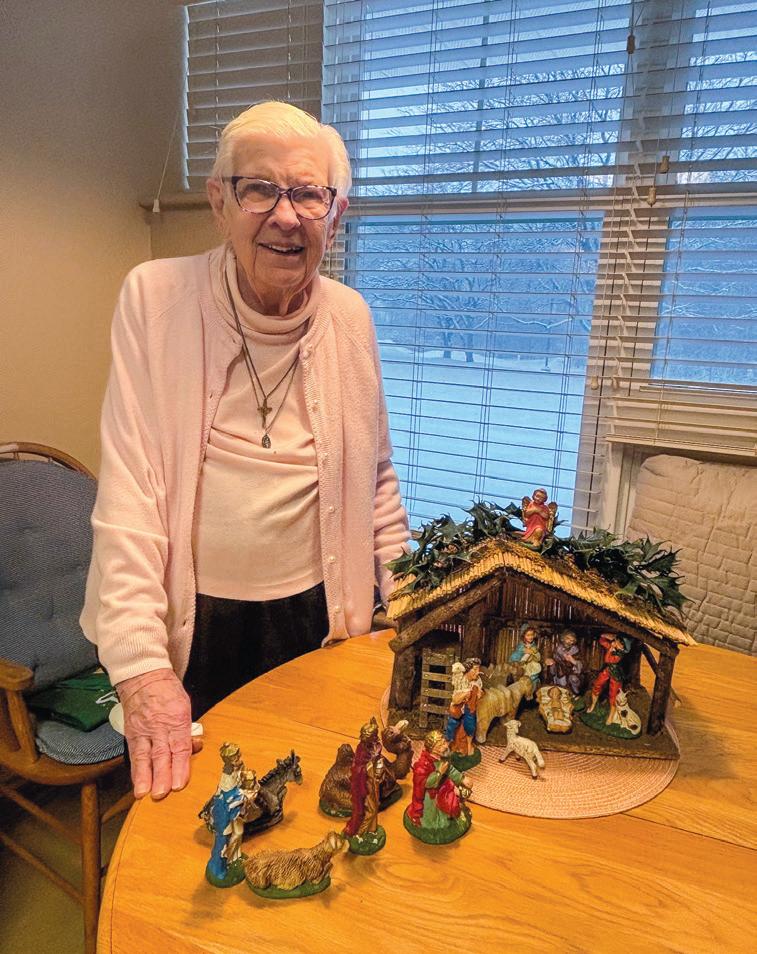
She taught herself how to knit when she was a teenager. “When I was dating Michael, we visited his family for Sunday dinner. I brought my knitting with me, and after dinner, I knitted. His mother got very upset with me. She told me, ‘No work on Sundays.’ I tried to tell her I just love to knit, but it was perceived as work and wasn’t allowed.”
Mary Ann’s been knitting for 81 years. She currently makes blankets and donates them to charity.
After the children had grown up, Michael retired from GE, and they enjoyed snowbirding in Florida. They were fortunate to stay in the same condominium complex as Michael’s fellow retired GE coworkers. “It was the perfect
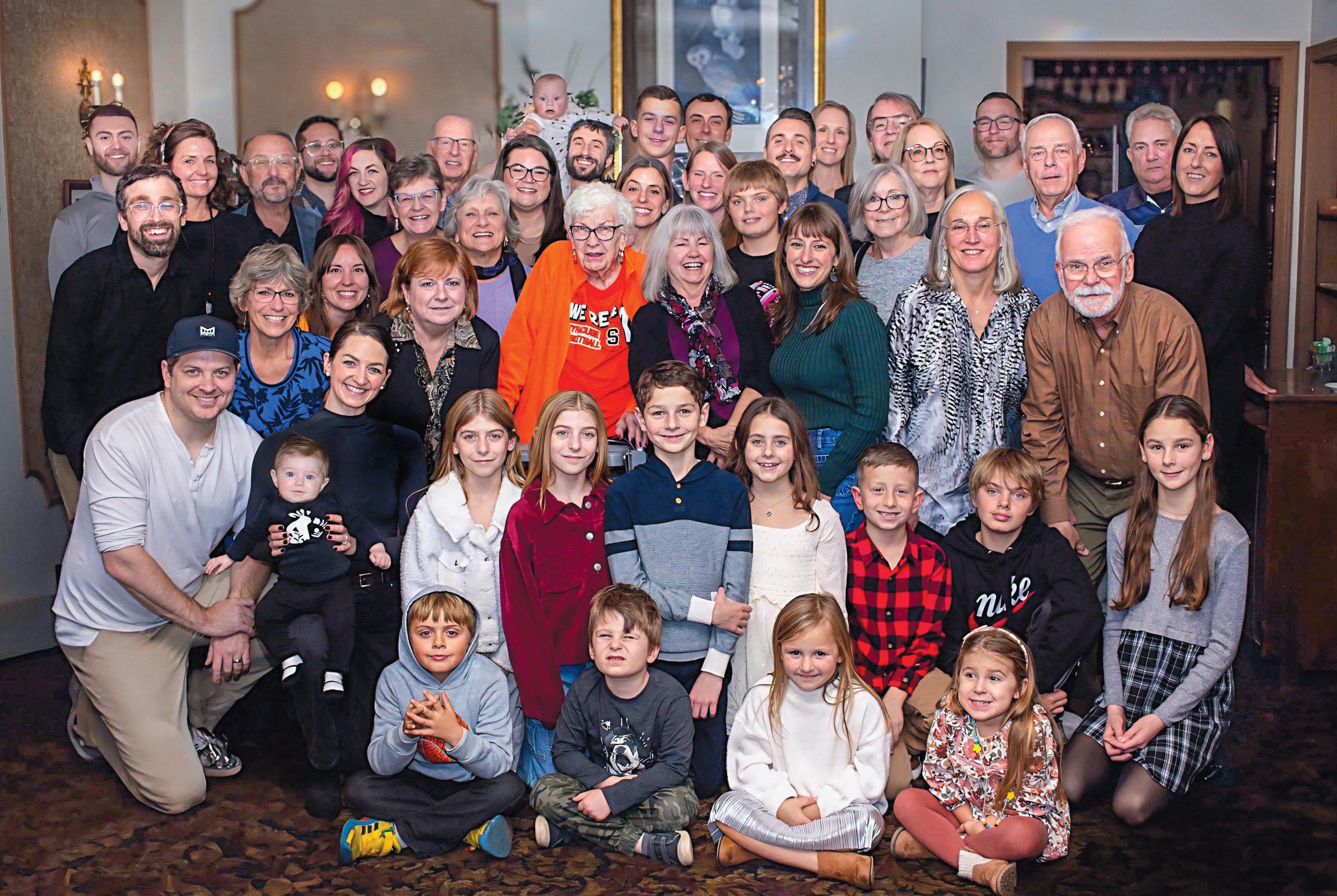

place to spend winters with our friends. We had so much fun sharing potluck dinners, playing cards, and walking on the beach. Michael would encourage me to go out and buy new outfits so I would have something nice to wear when we went out.”
Her close and loving marriage to her husband, Michael, spanned 70 years, until he passed away in 2008 from Alzheimer’s Disease. “He was the most amazing man I ever met. The smartest, most ambitious, loving, soft-hearted, beautiful person I ever knew.”
In 2022, Mary Ann moved to McHarrie Pointe Assisted Living.
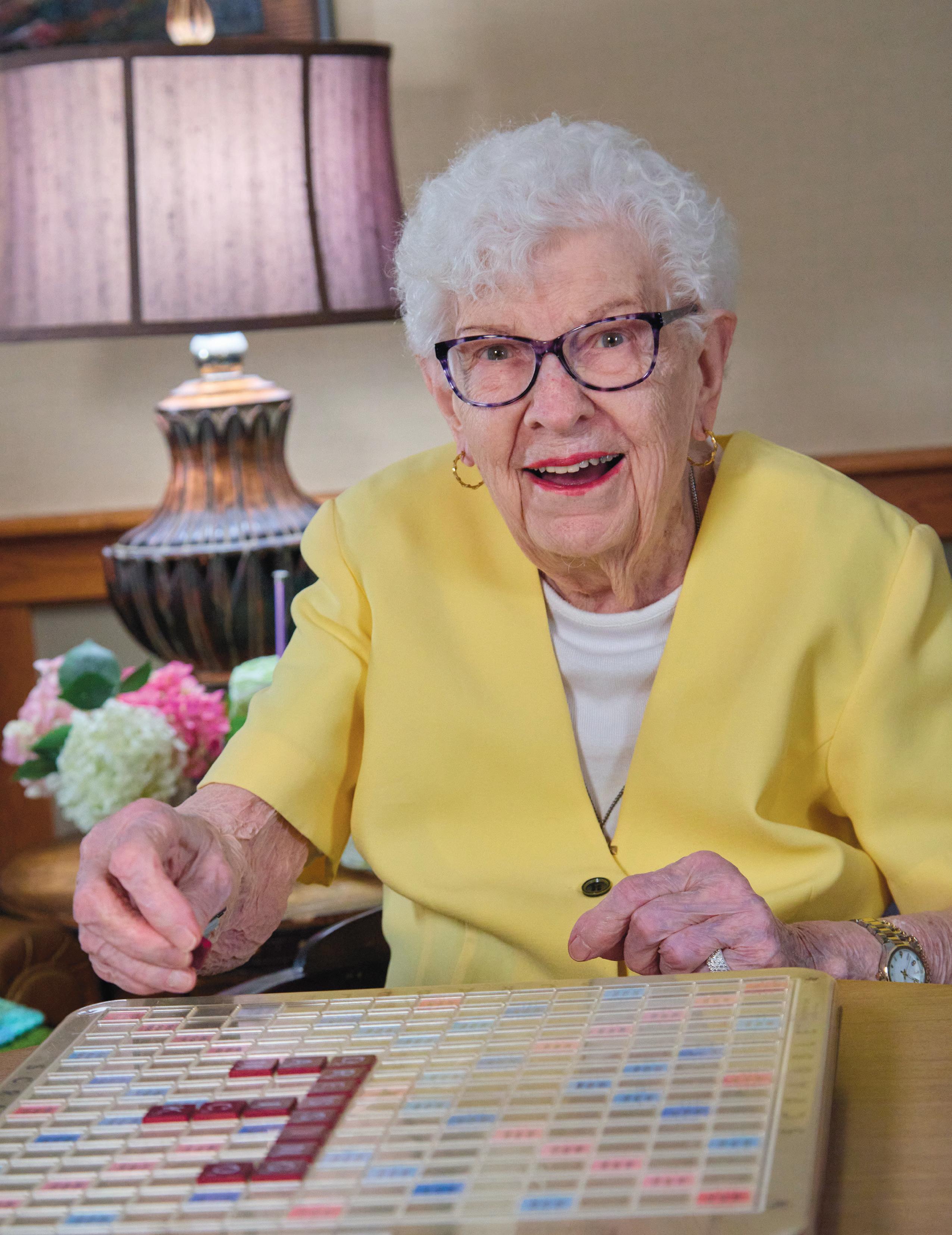
“I love living here because there are a lot of activities to do. I love going to daily exercise classes, Catholic mass, food club, book club, bible study, and playing games. Scrabble is my favorite!”
She proudly calls herself “the determined German” and makes every effort to participate in meaningful activities that challenge her both physically and intellectually. “Our book club format is different from most. We read the book out loud together, then discuss what we heard and read.”
She nicknamed daily exercise, “The Hall Crawl.” Every day after
breakfast, lunch, and dinner, she walks along the hallways for exercise with her fellow residents. “We walk as much as 3-4 times hall lengths out and back.”
Mary Ann loves to write poems and rhyming songs that she sings to others. She even teaches people the songs so they can sing along with her.
She credits her move to McHarrie Pointe in 2022 as one of the best decisions of her life. “I tell everyone it is, by far, the best assisted living in our community. I am so lucky to be here.”
Let’s Do This!
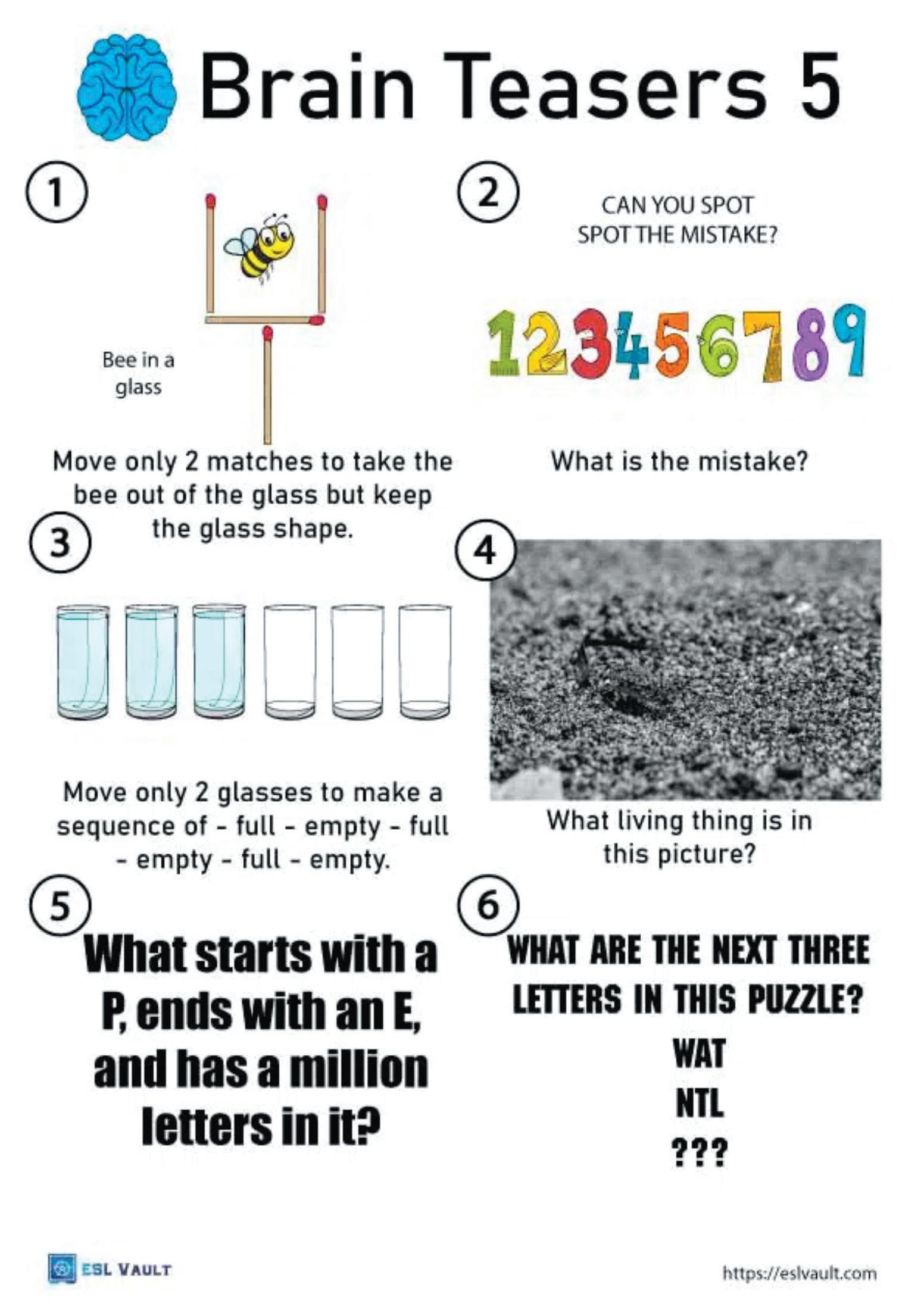


6. The answer to this puzzle is ITP. Each letter comes from the first letter in the question. WAT = what are the, NTL = next three letters, and ITP in this puzzle.
5. The answer to this riddle is – Post Office.
4. There is a crab that is camouflaged in the sand and pebbles around the middle left area.
2. The answer is that the word spot appears twice in the question. This is often overlooked by people who focus on the numbers instead. 3. To solve this puzzle, switch the middle full glass with the middle empty glass.
1. To solve this match puzzle you make the glass upside down or inverted. Move the 1 horizontal match either left or right so only its end touches the bottom vertical match. Then take one of the top vertical matches and move it down to make the other side of the glass.
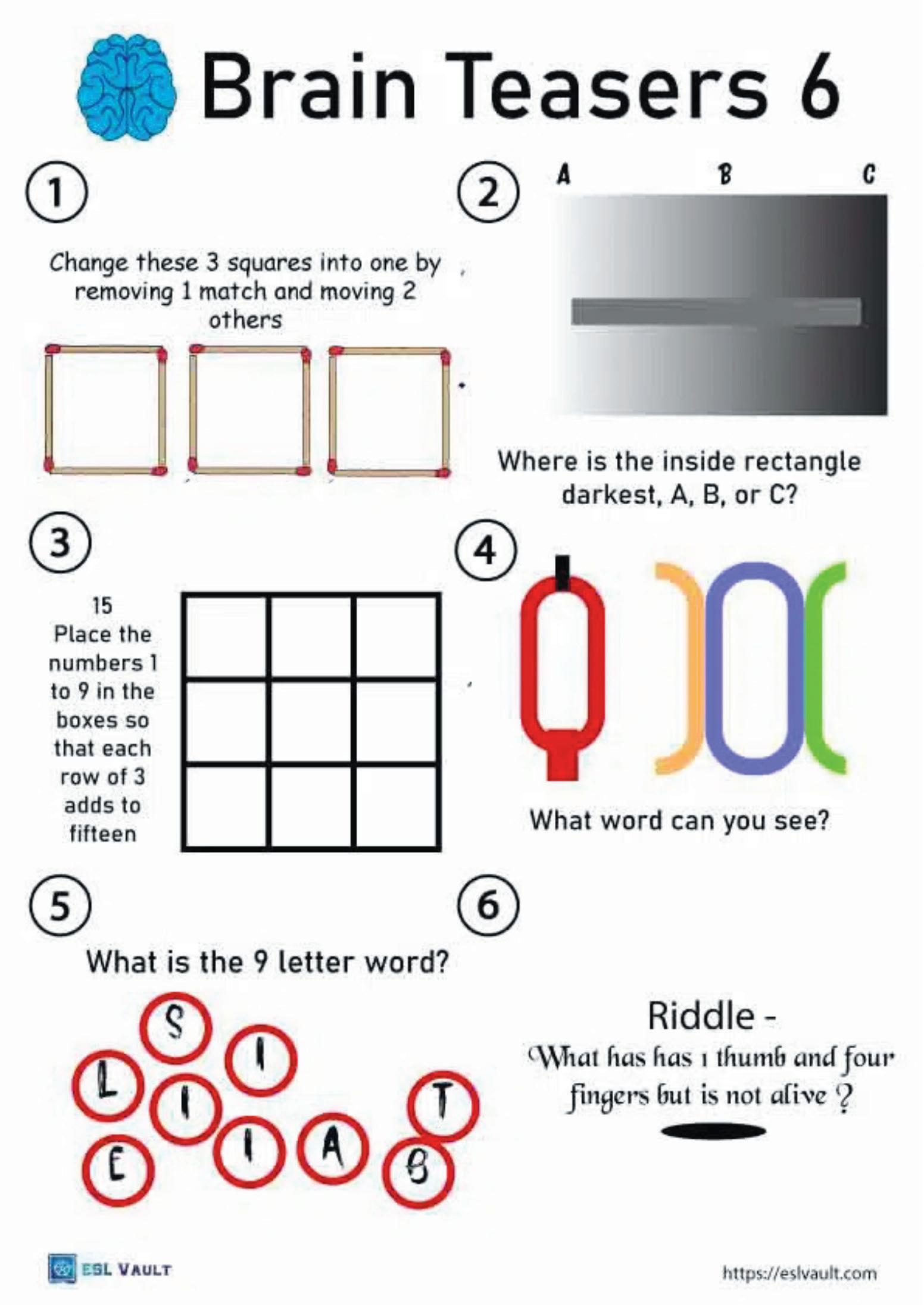
6. The answer is a glove.
5. The 9 letter word is abilities.
4. Cut the word in half horizontally, then flip it upside down. You will see the month July.
3. Place the numbers as such –
2. All points A, B, and C are the same shade of grey. It is an optical illusion.
1. Make the shape of the word ONE.


Did you know that The Jetsons cartoon launched in 1962? This popular science fiction cartoon entertained us over the past six decades with a vision of our world in 2062, and remarkably, many of its futuristic modern conveniences exist today.
Ok, well, no, we don’t have flying cars, Rosie the Robot, or apartments in the sky quite yet, but we do have rapidly advancing artificial intelligence (AI) that supports the technology we use every day.
AI is a hot topic in the news these days, and for good reason. Technology is advancing rapidly.
So, what exactly is AI? AI helps computers become smarter, faster, and more helpful. Humans make AI smarter by feeding it troves of information and guiding it with feedback, so it learns to provide more accurate answers over time.
Examples of everyday items that use AI include:
● Smartphones
● Space exploration robotics
● Alexa
● Smart calendars scheduling meetings
● Google Maps
● Customer Service Chat Boxes
● Ring Doorbell
● Translation apps like Google Translate
● Tesla self-driving car
● Voice-to-text dictation
● Robot vacuum cleaners
● Fraud detection in banks
● Health monitoring wearables
● Ride share apps like Uber
● Crop monitoring with drones
● Airline scheduling system
● Cybersecurity threat detection
● Surgery robotics
Physicians use AI to help analyze X-rays, MRIs, CT scans, and remote health monitoring. AI can help identify cancer, fractures, and medical emergencies, like a stroke or heart attack, much faster than humans.
Popular platforms like Amazon and Netflix use AI to track your interests and make suggestions based on the information they collect.
So, exactly how close to The Jetsons did our world evolve?
In The Jetsons cartoon, the family communicates with others via video screens. Today, people use services like Zoom, FaceTime, and Skype to video call and see each other while talking, even if they are in different parts of the world.
In several episodes, The Jetsons wore small devices on their wrists to communicate and receive information. Flash forward 64

years, and we’re using Apple Watches and Fitbits to talk to each other, send messages, make calls, track our health, and even detect falls.
While Rosie the Robot took care of many household chores in the Jetsons’ home, today we have robotic helpers of our own. Robot vacuums, like the Roomba, can pre-map the room, clean floors, and automatically move around furniture using sensors and artificial intelligence.
Characters in the show often used flat-screen devices to read news, communicate, and watch entertainment. Today, iPads, smartphones, and flat-screen televisions are common technology found in our homes.
The Jetsons often used machines that prepared food quickly with the push of a button. While we may not have instant full meals as the show imagined, we do have smart ovens, air fryers, microwaves, and bread machines that prepare food quickly.
In the futuristic world of The Jetsons, medical help could be accessed through screens and technology. Today, telemedicine appointments allow patients to speak with doctors via video, receive medical advice, and even manage prescriptions remotely.
George Jetson was the only remote worker of his time. He worked at a computer console pushing buttons for his company. While his job was comically simple, many people today work remotely using computers and the internet.
As we move closer to the future once imagined in The Jetsons, artificial intelligence will continue to shape the tools and technology around us. While these innovations can make life easier, faster, and more connected, they work best when used thoughtfully and carefully. By asking questions, and using good judgment, we can enjoy the benefits of modern technology while keeping ourselves informed and safe in this rapidly changing digital world.
Most common AI personal assistant apps used today; Chat GPT, Google Gemini, Microsoft Copilot, Amazon Alexa, Apple Siri.

Remember this catchy tune? It’s the 1979 #1 disco hit that has united people of all ages for nearly 50 years. This timeless classic by Sister Sledge has played at family gatherings, weddings, and sporting events for the past five decades.
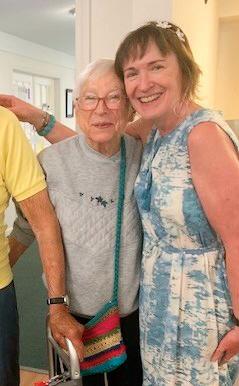
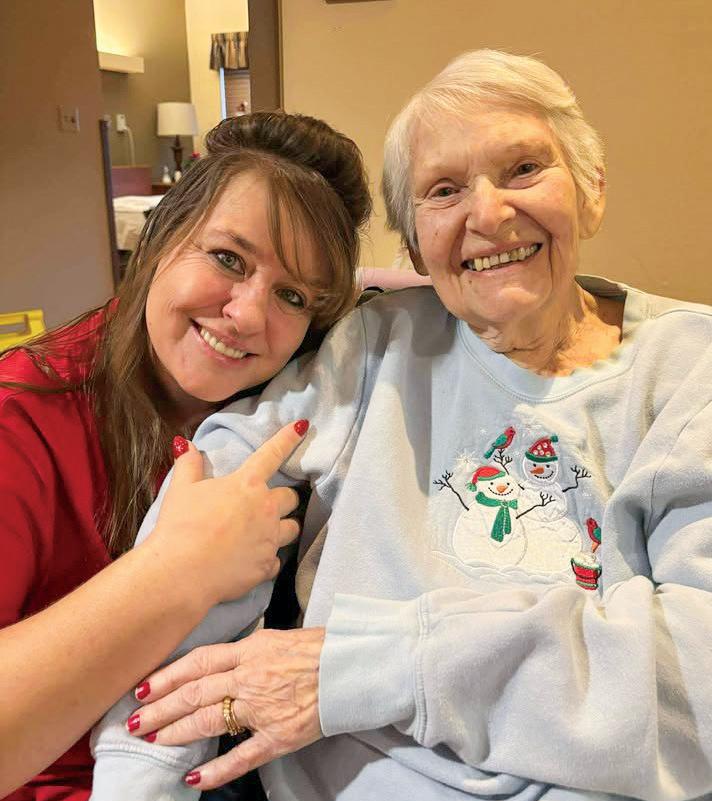
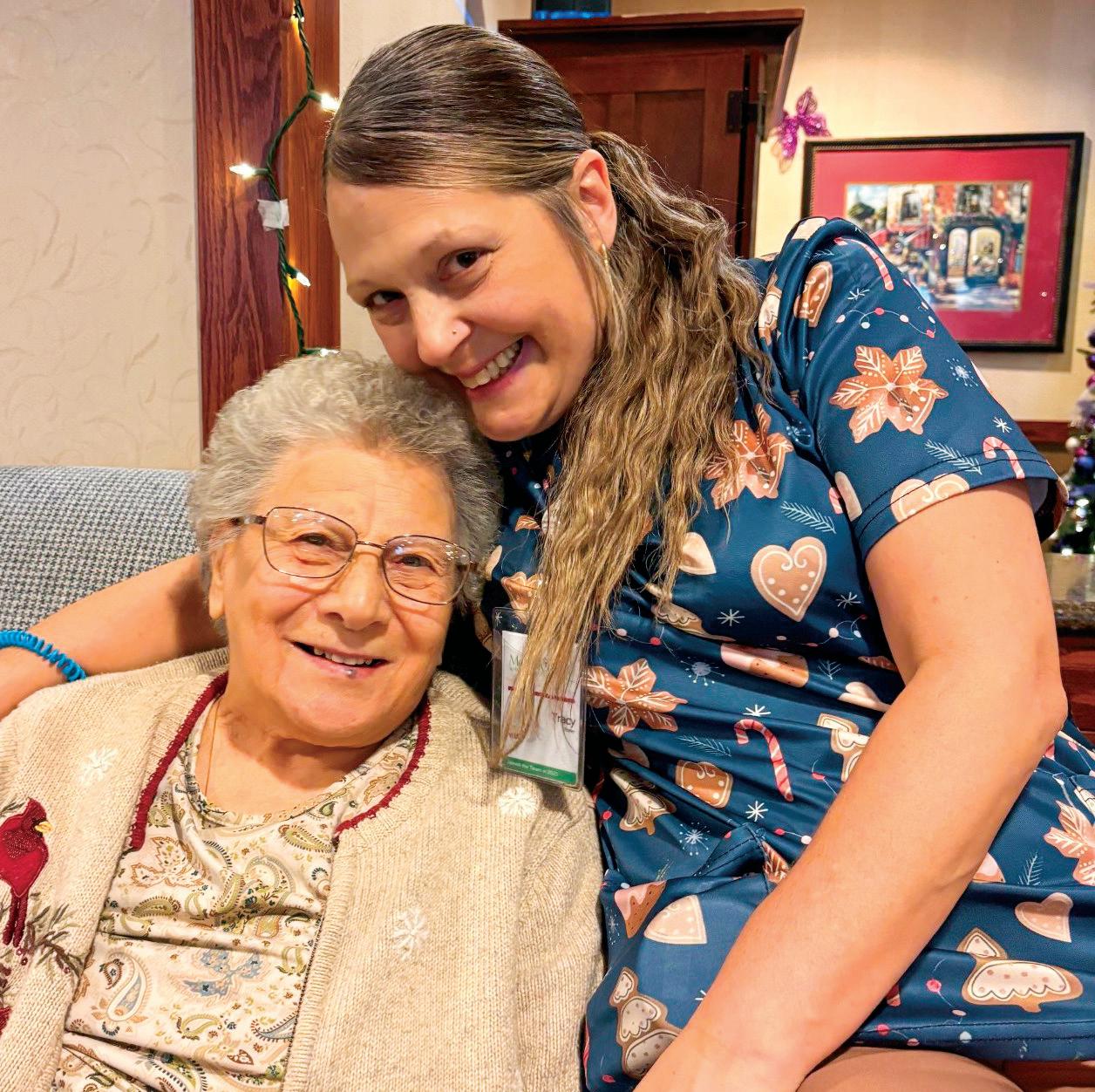
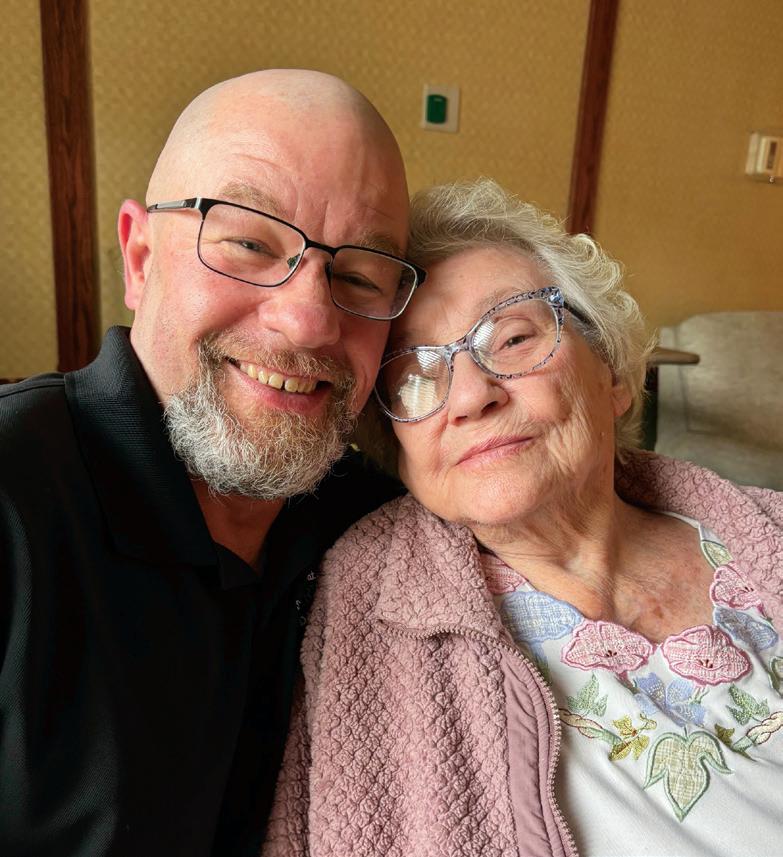
It’s also the perfect theme song for McHarrie Life. Over the past 175 years, our dedicated, compassionate team members have cared for thousands of residents.
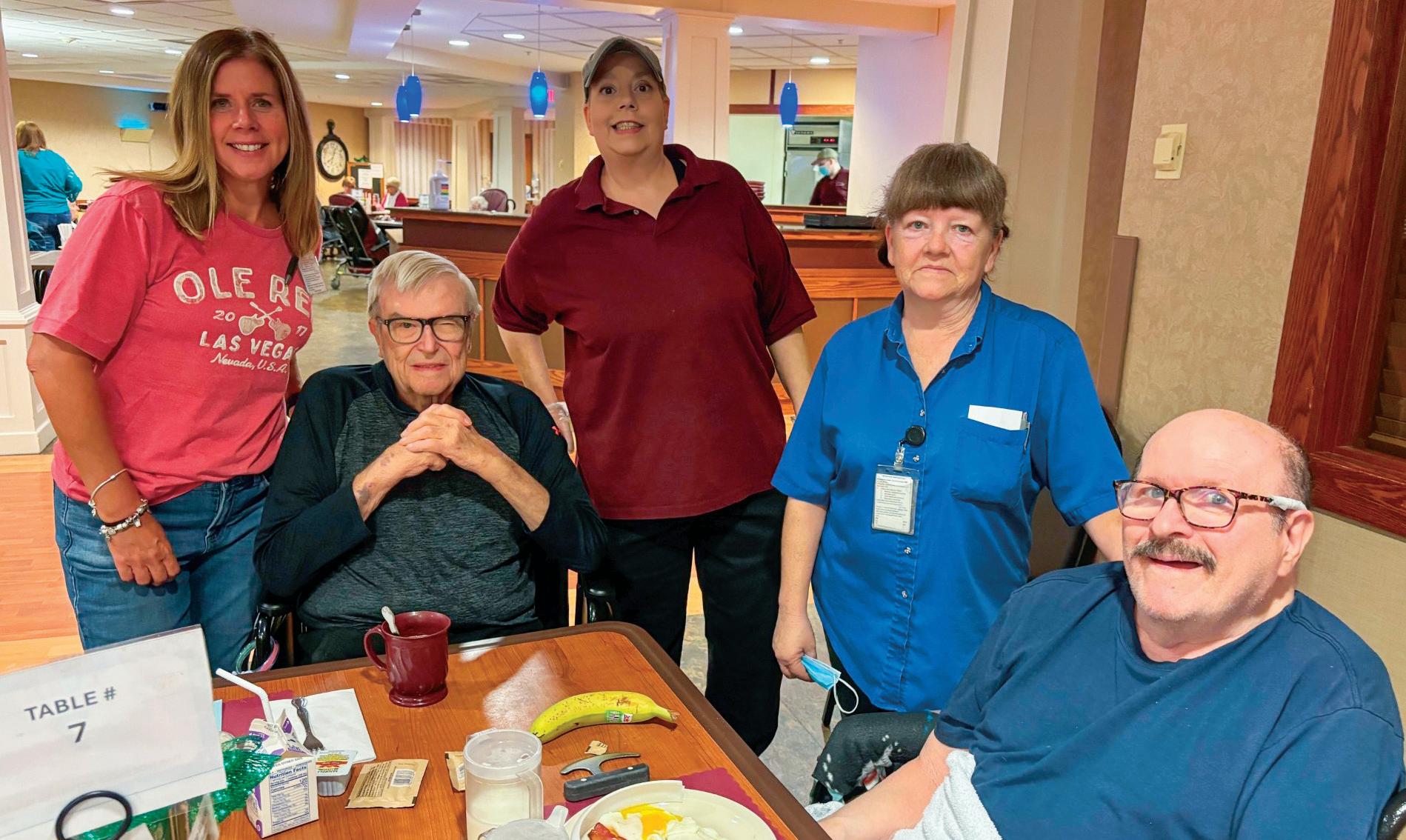
What sets us apart from the rest? We love our residents like family.
250 extraordinary people at McHarrie Life work tirelessly to ensure that every resident receives the best, most compassionate care.
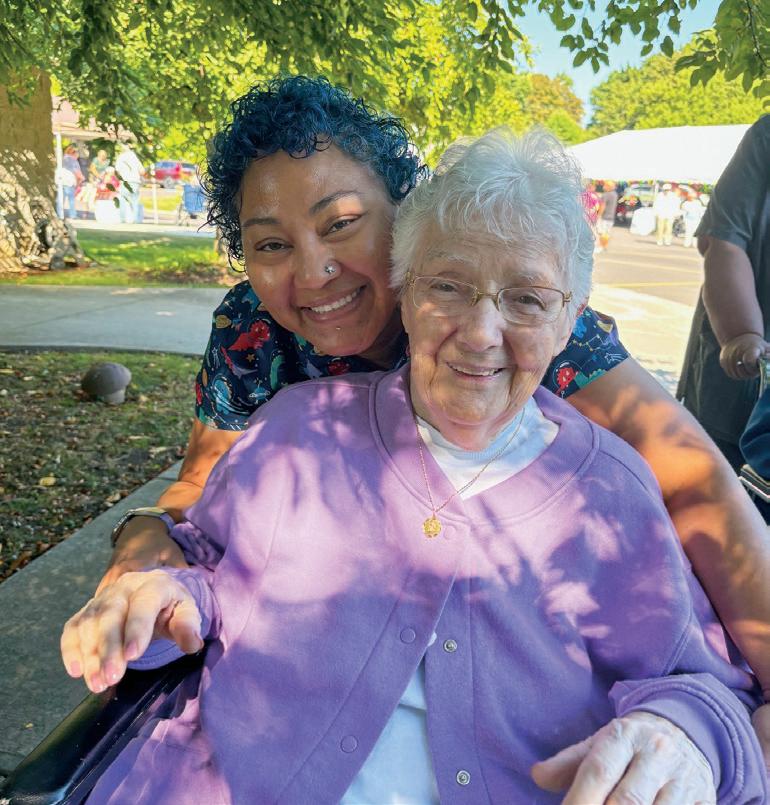
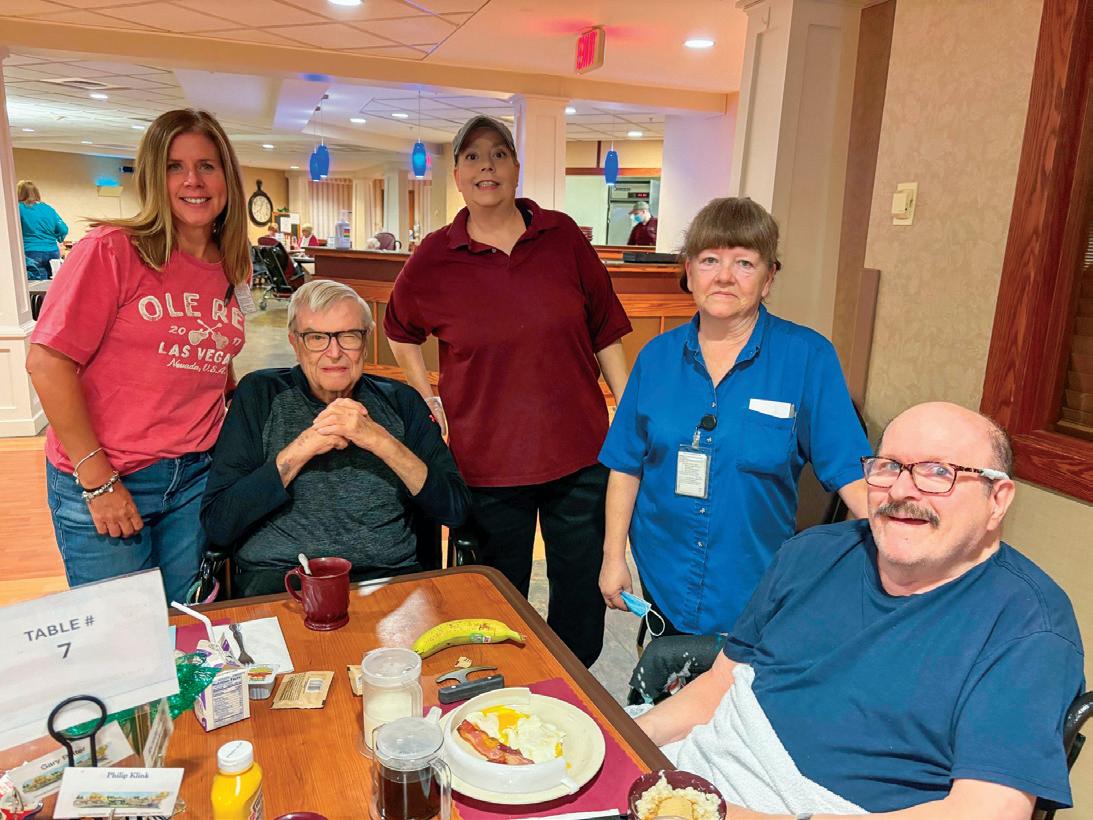
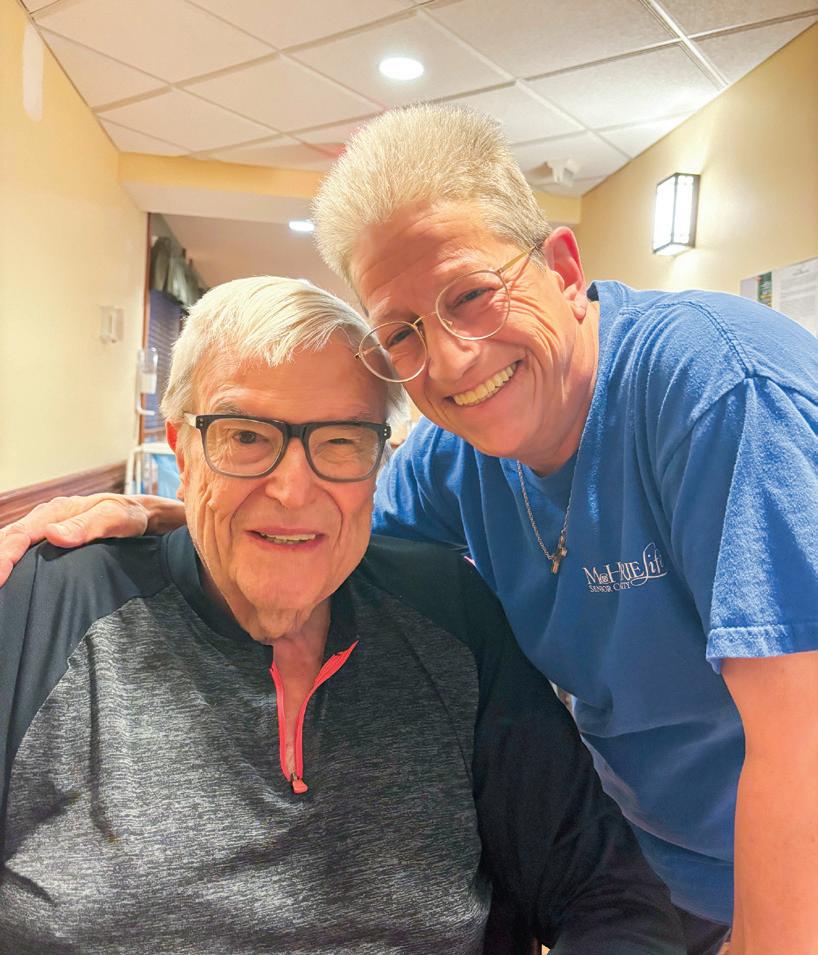
They go above and beyond every day to provide comfort, kindness, friendship, and fun.
Our organization’s success is tied to every team member who plays an important role in care that goes beyond basic needs. It’s reflected in the friendships we make, the hugs we give, the laughter we share, and the meaningful moments we create together.
We are family.
Today, tomorrow, and always.



Asummer barbecue just isn’t the same without a platter of sweet, juicy watermelon. Aside from being a delicious treat, it also has significant health benefits.
It’s Heart-Healthy
Watermelon contains lycopene, an antioxidant that supports heart health and may help lower inflammation in the body. It’s naturally fat-free and cholesterol-free.
Adds Hydration
Watermelon is about 90% water, so it helps keep you hydrated, especially on hot days.
Aids in Muscle Recovery
Watermelon contains citrulline, an amino acid that may help improve blood flow and reduce muscle soreness.
Digests Easily
It’s a light, sweet snack that is easy to digest.
Boosts Immune System
It contains vitamin A to help keep your eyes healthy and vitamin C to support your immune system.
Naturally Low in Calories
Watermelon is flavorful and nutritious—perfect for satisfying a sweet tooth without the high-calorie content.
● Watermelon has been enjoyed for over 5,000 years.
● It was first grown in Africa as a source of hydration.
● China is the world’s largest watermelon producer.
● Early watermelons were not very sweet and had a mild, bitter taste.
● Ancient Egyptians placed watermelon seeds in tombs because they believed the dead would need food in the afterlife.
● You can eat the watermelon’s white rind—it can be pickled (most popular), stir-fried, blended into a smoothie for extra fiber, or cooked in a chutney or relish.
One cup of diced watermelon:
● Calories: 46 calories
● Carbohydrates: 12g
● Dietary fiber: 1g
● Total sugar: 9g
● Added sugar: 0g
● Protein: 1g
● Total fat: 0g
● Saturated fat: 0g
● Cholesterol: 0mg
● Sodium: 2mg
● Vitamin C: 12mg (20% DV)+
● Vitamin A: 865 IU (5% DV)
● Potassium: 170mg (4% DV)
● Magnesium: 15mg (4% DV)
Watermelon is generally safe for everyone to eat; however, there are a few exceptions. While watermelon is a nutritious fruit, eating too much of it may cause blood sugar spikes, which can be problematic for diabetics.
A person can also experience an allergic reaction to watermelon if they are allergic to grass or fruits like peaches, celery, tomatoes, oranges, and other melons. This reaction is known as oral allergy syndrome, which is a contact allergy in the throat and mouth that occurs when you consume these foods raw. If you experience itching or swelling in the throat, mouth, face, lips, or tongue, seek medical attention immediately. If you have concerns about consuming watermelon, talk to your health care provider to find out what is best for you.

Ingredients
4 oz. semisweet chocolate, broken into pieces
1/2 cup heavy cream
1/2 tsp. vanilla extract
3/4 cup plain Greek yogurt
5 Tbsp. powdered sugar
1 small watermelon (about 5 pounds), cut into 1-inch-thick slices
Directions:

2 cups sliced strawberries (about 10 ounces) 1 1/2 cups blueberries (about 9 ounces) 1/2 cups pomegranate seeds (about 3 ounces)
4 kiwis, sliced 1 bunch fresh mint
1 (4-ounce) bar white chocolate
1. For the chocolate ganache: Place the semisweet chocolate in a medium heatproof bowl. In a small saucepan, heat the cream over medium heat until it is very hot and just beginning to simmer. Add the vanilla, then pour the mixture over the chocolate. Let it sit for 1 minute to soften the chocolate, then stir until it is completely melted. Set aside to cool slightly, for about 10 minutes.
2. For the sweetened yogurt: In a medium bowl, whisk together the yogurt and powdered sugar until smooth. Set aside.
3. For the watermelon pizza: Spread the watermelon slices with the sweetened yogurt. Top with strawberries, blueberries, pomegranate seeds, kiwis, and mint leaves. Drizzle with the chocolate ganache, then use a vegetable peeler or cheese grater to shave the white chocolate over the top. Cut into wedges for serving.
Source: www.thepioneerwoman.com
NY 13027

Applause! Applause! December marks the 25th anniversary of McHarrie Life Foundation’s “Afternoon of Theater” event at Syracuse Stage. This long-standing popular event provides an annual opportunity for friends and supporters to come together to usher in the holiday season while celebrating the mission and impact of McHarrie Life. Again, this year, a delicious pre-show luncheon will be offered.
We invite you, your family, organization, or company to join us as a sponsor of this special anniversary event. Don’t delay… to ensure your information is printed on our event materials, contact us about a sponsorship today. Visit mcharrielife.org/events or call Peg Northrup at the Foundation at 315-638-2521 for more details.
25th Annual Afternoon of Theater Syracuse Stage Sunday, December 6th
Patron Ticket: $60 each—includes a fabulous reception beginning at 12:45 p.m. followed by a 2 p.m. matinee performance
Contributor Ticket: $40 each—includes 2 p.m. matinee performance only Thank
Presenting
Event Sponsors:
Empower