


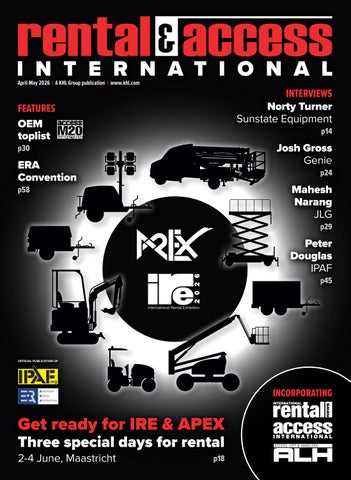
Incorporating
April-May 2026
EDITORIAL
Editor Euan Youdale | euan.youdale@khl.com
Director of Content Murray Pollok
Group Editors Alex Dahm, Lindsey Anderson, Andy Brown, Mike Hayes, D.Ann Shiffler
IPAF News Editor Peter Douglas
PRODUCTION
Client Success & Delivery Manager
Charlotte Kemp | charlotte.kemp@khl.com
Client Success & Delivery Team
Alex Thomson, Ben Fisher, Olivia Radcliffe, Lilly Hackett
Group Designer Jade Hudson
SALES
Vice President Sales, Access & Rental
Divison Ollie Hodges | ollie.hodges@khl.com
Brand Manager, Access & Rental Division
Pete Balistrieri | pete.balistrieri@khl.com
Global Vice President Sales Alister Williams
AUDIENCE
Data Manager Anna Philo
Data Executive Vicki Rummery
EVENTS
Event Manager Steve Webb
Event Design Manager Gary Brinklow
Creative Designer Kate Brown
FINANCE
Finance Manager Yasmin Youmi
HR Manager Sharron Brown
Client Success & Digital Director
Peter Watkinson
Chief Financial Officer Paul Baker
Chief Executive Officer James King

Printed by: Buxton Press ISSN:1352-7517 (print) ISSN 3049-4567 (online) © Copyright KHL Group 2026
Rental & Access International is published eight times a year (January-February, March, April-May, June, July-August, September, October, NovemberDecember) and has a worldwide circulation of more than 31,500. Rental & Access International is only available to subscribers (IPAF members receive a free copy, details available on request). Annual airmail subscription rate US$182, €156, £130.
& ACCESS PORTFOLIO
In this issue of Rental & Access International (RAI) we interview Norty Turner just over a year after his return to the equipment rental industry as CEO of Phoenix-based Sunstate Equipment. Apart from being very happy to be back, he was bullish about growth prospects for Sumitomoowned Sunstate, and is aiming to double the company in size within a few years.
That goal will be supported by increased activity in mega projects, including data centres, which is what every large rental business – in Europe and the US – is gunning for.
In fact, Aggreko recently revealed that around 11% of its total revenues last year were generated activities related to the construction and operation of data centres.
While there seems to be no signs yet of a slackening of the data centre boom, if there is indeed an AI-bubble – and a bubble that bursts – then a lot of new strategies for rental growth are going to be needed.
Also this issue we interview IPAF’s CEO Peter Douglas. The association is a non-profit, tasked with making the aerial platform industry as safe as it can be. Earlier this year it issued its 3 millionth PAL card – a remarkable number – and Douglas says it could produce 250,000 new PAL cards this year.
While the organisation is seeing enormous growth, he thinks more could be done, by OEMs in particular. Read the interview on page 45.

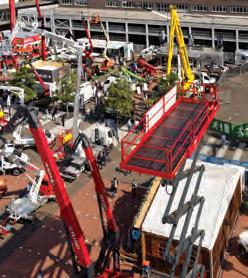
Finally, we alert you to our full guide to the APEX and International Rental Exhibition (IRE) shows taking place in Maastricht, The Netherlands, 2-4 June, alongside the European Rental Association’s annual convention –its 20th, which is a cause for celebration in itself.
Correspondence or comments should be sent to:
The Editor, Rental & Access International, Southfields, South View Road, Wadhurst, East Sussex, TN5 6TP, UK. +44 (0)1892 786214 | euan.youdale@khl.com








UNITED KINGDOM (HEAD OFFICE)
KHL Group, Southfields, South View Road, Wadhurst, East Sussex TN5 6TP, UK.
+44 (0)1892 784088 | www.khl.com/irn
USA OFFICE
KHL Group Americas LLC
11811 N. Tatum Blvd, Suite P118, Phoenix, AZ 85028, USA.
+1 480 535 3862 | americas@khl.com
CHINA Office
KHL Group China
Room 769, Poly Plaza, No.14, South Dong Zhi Men Street, Dong Cheng District, Beijing, PR China 100027.
+86 (0)10 65536676 | cathy.yao@khl.com
LATIN AMERICA OFFICE
KHL Group Americas
Av. Manquehue Sur 520, of 205 Las Condes, Santiago, Chile. +56 9 77987493 | latina-americana@khl.com
VICE PRESIDENT SALES, ACCESS & RENTAL DIVISION PLUS IBERIA/KOREA/ BELGIUM/ ITALY Ollie Hodges
+44 (0)1892 786239 | ollie.hodges@khl.com
BRAND MANAGER, ACCESS & RENTAL DIVISION PLUS NORTH AMERICA
Pete Balistrieri
+1 414 940 9897 | pete.balistrieri@khl.com
AUSTRIA/GERMANY/SWITZERLAND
Peter Collinson
+44 (0)1892 786220 | peter.collinson@khl.com
FRANCE Hamilton Pearman
+33 (0)1 45930858 | hpearman@wanadoo.fr
CHINA Cathy Yao
+86 (0)10 65536676 | cathy.yao@khl.com
JAPAN Michihiro Kawahara
+81 (0)3 32123671 | kawahara@rayden.jp
THE NETHERLANDS Arthur Schavemaker
+31 (0)547 275005 | arthur@kenter.nl
SCANDINAVIA Greg Roberts
+44 (0)7950 032224 | greg.roberts@khl.com
TURKEY Emre Apa
+90 (0)532 3243616
emre.apa@apayayincilik.com.tr
UK/IRELAND Eleanor Shefford
+44 (0)1892 786236 | eleanor.shefford@khl.com
GLOBAL VP SALES Alister Williams
+1 312 860 6775 | alister.williams@khl.com
MEMBERS OF



6 News
The latest news in the rental and access sectors, plus a column dedicated to online interviews, features and analysis that do not appear in the magazine.
11 News special
How are those in the region dealing with the effects of the war in Iran? RAI finds out from rental companies on the ground.
13 Andy Wright column
The attractions of a career in the equipment rental industry, with an acknowledgement that it is not for everyone.
30 AccessM20

14 Interview
Norty Turner
Following a three-year break from the rental industry Norty Turner has returned as CEO of US-based Sunstate Equipment and shares his growth plans for the company.


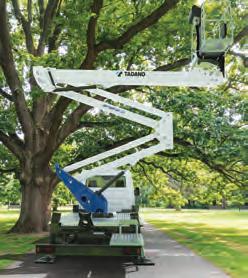
The listing of the world’s largest access manufacturers can be revealed, with change in the top five of the table, following a turbulent 2025 calendar year.
51 IPAF news
The latest news, initiatives and events from the Federation, including a membership record.
58 ERA news
As ever, the European Rental Association seeks to represent the interests of the industry.
24 Interviews JLG and Genie
The presidents of the world’s largest MEWP manufacturers JLG and Genie share their expectations for the years ahead –including Genie’s imminent sale.
33 Product report
Atlas Copco’s new range of hybrid generators at its Zaragoza plant.
37 Rental software and AI
RAI asked rental technology companies about the AI features in-demand now, and what is coming soon.

45 Interview
Peter Douglas
The CEO of the International Powered Access Federation (IPAF), Peter Douglas, talks about priorities and safety.
55 Vehicle mounts
The 3.5 tonne truck mount sector is one of the most competitive in the market and customer demand for versatile equipment is strong.
18 Show Guide APEX/IRE
APEX and the International Rental Exhibition (IRE) return to Maastricht in June. Expect to see a swathe of launches and cuttingedge industry developments.
41 Report CONEXPO
The largest construction show in the US took place in March with the latest rental and access products on display.
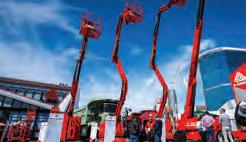
The APEX and IRE shows, taking place 2-4 June in Maastricht, will offer visitors a snaphot of the modern sector, alongside the latest technologies and a wide range of product launches.
APEX & IRE
2-4 June, 2026
Maastricht, The Netherlands
ERA CONVENTION
3-4 June, 2026
Maastricht, The Netherlands
IAPA/IPAF SUMMIT
14-15 October, 2026
Istanbul, Turkey
INTERMAT
21-24 April, 2027
Paris, France
For more event listings, scan the QR code here or visit us online: khl.com/events
Horizon Construction Development, the China-based aerial platform, formwork and scaffolding rental company, has established rental operations in Morocco, Tanzania and Kazakhstan as part of its continuing push into international markets.
In its unaudited accounts for the first quarter of the year to 31 March, Horizon said revenues
from operations outside China grew by 70% year-on-year and now accounted for more than 25% of total sales.
Overall, revenues in the quarter were down 5%, reflecting pressure on rental prices in China and a subdued business environment around the Chinese New Year holiday.
Horizon said its domestic business saw a build-up of aerial platform fleet utilisation by the
More than 180 companies combined will be exhibiting at the APEX and International Rental Exhibition (IRE) shows
■ United Rentals has raised its guidance for the full year, with revenues now expected in the US$16.9 to $17.4 billion range, up $100 million at both limits. Its guidance on fleet capital expenditure has also risen, with gross spending for the full year now in the $4.4 to $4.8 billion range (previously $4.3-4.7 billion). Total revenues were up 7% to $3.98 billion, with EBITDA profit up 5.3% to $1.76 billion.
■ Loxam reported a 4% decline in revenues to €2.47 billion for the year to 31 December but reported a growth in sales of 1.7% in the final quarter of the year, year-on-year, driven by its businesses outside of France. The company said it had freezed capital expenditure in its Middle East business because of the Iran conflict, but said its exposure to the region was low at just 2.4% of total revenues in 2025.
■ Boels Rental has reported “close to flat” like-for-like revenues in 2025, although sales were up 7.5% to €1.862 billion including the impact of the Riwal acquisition in 2024. The company said several markets faced challenging economic conditions and uncertainty.
■ Brazil-based Mills has reported a strong final quarter and full 2025 financial year, despite the challenging rental environment in the country. Net revenue stood at BRL492.7 million in the fourth quarter and BRL1,838 million for the full year, representing growth of 13.9% and 16.7%, respectively.
■ Sinoboom Middle East & Africa (MEA) has officially appointed Arabian Supply Center (ASC) as its exclusive distributor for Qatar. ASC is one of Qatar’s most respected industrial distributors, supplying construction equipment, automotive spare parts, tyres and lubricants across the country. As part of the Al Jaber Group ASC serves the construction and transport sectors.
■ Italian manufacturer CMC has signed a distribution agreement with Swedenbased Maskin Experten to become the exclusive dealer of CMC’s complete range of crawler mounted lfts for Sweden and Finland. The next phase of the agreement will see this extended to other countries in Scandinavia, such as Norway, as part of the company’s wider dealer consolidation strategy.
end of the quarter, reaching 78%. It made a loss during the quarter, but less than in the same period in 2025.
The company now has 559 depots - 482 in China and Hong Kong and 77 overseas.
It now operates in China, Hong Kong, Indonesia, Malaysia, Thailand, Vietnam, Turkey, UAE, Saudi Arabia, Tanzania, Morocco and Kazakhstan.
in Maastricht, the Netherlands on 2 to 4 June this year.
The two exhibitions –which are co-located at the MECC venue and being held alongside the European Rental Association’s annual convention – will showcase equipment and technology targeted at all types of equipment rental companies.
This year will see a particular focus on new technologies that
are being adopted by rental businesses, including compact battery powered equipment, digital technologies and power generation, including battery energy storage systems (BESS).
RAI
See the APEX & IRE show guide in the this issue.
JLG Industries has opened a regional hub in Dubai. New machines will now be stocked closer to customers in the Middle East, resulting in improved availability.
The hub officially opened at the end of January and its inauguration was attended by JLG president Mahesh Narang in his first visit to the region, along with MEA & Turkey sales
■ Komatsu and UK-based fuel cell specialist AFC Energy have signed an agreement to integrate AFC’s ammonia cracking technology with Komatsu’s diesel engines to create a new ammoniafuelled engine platform. The US$2 million investment agreement will assess the feasibility of a combustion engine fuelled by liquid ammonia that requires minimal changes to the diesel engine. ■
director Mohamad Lakis, along with customers and partners.
The event demonstrated the strategic importance of the Middle East within JLG’s global operations, said the company.
According to JLG, this latest development will strengthen its market responsiveness and its supply chain. Customers will benefit from faster deliveries and enhanced service levels. RAI

Manitou Group has announced a new CEO and president. With more than 25 years’ experience in the agriculture and industrial sectors Sylvain Blaise will take over the position from Michel Denis.

Caterpillar veteran Kyle Epley will take over as the company’s chief financial officer from Andrew Bonfield, who spent eight years at Cat.

Brian Richardson, president and CEO of L & A Tent Rentals in New Jersey has been installed as the 64th president of the American Rental Association (ARA). He has been involved in the event rental industry for 46 years, founding L & A Tent Rentals in 1986.

Peter Schrader has become head of Zeppelin Group’s Strategic Business Unit Rental following the departure in January of previous head Arne Severin. Schrader has been Zeppelin Rental’s COO for 20 years.

Kristofer Eriksson has been appointed managing director of Cramo AB, the Boels Rental business in the Nordic region. Eriksson succeeds Samuel Alteborg, who is leaving Boels Group to become president and CEO of Alligo.
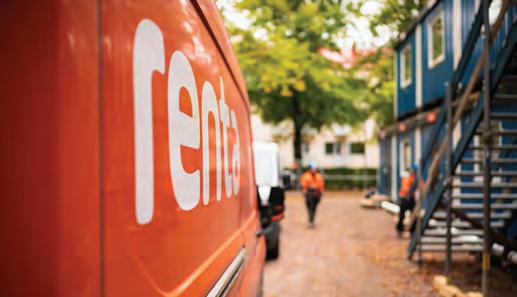
Finland’s Renta Group is to acquire Nordjysk Lift
ApS, the Danish general rental company which has 11 depots in the country, including two close to Copenhagen.
The deal will expand Renta’s depot network in Denmark from 16 to 27 and add more than 100 employees. Nordjysk Lift was founded in 1998 and is based in Hjørring, in the far north of the country.
Renta said the deal will make it a “truly nationwide” rental provider, strengthening its operations in Northern Jutland
and also adding temporary accommodation to its product range.
Lars Raagaard, managing director of Renta Denmark, said, “We are very pleased to welcome Nordjysk Lift and its talented team to Renta.
“Over the years, the company has built a strong position in its region, supported by high operational standards and close customer relationships. The acquisition is a great strategic fit for Renta and expands our presence in the Danish market. RAI

Manitou Group has announced that Marcel Braud, honorary Chairman and founder of the Manitou forklift truck, has passed away. The company said he was driven by a passion for innovation, industry, dealers network and the group’s products. Serving as chairman until 2017 he transformed a family business into a global name in material handling, aerial work platforms, and earthmoving equipment.

Jacqueline Himsworth, Chairman of the Board of Directors at Manitou Group, has has also passed away. Himsworth, who had been Chair since 2017, was described by CEO Michel Denis as a person of vision, commitment, foresight, and kindness. “She constantly reminded us that we could conquer the world without ever forgetting our values”.
Kiloutou has acquired KDM Hire Northern Ireland and the Republic of Ireland, marking its first ever entry into the UK and Irish rental markets.
KDM Hire is a €42 million revenue rental business employing 250 people at seven locations, including Belfast, Dublin and Cork.
Five of its locations, including its head office in Cookstown, are in Northern Ireland, the UK, while its Cork and Dublin depots are in the
Republic of Ireland. It was founded in 1990 and opened its first depot in the Republic of Ireland in 2019.
A key goal following the acquisition will be to “accelerate growth” in the Republic of Ireland to support the country’s ambitious infrastructure plans as well as investment in energy and data centres.
The current KDM management team, including chief executive Michael
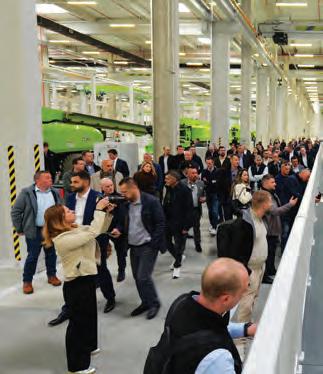
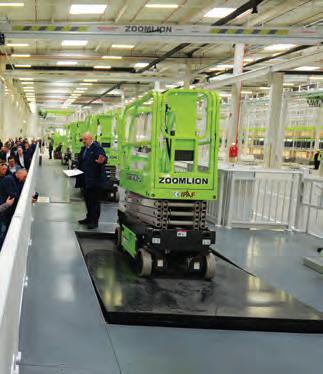
⊳ Zoomlion has officially opened its new manufacturing facility in Tatabánya, Hungary.
Phase one of the facility will serve as Zoomlion Access’s European hub for manufacturing, research and development and service, as well as parts support. The company will now move on to Phase two, to further enhance local production, R&D innovation, and service capabilities across the region.
Ren Huili, general manager of Zoomlion Access Machinery, said, “The facility will strengthen local manufacturing, innovation and service capabilities, enabling Zoomlion to better respond to market demand.”
Donnelly, will continue to lead the company under the new ownership. RAI
Get all the latest rental and access news straight to your inbox. If you are not already receiving these updates, please register by scanning the QR code or visiting: khl.com/register.
■ The UK trade body investigating possible dumping of self-propelled booms by Chinese suppliers said it expected to issue a provisional decision by July, with the final recommendation published in January next year. The Trade Remedies Authority (TRA) initiated the investigation into Chinese imports in late December 2025 following an application by UK manufacturer Niftylift.
Michael Larsen, co-host of The Rental Journal Podcast and a member of the family that runs Larsen Air Conditioning Hire in Australia, argues that the behaviours and expectations of the consumer world are entering rental.
John Mongan, United Rentals’ vice president shares how the company is investing heavily in its digital tools for customers, including a new AI-powered Equipment Agent and an integration of telematics to its platforms.
Former Skyjack boss Brad Boehler has joined Manitou Group as its president for North America with the aim of growing the company’s presence the region, including an increase in production sales to the rental.
Sudhir Rentals has become one of India’s foremost generalist rental companies through rapid growth, and moved into the Middle East and UK. Ankit Bhati, head of rental and fleet procurement explains all.

Multitel Pagliero’s philosophy has been to increase in-house production, invest in export markets, and there are now plans to expand further through acquisition. CEO Renzo Pagliero shares the vision.
According to data from association Platformder Turkey’s total MEWP fleet is 35,000 units, of which 30,000 are in rental. That is expected to rise to 50,000 units in just five years. Find out how Turkish rental will grow.
The rental acquisitions of the year so far may not have been at the scale of last year’s Herc/H&E merger in the US, but they still tell us something about the global rental market and how companies see the future.
Tackle the cause of range anxiety - maximize your energy's value


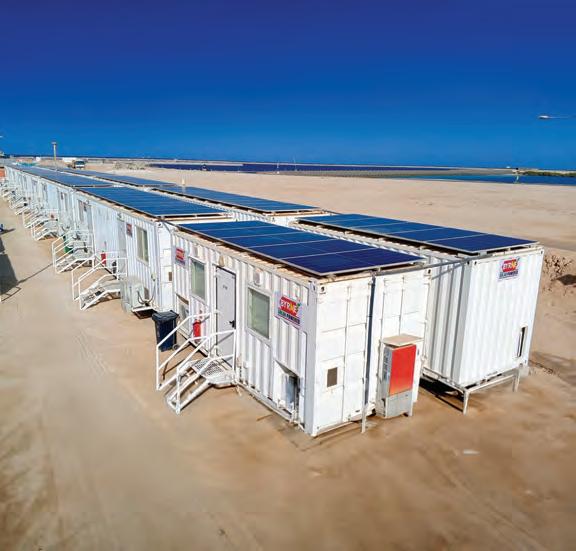
Pat Fallon, CEO of Byrne Equipment Rental, which is based in the UAE but operates also in Saudi Arabia, Oman and Bahrain, told RAI that although the war was understandably making headline news, “the reality for the equipment rental sector, and Byrne specifically, is more measured and nuanced.”
He said the business was seeing “a degree of caution in new contract awards, and some event-driven activity has been deferred. However, core sectors such as construction and oil & gas continue to demonstrate strong underlying resilience.”
He said Byrne’s footprint in the region allowed it to be agile in shifting assets toward infrastructure and “operationally critical projects. In parallel, we are seeing increased demand for short-term solutions such as emergency power, modular accommodation, and specialist equipment supporting maintenance and security requirements.”
Refining the fleet
Byrne has engaged closely with its clients; “We are working collaboratively with clients to introduce scalable flexibility.
“For example, where uncertainty may lead a client to consider a full project off-hire, we are supporting them in right-sizing their fleet at a controlled cost. This helps avoid unnecessary financial impacts while preserving the ability to ramp up quickly as conditions stabilise, therefore protecting long-term project continuity.”
Fallon said the company also viewed the current situation as an opportunity to refine its operational model and fleet composition; “There is a continued focus on safety and high-compliance assets that offer enhanced protection and onsite independence. This includes blast-resistant modules (BRMs),
The war in Iran will have wide implications for the global economy, but for companies working in the Middle East there is a direct effect.
fire-rated temporary buildings, and hazardous-area (Zone 2/ATEX) certified equipment.
Fallon made the point that while the current landscape presents challenges, it also highlights the importance of client relationships and operational readiness.
He also acknowledged the role of governments across the region, and their security and military services, in enabling Byrne to continue to operate its business.
Aggreko is another rental business that has extensive operations in the Middle East. The company’s CEO, Blair Illingworth, told industry analysts last week that the business had removed some staff from Bahrain and Kuwait, where it has small operations; “But, by and large, all of our operations in that part of the world are able to continue unabated.”
He said Aggreko would lose some revenue because of the cancellation of the two Formula One races in the region, but said there had been “significant uplift” for emergency power requirements in the region, which would more than offset the negative revenue impacts.
For a company like Aggreko, the cost and availability of fuel is a key concern, even if the vast majority of fuel costs are passed through to its customers. He said there had been some impacts on diesel. “In the Philippines for example, where there have been emergency measures put in place because they see a problem with diesel supply chains. It remains to be seen exactly how it’s going to play out.
A manufacturer’s view Equipment manufacturers are also impacted, of course. Atlas Copco’s Portable Power and Flow division – which makes pumps, gensets and lighting towers – has a manufacturing facility in Dubai employing 60 people.
Marco Gravina, president of the division, told RAI that the direct impact on the facility has been small, with just one and half days of lost production. It is the wider logistics impact that matters more.
“Inbound deliveries are still working”, he says, “But when we want to ship, it’s quite complex. And it’s more expensive. We are managing to do it, but it’s much slower. It remains the critical point.”
The company is shipping from Oman, but the ports are very busy, and also transporting product by road to Jeddah in Saudi Arabia, but that is adding days to delivery times.
Indeed, companies based across the Middle East have commented on issues surrounding deliveries. One access provider in the UAE said there had been a direct impact due to the closer of the Strait of Hormuz and the inability of ships to dock at ports in Dubai.
A solution for ships heading to the region is to dock at alternative ports ahead of strait and deliver the goods by road from there. Ships bound for the city will now stop at ports in the Gulf of Oman, both in the UAE - a two-hour drive away on the other side of the Hajar Mountains - and in Oman at Sohar or Salalah.
There are wider ramifications for those ships forced to land at alternative docks. They are not as well equipped for these volumes, leading to queues and congestion and ultimately delay and increased costs. On top of that there is more road travel on limited road infrastructure.
“There are so many unknowns, and of course, it can change tomorrow - who knows what decisions will be made, what blockades will be newly introduced, and what agreements will be made,” said the company. RAI


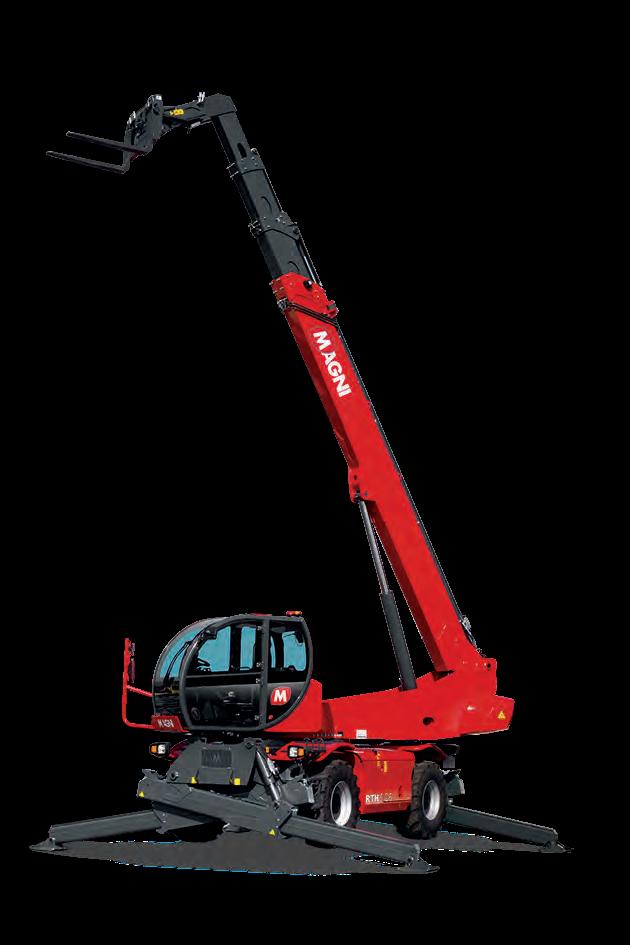
We combine technological innovation with craftsmanship to produce lifting solutions that rewrite the industry standards.
Our telescopic handlers are designed to overcome any challenge, thanks to unrivalled performance, best-in-class visibility and groundbreaking technological innovations.
RTH models are versatile solutions, genuine 3-in-1 machines as they can be used as telescopic handlers, off-road cranes and platforms.
We aim to enable you to work easily in a safe, comfortable environment, so you can be sure of performing at your best every day.
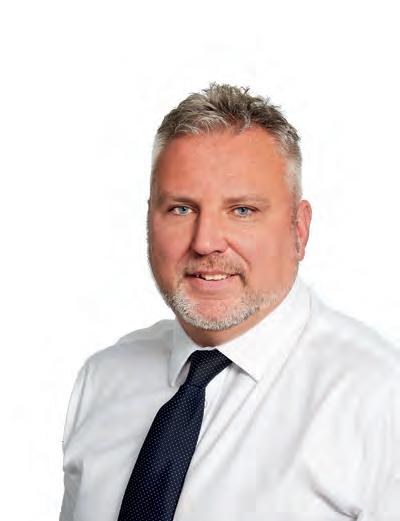
Andy Wright makes a passionate case for the attractions of a career in the equipment rental industry, although, as he acknowledges, it’s not for everyone.
No, this isn’t an article about the 1984 hit song that defined the solo career of Tina Turner. It’s about something far more exciting than that - the equipment rental sector and why the culture within this space is so unique.
One of the most vibrant and culturally strong industrial sectors is equipment rental. From construction machinery and powered access platforms to tools, generators, plant hire, event equipment and specialist technology, the equipment rental market plays a vital role in how countries build, repair, entertain and innovate.
It is an industry that inspires genuine loyalty from some and deep frustration from others. Why do some people love working in it, while others do not? The answer lies in its culture, pressure cooker environment, enduring relationships and the unique mindset that rental demands.
Rental penetration differs across the globe but in markets such as the highly penetrated UK, equipment rental is about access rather than ownership. Instead of buying expensive assets that may sit idle, businesses tend to rent what they need, when they need it. That model suits modern Britain. Contractors need flexibility and in uncertain economic times, renting allows firms to stay agile, preserve cash flow and scale quickly.
Equipment rental solves problems. A contractor needs a telehandler by 7.00am tomorrow. A festival suddenly requires additional generators. A warehouse needs access equipment after a breakdown.
Rental professionals make things happen under pressure. There is satisfaction in being the person and the business which finds a solution when time is tight and failure is expensive. We are ‘fire fighters’, an additional emergency service.
The pace of the industry is another attraction. Equipment rental is rarely dull. Operations teams coordinate logistics, transport and returns. Sales teams manage accounts, urgent enquiries and relationship building. Engineers inspect, maintain and repair machinery to keep fleets compliant and safe. Depot managers balance stock,
schedules and customer expectations. For people who enjoy action, teamwork and visible results, it can be highly rewarding.
There is also a strong camaraderie in many parts of the hire sector. Depots, workshops and field teams often develop a no-nonsense culture built on reliability and mutual respect. Colleagues depend on each other because deadlines are real and mistakes are costly. In many businesses, long service is common because teams feel like communities.
Yet the same intensity that attracts some people can drive others away. Equipment rental is demanding. Customers often call when something has gone wrong or when they are under pressure themselves. Requests are urgent, margins can be tight, and expectations are high. Deliveries delayed by traffic, weather or shortages can disrupt entire projects. A broken machine on-site may cost the customer thousands, which means emotions can run high quickly.
Unlike many desk-based industries, rental is operationally unforgiving. Equipment must be available, safe, clean, compliant and delivered on time. If one link in the chain fails—transport, engineering, scheduling, stock control or communication—the consequences are immediate. Some people thrive in that environment. Others find the constant pressure exhausting.
There is also a cultural divide around perception. Many outside the sector underestimate the professionalism involved. They may see plant hire or tool rental as a simple business: book a machine, drop it off, collect it later. In reality, the industry relies on technical knowledge, safety standards, logistics planning and commercial judgement. Workers sometimes feel undervalued because expertise behind service is invisible when everything goes right.
Safety culture is another defining feature. In construction and industrial hire especially, equipment can be dangerous if poorly maintained or incorrectly used. That creates a workplace culture where procedures matter. Inspections, documentation, training and compliance are not optional extras. Some people appreciate the discipline and responsibility that comes with this. Others may struggle with the administrative burden.
Relationships are central to why people stay. Customers often return to the person who answers the phone, understands their site, remembers previous jobs and solves issues quickly. Trust can outweigh price. For strong communicators, this creates loyalty and long-term success. For those who prefer lowcontact or highly predictable work, it may feel draining.
Technology is changing expectations too. Customers increasingly want online booking, live availability, telematics data and transparent billing. Traditional relationshipled service is now blending with modern convenience. Businesses that adapt are often admired; those that resist can frustrate both customers and employees.
So, what has love got to do with it?
In the equipment rental market, quite a lot. We love action, deadlines and doing, but too often that manifests as re-doing to right things that have gone wrong. Yes, we are ‘fire fighters’ but we need to plan to fire fight better and the really successful businesses are organised to do this.
this, maybe some of the people that don’t love our sector, may grow to love it too.
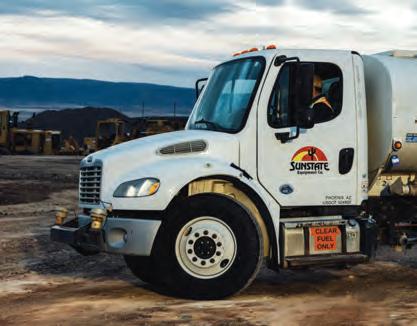
Following a three-year break from the industry – spent at a US power utility and latterly focused on real estate development and consulting – Turner is now based at Sunstate’s head office in Phoenix, Arizona.
How does it feel to have returned to the rental industry?
It’s great to be back. This industry gets in your blood. I learned a lot during my time away, but nothing moves like the equipment rental business. I missed the pace, the people, and the direct connection between effort and results that this industry provides
You always knew you were going to return to the industry?
No, I didn’t. I genuinely thought that chapter was closed. When Sunstate reached out in May 2024, it made me step back and reflect. The more I learned about the company, the culture, and the opportunity, the clearer it became that this was the right place to come back.
Is it a big challenge, is there a lot to change?
Sunstate has an exceptional foundation. Mike Watts [the founder] built a legacy of a people-first culture that is very well-known in this industry and Chris [his son] helped carry that forward. That culture still shows up every day in our branches.
I don’t see my job as replacing that –it’s to build on it. I see an opportunity to strengthen systems and structure so the culture can scale and perform even better.
In what way?
As one example, Sunstate historically operated in a metro model. I’m a firm believer in a standalone branch model, where branch leaders truly run a business.
When sales and operations are aligned under one leader, accountability improves and customers feel it.
You have a Japanese owner, Sumitomo. What are their goals? Is Sunstate being built to scale and then sell?
No, that’s not the plan. Although there’s a lot of people in the industry who think that’s the plan.
Sumitomo was founded in the year
Norty Turner became the new CEO of Sunstate Equipment in February 2025 after a 30-year career in rental that included 16 years at HERC, seven at Riwal and three and a half at United Rentals.
1585. Last year they celebrated their 440th anniversary – over four centuries. They play a long game and rental is a key strategic growth area for them. Sunstate plays an important role in that long-term view.
[RAI: Sumitomo also owns Aver Asia, the Singapore-based aerial platform rental company, as well as Komatsu dealers in North America and Europe.]
So your aim is to grow Sunstate? Yes. Our goal is to meaningfully grow the business over the next several years, roughly doubling the size while staying true to who we are operationally and culturally.
A combination of organic and acquisition growth?
Both—but acquisitions have to earn their place. Cultural fit comes first, followed by strategic alignment, great people, and solid performance.
We’re focused on growing within our existing footprint and selectively expanding into adjacent markets where it makes sense for customers and employees.
Will there be a focus on specialty equipment?
Trenching and shoring is already a strong part of our business, and we’ll continue to build on that. We also see opportunity in power, temperature control, and pumping.
We do already supporting customers in these areas. Now our focus is scaling them thoughtfully and effectively.
Doubling the size of the business. Does that imply you becoming a national US player?
We love States where there’s population net inflow. And 13 out of 16 of the States that we’re in are population net inflow. And so, we like our envelope where we are. And then there’s some adjacent States to that envelope that are also population net inflow that a
This industry is infectious. If you think that you’re gonna leave it, it’s going to pull you right back in. There’s just nothing like it.
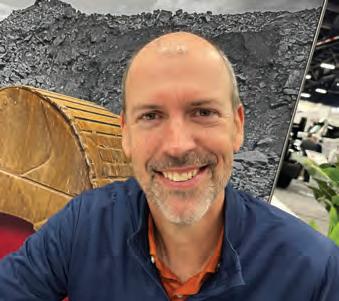
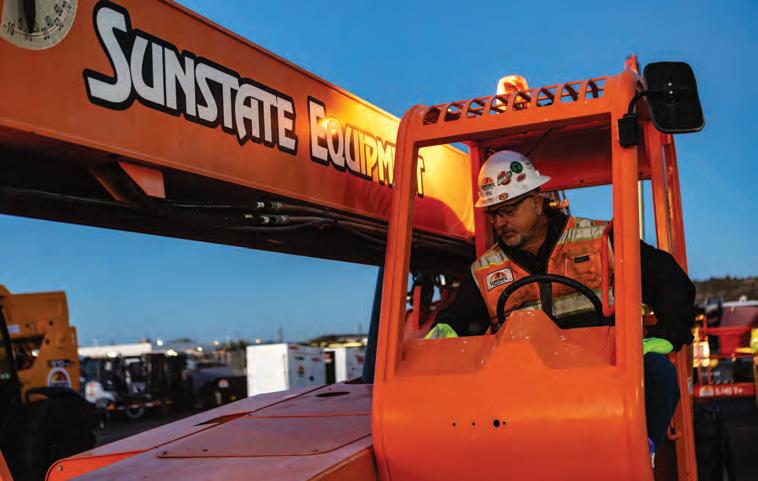
Norty Turner, CEO of Sunstate Equipment, pictured at the 2026 ConExpo-Con/Agg show.
given acquisition might also take us into. Not necessarily [a national player]. We like markets with population growth and longterm demand. Most of our current states fit that profile, and there are a few adjacent ones that do as well.
The other big rental players in the US are expanding the number of locations in major metropolitan areas. Will that be your strategy as well?
I wouldn’t necessarily characterize our strategy as the same strategy as one of our competitors. With metro density, that can drive higher return on invested capital, which is certainly one measurement, but our strategy starts with experience, not footprint. Density can improve returns, but our primary objective is delivering the best customer and employee experience in every market we serve.
If a move supports that, we’ll consider it. If it doesn’t, we won’t.
Doubling the company over that period is going to require a lot of investment. Is that going to be generated by the business itself or Sumitomo investment?
CapEx is the oxygen of this industry. We
generate strong cash flow after CapEx today, and that will fund much of our growth. Having Sumitomo as a committed, wellcapitalized owner gives us additional flexibility and confidence.
Aerials has traditionally been a big part of the Sunstate business. Will that continue?
Absolutely. Sunstate evolved to embrace a nice percentage of aerial. And of course, you know my background running an aerial specialist before [as CEO of Riwal], so I’m a believer in the benefits as well.
Our fleet decisions start with customer needs and productivity. Aerials play an important role, and we’ll continue to evolve the fleet mix to support customer outcomes and disciplined returns.
Are there synergies with Sumitomo’s Komatsu dealerships and other Sumitomo rental assets?
Yes, particularly around bestpractice sharing and customer collaboration. Rental has been the starting point, but we’re exploring additional ways to support customers together where it makes sense.
So, where a dealership customer is interested in rental, they can refer to Sunstate?
Exactly. And it works both ways. The goal is to make it easier for customers to get what they need, whether that’s rental or ownership.
Having a Japanese owner, is it light touch ownership? How would you characterize it?
I’m very happy being one of the 893 portfolio companies within Sumitomo. There’s a clear governance structure and a high level of trust. I have the autonomy to run the business, and Sumitomo acts as a thoughtful, engaged partner.
The conversations are active and constructive, focused on strategy, performance, and longterm value.
Talking of opportunities, will mega projects - data centres, chip manufacturing – be a core element of your growth plan?
Certainly, yes. Data centres and advanced manufacturing are significant demand drivers, and they also create broader regional development around them. These projects are longcycle and operationally complex - areas where strong rental partners matter.
Do you have the scale to supply these big projects, as a prime rental supplier?
We do. We have US$1.9 billion of fleet, and a lot of core Sunstate customers who we’ve been taking care of for decades on those sites. When specialized equipment is required, we invest where needed to make sure our customers are supported.
How do you differentiate Sunstate from United, Sunbelt, Herc, EquipmentShare?
Our vision is to deliver the best customer experience in the industry which comes back to execution.
We’re very clear about what defines a great customer experience, and we align our systems, structure, and people around that. We’re not perfect, but we’re disciplined about improving—and customers are already noticing that shift in consistency.
What are your priorities in terms of digital technology?
We’re very excited about onboarding our new chief information officer, Steven Frederick, who started in January. Steven has extensive experience in the industry and brings knowledge and understanding in areas of the business we want to improve. [RAI: Frederick previously worked as CIO at H&E Equipment.]
One of the critical success factors for customers that defines the best customer experience is technology-driven insights. Telematics and data insights are critical, both for us and for our customers.
Our Navigator customer portal is also part of that, and we’ll continue investing where technology directly improves ease, uptime, visibility, and service.
Anything you can offer customers this year that you haven’t in the past?
Reliability. When customers call, they want






availability, ontime delivery, safe equipment, and fast resolution if something goes wrong. Safety is foundational. If you’re not safe, nothing else matters. We’ve made real progress there, and customers expect it. Our total reportable incident rate - thanks to some really effective safety leadership in Sunstate – has been driven down over the last year to the point where in February we had zero reportables: not one in the month of February.
EquipmentShare has this financing model for their fleet where they own half of it and half of it’s owned by third party investors. Why doesn’t everybody do that? Every model has tradeoffs. We value the stability and control that comes with our model - being backed by a $43 billion company with 80,000 employees in well over a hundred countries and a 440 year history. We like our ownership structure and longterm backing.
What’s your view on what’s happening in the manufacturing landscape and the pricing, with tariffs? Is it making life more difficult?
So far, the impact has been manageable. We have strong OEM relationships, and many manufacturers are making longterm investments in North American capacity.
Is Sunstate going to be a buyer of Chinese machines?
We already work with suppliers that have Chinese ownership, like MEC. Global sourcing is a reality across the industry. Our focus is reliability, safety, and total cost of ownership.
How do you view the economy in your territories this year and maybe next year?
There’s uncertainty, but demand in key segments remains strong - particularly data centres and infrastructurerelated work.
We have seen a certain element of a K-shaped economy, as described by the financial pundits. The data centres on the upward arm of the K, and basically everything else on the downward leg.
But we are encouraged. Our fiscal year is April 1st to March 31st, and we’re encouraged by how we’re closing out our fiscal year.
What we’re hearing from customers and seeing in our backlog is encouraging, though we remain disciplined and watchful.
You sound happy to be back. This industry is infectious. If you think that you’re gonna leave it, it’s going to pull you right back in. There’s just nothing like it. If you’re someone with high energy and high sense of urgency, and you like things that are very dynamic, you belong here.
I had no idea that was the case when I joined the industry. But it’s been an amazing ride and I’m so grateful to be back. RAI



The two exhibitions - co-located at the MECC venue and being held alongside the European Rental Association’s annual convention – will showcase equipment and technology targeted at all types of rental companies.
This year will see a particular focus on new technologies that are being adopted by rental businesses, including compact battery powered equipment, digital technologies and power generation, including battery energy storage systems (BESS).
Within IRE alone there will be 17 companies demonstrating rental software, telematics technology and AI solutions for rental, and 13 exhibitors showing power generation and battery story solutions.
At APEX, more than 100 exhibitors will cover the entire range of modern access products.
Across both shows there will be an extensive range of product introductions.
The world’s largest OEMs will be represented at the show, including JLG with new features for its ClearSky Smart Fleet IoT platform that are coming soon to the European market.
Designed to combine traditional telematics into a two-way communication and fleet management system, the new features include Automatic Site Networks, which shifts fleet management from manual to automated processes.
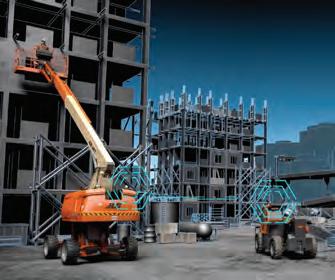
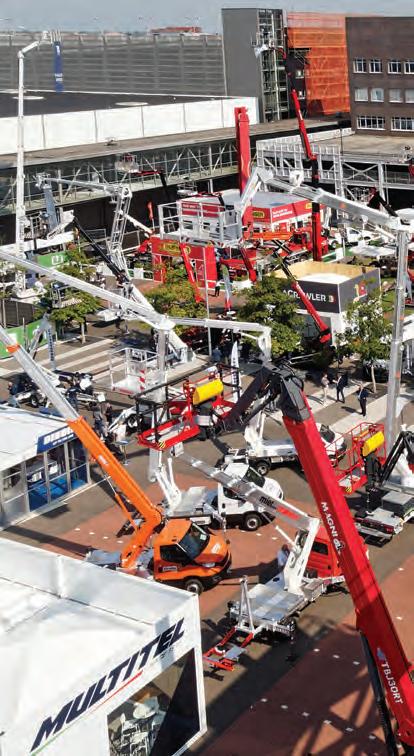
APEX and the International Rental Exhibition (IRE) take place in Maastricht this June and are set to be the launchpad for an array of cutting-edge equipment.
Another addition is the Leveraging Bluetooth mesh technology feature, allowing machines to automatically connect to one another. In addition, the new Digital Analyzer Reader feature brings diagnostic capabilities to mobile devices.
Genie will celebrate its 60th Anniversary at APEX with the debut of new safety technology at the show.
Besides the electric booms, nextgeneration micro scissors and accessories, will be the launch of Lift Guard Sense.
Designed to help contractors reduce the risk of operator entrapment when working near overhead obstructions, Lift Guard
Alert.
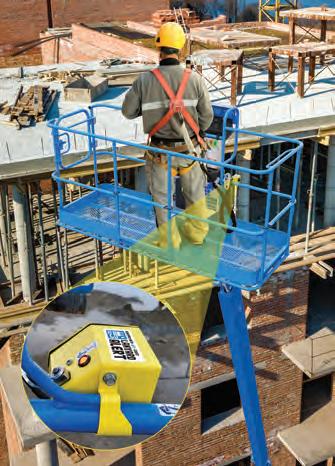
Sense uses proximity sensing technology to deliver a progressive response that includes audible and visual alerts, automatic slowdown and function cut-off.
A key differentiator between this and other similar offerings is a feature that allows the operator to restart movement, at a reduced speed, if it is safe to do so, therfore maintaining productivity.
Skyjack will exhibit its latest electric slab scissor and articulating boom.
The new E-Drive SJ5545 E electric drive scissor lift represents the highest working height scissor in Skyjack’s range of slabs and includes a working height of 15.55m and a load capacity of 349.2kg. The scissor stack features fully welded cross-bracing that increases rigidity and improves operator comfort. This scissor is driveable at full height, offers a 2-person wind rating at 6.7m, and provides the largest working areas in its class with an all-steel, anti-slip platform.
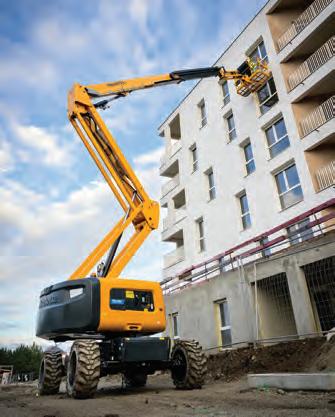
The SJ45 AJHE+ and SJ60 AJE+ represent Skyjack’s new hybrid-electric and battery-electric rough terrain articulating boom range.
Haulotte will show the next generation 100% electric rough terrain 20m articulating boom from the Pulseo range - the HA20 E and HA20 E PRO.
It joins the HA16 E and HA16 E PRO, extending the line of rough terrain electric booms.
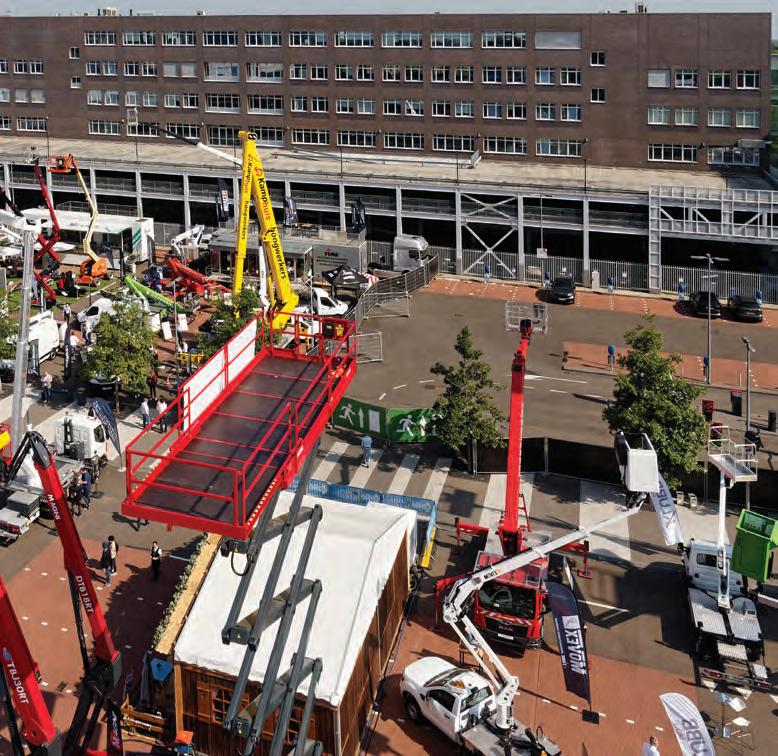
Klubb will debut the PT 280 truck mount, which maximises working height at 28m and outreach on a 3.5 tonne chassis.
First sight of Versalift’s new 3.5 tonne series V-Range will be at the show. The introduction from Versalift and France Elévateur, both part of the Time Manufacturing Company (TMC), provides a fully standardised 3.5 tonne series.
In addition, Palfinger will show its TEC range, launched at Bauma last year, on a 10.5 tonne chassis. The larger chassis provides significantly more space for equipment, tools, and additional options. A three battery pack solution enables quiet operation.
→ Further details and pictures are in the Vehicle mounts feature in this issue.
The company will also highlight its actions to reduce the environmental impact of its activities and increase, present its service coverage through Europe and remind visitors of the solutions through workshops, technicians, parts and telematics.
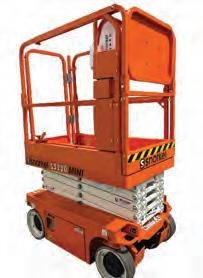
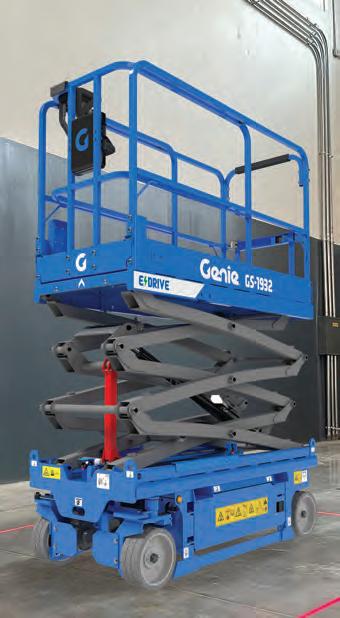
Snorkel will debut its latest E-Drive scissor lift. Produced in the UK, the S3220M has a working height of 7.9m and is lightweight at 1,088kg. Despite its compact size, it boasts a substantial 272kg capacity, making it ideal for contractors.
Building on the existing S3013mini and S3219Plus models introduced in the last 18 months, the S3220M features Snorkel’s
WHAT: APEX | IRE 2026 WHEN: 2-4 June
WHERE: The MECC, Maastricht, The Netherlands WEB: www.APEXshow.com | www.IREshow.com
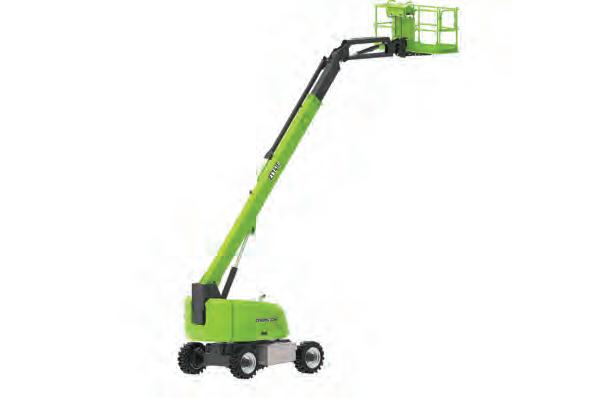
Zoomlion’s ZT14JE telescopic boom lift will be on its stand.
E-Drive system and comes equipped as standard with maintenance-free AGM batteries.
The company pointed out that the machine is in pre-production, therefore specifications may change.
The goal for many Chinese MEWP manufacturers is to grow their presence across Europe.
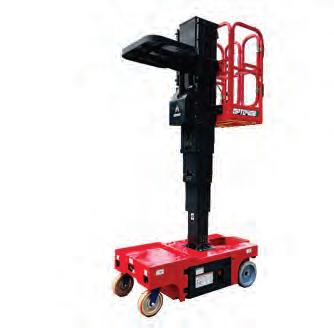
The Hered OPT0408E vertical mast lift.
It was in July 2024 that Sinoboom announced its commitment to the assembly of MEWPs for the European market at its plant in Poznan, Poland. The group, with its headquarters based in Changsha, said the new approach, which will be highlighted at APEX, would see it introduce full assembly of its scissor and selected boom lifts, destined for the EU.
Zoomlion is also set to highlight its localisation strategy in Europe at APEX, in particular the newly inaugurated factory in Tatabánya, Hungary. “This facility represents a major milestone in our European strategy, demonstrating our commitment to local manufacturing, local service, and local support,” said the company. Following the opening of phase one this year, the second phase is already under construction.
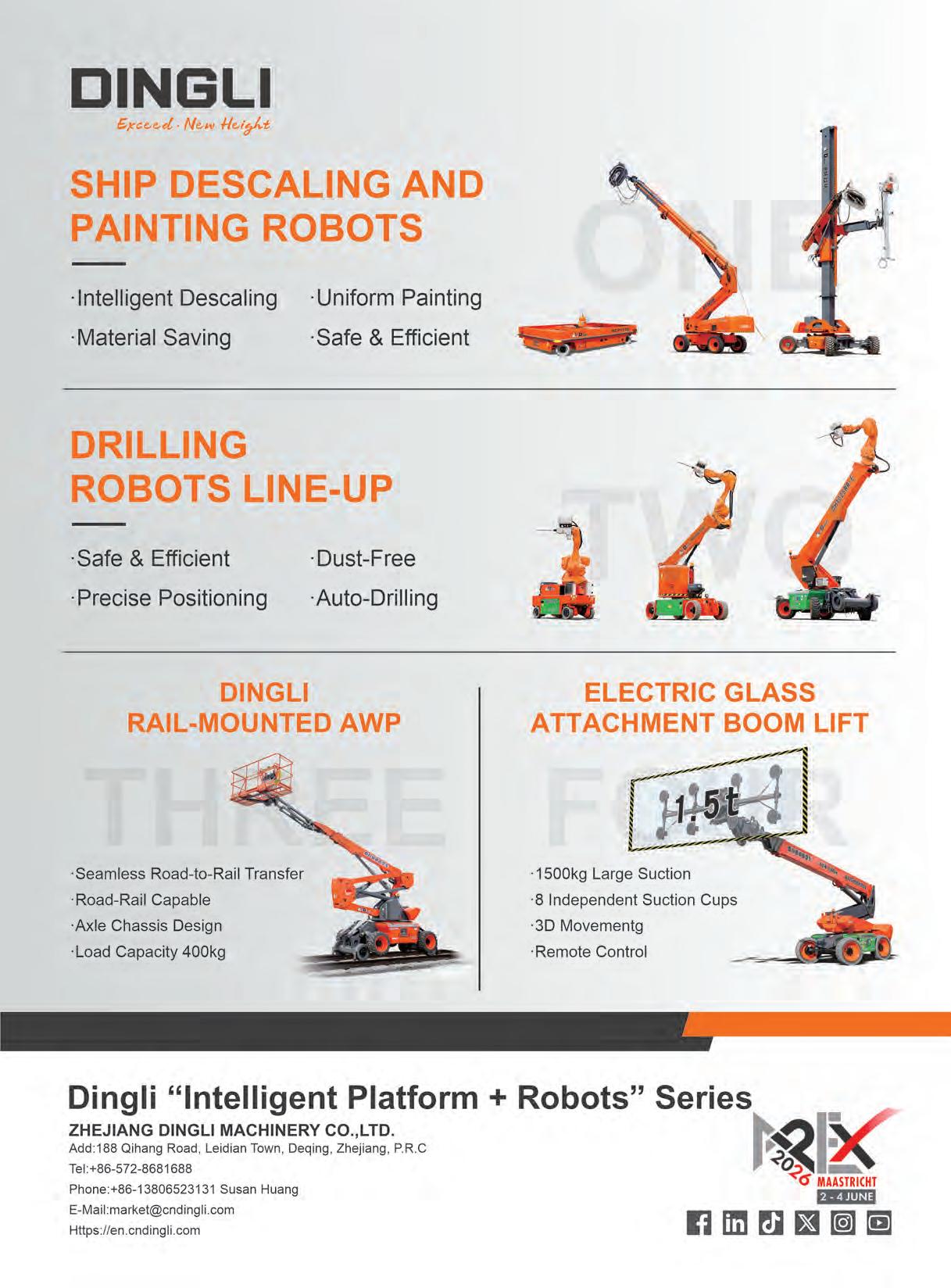
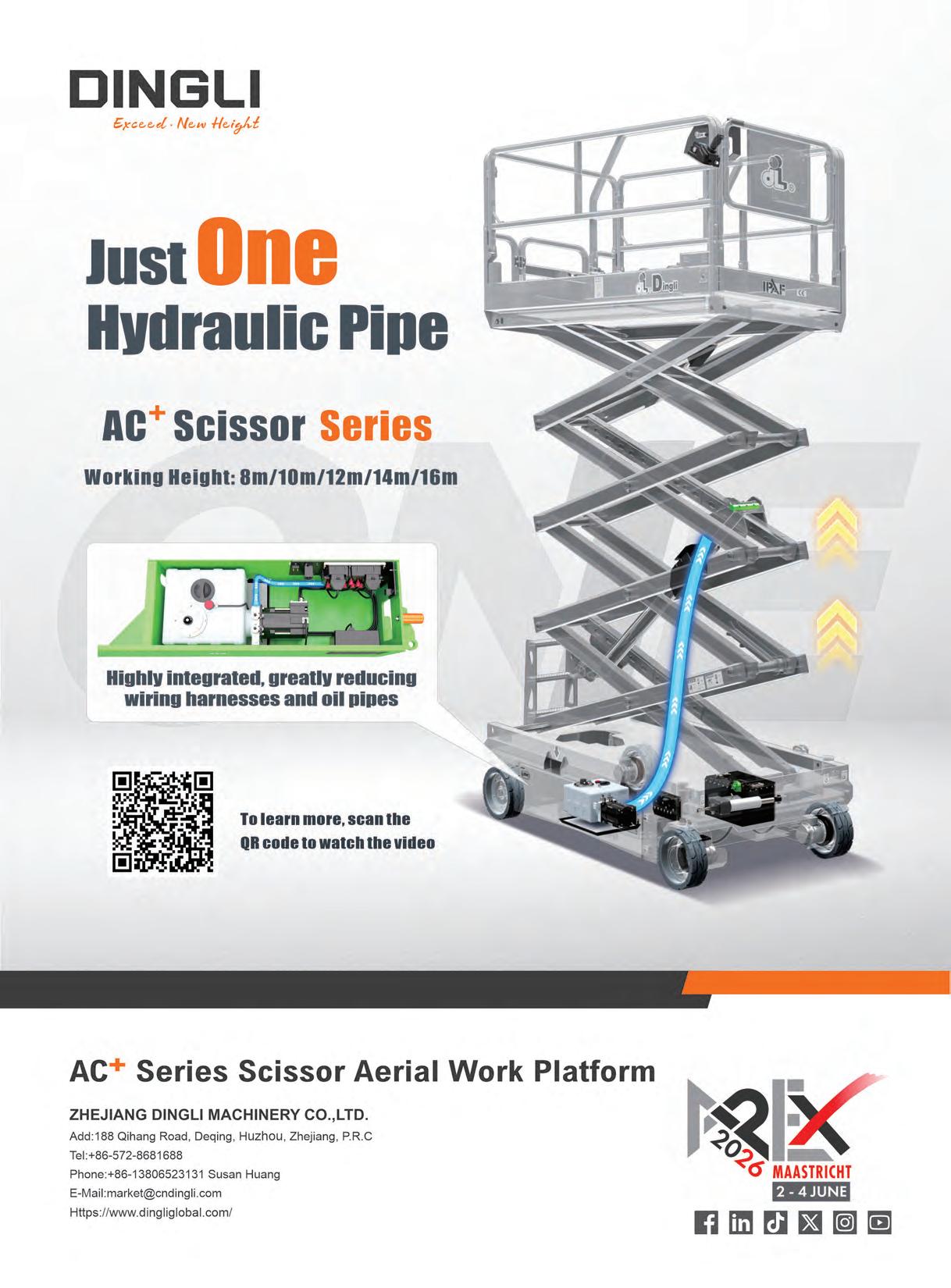
Dingli will launch new lightweight, compact rough-terrain scissor lifts at APEX.
Introduced to address a niche area that currently has limited offerings, said the company, the new model will offer true offroad capabilities under 10 metres.
“These models significantly expand and strengthen our off-road product portfolio. They combine a lightweight design with a range-extending system, delivering both long-lasting operation and robust power for complex outdoor sites, redefining flexibility in aerial work”.
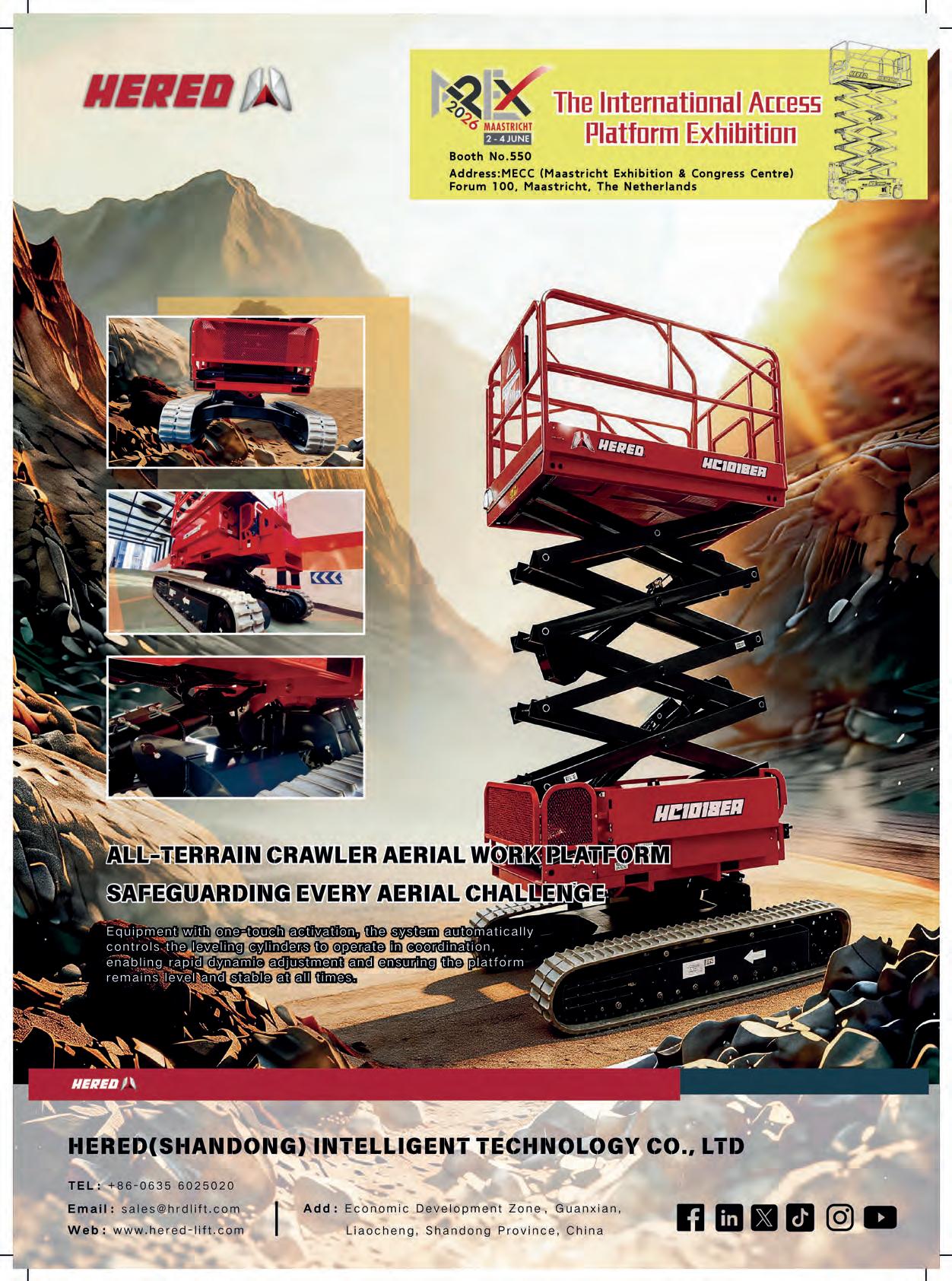
There will be a range of other Dingli equipment too, including the AC+ series. Hered has confirmed that it will launch a string of products, including the SPA11T trailer mounted platform , equipped with a largecapacity maintenance-free lithium battery. It also offers fully electric proportional control. The boom is lowered by gravity.
TUESDAY 2 JUNE
09:30 — 18:00
IRE & APEX shows
12:30 - 18.00
Committee Meetings
12.00 – 13.30
Technical Committee
13.30 – 15.00
Promotion Committee
15.00 – 16.30
Transformation Working Group
16.30 – 18.00
Sustainability Committee
18.00 – 19.30
Cocktail IRE and APEX
19.30 – 22.30
Boat Tour on the Meuse with dinner
WEDNESDAY 3 JUNE
09:30 — 12:30
■ Convention Registration
■ Breakfast on the ERA Stand
■ IRE and APEX
12:30 — 13:30
Lunch at IRE (ERA stand)
13:30 — 15:30
Plenary Session - Part 1
13:30 - 14:00
■ Opening of Convention: Stéphane Henon, President, ERA
■ Welcome & programme: Carole Bachmann, Secretary General, ERA
■ Welcome to Maastricht: Toon Bruining, Verhurend Nederland; Juergen Kuespert, bbi; Bill Olivier, BERA.
■ 20th anniversary, flashback: Gerard Deprez and Michel Petitjean
Sustainability, Digitalisation and People
■ Sustainability and contribution of equipment rental to circular economy: François Johnston, Johnston Circular
■ Professionalising rental through data & digital
■ People scarcity: challenges and solutions: Stefan Stremersch, MTI2
Moderator: Maarten Bouwhuis
15:30 — 16:30
Coffee break & Networking (ERA stand at IRE)
16:30 — 18:00
Plenary Session - Part 2
Evolving Customer Expectations and an Expanding Industry Scope
■ Evolving customer expectations
■ Expanding industry scope – Resilience, rental as a strategic solution to crisis: Johan Huovinen, Swedish Defence University
■ Panel discussion with representatives of young generations on the rental industry of the future
Moderator: Maarten Bouwhuis
18:00 — 18:30
ERA General Assembly and Election (Open to direct members and volunteers)
Also debuting at the show will be the OPT0408E vertical mast lift with full electric drive, offering zero noise and emissions, equipped with a multi-level cargo platform and a high-precision platform overload sensing system.
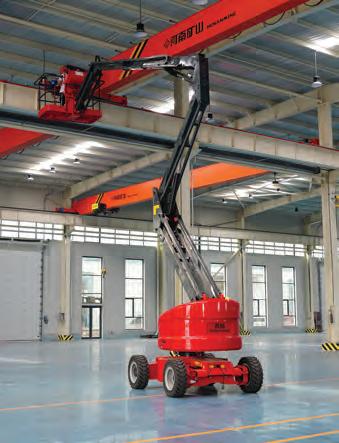
Chufeng will present a new articulated boom lift – the CFBA16E. The 15.7m working height machine has a 9.3m horizontal reach and compact design, with 0.25m tail swing for precise positioning and electrical drive.
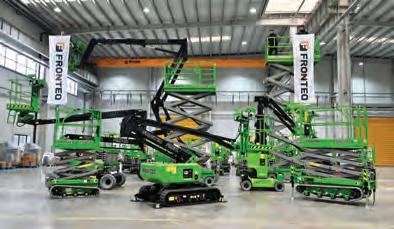
Fronteq will launch the FBZ6TL articulated boom lift. It is designed for smooth driving on rough terrain and high stability with outriggers. It can travel on a 12° slope and has 360° continuous rotation.
19:00 — 20:30
European Rental Awards Cocktail (ERA Stand at IRE)
20:30 — 01:00
European Rental Awards Dinner & Anniversary Party
THURSDAY 4 JUNE 2026
09:00 — 09:45
Plenary Session – Part 3
Market trends
■ The Rental Industry’s Evolution over the last 20 years: market growth, evolution of penetration
■ Update Rental Forecast and Construction 2026/27: Martin Seban, KPMG
09:45 — 10:45
Coffee break (ERA stand at IRE)
10:45 — 12:00 ERA Workshops
■ Workshop 1: Addressing rental equipment theft across Europe
■ Workshop 2: Standardisation in electrification
■ Workshop 3: Attracting and retaining people in the rental industry
■ Workshop 4: The future of rental products - what will we rent in 10 years?
12:00 — 13:00
Conclusion of Convention
■ Guest Speaker: Inma Martinez
■ Closing: Stephane Henon, President ERA
13:00 — 14:00
Networking lunch (ERA Stand at IRE)
14:00 — 16:00
Visit IRE & APEX
Chufeng will present a new articulated boom.
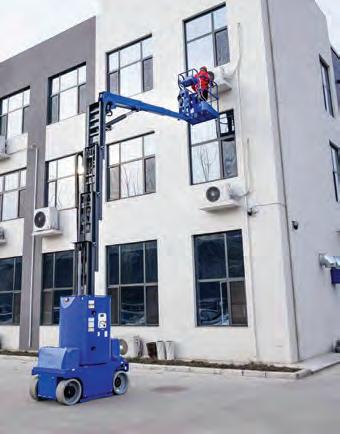
Rees Industries will have a new forklift style vertical mast lift with jib on the stand. The compact 0.99m wide model has a 5.7m outreach and 12m working height.
Shandong Lemax Heavy Industry will introduce several new lifts, including a towable unit, crawler boom and diesel boom lifts. The machines are compact and offer improved manoeuvrability, and precise control systems.
Manitou will present its Lift 2030 strategy, including a target for electric equipment to reach 28% of sales by 2030, along a range of new zero emission products.
They include a new electric forklift range, with the MC e model being the headliner The electric unit is designed to perform equally well outdoors and in sensitive indoor environments. The range cuts energy costs by over 60% and has maintenance costs compared to diesel and will be available in Europe from the end of 2026.
First deliveries of Manitou’s MT 1440e and MT 1840e, the company’s two highreach electric telehandlers, are now entering the market, and will be at APEX.
There will also be a new 12m working height electric scissor lift on the stand, completing the company’s slab range.
In a addition at the show, Manitou is presenting a unified Customer Service Platform (CSP) dedicated to rental and key accounts.
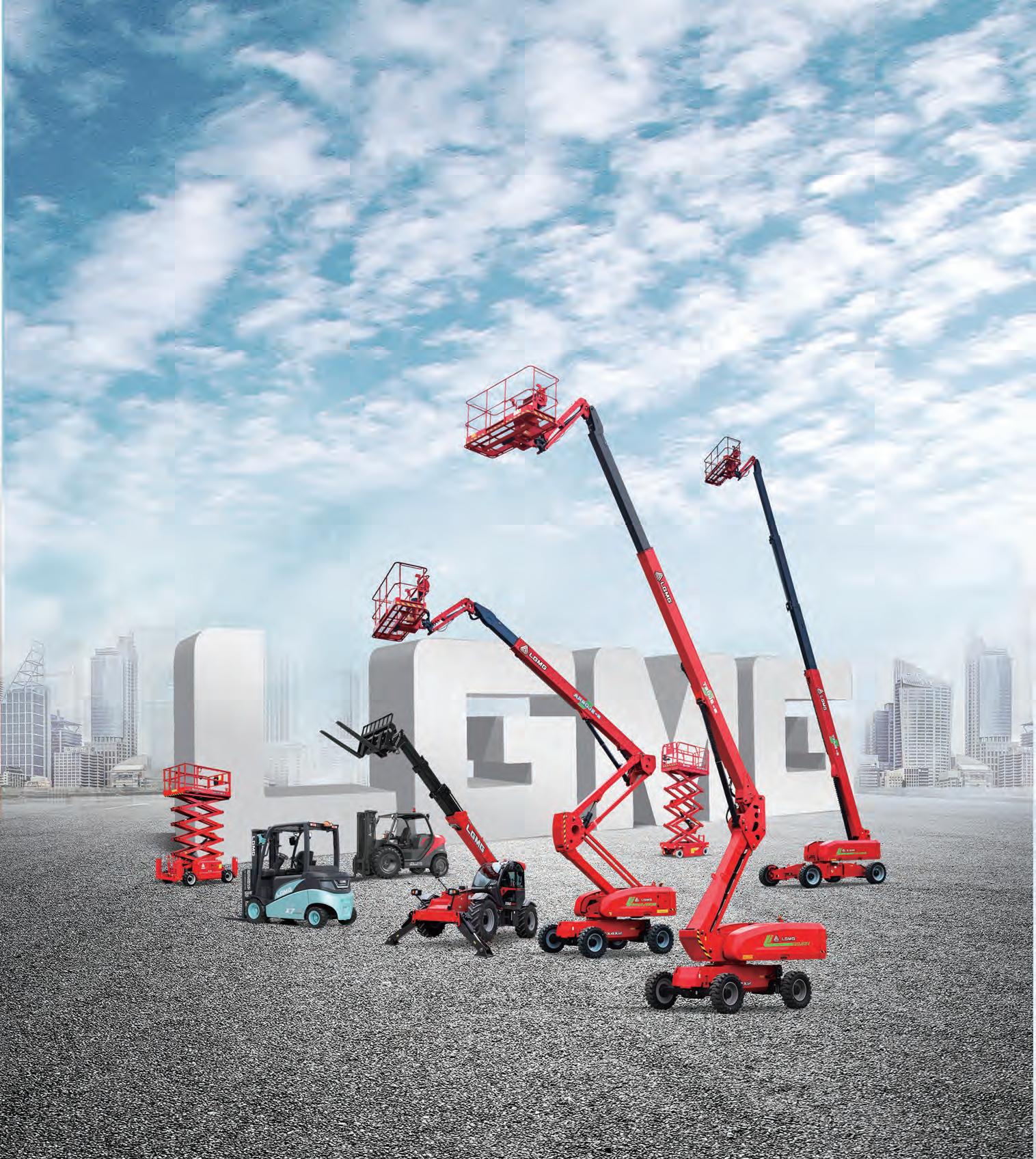
LGMG is set to display a new rough terrain forklift. The diesel-powered F25 has a 2,500kg lifting capacity and 3.4m lifting height. Features include hydrostatic transmission system, and four-wheel drive.
It will be joined by a range of other equipment, including the 2,500kg capacity H625E telehandler with 5.94m lifting height, plus fourwheel drive and steering. The electric M0810JE vertical mast lift will also be on the stand.
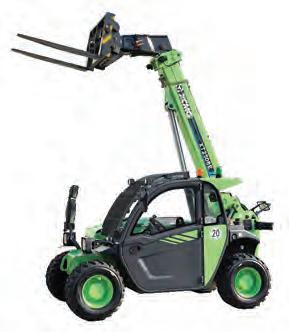
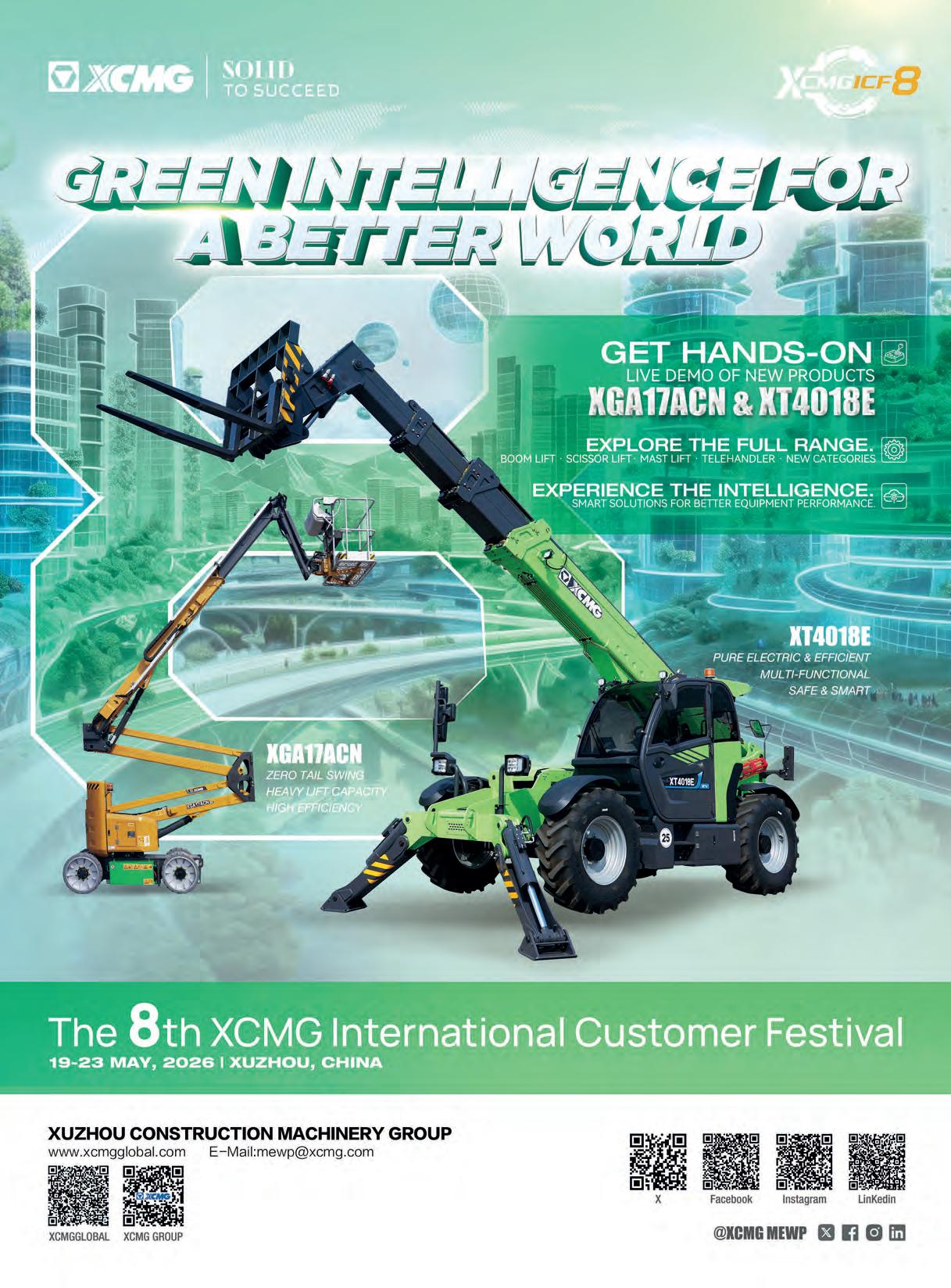
XCMG also plans to show a new telehandler, the XT2506E. This will be displayed alongside scissors such as the XG0607DC and XG1012AC, the XGA48K articulated boom lift and XGS16K and XGS40ACK telescopic booms.
Low level access
Axolift is set to launch a new scissor lift model to expand its P300 range. It is designed for construction sites, rental activities and comes with numerous unique features.
Axolift Dutch dealer GB/EG will join the company on the stand bringing some of their other products from Palazzani and SPT cranes. An Axolift machine will branded as Manu-x-lift, to highlight our cooperation with Alumexx B.V.
Scan the QR code here to view the shortlists for the European Rental Awards. Winners will be announced at the awards ceremony in Maastricht on 3 June.
XCMG’s new XT2506E telehandler.
Hoeflon will show a selection of compact cranes with dealer Hoeflon Nederland, from the ultracompact models like the C1, to larger machines, such as the new C6, C10, and C30. The new C6 introduces several upgrades, such as automatic levelling, a higher jib capacity, pick and carry functionality, and automatic in and outrigging.
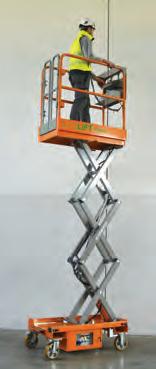
Part of the Axolift P300 range.
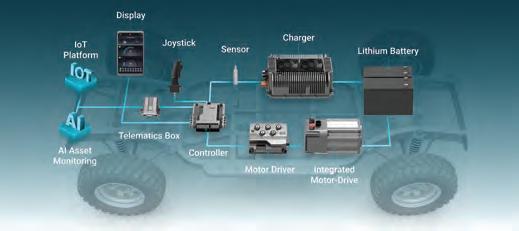
HANRL’ s new A500 electronic control system is specially designed for scissor lifts. It consists of a Platform Control Unit (PCU) and Chassis Control Unit (ECU), interconnected via a standard CAN bus to form a complete electronic control system suitable for hydraulic and electric scissor lifts. The ground control ECU is integrated with operation panel, LCD display and USB interface. The system is equipped with lifting, walking, steering and high/lowspeed switching, alongside a range of safety functions.
Electrification solution specialist NVR will show several new electrification and intelligent control solutions. Key highlights include the Amazon controller platform series supporting 64 to 154 I/O configurations with CODESYS and Simulink development environments; integrated HMI display solutions designed to improve operator interaction and machine visibility; and electrified powertrain solutions such as the DH1300 integrated motor-drive unit.
The energy-efficient all-rounder for construction sites and temporary industrial backup
Compressed air up to 4.7 m³/min, maximum pressure up to 11 bar
• Sustainable e-power: Ideal for operation in Low Emission Zones
• Exceptionally quiet and emission-free
• Frequency converter: Flexible pressure adjustment and reduced starting current
• Integrated compressed air aftercooler: Cooling to +7 °C above ambient; angled design for reliable, frost-proof condensate drainage

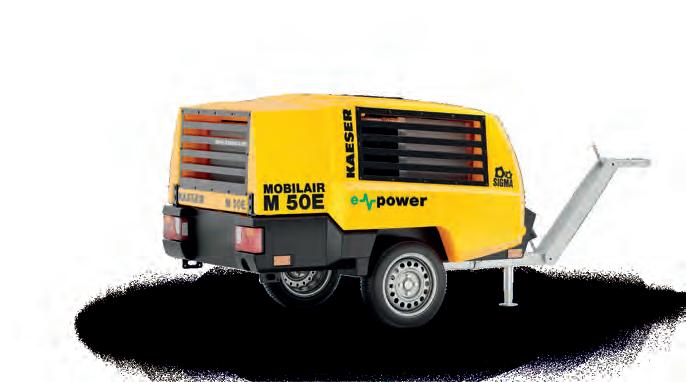
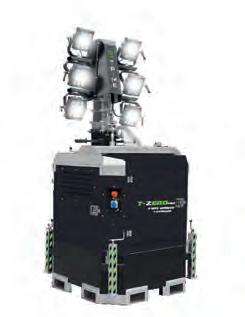
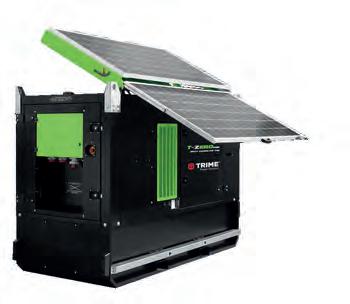
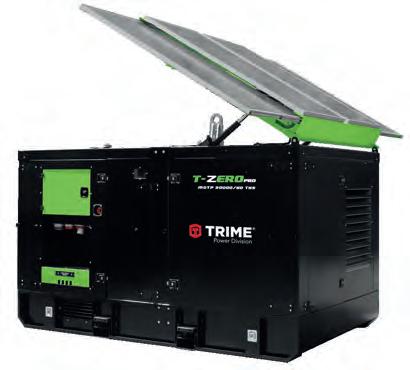
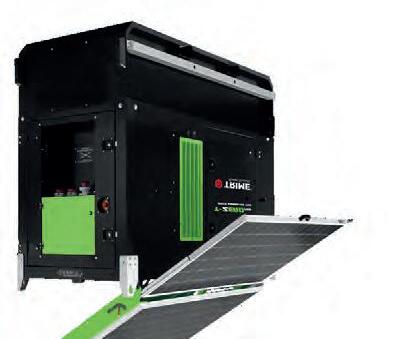
The IRE will have a focus on compact equipment and tools, including onsite equipment such as lighting towers, compressors, generators and more.
There will be more battery powered machinery than ever before – telehandlers, pressure washers, site dumpers - and as many as 13 companies showing power generation and battery energy storage systems (BESS).
At the same time, the explosion of rental technology and digital solutions is reflected by the 17 or more companies showing rental software, telematics technology and AI solutions for rental.
So, what new machines and technology will be on show at IRE?
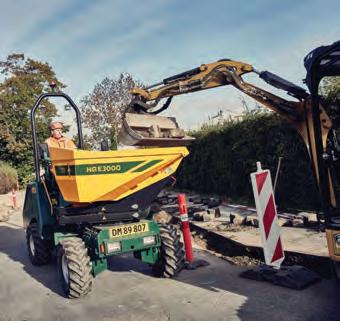
Danish manufacturer HG will showcase its new 3 tonne capacity electric site dumper.
The HG E3000 – which follows the company’s 1 tonne and 2 tonne electric dumpers - is a 100% electric, articulated machine designed to deliver up to 12 hours of effective working time on a single charge.
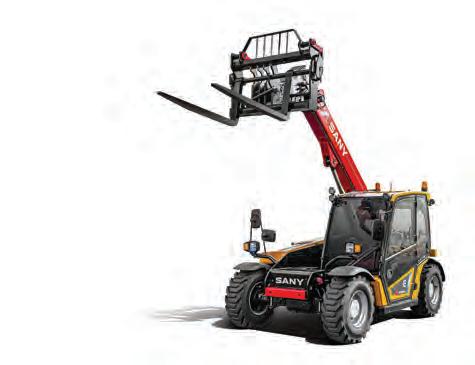
Also battery powered is Sany Europe’s new STH625E telehandler, powered by a 34kWh LFP battery providing an operating time of up to 8 hours. The model has a maximum lifting height of 6m and a payload capacity of up to 2,500kg.
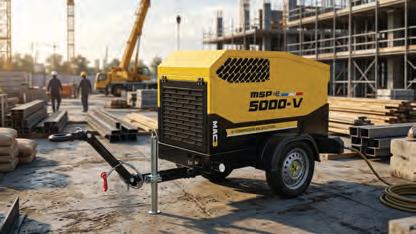
Not all electric equipment is battery powered. For example, French manufacturer MAC3 will show its new mains-powered portable compressor.
The company, which produces a wide range of air compressors and pneumatic tools, isn’t giving much away
Alorem’s new galvanised PT10 fuel transport and storage tank.
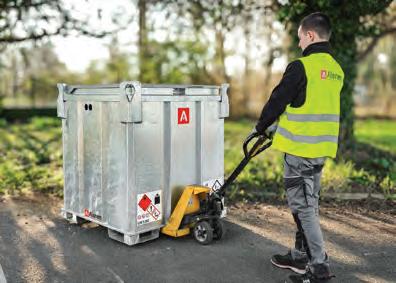
before the launch, but says the new unit will give users “exceptional air production power, while benefiting from a quieter and more eco-friendly operation.”
Another portable compressor supplier, Germany’s Kaeser, will show its Simple Operating Concept based on the SCM2 controller, designed to make operation of its compressors as easy as possible, even for inexperienced users.
The control panel interface is in two distinct zones, catering to both the techsavvy operator and the traditionalist. A modern touchscreen display offers smartphone-like navigation, and it’s weather-proof and usable with gloves.
Alternatively, there is a single, selfexplanatory mechanical switch for start and stop of the compressor.
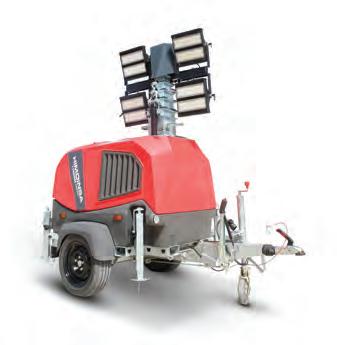
Spain’s Himoinsa, meanwhile, will show a range of its products, including the EHR 90/130 battery storage system; the CE8 family of control systems for its diesel and gas generator sets; the H-COMPACT+ lighting tower; and the NEURON connectivity programme.
The EHR 90/130 expands the company’s range of battery-driven energy storage and distribution systems, doubling the power of previous units and reaching 130kWh of storage capacity.
Himoinsa says connectivity of its products is the layer that makes fleet intelligence scalable. Its NEURON system – which will be demonstrated in Maastricht - integrates communication flows and enables the sharing of machine data with external customer platforms via APIs.
There will be numerous on-site products on show. UK pressure washer manufacturer
Brendon Powerwashers, for example, will have a battery powered version of one of its washers on display.
French manufacturer of fuel storage tanks and related products Alorem will be showing four of its tanks, including the PT10, a fully galvanised tank that is its most recent launch.
Founded in 1997, Alorem is already selling to some of the largest rental companies in Europe, but aims to use IRE “to showcase our range and connect with new European rental partners.”
As far as software and digital technology is concerned. Software firm Klipboard – which includes the formerly branded InspHire business – will use IRE to give rental professionals a “hands-on look” at new embedded AI functions in its OnRent Go software (see also our Rental Software & AI feature, this issue.)
IRE also has the ability to showcase new and interesting technology. For example, US manufacturer Airsled will use the show to spearhead the launch of its ‘hovercraft’ loadmoving products to the European rental market.
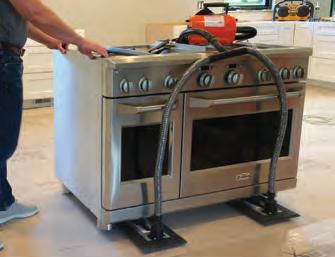
Airsled, based in Newark, Delaware, US, already supplies its appliance mover products to multiple rental stores in the US and is now targeting Europe’s rental sector with its low-pressure, air film technology.
It will show several models, including the “commercial-grade” Light Duty Appliance Mover, which can lift 205kg or 295kg. RAI
Air film technology is used on Airsled’s appliance movers.

Genie is one of the true pioneers of the access industry and is celebrating its 60th Anniversary this year. Yet, the milestone comes at a transitional time for Genie following parent company Terex Corporation’s plans to put it up for sale.
While Terex merged with specialty vehicle manufacturer REV Group in February, it also plans to sell Genie as part of a refocus away from the cyclical construction market.
The Genie name has been synonymous with the aerial lift sector since Bud Bushnell founded the company in September 1966, and according to current president Josh Gross, the aim is for it remain a dominant force for the next 60 years.
“There’s a lot of legacy and a lot of history around our impact on the industry and customer experience. So, we’re really excited about the next 60 years. The focus for us is we want to continue to be a differentiator on quality and total cost of ownership.”
Terex unveiled plans to merge with USbased REV Group, which manufacturers speciality vehicles including fire trucks, ambulances, and recreational vehicles, at the end of October last year, and exit Genie,
its aerials business, leading to widespread speculation over potential buyers.
However, we will have to be patient, as any announcement of a new owner could be some way off.
“We’re honestly very excited about it,”
Everything’s on the table; we’re analysing what’s the best fit for us, the industry and for our customers.
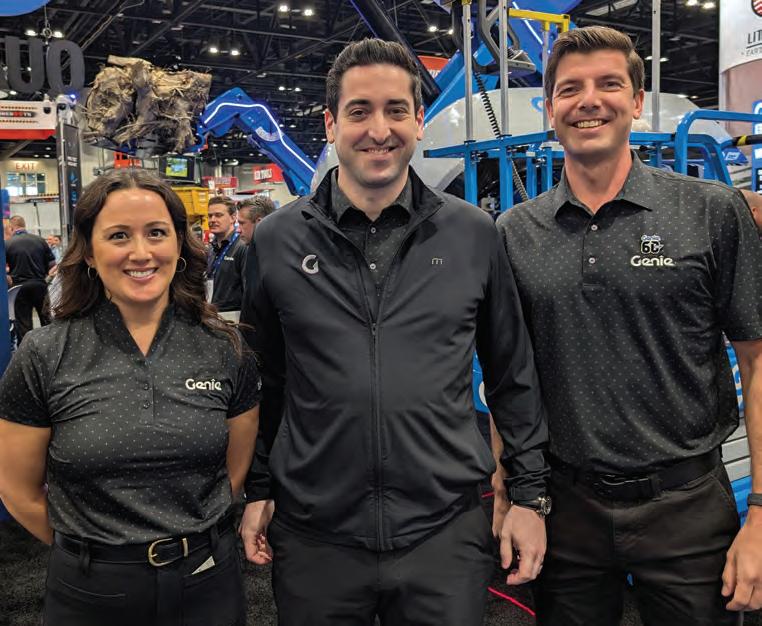
Josh Gross (centre), President of Genie.
says Gross, “We’re being sold as a whole essentially, one group, we’re all together, all the plants and everything. And, we’re looking for the right ownership structure and investors that are aligned with our strategies, which is to deliver on accelerated growth.”
Indeed, Gross sees the sale of Genie as part of its wider strategy. “We’re working to scale up, modernise and continue to be leaders in the industry and differentiate in a lot of areas.
“And so, there’s a lot of different options. Whether that’s private investors, public investors or even spending into our own business. Everything’s on the table - we’re analysing what the best fit is for us and for the industry, and for our customers.”
Gross adds, “The timeline is a little uncertain but over the course of this year we’re going to be working on it as a high priority and we’re looking forward to the next step.”
Up until last October’s announcement, Genie had been a key staple of the Terex portfolio, but as Gross confirms there has been a shift in strategy. “I’m not in charge of Terex so it’s not all my decision but I think if you listen to like our earnings call, the strategy is changing. They [Terex] want to be more focused on municipal markets and different regions and a little less on construction.
“So, Terex’s strategy is going in one direction, and our strategy is a little different so we’re really just aligning with an ownership structure that will allow us to execute our strategy. It’s mutually beneficial.”
On the subject of timelines, Gross says a sale could be finalised in months, or it could take years. “Things could go really well and we find someone really quickly, which means it could be this year. Or it could go really slow – it could be years. We just need
to figure out the right structure and the right support.”
Gross adds, “We’re going to be very transparent – ‘here’s where we’re headed, here’s what’s good, here’s our opportunities, here’s things we want to invest in and markets we want to focus on’. So, we are looking for a fit that 100% aligns.
“Then in the next five years, and the next 60 years, let’s go all in, let’s scale this thing up, let’s deliver to our customers and be leaders in our industry.”
Unsurprisingly speculation over a potential buyer has been rife in the industry. On that matter, Gross is openminded. “Again, I’d say it needs to be aligned with our values and our focus, and you’ve got to factor everything in,” which Gross points out could be geopolitical among other factors. “There are certain things that would be more risky than others. In the end we’ll do something that we think makes the most sense.”
competitive landscape
One thing is for sure, all MEWP manufacturers are working in a much more competitive environment in terms
of numbers of OEMs, which has resulted in the introduction of tariffs on MEWPs entering the US and EU from China. On top of that are wider duties on steel and
Read the full interview with Gross, covering production, technology, the company’s new Recon business and its latest in-basket robotic offering
aluminium products entering the US.
From Gross’ point of view, the only answer is to adapt to the times, “Every morning I look at my phone and there’s new news about something that’s changed in the world and so I think we’ve learnt in the last year this is an environment we’re just going to have to live in.
“There’s going to be new tariffs and new things that happen all the time, potentially for years into the future.
“And so, we take every new tariff or every new announcement both as a challenge and as an opportunity.”
Gross adds, “We have a strategy for being competitive. We’ve learnt a lot over recent years as the market shifted. Its caused us to reflect and say, ‘what do we need to do for the next 60 years to be competitive?’. RAI
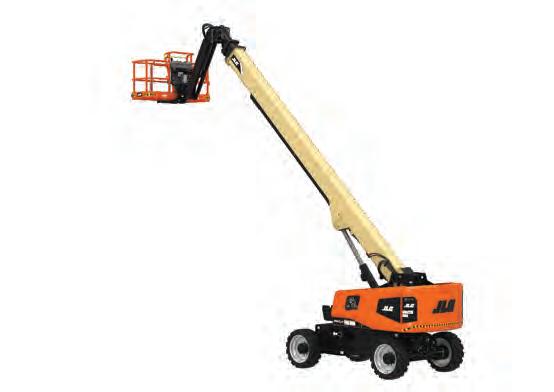
JLG’s aim to remain at the top of its game as the world’s largest MEWP manufacturer will be realised through a combination of goals, says company president Mahesh Narang. They include technological advances, high-quality products and service, along with JLG’s continuing Local for Local production programme.
Mahesh is also clear that high quality products must be supported by sensible pricing. This, he adds, is having a positive impact on JLG’s main market the USA.
Parent company Oshkosh Corporation announced earlier this year that its Access Segment, namely JLG, had seen sales increase ny 1.3% to $1.17 billion in the fourth quarter of 2025, compared to a 13% fall across the year to $4,494.4 million.
According to Narang the construction market has been slow, but there are other factors affecting the sector overall.
“When we look at the age of fleets or we look at utilisation of the fleets, it’s pretty robust. The only thing stopping customers from buying the product is the volatility in the markets with the macro environment.
“So, they are holding on to older equipment a little longer and so that’s really why the market is a little softer.”
However, while construction has been relatively weak, other sectors are seeing long term growth. “The markets that have kept going are data centres and some mega projects.”
Narang describes data centres as a trend that is unstoppable. “It may correct a bit but that’s where the future is going.”
That trend was reflected on JLG’s booth at ConExpo in March, where the company was showing a range of cutting-edge technologies leveraged by its ClearSky fleet management system. Narang comments, “If you look at all the automation on our booth, to compute all that data, you will need more data centres.”
Indeed, they will be vital in the next stages of JLG’s development. “You can see the productivity benefits you get when you can use data and AI to automate jobs.”
JLG remains the world’s largest access equipment manufacturer and company president Mahesh Narang has plans for it to remain that way.

Fair competition means we can reinvest in future
Expanding further on the JLG’s uptick in the fourth quarter of last year, Narang says, “What happened in Q4 was we were not cost by price neutral as a company because of inflation and various other things that are happening in the world.
“So, we raised prices. And what we saw was customers buying ahead of the price increase and that’s why our Q4 is higher than normal.”
Narang adds, “And that’s why our guidance for 2026 is slightly lower than last year, because we pulled ahead from 2026 into Q4.”
The price increases were mainly in the US market, however. “In other parts of the world we have been able to make supply chain improvements to manage [the situation], but we’ve not been able to offset the impact in the US. For example, US steel has gone up with Section 232 [duties on steel and aluminium imports], so, products in the US have gotten more expensive.”
At last year’s Bauma exhibition in Munich, Germany, JLG announced its Local
The JLG 860SJ+ is previewing at ConExpo.
for Local drive towards regional production, which has already had a positive impact, says Narang. “We are in the final stages of executing our Local for Local strategy. It has really helped us in reducing the cost of our products which are made in Europe, and that’s why we’ve not had to make any price increases in there.
“In fact, it is also helping us grow in the European market.”
In 2024 the European Commission hit imports from China into the EU with an anti-dumping duty of more than 20%, adding to the US’s import taxes on Chinese MEWPs introduced in 2021.
Last year, companies were further impacted by the economic upheaval surrounding the Trump administration’s plans to introduce tariffs on goods imported to the US from around the world as well as the separate Section 232 steel and aluminium tariffs.
That said, Narang supports tariffs when placed fairly. “Tariffs encourage fair competition. We are proponents of fair competition, but when certain companies or regions have an unfair advantage, it becomes difficult to reinvest in innovation.”
While the introduction of tariffs on MEWPs prompted a reorganisation of JLG’s production footprint, feeding into the wider localisation plan, the outcome has proved to be favourable. “We love fair competition and the purpose of all the prohibitions –countervailing duties as we call it – is to enable fair competition.
“It started in the US, and we are super glad Europe did it too. These are the world’s biggest AWP markets, and when we have fair competition, we can reinvest the money we make in future innovation.” RAI
→ The full interview with Mahesh Narang is available at accessbriefing.com. Read more about tariffs, the Local for Local plan and JLG’s autonomous effector and leader follow technology.
The accessM20 annual listing of the world’s largest access equipment manufacturers, ranked by revenue, shows the strains of economic and political uncertainty, combined with an increasingly competitive industry.
There are falls in revenue for the 2025 calendar year across much of the table. It hasn’t helped that the world’s three largest markets have all faced struggles of their own. The US has grappled with higher costs due to tariffs, much of Europe was beset with tough economic conditions, while China has also seen economic pressures partly due to a slump in the real estate market.
While JLG and Genie retain their traditional positions in first and second place,
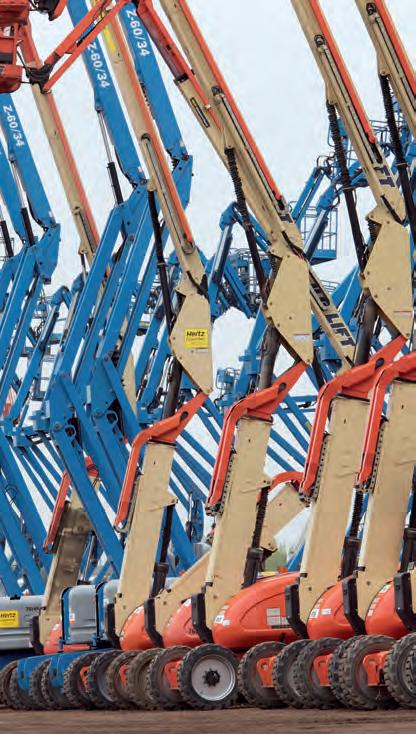
albiet with revenue drops, there has been change in other areas of the top 10. Dingli has moved into third place, meaning that three out of the top five positions are held by China-based manufacturers, even though two out of those three also experienced revenue falls in 2025.
All non-US$ revenue figures have been converted to a common currency rate based on the value of the US$ on 6 June 2014. Detailed guidance was provided to manufacturers about what to include in their figures, as follows:
Revenues to include:
■ Revenues for the calendar year 2025;
■ Sales of new aerial platforms (self propelled booms and scissors, push around and low level access, trailer mounted platforms, truck mounted platforms, utility platforms such as insulated units, mast climbing work platforms, construction hoists and transport platforms);
■ Sales of used aerial platforms;
■ Revenues from after sales service and parts, relating to aerial platform products;
■ Other aerial platform related revenues, such as rental or re-rental activities.
Revenues to exclude:
■ Sales of non-aerial work platform products, such as telehandlers, cranes, utility sector digger derricks,transport trailers;
■ Revenues for service and parts relating to non-aerial products, (such as telehandlers, cranes, digger derricks, etc.).
That said, the top 10 retains the same manufacturers as last year’s table, with the exception of Japan-based Aichi, which has crept into 10th place this year.
The rest of the listing, outside the top 10 tells a similar story, including for manufacturers of specialist access equipment, such as spider lifts, trailers, or even truck mounts. In the past OEMs with products which fall outside of mainstream boom and scissor lifts, have tended to fare better in economic storms. During Covid, for example, these types of products continued to be used in maintenance and utility applications which were not put on hold during the pandemic, unlike many construction projects.
However, the recent pressures of tariffs on steel and aluminium in the US and rising costs of materials has had an effect on all manufactures, as has the wider geopolitical climate. It has resulted in buyers across the access spectrum putting orders on hold.
In Europe the tariffs imposed on MEWPs entering the EU from China has had a significant effect. A large number of units were brought into the continent ahead of the tariffs taking hold, which forced down prices, or at least delayed the intended affect of the duties. A common view is that this pre-tariff imported stock will have run out by the start of the third quarter of this year, leading to more stable pricing.
There is also evidence, particularly in Europe, that markets started to pick up from the fourth quarter of 2025, with manufacturers in their most recent results reporting more favourable revenues.
Returning to JLG and Genie at the top of the table; both companies saw year-on-year growth in the fourth quarter, bucking the trend of the previous nine months.
However, more recent crises, notably the war in Iran and its wider effects on global markets, are yet to be fully understood. Therefore, while confidence at the beginning of the year was building, time will tell how the latest global challenges test the sector.
Apart from organic falls and rises, there has been some M&A activity, which is reflected in the listing. For example, Tadano’s acquisition of Manitex and its Oil & Steel brand and Socage’s investment in CTE are both represented here. In addition, Almacrawler merged with Easy Lift, but they are not combining their revenues.



BOOTH 2255
2-4 June 2026
Maastricht




























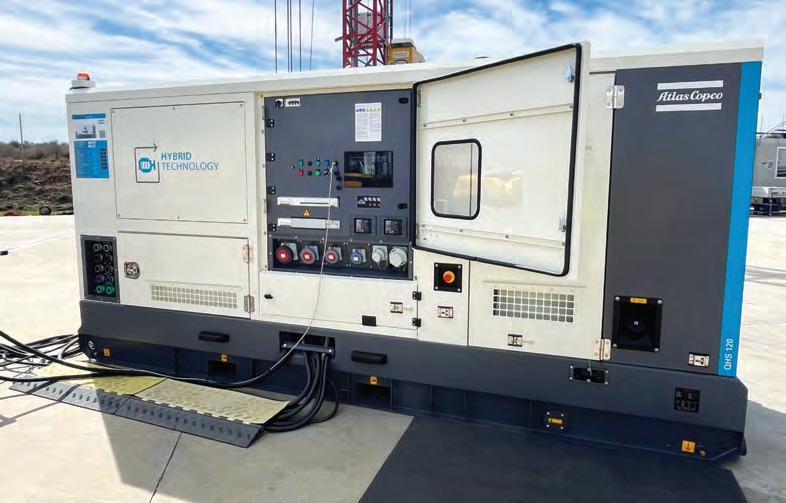
It’s not often that a new launch is made with the lofty goal of ‘democratising’ a product, but that’s the explicit aim of Atlas Copco for its new range of hybrid battery storage-diesel engine generator sets. It’s not an airy or vague notion, because the manufacturer believes that the hybrids – being launched in Europe now and soon in North America – will make sophisticated power generation technology more accessible to a wider range of customer.
In the context of equipment rental, that means bringing integrated, hybrid units to generalist rental companies and not just the specialist power renters for whom hybrid is not a new concept.
The strategy was clearly outlined by Marco Gravina, president of Atlas Copco’s Portable Power and Flow division, during a launch event in mid-March for European dealers and rental companies – and the media – at the company’s genset manufacturing plant close to Zaragoza, Spain.
More on the broader strategy later, but first, what about the new gensets themselves?
Three versions will be available from launch, the QHS 120 S5, the QHS 200 S5 – both with Stage V engines for Europe - and the QHS 250 T4f with a Tier 4 Final engine, for North America.
Power output ranges from 120 to 250kVA,
Marco Gravina, president of Atlas Copco’s Portable Power and Flow division, tells International Rental News about the division’s wider product development plans.

The launch of the new hybrid generators tells us a lot about Atlas Copco’s Portable Power and Flow division, because it has been low emission products that have driven its recent growth.
Marco Gravina, a 15-year Atlas Copco veteran who held senior roles at the Specialty Rental division before taking up his current post in January 2025, says the division grew by more than 20% in 2025.
“This is market share [growth]”, he tells RAI, “We were able to gain a share, especially in the batteries for energy storage. It’s been a very important part.”
He says chasing after every product idea is tempting, but not the approach; “The risk of losing focus is always very high. Our vision is products with very high quality. Our strategy is to drive the sustainability shift, because there is a big shift in the power business.”
He says the existing product range is already large; “So the need to have a larger portfolio, it’s not really there. The need that we really have today is to have the right addition.”
With just the diesel engines the outputs are 48kW, 93kW and 101kW, and combined battery engine outputs increase to 108kW, 183kW and 221kW.
with the two smaller models for the European market and available now, while the 250 unit is for North America and will be available in the third quarter of this year. All are being built at the Zaragoza plant in northeastern Spain which Atlas Copco acquired when it bought genset producer Gesan in 2011.
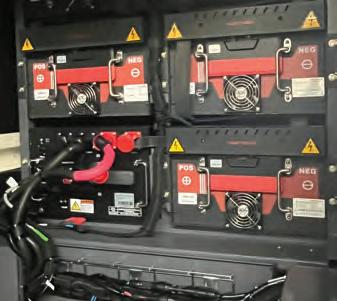
In terms of specification and features, all will use FPT Industrial engines and Lithium-ion phosphate battery packs with 60 kWh storage levels.
Power outputs for the three models using batteries alone are 60kW/60kVA, 90kW/90kVA and 120kW/kVA, respectively.
Larger and smaller hybrid sets may come later, with the 30-50kVA segment seen as the next likely development. Meanwhile, Stage 3 engine versions of the new hybrids for Middle East and Australian markets will be ready in 2027 or 2028, Atlas Copco told RAI
The hybrid sets have been launched in the key power modes, with 92% of generators in the sub-200kVA range, says Atlas Copco, with Europe alone having a fleet or around 200,000 gensets in this segment.
A big target market for the hybrid units is rental companies, with the desire to ‘democratise’ the use of hybrid technology by making them easy to use.
“By integrating battery technology and
diesel engines into one compact unit with simple, intuitive controls, we’re making hybrid power easier to deploy, easier to operate and easier to rent,” says Tony Calippe, marketing manager Power & Light.
“Our new QHS generators offer rental companies a practical way to support customer sustainability goals, cut operating costs, improve fleet efficiency and reduce total cost of ownership.”
Operating the hybrid sets is designed to be straightforward and intuitive. There is a one-click start/stop interface and an autonomous operating mode allows the generators to adapt to changing load profiles without user intervention, minimising
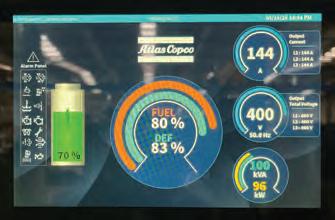
The company says the hybrid units will typically reduce fuel consumption by around 80%, because the diesel engine will run at more efficient speeds and far less often, with engine running times typically 95% lower.
training requirements and operational errors. Rental-ready features include multiple socket options, a terminal board, external fuel connections, and FleetLink telemetry. The ECO Controller manages the power output between engine and battery packs.
Atlas Copco says a generator will typically operate at 15% of its nominal load, an output that can be met using battery power. That means less maintenance, longer service intervals (from 600 to 3000 hours), and a longer engine life.
The resulting lower total cost of ownership (TCO) will be an important driver for take up of BESS and hybrid units, especially given that the hybrid sets will be around three times the price of the diesel units.
The launch of the hybrids can be viewed in a couple of contexts. The first is Atlas Copco’s wider ambitions on sustainable power.
The Portable Power and Flow division sits within Atlas Copco’s Power Technique business unit – with sister divisions including Specialty Rentals and Portable Air. Power & Flow produces generators, including BESS units, as well as a wide range of lighting towers and pumps.
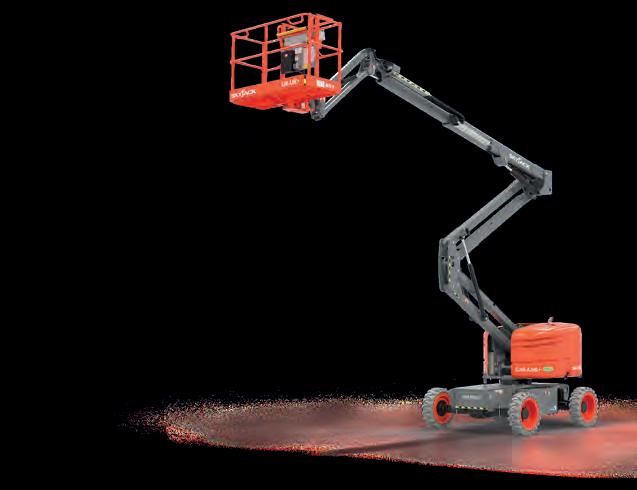

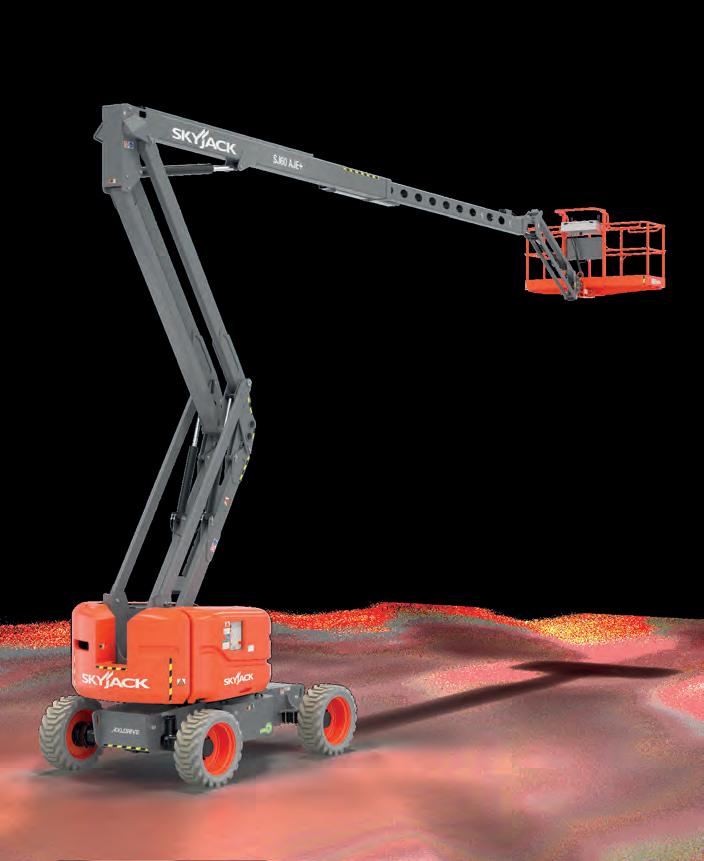
The division’s leader, Marco Gravina, says he wants 50% of its revenues to be from sustainable products by the end of 2027 (‘sustainable’ means hybrid and solar lighting towers, BESS units and hybrid gensets.)
That’s up from the current 40%, although the figure is already close to 60% in the US because of the rental maturity of that market.
The company sees the hybrids as key products to add to its diesel and standalone BESS sets. But will the market accept more expensive power units, especially given the slow take-up of battery powered construction equipment?
Gravina points to the adoption of its BESS products, which were first launched in 2019. He says a big part of the growth of the division – up more than 20% up in 2025 (see interview below) – has been down to BESS sales.
And, says Atlas Copco, the BESS and hybrid power market is likely to grow 30% annually in the coming years, which is a compelling reason for investing. RAI
Scan the QR code to see a longer version of this article at internationalrental news.com
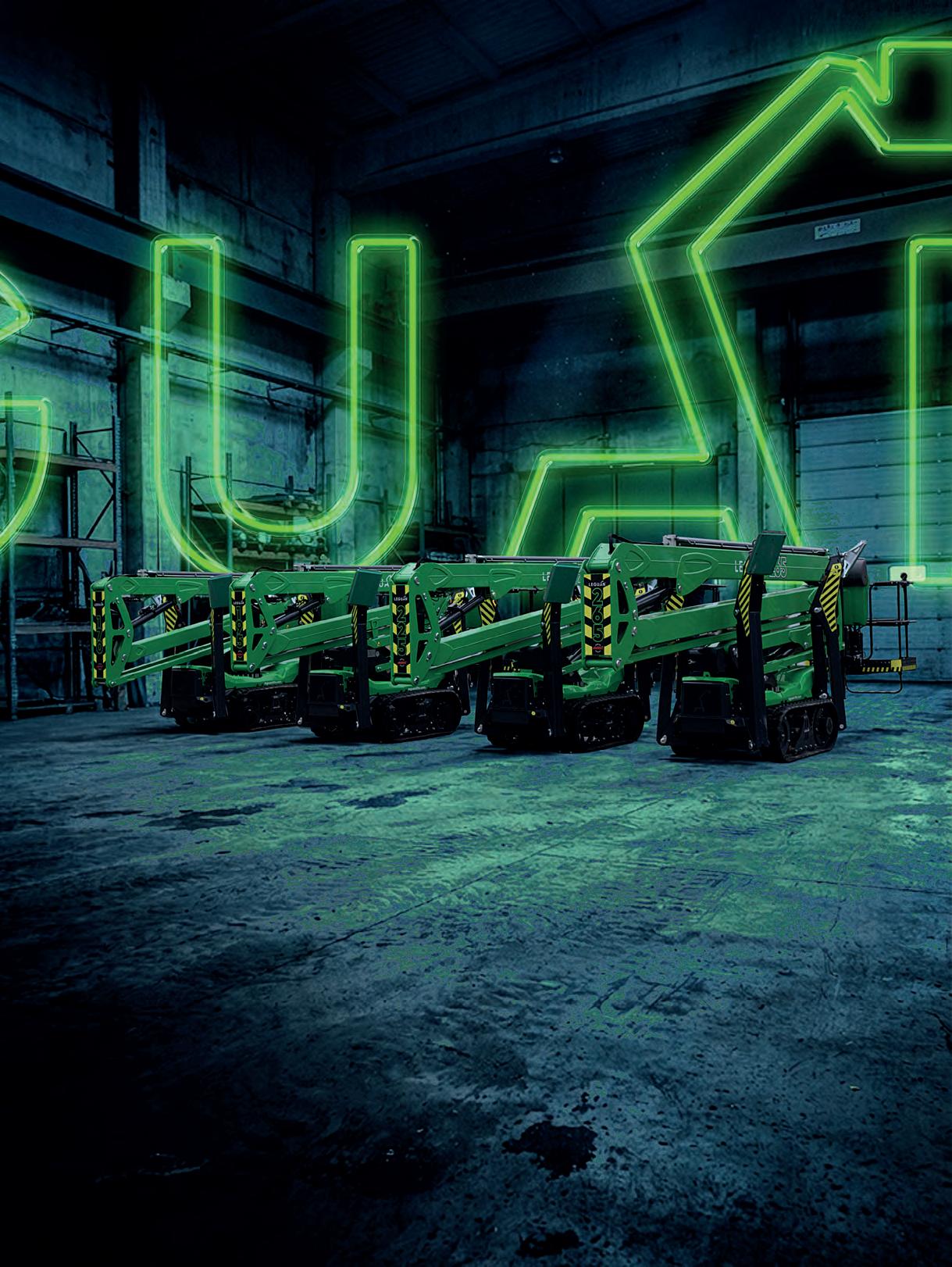
Australian rental tech firm Inauro has a nice way of describing the role of technology in a rental business, likening its Perspio platform to an orchestra conductor.
“Data arrives like musicians warming up before a performance—each playing their own tune…Perspio acts as the conductor, synchronising every data source, interpreting what is happening in real time, and cueing the right operational response at precisely the right moment.”
Without over-extending the metaphor, imagine equipping that conductor with AI. That’s what the company is now doing, adding AIpowered automation modules designed to bring “deeper intelligence to maintenance, utilisation, allocation, and compliance.”
The company says these modules help rental businesses “shift from reactive management to proactive, datadriven operations.”
For Inaura, the most common request from customers is predictive maintenance and automated servicing; “Rental businesses want AI that can predict failures before they occur, trigger service workflows automatically, reduce unnecessary maintenance, and minimise downtime.”
The second major area of interest, it reports, is utilisation optimisation and fleet rightsizing, using AI to identify underutilised assets, recommend redeployment, forecast demand, and support purchasing decisions.
Safety and compliance is the third key area, with AI detecting anomalies or unsafe usage, automating compliance documentation, highlighting
environmental risks, and reducing manual reporting.
Inauro says it is developing AIbased tools to meet these needs, with a major focus on AIdriven workflow automation, “enabling autonomous workflows that act on realtime data and make contextaware decisions across energy management, maintenance, allocation, and compliance.”
It is developing a predictive asset intelligence engine capable of forecasting maintenance windows and utilisation patterns, as well as AIenhanced customer experience tools, “including automated notifications, AIgenerated service summaries, intelligent actions, and simplified usage insights.”
UK software specialist MCS, meanwhile, sees customer data and pricing analysis as one of the most requested AI-related tools, helping rental companies to make “smarter, data-driven decisions” to boost revenue and customer retention.
“MCS AI Insights uses pattern recognition to uncover trends in rental frequency, preferences, and spending habits, automatically highlighting churn risks and upsell opportunities”, the company told RAI.
Rental & Access International asked rental technology companies about the AI features in-demand now, and what is coming soon. AI in Trackunit
Also being requested is AI-enabled chat with equipment manuals, helping on-site engineers and equipment users to find information buried in manuals; “users can simply scan a QR code on a machine to access its manual and ask naturallanguage questions directly about the asset.”
The UK-based company said it was expanding AI-driven summaries, search, and chat functions across the MCS platform; “These tools will make it easier than ever for rental businesses to access realtime insights and make faster, smarter decisions”.
Point of Rental, based in the US but operating worldwide, highlights three main use cases. One is visibility of fleet performance – helping to integrate fragmented data – and the second is maintenance and cost trends, helping rental companies identify ‘cost-heavy’ assets and tracking models or categories where maintenance is trending upwards.
The third is fleet ‘disposition decisionmaking’, which is helping rental companies make decisions on when to sell, hold, or
will reduce the distance between data and action — for every rental company, regardless of their size or technical maturity
reinvest in fleet; “Customers are looking for: clear thresholds (age, hours, ROI), databacked recommendations, and confidence beyond gut instinct.
“AI helps turn what has traditionally been intuition-based decisions into consistent, repeatable strategies”, the company tells RAI
It recently launched Rental Intelligence Suite, a set of AI-powered tools for rental owners, managers, operations leaders, and finance teams.
These include MyDashboard, which allows users to ask questions in plain language, such as ‘Show my highest ROI items’ or ‘What’s my maintenance spend this month?’
Klipboard, the software provider formerly known as Kerridge Commercial Systems, and which included the InspHire business, has unveiled Klipboard AI to provide what it describes as “practical, embedded intelligence”.
The company says its AI is not a bolton, rather built directly into its ERP and operational platforms.
“AI shouldn’t sit on the sidelines or add complexity,” said DJ Jones, chief technology and product officer. “It should make everyday operations run better.”
Klipboard AI is the first phase of the company’s broader roadmap that will provide more proactive, taskoriented intelligence, agentstyle capabilities, and Augmented Reality (AR) to support complex tasks.
“AI only matters if it delivers real impact,” says Ian Bendelow, Klipboard’s CEO. “We’re embedding intelligence into the systems our customers rely on every day — where accuracy, timing and visibility truly count.”
There is no shortage of equipment rental online marketplaces, but MyCrane is unique in being focussed on the crane market worldwide.
Andrei Geikalo, CEO of Dubai-based MyCrane, says digital procurement is gaining traction in rental; “In India, for example, MyCrane has now surpassed 1,000 registered customers and 1,000 suppliers, with more than 100 paid orders completed.
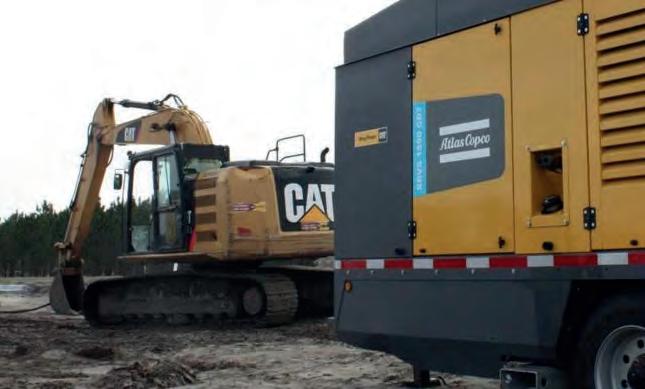
Trackunit, meanwhile, is helping customer extract the maximum operational value from their telematics data.
It is releasing several new IrisX Blueprints, available on the Trackunit Marketplace.
Blueprints are reusable building blocks combining datasets, code patterns, and workflows that enable rental companies to deploy operational use cases without starting from scratch.
“The value of connected data is only realised when it drives action”, says Federico Rio, senior vice president Products at Trackunit, “and Blueprints give customers a direct path from data to deployment.”
Three Blueprints built specifically for mixed-fleet rental operations are now live: smart servicing and triage; out-of-contract usage detection; and custom reporting.
The first of these scores every returned machine on real usage data so depot teams can fix what matters, skip what is healthy, and create faster turnarounds.
“The question we hear most often is not ‘can AI help me do this?’ but ‘can it just happen automatically, every time a machine comes back?’” says Rio. “With smart servicing, the depot team knows what to check before they have even opened the cab.”
What new developments can we expect? This year it is launching an AI assistant embedded within the platform, allowing users to interact with IrisX in plain language.
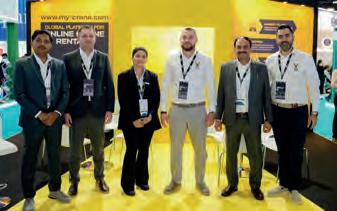
“We are increasingly seeing major contractors and EPCs using the platform to identify and compare crane options quickly”, he says, “often achieving measurable cost and time efficiencies in the process.”
A new component of the business is MyCrane Trading, offering the purchase, sale and leasing of lifting equipment. It will enable customers to move from short-term project-based procurement to longer-term asset strategies.
The company is now developing an AI-driven assistant that will sit at the front end of the platform to guide users through the procurement process.
Software company Inauro has won a contract with Ring Power’s Air Compressor Group (ACG).
Later in 2026, Trackunit plans to launch support for MCP (Model Context Protocol), an open standard that allows AI systems to communicate and take actions across platforms.
“The direction we are moving in is clear,” says Rio. “AI in Trackunit IrisX will reduce the distance between data and action — for every rental company, regardless of size.”
Celebrating its 25th year in business in 2026 is Iceland-based Annata, which is best known for its cloud-based A365 platform, based on Microsoft Dynamics 365.
In the rental sector it reports “a clear shift away from experimental AI towards practical, outcomedriven applications embedded directly into daily workflows.”
It says rental businesses are looking for technology that improves response times, asset utilisation, and the quality of decision making, without adding complexity or risk.
Among the workflows that Annata is working on is assisted rental quotation, using AI to interpret inbound enquiries, extract required hire details directly from emails and documents, and generate Dynamics 365–native rental quotations.
The quotes generated are then routed for rapid human approval rather than manual re-entry. It says quotation turnaround time has a direct correlation with conversion rates.
Another area of demand is crosssystem visibility, particularly between customerfacing applications and core rental operations systems. This covers things like fleet availability, item location, expected return dates, and viable alternatives.
“We are seeing strong interest in AI agents that can act as a governed bridge between these systems, allowing users to query operational data and receive contextrich answers without switching applications.”
Other use cases include predictive asset utilisation and availability planning using historical demand and seasonal patterns.
“In this context”, says Annata, “AI acts as an early-warning and recommendation layer rather than a replacement for human expertise.”
Room for the human conductor, then.RAI
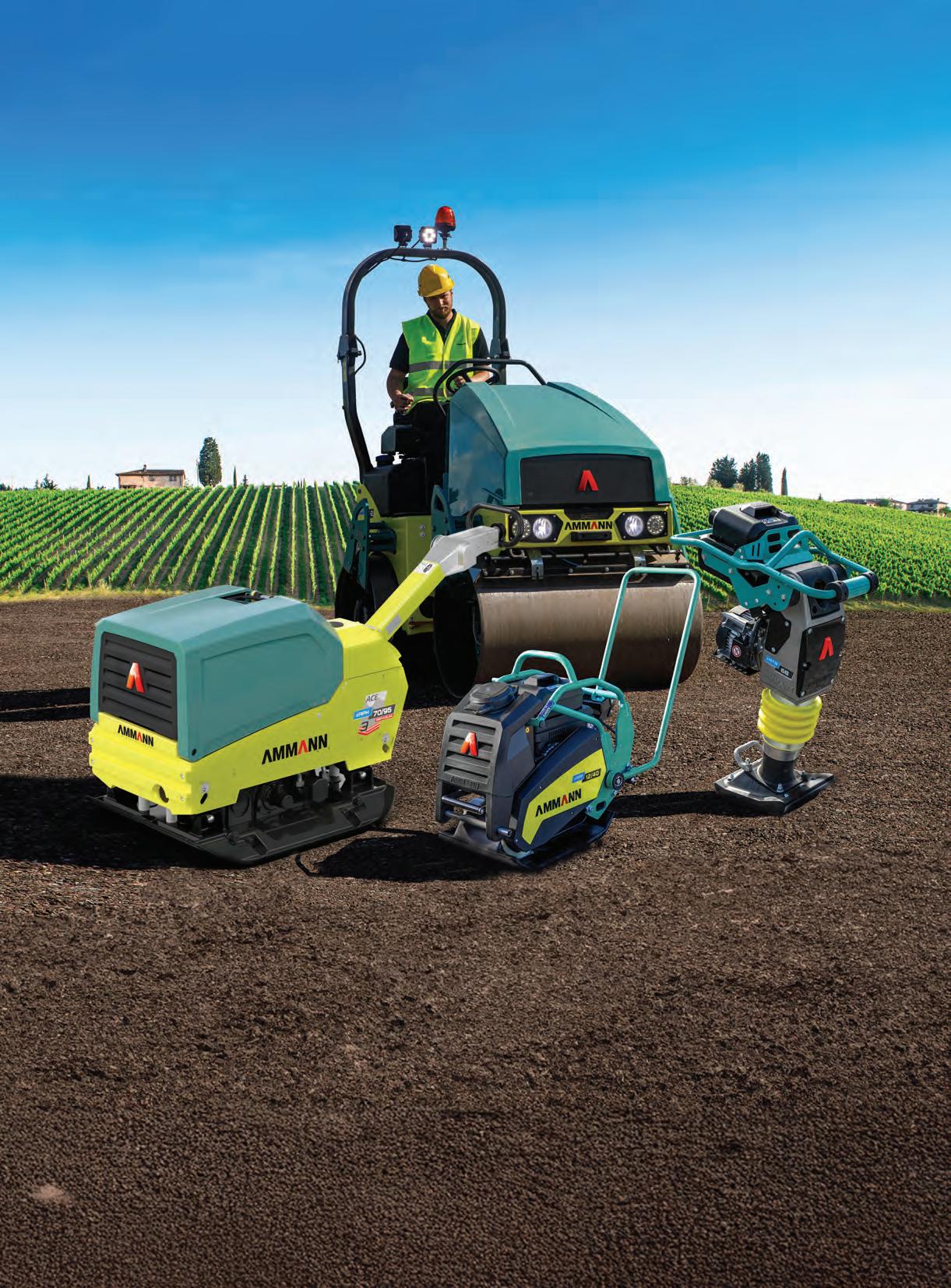
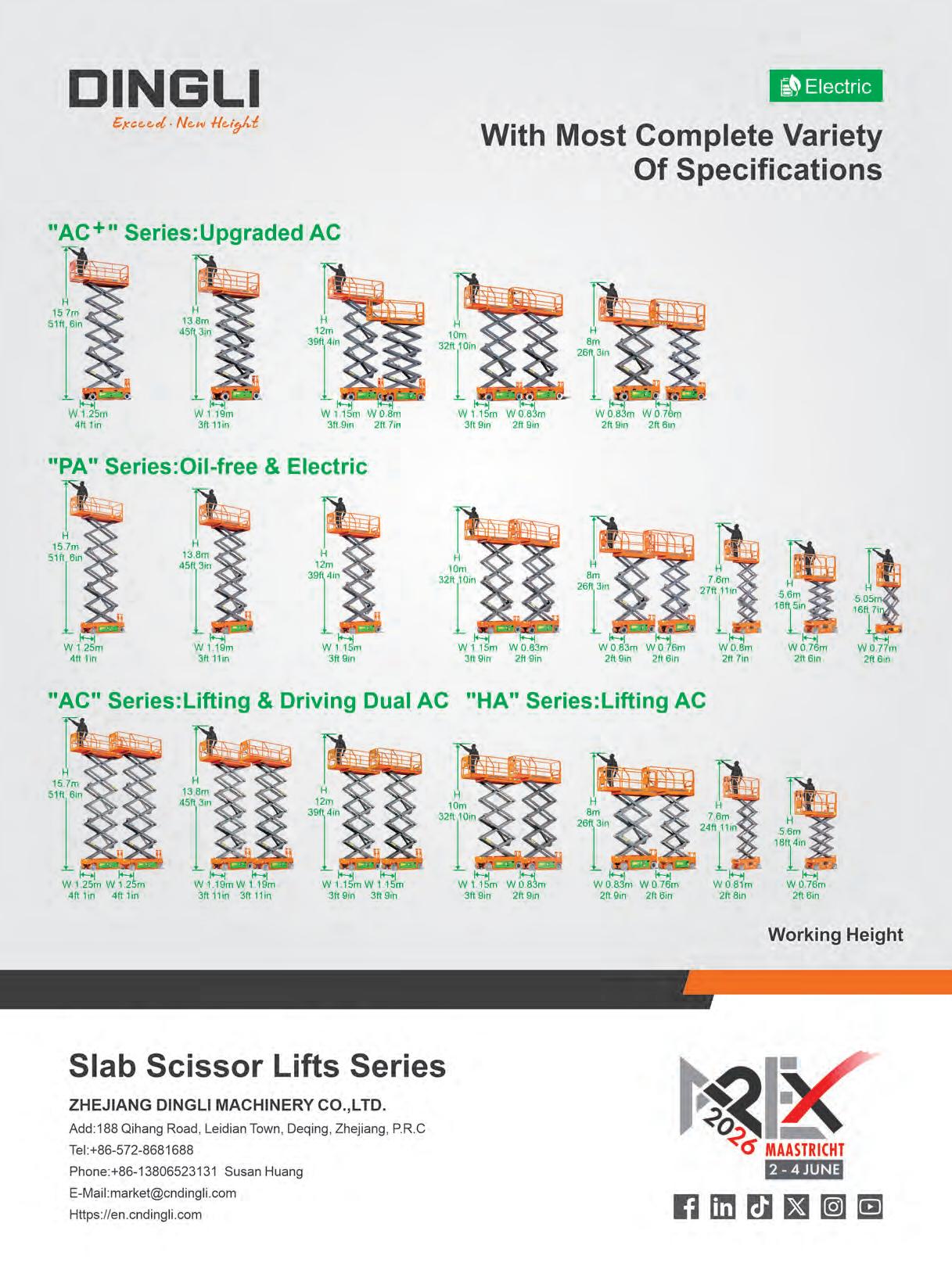
A round-up of some of the equipment on show at March’s ConExpo-Con/Agg show.
More than 140,000 construction professionals from 128 countries attended ConExpo-Con/Agg, meaning attendance was slightly up on the last edition of the show, held in 2023.
Spanning more than 3 million square feet of exhibit space, the show, which took place in Las Vegas, US, in early March, featured more than 2,000 exhibitors showcasing the latest equipment, technology and services across every major construction sector.
“Dana Wuesthoff, show director said the week demonstrated the resilience and ingenuity of the industry. “From advanced machinery to digital tools that help crews work safer and smarter, the innovations unveiled here will shape jobsites for years to come.”
Here follows a selection of products at the show. All these product stories can be read in full at internationalrentalnews.com and accessbriefing.com RAI
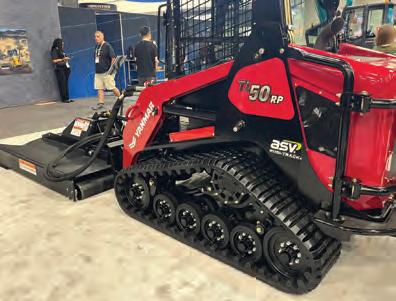
Develon launched its -9 Series heavy excavators in the North American market at the show.
The DX230LC-9, DX260LC-9, DX360LC-9, and DX400LC-9 models are built on a fully electronic hydraulic (EH) technology, with integrated artificial intelligence (AI). The shift to EH allows for stick steer travel via joystick thumbwheels, as well as greater customisation, including joystick sensitivity.
The excavators also offer new smart around view monitor (AVM) camera system that uses artificial intelligence to identify humans in the work zone.
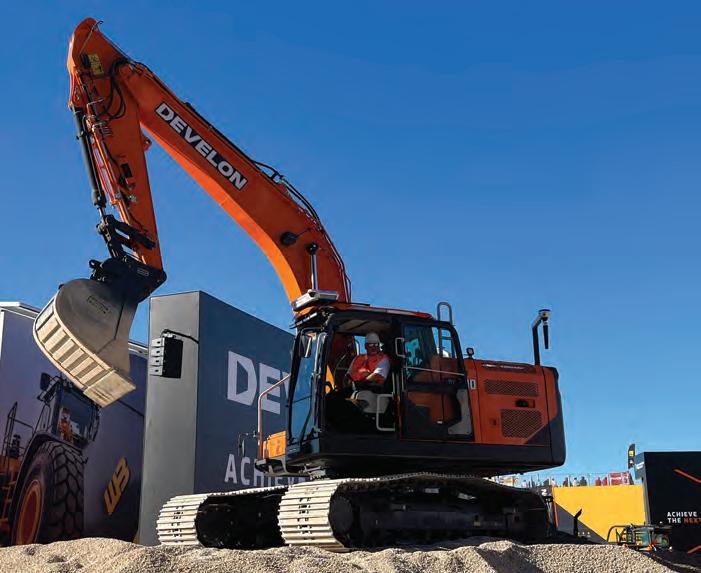
Yanmar will sell its ASV Posi-Track compact track loaders under the Yanmar brand in North America under a new ‘One Yanmar’ initiative announced at ConExpo-Con/Agg.
The ASV brand will continue to be used in Australasia, where ASV has a strong presence, but in North America, which constitutes the vast majority of the global CTL market, the ASV name will be seen only as a small logo on red Yanmar branded machines.
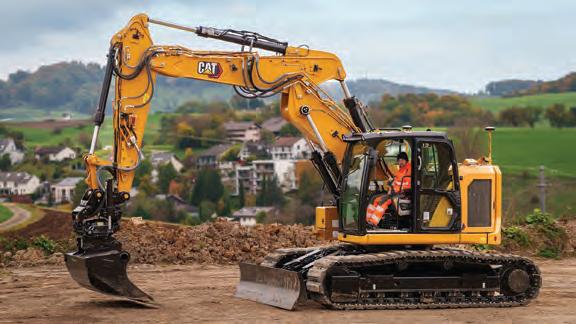
Caterpillar debuted the next-generation compact radius 319 excavator.
The Cat 319 slots into the company’s compact radius line-up between its 15 tonne 315 and 25 tonne 325 models.
Echo Industrial Power Equipment (IPE) - the industrial-grade power division of Echo Incorporated, showcased three new mobile LED light towers and the new 400-kVA DGK400F generator.
Both product lines are built with heavy-duty steel
construction. The DGK400F generator also delivers heavy-duty prime and standby power for running multiple high-load machines simultaneously.
-9
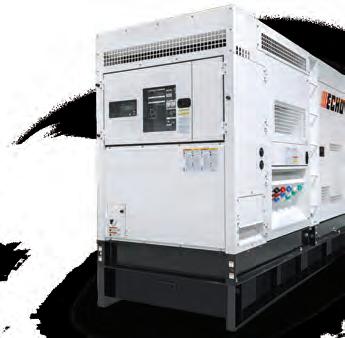
It said the new 19-20 tonne machine would meet customer demand for transportation, lifting, safety and versatility, offering “similar or better” capabilities to its familiar 317 next-generation platform, in a compact radius format.
Aimed at construction, utility work, road maintenance and land-clearing jobs, the machine is built around a wider, 2.8m (9.2ft) undercarriage.
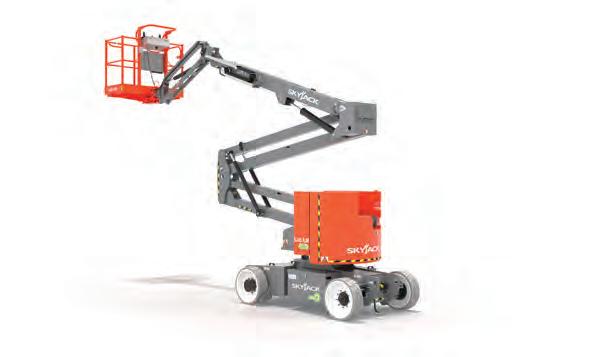
Skyjack’s narrow SJ45 AJN.
Skyjack launched the SJ45 AJN and SJ45 ARJN narrow batterypowered electric slab booms at ConExpo and announced new Accessoryzers products.
Featuring a working height starting at 50ft 11in (15.52m), Skyjack’s compact, zero emission, low noise SJ45 AJN and SJ45 ARJN have been designed to offer performance across indoor and outdoor jobsites.
The SJ45 ARJN represents one of the few machines in this class to offer a rotating jib, which provides 180° horizontal movement (ANSI) or 132° horizontal movement (CE) to allow precise positioning of the platform and increased productivity.
An MRT with new jib winch attachment.
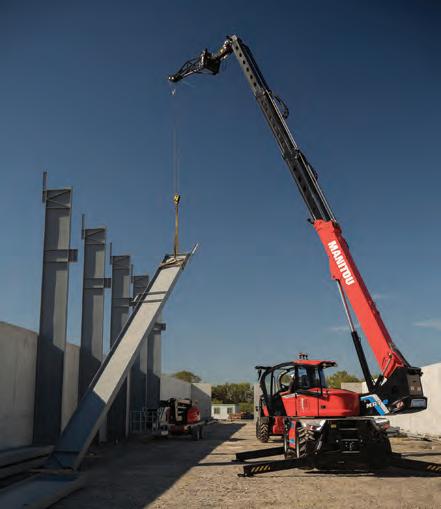
JLG presented its vision for connected, intelligent job sites through live demonstrations on its booth at ConExpo.
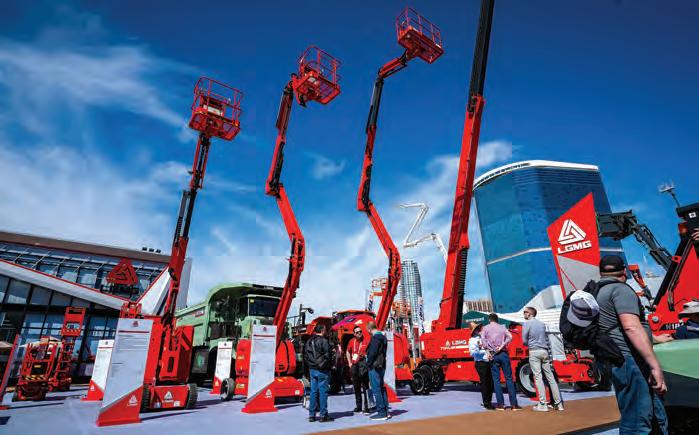
Lingong Group announced its first appearance as a consolidated brand with the subsidiaries Shandong Lingong Construction Machinery (SDLG) and Lingong Heavy Machinery (LGMG).
At the show, there were new product lines spanning loaders, aerial platforms and industrial vehicles, with a strong focus on electric.
Complementing the new equipment, LGMG launched LGMG ProCare, its new global service brand and icon.
Manitou Group presented a range of launches at ConExpo with an emphasis on electrification.
Five new large-frame skid steer and track loader models are now available for the North American market, with first deliveries scheduled during March. They feature rated capacities ranging from 3,250 lbs to 3,600 lbs.
The lineup includes three skid steer loaders available under the Gehl and Manitou brands, and two track loaders also available under both brands.
Designed exclusively for North American requirements, the MTA 519 e telehandler operates on a 33kWh lithium-ion battery that can be partially charged. It is ideal for indoor applications, urban centres, and emission or noise reduction sites.
The group also unveiled its latest rotating telehandler, the Manitou MRT 4070 the show. As the flagship of the Vision+ range, it offers the highest lift height in the rotating lineup, reaching 131ft with a maximum lift capacity of 15,400 lbs.
MEC presented a range of new equipment, including the CD-9T carry-deck crane, representing the company’s move into the crane sector, a prototype of the MAX 46-RJ Hybrid telescopic boom lift, the MME30 vertical mast lift, and the recently announced Plus (+) slab electric scissor lift upgrades.
As a 46ft hybrid boom, the new Max 46-RJ features a 6ft high-capacity rotating jib with 135° vertical and 120° horizontal range.
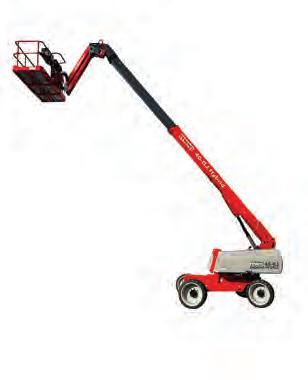
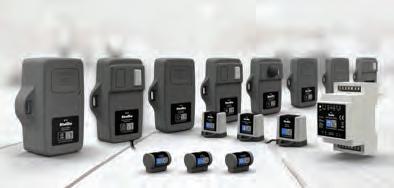
Data specialist Xtellio announced a data infrastructure platform that gives companies a unified solution for collecting and delivering data across jobsites.
The solution brings together ruggedized sensor devices and wired Pro-Xentral devices into a modular, scalable foundation.
Together, these technologies are designed to provide reliable visibility to rental and construction companies onsite.
Genie’s assistive material handling device.
Micro scissors with leader-follower technology and boom lift with end effector placing an I-beam into position.
This included the new Canvas Robotics drywall robot and live demonstrations of two scissors transporting and positioning structural materials, while a boom equipped with a welding end-effector performed precision welds at height. Linking thme all is JLG’s real-time ClearSky Smart Fleet management platform.
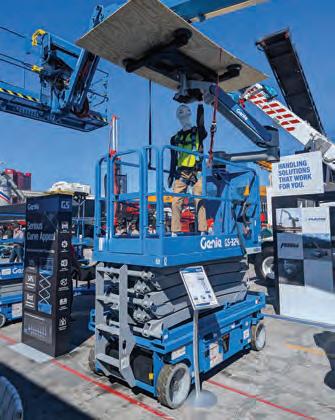
Genie’s concept assistive material handling device is mounted on a scissor lift basket frame with a vacuum end effector that can suck onto the panel and allow the operator to effortlessly move it into position, then hold it there.
It uses actuators with robotic technology to compensate fully for the weight of the item.
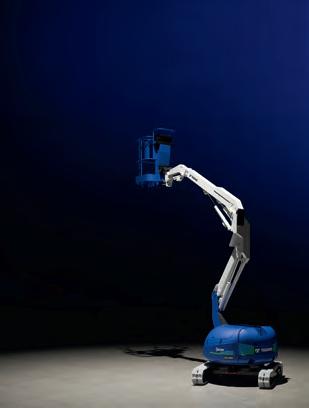
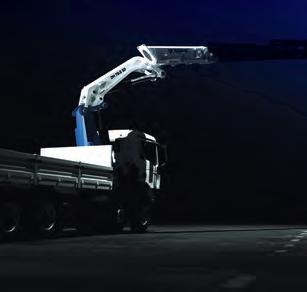
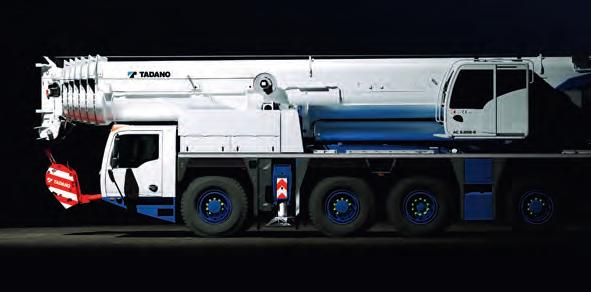

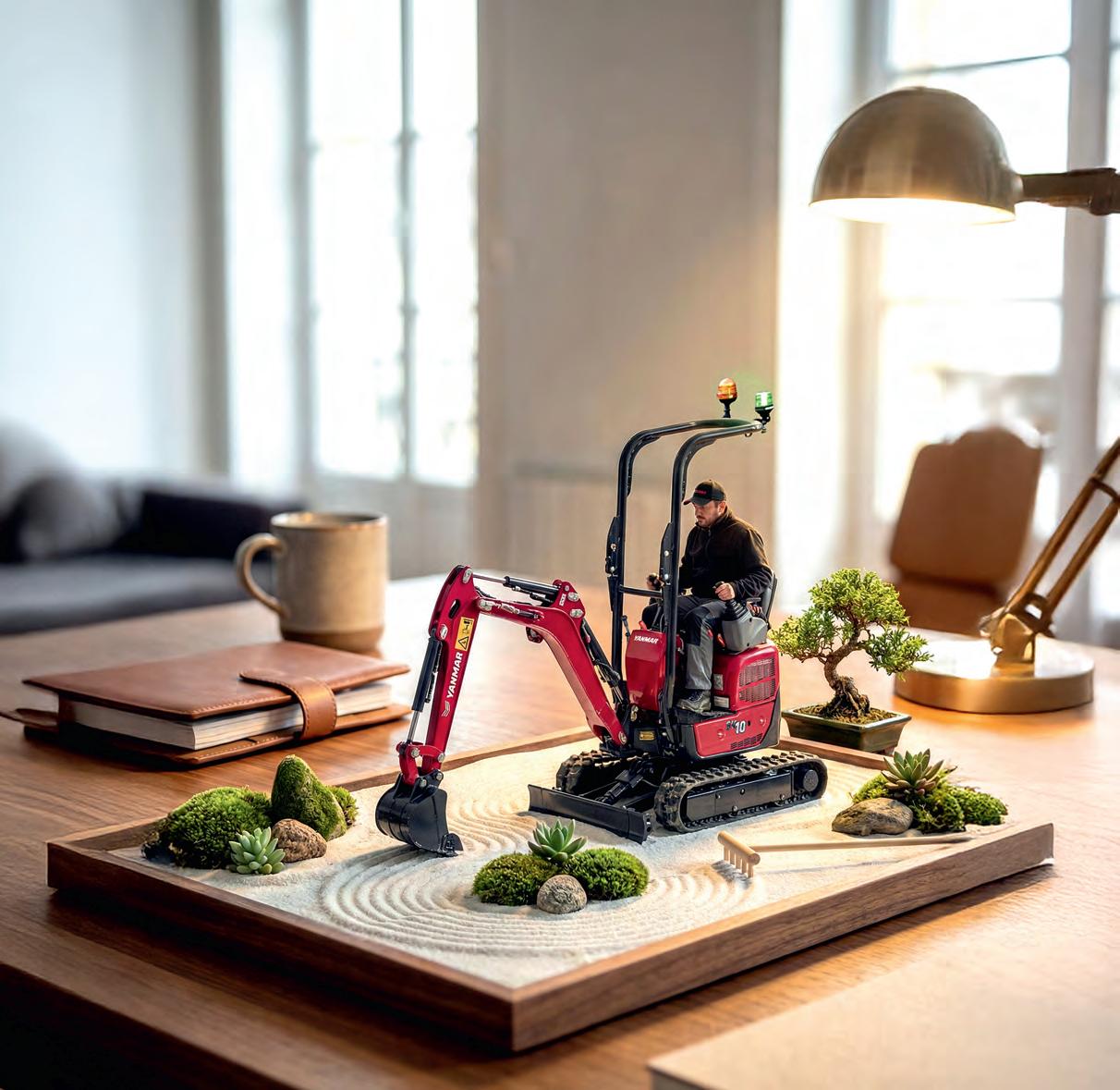

The ultimate versatility, ready to take on all your challenges. Thanks to its variable undercarriage and wide range of attachments, the SV10 guarantees perfect stability and unmatched agility. Easy to transport and quick to master, it is designed to reduce downtime and optimize your operating costs.
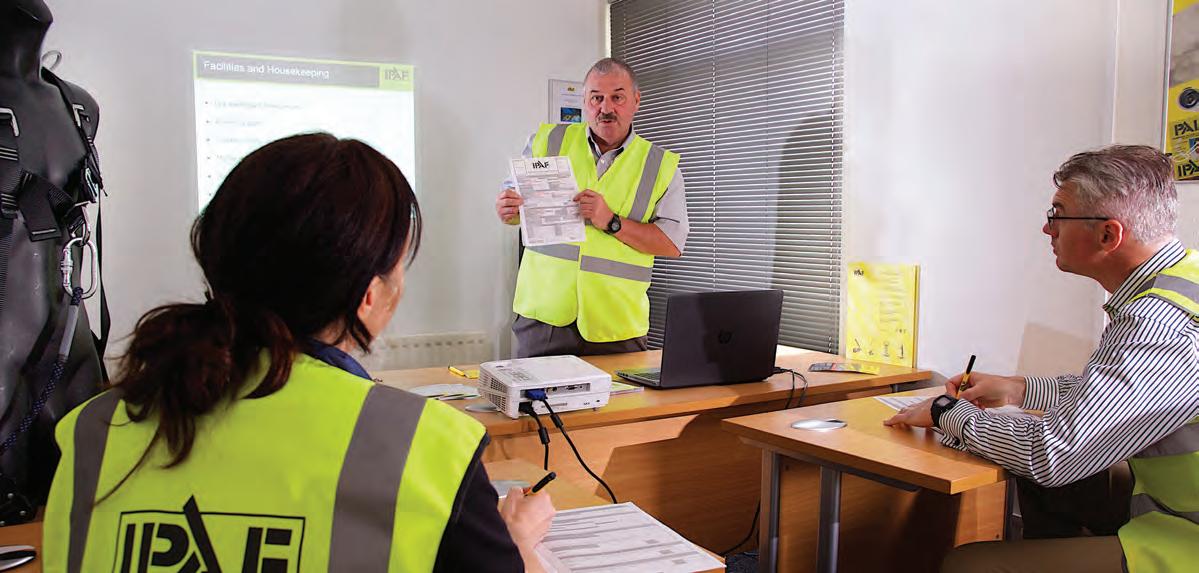
The CEO of the International Powered Access Federation (IPAF), Peter Douglas, talks to Murray Pollok about MEWP safety and the association’s priorities.
Peter Douglas and IPAF have proven to be a good match. Since joining the association as CEO in December 2019, membership has grown by more than 600 to 2,000 companies in 83 countries, and in January it issued its three millionth PAL Card, a million of these alone during his tenure.
Douglas, an industry-insider who had a successful multi-year career with Lavendon Access Services and Nationwide Platforms before joining IPAF, doesn’t go in for selfpromotion, but speaking to Rental & Access International (RAI) at the end of a tiring week at ConExpo-ConAgg, he is clearly proud of what the association is doing.
“We had our best ever net membership growth in 2025, which was really positive”, he says, “Our members are training a lot more people, which is making the industry safer. And I think some of the initiatives over the last few years have made a huge difference, such as the ePAL app launched in 2021.”
The app was introduced in the UK in 2021 and worldwide in 2022 and there have
been almost 1.2 million downloads since its launch. Of the 230,000 people gaining PAL cards last year, 72% of them went digital.
IPAF’s remarkable growth reflects the global rise in the use of aerial platforms, with a rental fleet comprising millions of platforms around the world, which, of course, means multiples of millions of users each year, including many first-time users.
That means the messaging around the safe use of aerial platforms is never a mission accomplished. Douglas, who served on the IPAF board for four years before becoming CEO, is very aware of that.
“Our long-term aspiration is zero accidents in the industry worldwide”, he tells RAI, “And it’s an aspiration that we’ll never achieve. But most of our objectives fit around getting closer to that, improving the current situation worldwide, working with regulators to tighten up legislation, or create legislation
We need more from the manufacturers to really push safety.
Peter Douglas, IPAF CEO, pictured at the 2026 ConExpo-Con/Agg show. IMAGE: KHL GROUP
in countries where there is none.”
A big part of the growth curve for the association has been its international focus. It may have its origins in the UK – led initially by Paul Adorian and then for a long period by Tim Whiteman – but IPAF made a definite decision to go global.
Now, although still with its headquarters in Cumbria in the north west of England, it has offices and employees in 14 countries around the world, many serving as bases for regional operations in markets like the Middle East, Asia and Latin America.
For Douglas, marshaling these resources and setting priorities is a key task. A current focus is on the biggest regions of the world in terms of MEWP usage, North America and China, as well as newer developing markets, such as India and Saudi Arabia.
“Where things are growing very fast, we want to make sure we’re in quite early to ensure that things are done properly”, he says.
It is exhausting work – as a look at Douglas’s travel schedule would tell you –because it requires IPAF to engage with the full supply chain, from regulators and contractors to rental companies and training centres.
“The manufacturers help us, and also the rental companies that we engage with, but it’s really the people that are insisting on doing it properly, the safety people [that we want to reach].”
There are different obstacles and
opportunities in each market. In Saudi Arabia, for example, IPAF benefits from the presence of European contractors who are used to dealing with MEWPs.”
China is a particular challenge because of the astonishing rate of growth, with a rental fleet of more than one million MEWPs – almost the same as North America – created in little more than a dozen years.
For several years it has been working with the Chinese Ministry of Emergency Management (MEM). However, he thinks safety in China needs to have a higher priority; “we’re hoping to have a greater influence by working with our OEM members in the region to try and push some type of regulation.”
Chinese rental companies are negotiating challenging market conditions, which currently makes it difficult for them, acknowledges Douglas.
The question of whether its OEM members in China are doing enough is a sensitive one, because IPAF has OEMs who are fully supportive and others who could be doing more.
“The OEMs are all supporters of IPAF and we’re very grateful for that”, he says, “Could they be doing more to push for regulation? Yes, more could be done.”
He says he had good meetings in Las Vegas, but he admits to some frustration at the lack of progress in China; “The message is not getting out there. We’ve produced some simple e-learning tools based on feedback from our members. We’ve made them really accessible, and there has been little traction.”
He says OEMs have to do more than stick the IPAF logo on their machines; “We’re grateful for their support”, he says again, “but we need them to do more.” Not just in China, he adds, but also in markets like India.
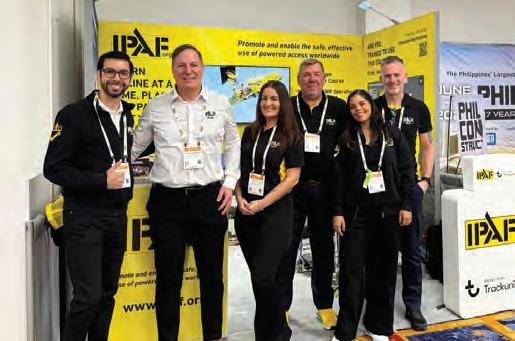
North America offers a different challenge, with a large number of low-cost training options available to contractors and rental companies. Douglas doesn’t say dismiss all this training, but says there are sub-standard courses where you can get a training card in less than three or four hours, in some cases without getting on a machine.
IPAF has been offering services tailored to the US market, such as training materials for OEMs – which are required to provide training – to support customers, including both operators and supervisors.
“The model in the US is more of a trainthe-trainer approach”, he says, “Because the OEM has the responsibility to offer training, they’ll sell machines to rental companies and they will go in and they’ll train the trainers. The problem is the training is not being updated and it’s not audited.
He says IPAF’s programme is different,
IPAF’s
being regularly updated in line with legislation and also audited; “So, we’re now offering that as a model, where we can train you or our training centres can. We can give you the material, the world class ISO accredited e-learning – and we can show you how to do your own practical training.”
He says it is starting to make some progress, with new training centres opened in the US last year and net membership growth of 19 in North America last year, the highest number of any region.
“We just want people to be trained”, he says, “They don’t all have to do IPAF training, as long as they’re doing decent training.” He adds that major rental players like United Rentals and Sunbelt Rentals have been supportive.
A key question for IPAF is the shared responsibility for safe use of aerial platforms between OEMs, rental companies and contractors/end users. Who bears the greatest responsibility?
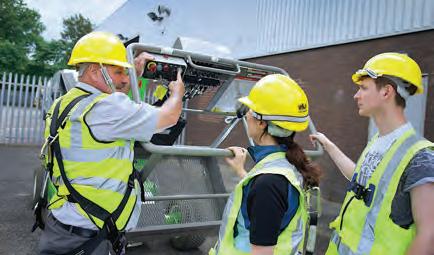
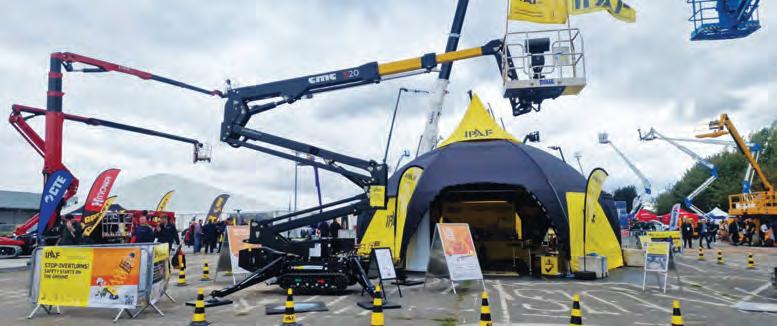
“It’s a really difficult one”, says Douglas, “I think the rental companies are focused on getting machines on hire. The training element is, ‘I’m being asked for it and I’ve got to provide it, so I’ll do it’. Don’t get me wrong, some of the people who get involved in training really care and see the importance of it. Others say it’s just a necessary thing they’ve got to do.
“The OEMs, I think, have got to take a bigger share of the responsibility. We need more from the manufacturers to really push safety, particularly in countries such as China and India, as I mentioned earlier.”
The never-ending nature of IPAF’s mission is in some ways epitomised by its accident reporting efforts, and the creation of a global database of statistics which allows the
IPAF is present at multiple events around the world every year. Its membership is now close to 2,000 companies. IMAGES: IPAF
association to analyse trends and identify safety priorities.
The irony here is that the more successful IPAF is in getting companies to report accidents and near-misses, the bleaker the picture can start to look, although of course it’s the scale of reporting that makes the numbers go up.
However, Douglas wants more companies to report; “We’re really disappointed with the accident data from 2025. It was the first year that it reduced.”
He says accident data – including near misses - gives IPAF a clear picture of what’s
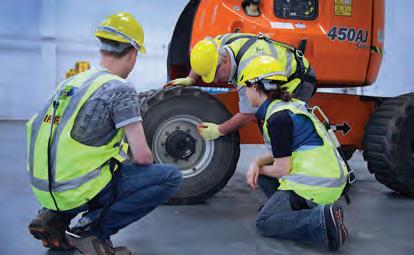
happening; “We have an International Safety Committee that analyses that data. The fatal five – as Brian [Brian Parker, IPAF’s Head of Safety & Technical] calls them – the top five reasons for fatalities when using MEWPs are always the same. They just change order.”
These are electrocutions, overturns, entrapment, falls from the platform, and the fifth either being hit by a falling object or mechanical failure.
“That’s where our safety campaigns are predominantly focused”, says Douglas, “This year, our campaign is centred on checking the machine. The quality of the machine obviously has an impact on incidents, so the focus is on carrying out the right checks –not just daily checks, but also pre-delivery inspections, familiarisations, and so on.”
IPAF’s annual Global Safety Report brings all the data together and is the most downloaded resource on its website. It informs everything IPAF does, from training, to annual safety campaigns and Toolbox Talks.
we’ve put things right in our organisation to make sure it doesn’t happen again.’”
One feature of any successful industry association is the ability to create a community feel, and IPAF has done that, partly through its numerous events around the world, including the International Awards for Powered Access (IAPAs) that it runs annually with KHL Group.
“The powered access industry is unique”, says Douglas, “It’s one of the only industries where you’ve got competitors coming into a room as part of a committee and genuinely leaving differences at the door.”
Of course, it means a pretty intense working life for Douglas himself. “I do enjoy it. The travelling gets a little bit much sometimes, but it also gives me energy”, he says, “We’re aiming to train 250,000 people this year, which would be fantastic.”
He describes as “heroes” the instructors who deliver training; “When I go to our
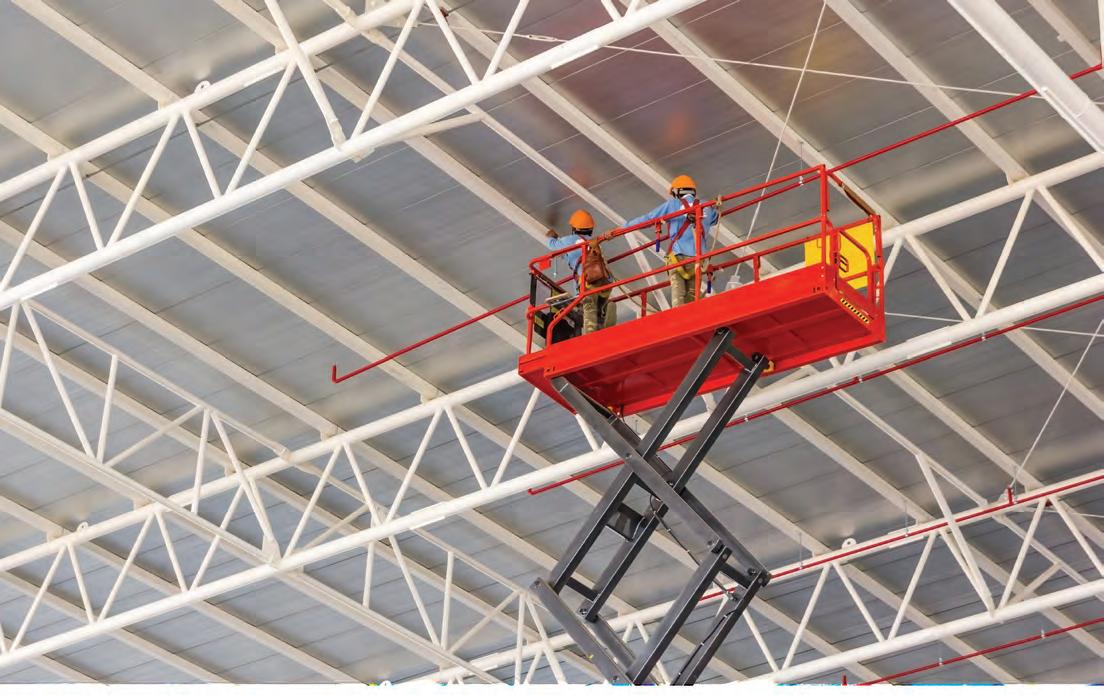
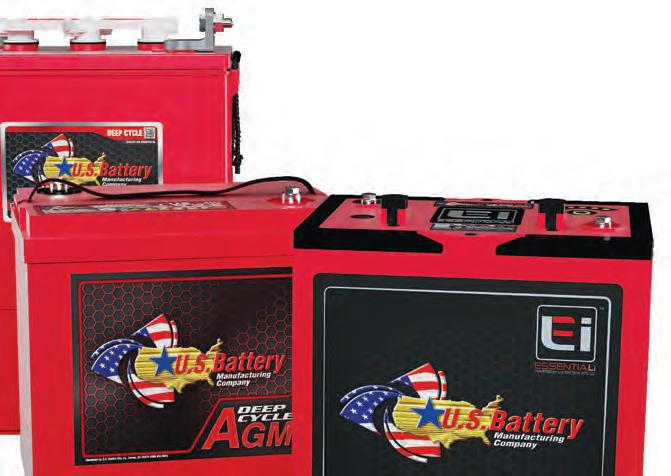
Since 1926, U.S. Battery has been the world’s most trusted manufacturer of deep-cycle batteries. For 100 years we have been the power behind your jobsite. Our commitment to quality and innovation ensures that every battery delivers unbeatable reliability and performance when you need it most.









































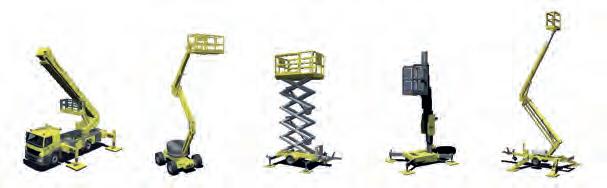
Promote and enable the safe, effective use of powered access worldwide
IPAF offers more than 40 training courses for different machine categories including mobile elevating work platforms (MEWP), mast climbing work platforms (MCWP) and construction hoists (CH)
Whether you’re a site manager, health & safety professional, engineer, planner, specialist, experienced operator, or absolute beginner, IPAF has a course for you.
IPAF training helps keep employees safe and employers legally compliant, while the globally recognised IPAF PAL Card proves operators have been trained to the highest standard.
Many courses can be taken solely or partly online as eLearning, in a matter of hours, providing flexibility to fit training in easily around your schedule.

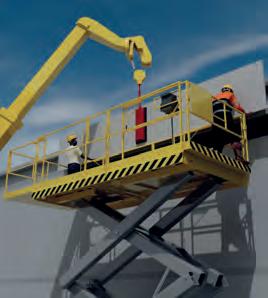
Find out more and book directly with an IPAF Approved Training Centre: www.ipaf.org/training or scan
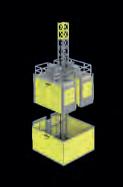
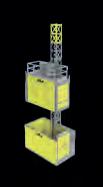
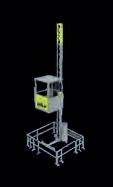
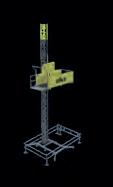
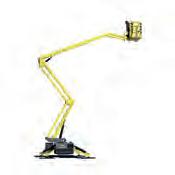
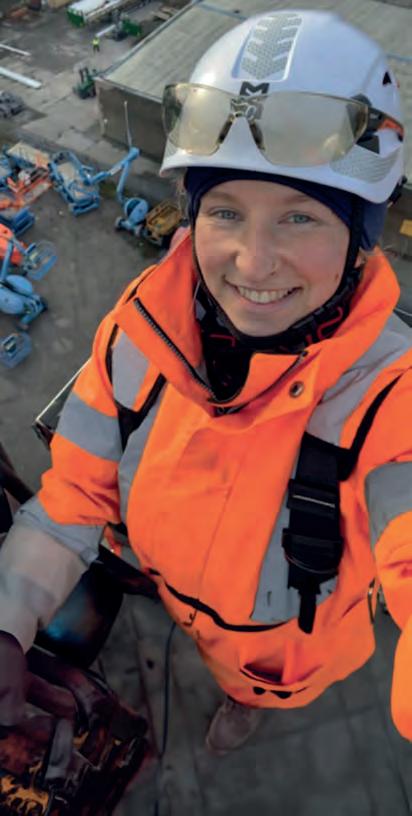

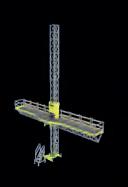
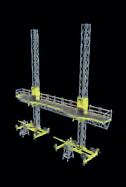
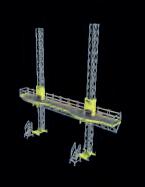
IPAF has reached 2,000 members across the globe.
IPAF’s membership now spans 83 countries, bringing together manufacturers, rental companies, contractors, and training providers. The growth underscores increasing industry recognition of the importance of safety standards, operator training, and best practices.
Peter Douglas, CEO & Managing Director of IPAF, said: “Reaching 2,000 members is a proud moment for IPAF. Over recent years, we have expanded our training programmes, digital services, and safety campaigns, supporting members in reducing workplace incidents and improving operational efficiency. As part of our commitment to a truly global community, we are also increasing the availability of
DIARY DATES
IPAF ANCH’IO
21-22 MAY 2026
Villa Baiana (BS), Italy
IPAF ELEVAÇÃO 2026
27 May 2026
Hotel Terras Altas, Sao Paulo, Brazil
IPAF ELEVATION UK
1 JULY 2026
HILTON ST GEORGE’S PARK, UK
IPAF CONGRESO CONOSUR 2026
4 SEPTEMBER 2026
Hotel Novotel Viña del Mar, Chile
IPAF SUMMIT & IAPAS 2026
15 October 2026
Istanbul Marriott Hotel Sisli, Turkey
Scan the QR code for all upcoming IPAF events or visit the website: ipaf.org/events

our materials in more languages, ensuring we can reach and support members wherever they are in the world.
“I’d like to thank each and every member for being a part of the IPAF family and contributing to safer work at height.”
Looking ahead, IPAF will continue to expand its global reach, enhance member services, and drive innovation in safety and training. The organisation is also driving towards full digital
adoption of the Powered Access Licence (PAL) Card through the ePAL app, while continuing to work with its members to raise standards.
Central to this effort is maintaining momentum behind its Share Your Story campaign, which recognises storytelling as a powerful tool for improving safety – encouraging members to report incidents and near misses and share experiences. Find membership details at: www.ipaf.org/join RAI
The full programme for IPAF’s highly anticipated Elevation UK 2026 event, on 1 July at Hilton St George’s Park.
With just over two months to go, this year’s event will centre on the theme “Real Risks, Real Consequences: Protecting IPAF Members in the Field.”
IPAF is inviting industry professionals to save the date for its upcoming webinar on 14 May 2026, which will officially launch the IPAF Global Safety Campaign 2026: Check It!
This year’s global campaign focuses on improving safety when working at height by promoting effective pre-use inspections, servicing, and maintenance of powered access equipment. The initiative aims to raise awareness and provide practical guidance to help reduce risks.
The webinar will feature expert insights from leading professionals, including Brian Parker, Head of Safety & Technical at IPAF; Robert Cavaleri, Senior Fleet, Training and Compliance Manager at Manlift Group; and Paul Roddis, Training Manager at IPAF.
The session is designed for managers, operators, and safety professionals .
To join the webinar, taking place at 12pm (BST) on 14 May, participants are encouraged to register in advance.
James Haigh and David Simmonite of Eagle Platforms will cover lessons learned from a real-life rental fraud.
Beyond the conference programme, Elevation UK 2026 will also offer a strong networking and social element, with a football-themed evening reflecting the day’s live matches.
The day will begin with an Access Alliance Meeting (members only), followed by a networking lunch and a full afternoon of expert-led sessions. Richard Whiting, IPAF’s UK Market General Manager, will host the event, with updates from CEO Peter Douglas. A strong focus will be placed on emerging risks, including cyber security, with insights from Liz Murray, Chief of Staff at the SASIG, and organised crime, featuring contributions from Andrew Huddleston and Chris Piggott of the National Construction and Agricultural Theft Team (NCATT).

The day will conclude with a drinks reception, BBQ, and after-dinner appearance from former England international Neil ‘Razor’ Ruddock.
Secure your place now at the IPAF website. RAI
IPAF has unveiled the first wave of speakers for its Working at Height Conference & Awards 2026, which will take place on October 28-29 at the Doubletree by Hilton Orlando at SeaWorld, Florida, USA.
ASSOCIATION
■ CEA Construction Equipment Association
■ Specialist Access Engineering & Maintenance Association Ltd T/A SAEMA Ltd
COMPANY ASSOCIATE
■ ABAX UK LTD
■ Europcar
■ Fiontar Safety Management Ltd T/a Fiontar Group
■ Rolydiam Limited
T/A Cherry Picker Pete
CONTRACTOR / INDUSTRIAL USER
■ Crown Roofing & Cladding Ltd
■ William Hare Ltd
■ WS Specialist Logistics
DEALER/ DISTRIBUTOR
■ Electrom SAS
■ Simeri Estonia Oü
HIRER/RENTAL
■ Byrne Equipment Rental LLC
■ CD Horizon Arabia Company Limited
■ Hangzhou Linguan
Digital Technology Co., Ltd.
■ Hp Hire Limited
■ Ingeniería Obras y Equipos S.A.S
■ Maquinaria, Arrendamiento y Ventas, S.A.
■ Metalair Nacelles SA
A must-attend event for senior decision-makers across the powered access industry, the confirmed speaker line-up will provide thought-provoking content to engage, entertain and intrigue attendees.
■ Paramount Platforms Ltd
■ Premier Plant and Tool Hire Ltd
■ Prime Hire Solutions Ltd
■ Top Reach Solutions
■ Zhejiang Hornet Rentals Construction Machinery Equipment Co., Ltd.
INDEPENDENT INSTRUCTOR
■ Bradley Ellis
■ Derry Knox
■ Oscar de Heer
■ Jason Tseng
■ Jean-François Navaux
■ Marvin Glenn
■ Neil Wilkins
■ Vlad Muresan
■ Yuvaraj Chandiran
INDEPENDENT TRAINER
■ Carlos Martín Miguel
■ Mario Winkelmann
■ Roland Moser
MANUFACTURER
■ Cela Platforms North America, Inc.
■ CS Platforms Ltd
■ Manitou Americas LLC
■ Rentease International LLP
■ Sanymx Equipment & Technology Sa De Cv
PUBLIC UTILITY
■ AT&T
SAFETY PROFESSIONAL
■ Jamie Gibbings
■ Lars Hoegner
■ Nicole McGregor, Managing Principal at Ducker Carlisle: 2026 MEWP Rental Market Trends
SERVICE / COMPONENT SUPPLIER
■ Carlisle TyrFil
■ Gefran Inc
■ Golden Eagle
■ Guardian Fall Protection
■ Guangdong Altrack Heavy Industry Technology Co., Ltd.
■ Hunan Zhongdian Tianheng Information Technology Co., Ltd
■ Mewpsmart Ltd
■ OR Group LTD
■ Trecuori Spa
■ Tutto Servizio
■ TVH Taiwan
■ Sunny Rock Ltd
TRAINING
■ Al Maha Gulf Technical And Occupational Skills Training LLC
■ AMG.Formations
■ BOTC Training SIA
■ Capital Management Consultancy and Development Center
■ Crosswind Security and Safety Training & Consulting LLC
■ DS Training Limited
■ Industry Training Ltd
■ Numero Uno Training and Consulting LLC
■ Prime Matrix Training LLC
■ Pro Trainers UK Ltd
■ Safety Guys Workplace Safety Trainers
■ Technical Safety Consultants
■ Xi Training Ltd
■ Paola Palazzani, President at Palazzani, & Ben Taft, VP of Sales, North America at Palazzani: Choosing the Right Machine for the Right Job – Atrium & Spider Lifts in a Growing Market
■ Tony Groat, North America – Regional Manager at IPAF: Standards Update
■ Federico Rio, Senior Vice President of Product & Pricing at Trackunit: Topic to be confirmed
■ Peter Douglas, CEO & Managing Director at IPAF, & Giles Councell, Director of
Operations at IPAF
The Three Safety Pillars of IPAF in North America.
Peter Douglas, CEO & Managing Director of IPAF, said: “Following the success of the last two editions of our Working at Height Conference & Awards, which attracted an exceptionally high calibre audience of managerand director-level professionals, the 2026 event is expected to once again deliver premium networking opportunities alongside expert industry insight.
Concluding with the fantastic Working at Height 2026 Awards Dinner and Ceremony, it really is the leading North American event for the access industry.”
With categories recognising safety innovation, technological advancement, new products, and IPAF North America Member Company of the Year, this is your opportunity to showcase outstanding achievement and gain industry-wide recognition.
Think you have what it takes?
Enter today and be in with a chance to win. Remember, if shortlisted, your company will receive two complimentary tickets!
Interested in Sponsoring this Event?
The Working at Height Conference &
Awards event will attract a wide range of equipment buyers and users, including many of the largest access rental companies in North America. The event will comprise an evening networking reception followed by a world-class conference and evening awards dinner to celebrate industry best practices – a perfect setting to promote your company brand and products to the biggest buyers and users of access equipment in North America.
■ BRONZE SPONSOR: Trackunit
■ BRONZE SPONSOR: Sigalarm
■ MEDIA SPONSOR: Rental & Access International



APEX-show 2026
The International Access Platform Exhibition Venue: MECC Maastricht, Maastricht, Netherlands




Mob: +86-189-7319-3961 / 0731-82797619
Email : lsf@cstopauto.com / topauto@cstopauto.com
Web: awptopauto.com www.aeriallift-controls.com https://en.cstopauto.com aerialliftcontrols.en.alibaba.com Achieved









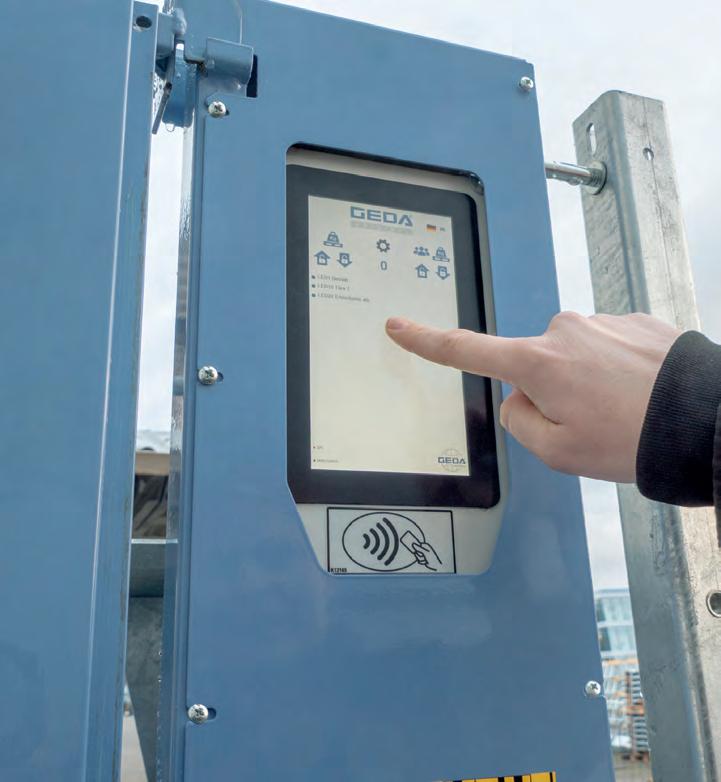
Cost-effective all-in-one solution
A unique combination of diagnostic and access systems
High-tech with extremely simple operation
Support for usage tracking systems
Functional enhancements via automatic software updates
Real-time data in GEDA CENTRAL
Data and configuration interface (API) for construction site management systems
The access system is compatible with all standard RFID/NFC tags and smart cards
Add: Not available in all regions/countries.
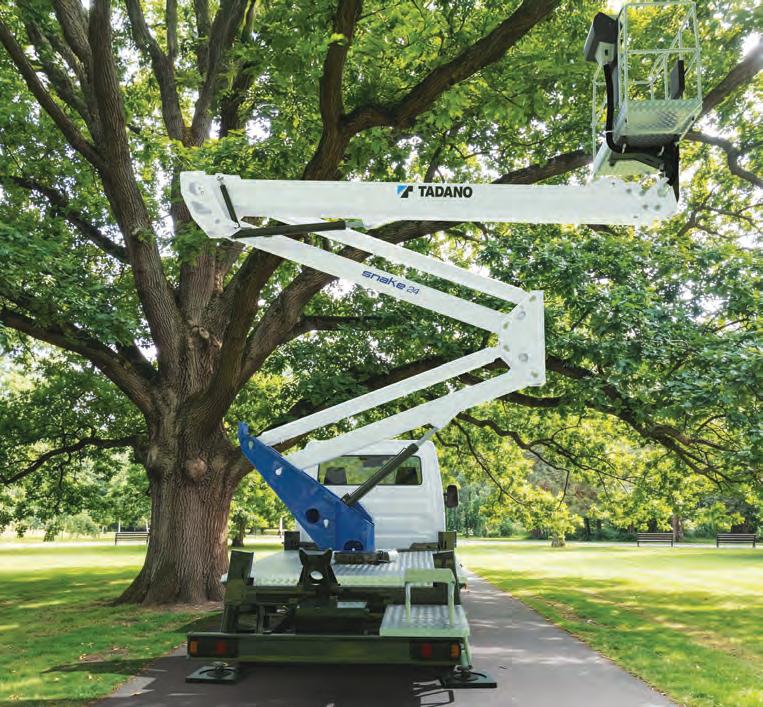
Vehicle mounts on 3.5 tonne chassis find themselves in one of the most competitive access categories, with a long customer wish list.
Whether its compactness, capacity or working envelope, designers of 3.5 tonne GVW truck mounted platform have their work cut out to meet both the needs of the sector and the regulations surrounding it.
One of the main challenges, says Rocco Stipo, R&D manager for Tadano’s Oil & Steel series, is the constantly evolving regulatory framework, which affects both platforms through new machinery regulations and industry standards, and the vehicles on which they are installed, particularly in terms of emissions directives and truck safety systems.
“This environment requires continuous updates to machines, especially regarding increasingly advanced safety and control systems, both hardware and software.
“It also involves the integration of external databases for storing and tracking control software and any modifications, as well as the development of lighter structures to compensate for the growing weight of trucks while achieving the greater working heights demanded by the market.”
The company, which acquired Oil & Steel through its acquisition of parent company Manitex last year, is addressing this with a series of developments.
Tadano’s latest products include the new Scorpion 18, alongside the evolved Snake 24, Scorpion 16 and Scorpion 23 models, which build on the established range.
Future products will also focus on performance, through optimization of movements and operating speeds.
Finally, Tadano is working on range standardization, with the aim of reducing internal complexity and ensuring consistent operating and maintenance procedures across all models.
“Rental companies primarily prioritize ease of use, fast and straightforward maintenance, and low total cost of ownership,” said Stipo. “They also place strong emphasis on remote management and diagnostics tools.”
End customers, on the other hand,
tend to value high performance, advanced features and a greater degree of machine customisation.
Another trend, adds Stipo, is an incraese in the working height for 3.5 tonne lifts, which is moving beyond the traditional 20m threshold.
On that subject Klubb Group will present a new product at APEX, in June. The PT 280 meets today’s requirements for maximised working height and outreach on a 3.5 tonne chassis, says the company.
Developed by the Italian and French teams in the group, the 28m working height model is lightweight and offers a high level of performance. It also offers a basket capacity of 250kg for two operators plus equipment, maximum side outreach of 13.4m, with 80kg in the basket, a rear outreach of 17.5m, again with 80kg in the basket, and turret rotation of 400°.
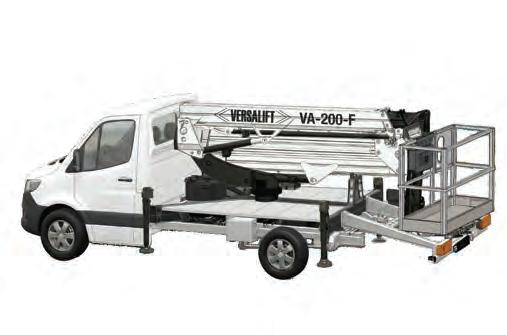
The platform is mounted on a 3.5 tonne Mercedes Sprinter and can be driven with a standard Category B license. It is also equipped with a 4.3 inch colour screen, which provides real-time information and ensures the operator is able to learn the new machine quickly. Thanks to its proportional controls, the model allows for simultaneous, fluid movements and
comes with a range of safety features as standard, including capacitive sensors to provide the dead man safety function.
Production of the PT 280 is scheduled to begin in October 2026, with the first deliveries expected by the end od the year.
Earlier this year Versalift officially launched the V-Range; a new 3.5 tonne series, which focuses on ease of use and, says the company, closes a gap in the European truck mount market for completely priced products. First sight of the new series will come at APEX.
The introduction is a joint effort from Versalift and France Elévateur, which are both part of the Time Manufacturing Company (TMC).
It marks a significant expansion of the company’s European product portfolio, with a key aim. “Customers have been asking for reliable, cost-effective 3.5 tonne vehicle mounted access platforms”, says Uwe Strotmann, chief commercial officer for TMC Europe.
The V-Range consists of seven fully standardised models, with working heights from 17m to 27m, all mounted on 3.5 tonne chassis, and uses the engineering experience of Versalift and Ruthmann, which is also part of the TMC group.
The series will be sold under Versalift across Europe and France Elévateur in France specifically.
All models offer the same XPC proportional standardised control system, hydraulic architecture and electrical system across all models.
Ths means operators benefit from lower spare parts stock requirements, streamlined servicing and reduced technician training.
Each vehicle comes with Real Time Connect (RTC) - a webbased telematics platform that enables realtime remote monitoring, rapid fault detection, and efficient troubleshooting.
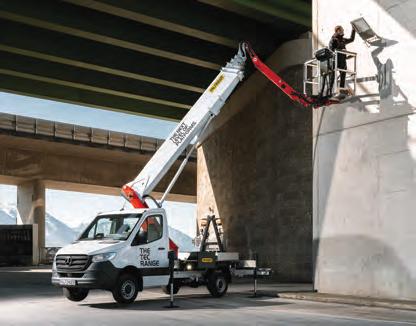
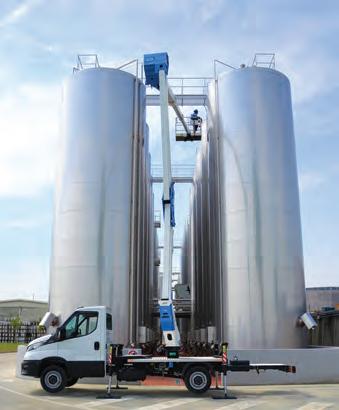
Socage has also announced the launch of a new generation of platforms at APEX, and again with compactness being a key driver.
The flagship model in the new series is the forSte 27D HE+H which combines a 27m working height with strong outreach and optimised weight. Designed with the operator in mind, the platform features advanced assistance systems and intuitive controls. Its robust design also ensures longterm reliability and ease of maintenance.
“As customer expectations continue to evolve, the demand for high-performance yet compact machines—combined with ease of operation, reliability, rapid service, and enhanced safety—has created opportunities for innovation,” said the company.
Alongside the 27D HE+H, the company is also introducing the forSte 20A Speed, developed to meet demand for compact, high-performance equipment—particularly in urban environments. Offering up to 12m outreach and a total length of just 6.4m, the 20A Speed stands out as one of the
most compact platforms in its category.
The model is mounted on Stellantis vehicles, widely used across Europe, ensuring convenient servicing and parts availability.
Also at APEX, Palfinger will present several platforms from its portfolio and showcase the progress made on the new TEC range.
Serial production of the TEC models at the Löbau plant in Germany is in full swing, and the first units are being delivered.
A highlight of the show is the PT 25 TJ from the TEC range on a 3.5 tonne chassis. It has a working height of 25m, a maximum lateral reach of 19.1m, and a basket load of 300kg, making it one of the most powerful platforms in its class, says Palfinger.
Thanks to its combination of reach, power, and compact design, it is particularly well-suited for the rental business. Improved ergonomics reduce strain on operators, while a redesigned basket arm provides additional stability. The platform is also available in hybrid or fully electric versions, enabling powerful yet low-emission operation.
Another exhibit from Palfinger at the show is the P 200 AXE-E Smart Plus, an enhanced 3.5 tonne articulating aerial lift. It features multifunctional electric controls, a 2.8 inch colour display for showing platform and outrigger status, and vertical stabilization with three setup modes for maximum safety on uneven ground.
A redesigned basket support makes it easier to work near buildings or obstacles, while the standard Palfinger Connected telematics solution provides real-time information about the machine. RAI
Multitel confirms that there is a growing demand for higher machines mounted on light vehicles, along with an increased focus on off-road capability and flexibility, alongside a strong push towards digitalization and telemetry.
The main challenges then comes with balancing the need for compactness with ever higher performance, while ensuring ease of use and accessibility in difficult environments, as well as integrating advanced technologies.
Multitel’s latest launch in the compact category is the MXE130 mounted on a pickup truck. It is designed to deliver high performance while ensuring excellent accessibility, particularly in off-road conditions thanks to the 4x4 configuration. The main features include compact dimensions, ease of transport, versatility, and the ability to operate in environments where larger machines cannot easily access.
“We are continuously working on expanding and improving this product range. Our development focuses not only on new models but also on integrated technical solutions aimed at improving efficiency and safety,” said a company spokesperson.
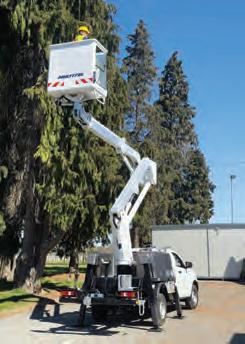
“This includes advancements in both electronic systems and overall machine performance, with solutions that can be applied across the entire range, in line with our philosophy of continuous improvement.








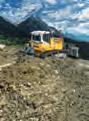












The European Rental Association aims to reinforce the human, digital and sustainable strengths of rental in its 2026-28 strategy.
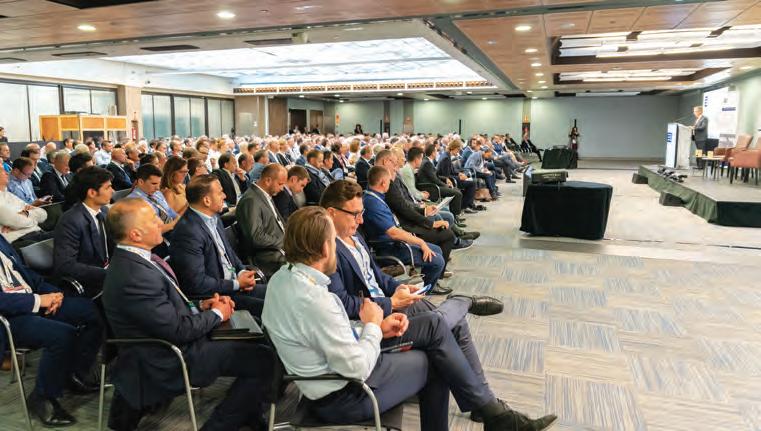
This year’s ERA Convention will be on 3 and 4 June in Maastricht, The Netherlands.
The European equipment rental industry is entering a particularly dynamic phase. Customers are increasingly looking for ways to reduce emissions, optimize costs, improve productivity, and integrate new technologies into their operations. In this context, equipment rental is uniquely positioned to provide practical flexible solutions. At the same time, rental companies are adapting to evolving skills needs, higher safety expectations, and a more complex regulatory environment.
ERA’s Strategic Plan 2026-2028 responds with one clear goal: to improve the attractiveness of the equipment rental industry. The plan is built around four pillars: sustainability, people, technology and promotion, and these priorities will also shape the discussions at the ERA Convention in Maastricht on 3 and 4 June.

The European Rental Association was created in 2006 to represent national rental associations and equipment rental companies in Europe. Today, the membership includes more than 5,000 rental companies, either directly or through 14 rental associations. The ERA is active through its committees in the fields of Promotion, Sustainability, Statistics and Technical and through its Future Group. Extensive information on the ERA’s activities, reports and publications is available at www.erarental.org
CONTACT INFORMATION:
European Rental Association (ERA), Avenue de Tervueren 188A, box4, 1150 Brussels, Belgium + 32 2 761 1604 | www.erarental.org
Secretariat Administration: era@erarental.org
Secretary General: secretariatgeneral@erarental.org
Sustainability is central to the equipment rental model. By giving customers access to equipment without ownership, the industry supports better use of assets and a more circular economy.
ERA’s strategy focuses on helping rental companies and their customers with decarbonisation and the energy transition. This includes developing tools such as the ERA Equipment CO2 Calculator, carbon reporting guidance, and the Total Cost of Ownership Calculator. These resources help companies measure performance, make better decisions, and explain the environmental benefits of equipment rental to customers.
ERA will also continue to advocate for the role of equipment rental in EU sustainability initiatives, including the Circular Economy Act and the Taxonomy of Sustainable Activities.
The people pillar addresses one of the sector’s main challenges: attracting, recruiting and retaining talent. Equipment rental needs a wide range of skills, from technical and operational roles to highly specialised profiles.
ERA’s People Committee will focus on skills gaps, diversity and inclusion, training and retention. The strategy also includes work on People KPIs and benchmarks.
Safety is also part of this pillar. ERA will update its OSH Toolbox with new industry benchmarks and develop best practice guidance for rental customers.
At the Convention, the people theme will look at how the industry can present itself more clearly as an attractive industry employer, particularly to the younger generations.
ERA’s strategy aims to guide the digital transition in a practical way. Priorities include guidance on AI, connected assets and robotics, as well as product-specific work through vertical groups covering areas such as modular construction and portable sanitation, powered access, and energy.
ERA will also support companies on data quality, interoperability, and cybersecurity. Planned actions include a practical guide on the EU Data Act and an update of the ERA Cybersecurity Guide. The strategy also includes coordinated work to improve the recovery of stolen equipment in Europe.
The fourth pillar focuses on visibility. Equipment rental plays an important role in construction, infrastructure, events and other sectors, but its value is not always fully understood.
ERA aims to support rental companies and national associations in promoting the sector more consistently. This includes increasing the reach of ERA deliverables, using European Rental Week to promote the industry, and develop a Rental Promotion Toolkit.
ERA will also continue to develop the ERA Market Report and RentalTracker.
The four pillars are closely linked. Sustainability depends on reliable data and customer engagement. Digitalisation requires skills and trust. Safety connects people and technology. Promotion depends on clear evidence and a shared message.
The ERA Convention will be an important opportunity to bring these priorities into discussion, shaping the future of equipment rental in Europe. RAI





















Open