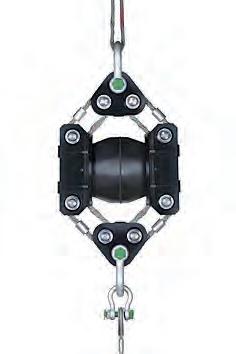
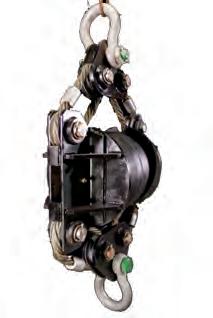
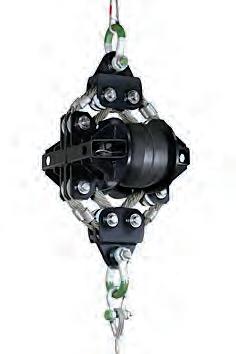
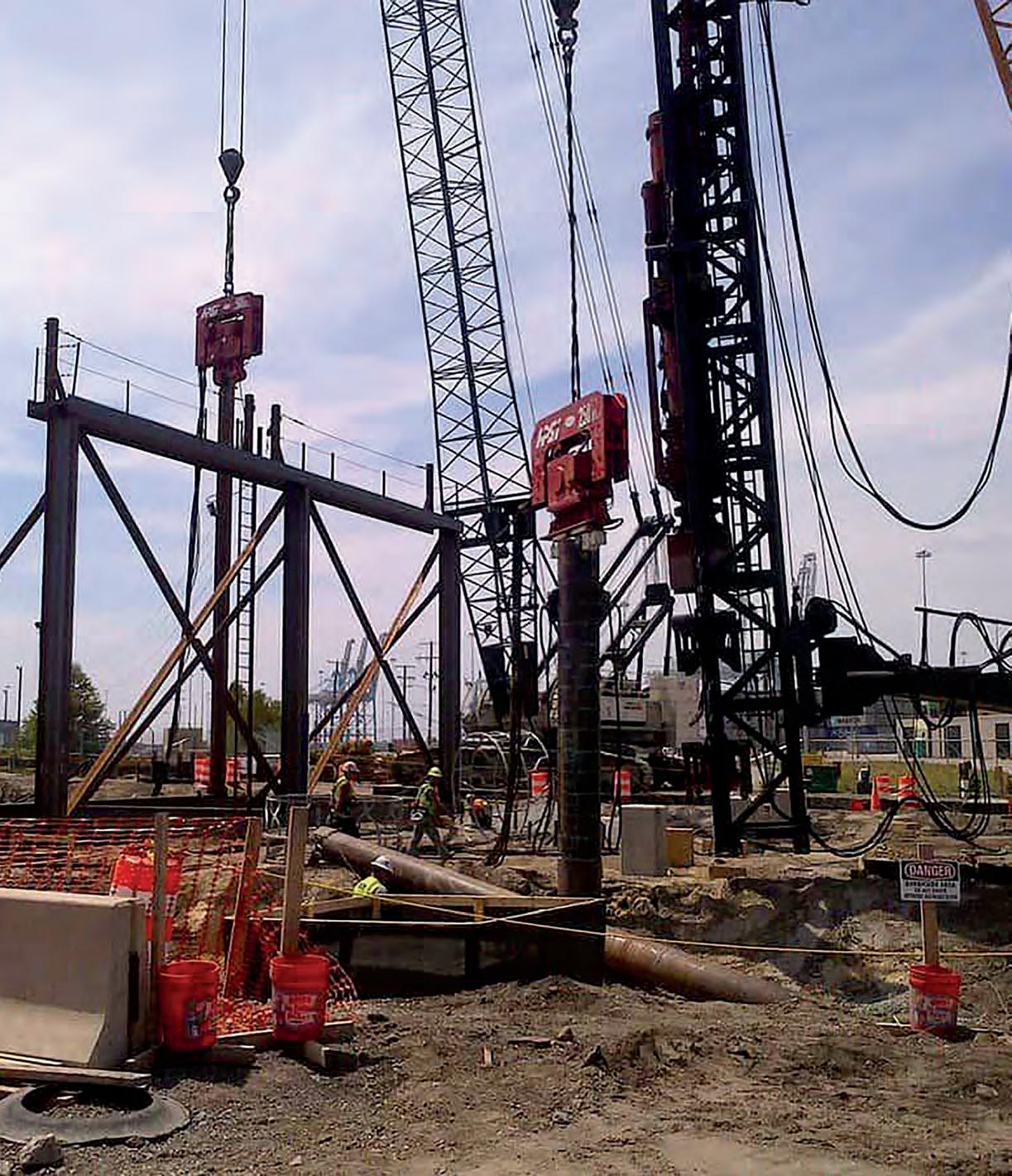
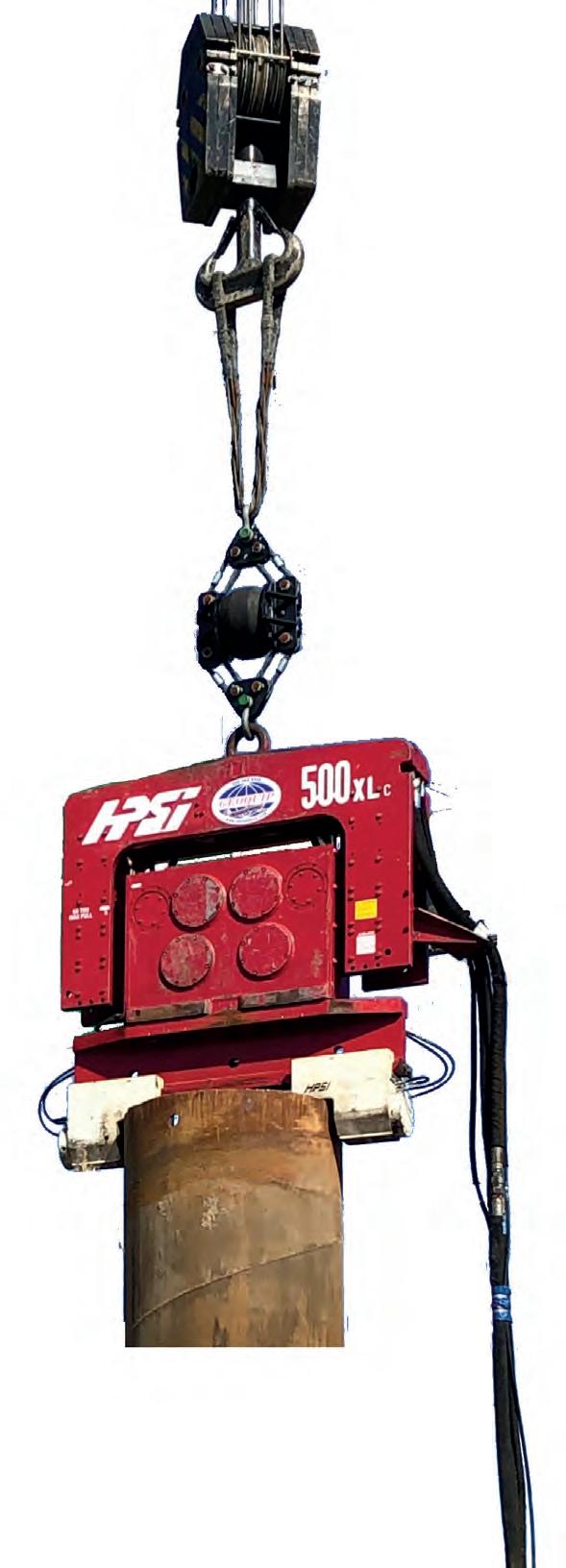
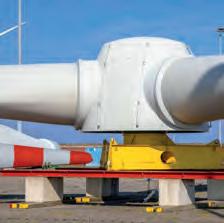
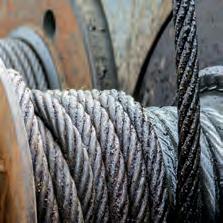
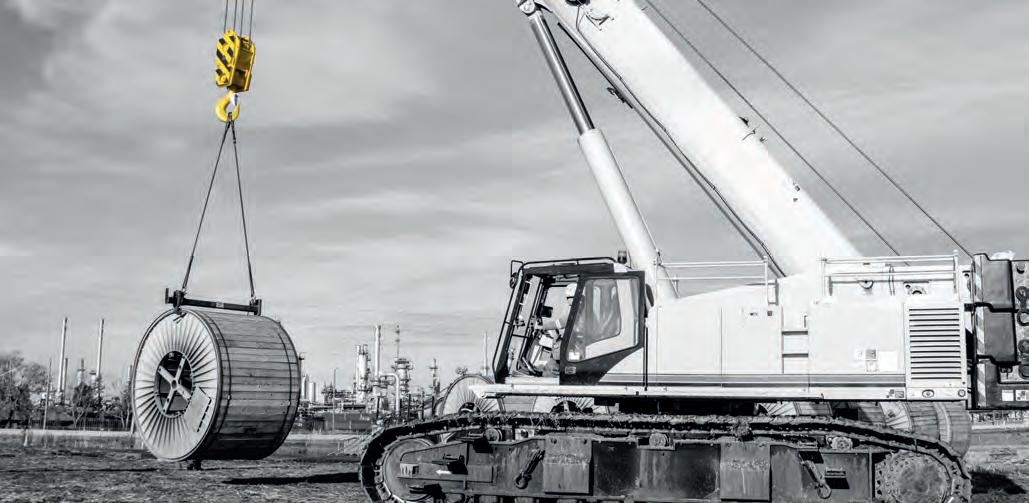
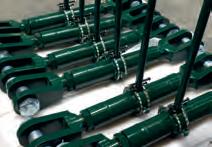
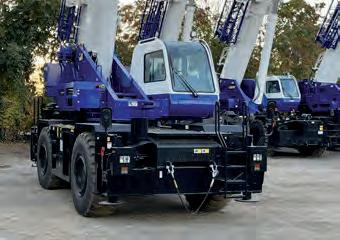
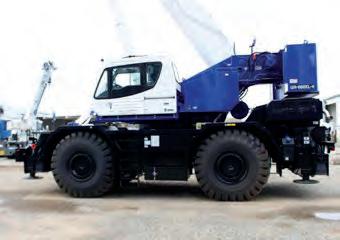
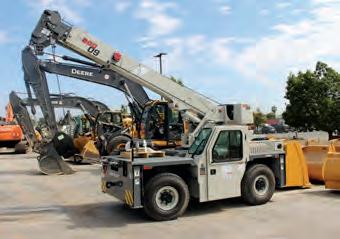
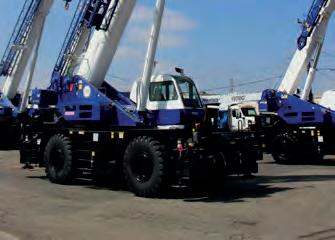
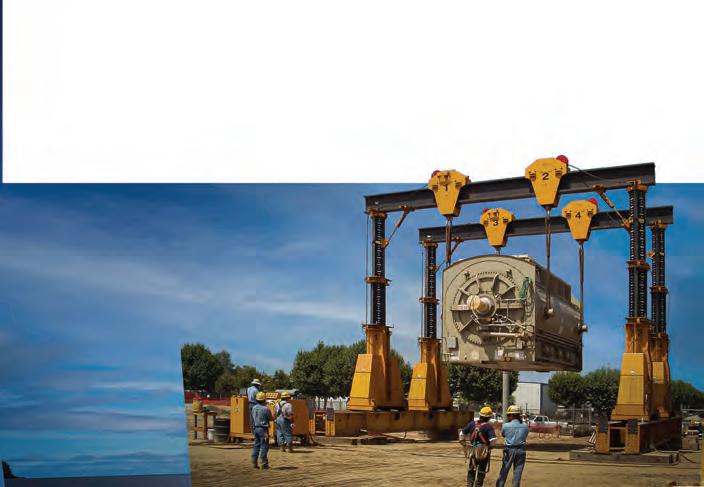
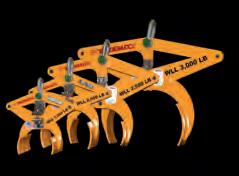
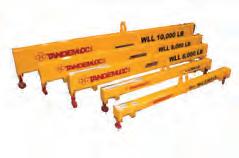
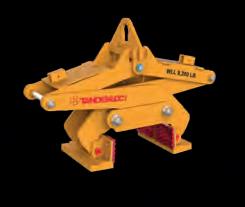
Full range of models from 5,000 lbs. capacity up to 180,000 lbs
95% vibration reduction
Load cells don’t have to be removed for use with vibratory hammer
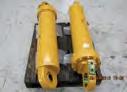
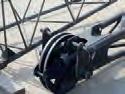
Eliminates wear and tear on hydraulic boom cylinders
Suitable for use with any hydraulic boom/crawler crane and any make/model vibratory hammer
757-485-2500 sales@geoquipusa.com
www.geoquipusa.com/tunkers-vibratory-dampeners
Editorial
Editor in chief
D.Ann Slayton Shiffler
d.ann.shiffler@khl.com | 512 868 7482
Managing editor
Mitchell Keller
mitchell.keller@khl.com
International editor
Alex Dahm | alex.dahm@khl.com
SC&RA correspondent Mike Chalmers
Director of content Murray Pollok
Media Production
Client success & delivery manager
Charlotte Kemp | charlotte.kemp@khl.com
Client success & delivery team
Ben Fisher | ben.fisher@khl.com
Olivia Radcliffe | olivia.radcliffe@khl.com
Alex Thomson | alex.thomson@khl.com
Group designer Jade Hudson
Circulation
Audience development manager
Anna Philo | anna.philo@khl.com
Events
Events manager Steve Webb
Events design manager Gary Brinklow
Creative designer Kate Brown
Sales
National sales manager
Michael Sharkey
michael.sharkey@khl.com | 515 269 0258
National account manager
Bev O’Dell
bev.odell@khl.com | 816 886 1858
Vice president sales
Simon Battersby
simon.battersby@khl.com | +44 (0)1892 786223
Marketplace & classified advertising
John Austin
john.austin@khl.com | +44 (0)1892 786245
Vice president global sales
Alister Williams
alister.williams@khl.com | 843 637 4127
Client success & digital director
Peter Watkinson
peter.watkinson@khl.com
Chief financial officer
Paul Baker
Chief executive officer
James King
KHL GROUP AMERICAS LLC
11811 N Tatum Blvd, Ste P118
Phoenix, AZ 85028
americas@khl.com
Good stuff
Iam always motivated by good stuff. And with that, this issue has a lot of good stuff.
First off, the Interview column is a bit of a departure, but totally good stuff. Eddie Garcia is a crane operator for TNT Crane & Rigging. A few years back he was in an accident that required amputation of his legs. While the situation was devastating, Garcia started talking about getting back into the crane cab while he was in the hospital recovering from the surgery. With grit, determination and an amazing spirit, Garcia has done just that. He gave us his story exclusively, and it’s an article you won’t want to miss.
Another development that is really good stuff is our new managing editor, Mitchell Keller. He joined our team just as the June issue was going to press. An experienced journalist, he actually worked for KHL Group back in 2024-25. While he hasn’t reported on the crane and specialized transport sector specifically, he knows the construction industry well, formerly serving as an editor for International Construction magazine. Mitch has a BFA from the University of Wisconsin-Milwaukee and he and his wife live in the Milwaukee area. We welcome Mitch to the fold, and we look forward to the value he will bring to our cranes’ editorial team.
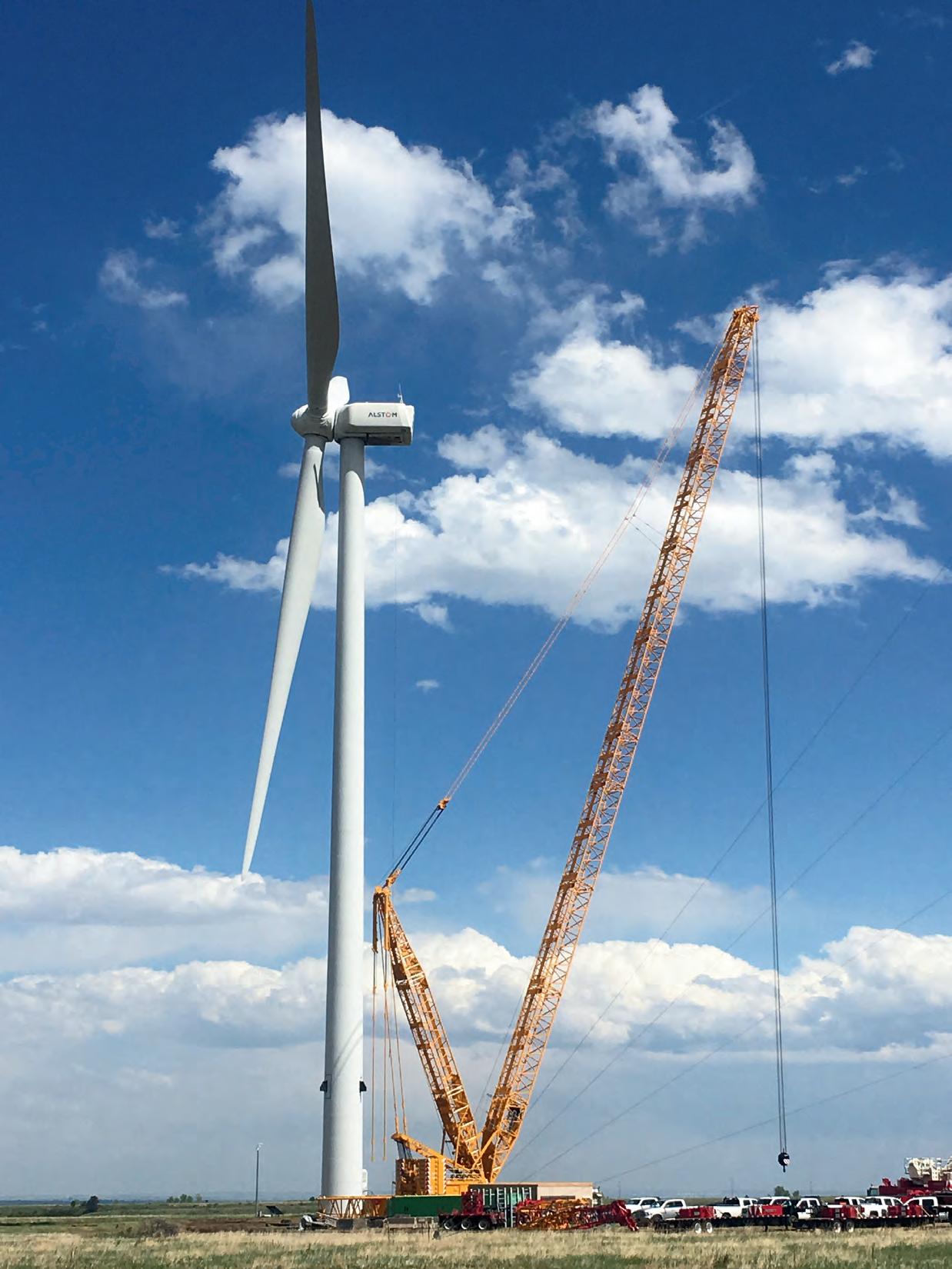
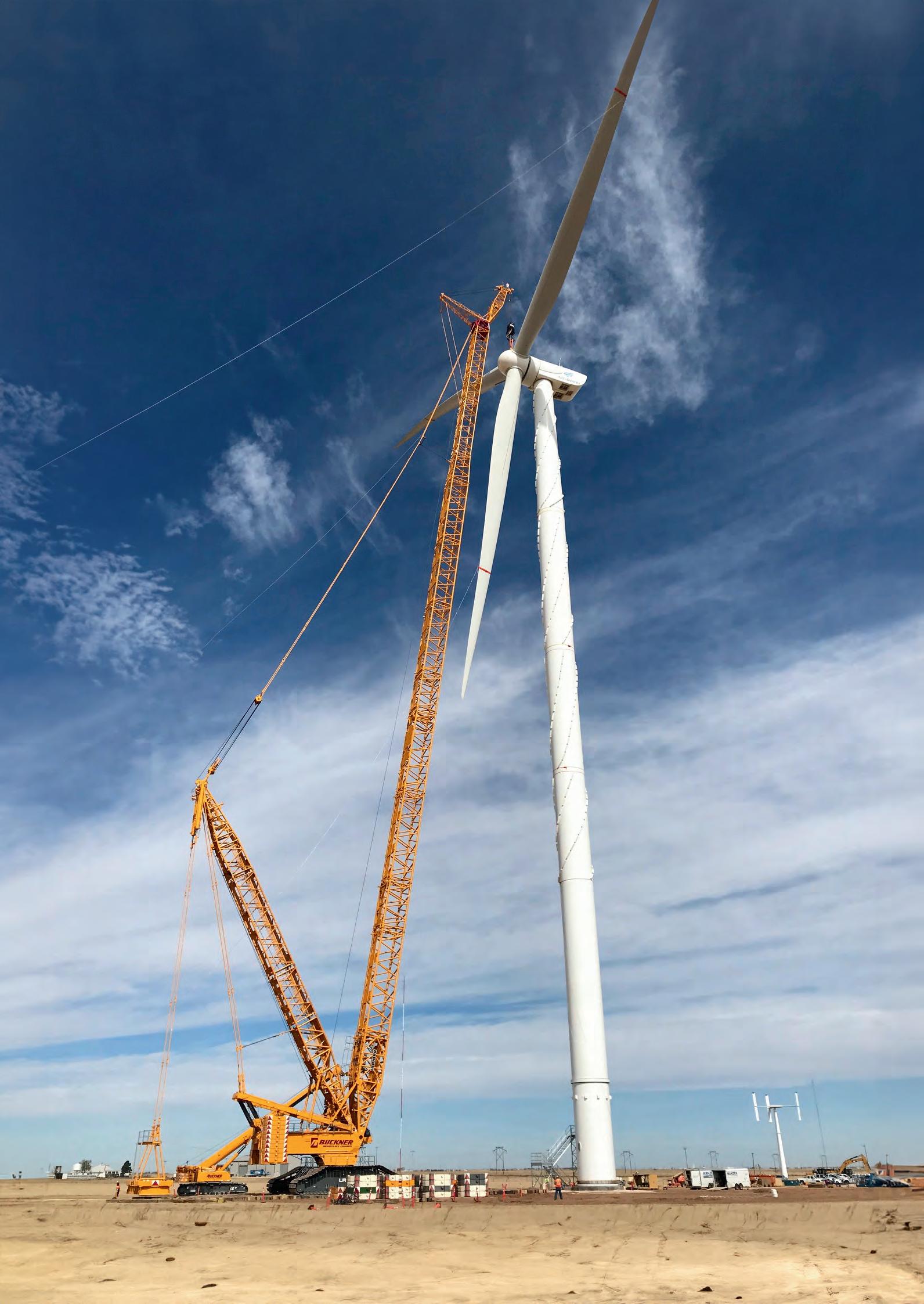
This issue features two roundtables – the Finance Forum and the Industry Focus Auctions. Some really good information is imparted by the panel of experts we convened for both articles. Kris Koberg covers the need for engineered outrigger pads for self-erecting tower cranes in our Rigging Matters column. In our Industry Focus Wind Power, the folks at Boss Crane & Rigging and Buckner HeavyLift weigh in on how maintenance and repower are keeping this industry afloat. Our Regional Site Report Canada chronicles a marine-to-land transfer solution engineered by Sarens. Our Site Report Lifting piece covers an amazing job that involves a septet of Liebherr ATs joining forces for a million-pound lift.
As always, the June issue features our ACT100 list of North America’s top crane-owning companies. This list is the who’s who of the crane industry, and there’s a lot of information to digest.
Lastly, let us know the good stuff that’s going on at your company – your people, your jobs, your equipment and whatever else good that’s going on.
D.ANN SLAYTON SHIFFLER Editor
KHL Group Americas, 30325 Oak Tree Drive, Georgetown TX 78628 +1 512-868-7482 | d.ann.shiffler@khl.com
www.craneandtransportbriefing.com
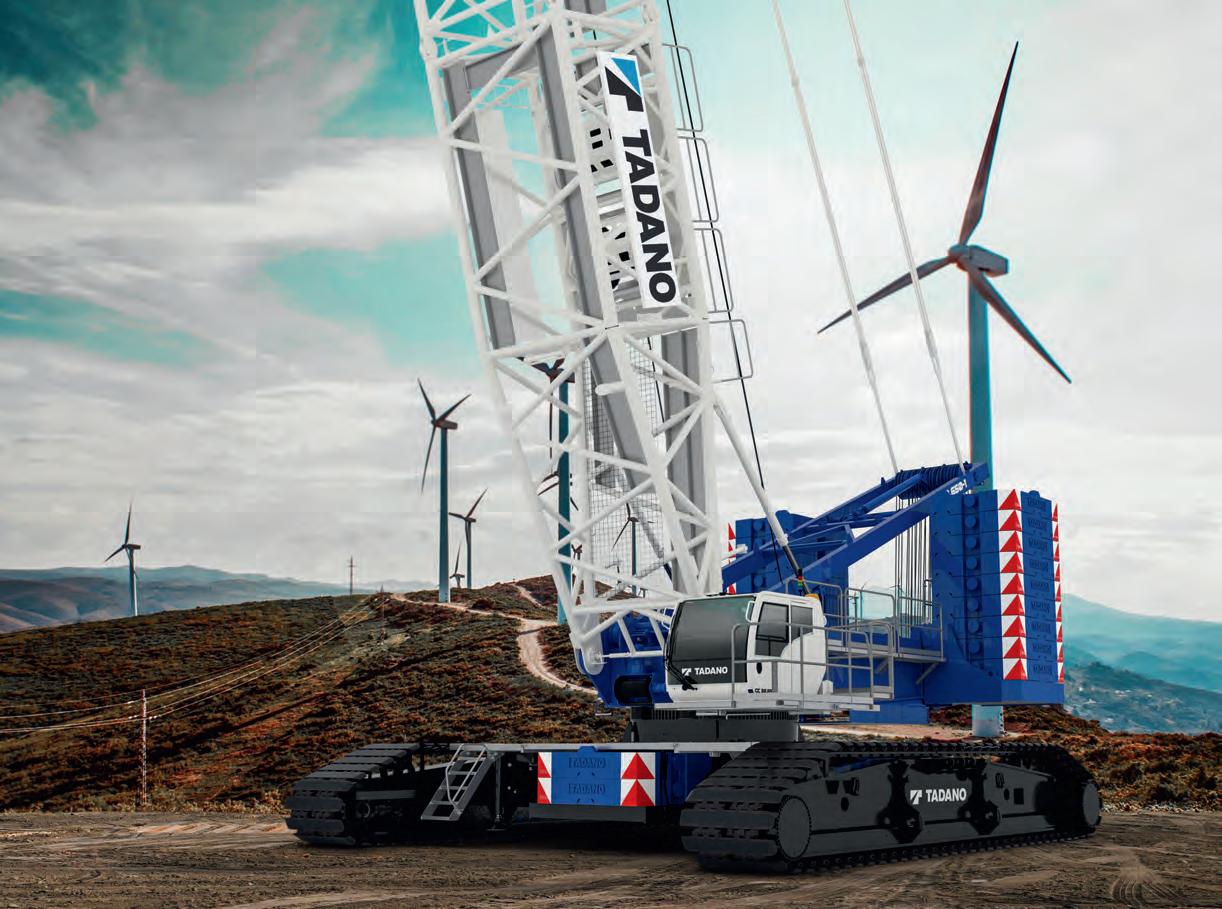
POWER. PRECISION. REACH.
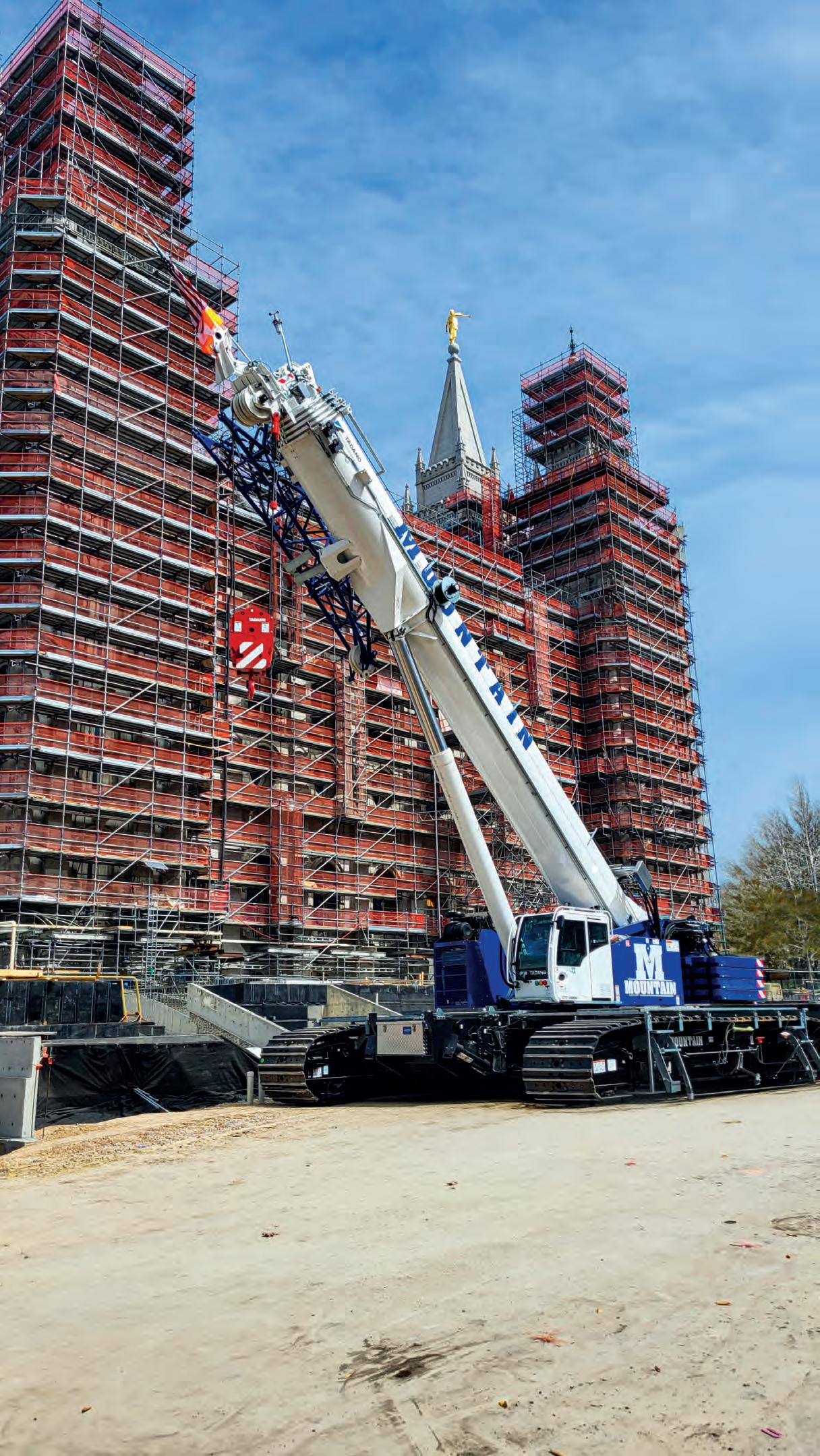
The Tadano CC 38.650-1 delivers maximum lifting capacities across its full working range with Vario Superlift radii and variable main boom offset angles for luffing jib configurations.
Operators benefit from a cab equipped with the trusted IC-1 control system with dual touchscreens and best-in-class ergonomics for superior comfort. Perfect for wind energy projects, the CC 38.650-1 erects turbines with a hub height up to 361 ft without Superlift attachment and up to 558 ft with Superlift attachment.
The CC 38.650-1 becomes even more flexible by offering optional Pedestal Crane outriggers, Flex-Frame, Split Tray, Fixed Jib, and Boom Booster kit.
American Cranes & Transport makes every effort to ensure that editorial and advertising information carried in the magazine is true and accurate, but KHL Group Americas LLC cannot be held responsible for any inaccuracies and the views expressed throughout the magazine are not necessarily those of the publisher. KHL Group Americas LLC cannot be held liable for any matters resulting from the use of information held in the magazine. The publisher is not liable for any costs or damages should advertisement material not be published. ACT is published 11 times a year by KHL Group Americas LLC, 11811 N. Tatum Blvd, Suite P118, Phoenix, AZ 85028. This issue is mailed on June 16, 2026.
SUBSCRIPTIONS: Annual subscription rate is $301. Free subscriptions are given on a
who fully complete a Reader Subscription Form and qualify under our terms of control. The publisher reserves the right to refuse subscription to non-qualified readers.
FEATURES
10 INTERVIEW
Eddie Garcia is an accomplished crane operator with an incredible story of grit and gratitude. D.Ann Shiffler reports.
Cranes, capital and the cost of uncertainty: assessing today’s financing climate.
31 ACT100 ACT’s exclusive ranking of North America’s top crane-owning companies.
40 INDUSTRY SPOTLIGHT AUCTIONS
Demand for used cranes is strong in the U.S. and around the world.
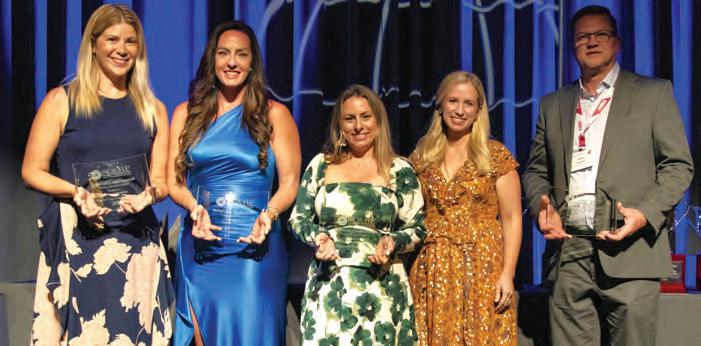
SC&RF recognizes
Tariffs on vital materials are causing higher costs, complicated calculations and growing uncertainty. Joel Dandrea discusses.
60 SC&RA NEWS
SC&RA expands regional engagement through new Northeast advocacy events.
63 RISK MANAGEMENT
Everything you need to know about captive insurance companies.
45 INDUSTRY FOCUS WIND POWER
Despite political headwinds, the wind market is stable, especially maintenance and repower work. D.Ann Shiffler reports.
49 REGIONAL SITE REPORT CANADA
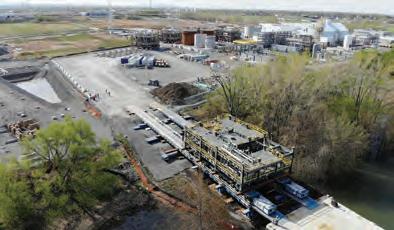
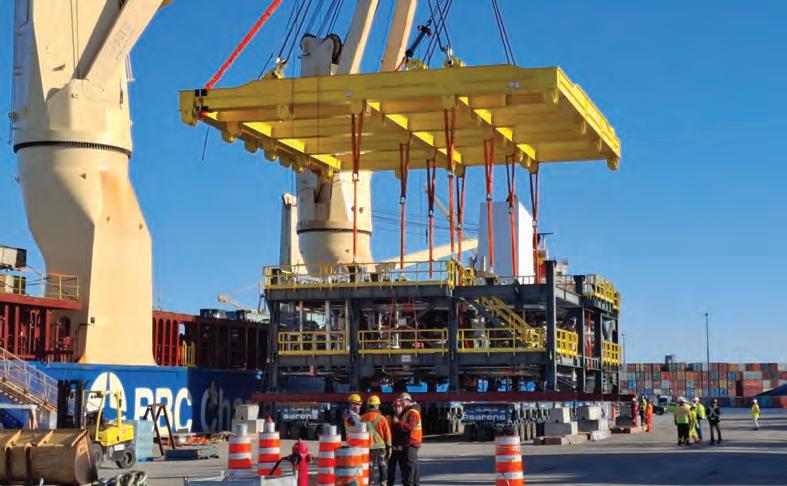
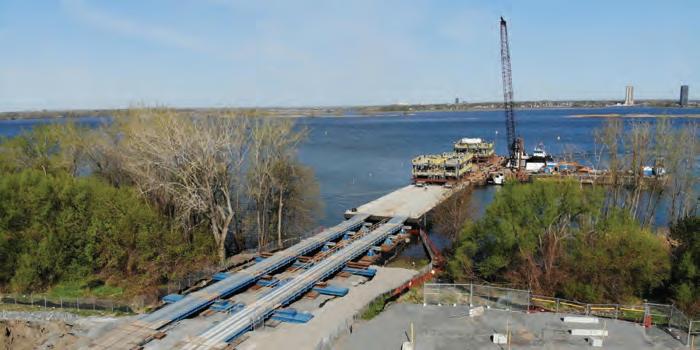
Sarens USA provided an engineered marine-to-land transfer solution to move industrial process modules.
50 SITE REPORT LIFTING
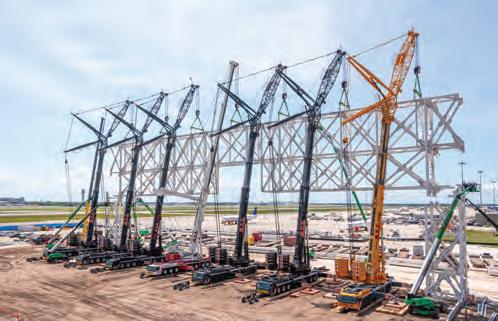
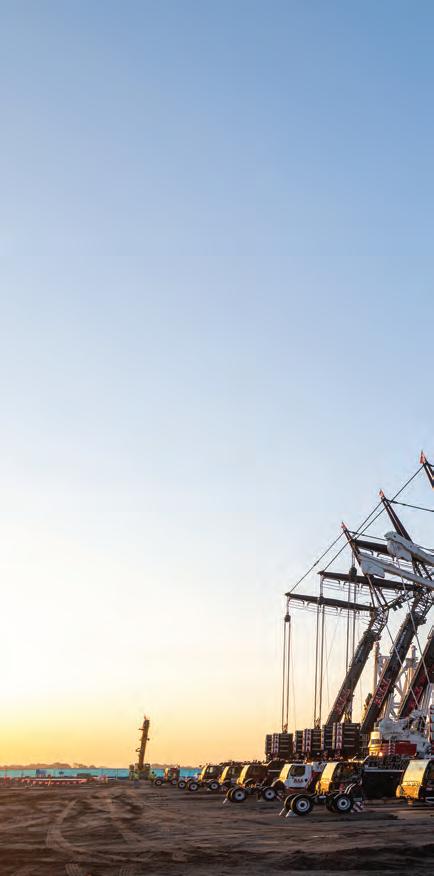
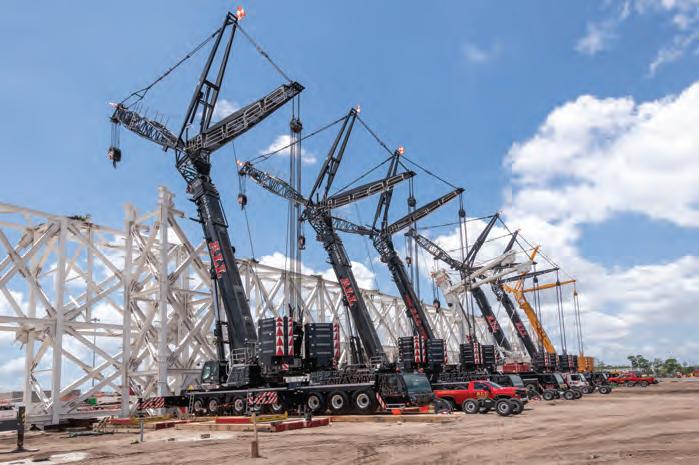
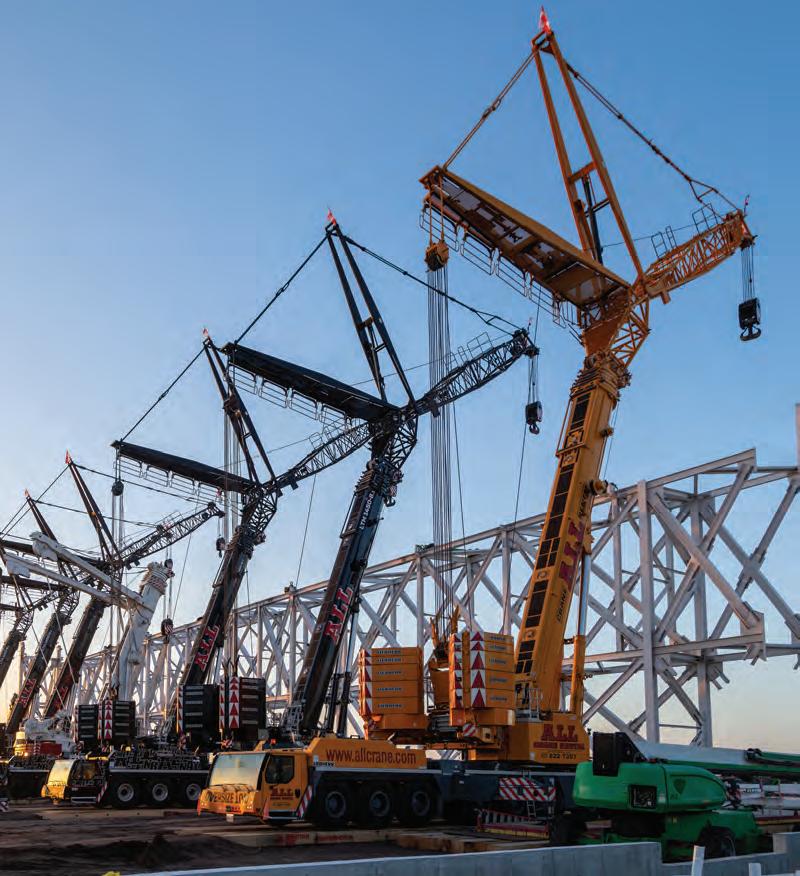
A septet of Liebherr ATs from ALL join forces for a million-pound lift.
Check out the latest headlines, project updates and industry developments.
Why recertification matters for company safety, competency and confidence.
Spotlighting people, promotions and progress.
Starts on page 71
Don’t miss the 21st annual ACT100 list of North America’s top crane-owning companies. Page 31.
n Link-Belt Cranes received the 2026 SAAZ Energy Performance Excellence Award from Big Shine Energy, recognizing its rooftop solar installation at its Lexington, Kentucky headquarters. The 1,302-panel system generates up to 915,800 kilowatt-hours annually and projects lifecycle savings exceeding $1.5 million.
Link-Belt formally accepted the award at the SAAZ Strategic Energy Forum on May 28 in Hoboken, New Jersey.
n Crane Service Company is marking its 100th anniversary, reflecting a century of growth in the Mid-Atlantic crane and transport market.
Founded in 1926 and based in Upper Marlboro, Maryland, the company has remained familyowned across four generations, with a fifth now involved in the business. It provides crane services, rigging, heavy hauling, logistics and warehousing across the region.
“This anniversary belongs to the people who have helped build this company – our team, our clients and our partners,” said Brian Mazzella, president.
SC&RA presses for tariff relief at trade hearing
SC&RA member
Mike Appling, CEO of LiftHigh Cranes & Rigging, testified on behalf of the association at a U.S. International Trade Commission hearing on May 5, urging relief from tariffs that the industry says are driving up costs and pushing buyers toward Chinese equipment.
The hearing addressed a Section 301 investigation into structural excess capacity and production practices in certain economies. SC&RA’s requests included zero tariff rates on cranes, trailers and parts from the EU, Canada and Japan; proportionate rates on Chinese products; and a 24-month
Appling, CEO, LiftHigh Cranes & Rigging
phase-in period for any new tariffs on alliednation goods, among others.
“SC&RA fully supports addressing China’s structural overcapacity,” Appling testified. “But EU, Canada and Japan are proven, trusted allies that do not engage in industrial overcapacity, dumping, forced labor, or any other unfair trade practice with respect to these products.”
Appling noted that approximately 80 percent of cranes used in U.S.
Dozier deploys first Terex TRT 55US in US
Terex dealer Dozier Crane & Machinery has put the world’s first TRT 55US rough terrain crane to work in the U.S., deploying the machine on a major energy infrastructure project in Savannah, Georgia.
Rented to R.R. Cassidy for Georgia Power, the crane is supporting expansion activities including relay and substation works. Operating in standard configuration, the 55-ton machine features a 122.7-foot boom with three telescoping modes.
Dozier Crane & Machinery
Vice President Matt Greenspan said “The decision to deploy
the TRT 55US was driven by its 55-ton maximum lifting capacity, its compact design and excellent load chart performance, making it particularly well suited for the project’s operational needs.”
The crane made its debut at ConExpo-Con/Agg 2026 in Las Vegas. It combines off-road mobility with load chart performance across the full working radius, with an overall width of 9.11 feet. Performance is supported by TEOS and T-Link control and monitoring systems.
“The sale of the TRT 55US to Dozier underscores our
construction are imported, less than 3 percent of global all-terrain cranes are manufactured domestically, and no U.S. company manufactures tower cranes. Construction equipment costs are already projected to rise 27 percent overall and 45 percent for imported equipment.
SC&RA CEO Joel Dandrea attended the four-day hearing. “We do not expect an answer to our requests before July,” he said. “However, we will continue to execute our strategies to support tariff relief for our members.” n
customer-centric approach and commitment to the evolving needs of the North American market,” said Andreas Ernst, president, Raimondi North America. n
Jekko launches range-topping crawler crane
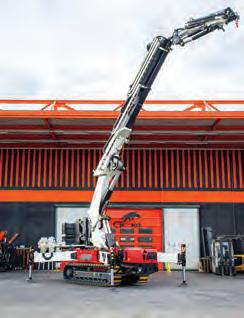
Italian manufacturer Jekko has introduced the JF1050, a 24-ton capacity telescopic articulating boom crawler crane and the largest model in its lineup. The JF1050 replaces the JF990 and offers a maximum
tip height of 113 feet. Three articulation points allow the boom to reach over obstacles and work at negative angles, targeting confined urban jobsites and restricted industrial spaces. Applications include construction,
industrial machinery maintenance and data center plant installation. The crane uses the X-Design decagonal boom section developed by Fassi, a major Jekko shareholder. The ten-sided design optimizes stress distribution
Mike
PHOTO: RAIMONDI
Terex TRT 55US rough terrain crane.
JUNE
June 10-11
TCNA 2026
Nashville, TN Music City Center khl-tcna.com
SEPTEMBER
September 22-24
SC&RA CRANE & RIGGING WORKSHOP Omaha, NE Hilton Omaha scranet.org
September 22-23
BREAKBULK AMERICAS
Houston, TX
George R. Brown Convention Center americas.breakbulk.com
OCTOBER
October 18-21
AWRF FALL GENERAL MEETING & 50TH ANNIVERSARY Maui, HI
Wailea Beach Resort Marriot awrf.org
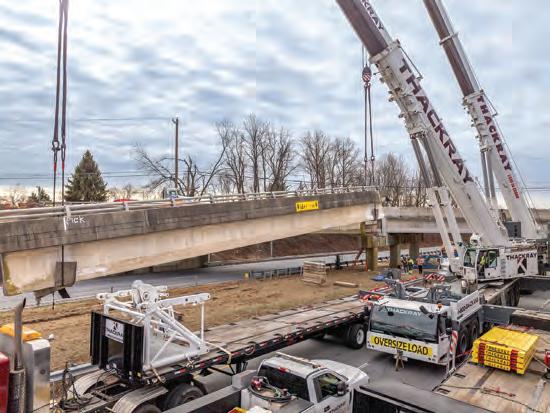
Thackray Crane assists with critical bridge repair
Two Liebherr LTM 1400-7.1 wheeled mobile cranes work Route 1 in Pennsylvania.
Thackray Crane Rental deployed two Liebherr LTM 14007.1 wheeled mobile cranes to remove damaged bridge beams on Route 1 at Pusey Mill Road in West Grove, Pennsylvania, following a truck collision that severely damaged the structure.
The 500-ton capacity cranes handled removal of the bridge girders, allowing highway repairs to proceed. Thackray said the operation was completed safely and without incident. n
Etnyre introduces 55TL3-SA sliding axle trailer
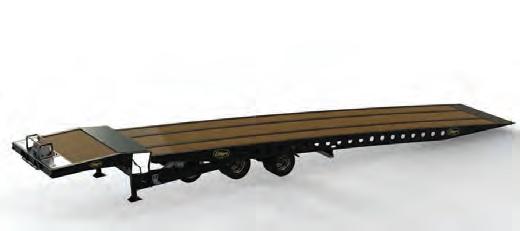
Etnyre International has introduced the 55TL3-SA, a sliding axle lowboy trailer designed for hauling pavers, roadbuilding equipment and other heavy construction machinery.
The trailer carries up to 55 tons, with a 53-foot deck length and 8.5-foot width. The
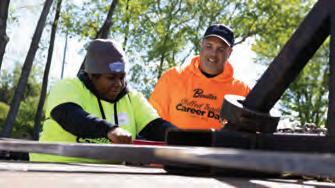
NCCCO Foundation launches Crane Career Advisor program
The NCCCO Foundation is launching a Crane Career Advisor (CCA) pilot program to connect individuals interested in the crane industry.
The program targets people without personal connections to the industry, giving them direct access to experienced crane professionals. It builds on the
founcation's existing My Crane Career website.
“One of the issues with getting people interested and started on a crane career path is the lack of information available,” said NCCCO Foundation Executive Director TJ Cantwell. “The CCA program is the next logical step, by providing individuals with no
for improved load charts across operating conditions while keeping overall weight low.
Power comes from a combined bi-energy system with a diesel engine and integrated electric motor. The crane can run on diesel outdoors or switch to
personal connections to the industry access to professionals who have built a successful and long-term crane career.”
emission-free electric operation indoors, with seamless transitions between modes.
A new Variable Speed Engine Management system improves movement efficiency and reduces fuel consumption. Machine parameters including real-time
deck height is 37 inches, and it includes three 25,000-pound axles and features air brakes and ABS. Standard equipment includes a hydraulic winch rated at 20,000 pounds with 100-foot cable and Bluetooth remote control, LED lighting, and air ride suspension with 60-inch axle spacing.
The sliding axle allows loading over the rear without disconnecting from the truck, providing weight distribution and a low load angle for easier equipment loading and faster transfers between jobs. n
stability are displayed on a 7-inch touchscreen rated IP66.
Configurations include hook or winch lifting, hydraulic jib operation with attachments such as grapple saws or beam grabs, and a personnel basket for work at height.
PHOTO: THACKRAY
The Etnyre International 55TL3SA sliding axle lowboy trailer.
PHOTO: ETNYRE
A Jekko JF1050 on display.
Scanreco acquires CrossControl
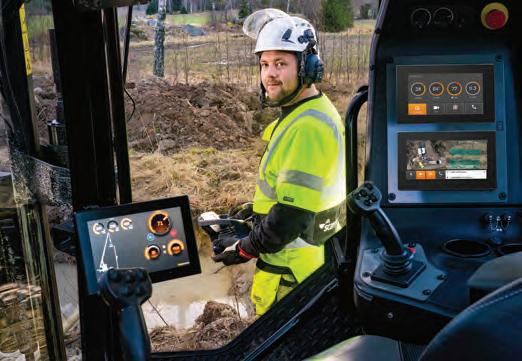
Scanreco, a remotecontrol technology supplier, has agreed to acquire CrossControl, a provider of display computers and vehicle computing solutions for industrial machines. The combined company will have approximately 600 employees and annual revenue of around $150 million, with sales in more than 100 countries.
The acquisition brings together two complementary technology domains – remote control and onboard HMI and vehicle computing – creating what the company describes as a partner built for modern machine development. The joint product portfolio includes remote control
solutions, on-board displays, vehicle computers and machine control solutions across a range of applications, built on a modular, open software platform.
“This acquisition is part of our long-term plan and reflects a clear transformation in the market,” said Peter Lageson, Scanreco CEO. “Machine control and HMI are becoming
An operator uses a Scanreco remote with CrossControl in-cabin displays.
more strategic to OEMs as software, connectivity and intelligence take on a greater role. By combining onboard and remote solutions with intuitive HMIs and strong computing capabilities, we help OEMs build machines that are more capable, more productive and ready for the future.”
In connection with the acquisition, investor Priveq will join as a minority shareholder. Founders Kaj Johansson and Björn Askestig remain majority shareholders and continue in their operational roles. n
Unirope debuts Python DynamiQ wire rope
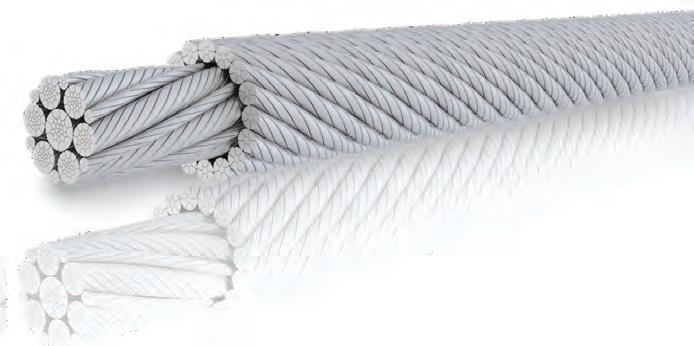
Mississauga, Canada-based Unirope has expanded its wire rope lineup with the Python DynamiQ, a non-rotating rope designed for crane applications involving ultrahigh loads and elevated lifting heights. The rope works in both single-fall and multi-fall applications across crawler, tower and mobile cranes. DynamiQ uses a 16-strand compacted outer layer with a reinforced core to deliver torque balance
and structural stability. The design minimizes internal movement and reduces stress concentrations compared to traditional 35x7 constructions, according to the company. In single-fall use it resists rotation; in multi-fall setups it addresses block twisting and rope waviness. High lateral stability also improves performance across multiple
layers on modern crane drums.
“DynamiQ allows us to bring a higher level of performance to Canadian crane operators, especially in particularly challenging sectors, where demands continue to increase,”
said Justin Brown, Unirope president. “In testing, DynamiQ shows up to a 10 percent increase in breaking strength and up to a 20 percent
improvement in bending fatigue life. That translates directly into longer rope life, fewer changeouts, and more predictable performance.”
DynamiQ is part of the Python high-performance wire rope family, manufactured in Germany. Unirope also operates facilities in Quebec and Alberta, serving customers across Canada and in the US and Europe. n
SC&RA goes on the road
In an effort to expand and strengthen its member outreach, SC&RA has launched a new advocacy program, "SC&RA On the Road." In June, the tour will stop in Philadelphia, PA and Boston, MA. A halfday regional event for crane, rigging and specialized transportation companies, the meetings will provide updates on a variety of SC&RA iniatives.
⊲ See SC&RA News on page 60 for more information.
PHOTO: SCANRECO
Render of the Python DynamiQ wire rope.
Unirope’s Python DynamiQ wire rope in-action.
PHOTOS: UNIROPE
Born to perform
Are you in need of unparalleled performance for heavyduty lifting and high hook heights? Look no further than the Liebherr 195 HC-LH—the first hydraulic luffing jib crane by Liebherr.
Experience the efficiency of a minimal slewing radius and outstanding out-of-service radius , thanks to its hydraulic concept. Optimized for assembly, this crane impresses with short set-up times and requires only 4 transport units for the whole slewing part.
Don’t compromise on productivity and contact your dealer at www.liebherr.com/HC-LH
195 HC-LH Hydraulic Luffing Jib Cranes
Finding his
Eddie Garcia is an accomplished crane operator with an incredible story of grit and gratitude.
D.Ann Shiffler reports.
Eddie Garcia was just 19 years old when he started a job as a ‘yard rat’ for a crane company.
“To be honest, I hated it at first,” he said. “You had to start at the bottom, and my first job was on a drill rig in Corpus Christi, Texas. I was the swamper, the rigger who rigs up the derricks. It was intimidating at first, but as we moved from one rig job to the next, I began to
fall in love with it all. Very quickly I knew I wanted to be a crane operator.”
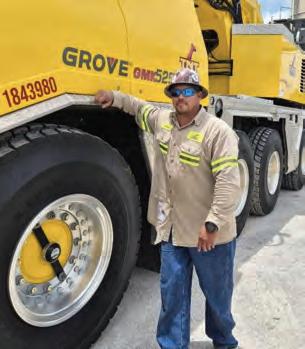
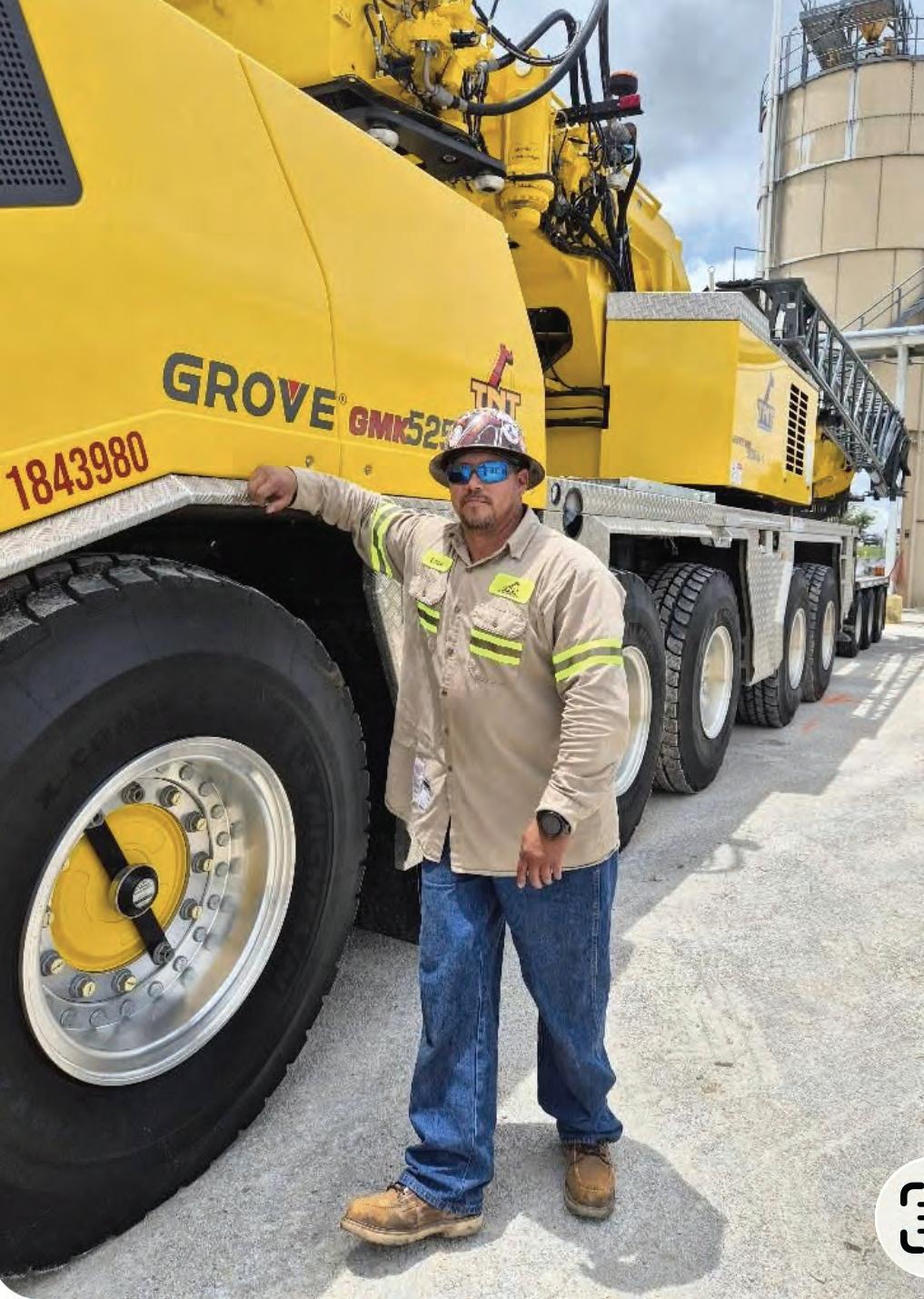
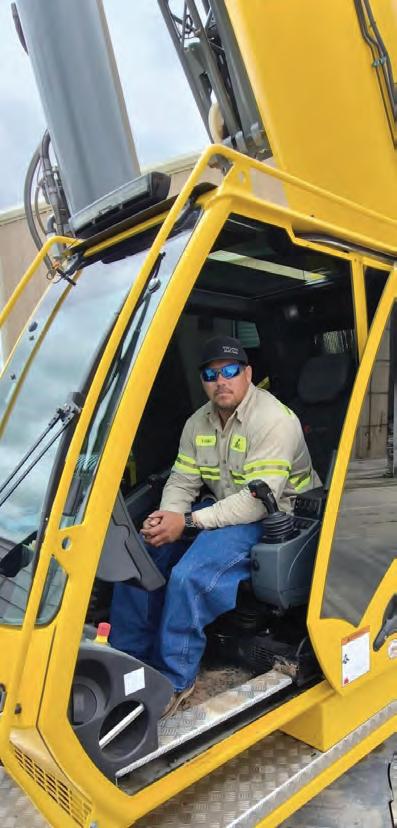
Eddie Garcia has worked for TNT Crane & Rigging for the past 19 years. He credits the company’s management team, past and present, for helping him recover and get back to the job he loves, operating a crane.
Telling his bosses he wanted to be a crane operator was a challenge. But one day, when he was still a swamper on a refinery job, the crane operator asked him if he wanted to learn how to run the machine.
“The operator said, ‘come on up here,’” Garcia remembered. “It was an old 165ton Demag. He showed me a few things, and I was hooked.”
Shortly thereafter he started crane operator training on a 100-ton Krupp. Once he was proficient, he was dispatched to the oil fields. A few years later he relocated to Fort Worth, Texas. The crane company he was working for
footing
Quitting
this job never entered my mind.
I don’t
know what else to do besides running a crane. I love running cranes.
was acquired by Houston-based TNT Crane & Rigging. He’s been working for TNT ever since, running ever bigger cranes and performing more complicated lifts.
Garcia’s 30-plus year ascent in the crane industry is similar to that of many operators. But in 2021, Garcia’s crane operating career took a dramatic turn. The unthinkable happened on his jobsite, an accident in which he was gravely injured. If not for the heroics of Dr.
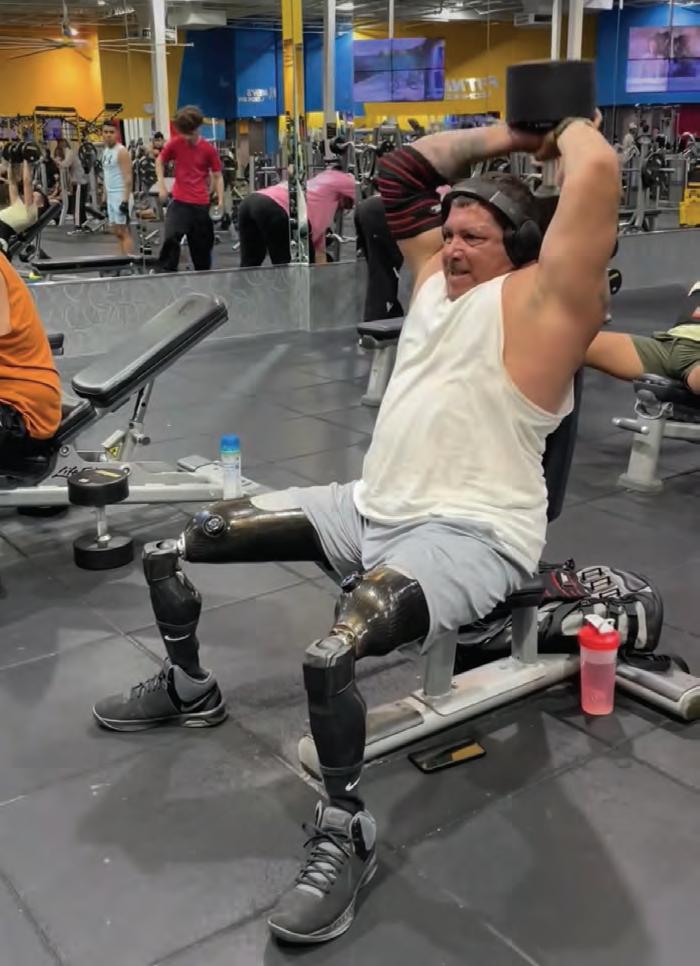
W hen he’s not at work, he’s most often at the gym. Eddie Garcia said strength training, before and after the accident, allowed him to get back in the crane cab sooner.
Lindsay Davault, Garcia said he wouldn’t be here to talk about it.
“She saved my life,” he explained. “She performed the double amputation on the jobsite.”
When he woke up in the hospital, his family and a cadre of friends and co-workers were there for support. It was in the hospital, facing the life of a double amputee, that he declared he would be back in the crane cab as soon as he was able.
“Everyone thought I was crazy,” he said grinning. “Even the doctor said, ‘Eddie, you are high on drugs.’ Quitting this job never entered my mind. I don’t know what else to do besides running a crane. I love running cranes.”
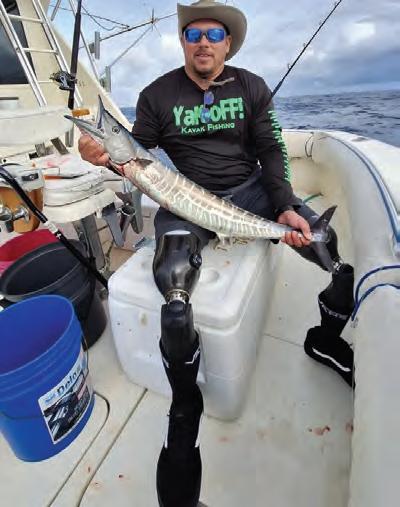
Garcia’s journey back into the crane cab is one of grit, gratitude and two prosthetic legs that were expertly engineered for operating a crane. It’s a fascinating story that I was fortunate enough to hear firsthand in an interview with him back in May.
Today, Garcia is back at the job he loves. On Instagram, he goes by Bilateral Beast – a nod to the double amputation and the relentless drive that brought him back.
The name fits.
In his own words, he told me this compelling story. Garcia is an example of grace under fire and blood, sweat and tears determination. Above all, this man knows the value of a grateful heart. He said his rapid recovery was greatly improved by his desire to run a crane again, and the people in his life – family, friends and all the people at TNT Crane & Rigging, past and present.
WHAT IS THE STORY OF YOUR PROSTHETICS, WHICH ALLOW YOU TO OPERATE A CRANE?
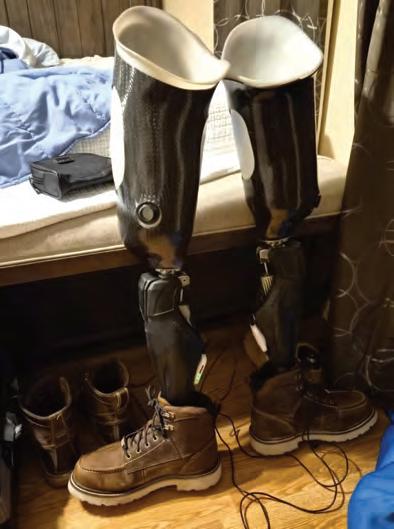
At the Hanger Clinic, that is the team of doctors and therapists who got me here. They wanted me to use the Ottobock brand, specifically the GenX3 prosthetic. They have an advanced design, and they are known for allowing you to be able to walk downhill. I’m still not walking downhill, but I’m working on it.
My prosthetist, Danica Nordstrom, went with me to the crane yard. I got up
EDDIE GARCIA, Crane operator, TNT Crane & Rigging
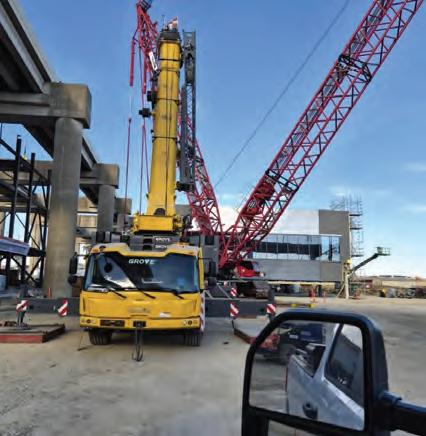
While his favorite crane to run is a crawler, Eddie Garcia recently has been running a 300-ton Grove all terrain crane.
LONG BOOM
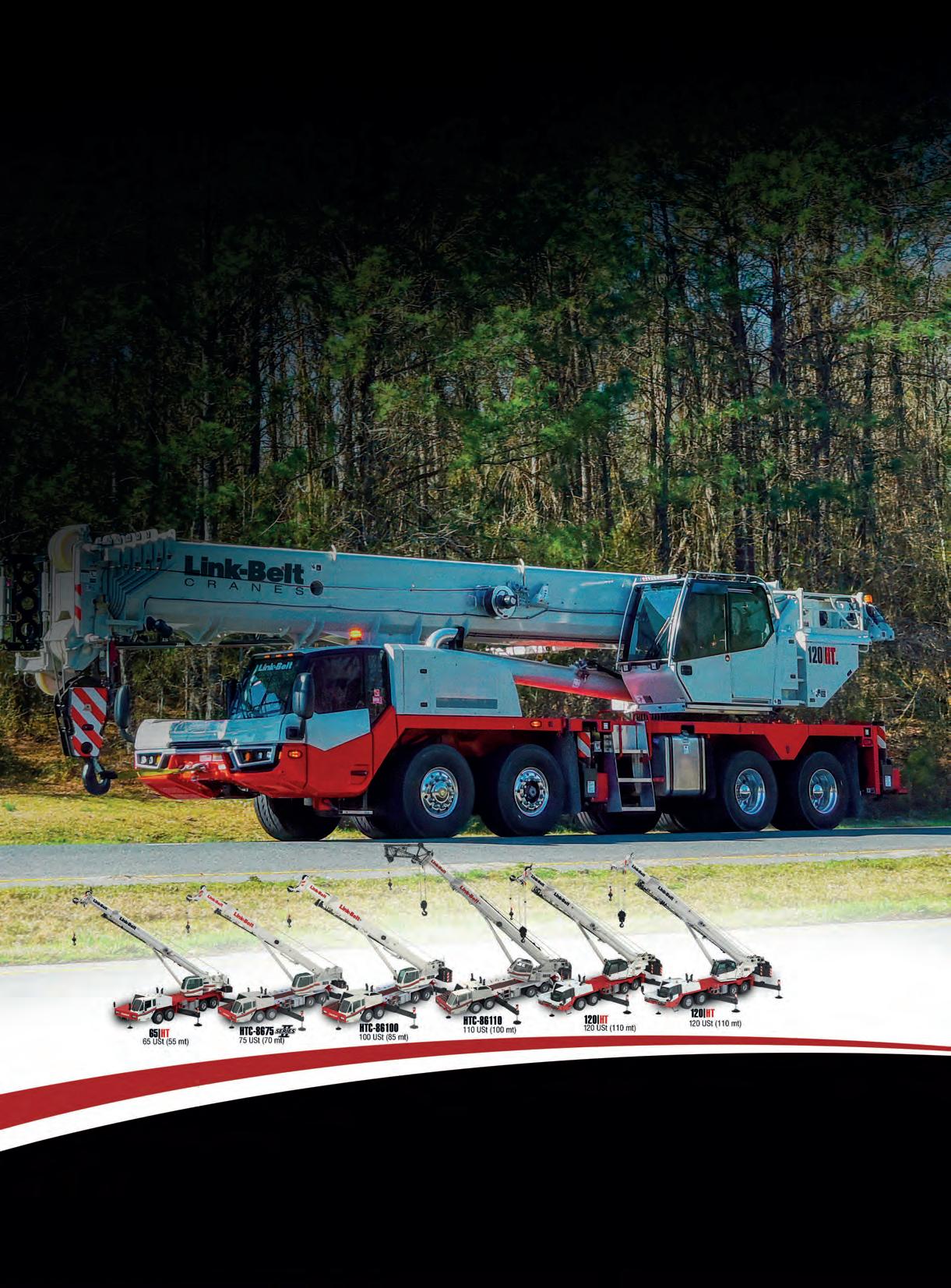
120-Ton| 110 mt Hydraulic Truck Crane
✓ 197’ 7-section main boom
✓ 263’ max tip height
✓ 33’ longer than standard 120|HT
✓ Longest truck crane boom on the market
in the crane cab and put my foot on the accelerator. She was able to see the degree of the angle of the knee and make some adjustments as I went through the various motions from throttle to gas. When I said that feels right, she saved the information electronically. She did the same thing with me driving an 18-wheeler. While I can’t drive them all, I can drive a Peterbilt because the clutches are low. She saved all that information.
It’s the same with my pickup truck. I can drive it like a normal driver. I have an app on my phone, so that when I drive my truck, my legs will lock at a certain angle. I do the same for the crane I’m operating and I’m good to go and I start driving a crane. I’ve been back working for three and a half years.
WHAT ARE THE PARTICULAR PHYSICAL CHALLENGES YOU HAD TO OVERCOME TO GET BACK IN THE OPERATOR’S SEAT?
There were a lot. First off, you need to have very good upper body strength. Even before my accident, I was a very fit guy. I went to the gym every day. After I got home from the hospital, three days later I was at the gym. The doctor called and yelled at me. But I knew the stronger I got, the faster I’d get better.
The muscle memory returned. I started my prosthesis work very early, and I believe the gym was the number one reason that my healing process was so quick. I didn’t give up.
DO PEOPLE TREAT YOU DIFFERENTLY?
Yes and no. When I first came back to work, I wasn’t too sure how the customers
The Ottobock GenX3 prosthetics are engineered to assure Garcia the range of motion to operate a crane and drive a truck.
would react to a guy with no legs. But on every single job, the reaction has been positive. We’ve never had a customer say a thing. Maybe they will see me walking kind of funny, and I’ll tell them what happened. They give me a fist bump and shake my hand. It’s been nothing but positive.
People will try to give me special treatment. If I need to get off the crane and go to a safety meeting, they will ask if I want a buggy. New customers and previous customers are happy I’m back.
You wouldn’t believe the outreach I have had. Phone calls and texts from all over the United States and Canada. In the hospital, when I finally got hold of my phone, I had tons of messages and phone calls. It was crazy, and it really warmed my heart that all my old buddies and the team at TNT were calling to encourage me and let me know they cared. The support has been unbelievable. I can get choked up talking about it.
I have so many people who helped me and my family through all this. Mike
Appling – that dude is an angel. Former and current TNT leadership along with Kevin Lawson, (regional president), they were all a big help to my family during a very stressful time. And today, all the guys from the corporate office are very supportive of me. I am very thankful for all the support. It got me through some hard times. My kids, Nadine and Little Eddie, have been here for me all the way. My son took a year off from college to see me through that first year.
WHAT IS YOUR FAVORITE CRANE TO RUN? If it was up to me, my crane of choice is a crawler crane. They are my favorite. But depending on the scope of the job, hydraulic cranes are what I’m usually running. Right now, I’m running a 300ton Grove.
WHAT TYPES OF JOBS HAVE YOU BEEN ON THROUGH THE YEARS?
I’ve been on every type of job you can imagine, throughout Texas and other states. I guess they are mostly jobs related to the oil field, but a lot of construction jobs too. I remember one job in 2017 that was really awesome. The customer was building an offshore jacket for an offshore >15
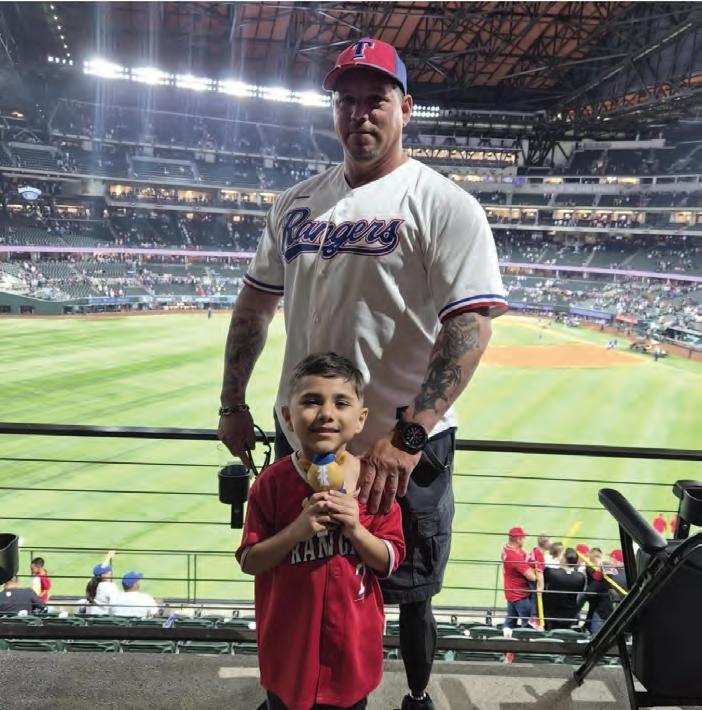
Eddie Garcia and his grandson Isaac at a Texas Rangers game.
When I first came back to work, I wasn’t too sure how the customers would react to a guy with no legs.
But on every single job, the reaction has been positive.
EDDIE GARCIA, Crane operator, TNT Crane & Rigging
production platform. I worked down in Corpus Christi on that job for nine months. It was a really nice job, and I got to be with my parents for an extended period of time because they lived in Corpus.
DO YOU HAVE ANY FAVORITE MEMORIES OF JOBS YOU’VE BEEN ON?
Wow, it’s hard to say. I have a lot of good memories about a lot of big jobs. The two jobs that come to mind are two I’ve worked on since the accident.
The first one, I was sent to Dallas to help build a park over the I-35 freeway. I was on that job for about three months, and my job was lifting and placing the pavilion and trusses. On the last day of the job, they surprised me by calling in
the Dallas television news stations. We were finishing the work at the park, and I was going to set the last piece. First though, we wrote our names on the last piece, and they filmed us setting it.
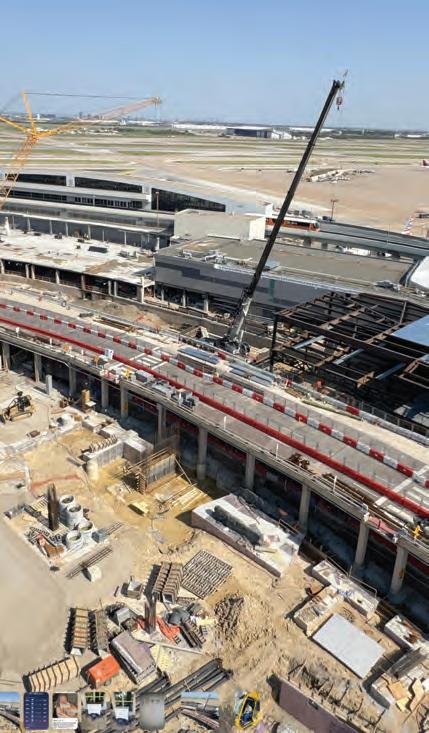
The Dallas Fort Worth International Airport expansion for Acero Building Components is a job I’m very proud of, and I was grateful to work on. I was first there three years ago for seven months straight, building the A and C terminals. These jobs are a reason I love my job so much. I love seeing something start as one thing and then becoming something >16
else. And also, seeing people use something you built; it’s a good feeling. A few months back I was back out at DFW Airport to help with the expansion of Terminal C and for the new Skylink passenger train project. We were setting modules on the bridge.
WHY DO YOU THINK THE INDUSTRY IS HAVING SUCH A HARD TIME RECRUITING CRANE OPERATORS?
It’s getting harder to get your crane operator certification. The rules are stricter.
You have to take the test, and people don’t want to put the effort into taking and passing the test. They get intimidated.
There’ is a lot of schooling you have to do. And you do have to get certified. It scares off a lot of people. They want to run the crane, but they don’t want to take the time to learn and take the classes required for certification.
YOU’VE BEEN THROUGH A LOT. WHAT KEEPS YOU GOING?
My family, my friends, my coworkers, my company. Everyone checks in with me.
I’m just so thankful for all the people who support me.
WHAT DO YOU DO WHEN YOU ARE NOT WORKING?
When I’m not working, I’m at the gym. I also like to take my kids and my grandson out to the lake on my jet boat. I go to a lot of Texas Ranger baseball games. I also play the guitar, and I like to fish.
LAST QUESTION, DO YOU SOMETIMES FEEL LIKE YOU ARE A CELEBRITY ON A JOBSITE?
You know, it does come up a lot, what happened to me. A few times the TV news crews have come out to the jobsite. Sometimes I tell the story and I get choked up. I don’t want all the attention. I sometimes get shy about it all. But, people
and the girl started crying. Her crying made the guy cry. I didn’t mean for them to start crying. They had heard about the
POWERING WIND. BUILT FOR MORE.
industrial work, Buckner delivers engineered lift solutions built for performance at scale. With a fleet ranging from 110 to 3,300 US tons, we bring the knowledge, experience, and versatility to execute at any scale.
Self-erecting tower cranes are rapidly gaining traction in the U.S. construction market for their ability to provide lifting capacity, long reach and quick setup in confined spaces. But while their compact design and automated erection process may seem to set them apart from traditional mobile cranes, one critical requirement remains exactly the same. Proper supporting must be used to setup self-erecting tower cranes.
Outrigger support for self-erectors hinges on understanding corner loads, which are equivalent to maximum outrigger reaction forces. However, there is a key distinction between self-erectors and mobile cranes.
across framing, light commercial, industrial and rental fleet applications, many contractors are encountering the need to evaluate ground conditions, bearing capacity and pad sizing for this category of equipment.
A rising market
Just like mobile cranes, self-erectors transfer significant loads to the ground through its four outriggers. These reaction forces – known as corner loads – can be substantial, especially on larger models such as the Potain IGO T99. As self-erectors become more widely used
THE AUTHOR
Kris Koberg is president and CEO of DICA, a family-owned manufacturer and distributor of supporting materials, ground protection, site access mats and associated products. He is a contributing member of the ASME P30 committee, a member of the NAMA (North American Matting Association) technical committee and chaired the SC&RA (Specialized Carriers & Rigging Association) task force to create a members-only document titled “A Guide to Outrigger Pad Materials, Selection and Usage.”
Self-erector usage has grown steadily in the United States, driven by the advantages these cranes bring to repetitive lift environments.
“The U.S. market continues to embrace self-erecting tower cranes, with growing demand across a wide range of applications,” said Chad Jacobs, tower crane specialist at Stephenson Equipment, a Manitowoc dealer in the Northeast. Larger models such as the Potain IGO T99 are among the most frequently utilized and the U.S. is one of the top markets globally for cranes of this size.
The cranes are especially popular with framing contractors, who often work in tight, material-dense environments where a single crane can replace forklifts, telehandlers, or smaller mobile cranes. They are also well-suited for light-gauge steel work, small industrial projects and warehouse construction.
“Most self-erectors enter job sites through rental channels, with rental companies frequently handling transport
and setup,” Jacobs said. “Depending on the project, either the rental company or the contractor provides the operator. But regardless of who is in the cab, one responsibility remains universal: ensuring the crane is properly supported from the moment it is erected.”
Understanding corner loads
Outrigger support for self-erectors hinges on understanding corner loads, which are equivalent to maximum outrigger reaction forces. These loads dictate the strength, stiffness and surface area requirements for outrigger pads or crane pads.
“The crane is supported on four outriggers and the total corner load is primarily influenced by the combination of lifted load and wind or jib line forces,” Jacobs said. “These factors work together to determine how the load is distributed across each outrigger.”
However, there is a key distinction between self-erectors and mobile cranes. Mobile crane outrigger forces can be calculated based on boom position, load and configuration.
“For self-erectors like the IGO T99, the manufacturer only provides a defined ‘worst-case’ value,” Jacobs said.
In addition, self-erectors must rotate freely with the wind when not in service. If the crane is not perfectly level, the counterweight will naturally settle toward the low side, creating undue stress on the structure and jeopardizing safety.
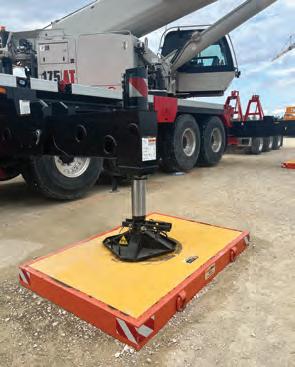
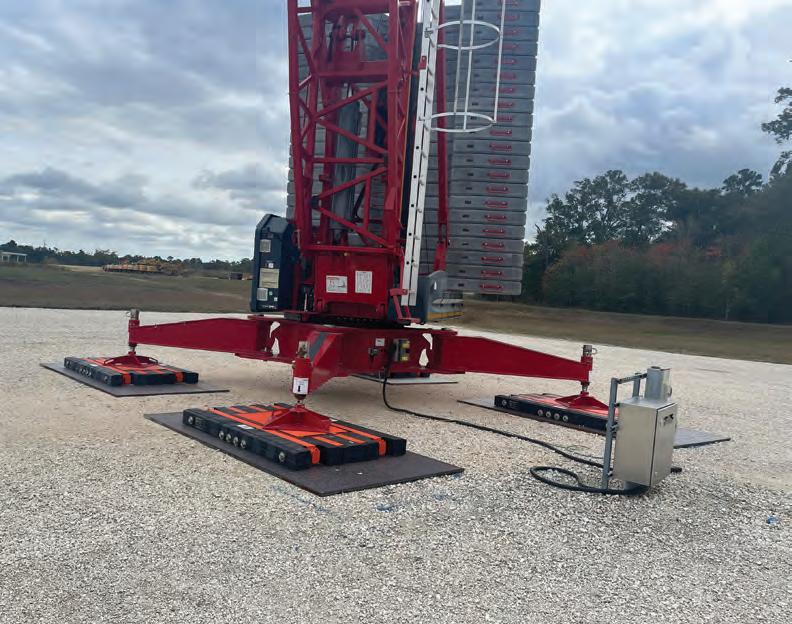
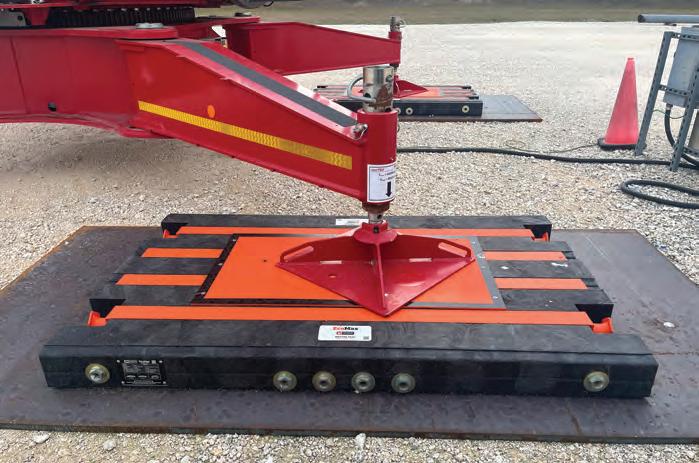
When the IUOE replaced its Potain IGO T70 with the larger IGO T99 self-erector, they reassessed the ground, supporting materials and crane pads. DICA recommended their 24 square foot EcoMax crane pads with a rated capacity of 160,000 lbs.
The approach is always the same. Understanding the reaction forces (corner loads), the size and shape of the outrigger floats and the allowable ground bearing capacity must be understood and determined to ensure selection of proper supporting materials. Supporting materials must be strong enough to withstand the loads and pressures, stiff enough to effectively distribute the loads and pressures and large enough area to keep the equipment level.
Modeling self-erector setup
The International Union of Operating Engineers’ Training Center in Crosby, Texas, recently replaced its Potain IGO T70 with the larger IGO T99 self-erector. This upgrade triggered the need to reassess the ground, supporting materials and crane pads.
Training & Equipment Assistant John Callahan explained that they started with having an engineering firm evaluate the soil. The firm recommended improvements, including adding crushed limestone to strengthen the supporting surface.
“We also planned to place steel plates under the outrigger pads following past practice, as we did on the Liebherr selferector,” said Callahan.
To complete the setup, Callahan gathered crane specifications from Manitowoc and consulted DICA for pad recommendations.
“When it comes to outrigger pads, the
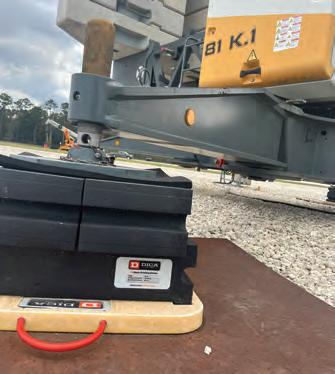
For smaller self-erecting cranes, SafetyTech or FiberTech outrigger pads can be an effective option. And when it comes to making sure the setup is level, ProStack Cribbing Blocks or our LevelRight leveling pads simple and easy to use solutions.
people at DICA are the ones to talk to,” he said. “They have the most accurate, up-todate info.” Based on crane data and ground conditions, DICA recommended their 24 square foot EcoMax crane pads with a rated capacity of 160,000 lbs., for the new IGO T99.
DICA’s FIT Assessments rely on information such as maximum outrigger reaction, or corner loads in this case, outrigger float dimensions and the allowable ground bearing capacity to determine appropriate pad size and material.
Callahan values the visibility and durability of the composite-steel hybrid system.
“I like the steel and composite combination and being able to see how
Best practices for ground support
Drawing from expert insights, manufacturer data and field experience, contractors should follow these guidelines when setting up self-erecting tower cranes:
n Conduct a Ground Assessment to establish Allowable Ground Bearing Pressure.
n Select supporting materials based on the specified Corner Loads and Allowable Ground Bearing Pressure.
n Choose Engineered Pads over improvised materials.
n Create and maintain level setup.
n Inspect pads regularly.
the crane pad is made. I feel like it is easier to inspect,” he noted. He also praises the long-term durability: “DICA’s products hold up to the Texas heat and sun, even better than some of our cranes.”
Growing demand
Callahan sums up the industry’s shift toward engineered outrigger pads.
“The industry has come to expect professional, engineered outrigger pads. This is safer than using whatever materials you have on hand on a job site because you know that this set of pads is intended for use with that specific crane and are designed to handle the loads.”
Adoption of self-erecting tower cranes continue to expand in U.S. construction and industry experts believe the trend will accelerate. Jacobs noted that the IGO T99 represents leading-edge technology.
“These machines deliver extremely consistent and safe operation and proper outrigger matting is essential to maintain that consistency and protect the integrity of the crane and the ground conditions,” he said.
Jacobs predicts that the U.S. is “just beginning to tap into the full potential of what’s to come.”
As these cranes become more common, so does the need to properly support them. Engineered outrigger pads –selected using accurate crane data and sound ground assessments – are essential to maintaining the stability, performance and long-term safety of self-erecting tower crane operations. n
Cranes, capital and the cost of uncertainty: What today’s financing climate means for new and used equipment.
As 2026 reaches the halfway mark, it is difficult to say how the next six months will play out in terms of the market for new and used cranes and the construction equipment market in general. Geopolitical forces are at play more than ever before. The war in Iran, tariffs, political policy and even a labor shortage, to name a few issues, are heavily impacting the market for buying and selling cranes.
To try to give our readers an analysis of the market and what they can expect for the second half of the year, we asked three experts in the finance industry, specifically those who specialize in financing cranes and related equipment, to answer our questions about the market.
Our panel is comprised of Tonya Fry, Harry Fry & Associates; Dan McDonough of Commercial Credit Group; and Jeffrey Whitcomb of First Financial Equipment Leasing. (See their bios in a box on this page).
The good news is that despite geopolitical uncertainty, the market has not faltered. Descriptions included “companies still have work and projects are moving forward,” “ample amount of available work and strong demand,” and “steady demand for new and used cranes.”
Read on to understand the nuances of the current new and used crane market.
HOW DO YOU TERM THE MARKET FOR NEW AND USED CRANES AND RELATED FINANCING?
FRY: The crane and heavy equipment market remains cautiously optimistic. Lenders continue to have a strong appetite for cranes because of their historically strong residual values and liquidity in the secondary market. Attendance and activity at the recent Specialized Carriers & Rigging Association annual meeting reflected that companies still have work and projects are moving forward, despite some scheduling delays tied to rising costs. Customers are taking longer to make acquisition decisions, however, as they want greater certainty around project
Uncertain
timing and backlog before committing to additional equipment purchases. From a financing standpoint, lenders remain active in the crane and heavy equipment finance market because cranes historically retain value well and perform strongly as collateral assets. Credit has tightened on marginal transactions, though, with lenders showing less appetite for higherrisk deals.
MCDONOUGH: The market for new and used cranes and related financing remains in good shape, supported by an ample amount of available work and strong demand across the industry. The only notable challenges are the extended lead times for new machines, which currently range from six to 12 months, along with elevated new equipment pricing.
At the same time, used equipment values remain strong, reflecting healthy market conditions and sustained demand. Additionally, the lengthy delivery times and higher pricing for new machines are helping to establish a strong floor for used equipment prices. Buying used has become a popular trend for those who can find both a quality machine and a willing seller, which is a bit tricky in this market.
Financing is widely available, although traditional banks have been somewhat flat-footed recently in responding to market opportunities. Non-bank independent lenders have remained active and competitive in providing financing solutions.
WHITCOMB: The ongoing blockade of the Strait of Hormuz, along with continued hostilities involving Iran, neighboring Arab states and the United States has kept upward pressure on interest rates. Since March, rates have increased by approximately 30 to 50 basis points across the yield curve.
As a result, the cost of financing or leasing both new and used cranes, as well as related aerial work platforms and transport equipment, has risen. The market remains active; however, it has become increasingly complex compared to previous years. There is steady demand for both new and used cranes, driven by infrastructure investment and ongoing
construction activity. Meanwhile, supply constraints and extended lead times for new equipment are pushing more buyers toward the used market as a practical alternative.
On the financing side, there has been a noticeable shift. Customers are no longer just seeking access to capital; they are looking for flexibility and structured options. Given the scale of these investments and the current market uncertainty, equipment leasing has taken on a more strategic role, helping companies move forward while managing risk and preserving liquidity.
certainty
WITH INFLATION TICKING UPWARD AND FUEL PRICES HITTING NEW HIGHS, HOW DO YOU ENVISION CRANE SALES, FOR BOTH NEW AND USED EQUIPMENT, PLAYING OUT?
FRY: I do not believe inflation or fuel prices are currently the largest issues impacting crane sales. Tariffs are certainly creating challenges, but the labor shortage is having an even greater effect on the crane and heavy equipment industry.
Many customers have strong project pipelines and available work, but they consistently say that if they had access to more qualified operators, technicians and field personnel, they would purchase
additional cranes regardless of rising equipment prices. The demand is there. The labor shortage has been a longstanding issue within the crane and heavy equipment sector and remains one of the industry’s biggest constraints to growth. Tariffs and geopolitical instability can affect equipment availability, pricing and project timing, and improvements in those areas would likely help accelerate both new and used crane sales.
The panel
However, even if tariffs were resolved and global conflicts eased, that alone would not solve the underlying workforce shortage. Labor availability remains a critical piece of the puzzle and continues to impact fleet expansion and equipment acquisition decisions across the industry.
TONYA FRY is an owner and Vice President at Harry Fry & Associates. Tonya has 22 years of experience in the heavy equipment finance industry. Tonya brings a strategic and customer-focused approach to equipment financing. She works closely with clients throughout the funding process, helping businesses secure customized financing solutions that support growth, improve cash flow, and maximize profitability. Harry Fry & Associates is a family-owned company specializing in crane and heavy-equipment financing solutions. They have secured approximately $1.7 billion in financing over the past thirty years.
MCDONOUGH: With demand still solid and lead times for new machines extended, new crane sales look steady in the near term. However, fuel prices and persistent inflation are likely to keep interest rates higher for longer, increasing ownership costs and potentially cooling construction activity. This may moderately slow new crane sales, though not dramatically, and could even improve lead times and delivery certainty.
At the same time, elevated input costs for steel, components, transportation and labor continue to push up new equipment prices. As a result, used equipment values follow, since they are closely tied to replacement cost on the new side. Given this dynamic, many crane operators delay major purchases and focus on maintaining their existing equipment. Companies with well-maintained fleets could be in a strong position, especially if supply constraints, input costs and lead times continue to support used equipment pricing. Overall, if the inflationary environment persists, I see the market cooling slightly but remaining healthy, with used equipment remaining relatively resilient.
DAN MCDONOUGH is the founder, CEO and president of Commercial Credit Group (CCG). He has 40 years of experience in the construction and transportation equipment financing markets and has been instrumental in growing CCG’s crane portfolio. Commercial Credit Group is an independent equipment finance provider based in Charlotte, NC, specializing in financing for new and used equipment, equipment refinancing and working capital loans. In 22 years, CCG has financed over $500 million in cranes for companies across the U.S. and Canada.
JEFF WHITCOMB is SVP for Construction and Industrial at First Financial Equipment Leasing, a JA Mitsui company. He has 28 years of experience in the construction and transportation equipment financing markets and has been instrumental in adding $230 million in new originations in the past three years. As part of the JA Mitsui Leasing family, First Financial Equipment Leasing offers the stability and resources of a global powerhouse with over $16 billion in assets.
WHITCOMB: Inflation and rising operating costs are definitely influencing buying behavior. At First Financial Equipment
Leasing, we are observing major OEMs offering discounts to help offset higher input costs, particularly for materials and energy. Companies are becoming more deliberate with their capital decisions, which can slow purchasing cycles, especially for large, new equipment. Despite this, demand remains strong
For crane buyers, the short-term narrative highlights higher, more prolonged financing costs, coupled with resilient equipment demand, according to First Financial’s Jeffrey Whitcomb.
across lift equipment categories and prices for used equipment appear to be strengthening after two prolonged years of decline.
It’s important to note that demand isn’t disappearing; rather, it is shifting. We are seeing a greater interest in used equipment as a cost-effective alternative; more focus on maximizing the utilization of existing fleets; and increased reliance on financing to spread costs and protect cash flow. Current areas of momentum include major infrastructure projects, such as highways, bridges, airports, data centers and utilities. On the other hand, residential construction (both single- and multifamily) is lagging due to constrained interest rates, labor shortages and higher land and material costs.
Despite housing challenges, residential construction is not a primary demand driver for the crane industry. Consensus forecasts still indicate steady growth over the next decade:
■ Overall crane market: approximately 4.2 percent CAGR (Compound Annual Growth Rate) through 2036 (according to consensus views).
■ Lattice-boom crawler cranes: approximately 6.6 percent CAGR.
■ All-terrain cranes: approximately 5.3 percent CAGR.
■ Tower cranes are expected to follow a similar growth trajectory.
The main risks to this outlook include tariffs and the costs and complexities of onshoring production. If OEMs successfully execute their strategies, the market could remain resilient despite a higher-rate environment.
In this situation, it’s less about whether companies invest and more about how they structure those investments.
DO YOU EXPECT INTEREST RATES RISING, STAYING STEADY OR TOO HARD TO CALL?
FRY: I anticipate that interest rates will remain relatively steady in the near term. Elevated oil prices tied to the ongoing Iran crisis have raised concerns about renewed inflationary pressure, particularly across energy-sensitive industries such as transportation, construction and heavy equipment.
However, recent inflation data has remained relatively benign, with core CPI increasing only modestly. In addition, the labor market has continued to show resilience, with recent job growth exceeding expectations and unemployment remaining historically low. As a result, it appears likely that the
Federal Reserve will maintain its current stance on interest rates and continue taking a ‘wait-and-see’ approach as it evaluates inflation trends, labor market conditions and broader economic uncertainty. From a crane and heavy equipment perspective, stable interest rates would provide some support for equipment financing and capital investment decisions, although customers remain cautious due to tariffs, project timing concerns and ongoing labor shortages.
MCDONOUGH: There are really two answers: steady at the short end of the yield curve and a bias toward higher rates further out. The Federal Reserve has significant control over short-term interest rates through the Fed Funds rate, influencing SOFR (Secured Overnight Financing Rate) and the prime rate. With persistent inflation concerns, elevated energy prices and a still-solid job market, there is little reason for the Federal Reserve to shift its current stance. The current Fed Funds rate is already restrictive; further increases could negatively impact the economy. So short-term rates are likely to remain steady.
Further out on the yield curve, particularly in the five to 30-year maturities, rates are influenced less by direct Federal Reserve policy and more by market forces. Recently, they have moved noticeably higher due to concerns around embedded inflation, the level of U.S. debt and deficit and the volume of Treasury issuance. Despite the rise, long-term rates are not especially high by historical standards and could move higher, with expectations that they will remain elevated for longer on this part of the yield curve.
WHITCOMB: There are many factors in play, making it difficult to predict interest rates with confidence. The Trump Administration is pursuing significant policy changes, potentially including alterations to the Federal Reserve, without much support from Congress. If these changes occur, the rate environment could shift rapidly.
Both short- and long-term rates are likely to need to decrease to encourage the investment levels required domestically and internationally. I believe that prolonged periods of ultra-low rates are unlikely to return any time soon. While we may see a more dovish stance initially under new leadership, the markets will ultimately dictate the tone.
There remains considerable uncertainty
about where rates will ultimately stabilize. While some stabilization is anticipated, borrowers must understand that rates could remain elevated compared to the past several years. In practice, companies are adjusting their strategies by locking in financing when it makes sense, prioritizing predictable payment structures and seeking partners who can navigate various rate environments. Ultimately, while interest rates are an important factor, they are just one component of a broader decision-making process for capital allocation and risk management.
WHAT ARE THE BIGGEST ISSUES WITH CRANE/EQUIPMENT FINANCING RIGHT NOW?
FRY: From a tariff standpoint, banks and finance companies are generally willing to finance tariff costs for qualified borrowers by rolling those costs into the transaction. However, tariffs are fundamentally a soft cost, similar to taxes, freight and shipping expenses. By financing those costs, lenders are effectively over-advancing on the equipment relative to its underlying collateral value.
The primary concern is that if a lender were forced to repossess and liquidate the equipment, the recoverable asset value may not support the original financed amount because the tariff itself does not enhance the intrinsic value of the equipment. Additionally, if tariffs are later reduced or eliminated, portions of existing portfolios could suddenly become overadvanced and fall outside acceptable Loanto-Value (LTV) thresholds. That creates potential portfolio risk, reserve pressure and possible compliance concerns for lenders and credit committees.
Asset valuation is another major challenge within the heavy equipment industry. Approximately 85 to 95 percent of equipment transactions occur through private-party sales or consignment channels, where pricing data is typically not publicly reported. As a result, the majority of published valuation data comes from auctions and dealer sales.
The problem is that auction data can significantly distort actual market values. In many cases, auction equipment is considered “tired” or distressed inventory and therefore sells at materially lower pricing levels. Banks and finance companies rely heavily on these published datasets, but they often are not seeing the full market picture.
Consequently, when lenders or credit analysts identify an asset value discrepancy in a submitted transaction, it frequently
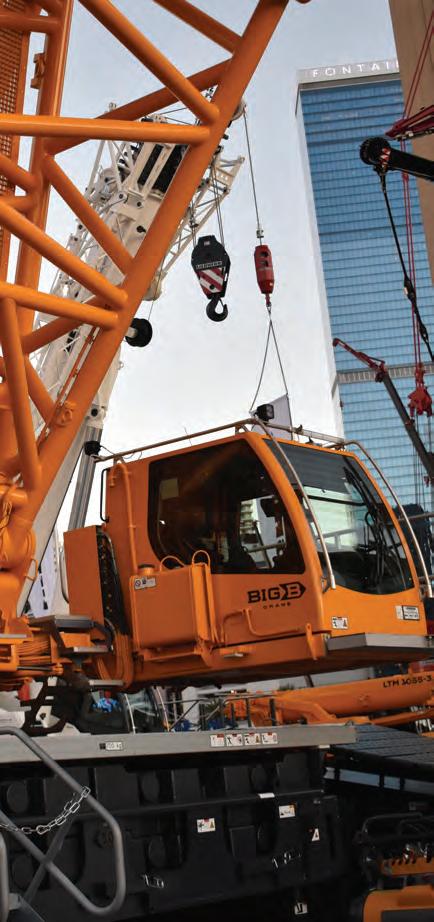
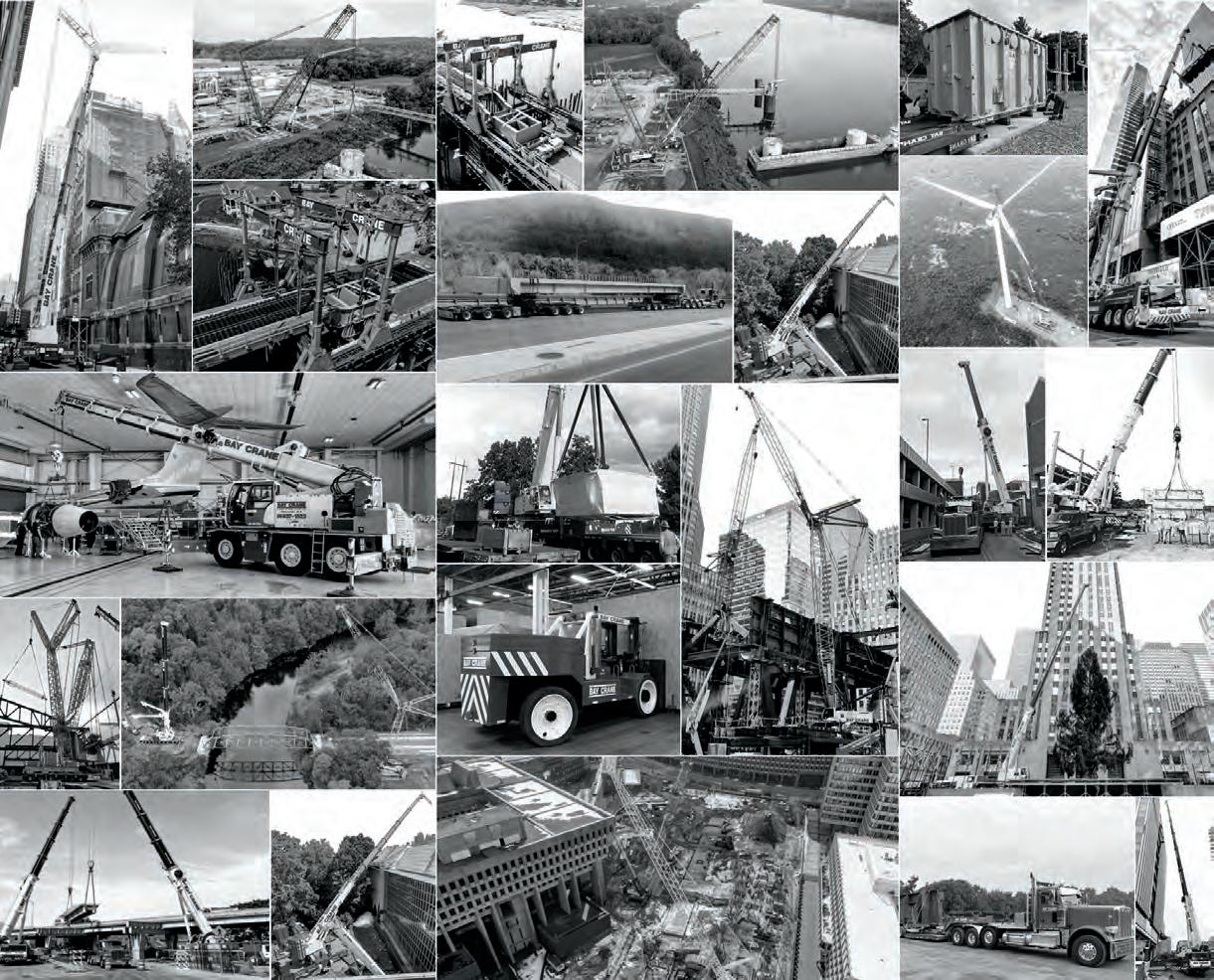
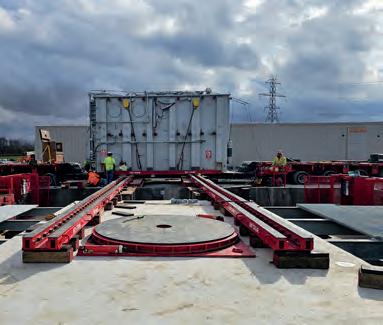
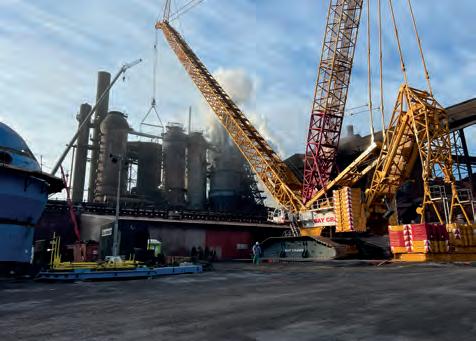
FULL-SERVICE TURNKEY PROJECTS MADE SIMPLE
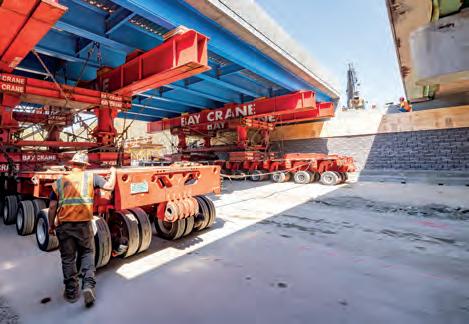
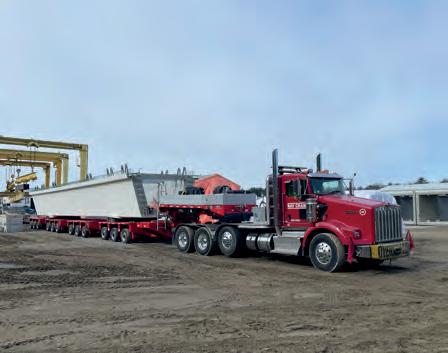
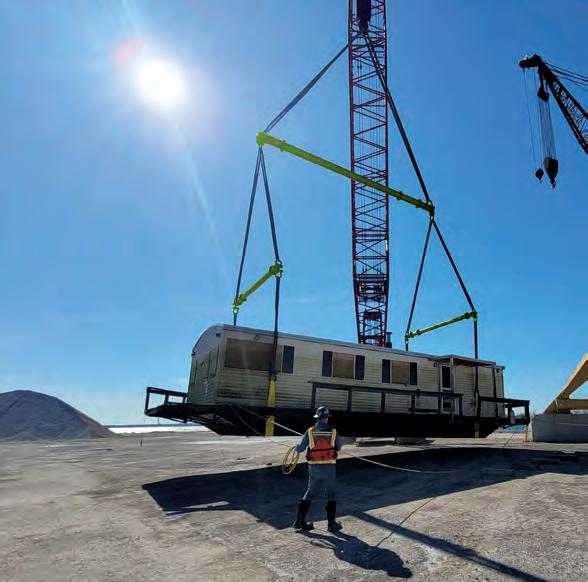
From engineering to safe execution of professional service — Bay Crane delivers seamless, start-to-finish support for your most demanding projects
OUR SERVICES
CRANES & EQUIPMENT
FULL TURNKEY SOLUTIONS
Equipped and Capable to handle any sized project anywhere.
Comprehensive fleet of cranes and auxiliary equipment, tailored to meet the needs of any project or application, ensuring optimal performance and reliability in a wide range of industries.
HEAVY TRANSPORT
We provide an unlimited range of state-of-theart trucks & trailers with the latest technology, capable of handling any capacity or type of cargo, ensuring efficient and reliable delivery for both small and large-scale needs.
RIGGING SOLUTIONS
Delivering a massive rigging inventory with unlimited range of innovative solutions tailored to meet the unique demands of any work environment, ensuring safety, efficiency, and adaptability across various industries.
ABOUT US
Bay Crane were founded in 1939 to meet the needs of lifting requirements in New York. With over 80 years of experience, we’ve grown steadily and have become a leader in the crane rental, specialized transportation, and construction industries throughout the United States. Today we are a world class company with a vast fleet of equipment, a superior and attentive staff, and a recognized reputation for excellent service in the industry.
creates delays in the approval process because additional supporting market data must be gathered and presented to justify the valuation originally submitted with the deal.
MCDONOUGH: Some of the biggest challenges in crane and equipment financing right now center around operational and financial uncertainty.
Right now, lead times for new equipment are long. This creates challenges for crane purchasers, both in project scheduling and financing. Operators often must commit to machines well in advance, without a clear understanding of delivery timelines, increasing uncertainty and complicating project scheduling.
The long lead times and a volatile interest rate environment make financing decisions even more difficult. Having clarity on financing at the time an order is placed is rare. Most lenders are not willing to hold terms for six to twelve months.
At the same time, affordability remains a concern. Equipment costs remain elevated, so customers are looking for financing structures that keep payments manageable. That often means longer loan terms or
balloon structures to create payment flexibility, but those solutions must be carefully balanced against long-term financing exposure. Extended finance terms introduce the risk that the machine’s value may fall below the outstanding loan balance in the early years of ownership. This risk is amplified when there isn’t a strong pipeline of work, creating the possibility of having to sell a machine within the first few years of purchase.
Lastly, tariffs and broader supply chain pressures continue to impact pricing and equipment availability. These factors create additional unpredictability in both sale prices and financing strategies, making flexibility and creativity increasingly important in today’s market.
WHITCOMB:
The primary challenge currently is uncertainty and its effects on both sides of the transaction. For customers, uncertainty encompasses:
■ Project timing and visibility within the pipeline
■ Equipment values and availability
■ Long-term costs of capital
For lenders and lessors, the focus is on balancing:
■ Residual risk associated with high-value assets
■ Volatility in secondary markets
■ Structuring deals that are beneficial for both parties
Financing has shifted toward a more solution-oriented approach. Standard agreements may not suit today’s environment, making flexibility, creativity and industry expertise more essential than ever.
WHAT ARE OTHER TRENDS/ISSUES IN EQUIPMENT FINANCING?
FRY: One of the issues that I have with equipment financing currently is more on a personal note. I am not sure some customers always understand the amount of effort that goes into a transaction we place for them. Do customers value good customer service and are they willing to pay for it? I think this question can be asked in many industries right now. The landscape is competitive. We put a great deal of work into every transaction we place to ensure that we get our customers the best deal possible and when we lose a transaction for a minimal rate difference, it always makes me ask, is my service and >28
Your project’s success depends on conquering challenges. Safety concerns, tight deadlines, availability, budget — the list goes on.
For over 30 years, LGH has provided customers like you with the safest rigging gear rentals and most knowledgeable staff in the industry. Why? Because safety and excellence are our core values. We offer rental solutions at every step of your project.
Experience the LGH difference by scanning the QR code above! Your job is already tough. Find
expertise worth that cost? Is it worth having someone that understands you and your company? Is it worth having someone that can be an advocate for you with your lender? Don’t you?
MCDONOUGH: Two come to mind: the newly reinstated bonus depreciation and the 2027 model year (and beyond) engine emissions standards.
Bonus depreciation allows for 100 percent deductibility of the purchase price of equipment. This can provide significant tax savings in the short run, but it is best viewed as pulling forward future depreciation benefits, which can lead to higher taxable income in later years of ownership. Another consideration is how long one plans to hold the asset. For example, if a newly acquired crane costs $2,000,000 and 100 percent bonus depreciation is taken, the machine is carried on the tax books at $0. If the machine is sold three years later for $1,750,000, a taxable gain of that same amount is created, resulting in a significant tax liability. Obviously, guidance from a tax professional is essential in these situations.
Another important issue for companies with heavy-haul fleets is the 2027 model-year ultra-low-NOx emissions standards. Engines from model year 2027 and beyond must comply with new regulations, will incorporate new technology and come at a higher cost. Heavy-haul operators may want to consider accelerating purchases if they are concerned about these uncertainties. However, there is a potential silver lining: if this emissions cycle follows patterns seen in previous cycles, pre-2027 trucks will retain their value longer than they otherwise would. It may make sense to double down on maintaining existing fleets while these issues sort out.
WHITCOMB:
One emerging theme is “Equipment as a Service,” which aligns with a broader trend seen across various industries. As automation and artificial intelligence become more integral to completing tasks, clients are increasingly asking how financing partners can help deliver outcomes rather than just provide equipment.
What automates first: Expect to see automation implemented in equipment
operated by less-skilled segments of the labor market, such as articulated dump trucks and compaction equipment. Additionally, machines working in enclosed environments with no human presence are likely to adopt automation sooner.
Why cranes lag: Crane operations involve lifting people and materials, introducing greater complexity and safety requirements, especially in dynamic jobsite conditions.
A realistic trajectory: While we may see AI support highly assisted operations in the near term (e.g., for tower cranes), full autonomy for most large cranes is probably more than a decade away.
For crane buyers, the short-term narrative highlights higher, more prolonged financing costs, coupled with resilient equipment demand. In the long run, there will be a gradual shift toward more service-oriented and increasingly automated equipment models. In today’s environment, equipment finance is evolving beyond mere transactional funding. It’s about forging strategic partnerships that drive success and innovation.
PREMIUM CRANE COMPONENTS FOR ONSHORE MARKETS
Irizar Forge specializes in premium heavy-duty forged components for cranes (overhead, gantry, tower, crawler) up to 5000T SWL. Since 1923, industries like steel, mining, nuclear, hydro and construction have trusted our expertly forged hooks and blocks for reliable performance. When the job demands the best, choose Irizar Forge.
In 2025, the ACT100 index reached its highest total ever. This year there’s a bit of a retraction. D.Ann Shiffler reports.
The ACT100 index is down in 2026. While it’s not a significant retraction, from 3,417,087 tons in 2025 to 3,411,131 in 2026, it’s evident that interest rates and tariffs are making an impact. Every category but one dipped in 2026, and that category was crawler cranes. In 2025, the ACT100 showed 3,479 crawler cranes and this year the total was 3,625.
Last year was the 20th anniversary of the ACT100, and the ACT Index was the highest it had ever been. The 2025, ACT100 index added 302,256 tons of capacity from 2024. But this was mainly due to the addition of Bay Crane and seven additional crane companies to the list.
This is not the first time we’ve seen a retraction in the ACT100. The last time we saw the index fall was in 2022.
The ACT100 was down a bit this year, most likely due to higher interest rates and tariffs.
Still, the ACT100 index has settled firmly in the 3-million-ton capacity range for three years in a row.
Maxim Crane Works is still number one, reporting an index of 719,682, down slightly from its 721,581 index last year. Maxim is not just the first company on the ACT100; it is the runaway leader with a margin in excess of 400,000 tons.
In 2025, the top 10 experienced a
true shake-up with the aforementioned addition of Bay Crane and several mergers and acquisitions among the top 10 crane companies. With the acquisition of Lomma Companies, Bay Crane jumped from 5 to 3 this year, pushing the ALL Family of Companies to 4 and Barnhart to 5. Bigge Crane & Rigging kept its number 2 ranking and added to its ACT100 index significantly, from 249,948 last year
to 277,833 this year. Bay Crane’s index also increased from 138,552 to 248,221. Bay Crane was the biggest gainer this year. The top 10 remained fairly in tact with Mammoet Americas breaking into the top 10 this year.
In 2026, the number of branches fell to 783, from 828 in 2025. The number of employees on the ACT100 was 39,560, down from 42,590 last year. That reflects
The mobile crane count was 15,759 in 2025 and fell to 14,740 this year, a total 83
about 3,030 fewer employees on the ACT100
In 2025, the crawler count grew to 3,479, from 3,324 in 2024, a gain of 155 units. That was our highest crawler count ever. This year, the crawler crane count grew to 3,629, adding 150 units. As stated, this was the only category that grew in 2026.
of 1,019 units. Newcomers to the list include Deep South Crane Rentals at 62, LiftHigh Crane & Rigging at 65, Empire Crane Company at 75, Giuffre Bros. at 96 and C&C Crane Works at 97. There were two ties on the list this year.
In terms of total fleet size, there was a bit of a flip, with Bigge coming in at number 1 with a total fleet size of 1,726 units, ALL
Family of Companies at number 2 with 1,662 units and Maxim at number 3 with 1,648 units.
The largest crawler crane fleet in North America is owned by Bigge with 487 units. Maxim was number 2 with 403 crawlers and Lampson International was number 3 with 389 crawlers. Rounding out the top 5 in crawler fleets is ALL with 265 and Bay Crane with 226.
Again this year, the ALL Family of Companies has the largest number of mobile cranes with 1,397 units, down from 1,470 units last year. Maxim has 1,245 mobile units and Bigge has 1,239. The largest crane on the ACT100 changed in 2025 when Buckner HeavyLift Cranes acquired the HLCC LRC 7500 Ring Crane, which has a capacity of 7,500 tons. Next is the Mammoet SK6000,
Top10 largest crawler fleets
with a capacity of 6,000 tons, followed by the Sarens SGC-250 with 5,500 tons capacity. Fagioli has a Liebherr LR 13000 with 3,307 tons capacity. Deep South and Lampson have the Transi-Lift 3000 and the VersaCrane TC 36000/2, posting capacities of 3,000 tons respectively. Maxim owns the 2,535-ton Manitowoc 31000.
Methodology
We sent surveys to close to 500 companies in the U.S., Canada and Mexico. While the ACT100 is much more comprehensive than it was when we started it 21 years ago, we realize there are probably 10 to 15 major craneowning companies not represented. Some companies do not want to share information about their fleets, and we respect their decision.
As stated previously, in the largest crane category, different capacities may be listed for the same machine. We rely on the information supplied to us in determining these capacities as rigging variables can change the capacity of the crane.
Top 20 largest fleet size
ACT Top Lists
American Cranes & Transport presents four top lists each year. Our June issue features tthe ACT100 list of North America’s largest crane-owning companies. The August issue features the ACTTOWERCRANE50; the November/December issue includes the ACTTRANSPORT50 and the March issue features the ACTSPECIALIZED LIFTING50
that participate, wholly assuming that the information they provide is accurate and truthful to the best of their knowledge. We work to ensure the accuracy of the information provided but take no responsibility for errors or omissions. We will continue to work to make the ACT100 the most comprehensive list of crane-owning companies in North America.
Companies are ranked by their 100 Index, which is calculated by adding together the maximum lifting capacities in U.S. tons of all crawler cranes and mobile cranes in a company’s fleet. n
Ironworkers.
In the U.S. and Canada: 4,000 Contractors
130,000 lronworkers
157 Training Centers
6,577 Certifications in 2025
20,000 Apprentices and Trainees
21,198 Certified Ironworker Welders
$90 Million invested annually in training
Buyers are still willing to pay strong prices for quality used cranes, according to Jeff Martin Auctioneers.
When used cranes are in demand, buyers generally are attracted to live and online auctions. Convenience and expedited sales are a few advantages. If you need a crane quickly, auction companies can bring available products to you in a matter of minutes.
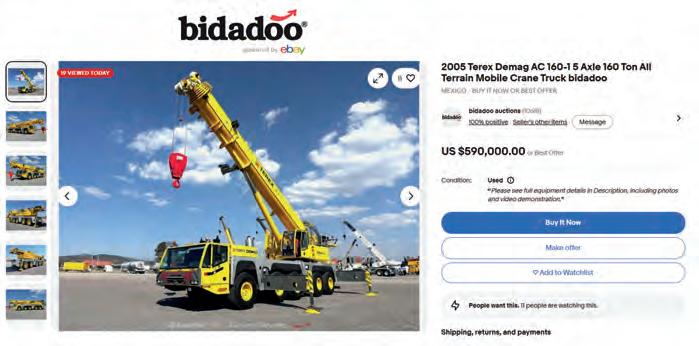
We convened a roundtable of experts from three of the largest crane auction companies to discuss the market for used cranes and other nuances related to buying and selling cranes. Our panel includes Bryan Carr, national sales, crane and heavy transport, Jeff Martin Auctioneers; Kyle Nape, crane and rigging manager, Ritchie Bros.; and Howard Hawk, president, bidadoo Auctions.
HOW DO YOU VIEW THE MARKET FOR USED CRANES?
CARR: Highly active. Demand remains very strong for any late model, low hour crane. Buyers are still willing to pay strong prices for quality used cranes.
NAPE: Demand for used cranes remains strong globally, not just in North America. Several factors are driving that demand, including longer lead times and higher costs for new equipment, ongoing project activity and rental rates in North America that continue to hold steady. Many companies are turning to the used market to secure equipment more quickly and maintain fleet flexibility.
HAWK: The pre-owned crane market is seeing strong activity in North America
and globally, fueled by large-scale data centers, factory reindustrialization, infrastructure upgrades and the booming renewable energy (wind/solar) sectors. The overall crane industry, globally, is valued at $38 billion to $55 billion and the used equipment market makes up an important, global segment of the overall market.
Remarketing of cranes has become increasingly digital, with buyers sourcing cranes nationally and internationally rather than relying only on local dealers or traditional auctions. Trust, verification and transaction support are critical given the complexity and value of crane transactions. The crane market is a truly global industry, and we often see over 30 percent of used equipment and crane sales going international.
Further, another major trend that we’re seeing is that OEMs are significantly delayed on deliveries, which is forcing companies to utilize used cranes.
WHAT CRANES SEEM TO BE IN MOST DEMAND? LEAST DEMAND?
CARR: Currently the 300 to 400-ton class crawlers are in very high demand, due to their current usage rate across the board. All terrain and rough terrain cranes are still a close runner up.
NAPE: Late-model cranes across most categories remain in high demand, particularly larger rough-terrain cranes, all-terrain cranes and mid-size to large crawler cranes. Demand has been softer for friction crawler cranes and lattice
High
Used crane demand is strong in the U.S. and around the world.
boom truck cranes compared to other segments of the market.
HAWK: Specifically, the demand for crawlers that are 250 tons and larger has brought buyers back to used machines to complete jobs. Over the last few years, these older, large-capacity cranes were not selling unless the price was exceptionally low. However, in the last few months, as it has become clear that new units won’t be available for 1.5 years or more, the market for these older cranes has seen a significant revival.
We continue to see strong demand for late-model all-terrain cranes, rough terrain cranes, boom/crane trucks, utility and infrastructure-support cranes and smaller and mid-size crawler cranes. Buyers are looking for cranes that can go directly to work, have lower operating hours – or at least a strong ownership and maintenance story to tell – and are supported by solid OEM parts and service networks.
The softer areas of the market tend to be older or highly specialized cranes, units needing major refurbishment, cranes with limited domestic demand and very large cranes with expensive transportation and mobilization requirements. That said, some of these softer domestic categories can still generate strong global demand when exposed to the right international buyer audience.
HOW DO YOU CHARACTERIZE THE MARKET FOR CRANES THAT ARE BEING SOLD THROUGH AUCTIONS? THROUGH BROKERS?
CARR: Specialized crane auctions have proven to be extremely effective when a seller has a defined timeline. Dedicated crane auctions will bring a large global audience to competitively bid on assets and can drive values over what the seller was expecting. However, most of your readers would be surprised about how many units that we sell outside of an auction. It is nothing out of the ordinary
bid
for us to sell a late model crane on the day it was consigned by making a few phone calls.
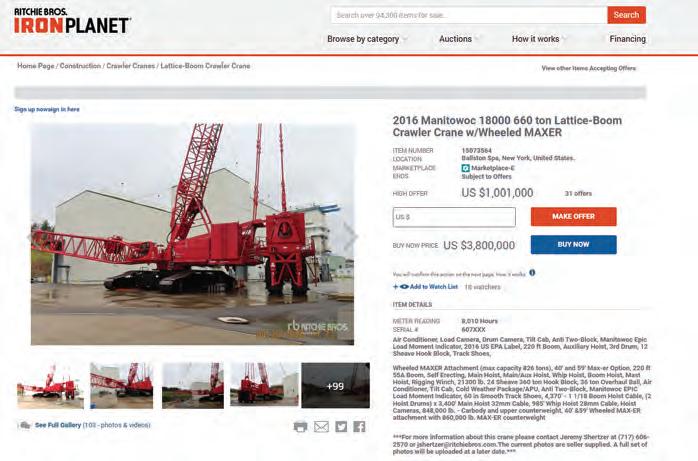
NAPE: For companies looking to buy or sell cranes, full-service auction companies like Ritchie Bros. offer several advantages. We manage the entire transaction process, including inspections, marketing, buyer qualification, payment handling and logistics coordination, which helps simplify the experience for both buyers and sellers.
We also offer multiple selling channels, including traditional unreserved, onsite and offsite auctions as well as Marketplace-E, which allows sellers to set reserve pricing and maintain greater control over the sale process. In addition, we can offer guarantees, buyouts and trade-in options tied to equipment purchases.
HAWK: The market has evolved significantly toward digital remarketing and online transactions. Traditional brokers still play an important role, particularly for highly specialized negotiated sales. But buyers today increasingly expect transparency, detailed equipment details, photos, video and secure transaction facilitation.
At bidadoo, everything we do is online. Sellers can often leave the crane in place and operational while buyers evaluate or arrange on-site inspections directly. That helps avoid unnecessary transportation costs, downtime and logistical
complexity before the crane is sold. We also support multiple transaction formats depending on the asset and
seller goals, including online auctions, Buy-It-Now and negotiated sales. That flexibility has become increasingly important in today’s market.
At the same time, brokers continue to play an important role in the crane industry. Many brokers specialize in sourcing specific equipment for buyers and sellers and often have the ability to pre-sell cranes through established relationships. Larger brokers may also maintain their own inventory, which can help facilitate faster transactions.
Remarketing of cranes has become increasingly digital, with buyers sourcing cranes nationally and internationally rather than relying only on local dealers or traditional auctions, according to bidadoo.
In 2025, Ritchie Bros. sold more than 2,500 cranes globally for more than $141 million.
HOW HAS THE AUCTION MARKET CHANGED OR EVOLVED OVER THE PAST YEAR OR SO WITH TARIFFS NOW HITTING THE NEW CRANE MARKET?
CARR: Tariffs continue to drive up the prices of late model used cranes.
NAPE: One of the biggest shifts we’re seeing is that companies are holding onto late-model cranes longer. Rental rates remain steady and many businesses are delaying new equipment purchases until there is greater clarity around pricing and tariff impacts in both the short and long term.
As a result, a larger share of cranes coming to auction today are older units – often 15 years old or more. After softer market conditions in 2023 and 2024, pricing for those older cranes has started to rebound. Having multiple selling channels allows sellers to choose the timing and transaction structure that best aligns with their business objectives.
HAWK: Higher new equipment pricing, tariffs and long lead times have increased interest in quality used cranes.
Buyers are holding onto equipment for longer, refurbishing existing fleets and searching more broadly for available inventory. We’re also seeing more global sourcing activity as buyers expand beyond their local markets. This has reinforced the value of online marketplaces with broad reach and established buyer audiences.
WHAT DO YOU SEE AS THE BIGGEST ISSUES/ CONCERNS WITH THE USED CRANE MARKET?
CARR: Many fleet owners are currently holding onto their cranes longer than usual. This will make it more difficult to find late model used cranes across the country.
NAPE: One of the primary challenges is that many cranes are staying in fleets longer and accumulating significantly more operating hours. That can increase maintenance costs and wear over time. Sellers who wait too long to bring equipment to market may miss the optimal selling window, particularly if condition and usage begin to materially impact value.
HAWK: The biggest concerns today include buyer trust and condition transparency, transportation and mobilization costs, financing and interest rates, parts and service support, emissions compliance,
project and availability timing uncertainty, expertise in the crane industry and whether the crane has a current certification or not.
Current certifications add more value. Trust remains one of the biggest factors in crane transactions. Buyers need confidence in the condition, maintenance history and representation of the equipment. That’s why detailed condition reports, photos, videos and experienced crane remarketing expertise are becoming increasingly important.
HOW DO YOU SEE PRICING FOR USED CRANES?
CARR: Pricing for late model cranes will continue to stay steady to a tick higher. Older cranes with higher hours will continue to enter the market heavily over the next two to three years on account of many fleet owners are holding onto their cranes in hopes of seeing some type of relief from the current Tariffs.
NAPE: We expect the used crane market to continue stabilizing and gradually strengthening. As tariff conditions become clearer, rental rates remain firm and more late-model cranes begin returning to the market, pricing should continue to improve at a steady pace.
HAWK: Pricing has remained relatively resilient, particularly for late-model cranes with strong maintenance histories and immediate availability.
Values continue to be supported by high replacement costs, limited quality inventory, long OEM lead times, infrastructure and energy demand and strong global buyer participation. Pricing can still vary significantly based
on configuration, hours, certifications, transportation complexity and regional demand.
ARE THERE ANY BROADER TRENDS WORTH NOTING OR SOMETHING ELSE YOU CAN SAY ABOUT THE MARKET?
CARR: Jeff Martin Auctioneers will hold one of its largest one owner crane auctions of 2026 in Anaheim, CA on June 16th.
NAPE: The crane market continues to demonstrate strong global demand and buyer participation. In 2025, Ritchie Bros. sold more than 2,500 cranes globally for more than $141 million. Cranes and related equipment were sold across 21 countries to buyers from 68 countries, underscoring the increasingly global nature of the used equipment marketplace.
HAWK: One of the biggest long-term shifts in the crane industry is the continued movement toward digital transactions and global buyer participation. Twentythree years ago, buying a crane online without physically attending an auction was uncommon. Today, it has become increasingly normal when buyers are provided with strong condition reports, documentation, certification verification and professional transaction support. The future of crane remarketing will continue moving toward greater transparency, broader global reach, reduced transportation friction, flexible transaction formats and digital-first remarketing platforms. For cranes specifically, expertise matters. Understanding transportation, equipment details, certifications and real-world buyer demand is critical to achieving strong results.
Winds of change
Despite political headwinds, the wind market is stable, especially in the realm of maintenance and repower work.
D.Ann Shiffler reports.
For now, the state of the wind power industry in the United States is up in the air, literally. The Trump Administration has not embraced wind power like past administrations, and federal measures to halt onshore and offshore wind development have been ongoing over the past year.
While the pace of new construction has slowed down, the demand for maintenance, repower and component replacement is providing steady work, according to BOSS Crane & Rigging Sales Manager Chris Garcia.
Buckner HeavyLift is involved in wind maintenance, repower and new erection wind work throughout the U.S.
550-ton GMK 7550 down to 100-ton allterrain, rough terrain and truck cranes,”
Garcia said. “These have proven to be especially well-suited for major component replacements and ongoing wind maintenance work.”
The current challenge for crane companies that perform wind power work includes rising costs and intense competition.
Higher costs
“Competition across the market, combined with elevated fuel and freight costs, are key challenges in the market,” Garcia said. “Since wind farms are frequently located in remote areas, moving heavy components to those sites can significantly impact overall project costs.”
Despite the Trump Administration’s resistance to wind farm development, Garcia said utilities, independent power producers and corporations with clean
“Hundreds of gigawatts of installed capacity across the U.S. require ongoing care, and that’s where we’re seeing consistent opportunities,”
The majority of BOSS’s wind power work is in the realm of maintenance.
Component replacements are always needed on wind farms.
“We’re currently focused on maintenance and repower projects, which are supported by our crane fleet that includes our 900ton LTM 1750s, 625-ton Demag AC500,
BOSS Crane and Rigging is currently focused on wind farm maintenance work.
Chris Garcia, Sales Manager, BOSS Crane & Rigging
energy commitments continue to drive demand, regardless of the policy cycle.
“There’s already a significant amount of existing infrastructure that needs ongoing maintenance. When new development scales again, we’ll be ready to support that next phase of growth,” Garcia said.
Another point to make, Garcia said, is that a lot of the older turbines are reaching the end of their run, and operators are choosing to repower those sites rather than shut them down.
“That means pulling out old equipment and setting new, which is exactly the kind of heavy lift and rigging work we do,” Garcia said. “There’s also growing demand for keeping turbines running longer through smarter maintenance and targeted repairs, and that’s an area where our team brings a lot of expertise.”
Stable market
Buckner HeavyLift is also active in the wind market across the United States. Buckner’s Jay Breitbach said for his company, the 2026 wind power market remains steady with a focus on the new erection of large turbines.
“Right now, we have equipment rented to customers who are doing wind maintenance, repower and new erection wind work,” he said.
Buckner also has a machine working in the offshore wind market.
“There are only a few active offshore
There are only a few active offshore wind projects in the U.S. and none in the pipeline for now.
Bragg Companies managed the transport of 250 wind turbine components at a major repower project in California.
Massive repower
The project combined highway hauling and leading-edge equipment deployment to move record-scale blades across one of California’s most restrictive sites.
The Gonzaga Wind Repowering Project is a massive undertaking in California where a 40-year-old wind farm was decommissioned, dismantled and replaced with new, modern turbines.
Bragg Companies managed the transport and onsite delivery of 250 wind turbine components – including 75 of the largest windmill blades ever moved in California – from the Port of Stockton to the wind farm near Hollister, California. The project involved four phases: port operations, over-the-road hauling, onsite transport and erection support.
Components were staged at the Port of Stockton before they were transported 91.8 miles to the site using engineered trailer configurations designed for axle loads, bridge limits and route clearances. Each blade measured 237 feet, 6 inches long, weighed 47,399 pounds and reached gross transport weights of 134,700 pounds. Blade transport alone totalled more than 3.5 million pounds over nearly 6,900 miles.
The operation required extensive permitting, route analysis and coordination with state and local agencies. Challenges included narrow roads, steep 17 percent grades, protected vegetation and restricted working areas within a California State Park.
To move blades to individual turbine pads, Bragg used Goldhofer FTV850 transporters with ADDrive systems, eliminating the need for additional push or pull trucks and reducing environmental impact. Deliveries were sequenced with erection operations to maintain schedules and minimize congestion.
The wind farm is slated to begin commercial operations in the summer of 2026. It is expected to generate 147.5 Megawatts of power, as compared to the old capacity of 16.5 Megawatts. The original wind farm had 162 small turbines and the new wind farm will have 40 high-capacity turbines.
wind projects in the U.S., and there are no projects in the pipeline because of government regulations,” he said.
Breitbach said challenges within the wind power market include component delivery delays, manufacturer defects, transportation-related damage to parts and weather delays.
“The need for power is greater than ever due in part to the growing number of data centers related to artificial intelligence,” he said. “Green energy solutions are an optimal option because of their environmental benefits and relatively
quick build time. We anticipate a steady demand for renewable energy for the near future.”
All in all, Breitbach said the wind power market has been stable, despite the current federal government’s negative view of wind power.
“The ever-increasing need for more power along with a potentially a more favorable view by future administrations will contribute to a steady or growing wind power market in the future, Breitbach said. n
Jay Breitbach, Buckner HeavyLift
Sarens USA provided an engineered marine-toland transfer solution to move industrial process modules in Canada.
The VCR Carbon Recycling Project involved the design and execution of a complex temporary heavy-haul marine interface on the St. Lawrence River in Varennes, Quebec to support the delivery of oversized industrial process modules to a carbon recycling facility. With no permanent heavy cargo offloading infrastructure available and shallow shoreline waters preventing direct barge access, the project required an engineered marine-to-land transfer solution capable of safely handling high axle loads in an environmentally sensitive area.
The operation began at the Port of Bécancour, where nine oversized process modules and one lifting frame were discharged from a cargo vessel using the ship’s onboard cranes. Due to low allowable ground bearing pressures at the port, the modules were transported using double-wide 19-line SPMT configurations specifically selected to distribute weight and control axle loading. The modules were then rolled onto project cargo barges using a carefully coordinated RoRo operation, which became a key element of the logistics strategy by enabling efficient marine turnaround between Bécancour and Varennes.
The cargo consisted of nine oversized industrial process modules and one lifting frame required for installation at the carbon recycling facility. The
The temporary
Modules were transferred to shore using SPMTs across the temporary heavy-haul bridge and a grounded barge interface.
Canadian conundrum
modules varied in dimensions, support locations and centers of gravity, requiring engineered transport configurations tailored to each unit. Due to their size and weight, the modules were handled using SPMTs arranged in dual trailer train configurations matched to each module’s support layout. Transport operations included movement across the Port of Bécancour facility, followed by marine transport along the St. Lawrence River using a project cargo barge performing repeated back-to-back voyages.
At Varennes, modules were transferred to shore using SPMTs across the temporary heavy-haul bridge and grounded barge interface. Engineers developed a temporary marine interface utilizing an intentionally grounded and ballasted barge positioned on pre-installed timber protection mats to protect both the riverbed and the hull.
The temporary bridge measured approximately 60 meters in length. Construction of the bridge and marine interface required approximately 500 tons of structural steel and transport platforms, along with about 450 concrete blocks and 150 timber mats used at both the port and the project site for module staging, load spreading and ground protection
Spring thaw restrictions
The project was executed during Quebec’s spring thaw restriction period, which imposed seasonal half-load limitations on public roads. A major innovation of the project was the use of a single fixed-ramp configuration designed to accommodate varying module centers of gravity and support locations. This eliminated the need for repeated ramp adjustments between module transfers, significantly reducing unloading time, operational risk and marine standby costs.
Safety planning addressed marine interface risks, temporary structural loading, environmental protection requirements and simultaneous operations. The project successfully demonstrated an innovative heavy-haul solution for overcoming limited infrastructure, difficult shoreline conditions and environmental constraints while maintaining safety, efficiency and schedule continuity.
bridge measured about 60 meters in length and was engineered to support high gross transport loads across multiple transporter configurations.
The magnificent seven
Every crane professional on the job site called it the biggest lift they had ever been personally involved in; seven all-terrain cranes working in perfect synchrony to lift more than a million pounds.
The material to be moved? A steel truss for a new $315 million, 350,000-squarefoot technical operations and hangar complex located at Orlando International Airport. Measuring 315 feet across and standing more than 50 feet tall, it was a giant piece of steel that required an equally outsized lift solution.
ALL Sunshine Crane Rental Corp. of Orlando, a member of the ALL Family of Companies, ran point for the crane contract, drawing equipment from ALL branches all over the American South. The effort was in service of ALL’s customer, WS Construction, experts in metal building construction, which has built a number of large hangars throughout Florida and beyond.
Massive scale
“It took a small army to get all the cranes here,” said T.J. Wicklander, general manager of ALL Sunshine Crane Rental Corp. “Two of the seven came from our Atlanta branch and one each from branches in West Virginia, North Carolina, Tennessee, Louisiana, and our other Florida branch in Tampa.”
The operation made for an impressive array of Liebherr all-terrain cranes gathered in one place. Six of the cranes were 550-ton Liebherr LTM 1450-8.1 ATs. One was a 600-ton Liebherr LTM 1500-8.1.
“We’re fortunate at ALL that we’ve heavily invested in Liebherr ATs,” said Wicklander. “They’re well-represented in our fleet, so we could divert this many to a single location without impacting other job sites.”
On lift day, 13 people from ALL were present. In addition to the seven crane operators, there were the safety manager and lead crane erector from the Orlando branch, the head project manager from ALL’s Cleveland headquarters, and one
backup operator and two mechanics.
The steel truss came preconfigured with seven pick points for the cranes. Cranes were arranged with the LTM 1500 in the center, flanked on each side by three LTM 1450s. There was at least 40 to 50 feet between the center pin of each crane, which isn’t as wide as it sounds.
“In some cases, outriggers from neighboring cranes were nearly touching,” said Chris Campbell, safety manager of the Orlando branch.
This proximity also impacted a crucial swing move that was necessary to get the truss into its final position.
“The way the truss and its support columns are designed, each crane had to swing a little to line up,” said Wicklander. “All the crane operators were on radios as they lifted incrementally, checking in with each other every few feet. They had to be in perfect unison to set the truss in place. With so many pick points, it was important that no single crane started taking on too much weight. The gradual process and radio contact gave each operator the opportunity to communicate their present load.”
From the start of the pick until the last
A septet of Liebherr ATs from ALL joined forces for a million-pound lift.
crane released from its rigging, more than 15 hours elapsed. It was a long day of work, the culmination of a much longer period of preparation.
Months of planning
“We were planning this for months,” said Wicklander.
Cranes were arranged with the LTM 1500 in the center, flanked on each side by three LTM 1450s. There were at least 40 to 50 feet between the center pin of each crane, which isn’t as wide as it sounds.
Six cranes were 550-ton Liebherr LTM 1450-8.1 ATs. One was a 600-ton Liebherr LTM 1500-8.1.
One of the people involved in those early days was doing his part from another key point in the ALL Family footprint. John Stolarczyk, P.E., S.E., the ALL Family’s heavy lift engineer, operates out of Dawes Rigging & Crane Rental’s branch in Milwaukee. In 2025, he was working through the engineering demands of the April 2026 lift.
“We landed on the seven-crane solution because it was actually the most economical for our customer,” said Stolarczyk. “Because ATs are faster to assemble than crawlers, they would need to be on-site for less time.”
The seven ATs had plenty of capacity to handle the million-plus pounds of material. The challenge was keeping load equal as the lift was happening.
“We needed an accurate portrayal of how much load would be going to each crane, which came from truss designers and fabricators,” said Stolarczyk. “Then we had to determine a range of prescribed load for each crane to stay within.”
Maintaining proper clearance was another major consideration.
“That was how we arrived at having luffing jibs on all but the center crane. The process was, as we were lifting at a 50-foot radius, the cranes would need to cable up to clear the support towers that supported the truss itself, boom up high, then boom back. Some swinging was necessary, too.”
ALL utilized CAD as well as Liebherr Crane Planner 2.0 software to study the clearances during each part of the lift.
“Our simulations showed that straight boom was just too close for comfort, so we specified the luffers. Because the center crane stays relatively static, it could remain with just straight boom.”
Site considerations
“This part of Florida is known for sinkholes, so we needed soil studies. Then there was the wind factor. We had to account for the sail area of the truss – how much surface area might get caught by wind and cause it to shift,” said Stolarczyk.
“You think of a steel truss as having a lot of open space due to its lattice-like construction, but the truth is, there is still plenty of area that can catch wind.”
Wicklander said they began the lift early in the morning, when wind tends to be milder.
“It ended up being a relatively calm day all around,” said Wicklander.
Logistically speaking
Speaking of paths, there was also a transportation aspect to the job. Cranes were converging on Orlando from seven different ALL branches.
“Each crane took 10 loads to deliver, so that’s 70 total truckloads just to get them here,” said Wicklander.
Truckloads started arriving eight days before the lift. Torren Baugh, erector for the Orlando branch, was in charge of getting each crane assembled.
“Whether you’re building one crane or seven, you do it one step at a time,” said Baugh. “For a job like this, as long as you’re thinking four steps ahead, everything will turn out fine.”
They built two cranes at a time.
“We’d have one on the pad stacking counterweight while another was in the laydown yard stabbing the boom and getting into position,” Baugh said.
Baugh’s team used an 80-ton Grove GRT880 rough terrain crane as an assist crane during assembly. All seven cranes were assembled in five days.
“In the end, all of that planning, engineering and coordination came down to a single day on the jobsite. Seven cranes, positioned shoulder-to-shoulder, rigged to a 315-foot steel truss. Operators talking constantly over radios. More than a million pounds of steel slowly rising into place.
What had existed for months inside computers and spreadsheets carefully came to life, with every movement measured within inches and every crane sharing the load in near-perfect balance. For the crews from ALL Sunshine Crane Rental and the broader ALL Family, the massive lift was more than just another project milestone; it was the successful execution of one of the most ambitious multi-crane picks any of them had ever witnessed firsthand.
“You need a knowledgeable team to do something like this, and the ALL Family has a great one,” said Wicklander. “This was not only a feather in the cap for our branch, but also for the whole company. It was a monumental lift.”
Scouting talent
SC&RF recognizes companies leading workforce outreach across the industry. Mike Chalmers reports.
SC&RF’s Workforce Ambassador Program has emerged as a growing effort to strengthen awareness, outreach and long-term talent development across the country. Launched in 2023, the program was designed to encourage SC&RA member companies to engage with schools, career fairs, workforce programs and local communities to help build the next generation of skilled workers entering the trades. Participating companies support those efforts through classroom visits, field trips, construction showcases, career-day participation and hands-on demonstrations that introduce students and young workers to industry opportunities.
In 2026, SC&RF recognized four companies across small, medium, large and Allied/OEM categories: Boulter Industrial Contractors, Ideal Crane Rental, Buchanan Hauling & Rigging and Train for the Crane.
Making an impact
For Boulter Industrial Contractors, workforce development has evolved into something much larger than recruitment alone – it’s become part of the company’s identity. Receiving the Workforce Ambassador Award validates the company’s long-term investment in outreach and relationship-building is making an impact, said Boulter’s Brittany Bachman.
“This award isn’t a finish line,” she said.
schools themselves,” she explained.
Boulter creates opportunities through internships, classroom presentations, facility tours and continued engagement with local technical programs.
“Or industry has to do a better job of raising awareness about the skilled trades,” Bachman said. “If we want to sustain growth and keep the industry moving, workforce development can no longer be an afterthought.”
“We may be a smaller rigging company in Western New York, but our impact extends far beyond our size.”
One of the company’s most effective workforce strategies has been developing direct relationships with educators and Career & Technical Education (CTE) programs throughout the region.
“Most of our internship success has come from those ongoing relationships with the
Long-term investment
At Ideal Crane Rental, workforce development is viewed as a long-term investment that begins well before someone enters the workforce. Winning the SC&RF award reflects a broader commitment to helping build and sustain the next generation of skilled workers, said Ideal’s Kristin Chose.
“This recognition highlights our commitment to fostering a skilled workforce, which is essential for building a strong and sustainable future,” Chose said.
Ideal’s approach focuses heavily on early engagement, including reaching elementary school students, while supporting technical education and workforce training opportunities.
“We believe in engaging kids early in educational settings, while also providing hands-on experiences and resources that pave the way for successful careers in the construction industry,” she said.
In its community, Ideal serves as a founding organization and board member
2026 SC&R Foundation Workforce Ambassador Award winners were announced at the SC&RA Annual Conference Closing Dinner. Pictured (from left) Ideal Crane Rental’s Kristin Chose, Train for the Crane’s Meagen Kehrt, Boulter Industrial Contractors’ Britany Bachman, SC&R Foundation President Kate Landry and Buchanan Hauling & Rigging’s John Vaughan.
Part of Boulter’s workforce development strategy includes hands-on development.
Young people get a close-up look at
science behind lifting and hoisting thanks to an interactive display by Boulter.
and industry groups, we’re creating awareness around heavy haul careers and providing real exposure to the work.”
Leadership development, accountability and clearly defined career paths all play a role in helping employees grow within the organization.
And workforce development has become increasingly urgent as the transportation and heavy haul sectors are facing critical labor shortages.
“The industry can’t afford to be reactive – we have to be intentional about attracting, training and retaining talent,” McNamara said. “We need to build clearer entry points and show people there’s a real future in this field.”
of Kids Building Wisconsin, an annual workforce-focused event that attracts more than 12,000 attendees and features dozens of interactive exhibits highlighting careers in construction and the skilled trades.
Additional community contributions include participation in Touch-aTruck programs, the Wisconsin DOT Construction Skills Training Program and support of local Boys and Girls Club projects and initiatives.
Changing perceptions
According to Buchanan Hauling and Rigging’s Amy McNamara, workforce development is viewed as a long-term commitment tied directly to the company’s future growth and operational success.
Receiving the Workforce Ambassador Award shows the company’s continued investment in building sustainable career paths is paying off.
“It’s a meaningful validation of the work we’re doing to invest in people, not just positions,” McNamara said.
Buchanan’s workforce strategy centers on a proactive, relationship-driven approach designed to create awareness around industry careers and strengthening retention and leadership development.
“We don’t wait for talent to find us – we go out and build it. Through partnerships with schools, community organizations
SPECIALTY SOLUTIONS FOR YOUR MOST COMPLEX PROJECTS
When your project calls for specialized equipment or expert insight, Deep South Crane & Rigging is here to support you. With a deep inventory and decades of experience, we offer tailored solutions for complex lifts and heavy transport. From our powerful VersaCrane™ fleet to custom-engineered bridge systems, cantilever bars, gantries, and more, we deliver the tools and expertise to keep your project moving forward.
Whether you’re up against a tight timeline, a one-of-a-kind lift, or a critical transport challenge, we’re ready to step in to meet your project’s demands with precision. Let’s DEEPSOUTHCRANE.COM
Buchanan Hauling & Rigging President John Vaughan shakes hands with students.
A Buchanan representative runs a booth at a job fair. The company says reaching students as early as elementary school is key to long term workforce development success.
A toddler gets hands-on with an Ideal crane at a community event.
“We’ve said yes to so many opportunities, visited so many schools and spent a tremendous amount of time trying to connect with people entering the industry,” she said.
One of the company’s biggest workforce strategies has been modernizing how it connects with younger generations, particularly through social media and community outreach.
“We really focused on asking: who are we trying to reach and how do they want to be reached?” she explained. “Students want to see people who look and talk like them, so we started putting our operators
and field personnel front and center through platforms like Instagram, TikTok, Facebook Reels and YouTube.”
Train for the Crane expanded its school engagement efforts, targeting career fairs, mock interviews, classroom visits and technical education programs throughout the year.
“Sending the right people is critical,” Kehrt said. “Send someone who believes in the industry and can genuinely explain why it’s a great opportunity.”
The company has also begun hosting crane and rigging competitions to help students showcase their skills directly in
front of employers.
Kehrt added, “A big part of the effort has been changing the narrative for students. This isn’t a fallback option. It’s an opportunity to build a real career, make a strong living and support a family without coming out of school buried in debt.”
Equally important, Kehrt believes the human element of the trades will remain essential moving forward.
“Technology can support the work, but the people doing the work are still absolutely critical. I think younger generations are starting to recognize the value in that.”
Train for the Crane started hosting crane and rigging competitions to help showcase operator skills.
A ONE-STOP RIGGER & SIGNAL
PERSON CERTIFICATION SOLUTION
No unnecessary retesting. No wasted downtime. Just a streamlined process that helps you build safer, more qualified workers.
NCCER helps train, assess, retrain and certify workers faster, with clear feedback that shows exactly where improvement is needed.
Learn more at nccer.to/act
Tariff turbulence
Joel Dandrea discusses the mission for tariff relief.
Last July brought the 15 percent reciprocal tariffs on imports from the EU and Japan, followed in mid-August by an additional 50 percent tariff on imported steel and aluminum. The result was immediate – higher costs, complicated calculations, delayed purchasing decisions and growing project uncertainty across the industry.
In January, the Trump Administration began signaling potential relief on some steel and aluminum tariffs, though much of that discussion appeared tied to the pending Supreme Court ruling on reciprocal tariffs. On February 20, the Court ultimately ruled against those tariffs, prompting the administration to
SC&RA Leadership
CHAIRMAN
Jim Sever
PSC Crane & Rigging, Piqua, OH
PRESIDENT
Harry Fry
Harry Fry & Associates, West Newbury, MA
VICE PRESIDENT
Keith Settle Oxbo, Houston, TX
TREASURER
Michael Vlaming
Vlaming & Associates, Vallejo, CA
ASSISTANT TREASURER
Robert Weiss, Cranes1 Consultants, Stamford, CT
ALLIED INDUSTRIES
GROUP
CHAIR
Alex Ledger, US Cargo Control, Urbana, IA
CRANE & RIGGING
Mike Tomaro, Fenton Rigging & Contracting, Cincinnati, OH
TRANSPORTATION
GROUP CHAIR
Brett Berard, Berard Transportation, New Iberia, LA
SC&R Foundation
PRESIDENT
Kate Landry
Deep South Crane & Rigging, Baton Rouge, LA
VICE PRESIDENT Cameron Boots Gallagher, Pittsburgh, PA
TREASURER
Kelan Bragg Bragg Companies, Long Beach, CA
pursue alternative measures, including Section 122 tariffs on non-steel components to offset lost revenue.
On April 6, Section 232 rates on steel and aluminum shifted from 50 percent to 25 percent of total value. Depending on the calculation method, the pricing impact appears to fall somewhere in the 4 to 7 percent range. Shortly thereafter, the USTR (U.S. Trade Representative) Office opened Section 301 investigations involving excess manufacturing capacity and production across more than 80 foreign nations.
Steady effort
The reality is that China remains at the center of the administration’s concerns surrounding excess imports and manufacturing capacity. Combined with a long-standing trade deficit that continues to shape policy discussions, tariffs remain a primary tool the administration views as necessary to rebalance trade and address growing foreign market share in the U.S.
Throughout the process, SC&RA has remained actively engaged on behalf of the industry – submitting numerous formal comments outlining the impacts members are experiencing. Over the past year, SC&RA has also generated more than 145 member letters to the administration and Congress, conducted more than 20 meetings with congressional offices and USTR officials and continued direct outreach to policymakers and media to ensure the industry’s concerns remain part of the broader conversation. As recently as April 15, we submitted comments on the USTR’s Section 301 investigations.
At this stage, SC&RA’s primary advocacy goals are focused on seeking removal of cranes and specialized trailers from the Section 232 core steel products category, as these products derive much of their value from engineering, electronics and technology rather than raw steel alone. We’re also continuing to pursue relief on high-tensile steel imports from the EU and Japan used in low-volume crane manufacturing. At the same time, reducing the current 25 percent Section 232 tariff rate remains a key priority, particularly given that recent proclamations already established a 15
percent tariff structure for industrial equipment tied to steel manufacturing. Our position remains that the crane, rigging and specialized transportation industries are equally critical to the supply chain and broader economy.
Realistically, no one can confidently predict how these issues will ultimately unfold through the ongoing Section 301 process. But additional layers of tariffs and complexity aren’t making things any easier. As a result, SC&RA will continue advocating for practical trade agreements, targeted relief measures and opposition to stacking new Section 301 tariffs on top of existing Section 232 duties.
Continued shifts
Additionally, many companies are still working to understand tariff relief and refund procedures. Something to consider: the refund process is expected to be highly complex, particularly for importers operating through distributor and customer networks.
Companies seriously considering pursuing reimbursements are consistently advised to engage experienced trade counsel early, as questions surrounding eligibility, cost allocation and reimbursement calculations will likely become increasingly complicated.
Meanwhile, some companies question whether pursuing refunds will ultimately justify the legal costs, administrative burden and uncertainty involved. The challenge is not simply securing reimbursement, but determining how partial recoveries and shared costs would be distributed across suppliers, distributors and customers.
For some businesses, the complexity and distraction tied to the process may ultimately outweigh the benefit, particularly while broader tariff conditions remain unsettled. n
Taking it local
SC&RA expands regional engagement through new Northeast advocacy events.
As part of a broader effort to strengthen regional engagement and expand member outreach, the Association will launch its “SC&RA On the Road” advocacy tour this June with stops in Philadelphia and Boston.
Designed as free, half-day regional events for crane, rigging and specialized transportation companies, the meetings will provide attendees with updates on current advocacy efforts, regulatory developments and industry issues, while also creating an open forum for members to share concerns and discuss challenges impacting operations in their respective regions.
The Philadelphia event will take place June 16th at the Hyatt House Philadelphia/ King of Prussia, followed by the Boston meeting on June 17th at the Hilton Garden Inn Boston/Waltham.
Ultimately, the initiative is intended to bring SC&RA directly to members and non-members alike, creating additional opportunities for a more comprehensive and localized dialogue surrounding legislation, permitting, workforce concerns and other issues affecting the industry. The concept emerged directly from the Association’s recent strategic planning conversations, where members vocalized their desire for additional engagement and regional outreach.
“We developed this ‘SC&RA on the Road’ concept as a way to bring these types of conversations directly to members and potential members alike,” said Chris Smith, SC&RA Vice
President, Transportation. “Through research and data, we determined that the Northeast was an area most ripe to host an opportunity for a more targeted and regional approach to SC&RA’s advocacy campaigns.”
The realization ultimately led to the selection of Philadelphia and Boston as the first two stops on the tour. SC&RA Senior Vice President, Crane & Rigging, Beth O’Quinn indicated the initiative also reflects the Association’s effort to better connect with companies that may not regularly participate in national meetings, but are still heavily impacted by the same operational and regulatory challenges facing the industry overall.
SC&RA’s goal was to establish regional events to help attendees better understand the resources available to them and establish commonality.
while Philadelphia offered strong member concentration, including many smaller companies operating throughout the Northeast corridor.
“There can sometimes be a misperception that SC&RA only works with or listens to larger companies,” she said. “Part of this effort is bringing the Association directly to members, helping them better understand the resources available to them and reminding them they’re not the only companies dealing with these issues.”
Tremendous activity
The locations themselves were also selected strategically. Boston, O’Quinn noted, was chosen in part because of ongoing axle-weight permitting advocacy efforts in the region,
Vice Pr esident, Transportation
Smith acknowledged that the Northeast also boasts a certain member concentration, as well as unique operational and regulatory challenges companies face throughout the region.
“Massachusetts is a good example because of our superload permitting reform efforts there, but more broadly, the Northeast is simply a difficult place to operate in many respects,” he said. “There’s tremendous activity there – major breakbulk and project cargo ports facilitating oversize and overweight imports and exports on and off of aging, outdated and heavily congested infrastructure – and the significant operational and regulatory challenges tied to that activity.”
Smith also noted that those challenges can vary considerably across the region, particularly related to the small geographic size of the states there. In New England, he said, condensed infrastructure, permitting restrictions and interstate harmonization are most acute there for this reason, while larger states such as Pennsylvania introduce additional long-haul transport and coordination complexities.
“Pennsylvania presents different challenges simply because so many moves pass through the state, even when the origin or destination is somewhere else.”
At the same time, he emphasized that
The events reflect SC&RA’s effort to better connect with companies that may not regularly participate in national meetings, but are still heavily impacted by the same industry challenges.
SC&RA encourages members and potential members to dedicate just a few hours to learn about what membership delivers and what SC&RA does on behalf of the industry every day.
the Boston and Philadelphia events are also intended to strengthen grassroots advocacy efforts by creating stronger regional connections between members and the Association.
“That’s where these relationships become extremely valuable. At the national level, relationship-building only goes so far if lawmakers aren’t hearing directly from businesses in their own communities and states. They want to hear from the companies in their own communities who lift and move the world.”
“By bringing members together regionally,” added O’Quinn, “SC&RA hopes to better identify industry concerns, strengthen communication networks and encourage greater participation in future advocacy efforts when issues arise.”
Shaping the issues
For Jason Bell, SC&RA Director, Membership, a major part of the initiative centers around accessibility and connection. “If someone can give us a few hours of their time, we can show them exactly what their membership delivers and the work SC&RA is doing on behalf of the industry every day.
He said the meetings will follow a structured agenda, but the format is intentionally designed to encourage interaction, discussion and relationshipbuilding between members, staff and
on June
Philadelphia
will take place June 16th
where we can provide more value.”
As for what success will look like to SC&RA, O’Quinn pointed to structure first. “There won’t be any rigid presentations or PowerPoints. It’s also sponsor-free and no member speakers. A big part of this is listening. Yes, we want to talk about advocacy efforts and industry issues, but we also want attendees telling us what’s affecting them at the regional, local and federal levels. The more engagement we get along those lines, the more successful I’m sure it will be.”
regional companies facing similar challenges.
“What makes these events unique is that attendees not only get a better understanding of the Association itself, but they get to know the staff, connect with companies in their own region and engage in conversations around shared challenges and solutions,” he explained.
“Going on the road gives us an opportunity to hear directly from members about the issues impacting their businesses in specific regions and better understand how we can help address them.”
Bell also highlighted that the events are intended to create broader opportunities for engagement across the membership spectrum – regardless of company size.
“It’s important to clarify that it’s not about larger companies getting more attention than smaller companies,” he said. “These events are free and open to both members and non-members for a reason. We want to hear from you.”
Additionally, he pointed out, the Association’s advocacy efforts are ultimately shaped by the issues members bring forward. “Events like this create more opportunities for us to hear directly from members, understand what they’re dealing with and identify
Added Smith, “Obviously a good turnout and good conversations will be great, but we’re genuinely looking to learn more about what’s impacting members in those specific regions – especially issues we may not have fully realized were affecting them.”
What SC&RA staff hears in one area, he indicated, may very well be happening elsewhere across the country, “ … but we just haven’t had the opportunity to uncover it because we haven’t had these regional conversations.”
O’Quinn reiterated the value of the grassroots component. “We want those in attendance to understand how SC&RA can step in as a partner, whether the issue is local, state or federal. One thing we learned through our recent membership survey was that members were asking for resources around certain issues – and in many cases, we already had those resources available. So part of this is also making sure members are aware of the information and tools that already exist for them.”
At the end of the day, she recognized, “For us, success means attendees leaving with a better understanding of the resources available to them and how they can engage with SC&RA more productively moving forward.”
⊲ Register today for the upcoming “SC&RA On the Road” tour at scranet.org/ontheroad2026.
The
event
at the Hyatt House Philadelphia/ King of Prussia, followed by the Boston meeting
17th at the Hilton Garden Inn Boston/Waltham.
Jason Bell, SC&RA Director, Membership
Unlock capital. Upgrade your crane fleet. Win more bids.
In today’s crane market, flexibility is everything. Leasing helps you move faster, scale smarter, and stay competitive.
With First Financial Equipment Leasing, you can:
• Preserve capital for operations and growth
• Access high-value cranes without large upfront costs
• Match payments to project revenue
• Take on more - and bigger - jobs with confidence
Backed by global strength. Built for your projects. First Financial is part of the JA Mitsui Leasing global network, with over $15B in assets under management, financing projects from $1M to $50MM+.
Let’s get your next lift financed. ffequipmentleasing.com
JEFFREY S. WHITCOMB Senior Vice President
(630) 853-1991 | jwhitcomb@ffequipmentleasing.com
Captive concept
Everything you want to know about risk but are afraid to ask.
The crane, rigging and specialized carriers industry is built on a strong commitment to safety and operational excellence. As companies continue to invest in these areas, there is a growing desire for insurance solutions that directly reflect and reward those efforts.
Captive insurance has emerged as a compelling alternative, one that gives companies greater control over their risk, costs and long-term financial outcomes. While the concept may seem complex, captives offer a strategic path for businesses willing to take a more proactive role in how they finance risk.
The captive insurance concept dates all the way back to the 1950s. Fred Reiss, widely known as the “Father of Captive Insurance,” is credited with creating the first modern captive company. His vision was simple, give companies more control over their insurance by allowing them to create their own insurance entities.
WHAT IS A CAPTIVE INSURANCE COMPANY?
A captive insurance company is a wholly owned subsidiary of a business that is not primarily in the insurance industry. Its main function is to insure some or all of the risk of its parent company. This approach allows organizations to put their own capital at risk to create their own insurance company. By operating outside the traditional market, it can help control costs and align risk financing strategy with specific business objectives.
THE AUTHOR
A core principle behind this approach is the law of large numbers. To successfully retain risk, there must be some level of predictability in potential losses. By pooling a greater number of similar risks together, loss patterns become more stable and easier to forecast over time.
While the idea of creating your own insurance company may sound appealing, the reality of this concept is far more complex. Regulatory requirements, capitalization and ongoing management introduce significantly more challenges to the concept. As a result, many companies look to a more practical and accessible entry point into captive insurance: group captives.
For the right company, captives can be a powerful financial and operational tool. They reward disciplined risk management, align costs with performance and provide an opportunity to turn
from a fixed expense into a strategic asset.
WHAT IS A GROUP CAPTIVE?
To understand the value of a group captive, it helps to first consider how the traditional insurance market operates. The traditional market functions as a large, pooled risk environment, similar to a giant group captive. Within the market there are hundreds of crane, rigging and specialized carriers of varying performance levels. Some are great operators, some are average and the rest are poor. The result is that high-performing companies often end up subsidizing losses generated by less disciplined operators. Group captives aim to change that dynamic.
A group captive is formed when multiple companies band together to insure their collective risks. Each member contributes premiums based on its individual risk profile, but the overall performance of the group drives financial outcomes. Because participants are typically vetted for safety, financial strength and operational discipline, the risk pool becomes more stable and predictable.
Key benefits of a group captive include:
■ PERFORMANCE-BASED PREMIUMS: Pricing is driven by the group’s actual loss experience rather than the broader market.
■ TAILORED COVERAGE: Policies can be designed to address the unique risks and member needs.
■ PROFIT-SHARING POTENTIAL: When losses are lower than expected, members may share in underwriting profits and investment income.
To successfully retain risk, there must be some level of predictability in potential losses.
By pooling a greater number of similar risks together, loss patterns become more stable and easier to forecast over time.
Ultimately, a group captive allows companies to create an environment where they are surrounded by peers who operate at a similar performance level.
Who is a fit for captives?
Despite their advantages, captives are not the right solution for every company. Success in a captive structure requires a shift in mindset, from viewing insurance as a fixed expense to managing it as a controllable, long-term financial strategy. Companies that perform well in a captive environment tend to share several key characteristics:
■ A WILLINGNESS TO BET ON YOURSELF: Captive participants must be
comfortable retaining a portion of their own losses.
■ SUFFICIENT PREMIUM VOLUME: Typically, companies need at least $250,000 in annual premium to make participation viable.
■ STRONG SAFETY CULTURE: Consistent and proactive risk management is critical to long-term success.
■ FINANCIAL STABILITY: A solid balance sheet is necessary to support potential volatility in losses.
■ A LONG-TERM MINDSET: Captives are not a short-term savings tool; they deliver value over time.
Another important step in evaluating captive insurance is understanding
the different structures available. Not all captives operate the same way and choosing the right model depends on a company’s goals, risk tolerance and available resources.
Rental captives
Rental captives provide a more accessible entry point by allowing companies to “rent” existing licenses, surplus and insurance expertise. This eliminates the need for significant upfront capital and offers favorable collateral requirements.
Rental captives are designed to be more accessible and flexible, with fewer legal and administrative responsibilities.
Member-owned captives
A member-owned captive is owned and controlled by its participating members, giving them the greatest amount of “control”. Because of this ownership structure, proper capitalization is essential, as members must contribute the financial resources needed to support the captive’s operations and risk exposure. To effectively manage these responsibilities, member-owned captives typically work with a range of experienced third-party providers, such as administrators and fronting carriers, who help handle specialized functions.
While these structures offer varying levels of accessibility and control, selecting the right captive model is only part of the equation. Understanding the broader benefits and potential risks is equally critical. For the right company, captives can be a powerful financial and operational tool. They reward disciplined risk management, align costs with performance and provide an opportunity to turn insurance from a fixed expense into a strategic asset. But, these benefits do not come without risk. Poorly structured or mismanaged captives can face serious challenges, including financial instability and misalignment among participants.
The key is due diligence. Companies considering this path should take time to fully understand the structure, evaluate potential partners and seek guidance from experienced advisors. As our sector prioritizes safety and performance, captive insurance offers a way to align those efforts with financial results. For companies willing to take a more active role in managing risk, the right captive structure can provide long-term stability, transparency and control in a complex insurance environment.
Why verifying ongoing competency Is critical
Recertification matters
In the load-handling industry, safety continues to evolve. New equipment is developed, new technologies emerge, safety standards change and work environments become more complex. Skills that are needed for safe operation today differ from those that were required several years ago. That’s exactly why recertification exists.
Recertification is not just taking a routine exam or checking boxes. It’s a standardized process that is meant to provide employers with the assurance that operators have demonstrated a minimum level of competency while keeping up to date with the latest safety standards. As more conversations around recertification continue across the industry, it is essential to realize the importance of accredited certification. Certification is about competency verification. One of the most crucial topics to understand the industry is the difference between training and certification. Training instructs. Certification verifies competency through assessing knowledge, skills and abilities.
Training companies play a vital role in terms of educating operators while accredited certification bodies, like CCO Certification, serve a different purpose. They are responsible for impartially assessing that an individual meets a minimum level of competency using a standardized assessment.
Third-party verification
CCO Certification is accredited through ISO 17024, which emphasizes impartiality, independence and objective assessment practices. Certification is not intended to replace employer responsibilities but instead serve as an independent third-party verification that individuals have demonstrated the competencies required for safe operation. Recertification ensures that the certificant continues to meet the knowledge, skill and abilities of the position on a cyclical basis. Accredited personnel certification
Competency cannot be viewed as a one-time achievement. It should be a continuous responsibility that also requires accountability.
standards, such as ISO 17024, require recertification typically every 3 to 5 years to ensure standards are continuing to be met.
Protecting the industry through independent assessment. Certification through independent accredited bodies assists in strengthening trust across the industry. Site owners, employers, unions, regulatory bodies, insurance bodies and the general public depend on accredited certification programs. That trust comes from consistency, independence and impartial assessment.
When certification becomes too closely tied to training or qualification programs, the lines become blurred and that’s when the distinction between training and competency verification begins to blur. Maintaining separation helps preserve the integrity of the certification program and supports the credibility of the operator. Accredited certification bodies keep that separation and reinforce trust.
Recertification is not optional professional development. There is a misconception in the industry that recertification is just a matter of furthering education or professional development. Instead, the purpose of recertification is to ensure the credibility and the validity of the certification program.
CCO’s programs are built from Job Task Analyses (JTAs), industry standards and competency requirements set by subject matter experts that are periodically reviewed and updated to reflect revised industry standards and real-world
scenarios. Employer qualifications or evaluations are not the same as impartial third-party assessment that is created from a JTA.
Qualifications and evaluations typically focus on experience. Years of experience alone do not necessarily confirm competency. Accredited recertification programs exist to ensure that operators are still competent to perform the work they were certified to do initially.
Continuous responsibility
Competency is a continuous responsibility. There is no question that working in the load-handling industry is risky and incidents are extremely costly. One improper lift can shut down projects, affect lives and cost companies millions. Competency cannot be viewed as a one-time achievement. It should be a continuous responsibility that also requires accountability.
Recertification demonstrates a commitment to safety which ultimately reduces risk. For operators, recertification helps reinforce confidence and demonstrates their continued commitment to their career. For site owners, employers and the like, it helps provide assurance that operators are competent according to industry standards and can evolve in a changing workforce.
As the industry evolves, so does competency. Accredited certification creates a baseline that continues to keep current with the changes in the industry and standards through recertification. ■
The Marketplace
ACT’s Marketplace is designed to help readers find the products and services they need. It is divided into convenient categories including equipment for sale, crane & lifting services, transport & heavy haul, training and dealers & distributors.
70 Training Directory
Training, inspections and certification
71 Slings & Things
Useful rigging hardware products.
72 Permit & Pilot Car
Find a compant for your Permit & Pilot Car needs
73 Dealer Locator
Find a Dealer/Distributor by using ACT’s Dealer Locator. Check out the interactive map online. Click to see where the dealers are and contact them from the map. From the printed page, please pick up the phone and call for your crane needs.
78 Products, Parts & Accessories
Operational aids, communication systems, components, controls, software, crane mats and outrigger pads, crane repair, hydraulics, jacks, attachments, personnel baskets, rigging hardware, rollers, slings and chains, tires, winches, wire rope, batteries, braking systems, and new, used and refurbished parts.
83 Equipment for Sale or Rent
Crane, rigging and lifting equipment for sale or rent, new or used.
87 Safety Products
Training, Fall Protection, Cameras, Safety Apparel, Signs, Lights, Hard hats
88 Transport & Heavy Haul
Heavy Haul, Trailers, Freight forwarding, Pilot cars, Permitting companies.
Career Opportunities
Posted Jobs in Your Industry
TRAINING DIRECTORY
A1A Software (3D LiftPlan Training) 904 430-0355
www.a1asoftware.com/training
Geoff Weiss
Cheqed It Training
712-249-4598
www.cheqedit.com
Shawn Sarsfield sugar@cheqedit.com
Crane Tech 1-800-290-0007
www.cranetech.com
Sherri McLean smclean@cranetech.com
Ray Rice
rrice@nccer.org www.nccer.to/crane
American Crane Training and Consulting 805-314-4121
www.americancranetraining.com
Greg Peters greg@americancranetraining.com
Crane Institute Certfication 407-878-5590
www.cicert.com help@cicert.com
Crane U Inc 205-478-6331
www.craneu.com
Madison Fant Locarno madison@craneu.com
OVERTON Safety Training, Inc. (866) 531-0403
www.overtonsafety.com
Cody Fischer cody@overtonsafety.com
CICB, Crane Inspection & Certification Bureau 800-327-1386
www.cicb.com info@cicb.com
Crane Institute of America 800-832-2726
www.craneinstitute.com
James Headley info@craneinstitute.com
Morrow Training Center 1-503-585-5721 ext 0118 or 0128 www.morrow.com training@morrow.com
Maximize performance, reduce wear, and extend equipment life with our advanced, purpose-built lubricants.
Trusted by OEMs, equipment owners, service techs, and operators who demand reliability in the toughest conditions.
SCAN TO FIND OUT MORE
Finally! There is one company that satisfies all our lubrication requirements and the best part is, it is reasonably priced. Whether we need to lubricate a load cable, load chain or pinion gear, LUBE-A-BOOM has the right product for the application.
Richard Wehrmeister
Advanced Overhead Crane – Crosby, TX
LUBE-A-SHINE, it cleans and protects like no other product I’ve used. It eliminates using multiple products. Whether polishing the trucks to get them ‘show ready’ or cleaning grease off of a customer’s crane. LUBE-ASHINE is my go to!
James Flaherty Flaherty Equipment & Repair
We use LUBE-A-BOOM on all our cranes from our 5-ton Crane Carry Deck to 250-ton Cranes. We have found that LUBE-ABOOM has outperformed all the other products we have used in the past. We even use LUBE-A-BOOM on our Landoll sliding axle and extendable trailers. Now, these products are used company-wide on our entire fleet.
Imperatore Crane Rental & Rigging Services
Developed & engineered with Mammoet as a stronger, sustainable replacement for current cribbing options.
Handles Extreme Compression: designed to support heavy equipment & loads without crushing or deforming
High‑Density, Engineered Material: consistent strength & performance compared to traditional wood cribbing
Stable & Reliable Under Load: minimizes shifting & helps maintain safe, level support
Durable & Reusable: built to withstand repeated use in demanding environments
Versatile for Industrial Applications: ideal for construction, utilities, oil & gas, marine, and equipment support
CONTENT MARKETING
with YOUR BRAND - OUR EXPERTISE
By
creating high-value content, establishing thought leadership, and reinforcing trust with proof and consistency, we guide buyers from awareness to decision-making and long-term loyalty.
→ Partner with a team of expert journalists, designers, and marketers to create compelling content tailored to your ideal customer profile.
→ Timely campaign reports provided on reach and engagement to demonstrate how KHL’s audience have interacted with your content.
→ Leverage the latest technology to deliver omni-channel campaigns. Amplify content consumption with a 360° digital experience.
100% success rate of exceeding targeted reads (KPI) by deadline
Average 3,553 quality reads per Content Studio article in 2025
Audience-centric, insightful, valuable content powers effective marketing. It keeps you top of mind so buyers come to you when ready Content written by KHL Content Studio drives higher engagement, achieving page reads up to 25 times higher than client written content
BE THE VOICE THAT MATTERS
Robinson takes on product manager role at Link-Belt
Brandon Robinson has been named product manager for telescopic trucks and all terrain cranes at Link-Belt, effective April 1, 2026. The announcement was made at the company’s Lexington, Kentucky headquarters.
Robinson joined Link-Belt in 2015 as a customer service representative, later moving into a technical parts specialist role. In 2018 he became marketing specialist for rough
terrain cranes, and in 2021 took on the product specialist role for telescopic trucks and all terrain cranes.
“Brandon’s experience as product specialist for telescopic trucks and all terrain cranes makes him a perfect fit for this position,” said Andrew Soper, manager of product marketing. “His expertise across the product line ensures Link-Belt’s continued success as a market leader in on-highway lifting solutions.” ■
Bray promoted at A1A Software
Lifting industry software specialist A1A Software announced the retirement of Bruce Kabalen, vice president of sales and marketing, and the promotion of Brittany Bray to marketing manager.
Kabalen joined A1A Software in 2023 following 25 years at Link-Belt Cranes, supporting sales and marketing initiatives across 3D Lift Plan, iCraneTrax and related products. “Bruce
n Engineered Giving, the nonprofit foundation of Engineered Rigging, is accepting applications for its annual $3,000 scholarship supporting future engineers and skilled technical professionals in the heavy lifting and specialized transport industry. Applicants must be Indiana or Arkansas residents enrolled or accepted into an accredited college, university, vocational school or technical training program. The deadline is June 30. Details at engineeredrigging.com/ expertise/engineered-giving/ scholarship.
brought valuable crane industry experience and product knowledge to A1A Software,” said president Tawnia Weiss. “We appreciate his contributions and wish him the best in retirement.”
Bray will oversee public relations, trade show coordination and marketing communications, including lead efforts for 3D Lift Plan, iCraneTrax and iFleetTrax. ■
San Franciscobased Bigge Crane and Rigging Co. is marking its 110th anniversary in 2026. Founded in 1916, Bigge has built one of the largest bare rental crane fleets in the world, with operations spanning infrastructure, energy, and industrial construction projects across the United States. The company marked the milestone at CONEXPO 2026 in Las Vegas, where it took delivery of multiple Liebherr LR 1300.1 SX crawler cranes; becoming the first company in the world to own and operate a fleet of 100 Liebherr LR 1300s.
James Lomma Legacy Endowment Fund established
The Specialized Carriers & Rigging Association (SC&RA) Foundation announced the establishment of the James Lomma Legacy Endowment Fund at the SC&RA Annual Conference Closing Night Awards Dinner on April 24.
Lomma was a defining figure in crane and rigging, recognized with the SC&RA Golden Achievement Award in 2014. He worked tirelessly to strengthened the industry and never sought recognition for his service.
The endowment will fund workforce development, scholarships, grants, training and research.
“Jimmy Lomma would be proud,” said Joel Dandrea, SC&RA CEO. “Industry passion is a huge part of his legacy.”
More information at scr-foundation.org. ■
Dan Ulven, 1973–2026
Dan Ulven had a way of making people feel genuinely cared for – through a quick phone call, an unexpected visit, or simply remembering the small details of someone’s life, according to those who knew him.
Ulven, owner of The Ulven Companies and a longtime member of the Associated Wire Rope Fabricators, passed away unexpectedly on May 21, 2026. He was 53.
Born in Silverton, Oregon, Ulven joined the family business at 16 and spent decades learning every aspect of the operation from the ground up. He became sole owner in 2022. “He took great pride not only in the business itself, but in the people who made it what it was,” according to a bereavement announcement. “He deeply valued the relationships he built with employees, customers and industry partners, and considered many of them close friends.”
Ulven loved cooking, traveling, attending his children’s sporting events, four-wheeler rides with his grandkids, and capturing family moments on camera. He is survived by his wife, Adrian; four children, Madison (Darren), Drake (Kyleigh), Talon and Keegan; five grandchildren; his father, Andy; and brother Mike (Whitney).
Brandon Robinson, product manager, Link-Belt
Brittany Bray, marketing manager, A1A Software
From left, Joel Dandrea, James Lomma and Ron Montgomery at the 2014 SC&RA Golden Achievement Award presentation.