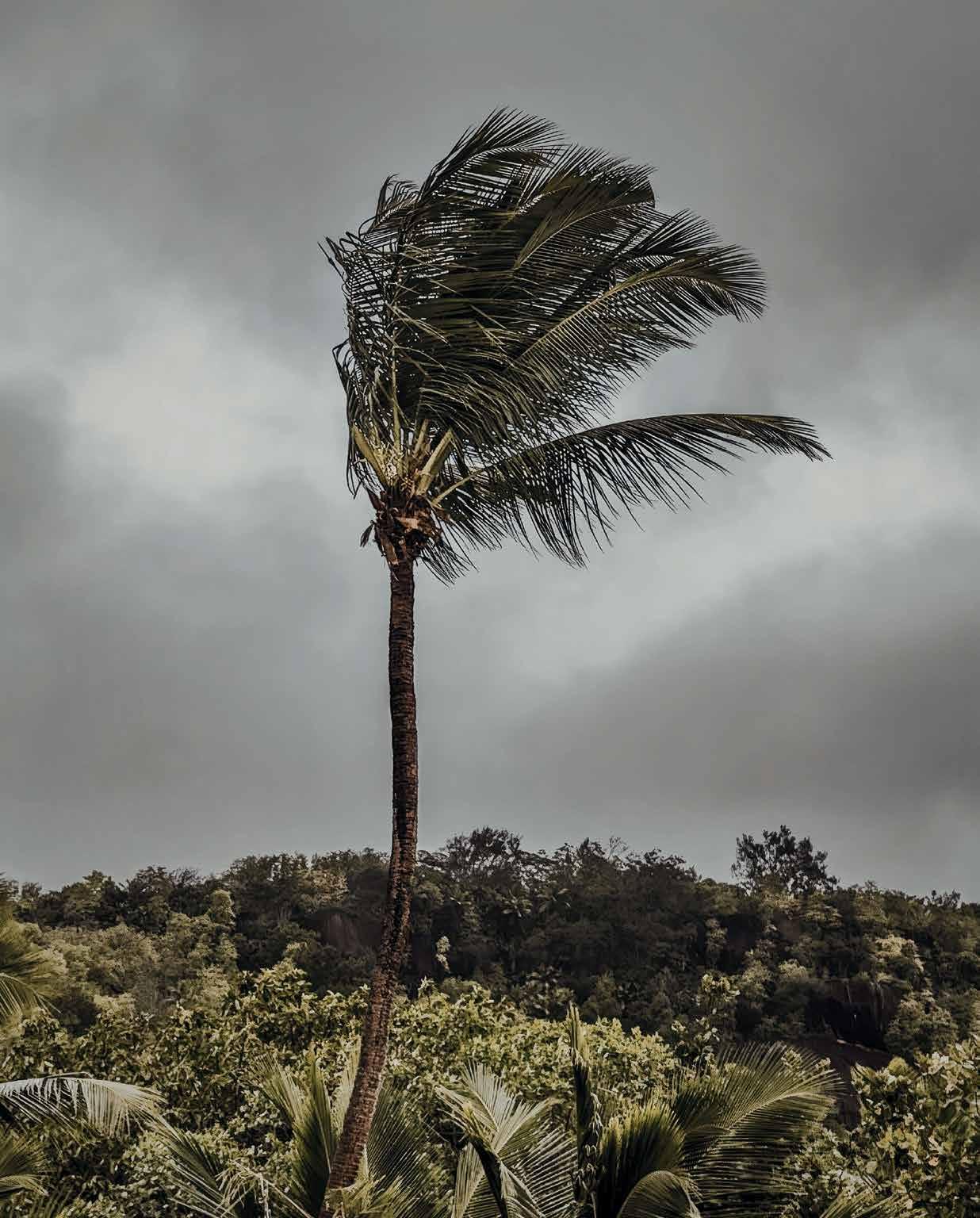
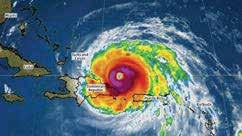
On Sept. 10, 2017, Hurricane Irma struck the Middle and Lower Keys as a Category 4 storm, with sustained winds of 132 mph and storm surge reaching up to 8 feet. Although the eye made landfall near Cudjoe Key, effects were felt across the entire island chain, from Key West to Key Largo. According to NOAA’s official summary, the storm resulted in over 40 injuries, three drownings, and 14 hurricane-related fatalities.
As a resilient community, it’s easy to move forward and forget the scale of devastation these storms can bring. However, each hurricane season serves as a critical reminder of the risks we face and the importance of preparation.
As Islamorada mayor, one of my priorities is the safety of our residents. These are not abstract scenarios; they are real events with real consequences. I urge everyone to take hurricane preparedness seriously. The season runs from June 1 through Nov. 30, and conditions can change rapidly. I have worked at the county emergency operations center several times through the years and have personally inspected the damage from hurricanes as far back as Hurricane Andrew, as the county’s building official, and several other storms as the village’s building official. So take it from me, we must all be vigilant and prepared!
Please stay informed by monitoring the National Hurricane Center and National Weather Service, following guidance from local emergency management officials and listening to the Monroe County Sheriff’s Office. Most importantly, ensure you have a personal hurricane plan in place.
At a minimum, your plan should address the following:
• Evacuation timing: Leave as soon as an evacuation order is issued—earlier if possible. Get out of flood zones and find well-built structures out of the path.
• Fuel readiness: Keep your vehicle fueled or top off early.
• Critical documents: Prepare a “go bag” with essential documents.
• Medications: Bring all necessary prescriptions and medical supplies.
• Home preparation: Turn off water and electricity before departure (and it’s probably good to clear the fridge of food).
These steps are essential, but the most important action is to listen to official guidance and act early. Local emergency management, as well as Sheriff Rick Ramsay and his team provide clear, reliable communication for both evacuation orders and safe, timely re-entry into the Keys; follow their direction.
If an evacuation is ordered, leave immediately. Please don’t wait. You should aim to be out of harm’s way at least 72 hours before landfall.
Preparation and early action save lives. Take the time now to plan and ensure you and your family are ready.
Stay safe and Islamorada Strong,
Sincerely,
Donald W. Horton Mayor
305.664.6400
www.islamorada.fl.us
Sharon Mahoney Vice Mayor
Steve Friedman Council Member
Deb Gillis Council Member
Anna Richards Council Member
Ron Saunders Village Manager
Terry Abel Fire Chief
Lissette Quintero Captain, MCSO
STORM PREPARATIONS
El Niño, improved track forecasts highlight 2026 hurricane season
By Jim McCarthy
Another storm season has arrived. And while expected El Niño conditions could bring fewer Atlantic hurricanes than other years, it only takes one to cause serious problems for places like the Florida Keys.
Emergency management and weather officials are ready to respond should a storm threaten the island chain. At the National Weather Service Key West, warning coordination meteorologist Jon Rizzo has been monitoring conditions heading into hurricane season, which officially starts June 1. He said El Niño conditions will likely emerge this summer and persist through the end of the year.
“El Niño conditions contribute to fewer Atlantic hurricanes,” Rizzo said. “It limits the ability of the warm moist air to rise, condense and concentrate into sustained thunderstorm clusters.”
But Rizzo notes that 1992 was an El Niño year. The first named storm that year was Andrew, the Category 5 hurricane that made landfall in south Florida and affected the Upper Keys. The forces of Andrew resulted in 15 deaths and up to a quarter-million people left temporarily homeless. An additional 25 lives were lost in Dade County from the indirect effects of Andrew.
and data collection, including observations from the Hurricane Hunter aircraft and weather balloons, radar systems and satellites.
“Better real-time observations and storm modeling are also allowing the human specialists at the National Hurricane Center to improve intensity forecasts, explicitly identifying rapid intensification (an increase in wind speed within a tropical storm or hurricane of at least 35 mph in 24 hours' time),” he said.
Forecasts delivered by Rizzo ahead of a threatening storm help Florida Keys emergency management officials determine what actions, if any, need to be taken for the safety of visitors and residents.
“El Niño conditions contribute to fewer Atlantic hurricanes. It limits the ability of the warm moist air to rise, condense and concentrate into sustained thunderstorm clusters.”
— Meteorologist Jon Rizzo
“Even some stronger El Niño patterns still have resulted in hurricane or tropical storm impacts in South Florida and Keys. This is why we prepare every year,” Rizzo said.
With each passing year, track forecasts are better at pinpointing the path of a storm, and where it could potentially make landfall. Rizzo said that’s all thanks to hurricane modeling
“When we do call for mandatory evacuations, we do so knowing we have good information from the National Weather Service,” said Cory Schwisow, county emergency management director. “It’s important for residents to heed the messages we’re putting out.”
If a storm threatens the area, Rizzo said, storm veterans should check in with their new friends and neighbors. Help point them in the right direction on where to stock up on hurricane supplies. Share things to keep in mind as they take a first look at protecting their home or business, and check again soon after a storm passes to ensure they don't have immediate unmet needs.
“This is how the Florida Keys make it through hurricane season – together,” Rizzo said.
Residents should visit trusted sources, like nhc.noaa.gov, for weather information during hurricane season.
example shows the 2026
of the
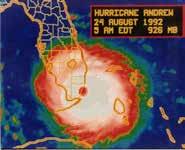
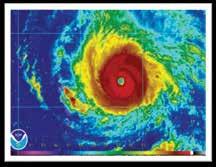
Radar shows Hurricane Andrew making landfall in Miami-Dade County on Aug. 24, 1992. Andrew’s forces were felt in the Upper Florida Keys. Photo by NOAA
An
version
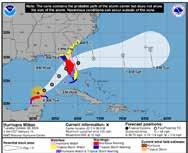
cone graphic for Hurricane Milton (2024) for inland watches and warnings. Photo by NOAA
ARE YOU PREPARED FOR HURRICANE SEASON?
The Keys have a plan, and so should residents
Another hurricane season is here. Are you prepared?
Despite all the uncertainty and unease surrounding hurricane season, which begins June 1 and ends Nov. 30, what we do know is that technological and meteorological advancements give us time to prepare and evacuate should emergency management officials give the order.
The Florida Keys boasts a laid-back lifestyle, but the island chain and its officials take storms seriously, and always have a plan in place. When a hurricane threatens the Keys, emergency management officials with Monroe County and the municipalities spring into action, prepared to protect storm-seasoned residents and visitors. The plan aims to:
• Reduce vulnerability of people to damage, injury and loss of life and property.
• Prepare for prompt and efficient response and recovery.
• Prepare for prompt and efficient rescue, care and treatment of victims.
• Provide a setting of rapid and orderly restoration of services and rehabilitation of affected property.
• Provide for interagency coordination to facilitate immediate delivery of assistance. The preparedness plan is activated
once county officials declare a local state of emergency. Depending upon the level of the threat of the approaching storm, the agencies will take action in coordination with Monroe County’s Emergency Operations Center.
At timed intervals before landfall, different parts of the plan will be implemented. These may include early evacuations for visitors, boaters and special-needs residents; coordination of response and recovery teams; any necessary mandatory evacuations for residents; and all necessary interagency coordination.
City and county officials have a disaster preparedness plan for residents and visitors, and residents should prepare a plan for their loved ones and pets. Use the expansive resources in this guide to formulate your plan, and make sure you follow it when needed. A government-authored preparedness guide is also available online from FEMA and Florida Division of Emergency Management.
Stay informed
The Monroe County Sheriff’s Office’s smartphone app, simply called Monroe County Sheriff’s Office, keeps residents informed of emergency situations ranging from traffic accidents to hurricane evacuation. The free app is available for iPhone and Android. Residents can also receive the latest information by phone or email by registering for Alert! Monroe. Visit monroecounty-fl.gov/alertmonroe to sign up. Monroe County Emergency Management uses the app Everbridge for the Special Needs Registry for shelter and evacuation assistance.
Islamorada
www.islamorada.fl.us
305.664.6400
@IslamoradaFloridaKeys
MCSO law enforcement:
305.664.6480
Fire (non-emergency): 305.664.6490
Sewer emergency: 305.359.0813
Emergency hotlines
Monroe County
Emergency Information
Hotline: 800.955.5504
monroecountyem.com
State of Florida
Emergency Information: 800.342.3557
Poison Control: 800.222.1222
Weather
National Weather Service, Key West weather.gov/key 305.295.1316
@NWSkeywest
National Hurricane Center nhc.noaa.gov
@NWSNHC
NOAA Weather Radio: 162.450 MHz
Monroe County monroecounty.fl.gov
305.294.4641
@MonroeCountyBOCC
Monroe Fire Rescue 305.289.6004
Monroe County Emergency Management 305.289.6018
Monroe County School District: 305.293.1400 College of the Florida Keys 305.296.9081
College of the Florida Keys 305.809.3147
Special needs
Special Needs Evacuation Assistance: 305.797.1154
Florida Keys American Red Cross: 305.644.1200
Florida Keys United Way 305.735.1929
Monroe County Social Services: 305.292.4408
Utilities
Florida Keys Electric Cooperative 305.852.2431
Florida Keys Aqueduct Authority: 305.296.2454
Largo
Island Dental
If you are looking for a caring, qualified dentist in Key West, then look no further. From your first contact with our office, you will notice that Island Dental is not your typical dentistry. We've worked hard to build an exceptional team of dedicated, caring and experienced professionals committed to the dental health of you and your family.
Our services include: General Dentistry | Teeth Whitening Crowns | Preventive Care | Periodontal Exams | Botox
EVACUATE WHEN TOLD OR PREPARE TO FACE DANGER
Heed messages from emergency management
ecisions by officials to evacuate locals and visitors during an impending storm — Category 3 or higher — aren’t taken lightly. Those calls by emergency management come with the safety and well-being of everyone in mind.
In the Florida Keys, there’s a detailed and phased plan to get residents out of the danger zone to safer areas, like the Monroe County shelter in Miami-Dade County ( see page 22 ).
All Keys agencies and government offices, including the U.S. Navy, Coast Guard, hospitals, county health department, public works departments, utilities, schools and even volunteer charitable organizations work in unison to ensure a seamless evacuation operation. All decisions are made locally with input and advice by the National Weather Service office in Key West.
For years, Monroe County possessed a simple evacuation plan based on hours to landfall, phases and zones. Generally, Monroe County Emergency Management calls for the evacuation of visitors and special-needs populations first.
In some scenarios — like a rapidly intensifying hurricane — county officials might not distinguish among population groups or zones of the Keys. For example, if a small storm has the potential to escalate, evacuations might be called more urgently.
In the event of a Category 3 or higher storm, or if officials expect a storm to strengthen to those levels, evacuation is mandatory for everyone. County shelters are only open for a Category 1 or 2 storm.
Staying put during hurricanes won’t be a pleasant experience — even if it’s on the lower end of the category scale. Grocery and drug stores could be closed. Power could go out and weather conditions will be hot. And water could be shut off.
“It is important to know that resources won’t be available. When we call for mandatory evacuations due to storms, even essential service workers are leaving,” said Cory Schwisow, county emergency management director.
In other words, circumstances could be miserable. Residents should decide based on what’s proper for the most vulnerable person in their group — whether that is an elderly aunt or a newborn.
KNOW YOUR ZONE
Monroe County has a comprehensive plan that calls for phased evacuation, with five zones established from MM 0 to Ocean Reef. The evacuation plan is intended to avoid unnecessary evacuation if some zones are expected to be affected and others not. So, know your zone if local officials order evacuations. NOTE: Evacuation zones are different from re-entry zones after a hurricane.
Monroe County Emergency Management officials, as well as other agencies, will disseminate hurricane information through a variety of media. Check the Keys Weekly’s Facebook page or website of your local municipality; tune in to channel 76 on Comcast Cable; follow the U.S. National Weather Service Key West on Facebook.
Zone 1: MM 0 to MM 6
Zone 2: MM 6 to MM 40
Zone 3: MM 40 to MM 63
Zone 4: MM 63 to the three-way stop at County Road 905-A
Zone 5: County Road 905-A to mainland Monroe, including Ocean Reef
CONCRETE MADE TO LAST
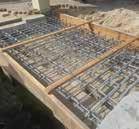
Proudly serving Key West to Islamorada as the ONLY locally owned and operated concrete company in the Florida Keys. Whether you’re building a large commercial building, FDOT bridge, or a customdesigned home, we have concrete mix designs for every project. Thanks to decades of experience, our team can create custom mixes with high-quality additives for specific project needs. We offer the largest variety of materials and operate the only FDOT-certified ready-mix plants in the Florida Keys. Call us for all ready-mix concrete, block, aggregate, rebar and bagged good needs.
KEEP PREGNANT WOMEN, BABIES & CHILDREN AT THE PLANNING FOREFRONT
Set alternate birth plans, consider nutritional needs
Storm preparations shouldn’t occur at the very last minute, especially if your household has an expectant mother, newborn or young child. Keep the precious ones at the forefront during storm season by coming up with a plan in case emergency management officials call for an evacuation. Also, add formula to the supply list and consider ways to soothe children during uneasy times.
Have a backup birth plan
According to the Florida Keys Healthy Start Coalition, pregnant women who may be giving birth at home should have an alternative plan in the event of an evacuation. During major storms, Monroe County officials could issue either a voluntary or mandatory evacuation. Many local services such as emergency response and hospitals could be limited — or closed — during evacuations, so pregnant women are encouraged to leave when told by emergency management officials.
An alternative birth plan should take into account finding a hospital that’s located away from the storm’s path, as well as having a place near the hospital to stay before the birth. Also, notify your local doctor about the hurricane plans.
Pregnant women should continue healthy habits such as exercising, reducing stress, taking prenatal vitamins, eating nutritious food and following up on prenatal care during and after the storm.
Load up on baby nutritional needs
For the baby, nutritional and comfort needs must be considered when creating a hurricane kit for the home or the car. Babies 6 months and younger need to have a supply of breast milk or formula. For babies who drink formula, the family needs to have a supply of safe drinking water and a method to sanitize bottles (or use disposable bottles). Pack at least three full days’ and nights’ worth of bottles, water and formula.
Consider packing comfort items for your child such as favorite blankets, pajamas, music or toys. Having plans for the child’s comfort items and nutritional needs can ease some of the burden of the storm.
Last but not least, don’t forget to stock up on extra baby wipes and diapers. Supplies can be slow to restock in stores after a storm.
Consoling children during the storm
Children are affected by changes in mood and environment due to disasters just as much as adults. Fear, anxiety and stress may last long after the initial impact. That’s why parents should do everything they can to minimize the effect. Experts suggest parents limit a child’s exposure to media coverage of the storm, as well as listening to and comforting your child to ease their fears, and establishing routines and norms even if away from home.
Special-needs registry
If needed, pregnant women or families with children who have special needs may also register with the Monroe County Special Needs Registry for evacuation transportation to the special-needs shelter. Depending on the storm, this shelter may be located in or out of the county.
For a Category 1 storm and below, the special-needs shelter will be set up within Monroe County at the Gato Building in Key West and/or the Murray Nelson Government Center in Key Largo. For larger category storms with a mandatory evacuation, a special-needs shelter will be opened on the mainland at Florida International University in Miami.
Residents who are evacuated to a special-needs shelter are returned to their home once the “all clear” has been given and their area has been cleared for available power and water as well as an exterior verification for damage to the residence.
When it comes to planning and preparation for a storm, remember to keep in mind those lovable pets in your household.
PROPER STORM PLANNING FOR PETS
Stock supplies & keep them comfortable
Your pets rely on you and the decisions you make to evacuate when a Category 3 or higher storm is approaching. If you’re staying home to weather a lesser storm, remember the conditions out side won’t be ideal for a walk. The sounds of thunder could make your pets un comfortable.
Hurricane Katrina in 2005, which ravaged New Orleans, re vealed the folly of trying to separate humans from their ani mals. Many people and pets lost their lives. Legislation has since passed that mandated space for animals at shelters. There is never a reason to leave domesticated animals behind when leaving your home in times of an approaching hurricane. Here’s how to keep your pet safe in the event of a hurricane.
Before the storm
• Microchip your pet, and have your pet wear a collar with an ID and a rabies tag. Carry photos of your pet to help should they go missing.
• Consider a harness or leash for your cat. Give enough time to get them used to wearing the harness before an im pending storm. Get a harness especially for cats that can wriggle out of anything else. It could prevent a stressedout, thunder-shy kitty from darting away to hide.
NEVER LEAVE YOUR PET WHEN EVACUATING!
STAYING IN THE KEYS DURING A CATEGORY
• Have an evacuation pack for your pet. Make sure to include food and water for two to four weeks. Keep dry food sealed in waterproof containers and pack bowls of food and water as well as a can opener if necessary. Also, pack kitty litter and trays and bring bags to clean up after your pet.
During the storm, if you cannot evacuate
• Find a safe room for riding out the storm. Consider a room located toward the interior of the house and a place without windows.
• If you can, stay with the pet to provide comfort. If they are in a crate, ensure they have adequate water and food.
• Keep an emergency kit in the room. The kit should include food, water, litter and any medications.
• Know where your pet likes to scurry and hide.
• Secure exits to prevent the pet from escaping outside.
• Remember, all Keys shelters are pet-friendly destinations. The shelters are located at Key West High School, Sugarloaf School, Marathon High School and Coral Shores High School. Read more about pets at shelters on (page 22).
After the storm
• Ensure the storm has fully passed, no wires are down and there’s no major flooding before letting a pet out.
1 OR 2 STORM? MONROE COUNTY OFFERS
4 PET FRIENDLY SHELTERS:
• KEY WEST HIGH SCHOOL
• SUGARLOAF SCHOOL
• MARATHON HIGH SCHOOL
• CORAL SHORES HIGH SCHOOL
Scan the code for the FKSPCA’s Preparedness Guide and to learn details about the requirements of the pet friendly shelters. fkspca.org/humane-education-events/ hurricane-preparedness
KEY WEST 5711 COLLEGE RD 305-294-4857
MARATHON 10550 AVIATION BLVD 305-743-4800
SAFE, ORGANIZED REENTRY
Get this sticker to get back into the Keys
When a hurricane forces residents to leave the Florida Keys, reentry into the island chain — when deemed safe by emergency management officials — must be carried out in an orderly, staged manner.
Local residents can obtain a sticker for their vehicles to gain reentry.
The colored badge, which can be stuck on the lower corner of the driver side’s windshield, denotes where a Monroe County resident lives, while letting sheriff’s deputies staffing checkpoints know you’re a legitimate resident and have a reason to come back.
Locals can obtain a sticker by visiting the Monroe County Tax Collector’s office. When you go to obtain your sticker, bring proof of residency, such as a Florida driver’s license and vehicle registration. Out-of-county residents who have a Keys residence can show a property tax bill to get a sticker for their vehicle.
When the Florida Keys are in the cone of a major hurricane, the last thing anyone wants to do is worry about the reentry decal system for your car. After all, those last few moments are spent bringing all the lawn furniture inside, buying clips for your storm shutters and extra food and water for your family and pets.
Cory Schwisow, county emergency management director, urges residents to obtain a reentry sticker before a hurricane threatens the area — hurricane season begins June 1. Stickers
will not be available once a state of emergency is declared in Monroe County, which occurs several days before a storm is forecast to strike.
“The whole gist of the sticker is get people into the county faster and keep traffic moving into the Keys,” Schwisow said.
Those who don’t have a reentry sticker and want to reenter the Keys, be sure to have supporting documentation with you to show you’re a Keys resident. It can be a utility bill, tax bill, etc.
Stickers are barcoded and color-coded for zone-by-zone reentry. Stickers for Lower Keys residents from the south end of the Seven Mile Bridge to Stock Island (MM 40 to MM 4) are dark pink, while Middle Keys residents from the south end of the Long Key Bridge to the north end of the Seven Mile Bridge (MM 64 to MM 47) get aqua stickers. Upper Keys residents from the county line, including Ocean Reef, to the north end of the Long Key Bridge, (MM 113 to MM 64) will have a purple decal. The City of Key West requires its own sticker, which is white.
Once you obtain the sticker, go ahead and put it on the lower driver side windshield of the vehicle it’s registered to. The sticker can’t be reused for reentry with another vehicle.
For those wondering when they’ll be able to return to the Keys, emergency management officials encourage people to sign up for the Alert! Monroe system. It enables people to receive emergency alerts and information via text messages, phone calls or emails. Sign up at www.monroecountyem.com/alertmonroe.
TAX COLLECTOR LOCATIONS:
Key West
1200 Truman Ave., Ste 101, or the DMV at 3304 N. Roosevelt Blvd.
Big Pine Key
247 Key Deer Blvd. (Tuesday through Thursday 9 a.m. to 3 p.m.)
Stickers are available at the Monroe County Tax Collector’s office locations from 8 a.m. to 4:45 p.m. Monday through Friday.
Scan the QR code for more information on reentry vehicle stickers.
To meet the special needs of residents with physical and mental challenges during evacuations and sheltering, Florida law requires each local emergency management agency in the state to maintain a registry of disabled persons in the agency’s jurisdiction.
“Our special-needs residents will be screened, transported, sheltered and cared for under the same precautions as the general population,” said Cory Schwisow, Monroe County Emergency Management director.
Residents who have registered and requested transportation assistance will be notified through a specified method of communication in advance of evacuation. At that time, the registrant must make a decision whether or not to evacuate with the help of county officials, as there will be no second phone call. Those who decide to take part will be directed to the nearest staging area or arrangements will be made to pick them up. Registrants must have belongings and supplies packed and ready to go.
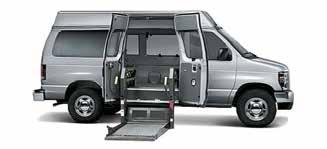
Emergency bus
ENSURE YOU HAVE TRANSPORT
Special-needs registry aids most vulnerable
With Monroe County’s system, Everbridge, registrants will be notified by telephone, text, email or smartphone of a pending evacuation and be given specific instructions to follow when evacuating to the special-needs shelter. Officials will make every attempt to reach out via the methods the registrant chooses when he or she registers. Eligible conditions for the special-needs shelter include, but are not limited to: Being dependent on supplemental oxygen; limited mobility; needing assistance with daily activities such as feeding, medications and hygiene; moderate dementia; cognitive impairment; immobile or wheelchair-bound; in need of wound care and/or in need of constant supervision.
All applications will be reviewed by medical staff from the Department of Health and assessed for program eligibility. Ineligible applicants will be referred to applicable sheltering options, which may include a general population emergency shelter or a specialized medical facility or nursing home.
The special-needs registry is not a replacement for having an evacuation plan of your own. Residents should try to seek help or shelter from family, friends or neighbors in a hurricane or other disaster. Public shelters should be a last resort.
Residents who have registered and requested transportation assistance will be notified through a specified method of communication in advance of evacuation.
Monroe County encourages individuals living in storm surge planning zones and mobile homes to have arrangements in place to stay outside of the areas called for phased evacuations during a tropical storm or hurricane. Monroe County Emergency Management will activate specific emergency evacuation bus pickup stops along U.S. 1 as directed by the Monroe County Sheriff’s Office.
Monroe County says regular bus service run free of charge, using all regular stops, to the general population shelters designated open when a general population evacuation has been called.
It is the responsibility of the residents to get to the designated pickup site. The buses placed into service for the evacuation will have displays that read “Emergency Evacuation” and these buses will only travel between the Keys and the out-of-county hurricane shelter.
How do I sign up?
The registration portal can be reached by visiting monroecountyem.com, clicking the “Preparedness” tab and selecting Special Needs Registry. Applicants may also download the Everbridge app for smartphones at everbridge.com/app or through the App Store for iPhone and Google Play for Android devices. Residents who are unable to register on their own, or do not have access to the internet, may seek assistance through a home health care provider, primary care physician, case manager, family or friends.
PEACE OF MIND
During
• Do you have a Monroe County License?
• Do you have general liability and workman's comp insurance?
• Are you familiar with Monroe County Building Regulations?
• Will you pull a permit if my work requires it?
• Have you done this type of work before?
• Are you self performing the entire project?
• Will you supply releases of liens for your subcontractors and suppliers?
• Does your contract state the contractor will apply for the permit by a certain date?
• Does your contract state the contractor will start the job within a certain time period after the permit is issued?
• Does your contract state the contractor will complete the job within a certain time period?
• How many projects is the contractor working on now? Does he have the capacity to complete my work?
• Do you have recent examples of similar work or references I can call to evaluate your work?
Monroe County
SHELTER LOCATIONS
WHAT TO BRING
HURRICANE SHELTER
CATEGORY 1-2 HURRICANES
Key West High School
2100 Flagler Ave., Key West Sugarloaf School
255 Crane Blvd., Sugarloaf Key Marathon High School
350 Sombrero Beach Road, Marathon Coral Shores High School
89901 Overseas Highway, Tavernier
CATEGORY 3-5 HURRICANES
Monroe County does not have shelters for a hurricane at or beyond Category 3. Evacuation is mandatory for everyone.
During an evacuation order, Monroe County residents seeking shelter on the mainland will be informed of shelter locations. Sheltering options may include Florida International University (FIU), the E. Darwin Fuchs Pavilion at the Miami-Dade County Fair and Exposition (which allows pets), and other facilities within Miami-Dade County, based on their availability on a per-storm basis. Special-needs individuals will be transported to the special-needs shelter at FIU. Information will be made available via Monroe County official alerts, Monroe County website and press releases, social media sites, MCTV Channel 76 & 99, and by local media and other local official government agencies.
Water and food
• Drinking water in plastic containers.
• Non-perishable food in cans or sealed containers.
• Special dietary foods, baby food, formula, manual can opener, paper products, utensils.
• Residents are required to complete registration before entering the shelter.
• Residents will be assigned to a space.
• No weapons, alcohol or illegal drugs.
• No smoking allowed in shelters.
• “Lights out” quiet time will be enforced.
• Children must be attended to at all times. Parents are not allowed to leave the premises without them.
PETS AT SHELTERS
All Monroe County general population shelters are pet-friendly. Pets accepted include dogs, cats, ferrets, birds, reptiles and pocket pets such as hamsters, gerbils and rabbits under 10 pounds. It is highly recommended that pets be pre-registered before a sheltering event. In order to pre-register your pet, you must complete an online registration. You will be required to attest to the fact that you have read and will comply with the pet-friendly shelter agreement and the pet-friendly shelter checklist. Pre-registrations are only valid for the calendar year in which they were submitted.
While at the shelter, all pets must be properly caged. Owners must present the medical history and current vaccination records for each pet upon checking into a pet-friendly shelter.
For more information on pets at shelters, including a shelter agreement, supply checklist and registration, scan the QR code:
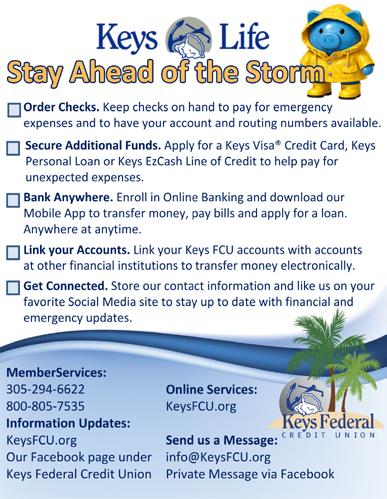
FINANCIAL CHECKLIST HURRICANE
Online & Mobile Banking
Bank anytime, anywhere. Manage your account 24/7 with Mobile Deposit, Direct Deposit, Bill Pay, person-to-person and bank-to-bank transfers Log in or enroll today on our KeysBank Mobile App or at KeysBank.com.
Debit Cards
Use your debit card for quick cash access when banks are closed or if you have to evacuate. FSB does not charge a fee for using your debit card at any ATM* or Publix Presto! ATMs. You can also get cash back with purchases at many businesses. Instant Issue debit cards are available at all Keyswide locations.
Emergency Cash & Checkbook
Electronic means of payments may not be available if there is a power failure. Be sure to have cash and your checkbook on hand for purchases.
Secure Important Documents
Make copies of your insurance papers, Social Security cards, birth certificates, mortgages, and other important documents. Originals can be stored in a First State Bank Safe Deposit Box.**
Hurricane Loans & Credit Cards
A Mortgage, Home Equity Line of Credit, or Personal Loan can provide money on hand to prepare and, if necessary, recover quickly from a hurricane. We also offer personal and business credit cards. Apply online at KeysBank.com.
Download the KeysBank Mobile App for access to your account 24/7
STOCK UP ON SUPPLIES
Now is the time to check your container of storm supplies with hurricane season beginning June 1. For new residents who aren’t familiar with hurricane preparation, this list will help determine the items to buy and put away for those stormy days. Think about the items you need if you’re leaving the house to get away from the storm’s path, as well as what you need to be properly supplied if you stay behind for a lesser storm. In Florida, hurricane supplies, like batteries, generators and more are permanently sales tax-free. And here’s a pro tip: Take pictures of your home before a storm hits for insurance purposes.
FOOD
• Gas or charcoal for the grill.
• Manual can opener.
• Non-perishable foods such as carbs: crackers, cereal, popcorn & chips.
• Vegetables & fruit – canned vegetables and fruit.
• Protein: canned tuna, soup or stew, peanut butter, beef jerky, canned sausage, nuts or ham.
• Staples such as salt, pepper, sugar, mustard.
• Drinking water, sport drinks.
• Instant coffee.
• Energy drinks.
THE BASICS
• First aid kit.
• Sunscreen.
• Mosquito repellent.
• Acetaminophen.
• Prescription medicines.
• A watertight, easy-to-carry container to store essentials and paperwork.
• Pets: papers, leash, collar with ID, crate, food, bowls, litter, bed
• Important documents (Keep these in a waterproof, portable container.)
• Will, insurance policies, contracts, deeds, stocks and bonds.
• Passports, social security cards, immunization records.
• Bank account numbers.
• Credit card account information.
• Important telephone numbers.
• Family records (birth, marriage and death certificates).
• Proof of occupancy.
• Pictures of your home prestorm (for insurance purposes).
DISASTER KIT TIPS
• Water: Store water in sanitized bathtubs, washing machines and water heaters. Have at least one gallon of water per person, per day, for seven days.
• Cooking: Do not use charcoal or gas grills indoors.
• Do not run generators indoors.
EVACUATION SUPPLIES
• Gas cans (preferably filled).
• Important papers and photo albums.
• Important recovery tools (chainsaw, drills, etc.).
• Pet crates.
• Masks, gloves and sanitizer.
• Immediate supplies of food, clothing, toiletries, medications.
Storm surge is often the greatest threat to life and property along the coast during and after a hurricane.
A number of deaths from major hurricanes have resulted from the ocean’s rise due to storm surge. Hurricane Katrina, which made landfall near New Orleans in 2005, was a prime example of how surge can cause damage and destruction. Some 1,500 people lost their lives during Katrina and many of those deaths occurred directly and indirectly from storm surge.
More recently, onshore winds from Hurricane Helene in 2024 produced record storm surge levels and flooding along the western Gulf Coast of Florida. Major flooding, debris and damages to structures were observed from the Keys north to Florida’s Big Bend region.
In the Big Bend region, where the Category 4 Helene inflicted its wrath, storm surge inundation of 12 to 16 feet above ground level occurred from just west of Keaton Beach through Steinhatchee, where small coastal communities were devastated. Helene was responsible for 176 fatalities in the U.S. In Florida, 14 deaths were caused by storm surge, according to NOAA.
“Know your risk from storm surge. This includes knowing how high the elevation of the ground is outside (or under) your home,” said Jon Rizzo, warning coordination meteorologist for National Weather Service Key West. “One clear rule of thumb for those living on the lowest ground in the Keys is from this question: Have you observed king tide, or ‘sunny day’ flooding typically in autumn on your street or property? If that answer is ‘yes’ you are living on the lowest elevations in the Keys and will be most at risk for devastating storm surge.”
WHAT INFLUENCES SURGE?
The larger the storm, the higher the surge. This is due to stronger winds from larger storms pushing onto a larger area of the ocean. Those winds will stay around longer due to the storm’s size. The angle at which a storm approaches a coastline, winds and slope of the ocean bottom and coastline shape also contribute to surge.
On the open coast, a faster storm will produce a higher surge. And higher surge is produced in bays, sounds and other enclosed bodies of water with a slower storm.
WATCHES VERSUS WARNINGS
Look out for storm surge watches and warnings. A storm surge watch indicates the possibility of life-threatening, rising water moving inland from the shoreline within a specified area, generally within 48 hours of a storm’s arrival. The watch may be issued earlier when other conditions, such as the onset of tropical storm-force winds, are expected to limit the time available to take protective actions for surge (e.g., evacuations).
RUN FROM THE WATER
Get out when forecasts call for life-threatening storm surge
A storm surge warning is the likelihood of life-threatening water that’s rising and moving inland from the shoreline within a specified area within 36 hours of a storm’s arrival. A warning could be issued earlier when other conditions such as the onset of tropical storm-force winds are expected to limit the time available to take protective actions for surge, like evacuations.
TAKE EVACUATION ORDERS SERIOUSLY
“Storm surge can cause water levels to rise quickly and flood large areas sometimes in just minutes, and you could be left with no time to take action if you haven’t already evacuated as instructed,” says the Florida Division of Emergency Management.
APPS PROVIDE IMPORTANT ALERTS
Stay informed before, during and after a storm
ALERT! MONROE
Alert!Monroe is an Everbridge mass notification system used by Monroe County Emergency Management to quickly share emergency notifications with residents. Notifications can include severe weather, evacuation information, fires and other emergencies, as well as general important routine county information and announcements. Residents must visit monroecountyem.com and click on the Alert! Monroe button in order to obtain alerts.
WINDFINDER
Get detailed and accurate forecasts for wind, weather, tides and waves through this useful app. It’s easy to use and free of charge.
MONROE COUNTY
SHERIFF’S OFFICE
Stay informed of emergency situations in the Florida Keys during storm season, such as hurricane evacuation.
NATIONAL HURRICANE CENTER
This comprehensive hurricane tracker app includes satellite imagery animations, National Weather Service alerts, tropical weather push notifications and weather prediction center graphics. Download for free.
GAS BUDDY
Do you need to find a nearby gas station as you evacuate the Florida Keys? Find the best prices with the gas map. Sort by price, location and important things like restrooms. Download free of charge.
MY RADAR
This easy-to-use weather app displays an animated weather radar around your current location to show what kind of weather is heading your way. Get a snapshot of the weather while you’re on-the-go. A “pro” version is available for $5.99.
IT S ELECTRIC
Ways to stay safe during and after the storm
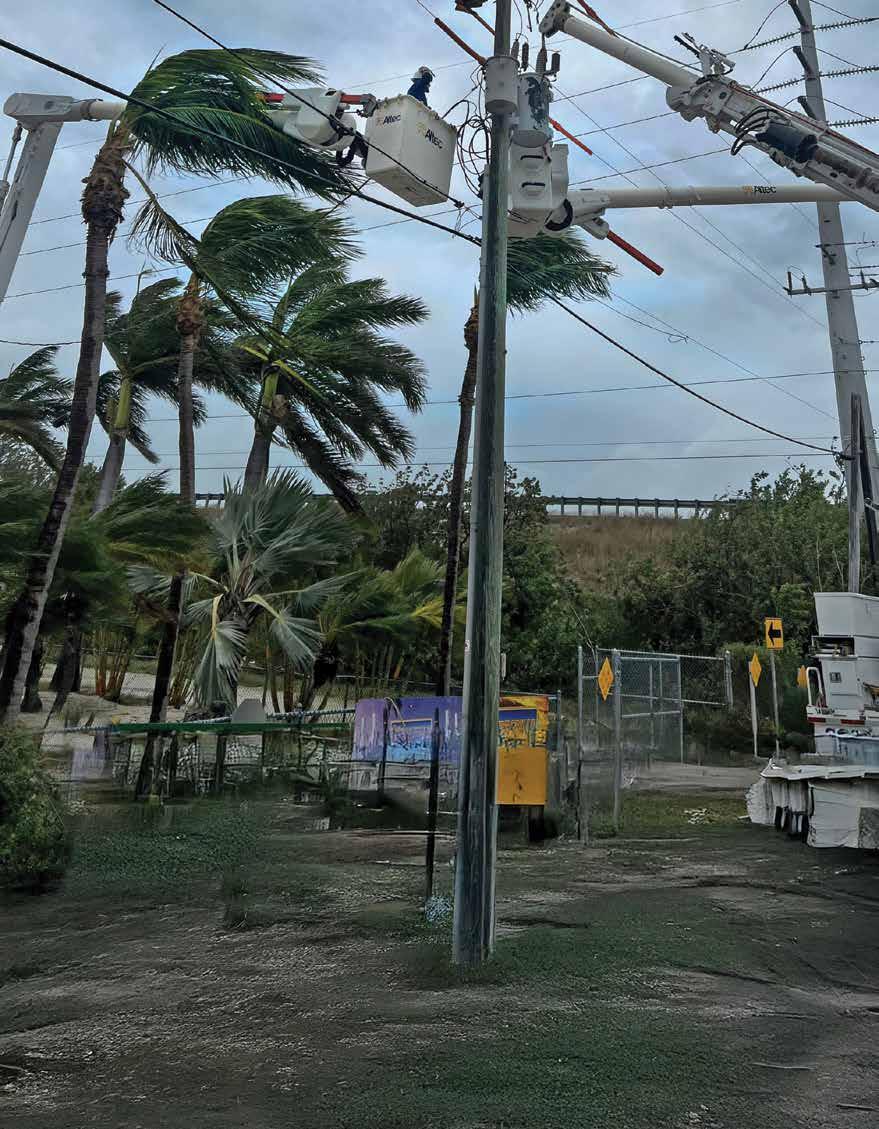
Florida Keys power companies are among the best when it comes to power restoration following a hurricane. When you see the power company trucks on the road after a storm, give them plenty of room to work — and thank those crews for what they’re doing. Take the time, now, to prevent outages when you can, and prepare for what may come.
Inspect lines around the home
Check power lines surrounding your home before a storm. Take a close look at the “service drop” lines connecting your home to the nearest power pole. If you see limbs and trees with the chance to damage those lines in high winds, call FKEC at 305-852-2431 (Upper and Middle Keys) or Keys Energy at 305-295-1010 (Lower Keys and Key West).
Know when to go
Those who are dependent on electric-powered, life-sustaining medical equipment should have an emergency plan for backup power or a plan to relocate when a storm warning is issued. Residents
are encouraged to seek safety and follow any evacuation orders set by Monroe County.
Downed lines are dangerous
Like a ripple in the water, electricity from a downed line flows into the ground in a big circle up to 35 feet away. Getting near a downed power line can be deadly. Stay clear of all downed power lines or electrical equipment. Assume all cables and wires are energized and stay away. Call 911, FKEC at 305-852-2431 or Keys Energy at 305-295-1010 to report fallen power lines which present a clear and imminent danger to you or others.
Surge protection
Implement meter-mounted surge protection. To protect your home from power surges, use a surge protector mounted at the electric meter in combination with plug-in surge protectors for individual voltage-sensitive electronic devices. Before a storm threatens, make sure you have all the equipment needed to secure your house or business. FKEC customers can get Meter-Treater Meter-Based Surge Protection; visit fkec. com/services/surge-protection/.
Safety first
Stay informed
During a storm, FKEC and Keys Energy Services will use all means of communication to keep customers informed. FKEC customers can sign up for outage texting. This service allows FKEC to send you power outage and restoration information as well as allowing you to report outages via text – your mobile number must be pre-registered with FKEC to report via text. More information is at www.fkec.com/outage-center. Keys Energy customers can find outage information at keysenergy.com/powerstatus.
Before, during and after a storm, FKEC will share valu able information at www.fkec.com, on Facebook @FloridaKeysElectricCooperative and email on file. FKEC encourages members to have a current email address. FKEC members can update contact information through the SmartHub online/mobile app or at fkec.com/access-your-account.
Keys Energy will provide information at keysenergy.com, on X at Keys Energy Services and on Facebook @keysenergy. If you have internet access after a storm, Keys Energy Services and FKEC websites feature outage maps which show where power is out throughout the utilities’ service area.
• NEVER run a generator in an enclosed space, including indoors or in storage areas under your home.
• A running generator should be placed at least 20 feet from the house.
• ALWAYS direct the exhaust gases from the generator away from your home and neighbors.
• If possible, plug appliances directly into your generator and use heavy-duty outdoor-rated extension cords.
FKEC tree trim request
Keys Energy tree trim request
By Alex Rickert
POWER PACKERS
Choosing a generator that can give the right juice when you need it
Anyone who’s lived through a hurricane knows: In the immediate aftermath, when the power’s still out and internet is nowhere to be found, generators are worth their weight in gold. But before you go sprinting to Home Depot during the sales tax holidays, have a plan in mind. What’s your budget, what do you realistically NEED to power up after a storm, and what resources will it take to stay up and running? And perhaps the number-one priority: Do you have what it takes to hook the generator up in the first place?
HOW MUCH JUICE?
That little generator you use at tailgates? It’s not going to run your central AC system, the fridge and your XBox all at the same time. Thankfully, the question of “how much power” is a simple addition problem. Total up everything you plan to run simultaneously, figure out if you can afford the generator that will power them all, and decide if you can make some cuts if necessary. If you choose to go with a larger model, make sure you can realistically keep it fueled for long periods after a storm if gasoline is hard to come by. Some large generators can easily consume more than 15 gallons of gas per day. Keep in mind that for smaller devices like laptops, phones and lights, companies offer an ever-expanding array of portable power banks, some with solar charging options, that can be used safely indoors.
POWER ESTIMATES FOR TYPICAL HOME APPLIANCES, ACCORDING TO CONSUMER REPORTS:
• Refrigerators: 600-700 watts
• Window air conditioners: 1,000 watts
• Laptops: 200 watts
• Smartphone charger: 20 watts
• Washing machine: 1,200 watts
• Lightbulbs: 5 to 80 watts PER BULB
• Central air conditioner: ~1,000 watts per ton of cooling capacity
Portable generators are divided into recreational, mid-sized and large categories, each with its own array of features, plugs and maximum wattage. Remember, even if a smaller generator produces the wattage to power a bigger appliance, it may not have the 220-volt plug necessary to link
up with appliances like dryers and washing machines. For larger items like central air, make sure your generator can temporarily supply the larger power loads needed to start these appliances. And keep in mind that not all appliances, like fridges, need to run 24/7. Run them just long enough to keep them cold, and manage how many times you let cold air out by opening them.
INVERTER GENERATORS VS. TRADITIONAL PORTABLE GENERATORS
While traditional generators use a motor running at a fixed speed to generate power, which can be beneficial for heavy-duty use running high-powered appliances over long spans, inverter generators are designed to be quieter and more fuel efficient. They vary their engine speeds based on the power drawn from the generator at that time, and can therefore be more fuel efficient.
IT’S ALL ABOUT CONNECTION
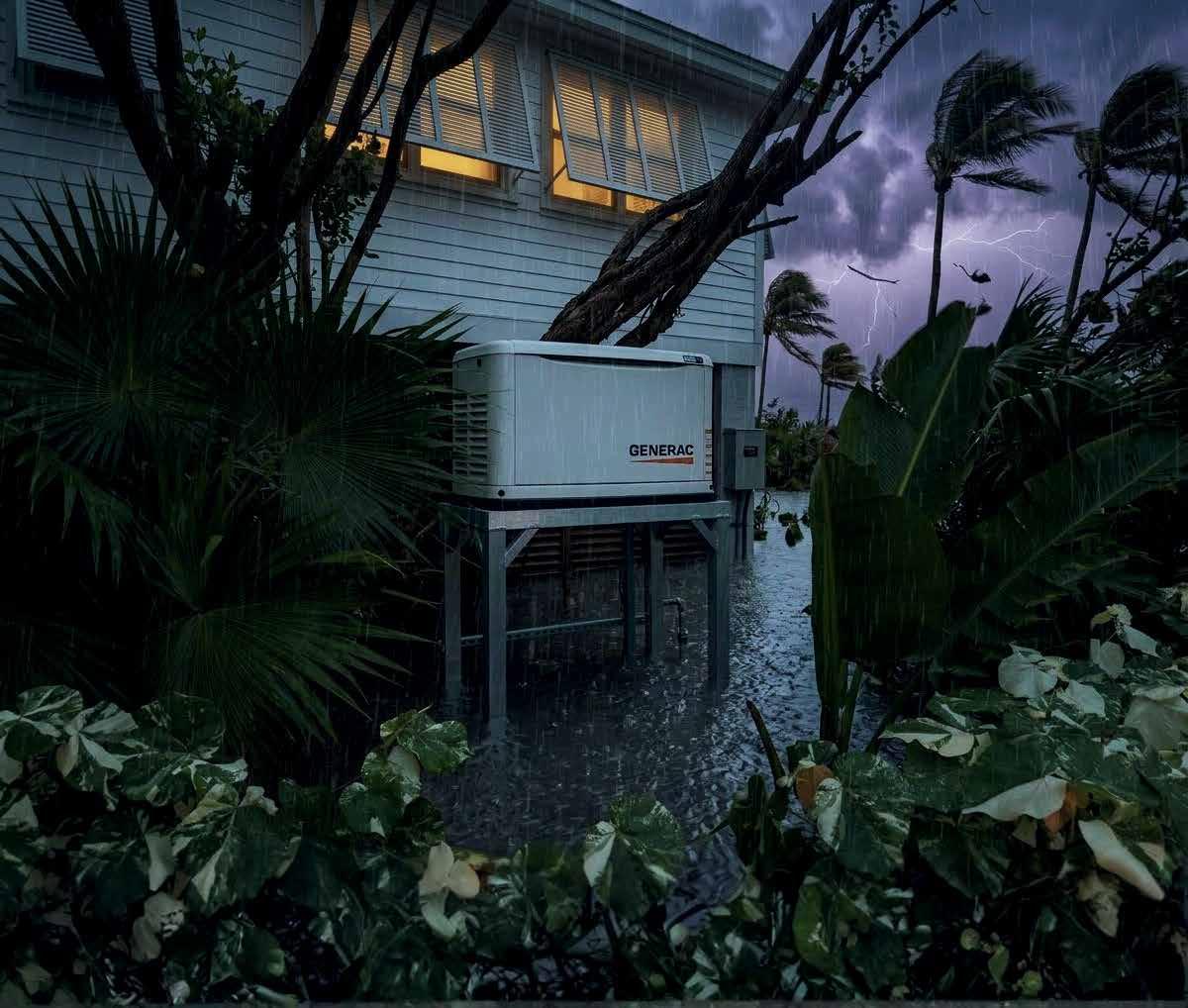
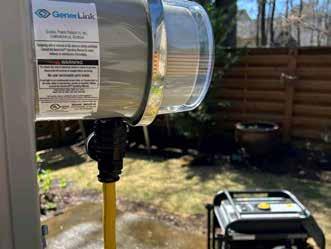
Larger generators can hook into your home’s main breaker panel to power nearly the entire house. But you’ll need the right equipment, and a safe setup, to do so and ensure your safety and that of the power company’s linemen after a storm. The Florida Keys Electric Co-op offers GenerLink, a meter collar that allows for easy connection to portable generators. It also prevents power from generators from causing “back feed,” sending power back into the grid and potentially harming utility crews. For more information on GenerLink and a generator safety rundown, scan the QR codes below.
A GenerLink allows homeowners to safely connect their generator to their house’s power meter.
LIVEABOARDS, STAY CONNECTED
Boats need a secure place to weather the storm
Local alerts are important during times of a storm, especially for mariners who should be prepared to leave their vessels should the going get worse.
And most importantly, have a plan during hurricane season. As local emergency management officials say, a boat is no place to ride out in times of a hurricane.
Those living on boats should stay connected with credible sources for weather information, like hurricanes.gov and weather.gov/key/. Hurricanes and tropical storms can bring storm surge, flooding, wild winds, blinding rain, tornadoes, powerful waves and currents.
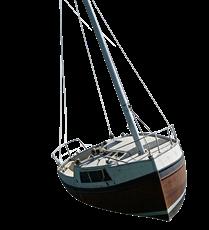
The best place for your boat in a hurricane is out of the water. If that is not possible, find a snug harbor; mooring in a sheltered location can be a good alternative to exposed harbors or crowded marinas.
All preparations should be complete before the arrival of 34-knot sustained winds. County emergency management officials say people shouldn’t be thinking about riding out a storm at sea. No matter how valuable your boat may be to you, it’s not worth risking your life.
“One of the most dangerous mistakes is staying aboard a boat during a hurricane,” Monroe County Emergency Management says. “Once the wind starts howling, you cannot count on a Coast Guard response.”
National Weather Service: 305.295.1316
Monroe County Emergency Management (activated during storms): 800.955.5504
Broadcast Notice to Mariners www.navcen.uscg.gov/ subscribe-email-rss-feeds
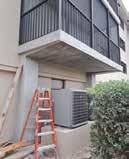
Nothing is more important than the structural integrity of your home, and its repair requires a specialized process and a high level of expertise. We work closely with engineers and designers to carefully remove, repair and reinforce the structure so you can be assured of a sound home.
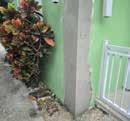
As with any steel reinforced concrete structure, exposure to the elements can cause irreversible, cosmetic as well as structural damage. Let us evaluate your seawall or dock, and give you expert recommendations for its repair.
We specialize in concrete repair and replacement. Each of these is a specialized process and requires a high level of expertise to achieve optimum results. When you work with Randy and his team of professionals, you will be assured that your job will be completed correctly and with no detail overlooked!
By Mandy Miles
WHAT ABOUT ELECTRIC VEHICLES?
Water and electricity don’t mix. Saltwater and electricity are an even more destructive pairing, and yet, saltwater is often unavoidable during Florida’s hurricane season.
More than 200,000 electric cars, also known as electric vehicles or EVs, are currently registered in Florida with more added daily, making the Sunshine State second only to California in terms of EV registrations.
In Florida, hurricane season requires owners of electric vehicles to think and plan ahead, whether they’re staying put during a tropical storm or minor hurricane, or evacuating.
EVACUATING IN AN EV
Florida emergency management officials offer the following tips:
• Keep your battery fully charged during hurricane season. Keep in mind that during an evacuation, charging stations, like gas stations, are likely to have long and time-consuming lines. Electric car charging in the Florida Keys is available but limited, with key fast-charging hubs in Marathon, Big Pine Key and Key West, along with numerous hotel-based Tesla destination chargers, according to the ChargeFinder website.
• Plan your evacuation route. Investigate potential charging locations on the mainland, depending on your destination.
• Know your vehicle's range.
• Avoid relying on charging stations. During an evacuation, charging stations will likely have long lines or even power outages.
• Never drive through flood water. Water will not only damage the battery, but can lead to a dangerous fire. Combustion can happen in an instant or manifest weeks or months after exposure to salt water. Never drive or charge an EV that has been flooded or submerged for all of the reasons above
LEAVING YOUR EV BEHIND
If you evacuate and leave your EV behind, don't leave it parked in the garage or driveway. This applies to cars, trucks, bikes and scooters. If salt water floods the battery, a fire may occur.
• When leaving an EV behind, maintain your battery at only a 30% charge.
• Park your EV 50 feet away from any structure or other vehicle.
• Do not leave your EV plugged into a charging station.
• Park your EV on high ground before a storm to keep away from flood-prone areas.
• Never try to start an EV that has potentially been submerged in water. Have the vehicle towed and stored at least 50 feet away from any other vehicle or personal items that may be flammable. It is advised to not keep it in a covered storage area.
• Listen for hissing and/or popping sounds from the vehicle. Signs of damage can include bubbling or gurgling noises, unusual odors, and smoke. In general, if anything seems unusual about an electric vehicle after potential water damage, it’s best to call the local fire department to investigate.
By Mandy Miles
WHAT ABOUT MY BOAT?
So you moved to the Florida Keys and finally bought yourself a boat. Life is good — until a red radar splotch starts swirling on the map hundreds of miles away. What’s the plan? The Florida Fish & Wildlife Conservation Commission and Boat US offer the following tips for boat owners during hurricane season:
Move your vessel if you can
• If your boat can be trailered, haul it out of the water and move it to a safe location as far from tidal waters as possible. This includes kayaks and other recreational watercraft.
• Remove the boat’s drain plugs so torrential rain doesn’t fill it.
• Strap the boat to the trailer.
• Park the trailer on high ground away from trees, if possible.
If you can’t move your boat, protect it
• Never attempt to ride out a storm on your boat.
• If your vessel must stay in a marina berth, double all lines and rig cross-spring lines fore and aft and attach lines high on pilings to allow for tidal rise or surge. Storm surge raises the water level far above normal high tide, lifting boats above their docks and pilings. Surge accounts for major damage to boats because it puts docks and dockline arrangements underwater as the boat tries to float above. Surge makes extra length and positioning of docklines critical.
• If your vessel is at anchor, move it to the most protected area possible and set out multiple anchors with at least a 10:1 scope, remove canvas coverings if possible and remove or secure any sails.
• Use excessive fenders and double-up on lines (at least 1/2inch nylon) to allow for extreme tidal changes.
• If your vessel will remain on a mooring, make sure the mooring is designed to withstand the load your vessel will place on it. Inspect chains and swivels that connect to the mooring buoy and double up on the mooring pendant.
• Remove Electronic Position Indicating Radio Beacons (known as EPIRBs), life rings, life jackets and loose items from the boat and store them in a safe, indoor location.
• To prevent chafing (and breakage), wrap all lines where they feed through chocks with tape, rags and rubber hoses or leather. Install fenders, fender boards or tires to protect the boat from rubbing against the pier, pilings or other boats.
• Charge batteries and make sure they can run automatic bilge pumps throughout the storm. Consider adding backup batteries and turn off all other devices that consume electricity.
By Alex Rickert
HURRICANE IRMA: WHAT I LEARNED
What nobody talks about … and the things I can’t stress enough
The 23-year-old kid who moved to the Keys in 2015 had no idea what going through a hurricane meant, other than what he’d seen on the news. Two years later? Hurricane Irma. Every single storm is different, but here’s what I’d say to someone who’s never experienced the wrath of Mother Nature firsthand.
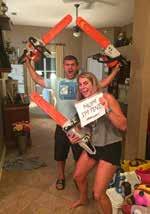
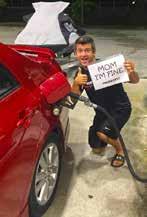
Whatever you do, find the humor in the day. Laughing with friends facing the same challenges is the absolute best medicine. My mom definitely didn’t appreciate it, but I’ll stand by this: On my way out of the Keys, I brought a laminated sign that read “Mom, I’m fine.” I took photos with it whenever I celebrated “little wins”: reaching my next destination safely, filling up on gas – and when I bought chainsaws to bring home. Once we got back and started rebuilding, daily Facebook updates on local pages about abandoned adult toys floating in a canal were must-see posts.
Safety first. First responders in the Keys are amazing in the aftermath of a storm, but realize that services won’t be running at 100%. Think twice before climbing a ladder blindfolded while swinging a chainsaw. (Kidding. You get the idea.) And in a world where there will always be opportunists without the best intentions, sit down with your family and talk about your plan to keep your home secure.
Know that it gets better. Our boss here at the Weekly refers to Hurricane Irma as the “best time I never want to do again.” Honestly? It’s pretty accurate. No matter what happens, the strength, support and unity in a community rebuilding from a natural disaster is second to none. Just before Irma hit in 2017, I was about ready to leave the Keys –but watching what this community did after the storm has kept me here ever since.
Make a hurricane/evacuation plan and kit. Seriously. It’s obvious, and I’m STILL going to say it again. We got lucky in 2025 with a quiet year –don’t get tricked into thinking that’s normal. Call the people you might stay with during an evacuation and make sure they’re still a go-to crash pad. Check the expiration dates on food in your kit. (Pop-Tarts and Slim Jims, baby!) You’ll never know the value of basic supplies like fresh water, power packs and ways to light a flame and cook food – until you’re the only one around who has them. While you’re at it, make sure you have all the tools, tire plugs, etc. to make yourself self-sufficient on the road so you can conquer a minor mishap during an evacuation.
Find a “point person.” During a storm, EVERYONE wants to know how you’re doing and if you’re safe. It comes from a good place, but a phone full of unread texts and missed calls is just stressful. Choose a loved one or good friend to be the info hub about your whereabouts and safety – and direct almost everyone else to that person. Putting out a social media post of your own thanking everyone for their concern and letting them know this plan can help. I’ll never forget running for my life up the west coast of Florida and getting texts from a family member asking why I hadn’t set up our Fantasy Football draft yet. (I wish I was joking.)
Did my mom appreciate these signs during Hurricane Irma? Absolutely not. Did they keep me sane and laughing? Absolutely yes.
By Erin Stover
Nobody wants to hear the “H-word” this time of year, but a little awareness goes a long way.
Living in the Keys requires staying mindful of the possibility of major summer weather systems wreaking havoc on our tiny and beloved island homes. While many of the necessary public service announcements focus on hurricane preparation, a majority of the questions and needs surface after the second wall has passed and the wind has died down.
EMERGENCY NONPROFIT RESOURCES
FEMA is well-known as the standard source for federal support for emergency needs and assistance in rebuilding. As any Floridian knows, though, there are a great deal of needs that must be addressed expediently and without any red tape. Thankfully, there are regional nonprofits built to respond to the needs of those left in the aftermath of a hurricane.
Monroe County Community Organizations Active in Disaster (MCCOAD)
At the top of the list is Monroe County’s umbrella emergency response nonprofit, which has organized a collective group of organizations, ranging from faith-based practices to environmental groups to healthcare systems. The representatives from public, private and nonprofit entities, employing tactics from FEMA’s Whole Community concept to best utilize the strengths of each partner agency, communicate and coordinate efforts in order to deliver the most efficient response systems and best use of resources. MCCOAD also works with a Long-Term Recovery Committee ensuring that projects are continually prioritized after the most immediate requirements have been served. These services will be put directly into action by the county, and don’t require requests from individuals.
Monroe Emergency Reserve Corps
Monroe County has also organized individual citizens as part of the emergency response efforts. Built on the belief that “strengthening the Florida Keys communities through volunteerism and service” would provide direct services by those who understand the needs and mechanisms on a personal level, the group is made up of members who have been trained in basic safety and emergency response skills. In the past, volunteers could be found managing tasks ranging from handing out meals to clearing dangerous debris. These services will also be put directly into action without request, but individuals interested in volunteering can find more information at mercorps. org/mc-coad.
Volunteer Florida
Similar to MERC, Volunteer Florida manages teams of volunteers at the state level, funneling staff and volunteers to the areas in greatest need. The group also oversees fiscal management for federal, state and privately funded programs, ensuring smooth communication. During an emergency, the organization will set up a hotline and populate its website with up-to-date resources for affected citizens. volunteerflorida. org/emergency-management.
American Red Cross
Red Cross is often the default organization receiving requests for assistance. With a well-earned reputation for being highly organized, ever-present and reactive, the group operates in Monroe County as needed during emergencies. During Hurricane Irma, the Red Cross distributed meals and water, provided basic medical attention and set up a hotline connecting individuals with licensed clinical social workers who could provide one-on-one assistance. In general, assets can include access to clothing, hygiene, medical services, rental and mortgage assistance, relocation costs, utility assistance, and other related items. Learn more at redcross.org/local/florida/south-florida.
Habitat for Humanity
With regional offices throughout the Keys, this national nonprofit focuses on long-term recovery, helping individuals and families rebuild and repair their homes after major storms. Habitat can help assess damage, make references and provide paths to permanent, secure, healthy housing. Find out more at habitat.org/our-work/disaster-response/programs.
Resources for pets and wildlife
It’s not only humans and property affected by hurricanes, but also animal populations. Assistance for injured and displaced wildlife can be sourced through U.S. Fish and Wildlife Services, Florida Keys Wildlife Society (the friends group of the National Wildlife Refuges of the Florida Keys, headquartered on Big Pine Key) and the Wildlife Center (Key West). For concerns related to furry family members, Florida Keys SPCA (Key West and Marathon) will offer resources following major storms, including emergency food, referral to medical care and information about pet-friendly shelters.
Monroe Emergency Reserve Corps volunteers. FILE PHOTO
Power Outage Preparation:
Register for SmartHub
If you’re not already using FKEC’s online account management tool sign up today! SmartHub lets you pay your bill, track energy use, and receive important updates— especially during a storm.
Keep Your Contact Info Updated
Make sure FKEC has your current phone numbers. When you call to report an outage, our system matches your number to your account— helping expedite restoration. Update all info via SmartHub or call 305-852-2431.
Enroll in FKEC Outage Texting
Report outages and get real-time restoration updates by text. Simply log in to SmartHub and go to:
→ Settings
→ Manage Notifications
→ Services
→ Outage Texting
Ensure 24-Hour Meter Access
Keep your meter clear of plants and debris. If it’s behind a locked gate, provide FKEC with a key or access code. Info is kept secure and only used when needed. Blocked access can delay power restoration.
If Your Power Goes Out:
Check Breakers First
If your power goes out, check your breaker before reporting the outage. About 33% of outages are caused by tripped breakers.
Report Outages Quickly
Call 305-852-2431 and use the automated phone system; If your mobile number is enrolled, simply text “out” to 1-855-940-4007; Report through SmartHub. With our Advanced Meter System it is likely our system will know about your outage before you even report it.
Check Our Live Outage Map
View the location and restoration status of outages at www.FKEC.com
Safety First
Stay away from downed lines. Call 911 if there’s immediate danger, then report the line to FKEC at 305-852-2431.
Home Surge Protection
Surge protection installed at your meter safeguards your home or business’s electrical system, appliances and electronics at the point of entry
Portable Generator Connect
GenerLink is a device mounted at your meter that simply and safely connects a portable generator to your home or business.
The Key Largo Wastewater Treatment District (KLWTD) and Islamorada, Village of Islands are at work before, during and after a storm to keep the central sewer collection system and processing plant fully operational.
KLWTD service area: Mile Marker 106 to the north end of the Tavernier Creek Bridge Islamorada service area: south of the Tavernier Creek Bridge to the south end of Lower Matecumbe Key
While the wastewater system is designed to operate during most significant storm events, there are a few conditions where service may be interrupted. It is important for our customers to understand these situations.
WIDESPREAD POWER OUTAGES
EXTREME WIND WITH RAIN FLOODING
MANDATORY EVACUATIONS and RECOVERY
Sewer facilities are on generator back-up and are regularly tested and prepared for power interruptions. If you have an on-site (grinder pump) system, you will need to conserve sewer usage until power is restored to your home.
Heavy rain with extreme winds (over 50 mph) can pose a threat to power generators. The system may be temporarily interrupted during these periods but will be restored immediately after.
Rising water above the in-home drains can allow for the infiltration of large amounts of water into the sewer system. During periods of flooding, portions of the collection system may be temporarily shut down to avoid overwhelming the system.
During periods of mandatory evacuations, service may be interrupted. The system will be restored, usually before re-entry is allowed to the general public.
"Reduce Usage" means: Water usage should be for essential sanitary purposes only. Minimize toilet flushing, avoid use of washing machines and dishwashers.
✔ Do not park or place debris on or next to air terminals, utility boxes or manhole covers.
✔ Notify your wastewater district of leaks or system failures.
✔ Never drain storm waters into the sewer system – it’s against the law.
✔ Follow us on Facebook for updates during extreme weather conditions.