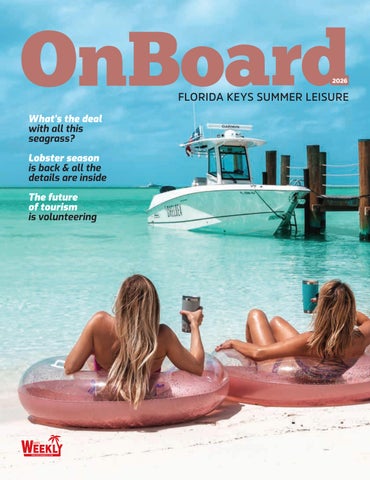
What’s the deal with all this seagrass?
Lobster season is back & all the details are inside
The future of tourism is volunteering


What’s the deal with all this seagrass?
Lobster season is back & all the details are inside
The future of tourism is volunteering
If you are looking for a caring, qualified dentist in Key West, then look no further. From your first contact with our office, you will notice that Island Dental is not your typical dentistry. We've worked hard to build an exceptional team of dedicated, caring and experienced professionals committed to the dental health of you and your family.
Our services include: General Dentistry | Teeth Whitening Crowns | Preventive Care | Periodontal Exams | Botox

To our readers:
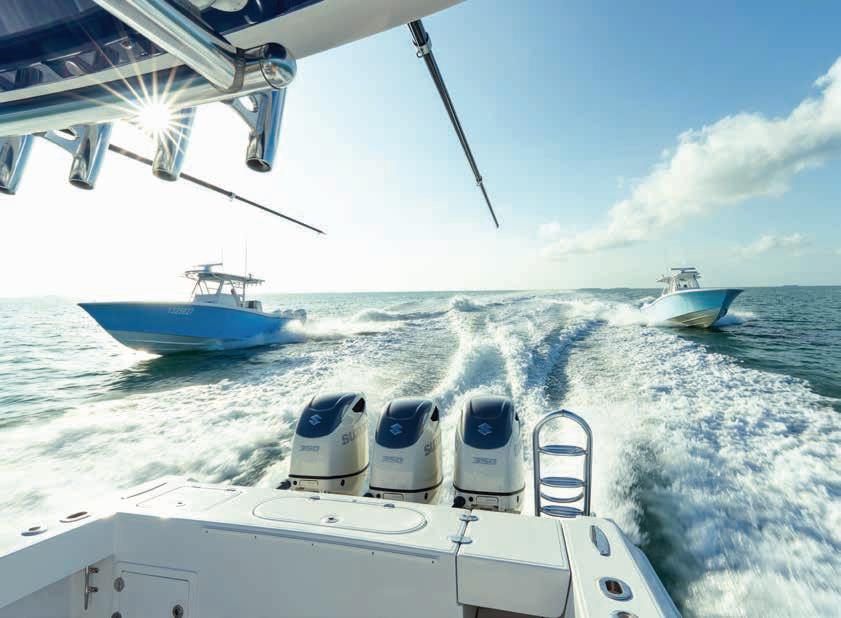
As the kid who’s been scooping minnows out of tidepools since the day he could walk, and who once built a raft out of pallets and Rubbermaid containers, this is my favorite magazine of the year.
If you’re in the Keys, you need to get on the water, period. It’s even more true in an island chain where summers get so hot that nobody needs a home sauna – we all just sit in our cars.
Now, what that looks like is different for everyone. It could be a silent, peaceful glide through an Amazon-like mangrove trail, or a whiteknuckle grip on the T top as you rip through the waves with 1,200 horsepower.
But there are commonalities, whether it’s courtesy (we all need reminders), the tech that keeps us safe, the gear that makes a good day unforgettable or the unexplainable draw of the winds and waves.
We’ve got it all in our 2026 OnBoard magazine, from the laws and regulation rundowns that could keep you out of trouble or save your life, to our favorite pickups from local retailers, the ways to make your vacation make a difference, and a look behind the curtain of “locals-only” knowledge.
So as you enjoy your summer in one of the best places on Earth for boating, our crew here at the Keys Weekly Newspapers hopes your coolers stay ice cold, your rods stay bent and your batteries, both literal and figurative, stay recharged.
Enjoy,
Alex Rickert OnBoard Editor
Publisher
Jason Koler
jason@keysweekly.com
Managing Partner
Britt Myers britt@keysweekly.com
Creative Director
Stephanie Mitchell stephanie@keysweekly.com
Art/Design
Javier Reyes javier@keysweekly.com
Editors
Alex Rickert alex@keysweekly.com
Jim McCarthy jim@keysweekly.com
Mandy Miles mandy@keysweekly.com
Copy Editor
Mike Howie mike@keysweekly.com
Account Executives
Patti Childress patti@keysweekly.com
Stephanie Mitchell stephanie@keysweekly.com
Manuela Mobley manuela@keysweekly.com
Production Manager
Anneke Patterson anneke@keysweekly.com
Art/Design
Irene de Bruijn irene@keysweekly.com
Jordan Baylis jordan@overseasmediagroup.com
Web Master
Travis Cready travis@keysweekly.com
Executive Administrator
Char Hruska char@keysweekly.com
Controller Lauren Pope lauren@keysweeky.com
Contributors
Traci Rork
Erin Stover
Ian Wilson Navarro
Cover photo
Pexels - Katie Cerami
Digital Support Overseas Media Group
Published MMXXVI
Keys Weekly Newspapers
9709 Overseas Hwy. Marathon, FL. 33050
305.743.0844
Key West office
5450 MacDonald Ave. No. 5
Key West, FL. 33040
305.453.6928
Tavernier office
89240 Overseas Hwy. No. 2
Tavernier, FL 33070
305.363.2957
keysweekly.com
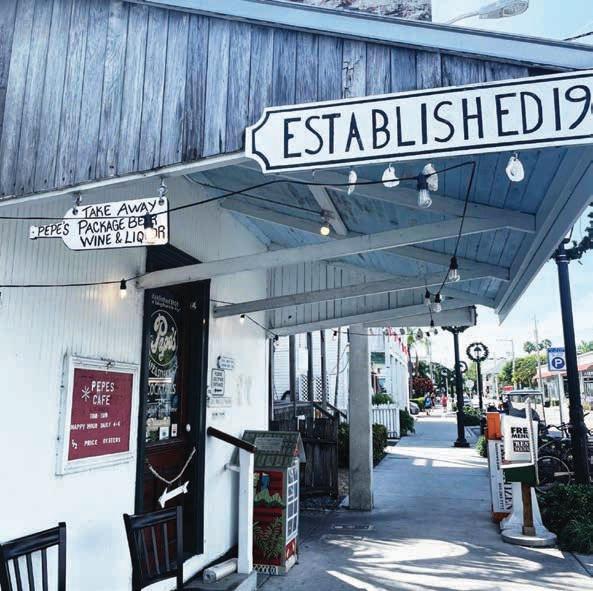
PULL UP A CHAIR & SEE WHAT THE HYPE’S ABOUT!
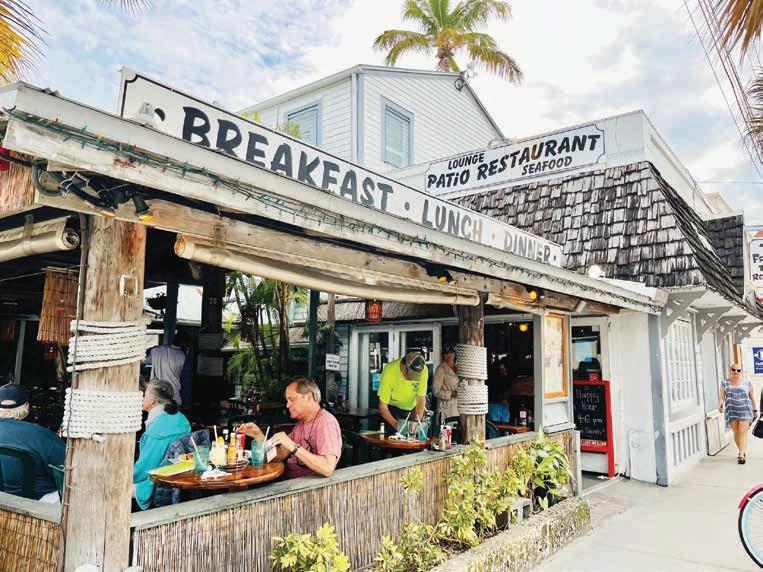
REVIEWS FROM MILLIONS OF TRIPADVISOR TRAVELERS PLACE US IN THE TOP 10% WORLDWIDE.

By Alex Rickert
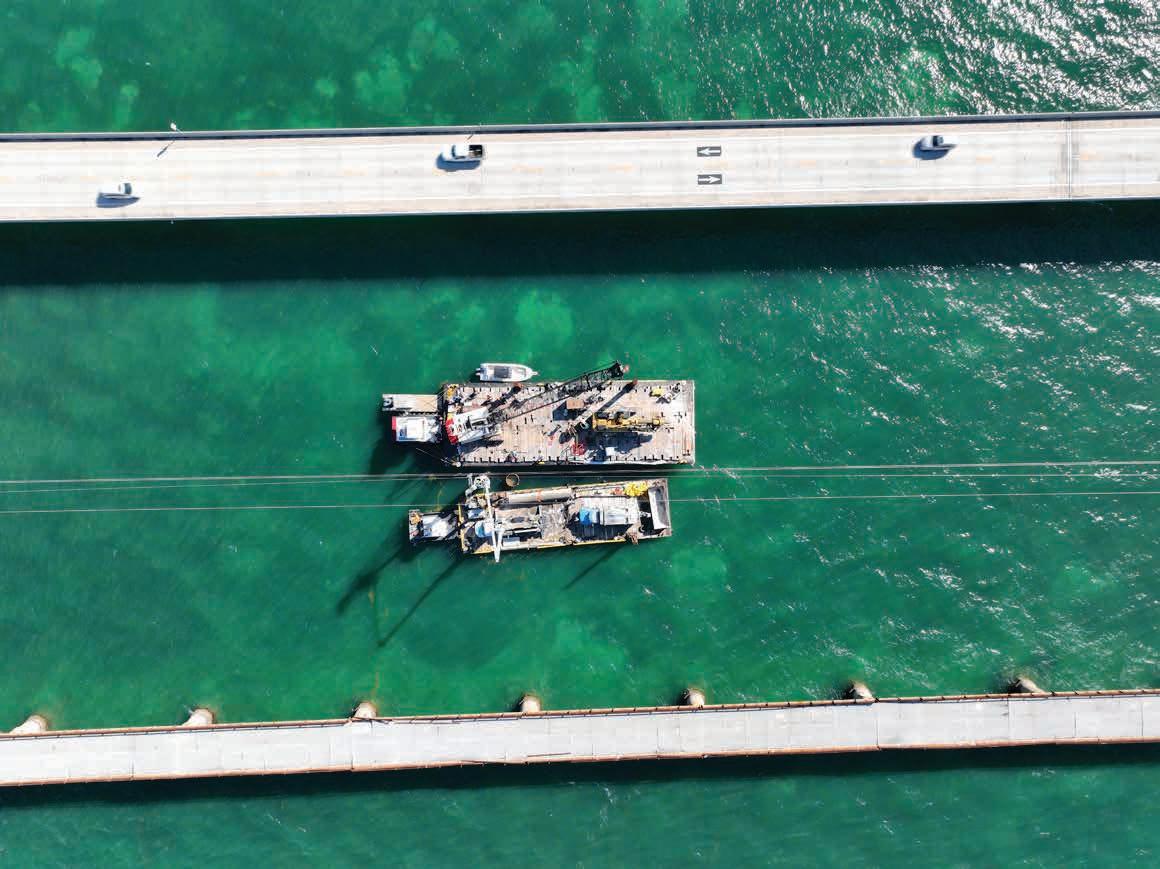
There’s no way around it; once you step off the gunnel of a boat and into the waters of the Florida Keys, a dive flag is one of the most crucial pieces of safety gear you can have on board. Ask anyone from our island community over the last few years, and they’ll tell you the painful lesson we’ve learned more than we ever wanted to: When these flags aren’t displayed correctly, or aren’t avoided by other boats, people get hurt or killed. So here’s the deal, in plain English.
SIZE MATTERS
I’m guilty of this one – I had no idea until a few years ago, when a helpful MCSO officer told me that the flags flying from an inwater buoy and flags flown from a boat have different minimum sizes. If it’s on an in-water buoy, it’s 12 x 12 inches. On a boat, it’s bigger: 20 x 24 inches. But guess what? There’s no law against flying a giant flag as big as Old Glory that’s IMPOSSIBLE to ignore. Why not?
SPEED MATTERS
If you see a flag in open water, you need to stay 300 feet away (that’s a full football field, FYI). For our Qualified Captains out there who are spatially challenged, I like to explain it this way: I’ve never played a day of organized football in my life. So if you pull up and I could hit you square in the chest with the ball, guess what that means? If you’re in a navigation channel, that distance drops to 100 feet. But no matter what, if you have to get any closer, it’s IDLE SPEED ONLY. Not plowing through the water one wellaimed fart away from being on plane. And this deal works both ways: If you’re a diver in the water, STAY CLOSE TO YOUR FLAG. Let’s be honest – even 300 feet is pushing it.
PLACEMENT MATTERS
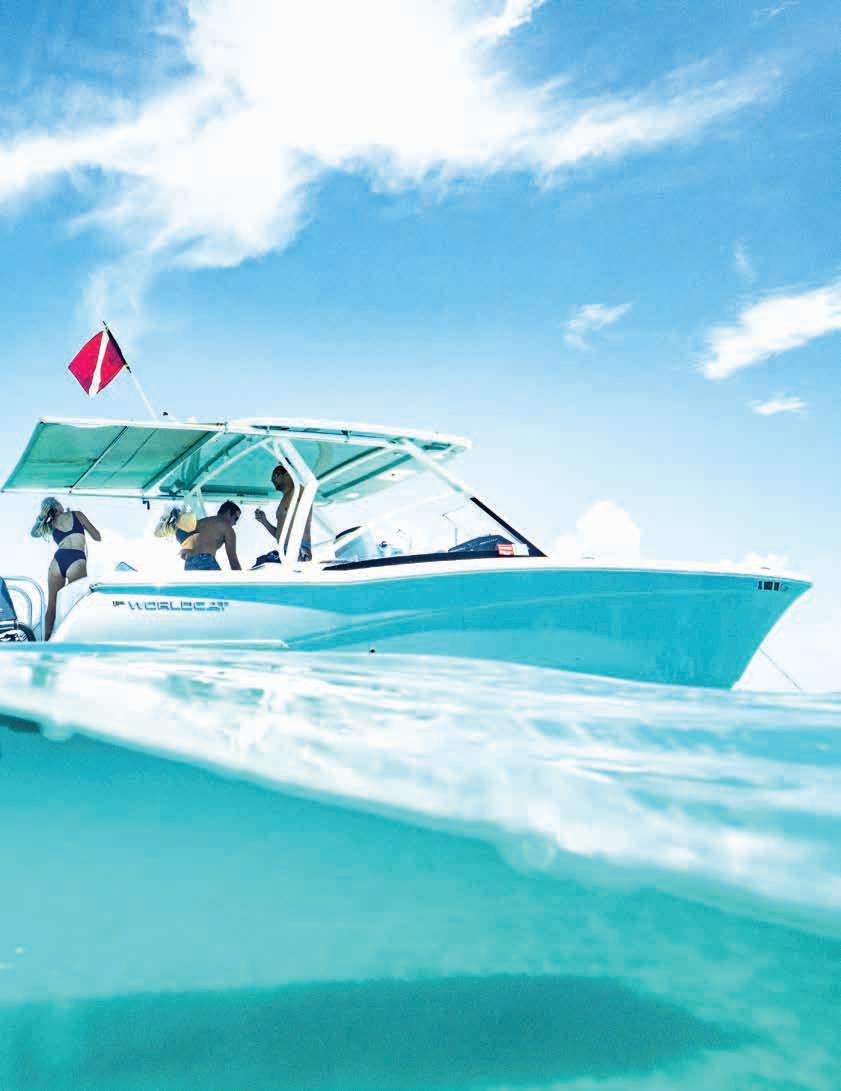
Flags must be displayed from the HIGHEST POINT OF YOUR VESSEL. Not strapped to the side of the bimini. Not hanging under the rail of the T-top. Not stuck in a low-lying rod holder. If there’s any angle where I can look at your boat from the water and can’t clearly see the flag, it’s WRONG.
MOVEMENT MATTERS
Say it with us now: When it’s time for the boat to move, the dive flag comes DOWN. No one can know the location of your divers, or give you a football-field-sized buffer, when you’re on full plane and still flying the red flag high. Come up with a saying to use with your crew before you put the boat in gear (with my buddies, once everyone’s on board, it’s “flag, ladder, anchor, go”).
COMMON SENSE MATTERS
Even if you dive with a flag up, getting in the water in high-traffic areas is taking a risk, especially during busy boating weekends (Looking at you, people who dive with crumpled flags under the Seven Mile Bridge during miniseason.) There’s no excuse for ignoring dive flags if you’re driving a boat. But there’s also no excuse for ignoring risk.

































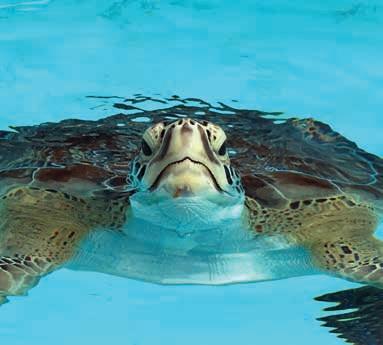
• Watch out for sea turtles on the surface
• Stay alert and obey speed limits



The City of Marathon operates three boat ramps for launching and retrieving watercraft:
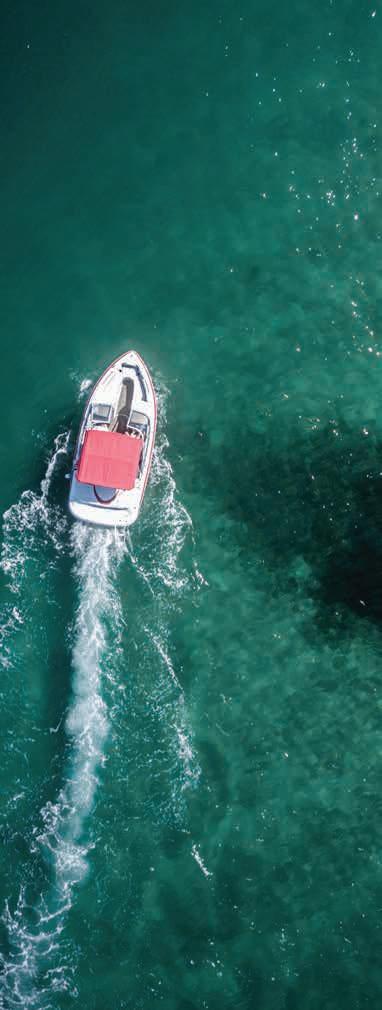
Harbor Drive Boat Ramp – Aviation Boulevard and Harbor Drive (no parking)
The Quay Boat Ramp –Mile Marker 54 (near Island Tiki) (with parking)
33rd Street Gulf Boat Ramp – Mile Marker 49 (with parking)
All ramps are open 24 hours a day, seven days a week. All ramps are pay ramps.
A LITTLE PATIENCE MAKES LAUNCH DAY BETTER FOR EVERYONE.
Prep your boat before pulling onto the ramp. Have a driver and a boat operator ready. Pay (as required) before entering the launch lane
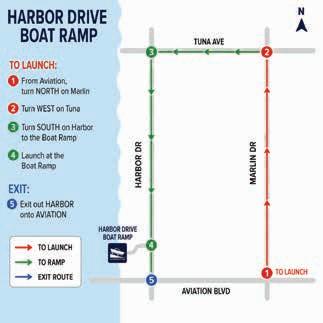


Follow signage throughout the route
Never leave your vehicle or boat unattended on the ramp. Wait to bring your boat to the dock until your trailer is ready. The line starts with the trailers—not the boats. Dispose of trash properly For
Keys Weekly staff
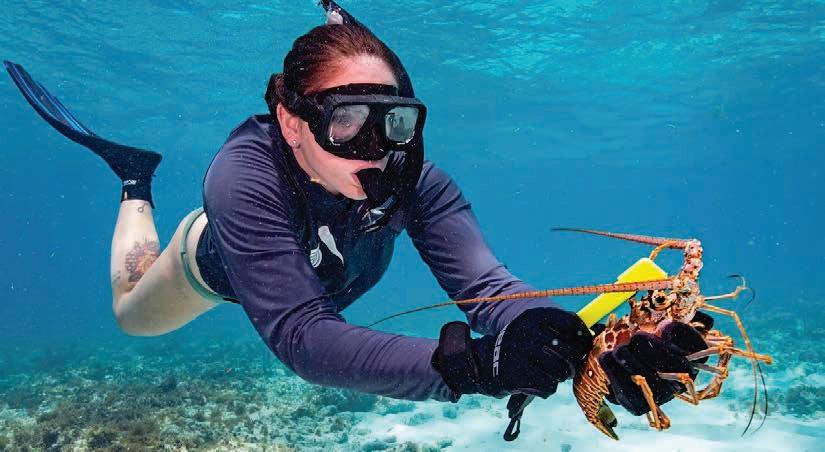
Want an all-in-one primer as you get ready to hit the water for mini-season on July 29 and 30? Our OnBoard staff have you covered.
• The bag limit is six lobsters per active, licensed harvester per day in Monroe County, period. Making multiple trips to harvest the bag limit each time is ILLEGAL.
• Possession limits apply both on and off the water. The possession limit, even when off the water, is six lobsters per licensed harvester on July 29, or 12 lobsters per licensed harvester on July 30 (six harvested per day of mini-season). Gear that could puncture, penetrate or crush the shell of the lobster is prohibited. It is illegal to spearfish lobster.
Sport season / “mini-season”: the last consecutive Wednesday and Thursday in July, beginning at 12:01 a.m. on day one and ending at midnight on day two (July 29-30 in 2026). Regular season: Aug. 6 through March 31.
Recreational harvesters are required to possess a valid Florida saltwater fishing license with a current spiny lobster permit. They can be purchased online at gooutdoorsflorida. com or by calling 1-888-HUNT-FLORIDA (486-8356).
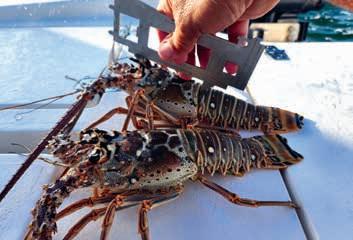
• Spiny lobster must have a minimum carapace length greater than 3 inches, and the measurement must take place in the water. The carapace is measured beginning at the forward edge between the rostral horns, excluding soft tissue and proceeding along the middle to the rear edge of the carapace. If a lobster gauge can fit over the end of the carapace, even snugly, the lobster is TOO SHORT. All recreationally harvested lobster must remain in whole condition while at sea.
Egg-bearing (berried) spiny lobster must be released unharmed. Stripping egg-bearing females of eggs, and possession of spiny lobster tails from which eggs have been removed, is prohibited. Eggs are orange, yellow, brown or red masses found covering the underside of the lobster’s tail. During mini-season, bully netting is the only legal way to harvest lobster at night, defined as one hour after sunset to one hour before sunrise. Night diving is permitted during the regular season, but NOT during mini-season. Possession of bully nets or hoop nets is prohibited in Everglades National Park.
• It is a felony to molest, damage or take lobster from commercial traps.
A diver-down flag must be prominently displayed when divers and snorkelers are in the water. Other vessels must slow to idle speed when within 300 feet of a dive flag in open water, or 100 feet in canals.
• It is illegal to create “artificial habitat” for lobsters using items like cement blocks, pipes and other debris. It’s also illegal to harvest lobster from artificial habitat in state waters.
• Recreational trapping is prohibited.
Most Keys cities have invoked special rules to cut down on neighbor-on-neighbor – and especially resident-on-visitor – “turf wars.” Essentially, local rules establish a “no-go” zone to keep lobster hunters away from private property. In the following areas, there is no diving or snorkeling within 300 feet of enhanced residential or commercial shoreline, any man-made or private canal, or any public or private marina.
• In Islamorada, Key West and unincorporated Monroe County, the rule applies during the three days prior to the sport season (July 26-28 in 2026), the entirety of the sport season (July 29-30) and the first five days of the regular season (Aug. 6-10).
In Marathon, the rule only applies during sport season, and in Key Colony Beach, it applies from the four days preceding sport season through 10 days after the opening of regular season.
• The city of Layton has a prohibition on harvesting lobster any time from waters within city limits.
DON’T LOBSTER IN THESE AREAS:
Sanctuary preservation areas (SPAs)
Carysfort Reef, the Elbow, Key Largo Dry Rocks, Grecian Rocks, French Reef, Molasses Reef, Conch Reef, Davis Reef, Hen and Chickens, Cheeca Rocks, Alligator Reef, Coffins Patch, Sombrero Key, Newfound Harbor Key, Looe Key, Eastern Dry Rocks, Rock Key, Sand Key.
Ecological reserves
Western Sambo, Tortugas Ecological Reserve.
Special-use research only areas (No entry)
Conch Reef, Tennessee Reef, Looe Key Patch Reef, Eastern Sambo.
Other closed areas (year-round)
Everglades National Park, Dry Tortugas National Park, Biscayne Bay Card Sound Spiny Lobster Sanctuary, Biscayne National Park Coral Reef Protection Areas, city of Layton, John Pennekamp State Park Lobster Exclusion Zones.
DIVE FLAG DETAILS
Divers and snorkelers in the water must display a diver-down flag. The flag must measure 12 inches by 12 inches if flown from a buoy or float, or 20 inches by 24 inches if flown from a vessel or other structure. Flags must be flown from a vessel’s highest point and must be visible from all directions. Divers should stay within 100 feet of their dive flags in channels, or within 300 feet of their flags in open water. Other vessels inside these distances must fully slow down to idle speed.
Kill lionfish, get more lobster
Through successful completion of FWC’s annual Lionfish Challenge, recreational lobster hunters can up their bag limits during each of the sport season days by one lobster per challenge finisher per day. All information, including detailed instructions to submit proof of the minimum 25 harvested lionfish, is at reefrangers.myfwc.com/lionfish-challenge. Too late to get involved this year? Bookmark this for 2027.
Increased bag limits ONLY apply to harvesters who complete the challenge, submit their tails, and receive a 2026 Challenge Coin. While the coin allowed two extra lobsters per day in 2024, for 2026, it has returned back to its original rule of one per day.
The increased bag limit applies ONLY to the harvester who completes the challenge and possesses the challenge coin, NOT all divers aboard a vessel.




• Install motion sensor lights. Make sure areas around the boat are well lighted
• Install sur veillance cameras and make sure they will capture the face of an intruder. Cameras are often installed too high and only capture the top of a suspects head or the brim of the hat he is wearing.
•
• Install a GPS tracking device on your boat and/or engines.
• Disconnect the batteries to disable the trim / tilt function. Keep the engine down, touching the ground so the lower unit can’t be removed.
• If the boat is on a trailer, chain the rims together or boot one of the wheels to prevent the boat and trailer from being stolen.
• Keep a trailer hitch lock on at all times
• Install bolt locks on the engine or put extra-long engine bolts on and bend the ends.
• Destroy the threads on one bolt so the nut can’t be removed.
• Keep valuable electronics in a secure location. It might be a hassle, but it will same you thousands of dollars in the long run.
• Take pictures and record serial numbers if available.
• minute - literally - to take it
• deputies will keep an eye on your property while you are away.




If you see anything suspicious, call the Sheri ’s O ce immediately! It is our job to check out suspicious ac tivity. Your call may be the one that helps us catch the bad guys!

If you see something you think may be suspicious. Call CrimeStoppers with any crime tips: 1-866-471-8477



By Erin Stover
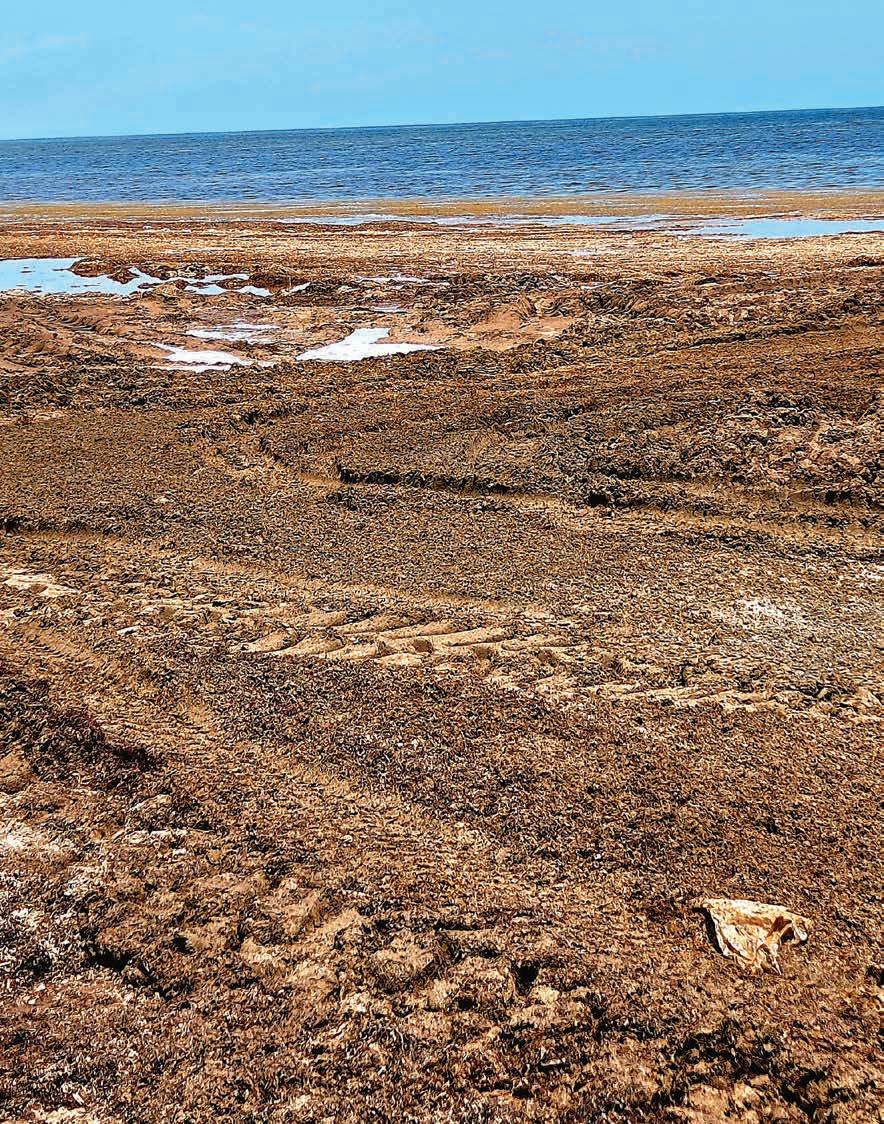
‘The Blob’ finally made it to our shores
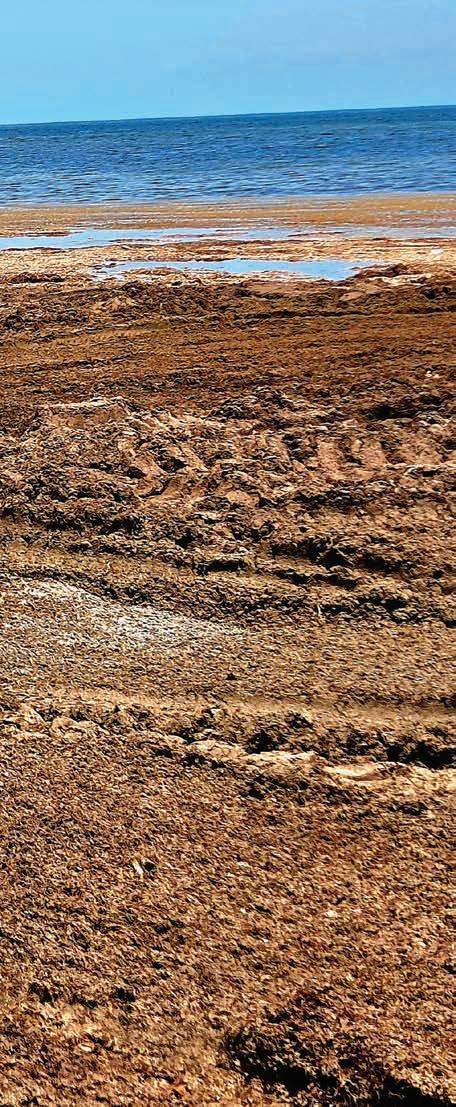
The idea of a hulking, mossy mass lurching toward our shores sounds like a storyline pulled straight from a sci-fi B-movie. Unfortunately, what’s happening in the Keys this summer is more natural disruption and less air-conditioned cinema.
Since 2011, the coastline has seen an influx of sargassum, a brown macroalgae which, until that point, had typically only been found offshore in large masses, miles from any land. Research points to a pelagic event in the North Atlantic in 2009-2010 as the catalyst for what we’re now seeing wash ashore. An “oscillation” incident stirred up the sargassum, forcing it farther south where it has flourished in warmer conditions. After about a year of growth out in the warm sea, bits began to find their way to the Keys. By 2019, the islands experienced the full effects of the super bloom for the first time, when beaches shifted from taupe-toned coral sand to brown sludge.
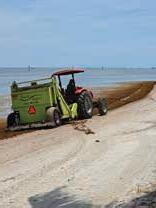
Fast forward a few more years to the summer of 2026, and the residents of the Florida Keys are suffering through the worst sargassum invasion thus far. Tourists exiting the airport are hit with the stench of rotting eggs, rather than the salty balm of a beach town. Local beaches are sitting mostly unused as few visitors, and even fewer locals, consider wading through knee-deep muck as a fair price to pay for a dip in the ocean.
For a chain of islands dependent on revenue generated from tourism, the hit is especially hard. Visitation is down at the beaches and state parks, and vendors in those locations are seeing fewer snacks served and umbrellas rented every day. Restaurants that trade on prime oceanfront views are seeing a dip in diners. With the issue now well into its third month, and showing no signs of relenting, word is spreading and the negative effects are exponential. Social media is stacked with countless videos warning of the beach sludge, with commenters reconsidering their waterfront accommodations and, in some cases, their entire trips.
The seemingly unstoppable invasion of sargassum is affecting more than the bottom line of a tourism-based economy. Locals are reporting allergy symptoms ranging from watery puffy eyes to respiratory difficulties. Sargassum inundation events (SIEs) are reported by the Environmental Protection Agency as carrying unique respiratory, cardiovascular and neurological effects. During SIEs, sargassum left on the beach will begin decomposition within 48 hours, leaching hydrogen sulfide (which causes the smell), ammonia and arsenic into the environment. Prolonged exposure can cause coughing, nausea, headaches, vertigo, shortness of breath and other symptoms.
Jiayu Li, an assistant professor studying the effects of sargassum exposure at University of Miami, calls it a public health concern. “The smell is only part of the story,” said Li. “As sargassum decomposes, it can release hydrogen sulfide and other sulfur-containing gases, and these emissions may be a concern when sargassum accumulates in large piles. If beachgoers notice a strong rotten-egg odor or feel eye, throat, or breathing irritation, that is a good sign to move away from the area.”
While sargassum is a normal, healthy part of the marine environment, the blooms occurring in the last 16 years are turning a natural occurrence into an environmental crisis. Offshore, sargassum belts feed fish and other marine life, and regulate carbon and oxygenation levels. When those belts get too large, though, they choke out sunlight, causing coral and other submarine structures and lifeforms to die off. Satellite monitoring reveals that the well-documented “Sargasso Belt,” Earth’s largest macroalgae bloom floating between West Africa and the east coast of the United States, has grown 250% in 10 years. It now covers 5,500 miles (greater than the distance from mainland Mexico to Mauritania) and measures at offshore depths reaching 20 feet.


Scientists say the reasons for increased SIEs are complex, but agree on several consistent factors. Historically, blooms would occur each spring as large rivers such as the Amazon and Mississippi emptied nitrogen- and phosphorus-rich waters into the ocean. Waters now carry substantially higher quantities of these nutrients due to fertilizer runoff and wastewater, and this ensures a steady year-round stream upon which the sargassum blooms can feed.
Coupled with the 2009 event, which pushed the belt into warmer waters, sargassum growth is becoming unmanageable. Researchers expect, as sea temperatures continue to rise in the Atlantic, that the growth level will remain on pace.
Offshore imaging paints a scary picture, while coastal perceptions depict an escalating nuisance. Science is working rapidly to develop solutions which would stabilize and diminish the growth. Both Massachusetts Institute of Technology and Columbia have developed programs that would sink large sections of the belt to extreme depths in the Atlantic, while University of Miami actively monitors the situation closer to home. As national and regional entities work toward solutions to mitigate the accumulation, day-to-day actions for Keys residents and visitors may be as simple as avoiding the shore when high temperatures overlap with SIEs, switching beach days plans for sandbar visits and indoor dining.





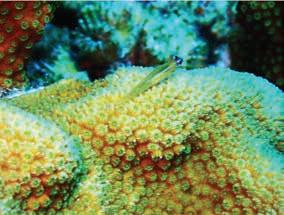
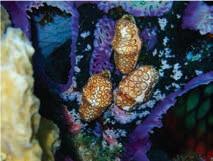

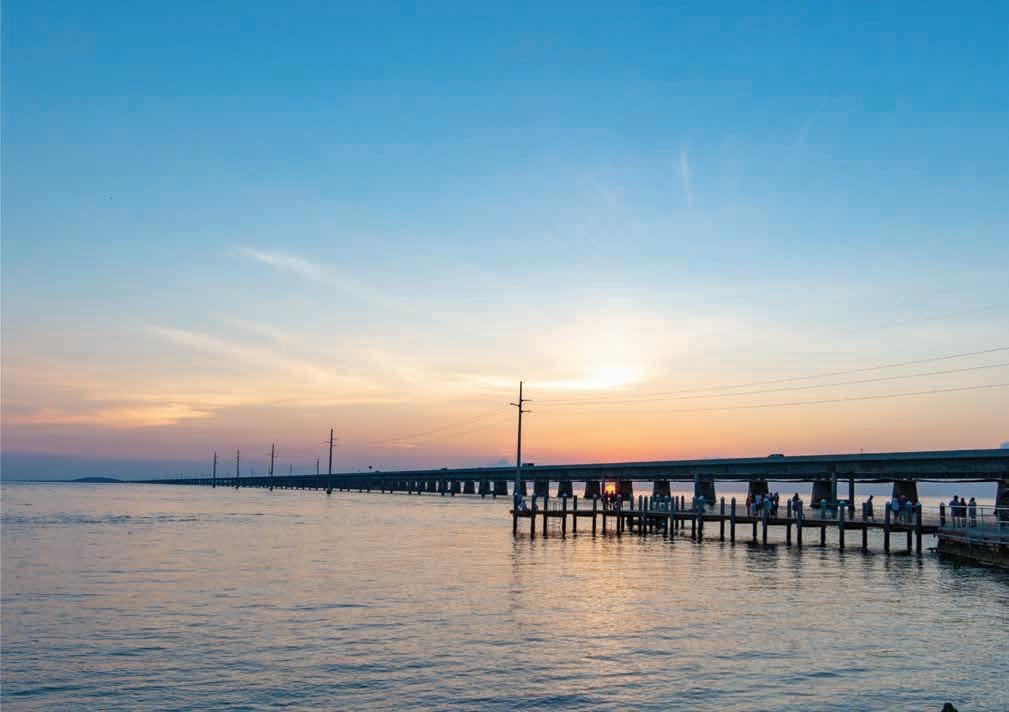


By Traci Rork
The formula for a great coastal vacation has always been simple: relax, consume, rinse, repeat.
We come for the sunsets and seafood, the snorkeling trip and beach bars, the frozen drinks and fishing stories. We collect souvenirs, photographs and just enough sunburn to prove we were there.
But a growing number of travelers are arriving with a different itinerary. Rather than simply enjoying paradise, they’re helping restore it.
Welcome to voluntourism, a growing travel trend that invites visitors to trade a few hours of leisure for something harder to quantify and impossible to forget: participation in the restoration of paradise itself. The trendier phrasing: wanderlust with a purpose.
Voluntourism differs from ecotourism in one important way. Ecotourists travel to experience nature responsibly. Voluntourists travel to actively improve it.
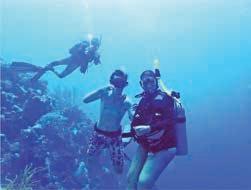
They’re not just snorkeling above the reef or snapping shots of sea turtles from a pier. They’re planting coral, pulling ghost nets and helping repair damage that the ocean cannot fix alone. Instead of parasailing or bar crawling, they're hauling abandoned fishing lines from mangrove roots. Rather than sim-
ply admiring the ocean, they're becoming part of what makes the Florida Keys so extraordinary in the first place.
Nowhere is that shift more visible than here.
The Florida Keys have always inspired devotion. Visitors arrive, fall in love and promise themselves they’ll return. Some eventually move here. Others spend years dreaming about their next trip back.
But loving a place and helping preserve it are two different things, and voluntourism bridges that gap.
Organizations throughout the Keys have spent decades protecting the ecosystems that support both wildlife and the local economy. In Key West, Reef Relief engages volunteers in shoreline cleanups, marine debris removal and environmental education. Meanwhile, Mote Marine Laboratory has become internationally recognized for restoring coral and reef systems across Florida waters.
The Turtle Hospital in Marathon rehabilitates injured sea turtles while educating visitors about conservation challenges facing marine life. Local animal shelters welcome volunteers willing to spend time walking dogs, socializing cats and supporting adoption efforts.
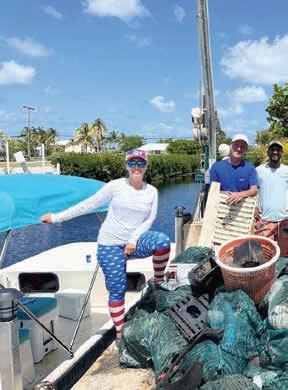
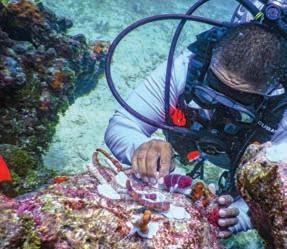
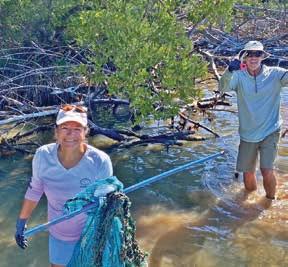
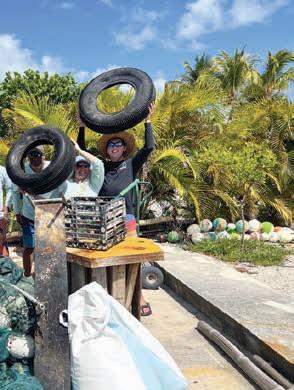


What once rested entirely on the shoulders of scientists, nonprofit organizations and year-round residents is becoming increasingly communal.
Some travelers take vacations to check out. Others are learning how to check in. To slow down. To suit up. To step into something that feels less like escape and more like purpose.
People leave with more than a sunburn and a hangover — not that there's anything wrong with that.
The reward is immediate, visible and surprisingly addictive.
A volunteer can point to a freshlyplanted mangrove or a pile of collected fishing line and know, in a very real way, that their effort mattered. There is something deeply satisfying about tangible impact, and people are hungry for hands-on happiness.
You may forget what band was playing at the bar one night. But you won’t forget the cleanup mission where you found sea glass from Cuba, a rusted toaster and half of someone’s kayak covered in barnacles.
Ways to Make a Big Difference
HOW IT WORKS
Most Florida Keys organizations offer shortterm volunteer opportunities for visitors yearround. Activities include shoreline cleanups, habitat restoration, animal care and marine science support. Most require advanced registration but no experience, just a willingness to participate.
KEY WEST
• Reef Relief | reefrelief.org
Marine conservation, education and shoreline cleanups. 2- to 4-hour volunteer events focused on coral protection and marine debris removal.
• Florida Keys SPCA | fkspca.org
Animal shelter support including dog walking, enrichment, and cat socialization.
LOWER KEYS, KEY WEST & MARATHON
• Conch Republic Marine Army | conchrepublicmarinearmy.org Jump on board at one of three locations (the Perry Marina in Key West, Looe Key Reef Resort or Isla Bella Beach Resort) for a half-day trip of finding “trash treasures” along the Keys’ shorelines and mangroves. Some trips end with a stop at the sandbar!
MIDDLE KEYS
• The Turtle Hospital | turtlehospital.org
Sea turtle rehabilitation and conservation awareness.
• Dolphin Research Center | dolphins.org Marine mammal education, research and visitor participation programs.
• Mote Marine Laboratory | mote.org Coral restoration science, marine research and conservation initiatives.
UPPER KEYS
• Coral Restoration Foundation | coralrestoration.org
Coral nursery maintenance and reef restoration dives for certified participants.
• I.CARE | icareflkeys.org
Community-driven shoreline and mangrove cleanup projects, along with training for volunteer dives participating in coral restoration activities.
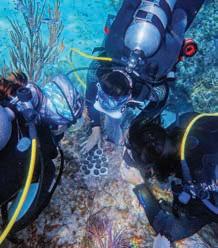
The stories become part of the trip. So does the perspective and the solidarity with the locals. That’s not service. That’s reciprocity.
Voluntourism isn't replacing the classic Keys getaway anytime soon. No one is suggesting you spend seven straight days hauling trash under the July sun. There is still plenty of room for fishing trips, sunset cruises, beach bars and lazy afternoons eating fried chicken on a boat (which is admittedly a local tradition).
But more travelers are choosing to dedicate a small portion of their vacation to stewardship. They're discovering that conservation doesn't require a marine biology degree and that ordinary people can help protect extraordinary places.
The work is simple. The shift is not.
For generations, we've treated the ocean as something to visit— we arrive, we marvel, we briefly borrow the view and we leave.
Voluntourism asks a different question: What can we leave behind that lasts longer than our footprints in the sand?
The places that move us most often give us far more than we can ever repay. Yet for a few hours of salty service, we can try.
And sometimes, that’s enough to change not only the trip, but also the

Do you know the difference between a total length and fork length? How about a slot limit? Or the size difference for legal mangrove snappers in the Gulf or the ocean side? Fish Rules has it all in one place – and tailors the regulations for your catch to the exact location where you’re fishing, calculated by GPS.


Yeah, yeah, we know – every old salt has his or her own app that’s “the best, hands down” for wind and waves. Nothing is every 100% accurate, but Windfinder, Buoy Weather and others give boat captains and their passengers the best chance to see if the day will be a bumpy ride or not.

Primarily designed to monitor critical Keys reef sites for coral bleaching, data from these buoys throughout the Florida Keys National Marine Sanctuary gives real-time information from Key Largo to Key West, including temps, wave heights and wind speed and direction. Visit aqualink.org/ collections/811. Pro tip: Save the site as an app tile on your smartphone!


By Alex Rickert
There’s a reason those who visit the Keys put so much stock in true “local knowledge.” Our waters are full of sandbars that are fun for a day of drinking, but have plenty of shallows that will end a day afloat pretty darn quick. And when it comes to the weather, there’s a reason we say “if you don’t like it, wait 20 minutes – it will change.” And with constantly changing marine regulations – especially in an island chain with the Gulf on one side and Atlantic a stone’s throw away on the other – we all need companion guides to make sure FWC and MCSO aren’t pulling up to our gunnel.
When you set out on the water, these are the apps you can trust. It’s by no means an exhaustive list, but it’s a pretty good start.
EXPLORER APP
The Florida Keys National Marine Sanctuary has plenty of zones with special restrictions, whether they’re for research purposes or prohibiting specific activities. It can be hard to keep track, but “Sorry, I didn’t know” isn’t a valid excuse. Download the Marine Sanctuary Explorer app to stay fully up-to-date on restricted areas and make sure you’re A-OK.


The advancement of GPS technology has completely changed the boating industry, and it’s especially vital in an ecosystem with delicate fl ats, shallow water, underwater obstructions – and lots of “honey holes.” Use these apps to stay prepared regardless of what piece of navigation equipment you have in front of you, and carry your prized “spots” with you wherever you go.
































Get tides and currents near you, fast and free. Tides Near me focuses on nearby tide stations and current tidal conditions. Learn the time of the last and next tide and current, as well as when the sun and moon will rise or set.
























By Alex Rickert
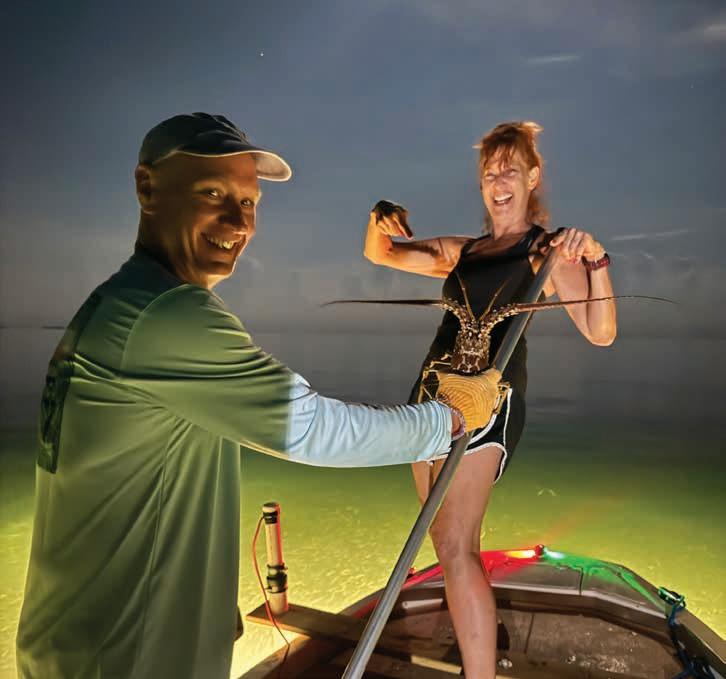
Long before high-tech underwater lights, custom-built skiffs and crowded lobster flats, Capt. James “Bucko” Platt was a kid chasing bugs at night in the Florida Keys.
Today, after years of commercial lobster fishing, Platt has turned that experience into a charter operation that gives visitors a front-row seat to one of the Keys’ most unusual fisheries: bully netting.
For those unfamiliar, one trip is all it takes to get hooked: set out at night, crank up some tunes, share time with friends out
of the heat, and get your fix for bug-hunting while using high-powered lights to see the nocturnal side of ocean life that few will ever glimpse.
But, as with anything, there’s a catch: nighttime lobster hunting requires expensive gear that’s almost useless anywhere else in the state, and when you’re working almost exclusively in water less than five feet deep, the fate of the Keys’ delicate seagrass beds hangs in the balance. Thankfully, there are local charter
captains to solve both problems at once. We caught up with Bucko to talk about how he got started, what makes bully netting special and how newcomers can do it the right way.
How did you first get into bully netting? I’ve been bully netting since I was young. We used to go out when I was a kid with a couple other kids in the neighborhood when we were 13 or 14 years old. There wouldn’t be anybody out there at that time.
We’d go to the same places that we go now, where there are dozens of boats, and we would just get up-current from the flat, put the motor up and drift over the flat and catch our recreational limit. It was a no-brainer.
A group of us started doing it commercially probably over 15 years ago at this point. We were catching 200 to 300 lobster in a night pretty regularly.
What changed from those early days?
We kind of started out doing it for fun, then it turned into a job because there were still very few people doing it. Then it got so crowded that it almost wasn’t worth doing it.
A couple years went by, and I built a bigger boat and started taking people out. For the last couple years, that’s been the way to go for us. I can’t control the price of lobster, but I can control the price that people pay to come on my boat. Just about every bully netting guide in our area at one time was catching these for a paycheck – but if we didn’t come home with 100 or more, we were coming home empty-handed.
For people who have never tried it, what makes bully netting different?
Anybody can do it. Some big older guy might not be going diving for lobster in heavy current, and neither are some kids – we see how many people come down here and aren’t ready to get in the water, and end up having health problems. But instead of one person getting in the water and catching all the lobster, with bully netting it’s pretty normal for mom and dad, grandma and grandpa, and the kids to all get in on the action.
And the perspective is totally different. You could go to any shallow water area on the calmest, clearest day of the year, and you’re going to see about 10% of the life you see at night. When you go out there with the lights, you see every little sea urchin, conch shell, turtle, every fish that blends in with the grass. You see everything.
To book your bully net trip with No Slack Charters, visit no-slack.com. Bucko’s other recommended charters include Main Attraction (Marty Lewis), Hammer Time Adventures (Butch Hewlett) and captain John Callion.
What should people understand before trying it on their own?
The boats we use are specifically designed for shallow water – they’re usually no bigger than 17 or 18 feet. A lot of people go out there on bigger boats with spotlights and people everywhere, and they’re running over flats, cutting up grass, cutting off other boats. It’s dangerous. The biggest thing is just basic common sense and common decency, especially in the first couple days of the season. As a lifelong commercial and charter fisherman, I’ve learned to make adjustments to what’s going on.
What are the unwritten rules when there are other boats working the same area? If I’ve started on one end of the flat and I’m working toward the other end, the right thing to do is not cut right in front of me. Get in the line and follow it against the current. As much as it might stink that you have to get behind me, I was there first. I try to practice what I preach – I don’t even do that to tourists. During mini-season or the first week of regular season, there are going to be boats everywhere and you have to expect that. But if it’s later in the season and somebody has been working a spot, give people space.
What’s one mistake you see all the time?
The absolute worst thing is lights above the water. A light that goes down into the water lights up the water better, but it also isn’t blinding every single boat around you, or shining into the living rooms and bedrooms of the houses on shore. That’s how bully netters get a bad rap. If you have giant lights shining everywhere, every person around you is blinded. By the time they look away, they can’t even see where they’re going. Some people if they’re traveling with the current will run straight into you if you’re sitting in the same spot, because they don’t even realize.
For people setting up their own boat, what gear matters most?
I have a pretty simple setup that I’ve been using forever, and locals come up with all their own types of lights, but I see the Galvpro and Swamp Eye lights seem to be the go-to ones now.
Another thing people should consider is a custom net, because a lot of the ones sold around town just aren’t long enough. If you have a taller boat and you’re in more than a few feet of water, a short net is a nightmare. The size of the ring isn’t really the biggest thing. The length of the pole is. I’d say it needs to be at least 10 feet.
What do you hope people take away from a trip with someone who knows the fishery?
Even if it’s only a time or two, take advantage of an opportunity to see how it’s done the right way. Then, if you’re going to go out on your own, at least you understand it instead of being out there complicating it for the people who are doing it the right way.






























NEW HAPPY HOUR 1-5PM $7 Menu
• Chicken Wings & Livers + other delicious items including some sushi
• 32 beers on tap 1/2 OFF from 3pm-5pm
• $2 Pints of Yuengling and Bud Light!
POWER HOUR 2 - 3PM
• 1/2 priced drafts
BREAKFAST UNTIL 2PM
• Unique & interesting menu
• $3 Mimosas • $5 Breakfast Shots
LUNCH & DINNER
• Lobster Enchiladas
• Diver Speared Local Fish
• Prime Rib • Local Lobster
• Cook Your Own Catch
• Great Seafood Selections
SUSHI
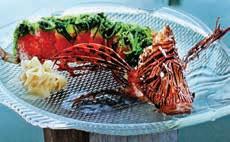
• Toro • Lionfish • Poke • Hamachi collar
• Fresh Uni arrives on Wednesdays
By Erin Stover
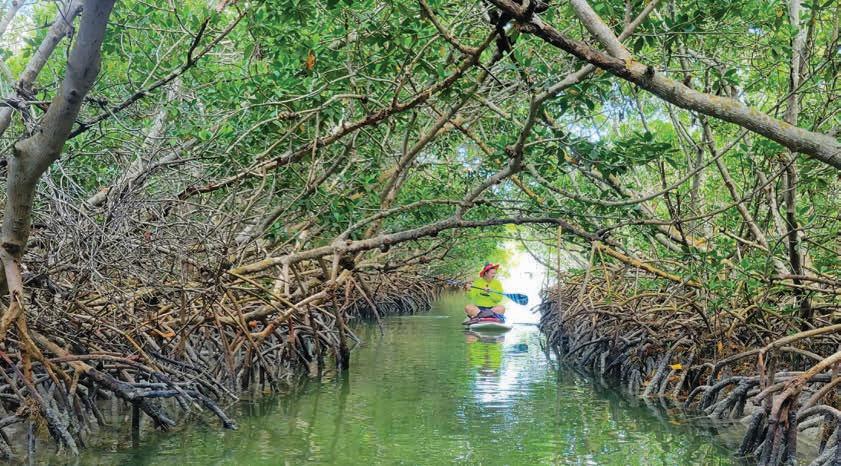
Today’s heat index is, again, expected to hit 107 degrees, sending mere mortals scrambling into darkened, overly air-conditioned rooms. These are the days when venturing out requires an extra layer of sunscreen and a strong plan that includes something aquatic. Thankfully the Keys offer plenty of wet, shady oases just off shore. Leave the beating sun on open water, and you are suddenly surrounded by a rainforest-like experience that makes the paddler feel like they’ve been dropped in the middle of a lush aquarium exhibit. All that’s required is a rented paddle and a little curiosity.
The Florida Department of Environmental Protection’s Office of Greenways and Trails estimates that the state contains 4,100 miles of aquatic trails, spread over 60 unique waterways ranging from creeks to mangrove tunnels. The Keys feature heavily in this area, with hundreds of miles of trails between Key West and Homestead. For those simply wishing to escape the heat, while maybe relaxing and getting a little exercise, it can feel overwhelming.
While the options are nearly endless, starting is easy. From any location in the chain of islands, there are easily accessible tour and rental companies eager to share their time and knowledge of this ecosystem. For novices, as well as seasoned paddlers wishing to learn new areas, nothing beats going out with a guide. Guides in the Keys are almost universally prodigious at teaching introductory skills, while being able to read their audiences and provide deeper knowledge where it’s needed. Ask any paddleboarding coach or tour company owner, and they will tell you that, after years on the water, they still occasionally take guided tours as a way to broaden their understanding and gain new insights.
So, paddles up. Let’s get started.
LOWER KEYS: Lazy Dog Adventures (Key West) lazydog.com
One of the gold standards in the Lower Keys has been operating continuously since 1998. The company’s eco-tours promise that guests will experience the waters “the way the locals do.” In terms of customer service, flexibility and right-out-the-frontdoor accessibility, this is the place to start. Kayakers enter the way with an easy launch and find themselves in mangrove tunnels after paddling for just a few yards. Experienced guides lead the tours at a calm pace, pointing out a plethora of creatures in the shallow turquoise waters. Paddlers can expect to see rays, nurse sharks, fish and birds along the way, before returning to the dock at Hurricane Hole, which offers delicious nibbles and cold drinks.
MIDDLE KEYS: Florida Keys Kayak and Paddleboard (Marathon) keykayak.com
Known for adaptability and great gear, this company serves the Middle Keys with tours and easily obtained rental equipment. Offering both day and night tours, the organization tailors each outing to work with tide and wind conditions, promising the best shot at wildlife encounters while ensuring a gentle paddling experience. The standard ecotour loops through red mangrove forests, focusing on less crowded, better-preserved locations throughout the area. For those living, or staying longer, in the Middle Keys, the company offers straightforward equipment rentals, often with free delivery.
UPPER KEYS: Paddle the Florida Keys paddlethefloridakeys.com
Located on Tavernier Creek, between Key Largo and Islamorada and just an hour from Miami, this outfit serves multiple markets while still managing to find trails that offer solitude and that only-in-the-backcountry magic. Professional guides locate wildlife, educate about the ecosystems, teach beginners how to paddle and share their unique local knowledge, usually with a humorous
wink. In business since 2012, Paddle the Florida Keys embodies the lifestyle and passion of paddling by hosting charitable events in the community and helping visitors find their dream boards. Owner Deven Carrier is a lifelong Florida Keys local and competitive paddleboard racer whose passion is evident to everyone who walks into his shop.
The shine of a paddle tour in the Keys never really wears down, but eventually most people will want to explore further on their own. The shallow marine environment surrounding each key is the perfect training ground for long expeditions, short morning outings and everything in between. For those wishing to strike out on their own, the first place to seek resources will likely be the same companies that offer introductory tours. Gatekeeping is thankfully almost nonexistent, and many tour organizer websites offer maps and local tips. Talking directly to the guides yields even deeper insider knowledge on the best places to explore.
Once paddlers have the confidence, the next step is sourcing gear and navigational tools. Most tour companies offer rental equipment that can be picked up on site or delivered. Many also offer assistance in selecting the best gear based on body types and purpose – fishing, racing, slow touring – with discounts on purchases for those who really want to commit. With equipment managed, the next step is deciding where to play. Websites like floridarambler.com and paddleflorida.net offer extensive maps and advice on route difficulty and accessibility. Beginners should start close to shore, on shorter routes, adding mileage as their comfort grows.
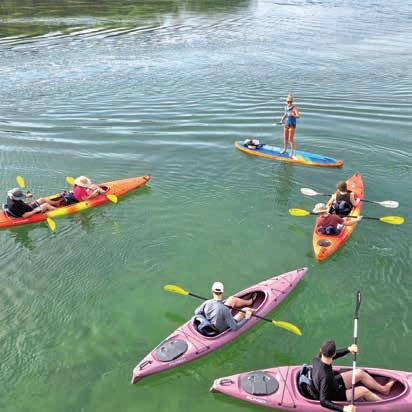
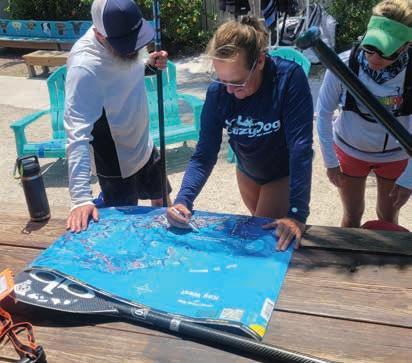
Above all, solo paddlers should note some very important safety protocols before heading out:
On the water, technology can fail, signals can fade and phones can swim. Purchasing waterproof boating maps is a good idea for those venturing further than their backyard mangroves. Whistles are an easy and vital addition to a day pack, and a PFD is (legally) the top priority for inclusion.
Knowing where boat channels cross aquatic trails is arguably the number one precaution on the water. Channels are always marked by red and green buoys. Non-motorized vessels have right of way, but as the much smaller dog at the park, it’s safest to assume that your kayak might not be seen.
Preparing for the natural elements is a must. All the staples of a day at the beach apply here as well – sunscreen, water, hat and sleeves. Beyond what is packed in the hull of a kayak, or on your body, paddlers also should equip themselves with basic knowledge of this specific environment. Reading tide charts properly can mean the difference between a calm outing and an armbusting, exhausting fight against the current to return home. Numerous apps (Tides Near Me and NOAA, for example) provide detailed info on daily tides. While on your phone plotting the tides, double check weather apps as well, since lightning can pop up at any time in the summer.
With a little safety planning, route research and a healthy dose of curiosity, paddling your way through summer in the Keys can be a ridiculously rewarding – and refreshing – experience.
MIND ALTERING LUBRICANTS FOR SOCIAL INTERCOURSE

CHEERS TO WINNING BEST MARTINI AGAIN IN 2025!!


DJ Jared starts at 8:30pm
New Bar Name Announced at 9:15pm
Complimentary Hors d'oeuvres start at 9:30pm
Blessing of the Fleet in English & Spanish will be broadcast live over US1 Radio 11:50pm










Celebrate our amazing fleet and the spirit of the Keys with a blessing, then light up the night with a spectacular fireworks send-off!


The Marathon skate park ju opened come get your gear! Parts, accessories, completes, safety, we’ve got it all! ust our it




P A D D L E

W A K E
Ready to hit the cable? We’ve got complete kits just waiting for you

It’s summertime get your live paddleboard and accessories today and have the best adventures yet to come! y






Handpicked gifts & goods from the Keys

Tropical plants to bring the Keys home
Cold drinks, good vibes, classic Keys


G O O N
S W I M
Snorkeling gear, little trouble kids gear, bernies. We’ll get you swagger out! Don’t leave without your Pit Vipers for the best summer look!


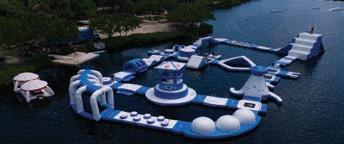

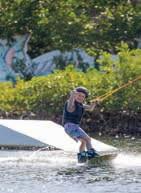
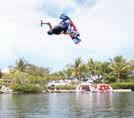
Experience the thrill of wakeboarding at Keys Cable Park, where our unique two-point cable system delivers a smooth, boat-like ride that’s perfect for beginners and advanced riders alike.
ONE-ON-OPERATOR CONTROL
Every session is tailored to your skill level
NO LONG SWIM BACK



If you fall, the handle comes right to you
POWERED BY THE SUN
The easiest, greenest, and most fun way to get on the water in the Florida Keys.

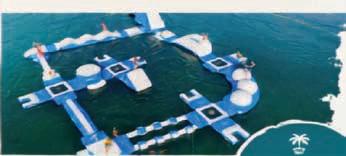
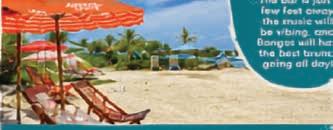
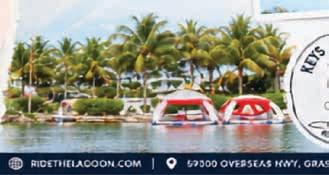
njoy the day at the Lagoon Beach while the kids play on the Aquapark! The bar is just a few feet away, but weekend music will be vibing, and the best brunch at Bongos is just a few feet away!
SESSIONS SOLD BY THE HOUR
One rider at a time for the best experience
s , ill st st






The only thing better than a perfect boat day in the Florida Keys? Being the person who gets the invite. Go on, I’ll wait. Because absolutely nothing beats that last-minute phone call summoning you out onto crystal-clear water under a cloudless sky.
But as any seasoned boater knows, a fl awless day requires more than just showing up. To keep your crew from turning into sunburned, hangry castaways, you need the right gear and snacks. Here are our favorite "hero" items from around the Keys to ensure complete success.
Photos contributed
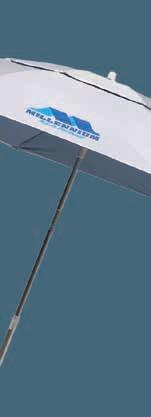
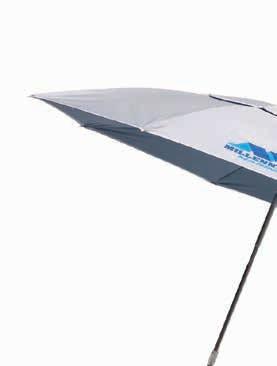




ARCHIE’S FLIP FLOPS
Sea La Vie Beach Boutique $45 AND UP











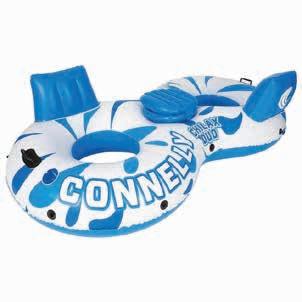


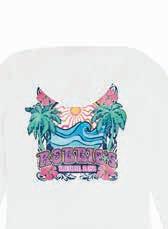








Sway Islamorada $132 AND UP

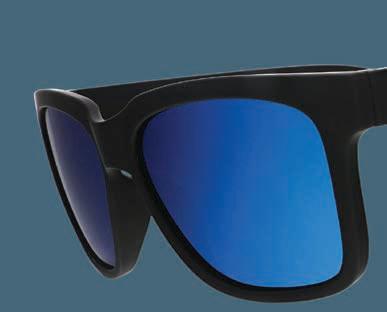
GOODR SUNGLASSES FLOATING FRAMES FOR UNTIMELY DROPS
Bayshore Clothing
$40-50

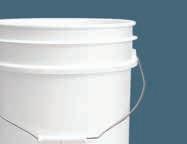

5 GALLON BUCKET DON’T LIE – YOU KNOW YOU USE IT FOR *EVERYTHING*
Marathon Lumber & Building Supply
$6




CUSTOM HATS CHOOSE YOUR DESIGN ON POPULAR BASES
The Tackle Box


$35






SITANO SHIRT DRESS THE PERFECT BOAT DAY COVERUP
Golden Road
$168

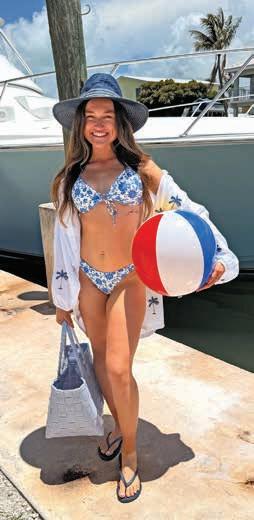
MAAJI BIKINI THE ENVY OF YOUR
DK’s Beach Boutique $81(TOP), $72 (BOTTOM) FRIENDS

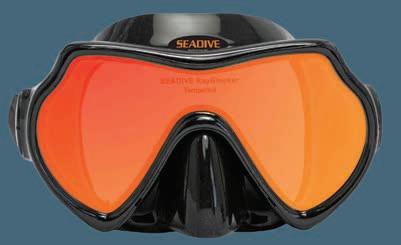
SEADIVE EAGLEEYE
RAYBLOCKER HD MASK
STUNNING UNDERWATER
VIEWS EVERY TIME
Divers Direct

$159
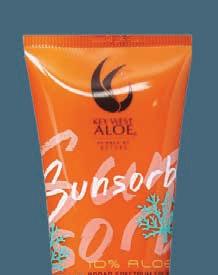
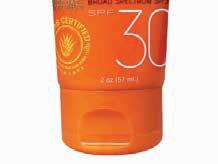
KEY WEST ALOE
SUNSORB REEF SAFE
SUNSCREEN SPF 30 TRAVEL SIZE
Don’t buy something you can’t take home on the plane
$12

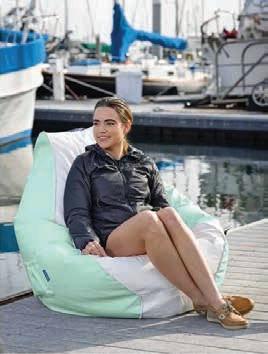
BEANBAG CHAIR
GO ANYWHERE OUTDOOR
West Marine
$140




LINEN MILOS HAT
THE MOST LIGHTWEIGHT & STYLISH SUN HAT THERE EVER WAS & A GREAT BOAT TOTE TOO Besame Mucho

LINEN MILOS HAT $98 MOISMONT LARGE TOTE $240








THE DOCKS HATS
The Docks
$30


EVERY SUMMER AFTER BY CARLEY FORTUNE A GREAT BEACH READ
Books & Books
$19

MOD MUSE KIMONO

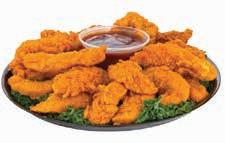
FAUSTOS CHICKEN TENDER PLATTER
THE BEST CHICKEN TENDERS EVER! PRICES VARY DEPENDING ON QUANTITY
LIGHTWEIGHT, COMFORTABLE & ENDLESSLY CHIC
Kirby’s Closet
$54




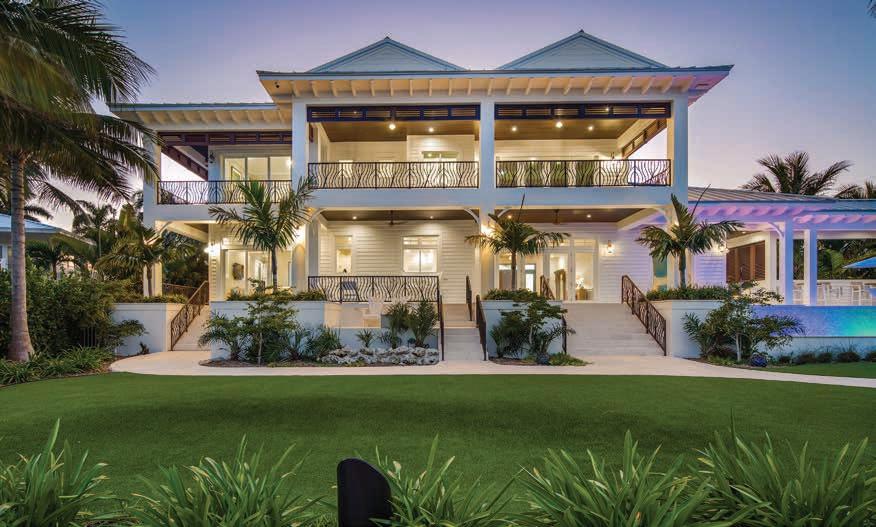
At D’Asign Source, whether you’re remodeling, furnishing your space, or crafting the home of your dreams— inside and out—we’ve got you covered. Our expansive 25,000-square-foot showroom brings everything under one roof, with expert staff ready to guide you every step of the way. Visit us today and start turning your vision into reality.




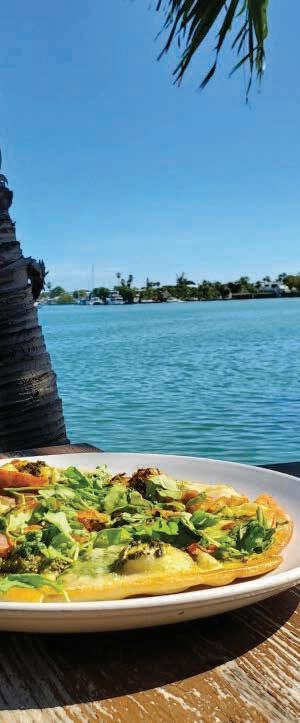
Chorizo

MONDAY: Closed
TUESDAY: Jumbo Gumbo Bowls
Tacos and Tequila
Live Music Roger Jokela
WEDNESDAY:
Wine Time Wednesday
($15-$20 bottles)
1. Prove to the entire sandbar that your 20 JL Audio speakers are worth every penny at max volume. And don’t forget the subwoofers.
2. Anchor directly on the reef because “it’s just sand-looking stuff.” Bonus points for the age of everything you destroy.
3. Treat every no-wake zone as a personal challenge. As long as it’s not big enough to surf, you’re good, right?
4. When you move out of town, sell your best fishing and lobster spots on Facebook Marketplace. To as many buyers as possible. We wish we were joking.
5. Wait until the Saturday before mini-season to learn how to back a trailer. Make sure you go during the hours all the vacation rentals are dropping their boats in too.
6. Tell everyone your boat “only drafts 1 foot.” Right before you call SeaTow high and dry on the fl ats.
7. Post a YouTube video telling the internet how good you are at lobstering after pulling bugs from illegal areas. Say nothing about getting caught by FWC. Again, we wish we were joking.
8. Bring a bluetooth speaker on your kayak trip through the mangroves. The local birds and fish request George Michael’s “Careless Whisper.”
9. Insist “you got there first” at every popular wreck and fishing spot. Proceed to stay there all day and catch nothing.
10. Feed the local wildlife and give water to manatees for TikTok views. Right before you run them over on full plane in a canal.


THURSDAY: Prime Rib Night
Live music: John Bartus
FRIDAY: Live music: Abstract Radio
SATURDAY: Brunch, 11am to 2:30pm
BOGO Mimosas & Sparkling Wine
Live Music Roger Jokela
SUNDAY: Brunch, 11am to 2:30pm
BOGO Mimosas & Sparkling Wine























By Mandy Miles
Who last held this? What was he thinking? Where was he from? And how had he ended up on a ship in Key West Harbor nearly 200 years ago?

These were the thoughts running through my head as Bob Elkins handed down an antique spyglass from an upper shelf in his home on the tucked-away Higgs Lane in Old Town Key West.
Granted, the last person to have touched the spyglass — and every other antique bottle, fl ask, ceramic olive jar and other curiosities in Elkins’s collection — was Elkins himself, as he handed them to me.
But before that, decades ago, Elkins’ hands were the first to touch these fragile historical finds in two centuries, as they had lain buried under sand and sediment in Key West Harbor at the foot of what were then called Mallory Docks, today’s Mallory Square. Starting in 1984, when Key West began welcoming cruise ships, divers like Elkins, who was, back then, a commercial spearfisherman by trade, started returning to the surface with more than fish.


“We soon learned that the cruise ships and their huge propellers were moving massive amounts of silt and mud that had covered these antique treasures for hundreds of years,” Elkins said. Elkins in 1984 was one of a handful of local divers who grew fascinated with the fragile history.
“A diver would watch as the ship departed for its port of call, typically Cancun or Cozumel,” Elkins recalled. “The large silt plume left by the ship would disperse quickly, in the strong currents that run in front of Mallory dock and a diver would quickly descend the 28 to 30 feet to the bottom.”
Remember, Elkins said, back then, Mallory Square didn’t look as it does today. Cars could drive right to the seawall and park, allowing divers and fishermen to do their thing right from the edge.
“You could just get dressed, put on your fins and then waddle across the dock through the milling tourists. I’d get some bewildered looks as I reached the edge and without hesitation took a giant stride into the water,” Elkins recalled, chuckling.

“The reactions of tourists who hadn’t seen me go into the water were hilarious when they’d see me surface. They’d look down at me from the dock above in slack-jawed amazement, as I popped up in the water and asked, ‘Is this Miami?’ They’d invariably reply, in all seriousness, ‘No, this is Key West.’ I’d shake my head and mutter, ‘Damn, I must’ve taken a wrong turn in Marathon.’ Then I’d resubmerge for a few moments, making them think I was backtracking all the way.”
In fact, one such surprised visitor helped Elkins reassemble one of his finds.
“This woman at Mallory Square one day was immediately attracted to a cobalt blue bottle whose lettering said it was an eyewash bottle,” Elkins said, adding that the woman told him the company was still in business, but had obviously switched to plastic.
“She went on to say the bottle was missing its cupped eyewash piece that was the bottle’s top. Then I remembered I HAD found another cobalt blue piece later in my dive and had put it inside my wetsuit to protect it. I pulled out the piece and the woman’s eyes lit up as she reconnected two pieces that had been apart for 150 years.”
Elkins would eventually go on to become an award-winning innkeeper as proprietor of the aptly named Frances Street Bottle Inn, which displayed all of his finds, and then a real estate agent.
But back in the 1980s, there were broken bottles everywhere right off Mallory Square. Riggings from the old sailing ships mixed in with more recent modern-age debris that had been thrown overboard by uncaring boaters and tourists.
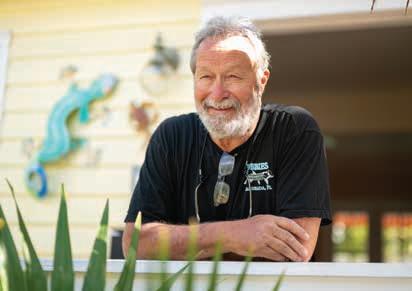
“To us, the bottom of the harbor in front of today’s Mallory Square was an untouched treasure trove of buried antiquities just waiting to be unearthed,” Elkins recalled while handing down pieces of his historic collection that lines dozens of shelves, curio cabinets and display cases in his current home. Elkins sold the inn several years ago, but kept much of his antique bottle collection.
His huge but gentle hands spent years waving away silt to reveal treasure. Not gold or silver. Usually glass, but nearly as priceless to a collector like Elkins.
He has several Coca-Cola bottles imprinted with raised glass lettering announcing that the soft drink was bottled in Key West or elsewhere. Elkins also found an original Yuengling beer bottle that was one of the few bottled in New York, and not Pennsylvania, where the family-owned brewery still operates.
His collection also includes several bottles that once held “patent medicines,” or snake-oil concoctions, like Solomons Strengthening Bitters in a large blue glass bottle.
Solomons was a prominent drug business in Savannah, Georgia in the 19th century. The bitters became a staple of 1860s and 1870s apothecary shelves. But like most 19th-century bitters, which claimed to cure nearly any ailment, including “female hysteria,” any actual "strengthening" effects of Solomons Bitters came from the high alcohol content of the “medicine,” rather than any genuine curative properties.
No one aboard any of the sailing or steam ships, merchant or military vessels, would have had any idea that the items they lost or tossed overboard would become prized treasure 200 years later. Every bottle found intact by Elkins and others has a story to tell — and fortunately, people like Bob Elkins were happy to discover them.