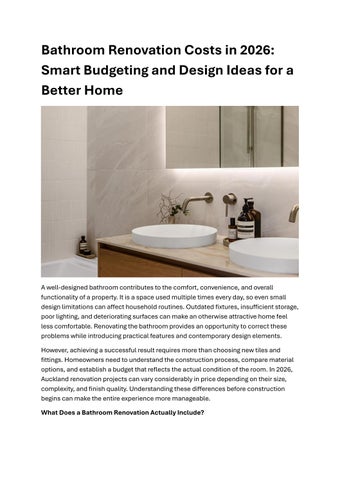
Bathroom Renovation Costs in 2026: Smart Budgeting and Design Ideas for a Better Home
A well-designed bathroom contributes to the comfort, convenience, and overall functionality of a property. It is a space used multiple times every day, so even small design limitations can affect household routines. Outdated fixtures, insufficient storage, poor lighting, and deteriorating surfaces can make an otherwise attractive home feel less comfortable. Renovating the bathroom provides an opportunity to correct these problems while introducing practical features and contemporary design elements. However, achieving a successful result requires more than choosing new tiles and fittings. Homeowners need to understand the construction process, compare material options, and establish a budget that reflects the actual condition of the room. In 2026, Auckland renovation projects can vary considerably in price depending on their size, complexity, and finish quality. Understanding these differences before construction begins can make the entire experience more manageable. What Does a Bathroom Renovation Actually Include?
A bathroom renovation involves improving an existing bathroom through fixture replacements, surface upgrades, plumbing modifications, or complete reconstruction. The scope of work depends on whether the homeowner wants a refreshed appearance or a fundamentally different layout. Smaller projects may involve replacing a vanity, toilet, shower screen, tapware, and lighting while retaining the existing plumbing arrangement. More extensive work can include removing old tiles, repairing walls and floors, installing new waterproofing, and replacing all major fixtures. Some homeowners also introduce customized storage, improved ventilation, heated flooring, and contemporary shower systems. These additions can improve convenience, but they should be selected according to the property's requirements and available budget. Why Are Bathroom Improvements Important for Modern Homes? Bathrooms experience continuous exposure to moisture, cleaning products, and temperature fluctuations. Over time, these conditions can affect sealants, grout, cabinetry, and plumbing fixtures. Regular maintenance can address minor problems, but extensive deterioration may make a renovation the more practical option. Another reason homeowners upgrade their bathrooms is to improve how the space functions. An outdated arrangement may provide insufficient storage or make it difficult for several household members to use the room comfortably. Better fixture positioning, integrated cabinets, and suitable lighting can improve everyday convenience. Changing lifestyle requirements also influence renovation decisions. Families may need more storage, while older homeowners might prefer accessible showers and safer flooring. Property owners preparing homes for sale or rental may also want to improve the bathroom's presentation. How Much Does a Bathroom Renovation Cost in 2026? The investment required for a Bathroom Renovation depends on several factors, including room dimensions, material quality, plumbing requirements, and labor. For Auckland homeowners, the following estimates offer a general 2026 budgeting guide in New Zealand dollars, including GST. A simple update generally involves replacing selected fixtures and refreshing existing surfaces without changing the overall layout. Standard renovations may include new waterproofing, complete tiling, upgraded plumbing fixtures, a replacement vanity, and improved lighting. Premium projects often incorporate custom cabinetry, frameless shower screens, higher-quality tiles, and designer tapware. Luxury transformations can include natural
stone, freestanding bathtubs, underfloor heating, specialist lighting, and significant layout modifications. These amounts are indicative Auckland market estimates rather than guaranteed quotations. All figures are in NZD, and U.S. homeowners should use local contractor estimates when planning projects in American properties. Which Factors Have the Greatest Effect on Renovation Pricing? The construction work involved is one of the biggest influences on the overall budget. Bathroom renovations require coordination between several trades, including plumbers, electricians, tilers, waterproofing specialists, and carpenters. The amount of specialist labor required can significantly influence the final price. Material selection creates another major difference. Standard ceramic tiles are generally more affordable than natural stone or premium porcelain products. Similarly, ready-made vanities may cost less than customized cabinetry with integrated storage and specialized countertops. The existing plumbing arrangement is also important. Retaining the original positions of the shower, toilet, and basin can help limit additional construction. Moving these fixtures may require new drainage connections, pipework, and modifications to surrounding walls or flooring. Older homes sometimes present additional challenges. Hidden leaks, damaged subfloors, outdated electrical systems, and deteriorated wall structures may only become visible after demolition. Including a contingency allowance in the original budget helps homeowners prepare for these possibilities. What Are the Benefits of Updating an Older Bathroom? A well-planned renovation can improve the room's appearance while addressing practical problems that affect everyday use. The benefits are particularly valuable when design decisions are based on actual household requirements. •
Improved functionality: Modern fixtures and practical layouts make daily activities more convenient.
•
Better storage: Integrated vanities and cabinets help organize towels, toiletries, and personal belongings.
•
Enhanced hygiene: Suitable surfaces and improved ventilation make routine cleaning easier.
•
Greater comfort: Updated showers, lighting, and heating features can improve the bathroom experience.
•
Long-term protection: Quality waterproofing and appropriate materials help reduce moisture-related problems.
These improvements can make a bathroom more enjoyable to use while supporting the overall condition of the property. Who Should Consider a Bathroom Renovation? Homeowners with aging fixtures, damaged surfaces, or recurring plumbing problems may benefit from a professional assessment. Signs such as cracked tiles, persistent leaks, deteriorating grout, and poor ventilation should not be ignored because they can indicate underlying issues. Families may consider renovating to introduce more storage and durable finishes. Older homeowners may prioritize step-free showers, slip-resistant flooring, and conveniently positioned safety features. These changes can make the room more accessible while maintaining an attractive design. People purchasing older properties may also choose to renovate bathrooms before moving in. This allows them to address existing defects and create a layout that reflects their preferences. Property investors can consider upgrades that improve presentation without spending beyond what the local market supports. What Should You Expect During the Renovation Process? A professional project generally starts with a consultation and inspection. The existing bathroom is measured, plumbing and electrical arrangements are assessed, and the homeowner's design preferences are discussed. A detailed quotation should explain the proposed work, selected materials, installation requirements, and expected schedule. The construction stage usually begins with demolition. Old fixtures, tiles, and unsuitable materials are removed to expose the underlying surfaces. Necessary plumbing, electrical, and structural work is completed before waterproofing and surface preparation. Once the waterproofing system has been installed and appropriately cured, tiling and finishing can begin. New vanities, toilets, shower screens, mirrors, tapware, and lighting are fitted during the later stages. Final checks should confirm that drainage, plumbing connections, ventilation, and electrical installations are functioning correctly. A typical Auckland renovation may require approximately three to five weeks of on-site construction. More complicated projects may take longer because of specialist materials, custom manufacturing, or unexpected repairs. Bathroom Renovation Cost in Auckland vs. Partial Bathroom Upgrades: Which Is More Suitable?
Understanding bathroom renovation cost auckland requires comparing the financial implications of a complete renovation with smaller improvement projects. A full transformation may be necessary when the existing bathroom has damaged waterproofing, recurring leaks, or an inefficient layout. However, replacing every component may not be necessary when the underlying structure remains in good condition. Partial upgrades can focus on specific areas that need attention. For example, replacing an outdated vanity, installing new tapware, upgrading a shower screen, or improving lighting can noticeably refresh the space without extensive demolition. The bathroom redesign cost generally increases when homeowners choose customized cabinetry, premium finishes, relocated plumbing, or substantial layout changes. Nevertheless, a redesign can sometimes be achieved through carefully selected improvements while retaining functional infrastructure. The most suitable approach depends on the bathroom's condition, household requirements, and available budget. Comparing detailed quotations for different project scopes can help homeowners identify the most practical investment. What Risks Should Homeowners Consider Before Starting? Waterproofing deserves particular attention because inadequate installation can allow moisture to penetrate surrounding surfaces. This may cause damage to flooring, walls, and adjoining rooms. Homeowners should ensure that suitable products and compliant installation methods are used. Unexpected expenses can also arise when hidden defects are discovered. Maintaining a contingency reserve of approximately 10–15% can provide additional financial flexibility. Material availability should be checked before construction, especially when ordering imported tiles, specialty fittings, or customized products. Selecting the right contractor is equally important. Homeowners should examine previous work, request itemized quotations, confirm relevant qualifications and insurance, and establish written expectations for materials, workmanship, and timelines. Any applicable building approvals should also be checked before work begins. Frequently Asked Questions: What is the average price of a bathroom renovation in Auckland? A standard project may cost approximately NZ$25,000–NZ$40,000 in 2026. The final amount depends on labor, materials, plumbing changes, and the existing bathroom condition. Can I renovate my bathroom without replacing the plumbing?
Yes. If the existing plumbing is in good condition, homeowners can often retain the original connections while updating fixtures and surfaces. Is it possible to renovate a bathroom on a limited budget? Yes. Prioritizing essential repairs, retaining the existing layout, and choosing durable standard materials can help control expenses. Which bathroom upgrades provide the greatest practical benefit? Reliable waterproofing, effective ventilation, quality plumbing fixtures, accessible showers, and well-designed storage are important priorities. How long does a complete bathroom renovation take? Most projects require approximately three to five weeks of on-site work, although complex installations and unexpected repairs can extend the schedule. Should I hire professionals for bathroom waterproofing? Yes. Waterproofing requires appropriate materials and careful installation. Qualified professionals can help ensure that the system meets relevant technical and building requirements. Final Thoughts Renovating a bathroom is an opportunity to improve everyday comfort while addressing maintenance issues and outdated design features. The best results come from balancing attractive finishes with reliable construction, practical storage, and a realistic financial plan. Whether homeowners choose a modest update or a complete transformation, understanding the scope of work is essential. Careful material selection, professional installation, and sufficient contingency planning can help prevent avoidable problems. Key Interiors takes a considered approach to bathroom design and renovation, combining practical requirements with individual style preferences. With thoughtful planning and quality workmanship, homeowners can create bathrooms that remain comfortable, functional, and visually appealing.
Contact Us: • • •
Name: Key Interiors Address: https://maps.app.goo.gl/m8jqcB1rAR1AEzt39 Phone No: 0210 353 819