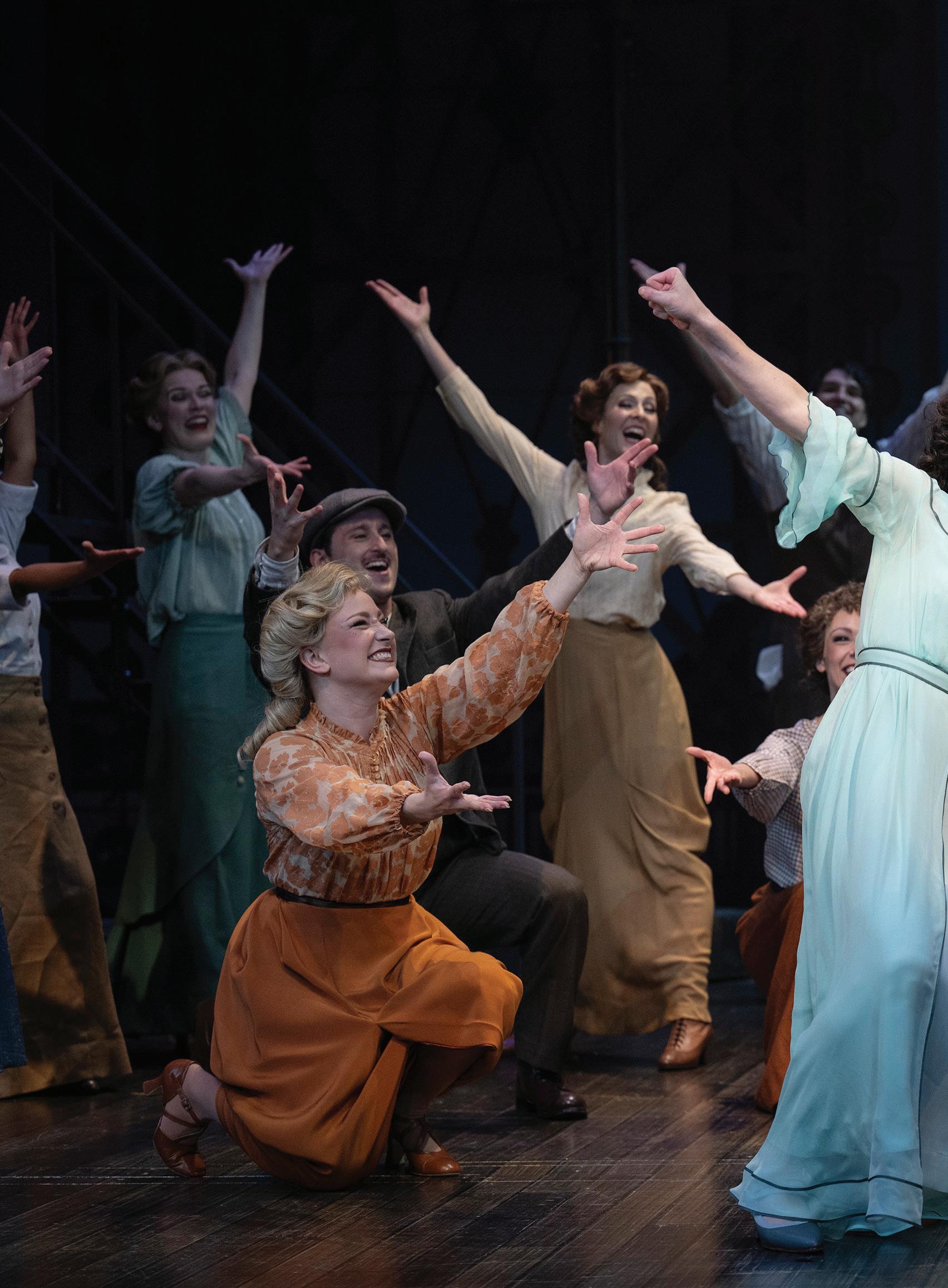
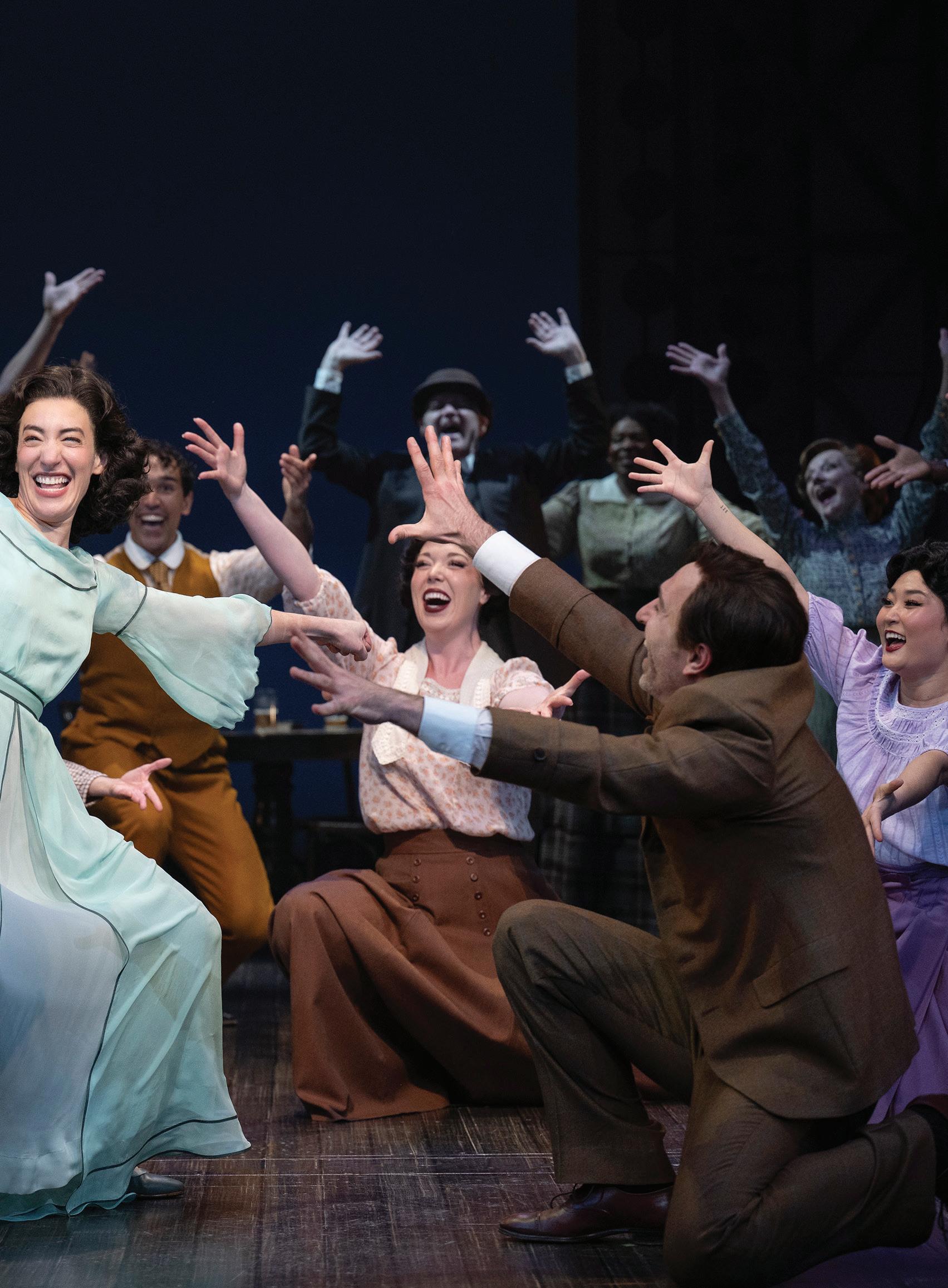


Funny Girl Production
William & Nona Heaslip Foundation
King David & Amy Fulton

ByKimberleyRampersad
NOT ALL HE HAS BEEN UP TO!
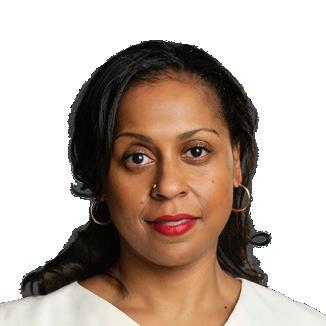
KR: Peter Fernandes – how did this season come about for you?
WE LAUGH.
KR: These are two Herculean efforts in one season.
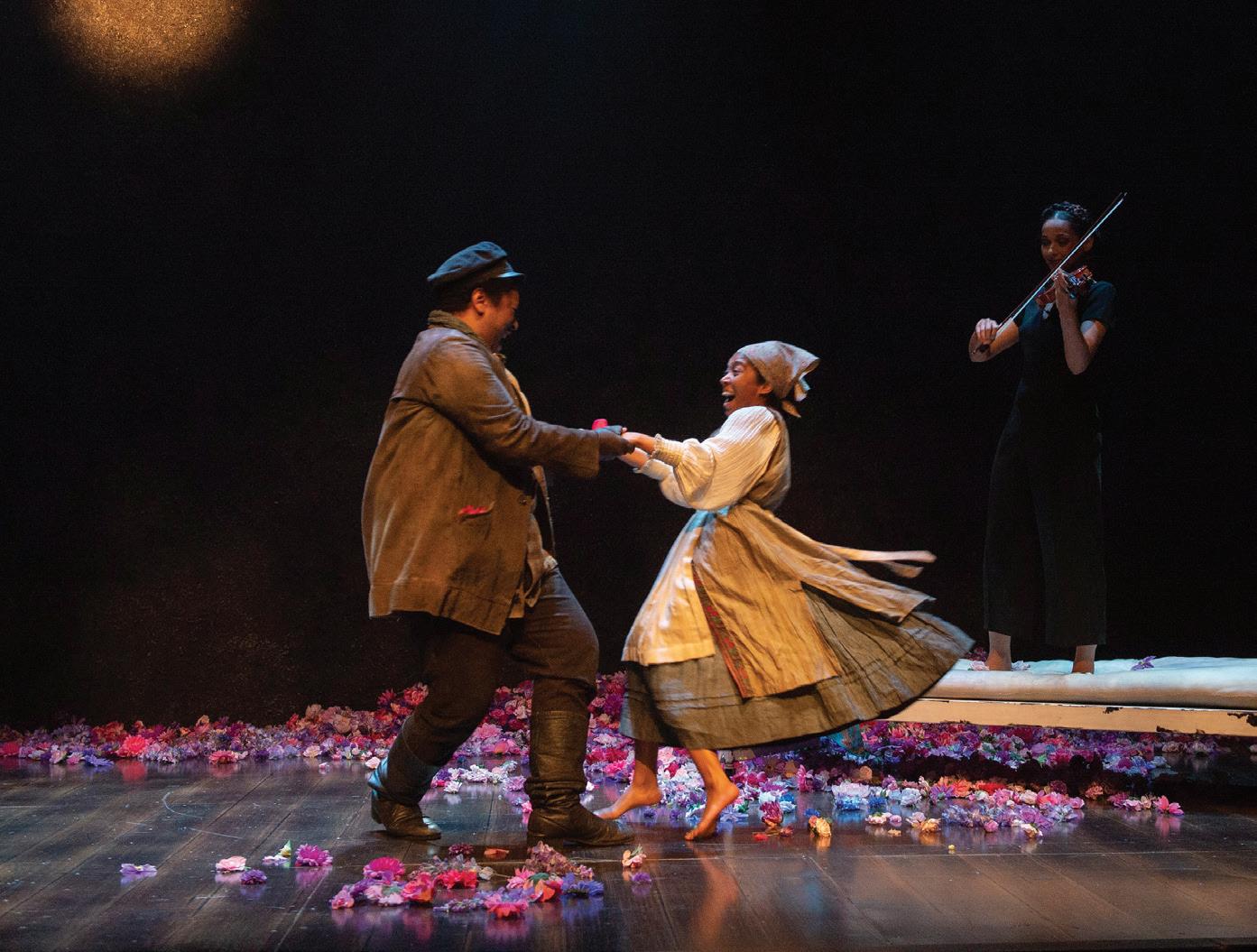
PF: First, I read One for the Pot. I thought it was fantastic! I did not know what the second part of my season was going to be until two weeks later. TC called and said, “Have you read Sleuth? Would that be of interest to you… to direct?” In the middle of that sentence, I was thinking, ‘I guess Sleuth will be the other play I’ll act in.’ But then he said, ‘to direct’! I was in my car on speaker phone and had to pull over. I said, to send me the script right away and that I would love to read it, but before he could get a script to me, I found a copy online. I wanted to read it right away. I found it biting and naughty and funny. And as scary as it was at the time I thought I would love to do this great pairing of things for the company. It’s an extension of what I had done the last season I was here (2024), directing as part of the Neil Munro directing internship and appearing in One Man, Two Guvnors at the same time. I really loved that.
KR: You carved this pathway yourself.
PF: One hopes this is the impression I left from the previous season! I would love to learn and grow my connection to theatre within this company that I love so much. I had pitched you the proposition back in 2024 to see if directing was even a possibility and hoping to have that dual relationship to the way, in the way Diana Donnelly, Sanjay Talwar, and you have done.
KR: When did directing twig for you or was it always there?
PF: Funnily enough, I think it twigged here at Shaw during the season of Damn Yankees (2022) when I connected with that production’s illusion designer, Skylar Fox, as his magic captain, which put me in a creative team position. Skylar’s mentorship provided a great way into more creative leadership positions and roles. I decided to keep exploring – exploring magic, assistant directing, associate directing, and now directing.
KR: Has magic always been there?
PF: I have always loved performing magic. One of the things Skylar imparted to me is that magic is about making the impossible possible. That is such a connection to theatre. We suspend our disbelief in both. More magic had been making its way into my performing too, such as The Russian Play (2019), with director Diana Donnelly and when we were doing Shawgrounds/ Fairgrounds (2021), I used magic to aid in the storytelling. With Damn Yankees it became about teaching practical skills, ensuring those moments of magic were supported with intention and based in the story. These important connections were a driving force as to why directing seemed like the next step: creating illusion in support of the intention of the play.
KR: You speak fondly of Skylar and his mentorship. Could you speak a bit about the Philip Akin - Black Shoulders Legacy Award, which allowed you to spend even more time with him and do other things too?

I WOULD LOVE TO LEARN AND GROW MY CONNECTION TO THEATRE WITHIN THIS COMPANY THAT I LOVE SO MUCH.” “
PF: Yes! Skylar was such a deeply supportive person and really allowed me to see more of his work than an illusion designer might normally. It started me thinking about other opportunities for mentorship and avenues to financial support for that mentorship. Part of that came through the Philip Akin – Black Shoulders Legacy Award, supporting further mentorship with Skylar in both directing and magic and illusion design. Thanks to that award, I assisted Skylar on Fat Ham for two weeks when it was being transferred from The Public Theater (New York) to the Broadway stage, helping to ensure the designs, which were already built, were executed well and the show made a smooth transfer. Next, I was brought on earlier in the process for a project in the UK – a National Theatre project with a possible West End transfer. I was there for another two weeks, building and workshopping large-scale illusions from the ground up which was a natural progression in my illusion design career.
KR: Actor, illusionist, director. You also have an incredible position at Crow’s Theatre in Toronto as their Artistic Associate. You are pursuing this art with every part of your being.
PF: I love the theatre. I love this art so much. Knowing I wanted to keep expanding my relationship to theatre and the art, I applied for an internship with Chris Abraham as my mentor. I had just finished working with Chris, the artistic director at Crow’s, who also directed One Man, Two Guvnors, and I had worked at Crow’s previously. I enjoyed his skill, his rigour, his talent. Also, Crow’s was a company I had seen expanding from a nomadic theatre company ten years ago into the Streetcar/ Crowsnest venue and building an audience in the east end of Toronto. I wanted to see how Chris the director was applying, or if he was applying, any of the same rules from the rehearsal hall to running a company.
KR: The art of it all.
PF: Yes, the art of running a company. Chris and I applied together for a Metcalf Foundation internship, which I believe you had done here at The Shaw?
KR: Yes, indeed!
PF: That internship was a fact-finding mission to see if artistic leadership was something
I was interested in. Learning at Crow’s meant doing everything including work that is outside of the rehearsal hall: what is required to put on an event, speak with donors, how contracts work, to learn about the pipeline of curating work, of developing new work, the emerging artists, and how you can support that while still supporting the established community – where that balance is. Work was put on my table for which I was eager and hungry to tackle, and there is no end of work in running a company. I felt, as with any artistic directing internship, the need is always for more time to learn about philanthropy.
KR: Always.
WE LAUGH AGAIN.
PF: I’m still learning about that. I really loved my time there. I see artistic direction as a goal I want to pursue. My curiosity has expanded into a desire to be a part of theatre’s change.
KR: I see your capacity as an artist is everexpanding. Does anything make you fearful as you continue to reach and grow?
PF: There’s not enough money, to be frank. One of the benefits of being an intern for the last year has been my involvement with a lot of incredible work. I saw a lot of incredible artists. And there is not enough money, or systems of support. What is the best way to support that next generation of artists when every year one training institution can graduate fifty artists? Knowing I was a performer first, I don’t know how I would survive solely as that right now.
KR: You’re here for the season. Your schedule is so full. How will you manage? How will you keep the joy?
PF: Big shout out to my wife, Jenny Weisz! She is the general manager at Musical Stage Company. She is in artistic leadership, and she is absolutely killing it. I have my dog here and Niagara-on-the-Lake is my dog’s favourite place in the world. With the little time I have right now I enjoy going home and chilling with my wife and my dog. Because this is my fifth season, I have friends here! That support was here in my first season, but you become more comfortable with the community when you have been with them for a few years. There is some work as a director which must happen at home, so Jenny also makes sure I am taking care of myself, including downtime. She’ll be the first to tell you I won’t give it to myself unless she reminds me. I am that excited by the work!
KR: You’re exciting. The Shaw is fortunate to be part of your artistic family.
I LOVE THE THEATRE. I LOVE THIS ART SO MUCH.”
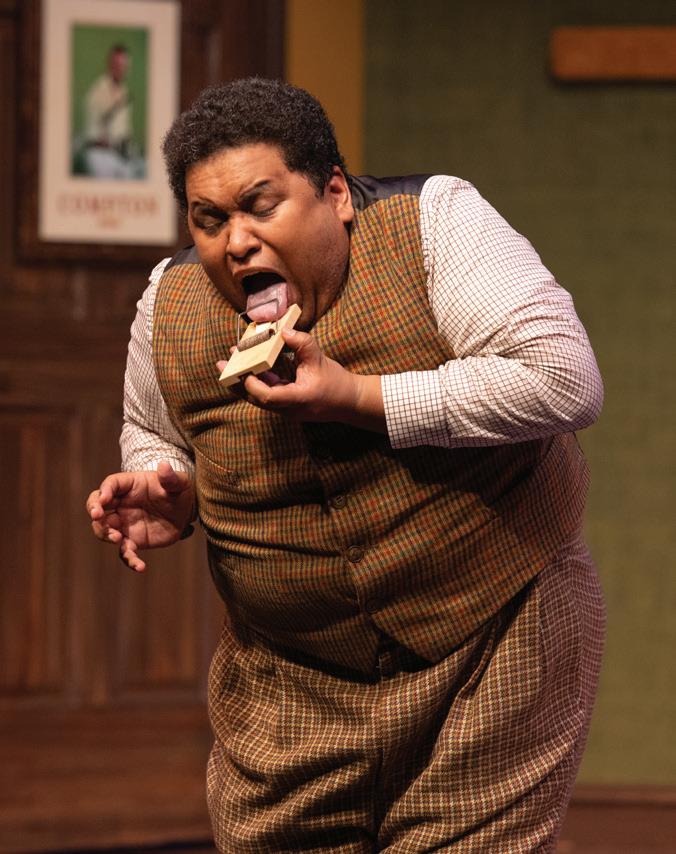
PF: I am fortunate. Major parts of my career have been shaped, and my trajectory has shifted in exciting ways, because of this place. Love it.
KR: Love you.
PF: Love you.

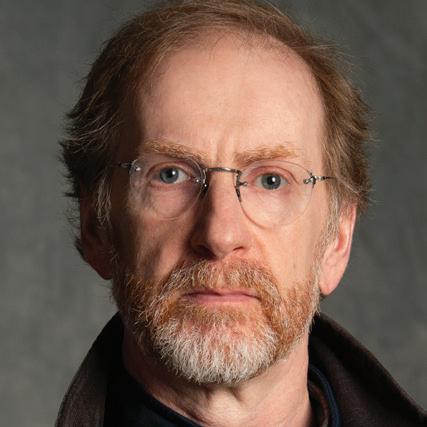

By Heather Sargeson-Callara
I sat down with Tom Rooney, playing Antonio Salieri, and Michael Therriault, playing Wolfgang Amadeus Mozart in this season’s production of Amadeus to talk about their process in preparing to play historical characters.
MT: For every job, the process it different –you create it as you go. Because this play is so wordy, my current priority is learning the lines!
TR: That’s the enjoyable and frustrating thing about theatre and acting; one is always starting at the beginning. You have no idea how you’re going to go about doing it because you’ve never done this particular project before.
HS: Where are you starting from with Salieri?
TR: As Michael implied, I’m trying to get off book as quickly as possible. Salieri narrates the entire piece. He’s talking A LOT. Peter Shaffer (playwright), I believe, is attempting to write in a slightly stylized way to give it more of a period feel. That makes it a bit challenging to learn.
MT: As far as preparation is concerned, the most important thing is to serve the play – to do what helps the play work best. There’s so much in the script I’ve had to look up. The history lesson has been quite enjoyable.
TR: It’s always such a joy to do a play that is set in another time and to have the opportunity to learn a little of the history of that period. Sometimes something in the history will spark an idea or make you see the play or characters in a different way.
HS: Have you been listening to Mozart or Salieri’s work?
MT: I’ve been watching some of the opera referred to in the show. I’m particularly awed by the voices. And I’m astounded by how much Mozart wrote. In his short life, he created over 600 works!
TR: I’ve been listening to Salieri from time to time. Oddly, every time I play Salieri on Spotify, it then switches to Mozart. Even Spotify is a critic!
HS: Were either of you familiar with Mozart’s work?
TR: I did a degree in music at university, so I knew a lot more about Mozart when I was studying music. In one of my classes, we performed the last section of The Marriage of Figaro. When you really start working on a piece and pulling it apart and see its structure and precision, you start to see how
brilliant it is and the genius of it. I remember taking apart a few of his piano concerti and being amazed by how beautiful and smart they were. I think the more one studies and works on any great work of art, the more one discovers its genius and beauty.
MT: I’m educating myself quite a lot now. I started reading a biography and was surprised at how much of Mozart’s life aligns with the play, even though this is a dramatized version of who Mozart was. Shaffer is clearly Easter Egging with things that actually happened and things Mozart said.
HS: What about physicality?
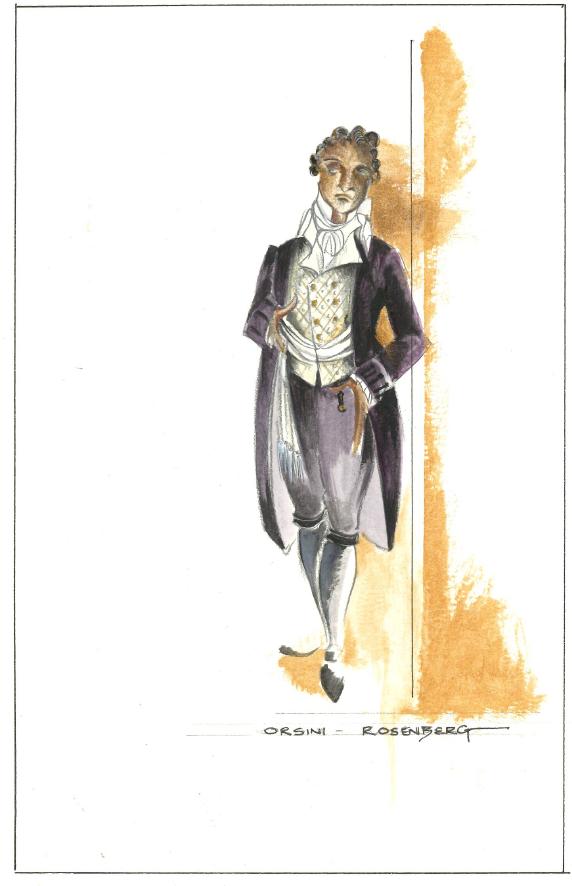
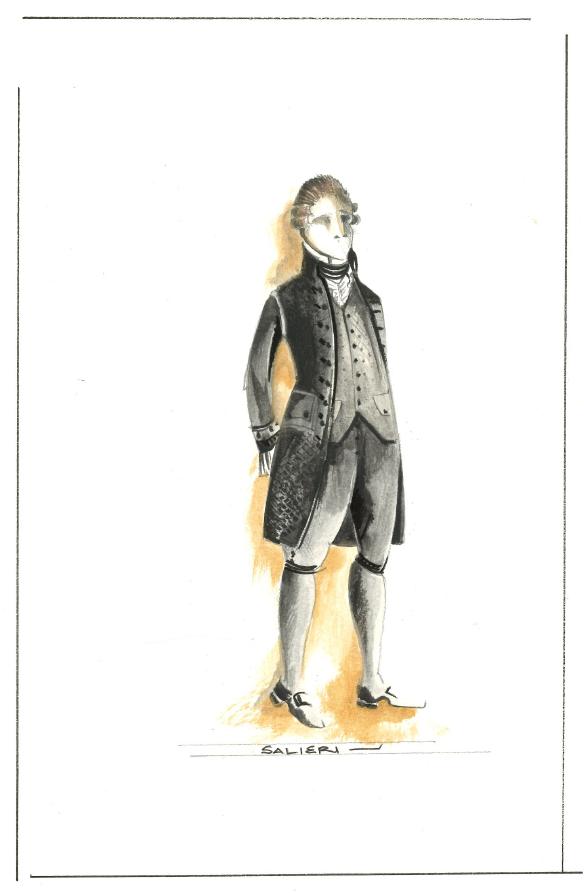
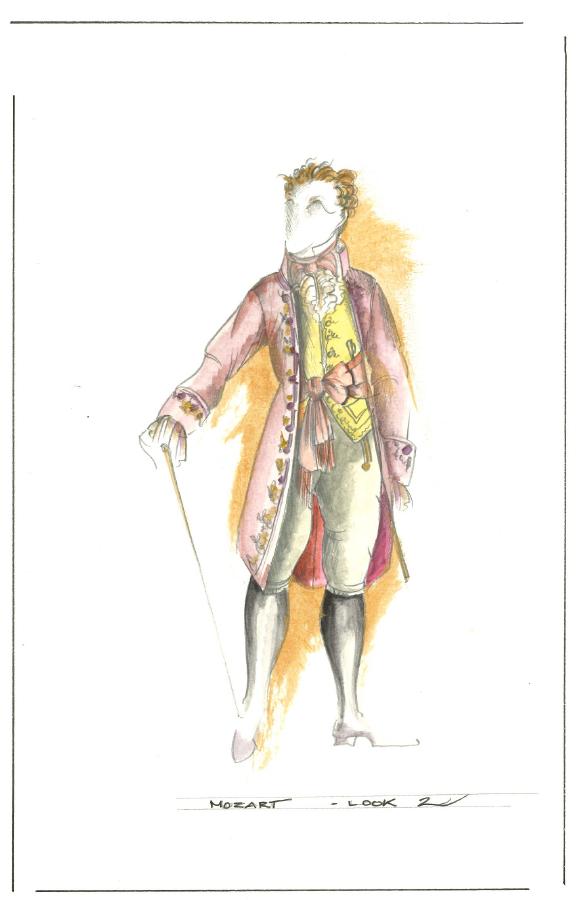
TR: As we get into rehearsals we’ll be thinking more about physicality. Costumes will tell us a lot about our posture – how we stand, walk, sit.
MT: I’m interested in how things will shift physically as Mozart degrades. The difference in going from hyper Mozart to drunk Mozart to sick Mozart. I’m always really interested in what even a small gesture can say.
TR: I enjoy period plays in which the rules of decorum are important. For example, ‘you mustn’t turn your back to the emperor’. Attention to details of decorum and behaviour are helpful in placing the period and bringing it to life. The stakes go up and people behave differently when an emperor or a queen enters the room.
MT: And if they’re aware when rules are being broken or ignored.
HS: Mozart breaks many of those rules. Salieri follows decorum but breaks it while addressing the audience.
TR: I always feel that any character who gets to speak directly to the audience has an advantage. Salieri tells the story through his eyes, and I enjoy the connection he has with the audience. The play starts with an acknowledgement that we are in a theatre. The house lights come up, and we are all together in the same room. That’s so special, especially now when everything and everyone is on phones or devices. At the very beginning of the play, we acknowledge: Here we are, all together experiencing the same thing at the same time. It’s such a privilege to be in a room with a group of people, telling them a story. The ‘aliveness’ of theatre is such a rare
“ There’s so much in the script I’ve had to look up. The history lesson has been quite enjoyable.”
experience these days – I hope the specialness and uniqueness of that experience will attract more people to the theatre.
HS: It can also make each show feel slightly different.
TR: It’s always the same play, the same story, we’re saying the same lines. But every night is different, not only on the audience, but we ourselves – the actors and story-tellers – are subtly different every time we tell the story. So, it’s always a new and slightly different event.
MT: What’s really exciting about working with Tim Carroll is he seems very interested in performances staying alive and attuned to those minor changes. I find the exercises we do in rehearsal train us to do that.
TR: And it’s such a relatable story. Salieri feels so mediocre next to Mozart’s genius. We’ve all felt that – more often than not, I’m sure –that feeling of “I’ll never be as good as that.”
MT: And despite Mozart not being terribly likeable in the beginning, we want him to be relatable. I hope that over the course of the play, you’ll still recognize the person in the ‘creature’. He’s not just a buffoon. In the end, Salieri and Mozart are not that terribly different. They’re both vulnerable, real and flawed.
TR: At the centre of the story is Salieri’s relationship with God. Salieri asks God, “why am I not good enough? Why have you chosen Mozart to be your conduit and not me? I’ve done everything I’m supposed to. I’ve tried to be a good person, but I haven’t been rewarded the way I think I should be. Why, God?” I think we’ve all felt something similar at certain times in our lives. I think we can all relate. We are all Salieri in some way.
Amadeus, directed by Tim Carroll, runs from July 8 to October 4 in the Festival Theatre. For tickets or information, visit shawfest.com or call Box Office at 1-800-511-7429.
Lorna Henderson, Shaw Festival’s Head of Wigs & Makeup, talks wigs and the style of Amadeus
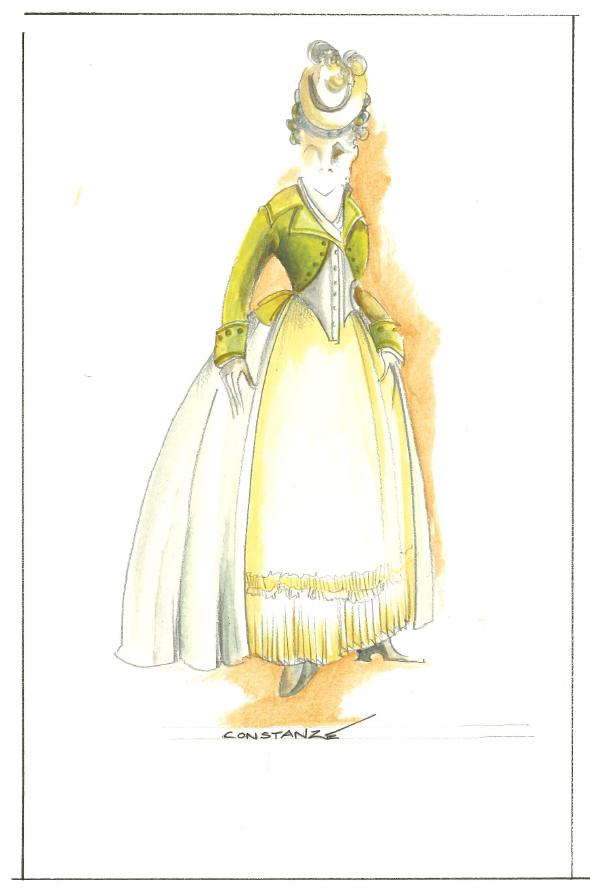
“Designer Judith Bowden is definitely telling a story with the design – leaning into the specifics of history. It is not a period that we do often at The Shaw! Judith is not reproducing but leaning into the historical figures and references.
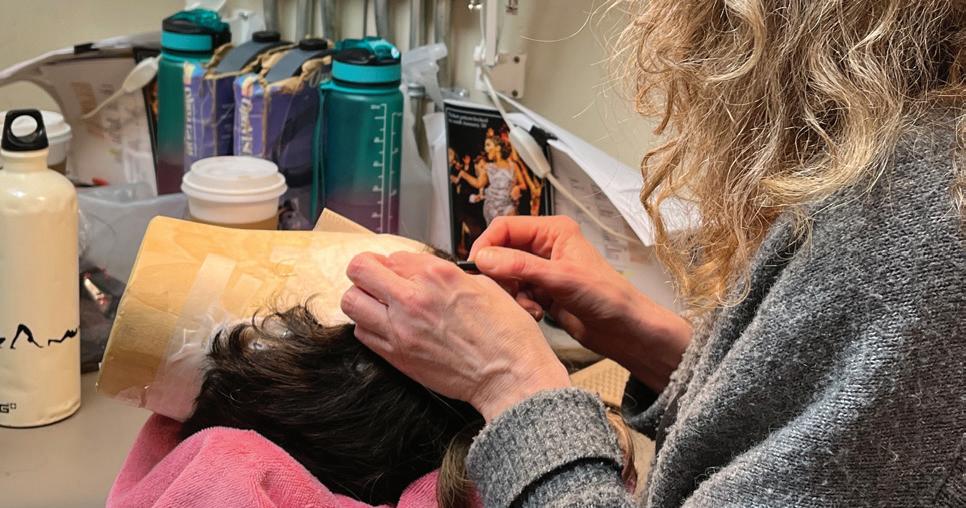
It’s 17th century, so we’re looking at the Georgian time with Rococo style, which was known for curves and asymmetry. This is the French court influence – when Louis XIII first introduced wigs due to hair loss. He was 23 and it was about his own adornment, but society followed suit. It became a societal judgement if you weren’t wearing a powdered wig. We’re looking at three wigs for Mozart and maybe two for Salieri because of the changes in timeline, and then one for each other character. We’re leaning into powdering the wigs as opposed to buying fake white wigs. It’s going to be interesting playing with natural textures and real hair that’s powdered, save for the few court servants.
To make a brand-new wig from scratch, it takes between 40 and 50 hours, plus quite a bit of time for dressing the wig. It takes a lot of experimentation – a lot of fittings in the early stages. First, we’ll choose hair colour for each character, then we’ll get into the nitty gritty of each particular character with the designs. We’re using yak hair to represent some of the court wigs because that’s what they did back then.”
By Charlie Owens
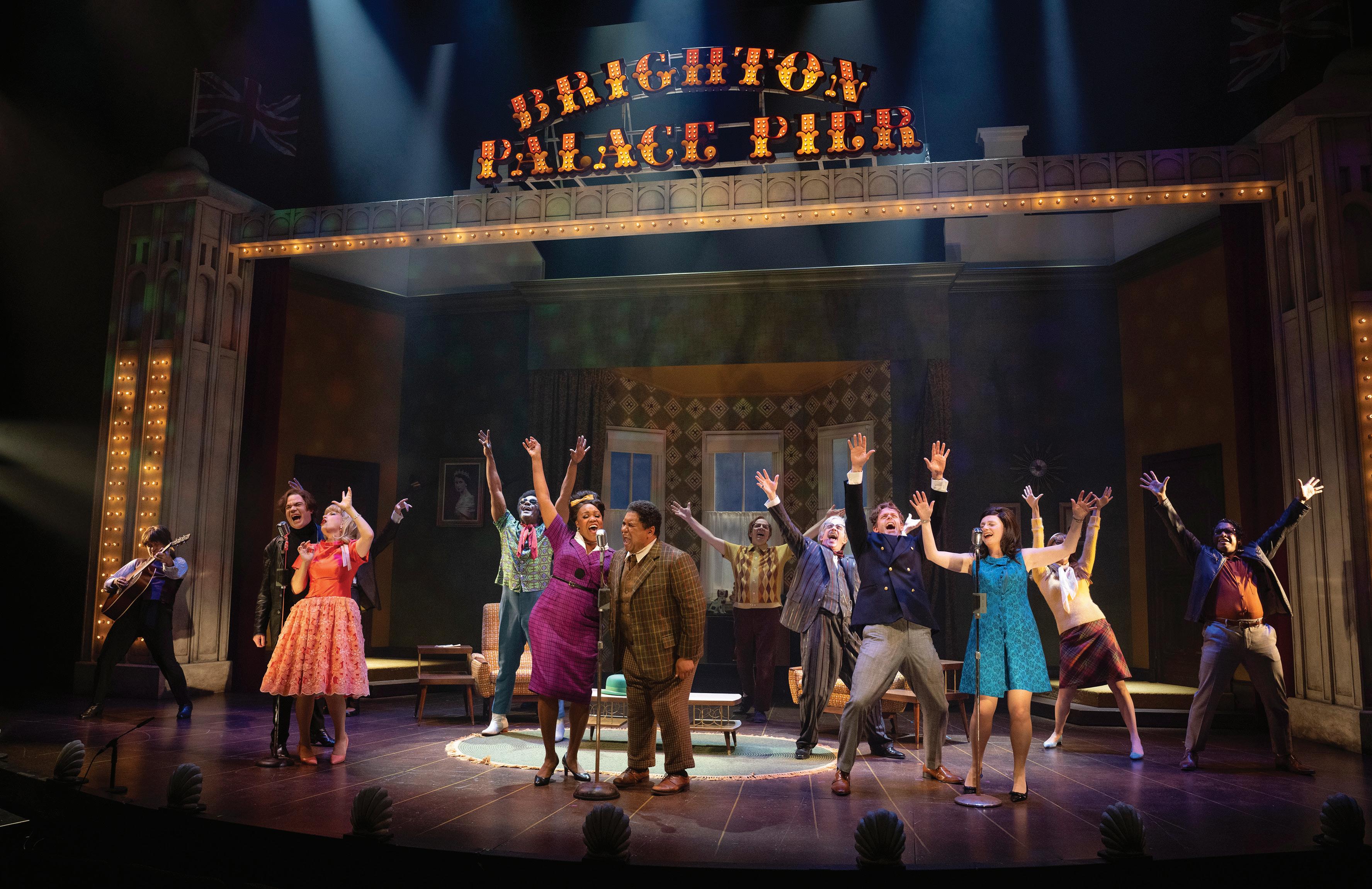
The Shaw Festival’s production of Funny Girl has inspired an array of complementary Beyond the Stage programming that adds layers of historical context, educational depth, and enriching perspective to the flagship musical of the 2026 Season.
Under the banner “Funny Girl to Serious Women: Celebrating the Legacy of Jewish Women in the Theatre”, these education and engagement programs are made possible by a generous grant from the DeRoy Testamentary Foundation in Michigan, which has also provided major production funding for Funny Girl
These programs draw upon a vast and consequential history of Jewish women in the American theatre. Since the 1860s, Jewish women have been prominent writers, actors, directors, designers, dramaturgs, critics, and scholars. A number of women, like Sara Adler, played important roles in the Yiddish theatre that thrived in the late 19th and early 20th centuries, leaving a rich legacy that is still carried on today. In the 20th century, actors from Sophie Tucker and Fanny Brice to Barbra Streisand and Bette Midler shaped American theatre, while writers like Edna Ferber and Lillian Hellman contributed to both musical and non-musical theatre. In the
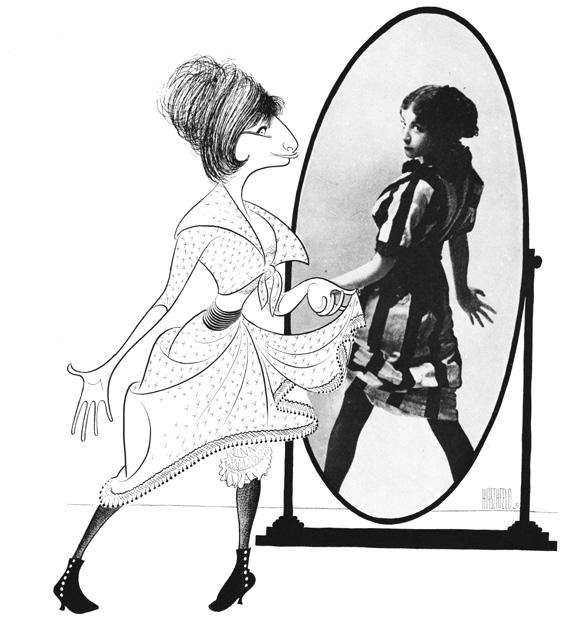
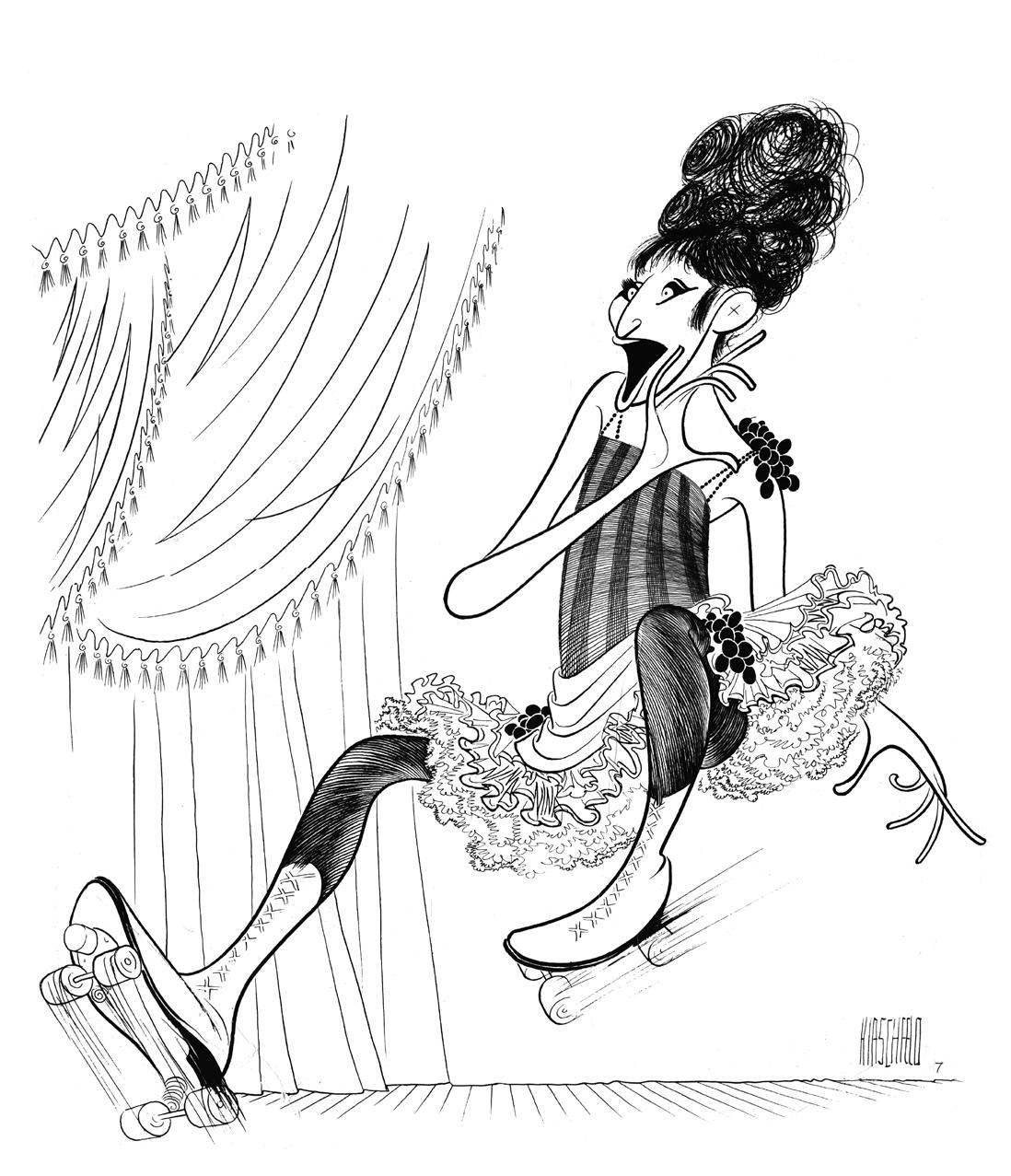
past several decades, an increasing number of Jewish women artists — including such noted figures as Wendy Wasserstein, Paula Vogel, and Sarah Ruhl — have confronted social issues and explored personal history in their work.
Commenting on their significant support of Funny Girl and related programming at The Shaw, Foundation President Julie Rodecker said, “At times like these, when the voices exacerbating cultural estrangement are especially loud, live theatre can play a vital role in illuminating our common humanity. The DeRoy Testamentary Foundation is privileged to support The Shaw in making its important and unique contribution to illustrating the great benefits we receive from the vibrant, blended culture we all share.”
The DeRoy's generous grant also supports an extensive series beyond these programs: including video study guides for school-age audiences and an expansion of The Shaw podcast series, Let’s Get This Shaw on the Road – both featuring profiles of notable Jewish women in American theatre history. Also included in this comprehensive program are pre-show workshops for young people on topics such as masks and puppet-making, inspired by the designs of Julie Taymor;
show tunes and singing, examining the songs of Jule Styne and Bob Merrill in Funny Girl; choreography, inspired by the glorious dancing in Funny Girl; and acting and comedy, how to deliver a joke and fall on your face – the genius of Fanny Brice.
As a remarkable coda to this year-long celebration and to ensure the preservation of the research and scholarship undertaken in producing these programs, the DeRoy grant also will support the documentation and dissemination of these materials to universities, theatres and libraries in the U.S. and Canada in 2027.
“It is impossible to overstate how grateful we are to the DeRoy Testamentary Foundation for their extraordinary level of support of these rich and wonderful programs,” remarked Pragna Desai, Shaw’s Director of Community Engagement and Outreach. “I know that patrons of all ages and backgrounds who engage with us this year will be delightfully entertained and meaningfully enlightened about the powerful role that Jewish women have had in shaping the American theatre over the past 125 years or more. What’s more, having funds to preserve and disseminate this work is a rare gift and deeply appreciated.”
The following public programs are
JUNE 11 | FESTIVAL THEATRE, REHEARSAL HALL 3
As part of The Shaw’s popular series The Art of Ideas, Professor Laurence Maslon of New York University, an award-winning radio host, documentarian, and author, presents an in-depth look at Funny Girl and the rise of American theatre through the lives of prominent Jewish women, from Fanny Brice to Barbra Streisand.
JULY 18 | SHAW ARTISTS’ VILLAGE
A presentation of the craft of large-scale puppetry, examining the work of Julie Taymor and other creators around the world, who design large-scale puppets that transform into impressive creatures and characters on stage to tell stories, like Prince Caspian, The Lion King, War Horse, and others.
Tickets for these programs are $40, $20 for students. To learn more, visit shawfest.com/beyond-the-stage/all. For tickets, call the Box Office at 1-800-511-7429.
AUGUST 7 | SHAW ARTISTS’ VILLAGE
Acclaimed author Julie Gilbert presents an intimate talk and book signing exploring the life of her great aunt, Pulitzer Prize-winning writer Edna Ferber. This special event offers a rare opportunity to engage with Gilbert’s insights and celebrate her latest work, Giant Love (Pantheon, 2024). Part biography, part Hollywood history, part social commentary, Gilbert’s book recounts the writing of Ferber’s novel Giant, and its transformation into the 1956 motion picture starring Elizabeth Taylor and James Dean.
SEPTEMBER 1 | SHAW ARTISTS’ VILLAGE
This fascinating talk by Anne Cattaneo, dramaturg at Lincoln Center Theatre, examines the impact of Jewish women on the art form, the growth of American and Canadian theatre, and the changes and challenges they faced before, during and after World War II. In her extraordinary career, Ms. Cattaneo has worked with many of the incredible women that will be featured in this talk, including Wendy Wasserstein, Julie Taymor, Zelda Fichlander, and Rachel Chavkin.
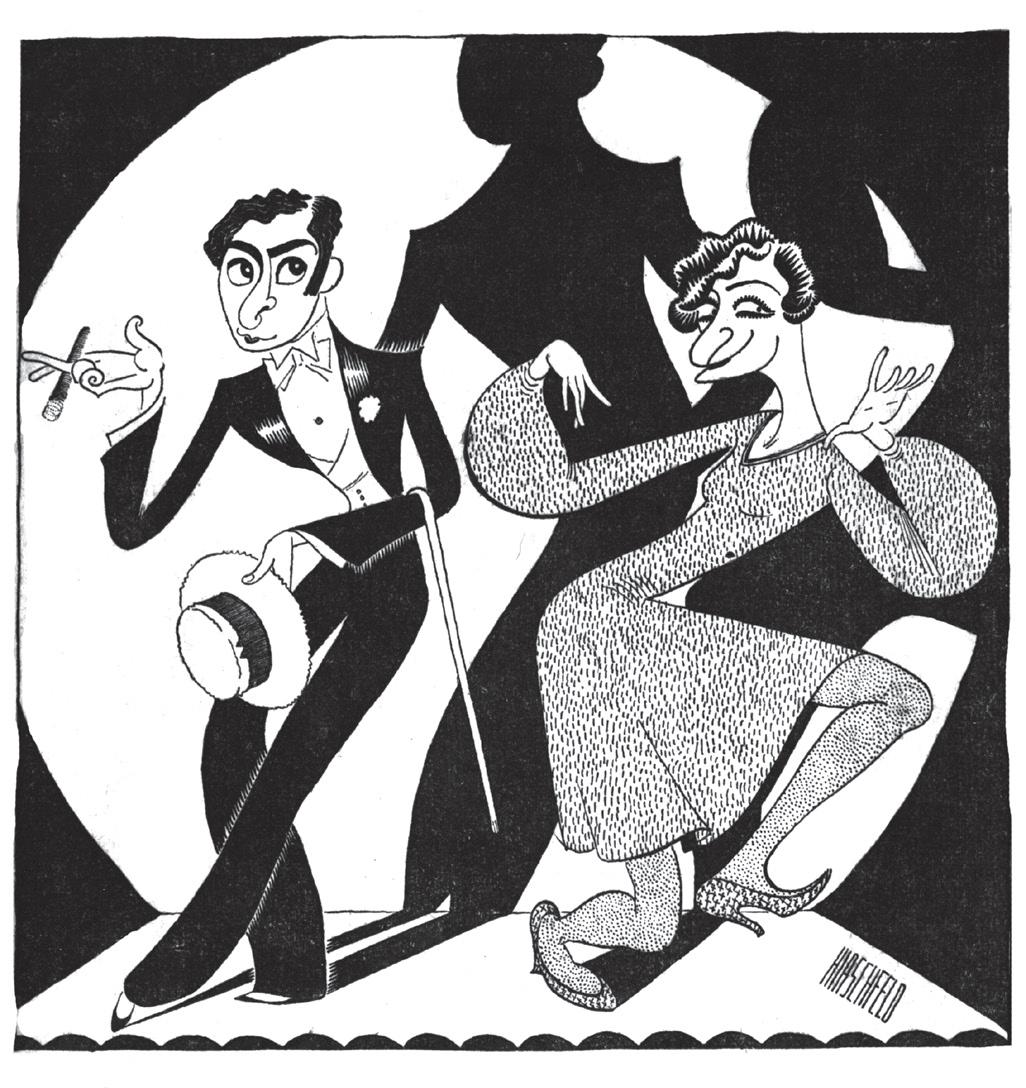

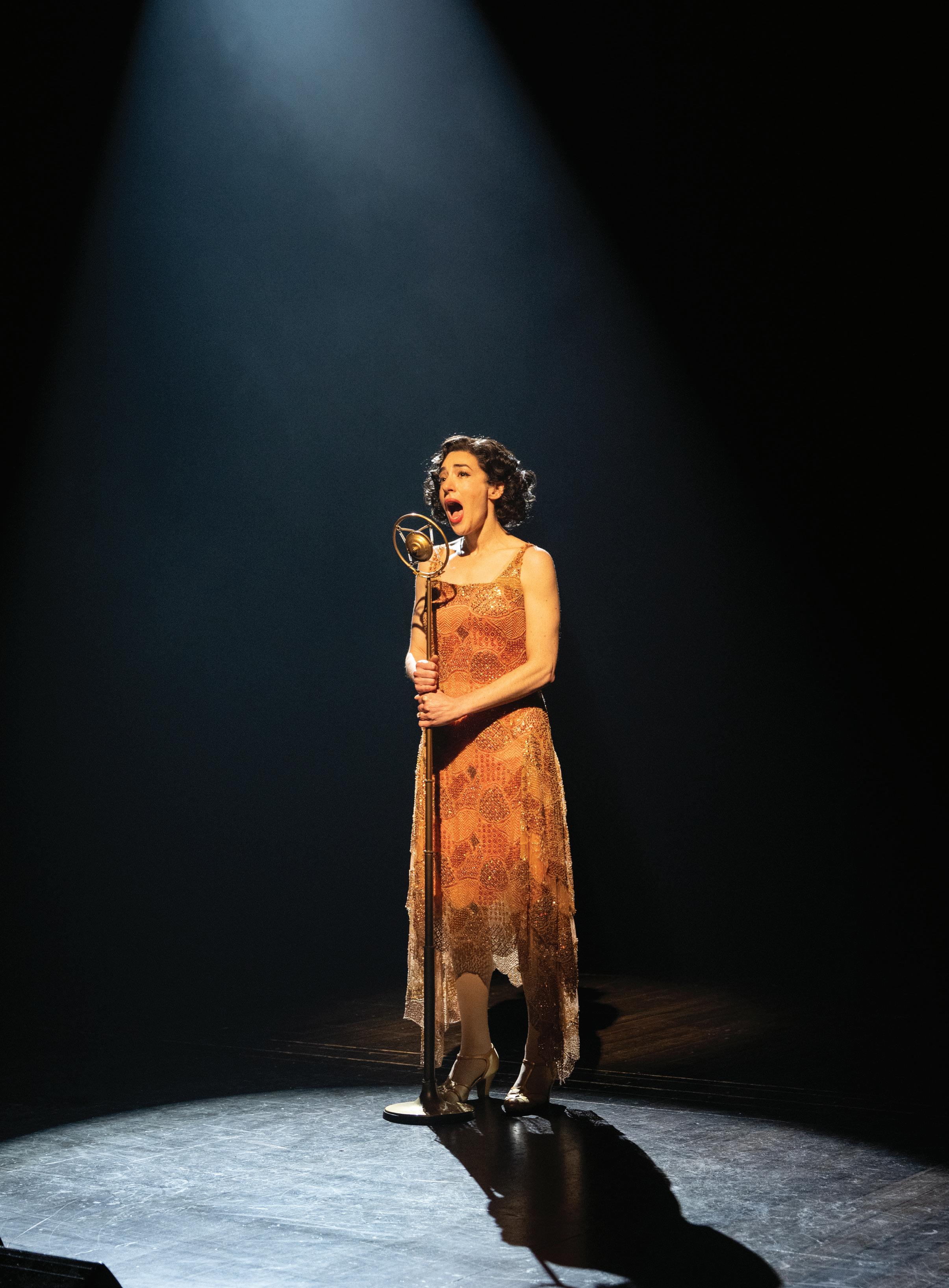
Lovers of musicals on stage and screen know the witty and ambitious character Fanny Brice, the funny girl at the centre of the great musical by Jule Styne, Bob Merrill and Isobel Lennart – and the role that launched Barbra Streisand to international fame. In the pantheon of legendary Broadway roles, Fanny is probably as well-known as Mamma Rose, Dolly Levi, Roxie Hart, Elphaba and other colorful, strong, determined women characters.
Perhaps less known is the fact that this character is a romanticized, ragsto-riches version of the real Fanny Brice (1891-1951), a groundbreaking Jewish-American comedian, singer, and actress who became one of the most influential entertainers in the early decades of the 20th century. She rose to fame on the Vaudeville stage after joining Florenz Ziegfeld’s Follies in 1910 and later achieved national renown starring on the wildly popular radio program The Baby Snooks Show in the 1930s and 1940s.
Fanny Brice’s place in American theatre history was cemented by the playwright and screenwriter Isobel Lennart, the creative force behind Funny Girl, who conceived the story, wrote the book for the 1964 musical and created the 1968 film adaptation. Lennart is sometimes known as “the other funny girl” for her role in elevating Fanny Brice to immortality on the American stage.
By Melissa Novecosky
It started with a desperate need for more space to support our artists. We were bursting at the seams – education events were growing exponentially year over year, accessibly priced artist housing was becoming increasingly hard to find, and our wardrobe team was working in every nook and cranny available.
As the vision for the Shaw Artists’ Village began to take shape, it became clear that we were not only creating space for our artists, we were also creating a unique space for awakening the inner artist in all of us. As part of the All. Together. Now Campaign, the transformed buildings that used to make up the Upper Canada Lodge next door to our Festival Theatre are becoming spaces for education, training, artist housing, performance, and a new wardrobe workshop.
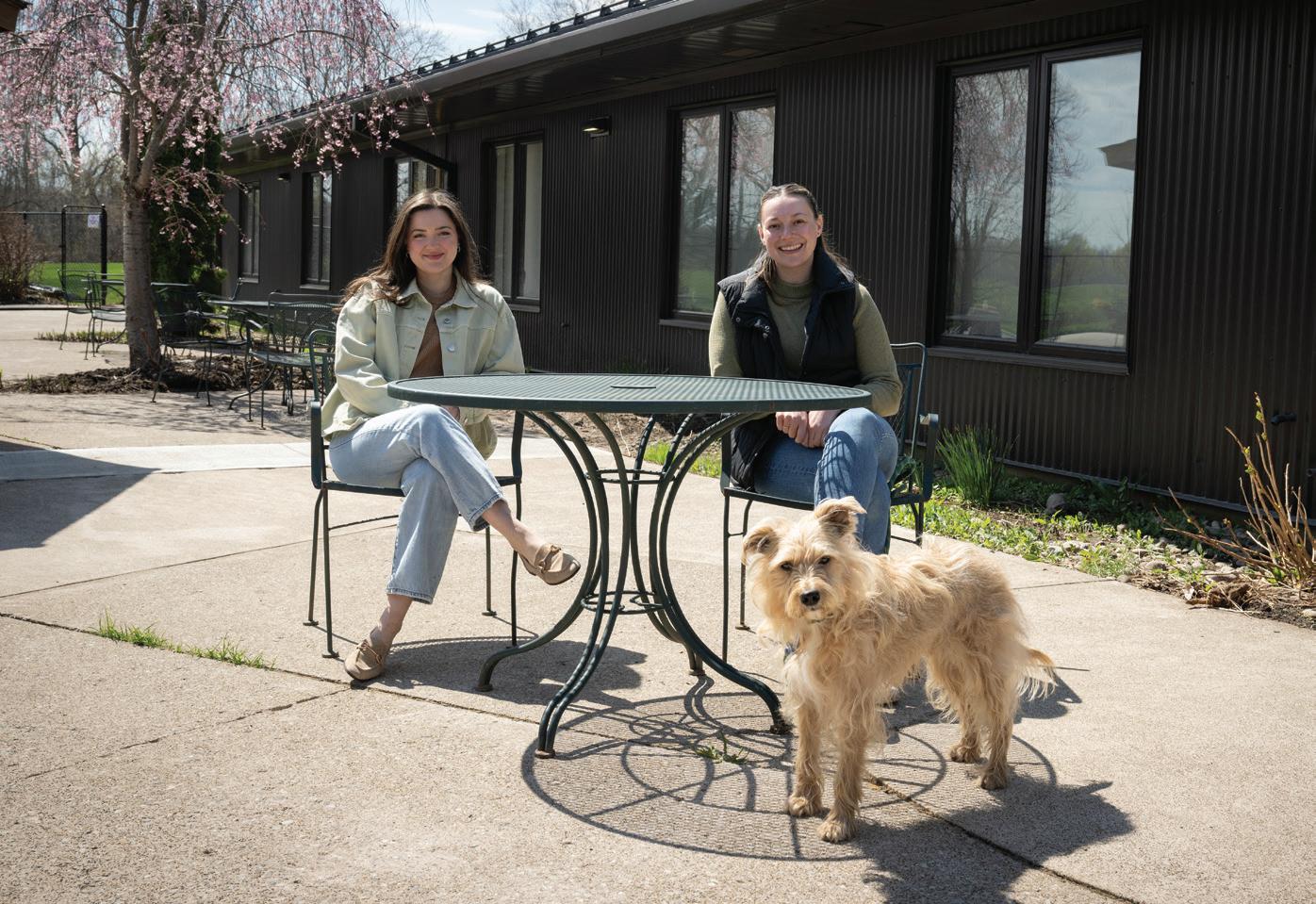
In February, the housing wings of the Shaw Artists’ Village welcomed their first residents. A mix of studio, one-bedroom, and twobedroom apartments, the Artists’ Residences house Shaw Festival Ensemble members during their season-long contracts. These fully furnished apartments were built with visiting artists in mind. We asked ourselves: What makes a space feel like home? How does your living space affect your work? What really matters to the artists that live here? Among the first artists to move in were stage manager Becca Jorgensen and actor Emily Masurkevitch. We invited them to share their impressions of the new Shaw Artists’ Village. Back for her fourth season as an assistant stage manager on Sleuth and One for the Pot, Becca (and her lovable dog Larry) recently moved into a one-bedroom apartment at the Shaw Artists’ Village. Becca and Larry drive to the Shaw Festival every season from Victoria, B.C. for a seasonal contract. Working away from home is a necessary part of the job for many Shaw Festival artists and we created the Shaw Artists’ Village to give them a place where they can feel truly cared for and comfortable.
For Becca, being in her own space makes the Shaw Artists’ Village feel like home.
We’re all trying to create art together. It makes my job so much easier when I feel taken care of and can settle into my own space where I can come home and rest.”
– Becca Jorgensen “
Initially a little trepidatious about living in the artists’ housing apartments, Becca remarked that she’s “been beautifully surprised by the space.” It’s the little things, like coming home at lunch time to take a restorative walk with Larry or putting on the slow cooker so that when she gets home from rehearsal there’s a warm, healthy meal waiting for her that really makes all the difference for a busy stage manager.
And what about Larry — proximity to the Commons for long walks with lots of snuggles and treats from the caring housekeeping staff and fellow residents are keeping him happy.
In February, Emily started her first year with the Shaw Ensemble. Part of the Baillie Cohort, she is spending the season soaking in everything The Shaw has to offer. In between Academy classes in foundational techniques like voice, movement, and text work, Emily will be understudying in Heartbreak House and The Wind in the Willows. Since she arrived, she’s also been attending rehearsals for other shows, watching and learning from other extraordinary Shaw Ensemble members.
When asked what excites her about the season, Emily was quick to call out the Shaw Ensemble. “There’s no ego here. Everyone is here to do the work collaboratively and create the best art we can together.” It’s that sense of community that drew Emily to the Shaw Artists’ Village.
It’s easy to see why a young artist might be interested in living in the Artists’ Village. Having your choice of studio, one-bedroom, or two-bedroom apartments with your own bathroom and kitchen, ample storage, and flexible and transformative spaces makes it easy to rest and prepare for work. The communal spaces including the fitness rooms and outdoor courtyard are also appreciated, and residents are already making plans for outdoor BBQs when the weather improves.
The Shaw Artists’ Village is a vital part of the All. Together. Now. Campaign — transforming The Shaw into a buzzing campus of connection, creativity and curiosity. A home for all those who wish to put down their phones and remember that they are alive. A Campaign for Real Human Connection.
Join the movement. Visit shawfest.com/ alltogethernow
For first-timers like me, it’s easy to feel isolated. Living in the Artists’ Village creates community. I love being able to meet company members I might never see otherwise in the hallways.”
– Emily Masurkevitch



While the Housing Residence and Wardrobe Construction Shop are complete, the Burton Centre for Lifelong Creativity will be opening in late spring. We're thrilled to have a space for patrons, artists and thinkers to connect, collaborate, experiment and learn. The labs, studios, meeting rooms and commons spaces will host an array of vibrant programming — all designed to support and inspire your creative journey.
Immerse yourself with one of the unique theatrical encounters at the Shaw Artists’ Village Hall such as:
Perfect Pairings - July 7 to September 19
Members of our amazingly talented Ensemble will delight and inspire you with songs from well-loved musical theatre composer-duos. Each performance will be a night of celebrated songs and intimate encounters.
Check out shawfest.com/ beyondthestage for more event details.
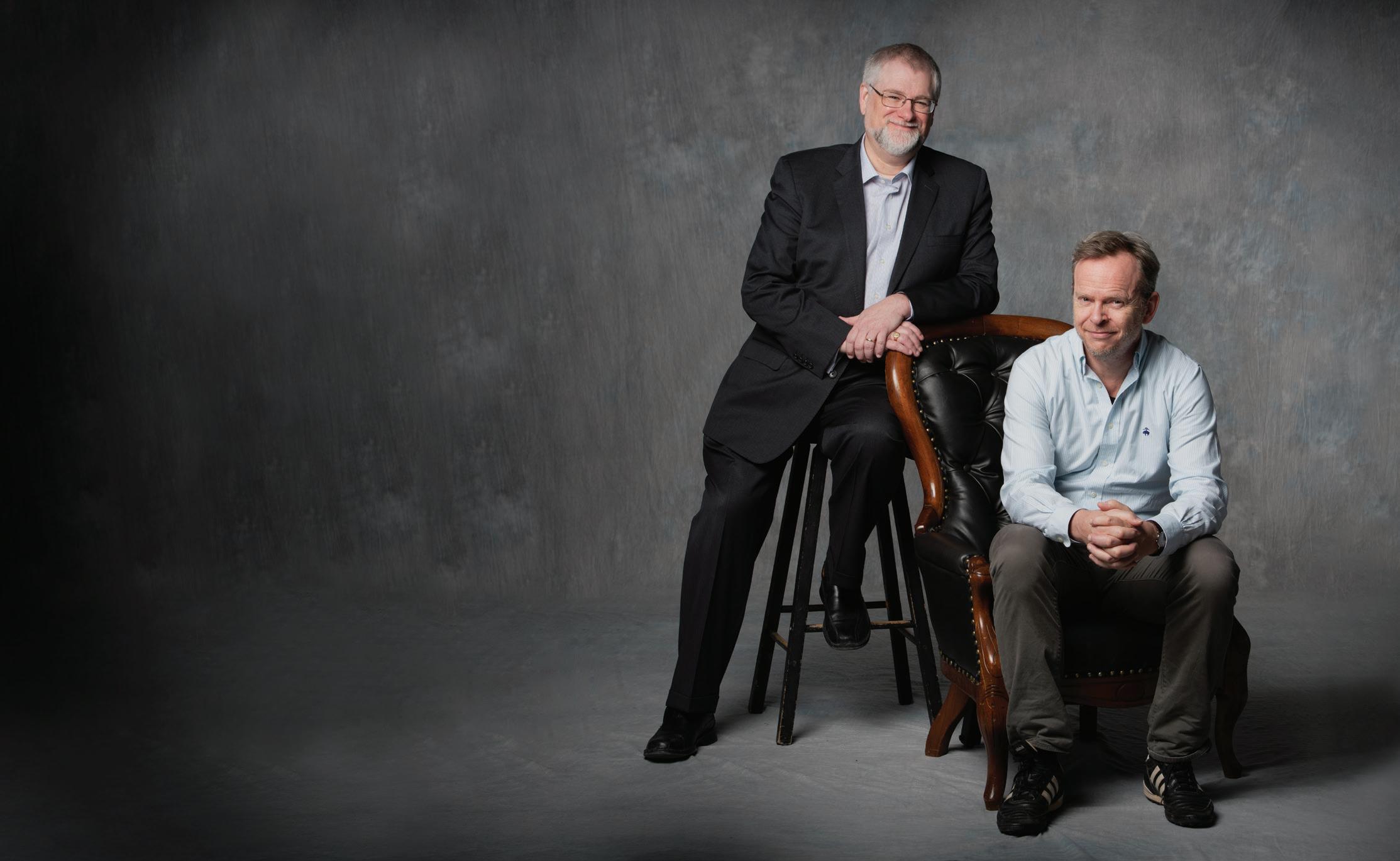
are thrilled to offer a warm welcome to our
Thank you!
Judith M. Adam & Marc Zwelling
Sandra Aversa†† & Christopher De Foa
Aaron* & Rebecca* Boyd
Blake & Heyerdahl
James Braun & Kirk Nairn Lawson
David Butler
Ginette Butler
Harriet & Jeff Carter
Mark Cestnik
Mr Ronald Chappell
Sandra Chodarcewicz
Henry & Jeanne Ciok
Mrs Claire Conway
Retired Judge Colleen Cooney
Ms Susan N. Crisp
Dr Roger I. Dacre
Mr Thomas Dando
Jo-ann Agatha Denouden
Carol Fahey
Sarah M. Fallon & John R. Fudyma
Ann & Bill Fleming
Dr & Mrs Thomas J. Foels
Mrs Donna Gerson
Patricia Gosda
F. Gruehl
Eleanor Hacking
Ms Dianne Hall Perry & Shari Hartwick
Mr Donald E. Hicken
Henry Hildebrand
George & Mac Hoover
James Hunker & Janice Remai Lois & Will Irwin
Tony Jarvis & Marcie Rose
Laura Jeffrey & William Smelser
Richard Kane & Gretchen McBeath
Richard & Judith Katz
Cynthia Kelley
Catherine Krasnick
Joann R. MacLachlan
Ms J. McCruden
Ms Adrienne McLennan
Ian & Carol McLeod
Penny & Myles Milligan
Mr Michael Medline & Ms Tracy Dalglish
Drs Michael & Helen Nazareth
Andrew & Claire Papierz
Wade & Wanda Partridge
Jill Leigh Perry
Honourable David† & Mrs Shelley Peterson
Pauline Petek
Marlene & John Precious
Heather Reid
Dr Bonnie Rose††
Mr Vinod Sahney
Michael & Sandra Sexton
Kenneth G. Shelley
Ms Barbara Shum
Paul Sportelli*
Ms Amy Tuyn
Ms Andrea M Tuyn
Mary Usher-Jones
Dr Yvonne Verbeeten
Shan & Ivor Wharf
Christine White
Philip & Kimberley* White
Hua Yu & Levent Kurth
Yorkshire Tea
Andrew & Tracey Zawadzki
1 anonymous gift
At the final performance of A Christmas Carol on December 21, 2025, which was also the final performance at the beloved Royal George, an exciting announcement was made. Beginning in 2026, the Shaw Festival will become Harbourfront Centre’s Resident Artist Company. As part of the residency, Harbourfront Centre will present multiple Shaw Festival productions each year including annual performances of A Christmas Carol
We look forward to bringing world-class Shaw theatre productions to Toronto’s waterfront through this three-year collaboration and to reaching and engaging new — and familiar — communities through ongoing live performances.
Performances will be primarily scheduled from October through March at The Fleck at Harbourfront Centre Theatre. Stay tuned for further details and announcements about the partnership as they evolve.
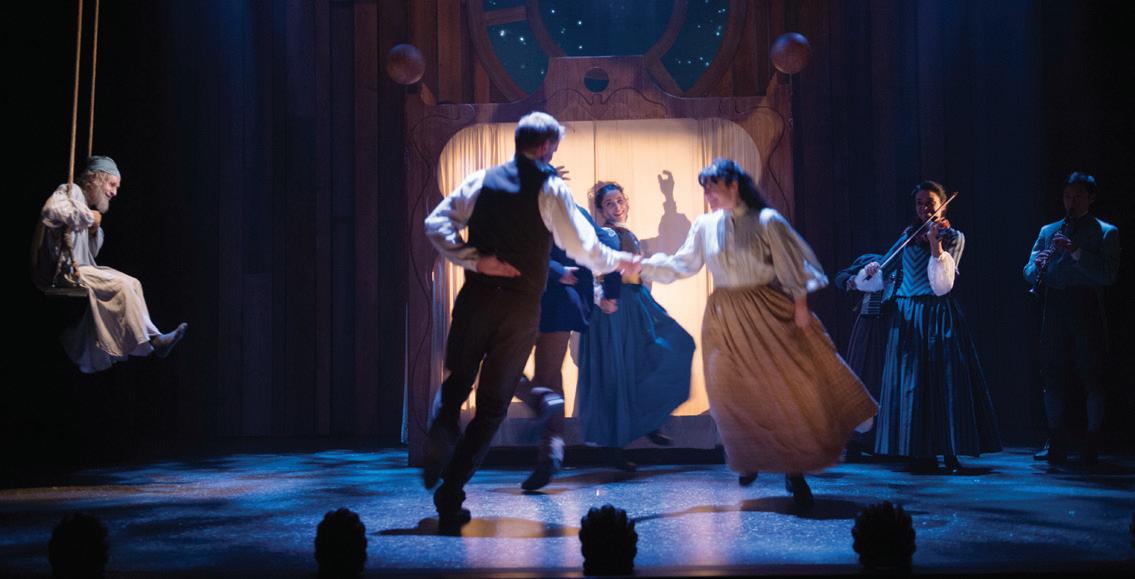
The Court House is where the Shaw Festival began in 1962 with a handful of performances. Over time, the performance and seating areas evolved. What remained the same — and what audience members loved — was the intimacy and the history of this space. What they didn’t love was the stairs.
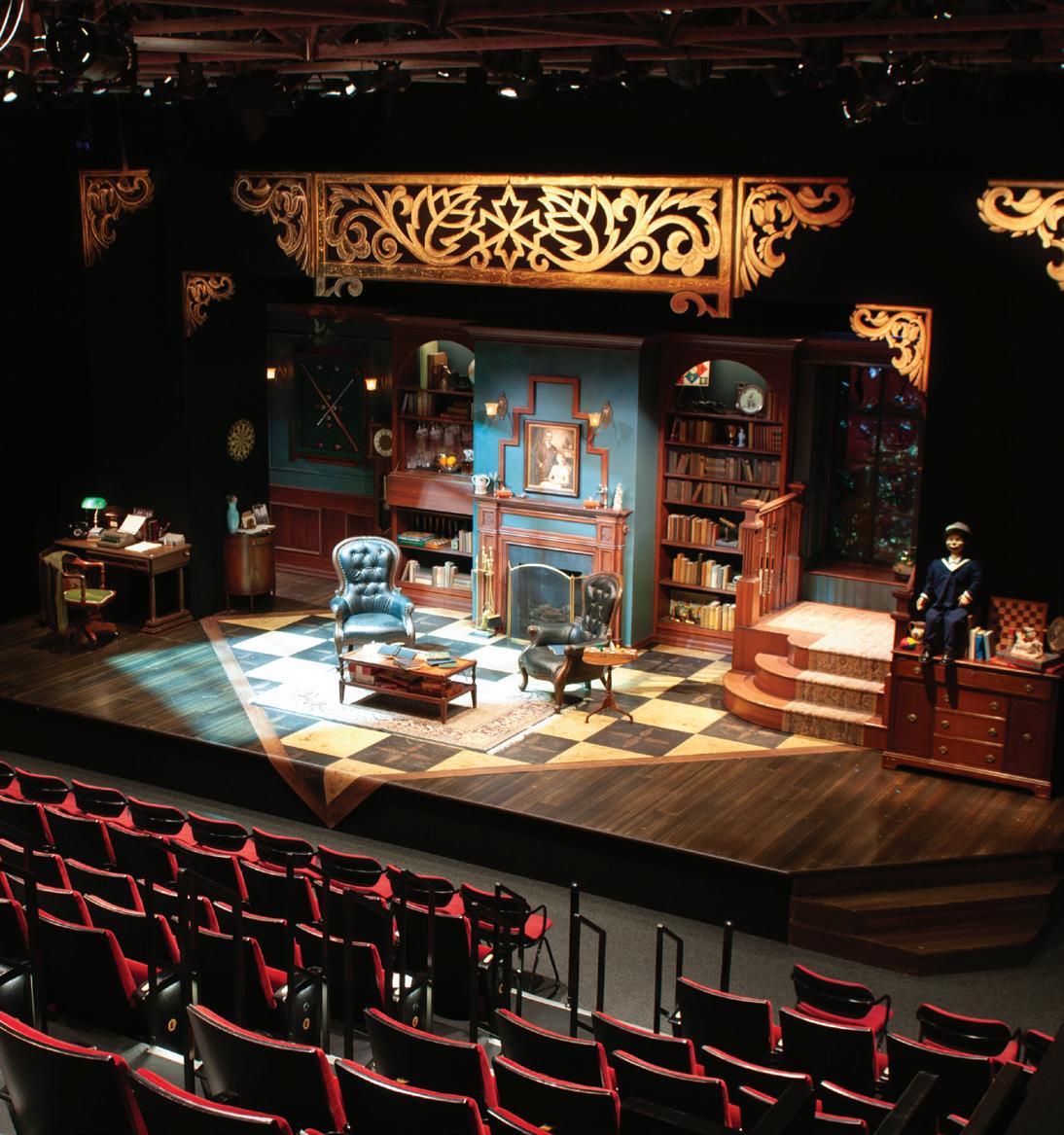
When we knew we would need another venue, while the Royal George Theatre is being rebuilt, the obvious choice was a return to the Court House — but an improved version of that theatre. We can’t do anything about the stairs from the ground level — but remember, there is an elevator! — however our resident set experts and engineers have created a more accessible and comfortable audience seating area. This, along with the performance area, is much closer to what the Court House looked like in its early days.
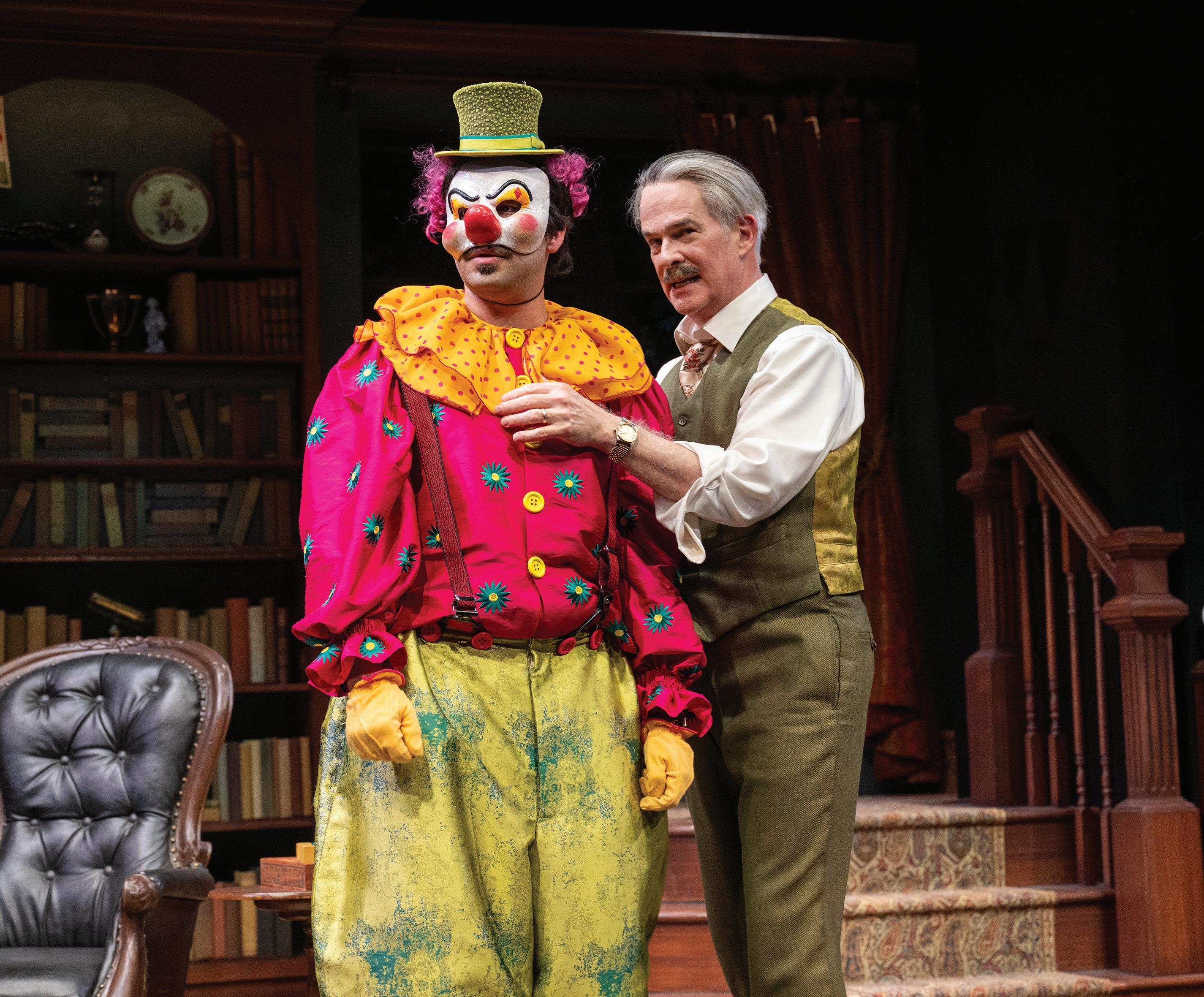
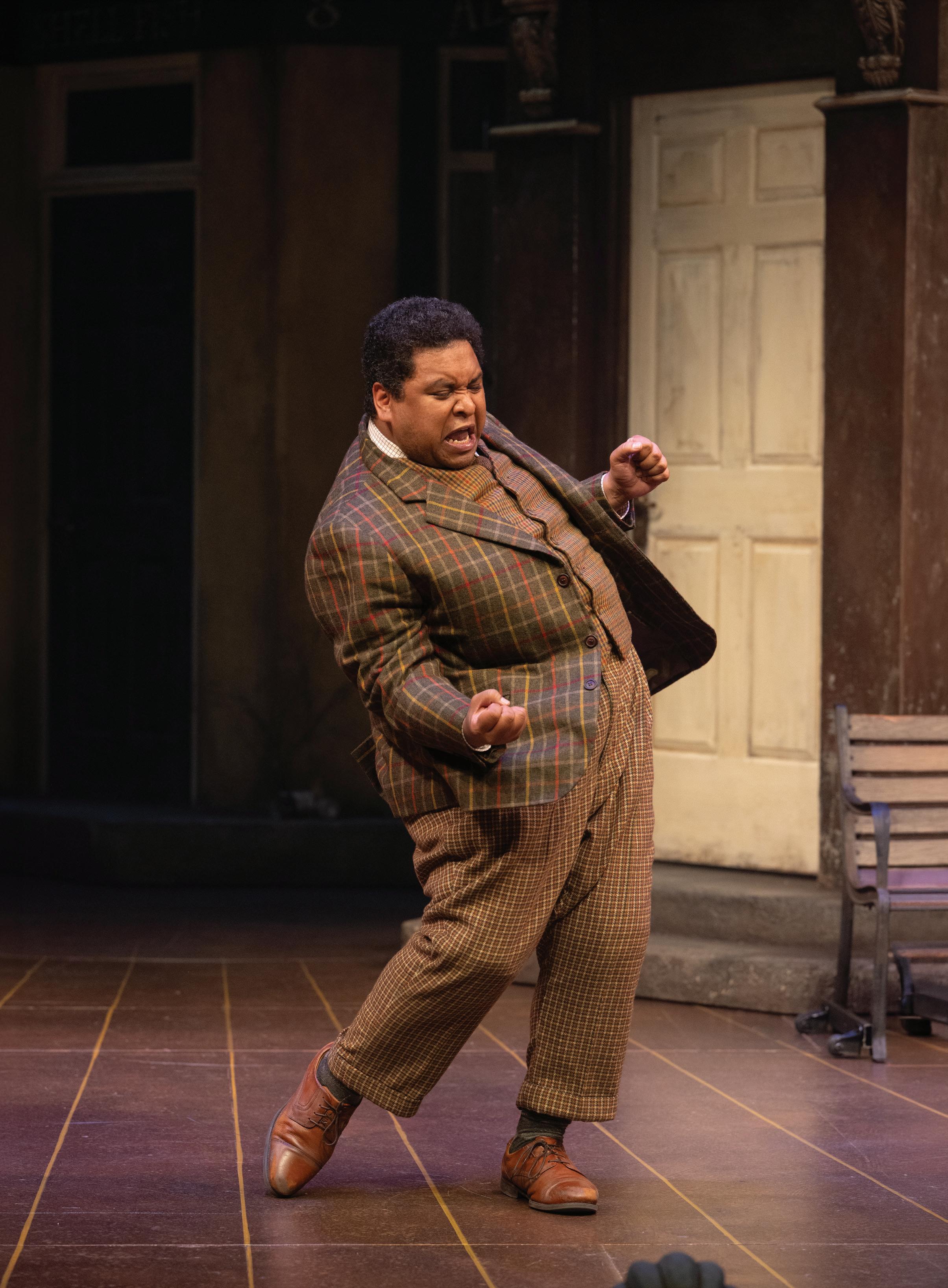
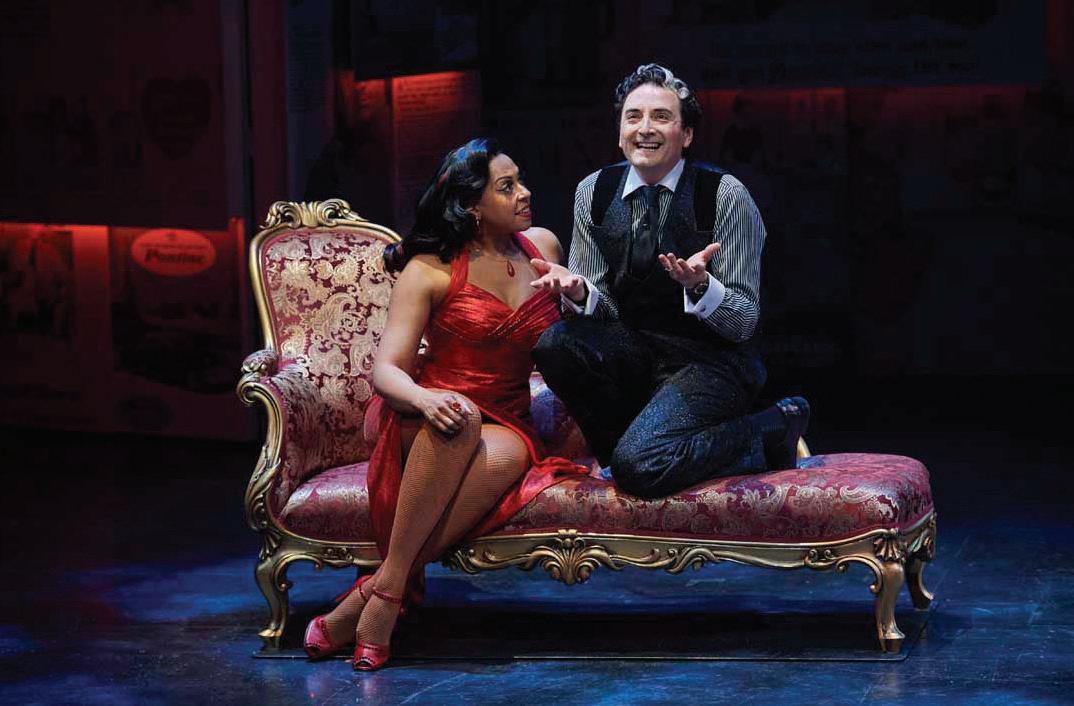
Check out the new and improved Court House Theatre this year with performances of Sleuth (pictured to the right), Jeeves and Wooster in Perfect Nonsense, A New Work in Progress or A Year with Frog and Toad

Generously sponsored by The William & Nona Heaslip Foundation*
The Shaw Express is hitting the road with even more round trips this season. From July through September, buses will be running almost every day there’s a show!
On select days, take a two-show bus trip! Arrive for the matinee and head home after the evening performance. Look for B+ on the calendar on our website.
Buses run on select days from April 30 to October 11 with service from Toronto and Burlington.
Book at shawfest.com or call 1-800-511-7429
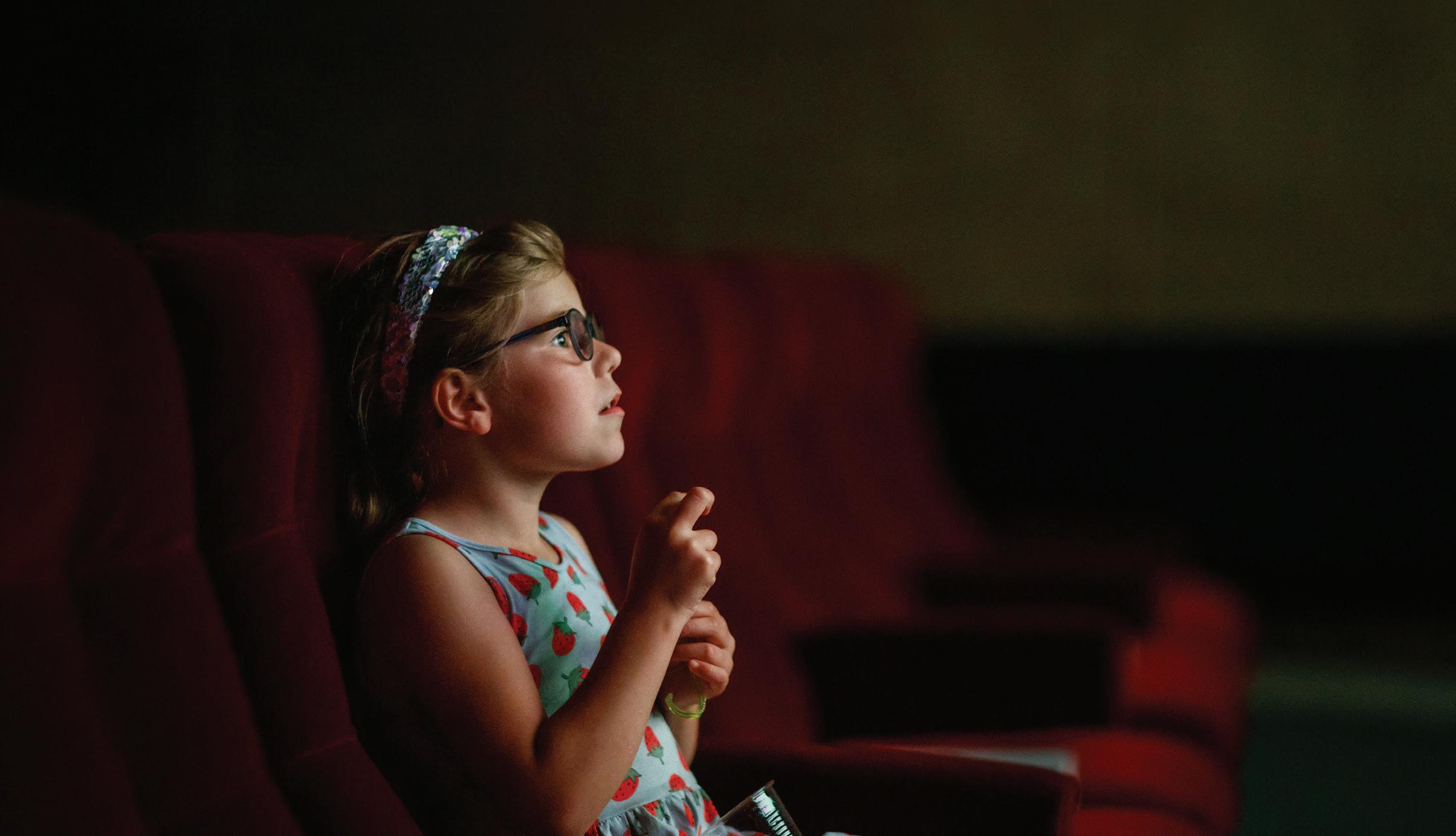
When the curtain falls and the audience goes home, the impact of great theatre lingers. But what ensures that transformative experience continues for the next generation—and the one after that?
The answer lies in legacy giving; planned gifts that create a permanent foundation for artistic excellence at the Shaw Festival.
Wendy sat in the front row, unable to hold back the tears. It wasn't the first time theatre had moved her. But this performance—this moment—felt different. The young actress on stage was luminous, transforming Shaw's words into something urgent and alive.
What Wendy knows is that her legacy commitment will ensure performances like this continue. That her future gift will train tomorrow's actors and directors. That her pledge today will create moments of beauty and transformation for audiences she'll never meet.
This is the quiet magic of legacy giving.
Every season, the Shaw Festival nurtures emerging talent—actors in their first professional roles, directors developing their craft, designers pushing creative boundaries. These artists are the future of Canadian theatre. Legacy gifts create sustainable funding for apprenticeships, training programs, and opportunities that transform talented newcomers into tomorrow's theatre leaders.
“The theatre and the church are food for the soul. They have fed, nourished, inspired and helped me in the journey towards truth. I cherish many of the great performances the Shaw Festival has given me.”
– Donald Combe, The Doherty-Rand Legacy Circle Donor
“It was love at first sight for us when we saw our first Shaw performance over thirty years ago. The Shaw was a major factor in deciding to move to NOTL and we have seen almost every production since. Recent young and upcoming actors have impressed us. We even asked TC if we could sponsor Graeme Kitagawa! But by leaving a legacy we will help young talented actors like Graeme in their careers!”
– Lewis & Jean Ford, The Doherty-Rand Legacy Circle Donor
“My legacy gift is inspired by Shaw Festival performances from childhood through to the present — including many visits with my high school student classes — and intended to honour all those making a living in the performing arts. May it nurture future Shaw artists and staff, and thereby, their fortunate audiences.”
– Anonymous, The Doherty-Rand Legacy Circle Donor
Join The Doherty-Rand Legacy Circle and help ensure that tomorrow's luminous young talent receive the training they need today. Your legacy commitment, whatever its size, guarantees that the transformative power of theatre continues nurturing artists and inspiring audiences for generations to come.
Questions? Kim would love to hear from you!
Kim White | Associate Director, Individual & Legacy Giving
289-783-1924
kwhite@shawfest.com
Bill served on the Board of the Shaw Festival from 2000-2004, as an Honorary Governor from 2005-2007, and subsequently on the Shaw Festival Endowment Board until his passing this past February.
Bill’s expertise was in investment and accounting. In his time as Chairman of the Investment Committee of the Endowment Foundation he oversaw significant improvements. In politics he served as a member of the provincial legislature as Minister of Economic Development Trade and Tourism, followed by seven years as Chairman of Ontario Exports Inc. He was known for his decency, kindness and generosity.
Along with his wife Meredith, Bill’s generosity and love of the theatre was demonstrated by more than 25 years of membership, either as Governors Council or Producers Circle members, along with significant gifts to The Shaw’s Endowment Fund, directed towards funding programs to train young actors. As of 2025, 23 young actors have received a Saunderson Award, an annual award that recognizes a promising young actor in the early stages of professional development. Thanks to these endowment gifts, Bill will be remembered for years to come as one of the founders of the Saunderson Award, helping to secure the future of artistic excellence, here at The Shaw and across the sector.
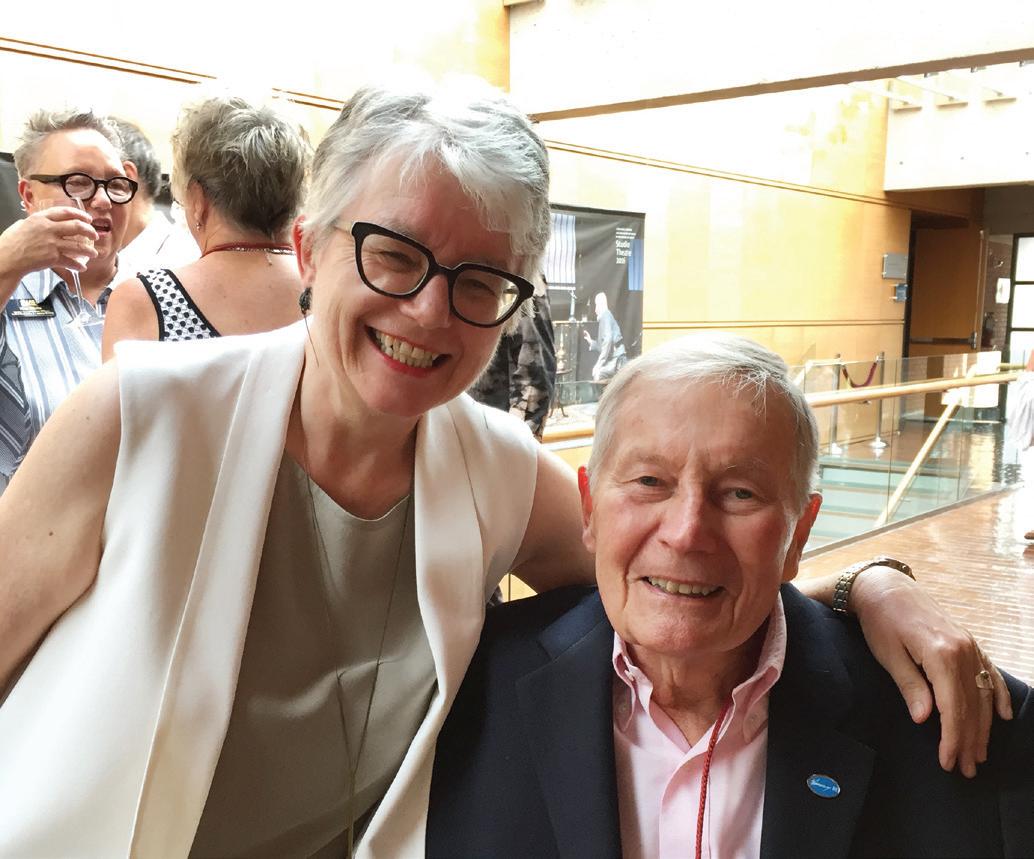
Chris enjoyed a long and celebrated career as a geologist from South Africa to Canada and played a key role in the diamond industry in Canada. According to the Globe and Mail obituary, Chris was “an early believer that the geology of Canada was perfect for diamonds” and participated in “one of the high adventures of Canada’s storied mining history.”
As residents of Niagara-on-the-Lake (when not in South Africa), Chris and his wife Jeanne were staunch Shaw supporters for more than a decade as Producers and Artists Circle members. Sharing a passion for inspiring the next generation through theatre, they chose to direct their support to children and family programming—ensuring that kids, grandkids, and the whole family can experience the joy of live performance. For Jeanne, this continued support honours Chris’ memory in a deeply meaningful way.
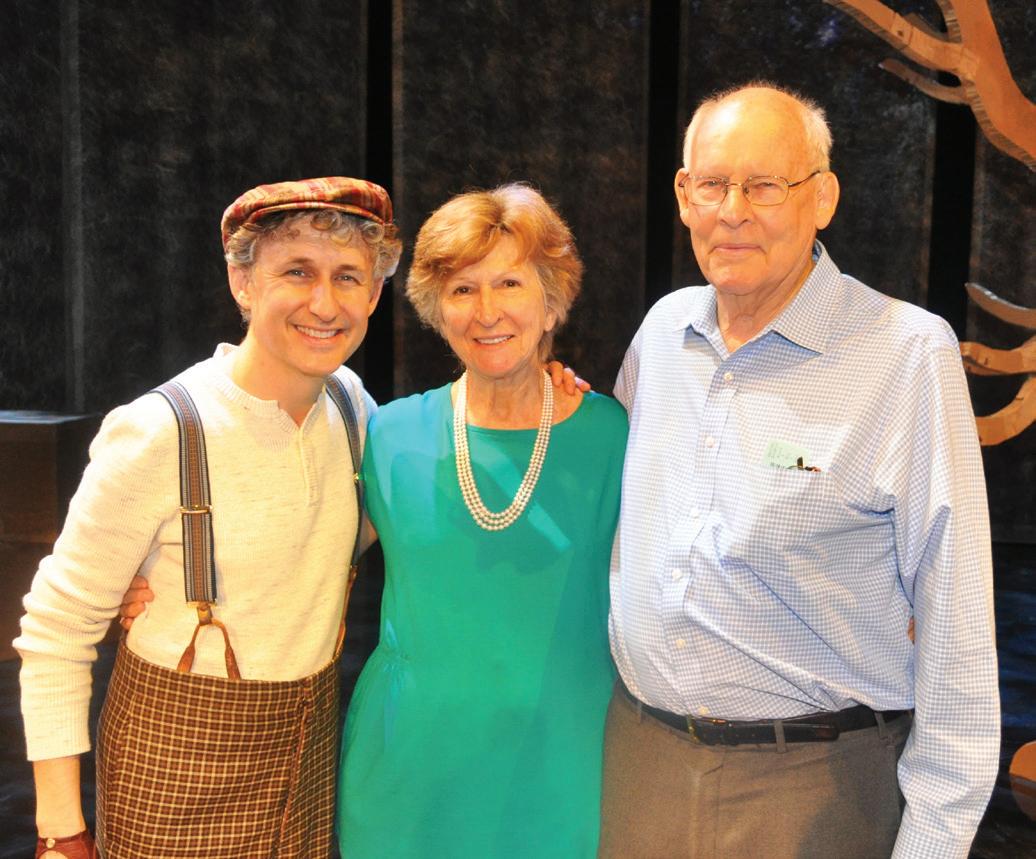
In 2026, you will see their names listed on our website, in house programmes and elsewhere, as “Children & Family Programming Supporters” for The Wind in the Willows and A Year with Frog and Toad
“AFTER ALL, THE BEST PART OF A HOLIDAY IS PERHAPS NOT SO MUCH TO BE RESTING YOURSELF, AS TO SEE ALL THE OTHER FELLOWS BUSY WORKING.”
— THE WIND IN THE WILLOWS , KENNETH GRAHAME
FRIENDS
Friends Post-Show Chats
Various Wednesdays through October
Wednesday after select Festival Theatre matinees. Post-show chats begin approx. 10 minutes after the matinee. Free | For all Friends, Governors Council and Corporate Partners
Festival Backstage Tours
Various Dates & Times| Through December
Here’s your chance to peek behind the curtain. An hour-long guided tour of the Festival Theatre backstage. $10; $5 with a ticket to a performance
Pre-Show Talks
Multiple Dates | Pre-Show, through September 20
Led by the Intern Directors at the Shaw Festival each season, enjoy an introduction to that evening’s play. Talks start half an hour before select performances. Free
Continue the Conversation
Multiple Dates | Post-Show, through October
Following Tuesday, Friday and Saturday matinees (except those marked P or O in the online calendar). Join fellow patrons for engaging guided discussion. See calendar online for dates/times. Free
Tuesday Q & A
Tuesday Evenings | Post-Show, through October
An informal question-and-answer session with actors following Tuesday evening performances (except those marked P or O in the online calendar), in all four theatres. Free
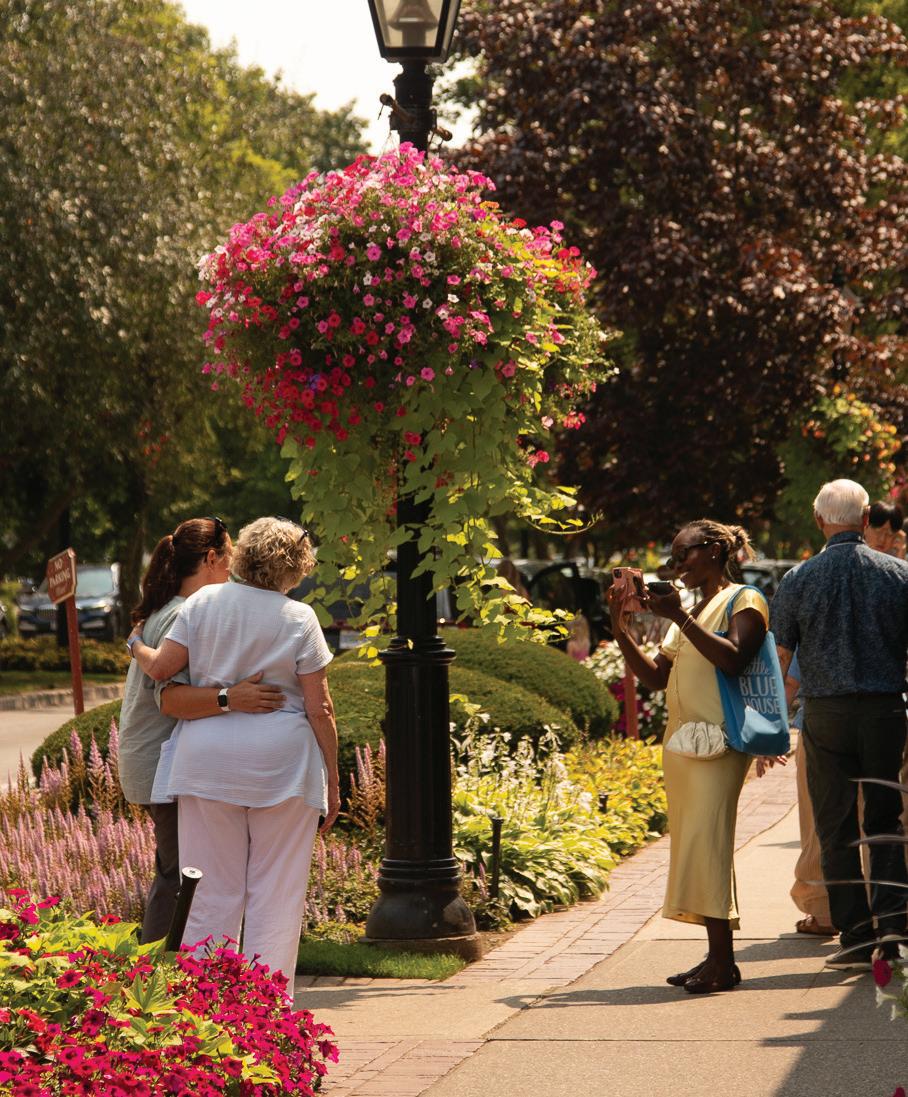
The Shaw Guild Garden Tour
June 13 | 10am-4pm
A self-guided tour of gardens throughout Niagara-on-the-Lake. $25 before April 1 | $30 or $35 on event day
Father’s Day Whiskey Tasting
June 21 | Festival Theatre
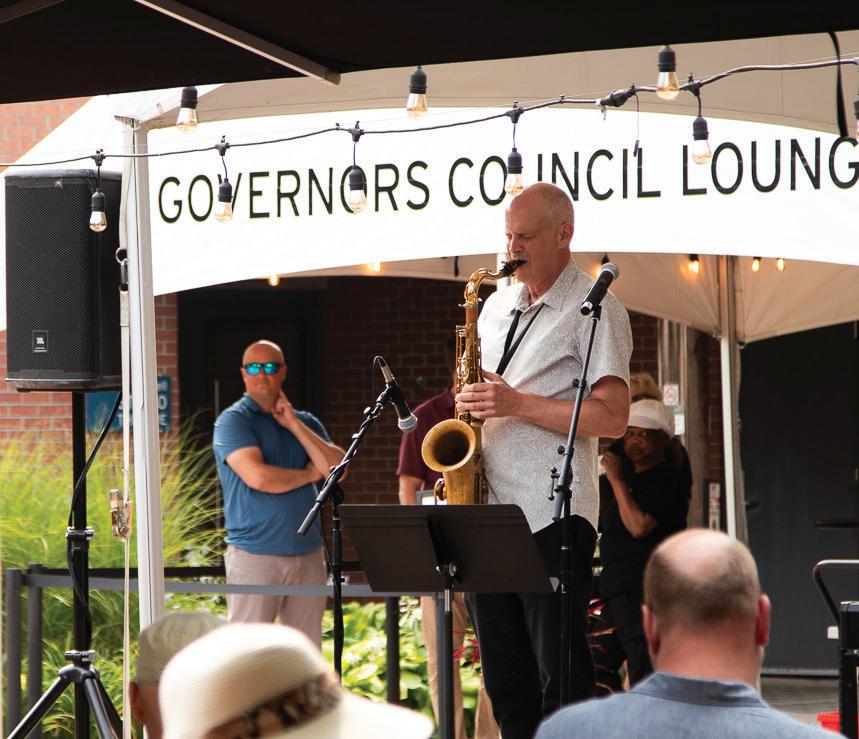
Raise a glass and share a toast to celebrate Dad with a curated whiskey flight and a performance of Jeeves & Wooster in Perfect Nonsense Tasting $60. Show tickets not included.
Shaw Sing-Along
June 25 | 10am
Join Shaw Music Director Paul Sportelli and sing along to the music of Funny Girl. $20 | $10 with ticket to a show
Happy Hour
June 25 | 5pm | Online
Watch your inbox one week prior to each date for registration information. Free
Coffee Concert
June 28 | 10:30am | Festival Theatre Lobby
Classical music concerts performed by members of the Shaw Orchestra. $10
GOVERNORS COUNCIL
Onstage Rehearsal
June 28 | 6:30pm | Festival Theatre
Experience an onstage rehearsal for Amadeus Free | For Governors Council and above
What’s In Your Songbook?
July 3 | 7pm
An intimate and interactive evening of songs and stories. Ensemble members sing songs from their audition songbooks and recount stories about their lives as artists in the theatre. $30 Hodgson Russ LLP
Sponsored by
The Art of Golf and Other Nonsensical Things
July 4 | 10am-12pm
Shaw Artists’ Village Hall
P.G Wodehouse was an unashamed golf lunatic, so much so that he wrote The Golf Omnibus, highlighting everything from love on the links to the terrors of teeing off. $40, $20 for students
Shaw Guild Sponsored by
Pop-up Patio
Thursdays July 9-September 17
Baillie Courtyard
Food! Refreshments! Live music! Thursdays in July, August and September following matinee performances at the Festival and Studio Theatres. Open to all, no theatre ticket required. Free. Food & beverages available ($)
Sponsored by
Marz Homes
A Brief History of …
July 11, Aug 1 & Aug 22 | 12-12:30pm
Shaw Artists’ Village
A brief history of cabaret, from its birth in the cafés of Paris to its development into large-scale productions in the United States. Join us for an insightful half-hour talk about this delightful art form. Free
Speakeasy
July 18 | 7pm
Jackie Maxwell Studio Theatre
An evening of jazz featuring members of the Shaw Orchestra and special guests. $30
Walking with Giants
July 18 | 10:30am-12pm
Shaw Artists’ Village Hall
Join us for a presentation of the craft of largescale puppetry, examining the work of creators from around the world. $40, $20 for students
Supported by
DeRoy Testamentary Foundation
Gospel Choir
July 19 | 10:30am
Enjoy this extremely popular, euphoric and inspirational musical experience performed by the glorious voices of the Shaw Festival Company. $20
Sponsored by
Hodgson Russ LLP
Shaw Symposium
July 24-26 | 9am-5pm
Shaw Artists’ Village Hall
Revel in the works of Bernard Shaw and contemporaries with thought-provoking presentations curated by the International Shaw Society and stimulating sessions with Shaw artists over three days. Includes receptions, daily sessions, lunches and parking. Free to ISS Members, $200 for non-members, $75 for Students, $50 online
Happy Hour
July 30 | 5pm | Online
Watch your inbox one week prior to each date for registration information. Free
Coffee Concert
August 2 | 10:30am
Festival Theatre Lobby
Classical music concerts performed by members of the Shaw Festival Orchestra. $10
Shaw Seminar
August 6-9 | 9am-5pm
Shaw Artists’ Village
Immerse yourself in our 2026 Season. Seven plays over four days, and engaging sessions with Shaw professionals, writers and scholars. Registration includes all daily lunches, Cabernet Cabaret, guest speakers and parking. $500, $250 for students. Show tickets not included
Giant Love – A Talk and Book Signing with Julie Gilbert
August 7 | 10am-12pm
Shaw Artists’ Village Hall
Join acclaimed author, Julie Gilbert, for Giant Love: an intimate talk and book signing She will explore the life of her great aunt, Pulitzer Prize-winning writer Edna Ferber. $40, $20 for students
Supported by
DeRoy Testamentary Foundation
Gospel Choir
August 23 | 10:30am
Euphoric and inspirational music performed by the glorious voices of the Shaw Festival Company. $20
Sponsored by
Hodgson Russ LLP
What’s In Your Songbook?
August 25 | 7pm
Ensemble members sing songs from their audition songbooks and recount stories. $30 Hodgson Russ LLP
Sponsored by
Happy Hour
August 27 | 5pm | Online
Watch your inbox one week prior to each date for registration information. Free
Jewish Women in Theatre Pre, During and Post World War II
September 1 | 10:30am-12pm
Shaw Artists’ Village Hall
Examining the impact Jewish women in theatre made to the art form, the growth of American and Canadian theatre and the changes and challenges they faced pre, during and post WWII. $40 Adults, $20 for students
Supported by
DeRoy Testamentary Foundation
The Art of Classical Music: 1730-1820
September 13 | 1-3pm
Shaw Artists’ Village Hall
The Classical era marked one of the most transformative chapters in music history and included Composers Haydn, Beethoven and Mozart. Join us as we examine this incredible period in history. $40 Adults, $20 for Students
Sponsored by
Shaw Guild