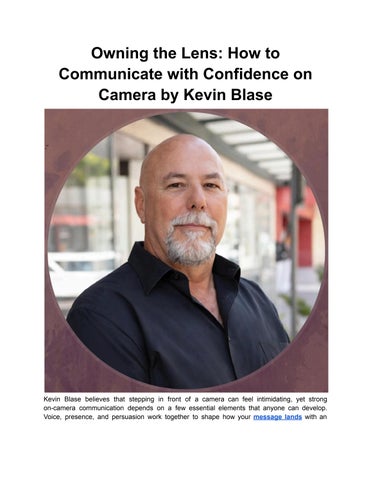
Owning the Lens: How to Communicate with Confidence on Camera by Kevin Blase

Kevin Blase believes that stepping in front of a camera can feel intimidating, yet strong on-camera communication depends on a few essential elements that anyone can develop Voice, presence, and persuasion work together to shape how your message lands with an
audience When you understand how to use each one effectively, you can turn even a simple message into something memorable and impactful.
Your voice carries more than just words. It reflects energy, clarity, and intent. A steady tone helps build trust, while variation in pitch and pace keeps the audience engaged. Speaking too quickly can confuse viewers, while speaking too slowly can bore them Instead, aim for a natural rhythm that mirrors a confident conversation. Clear pronunciation also matters. When your words sound crisp and deliberate, your message feels more credible and easier to follow
Presence goes beyond appearance. It involves how you hold yourself, how you make eye contact with the camera, and how comfortable you appear while speaking Audiences respond to authenticity, so trying too hard to perform can backfire Instead, focus on being present in the moment. Stand or sit with good posture, keep your movements purposeful, and let your facial expressions match your message When you appear relaxed and focused, viewers feel more connected to you.
Persuasion ties everything together It is not about forcing agreement but about guiding your audience toward understanding and action. Strong on-camera messaging uses clear structure and relatable language Start with a clear idea, support it with examples or insights, and end with a takeaway that sticks When your message feels organized and relevant, it becomes easier for viewers to trust and remember it.
Confidence grows with practice The more time you spend on camera, the more natural your voice, presence, and persuasive ability will feel. Reviewing your recordings can also help you identify areas for improvement Small adjustments often lead to noticeable results
Effective on-camera communication does not require perfection It requires awareness, consistency, and a willingness to improve When you combine a strong voice, a genuine presence, and thoughtful persuasion, you create messages that resonate long after the camera stops recording