brain waves
Center for Traumatic Brain Injury Research at Kessler Foundation
Northern New Jersey Traumatic Brain Injury System
Center for Traumatic Brain Injury Research at Kessler Foundation
Northern New Jersey Traumatic Brain Injury System
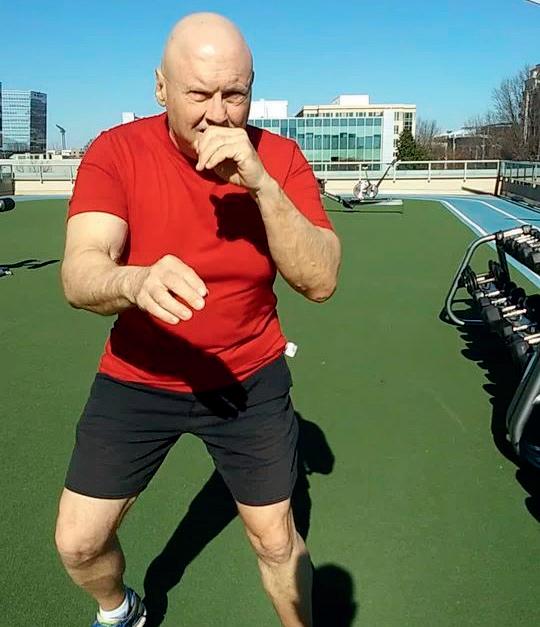
At age 10, Craig Philips sustained a traumatic brain injury. Despite noticeable issues, his injury wasn’t addressed for nearly three decades.
BY DIANA MALOKU
Following a motor vehicle accident, young Craig Philips spent three weeks in a coma and six months in a full-body cast to help heal his physical injuries, including a skull fracture. That was in 1967, when traumatic brain injury in children was not well understood. Making matters worse, Craig’s parents never told him about his injury.
>>continued inside, left page
How do you make sense of your challenges when you’re unaware you’ve had a brain injury? Just ask Craig Phillips, TBI survivor, rehabilitation counselor, author, advocate, and martial arts enthusiast. He shares his unusual story in a podcast, “Finding Purpose and Not Giving Up after Brain Injury,” and discusses why the eventual confirmation of his injury gave him a “second chance to live.”
This podcast, part of our quarterly Brainstorm series, is sponsored by the Northern New Jersey Traumatic Brain Injury System and Kessler Foundation.
Access Craig’s presentation using the QR code below.
<< continued from front cover
Although doctors said he would likely struggle, Craig returned to school, was mainstreamed, and graduated on time with his class. He continued to prove the naysayers wrong by going on to attend the University of Arizona. However, a number of challenges eventually led him to transfer to a community college, where he earned his undergraduate degree.
As his interests became clearer, Craig set his sights on a master’s degree in rehabilitation counseling. It took ten years of persistence, determination, and hard work, but he ultimately achieved his goal and became a Vocational Rehabilitation Counselor.
“Finding your purpose is a process, not a destination…It takes time [and] there are no shortcuts,” he says.
Recognizing hidden challenges
Along the way, Craig battled a range of social, emotional, behavioral, and social challenges and was even deemed “unemployable.” He was 39 years old when the brain injury he sustained decades earlier was confirmed.
“Suddenly everything made sense,” he admits. “I was finally able to grieve the loss and
confront my denial, anger, and depression. I came to understand that my ‘invisible disability’ gave me the ability to accept what I could not change and make different choices.”
Craig compares living with a TBI to working on a jigsaw puzzle. At first, the pieces are scattered and overwhelming, but with patience and effort, patterns begin to emerge, and the picture slowly takes shape. He explains that by knowing how you learn, whether through visual, auditory, and/or handson methods, you can build your own skill set. Doing so, he says, “will allow you to achieve things you never thought possible.”
Today, Craig continues to inspire hope and healing for those living with brain injury. He has shared his journey through more than 2,000 articles, 400 video presentations, 19 ebooks, and other resources. He also created “Second Chance to Live,” a website dedicated to helping others adapt, learn, and grow. His message is simple, yet powerful: “No one can go back and change the beginning, but anyone can start from where they are and create a new ending.”
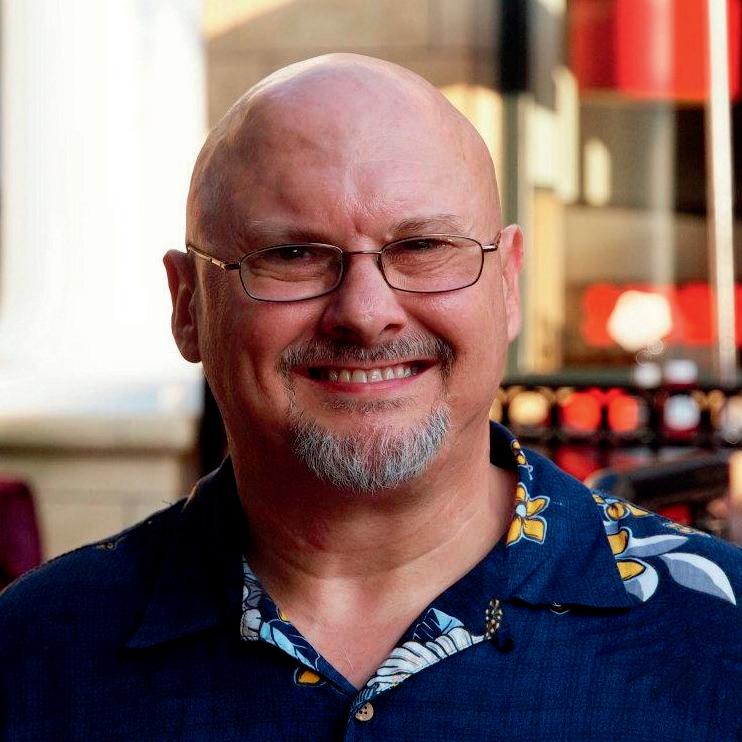
“A brain injury is only an event that occurred in our lives; it does not have to define who we are or what we can achieve,” notes Craig Philips. He suggests that the recovery process comes down to three key factors: awareness, acceptance, and action— and offers the following tips:
Grieve the impact of your brain injury
Confront your denial
Face your anger
Recognize what you cannot change
Embrace your emotions
Learn to use your abilities in ways that work for you
Be gentle on yourself
Accept your new reality
Diana Maloku is a research coordinator in the Center for Traumatic Brain Injury at Kessler Foundation.
Let’s
BY TOVAH GOLDSTEIN, MSOTR/L, CNS, CSRS
Recovery after brain injury is more than rebuilding physical and cognitive skills. It’s also about creating a safe and supportive home environment.
Brain injury rehabilitation focuses on restoring physical, emotional, behavioral, and cognitive strength, including memory, problem-solving, attention, and other critical skills. Yet, the environment you live in also plays an important role in your ability to function as safely and independently as possible. Small changes around your home can help remove barriers, reduce risks, and promote self-confidence.
Lighting is important if dealing with common vision and balance issues.
• Install softer bulbs or dimmable lights to ease sensitivity
• Use brighter task lights when reading, cooking, or doing crafts
• Ensure all pathways are well-lit, especially between the bedroom and bathroom at night
• Enhance safety by adding motion-sensor nightlights
Clutter can easily overwhelm the senses and create hazards.
• Store items in labeled containers or cabinets to reduce visual clutter and make it easier to locate essentials
• Limit background noise from TVs and other devices to improve concentration
• Opt for soft instrumental music, which may help enhance focus
Seating surfaces can help address mobility challenges.
• Choose chairs that are higher, firmer, and have armrests for safer sitting and standing

• Use the armrest for support when getting up
• Adjust commodes and shower chairs to a safe, comfortable height
• Avoid barstools and any chairs with wheels as they may tip or roll
Built-in routines reinforce memory and help to organize daily needs.
• Designate a specific place to keep important items like your keys, glasses, cell phone, or the TV remote
• Use calendars, whiteboards, or notepads to help track appointments and tasks
Find the strategies that meet your needs by working with occupational therapists who are trained to tailor the home environment to best support your safety and recovery.
Tovah Goldstein, MSOTR/L, CNS, CSRS, is a clinical specialist at Kessler Institute for Rehabilitation, Saddle Brook, NJ.
Balance issues affect about half of all brain injury survivors, impacting daily activities, independence, and overall safety and well-being. To learn more about this issue and ways to improve your balance, the Model Systems Knowledge Translation Center, in collaboration with the nation’s TBI Model System Centers—including Kessler Foundation—offers a wide range of free resources for TBI survivors and their families. Access these important fact sheets, infographics, videos, and other materials on the MSKTC website at msktc.org/tbi/factsheets.
Changing the lives of people with disabilities
120 Eagle Rock Avenue, Suite 100 East Hanover, NJ 07936-3147
973.324.8362 | KesslerFoundation.org
BrainWaves is published tri-annually by the Northern New Jersey Traumatic Brain Injury Model System, a collaborative research and treatment network led by Kessler Foundation and funded by the National Institute on Disability, Independent Living and Rehabilitation Research. (NIDILRR Grant #90DPTB0032)
Help us help you! Join one of Kessler Foundation’s research studies that are expanding the understanding and treatment of TBI. For more information, scan the code at left, or go to bit.ly/kesslerstudy.
BY MARIANA COSTA
Music can stimulate certain areas of the brain, helping to improve memory, attention, and motor skills— and playing an important role in cognitive rehabilitation.
Clinicians have long recognized music as a powerful tool for healing. Its therapeutic benefits were noted following World War I, when musicians visited hospitals to lift the spirits of veterans dealing with traumatic injuries. This eventually led to the creation of the American Music Therapy Association in 1998 and advanced research and advocacy for music’s role in recovery.
As part of a comprehensive cognitive rehabilitation program, music therapy may play a key role. It is shown to activate regions in the brain that involve memory, attention, movement, and emotion, as well as those areas impacted by a traumatic brain injury. This activity supports neuroplasticity—the brain’s capacity to form new neural pathways—which can help restore skills and abilities. Mariana Costa is a research intern at Kessler Foundation.
Mosaic Music Therapy, located in Sea Girt, NJ, offers an innovative, research-based approach to neurorehabilitation. The brain injury specialists and board-certified music therapists at Mosaic provide person-centered care for all ages. Using a multi-modal method that blends musical training with neurocognitive science, they focus on improving overall brain functioning. Clients often experience gains in self-perception, confidence, coping skills, and emotional regulation.
Learn more at www.mosaicmusictherapy.com or call 732.722.7622.