



SPRING 2026 Your support maximizes recovery, independence, and inclusion for people with disabilities
SPRING 2026 Your support maximizes recovery, independence, and inclusion for people with disabilities
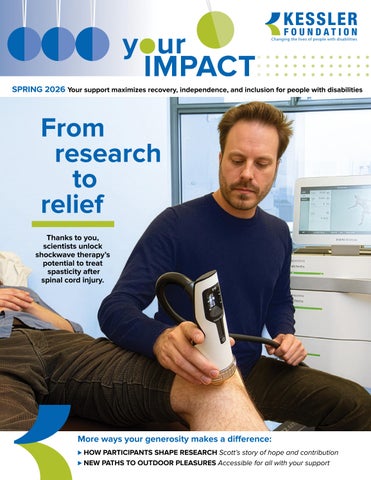
Thanks to you, scientists unlock shockwave therapy’s potential to treat spasticity after spinal cord injury.
Kessler Foundation researchers explore a novel approach to a condition that affects most people with spinal cord injury—one that could reduce reliance on medications with side effects.
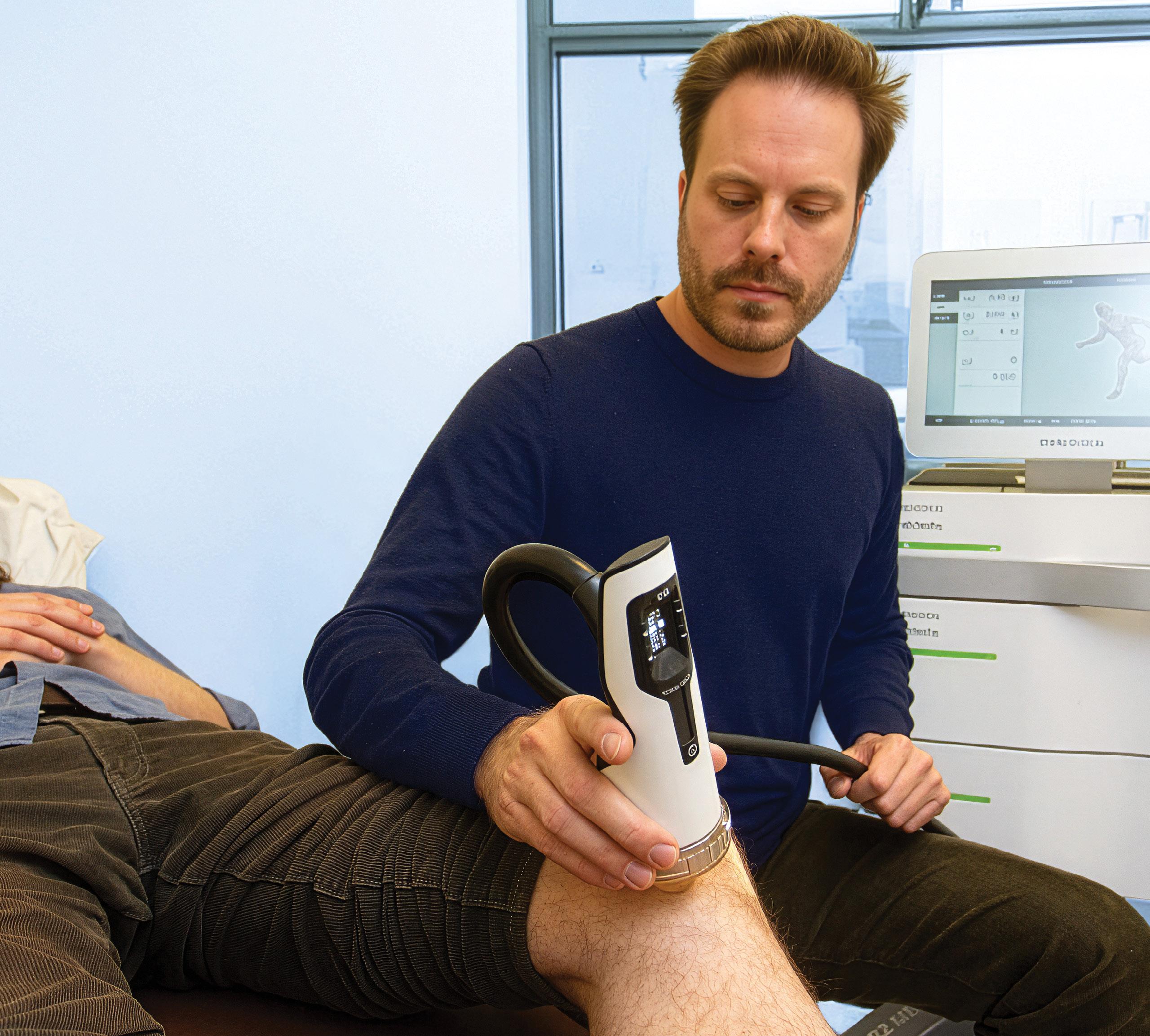
Nathan Hogaboom, PhD, is driven by a singular goal: improving quality of life for individuals living with SCI. His latest study examines whether an unconventional intervention, shockwave therapy, may offer relief from spasticity, a common and often debilitating postinjury condition.
Most people with spinal cord injury experience some degree of spasticity, which can cause muscles to stiffen or contract uncontrollably. While treatment options exist, few are supported by strong evidence, and many rely on medications that can produce unwanted side effects and limit participation in rehabilitation and daily activities.
Early promise
As director of the Derfner Lieberman Laboratory for Regenerative Rehabilitation Research and a research scientist at Kessler Foundation’s Center for Spinal Cord Injury, Dr. Hogaboom is investigating whether shockwave therapy, a noninvasive technique that delivers high-speed sound waves directly into muscle tissue, can safely reduce spasticity.
In early findings, participants reported fewer episodes of lower limb spasticity along with improvements in overall health status. These outcomes are encouraging signals for a therapy that does not rely on medication.
“These results are promising because we are using a nonpharmacological treatment,” says Dr. Hogaboom. “Much of our work focuses on reducing reliance on medications.
Shockwave therapy has no real side effects, and while this was a very small study, the early outcomes justify further exploration.”
Participant experiences play a critical role in shaping this research. Scott Texidor, who took part, notes he felt lasting sensations in his lower limbs following treatment—feedback Dr. Hogaboom values deeply.
“The most useful information often comes from casual conversations,” he adds. “Personal stories like these give me insights I would not get from a survey.”
Imaging results deepen understanding
In addition to participant reports, imaging data offered compelling biological evidence.
Using ultrasound, Dr. Hogaboom observed measurable changes in muscle stiffness following treatment, without negative effects on connective tissue. He theorizes that shockwave therapy creates microscopic muscular disruptions that activate the body’s natural healing response without causing harm.
“Initially, I did not expect much from the imaging,” he admits. “But those findings turned out to be the most exciting part of the study.”
Future studies will expand to include MRI scans alongside ultrasound, allowing researchers to better understand how shockwave therapy influences muscle health and function. Your partnership makes innovation possible
This forward-looking research is made possible through the leadership support of the Derfner Foundation and the generosity of Jay Lieberman. Their commitment, and yours, empowers Kessler Foundation to pursue innovative ideas, take scientific risks, and advance discoveries that could transform care for people living with spinal cord injury.
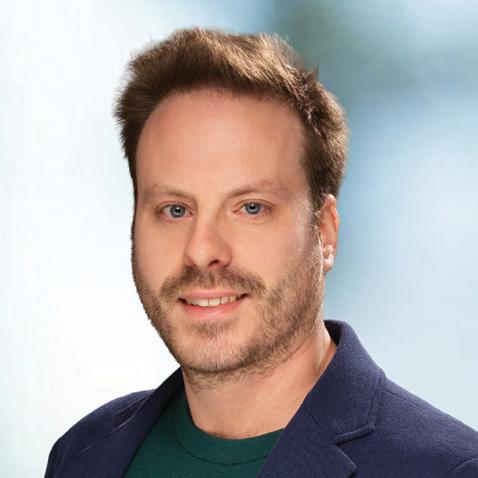
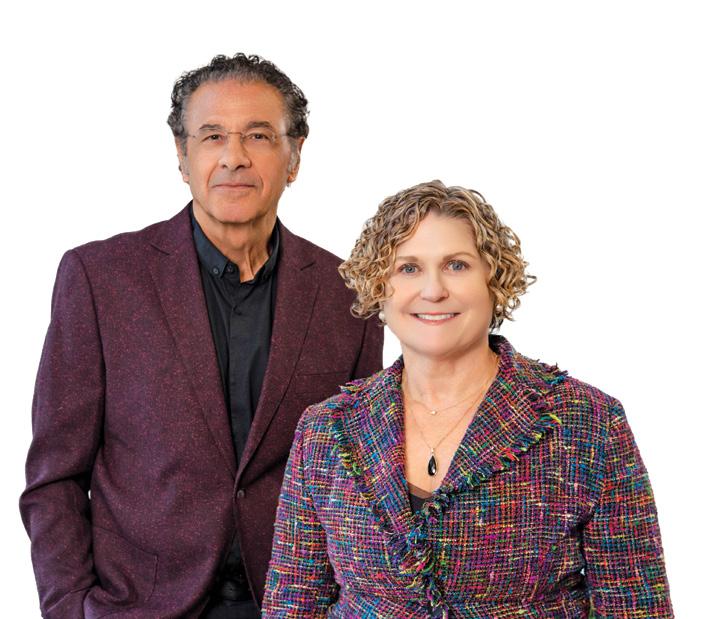
Dr. Nathan Hogaboom, left, says measurable changes in muscle stiffness— without negative effects—were “the most exciting part of the study.”
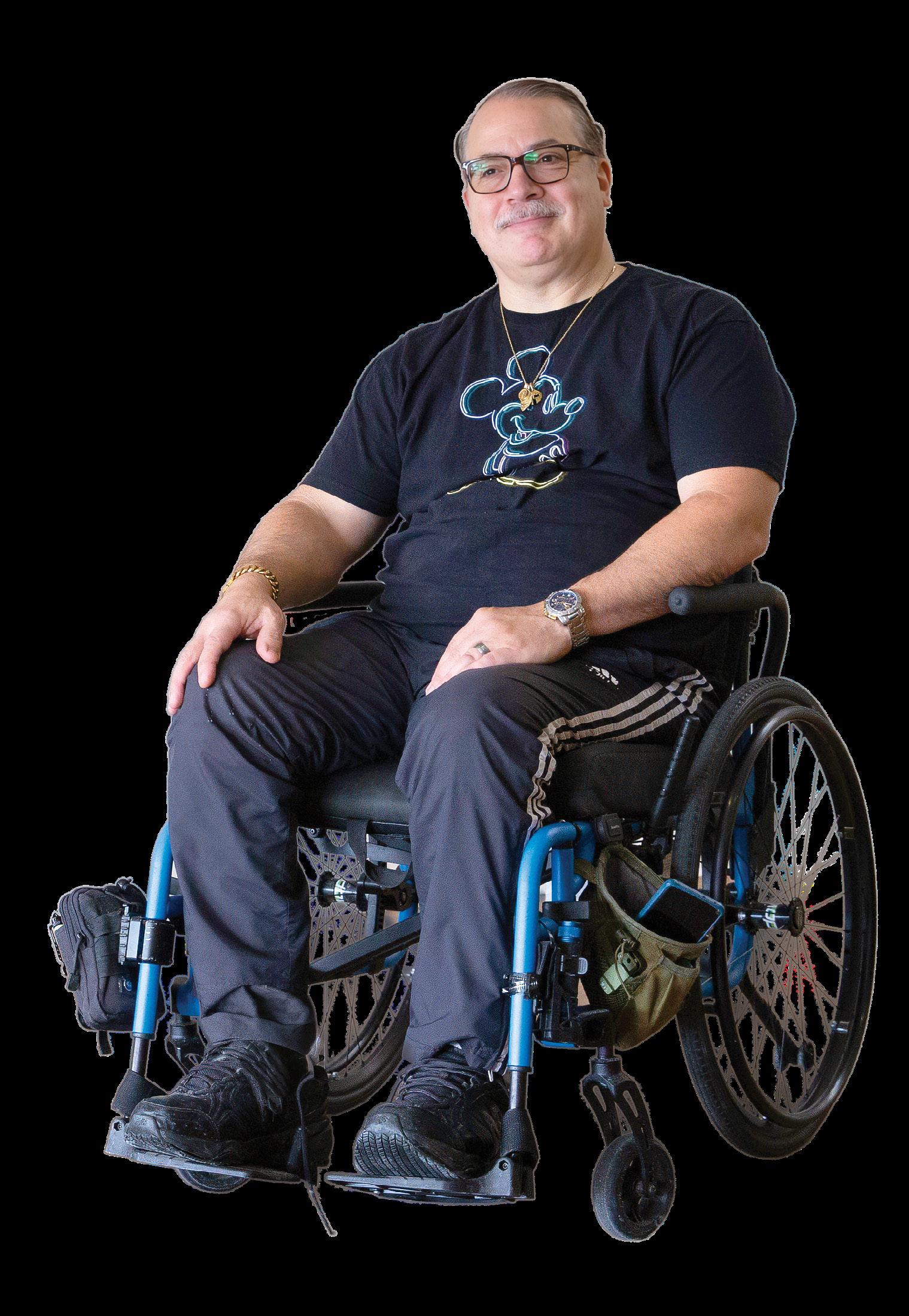
“The results were immediate, and the sensations stayed with me for days.”
-Research participant Scott Texidor
A career police lieutenant, Scott Texidor was in the middle of a routine workday when suddenly, severe back pain changed everything. Within days, he was diagnosed with a spinal cord condition that required emergency surgery, and left him paralyzed and unable to walk. After learning about Kessler Foundation, Scott was eager to explore emerging therapies and to contribute to research that might help others. He enrolled in several studies, including the shockwave therapy trial led by Dr. Hogaboom.
“The results were immediate,” Scott says. “Right after the sessions, the sensations just started overwhelming my body from the waist down. They stayed with me for days.”
Participants like Scott are essential to advancing new interventions from promising ideas to real-world solutions. His willingness to take part not only shaped this study but may help open doors for future research and treatment options.
“If you do not take opportunities, you will never know what you missed,” Scott reflects. “And if it works for me, who else might it work for?”
How donors like you help communities open parks and beaches to everyone.
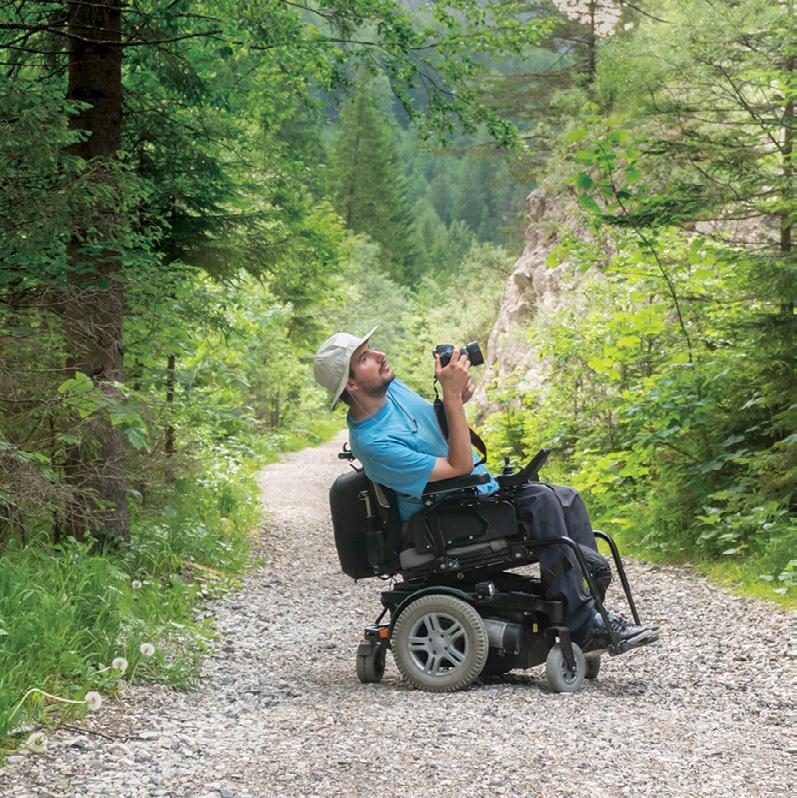
Spending time outdoors lifts our spirits and benefits our health. But for wheelchair users, enjoying a park or beach can be far more challenging than it should be. Thanks to your support, Kessler Foundation researchers are shining light on these barriers and helping communities understand how thoughtful design can make nature welcoming for everyone.
In a recent study, researchers spoke with adults in New Jersey who use wheelchairs and want the same simple pleasures many take for granted: time by the water, a stroll on a shaded path, or a quiet place to read outdoors.
“Participants shared how accessible features like smooth pathways, beach access mats, and nearby restrooms made outings possible and enjoyable.
When those features were missing or poorly designed, people felt excluded, frustrated, and less independent,” says Lauren Murphy, PhD, research scientist in the Center for Outcomes and Assessment Research at Kessler Foundation.
The study also revealed how much planning it can take to get outside—scouting locations in advance, relying on help from others, or investing in costly adaptive equipment. When access falls short, people are often left watching from a distance instead of fully participating.
“To improve public health, it is critical to include the voices of people with disabilities in efforts to increase access to outdoor community spaces,” says Amanda Botticello, PhD, MPH, associate director of the Center
for Outcomes and Assessment Research. Support from the Craig H. Neilsen Foundation and your generosity makes this research possible.
By listening to people with lived experience and sharing their insights, donors like you help communities create outdoor spaces that support health, dignity, and belonging. Together, we help ensure that everyone can experience the joy and peace of being outside.
See how NJ’s Reeves-Reed Arboretum has become fully accessible. Scan the code or go to https://bit.ly/4uVvhqE
Thank you for championing rehabilitation research for people with disabilities. Your generousity brings pioneering treatments from the lab to the lives of those who need them most. Every single gift matters!
Rodger DeRose President and CEO
Michele Pignatello Vice President and Chief Development Officer