
Studies from the Center for Outcomes and Assessment
Studies from the Center for Outcomes and Assessment
Practical instruction in the ‘real world’ supports confidence while using public transit.
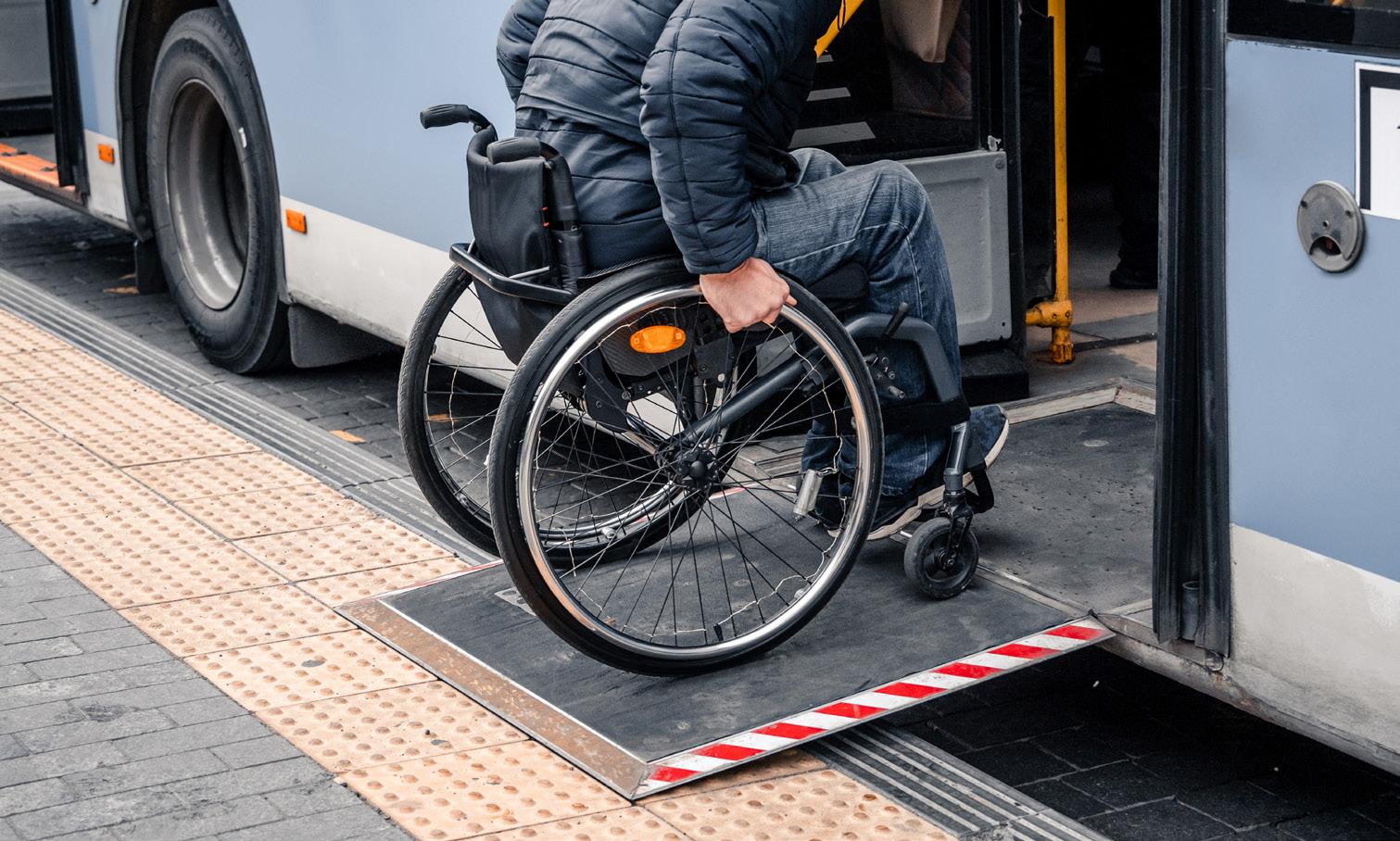
For many people, getting on a bus or train is routine. But for older adults and individuals with disabilities, transportation can be a major barrier, limiting access to work, healthcare, and community life.
Access to transportation is a key social determinant of health. Yet about one in four U.S. adults experience transportation insecurity, meaning they lack safe, reliable ways to get where they need to go. This can lead to missed care, difficulty maintaining employment, and increased social isolation.
Kessler Foundation researchers recently partnered with a local travel training organization to conduct an outcomes assessment of their program that helps people with disabilities use public transportation on their own, safely and confidently. Travel instruction programs are
(Continued, next page)
Travel training programs increase self-sufficiency among people with disabilities, older adults, and others by empowering them to use public transit safely and on their own.
Travel instruction:
Training that teaches people how to use public transportation safely and on their own
Public transit:
Shared transportation such as buses and trains


(Continued, from first page)
offered through schools, transit agencies, and community-based organizations across the U.S.
Participants gain travel skills
The program evaluated in this study is New Jersey Travel Independence Program, known as NJTIP@Rutgers. The study included adults with disabilities who completed their one-on-one travel training program in New Jersey between 2017 and 2024.
They received personalized instruction on how to plan trips, read schedules, safely board and ride transit, solve problems during travel, and advocate for themselves. After finishing the program, participants completed follow-up surveys to share how often they continued using transit after training.
The study results show that more than half of the participants reported using transit after graduation, with approximately three out of every five participants reporting transit use 12 months after graduation. They used transit for a variety of everyday activities, such as work, medical appointments, errands, and social outings. “This training gave me confidence… I’m about to take a boat cruise all by myself,” one participant said.
For those who stopped using transit, the reasons were usually not related to skill. Instead, changes in daily routines or life situations played a larger role.
Why this research matters
Transportation is more than getting from place to place. It is a key part of staying connected and maintaining quality of life. “I feel like it’s independence… my mom doesn’t have to drive me everywhere,” another participant explained.
This study shows that travel training can provide lasting benefits by helping people build practical skills and confidence. It also highlights that long-term transit use depends not only on training, but also on life circumstances and access.
Improving how these programs are evaluated, especially by measuring outcomes like confidence, autonomy, and community participation, can help strengthen services and expand access for more people.
• Look for travel training programs in your area
• Practice new routes with support before traveling alone
• Start small and build confidence over time
• Use transit tools like schedules or apps to plan trips


This study, “Outcomes of an Individualized Travel Instruction Program to Improve Access to Public Transit Among People Living with Disabilities,” was presented at the 2026 National Academies Transportation Research Board Annual Meeting.
The lead researcher is Lauren F. Murphy, PhD, research scientist in the Center for Outcomes and Assessment Research at Kessler Foundation. Visit NJTIP to learn more about the program.
The contents of this presentation were developed under a grant from the National Institute on Disability, Independent Living, and Rehabilitation Research (NIDILRR) (90IFRE0082, Co-Principal Investigators: Dr. Murphy and Amanda Botticello, PhD, MPH).
Easy-to-read Real-Life Science summaries explain how our research applies to everyday health, work, and living.