Studies from the Center for Neuropsychology and Neuroscience Research at Kessler Foundation
Imagery and Storytelling Strengthen Memory in Older Adults A proven memory training program helps older adults boost memory, no medication required.
The Key Takeaway: A structured program uses imagery and storytelling to strengthen memory and confidence in older adults, offering a safe alternative to medication.
Terms to Know: Cognitive rehabilitation: Therapy to help improve thinking and memory skills after injury, illness, or due to aging Imagery and storytelling as a memory strategy: Using pictures in your mind to help remember
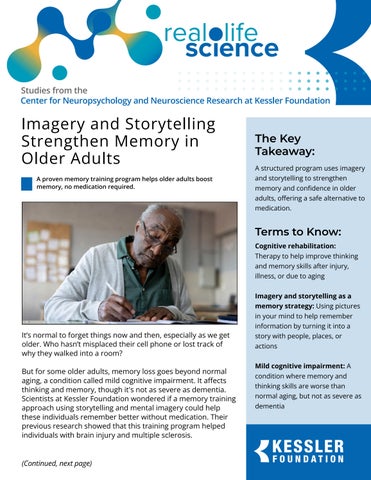
It’s normal to forget things now and then, especially as we get older. Who hasn’t misplaced their cell phone or lost track of why they walked into a room? But for some older adults, memory loss goes beyond normal aging, a condition called mild cognitive impairment. It affects thinking and memory, though it's not as severe as dementia. Scientists at Kessler Foundation wondered if a memory training approach using storytelling and mental imagery could help these individuals remember better without medication. Their previous research showed that this training program helped individuals with brain injury and multiple sclerosis.
(Continued, next page)
information by turning it into a story with people, places, or actions Mild cognitive impairment: A condition where memory and thinking skills are worse than normal aging, but not as severe as dementia
(Continued from first page) The study in action The study included 30 adults aged 65 and older who either had mild cognitive impairment or were aging without signs of cognitive decline. Each person was randomly placed in one of two groups: One group received special memory training The control group did similar activities without learning the key memory strategies The training lasted five weeks, with two sessions per week. Before and after the training, all participants completed memory tests to measure their progress. What the researchers found Study results showed that memory training made a real difference in how people functioned day to day—not just in lab tests. The group that completed memory training improved more than the control group
People in the training group also said they forgot fewer things in everyday life—like details from conversations or things they read Why this study matters Non-medication strategies like imagery and storytelling may help older adults stay mentally sharp and independent longer. Larger studies in the future may confirm these findings and help scientists better understand who benefits most. The future of memory training in aging While early results from the study are promising, questions remain about how far this approach can go in supporting brain health as we age. Scientists still want to know:
Learn more This study, “Applying the Kessler Foundation Modified Story Memory Technique to Improve New Learning in Aging Populations,” was published in Dementia and Geriatric Cognitive Disorders Extra (2025). The lead researcher Nancy D. Chiaravalloti is director of the Centers for Neuropsychology, Neuroscience, and Traumatic Brain Injury Research at Kessler Foundation. This consumer-friendly summary was created as part of Real-Life Science, an educational series from Kessler Foundation that helps readers understand the science behind rehabilitation research.
To read the full study, scan the QR code at left or visit: doi: 10.1159/000543 682
Can this training help delay conditions like dementia? What happens in the brain during and after training? Would starting this kind of training earlier in life lead to better results?
65 percent of people in the training group improved their memory by 10 percent or more
120 Eagle Rock Avenue, Suite 100 | East Hanover, NJ 07936-3147 973.324.8362 | KesslerFoundation.org /KesslerFoundation
/KesslerFdn
/KesslerFdn
/the-kessler-foundation
/kesslerfoundation