April 2026



April 2026
Quézia
Every night, there was a helicopter in the apartment on the fourth floor.
At least that’s what it sounded like.
It turned out that the noise came from a fan with no cap on it in a house in Caracas, Venezuela.
There was no air conditioning.
In that same house, there was a single bathroom for four people, and later for six.
Newspapers covered the shower floor.
Missy, the household cat, was trained to use that as a litter.
He was on the other side of the line when the U.S. military intervention took place on Jan. 3, 2026.
There was no electricity or connection on the other phone line.
But there was his mom, his family and his heart.
Skin-to-skin
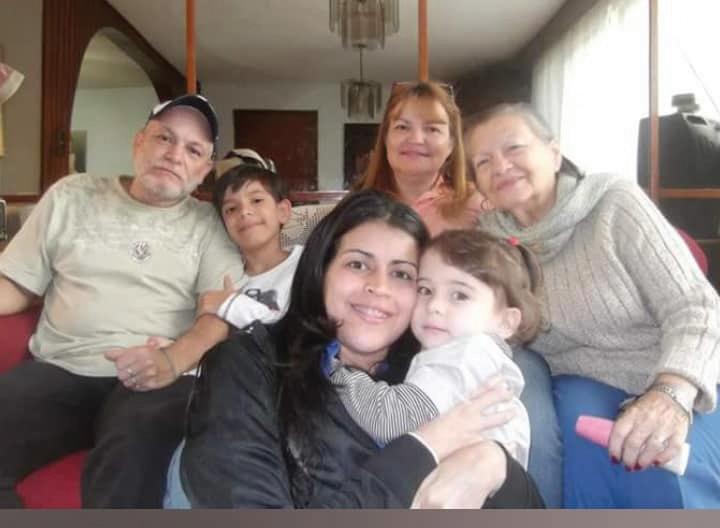
Looking back today, Evelyn said she had been longing for him for 23 years, and all she wanted was to hold him in her arms.
In 2003, when Christian was born, she said Venezuela’s economy was not yet in complete collapse, but that did not limit the challenges.
“We just couldn’t make ends meet to provide for him and really enjoy him,” Evelyn said.
Despite the onset of instability in the country, she and her family were still able to afford and manage the expenses of her labor and healthcare.
“I even had a (health) insurance for the child,” Evelyn said.
As he grew older, Christian could notice just how much he was loved.
“She was always caring to the point where … any sign of my discomfort would be … of great discomfort to her,” he said.
Her teachings were clear and firm and are still remembered by Christian today.
“Just do good. Don’t hurt anyone. Don’t hurt yourself,” she used to tell him.
Every night, there was the certainty of seeing her by his side on the pillow next to him.
But that did not last forever.
The year was 2015.
Christian said he still remembers the moment he got into the taxi that took them to the airport.
“When we drove off, I started crying,” he said.
Like a child who didn’t know what his next home would be like, Christian said he felt anguish.
“I had a feeling I wouldn’t see him (Javier),” he said. “I haven’t seen him in 11 years.”
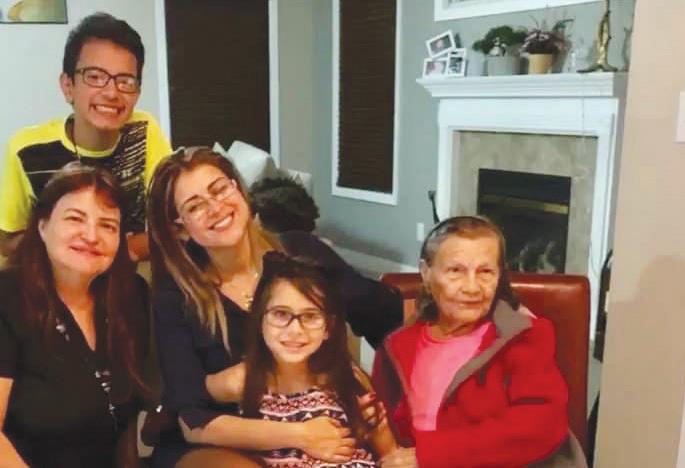
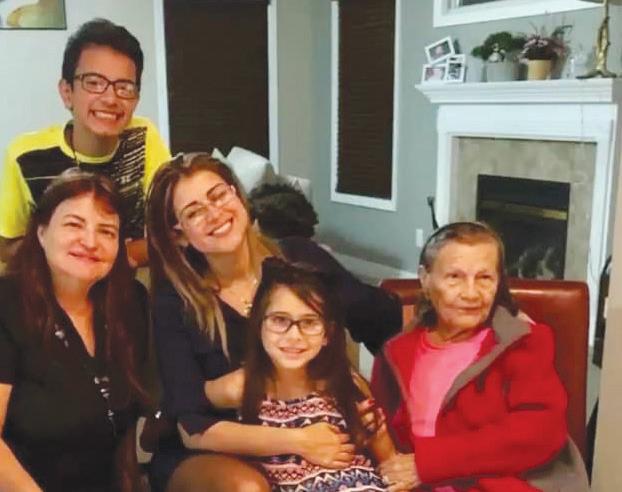
Their destination was Louisville, Kentucky, where Jenny, his older sister, and Diana, her daughter, lived.
At least he had his mother next to him.
But that also didn’t last long.
On the other side of the world, Evelyn had her elderly mother and her brother to take care of.
She was the only one working, and her family needed her back.
“ I was blaming Venezuela for the way people were treating me here instead of blaming the people.”
-
CHRISTIAN DORDELLY SENIOR AT THE UNIVERSITY OF KENTUCKY
“I started crying really loud,” Christian said.
Jenny heard him.
By the end of that night, all three of them, including Diana, were sleeping in the same bed.
At least these bonds kept them secure.
Jenny Gutiérrez, 23 years older than Christian, had to start a new life from scratch when she arrived in Louisville, shortly before her brother moved in with her.
It was 2012.
She was 29 years old and carried a twoyear-old baby in her arms.
Christian still remembers seeing the constant appointments at the Social Security office she had to attend during the process of seeking the legal paperwork needed to remain in the country. Every time, some document would be missing, and Jenny, who spoke no English, had to scramble to track down each missing piece.
“I can’t imagine being just fresh, fresh out like a new immigrant here and going through this,” Christian said.
In 2024, after being involved with Kentucky Refugee Ministries as a volunteer and having the opportunity to speak at a summit hosted by their office on immigrant inclusion, Christian gained access to a lawyer to begin his citizenship application process.
He already held his green card, thanks to the legal support his sister secured when she first arrived in Louisville.
Christian Dordelly, who was once a kid in this home, said.
As you walked into the kitchen, there was the yellow table where everyone had breakfast together.
The scent of the arepas that the kid’s mother, Evelyn, made almost every morning filled their home.
His grandmother, Evelina, had her own room — one that only fit a large bed, and into which he could barely squeeze.
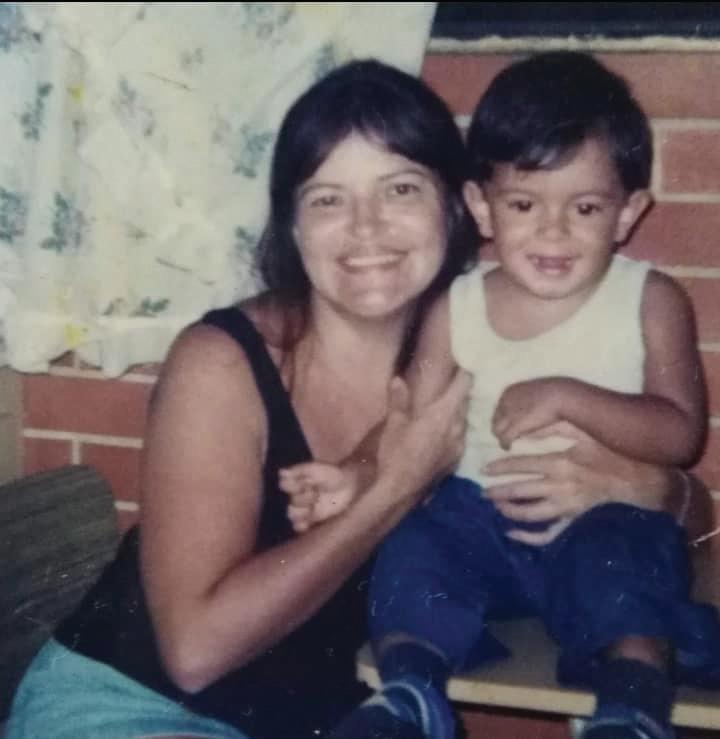
He slept on the same bed as his single mother. One right beside the other.
Side by side.
“We didn’t have a litter because litter, I guess, well, we never could afford litter,”
This 11-year-old would come to
understand the weight of this later on.
Until then, he was still a kid playing with Missy.
‘My story, you’ll hear repeated all over, everywhere.’
As of 2026, almost 8 million Venezuelans have left what was once their home since 2014.
Christian is one of them.
Walking on the fluffy snow, even in the silence of a college campus in Lexington, Kentucky, he has heard the echoes of familiar voices that scream out for freedom.
Javier, his uncle, taught Christian to play soccer and baseball, his favorite sports since childhood.
For him, Javier was the most prominent male figure in that house with the yellow table.
But the day when he had to leave everything behind arrived without knocking on the door.
Christian had a kidney condition and required medical treatment that he could not receive in Venezuela.
Together with his mother, he had no choice but to pack his life in bags and leave for the United States.
“I think I cried the whole way on the airplane while I was traveling back,” she said. “And well, I tried to appear strong for my mother and my brother, who were also here (Venezuela) and very sad.”
That night was the first time Christian slept alone.
“I smelled her scent in my pillows,” he said.
Christian said he felt a specific sensation from that smell.
It was the same as when he was hot in a room without air conditioning and flipped his pillow over, and felt the cold coming from it.
It was a scent of consolation.
His mom’s absence, in contrast with her scent, became a constant reminder that he would not see her again anytime soon.
He still recalls the day his sister retrieved it from the mail.
Jenny was in tears.
Still just a child at the time, he didn’t understand the reason for her weeping.
To her, however, that document was far more than just a piece of paper. Working three different jobs simultaneously — serving tables, cleaning houses in the neighborhood and running her own custom T-shirt printing business — being away from home “was not easy,” she said.
She didn’t know which hospitals to go to, nor which schools to enroll her daughter in.
Everything felt like a baffling puzzle.
Yet, despite it all, those challenges never dared to hold her back.
“We feel free here,” Gutiérrez said. She said she never allowed herself to stagnate; she was constantly seeking out people and resources that could offer her assistance.
One of those resources was the Americana Community Center, based in Louisville.
They offered her assistance through an attorney and helped with her English through ESL classes. Her daughter, Diana, also received free daycare.
“I know that they work for the people,” Gutiérrez said.
Nowadays, she owns her T-shirt printing factory in Louisville, and her mother works for her as an accountant, remotely from Venezuela.
Despite her deep involvement in the community and the constant support she receives from places like Americana, Gutiérrez remains deeply connected to her roots.
A clear rule established from the time Diana and Christian were still little reflects the need not to forget where they come from.
“At the house, you can’t speak English,”
Gutiérrez said.
The risk of “losing their Spanish” always kept her on alert, reminding her to teach both children that there were still plenty of reasons to be proud of their country.
He wasn’t even there.
“That was horrible for me back in my country,” she said.
She proved the dangerous circumstances she was under and now holds American citizenship in her hands.
Today, she said she cannot envision herself back in Venezuela.
But there is still a vivid memory that she fondly pictures when closing her eyes.
“We open the window and we see the beach,” she said.
It would be a dream
Diana did not see that view, but she dreams about it.
She was only two when her mom brought her to Louisville.
Most of the time in Diana’s childhood was just her and her uncle, Christian, six years older than her.
Even at a young age, she said she felt firsthand what it was like to be the daughter of an immigrant.
“I feel like bullying is mostly seen in movies, but I feel … it’s a lot worse when you’re like you’re like five years old at school,” Diana said.
friends, but they were all with other Hispanics.
“We would just talk in Spanish and nobody understood us,” she said. “I feel like that was kind of freedom.”
To this day, Diana said she still doesn’t feel at home, despite never having been to Venezuela since leaving when she was still a baby.
“I don’t feel me here,” she said.
In Spanish, Diana said that she feels happier and is able to speak her mind more.
Every time she travels to South America, she feels that she is among her true people.
Diana lives in the limbo that connects two personas that do not walk side by side.
“I feel like relating myself to them (Kentuckians) here would be minimizing what I really am and taking away the identity that I do have,” Diana said. This identity is found in her passion for law and justice, a field she intends to pursue at the University of Kentucky.
“I want to be able to, like, put a say to things … I don’t want to be famous, but I do want to make sure I can change something,” Diana said.
“Just do good. Don’t hurt anyone. Don’t hurt yourself.”
- EVELYN DORDELLY CHRISTIAN’S MOTHER
open to the reality of so many who came from similar backgrounds as hers.
Her eyes are still wide open.
“(We need to) start fighting for getting Venezuelans into America legally without having to be eight years long to get a visa,” Diana said.
The one who came
Christian arrived in Louisville in September 2015.
It was only in January that he could start school — his first time learning it all in English.
He started in an ESL program, “a school meant for immigrants,” with only three rooms.
“We were never mixed with the American children ever, ever, ever, not once,” Christian said.
Inside the small classrooms, Christian said he felt everyone was at the same level, coming from a similar upbringing.
But, unexpectedly, he could no longer be part of the program.
“I think they said my English was … enough,” Christian said. “So, they gave my spot to someone else.”
She has then started to work toward that goal.
The first step came from Americana, who recently offered Diana a job.
Being an immigrant, however, meant that there were still moments when she couldn’t help but feel afraid.
“But when I have my papers, I feel good,” she said.
To secure her documentation and eventually her citizenship, Gutiérrez was granted asylum due to the weighty danger she faced in Venezuela following the arrest of her father, a former police chief. He was accused of being involved in a violent anti-government march that took place in 2002, leaving dozens dead and injured.
According to Gutiérrez, at that exact moment, her father had actually suffered from a motorcycle accident.
She still recalls a day when she was “pushed down in the playground” three times, unlike other little American kids nearby.
Today, at 16 years old and with dreams of becoming an immigration attorney, she recognizes the pressure to always outperform others to be valued.
“Grades need to be perfect, it’s more expectations, schools are harder to get into…” Diana said.
Unlike her classmates, Diana only became fluent in English when she was eight years old.
“So, there were a couple of embarrassing moments where I called my teacher’s mom in Spanish, just because I didn’t have anything else to say,” Diana said.
As a child, it wasn’t difficult to make
In the very same place where she once received daily care, she now does the same for refugee children, helping in the kitchen and even walking some of them home to ensure their safety.
It is as if she were holding the hands of her own younger self, telling them loud and clear: “Keep that childhood happiness,” she said.
“I know, coming from a daughter of an immigrant, we don’t realize what our parents are going through until we’re older,” Diana said. “I had no idea until I turned 10.”
Reality started to click for her when her Hispanic friend, the one she felt the most comfortable with speaking only in Spanish, had his parents deported and was about to be forced to leave, too. They couldn’t get through the process of citizenship.
Diana was still a kid, but her eyes were
“warm tone,” he said. Christian said he remembers that for all those years, it felt like he lived in “perpetual summer,” with his friends yelling out the window, asking him to go downstairs to play nonstop.
“Despite not living in the best conditions, I never noticed that,” Christian said. “I never thought about it one day because my mom and my family did their best, so that I wouldn’t ever have to think about that.”
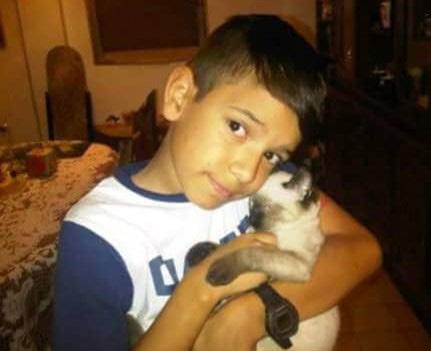
Christian said it never crossed his mind why they were only allowed to drink Coca-Cola once a month and why that was considered the “treat of the month.” Or why he had only been to McDonald’s once or twice in his entire life in Venezuela.
When he arrived in Kentucky, the tone of his childhood took on a different hue.
When he transitioned to a regular middle school, he felt the impact of being an immigrant who didn’t fully know English. After all, Christian was still a child who had been in Kentucky for only six months by then.
“I went from, like, all-immigrants to not one, to being the only one,” he said.
In seventh grade, his childhood lost its shine as he became a victim of bullying and racism.
Unlike when he used to play soccer on the playground of his apartment building in Caracas, Christian found himself distant from everyone and from himself.
“I felt isolated, I felt alone,” he said.
For him, the sense of powerlessness haunted him, even as a kid.
Christian said he acknowledged that he was in a better place, eating more, going freely wherever he wanted, but there was still a question that, at times, spoke loudly.
“Oftentimes, I did wonder, ‘Ah, why do I have to be here?’” Christian said.
Almost inevitably, he wondered what his life would be like if he were still in Venezuela with all his friends and family nearby.
His early childhood back home had a
He spent much of his time alone at home, waiting for his niece to get back from school and his sister to return from work.
The routine was always the same — solitary and monotonous.
“Go home, maybe make some mac and cheese and then wait for Diana … wait for her in her stop and then make her mac and cheese and then, like, that’s it,” Christian said when recalling a typical day after school in Louisville.
It all started in a school bus
Christian had never ridden the yellow American school bus before.
Jenny drove him to the bus stop, since it was his first day.
“I just knew I had to take two buses, but I didn’t know the number or anything,” he said.
In each seat, there was an American child, and at the wheel a “rude” woman.
He simply got on, without knowing whether everyone had an assigned seat.
Christian said he didn’t know how to communicate in English.
“I talked to the bus driver,” he said.
“She didn’t.”
So he stayed quiet and continued looking for an empty seat.
He found one.
“I sat next to a girl, and she said like, ‘Ew, go find somewhere else,’” Christian said.
He didn’t understand every word, but her reaction could be understood in any language.
He found another place, still lost.
“I didn’t know if I was supposed to, like, raise my hand and say like ‘Bus driver, drop me off here,’ like you would in Venezuela,” he said.
As soon as he got to the bus depot, he didn’t know which bus would take him to his school.
He did what became his strategy — search for an adult.
He got in.
“I don’t know where I’m going. I don’t know what a schedule is. I don’t know anything,” Christian said. The only thing he knew was his roots, and even those were belittled by some of his classmates.
“I was told one time to go back to my country straight up,” he said. “So, yeah, I definitely didn’t want to talk.”
When looking back, now as a 22-yearold college student, Christian still questions how he was able to handle so much at such a young age.
“Right now, I can’t even imagine myself going to, I don’t know, to another country … like China and, like, navigating that by myself,” he said.
But it was these reactions and constant provocations that made his perspective about his country negative.
“I was blaming Venezuela for the way people were treating me here instead of blaming the people,” Christian said. For him, it took time to feel proud to say where he is from.
Only in high school did the feeling of shame slowly fade away.
By his side, Christian had Hispanic friends who helped him not feel like an outsider.
Especially with his Cuban friends, who also come from a dictatorial system, Christian found a connection that sustained him until the end.
“And then it’s like ‘Oh my God, so you know exactly why I’m here,’” Christian said.
Little by little, Christian listened to the voice that kept him moving even when people tried to dim the brightness of his childhood in middle school.
“Just keep going, keep going,” was what he had told himself to this day.
Putting the broken pieces together
Although they have lived in multiple houses over their time in Louisville, it took more than 10 years for Christian to finally feel at home.
That happened recently, as a senior in psychology at the University of Kentucky, in the house where he lives with two other roommates, one Brazilian and one American.
Before that, when he was still a child, the feeling of displacement went beyond the physical aspect.
“I didn’t feel like I had much going for me,” he said. “I didn’t speak the language. I didn’t have my family here…”
He had Jenny and Diana, but when he thought about the possibility of inviting someone over, he realized that it actually wasn’t his house — “it’s my sister’s house,” he said.
Nowadays, the warm touch from childhood has begun to shine again.
The house where he lives, next to Target and close to campus, was earned with his own money.
“I can’t say I know where my life is going, but I have an idea. I have a path, I have a vision,” Christian said.
Part of his vision has been built through his volunteer work, where he becomes a source of support for children who could have been him in the past.
Through the Step Up fellowship, available for UK students, Christian taught English to 14 students at the San Juan Diego Center, a community center with children from all over South America. He became what he searched for most and could not find when he arrived as a child in an unfamiliar country — a safe support.
As a child, he immediately ran away, but the man reached him and started beating him up.
“That could have been me, but also, that could have been my niece,” Christian said. “That could have been anybody else, anybody else’s kid.”
Even far from his home that smells like his mother’s arepas, Christian has been building a life that allows him to stay.
His own vision of his country has evolved since he arrived in the U.S.
“I don’t just come from a place where
That day he woke up at 12:30 p.m. He had a hard time sleeping the night before.
His phone was full of messages from friends asking if his family was OK.
“What are you talking about?” he said, wondering.
When he finally opened Instagram, there it was.
“Venezuela just got bombed,” he said.
Christian said his first thoughts were “what got bombed?” and “how much of the country is wiped out.”
Right after that, he thought about his mother.
But he couldn’t reach her.
For three days, Evelyn said there was no electricity, power nor water where she lived when the attack happened.
“We only found out the next day about everything that had happened,” she said.
They didn’t want to leave the house.
“It was better to stay inside until, about three days later, we could begin returning to our daily routines and follow the news,” she said.
It was 2 a.m.
Diana’s aunt barged into their room.
“Trump bombed Venezuela,” Diana said when recalling what her aunt shouted.
She slammed the door and ran out.
“We called my family just to make sure they were OK,” Diana said.
“I’m getting to help someone learn a language that I myself struggled with,” Christian said. “I’m helping them with a resource that I didn’t have when I just got here.”
He kept reaching out to the community center and eventually had the opportunity to help translate, especially for therapy sessions as a psychology major.
One of the children Christian encountered opened his eyes to a reality that reminded him of how vulnerable a foreign child is in a new country.
In a 15-minute walk from the school to his house, a man tried to rob an 11-yearold Hispanic boy on Alexandria Drive in Lexington.
it’s all, like, awful and bad … it’s all pain and suffering,” he said. “I come from a place where there are people that are worth loving and that love to love.”
For Christian, “immigrants” is just a label.
At his job as a photographer for Buena Vista, an adult day health center for the Hispanic community in Louisville, that realization became clear from his first snap.
Behind it, there are people carrying dreams, like anyone else, he said.
“Although we pride ourselves in the places we come from, we also pride ourselves in where we are today,” Christian said.
“ I smelled her scent in my pillows.”
She finally responded to him through a WhatsApp text message.
Evelyn also hadn’t been able to sleep the night before.
Like before, they stood side by side — even without sharing the same pillow.
A family friend lived right in front of one of the places that was bombed.
“She, like, was looking out of her window and, like, her floor was shaking from her building,” Evelyn told Christian when they finally reached each other.
Evelyn herself was about 13 km (8 miles) from one of the grounds that was also attacked. But everyone at the yellowtable house was safe.
In the days following the attack, his mother sent him a series of messages reflecting on the impact of having Nicolás Maduro, the former president of Venezuela, captured.
“We’ve been suffering for too long,” was the last text she sent him.
The news also reached Jenny and Diana. They were in Florida that day.
- CHRISTIAN DORDELLY SENIOR AT THE UNIVERSITY OF KENTUCKY
They ran downstairs. They couldn’t sleep anymore.
“I think we were watching the news until, like, 7 in the morning and then we just stayed up having fun,” Diana said.
For them, there was enough reason to celebrate a fresh new start for their country.
But for other non-natives, there was more judgment.
Christian said that among the many comments on social media emphasizing that the operation was done only for economic interests driven by the control of Venezuelan oil, some friends minimized his reason for feeling happy.
“Maduro being gone, that’s already net positive because it’s one less trash person,” Christian said.
For Jenny, the economic aspect did not stop her from feeling pure joy and relief.
Separated by more than 2,000 miles, Evelyn was fueled by a hope that had once been asleep.
“God willing, they will be good things and they will allow us to reunite with our families and be together, which is what I want most in the world: to be able to say that my children can come to their country whenever they want,” Evelyn said.
Now, in Venezuela, she waits.
Like Diana, Christian said he easily sees himself returning to the place where he spent only 11 years of his life.
“I’ll regain a part of my identity that has been kind of … unfairly, like, biased to the negative, just because I didn’t get to experience all the cool things,” he said. Still, Christian said he recognizes his privilege in being where he is. Today, he lives in a house with a dishwasher, air conditioning, and without the noise of imaginary helicopters, only car horns. But something still calls him back toward home.
If he could go back in time, Christian would return to that same house carrying a message from the future.
“Keep going. Things get better. They do,” he would say to himself. He said he would reinforce what his grandmother, Evelina, always told him.
“You don’t ever know what you have until the day you don’t have it anymore,” he said.
The 11-year-old Christian would be annoyed, but he would still say it. He needed to hear it, he said.
In the end, there is still a child who remembers home.
Today, his past no longer haunts him. Christian has learned to live side by side, skin to skin, with himself.
There is still a kid playing out with Missy.
“The oil, we don’t touch the oil,” she said. “So, the (entrance) of the United States, that was good for us.”
Editor’s note: The interview with Evelyn Dordelly was conducted in Spanish via WhatsApp messages, translated by DeepL and ChatGPT.



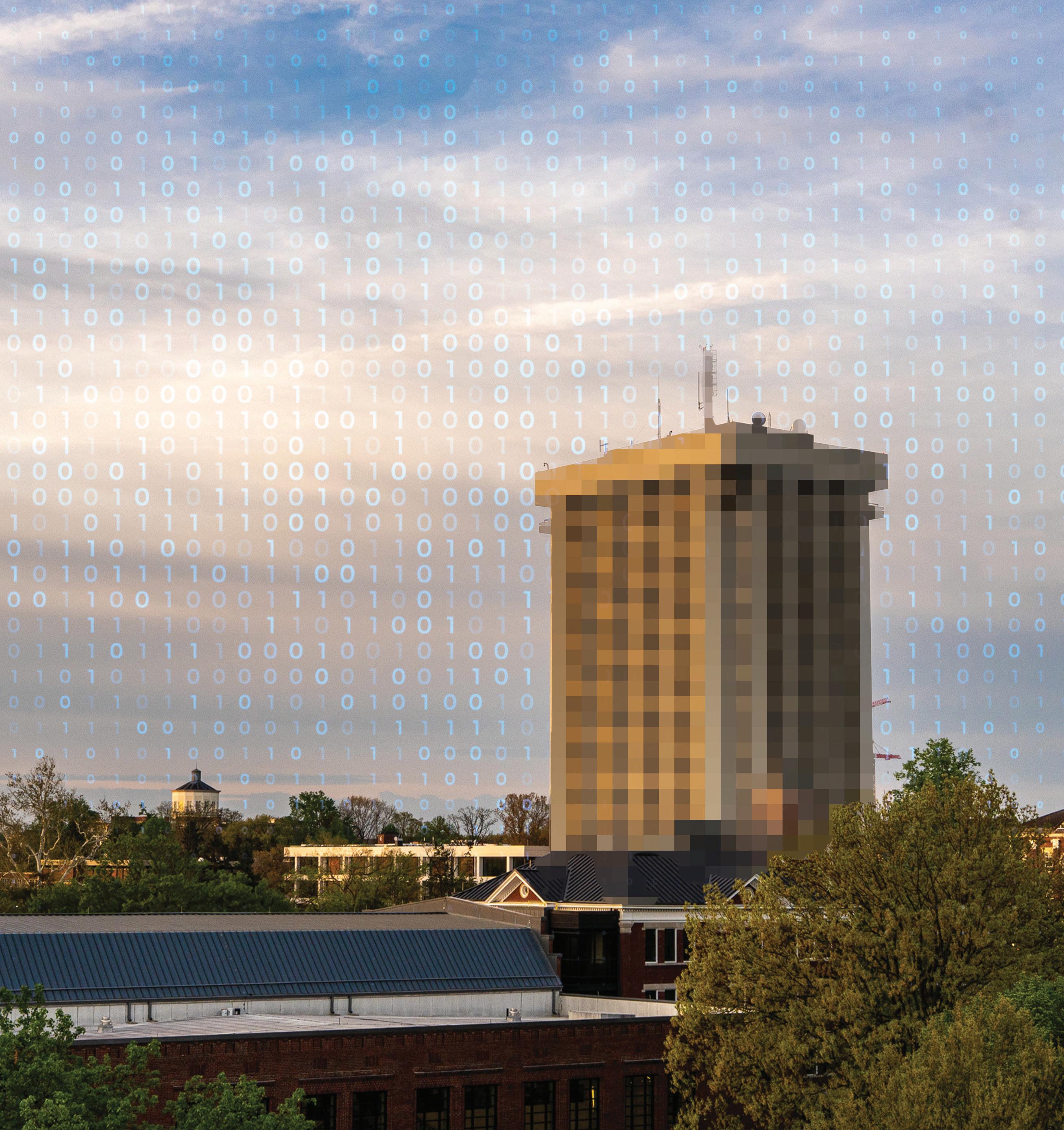
Make a metaverse
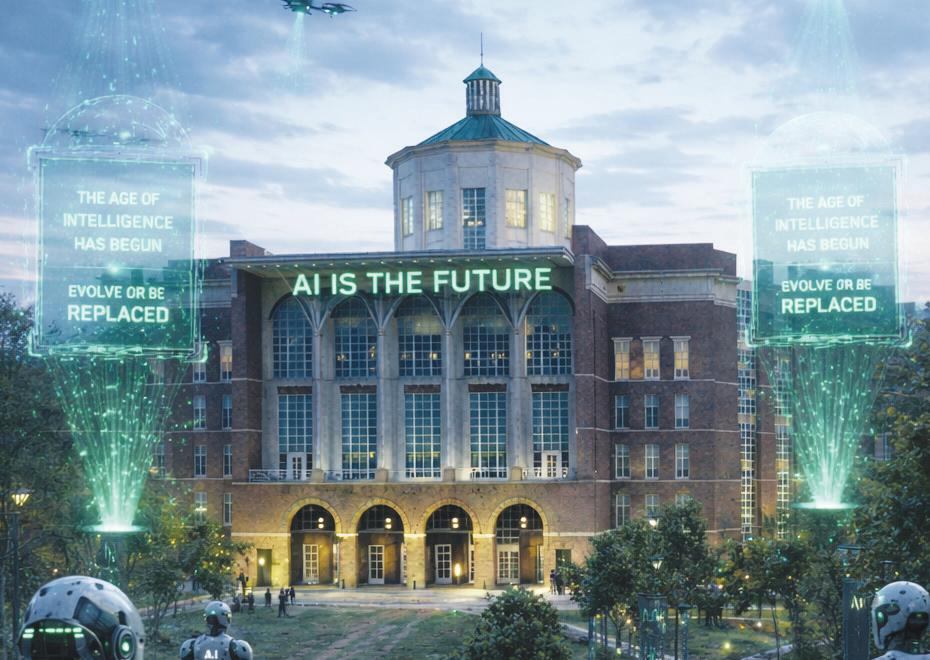
campus. Here’s what UK could look like if it was in a metaverse: Photo
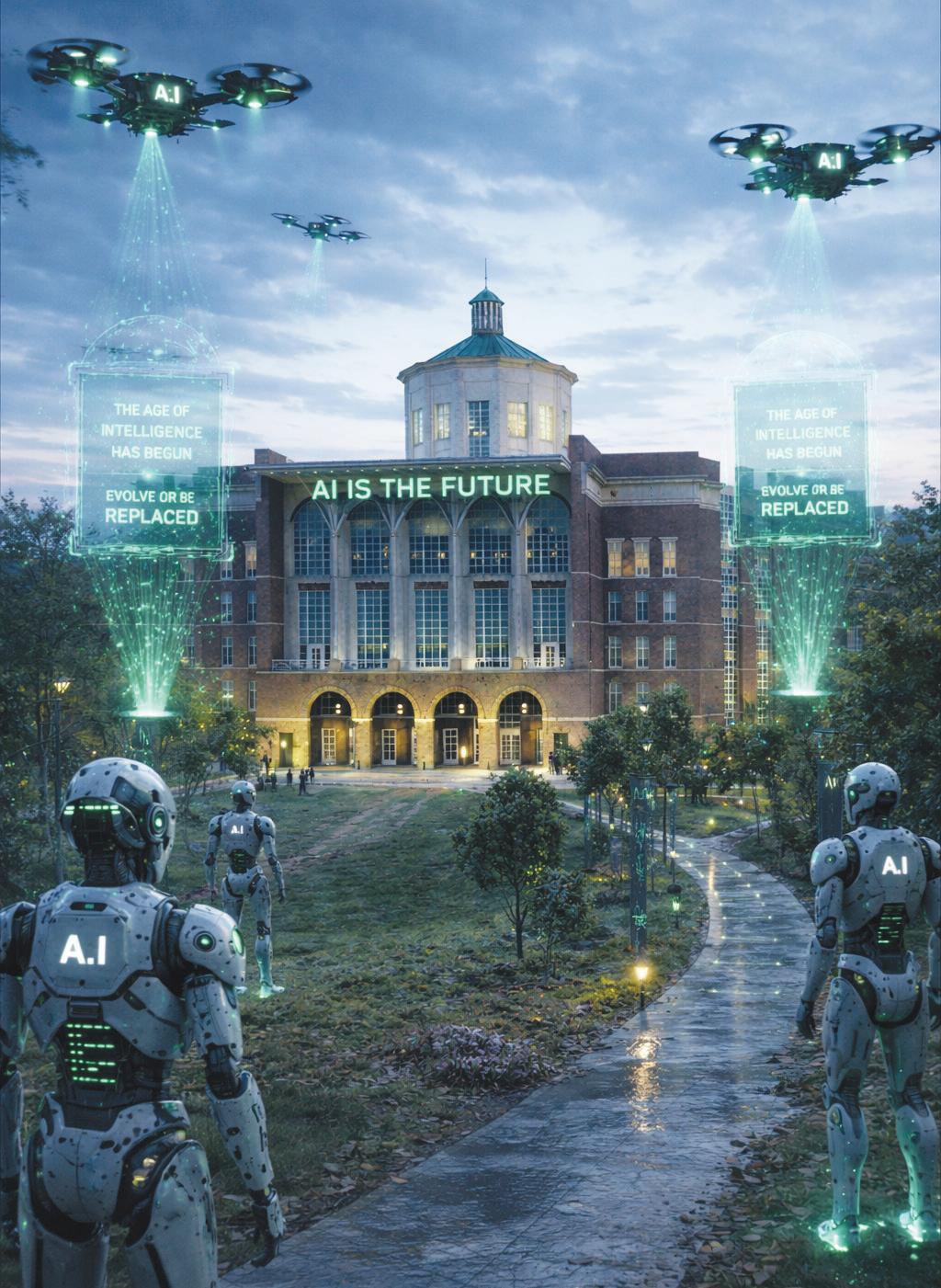
What’s on the agenda today? + What to expect from the AI major

The University of Kentucky Stanley and Karen Pigman College of Engineering has created an artificial intelligence major, the first in Kentucky, which will be implemented in the fall of 2026.
The courses of the AI major will have students studying computer engineering basics, such as calculus and programming, then learning how to implement AI into computing, according to Kentucky Kernel reporting.
UK spokesperson Jay Blanton said the university is leading campus-wide AI efforts through the Commonwealth AI Transdisciplinary Strategy (CATS AI).
CATS AI coordinates responsible use of AI across education, research, health care and operations.
“The goal is to expand Al literacy for students, faculty and staff, accelerate research and innovation and improve how we teach, deliver care and serve communities across the Commonwealth,” Blanton said.
As Kentucky’s land-grant university, UK is leading this work to ensure Al is adopted thoughtfully, transparently and in ways that strengthen opportunity, trust and long-term impact for the people we serve.”
President Eli Capilouto announced
the initiative for CATS AI on Nov. 13, 2025, in a campus-wide email, according to Kernel reporting.
The initiative will be made up of subcommittees, including: education, research, students, healthcare, and administration and workplace, to address specific needs and propose area-specific ideas to a leadership council.
Part of CATS AI’s goals, according to UKNow, include:
• AI literacy, training and tools for all UK employees to improve workplace efficiency.
• AI-enabled resources for students, including academic support tools and exploration opportunities.
• Potential development of an AI-themed residence hall.
• Health care innovation through expanded use of ambient listening tools and improved rural access to care.
Dean of the Pigman College of Engineering Rudy Buchheit was a supporter of the major and helped establish it.
Buchheit said he realized AI would have a major impact on society and wanted to expand the university’s focus on AI.
“It wasn’t just going to be for computer scientists. It wasn’t just going to be for engineers, it’d be for everybody,” Buchheit said. “Then they realized that there was a need for a whole bachelor’s degree program. They felt they had the expertise to offer that, and that’s what started the whole process.”
Buchheit said he thought of AI as a “hub and spoke model,” in other words, the technology would impact all parts of society.
“I would say this hub and spoke model isn’t university policy at all. It’s just a way I like to use to think about how you would approach curriculum development,” Buchheit said. “It’s an organic framework that’s sort of the natural way that an expansive and pervasive discipline like AI is going to spread into other areas.”

• Enhanced research collaboration using digital discovery platforms and advanced computing infrastructure. Why an AI major?
The AI major is designed to help students learn what AI is and how to use the technology in computer science.
Although Buchheit supports the AI major, he has concerns about students using AI to subvert the education process.
Buchheit said students could use AI as a way to cheat, creating its own risks in the education process.
“I think that’s been an issue in higher education for a couple of years now that students are using AI to generate work that they represent as their own, either intentionally or unintentionally,” Buchheit said. “As a consequence, they produce work without developing the intrinsic underlying understanding behind that, and as a result or not, they don’t end up being as prepared for their intended professions.”
Buchheit did not specify what would happen in instances where AI is used incorrectly in coursework.
The AI major was designed by professors in the Stanley and Karen Pigman College of Engineering and is meant to be a 120-hour program crafted, according to Kernel reporting.
Brent Harrison, an associate professor in computer science and the director for undergraduate studies and artificial intelligence, said the AI major was designed because of the demand.
UK has classes about machine learning and a certificate about AI since the spring of 2025, according to UKNow.
After seeing the enrollment rates of both, Harrison became encouraged to train students to use AI. The rising demand for AI in workplaces also played a role.
AI is a misunderstood topic, being perceived as the solution for any situation despite the technology having limits. That is a problem the major will help students with, Harrison said.
“It’s a powerful tool, but it is not all-powerful. It has just as many problems with it as any other tool. I’ve given talks to other places in town and beyond about AI, and you’d be surprised with how many people are surprised by what I have to say when I’m simply saying, ‘This is how these tools that you’ve been using, this is how they work,’” Harrison said. “This
kind of says to me that there is a bit of a misunderstanding about how it should be used, what it can do, and I think this is the way to kind of get beyond that.”
The AI major will not have students starting with how to use AI, Harrison said. First, students will learn the basics of computer science, such as how to code in Python, a programming language.
After students have taken introductory classes, they will learn how to build AI models to aid them in their work.
Some of the proposed courses include introductory courses to AI, generative AI, practical programming for AI and other courses in computer science, engineering and statistics.
“It’s more on students to kind of understand. ‘Okay, here’s the nuts and bolts of how the system works,’ and for that, AI would not be doing all of the work for you,” Harrison said.
Community perspectives on AI major
Jeremiah Jolivette, a junior computer engineering major at Prairie View A&M University, said establishing an AI major can help people.
“I believe having a whole program for AI would be beneficial because we can see in the nursing realm or engineering realm, we have been seeing an uprise in AI since 2022 … and this could be a better way to provide jobs for people,” Jolivette said.
The rise in AI use has resulted in people losing their jobs, Jolivette said, and learning about AI can be a counter to the increasing use of AI in the workforce.
In the first two years, students will learn fundamental skills of computer engineering before learning how to use AI, and Jolivette said this position makes sense.
“I feel like it would be a more difficult stance for a student to take in order to pursue the major and understand the major at the same time,” Jolivette said. “Having those two years to learn that basic fundamental will be able to help the students not just work with AI, but find better and efficient uses for.”
Samedh Davuluri, 15, said he believes AI is part of the future and important for students to study, so they can learn how to use AI to better the world.
Davuluri said AI should help people but should never replace human ability, as that is fundamental to learning.
“I think that it’s important that AI is used to expand human skills, not just be a replacement for them,” Davuluri said. “AI should only be used for tasks that you truly believe you cannot perform, and it should help you get to that next level.”
Davuluri said as someone who has been in speech and debate championship, he values his ability to communicate, which can not be judged by AI.
“I think that by principle speech and debate is for humans to become better at what they believe is an important skill, and I don’t think that’s something AI can ever replace,” Davuluri said.
Parker Thomas, a first-year media arts and studies major, said he does not understand how an AI major would benefit people.
“I’m not really into AI. I think it can be abused and doesn’t really allow people to learn, and people don’t use it correctly,” Thomas said.
AI can be a powerful tool, but students can not be trusted with it, Thomas said.
“I feel like if you give anyone too much power, they’re eventually going to abuse it … I feel like AI is very easy to do that with,” Thomas said. “I wouldn’t even trust myself with it.”
What are the proposed AI courses?
Here’s a list of the new AI courses proposed by UK:




1. AI in Your World: Seeing the Invisible
2. The AI Co-Pilot: Augmenting Your Ideas
3. The Socratic Sparring Partner: Forging Stronger Arguments
4. The Hallucination Detective: Mastering Validity
5. AI Ethics I: The User — Personal Responsibility in the AI Era
6. AI Ethics II: The System — Navigating AI’s Societal Impact
7. The Infinite Creativity Well: Multi-Modal Ideation
8. The AI Agent Director: From Prompt to Action
9. The Proposal Protoyper: A Blueprint for Innovation
10. Final Project: The AI Innovation Proposal
The AI program is now accepting applications for the fall 2026 term.
For more information on UK’s new AI major, check out KyKernel on YouTube or scan here.

Editorial: Is UK’s path to AI use as clear as they’re making it out to be?
The University of Kentucky is eager to lead the future of artificial intelligence.
Through initiatives like the Commonwealth AI Transdisciplinary Strategy (CATS AI) and a partnership with Microsoft, the university has positioned itself as one of the first institutions in the country to develop a framework for “responsible AI.”
UK administrators argue this collaboration will strengthen research, healthcare and education across the state.
However, as the university accelerates its embrace of AI, it must answer a growing question among students: How can UK promote AI as the future of learning while simultaneously penalizing students for using it, and what does it mean to use AI “responsibly?”
AI is becoming a part of everyday life, it can not be overlooked or ignored just because it is complicated and because of the implications. However, boundaries matter. The level to which civilians use AI in daily life matters.
With the rising threat, AI could replace humans in many entry-level jobs, dulling creative initiative and critical thinking skills. We think UK should not integrate AI so heavily into this space of academia.
The partnership between UK and Microsoft provides campus-wide access to tools such as Microsoft Copilot, which can draft documents, summarize information and generate ideas.
Through CATS AI, the university is integrating these tools into research, health care and classroom environments, while also hosting events like “Cats AI in Action” to showcase how students and faculty are using the technology.
From an institutional perspective, the benefits are clear. AI can accelerate research, automate tedious tasks and introduce students to technologies shaping the modern workforce. UK leaders argue adopting these tools ensures the university remains competitive in a rapidly evolving technological landscape.
Many jobs are being created at high-level companies for people to train and code AI, so it is not strange to think that large state universities like UK may try to integrate AI through majors and pathways.
However, the reality inside many classrooms tells a different story.
Across campus, we have recognized that many syllabi frequently prohibit the use of generative AI for assignments, often equating it with academic dishonesty.
Students can face grade penalties or disciplinary action if they rely on AIgenerated tools for class assignments. Yet at the same time, the university itself is encouraging students to learn and experiment with these exact tools.
According to the Center for the Enhancement of Learning and Teaching (CELT), there are three tiers professors at UK can put in their syllabus regarding the use of AI in coursework.
These tiers are labeled as no use,
constitutional use and unrestricted use.
According to the CELT website on AI course policy examples, “It is up to the instructor to decide whether student use of generative AI (GenAI) is appropriate for their courses and to what extent.”
This contradiction creates confusion. If AI tools are integrated into the university’s academic ecosystem, students will inevitably use them in their academic work. Especially with the partnership with Microsoft Copilot.
Treating AI simultaneously as an educational innovation and as a form of cheating sends mixed signals about what academic integrity actually means in the age of AI.
The university often frames its approach as promoting “ethical” and “responsible” AI. However, the concept of ethical AI in academia is far from settled.
Generative AI systems are designed to produce content quickly and convincingly, often without transparent sources or clear attribution. In academic settings built on original thought, citation and intellectual ownership, those capabilities raise serious concerns.
Many students use AI for classwork if they are confused, busy or uninterested in the topic at hand. We would expect that the number of students who use AI as a tool to help enhance work and time, instead of a tool to do all their work, is significantly low.
Currently, students do not know how to use AI responsibly or ethically, because it has always been unrestricted to us.
With one search or even an app store download, we have generative AI tools at the tips of our fingers with no certification, no degree and no set boundaries.
UK may hope that it can teach students how to use AI responsibly, but many students have been using generative AI for years, and now, they are stuck in their habitual ways.
Perhaps, it is just not practical for UK to think that they can incorporate AI into academia and think that it will not take over almost every space at the university and they are naive if they believe ethical incorporation is possible.
Instead of rapidly expanding AI integration across campus, UK should focus on something more fundamental — clarity.
UK has not made a clear statement on how the partnerships and initiatives with AI will affect existing policies that the university holds.
Students and faculty need a clear, university-wide policy defining how AI can and cannot be used in coursework.
Right now, policies vary widely between classes and departments, leaving students to navigate inconsistent expectations. Some instructors encourage AI-assisted brainstorming, while others ban the technology entirely.
Without a unified framework, the university risks creating an environment where students are unsure whether they are innovating or violating academic rules.
When the tools designed to support learning begin thinking for students, one
has to ask: What exactly is the university preparing them for?
University has always been a place where people can experiment, struggle, fail and where ideas are born from being challenged.
AI may be useful for university students in regards to brainstorming or coming up with an easier way to explain something.
There is a stark difference between using generative AI as an academic tool and as a substitute for critical thinking in order to save time and lower effort.
Writing a paper, solving a complex math problem and developing research forces students to use critical and creative thinking. Having AI write, solve and research dulls students’ critical thinking skills, ultimately making university useless.
If AI supposedly can do everything that a regular human can do, then what is the point of going to school for a degree if AI is just going to end up doing it for you?
AI is already reshaping the job market.
Industries that once relied on junior writers, researchers and analysts increasingly experiment with generative AI tools that perform similar tasks instantly and at almost no cost.
The irony is striking.
Universities are now encouraging students to adopt technology that may ultimately replace the very jobs graduates traditionally begin with.
According to Forbes, the job market is holding steady, not expanding, and with
that, “learning roles” or entry-level jobs become harder for companies to justify hiring for.
The once irrational fear that AI may take over one day is slowly becoming real for college students and young professionals, and something needs to be done about it.
UK is embracing AI in hopes that it will represent progress, however, we believe that the integration of AI could prove disastrous to UK and its students. What if the jobs we train for now do not exist or are performed by AI in the next decade?
Sadly, UK must find a plan on how to integrate AI into academia successfully now, before it’s too late.
Dear readers,
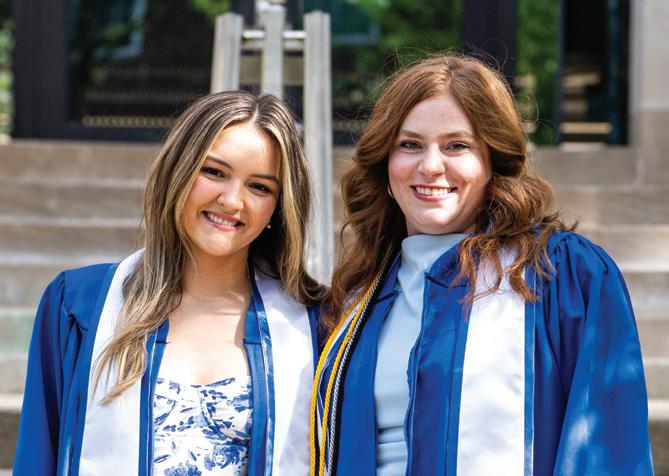
As I’m looking at my cap and gown while writing this letter I keep thinking about all the times that this journalism degree made it so damn hard to get.

From the countless nights spent studying at the library, rushing to get to my 9:30 a.m. classes at Blazer Dining Hall and the countless urgent care visits because I am too clumsy for my own good.
I keep thinking to myself that if I
could go back and tell my freshmanyear-self that she would be the first in her family to go to college and graduate, go to a different country (or three) and simply live the life she has always dreamed for herself, I would tell her to keep pushing because it’s all worth it.
One place that made it all worth it was the Kentucky Kernel.
When I came to the Kernel at only 18 years old, I had no idea the impact
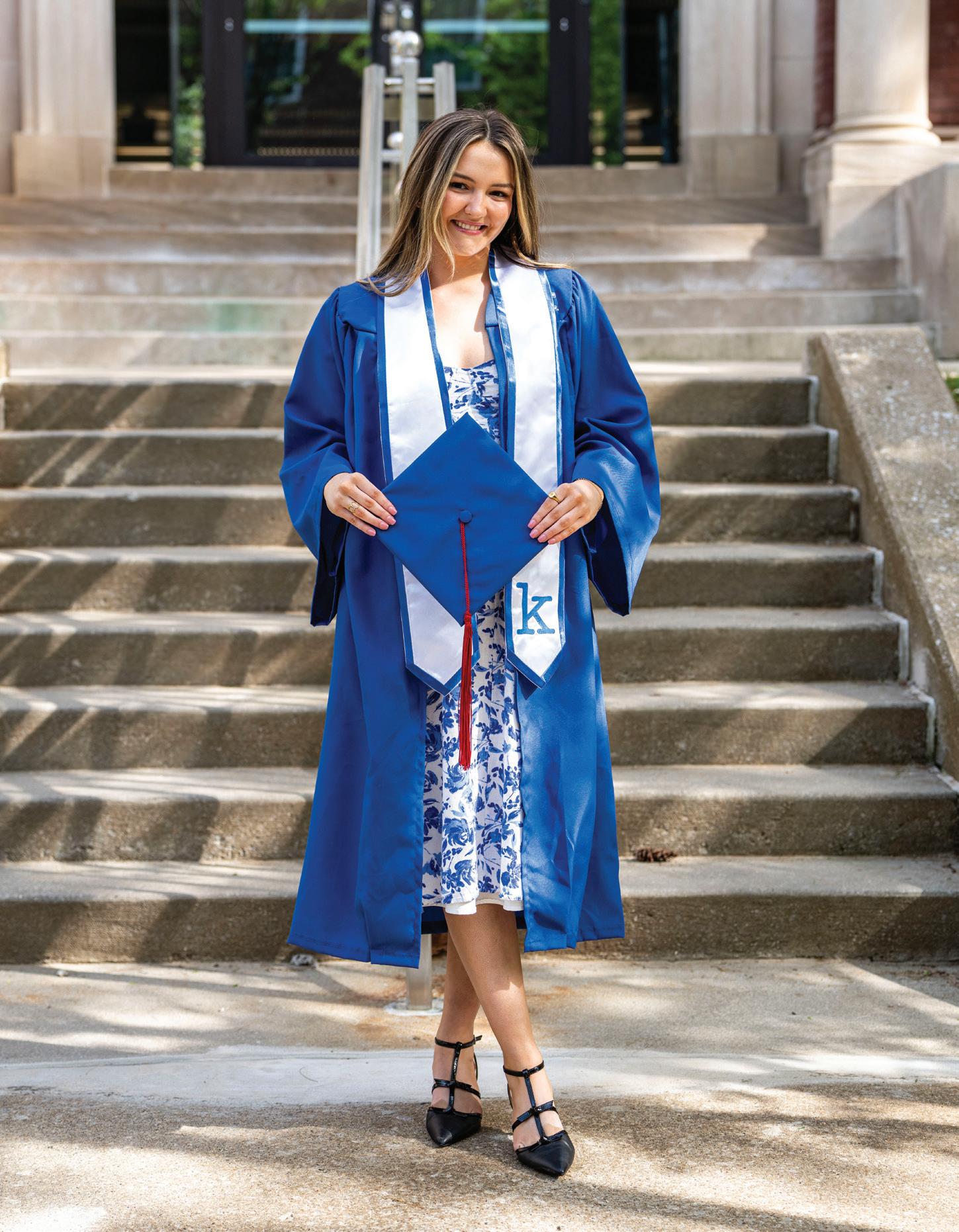
Managing Editor Kennedy Parker
this newsroom would have on my life. Somewhere along the way, going from an opinion writer to now being managing editor, I have gained some of the best mentors and friends in my whole life.
Through the many late production nights, staying up until 2 a.m. to copy edit stories and the many coffee trips, somehow I survived it all, and I am here to tell the tale.
The Kernel will always hold a special place in my heart, a place that gave me a home away from home. I hope and encourage anyone that has even an ounce of passion for journalism or writing to join.
As for my next journey, I am not sure where I’ll end up. I have dreams to teach English abroad, become a travel writer or maybe just go out to California and see the redwood trees.
While I don’t know about my next chapter in life, I do know that no matter where I go I’ll always remember my time at the Kernel, and the people who made this place so special.
So, now that my words are in print for the last time at the Kernel, and as I am definitely wiping away my tears reading this, thank you to everyone who took a chance on me when they didn’t have to.
Thank you to everyone who saw the potential in a scared 18-year-old girl when she couldn’t see it herself. She lost her passion for journalism and writing, but she found it again through the Kernel. I could not be more grateful to those who helped me get to where I am today. Thank you.
“I don’t know what lies around the bend, but I’m going to believe that the best does,” L.M. Montgomery, Anne of Green Gables.
With all my love,

I have watched “The Wizard of Oz” more times than I can count.
Growing up, it was my movie, the one I returned to again and again, curled up on the couch, completely convinced that somewhere beyond the gray and ordinary, there was a place bursting with color and possibility.
I never got tired of watching Dorothy open that door. That moment when the world goes from black and white to brilliant, dazzling Technicolor, it got me every single time.
What I didn’t understand then, what I only understand now, standing at the end of my own yellow brick road, is that Dorothy’s story was never really about the destination. It was about what you discover on the way.
The courage you didn’t know you had. The heart you were carrying all along. The home you were building, brick by brick, step by step, in the people walking beside you.
The Kentucky Kernel is my Oz.
I walked through the doors of Blazer Dining Hall for the first time as a sophomore with something to prove and a vision I wasn’t sure anyone else could see yet.
I came from a digital background, and I believed, stubbornly, loudly and passionately, that the future of journalism wasn’t in choosing between video and words, between audio and social media.
It was in the convergence of all of it.
A sunrise where every medium rises together.
I didn’t just want to contribute to the Kernel.
I wanted to leave it fundamentally different than I found it.
I wanted to leave a legacy. That kind of ambition is a heavy thing to carry as a sophomore.
There were moments I doubted myself. Moments the road felt impossibly long, the newsroom
impossibly loud, the deadlines impossibly close.
But I kept going because I had seen what was possible, and I refused to look away from it.
And then, this year, we won the first-ever Broadcast Pacemaker in Kentucky Kernel history.
I stood there thinking about that little girl on the couch watching Dorothy’s world turn to color, and I understood it completely for the first time. The door had opened.
The world had gone Technicolor. Not because of me, but because of a village. Because it always, always takes a village.
To my video team: Chloe, Olivia, Marissa, Jackson, Bella, Piper, Gabby, Edward, Stella, Rilee, Lauren, Libby and Delaney, you are the reason that Pacemaker exists.
You brought resilience on the days it was hard, passion on the days it was thankless, and brilliance every single day in between.
You made history. I hope you never forget that.
Every great story has the people who walk the road with you, but mine had some of the best.
To Hannah Stanley and Gray Greenwell, my Totos.
Toto is the one who is always there through Kansas and Oz and the poppy fields and the witch’s castle, never wavering, never leaving.
From the very first day, you two were my constant.
You showed me how to lead, how to give, how to believe in this place with my whole heart.
You modeled something I have never forgotten: the more you pour into the Kernel, the more it gives back. No matter where this road takes me, a piece of you comes with me.
To Bryce McNeil, my Scarecrow.
You were always the one I called when I couldn’t think straight, the one who helped me find the answer I
Dorothy, at the end of it all, clicks her heels and goes home. And home, it turns out, was never a place. It was the people.
already had inside me.
My fellow radio nerd, my sounding board, the person who picked up every single time no matter the hour.
To Ryan Craig, my Tin Man.
The Tin Man spends the whole story convinced he has no heart, and yet he is the most feeling, most loyal, most deeply human character in the whole film. That is Ryan Craig.
You poured your heart into teaching me what fearless journalism looks like from the inside. You gave me your best advice for the worst situations.
You loved this craft loudly and without apology, and you showed me how to do the same.
Together, you and Bryce were my newsroom dads, and I will carry everything you gave me for the rest of my life.
To my editorial board and digital managers, my Lions.
Every one of you had more courage than you ever gave yourselves credit for.
You stepped into rooms that were uncertain, took on challenges that were new, and led with bravery even on the days it didn’t feel that way.
Your hard work, dedication and passion for the Kernel will forever live within the walls of Pence 013. Take a bow, you have earned it.
And then there is Kennedy Parker, my Glinda.
Glinda does not just wave a wand. She shows up at the beginning and the end. She is the one who tells you, when you are ready to hear it, that you had the power all along.
Kennedy, you were that for me this entire year. The margs, the late-night calls, the scramble to pull together a fourth magazine from sheer willpower alone, you made it all not just survivable but unforgettable.
You are the kind of person who makes everyone around her shine brighter.
To my roommates Brooke and Catie, you were my home base. On the hardest nights, when the newsroom had wrung me out completely, you were the exhale I needed.
Thank you for listening, for laughing, for pulling me back to myself whenever I got lost in it all. You are the definition of best friends.
To my mom, dad and sister Annalyse, thank you for never letting me forget who I am.
I am a Gallo, and that means something. It means grit. It means heart. It means showing up even when it’s hard.
Everything I brought into that newsroom, I first learned from you.
And to Spencer, my love, the most beautiful surprise of this chapter. If the Kernel was my Oz, you were my way home.
You held me through the hardest moments of this year with a steadiness and a grace that I will never take for granted.
You showed me what it feels like to be truly, completely loved and I love you back in ways that no deadline, no edition, no byline could ever fully capture.
I am so wildly, endlessly excited for everything that is waiting for us on the other side of this rainbow.
What you are holding now, this full-color, multimedia news magazine, is the Technicolor version of what this craft can be when you refuse to let it stay in Kansas.
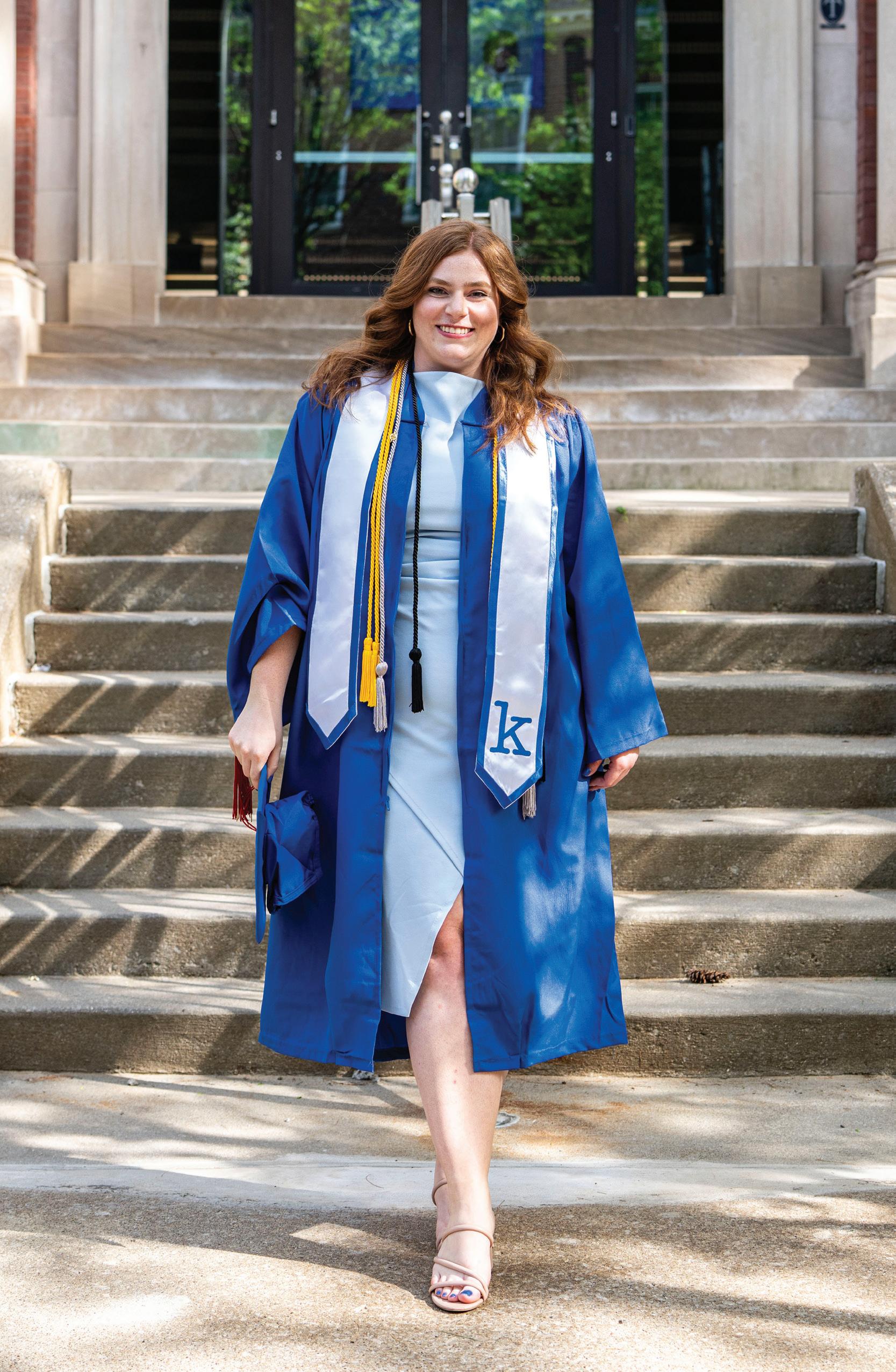
There is a whole world in Technicolor waiting just past that door. I have seen the sunrise. Now I am ready to run toward it.
There is no place like home and there is no place like the Kernel. Thank you for being both.

Editor-in-Chief Giana Gallo