Vietnam Lubricants Value Chain Assessment Sample Report Ken Research
Vietnam Lubricants Market: Growth Drivers, Trends, and Future Outlook
Hanoi, Vietnam – The Vietnam lubricants market is experiencing robust expansion, driven by surging automotive sales, industrial sector growth, and increasing crude oil imports
According to the latest industry estimates, the Vietnam Lubricants Market Size is projected to reach approximately 41 trillion VND by 2026, positioning Vietnam as one of Southeast Asia's most promising lubricant markets
Market at a Glance
The Vietnam lubricant market is moderately consolidated with Castrol BP leading as the sole market leader Currently in its growth stage, the market has witnessed the establishment of numerous foreign players including Shell, Total, and others, with more international manufacturers expected to enter independently or through strategic collaborations
The Vietnam Lubricants Market Share analysis reveals that Castrol BP holds the highest market share across the country, maintaining its position through strong brand equity and extensive distribution networks
Key Market Dynamics
Market Leadership & Competition
The competitive landscape features a mix of global giants and domestic players Major competitors include Shell Vietnam, Petrolimex, Total Vietnam Company Ltd, Mekong Petrochemical JSC, Motul Vietnam JSC, AP Saigon Petro JSC, and PTT Lubricants
The Vietnam Lubricants Market Competitive Landscape shows that companies compete primarily on product pricing, brand reputation, marketing strategies, product portfolios, and distribution networks
Automotive Sector Dominance
Automotive lubricants have dominated the market, contributing the majority share compared to industrial lubricants. This dominance stems from Vietnam's position as the world's fourth-largest two-wheeler market, where motorcycles remain the preferred mode of transportation due to their flexibility, convenience, and affordability compared to passenger cars
The Vietnam Lubricants Market Overview indicates that two-wheelers account for the largest consumption segment, followed by commercial vehicles and passenger cars
Growth Drivers Fueling Market Expansion
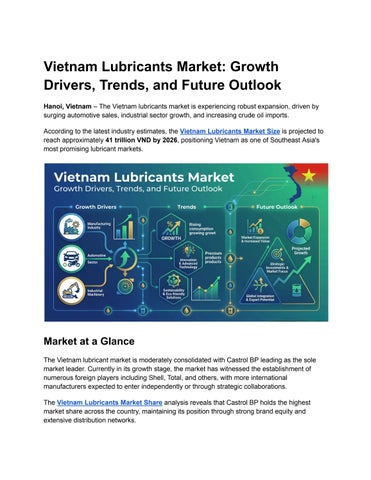
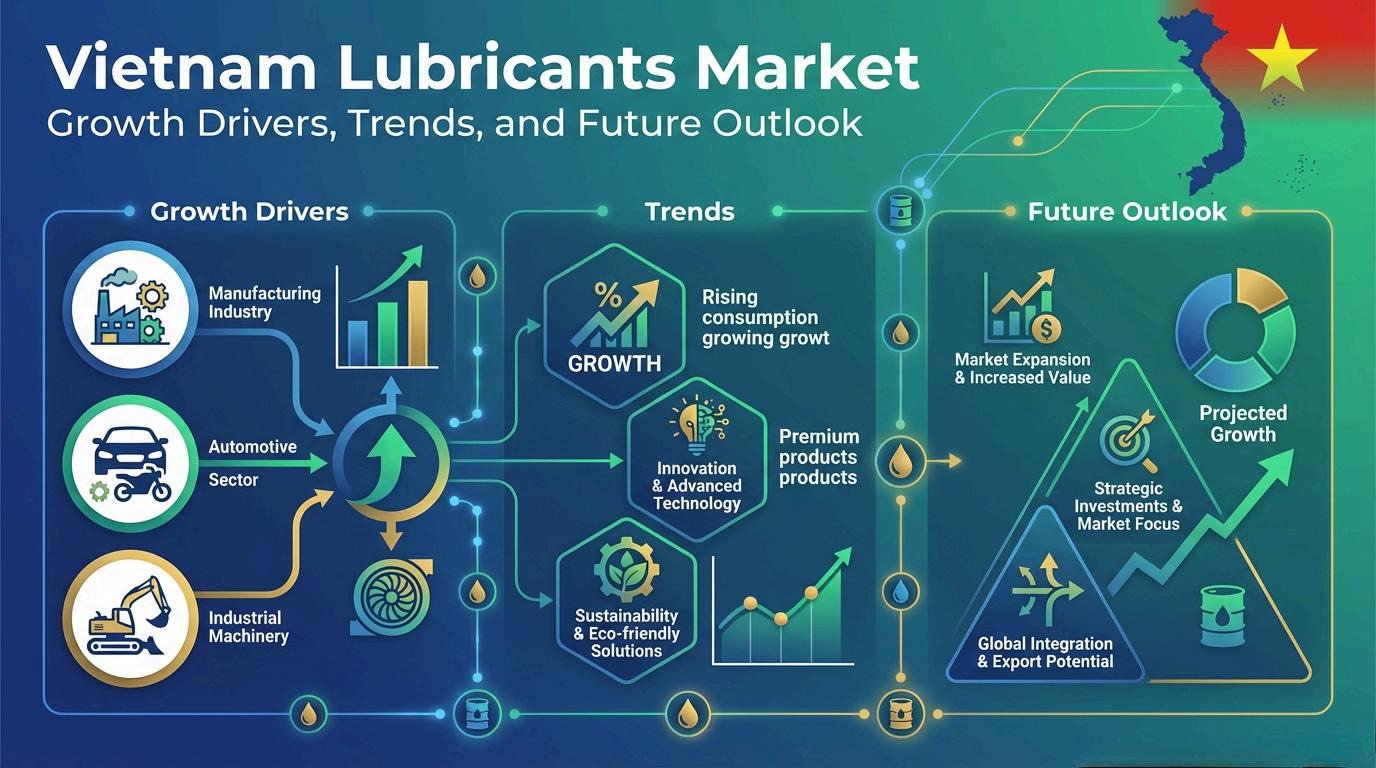
The automotive sector continues to be the primary growth catalyst, with multiple factors propelling market expansion The Vietnam Lubricants Market Growth trajectory remains strong across both automotive and industrial segments.
1. Booming Automotive Sales
The automotive sector continues to be the primary growth catalyst With 889,756 passenger cars manufactured in 2021, the automotive industry represents the largest consumer segment for lubricants
Government policies, including the removal of import taxes for cars from ASEAN regions, have reduced new car prices and boosted sales, further driving lubricant demand The Vietnam Lubricants Market Analysis highlights that automotive segment growth will continue through 2026.
2. Industrial Sector Expansion
The up-scaling metal and mining industry, coupled with escalating demand for engine oil, represents a major growth driver The manufacturing industry contributes significantly to Vietnam's GDP, with lubricants playing crucial roles in metal production
Metals and mining company earnings have grown 59% annually over the last three years, encouraging increased production and pushing lubricant demand higher. The Vietnam Lubricants Industry Insights reveal that industrial applications are gaining momentum rapidly
3. Infrastructure Development
The construction sector's projected double-digit growth through 2026 will significantly boost industrial lubricant consumption The Vietnamese government's aggressive promotion of industrial growth, particularly in manufacturing, is creating sustained demand across multiple end-user segments
Construction projects alone are expected to consume several million liters annually. The Vietnam Lubricants Market Trends indicate that infrastructure development will remain a key demand driver throughout the forecast period
4. Strategic Geographic Position
Vietnam's transformation into a manufacturing hub, similar to China, has been supported by low labor costs, high ease of doing business, and minimal trade barriers. This has attracted substantial foreign direct investment in manufacturing and processing sectors, all requiring consistent lubricant supplies
Market Segmentation Insights
By Lubricant Grade
Mineral oil contributes the majority share compared to semi-synthetic and synthetic oils, as industries predominantly prefer mineral-based lubrication due to cost considerations. However, synthetic grade lubricants are projected to grow faster, with awareness increasing among consumers regarding lubricant quality standards.
By End-User Application
The manufacturing industry adds major contribution to overall GDP, with lubricants playing significant applications in metal production. The sharp rise in manufacturing projects and inflow of steel initiatives continue to drive industrial lubricant demand
By Distribution Channel
Most lubricants consumed by the industrial sector are supplied through widespread networks of authorized and local distributors across various regions However, direct sales are expected to accelerate as companies focus on increasing margins and profits by eliminating intermediaries.
Challenges and Market Constraints
Supply Chain Dependencies
The majority of lubricant production involves importing base oil from neighboring countries such as China, Singapore, and Japan, which is then blended domestically with required additives. Limited refining capabilities and fluctuating crude oil prices pose ongoing challenges for market players
Competitive Pressures
The intense competition from foreign players in the domestic market, combined with ever-changing oil prices and high import dependency for oil products, creates a complex operating environment The limited number of oil refineries in Vietnam constrains the growth potential for some market participants
Environmental Concerns
Growing awareness about environmental degradation, fuel efficiency, and pollution levels is contributing to the emergence of electric vehicles in Vietnam. The increasing penetration of EVs poses a long-term threat to conventional lubricant demand
Future Outlook and Market Projections
The market shows sustained growth potential through 2026, with the outlook remaining positive despite emerging challenges The Vietnam Lubricants Market Forecast predicts a compound annual growth rate that will outpace regional averages
Sustained Automotive Growth
The automotive segment is anticipated to maintain its dominance during the forecast period through 2026, driven by increasing automobile sales. Motorcycle sales, particularly, will continue to be a significant demand driver, despite the projected ban on motorcycles in Hanoi by 2030
The Vietnam Lubricants Industry Outlook suggests that automotive lubricants will retain majority market share, although industrial segments are growing faster proportionally
Industrial Lubricants Acceleration
While automotive lubricants currently lead, the overall market share of automotive lubricants seems likely to decline due to the fast-moving industrial sector, mainly manufacturing and construction, as the country focuses on developing infrastructure.
Premium Product Adoption
Semi-synthetic and synthetic grades are expected to gain prominence among consumers due to demand for superior quality and increasing awareness of lubricant quality standards. Their combined market share is projected to rise significantly by 2026
Pricing Trends
With fluctuations in crude oil prices, retail prices for both automotive and industrial lubricants are expected to increase in the coming years This price evolution will impact both consumer behavior and competitive dynamics.
Market Expansion Opportunities
More market players are anticipated to enter the lubricant industry independently or through collaborations to meet rising end-user demand The direct sales channel is expected to grow faster as manufacturers seek to improve margins by reducing reliance on middlemen
The Vietnam Lubricants Market Growth Opportunities are abundant across both traditional and emerging segments, with digital transformation and e-commerce platforms reshaping distribution strategies and opening new channels for market penetration.
Frequently Asked Questions (FAQs)
Q1: What is the projected size of the Vietnam Lubricants Market by 2026?
A: The Vietnam Lubricants Market is expected to generate approximately 41 trillion VND in revenue by 2026, driven by growth in both automotive and industrial sectors.
Q2: Which companies dominate the Vietnam Lubricants Market?
A: Castrol BP is the market leader, with other major players including Shell Vietnam, Petrolimex, Total Vietnam Company Ltd, Mekong Petrochemical JSC, Motul Vietnam JSC, AP Saigon Petro JSC, and PTT Lubricants
Q3: What are the main types of lubricants in Vietnam's market?
A: The market is segmented into automotive and industrial lubricants Within automotive, key categories include heavy-duty diesel engine oil, motorcycle oil, passenger car motor oil, hydraulic oil, gear oil, and greases By grade, mineral oils dominate, followed by semi-synthetic and synthetic lubricants
Q4: What factors are driving growth in the Vietnam Lubricants Market?
A: Major growth drivers include rising automotive sales (especially motorcycles and commercial vehicles), expansion of the metal and mining industry, increasing infrastructure and construction projects, government support for industrial growth, and growing crude oil imports
Q5: Why do automotive lubricants dominate the market?
A: Vietnam is the world's fourth-largest two-wheeler market, with consumers preferring motorcycles over passenger cars for their flexibility, convenience, and affordability The high volume of motorcycles and commercial vehicles drives substantial demand for automotive lubricants
Q6: What challenges does the Vietnam Lubricants Market face?
A: Key challenges include fluctuating crude oil prices, high dependency on base oil imports from neighboring countries, limited domestic refining capabilities, intense competition from foreign players, and the potential threat from the growing electric vehicle market
Q7: Which lubricant grade is expected to grow fastest?
A: Synthetic grade lubricants are projected to grow at the fastest rate through 2026 due to increasing consumer awareness about quality standards, demand for superior performance, and the adoption of high-performance machinery across industries.
Q8: How are lubricants distributed in Vietnam?
A: Distribution primarily occurs through widespread networks of authorized dealers and local distributors However, direct sales from manufacturers are expected to increase as companies focus on improving profit margins by reducing intermediary involvement
Q9: What role does the industrial sector play in lubricant demand?
A: The industrial sector, particularly manufacturing and metal production, contributes significantly to lubricant demand. The construction industry alone accounts for several million liters annually, with projected growth at a double-digit CAGR, creating substantial opportunities for industrial lubricant suppliers.
Q10: How is the electric vehicle trend impacting the lubricants market?
A: Growing awareness about environmental issues, fuel efficiency, and pollution is driving EV adoption in Vietnam While currently a modest threat, the increasing penetration of electric vehicles poses a long-term challenge to traditional lubricant demand, particularly in the automotive segment.
Unlock Comprehensive Market Intelligence
The Vietnam Lubricants Market presents significant opportunities for manufacturers, distributors, investors, and industry stakeholders looking to capitalize on Southeast Asia's dynamic growth trajectory. Understanding market nuances, competitive dynamics, regulatory frameworks, and emerging trends is crucial for strategic success in this evolving landscape
Ken Research delivers unparalleled market intelligence through comprehensive industry reports, detailed competitive analysis, and actionable strategic recommendations tailored to your business needs
Take the Next Step
Fill out the Sample Report Request Form to access exclusive insights from Ken Research.
Gain access to:
● Detailed market sizing and forecasts through 2026
● Comprehensive competitive landscape analysis
● In-depth segmentation by grade, application, end-user, and distribution channel
● Strategic recommendations for market entry and expansion
● Value chain analysis and pricing trends
● Regulatory framework and policy impact assessments
For the complete report, visit: Vietnam Lubricants Market Report
Stay ahead of market trends and make informed decisions with Ken Research – your trusted partner for global market intelligence
Contact Us: For customized research solutions and consultation, reach out to our expert team at Ken Research