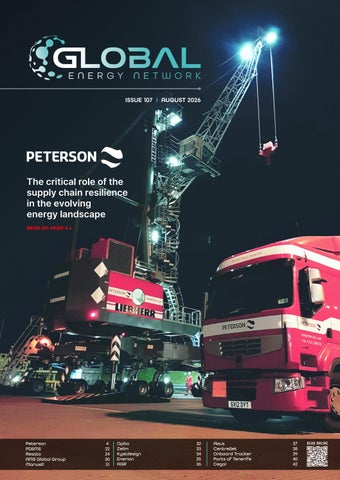
Welcome to the August issue of Global Energy Network magazine our special Offshore Northern Seas (ONS) issue, where we explore the vital role of Ports & Logistics in supporting the energy sector's continued evolution. As supply chains adapt to changing market demands, innovation, resilience and collaboration have never been more important. Our cover partner, PETERSON, examines The Critical Role of Supply Chain Resilience in the Evolving Energy Landscape, offering valuable insight into the challenges and opportunities ahead. This issue also features expert contributions from PD&MS, Marwell, Zelim, Enerion, Aisus, Onboard Tracker and the Port of Tenerife, alongside our regular industry updates from Leyton and Brodies LLP. We hope you enjoy this packed edition and the perspectives it brings to one of the industry's most important events. Enjoy the issue!
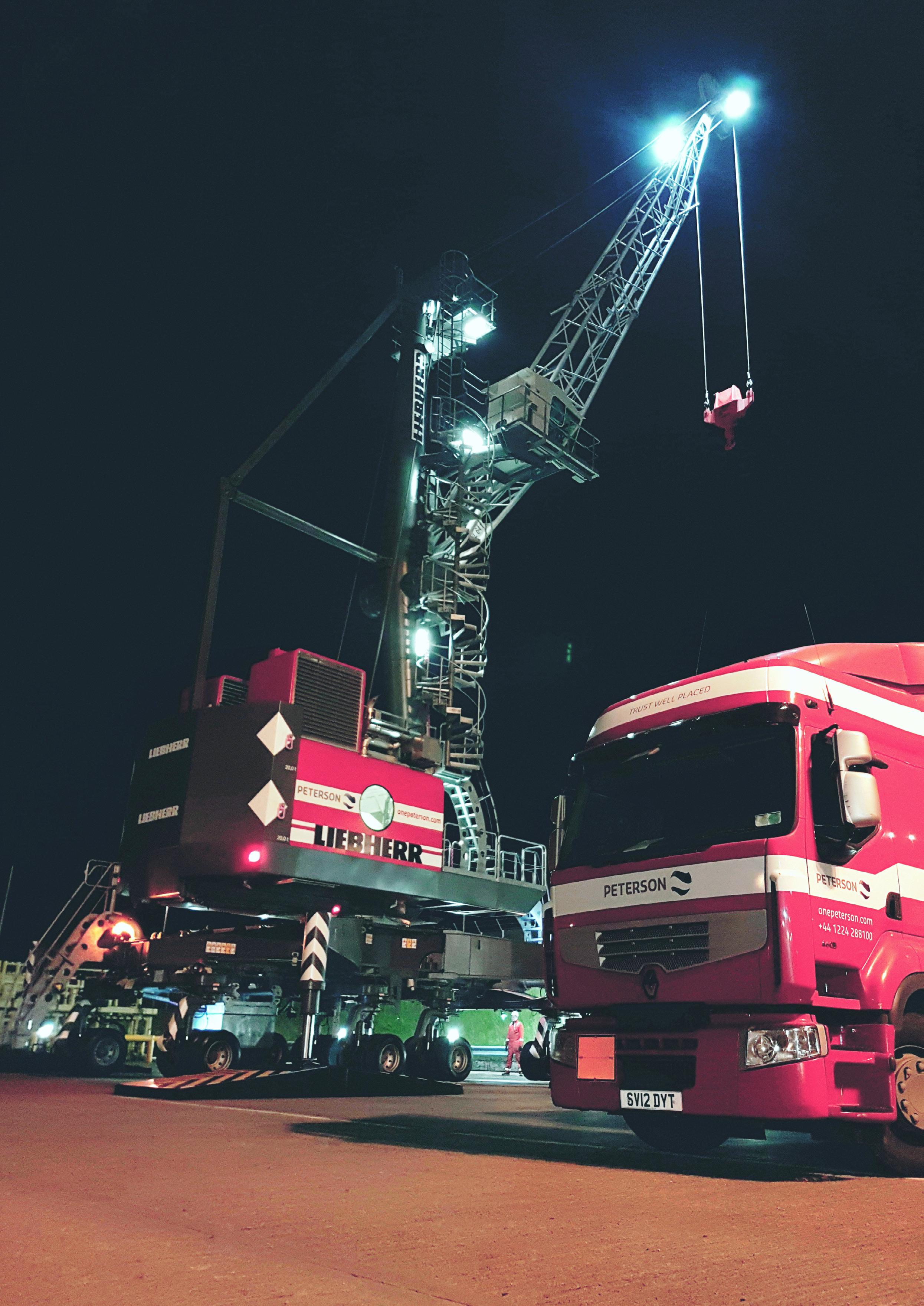
The critical role of supply chain resilience in the evolving energy landscape
Peterson Energies’ market experts share how to streamline operations through safe, innovative, and technology-led solutions
With its long-standing heritage globally, Peterson Energies has developed decades of experience in managing the full logistics supply chain for offshore energy operations. But as market conditions and trends change, how is the company leading the way to ensure safe, sustainable, and cost-effective operations?
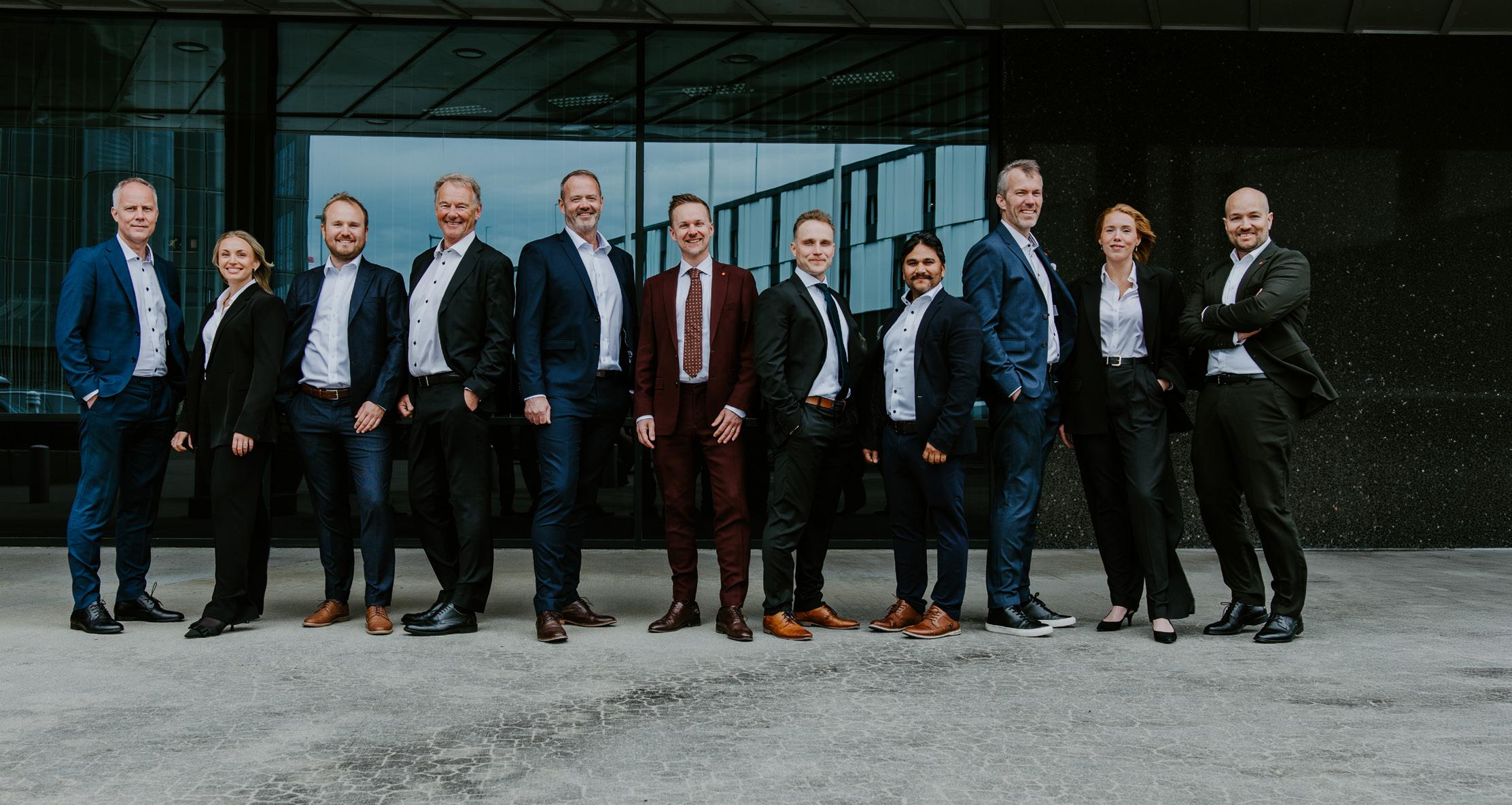
Hear from Peterson’s leadership team about how technology, strategic thinking, and agile approaches can help the supply chain maintain operational excellence, drive continuous improvement, and set the standard for safety.
Agile and adaptable delivery
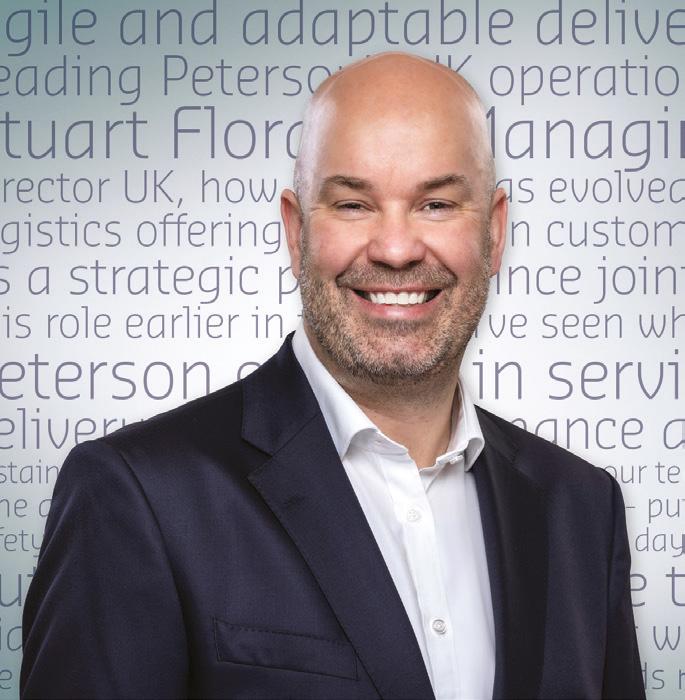
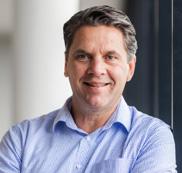
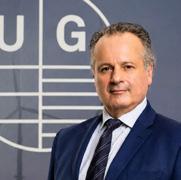
Leading Peterson’s UK operations, Stuart Florance Managing Director UK, explains how Peterson has evolved its logistics offering to unburden customers as a strategic partner.
“Since joining this role earlier in the year, I’ve seen where Peterson excels - in service delivery, safety performance and sustainability credentials. Our customers trust our teams, time and time again, to support their projects - putting safety first whilst delivering consistently day in, day out. But it’s critical that we, like the wider supply chain, are building for what the market needs next, not just what it needs now.
“As we look towards an all-energy landscape, we are leaning into our existing strengths to stay relevant as the industry
shifts. For Peterson, this is about harnessing our deep operational knowledge gained from decades of oil and gas experience and leveraging that to maximise economic recovery from ongoing development and campaigns, as well as supporting renewable energy projects. In recent years, we’ve established a solid track record as a partner of major offshore wind projects across the North Sea. This, combined with our heritage and ongoing work in oil and gas, means we’re well-placed for renewables energy support as the industry scales.
“To succeed, I try to retain an open mindset and be mindful of the hard yards often needed where teams are required to keep adapting and improving. At Peterson, we plan to continue mixing new and traditional ways of working and performing with agility through the entire life of field, supporting ongoing production, project delivery, and driving pooled infrastructure models.
“We are forward looking as an organisation and anticipate how we can best meet customers’ evolving priorities. Integrated, multi-location approaches can be replicated across both industries and geographies, with the ability to adapt as the external environment develops.
“Like any business we are also faced with clear expectations when it comes to resource allocation and deploying capital strategically. We’re investing in critical ports and facilities, alongside decommissioning capabilities, that can support customers’ varied logistics scopes long into the future. We are also expanding our vessel agency offering in the UK - such as port call
coordination, crew change and transfer services, stevedoring and customs support to be that one-stop-shop partner which fully unburdens our customers.
“In short, it’s about expecting and preparing for rapid shifts in market trends and responding proactively to meet and exceed customer expectations.”
Peterson is an established market-leader in technology, with its in-house system Lighthouse digitising the end-to-end logistics supply chain. Lighthouse, which was established in 2012 and has processed more than 10m tonnes of cargo, is developed alongside operational experts
providing
solutions
to real-world
challenges. Jaye
Deighton Global Head of ICT and Innovation
shares the value of investment in innovation.
“With the pace of change seen across the industry, it’s vital to invest in the right places, with technology and systems that enhance operations and reduces risk for customers. Digital transformation has been a game changer for Peterson, making logistics more connected, intelligent and data-driven, bringing information together and creating a more complete view of operations.
“Our digital Lighthouse platform gives our delivery teams and customers better planning and operational oversight through real-time connected applications. It works as a single environment, tracking everything from vessel activity to transport requests.
“And we keep evolving. We’re investing in AI-powered capabilities that help uncover insights from operational data and model different scenarios, supporting faster, betterinformed decisions while keeping people at the centre of the process.
“Our team is also continually exploring how we can take the system to the next level and tailor it to match the latest requirements of offshore energy projects. Earlier this year, we introduced the Air app, giving visibility of flights, passengers and PPE, with builtin controls that prevent non-compliant equipment from being issued. Additionally, we are in final development stages of a campaign management solution, connecting cargo demand project material equipment lists and project phases. We have made a significant investment in the backend of Lighthouse ensuring that we can support rapid deployment for our Software as a Service offering.
“With technology, we introduce new capability in a controlled way and focus on practical value for people running the
operation, without compromising safety. It’s about bringing together blue sky thinking with boots on the ground – using systems to free people to focus on more valuable work.”
Protecting our industry’s greatest asset - people
Responsible
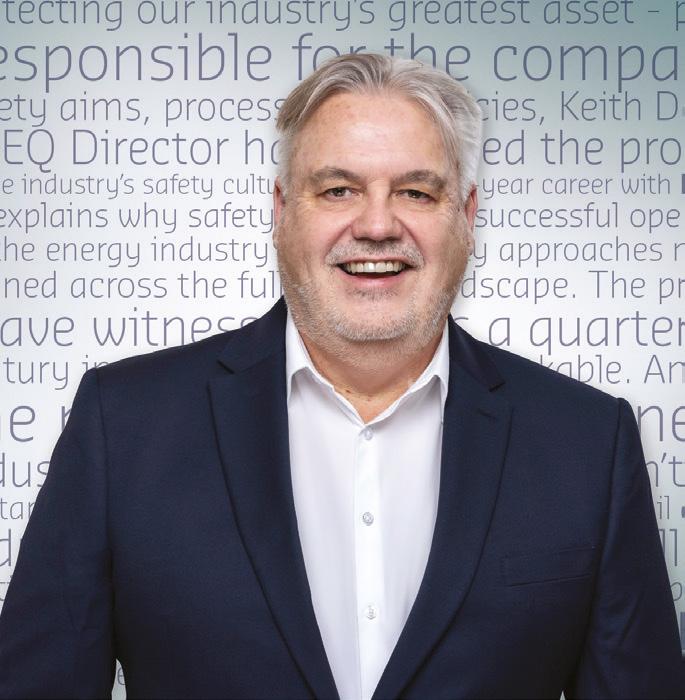
for the company’s safety aims, processes and policies, Keith Dawson HSEQ Director has witnessed the progress of the industry’s safety culture during his 25-year career with Peterson. He explains why safety is integral to successful operations.
“As the energy industry evolves, safety approaches must be aligned across the full energy landscape. The progress I have witnessed across a quarter of a century in oil and gas is truly remarkable. And with the new and emerging energy industries, we are lucky that we don’t need to start from the beginning. This is something the oil and gas industry now does incredibly well and, particularly for those of us in the supply chain operating across the full spectrum, we can bring decades of experience and standards to project delivery.
“As well as protecting people, strong safety performance is also an enabler of commercial success. Safe, reliable, and predictable operations ensure projects are delivered on-time and on-budget. When people are safe, equipment is protected, goods are properly managed, and the environment is kept clear, then projects are smoothly delivered. If one of these fails, the knock-on impact can be astronomical.
“Earlier this year, our workforce reached a milestone that is testament to having a robust safety culture - a year without any serious work-related injuries (zero TRCF and LTIF) across all global operations. This was not a moment to think ‘job complete’; rather, it was a milestone to build from. A strong safety culture is incredibly important at Peterson, with a Goal Zero commitment regarding people, plant, and environment throughout all levels of our organisation.
“This sits alongside in investment in training, systems, and infrastructure. This year we have introduced a more integrated incident reporting and learning system, which connects our safety data and helps us with conducting faster investigations and preventing repeat incidents. We are also now harnessing AI and smart technologies to strengthen our investigation process by identifying patterns, analysing trends across multiple data sources, and providing insights that help us understand root causes more quickly and improve preventative actions.
“Another example of this in action is our new state-of-the-art forklifts with cuttingedge safety capabilities. Their radar-based system can detect any moving or static object behind it - including pedestrians.
“By prioritising a strong safety culture and a forward-thinking approach to safety practices, we can ensure supply chain services are fit to support the energy sector, both now and long into the future.”
Since 1968, Peterson Energies has unburdened energy operators and developers with safe, trusted, and agile integrated logistics, technology, consultancy, and supply chain solutions from its strategically located bases in the UK and Netherlands, as well as globally in regions including the Middle East.
Peterson’s expert teams deliver end-to-end logistics solutions which support offshore continuity through closer collaboration, greater operational control, and improved decision-making, underpinned by its digital platform Lighthouse.
Editorial
newsdesk@globalenergynetwork.net
Advertising
hello@globalenergynetwork.net
Design Jennifer McAdam jen.mcadam@globalenergynetwork.net
Leading
Edit ori al Tsvetana Paraskova Disclaimer:
Where Strategy Meets Execution
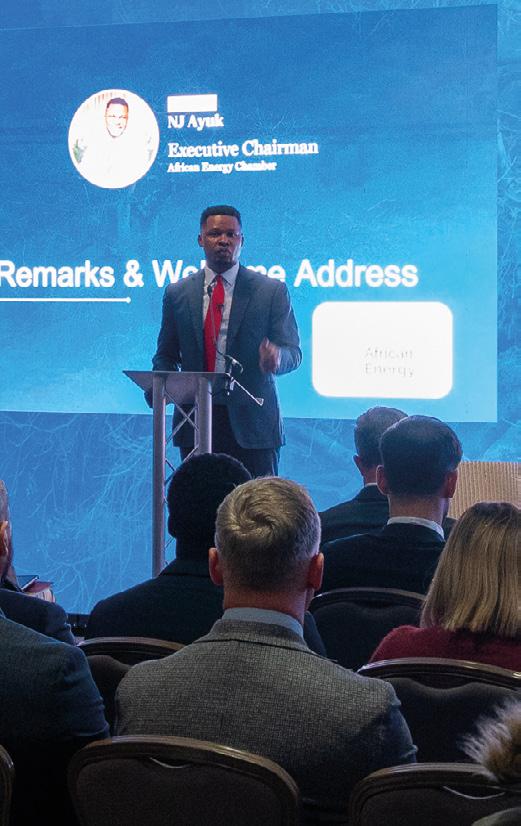
The Wider African Energy Summit (WAES) returns for its third year, bringing together Africa’s energy sector and the international supply chain in London, December 1-2, 2026. WAES 2026 equips operators with the tools to maximize returns and connect with the supply chain. The event focuses on technology transfer, project financing, local content implementation, and the partnerships that turn African energy potential into profitable reality.
7 Eleven Energy Services Limited is an upstream Oil & Gas Service Logistics Company that proficiently provides offshore, onshore and near shore logistics services to E&P, drilling contractors and production companies in Ghana.
www.7elevenenergy.com
www.technical-limits.com
www.bayardsup.com
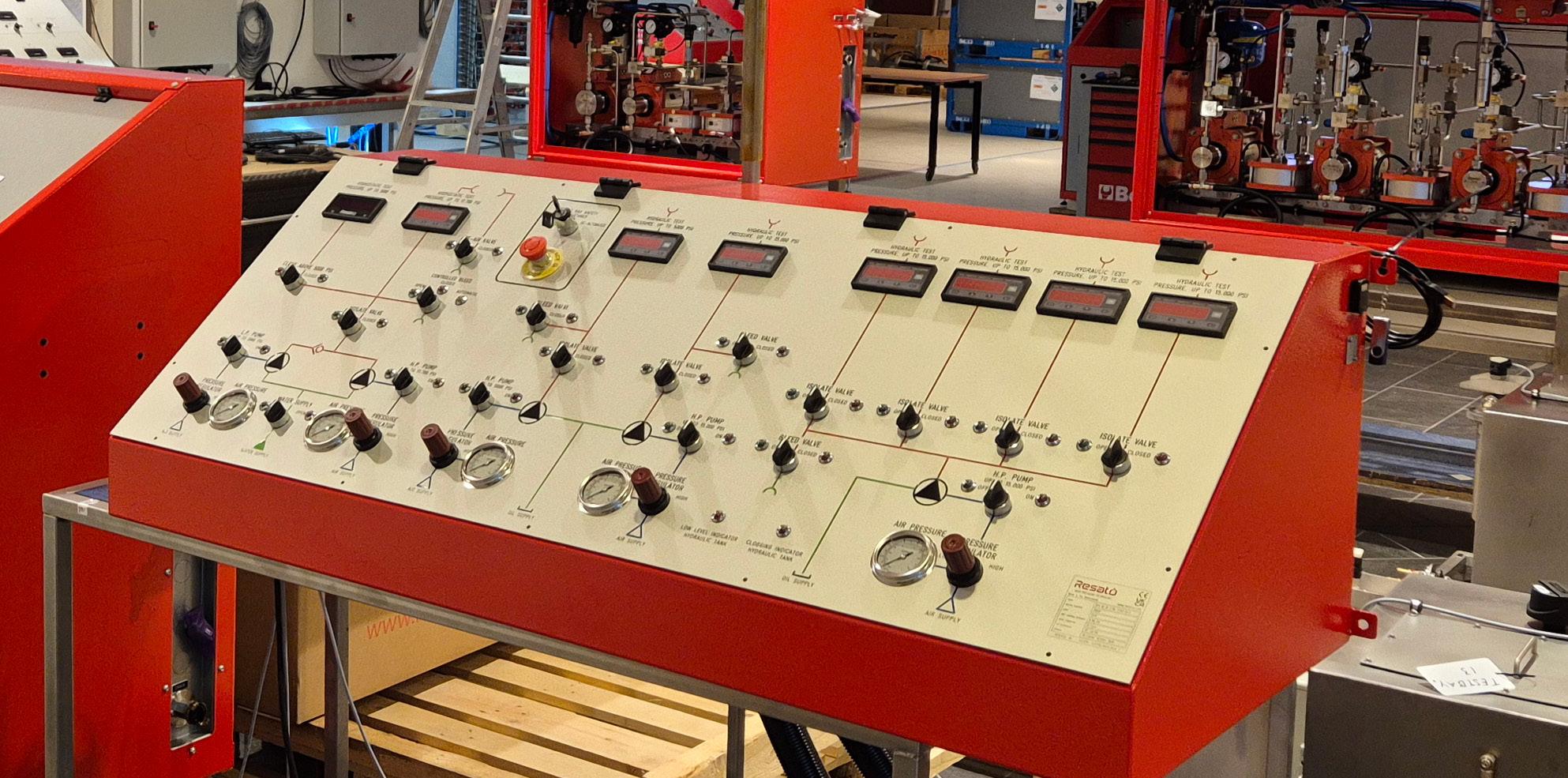
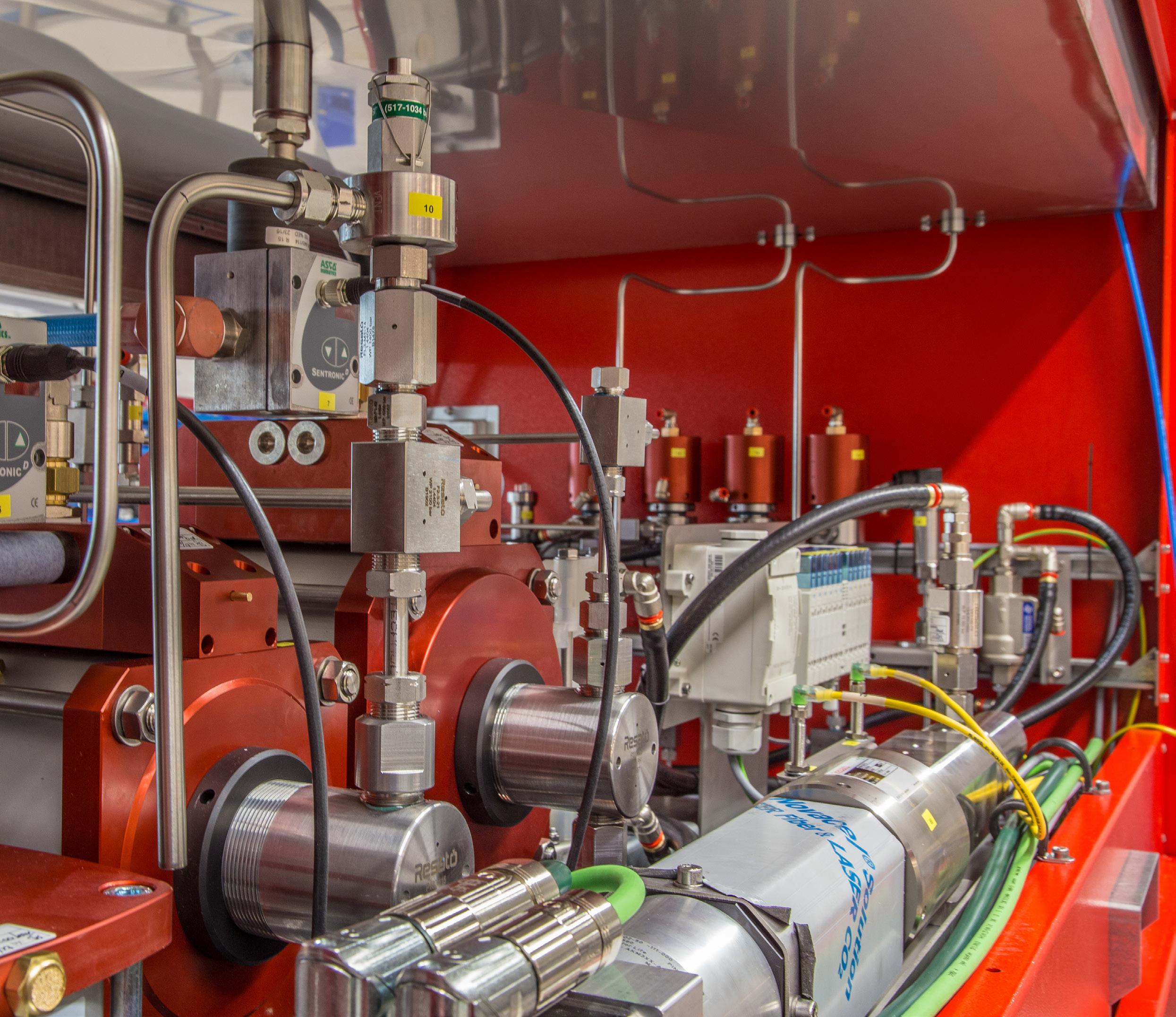
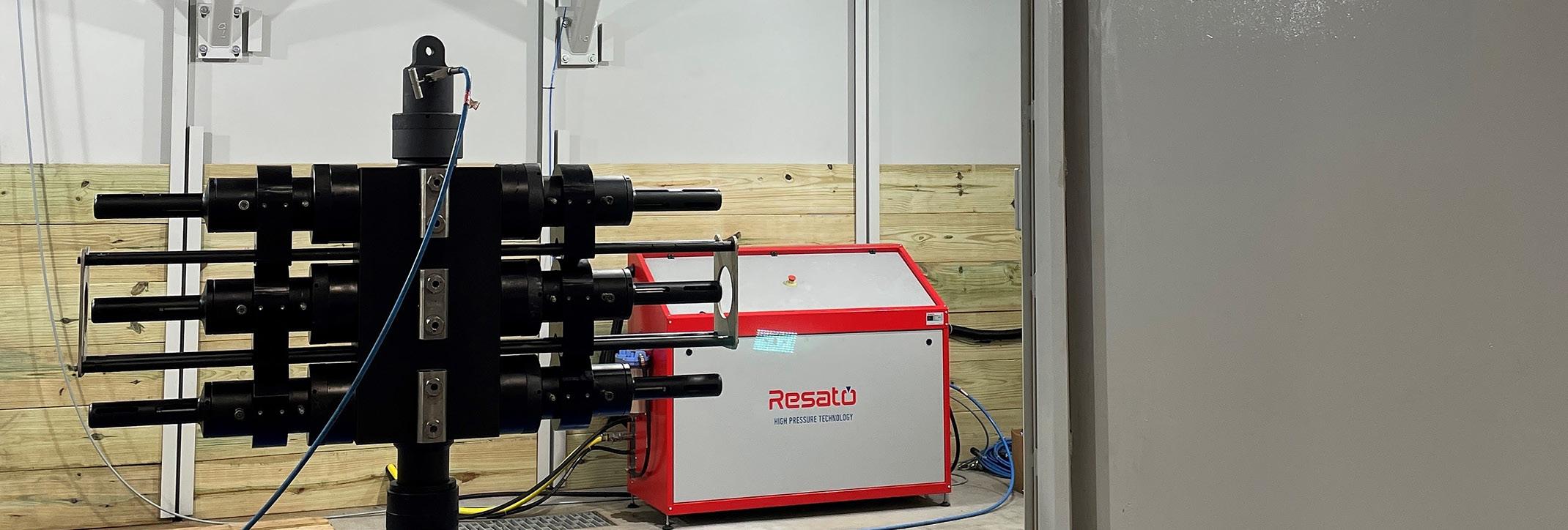
www.resato.com With high-pressure technology, high force is applied to a certain surface. With selection of fluids as a medium, a pressure of up to 14,000 bar can be used. A common application is the testing of objects with regards to working and or burst pressure.
LINX Port Services is one of the country’s leading port logistics and infrastructure providers operating in 16 locations across Australia including every major port. Specialists in stevedoring, berth operations and management, infrastructure and warehousing.
www.linxcc.com.au
Project controls is our primary businessOur consulting services focus on control systems and processes for projects within any stage of its lifecycle. We assist our clients by developing and improving their project control systems in order to mitigate risk and prevent costly litigation
www.diafora.co.uk
www.globalmaritime.com
www.imrandd.com
Oceaneering Wins Five-Year Asset Integrity Contract in Qatar
Oceaneering International, Inc. announced that its Integrity Management and Digital Solutions (“IMDS”) segment has been awarded a five‑year inspection and asset integrity services contract by a Qatar based oil company.
The contract, which includes two optional one-year extensions, is expected to contribute meaningful revenue over its initial term. This award followed a competitive tender process and reinforces Oceaneering’s role in providing long-duration, technology-enabled integrity management services in Qatar.
Oceaneering has operated in Qatar for more than 20 years supporting the country’s critical energy infrastructure. Under this contract, Oceaneering will deliver non-destructive testing, inspection services, and value engineering utilizing its established local workforce and leveraging Inform™, its digital inspection software.
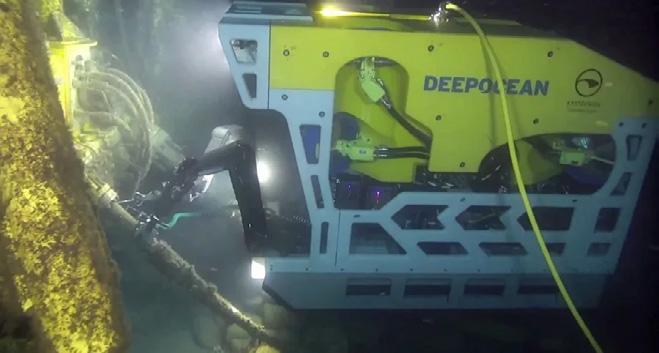
DeepOcean completes subsea removals at Spirit Energy’s Seven Seas and Grove West in the North Sea
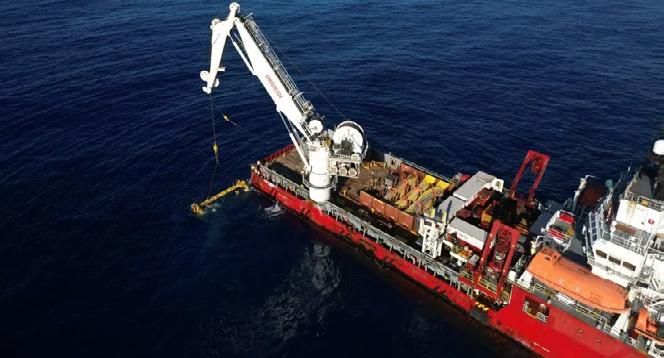
Global ocean services provider DeepOcean has successfully completed the recovery of the remaining subsea wellhead protection structure at the Spirit Energy operated Seven Seas field, as well as the disconnection of subsea infrastructure at the operator’s nearby Grove West field in the southern North Sea, using proprietary tooling developed in house for decommissioning.
DeepOcean delivered onshore engineering and project management, deploying the highspecification construction vessel Edda Freya to retrieve the more than 100 tonne wellhead protection structure, in addition to associated subsea infrastructure. All recovered materials have been transported for reuse, recycling or responsible disposal. The project was managed and executed by DeepOcean’s Aberdeen-based operations in the UK.
NETWORK news
Decom Engineering smashes annual target as global demand drives record growth
Decom Engineering (Decom) has secured contracts worth an estimated £4.5 million during the first half of 2026, surpassing its original full year target and positioning the Aberdeen based engineering specialist to drive forward to a record annual revenue of £6 million.
The performance reflects growing international demand for Decom’s specialist cold cutting technologies and engineering expertise, offshore and onshore, across not only decommissioning scopes but an increasing number of installation and commissioning projects.
Projects have been secured across North America, South America, Africa, the Middle East, Australia and the North Sea, ranging from chain cutting projects, to large-scale subsea structural removal and in supporting the deployment of new subsea assets.
Vulcan opens new Baku office and extends Azerbaijan contract
Vulcan Completion Products has opened a new office and warehouse in Baku, marking a significant step in strengthening its long term presence in the Caspian region.
The expansion follows the extension of a contract with a major operator in Azerbaijan, reflecting sustained confidence in Vulcan’s casing and completion portfolio and its performance in demanding well environments.
The firm’s new facility establishes a dedicated operational and commercial base in Azerbaijan, reinforcing Vulcan’s commitment to in-country capability and closer engagement with operators and service companies.
To support the expanded activity, Vulcan has appointed Elvin Azizov as Operations Supervisor and Asim Akhund as Quality Control (QC) Inspector. The appointments enhance operational oversight and quality assurance as activity continues to grow.
Rotech
Wins Major HVDC
Submarine
Cable Scope in South Korea
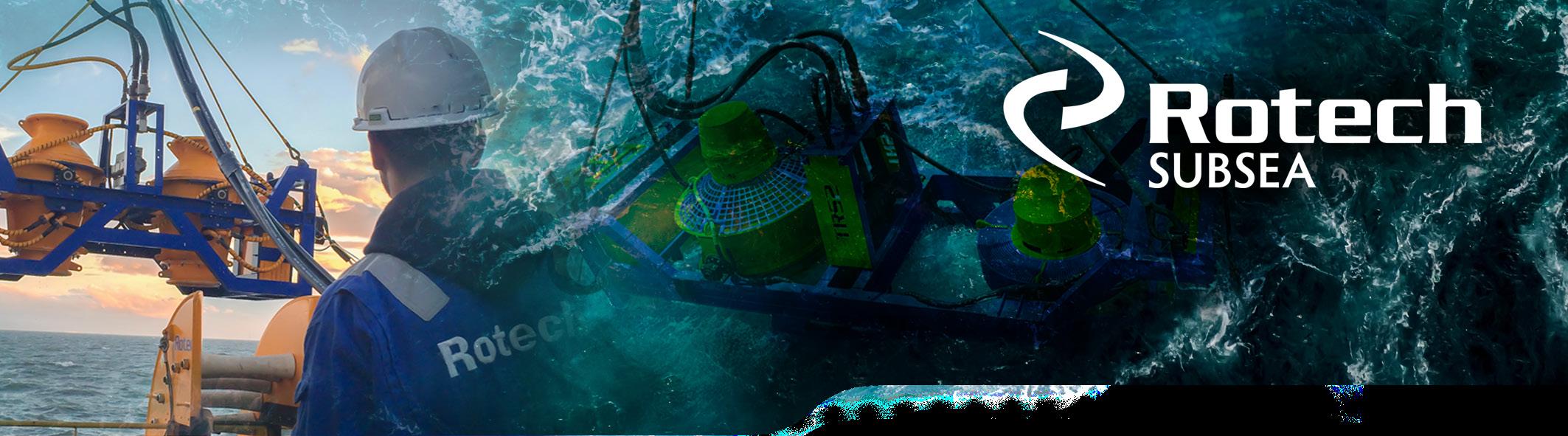
Rotech Subsea has secured a significant subsea cable support contract in South Korea, further strengthening the company’s position in one of Asia’s key offshore energy markets.
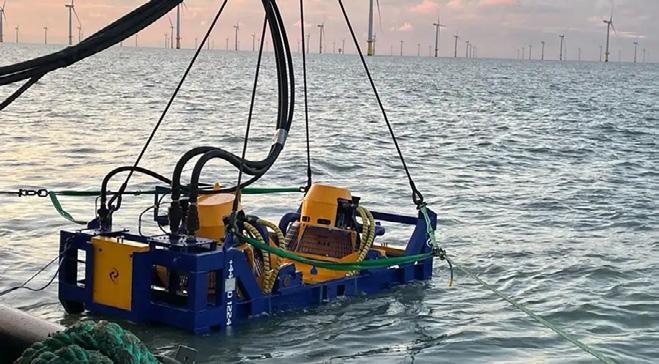
The award will see Rotech utilise its RS1LD-3 Hybrid Jet Trencher to support a major HVDC submarine cable construction project, delivering specialist subsea excavation and trenching services as part of the critical offshore scope.
The award builds on the company’s established international track record and continued activity across key offshore energy markets. Its Controlled Flow Excavation (CFE) technology provides a non-contact approach to seabed intervention, enabling precise excavation while reducing seabed disturbance and protecting surrounding subsea assets.
STATS Group strengthens North American capability with senior appointment and major US expansion
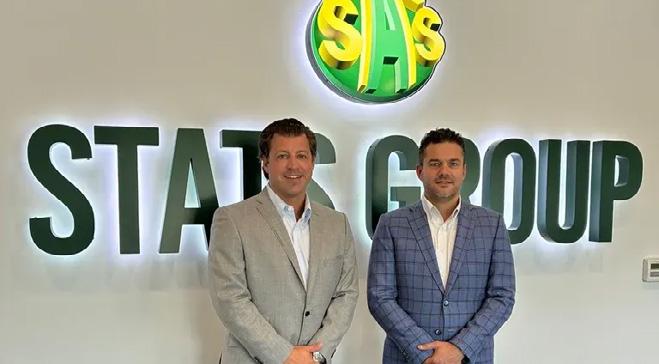
STATS Group has reinforced its commitment to the North American market with the appointment of experienced pipeline integrity professional Sebastiaan Schuite as US Sales Manager.
Based in Houston, Schuite joins STATS as the company continues to expand its presence across the United States with the recent opening of a new 80,000 sq ft manufacturing facility in Rosenberg, Texas, and the doubling in size of its Houston service facility.
The appointment will support STATS’ continued expansion across the North American market, with a focus on strengthening existing client relationships and identifying opportunities across previously untapped regions of the US pipeline market – including the Northeast, Northwest and Rocky Mountain states – while consolidating its established presence across the Lower 48.
UK
Energy Oil & Gas Review
The UK’s next energy policy direction and progress in the sector consolidation and major project plans featured in the UK North Sea oil and gas industry in recent weeks.
Offshore Energies UK (OEUK) has urged an energy policy reset from the new government that is expected to succeed Keir Starmer’s cabinet.
OEUK chief executive David Whitehouse wrote to all 403 Labour MPs urging them to back an urgent policy reset to prioritise homegrown energy.
OEUK, the trade body representing nearly 500 companies in the North Sea’s oil, gas, and offshore wind energy industries, says the UK has suffered 50 years of industrial erosion, a growing dependence on imported energy, and the offshoring of its carbon emissions.
The way to show climate leadership and drive down emissions is by supporting domestic energy production across the board and in particular oil and gas which is delivered with a carbon footprint up to four times lower than imports such as LNG, according to the industry association.
“At a time of global volatility, the UK remains dangerously exposed – importing over 40% of its energy while leaving domestic resources in the ground,” Whitehouse wrote in the letter.
“Today we find ourselves with government policies that leave the UK importing diesel and jet fuel refined from Russian crude. And yet the government will not prioritise our own North Sea oil and gas production over imports.”
OEUK argues that domestic oil and gas production supports thousands of jobs, billions of pounds of value in economy, and the supply chain the UK needs for the expansion of renewables. Moreover, it comes with a lower carbon footprint than imports. Importantly, the sector also delivers significant production-related taxes that gives the Chancellor choices, according to the trade body.
“We need a functioning regulatory regime that enables critical new projects such as Rosebank and Jackdaw to proceed in a timely fashion,” OEUK’s Whitehouse said.
“These policy changes will unlock more than £13bn of addition tax revenues which can be used to tackle key challenges such as eliminating fuel poverty, and well as protecting the country’s industrial base.”
manufacturing and industry. The letter was sent by a cross-industry including OEUK and industry executives, trade unionists, and trade bodies from chemicals, engineering, aggregates, building materials, the offshore energy sector, and the shipping industry.
The signatories of the letter highlighted that the UK will continue to require oil and gas for decades. The letter argues that the key policy choice is whether those resources are produced domestically or increasingly imported from overseas. Signatories warn that growing reliance on imports could expose the country to geopolitical risks while undermining jobs, communities, and supply chains across the UK.
“Our colleagues in other industries are joining us to show their support for this basic message. Energy security, economic resilience and reindustrialisation depend on maintaining domestic energy production as well as greater investment in renewable and low-carbon technologies,” OEUK’s Whitehouse commented.
“We fully support the government’s ambition to build a secure, lower-carbon energy system, but energy transition must follow an “all-energy approach” that builds on existing industrial strengths and strengthens rather than weakens national industrial capability.”
The North Sea Transition Authority (NSTA) said in its Annual Report and Accounts published in July that the regulator is working with operators to make the most of existing fields. An initiative to quickly reactivate 200 shut-in wells showed great promise, with more than 50 back online, contributing more than eight million barrels of annual production.
“We will continue to collaborate with more operators to unlock further opportunities and drive cost efficiency,” NSTA’s Chair, Liz Ditchburn, said in the foreword to the report.
Chief executive Stuart Payne noted that the NSTA “continued to work hard with the industry and supply chain to make the case for ongoing investment in what remained a challenging economic climate.”
By Tsvetana Paraskova
Another letter was sent in mid-July to all Labour MPs urging them to back homegrown oil and gas over imports, alongside greater support for UK
The regulator now has a “hugely significant year” ahead of it. The North Sea Future Plan will lead to new legislation which, in turn, the NSTA will need to incorporate and implement in its day-to-day stewardship.
The NSTA expects to deal with some important Field Development Plans, and more M&A work, while it will continue to steward oil and gas and carbon storage projects, Payne noted.
Decommissioning will remain a huge priority as the NSTA expects the 2020s to be the decade of decommissioning with spending forecast to peak at £2.5 billion per year.
“Decommissioning can ensure that the UK’s supply chain is equipped to help operators clean up their oil and gas infrastructure and support the carbon storage sector, which relies on many of the same resources, and we will work with the sector to help them meet their obligations,” Payne said.
The NSTA has also recently upgraded the accessibility of data for the industry in the vital information on the North Sea Transition Authority’s National Data Repository (NDR). The industry can now access data and information more easily and use intelligent search that cuts ‘find time’ from hours to seconds.
“High-quality information is vital for research and making good business decisions. The NDR contains all the information needed and the improvements we have made to accessibility mean that it is an extraordinarily useful resource,” said Andy Thompson, NSTA Head of Product Services.
“We know that it is already used extensively by scientists, researchers, industry colleagues, academics and government and we are confident that now it will become an even greater tool for innovation and exploration.”
Separately, the NSTA published in July its third Environmental, Social and Governance (ESG) Disclosure Report, which showed the quality and volume of ESG disclosures have improved, with a greater proportion of the disclosure moving beyond basic levels.
A total 76 percent of licensees reviewed under the NSTA’s framework achieved an overall score of more than 50 percent. This is an improvement from the previous report where 52 percent achieved the 50-percent level.
Environmental metrics still represent the strongest area of disclosure, where the largest improvements were in biodiversity disclosure, the report found.
Moreover, Scope 3 emissions disclosure is increasing, driven by regulatory requirements and stakeholder expectations.
“The NSTA is encouraged to see that the overall level of ESG disclosure has improved in both volume and quality,” the regulator said.
“As the momentum for ESG initiatives has grown, so have the challenges; some may question whether ESG has lost its momentum in the face of changing priorities within major economies. However, 2026 is bringing new and evolving ESG regulations that a number of licensees on the UKCS must actively prepare for and others should be aware of,” the NSTA said.
In company news, Adura has welcomed the opening of public consultation by the Offshore Petroleum Regulator for Environment and Decommissioning (OPRED) on the Jackdaw field.
Jackdaw is one of two advanced projects being progressed by Adura, alongside the Rosebank oil and gas field West of Shetland.
Jackdaw and Rosebank can make up 10 percent of UK natural gas production combined, with Jackdaw alone providing more than 6 percent of UK gas supply by this winter – enough to heat 1.4 million homes, Adura says. Rosebank will also make a significant contribution to security of oil supply in Europe, helping to deliver refined products such as jet fuel and motor fuels.
SMS Integrity and Houlder announced in July collaboration to deliver a new, data led approach to extending the safe and sustainable operation of floating assets across offshore, shipping, and naval sectors.
At the heart of the collaboration is SMS Integrity’s newly launched Dynamic Hull Monitoring (DHM) system, which provides real time and predictive insight into structural fatigue, erosion, and Risk Based Inspection (RBI) compliance.
Houlder complements this capability with its expertise in digital twin development, structural modelling, and fatigue analysis. By integrating live hull monitoring data into validated digital twins, the collaboration enables deeper analytical understanding of how assets are performing, SMS Integrity said.
Harbour Energy in early July announced it had completed the acquisition of substantially all the subsidiaries of Waldorf Energy Partners Ltd and Waldorf Production Ltd in the UK for $163 million. This follows receipt of all regulatory approvals and full and final settlement of all creditors’ claims against the acquired Waldorf subsidiaries.
Well-Safe Solutions has been appointed lead contractor for Apache’s Beryl Field decommissioning project in the North Sea. This is the second contract awarded by Apache to Well-Safe Solutions this year, with the company also working on the decommissioning of Apache’s Forties Field.
The new contract brings the combined scope to more than 260 wells, making it one of the largest well decommissioning contracts awarded in the North Sea to date, Well-Safe Solutions said.
To support the project, Well-Safe Solutions has contracted platform-based drilling services and specialist technical solutions to Archer, which will provide well services solutions, wireline and coiled tubing, and a Compact Workover Rig.
Well-Safe Solutions has also awarded a contract to NMC Energy to provide the integration, commissioning, and topside decommissioning services.
This collaborative approach will provide Apache with a fully integrated solution for the decommissioning of the platform and subsea wells in the Forties and Beryl Field.
Preparatory work is already underway on the subsurface, well engineering, and project management scopes for the project, with well operations due to commence offshore on the Beryl Bravo platform wells in the summer. Subsea well decommissioning operations are scheduled to start in 2027, beginning a multi-year programme of work, Well-Safe Solutions said.
EU
Energy Review
Oil and gas projects advancing offshore Norway, renewable energy records in the UK’s electricity mix, and wind, solar, and battery projects moving forward featured in the European energy sector in the past few weeks.
Oil & Gas
Norwegian energy major Equinor has submitted for public consultation a proposed programme for the environmental impact assessment of a possible development of the Wisting field in the Barents Sea.
Wisting is the biggest oil discovery on the Norwegian continental shelf yet to be developed, with estimated recoverable volumes of just under 500 million barrels of oil equivalent.
The project is still at an early stage, and any further progress will depend on additional improvements to achieve a profitable and viable project, Equinor said.
“We have made significant improvements to Wisting since the postponement in 2022, but considerable work remains before we can determine whether there is a basis for a final investment decision,” said Trond Bokn, Equinor’s senior vice president for project development.
“Power from shore has been thoroughly assessed but was ruled out due to technical complexity and high costs. We are now continuing our work on power generation based on an energy-efficient gas turbine solution,” Bokn added.
The partnership, which also includes Aker BP, Petoro AS, and INPEX Idemitsu Norge, has selected a floating production and storage vessel (FPSO) for Wisting, and will evaluate the potential for carbon capture and storage (CCS), with the aim of reducing CO2 emissions from production.
Equinor and its partners have agreed on the concept for the development of Peon with a tie-back solution to Gjøa. The development is expected to extend the lifetime of the hub and support long-term gas production from the area. The gas from Peon is expected to be processed through Kårstø.
Peon is one of the largest undeveloped gas discoveries on the NCS, with estimated recoverable resources of 105–195 million barrels of oil equivalent. The discovery is located about 60 kilometres from the Gjøa field.
Low-Carbon Energy
Support for renewables remains consistently high at eight in every ten UK residents, according to the latest Public Attitudes Tracker, published in early July by the Department for Energy Security and Net Zero.
A total of 81 percent of people support using renewable energy for electricity, fuel, and heat, up from 78 percent in the previous survey four months earlier. Only 4 percent of the polled oppose renewables, the survey showed.
Support also remains strong for specific types of renewables, at 73 percent for onshore wind, 78 percent for offshore wind, 80 percent for wave and tidal, and 84 percent for solar.
By Tsvetana Paraskova
In a separate development in the NCS, Equinor and Vår Energi have agreed to a swap of assets in a transaction that enables further maturation of the Peon gas discovery towards development. The deal also strengthens Equinor’s position in the Troll-Fram area.
Commenting on the survey, RenewableUK’s Executive Director of Policy and Engagement, Ana Musat, said “It’s great to see that public support for renewables remains consistently high in every wave of this official survey.”
“The survey also shows that there’s a high level of public awareness about the economic benefits that renewables bring to the UK,” Musat added.
The UK’s latest Energy Trends report by the DESNZ showed that renewable electricity generation hit a new record of 43.7 terawatt hours (TWh) in the first quarter of 2026, up by 18 percent compared to the first quarter of 2025.
Renewable electricity generation hit a new record of 43.7 TWh, for a share of 53.1 percent of generation in the first quarter of 2026. Wind generation increased by 30 percent to a record 29.3 TWh on the back of greater installed capacity and wind speeds increasing on last year’s near record low. Wind generation provided 35.6 percent of the total generation, outpacing the 32.3 percent provided by gas, according to the official government figures.
At 63.8 percent, lowcarbon generation rose by 6.5 percentage points compared to the same period last year, as the increase in wind offset a 7-percent drop in nuclear generation. Fossil fuel generation was down 16 percent and at a share of 32.8 percent, the quarterly government report showed.
Due to its size, One Earth is considered a Nationally Significant Infrastructure Project.
The huge solar farm is being developed by a partnership between PS Renewables and Perigus Energy, a newly formed renewable energy company which was previously part of Ørsted.
The solar farm with battery storage will be located in Nottinghamshire and Lincolnshire, spanning across several districts.
We are excited to tap into the talent within this region to address the challenges currently facing the industry, support companies develop, derisk and accelerate new offshore renewable technologies
In Ireland, an independent AFRY analysis to Energy Storage Ireland has detailed the economic benefits of energy storage in Ireland, showing that 2 GW of storage could deliver €102 million in annual savings for Irish consumers.
Additional storage provides an effective hedge against high gas prices, with economic benefits 1.5 times higher in a high gas price environment, according to the report.
to meet approximately 3 percent of the Netherlands’ total electricity demand.
Northland Power’s project Baltic Power, a 1.1-GW offshore wind project, has achieved first power, delivering the first electricity ever generated from offshore wind to Poland’s national grid.
Once fully operational, Baltic Power is expected to generate approximately 4 TWh of electricity annually, which would be enough to power more than 1.5 million Polish households.
“Northland is proud to stand with our partner ORLEN to launch the offshore wind industry in Poland,” said Christine Healy, President and CEO of Northland Power.
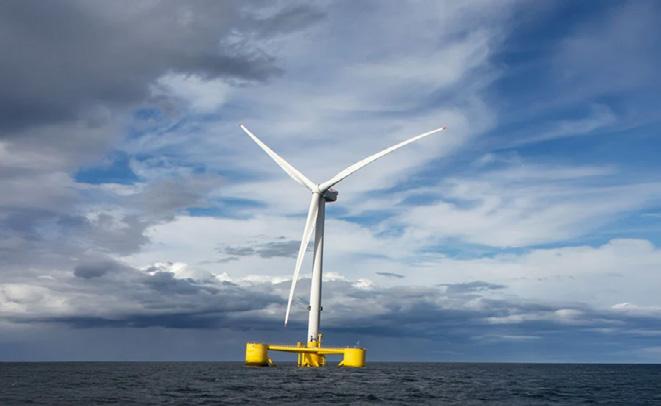
Ocean Winds has reached full power at its 30-MW EFGL floating wind farm, marking the start of full operations for OW’s second floating wind project globally, and its second project in France after the Yeu-Noirmoutier bottom-fixed wind farm (EMYN – 500 MW).
To boost the offshore renewable energy sector, Offshore Renewable Energy (ORE) Catapult will give companies in North East England access to a new multi-million pound programme designed to accelerate technology and commercial development.
The North East Offshore Wind Innovation and Demonstration (NEOWIND) programme funded by the North East Mayor, and delivered by the Offshore Renewable Energy (ORE) Catapult, will inject £4.5 million over three years into the local economy. The funding will support innovative offshore wind companies across Northumberland, North Tyneside, Newcastle upon Tyne, South Tyneside, Gateshead, Sunderland, and County Durham.
The first competitive funding launch of the programme is now live with up to £2.1 million available for innovative offshore wind technology developers to bid for.
“We are excited to tap into the talent within this region to address the challenges currently facing the industry, support companies develop, de-risk and accelerate new offshore renewable technologies – reducing cost, risk and time, and working alongside the North East Mayoral Strategic Authority,” said Andrew Macdonald, Director of Business Development at ORE Catapult.
The UK government has approved the UK’s second largest solar farm, the 740-MW One Earth Solar Farm, which could power over 200,000 homes a year, the equivalent of half the homes in Lincolnshire.
The European Commission has approved a €63 billion French scheme to support offshore wind energy in line with the objectives of the Clean Industrial Deal. The scheme was approved under the Clean Industrial Deal State Aid Framework (CISAF) adopted by the Commission on 25 June 2025.
The new French plan will support the construction and operation of 11 offshore wind farms, in the North Sea, the Atlantic, and the Mediterranean. The wind farms are expected to have a combined capacity of up to 11.1 GW and to generate up to 47.8 TWh of renewable electricity per year, or around 10.6 percent of France's annual electricity consumption.
Elsewhere in Europe, Ecowende’s wind farm Hollandse Kust West in early July connected to TenneT’s offshore grid. The wind park is being developed 53 km off the Dutch coast by Ecowende, a joint venture of Shell, Chubu, and Eneco. It consists of 52 wind turbines, each with a power output of 15 MW, for a total installed capacity of 760 MW. Once fully commissioned, the wind park will generate 3.3 TWh of renewable electricity per year; enough
“With three 10 MW turbines located 16 kilometres off the Occitanie coast and installed on semi-submersible floaters, this pilot wind farm developed in partnership with Banque des Territoires reinforces the viability of floating offshore wind technology,” Ocean Winds said.
NextFloat Project’s installation site, Plemcat, has secured Environmental Impact Assessment (EIA) approval for the PlemCat test site, a dedicated infrastructure for developing pioneering and innovative floating offshore wind projects within the LEBA 1 commercial area in the Spanish Mediterranean Sea. This critical regulatory milestone clears the path for the NextFloat Project, which involves the deployment of X1 Wind’s X100 8.5MW platform.
“Securing this environmental approval is a testimony to the collaborative effort of all our partners and highlights the minimal environmental footprint of this innovative platform,” said Jacques Vendé, NextFloat Project Manager at Technip Energies.
“We are now in a strong position to advance through the remaining financial close phase toward our commercial scale pilot deployment in the Mediterranean Sea, paving the way for a future of lowcost floating offshore wind.”
USA
Energy Review
US oil and gas activity surged in the past few months amid higher oil prices while the key US industry lobby, the American Petroleum Institute (API), examined the future of energy security and proposed an American Energy Security Framework.
Permian Activity Jumps
Business activity among US oil and gas firms jumped in the second quarter to the strongest reading in four years as oil prices surged during the Middle East conflict, the latest Dallas Fed Energy Survey showed at the end of June. Responses in the survey were collected in the week just before the US and Iran signed a memorandum of understanding to negotiate a peace deal.
Markets can price risk, but they can't price a tweet. The whiplash from diplomacy-by-social-media has become the single most unpredictable input in our planning
The business activity index, the survey’s broadest measure of the conditions energy firms face in the Eleventh District – Texas, New Mexico, and Louisiana – soared from 21.0 in the first quarter to 46.1 in the second quarter, marking the strongest reading since the second quarter of 2022, according to the survey of executives.
The company outlook index remained positive but edged down to 29.3 in the second quarter, pointing to further improvement in the outlooks since the previous quarter. Exploration and production (E&P) firms were more positive, with an outlook index of 48.2, while services firms remained cautious with an outlook index at -4.4. Meanwhile, the outlook uncertainty index declined from 53.7 to 29.9, indicating that while uncertainty increased on net, fewer firms noted a rise than during last quarter.
While production and outlook were positive, cost increases accelerated in the second quarter. Costs rose at a faster pace compared to the first quarter of the year. Among oilfield services firms, the input cost index surged from 34.9 to 64.4, with no respondents reporting a decrease in costs. Among E&P firms, the finding and development costs index jumped from 22.3 to 40.0. Meanwhile, the lease operating expenses index rose from 30.0 to 43.7. All cost indexes were above their series averages, suggesting costs are growing at a faster-thanaverage pace, Dallas Fed said.
Moreover, supplier delivery times lengthened, suggesting ongoing supply chain pressures, with 36 percent of firms reporting longer delivery times for materials and equipment.
Executives expressed uncertainty in the comments to the survey.
“Current political instability in oil markets due to the Iran war has crude oil and natural gas prices inflated. If there is a conclusion to hostilities, there will be continued confusion in the oil markets as normalcy may require time, but eventually calming oil markets will result in significantly lower prices,” one E&P executive said.
By Tsvetana Paraskova
Oil production inched up in the second quarter, while natural gas production saw only minimal gains, according to executives at E&P firms. The oil production index increased from zero in the first quarter to 15.0 in the second quarter, while the natural gas production index remained relatively unchanged at 3.7, the survey found.
“Markets can price risk, but they can't price a tweet. The whiplash from diplomacyby-social-media has become the single most unpredictable input in our planning,” another executive noted.
“We don't need certainty about the future, just certainty that policy won't change between the morning and the afternoon,” the executive added.
Among the support services firms, one executive commented that “Elevated oil prices are not directly translating into increased production or increased demand for oilfield services. Unprecedented geopolitical instability is leading to increased uncertainty.”
Another oilfield services executive said that “Uncertainty continues to cast a shadow on long-term structural planning, but the general outlook in two- and threeyear timeframes is greatly improved.”
A third executive said “A fairly consistent theme is volatility and sector cost inflation, where commodity prices don't offset increased costs.”
API Discusses the Future of Energy Security
At the end of June, API convened leading energy experts to examine the lessons emerging from the disruption in the Strait of Hormuz and discuss the future of US energy security.
Amid the ongoing uncertainty in global energy markets, API unveiled a new energy security framework focused on strengthening supply, infrastructure, and resilience.
US energy production and exports have made the difference in the largest oil supply disruption since the 1970s, API President and CEO Mike Sommers said.
“Even amid uncertainty, one fact stands out. The world is still absorbing the largest oil supply disruption since the 1970s. Yet for most of this crisis, oil prices have remained below $100 a barrel,” Sommers said during opening remarks.
“At another point in history, that would have been almost unthinkable. American energy is making the difference,” he added.
API believes the answer to what comes next and how to protect against future disruptions is energy security, which requires supply, infrastructure, and resilience.
These are the three pillars of the American Energy Security Framework which API unveiled.
Energy security starts with supply, therefore policymakers should maintain durable access to domestic resources, preserve reliable fuel supply, and ensure emergency reserves are built for today’s energy system, according to API.
“Modernizing the SPR is essential if America's energy security architecture is going to reflect the realities of today's energy system,” Sommers said.
Infrastructure, the second pillar, would require the passing of a comprehensive permitting reform and improve the Jones Act to boost flexibility in domestic energy supply.
The third pillar of the framework, strengthening resilience and supply chains, would benefit from work with partners in the Persian Gulf to reduce reliance on the Strait of Hormuz and boost integration across the Western Hemisphere.
The future of energy security requires reducing chokepoint risk, deepening cooperation with allies, and strengthening preparedness through diversified global storage, expanded supply routes, and modern institutions focused on evolving threats, according to API.
This integration across the Western Hemisphere would be to strengthen energy supply from Canada and Mexico to emerging producers like Guyana and Brazil.
“The Strait of Hormuz reminded us that too much of the world’s energy still depends on a small number of routes and chokepoints,” Sommers said. “At its core, this framework is built around a simple idea: More options. Fewer points of failure.”
“Resilience means creating alternatives before they are needed,” the head of the API said.
The tentative recovery of oil and gas flows through the Strait of Hormuz that began in June came to an abrupt halt in the middle of July as hostilities re-escalated and clouded the outlook of global oil and gas supply and demand.
The heightened uncertainties about Middle East’s oil and gas supply have kept the oil and natural gas markets on edge for months and have flipped forecasts a few times since the Iran war began at the end of February.
Despite the frequent flare-ups, some national oil companies in the Middle East are advancing long-term projects and LNG delivery deals.
IEA Warns of Oil Supply Uncertainties
Despite a tentative recovery in both oil supply and demand that began in June, market uncertainties remained high as of the middle of July amid renewed hostilities, the International Energy Agency (IEA) said in its Oil Market Report (OMR) for July.
Global oil supply rebounded by a sharp 4.1 million barrels per day (bpd) monthon-month to 98.8 million bpd in June. World output was nevertheless some 9.4 million bpd below pre-war levels, with supply on track to decline by an average of 3.7 million bpd to 102.6 million bpd in 2026, contingent on a swift de-escalation of renewed hostilities, the IEA said.
Despite the wave of supply that managed to exit the Strait of Hormuz between the middle of June and the middle of July, global fuel supplies remain constrained in a tight market as refinery activity and product supplies have been much slower to respond, the agency reckons.
gasoline markets have tightened, with gasoline cracks moving sharply higher.”
The forecast of the returning of the surplus on the global crude oil market hinges on the assumption that tanker flows through the Strait of Hormuz will gradually recover, allowing producers to restart fields and refiners in the Middle East and elsewhere to resume product shipments, the IEA noted.
Global Gas Demand To Drop on War-Driven Higher Prices
The Middle East crisis will also affect natural gas markets as LNG supply from Qatar has been constrained by the conflict.
Global demand for natural gas is set to contract this year as tighter supply pushes up prices, the IEA said in its Gas Market Report, Q3-2026.
World gas consumption is forecast to drop for the third time in seven years, even as LNG supply from producers in other regions helps offset losses in the Middle East.
The disconnect between apparently well supplied crude oil markets and tight product markets underpinned a rally in cracks and refinery margins to four-year highs by early July,” the IEA said.
Global gas demand is expected to decline by 0.5 percent this year, the IEA’s report forecasts, due primarily to lower gas use in the power and industrial sectors. This would mark the third time gas demand has contracted on an annual basis in seven years.
By Tsvetana Paraskova
“The disconnect between apparently well supplied crude oil markets and tight product markets underpinned a rally in cracks and refinery margins to four-year highs by early July,” the IEA said.
“While concerns over jet fuel shortages have eased in recent weeks after refiners pushed output to new highs, diesel and
Initial data suggests that global gas demand contracted in the first half of 2026 from a year earlier. This appears to have been largely driven by a decline in demand in the Middle East amid tighter supply and damage to gas-intensive industries. Gas demand also weakened in Asia in the first half of the year, amid higher prices and policy measures to reduce demand and to encourage fuel switching, particularly to coal in the power sector, the agency said.
The implications of the conflict for LNG supply are set to extend beyond 2026, as earlier projections of a glut in 2026 and 2027 may not materialise due to the supply disruptions and damage to gas infrastructure at Qatar’s Ras Laffan, the world’s largest liquefaction site. Qatar’s LNG capacity expansion programme would be delayed by a few years.
“The impacts on projected supply growth are set to be largely concentrated in 2026 and 2027, which means markets could remain tighter than had been previously expected over the next two years,” the IEA said.
Analysts at BloombergNEF also expect the LNG supply glut to occur in 2028, a year later than previously expected, due to the Middle East crisis that would delay Qatar’s planned capacity expansion.
“Qatar’s output in coming years faces uncertainties from both existing and expansion projects,” BloombergNEF (BNEF) analysts said in the report.
“Slower contracting after the Iran war could delay project rollouts, while QatarEnergy could leverage its low production costs to accelerate volumes and compete more aggressively with US LNG as the spot market enters a period of oversupply,” they noted.
Company News
The Abu Dhabi national oil company, ADNOC, continued to sign long-term LNG sales and purchase agreements and advanced marketing and trading efforts despite the uncertain outlook of when the Strait of Hormuz could be unconditionally open to free traffic.
ADNOC announced in early July the signing of a 15-year Sales and Purchase Agreement (SPA) with INPEX, Japan’s largest exploration and production company, for the supply of 1 million tonnes per annum (mtpa) of liquefied natural gas from the Ruwais LNG project.
The LNG for ADNOC’s deliveries will be primarily sourced from the Ruwais LNG project, which is under development in Al Ruwais Industrial City, Abu Dhabi, and is scheduled to start commercial operations in 2028.
“The SPA marks another milestone in ADNOC’s global LNG expansion strategy and reinforcing the company’s position as a leading global supplier of lower-carbon LNG,” ADNOC said in a statement.
As of early July, 90 percent of the Ruwais LNG project’s 9.6 mtpa production capacity had been committed to international buyers across Asia and Europe through long-term arrangements.
Energy Review Middle East
According to ADNOC, the Ruwais LNG plant will be the first LNG export facility in the Middle East and Africa region to operate on clean power, making it one of the lowest-carbon intensity LNG plants in the world. The facility will use artificial intelligence and the latest technologies to enhance safety and efficiency, minimise emissions, and drive operational excellence, the Abu Dhabi company said.
ADNOC also launched in early July a global LNG marketing and trading platform in Abu Dhabi Global Market (ADGM), combining the marketing activities of ADNOC Gas and XRG with the trading capabilities of ADNOC Trading into an integrated commercial platform.
The platform targets 47 million tonnes per annum (mtpa) of combined marketable LNG by 2035. It is expected to rank among the leading global LNG players, scaling up ADNOC and XRG’s capacity to optimise a growing and diverse LNG portfolio and reinforce Abu Dhabi’s position as a global energy trading centre, the Abu Dhabi energy giant said.
The move supports ADNOC Gas’ expanding LNG portfolio, including Ruwais LNG, and XRG’s international gas and infrastructure growth, while strengthening customer access globally. The platform will enhance ADNOC and XRG’s ability to manage a growing and diverse LNG portfolio, building on ADNOC’s five-
“This world-class, integrated commercial LNG platform brings together the full strength of ADNOC’s marketing, trading and shipping capabilities to create a single global hub in Abu Dhabi,” said Sultan Al Jaber, ADNOC Managing Director and Group CEO, and XRG Executive Chairman.
Separately, ADNOC and XRG have signed a Strategic Collaboration Agreement with Japan’s Mitsui & Co., Ltd. to unlock new growth opportunities across the energy value chain.
Japan is one of ADNOC’s most important strategic markets, with the company supplying around a third of all Japanese crude imports.
The Strategic Collaboration Agreement establishes a framework for collaboration across multiple strategic areas, including crude oil market development and longterm supply, LNG sales and optimisation, sulphur procurement and logistics, and shipping solutions for LNG, ammonia, sulphur, and other commodities.
Through XRG, ADNOC and Mitsui will also evaluate international investment opportunities across the energy value chain, alongside potential collaboration on lower-carbon fuels and chemicals, including methanol and other projects at TA'ZIZ.
decade track record as a trusted LNG supplier, the company noted.
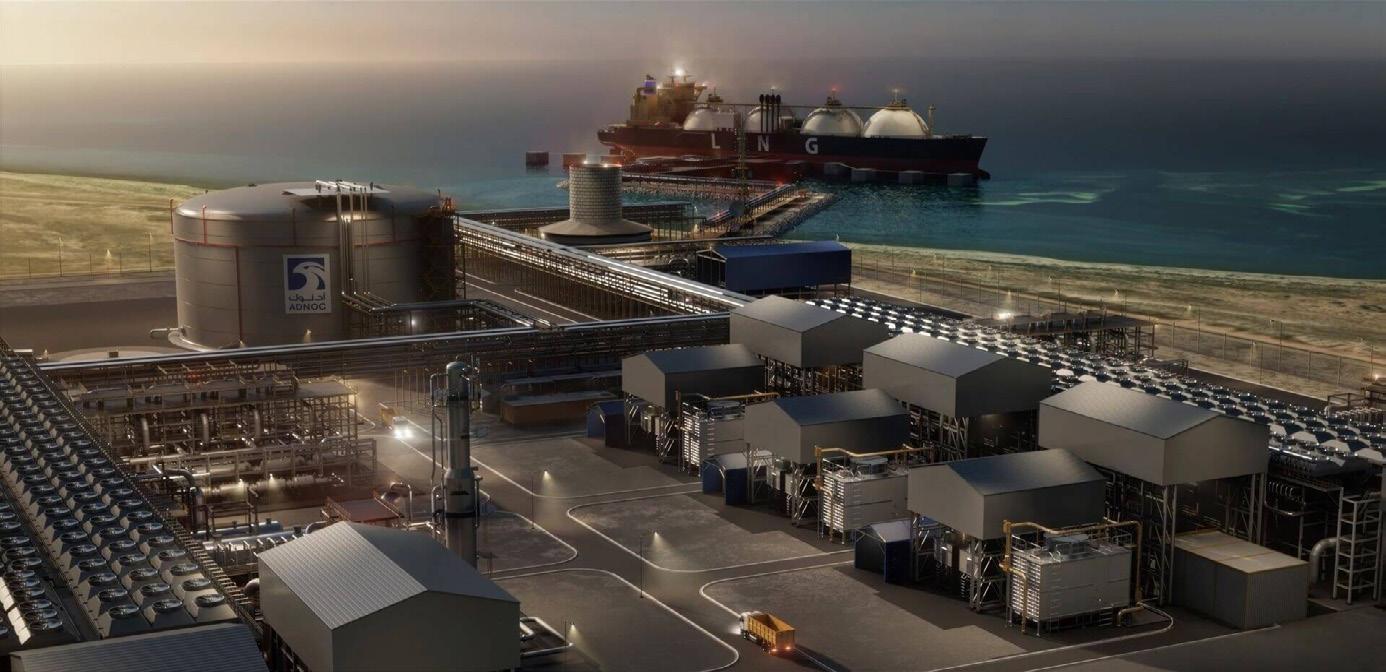
Digital drawing of Ruwais LNG, a two-train LNG liquefaction terminal in Abu Dhabi set to come online in 2028. Photo: ADNOC
NOR
Energy Review
Norway Looks to Maximise Resource Strengths
Norway supports oil and gas development and is looking at opportunities in the critical minerals sector to continue playing a leading role in European and global energy supply.
Exploration on the Norwegian Continental Shelf (NCS) remains highly profitable, while top operators advance projects and sign deals to maintain consistently high oil and gas production offshore Norway.
Highly Profitable Hydrocarbon Exploration
Oil and gas exploration has been highly profitable in Norway for years, the Norwegian Offshore Directorate said in an analysis in July.
Over the past 25 years, capital invested in exploration has generated a fourfold return, in other words, each kroner, the Norwegian crown, invested in exploration generates a return of four kroner, according to various analyses by the regulator.
“Exploration on the NCS has always paid off. This applies to all offshore areas,” the directorate said.
Investment returns have been good in recent years despite the smaller size of the discoveries made, it noted.
High returns are partly due to the fact that operators have been mostly engaged in infrastructure-led exploration campaigns in well-known areas.
Discoveries close to existing infrastructure are easy to develop via subsea tie backs. This in turn enables high profitability, extended infrastructure life, and favourable revenues for the companies and the state, the regulator noted.
However, in the long term, exploration close to existing infrastructure will not be sufficient to halt the decline in production on the NCS.
Crucial to Norway’s resource development is continuous government support through the decades, regardless of which party has the majority to form a cabinet.
The Government favours an active exploration policy. Access to new exploration areas is crucial to making new discoveries and maintaining value creation, employment, government revenues and exports in the long term, the regulator said.
“In order to accomplish our goals, the petroleum policy must also ensure that the potential in existing fields and infrastructure is fully exploited, and that all profitable discoveries are developed,” a letter of allocation from the Ministry of Energy to the Norwegian Offshore Directorate states.
Norway has a lot of oil and gas resources remaining on its shelf, which can support production, exports, and value creation for Norwegians for many years to come.
But this will require continued exploration and increased investments in fields, discoveries, and infrastructure.
“A lack of investment can result in a rapid downsizing of the petroleum industry,” the directorate warned.
Equinor Drives Production and Value Creation
But companies including the top operator on the NCS, Equinor, continue to invest.
By Tsvetana Paraskova
“Exploration is needed in less mature areas of the shelf. Whilst this may entail greater risk, it can also lead to larger discoveries,” the directorate said.
High activity related to Equinor’s operations in Norway contributed 142 billion Norwegian crowns, or $14.5 billion, in value creation and 82,000 full-time man-years in Norway in 2025, the energy major said in an overview of last year’s ripple effects on the Norwegian economy. Value creation arises from Equinor’s man-years, direct deliveries from the
Norwegian supplier industry, and through indirect effects in the form of subcontracts and consumption, said the annual ripple effects report from June 2026, prepared by independent research and analysis organisation Kunnskapsparken Bodø.
Key figures from the Ripple Effects Report 2025 include 147.6 billion crowns ($15.1 billion) in procurement of goods and services, of which 140.5 billion crowns ($14.4 billion) to Norwegian suppliers. More than 1,900 Norwegian supplier companies delivered to Equinor, with activity in as many as 339 Norwegian municipalities.
“The activity is driven by operations, maintenance, exploration and new projects. Together with the supplier industry, we are working to develop resources faster and more efficiently,” said Kjetil Hove, executive vice president for Exploration & Production Norway at Equinor.
Together, the four projects are expected to contribute between 130 and 220 million barrels of oil equivalent to future production from the NCS.
Equinor plans around 75 subsea developments by 2035, said Gunnar Nakken, senior vice president for projects and subsea on the Norwegian continental shelf at Equinor.
The opportunities on the Norwegian continental shelf remain substantial, and Equinor has a strong portfolio of investment opportunities that will help sustain high activity and value creation for a long time to come
Equinor has also moved to secure rig capacity for high production on the NCS with a letter of intent with Transocean for the use of three Cat D rigs. The agreement announced in early July is worth around $1 billion and will contribute to reducing well costs, accelerating the delivery of new wells, and maintaining high production by 2035, the Norwegian major said.
Norway’s Critical Minerals Opportunity
While Norway aims to boost drilling and project development to keep high oil and gas production rates, it also looks to position itself as a leader in critical minerals supply.
Norway occupies a vital position within the European and global critical minerals supply chain, the International Energy Agency (IEA) said in its Critical Minerals Review of Norway 2026 published in July.
The review found several areas of strength in Norway’s approach. These include its substantial geological potential, its advanced innovation and recycling sectors, and its active participation in European policy frameworks, the IEA said in the report.
“The opportunities on the Norwegian continental shelf remain substantial, and Equinor has a strong portfolio of investment opportunities that will help sustain high activity and value creation for a long time to come,” Hove added.
Equinor has signed several major deals in recent weeks, strengthening its supplier base for further development of projects on the NCS.
The company, on behalf of partners, has awarded contracts worth around 6 billion crowns, or $613 million, for four subsea projects. These projects are part of the first of several planned subsea development waves, in which contracts are being coordinated to increase pace and reduce costs for subsea developments on the Norwegian continental shelf, Equinor said in July.
Under the contracts, TechnipFMC will deliver subsea production systems for Brime, Omega Sør, and Tyrihans Nord. They will also install rigid pipelines on the Troll field. The linepipe will be supplied by Tenaris.
In addition, OneSubsea will deliver the subsea production system for the TWIN project, as well as umbilicals for all the projects.
Ocean Installer has been awarded the contract for marine operations. They will install and connect the subsea facilities, control cables, and flexible pipelines.
NOV will deliver flexible pipelines to Omega Sør, Tyrihans Nord, and Brime.
The agreement applies to the Cat D rigs Transocean Enabler (three years), Transocean Encourage (two years), and Transocean Endurance (two years). Integrated drilling services are optional and not included in the rate. The work scope for the rigs has not yet been allocated.
“We are pleased to have secured rig capacity on competitive terms to deliver on our production plans towards 2035. These are flexible rigs that can, among other things, be used to drill subsea projects and increased recovery wells,” said Jannicke Nilsson, chief procurement officer at Equinor.
“This is essential to maintaining high production from the Norwegian continental shelf and stable energy deliveries to Europe.”
Yet, the review also pointed to areas requiring attention, such as simplifying and expediting permitting procedures, increasing public funding and risk-sharing for mining and processing projects, and setting explicit economic targets and milestones for the sector.
“Decisive policy action, targeted investment in innovation, and enhanced stakeholder collaboration will be critical for Norway to secure its position as a leader in sustainable critical minerals supply,” the IEA said in the report.
“With substantial experience and robust frameworks for ocean-based resources, Norway is well-positioned to pursue seabed mining opportunities responsibly,” according to the review.
“The Norwegian government demonstrates careful consideration of potential seabed mineral activities and maintains rigorous emissions and environmental standards.”
AUS
Energy Review
Australia Increases Gas Supply Security as Power Outlook Improves
Australian firms have signed new gas sale agreements with businesses and local governments, while the near-term power supply outlook improves and investment certainty for clean energy grows.
Gas Supply Deals
At the end of June, Santos executed the Gas Sale Agreement (GSA) with the South Australian Government to supply 200 PJ of domestic gas for the South Australian Strategic Gas Reserve over 10 years from 2030 to 2040.
The agreement will support the longterm future of the Cooper Basin Central Fields near Moomba in South Australia. The Central Fields contain more than 50 percent of the remaining 2P reserves in the Cooper Basin, Santos said.
Santos and its joint venture partner Beach Energy took a final investment decision earlier this year to proceed with the Moomba Central Optimisation (MCO) project, which will unlock the full productivity of the Central Fields, and reduce unit production cost and carbon emissions.
“This agreement helps secure affordable domestic gas supply for South Australian industry to 2040 and enables Santos to invest in the long-term future of the Cooper Basin,” said Santos managing director and CEO, Kevin Gallagher.
“This agreement will support the government’s visionary South Australian Strategic Gas Reserve that will help ensure South Australia’s industrial future
and energy security, including the planned sale and transformation of the Whyalla Steelworks.”
The other major Australian energy firm, Woodside Energy, in July assumed operatorship of the Gippsland Basin assets, including the Gippsland Basin Joint Venture (GBJV) and Kipper Unit Joint Venture (KUJV), from Esso Australia Resources Pty Ltd.
Woodside and Esso Australia Resources each hold a 50-percent participating interest in the GBJV and 32.5-percent participating interest in the KUJV. The transition involves the transfer of operatorship (not asset ownership) from Esso Australia Resources to Woodside.
This positions Woodside as the operator of one of Australia’s most significant domestic energy assets. The Gippsland Basin assets have supplied energy to Australian homes and industry for decades and remain central to east coast energy security.
“We are proud to be returning to Victoria as these assets’ operator and look forward to continuing to contribute to eastern Australia’s energy future,” Woodside CEO Liz Westcott said.
“One hundred per cent of Woodside’s gas production from the Gippsland Basin is supplied to the domestic market.”
Woodside has also signed a sale and purchase agreement with Alcoa of Australia to supply 31.1 petajoules of domestic gas from Woodside’s Western Australian operations from 2027 to 2030.
The agreement follows the Western Australian state government’s approval in December 2025 extending the operation of the Pluto-Karratha Gas Plant Interconnector. That approval enables additional Pluto-sourced gas to be processed using existing capacity at the Karratha Gas Plant and brought to market quickly as new contracted domestic supply.
“Woodside is continuing to bring gas to the Western Australian market, supporting local industries and contributing to the state’s energy security later this decade,” said Mark Abbotsford, Woodside Executive Vice President Marketing & Chief Commercial Officer.
Strong investment has been observed to date, but more investment will be needed over the second half of the 10-year outlook period to meet demand growth and replace ageing thermal generation, the executive added.
AEMO has also published its 2026 Integrated System Plan (ISP), the least-cost roadmap for the National Electricity Market.
Woodside is continuing to bring gas to the Western Australian market, supporting local industries and contributing to the state’s energy security later this decade
Key changes since the 2024 ISP reflect declining solar and battery costs, higher costs for transmission and wind, and stronger growth in consumer energy resources.
“Australia’s energy transition requires a whole-of-system approach, one that maximises value from generation, storage and transmission with the growing contribution of homes and businesses through rooftop solar, batteries and more flexible energy use,” AEMO CEO Daniel Westerman said.
of the current 50 percent CGT discount with an inflation-adjusted indexation and 30 percent minimum tax rate on capital gains from 1 July 2027.
This is an “extremely disappointing result for mineral exploration in Australia, and will fundamentally reduce the chances of finding Australia’s critical minerals,” AMEC said.
“Exploration for critical minerals has already reduced by more than 30 per cent over the last year, and this decision, will no doubt further reduce funding for that effort,” the association added.
“This is an own goal of epic proportions for the Australian Government, given its ambitious critical minerals agenda,” said Warren Pearce, AMEC chief executive officer.
“This gas will be supplied to Alcoa’s Western Australian refineries, which provide thousands of local jobs and produce alumina, the feedstock for aluminium, a key material for the construction, manufacturing and energy sectors.”
Power Supply Outlook Improves
The Australian Energy Market Operator (AEMO) said in its latest electricity supply outlook for Western Australia’s main power system that the outlook has improved compared to the 2025 report.
The Wholesale Electricity Market (WEM) Electricity Statement of Opportunities (ESOO) shows sufficient capacity to meet demand to 2028-29, the market operator said.
“This improved outlook has been largely driven by strong investment alongside government-led initiatives,” AEMO Executive General Manager Western Australia, Kirsten Rose, said in a statement.
More than 1,000 MW of new generation and storage is expected to be progressively delivered by 2030-31, with even more projects in the development pipeline across Western Australia, AEMO said.
The uptake of distributed energy resources including household batteries has also contributed to the positive nearterm outlook driven, in part, by support from the Commonwealth and West Australian Governments.
“Consumer investment in rooftop solar and household batteries is playing an increasingly critical role in the power system,” Rose said.
Capital Gains Tax and the Critical Minerals and Renewable Industries
The Association of Mining and Exploration Companies (AMEC) deplored the federal government’s decision not to include the minerals industry in the carve-outs of the Capital Gains Tax (CGT) in the 2026-2027 federal budget.
The decision is “another kick in the guts” for the critical minerals industry, the association said.
With no concession granted to mineral exploration, investors in junior exploration companies will be subject to the removal
Australia’s Clean Energy Council, for its part, welcomed the Federal Government’s final position on changes to the foreign resident capital gains tax (CGT) regime, which confirms no retrospective claims can be brought against already settled transactions and provides greater certainty for global investors backing the infrastructure needed to power Australia’s energy transition.
While the industry welcomed the progress made with several measures, important issues remained unresolved and continued engagement with the Government would be necessary, said Jackie Trad, Clean Energy Council CEO.
“Getting these investment settings right is fundamental. Australia cannot afford policy uncertainty at the very moment we need private capital flowing into the infrastructure that will replace retiring coal generation, strengthen energy security and help put downward pressure on electricity prices,” Trad said.
shutterstock
Internationalisation: Taking North Sea Expertise to Global Energy Markets
Leveraging decades of North Sea experience to deliver engineering excellence, sustainable solutions and measurable value across the energy sector.
we have learned in the UKCS to help solve challenges in both emerging and established energy markets. By transferring proven expertise, delivery methodologies and operational knowledge, we are helping clients improve performance, reduce risk and accelerate project outcomes across the globe.
This progression illustrates the value of establishing long-term partnerships founded on trust, collaboration and a shared commitment to delivering results. It also demonstrates how successful delivery in one location can create opportunities to support clients across multiple projects and regions.
PD&MS Baku office: Demirchi Tower, Baku, Azerbaijan
"As energy markets continue to change, clients are looking for trusted partners that can bring practical experience, flexibility and a proven track record of delivery"
LAURA STEWART, BUSINESS DEVELOPMENT DIRECTOR
The project reflects the increasing importance of balancing operational performance with environmental responsibility and highlights the benefits of combining engineering expertise with sustainability and environmental advisory services.
Building on this momentum, we continue to provide engineering support to a major operator in Egypt and are actively pursuing opportunities in other key markets, including Mozambique and Nigeria. Across the continent, operators are increasingly seeking partners that can combine practical operational experience with strong engineering capability and a clear understanding of evolving sustainability requirements.
Delivering Proven Results in the Caspian Region
While new markets continue to emerge, our presence in the Caspian region demonstrates the long-term value of a consistent and scalable delivery model.
Our long-standing relationship with bp in Baku, spanning more than a decade and encompassing both flowline EPC and rig engineering services, has established a proven approach to project delivery. Through our right-sized, scalable engineering frameworks, we have consistently delivered best-in-class flowline
solutions and rapid project execution, enabling projects to come onstream ahead of schedule, optimising drilling programmes and maximising installed production capacity.
The results have been significant. Our approach has delivered a 25% reduction in overall project cycle times and a 40% decrease in engineering and project management costs, providing measurable value for our clients.
This track record, combined with our extensive UKCS experience, has strengthened our reputation as a trusted delivery partner and enabled us to secure contracts with additional operators across the region. As a result, we are continuing to support the evolving needs of this mature and strategically important energy market.
Leveraging the Strength of the RSK Group
A key enabler of our international growth has been our position within the RSK Group. As part of one of the world's leading environmental and engineering services organisations, we can draw upon an extensive global network of specialists, technical experts and local market knowledge.
This allows us to provide clients with integrated solutions that extend beyond traditional engineering support, encompassing environmental
consultancy, sustainability strategy, permitting, project delivery and longterm asset management.
As our international footprint continues to expand, collaboration across the wider RSK Group is proving increasingly valuable. We are already working alongside a number of RSK businesses to support operators in different parts of the world, bringing together a broad range of complementary services under a single delivery model. This integrated approach provides clients with a streamlined, end-to-end solution, reducing interfaces, improving efficiency and delivering both time and cost savings throughout the project lifecycle.
Looking Ahead
Energy systems around the world continue to evolve, creating new opportunities for collaboration, innovation and knowledge transfer. The experience developed in the North Sea over the past two decades remains highly relevant, whether supporting offshore developments in the Mediterranean, environmental programmes in Africa or future opportunities in North America. Reflecting on the opportunities ahead, Laura Stewart, Business Development Director at PD&MS, said:
"International growth is a natural evolution of our business. As energy markets continue to change, clients are looking for trusted partners that can bring practical experience, flexibility and a proven track record of delivery. We have shown that the expertise developed in the UK Continental Shelf can create real value in other regions, and we're excited about building new relationships, strengthening existing partnerships and supporting projects that contribute to a more sustainable and resilient energy sector."
With an expanding international footprint and the support of the wider RSK Group, PD&MS is well placed to help clients address complex challenges across the asset lifecycle. By combining technical excellence with collaborative delivery, we will continue to support the evolving needs of the global energy industry wherever opportunities arise.
Laura Stewart - Business Development Director & Mark Davison - Group Vice President Engineering & Technical Services
CUSTOMIZED
drilling continues at depth.
West Africa STRONG Azule takes a 5.1 billion dollar FID on Greater PAJ offshore Angola. EACOP passes 79 percent complete. Coral Norte FLNG under construction.
Middle East NORMALISING the Strait of Hormuz normalises and OPEC plus raises output 188,000 barrels per day from August. Brent near 72 dollars. ADNOC Hail and Ghasha EPC progressing.
SE Asia ACTIVE Activity Outlook sets the pace. Kasawari CCS targets first injection as early as 2027. Waitsia Stage 2 reaches first gas.
GoM (US) MIXED BOEM approves BP's Kaskida. LLOG's Salamanca FPU reaches first oil. Rio Grande LNG construction continues.
Australia & APAC STRONG Woodside takes over Bass Strait operatorship on 1 June. Shell's Crux advances toward 2027. Pioneering Spirit is booked for Bass Strait lifts from the third quarter of 2027.
Europe Wind STRONG ScotWind consolidates, ScottishPower takes full control of MarramWind and Shell returns CampionWind. Mona secures its consent and a single owner in JERA Nex bp. Seagreen extension proceeds.
a pre-salt programme worth more than 7 billion dollars, decommissioning moving from planning into execution, and FPSO disposal the standout supply chain gap.
ngola's first cross-block development, Saipem fabricating at its Ambriz yard for local content, and West Africa FIDs approaching 30 billion dollars.
de-escalation is easing the risk premium. Production extension, enhanced oil recovery and gas expansion are the near-term plays as Saudi and UAE megaprojects advance.
Malaysia leads, the PETRONAS 31-platform decommissioning tender is live, and MOGSC registration is the entry ticket. GEN Kuala Lumpur launches in September.
US LNG export runs near record, a 20,000 psi deepwater wave is building, and a large decommissioning backlog sits under BSEE idle iron enforcement.
the region's decommissioning landmark is taking shape, Perth is the place to be, and reception and recycling capacity is the missing piece. Contact through Emma Davidson and the Perth team.
floating wind is reshaping the pipeline, grid connection is the binding constraint, and installation vessel availability stays near zero through 2026.
with Halliburton, Saipem on EPCIC. First gas 2027, a cornerstone of European gas security.
and
CEO Carol Howle to retire in the third quarter. Sam Skerry appointed EVP for Supply,
and Shipping and Sonya Adams EVP for People and Culture. Continued restructuring at the supermajor as it refocuses
PROJECT INTELLIGENCE
Angola's first integrated cross-block development, Blocks 31 and 31/21, five fields and a new build FPSO of 95,000 barrels per day. Saipem, CIMC Raffles, Baker Hughes, OneSubsea and Vallourec engaged at sanction. Fabrication at Saipem's Ambriz yard, a boost for Angolan local content. West Africa's marquee FID of the year.
Neptun Deep, OMV Petrom and Romgaz
Verbier
Glenn
Greater Buchan Area,
Yggdrasil area, Aker BP
NOK multi-billion hub development
Aker BP, with Equinor and PGNiG partners toward first oil 2027
OPERATOR: EST. VALUE: STATUS: Norway · NCS 04
Hugin B topside sailed away from Verdal. Aker BP extends the Deepsea Nordkapp semisub to end 2028, locking in scarce harsh environment rig capacity. Drilling, subsea, hook-up and commissioning scope through 2027.
Indonesia · North Sumatra 05
South Andaman, Mubadala Energy
OPERATOR:
EST. VALUE: STATUS:
Mubadala Energy, 80 percent
approximately 2 billion dollars first phase
FID targeted 2026, first gas 2028
The Layaran and Tangkulo giant gas discoveries, more than 6 to 8 trillion cubic feet in Layaran alone. FPU, subsea and gas export pipeline scope opens after FID. A landmark for the Indonesian and regional supply chain, with a PLN offtake deal signed.
ADNOC Hail and Ghasha, ADNOC
ADNOC, with Eni, PTTEP, OMV and Lukoil EPC progressing 16.94 billion dollars EPC OPERATOR
The world's largest sour gas megaproject under EPC, NPCC plus Saipem taking 8.2 billion dollars offshore and Tecnimont 8.74 billion dollars onshore. Fatema Al Nuaimi's ADNOC Gas leads delivery across Hail, Ghasha, Dalma and Bab.
Saudi Arabia · Offshore 07
Marjan and Berri, Saudi Aramco
OPERATOR: EST. VALUE: STATUS:
Saudi Aramco
Est. value: multi-billion, LTA CRPO packages
bids under evaluation
Long-term agreement packages across the Marjan and Berri increments, jackets and deck modules at Marjan, Abu Safah, Berri, Manifa and Safaniya. Contractor pool includes Saipem, McDermott, L and TEH, Lamprell and NMDC Energy under an umbrella framework.
Malaysia · Sarawak 08
Kenyalang and Kasawari CCS, TotalEnergies and PETRONAS
OPERATOR:
EST. VALUE: STATUS:
TotalEnergies (Kenyalang) and Petronas Carigali (Kasawari CCS)
Kenyalang toward 2030, Kasawari CCS first injection as early as 2027 multi-billion cluster
TotalEnergies unveils an integrated 4 trillion cubic feet Kenyalang cluster feeding Bintulu LNG. Alongside it, the Kasawari CCS project, one of the world's largest offshore carbon capture builds, with MHB on the EPCIC alliance. A twin subsea and CCS opportunity for MOGSC members.
Australia · Browse Basin 09
Browse Upstream, Woodside
OPERATOR
EST. VALUE: STATUS:
Woodside 41.27 percent, Shell, BP and MIMI
more than 20 billion dollars pre-FID
FID by June 2032
Australia's largest undeveloped conventional gas. Two FPSO concept plus a 900 km trunkline to the North West Shelf Karratha plant, 11.4 million tonnes per year LNG potential. Woodside lifted its stake via the PetroChina pre-emption. Pre-FEED supply chain engagement active.
Australia · Carnarvon 10
Greater Gorgon Expansion, Chevron
OPERATOR:
VALUE:
Chevron Australia, with partners
10.5 billion dollars FEED
FEED tendering and bidding active
A subsea tie-back of the Chandon and Geryon fields into existing Barrow Island infrastructure, Phase 3 of the Greater Gorgon expansion. Australian content commitments drive Perth supply chain engagement. APAC FEED awards expected in the second half of 2026.
Mopane discovered 2024, appraisal continuing under Galp operatorship alongside the TotalEnergies Venus and Shell Graff plays. Estimated 10 billion barrel resource potential. Galp is the first Namibian operator, leveraging its Bacalhau FPSO experience.
Haimara, ExxonMobil
OPERATOR
EST. VALUE: STATUS: Guyana · Stabroek 12
ExxonMobil Guyana, with Hess and CNOOC environmental assessment underway multi-billion gas development
The consortium's proposed ninth Stabroek development and a standalone gas project anchored on Haimara, Bluefin and Hatchetfish. A new build FPSO of 1 to 1.5 billion cubic feet per day. FPSO, subsea and drilling scope open on sanction. The Guyanese local content push shapes the vendor list.
The Importance of Ports and Logistics in a Changing Energy Industry
Access to ports and smooth logistics and supply chain have played a crucial role in the energy markets for decades.
As the world now looks to move toward clean energy systems amid heightened geopolitical tensions, ports and logistics will play an even greater role in helping countries boost their homegrown and clean energy resources.
Local communities and government authorities have announced in recent months a series of projects to upgrade and expand ports in northwest Europe, including around the North Sea and in Scotland, to prepare the ports and logistics industry for the future of additional offshore wind energy and, in Norway’s case, sustained investments in oil and gas exploration and development to keep output steady and supply Europe with energy resources from a reliable partner.
The Energy Hub of the Future
At the beginning of this decade, Norway-based SINTEF research institute described ports as the ‘energy hub of the future’, which will require infrastructure investment to offer a range of fuels, including hydrogen and ammonia, and host fuel cells and electrolysers.
Ports in Scotland and the rest of the UK could help Britain a lot in its mission to boost offshore wind power by hosting supply chains and production centres for blades. Emerging energy solutions including carbon capture, storage, and utilisation (CCSU) will also benefit
from expanded and upgraded port infrastructure, analysts say.
Meanwhile, many ports continue to support the offshore oil and gas platforms in the North Sea and other major hydrocarbon-producing basins.
The European Union is also looking to elevate the role of ports in the energy future of the EU.
The European Commission earlier this year adopted the Connecting Europe Facility (CEF) programme, which will support the upgrade of infrastructure across maritime transport in Europe and contribute to the European Maritime Space. The approved EU-funded projects will help decarbonise maritime transport, support the use of digital technologies in shipping, better connect ports with the hinterland, and incentivise renewable energy generation in the ports, the Commission said in March.
The projects in the programme include one for onshore power supply for cruise ships in the Port of Amsterdam, another for adapting port infrastructure to construct offshore wind farms in Świnoujście, on the Baltic Sea coast of Poland, improving maritime connectivity between the Canary Islands and Spain, connecting the Port of Constanța in Romania with the hinterland by rail, and modernisation of the Western Ligurian Sea port system on the Ports of Genoa and Savona/Vado.
More recently, the Port of Aalborg in Denmark has received EU funding for a project to establish hybrid shore power that can supply electricity both to vessels at berth and to the port’s own equipment.
“It is therefore not only a direct competitive advantage – it is also another important step in Port of Aalborg’s efforts to become an energy hub, and it supports the EU’s port strategy,” said Jesper Raakjær, Professor and Group Chief Visionary Officer at Port of Aalborg.
Ports outside the EU are also looking to decarbonise operations and support the green energy industry.
Ports Become Critical Link in the Energy Transition
Ports are increasingly important in the changing energy industry and in the green transition, analysts at consultancy Arup said in a recent report.
More than a third of the shipping is currently linked to the transport and trade of fossil fuels, but as the world shifts toward cleaner energy amid climate goals and energy security reasons, “ports are emerging as critical enablers of the energy transition,” Arup Associate Director, Chris Bolton, and Tom Patrinos, Senior Consultant, wrote.
The ports support the roll-out of offshore wind and facilitate the trade of sustainable fuels.
Moreover, they are expected to increasingly serve as multimodal hubs
for electrified transport, while continuing to transport about 90 percent of traded goods, the experts noted.
“There is increasing recognition that a step-change in port and energy investment will be required to support countries’ decarbonisation goals,” they said. Research by Arup on behalf of the Global Maritime Forum estimated last year that as a sector, shipping’s energy needs alone could require $4 trillion investment to develop renewable infrastructure, hydrogen production, and fuel production facilities.
Port cities globally have three key opportunities to become hubs for the energy sector. With the necessary investment, ports could turn into offshore wind hubs, sustainable fuel hubs, and electrification hubs, or a combination of some or all three.
Offshore wind hubs for marshalling and installation (M&I) need significant space, heavy-duty quaysides, and deep-water access, Arup said.
Re-powering and decommissioning will become increasingly important for such ports, too.
A second role for offshore wind port hubs is also emerging. They serve as operations bases for maintenance (O&M) activities, hosting the service vessels, spare parts, and crews that keep the offshore wind farms running efficiently.
“O&M ports are typically smaller than M&I ports and there is therefore potential for a wider range of ports to play a role,” according to Arup.
Decommissioning, Offshore Wind and CCUS Opportunities
Offshore Energies UK (OEUK) has been urging the Scottish government to support a modern industrial Scotland that includes all homegrown energy and ports that can become hubs for decommissioning of offshore oil and gas platforms and for supporting rising offshore wind installations.
The OEUK industry association says that Scotland has the chance to be a global leader in responsible decommissioning if the governments encourage and help fund new capabilities in Scottish ports, yards, and supply chain.
Recently announced investments give the industry hope that ports could be transformed into energy hubs that support the new energy realities.
In March, Maraen announced it would bring together Port of Nigg, fabrication, and energy services to deliver integrated energy infrastructure solutions.
Plans for over £30 million of investment at one of the UK’s leading deepwater ports have been approved, as three industry-leading North-east Scotland energy businesses united under a new brand - Maraen.
The development is supported by a £10 million grant from Highlands and Islands Enterprise (HIE), as part of the Scottish Government’s commitment to invest up to £500 million over five years to strengthen Scotland’s offshore wind supply chain.
The investment will significantly enhance port capacity and operational capability, supporting inbound and outbound logistics for offshore wind and wider energy sector projects, Maraen said. It is also expected to attract new projects and customers to the facility, stimulating further investment and supporting job creation across the supply chain.
“By continuing to invest in our infrastructure, we are reinforcing our position as a leading UK energy port - trusted by developers to deliver the scale, efficiency and reliability required to support the energy industry now and into the future,” said Rory Gunn, Facilities Director at Maraen Port of Nigg.
Carbon capture and storage can also boost the case for investment in port upgrades and expansions.
A recent study by energy consultancy Xodus on behalf of the Net Zero Technology Centre (NZTC) found that a limited number of high-capacity ports and a scalable fleet can efficiently support international flows in the CCUS sector, creating a resilient and investable transport system.
“The North Sea, with its advanced CCUS projects, world-class offshore storage, and robust port infrastructure, is uniquely poised to lead Europe’s transition,” the CCUS Enabling Infrastructure Study reads.
“Early investment in North Sea storage, port facilities, and shipping solutions can set the benchmark for how the UK and Europe connect emitters to storage,” wrote the authors of the report, whose key sponsors include EBN, Port of Rotterdam, Gasunie, and Offshore Energies UK.
“With proven technologies, market demand and enabling infrastructure ready, the key task now is to accelerate deployment.”
By Tsvetana Paraskova
Delivering Complex Cargo with Confidence
CASE STUDY: Pot Still Sea Transport
Problem
Transporting five bespoke wash pot stills and five wash still heads from Buckie, Scotland, to Cork, Ireland presented a complex marine logistics challenge. The high-value units measured approximately five metres in width and featured an unusual geometry and high centre of gravity. Their size and design required detailed engineering, specialist handling and careful consideration of vessel suitability, cargo positioning and securing arrangements to ensure they could be transported safely throughout the coastal voyage.
Solution
AMS Global Group engineered and managed the complete marine logistics solution from planning through to execution. This included sourcing and providing a suitable vessel, developing the cargo positioning, stowage and securing arrangements, and coordinating the port and vessel operations required for the shipment.
Working closely with IDI Services Limited, AMS supervised the loading operation, verified the onboard stowage configuration and inspected the cargo securing arrangements to ensure the shipment met the technical and operational requirements for the passage.
Benefits of Using AMS
By combining specialist marine engineering knowledge with practical cargo assurance and operational oversight, AMS Global Group reduced transport risk and protected the high-value assets at every stage of the operation. IDI Services Limited benefited from a single, experienced partner capable of managing the complete marine logistics scope, from vessel selection and technical planning to loading supervision and final cargo assurance. The result was a safe, efficient and fully coordinated shipment, demonstrating AMS Global Group’s ability to deliver technically robust solutions for complex and non-routine cargo movements.
Born and Raised in Norway.
Delivering Innovation Worldwide.
Marwell has earned a strong reputation as a trusted provider of completion and intervention solutions in Norway, with a proven track record of creating value for operators.
Built on a portfolio of proprietary technologies and strategic partnerships with leading international technology providers, Marwell delivers a fully integrated lower completion offering tailored to the needs of the Norwegian market.
From its research and development centre in Stavanger, Norway, Marwell has developed a range of innovative technologies that are transforming well completion operations across the globe:
FADE® – A washpipe-free lower completion system
TIME® – A chemically actuated toe valve
EXTENDER® – A non-metallic lower completion system
These technologies are redefining completion practices by improving operational efficiency, reducing costs, and enhancing production performance. With more than 3,000 deployments across Europe, Africa, the Middle East, and South America, Marwell's solutions have demonstrated significant value at scale and continue to gain recognition from operators worldwide.
Marwell is an energy technology company based in Stavanger, Norway, specializing in integrated completion and intervention services. Through an engineering driven approach, Marwell develops and delivers value focused technologies to the global energy industry.
BEYOND HUMAN VIGILANCE:
HOW ZELIM IS REDEFINING SAFETY AND SECURITY FOR OFFSHORE ENERGY
Millions of lives and thousands of highvalue assets offshore demand stronger protection as global energy demand rises and our seas become busier – and riskier –than ever before.
Having invested around £12.5 million in research and development to date, Zelim is tackling offshore safety and security risks head-on. Its suite of ZOE technology is delivering beyond-human vigilance through AI-powered detection, rapid recovery, rescue and protection that is revolutionising offshore activity across the globe.
SECURITY TAKES CENTRE STAGE: ZOE SHIELD
Offshore energy assets are no longer just operational infrastructure – they are critical national infrastructure, increasingly built in remote, challenging locations at a time of heightened geopolitical tension. That combination has pushed perimeter security and exclusion-zone enforcement to the top of the agenda for operators worldwide.
ZOE Shield meets that challenge directly. Its 360-degree monitoring gives operators constant, automated awareness of everything approaching an asset – flagging unauthorised vessels, unusual approach patterns or exclusionzone breaches long before a human watchkeeper could react. For installations in congested or high-traffic waters, that early warning is the difference between a manageable incident and a serious security breach.
Crucially, ZOE Shield removes the greatest weakness in traditional perimeter security: human limitation. Fatigue, distraction and workload all affect a lookout’s ability to maintain sustained vigilance over a 360-degree perimeter, particularly during long shifts or poor visibility. In contrast, ZOE Shield delivers continuous, consistent surveillance, regardless of conditions.
The system processes data locally, delivering real-time alerts without depending on connectivity – a critical advantage offshore. Optional cloud integration is available for operators who require remote monitoring, data sharing
or fleet-level analytics, giving onshore teams the same situational picture as those on the asset itself. Every detection is logged with a time and location stamp and stored indefinitely, supporting incident review, insurance claims and regulatory requirements, turning ZOE Shield into a valuable evidence and compliance asset.
PROVEN IN THE NORTH SEA
Zelim’s route to market began in Search & Rescue for the maritime industry where it validated its ZOE MOB technology, the world’s only ISO21195-certified man overboard (MOB) detection system, which opened the door to offshore energy, with first orders received from Valaris in 2024.
As the first AI-enabled system designed to enhance safety and situational awareness offshore, the ZOE suite in its entirety provides automated alert, tracking and detection of MOB incidents, potential collisions and security concerns, all in real time.
ZOE Shield
360-degree perimeter security and exclusion-zone enforcement
ZOE MOB
Man overboard detection
ZOE MOB+
Person in the water tracking
ZOE Lookout
Digital watchkeeper / officer of the watch
Beyond security, the broader ZOE suite delivers measurable safety gains: faster MOB detection and constant surveillance reduce reliance on human lookouts with 95%+ detection accuracy. Real-time geo-location improves rescue outcomes, reduced crew workload supports better decision-making under pressure, and safety is enhanced around crew transfer and maintenance on floating and fixed assets alike.
GLOBAL PARTNERSHIPS, GLOBAL AMBITION
Headquartered in Edinburgh, Zelim has built strong partnerships worldwide –including with NATO, the US Navy and US Coast Guard – all of whom have supported its technology development and emphasised its transformative approach.
ADIPEC 2025 marked a defining moment for Zelim’s international offshore energy strategy, confirming the Middle East as a region where its technology, vision and partnerships can drive real impact. Following official business registration in the UAE in November 2025, Zelim is committed to establishing its first regional base by Q4 2026. In addition, Zelim has recently secured a contract with a major operator, which will see its technology rolled out across assets on a global scale.
As offshore energy infrastructure becomes more critical, more remote and more exposed, Zelim’s ZOE suite – and ZOE Shield in particular – is positioning itself as an essential layer of protection for the industry’s future.
Introducing KD300E, our new electric thruster
Introducing ZEEROV (Zero Emission Electric Remotely Operated Vehicle) - the latest work-class ROV from Kystdesign. Designed to push the boundaries of subsea exploration, ZEEROV delivers a new level of performance, versatility, and sustainability. With its advanced electric propulsion system KD300E, ZEEROV is a zero-emission vehicle that offers a more environmentally friendly alternative to traditional ROV´s.
Enerion – New Technology. Proven Solutions.
In today’s energy industry, operators and service companies need partners who can deliver more than individual products.
They need a partner capable of taking responsibility for the entire process – from concept and engineering to manufacturing, testing, installation, service, and long-term support. That is exactly where Enerion stands apart.
Headquartered in Stavanger, Norway, with additional facilities in Aberdeen, UK, Enerion is an engineering and technology company serving offshore, marine, and land-based energy markets. With a strong presence on both sides of the North Sea, the company supports customers across regional and international operations through a combination of engineering expertise, manufacturing capability, rental services, and technical support.
At the core of Enerion’s philosophy is a simple ambition: to be a true one-stop shop for its customers. By combining engineering, manufacturing, testing, verification, maintenance, refurbishment, rental services, and technical support under one roof, customers gain a single point of contact throughout the entire lifecycle of their equipment. This reduces interfaces, shortens project schedules, and ensures greater control over quality and delivery.
What truly differentiates Enerion is the experience behind every project. The company’s team brings more than 25 years of industry experience in the design, construction, operation, and maintenance of offshore equipment. This operational understanding allows Enerion to develop practical solutions that not only meet technical requirements but also improve safety, reliability, and efficiency in the field. The company has built a strong reputation for delivering everything from standardized equipment packages to highly customized turnkey solutions.
Enerion’s in-house engineering department forms the backbone of the business. The multidisciplinary team works closely with customers to transform ideas into fully operational equipment, providing everything from feasibility studies and concept development to detailed engineering, testing, verification, and commissioning. The company’s engineering expertise spans hydraulic systems, electrical systems, automation, control systems, mechanical design, and offshore handling equipment. Keeping this expertise in-house ensures shorter communication lines, greater flexibility, and faster execution of projects.
The company’s product portfolio includes hydraulic power units, fluid pump units, batch mixers, accumulator units, air compressor systems, steam generators, vacuum units, well intervention handling equipment, coiled tubing equipment, skidding systems, fire extinguishing systems, and a range of customized units designed to specific customer requirements. Services include maintenance, repairs, upgrades, refurbishment, engineering support, product verification, training, preservation, and annual inspections.
In addition to manufacturing, Enerion operates a growing rental fleet. Customers can access a variety of certified equipment for short- and long-term projects, including compressors, hydraulic power units, tanks, air vessels, and specialized offshore equipment. This gives customers flexibility to meet operational demands without committing to major capital investments, while still benefiting from equipment maintained to the highest standards.
Innovation is a key driver at Enerion. Guided by the company motto, “New Technology. Proven Solutions.”, Enerion continuously develops new technologies while building on proven engineering principles. A strong example is the company’s Optipump™ technology, designed to provide highly accurate flow and pressure control, variable stroke operation, reduced mechanical stress, and improved operational efficiency. By combining innovation with practical field experience, Enerion helps customers improve performance while reducing operational risk.
Digitalization is also playing an increasingly important role in modern energy operations, and Enerion is at the forefront of this development. Modern control systems enable operators, service personnel, and technical specialists to work together more effectively, regardless of location. This approach improves equipment uptime, enhances decisionmaking, and reduces the need for offshore intervention, contributing to both safety and sustainability goals.
Quality, health, safety, and environmental performance remain fundamental to everything Enerion does. The company is certified to ISO 9001, ISO 14001, and ISO 45001 standards and is Magnet JQS qualified, reinforcing its commitment to delivering reliable products and services that meet the highest industry expectations.
As the energy sector continues to evolve, Enerion remains committed to helping customers meet new challenges through innovation, engineering excellence, and close collaboration. With extensive experience, strong in-house capabilities, modern technology, and a customerfocused approach, Enerion continues to deliver solutions that create lasting value – today and for the future.
From Inspection to Foresight: How AISUS is Redefining Offshore Asset Integrity
When AISUS was engaged by a North Sea operator to undertake the inspection of two 6-inch risers through the splash zone, the project presented a challenge for which no existing inspection solution was ideally suited. Restricted access, heavy marine growth and 50mm of passive fire protection (PFP) coating created a complex operating environment that demanded a different approach. For AISUS, the answer was not to adapt an existing tool, but to design and build a new one.
Designed, manufactured and tested entirely in-house, the AISUS Clamshell Tool was created specifically for this application. Engineered to operate on the coated risers while maintaining an exceptionally compact design, the system incorporates custom dual jetting spray bars capable of delivering full 360-degree cleaning coverage. Marine growth can be removed efficiently without damaging the underlying protective coating, allowing inspection operations to proceed safely and effectively.
The tool also integrates a multi-probe PECT inspection system capable of assessing wall condition through the 50mm coating thickness without the need for coating removal or intrusive intervention. By combining cleaning and inspection capabilities into a single deployment, AISUS delivered a practical solution to a complex offshore integrity challenge.
The project was successfully completed, with marine growth removed down to the first subsea guide and a full circumferential inspection carried out on both risers. No areas of concern were identified, and measured corrosion rates were consistent with those observed elsewhere across the client’s subsea pipeline infrastructure. Beyond the inspection results themselves, the project established a proven technology that can be adapted for future riser and diagonal tubular inspection applications across the offshore sector.
Turning Inspection Data into Asset Intelligence
While innovative inspection technologies remain critical to offshore operations, the industry is increasingly focused on a broader challenge of maximising the value of the data collected.
As offshore assets continue to operate beyond their original design life, operators require greater confidence in decisions relating to maintenance, life extension and capital investment. Inspection data provides the foundation for those decisions, but historically much of that information has remained fragmented across reports, surveys and disconnected systems.
Over the past decade, AISUS has deployed robotic inspection technologies across offshore assets worldwide, generating extensive datasets while reducing risk and minimising the need for personnel to work in hazardous environments. Recognising the value of this information, the company recently launched Project cAIsson, an AI-driven asset integrity platform developed by its dedicated Data & AI team.
Project cAIsson combines historical inspection data, engineering models and environmental conditions within a continuously evolving digital twin. Using machine learning and predictive modelling, the platform enables operators to forecast degradation trends, identify emerging areas of concern and optimise future inspection and maintenance strategies.
In a North Sea case study, AISUS used historical inspection datasets to predict the future condition of a caisson before reviewing the latest inspection results. The model successfully identified degradation patterns and corrosion hotspots with exceptional accuracy, demonstrating how AI can support engineers with meaningful foresight while maintaining transparency and engineering oversight.
Building the Future of Asset Integrity
The successful deployment of the Clamshell Tool and the development of Project cAIsson represent two complementary aspects of AISUS’ approach to offshore asset integrity. One focuses on delivering innovative inspection technologies capable of accessing challenging offshore infrastructure and capturing high-quality data. The other transforms that data into actionable intelligence that supports better operational decision-making.
As the energy industry continues to balance ageing infrastructure, cost efficiency and long-term asset performance, the organisations that succeed will be those that combine engineering expertise with advanced technologies. Through continued investment in inspection innovation, artificial intelligence and data-driven asset management, AISUS is helping operators move beyond understanding the condition of their assets today and towards confidently planning for the challenges of tomorrow.
International crewing is getting more complex. Is your workforce data keeping up?
With global mobility risks rising, Onboard Tracker and AAB explore how live workforce data can support compliant crew planning and smarter decision-making.
For offshore and energy businesses, international crewing is no longer a logistics challenge. Every movement across borders or territorial waters can carry HR, tax, immigration, payroll, social security and workforce compliance implications.
As compliance becomes more complex, the consequences of getting it wrong are becoming more costly. Organisations need accurate workforce data, specialist expertise to interpret it and a single source of truth that supports informed decisions.
Onboard Tracker is the leading crew management software across the energy, renewables and marine sectors. Providing businesses with real-time data, including employee schedules and movements, how long they are to remain in a country and when they are due to return.
AAB supports companies to better understand what those movements mean from a HR, tax, immigration, payroll and global mobility perspective.
Together they enable organisations to identify compliance risks before people travel rather than after problems arise.
Why real-time workforce visibility matters
Not every international rotation requires a visa or work permit but they could trigger tax residency issues. These exposures arise as employee days accumulate across multiple rotations, making them difficult to identify without accurate workforce data.
As a result, organisations may not become aware of a compliance obligation until long after the relevant threshold has been crossed. Other potential issues include, social security obligations and payroll withholding requirements which may change depending on the project duration and cost recharge position of the working arrangement.
Without clear real-time visibility of planned movements, these issues often aren't discovered until after travel has taken place. With Onboard Tracker, organisations have a real-time view of where personnel are going, when and for how long, allowing them to proactively assess risk by country and employee before resourcing commitments are made. They can identify which rotations cross tax thresholds, who funds additional costs, how reclaims will be handled in the home country and which employees may be at risk of tax liabilities. This foresight allows smarter crewing decisions and provides better employee utilisation.
Beyond regulatory compliance, poor visibility can result in unexpected tax costs, duplicate payroll processes, penalties, increased administrative burden and inefficient crew deployment.
Turning workforce data into insights
Manual data – and data integrity in general - remain the biggest challenges in global mobility. Inaccurate records disconnected systems and a lack of forward-looking visibility make it almost impossible to plan
proactively. Increasingly, organisations are being asked by auditors, customers and regulators to demonstrate how they monitor international workforce movements and manage associated compliance risks.
Onboard Tracker estimates improved workforce visibility can help to reduce crewing operations costs by up to 14%, helping businesses identify inefficiencies, avoid duplication and make betterinformed decisions.
Moving from reactive to proactive compliance
While Onboard Tracker provides organisations with visibility of future workforce movements, AAB helps businesses understand the regulatory and financial implications of those movements. Together, technology and expert advice allow organisations to move from reactive compliance to proactive workforce planning.
These challenges were explored at a joint event hosted by Onboard Tracker and AAB in Aberdeen, where HR, payroll, finance and global mobility professionals discussed how better-connected workforce data can strengthen compliance planning, reduce costs and risks.
The event also highlighted the growing interest in digital workforce management from across the sector. Mhairi Penny, Director of Global Crewing at Tidewater commented:
“We’re seriously considering Onboard Tracker as a potential solution so hearing real world examples has been valuable. It’s exciting to see the technology Onboard Tracker continues to develop and I’m looking forward to exploring its capabilities further and how it could benefit our business moving forward.”
As international workforce mobility becomes increasingly complex, partnerships between Onboard Tracker and AAB are becoming more crucial. Organisations need technology that provides visibility alongside specialist advisers who can interpret the data and advise on the right course of action,
Compliance risks do not begin when an authority raises a query. They begin when workforce movements are not being monitored effectively. The organisations best placed to manage international crews are those using data early enough to identify risks before they become liabilities.
Ports of Tenerife: Powering Offshore Energy Projects Across the Atlantic
As offshore energy investment accelerates across West Africa and the Eastern Atlantic, operators are increasingly seeking logistics hubs capable of reducing mobilisation times, improving operational efficiency and supporting complex offshore campaigns from a single strategic location.
Positioned at the crossroads of Europe, Africa and the Americas, the Port of Tenerife has established itself as one of the Atlantic's most versatile offshore logistics hubs. Combining a strategic geographical location, reliable port operations, an experienced maritime cluster and a competitive business environment, Tenerife offers energy companies an efficient base from which to manage offshore projects throughout every stage of their lifecycle.
A Strategic Gateway to Atlantic Offshore Operations
The Atlantic basin continues to attract major investment in offshore exploration, production and marine energy infrastructure. Established producing regions and emerging developments in Mauritania, Senegal, Namibia and the Gulf of Guinea are generating increasing demand for reliable logistics platforms capable of supporting long-term offshore operations.
Tenerife's location allows offshore assets to operate efficiently between Europe and West Africa while minimising unnecessary deviations from international shipping routes. The island provides direct access to technical services, marine support, project logistics and international transport connections, enabling operators to optimise both schedules and operating costs.
Excellent international air connectivity further strengthens Tenerife's position by facilitating rapid crew changes and personnel movements, an increasingly critical factor for offshore contractors operating under demanding project schedules.
A Complete Offshore Logistics Ecosystem
The Port of Tenerife offers far more than conventional port services. It has developed a comprehensive offshore logistics ecosystem capable of supporting the full spectrum of offshore energy activities.
Operators have access to marine agency services, customs clearance, project cargo handling, heavy-lift logistics, storage facilities, equipment mobilisation, crew logistics, offshore supply chain coordination, waste management and a wide range of specialised industrial and marine contractors.
Whether supporting offshore drilling campaigns, subsea construction projects, geophysical surveys, cable-laying operations, offshore accommodation vessels or floating production assets, Tenerife provides the operational flexibility required by today's offshore industry.
This integrated approach allows project developers, drilling contractors, vessel owners and EPC companies to coordinate
complex offshore operations from a single logistics platform, reducing interfaces, shortening response times and improving overall project efficiency.
Reliability That Supports Critical Operations
Operational reliability remains one of the Port of Tenerife's strongest competitive advantages.
Thanks to its naturally protected waters, the port maintains exceptionally high operational availability throughout the year, allowing vessels to perform bunkering, crew changes, logistics operations and marine services with minimal weatherrelated disruption.
Pilots, towage and mooring services operate 24 hours a day, 365 days a year, while extensive anchorage areas provide additional flexibility for offshore vessels requiring temporary lay-by, project preparation, inspections or operational support.
For offshore operators, reducing waiting times can translate directly into significant savings in vessel operating costs and project schedules.
Energy Supply for Today's Fleet and Tomorrow's Transition
Energy supply has long been one of Tenerife's core strengths.
The port is recognised as one of the Atlantic's principal bunkering locations, providing efficient fuel supply services for commercial shipping operating along major international trade routes.
Building on this experience, the Port Authority is actively collaborating with international energy companies, bunker suppliers and logistics partners to facilitate the future deployment of LNG bunkering while preparing for the gradual introduction of alternative marine fuels such as biofuels and methanol.
As shipping and offshore operations move towards lower-carbon solutions, Tenerife aims to provide operators with flexible energy options while maintaining the operational reliability required by today's offshore fleet.
More Than a Port: An Offshore Business Ecosystem
Infrastructure alone is no longer enough to support modern offshore projects. Companies increasingly require immediate access to qualified suppliers capable of responding rapidly to demanding operational requirements.
This is where Tenerife offers a significant competitive advantage.
Through Seappliers, the Port Authority of Santa Cruz de Tenerife has brought together a network of more than 60 specialised maritime and industrial companies covering every aspect of offshore support. From marine agency, logistics and heavy lifting to fabrication, welding, inspections, engineering, environmental services and specialised industrial contractors, Seappliers provides offshore operators with a single gateway to the island's maritime supply chain.
By simplifying supplier identification and promoting collaboration between local companies, the initiative reduces procurement times and enables project managers to mobilise reliable local support quickly and efficiently.
For offshore operators, this translates into shorter response times, reduced logistics complexity and greater operational resilience throughout the duration of a project.
An Attractive Business Environment for International Companies
Beyond its operational capabilities, Tenerife offers an attractive framework for international investment.
The Canary Islands benefit from a unique fiscal regime within the European Union, including the Canary Islands Special Zone (ZEC), the Free Trade Zone and other incentives designed to encourage international business activity.
Companies establishing operations on the island can also rely on the support of Why Tenerife?, the official investment promotion initiative that assists international investors throughout every stage of their establishment process.
Working alongside public institutions and private-sector partners, Why Tenerife? facilitates access to institutional contacts, business opportunities, tax information, talent, strategic partners and investment support services, making it easier for offshore companies to establish regional operations from Tenerife.
Together, these advantages create an efficient business environment where companies can combine European regulatory certainty with a highly competitive operating framework.
Supporting the Future of Offshore Energy
The offshore industry is evolving rapidly. Alongside traditional oil and gas developments, new opportunities are emerging in carbon capture, offshore wind, subsea infrastructure and alternative marine fuels.
The Port of Tenerife continues to strengthen its position as a strategic Atlantic energy hub capable of supporting both conventional offshore operations and the energy transition.
By combining strategic location, operational reliability, specialised maritime services, competitive fiscal conditions and an integrated business ecosystem, Tenerife offers offshore operators a practical and efficient platform from which to support projects across the Atlantic and West Africa.
The Port Authority of Santa Cruz de Tenerife will once again participate at ONS Stavanger, where it will showcase the island's offshore capabilities together with representatives of Tenerife's maritime cluster.
Visitors are invited to discover how the combination of strategic infrastructure, specialised maritime services, the Seappliers business network and the investment support provided by Why Tenerife? creates a unique value proposition for offshore operators seeking a reliable Atlantic logistics hub.
Built for energy. Built for value. Built for the future.
We combine deep energy expertise, industry software, and next-generation technology to help energy companies simplify complexity, strengthen their data foundations, and unlock long-term value.
Domain expertise
Geoscience software. Hydrocarbon accounting. Energy operations. Technology built around real industry workflows.
Strategic partner
From first value to continous growth. A long-term partner invested in your success.
Data & AI readiness
Control your data. Scale AI with confidence. Trusted foundations for measurable business value.
Meet us at ONS 2026
Five Rigs
The number that decides how fast the North Sea can be decommissioned
Thousands of UK wells must be plugged before 2030. The vessels able to do it can be counted on one hand. Ahead of the GEN Decommissioning and Abandonment Report 2026, here is what the numbers actually say.
The UK spent a record £2.4bn on decommissioning in 2024, and the North Sea Transition Authority expects £27bn across the decade to 2032. The work is funded, the obligations are legal, and the regulator has started publishing the names of operators falling behind.
None of that is the constraint.
Only five semi-submersible rigs remain on the UK Continental Shelf capable of drilling and decommissioning both platform and subsea wells. Availability has fallen year on year. Well-Safe Solutions,
announcing its Apache Forties award in April, said the reduction risks severely undermining the country's ability to meet its decommissioning obligations, with thousands of wells due before the end of the decade.
Five rigs against thousands of wells is an arithmetic problem that no amount of operator planning solves. It puts a hard ceiling on how much work the basin can physically absorb, and it is why rig reactivation, rigless intervention and alternative well access technology are the areas to watch.
What each market is carrying, and what kind of number it is Committed spend. Government backed estimates with a timeline attached.
Market
United Kingdom
Australia
£2.4bn spent in 2024
AU$43.6bn to 2070, AU$66.8bn with inflation
£27bn forecast across 2023 to 2032
61 percent off Western Australia. 700 wells, 7,600 km of pipelines, 520 subsea structures
Enforced obligation. Work that is legally compelled and dated.
Market
Brazil
Norway
335 temporarily abandoned wells
AU$43.6bn to 2070, AU$66.8bn with inflation
R$300m paid to the regulator, deadline end 2030
61 percent off Western Australia. 700 wells, 7,600 km of pipelines, 520 subsea structures
Malaysia 153 well abandonments Plus 37 facility removals over three years
Unfunded exposure. Large liabilities where the money is not provisioned.
Market
United States Gulf 2,700 wells and 500 platforms overdue
Indonesia 634 platforms, seven decommissioned
US$3.5bn of bonds held against a potential US$40bn to US$70bn
Funding only mandatory for platforms built after 2010
The figures are not directly comparable. Each measures a different thing over a different period, which is the point.
Funding decides the timing, not engineering
The clearest pattern across every market GEN tracks is that work releases when money is provisioned, not when a platform stops producing.
Indonesia has 634 offshore platforms and has decommissioned seven. The reason is that its Abandonment and Site Restoration scheme was only made mandatory for platforms built after 2010, so the 1970s and 1980s fleet is largely unfunded. Its only completed removal, the Attaka platform, took seven years from first discussion to execution.
The United States has the same problem in a different form. More than 2,700 wells and 500 platforms are overdue in the Gulf, against bonds worth roughly a twentieth of the potential cost.
Where funding is secured, work moves. Ghana's Jubilee partners established a decommissioning trust. Brazil's regulator extracted R$300m and a 2030 deadline from Petrobras. Both now have programmes that cannot be deferred by an oil price.
Australia is the market where the numbers moved in the right direction. The Department of Industry's 2025 estimate, prepared by Xodus, put the national liability at AU$43.6bn to 2070, down on the 2020 projection, and the reason given was that practice and technology had improved. That is the strongest evidence available anywhere that campaign coordination and better methods reduce cost rather than merely defer it. Around 55 percent of the work falls before 2040, 61 percent of it off Western Australia, and at least 2.7 million tonnes of infrastructure comes out, most of it steel. The report is explicit that ports, vessels and recycling capacity will need investment to handle it.
The consolidation trade
UK decommissioning liability is increasingly being resolved through acquisition rather than execution. Harbour's purchase of Waldorf Production was described by the company as facilitating a solution to funding and decommissioning challenges for multiple parties. Serica paid US$6.75m for its ONE-Dyas interests and received US$13m back plus underlift. It was paid to take the asset.
That is what mature North Sea interests are now worth when liability, not reserves, sets the price.
The GEN Decommissioning and abandonment Report 2026
People on the Move
People on the Move
UK & Europe
UK Department for Energy Security and Net Zero
Miatta Fahnbulleh
Miatta Fahnbulleh was appointed Secretary of State for Energy Security and Net Zero on 21 July 2026, replacing Ed Miliband as Andy Burnham took office as UK Prime Minister. Fahnbulleh brings a background in economic policy and previously served as chief executive of the New Economics Foundation before entering Parliament in 2024.
BP
Gordon Birrell (EVP Upstream) and Richard Harding (Interim EVP Downstream)
BP simplified its operating structure into two distinct business segments on 1 July 2026, replacing the previous three segment model. Gordon Birrell was appointed Executive Vice President Upstream and Richard Harding was appointed interim Executive Vice President Downstream, both effective from 1 July.
N Sea Group Pim Nelemans
Dutch integrated subsea solutions specialist N Sea Group appointed former Chief Operating Officer Pim Nelemans as its new Chief Executive Officer on 15 June 2026.
Equinor
Jannicke Nilsson
EVP Projects, Drilling and Procurement effective the third quarter of 2026. Oversees the NOK 10 billion maintenance and modification framework and concurrent NCS exploration drilling.
Stowen Group,
Wayne Toovey
Stowen Group annouce Wayne Toovey as managing director of Stowen Well Decommissioning USA.
Wayne has played a pivotal role in establishing our welldecommissioning division in Houston, laying the foundations for what promises to be an exciting new chapter for the business.
Ann McRobb Associates
Jillian Thomson
Ann McRobb Associates announce the appointment of Jillian Thomson as the latest addition to its growing network of specialist associates, further strengthening the company’s crisis management services.
Petrofac
New Board of Directors
Petrofac has appointed a new Board of Directors following its acquisition by a consortium led by Mason Capital and Pearlstone, to oversee the company’s strategic direction, governance and long-term development.
Adura (Shell Equinor UK North Sea joint venture)
Neil McCulloch (CEO) plus Nicoletta Giadrossi (Chair)
Adura, the 50-50 joint venture between Shell and Equinor combining their UK offshore oil and gas assets, became fully operational in December 2025 and is now Aberdeen's newest tier one operator engagement gate for GEN members.
Namibia National Petroleum Corporation (Namcor)
Victoria Sibeya
Namibia's government appointed Victoria Sibeya as Managing Director of state oil company Namcor in early July 2026. The appointment lands at a pivotal moment for Namibia's upstream sector, with the Venus FPSO decision approaching mid-late 2026
Trafigura2
Stephan Jansma
Trafigura Chief Financial Officer Stephan Jansma was appointed Executive Director of the company's board with immediate effect in early July 2026, elevating him to the board while retaining CFO responsibilities.
Meren Energy
Nick Lee
Head of Assets. Full-cycle independent with interests offshore Nigeria, Namibia, South Africa and Equatorial Guinea.
AISUS
Ryan Morison
AISUS is delighted to announce the appointment of Ryan Morison as General Manager, marking a significant step forward as the business continues to scale its global footprint and strengthen its position in remote inspection and AI-driven solutions.
Unique Group
Giovanni Corbetta
Giovanni Corbetta was appointed Chief Executive Officer of subsea technologies and engineering player Unique Group effective 1 July 2026. Corbetta brings more than three decades of leadership experience across offshore energy, subsea, marine services, engineering and defence sectors.
Flotation Energy
Masakazu Kimura
Flotation Energy has appointed Masakazu Kimura as Chief Operating Officer, succeeding Toru Fujishiro, who has returned to Japan to become Head of Wind Power Department at TEPCO Renewable Power
Appointments, promotions and industry moves across the global energy sector this month. The standout move in June: Bernard Looney joins Type One Energy fusion board, signalling capital reallocation toward next-generation energy.
UK & Europe
Tree Energy Solutions
Clare HarrisGiadrossi (Chair)
Middle East and asia
Former Shell executive Clare Harris was appointed Chief Executive Officer of renewable gas developer Tree Energy Solutions in early July 2026. TES is developing green hydrogen based synthetic natural gas production and import infrastructure targeting European gas markets, with early stage projects in the United States and Middle East feeding LNG export to European entry terminals.
Helmerich and Payne
Todd Scruggs
SVP and CFO effective 1 July 2026, promoted from VP Corporate Finance and Treasury.
Global Trading and Emerging Independent
Jera Global Energy Solutions
Irtiza H Sayyed
Irtiza H Sayyed was appointed Chief Executive Officer of the newly formed Jera Global Energy Solutions in early July 2026. The new subsidiary will develop and manage JERA's long term LNG, upstream, lower carbon fuels and shipping portfolio.
Hafnia Limited
Soren Steenberg Jensen
Soren Steenberg Jensen was appointed Chief Executive Officer of oil tanker company Hafnia Limited effective 1 September 2026, replacing Mikael Skov who steps down after leading the company through its consolidation into one of the world's largest product tanker operator
Philip Birch, africa
Oregen Energy, Namibia
Strategic advisory board. Geoscientist deepening the company's Orange Basin exposure, bringing Namibia subsurface expertise to frontiers including the Mopane appraisal under Galp.
Mubadala Energy
Adnan Bu Fateem
Mubadala Energy appointed Adnan Bu Fateem as Acting Chief Executive Officer in early July 2026 alongside his continuing role as Chief Operating Officer.
YPF, Argentina
Roberto Gabrielli
COO effective the second quarter of 2026, overseeing Vaca Muerta acceleration and the 1.42 billion dollar Mercuria-Raizen refining transactio
China Oilfield Services Limited (COSL)
Liu Jianzhong, CEO
Liu Jianzhong was appointed Chief Executive of China Oilfield Services Limited (COSL) in July 2026 following the resignation of Zhao Shunqiang as chairman, chief executive and executive director due to a work adjustment.
australia and asia Pacific
Origin Energy
Aleta Nicoll
Origin Energy appointed Aleta Nicoll as Executive General Manager Integrated Gas effective 1 July 2026, succeeding Andrew Thornton who moves to the role of Executive General Manager Energy Supply and Operations from the same date following the retirement of Greg Jarvis.
Woodside Energy
Tony O'Neill (departure)
Woodside Energy Non Executive Director Tony O'Neill stepped down from the board effective 1 July 2026. Woodside Chair Richard Goyder and CEO Liz Westcott (who took over from Meg O'Neill on 1 April 2026) have not yet named a replacement director.
Battery storage: why delivery strategy matters as the market accelerates
Jane McMonagle and Kate Morrison, Brodies LLP
Battery storage has moved from a promising technology to essential infrastructure. As more wind and solar generation comes onto the grid in the UK, the ability to store the energy produced helps balance supply and demand and support a more resilient electricity system overall.
Brodies'
recent report, 'Evolution not revolution: investing in the energy transition', identifies battery storage as the leading UK renewables subsector for the next 24 months. Around three-quarters of investors and developers surveyed are planning to invest in the energy transition, with many identifying storage as their top priority.
Recent geopolitical uncertainty has reinforced that momentum. Volatile energy prices, financing pressures and supply chain disruption have increased the importance of flexible domestic energy capacity. As a result, investors and funders are paying closer attention not only to the technology, but also to how projects are procured, delivered and managed.
Flexibility drives demand
The value of battery storage lies in its ability to provide low carbon flexibility. Batteries help electricity systems respond to changes in renewable generation and patterns of demand, allowing greater use of renewable energy when user demand kicks in.
Storage also reflects a wider trend identified in the Brodies report: the growing integration of physical infrastructure with digital technology, smart controls and data-driven operations. As power systems become increasingly complex, battery storage is playing an important role in enabling the transition.
Grid connection remains a challenge
Despite strong consumer and investor demand for renewable energy, grid access remains one of the biggest barriers to deployment. The UK's grid connection reforms are designed to accelerate connections and prioritise projects that are ready to proceed. However, delays and uncertainty remain a commercial reality. Missing planned connection dates can have significant implications for project revenues, financing and delivery programmes.
Project structures and contracts should reflect the possibility of delay rather than assuming connection dates are entirely within a contractor’s control.
Procurement strategy matters
Battery storage projects are often described as quick to deploy, but that does not mean they are straightforward to deliver.
Projects may be procured through either a single EPC contractor, a multi-contract approach involving separate work packages, or an OEM-led delivery model. Each has advantages and disadvantages.
A full EPC structure can provide a simple risk profile and is often attractive to funders with one point of responsibility. However, it may not always be commercially available or cost-effective where specialist equipment suppliers retain key responsibilities.
Many projects therefore adopt a multicontract approach (with commonly a separate BESS supply contract and balance of plant contract). While this can offer greater flexibility, it creates some additional interface risks. Clear allocation of responsibilities between contractors is essential to avoid delays, disputes and commissioning issues later in the project lifecycle.
Completion and programme risk
Battery storage projects run into trouble when 'completion' is tied to energisation or export rather than to the contractor's own deliverables. Grid connection dates in the UK are routinely revised, and where completion depends on them, contractors face liquidated damages for delays they did not cause and cannot remedy.
It is practical to establish separate milestones, such as physical completion, readiness for energisation and achievement of performance targets. This ensures that risks are allocated more appropriately and that contractual obligations remain focused on deliverables within a contractor's control.
Supply chain resilience
Supply chain management remains another critical consideration for battery storage projects. Key components including battery cells, transformers, switchgear and inverters are often sourced through international supply chains. Delays affecting these items can have significant impacts on programme schedules, financing costs and project economics.
Increasingly, projects are using early ordering of long lead items, vesting arrangements and step-in contractual mechanisms to reduce these risks. The objective is not simply to transfer risk but to improve project certainty and support successful delivery.
The importance of warranty alignment
Manufacturer warranties are a fundamental part of the battery storage business case. They provide assurance over performance and asset longevity and are closely scrutinised by investors and lenders.
However, problems can arise where OEM warranty terms do not align with wider project requirements and the terms of the relevant contract. Maintenance obligations, operating conditions and claims procedures should be considered early to ensure warranty protection is preserved throughout the life of the project.
Bankability depends on deliverability
The central message of Brodies' energy transition report is that the transition will be evolutionary rather than revolutionary. Battery storage reflects that theme. It is not a standalone solution, but it is becoming an increasingly important part of delivering a reliable, low-carbon electricity system.
As the market matures, attention is shifting from technology alone to the practical realities of delivery. Investors, lenders and developers are increasingly focused on whether projects can be built, connected and operated successfully.
The most successful battery storage projects will combine strong technology and investment with realistic delivery strategies, effective risk allocation and clear contractual structures. In a rapidly growing market, bankability depends as much on deliverability as it does on the underlying asset itself.
Read Brodies’ report ‘Evolution not revolution: investing in the energy transition’ at
The UK’s largest innovation funding consultancy
Leyton is an international consulting firm that helps businesses leverage financial non-dilutive incentives to accelerate their growth and achieve long lasting performance.
We simplify your access to these complex incentives. Our combined teams of highly skilled Tax and Technical specialists, enhanced with cutting-edge digital tools developed internally, maximise the financial benefits for any type of business.
LEYTON.COM
The ports outside the Freeport zones: what the UK tax system still offers you
There's no point pretending the conversation hasn't been one-sided.
Over the last two years, a significant amount of attention - and rightly so - has been directed at the tax advantages available within UK Freeport and Green Freeport tax sites. For those inside the tax sites, the case is compelling, and the numbers are real.
However, the UK ports sector is bigger than its Freeport footprint, with a large percentage of port businesses and the supply chains that serve them operating outside designated tax sites. For many, the last few years have been tough - rising costs, compressed margins and the feeling that the policy conversation has moved on without them.
I have written this article for GEN's Ports and Logistics magazine issue to address that directly. Not to oversell what's available, but to set out, clearly and practically, the levers that remain available to ports-adjacent businesses operating under standard UK tax rules.
R&D Tax Relief
For any business undertaking work that seeks a scientific or technological advance - and in a sector dealing with decarbonisation, marine engineering, and logistics, that is a bar that will often be met - R&D Tax Credits represent one of the most valuable reliefs available in the UK tax system.
In April 2024, the merged scheme was introduced, allowing businesses to claim an approximately 16.2% net credit on qualifying R&D expenditure. This can be taken either as a reduction in Corporation Tax or, where a company is loss-making, as a cash payment.
A team of 40 engineers, with average salaries of £55,000, operating at a reasonable R&D intensity, could generate annual tax savings of £100,000- £150,000.
Written by Sarah Glanville, Leyton UK
Patent Box
Businesses that have UK- or EU-patented products or processes should consider utilising the Patent Box. The scheme reduces the Corporation Tax rate on profits from those patents from 25% to 10%.
At a 60% patented revenue mix on £5m of profit, the effective tax rate falls to 16% - a saving of around £450,000 per year.
Energy Tax Reliefs
Manufacturers based in ports are frequently energy-intensive. The UK's Energy-Intensive Industries exemption, Climate Change Levy relief, and UK ETS compensation schemes can collectively reduce non-commodity energy costs by 15% to 30%. For a business with an annual energy bill of £2m, that's up to £400,000 back annually, without changing a single operational behaviour.
Looking ahead at the British Industrial Competitiveness Scheme, which opens for applications from October and takes effect in April 2027, is expected to extend energy cost relief to around 10,000 manufacturers across the UK. The saving is up to 4p per kWh, and the eligibility criteria are broader than many teams realise.
Land Remediation Relief
For businesses developing brownfield or contaminated sites - a significant proportion of ports-adjacent industrial land - Land Remediation Relief offers enhanced tax deductions of up to 150% of qualifying clean-up costs. On £2m of remediation spend, that can equate to £750,000 in Corporation Tax savings.
Capital Allowances
Capital allowances are arguably where the greatest financial opportunity lies for port businesses - and where the most value is most frequently left unclaimed.
Even outside a Freeport tax site, the Annual Investment Allowance provides immediate 100% relief on up to £1m of qualifying plant and machinery spend each year. But for port operators, the picture goes
SPONSORED BY
well beyond that. Quayside infrastructure, jetties, pontoons, dry docks, mechanical handling equipment, power systems, lighting, and specialist operational plant can all constitute qualifying expenditure.
Port infrastructure projects tend to involve large, technically complex expenditures across multiple asset classes and pools, each of which attracts relief at different rates. Without a survey-led approach to cost segregation, ideally involving a dualqualified specialist quantity surveyor and tax adviser, qualifying assets are routinely misclassified or written off as nonqualifying altogether.
This isn't a criticism of general practice accountants. It reflects the fact that port capital expenditure is a specialist field, and the more complex the project, the more important it becomes to bring in expertise that understands both the technical nature of the assets and the full range of available pools.
The honest picture
It would be dishonest to suggest that the combined value of the above equals what's available inside a Freeport tax site.
But these incentives are not marginal. Properly identified and properly claimed, they represent tens or hundreds of thousands of pounds annually for businesses of modest scale, and significantly more for larger operators.
The challenge for much of this sector is not eligibility, it's awareness and execution. Many have not assessed their IP position for Patent Box purposes. Some are overpaying on energy levies they could legitimately recover. Some businesses have missed tax benefits on infrastructure projects over the last 10 years.
The UK tax system, at its best, rewards businesses that invest, innovate, and build for the long term. That offer doesn't start and stop at a Freeport boundary.
Leyton UK works with businesses across the ports, maritime, energy, and advanced manufacturing sectors to identify and claim UK tax incentives. If you'd like to understand what's available for your business, we're happy to start that conversation.
Over 30 years of delivering innovative subsea excavation and trenching solutions for the oil & gas, renewables, decommissioning, and wider energy sectors.
World-First Floating Wind Technology to Help Power Oil Rigs
It’s not often that wind power and oil and gas are mentioned in the same breath.
The rare occasion concerns a new type of offshore wind turbine launched in China that will power the extraction of fossil fuels by offshore oil platforms.
Developed by the China National Offshore Oil Corporation (CNOOC), the world’s first 16-megawatt tension-leg platform (TLP) floating offshore wind turbine set sail at the end of June from Zhuhai in Guangdong Province, southern China.
It will be used at the Lufeng oil fields in the South China Sea.
The structure is held in place by tensioned anchor cables. By contrast, most offshore wind platforms currently in operation are fixed-bottom, meaning they are secured directly to the seabed — typically using monopiles or jacket frames.
The U.S. Department of Energy says about two-thirds of US offshore wind energy potential exists over waters too deep for fixed-bottom wind turbine foundations and instead require floating platforms.
The hulking structure is about 307 meters tall and weighs up to 8,000 tonnes. According to Intelligent Engineering, By single-turbine capacity, it is the largest floating platform of its exact kind ever built…
It is expected to generate an average of 54 million kilowatt-hours of electricity annually. That is enough to slash carbon dioxide emissions by roughly 35,000 tonnes per year. Furthermore, the clean juice will save
about 15,000 cubic meters of fuel oil that would otherwise be burned to keep the Lufeng pumps spinning.
By routing the platform’s clean electricity straight to the Lufeng oilfield cluster via subsea cables, the project will establish a direct, low-carbon power supply for offshore oil and gas production.
The engineering feat follows the installation by China of the world’s largest offshore converter station, which collects alternating current generated by individual wind turbines, stepping up the voltage and converting it into high-voltage direct current before transmitting the electricity to the onshore grid via subsea cables.
Named “Heart of the Sea Wind”, the converter station completed its offshore floatover installation in Guandong Province in early June, the state-owned Global Times newspaper reported.
China is the global leader in offshore wind power capacity.
Data from the National Energy Administration showed that, by the end of May, the country’s installed wind power capacity rose 17% to 660 million kilowatts, and its total installed power generation capacity was up 11% year on year to 4.01 billion kilowatts.
A separate industry report found that China accounted for 78% of newly grid-connected offshore wind capacity worldwide in 2025.
According to Global Energy Monitor, global operating wind capacity exceeds 1.1 terawatts (TW), while 2.7 TW are in the pipeline. China is home to half of all operating offshore wind capacity, and Brazil leads in planned offshore projects, with 90% of the country’s future wind capacity growth expected to come from offshore wind.
CeraPhi Energy and Star Energy announce landmark agreement to repurpose UK wells for clean geothermal energy
CeraPhi Energy is pleased to announce the signing of a strategic agreement with Star Energy Group that will enable the transition of legacy onshore oil and gas wells into sustainable geothermal energy centres across the United Kingdom.
The agreement marks a significant milestone in the UK’s energy transition, establishing a framework for the potential transfer and repurposing of non-producing wells and wellsite’s owned by Star Energy, the UK’s largest onshore oil and gas operator, into clean energy assets using CeraPhi’s proprietary CeraPhiWell technology. It is the first step towards developing a clear regulatory and commercial pathway, including engagement with the North Sea Transition Authority (NSTA) and the Environment Agency, and sets out defined milestones for asset transfer, planning, and development. CeraPhi will assume responsibility for the full lifecycle of geothermal development, including funding, construction, operation, and eventual decommissioning.
Under the terms of the agreement, CeraPhi will act as the exclusive strategic partner responsible for evaluating, redeveloping, and commercialising geothermal energy from selected Star Energy wellsites. These assets, once they are no longer commercially viable for hydrocarbon production, will be transformed into long-term renewable heat and energy solutions serving both business and residential customers.
Germany adds 1.1GW of offshore wind in H1
Industry calls for urgent auction reform
Germany added 1.1GW of offshore wind capacity in the first six months of 2026, taking its installed offshore wind fleet above the 10GW mark to 10.8GW, industry data showed on Tuesday.
A total of 84 turbines with a combined capacity of 1,077MW were commissioned between January and June, according to figures compiled by Deutsche WindGuard on behalf of several industry associations.
Another 22 turbines totalling 323MW are currently under construction at the Borkum Riffgrund 3, He Dreiht and North Sea Cluster A offshore wind farms, but have not yet entered commercial operation.
Projects with a combined capacity of 2.6GW have already reached final investment decision (FID), while a further 17.5GW has been awarded but is yet to secure FID, the report said. Based on current project schedules, Germany is expected to have around 30GW of offshore wind capacity installed by 2032.
Despite the strong build-out, industry associations BWE, BWO, VDMA, WAB e.V., WindEnergy Network e.V. and Stiftung Offshore-Windenergie warned that the current regulatory framework is undermining future investments, pointing to the failed August 2025 offshore wind auction, which attracted no bids.
The groups called on the German government to amend the Offshore wild law this summer by replacing the current negative bidding system with two-sided, index-linked CfDs.
“The industry wishes to prepare for the 2027 tenders as quickly as possible,” the statement said.
The CfDs would reduce financing risks, improve project bankability and help keep electricity costs competitive, while also supporting long-term PPAs through additional hedging mechanisms, according to the industry associations.
The industry also urged the government to establish a mechanism allowing developers to return awarded project sites that have become commercially unviable due to changing market conditions, enabling those sites to be re-tendered quickly and ensuring a steady pipeline of new projects.
Industry groups said maintaining a continuous offshore wind deployment pipeline is essential to provide investment certainty for manufacturers, suppliers and ports, safeguarding industrial value creation and jobs in Germany and across Europe.
The industry also urged the government to establish a mechanism allowing developers to return awarded project sites that have become commercially unviable.
“Where projects can no longer be implemented due to adverse changes in the regulatory framework and increased risks arising from multiple crises, the Federal Government is called upon to examine a return option, as well as an associated mechanism to re-tender the affected sites without delay.”
Nuclear Power to Climb 44% Worldwide as China Tops US, BNEF Says
Global nuclear capacity is set to climb 44% over the next decade after years of tepid growth, spurred by growing demand for electricity and aggressive efforts to build reactors in China and India.
The world may have as much as 535 gigawatts of installed nuclear power by 2036, up from 372 last year, according to a report Wednesday from BloombergNEF. China had 59 gigawatts of reactors under construction at the end of 2025 and is on track to reach a total of 102 by the end of the decade, a figure that would propel it past the US to become the world’s biggest nuclear nation.
The industry is benefiting from several key trends. The international effort to rein in climate change is boosting demand for carbon-free power from reactors. At the same time, electricity demand is surging, driven by industrial users, increasingly electrified homes, and power-hungry data centers. Meanwhile, rising social acceptance of nuclear power is pushing utilities and governments around the world to reconsider policies that have hindered development.
Capacity growth will likely be tempered by slow regulatory processes that have historically dragged on new nuclear projects. In the US, where the technology is getting strong support from the Trump administration, there’s only one commercial plant under construction, though BNEF expects the pace to accelerate in the coming decade.
“Nuclear power has essentially been ‘running in place’ since the Fukushima disaster in 2011,” according to the report. “This status quo is set to change.”
Wind Orca CREDIT: EnBW
Global round up, July 2026
UNITED KINGDOM CONTINENTAL SHELF
Two UK North Sea awards land on the same day
AF Offshore Decom and Heerema take a 38,500 tonne topsides removal, while CB&I extends its role on Kittiwake.
AF Gruppen, through its subsidiary AF Offshore Decom, and Heerema Marine Contractors were awarded a contract on 16 July for the engineering, preparation, removal and disposal of a platform on the UK Continental Shelf. The topsides weigh around 38,500 tonnes and will be taken to AF Environmental Base Vats in Norway for dismantling over the next eight years. The operator has not been named.
It is the consortium's second UK award in a short period. In January AF Offshore
Decom took the recycling of the FPF1 floating production facility for Ithaca Energy, in a contract valued at NOK 225 to 275 million, with the 23,000 tonne unit received at Vats.
On the same day, CB&I Asset Solutions confirmed an expanded workscope on EnQuest's Kittiwake platform in the Central North Sea. The US contractor already held the duty holder role and will now carry it through cessation of production and into decommissioning.
The NSTA's most recent cost and performance update puts remaining UKCS decommissioning at £44 billion in 2024 constant prices, with £27 billion of it falling between 2023 and 2032.
SHELF
Sleipnir starts work on Heimdal
Equinor's Heimdal topside removal campaign began on 15 July, with the modules routed to Stord.
The removal of the Heimdal main topside began on 15 July, with the heavy lift vessel Sleipnir mobilising and transiting to the field. The modules will be lifted from the steel jacket and taken to Aker Solutions Decommissioning at Stord for dismantling.
Heimdal sits in the central part of the
North Sea in 120 metres of water. The field was discovered in 1972 and the plan for development and operation was approved in 1981. It was developed with an integrated drilling, production and accommodation facility on a steel jacket, and production started in 1985.
Production ceased in 2020 and the platform continued in use as a gas processing centre until the middle of 2023. Decommissioning of the facilities has to be complete by the end of 2028.
GULF OF MEXICO
Interior merges its two offshore agencies BOEM and BSEE become the Marine Minerals Administration, reversing the split made after Deepwater Horizon.
Interior Secretary Doug Burgum has signed an order creating the Marine Minerals Administration, bringing the Bureau of Ocean Energy Management and the Bureau of Safety and Environmental Enforcement back together under a single agency. The department finalised the merger in the week to 13 July.
The two bodies were separated in 2010 after the Deepwater Horizon accident, dividing leasing and revenue collection from safety and environmental enforcement.
Financial assurance remains unresolved. BOEM published a proposed rollback of the 2024 supplemental bonding rule in March, estimated to save industry around $484 million a year in compliance cost. The comment period closed in May and no final rule has been issued.
The backlog is unchanged. The GAO found more than 2,700 wells and 500 platforms overdue as at June 2023, against total liability estimated at $40 to $70 billion and about $3.5 billion held in bonds.
aUSTRaLIa
New Commonwealth guidance restates full removal
Canberra clarifies removal and sea dumping requirements while the Federal Court weighs financial assurance.
New Australian Government guidance on the removal of offshore oil and gas property, and on the sea dumping of infrastructure in Commonwealth waters, was posted by the regulator on 7 July. The guidance restates that full removal is the default requirement once operations have ended, and sets out how the existing legislation applies to each case.
Separately, the Federal Court has reserved its decision in a judicial review of NOPSEMA's acceptance of an environment plan for Santos' Reindeer field off Western Australia. The case was heard on 7 and 8 April. It is the first time an Australian court has considered whether section 571(2) of the Offshore Petroleum and Greenhouse Gas Storage Act requires titleholders to hold financial assurance covering decommissioning costs throughout the life of a title.
Xodus, working for the Department of Industry, Science and Resources, put the national decommissioning liability at AU$43.6 billion in real terms to 2070, rising to AU$66.8 billion once inflation is applied. Around 55 percent of the work falls before 2040.
SOUTHEaST aSIa
PETRONAS 31 platform award still to come
Two years into evaluation, Malaysia's largest decommissioning tender has not been placed.
PETRONAS Carigali's tender for the removal of up to 31 offshore platforms remains unawarded. The structures range from around 100 tonnes to 15,000 tonnes and the work is understood to be split into three packages, with around 20 structures in Sarawak, four in Sabah and seven in Peninsular Malaysia. Analysts put the combined value at RM2 to 3 billion, roughly US$450 to 700 million.
Dayang Enterprise has bid all three packages and is widely read as the front runner for the Sarawak scope. EPIC has confirmed it is taking part and is reported to be among those shortlisted. The tender encourages partnerships between Malaysian and international contractors, with knowledge transfer written into the intent.
T7 Global, through its subsidiary Tanjung Offshore Services, completed well abandonment at the Zuhal East field earlier this year. Around 35 Malaysian platforms are now more than 40 years old.
WEST aFRICa
Nigeria's rewritten rules attach the obligation to the asset
The 2026 Regulations follow the decommissioning liability through a licence transfer, and the divestment wave is where they get tested.
The Nigerian Upstream Petroleum Regulatory Commission has issued the Nigerian Upstream Petroleum Decommissioning and Abandonment Regulations, 2026, repealing the 2023 Regulations that first operationalised the framework set out in the Petroleum Industry Act 2021. The rewrite followed practical difficulties with the earlier regime, particularly the timing for submission of decommissioning and abandonment plans and the establishment and administration of the Decommissioning and Abandonment Fund.
The provisions drawing most attention from operators deal with asset sales and transfers. Where the whole or part of an interest in a licence or lease is assigned, novated or otherwise transferred, the decommissioning and abandonment obligations are deemed to attach to the property passing to the transferee.
That matters because of the volume of Nigerian upstream transactions still working through. Shell completed its $2.4 billion exit from the SPDC onshore joint venture in March 2024, transferring assets to the Renaissance Africa Energy consortium, and ExxonMobil sold its onshore Nigerian assets to Seplat Energy.
MIDDLE EaST
Aramco packages slip as ADNOC looks at 6 million barrels
Relimpp leads the P 37 dismantling tender
A US$39 million bid puts a public number on Brazilian FPSO disposal.
Relimpp has emerged as the leading bidder in Petrobras' tender to dismantle the P-37 FPSO, offering US$39 million for the engineering, preparation, removal and disposal contract. The position was reported on 8 July. The contract has not yet been placed.
It follows OceanPact's R$443.7 million award in June covering the pull out and recovery of flexible lines and umbilicals during the decommissioning of the P-18 in the Marlim field of the Campos Basin, taken on open competition. That scope includes subsea inspection, cutting, disconnection, crane and ROV operations and line handling and storage.
Petrobras has committed US$9.7 billion to platform decommissioning and well abandonment across its 2026 to 2030 business plan.
The region is still buying production extension rather than retirement.
Several Aramco offshore engineering, procurement, construction and installation packages were reported on 9 July to have been hit with fresh bid delays. Bidders affected include Subsea7, Saipem and Larsen and Toubro. The packages support the production profile of Aramco's offshore assets.
ADNOC is carrying out an internal assessment on accelerating its production capacity to 6 million barrels a day, bringing the target forward by at least three years to 2031.
Awarded decommissioning work in the region is still limited to a small number of scopes. Subsea7 holds an award at Abu Safah under an Aramco long term agreement, classified as substantial and with offshore work from 2026, and McDermott won a definition engineering contract from QatarEnergy in February covering the retirement of 27 ageing platforms and their subsea infrastructure.
BRaZIL & LaTIN aMERICa
Photo: PETRONAS
Well-Safe Solutions Secures Apache Beryl Field Well Decommissioning Contract
Well-Safe Solutions has been appointed lead contractor for Apache North Sea’s Beryl Field decommissioning project.
This is the second contract awarded by the oil and natural gas exploration and production company to Well-Safe Solutions this year, with the company also working on the decommissioning of Apache’s Forties Field.
This additional contract brings the combined scope to more than 260 wells, making it one of the largest well decommissioning contracts awarded in the North Sea to date.
To support the project, Well-Safe Solutions has contracted platform-based drilling services and specialist technical solutions to Archer, which will provide well services solutions, wireline and coiled tubing, and a Compact Workover Rig.
Well-Safe Solutions has also awarded a contract to NMC Energy to provide the integration, commissioning and topside decommissioning services.
This collaborative approach will provide Apache with a fully integrated solution for the decommissioning of the platform and subsea wells in the Forties and Beryl Field.
Preparatory work is already underway on the subsurface, well engineering and project management scopes for the project, with well operations due to commence offshore on the Beryl Bravo platform wells in the summer. Subsea well decommissioning operations are scheduled to start in 2027, beginning a multi-year programme of work.
Aker BP extends Odfjell rig contract to 2028
Odfjell Drilling received signed confirmation from Aker BP that it has extended the firm contract period for the Deepsea Nordkapp semisubmersible by one year.
Phil Milton, CEO, Well Safe Solutions:
“The additional scope of work awarded by Apache reflects its continued confidence in Well-Safe Solutions as a partner that shares its focus on safe, efficient decommissioning delivery. This planned project highlights Apache’s impressive commitment to comprehensive fullscale decommissioning, on a level that no other operator has yet undertaken. Their proactive approach should be applauded and seen as a model for future decommissioning activity in the North Sea.”
Donald Martin, VP, Decommissioning, Apache:
“The addition of the Beryl Field programme marks a significant milestone in Apache’s North Sea decommissioning journey. Together, the Forties and Beryl projects represent one of the largest well decommissioning programmes undertaken in the region and an important next chapter in the legacy of two iconic North Sea assets that have played a major role in the UK’s energy story."
“Successful delivery of a programme of this scale depends on a strong, integrated team. By bringing together Apache, Well-Safe Solutions, Archer and NMC Energy as one team, we are combining complementary expertise and experience to safely and efficiently execute this complex scope of work. We look forward to continuing this collaboration as we progress these projects over the coming years.”
With Well-Safe Solutions’ two semisubmersible rigs – Well-Safe Defender and Well-Safe Guardian and jack-up rig Well-Safe Protector, now under contract, the company is currently experiencing a welcome increase in industry activity.
The extension pushes the rig’s firm contract backlog to the end of 2028, after which Aker BP retains further options. The operating rate applicable to the extension will be set by the end of 2026, using a rate reflective of market rates and defined by two independent rig brokers.
The Deepsea Nordkapp, a sixthgeneration dynamically positioned harsh-environment semisubmersible, has worked continuously with Aker BP since its delivery in 2019.
Petronas secures FPSO for another 10 years
Ratu Nusantara will facilitate exploitation of satellite fields offshore Indonesia
Malaysia’s national upstream company Petronas Carigali has struck a deal to retain the Ratu Nusantara floating production, storage and offloading vessel on its Bukit Tua oilfield offshore Indonesia for another 10 years.
The extended charter will support continued production from Petronas’ Ketapang working area while enabling the exploitation of nearby fields including Hidayah — that is due on stream in 2027, Barokah and Bukit Panjang, which are under development.
The floater has the capacity to process up to 25,000 barrels per day of of oil and 60 million cubic feet per day of gas. The vessel can store up to 600,000 barrels of crude.
The FPSO generates long-term revenue for the East Malaysian state Sabah through Sabah International Petroleum (SIP) via SMJ Energy, and its Indonesian subsidiary M3 Ketapang Sejahtera.
CB&I to oversee UK North Sea platform until final shutdown
CB&I’s Asset Solutions business has secured a further contract with EnQuest to continue managing the Kittiwake asset in the UK North Sea as duty holder through to cessation of production and decommissioning.
The contract expands CB&I’s scope of work beyond late-life asset management to deliver COP and facilitate the platform’s decommissioning.
CB&I’s Asset Solutions team has fulfilled this role on board Kittiwake since 2003,
The renewal reflects more than 11 years’ consistent operational performance. Since the FPSO’s contract was initially warded in 2012, Ratu Nusantara has achieved first oil from Bukit Tua in 2015, secured an earlier charter extension during the global pandemic and recorded more than 2.7 million manhours without a lost-time injury.
Financial and other terms of the 10-year extension for the FPSO, which has a 100% Indonesian crew, were not divulged. However, local media reported that the charter was at a lower rate than previously.
“By leveraging a more efficient asset rental structure, the project drastically [floater extension] optimises the economics of key satellite developments, including the Hidayah, Barokah and Bukit Panjang fields,” Bob S Effendi, cofounder of consultancy Xpert Synergy Solution said in a LinkedIn post.
supporting EnQuest since 2014, and Centrica and Venture prior to that. The platform operates as a production hub for several subsea tie-backs comprising the Greater Kittiwake Area.
“Asset Solutions has long been associated with Kittiwake, and it’s fitting that our team has been selected by EnQuest to complete its journey. Whilst it is bittersweet to anticipate the end of the life of the asset, we are honoured to support EnQuest during this final phase,” said John Pearson, COO of CB&I Asset Solutions.
WHO WON WHaT
The contracts placed this summer, and what they mean for the supply chain
Saipem, US$911m, Eni Côte d'Ivoire and Italy · 28 July Covers offshore drilling at Baleine, where the drillship Santorini returns to Ivorian waters.
Halliburton, integrated drilling and completions, TotalEnergies
Suriname · 28 July GranMorgu. An integrated award consolidates tubulars, fluids, cementing, wireline and completion equipment under one provider.
OneSubsea, Goliat gas export and Balder Next well systems, Vår Energi Norway · 20 July Two awards in a single day on the Norwegian shelf, landing as Vår Energi merges with BlueNord to create Europe's largest independent producer.
AF Offshore Decom with Heerema, second UKCS platform removal
United Kingdom · 15 July About 38,500 tonnes of topsides. Their second such award in five months.
Saipem, about US$2bn, Eni
Indonesia · 7 July Kutei North Hub FPSO engineering, procurement, construction and installation.
Well-Safe Solutions and Archer, Apache Forties
United Kingdom · 8 July Platform and subsea well decommissioning. Archer holds the subcontract for Beryl and Forties plug and abandonment.
DEME, Zeevonk phase 1 foundations, Vattenfall and CIP
Netherlands · 21 July 69 monopiles, marshalling and scour protection. Awarded ahead of final investment decision.
Transocean, over US$1bn, Equinor Norway · 30 June Seven rig years on the Norwegian Continental Shelf.
Subsea 7, US$50m to US$150m, Ithaca Energy
United Kingdom · Offshore from Q2 Alba FSU and Greater Stella FPF-1 off station decommissioning. Pipeline flushing, diver support and seabed clearance, engineered from Aberdeen.
Hunting, US$63.5m, Guyana FPSO risers
Guyana · Delivery to May 2028 Titanium stress joints. A narrow, high specification component with very few qualified suppliers, ordered years ahead of first oil.
Global Events
Oil & Gas Asia (OGA)
V 2-4 Sept 2026
, Kuala Lumpur
ROG.e (Rio Oil & Gas)
V 21-24 Sept 2026
, Rio Centre ECC, Brazil
Wind Energy Hamburg
V 22-25 Sept 2026
, Hamburg, Germany
Energy is Future
V 7-9 Oct 2026
, Istanbul, Turkey
Keeping Operations Moving and Energy Specialists Focused on what They do Best
Norway has played a defining role in the global energy sector since oil was first discovered on the Norwegian Continental Shelf in the late 1960s. Today, that role has taken on renewed importance.
Europe’s geopolitical landscape has reinforced Norway's position as one of the continent's most stable and reliable energy providers. While the energy transition continues to shape the future of the sector, the immediate demand for oil and gas remains high, placing greater pressure on operators, suppliers and service partners to deliver safely, efficiently and reliably. In this environment, every hour matters.
Energy companies invest heavily in attracting and retaining highly skilled engineers, project managers, and offshore specialists. Their expertise keeps projects moving, production running, and critical infrastructure operating. The greatest value they can create comes from applying that expertise - not from managing travel logistics.
Yet in offshore energy, travel is far from a simple administrative task.
Getting the right people to the right place at the right time is fundamental to maintaining operations. A delayed crew change, cancelled flight or last-minute schedule adjustment can quickly become more than an inconvenience. It can affect productivity, project timelines and operational continuity.
Ironically, when a travel programme is working well, nobody notices. Journeys happen as planned, crews arrive on time and operations continue uninterrupted. The complexity behind those journeys remains largely invisible.
Behind every successful trip, however, sits a carefully managed ecosystem. Travel policies, approval processes, secure system integrations, traveller profiles, payment solutions and real-time reporting all work together to ensure travel supports the wider business rather than creating additional administration.
The data generated throughout each journey provides far more than visibility of bookings. It enables organisations to strengthen compliance, monitor travel spend, understand booking behaviour, improve
supplier performance, support emissions reporting and, critically, maintain visibility of their travelling workforce.
The true measure of any travel programme, however, is not how efficiently it books a journey; it is how effectively it responds when the unexpected happens.
Instability across the Middle East served as a reminder of how quickly routine business travel can become a critical operational issue. Organisations found themselves responding to rapidly changing airspace restrictions, flight cancellations and urgent repatriation requirements. Those with established travel programmes and experienced support were able to focus on protecting their people and maintaining business continuity. Others were left trying to solve complex logistical challenges in real time.
For many organisations, duty of care is still viewed primarily as a compliance requirement or company policy. In reality, it is an operational capability. It is knowing where your people are, understanding the options available when plans change and having experienced support ready to respond when time matters most.
Technology has transformed many aspects of business travel, making booking faster and more accessible than ever before. But technology alone cannot resolve every situation. When disruption occurs, experience, local knowledge, and the ability to make informed decisions quickly remain invaluable.
As Norway's role in the global energy landscape continues to evolve, operational resilience will become increasingly important. Specialist travel management should not be viewed simply as an administrative service, but as part of the wider operational infrastructure that enables businesses to perform at their best.
Because when travel works as it should, energy specialists are free to focus on what they do best.
Dag Kristian Amland, Managing Director – Nordics
ENERGY AND CREW TRAVEL REIMAGINED
Smarter technology for complex crew and business travel
Smarter systems. Seamless execution. Total control.