Asset integrity remains fundamental to ensuring the safety, reliability and performance of energy assets in an ever-evolving industry. As digital innovation continues to transform the way operators monitor, maintain and optimise infrastructure, this month's issue of Global Energy Magazine explores the technologies and expertise driving operational excellence.
We are delighted to feature Elementz as our cover partner. Their article, The Blue Digital Ecosystem: It's Built, Operational and Compounding, highlights how integrated digital solutions are helping organisations improve asset performance and unlock long-term value.
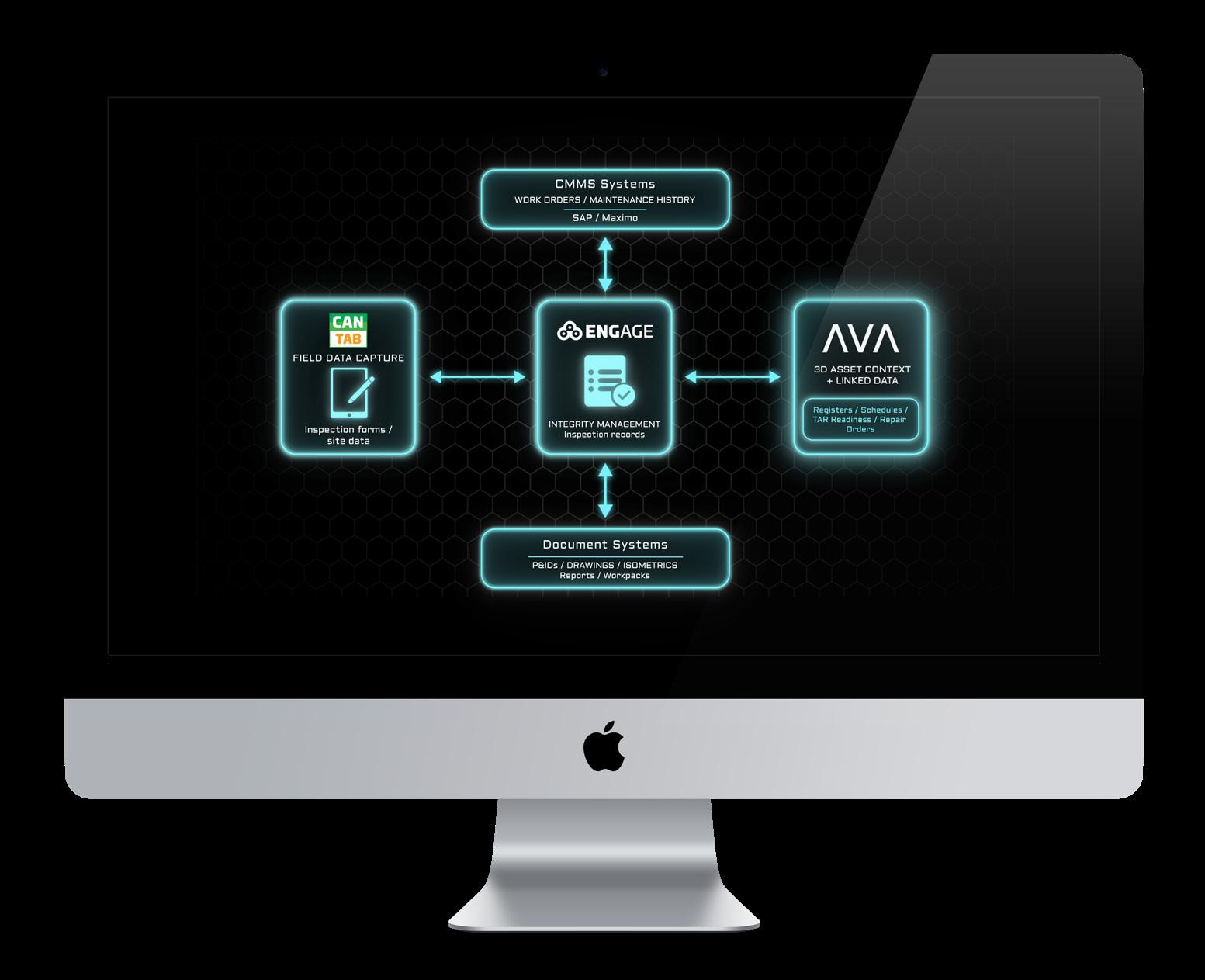
This issue also includes expert contributions from Worley, Viper Innovations, CAN Group, Aisus, Fugro and Envizion, each sharing valuable insights into the future of asset integrity.
Finally, my sincere thanks go to all of our valued partners for their continued support. We hope you enjoy this issue and discover
ideas that
The Blue Digital Ecosystem:
It’s Built, Operational and
Compounding
Subsea operations are now supported by a wide range of digital tools, platforms and systems. Data is being generated at scale and technology is embedded across most parts of the value chain. But despite this progress, the way these systems connect, and in many cases don’t connect, remains a constraint on how effectively they can be used.
Information often sits in separate environments and tools operate alongside each other rather than as part of a unified structure. This gap between capability and connection continues to shape the reality of digital transformation in subsea.
Two years ago, Elementz set out a direction for a more connected subsea future. Over time, that direction was defined through industry engagement. Today, it is operational, and the Blue Digital Ecosystem is the result.
THE BLUE DIGITAL ECOSYSTEM IS BUILT ACROSS THREE CONNECTED LAYERS.
1. The Elementz platform
At the foundation is the Elementz platform, a cloud-based integrity management system for subsea infrastructure across energy, offshore wind, power cables, telecoms, and defence networks.
Through a full API suite, it links integrity data with existing enterprise systems, inspection tools, digital twins, and analytics platforms. It creates a shared technical base where data can move between systems that were previously isolated.
2. Compass
Compass is the Elementz Strategic Customer Advisory Board.
Operators co-define the challenges that guide development, contribute data from live environments, and co-validate solutions throughout the build process. Through Compass, Elementz ensures that what gets built reflects operational reality rather than assumption and that operators are co-creators of what the ecosystem produces, not recipients of it.
3. Tide Breaker
Tide Breaker is the entry route into the Elementz Blue Digital Ecosystem.
Technology providers - from earlystage start-ups to established vendors and AI developers - work through a structured process to codefine, co-create, co-validate and co-deploy. Operators share context and data while developers are building against defined challenges. Solutions are tested in controlled conditions with continuous operator input and the successful tools move directly into the ecosystem ready for use.
SHIFTING THE MODEL
Technology adoption in the subsea sector has traditionally followed a linear path: build a solution, demonstrate it, then attempt to integrate it into operations. However, it often created gaps between design and reality. Tools are built without operational involvement and integration becomes the most difficult stage.
The Blue Digital Ecosystem shifts this sequence earlier.
Operators are involved at the point of defining the problem. They contribute to shaping the solution and validating outputs during development. By the time deployment happens, the tool already reflects operational conditions. The connected Blue Digital Ecosystem improves alignment between tools and workflows, reduces uncertainty in AI outputs, and supports smoother integration into existing systems.
HOW DOES IT WORK IN PRACTICE
The first Tide Breaker cohort is live and fully operational with two technology companies, Fathom and Voltquant, working closely with energy operators.
Fathom is developing a physicsbased AI digital twin that converts inspection data into structured assessments of asset life, performance, and risk. Voltquant is
building an AI platform for integrity and compliance that reviews engineering documentation against regulatory standards with fully traceable outputs.
Both began development in early 2026 and validation continues ahead of planned commercial deployment. With identified problems, guided development and structured validation, the model is fully implemented and operational today.
EXPANDING SCOPE
The ecosystem is designed to extend across multiple asset types. With a dedicated Product Manager at Elementz, Joanna Petrie, now focused on linear infrastructure, the scope includes offshore wind, subsea cables, power and defence networks, and related systems.
The ecosystem also grows through use. Each new operator adds context. Each validated solution adds capability. Each deployment generates feedback that improves the next cycle of development.
Over time, the Blue Digital Ecosystem becomes more capable with every operator that joins, every solution that graduates, and every deployment that generates feedback. That is not a feature of the design. It is the design.
OPENING THE DOOR
The Blue Digital Ecosystem was described eighteen months ago, as an achievable reality if the industry committed to building differentlynot for stakeholders, but with them. That commitment is now a matter of record. The direction is set.
Elementz is opening the door to the Blue Digital Ecosystem on 23rd September, Cowdray Hall in Aberdeen Art Gallery, inviting operators, technology providers and industry leaders to shape the future of a connected subsea industry. For more details on how to attend the event, visit elementz.digital.
Spotlight on THE
THREE60 Energy to continue supporting Vår Energi operations in Norway
THREE60 Energy has been awarded a new long term Project Support agreement with Vår Energi ASA, further strengthening the long standing relationship between the two companies.
The agreement, which has an initial term of four years with options for extension, will see THREE60 continue to provide project support across drilling, wells and subsurface disciplines. The support will contribute to the safe and efficient planning and execution of Vår Energi’s operations.
CRC Evans and Monter Partner on Europe’s First Hydrogen Valley Pipeline Project
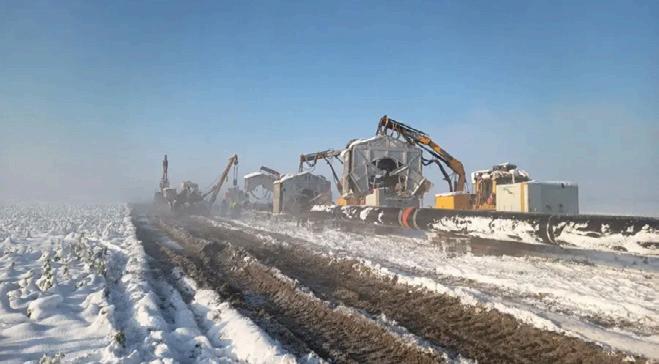
CRC Evans, the global leader in specialty welding, coating and project services for energy and critical infrastructure, and Monter Strojarske Montaže d.d. have announced a strategic new European hydrogen partnership.
As part of this initiative, Monter, working in close collaboration with CRC Evans, will deliver a first-of-its-kind European Hydrogen Valley infrastructure project, supporting the development of a pioneering cross-border energy network spanning from the Adriatic coast in Croatia towards Central and Eastern Europe.
Proserv Chairman David Currie Awarded CBE in King’s Birthday
Honours
Proserv announces that its Chairman, David Currie, has been awarded a Commander of the Order of the British Empire (CBE) in His Majesty The King’s Birthday Honours List 2026. The honour recognises David Currie’s outstanding contribution for services to International Trade, Energy Transition and Economic Growth. The award will be formally published in the official Honours List on 13 June 2026. The recommendation has been made by the Prime Minister on the advice of the independent Main Honours Committee.
Perigus Energy selects Cegal’s Cetegra on Microsoft Azure to support its European onshore GIS platform
Cetegra provides a secure, cloud‑native foundation for GIS delivery, supporting collaboration and a cloud‑first IT strategy across Perigus Energy’s onshore renewable energy operations in Europe.
Perigus Energy, a leading player in the renewables market, has integrated Cegal’s Cetegra as the foundation for its GIS platform supporting its European onshore business. The cloud-native solution provides secure, scalable access to GIS applications, while aligning with Perigus Energy’s IT strategy and enterprise governance requirements.
New Partnership Drives Well Integrity Innovation in Malaysia
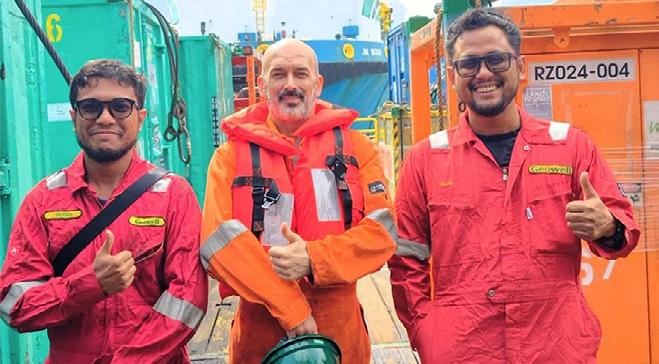
WellSense has formed a strategic partnership with Geowell in Malaysia to service growing operator demand for distributed fibre optic sensing (DFOS) well integrity surveys and ensure rapid in country availability of its Fli technology
The partnership has successfully completed its first round of Fli deployments and accurately pinpointed integrity issues in two highly deviated offshore wells. Operations included a lightweight rigless deployment, efficient Fli probe pump down and 3D data acquisition.
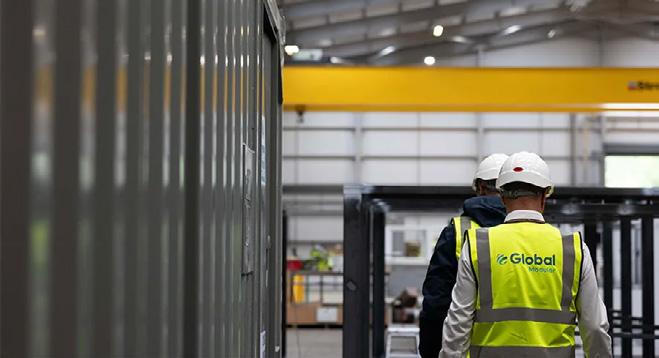
Global invests in modular capability with acquisition of Pier Solutions –as it launches Global Modular, set to create up to 80 new jobs in yr. 1
Global, the leading Scottish based energy and infrastructure group, has announced the launch of Global Modular, following the acquisition of Aberdeen based Pier Solutions.
The investment marks a strategic first step in Global’s ambition to develop a fully integrated, end-to-end service offering for the energy sector, responding directly to client demand for more efficient, coordinated and scalable project delivery models.
Integrated Solutions, Less Downtime, More Control.
Total Hose Lifecycle Under One System.
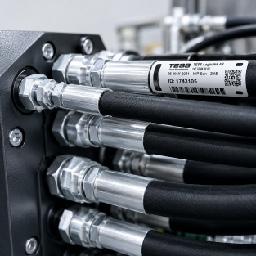
The TESS Hose Management system (THM) takes full responsibility for your hoses, reducing risk, cutting costs and keeping operations running.
Survey, registration & unique ID tagging
Cloud-based database with mobile app 24/7 hose support & rapid replacement
TESS Integrated Supply transforms how you manage critical components: automated stock, real-time access and full cost visibility, all in one place.
Automated inventory & replenishment
TESSgate & PartnerContainer units on-site
Deferred stock ownership to free up capital
Hoses Built Tough, Tested Harder.
From standard hydraulic assemblies to specialist drilling, bulk loading and chemical hoses, supplied, assembled and pressure-tested in Aberdeen.
The current state and the future of North Sea oil and gas investments and projects, BP’s rumoured plans to sell part or all of its UK upstream portfolio, and contractor awards for surveying, drilling, platform modernisation, and decommissioning featured in the UK North Sea sector in recent weeks.
The leading industry body Offshore Energies UK continues to argue that a stable and competitive fiscal regime for the North Sea could unlock billions of pounds for the UK economy.
Giving evidence to a parliamentary select committee, OEUK chief executive David Whitehouse said that rapid implementation of the Treasury’s proposed Oil and Gas Price Mechanism (OGPM) from April 2027 — instead of waiting until 2030 — would significantly increase investment and production, strengthening both the UK’s energy security and public finances.
Bringing forward the price mechanism would deliver an additional £2.8 billion in direct taxes from the sector over the next decade, alongside a further £10.6 billion in payroll taxes from the workforce. In total, this would represent £13.4 billion of additional revenue available to the Treasury, the offshore industry body says.
Without change in the current policies, the UK is set to become increasingly dependent on imported liquefied natural gas (LNG), particularly from the United States and Qatar. OEUK analysis has found that LNG imports could supply up to 50 percent of UK gas demand within a decade.
By contrast, a stronger domestic oil and gas sector would limit LNG dependency to around 4 percent by 2030 and 6 percent by 2035.
“Domestic oil and gas production doesn’t just supply energy — it gives the Chancellor choices,” Whitehouse said.
“It generates tax revenues, supports jobs, and strengthens the economy. Those are the levers government can use to support households — including those in fuel poverty.”
analysts consider the latest political shift as a chance for the new PM and Chancellor to review and potentially revise the policy in the offshore energy sector.
As the Offshore Petroleum Regulator for Environment and Decommissioning (OPRED) continues its assessment of the proposed Rosebank and Jackdaw projects and whether they meet all regulatory and environmental requirements, OEUK called for urgent decisions to progress these developments that would support the UK’s national energy security.
Adura, the operator of Rosebank and Jackdaw, has submitted to OPRED responses to a request for further information on the planned projects, which are at an advanced stage of development and construction, with over £3 billion invested to date.
Jackdaw and Rosebank can make up 10 percent of UK natural gas production combined. Jackdaw alone could provide over 6 percent of UK gas supply by this winter – enough to heat 1.4 million homes, Adura says. Rosebank could represent 4 percent of UK gas production and 10 percent of oil production from the UK Continental Shelf (UKCS), making a significant contribution to security of supply in North West Europe for refined products such as jet fuel and motor fuels.
“There is a material economic opportunity that has already been realised through multibillion pound investment to reach this point – and can be sustained throughout the production life of both fields, representing thousands of jobs and over £28 billion in added value to the UK economy,” Adura CEO Neil McCulloch commented.
By Tsvetana Paraskova
The debate on the future of the North Sea oil and gas sector has intensified in recent weeks following the resignation of Prime Minister Keir Starmer. Industry and
“With timely approval of Jackdaw and Rosebank, Adura can help unlock significant benefits: the energy that Britain needs – at lower associated emissions and within existing carbon budgets –alongside a major economic advantage in the national interest.”
Calling for urgent decisions on the projects to advance, OEUK’s Whitehouse said “We cannot import energy security.”
“UK oil and gas is energy we have control over, produced in our own waters under our own standards. It is a strategic asset for the country and one we should be using,” the CEO of Offshore Energies UK added.
“Right now, the UK risks playing checkers while others are playing chess when it comes to energy policy. Other countries are making long-term decisions to secure supply, and we should be doing the same.”
BP is considering a sale of all or part of its UK upstream portfolio, according to multiple media reports in recent weeks. A sale could fetch about £2 billion, or $2.7 billion, according to intelligence firm Rystad Energy, which reckons the information that BP is seeking an exit from the UK North Sea is credible.
The one-month survey beginning in July 2026 will deploy Shearwater’s Isometrix multi-component streamer technology to deliver high-quality, repeatable time-lapse seismic data to support reservoir monitoring and field management.
ABB has been awarded a contract to modernise the automation and control systems on the Buzzard offshore platform 100 km northeast of Aberdeen in one of the UK’s largest North Sea oil fields. The project for CNOOC Petroleum Europe Limited, a subsidiary of energy company CNOOC International, will help ensure continued safe and reliable operations of the Buzzard offshore platform.
UK oil and gas is energy we have control over, produced in our own waters under our own standards. It is a strategic asset for the country and one we should be using
A sale of the UK North Sea upstream assets would fit BP’s strategic direction. Moreover, the UK-based supermajor has become an outlier in the UK, where other majors have either sold down or formed joint ventures, according to Rystad Energy.
Since its strategy reset in early 2025, BP has been pushing aggressively in exploration, and activity in the US, Brazil, and elsewhere is lined up for years ahead. Rystad Energy expects BP to increase its exploration efforts in 2026 and 2027, with campaigns in Egypt, Brazil, Angola, and the US leading the way. Exploration wells will be a mix of frontier drilling, appraisal activity and infrastructure-led exploration (ILX) targets – a strategy that will enable the supermajor to focus on resources with quick timelines to production while including the frontier exploration that historically has resulted in large finds.
“Rystad Energy views both moves as consistent pillars of the same strategic bet as the company shifts attention to regions with greater growth potential than the UK, where no exploration wells were drilled last year for the first time since 1964,” the energy intelligence firm said.
“To reduce its UK exposure, the company could also opt to form a pure-play joint venture rather than pursue an outright sale – a structure that would preserve production optionality while still delivering consolidation benefits.”
Moreover, a sale in the UK would help BP reach its $20 billion divestment target by the end of 2027, Rystad Energy says.
In contract award news, Adura has awarded Shearwater Geoservices AS a 4D towed-streamer seismic acquisition project for the Mariner field in the UK North Sea.
ABB will deliver a targeted modernisation of its installed ABB Ability™ System 800xA® distributed control system and Safeguard 400 safety system. The phased upgrade will allow essential updates to be introduced while the platform remains operational, limiting shutdown time and reducing project risk, the Switzerland-based contractor said.
Odfjell Technology has secured a three-year contract with EnQuest PLC for platform drilling operations on the Magnus platform in the UK. The contract is scheduled to commence in the third quarter of 2026 and includes two additional one-year extension options.
Dolphin Drilling AS has announced the contract fixture of its semi-submersible drilling rig Borgland Dolphin with an undisclosed operator in the UK, which represents approximately $239 million in firm contract backlog.
The contract is scheduled to commence in the second half of 2027, in direct continuation following release of the Borgland Dolphin from its existing contract.
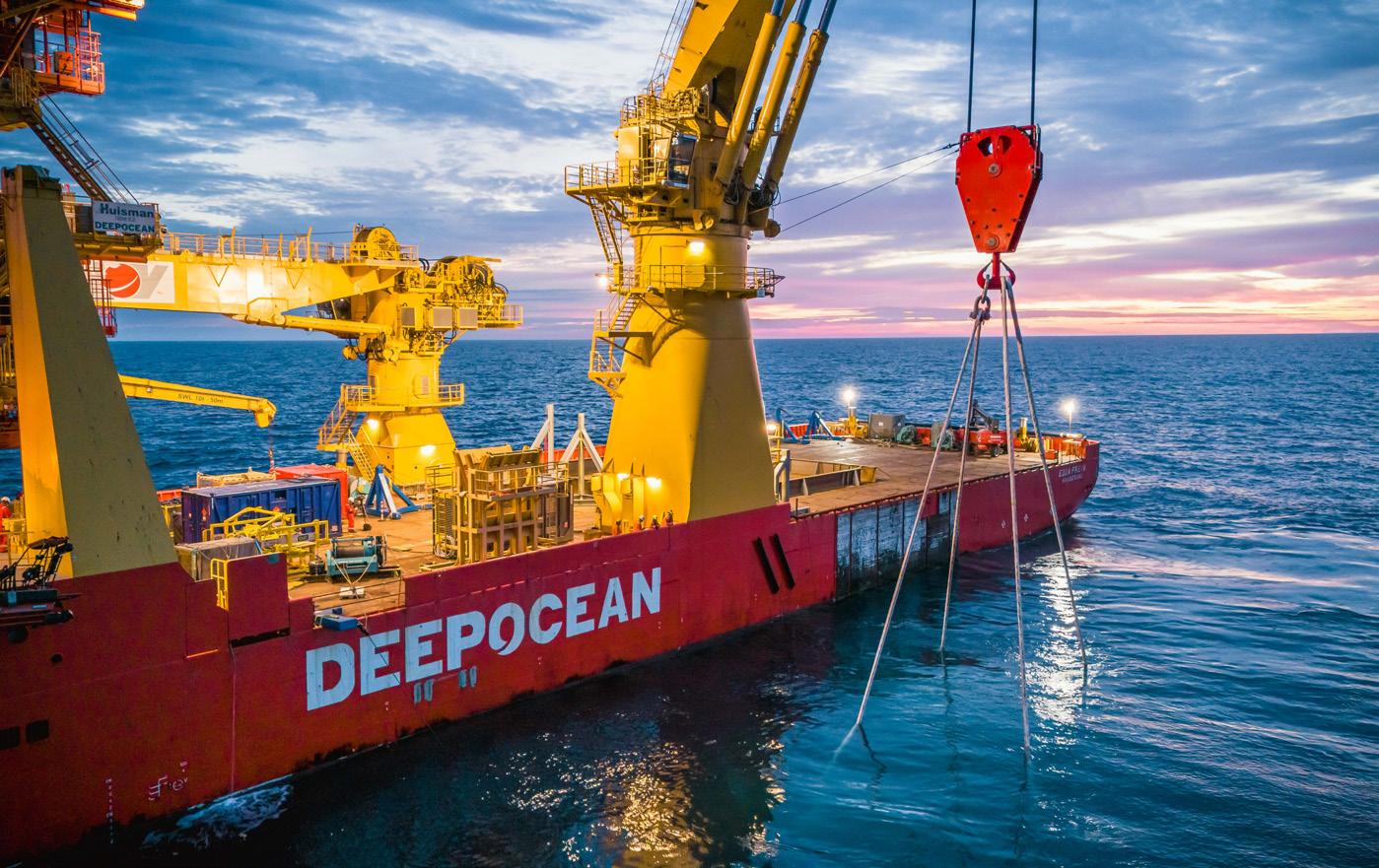
Ocean services provider DeepOcean has entered into an agreement to support BP in the decommissioning and recycling of subsea equipment at the operator’s Foinaven field, West of Shetland.
As part of the contract, DeepOcean will remove ten flexible process risers and three dynamic subsea umbilicals from the former Foinaven FPSO location. In addition, DeepOcean will recover a static umbilical. Various amounts of buoyancy, riser protection, clamps, and other appurtenance associated with each riser will also be removed during recovery operations.
DeepOcean will provide engineering, project management, and offshore execution for the project that will be managed and executed by its Aberdeen-based operations in the UK.
This is the second DeepOcean-BP decommissioning agreement following the successful decommissioning work delivered by DeepOcean for BP at the Don and Miller fields under a similar commercial model.
THREE6O ENERGY
A life cycle solutions company enabling a sustainable future.
EU
Energy Review
Norway’s plans to increase oil and gas production on the Norwegian Continental Shelf, accelerating solar, wind, and energy storage capacity installations in Europe, and milestones in key renewable projects featured in Europe’s energy sector in the past few weeks.
Oil & Gas
Equinor and its partners in the biggest Norwegian oilfield, Johan Sverdrup, plan a Phase 4 of its development after recently completed appraisal wells in the area have proven increased oil volumes. Discoveries made in the Tonjer wells and Geitungen will now form the basis for Johan Sverdrup phase 4, Equinor said in the middle of June.
The volumes from Tonjer west and east, as well as Geitungen, are planned to be developed through a subsea development tied back to existing infrastructure on Johan Sverdrup.
“By tying new resources to existing infrastructure, we can develop them quickly, with low costs and low emissions,” said Kjetil Hove, executive vice president for Development and Production Norway.
“At the same time, they contribute to maintaining production and value creation from one of Norway's largest oilproducing field over time.”
Equinor and its partners in the Troll gas field have decided to invest 4 billion Norwegian crowns, or $407 million, in a new subsea development that will increase gas production from the giant field in the North Sea.
By Tsvetana Paraskova
Separately, the Norwegian major and Aker BP have agreed on a strategic collaboration aiming to increase future production and value creation across selected parts of their portfolios on the Norwegian Continental Shelf.
The agreement includes the divestment of a 19-percent interest in several discoveries in the Ringvei Vest area to Aker BP: the Grosbeak, Røver Nord & Sør, Toppand, and Swisher discoveries.
Equinor is the operator of Ringvei Vest, which is expected to be a cluster development of multiple oil and gas discoveries in the Troll-Fram area of the North Sea.
“Equinor and Aker BP have identified key areas to increase value creation from discoveries that have not yet been developed for production on the Norwegian continental shelf,” Equinor’s Hove said.
Equinor and Aker BP have identified key areas to increase value creation from discoveries that have not yet been developed for production on the Norwegian continental shelf
The partners target to start up production from the new development as early as in 2028.
“By simplifying, increasing standardisation and reusing existing infrastructure and equipment, we are reducing costs and enabling faster production, in line with our new ways of working,” commented Gunnar Nakken, senior vice president for projects and subsea Norway at Equinor.
Norwegian oil and gas operator DNO ASA will buy a five-percent stake in the Vår-operated Gjøa field and the Gjøa Nord discovery in the Northern North Sea, in exchange for a five-percent interest in Nova, a subsea field tied back to the Gjøa platform. The transaction with Vår Energi further streamlines DNO’s portfolio offshore Norway and secures a strategic ownership in the offshore Gjøa hub.
Low-Carbon Energy
The battery storage market in Europe surged by 48 percent in 2025 from a year earlier, and is set to accelerate further through 2030, pushed up by utility-scale deployment, the SolarPower Europe association said in its latest European Battery Market Outlook 2026–2030.
Europe installed 36 GWh of new battery energy storage systems last year, bringing total operational capacity beyond 100 GWh for the first time. Utility-scale batteries became the largest market segment, accounting for more than half of annual installations.
Annual battery installations are expected to exceed 50 GWh in 2026 and nearly quadruple to 138 GWh by 2030 in Europe. Total installed capacity is projected to grow more than sixfold, from just over 100 GWh today to around 580 GWh in 2030. The EU will have 470 GWh by the end of the decade. Despite the expected surge in installations, Europe remains below the trajectory required to fully support a highly renewable and electrified energy system, SolarPower Europe said.
“Europe’s battery market is moving in the right direction, but we are not yet where we need to be,” Walburga Hemetsberger, CEO of SolarPower Europe, said.
“The EU has rightly recognised this with its 200 GW storage target for 2030, but delivering on that ambition will require much faster progress,” Hemetsberger added.
In Europe’s wind power sector, each €1 of public funding for wind would generate €7 in annual economic returns by 2040, while significantly boosting the EU’s jobs, exports, and energy security, according to a new study by Trinomics, in collaboration with DTU Wind.
The study proposes the creation of a dedicated Fund for Wind Research and Competitiveness to boost Europe’s competitiveness in the wind industry. The proposed Wind Fund would provide €11.6 billion in support across the entire European wind value chain. These funds are expected to deliver €33 billion per year in gross value added to the EU economy, support 180,000 additional jobs across the value chain, and increase EU wind equipment exports by €12.6 billion annually. The proposed funding would also ensure that up to 89 percent of value would remain in Europe, compared to 47 percent without targeted support, as well as strengthen energy security by displacing 70 bcm of imported gas annually, equal to around 700 LNG shipments, the study shared by WindEurope showed.
Aurora’s analysis found that if Europe manages to increase cross-border interconnector capacity by 25 percent, this would enable the system to utilise an additional 27 TWh of solar and wind electricity by 2040. This would reduce gas-fired generation by approximately 35 TWh, or by around 8 percent, avoiding 16.3 million tonnes of CO₂ emissions, equivalent to removing around 3.5 million cars from the road.
In the UK, new polling commissioned by eleven leading energy trade bodies showed almost two-thirds (63 percent) of the public think clean power strengthens the UK’s security, which is held as a majority view across every political persuasion.
While bills remain the top concern, voters support the need to spread infrastructure costs over many years.
“What emerges is a public that backs clean, homegrown power more firmly than the current discourse suggests, and a direction of travel on energy security that looks settled rather than fragile,” said Alfred Malmros, co-founder of Early Studies, which carried out the polling in March and April.
The new Scottish Government must set out its commitment to Scotland’s worldleading tidal stream sector, industry body Scottish Renewables said in June.
To help build investor confidence in the sector and remove barriers which are slowing the commercial rollout of tidal stream projects, Scottish Renewables is calling on ministers to commit to publishing a dedicated policy statement for tidal stream technology.
Europe’s battery market is moving in the right direction, but we are not yet where we need to be
Strengthening Europe’s electricity grid could unlock tens of terawatt-hours of additional renewable generation, significantly reduce gas-fired power, and avoid millions of tonnes of CO2 emissions, Aurora Energy Research said in a study in June.
Growing demand on planning and consenting tidal energy projects highlights the need for a clear and coordinated policy framework to support the commercialisation of the sector, according to Scottish Renewables.
“It is vital that the sector is given the confidence it needs to accelerate the delivery of these projects,” said Colin Palmer, Director of Offshore at Scottish Renewables.
In company news, Zenobē, a UK-based owner and operator of transmission connected batteries, has announced the financial close of its 200MW/800MWh battery energy storage system (BESS) at Coalburn, in South Lanarkshire, Scotland.
The project has become the UK’s first four-hour duration battery storage project connected to the transmission network to reach financial close.
Preparatory works on the site have begun and construction will start in earnest in July, with commercial operations expected in 2028.
ENGIE and European Energy have entered into a cooperation agreement to advance the development of a large-scale renewable hydrogen project in Denmark. The project developed in Aabenraa Municipality has been selected under Germany’s hydrogen auction (AaaS 25), linked to the European Hydrogen Bank. It is intended to support renewable hydrogen demand in Germany and connect to the future Danish-German Hydrogen Backbone. The project will include up to 150 MW of electrolysis capacity, targeting start of operations around 2030.
USA
Energy Review
Record US crude oil exports, new lease sales in Texas, New Mexico, and Alaska, and soaring US jet fuel production amid doubled prices were the highlights in the US oil and gas sector in the past few weeks.
New Lease Sales
The Bureau of Land Management (BLM) oil and gas lease sale in New Mexico and Texas in May generated more than $4 billion in total receipts for the Department of the Interior. The responses to the lease sales highlighted industry demand for domestic energy development on public lands, DOI said.
The Bureau of Land Management leased 74 parcels totalling 33,530 acres during the quarterly lease sale held in May. Combined bonus bids and rental payments from the sale totalled just over $4 billion, at $4,007,944,870. Revenue generated through lease sales is shared between the federal government and the states where the parcels are located.
The sale was conducted under the Trump Administration’s Working Families Tax Cuts Act, which lowered the federal royalty rate for new onshore oil and gas production to 12.5 percent, reversing the 16.67-percent rate established under the Inflation Reduction Act.
According to the US DOI, the lower royalty rate reduces costs for energy producers operating on public lands and is expected to encourage additional investment, leasing, and drilling activity across the West.
“America is sitting on some of the richest energy resources in the world, and President Donald J. Trump is committed to putting those resources to work for the American people,” said Secretary of the Interior Doug Burgum.
“By cutting costs and removing barriers to development, we are unleashing American energy, strengthening national security, creating jobs and generating significant revenue for taxpayers and local communities.”
The oil and gas lease sale in New Mexico generated more receipts than all federal onshore lease sales since 2015, even after adjusting for inflation, the American Petroleum Institute (API) said
records and raised more than four times the amount of the previous record for an onshore sale. The sale also broke the record for the highest bid for a single lease — $405.8 million was bid for just one lease in Lea County, according to API analysis based on BLM data.
The lease sale was concentrated in the Lea and Eddy counties in Permian’s Delaware sub-basin. These two counties alone produce 1.3 million barrels of oil per day, equal to 78 percent of onshore oil production on federal lands.
The One Big Beautiful Bill (OBBB) Act from 2025 changed how the government selects parcels of land for leasing. It stipulated that at least 50 percent of the parcels of land offered in lease sales must be lands that were actually nominated by interested companies.
Drilling on neighbouring land had already shown that the area was highly likely to produce oil and gas and producers nominated these parcels for the lease sale because they had high confidence in their potential to produce. Because of the policy change in the OBBB Act, those highconfidence parcels of land were certain to be included in the auction, API noted.
“The broader lesson is that policy matters. In this case, a seemingly small policy change created big benefits for the country in the form of revenue, jobs and energy security,” the American oil lobby said.
BLM also held in June an oil and gas lease sale for the Coastal Plain of the Arctic National Wildlife Refuge in Alaska, resulting in five leases and $3.74 million in total receipts. Two companies, state investment agency Alaska Industrial Development and Export Authority (AIDEA) and Alaska-based HEX Energy, won three and two tracts, respectively.
But none of the major industry players showed up.
By Tsvetana Paraskova
The May lease sale in New Mexico beat all
Big oil firms largely stayed away from the auction in the area, which is still seen as a frontier exploration acreage with uncertainties about future development
amid environmental lawsuits and high costs to progress potential projects in the harsh environment.
US Crude Exports Hit RecordHigh amid Middle East Crisis
US weekly crude oil exports jumped to record highs in most weeks in April and May, US government data show, as buyers in Asia and Europe have turned to US crude to fill the gap left by the major supply disruption in the Middle East.
The rising US crude exports have recently run at about 2 million barrels per day (bpd) above the levels from before the Iran war, pushing the West Texas Intermediate crude to full global benchmark status, energy market intelligence firm StoneX said in the middle of June.
“Crude oil exports have increased by almost 2 million barrels per day since prior to the war,” said Alex Hodes, who covers U.S. and global energy markets as Director of Energy Market Strategy at StoneX.
Crude supply that once went into Cushing, Oklahoma storage, is now flowing to the US Gulf Coast and out to global buyers.
The sustained outflow has thinned Cushing inventories and made WTI increasingly sensitive to international demand signals, according to StoneX.
“Because WTI is becoming such a global market, WTI will respond to a lot of global information before all else,” Hodes says, in what StoneX sees as a structural shift that elevates Cushing’s role well beyond a regional American benchmark.
US Jet Fuel Output Jumps to All-Time High as Prices Soar
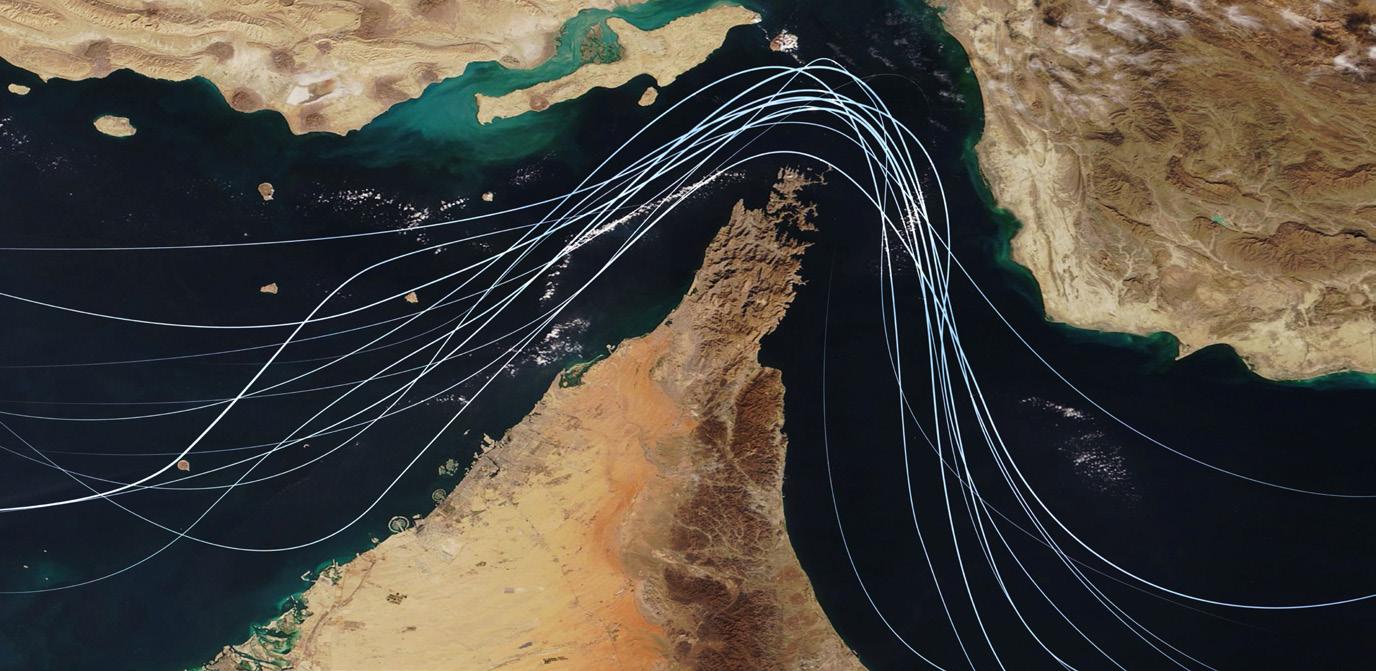
US jet fuel production has surged to record highs as the global jet fuel prices spiked with the closure of the Strait of Hormuz.
The US Energy Information Administration (EIA) estimated in June that weekly jet fuel production in the US has been steadily rising since February 28. In the February 28 week, US jet fuel output
sat at a four-week average of 1.7 million bpd. In the week ending May 1, the fourweek average had already jumped above 2 million bpd, for the first time on record, according to EIA data.
The increased production reflects both above-average refinery runs and strategic shifts to increase jet fuel yields amid soaring prices.
Jet fuel prices in Europe and Asia are now closer to U.S. Gulf Coast prices, and prices are lower than their April peaks in all three regions as concerns of an imminent jet fuel shortage have eased
Much of the increased US jet fuel production is being exported, as domestic inventories remain above average. Higher US exports have partly eased concerns about supply shortages in Asia and Europe, which imported most of their kerosene fuels from the Middle East via the Strait of Hormuz before the Iran war.
As a result of soaring global jet fuel prices, US refiners have sought to maximise their kerosene production.
The jet fuel crack spread on the US Gulf Coast, an indicator of the profitability of refining crude oil into jet fuel in the region, averaged $1.25 per gallon from March
through May, up from $0.42 a gallon at the start of the year, according to EIA data. Jet fuel prices at other major global trading hubs—such as Amsterdam, Rotterdam, Antwerp (ARA) and Singapore—also averaged about double their start-of-year prices from March to May and had higher jet fuel crack spreads.
“In response to the price increases abroad, weekly estimates based on transactional trade data from U.S. Customs and Border Protection indicate U.S. jet fuel exports reached record highs in April and May,” the EIA said.
“Jet fuel prices in Europe and Asia are now closer to U.S. Gulf Coast prices, and prices are lower than their April peaks in all three regions as concerns of an imminent jet fuel shortage have eased.”
MID East
Energy Review
The US-Iran memorandum of understanding to launch talks on a potential lasting peace agreement remained front and centre in the Middle East’s energy sector in recent weeks, as many officials and analysts offered views on how a tentative recovery of oil and gas flows through the Strait of Hormuz could impact market balances and energy prices in the near to medium term.
Fragile Ceasefire and Memorandum of Understanding to Make a Deal
In the middle of June, the US and Iran signed a 14-point memorandum of understanding on a framework to launch negotiations on a peace deal. The initial agreement included the US lifting its blockade outside the Strait of Hormuz, Iran allowing free passage through the Strait, and the US unfreezing part of the Iranian assets and waiving sanctions on Iran’s oil exports.
The US Treasury’s Office of Foreign Assets Control (OFAC) issued on June 21 a general licence authorising the production, delivery and sale of crude oil, petrochemical products, and petroleum products of Iranian origin through 21 August 2026. Transactions in US dollars are also allowed under the licence.
Iran is reportedly pitching its oil to many Asian importers beyond China’s independent refiners, which were the main (and the only) buyers of Iranian oil in the past few years. However, buyers in Japan, India, and South Korea were not rushing to purchase Iranian crude immediately after the licence was issued, as importers remain anxious about the two-month temporary timeframe and a potential abrupt reversal of the licence if talks between the US and Iran fall through.
Several tankers carrying millions of barrels of oil left the Persian Gulf in the first week following the signing of the memorandum. Traffic has picked up but it remains at a fraction of what it was before the war.
Shippers and tanker owners are cautious about the status of navigability through the Strait of Hormuz, considering that mines need to be cleared in some lanes. Tanker operators also need guarantees the vessels they plan to send inbound into the Persian Gulf would not be stuck again in case the situation and negotiations deteriorate.
Meanwhile, major oil importers in Asia remain cautious, also because the charter rates to send a tanker to pick up oil from the Gulf have gone through the roof as competition for tankers to line up to enter inbound the Strait of Hormuz has intensified.
At any rate, analysts believe that it will take weeks, and probably months, for traffic to return to some kind of normal, and that is if the US-Iran agreements hold.
Our teams have been mobilised already for a few weeks. QatarEnergy is preparing for operations to come back to normal as soon as the situation in the strait normalises
Qatar Expects Quick Recovery of LNG Flows
Qatar expects to resume normal LNG production within weeks, except for one facility at Ras Laffan damaged by Iranian missile strikes in March.
By Tsvetana Paraskova
As negotiations began in Switzerland on 21 June, divergences immediately emerged, including in the contradictory US and Iranian interpretation of the conditions in the 14-point Memorandum.
The market remains confused about the process even if tanker traffic through the Strait of Hormuz began to tentatively resume, as of 25 June.
The tiny Gulf state, which is the world’s second-largest LNG exporter after the US, plans to quickly ramp up production and exports and is lining up empty gas carriers to pick LNG from inside the Persian Gulf.
“Within a few weeks, production will come back to normal, except the damaged facility,” Qatar’s Prime Minister, Sheikh Mohammed bin Abdulrahman Al Thani, told the Financial Times at the end of June.
“Our teams have been mobilised already for a few weeks. QatarEnergy is preparing for operations to come back to normal as soon as the situation in the strait normalises,” the official added.
Hormuz Crisis Put Top Resource Holders At Major Geopolitical Risk
The national oil companies (NOCs) of the Middle Eastern producers need to rethink their strategies in the wake of the Strait of Hormuz crisis, Schreiner Parker, Head of Emerging Markets and NOCs at Rystad Energy, said on the mid-June edition of the intelligence firm’s ‘Let’s Talk Energy’ podcast.
The potential Iranian control over the Strait of Hormuz would make NOCs rethink strategies because even with their access to the world’s lowest-cost resources, these oil and gas volumes have now become vulnerable to disruptions at the key chokepoint.
There is a structural change in rising NOC-to-NOC partnerships, Parker said, adding that “these partnerships can be increasingly built around complementary strategic interests rather than simply filling capability gaps.”
International oil companies, for their part, are unlikely to turn their backs on the Middle East because of the competitive and compelling economics of producing oil and gas there, Rystad Energy’s analysts said.
“You still can’t ignore the fact that this is the most cost-competitive resource in the market,” said lga Savenkova, Head of O&G Corporate Strategy Research at Rystad Energy.
“That's the first part of the puzzle; the competitiveness of these projects will not allow companies to turn their backs on the region.”
What’s Next for Middle East Energy Flows and Oil Prices
The continued US-Iran tensions at the start of the 60-day negotiations window that began with the signing of the Memorandum of Understanding make forecasts about oil and gas flows and energy commodity prices as difficult as they were during most of the past three months.
“There is a risk that negotiations have to be extended or perhaps even fail. Even if successful, the future terms of transit through the Strait could be very different from the free flow of vessels before the war,” analysts at Wood Mackenzie said just after the US and Iran wrapped up the first round of talks in Switzerland with “encouraging” signals of progress.
With more than 11 million barrels per day (bpd) of crude and another 3 million bpd of refining capacity offline as of the end of
Energy Review Middle East
June, the recovery to ‘normal’ would take months, according to the analysts.
Around 60 million barrels of oil held in vessels trapped in the Persian Gulf will quickly reach consumer markets once the Strait is deemed safe for transit.
However, the full value chain in the Gulf will take some time to ramp up, from wellhead through midstream to the refineries and the reloading of vessels that will be returning to Gulf ports.
WoodMac’s analysis suggests 70 percent of the shut-in crude oil production could be back online within three months, and 90 percent within six months. The final 1 million bpd will take considerably longer to bring back, according to the analysts.
As the market hopes the recovery will continue and the Strait will remain open for navigation, oil prices slipped to the low$70s per barrel as of 25 June, from as high as $115 a barrel at the start of the conflict in March.
The massive supply loss was somewhat alleviated by inventory drawdowns, alternative routes and suppliers, and agile refiners, thus avoiding far more severe impacts on demand, they noted.
At the same time, producers in the Atlantic basin, led by the US, have hiked their oil exports to Asia.
“The crisis has set in motion major shifts in global oil trade flows, including significant increases in supplies from producers outside the Middle East being shipped from the Atlantic Basin to markets in Asia,” the IEA’s analysts said.
“The surge in Atlantic Basin oil exports has been underpinned by higher output from a number of producers in response to the crisis,” the agency added, noting that the United States, Kazakhstan, Brazil, and Venezuela ramped up their output the most.
Even if the reopening of the Strait proceeds successfully, as we and many others sincerely hope, the Middle East conflict will leave lasting marks on the global energy sector.
Yet, a downward trend in Brent prices would be a bumpy ride even if negotiations are successful, according to WoodMac.
“Alternating periods of elevated and depressed prices are likely as the market searches for equilibrium with recovering demand, inventory build and supply out of sync,” the analysts said.
How Oil Trade Readjusted to the Hormuz Supply Shock
The cumulative oil supply losses from producers in the Middle East exceeded 1.3 billion barrels as of the end of June, with flows through the Strait of Hormuz falling from around 20 million bpd prior to the conflict to an average of 2.7 million bpd in March, April, and May, analysts at the International Energy Agency (IEA) said
The US-Iran memorandum offered hopes of recovery of oil supplies through the Strait of Hormuz, but “the situation nonetheless remains highly unpredictable, with major strains in large parts of the market and uncertainty over how the peace talks will play out,” according to the IEA's analysts.
“Even if the reopening of the Strait proceeds successfully, as we and many others sincerely hope, the Middle East conflict will leave lasting marks on the global energy sector.”
The crisis has prompted producers, consumers, companies, and governments to review energy strategies and policies. Energy companies and governments are already considering key decisions on investments, supply routes, fuels, and technologies, said the IEA, and concluded,
“The effects will be significant and enduring.”
NOR
Energy Review
Operators Advance Projects as Norway Marks 60 Years of Exploration
Energy companies operating on the Norwegian Continental Shelf plan to boost drilling and development activities as Norway marks 60 years since drilling on the first exploration well began in the summer of 1966.
60 Years of Oil and Gas Exploration Offshore Norway
This summer Norway marks 60 years since its hunt for oil and gas began in the shelf. The first drilled well came up dry, but the drilling confirmed that the geology far out in the North Sea was similar to that of the Netherlands, where the Groningen natural gas field was discovered in 1959.
The 1966 drilling offshore Norway proved that it was possible to drill for oil and gas in this harsh climate area. And the rest is history, as they say.
The following year, 1967, traces of hydrocarbon in the lower tertiary were found, with these traces of oil analysed and tested in a laboratory. At the time, the operator of the licence, Esso, believed the discovery was too small to be commercially developed.
But “Subsequent events proved otherwise,” the Norwegian Offshore Directorate said.
“This was the Balder field, which came on stream 30 years later and contained around 110 million cubic metres of oil (700 million barrels).”
The story of how Norway’s oil and gas industry began points to the important feature of the country’s path to becoming Western Europe’s largest oil and gas producer.
“The combination of technological development and patience is unbeatable – and can over time push the boundaries of what is possible to achieve,” the regulator said.
Norway Expects High Petroleum Revenues This Year
The government expects in its revised national budget that oil and gas production will remain stable this year and petroleum revenues will increase compared to 2025.
The government estimates the state’s net cash flow from the petroleum sector to reach 686 billion Norwegian crowns, or $71 billion, this year. This would be higher than last year’s net cash flow for the Norwegian state of 664 billion crowns, or $69 billion.
The Norwegian continental shelf accounts for about 30 percent of gas consumption and 14 percent of oil consumption in the EU and the UK. Total petroleum production in 2025 was approximately 239 million standard cubic meters of oil equivalents. Output is expected to remain at the same level in 2026, the government said.
Oil production hit 107 million standard cubic meters of oil equivalents last year, the highest level since 2009.
The start-up of the Johan Castberg field in the Barents Sea contributed to increased oil production on the continental shelf and will make an important contribution in the years ahead as well, according to the Norwegian cabinet.
“The industry has generated, and continues to generate, substantial revenues. With the fiscal rule, these revenues are of great importance to the mainland economy and the financing of the welfare state, both today and in the future,” Minister of Energy Terje Aasland commented.
“At a time marked by global geopolitical turmoil, Norwegian energy makes a direct contribution to our allies’ energy security, economic stability and national security.”
Norway’s authorities have always insisted that the country needs to continue developing its shelf to remain a stable and long-term energy partner and supplier.
By Tsvetana Paraskova
Nowadays, about one fifth of the economic value added to the Norwegian economy comes directly from oil and gas activities.
“To maintain the current level of activity, new development projects are crucial for the supply industry,” Aasland added.
“The Government supports this by facilitating further exploration, increased recovery and the development of discoveries through stable and predictable framework conditions,” said the minister.
Norway Supports Petroleum Technology Innovation
The Norwegian Offshore Directorate is working to encourage the industry to develop, cooperate more closely, and utilise new technology to an even greater extent, the regulator said on the Technology Day held in early June.
“We need to work in a targeted way to slow the expected production decline on the Norwegian continental shelf (NCS). This applies for all phases; from exploration, field development and production to cessation and disposal,” said Hege Susanne Blåsternes, Director of Offshore Development and Technology at the Norwegian Offshore Directorate.
The Government supports this by facilitating further exploration, increased recovery and the development of discoveries through stable and predictable framework conditions
in the Tonjer wells and Geitungen will now form the basis for Johan Sverdrup phase 4, Equinor said.
“Developing and implementing new technology in all these phases is extremely important in order to maintain production as high as possible for as long as possible.”
The key themes at this year’s Technology Day included acquisition of subsurface data, next-generation production systems, and accessing challenging barrels.
Operators Work to Boost Norwegian Supply
Equinor plans to maximise value on the Norwegian continental shelf, among other priority actions to create more value in the coming years, president and CEO Anders Opedal said on the energy major’s Capital Markets Day 2026 in the middle of June.
The company raised its production outlook for the Norwegian shelf by 100,000 barrels of oil equivalent (boe), to 1.35 million boe per day in 2030, and 1.3 million boe per day in 2035.
“Demand continues to grow and Equinor is uniquely positioned to provide reliable energy. We will deliver more energy, growing cash flow and superior returns towards 2030,” Opedal said.
Equinor has also recently decided to progress the biggest oil field in Europe, Johan Sverdrup in the North Sea, to a Phase 4 development, after finding new volumes at the field.
Recently completed appraisal wells in the Johan Sverdrup area have proven increased oil volumes. Discoveries made
The volumes from Tonjer west and east, and Geitungen are planned to be developed through a subsea development tied back to existing infrastructure on Johan Sverdrup. The additional resources will help maintain production from the field.
“By tying new resources to existing infrastructure, we can develop them quickly, with low costs and low emissions,” said Kjetil Hove, executive vice president for exploration and production Norway at Equinor.
“At the same time, they contribute to maintaining production and value creation from one of Norway's largest oil-producing field over time.”
Equinor and its partners have also agreed on the concept for Ringvei Vest, a large subsea development project linked to the Troll B platform in the North Sea.
The energy major estimates that Ringvei Vest will contribute 240 million barrels of oil equivalent. The discoveries included in the project are Grosbeak, Swisher, Mulder, Kveikje, Toppand, Røver Sør, and Røver Nord. In addition, the prospect Grønngylt is included. The resources are spread across eight licences with a total of seven owners.
Ringvei Vest covers a large area, and the plan is to drill a total of 13 wells through six templates. The well stream will be separated on the seabed before being transported to Troll B, which also provides power for the subsea facilities. The wells are planned to be controlled from the Troll B platform, from where the oil is transported to Mongstad and the gas to Kollsnes.
While announcing plans for the project, one of the largest early-phase projects on the shelf, Equinor said it is too early to comment on the size of the potential investments. The decision on continuation (DG2) is planned for the end of the year. The timeline for the final investment decision, submission of the plan for development and operation, and production start-up is not yet decided.
Aker BP has entered into a strategic partnership agreement with Viridien to improve productivity in exploration and field development on the NCS. The agreement establishes a longterm framework for collaboration within multi-client ocean bottom node (OBN) seismic acquisition, seismic imaging, and technology development, where the goal is to build an integrated, end-to-end seismic workflow from seismic acquisition to subsurface image.
Aker BP is also testing the use of robotics for inspections and data collection at Fenris, one of two new platforms in the Valhall PWP-Fenris project.
The project is designed to ensure stable and high production from the Valhall field for many years to come. The platform was recently installed offshore and is expected to start production in the third quarter of 2027.
Fenris will be an unmanned installation (UI), with all access provided via gangway from a Service Operation Vessel (SOV). This ensures high safety but also limits flexibility and entails significant costs related to mobilising personnel offshore.
The robotic solution has been developed specifically to address these challenges and reflect how Fenris is designed and will be operated, Aker BP said.
AUS
Energy Review
Australia Bets on Gas and Renewables To Meet Growing Energy Demand
Australian energy firms are moving to explore and appraise additional domestic oil and gas resources while the government bets big on batteries and renewables to meet growing electricity demand.
Santos to Appraise Oil and Shale Gas Resources
One of the largest Australian energy firms, Santos, said in its Investor Briefing Day 2026 that it would fully appraise Australia’s Beetaloo and Bedout basins, to provide scale and higher margins leveraging off existing advantaged infrastructure positions.
The Bedout Basin offshore Western Australia contains the Dorado discovery, which would be appraised for scale with three wells in 2027 to test the integrated oil and gas prospects in the northern part of the basin, said Santos, which is the operator and majority holder with an 80% stake in Dorado.
The largest undeveloped oil project in Australia, Dorado, is a high-return, short payback-cycle project, and has the potential to provide increased energy security, according to Santos.
An initial development would involve the production of oil and condensate through a floating production, storage, and offloading (FPSO) vessel, while a second phase would entail gas production to backfill Santos’ domestic gas infrastructure in Western Australia.
The Beetaloo Basin, for its part, is an under-appraised shale basin in the Northern Territory, and it is estimated to contain more than 430 tcf of undiscovered gas in place, on a basin-wide P50 basis.
Beetaloo is a world-class shale play close to LNG export infrastructure such as Darwin LNG and Barossa. The Santos acreage has the potential to supply up to 10 Mtpa LNG and the east coast market for more than 50 years, according to Santos, which plans development-targeted appraisal spudding in 2026.
Australia’s Gas and Power Demand and Supply
Australia’s energy systems are in better shape to weather disruption today than they were in 2022, Daniel Westerman, CEO of Australian Energy Market Operator (AEMO), said in a speech at Australian Energy Week 2026.
Australia’s electricity systems are steadily transforming from the old paradigm of baseload coal and peaking gas to a new reality where variable renewable energy is firmed by storage and backed up by gas, the executive noted.
The fundamental conclusion of the Integrated System Plan (ISP) for this year remains that renewable energy, firmed with storage, backed up by gas and supported by upgraded networks, remains the least-cost way forward for Australia, Westerman said.
AEMO has also said that Australia’s energy systems are actively preparing for the rapid growth of data centres, which are among the fastest growing sources of electricity demand in the National Electricity Market (NEM) and Wholesale Electricity Market (WEM).
AEMO is supporting this growth through three key areas: supporting efficient connections, improving demand forecasting, and strengthening rules and standards to protect system security.
Coordinated planning to align new transmission investment with areas of growing demand, alongside data centre developers considering locations in regions with abundant renewable energy resources, can help support lower-cost outcomes for consumers while maintaining system reliability and security, according to the market operator.
By Tsvetana Paraskova
Long-term Beetaloo shale development opportunities and potential Bedout basin development are Santos’ priorities for its Australian operations, the company told investors in May.
For the first time, AEMO’s most recent Quarterly Energy Dynamics report included insights into data centre connections across the NEM. At the end
of the first quarter, 11 large scale projects of over 5 megawatts (MW), representing 5.4 gigawatts (GW) of maximum demand, were progressing through the transmission connection process.
Around 60 percent of capacity is in New South Wales and 40 percent in Victoria, with most projects in early stages, according to AEMO.
The market operator also works closely with system operators across the United States and Europe to better understand the behaviour of large loads, improve operational visibility, and develop bestpractice approaches to integration.
Clean Energy Installations Grow
A total of 7.4 GWh of battery capacity was installed across the country in the first nine months of the Cheaper Home Batteries Program, prompting households to import less from the grid and export more during evening peaks, the federal government said in its March Quarterly Carbon Market Report.
Overall, 420,000 cheaper home batteries currently installed amount to over 12 GWh of usable capacity, meaning Australia has been installing more home battery capacity than anywhere else in the world. Australia ranks third globally across home and utility-scale battery storage, behind only China and the United States, after 4.4 GW of capacity was commissioned in the year to March and a record 4.3 GW of large-scale battery capacity reached final investment in 2025, the government said.
Victoria, and South Australia to service the National Electricity Market (NEM), the government added.
In addition, the Government of South Australia is fast-tracking six battery energy storage projects to bolster the resilience of South Australia’s energy system. These projects will more than double the state’s large-scale battery storage capacity and support an estimated $2.2 billion of local investment in new storage projects.
Tenders for long-duration capacity have been awarded under the state’s Firm Energy Reliability Mechanism (FERM), fast-tracking private investment in largescale battery energy storage systems (BESS). The six new projects will take SA’s battery storage capacity from 1.1 GW to 2.5 GW, which means more than 517 MW of dispatchable energy that can power more than 300,000 average households for up to eight hours.
Despite clean energy breaking multiple records in Australia in 2025, including renewables providing 43 percent of national electricity and battery storage capacity tripling, investment in new largescale wind and solar has fallen to one of its lowest levels in a decade, a report by the Clean Energy Council showed in May.
The slump in investments highlights a critical fault line in Australia’s energy transition as the decline threatens to stall momentum amid continuously rising energy demand, the Clean Energy Council said.
That means less capital and fewer drilling programs. It could have a devastating impact on the industry.
Large-scale renewables approvals and investment remain strong in 2026, with financial investment decisions made on 2.4 GW of new wind and solar projects, already exceeding 2025 only five months into this year.
The federal government is also backing the biggest single boost to Australia’s main electricity grid with 19 new renewable energy projects that will supply enough cleaner, cheaper, and more reliable electricity for 4 million Australian households by 2030.
Supported through Tender 7 of the Albanese Government’s flagship Capacity Investment Scheme (CIS), the projects will deliver 7.8 GW of renewable generation and a further 7.9 GWh in battery storage through hybrid projects.
Wind farms, solar installations, and battery developments across 19 projects will be built in NSW, Queensland, Tasmania,
But while capital is ready to invest and developers are ready to build, the 2026 report of the Council found just 2.3 GW of new renewable energy generation reached financial close in 2025, down by
46 percent compared to the previous year. Committed investments in onshore wind plunged by 59 percent, while utility-scale solar commitments fell by 29 percent.
Battery capacity installation was the standout story of 2025, but “The number that demands attention is going in the wrong direction: financial commitments for large-scale wind and solar is at a decade low,” said Jackie Trad, CEO of the Clean Energy Council.
“The next five years matter most. Our sector’s highest priority in 2026 must be to remove the barriers slowing investment in new large-scale wind and solar projects that will ultimately replace unreliable coal generators that threaten the security of our energy system.”
Mining Industry Seeks Exploration Exemption from Planned Tax Changes
As part of the Federal Government’s consultation on changes to capital gains tax (CGT), the Association of Mining and Exploration Companies (AMEC) calls for an exemption from CGT changes for mineral exploration investors.
“Our industry is the original start-up in this country and statistics show that smaller companies rely on retail investors in order to survive,” the association said at the end of May.
If these changes proceed, they could prove devastating for mineral exploration and companies’ ability to raise capital, AMEC chief executive Warren Pearce said.
“If the reward for investors taking the risk on exploration companies is reduced, then investor appetite will fall,” according to the association.
“That means less capital and fewer drilling programs. It could have a devastating impact on the industry.”
Image: Sonnen
Access what you need. Pay for what you use.
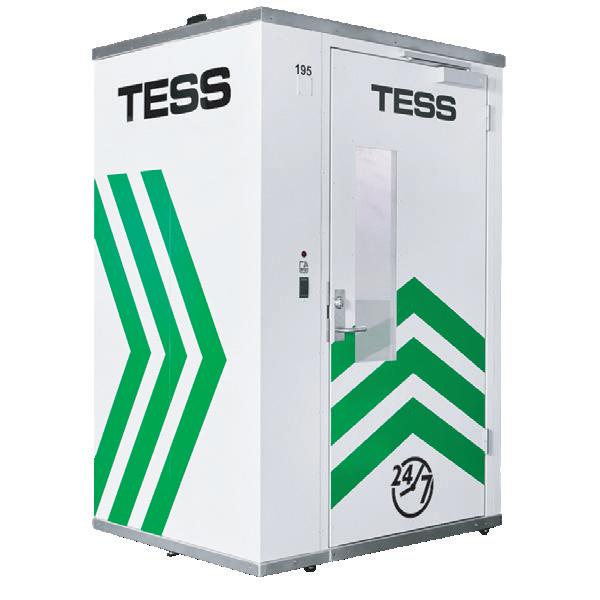
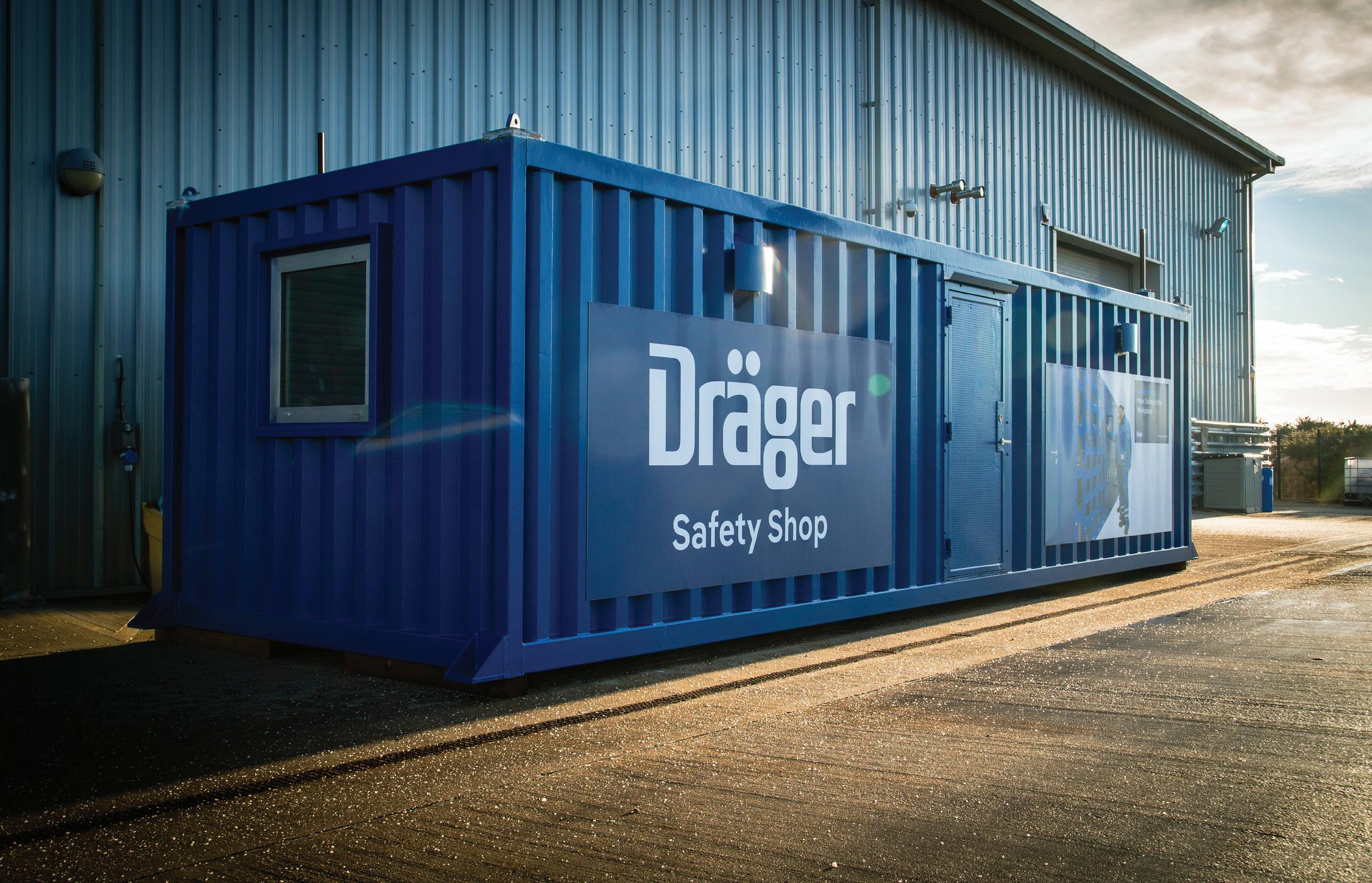
Packaged within a blast-proof container, our rental cabins are designed for the most demanding environments and are deployable anywhere across the UK. Each cabin has fully automated Rental Robot lockers giving approved personnel instant access to essential equipment 24/7!
From Dräger equipment to third-party equipment like radios, masks and even vehicle keys, everything is controlled, tracked and only accessible to trained users. Keep your teams focused on the job and not managing kit!
With our pay as you go model, you can have the full range of equipment on-site, ready for any scenario, while only paying for what’s actually used. No over-ordering, no wasted cost, just total flexibility when demand changes.
signals and the GENI Index.
FPSO
Norway NCS STRONG Equinor 16/4-14 PL 1174 S spud. Aker BP 36/4-2 PL 1153 active.
Brazil STRONG Bacalhau producing since October 2025. Aram block ANP deadline extended to June 2029.
West Africa STRONG Coral Norte FLNG construction continues. MOL/Repsol/TPAO Libya O7 PSA signed 16 June.
Middle East NORMALISING Iran 60-day license active to 21 August. Brent below $80. Hormuz reopening, UAE at 85% pre-conflict exports.
Rio Grande LNG construction continues. Galilee Zydeco-1 Louisiana spud 18 June.
Transocean Equinox to Santos Australia. Valeura Nong Yao plus Jasmine commitments.
Europe Wind STRONG Seagreen Phase 1A extension 500MW. Vattenfall Nordlicht II foundation Q3 2026. AR8 pre-qualification window closing.
Western Isles CoP. FDP pending,
Brownfield redevelopment trend gathering pace across UKCS.
Troll B Ringvei Vest tieback approved 18 June. COSL Innovator and Scarabeo 8 booked. Three concurrent NCS exploration wells underway, highest concurrent count since 2022.
Petrobras 80% / CNOOC 20% Aram block discovery confirmed May 2025. Valaris DS-4 and West Auriga drilling at 1,860m water depth. Pre-salt programme value 2026 to 2030 over $7bn.
Coral Norte EPCI under TechnipFMC Paris and Mozambique team. Libya O7 24 year PSA across 3,800 km². Mauritania GTA Phase 1 commissioning. West Africa pipeline approaching $30bn in 2026 FIDs.
US Treasury waiver allowing global purchase of Iranian oil. OPEC+ core 7 raising 188k bpd July. ADNOC Hail and Ghasha EPC $16.94bn progressing. Iraq new Oil Minister Bassim Khudair.
PRefChem $7.6bn refinery 50% stake reverts to PETRONAS following Aramco exit 15 June. Tangguh Phase 2 UCC $7bn FID November 2024 driving E and I scopes. Malaysia office launching September.
Rio Grande $12.5bn Technip Energies EPC active toward 2029 LNG. Woodside Louisiana LNG 19% complete Q3 2025. US LNG export pace at near record as Hormuz alternative.
Transocean Equinox 5 well Australia programme 16 June. Crux Libra Phase 3 Shell active. APAC supply chain opportunity opening through Emma Davidson and Perth team. Nik Ahmad joins KL September.
Seagreen extension total to 1,575 MW under SSE Renewables 49% / TotalEnergies 25.5% / PTTEP 25.5%. French 12GW round opens July. UK CfD AR8 contracts October. WTIV availability zero through 2026.
PROJECT INTELLIGENCE
OPERATOR EST. VALUE: STATUS: Australia · Browse Basin
Woodside lifted stake to 41.27% via PetroChina pre-emption announced June 2026. Two FPSO concept plus 900km trunkline to NWS Karratha plant. 11.4 Mtpa LNG potential. Liz Westcott reaffirmed commitment June 2026. Australia's largest undeveloped conventional gas. Pre-FEED supply chain engagement active.
Aramco LTA CRPO 167-171 plus 176 · Offshore EPCI
OPERATOR: EST. VALUE: STATUS: Saudi Arabia · Offshore 02
$3bn-plus combined
Saudi Aramco BIDS DUE 1 JULY 2026
OPERATOR: EST. VALUE: STATUS: UAE · Onshore 03 9
Five CRPOs covering 8 jackets at Marjan, 4 production deck modules across Abu Safah, Berri, Manifa, Safaniya. CRPO 176 (subsea flexibles Berri-Marjan) bids 30 June. LTA pool: Saipem, McDermott, L&TEH, Lamprell, NMDC Energy. $11bn Aramco offshore EPCI spend 2025.
ADNOC P5 · NE Bab plus SE Off-Plot EPCM
ADNOC Onshore
$3bn-plus combined EPCM
Commercial bids in evaluation Q3 2026
Off-plot facilities tenders to lift SE asset to 762,000 bpd by 2027 (132,000 bpd add) and NE Bab by 91,000 bpd. CPECC front-runner. P5 plan targets 5 million bpd nationwide by 2027. ICV programme drives 75 percent local content. Awards expected Q3 2026.
oil and gas
to watch, operator, location, value and supply chain insight.
Access the full interactive dashboard and pipeline data today at globalenergynetwork.net
ADNOC Upper Zakum UZ 1.5MMBD · World's 2nd Largest Offshore Field
ADNOC Offshore / JODCO / ExxonMobil
Multi-billion 3 packages
Bids submitted Q4 2025, awards Q3 2026
3 EPC packages tendered for capacity lift to 1.5 million bpd. Technip Energies on FEED. Asseifiya, Al Ghallan, Umm Al-Anbar and Ettouk artificial islands. $30bn programme commitment across UZ 750, UZ 1.2 and UZ 1.5. Wood Group PMC on prior phase.
Libya O7 PSA · MOL Repsol TPAO Consortium
OPERATOR:
MOL / Repsol / TPAO consortium
5 well Phase 1 commitment
EST. VALUE: STATUS: Libya · Onshore 05
24 year PSA signed 16 June 2026
First major foreign PSA in Libya in over a decade. 3,800 km² onshore block under National Oil Corporation. Phase 1 commits five exploration wells. Supply chain tendering for drilling rigs, wireline services and seismic acquisition opens Q3 2026. Signals supermajor return to North African upstream.
Romania · Black Sea 07
Neptun Deep · Romania Black Sea Gas Development
OPERATOR:
OMV Petrom 50% / Romgaz 50%
$4.6bn EPCIC
EPCIC active, sub-supply OPEN
Saipem EPCIC main contractor covering Arbatax fabrication, Karimun yard, Saipem 7000 plus JSD 6000 installation. Halliburton drilling services. Transocean Barents 10 well rig. EU energy security flagship. Sub-supply windows for SURF equipment, electrical, instrumentation OPEN now under Saipem framework.
Greater Gorgon Expansion · Chandon and Geryon Fields
OPERATOR: EST. VALUE: STATUS: Australia · Carnarvon Basin 10
Chevron Australia (op) plus partners
$10.5bn FEED
FEED TENDERING and BIDDING active
Live FEED tender process underway for Chandon and Geryon backfill to Gorgon LNG trains. Subsea tieback architecture to existing Barrow Island infrastructure. Phase 3 of Greater Gorgon expansion. Australian content commitments drive Perth supply chain engagement. APAC FEED awards expected H2 2026.
Greater Buchan Area · UK Brownfield Redevelopment NEO
FDP pending Q3 2026, first oil 2027 Approximately $1.5bn
Sevan 400 FPSO inherited from Western Isles CoP. Buchan, J1, Verbier and Glenn fields under one floater. FEED tenders for subsea infrastructure live now. UK brownfield value capture blueprint that bridges decommissioning to redevelopment. Aberdeen supply chain engagement priority.
Aker BP 36/4-2 PL 1153 · NCS Exploration Campaign
OPERATOR:
Aker BP
Exploration well plus appraisal programme
Spud 18 June 2026 by Saipem Scarabeo 8
EST. VALUE: STATUS: Norway · NCS 08
Active NCS exploration well under Aker BP. Saipem Scarabeo 8 semisub on contract. Part of three concurrent NCS exploration wells active in W26, highest concurrent count since 2022. Norway exploration renaissance under Equinor and Aker BP framework agreements.
Troll B Ringvei Vest Tieback · Equinor
Equinor (op) plus Troll partners
NOK multi-billion subsea
Concept approved 18 June 2026
Concept approval secured 18 June 2026. Subsea tieback to existing Troll B production system extends field life and unlocks discovered volumes. EPC tendering window opens Q3 2026 for subsea production system, umbilicals and topside modification. NOK 10bn Equinor M and M framework benefiting.
Valeura Nong Yao plus Jasmine Field Development Commitments
OPERATOR:
Valeura Energy
Multi-hundred million development
EST. VALUE: STATUS: Thailand · Gulf of Thailand 11
Development commitments confirmed 19 June 2026
Valeura confirmed Nong Yao plus Jasmine field development commitments 19 June 2026. Asia upstream pure-play. Drilling, WHP installation, production enhancement scope opening Q3 to Q4 2026. Gulf of Thailand brownfield revival. Bangkok and KL based service contractor engagement window now.
Galp Mopane Appraisal · Orange Basin Deepwater
OPERATOR
Galp 80% / Custos 20%
Pre-FID, FID targeted 2027
EST. VALUE: STATUS: Namibia · Orange Basin 12
Appraisal drilling progressing 2026
Mopane discovered 2024, appraisal drilling continued 2026 under Galp operatorship. Orange Basin frontier alongside TotalEnergies Venus and Shell Graff. Estimated 10 billion barrel resource potential. Galp first Namibian operator, leveraging Bacalhau FPSO experience. FID likely 2027 with FPSO concept.
Advanced technology is facilitating and streamlining asset integrity management in the energy industry, where predictive maintenance, robotics, and efficient asset performance have become mainstream in recent years.
Efficient asset management solutions help the energy industry, as well as other asset-heavy industries, to boost the reliability and safety of operations as governments are doubling down on energy security amid turbulent geopolitical developments.
Proper asset integrity management systems and practices assure that offshore rigs and turbines, onshore processing facilities, producing and refining assets, pipelines, and wind and solar plants operate smoothly and efficiently, and failures are prevented.
Digitalisation and AI have started to play an increasingly important role in asset integrity and performance management as both toptier and smaller-scale energy producers and service providers are using advanced technology and signing collaboration agreements to boost the performance of energy infrastructure assets.
Infrastructure Investments to Enable Long-Term Economic Growth
The global infrastructure market is expected to need as much as $106 trillion in investments by 2040 to meet the need for new and updated infrastructure, with energy one of biggest infrastructure verticals in terms of necessary investments, analysts at McKinsey & Company said in a recent report
The more than $100 trillion in investment spans seven critical infrastructure verticals, including energy. Transport and logistics would need $36 trillion and is the biggest investment target, followed
by energy and power with $23 trillion, according to McKinsey’s Senior Partners Alastair Green, Ishaan Nangia, and Nicola Sandri. Digital comes next with $19 trillion, followed by social infrastructure at $16 trillion, waste and water infrastructure at $6 trillion, agriculture with $5 trillion, and defence with $2 trillion.
The estimated $23 trillion in investment in energy will be driven by the global push to expand clean generation, upgrade aging grids, and meet electrification demand from industries and end users, the experts say.
Investment in oil and gas will also drive infrastructure investment in the energy sector as countries look to diversify their energy supply amid geopolitical upheavals and many opt for relying on homegrown resources where available.
Moreover, some jurisdictions in Asia and Africa continue to invest in coal-powered assets to meet immediate energy supply concerns, McKinsey noted.
“Nevertheless, navigating the energy transition represents an economic opportunity, as countries and companies that invest early in next-generation energy systems could gain long-term competitive advantages,” the consultancy’s senior partners wrote.
In the power and utilities sector, stakeholders are focusing on fortifying vulnerable grids and investing heavily in new transmission infrastructure to accommodate a growing share of renewable power output.
At some point, energy infrastructure overlaps with other verticals. For example, digital and decarbonisation technologies “are crossing into large-scale deployment, reshaping what is commercially viable in the next generation of power infrastructure,” according to McKinsey’s report.
Energy and digital infrastructure tend to generate the strongest economic returns, Boston Consulting Group (BCG) said in a report on infrastructure investment early this year.
Demand for new infrastructure and for stable and upgraded existing energy infrastructure is rising with geopolitics in an uncertain world, the energy transition, technology advances, and shifting demographics with rapid urbanisation of many parts of the developing world, according to BCG.
Energy Companies Team Up to Solve Asset Integrity Challenges
Over the past months, many big names in the energy industry and many startups and smaller-scale companies have announced technological breakthroughs or cooperation and collaboration deals to improve asset integrity management and asset performance.
Some of these include Baker Hughes announcing a multi-year contract with China Petroleum Engineering & Construction Corporation (CPECC) for and on behalf of Saudi Aramco, to deploy its Cordant Asset Performance Management (APM) suite across four Booster Gas Compression Stations (BGCS) in Saudi Arabia.
The contract marked the first enterprise deployment of Cordant digital solutions in Saudi Arabia, expanding Baker Hughes’ digital presence in the Kingdom.
This agreement builds on an earlier award under which Baker Hughes will supply gas technology equipment to Aramco to support the expansion of the largest unconventional gas field in Saudi Arabia.
“By combining our deep-domain expertise with advanced AI-powered digital technologies like Cordant™ APM, we aim to help customers like Aramco to enhance asset performance, increase operational resilience, and support progress toward more efficient, lower-carbon operations,” said Aravind Yarlagadda, Senior Vice President of Industrial Solutions, Industrial & Energy Technology at Baker Hughes.
In another asset integrity management deal, Saudi Aramco and CorrosionRADAR announced earlier this year they are expanding their partnership with deploying CorrosionRADAR’s predictive Corrosion Under Insulation (CUI) risk monitoring solutions at a major new greenfield project in Saudi Arabia.
“AI will give us the power to predict failures before they occur, optimise maintenance schedules and extend the productive life of critical assets,” said Ahmad O. AlKhowaiter, Executive Vice President of Technology & Innovation at Aramco.
“CorrosionRADAR’s technology is already delivering huge value through inspection cost reduction, improved uptime, and optimised turnaround planning.”
In a more recent agreement from the end of May, Saudi Aramco and automation leader Emerson said they would co-develop next-generation corrosion management solutions for the Saudi oil giant.
Aramco sees corrosion management as a strategic priority tied directly to operational performance, safety, and environmental responsibility. Continuous corrosion monitoring eliminates difficult, inefficient, and dangerous manual corrosion measurements and provides a reliable digital data stream for improved decision making, Emerson said in a press release.
As part of the collaboration Emerson will provide its technology leadership in ultrasonic online corrosion monitoring technology; seamless wireless connectivity for corrosion wall thickness monitors, and real-time and continuous data collection to develop a fit-forpurpose corrosion management solution for Aramco processes.
“Emerson, with our complete technology stack, is uniquely positioned to co-innovate the next-generation corrosion monitoring solutions that are cost-effective, scalable and customized for Aramco,” said Ram Krishnan, chief operating officer for Emerson.
In February 2026, THREE60 Energy, Innovair, and Oil States struck a strategic alliance to deliver integrated solutions for caisson integrity management in the global oil and gas sector.
Managing caisson integrity is a significant challenge for operators of ageing offshore oil and gas assets, as it presents both safety and operational risks and involves complex assessment and repair processes.
The collaboration combines proven inspection, engineering, and repair expertise to provide a seamless, endto-end service that enhances safety, assures compliance, optimises operational efficiency and reduces lifecycle cost and complexity for operators.
As part of the alliance, Innovair brings high-precision scanning, sensing, and robotics solutions to intelligently deliver reliable inspection data. THREE60 Energy translates these insights into engineering solutions and oversees project delivery. Oil States offers proprietary products ensuring repairs, refurbishment, and replacements are carried out safely and efficiently.
Halliburton, one of the world’s top oilfield services providers, has entered a strategic collaboration with Shape Digital to advance digital asset performance management through a unified asset view that connects subsurface and surface intelligence. The collaboration extends trusted data, domain science, operational expertise, and applied AI to support predictive, asset-level decisionmaking over the full production lifecycle, Halliburton said.
“The integration of subsurface and surface intelligence helps our customers plan with confidence, adapt to change, and execute more consistently throughout the asset lifecycle,” said Tony Antoun, senior vice president, Landmark, Halliburton.
The collaboration, which combines Halliburton Landmark’s Digital Field Solver (DFS) decision system with Shape Digital’s applied AI portfolio, will help connect production planning throughout the asset, improve energy efficiency, strengthen safety and asset integrity, and support asset performance management, according to Halliburton.
Offshore Norway, consulting and engineering group Wood has secured two five-year framework agreements with Norwegian energy major Equinor to provide maintenance and modifications (M&M) services and large modification projects for installations on the Norwegian Continental Shelf (NCS) and the associated onshore plants.
Asset Integrity
Wood is intended to provide M&M services on Snorre A and B which are integral to Norway’s oil and gas sector. Wood has supported these assets with maintenance, repair, and modifications expertise since 2016.
Equinor has the ability to extend the contracts for a further three and two years, to a total of ten years.
“Our collaboration with Equinor extends beyond Norway to the UK and Brazil, where we apply our engineering and operations expertise across their global portfolio,” Steve Nicol, Executive President of Operations at Wood, said in January.
In another agreement for Equinor, Swedenbased Njord Survey has secured a threeyear framework agreement with the Norwegian major for pipeline inspection and integrity work across European waters, with an option to extend.
The agreement builds on a strong collaboration and includes high-resolution geophysical surveys and offshore operations, delivered with carbon-neutral vessel operations, Njord Survey says.
Advanced technology and engineering is also part of the offshore wind asset integrity management.
Earlier this year underwater technology specialist Sonardyne signed a Memorandum of Understanding (MoU) with international advanced engineering company AMOG to provide a complete subsea asset monitoring service to offshore energy infrastructure operators. The partnership will combine Sonardyne’s underwater monitoring, positioning, and communication technologies and AMOG’s engineering assessment expertise to unlock asset insight, reduce downtime, and enable life extension, for floating offshore wind and oil and gas moorings, as well as pipelines and risers.
By Tsvetana Paraskova
Asset Solutions
As conventional energy assets continue to age and the overall production declines, the world demand for energy continues to increase and the need for uninterrupted availability of affordable energy sources become increasingly important.
This introduces many challenges to asset owners that need to keep their assets running for an extended period while keeping it safe and facing the ongoing pressure to reduce their associated operational costs. In addition to this, there is generally the willing to reduce manning as far as possible, due to labour shortages and the drive to increase safety, reduce environmental impact and costs.
The Asset Solutions team within Worley is a specialist engineering team helping customers worldwide with these challenges; the team works across all industries and helps our customers realize the maximum value from their assets by ensuring mechanical integrity, increasing reliability, whilst reducing operational costs during the whole lifecycle of their assets.
The team has skills in asset integrity management, life extension, maintenance & reliability, laser scan survey as well as support from the wider Worley Specialist Technical Solutions departments and global engineering hubs for any type of asset (onshore/offshore, pipeline/topside, upstream/midstream/downstream), and new energy alternatives (wind, hydrogen etc.).
The Asset Solutions team recognises it is essential for Operators to maximise the return on investment from existing assets and infrastructure. In part, this can be achieved through tailored asset management strategies that considers constraints and challenges imposed within the current energy market as well as identifying opportunities. Worley has found that our customers are looking at improving their asset management systems which involves the balancing of costs, opportunities, and risks against the desired performance of their assets, to achieve their organisational objectives.
Worley utilizes a holistic ‘full system’ approach to asset integrity management. It is a structured, systematic, stepwise, proven approach to asset and organizational value enhancement specifically designed to help our clients with realizing maximum value from their existing assets.
More specifically the approach that the Asset Solutions team use is a threephased approach to Asset Management which entails:
1. Project Framing - Stepping back and framing the issues, which may be driven by safety, production, OPEX, resources, left to right thinking.
2. Detailed Evaluation - Carrying out the detailed work to ensure issues are addressed and actions plans are developed. Issues may be related to any one of these areas:
a. Asset Integrity including life extension
b. Reliability and Production Optimisation;
c. Digital Data Management;
3. Implementation - Helping manage change culture and implementation on our customers’ sites and assets.
The core benefits are that all opportunities for asset value enhancement including maximizing production, optimized asset integrity, environmental concerns and organizational efficiency can be identified and addressed in a fully integrated manner, resulting in a more cost effective and value enhancing way forward in the ‘lower forever’ operating environment.
Neil Allen - Director - Asset Solutions
Three important aspects which the Asset Solutions team find that are important for late life energy asset owners are:
1. Inspection and Maintenance Rationalisation
Rationalisation of inspection and maintenance is the key step in successfully achieving OPEX reduction and potentially supporting manning reduction and moving installation to Normally Unattended Installation (NUI). This requires a thorough understanding of current operations coupled with a clear vision of the desired end goal. The overall quantity of inspection & maintenance activities can be, in some cases, significantly reduced to less than half of the starting point in terms of offshore hours. These changes need to be implemented in a manner that maintains the safety and integrity of the asset. What this means in practice is a detailed assessment of the current operations and identify whole sets of inspection and maintenance routines that can be removed and then incrementally reducing what remains by looking to move to a greater emphasis on risk-based inspection and conditionbased maintenance and predictive analytics. As part of the rationalisation activities new technologies surrounding inspection and maintenance will also be investigated to identify new technologies and further improve the efficiency of the inspection and maintenance activities.
2. Life Extension and Asset Re-Purposing
Life extension studies can support Operators understand the actions that need to be implemented to keep their asset safe and operational for several years and can also be used to support a decision where to end (decommission) or extend the asset life as well as support potential expansion and or repurposing projects. There are various assessments which can be carried out in order for Operators to be able to extend the life of their assets, the Worley Asset Solutions team find that our customers ask for the following
Fitness for Service assessments of their existing infrastructure – these assessments can follow industry guidelines / standards to prepare detailed calculated remaining life values or be fully based on the Operator’s knowledge and inspection results to ascertain whether a pragmatic approach can be made to extend the life of the infrastructure. These assessments provide a robust evaluation to recommend best steps to ensure the continued operation of the asset item.
Plant condition assessment – A full review of the condition of an asset detailing the open issues, key damage mechanisms acting within the asset and development of a way forward
surrounding maintenance, inspection or in some cases replacement activities.
Anomaly/Defect Categorisation – Many of our customers have been extremely good at raising and monitoring anomalies, however been challenged in planning the closure of these, this assessment ensures that the key anomalies are still monitored, however the associated inspection / maintenance activities can be planned and implemented efficiently, and that additional work is not undertaken
Life Extension Studies – Our customers are looking to maximise their investment by extending the life of their assets, the Asset Solutions team will undertake various assessments to come up a structure review of the activities that need to be completed in to extend the life.
Repurposing Studies – Repurposing existing infrastructure for Hydrogen and CO2 play a key role in the transition to low carbon energy and journey to net zero. Where repurposing is considered the current and likely future condition must be understood considering susceptibility to new threats in addition to system operability.
Our standard approach for life extension and repurposing is tailored for each asset type (i.e., pipeline, static equipment, etc..) and the project stage/required level of detail. Typically, this approach includes:
Data Gathering
Current Status Assessment
Future Status (Life Extension/ Repurposing) Assessment
Optioneering
Implementation
3. Leveraging the digital transformation
The ongoing digital transformation has the potential to transform existing assets into “next generation” assets, revolutionizing the way industrial asset Operators run their operations. Technology has enabled real-time monitoring and data analysis which can help increasing efficiency and availability and reducing manning and emissions. All this can ultimately result in reduced OPEX through the elimination of inefficiencies across the entire operation. We have helped customers with solutions in the asset integrity space along with the areas of predictive maintenance, IoT, realtime data analysis, automation and the use of AI and machine learning. However, all these opportunities to optimise assets come with their own risks and challenges during the journey from ideation to implementation. Worley believe that our clients are looking for digital tools and
services that encourage connectivity and can provide optimisation, efficiencies along with visualisation that will assist with the understanding of their integrity management.
The Asset Solutions team have experience in assisting customers with the selection and implementation of asset integrity related software and tools, the team can advise on the capabilities of current market software along and its connectivity to the client’s specific tools and software. As well as working with our clients’ own tools and software.
To further ensure efficiencies in asset management, Worley have developed in house and with proven software parters AI and machine learning tools that can optimise the assessment of condition and help our customers obtain cost effective solutions that assist with their understanding of their Assets.
Asset solutions have their own webbased integrity related visualisation tool called in-site which is based on laser scan data provided by Worley.
Worley have found that most of our customers have many years of laser scan data and 3D models which were created for specific projects or with the aim to fully capture the whole facility. This information provides great value to a large audience and providing access to this information has always been challenging, requiring specific software packages with costly licenses which can only be accessed from powerful desktop PCs.
In-site was developed to provide our customers with a collaborative, accessible platform to allow the visualisation of their facility. The in-site platform is webbased, doesn’t need any software to be downloaded or installed and can be accessed from desktop PCs, laptops and mobile devices at any time. Integrity related information can be added to the overall 3-D scan and can provide our clients with visual knowledge of the integrity threats and anomaly locations. Other capabilities of the in-site platform are:
Access to an overview map
Various 2D & 3D display settings
The ability to slice and crop images and information from the images
The ability to share information within various other platforms which aids the collaboration between teams which now due to the pandemic sometime are located within different offices
Annotation on the model
Accurate measurements
Tablet / Mobile device accessibility
VR headset capabilities
Location of anomalies can be entered within the platform
Corrosion loop overlay
Production Continuity Starts with Asset Integrity: Why Subsea Visibility Matters More Than Ever
Maintaining subsea asset integrity has always been fundamental to offshore reliability. But as infrastructure ages and operators look to maximise production from existing assets, the challenge is changing.
Knowing an asset is healthy is no longer enough — operators need confidence in its condition between interventions, with the insight to identify emerging risks before they become critical failures.
Asset integrity is moving beyond reactive response and uncertainty. It is about improving visibility, understanding asset condition and making informed decisions before reliability is compromised.
The
challenge of managing what cannot easily be accessed
Subsea systems are built for longevity — but when conditions change, access is rarely simple.
Intervention is expensive, complex and operationally constrained. For operators managing critical infrastructure, the challenge is understanding what is happening beneath the surface before a problem demands action.
Traditional integrity strategies have depended on planned inspection, testing and intervention activities. These remain essential, but they provide only a snapshot of asset condition at a specific point in time.
The limitation is clear: they show where an asset is today — not necessarily where it is heading.
Degradation does not follow inspection schedules. Changes in asset condition can develop gradually, creating uncertainty around when intervention is required and how quickly action needs to be taken.
From detection to decision-making
The industry is increasingly moving towards proactive integrity management, where continuous insight supports better decision-making.
The value of monitoring is not simply generating more data. It is turning asset condition into actionable insight.
By improving visibility of critical systems, operators can identify developing risks earlier, optimise maintenance strategies and make decisions based on real asset performance rather than assumptions.
This enables a shift from reacting when issues occur to understanding asset condition and taking action before reliability is impacted. Instead of asking, “What happened and how do we respond?” operators can ask, “What is the asset telling us, and what action should we take next?”
Electrical integrity: visibility of a critical system
When discussing subsea asset integrity, attention often focuses on structural condition, corrosion management and mechanical reliability. These remain critical areas, but electrical systems are equally important to maintaining reliable operations.
Electrical degradation, including declining insulation resistance (IR), can develop over time and impact system performance if not identified.
The challenge is that subsea electrical systems can degrade silently. Without continuous insight, operators may only identify deterioration once reliability has already been affected.
Improving visibility of electrical system health provides integrity teams with a clearer understanding of changing conditions and supports more proactive maintenance decisions.
Building confidence through installed intelligence
The next evolution of asset integrity will depend on access to timely, actionable insight.
Installed intelligence and continuous monitoring technologies provide operators with greater awareness of asset health, helping teams understand changes as they happen and plan interventions more effectively.
Technology does not replace engineering expertise or operational experience. Instead, it provides the visibility needed to support better decisions throughout the asset lifecycle.
As offshore infrastructure continues to mature, production continuity will increasingly depend on the ability to understand asset condition without relying solely on physical access.
Asset integrity will increasingly be built on visibility: understanding asset health, managing risk and maintaining confidence in critical infrastructure throughout its operational life.
Integrity
Beyond Asset Life
When offshore assets near the end of their operational lifespan, the importance of integrity assurance extends well beyond the cessation of production phase.
At this latter stage in the asset lifecycle, the focus shifts from sustaining safe production operations to maintaining a safe and secure environment for decommissioning, dismantling and the removal phase of their lifecycle.
Having recently marked the significant milestone of 40 years in business, CAN Group is well versed in delivering trusted asset integrity solutions at all stages of the asset lifecycle. Over the years, CAN has gained extensive worldwide experience delivering inspection, integrity, mechanical and trades-based services, digital and integrated service solutions across a
range of contracts, projects, campaigns and complex scopes. This experience has proven integral in supporting the transition to late life asset and decommissioning. Projects within the UKCS include the provision of integrated access solutions, rigging, cutting, welding, inspection and mechanical services for complex removal campaigns as primary support contractor to Tier 1 decommissioning specialists.
CAN Group’s technical and corporate competence is also particularly prevalent as Engineering, Preparations, Removal, and Disposal (EPRD) activities can present unique integrity challenges
Integrity Beyond Asset Life
Late-life assets demand a different approach.
With four decades of experience across the asset lifecycle, CAN Group support its clients through the unique challenges of late-life asset management and decommissioning.
Our integrated approach ensures integrity is in sight, visualised and maintained at every stage - enabling safe preparation, controlled dismantling, and efficient removal.
with assets either being partially decommissioned or operating outside of their original design intent. This can present evolving degradation mechanisms, increased dropped object risks, and a reliance on accurate, up-to-date integrity data to support safe dismantling.
This is where CAN’s trusted team of experts support its client base with a risk-led and fit for purpose approach. From streamlining inspection strategies, including Risk Based Assessments and Preventative Maintenance routines, visualising data for informed decisionmaking (digital twins, photogrammetry etc.), implementing find & fix / find & arrest solutions and Potential Dropped Object sweeps, our teams provide smart solutions for integrity assurance throughout all stages of the asset lifecycle.
With decades of experience, integrated capability, and a forward-thinking approach to late life integrity, CAN Group continues to be a trusted partner for delivering safe, efficient and insight-led asset integrity solutions.
From Uncertainty to Foresight: AISUS Launches Project c|Ai|sson
The offshore inspection specialist unveils an AI-driven platform that forecasts asset condition years before the next inspection. Turning data operators already hold into decisions they can defend.
The offshore energy sector has long lived with a costly blind spot: it can measure the condition of an asset today but not see where that condition is heading. AISUS is set to change that. With the launch of Project c|Ai|sson, the company has built an AI-driven platform that does more than report how much life remains in a structure now, it forecasts how much will remain in five years’ time, and where failure will appear first.
The platform has been developed in-house by AISUS’ Data & AI team, led by Urmila and Zargham, bringing together years of offshore inspection data with advanced modelling to turn information into forwardlooking insight.
For more than a decade, AISUS has deployed remote robotic inspection solutions across offshore assets worldwide, taking personnel out of hazardous environments, reducing cost for operators, and covering an entire structure in a single deployment. That work has produced something the industry has rarely had at scale: years of dense, consistent inspection data. Project c|Ai|sson turns that data into foresight. The problem it tackles
The challenge is one every late-life operator will recognise. Offshore assets are running well beyond their original design life, budgets are tighter, and regulatory scrutiny is rising, yet the data needed to manage them is often fragmented across disconnected reports, imagery and
spreadsheets, with critical knowledge held by a handful of experienced engineers. Inspection campaigns happen only every five to seven years and cost hundreds of thousands of pounds, so the long gaps between them have been bridged by assuming the worst and adding margin, which keeps assets safe, but it is expensive guesswork.
A living digital twin
Project c|Ai|sson replaces that guesswork with evidence. At its core is a continuously updated digital twin - a living representation of an asset that draws inspection data, engineering models and real environmental conditions into a single, secure source of truth. AI-assisted computer vision standardises how inspection footage is analysed, stereoscopic 3D modelling captures precise condition in confined spaces, and predictive modelling forecasts how degradation will progress. Every asset is graded by condition and risk, allowing an operator to rank an entire asset at a glance.
Case Study
In a blind test, AISUS used inspection data from 2014 and 2019 to forecast a North Sea caisson’s 2023 condition, cell by cell, before seeing a single figure from the real inspection.
The prediction matched reality with a spatial accuracy of 0.955 out of a possible 1.0 and an average error of just 0.29 millimetres per cell - thinner than a credit card - across more than 20,000 cells, with 98% of cells predicted to within one millimetre. Where the model was wrong, it stumbled on the side of caution, never optimistic. Moving to a second asset and calibrated on a single inspection, it located that structure’s critical corrosion band on its own.
Every input to Project c|Ai|sson is a physical quantity an engineer would recognise, and every prediction can be traced back to a physical cause. The platform is built to inform engineering judgement, not replace it: AI processes and structures vast volumes of data, while engineers remain responsible for interpreting the results and decision making.
For an industry navigating ageing infrastructure, the shift is significant. Instead of reacting to problems as they surface, operators can anticipate them, by aligning inspection, maintenance and investment around the evidence. Project c|Ai|sson needs only the inspection history operators already hold, the future condition of an asset is no longer a question mark, it is something operators can see, plan for, and act on today.
From Compliance to Resilience: Rethinking Asset Integrity for a New Energy Era
For decades, asset integrity in the offshore sector has largely been viewed through the lens of compliance.
Inspection programmes were designed around fixed schedules, annual campaigns and regulatory requirements, ensuring assets remained safe and operational while meeting industry standards. Today, however, operators are being asked to manage risk in a more complex and rapidly changing environment.
Ageing infrastructure, increasingly challenging offshore operations and growing demands on energy systems mean that asset integrity can no longer be treated as a periodic exercise. Instead, it must be viewed as a continuous process that supports the resilience of critical infrastructure throughout its entire life cycle.
A New Era of Asset Intelligence
This shift is being enabled by advances in technology. The offshore industry now has access to a wealth of data that was simply unavailable a decade ago. Remote inspection technologies, structural monitoring systems and near real-time data processing are providing operators with a far more detailed understanding of asset condition and performance.
The result is a transition away from fixed inspection intervals towards more intelligent, risk-based strategies. Rather than asking whether an asset has passed its latest inspection, operators can increasingly assess how it is performing over time, identify emerging risks earlier and make better-informed decisions about maintenance, repair, life extension or decommissioning. Bringing inspection and monitoring services together can further support this approach, simplifying asset management, improving efficiency, providing greater cost certainty and giving operators a clearer understanding of asset condition over time.
Shared Challenges Across Energy Sectors
Importantly, this evolution is taking place across both traditional and emerging energy sectors. The offshore wind industry is encountering many of the same challenges that oil and gas operators have managed for decades. Foundations, cables, substations and other critical infrastructure are all exposed to harsh marine environments, subject to wear and tear and expected to operate reliably over long periods. Failures can have significant operational, financial and environmental consequences.
As offshore wind portfolios continue to expand, the industry has an opportunity to apply lessons learned from decades of offshore asset management. Taking existing, proven principles while leveraging modern technologies to create smarter and more efficient integrity strategies is the aim.
This is particularly relevant as many renewable energy operators are still building their internal asset management capabilities. Access to specialist expertise can help organisations develop monitoring and inspection programmes that are proportionate to risk, aligned with operational objectives and capable of supporting long-term asset performance.
Asset Integrity as an Energy Security Imperative
At the same time, the conversation around energy infrastructure is evolving. The future is looking less like a binary choice between oil and gas or renewables, and more like an acceptance that both will play important roles in meeting global energy demand, with equivalent dependence on resilient offshore infrastructure.
By Daniel Jones, Regional Service
From mature oil and gas platforms approaching life extension decisions to new offshore wind developments entering operation, asset integrity is becoming a critical enabler of energy security. Ensuring that infrastructure remains safe, reliable and fit for purpose throughout its life cycle is essential to maintaining continuity of supply and supporting the broader energy transition.
The future of asset integrity will not be defined by how often assets are inspected. It will be defined by how effectively operators use data, expertise and technology to understand risk, improve performance and extend field life over the long term.
As the offshore sector continues to evolve, asset integrity is moving beyond compliance towards becoming the cornerstone of a sustainable, reliable and resilient energy infrastructure for the future. Those organisations that embrace a life cycle approach today will be better positioned to manage risk, optimise performance and adapt to changing operational demands tomorrow. In an increasingly complex energy landscape, resilience is no longer simply an operational objective – it is a strategic necessity.
Blue Essence® USV operating in the North Sea
Fugro’s patent-pending ROV-installable restraint clamp used to support ageing subsea infrastructure.
Turning Integrity Insights into Action
Asset integrity professionals are consistently surrounded by data; Volumes of Inspection records (UT, RAD, CVI, GVI ETC), Risk Based Assessments (RBAs), fabric maintenance findings, engineering drawings and historical reports that (may or may not) already exist from heritage asset owner organisations.
The real and ongoing challenge is assimilating this data and transforming it into output and actions that drive safe, efficient and effective asset management. This is where CAN Group and Envizion’s collaboration comes to the fore, integrating smart digital twin workflows into inspection, integrity and operational processes to unlock greater value from existing data and to streamline the integrity process going forward.
With four decades of experience delivering inspection, asset integrity and trade related solutions, CAN Group’s services help their clients understand asset condition, manage risk and ensure critical maintenance activities are identified for action. Envizion’s intelligent digital twin platform, AVA, provides visual asset context, connected workflows and decision support.
Together, these capabilities help bring asset integrity data to life by bringing inspection findings captured via CANtab, CAN Group’s tablet reporting solution, RBAs, historical inspection data, engineering data, drawings, 3D models, laser scans and 360 imagery together around the asset itself, in a single environment.
This supports a clearer and more complete understanding of asset health, helping engineers prioritise the areas that have the greatest impact on safety, reliability and production performance.
This collaborative workflow also helps bridge the gap between integrity assessment and execution. Inspection findings, anomalies and fabric maintenance issues can be developed into inspection and repair scopes and workpacks, supported by the engineering, operational and visual information required to make informed decisions.
Throughout the process, integrity stakeholders maintain visibility of asset health, active anomalies, work status and historical condition, creating an integrity management cycle that supports assessment, prioritisation, execution and continuous improvement.
By opening trusted asset information to engineering, maintenance, operations, fabric maintenance, planning and turnaround teams, the workflow extends the value of every inspection, survey and asset record captured.
The result?
Faster access to accurate information, improved decision-making, more effective risk prioritisation and the timely identification and execution of critical inspection, repair and fabric maintenance activities.
Inspection to Action: A Connected Digital Workflow
–watch here
People on the Move
People on the Move
UK & Europe
Type One Energy
Bernard Looney
Confirmed as Director from 16 June 2026. Former BP CEO joins the stellarator-based fusion energy company board.
Type One targets pilot plant FID 2027 and signals capital reallocation toward next generation energy infrastructure.
Equinor
Jannicke Nilsson
Confirmed as Director from 16 June 2026. Former BP CEO joins the stellarator-based fusion energy company board.
The Next GEN of Media
Subsea7
Stuart Fitzgerald
Confirmed as CEO from 1 July 2026, succeeding John Evans who retires after a 40 year career. Fitzgerald has led Seaway7 since 2022 and is proposed to lead the future Saipem7 entity following the planned merger with Saipem.
Type One targets pilot plant FID 2027 and signals capital reallocation toward next generation energy infrastructure.
Confirmed as Executive Vice President for Projects, Drilling and Procurement effective Q3 2026. Oversees NOK 10bn maintenance and modification framework activity and concurrent NCS exploration drilling under Aker BP and Equinor.
BP
Carol Howle
Executive Vice President of Trading and Shipping, confirmed as Deputy CEO effective 2 April 2026. Five of BP's nine person leadership team are now women, including the top two positions.
AGR
Steven Ross
Steven Ross joins AGR to future-proof operations, drive digital transformation and enhance the client experience through scalable, technology-enabled processes.
MIDDLE EAST
ADNOC Gas (UAE)
Fatema Al Nuaimi
Confirmed as Chief Executive Officer, one of the most senior female appointments in the Gulf energy sector this year.
Leading $16.94bn Hail and Ghasha EPC delivery alongside Borouge 4, Diyab and Bab Field expansion programmes.
Aramco
Aimen Al Mudaifer
Confirmed as Director from 16 June 2026. Former BP CEO joins the stellarator-based fusion energy company board.
Decom Engineering
Keith McDermott
Appointed Chairman as the Aberdeen based decommissioning specialist accelerates growth. Heather Alpha topsides singlelift completed August 2025 and EnQuest $45m Well-Safe Solutions frame contract signal a strong decom pipeline.
Viridien
Henning Berg
French seismic firm Viridien has appointed Henning Berg as chief executive officer and director following approval by shareholders at the company’s annual general meeting.
ATPI
Grace Longmuir
ATPI Energy has appointed Grace Longmuir as Head of Energy and Middle East Marketing, strengthening its market position. Bringing energy-sector expertise from OPITO and marketing experience, she will support growth across oil, gas and renewables.
Iraq Oil Ministry
Bassim Mohammed Khudair
Former Deputy Oil Minister and ex Director General of both the Iraqi Drilling Company and Iraq's Oil Exploration Company, confirmed by parliament as Iraq's new Minister of Oil under Prime Minister Ali al-Zaidi.
Oregen Energy (Namibia)
Philip Birch
Type One targets pilot plant FID 2027 and signals capital reallocation toward next generation energy infrastructure.
Senior leadership transition following PRefChem 50% stake exit completed 15 June 2026. Aramco refocusing capital on upstream brownfield LTA model across Safaniya, Zuluf, Berri and Marjan, with $9bn umbrella framework.
Geoscientist, appointed to the strategic advisory board as the company deepens its exposure to the Orange Basin. Birch brings Namibia subsurface expertise to specialist subsurface frontiers including Mopane appraisal under Galp.
Appointments, promotions and industry moves across the global energy sector this month. The standout move in June: Bernard Looney joins Type One Energy fusion board, signalling capital reallocation toward next generation energy.
Global
North america
Expand Energy (US)
Marcel Teunissen
aSIa
Appointed Chief Financial Officer effective 6 April 2026, joining from Parkland Corporation where he served as CFO from 2020 to 2024. Previously held senior finance, commercial and strategy roles at Shell across upstream and integrated gas for more than 20 years.
Pemex (Mexico)
Juan Carlos Carpio
The company's CFO, appointed by President Claudia Sheinbaum to lead Pemex as the state oil company grapples with mounting debt and production decline. Zama Field FEED progressing toward late 2026 FID under Harbour Energy and Pemex.
Woodside Louisiana LNG
Robert Harvey
Confirmed as Project Director for the $17.5bn Woodside Louisiana LNG Foundation Phase, with construction at 19% completion as of Q3 2025. Bechtel EPC, Chart Industries IPSMR, Baker Hughes 8 LM6000PF+ turbines. First LNG targeted 2029.
South america
Petrobras (Brazil)
Angélica Laureano
Appointed Chief Logistics, Commercialisation and Markets Officer effective 7 April 2026, following the board approved early termination of Claudio Romeo Schlosser. Bacalhau producing since October 2025 and Aram block deadline extended to 2029.
Woodside Energy
Liz Westcott
Appointed Chief Executive Officer and Managing Director effective 18 March 2026, following Meg O'Neill's departure to BP. Westcott has over 30 years of industry experience, previously leading Australian Operations including the Scarborough Energy Project.
Dialog Group (Malaysia)
Saiful Azuan Abdul Aziz
Appointed Deputy Managing Director, Upstream at Malaysia's Dialog Group, which provides technical and engineering services to the energy industry. BIGST Gas Cluster and PRefChem programmes drive Malaysian supply chain activity.
Vantris Energy (Malaysia)
Adnan Zainol Abidin
Former Chief Operating Officer of Petronas, named as new Chairman of Vantris Energy (formerly Sapura Energy), signalling a significant strategic reset for the restructured company across upstream and asset integrity services.
Vulcan Completion Products
Aisyah Tan
Appointed Regional Account Manager for Asia Pacific, strengthening the company's presence across the region. Supports completion product delivery into Malaysia, Indonesia and Australia upstream programmes.
Roberto Gabrielli
Confirmed as Chief Operating Officer effective Q2 2026, overseeing Vaca Muerta development acceleration and the Mercuria-Raizen Argentina $1.42bn refining transaction. YPF advancing under Milei administration deregulation framework. YPF (Argentina)
Woodside Energy
Mark Cutifani CBE
Former Chief Executive of Anglo American, appointed Independent Non Executive Director. His appointment strengthens board level governance capability and experience in overseeing large scale, capital intensive global businesses.
Opportunity, risk and reality: navigating a complex energy transition
By Malcolm Gunnyeon and Martin Ewan, Brodies LLP
The energy transition is often framed as a decisive shift from hydrocarbons to renewables. In practice, it is proving to be far more complex.
Rather than a single event, the transition is emerging as a gradual and uneven rebalancing of the energy system—one that must carefully reconcile decarbonisation ambitions with security of supply, affordability and economic stability.
This reality sits at the heart of the energy industry’s current challenge. Momentum behind renewables, storage and grid infrastructure is accelerating, yet fossil fuel based energy sources continue to play a vital role and will do for some considerable time to come. Oil and gas operations not only underpin current energy resilience but also support investor confidence and the skills base required to deliver lowcarbon projects at scale. As highlighted in our recent report, Evolution not revolution: investing in the energy transition, progress is not linear, rather it is iterative and, at times, uncertain.
Few places illustrate this tension more clearly than Aberdeen and the North-east of Scotland. Long established as a global centre for oil and gas, the region now faces a pivotal question: can its expertise be successfully transferred into the industries of the future?
The answer is not straightforward. While there is a strong narrative around the transferability of skills, the reality is more nuanced. Core engineering capabilities developed over decades in offshore oil and gas remain highly relevant across renewables, hydrogen and carbon capture. Likewise, project management, legal, financial and operational support functions can, generally speaking, transition relatively smoothly.
However, moving from traditional energy to emerging technologies is not a simple cut and paste exercise. New sectors bring new operational environments and risk profiles. For example, offshore wind operations differ significantly from oil platforms, often involving smaller teams, increased isolation and lone working, and more complex access arrangements. These differences create a clear need for reskilling and adaptation, particularly in frontline roles.
Yet this challenge also represents a significant opportunity. The existing workforce, with its strong safety culture and depth of experience, is arguably best placed to bridge the gap. The greater risk lies not in the skills mismatch itself, but in failing to act. Without clear pathways for transition, talent may migrate elsewhere, taking expertise, and economic value, with it.
If this gap is not managed carefully, it could undermine both delivery and investor confidence. Skilled individuals, for example in engineering, project delivery or offshore operations, are essential to the successful rollout of new infrastructure. Losing that talent, even temporarily, risks delaying projects and weakening the UK’s competitive position, perhaps irreparably.
Investor confidence remains a defining factor in the pace of the transition. Capital will flow to jurisdictions that demonstrate clear strategy, policy stability and a credible plan for workforce development. Where there is uncertainty investment may be diverted elsewhere.
Closely linked to this is the significance of perception. Narratives around the energy transition can be highly polarised, often presenting it as either a rapid revolution or a continuation of the status quo. In reality, the most viable and sustainable path lies between these extremes.
Improving public understanding of this balance is essential. A more informed and nuanced debate, which recognises the continued role of oil and gas alongside the growth of renewables, can help create the stable environment needed to attract long-term investment. For example, in the short-term, fossil-derived petrochemicals will continue to be a vital feedstock for epoxy resins used in wind turbine blades, and plastics and related materials used in solar panels and battery components.
Global uncertainty adds another layer of risk. Geopolitical tensions, supply chain disruptions and volatility in commodity markets all have the potential to accelerate or hinder the transition.
On one hand, instability can strengthen the case for renewable energy by highlighting the risks of reliance on imported fuels. On the other, it can encourage some countries to prioritise short-term energy security through continued investment in traditional resources.
For the UK, this dual dynamic presents both challenge and opportunity. With access to both domestic oil and gas resources and significant renewable potential, the UK is uniquely positioned to balance security and sustainability.
The UK, and particularly the North-east of Scotland, has the infrastructure, expertise and regulatory framework to establish itself as the global energy hub for the future.
However, this position is not guaranteed. Competing regions are equally ambitious, and the window to act is finite. Success will depend on the ability to manage risk, retain and develop talent, and create the conditions for sustained investment.
The transition is not without its challenges but seizing the opportunity it presents is still within our control. By embracing a pragmatic, “evolution not revolution” approach, one that balances ambition with delivery, the sector can navigate this period of change successfully.
To download ‘Evolution not revolution: Investing in the energy transition’ visit brodies.com/energy-transition
The UK’s largest innovation funding consultancy
Leyton is an international consulting firm that helps businesses leverage financial non-dilutive incentives to accelerate their growth and achieve long lasting performance.
We simplify your access to these complex incentives. Our combined teams of highly skilled Tax and Technical specialists, enhanced with cutting-edge digital tools developed internally, maximise the financial benefits for any type of business.
SPONSORED BY
Innovating Asset Integrity: Building a Resilient and Sustainable Future for the Energy Sector
In today’s rapidly evolving energy landscape, asset integrity is more critical than ever.
As the world transitions to new energy sources—whether renewable or lowcarbon—the pressure to maintain safe, reliable, and sustainable operations has intensified. Asset integrity ensures that infrastructure, from offshore platforms to renewable energy facilities, remains operational and safe throughout its lifecycle. To meet these challenges, the energy industry is embracing innovation to safeguard assets while reducing costs and minimising environmental impact.
The Evolution of Asset Integrity
Traditionally, asset integrity in the energy sector relied on reactive approaches, where problems were addressed only after they occurred. Inspections, repairs, and replacements were done postfailure, leading to significant downtime and unplanned costs. However, with the energy transition, this model is evolving.
Today, asset integrity management is shifting to a more proactive and predictive model. Operators focus on identifying potential risks and degradation before full-scale failures occur. This shift is driven by regulatory pressures, safety concerns, and a need for more efficient long-term asset management.
Moreover, asset integrity isn’t just for oil and gas companies; renewable energy sources like wind, solar, and hydrogen now face similar challenges. With these technologies still maturing, robust asset integrity practices are essential for longterm reliability, especially as the energy sector integrates decentralised and variable power sources.
Authored by Douae El Boukili
R&D Consultant
The Role of Innovation in Asset Integrity
Innovation has become the backbone of improving asset integrity in the energy sector. New technologies and methods are emerging to address the challenges of maintaining complex infrastructure while ensuring sustainability. These innovations are paving the way for more resilient energy systems.
One such innovation is advanced materials technology. The development of new materials and coatings that resist corrosion, wear, and fatigue is crucial to extending the life of assets. For example, anti-corrosion coatings are widely used in offshore and onshore installations. These coatings protect assets from environmental exposure, ensuring they perform optimally for longer periods and reducing maintenance costs.
Additionally, predictive maintenance has emerged as a key innovation. By integrating real-time monitoring and performance tracking, operators can predict when specific components will need attention, allowing them to intervene before issues arise. This approach not only prevents unplanned downtime but also reduces operational costs.
Another significant innovation is conditionbased monitoring. This technique regularly assesses the condition of critical infrastructure, enabling operators to make data-driven decisions about repairs and replacements. By focusing on real-time asset health, condition-based monitoring increases the reliability of assets and cuts down on unnecessary maintenance activities, further reducing costs.
The Future of Asset Integrity in New Energy
As the energy industry continues to evolve, the future of asset integrity will be shaped by innovations that prioritise efficiency, sustainability, and resilience.
One promising trend is the increased adoption of advanced diagnostic tools and performance optimisation software. These tools allow operators to assess asset health in real time and make more informed decisions about maintenance schedules.
Sustainability will also play a critical role in the future of asset integrity. As the global push for cleaner energy intensifies, maintaining assets with a reduced environmental footprint will become increasingly important. Innovations focusing on reducing emissions and energy consumption in asset management processes are already gaining traction. For example, some companies are exploring ways to power maintenance operations using renewable energy sources, further reducing the carbon footprint.
Moreover, as the industry shifts towards decentralised power generation—such as offshore wind farms, solar installations, and green hydrogen plants—the complexity of asset integrity management will grow. To tackle these challenges, collaboration among industry stakeholders and the development of standardised asset integrity practices will be essential.
Innovation is the driving force behind the evolution of asset integrity in the energy sector. Whether through the development of advanced materials, the implementation of predictive maintenance, or the use of condition-based monitoring, the industry is moving toward a future where assets are more reliable, sustainable, and costeffective. As new energy technologies mature, maintaining and enhancing asset integrity will be key to the long-term success of the energy transition. With continued innovation, the energy sector is positioned to build a more resilient and sustainable future—one where asset integrity is fundamental to every operation.
Over 30 years of delivering innovative subsea excavation and trenching solutions for the oil & gas, renewables, decommissioning, and wider energy sectors.
Australia’s Renewable Project Pipeline Is Booming
Following government tenders for nearly 10 gigawatts of new renewable energy capacity, Australia’s pipeline of probable clean energy projects jumped by about 30% to as much as 32.3 GW in the biggest surge on record.
The total of accredited, committed, and probable projects have now soared to nearly 70 GW as Australia continues to award tenders for wind, solar, and battery energy storage projects, Bloomberg reported on Thursday, citing data compiled by Australia’s Clean Energy Regulator.
Granted, not all projects currently classified as “probable” will make it to the final investment decision and construction phase, but the trend has been clear in recent years—Australia’s renewable energy capacity is booming and accounting for growing share of the electricity mix.
Last month, the federal government awarded in Tender 7 of the Capacity Investment Scheme (CIS) as many as 19 projects set to deliver 7.8 GW of renewable generation and a further 7.9 GWh in battery storage through hybrid projects.
In the National Electricity Market (NEM), renewables supplied 46.5% of generation in the first quarter of 2026, the highest share on record for a first quarter, driven by increased wind and solar output, with batteries playing a greater role in market, the Australian Energy Market Operator said earlier this year.
“Batteries were the most frequent pricesetting technology, setting prices in around 32% of trading intervals across the NEM during the quarter,” said AEMO Executive General Manager Policy & Corporate Affairs, Violette Mouchaileh.
“They increasingly reduced reliance on gas and hydro generation during evening peaks, contributing to lower year?on?year wholesale prices in most regions,” Mouchaileh added.
Despite the battery momentum and the record share of renewables in electricity supply, financial commitments for new generation slumped by 46% in 2025, as only 2.3 GW of new renewable energy generation reached financial close last year, Australia’s Clean Energy Council warned last month.
“We cannot afford to let planning bottlenecks, connection queues and contract economics stall the good progress already made,” said Jackie Trad, CEO of the Clean Energy Council.
DOI settlement redirects $765 million from offshore wind to gas, geothermal projects
The U.S. Department of the Interior announced an agreement with Invenergy under which the company will terminate four offshore wind leases and redirect approximately $765 million toward natural gas-fired power generation and geothermal energy projects.
The offshore wind leases are located in the New York Bight, off California’s Central Coast and in the Gulf of Maine. According to Interior, the agreement will shift investment toward energy projects capable of providing reliable power generation on commercially viable timelines.
Invenergy said the redirected capital will support natural gas-fired power plant developments in Indiana, Wisconsin, Iowa, Kansas and Missouri, along with geothermal power projects in the western United States.
The agreement marks a significant change in planned investment for the lease areas, which had been designated for offshore wind development but had not yet reached commercial operation.
Interior Secretary Doug Burgum said the agreement supports efforts to expand domestic energy infrastructure and increase access to dependable power supplies.
“Under President Trump, companies are shifting investment back toward dependable, secure energy infrastructure that can power our economy and lower utility costs,” Burgum said in a statement.
Invenergy said the decision reflects its focus on deploying capital into projects that can meet growing electricity demand while maintaining disciplined investment practices.
“At a time of unprecedented energy demand, Invenergy is focused on delivering reliable, affordable energy for our customers and supporting disciplined investment at scale,” said Daniel Runyan, senior vice president for development at Invenergy.
The company said it will continue evaluating future opportunities as market conditions evolve.
Invenergy is one of North America’s largest privately held developers, owners and operators of energy infrastructure, with operations spanning power generation, transmission and energy storage.
The announcement comes as U.S. electricity demand continues to rise, driven by industrial growth, electrification and expanding power requirements from data centers and artificial intelligence applications.
Global Offshore Wind Capacity on Track to Quadruple to 420GW by 2035
Governments across the world should expedite the development and construction of offshore wind farms to help shield their economies from the impacts of future energy crises, according to a new report from the Global Wind Energy Council (GWEC).
GWEC’s 2026 Global Offshore Wind Report set out an eight-point action plan for policymakers to ensure offshore wind projects are prioritised for investment as nationally significant projects in planning and procurement frameworks.
In 2025, more than 9GW of new offshore wind capacity was grid-connected worldwide, enough to power over 10m homes. This made 2025 the third-highest
year for new installations, bringing the cumulative total installed worldwide to 92.5GW, equivalent to powering over 100m homes.
“With more than 50GW of offshore wind projects in construction around the world, annual installations are expected to double in 2026, triple by 2031, and surpass 50GW per year by 2035,” the report said.
Predicted to reach a compound average annual growth rate of 24% between 2026 and 2030, offshore wind is set to become one of the world’s fastestgrowing mainstream energy technologies. More than 327GW of new offshore wind capacity is forecast to be added in the next decade, taking global offshore wind capacity to 420GW by the end of 2035.
“We expect to see exceptional growth over the next decade, leading to a quadrupling of the world’s offshore wind capacity. Built at scale, offshore wind is a unique strategic asset and one of the best available utility-scale renewable power sources for a clean and secure power system offering high, predictable electricity generation,” said Rebecca Williams, deputy CEO of GWEC.
“In less than five years, we have faced two major crises caused by continued reliance on imported fuels. It’s now abundantly clear that we’re in a race to electrify our economies and deploy as much reliable, homegrown renewable energy as possible before the next crisis erupts. Building an arc of offshore wind turbines along a country’s coast is a way to guard against future supply shocks,” Williams added.
China led annual installations for the eighth consecutive year, commis sioning 6.6GW in 2025, while Europe commissioned nearly 2GW – 1GW in the UK, 500MW in Germany, and 400MW in France. China accounts for 52% of the global offshore wind market.
The GWEC report said that despite progress, offshore wind deployment is not progressing as quickly as it should.
Decommissioning
DeepOcean awarded Foinaven contract Saipem
and Petrobras agree on the decommissioning of oil fields in Brazil
Global ocean services provider DeepOcean has entered into an agreement to support bp in the decommissioning and recycling of subsea equipment at the operator’s Foinaven field, West of Shetland, UK. The energy companies are evaluating joint technological and logistical solutions for the safe abandonment of oil wells in the Brazilian market.
Under the contract, DeepOcean will remove ten flexible process risers and three dynamic subsea umbilicals from the former Foinaven FPSO (Floating Production, Storage, and Offloading) location. In addition, DeepOcean will recover a static umbilical. Various amounts of buoyancy, riser protection, clamps, and other appurtenance associated with each riser will also be removed during recovery operations.
DeepOcean will provide engineering, project management and offshore execution for the project that will be managed and executed by DeepOcean’s Aberdeen-based operations in the UK. The offshore scope will be carried out using a high-specification subsea construction vessel operated by DeepOcean.
For a second time, DeepOcean and bp have entered into an innovative sale and purchase agreement governing the delivery of the project. This builds on the successful decommissioning work delivered by DeepOcean for bp at the Don and Miller fields under a similar commercial model.
“We greatly appreciate the opportunity to support bp in another important decommissioning scope on the UKCS.
This award reflects a progressive and commercially innovative approach to subsea decommissioning. By building on the successful model previously implemented with bp at the Miller and Don fields, we have established a robust framework that delivers greater efficiency, cost optimisation, and operational flexibility for both parties,” says Øyvind Mikaelsen, Chief Executive Officer of DeepOcean.
Foinaven was discovered in 1992, with first oil in 1997. The field is approximately 190km west of the Shetland Islands within the Faroes/Shetland Trough, in water depths ranging between 330 and 530 meters. Before the FPSO was taken off-station in 2021 the Foinaven asset produced 440 million barrels of oil, double what was expected when initially developed.
“Decommissioning has traditionally been viewed primarily as a cost exercise. At DeepOcean, we see it as an opportunity to apply engineering, technology, and commercial flexibility to improve project outcomes and recover value for our clients,” says Robin Mawhinney, Executive Vice President for DeepOcean’s EMEA region.
The corporations Saipem and Petrobras have signed a memorandum of understanding aimed at establishing a technical dialogue on the decommissioning of oil fields. This non-binding agreement will focus on the analysis of integrated solutions for subsea systems, gas wells, and associated infrastructure.
The operational end and decommissioning of oil fields
The cooperation framework specifically covers the plugging and permanent abandonment of energy assets phases. Both organizations seek to mitigate environmental risks, optimize economic performance, and raise sustainability standards in mature operations.
The technical alliance includes the codesign of advanced methodologies for subsea decommissioning in deepwater. Saipem and Petrobras will coordinate efforts to evaluate specialized partners, research centers, and academic entities that add value to the process.
The pact establishes the joint evaluation of critical operational alternatives. This planning includes the efficient allocation of specialized vessels, drilling rigs, and robotic tools to overcome the complexities of the seabed. Likewise, the improvement of current industrial safety protocols is also considered.
The term of the agreement is set for a period of twelve months. During this time, technical teams will determine the feasibility of definitive commercial contracts, which will require specific and independent agreements for their formal execution in the Brazilian energy sector.
Chevron Continues the Decommission of Oil Facilities in Carpinteria Including Pipeline Removal
The arrival of a specialized vessel incidates the next step in the three-year decommissioning and soil remediation project underway by Chevron in Carpinteria.
The goal is to remove the closed, and no longer useful, oil and gas processing facility and near shore pipelines around the Carpinteria Bluffs and waters.
The project aims at restoring the area in many locations from the tidal surfline to the on shore facilities.
Recently residents and those walking the bluffs have seen the major oil tank demolition to the east of the State Park. It was a 50-foot-tall structure known as Tank 861. The steel will be recycled.
The timeline for the pipeline removal and site clean-up is about three years, the project has been reviewed extensively including by local officials and the California Coastal Commission.
The 55-acre site and its restoration plan are very important to the city of Carpinteria and the future uses are not known at this time.
For the current time period the removal of pipes will be very visible.
There will be close scrutiny of the work because the facility is adjacent to environmentally and culturally sensitive areas, such as the Carpinteria Seal Sanctuary and potential Chumash sites.
The area is well known for the Casitas Pier, constructed in 1966 to support offshore oil and gas operations. The pier is approximately 700 feet long and the end of the pier consists of a 90-foot by 90-foot deck area, which functions as a staging area for loading and unloading cargo and passengers to and from marine vessels.
The Carpinteria Oil and Gas Processing Facility has supported a number of offshore production and transport related facilities. They include platforms Hope, Heidi, Hazel, and Hilda, a marketing marine terminal, and the Outer Continental Shelf (OCS) production from Platforms Gail and Grace.
Some of the project work has crossed the Union Pacific train route.
Noble’s giant semi-sub rig scores new drilling gig with BP in UK waters
Noble Corporation, a U.S.-based offshore drilling giant, has lined up a new multi-well drilling assignment for one of its semi-submersible rigs with the UK-headquartered energy giant BP on the UK Continental Shelf (UKCS).
Noble has secured a three-well drilling contract with BP for the 2016-built Noble GreatWhite harsh environment semi-submersible rig, which has been renamed Noble Claus Bachmann. As a result, the rig will embark on a drilling campaign off the coast of the United Kingdom next year.
The deal, which has an estimated duration of 150 to 210 days, comes with a day rate of $320,000, plus a $5 million mobilization fee. With a maximum drilling depth of 35,000 feet (10,670 meters), the semi-sub is capable of working in water depths of 9,840 feet (3,000 meters).
Transocean secures $185 million in offshore drilling contracts
Transocean has secured approximately $185 million in new contract backlog through awards for two harsh-environment semisubmersible rigs operating in Norway and Australia.
The largest award was a five-well contract for the Transocean Norge from Harbour Energy offshore Norway. The program is expected to begin in the first quarter of 2028 following completion of the rig’s current work scope and is estimated to contribute approximately $149 million in backlog, excluding mobilization and additional services. The contract also includes options for three additional wells.
Transocean also received a two-well contract from Santos for the Transocean Equinox offshore Australia. The campaign is expected to commence in the second
The rig owner explains that the work is expected to begin in Q2 2027, directly preceding the firm’s upcoming contract with Aker BP in Norway, supporting continuity of operations in the region.
Blake Denton, Noble’s SVP of Marketing & Contracts, commented: “This contract represents expansion of our scope with a key client ahead of operations in Norway with Aker BP.
“We are equally proud to honor Claus Bachmann’s enduring impact on Noble by renaming the Noble GreatWhite to the Noble Claus Bachmann before operations commence. This recognition underscores a tenure defined by consistency, trust, and sustained performance.”
Following a series of deals totaling approximately $565 million, Noble’s contract backlog on April 27, 2026, was $7.5 billion, excluding mobilization and demobilization revenue.
quarter of 2027 and add approximately $36 million in backlog, excluding mobilization and additional services. The agreement includes options for five additional wells.
The largest award was a five-well contract for the Transocean Norge from Harbour Energy offshore Norway. The program is expected to begin in the first quarter of 2028 following completion of the rig’s current work scope and is estimated to contribute approximately $149 million in backlog, excluding mobilization and additional services. The contract also includes options for three additional wells.
Transocean also received a two-well contract from Santos for the Transocean Equinox offshore Australia. The campaign is expected to commence in the second quarter of 2027 and add approximately $36 million in backlog, excluding mobilization and additional services. The agreement includes options for five additional wells.
Azule Awards $1Billion
Contract to Saipem for T&I Services in Angola’s Greater PAJ Project
Itaian contractor Saipem has been awarded a new offshore contract by Azule Energy for transportation and installation (T&I) services in support of the Greater PAJ project, offshore Angola. The contract, with duration of around 40 months, is worth $1Billion.
Saipem’s scope of work entails the engineering, fabrication, transportation and installation of approximately 180 kilometers of rigid pipelines and subsea facilities, at a water depth reaching up to 2,000 meters. The contract also includes the transportation and installation of 38km of flexible flowlines and jumpers and 54 km of umbilicals.
Fabrication activities will be carried out at Saipem’s Ambriz yard in Angola, with the involvement of local companies and workforce. For the offshore installation campaign, Saipem plans to deploy its construction vessels FDS and Castorone.
The Greater PAJ project is a $5.1Billion deepwater offshore oil development in Angola’s Lower Congo Basin. It is the country’s first integrated cross-block development, tying together five offshore fields (Palas, Astraea, Juno, Urano, and Dione) across Blocks 31 and 31/21.The reservoirs in the areas involved hold a total estimated reserve of 252Million barrels of oil, according to ENI.
Saipem’s scope of work entails the engineering, fabrication, transportation and installation of approximately 180 kilometers of rigid pipelines and subsea facilities, at a water depth reaching up to 2,000 meters. The contract also includes the transportation and installation of 38km of flexible flowlines and jumpers and 54 km of umbilicals.
Fabrication activities will be carried out at Saipem’s Ambriz yard in Angola, with the involvement of local companies and workforce. For the offshore installation campaign, Saipem plans to deploy its construction vessels FDS and Castorone.
The Greater PAJ project is a $5.1Billion deepwater offshore oil development in Angola’s Lower Congo Basin. It is the country’s first integrated cross-block development, tying together five offshore fields (Palas, Astraea, Juno, Urano, and Dione) across Blocks 31 and 31/21.The reservoirs in the areas involved hold a total estimated reserve of 252Million barrels of oil, according to ENI.
Wood Secures Five-Year Long-Term Agreement With Saudi Aramco Covering Engineering, Design and Project Management Across Oil, Gas, Refining and Hydrogen
Wood has won a new five-year LongTerm Agreement with Saudi Aramco to deliver engineering, design and project management services across the state oil company’s capital programme in the Kingdom of Saudi Arabia.
The agreement, which carries a three-year extension option, covers Aramco’s oil and gas operations, refining, petrochemical facilities and lower-carbon hydrogen projects.
Wood will draw on a team of approximately 900 employees based in-kingdom, working in conjunction with its Reading office in the UK to deliver engineering design work across what is one of the most extensive upstream and downstream investment programmes in the world.
The contract builds on a collaboration spanning more than 30 years between the two companies. In 2024, Wood won a significant engineering services contract for Aramco’s Southern and Northern Areas gas increments project, targeting expanded gas production capacity across eastern Saudi Arabia. The new Long-Term Agreement represents a step up in the scope and duration of that relationship, cementing Wood’s position as one of Aramco’s core engineering partners at a time when the Kingdom is accelerating domestic energy infrastructure investment to restore and grow output following the disruption caused by the Iran war.
Saudi Aramco has been ramping up capital spending across its oil, gas and downstream network. The agreement positions Wood to capture work across multiple project phases over a sustained period rather than on a project-by-project basis, providing the contract visibility that engineering firms operating in the region have been seeking as the Kingdom’s long-term investment programme continues to grow.
Global Events
ONS
V 24-27 August 2026 , Stavanger, Norway
Oil & Gas Asia (OGA)
V 2-4 Sept 2026 , Kuala Lumpur
ROG.e (Rio Oil & Gas)
V 21-24 September 2026 , Rio Centro ECC, Brazil
Wind Energy Hamburg
V 22 - 25 Sept 2026 , Hamburg, Germany
Travel After Conflict
To those impacted and displaced by the conflict between the U.S. and Iran, the MOU regarding the peace deal is a welcome step towards regional stabilisation.
In the energy industry, it signals a meaningful reduction in escalation risk and a return of confidence in regional mobility and operational activities. However, it is important to be clear: this is not an immediate return to normal. The end of disruption rarely marks the return of simplicity; it marks the beginning of a transitional phase where risk is reduced, but new complexities emerge.
Escalation Risk to Rebalancing Mobility
While the immediate threat of additional escalation looks to be easing, the operational environment for international travel and workforce movement will remain in flux.
Airlines, regulators, and aviation authorities will take time to reassess routing, restore airspace access, and rebuild capacity with confidence. As a result, recovery will be phased rather than immediate, with some routes returning quickly while others take longer to normalise. In parallel, demand is expected to recover faster than supply. This imbalance will place pressure on key regional hubs, leading to congestion, reduced seat availability on strategic routes, and continued pricing volatility while the market rebalances.
For organisations responsible for mobilising crews to offshore installations, remote project sites or critical infrastructure, these dynamics remain highly relevant. Workforce rotations will become easier than during periods of escalation, but will still require flexibility in planning, routing, and coordination across operations and logistics teams.
Implications for Workforce Mobility and Energy Operations
For energy, marine and industrial organisations, workforce mobility is mission-critical infrastructure. As conditions improve, organisations will regain flexibility in moving personnel, but should still expect variability in schedules, extended connection times, and occasional disruption as networks stabilise.
The most resilient operators will be those that retain structured contingency planning and crew rotation models, ensuring alternative routing, accommodation flexibility and strong coordination between travel, operations and duty of care functions while navigating and managing the increased costs across travel.
In an evolving environment, agility is not optional. It’s a necessity for operational continuity.
Duty of Care in a Transitioning Environment
As tensions de-escalate the conditions have improved, organisations must remain vigilant and should error on the side of caution if considering relaxing duty of care frameworks. A post-ceasefire environment is typically dynamic, with shifting advisories, residual operational disruption and evolving risk assessments across jurisdictions. In this context, duty of care should be treated as a continuous operational capability, not a temporary crisis response.
The priorities remain consistent: maintaining visibility of people, ensuring clear communication, and preserving flexibility in travel and deployment planning. Organisations that maintain these disciplines are better positioned not only to manage risk but to support their workforce with confidence and consistency.
The peace deal marks a positive step towards supporting stability throughout the region and will progressively unlock improved mobility. But the most important lesson for business leaders is this: Stability does not simplify global travel, it reshapes it.
The organisations that will thrive are not those that wait for a return to normal, but those that use moments of transition to strengthen operations. We believe this is one of those moments.
To read more about what operators can expect in the transitional phase, and how technology, intelligence, and expertise will work together, visit www.atpi.com/insights/
Lynn Coutts, Managing Director – Middle East
ENERGY AND CREW TRAVEL
REIMAGINED
Smarter technology for complex crew and business travel
Smarter systems. Seamless execution. Total control.