


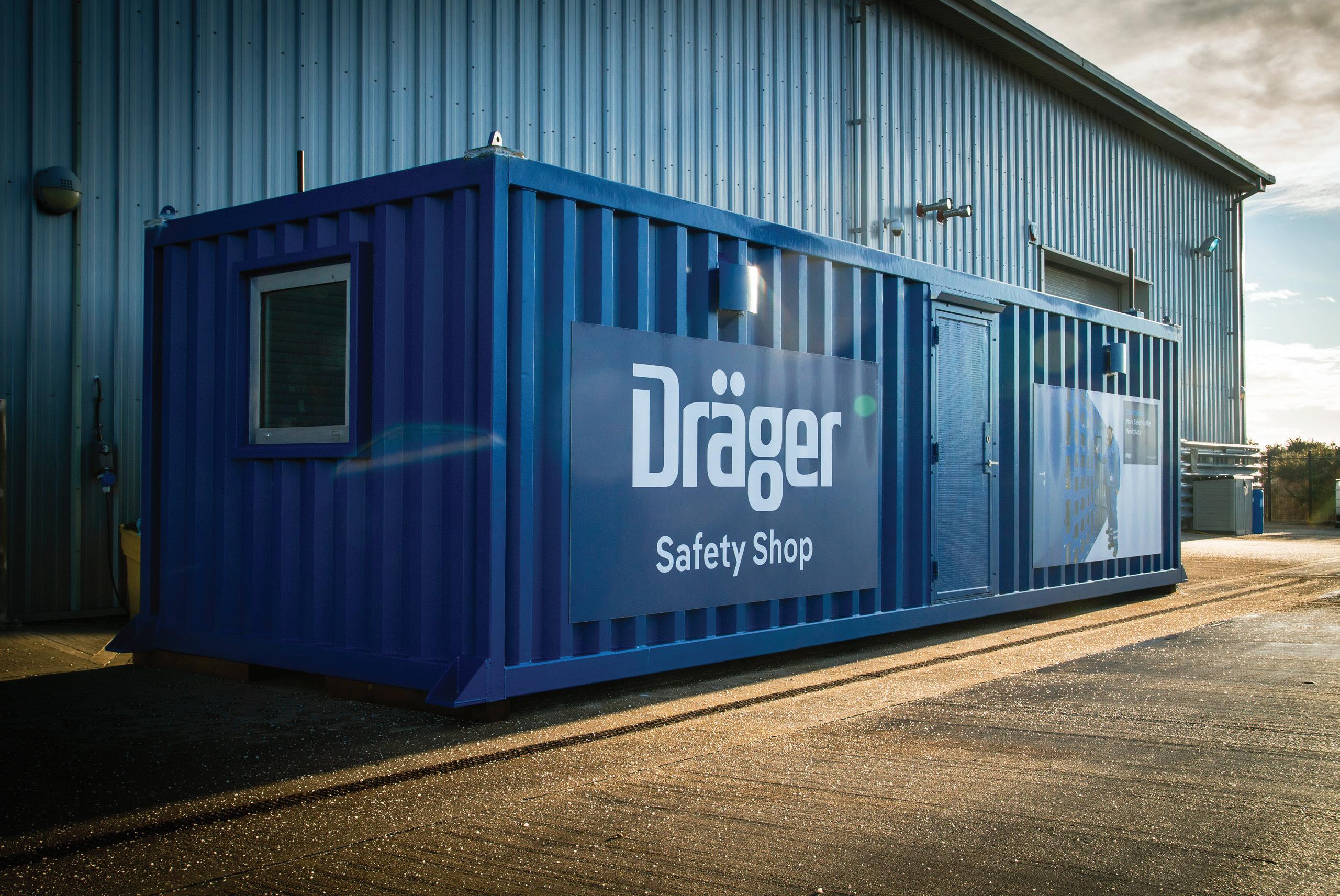

Packaged within a blast-proof container, our Rental Cabins are designed for the most demanding environments and are deployable anywhere across the UK. Within the cabins, fully automated Rental Robot lockers give approved personnel instant access to essential equipment, 24/7!
From Dräger equipment to third-party equipment like radios, masks, and even vehicle keys, everything is controlled, tracked, and only accessible to trained users. Keep your teams focused on the job and not managing kit! With our Pay as you Go (PAYG) model, you can have the full range of equipment on-site, ready for any scenario, while only paying for what’s actually used.
No over-ordering. No wasted cost. Just total flexibility when demand changes.





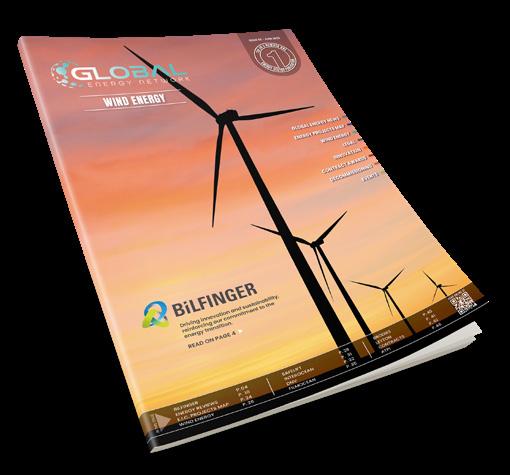

Welcome to the May issue of Global Energy Network magazine.
As the energy sector continues to evolve at pace, innovation and technology remain at the heart of its transformation. In this May issue of Global Energy Network Magazine, we explore the ideas, systems, and partnerships shaping a smarter, more resilient future for the industry. With this edition accompanying us to OTC in Houston, we are proud to showcase forwardthinking voices from across the global energy landscape.
Our cover partner, Cegal, introduces Cenova, its nextgeneration product ecosystem, designed to address the growing complexity of data and digital workflows in energy operations. Alongside this, we feature valuable insights from contributors including Flotation Energy, Viper Innovations, TESS, Tronics, 3t Training, Interwell, Mechanix Wear, OPITO, ASET, AMS Global Group, Marwell Tech, and Subsea Supplies.
We also extend our sincere thanks to our partners for their continued support in driving industry progress. Together, we highlight the technologies and collaborations powering the energy transition.


by Adam Watt, Product Manager, Cegal
Subsurface teams, data managers, IT organisations, and decision makers rely on a growing ecosystem of applications, cloud platforms and databases - each generating, copying, and modifying enormous volumes of technical data. Yet for all this innovation, one foundational challenge remains largely unsolved: how to create a unified, trusted, and governed view of the technical data estate.
Cenova, Cegal’s next generation product ecosystem, was built to solve exactly this problem.
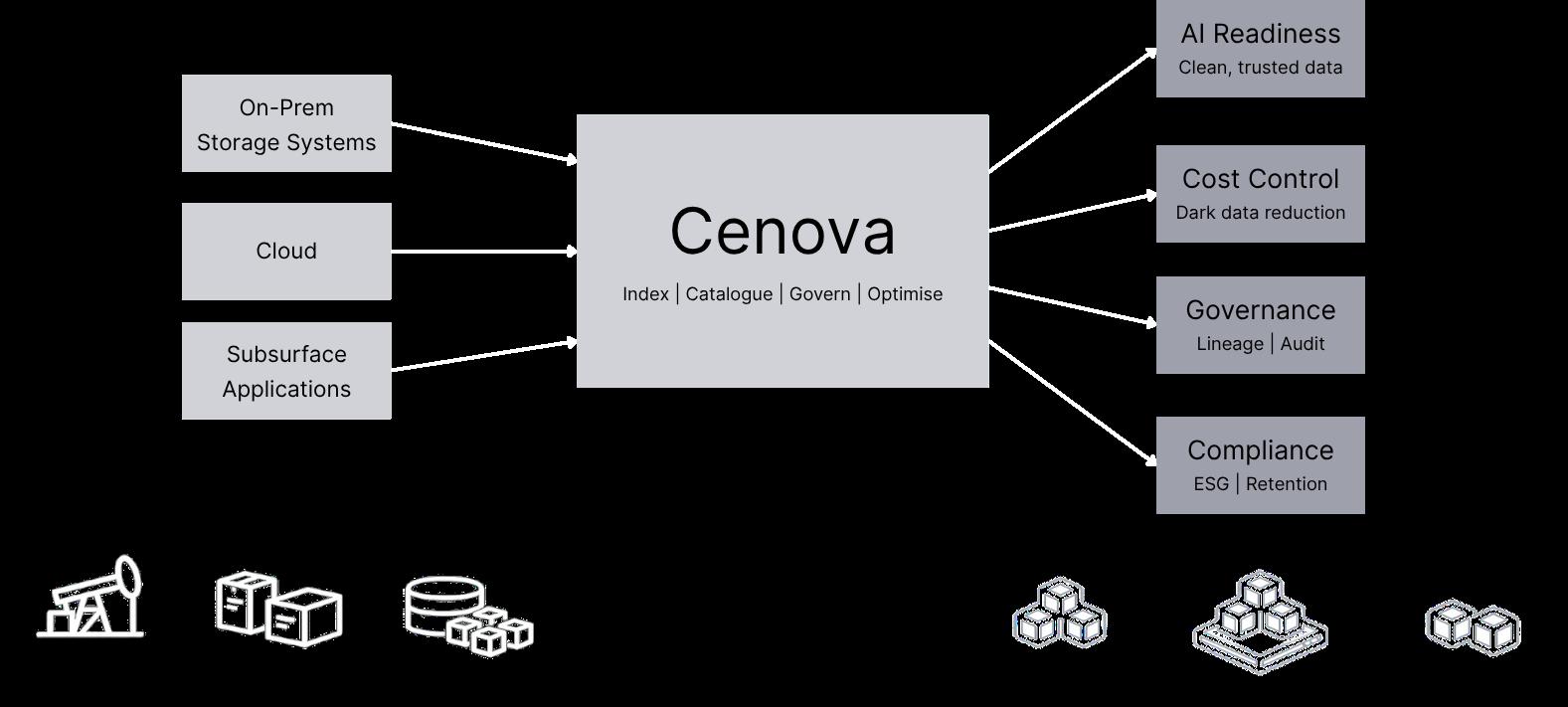
Today, most organisations still lack a “single source of truth” for technical data. Despite investing heavily in digitalisation, they operate with fragmented data storage environments, disconnected systems, and inconsistent governance frameworks (Figure 1). Subsurface projects live in silos. Wells and seismic data proliferate across shared drives. Reservoir models are duplicated across teams.

The consequences are costly. According to Splunk (2024), “>55% of data is ‘dark’” - duplicated files, orphaned projects and obsolete data sets that nobody owns but everybody pays for. Compliance remains a manual process. Integration after mergers and acquisitions can take months. Environmental, social and governance (ESG) reporting is slowed by unclear data ownership and lineage.
Cenova is a modular, enterprise-wide ecosystem for indexing, cataloguing, and governance, which builds an authoritative picture of every technical asset, including seismic surveys, wells, interpretation projects, reservoir and simulation models.
Cenova introduces a new concept to the energy sector: a unified control layer spanning the entire technical data landscape. This unified control layer acts as the backbone of an organisation’s digital environment. It provides one consistent operating model for discovering, governing, optimising, and scaling technical data, regardless of its format or location.
Rather than forcing companies to consolidate or migrate data into a single system, Cenova connects to data and applications where they already live, whether that is on premises, in the cloud, or in hybrid environments. Cenova allows companies to understand what data they own, where it lives, how it changes, and how much it costs them.
Data is being acquired and generated at an unprecedented speed. Without a unified control layer, this growth becomes unmanageable resulting in spiralling storage costs, slower decision making, and compliance risk.
With stronger audit requirements, data retention rules, and ESG frameworks, organisations must demonstrate:
• lineage
• ownership
• access controls
• lifecycle decisions
• retention and deletion compliance
Cenova embeds governance into the core of the digital estate, providing policy driven automation and full auditability.
Interoperability is critical when an organisation operates across multiple platforms, e.g. Azure, AWS, Google Cloud, OSDU, and on-premises systems. Cenova is cloud and architecture agnostic, capable of indexing, analysing, and governing multi-platform environments from a single interface.
AI and ML workflows depend on clean, well-governed data. Companies that lack clarity on metadata, duplication, and quality spend weeks preparing datasets that should be ready in hours. Cenova provides the foundational hygiene layer enabling AI to scale.
The energy sector is moving rapidly toward a future shaped by automation, AI, cloud adoption, and decision making driven by big data. Yet without a unified control layer, many organisations remain stuck with the same long-standing challenges: data duplication and fragmentation, governance gaps, and rising complexity across sprawling digital estates.
Subsurface teams interpreting seismic and well information, data managers maintaining standards across massive storage environments, and IT and cloud teams supporting hybrid infrastructures all face a common issue: vital data spread across too many places with too little visibility and control.
Cenova offers a different path (Figure 2). It is designed for these diverse user groups who rely on technical data every day but are constrained by disconnected systems and inconsistent practices. Cenova brings these disciplines together under a single operating model. It provides technical specialists with confidence in the data they use, gives governance teams the clarity they need, and offers decision makers a stable foundation for digitalisation, automation, and AI. Ultimately, Cenova is for any organisation looking to turn a complex, fastgrowing subsurface data estate into a coherent, trusted, and future ready environment.
By unifying technical data under a single control layer, Cenova helps organisations:
• Reduce unnecessary storage costs by identifying duplication, orphaned data, and obsolete datasets
• Strengthen governance and compliance through clear ownership, lifecycle control, and auditable policies
• Speed up operational workflows by improving data discovery and reducing manual handovers
• Support ESG and regulatory obligations with consistent metadata, traceability, and retention enforcement
• Prepare for AI and automation by providing clean, trusted, well governed data
• Simplify complex, hybrid and multi-cloud data environments through a single, coherent operating model
• Empower users with greater visibility, confidence, and trust in the data they rely on every day
In an industry where precision, efficiency, and trust are essential, Cenova is more than just another digital tool — it represents a new control layer for the modern technical data landscape.
To find out more about Cenova, visit the Cegal booth A522 at the EAGE Annual 2026 Conference & Exhibition in Aberdeen, from 8th–11th June.

















Through our comprehensive branch coverage of the UK’s major ports, Hutton’s provides marine supplies and services to the shipping industry as well as the offshore oil, gas and renewables sectors.
www.huttons-chandlers.com

Evolve Training is a leading independently owned training centre based in Aberdeen, Scotland. Evolve training was established in 1993 by Rod and Susan Garvie, and since has grown from strength to strength. Evolve began as a health and safety support and training company based in Inverurie, we branched out to deliver a wider range of safety courses such as forklift training and confined space training.

Semco Maritime’s expertise is rooted in both conventional energy and renewables. This puts us in a unique position to bridge today's and tomorrow’s solutions. To constantly seek clever and pragmatic ways to realise global energy ambitions and reach the next destination. And the next one after that.

We offer a wide range of Sand and Inflow control equipment like Sand Filters, Perforated or Slotted Liners, Inflow Control Devices, Swellable Packers, Dissolvable Plugs, High Temperature products and more. Offering customized screen solutions for applications in the Oil & Gas, Geothermal and Filtration industry with the goal in finding the most ideal solution for your challenge.
www.hpwellscreen.com

Cable Solutions Worldwide specialise in the design and supply of customer specified harsh environment, composite cables, umbilicals, tethers and top drive service loops.

Established in 1980 by chairman and managing director, Sir James Milne CBE, Balmoral Group encompasses a diverse range of businesses, including Balmoral Comtec in the energy sector, Balmoral Tanks for bulk liquid storage, Blaze Manufacturing Solutions, The Marcliffe Hotel & Spa, and property development through Balmoral Park Ltd.
We specialise in the repair, refurbishment, manufacturing, and sale of drilling and well control equipment. Providing rental of pressure control equipment and the support of competent personnel.
Our engineering department provides R&D, design from concept to detailed & draughting, project management, manufacturing, commissioning, and site support are all available as solutions. www.subsea-pressurecontrols.com

TLC SA Transportation and Logistic Consulting, a Switzerland-headquartered company, was founded in 2001 by its owner and Chairman of the Board, Mr. Philippe Masserey.
Since its inception, TLC has pursued a strategy of organic growth, meticulously expanding to countries where its expertise and know-how are most transferable, ensuring the highest quality of service for its customers.
First Integrated Solutions sources and delivers safety-critical services and best-in-class equipment so you can be ready for anything.
By listening to the unique needs of our customers, investing in a wide-ranging inventory, and continually developing our multi-skilled team, we provide unrivalled experience and solutions to a range of sectors.


EXCLUSIVE: Marwell AS awarded integrated sand control contract by Vår Energi
Vår Energi has awarded an integrated sand control contract to Marwell AS. The contract has an initial term of five years, with options for an additional six years. Under the agreement, Marwell will deliver integrated lower completion solutions – including sand control, inflow control and associated technologies – to Vår Energi’s assets across the Norwegian Continental Shelf.
The contract is estimated to be worth approximately $75 million USD and represents one of the largest awards of its kind in Norway.
Sustainable and efficient operations go hand in hand. By securing an integrated lower completions delivery with European manufacturing and shorter logistics routes, Vår Energi are able to reduce emissions, strengthen supply reliability and support longterm well performance.

Boskalis marks first successful ROV deployment from its new Remote Operations Center in Aberdeen
Boskalis announces the successful first deployment of remotely operated vehicles (ROVs) from its new Remote Operations Center (ROC) in Aberdeen, following an 18-month development program and an investment of GBP 40 million in ROVs and the ROC. This milestone reflects the company’s continuous focus on innovation, safety and future-proof offshore solutions.
The ROC significantly expands Boskalis’ remote operating capabilities by enabling critical subsea tasks to be supported and controlled from shore. The center provides a central hub for fleet operations, offers additional on-demand expertise to support offshore crews and is designed to enhance operational efficiency, strengthen safety and ensure consistent delivery across projects.
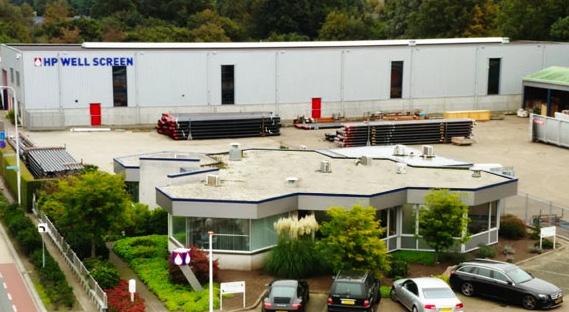
H.P. Well Screen Plays Key Manufacturing Role in Major Vår Energi Sand Control Contract
H.P. Well Screen B.V., a leading European manufacturer of premium sand control screens, has secured a key role in the delivery of sand control solutions for a major integrated lower completions contract awarded by Vår Energi on the Norwegian Continental Shelf (NCS).
The contract, valued at approximately USD 75 million, has been awarded to Marwell AS for an initial five-year period, with options for an additional six years. Within this framework, H.P. Well Screen will act as the manufacturing partner for the sand screen systems, a critical component in the overall lower completion design.

COMET launches the first AI capability purpose-built for incident investigation and root cause analysis
COMET, the leading provider of incident investigation and root cause analysis software for high-risk industries, announced the launch of COMET AI Assistant, the first and only capability built specifically for incident investigation and RCA. Unlike tools that have been adapted from generic AI solutions, COMET AI Assistant is built from the ground up on the investigative expertise, methodology, and HSEQ failure data knowledge that has made COMET the trusted name in investigation and root cause analysis.
The launch marks a significant milestone for the company, which serves organisations across a range of high-risk industries, including oil and gas, aviation, construction, rail, marine and ports, and waste management, protecting more than 350,000 people across 190+ global locations worldwide.
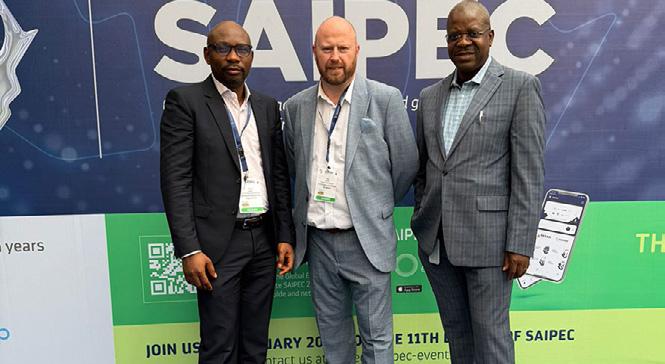
Partnership set to unlock African opportunities for leading specialist
Leading subsea controls specialist J&S Subsea Limited has taken a significant step forward in its international growth ambitions by announcing a partnership that will open doors in an important target market.
The Aberdeen-based company has recently teamed up with Westpaq International to expand its presence and tap into future potential in Sub-Saharan Africa. The MOU will see Westpaq provide local representation, business development, strategic market access and more, acting as the official incountry partner in Nigeria, Equatorial Guinea and Cameroon and regional interface for J&S Subsea Limited. It will build on J&S Subsea Limited’s existing presence in Côte D’Ivoire and Equatorial Guinea, and a string of successful projects in the region.
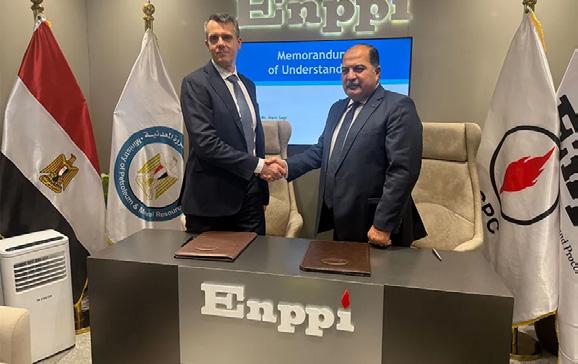
3t, a global leader in training and learning technology for safety-critical industries, has signed a strategic MOU with ENPPI at EGYPES – Egypt Energy Show, marking a key step in its Middle East expansion.
The agreement establishes a framework to deliver internationally accredited training and specialist instructor support across Egypt’s energy sector.
Through the partnership, 3t will work with ENPPI to enhance workforce capability, address skills gaps and support safety and performance across its client base.


The role of the UK North Sea oil and gas in the second energy crisis in four years and the completion of several major acquisition deals were the highlights in the UK offshore oil and gas industry in the past month.
Offshore Energies UK (OEUK), the UK’s leading offshore energy trade body, said in April, in response to the Chancellor’s latest comments on prioritising oil and gas production from the North Sea, that these comments “reflect an increasingly pragmatic and realistic national conversation about the UK’s realworld energy needs.”
Nevertheless, OEUK calls for more clarity on the regulatory landscape for the sector accompanied by a fiscal environment that encourages investment.
A total of 75 percent of the UK’s energy comes from oil and gas and the government has acknowledged oil and gas would be needed for decades to come.
The focus has now shifted to where the future oil and gas supply will come from: The UK can make the most of its own resources or choose to ramp up imports, which do not support jobs, economic value, and communities, are more carbon intensive and are less secure, OEUK said.
Without action the UK is set to rely on LNG shipments for over half of its gas needs by 2035, the trade body warned.
According to OEUK, the early implementation of the Oil and Gas Price Mechanism (OGPM) is critical to unlock the private investment needed to sustain domestic production and avoid an overreliance on imports. This permanent, price-triggered mechanism provides a fair return to the public when prices are high, while giving investors the certainty needed to commit capital.
However, delaying its implementation to 2030, as the government has proposed, is too late, OEUK argues.
“Reforming this tax now is the key to unlocking £50 billion of private investment, sustaining production responsibly and maintaining energy security,” the trade body said.
David Whitehouse, Chief Executive of Offshore Energies UK, commented,
The executive noted “There’s a growing understanding across all parties and the nation that this is not a black and white choice between renewables or oil and gas. We need both to secure and grow the economy today and for decades to come.”
Mark McClelland, Head of Public Affairs at OEUK, who attended Offshore Norge’s annual conference in Oslo, said that Norway continues to seek new opportunities for production and extend the life of existing fields, while the Energy Profits Levy and a ban on new exploration in place in the UK would lead to continued decline in production offshore Britain without fiscal and regulatory reform.
“Norway shows that a stable fiscal and regulatory regime, cross-party support for energy policy, and a deep understanding of the contribution to regional energy security, is a success story that continues to attract investment,” McClelland said.
“It’s not too late for the UK to follow suit.”
With the new energy crisis triggered by the conflict in the Middle East, North Sea oil and gas improves the UK’s energy security, while also being cheaper to produce and less emissions-intensive than imported LNG, analysts at Wood Mackenzie say
Energy security is once again top of the agenda for all governments, and in countries like the UK and the Netherlands, “the conflict is tilting the equation back towards increasing supply by exploiting domestic resources that had been abandoned or ignored as uneconomic or undesirable,” commented WoodMac’s Gail Anderson, Research Director, North Sea Upstream, and Lewis Lawrence, Senior Research Analyst, Europe Upstream.
“With the weaponisation of energy becoming a recurring geopolitical theme, security of supply will increasingly take precedent over other considerations,” they said.
By Tsvetana Paraskova
“Using our own resources supports energy security, protects jobs and skills, reduces emissions compared to imports and provides the backbone for the next generation of offshore industries.”
“Rather than an either/or attitude towards hydrocarbons and renewables, governments will increasingly need to take a ‘both-and’ approach.”
Some of the most recent mergers and acquisitions deals in the UK North Sea suggest that the corporate landscape on the UKCS is evolving, Westwood Global Energy Group said in an analysis in April, right after TotalEnergies and NEO NEXT announced the completion of the merger of TotalEnergies UK upstream operations with NEO NEXT to form a new company, NEO NEXT+, in which TotalEnergies holds a 47.5-percent stake.
Further to this transaction, NEO NEXT+ becomes the largest independent oil and gas producer on the UK Continental Shelf with an expected 2026 production of over 250,000 barrels of oil equivalent per day, TotalEnergies said at the end of March.
NEO NEXT+ is set to account for 22 percent of the total forecast oil and gas production in the UK this year, Westwood reckons.
Due to the current near-term decline of its production, the company ranks as the secondlargest, based on net remaining reserves, behind Adura, the Equinor UK and Shell UK joint venture, according to the energy analytics firm.
This landmark deal highlights the emergence of UK-focused players, replacing the dominance of the Majors, it noted.
This year, for the first time in decades, only BP remains as a Major within the top six companies on the UKCS. Since 2014, the Majors’ direct share of UKCS reserves has fallen from 52 percent to 16 percent.
The mergers of significant players in the UK now means that the top six companies – Adura, NEO NEXT+, Ithaca Energy, BP, Harbour Energy, and Serica Energy – account for 80 percent of remaining reserves. Four of these six companies are focused on UK portfolios to drive their businesses, while only BP and Harbour Energy hold international portfolios, Westwood said.
EnQuest Heather Limited a total of £16.5 million for failing to decommission 33 inactive wells.
The cumulative fine is for protracted noncompliance on 33 wells under four separate licences on Alma, Galia, Broom, and Dons fields, which ceased production between the summer of 2020 and the spring of 2021. The penalty for each breach is £500,000.
The sanction follows extensive engagement and repeated warnings to the company, the regulator said, noting that “Timely decommissioning is essential to protect the wider environment, prevent extra costs to the taxpayer and support jobs in the supply chain.”
Perenco has successfully concluded the purchase of various Saturn Banks assets from CalEnergy Resources after receiving change of control approval from the NSTA.
The transaction involved the purchase of CalEnergy North Sea Limited & CalEnergy Infrastructure Limited, renamed Perenco SNS Limited and Perenco UK Infrastructure Limited, respectively, and the corresponding 50 percent participating interest in, and operatorship of, the Blythe and Elgood licences.
Their decisions and investment appetite will shape the UK production outlook. But business conditions must
be
right
Over the past decade, the number of companies operating in the UKCS has fallen drastically. Back in 2014, there were 74 companies holding reserves. Today, only 34 companies remain, reinforcing the extent of consolidation in the basin, said Yvonne Telford, Research Director – Northwest Europe and Matthew Belshaw, Senior Analyst – Northwest Europe, at Westwood.
“The increase in UK focussed companies is a sign that the UK is struggling to attract external investment. A larger proportion of remaining reserves now lies within the hands of a smaller number of companies,” the research analysts said.
“Their decisions and investment appetite will shape the UK production outlook. But business conditions must be right.”
In company news, the North Sea Transition Authority (NSTA) has fined North Sea licensee

“Perenco is glad to add these blocks into our existing portfolio of Southern North Sea fields that produce into our Bacton terminal on the Norfolk coast,” said Jo White, UK SNS General Manager.
“In the medium term we will look for ways to enhance production and reduce unit operating costs, including by bringing the Blythe H2 well into our LAPS compressor within the coming year.”
CB&I, an integrated storage and asset-management solutions provider, completed in April the asset sale agreement to acquire Petrofac’s Asset Solutions business, a provider of operations, maintenance, wells, and decommissioning services for onshore and offshore energy assets.
The net proceeds from the transaction will be distributed to secured creditors in accordance with the inter-creditor agreement entered between Petrofac and secured creditors.
We are confident that CB&I will be an excellent home for Asset Solutions, bringing financial strength, combined with our extensive asset management experience and agile approach, to ensure continuity of service delivery for customers, and a solid platform for expanding activities across key markets internationally,” said John Pearson, Chief Operating Officer for the Asset Solutions business.



Plans for higher oil and gas production offshore Norway, a boost to exploration, and the UK’s renewable energy records in 2025 and so far in 2026 featured in Europe’s energy sector over the past month.
In Norway, Vår Energi ASA has submitted an amended Plan for Development and Operation (PDO) for the Goliat Gas Export (GGE) project to the Norwegian Ministry of Energy, together with its partner Equinor.
The project is expected to raise oil production from the Goliat field in the Barents Sea through optimised reservoir management following the production of the gas reserves, currently being reinjected into the reservoir.
The incremental oil will be sold from the start, while the gas will be exported to the Hammerfest LNG plant under a gas bank arrangement, agreed with Snøhvit, and sold when processing capacity is available.
The project to boost production is developing proved plus probable (2P) reserves of 112 million barrels of oil equivalent gross, or 73 mmboe net to Vår Energi, of which approximately 15 percent is oil.
The project, expected to come on stream in the third quarter of 2029, comprises new subsea infrastructure connecting the Goliat FPSO to the Snøhvit pipeline, including a gas riser, umbilical, and a 12-km gas export pipeline. Modifications to the Goliat FPSO enable the new infrastructure to be connected to existing facilities on the FPSO.
“This is an effective, value creating project with significant upside. The project expands the infrastructure in the Barents Sea and unlocks future developments,” Vår Energi’s COO Torger Rød commented.
“Importantly, it extends the operational life of the Goliat field by approximately ten years, to around 2050, thereby strengthening the long-term security of energy supply to Europe.”
The MoU provides a framework for technical collaboration, including a joint assessment of exploration opportunities in Turkey’s Black Sea region, as well as internationally.
“We are pleased to launch this cooperation with TPAO, leveraging the technical expertise of both companies to evaluate exploration opportunities in the Black Sea region and internationally on a mutually beneficial basis,” said Nicola Mavilla, Senior Vice-President Exploration at TotalEnergies.
The latest Energy Trends report by the UK Department for Energy Security and Net Zero (DESNZ) showed output from renewable technologies in 2025 increased by 6 percent to a record 152.5 TWh in 2025, and a record share of 52.5 percent of electricity generation. This was the second consecutive year in which the share of renewables has exceeded 50 percent, and an increase on the previous high of 50.4 percent in 2024.
Wind generation also broke previous records, increasing by 4 percent and contributing a record 87.1 TWh, as well as a record share of 30.0 percent. Solar generation also surged to a new record, up by 37 percent to a record 20 TWh, and had a new record share of 6.9 percent of electricity generation.
“These figures show renewables are now the backbone of Britain’s power system, supplying most of our electricity for the second year running, with wind doing the heavy lifting,” RenewableUK’s CEO Tara Singh said, commenting on the latest government data.
“That matters for bills, because low-cost renewables reduce our reliance on gas, which still sets electricity prices most of the time and is vulnerable to spikes.”
By Tsvetana Paraskova
In a new exploration deal, TotalEnergies and Türkiye Petrolleri Anonim Ortaklığı (TPAO) signed in April a Memorandum of Understanding (MoU) on exploration opportunities.
The Crown Estate has announced a new process to accelerate clean energy growth and deliver jobs and economic benefits as a major new investment opportunity for the UK’s offshore wind sector is set to open next year.
The seabed manager has begun a programme of market engagement ahead of an intended official launch of a new leasing round, Offshore Wind Leasing Round 6, in the first half of 2027, The Crown Estate said at the end of March.
The Crown Estate believes this next leasing round could accommodate a capacity of around 6 GW or more, chiefly in the North East of England and in water depths suitable for fixed-bottom wind.
“These new projects will create fresh opportunities for businesses based all over the UK to provide the hightech components and services needed to build vast new offshore wind farms, creating highlyskilled jobs and vital economic growth, including offshore wind centres of excellence around Blyth, Newcastle and Sunderland which will benefit from the private investment and regeneration that this new leasing round will bring to the UK,” RenewableUK’s Deputy Chief Executive Jane Cooper said
an initial 4.5 GW of floating offshore wind projects in the Celtic Sea - enough to power 6.5 million homes - following last year’s successful seabed leasing round by The Crown Estate.
ABP expects that, once completed, the new port will support thousands of jobs and unlock over £500 million in investment for Port Talbot.
These new projects will create fresh opportunities for businesses based all over the UK to provide the high-tech components and services needed to build vast new offshore wind farms
Maraen, an integrated energy infrastructure solutions provider, has approved plans for over £30 million of investment at the Port of Nigg, one of the UK’s leading deepwater ports. Maraen is now bringing together the capabilities of Port of Nigg, Global Energy (Group), and Global Energy Services. The businesses will be rebranded as Maraen Port of Nigg, Maraen Fabrication, and Maraen Solutions, respectively. The rebrand follows the acquisition of the businesses by Mitsui & Co. Europe Ltd. and Mitsui O.S.K. Lines Ltd. in 2025.
Shelf. The agreement reflects both countries’ long-term commitment to carbon capture and storage as part of Europe’s climate efforts, Norway’s Energy Ministry said.
H2NorthEast, a CCUS-enabled hydrogen project in the heart of industrial Teesside, being developed by Kellas Midstream and SSE Thermal, has signed a Memorandum of Understanding with Northern Gas Networks (NGN), the gas distributor for the North of England, to pursue opportunities to provide low carbon hydrogen to industrial end users across North East England.
The agreement comes as H2NorthEast has submitted its application for Phase 1 of the project into the East Coast Cluster Teesside selection process, which will identify projects that could connect to and utilise CO2 storage capacity in the planned Northern Endurance Partnership transportation and storage infrastructure by 2032, crucial to achieving net zero in Teesside, one of the UK’s most carbon intensive industrial regions.
A new report commissioned by RenewableUK has shown that expanding the UK’s onshore wind supply chain between through 2050 could add up to £56 billion in economic value (GVA) to the UK’s economy and create thousands of new jobs throughout the country.
The onshore wind supply chain capability assessment by consultants Everoze highlights key parts of the supply chain which would provide the most value to the UK’s economy. These include manufacturing more onshore wind turbine blades, towers and steelwork, nacelles, drivetrains, cables, and electrical equipment for high voltage substations in the UK for onshore wind farms.
“As this report shows, industry can play its part by focussing specifically on the highest value components and services, while Government also has a key role in reducing taxes and tariffs, as well as taking effective measures to bring down the cost of electricity for industrial users which are long overdue,” commented James Robottom, RenewableUK’s Head of Onshore Wind Delivery.
The UK government has moved to make Port Talbot in South Wales a leader in a new clean energy industry, thanks to a £64 million grant
The government funding will enable Associated British Ports (ABP) to complete the essential design and engineering work needed to build one of the first floating offshore wind ports in the UK at Port Talbot. The new port is expected to unlock
The £30 million-plus investment is set to significantly enhance port capacity and operational capability, supporting inbound and outbound logistics for offshore wind and wider energy sector projects.
In international cooperation and company news, Norway and Belgium have signed a bilateral agreement to build infrastructure for the transport of CO2 by pipeline from Belgium to the Norwegian Continental
In Belgium, TotalEnergies and construction group Holcim have launched Europe’s largest floating solar power plant dedicated to self-consumption. The floating solar power plant has a capacity of 31 MW and is located in Obourg on a former chalk quarry site that has been rehabilitated into a lake. The plant will produce 30 GWh per year of renewable electricity, which would be consumed by Holcim’s industrial facilities, making it the largest floating solar power plant in Europe dedicated to self-consumption.
US oil and gas producers have not rushed to increase production despite soaring energy commodity prices amid the Middle East crisis.
The US shale patch, while tentatively moving to increase drilling activity, sees the geopolitical uncertainty and extreme price volatility as deterrents to changing immediate capital budgets and drilling plans. Any meaningful output boost would manifest on the physical market in several months, even if US producers began relentless new drilling now—which they do not plan to do.
Caution Prevails amid Volatile Prices
Oil and gas activity in a large part of the Permian basin increased in the first quarter of 2026, the latest Dallas Fed Energy Survey showed. Uncertainty, however, also jumped, with the outlook uncertainty index remaining elevated and surging from 43.4 to 53.7, according to the survey which collected data and comments in the third week of the war in Iran.
Executives at exploration and production firms need an average price of West Texas Intermediate (WTI) of about $43 per barrel to cover operating expenses for existing wells, and $66 per barrel to profitably drill a new well, respondents said. The average breakeven prices rose by $1 a barrel each compared to the same time last year.
WTI prices soared in the latter part of the quarter to $100 a barrel and above, suggesting handsome profits from well drilling.
However, E&P companies are not in a rush to boost activity and production— executives noted that uncertainty is high regarding where oil prices would be three months from now to warrant an immediate increase in activity.
Long-term prospects may be favourable, but the near-term uncertainty is not in favour of the US shale patch.
Another executive warned that “The Strait of Hormuz adds complexity. Suppliers are already trying to increase pricing, and the administration continues to try and talk down [oil] prices. How sustainable are current oil prices? Hard to make long-term commitments or to "drill, baby, drill."”
Yet another top manager noted that “The volatility across all the commodities is just insane and makes planning very difficult.”
Oil and gas support services firms find it even more difficult to plan and predict the impact of the conflict.
One executive said that “The shutting of the Strait of Hormuz causes great uncertainty for the global economy and will ultimately impact our business. This impact will likely be in multiple ways, including some that we don't currently foresee.”
Another executive simply commented “Strange days indeed.”
Despite the surge in oil prices, US crude oil production is set to be flat or slightly lower this year compared to 2025, due to the lag between any new drilling and actual output.
The US Energy Information Administration sees US crude production averaging 13.5 million barrels per day in 2026, compared to 13.6 million bpd in 2025. The rise is expected to become more visible next year, when the EIA currently sees average US crude oil output of 13.9 million bpd.
By Tsvetana Paraskova
“The second- and third-order effects of this volatility and the commodity supply and price shock have yet to be determined, but the focus on energy security over the coming years should position U.S. producers well on the global stage,” one E&P executive said in comments to the survey.
In addition, US LNG exports cannot offset the major losses in the Middle East as American export facilities were running at near capacity even before the war.
“With capacity utilization high, only very limited flexibility exists to increase exports. That flexibility comes from deferred
maintenance, the pace of new project ramp-ups, and recent export authorization agreements,” the EIA said in its ShortTerm Energy Outlook for April.
Regardless of how long the Middle East crisis continues, it has made one thing certain: energy security is incredibly important, Tim Tarpley, Energy Workforce President, wrote in an analysis just after the US and Iran announced a ceasefire on 8 April.
“We can expect a “safe barrel” of oil to be worth more than a “risky” barrel going forward,” said the president of the large US oilfield services association.
“Additionally, there appears to be ever more certainty that oil and gas are absolutely critical to the world supply chain, and that is not going to change anytime soon.
A disruption of this magnitude has reminded us how interconnected the world is to oil and gas.”
This is not a temporary disruption but a structural shift in global energy flows”
Javier Solis, Analyst at Wood Mackenzie –Maritime Team.
As crude oil supply from the Middle East has collapsed with the closure of the Strait of Hormuz, Europe and Asia are importing increased volumes of crude from the US and Canada as they look to fill the gap, according to a Wood Mackenzie analysis
The worst disruption to energy supply in history has triggered “an unprecedented global energy realignment,” with Europe importing record North American crude and refined products while simultaneously exporting surplus gasoline and fuel oil (FO) to Asia.
“This is not a temporary disruption but a structural shift in global energy flows,” commented Javier Solis, Analyst at Wood Mackenzie – Maritime Team.
“Europe's diesel deficit and gasoline surplus, combined with Asia's role as the balancing valve, represent a moving landscape in which pricing and flows remain tightly linked to political decisions rather than purely commercial signals.”
Asia has emerged as the global release valve, absorbing Europe’s excess gasoline and fuel oil alongside record volumes of North American crude. US crude flows to Asia matched Europe’s record intake at 1.41 million bpd at the end of March, with India and East Asia dominating imports, according to WoodMac.
Wood Mackenzie has also analysed the prospects of a revival in natural gas production in the Rockies region. The Rockies gas can now benefit from the ‘right place, right time, right economics’ convergence, after years of stifled development due to high costs.
Now gas demand in the US is rising and expectations of sustained gas prices
above US$4 per thousand cubic feet (mcf) change the economics of the Rockies gas, especially as improved extraction techniques maximise well economics, Jennifer McNally, Senior Research Analyst, Upstream Lower 48 at WoodMac, said in an analysis in April.
“Add to that established pipelines with expansion capacity to export additional production and the scene is set for a Rockies gas renaissance,” McNally noted.
While gas output in the US Gulf Coast and in the Northeast has jumped, the Rockies have struggled over the past 15 years due to high costs, more complex geology, and stricter permitting and environmental compliance rules in Colorado and Utah.
“However, thanks to surging demand, stronger prices, new technology and the potential to exploit existing infrastructure, the region is poised for a significant comeback,” WoodMac’s McNally said.
“From being ‘too hard, too expensive’, suddenly it looks like a case of ‘right place, right time, right economics’ for Rockies gas.”




By Tsvetana Paraskova
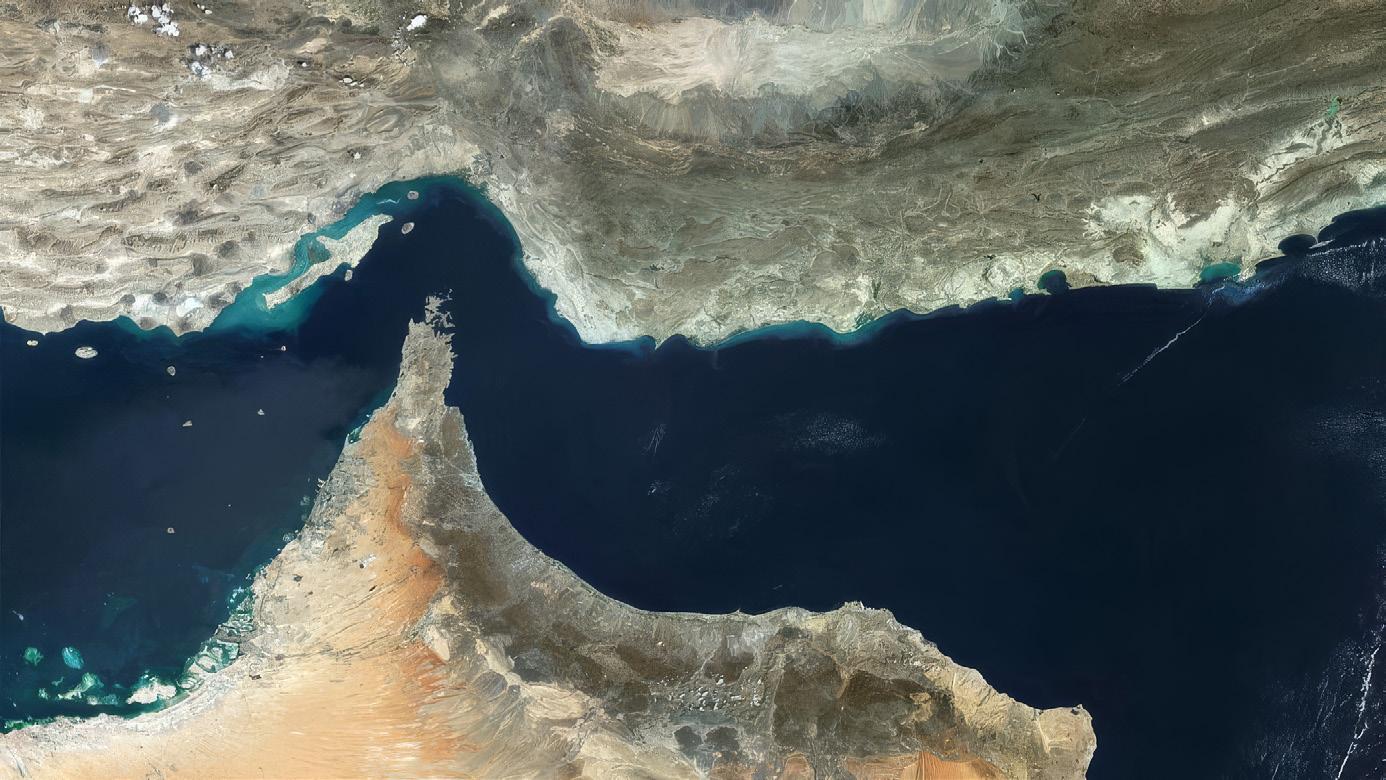
The war in the Middle East and the closed Strait of Hormuz have slashed supply from the Gulf, altered oil and gas trade flows, and upended near-term demand and supply forecasts.
Global oil supply plummeted by 10.1 million barrels per day to 97 million bpd in March, with attacks on energy infrastructure in the Middle East and ongoing restrictions to tanker movements through the Strait of Hormuz leading to the largest disruption in history, the International Energy Agency said in its monthly report for April.
OPEC+ crude oil production slumped by 9.4 million bpd from February to 42.4 million bpd in March, while non-OPEC+ supply declined by 770,000 bpd monthon-month to 54.7 million bpd, as lower output in Qatar offset gains in Brazil and the United States.
The war upended the IEA’s global demand outlook and the agency now expects oil demand to contract by 80,000 bpd this year, compared to about 650,000 bpd growth expected in the previous report. For the second quarter, the IEA sees global oil demand slumping by 1.5 million bpd, which would be the sharpest drop since Covid-19 slashed fuel consumption. Initially, the deepest cuts in oil use have come in the Middle East and Asia Pacific, mainly for naphtha, LPG, and jet fuel. However, demand destruction is spreading as scarcity and higher prices persist, the IEA reckons.
The agency also noted that oil prices posted their largest-ever monthly gain in March in the wake of the most severe oil supply shock in history. Spot crude benchmarks and differentials soared, outpacing futures markets, as refiners scrambled to replace locked in Middle Eastern cargoes. North Sea Dated crude was trading in April at about $60 per barrel over the levels before the war and about $30 a barrel higher than the Brent oil futures contract.
Regardless of when a lasting negotiated settlement to the conflict is reached, global oil and gas markets should prepare for significant disruptions and severe price volatility for months, the IEA said.
The International Monetary Fund has warned that the major supply shock would test a so-far resilient global economy.
“Had it not been for this shock, we would have been upgrading global growth,” IMF Managing Director Kristalina Georgieva said in a speech at the 2026 Spring Meetings in Washington, DC, in early April.
“But now, even our most hopeful scenario involves a growth downgrade. Why? Because of significant infrastructure damage, supply disruptions, losses of confidence, and other scarring effects,” Georgieva said.
Take Qatar’s Ras Laffan complex—a tremendously important example of strategic investment done right; producer of 93 percent of the Gulf’s LNG, some 80 percent of it going to Asia-Pacific, a region that now endures serious fuel shortages. Ras Laffan has essentially been shut since March 2, took direct hits on March 19, and could take 3‒5 years to restore to full capacity, the IMF managing director noted.
With uncertainty about vessel traffic in the Middle East, “the reality is, we don’t truly know what the future holds for transits through the Strait of Hormuz or, for that matter, for the recovery of regional air traffic,” Georgieva said.
“What we do know is that growth will be slower—even if the new peace is durable.”
Crude oil exports from the Middle East crashed by 60 percent in the wake of the war in Iran, reshaping global oil flows, Wood Mackenzie analysts say
The slump in exports from 18.7 million bpd to 5.9 million bpd as the Strait of Hormuz faced paralysis has triggered an unprecedented global energy realignment. This has led to Europe and Asia importing record volumes of North American crude and refined products, while Europe is simultaneously exporting surplus gasoline and fuel oil to Asia, according to the energy consultancy.
“This is not a temporary disruption but a structural shift in global energy flows,” said Javier Solis, Analyst at Wood Mackenzie –Maritime Team.
“Europe's diesel deficit and gasoline surplus, combined with Asia's role as the balancing valve, represent a moving landscape in which pricing and flows remain tightly linked to political decisions rather than purely commercial signals.”
Asia has emerged as the global release valve, absorbing Europe’s excess gasoline and fuel oil alongside record volumes of North American crude. US crude flows to Asia matched Europe’s imports at 1.41 million bpd in the last weeks of March, with India and East Asia dominating Asian crude imports from the US, according to WoodMac’s estimates.
The 11 million bpd of upstream production currently shut-in across the Middle East can only be restored when export logistics normalise, according to Wood Mackenzie.
As of April 24, the Strait of Hormuz remained shut to normal tanker traffic, with only a handful of vessels attempting and/ or passing the vital oil and LNG chokepoint each day, compared to about 100 ships transiting the channel daily before the war.
For the Middle East producers to restore the shut-in production, traffic needs to normalise and shipowners need to have security guarantees, WoodMac says.
“A 'workable system' of transit and shipowner confidence in the security of the transiting vessels is essential,” commented Alan Gelder, SVP Refining, Chemicals and Oil Markets at Wood Mackenzie.
“This includes availability of insurance for transiting vessels, facilitating commercial trade financing, sustained outbound vessel transits through the Strait of Hormuz making current oil on water available to the global refining market, and sustained inbound vessel transits through the Strait making ballasting vessels available to load crude at Gulf load ports.”
Even if traffic through the Strait of Hormuz returned to pre-war levels today, Middle Eastern oil and gas producers would need months to restore output and, in some cases, years to repair damages from the direct hits on producing assets and energy infrastructure, WoodMac reckons.
The total cost of repair and restoration for energy-linked infrastructure as a result of war could hit $58 billion, Rystad Energy analysis showed in April. The total repair costs for oil and gas facilities could be up to $50 billion, according to the energy intelligence firm.
The damage to energy assets in the Middle East is raising the question of constraints that could delay repair timelines. The key constraint would be access to equipment, contractors, and logistics, rather than capital availability, according to Rystad Energy.
This is no longer just a story about damaged facilities in the Gulf. It is a stress test for the global energy supply chain
“Recovery timelines are beginning to diverge across assets and countries, reflecting differences in domestic execution capacity and supply chain access,” the intelligence firm said.
“At the same time, repair activity is likely to displace new project execution, as operators prioritize restoring existing production over advancing greenfield developments.”
Facility repair and restoration costs for impacted oil and gas facilities could
amount to about $46 billion, with engineering and construction accounting for the largest share of total expected outlay, followed by equipment and materials, Rystad Energy reckons.
“This is no longer just a story about damaged facilities in the Gulf. It is a stress test for the global energy supply chain,” commented Karan Satwani, Senior Analyst, Supply Chain Research, Rystad Energy.
“Repair work does not create new capacity; it redirects existing capacity, and that redirection will be felt in project delays and into inflation far beyond the Middle East,” Satwani added.
“The $58 billion bill is the headline, but the knock-on effects on energy investment timelines globally may prove just as significant.”


Operators on the Norwegian Continental Shelf have started up new oil and gas fields in recent weeks, while the industry regulator has urged companies to consider developing a massive tight gas resource discovered in the late 2000s, as Norway pitches itself as a reliable energy supplier amid geopolitical crises.
The Norwegian Offshore Directorate, the industry regulator, in early April urged companies to consider the potential development of 6603/12-1, or Gro, a gas discovery in the Norwegian Sea.
Gro is located in the Norwegian Sea, about 160 kilometres from the Åsta Hansteen field and 350 kilometres west of Sandnessjøen, and is one of the largest undeveloped gas discoveries on the Norwegian continental shelf (NCS).
“There is a considerable value creation potential here, but time is running out,” the directorate said.
Although there is significant uncertainty surrounding the size of the discovery, early estimates from the Directorate indicated a very broad range, meaning 10–100 billion standard cubic metres (Sm3) of recoverable gas. The size has now been projected at about 52 billion Sm3 of gas in place.
Shell discovered Gro in 2009, and the discovery was delineated in 2010. The seismic company TGS acquired a new data set in 2019. In 2021, the discovery was relinquished to the authorities from then-licensees Equinor and Wintershall.
The Directorate has hired consulting firm Terra Stream Energy to conduct a study of the discovery.
All relevant subsurface topics were assessed in the study, which shows three static models covering the volume range in the discovery. The study has resulted in geological models and a report that will be made available to companies on the NCS.
“The next opportunity to apply is the upcoming round of awards in pre-defined areas (APA),” Jacobsen added.
According to the Directorate, time for developing Gro is running out because the discovery needs to be tied back to the Åsta Hansteen field while there is still infrastructure in the area.
“In ten years, it could be too late,” Jacobsen said.
The Norwegian Offshore Directorate is considering having similar studies undertaken on other undeveloped gas discoveries on the NCS.
“We want to elevate discoveries without a production licence, many of which are in tight reservoirs. If the goal is profitable development, this will need to happen while the infrastructure is still in place,” Jacobsen says.
“The NCS needs more experience with these recovery methods. If we can get the ball rolling on that, this will also reduce the cost of developing Gro.”
Equinor is establishing two new business areas to position the company for safe and efficient operations and increased value creation.
By Tsvetana Paraskova
“How could Gro fit into a larger development of the area? The companies can use this study to evaluate the potential of the discovery on its own, or as part of an area solution,” said Arne Jacobsen, Assistant Director for Technology and Subsurface at the Norwegian Offshore Directorate.
The two new business areas will replace the previous Marketing, Midstream and Processing (MMP) business area. Equinor is creating a new business area for midstream, processing, and infrastructure, which will be led by Geir Sørtvedt. The other new business area, led by Irene Rummelhoff, will focus on developing and growing value from trading and capturing value across different products, supported by innovative digital solutions.
“We have identified a clear value potential we can deliver through strengthening our trading business,” Equinor CEO Anders Opedal said.
“This part of our business also ties together all our production and products, and will ensure that market insights and future customer demand will more actively drive strategy, portfolio decisions and business models for Equinor ”
The Norwegian energy major is also strengthening its helicopter capacity in Bergen after awarding Bristow Norway AS a contract for helicopter services. The agreement is for two S-92 helicopters that will provide offshore transport services from Flesland Airport. The contract will commence on 1 May, with a duration of one year and options for extension for a further two one-year periods.
Aker BP in early April announced the start of production from the Symra field in the North Sea. The project was delivered nine months ahead of the original schedule, generating significant value and accelerating production start into 2026. The field is estimated to contribute approximately 63 million barrels of oil equivalent to the Eiga area.
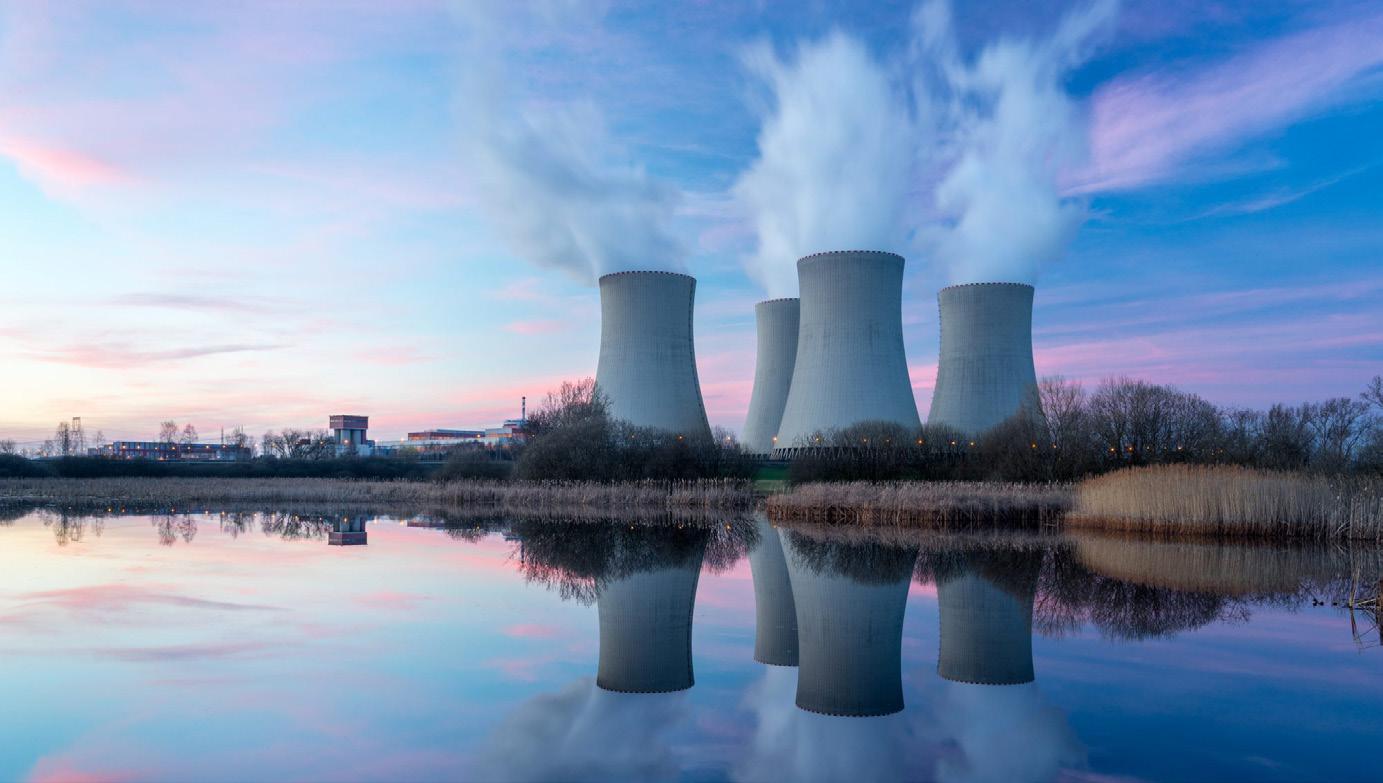
The need for emissionfree and stable energy sources that can help manage the natural and climate crisis and meet an increasing need for power has contributed to raising the question of nuclear power in Norway...
The Symra field is located approximately 7 kilometres north-east of the Ivar Aasen platform and has been developed as the second subsea tie-back to Ivar Aasen. Production will be partially processed at Ivar Aasen before final processing at Edvard Grieg. The development comprises four wells tied back via a subsea template. Modifications have been carried out on both platforms to enable tie-in of the subsea infrastructure to Ivar Aasen and to increase processing capacity at Edvard Grieg, Aker BP said.
“Symra shows what’s possible when strong partners work as one: safe delivery, high quality and faster execution,” said Karl Johnny Hersvik, CEO of Aker BP.
“It’s also a step into a new part of the Eiga area and a new reservoir type on the Norwegian shelf, creating value for shareholders, partners and society.”
Aker BP is the operator of Symra (PL167/167B/167C) with partners Equinor with 30 percent and DNO Norge owning 20 percent.
DNO, for its part, noted that the Symra field holds estimated gross reserves of 60 million barrels of oil equivalent and is expected to deliver 4,000–5,000 barrels of oil equivalent per day (boepd) net to DNO at plateau. The partnership sees significant additional resource potential
that may be realized through further drilling, DNO said.
With Symra now online, four DNO subsea fields have started production in Norway over the past 12 months, and three more are currently under development. The company also has four discoveries moving toward final investment decisions (FIDs) in 2026, including a fast-track project to develop its 2025 Kjøttkake discovery, in which it has 40 percent.
The Nuclear Commission in Norway, set up in 2024 to examine the issue of whether nuclear power could be a viable option for Norway’s energy system, has completed its report and submitted it to the Ministry of Energy.
Before this report, nuclear power in Norway was last examined by a public committee in 1978.
The new report of the so-called Nuclear Commission examines several key issues, including whether nuclear power is suitable for the Norwegian power system, the status of research and technology development, costs and other significant consequences for governments and private actors, land and environmental impacts, waste issues, nuclear safety, security and non-proliferation, preparedness and competence needs.
“The need for emission-free and stable energy sources that can help manage the natural and climate crisis and meet an increasing need for power has contributed to raising the question of nuclear power in Norway, as have the technological development and plans to establish nuclear power production from private players in cooperation with municipalities,” the energy ministry said.
The report from the Nuclear Commission will now be sent for consultation, with a deadline 8 October 2026. After that, the government will consider the further process and potential further steps, including involving Parliament in any decision-making process.
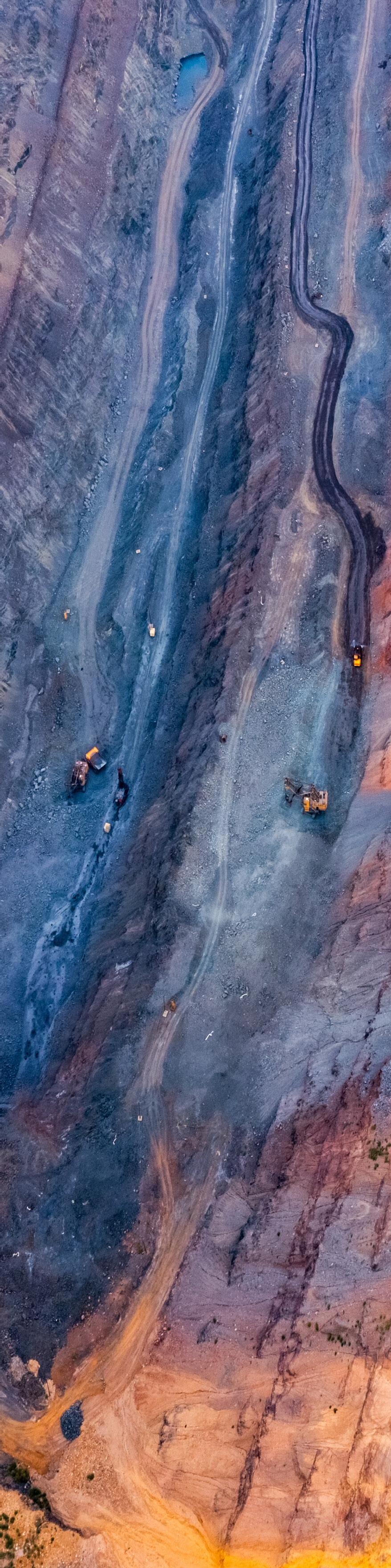
Australia is moving to protect its fuel supply and relieve consumers amid the fuel supply crunch caused by the conflict in the Middle East.
At the same time, the federal government is working to ensure future supply and the critical minerals strategic reserves, while Queensland is looking to kickstart Australia’s first new oil project in 50 years.
Queensland is unlocking the development of Australia’s first oil field in 50 years at the Taroom Trough, to bolster the nation’s long-term fuel security, with streamlined support under a new Taroom Trough Development Plan, the state government of Queensland said. The state is calling on the Federal Government to recognise the Taroom Trough as a project of national interest and streamline environmental approvals under the National Interest Fast-Track Assessment Pathway, which is already in place for other major projects.
The National Interest Fast-Track Assessment Pathway will remove duplicated approvals already conducted at a state level, allowing oil to be produced without unnecessary delay, the Queensland government said.
Shell has started production of small volumes at Taroom Trough which are now making their way into the domestic fuel supply—about 200 barrels of crude oil a day is being refined at iOR’s Eromanga refinery, and produced into diesel.
But Queensland wants more exploration and production at the project and urges the federal government to approve the development, which would open Australia’s first new oil province in half a century.
established new fuel security powers, enabling it to work with fuel suppliers to keep fuel flowing to Australia.
The Export Finance and Insurance Corporation Amendment (Strategic Reserve) Bill 2026 has passed through Parliament, giving the government the power to secure fuel and other strategic materials including fertiliser.
The new laws also deliver on the government’s commitment to establish a Critical Minerals Strategic Reserve, allowing the government to secure, sell, and stockpile the critical minerals and rare earths vital to the economy, national security, and Future Made in Australia ambitions.
Under the bill, Export Finance Australia (EFA) will have new powers to underwrite fuel purchases from international markets — enabling the government to work directly with suppliers to keep fuel flowing to Australian homes, farms, and businesses.
“Our Government is undertaking every practical measure required to shield our nation from the worst of this global uncertainty. We are acting now to prepare and shield Australians from the worst of this ongoing conflict,” Australia’s Minister for Climate Change and Energy, Chris Bowen, said.
Madeleine King, Minister for Resources and Northern Australia, has said the legislation was an important step in Australia’s global leadership on critical minerals and rare earths.
By Tsvetana Paraskova
Amid the supply disruption caused by the Middle East crisis, the federal government
“The Critical Minerals Strategic Reserve will support Australian critical minerals mining and processing projects, create jobs and ensure Australia remains central to global efforts to build stable and reliable supply chains,” King said.
Minister for Trade and Tourism Don Farrell, commented that “The Critical Mineral Strategic Reserve will diversify global supply chains, allowing us further strengthen our partnerships with our closest allies and trading partners, like the United States, Japan, Republic of Korea, Europe, Canada and the UK.”
Antimony, gallium and rare earth elements, which are crucial for clean-energy and advanced manufacturing, will be the initial focus of the Critical Mineral Strategic Reserve.
The Strategic Reserve Bill 2026 is expected to enable the critical supply chains between Australia and its partners to grow and mature into long-term commercial partnerships that together deliver stronger commercial supply chains to help make the Australian minerals industry the global supplier of choice, according to Tania Constable, Chief Executive Officer of the Minerals Council of Australia.
The Association of Mining and Exploration Companies (AMEC) has also welcomed this legislation, expecting it to deliver a crucial funding mechanism to increase supply of fuel and assist Australia’s energy needs.
the EU representing a key destination as it accelerates its clean energy and advanced manufacturing ambitions, AMEC said.
The removal of tariffs also creates new opportunities for Australian producers and emerging developers to scale operations and attract investment.
Behind China the EU is the world’s second-largest electric car manufacturing region, producing 2.4 million cars in 2024. The EU-Australia free trade agreement helps strengthen Australia’s supply chain resilience by diversifying the distribution of its critical minerals, according to the association.
“Europe is rapidly expanding its electric vehicle and clean energy manufacturing capabilities, and that requires secure and stable supply of critical minerals,” AMEC’s Pearce commented.
Australia must stay ahead of the pack if it wants to become a major player in the global supply of critical minerals
“Australia is well placed to meet that demand. Our strong ESG standards give international partners confidence that our minerals are produced responsibly.”
In another boost to local critical minerals supply chains, the Queensland state government has declared the Sugarbag Hill Ultra High Purity Quartz Sand Project a prescribed project to fast-track delivery.
Further processing of the critical material is proposed at the Lansdown Eco-Industrial Precinct south of Townsville, with a pilot facility in Stuart and chemical storage at the Port of Townsville.
The project will also allow high-quality quartz sand to be exported through the port.
The state government’s declaration provides certainty for the project, said Stuart Jones, CEO of High Purity Quartz Limited.
“It recognises the importance of establishing a Queensland-based supply of globallyscarce ultra high purity quartz sand, which is critical for solar PV silicon wafer manufacturing. This aligns with the State’s ambition to build world leading sovereign capability in this future focused industry,” Jones added.
The number of electric vehicles using public EV charging network has surged in recent weeks, while online searches for EVs are on the increase, another sign that electric car use and interest is up amid the fuel shortage caused by conflict in the Middle East, the National Roads and Motorists’ Association (NRMA) has said
“We’ve seen a clear uplift in utilisation, and the network is performing as intended with capacity to support further EV uptake,” said Ian Cosgrove, Head of Capital Works and Network Operations at NRMA.
“This process can’t happen fast enough, as the world moves quickly to establish secure and sustainable supply chains of critical minerals,” AMEC Chief Executive Officer, Warren Pearce, said.
“Australia must stay ahead of the pack if it wants to become a major player in the global supply of critical minerals.”
AMEC also praised the focus not only on critical minerals but also on the move to find another way to directly respond to current supply chain disruptions.
“As a result of this work, the government is well positioned to extend these flexible tools to help safeguard fuel and fertiliser supply during this global supply chain challenge,” Pearce noted.
Australia-EU Trade Deal
Positive for Australian Critical Minerals
AMEC has welcomed the announcement at the end of March on the finalisation of a Free Trade Agreement between Australia and the European Union, particularly the removal of tariffs on critical mineral products supplied to the EU.
This agreement reinforces Australia’s position as a trusted, long-term supplier of critical minerals to global markets, with
Ultra-high purity quartz is an important material used to make products including semiconductors, specialised glass, and equipment needed in advanced manufacturing.
The AUS$515-million project is expected to support 600 jobs during construction and 140 ongoing jobs once operational, delivering significant economic benefits for regional Queensland.
Moreover, Open Road website usage data also shows a 300-percent surge in traffic via organic searches for “electric utes” in March compared to February, and the number of searches for “electric SUVs” has doubled, NRMA added.
“Online search behaviour can often be an early signal of changing buyer intent, particularly when it lines up with rising running costs and wider concern about fuel supply,” the association noted.



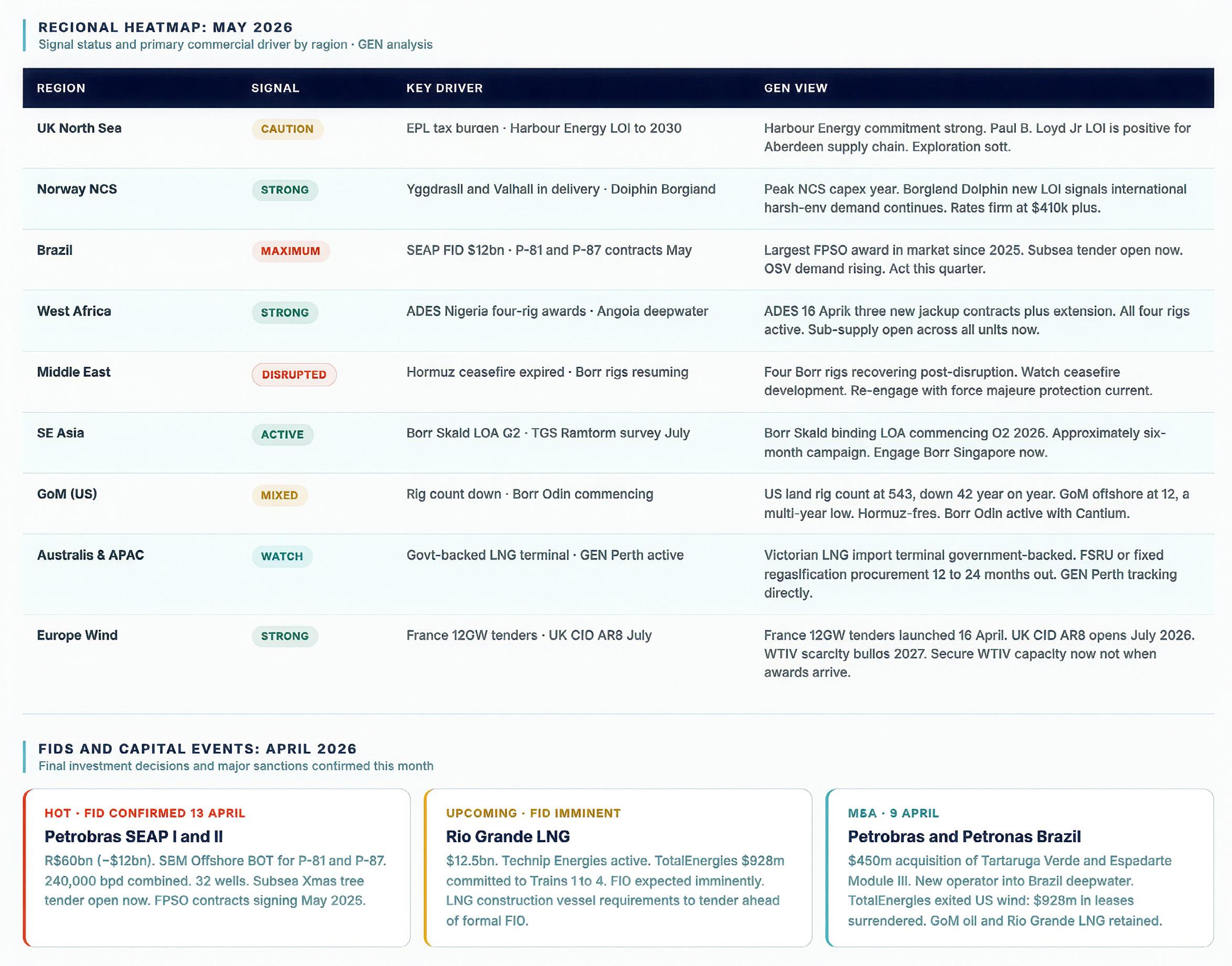
Monthly intelligence summary for the GEN supply chain community. Rig and vessel markets, operator activity, regional signals and the GENI Index.



OPERATOR: EST. VALUE: STATUS
$10bn or more
TotalEnergies, Galp, NAMCOR, QatarEnergy FID expected 2026
The Venus discovery, made in 2022, holds an estimated 6 billion barrels of oil in place, one of the largest finds of the past decade. TotalEnergies and Galp are advancing FID for a 150,000 barrels per day FPSO-based development with a 40-well subsea production system and full SURF installation. A threewell Mopane appraisal programme is underway in 2026 to firm the resource ahead of sanction. Shell is also drilling a separate five-well Orange Basin programme with the Deepsea Mira.
Papua New Guinea
OPERATOR: EST. VALUE:
$10bn or more
TotalEnergies,ExxonMobi, Santos, ENEOS Xplora FID expected 2026
Papua LNG will be the next major greenfield LNG project in Asia Pacific, producing 5.6 million tonnes per annum from the Elk-Antelope gas fields, which hold an estimated 6 to 7 trillion cubic feet of recoverable gas. The project targets FID in 2026 with more than $3 billion in EPC contracts expected to be placed in the near term. Offshore subsea infrastructure and onshore LNG trains are both in scope. TotalEnergies has been advancing FEED studies and government engagement in PNG throughout early 2026.

Coral Norte FLNG — Rovuma Basin Area 4
OPERATOR: EST. VALUE: STATUS
$7bn or more
TotalEnergies, Galp, NAMCOR, QatarEnergy FID ready- awaiting government approval
Coral Norte FLNG will be a near-duplicate of the Coral South FLNG vessel, which delivered first LNG in 2022 and has operated successfully since. Capacity of 3.37 million tonnes per annum. The FLNG vessel concept de-risks execution versus onshore LNG trains. Eni stated it is ready to take FID and has been waiting for government authorisation from Mozambique since early 2025. Government approval has been described as imminent on multiple occasions. If authorisation arrives, FID could follow within weeks.

Mexico
OPERATOR:
Harbour Energy (op) / Pemex / Talos / Wintershall Dea / Grupo Carso
Multi-billion
FID targeted late 2026
Zama is one of the world's largest shallow-water oil discoveries of the past 20 years, with estimated gross resources of 600 to 800 million barrels. FEED studies conducted by DORIS are expected to complete in 2026, paving the way for EPC tendering and FID. The development plan covers two offshore fixed platforms, 46 dry tree wells, 68km of pipelines and an onshore facility at Dos Bocas Maritime Terminal. Harbour Energy took operatorship in 2024 following Pemex's operational difficulties and has been advancing the project.

OPERATOR: EST. VALUE: STATUS
Indonesia
Tangkulo Gas Development — South Andaman Block
Mubadala Energy
$2bn to $4bn
FID targeted mid-2026 — first gas 2028
Mubadala Energy made the Tangkulo discovery in 2024 on the South Andaman Block and moved rapidly to fast-track development in line with Indonesia's priority to reduce LNG imports and shore up domestic gas supply. FID is targeted by mid-2026 with first gas planned for late 2028. The project is positioned as a key contribution to Indonesia's national energy security programme and domestic offtake agreements are being progressed with state entities. Indonesia's regulator SKK Migas is actively supporting fast-track development across the country's offshore gas portfolio.

Malaysia
BIGST Gas Cluster — Offshore Terengganu

OPERATOR: EST. VALUE: STATUS

Cronos Gas Development — Cyprus EEZ Tieback to Egypt
Eni (50%) / TotalEnergies (50%)
$2bn to $4bn
FID targeted Q1 to Q2 2026
Cronos holds estimated gas in place of 3.1 to 3.4 trillion cubic feet. The development concept uses a subsea tieback via a 90km pipeline to the Zohr field facilities in Egypt for processing, with LNG export through Damietta. The approach avoids new platform construction and uses under-utilised Egyptian infrastructure to accelerate timelines and reduce capital. Cyprus's first commercial gas production from its EEZ will reinforce Egypt's role as an Eastern Mediterranean gas hub. FID has been anticipated for early 2026 with first gas in late 2027 or early 2028.

US Gulf of Mexico
OPERATOR:
EST. VALUE:
STATUS
BP Tiber Deepwater Development — Keathley Canyon
BP (operator) with partners
$8bn to $12bn over field life
echnipFMC iEPCI awarded
BP's Tiber field, discovered in 2009, is one of the largest undeveloped deepwater prospects in the US Gulf at an estimated 4 to 6 billion barrels of oil in place. TechnipFMC secured the iEPCI contract covering subsea production systems and SURF installation. BP is using the same semisubmersible FPU design philosophy applied to Kaskida, its other major Paleogene development. Tiber requires 20,000 psi ultra-high pressure technology, making it one of the most technically demanding GoM developments. The Conifer-1 ILX well is also being drilled on the northwest flank of Kaskida in 2026.

Norway NCS
Irpa Deepwater Gas Development — Aasta Hansteen Tieback

Ivory Coast
Baleine Phase 3 — Deepwater FPSO Development
OPERATOR:
EST. VALUE:
STATUS
Eni (90%) / Petroci (10%)
$3bn to $5bn
FID deferred for capex optimisation
Baleine is West Africa's largest oil and gas discovery in recent years. Phase 1 and Phase 2 production is already underway using an existing FPSO. Phase 3 will require a new dedicated FPSO capable of handling 150,000 barrels per day of oil and 200 million cubic feet per day of gas. Eni deferred Phase 3 FID in late 2025 for capex optimisation but has indicated it intends to proceed in 2026. Murphy Oil's parallel Caracal and Bubale drilling programme in the same basin adds to the West Africa deepwater development profile for the year.

OPERATOR:
EST. VALUE: STATUS
UAE
ADNOC Nasr Expansion (Nasr-115) — Offshore Abu Dhabi
ADNOC Offshore
$1bn to $2bn
EPCI awarded to McDermott
ADNOC has awarded the EPCI contract for the Nasr field expansion to McDermott, covering three fixed platforms, a gas-lift pipeline, subsea power cables and more than 30km of pipeline installation. The project is part of ADNOC's ongoing programme to expand Abu Dhabi's offshore oil and gas production capacity. In January 2026, the Nasr-115 project progressed to construction phase alongside several other UAE offshore developments, confirming ADNOC's continued capital commitment to brownfield offshore capacity expansion despite the Hormuz situation affecting other regional operations.

USA — Louisiana
Rio Grande LNG — Trains 1 to 4, Texas/Louisiana Coast
OPERATOR:
OPERATOR:
OPERATOR: EST. VALUE: STATUS
Petronas / ENEOS Xplora
$2bn to $4bn
Advancing to FID - first gas to Kerteh '29
The BIGST cluster groups five offshore gas fields on the Peninsular Malaysia shelf to deliver gas to the Kerteh gas processing complex by 2029. The development is part of Petronas's programme to reinforce domestic supply as legacy fields decline and industrial gas demand grows. ENEOS Xplora, the Japanese operator's upstream subsidiary, is a partner. Malaysia is running one of the most active jackup and deepwater markets in Asia Pacific in 2026, with multiple concurrent programmes attracting supply chain interest from international companies.
EST. VALUE:
STATUS
Equinor (operator)
NOK 15bn to 20bn
Construction advancing
Papua LNG will be the next major greenfield LNG project in Asia Pacific, producing 5.6 million tonnes per annum from the Elk-Antelope gas fields, which hold an estimated 6 to 7 trillion cubic feet of recoverable gas. The project targets FID in 2026 with more than $3 billion in EPC contracts expected to be placed in the near term. Offshore subsea infrastructure and onshore LNG trains are both in scope. TotalEnergies has been advancing FEED studies and government engagement in PNG throughout early 2026.
EST. VALUE:
STATUS
Rio Grande LNG / TotalEnergies (Trains 1 to 4)
$12.5bn
FID imminent
TotalEnergies committed $928 million to Trains 1 to 4 of the Rio Grande LNG project following the broader US LNG geopolitical repositioning post-Hormuz. Technip Energies has been issued authorisation to advance work ahead of formal FID. With full commercialisation in place and one of the largest LNG engineering contractors cleared to proceed, FID is expected imminently. The project joins CP2 LNG, Woodside Louisiana LNG and Corpus Christi Trains 8 and 9 as part of the second wave of US LNG export capacity targeting delivery between 2027 and 2029.
The energy industry has always pursued innovation and technological advances to improve operations, increase output, and minimize risks. As global energy demand continues to rise amid geopolitical upheavals, innovation and digitalisation play a critical role in asset management and energy security.
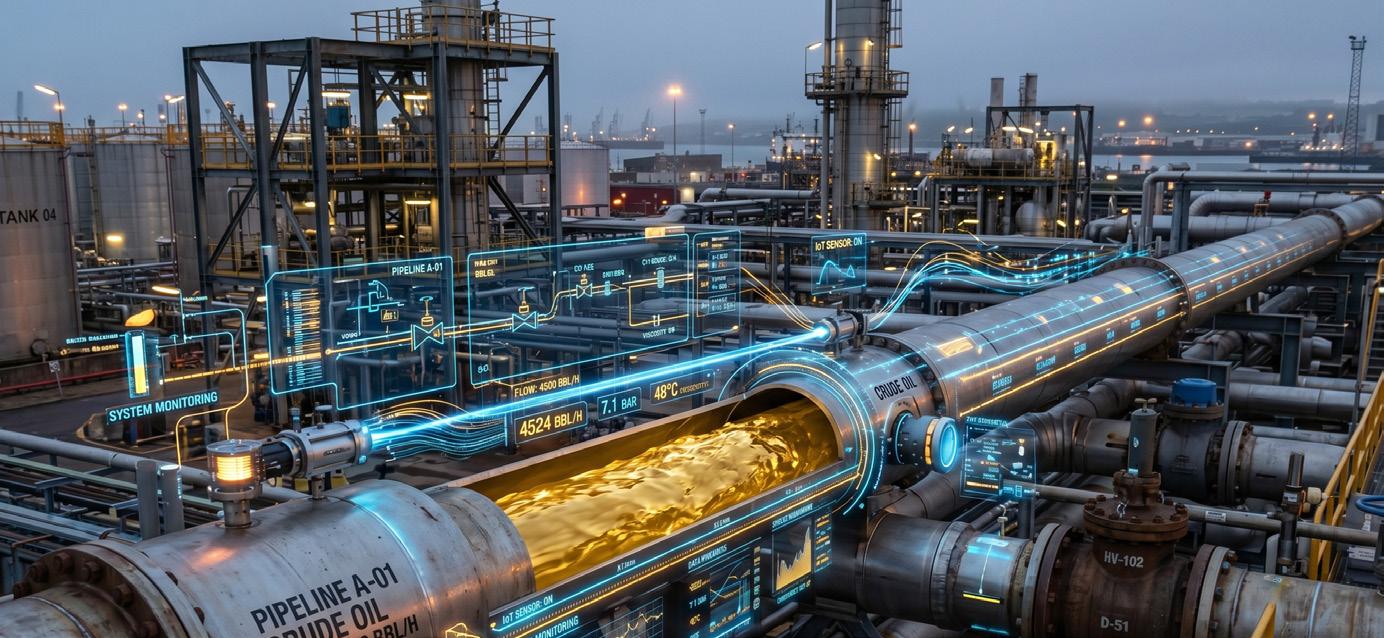
Digitalisation plays an increasingly important role in helping the energy industry explore and achieve greater efficiency in operations, streamline seismic data interpretation and other data management, and develop new business models via wellsite automation or Internet of Things (IoT) integration.
In recent years, digital transformation in the industry has helped operators and the supply chain with issue detection and asset monitoring, creating the predictive maintenance approach to ensure safe and reliable operations of well drilling, pipeline safety, turbine or refinery operations.
Just like in everyday life, digitalisation and digital devices have seen exponential use in the energy industry and will continue to be the driving force of technology and performance innovation in the sector.
The technology themes include AI, Big Data, the Internet of Things (IoT), robotics, metaverse, blockchain, 3D printing, cloud computing, quantum computing, cybersecurity, and the future of work.
These tech themes have the capability to disrupt how things are being done in the energy industry and to help innovations and digital transformation of company operations, asset integrity, seismic surveys, and risk management.
AI and other advances in technology are also poised to transform the energy transition, enabling smart grids, demand response management, energy storage solutions, carbon capture, utilisation, and storage (CCUS), and smart homes and buildings. AI algorithms could also help forecast solar and wind power generation by analysing weather forecasts and realtime weather patterns and conditions.
Digital innovation is rapidly emerging as a defining force for the oilfield services (OFS) sector as it adapts to changing market conditions, creating opportunities for steady, long-term growth, according to Rystad Energy
The energy intelligence firm predicts that the oil and gas industry could save more than $320 billion over the next five years by further digitalising operations in five key areas: drilling optimisation, autonomous robotics, predictive maintenance, reservoir management, and logistics optimisation.
The OFS business ecosystem is expected to undergo significant transformation as continued merger and acquisition (M&A) activity, new business partnerships with technology firms, and greater software integration drive digital-first business strategies for key OFS players, Rystad Energy reckons.
A notable trend in digital investment is the growing use of partnerships with technology firms, which complements internal capability building and acquisitions in the digital space, according to the firm.
By Tsvetana Paraskova
“We estimate that $320 billion is a modest figure, as broader digital adoption across other business domains could generate even greater value. To realize this, executives will need to deliberately prioritize digital transformation by fostering a less risk-averse business culture,” says Binny Bagga, Senior Vice President, Supply Chain at Rystad Energy.
“Emphasizing digitalization is a direct pathway to creating lasting shareholder value,” Bagga noted.
Technology adoption and innovation is thriving even in the most mature basins such as the UK North Sea, which has been a testbed for pioneering technologies to maximise oil and gas production and accelerate the energy transition, the North Sea Transition Authority (NSTA) said in its latest Technology Insights Report
The survey accompanying the report showed that there is strong evidence among UKCS operators of a continuing focus on technologies for the costefficient production of hydrocarbons and the reduction of emissions across the full project lifecycle.
Notable examples of technology innovations in drilling and well construction include low-cost platform modular drilling rig systems, single-lift well-towell transfers, logging-while-drilling sonic logging for top of cement identification, digital well planning using AI, combine wireline tool strings, and tubing retrievable surface controlled subsurface safety valve.
In facilities design and inspections, operators and the supply chain seek high frequency vibration and axial data analysis, cost-efficient pipelines and longer tie-backs, subsea gas compression and multiphase boosting, non-intrusive inspection technologies, and AI for riskbased inspection systems.
In well interventions, operators boosted the use of wireless downhole surveillance technologies, disposable fibre-lines, retrofit DHSVs and ESPs flexible zonal isolation solutions, real-time slickline and coiled tubing solutions, and water shut-off solutions, according to the NSTA.
Operators referenced 1,280 innovative solutions in the technology section of the UKCS Stewardship Survey in 2025 and in their technology plans, up from 1,250 the

previous year. Half of those technologies have been used in the field and 141 were newly reported for 2025.
More than half of the technologies (61 percent) are sourced directly from vendors/suppliers and this trend continues to increase this year.
However, in 22 percent of the cases, operators actively partner with selected suppliers to develop solutions in partnership, and/or from joint industry projects, the NSTA survey found.
Energy security has recently emerged as the leading driver of innovation in the energy sector, the International Energy Agency (IEA) said in its The State of Energy Innovation 2026 report from earlier this year.
Energy innovation globally is entering a new phase shaped by energy security, industrial competitiveness, and infrastructure resilience, the report found.
Most technologies refer to the energy transition, with over 150 major innovation highlights during the year, from solid-state air conditioning to perovskite solar cells, fusion energy, sodium-ion batteries, and next-generation geothermal systems, the IEA said.
The context for energy innovation has tilted towards competitiveness and security. In the IEA’s survey of experts and practitioners, 80 percent of respondents placed energy security among the top three drivers of energy innovation in 2025, ahead of affordability, GHG emissions, and national economic performance.
This shift to energy security and competitiveness may boost technologies that support critical minerals supplies, nuclear, power grids, and domestic energy resources, the Paris-based international agency noted.
The report found that public support for energy innovation is invaluable. Recent examples have shown that early government funding laid the groundwork for floating liquefied natural gas (LNG) facilities, lithium-ion batteries, and nextgeneration geothermal.
Yet, higher interest rates, macroeconomic uncertainty, and strong competition from artificial intelligence ventures have weighed on capital flows into support of energy innovation.
The report highlighted the importance of public spending on energy research and development (R&D) and early commercial projects for a range of key policy goals, especially as private finance has become scarcer.
According to the report, while priorities may shift, the case for sustained and strategic support for energy innovation remains strong.
“With energy innovation becoming increasingly foundational to modern economies, evidence shows it can deliver transformative economic and security benefits over decades,” the IEA said.

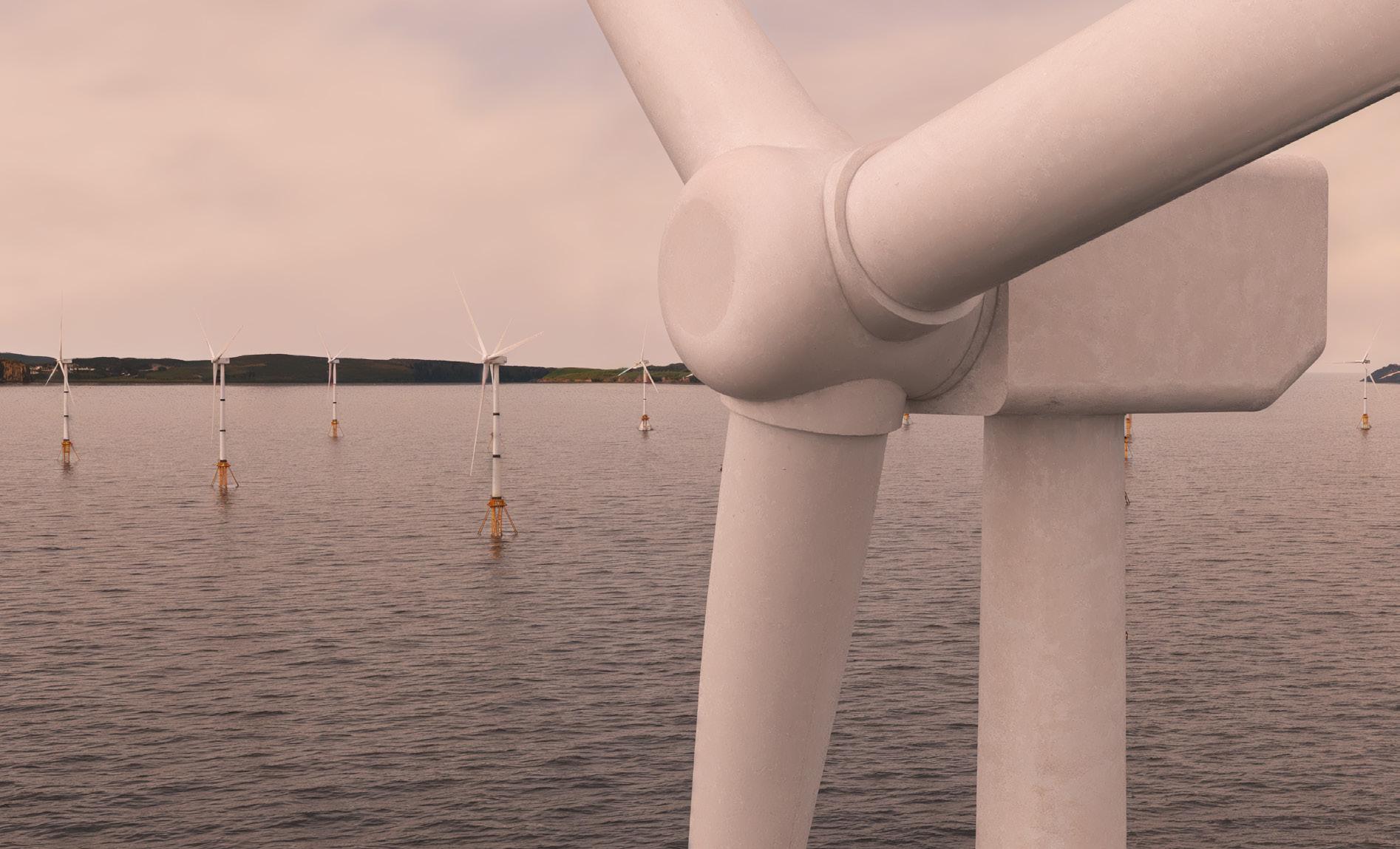
Scott Davie, Engineering Team, Flotation Energy
As offshore wind pushes into deeper waters, the industry is increasingly focused on how to deploy projects efficiently across a wider range of seabed conditions. While floating wind has opened up new opportunities, there remains a critical transition zone between fixedbottom and fully floating technologies. It is here that hybrid foundation concepts, including the Fixed Tension Leg Platform (FTLP), are beginning to attract attention.
Recent collaborative work across the sector, including a study led by the Offshore Renewable Energy Catapult, has explored how these technologies could be applied in practice. Rather than focusing solely on concept design, the work examines the full lifecycle of FTLP deployment, from manufacturing and delivery through to offshore assembly and installation, alongside comparison with a conventional semi-submersible floating baseline for a deep-water site.
The driver is clear. As water depths increase, fixed-bottom solutions become less viable, while floating solutions, although proven, still carry cost and supply chain challenges. Hybrid technologies offer a potential middle ground, particularly in intermediate water depths where neither approach is fully optimised.
A key outcome from this work is a clearer understanding of how the FTLP could be delivered at scale. Execution planning is central to this. Understanding how components are manufactured, transported and assembled is as critical as the design itself, particularly as the sector moves towards commercial deployment.
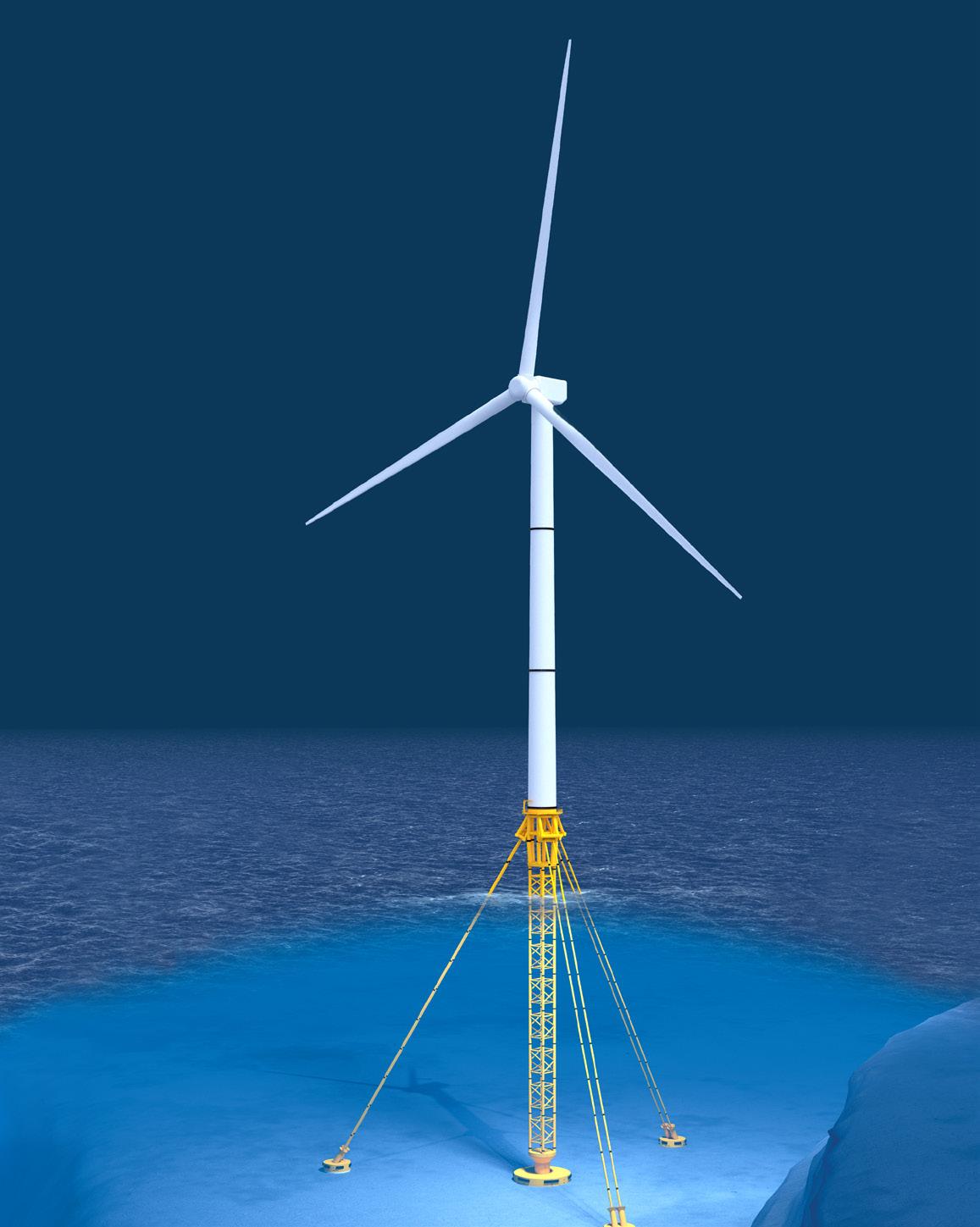
The comparison with semi-submersible designs remains important. Semi-subs are currently the benchmark, with established supply chains and installation approaches, typically involving assembly at port and tow-out to site. By contrast, FTLP concepts introduce a different installation methodology, more closely aligned to fixedbottom approaches, with structures installed offshore and turbines assembled in situ.
This presents both challenges and opportunities. Installation in deeper waters introduces technical complexity, but there is also potential to reduce material use and create more flexible supply chains. There may be opportunities to support more local fabrication and assembly, helping to strengthen UK supply chain capability and align with wider ambitions around domestic content and industrial growth.
Beyond cost, the study highlights broader value drivers, including schedule risk, supply chain resilience and the ability to tailor solutions to specific site conditions. Rather than replacing existing technologies, the FTLP, and other hybrid foundation concepts, add to the range of options available to developers.
A critical next step is demonstration at scale. Test and demonstration (T&D) sites will play a key role, providing a controlled environment to validate design assumptions, refine installation methodologies and build operational experience. Moving from modelling to realworld deployment is essential to reducing uncertainty and accelerating learning.
T&D sites also play a direct role in cost reduction. Early deployment at smaller scale helps identify efficiencies, improve
installation processes and support supply chain development ahead of full commercial rollout. This iterative approach is essential to bringing down the cost curve and enabling emerging technologies to compete alongside more established solutions.
Risk and opportunity remain closely linked. As highlighted in the Offshore Renewable Energy Catapult’s recent public summary report, detailed assessment of technical and delivery risks, including offshore installation and structural behaviour, has been carried out alongside a structured risks and opportunities register. This is an important step in building confidence across developers, the supply chain and regulators.
Collaboration has been a defining feature of this work. Bringing together designers, developers and installation specialists ensures that innovation is grounded in practical delivery insight, which is critical as the sector evolves.
For the UK, where much of the continental shelf sits within these intermediate water depths, the opportunity is particularly relevant. Hybrid technologies, supported by effective demonstration and a coordinated supply chain approach, could help unlock new sites and improve project economics.
As the industry moves forward, the focus is shifting from what is technically possible to what is practically deliverable. The role of T&D sites, alongside continued collaboration and detailed study, will be central to that transition, helping to turn emerging concepts into scalable, costeffective solutions for the future.



Smart inventory management, automated restocking, and cost-effective procurement to boost productivity and ensure seamless operations.

Every operation is different. Your supply solution should be too.
TESS Integrated Supply transforms how you manage critical components — reducing downtime, cutting costs, and giving you full operational control.
Our Integrated Supply model transforms how businesses manage critical components, streamlining procurement, reducing downtime, and improving operational control.
Inventory Management
Turnover rate measurement
Automated replenishment
Real-time inventory viewing and planning
Finance
Automated cost allocation to the correct project and personnel
Option for monthly consolidated invoices
TESS owns deferred inventory, freeing up company capital
Access Management
24/7 Access to Products
Grant access to the right employees
Share access with subcontractors and partners
Environment
Fewer transports
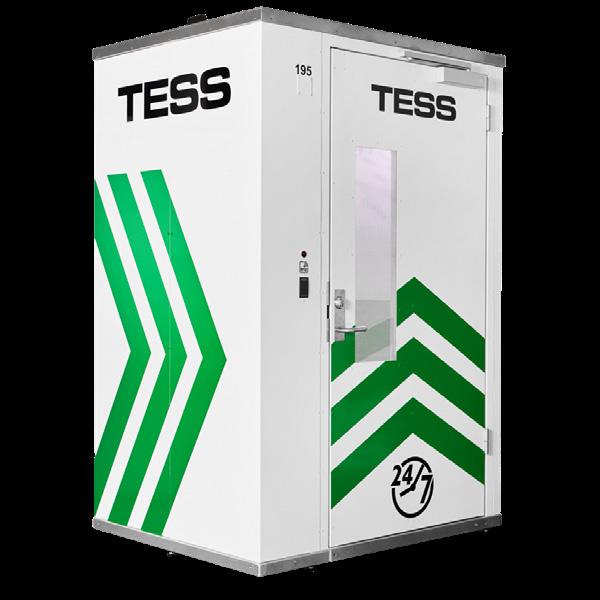


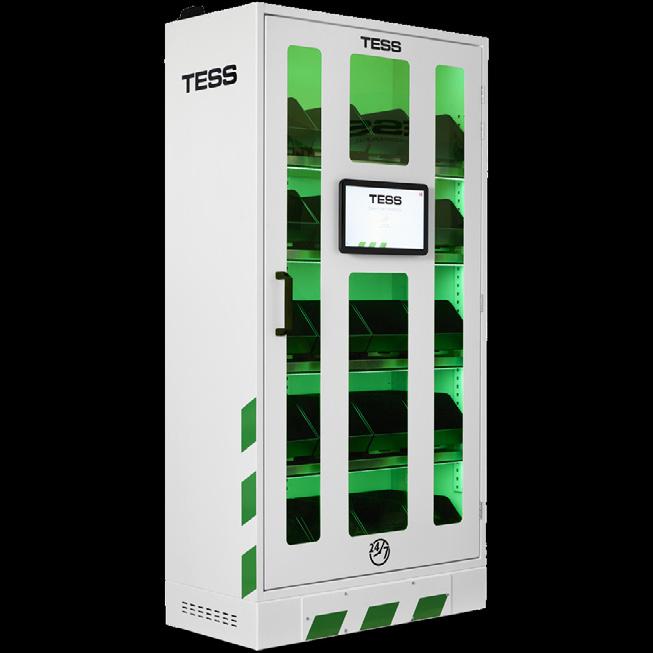

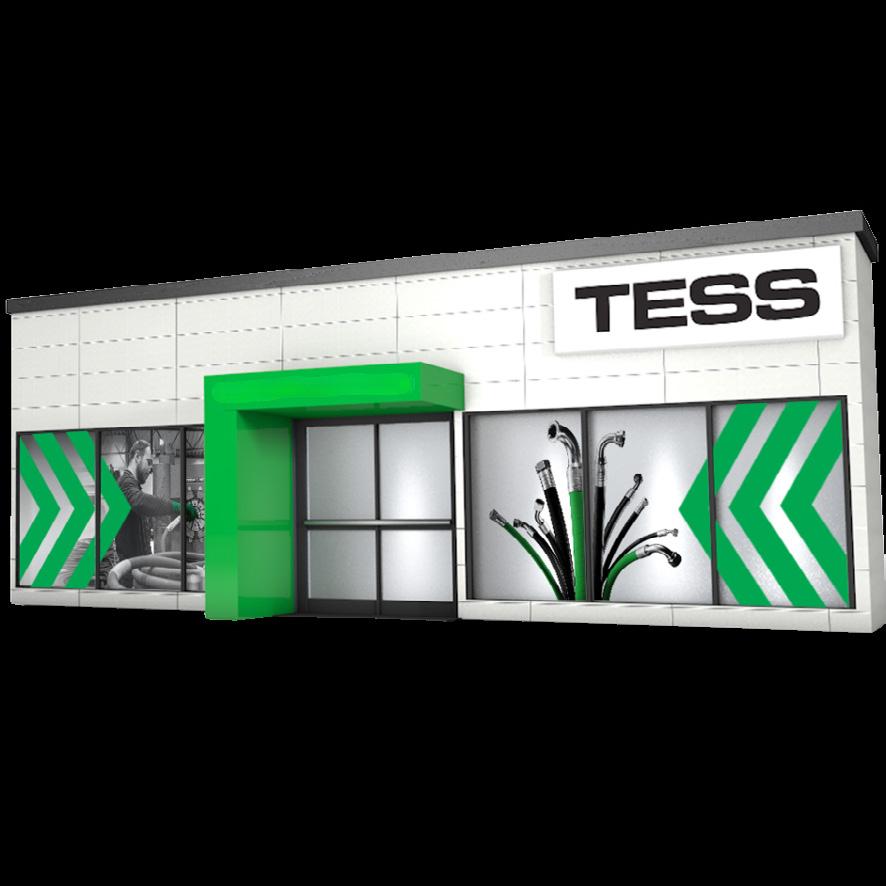































The energy industry is entering a period of profound change. Digital transformation, new operating environments, emerging energy technologies, and evolving workforce expectations are converging to reshape the way organisations build, manage, and sustain competence.
In such a dynamic landscape, training is no longer simply about delivering information and skills, it is about equipping people to perform in complex, high pressure, and often hazardous environments with confidence and accuracy.
For 3t, innovation is not a side project, but part of its core business operations. It is the engine that drives the business forward and the foundation upon which it is rewriting the rules of workforce development. Through a blend of advanced simulation, immersive digital learning, data-driven competence systems, and a growing global presence, 3t is transforming how global energy companies prepare their people for the realities of the energy world now.
Rather than seeing training as a standalone sector, 3t envisions it as an interconnected system, a lifecycle that begins with learning but extends into performance, assurance, measurement, and continuous development.
The architecture of 3t reflects how the company is set up to support every part of the workforce development journey: from hands on accredited training at world-class training centres and world-leading drilling simulation technology to digital learning and competence platforms, through to large-scale workforce development and fully managed training operations.
Individually they deliver specialist expertise, but together they form a cohesive, technology-driven model that reflects the complexity and demands of today’s global energy industries.
At the core of this integrated approach lies a commitment to utilise technology that enables learning to go beyond theory and into real-world application. Whether it is creating a digital twin of an offshore asset, capturing data from live drilling simulation exercises, or incorporating AI tools to track competence across continents, 3t sees technology as the key to building more intuitive, safer, and more agile workforces everywhere.
Simulation has become one of the most effective tools across the sector for developing deep technical competence, especially in the drilling, well control, and broader safety-critical environment. Throughout the years, 3t has led the
way in simulation innovation, long before immersive technologies became industry standard. Today, its simulators are relied upon across more than 60 countries to help individuals and teams rehearse complex tasks, practise responses to challenging scenarios, and sharpen decision making under pressure.
But what sets 3t’s simulation apart from the competition is its fidelity. These are not superficial visualisations designed to look impressive in a training centre. They are customer-by-customer engineered environments built on advanced mathematical models that replicate the physics, mechanics, and system behaviours of real assets. When operational system pressure rises, instrumentation reacts accordingly. When a trainee initiates the wrong sequence, the environment responds with accuracy that mirrors live well behaviour, taking into consideration all elements such as forces, flows, alarms and hydraulic responses.
Instead of theoretically memorising steps or watching demonstrations, trainees experience the full consequences of their actions and error in a safe, controlled environment. Working with realistic scenarios with real failure builds resilience, as teams can learn how to communicate, coordinate, and problem solve together, which is something traditional classroom environments have been lacking to replicate.
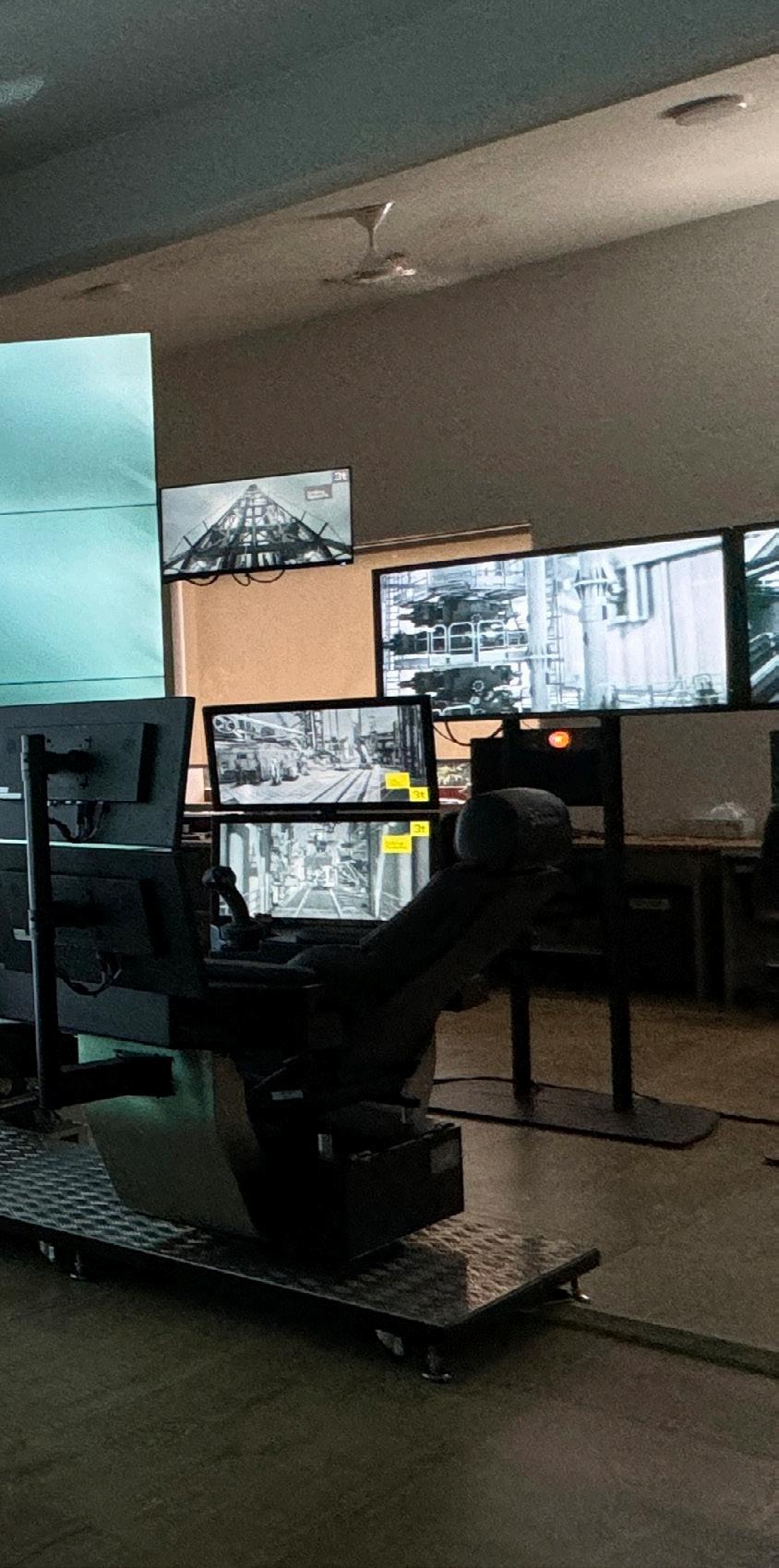
The impact of this approach is evident in the company’s major international projects. One standout example is 3t’s partnership with SADA in Saudi Arabia, where 3t delivered a suite of advanced simulators that now sit at the centre of a fully immersive learning environment. Combined with virtual reality applications, the facility enables trainees to move seamlessly incorporating theory and practical assessments, mirroring the exact pressures and operational demands they will face in the field.
3t believes that these environments are more than just visual learning spaces, they are preparation grounds for global futureready workforce. As organisations expand across regions and adopt increasingly sophisticated equipment, simulation ensures that capability keeps pace with operational reality. It gives companies the confidence that their people can handle the unexpected, communicate effectively, and maintain safety even under the most challenging conditions.
As valuable as advanced training is, the modern energy sector faces another major challenge: how to maintain a consistent, compliant and capable workforce across different countries, regulatory frameworks, and skill requirements. While workforce mobility is on the rise, there are
more companies that see their teams being distributed across the continents. Ensuring consistent competence across such complexity is one of the biggest challenges facing global operators today.
To solve this, 3t created 3tx, its next generation Training and Competence Management platform. While many platforms in the current market offer scheduling, reporting, or learning management in isolation, 3tx was designed to unify the entire lifecycle, from training delivery to evidence capture, from skills tracking to risk insights.
The platform is designed to act as the digital backbone of a global training ecosystem. It provides energy clients with real-time visibility of workforce capability, whether workers are based onshore, offshore, in transit, or spread across multiple regions. This visibility allows organisations to make informed operational decisions, reduce compliance risk, and ensure that only competent, certified personnel are deployed into safety-critical roles.
One of the most innovative aspects of 3tx is its ability to integrate and combine data generated from simulation, practical assessments, and digital learning. Instead of competence being judged by static checklists or annual reviews, it becomes a dynamic dataset, which is constantly updated and shaped by real-world performance indicators. The platform is evolving with the implementation of AI, tools further strengthening this by identifying trends, predicting training needs, and highlighting risk areas before they become operational issues.
Global scalability is central to 3tx’s design. Whether a company operates in one or multiple regions, the platform can be configured to consider local legislation, international standards, or company specific frameworks. This ensures that training and competence management are both consistent and relevant for each case across the global 3t network.
Recently, 3t hosted its 3tx User Forum, where industry leaders highlighted how the platform is helping reshape their workforce strategies. Discussions centred not just on efficiency and compliance, but on how data-driven competence is enabling better planning, stronger operational readiness, and a more agile approach to workforce development. After its integration 3tx has become a cornerstone for many
organisations, helping them to establish a future ready competence system, where learning, performance, and organisational needs are truly interconnected.
The pace of change in the global energy world shows no sign of slowing. As companies navigate new challenges and opportunities, training models must evolve accordingly. 3t’s vision is built on the belief that the training and competence systems of the future will be integrated, digital, and highly immersive, and that globally connected workforces will require globally capable solutions.
With training centres across major energy hubs including the UK, the Middle East and the Americas, simulation solutions deployed worldwide, digital learning solutions expanding into new regions, and 3tx now supporting multinational operations, 3t is well-positioned to shape the next chapter of workforce development. The company’s focus on innovation ensures that it remains at the forefront of training technology, as its global expansion means its expertise is accessible wherever clients operate.
As the energy transition accelerates, the need for highly capable, adaptable, and safety focused professionals will only grow. Technology will not replace people, but it will play an essential role in supporting them, providing the insight, know-how and intelligence needed to perform effectively in complex environments.
3t’s contribution to this future is clear: a connected ecosystem of simulation, digital learning, global training, and data-driven competence management. Together, these capabilities will continue helping the energy sector build workforces that are not only compliant, but confident and skilled for today while being ready for the challenges ahead.
In a world where energy operations are expanding, diversifying, and evolving at unprecedented speed, 3t is ensuring that the people behind those operations progress just as quickly. Through innovation, global reach, and the ongoing evolution of technologies like 3tx, the company is setting a new benchmark for what workforce development can and should look like on a global scale.





From 70% water cut to 0.6%
A subsea gas producer experienced rising water cut due to a failed OH Packer, threatening premature shut-in and permanent production loss.
→ Failed annular barrier integrity
→ Rapidly increasing water cut
→ Escalating operation costs
→ Imminent loss of the well
A focused annulus isolation strategy was deployed to shut off the water source at its origin.
→ Horizontal CannSeal annulus isolation
→ HEX RPB for long-term zonal isolation
→ Water shut-off across the wellbore
Water cut eliminated from 70% to 0.6%
→ Production restored & increased
→ 1300 psi sustained drawdown
→ Extended production well life
→ Avoided abandonment costs
Facing rising water cut? Discover how Interwell restores well performance at Interwell.com across 4 meters

Hand and finger injuries have accounted for approximately 17% of all reported nonfatal workplace injuries in Great Britain every year for the past decade, a proportion that has not shifted despite broader safety improvements (HSE, RIDSITE, 2025).
In 2024/25 alone, nearly 10,000 were reported under RIDDOR. With HSE estimating that around half of non-fatal injuries go unreported, the true annual figure is likely closer to 20,000. For workers in waste management and water and sewerage, non-fatal injury rates run at nearly four times the national average (HSE, RIDIND, 2025).
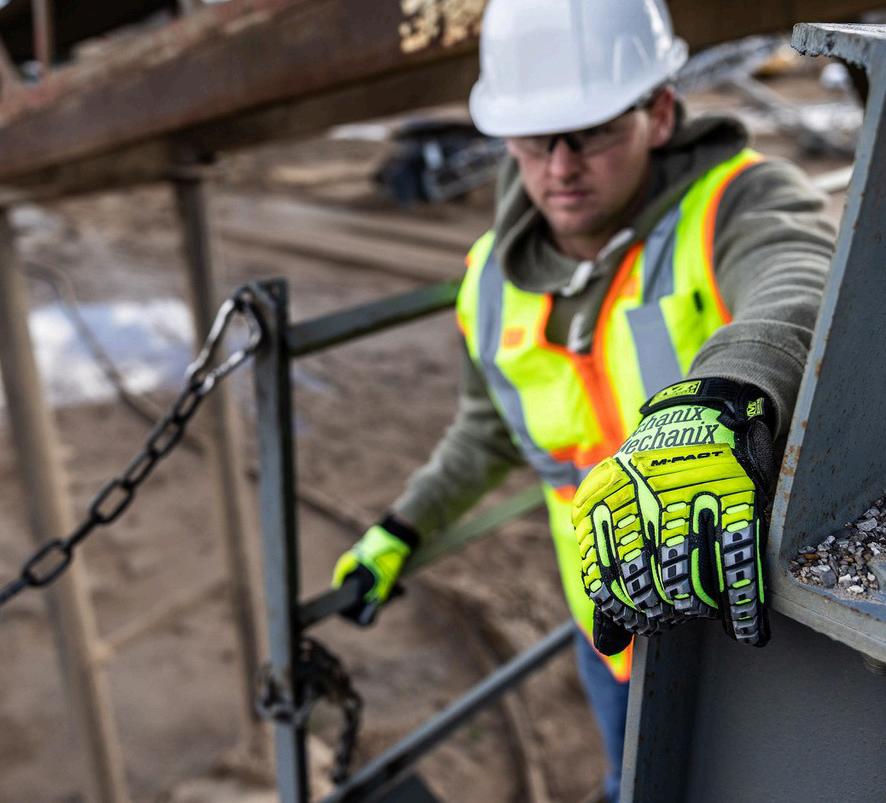
The compliance problem is rarely one of intent. Research into planned behaviour, most notably Icek Ajzen's foundational work on attitude, social norms and perceived behavioural control, shows that workers remove their gloves not out of defiance but in rational response to a tool making their job harder. When protection competes with performance, performance usually wins. No policy changes that. Better materials can.
"Innovation in hand protection has never really been about adding more material," says Josephine Jeon, Director of Research and Development at Mechanix Wear. "It is about understanding the exact demands of the job and engineering a solution precise enough to meet them. That problem-solving mindset is what drives everything we do."
1. High-dexterity cut resistance: the end of the bulk compromise
For energy workers managing instrumentation, valve systems or cable terminations, the trade-off between cut protection and dexterity has long been a trigger for glove removal. New-generation cut materials, incorporated into 360-degree and 180-degree cut-resistant styles, address this directly. By engineering cut resistance at the fibre and weave level rather than through added layers, these materials deliver high protection ratings in a profile that moves with the hand. When the performance penalty disappears, so does the justification for removing the glove.
2. Engineered comfort systems: making the right choice the easy choice
The most protective glove is the one a worker wears for an entire shift. Mechanix Wear's Core Refresh platform, spanning The Original®, FastFit® and M-Pact®, was built on that principle. CoolPlus moisture-management technology actively reduces heat build-up rather than tolerating it. Perforated, lighter-weight TPR overlays improve flexibility and ventilation while reducing the cumulative hand fatigue that Shalom H. Schwartz's Norm Activation Model identifies as an erosion of the personal norms that sustain safe behaviour across a demanding shift.
"Comfort is not a secondary consideration in glove design," says Jeon. "A glove that manages heat build-up and reduces fatigue across a full shift removes the very irritants that cause workers to take protection off. Our Core Refresh was built around that principle from the ground up."
3. Durahide™ leather technology: protection built in, not applied
In refinery, substation and welding environments, leather gloves are the standard. But standard leather degrades under the same conditions it is meant to manage. Mechanix Wear's Durahide™ technology addresses this by infusing flame-resistant treatment directly into the leather during tanning, rather than applying it as a surface finish that wears away. The result is FR performance that is inherent to the material, with significantly greater resistance to the heat-driven drying and cracking that erodes worker confidence in a glove over time.
"A surface-treated glove and a Durahide™ glove may look identical on day one," says Jeon. "The difference shows over time, under real conditions. The right leather substrate, matched with the right Durahide™ recipe for the specific job, is how we make protection reliable over the life of the product."
The persistence of hand and finger injuries at 17% of all workplace incidents across a full decade is a signal that tools have not kept pace with the demands of the work. For safety leaders, the most important procurement question is no longer what protection rating a glove carries. It is whether the material engineering is aligned closely enough with real task demands that the performance trade-off disappears entirely. When it does, compliance stops being a campaign. It becomes the path of least resistance.

Without robust management systems, compliance and properly trained staff, even the strongest organisations can break under pressure.
At QHSE Aberdeen, we help business strengthen every link through ISO certification, legal compliance support, auditing and professional training.

ASET delivers specialist, hands-on training to prepare people for complex operational environments, safely. Based in Aberdeen, Scotland, with over 32 years of experience developing technical skills across global energy and industrial sectors.
With specialist facilities including a live process plant, HV/LV systems and advanced simulation technology, training goes beyond the classroom, delivered by experienced professionals to build the skills needed to operate safely and effectively. Supporting training across key sectors including:



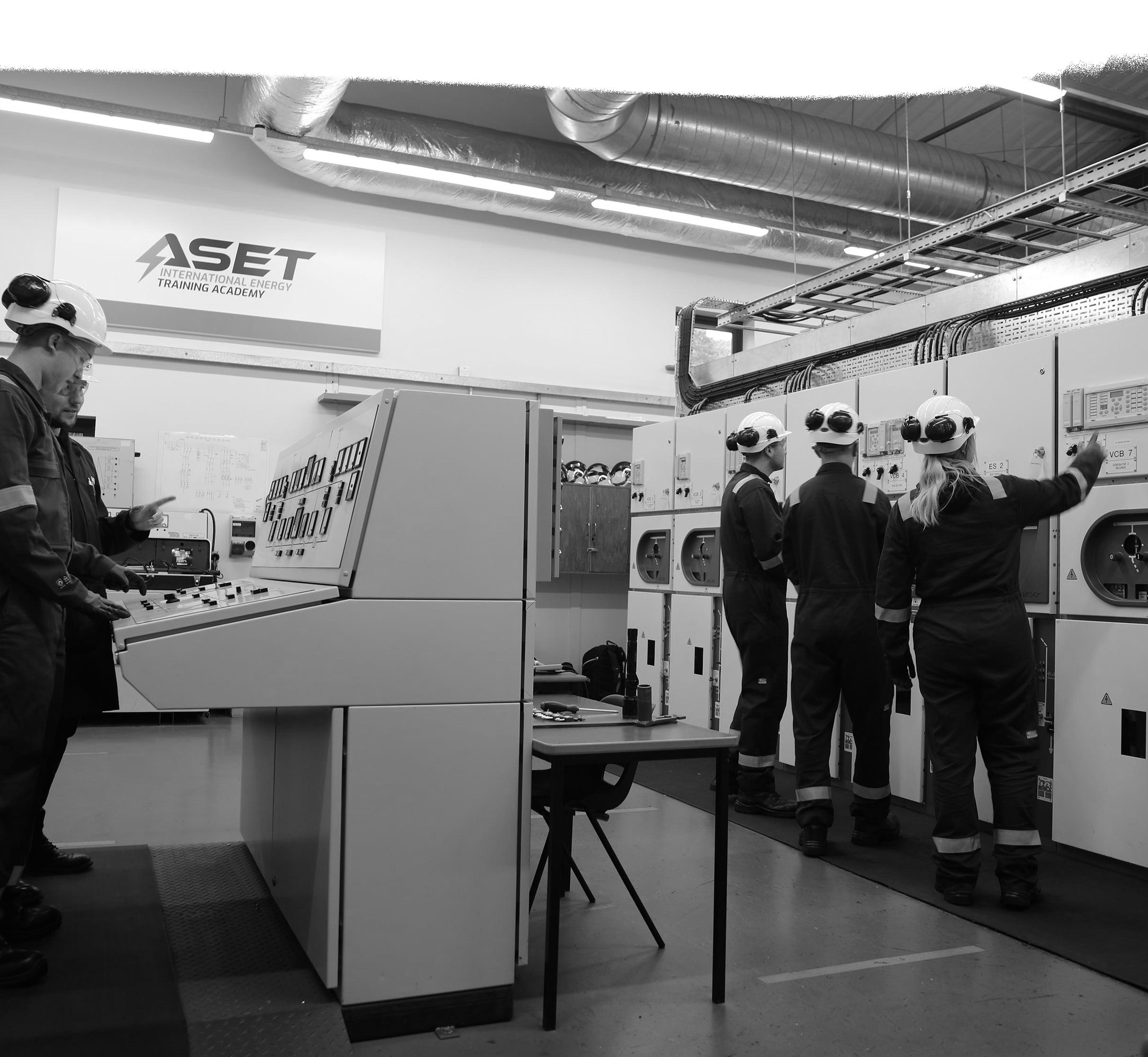

Norway has long been at the forefront of smarter completion strategies, driven by the need to maximize efficiency and production in one of the world’s most demanding offshore environments.
Harsh North Sea conditions, high operating costs and a deeply ingrained culture of efficiency have shaped an industry that consistently pushes the boundaries of well design and execution.
Since the inception of Marwell in 2019 the company has kept the challenges of the well at the forefront. This has become known as their ‘well-first thinking’ approach which is the guiding principle behind their innovative completion and intervention solutions.
Building on a distinctive portfolio of proprietary technologies, Marwell has partnered with leading international technology providers to deliver a fully integrated lower completion offering to the Norwegian market. Through this model, Marwell draws on best-in-class solutions from across the global supply chain, assembling tailored, fit-for-purpose systems that directly address operator challenges. This approach has gained

international recognition from major operators, who view Marwell’s integrated strategy as a genuine value-adding alternative to traditional supply models.
That recognition was further reinforced recently when Marwell was named a winner of ConocoPhillips’ global 2025 Supplier Recognition Award. The accolade highlights the value ConocoPhillips sees in Marwell’s integrated completion philosophy and ability to deliver measurable performance improvements. In parallel, Marwell was awarded a USD 75 million integrated sand control contract by Vår Energi in Norway. The full scope of this contract brings together a comprehensive suite of lower completion technologies including sand control, inflow control, zonal isolation and associated components. A cornerstone of the delivery will be sand control screens manufactured in Europe by Marwell’s long-standing partner, HP Well Screen in Wierden, the Netherlands.
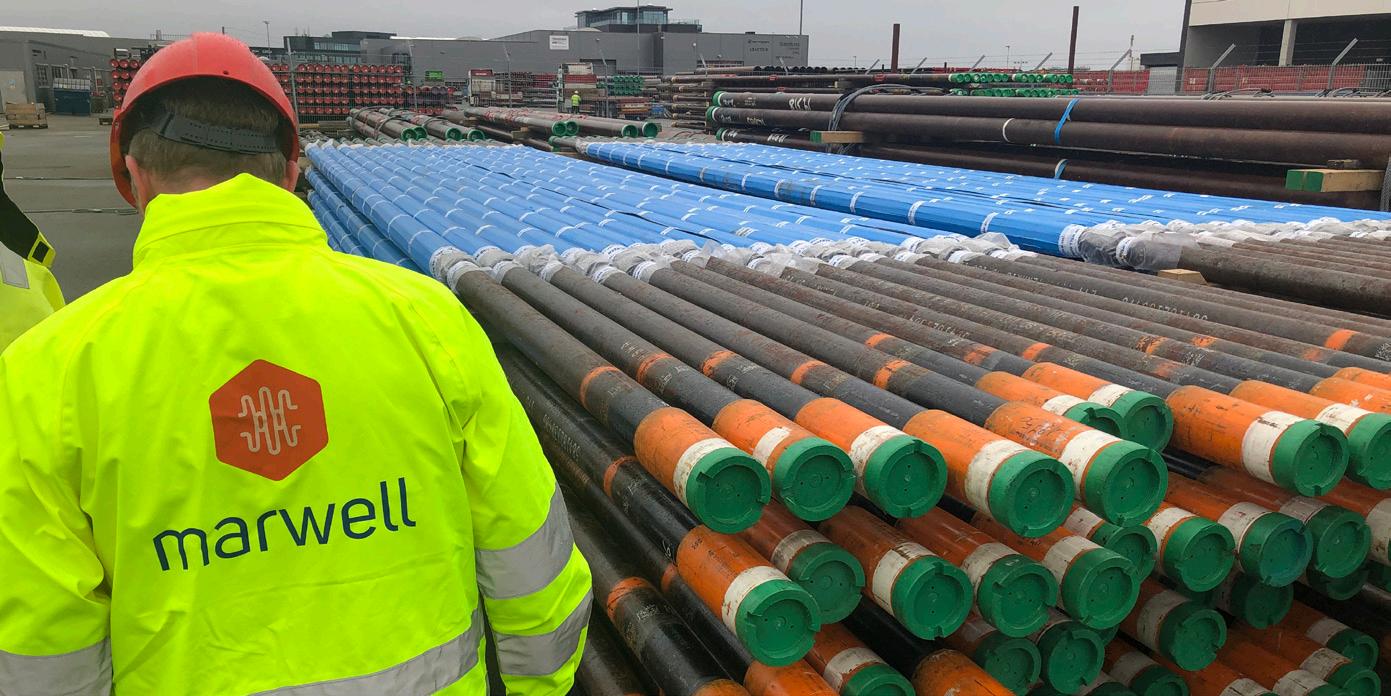
European manufacturing offers clear and tangible advantages for operators on the Norwegian Continental Shelf. These include consistently high product quality, significantly shorter lead times, reduced carbon footprint and lower geopolitical risk within the supply chain. With a transit time of just two days from manufacturing facility to Norway, Marwell is able to deliver sand control completions at unprecedented speed—supporting both operational efficiency and project security.
Sustainable and efficient operations go hand in hand. By utilizing integrated lower completions delivery with European manufacturing and shorter logistics routes, operators are able to reduce emissions, strengthen supply reliability and support long-term well performance. With facilities powered with renewable energy in The Netherlands and Norway, sustainability is embedded as a key performance indicator across the organization. The company’s ISO 14001 environmental management certification further underlines its commitment to responsible operations.
As integrated lower completions take center stage, renewed attention has been placed on the role of sand control screens in Norwegian developments. This is an area of deep expertise for both Marwell and HP Well Screen. Backed by highly experienced completion engineers and supported by local European manufacturing, the partnership enables high-quality execution, customized designs and short-lead-time delivery across the NCS.
wMarwell is an energy technology company based in Stavanger, Norway, specializing in integrated completion and intervention services. Through an engineering-driven approach, Marwell develops and delivers value-focused technologies to the global energy industry.

Subsea Supplies is a global provider of equipment for the ROV, AUV, oil & gas, renewable energy, and oceanographic sectors. As the only European distributor certified to manufacture Burton Subsea cable and connector assemblies to Eaton standards, we deliver trusted quality, reliability, and performance worldwide.
For over 5 decades, Burton has been the trusted industry standard connector in the subsea world. Whatever your underwater interconnection need, Subsea Supplies has a solution for you.

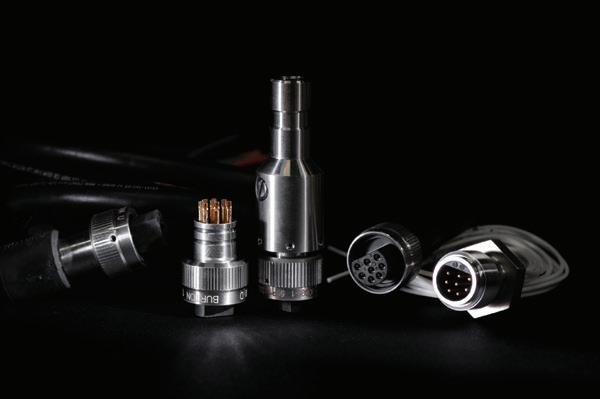
Leyton is an international consulting firm that
We

For years, the energy industry has talked about the Strait of Hormuz as a theoretical risk. It sat neatly in risk registers and board slides, but never quite felt immediate. In February 2026, that changed.
The US-Israeli military action against Iran, followed by Iran closing the Strait, brought around a fifth of global oil supply and a significant share of LNG trade to a near standstill. Oil moved back above 100 dollars a barrel, European gas prices spiked sharply, and the head of the International Energy Agency described it as the most serious global energy security challenge we have seen.
The short-term impact has been severe. But stepping back slightly, it has also reinforced something more structural. The importance of building domestic, low-carbon energy systems. That is where blue hydrogen, coupled with carbon capture and storage (CCS), becomes increasingly compelling.
At its core, blue hydrogen is not new. It is produced from natural gas using well-established reforming processes, with the CO₂ captured and stored rather than emitted. What makes it particularly relevant right now is its practicality. It builds on infrastructure we already have, supply chains that already exist, and the subsurface expertise the oil and gas sector has developed over decades. The positive is that we do not need to reinvent an entire energy system overnight. We only need to adapt what is already there. Capture rates are now approaching 95% in modern facilities, and as CO₂ transport and storage networks scale, costs across the value chain are beginning to decrease.
Timing is a big part of this. Even before the disruption in the Strait of Hormuz, the hydrogen sector was undergoing a reset. The early momentum from the 2020s slowed, with several projects shelved in 2025. Green hydrogen in particular has struggled with high electricity costs and uncertain project economics.
By comparison, blue hydrogen has been more resilient. In the US alone, over 1.5 million tonnes of capacity reached final investment decision in 2025, significantly ahead of green hydrogen. The reason is fairly straightforward. It is easier to scale, and the economics are currently more workable.
Now layer in the geopolitical context. The events in Iran have highlighted how exposed energy systems still are when they rely heavily on specific shipping routes and concentrated sources of supply. Europe entered this period with relatively tight gas storage, and the risk of competing globally for LNG brings back clear memories of the disruption following Russia’s invasion of Ukraine.
For the UK, the strategic case is quite compelling. We sit on existing North Sea resources and established gas infrastructure, and we have legally binding net-zero targets. Producing hydrogen domestically and storing CO₂ beneath our own seabed not only advances the energy transition story but also significantly enhances the UK’s energy security.
We are also well positioned to act on it. Projects like HyNet, the East Coast Cluster, Acorn, and Viking CCS are all moving forward. Collectively, they represent a meaningful shift towards building a UKbased CCS network, with the potential to support tens of thousands of jobs over the next decade.
Acorn is a good example of how this comes together in practice. Based at St Fergus, it will take North Sea gas, produce hydrogen, and use existing pipeline infrastructure to transport CO₂ for permanent offshore storage. It effectively repurposes legacy oil and gas assets within the low-carbon system while also protecting a significant number of skilled jobs.
Developing domestic hydrogen, backed by CCS, directly addresses the over-reliance on a single energy source. It improves resilience while still moving us towards decarbonisation. It is one of the few areas where energy policy and national security are clearly aligned.
Of course, there are still challenges. Securing long-term offtake agreements remains a barrier, and regulatory frameworks need to keep pace with the pace at which projects are advancing. There have been positive steps, including moves in Europe to take a more technologyneutral approach, but there is still more to do to unlock investment at scale.
What this crisis has done, more than any policy document, is make the value of homegrown energy very real. It has been demonstrated that countries with more diversified, domestically anchored systems are always in a stronger position.
Blue hydrogen and CCS are not the full solution, but they are one of the more credible and scalable parts of it. This is particularly true for a country like the UK, where the underlying assets and expertise already exist.
For companies working on complex or technically challenging projects in this space, there is also a clear link to R&D tax relief. A lot of the work required to scale hydrogen and CCS involves genuine technical uncertainty, whether that is process optimisation, integration challenges, or infrastructure development.
That is exactly the type of activity HMRC’s R&D scheme is designed to support. With the right approach, businesses can recover a meaningful portion of those costs and reinvest back into development.
At Leyton, we support companies through that process, helping identify eligible work and ensuring claims are robust and maximised.

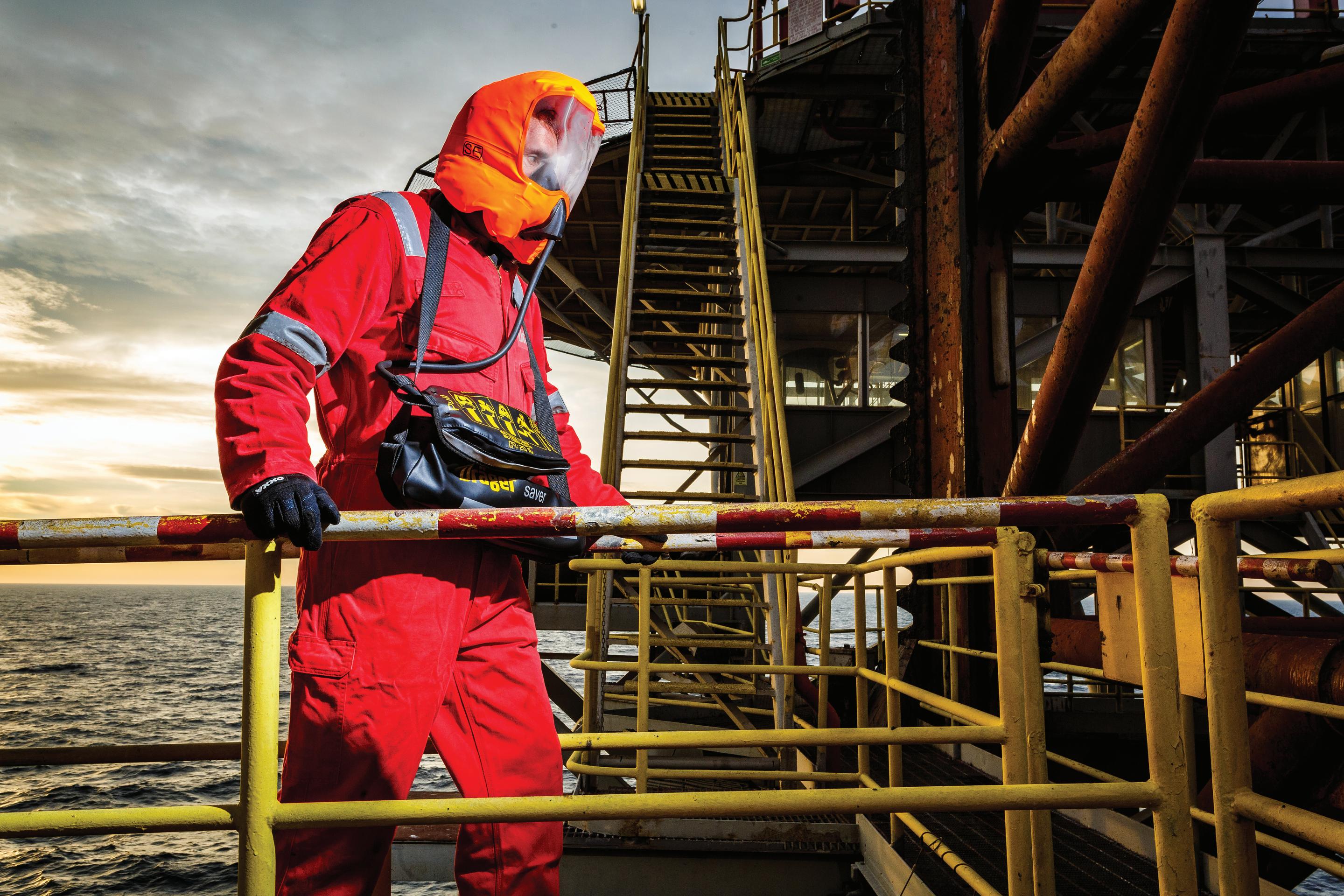
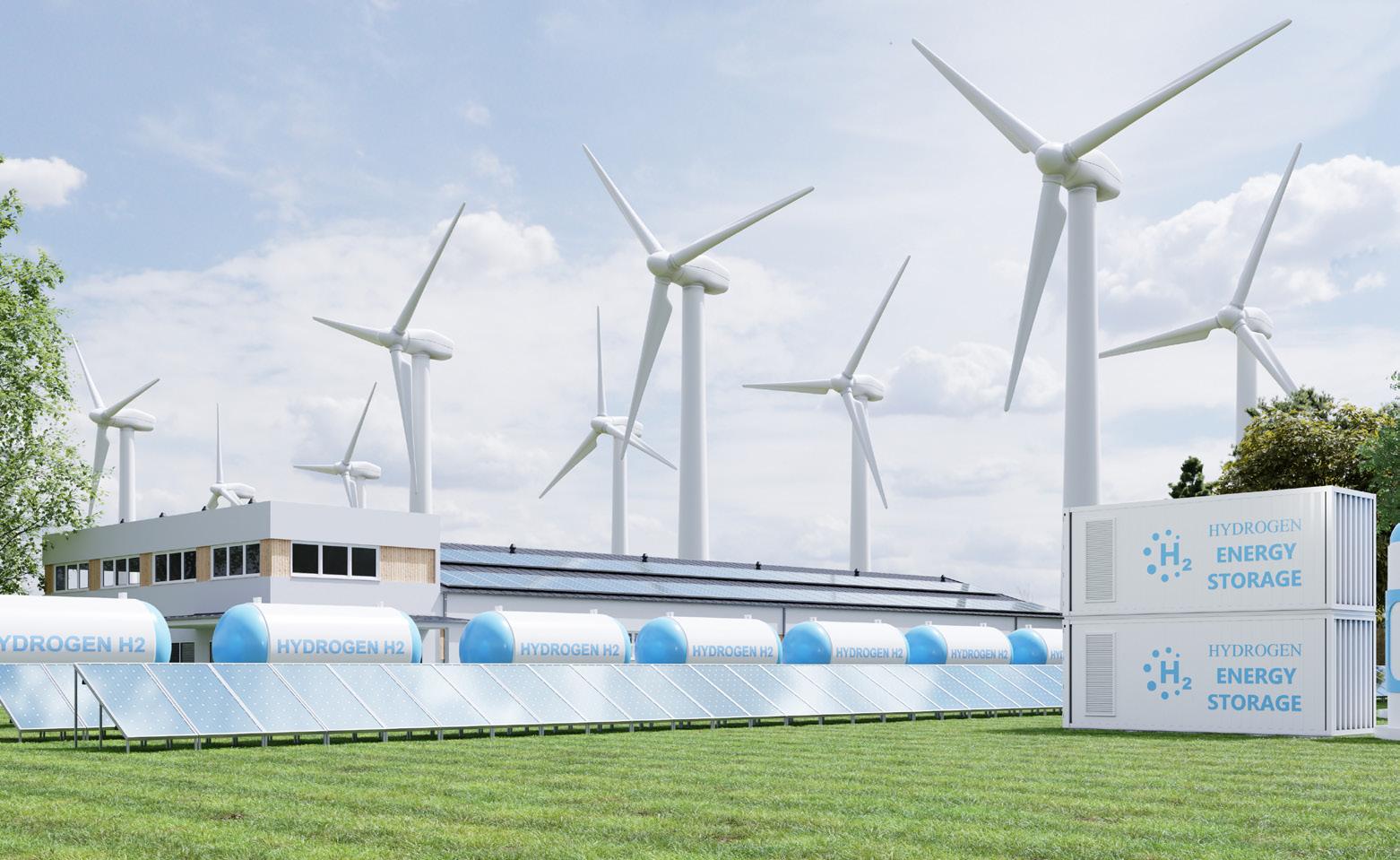
There has been a consistent demand across Scotland in recent years for sites suitable for renewable energy schemes such as solar energy (via panels which capture sunlight for conversion to energy), onshore wind energy (via wind turbines which convert wind into energy) or battery energy storage systems (storing excess energy from these renewable sources in batteries for later use).
In the Scottish Highlands, demand has been especially high for sites suitable for onshore wind projects and battery energy storage. As we edge closer to the 2050 net zero target set by the UK Government (2045 in Scotland), it is anticipated that this demand will continue and that the Highlands will continue to play a key role.
The first, and arguably the most important, step is to take proper advice at the outset – you may wish to start with a lawyer, who will be able to recommend a suitable land agent, or with a land agent who will be able to recommend a suitable lawyer. The developer should cover the cost of any advice that you require in connection with the proposed development.
The second step is to agree commercial terms, such as the length of any agreement (and any renewal options), the sums due to you, and any termination provisions. You should consider the rights that you wish to retain, such as rights of access to the land, and any conditions that you wish to include regarding the return of the land at the end of the development, such as removal of infrastructure. Your land agent will help you to achieve the best terms possible.
By Gary Webster and Erin Hunt, Brodies LLP.
Thirdly, a tax advisor should be instructed to advise on the tax implications of the transaction (both in terms of tax on income from the development and in terms of possible tax implications regarding the change of use of the land).
Finally, your lawyer will draft up the necessary legal documents. Often, the agreement will grant the developer an option over the land for a short period of time, allowing the developer a defined period to carry out certain checks, with a lease to follow if the site is viable. These checks may include:
1. Grid connection – The developer will want to confirm the availability of a grid connection to the site, and the costs associated with this. A key aspect of the anticipated increase in approaches to landowners is the ongoing grid upgrade; the existing infrastructure has limited capacity for further renewable energy development. Grid connection can be a major hurdle for developers –even where a site is technically ideal, grid capacity may diminish viability, particularly in more rural areas.
2. Land suitability – The developer will look to assess the titles to the land to confirm ownership, identify any third-party access rights over the land and note any existing tenancies. It will want to ensure that the lease would allow suitable access rights over the land for the installation of the development and any required maintenance during its lifetime.
3. Planning - The developer will want to ensure that it is able to secure planning permission before entering into a lease. There will likely be environmental considerations to be borne in mind, and potentially considerations around the community impact of a renewable energy development.
Some benefits to leasing your land for renewable energy use are:
1. A reliable, long-term income – Leasing land for renewable energy use will usually provide a reliable, regular income, and can potentially increase the value of the land due to the additional income stream.
2. Diversification and sustainability – A secondary income, for example beyond farming, can provide additional financial certainty. Depending on the type of energy project, only a small parcel of land may be required, so the impact on your day-to-day use of the land may be minimal.
3. Positive environmental impact – By making land available for renewable energy use, you are supporting the country’s efforts to achieve net-zero and the broader global transition to clean energy.
4. Habitat restoration - There is the possibility that the developer may be required to carry out habitat management works as a condition of any planning application, so you may benefit from improvements to your wider property including restored peatland, tree planting or constructed wetlands.
The key takeaway from this is that, if you are approached about the possibility of leasing your land for a renewable energy development, you should ensure that you take proper legal and commercial advice. While these projects come with benefits, this can be a complex area, and it is important to ensure that you are properly protected by any agreement.

Brodies LLP is a UK top 50, and leading Scottish, law firm with offices across Scotland, the UK and internationally. For more useful insight and details of our energy expertise visit brodies.com

TotalEnergies has taken the final investment decision for the Mirny project in Kazakhstan that will consist of 1 GW of wind power capacity and a 600-MWh battery energy storage system.
The company has secured a financing framework for the USD-1.2-billion (EUR 1bn) project, which will be about 75% externally financed. Along with its partners, yesterday TotalEnergies signed a common terms agreement (CTA) with a lending consortium, including the European Bank for Reconstruction and Development (EBRD), Proparco, DBK, DEG, Societe Generale, QNB Group, China Construction Bank and Standard Chartered.
TotalEnergies owns 60% of Mirny, while Samruk Energy and KazMunayGas each hold 20%.
The renewables power plant, to be located in the southeastern part of the country, will sell its output to Kazakhstan’s government under a 25-year power purchase agreement (PPA) signed in 2023. It will be made up of 150 turbines and a BESS supplied by TotalEnergies' subsidiary Saft.
Olivier Jouny, SVP Renewables at TotalEnergies, said the project will contribute to the 9-GW renewables portfolio that the company is combining with Masdar through a 50/50 joint venture across nine Asian countries, including Kazakhstan.
"We are delighted to launch one of Kazakhstan's largest renewable energy initiatives to date, thereby contributing to the country's target of increasing the share of renewables in electricity generation to 15% by 2030. We look forward to advancing construction of the Mirny project alongside our partners and in cooperation with the Kazakhstani authorities,” Olivier Jouny commented.
A capsule laying ceremony for the project to mark the start of construction was held in March.
GE and Energia are investigating the cause of a blade break at the 48MW Drumlins wind farm in county Monaghan, Ireland
A GE Vernova spokesperson confirmed that the “blade event” occurred on 22 April, and said there were no injuries.
The GE Vernova spokesperson told reNEWS: “On April 22, 2026, a blade event occurred at the Drumlins Park wind farm in Ireland.
“There were no injuries. We are working with our customer to investigate the event.”
An Energia spokesperson added that the blade damage happened with turbine 8 in the array, and the company has established an exclusion zone around the turbine.
The spokesperson added: “The wind farm has been temporarily shut down while the incident is being assessed.
The windfarm is under a full-service operation & maintenance contract with the Original Equipment Manufacturer GE Vernova.”
The wind farm began construction in the spring of 2022, and took turbine deliveries in the summer and autumn of 2023.
Commercial operation began at the site in 2024.
Photographs show a turbine with significant damage to one of the blades at the eight-turbine array.
The array features GE Vernova 6.1-158 machines.
BRITISH clean-tech scale-up Kinewell has announced the acquisition of ForeCoast® Marine, a leading marine weather risk software for the offshore wind industry.
The acquisition will see ForeCoast® Marine incorporated into the Kinewell business and complement its existing software-as-a-service (SaaS) solutions.
The offshore wind industry – which the Global Wind Energy Council (GWEC) expects to reach a global capacity of 2TW by 2030 – faces increasing pressure to deliver projects faster, at lower cost, and more reliably and the addition of ForeCoast® Marine will enable Kinewell’s award-winning solutions to be used throughout the entire lifespan of an offshore wind farm.
Kinewell’s existing software solutions support the planning and design phase, optimising inter-array cable layouts, enhancing export system design and maximising energy by optimising turbine placement, saving developers millions of pounds and hundreds of hours in development time.
By simulating marine operations and entire sea campaigns using historical metocean data and real-world operational constraints, ForeCoast® Marine will allow project teams to see how projects would have performed across past seasons. This further strengthens Kinewell’s offering by giving developers, contractors, operators and consultants actionable insights that help them forecast future uncertainty and make informed, de-risked decisions.
Tony Appleton, Chief Commercial Officer at Kinewell, said: “The future of offshore wind depends on digitalisation
and adding ForeCoast® Marine to our software portfolio will enable Kinewell’s solutions to optimise every single stage of a project lifecycle, from installation to the operational and decommissioning stages.
“It will help the industry to move faster, de-risk projects and lower costs, while positioning Kinewell at the forefront of offshore wind digital transformation. We are delighted to welcome it into the Kinewell family.”
The marine management software market is swiftly becoming a global industry, with the latest findings from Market Research Future revealing that it is worth $2.5billion per year and is forecast to continue growing by around 10-11% per annum.
The acquisition of ForeCoast® Marine will allow the King’s Award winner to establish itself within this rapidly emerging market, while allowing its team to continue supporting the global transition to a netzero society and increase its total revenue by approximately 30% per year.
Dr Andrew Jenkins, founder and chief executive of Kinewell, added: “ForeCoast® Marine’s software will provide a major boost to the entire supply chain, from developers to consultants, insurers, marine planners, operators and ports, providing a single, easy-to-use solution that can not only de-risk developments, but also maximise performance and improve project financials.
Centurion acquires Trand Inc., expands onshore wind footprint in US following growth year in 2025
Centurion Group announces the acquisition of Trand Inc., further advancing its strategy and expansion into the US onshore wind sector.
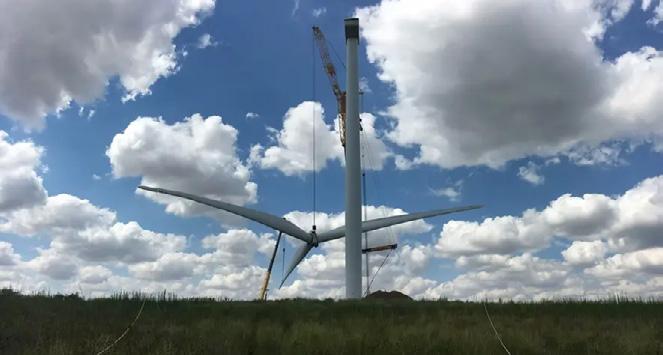
Headquartered in Sawyer, Kansas, Trand is a family-owned and operated business with a strong track record of delivering complex lifting operations to the onshore wind industry. Its expertise strengthens Centurion’s existing lifting services in the United States, while introducing additional specialist heavy lift capabilities aligned with the growing onshore wind market in the Mid-West.
The acquisition also complements Centurion’s Minnesota-based Althoff Crane Service operations, creating opportunities for regional growth, broader service capability, and enhanced service delivery across the Mid-West US. It marks another step forward in Centurion’s strategy to expand its existing presence in renewables and onshore wind and to build a more diversified, multi-industry equipment and services platform.
Centurion has scaled significantly through a combination of organic growth and acquisitions, delivering a strong performance in FY’25 and continuing its upward trajectory, with EBITDA having grown from ~$105m USD in FY’24 to ~$130 million USD* at the end of FY’25. Over the last eight years, the Group has grown its EBITDA by ~$100m USD from ~$30m USD at its formation in December 2017. Centurion has also expanded its geographic footprint and operational capabilities with 24 acquisitions and ~75 new locations established across its core regions.


Worley Rosenberg has been selected by Equinor Energy AS for a parallel framework agreement for Maintenance and Minor Projects on selected facilities on the Norwegian Continental Shelf.
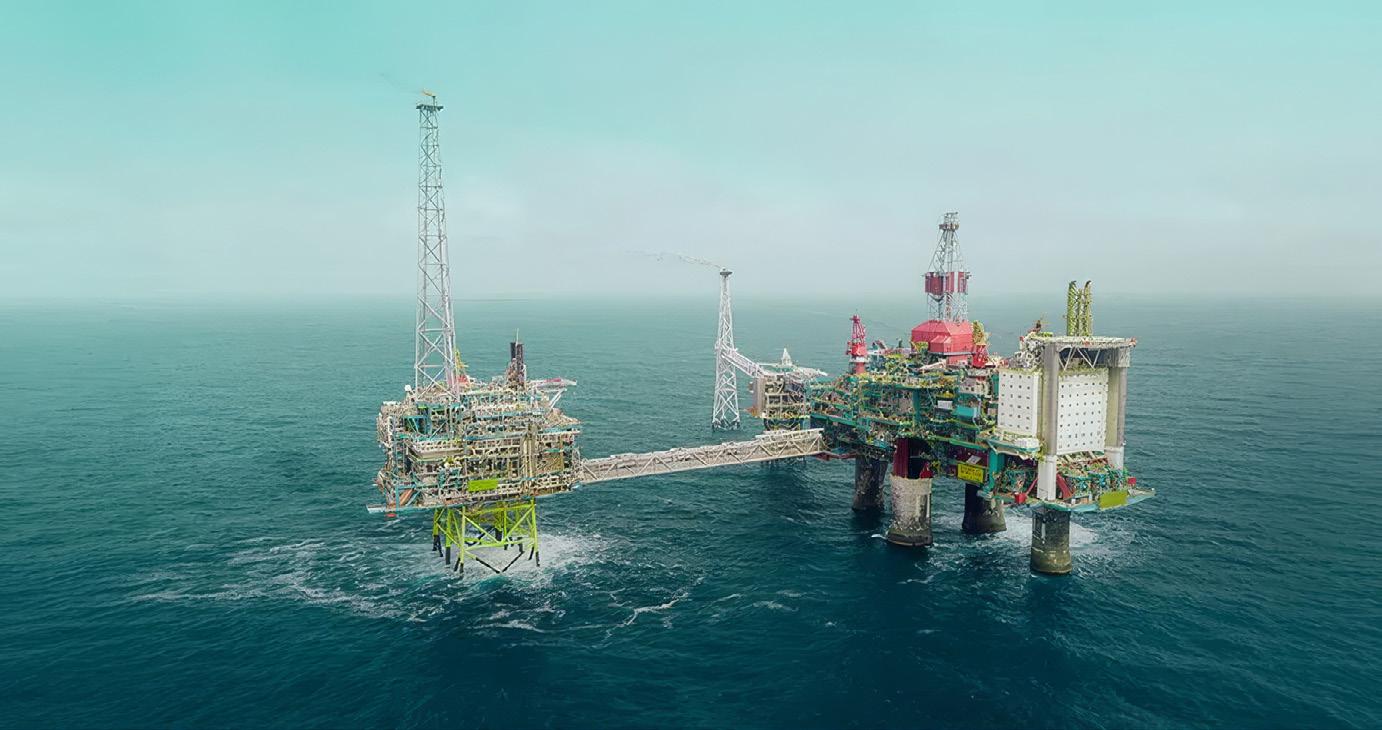
The framework agreement builds on Worley Rosenberg’s existing relationship with Equinor and marks an important step in supporting the company’s long-term services arrangement.
The framework is expected to support activities for selected installations including the Sleipner and Johan Sverdrup facilities following contract signing. The framework agreement is scheduled to commence on 1 May 2026.
A construction support vessel (CSV) owned by Solstad Maritime (SOMA) has secured a two-year contract extension worth approximately $56 million with Brazilian oil & gas company Petrobras.
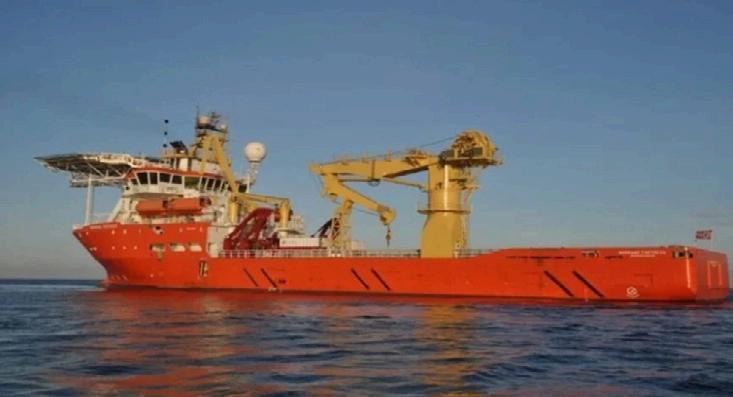
“We value the trust Equinor has placed in Worley Rosenberg through this framework agreement,” said Jan T. Narvestad, Managing Director at Worley Rosenberg. “It reflects our strong local presence in Stavanger, combined with access to Worley’s global resource network enabling us to draw on specialized skills and capacity to support Equinor’s offshore operations when required.”
The agreement will run from 1 May 2026 to 30 April 2031, with options to extend for an additional three years, followed by two more years, bringing the potential total duration to ten years.
“Long-term collaboration built on trust and mutual commitment has been central to successfully delivering projects on the Norwegian Continental Shelf. We look forward to supporting Equinor under this framework agreement through high-quality solutions, driving safe and predictable delivery,” Narvestad added.
Through this agreement, Worley Rosenberg will bring together local knowledge and global expertise to support Equinor’s offshore assets, reinforcing its long-standing capability in offshore maintenance and asset services on the Norwegian Continental Shelf
As part of the extended contract, the CSV Normand Fortress will provide accommodation services to support production activities on the Brazilian continental shelf.
The extension will begin in early July.
The vessel will be on bareboat contract from SOMA to Solstad Offshore, which is the contract holder with Petrobras. Solstad Offshore holds 27.3% of the shares in SOMA.
Normand Fortress is of MT 6016 MK II design and was built in 2006. It is 93 meters long, has an 800 m2 cargo area and can accommodate 100 persons.
Transocean Ltd. announces that the Deepwater Corcovado was awarded a 1,156-day contract extension with Petrobras in direct continuation of its current activity
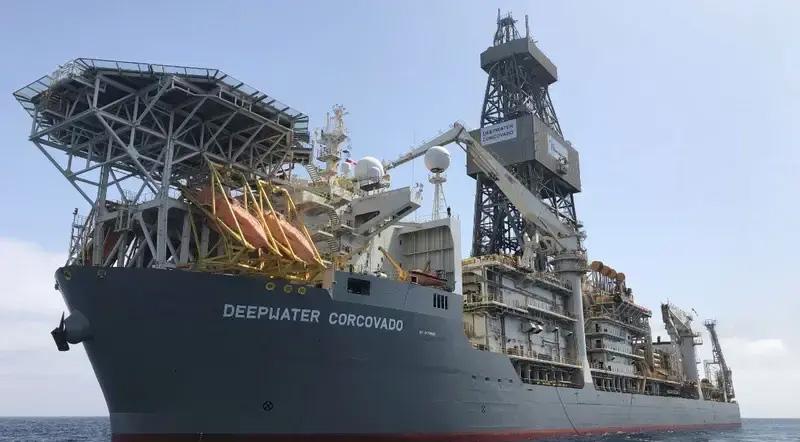
The extension is expected to contribute approximately $445 million in incremental backlog and commit the rig through November 2030.
Prior to the extension period, from April 1, 2026, until the commencement of the new contract in September 2027 (approximately 525 days), the existing backlog will be reduced by approximately $20 million.
Drillship West Polaris will continue drilling offshore Brazil until early 2031
Bermuda-based drilling company Seadrill has secured a contract extension with Petrobras worth $480 million for one of its six drilling rigs operating offshore Brazil.
Over the past few months, Petrobras had been in extensive negotiations with its main suppliers concerning rig contract extensions, which resulted in new awards for multiple units operated by Transocean, Valaris, Constellation Oil Services, Foresea and Ventura Offshore.
According to Seadrill, Petrobras has agreed to a three-year extension for the drillship West Polaris.
About Transocean
Transocean is a leading international provider of offshore contract drilling services for oil and gas wells. The company specializes in technically demanding sectors of the global offshore drilling business with a particular focus on ultra-deepwater and harsh environment drilling services and operates the highest specification floating offshore drilling fleet in the world.

The $480 million charter is expected to commence in direct continuation of the current programme in January 2028, when the rig will be employed to drill development wells in the giant Buzios presalt field in the Santos basin.
The two sides also agreed to new dayrates on the existing contract, which will be $409,200 until March 2027, then increasing to $454,700 through January 2028.
“This award enhances Seadrill’s earnings visibility for a mature asset into the next decade,” said Seadrill chief executive Samir Ali.
Seadrill operates six drilling rigs offshore Brazil, including five with Petrobras and one with Norway’s Equinor.
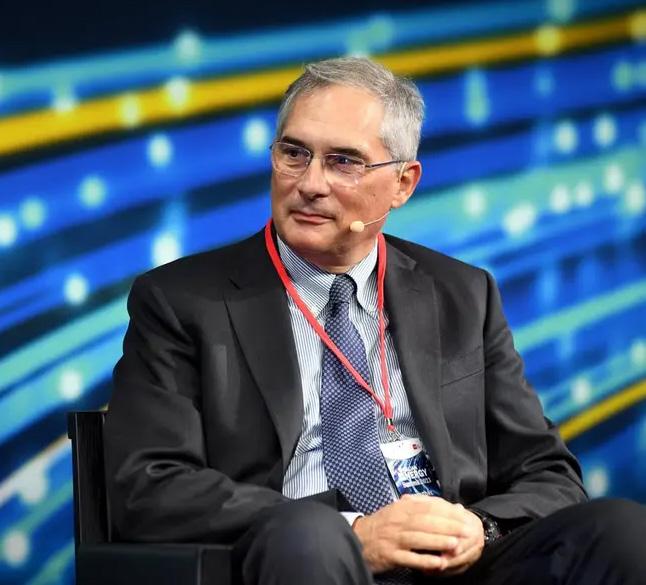
Saipem has been awarded two offshore contracts by Aramco worth a combined $400 million to support development work at the Safaniya field, one of the world’s largest offshore oil fields.
The awards, issued as Contract Release Purchase Orders (CRPOs) under a longterm agreement with Aramco, cover engineering, procurement, construction and installation (EPCI) of key infrastructure aimed at supporting water injection and reservoir management.
The first contract includes the installation of a water injection tie-in platform, two wellhead platforms, approximately 5 km of 24-in. pipeline and 15 km of subsea power cables. The second contract covers the installation of four additional water injection wellheads and associated subsea facilities.
Water injection projects play a critical role in maintaining reservoir pressure and sustaining production levels in mature offshore assets such as Safaniya, reinforcing the field’s long-term output capacity.
Offshore installation activities will be carried out using Saipem’s construction vessels currently operating in the region, while fabrication will take place at the company’s Saudi yard, operated by Saipem Taqa Al-Rushaid Fabricators Co. Ltd.
The awards further strengthen Saipem’s position in Saudi Arabia and expand its long-standing relationship with Aramco, as the operator continues to advance offshore brownfield and capacity maintenance projects across its portfolio.


Redwater Insights said 500 North Sea oil and gas wells are already overdue for decommissioning, and a further 1,700 are due to be plugged.
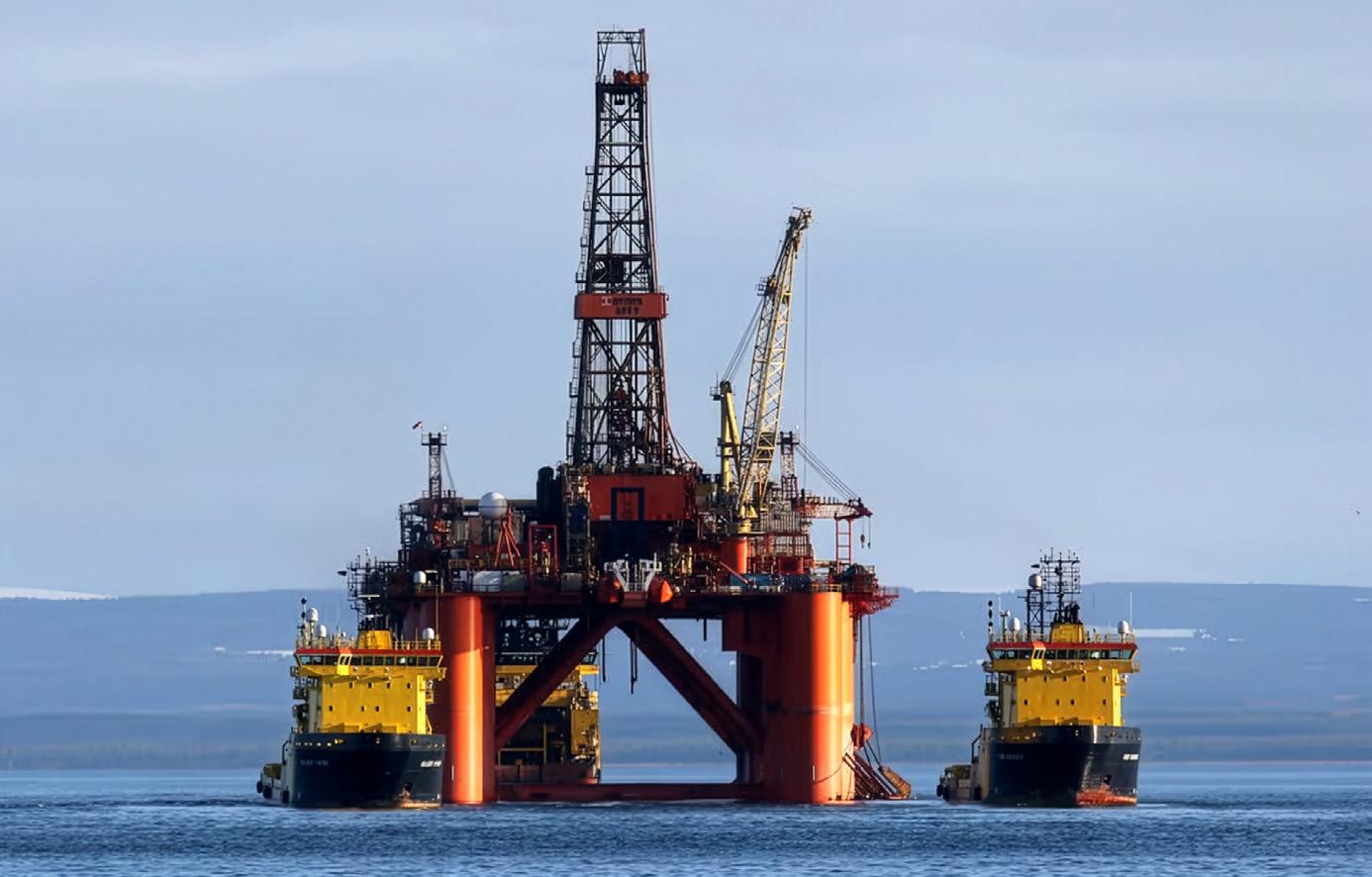
Athink tank has called for “urgent action” to ensure oil and gas companies decommission old North Sea infrastructure, saying doing so could create up to 25,000 jobs and deliver a £15 billion economic boost.
A report by Redwater Insights found Government action to guarantee operators clean up ageing infrastructure could also provide a “critical skills bridge” for 15,000 skilled workers facing an unemployment “cliff edge” as the North Sea basin continues to decline.
To achieve this, Redwater said the North Sea Transition Authority – which regulates the sector – needs increased powers to impose binding deadlines on operators around the decommissioning of infrastructure.
It said currently regulators are “regularly” approving requests to delay removal of infrastructure, despite some 500 oil and gas wells already being overdue for decommissioning, and a further 1,700 due to be plugged in the next six years.
The body also called for operators to be required to pre-fund some decommissioning costs, and for more support to be given
to workers transitioning from oil and gas production to decommissioning roles.
Redwater Insights director of legal Sophie Marjanac said: “When operators delay their clean up responsibilities, this creates further uncertainty for workers and their communities.
“Proper decommissioning will provide a skills bridge for current oil and gas workers and create new jobs along the east coast of the UK, from Aberdeen to Great Yarmouth.
“We need urgent action to avoid a disaster for jobs, communities and the UK economy.
“There are more than 500 oil and gas wells currently overdue for plugging and abandonment in the North Sea, with hundreds more expected to reach end-oflife in the next few years.
“Overly flexible regulation means operators are kicking the decommissioning can down the road. But delaying too much longer runs the risk of ballooning costs and highly skilled workers leaving the industry.”
The report, entitled After The oil: Jobs And economic Impacts From UK Offshore Decommissioning, calculated that timely decommissioning could attract £25.6 billion of investment from operators.
It said this would generate nearly £7 billion in direct economic benefit to the UK, plus a further £9 billion in indirect and “induced” gross value added.
However it warned there is only a short window to avoid delays causing “potentially disastrous” impacts for UK jobs and regional economies.
The report found oil well degradation and deterioration of structures are expected to significantly increase the cost of repair and removal work – and that this would be exacerbated by workers retiring or leaving the sector.
Ms Marjanac went on: “The Treasury could face a significant challenge if cost blowouts cause companies to fail and decommissioning liabilities fall to taxpayers.
“Meanwhile, regional communities risk being hit harder if the only workers skilled enough to decommission old assets have had to leave the industry because of continued delays.
“There is a fast closing window for proper decommissioning.
“We need urgent action from Government, regulators and most importantly from operators who are legally obliged to ensure their wells are cleaned up properly.”
Lang Banks, director of WWF Scotland, said: “Having earned hundreds of millions of pounds in profit from extracting fossil fuels from under the North Sea, it is only right that oil and gas companies clean up after themselves.
“Unnecessarily delaying the decommissioning of oil and gas facilities leaves our marine environment at risk of harm and undermines efforts to create skilled jobs and support coastal communities.”
A spokesperson for the UK Department for Energy Security and Net Zero said: “Oil and gas production will be with us for decades to come, and we will manage existing fields for the entirety of their lifespan – while actively scaling up clean energy industries in the North Sea. “Our ambitious plans to make the North Sea a clean energy powerhouse for Britain will create up to 40,000 new jobs in Scotland by 2030.”

• Well-Safe Solutions has been awarded a North Sea decommissioning scope in partnership with Apache North Sea Limited, commencing in 2026
• The contract secures hundreds of jobs in Aberdeen and provides much-needed confidence in the supply chain
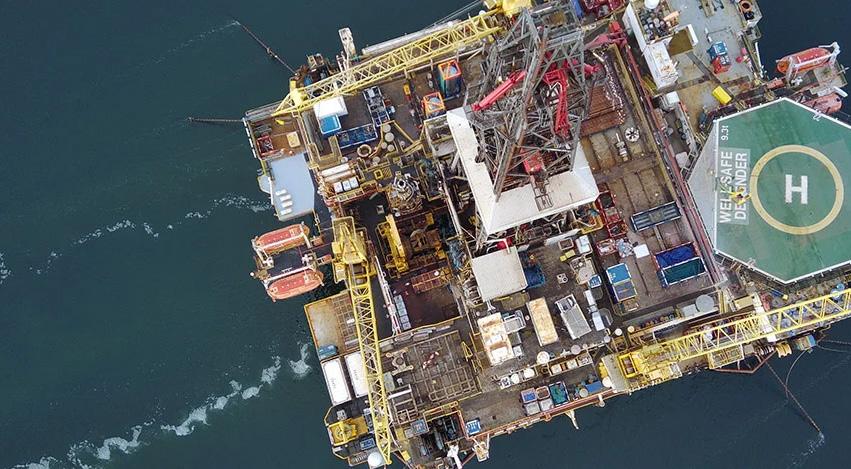
Well-Safe Solutions, the tier-one well decommissioning contractor, announced a multi-year contract with Apache North Sea Limited to decommission its platform wells and subsea wells in the Forties Field.
Work will begin in 2026, with Well-Safe Solutions leading the contract across all well related project management, well and subsurface engineering, and offshore delivery of platform and subsea wells.
The award will support hundreds of jobs in Aberdeen and provide a much-needed boost to the economy in the northeast of Scotland at a time when the sector is facing significant challenges and concerns over wider industry job retention.
Phil Milton, Chief Executive Officer at WellSafe Solutions, said:
“This award is a defining moment for Well-Safe Solutions and a testament to the confidence Apache has in our team to deliver safe, efficient and technically robust decommissioning solutions at scale.
“This contract award is exciting news for our business and for the wider economy, sending a powerful signal to the supply chain and helping to secure critical talent and resources. This announcement is undoubtably a huge moment for our business and our industry, however, it comes at a particularly difficult time for our sector when we are hopeful of retaining the talent and capability that we have in the North

The availability of mobile offshore drilling units capable of drilling and decommissioning both platform and subsea wells has been declining significantly year on year, with just five semi-submersible rigs remaining in the UK Continental Shelf. This persistent reduction in capacity risks severely undermining the UK’s ability to meet its energy needs and decommissioning obligations, with thousands of wells due to be decommissioned by the end of the decade.[1]
Donald Martin, Vice President, Decommissioning, Apache, commented:
“We are pleased to partner with Well-Safe Solutions on this large-scale decommissioning programme across the Forties Field. This contract reflects our commitment to delivering safe, predictable and cost-effective decommissioning through disciplined execution and with a high-performing, integrated team.
“Building on decades of successful production from one of the North Sea’s cornerstone assets, Apache is focused on maximising latelife asset value, reducing risk, and delivering a safe, efficient and disciplined transition into decommissioning.”
This most recent contract reinforces WellSafe’s position as a strategic leader in the UK decommissioning space, following recent successful campaigns with the Well-Safe Defender and Well-Safe Protector, and follows two recent major contract awards for Well-Safe Solutions this summer with other operators in the North Sea. Sea”.



Global Energy Show Canada


V 9-11 June 2026
, Calgary, Canada




Global Offshore Wind
V 16-17 June 2026 , Manchester, UK
D&A Australia
V 23-24 June 2026
, Perth, Australia
ONS
V 24-27 August 2026 , Stavanger, Norway
Oil & Gas Asia (OGA)
V 2-4 Sept 2026
, Kuala Lumpur
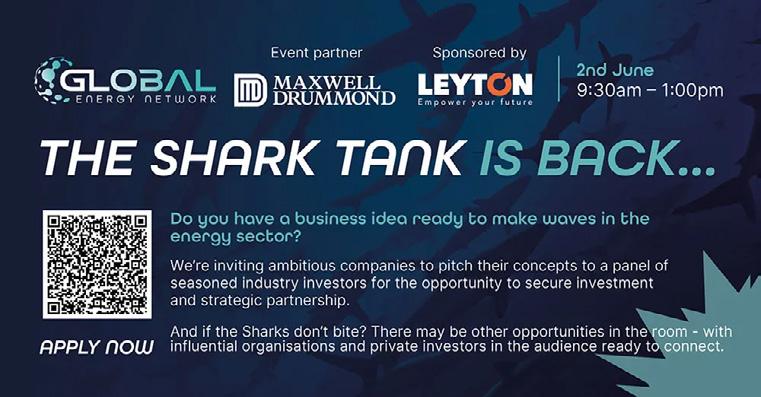


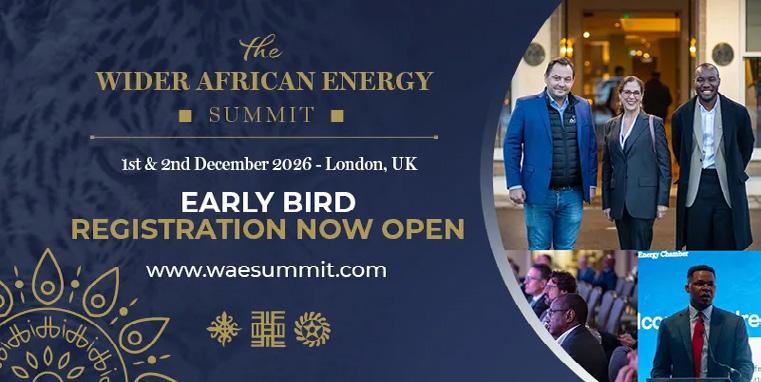

Across our global teams specialising in energy travel, ATPI is on a shared mission to bring greater structure to industry travel and create a connected energy travel ecosystem.
ATPI’s proprietary crewing technology, combined with Avenir, provides the digital backbone required to effectively manage both crew and corporate travel. Together, these integrated solutions represent a significant step change in how organisations approach travel and workforce logistics.
By pairing advanced technology with deep industry expertise and a global footprint, ATPI enables companies to streamline operations and consolidate their corporate travel programmes. The result is a more connected, efficient, and scalable approach to managing complex travel and workforce requirements across global markets.
What is Avenir?
Developed as Direct Travel’s global travel platform and delivered through ATPI’s specialist Energy and Marine service lines, Avenir: Travel Edition brings structure and consistency to corporate business travel within complex industries, such as the global energy industry.
A modern travel platform designed to move beyond the limitations of traditional online booking tools, unlike legacy online technology that relies on fragmented systems. Avenir operates on a single, cloud-native platform that brings together content, policy, approvals, and servicing into one seamless environment. This enables a more intuitive user experience, greater access to content (including NDC and direct connections), and real-time servicing capabilities.
Importantly, it combines this advanced technology with human expertise, ensuring travellers and clients still have access to experienced travel professionals whenever support is needed, particularly for more complex or time-sensitive requirements.
Combining powerful automation, real-time insights, and expert support within one platform.
Avenir enhances ATPI’s specialist offerings by introducing a consistent global foundation for business travel, while preserving the depth and specialisation of existing solutions.
Industries such as energy manage multiple types of travel simultaneously, from largescale workforce and crew movements to executive, commercial and project travel. These needs are fundamentally different and require distinct solutions.


Avenir is designed to support traditional business travel within the sector, bringing structure and consistency to:
• Executive leadership travel
• Commercial and client-facing teams
• Project-based and technical specialists
This sits alongside ATPI’s established specialist services, which continue to manage:
• Crew and workforce mobility
• Offshore and rotational travel
• Highly customised logistics to remote and complex destinations
Together, this creates a more coordinated and complete travel framework.
“Booking a business trip finally feels modern and intuitive. I love that I can keep a pulse on the programme through richer data reporting and get the data in real time.” - Feedback from a travel manager who utilised Avenir.
OTC 2026: Providing the Platform for Avenir to Take Centre Stage
This month’s OTC event in Houston is all about showcasing the technologies that are reshaping the future of energy. Avenir is perfectly placed amongst them.
Representing the next evolution of workforce mobility, Avenir brings the same level of digital transformation to travel that the industry is demanding across all aspects of operations and throughout the supply chain.
When walking the show floor and speaking to attendees, we will likely hear about how companies of all sizes have the same aim of scaling internationally and diversifying across oil & gas and renewables. To meet demand and achieve these strategic goals, though, companies need an approach to travel that includes modern solutions combined with sector-specific expertise and high-touch service.
Avenir, like ATPI CrewHub and ATPI CrewLink, provides a unified global platform for business travel, working alongside specialist logistics solutions to support the full travel ecosystem.


Smarter technology for complex crew and business travel
Smarter systems. Seamless execution. Total control.