






It goes without saying that good people are at the heart of every successful organisation. And to have good people, they need to be looked after and nurtured. The Chamber People and Skills Conference highlighted just that.
It saw employers and educators come together to explore ways in which every organisation can care for its people in order to boost recruitment, retain talent and unlock growth (see our Focus pages).
Along with workshops, networking and panels, the conference highlighted the policy asks around skills reform set out in the Chamber’s Framework for Growth document.
And it was an opportunity to present findings from the Chamber’s latest annual report on equality, diversity and inclusion in the workplace, produced in partnership with affordable housing provider emh Group.
One of the concerns on many employer’s minds has been news that the number of young people not in education, employment or training – so-called NEETS – now hovers around the one million mark. It’s a shocking figure.
The Focus pages this month consider what that means for UK Plc and how we should go about addressing it, with contributions from experts inside and outside the Chamber.
Likewise – and stop me if you’ve heard this one before – something else having a big impact on employment and employability right now is AI.
One of the speakers at the conference, Digital Planning co-founder James Ferraby, shares his thoughts on how AI should be working for us, not against us – yet, while lots of businesses might be ready to implement it, once it's in place they often fail to make the most of it. It’s an interesting argument.
There are also inspiring words from Benjamin Marshall, client director at Ketchup Marketing in Nottingham, on how treating your team with integrity and respect – and most of all having fun – is worth its weight in gold.
It’s a lesson we should all bear in mind during the nine-to-five.
This joint July/August edition of Business Network also hears about how one of the region’s big employers, Mattioli Woods, looks after its staff in our Big Interview feature.
We also have the latest appointments, political developments, Chamber network updates, legal, finance and property news.
I hope you enjoy the read.
Tom Pegden, Editor, Business Network

Editor Tom Pegden
T: 07816 347 451
E: tom.pegden@emc-dnl.co.uk
Contributor Tim Smith
Chamber Membership
E: membership@emc-dnl.co.uk
Follow the Chamber
W: www.emc-dnl.co.uk
X: @EMChamberNews
LEICESTERSHIRE DEVOLUTION
Business Network looks at what devolution might mean for residents and businesses MEMBER
Rolls-Royce scoops nuclear deal
18 College names new chief finance officer
21 Rachel Bailey, chief people officer at Mattioli Woods
STRATEGIC PARTNERS AND PATRONS
26 Students name Derby as UK’s best university
28 QES reveals another tough quarter for the region
CHAMBER NETWORKS 34 Generation Next gives you a head start
&
Sustainability conference details
EAST
40 Rail freight can keep you on track INTERNATIONAL TRADE
42 Chamber services give businesses a whole world of opportunity
44 Land programme takes STEP forward
DEVELOPMENT
Building teams that power regional growth
50 Integrity and impact: The leadership advantage every business needs
52 FOCUS
Business Network rounds up people and skills initiatives and activities in the region
Publishers Kemps Publishing Ltd 8, The Courtyard, 707 Warwick Road, Solihull, B91 3DA
T: 0121 765 4144
w: www.kempspublishing.co.uk
Managing Editor Laura Blake
T: 0121 765 4144
E: laura.blake@kempspublishing.co.uk
Designer Lloyd Hollingworth
Advertising T: 0121 765 4144
E: jenni.everall@kempspublishing.co.uk
Printers Stephens & George Print Group W: www.stephensandgeorge.co.uk
BUSINESS NETWORK is produced on behalf of East Midlands Chamber (Derbyshire, Leicestershire, Nottinghamshire) by Kemps Publishing Ltd and is distributed to members without charge. The Chamber and the publisher are committed to achieving the highest quality standards. While every care has been taken to ensure that the information it contains is accurate,
58 REGENERATING THE EAST MIDLANDS Greening up our cities 60
wiser and at work DIGITAL &
62 Independent wine and beer seller toasts website impact
Sarah appointed costs judge
Insurance firm targets growing Asian market 68SKILLS
Students build skills and more
71 PROPERTY
Bookstore will open new chapter for venue
72 MOTORING
Nick Jones test drives the Ferrari Luce
THE LAST WORD
74 Dr Cham Kang on the importance of people, skills and inclusivity

Momentum is building towards the creation of a devolved authority to transfer powers and funding from Whitehall to Leicester and Leicestershire. Business Network considers what it might mean for residents and businesses.
‘My view was simple: we’re going to spend
Tees Valley Combined Authority (TVCA) formed 10 years ago. Lord Ben Houchen was elected metro mayor a year later and has been twice reelected. He told 1284 Communications account director, and former Leicestershire local government reporter, Amy Orton about the opportunities of devolution.

Q: How long did it take to start seeing the impact of TVCA?
Devolution in the Tees Valley came in the immediate aftermath of the SSI steelworks collapse in Redcar. Thousands of people lost their jobs overnight and the knock-on effect in supply chains and the wider economy had been devastating to the area.
We couldn’t afford to spend years talking about change – we needed to get on with it, and take bold action straight away and get real results, fast. Instead of waiting for central government, we could back our own priorities and get straight on with the job.
And you could see the difference. Within the first few years we had launched the South Tees Development Corporation, begun work to transform the former steelworks site and rebrand as Teesworks, saved Teesside Airport from closure, secured major transport investment and put together our long-term plan for growth. The biggest projects obviously take time, but the ability to act arrived immediately.
Q: What were some of the challenges when establishing TVCA?
The biggest challenge was ensuring that TVCA didn’t become just another layer of bureaucracy. It needed to be the opposite of that, as much as possible, and become an organisation that was capable of punching above its weight, and able to make the case for the investment it deserved. For years, people had heard promises about regeneration and investment. So they were understandably sceptical. The trouble with similar organisations is that a culture often becomes embedded that sees the process as the end product – the actual completion of the projects becomes almost a detail.
My view was always simple: we’re not going to spend all our time talking about structures, we're

going to spend our time getting results. Once people saw things happening confidence started to grow. And that becomes a snowball effect.
Q: How did you gain buy-in from stakeholders? By listening and by delivering. Businesses, universities, colleges and local authorities all want broadly the same thing: more jobs, more investment and more opportunities for local people. The best way to gain support isn’t through endless meetings. It’s by showing people that you can get things done. Working with the government to secure freeport status was a great way to sell the region to the big firms that we wanted to bring in. When businesses see barriers being removed and opportunities being created, they want to be part of that success.
Q: What are the biggest successes?
While it's the big ticket construction projects that take the headlines, I would genuinely say that our biggest success is that we’ve changed the conversation about our region. Ten years ago, people outside the area talked about decline. Today they're talking about clean energy, AI, advanced manufacturing, digital industries, freeports and major investment opportunities.
We’ve brought Teesside Airport back into public ownership and turned it around. We've transformed the former SSI site into one of the country’s biggest industrial regeneration projects. We've secured billions of pounds of investment. We’ve improved transport infrastructure and supported thousands of people into work and training. Most importantly, we’ve shown that places like ours don’t have to wait for someone else to decide our future. If we’re given the power to get on with it, we will get on with it.
‘People don’t care about political process or party politics. They care about whether they can get a good job, whether businesses are investing, whether transport works and whether their area has a brighter future.’

The Chamber continues to have regular conversations at all levels of government –locally, regionally and nationally – about the need for a clear and ambitious devolution settlement for Leicester and Leicestershire.
Chief executive Scott Knowles said: “Local authorities across the region are gearing up for the Government’s decision on Local Government Reorganisation and which proposals it wants to take forward into the autumn. This will pave the way for work to start on planning for the emergence of new unitary authorities in 2028.
“However, this is separate to devolution, and the investment disparity facing Leicester and Leicestershire, compared with strategic mayoral authorities across England, has formed the basis of many of my recent meetings with the city and county’s MPs.”
‘The devolution conversation needs to be ongoing and purposeful’
Over recent weeks, the Chamber has met with Liz Kendall, MP for Leicester West, Dr Luke Evans, MP for Hinckley and Bosworth, Shockat Adam, MP for Leicester South, Shavani Raja, MP for Leicester East, and Amanda Hack, MP for North West Leicestershire.

up in all of the conversations. This is because the likely timescale for full devolution will be measured in years.
“Gathering the support of our MPs, of all parties, is crucial to moving towards a successful outcome that puts Leicester and Leicestershire back on an equal footing with devolved regions.
“For that reason, I’ll be maintaining contact with all of the MPs I’ve already met, while also looking to secure meetings with those whom I’ve yet to speak to.
Q: What would Tees Valley look like without devolution?
I think we’d have missed so many of the opportunities that have transformed our area. Without devolution, decisions about our future would still largely be taken elsewhere. Projects would take longer. Investment would be harder to unlock. Local priorities would compete with hundreds of others across Whitehall. Devolution hasn’t solved every challenge overnight but it has meant that when opportunities arise, we have been able to act quickly.
Q: What would your advice be to those who would like to be mayor?
Focus on delivery. People don’t care about political process or party politics. They care about whether they can get a good job, whether businesses are investing, whether transport works and whether their area has a brighter future. To any new mayor I would say, remember that every power you hold is there to make a difference to people’s lives. Use it. You don’t have to wait to be told what to do by somebody in central government. You can set the agenda for your region and lead the conversation where you want them to go.
Q: If you asked constituents, what is their understanding of TVCA and its powers?
Most people don’t spend their time thinking about the difference between combined authorities, local authorities and central government. People care about whether things are improving. That’s it. But one thing I would say, having a directly elected mayor gives the public a visible figure of ultimate accountability. So people know who’s responsible for major projects. They know if you’re fighting for investment. They know if you’re working to create jobs and opportunities. Ultimately, people judge devolution by outcomes.
“The current devolution situation was acknowledged, and all of the MPs I met with have had concerns raised with them by businesses and organisations within their constituencies,” added Scott.
“The question of what happens until Leicester and Leicestershire strikes a devolution deal – or what will be provided instead – came
“If Leicester and Leicestershire wants to secure optimum funding and greater local decision-making powers – and to determine the area's own direction – then the devolution conversation needs to be ongoing and purposeful. It simply can’t be on hold until whenever local government reorganisation delivery is finally completed.”
Recent weeks have seen headlines about billions of pounds of investment and funding being secured in devolved regions across England.
Examples include Liverpool City Region’s Integrated Settlement, West Midlands’ Futures Fund, West of England’s Investment Proposal, and – in the East Midlands – EMCCA’s Local Growth Fund.
“All of the announcements have one thing in common,” said Chamber policy director Richard Blackmore (pictured). “Devolution. The situation in the Tees Valley – a smaller region by population than Leicester and Leicestershire – underlines the opportunities currently being denied here.

“’Devolution deserts’ are now appearing across England in areas that do not have a deal in place. This is leading to reduced funding and investment. We cannot allow this in Leicester and Leicestershire.
“The effect was shown in the Chamber’s own research – reported in the April edition of Business Network – which further demonstrated the state funding void opening up between areas with devolution agreements and those without. It’s something that our Leicester and Leicestershire partners, across a range of sectors, are starting to feel the impact of. The region’s devolution plan requires action, not just for when devolution is obtained but also for the period leading to it.
“There are signs that there are things starting to happen in the background. For example, conversations around developing a Local Growth Plan are under way, with the Leicester and Leicestershire Business and Skills Partnership Board also discussing the potential of a business support programme.
“This is something, but – while this all happens – there are other regions edging in front of Leicester and Leicestershire.
“There is only so much that can be done without the transfer of powers from Whitehall to devolved regions and, as the weeks and months pass, this is becoming more evident in Leicester and Leicestershire.”
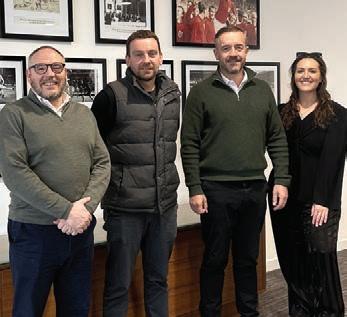
Hardy Signs has struck football gold after being appointed as signs partner for St George’s Park – the home of England’s national football teams.
It marks a milestone in Hardy Signs’ relationship with the world-leading site, following more than a decade working together.
Managing director Nik Hardy said: “Having worked with St. George’s Park for over a decade, it is a real privilege to cement our partnership as preferred signage supplier.
“This appointment reflects everything Hardy Signs stands for: long-term relationships, trusted delivery, quality craftsmanship and signage solutions that perform at the highest level. We are absolutely thrilled to continue supporting St. George’s Park and look forward to the next chapter of this partnership.”


Derby-based Rolls-Royce SMR has been picked by nuclear power plant developer Videberg Kraft to help it build three small modular reactors (SMRs) on the Värö peninsula, on Sweden’s west coast.
The decision strengthens Rolls-Royce SMR’s position as Europe’s leading developer of the technology, following contract awards in both the United Kingdom and Czech Republic.
‘This is a strong endorsement of our transformational approach to delivery of a standardised fleet of SMR’
The Videberg Project will build Sweden’s first new nuclear power plant in more than 40 years, adding around 1,500 MWe of clean energy capacity – around 6% of Sweden’s annual power consumption. It could be operational for more than 60 years.
Chris Cholerton, Rolls-Royce SMR chief executive, said: “Following a rigorous selection process that began in 2022 and considered both large-scale and small modular reactor options, we are delighted to have been selected by Videberg Kraft as its partner to bring new nuclear power to Sweden.
“This is a strong endorsement of our transformational approach to delivery of a standardised fleet of SMRs. This decision further demonstrates growing market confidence in our technology, and we deeply appreciate the strong collaboration with the Videberg Kraft team and the trust placed in us.”
Rolls-Royce SMR uses a modular approach to existing nuclear technology – using a ‘factory-built’ model that will be cheaper and easier to build. The first unit in Sweden – pending regulatory approval – is expected to go online in the mid-2030s.
Sweden is at the forefront of green energy production, using nuclear, hydro, wind, solar and combined heat and power systems.
DHL Supply Chain has announced plans to build a 194,000 sq ft multi-user healthcare facility at Infinity Park Derby – designed specifically for life sciences organisations in areas such as consumer health, pharmaceuticals, medical devices and animal health.
Work has already started on the site, which could be completed by the end of the year and will use technology such as automated robots to move stock around.
It is being designed to achieve a BREEAM ‘Excellent’ rating and EPC ‘A’ certification, while Infinity Park
Derby operates as a carbon neutral facility.
It will be DHL Supply Chain’s flagship life sciences and healthcare site in the UK and Ireland and the seventh site within the network, reinforcing the company’s role as a strategic partner for the sector.
It will also help its customers move beyond fragmented operations towards standardised and scalable supply chain models anchored in the UK.
Infinity Park Derby offers access to major road and rail routes, and is within a four-hour drive of a


significant proportion of the population.
The building is part of DHL’s £550m investment to accelerate
and

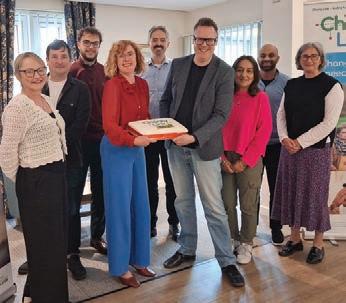
and supporters of
Link mark 150 years of the charity’s work, with chief executive Sue McEniff and chair George Oliver holding the cake
A charity that supports people facing financial hardship and crisis, is marking a major milestone in 2026 – its 150th birthday.
Charity Link, founded as the Leicester Charity Organisation Society, was established in 1876 by business leaders and caring individuals determined to support people living in poverty.
On 29 May 1876, a public meeting at the County Rooms (now The City Rooms in Leicester city centre) formally approved its principles, appointed its first committee, and marked the beginning of its work in the city.
Since then, Charity Link has provided vital support through some of the most challenging periods in modern history – from the Spanish Flu epidemic and two World Wars to economic recessions, the Covid-19 pandemic and the ongoing cost-of-living crisis.
Today, the charity supports around 5,000 people each year across Leicestershire, Rutland and Northamptonshire – a third of whom are children and young people.
It provides items such as beds, clothing, white goods and medical and mobility equipment, working in partnership with more than 250 local charities and organisations to reach those most in need.
A programme of activities is planned to mark the anniversary, including a 150th Birthday Ball, Leicestershire Three Peaks Challenge, and a supporter thankyou event in November.
It recently re-launched its ‘Proud Business Supporter’ business club for local businesses looking to make a tangible impact – and is inviting supporters to get involved by pledging to raise £150 during the anniversary year.
Chief executive Sue McEniff said: “We hope this milestone inspires people to learn more about our work and join us in making a difference. With the continued support of our community, we can keep changing lives.”

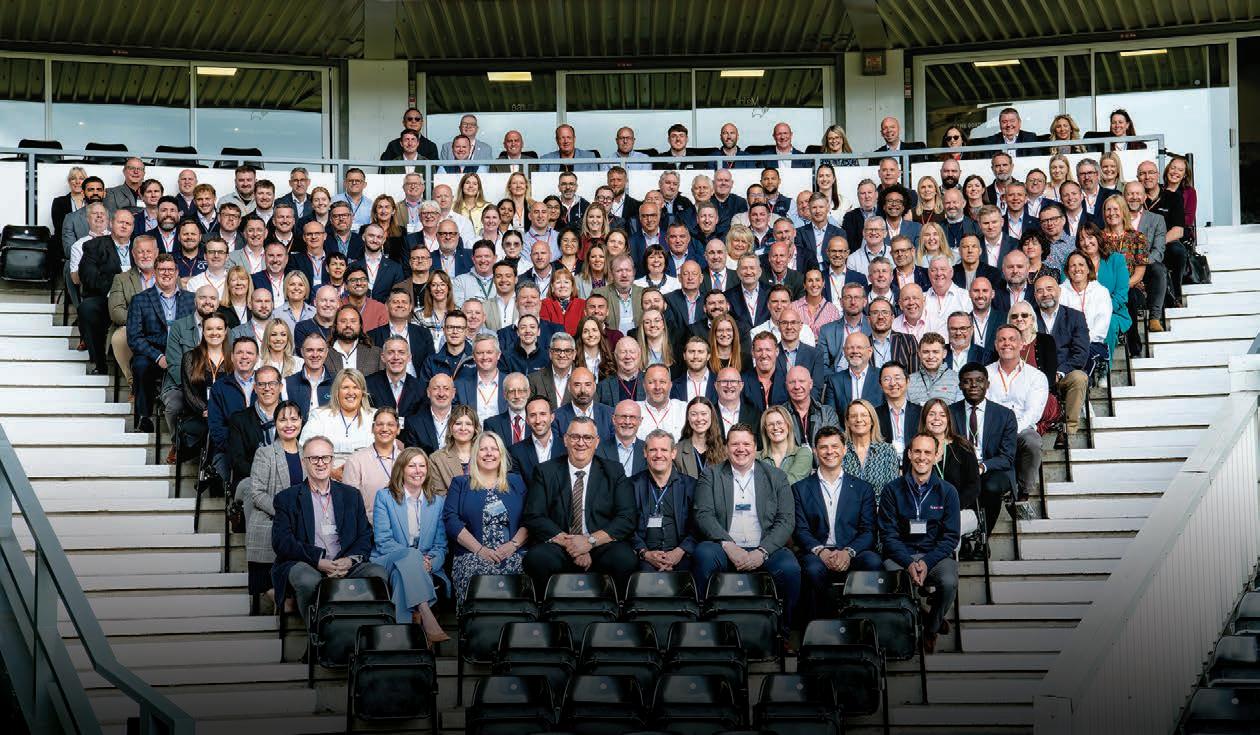



Alstom hosted more than 200 industry stakeholders at its Supplier Day and Corporate Social Responsibility (CSR) Awards in its home city of Derby.
The day also provided an opportunity for the rail engineering giant to share its outlook on where the market is heading and set out expectations for future collaborations.
Guests heard how:
• Alstom is a leading buyer in the UK rail market, spending upwards of £720m over the last year among almost 1,300 British businesses
• A third of the money it spent over the last 12 months was with UK-based SMEs
• Almost 90% of spend over the
‘We
are proud that the vast majority of our spend for our UK operations is with British businesses’
last year was with British suppliers
• Its supply chain supports almost 11,000 jobs across the country
• Over the last 12 months, around £100m has been exported by UK suppliers to Alstom operations in 37 countries, including Australia, Brazil, Denmark, Mexico and the USA
UK managing director Rob Whyte welcomed delegates and gave an overview of its global position as the world’s only “pure rail leader”.
He said: “We are proud that the vast majority of our spend for our UK operations is with British businesses, supporting thousands of jobs and driving economic value across the regions.
“As we look ahead, our focus is on deepening these relationships –working more strategically with our suppliers to improve competitiveness, reduce time to market and deliver greater certainty through models such as long-term agreements.
“By working together, we can unlock shared growth, create lasting social value, and ensure the rail sector continues to play a vital role in supporting communities and economic development across the country.”
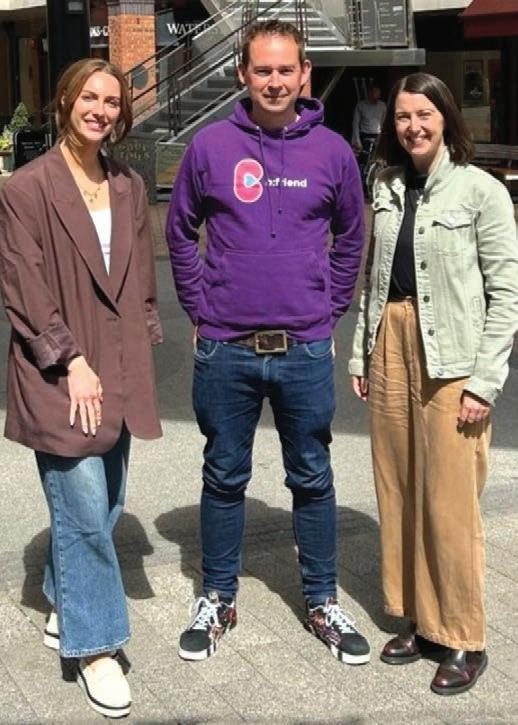
Sheffield shopping, leisure, food & drink destination Orchard Square has named b: friend – a charity that tackles loneliness and social isolation among older people – as its charity of the year for the coming 12 months.
The partnership will see events to raise awareness and funds for b: friend including the Orchard Square ‘Chatty Bench’, painted in the b:friend colours, encouraging visitors to ‘Have a seat and have a chat’ while also offering information for anyone interested in volunteering or donating.
The charity pairs volunteer befrienders with older neighbours for a weekly hour-long visit or phone call over a cuppa.
Since 2017, it has created more than 3,200 friendships across South Yorkshire, Derbyshire and Nottinghamshire.
It also runs 17 social clubs offering weekly activities designed to support wellbeing and encourage new friendships, including dancing, mocktails, boxing and creative writing.
Chief executive Colette Bunker said: “Orchard Square is a perfect match for us as a real community hub in the heart of Sheffield.
“With its fantastic selection of vendors, it’s a place that brings people together to enjoy a day out and make memories.”
letsbfriend.org.uk

A new organisation that helps people struggling with stress, trauma and isolation is appealing for business support after facing hurdles accessing funding.
Management at NEU Community Wellbeing CIC said they had applied for 27 grants since launching three months ago – with 11 rejected and 14 still outstanding.
They said the rejections were down to a national squeeze on available funding and the fact the group was still establishing itself.
Vee Greaves and Fin Todd set up the company to help people struggling with their mental health before they reach crisis point.
Vee said it was launched after seeing the positive impact of delivering wellbeing and self-development programmes in places such as HMP Fosse Way, in Wigston.
The team has used their own savings to support the company, which has already delivered more than 70 free one-to-one wellbeing sessions, along with weekly group sessions.
It is currently fixing up rooms to use at the Dear Albert rehabilitation centre in Leicester, which needs even more investment. Even then, they won’t have funding to deliver the full programme from the site, meaning current support is being provided in kind.
Vee said: “We support people facing housing worries, poor mental health, isolation, low confidence, social care challenges and the quiet, exhausting weight of simply trying to survive.
‘This is not abstract impact – these are real people’
“People who may not meet statutory thresholds but are still struggling. People who are not yet in crisis, but are close. People who do not need another waiting list – they need someone to walk alongside them now.
“There are only four of us – two founders and two volunteers who first came through our programme and now help others because they know it works. We have continued delivering support while funding it ourselves. Rent, resources, travel, fuel, printing, planning, sessions and community work have all been covered through personal sacrifice, community donations and a GoFundMe campaign.
“We have helped people navigate housing and social services, supported people at risk of losing stability, and sat with individuals who arrived believing they had no worth and left remembering that they mattered. This is not abstract impact – these are real people.”
Vee said they would continue applying for funding but hoped business leaders could step in and offer their backing as well.
She said: “We are being told we need funding to become sustainable; while also being told we are not sustainable enough to receive funding. That is the reality for many grassroots organisations. We are close enough to the community to see the need clearly, flexible enough to respond quickly, and trusted enough for people to open up.
“Yet we are often too new, too small or too under-resourced to access the funding that would allow us to continue.”
To help, contact neu@neuwellbeing.co.uk or visit: neuwellbeing.co.uk
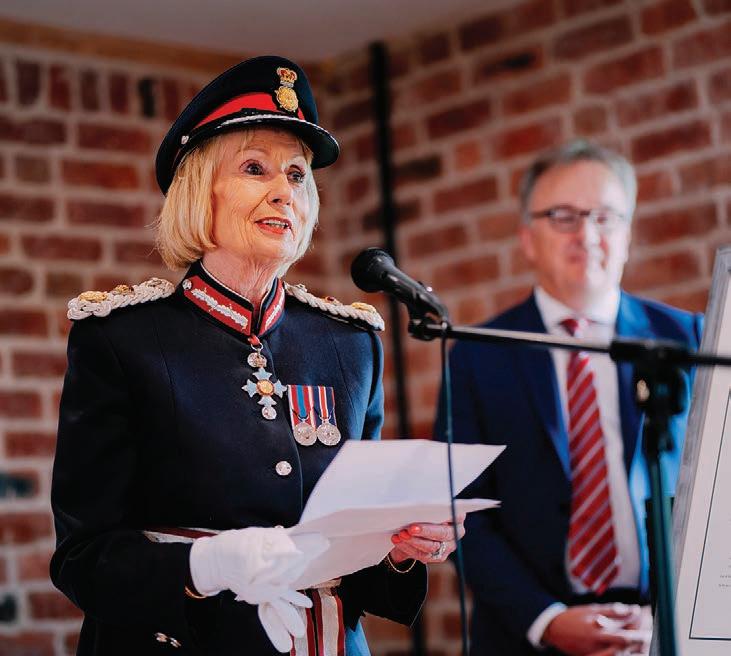
East Midlanders are being urged to nominate individuals for the national King’s Honours.
The region’s Lord Lieutenants are appealing for individuals with a passion for improving the lives of others to be put forward for nomination.
Each list recognises people who have given exceptional service, or have achieved achieved great things, and for going above and beyond the call of duty.
It also recognises those who have shown moral courage against the odds and who and have gained the respect of their peers.
‘The
vast majority of recipients are individuals from every corner of the UK’
Examples could include individuals who:
• Exemplify selfless voluntary service
Nominations should be relatively short and clear – highlighting the person’s special qualities and showing what they have personally done, rather than a team’s achievements.
They should explain how the individual has “gone the extra mile” and perhaps made personal sacrifices to succeed, and demonstrate the impact they have made. Supporting facts and figures should be included where appropriate.
For more information, visit: www.gov.uk/honours
The form is straightforward, but if guidance is needed, you can contact the Lord Lieutenant’s offices who can help.
Leicestershire residents can email lieutenancyoffice@ leics.gov.uk, Derbyshire residents can email lieutenancy@ derbyshiredales.gov.uk, while Nottingham ones can email lieutenancy@nottscc.gov.uk.



• Demonstrate innovation and entrepreneurship
• Work to tackle discrimination
• Improve the lives of vulnerable people
• Are major philanthropists
• Help children and young people achieve their potential
• Aid social mobility, enhancing life chances and tackling deprivation
• Deal with environmental problems and the protection of the environment
• Work to improve the economic prosperity of local people.
Anyone can make a nomination, and all too often people are overlooked because it is assumed someone else will do it.
Derbyshire’s Lord Lieutenant Elizabeth Fothergill said: “Although the national media often showcases ‘celebrities’ receiving national honours, the vast majority of recipients are individuals from every corner of the UK.
“Nominating someone for an honour is relatively easy. As well as completing a nomination form, applicants are expected to provide evidence of the impact of the individual’s activities together with letters of support from people who know them or have benefitted from their work.
“Of course, not every nomination is successful which is why you should do this in confidence and without telling the person you are nominating, but why not have a go?”
The first East Midlands Tech Week took place at venues across the region, offering delegates panel discussions, workshops, presentations and the chance to network with likeminded business leaders.
The four-day event was held at major venues in Derby, Nottingham and Leicester with topics ranging from the region’s brightest university spin-outs, unlocking the power of AI for automation and female leaders in tech.
Highlights included looking at the potential of STEP Fusion – the work going on in the region to use nuclear fusion to produce clean, green energy – as well as opportunities within the regional defence cluster, and UK energy policy.
Day one included an investment show for businesses looking at funding opportunities for R&D, tech and innovation, while day two included the Energy Research Accelerator UK Energy Innovation Expo 2026. Both took place at Vaillant Live, Derby.
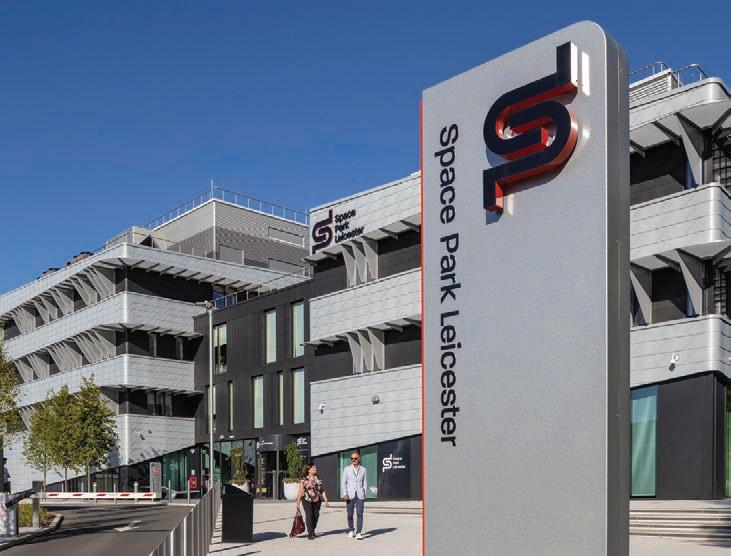
Day three moved to Nottingham and focussed on women in tech, while day four saw two events in Leicester – a med tech conference on the University of Leicester
campus, followed by a data and space tech event at Space Park Leicester.
The Chamber was a champion partner of the week, with chief executive Scott Knowles hosting a Derby panel on tech infrastructure investment.
‘The appetite for a Tech Week that represents the region on this scale and in this style is huge’
Speakers at the med-tech event in Leicester included Dr Lucy Alexander, head of innovation programmes and strategic development at life sciences industry association Medilink Midlands.
She said: “I settled in the East Midlands because it’s the best environment for the kind of work we do. There are not many ecosystems where you can get to know so many clinicians, GPs, innovators, founders…
“I’ve really seen that eco-system coming together over the last 12 or 15 years, and there is so much outstanding support to take




innovators from early-stage startups to getting their products on the shelf.
“Everybody really does know everybody else and organisations such as Medilink and Spark The Midlands [part of a global preclinical accelerator programme] help provide excellent ways to people when they are starting out.”
Tech Week founder Louise Holland, from events organiser Holland Alexander, said they were already planning next year’s regional event in April.
She said: “This first Tech Week has had a fantastic atmosphere and we’ve been delighted with the levels of engagement we have had across the region.
“I think the appetite for a Tech Week that represents the region on this scale and in this style is huge.
“We’ve been inundated with content ideas for 2027 and everything is well under way for that. We’re already planning key themes such as innovation investment, tech transformation and skills.”
A Nottingham marketing expert was 32,000 ft up, returning from teaching university students in China, when he discovered his debut book had become an Amazon number one bestseller.
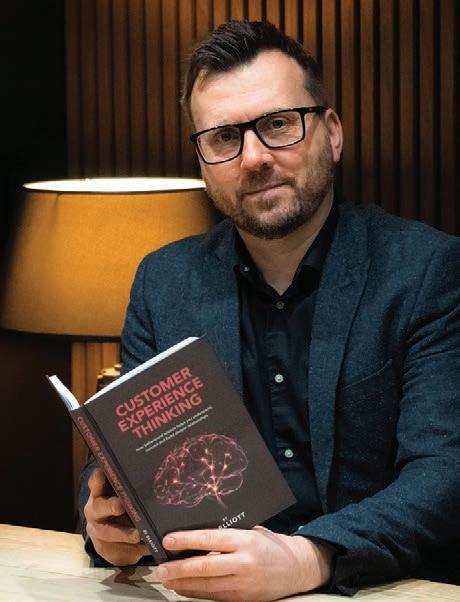
Si Elliott, founder of customer experience consultancy Fabricx and co-owner of creative agency Diversity, published the book, Customer Experience Thinking: How Behavioural Science Helps You Understand, Connect and Build Deeper Relationships, on 21 May.
He said he checked in on the book's launch progress while returning from two weeks in Beijing teaching marketing students as part of a partnership between Nottingham Trent University and the Communication University of China.
He said: “I must admit, I was slightly amazed to see that it had managed to become an Amazon bestseller on the first day.
“Of course, I hoped the time and effort that went into writing it would create something valuable for other people. I wanted to share
some of the knowledge I’ve gained over more than 20 years working in marketing and customer experience. But I genuinely didn't expect this on day one.”
Customer Experience Thinking explores how behavioural science can help organisations build stronger, more meaningful relationships with customers in an increasingly digital world.
The book draws on Si's two decades of experience working across marketing, customer experience and behavioural science, providing practical insights for business leaders, entrepreneurs and organisations looking to better understand how people think, feel and make decisions.
While technology and AI continue to transform the business landscape, Si argues that understanding human behaviour remains one of the most important competitive advantages available to organisations.
For details visit: https://mybook.to/CXThinking



In May, 32 new members joined the Chamber:
• Absolute Legal Consultants
• Actus Risk Management Services
• Barrdale Furniture Inspections
• Building Bridges AS CIC
• Cempump
• Derby Uncovered
• Derbyshire Eco Centre CIC
• Diamond Oven and Carpet
Cleaning

Business are being invited to sign up for a golf day on 13 August in support of Nottinghambased When You Wish Upon a Star. Since 1990, the charity has granted more than 19,000 wishes, creating life-changing experiences for children and their families during the most difficult times.
‘This is the first golf day we’ve done and if it all goes well we hope to raise north of £20,000’
Support has ranged from helping children become fairy princesses and soldiers for the day, to meeting their
heroes or being gifted laptops to stay in touch with friends and family while in hospital.
One of the most popular wishes is the chance to swim with dolphins and meet the characters at Disney World, Florida.
The golf day is being held in partnership with golf club, bag and equipment company PING at Thonock Park Golf Club, near Gainsborough. The entry fee for teams of four is £500 and sponsorship packages are also available.
When you Wish Upon a Star head of operations Joe Simpson said: “This is the first golf day we’ve done and if it all goes well we hope to raise north of £20,000.”
For details email: joe.simpson@whenyouwish.org

Fresh Opportunities
Intouch Mortgage Services
iREPresent CIC
LESH Consulting
• NucCol
Pink Skills CIC
Platelet Services
Robotics for Good
Role Resolve Psychotherapy
• Root2Rise CIC
• Rortech Partners
• Rusty Monkey
• Status Metrology Solutions
• Sunrise Wellbeing
• The Baton of Hope
• The Condition Management Company
• The House of Lateeque
• The House Outside
• TICG
• TransformGen CIC
• Transition Points
• Weightmans LLP
• X-ellent
• Zeus Energies Limited

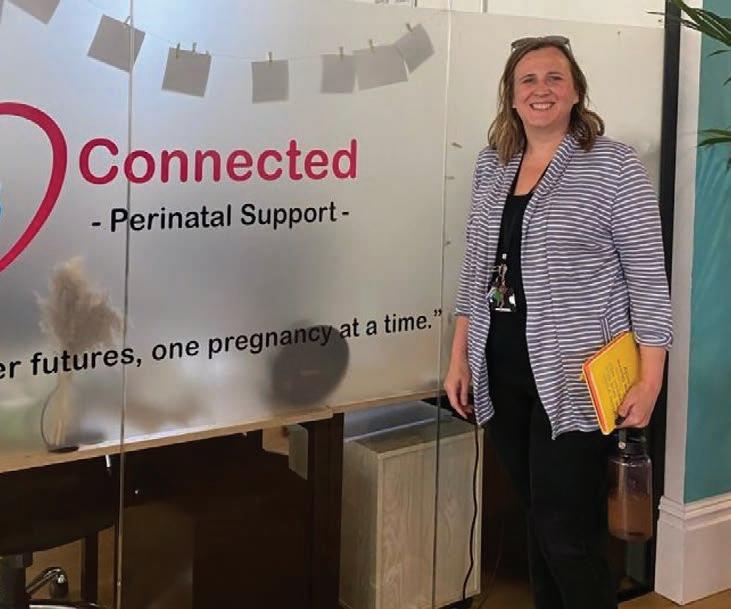
Shelley McBride (pictured) is co-director of Connected Perinatal Support, which is based in Cubo, Victoria Street, Derby, and has eight employees and 34 volunteers.
We help volunteers provide evidence-based, non-judgemental peer support to new and expectant families. This can be provided on a one-to-one basis during pregnancy until three-to-six months post birth and also provided on a community basis. Peer supporters are there when families need it, including being on call 24/7 for two weeks around due dates, acting as a birth partner.
We were set up five years ago, after an original service provider was no longer sustainable. With codirector Emma Roberts, and support from our amazing volunteer team we were able to set up as a community interest company (CIC), with some initial grant funding from Derby City Council Public Health.
This was a leap of faith from all involved, in the middle of the pandemic, with no income at all for the first four months.
Since then, we have developed our relationships with commissioners, communities, families and statutory services, with funding from stakeholders including maternity services through the local
integrated care board, family hubs, Derby City Council and the Perinatal Mental Health service, alongside The National Lottery, Severn Trent and others.
We provide free perinatal peer support activities for expectant and new parents across Derby. These can include one-to-one support within the home, free coffee mornings, library sessions, dads groups, baby massage sessions, neonatal intensive care unit support, antenatal appointments, and mother and baby mental health support.
‘This work is deeply personal to me, and I feel privileged to help grow a service that I know makes a real difference in people’s lives’
All support is free, without means testing or restrictive eligibility criteria.
By removing cost and thresholds entirely, we ensure that families can access support early, without fear of judgement, stigma or having to

support

prove need. This aligns directly with our values of equity and inclusion.
Within the wider system we deliver a cost-effective, preventative, peer-led model that improves perinatal outcomes while reducing pressure on statutory services.
Connected fills a gap that statutory services are often unable to meet, supporting families who do not meet formal criteria but still require timely, compassionate help.
We also act as a trusted bridge between families and statutory services.
I have my own lived experience of perinatal mental health challenges and began my journey with Connected as a volunteer, out of a passion to make a difference for people. This work is deeply personal to me, and I feel privileged to help grow a service that I know makes a real difference in people’s lives.
We have been a member of the Chamber for three years, taking advantage of some of the events and training it offers, which has been really helpful as we established ourselves as a start-up.

The countdown is on for the Nottingham Hot Property charity event, which will see an evening of live music and community spirit in support of youth charity Base 51.
It takes place on Thursday, 16 July, at the Binks Yard canalside venue, supported by live performances from talented people within the property and construction sectors.
Since its inception in 2004, more than 12,000
people have attended the event, helping to raise more than £450,000 for good causes including Rainbows Hospice for Children and Young People, Young Lives vs Cancer and Alex’s Wish.
This year, the spotlight turns to Base 51, an organisation dedicated to supporting young people aged 11-24 across Nottingham and Nottinghamshire. For more than three decades, it has helped improve mental wellbeing and
reduce social isolation through counselling and youth outreach services.
Chief executive Darren York said: “Nottingham Hot Property is one of the highlights of the charity fundraising year, and Base 51 is absolutely delighted to have been chosen as the charity partner for 2026.”
For tickets visit: nottinghamhotproperty.com

Nottinghamshire Pride will turn Nottingham city centre into a sea of pride, protest and joy, when it returns on Saturday, 25 July.
This year’s line-up will bring together a mix of local artists and nationally recognised acts, reflecting the diversity and creative energy at the heart of the event. More than 10,000 people attended last year.
Returning to the Pride stage following her 2023 debut is Nottingham artist LYVIA, a viral sensation thanks to her social media videos filmed on Maid Marian Way.
Shaped by the city’s spoken word scene, her return to Notts Pride marks a full-circle moment, bringing her back to the place that helped define her as a performer rooted in authenticity, community and queer expression.
Other performers include Manchester ballroom and queer collective Ghetto Fabulous – a QTBIPOC arts organisation known for its high-energy fusion of vogue, runway and dance – and The Harry Styles Show with Sean Mac, a tribute act seen at Pride events across the UK and beyond.

Returning to host the main stage in Sneinton Market are Liv Presents, Marilyn Sane and Nana Arthole, joined by Nottingham drag stars Bella Bestia, Priscilla Shona Krakow, Vayne, Arthur Itis and Climax.
There will also be a performance from the winner of the first Nottingham Drag Pageant: All Stars, which recently took place at Nottingham Arts Theatre.
Fringe events will take place across Hockley and the Rainbow Quarter.
Pride vice-chair Craig Martin said: “This year’s line-up really shows the breadth of what Notts Pride stands for. Each act reflects a different part of our community, from emerging voices to established performers, all coming together to celebrate visibility, creativity and pride in Nottingham.”
Notts Pride is a charity run by volunteers and funded through sponsorship and donations. It has been running for almost 30 years.
This year’s event is supported by Sladen Estates, It’s in Nottingham, E.ON, SDL Surveying, the UK Shared Prosperity Fund and Cartwright.
www.nottspride.co.uk
Hopton Hall will be welcoming visitors and artists to the July opening of its Month of Art and walled garden – home to a quirky Crinkle Crankle Wall (with gentle curves and dips that create a sense of movement and playfulness), an 11m high summer house and 2,000 rose bushes framed by 5,000 clipped box plants.
Each Thursday, Friday, Saturday and Sunday, through to 26 July,
artists are being offered free access to the gardens to take inspiration and create work for the Month of Art competition.
Visitors have the opportunity to vote for their favourite work during the final weekend of July, with a first prize of £1,000, and the second and third places getting vouchers worth £250 and £100 from Turners Art Supplies. They will also be able to enjoy the estate’s

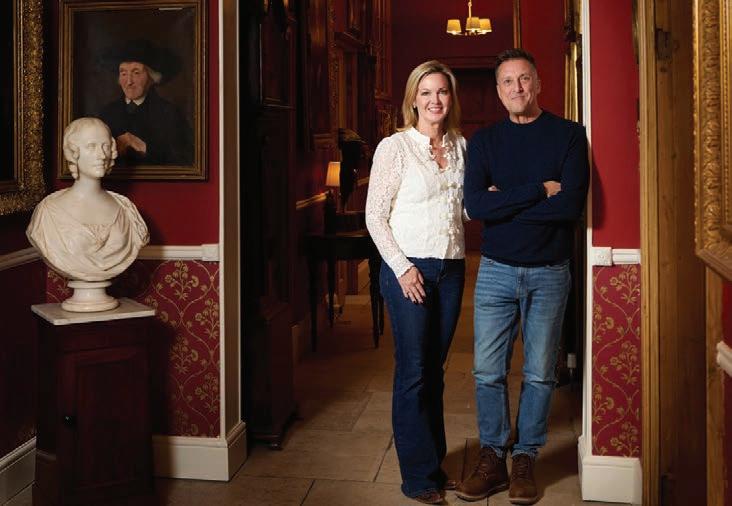

walled rose garden to watch artists at work and purchase artwork.
‘We always look forward to the event as it brings such terrific energy’
Complimentary custom-built wooden gazebos can be prebooked by artists and art groups as a base to create and sell art, and run demonstrations and workshops.


Peak District Artisans, Nottingham Society of Artists and Hinckley Art Group will be among groups that have already signed up, and workshops have already been confirmed on drypoint printmaking,
botanical art, oil painting and Powertex art. People can book their tickets online and, for those who want to attend more than once, a monthly pass is available.
Hopton Hall owner and custodian Chris Harvey said: “Over time, so many smaller, local producers get priced out of artisan events.
“Artists work really hard but often earn very little and I think it’s important that they have the Month of Art platform, as well as our new Hopton Hall Gallery in Ashbourne, to show off their talent.
“We always look forward to the event as it brings such terrific energy to the estate. Our goal is to expand it year on year. We’re so looking forward to seeing the estate buzzing with artists and garden visitors.”



NatWest has appointed Ken Feast as head of corporate banking for the East Midlands – to support the region’s mid-sized and bigger corporate businesses.
He has more than 20 years’ experience spanning retail, business banking, transaction services and structured capital solutions and was previously head of business development for invoice finance in the Midlands and eastern England.
Ken will head a commercial and corporate banking team across Nottinghamshire, Derbyshire, Leicestershire, Lincolnshire and Northamptonshire, focusing on sectors including manufacturing, logistics and high growth businesses. His appointment follows the retirement of Tom Corr from the post.
Ken said: “The East Midlands has a strong business base, from advanced manufacturing and logistics through to fast growing mid-market companies. Our role is to help businesses access the right funding, expertise and strategic support to grow confidently in a changing economic environment.
“Having started my career in Nottingham at the Smiths bank branch, I am extremely proud to be based back in my home city.”
His appointment comes as NatWest sharpens its focus on the UK mid-market – a segment it said could add £35bn to the UK economy with just 1% additional growth.
He will work closely with Anne-Marie Hunt, regional director, commercial mid market, who was recently named NatWest’s mid-market champion for the region as part of the bank’s UKwide “Growing Together” plan.

Helen
Smurthwaite,
the
new chief financial officer at West Nottinghamshire College
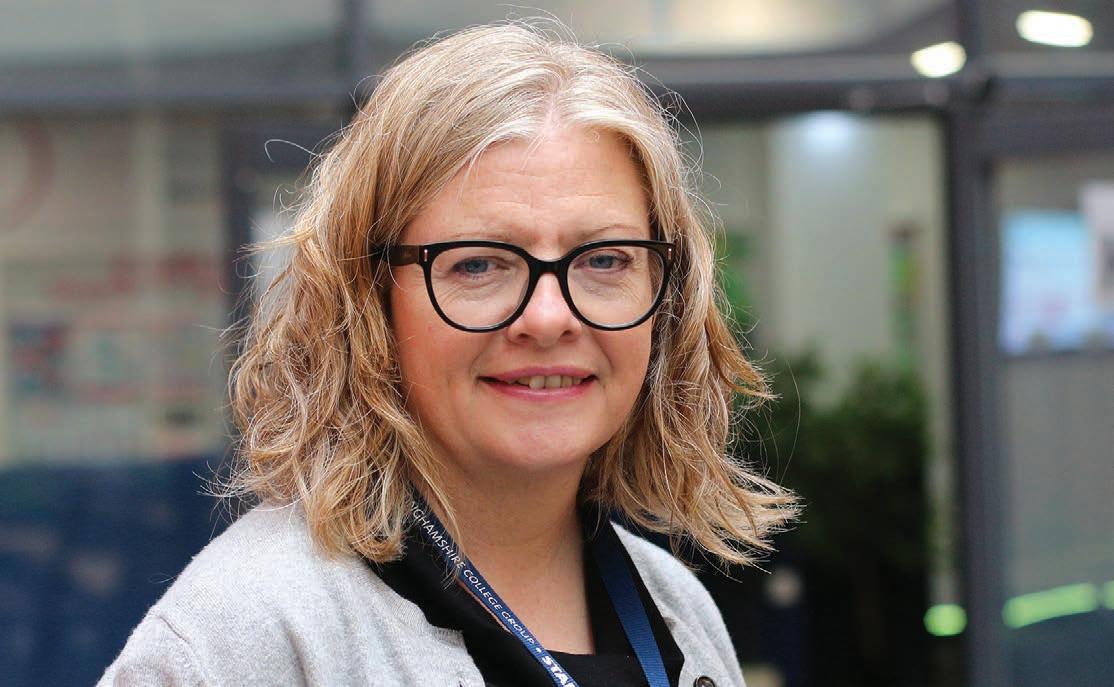
West Nottinghamshire College has appointed experienced finance leader Helen Smurthwaite as its chief financial officer.
She joins the college from international manufacturing and engineering business Natara Global, where she was commercial finance director. She has experience across education, skills and employability.
She is now responsible for ensuring the college’s ongoing financial health, supporting its strategic ambitions and investment in staff, students and communities.
Helen said: “I am a passionate advocate of the further education sector and all it offers to learners.
“I believe in the impact that education has on individual lives and circumstances, so I’m really excited to be joining the college and the great team here to support and build on the work it already does so well.
“There is so much potential for local impact through the courses and opportunities the college delivers. I’m especially looking forward to helping shape how we deliver educational reforms in the best way for the people and employers we serve.”
Helen began her career as a community pharmacist before moving into finance after completing a postgraduate diploma in management studies at Kingston University. She later qualified with the Chartered Institute of Management Accountants (CIMA) while working for a major pharmacy chain now owned by Boots.
She was held senior finance roles with organisations including Capita, PeoplePlus and Ingeus, working across outsourced IT, employability, justice and youth services.
Helen succeeds Jon Fearon, who has retired.
Robert Shaw (pictured) has become finance director at Loughborough-based Tyron Runflat, joining its existing three-strong board.
His career at Tyron spans 20 years and signifies a key part of the business’s investment plans to support the innovation, growth and development of its service offering.
Over the past year, Tyron has introduced several new products – including what it describes as the world’s lightest rubber runflat, as well as a discreet defence wheel, supporting tyre safety across its core sectors in defence, emergency services, civilian and commercial vehicles.

The business provides tyre protection to help during and after a puncture or blowout, allowing the driver to find a safe place to stop. Its products include simple, lightweight and inexpensive bands that lock a deflated tyres on the wheel, allowing the vehicle to keep moving for more than 60 miles. It has customers around the world.
Robert, who started his accounting career at Derby County FC, said: “Born and raised in Derby and educated in Loughborough, it’s always been important to me that I’m part of an organisation that provides opportunity, personal development routes and invests in the next generation.”
A nursing lecturer who led an innovative emergency simulation to prepare students for real-life crises has won a major national award.
Danielle Dunne, lecturer in adult nursing at the University of Derby, was named university educator of the year at the Student Nursing Times Awards 2026, which recognises the UK’s most inspiring student nurses, midwives and educators.
Danielle was recognised for leading a major incident simulation based on a ‘rave’ scenario which brought together students from nursing, journalism and sound and light engineering.
Simulation events are held regularly at the university to develop students’ critical decision-making skills in a safe but realistic environment.
Judges praised Danielle’s work, saying she “had thought of every detail, making her stand out and truly shine”.
They said: “Danni's passion, enthusiasm and hard work impressed the judges. She gave a holistic picture of the approach she takes to the student journey and her innovative simulated critical incident "The Rave" allowed students to explore their critical decisionmaking skills in a safe but realistic environment."
Danielle said: “I am incredibly honoured to have won this award, but even more proud of the impact my students are already making. It is a privilege to watch their confidence grow as they develop into compassionate, capable nurses.”
Nursing is one of the most popular courses at the University of Derby, which celebrated further success on the night, with student Alex Knight shortlisted for most inspirational student nurse of the year and James Eames commended in the Mary Seacole award for outstanding contribution to diversity and inclusion.
Callum Collins was shortlisted for the student nurse of the year: adult, and the university was a finalist in the student placement of the year: community category.

Kieran Breen has retired as chief executive of Leicestershire Cares after almost a decade of service.
His 30-year career in the development sector has spanned work in the UK, East Africa, Latin America and the Caribbean, and Canada, where he worked at every level.
He also served as chief executive of the Child Brain Injury Trust, demonstrating his deep commitment to improving outcomes for vulnerable individuals and communities.
The charity is not replacing the CEO role, and instead will be overseen by Sarah Green as director of operations and Amy Cook as director of delivery.
Ben Kirkpatrick (pictured) will become director of sport at Loughborough Schools Foundation next January.


Leicester College has appointed two deputy principals to strengthen its executive leadership team. Zubair Limbada has joined with a finance and corporate services remit, while Randeep Sami has become deputy principal for curriculum and quality.
Zubair spent 10 years at De Montfort University, where he served as deputy director of financial control, and has also served as a governor at Leicester College, including chairing the audit committee.
As chief financial officer he will provide strategic oversight of the college’s finances and corporate


service areas, including MIS, IT, student services, marketing, and estates and facilities.
He said: “In my new role, a core responsibility will be to ensure that the college remains financially stable and to identify opportunities to improve this position whilst providing excellent support services to all staff and students.”
Randeep Sami has started providing strategic leadership across curriculum planning, teaching and learning, and quality improvement.
His focus is on optimising resources, staffing profiles and courses, working with staff, employers and partners such as the University of Leicester and De Montfort University.
Randeep has been involved in Further Education since 2001. Prior to joining Leicester College, he held senior roles at Birmingham Metropolitan College, including vice principal.
He began his career teaching ICT and business studies across all levels.
He said: “My passion for further education is driven by a desire to find the right pathways for students to get into work.
“To achieve our aim that Leicester College is the primary choice for young people to engage with vocational careers, we’ll be looking for ways to be more innovative in our delivery of the curriculum.”
He is joining the schools group from the 1,200-pupil Bedford Modern School, where he is currently director of sport and fitness, leading sport, physical education, physical activity and fitness.

He began his career at Oundle School, building experience across coaching, teaching, pastoral care, performance sport and pupil development, and held senior leadership positions at Stamford Endowed Schools.
Derby South MP Baggy Shanker (pictured) has become a private parliamentary secretary to the Ministry of Defence team, supporting ministers in the department with their parliamentary duties.
Derby has long played an important role in Britain’s defence and engineering strength – from advanced manufacturing to the city’s links with the nuclear submarine programme and wider supply chain.

He said: “There is no greater responsibility than the defence of our country. Britain’s freedom and security have been protected by generations of men and women who have served with courage and sacrifice. We owe them our gratitude and our support.”

Over the last 35 years wealth management specialist Mattioli Woods has grown into a national operation, with more than 200 salaried financial advisers, a comprehensive employee benefits consultancy and a powerful technology platform.
Today it has more than £25bn of assets under management and despite being a UK-wide business, maintains its head office in its home city of Leicester.
In line with this month’s Business Network theme of people and skills, Tom Pegden asked chief people officer Rachel Bailey about the lengths the business goes to to look after its staff –and provide the best possible service for its clients.
Tell me about your job and your role within the business?
My responsibilities span talent retention, organisational design, cultural integration, change management and employment compliance, all while ensuring we support leaders and employees effectively through periods of structural and operational change.
As a member of the core executive committee, I play an active role in driving the strategic direction of the business and ensuring our people agenda is fully aligned with our longterm objectives.
A key part of my role is working closely with senior leaders to build a unified and highperforming culture, particularly as the organisation evolves and integrates.
Continued on page 22...
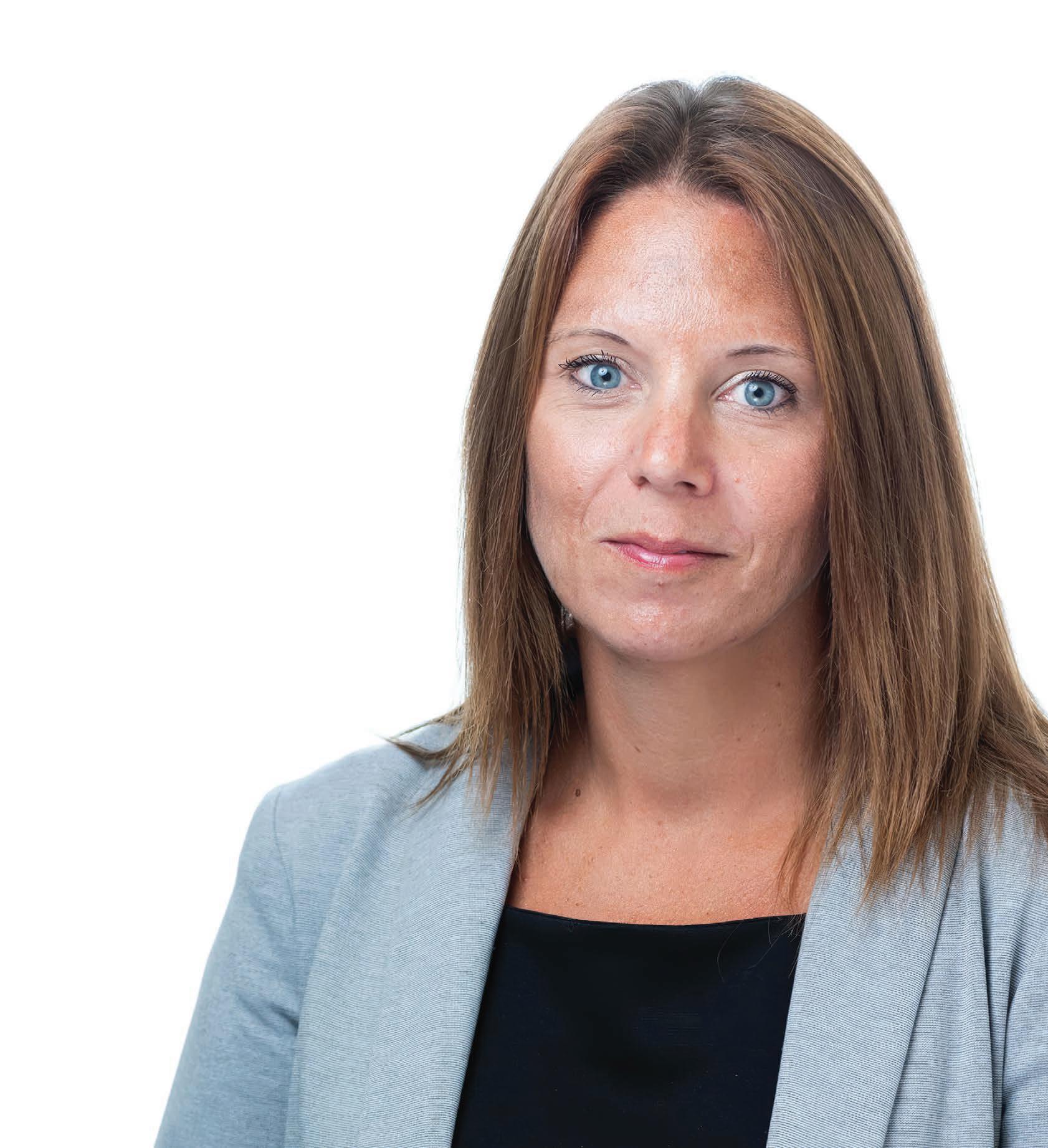





This includes harmonising policies and processes, strengthening leadership capability, and ensuring we retain the skills, engagement, and morale needed to deliver sustainable success. I also focus on creating an environment where people feel supported, developed and connected to the purpose of the business. No two days are ever the same, which is what makes the role both challenging and rewarding.
Tell me about the business, what it does, how big it is, how many clients it has?
Mattioli Woods Group is a leading provider of wealth management and employee benefits services with multiple offices throughout the UK. The group has more than 30,000 clients and holds over £25bn of assets under management, administration and advice.
Can you give me a rough breakdown of different roles within the business?
We have just over 1,300 members of staff –covering finance, the people team, risk and compliance, IT/tech, 260 advisers and consultants, paraplanners, CRMs, marketing and change and transformation.
What efforts do you take to protect staff from burnout?
This is something that is increasingly important and we could always do more. Protecting staff from burnout requires a proactive and consistent approach that combines strong leadership, clear communication, manageable workloads and a supportive culture.
As chief people officer my team and I work closely with leaders across the business to monitor workload pressures, resource planning and use the results from our employee engagement survey.
We are particularly conscious during periods of organisational change or integration.
We encourage regular wellbeing check-ins, flexible working practices where appropriate and open conversations about capacity and mental health.
We also provide access to a number of wellbeing resources, employee assistance programmes and soon leadership training to help managers recognise early signs of stress and fatigue within their teams.
Importantly, we focus on creating a culture where employees feel valued, heard and able to raise concerns safely.
I’m currently reviewing our wellbeing offering to find ways in which it can be enhanced for our people across the business.
‘I want our people to be able to voice concerns, feel supported and psychologically safe as well as feeling that their wellbeing is genuinely valued by the organisation’
How do you look after the mental health of your workforce?
As chief people officer, I truly believe mental health support must be embedded into both leadership practices and everyday culture, and not treated as a tick box exercise.
We provide our employees with access to confidential wellbeing and counselling services, mental health resources and trained mental health first aiders.
We also promote flexible working arrangements and encourage a healthy work-life
balance. I believe it’s important for us to equip our managers to be able to have supportive conversations, identify early signs of stress or disengagement and respond appropriately.
I want our people to be able to voice concerns, feel supported and psychologically safe as well as feeling that their wellbeing is genuinely valued by the organisation.
How does the business support staff beyond their salaries?
This is something I am currently focusing on with my people team. We need to stay competitive within the market and I want to build a company that everyone wants to work for.
What significant changes has leadership made in the last year or two as a result of feedback from staff?
Our business has changed significantly over the last six months. We launched our employee engagement survey in April and are now putting into action some of the initiatives that have resulted from the feedback we received. When it comes to communication, we have been releasing videos from our chief executive Peter Mann in order to update the whole business on key areas we’re working on.
There is also a fortnightly internal newsletter that has been created exclusively for colleagues to bring together the people stories and progress shaping our business every day.
It contains business updates, colleague spotlights, events, achievements and behind-thescenes insights.
We have also created a senior leadership team, which will meet twice a year and build the communication between Core Exco - the core executive committee - and the rest of the business.
We are reviewing our benefits based on the feedback, organising more social events and have a staff rugby tournament coming up in June.


How has Mattioli Woods adapted to home working?
By focusing on flexibility, connectivity and maintaining a strong sense of culture.
While flexible working has brought many benefits for employees and the business, we also recognise that reduced physical presence can impact collaboration, relationship building and the informal learning that naturally occurs in shared workplaces.
One of our priorities has been and will continue to be to intentionally recreate those opportunities for connection and development in more structured ways.
We encourage regular team collaboration days, cross-functional workshops and will be rolling out mentoring programmes. It does work differently between teams and we rely on our managers to find the best working practice for their team, which is usually three days per week in the office and two at home.
Early career employees and those transitioning into new roles are given additional support through buddy systems and structured onboarding to ensure they continue to benefit from guidance and spontaneous learning opportunities. As a people team, we recognise that maintaining the ‘social glue’ of our organisation now requires more deliberate and thoughtful investment from leadership and our team in particular.
How is the business adapting to the use of AI in its services and how are you supporting staff who could face disruption from AI?
We’ve taken a deliberate, forward-thinking approach to AI adoption, investing in using the best tools available to us while simultaneously building governance and supporting structures around them.
AI is now used pretty extensively across the business, assisting our staff in research, drafting documents, conducting analysis and saving time through transcriptions, summaries and more.
All output is manually reviewed before being used anywhere, ensuring that AI supports Mattioli Woods' expertise, rather than replacing it. All of our AI usage is enterprise grade with strict data controls, meaning that our data is never exposed to publicly available tooling, or used in the training of future models.
We take a risk-based approach to adopting new tools, and new features within tools, and maintain a comprehensive AI risk register reporting up to our executive committee, in

which subject matter experts from all our departments feed into.
Central to all of this activity has been supporting our staff through training and guidance. We provide bespoke training covering our AI-assisted workflows - covering safe usage and security, data accuracy and the limitations of what AI can and cannot do.
We see AI as augmenting our advisers' and planners’ capabilities, allowing them to focus their time where value is truly added to our customers – client relationships, decision making and professional judgements – and increasing the number of clients each adviser can serve.
‘We have implemented inclusive recruitment practices such as structured interviews, diverse hiring panels and bias-awareness training’
We often hear about diversity hiring targets. What internal systems do you have in place to ensure inclusion?
This is something that often frustrates me in my role. While diversity targets can help organisations measure progress, true inclusion is built through the systems, behaviours and culture people experience every day and shouldn’t be something an organisation does just to be able to tick some boxes. As chief people officer, my focus is on ensuring inclusion




is embedded across the entire employee lifecycle, which means recruitment and onboarding through to development, progression and leadership opportunities. I would not launch initiatives just because they make the company look good.
We have implemented inclusive recruitment practices such as structured interviews, diverse hiring panels and bias-awareness training to support fair decision-making.
Beyond hiring, we regularly review pay equity, promotion outcomes, employee engagement data and retention trends to identify and address any disparities across different groups.
We also support employee networks and inclusion forums that give employees a voice and help shape organisational policies and culture. We do a lot of work with local universities.
Leadership accountability is another key area. Managers are expected to create psychologically safe environments where different perspectives are welcomed, and employees feel respected and able to contribute fully.
We reinforce this through leadership development programmes and inclusive management training, and I would like to build regular employee listening initiatives. Importantly, inclusion is not treated as a standalone HR initiative: it’s integrated into how we lead teams, make decisions, design policies and build culture across the organisation but there’s so much more I want to achieve for the company in this area.
How does the business pick out and nurture future leaders?
Identifying and developing future leaders is a critical part of ensuring long-term organisational success. We have a very successful financial adviser academy and as chief people officer I take a structured and evidence-based approach

to talent identification, looking beyond technical performance alone to assess leadership potential, adaptability, collaboration, values alignment and the ability to lead through change.
We use a combination of performance reviews (which are held twice a year), and succession planning discussions, as well as talent calibration processes to identify individuals with strong potential across different parts of the business. Once identified, employees are supported through targeted development opportunities such as mentoring, coaching, stretch assignments, cross-functional projects and leadership development programmes.
All our roles are advertised internally first.
How is Mattioli Woods moving towards greater transparency regarding pay gaps?
The company recognises that greater transparency around pay and executive reward is essential for building trust and accountability across the organisation. We support regular pay gap analysis, benchmarking and reviews of recruitment, promotion and reward outcomes to help identify and address inequities, while improving communication around pay structures and progression opportunities.
Executive bonuses are linked to clearly defined KPIs [key performance indicators] that balance financial results with factors such as employee engagement, leadership, culture, client outcomes and long-term sustainability, ensuring that reward decisions are aligned with both business performance and organisational values.
What efforts does the business take to foster a learning culture? What training schedules do you have in place?
Fostering a strong learning culture is essential to building an adaptable, engaged and future-ready

workforce. As a business, we encourage continuous development by providing employees with access to formal training, leadership programmes, mentoring, digital learning platforms and cross-functional opportunities that support both professional and personal growth.
We also work to create an environment where curiosity, knowledge sharing and constructive feedback are encouraged at all levels of the organisation. Importantly, learning is embedded into everyday work through coaching conversations and opportunities for employees to develop new skills while contributing to business priorities. Our aim is to ensure people feel supported to grow throughout their careers while equipping the organisation with the capabilities needed for long-term success and change.
How would you describe career paths within the business?
Career paths are designed to be flexible, transparent and aligned to both individual aspirations and organisational needs.
We encourage employees to explore a range of opportunities across functions, projects, leadership pathways and specialist roles.
We support this through regular career conversations, internal mobility opportunities, development programmes, mentoring and clear capability frameworks that help employees understand the skills and experience needed for progression. Our focus is on creating an environment where people can build meaningful careers, continue developing new capabilities, and see a clear future for themselves within the organisation.
Our financial adviser academy is extremely successful and we often have apprenticeships within the business across our various departments.
Training provider Peritus Learning has launched a new service called Access to Impact, bringing senior learning, talent, HR and people leaders together to discuss challenges and opportunities facing the profession.
Management at the Leicesterbased business said that while there were many decent HR and business events across the Midlands, relatively few focus specifically on learning and development.
The aim is to bring together learning professionals from across the region to share ideas, hear from industry experts and discuss how learning and development can drive greater organisational impact.
The first Access to Impact event was held earlier this year, highlighting the appetite for a dedicated service.
The next event, Access to Impact 2.0: The Influence of Marketing Learning, takes place on 17 September at the National Space Centre in Leicester.
Speakers will include Cathy Hoy, co-founder of learning and development community CLO100, and leadership communication and storytelling specialist Jim Alexander.
For details email: jacksonparkin@perituslearning. co.uk
Loganair has launched a daily route between East Midlands Airport and Jersey, just as the region’s airport gears up for summer.
East Midlands recently saw its busiest day since the pandemic, with 10,418 departing passengers. The May half term saw 17,000 more people fly through the airport than the same week in 2025.
The newly-introduced route is one of four Loganair is launching from its Channel Islands base with seasonal services to Norwich, Paris-Charles de Gaulle and Bordeaux.
The University of Derby has been named UK University of the Year in the 2027 Uni Compare rankings.
More than 24,000 students reviewed 323 universities nationwide, with the university climbing six places to secure the number one spot. It was also ranked first in the UK for employability, second for accommodation and second for course quality.
‘Demonstrates the value students place on their experience at Derby’
Some 97% of students who submitted reviews for Derby said they would recommend it to a friend.
The Uni Compare rankings are based on independent data and reviews from current and former students, assessing categories across accommodation, course quality, employability and student social life. The table is designed to help prospective students compare universities ahead of starting in 2027.
The region’s other universities also did well. Nottingham Trent University was third, Nottingham University was 15th, De Montfort
University was 19th, Loughborough University was 23rd, Leicester University was 36th.
Professor Kathryn Mitchell CBE DL, vice-chancellor and chief executive of the University of Derby, said: “This recognition demonstrates
the value students place on their experience at Derby and the increased social capital they gain, as reflected in their willingness to recommend us to others. That is one of the strongest endorsements any university can receive.”
Aspiring entrepreneurs were able to gain insight from Dragons’ Den investor Theo Paphitis (pictured) during a boardroom session at the University of Derby.
The entrepreneur, along with William Cavendish, Earl of Burlington, led the inaugural session of the university’s Entrepreneurs’ Club.
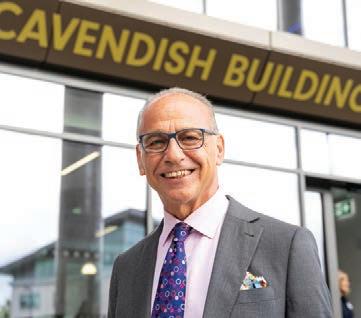
The club is open to all students at Derby, giving them a unique opportunity to engage with, learn from, and be challenged by global industry leaders. The board includes leaders from companies such as McDonald’s, ICE, Google and Rolls-Royce, and is led by Lord Burlington and the Dragon's Den star.
Theo said: “Entrepreneurship is more than starting a business. It’s resilience, creativity and the confidence to challenge convention –whether you’re launching a company, designing a new technology or training to become a nurse.”
Students were given the opportunity to pitch ideas, take part in live discussions and receive direct feedback. At the end of the year selected students will have the opportunity to work with Lord Burlington or be mentored by Theo.
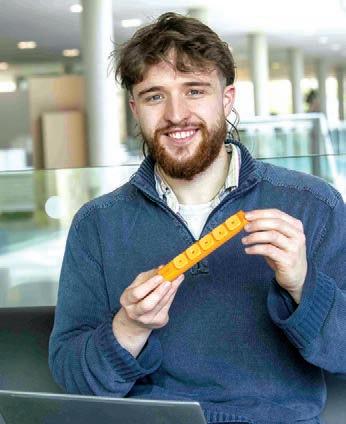
Millions of people could benefit from a universal plug-in AI tool created by a Nottingham Trent University (NTU) student who was inspired to help other people, like him, who have dyslexia.
Angelus Collins, 23, created Lexo to support users with tasks ranging from reading text aloud to converting speech into writing – and has already used it for his own studies.


The BSc product design undergraduate’s working prototype – which features five buttons for simple access to each function –can be plugged into a PC and used
on any software package. His design has been on display at the university’s annual art and design Student Showcase, which exhibits the creative work of more than 1,300 students.
Angelus, who is originally from Somerset, said “I’m very dyslexic, and English has always been really hard for me. I like making things that make our lives easier.
“When I struggle with reading and writing, this device allows me to simplify things. It’s helped me focus more on my creative ability instead of getting stuck.”


Three research consultancies have merged to create a new agency offering market research support to business, public sector bodies, charities, utility companies and other big organisations across the UK.
Navigator Insight carries out market and social research to help clients understand their key audiences and inform big decisions affecting businesses and communities. Its work also helps amplify voices from across society to shape those decisions.
It is owned by EMB Group and was created following the merger of three businesses already in the group – Blue Marble Research, Pye
Tait Consulting and Qa Research. East Midlands Chamber holds a majority stake in the group.
Navigator Insight’s data solutions function includes an in-house call centre, fieldworkers and sophisticated scripting and data processing services to provide accurate, reliable data for its clients. Its work ranges from helping the Government review and improve its Cyber Essentials programme (which helps businesses protect themselves from online threats), to helping mayoral combined authorities review their transport and travel plans when it comes to bus and train services.
The new business has 50 staff
‘We can now offer end-to-end solutions that can compete with the reach of larger consultancies’
based around the UK and offices in Leicester and York.
Chief executive Danielle Gillett said: “We’re very excited to bring together our specialist expertise in one team.
“We can now offer end-to-end solutions that can compete with the reach of larger consultancies whilst maintaining the agility, sector specialism and personal service that our clients have come
to expect from a trusted partner.

“We’re also delighted that coming together as a single, bigger agency offers our team members a stronger and more coherent career development pathway from graduate entry to senior research director.”
Navigator Insight managing partner Tom Clarkson said: “We have a fantastic track record of award-winning, innovative research for major clients across the private and public sectors.
“Combining our 75-plus years of heritage into a single organisation makes us ideally placed to build on this, delivering even more intelligent, nuanced insight.”
The tenth Samworth Brothers Charity Challenge is celebrating another record-breaking year, raising more than £500,000 for 90 good causes – bringing the total amount raised since 2007 to more than £3.3m.
Of the money raised this year, £174,400 will go to charities in Leicestershire, including £28,000 for Loros Hospice, £13,000 for the Rainbows Hospice for Children and Young People, £6,800 for Wishes 4 Kids and £5,200 for Welly’s Work Place.
Some 454 people took part, coming from Samworth Brothers businesses, customers and suppliers. Each took part in one of two gruelling nine-hour Charity Challenge events – taking in trekking, kayaking and biking – over two weekends in Castleton in the Peak District.

the food supply chain in a unique team event.
“It promotes health and wellbeing, strengthens teamwork and partnership, and supports both host communities and charities that matter personally to those taking part.”


Samworth Brothers chief executive Simon Wookey said: “What makes the Charity Challenge special is that it brings together colleagues, customers and suppliers from across
Melton Mowbray business PH Hull & Sons, which provides waste management to Samworth Brothers, completed its seventh Charity Challenge, taking its own fundraising total to an impressive £72,000.
Its managing director Rob Hull said: “It’s genuinely one of the slickest and best-run events we’ve ever taken part in. The volunteers behind the scenes work incredibly hard, and it really shows – from the moment you arrive, there’s such a warm, positive atmosphere, with everyone smiling and laughing throughout the day.”
Businesses which responded to the Chamber’s second Quarterly Economic Survey of 2026 reported sharp drops in sales and orders, both in the UK and overseas.
They also said they had reduced expectations of an increase in profitability or turnover over the next 12 months and there has been a slight increase – to around half of respondents – in the number considering price increases.
On recruitment, six-out-of-10, said they were still struggling to find suitable staff, which was slightly better than in the first quarter. There was a 2% lift in businesses attempting to hire.
A quarter reported having revised their machinery investment downwards while a fifth said the same of training investment.
‘Business has faced a perfect storm in recent times with tough headwinds from all angles’
The Quarterly Economic Survey is delivered in partnership with the University of Leicester – and is the biggest business survey of its kind in the East Midlands.
Businesses which took part cover a wide range of sectors, and findings are used to help shape policy discussions locally, regionally and nationally.
The survey showed that the three biggest concerns for East Midlands firms were inflation, corporate taxation and business rates.
Chamber director of policy and insight Richard Blackmore said: “Business has faced a perfect storm in recent times with tough headwinds from all angles – from increased business rates to soaring energy costs, to the rising cost of employment – and then hit, at the
exact time the survey was conducted, with the Middle East conflict.
“The timing of these results, therefore, gives us useful insight into the extent to which the war –with the raised energy costs it has brought, and inflation widely expected to go the same way – has added to what was already fragile confidence among business; something we saw throughout the whole of 2025.
“Shortly before the conflict, inflation was showing signs of easing – now forecasts suggest the opposite, so it’s not surprising that inflation has not moved from being the number one concern of business, especially amid so many other high costs.
“Business rates – which we have been calling for Government to urgently review – have moved back up into the top three concerns, alongside corporate taxation, so high costs are clearly front and centre and need to be addressed.
“The combination of the high cost of doing business and the sense of uncertainty the Middle East conflict has brought are likely to have contributed to the fall we’ve seen in expectation of increased profitability or turnover, while the continued hesitancy to invest shown in the survey data suggests businesses mitigating against high costs by reducing outgoings where they can.
“While there has been a very slight increase in attempts to hire staff, a majority – six-out-of-10 –are still reporting that they struggled to find suitable applicants, underlining the need to fix skills shortages, while when it comes to training and machinery, investment has been pulled back –not a healthy sign; more of a protective measure.
“The Chamber’s Framework for Growth – a landmark publication we published at the end of 2025 –calls on policymakers to urgently

Sales and orders dropped sharply over the last three months Domestic – compared to Q1, 2026
• Sales down 7%
• Orders down 7% Overseas – compared to Q1, 2026
• Sales down 4%
• Orders down 19%
Pressure to raise prices over the next three months increases slightly
• 46% of firms said they anticipated raising their prices, up 3% from Q1, 2026 and up 15% from Q3, 2025
The majority of firms continue to operate below capacity
• 74% of businesses said they saw no significant change from Q1, 2026
Investment intention in machinery and training has fallen
• A quarter have revised machinery investment intention downwards, 1% more than Q1, 2026
• One in five (19%) have revised training investment intention downwards, 3% more than Q1, 2026
The challenge of finding suitable staff had eased slightly
• Six-in-10 businesses reported difficulties in finding suitable staff, down from seven-out-of-10 in Q1, 2026
There was a slight lift in businesses trying to recruit staff
• More businesses (47%) attempted to hire new staff, up 2% from Q1, 2026
There was still a low number of businesses considering increasing their workforces
• Two-out-of-10 businesses expect to increase their workforce in the next three months, showing no significant change from Q1, 2026
Confidence in profitability and turnover expectation for the next 12 months has fallen
• Four-out-of-10 businesses expect profitability to worsen
• A quarter expect turnover to worsen, showing a fall confidence from Q1, 2026
prioritise specific actions like wider energy cost relief; a review of business rates and skills investment.
“Since the time of publication, the case to implement these asks –
especially with the impact of the Middle East conflict and how it has pushed up costs, squeezing business further – has become greater, so it’s essential policymakers step up and act.”
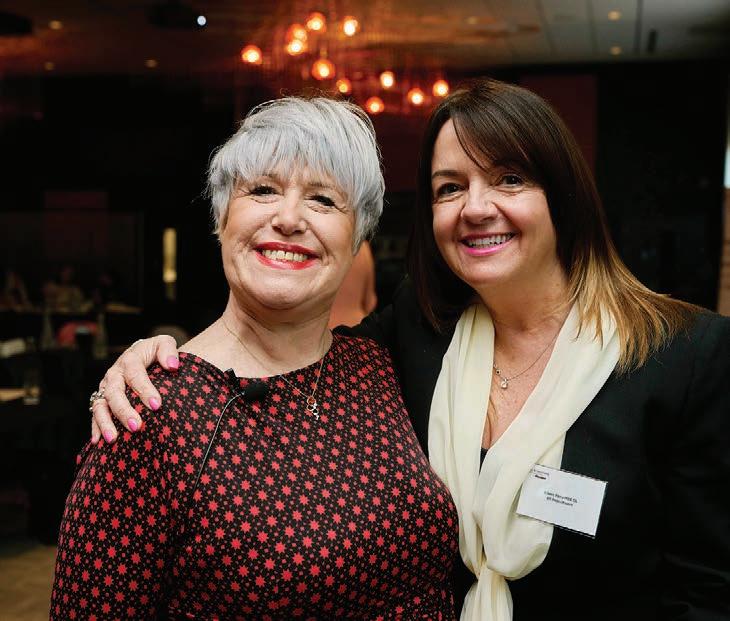
The official podcast of East Midlands Chamber – The One for Business – has landed and is available to listen now, wherever you get your podcasts, writes Tim Smith.
The One for Business is the place to hear shared insight from the region’s business community and meet the people behind those organisations – whether a microbusiness, SME or large brand.
You will hear stories first-hand from the voices that made those businesses – getting to know them and their journey.
You will hear of obstacles and how they were overcome, through to shared challenges and opportunities the East Midlands business community faces.
Whether AI and digitisation; approaches to sustainability and net zero; demystifying devolution; addressing the skills gap and boosting employment; innovation in manufacturing or overcoming barriers that block growth, there will be an episode for you.
Get to know the man behind policy and insight. We meet the Chamber’s Richard Blackmore (pictured) and get an overview of what’s in store and the themes likely to be covered as The One for Business podcast unfolds.
This short introductory episode is a great place to learn more about the podcast and the direction it will take.
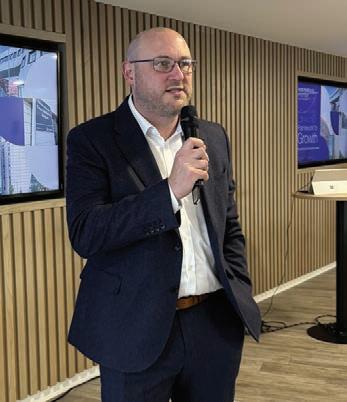
An episode not to be missed – as Chamber network Enterprising Women approaches its 30th anniversary in 2027 – we get to know its founders Eileen Perry MBE DL and Jean Mountain.
Recorded backstage at Derby’s Vaillant Live, following the inspirational 2026 International Women’s Day Conference, Eileen and Jean tell us what business means to them.
Their journey to leadership will draw you in, as we hear their remarkable story, overcoming barriers to becoming highly influential in championing women in business.
The Chamber’s new podcast – The One for Business – is now available to download or listen. Visit https://tinyurl.com/mryr46rp or wherever you get podcasts.

Chamber business adviser Steve Phillips recently completed the “Tour de Chambers” – cycling 130 miles between four East Midlands Chamber offices over “one very long day”:
When I first came up with the idea of cycling between all four East Midlands Chamber offices in a single day, it seemed like a good challenge.
Looking back now at standing outside the Chesterfield office at 5am in torrential rain, I’m not entirely sure what I was thinking.
The Tour de Chambers was a 130-mile charity cycle linking the Chamber’s offices in Chesterfield, Nottingham, Leicester and Derby before returning to Chesterfield. The challenge was undertaken in memory of my dad, Tim, who passed away from a glioblastoma in 2022, and to raise funds for The Brain Tumour Charity.
The day started in spectacular fashion, and not in a good way. Within minutes of leaving Chesterfield I was riding through what can only be described as a biblical thunderstorm.
From the top of Astwith Hill near Tibshelf I had 180-degree vision of what could only be described as the entrance to Valhalla. The roads became flooded; visibility was poor and by the time I reached Nottingham I was questioning some of my life choices as well as kit.
Thankfully, the weather eventually relented and by the afternoon, the rain had given way to sunshine and rising temperatures. While the physical challenge was always going to be significant, one of the biggest surprises was the mental effort involved. Navigating through four cities in a single day meant dealing with endless traffic lights, roadworks, diversions, busy junctions and the odd delivery bike.
‘The support I received along the route made all the difference’
There were plenty of moments where concentration became just as important as fitness and by the end I was mentally spent.
Fortunately, the support I received along the route made all the difference. At each of the Chamber offices I was welcomed by colleagues who had followed the challenge from the planning stages through to the big day.
Whether it was words of encouragement, a quick photo opportunity, refreshments or, in Leicester’s case, the provision of
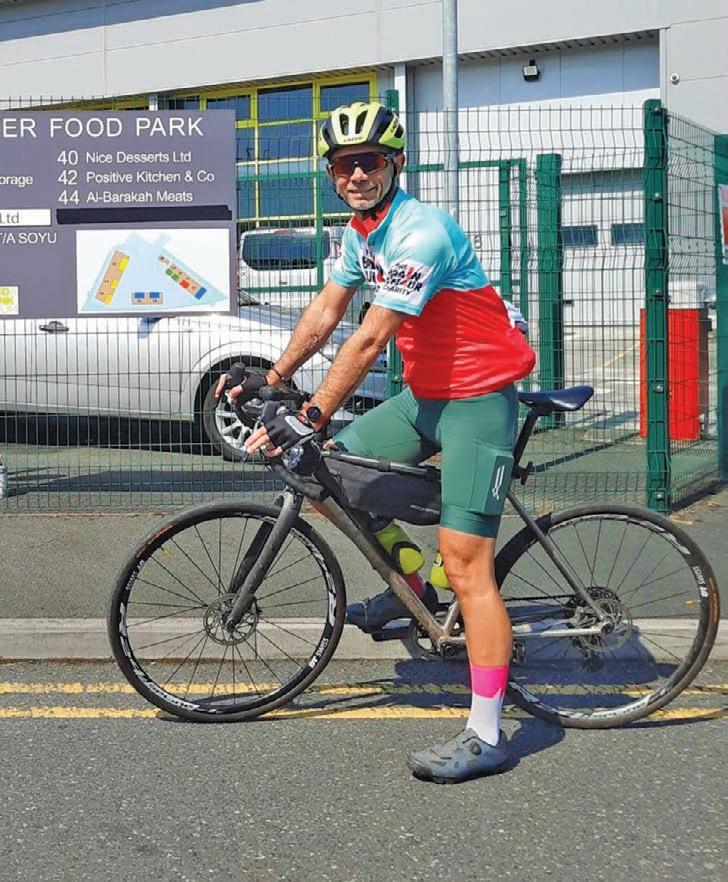


much-needed pork pies (thank you Paulina), every stop provided a welcome boost before heading back out onto the road.
One of the most memorable aspects of the day was watching the fundraising total continue to climb while I was still riding.
Around £400 was donated during the challenge itself, with messages of support arriving throughout the day. Knowing that people were following the journey and contributing to the cause provided a huge lift when the legs started to tire.
After more than nine-and-a-half hours of riding, 6,555 ft of climbing and countless energy bars, I finally rolled back into Chesterfield.
A welcome from family and colleagues at the Chamber made the finish line feel even more special. Having their support, alongside the encouragement I’d received throughout the day, was a fitting way to bring the challenge to a close.
Most importantly, thanks to the generosity of friends, family, colleagues, Chamber members, local businesses and supporters, the fundraising total exceeded its £1,500 target, reaching £1,624 and growing.
The day was never really about cycling. It was about remembering my dad and supporting a charity that helps families facing one of life’s toughest diagnoses. Four years after losing him, it feels incredibly special to have turned his memory into something positive that will help others.
The bike is now clean, the kit is washed and my legs are still negotiating with HR. But the memories of the day, and the support shown by so many people across the East Midlands, will stay with me for a long time.
www.justgiving.com/page/ tourdeeastmidlands
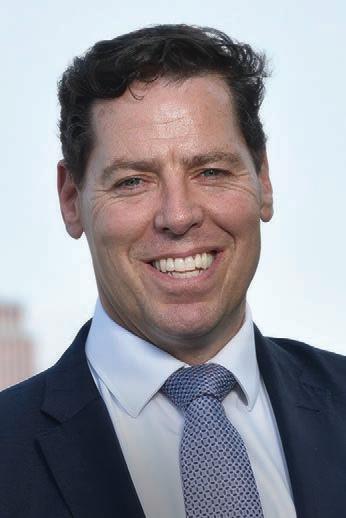
The Chamber’s strategic partnership with Mattioli Woods is to be extended.
For more than 35 years, Leicester-headquartered Mattioli Woods has worked with individuals and businesses to build financial confidence through holistic advice, long-term partnerships and specialist expertise (see this month’s Big Interview on page 21).

The firm has more than £25bn in assets under management and more than 200 salaried financial advisers, as well as a comprehensive employee benefits consultancy and a powerful technology platform.
The extended strategic partnership means Mattioli Woods
will continue to benefit from shared insight with the Chamber and its membership, while being able to add its voice when the Chamber engages with policymakers.
Chamber chief executive Scott Knowles said: “Mattioli Woods is one of the UK’s leading wealth management firms and has an especially strong connection to the region. From its roots in Leicester, the Mattioli Woods growth story is impressive. Known the world over for association with the iconic home of the Leicester Tigers, Mattioli Woods is a strong advocate of the region and its success.
“A longstanding strategic partner of the Chamber, I am delighted our close collaboration will continue.”
Mattioli Woods managing director - business development and marketing Scott Stevens said:
“We are thrilled to be partnering with East Midlands Chamber, an organisation that shares our commitment to supporting the growth and prosperity of businesses across the region.
“This partnership brings together two institutions with deep roots in the East Midlands, and we look forward to sharing our insights and expertise with Chamber members through thought leadership content that we hope will be genuinely useful.
“We are very excited about what we can achieve for the business community here together.”
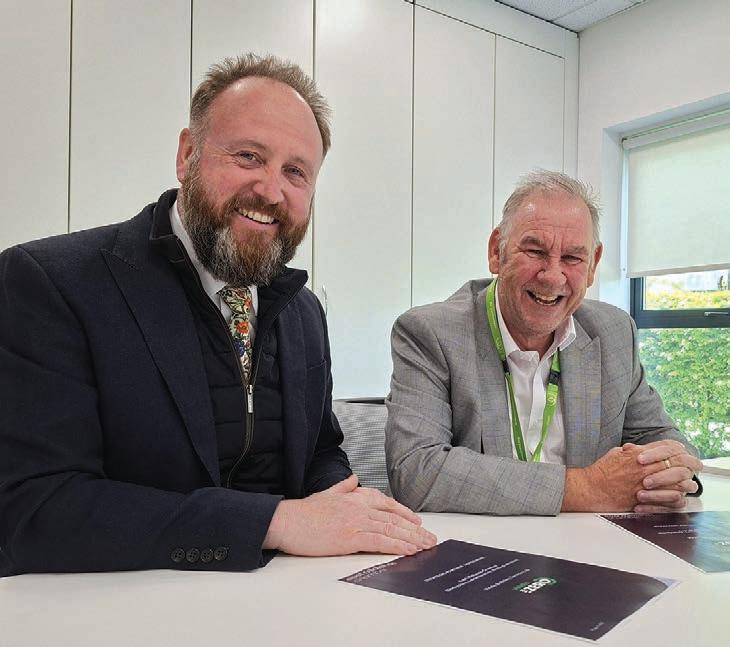

East Midlands Chamber has welcomed news that design consultancy Viridis is to continue its longstanding patronage.
Newark-based Viridis provides services including mechanical, electrical and public health design; advice and consultation; contract administration; project management; renewable designs; energy and net zero route maps and funding support.
‘Working with the region’s firms, Viridis is helping innovate through the expertise it provides’
The business was set up in 2011 by Lee Marshall CEng to provide compliant, cost-led environmentallyfriendly buildings.
In 2025 Viridis received the people and culture award from Construction Excellence. Current projects for Viridis include work for Rolls-Royce in Derby and estate decarbonisation for Lincoln College.
As a Chamber patron, Viridis can
engage with the Chamber’s 4,000strong membership across the East Midlands and influence the shaping of policy when the Chamber meets with political leaders.
Chamber chief executive Scott Knowles said: “Viridis is an awardwinning business committed to driving sustainable approaches to design. Working with the region’s firms, Viridis is helping innovate through the expertise it provides.
“I am pleased that Viridis is to extend its patronage with the Chamber, enabling continued close collaboration.”
Lee Marshall said: “The East Midlands is at the heart of everything Viridis stands for. It’s where we built our business and as we continue to grow, as more and more workplaces recognise the building-first approach we are so proud of, it makes sense for us to work closely with East Midlands Chamber whose values align so well with ours, when it comes to prioritising sustainable growth.
“We’re very pleased to extend our patronage with East Midlands Chamber, working alongside Paul Humphreys, the Chamber’s head of innovation.”






Inflation holding at 2.8% will reduce anxiety for firms, amid what has been a challenging trading climate – however there are concerns that the Bank of England has not reduced interest rates.
The latest estimated inflation figures from the Office for National Statistics covers the 12 months to May 2026.
Chamber director of policy and insight Richard Blackmore (pictured) said: “While still above the Bank of England’s 2% target, firms will welcome inflation having held steady, when it was widely expected to increase.
“For those looking to borrow, there is further breathing space with the interest rate being held unchanged.
“Our latest Quarterly Economic Survey, for the second quarter of 2026 – with the data compiled at the time the Middle East conflict had just begun (see page 28) – reveals the sense of uncertainty and extent of anxiety felt by business.

“Inflation topped the concerns of respondents in that survey, above business rates and corporate taxation, so the fact inflation has not, as yet, risen to the levels forecast, some of that concern should be reduced.
‘I would urge policymakers to prioritise asks set out in the Chamber’s Framework for Growth’
“To help business in the East Midlands thrive, I would urge policymakers to prioritise asks set out in the Chamber’s Framework for Growth.
“The publication calls for wider energy relief packages, business rates to be fully reviewed and skills reform so employers can fill roles with candidates that match the abilities they need.
“Actioning those asks would help unlock growth and incentivise business to invest to grow.”
However, he said the Bank of England’s announcement to hold the interest rate at 3.75% could add to the frustration of firms looking to invest to grow by borrowing.
He said: “With inflation having remained static at 2.8% in the latest data, it was generally expected the Bank of England would not announce any cut in the interest rate just yet.
“For businesses looking to borrow so they can invest, that could mean some continued frustration, although the fact inflation did not increase, as had been forecast, will have brought some relief amid the high cost of doing business.
“Respondents in the Chamber’s latest Quarterly Economic Survey reported a drop in confidence in the months ahead, when it comes to expectation of increased profitability or turnover, while investment in training and machinery was shown to have stalled.
“With East Midlands unemployment holding at 5.5% – above the overall UK level – the fact that less than half the respondents in the survey had attempted to recruit further underlines the trend around hesitant investment.”
The Framework for Growth includes key asks covering skills, transport, connectivity, innovation and investment.
Publication followed detailed research and engagement with firms across Derbyshire, Nottinghamshire and Leicestershire, as well as insight from Bank of England forums.

From the precision of aviation to the craft of specialty coffee roasting, Ground Effect Coffee Roasters is proving that passion, purpose, and people are the perfect blend for sustainable business growth.
Based in the Peak District, it has established itself as an independent specialty coffee brand focused on quality, ethical sourcing, and smallbatch roasting.
‘Ground Effect Coffee Roasters has always been about people as much as coffee’
Founded by former pilot Chris Berry, the business brings together a love for exceptional coffee with a meticulous attention to detail inspired by years in aviation.
Alongside producing premium coffee, the business is equally committed to creating positive impact within the local community – something strengthened through its collaboration with Employment Services at East Midlands Chamber via the Connect to Work Derbyshire programme.
Ground Effect Coffee Roasters was created with a simple vision: to roast outstanding coffee without compromising on quality, integrity,

or customer experience. Every coffee is carefully selected and hand roasted in small batches to showcase unique flavour profiles while maintaining consistency. From rich Colombian coffees to vibrant African origins, the company has built a loyal and growing customer base across the UK.
Chris said: “Ground Effect Coffee Roasters has always been about people as much as coffee. We wanted to build a business that not only delivers exceptional products but also creates opportunities, supports individuals, and contributes positively to the local community.”
Connect to Work Derbyshire has
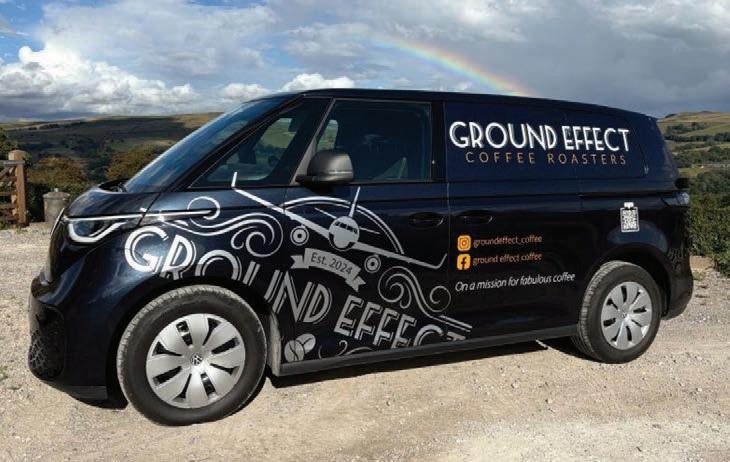
been designed to help individuals access employment opportunities while supporting businesses with sustainable growth and workforce development. The partnership has provided valuable support around employability, business development and creating inclusive opportunities within the workplace.
Through the programme, Ground Effect Coffee Roasters is helping demonstrate how independent businesses can play a role in supporting local jobs and skills development while continuing to scale sustainably.
Chris said: “Working with Connect to Work Derbyshire has allowed us to look at growth in a
much broader way.
“It’s not just about increasing sales – it’s about investing in people, developing skills, and building longterm opportunities within our business and community.”
The collaboration reflects a wider commitment shared by both Ground Effect Coffee Roasters and the Chamber – to support local businesses while helping individuals gain confidence, experience and pathways into employment.
With a growing online customer base, expanding product range and continued focus on quality and sustainability, Ground Effect Coffee Roasters is looking firmly to the future.
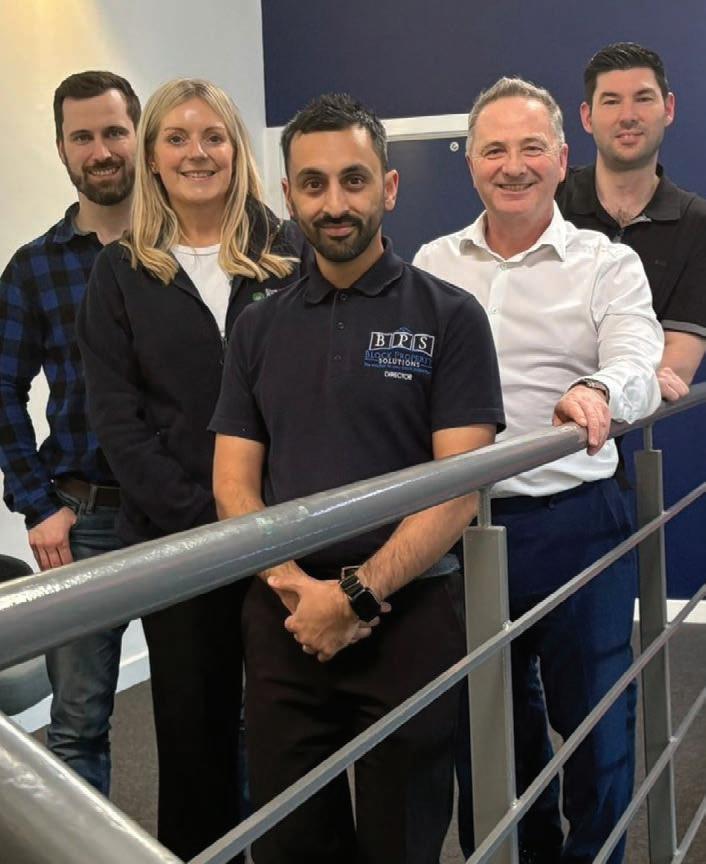
Businesses based at the Mansfield Innovation Centre have secured grants through the East Midlands Combined County Authority’s High Growth Accelerator programme – administered by the Chamber.
Block Property Solutions, Wenham Mortgages, Staff for Education and Online Bedrooms each gained funding having already reported growth since joining the centre.
The centre, managed by Oxford Innovation Space, provides flexible workspace alongside business support, including one-to-one sessions with an innovation director, peer learning opportunities, in-person events and online resources and webinars.
The combination of space and support has helped resident businesses accelerate their growth and grow their teams.
Wenham Mortgages moved into the centre in 2020 as a team of three, and has since created 17 local jobs. Founded by Daniel Wenham, the financial services company was awarded an £8,000 high growth grant to support its expansion into new markets, which is expected to create further new roles as it continues to grow.
David Smith, innovation director at Oxford Innovation Space, said: “Securing High Growth Accelerator grants will help these four companies continue to innovate, expand and create more new jobs locally.”


Mansfield Innovation Centre is home to more than 35 ambitious businesses and runs events for resident businesses throughout the year.
It recently delivered three workshops for businesses on behalf of Mansfield District Council, which attracted more than 50 attendees. The fully booked events focused on networking, AI for productivity, and the importance of wills and lasting powers of attorney for business owners.
Business Peak District (BPD) is a free membership organisation in the Peak District National Park, High Peak, Staffordshire Moorlands and Derbyshire Dales. Its principal supporter is East Midlands Chamber, and it works with councils, the Peak District National Park Authority, the University of Derby, as well as Visit Peak District and Derbyshire. BPD has more than 700 members.
Email: members@businesspeakdistrict.com
By Heather McLellan (pictured) director of The Return to Work Mentor, based in Middleton, Wirksworth.
I’m a healthcare professional with over 30 years’ experience, largely in return-to-work support. Over the years, I’ve worked with individuals, employers, healthcare providers and insurers, helping people navigate the oftencomplex journey back to sustainable work after illness or injury.

My current business has been shaped by both professional expertise and personal experience. After experiencing a stroke caused by a type of blood cancer, I sold my previous national rehabilitation business and rebuilt my own working life around long-term health needs. Through that experience, I recognised a significant gap in support for professionals and business owners trying to navigate serious health challenges alongside work.
I now support professionals, self-employed people and small business owners, typically in their 40s to 60s, who are recovering from serious illness or injury and trying to rebuild work sustainably.
Many are used to being the capable one, but are now dealing with fatigue, uncertainty, reduced capacity and questions around identity, confidence and what realistic work now looks like.
My approach combines practical health and work support, business experience and empathy, helping people create work that works with their health, not against it.
In March 2026, I launched a new workshop, The Missing Metrics –Seven Personal KPIs for Business Professionals to Align Your Work with Your Health After Serious Injury or Illness, which will soon be available online. This also led to the creation of my first online monthly support community for people navigating health issues alongside work or business.
I am also preparing for my first commercial partnership with a national private membership organisation for business owners, alongside delivering online training for two national health and work network organisations on business resilience during personal health crises and the realities of managing sick leave and return to work.
I love living and working in the Peak District. The rural environment provides inspiration and space to look after my own health while growing a fledgling business, although working independently can sometimes feel isolating.
That is one reason I joined Business Peak District – to stay connected locally and beyond my own sector. Over the next two years, I plan to consolidate my services, continue raising awareness of what I offer, and develop resources at different stages of the return-to-work journey, including a podcast, book and expanding the mentoring community. returntoworkmentor.co.uk

For many SMEs, procurement is a necessary but frustrating part of running a business. Whether it’s navigating supplier price increases, managing contracts, or dealing with supply chain delays, procurement can feel like a drain on time and resources.
Yet, when done well, procurement isn’t just about cutting costs – it’s a strategic tool that can improve cash flow, reduce risk and drive business growth. The challenge? Many businesses don’t have the time or in-house expertise to unlock its full potential.
Even if you don’t have a dedicated procurement team – or you have just one or two people managing purchasing alongside other responsibilities – you can still benefit from the right training, guidance and support.
That’s where Beaumont Procurement comes in.
MAKING PROCUREMENT WORK FOR YOUR BUSINESS
Led by Richard Beaumont, a procurement expert with over 30 years of experience in businesses of all sizes – from SMEs to global corporations – we specialise in helping businesses buy smarter, negotiate better and streamline procurement processes.
Unlike generic training programmes, we listen first, understanding your challenges before designing practical, handson training that delivers results. Whether you’re looking to save costs, manage supplier risk, meet sustainability targets, or improve contract negotiations, we provide the tools, skills and strategies your business needs.

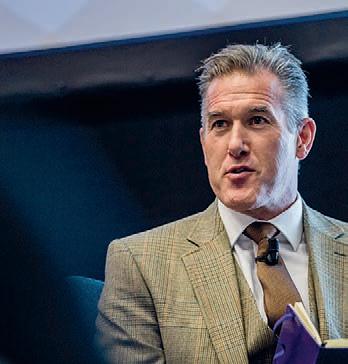
Richard Beaumont
Whether you have a full procurement team, just one person handling purchasing, or no dedicated procurement resource at all, we offer training and coaching that fits your business, including:
• Tailored procurement training –delivered in-person or online, for individuals or teams
• Coaching & mentoring for business owners and procurement leads
• Practical workshops focused on cost-saving, supplier management and contract negotiations
• Procurement technology guidance – helping you make the most of digital tools and AI
• Sustainable procurement strategies – ensuring your supply chain meets ESG and sustainability commitments.
If procurement is slowing your business down, let’s change that.



Build your Networking Confidence
Date: 23 July
Time: 9.30am-4pm
A free, Generation Next members-only event taking place at Nottingham Trent University. Whether you are a seasoned professional or new to networking, this workshop will equip you with tools to build stronger connections, refine your communication, and master the art of creative conversations.
Email:
hannah.kerridge@emc-dnl.co.uk or visit:
https://tinyurl.com/4tbkjjtn
Personal Effectiveness
Using the Power of Insights Discovery
Date: 6 August
Time: 1-4.30pm
Exclusive to Generation Next members, this free, practical workshop takes place at the East Midlands Chamber office in Friars Mill, Leicester. It is designed to give delegates an edge in their careers by maximising their personal effectiveness.
The workshop will help you: boost your influence by improving how you communicate, collaborate, and connect with everyone around you; identify what motivates and de-motivates you so that you can maintain peak performance and avoid burnout; draw up a personalised action plan of tangible steps for career growth.
Email: hannah.kerridge@emc-dnl.co.uk or visit:
https://tinyurl.com/2d5kkfhw
Pitch Perfect: How to Introduce Yourself with Impact
Date: 18 August
Time: 9.30am-12.30pm
An online, free webinar exclusive to Generation Next members, that will help young professionals confidently introduce themselves in any setting. Participants will learn how to craft a clear, memorable elevator-pitch rooted in their personal brand – and practice delivering it with impact.
Email: hannah.kerridge@emc-dnl.co.uk or visit:
https://tinyurl.com/5pfvk9sh
Young executives and entrepreneurs can take advantage of the opportunities available from joining the Chamber’s Generation Next network.
The network for businesspeople aged 18-to-40 runs social events, webinars, awards and conferences for members, helping them build their skills, connect with peers and thrive at work.
It is seen as a great way to accelerate career growth, blending professional development with social gettogethers, all tailored to the challenges faced by rising leaders.
Membership can help you expand your visibility and influence, giving access to the so-called “hidden” jobs market – job opportunities that are not openly advertised, but shared through word-of-mouth, personal networks and referrals.
As a peer support system, it can help members overcome the isolation that can sometimes come with career progression, providing space to bounce ideas around, discuss shared problems and troubleshoot strategic challenges with people in the same boat.
Its events also provide a chance for members to refine their soft skills, giving them more confidence and the encouragement to pursue their ambitions.
The network is free to join for anyone who is part of an organisation or business that has East Midlands Chamber membership.
Visit: generationnextemc.co.uk




Tickets are on sale for the 2026 Generation Next Awards, celebrating the best and brightest young talent in the East Midlands this autumn.
There are eight categories in the annual Awards, ranging from Future Leader to Innovator of the Year and Apprentice of the Year. Nominations have now closed.
This year’s ceremony coincides with the 2026 Generation Next Conference on October 15, and takes place at the Case Hotel, Chesterfield. The shortlist of finalists was due to be revealed as Business Network went to press.
The categories are:
• Future Leader, sponsored by the University of Derby
• Innovator of the Year
• Excellence in Customer Experience Award, sponsored by trentbarton
• Entrepreneur of the Year, sponsored by Nottingham Trent University
• Apprentice of the Year, sponsored by Derby College Group
• Community Impact Champion, sponsored by Leicester College
• Emerging Talent, sponsored by West Nottinghamshire College
• Talent Development, sponsored by Chesterfield College Group
The University of Derby is the event partner and the drinks sponsor on the night will be Knights.
Generation Next chair Preethi Kang said it would be a huge night for everyone involved.
She said: “It’s one of the best awards nights of the year and it’s something I’m so passionate about. It’s an inspiration to see the amazing young talent we have in Derbyshire, Leicestershire and Nottinghamshire.
“I’ve spoken to past winners who have said it has given them the confidence to set up new businesses or charities which is so great to hear.
“The awards evening is a really fun event. It’s very chilled and totally different to traditional black tie events. Above all it’s a real celebration of future leaders in the East Midlands.”
https://tinyurl.com/4wfnm3w5
The shortlist of finalists for the 2026 Enterprising Women Awards was due to be announced as Business Network went to press. The Awards honour female business leaders from across Leicestershire, Nottinghamshire and Derbyshire, with the winners announced on the night of 25 September, during a ceremony at Center Parcs Sherwood Forest.
• Business Woman of the Year, sponsored by Michael John Switchgear
• Social Commitment, sponsored by Mackworth Vehicle Conversions
• Small Business of the Year, sponsored by Knights
• Female Entrepreneur of the Year, sponsored by Freeths
• Female Employee of the Year, sponsored by Cambridge and Counties Bank
• Team of the Year, sponsored by Azets
•Innovation, sponsored by Pick Everard
• Apprentice of the Year, sponsored by Datalink Electronics
• Developing Leader, sponsored by Sarah Higgins Corporate Coaching
• Lifetime Achievement, sponsored by NOCN Group
The awards night will to be a true celebration of female achievement, with a welcoming atmosphere, opened by Enterprising Women co-chairs Eileen Perry and Jean Mountain, and hosted by ITV presenter Emma Jesson.
To book tickets visit: https://tinyurl.com/mr2fjpm7

1. Eileen Perry gets in the spirit with Jean Mountain and Scott Knowles
2. Guests enjoy the 2025 disco
3. Emily Smith, 2025 Businesswoman of the Year Mariam Smith and presenter Emma Jesson
by Pete Martin Photography


Two Chamber networks are joining forces to host a beauty masterclass in one of Nottingham’s premier bars.
Members of Generation Next and Enterprising Women are being invited to the Charlotte Tilbury masterclass taking place at The Alchemist, in September.
Charlotte Tilbury CBE founded her business in 2013 with the aim of creating the “biggest British beauty business of all time”.
She propelled the brand into a £500m annual turnover powerhouse through global expansion, data driven leadership, tech innovation and key partnerships.
Under her leadership, the dedicated in-house tech team has created first-to-market proprietary tech products such as magic mirrors, virtual try ons and consultations, augmented reality tutorials, shade matching, a virtual store, skin analysis and even a fragrance finder.
They sit inside an app with more than 3.4 million users, and the website: charlottetilbury.com.
The afternoon event will begin with a signature cocktail at the King Street bar, before a step-by-step make-up masterclass from the team at Charlotte Tilbury Nottingham.
They will share tips and tricks using the latest collection and there will be a chance to ask questions as you go.

Attendees will each get an Alchemist spice bag with loaded fries and a choice of toppings to keep hunger at bay as they network with other Chamber members.
Each guest will also receive a £15 voucher redeemable against Charlotte Tilbury purchases on the day.
The event is restricted to Chamber members and currently limited to 75. It runs from 3-5.30pm on Tuesday, 8 September.
For ticket details visit: https://tinyurl.com/2h275puz
The East Midlands Manufacturing Network (EMMN) has six groups in Derby, Derbyshire, Leicester, Leicestershire, Nottingham and Nottinghamshire, each meeting every couple of months. There are more than 400 members. Joining is free, open to manufacturers of any size, and includes complimentary membership of Make UK. emmn.co.uk
The next two EMMN meetings are at locations which give the opportunity for members to stay on for tours or ‘net walking’. Meetings are free to attend:
• Wednesday, 15 July, at The National Tramway Museum, Crich, Derbyshire For further details visit: tinyurl.com/ywvs92fn
• Wednesday, 29 July, at NTU Brackenhurst Campus, Southwell, Nottinghamshire For further details visit: tinyurl.com/ye26298r
Both meetings will run from 9.30am to 12.30pm followed by a light buffet lunch.
Structural Adhesives is based on the Marlow Road Industrial Estate, just over the River Soar from the King Power Stadium, in Leicester.
The business has been going for more than 35 years, providing highquality, technical-grade adhesives that meet the demands of industries ranging from construction and aerospace to engineering and beyond.
Its mission is to provide adhesives that are not only reliable but sustainable, helping to build a safer, greener future.
Through collaboration, research and a commitment to compliance, the business has helped redefine what is possible in bonding technology – including developing adhesives that could be used on space missions.
It underwent a full restructure seven years ago after being taken over by managing director Angela Orton. Rather than making small changes that would have little impact, Angela took the decision to step back and look properly at what the business was good at and where its real strengths lay.
The business’s manufacturing operates alongside R&D activity through its Luma Research & Development Laboratories
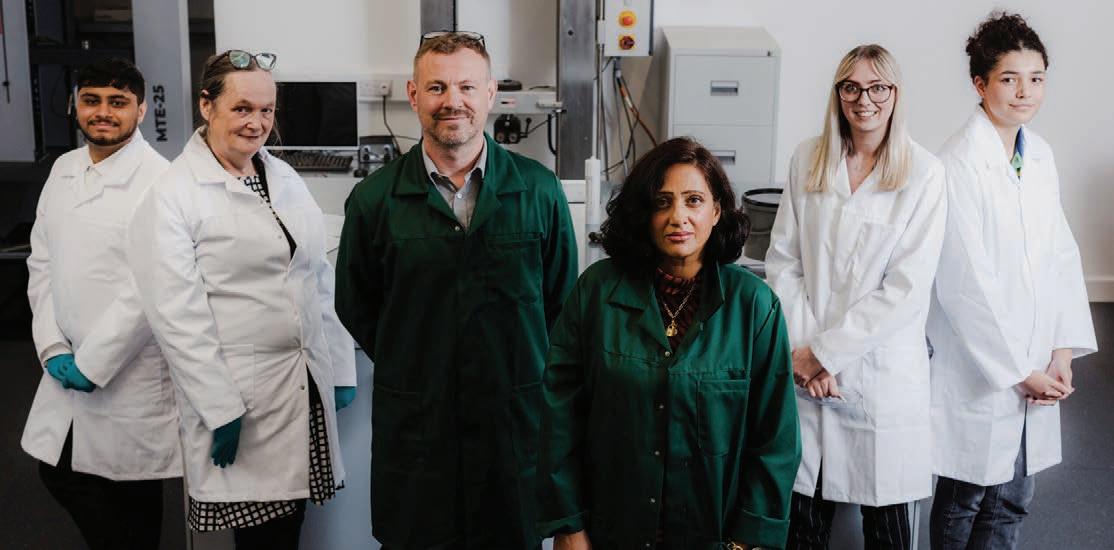

subsidiary – bringing together practical experience with researchled thinking, allowing it to meet complex technical challenges in a considered and flexible way.
As a microbusiness, it has the agility and ability to adapt quickly, address problems at an early stage and respond in a way that would be difficult for bigger organisations.
The R&D team is all-female, the result of a natural journey which has always focussed on capability and trust.
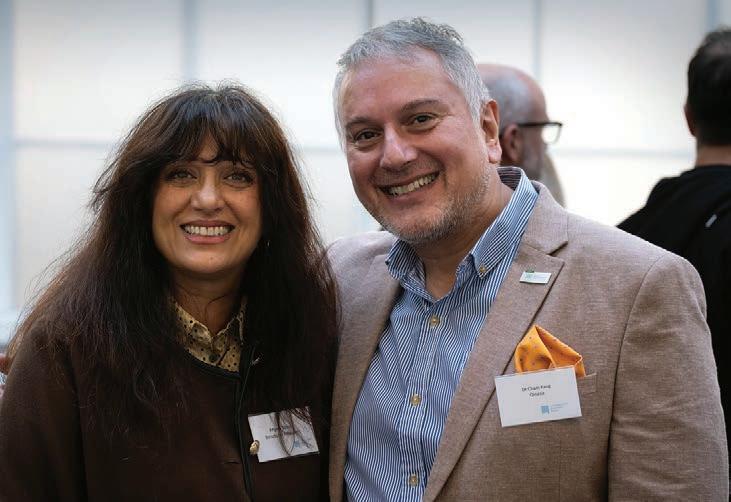
‘The EMMN has been vital in supporting us through open conversations, shared experience and by connecting us with like-minded businesses’
The company’s people-first, values-led approach has been recognised through various awards, most recently the King’s Award for Enterprise in Innovation.
Operating within advanced manufacturing and R&D as a microbusiness brings its own challenges. Innovation is rarely straightforward, and translating research into practical, manufacturable products takes time, experience and persistence.
Another ongoing challenge has been knowing when to take a slower approach. At various points, this has meant stepping back to review direction, focus on what works best, and remove elements that no longer support the long-term vision of the business.
Structural Adhesives joined the Chamber in 1989 and EMMN in 2023, going on to introduce colleagues Jim Orton, Jade LewinPatel and KTP (knowledge transfer
partnership) associate Morgan Bates to the network.
Angela said membership of the network had delivered value far beyond making new contacts –creating a strong connection with the wider manufacturing community and becoming an important support mechanism for the business.
Sharing challenges and learning from businesses facing similar issues has often led to reassurance, clarity and practical solutions.
Angela said: “The EMMN has been vital in supporting us through open conversations, shared experience and by connecting us with like-minded businesses across the manufacturing community. It has brought a greater sense of belonging, in a trusted and safe environment which is essential for small businesses.”
To find out more about EMMN contact deborah.rogers@emcdnl.co.uk or visit: emmn.co.uk

The 2026 East Midlands Chamber
Sustainability and CSR conference takes place at the University of Derby on 10 September.
The agenda for the day will incorporate many of the contents of the Chamber’s Framework for Growth – highlighting big policy demands for Government – and the annual Green Growth Trends report produced in partnership with the University of Derby.
Both highlight that investing in a greener future is increasingly central to the competitiveness, resilience and international positioning of the East Midlands.
In recent years, sustainability has gone from being a “nice to have” to a defining factor in business success. Across the East Midlands and beyond, companies are facing rising costs, tighter regulations, shifting customer expectations and increasing pressure from their investors.
‘In recent years, sustainability has gone from being a “nice to have” to a defining factor in business success’
In the new global environment, sustainability is not just about responsibility but about resilience, profitability and long-term competitive advantage.
On the day there will be keynote presentations, panel discussions, workshops, exhibitors and opportunities to network with like-minded businesspeople.
The CSR element of the day will promote the principle that companies should also be putting social, ethical and environmental goals at the heart of their operations – taking responsibility for their impact on society and the planet.
The conference is free to attend and is being delivered in partnership with the University of
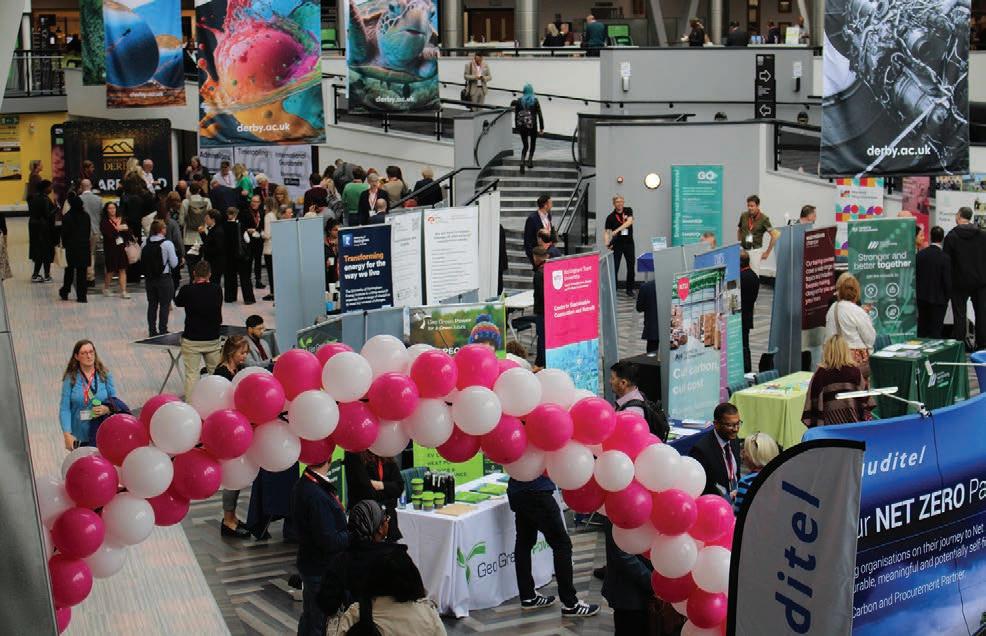


Derby, supported by Auditel, PS: Planet and Derbyshire Wildlife Trust.
Speakers so far, include:
• Dr Polina Baranova, associate professor of strategy and sustainability at the University of Derby, presenting the findings of the 11th annual East Midlands Green Growth Trends report
• Torben Starkey, carbon and procurement specialist, and Julie Adams, client relationship manager at Auditel – which helps companies cut their carbon emissions – on why Net Zero Doesn’t Have to Cost the Earth.
• James Cunningham, managing director of Geo Green Power, who will lift the lid on power purchase agreements (PPA) as he considers how to drive decarbonisation while managing energy costs
• Richard Smith, director of PS: Planet, an organisation co-founded by the people behind BAFTA Albert. It has brought together rivals across the UK TV industry and beyond to work together and take action on climate change and the environment. Richard will give a presentation entitled ‘Pay now or pay more later: The real economics of sustainability’.
• Dr Barbara Tomasella, of the University of Derby and Dr Elaine Conway, from Loughborough University, who will consider how we should all be going ‘Beyond CSR: Building shared value’.
For exhibition and sponsorship opportunities email policy@emc-dnl.co.uk and for tickets, visit: https://tinyurl.com/j2jvmpwy




Are you a director or senior leader looking to strengthen your impact and drive your business forward?
The Chamber’s next Director Development Programmes run in October and February, designed to provide the skills, confidence and strategic thinking needed to succeed at the highest level.
Delivered as a five-day modular programme, the course helps attendees build a well-rounded understanding of leadership, strategy and business performance – while giving them time between sessions to put the learning into practice.
The programme will explore key areas including:
• Developing vision, values and strategy
• Planning, direction and priorities
• Finance for non-financial directors
• People management approaches
• Driving performance and leading change Whether you are new to a director role, stepping up into senior leadership, or looking to refresh and strengthen your strategic approach, this programme will equip you with the tools you need to lead with confidence and deliver results. The next two programmes start on 8 October 2026, and 4 February 2027, and take place at the East Midlands Chamber offices.
To find out more email vicki.thompson@emcdnl.co.uk or visit: https://tinyurl.com/3sz5k83v


DERBYSHIRE BUSINESS HUB
Date: 9 July
Time: 8.30-10.30am
Venue: East Midlands Chamber, Chesterfield Meet other business people, share ideas, create new contacts. Join the networking and help build a thriving local business community. Derbyshire Business Hub brings together people from local businesses in a relaxed environment, providing you the opportunity to build your own business networks. There will be time for you to share with everyone present the details of your own businesses and plenty of time for informal networking and discussion with other attendees.

The 2026 Chamber President’s Summer Celebration takes place in the attractive grounds of Treetops Hospice, Derbyshire, on the afternoon of 7 August.
The informal networking event brings together Chamber members and its charity partners to reflect on president Dr Cham Kang’s theme for his year in office – “United Communities, Stronger, Together, Enabling Ambition”.
Treetops Hospice, along with Headway Nottingham and Voluntary Action Leicester (VAL), are the president’s three chosen beneficiaries of the 2026 Chamber Charitable Fund.
The Summer Celebration starts at 3pm and guests will be greeted with a welcome drink on arrival and have the opportunity to wander around the grounds which were once the gardens of Risley Hall.
Manufacturers are being offered help to streamline their operations.
The Manufacturing Technology Centre (MTC) in Coventry, is a leading research and technology organisation, helping businesses improve performance through practical industrial expertise, innovation and evidence-based improvement.
Its Productivity Accelerator is a fixedprice, match-funded programme designed to help manufacturing SMEs identify where productivity is being lost and what actions will deliver the biggest commercial return.
The six-week, hands-on programme offers businesses receive a clear, prioritised roadmap to improve output, efficiency and profitability.
To find out more, visit MTC’s Productivity Accelerator page: https://bit.ly/4ur7LAk
Food will include hot dogs and burgers from the barbeque, and there will be a bar for drinks.
Tours of the hospice will be available for anyone who would like to find out more about Treetops, which is described as a “bright and happy place” which delivers care exclusively in people’s own homes.
As well as enjoying the surroundings there will be a chance to meet representatives of all three charities, and in the event of rain, there will be more than enough space to accommodate guests inside.
Dr Kang said: “I hope you’ll join us, whether to connect with fellow members, support our charitable fund, or simply enjoy a summer afternoon in great company.”
Tickets are priced at £35 plus VAT for members.
For details visit: https://tinyurl.com/yenfcaba

Express Recruitment is hosting a six-a-side charity football tournament on Friday, 24 July, to raise money for When You Wish Upon A Star – the Nottingham-based charity that grants wishes for children living with life-threatening illnesses.
The tournament takes place from 4.30-7.30pm at Carlton Football Centre (pictured), Coningswath Road, Carlton, Nottingham.
To sign up visit: https://tinyurl.com/3f976smz

Hosted by the Chamber, and organised by Chesterfield Rotary this event will be of enormous benefit to you and your business. Breakfast rolls, fruit and drinks are included in the ticket price of £5 (plus Eventbrite fee). Please let us know when you book if you have any dietary preferences or allergies.
https://tinyurl.com/3vmfy4nf
Date: 10 July
Time: 9am-1pm
Venue: Online
If you are a mental health first aider you have skills for life that support you and the people around you. We believe that mental health should be treated equally to physical health –and just like physical first aid, mental health first aid training should be kept up to date. MHFA won’t teach you to be a therapist, but it will teach you to listen, reassure and respond, even in a crisis – and even potentially stop a crisis from happening.
https://tinyurl.com/mmbpd9tj
CHAMBER CONNECT NETWORKING AT HEADWAY DERBY
Date: 16 July
Time: 9-11am
Venue: Headway Derby, Derby, DE1 1FL Start your morning with a dynamic networking event designed to bring local professionals who are members of the Chamber together. Enjoy a relaxed atmosphere, engaging conversations, and valuable opportunities to expand your network.
This free event is hosted by Headway Derby, and guests will get the opportunity to have a complimentary professional headshot, taken by Simon from Jakt Photography.
https://tinyurl.com/4spnyeea
BANK OF ENGLAND FORUM
Date: 23 September
Time: 10-11.30am
Venue: Leicester
Hosted by Howes Percival, Leicester, the forum offers the opportunity for Chamber members to take part in discussions on local trading conditions.
The Bank regularly engages with the Chamber, seeking to gauge current levels of business confidence and investment intentions among members. These events provide an opportunity for members to have their say and exert influence.
The Bank listens to observations on a variety of ongoing issues that do, or have the potential to, affect businesses locally and regionally.
https://tinyurl.com/45af3zxz

www.emc-dnl.co.uk/sustainability
Rail freight aggregator Freight Arranger is opening up South West England to intermodal rail freight from the East Midlands. A train for containers and freight vans will be run daily between Tamworth and Exeter, providing low carbon transport while reducing costs for users between the Midlands and Devon and Cornwall. Freight Arranger managing director Nick Radcliffe said the mix of carriages in the train will be able to accommodate anything from pallets and roll cages to kegs and parcels. Here he sets out some of the benefits of rail freight.
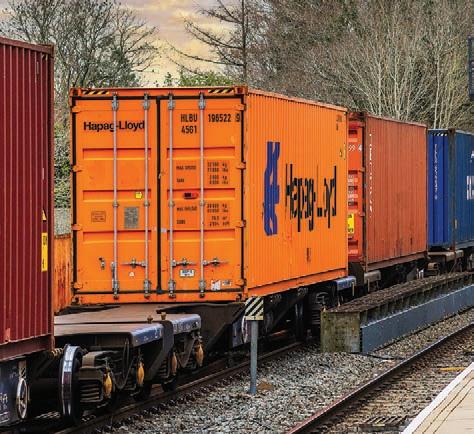
It’s no secret that fuel prices surged after the US-Israeli attacks on Iran began in February.
The danger to ships in the Gulf from Iranian retaliations led to global oil supply shortages.
The weekly Department of Transport statistics encapsulate this clearly, with the price of Ultra Low Sulphur Diesel rising from 142p a litre on 2 March, to 182p on 8 June.
Although the price of a barrel of Brent crude fell on news that the Americans and the Iranians were in negotiations, there remain a number of problems. Broadly, they can be grouped into two areas.
The first concerns the nascent negotiations, which have considerable issues to resolve: the nuclear capability and Lebanon/Hezbollah for example. The Iranian ability to deny safe passage to merchant vessels through the vital artery of the Strait of Hormuz is much easier to achieve –think mines, drones, fast attack boats, shorebased missiles – than it is for US or other forces to ensure safe passage.
Any naval unit committed to the Strait to counter Iranian threats becomes a target.
And, of course, the real issue is not so much the ability to counter Iranian attacks, but to achieve a situation where marine insurance brokers are prepared to insure ships transiting the Strait at affordable cost rather than the 510% of hull value currently being charged.
The second problem concerns the likely duration and intensity of the oil shortage.
Even if the Americans and Iranians came to an agreement which opened the Strait to oil tanker traffic, considerable damage has already been done to oil production, refining and pipeline infrastructure in the Gulf. Some will take years to repair.
‘Fuel costs make up a smaller proportion of the cost per mile for a freight train than for an HGV’
For instance, at Fujairah in the UAE, the critical Emirati port outside Hormuz has been periodically shut by drone strikes, impacting flows of both crude and fuels.
In Shaybah, Saudi Arabia the one-millionbarrel-a-day field has been repeatedly targeted by drones, while drone attacks on the refinery at Mina Al-Ahmadi, Kuwait, has caused fires in units which have had to shut. Competition for scarce oil resource and likely continuing higher vessel
Electrical and solar panel contractor Fusion 360 has a new design team to enhance its services for UK clients.
It will help clients create designs for electrical wiring, cable distribution, solar PV systems, lighting layouts with assessments, specifications and documentation all included. The team is led by project designer Liam Prendergast who has

been with the company since 2021, previously working as their electrical improver.
The team works alongside its installation and project delivery teams, ensuring designs are practical, cost-conscious and aligned with site conditions – in sectors including commercial, industrial, retail, healthcare, education and prison facilities.
insurance rates for passage through the Strait will see oil prices settle at a level higher than in 2025.
This will keep UK fuel prices at an elevated level even if there is an agreement between the US and the Iranians. And if the fighting and the damage continues? The obvious solution is to use less fuel. This can be achieved by switching freight transport from trucks to trains.
Fuel costs make up a smaller proportion of the cost per mile for a freight train than for an HGV. The reason is an absence of friction.
You might have heard that rail freight achieves a 75% emissions reduction compared to road freight. This is because a metal wheel running on a metal rail is virtually frictionless – compare this to an HGV's rubber tyre on asphalt which are designed to stick together, which results in friction that requires more fuel to be burnt to overcome it. Feel your tyres after a journey and note the temperature – the warmth is due to friction.
The next issue in adopting rail freight is that a single freight train has a larger volume than an individual business can use. The answer here is aggregation.
In the same way that pallet networks combine freight from different businesses to produce lower cost transit, a rail freight aggregator does the same to build a train load.
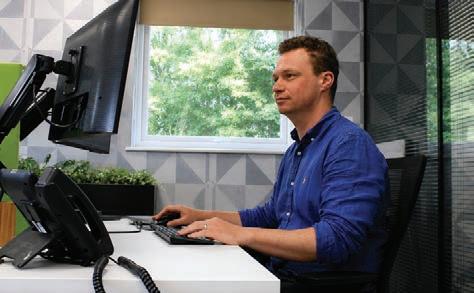



At East Midlands Chamber, our international trade team supports businesses of all sizes to confidently import and export, build capability, and grow successfully in global markets, writes Lucy Granger, head of international trade.
With more than 100 years of combined experience, our team provides practical, handson support to help you navigate the complexities of international trade and achieve your global ambitions. We offer a comprehensive range of services designed to support every stage of your international journey, including:
• Export documentation
• ATA Carnets
• A Chamber Customs Declaration Service
• Trade webinars
• International trade training, including ITOPS (International Trade Operations and Procedures)
• Consultancy support for things such as commodity codes; customs processes; rules of origin; and mock customs audits
• Trade updates and regulatory briefings
• One-to-one business support workshops
• An international trade forum
• International membership
• A new international business growth service, launching soon
Details of some of the services we offer:
From Certificates of Origin and ATA Carnets to full customs declarations, our expert advisers ensure your documentation is accurate, compliant and completed efficiently – giving you confidence when trading internationally.
We support businesses at every stage of the documentation process, helping to reduce errors, avoid delays at the border, and ensure compliance with UK and international requirements.
As part of the continued evolution of trade processes, we are also supporting businesses through the transition to eCarnets (digital ATA Carnets).
This new system modernises the traditional paper carnet, making the process more efficient, secure, and easier to manage when moving goods temporarily across borders.
Our team can support you with:
• Understanding when and how to use ATA Carnets and eCarnets
• Navigating the application process
• Ensuring correct completion and compliance
• Preparing for the move from paper to digital systems


Alongside carnet services, our Chamber Customs Declaration Service provides a reliable, compliant solution for your import and export declarations – managed by trained specialists who understand the complexities of customs procedures.
Our International Trade Training team is here to build capability and confidence within your business, ensuring your staff have the knowledge and skills needed to trade effectively on a global stage.
We start by working with you to carry out a skills analysis, identifying any gaps and recommending the most appropriate training for your business needs – whether you’re new to exporting or looking to enhance existing expertise. We offer a range of practical, up-todate courses, including:
• Export documentation
• Export controls and compliance
• Incoterms® 2020
• Help entering new markets
Our training is designed to be accessible, relevant and immediately applicable – helping your team stay compliant, reduce risk and operate with confidence in international trade. By investing in the right training, you can strengthen your internal expertise and support sustainable international growth.
The International Trade Operations and Procedures (ITOPS) qualification is a British Chambers of Commerce-accredited programme designed to equip staff with the practical skills needed to manage international trade administration effectively. Delivered in partnership with Fidelitas Training, the course covers key areas including:
• Export documentation
• Movement of goods and freight
• Customs procedures and compliance
• International payment methods
This qualification is ideal for businesses looking to strengthen internal capability and reduce risk.
Our International Trade Forum provides a valuable platform for businesses involved in exporting, importing and global supply chains to connect, share experiences and learn from experts. Attendees benefit from:
• Guest speakers from organisations such as UK Export Finance and Santander Navigator Global as well as leading logistics providers


• Access to experts in FX, VAT, logistics and language services
• Peer-to-peer discussion on real-world challenges and best practice
Events are held across the East Midlands and are open to businesses at all stages of their trade journey.
TRADE UPDATES & INSIGHTS
International trade is constantly evolving. From EU regulations and CBAM (the Carbon Border Adjustment Mechanism) to geopolitical developments, we provide clear, practical updates to help you understand:
• What’s changing
• How it impacts your business
• What action (if any) you need to take
ENHANCED, HANDS-ON SUPPORT
We go beyond simply processing documentation. Our advisory services are designed to help you trade more effectively and compliantly, including:
• Identifying the correct commodity codes
• Assessing origin under free trade agreements
• Reviewing your current processes
• Conducting mock customs audits
This proactive approach ensures your systems and documentation are robust – so you’re fully prepared in the event of a formal audit. Whether you’re new to international trade or looking to refine and grow your global operations, our team is here to support you every step of the way.
www.emc-dnl.co.uk/services/international

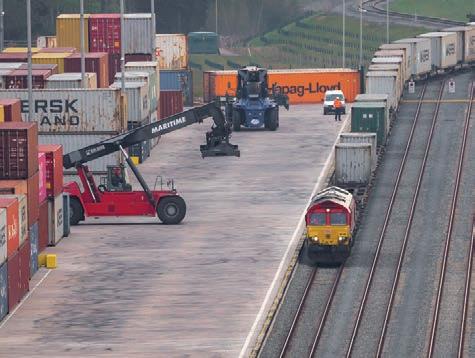
The month-on-month export of services grew by 0.23% in April, while imports were static, according to the Office for National Statistics.
Exports of UK goods were up 1.3% month-onmonth – with sales to the EU up 1%, and to the rest of the world up by 1.7%.
Good imports fell by 0.3%, with a 2.4% drop in purchases from the rest of the world, while EU goods imports volumes rose by 1.7 per cent.
That rise was mainly due to an increase in EU fuel imports (principally refined oil from the Netherlands), although machinery, transport equipment and chemicals imports from the EU also rose.
By contrast the value of fuel imports from the rest of the world fell by 1.2%, which included refined oil from Kuwait and the UAE.
‘To improve the overall trade environment for UK firms, the Government must focus on stronger export support’
Commenting on the latest trade data, William Bain, head of trade policy at the British Chambers of Commerce, said rising fuel prices due to the Iran War influenced international trade.
He said: “April was another quiet month for UK services trade with export volumes growing 0.2%. There was steadier growth in the volume of goods exports, which rose 1.3%. But fuel imports from the Gulf region fell as the blockade of the Strait of Hormuz continued to be felt.
“To improve the overall trade environment for UK firms, the Government must focus on stronger export support and maxing out our strong trade links with Europe, the Americas and Indo-Pacific.”
Meanwhile, the war in the Middle East was likely to have influenced the first contraction in GDP in months as East Midlands Chamber renewed its call for greater support to help the region’s businesses during tough trading conditions.
The latest estimated figure for April, published by the Office for National Statistics, showed the economy shrunk by 0.1%, following growth of 0.3% in March. In June, the tentative peace deal agreed between the US and Iran gave some reassurance to struggling UK businesses.
Chamber director of policy and insight Richard Blackmore said: “While a contraction in GDP was widely anticipated by economists, this is the first time since the start of the Middle East conflict that we’ve seen its impact on growth.
“With energy costs already having been forced sharply upwards and inflation expected to rise across the year, the level of challenge faced by firms has increased – that means business support must increase.”
Rules of Origin - Full Day
Date: 9 July
Time: 9am-3pm
This full-day course puts origin into context on the world stage. Delegates will learn the difference between preference and nonpreference documents, explore rules of origin and how these should be applied, along with the requisite proof that is required for HMRC should they choose to audit. This course is suitable for sales, logistics, production, finance and purchasing staff who need to understand how their respective roles impact on each other – and potentially the compliance of the company.
Visit: https://tinyurl.com/yut4tryz
Using the UK-India Trade Agreement
Date: 9 July
Time: 9.30am-12.30pm
The recently agreed UK-India Free Trade Agreement represents one of the most significant trade deals the UK has struck since leaving the EU, opening up preferential access to one of the world’s fastest-growing economies. This course is designed to help UK exporters and importers understand the key provisions of the agreement, how to establish whether their goods qualify for preferential tariff rates, and what steps are needed to claim preference compliantly.
Visit: https://tinyurl.com/2xtm7kxc
Dangerous Goods Safety Adviser (DGSA) – What Businesses Need to Know, Do you need one?
Date: 16 July
Time: 10-11.30am
Many businesses handle or ship products that fall under Dangerous Goods regulations without realising their legal responsibilities. This session explains when a Dangerous Goods Safety Adviser (DGSA) is required, where common exemptions apply, and the risks of getting it wrong. Ideal for companies shipping products, batteries, chemicals, aerosols, samples or equipment – whether occasionally or daily – this session helps you understand your obligations before enforcement or carrier rejection becomes an issue.
Visit: https://tinyurl.com/mhfm8pdw
Dangerous Goods Awareness Training (Half Day)
Date: 21 July
Time: 9am-12.30pm
This session helps businesses understand their responsibilities when handling or shipping dangerous goods under ADR, IATA, IMDG and the UK Carriage of dangerous goods regulations. Attendees will learn practical packing, handling and documentation principles that help protect staff, prevent rejected consignments and avoid costly transport delays. The training also supports safer working environments and reduces the risk of environmental incidents. The course is suitable for anyone involved in the process –including office and sales teams, warehouse staff, transport personnel and managers.
Visit: https://tinyurl.com/yc7secba
For details of all our international courses, visit: https://tinyurl.com/2wsr32yr
Nottinghamshire County Council has unveiled a £200m land programme to try and regenerate the county and bring in investment.
Working with its property and development partner Arc Partnership the council has identified a portfolio of land with potential uses right up to large-scale urban extensions – from one acre to more than 120. It was unveiled at the recent UKREiiF national property showcase in Leeds.
Councillor James Walker-Gurley, cabinet member for economic development and asset management, said: “We are an ambitious council with a clear vision to unlock new regeneration opportunities and attract the investment needed to help our area thrive.
‘It’s a record-breaking achievement that proves our commitment to innovation’
“There was a real buzz when we launched this programme, which we are really proud and excited about.
“Collaborating with Arc Partnership, we are unlocking land for homes, creating skilled jobs and investing in our schools and infrastructure to deliver massive benefits for our communities.
“Through this partnership, we’ve recently built the fastest temporary school learning village in the country. It’s a record-breaking achievement that proves our commitment to innovation.
“Our new land development programme is loaded with sites that have been risk assessed and are shovel-ready. These opportunities are available for investors who mean business.
“It’s incredible that as well as all this, we have


a former coal site in North Nottinghamshire which will be transformed into a global centre for clean energy. Known as STEP, it will change how the world is powered.
"From pioneering the future of global clean energy, to our impressive land portfolio, Nottinghamshire is the place to do business."
Andrea Hopkins is director of estates practice at Arc Partnership, a joint venture between the county council and SCAPE.
She said: “By combining the council's strategic vision with Arc's expertise in property, design and development, we have helped create a programme that provides investors and
development partners with confidence in the opportunities available across Nottinghamshire.
"The response to the programme at UKREiiF exceeded expectations, with investors, developers and partners recognising both the quality of the opportunities available and Nottinghamshire's ambition for growth.
“That positive feedback reinforces the significant potential for investment, job creation and community benefit across the county.”
For more information, including a map which shows the locations of the sites available, visit: https://tinyurl.com/3xe9uset
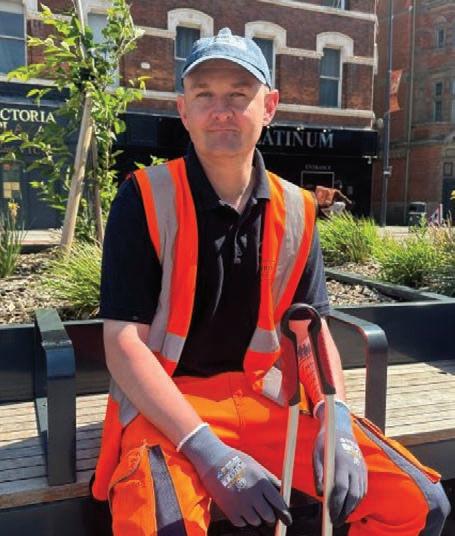
Derby street cleaner Richard Knapton has called picking up litter, weeding flower beds and removing chewing gum from pavements his ‘dream job’.
The 37-year-old said he works six days a week so people will love the city as much as he does.
He has now been recognised for his work, receiving a Here for Derby award from Derby City Council.
To celebrate his achievement, he met King Charles and Queen Camilla at St James’s Palace, when he attended a reception recognising local and regional government employees.


Richard says he wanted to be a fireman before he realised he was scared of heights. He tried bricklaying, shop fitting and did a stint on the bins before starting with the street cleansing team at Derby City Council.
The dad-of-four said: “I feel very proud when I look around the streets of Derby because I know
how long I have spent keeping them clean.
“This is my dream job and I love it.
“You have to be proud of where you live – and I am. I walk out of my flat on Friar Gate and start picking up litter on my way to meet the team.
“If I’ve got my uniform on, I’m ready to work and want to get Derby clean and tidy.
“The dirtier the project – the happier I am. I can get stuck in and make a difference to the street I am working on.”
Speaking about his Royal visit, he said: “Now that place was clean.
“I had a good look at the palace and it was spotless. It was so fantastic and I loved meeting King Charles. It was a day I will never forget, and I felt really proud to do the job I do and be recognised for it.
“King Charles asked me about Derby, and we chatted about why the city is a great place to live.”



The former Assembly Rooms site in Derby city centre could finally be redeveloped thanks to investment from the mayor of the East Midlands.
Members of the East Midlands Combined County Authority’s (EMCCA) investment committee are being recommended to approve plans to award £3m to Derby City Council to prepare the site for investment.
The Assembly Rooms building has not been used since a fire a decade ago.
‘These plans represent an exciting future for the Market Place’
The EMCCA investment will fund work needed to prepare the site – including demolishing the venue, beer cellar and multi-storey car park, removing any remaining asbestos and general site clearance.
Future plans include a four-star hotel, offices and Derby MADE – a multi-use community building with exhibition space, a library and a rooftop bar.
The funding will also support design work and improvements to the streets and public spaces around the Market Place, as part of the council's wider regeneration masterplan.
Demolition will begin once planning conditions attached to the Assembly Rooms have been satisfied, with construction to follow.
Members of Derby City Council’s planning control committee are also set to meet to consider an outline planning application.
Mayor of the East Midlands Claire Ward said: “Derby Market Place is an important part of the city’s identity, and this funding will help unlock its potential as a lively, attractive and inclusive place that supports local businesses, brings people into the city centre and creates more reasons to spend time in Derby.”
Derby City Council leader Councillor Nadine Peatfield said: “These plans represent an exciting future for the Market Place and for Derby city centre as a whole.
“We are incredibly excited about what lies ahead and the positive impact this development will have for residents, businesses and visitors alike.”
Free support to help businesses tackle risks such as flooding, power outages and cyberattacks is available now from the Local Resilience Forum (LRF) for Leicester, Leicestershire and Rutland.
The ‘Risk Ready Businesses’ project has been co-designed with industry experts to help businesses prepare for, and respond to, incidents that cause disruptions such as loss of staff, premises, IT or suppliers.
The range of free tools and resources on the LRF website includes:
• A template to create a bespoke Business Continuity Plan that helps identify risks and how to tackle them
• Recordings of webinars on cyber threats and information security, utility disruption, infrastructure failure and flooding and health disruption, and pandemic preparedness
• FAQs to strengthen business resilience
The resources will enable businesses to:
• Prepare now, act faster and recover quicker from key risks
• Take the right action during an incident
• Know who to contact in an emergency Kristy Ball, chair of the LRF’s people and communities group, said: “This project is about
Free support is now available to tackle flooding



identifying the parts of your business you can’t afford to lose – like premises, staff and IT systems – and planning what you’d do if an incident occurs.
“By creating a Business Continuity Plan, all businesses can put steps in place to prepare for the unexpected which will help them to respond faster and recover more quickly. It will also allow businesses to support each other and their wider communities in an emergency, helping us all to build a more resilient society.”
https://tinyurl.com/446a97hu
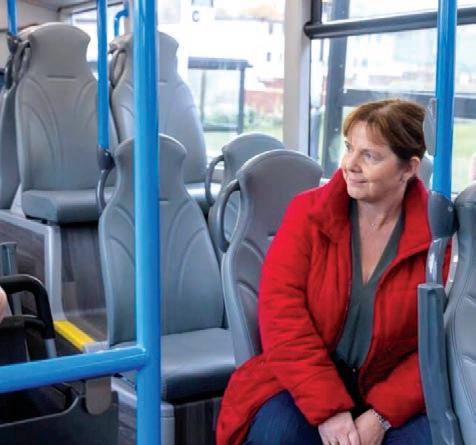

The Chamber has welcomed almost £300m of funding by the East Midlands Combined County Authority (EMCCA) aimed at modernising transport in the cities and counties of Nottingham, Nottinghamshire, Derby and Derbyshire.
The cash allocation from the Mayoral Transport Fund follows an announcement in March of £470m of approved transport funding.
Proposed projects expected to benefit from funding include:
• New electric buses for Nottingham City Transport and trentbarton
• New transport hubs in Radcliffe-on-Trent, Cotgrave, East Leake and Sutton
• Bus route and junction improvements in Hucknall and Sutton
• Improvements to transport routes on the A6002, Thane Road and Meadows Way
• Five new transport hubs in Derbyshire, including Clowne, Glossop and Ilkeston
• 700 real-time information displays installed at Derbyshire bus stops and transport hubs.
Chamber chief executive Scott Knowles said: “Ensuring transport infrastructure can handle demand and can be relied on, both now and in the future, is essential, enabling workforces to get where they need to be, communities and supply chains to be fully supported and for business to progress.
“The Chamber has been calling for transport investment to help unlock the region’s growth potential.
“It’s one of the policy asks set out in our landmark publication – the Framework of Growth – so I welcome this investment as a step forward for Nottingham, Nottinghamshire, Derby and Derbyshire.”
Mayor of the East Midlands Claire Ward said: “I am committing a further £298m from my Mayoral Transport Fund to create the reliable, safe and accessible transport network that our region needs.
“By improving key bus routes, upgrading bus stops and stations, and enhancing active travel networks, we’re helping communities to be better connected to jobs, training opportunities, and each other.
“By working with our partners across the region, we are building a network that works well as one system and supports the East Midlands to thrive.”and sectoral deals should also be a priority.”






By Karinna Shields (pictured), client relationship director, The Recruitment Group.

For many businesses, the biggest barrier to growth is not strategy, investment or opportunity. It is people. Across the UK, organisations are facing increasing challenges when it comes to attracting, retaining and developing the talent they need.
Skills shortages remain a persistent issue across multiple sectors, meaning businesses must think differently about how they build and sustain their workforce. This is where workforce development becomes critical.
Too often, workforce development is misunderstood as
‘Rather than simply filling vacancies, our team worked closely with senior leadership to understand the wider workforce challenge’



simply hiring more people. In reality, it goes far beyond recruitment alone. At its core, it is about ensuring businesses have the right people, with the right skills, in the right roles both today and in the future. That requires organisations to take a strategic view of their workforce: analysing skills gaps, forecasting future demand and investing in talent pipelines that support long-term growth.
According to research from the Recruitment and Employment Confederation, more than half of UK employers now view skills development as a critical driver of business growth, highlighting just how important workforce planning
has become. When roles remain unfilled or staff turnover is high, the impact extends far beyond recruitment costs. Lost productivity, management time and operational disruption can quickly become barriers to growth.
A more strategic approach can make a significant difference. Recently, The Recruitment Group partnered with a regional manufacturer experiencing high levels of attrition within entry-level roles. Rather than simply filling vacancies, our team worked closely with senior leadership to understand the wider workforce challenge. By reviewing workforce data, shift structures, pay benchmarking, attraction strategies

and onboarding processes, we were able to identify the root causes of turnover rather than simply addressing the symptoms. Within six months, attrition reduced by more than 30%. The result was greater operational stability, improved workforce morale and measurable cost savings for the business.
This is what workforce development looks like in practice, moving beyond short-term recruitment towards building sustainable workforce strategies that support long-term business success.
The East Midlands continues to be one of the UK’s most industrious and ambitious regions. With worldclass universities, advanced manufacturing hubs, expanding logistics networks and significant infrastructure investment, the region is well positioned for long-
term economic growth. However, opportunity alone is not enough.
Growth requires capability. Businesses that invest in apprenticeships, talent pipelines, leadership development and flexible workforce models are placing themselves in the strongest position to capitalise on the opportunities ahead. It is not simply about filling roles today. It is about ensuring organisations have the skills, resilience and capacity to grow tomorrow.
At The Recruitment Group, we believe recruitment should be part of a much wider workforce strategy.
As businesses across the East Midlands continue to evolve, those who take a proactive and strategic approach to workforce development will be best positioned to remain competitive and unlock future opportunity.
‘It is not simply about filling roles today. It is about ensuring organisations have the skills, resilience and capacity to grow tomorrow’
Jeanette Silver (pictured opposite), founder and director of I’m Your Coach Ltd, reflects on her business journey and why self-awareness, leadership and workforce development remain central to business success.
After a 30-year varied business career, I started I’m Your Coach Ltd in May 2017, continuing my focus on helping people understand themselves and each other more clearly, to work well together and strengthen their businesses.
Since then, I’ve supported a wide variety of organisations, from small and growing companies to larger businesses managing change. While in different settings, the recurring themes have often been the same. How people lead, think, respond, communicate, learn and grow matters.
SELF-AWARENESS BUILDS CONFIDENCE
Getting to know yourself more deeply is often where meaningful development begins. It helps people recognise what they do well, what gets in the way, and how they may be experienced by others.
Most of us have moments of doubt or insecurity about our own abilities. That is common as we learn and grow. Confidence can develop when we pause long enough to notice what’s already happened, what we have learnt, and what strengths helped us through. In busy businesses, this reflection can easily be missed. Yet it’s often what helps people step forward with more trust in themselves and others.
LEADERSHIP STARTS WITH PEOPLE
Leadership is more than having all the answers. It’s about being present, listening well and creating the conditions for others to contribute and feel connected.
People are what keep a business moving, stable and successful. One of the biggest challenges for business owners and senior leaders is balancing everyday pressures while still making time for people development.
When leaders are deep in the detail, this can easily slip down the list, even though it is often one of the things that helps the business perform well.



Learning takes many forms and needs time to settle. Giving people space to notice, practise, reflect and adjust can help them find strengths they didn’t know existed, or develop skills that make a real difference to them and the business.
Developing people is more than an annual training course or one useful conversation. A skilled and experienced team can still benefit from taking time to recognise where strengths really lie, build confidence and nurture how people work even better together.
RELATIONSHIPS MAKE CHANGE EASIER
Every business changes. New systems, roles, succession, restructuring or different ways of working all ask something of the people within it.
When relationships are strong, change becomes easier to navigate. People are more likely to speak honestly, ask questions, offer ideas and stay involved.
After all my years in business, I still believe people and strong relationships are at the heart of sustainable success. When businesses invest time in self-awareness, leadership and workforce development, they strengthen the very things that help performance last.
‘Most of us have moments of doubt or insecurity about our own abilities. That is common as we learn and grow’

To find out more, visit www.imyourcoach.co.uk or connect with Jeanette Silver on LinkedIn.
Also, see our advertisement on the outside back cover.





By Professor Laura Serrant CBE PhD (pictured), leadership development and cultural intelligence specialist and chief executive of Laura Serrant Limited.
In a world where businesses are navigating economic uncertainty, workforce challenges, rapid technological change and increasing stakeholder expectations, one leadership quality continues to stand the test of time – integrity.
Over more than four decades of working with leaders across healthcare, education, government and business, I have observed that the most successful organisations are rarely those with the biggest budgets or the most ambitious strategies. They are the organisations whose people trust their leaders.
Trust is built through integrity.
Integrity is often misunderstood as simply being honest or doing the right thing. While it includes both, it goes much deeper. Integrity is about consistency between our values, our decisions and our actions. It is about leading in a way that others can believe in, particularly when circumstances are challenging.
For businesses seeking sustainable growth, attracting and retaining talent and building strong customer relationships, integrity is no longer a “nice to have”. It is a strategic advantage.
So how can leaders build integrity into the everyday fabric of their organisations?
1. BE CLEAR ABOUT WHAT YOU STAND FOR
Employees increasingly want to work for organisations whose values align with their own. Customers are making purchasing decisions based on what businesses represent, not simply what they sell.
The question every leader should ask is: can people see our values in our actions? Values displayed on a website or office wall mean little unless they influence decisions, behaviours and priorities. People notice the gap between what organisations say and what they do. They notice even more when there is no gap at all.
2. LISTEN TO WHAT IS BEING SAID – AND WHAT ISN’T
One of the most important lessons from my own research is that silence can be incredibly revealing.
In every organisation there are conversations that happen openly and others that remain unspoken. Sometimes the greatest risks to a business are not the issues people raise but the concerns they feel unable to voice.
Leaders who create environments where people feel safe to speak up gain access to insights, ideas and perspectives that drive innovation and prevent problems from escalating.
3. MAKE DECISIONS THROUGH THE LENS OF LONG-TERM IMPACT
Business leaders are often under pressure to deliver shortterm results. However, the most effective leaders balance immediate performance with long-term consequences.
When making decisions, consider not only “will this work?” but also “what impact will this have on our people, our customers and our reputation?”.
Integrity requires us to think beyond the next quarter and consider the legacy we are creating.

‘Integrity is about consistency between our values, our decisions and our actions’

4. DEMONSTRATE COURAGE IN DIFFICULT
Leadership is easy when everything is going well. Integrity is tested when circumstances become uncomfortable. Whether addressing underperformance, responding to mistakes or making difficult organisational decisions, people look to leaders for consistency and fairness.
The leaders who earn lasting respect are not those who avoid difficult conversations. They are the ones who approach them with honesty, compassion and clarity.
5. REMEMBER
In an age of automation and artificial intelligence, the human aspects of leadership have never been more important. People want to feel valued, respected and understood. They want leaders who recognise their contribution and create environments where they can thrive.
Businesses succeed through people. When leaders invest in trust, relationships and belonging, performance often follows.
6.
There is a tendency to view integrity and performance as separate priorities. In reality, they are deeply connected. Organisations that lead with integrity build stronger cultures, retain talented people, earn customer loyalty and create resilience during periods of change. They generate impact not only through what they achieve but through how they achieve it.
As leaders, our greatest influence comes not from our position or authority but from the examples we set every day.
Ultimately, integrity and impact are not competing priorities. They are deeply connected. The businesses that will thrive in the future are those that understand a simple truth: when integrity leads, intentionally and consistently, impact follows.
This month’s Business Network Focus pages have a people and skills theme.
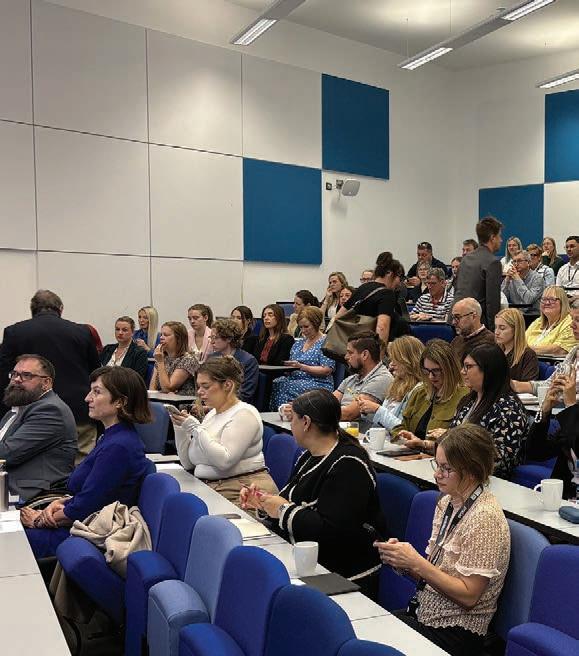
Employers and educators came together to explore ways to boost recruitment, retain talent and unlock growth at the Chamber’s 2026 People and Skills Conference, which took place at Loughborough University. Held in partnership with the university and West Nottinghamshire College, the conference focused on the policy asks around skills reform set out in the Framework for Growth document. Workshops, talks and panel discussions covered subjects such as the value of workplace agility; neuro-inclusivity; health coaching skills;
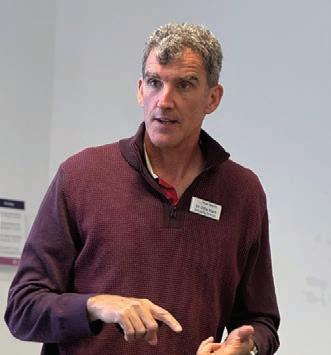
compliance with the Employment Rights Act and the impact of the National Living Wage on businesses and growth. The Chamber also presented findings from its soon to be published annual report on Equality, Diversity and Inclusion in the workplace, produced in partnership with affordable housing provider emh Group.
Chamber director of policy and insight Richard Blackmore, who helped host the day, said: “East Midlands unemployment stands far too high at 5.5%, while six-out-of-10 firms reported in our latest Quarterly Economic Survey that they have struggled to find suitable candidates to fill roles.
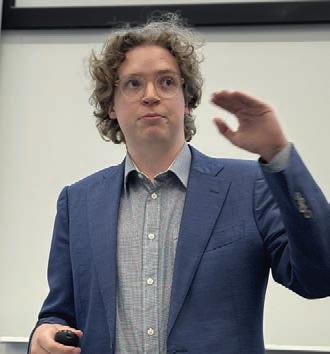
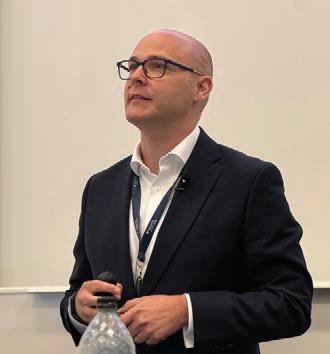
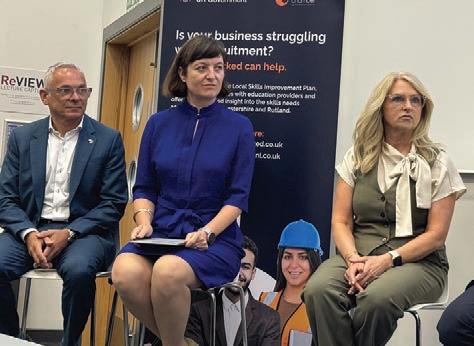
“Nationally, the number of 18-24s classified as NEET (not in education, employment or training) has topped a million. These are numbers that need addressing without delay.
“To unlock growth in the East Midlands, we need skilled people in roles. That’s what this conference was about and why it is vital to be having these discussions with employers, trainers and educators.”
Loughborough University professor in work psychology Prof Eva Selenko gave a talk on opportunities and risks presented by AI in employment.
She said: “We've heard in discussions at the conference the extent of the skills shortage.
“These are areas where we can help. From conferences like this, we build collaborations, we learn from each other and can create research opportunities, opportunities for future placements for our students and further this exchange. The People and Skills conference has been a fantastic forum.”
West Nottinghamshire College assistant principal Nikki Slack gave a talk on unlocking
The Chamber wants policymakers to invest more in skills and make apprenticeships and training more accessible to employers, after the Office for National Statistics put the number of 16-to-24-year-olds not in education, employment or training (NEET) at 1,012,000. It coincided with the Department for Work and Pensions publishing Alan Millburn’s interim report into young people and work – which also put the figure close to 1 million.
Chamber director of resources Lucy Robinson said: “We need young people to be the leaders, entrepreneurs and professionals of the future so

it’s essential that policymakers do everything they can to remove any barriers to employment, education or training.
“Urgently addressing the skills gap would be a significant step forward. We know from our research in the East Midlands – the Chamber’s Quarterly Economic Survey – that employers in the region struggle to find applicants suited to roles.
“Innovative approaches, like those we’ve outlined in our landmark publication The Framework for Growth – which include a proposed online skills portal so employers can
access training and apprenticeships more easily – would likely increase uptake.
“Employers must be incentivised to hire too and our data from the first quarter of 2026 has shown that fewer than half of businesses in the East Midlands had attempted to recruit.
“To ensure hiring intention does not stall, costs should not be imposed on employers that effectively squeeze their budgets. Business rates and high energy costs have only made things tighter, so support in these areas, alongside skills investment to help get suitable candidates into roles cannot wait and I’d urge policymakers to act.”
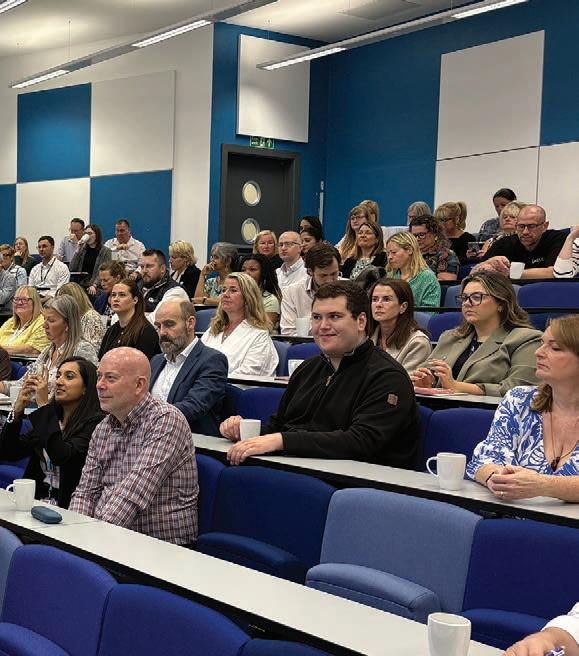
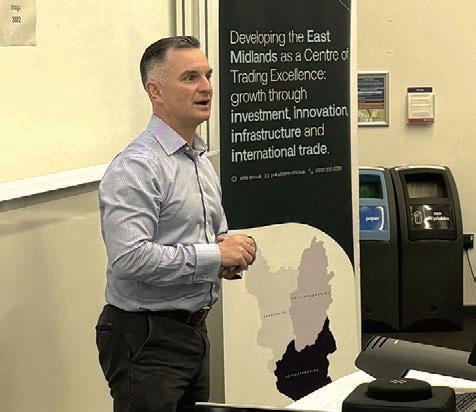
Dr Nik Kotecha OBE DL (pictured) is a philanthropist, entrepreneur and chairman and founder of investment company RandalSun Capital.
In the wake of the publication of the DWP interim independent report into young people and work, there was a range of headlines and commentaries on the shocking statistics that are unfortunately becoming familiar.
One-in-eight young people in the UK are NEET – and this figure is rising.
By 2030, some forecasts suggest the figure will be 1.25 million – one-in-six of our nation’s young people – and the report highlights that youth disengagement costs the UK about £125bn a year.
Some of these headlines are familiar, others less-so, but the problem is plain to see. Serious intervention is needed.
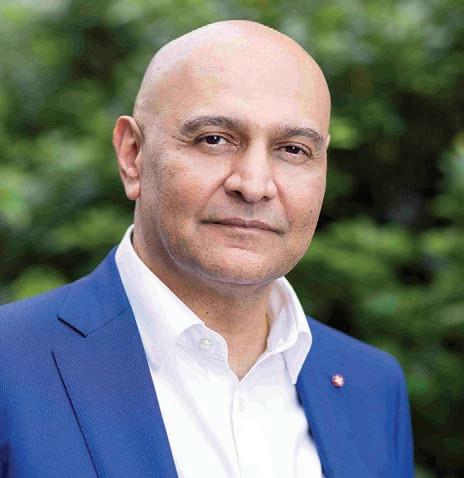
from disadvantaged backgrounds feel that few or none of their life goals are achievable – I strongly believe this is a large part of the problem. Feeding aspirations fuels futures.
The media are often quick to compartmentalise problems, labelling the younger generation for the rising economic inactivity of our nation. It’s divisive, however. A stark and oversimplified narrative placing blame on young people who are navigating perhaps some of the toughest times in a generation within a turbulent economic backdrop.
When the economy feels unstable and unpredictable – as it certainly does with policy volatility, the cost-of-living crisis and the UK’s ‘productivity puzzle’ – businesses tend to play it safe rather than taking chances.
talent pipelines and exploring T Levels, V Levels and levy changes.
She said: “The first step, in addressing skills shortages in workplaces, is that employers need to engage with local education, whether that be colleges or universities. That really opens opportunities. We have a young workforce that really needs to get out there.
“There are positions available, at minimal cost or no cost at all to employers. It’s about changing the view of employers as well. We need to look at being proactive rather than reactive.
“There are a lot of students that can be placed with local employers that will give that employer added workforce for one thing, but also students have different skills now. They’re more innovative, they know how to use social media and know how to use digital platforms. Those skills can really help a business succeed.”
With this repeating refrain, it’s easy to feel disheartened by the scale of the challenge. Repeated messages can make solutions seem distant and more out of reach with each mention. Especially when they aim to target system-wide change, major new mental health initiatives, educational and other structural changes. So, can we change the narrative in our region? Maybe! Should we? Absolutely!
‘Recent data shows that 61% of young people from disadvantaged backgrounds feel that few or none of their life goals are achievable’
Another report, Youth Matters – a State of the Nation, published this time by DCMS at the end of last year, provides some great further context, and in many ways shines a more positive light on the story of our youth.
The British Chambers of Commerce’s own recently published economic forecast notes that “growth will remain subdued in 2026 and 2027” – highlighting continuing adverse impact from the Middle East conflict, persisting weak business investment, higher inflation and falling exports.
So, what as business leaders and owners, can we do? We can go back to basics, perhaps. We can engage a little more. I know I can.
We can create opportunities – even microopportunities, in our teams, our firms and in our board rooms. An open door invites conversation. Insight sparks imagination. What’s “everyday” in your world might be truly inspiring through young eyes – and who knows where that insight could lead.
Almost every business revolves around people, and many always will – despite AI.
There are young people in your community whose potential you, your team and your business could help unlock, while they help your business grow. And, who knows – they might be your next head of innovation, your future chief finance officer or your design team leader of tomorrow.



Engaging with more than 14,000 young people, the report highlighted how young people wanted to show “how much talent, creativity, and ambition our generation has”.
We know that the UK is facing a “crisis of youth disengagement”, which has been hyperreported as driven by failing systems, shrinking opportunities and many entrenched health challenges. There is troubling truth in all this –and much data to evidence it.
But conversely, research shows this crisis being propelled not by a lack of ambition among young people, but perhaps the reverse in fact. An absence of economic opportunities, no matter your age, can lower aspirations, adversely impact health and usually disproportionately affect those from more disadvantaged backgrounds. When opportunities feel limited, it becomes harder to believe in what’s possible.
Recent data shows that 61% of young people
So, you might ask, what’s the plan for me?
Well, it’s an open door, more firmly wedged. More time for conversations. Perspectives on careers and the world of work (when invited! I know my place…). It’s inviting more young people into my network. And sharing lessons learned; because building confidence in young people takes all of this, and more.
Foundations can help accelerate aspirations –and it’s within our gift to do just that. Let’s not be drawn into the lazy media headlines or the concerning scale of policy change that others might need to deliver.
Let’s be part of the solution, locally.
As we invest in young people, we invest in our communities – but an investment for a stronger business community tomorrow, too.
Digital Planning co-founder James Ferraby (pictured) explains what his team has seen inside companies when it comes to AI and cultural change.
Employers are constantly being asked to do more with less. To raise productivity, close skills gaps and keep up with endless change – and increasingly being told AI is the fix for all three.
Leaders cannot afford to sit out on the AI conversation, but at the same time can’t afford to invest in digital tools that their people aren’t prepared to use.
At Digital Planning, we’ve seen the impact of this many times. Our latest research – published to coincide with the Chamber’s People and Skills Conference, is based on interviews with more than 80 UK businesses. It shows a consistent pattern – when AI underdelivers, the root cause is rarely the technology itself.
But it’s invariably not the tools that are the problem. Rather, what we repeatedly see is organisations investing in good technology and then watching it fail because the culture around it isn’t ready.
That culture gap is the principle which underpins Digital Planning’s new industry guide, Building a Digital Culture That Makes Tech Projects Work.
‘Closing the culture gap is not a people initiative that sits alongside AI investment. It is the precondition for AI investment returning anything positive at all’
Research in our guide found that 43% of SMEs we spoke with have no plans to introduce AI. For many that is not a strategic choice. They know that AI is transforming industries. Instead, it’s a confidence gap, often driven by uncertainty about where to start, or based in a culture that has not yet made digital change feel safe to try.
Be clear that hesitation has a cost. Early adopters are using AI to compress tasks that once took hours into seconds, automate compliance and free up staff for more human work. SMEs that have access to tools – but not a culture to utilise them – are falling behind competitors. And those competitors are reinvesting efficiency gains into further competitive advantage.
We led a workshop on this at the recent conference in Loughborough – a stone’s throw from our own offices on the Loughborough University Science and Enterprise Park. Businesses in the room recognised three recurring failure points in AI and

workplace
1. Leaders who do not change their own habits. You will be familiar with boards and SLTs which talk about digital transformation but continue to manage by email chains, request offline reports, and make decisions without referencing new systems. All of this signals to staff that digital tools are optional.
2. Middle managers running two worlds in parallel. It’s a normal human instinct for underpressure managers to want to hit short term targets. Therefore, many make a rational choice to retain the old process as a safety net while AI systems sit unused in the background. Months later, the conclusion drawn is that AI is not right for the business. The tool was not the problem –middle management was never given the reason, the time or the support to change.
3. Teams who fear replacement, not reinvention. When AI is introduced in efficiency language, frontline staff hear something else entirely. We saw the result of this recently at Standard Chartered. People feel they are no longer needed. That anxiety sometimes surfaces as passive resistance – minimal experimentation, quiet

reversion to familiar tools, polite disengagement. And sometimes it surfaces as a PR disaster.
These are not isolated observations. Digital Planning's guide references the largest academic study of enterprise AI to date. Stanford University’s Enterprise AI Playbook analysed 51 real deployments across 41 organisations and found that only 23% of the hardest AI challenges were technical. The remaining 77% came down to leadership, culture and change readiness.
So, what next? Well, the businesses making the most progress with AI are not the ones with the most sophisticated technology. They are the ones willing to examine their own behaviours first.
Our research – as well as that in Stanford’s AI Enterprise Playbook – identifies the behaviours in businesses that get results. Leaders using tools visibly rather than advocating for them, managers supported to lead change, and workforces shown what AI makes possible – not what it makes redundant.
Adaptability is the differentiator. The single biggest indicator of successful AI adoption isn’t the tool you choose. It’s whether your people are willing and able to adapt around it. Closing the culture gap is not a people initiative that sits alongside AI investment. It is the precondition for AI investment returning anything positive at all. For leaders serious about competitive performance, culture is the strategy.
Laura Randall is head of business development at Chamber patron NOCN Group – an international charity that delivers skills solutions described as ‘future-fit with social impact’ for colleges, training providers, employers and individuals.


Benjamin Marshall (pictured) is client director at Ketchup Marketing in Nottingham.
What makes working at Ketchup so much fun is that our company values come straight from our crew.
They’ve imprinted their personalities onto the way we work, which means that, to succeed here, you need to be friendly and enthusiastic, but also really honest and happy to graft.
That’s led to a situation where we’re surrounded by people who love what they do, and are insanely talented.
It’s amazing how much you can get done with a highly skilled bunch when they’re all having fun. Michelle Jones set the company up 16 years ago with that ethos in mind, and despite growing to nearly 20 people, it still holds true today.

role rather than any “jack of all trades” having a go at everything. And all of that is offered under one roof, with a single point of contact for every client. We like to make things as easy as possible. A team of marketing directors – or as we call them, “brand managers” – sits at the centre of our company. They’re the conductors of the orchestra, pulling in whichever specialists are needed for a particular campaign or client.
What that means is, we can be truly flexible on what we suggest – we know that we’ll be able to deliver what a client needs, and it won’t just be based on what we happen to have available.
In the skills sector, people often see relationship management as a service role. It is considered valuable, but usually comes after delivery, quality and compliance.
In fact, relationship management is at the heart of all three. If relationships are inconsistent, communication breaks down, problems grow faster and centres waste time on complexity instead of focusing on learners and employers.
Too often, relationship management in our sector is just a series of touchpoints, like a scheduled call, a check-in visit or a reply when something goes wrong.
But strong relationships do not come from one-off interactions – they grow through ongoing support, understanding and looking ahead. Centres do not need guidance only when problems happen. They need partners who understand their pressures before challenges turn into barriers.
This means we need to be proactive, not just react to problems. Our business development managers (BDMs) aim to spot challenges before they grow. Whether they are helping a centre with a qualification change, preparing for quality checks or pointing out new opportunities, the goal is always to keep things steady and build confidence.
When centres have that steady support, they can focus on delivery, knowing they have the right expertise backing them up.
‘Many of our clients have been with us since the start. It’s really satisfying to see them grow – often faster than us’
We’re based in the Creative Quarter of Nottingham, and we offer genuine 360° marketing support.
My role as client director involves chatting to new and prospective clients, and helping them to figure out exactly what they need from their marketing. I then sit behind the scenes, making sure the talented people in the Ketchup Crew have everything they need to get the job done. Most clients say they keep working with us because of our honesty – which we maintain even when things (as they can on occasion) don’t go right.
I joined Ketchup as a crew member several years ago, and recently became a director and part-owner of the company alongside our founder and managing director Michelle Jones, and sales and operations director Paul Jones.
I’m proud to say we have specialists in each
So, what’s our USP? Difficult question… does being really nice count? In 2026, there are still other agencies which can compete with Ketchup Marketing in terms of quality of work, but most clients say they stick with us because we’re a nice, genuine bunch. Many of our clients have been with us since the start. It’s really satisfying to see them grow – often faster than us.
When it comes to who we work with, we’re officially “industry agnostic.” What that means is, we work with a wide range of clients across different sectors, and we’re experienced enough to be able to adapt our approach to the demands of a particular industry.
Having said that, being in the Midlands means we probably have more manufacturing clients than your typical London agency. On the whole, though, our agnosticism helps us keep things fresh for both clients and creatives. It might be a cliche, but every day really is different when you work at Ketchup.
It’s great to be able to speak to the Chamber like this. We joined in 2021, and would love to get more involved as we grow. Over the last few years, we’ve seen around 30% year-on-year growth, and we’re on track for another 35% in 2026.
We’re excited to see what the future holds for our region.
Centres often struggle with complex processes, systems and rules. This is where a good relationship with a BDM really matters. Centres juggle many priorities at once, like delivery, compliance, funding and employer needs. When they have questions, they do not want to be unsure about who to ask or how to understand the guidance.
Clarity is more than just answering questions. It means turning requirements into practical steps. A strong BDM understands both what a centre needs day-to-day and what the awarding organisation expects. Over time, that trust enables more open conversations – not just about challenges, but about ambition and growth.
A strong partnership is really about longterm stability. Centres work in a world where priorities can change fast, whether because of funding changes, employer needs or the economy. In this environment, stability comes from strong, informed partnerships.
Our BDMs help create that stability. They support centres in planning ahead, finding new opportunities, and making sure they are ready to handle change with confidence.
The focus is not on quick wins, but on building relationships that support long-term success.
Copley Scientific, based in Colwick Quays Business Park, Nottingham, is a family-owned, global manufacturer and supplier of inhaled product testing equipment. Here, chief executive Jamie Clayton (pictured) discusses the importance of a “people-first” culture when it comes to building specialist skills, retaining knowledge and competing on a global stage.
Can you tell us the Copley story?
Copley serves the pharmaceutical industry, helping scientists improve people’s lives by providing equipment for testing the safety and efficacy of medicines – from tablets to inhalers.
We began trading in 1946, providing glassware for the local pharmaceutical industry, refined our focus to pharmaceutical testing equipment in 1957, began developing equipment for testing inhalers in 1988 and we’re now the global leaders in this field.
The move to a purpose-built headquarters in Colwick Quays in 2005, and its doubling in size in 2017 are also key milestones, providing the space, facilities and working environment needed to support continued growth.
‘Across every role, we look for people who show curiosity, attention to detail, flexibility, drive and a genuine willingness to learn’
What role has family-ownership played in Copley’s growth and culture?
Being family-owned has meant stability, a distinct company ethos, and long-term goals supported by sustained investment. The Copley name is highly respected throughout the pharmaceutical industry, and the company benefits from long-standing relationships with employees, suppliers and customers.
What do you look for when recruiting?
The current team has been built over the last 20 years, with the pace of change accelerating over the last 10. Many are East Midlands born and bred but our reputation now attracts talent from across the UK. Experience in the highly regulated pharmaceutical industry can be critical, particularly in areas such as design engineering, automation, software, technical support and international customer service, but we recognise that expertise must also be developed internally and we’re well-placed to do that.
Across every role, we look for people who show curiosity, attention to detail, flexibility,

drive and a genuine willingness to learn. Technical capability is important, but so is the way people approach their work, take ownership and contribute to the team.
How do you encourage people to feel part of Copley’s success?
Maintaining a culture that encourages employees to contribute to their full potential, and to build their careers with Copley, is one of the most important responsibilities of the senior team.
In our recent Investors in People assessment employees described the Copley culture as both ambitious and supportive, commenting that they felt valued, trusted and empowered.
Copley places a strong emphasis on innovation and excellence, with customer experience as a central priority. This creates a clear, unifying goal for the whole team, and encourages a shared sense of ownership. Everyone is invested in delivering for customers and we all play our part in doing so.
Our core values of “Excellence, Innovation, Ownership and Care” are reflected in the behaviours that shape our culture every day.
How do you support development and long-term careers?

...and in more traditional guise
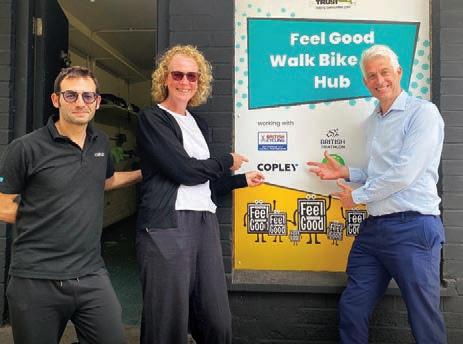
All Copley employees have a personal development plan and benefit from individualised training experiences.
Much of our training is in-house but we also value provision from our local Chamber, for example, around import and export, and from interaction with our industrial communities via attendance and participation at conferences across the world.


Key benefits such as flexible-working and regular team-building events help to balance demanding work schedules and cement working relationships, contributing to an environment where people can build long-term, rewarding careers.
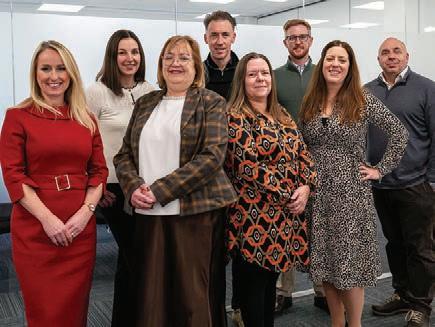


Businesses across the East Midlands have made it onto the Sunday Times Best Places to work 2026 list, thanks to their commitments to creating a “happy, healthy workplace”.
The annual list singles out the best small, medium, big and very big organisations as well as the best workplaces for women, LGBTQIA+ staff, disabled employees, ethnic minorities, younger and older workers and for wellbeing.
Across Derbyshire, Leicestershire and Nottinghamshire, the list includes law firm Smith Partnership, theme park attraction designer Katapult, business bank Cambridge and Counties and housing association Midland Heart.
They are joined by Baxter Freight, accountancy firm TC Group Leicester, Octopus Energy, Currys and housing association Midland Heart, among many others.
TC GROUP LEICESTER
Management at TC Group Leicester said they have a strong belief that when people feel valued, heard and empowered, they do their best work – and the business thrives.
The group has offices across Leicester, Milton Keynes, Northampton and Southampton and as well as making the Sunday Times list, the Leicester team recently celebrated a standout night at the SME Leicester and Rutland Business Awards, taking gold for high growth business of the year, and silver for service excellence and business of the year with 50-plus employees.
Group partner Jordan Dennis said: “At TC, we believe that when our people are happy, supported and fulfilled, everything else follows.
“Happiness isn’t a by-product of our culture, it’s the foundation of it. By prioritising wellbeing, trust and a genuine sense of belonging, we’ve



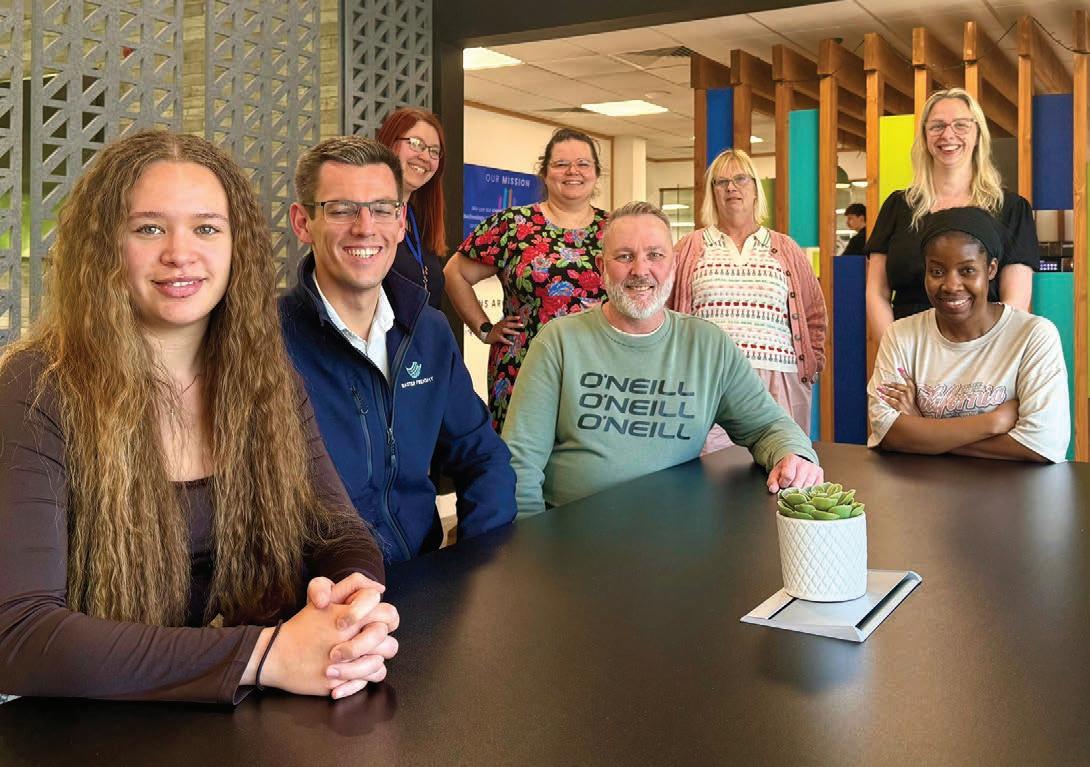

created an environment where colleagues can thrive both personally and professionally.
“In turn, this drives strong engagement, high retention, and a resilient, high-performing organisation. We’re really proud to have built a culture where people feel valued, empowered and excited to come to work. It not only attracts talent, but inspires people to stay, grow and succeed with us over the long term.”
He said a “continuous improvement” mindset underpins the business and is embedded into day-to-day operations. It is reflected in consistently strong employee engagement results, with high levels of job satisfaction, pride and trust reported across the firm.
‘Our Leicester office is all about teamwork, learning, and support’
Structured personal development plans, quarterly feedback cycles and mentoring programmes help ensure all staff have a “pathway for growth”.
The business also has regular “lunch and learn” sessions, delivered by internal specialists and external experts, keeping teams “informed, curious and continuously developing”.
Early careers are a particular focus, with the firm supporting a significant number of apprentices, building future talent pipelines and providing opportunities for progression into senior roles.
That is complemented by study support, hands-on experience and exposure to complex client work. There is also an employee board, bringing together colleagues from across roles and career stages, to influence decision-making and shape key initiatives.
Wellbeing and inclusion are also central to the firm’s people strategy, with dedicated groups covering diversity, equity and inclusion (DEI), neurodiversity and mental health, providing “safe, open spaces for discussion, learning and shared experience”.
There is also a growing network of trained mental health first aiders within the business.
Accounts senior David Wray explained: “Our Leicester office is all about teamwork, learning, and support.
“Whether you’re just starting out or have years of experience, the leadership team here encourages both personal and career growth.”
Elsewhere within the region, Nottingham-based global logistics specialist Baxter Freight made the Sunday Times list in the medium-sized business category.
The company currently employs 140 staff at its Nottingham headquarters and expects turnover of £52m in 2026. It was Green Business of the Year at the 2026 Nottinghamshire Business Awards, organised by East Midlands Chamber.
HR director Lorraine Sutcliffe said: “We’re delighted to be recognised as a Sunday Times Best Place to Work, especially because it reflects the real, everyday experiences of our team.
“It is also testament to our mission as an ethical, people orientated and planet-focused logistics provider and our commitment to creating a workplace where employees feel valued, supported and able to develop.
“As we continue to grow and invest in future talent, it’s important that we maintain a positive and engaged culture that supports our employees and helps us continue attracting talented people to Baxter Freight.”
She said the business offered a comprehensive package to enhance the overall experience of employees – including a culture of open and transparent communication, and internal progression so staff can build long-term, fulfilling careers.
It is a certified B Corp and Living Wage Employer, committed to maintaining environmental, social and governance standards.
As well as fair pay, the business provides support to employees through paid dental plans, monthly gym allowances and a free weekly breakfast. Its employee assistance programme gives access to mental health support and there is a dedicated wellness room where employees can get access to support personal needs.
Baxter Freight also encourages everyone to make a positive impact in the community, offering paid volunteering days with Hope Nottingham, as well as monthly litter picks and internal awareness days to support diversity and inclusion.


The world is not only getting hotter; it’s getting less green too. Making our cities and urban areas greener is not only a critical in the face of climate change but it can also help stem biodiversity loss and protect human health, too. Business Network takes a look at the issues – and what can be done.


It’s a fact – our planet is overheating. The effects of global warming are felt more acutely in our cities and dense urban areas, where almost 60% of the world’s population live.
Cities are on average warmer than their surrounding landscapes – buildings and other structures can trap heat –and are heavily impacted by extreme weather events, such as flooding.
Urbanisation makes flooding more severe as areas where plants and trees once grew have been paved or covered in asphalt. This means excess water cannot be absorbed and has nowhere to go, leading to drainage systems becoming overwhelmed.
Other issues facing our cities are air pollution – which is estimated to cause the death of seven million people a year worldwide – and noise pollution.
Road traffic is the biggest contributor to noise pollution – long-term exposure is linked to cardiovascular disease, poor sleep and insomnia, mental health issues and impaired cognitive development in children.
HOW
Urban greening is the act of introducing plants and trees and increasing the size of green spaces in cities to counterbalance the effects of global warming and reduce air and noise pollution.
For example, the shade provided by trees can significantly reduce the temperature on highly populated streets, while parks and other green spaces can provide places for people to relax away from the noises and stresses of city life.
Planting more trees can also help mitigate flooding by reducing run-off. Rain water can also be captured to help irrigate community gardens and green walls. Greening can also provide more natural habitats for local wildlife.
Space can often be very limited in cities, but that doesn’t mean that areas can’t be made green.
Street trees: As well as providing shade, street trees can reduce pollution by absorbing harmful carbon monoxide. Trees on streets absorb nine times more pollutants than more distant trees, converting toxic air back into oxygen and other useful and natural gasses.
Mature street trees can also provide shelter and reduce wind speed, reducing heat loss from buildings during winter. They provide shade in the summer and evapotranspiration of water from the leaves has a cooling effect on the surrounding air.
However, careful selection is key. To survive in urban areas, trees should be able to cope with lower water availability.
Green walls: Installing plants down the side of buildings is a great way of introducing green spaces without taking up a lot of room.
Green walls can reduce building temperature, increase air quality and increase biodiversity, providing shelter for a wide range of insects.
There are two main types of green walls – façades (plants growing directly on walls) and living walls (plants mounted onto walls).
Façades are cheaper and are lower maintenance, while living walls give better coverage and plant diversity.
Green roofs: Bringing the same sort of benefits as green walls, green roofs can improve air quality and biodiversity, while also providing much-needed green spaces for city dwellers who have limited access to nature.
Lightweight and low-maintenance, they typically feature drought-tolerant plants, such as mosses and grasses.
Conversion of brownfield sites: One low-cost way of greening up an area is to transform brownfield sites (previously developed and potentially contaminated land) into accessible green spaces, such as parks, or wildlife habitats. Specific plants can be added to decontaminate the soil and reduce the health impact brownfield sites can have on a population.
‘Urban greening is the act of introducing plants and trees and increasing the size of green spaces in cities to counterbalance the effects of global warming’
By Heather Griffin (pictured), fundraising relationships coordinator, Age UK Nottingham & Nottinghamshire.


Ageing is marvellous, loaded with experience and knowledge. Because of this, our older team members offer valuable life experience and industry insights. They are key to dynamic, successful teams.
It would make sense, therefore, to protect such valuable assets. Are older team members getting the right support? Not always. Are they even aware of the support that’s available? Not always.
With age comes challenges. Challenges that are often personal and quietly strain the wellbeing of valued team members. And because the challenges aren’t always visible, it’s hard to know the full scale of the problem.
The four top concerns affecting older workers are health, care provision, loneliness and financial pressure pre-retirement. Be they felt directly or indirectly, they are real
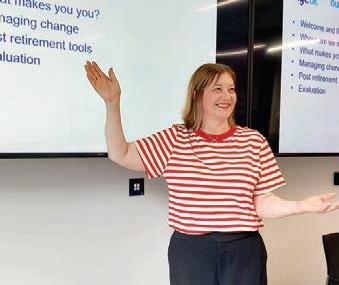
and sadly often result in people leaving roles they value and enjoy. Here’s a closer look at just one of the concerns – care provision.
The biggest proportion of people caring in England are aged 55-59 (according to the 2021 Census) with caring for a parent the most common type.
The impact this can have when carers are in employment is serious, because care-giving strain is real. It can also present itself overnight following an injury or a bereavement. Life as a worker-carer can be overwhelming and stressful.
Carers UK reports that 600 people leave their roles every day in the UK due to caring responsibilities. Unpaid carers do it all – phone calls with care providers, unexpected appointments plus the constant administrative and emotional load.
They worry about finances, about loneliness – for their dependent and for themselves – on top of how to manage work alongside caring. Left unaddressed, it’s not surprising that this exhaustion often results in the difficult decision to leave employment, costing individuals their income and wellbeing. For their employer, it costs knowledge, experience and resource.
While wider issues play a part here, such as social care, connections with local support can
make a big difference and help prevent things reaching crisis point.
Wellbeing leads in the East Midlands are starting to take action, and the benefits are immediately visible. By hosting information sessions that open up difficult conversations and raise awareness, worries are shared, solutions are explored and shoulders lowered.
“I feel so much better for talking this through and realise there could be more positive ways to approach it.”
Working with us and other local service providers who can share understanding and expertise is logical and effective. It connects teams with those who know how to help, giving supportive insights and signposting to help that’s relevant –such as conversations around dementia, benefits entitlements checks, companionship, later life planning and pre-retirement workshops, to name just a few.
More importantly, in opening these conversations it demonstrates to team members that they are not alone in their situations. Far from it. It’s a powerful moment, enabling relief, a more positive outlook towards accessing support and ultimately, improved wellbeing.
“I felt completely overwhelmed by the tasks required to help care and support my mother.
...Without (Age UK Notts) support I would not have accomplished so much so quickly.”
Our older workforce is at an all-time high and growing, with more than 33% aged 50 plus (according to the ONS). Many will have older dependents. In 40 years’ time there will be double the number of 80year-olds (according to the Centre for Ageing Better). This dramatic shift in the structure of our workforce and wider society is already underway. Adaptation is key and it starts with supportive conversations.
More than a third of our workforce has a 15-to-20-year work chapter ahead of them. For them to thrive, practical routes for improved wellbeing are essential. Supporting age-related challenges creates sustainable benefits too, such as improved staff wellbeing and improved quality of life for older dependents. It might even improve your staff retention rates.
Organisations that invest in wellbeing report improved employee health (54%), reduced absence (39%) and increased engagement (39%).
However, as well as numbers it’s about people. Your people.

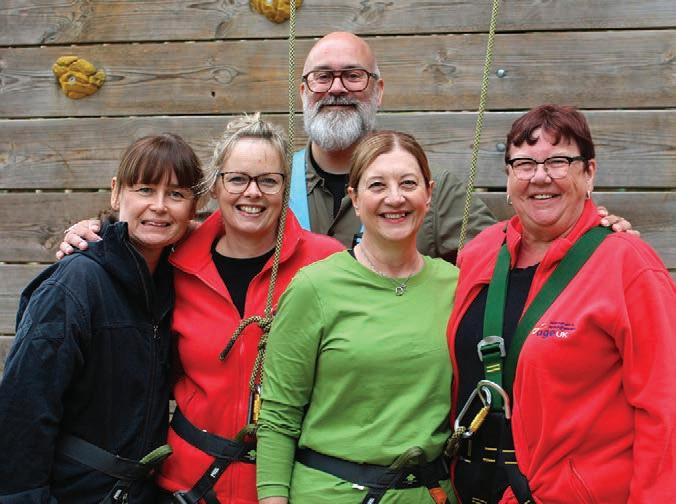



Sales have rocketed at an independent wine and beer store in Castleton after it launched a new website.
The owners of High Peak Wine & Beer Co said online sales had more than doubled following a grant-funded collaboration with Peak District agency Good Not Lucky.
‘We knew there was more potential with the website but other day-to-day business was always taking priority’
Husband-and-wife team Stefan and Emma Cartwright manage the long-established shop in the Derbyshire village, with a team of almost 10 serving locals and tourists with wine, craft beer and specialist whiskies.
The business’s Shopify website previously accounted for just 2% of sales, so the couple applied for grant support from High Peak Borough Council, and Good Not Lucky, owned by husband-and-wife team Laura Doherty and Sam Doherty, was selected to help.
and Emma Cartwright,
Acompany that designs, builds and services lenses for film and TV celebrated its 25th anniversary with a party in central London.
TLS (True Lens Services) held the celebration at the premises of AV supplier CVP Fitzrovia, bringing together industry professionals, collaborators and friends.
Guests enjoyed drinks, canapés and conversation, with a toast to the future of the business and the wider film community.



Since 2001, TLS has built a reputation in lens rehousing, combining engineering precision with respect for cinematic heritage, including preserving rare
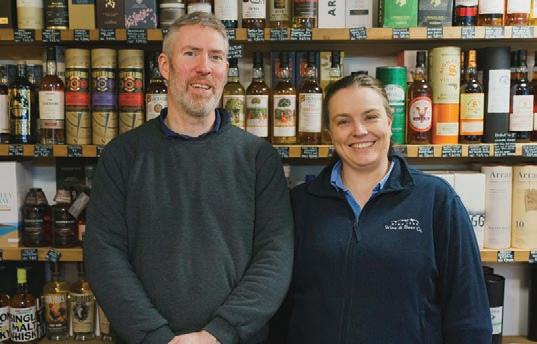
The brief covered a full site redesign, an SEO restructure, integration of subscription boxes, an automated loyalty and referral programme, the migration of email marketing from Mailchimp to Shopify, and help with a digital marketing strategy.
The site launched in January, and in the first two months sales, orders and customer number shot up.
Stefan Cartwright said: “We knew there was more potential with the website but other day-to-day business was always taking priority.

“Our biggest win so far was the result we got from announcing a new whisky release via the new integrated email system. It drove online sales nationally and locally, and brought people through the door of the shop.”

for the BridgeAI annual showcase in London, which saw the launch of a landmark initiative: the AI Skills Hub.
The new national platform has been designed to catalyse AI adoption by closing the skills gap across key industries.
Developed by Innovate UK in collaboration with PwC, the hub has been designed to ensure the potential of AI doesn’t leave sectors, workers or the UK regions behind.
The opening plenary brought together critical voices shaping the UK’s AI skills landscape including Sara El-Hanfy, head of artificial intelligence and machine learning at Innovate UK; Feryal Clark MP, minister for AI and digital government; PWC UK partner Zlatina Loudjeva; and Tom Adeyoola, executive chair of Innovate UK.
Feryal Clark officially launched the AI Skills Hub with the message that AI adoption must go hand-in-hand with inclusive upskilling, regional growth and long-term economic resilience.



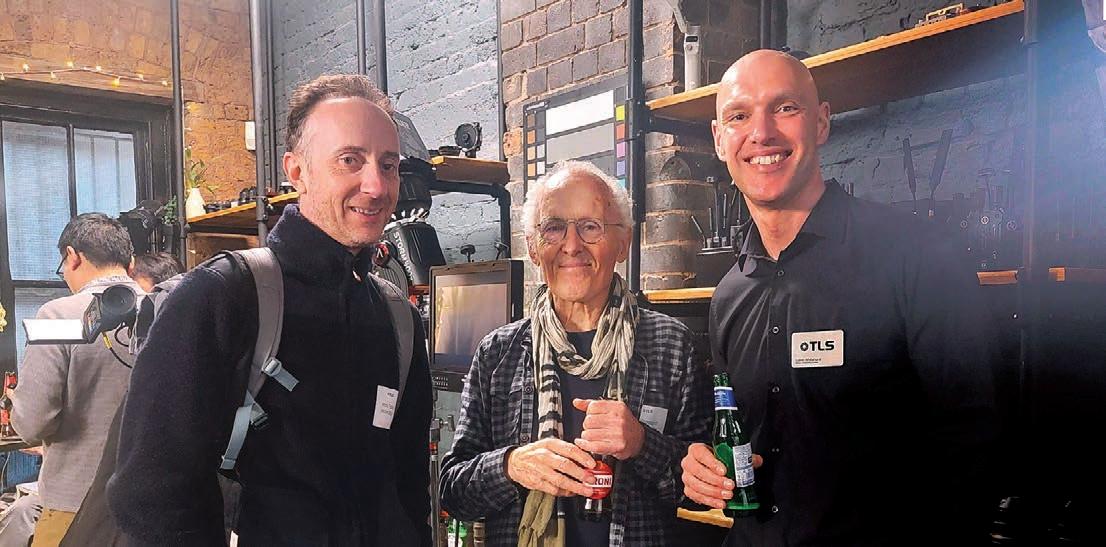
designing and manufacturing its own lenses – with products including the Vega65 – supporting the creative vision of filmmakers around the world. The event served not only as a celebration of the
recognised the partnerships and collaborations that have defined its success, with attendees including cinematographers, rental houses and production professionals.
Sales and marketing director Richard Grocott said: “Reaching 25

A student business supporting the transparent and responsible use of AI in higher education has joined the University of Leicester’s Growth Academy.

us. It’s a reflection of the trust our clients and partners have placed in us, and the passion of our team.
“This celebration was as much about looking back at what we’ve achieved as it was about looking ahead to the future of lens innovation and storytelling.”

Final-year biological sciences student Rahul Modha founded emerging technology venture Wurksy AI in 2025 to provide students with a secure, policyaligned AI environment with an ‘AI Index’ that logs use to provide a clear audit trail, cutting the risk of academic misconduct – and providing potential solutions to managing AI use in coursework.
He will be supported in his entrepreneurial journey by the university’s entrepreneur in residence Dr Glynis Wright MBE, who is a strong advocate for innovation.
The growth academy provides support, guidance and mentoring for high-potential student and graduate founders.
Rahul said: “I am thrilled to join the growth academy and incredibly grateful for the opportunity to work under the guidance of Glynis.
“Her experience, strategic insight, and supportive approach will be invaluable as Wurksy AI enters its next stage of development.”


East Midlands training provider EMA Training has partnered with Leicester-based data and AI consultancy Meesh Consulting to launch a leadership training programme, AI and ME, to give businesses the confidence to adopt and apply artificial intelligence effectively.
EMA Training was recently approved to deliver new, government-backed apprenticeship units – including AI and ME, which launches this summer.
The short training units are designed to help employers build their capability in AI, delivering tangible outcomes and the confidence to apply learning effectively within their business without committing to a full apprenticeship programme.
AI and ME has an emphasis on leadership, collaboration and practical application, to help businesses to integrate AI in a way that enhances skills rather than replaces them.
Developed in partnership with Meesh Consulting, the programme combines EMA’s training expertise with real-world AI and data experience, ensuring employers gain commercially relevant insight and actionable strategies.
Tracey Mosley, managing director of EMA Training, said: “AI is transforming the way businesses operate, but confidence and understanding remain key barriers.
“AI and Me is about putting people at the centre of that change – helping leaders and teams build the knowledge, confidence and strategy to use AI
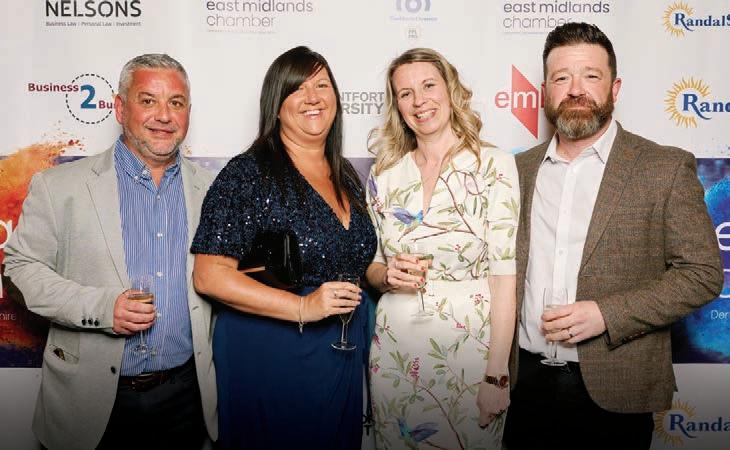

effectively. Partnering with Meesh Consulting allows us to bring real-world experience into the classroom, ensuring businesses don’t just learn about AI, but understand how to apply it in a meaningful and sustainable way.”


Athan three decades’ experience in handling social care professional negligence cases has been appointed as a costs judge.
Sarah Erwin-Jones, a partner who leads on the Nottingham-based firm’s redress, abuse and assault claims, will assume the role on 1 August after the King approved the appointment by signing a royal warrant.
‘Sarah exemplifies everything we aspire to be as a firm at the forefront of society’s biggest issues’
Costs judges are specialist, full-time judicial officers in England and Wales who resolve disputes over legal fees. They work primarily in the Senior Courts Costs Office, and can take complex cases transferred from any civil court in England & Wales. They also sit as expert assessors in higher court appeals.
Sarah, who joined Browne Jacobson in 1994 and is based in Nottingham, will step down from the firm once appointed, when she will become known as Costs Judge Erwin-Jones.
Jonathan Tardif, senior partner at Browne Jacobson, said: “Sarah exemplifies everything we aspire to be as a firm at the forefront of society’s biggest issues.

difficult and sensitive work with a combination of intellectual rigour, compassion and an absolute commitment to doing right by the people involved – whether that is a vulnerable complainant, an institutional client, or the broader public interest.
“We are enormously proud that her service to the legal profession and her clients has been recognised with an appointment as costs judge. The bench will gain someone who understands, at a very human level, what is at stake when people bring their disputes to court. We wish her every success in this new role.”
Sarah joined Browne Jacobson as a newly qualified solicitor when the firm was working on some of the first large child abuse group action cases.
She has since built a reputation as a specialist in social care law, complex personal injury, group litigation and legal costs.
Sarah said: “I am proud of the difference that careful, principled litigation can make to the lives of those involved. I am enormously grateful to everyone at Browne Jacobson for their support over more than 30 years, and I look forward to bringing those values to my new role.”
Age UK Nottingham & Nottinghamshire is marking eight years of partnership with East Midlands law firm Rothera Bray, which sees it provide legal support to older and vulnerable people across the UK.
Since 2018, Rothera Bray has worked in partnership with the charity to provide legal clinics offering people free, expert advice.
More than 240 appointments have been made through the clinics in the last year.
Kirsten Wood, partner and head of wills and probate at Rothera Bray, said: “We’re incredibly proud of our longstanding partnership with Age UK Nottingham & Nottinghamshire. Our private client

clinics help people with a wide range of important matters, from making a will and planning ahead to understanding Powers of Attorney and managing probate or care-related queries.
“Additionally, the clinics offered by our dispute resolution team can support people with family disagreements, neighbour disputes and compensation claims.
“Together these services ensure people can access clear guidance and make informed decisions with confidence.”
Age UK Nottingham & Nottinghamshire is the biggest independent charity in the county supporting around 40,000 older and vulnerable people each year.
Rothera Bray supports the elderly and vulnerable in Nottinghamshire


Its services include information and advice, benefits entitlement support, scam prevention, legal guidance, companionship, advocacy, home energy checks, specialist dementia care and social activities. Demand for its services continues to grow, reflecting the needs of the ageing local population.
Martyn Illingworth, joint chief executive of Age UK Nottingham & Nottinghamshire said: “We truly appreciate Rothera Bray’s commitment to our cause and our community.
“Their generosity and dedication over the last eight years has made a real difference to local lives.”

Law firm Howes Percival saw a 12% rise in turnover in the year to the end of March 2026 – its fourth consecutive year of double digit growth.
The business, which has offices in Leicester, Cambridge, Manchester, Milton Keynes, Northampton, Norwich and Oxford, posted turnover of £46.8m, up from £41.7m a year before.
It has seen its turnover rise 78% over the last four years, while adding 25 partners and 62 other fee earners to its number.
‘As a partnership we are able to invest for the long-term and prioritise organic growth’
The firm has also invested in AI, training and leadership development, opened an office in Oxford, refurbished its Leicester office and moved to new offices in Manchester, Cambridge and Milton Keynes.
Chairman Geraint Davies said: “This is another fantastic financial result for the firm and reflects the hard work we’ve put in over the last five to 10 years.
“In the last 12 months we have continued to invest heavily in our people, the technology they need to support them and in producing high quality office spaces for them and our clients.
“The significant growth which we continue to achieve has allowed us to make these investments whilst
also continuing to maintain our profitability.
“As a partnership we are able to invest for the long-term and prioritise organic growth. We have also been able to remain fully focused on the right things: client service, recruiting and retaining the right people and nurturing a unique culture of curiosity, collaboration and innovation.
“This culture makes Howes Percival a place where people want to work and will be the key to our success in the future as we take advantage of the opportunities that will arise in a rapidly changing sector.
“You can see the return year-onyear in our results, but we see it every day in the way our teams keep stepping up and delivering a fantastic service for our clients.”
Last November, Howes Percival was ranked the number one law firm to work for in the UK by Best Companies – based on research into employee engagement.
Law firms Shakespeare Martineau and Mayo Wynne Baxter have introduced an AI platform aimed at the legal and professional services sector – marking a milestone in their digital transformation strategy.
They have adopted the Harvey platform to give support for tasks including drafting, summarisation, research and document analysis.
The initiative reflects their commitment to using innovation to “improve efficiency, enhance client service and enable professionals to focus on higher-value work”.
Andrew Foreman is chief information officer at Ampa Group, the parent company of both firms.
He said: “Introducing Harvey is a major step forward in how we equip our people to work smarter and deliver even greater value to clients.
“Our focus is not on replacing expertise but on enhancing it – giving our teams secure, controlled access to AI tools that reduce time spent on repetitive tasks and allow more space for insight, creativity and strategic thinking.

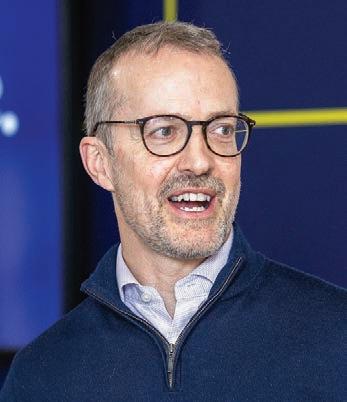


Freeths has made a record 97 promotions across the firm, including eight new partners, marking a significant year of expansion and investment in its people.
That investment has contributed to year-on-year double-digit growth over the last five years.
As a certified B Corporation, it prioritises an inclusive and supportive workplace, where “progression is accessible to all” and this year’s promotions highlight the “breadth and diversity of talent” across the firm.
National managing partner Karl Jansen (pictured) said: “This is a hugely significant promotions round and a great reflection of the strength we have across the firm. Each colleague has played a key role in our continued growth, supporting clients on increasingly complex and high-value work.
“Investing in our people is central to our strategy, and this latest round of promotions demonstrates the depth of talent we have as we continue to build for the future.”
Freeths’ partner promotions for 2026 are: Ben Gant, real estate, Nottingham; David Laurence, real estate, London; Fiona Powell, employment, Leicester; Hannah Tessyman, corporate, Leicester; Katherine Burge, agricultural property, Oxford; Miles Hacking, restructuring and insolvency, Manchester; Nikki Aston, family, Nottingham; and Rahul Kotecha, trusts, estates and tax, Nottingham. Its director promotions for 2026 are: Alex Angelides, tax, Sheffield; Allison Campbell, real estate, Glasgow; Andrew Rathi, housebuilding and strategic land, Nottingham; Dominic Canning, construction and engineering, Leeds; Emma Conwell, planning, Leeds; Fiona Woodhead, corporate, Leeds; and Josh Middleton, commercial dispute resolution, Birmingham.
“We are investing in the right foundations – training, governance and responsible use – so AI becomes a trusted part of how we work.”
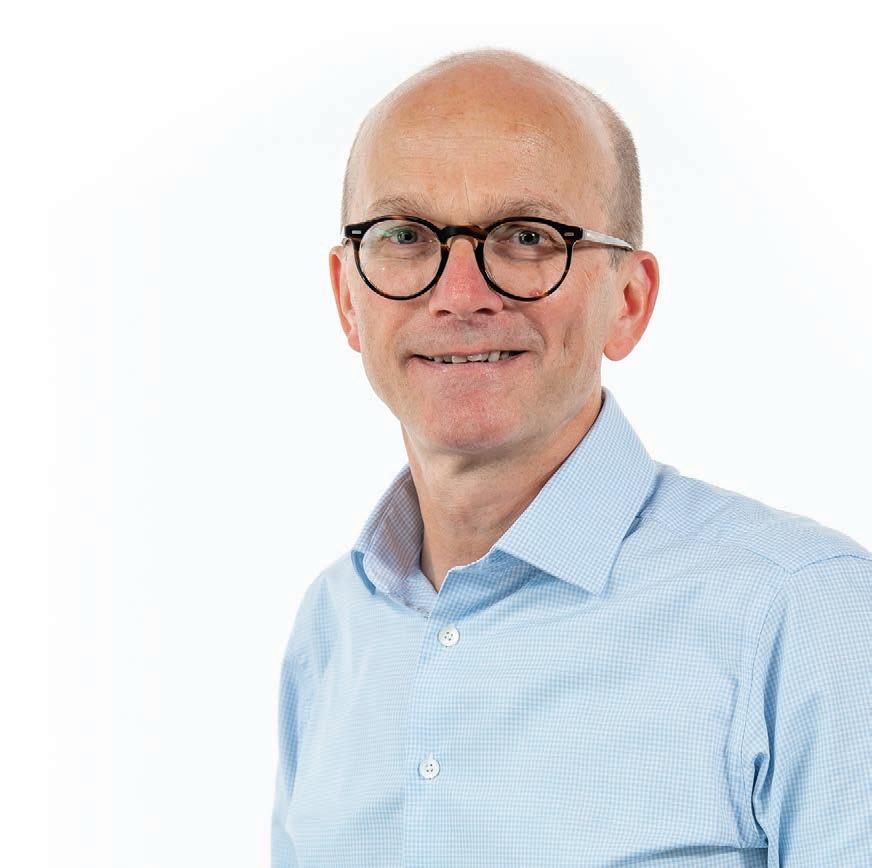

Derbyshire and South Yorkshire-based accountants and tax advisors Shorts has advised North Yorkshirebased Harris Irwin Architects on a successful fund-raising to support its growth.
Harris Irwin has a reputation for delivering residential, extra care and dementia care homes and other specialised multiuse developments.
It also has expertise across the leisure, equestrian, education and housing sectors. Based in Richmond, North Yorkshire, the funding will support its expansion, including a new office in the south of England.
The fund-raising was led by Shorts with Chris Alsop working closely with tax partner David Robinson, who led on the tax structuring aspects.
Chris Alsop said: “We are delighted to have brought this fund-raising to a successful conclusion.
‘Raising external funding is a significant step for any professional services business’
“Having worked closely with the management team over several months, it has been a pleasure to support their plans for the next stage of growth. Harris Irwin is an impressive business and I am confident it will continue to go from strength to strength.”
The funding was provided by HSBC UK’s Sheffield-based commercial banking team, with the deal led by senior relationship manager Jayne Dannatt.
She said she was delighted to assist Harris Irwin Associates with the next stage of its growth and provision of working capital facilities.

Ilaunched a new practice dedicated to serving Koreanheadquartered companies with big US operations.
Led by Brian Cho (pictured), the practice will partner with Howden teams worldwide working with Asia-based clients. The appointment comes as the Republic of Korea deepens economic ties with the US and Europe, including a March 2026 pledge to invest $350bn in key US sectors.
Brian Cho brings three decades of experience advising Asian multinationals on risk management and insurance placement, most recently running his own firm. He will focus on Korean clients across the US, working closely with colleagues in Asia, Europe, Latin America, and the Middle East. His scope has particular US focus on technology, manufacturing and renewable energy.


He said: “My team and I have built trusted client relationships with Asia-based companies and leaders which span decades and continents. Howden is the only platform where I felt confident we could continue to exceed our clients’ expectations while growing at the same time. It’s a company where collaboration across borders and teams is real.”
The parent company of technical outdoor clothing brands Rab and Lowe Alpine is expanding its operating footprint thanks to a £48.5m funding package from HSBC UK.
The eight-figure deal has enabled Derbyshire-based Equip Outdoor Technologies UK to buy a six-acre warehousing site in Alfreton.
Located two miles from key logistics routes such as the M1 and A38, the site will be used to bring several Equip operations into one location, supporting its UK and overseas growth.
Equip is targeting 40% growth in sales over the next three years and investing in its longer-term sustainability and social impact goals.
The HSBC UK funding has been structured as a Sustainability Improvement Loan facility, linked to the bank’s EcoVadis rating and supporting its sustainability objectives.
Equip became certified as a B Corporation (B Corp) in April, recognising its performance across
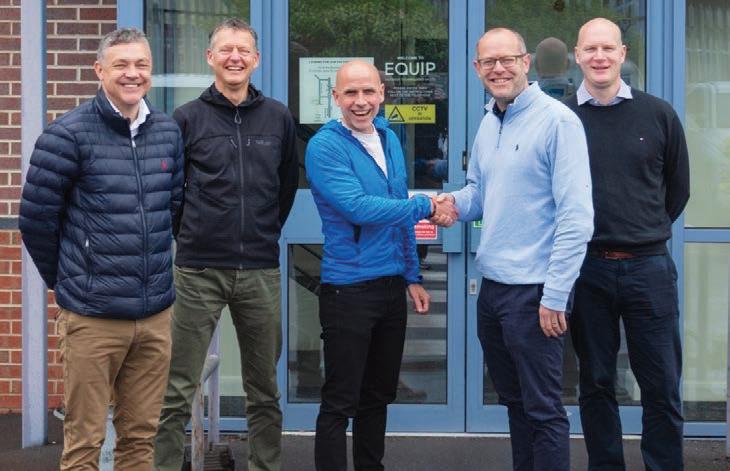
social and environmental standards, transparency and accountability.
The brand’s chief operation officer Rob Maynard said: “Demand for Rab’s technical products has grown significantly over the last few years, and this funding gives us the ability to build on that momentum.
“The valued ongoing support from HSBC UK will help us expand
capacity and put the right foundations in place for the next stage of our journey.”
HSBC UK senior relationship director Philip Carr said: “Alongside strong commercial growth, Equip has shown a clear commitment to embedding sustainability and responsible business practices into its long-term strategy.”





Nottinghamshire construction students gained key skills supporting a Vietnamese community, when they travelled to the country to help build new flood defences at an early years school.
Nineteen students from Nottingham College took part in a three-day community project at Tân Trung Kindergarten in Mo Cay Nam district, in the very south of the country.
The school floods every year due to torrential downpours and coastal typhoons, and the students flew out to help thanks to sponsorship from Midlands-based Deeley Construction.
Working alongside local master builders, the students focused on improving the school’s drainage and making
the site safer for children by raising the ground level of the playground and building new retaining walls with a render to make them more durable.
The group, comprised of plumbing, plastering, bricklaying and joinery students aged 17-to-40, also laid a concrete layer over the existing playground surface to create a strong, stable and long-lasting base.
Carpentry and joinery student Luca Colin-Thome said: “It was an amazing experience. We had to work closely as a team and adapt to working with people from different backgrounds.
“Being immersed in Vietnamese culture as well as doing the build work made it something none of us will ever forget.”
A construction company has teamed up with Burton Albion Community Trust to transform a learning space for students.
Alpha Construction has transformed a classroom designed to support secondary school students facing challenges in mainstream education. The space is used by the trust’s secondary alternative education programme, supporting students aged 11-to-16 who require extra help outside mainstream education.
It was opened at a ribbon-cutting ceremony attended by Burton Albion FC player Sulyman Krubally, and representatives from both organisations.
Tony Bamford, managing director at Alpha Construction, said: “We pride ourselves on delivering high-quality work and solving problems before they arise. Being part of a project that directly benefits young people in our community has been incredibly rewarding.”
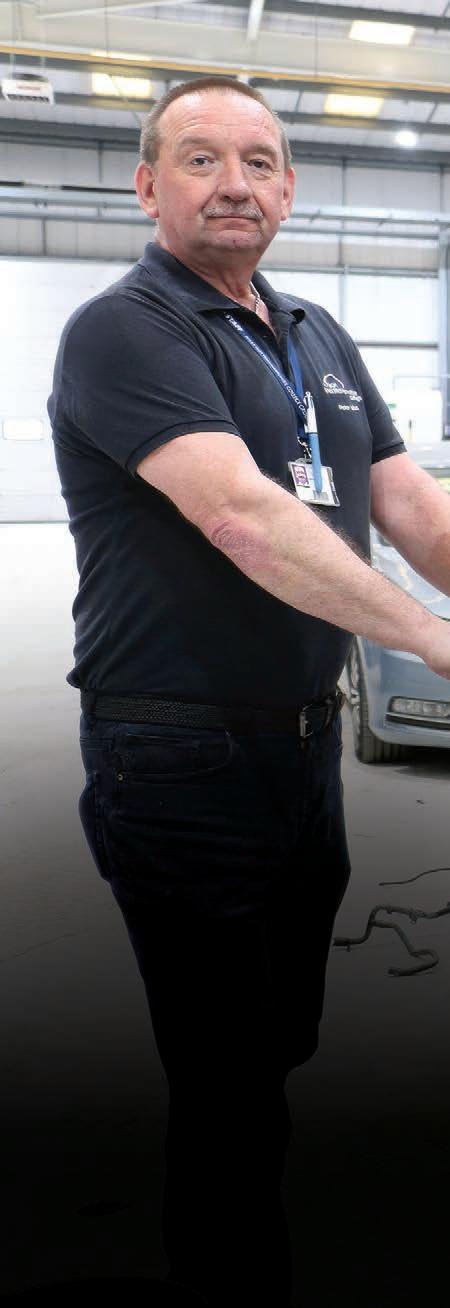

Anew campus to train the next generation of automotive professionals has been opened at West Nottinghamshire College.
The Station Park Motor Vehicle Centre in Julius Way, Kirkby-inAshfield – which will support around 250 full-time learners and 50 apprentices – features a large, modern workshop giving students significant hands-on
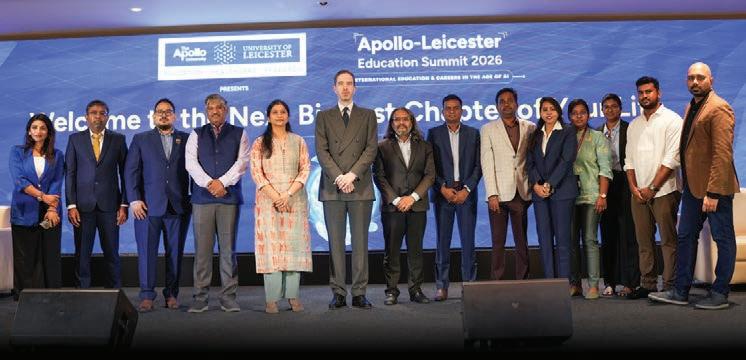
Students in India wanting to navigate education and career paths in the age of AI have been given a helping hand by the University of Leicester.
The university joined forces with India partner The Apollo University, to hold a summit in the subcontinent demystifying future pathways for students.
The second edition of the Apollo-Leicester Education Summit, was held in Vijayawada, in the southeastern state of Andhra Pradesh, bringing together diplomats, academic leaders and industry experts, along with students and parents.

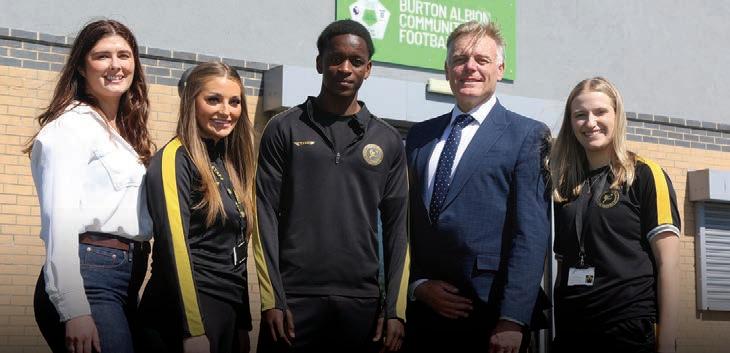

Leicester and Apollo signed a memorandum of understanding in 2023 to explore collaborations, particularly in the fields of healthcare management, healthcare and data science.
The summit focused on one of the biggest concerns faced by families today: how students can prepare for careers in 2030 and beyond, as industries, technologies, and employer expectations evolve.
experience in a realistic garage environment.
The site also has specialist classrooms equipped with advanced electric and hybrid vehicle training technology, as well as 12 fully-operational simulation boards – six hybrid and six electric – which each cost around £6,500.
The boards replicate real vehicle systems, allowing tutors to introduce faults that students have to diagnose, repair and fix.
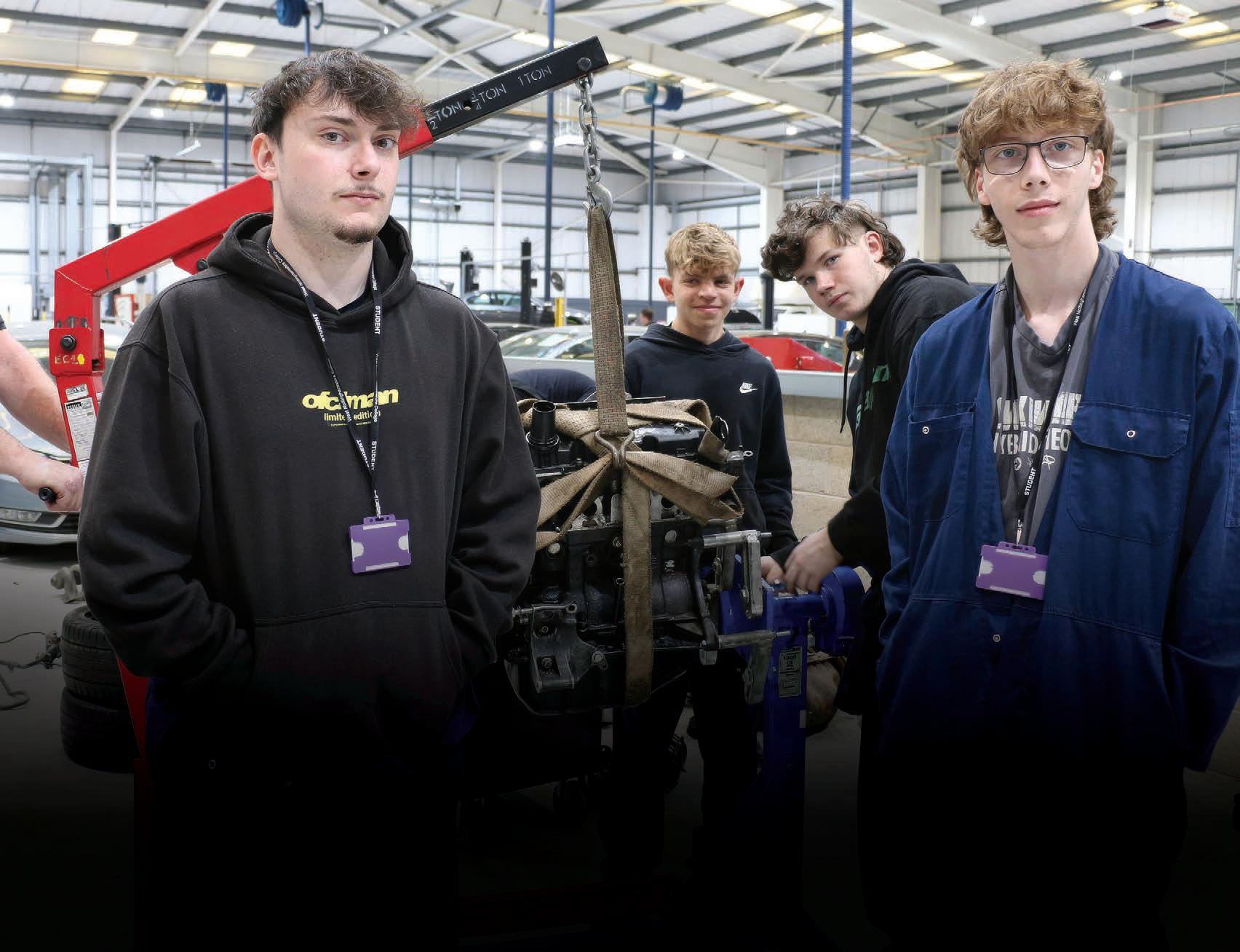
A key feature of the campus will be the Auto Centre Learning Company, which will provide servicing, maintenance, and preMOT inspections for staff vehicles –giving students valuable real-world experience working with customers and real vehicles.
Head of automotive Pete Brochocki said: “We’re absolutely thrilled with the new centre.
“The expanded workshop space, cutting-edge equipment and
dedicated training environments mean our students can develop their skills in a setting that truly reflects modern industry.
“Our LJ Create training boards are a fantastic addition – they simulate fully-operational vehicles and allow us to introduce faults for learners to diagnose and repair. This kind of hands-on, scenariobased training is exactly what the industry demands.”
Cian Pratt, a Level 3 student
who previously studied at the college’s Oddicroft Lane site, said: “The biggest thing is the space –it’s not cramped anymore and there are a lot more cars to work on. The new equipment makes a huge difference to how we learn week in, week out.”
Pierce Butler, also studying Level 3 diagnostics and repair, said: “These facilities really reflect what it’s like in a real garage – if anything, they’re even better.”
West Nottinghamshire College and certification body and training provider NAPIT have formed a collaborative partnership to create a stronger, more effective pathway into qualifications within the building services, renewable energy and low-carbon sectors.
NAPIT is based on the Pleasley Vale Business Park, Mansfield, and provides electrical courses, as well as training in technologies such as heat pumps, battery storage, electric vehicle charging and solar PV installations.
The college delivers refrigeration, air conditioning and heat pump training at the same site, which also serves as an end-point assessment (EPA) centre for plumbing, heating and refrigeration apprentices. It has City & Guilds approved EPA provider status.
The agreement between the training provider and college will provide access to work placements and apprenticeships, a clear progression route for semi-qualified electricians and low-carbon heating engineers, and a pathway into industry for full-time learners.
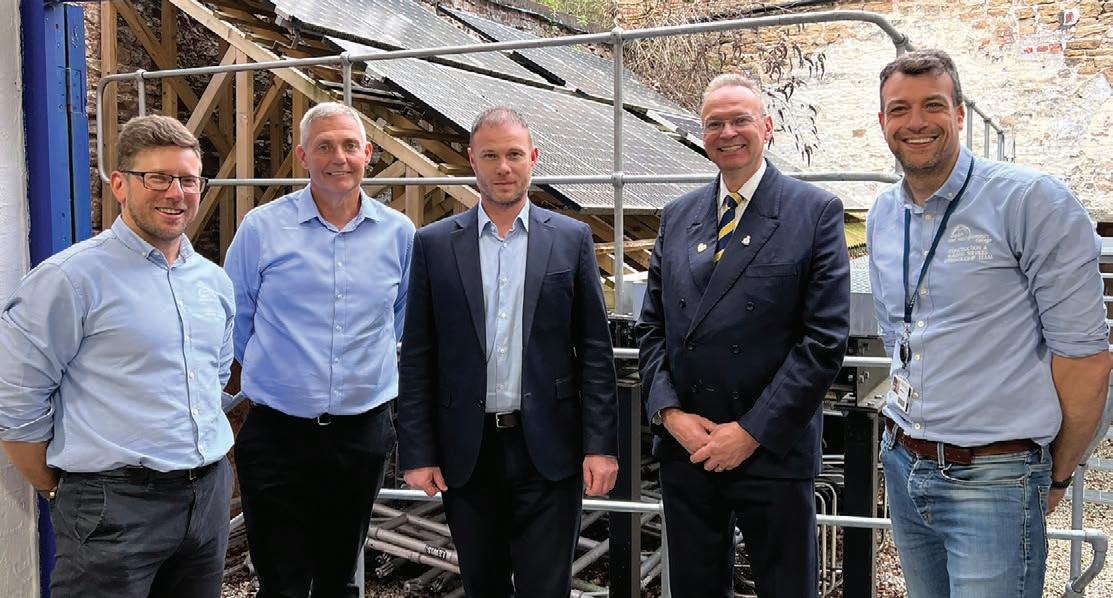
It will also create opportunities to upskill current electricians and local businesses.
West Nottinghamshire College principal and chief executive
Andrew Cropley MBE said: “I’m delighted to celebrate yet another exciting partnership for our college.
“Working with NAPIT will help us engage with a number of local and
regional businesses, many of them at the forefront of clean and lowcarbon energy, and support them in recruiting and developing their workforce.”


Anew tenant has taken the ground floor of the Grade II-listed Dye House at Milford Mills in Belper – which has been empty for around 25 years.
Helen Butcher plans to open an independent coffee shop and bookstore called The Chapter House, with space for around 50 people.
‘The Chapter House will be more than just a bookshop and café – it will also host creative workshops and events’
Omeeto acted as letting agents for the 1,650 sq ft unit which fronts onto the A6 and features arched ceilings as well as a courtyard.
The deal was struck after landlord Chevin Group Holdings undertook extensive renovation work to bring the building back into a useable state. Health business
Bloom Reformer Studio Milford took premises on the first floor in 2025.
Helen Butcher said: "I am excited to be part of the regeneration project and I look forward to opening The Chapter House this winter, bringing life back into the former Dye House.
“The Chapter House will be more than just a bookshop and café – it will also host creative workshops and events to help people find new hobbies and connections, in a place that brings people together.”
Commercial agent Chris Wright of Omeeto, which has offices in Nottingham and Derby, said: “We are thrilled to have secured this deal to Helen Butcher.
“Her exciting plans for The Chapter House will greatly enhance the vibrancy and vitality of Milford village, providing a fantastic new destination for both new residents and the wider community.”
Milford Mills is part of Derwent Valley Mills, which is a UNESCO World Heritage Site.
Nottingham’s time has come as Rolex commits to branch
Goldsmiths has committed to a new store in Bridlesmith House, Nottingham, which is being seen as one of the most significant retail lettings in the city centre in recent years.
FHP Property Consultants completed the letting on behalf of Endymion Property Group, which will see Leicester-based Goldsmiths open a dedicated Rolex branch.
Fit-out works started in June, with the store set to open ahead of the Christmas trading period.
FHP director Jack Shakespeare said: “This is a hugely significant transaction for both our client and Nottingham city centre. Securing Rolex and Goldsmiths demonstrates
the continued appeal of the very best retail locations and highlights the confidence major international brands have in Nottingham.
“Bridlesmith Gate has long been recognised as the city’s premium retail pitch and despite some turbulent years, this letting further restrengthens its position.
“We are delighted to have represented Endymion Property Group in securing such a prestigious occupier and look forward to seeing the store open later this year.”
The letting leaves two office suites available in Bridlesmith House, representing the final phase of the building’s repositioning.

Leicestershire-based
Creative62 has been appointed as the chief brand agency for Game Nation, a 42-site gaming operator with venues in London and the south of England.
Creative62 has developed a location-based approach to each site's facade, ensuring every venue has its own distinct visual identity rooted in its surroundings.
The work started at Game Nation’s flagship Chinatown site, with a full facelift to the building’s front alongside new digital screen content.
Creative62 senior designer Adam Lister said: “Game Nation is a brand with real potential, and this is exactly the kind of brief that gets us fired up.
“The sector research revealed a clear opportunity to cut through the noise and create something genuinely distinctive. Starting at Chinatown lets us prove the concept at scale, and we can't wait to roll it out across the full estate.”

Goldsmiths is opening a Rolex store in Bridlesmith House, Nottingham
Journalist Nick Jones takes a look at the all-new electric Ferrari Luce: a first of its kind for the Italian manufacturer.
One of the most iconic brands to grace our roads is Ferrari, and I’ve driven a fair few I my time – but this is a first; an electric vision shaping the future for the sportscar maker. First things first, it looks not dissimilar to the 360 from a few decades past, certainly from the rear.
But it has caused quite a stir in the automotive world, because it wasn’t designed in-house. Oh no –if you have an Apple iPhone in your pocket the guy who designed that is responsible for this.
It’s effectively a glasshouse at the top for the passengers, while underneath the lower body carries the colour of the car and encompasses the five seats – not just two as you might traditionally expect in a Ferrari.
On the inside it’s very up-market but minimalistic and the influence from the design guru at Apple is apparent, such as the central display which can be rotated to face either the driver or passenger.
Subtle, discreet switches create clean volume, with forms simplified and rationalised in service of the driving experience. It has all-wheel drive, four doors (conventional
doors at the front and coach doors for the rear) and the five-seat configuration makes it one of the most spacious and versatile Ferrari’s ever – without compromising performance.
So, who’s going to buy it? Well, one would expect previous highend Ferrari customers to help unlock projects such as this and be top of the list for new arrivals.
The figures it produces are pretty damn good but you’re going to have to be well-heeled to be in a position to buy one. Look at the figures in the Fact File and have a good look at the design and then make your own mind up.



‘It’s very up-market but minimalistic and the influence from the design guru at Apple is apparent’




Chamber president Dr Cham Kang on the importance of people, skills and inclusivity – and offers a modern strategy to help SMEs in the East Midlands.
The East Midlands has always been a region defined by innovation, resilience and enterprise – with SMEs, the backbone of regional prosperity.
In today’s challenging business environment, one thing is clear: sustainable economic growth depends on getting our people and skills strategy right.
People and skills are not a side issue in economic development; they are the driving force. If the East Midlands is to build a stronger, fairer and more resilient economy, investment in workforce capability must sit at the heart of regional growth plans.
The Chamber Quarterly Economic Survey has revealed that six-in-10 firms are struggling to recruit people with the right skills to fill vacancies. That is not simply a recruitment issue, it is a brake on growth. When businesses cannot access the talent they need, expansion slows, innovation stalls and productivity suffers.
One of the key asks within the Chamber's Framework for Growth is the creation of a more flexible skills system that reflects the realities of SMEs and microbusinesses. SMEs do not operate on academic timetables or rigid funding cycles. They need training that is modular, responsive and aligned with real-time business demand.
Flexibility in apprenticeships, shorter accredited courses and simplified funding rules would allow SMEs to invest in workforce development with confidence.
Simplifying access to government training schemes is equally critical. SMEs often lack dedicated HR to navigate complex application processes. A streamlined, user-friendly system would remove upskilling barriers.
For young people entering work, the picture is mixed. AI is reshaping entry-level work, particularly in roles with high AI exposure. Recent job market evidence suggests some junior positions are shrinking, raising understandable concerns about displacement. Replacing junior workers entirely with AI would be short-sighted in my view. From a psychological and organisational perspective, early career roles are where future leaders

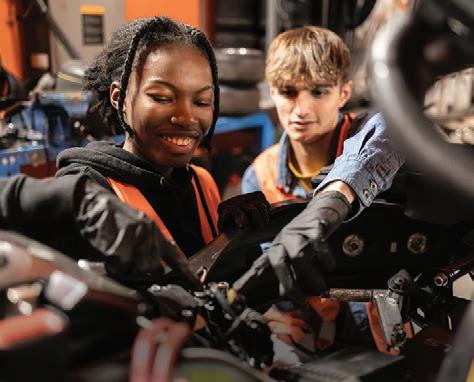
the National Living Wage has increased costs for businesses, it also boosts household spending power and reduces in-work poverty, contributing to stronger local economies. Do we really want a situation where people have two jobs to make ends meet?


develop skills, confidence and professional identity when supported with great mentoring.
Superior performance is not simply about task completion, it is about creativity, collaboration and long-term capability building.
The productivity benefits of AI and the employment of young people do not need to conflict. Managed well, AI can augment entrylevel roles rather than eliminate them.
‘Inclusive growth means ensuring that skills investment reaches underrepresented communities’
I genuinely believe diversity is our region's superpower. Building diverse and inclusive workplaces is not only the right thing to do, but also economically smart. Evidence consistently shows that diverse teams drive innovation and better decision-making. By investing in EDI within skills programmes, businesses can widen talent pools and address persistent inequalities. Inclusive growth means ensuring that skills investment reaches underrepresented communities, low-paid sectors and areas experiencing economic disadvantage. Although
The challenge and opportunity for SMEs is pairing fair pay with productivity improvements. Investment in training, digital adoption and leadership capability enables businesses to absorb wage increases while enhancing competitiveness. In my humble opinion, a modern people and skills strategy for the East Midlands must deliver:
• EDI at the heart of a people and skills strategy
• Flexible, SME-friendly training provision with a focus on a skills passport modular approach
• A much stronger alignment between education and SME employer need
• Increased and simplified access to funding and support
• Inclusive pathways into work for young people and the economically inactive funded by government
• A regional strategy for a responsible adoption of AI over the long-term
• A simplified approach from government focused to support rapid SME take-up
When we view diversity as a regional superpower, rather than a challenge, we unlock new ideas, new markets and new opportunities.
The East Midlands has the talent, ambition and a collaborative spirit to lead the way. By putting people and skills at the centre of our economic strategy and by working collectively across business, education and government, we can turn current challenges into catalysts for long-term prosperity.
Growth is not just about output. It is about opportunity. With the right people and skills strategy, the East Midlands can ensure that opportunity is shared, sustainable and futureready for all our businesses and communities.