• A fascinating variety of English in a multicultural society, captured and presented in a hilarious, entertaining and readable way
• Rib-tickling, witty, tongue-in-cheek fun on what could otherwise be a dry academic topic
• A sound, scholarly knowledge of the topic, with the ability to make it interesting
• A very topical issue as English is used throughout the world and has evolved into many varieties called World Englishes
March 2026
Description
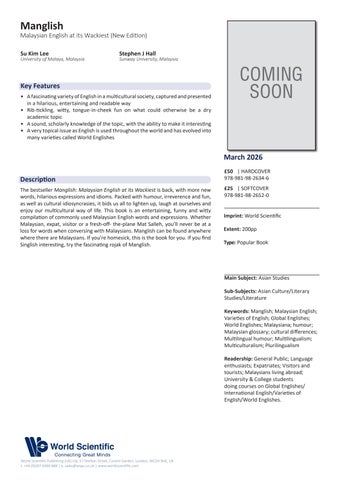
The bestseller Manglish: Malaysian English at its Wackiest is back, with more new words, hilarious expressions and idioms. Packed with humour, irreverence and fun, as well as cultural idiosyncrasies, it bids us all to lighten up, laugh at ourselves and enjoy our multicultural way of life. This book is an entertaining, funny and witty compilation of commonly used Malaysian English words and expressions. Whether Malaysian, expat, visitor or a fresh-off- the-plane Mat Salleh, you’ll never be at a loss for words when conversing with Malaysians. Manglish can be found anywhere where there are Malaysians. If you’re homesick, this is the book for you. If you find Singlish interesting, try the fascinating rojak of Manglish.
£50 | HARDCOVER 978-981-98-2634-6
£25 | SOFTCOVER 978-981-98-2652-0
Imprint: World Scientific Extent: 200pp
Type: Popular Book
Main Subject: Asian Studies
Sub-Subjects: Asian Culture/Literary Studies/Literature
Keywords: Manglish; Malaysian English; Varieties of English; Global Englishes; World Englishes; Malaysiana; humour; Malaysian glossary; cultural differences; Multilingual humour; Multilingualism; Multiculturalism; Plurilingualism
Readership: General Public; Language enthusiasts; Expatriates; Visitors and tourists; Malaysians living abroad; University & College students doing courses on Global Englishes/ International English/Varieties of English/World Englishes.
• Ah Bengs, Mat Rempits and Chilli Padis
• Aiksy Only! So Atas!
• One Word Only
• Cannot Tahan! Let’s Cabut
• Oredi, Afturds: Time Manglish-Style
• Giving Directions the Manglish Way
• From Cooling to Suspenders: Colloquialisms
• Doing The ‘Can Can’
• Questioning In Manglish, Izzit?
• Idioms
• Got Some More: Phrases and Expressions
• The Incorrigible ‘Got’
• Don’t Play Play
• Adoi! Exclamations!
• To Lah or Not to Lah: Tail Words
• It’s Rojak
• Portmanteau Words
• Repeat Again
• Makan Time! Eat, Drink, Eat
• The Way We Are: Found in Malaysia
• Short Cuts
• Conversations
• Acknowledgements
• About The Authors
• Index
Heritage Hotels of Asia
Volume 1: South Asia
Kenneth Barrett
Description
Heritage Hotels of Asia: South Asia is the first volume of a two-volume set documenting the rich heritage and history of hotels across Asia. The narrative describes the colonial-era hotels still in business and proud of their heritage, and the forts, palaces, villas, municipal buildings, warehouses, and even the occasional police station that have been transformed in recent times, all forming an integral element in the growing trend towards heritage tourism.
Each of the hotels profiled is placed within its historical context, with an account of those who built the property, whether specifically for use as a hotel or for an entirely different purpose. Old photographs and prints illustrate the text, along with modern photographs and, to acknowledge a more romantic era of travel, a collection of luggage labels.
Volume 2 continues the journey across Southeast and East Asia, following the European colonialists as they spread beyond the subcontinent and through the Malay archipelago, Myanmar, Thailand, Indochina, and to Hong Kong, China, and Japan.
March 2026
£65 | HARDCOVER 978-981-98-2488-5
Imprint: World Scientific
Extent: 262pp
Type: Popular Book
Main Subject: Asian Studies
Sub-Subjects: Asian History
Keywords: History; Heritage; Hotels; Hospitality; Travel; Tourism; Asia; Southeast Asia; Business Travel; Leisure Travel; Cultural Tourism
Readership: Hotels, hoteliers, cultural heritage tourists and tour operators, travel industry professionals, media industry professionals, hospitality school students, artists, designers and architects, academic, special and public libraries, and people who frequently travel, be it for business or leisure.
Heritage Hotels of Asia
Volume 2: Southeast and East Asia
Kenneth Barrett
Description
Volume 2 of Heritage Hotels of Asia follows the movement of Europeans across Southeast and East Asia in search of trading wealth, establishing colonies as they went and founding new towns, cities, and even countries. Colonial settlements evolved into distinctive societies, and hotels were opened both for accommodation and social gatherings, the most prominent of them becoming an essential part of the urban fabric.
Volume 1 had described the arrival of Europeans in India and their subsequent spread through South Asia. This companion volume describes their progress through the Malay Archipelago, Myanmar, Thailand, Indochina, and to Hong Kong, China, and Japan. Both volumes tell the stories behind the historic old properties, the people who built them and managed them, and the milieu from which they emerged.
March 2026
£65 | HARDCOVER 978-981-98-2491-5
Imprint: World Scientific
Extent: 262pp
Type: Popular Book
Main Subject: Asian Studies
Sub-Subjects: Asian History
Keywords: History; Heritage; Hotels; Hospitality; Travel; Tourism; Asia; Southeast Asia; Business Travel; Leisure Travel; Cultural Tourism
Readership: Hotels, hoteliers, cultural heritage tourists and tour operators, travel industry professionals, media industry professionals, hospitality school students, artists, designers and architects, academic, special and public libraries, and people who frequently travel, be it for business or leisure.
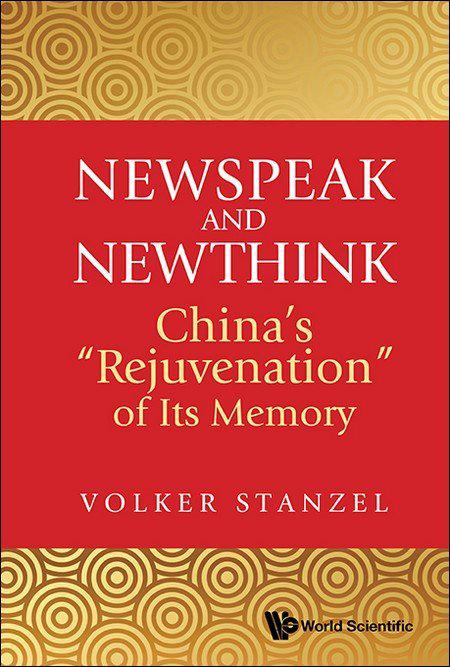
Newspeak and Newthink
China’s “Rejuvenation” of Its Memory
Volker Stanzel
German Institute for International and Security Affairs (SWP), Germany
Key Features
• Provides a comprehensive and accessible exploration of China’s politics of memory, connecting history, culture, and education to reveal how the Chinese Communist Party (CCP) shapes national identity and legitimacy
• Offers crucial insights into the CCP’s blend of traditional values and modern political strategies, helping readers understand China’s rise as a global power
• Includes engaging analysis of diverse sources—from films and museums to school textbooks—making complex topics understandable and appealing to a broad audience beyond academia
March 2026
Description
This book investigates how the Chinese Communist Party (CCP) constructs and deploys a powerful politics of memory—reshaping historical narratives, redefining national identity, and reinforcing its political legitimacy. Through patriotic education, curated exhibitions, school textbooks, TV documentaries, and films, the state crafts a selective view of the past to support its vision of national “rejuvenation” and global resurgence.
It traces this dynamic from ancient Confucian historiography to the disruptions of Western imperialism, the Communist revolution, and the post-Tiananmen era. The book examines how memory is produced, taught, and ritualized in contemporary China, drawing on cultural memory theory and a rich array of real-world examples. Special focus is placed on how official narratives are framed in institutions like museums, classrooms, and public commemorations.
By offering a clear and accessible exploration of China’s evolving relationship with its past, this book provides crucial insight into the ideological foundations of the CCP’s domestic and international strategies. It is essential reading for anyone seeking to understand how historical imagination becomes an instrument in shaping one of the world’s most influential powers today.
£65 | HARDCOVER 978-981-98-2165-5
Imprint: World Scientific
Extent: 187pp
Type: Monograph
Main Subject: Asian Studies
Sub-Subjects: China Studies
Keywords: Boxer; BRI; Century of Humiliation; Chaos; Chiang Kai-shek; Chinese Communist Party; Chinese history; Collective Memory; Confucius; Confucianism; Deng Xiaoping; Family; Golden Age; Heaven; Herodotus; Historiography; History; Individual; Mao Zedong; Mandate of Heaven; Marco Polo Bridge; Memory; Memory Fields; Ming; Museums; Myths; Nanjing Massacre; Narrative; Nation; New Age; Order; Past; Piety; Present; Proust; Qing; Rectifying Names; Rites; Shared Future; Sinification; Society;
Readership: This book is ideal for graduate and postgraduate students, academics, journalists, and professionals with a personal or professional interest in modern and ancient Chinese history, politics, international relations, and geopolitics. It may also appeal to readers interested in memory studies, psychology and politics, myths and politics, and the politics of memory.
• Preface
• Introduction
• Notes on Style
• China’s Memory Fields
◊ Memory and History
◊ History in China
◊ The Conundrum of Modernity
◊ The People’s Republic of China’s Farewell to Confucius
◊ Tiananmen 1989, and After
• Teaching Memory
◊ A Closer Look at Teaching Memory
• The CCP’s Politics of Memory
◊ The CCP’s Politics of Memory Today
◊ The Rejuvenation of the Chinese Nation
◊ The Fruit from China’s Memory Fields
◊ Bibliography
◊ Index
Voices A
History of Singapore Choirs
Kenneth Lyen Musical Theatre Ltd., Singapore
Key Features
• It is the only book available about the history of Singapore choirs and the people involved in their success
• It delves into the different choirs from the large to the small Chamber Choirs and Acapella singing groups
• It explores the different styles of music sung by the choirs, ranging from classical to pop-rock, the songs and instruments used in the different ethnic groups, and combination of choral songs with dance and other actions
March 2026
Description
This book is about the history of Singapore choirs starting from the early 20th century right up to the present day. It includes choirs that have made an impact in Singapore’s history, and notable personalities who have composed choral music, established new choirs, and have helped Singapore choirs win overseas competitions.
This is the first book documenting how Singapore choirs that were unknown before the 1980s, are now famous internationally, winning numerous awards. It is the only book available about the history of Singapore choirs and the people involved in its success. It delves into the different choirs from the large to the small Chamber Choirs and Acapella singing groups. The different styles of music sung by the choirs, ranging from classical to pop-rock, the songs and instruments used in the different ethnic groups, and combination of choral songs with dance and other actions are detailed in this book.
£60 | HARDCOVER 978-981-98-1057-4
£30 | SOFTCOVER 978-981-98-1172-4
Imprint: World Scientific Extent: 180pp
Type: Popular Book
Main Subject: Asian Studies
Sub-Subjects: Singapore Collection
Keywords: Choir; Choir Society; Choral; Singing; Lyrics; Composing; Singapore Youth Choir; School Choir; Singapore International Festival of Arts; Singapore Youth Festival
Readership: General public, choir teachers, choir students, choir societies.
• Foreword by Professor Tommy Koh
• Preface
• Introduction
• Non-English Language Choirs
• English-Language Choirs
• School and University Choirs: Importance of Music in Education
• Acapella groups
• Notable Personalities in Singapore Choirs
• Singapore Choral Festivals
• The Future of Singapore Choirs
• Index
upDATAble
Leading Sustainable Transformation
Meri Rosich
Oceonomy Pte. Ltd., Singapore & Globis University, Japan
Key Features
• Offers a framework (upDATAble) connecting environmental responsibility with business survival
• Features real-world case studies and examples of business transformation
• Presents data not just as technical information, but as a bridge connecting profitability with purpose and innovation with fairness
• Introduces a novel upDATAble framework that places data at the center of transformation, integrates climate science with business strategy, emphasises ethical data governance, and provides structured processes for overcoming implementation barriers
Description
upDATAble: Leading Sustainable Transformation is a practical guide for leaders adapting industries and organizations. It addresses the crucial role of data in business and climate change. The author draws on two decades of experience in data-driven transformations and advising Fortune 500 companies to connect data leadership and sustainability with action.
The book details how ambitious sustainability commitments can be implemented through technologies. Combining research-backed insights with real-world business applications from the author’s experience as an MBA professor and industry C-level executive and consultant, the book balances urgency with practical solutions. It provides a roadmap and a new framework for redefining business leadership, viewing data as a bridge connecting profitability with purpose and innovation.
Keywords: Sustainability; Data-Driven Transformation; Climate Change; Business Strategy; Leadership; Data Analytics; AI; ESG (Environmental Social Governance); Circular Economy; Decarbonisation; Sustainable Development Goals (SDGs); Resilience; Ethical Data Governance; upDATAble Framework; Green Technology; Corporate Social Responsibility
Readership: Executives, professionals, and students in sustainability, data strategy, and business transformation, as well as policymakers and entrepreneurs focused on climate solutions; advanced business courses and executive education; sustainability consultants, ESG investors, NGOs, and individuals interested in data-driven environmental solutions.
• Foreword
• Introduction: The Data Revolution And The Power Of Transformation
• Conclusion: Embracing the upDATAble Approach for a Thriving Future
• Bibliography
• The upDATAble Digital Toolkit
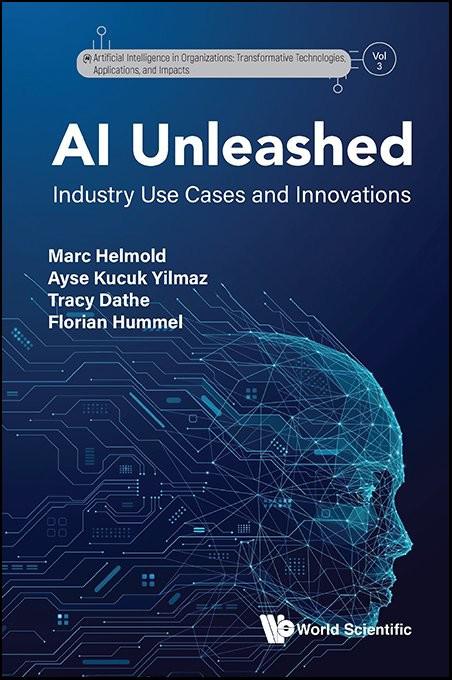
Artificial Intelligence in Organizations: Transformative Technologies, Applications, and Impacts — Volume 3
AI Unleashed
Industry Use Cases and Innovations
Marc Helmold
IU International University of Applied Sciences, Berlin, Germany
Ayse Kucuk Yilmaz
Eskisehir Technical University, Türkiye
Key Features
Tracy Dathe
Macromedia University of Applied Sciences, Berlin, Germany
Florian Hummel
IU International University of Applied Sciences, Berlin, Germany
• The book provides cutting-edge and highly relevant case studies to support its practical guidance
• Chapters address a wide range of new technologies, representing the breadth of AI capabilities
• The technologies and use cases discussed are applicable to many different sectors of industry and levels of the value chain
Description
AI Unleashed examines the ways in which AI technology and other cutting-edge digital innovations are rapidly reshaping and transforming industries across the globe, and how businesses navigating this digital revolution are increasingly recognizing the potential of AI to drive growth, enhance efficiency, and secure a long-term sustainable competitive advantage. The book dives into a range of pioneering AI applications, such as automated decision-making (ADM), virtual factories, large language models (LLMs), natural language processing (NLP), Big Data analytics, digital twins, and blockchain technology, that are fundamentally changing how industries operate. By exploring these transformative tools, the book provides both theoretical insights and practical, real-world case studies, demonstrating how companies can successfully implement these technologies to spearhead their digital transformation.
From optimizing manufacturing processes with AI-powered virtual factories to harnessing blockchain for secure, transparent transactions, each chapter presents actionable strategies and success stories that showcase how organizations can position themselves as digital leaders. This book doesn’t just highlight technological innovations; it also offers a roadmap for companies seeking to embrace digital transformation. It presents comprehensive proposals for integrating these technologies into existing business models, addressing challenges, and fostering an environment of continuous innovation. Through these practical examples, readers will gain a clear understanding of how to lead a successful digital transformation journey, ensuring their business thrives in the era of rapid technological advancement.
March 2026
£70 | HARDCOVER 978-1-80061-804-6
Imprint: World Scientific (Europe) Extent: 300pp
Type: Monograph
Series: Artificial Intelligence in Organizations: Transformative Technologies, Applications, and Impacts
Keywords: Artificial Intelligence (AI); Business And Management; Digital Technology; Digital Revolution; Innovation; Business Strategy; Automated Decision Making; Virtual Factories; Large Language Model; Natural Language Processing; Big Data Analytics; Digital Twins; Blockchain; Robotics; Supply Chain Management; Human Resources
Readership: The book is suitable for graduate students and academics in the fields of business and management, as well as business leaders and management professionals.
• Unleashing AI — Trends and Innovation
• AI Transformation and Roadmap — The Competitive Advantage
• The Smart and Intelligent Factory in the Future
• Automatic and Autonomous Driving Technology in the Mobility Sector
• Cutting-Edge NLP Technologies
• Realities in Quality Management and Assurance
• Large Language Models (LLMs) and Chatbots in Marketing and Sales
• Big Data Analytics in Finance
• Blockchain and Bitcoin Innovations
• Humanoid Robotics — Autonomous Robots of Tomorrow
• Virtual Supply Chains — The Digital Twin
• AI’s Impact on Leadership and HR
• AI-powered Learning Solutions in Higher Education — LLM Syntea
• AI Applications in the Service Industry
• Cutting-Edge AI Technology in Healthcare
• Algorithm-based Decision Making (ADM)
• The Future of AI — Cutting-Edge Trends in AI
An Introduction to Python for Quantitative Finance
From Scratch to Productivity
Paul Alexander Bilokon Thalesians Ltd, UK
Antoine Jacquier
Imperial College London, UK
Key Features
Ewan Mackie
Tier-One Investment Bank, UK
Aitor Muguruza
Kaiju Capital Management, Spain
• Covers Data Science and Machine Learning, the most topical technical subjects of our day
• Written by a data scientist with decades of practical experience on some of the most challenging datasets
• No formal prerequisites
• Includes an overview of Python, both foundations and advanced features
• Covers the mathematical foundations of Data Science and Machine Learning
• Teaches through case studies built on real datasets
• Includes numerous solved exercises
• The author has taught students of different age groups and levels of experience at Imperial College London and the Thalesians Intensive Summer School in Artificial Intelligence and has plenty of pedagogical experience
Description
Written by a data scientist with decades of practical experience on some of the most challenging datasets, this book caters to both novices and professionals working in the fields of data science and machine learning. It enables novices to enter these fields with confidence and ease. There are no formal prerequisites. An introduction to Python is included. The book then proceeds to cover some of the language’s most advanced features. The mathematical foundations that follow are meticulously explained. The discussion then proceeds to a practical consideration of data science and machine learning. The material is delivered through case studies developed on real datasets. The reader is invited to follow these case studies, and so develop experience in working with real data. Numerous solved exercises make this work suitable for self-study. The contents of this book have been taught by the author to students of different age groups and levels of experience at Imperial College London and at the Thalesians Intensive Summer School in Artificial Intelligence over the years.
Keywords: Data Science; Data Analysis; Data Scientist; Dataset; Datasets; Data; Machine Learning; ML; Artificial Intelligence; AI; Supervised Learning; Unsupervised Learning; Clustering; Dimensionality Reduction; Principal Components Analysis; PCA; Statistics; Statistical Analysis; Statistical Modelling; Regression; Classification; Linear Regression; Neural Networks; Neural Nets; Deep Learning; Python; Programming; Programming Languages; Software; Development; Software Development; Big Data; High-frequency Data; Linear Algebra; Matrices; Vectors; Probability Theory; Optimisation Theory; Image Processing; Image Analysis; Image Classification; Time Series Analysis; Forecasting; Python Libraries; Visualisation; Data Visualisation; NumPy; SciPy; Matplotlib; Pylab; Scikit-learn; TensorFlow; Keras; Modelling
• Introduction to Python
• Pandas
Contents Readership: Aspiring Data Scientists and Machine Learning (ML) experts — undergraduate, graduate, and independent. Also applicable to Software developers, engineers, and others working in technical professions interested in learning about Data Science and Machine Learning; and Managers working in financial, technological, and medical organisations, interested in learning about Data Science and Machine Learning.
• Modelling Financial Asset Returns
• Option Pricing
• Decision Models
• Keras and Neural Networks
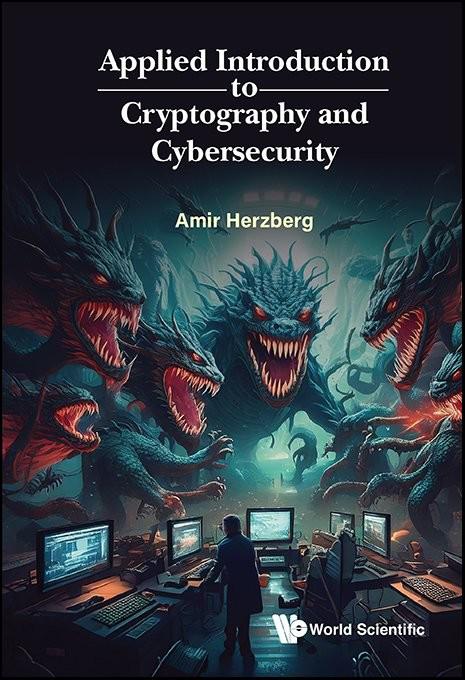
Applied Introduction to Cryptography and Cybersecurity
Amir Herzberg
University of Connecticut, USA
Key Features
• A comprehensive introduction covering both the essential theory and the important practical aspects, and showing how these two are both critical
March 2026
Description
This book is a comprehensive introduction to applied cryptography and cybersecurity, covering both the critical theoretical foundations and the practical aspects, including labs. It does not require prior knowledge in mathematics, cryptography or theory of computer science. The topics covered include shared and public key cryptosystems, authentication schemes and protocols, integrity (hashing, Merkle trees/accumulators and blockchains), signatures and key exchange, resiliency to corruptions, the Transport Layer Security (TLS) and Secure Sockets Layer (SSL) protocols, public key infrastructure (PKI), including certificate transparency (CT), human-centered security and cryptography, and (post)quantum cryptography.
This text is a useful reference for self-study or as a course textbook.
Readership: Undergraduate and graduate students reading courses on cryptography and cyber security.
• Introducing Cybersecurity and Cryptography
• Confidentiality: Encryption Schemes and Pseudo-Randomness
• Integrity: From Hashing to Blockchains
• Message Authentication and Signature Schemes
• Shared-Key Protocols
• Public Key Cryptography
• Transport Layer Security Protocols: Web-Security and Beyond
• Public Key Infrastructure
• Human-centred Security and Cryptography
• Conclusions and a Taste of Quantum Computing
Foundation of Media Computing
Wee Kheng LEOW
National University of Singapore, Singapore
Description
This comprehensive book presents the foundation of media computing that cuts across various areas, including computer vision, computational photography, computational geometry, 3D computer graphics modeling, surgery planning and simulation, and music computing. It emphasizes both mathematical foundation and practical applications.
The wide range of illustrated examples and case studies will make this reference text useful for professionals, researchers, academics, graduate students and advanced undergraduate students in media computing and related areas.
March 2026
£165 | HARDCOVER 978-981-98-1805-1
£70 | SOFTCOVER 978-981-98-1949-2
Imprint: World Scientific Extent: 650pp
Type: Textbook
Main Subject: Computer Science
Sub-Subjects: Machine Perception/ Computer Vision
Keywords: Media Computing; Computer Vision; Computational Photography; Music Computing; Problem Formulation; Algorithm Design; Deep Neural Networks
Readership: Graduate students, advanced graduate students, professionals, researchers and academics in computer vision and image analysis.
• Why Study Foundation?
• Mostly Linear Methods
◊ Linear Fitting
◊ Matrix Differentiation
◊ Simple Nonlinear Fitting
◊ Vector Geometry
◊ Spatial Transformation
• Mostly Nonlinear Methods
◊ Interpolation
◊ Non-rigid Transformation
◊ Spatial Registration
◊ Temporal Registration
◊ Robust methods
• Optimization Methods
◊ Gradient Descent
◊ Newton’s Family
◊ Optimization without Derivatives
◊ Constrained Optimization
◊ Stochastic Optimization
• Structure Discovery
◊ Principal Component Analysis
◊ Manifold Learning
• Media Problem Solving
◊ Problem Formulation
◊ Algorithm Design
◊ Case Study 1: Colour Calibration
◊ Case Study 2: 3D Reconstruction
◊ Case Study 3: Skull Reconstruction
◊ Case Study 4: Face Space
◊ Case Study 5: Melody Harmonization
• Advanced and Related Topics
◊ Multi-objective Optimization
◊ Mesh Parameterization
◊ Convex Optimization
◊ Connections to Neural Networks
◊ The Big Picture
Accounting Measurement and Economic Value
Roger J Willett
Victoria University of Wellington, New Zealand
Key Features
• Original theoretical contribution: Establishes an axiomatic, measurementtheoretic foundation for economic value based on accounting procedures
• Bridges accounting and economics: Links double-entry bookkeeping and financial reporting practices with economic theory and empirical modeling
• Addresses a core scientific deficiency in economics: Offers a replicable measurement method to test economic models, avoiding reliance on the concept of utility, unverifiable assumptions and perfect foresight
• Interdisciplinary depth: Draws on mathematics, statistics, information theory, and thermodynamics to support the theory of accounting measurement
• Empirical relevance: Provides a structure for linking accounting records with price theory, macroeconomic aggregates, and dynamic system modelling of demand and supply
• Unique treatment of value: Introduces the concept of activity cost and derives income, assets, and market values from observable resource transformations and exchanges
• Modelling insights: Explains the prevalence of power-law relations and logarithmic transformations in the statistical analysis of economic data
• Suitable for advanced academic audiences: Ideal for scholars in accounting theory, economic methodology, measurement science, and financial modeling
Description
Accounting Measurement and Economic Value presents a rigorous foundation for economic value grounded in the representational theory of measurement and accounting practice. Bridging accounting, economics, and the philosophy of science, the book argues that empirical progress in economics is impeded by the lack of a clear and effective method for measuring economic value. It provides a formal measurement system based on observable accounting procedures — focusing on activity costs, prices, and quantities — that enables falsifiable economic hypotheses and replicable empirical testing.
Rejecting utility-based and decision theory approaches to the measurement of economic value, the author proposes an alternative framework rooted in effective measurement procedures. These procedures trace the flow of rights and resources in monetary economies and provide the foundation for the additive, ratio-scaled values used in both microeconomic and macroeconomic analysis.
The book provides the first comprehensive account of how accounting numbers, when correctly understood, can serve as the empirical backbone for economic models. It is written for researchers in accounting, economics, and related fields interested in the foundations of measurement, empirical validation of theory, and the role of information systems in economic decision-making.
March 2026
£80 | HARDCOVER 978-981-98-1884-6
Imprint: World Scientific
Extent: 250pp
Type: Monograph
Main Subject: Economics & Finance
Sub-Subjects: Accounting
Keywords: Accounting Measurement; Economic Value; Representational Measurement Theory; Activity Cost Theory; Additivity of Value; Ratio Scale Measurement and Power Laws; Income Measurement; Market Value; Accounting Theory; Measurement in Economics; Empirical Economic Models; Fundamental Measurement; Offer-Acceptance Theory; Valuation Procedures; Financial Accounting Concepts; Assets and Claims; Transformation and Exchange Events; Measurement Validity and Reliability; Monetary Economies; Scientific Foundations of Economics; Falsifiability in Economic Theory; Cost-Value Functions; Macro and Micro Accounting Systems; Synergy and Goodwill; Statistical Properties of Accounting Numbers
Contents
• Perspectives
• Introduction
• Fundamental Measurement
• Activity Cost Theory
• Prices and Quantities
• Accounting Statistics and Market Value
• Conclusion
Readership: Researchers, academics, and advanced graduate students in the fields of accounting theory, economic methodology, financial economics, philosophy of economics, and measurement science; scholars interested in the scientific foundations of empirical modeling in the social sciences; postgraduate seminars focused on the philosophy of accounting, empirical methods in economics, or advanced topics in financial and economic theory. It is particularly suited for: Academic economists dissatisfied with conventional utility-based theories of value. Accounting theorists seeking a rigorous foundation for financial measurement. Researchers exploring the interface between information systems and economic behavior. Policy advisors and statisticians concerned with macroeconomic measurement frameworks (e.g., national accounts, SNA).
World
Quantitative Methods in Risk Analysis
Michael Foster Dalhousie University, Canada
Key Features
Leonard MacLean Dalhousie University, Canada
• The role of operational decisions in the control of systemic risk is emphasized. Decisions are made on the allocation of resources to the structural components of a system
• Internal and external factors impacting the systems operating environment are identified. The systems outcome equations which incorporate factor effects are estimated with standard statistical methods
• Each chapter includes case studies from real world systems. This risk analysis in practice illustrates the data collection from systems operation and the use of statistical/computational software
Description
The aim of this book is to provide the basic concepts and techniques underlying the quantitative analysis of risk in stochastic dynamic systems. The methods are general, but the emphasis is on financial systems in market economies, and operating systems in transportation. Real world case studies are included. These case studies illustrate how risk analysis is done in practice. Data files are also analysed with the EViews software.
Throughout the book, the role of decisions on the outcome from stochastic systems is emphasized. The theme is that “decisions have consequences”. The standard risk measures for the consequences from downside outcomes are presented, and riskreturn models incorporate those measures into optimal decisions.
With the inclusion of both conceptual models and practical applications, the book is accessible to senior undergraduate and graduate students in business. In particular, the book is a suitable reference or text for a risk analysis course for masters of business administration students.
Some mathematical background is required to understand the models and equations. Experience with statistical reasoning and statistical software is an advantage. There are appendices which summarize relevant mathematical concepts included in the book.
March 2026
£90 | HARDCOVER 978-981-4327-09-1
£45 | SOFTCOVER 978-981-98-2448-9
Imprint: World Scientific Extent: 250pp
Type: Textbook
Series: World Scientific Series in Finance
Main Subject: Economics & Finance
Sub-Subjects: Computational Economics/Finance
Keywords: Risk; Risk Measures; Stochastic Systems; Linear Models; Risk Factors; Regimes; Efficiency; Risk-return Trade-off; Optimal Control
Readership: Suitable for senior undergraduate and first year graduate students in finance, economics or management science, and elective courses in Risk Analysis in an MBA program or BCom program. This book would also be a useful reference for industry people working in risk analysis and control.
• Foundations of Risk Analysis
• Risk Assessment
• Risk Factors I
• Risk Factors II
• Risk Control
• Volatility
• Appendices
◊ Introduction to EViews
◊ Matrices
◊ Probability
Innovating Finance for a Sustainable Future
Integrating FinTech, Blockchain and Generative AI
Wissem Ajili Ben Youssef EM Normandie Business School, France
Key Features
Najla Bouebdallah Excelia Business School, France
• Interdisciplinary Approach: The book combines finance, innovation, and ESG challenges, appealing to a broad audience interested in holistic solutions
• Timely Insights: It addresses current global challenges such as digital transformations, particularly FinTech, Blockchain, and GenAI, making it relevant in today’s context
• Innovative Solutions: It highlights emerging technologies and financial strategies that promote sustainability, providing practical examples and case studies
• Real-World Applications: It features success stories from the banking industry of institutions that have successfully integrated sustainability into their financial models, providing actionable insights
• Policy and Regulatory Insights: The book discusses the impact of government policies and regulations on sustainable finance, helping practitioners navigate the regulatory landscape
• Future Trends: It analyzes emerging trends in sustainable finance and new technologies, preparing readers for upcoming market shifts
• Practical Frameworks: It provides frameworks and tools for implementing sustainable financial practices, making it a useful resource for practitioners
Description
This book explores the intersection of financial innovation and sustainable development, highlighting how digital innovation can promote environmental, social, and governance (ESG) criteria. Integrating perspectives from finance, technology, and environmental studies, it examines innovations such as FinTech, blockchain, and Generative AI in finance, the impact of digital financial services on banking, and their contributions to increasing consumer satisfaction. Written for academics, industry professionals, and policymakers, the book provides an indepth analysis of current trends, challenges, and the potential of digital innovations to drive meaningful improvements in ESG outcomes and inspire a new era of sustainable financial services.
The volume focuses on the convergence of finance, digital innovation, and sustainability. It explores how these issues are interrelated and how they are influencing the new digital banking industry. The book’s chapters cover a wide range of critical issues in finance, sustainability, and digital transformation in the context of developing and emerging economies.
To creatively respond to the challenges and explore the opportunities inherent in the banking and finance industry, this book presents strategies tailored to the needs of developing regions. It offers innovative ideas and valuable management solutions developed by managers and decision-makers. This book contains a variety of contributions that deal with financial innovation, strategic orientation, and organizational issues in the banking sector. All contributions have both theoretical and managerial implications.
March 2026
£120 | HARDCOVER 978-1-80061-856-5
Imprint: World Scientific (Europe)
Extent: 350pp
Type: Review Volume
Main Subject: Economics & Finance
Sub-Subjects: Fintech, Cryptocurrency, Blockchain Economics and Finance
Keywords: Generative Artificial Intelligence; Technology–Organization–Environment (TOE); ESG Factors; Sustainability; Blockchain; Supply Chain Finance; Trade Finance; FinTech; Customer Loyalty; Mobile Banking; Perceived Risk; Trust; Personalization; Digital Banking Adoption; Customer Behavior; Digital Innovation; Retail Banking; CSR; Foreign Ownership; Digital Transformation; Bank Performance; Big Four; Auditing
Readership: Students taking graduatelevel courses in Digital Finance, Financial Innovation, and Sustainable Banking as well as MBA programs focusing on FinTech, ESG, and Digital Transformation; PhD researchers in Finance, Technology Management, and Sustainability Studies; banking executives and digital transformation leaders; FinTech professionals and entrepreneurs; ESG and sustainability consultants.
• Introduction
• Generative Artificial Intelligence in Banking: An Empirical Study
• Factors Influencing ESG Adoption in the Banking Industry: An Empirical Study
• Challenges and Barriers to the Adoption of Blockchain Technology in Supply Chain Finance Within Commercial Banks
• The Factors Affecting Customer Loyalty Towards Mobile Banking Applications: A Case Study of Vietnam
• Factors Affecting FinTech Adoption in Vietnamese Banks: A Case Study of Vietnam International Bank — VIB
• Perceived Risk and Trust Dynamics in Mobile Banking: Insights from the Financial Sector in Vietnam
• Exploring the Influence of Personalization on Digital Banking Adoption: A Case Study of Vietcombank
Essential Mathematics for Economics
A Student’s Guide to Key Mathematical Techniques
Vasileios
Zikos (Chulalongkorn University, Thailand)
Key Features
• Covers essential topics for understanding and applying mathematics in microeconomics
• Self-contained book, with all required methods explained in the text
• Introduces mathematical concepts and tools systematically
• Provides examples with their solutions immediately after introducing new concepts
• Develops a user-friendly language for thinking about economic problems
• Provides further exercises at the end of each chapter
Description
The aim of this textbook is to improve students’ ability to formulate economic problems and provide essential mathematical tools for analysis across various contexts. This book presents the author’s current understanding of mathematics, shaped by several years of teaching this subject as well as enriched through interactions with his students. To aid students in their learning, the book is written in a manner that better highlights key concepts and provides additional clarity when possible. In this way, it is hoped that students will feel more guided in their study of mathematics and its applications in economics.
March 2026
£70 | HARDCOVER 978-981-98-1410-7
£35 | SOFTCOVER 978-981-98-1483-1
Imprint: World Scientific Publishing Company
Extent: 190
Type: Textbook
Main Subject: Economics and Finance
Sub-Subjects: GENERAL ECONOMICS | MACROECONOMICS / MICROECONOMICS | MATHEMATICAL ECONOMICS / GAME THEORY / ECONOMETRICS | MATHEMATICAL FINANCE & ECONOMICS
Readership: Undergraduate students in Mathematics, Mathematical Economics, Microeconomic Theory, and Applied Microeconomics.
Contents
• Linear Algebra
• Differential Calculus
• Concavity and Convexity of Functions
• Unconstrained Optimization
• Optimization with Equality Constraints
• Optimization with Inequality Constraints
• Integral Calculus
• Economic Dynamics and First-Order Linear Differential Equations
• Research Applications
Game Theory, Machine Learning, and Production in Sports
The Fair-Credit Baseball Statistics
Michael McBride
University of California, Irvine, USA
Key Features
• Groundbreaking Application of Nobel Prize-Winning Theory: The book introduces the first-ever application of the Shapley Value (created by Nobel Prize winner Lloyd Shapley) to baseball statistics. This represents a revolutionary bridge between cutting-edge economic theory and sports analytics, offering mathematical rigor that traditional baseball statistics lack
• Solves Baseball’s Oldest Problem: Fair Individual Credit. For over 150 years, baseball has struggled to fairly credit individual players for team success. This book finally solves that problem by creating statistics that satisfy mathematical fairness axioms — something no existing baseball statistic can claim
• Combines Three Cutting-Edge Fields: Uniquely integrates game theory, machine learning, and sports analytics to analyze over 100 years of Major League Baseball data. This interdisciplinary approach creates sophisticated yet accessible baseball statistics that provide fresh insight into an old game
• Appeals to Three Distinct Markets: Written for academic researchers, professional sports analysts, and baseball fans — creating multiple revenue streams. The technical depth satisfies academics while remaining accessible to general readers, maximizing market reach
• First-Mover Advantage: As sports analytics becomes increasingly sophisticated, this book sets a new standard in pioneering the application of coalitional game theory to sports. There are no competing books that combine these specific methodologies (game theory, machine learning, sports analytics)
• Practical Applications Beyond Professional Baseball: The methodology can be applied to any level of baseball and to all levels of softball, creating potential for follow-up publications
Description
In this groundbreaking book, economist and game theorist Michael McBride presents an innovative answer to this question for the sport of baseball: “How is individual performance fairly measured when success depends on teamwork?” The answer is — the Fair-Credit Baseball statistics.
Drawing on the Nobel Prize-winning Shapley Value from coalitional game theory, McBride creates two revolutionary measures of offensive performance: Shapley Run Credits (SRC) and Offensive Shapley Win Credits (OSWC). Unlike traditional baseball statistics, these new measures satisfy mathematical fairness axioms, making them the fairest measures of individual credit in the sport.
McBride combines this theoretical foundation with cutting-edge machine learning to analyse over a century of Major League Baseball data, producing the most accurate measures of offensive performance in baseball history. The result is a sophisticated yet intuitive statistical framework that finally gives players the credit they truly deserve for actual results — not projected or average performance.
Written for academic researchers, sports analysts, and baseball enthusiasts alike, this book successfully bridges complex mathematical theory with practical application. It offers technical rigor for professionals while remaining engaging and accessible for anyone passionate about understanding what really happens on the baseball diamond.
March 2026
£80 | HARDCOVER
978-981-98-2184-6
Imprint: World Scientific
Extent: 250pp
Type: Monograph
Main Subject: Economics & Finance
Sub-Subjects: Mathematical Economics/ Game Theory/Econometrics
Keywords: Game Theory; Machine Learning; Baseball; Sabermetrics; Economics; Shapley Value; Coalitions; Fairness; Statistics; Credit; Skill; Runs; Wins; Scorekeeping; Decision-tree Classification; Most Valuable Player; Great Games
Readership: Academic researchers exploring innovative applications of game theory will find a detailed presentation of how coalitional game theory can be applied to baseball statistics; Sports statisticians and analysts — including sabermetricians (baseball analysts) — will discover the mathematical and machinelearning methods behind these new Fair-Credit Baseball statistics; Baseball fans and industry professionals can learn what these statistics reveal about the sport they love, even without delving into the technical calculations; General reader interested in the topic.
• Front Matter
• Introduction
• The Game Theory
◊ Coalitional Game Theory, the Shapley Value, and Fairness
◊ Shapley Run Credits
◊ Offensive Shapley Win Credits
• The Machine Learning
◊ Construction a Value Function
◊ Training the FCB Classification Model to do Event-Trigger Scorekeeping, with Robert MacDonald
◊ Predictive Performance of the FCB Classification Model, with Robert MacDonald
• The Fair-Credit Statistics in Practice
◊ Leaderboards
◊ Coalitions
◊ Most Valuable Players
◊ Fair-Credit Heroes
◊ Great Games Revisited
Islamic Finance, Energy Transition and Sustainability
Hassanudin Mohd Thas Thaker
International Islamic University Malaysia (IIUM), Malaysia
Zera Zuryana Idris
International Islamic University Malaysia (IIUM), Malaysia
Key Features
Sharifah Nabilah Syed Salleh
International Islamic University Malaysia (IIUM), Malaysia
Gairuzazmi Mat Ghani
International Islamic University Malaysia (IIUM), Malaysia
• Stewardship and ethical responsibility — Islamic perspectives on climate change position environmental stewardship as a divine responsibility, grounded in values like khalifah (stewardship), mizan (balance), and israf (moderation), framing sustainability as a spiritual and ethical imperative
• Islamic finance as a catalyst for sustainability — Islamic finance — including instruments like green sukuk, waqf, and retakaful — serves as a strategic vehicle for funding renewable energy and climate resilience, aligned with the maqasid al-shariah to promote public welfare and ecological justice
• Behavioral change and community engagement — Faith-based values inspire grassroots action, peer-to-peer energy trading, and sustainable living across Muslim-majority regions
Description
This book tackles the worldwide issue of climate change and energy security. It aims to offer inventive answers for a more environmentally friendly and fair future by examining the convergence of Islamic finance and sustainability.
Islamic finance prioritises ethical investing, risk-sharing, and social justice; it offers a distinct advantage in promoting sustainable development goals (SDGs). Thus, this book focuses on the theoretical discourse about Islamic finance and sustainability, the global perspective on energy transition, the use of Islamic financial instruments such as sukuk and green bonds, to finance renewable energy projects and other sustainable initiatives. It presents successful case studies and emerging trends in the Islamic finance that encouraged policymakers, financial professionals, and investors to explore products of Islamic finance and incorporate these concepts into their plans and operations.
Furthermore, this book aims to assist in closing the knowledge disparity in this expanding domain, functioning as a significant asset for scholars, learners, and professionals. It exemplifies the notion that finance has the potential to positively impact the world by promoting sustainability and creating a better planet and future for everyone in the country.
March 2026
£120 | HARDCOVER 978-981-98-2199-0
Imprint: World Scientific
Extent: 340pp
Type: Review Volume
Series: Series in Energy Transition, Carbon Neutrality, and Sustainability
Keywords: Climate Finance; Sustainability; Energy Transition; Climate Change; Energy Security; Islamic Finance And Sustainability; Ethical Investing; Risk-Sharing; Social Justice; Sustainable Development Goals; Islamic Financial Instruments; Sukuk; Green Bonds; Renewable Energy; Qur’an; Qur’anic Guidance; Climate Change Economics; Climate Change Policy; Islamic Finance; Environmental; Energy Economics; Renewable Energy; Innovative Financing; Energy Studies; Energy Research; Sustainable Development; Green Sukuk; Renewable Energy Transition (RET) Sukuk; Fossil Fuel; Fossil Fuel Dependency; Peer-to-Peer Energy Trading; Islamic Finance Principles; Wafq; Islamic Social Finance Instrument; Wafq-Retakaful Model; Residential Green Houses
Contents
• Islamic Perspectives on Climate Change and Energy Transition
◊ Climate Change Policy: How Islam Deals with It - The Malaysian Case Study
◊ Bridging Quranic Guidance and Public Economics for Climate Solutions
◊ Islamic Framework for Transition Towards Sustainable Energy: Qur’anic Sources, Legal Maxims, and Contemporary Practices
◊ Renewable Energy Production And Sustainable Development In OIC Countries: The Role Of Islamic Financial Development And Institutional Quality
• Financing Energy Transition with Islamic Instruments
◊ Funding the Energy Transition with Islamic Finance in Muslim-Majority Countries: Evidence in the ASEAN, Central Asia, and Maghreb Region
◊ Optimizing Green Sukuk for Renewable Energy Sustainability: An Integrated BOCR-Based Strategic Framework
◊ Renewable Energy Transition (RET) Sukuk To Reduce Fossil Fuel Dependency
• Innovations in Islamic Finance for Sustainability
◊ Religiosity and Pro-Environmental Behaviour in Malaysia
◊ Toward Ethical and Sustainable Peer-to-Peer Energy Trading: Insights from Islamic Finance Principles
• Islamic Social Finance and Energy Transition
◊ Waqf as an Islamic Social Finance Instrument for Supporting Sustainability and Energy Transition
◊ Evaluating the Sustainable Waqf-Retakaful Model in Malaysia: Enhancing Risk Management for Energy Transition
◊ A Proposed Model of Demand Drivers for Residential Green Houses in Malaysia
Readership: Academics, higher degree students, researchers, and policymakers around the world interested in exploring discussions about the convergence of Islamic finance, energy transition and sustainability, environmental science, and public policy. Can be used as a recommended reference for undergraduate and postgraduate-level Economics and Finance courses, or for interdisciplinary research or curriculum development; Bankers, sukuk issuers, and investment managers looking to align portfolios with ESG and maqasid al-shariah.
Handbook of Financial Services Performance
Analytical and Empirical Perspectives
Bhagirath Prakash Baria
The Maharaja Sayajirao University of Baroda, India
Ram Pratap Sinha
Government College of Engineering and Leather Technology, India
Key Features
Firdous Ahmad Malik
University of People, USA
K Shanmugan
The Maharaja Sayajirao University of Baroda, India
• Contributions from globally eminent scholars: The volume features chapters authored and edited by leading academics with high h-index and i-10 index scores, ensuring intellectual rigor and credibility
• Domain-specific focus on financial services: Unlike generic performance analysis texts, this book concentrates on the unique structural and operational complexities of financial service firms — where inputs and outputs are overlapping, intangible, and difficult to quantify using traditional models
• Integration of AI, machine learning, and Big Data: The volume explores how emerging technologies are transforming performance measurement in financial services. It analyzes the role of AI, ML, and Big Data in enhancing predictive accuracy, operational benchmarking, and strategic decision-making
• State-of-the-art methods and empirical depth: Chapters showcase advanced analytical techniques, including econometric modeling, data-driven diagnostics, and sector-specific case studies. The book bridges theoretical innovation with empirical relevance, offering actionable insights for researchers and practitioners
• Comprehensive and self-contained resource: This edited volume provides complete coverage of the topic in one place — spanning conceptual foundations, methodological advances, empirical applications, and bibliographic trends — eliminating the need to consult multiple fragmented sources
• Critical gap-filling in existing literature: Competing titles have largely focused on general performance theory. This book fills a crucial gap by developing a special theory of financial services performance, tailored to the sector’s unique dynamics and measurement challenges
• Rich bibliographic and trend analysis: The book serves as a valuable reference tool, offering extensive literature reviews and curated citations. It maps the evolution of thought in financial services performance, making it indispensable for academics, policymakers, and industry analysts
Description
This book examines how emerging technologies are reshaping performance measurement in financial services. It delivers an integrated and authoritative treatment of the subject, encompassing conceptual foundations, methodological innovations, empirical evidence, and bibliometric analyses. Special attention is given to the transformative role of AI, Machine Learning, and Big Data in improving predictive accuracy, operational benchmarking, and strategic decision-making. Unlike conventional performance analysis, this book focuses on the unique structural and operational complexities of financial service firms where inputs and outputs often overlap, are intangible, and resist traditional quantification. The contributors bring deep expertise and diverse regional perspectives, positioning this volume as a benchmark in global financial services research. With its extensive literature reviews and curated citations, the book is an indispensable reference for academics, policymakers, and industry analysts seeking to navigate the evolving landscape of performance measurement in the digital era.
Keywords: Financial Services; Performance Measurement Financial Services; Performance Evaluation Financial Services; Banking Efficiency; Insurance Performance; Fintech Impact; AI In Financial Services; Machine Learning In Financial Services; Big Data Analytics Finance; Digital Finance; Financial Inclusion India; Digital Public Infrastructure India; Data Envelopment Analysis Finance; DEA In Financial Services; SuperEfficiency DEA; Nonconvex Frontier Analysis; Inverse DEA Models; Banking Production Models; Input-Output Analysis Finance; Econometric Modeling Financial Services; Technical Efficiency Banking; ARIMA Cryptocurrency Forecasting; LSTM Cryptocurrency Prediction; Blockchain Price Prediction; Cryptocurrency Market Analysis;
Contents Readership: Students and academics in areas like financial management, financial economics, general economics, macroeconomics; professionals working in National income accounting institutions, official agencies engaged in financial services data collection and professional research institutions working on macro/finance/development economics as well as libraries, educational and research institutions.
• Theory of Performance Analysis for Financial Services
◊ Decoding Output Measurement in Financial Services: A Scholarly Peek into the Methodologies and Frameworks (Bhagirath Prakash Baria, and Firdous Ahmad Malik)
◊ The Bank as a Production Unit: Illuminating Two Genres of Banking Theory (K V Bhanu Murthy)
◊ Mapping Performance Analysis of Financial Services: Systematic Insights and Perspectives (Violeta Cvetkoska, and Bojan Kitanovikj )
• Analytical Perspectives
◊ Review of Performance Evaluation in Insurance and Reinsurance Industries (Narinder Kumar, and Tuhin S Banerjee)
◊ Impact of Technology on Performance Analysis in the Financial Services Domain: A Survey of the Literature (Güneş Topçu, Can Bekaroğlu, and İsmail Elagöz)
◊ The Role of India’s Digital Public Infrastructure in Advancing Financial Inclusion: A Policy Perspective (Neeraj Kumar and Neha Mangla)
◊ The Impact of Financial Technologies (Fintech) on Financial Services Performance in Emerging Markets (Nelson Lawrence, Garikayi Emmanuel Gondo, and Prof Ravinder Rena)
• Empirical Perspectives
◊ Addressing the Legalization of Criminal Proceeds within the Banking Sector of the Republic of Belarus: Insights and Development Strategies (Volha Rudkouskaya)
◊ Data Envelopment Analysis in the Financial Services Industry ( Alireza Amirteimoori and Maryam Nematizadeh)
◊ Technical Efficiency of Indian Private Commercial Banks: Evaluation and Explanation (Ram Pratap Sinha, and Prof K Shanmugan)
◊ Efficiency of ASEAN banks: A Novel Analysis Using the Nonconvex Frontier Approach (Thanh Ngo, Tu Le, and Thi-Linh Pham)
◊ The Future of Banking Performance Evaluation: An Empirical Study of AI-Enhanced KPI Prediction Models and Their Implementation Framework (Frédéric Mirindi and Derrick Mirindi )
◊ Are Iran Stock Market Banks Always More Efficient than Iran Fara Bourse Banks? A Super-Efficiency DEA Approach (Bahareh Vaisi )
◊ Predictive ability of ARIMA & Long Short-Term Memory (LSTM) model for blockchain-based crypto currency price changes (Magesh Kumar, Ravinder Rena, V Sindhu, and P Srinivasan)
◊ Advanced DEA-R Models for Performance Evaluation in the Banking Sector: Handling Ratio and Negative Data with Inverse DEA Approaches (Mojtaba Ghiyasi and Mehdi Soltanifar)
◊ Financial Services Performance through Machine Learning Approaches (Pedro Pablo Chambi Condori and Telma Saravia Ticona)
◊ Threshold Effects of Finance-Growth Nexus: A Case Study of Nigeria ( Apanisile, O T and Adesina, K E )
◊ Sensitivity in the Cryptocurrency Market: Evidence from the Asian Countries (Ruchita Verma, Shiney Sam, and Dhanraj Sharma)
◊ Assessing the Impact of Parliamentary Elections, Political Stability, and Government Effectiveness on Bank Risk in India: An Empirical Study (Tarika Singh Sikarwar, Surjeet Singh, and Sandeep Singh)
◊ Return, Tracking Error and Intraday Volatility Under Asset Allocation: Evidence from ETFs in Iran (Meysam Kaviani and Seyyed Ahmad Edalatpanah)
◊ Litigation Risk and Banks’ Financial Performance: Do Internal Corporate Governance Mechanisms Matter? (Mohsen Imeni, and Seyyed Ahmad Edalatpanah)
The ARMOR-CAP Playbook
Resilient Strategies for Institutional Investors
Frank J Fabozzi
Johns Hopkins University, USA
Key Features
• No competing monograph offers the formal, applicable scoring model which this book offers
• An actionable toolkit of worksheets, dashboards, policy inserts are included and ready for immediate adoption by readers, coupled with interviews with active practitioners
• Author is a leading and internationally renowned finance academic and editor
March 2026
Description
ARMOR (Allocation for Resilient Markets and Operational Readiness) is the first comprehensive framework that shows asset owners, managers, and policymakers how to quantify, score, and actively manage strategic fragility — going far beyond today’s Environmental, Social and Governance (ESG) labels and enterprise-risk checklists.
The global investment industry is waking up to a hard truth: efficiency-first capitalism has left portfolios brittle in the face of geopolitical rifts, supply-chain shocks, cyber disruption, climate extremes, and rapid regulatory realignment. Drawing on fifty years of research in portfolio theory, financial economics, operations management, and national-resilience strategy, this book:
• Defines the five pillars of strategic continuity (sovereign compatibility, supplychain resilience, operational redundancy, adaptive governance, and policy alignment).
• Introduces the ARMOR Scoring System, a multidimensional diagnostic that maps directly to credit ratings and risk-capital allocation.
• Demonstrates step-by-step implementation through original case studies — Huawei, semiconductors, European utilities, global insurers, and multi-asset sovereign funds.
• Shows Chief Information Officers (CIOs) and boards how to embed ARMOR within fiduciary mandates, stress-testing, and investment-policy statements without displacing existing ESG or ERM programs.
With its blend of rigorous analytics, practitioner interviews, and “playbook” templates, ARMOR equips readers to transform fragility from a hidden liability into a measurable source of competitive advantage.
Readership: CIOs, risk officers, strategists, and portfolio managers at pension funds, insurers, sovereign wealth funds (SWFs), and large assetmanagement firms; graduate finance programs (risk management, sustainable investing). Also policymakers in financial-stability units, credit-rating analysts, consulting firms, and advanced undergraduates in investments or international finance.
• Preface
• The Protection Imperative: From Fragility to Strategic Readiness
• Unseen Fault Lines: Mapping Systemic Fragility in Capital Markets
• From Concept to Pillars: Engineering Resilient Capital with ARMOR-CAP
• From Framework to Function: The ARMOR-CAP Diagnostic Toolkit
• Portfolio Integration of ARMOR-CAP
• Embedding ARMOR-CAP into Institutional Governance
• Operationalizing Resilience Across Mandates
• Field Scenarios and Implementation Lessons
• Interpreting ARMOR-CAP Scores: Benchmarking, Trajectories, and Strategic Translation
• Appendices
◊ Glossary of ARMOR-CAP Terms and Governance Concepts
◊ Methodology Notes and Data Considerations
◊ ARMOR-CAP Domain Definitions and Scoring Rubric
◊ Methodological Foundations of the ARMOR-CAP Framework
◊ References
◊ Index
Whole Numbers
Brandon Oh
Description
Join the Maths Champs on fun adventures, with lots of maths learning along the way!
In this comic book, you will learn about whole numbers, patterns and operations with whole numbers. What awaits you? A supermarket challenge, an adventure on the high seas, a mobile phone puzzle, classroom conundrums and much more!
The Maths Champs series uses engaging comic stories to present concepts from the latest Singapore Primary Maths syllabus, and beyond. The stories have been set in a variety of scenarios to engage young readers and showcase real-life relevance. Activities and challenge questions are included after every story to reinforce concepts and provide enrichment.
Join the Maths Champs on fun adventures, with lots of maths learning along the way!
In this comic book, you will learn about equivalent fractions, operations with fractions, money and problem-solving. What awaits you? A pancake puzzle, the search for a princess, monster battles and much more!
The Maths Champs series uses engaging comic stories to present concepts from the latest Singapore Primary Maths syllabus, and beyond. The stories have been set in a variety of scenarios to engage young readers and showcase real-life relevance. Activities and challenge questions are included after every story to reinforce concepts and provide enrichment.
Join the Maths Champs on fun adventures, with lots of maths learning along the way!
In this comic book, you will learn about measuring length, volume, mass and time. What awaits you? An intergalactic battle, a trek through the desert, a weighty issue with cheese, a race to the airport and much more!
The Maths Champs series uses engaging comic stories to present concepts from the latest Singapore Primary Maths syllabus, and beyond. The stories have been set in a variety of scenarios to engage young readers and showcase real-life relevance. Activities and challenge questions are included after every story to reinforce concepts and provide enrichment.
Join the Maths Champs on fun adventures, with lots of maths learning along the way!
In this comic book, you will learn about squares and rectangles, and solving problems related to area and perimeter. What awaits you? An expedition to an ancient temple, a battle of wits between two kingdoms, a search for a lost brother and much more!
The Maths Champs series uses engaging comic stories to present concepts from the latest Singapore Primary Maths syllabus, and beyond. The stories have been set in a variety of scenarios to engage young readers and showcase real-life relevance. Activities and challenge questions are included after every story to reinforce concepts and provide enrichment.
Join the Maths Champs on fun adventures, with lots of maths learning along the way!
The Maths Champs series uses engaging comic stories to present concepts from the latest Singapore Primary Maths syllabus, and beyond. The stories have been set in a variety of scenarios to engage young readers and showcase real-life relevance. Activities and challenge questions are included after every story to reinforce concepts and provide enrichment.
• Critical Need for the Book: Amid China’s higher education transformation, the book addresses pressing challenges: how universities achieve leapfrog development, balance academic excellence with social service, and navigate globalization. It fills a gap by offering actionable insights from Nanjing Tech’s real-world practice, making it essential for educators, administrators, and policymakers seeking to replicate success in institutional building
• Unique Approach & Coverage: Blending first-hand administrative experience with academic rigor, the book integrates: practical strategies, multidimensional themes, and historical context
• Competitive Advantage: Unlike theoretical or generic higher education texts, this book focuses on a non-elite university’s success story, offering a replicable model for institutions outside China’s top-tier systems. Combines the author’s cross-institutional experience (Peking University, National University of Singapore, Fudan University) with on-the-ground case studies, bridging Eastern and Western educational philosophies. Includes primary sources (speeches, policy documents, meeting excerpts) that capture real-time decision-making, enhancing authenticity
• Topicality: Addresses timely issues in global higher education: Reform of academic evaluation systems and overcoming “utilitarianism” in research. Balancing basic research with applied innovation (e.g., Nanjing Tech’s “Advanced Material Valley” model). Responding to national strategies like “innovationdriven development” and “Double First-Class” construction, making it relevant to current policy debates
• Value-Added Features: Authoritative insights: Written by Wei Huang, an academician with decades of experience in elite and regional universities, offering a rare blend of scholarly depth and administrative pragmatism; Cultural integration: Weaves traditional Chinese philosophy (e.g., “立德立功立言”) with modern educational ideals, enriching its intellectual depth
• Eminent Contributors: Authored by Huang Wei, a prominent educator and scientist in Chinese higher education with leadership roles at multiple top universities
Description
This book explores the pathways for Nanjing Tech University to develop into a world-class institution, while reflecting on broader issues in higher education. The book aims to distill insights from the author’s extensive experience in academia and university administration (spanning institutions like Peking University, National University of Singapore, and Nanjing Tech. It focuses on Nanjing Tech’s strategies, including its pursuit of being “comprehensive, research-oriented, and globalized,” andaddresseskeyaspectssuchaseducational philosophy, disciplinarydevelopment, talent cultivation, innovation, internationalization, and team building.
Covering materials from 2012 to 2015 — including speeches, lectures, and essays — the scope encompasses diverse themes: moral education, institutional reform, collaborative innovation, talent recruitment, and the integration of academia with industry. It also reflects on the university’s historical legacy, current challenges, and aspirations, offering a holistic view of its efforts to enhance academic excellence, social impact, and global standing.
Ultimately, the book serves as a record of Nanjing Tech’s growth and an exploration of universal principles in higher education development
March 2026
£155 | HARDCOVER 978-981-12-1433-2
Imprint: World Scientific
Extent: 576pp
Type: Monograph
Main Subject: Education
Sub-Subjects: Education Systems and Policies
Keywords: Nanjing Tech University (NanjingTech); Higher Education Reform; World-class University Construction; Comprehensive, Research-oriented, Globalized Development; Collaborative Innovation; Talent Cultivation and Recruitment; Educational Philosophy (Conscience, Virtue, Truth); Disciplinary Development; Internationalization; Innovation-driven Strategy; “Nanjing Tech Dream”; Moral Education; Team Building; Scientific Research Evaluation; Chinese Higher Education Transformation
Readership: University administrators, faculty members, and researchers in the field of education; Professionals in the business and innovation sectors.
The book will showcase China’s progress and achievements in its transition from a major player in higher education to a global leader in the field. It introduces the philosophy of building a socialist higher education system with Chinese characteristics, promotes traditional Chinese culture and contemporary Chinese values worldwide, and facilitates mutual learning between Chinese and international higher education concepts as well as cultural and civilizational exchanges, thus contributing ultimately to building a global community with a shared future for mankind.
◊ Dreams, Success, and Future: Promising Future from Promising Dreams
◊ Forever Young
◊A Family of Love and Attachment
◊We Should Always Stick to Things We Believe in
◊Great Learning: From Doubts to Certainties
◊ My Thoughts on College Sports Games
◊Becoming a Reflective Reader and a Lifelong Learner
◊ “The Wise Are Not Confused
◊the Benevolent Not Worried
◊the Brave Not Afraid”
◊ Taking Challenges for a Successful Journey of Life
◊Making Meaningful Transformation of Life
◊ For Virtue, for Accomplishment, and for True Expression of Thoughts: The Importance of Facts, Diligence, and Innovation
◊Of Great Learning, Openness, and Confidence
◊ Success Adheres to the Original Goal
◊ In Search of Truth and Knowledge
◊ Lofty Aspirations, Great Responsibilities
◊Be Loyal to the Motherland, to the Cause, and to the Truth
◊To Be a Devoted Explorer
◊Chinese Higher Education in Transition
● On Education Strategies
◊ To Dedicate to a Glorious Dream with Pride
◊Scientific Development with Characteristics: A Leap Forward
◊On Building a Comprehensive, Research-Oriented and Globalized University
◊Strive for Realizing the “Nanjing Tech Dream”
◊ United, We Succeed
◊ Making Philosophy and Social Sciences Thriving in Nanjing Tech
◊To Reform with a Common Goal
◊ Striving for Excellence as a Forerunner
◊New Normal, New Horizon, New Measures
◊ Steady Steps, and Steady Progress
◊On Disciplinary Construction
◊On the Cultivation of Talent
◊On Humanities
● On the International Vision
◊Connotative Development with Shared Globalized Strategies
◊“A Most Beautiful April”
◊Rich Heritage, Splendid Achievements
◊ Going Forward Hand in Hand for an Epochal Future
◊Providing the Rich Soil for the Innovation of Oversea Chinese Talents
◊Sincere Cooperation, Mutual Advancement
● On Innovation
◊ Promoting Collaborative Innovation and Serving for Economic Transitions
◊ Enhancing Interdisciplinary Cooperation for Mutual Reference
◊ Realizing the “Nanjing Tech Dream” by Constructing a “Nanjing Tech Advanced Material Valley”
◊ To Rise with Accumulated Strengths Through Moral Cultivation
◊ On Reforming the Scientific-technology (ST) Evaluations from the Origin
◊Having a Good Fight in Original Innovation
◊Striving to Lead Innovation with Confidence and Practice
◊Taking the Path to Innovation
◊On Three Barriers in Scientific-technology Evaluations
◊Seizing Opportunities for Innovation
◊To Succeed through Right Aspiration and Open Mind
◊ On Interdisciplinary Issues in Chemistry and Chemical Industry
● On Recruitment of the Talented
◊Bringing in Talents: The Pivotal Strategy for Successful Team-Building
◊Tapping the Invaluable Human Resources for Prosperity in Yanfu
◊Young Faculty: The Hope for the Development of Universities
◊Speeding up the Process of Recruiting Overseas Talents
◊First-Class Teamwork Means First-Class Collaboration
◊ Arms Wide Open to Talent Around the World
◊Recruiting Talents and Boosting Innovation with Dedication
◊Recruiting and Cultivating the Talented for a Grand Leap Forward
◊Four Essential Premises on Recruitment and Cultivation of Talented People
◊The Significance of Tapping the Potentials of People
◊On Providing a Promised Land for Innovation of Oversea Talents
● On Team-Building
◊True Friendship Makes Distance Abyss Apart Be Inches Away
◊Seeking a New Beginning
◊ Nothing is Unreachable for Those Who Share Common Goal.
◊No Road is Long with Good Company
● On Nanjing Tech Dream
◊On Building an International City Renowned for Education
◊Everlasting Power of Civilization in Everlasting Circulation of Books
◊ The Art of Calligraphy Travels Far and the Fragrance of Art Lingers Long
◊ Chinese Dream Is Never Far
◊Returning to Nanjing Tech with Deep Affection
◊“Meeting You at My Best Age”
◊A Letter to the Nanjing Tech Alumna
◊ Career Planning, Knowledge Pursuing, and Profession Seeking
◊On Harsh Self-Cultivation
◊Some Letters of Congratulations
● On New Insights
◊A Practitioner Pursuing Chinese Dream
◊Encouraging Students for Creative and Critical Thinking
◊Winning Hearts in Talents Recruitment from Overseas
◊The Second Prize on Organic Semiconductor in the National Natural Science Fund
◊ Inspiring Students to Work Hard for Chinese Dream
◊Boosting Innovation through Reforms
◊Some Thoughts on the Development of Education and Economy in Jiangsu Province
◊“I’m Your Number One Fan, Prof. Huang”
◊Chinese Innovation on Optical Storage and Encryption and Decryption Technology
◊Chinese Scientist Develops Optical Storage Encryption and Decryption Technology
◊ A Talk on Employment of University Graduates in 2014
◊The Importance of Team-Building for Scientific Innovation in Universities
◊A “Nanjing Tech Dream” for All
◊On Avoiding Nepotism in Academic Accreditation
◊Chinese Scientists’ Innovation on Full-Color Display Using Nanotechnology
● Afterward
Photoluminescence Spectroscopies for Advanced Semiconductors and Quantum Structures
Zhe Chuan Feng Kennesaw State University, USA
Key Features
• This monograph provides a comprehensive an in-depth look at a full range of photoluminescence spectroscopies (i.e. PL, PLE, TRPL) and relating to advanced semiconductors and quantum structures
• The book highlights both traditional semiconductors and the latest materials with wide and ultra-wide bandgaps, making it highly relevant to current research and industry trends
• The content is highly visual with numerous graphs and figures, ensuring that complex data and concepts easy to understand
March 2026
£80 | HARDCOVER 978-981-98-2494-6
Description
Photoluminescence Spectroscopies for Advanced Semiconductors and Quantum Structures presents the fundamental principles and practical applications of photoluminescence (PL) spectroscopies for advanced semiconductors and quantum structures.
This comprehensive monograph provides a detailed guide to key analytical techniques, including PL, photoluminescence excitation (PLE), time-resolve PL (TRPL), and correlated optical methods like photoreflectance (PR) and contactless electro-reflectance (CER). The book covers a wide range of materials, with a strong focus on cutting-edge wide and ultra-wide bandgap semiconductors such as SiC, GaN, and Ga2O3, along with quantum structures like quantum wells, quantum dots, and light-emitting diodes (LEDs).
This book is an essential resource for advanced undergraduate and graduate students, researchers, academics, and engineers in fields such as electrical engineering, semiconductor physics, condensed matter physics and optoelectronics. Readers will gain the foundational knowledge and practical insights needed to effectively use PL spectroscopies for materials characterization and device research.
Readership: For advanced undergraduates, graduates, researchers, academics and engineers in the fields of condensed matter physics, optics, semiconductors, spectroscopy optoelectronics or microelectronics.
• Introduction
• SiC and IV-IV Semiconductors
• III-V Semiconductors and Quantum Structures
• II-VI Semiconductors
• GaN, InN and AlN Binary Semiconductors
• Ternary and Quaternary III-Nitride Semiconductors
• ZnO-Based Semiconductors
• Gao-based and Other Semiconducting Oxides
• III-Nitride Quantum Well Structures and Light Emitting Diodes (LEDs)
Introduction to Data Science for Engineering Students
Ilias Bilionis Purdue University, USA
Key Features
• Every example comes with ready-to-run code in Jupyter notebooks accessible through Google Colab — no installation required. Just click and experiment
• Perfect for engineering students with calculus and linear algebra backgrounds, this book strips away unnecessary complexity while maintaining mathematical rigor. You’ll learn to solve real regression and classification problems, preparing you for data-driven decision-making in your engineering career
• Whether you’re a student, practicing engineer, or educator looking to integrate data science into your curriculum, this book provides the essential foundational knowledge and skills to confidently work with data
Description
This book offers engineering students a concise and practical introduction to data science — no prior experience required. Designed specifically for those new to programming and statistical analysis, the book introduces the essential tools and concepts behind today’s predictive AI systems.
Based on a proven course at Purdue University, Introduction to Data Science for Engineering Students equips students with core data science knowledge, such as Python programming, data analysis techniques, and key foundational statistical concepts necessary for predictive modelling. Through real-world engineering examples (e.g. predicting engine efficiency), students learn how to visualize and analyze real experimental data, apply probability to manage uncertainty, and learn how to build reliable predictive models step-by-step.
Covering everything from data arrays and visualization to logistic regression and maximum likelihood estimation, the book prepares students to become dataready in less than a semester. By the end of the book, readers will have gained not only theoretical insight but also hands-on experience with tools they can use immediately in labs, internships, or future careers. This is a must-have primer for any engineering student seeking to become data-literate in an increasingly AI-driven world.
March 2026
£110 | HARDCOVER 978-981-98-2243-0
£55 | SOFTCOVER 978-981-98-2342-0
Imprint: World Scientific Extent: 324pp
Type: Lecture Notes
Main Subject: Engineering/Acoustics
Sub-Subjects: Mechanical Engineering
Keywords: Data Science; Probability; Uncertainty Quantification; Monte Carlo; Linear Regression; Logistic Regression
Readership: Undergraduate students in any engineering discipline (mechanical, aerospace, civil, chemical, electrical); Professional engineers aiming to develop foundational skills in data science and machine learning.
• Introduction to Data Science
• Data Arrays
• Data Loading and Selection
• Data Visualization
• Printing, Functions, Data Visualization, and Models
• Conditionals and Loops
• Probability as a Measure of Uncertainty
• The Basic Rules of Probability
• Discrete Random Variables
• Continuous Random Variables
• Expectations, Variances, and their Properties
• The Normal Distribution, Quantiles and Credible Intervals
• Fitting Models with the Principle of Maximum Likelihood
• Covariance, Correlation, and Linear Regression with One Variables
• Linear Regression
• Classification via Logistic Regression
Climate Change in a Nutshell
Brent J Lewis Royal Military College of Canada, Canada
Key Features
• Climate change remains a high-interest topic globally, with continued media coverage and growing relevance due to recent extreme weather events, making the book timely and widely marketable
• Offers a compact yet comprehensive treatment of the subject, combining scientific insight with global perspectives on policy, impact, and adaptation — ideal for both academic and general audiences
• Features an accessible main text alongside a supplemental section with mathematical derivations, setting it apart by catering to both lay readers and advanced learners in one volume
• Its clear structure, approachable language, and broad thematic scope make it suitable for course adoption, interdisciplinary programs, and readers across education, policy, and public discourse
Description
This book provides a clear, accessible, and concise overview of climate change and its wide-ranging effects on our planet and society. This informative treatise outlines the scientific basis of climate change, explores its causes—both natural and anthropogenic—and delves into its growing environmental, economic, and social consequences.
The book discusses key topics such as rising global temperatures, melting ice caps, ocean acidification, biodiversity loss, and the frequency of extreme weather events. It also offers a balanced examination of mitigation and adaptation strategies, including transitions to renewable energy, sustainable land-use practices, disaster preparedness, and long-term planning. Additionally, it outlines the role of global policies and international agreements aimed at minimizing future climate-related risks.
For those interested in the technical underpinnings, the book includes a supplemental appendix that details the mathematical models, frameworks, and data sources informing climate projections. This extra section, along with a glossary, helps readers deepen their understanding of the science through clear definitions and context.
Bringing forth the most essential and pressing concepts of climate change, this book takes the reader on a focused and insightful journey to better comprehend the challenges facing our world. It is an ideal resource for general readers, science enthusiasts, students, educators, and policymakers alike.
March 2026
£55 | HARDCOVER 978-981-98-2172-3
£25 | SOFTCOVER 978-981-98-2252-2
Imprint: World Scientific
Extent: 180pp
Type: Popular Book
Main Subject: Environmental Science
Sub-Subjects: Climate Change
Keywords: Climate Change; Science of Climate Change; Causes of Climate Change; Impacts of Climate Change; Economic and Social Consequences of Climate Change; Mitigation Strategies for Climate Change; Adaptation Measures of Climate Change; Infrastructure and Urban Adaptation; Global Policies and Agreements of Climate Change; Chronology of Climate Change Disasters; Mathematics of Climate Change
Readership: This book is aimed at general readers, science enthusiasts, and professionals with an interest in environmental issues and global challenges. It may also appeal to undergraduate students, educators, researchers, and policymakers seeking a concise and accessible reference on climate change.
• Preface
• Acknowledgements
• Introduction
• The Science of Climate Change
• Climate Change Causes
• Environmental Impact
• Economic and Social Consequences
• Mitigation Strategies
• Adaptation Measures
• Global Policies and Agreements
• Chronology of Climate Change Disasters
• Epilogue
• Appendices
• Bibliography
• Index
Soil Contamination
Hazardous Waste and Remediation
Dharmendra K Gupta Ministry of Environment, Forest and Climate Change, India
Clemens Walther Gottfried Wilhelm Leibniz Universität Hannover, Germany
Key Features
• This book integrates environmental science, soil chemistry, toxicology, and food safety to offer a holistic view of hazardous waste contamination and its cascading effects on ecosystems and human health
• It includes case studies and recent advances on military-related pollution, landfill fires, and the uptake of contaminants in food crops — topics of growing relevance in environmental research and policy
• It combines foundational reviews with practical remediation strategies, including biostimulation and microbial technologies, making it valuable for both academic study and real-world application
Description
This volume offers a comprehensive exploration of soil contamination by hazardous waste, its far-reaching consequences on ecosystems, food safety, and human health, and the methodologies available for their mitigation. Bridging foundational science with emerging technologies, the book synthesizes current research and case studies on the distribution, mobility, and toxicity of metals and metalloids in contaminated environments.
Topics include advanced remediation strategies, the physical and chemical impacts of waste on soil health, and the bioaccumulation of contaminants in crops. Special attention is given to military-sourced pollutants and their environmental legacy, as well as the role of bioremediation in managing energetic compounds like RDX. Through an integrated approach, the book investigates how hazardous substances interfere with nutrient uptake in plants, posing threats to food security and public health.
By combining theoretical insights with applied examples, the book serves as a critical reference for academic researchers, environmental scientists, and professionals in waste management and environmental remediation. It is also highly suitable for graduate and advanced undergraduate students specializing in soil science, environmental toxicology, agricultural sustainability, and public health.
March 2026
£125 | HARDCOVER 978-981-98-2223-2
Imprint: World Scientific
Extent: 350pp
Type: Review Volume
Series: World Scientific Series on Advances in Environmental Pollution Management
Main Subject: Environmental Science
Sub-Subjects: Environmental Management & Planning
Keywords: Radionuclide; Radiation; Plants; Food, Human Health; Soil Contamination; Risk Assessment; Metal Pollution; Hazardous Emissions; Environmental Impact; Biostimulation; Bioremediation
Readership: Academic researchers, environmental scientists, and professionals in waste management and environmental remediation; and graduate and advanced undergraduate students specializing in soil science, environmental toxicology, agricultural sustainability, and public health.
• Availability, Distribution, and Mobility of Hazardous Waste Materials in the Environment
• Understanding and Estimation of Emerging Contaminants in soil: Sources, Effects and Impacts
• Physical/Chemical impact of hazardous waste on soil
• Health risk linked to hazardous waste-related metal pollution in food crops
• Health risk and hazardous waste-related heavy metal pollution in foods
• Risk assessment of hazardous emissions from landfill fire on the ecosystem and human health
• Military pollution-related metal transfer factor for forest trees and by other plant species to food
• Environmental impacts of military base development
• Integrated Approaches for RDX Bioremediation: Synergizing Microbial Formulations with Biostimulation Techniques
Darwin’s Solution
The Impact of Evolutionary Thinking on Medicine and Biotechnology
Animesh Ray
Keck Graduate Institute, USA & California Institute of Technology, USA
Key Features
• This book bridges a critical gap between evolutionary theory and practical advances in medicine and biotechnology. It addresses wide-spread skepticism among technical professionals (engineers, physicians) about Darwinian evolution’s explanatory power. It serves as a much-needed integrative text for the molecular era, connecting basic biology to high-impact medical applications
• The three-part structure of the book uniquely caters to three classes of readerships yet inviting all readers to delve deeper into the topics. Part I offers an accessible and thought-provoking introduction for general readers. Part II dives deep into real-world biomedical case studies. Part III provides mathematical and theoretical foundations for advanced readers. The book uses semi-historical narratives and even imagined scientific conversations to make abstract concepts vivid and memorable. The integration of autobiographical reflections humanizes the scientific journey and fosters reader engagement
• Unlike standard evolution or molecular biology texts, this book directly connects Darwinian logic to clinical and technological breakthroughs (e.g., CRISPR, COVID-19, immunotherapy, gene therapy). The book is tailored for interdisciplinary audiences, including bioengineers, computer scientists, and pre-med students
• The book explores several current and urgent issues — pandemics, cancer genetics, immune diversity, aging, gene therapy and synthetic biology. It includes discussions of AI-driven protein design, machine learning in folding, and genome editing, placing the book at the frontier of biomedical science. It offers a rich suggested reading list, and thus offers the potential for course adoption if coupled with thoughtful problem sets derived from the quantitative chapters in Part III
Description
The book reveals how a 19th century idea of Charles Darwin transformed modern science — enabling targeted cancer chemotherapy, gene editing with CRISPR, enzyme design with AI, and many more.
Part I offers a highly accessible introduction to Darwinian evolution’s central ideas, framed through medical puzzles and everyday observations. In Part II, the narrative deepens into the molecular logic of disease, drawing on real-world examples, interviews with physician-scientists, and the author’s personal reflections to connect Darwin’s ideas with today’s biomedical innovations. Part III invites the curious reader to explore the quantitative framework that underlies this evolutionary lens, uncovering the elegant math behind mutation, selection, and fitness. The book concludes with a bold inquiry into the ethical, economic, and societal implications of evolution in the age of biotechnology.
Written for students, educators, and curious minds alike, this book is ideal for anyone exploring a future in medicine, biology, or biotechnology — and for all who wonder how an old theory of life continues to shape its newest frontiers.
March 2026
£135 | HARDCOVER 978-981-98-2230-0
Imprint: World Scientific
Extent: 435pp
Type: Monograph
Main Subject: Life Sciences/Biology
Sub-Subjects: Evolution Biology
Keywords: Darwinian Evolution; Natural Selection; Evolutionary Theory; Adaptation; Fitness Landscapes; Molecular Evolution; Evolution and Disease; Premedical; Genetic Variation; Speciation; Evolutionary Medicine; Cancer Genetics; Oncogenes; Tumor Suppressors; Telomerase; Aging; Aging and Disease; Immune System; Antibody Evolution; Immunology; Pathogen Evolution; Chronic Disease; Genetic Diseases; Biotechnology; Genomics; CRISPR; Genome Editing; Synthetic Biology; Protein Engineering; RNA Aptamer; Directed Evolution; Artificial Evolution; Laboratory Evolution; Molecular Evolution; AI in Biology; Machine Learning in Protein Folding; Alphafold; Protein Design; Biomolecular Engineering; Gene Therapy; Pest Control; Science and Society
• L’Apertivo
◊ References Contents
◊ A Puzzle in the Galapagos
◊ A Skeptical Indian
◊ The Molecular Connections
◊ How We Got to Think This Way
◊ Genes behind Human Diseases
◊ Uncomfortable Questions
◊ The Landscape of Evolution
◊ From Molecules to Men
◊ Evolution of Variation
• Piatto
◊ Of Emus and Oncogenes
◊ An Oncologist Speaks
◊ Cancer as an Evolutionary Disease
◊ On Aging and DNA Ends
◊ Evolution Within Us
◊ Measuring evolutionary conservation
◊ Evolution of Coronaviruses
◊ Evolution of SARS-CoV-2 Variants
◊ Making Proteins Fold
◊ Biotechnology Meets Darwin
◊ Coffee with Dr Xu: In Real Life
◊ A Brave New World of Genome Engineering
• Dolci
◊ Laws of Growth and Death
◊ Fitness and Selection Pressure
◊ Mutation and Cancer
◊ Evolutionary Distance Measures
◊ Evolutionary Processes in Viral Pandemics
◊ Origins and Evolution of Morality
Readership: Undergraduate and graduate students studying biology, biotechnology, bioengineering.
Lecture Notes Series, Institute for Mathematical Sciences, National University of Singapore - Volume 45
Representations and Characters
Revisiting the Works of Harish-Chandra and André Weil
Hung Yean Loke
National University of Singapore, Singapore
Angela Pasquale
Université de Lorraine, France
Key Features
Tomasz Przebinda University of Oklahoma, USA
Binyong Sun
Zhejiang University, China
• Brings together world-renowned mathematicians (e.g., Roger Howe, Toshiyuki Kobayashi, Anne-Marie Aubert) presenting both lecture-style surveys and original research
• Covers major contemporary themes in representation theory: characters, Hecke algebras, symmetry breaking, branching laws, local character expansions, and the Gan–Gross–Prasad conjecture
• Accessible entry point for graduate students and early-career researchers seeking a foundation in modern representation theory of reductive groups
• Historical perspective on the works of Harish-Chandra and André Weil, showing how their ideas shaped the field and continue to influence today’s research
• Unique focus on local fields and the Weil representation, connecting classical concepts with cutting-edge progress
• Originating from an ICM satellite conference, the volume captures the energy of a major international gathering and makes it available to a global readership
Description
This volume offers a comprehensive exploration of the representation theory of reductive groups over local fields, with emphasis on characters, matrix coefficients, branching laws, and the Weil representation. It brings together a collection of expository lecture notes and original research contributions that highlight both the historical foundations of the subject and the most recent advances in the field.
Designed for graduate students postdoctoral fellows, and young researchers, the book combines accessible introductions to advanced concepts with state-of-the-art results from leading experts including Roger Howe, Toshiyuki Kobayashi, and AnneMarie Aubert. It serves both as an entry point to modern representation theory and as a reference for specialists seeking current perspectives.
Originating from the international conference Representations and Characters: Revisiting the Works of Harish-Chandra and André Weil — a satellite event of the Virtual ICM 2022, organized by the Institute for Mathematical Sciences, National University of Singapore from July 1st to 16th — this volume captures the intellectual energy of a major global meeting and makes it accessible to a wider mathematical audience.
March 2026
£125 | HARDCOVER 978-981-98-2543-1
Imprint: World Scientific
Extent: 370pp
Type: Review Volume
Series:
Lecture Notes Series, Institute for Mathematical Sciences, National University of Singapore
Main Subject: Mathematics
Sub-Subjects: Functional Analysis
Keywords: Representation Theory; Local Fields; Theta Correspondence; Characters; Symmetry Breaking; Reductive Groups; Branching Laws; Weil Representation; Affine Hecke Algebras; Double Flag Varieties; Gan–Gross–Prasad Conjecture; Supercuspidal Representations
Readership: Graduate students, young researchers, and specialists in modern representation theory of reductive groups over local fields.
• Foreword
• Preface
• Correspondences between Affine Hecke Algebras and Applications (Anne-Marie Aubert)
• Progresses on the Local Gan–Gross–Prasad Conjecture (Cheng Chen)
• Symmetry Breaking for PGL(2) over Non-Archimedean Local Fields (Corina Ciobotaru and Jan Frahm)
• Invariant Vectors for Depth Zero Supercuspidals of GSp(4) ( Jonathan Cohen)
• Overview on the Theory of Double Flag Varieties for Symmetric Pairs (Lucas Fresse and Kyo Nishiyama)
• On the Local Character Expansions for Principal Series Representations of General Linear Groups (Maxim Gurevich)
• Projection of Elliptic Orbits and Branching Laws (Hongyu He)
• Mathematics around the Heisenberg Group (Roger Howe)
• Proper Actions and Representation Theory (Toshiyuki Kobayashi )
Composition Operators on Entire Dirichlet Series with Real Frequencies
Hai Khoi Le
University of Science and Technology of Hanoi, Vietnam
Key Features
Trieu Le
The University of Toledo, USA
• The book deals with composition operators acting on spaces of Dirichlet series with real frequencies
• It serves as an excellent resource for young researchers, providing foundational knowledge and essential techniques to help them embark on their own research in operator theory and generalized Dirichlet series
March 2026
£80 | HARDCOVER 978-981-98-0645-4
Description
Dirichlet series with real frequencies, or generalized Dirichlet series, extend the classical Dirichlet series, which are widely used in number theory and complex analysis. In recent years, composition operators — situated at the intersection of complex analysis, functional analysis, and operator theory — have been extensively studied on various function spaces, including spaces of classical Dirichlet series.
In functional analysis, the study of Hilbert and Banach spaces of Dirichlet series, and the action of composition operators on these spaces, has garnered significant attention. This includes exploring properties such as boundedness, compactness, essential norms, Fredholmness, and cyclicity, particularly on entire Dirichlet series with real frequencies.
Given the two directions of development in the study of the Dirichlet series — either holomorphic on the half-plane or entire across the whole plane — this monograph addresses the pressing need for a comprehensive investigation on composition operators acting on entire generalized Dirichlet series. It provides foundational knowledge, recent developments, and several open questions for further research, offering a valuable resource for both established researchers and those new to the field.
Imprint: World Scientific
Extent: 204pp
Type: Monograph
Series: Series on Analysis, Applications and Computation
Readership: Researchers in operator theory and analytic function spaces, particularly early-career scholars.
• Preface
• Dirichlet Series
• Orders and Types
• Hilbert Spaces of Dirichlet Series
• Composition Operators
• Numerical Range
• Topological Structure
• Algebra of Entire Dirichlet Series
• Weighted Holomorphic Dirichlet Series
• Bibliography;
Problem Solving in Mathematics and Beyond Appreciating Geometry Through Extraordinary Relationships
Alfred S Posamentier
The City University of New York, USA
Key Features
• First three chapters offer a recap of high school geometry, important theorems, and their applications, making the book accessible to all abilities
• Shows some of the most unusual aspects of geometry without getting into higher mathematics
• 125 problems are presented with highly illustrated proofs
Description
This book presents 125 unusual geometric relationships, offering clear proofs that will captivate readers of all backgrounds. Geometry is one of the most visually compelling and surprising branches of mathematics, full of unexpected relationships that are easy to see but astonishing to uncover. From the concurrency of triangle lines — medians, altitudes, and bisectors — to the mysterious parallelogram hidden in any quadrilateral, the discoveries explored in this volume reveal the intuitive and exciting nature of geometry.
To ensure all readers can fully appreciate these ideas, the opening chapters serve as a refresher on key high school geometry concepts, such as tangents and trigonometry, as well as powerful but often-overlooked theorems such as those by Ptolemy, Ceva, and Apollonius. With these tools in hand, you’ll be ready to explore remarkable relationships that will deepen your appreciation for geometry. Whether you’re a student, teacher, or math enthusiast, this collection will inspire fresh curiosity and excitement. Prepare to be amazed!
March 2026
£80 | HARDCOVER 978-981-98-1514-2
£45 | SOFTCOVER 978-981-98-1578-4
Imprint: World Scientific Extent: 300pp
Type: Popular Book Series: Problem Solving in Mathematics and Beyond
Main Subject: Mathematics
Sub-Subjects: Geometry (Convex and Discrete Geometry) and Topology
Readership: This book is intended for the general readership who would like to pursue mathematics (particularly geometry) in a motivating fashion beyond the high school curriculum.
• Introduction
• The Basic Elements of Geometry
• Spectacular Named Geometric Relationships
• Applications of Some Named Geometric Relationships
• Properties of Components of Triangles
• Unusual ‘Geometrick’ Experiences
• ‘Geometrick’ Proofs
Brain Proximity Measures
Selecting the Optimal Neural Circuit from a Set
Yoram Baram
Technion — Israel Institute of Technology, Israel
Key Features
• Introduces the original concept of brain proximity measures as a criterion for neural circuit selection
• Offers a novel framework for understanding neural adaptability in individuals with neurological impairments
• Moves away from classical “motion control” paradigms, offering an alternative view of movement initiation and execution
• Includes detailed theoretical developments supported by mathematical formulations and illustrations
• Bridges disciplines including neuroscience, mathematics, and computational modeling
• Written by a leading researcher with prior foundational work in the field, continuing the intellectual trajectory begun in his earlier monograph
Description
Brain Proximity Measures introduces a novel mathematical and computational framework for understanding how individuals with neurological impairments may still succeed in selecting functional neural circuits for movement. Challenging conventional approaches to motion control, this book explores how the brain evaluates the proximity of its current state to viable pathways, enabling movement without relying on traditional notions of motion planning or optimal control.
Drawing from chapters grounded in geometry, graph theory, and systems neuroscience, the author develops the concept of “brain proximity” as a criterion for real-time circuit selection. This fresh perspective offers insights into how damaged or compromised neural systems may still adapt and function through structural strategies rather than predefined programming.
This book will appeal to neuroscientists, rehabilitation researchers, theoretical biologists, and computational modelers interested in brain function, adaptability, and mathematical modeling of neural processes.
March 2026
£70 | HARDCOVER 978-981-98-1926-3
Imprint: World Scientific
Extent: 220pp
Type: Monograph
Main Subject: Mathematics
Sub-Subjects: Mathematical Modeling
Keywords: Brain Proximity Measures; Neural Circuit Selection; Neurological Impairment; Brain Modeling; Mathematical Models of Cognition; Mathematical Views of Brain Behavior; Theoretical Neuroscience; Cognitive Neuroscience; Functional Brain Networks; Graph Theory in Neuroscience; Brain Control Mechanisms; Cortical Selection Processes; Brain State Transitions; Symmetry in Brain Dynamics; Brain Injury Research; Neuroscience for Rehabilitation; Computational Neuroscience; Neural Systems Theory; Interdisciplinary Brain Science; How Does the Brain Select Circuits; Novel Approaches to Brain Modeling; Brain Network Control in Neurological Disorders; Interpreting Brain Functions Through Proximity Models
Contents
• Preface
• Introduction
• Proximity Measures by Finite Parameter Sets
◊ Probability Spaces and Parameter Estimates in Stochastic Convergence
◊ Information
◊ Convergence of Maximum Likelihood and Bayesian Estimates on Finite Sets of Parameters
◊ Stationary Neural Circuit Selection from a Finite Set
◊ Non-stationary Linear Systems
◊ Firing-rate Dynamic Irreversibility
• From Natural to Virtual Model Selection in Biological Motion Control
◊ Practical Realization of Brain Proximity Measures towards Medical Treatment
◊ Virtually Linear Biological Motion Control
• Gait Entrainment by Sensory Feedback in the Neurologically Impaired
◊ Walking on Virtual Tiles with Parkinson’s Disease
◊ Auditory Feedback for Gait Improvement in Parkinson’s Disease
◊ At-Home Audio-visual Training by Parkinson’s Patients
◊ Gait Improvement in Patients with Cerebral Palsy by Visual and Auditory Feedback
◊ Virtual Reality Feedback for Gait Improvement in Patients with Idiopathic Senile Gait Disorders and Patients after Stroke
◊ Virtual Reality Cues for Improvement of Gait in Patients with Multiple Sclerosis
◊ Auditory Feedback Control for Improvement of Gait in Patients with Multiple Sclerosis
◊ The Gait-entrainment Edge of Glide-symmetric Virtual Visual Feedback in Multiple Sclerosis
◊ Epilogue
◊ References
Readership: Researchers, graduate students, postdoctoral researchers, engineers, neuroscientists and clinicians interested in mathematical modeling of neural processes, systems neuroscience and brain dynamics. Theoretical neurobiologists studying circuitlevel brain function and impairment. Computational neuroscientists and modelers working on non-standard or mathematically driven models of brain function. Researchers in motion control and rehabilitation science with a conceptual or mathematical interest. Applied mathematicians focusing on neural computation, geometry, and graph theory in biological systems.
Essential Algebraic Number Theory
Ivan Fesenko
Westlake University, China
Key Features
• A simplified presentation of main topics of algebraic number theory, including class field theory. The author is an active researcher in class field theory and its generalizations
• The simplest known presentation of class field theory, motivated by modern developments. The previous main books on class field theory were published 40 and more years ago
• Using little auxiliary algebraic and analytic tools, to provide a clear direct path to the main results
• Three chapters are written in different styles: the first chapter is slow-paced, with many examples, accessible to advanced undergraduate students; the second chapter on local theory, trendy nowadays, is suitable for master students; the third chapter is suitable for beginning doctoral students and professionals in number theory and related areas of mathematics
Description
This book provides a clear and accessible introduction to modern algebraic number theory, with a special emphasis on class field theory. Drawing from courses and lectures delivered in seven countries, the text balances simplicity with depth, making advanced topics approachable with minimal reliance on heavy algebraic or analytic machinery.
The book is structured into these distinct chapters; each tailored to a different stage of mathematical training:
Series features:
• Chapter 1 introduces algebraic number fields, progressing at a steady pace with numerous examples — ideal for advanced undergraduates;
• Chapter 2 explores complete discrete valuation fields (local fields), a vital area of local algebraic number theory often underrepresented in standard textbooks but crucial in modern research;
• Chapter 3 develops abstract class field theory and its applications to both local and global fields, using Neukirch’s axiomatic approach to derive fundamental theorems. Extensions to recent developments and generalizations are also discussed.
The final chapter gathers a substantial collection of exercises, designed to test comprehension and guide further exploration. By offering the simplest known pathway to class field theory, this book fills a significant gap left by classic references published decades ago.
March 2026
£90 | HARDCOVER 978-981-98-2571-4
£45 | SOFTCOVER 978-981-98-2681-0
Imprint: World Scientific Extent: 280pp
Type: Textbook
Series: Series on Number Theory and Its Applications
Main Subject: Mathematics
Sub-Subjects: Number Theory
Keywords: Algebraic Numbers; Algebraic Number Fields; Algebraic Rings of Integers; p -adic Numbers; Local Fields; Global Fields; Class Field Theory; Reciprocity Map; Zeta Function; Zeta Integral
Readership: Advanced undergraduates (third year and above) in mathematics. Master’s students specializing in number theory or algebra. Doctoral students and postdoctoral researchers in algebraic number theory and related fields. Professors and academic researchers seeking a concise yet modern introduction to class field theory. Mathematicians in related research areas, such as algebra, algebraic geometry, algebraic topology, and mathematical physics, where number theory methods play a role.
• Preface
• Algebraic Number Fields
• Complete Discrete Valuation Fields
• Class Field Theory
• Exercises
• Bibliography
• Index
How Extremes Can Explain Mathematics Concepts and Facilitate Problem Solving
Hans Humenberger
University of Vienna, Austria
Key Features
Alfred S Posamentier
The City University of New York, USA
• The book addresses a subject (maxima and minima) that is very often overlooked in the study of mathematics
• This book presents of wide variety of applications for extremes/optimal values, offering readers a fresh perspective on many areas of mathematics, particularly geometry
• The mathematical content is accessibly presented, with thorough, logical proofs and many illustrative diagrams, making the book a fantastic resource for teaching and learning
March 2026
£90 | HARDCOVER 978-981-98-2434-2
Description
This book explores the versatile concept of maxima and minima — extremes and optimal values — across a broad spectrum of mathematics. Far from being limited to calculus, the concept of extremes is applicable to nearly every field of mathematics, including geometry, arithmetic, algebra, and stochastics, offering powerful tools for problem solving.
The first part of the book introduces a wide range of applications of the method of extremes, showing how it can be used to tackle problems both in everyday life and in mathematical contexts. The second, larger part focuses on solving extreme value problems without relying on derivatives, instead building reasoning and proof from first principles. Here, special emphasis is placed on geometry, where questions of optimality often reveal surprising insights about shapes and figures. By approaching mathematics through the lens of extremes, readers will gain a deeper understanding of core concepts and discover fresh ways to enrich both learning and teaching.
£45 | SOFTCOVER 978-981-98-2482-3
Imprint: World Scientific Extent: 350pp
Type: Study Guide Series: Problem Solving in Mathematics and Beyond
Main Subject: Mathematics
Sub-Subjects: Popular & Recreational Mathematics
Keywords: Maximum; Minimum; Geometry; Problem-solving; Optimal Values; Number Theory; Algebra; Inequalities; Optimization; Calculus; Highschool Mathematics; Mathematics Education
Readership: This book is an ideal resource for mathematics teachers and students at the secondary school level. It may also appeal to the general readership interested in mathematics.
• Introduction to Part I
◊ Considering Extreme Cases
• Introduction to Part II
◊ Finding Optimal Values by Using the Square Inequality — The Vertex of a Parabola
◊ Finding Optimal Values by Using the Triangle Inequality
◊ Finding Optimal Values by Using the Aspects Product of Factors with Constant Sum and Sum of Numbers (Summands, Addends) with Constant Product
◊ Generalization of Chapter 4 to More Than Two Factors/Values
◊ More Unusual Kinds of Optimum Considerations
◊ Maximum Triangles in Parallelograms — Maximum Parallelograms in Triangles
◊ Appendix
Gen Z and The Future of Food
Diana Bogueva Curtin University, Australia
Key Features
Dora Marinova Curtin University, Australia
• The book offers a unique deep dive into Generation Z’s food perceptions
• It uses large interview material with Gen Z representatives to make their voices explicit
• Combines social science, nutrition, sustainability, behavioral psychology and food innovation to present a holistic view of Gen Z’s food choices
• Addresses urgent questions around food security, climate change and ethical consumption in the context of the global protein transition by 2050
• Draws on cross-cultural research, making it relevant for both developed and emerging economies, and explores Gen Z’s influence on future generations (including Gen Alpha)
• It is based on primary qualitative data with conversation and interviews across Gen Z in Australia and globally
• Goes beyond nutritional data to unpack Gen Z’s emotional, ethical and identitybased connections to food, well-being and sustainability
• Provides actionable insights for food producers, marketers, educators and policy-makers navigating the rapidly evolving food landscape
• Frames Gen Z not only as consumers but as cultural innovators and sustainability advocates, positioning the book as a forward-looking resource
• Authored by recognised experts in sustainable food systems and consumer perception, with a proven track record in high-impact award-winning publishing and international collaboration
• The Foreword to the book is written by Edouard Cointreau, the founder of the prestigious international Gourmand Awards established in 1994 and considered equivalent to the Oscars in the area of food.
Description
This book explores how Generation Z (born 1995–2010) is influencing and reshaping food systems based on health, sustainability and innovation. It uses original interviews with Gen Z representatives from Australia and beyond to examine their concerns about the environmental and health costs of food, industry practices and the need for transparency. Attitudes toward novel proteins, plant-based diets, cultured meat and seafood, insects, fungi and algae, precision fermentation, AI and other emerging technologies, and Gen Z’s role in the global protein transition to 2050 are highlighted.
Going beyond nutrition, it unpacks Gen Z’s ethical, emotional and identitybased connections to food. Designed for researchers, educators, policymakers and industry leaders, the book offers actionable insights on engaging Gen Z as consumers, cultural innovators and sustainability advocates, and considers the legacy they may leave for the future of food.
March 2026
£110 | HARDCOVER 978-981-98-2261-4
Imprint: World Scientific
Extent: 300pp
Type: Monograph
Main Subject: Medicine (1)
Sub-Subjects: Food Science & Technology
Keywords: Generation Z; Generation Alpha; Sustainability; Plant-based Proteins; Cultured Meat; Cultured Seafood; Edible Insects; Entomophagy; Fungi as Food; Algae as Food; Alternative Milks; Precision Fermentation; Personalised Nutrition; Transparency; Food Standards; AI in Food; Alphafold; Food Packaging
Readership: Academics, food science scientists, researchers and students, social scientists in the area of nutrition and behaviour change, sustainability professionals and researchers, generational researchers, food science specialists and technologists, representatives of food industries, national and international food safety specialists, authorities involved in setting up food safety standards.
• Food and the Sorcerer’s Apprentice — by Edouard Cointreau
• Gen Z: The Generation Shaping Food’s Future
• What Matters to Gen Z: Values, Societal Concerns and the Planet
• The Food Style of Today and Tomorrow: Gen Z’s Food Preferences
• The Plant-Based Revolution — Gen Z and the Rise of Green Eating
• Cultured Meat and Seafood: A Brave New World for Gen Z
• Bug Bites: Gen Z and the Potential of Insects as Food
• Fungi, Algae and the Future of Food
• Beyond Dairy: Gen Z and Alternative Milks
• Precision Fermentation: The Science Behind Gen Z’s Food Choices
• Personalised Nutrition: Gen Z’s Search for Tailored Wellness
• Transparency is Key: Gen Z and Food Safety Standards
• The Cutting Edge: AI, Alphafold and New Food Technology
• Packaging and the Planet: Sustainability Beyond the Plate
• Gen Z’s Sober Curiosity Beyond Nutrition
• Redefining the Future: Gen Z and the Food Landscape of 2050
• Passing the Plate: How Generation Alpha Could Adapt and Learn from Gen Z’s Food Trends
• Conclusion: The Legacy of Gen Z Shaping the Future;
Acute Lymphoblastic Leukemia
A Clinical Guide for Low and Middle-Income Countries
Allen Yeoh
National University Health System, Singapore
Hiroto Inaba
St. Jude Children’s Research Hospital, USA
Sally Blair
National University Health System, Singapore
March 2026
£155 | HARDCOVER 978-981-98-2452-6
Description
A clinical handbook for pediatric Acute Lymphoblastic Leukemia (ALL) for low and middle in-come countries (LMIC). This is a collaboration with Professor Allen Yeoh (Singapore) and Dr Inaba (USA). The handbook is a practical, ward-based guide to residents and junior consultants managing pediatric ALL in LMIC. The approach includes problems and symptom-based approach to guide clinical care of childhood ALL.
• Evidence-based practice perspective: Most chapters in this book are written based on solid empirical evidence, including randomized controlled trials and systematic reviews
• Discusses the effectiveness of innovative technological-based interventions using virtual reality, telemedicine, blockchain-based IoT technology, and artificial intelligence
March 2026
£80 | HARDCOVER 978-981-98-1731-3
Description
This book covers psychosocial interventions that are commonly offered by healthcare professionals to help individuals achieve optimal physical health and psychological well-being. The first section will entail theoretical foundations of psychosocial interventions. Each chapter will address different theoretical frameworks, such as mindfulness-based, emotional training, cognitive-behavioral and resilience theories. The second section will emphasize health promotion and prevention interventions, which are important aspects of psychosocial interventions. Each chapter will be presented from an evidence-based practice perspective. The interventions are applied to different populations, encompassing father, adolescent, adult, and older adult. The last section focuses on evidencebased psychosocial interventions for people with different chronic conditions. The chapters will highlight the effectiveness of psychosocial interventions on health outcomes among people with cardiovascular diseases, HIV, chronic renal failure, stroke, and dementia.
Readership: Healthcare practitioners, psychologists, psychotherapists, counsellors, social workers, caregivers. Faculty and researchers in related fields.
• Theoretical Foundations of Psychosocial Intervention
◊ Psychosocial Interventions in Healthcare
◊ The Psychological Well-Being Promotion Model
◊ Mindfulness-Based Psychological Interventions
◊ Emotional Training in Healthcare: Stress and Anxiety Management Strategies
◊ Psychosocial Interventions for Adolescents
• Evidence-based Promotion and Prevention Interventions
◊ Impact of Technology-Based Perinatal Interventions on Paternal Outcomes: A Systematic Review
◊ Digital Technology Intervention for Mental Health Promotion and Prevention in Adolescents: A Feasibility Study
◊ Effectiveness of Pu’er Tea in Reducing Cardiometabolic Risk Factors of Metabolic Syndrome and Promoting Weight Loss in Adults: A Systematic Review and Meta-Analysis of Clinical Trials
◊ Effectiveness of Food Fortification in Preventing Malnutrition in Community-Dwelling Older Adults: A Systematic Review and Meta-Analysis
• Evidence-Based Psychosocial Interventions for Chronic Conditions
◊ Effectiveness of Symptom Self-Management Programme via Virtual Reality Device on People Post-AMI: A Randomized Controlled Trial
◊ Applications of Psychosocial Interventions on People with Chronic Renal Failure
◊ The Effectiveness of Psychosocial Interventions for Depression in Caregivers of Stroke Survivors: A Systematic Review
◊ Effects of Virtual Reality Intervention Among Individuals with Mild Cognitive Impairment and Dementia: A Systematic Review and Meta-Analysis
◊ Effectiveness of Telemedicine on Patients Undergoing Major Elective Surgery: A Systematic Review and Meta-Analysis
◊ The Applications of Blockchain-based IoT Technology for Remote Patient Monitoring: A Scoping Review
Analytical Mechanics
Joachim Burgdörfer Zhou
TU Wien, Austria
Fabian Lackner
TU Wien, Austria
Key Features
Florian Libisch TU Wien, Austria
• What makes the focus of our book unique is the presentation and selection of this material with the focus on preparing students for subsequent advanced courses of the physics curriculum on quantum physics, statistical physics, atomic physics and non-linear dynamics
• Much of the structure embodied in the framework of classical dynamics directly translates into the quantum world. One motivation of the present textbook is to spell out this connection and to build the bridge between the classical and quantum description of mechanical systems. Quantum mechanics and statistical mechanics heavily rely on many concepts and methods first developed within the framework of analytical mechanics and expand those topics further. We therefore included chapters on scattering theory, perturbation theory, relativistic dynamics and elements of chaos theory. Each chapter concludes with a set of problems we have proposed to students when teaching these lectures at TU Wien
Description
Our book presents a new account of the field of Analytical Mechanics, often interchangeably referred to as Theoretical Mechanics, Classical Mechanics or Classical Dynamics. It is, by far, the oldest branch of the venerable edifice of Theoretical Physics. The development of analytical mechanics is closely connected with the works of many of the most famous historical figures of physics including those of Isaac Newton (1642–1727), Leonhard Euler (1707–1783), Joseph-Louis Lagrange (1736–1813), Carl Jacobi (1804–1851) and William Hamilton (1805–1865). Analytical mechanics lies at the heart of all branches of theoretical physics. It provides the fundamental concepts and methods other branches are based on. Despite its long history, analytical mechanics continues to be topic of active research with key novel insights achieved only during the last few decades, most notably in the context of non-linear dynamics and chaos and the classical-quantum correspondence in complex systems.
Our book attempts to provide a fresh look at this venerable subject that should help to prepare students for their further study by emphasizing the close connections between analytical mechanics and many current topics of a modern physics curriculum.
March 2026
£90 | HARDCOVER 978-981-98-2407-6
£55 | HARDCOVER 978-981-98-2481-6
Imprint: World Scientific Extent: 280pp
Type: Textbook
Main Subject: Physics
Sub-Subjects: Computational, Mathematical and Theoretical Physics
• Poisson Bracket Representation of Analytical Mechanics
• Canonical Transformations
• Hamilton-Jacobi Theory
• Two-Body Problems
• Homogeneous Potentials: Dilatation Symmetry and Virial Theorem
• Two-Body Scattering
• A Glimpse of Canonical Perturbation Theory
• Chaos in Hamiltonian Systems
• Brief Introduction into the Special Theory of Relativity
• Elements of Relativistic Mechanics
Readership: Upper undergraduate level for typical courses in Classical mechanics, Analytical mechanics or Advanced dynamics. Can also be used for introductory graduate courses.
Elements of Theoretical Plasma Physics
A Mathematical Description of Plasma Waves
Hee J Lee
Hanyang University, South Korea
Key Features
• Provides a solid foundation of plasma theory
• Physical equations are derived in multiple mathematical ways for a deeper understanding
March 2026
Description
This invaluable textbook is written for advanced undergraduates and graduates focusing on plasma physics, with additional emphasis on the theoretical basis for various descriptions of plasma media and the mathematical methods for available solutions of plasma equations.
In this sequel to an earlier book by the author Fundamentals of Theoretical Plasma Physics, the contents comprise Alfven surface waves, entropy associated with the Boltzmann equation, variational principles of hydrodynamic and magnetohydrodynamic equations, surface waves in cylindrical plasma, the relativistic kinetic equation and surface waves of fluid plasma, while also retaining previous material on the Liouville, Boltzmann, and Vlasov equations, as well as dispersive wave theory, plasma electrodynamics, nonlinear wave theory, boundary value problems (for surface wave), parametric instability, and instability criteria (convective and absolute).
Readers will first get familiar with the widely used characteristic method for various wave problems, followed by many examples that are smoothly solved to facilitate further advancement. Plasma equations are developed from the variational principle to address theoretical considerations, and cylindrical geometry in relativistic dynamics helps derive the surface wave dispersion relation. Initial and boundary value problems of Vlasov and fluid equations are thoroughly reviewed. The Fourier transform method applied in semi-infinite space is a new approach found in this book.
Readership: Advanced undergraduates and graduate students majoring in plasma physics, and researchers interested in the topic.
• Liouville Equation
• Boltzmann Equation
• Magnetohydrodynamics
• Variational Principle of Hydrodynamics
• Variational Principle of Magnetohydrodynamics
• Single Particle Motion in Electric and Magnetic Fields
• Plasma Waves with Dispersion
• Theory of Vlasov Equation
• Theory of Dispersive Waves
• Discrete Charge Effects
• Surface Waves
• Surface Wave Echo
• Surface Waves in Cylindrical Plasma
• Parametric Instability
• Nonlinear Theory of Vlasov Equation
• Surface Waves in Magnetized Plasmas
• Two-Stream Instability
• Fourier Transform, Delta Function, and Useful Formulas
• Multiple Scale Perturbation Analysis
• Strained Coordinate Perturbation Method
• Vector Algebra
Lectures on Accelerator Physics
2nd Edition
Alexander
Wu Chao Stanford University, USA & Tsinghua University, China
Key Features
• Covering all the important aspects of the subject
• Presenting and illustrating accelerator science as a fascinating and exciting field
• Emphasizing physical concepts and the richness of the field
• Pedagogy and clarity text based on intuitive physical principles
• A standard reference text for students and anyone working in this area
Description
This book is designed for students who are curious about the fascinating and complex world of particle accelerators. What cutting-edge physics and technologies power these incredible machines? What innovative ideas have shaped their evolution over the decades? And what exciting possibilities lie ahead for the future?
For decades, particle accelerators have been at the forefront of both scientific research and industrial innovation. This textbook delves into the physical principles behind these machines, using intuitive illustrations and straightforward mathematical models.
Written in an informal style, this book is aimed at graduate students without assuming prior knowledge of accelerators. Pure formalisms are avoided as much as possible to inspire readers and allow them to appreciate the fascinating physics that drives these state-of-the-art devices.
To serve as a textbook, references are listed only on the more established original literature and review articles instead of the constantly changing research frontiers.
This new edition features expanded sections to highlight material expected to be increasingly important in the future, along with revised sections for clarity and depth. Overall it is smoother, more reader-friendly, and enriched as a learning resource.
March 2026
£180 | HARDCOVER 978-981-98-1340-7
Imprint: World Scientific
Extent: 1000pp
Type: Textbook
Main Subject: Physics
Sub-Subjects: Particle Physics/High Energy Physics/Quantum Fields
Readership: Accelerator physicists and engineers; Practitioner in accelerator design and engineering; Physics student at an advanced undergraduate or beginning graduate level.
Risk Analyses and Actions
A WSPC Reference on Disasters and Dangers
(in 4 Volumes)
Editor-in-chief:
Ilan Kelman (University College London, UK)
Key Features
• This series takes an interdisciplinary approach, drawing on the strengths of all fields and professions to provide a holistic understanding of risk, disaster, and resilience
• Each chapter bridges the gap between the everyday and the extreme, emphasizing that for many, ongoing personal struggles hold more significance than globally reported catastrophes
• Creativity is woven throughout the volumes, featuring a rich mix of formats — from in-depth academic analyses and personal reflections to poetry and photo essays — offering diverse perspectives and voices
Description
Risk Analyses and Actions: A WSPC Reference on Disasters and Dangers, connects and integrates the perils, threats, exposures, and hazards that permeate humanity’s existence on Planet Earth. The chapters bring together the difficulties and challenges faced by individuals and collectives — both hourly and across millennia — with outcomes often realized as disasters, emergencies, tragedies, calamities, crises, and catastrophes.
The underlying ethos throughout, and the unifying theme across the four volumes, is that the vast majority of these problems are human-made and need not exist. Vulnerabilities are created, perpetuated, and sustained, rather than being tackled, managed, and reduced. The authors demonstrate how dangers and disasters are expressions of the actions and analyses that humanity fails to undertake in order to acknowledge, address, and rectify risks. They also show that when humanity chooses appropriate and proactive pathways, the rewards can be both immediate and long-lasting.
Volume 1: Introduction to Principles and Concepts
This volume introduces, explores, and critically examines key concepts and principles that underpin disaster scholarship and practice. It also challenges readers to reflect on ideas that are often overlooked or undervalued, encouraging engagement with creative and poetic interludes woven throughout the text. By inviting readers to look beyond conventional theories, concepts, and methods, the volume promotes a deeper appreciation of the unique and diverse experiences of people across different cultural and social contexts — highlighting that what is often assumed to be universal may not be so in practice.
Volume 2: Policy and Governance in Preventing and Mitigating Disasters and Dangers
This volume explores the diverse and interconnected approaches needed for effective policy and governance in addressing today’s complex crises — ranging from climate change and natural hazards to conflict and epidemics. Featuring contributions from 31 experts, it presents a rich tapestry of perspectives on disaster risk governance, community resilience, migration, and legal frameworks. The chapters critically examine current practices, offering both foundational insights and bold critiques of existing systems. Common threads include the intersections of climate change with migration, disaster risk reduction, and human rights. Emphasizing inclusive, adaptable, and forward-thinking policy frameworks, this volume advocates for continuous innovation and responsiveness in managing emerging global risks.
Volume 3:
Actions Towards Disaster Risk Reduction
This volume foregrounds the complexity of local contexts, lived experiences, and diverse worldviews that shape how disasters are understood and addressed. It introduces readers to both longstanding and emerging challenges in disaster risk reduction (DRR), while outlining a range of tools, strategies, and approaches available for tackling them. Rather than offering one-size-fits-all solutions, the volume underscores the need for context-sensitive action, acknowledging potential obstacles to implementation. Serving as both a practical resource and a reflective guide, it calls for action rooted in inclusivity, adaptability, and respect for local realities — highlighting the importance of navigating complexity with clarity and care.
June 2026
£1105 | HARDCOVER
Introductory Offer till Aug 31, 2026 978-981-98-1980-5
List price £1240
Imprint: World Scientific Publishing Company
Extent: 1868pp
Type: Handbook
Series: World Scientific Book Series in Extreme Events
Main Subject: Social Sciences
Sub-Subjects: POLITICAL SCIENCE / POLICY STUDIES / PUBLIC POLICY | ENVIRONMENTAL MANAGEMENT & PLANNING | CLIMATE CHANGE | CLIMATE CHANGE ECONOMICS / CLIMATE CHANGE POLICY | SOCIAL ISSUES / HUMAN SECURITY | INTERNATIONAL RELATIONS | PUBLIC HEALTH (+EPIDEMIOLOGY) | CLIMATOLOGY / METEOROLOGY | ORGANIZATIONAL BEHAVIOR / INDUSTRIAL ORGANIZATION
Readership: Professionals in development, sustainability, or livelihoods who have limited experience with risk-related topics, as well as risk specialists seeking broader, interdisciplinary insights. Readers with a postgraduate degree or equivalent practical experience and work in fields such as academia, policy, or humanitarian aid. It also welcomes general readers with an interest in the subject.
Description
Volume 4: Living in Anticipation of Disastrous Futures and Everyday Processes of Disaster Risk Creation
This final volume delves into how past and future disasters shape the present, focusing on the temporal dimensions of risk and vulnerability. It examines how societies anticipate crises, experience disaster temporalities, and live with the slow creation of everyday risk. Organized around four themes — Disastrous Futures and Anticipations, Disaster Temporalities, Disaster (Risk) and Everyday Life, and Processes of Disaster Risk — this collection reveals the intricate relationships between uncertainty, perception, and daily existence. Through conceptual analysis and case studies, the chapters challenge static notions of disaster and emphasize the entanglement of time, lived experience, and systemic risk. The volume offers critical insights for rethinking disaster readiness, response, and leadership in an era marked by compounding crises.
This essential four-volume resource challenges conventional thinking about risk and resilience, offering new perspectives on how to better understand, analyze, and act in the face of uncertainty and danger.
Contents
• Volume 1: Introduction to Principles and Concepts:
◊ About the Contributors
◊ Editorial Introduction: Introduction to Principles and Concepts (Ksenia Chmutina, Ricardo Fuentealba and Danielle Zoe Rivera)
◊ Old Concepts — New Reflections?:
ᇶ A Paradox of Natural Hazards (Christopher Gomez and Ksenia Chmutina)
ᇶ The Narratives of ‘Natural’ Disasters: Why People Use the Misnomer, and What are the Implications (Kevin Blanchard)
ᇶ Conflict as Disaster Risk Creator: Challenges and Opportunities (Rodrigo Mena and Laura E R Peters)
ᇶ Conversation about Capacities JC Gaillard* and Disasters: Deconstructed Podcast (Te Kura Mātai Taiao)
ᇶ Theories of Resilience (Lidia Cano Pecharroman and Lizzie Yarina)
ᇶ Post-Disaster Recovery and Reconstruction: Reflections on Post-Disaster Agency (Gonzalo Lizarralde, Kevin A Gould, Fatma Özdoğan, Arturo Valladares)
ᇶ Reflections on Disaster Risk and Suffering (Ben Wisner)
ᇶ “Everyday is a Crisis”: A Photo-Essay from a Southern Italy Village (Giuseppe Forino)
ᇶ Intermission: Section 1 to Section 2 Notes from the National Archives (Aly Stoneman)
◊ The (Often) Missing Principles:
ᇶ The (often) Missing Principles It Can’t Happen Here! But if it did... What Would it Look Like? (Zachary Loeb)
ᇶ Theories of Power: A Review of Disaster Paradigms and What They Aim to Stifle (Isabelle Desportes)
ᇶ Disasters as Sites of Injustice and Struggle: Towards Liberation and Solidarity (Jason von Meding and Haleh Mehdipour)
ᇶ Disaster Colonialism: A Commentary on Disasters beyond Singular Events to Structural Violence (Danielle Zoe Rivera)
ᇶ Black Feminism and Radical Planning: New Directions for Disaster Planning Research (Fayola Jacobs)
ᇶ Intersectionality (Sarah Bradshaw)
ᇶ Care in Disaster Research (Shefali Juneja Lakhina)
ᇶ Intermission: Section 2 to Section 3 Notes on the State of Things / Note sullo Stato...delle Cose (Isabella Tomassi)
◊ Understanding Disasters:
ᇶ The Presumption of Criticality in Disaster Studies: Reclaiming Refusal, Abolition and Imagine an Adjacency (Camillo Boano)
ᇶ Disasters and God: Changing Perspectives on the Role of Religion in Cultural Responses (David K Chester, Angus M Duncan)
ᇶ Disaster and Disaster Risk Management Assemblages (Peter McGowran)
ᇶ Disaster Knowledge Management: A Data Justice Lens on the Construction of Risk (Femke Mulder)
ᇶ Disaster Capitalism (Vicente Sandoval and Claudia González-Muzzio)
ᇶ Extractive Water Disasters: Reflections from Intercultural Collaborative Approaches in Chile (Sarah Kelly, Valentina Acuña)
ᇶ Marxism and Disasters (Wesley Cheek)
ᇶ Urban Political Ecology and Disaster Risks: Towards Everyday Perspectives (Belén Desmaison, Ricardo Fuentealba)
ᇶ Rebuilding After the Storm (Sneha Krishnan)
• Volume 2: Policy and Governance in Preventing and Mitigating Disasters and Dangers:
◊ About the Contributors
◊
Editorial Introduction Policy and Governance in Preventing and Mitigating Disasters and Dangers (Lisa Guppy and Yulia Ioffe)
◊ Local:
ᇶ Solastalgia: Observations on a Changing Environment (Land Body Ecologies)
ᇶ Community Resilience in New Orleans: Perspectives from NGO Workers (Kim-Anh Anastasia Chau)
ᇶ Local The Importance of Being (the) Nearest: The Role of the Quality of Regional Institutions in Facing Disasters (Davide Di Marcoberardino)
ᇶ An Ecological Assessment for COVID-19 and Other Pandemics (Araceli Camargo, Elahi Hossain, Sarah Aliko, Daniel Akinola-Odusola, and Josh Artus)
ᇶ The Politics of Language: Mislabeling of Armed Conflicts and Its Consequences (Julia Emtseva)
◊ National and Regional:
ᇶ Observed Challenges to the Humanitarian Sector, From a Year and a Half Operating in the Ukrainian Context (Rowan Joffe McLachlan)
ᇶ Governance and the De-facto State Risk and Adaptation in Afghanistan (Mohammad Haris Sherzad and Lisa Guppy)
ᇶ Adaptive Spontaneous Decentralization: Local Autonomy in a State of Emergency Reflections from Israel (Orr Karassin, Shula Goulden, Ahmad Higazy, Tal Golan, Benny Furst and Nimrod Geva)
ᇶ Conflict-induced Displacement, Pregnancy, COVID-19, and the Women, Peace and Security (WPS) Agenda in Poland (Yulia Ioffe)
ᇶ Special Populations at Risk: Disability and Crisis (Maria Kett and Anna Landre)
ᇶ Propaganda in Media in the Conflicts in Rwanda, Syria, and Iraq How the Language Incites to Crime (Agata Winkiel-Skóra)
ᇶ Climate Change, Children, and Youth in the Middle East (Lisa Guppy)
◊ Global:
◊ Exploring the Realities of (Im)mobility, Climate Change, and Disasters (Mhari Gordon)
◊ Fictitious Figures: The Seductive Melodrama of 'Climate Migration' (Calum T M Nicholson)
◊ Addressing Loss and Damage Arising from the Adverse Effects of Climate Change: An International Law Perspective (Emmanuel Giakoumakis)
◊ Recasting the Future: A Conversation on Climate Anxiety, Activism and Agency (Rita Issa and A T (Adam) Kingsmith)
◊ Trends in Official Development Assistance with the Purpose of Disaster Risk Reduction 2016–2021 (Erica Mason and Dan Walton)
◊ Business and Human Rights in Times of Emergency (Thiago Alves Pinto Santiago Zuleta)
◊ Multi-level Governance for Disaster Risk Reduction (DRR) and Governance: A Broad Synopsis (Nidhi Nagabhatla, Padmi Ranasinghe, and Philippe De Lombaerde)
◊ Two Agendas? Disaster Risk Reduction and Climate Change (David Stevens)
◊ Unleashing The Legal Power: The Untapped Resource of Disaster Law (Olga Shashkina)
• Volume 3: Actions Towards Disaster Risk Reduction:
◊ About the Contributors
◊ Editorial Introduction: Actions Towards Disaster Risk Reduction (Glenn Fernandez, JC Gaillard and Mayeda Rashid)
◊ Factors Affecting Actions:
ᇶ Considering Positionality in Hazards and Disaster Research (Candace M Evans, Rachel M Adams, and Lori Peek)
ᇶ Disasters and Mental Health (Johnrev Guilaran)
ᇶ Poverty and Affluence in Disaster Risk Reduction (María N Rodríguez Alarcón)
ᇶ Intersectionality and Categorization in Disaster Risk Reduction (Cassandra Jean, Tilly E Hall, and Jamie Vickery)
ᇶ Invisibility, Social Death, and Disasters: Interrogating Incarceration and the Production of Risk (J Carlee Purdum)
ᇶ Finding Hope in Tribulation: Understanding Risk Reduction and Responses to Disasters in Complex Political Emergencies (Jo Rose and Claudia Milena Adler)
◊ Approaches and Processes:
ᇶ Ethical Considerations for Hazards and Disaster Research (Candace M Evans, Rachel M Adams and Lori Peek)
ᇶ Care in Disaster Risk Reduction (Shefali Juneja Lakhina)
ᇶ The Rise of Complexity Science in DRR and Implications for the Disaster Management Cycle (Christo Coetzee and Pieter-Wernich Bredenkamp)
ᇶ Dedicated to Those Fighting for Their Land... (Emmanuel Raju)
◊ Stakeholders:
ᇶ Roles of Universities in Disaster Risk Reduction: The Case of Africa (Andrianambinina Djohary, Randriamanampisoa Holimalala, and Randrianalijaona Mahefasoaa)
ᇶ Civil Society Organizations in Disaster Risk Reduction (Terry Gibson)
ᇶ Private Sector Engagement in Disaster Risk Management: Exploring the Evolving Role and Challenges (Kilian T Murphy, Edwin M Salonga and Ashfaque Zaman)
ᇶ Decolonising Accountability in Disaster Risk Reduction (Aditi Sharan)
◊ Methods and Tools:
◊ Mapping and Spatial Representation of Disaster Risk (Jake Rom D Cadag)
◊ Disasters Through the Lens: Using Photography to Document Their Social Impacts (Fernando Briones)
◊ Repositioning Disaster Video Games from Tokenistic Learning Tools Towards Fostering Meaningful Participation in Disaster Risk Education (Anthony Viennaminovich Gampell)
◊ The Development and Use of Comic Strips for Disaster Risk Reduction Education and Learning (Justin Sharpe)
• Volume 4: Living in Anticipation of Disastrous Futures and Everyday Processes of Disaster Risk Creation:
◊ About the Contributors
◊ Editorial Introduction: Living in Anticipation of Disastrous Futures and Everyday Processes of Disaster Risk Creation (Reidar Staupe, Monika Gabriela Bartoszewicz)
◊ Disastrous Futures and Anticipations:
ᇶ Critical Disaster Studies (CDS) and Critical Future Studies (CFS): The Case for Convergence (Luke Goode Steve Matthewman)
ᇶ Anticipation and Conjecture in Preparedness for Future Disasters (Rob A DeLeo)
ᇶ Climate Futures Shaping Energy and Security (Christian Webersik)
ᇶ The Promise and Pitfalls of Armed Conflict Prediction (Babak RezaeeDaryakenari, Roos Haer)
ᇶ Disastrous Futures (François Debrix)
◊ Disaster Temporalities:
ᇶ Living Through Starvation (Olivier Rubin)
ᇶ Limits of Organisational Resilience: Adaptive Capacity in the Face of Climate Change (Jacob Taarup)
ᇶ Understanding Disaster Temporalities in the SARS-CoV-2 Pandemic Using a Bourdieuan Approach (Cordula Dittmer, Daniel F Lorenz, and Martin Voss)
ᇶ Politicization and Securitization: Temporal Sequences of Epistemic Threats (Monika Gabriela Bartoszewicz and Ladislav Zouhar)
ᇶ Technology, Heritage, and Disasters: Past and Present (Pakhee Kumar)
ᇶ The Current State of Applying Social Media and Crowdsourcing in Disaster Risk Management (Robert Larruina, Nathan Clark, Kees Boersma, Anne Bach Nielsen, Nina Blom Andersen, Sara Bonati, Therese Habig, Annika Hamachers, Richard Lüke, Olga Nardini, and Emmanuel Raju)
◊ Disaster (Risk) and Everyday Life:
ᇶ Ontological Security and Disaster (Rebecca Banham)
ᇶ Landscapes of Everyday Disaster Risks: Exploring the Riskscapes of Informal Settlements in Monrovia, Liberia (Phillip Garjay Innis, Detlef Müller-Mahn)
ᇶ The Everyday of Building Disaster Resilience in Superdiverse Contexts A Conceptual Framework (Szymon Parzniewski)
ᇶ Attachment to Plan to Ease Losses in Place: Planning for Relocation Before Disaster (Alex Greer, Sherri Brokopp Binder, Elyse Zavar)
ᇶ Trust in Times of Crises: Lessons Learned from Norway (Emily Klassen, Christian Webersik)
ᇶ 'Trygghet' as a Lens for Exploring Intertwined Meanings of Safety and Security Concepts (Kerenina Kezaride Dansholm)
◊ Processes of Disaster Risk:
ᇶ Guarding Societal Cohesion: AI-generated Disinformation as a Digital Hybrid Threat to Social Safety, Security, and Resilience (Dries Putter)
ᇶ Energy and History: An Overlooked Approach (Ralph Gert Schoellhammer)
ᇶ Environmental Governance at the Street-Level (Paulo Rocha)
ᇶ Solar Energy, Energy Poverty, and Vulnerability: Accountability Beyond the SocioEconomic Dimension (Renée Scharnigg)
ᇶ From the "Smart City" to the "Smart and Resilient City?" Making Modern Urban Areas More Resilient Against Disasters with Technologies and Sustainable Solutions (Stella Huang)
Economics, Religion and Public Policy
(in 3 Volumes)
Vladimir
Maltsev
(University of Glasgow, UK)
Nirvikar Singh
(University of California, Santa Cruz, USA)
Key Features
• The volumes bridge economics, religion, and public policy, appealing to scholars, policymakers, and general readers interested in how these fields intersect
• The books examine religion’s enduring influence on human civilization, governance, and economic reasoning, providing a fresh perspective on its role in modern societies
• The books analyze how religious beliefs shape financial decision-making, electoral outcomes, and social norms, making them relevant for economists and sociologists
Description
Economics, Religion and Public Policy is a three-volume exploration of religious beliefs and their persistent impact on economic life. Each volume in the set employs an eclectic mix of economics, politics, sociology and history to rigorously study how religion influences individual well-being, social harmony, governance and economic development. Each volume contains contributions by individual authors which critically examine specific cases from both Western and non-Western experience.
Volume 1 lays some intellectual groundwork for the series as a whole, illustrating foundational concepts, influences and inner tensions within the economics of religion. The chapters in the volume demonstrate diverse approaches to “doing” the economics of religion, applying economic reasoning to a range of issues, from examining one’s identity and the sources of overall human flourishing to studying the impact of religion on criminal organizations and events such as the tragedy of Jonestown. The contributions highlight that religion has been important throughout human history, and that any carefully constructed socioeconomic policy must be sensitive to the religious roots that often still exert seen and unseen influences on institutions, culture, and life in general.
Volume 2 deepens the exploration of religion pertaining to matters of human cooperation and governance. Drawing on evolutionary, institutional and political-economy frameworks, it examines the complex processes of how religion becomes intertwined with societal norms, law, authority and the state itself. The volume presents a wide range of economics-based perspectives on religion and governance, from the positive influence of religion on collective action, to its role in the formation of more extractive forms of government such as theocracies. The volume illustrates these findings through a series of rich historical and empirical studies, which include the economic analysis of monotheism, the Catholic Church, Calvinist Protestantism, Islamic revivalism, the Roma people’s social norms, and more. Altogether, the book underscores the complexity of religion as a factor in shaping individual behavior and social outcomes across time and different cultural contexts.
Volume 3 extends the intellectual path charted by the preceding volumes. While continuing to explore the interconnections between religion, economic life and governance, it emphasizes the tensions and conflicts that religion can generate within and between communities. The chapters tackle difficult issues of ethnicity, demographic change, nationalism and environmental pressures, demonstrating how religion has the potential to both mitigate and exacerbate such challenges. The volume pays close attention to how these dynamics unfold within non-Western religious traditions, offering a diverse range of case studies, including the analysis of economic inequalities among religious groups and castes in India, political instrumentalization of the Serbian Orthodox Church in the Balkans, the rise of Pentecostalism in Brazil, and more. On the other hand, chapters on Buddhist economics and Sikh millennials show how religious tensions can be utilized productively, enabling communities to navigate and adapt to various economic challenges of the contemporary world.
April 2026
£505 | HARDCOVER
Introductory Offer till Dec 31, 2026 978-981-98-1977-5
List price £730
Imprint: World Scientific Publishing Company
Extent: 860pp
Type: Handbook
Series: World Scientific Book Series in Economics, Religion and Governance
Main Subject: Economics and Finance
Sub-Subjects: POLITICAL ECONOMY | GENERAL ECONOMICS | HISTORY OF ECONOMIC THOUGHT / ECONOMIC HISTORY | POLITICAL SCIENCE / POLICY STUDIES / PUBLIC POLICY | SOCIAL ISSUES / HUMAN SECURITY | DEVELOPMENTAL ECONOMICS
Keywords: Economics and Religion; Religion and Public Policy; Governance and Faith;
Readership: Scholars in economics, sociology, political science, religious studies, and public policy will find valuable interdisciplinary insights; Economists and social scientists who seeks to understand the economic impact of religious icnstitutions and belief systems; Policy makers and analysts working in governance, social policy, and nonprofit sectors who can benefit from discussions on religion’s influence on decision-making; General readers Interested in religion and society and curious about the intersection of belief, economics, and governance
Contents
• Volume 1:
◊ Preface
◊ About the Editors
◊ About the Contributors
◊ Introduction (Vladimir Maltsev and Nirvikar Singh)
◊ Suffering, Identity, and the Economics of Religion: Implications for Subjective Well-being and the Good Life (Mukesh Eswaran)
◊ Flourishing as our Telos (Anne Rathbone Bradley)
◊ Sacrifice and Stigma at 30 (Feler Bose)
◊ US Religious Nonprofit Organizations: Economic, Cultural, and Political Impact (Jonathan Oxley)
◊ Three to Get Married? The Role of Religious Authorities in Marriage (Clara E Piano and Anna Claire Flowers)
◊ Riot Rewards? Religious Conflict and Electoral Outcomes (Rohit Ticku)
◊ Truthful Living: Sikh Thought and Practice in Economic Life (Nirvikar Singh)
◊ The Effects of Religion on Cooperation between Outlawed Groups (via the Case of Russian Medieval Pirates) (Vladimir Vladimirovich Maltsev)
◊ Witchcraft Beliefs and Subjective Well-Being (Boris Gershman)
◊ Peoples Temple and the Jonestown Tragedy (Sean F Everton)
◊ Index
• Volume 2:
◊ Preface
◊ About the Editors
◊ About the Contributors
◊ Introduction on Monotheism: The Power of One (Lena Edlund) (Vladimir Maltsev and Nirvikar Singh)
◊ Microfounding Religion (Desiree Desierto)
◊ The Effect of Theocracies on Religiosity and Political Preferences: The Importance of Context (Alice Dominici)
◊ State and Religion: A Deep Roots Perspective (Metin M Coşgel and Thomas J Miceli)
◊ Islamic Revivalism Through the Lens of Political Economics (Jean-Philippe Platteau)
◊ Social Foundations of Religion and State (Hilton L Root)
◊ Science and Religious Dogmatism (Matías Cabello)
◊ The Economic Way of Thinking about Gypsies: Ritual Pollution as Efficient Governance (Peter T Leeson)
◊ American Catholics: Contemporary Social and Economic Status (Lisa A Keister)
◊ Religious Activity and Financial Behavior: Evidence from Dutch Household Survey Data (Nikolaos Mylonidis and Aikaterini Zioga)
◊ Index
• Volume 3:
◊ Preface
◊ About the Editors
◊ About the Contributors
◊ Introduction (Vladimir Maltsev and Nirvikar Singh)
◊ Religion, Population, and the Environment (Sriya Iyer, Ksenija Iljina, and Kishen Shastry)
◊ Beyond the Pulpit: Pentecostal Growth and Economic Transformations in Brazil (Francisco Costa, Angelo Marcantonio, and Rudi Rocha)
◊ Economic and Political Impacts of Evangelical Christianity (Maxim Ananyev and Michael Poyker)
◊ Social Identity and Inequality in India: Hierarchies of Religion, Caste, and Tribe (Sanjoy Chakravorty)
◊ Religious Mobilization and Varying Political Outcomes in Ethno-Linguistically Diverse Societies: Evidence from Sub-National Units in India’s Northeast (Pahi Saikia)
◊ Millennial Sikhs in a Capitalist Economy (Nirvikar Singh)
◊ Small is Beautiful, but is it Viable? Reassessing Schumacher’s “Buddhist Economics” in the Age of Degrowth (Matthew D Milligan)
◊ Did Religion Initiate the Neolithic Revolution and Later Facilitate the Creation of Ancient States? (Mukesh Eswaran)
◊ Anti-Human Rights Movements in the Western Balkans: How Economics, Religion, and Public Policy Empowered a New Generation of Authoritarianism (Jordan Kiper and Richard Sosis)
◊ Child Disability, Religion, and Politics (Nicoletta Balbo, Alice Dominici, and Elena Neri)
◊ Index
Corporate China: Structure and Change
A World Scientific Reference for Academic Researchers and Practitioners (in 4 Volumes)
Edited by: Yi-min Lin (Hong Kong University of Science and Technology, Hong Kong)
Key Features
• Highlights the persistent and strategic role of the Chinese state in shaping enterprise development
• Examines the complex interplay of politics, market dynamics, and global forces in Chinese industry
• Presents multiple perspectives on state actors, businesses, and other major stakeholders in China’s enterprise system
Description
This four-volume set surveys the evolving landscape of business organization in China amid institutional reforms and shifting global conditions in the 21st century. It examines the structures and transformations of state-owned enterprises (SOEs), foreign-invested enterprises (FIEs), technology companies, and large corporate groups spanning different organizational forms. Collectively, these accounts offer fresh insights into the dynamics and drivers of China’s economic development.
Volume 1 explores the emergence and driving forces of leading business groups under China’s state-led development model.
Volume 2 examines how, following widespread failures and privatization at the turn of the century, SOEs have re-emerged as powerful players in China’s new economy.
Volume 3 traces the patterns of FIE entry and exit in China, analyzing how foreign investment has responded to diverse institutional contexts and global change.
Volume 4 covers the rise and development of China’s technology companies, focusing on the intricate interplay among government policies, market forces, and geopolitical factors.
Author
Yi-min Lin is Professor of Social Science at the Hong Kong University of Science and Technology. His research focuses on the political economy of institutional change, corporate transformation, and governance in contemporary China. He is the author of Between Politics and Markets: Firms, Competition, and Institutional Change in Post-Mao China (Cambridge University Press) and Dancing with the Devil: The Political Economy of Privatization in China (Oxford University Press).
Siqin Liu is a PhD candidate in the Social Science Division at the Hong Kong University of Science and Technology.
Wen Wang is Assistant Professor of Social Science at the Hong Kong University of Science and Technology. Her research examines how policies influence the behaviour of households, firms, and markets, with a view to informing the design of more efficient and equitable policies in rapidly developing regions.
Xinzhuo Huang is currently a PhD candidate in the Social Science Division at the Hong Kong University of Science and Technology. His research focuses on applying big data and computational methods to the study of political and judicial issues in the context of China.
April 2026
£550 | HARDCOVER
Introductory Offer till May 31, 2026
9789819829859
List price £730
Imprint: World Scientific Publishing Company
Extent: 716pp
Type: Handbook
Series: World Scientific Series in Chinese Business, Innovation, Investment, & Economic Growth
Main Subject: Asian Studies
Sub-Subjects: CHINA STUDIES | ASIAN BUSINESS / MANAGEMENT | ASIAN POLITICS / SOCIETY | ASIAN ECONOMIES | INTERNATIONAL TRADE / BUSINESS | CORPORATE GOVERNANCE | POLITICAL ECONOMY | GLOBALIZATION | MONEY & BANKING / INVESTMENTS / FINANCIAL MARKETS & INSTITUTIONS | DEVELOPMENTAL ECONOMICS | INTERNATIONAL FINANCE | INTERNATIONAL ECONOMICS
Keywords: Large Business Organizations; China; Conglomerates; State-Owned Enterprises (SOEs); Technology Companies; Financial Institutions;
Readership: Academic researchers and policy analysts interested in China’s economic development and governance structures, business professionals seeking an in-depth understanding of China’s business environment, and advanced students in international political economy, development economics, comparative business systems and Asian Studies courses.
Contents
• Foreign-Invested Enterprises in China
• China’s Evolving System of FDI Governance
• Places of Origin and Round-Tripping
• Variabilities of China’s FDI Flows
• Contextual Forces and FDI Flows
• Concluding Remarks
A WSPC Reference on Biomineralization
(in 3 Volumes)
Peter Fratzl
(Max Planck Institute of Colloids and Interfaces, Potsdam, Germany)
Key Features
• Comprehensive coverage of major biominerals (carbonate, phosphate, silica, guanine)
• Strong focus on both fundamental mechanisms and applied perspectives (e.g., biomimetics, biomedical applications)
• Evolutionary and ecological insights, connecting past fossil records to modern mineralization processes
• Bridges natural processes and technological innovation, offering inspiration for crystal engineering, nanomaterials, and medical applications
Description
This book explores how biominerals fulfill a wide range of functions in living organisms. Foremost, they stiffen endo- and exoskeletons of many animals. The bone of vertebrates is a collagen-based organic matrix reinforced by calcium phosphate nanoparticles. Some vertebrates that lack a bony skeleton, such as sharks and rays, use calcium phosphate to form calcified tesserae covering the cartilaginous skeleton. Calcium carbonate and other minerals reinforce the exoskeleton of many crustaceans, not only for protection but also to provide efficient tools, such as the crab pincer. Sea shells are generally based on calcium carbonate, mainly calcite and aragonite. Unicellular algae often protect themselves with a mineral shell made of calcium carbonate (coccolithophores) or silica (diatoms). Silica is also the basis of the skeleton of some deep-sea sponges. Minerals may also have optical functions, such as the calcite lenses in the eyes of the brittlestar. Magnetic iron oxide particles allow bacteria to orient themselves in the Earth’s magnetic field. And, of course, minerals are also a store of essential ions, to the point that mammalian bone is considered an endocrine organ that controls the homeostasis of calcium and phosphate, both ions that are essential for many cellular processes. All these diverse aspects are addressed in this work by world-renowned scientists. The three volumes are a valuable resource for researchers, scholars, and advanced students in disciplines such as geosciences, paleontology, evolutionary and developmental biology, ecology, physical chemistry, materials science, civil engineering, endocrinology, regenerative medicine, and many others.
Volume 1: Evolution, Synthesis, Morphogenesis explores the fascinating world of biomineralization, where biology and geology meet to shape the natural world. From the earliest fossil biominerals to the intricate processes of crystal formation, this volume reveals how living systems build with minerals and how these processes have evolved over time. Key chapters examine the morphogenesis of biominerals, the role of classical and nonclassical crystallization pathways, and the structural importance of organic matrices such as chitin and collagen. With insights that bridge biology, chemistry, and materials science, the book uncovers both fundamental mechanisms and innovative concepts in crystal engineering. Rich in interdisciplinary perspectives, this volume offers a broad yet detailed view of the interactions between the geosphere and biosphere, making it an essential resource for researchers and students interested in evolution, mineralogy, and the science of life’s building blocks.
Readership: Researchers and academics in biology, geology, chemistry, nanoscience, and materials science; graduate and postgraduate students in biomineralization, evolutionary biology, biochemistry, and biomedical sciences; professionals in biomimetics and bioinspired engineering exploring applications in materials, coatings, and nanotechnology; biomedical researchers and practitioners interested in bone biology, implants, and restorative materials; earth and environmental scientists studying fossil biominerals and geosphere–biosphere interactions.
Description
Volume 2: Calcium Carbonates focuses on calcium carbonate, one of nature's most versatile and widespread biominerals. This volume examines how organisms from mollusks to birds harness calcium carbonate to build shells, skeletons, and protective structures with remarkable precision and diversity. Chapters trace the molecular and cellular mechanisms behind mollusk and brachiopod shell formation, explore the contrasting strategies of octocorals and hexacorals, and reveal the morphodynamics that shape precious red coral. The volume also highlights calcite morphogenesis in coccolithophores — microscopic architects of the oceans — and uncovers the intricate processes that give rise to the avian eggshell. Bringing together perspectives from biology, chemistry, and earth sciences, this volume offers a detailed exploration of how calcium carbonate structures emerge, function, and evolve across species. It is an indispensable reference for researchers and students studying biomineralization, evolutionary biology, and the materials of life.
Volume 3: Calcium Phosphate, Silica, Guanine delves into the remarkable diversity of biominerals beyond calcium carbonate, with a focus on calcium phosphate, silica, and guanine. This volume showcases how living systems create complex structures such as bones, teeth, diatom shells, plant silica bodies, and guanine crystals with precision and purpose. Topics include the hierarchical architecture and heterogeneity of bone, cutting-edge concepts such as polymer-induced liquid precursors in bone and tooth restoration, and bioinspired coatings for implants that harness nature’s strategies for durability and integration. The volume also explores silica biomineralization in diatoms, plants, and sponges, highlighting the varied roles of hierarchical organization in shaping structure and function. A unique perspective on polyphosphate reveals its role at the intersection of mineralization, metabolism, and biomedical applications, while the final chapter investigates the formation of guanine crystals, essential for structural coloration in animals. Bridging biology, materials science, and medicine, this volume offers fresh insights into natural design principles and their applications in biomimetics and biomedicine. It is an essential resource for scientists and students interested in bone biology, nanomaterials, bioinspired engineering, and the expanding frontier of biomineral research.
Contents:
• Volume 1: Evolution, Synthesis, Morphogenesis:
◊A Broad View of Biogenic Minerals: Interactions between the Geosphere and Biosphere (Robert Lemanis)
◊ Fossil Biominerals (Yannicke Dauphin)
◊Classical and Nonclassical Crystal Formation: From Decoding Biocrystallization Mechanisms to New Concepts in Crystal Engineering (Stephan E Wolf)
◊Biomineral Morphogenesis (Igor Zlotnikov)
◊Structural and Functional Organic Matrix in Biomineralization: Chitin (Xiofang Zhang and Rui Xiong)
◊Chitin Synthesis in Biomineralization (David Gudnason, Jan Ludwig, Sahar Nakhostin Hosseini, and Ingrid M Weiss)
◊Collagen as a Structural Matrix (Camila Bussola Tovani, Marie Albéric, Thierry Azaïs and Nadine Nassif)
• Volume 2: Calcium Carbonates:
◊Mollusk Shell Biomineralization: On Molecules, Cells, and Tissues (Frédéric Marin and Benazir Khurshid)
◊Biomineralization of Mollusk and Brachiopod Shells (Antonio G Checa, Erika Griesshaber, Carmen Salas, Lucia Angiolini, Wolfgang W Schmahl )
◊From Cells to Skeletons: Comparing Octocorals and Hexacorals (Sylvie Tambutté, Alexander A Venn, Philippe Ganot, Eric Tambutté, Pupa U P A Gilbert)
◊Morphodynamics of Red Coral (Daniel Vielzeuf, Nicole Floquet, Frédéric Marin, Angèle Ricolleau, and Jonathan Perrin)
◊Calcite Morphogenesis in Coccolithophores (Oliver Hild Walett and André Scheffel)
◊Avian Eggshell Biomineralization (José L Arias and Maria Soledad Fernández)
• Volume 3: Calcium Phosphate, Silica, Guanine:
◊Bones: Hierarchy and Heterogeneity (Henrik Birkedal)
◊Polymer-Induced Liquid Precursors in Bone and Tooth Restoration (Mei-chen Wan, Li-na Niu, Franklin R Tay)
◊Harnessing Nature’s Ingenuity: Bioinspired and Biomimetic Bone Implant Coatings (Jennifer Knaus)
◊Silica Biomineralization in Diatoms (Nils Kröger and Eike Brunner)
◊Silica Biomineralization in Plants (Rivka Elbaum and Srinath Palakurthy)
◊Hierarchical Structure in Silica Sponges (Hermann Ehrlich)
◊Polyphosphate: Crossing the Boundaries Between Mineralization, Biomineralization, and Finally Biomedicine. The Functional Triad: Enzymes – Template – Metabolic Energy (Werner E G Müller, Meik Neufurth, Hiroshi Ushijima, Shunfeng Wang, Heinz C Schröder and Xiahong Wang)
◊Biomineralization of Guanine Crystals (Dongmei Guo and Yurong Ma)
Quantum Mechanics
An Introduction for Physicists
Torsten Fliessbach
University
of Siegen, Germany
Key Features
• Successful German version (Springer), currently available in 6th edition
• Very positive feedback from students and professors
• Concise, compact and comprehensible presentation of the contents
• The approach is more intuitive instead of deductive
• Emphasis on applications, up to the shell model of the atom and that of the nucleus
• Chapters are coherent, which allows to concentrate on required areas if desired
March 2026
Description
This book on Quantum Mechanics starts with the known field equation of Electrodynamics. Then comes the following steps: in the case of very weak fields the electromagnetic field equation becomes the quantum mechanical wave equation for single photons. This equation is generalized for massive particles (Klein–Gordon equation). The non-relativistic limit of this is the free Schrödinger equations. In this way the correspondence rules (leading from the Hamilton function to the Hamilton operator) are motivated.
On the whole, this book concentrates on applications, and on how things can be calculated. The formal structures are treated to the necessary extent.
The applications include all standard topics (including alpha-decay, the hydrogen atom including relativistic correction, angular moment coupling, the Stark effect) and proceed to many-body problems. This includes an introduction of the shell model of the atom and that of the atomic nucleus.
£135 | HARDCOVER 978-981-98-0137-4
Imprint: World Scientific
Extent: 400pp
Type: Textbook
Main Subject: Physics
Sub-Subjects: Quantum Mechanics and Quantum Information
Keywords: Quantum Mechanics; Schrödinger’s Wave Mechanics; Schrödinger’s Equation; One-Dimensional Problems; WKB Approximation; Three-Dimensional Problems; Scattering; Hydrogen Atom; Hilbert Space; Operators; Unitary Transformations; Representations of the Schrödinger Equation; Operator Method; Angular Momentum; Approximation Methods; Time Dependent Perturbation Theory; Many-Body Systems
Readership: Undergraduates in physics.
• Schrödinger’s Wave Mechanics
◊ Wave-Particle Duality
◊ Free Schrödinger Equation
◊ Schrödinger Equation
◊ Normalization
◊ Expectation Values
◊ Hermitian Operators
◊ Uncertainty Relation
◊ Measurement Process and Uncertainty Relation
• Eigenvalues and Eigenfunctions
◊ Solution of The Free Schrödinger Equation
◊ Time Independent Schrödinger Equation
◊ Infinite Square Well Potential
◊ One-Dimensional Oscillator
◊ Three-Dimensional Oscillator
◊ Completeness and Orthonormalization
◊ Time Evolution
◊ Operator and Observable
◊ Symmetry and Conservation Laws
• One-Dimensional Problems
◊ Potential Barrier
◊ Delta Potential
◊ Potential Box
◊ WKB Approximation
◊ Alpha Decay
• Three-Dimensional Problems
◊ Angular Momentum Operator
◊ Central Force Problem
◊ Box Potential
◊ Scattering: General Aspects
◊ Scattering: Applications
◊ Spherical Oscillator
◊ Hydrogen Atom
• Abstract Formulation
◊ Hilbert Space
◊ Operators in Hilbert Space
◊ Unitary Transformations
◊ Representations of the Schrödinger Equation
• Operator Method
◊ Oscillator with Operator Method
◊ Heisenberg Picture
◊ Angular Momentum with Operator Method
◊ Spin
◊ Coupling of Angular Momenta
• Approximation Methods
◊ 39 Time Independent Perturbation Theory
◊ Stark Effect
◊ Relativistic Corrections in the Hydrogen Atom
◊ Time Dependent Perturbation Theory
◊ Radiation of Atoms
◊ Variational Approach
◊ Born Approximation
• Many-Body Systems
◊ Many-Body Wave Function
◊ Ideal Fermi Gas
◊ Atoms
◊ Molecules
Classical Thermodynamics and Quantum Statistics
A First Introductory Course
Dmitry Garanin
The City University of New York, USA
Key Features
• The choice of the material is strictly conventional and limited to the essentials, which makes it ideal for a one-semester upper-undergraduate course
• The book is small, only 150 pages with problems
• Thermodynamics is presented phenomenologically and separated from the molecular theory of ideal gases and statistical physics
• This part is suitable as a basic course for those who do not need statistical physics
• All the necessary physical justifications and mathematical details are given, which makes the book a reference source. Computer-generated plots of physical quantities are included, which is an edge against some older textbooks using artistic drawings
• This textbook contains problems with solutions
Description
This is a basic textbook of thermodynamics and statistical physics suitable for a onesemester upper-undergraduate course. This book is based on my lectures read four times since 2009 at Lehman College of the City University of New York. I opted for a conceptually more transparent quantum-mechanical approach to statistical physics dealing with discrete states from the very beginning. Classical statistics appears as a limiting case of quantum statistics or, in some cases, as an alternative approach at the level of a recipe, to make a comparison with the quantum approach. Elements of quantum mechanics that are needed are introduced in the text. For the sake of simplicity, only the most important building elements of thermodynamics and statistical physics are included in this small book. Still, this most important material is considered in great detail and even illustrated by numerical solutions for the magnetic systems in the mean-field approximation and for the Bose- and Fermi gases. This textbook is also suitable for graduate students and researchers who wish to recuperate the basics of thermodynamics and statistical physics before advancing to more specialized topics.
March 2026
£80 | HARDCOVER 978-981-98-2306-2
£45 | SOFTCOVER 978-981-98-2431-1
Imprint: World Scientific
Extent: 200pp
Type: Textbook
Main Subject: Physics
Sub-Subjects: Statistical Physics, Complexity and Nonlinear Dynamical Systems (Including Heat and Thermodynamics)
Keywords: Thermodynamics; Statistical Physics; Moleculat Theory of Ideal Gases
Readership: Undergraduate students in: Physics, Physical Chemistry, Engineering (Mechanical, Chemical, Materials) and Applied Mathematics (with physics electives). Lecturers and instructors teaching: Introductory thermodynamics/ statistical physics courses, and onesemester survey courses in thermal and statistical physics. Researchers and professionals seeking: A concise review of foundational thermodynamics and quantum statistics and a structured reference for interdisciplinary applications. Selflearners and enthusiasts with: A strong mathematical/physics background looking to grasp core thermal physics concepts in a single semester structure.