Here we go again – time to buckle up for another spring of fast-paced crop management and agronomy. We join you in navigating the season ahead.
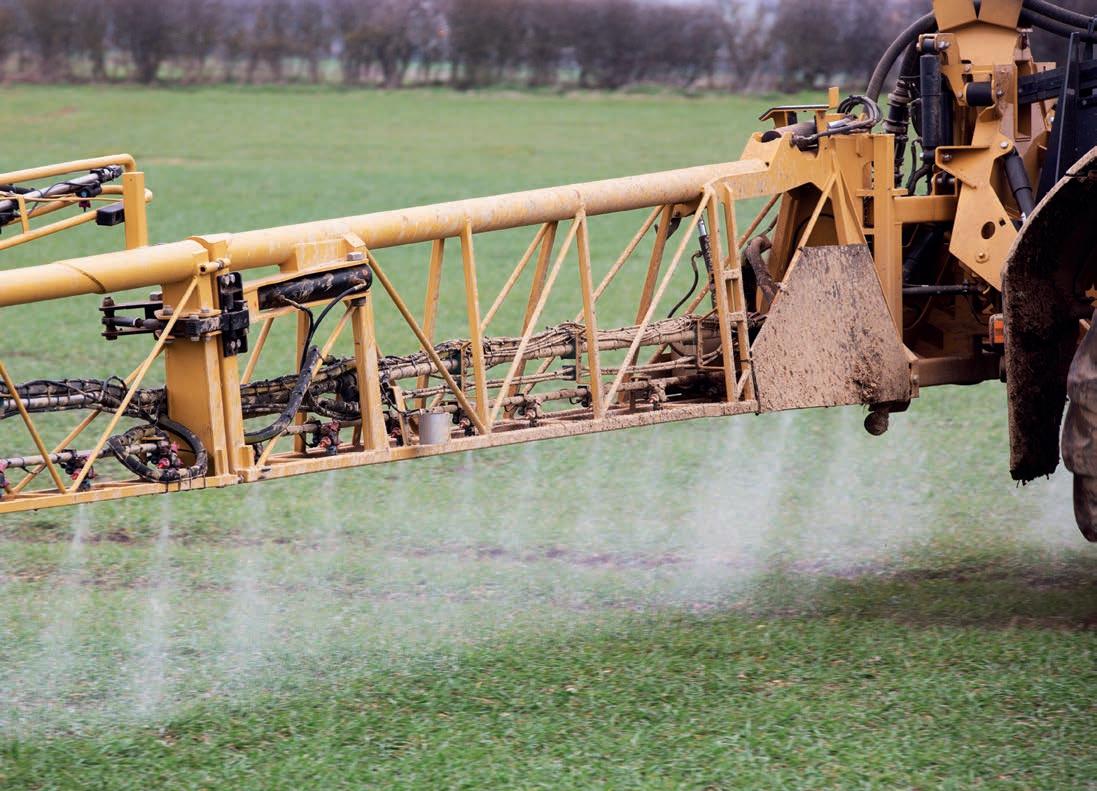
“Backrow Max® is a vital addition to all our pre-em sprays as it increases the application window and holds the herbicides where they are needed for as long as possible.”
BACKUP FOR YOUR PRE-EMS
COME RAIN OR SHINE
When it comes to pre-emergence herbicides, you need a reliable backup that stands the test of time under challenging weather. Backrow Max is your partner in ensuring that your pre-ems deliver consistent, long-lasting weed control, no matter the conditions. With proven abilities versus competitor adjuvants, and efficacy benefits with the latest herbicides, Backrow Max helps you push the performance of your pre-ems to the limit and take weed control to the max For farmers seeking peace of mind and a thriving crop.
“Backrow Max® is a key part of the programme. It’s a staple for us. In dry years we find it adds alot to the mix and gives us a huge uplift in black-grass control. In wet years it binds the chemistry well.”
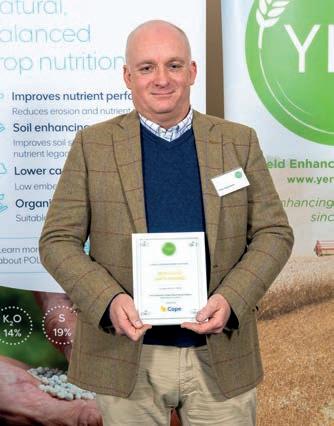
Keith Challen, Farm Director, Belvoir Farming Company, Leceistershire
Peter Cartwright, Farm Manager, Revesby Estate, Lincolnshire
‘We
CPM
don’t need another tax thrust upon us’
POINT OF VIEW
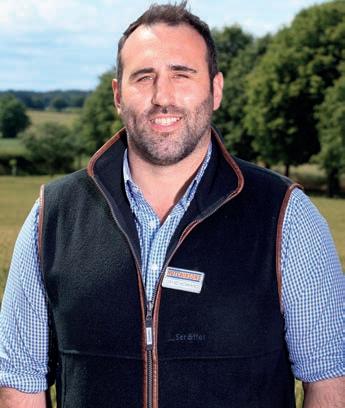
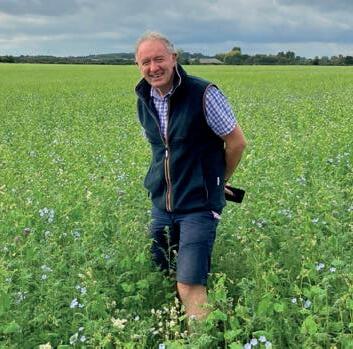
As farmers, we can sometimes have short-term memories and forget why something was instigated or came about in the first place. For the Voluntary Initiative (VI), the programme was set up in 2001 with the aim of avoiding a pesticide tax through promoting responsible use of plant protection products.
This is important – anti-pesticide organisations continue to campaign whereas this government’s approach on taxing agriculture has come under heavy criticism. So, it’s timely to remember why we should be promoting best practice.
I make no apologies for stating the VI – and the reason why it’s here – sometimes feels forgotten about within industry. Yet we all agree, we don’t need another tax thrust upon us.
However, I believe it speaks volumes of the VI and the organisations behind
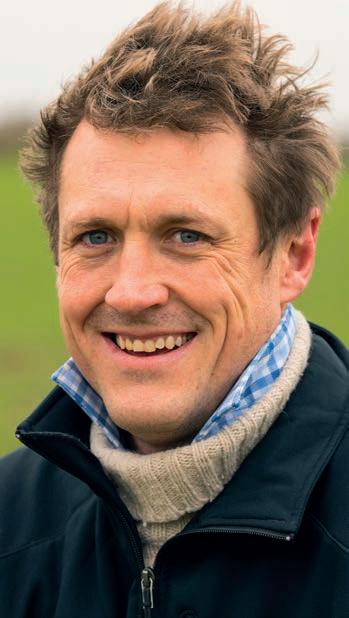
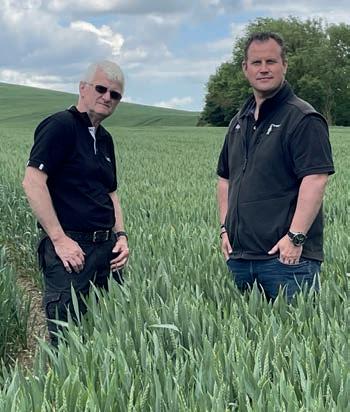
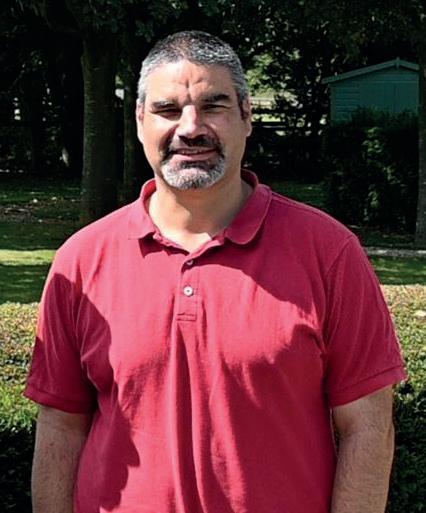
it that they recently appointed myself, a farmer, to lead the group. I’m not from a corporate background – I’m someone who gets their hands dirty on a daily basis, in fact, spraying is one of my preferred jobs on the farm.
I’m also acutely aware that the world is run by people who turn up. Simply put, we have to turn up and support the VI and its mission rather than look to everyone else to sort our problems.
So the VI has been successful to date in holding off a pesticide tax, but we can’t be complacent. You only have to look at the upcoming fertiliser tax for 2027 – something which isn’t being talked about much due to the inheritance tax distraction. Other taxes could be proposed, so those of us leading the industry have to be aware of what’s happening in the wider world and politics.
Most growers are doing a great job and IPM is firmly embedded into their psyche whether they realise or not. But I see IPM as a means of
defending margins through best practice – protecting the bottom line of a farm business while enhancing the environment.
And although we’re all doing a great job, there’s always scope to try just a little more. IPM plans are coming to the fore and being recognised by government; they’re not just a boxticking exercise.
They’re a means of recording and proactively managing what you’re doing and being recognised for that hard work. Spending time to produce a valuable IPM management tool and to follow and promote best practice in the responsible use of pesticides, seems a small price to pay to avoid the risk of another tax.
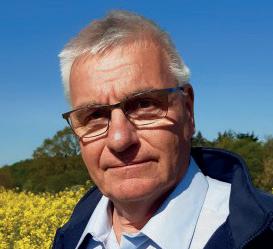
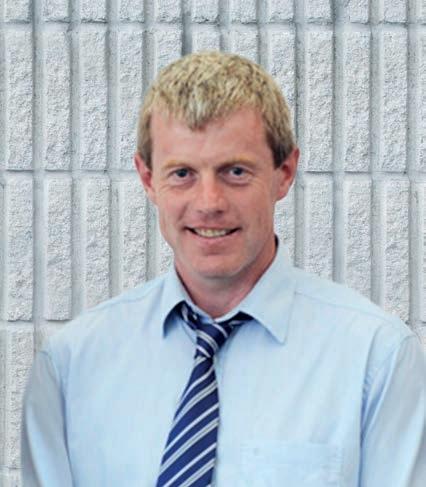
By David Bell
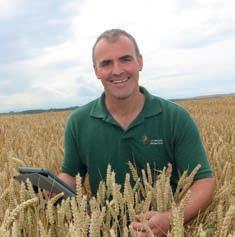
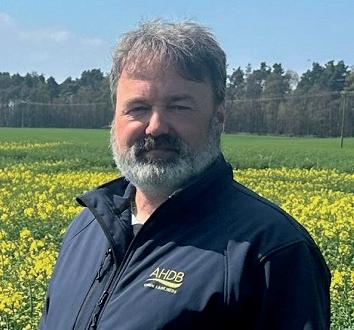
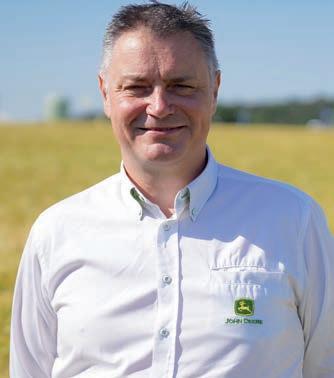
A mixed farmer from East Fife, David is the recently appointed chair of the Voluntary Initiative (VI) as well as being an AHDB Cereals & Oilseeds Sector Council member.
Sign up for our email bulletins
Receive regular technical updates, product information and the chance to participate in occasional reader opinion surveys.
Head to cpm-magazine.co.uk and click the ‘newsletter’ button in the top right-hand corner.
CROP PRODUCTION MAGAZINE CPM
The
March 2025
OPINION
3 Point of View
In the guest spot is David Bell, shouting loud for the Voluntary Initiative.
31 Soapbox
21 OSR spring management
A dual approach to OSR – managing winter crop nutrition and the potential of a cheeky spring sowing.
27 OSR Reboot
Battling the blue enemy with Guy Smith.
71 Nature Natters
Martin Lines talks sharing farmland with nature.
92 Talking Taties
The latest field update from Yorkshire farmer, Andrew Wilson.
98 Last Word
CPM’s Editor, Janine Adamson, ponders alternative career choices.
AGRONOMY
9 Arable focus
The state of play for autumn-drilled cereal crops.
18 Real Results Roundtable I
Delving into what’s driving the increase in disease pressure for the first of BASF’s Real Results Roundtables.
The latest messaging from an industry-wide collaboration striving to reinvigorate this critical break crop.
32 Pushing Performance
Why adjuvants are the unsung hero of the tank mix, helping to optimise spray applications.
36 Real Results Roundtable II
Reviewing a year on from when the standardised approach for ureabased fertilisers was implemented.
40 Climate resilient cropping
Learnings from the farm and trial field regarding how best to target biosolution applications.
43 Biostimulants
How the impact of biostimulants and their benefits are starting to extend beyond the farm gate.
VARIETIES
48 Theory to field
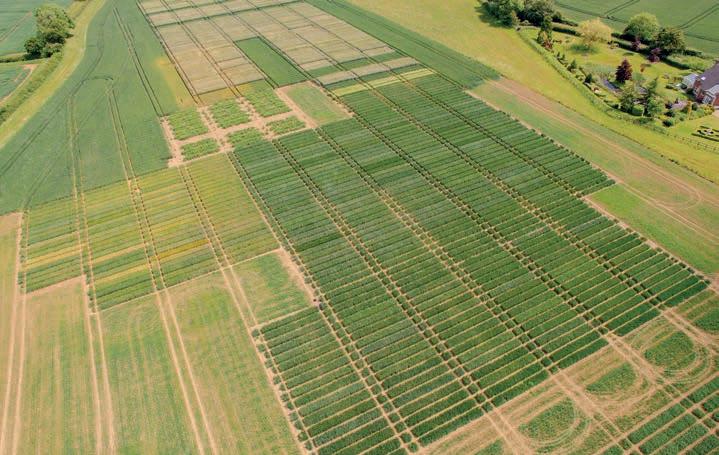
Explaining how AHDB RL trials are managed and the new initiative which plans to promote them.
51 Advancing genetics
Looking at what’s behind KWS’ record-breaking eight new varieties which recently joined the RL.
ROTATIONS
55 Pulse Progress
Making more of pulses in cropping rotations plus how growers can be rewarded for doing so.
58 Spring cropping
Market opportunities for spring oats and why opting for a naked variety could make a difference.
60 BASE UK conference
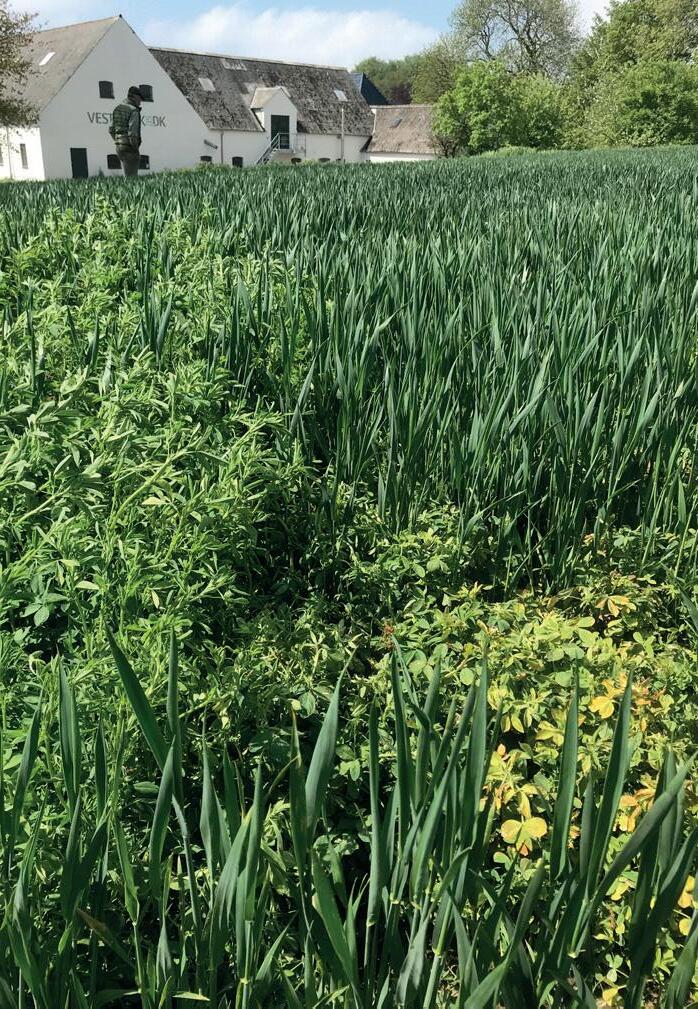
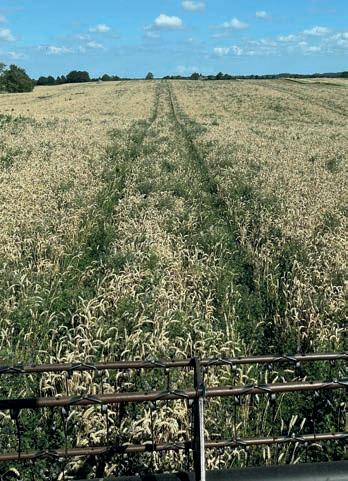
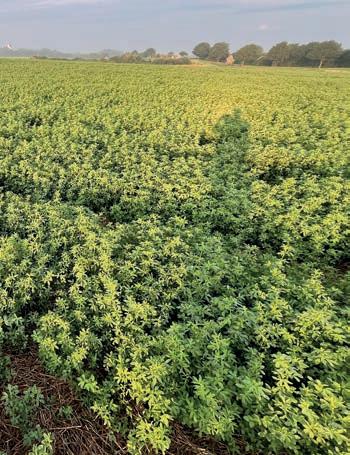
Sharing the story behind a Danish arable farmer’s experience of using lucerne as a living mulch.
TECHNOLOGY
63 Smart technology
What agricultural biotech is and how it could shape the industry's future.
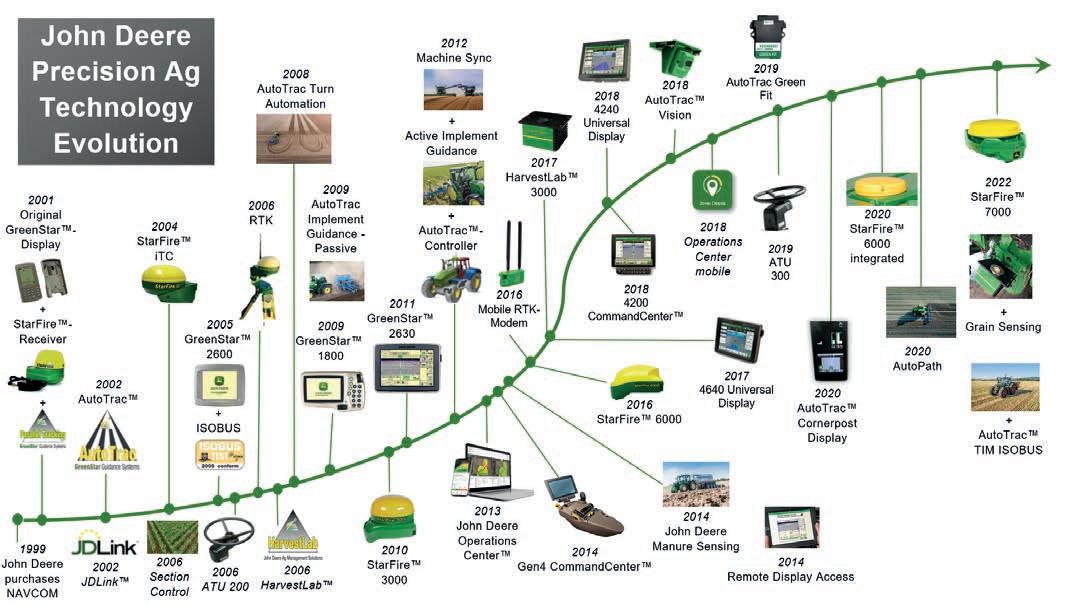
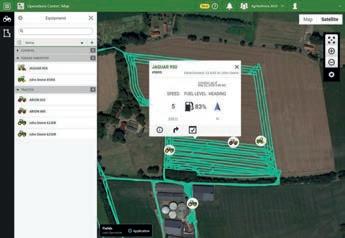
67 StarFire
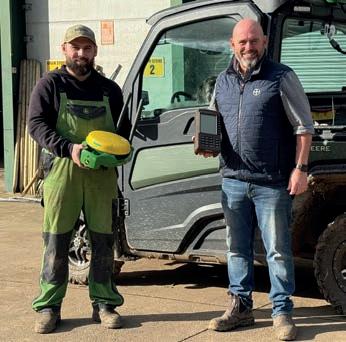
How John Deere’s StarFire has allowed one Cambridgeshire farmer to reach new heights of productivity.
RURAL
72 Land Use Framework
Why you should contribute to the
government’s recently launched Land Use Framework consultation.
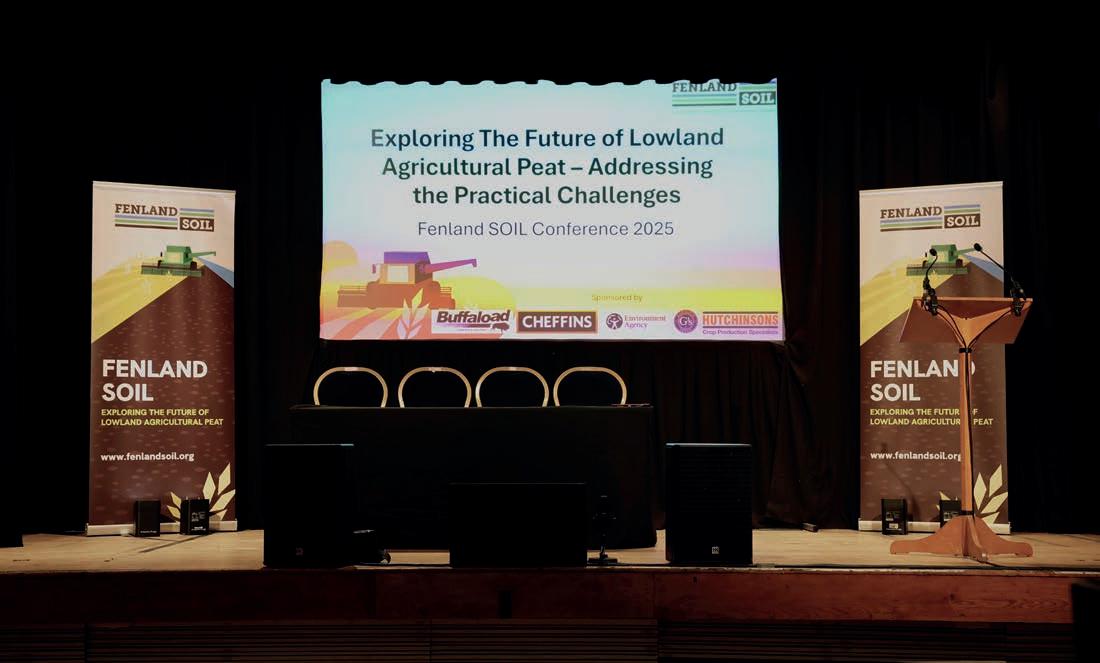
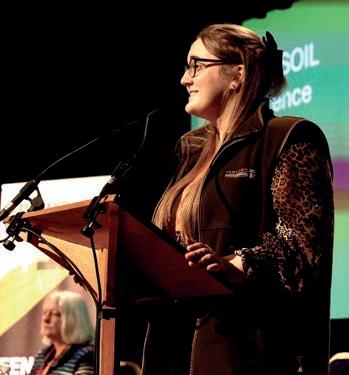
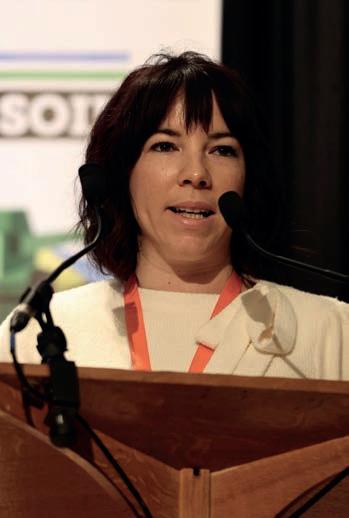
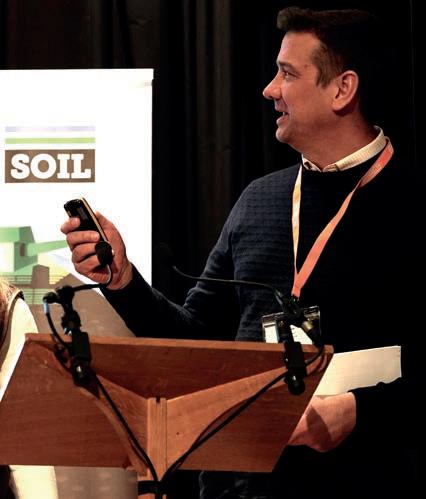
76 Fenland SOIL conference
The people behind the push to achieve climate mitigation and biodiversity enhancement in the Fens.
MACHINERY
79 Drills
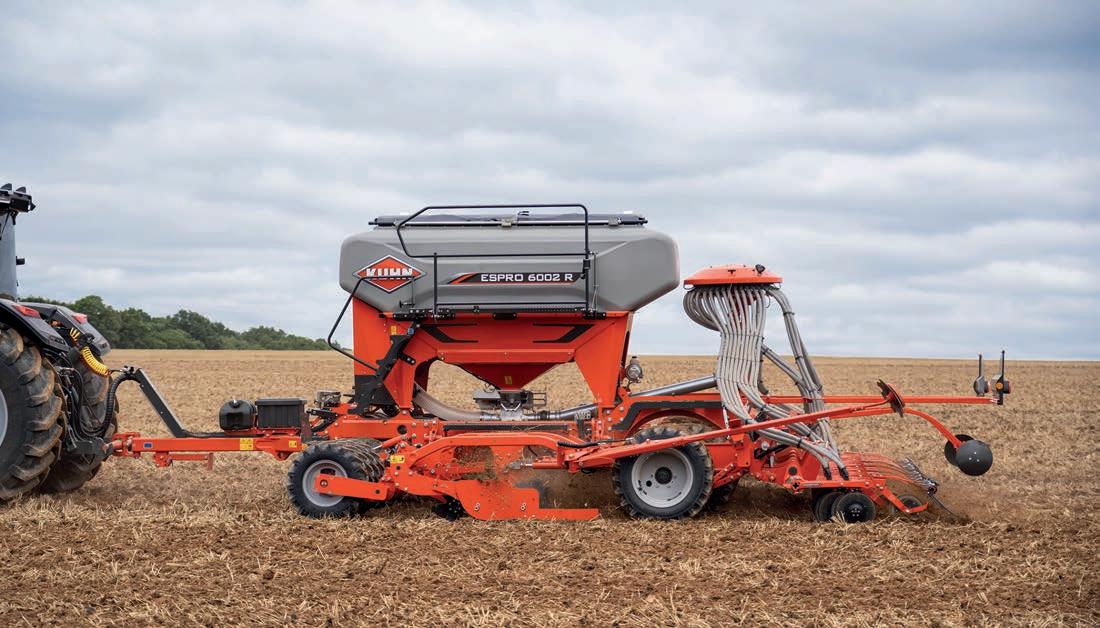
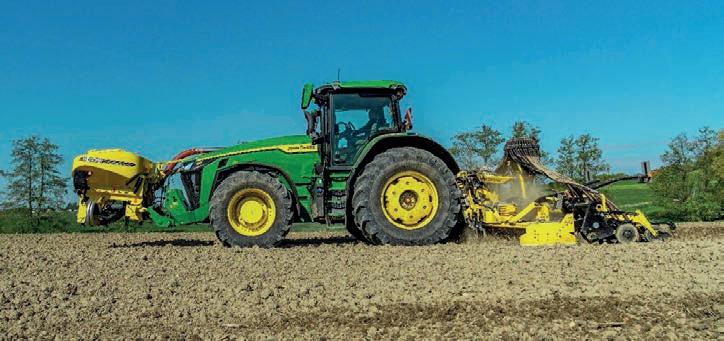
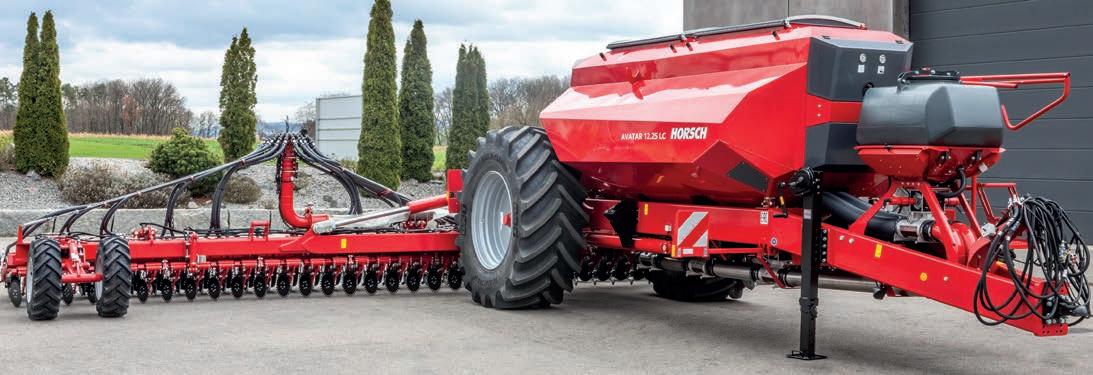
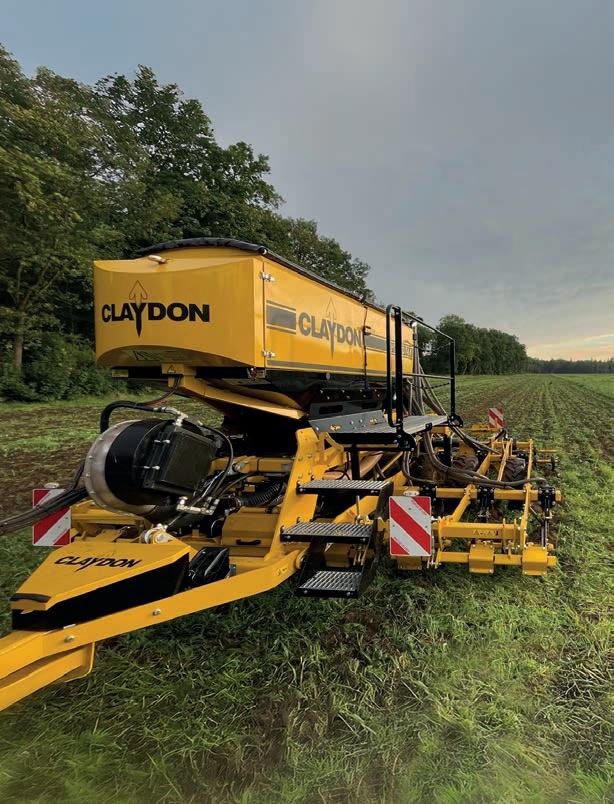
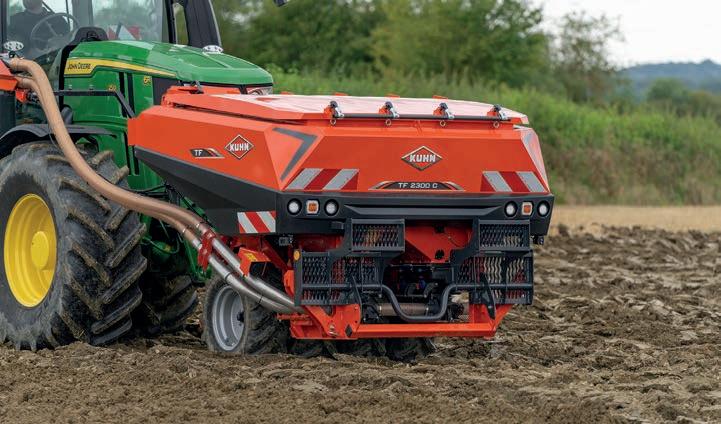
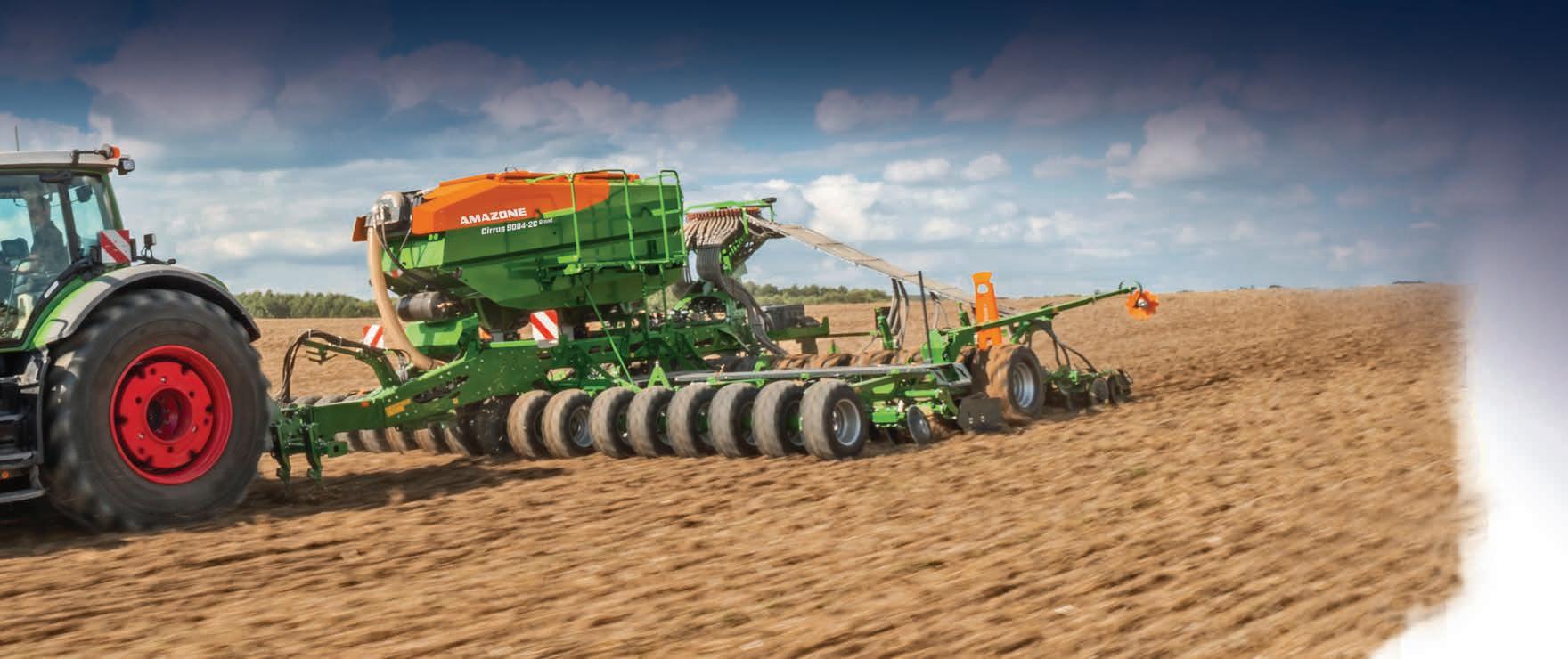
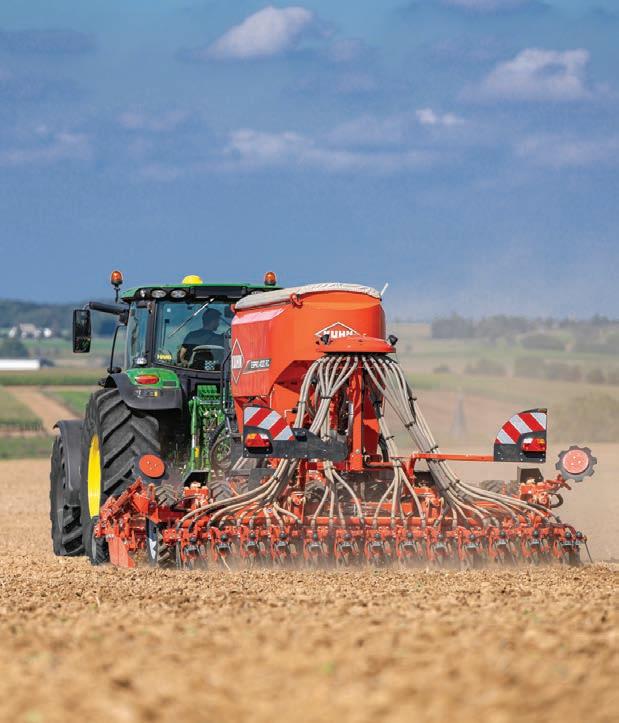
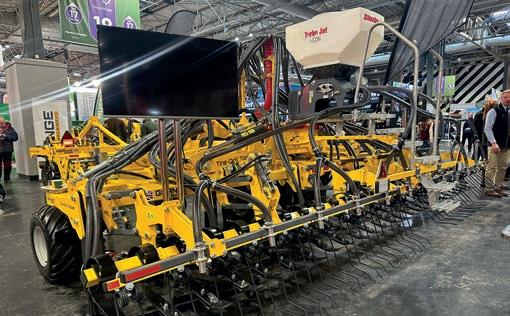
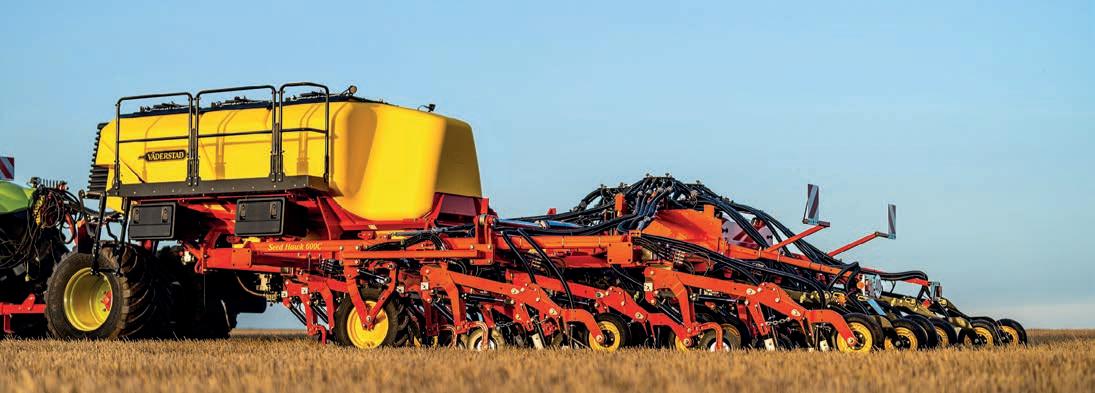
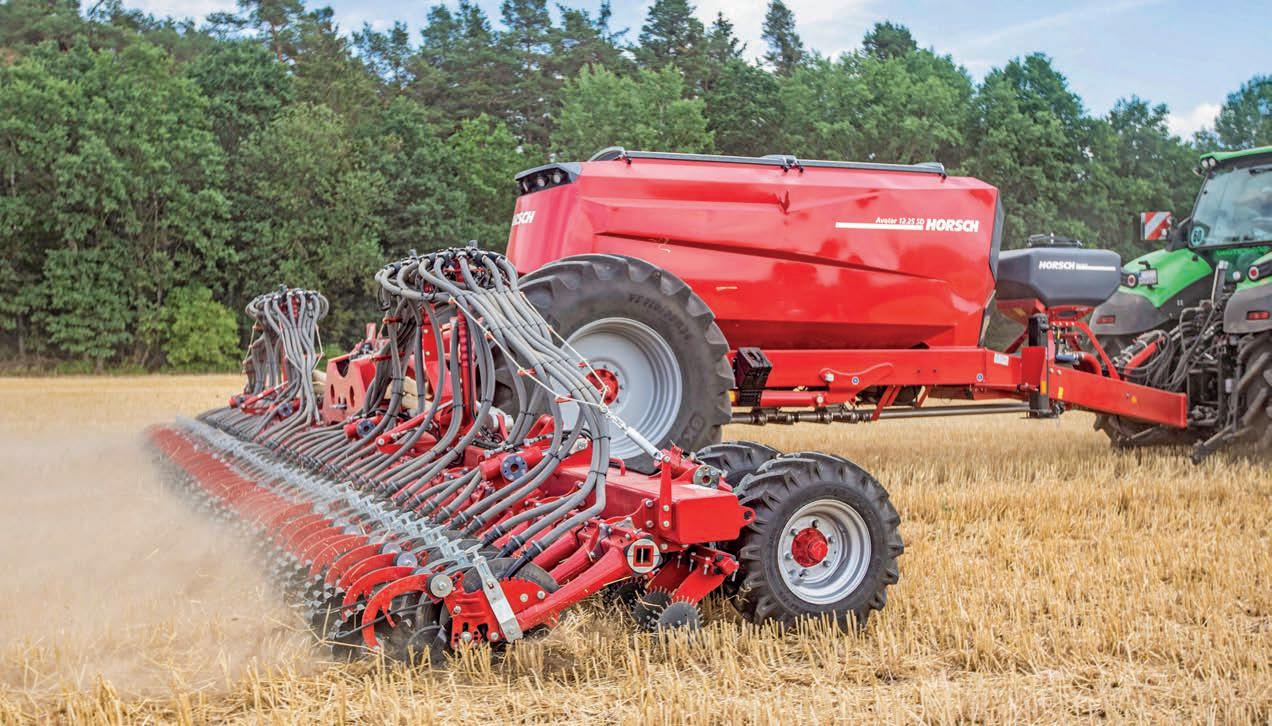
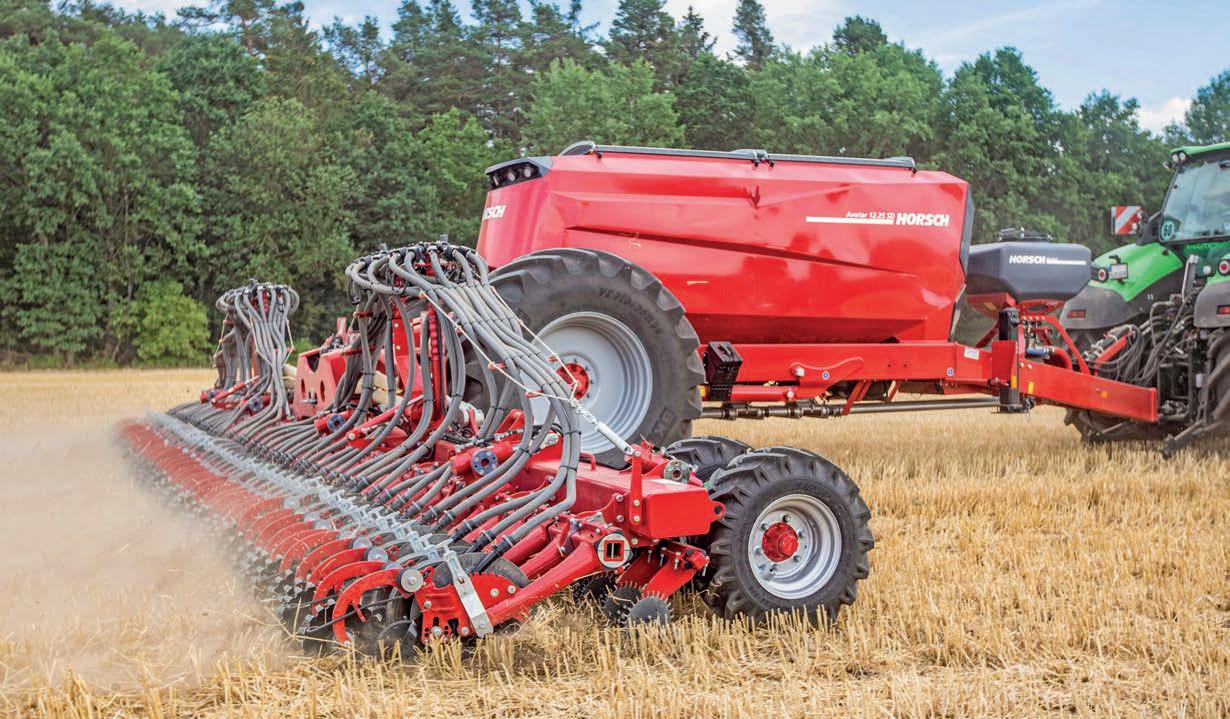
A look at some of the latest introductions and what they offer growers requiring flexibility.
86 Balers
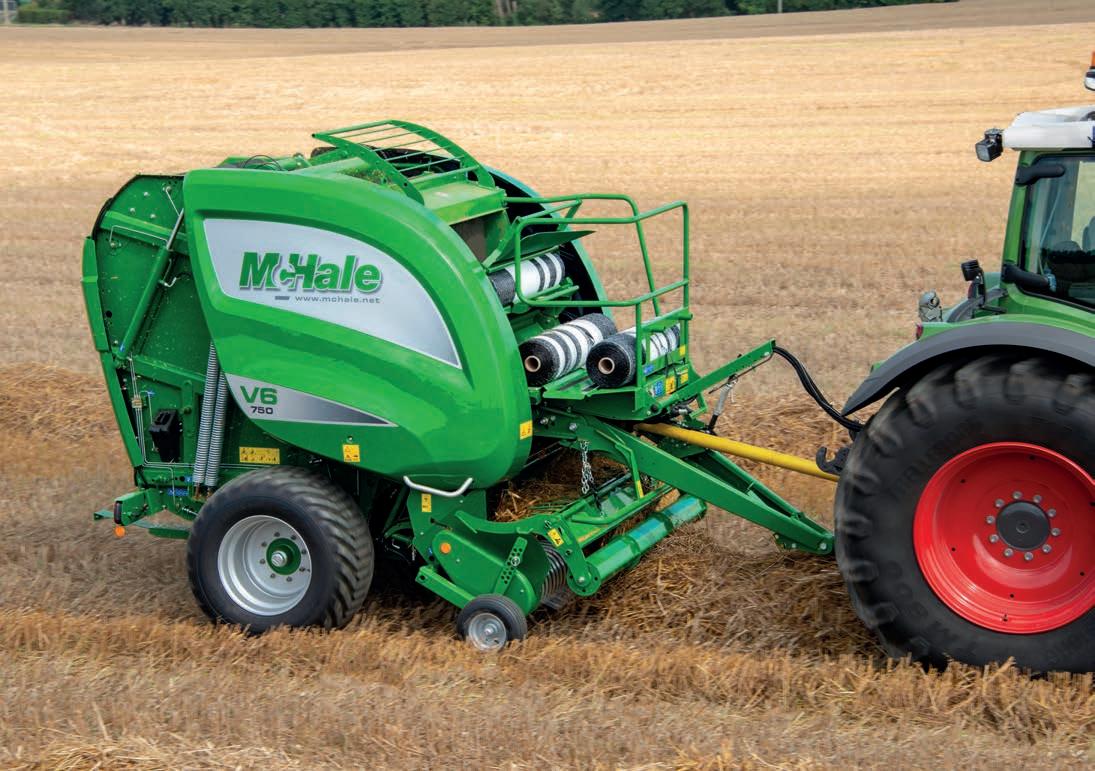
Why reliability has led one Yorkshire mixed farmer to continually return to one manufacturer.
ROOTS
93 Free-living nematodes
How increasing FLN pressure is strengthening the case for using a bionematicide in sugar beet.
The Danish farmer mulching his way to success P.60
Olivia Bacon gives the scoop on eight new varieties P.51
CROP PRODUCTION MAGAZINE CPM
March 2025 Volume 27 No 2
CPM represents best practice in UK arable farming.
Of all arable hectares in the UK
Crop Production Magazine is published ten times a year and is available free of charge to qualifying farmers and farm managers in the UK. This is the criteria for a free subscription.
l 75ha+ cereals
l and/or 30ha+ oilseed rape
l and/or 15ha+ potatoes
l and/or 15ha+ sugar beet
l and/or 10ha+ fieldbeans/peas
Call 01743 369707 or email angus@cpm-magazine.co.uk and we’ll put you on the list
Editor
Janine Adamson
Sub editor
Rachael Harper
Technical arable journalist
Melanie Jenkins
Writers
Mike Abram, Charlotte Cunningham, Rob Jones, Martin Lines, Martin Rickatson, Guy Smith, Andrew Wilson
Kelsey Media, The Granary, Downs Court, Yalding Hill, Yalding, Kent ME18 6AL, UK
Reader registration hotline 01959 541444
About Crop Production Magazine
Crop Production Magazine is the leading specialist journal for UK arable farmers and agronomists.
The magazine operates within a controlled circulation with a readership including farm managers, agronomists, machinery dealers and other arable supply industry professionals.
CPM is also distributed to agricultural universities, colleges and research institutes, examined by some of the leading researchers in their field as well as the next generation of crop specialists.
Above all, the magazine is read by UK farm business owners – decision makers. Articles are mostly in-depth and analytical, exploring the issues behind a current
and postcode to angus@cpm-magazine.co.uk CPM
problem while aiming to present new ways of thinking.
The magazine doesn’t seek to prescribe solutions, rather inspire, stimulate and inform.
CPM is proud to represent some of the most experienced agronomic, technical and machinery journalists, many of whom have received British Guild of Agricultural Journalist awards for their contributions.
The team works closely with companies that support CPM to gather inside knowledge on the technical issues that affect farmers and the wider food chain. Although small, CPM is managed by a driven team, responsible for delivering the sharpest insight and most relevant information across both print and digital formats.
BOOST YOUR TANK MIX. BOOST YOUR YIELD.
A broad-spectrum fungicide for use on wheat, barley, rye, triticale, oats and oilseed rape
• Unique co-formulation containing 2 reliable active ingredients in a convenient to use mixture
• Broad spectrum control of cereal diseases, particularly strong on rusts
• Flexible on use timing in cereals from T0 through to T3
• Excellent control of Sclerotinia and Alternaria in oilseed rape
• Provides additional green leaf retention and yield bene t
Arable focus AGRONOMY
Springing back into action
With spring feeling tantilisingly close, what’s the state of play for autumn-drilled wheat crops and the impact this may have on management approaches for disease and weed control? CPM opens up the conversation.
By Janine Adamson and Rob Jones
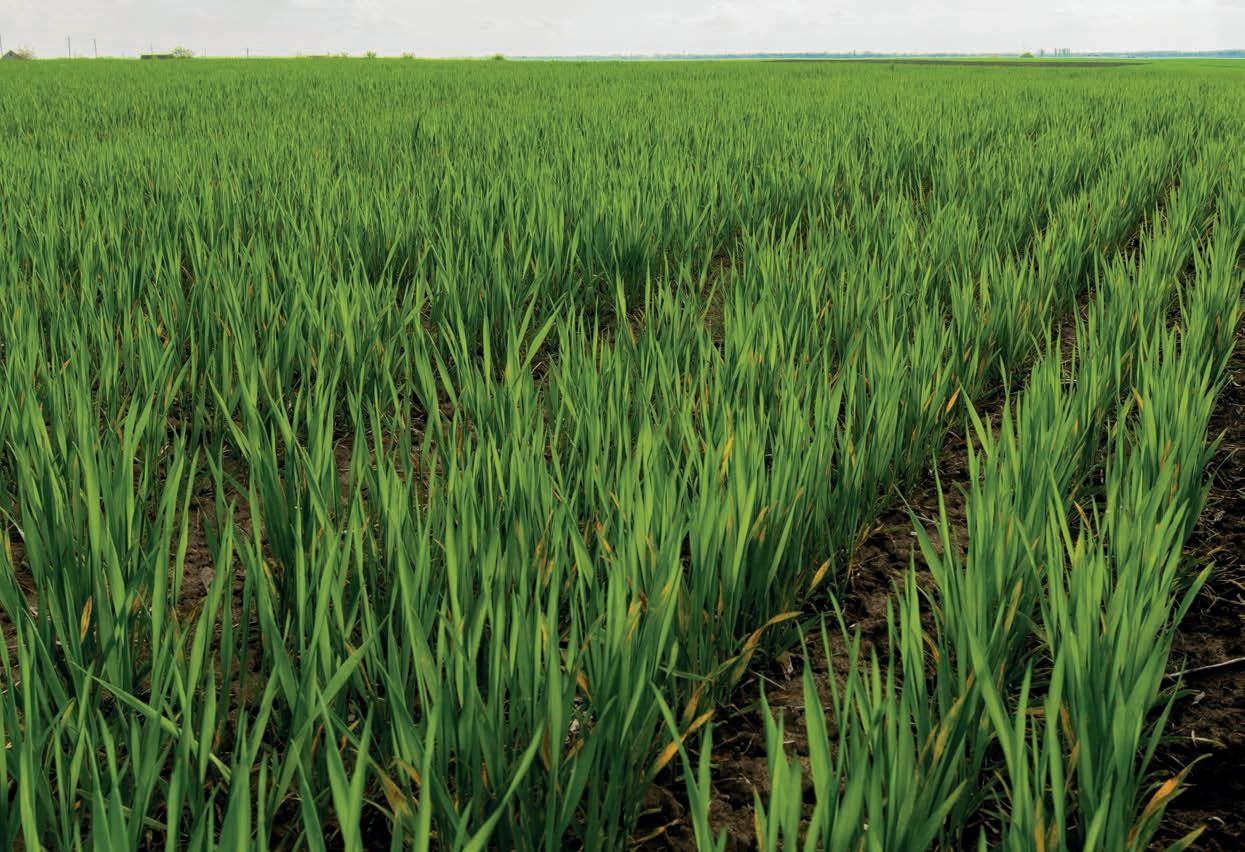
With brighter, much improved weather on the cards at the time of writing (late February), there’ll understandably be a readiness to hit the fields and start ticking off crop management tasks as soon as possible.
It’s a stark contrast to the position many were in last spring which in ways could heighten the desire to truly maximise weather windows, however, a recent survey suggests tough decisions will have to be made as a result of increasingly squeezed schedules.
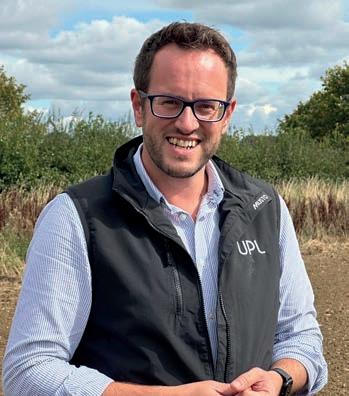
UPL’s Tom Wheelhouse says perhaps unsurprisingly, applying nitrogen was cited as the top priority for 52% of farmers surveyed, followed by drilling spring crops (32%). But when it comes to sprayer-related tasks, the results were more mixed, he adds.
“Applying micronutrients and herbicides tended to have a greater focus than applying fungicides and PGRs. It suggests a crowded to-do list, where realistically, everything has to be done.
“As such, it’s no surprise that every
“The survey suggests rust control is the main focus of T0 sprays.”
TOM WHEELHOUSE
Good Growing Club survey
Looking at T0s, three quarters of participants regularly apply at this timing with azoles and strobilurins cited as the main chemistry, explains UPL’s Tom Wheelhouse.
AGRONOMY Arable focus
respondent is tank mixing at least two products – more than 20% said they typically mix four. Tank mix compatibility and worries about crop scorch are cited as the main reason why they don’t consider bigger mixes,” explains Tom.
Consequently, almost 80% said if their chosen fungicide had greater tank mix and application flexibility, it would help with early disease control. “There’s clearly a demand for greater flexibility in fungicide products used at T0, so farmers could consider other options such as plant health elicitors.
The survey was conducted by UPL as part of the company’s Good Growing Club. It also explored fungicide use. “Looking at T0s, three quarters of participants regularly apply at this timing with azoles and strobilurins cited as the main chemistry, followed by multi-sites folpet or Thiopron (sulphur), and plant health elicitors.
“This suggests rust control is the main focus of T0 sprays for farmers since strobilurins and older azoles like tebuconazole have little effect on septoria,” suggests Tom.
“It’s a significant change since the days of chlorothalonil when most fungicide programmes began with a T0 multi-site application.”
The survey results also indicate that more than 75% of farmers identify the weather as the main challenge when applying a T0, with others highlighting workload constraints and ensuring correct timing as concerns.
“Once applied, a product like laminarin (Iodus) moves through the plant, stimulating its defences. The mode of action means there’s more flexibility in when it can be applied, because it doesn’t necessarily have to go on leaf four like a conventional T0 fungicide,” comments Tom.
Despite the more optimistic conditions, Farmacy agronomist, Tom Smith, reminds that because many winter wheats are exhibiting a range of growth stages as they enter the spring, extra care will be required when it comes to crop management.
In fact for some, the variability will be reminiscent of last season, with many early-sown forward wheats showing good growth and excellent potential, while some later-drilled crops will have struggled to get going in cold, wet soils, he continues.
Crop variability
Farmacy’s Tom Smith believes variability in crops will be reminiscent of last season, with many early-sown wheats showing good growth and potential, while laterdrilled crops have struggled to get going.
Harvesting Growth strategy is launched
A ‘first of its kind’ combinable crops report from the NFU
The NFU has launched its Harvesting Growth strategy, which it says aims to boost productivity, resilience and confidence within the UK’s arable sector.
Revealed at a fringe session during its annual conference, the document outlines policies which should enable long-term growth and investment, where innovation and collaboration lead to a sustainable and competitive future for growers of combinable crops.
NFU
a spotlight on the opportunities to deliver the industry and government’s shared ambition of improving food security and enhancing the bedrock of the UK’s food and drink sector.
“It aims to empower farmers, industry stakeholders and policymakers to navigate the evolving landscape, harness emerging opportunities and mitigate risks. Together we can build a robust and sustainable future for the UK combinable crops sector.”
“It’s very much focussed on the sector while calling for support from wider industry and government.”
Combinable Crops Board chair, Jamie Burrows, is one half of 1000ha Sandcross Farming which operates across Hertfordshire and Norfolk. He says the NFU’s Harvesting Growth strategy is designed to shine
The report is divided into five
key pillars: tax and productivity measures, land use, fairness in the supply chain, plant health, and research and development.
Among the issues it explores are de-risking engagement with grant
Harvesting Growth strategy
The report is divided into five key pillars: tax and productivity measures, land use, fairness in the supply chain, plant health, and research and development.
schemes, improving the delivery of SFI, creating a single industry-owned digital grain passport, and securing an effective and efficient authorisation process for active ingredients.
According to Luke Cox, NFU senior combinable crops policy adviser, the strategy is a vision for the future which should spark greater engagement with ministers and MPs to ensure alignment. “It’s very much focussed on the sector while calling for support from wider industry and government.
“It’s about looking at what we can do for ourselves, rather than just issuing a list of asks,” he says.
Russell McKenzie
“ I’m pleased with the performance of iblon® at T2. 2024 was very much a Septoria and brown rust season, iblon® applied as Vimoy ® + Kestrel ® at T2 did what I expected it to and gave me an alternative to fenpicoxamid.
”
West Cambridgeshire farmer and agronomist
AGRONOMY Arable focus
Broadway Ultra for annual meadow grass control
Growers and agronomists have a new herbicide option this spring which promises to help tackle annual meadow grass
While most cereal farmers will be familiar with Broadway Star, the latest formulation from Corteva pairs pyroxsulam with mesosulfuron – a move which further broadens the spectrum of target weeds.
Annual meadow grass control is the headline development for the new product Broadway Ultra, but the combination of actives should cover a wide range of weeds, says Hugh Guinan, Corteva’s field technical manager for cereal herbicides.
This is because pyroxsualm is a triazolopyrimidine while mesosulfuron is a sulfonylurea herbicide; both are acetolactate synthase (ALS) enzyme inhibitors.
“They work by preventing the production of amino acids by inhibiting the ALS enzyme,” explains Hugh. “These herbicides can move in the xylem and phloem to areas of new growth and are taken up through plant foliage and to a lesser extent the roots. Herbicides in these families vary greatly in their selectivity and may control annual and perennial broadleaf or grassweeds.”
The result is almost immediate cessation of plant growth followed by slow death, taking as little as two weeks in ideal weather, or up to eight when growing conditions are difficult.
Hugh says combining two different types of ALS herbicides creates a synergistic effect on efficacy as well as widening the grassweed and broadleaf weed spectrum. “Also in the formulation is cloquintocet, a safener that helps non-target plants quickly metabolise and detoxify the herbicide, reducing instance of crop damage,” he highlights.
As such, Broadway Ultra is designed to tackle a wide range of problem weeds, making it particularly effective in traditional rotations and on lighter soils, adds Hugh.
Target species
Annual meadow grass control is the headline development for Broadway Ultra but the combination of actives should cover a wide range of weeds, says Corteva’s Hugh Guinan.
speedwells, mayweed, charlock, bur chervil, and volunteer oilseed rape.
“Pyroxsulam has a well-established reputation for effective grassweed control while also targeting a broad spectrum of broadleaf weeds. The addition of mesosulfuron enhances this control, particularly for chickweed, sow thistle, shepherd’s purse, and meadow grasses,” suggests Hugh.
“The challenging autumns we’ve experienced in recent years have often shifted weed control pressures to the spring.”
In addition to annual meadow grass, its label targets include brome, ryegrass and wild oats. It also delivers control of tame oats, loose silky bent and rat’s tail fescue. In terms of broadleaf weeds, control includes cleavers, chickweed,
He advises that Broadway Ultra can be applied to winter wheat and triticale crops from 1 January through to mid-May. Corteva recommends applying the herbicide early while weeds are still small and actively growing to maximise efficacy.
“Getting on top of key problem weeds early is as important as ever. The challenging autumns we’ve experienced in recent years have often shifted weed control pressures to the spring,” he proposes.
Hugh adds that the product is formulated as a wettable granule and
should be applied at a rate of 100g/ha in combination with an approved adjuvant. The product comes in a 500g pack and has a five-metre reducible buffer zone to ensure responsible application.
To widen control further, he advises tank mixing or sequencing with Zypar (florasulam+ halauxifen-methyl/ Arylex Active). “This combination will take care of black bindweed, black nightshade, chickweed, charlock, cleavers, cranesbill, docks and fumitory. Groundsel, henbit dead nettle, mayweed, poppy, red dead nettle, shepherd’s purse, wild radish and volunteer beans or OSR will also be within the herbicide’s spectrum.”
Hugh concludes: “Our advice is to target weeds utilising an integrated weed management approach including cultural control methods such as stale seedbeds and rotational ploughing.
“Then, a programmed approach starting with a residual pre-emergence followed by a top-up residual where required throughout the autumn and Broadway Ultra in the spring. Always spray in good, dry conditions as soon as you see signs of active growth, and ensure a suitable adjuvant is included.”
Revystar ® XE
RUNNINGRINGS AROUNDALL -
Broad spectrum disease control 1
Market leading brown rust control 2
Gives an average yield advantage of 0.21t/ha vs Ascra ® Xpro 3
Even better value in 2025
REVYSTAR ® XE, STRONGER WHERE IT MATTERS 1 .
1 Based on BASF and external field trial results, alongside interpretation of AHDB fungicide performance curves on key T1 target diseases, as indicated by Kynetec field data (Septoria, Brown rust, Yellow rust and Eyespot).
2 Based on the AHDB fungicide performance data for product performance against Brown rust in 2024.
3 Based on 31 BASF and external field trials targeting Septoria at typically applied field rates as indicated by manufacturer recommendations and Kynetec field data (Revystar ® XE 0.75l/ha, Ascra® Xpro 1l/ha).
AGRONOMY Arable focus
Tom Smith, who oversees crops throughout Essex and Suffolk, says some of the most forward wheats in his area were up to growth stage 25 in mid-February, with the majority around GS23/24, while those drilled in mid-November after potatoes were back closer to GS13.
“These are the extremes, but there’s a lot of variability out there which poses challenges for early fungicide planning, and reinforces the importance of applying treatments according to growth stage, not calendar date.
“Growers should also recognise that those later, backward crops, often go through growth stages quickly as temperatures and day length increase, potentially complicating spray timings.”
Hutchinsons’ head of integrated crop management, David Howard, says building potential, irrespective of current growth stage, all starts with a T0. “We’ve seen before that growers can sometimes be reluctant to invest in thinner crops, cutting back on early T0 and T1 sprays only to find they then had to chase disease hard at T2 to get it back under control.”
He highlights that yellow rust in
particular can be more pronounced in late-sown or stressed wheats, and thinner crops are also more reliant on lower leaves to help them to catch up, therefore protecting photosynthetic capacity is key despite the possible lower yield potential.
Furthermore, with recent seasons indicating rust and septoria are becoming more aggressive and better adapted to changing weather patterns, effective early disease control is vital to stay on the front foot in any crop, says David.
He agrees with UPL’s survey results regarding rust being a focus disease. “Historically, septoria was the main target at T0 and while its control remains important in high-risk varieties and regions – particularly the West and South-West – for many, the focus has shifted towards managing rust.
“Last year saw a particularly early appearance of brown rust in some crops, and after a high pressure season, there could be more inoculum around this spring although much depends on the impact of winter frosts in reducing inoculum, or at least delaying onset. Equally, milder
A numbers game
According to Hutchinsons’ David Howard, rust management is a numbers game –act early to slow it down before inoculum builds.
conditions like last season could result in earlier rust pressure,” he explains. David believes rust management is a numbers game. “You must act early to slow it down before inoculum builds. An effective T0 is a ‘no-brainer’ for anyone growing wheat in higher rust-risk areas
Broadway® Ultra builds on the success of Broadway® Star, the mainstay of dependable, early season weed control for over 15 years.
It delivers excellent control on a range of grass and broad-leaved weeds.
With application from 1st January through to the middle of May, plus a wide range of tank mix options, it’s highly flexible too.
Talk to your advisor or find out more at www.corteva.co.uk/broadway-ultra
Protectant septoria control
Plaxium performed comparably to other fungicides against septoria in both protectant (as shown) and eradicant situations.
Source: AHDB
Combatting brown rust
Plaxium offers superior brown rust control compared with other mixture products tested. Source: AHDB
of Eastern Counties.”
And if the weather closes in before successfully applying a T0 at the optimum time, he says there could still be a benefit to be had. “Typically, many wait for GS30 but crops are sometimes beyond that by the time of application. When catchy weather delays spraying, some may then wait until T1 and perhaps try combining the two.
“Having a gap between
T0 and T1 is beneficial though, so be flexible with the early timing. If disease is present and you’re 2-4 weeks out from T1, it’s worth treating, subject to product label restrictions,” he advises.
PLAXIUM TRIAL RESULTS
Moving to later in the season, independent AHDB trials indicate the performance of Bayer’s
CLAYTON TENDRIL
*Clayton Navaro™, Clayton Canyon™ SC, Clayton Tuskar™ & Clayton Tendril™ are all trademarks of Clayton Plant Protection. *Use Fungicides safely. *Always
The data shows compared with the other products in the trial, Plaxium was comparable in controlling Septoria tritici, was either equal to or better than other products against yellow rust, and the strongest against brown rust.
effective against Septoria tritici in both protectant and eradicant situations.”
“Milder conditions like last season could result in earlier rust pressure.”
Plaxium received regulatory authorisation for use in winter and spring wheat, barley, rye, triticale, spelt and oats in late 2024. In data recently published to highlight its performance in trials 2019-2021, AHDB says: “Plaxium was shown to be highly
Against yellow rust, AHDB adds that Plaxium showed a level of activity above that seen from Ascra Xpro (bixafen+ fluopyram+ prothioconazole) and Revystar XE (fluxapyroxad+ mefentrifluconazole), comparable to Univoq (fenpicoxamid+ prothioconazole), and close to that of Elatus Era (benzovindiflupyr+ prothioconazole). These differences were carried through to harvest with Plaxium-treated plots yielding comparably to Univoq.”
On brown rust, AHDB explains
Plaxium offered superior control compared with the other mixture products tested… and was comparable in efficacy to Imtrex (fluxapyroxad) and Elatus Plus (benzovindiflupyr).
Trial partner, Niab’s Stuart Knight, believes the results indicate a clear efficacy and yield response advantage of Plaxium compared with Ascra Xpro. “This reflects the boost to foliar disease activity provided by isoflucypram, in place of bixafen in this three-way mixture.”
The work was repeated in barley trials where it gave the best allround control of rhynchosporium, net blotch, ramularia and powdery mildew; Plaxium showed good control of all four diseases.
Contour Following
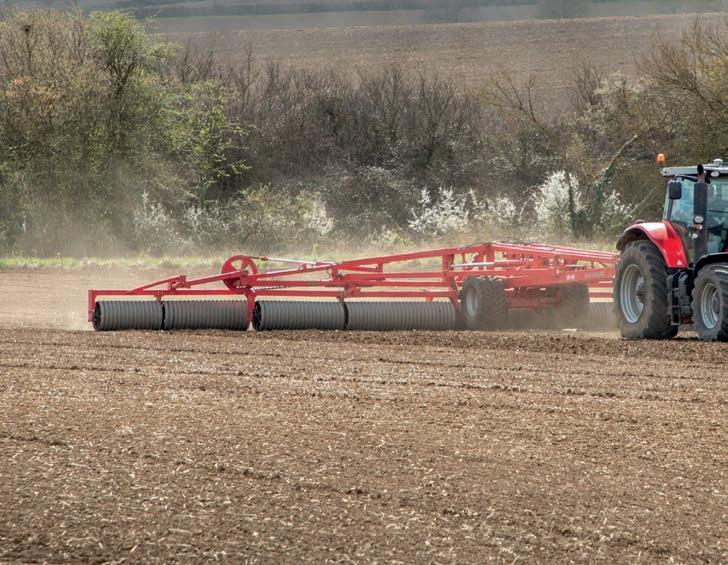
Even consolidation across the full working width
KING ROLLER
RHYNCHOSPORIUM
Against rhynchosporium, in both protectant and eradicant situations, AHDB says: “Plaxium gave excellent disease control, comparable with or better than Siltra Xpro (bixafen+ prothioconazole) and Ascra Xpro, and similar to the level of control provided by solo active, Miravis Plus (pydiflumetafen).”
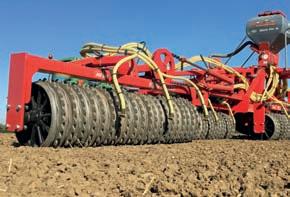
Independent flotation and central pivoting of each section ensures superb contour following and even weight distribution across the full working width. From 12.3m to 20.3m.
• Floating wings and centre pivots
Superb contour following
• Hydraulic SAT system
Even consolidation
• 3m transport width & hydraulic brakes
Simple safe road transport
• Heavy duty design throughout Built for high workloads and built to last
• Heavy duty NG rings 20”, 22”, 24” Cambridge & Breaker or Cambridge only
Add an OPICO Micro-Pro to the 12.3m King Roller and target blackgrass with precise Avadex application or use for slug control.
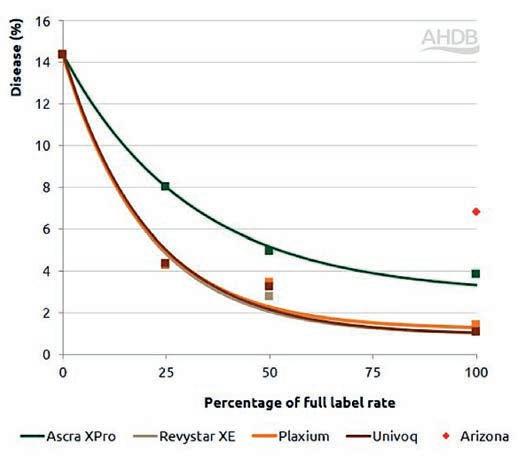
Similarly, against net blotch, Plaxium showed a high level of efficacy even at 50% of label rate, performing comparably to Miravis Plus and Ascra Xpro, added AHDB. Against ramularia, Plaxium matched the control of Revystar XE and was slightly better than Ascra Xpro.
Another trial partner, SRUC’s Professor Fiona Burnett, highlights the performance of Plaxium and the combination of multiple modes of action along with the restrictions on use that would ensure good product stewardship.
“Plaxium adds another robust mixture option for control of barley diseases and is carefully stewarded to manage resistance risk,” she says.
Against powdery mildew, AHDB notes that although disease pressure was relatively low in these trials, Plaxium gave the highest level of protectant activity of any of the mixture products tested.
However, important to note is advice from Bayer, with the company stressing that Plaxium has strict use limitations – it can be applied only once per crop with no more than 75g/ha of isoflucypram applied to the same field every two years. l
ULTIMATE PROTECTION
For a higher yield and a profitable harvest
UNIQUE
A novel site of action with no cross resistance to any other chemistry
FLEXIBLE
Broad spectrum and rainfast, UnivoqTM gets to work quickly
ROBUST
Exceptional crop coverage providing long-lasting disease control
Protect now. Profit later.
UnivoqTM fungicide o ers persistent protection and curative control of all Septoria strains. Its broad-spectrum disease control ensures a higher yield, to secure your profit and protect the future of your farm.
Discover more about the benefits of Univoq at: www.corteva.co.uk/univoq
The new normal for disease control?
“You have to treat brown rust as a biosecurity threat which can’t be ignored.”
DR AOIFE O’DRISCOLL
By Janine Adamson
WWhat learnings can be taken from last season in terms of on-farm disease control, whether that be at a UK or European level? CPM delves into what could be driving the increase in disease pressure for the first of this month’s Real Results Roundtables.
ith last year’s brown rust epidemic catching some growers off guard, questions are being raised regarding whether current fungicide programme approaches are robust enough and if the available chemistry is continuing to deliver required levels of control.
To review learnings from last season and the influence they may have on future wheat disease control strategies, CPM hosts senior scientist from Niab, Dr Aoife O’Driscoll; BASF Europe’s technical product manager, Dieter Strobel; and cereal fungicide business development manager for BASF UK, Jared Bonner.
Discussions for this BASF Real Results Roundtable explore the disease control landscape for both the UK and at a wider European level.
REVIEWING LAST SEASON
To open the discussion, Dieter provided context on what had been experienced last season at a European level. “2024 was absolutely extraordinary – if we recall, after several years of drought and low disease pressure, we saw an explosion that was a consequence of a very moist and warm winter.
“That had an impact – wheat crops were lazy in rooting however, the
diseases weren’t lazy. We saw very early onset of rust and septoria which blew up over time with record events and infection levels; that was seen across Germany, France, UK and Denmark.
Fungicide performance
In a fire-fighting scenario, fungicides have to work harder, rather than it being because performance has slipped, suggested BASF’s Jared Bonner.
Real Results Roundtable AGRONOMY
Varietal
resistance challenges
According to Niab’s Dr Aoife O’Driscoll, a weak point in current plant breeding programmes has been achieving good brown rust resistance therefore, expectations should be managed.
“There were also suggestions that varietal resistance wasn’t at optimum performance anymore either, with suspicion there had been a shift. Growers were left frustrated because despite investing, the effects often didn’t look good enough.”
To further contextualise from a UK perspective, Aoife added: “We saw variability in crop condition across the country as well as variability in weather, drilling windows, soil type and so on. There were many factors contributing to the higher inoculum levels rather than it being products not working as effectively.
“It’s really important to stress we had a very unusual season in that regard. So when we’re evaluating varietal or active ingredient performance in the field, they were all being tested in a situation that they probably hadn’t been tested against before. It took people by surprise but also shows the value of fungicides when compared with untreated or low-input scenarios,” she explained.
Jared highlighted that with some growers struggling to find a timely weather window to apply a T0 or T1 spray, both septoria and brown rust were given the chance to infect the base of plants. “That’s firefighting before you’ve even started and once you have that high pressure, all fungicides have to work a little harder rather than it being because performance has slipped.”
DISEASE TRENDS
When talking about current wheat disease trends, Aoife suggested that
a threat comes from beyond common foliar pathogens. “There are soilborne mosaic viruses, ergots and other ear diseases like fusarium and microdochium to contend with, all thanks to ideal damp, warmer conditions.
“They also often come together at the same time requiring broadly similar environments, so it’s not simply about foliar diseases anymore, it’s the changes in weather patterns and what’s driving these epidemics to happen and take hold in the first place.”
She then questioned whether the conditions experienced last season are becoming the norm. “Maybe we have to accept this rather than tell ourselves it’s not going to happen again, and the sooner we do that, the better.
“When you have brown rust early in the season, approaching it in denial means you have no chance really. You have to treat brown rust as a bio-security threat which can’t be ignored, using a similar early intervention approach that you might have towards blackgrass.”
Jared concurred saying trends in weather data suggest the past five years have undoubtedly been wetter and warmer. “Then, we’ve just had the news of a record January in terms of temperature, so this year doesn’t appear to be bucking that trend.
“If we cast our minds back to how we finished last year with the amount of disease that was in the crop – that inoculum didn’t go away. Yes it can be checked with freezing temperatures and frost, but with a warm January, it’s definitely something to bear in mind,” he said.
VARIETAL RESISTANCE
Moving to the role of plant breeding, Aoife pointed out from a UK perspective, disease resistance breeding programmes have provided much value during
the past 40 years. “Both P.nodorum and mildew are now controlled well through the use of durable, quantitative resistance, and look at how much yellow rust resistance has come on too.
“Now we’re in a situation where we have a handful of varieties with a score of 9 for yellow rust which is a credit to the breeders.”
She explained that when it comes to septoria resistance, one of the reasons why scores aren’t as high is because the disease wasn’t an issue in the UK until around 20 years ago. “It takes a long time for new sources of resistance to be built into breeding programmes without having a significant impact on yield.
“But a weak point still remains with brown rust and its lack of varietal resistance; we have to manage expectations here. I guess the past season has been a suitable test for any new material coming through, giving breeders the chance to select for brown rust resistance in material and truly putting it to the test.”
Jared reminded of the impact of drilling date. “Drilling early or late will shift disease ratings forward or backward; it’s not just the number on the Recommended List,” he said.
FUNGICIDE PROGRAMMES
Following such a challenging year for growers, the discussion evolved to what impact this may have on fungicide programmes and approaches to disease control. Dieter began by stressing that focussing solely on septoria is no longer wise. “You may be able to spot check with a fire-fighting method for other diseases, but you should be focussing on broader solutions which offer more.”
Aoife added that the most effective starting point is to know which active ingredients and products are available and what their strengths and weaknesses
Combatting brown rust
Growers who used Revystar last year in a brown rust situation observed positive results.
AGRONOMY Real Results Roundtable
Programme management
BASF’s Dieter Strobel reminded that Revysol products can be safely used twice within a fungicide programme.
are. “We’re in a situation now where there’s a considerable product offering; how do you know that each active is giving you the best control for that situation? For example, if you’re growing Crusoe, you know septoria is less of a concern, but you have to be looking at brown rust early in the season instead.
“Agility is key, we can’t live in a world where you decide on a fungicide programme in November and go with it regardless.”
She explained that Niab has adapted its agronomy strategy this year to concentrate on individual actives and early season disease control. “This is in response to expectations around eradicant activity. For one, it’s difficult to test that for rust given its fast disease cycle, but also, we shouldn’t be relying on an eradicant approach.
“Instead, we’re focusing on a programme based on strengths and weaknesses. So for a T0 in a high rust situation, we’d be suggesting a 75% dose of tebuconazole with 0.40.8 l/ha of Comet (pyraclostrobin).
“We also have to acknowledge the importance of having other azoles in the programme. With two new SDHIs in the market we have to protect those as best as possible. For broad-spectrum azoles which cover most of the target diseases we have prothioconazole, tebuconazole and mefentrifluconazole (known as Revysol), with Revysol as the stand-out. You really want that to be in there at T1 or T2 timing,” she advised. Dieter added that provided product
stewardship is adhered to and actives are selected depending on disease risk, he doesn’t believe a dramatic shift in approach is required. “It’s more a mindset change and understanding that fungicide performance wasn’t as disappointing as is being suggested.
“The fact is last year, yields were disappointing – in France, Harvest 2024 was one of the lowest of the past 40 years because of the poor crop conditions. However in this last season, we’re achieving an additional 40% of the untreated yield on top thanks to fungicides; whereas in Germany, we saw a 25-year record for fungicidetreated versus untreated yields as well.
“This should give some confidence in programmes and that fungicides are doing a good job,” he commented.
REVYSTAR XE
To expand on the role of Revysol, Jared said Revystar XE (fluxapyroxad+ mefentrifluconazole) is not only effective on septoria, but also brings yellow and brown rust control as well as eyespot. “That’s due to it being a combination of Revysol and Xemium (fluxapyroxad).
“We’ve also received positive feedback from growers who used Revystar last year in a brown rust situation, and the AHDB fungicide performance curves show good activity from Xemium too. It’s a powerful product within our portfolio.”
Aoife agreed: “There’s no question that Revysol is the strongest azole we have against brown rust, and is one of the strongest actives for septoria with useful activity against yellow rust. Keeping it for T1 or T2 is a very useful tool in
resistance management strategies and we should acknowledge that benefit.”
Dieter then reminded that Revysol products can be used twice in a programme. “There’s hesitance with some of the newer active ingredients regarding whether they should be used twice, or even if that’s allowed. Indeed, often it’s not permitted from either a resistance or regulatory perspective.
“But here’s the advantage of the azoles – we’ve known this class for 40 years. It would be naïve to think septoria will never break Revysol, but it’ll take decades as it requires specific, multiple mutations coming together. This is very different from other modes of action.”
FINAL THOUGHTS
To wrap up the conversation, Dieter raised the topic of climate change and observations from the continent. He said although winter wheat crops were reaching early growth stages much more quickly, there didn’t seem to be a major impact on harvest date. “That means there’s a stretch, and if you nail it down, it seems to mainly be at T1.”
Aoife added: “For the UK, I’m not sure if the gap is becoming longer between sprays but some growers are noticing that they come back two weeks after a T1 and disease pressure is still going. It’s becoming more like a blight programme going in every two weeks, although the options you can use in that situation are quite limited.
“I think we just have to accept that we’re in a big state of flux at the moment and therefore managing expectations across all fronts is key,” she concluded. ●
Real Results Roundtable
BASF’s Real Results Circle is a UK-wide agricultural network now in its eighth year. The initiative is focused on bringing together growers, industry experts and BASF to create a more resilient farming system that’s sustainable for farm business profit, for the people we feed and for the planet we live on.
Real Results Roundtable is a new initiative which explores related topics, such as resilient disease control, environmental stewardship and return on investment. Roundtables centre around Real Results Circle farmers and associated experts from the wider industry.
By coming together to openly discuss and therefore face challenges as one, we can find out what really works and help to shape the future of UK agriculture.
CPM would like to thank BASF for kindly sponsoring this feature, and for its assistance in providing access to the relevant experts and contacts required to produce it.
A green shade of gold
Key to maximising oilseed rape output is the longevity of the crop’s green area index, but following last year’s di cult season there might be temptation to take a minimalist approach. CPM explores why it’s always worth investing in this crop.
By Melanie Jenkins
Afar more favourable growing season means that those who’ve planted oilseed rape are likely seeing much healthier crops than last year. However, managing both green area index and green leaf area can help growers to capitalise on this improvement further.
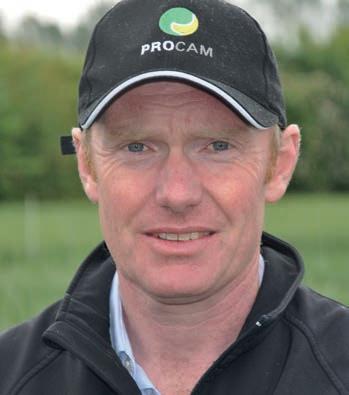
Looking back at autumn 2023, it was a devastating establishment period for OSR, especially in the North of England, where ProCam’s Nigel Scott recalls half the planted area being lost. “I rarely write crops off but the pressure from cabbage stem flea beetle that autumn was biblical. Those crops that
survived weren’t great, and then the dull conditions in June and July meant seeds were small and yields were low.”
PLANTING DECLINE
The kick-back from this was that some growers decided to not take the risk in 2024/2025, with estimating plantings in Nigel’s area down by 10%, he says. “However, others recognise OSR as a useful and profitable option. If you can grow it and achieve a good margin, it’s a true break crop and helps control grassweeds.
“Those who committed may have drilled a little early, opening
“Paying attention to detail will ensure more consistent yields over time.”
NIGEL SCOTT
the door for clubroot, but many crops haven’t required insecticides and so have thrived. The situation
Justified concerns
Because of the contrast between the 2023/2024 and 2024/2025 seasons, ProCam’s Nigel Scott fears some might take a ‘low input, low risk’ approach to OSR crops.
AGRONOMY OSR spring management
Resurrecting spring OSR
Why a strong spring OSR portfolio can have a high margin potential
In recent years, the area of winter oilseed rape has declined rapidly, but its capacity to be one of the best and most profitable break crops means its loss on many farms hasn’t gone unnoticed. So, could the lesser-grown spring OSR provide a worthy alternative?
ProCam’s Lee Harker believes it could, noting that in an ideal world, more OSR would be grown. “The UK uses 2M tonnes but we only produce 1M tonnes and this year the figure could be lower.
“Spring OSR offers an alternative – it’s a true break crop, has a different herbicide programme, doesn’t require special treatment, and helps spread the workload.”
With the introduction of its Clearfield hybrid Cocktail CL, DSV now has five of the six varieties on the 2025/26 AHDB Descriptive List for spring OSR and remains committed to the crop, says Sarah Hawthorne of DSV.
“Current high prices, a shortage of UK-grown OSR, and the desire to find profitable alternatives to cereals are driving growing interest in spring sown OSR,” she highlights.
“While it’s been a niche crop in the UK, two-thirds of global OSR production is drilled in the spring. With lower growing costs than winter OSR and strong prices, spring OSR is capable of delivering a healthy margin in many regions. Avoiding
Widespread appeal
Current high prices, a shortage of UK-grown OSR, and the desire to find profitable alternatives to cereals are driving growing interest in spring-sown OSR, says DSV’s Sarah Hawthorne.
the variable establishment problems of autumn and winter, it can achieve realistic yields of around 3t/ha.”
Alongside Cocktail, the DSV portfolio includes varieties like Lakritz, Lumen, Contra CL, and Crazy CL.
“The UK range offers yields as high as 103% of controls, with three Clearfield varieties. We’re also focused on more robust plant types that are resilient to biotic and abiotic stress.”
Sarah adds that Contra CL, Cocktail CL, and Crazy CL are tolerant to imidazolinone herbicides, making for valuable tools in weed control. “DSV Crazy also has clubroot resistance, while DSV Lakritz remains the highest-yielding spring OSR variety.”
Lee points out that it might be tempting to plant spring OSR as a backup crop and leave it to its own devices. “However, attention to detail is key – if you’re going to grow it, do it well and achieve the best results.”
Managing spring-sown OSR differs from winter OSR in several ways, stresses Sarah. “Sowing should occur in optimal conditions for rapid, even emergence; it’s better to wait for the best seedbed conditions rather than sow early. Spring OSR develops fewer branches than winter crops, so higher plant densities are advised— aim for 60-80 seeds/m², depending on soil conditions and sowing date, from mid-March to mid-April.”
SEEDBED CONDITIONS
“A firm, moist seedbed is preferable whereas wet, cold land should be cultivated to ensure the topsoil warms and dries before drilling,” she adds. Ideally, soil temperatures should be between 2-3°C to support germination, advises Lee. “Spring OSR takes longer to germinate than winter OSR, so ensure the seedbed has warmed up before sowing.”
An early application of 80-100kgN/ ha is recommended after planting, followed by 40kgN/ha at stem elongation, explains Sarah. “Like winter OSR, spring OSR has high demands for sulphur and boron. Apply 20-30kgSO3/ha early, and 300-400gB/ha before flowering.”
“Also, ensure adequate phosphorus, potassium, and magnesium to maximise yields. Typical uptakes
Attention to detail
ProCam’s Lee Harker says attention to detail is key with spring OSR and it should be grown well to achieve the best results.
are 50-70kgP2O5/ha, 160kgK2O/ ha, and 50kgMgO/ha,” she adds.
Weed and insect control require particular care, she notes. “The herbicides used for winter OSR are generally suitable for spring crops. For fields with high volunteer pressure or difficult weeds, products like clomazone, metazachlor, or clopyralid may be effective, although it’s crucial to check labels for spring suitability.”
Lee highlights the benefit of using herbicides different from those in a cereal rotation. “Actives like clomazone, metazachlor, or clopyralid are often suitable, but always check labels as some products may not be recommended for spring OSR.”
Insect pests are harder to manage, suggests Sarah. “Flea beetles (Phyllotreta spp.) must be monitored after sowing. Their damage can resemble that of cabbage stem flea beetle (CSFB), so caution is required.
“Pollen beetle can also pose a problem – they migrate to spring crops after winter crops flower, so they’re a larger threat to spring-sown crops. Remain vigilant and take appropriate action where necessary.”
However, Lee advises against spraying for pollen beetle once flowering starts. “It harms beneficial insects and once the crop flowers, the beetle becomes a beneficial itself.”
PGRs are generally unnecessary, and input use tends to be lower than with winter OSR, which helps offset the lower yields, says Sarah. “Spring OSR also provides a valuable tool in blackgrass management by adding a spring crop into the rotation.”
NIRVANA. NO.1 IN YOUR FIELD.
The UK’s no.1 herbicide for weed control.
Peas and beans are highly vulnerable to early weed pressure and good, even crop establishment is one of the most important factors that determines nal yield.
Nirvana® helps maximise pulse yields by protecting against the widest range of weeds during the critical crop establishment phase. Its two active ingredients also provide long lasting, effective weed control from their complementary modes of action.
AGRONOMY OSR spring management
now is the opposite to what we experienced last spring.”
Last year, many crops were patchy with a low green area index, but as of early February, Nigel has observed GAI of 3 in places. “You couldn’t have two more different years sequentially.”
Because of this contrast, he fears some might take a ‘low input, low risk’ approach to their OSR crops. However, he stresses that OSR must be managed carefully to maximise its potential. “With prices on the rise – north of £400/t – you want to maximise your crops, not just settle for the bare minimum.
“I understand many may have lost out financially last year and don’t want to spend this season, but we can’t farm according to last year’s conditions. We must treat this year as fresh, focusing on agronomy on a field-by-field basis.”
Yara’s Natalie Wood agrees that this season has provided more favourable conditions but notes there’ll be more variability out there after the winter. “Variability can occur within fields, which can create challenges when deciding how to approach a crop.”
First and foremost, Nigel advises growers to assess their weed burden and herbicide applications. “The majority of crops in the North have had a broadleaf and grassweed herbicide, and what I’ve seen looks clean.
“Be aware that clopyralid, the active in Korvetto (clopyralid+ halauxifenmethyl) and Shield Pro (clopyralid), shouldn’t have been applied until 1 March. You also won’t have been
Feeding the plants
Off to a good start
Many crops have done well so far this season with a green area index of 3 in February.
able to apply Kerb (propyzamide) and Astrokerb (aminopyralid+ propyzamide) since the end of January, so you’ve been in a ‘no man’s land’ for herbicides during that period. But be cautious when you do go into a crop, ensuring it’s before green buds emerge.”
He then suggests assessing crop biomass with tools such as FieldSense.
“If GAI is 1 or less in early spring, apply nitrogen, but if it’s above 3, it might not be necessary. It’s all about measuring and managing appropriately.”
CROP UNIFORMITY
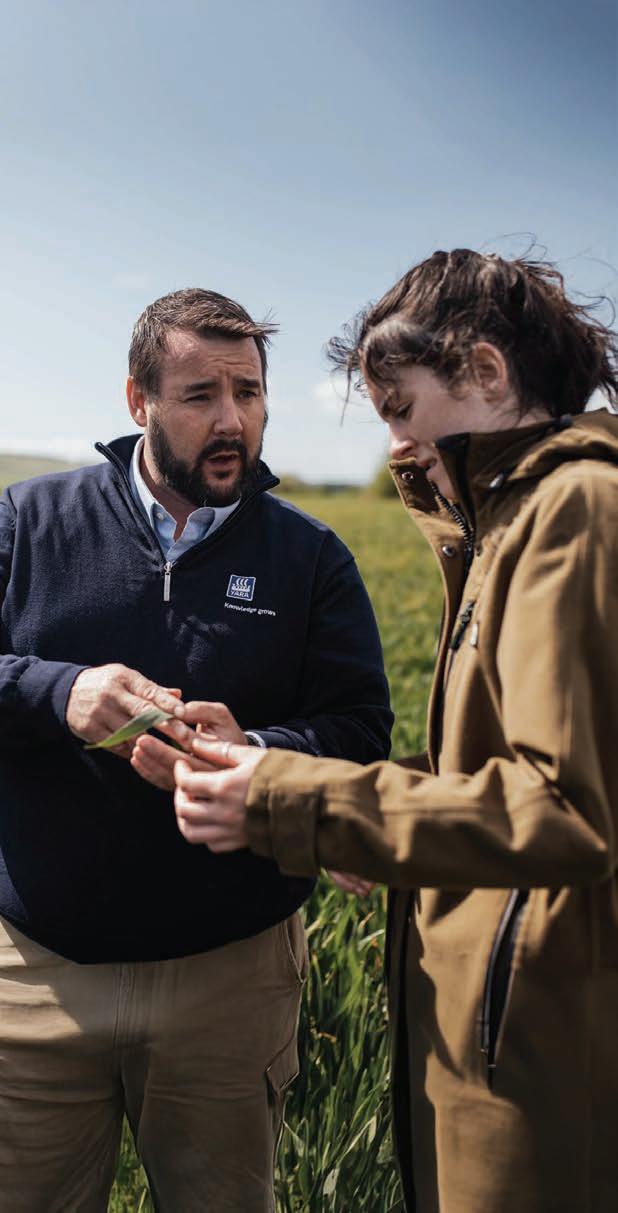
Alternatively, growers can use Atfarm, Yara’s digital software, to create variable rate maps to even out growth, says Natalie. “We’re aiming to maintain GAI between 3 and 4, and the first nitrogen application will help to achieve a more uniform crop.
“Using the Atfarm app also helps track nitrogen uptake which allows adjustments based on overwinter mineralisation,” she adds. “Ammonium nitrate is immediately available to the plant while urea must go through several stages before it becomes
available to plants. In cases where crops are behind, the sooner nitrogen becomes available, the better.”
It’s also crucial to assess disease which will be influenced by the weather, suggests Nigel. “I’ve seen some light leaf spot so far but it’s important to anticipate potential challenges rather than react once disease has spread.”
When considering plant growth regulators (PGRs), he emphasises that OSR can be easily manipulated.
“For forward crops, PGRs can keep the growing point down, minimising height and encouraging root mass development.
“If the crop is already large, any product with metconazole will regulate growth, best applied early in the season. For later regulation, at green bud stage, use a PGR fungicide like metconazole or Toprex (difenoconazole+ paclobutrazol). This will open the canopy and promote lateral branching, which is ideal because we want a dense canopy to maximise pods and seeds.”
Nigel suggests tissue testing regularly to maintain nutrition, as OSR requires
Yara’s Natalie Wood advises using a fertiliser that provides both nitrate and sulphur because OSR is hungry for sulphur.
more frequent testing than cereals. “OSR requires boron and molybdenum, so test for these and address any other deficiencies promptly.”
Sulphur is also vital and should be applied early and in small, frequent doses, he says. “Be mindful of leaching risks to avoid losing the benefits of the application while remaining environmentally conscious. Peak sulphur uptake occurs later in the OSR season, but is required for efficient nitrogen use. If applied early, don’t overdo it, as excessive sulphur can hinder boron and molybdenum uptake.”
Natalie advises using a fertiliser that provides both nitrate and sulphate. “OSR is hungry for sulphur which improves overall
nutrient use efficiency.”
She adds that at the end of flowering, applying foliar nitrogen can help to extend the green area duration, she says. “The plant’s pods can photosynthesise, so extending the green period with foliar nitrogen, such as Nufol, can increase yields by up to 0.3t/ha.”
BOOSTING ROOTING
In cases of poorer crops, Nigel recommends phosphite to encourage rooting. “Later in the season, consider biostimulants like pidolic acid during flowering when nitrogen can be an issue. This can help to maintain green leaf area which supports seed pod filling and improves nitrogen
A spring in the step
Spring oilseed rape finds a valuable place in the rotation
One farmer has taken the decision to introduce spring oilseed rape to his rotation after the risks of growing a winter crop superseded the gains. Andrew Pope farms 180ha at Longfold Farm, Bretherton, between Preston and Southport, and up until 2022 was growing winter wheat, barley, oats and OSR, plus spring-sown peas and beans.
However, since then the rotation has consisted of winter wheat, plus spring-planted barley, oats, beans and OSR. So what prompted the shift from predominantly winter to spring crops?
“We were growing winter OSR on the farm from the late 1970s, achieving anything from below to above average yields. In fact, in 2019 and 2022, we had recordbreaking crops of more than 5.5/ha.
“But in 2024 we had undoubtedly the worst yield we’d ever seen – I don’t think what we harvested even covered the cost of the fuel to combine it. OSR had often fell foul of pests such as slugs, pigeons and CSFB, but these, combined with the wet August and September followed by a severe lack of sunlight, gave the crop little chance.”
Prior to this, Andrew planted spring OSR in 2023 following the poor establishment of a winter crop, yielding a very different outcome. “We’ve grown it from time to time previously when our
rotation had become out of sync and it’s proved successful.”
So what does he believe is key to a bountiful spring planting? When it comes to variety choice, Clearfield is a must, stresses Andrew. “Click was the variety we chose to plant in 2024 after spraying the ground with glyphosate. We stripped drilled 25ha on 9 May into firm ground to assure seed-to-soil contact, with two thirds of the total N applied down the front legs, while slug pellets were administered behind, and this was then followed with a heavy roller.”
After what appeared to be a slow start, he says the crop established well after some timely rain. “After that it went from strength to strength, even a good few weeks after flowering,” explains Andrew. “We have hives on site for a local beekeeper and we could hear the bees working late into the evenings.”
The crop had a single insecticide spray along with manganese, followed by an application of Cleravo (imazamox+ quinmerac) with Dash HC surfactant. It later had a light fertiliser top dressing, bringing the total N to 110kg/ha, with inputs rounded up via a flowering spray for sclerotinia and a top up of foliar N on 18 July.
“The crop yielded between 2.08-2.2t/ha, selling for £450/t into a local wild bird feed market,” says Andrew. “Plus, the straw was baled by a neighbouring dairy
efficiency. A late-season foliar nitrogen application, just as petals fall off, can raise oil content and yields.”
Finally, Nigel addresses insect concerns, noting that pollen beetle isn’t a significant problem in the North. “I’m reluctant to use insecticides on OSR because they often don’t provide comprehensive control due to resistance, and they could make the situation worse due to their effects on beneficial insects.”
When it comes to OSR management, consistency is key, he reminds. “Rotation plays a large role, with wider rotations leading to larger yields. Equally, paying attention to detail will ensure more consistent output over time,” concludes Nigel. l
A viable alternative
Andrew Pope decided to introduce spring OSR to his rotation after the risks of growing a winter crop superseded the gains.
farm in exchange for slurry.”
The farm’s approach to rotations now is to be open minded, with spring OSR a crop Andrew will consider growing again in 2025, should it be required, he says. “It’s good to have spring OSR in our arsenal because it can be drilled late in any circumstance and is easy to manage, more so than winter OSR.
“Spring OSR also helps to spread harvest pressure, usually falling between any spring cereals and spring beans, all while providing a good break crop and potential volunteer over-winter companion crop to winter cereals,” he concludes.
OSR Reboot AGRONOMY
More than just a break crop
An industry-wide campaign which strives to reinvigorate home-grown oilseed rape, champion its benefits and reverse recent ill fortune, is well underway. CPM attended the initiative’s conference last month to hear the latest messaging.
By Janine Adamson
The rapid decline in UK oilseed rape hectarage has been deemed such a crisis that a national campaign was launched last year in a bid to seek solutions and ultimately reverse the crop’s increasingly negative reputation.
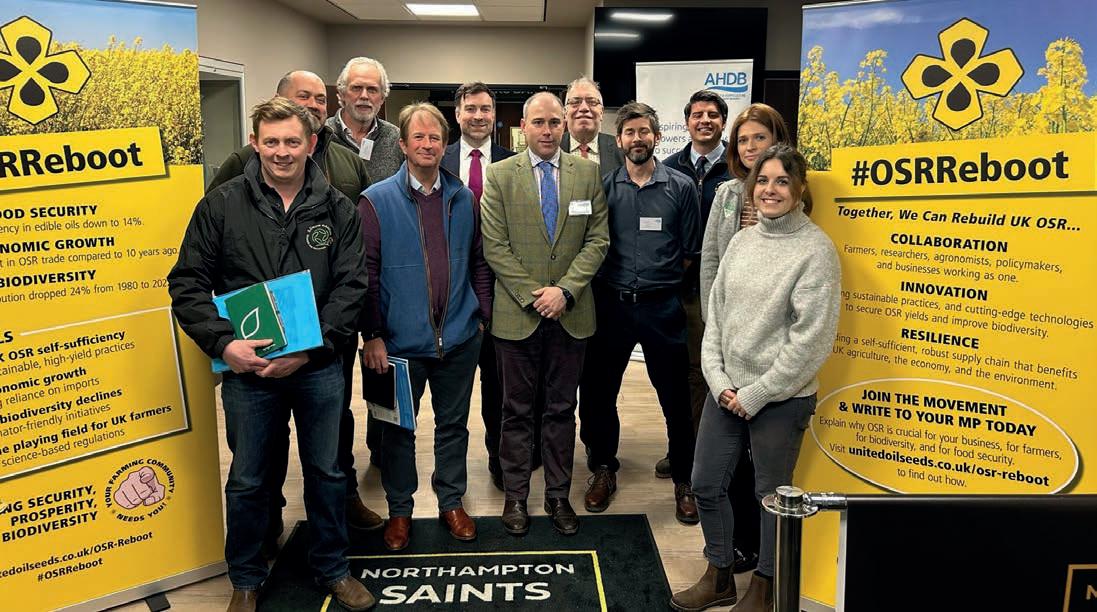
Known as OSR Reboot, the crosssector initiative aims to reinstill confidence in the crop across the entire supply chain, including supporting new R&D projects, providing the latest management guidance to growers, and acting as a conduit to policymakers.
As such, more than 70 farmers, agronomists and industry stakeholders came together for the campaign’s flagship conference last month, entitled: A decade of challenges, a future of opportunities. Organised by campaign lead United Oilseeds with support
from AHDB, its purpose was to share the latest thoughts on the crop.
Opening the conference was United Oilseeds’ James Warner, who said a combination of higher risk, lower reward plus competition from SFI, meant the UK was facing the smallest OSR crop since 1983. “From an economic growth perspective, that equates to a £1Bn loss for UK PLC,” he stressed.
DOING THE SUMS
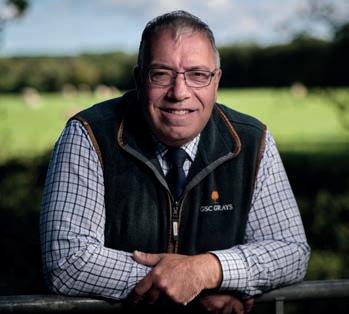
Among the invited speakers was United Oilseeds’ director Robert Sullivan, who’s also a director for land agency GSC Grays. He presented a comparison of winter OSR versus SFI actions CNUM3 (legume fallow @£593/ha) and CSAM3 (herbal ley @£382) – including different performance scenarios – to dig further into the economics at a farm level.
“As the UK is producing only a third of its domestic demand, this means there’s always a market and a buyer for homegrown OSR.”
NICK HOBSON
Modelling a 455ha virtual arable farm, he said assuming an average OSR yield of 3.28t/ha, the net profit and therefore economics of the crop successfully outweigh both a herbal ley and legume fallow, a trend which is consistent across three years. However, this shifts once OSR performance declines.
“Based on a poor performing crop of OSR with an average yield of 1.8t/ ha, the economics suggest legume
Modelling exercise
United Oilseeds’ Robert Sullivan said assuming an average OSR yield of 3.28t/ ha, the net profit for the crop successfully outweighs both a herbal ley and legume fallow.
Versatile and Essential YaraMila™
Combined factors
good seedbed conditions and waiting for soil moisture to get the OSR going.
fallow can out-perform in that situation. Taking this a step further, in a crop failure scenario, both the herbal ley and legume fallow are better options, financially-speaking.
“You can see why when faced with agronomic problems such as cabbage stem flea beetle, slugs and overall establishment challenges, why some growers are making the switch,” he suggested.
To produce the calculations, Robert said the numbers take into account variable costs such as OSR seed, fertiliser, crop protection sprays and drying requirements but exclude labour. For the SFI options, this is the action payment minus any variable costs.
He then outlined the SFI options which are available to stack on top of the OSR crop itself. These include CIPM3 (companion crops @£55/
ha), CIPM4 (no insecticide @£45/ha) and SOH3 (summer cover cropping @£163/ha).
Running the same exercise but including the above, an average-yielding OSR crop’s gross margin rises from £859/ha to £1085/ha, a poor yielding crop from £240/ha to £466/ha whereas, the legume fallow remains a consistent comparison of £468 (see table below).
“That’s an additional £226/ ha of income which means for a good crop of OSR, an already strong gross margin is amplified further. But to flip this on its head, it also means to break even with a legume fallow, an OSR crop has to yield at least £1.8t/ha plus those SFI options – so you have to ask yourself if this is realistic in your situation?” he queried.
To conclude, Robert raised the concept of postOSR legacy effects which
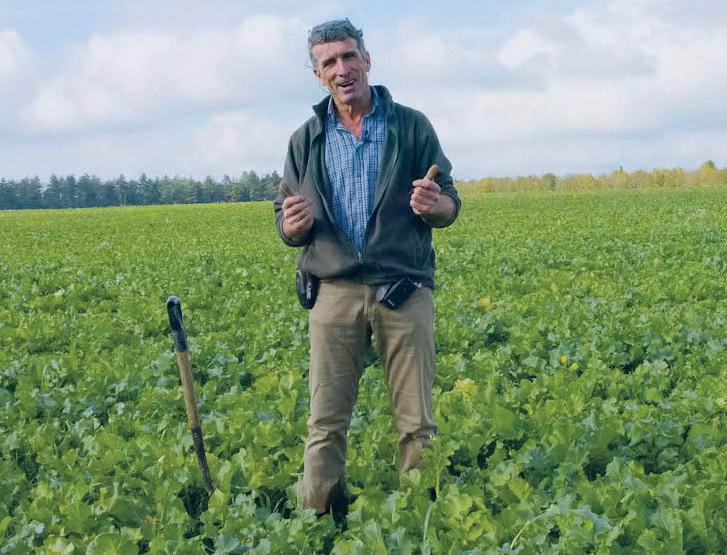
According to farmer Julian Gold, he’s kept CSFB pressure down on his farm thanks to a wide rotation, ensuring
can be observed in the rotation, whether that be residual nitrogen, herbicide considerations or the impact on a following wheat crop. “A legume fallow is low risk but it’s also low reward – the choice is yours.”
To expand on the benefits of including OSR in a cropping rotation, United Oilseeds’ Nick Hobson took to the stage. His main message was that although the phrase ‘break crop’ is technically correct, the terminology is downplaying OSR’s value.
“OSR shouldn’t be an afterthought – labelling it a break crop is doing it a disservice because the numbers really can stack up. As the UK is producing only a third of its domestic demand, this means there’s always a market and a buyer for home-grown OSR – few commodities can be so liquid,” he said.
“Plus, the market drivers are very different to wheat and barley which means it’s easier to manage financial risk across a rotation because a grower can trade into different baskets.”
Nick stressed that he perceives OSR as the most important edible crop in the UK. “I really believe in this product, it’s one of the cleanest crops to grow and you’re not clearing forests as a consequence.”
Badging himself an ‘average’ OSR grower, Julian Gold, farm manager of the 750ha Hendred Farm Partnership in Oxfordshire, said he agrees with OSR being a fantastic crop.
With a wide rotation –growing the crop one in six or seven – he explained despite ups and downs, his current five-year rolling average is just over 3t/ha. “Even in poor years, OSR allows for high yielding following wheat crops, as a result, it contributes to our P&L (profit and loss) well.”
In terms of his approach
to crop management, he shared that experience has told him aiming for better quality plants through lower hybrid seed rates, is the way forward. He added that the results have been better rooting with less apical dominance in the crop.
Julian also reminded of the importance of ensuring good seed-to-soil contact, which is something he achieves by rolling at least 2-3 times post drilling. A consequence seems to be lower CSFB pressure, he suggested.
“We don’t have a massive flea beetle problem at the moment which I believe is down to a range of factors: our wide rotation, ensuring good seedbed conditions and waiting for soil moisture to get the crop going.
“We only observe populations when we sow adjacent to a previously planted OSR area, or next to a field of winter bird food SFI option.”
CULTURAL CONTROL
To provide a researcher’s perspective, AHDB’s Dr Sacha White presented cultural approaches to CSFB control for both adults and larvae. He said in terms of adults, sowing date is most impactful to help mitigate shot-holing.
“This is either going early so the crop has a chance to establish well and bounce back from subsequent feeding, or, planting later so the OSR emerges after the CSFB adult migration has largely finished so beetles are likely to be elsewhere.” Whereas for larvae, the later the crop is sown the better, he added.
Sacha pointed out that despite researchers having a good handle of individual cultural control methods, there remain significant knowledge gaps for the industry to address. For one, growers desperately require a new
THE SMART CHOICE
AGRONOMY OSR Reboot
Cultivation control
Based on research which indicates the majority of adult CSFB are present at the end of September, there should be an opportunity to control the pest using cultivations, suggested Niab’s Colin Peters.
responsive treatment to gap fill the loss of insecticides, he stressed.
“Then, we lack understanding of how best to stack all of the
available cultural control measures for the optimum outcome.”
Sacha then highlighted the role of decision support systems. “These have the potential to predict pest pressure, guide treatments and methods.
“But ultimately, if we can improve our knowledge exchange coupled with robust research, we should be able to achieve reliable CSFB control in the future,” he said.
The final presenter at the conference was Niab’s Colin Peters who shared findings on post-harvest cultivation trials. He said based on research which indicates a large proportion of adult CSFB are present at the end of September, there should be an opportunity to control using cultivations.
“So we looked at cultivating immediately after a mid-July harvest using discs at 50mm deep. What we found was we reduced the adult flea beetle emerging from the ground by 68% until the end of September,
When crush comes to shove
With crushing plants importing significant quantities of OSR to meet UK demand, what impact is that having on the processing side of production?
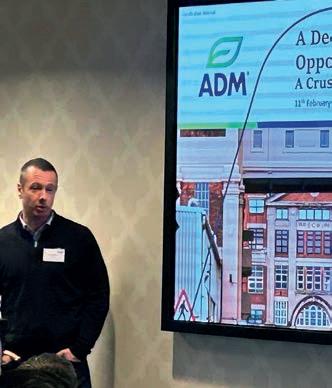
According to ADM Crush General Manager, Rory Blacklock, the current decline in UK OSR crop is compounded further following a decade of external challenges.
“We’ve had Brexit, Covid-19 and the war in Ukraine which have made for a host of supply chain disruptions.
“What the situation in Eastern Europe has highlighted, is the UK’s over-reliance on imports being sourced from one particular area. The issues we experienced in getting OSR out of Ukraine in the early days really emphasised the importance of having a bigger UK crop, if only to prevent us from running out of seed,” explained Rory.
From ADM’s perspective, these externalities have driven up costs in the form of energy price hikes and shipping, while creating a pinch point in terms of sourcing adequate labour.
To provide further context, he shared that in 2018 the UK was importing just over 200,000t of rapeseed while now, the figure for 2025 is expected to be more like 1.3M tonnes. “That’s never been done before with some plants having advantages over others. But
our plant was built in the early 1900s, so the infrastructure simply isn’t there to handle such significant quantities of imported seed,” he warned.
Rory also reminded of the environmental consequences.
“Not only are we outsourcing the neonicotinoid burden, but shipping rapeseed from Australia, for example, is driving significant amounts of carbon into our supply chain.”
On a more positive note, he said the demand for UK rapeseed oil is rising, attributing the upward trajectory to population growth and the fact it’s an ingredient in many products which are consumed daily. “There’s a shift towards more sustainable options such as rapeseed oil, to move away from those like palm oil which are produced in areas at risk of deforestation.
“This highlights that if we continue to lose OSR area in the UK, that’s putting us at significant risk of offshoring environmental concerns.”
UK rapeseed meal demand is also on the up, he said, mainly as part of the move away from imported animal feed proteins which can come with significant carbon footprints and
compared with uncultivated.”
This led to Niab looking at exactly where the pupae are within the soil profile, he continued. “Soil samples were taken at 30mm, 60mm, 90mm and 150mm depths, which were then floated to extract the pupae.
“We discovered the majority of them were in the top 30mm which is useful because whatever we’re achieving – whether it’s crushing, exposing to predation, drying out or whatever – it’s a shallow depth which is important.”
He said more work is required to further understand the lifecycle of CSFB because clearly this method works, but knowing how it works will unlock whether cultivations can be useful, plus the impact of soil type and machinery choice on its effectiveness.
Colin’s parting message was to encourage farmers and agronomists to conduct simple larvae counts to help understand potential CSFB pressure on a per-farm basis. l
Sustainability benefits of OSR
ADM’s Rory Blacklock highlighted there’s a shift towards more sustainable options such as rapeseed oil, to move away from those produced in areas at risk of deforestation.
high environmental consequences.
To conclude, Rory said he still believes there’s a future of opportunity for crushing plants. “But supply chain security is fundamental as it allows us to be more certain in terms of crush rates – that we’ll have continuity of supply in the face of any global challenges.
“That then supports crush margins which should encourage investment in our industry so we can continue to offer customers the sustainable solutions they desire.”
WITH GUY SMITH
One of the main winter distractions that punctuated my farm day was patrolling oilseed rape crops for pigeons. The daily routine of checking gas bangers while persecuting the blue menace with aerial bombardments from rockets used to make me feel like a munitions and missile officer in the armed forces.
Without such daily vigilance there’d be an immediate financial loss for the business. However, I did used to wonder if I should include the time and expense involved along with the other variable costs involved when working out net margins.
Winter days seem more relaxed now we’ve given up growing OSR, replacing the crop with SFI and CSS, mainly NUM3, AHL2 and AB15. The thing is, while OSR has disappeared, the pigeons haven’t.
With a remarkably swift demonstration of a species’ ability to adapt to a new environment, which emphatically proves Darwin right, Columba palumbus has immediately found alternative sources of nutrition in autumnsown conservation mixes. Clover, trefoil, vetch and radish are the favourites.
I’ll confess that while the pigeons have a dawn-to-dusk commitment to ravaging my autumn drilling, my commitment to disturbing their fiendish plans isn’t what it was. When protecting a cash crop, the rewards for vigilance are obvious, but when it’s a conservation mix, the call of duty is a good deal dissipated. Consequently this spring I
Smith's SOAPBOX
Survival of the fittest
have several hectares that look like some sort of battlefield after a marauding enemy army has done its worst. Whether the savaged plants bounce back remains to be seen.
The current dispiriting state of these conservation crops reminds me of conversations I was party to 5-10 years ago with Defra officials as they mapped out a new vision for UK agricultural policy and its nascent agenvironmental schemes.
Often expressed in Whitehall’s ivory towers was that the schemes should be ‘outcome’ based. A point I tried to make was that in farming there’s many a slip twixt the cup and lip. Unfortunately, there’s an army of pests not to mention drought and flood, waiting to make fools of us farmers.
‘Outcomes’ are easy to envisage but difficult to achieve. To adapt a quote from American president, Dwight Eisenhower: “Ag-environmental outcomes look easy when your plough is a pencil and you’re a thousand miles from the field destined for NUM3.”
To add to the natural world’s seeming determination to undo the plans to help it, pigeons aren’t the only natural flies in the ointment. Pests such as slugs and bugs are waiting to pounce and various grassweeds ever ready to smother.
What makes conservation crop stewardship more challenging is we can’t reach for pesticides as a ready remedy. I’ll admit during recent decades, farmers like me have become a little dependent on pesticides. However, watching plants disappear over winter is a keen reminder why we were using them in the first place.
Of course for some options like NUM3 and AB15, we
have non-chemical means of controlling grassweeds –namely the mower – but on this farm the jury’s still out as to how effective and expensive it actually is. That said, I’m also conscious that herbicides in the chemical arsenal are becoming increasingly ineffective.
So, it’d be good for the powers that be to take a good hard look at what works when it comes to achieving outcomes in the harsh reality of farming. It’s notable how beans are expressly not permitted in SFI options, not even as part of a mixture. This strikes me as odd as they’re robust plants which don’t succumb to pigeons or slugs, yet deliver pollen and seeds. Perhaps the fear is farmers might be tempted to harvest what’s not meant to be harvested. But with satellite imagery to check this doesn’t
happen, combined with painful fines, you’d think it’s fairly easy to combat what, at the end of the day, would be defrauding the taxpayer. So as the green shoots of spring emerge, it’s back to the gas bangers and exploding rockets as the blue hordes return to my crops of peas. ●
YOUR CORRESPONDENT
Guy Smith grows 500ha of combinable crops on the north east Essex coast, namely St. Osyth Marsh –officially the driest spot in the British Isles. Despite spurious claims from others that their farms are actually drier, he points out that his farm is in the Guinness Book of Records, whereas others aren’t. End of.
@essexpeasant
The unsung hero of the spray tank
With tricky tank mixes, tight weather windows and suboptimal spraying conditions all threats to herbicide performance, CPM finds out how adjuvants can play a crucial role in optimising applications.
By Charlotte Cunningham
As every farmer or sprayer operator knows: getting the most out of every spray application is crucial. Whether it’s herbicides, fungicides, insecticides, or even fertilisers, ensuring what can be costly inputs work as effectively as possible can mean the difference between a thriving crop and a disappointing yield – as well as being in the green or red
when it comes to the bottom line.
Of course, there are many things that impact a successful application – some within and some without the operator’s control. However, there are actions that can be undertaken to minimise the effect of less-than-ideal conditions, complex tank mixes and difficult leaf surfaces, explains Agrii agronomist, Mark Glover. “Nothing changes in agriculture – the
“The structure of the molecule within Kantor is substantially di erent than other adjuvants in the market.”
MARK GLOVER
same challenges exist whether it’s an easy or difficult spraying season.
“So really, it’s about tailoring your approach to the degree of those challenges. In a difficult spraying season, what tends to happen – as a general statement, and it varies by region – is tank mixes become more complex and water volumes are rarely above 100 l/ha.”
Application is often impacted too, he continues, with some products applied earlier than typically expected which means the water temperature is lower, which can adversely affect tank mixing.
“It also means in some situations, the amount of leaf target that’s on the plant for these backward crops is less. So it’s up to the farmer and agronomist to
overcome those challenges using the tools they have available in the armoury, with adjuvants an important part of that.”
Delving deeper into the potential challenges of difficult seasons, Mark says hefty tank mixes need managing in terms of tank mixing and ensuring product performance. “This becomes more complex as more products get added to the tank and hard water doesn’t help either. Lots of water in the UK is classified as hard, to a greater or lesser extent, which is important to keep in mind.”
MANAGING WATER
Water temperature is also significant, he adds. “This is especially where borehole water is used or when the water has been sitting in storage tanks over the winter. So if you have hard, cold water, lots of products going in the tank and a high pH, it’s important to be aware that things could go badly wrong if not managed properly.”
In this situation, Mark believes an adjuvant is critical. In simple terms, adjuvants are additives designed to enhance the performance of agricultural chemistry. “While they don’t have any direct pesticidal effect, the correct adjuvant can help the active ingredients in tank mixes to do their job better by improving spray coverage, reducing drift or ensuring better absorption, to name just a few benefits. All adjuvants are different and do slightly different jobs, but what we do know is Kantor from Interagro has some unique properties in that regard. The structure of the
Pushing performance AGRONOMY
molecule within it is substantially different than other adjuvants in the market.”
One of these unique properties is Kantor’s ability to prevent poor mixing, he explains. “In complex mixes, and especially in cold water, chemicals don’t combine. But because of the unique properties in Kantor, when we add this to the tank it prevents that from happening.”
Mark explains that this issue with tank mixing can be partially attributed to the formation of micelles – aggregates of surfactant molecules that form in an aqueous solution. Mixed micelles are subsequently formed when two or more different surfactants mix, particularly in scenarios of cooler water conditions. “Kantor essentially prevents formulation of the micelles in the tank mix. This is well-documented in literature and proven in trials,” he says. Its drift reduction is another benefit over other adjuvants on the market, he adds. “A lot of growers have time constraints, which are compounded by adverse weather and a desire to get a lot done in a short time. Application rates 100 l/ha and lower are common.
“When this is teamed with perhaps an inappropriately high sprayer speed – which of can come down to short spraying windows – the combination of the two leads to significant drift which again reduces product performance.
“However, Kantor significantly reduces drift, including in circumstances where low water rates and high forward speeds are used. Even with drift reduction technology nozzles, you
Insurance in a can
With sprayer operators often pushed for time and dealing with large, complex mixtures, Agrii agronomist Dominic Swainson believes using an adjuvant is an insurance to keep chemistry working as it should.
can easily achieve an additional 20% reduction in drift just by using Kantor.” As well as the reduction in drift, Kantor has been proven to aid uptake and retention of product on the crop’s surface. “That retention is known technically as ‘pinning’ which essentially ensures the product stay on the leaf.”
HIGH VALUE CROPS
For one grower and agronomist team in Worcestershire, Kantor has proven to be an essential part of the strategy. Dominic Swainson, senior agronomist at Agrii, says the adjuvant has been particularly beneficial in vegetable crops for Will Parrot who oversees the production of more than 1,600ha of veg at Springhill Farm – part of Evesham Valley Growers – in the Vale of Evesham.
With sensitive horticultural crops including salad onions and asparagus in the rotation, using Kantor in with fungicide mixes has been a staple for some time, explains Dominic. “We get a lot of downy mildew at the farm – it’s probably the biggest challenge to salad onion production. The crop requires frequent spraying to keep the disease at bay. However, the fungicide range at our disposal isn’t as extensive or effective as it used to be, so we’re already on the backfoot when it comes to good disease control.
“What’s more, with the salad onions in particular, it has quite a waxy, very upright, round leaf, so getting good coverage can be challenging.”
As a solution to both reduced chemistry performance and application challenges, Dominic recommended
Solution saving
Adding Kantor to a mixture that wasn’t sitting in solution saved a tricky tank mix at Springfield Farms in spring 2023.
AGRONOMY Pushing performance
Will try a combination of alternated backward- and forward-facing spray nozzles alongside Kantor in the tank mix.
“Not only did it help us to achieve good coverage, but it also improved the rainfastness to under 30 minutes. Because we’d be applying fungicides most weeks due to the downy mildew pressure, there’d be a crop at some stage that required a critical fungicide application. So it meant we could go out in less-than-ideal conditions and actually get very good results.”
TRICKY MIXES
As well as helping to keep salad onion crops clean, Dominic says Kantor has also helped to rescue tricky tank mixes in the past. “It was about two years ago, in March, and we had to apply a complicated pre-emergence herbicide mix on a couple of fields of asparagus,” he explains.
“The mix actually uses about five different products and with the cold water that was being used, it went into the tank and as soon as it started to spray out, the sprayer nozzles blocked up.
“I received a phone call, headed back to base, and picked up some cleaning materials so the team could clean out the nozzles, the lines and the sprayer. Then we pumped the spray solution into a couple of IBC containers.
“What we noticed when I took a sample from the IBC, was that it wasn’t homogenous – it wasn’t sitting in solution. The herbicides were sinking to the bottom and that was what was causing the problem. Obviously chemistry is very expensive, so I suggested adding some Kantor to see if we could rescue the spray mix rather than dispose of the sprayer contents.”
Dominic says they drew 10 litres off and added about 200ml of Kantor in each 5-litre can. “We shook it up and left it overnight and the next morning when we had a look it had gone back into solution.
“So we decided to pump it back into the sprayer with additional clean water and a good slug of Kantor, and off it went and sprayed out beautifully. So that was a lesson learned about a complicated tank and cold water early in the spring. Obviously, it’s always best to avoid this where we can, but Kantor does offer a solution when the pressure for spraying is high and farmers are left with limited options.”
Today, the farm uses Kantor across the rotation on both vegetable and cereal crops including with contact herbicides in maize to improve efficacy. “We’ll also use
Part of the strategy
Incorporating an adjuvant in the tank mix has become a core part of the strategy at Springfield Farms in Worcestershire.
Kantor with the herbicides in the spring for the sake of crop safety,” explains Dominic. “It’s become the philosophy to avoid any detrimental effect to the crop, because Kantor can improve the safety of herbicides and improves the efficacy and spreadability of fungicides.
“With rainfastness down to 30 minutes with Kantor, for a sprayer having to do complicated mixes and be here, there and everywhere, it’s an insurance which takes many of the problems associated with spraying away.”
Looking ahead, Mark says there’s potential legislation for adjuvants on the horizon, which he says could be a good thing to ensure products entering the market are fit for purpose.
“While adjuvants won’t have to go through the same registration process as crop protection products, they will require more evidence of justification of efficacy, which I think is a good thing.
“I’m very confident that if and when that happens, products such as Kantor will cut the mustard. With increasing pressure on UK farmers to be more precise, efficient, and environmentally responsible, adjuvants offer a simple yet highly effective way to get the most out of every spray application. By improving coverage, reducing drift, and helping active ingredients perform better, these unsung heroes of the spray tank can save time, reduce waste, and ultimately boost yields,” he concludes. l
Pushing Performance
At the heart of good crop production lies careful use of chemistry to protect the plant and maintain performance, right through the season.
But optimising the efficacy of plant protection products can be challenging, while increasingly restrictive regulations limit just how far you can go.
This series of articles explores the science behind the use of adjuvant and biostimulant tools to help power both chemistry and crop performance, as well as increase understanding of why they’re needed and what they do.
We’re setting out to empower growers and drive crops to reach their full potential. Kantor is a unique activator adjuvant that brings unbeatable performance to crop protection sprays by removing the physical and chemical constraints that restrict activity and efficacy.
CPM would like to thank Interagro for kindly sponsoring this article, and for providing privileged access to staff and material used to help put the article together.
TOPIK
Inhibiting ammonia, enhancing profitability
"It was time to re-evaluate our approach to ensure all round value for money."
It’s nearly a year since a standardised approach for the use of urea-based fertilisers was implemented which included promoting the use of urease inhibitors. CPM explores the state of play within industry for the second of this month’s Real Results Roundtables.
By Janine Adamson
It was on 1 April 2024 that guidelines were put into place to help limit ammonia emissions from urea fertilisers and reduce their contribution to both air pollution and ecological damage.
Monitored as a Red Tractor farm assurance standard, the guidelines apply to any fertiliser containing more than 1% of urea nitrogen – untreated solid urea/liquid UAN fertiliser can be applied between 15 January to 31 March each year, otherwise a urease inhibitor must be used.
As the industry approaches a year of implementation, has the use of urease inhibitors taken off? To discuss the
benefits of the technology, CPM brings together ADAS’ senior crop research consultant, Dr Christina Baxter; Frontier agronomist, Lucy Tagger; farm manager, Max Ward; and BASF business development manager, Andrew Clune. Max manages two arable operations – H & D Murraywells and Castle Howard Estate in North Yorkshire –growing barley, oilseed rape, wheat and vining peas across 600ha. It was during a move from solid to liquid fertiliser that he made the decision to use a urease inhibitor.
SCENE SETTING
To begin the Roundtable discussion
MAX WARD
Boosting the bottom line Growers are under pressure to improve productivity by optimising inputs to benefit both gross margins and the environment; this is where urease inhibitors can come in, says ADAS’ Dr Christina Baxter.
Real Results Roundtable AGRONOMY
Forward-thinking
Farm manager Max Ward switched to liquid UAN three seasons ago and has included a urease inhibitor from the start.
on urease inhibitors, Christina highlighted that beyond the current season’s crop performance, the general conversation in farming is all about improving efficiency and increasing production on the land that’s already being used to produce food.
“As a result, growers are under more pressure to improve productivity by optimising inputs to benefit both gross margins and also the environment. This is where urease inhibitors can come in,” she explained.
In agreement, Lucy added that with more land entering stewardship schemes, it’s critical to maximise food-producing areas. “That’s certainly what Max and I are trying to achieve – pushing those crops on good land which have the greatest potential. Anything that can be done to achieve that is welcome.”
Following the introduction of the urea fertiliser guidelines last year, Lucy shared that of her customers, there’s currently a mix of approaches. “Some, such as Max, are very aware of the benefits of including an inhibitor and have been using them since before the stewardship came into place, rather than because of it. Others use them because they have to as they’re still to learn of the benefits,” she said.
HOW THEY WORK
Urease inhibitors work by binding urease enzymes which slows down hydrolysis and volatilisation, helping to minimise the breakdown of urea into ammonia and reducing losses. As such, research has shown that
urease inhibitors can improve nitrogen use efficiency, which Max said was a primary driver behind his adoption of the technology.
“We’ve been using liquid UAN fertiliser for approaching three seasons now and have included an inhibitor from the start; we want to get the maximum value from the products which are being applied.
“We made the switch to liquid at the same time as we were upgrading our sprayer and moving to wider tramlines. It was time to re-evaluate our approach to ensure all-round value for money,” he explained.
In response, Christina stated that much research has been done to explore the efficiency of urea-based fertilisers. “They’re less efficient by around 10%, so there’s a significant gap compared with ammonium nitrate. This means if you’re using urea fertilisers, you should actually be applying 10% more to catch up with that.
“Equally, volatilisation varies a lot depending on environmental conditions but the losses tend to be about 2025% of the N applied. By using a urease inhibitor you’re protecting all of those losses so efficiency-wise it makes total sense, particularly in applications post-February when volatilisation is more likely.”
Andrew highlighted that although prices have settled somewhat, when the war in Ukraine started two and a half years ago there was a huge spike in fertiliser prices. “Urea suddenly became very attractive.
“This means as people move over or perhaps switch back after some time, it’s important to remember that urea is different in how it behaves compared with ammonium nitrate.”
THE BENEFITS
Despite having an initial input cost, Christina shared that trials have shown BASF’s Limus (dual-active urease inhibitor) can in fact offer a yield benefit compared with untreated liquid urea-based fertiliser. “Of course this can vary based on the season or conditions, but that uplift tends to pay for the extra cost of the inhibitor.”
Max confirmed that he’s observed this outcome. “Last year, despite being very difficult, all of our milling wheat made spec in terms of protein, which we’ve never achieved before by solely using fertiliser. I’d say the cost is definitely covered by extra yield
and hitting market specifications.”
According to Andrew, this could be down to how Limus works. “There are variations in classes of ureases enzymes, so variety in actives is beneficial. Limus combines two active ingredients - NBPT and NPPT - and has been shown to reduce ammonia inhibition more than a single active.
“This means it’s more efficient and we can see a uplift in performance of around 3%, compared with a urease inhibitor that only has one active ingredient. On average, this could offer a £60/ha yield uplift over single active alternatives.”
Lucy added that in terms of margin over input cost, Limus pays for itself, but actually, the advantages go beyond. “It’s a win-win because of the environmental benefits too –we can all sleep at night knowing we’re doing the right thing.”
Max agreed and said sustainability was another reason behind him making the switch to liquid UAN fertiliser. “We want the reassurance that we’re placing it exactly where we want it to be; environmental impact is always being considered.”
CARBON FOOTPRINT
To expand on the topic of sustainability, Christina explained ADAS has the YEN Zero network which aims to calculate the carbon footprint of crop products and the emissions associated with the inputs applied by growers.
“We use that network to communicate to growers where their hotspots lie, so what’s causing the major emissions in
Wider benefits
According to Frontier agronomist, Lucy Tagger, Limus pays for itself but actually, the advantages go beyond.
AGRONOMY Real Results Roundtable
their crop management systems. A lot come from the use of nitrogen fertiliser because it’s very carbon intensive to manufacture, but there are also the emissions once it’s applied because it releases nitrous oxide – a very potent greenhouse gas. This has 300 times greater global warming potential compared with carbon dioxide.”
On average, for wheat, the emissions associated with nitrogen application can be up to half of the crop’s total carbon footprint, she continued. “So in regard to a urease inhibitor, although ammonia isn’t a greenhouse gas, it’s important we have targets to reduce ammonia emissions for air quality reasons.
“But equally, that ammonia is deposited as nitrous oxide so does contribute to the carbon footprint of a crop. If based on UK trial data we assume volatilisation of solid urea reduces by 70% when using a urease inhibitor, and 44% for liquid UAN, when applying 200kgN/ ha we can improve the carbon footprint of wheat by up to 9% depending on conditions.
between fertiliser manufacturers and inhibitor sales as well; it’s not just a Red Tractor inspection that will dictate how successful this is.”
He added that using an inhibitor shouldn’t be to simply tick a box, rather to reduce emissions as much as possible.
To concur, Lucy reminded of the variability in March conditions. “We can see anything from snow and freezing temperatures to approaching 20 °C. With this in mind, I’d say anything above 10 °C and you should be including an inhibitor regardless of calendar date; I can’t see why you wouldn’t.”
LEADING THE WAY
“I’d say anything above 10°C and you should be including an inhibitor regardless of calendar date.”
“This means a urease inhibitor can play a considerable role in reducing the carbon footprint of crop production, which we know a lot of growers are under pressure to achieve by food manufacturers further up the supply chain.”
GOING BEYOND
Although the cut-off date for applying non-inhibited urea is 31 March each year, Christina suggested that really, it’s all about conditions. “There’s still a benefit from using it in other scenarios where you’re going to have volatilisation because of the associated efficiencies which can be achieved.
“An example being if you’re applying nitrogen earlier in the spring, the soils are still warmer compared with during the winter and therefore there’s a risk of losses.”
In agreement, Andrew stressed it’s critical to not lose sight of the bigger picture. “We’re post-2020 and therefore have to reduce ammonia emissions by 16% compared with 2005. The environment is being monitored to see what those emission levels are and how much ammonia is in the atmosphere – there are audits
Despite this strength of message, the Roundtable was optimistic about England’s progress. “I think it’s fair to say that although other countries are very much aware of ammonia emissions, they’re yet to be legislated or stewarded in the same proactive way,” commented Andrew.
As such, Christina added that she believes it’s a good news story for all. “It’s a positive policy change which still benefits the grower in terms of improved efficiency and potential yield uplifts.”
Andrew added: “If you break it down to a farm level – what are we doing by reducing emissions? The answer is, we’re stopping the nutrients which have just been applied from
The bigger picture
Using a urease inhibitor shouldn’t be to simply tick a box, rather to reduce emissions as much as possible, stressed BASF’s Andrew Clune.
leaving the farm, we’re keeping them in the soil for the crops to use.
“That’s such a benefit for the grower and the environment. Therefore anything that can help to keep nitrogen in the soil and stop leaching or volatilisation is a benefit. You’ve paid for those nutrients, keep them in the right place,” he concluded. ●
Real Results Roundtable
BASF’s Real Results Circle is a UK-wide agricultural network now in its eighth year. The initiative is focused on bringing together growers, industry experts and BASF to create a more resilient farming system that’s sustainable for farm business profit, for the people we feed and for the planet we live on.
Real Results Roundtable is a new initiative which explores related topics, such as resilient disease control, environmental stewardship and return on investment. Roundtables centre around Real Results Circle farmers and associated experts from the wider industry.
By coming together to openly discuss and therefore face challenges as one, we can find out what really works and help to shape the future of UK agriculture.
CPM would like to thank BASF for kindly sponsoring this feature, and for its assistance in providing access to the relevant experts and contacts required to produce it.
•
Climate resilient cropping
Health is wealth with biosolutions
What does experience from the field suggest in terms of peptides, elicitors and other biosolutions, and their ability to improve plant health in the face of challenging growing conditions? CPM takes a look from an agronomist’s perspective.
By Janine Adamson
The concept of a biosolution – the combination of biology and technology – is no longer a new notion, particularly in the world of sustainable crop production. Encapsulating a wide range of innovations from biostimulants and biofertilisers to biocontrol and pheromones, slowly but surely, more is being understood about how these products function.
As growers are now relatively accepting of what seaweed-based biostimulants can offer, focus is shifting to other modes of action and the role they can play in further boosting plant health, believes
Agrii agronomist, Neil Harper.
But while scientific knowledge transfer catches up, this is where infield experience comes to the fore, he says. “I think it’s safe to say growers are successfully getting their heads around seaweed biostimulants and standard amino acids, how they work and what they offer. However, they are merely the tip of the iceberg in terms of the vast range of innovations available.
“We’re seeing growing intrigue in peptides and elicitors, with endophytes being another step beyond that. As such, it’s now about timing – being strategic to truly get the most from what have the potential to be very
“Observing consistent results in the field from best practice application is a must.”
NEIL HARPER
exciting products,” he says.
Rather than let farmers take on the burden of trial and error, this is where Agrii field-scale trials come in, to help inform targeted biosolutions use, highlights Neil. Consequently, a bank of applied research insight is being built
Benefits of peptides
According to Agrii’s Neil Harper, while softening any pesticidal effects, peptides add to resilience and health meaning a plant is less susceptible to disease.
Climate resilient cropping AGRONOMY
Boosting up the programme
How biosolutions can add value to conventional agronomy approaches
Slotting biosolutions into conventional agronomy programmes can offer noticeable improvements in plant health and resilience, as shown in trials, says Agrii technical manager, Jodie Littleford.
“There’s clear evidence emerging from Agrii’s trial work which suggests using biosolutions early in a fungicide programme is where they’re likely to deliver the best results,” she continues.
“When we do this, plus integrating with traditional chemistry and applying before disease levels escalate, we’ve seen better crop health and resilience, which has been reflected in overall lower levels of disease even compared with a standard fungicide programme.
“But where this pattern starts to break down is when disease levels have already started to build in the early stages of the spring so the effects of the biosolutions on crop resilience are potentially limited.”
Key to understanding how best to use biosolutions in programmes lies in knowing how they work and their mode of action within the plant, she points out.
“Elicitors, for example, trigger the plant’s hypersensitive response. This was discovered in 1992 and is effectively the response to a pathogen damaging the plant’s cell wall, and has been associated with disease tolerance.
“Once a hypersensitive response is triggered, it stimulates metabolic pathways in the plant that help with crop resilience and intrinsic defence against these pathogens.”
where you’re having to firefight then you’re really too late with the application whether that’s a conventional fungicide or a biostimulant.”
As well the as resilience-boosting results achieved with peptides, other biostimulants including amino acids, PGA (pyroglutamic acid) and phosphite, have also performed well in Agrii R&D, she highlights.
“Amino acids are building blocks utilised in a range of biochemical functions including protein synthesis, stress reduction and modulating stomatal opening. Biostimulation of these processes can enhance growth and improve nutrient cycling, helping crops to combat disease and increase productivity.
“PGA and phosphite have also been shown to enhance nutrient use efficiency as well as improving rooting and upregulating photosynthesis, which in turn provides the plant with more energy and resources to thrive,” explains Jodie.
Work carried out in the heightened and sustained disease pressure of the 2024 season further underlines the effects of biosolutions when used in a targeted approach alongside fungicides, she adds.
“Trials visited in July 2024 in South Wales – where septoria pressure is usually high in a normal year but extreme levels were seen last season – showed plants treated with a standard fungicide programme had virtually no green leaf area remaining.
“If you’re in a situation where you’re having to firefight then you’re really too late with the application whether it’s a conventional fungicide or a biostimulant.”
According to Jodie, peptides have been shown to mimic this cell wall damage and therefore trigger the response.
“But the key to the success of peptides is application early in the programme ahead of disease onset. In this way, the plant’s immune response has been activated prior to a pathogen attack.
“It’s the same with fungicides really, where a protective approach is the most effective. If you’re in a situation
“But plots in the same trial with a fully biological approach at T0 and T1 integrating elicitors, amino acids, phosphites and biofungicides, had significantly more green leaf area on the flag leaf.
“So even in a year like the last, bio-based solutions stack up against traditional chemistry when used in a programmed approach. Doing this, plus utilising stronger chemistry when it’s required particularly on less
Trial results
There’s clear evidence that using biosolutions early in a fungicide programme is where they’re likely to deliver the best results, highlights Agrii’s Jodie Littleford.
resistant varieties, can certainly deliver better results in terms of gross margin over input costs,” she suggests.
Jodie adds there’s a wide range of options for integrating biosolutions into existing fungicide programmes, however selecting the most appropriate can depend on the location and disease pressure seen.
One of the most exciting of the newer biostimulant options, believes Jodie, is Innocul8 – containing manganese, zinc and a peptide – which has been shown to trigger a plant’s complete hyper-sensitive response.
“At the early assessment timings, where we’ve used Innocul8 at T0 or before, we see enhanced greening and healthier crops carrying lower levels of disease which are better able to withstand environmental stress.
“We’ve also seen a consistent yield increase of around a third of a tonne per hectare (0.34t/ha) where we’ve applied Innocul8 at those early timings, highlighting that these biostimulants not only contribute to crop resilience, but also produce a good return on investment for growers.
“In conclusion, all of the emerging science and trial results are suggesting biostimulants – elicitors in particular – can be vital tools in boosting a crop’s ability to withstand the various challenges of climate change and more stressful growing conditions,” she says.
AGRONOMY Climate resilient cropping
Agronomic advice
among the agronomic community.
“If we start with peptides, I perceive these as not dissimilar to giving a plant a flu jab which means moving away from conventional fungicide timings. We want a healthy, strong plant which is better prepared for the months ahead as a pre-cursor to a T0, just as a human would in readiness for winter cold season,” he explains.
Peptides are short-chain amino acids which can help plants to overcome both abiotic and biotic stresses. Used as signalling molecules, they’re involved in many biological processes and therefore, different peptides perform different roles in helping to boost plant health and resilience.
GREENER FOR LONGER
In contrast, an amino acid is a single building block molecule that when combined, forms a peptide.
“A beauty of peptides is they can be mixed with a herbicide which is helpful for those requiring an earlier pass ahead of T0. Yes this can be perceived as an additional round with the sprayer, but keeping a crop greener for longer may help with making efficiencies later on in the management programme,” says Neil.
“We have to acknowledge that any fungicide or herbicide application has potential to check a crop to some degree. This is why optimising green leaf area and overall health status is so beneficial.
“Furthermore, while we’re softening any pesticidal crop effects, we’re also adding resilience and health, meaning
“We want a healthy, strong plant which is better prepared for the months ahead as a pre-cursor to a T0, just as a human would in readiness for winter cold season.”
a plant is less susceptible to disease.”
With peptides increasing in popularity, Neil adds that Agrii has seen consistent results from their use which is critical when it comes to securing grower confidence in the products. “Because these products aren’t regulated in the same way as conventional plant protection products, we all have a heightened awareness and natural scepticism of any manufacturer claims.
“Observing consistent results in the field from best practice application is a must – mis-using the technology with a resulting bad experience in many ways, belittles the science. That’s why we’re investing effort into really understanding how to best use biosolutions including their timing.”
For those willing to try a pre-T0 application of peptides, Neil says the risk is paying off. “With a protectant approach, growers are then seeing results which carry on through the season.”
One such willing risk-taker is Kevin
Molecular structure
Peptides are short-chain amino acids which can help plants to overcome both abiotic and biotic stresses.
Bell who farms around 100ha at Charing in Kent. He says his aim is to maximise the return of each hectare of land, which also led him to being part of Agrii’s iFarm network.
With the guidance of Neil, Kevin has been trialling Agrii’s approach to biosolutions. “I’ve seen some positive results and therefore plan to continue using the biosolutions to complement our drive towards efficiency gains.
“I understand these types of products could be key in the future; seeing them being used in a trial scenario gives me confidence in exactly how and when to use them,” explains Kevin.
Ensuring efficient production is front of mind for all growers, adds Neil, “We can’t land in a place where money is being spent and growers aren’t seeing positive results. Equally, input prices are increasing so we’re seeing more interest in the role of plant health.
“If we can understand these natural processes and apply them as part of an IPM-approach to crop management, we can reduce our reliance on both new and old chemistry. Given rising sustainability demands, surely that’s a good thing?” he suggests.
Although readily on-board with peptides, Neil does believe more research should be undertaken into how endophytes work. “Again, it’s understanding the timing and application conditions required to yield the best results.
“Being a living organism, it adds an additional layer of complexity to the product which we’ve perhaps not had before. Yes they’re an exciting technology, but in ways we can’t afford to get it wrong,” he concludes. l
Climate resilient cropping
With weather extremes becoming more frequent, and challenging conditions now perceived as the norm, what can growers do to improve the resilience of their cropping approaches?
This series of articles, kindly sponsored by Agrii, aims to explore some of the different approaches to de-risking crop production – from making better use of nutrients and boosting NUE, to getting the most from plant genetics.
CPM would like to thank Agrii for providing expert insight into these topics, and for the privileged access to the individuals involved.
Grower Kevin Bell (left) has been advised by Neil Harper on how best to use biosolutions to complement the farm’s efficiency-first approach.
Using biostimulants to decarbonise food production
As both growers and the wider supply chain focus on developing greater resilience of food production in the face of climate threats and changing agricultural practices, the impact of biostimulants is starting to extend far beyond the farm gate. CPM reports.
By Rob Jones
The ability of biostimulants to increase productivity through greater yields and improved nitrogen use efficiency appears to be catching the eye of processors and retailers striving to secure consistency of supply and reduce the carbon footprint of food production. With the output of UK arable production finding its way into a multitude of products on supermarket shelves, it’s a technology capable
of far-reaching effects across the food supply chain, believes independent sustainability consultant, Caroline Mason.
As the former head of agriculture fisheries and aquaculture for The Co-operative Group, with additional experience working at Waitrose, Caroline says resilience is undoubtedly the word of the moment in the wider food industry, but it’s a term that means different things to different people.
“What a farmer and retailer want is actually the same, but the reality is we can no longer rely on the farming methods that landed us where we are now.”
CAROLINE MASON
“Resilience to a retailer involves understanding how the climate is changing globally and how that impacts on the ability to source food products to guarantee consistent availability throughout the year. Without reliable crop availability, the whole multiple retail business model breaks down,” she suggests.
“But in farming terms, resilience has become more an expression of farming practices and decisions which guarantee there’s a profitable crop to harvest at the end of the growing cycle, that in turn provides a reliable route to market and income.
“So, what both a farmer and retailer want is actually the same thing, but the blunt reality is we can no longer rely on the farming methods that have landed us where we are now. We have to think
Shared benefits
Biostimulants are an example of a technology which is aligned with future sustainability objectives and one that growers, processors, retailers and consumers can all benefit from, says independent sustainability consultant, Caroline Mason.
and operate differently and ask different questions.”
Biostimulants are an example of a technology which is aligned with future sustainability objectives and one that growers, processors, retailers and consumers can all benefit from, she says.
“They have the potential to help farmers to improve their productivity while increasing the efficiency of their nitrogen use and reducing their carbon footprint. What’s really exciting is they also work with nature and can benefit the wider food supply chain, too.
“Not only do they give producers more stability financially, but this also extends into greater stability throughout the whole food supply chain – crops which don’t perform very well directly impact on how much grain is going to be on the shelves of retailers and that’s a real problem for them.”
According to Caroline, it’s important to remember that something like wheat is both a commodity and
an ingredient, and as such, ends up in multiple different products including animal feed. “Therefore, improving the sustainability of just one crop can have a massive impact across the overall food system.
“Biostimulants are also a brilliant innovative example of a Scope-3 solution because they can fundamentally reduce the carbon footprint impact of that whole ingredient supply chain. It’s an area retailers are likely to be increasingly excited about as it’s the type of sciencedriven innovation which can attract further investment.
“Consequently, biostimulants are being perceived as a part of the food supply chain that’s really moving forward in the right direction,” she adds.
SCIENTIFIC VALIDATION
Jack Hill, account manager for Intracrop, highlights that technical validation is a key part of the biostimulant journey, with compelling science now underpinning significant breakthroughs.
“The chlorophyll-enhancing MTU molecule, for example, has just completed European CE validation some 18-months ahead of schedule. This is because of the strength of the data and trials behind it.
“Furthermore, it’s one of the few biostimulants legally approved to carry the label recommendation of being capable of enhancing NUE – that’s a real step forward,” he comments.
Jack adds that MTU has been shown to increase chlorophyll levels by up to 20% because the more chlorophyll there is, the greater the rate of photosynthesis which leads to more CO2 assimilation and more sugars being produced – the result being a healthier crop.
“This process also
improves NUE by increasing CO2 uptake as the plant has to compensate by boosting the uptake of nitrogen from the soil to balance the C:N ratio, as well as building resilience to deal with the greater abiotic stresses now increasingly experienced in crop production.”
He says the firm’s seen interesting results from an MTU and pidolic acid combination which is being marketed in the UK by Frontier as a product called Status. “For example, trials in Cambridgeshire on sugar beet have shown a root weight increase of 11t/ ha – an uplift from 57 to 68t/ha – which is worth an extra £418/ha at the time of the trials in 2022 when the plant was under significant heat stress.
“Trials with Status in cereals have been equally impressive with typical nitrogen savings of 30kgN/ha achieved without a negative impact on yield.”
He says another rapidly rising star in the Intracrop portfolio is Nutrino Pro – a urea polymer-based product combining Mg, S and the two biostimulants pidolic acid and R100.
“Nutrino is a foliar product where the urea polymers break down during a 6-8 week period, and which is proven to be most effective late in the season. In oilseed rape, we’re typically seeing a 0.4t/ha yield response from 20l/ ha application. This can be used on top of standard farm practice nitrogen applications, or, to replace around 30kgN/ha of soil-applied product.
“On paper, a 20l/ha application of Nutrino Pro only provides around 6kgN/ ha, but because it’s a late applied foliar product, it’s hitting a lot of biomass which maximises interception and reduces the potential for leaching and volatilisation,” explains Jack.
“Because it’s so efficient, we’re observing NUEs in excess of 95% in trials compared with 30-40% for soil-applied nitrogen in the same dry conditions. That’s why we believe it’s possible to replace the equivalent of 30kgN/ha soilapplied N with 6kgN/ha of Nutrino Pro.”
Jack adds that work undertaken by Dyson Farming Research in 2024 also demonstrates a consistent yield increase in winter wheat of 0.3-0.5t/ha as an outcome of using Nutrino Pro at optimal and sub-optimal base nitrogen rates.
he suggests. “We’ve invested in producing a true ‘cradle to grave’ indicative carbon footprint for Nutrino Pro from raw materials, inbound logistics, production, outbound logistics, product use and disposal.
“When you look at a standard wheat system using 200kgN/ha from AN, and one where AN provides 170kgN/ ha combined with Nutrino Pro at 20l/ ha, you achieve the same yield but with a 12% reduction in carbon emissions.
“The Nutrino Pro approach, where 30kgN/ha is replaced with 20l/ha of Nutrino Pro, produces 296kgCO2e/ ha less than the AN-only system, which is a sizeable amount from such a simple switch,” believes Jack.
Proven benefits such as these are
Status update
According to Intracrop’s Jack Hill, the company's seen interesting results from an MTU and pidolic acid product called Status.
Navara SPRING BEAN
Such improvements in yield and nitrogen use are also resulting in significant environmental benefits with sizeable reductions in carbon footprint of production being seen,
ROOTED IN STRENGTH, GROWN WITH CONFIDENCE
Navara offers high, consistent yields, solid agronomics, and a desirable pale hilum with excellent seed size. With exceptional standing ability and very good resistance to both downy mildew and rust, Navara is the ideal choice for feed and export markets.
AGRONOMY Biostimulants
Nitrogen use efficiency
The goal is to make every kg of nitrogen as impactful as possible to produce as much food as possible – that’s very different from just reducing nitrogen use, believes Frontier’s Robert Nightingale.
why the benefits of biostimulants are being increasingly noticed by the food supply industry downstream of farmers and growers, says Frontier Agriculture’s sustainability technical lead, Robert Nightingale.
“It’s a significant topic of discussion with customers and we’re increasingly engaging with processors and retailers to discuss the benefits to them of biostimulants and other practices in sustainable food supply.
“What we know is the nitrogen efficiency piece is very important to them. When you look at food products and feed, some 30% of the carbon footprint of beer comes from the grain involved, with bread that’s 60%, with flour it is 90%, and with feed production similar.
“In terms of grain production itself, around half to three quarters of the carbon footprint is connected to nitrogen manufacture and nitrogen use with this split roughly 50:50 between the two, so improving nitrogen use efficiency is key.
“The real goal is to make every kg of nitrogen as impactful as possible so we can produce as much food as we can; that’s very different from just reducing nitrogen use.”
He says this is where biostimulants can make a difference, with many of
Frontier’s customers now appreciating this and therefore looking at how they can reduce their overall emissions and carbon footprint.
In fact, Frontier has a rapidly growing cohort of 150 farmers on ‘sustainable supply chain contracts’ which actively reward participants for good agricultural practices, including the use of biostimulants, he explains.
“We’re trying to incentivise farmers to make more sustainable decisions and reward them accordingly. So in the first instance, we’re talking about the adoption of sound nutrient planning practices to get the fundamentals right around nitrogen use.
“We’re then encouraging the use of biostimulants. The more positive steps a grower takes, the more they move up through a bronze, silver and gold ranking system and the more they’re rewarded for their actions,” adds Robert.
The firm also has a ‘sustainability data collection programme’ which involves going out to customer businesses and seeing what’s actually happening on farms through relatively light touch surveys, he comments.
“This not only helps to build a picture of the carbon footprint of the grain which farmers are producing, it also gives valuable insight into what impact different practices are making to NUE and carbon at a collective level.”
KNOWLEDGE BANK
Frontier head of crop nutrition, Edward Downing, believes such initiatives not only directly reward the farmers involved, but also build valuable knowledge for the future.
“There’s still a lot of scope for all of us to improve and so encouraging farmers to use best sustainable practices and rewarding them for adopting these makes perfect sense.
“There’s an aspect of win-win across the food supply chain from such thinking, ranging from efficiency and financial gains for the farmer to significant benefits to the environment and the creation of more resilient food supply.”
But there really is no silver bullet, he stresses. “Biostimulants are an increasingly important part of the process, but it extends far beyond these if we’re to achieve
“We’re increasingly engaging with processors and retailers to discuss the benefits to them of biostimulants and other practices in sustainable food supply.”
the goal of fully decarbonising food production in the way we all desire.
“It’s also about looking at crops other than just the staples like wheat and barley; we’re only just beginning to understand the implications of biostimulants and other beneficial practices with regard to these.
“At the end of the day, we all require food and that has to be front and centre of everything. Consistent and reliable supplies of high quality food produced in a sustainable and environmentally responsible way is everyone’s ultimate aim,” he stresses.
For Caroline, with her experience in food retail, the challenge is even more succinct. “It’s very clear that whether you use the words sustainable or regenerative, such practices will help to produce a more balanced agriculture with greater longevity, greater income stability and greater environmental benefits.
“We all have to be talking in a much more collaborative and efficient way across the food supply chain from farmers at one end, processors and manufacturers in the middle, and then retailers and consumers at the end.
“Whether you’re on the bus or not, things are changing and technologies like biostimulants are transformational with a hugely exciting role to play,” she concludes. l
Rewarding best practice
Frontier’s Edward Downing says as scope remains to improve, encouraging farmers to use best sustainable practices and rewarding them for adoption makes perfect sense.
Versatile with greatdisea
Feed the animals or quench the tHirst, we’ve got you covered.
Group 4 Winter Wheat
Can be used for feed or distilling
Very good yield around the UK, especially in the North
Strong resistance to septoria and yellow rust
Great results as second wheat
VARIETIES Theory to field
Behind-the-scenes of RL trials
“We aim to give RL users greater confidence in the data and a better understanding of why we take certain approaches.”
PAUL GOSLING
from theory to field
A new initiative to help explain how AHDB Recommended List trials are managed and some of the processes behind them is underway. CPM reports.
By Mike Abram
It’s a well-oiled machine but behind the scenes there’s a considerable amount of work involved in managing the process required to deliver each year’s AHDB Recommended Lists (RL), which cover recommended, described and candidate varieties.
Nearly 25,000 individual trial plots are drilled, assessed and harvested each season to provide the annually updated variety data for 11 crops. But despite delivering independent variety information since 1944, the processes behind the RL remain somewhat a mystery to most levy payers. Indeed, the most recent RL review from the beginning of 2023 saw around 75% of levy payers asking for more information about variety trials including how they operate and how recommendation decisions are made, explains AHDB RL manager, Paul Gosling.
That’s led to a new initiative where using one specific trial in Terrington, Norfolk as a backdrop, AHDB is going behind the scenes to tell the story of how a RL trial is delivered and the procedures involved. This includes releasing blogs and videos from the site during the season to provide regular updates and information about its progress.
“We aim to give RL users greater confidence in the data and a better understanding of why we take certain approaches and decisions,” says Paul.
The starting point of RL trials is a faceto-face meeting of the relevant RL Crop Committee in the summer before the season, he adds. Consisting of farmers, agronomists and representatives from key trade bodies such as breeders, millers, maltsters, and whisky producers, and independent technical experts, this is where breeders’ data from the GB
RL review outcomes
During the recent review, around 75% of levy payers asked for more information about variety trials including how recommendation decisions are made, says AHDB’s Paul Gosling.
In-person inspections
The role of AHDB’s three field trials managers, including Mark Bollebakker, is to inspect trials to make sure they offer a fair comparison between varieties.
and NI Variety Lists (VL) trials for a new variety are presented and debated.
“There are two years of breeders’ trials for cereals before a variety can be submitted for recommendation. Our crop committees look at the data provided by the breeder and decide which should be selected to be a candidate.”
A range of criteria is used to evaluate a variety including treated and untreated yields, agronomic characteristics especially disease resistance and standing power, and quality. “Those characteristics are weighted by importance and then assessed against established comparator varieties already on the RL,” comments Paul.
Using that process, the committee then has a final vote – the breeder representatives typically abstain – to decide on which varieties to trial.
In this year’s fungicide-treated trial at Terrington there are 35 recommended varieties plus 15 new candidates. The trial is one of 31 such winter wheat trials; this one being sown on 7 October following potatoes on a silt soil type.
Sites are found by various contractors employed by AHDB on five-year contracts to conduct the trials around the country, says Mark Bollebakker, AHDB senior field trials manager for the RL.
The programme tries to mirror commercial practice by location or rotational position – for example, mirroring the proportion of first and second wheats or split between spring and winter oats, and typical drilling dates. With wheat RL fungicide-treated trials consisting of 50 varieties, trial design is crucial to maximise the chance of obtaining meaningful results, highlights Mark. “As standard, we use three
Theory to field
Trial protocols
With wheat RL fungicide-treated trials consisting of 50 varieties, trial design is crucial to maximise the chance of obtaining meaningful results.
replicates in most treated yield trials to reduce risk of field effects. That means in every replicate each variety is drilled once and randomised, so in a different order.
“But we also use an incomplete block within each replicate. So let’s say one variety is in a small block in replicate one with four other varieties, then it’ll be in another block in the next replicate with four other varieties,” he says.
“If that block is in a higher or lower yielding area, then our analysts can make small adjustments to all the varieties in the block to make it more comparable. It makes the analysis more robust and less affected by trial area issues.”
DISEASE CONTROL
Agronomic inputs for each trial are carefully managed via defined crop protocol, with the disease control programme typically eliciting most debate. For various reasons, the fungicide programme is much more costly and robust than what a typical grower would use.
“The aim is to keep individual diseases below 10%,” Paul says. “It used to be 5%, but with the chemistry available that was unrealistic and meant we were rejecting perfectly good trials because of disease levels above 5%.”
Given the level of disease control in trials with varieties with different disease strengths and weaknesses, taking account of regional effects on disease incidence with a single programme across all the trials necessitates a robust programme that’s much more expensive than
commercial programmes, he explains.
“It means in some locations, some of the fungicides applied won’t be doing much – they’re protecting against diseases that aren’t found in that location or in some varieties. Putting a yellow rust-active fungicide on a variety with a resistance rating of nine won’t give any yield benefit, but it has to be there to protect the varieties with lower ratings, which is why we end up with a very robust programme,” stresses Paul.
Every fungicide used is commercially available and everything is applied at or close to full label rate with some discretion allowed within a specified range, he adds. “We also don’t use anything that’s in a use-up period, or likely to be in next 18 months.”
The programme for the upcoming season in wheat has been tweaked to include the use of Syngenta’s new fungicide pydiflumetofen in the flag leaf spray, with Corteva’s fenpicoxamid switched to T1.
“We’ve struggled to control septoria during the past few years, particularly but not exclusively in the South West, so hopefully using new chemistry will help to improve our control,” says Paul. Around five or six RL sites are managed specifically to meet milling specification in wheat. “We also grow new varieties in a number of long quality strips at some other sites for UK Flour Millers to use. If they meet spec, they use those strips, but if they don’t, they can use the RL samples to supplement the dataset,” adds Mark. Two different types of assessments are made within the RL trials with agronomic
VARIETIES Theory to field
assessments such as disease levels, lodging, winter hardiness, straw length, date of ear emergence, maturity and sprouting, made by the contractor.
Then, the role of AHDB’s three field trials managers, including Mark, is to inspect the trials to make sure they offer a fair comparison between varieties.
“I give an overall assessment of the trial but also individually score each plot on a 1-4 scale. Four is a plot that looks great and I expect the data to be good; for a three I might have noticed a small gap in the plot, for example, but I think the data should be fine.
“A two is questionable – it could produce data but if I see anything odd in the stats I’ll remove it from the final analysis; but if it’s a one it’ll automatically be excluded,” explains Mark.
Typically, inspections are made from mid-June to mid-July in cereal crops, with oilseed rape earlier in the year from mid-March to mid-April at early to mid-stem extension.
Giving a sense of how these decisions and assessments are made, as well as what’s happening at the trial in Norfolk, are some of Mark’s aims for his blogs during the season. “I’m planning to publish every couple of weeks during the spring, particularly once we start seeing disease or other issues arise in the trial.”
Yield remains one the key assessments of a variety but knowing when exactly to harvest a trial of varieties with different maturities is a challenge, highlights Mark. “One of the limitations of the RL is that it can be disadvantageous for anything at the edges. For example, an early maturing variety might be slightly past its best by the time the combine goes through, while waiting for the last variety is ready would affect the rest of the trial.
“It’s important to get harvest timing right so crops don’t sit ready in the field for
too long, especially for quality aspects.”
Once combined, data is sent into AHDB within 3-5 days of it being harvested; the time taken for results to be published is dependent on the validation of the data. “This can cause some delays, particularly for early harvested trials,” admits Mark.
Using his visual inspection scores of each plot is an important part of that validation process, to help make sure the data makes sense. “Where there’s doubt that a plot isn’t representative of the variety then a decision can be made to remove a plot’s result.
“That’s the importance of replicates,” he stresses. “And ultimately, while publishing the harvest results in a timely manner is useful for growers, we have to produce reliable data for a RL that in 2025 makes up the list for the 2026/27 season.”
FINAL VALIDATION
Deciding which varieties make it onto that list is the last step of process, and it’s back to the crop committees, adds Paul. “Once the trials have been validated, the data team analyses it statistically and for the candidates adds that to the two years of breeders’ Variety List data to get a three-year data set.”
What follows is essentially a repeat of the candidate selection process, where the committee examine the data, breeders make a case for their varieties, and then a committee vote decides on whether to add it to the RL, says Paul.
The criteria used to make that decision have evolved with a fundamental shift taking place last season to place more emphasis on disease resistance and untreated yield. “We also now have minimum standards for all diseases which are the same as used in the Variety List. They’re quite low but in addition the RL uses target specifications, so where the minimum standard is three
Backstage access
AHDB is using its site in Norfolk to go behind the scenes and tell the story of how a RL trial is delivered.
Plot scores
As well as an overall assessment of the trial, each individual plot is scored using a 1-4 scale.
for yellow rust in wheat, the target specification is six,” he explains.
“We wouldn’t expect a variety to be recommended if it was below six, unless it has a good reason to be recommended. Those target specifications have trickled into the system during the past few years, but last year we introduced them across all crops for all diseases at different levels depending on how important the committee felt they were and how difficult or easy to control.
“We also have target specifications for quality characteristics such as Hagberg falling number and specific weight in cereals as a way of signalling to breeders what we’re expecting varieties to meet,” he concludes. ●
Research roundup
From Theory to Field is part of AHDB’s delivery of knowledge exchange on grower-funded research projects. CPM would like to thank AHDB for its support and in providing privileged access to staff and others involved in helping to put these articles together.
To access the AHDB’s RL blogs: https://ahdb.org.uk/rl-trials
For more detail about the project visit: https://ahdb.org.uk/rl-project
Advancing genetics VARIETIES
Sweeping the board: the secrets to genetic success
With a record-breaking eight new wheat varieties added to the most recent AHDB Recommended List, CPM sits down with breeder KWS to find out how the company is driving genetic innovation.
By Charlotte Cunningham
Wheat breeding in the UK has come a long way from the days of simply picking the best-looking crops in the field. What was once a slow, trial-and-error-based process has since evolved into a hightech science where genetic markers, drones, and data-driven selection are shaping the future of farming.
Today, breeders aren’t just looking for high yields, they’re on a mission to breed crops that can withstand unpredictable weather, resist the toughest diseases, and still deliver top-quality grain. As such, the innovation happening behind the scenes
is revolutionising the ability to grow crops.
At the heart of this transformation is a blend of cutting-edge technology and good old-fashioned agricultural know-how. Scientists can now scan millions of genetic data points in a flash, pinpointing the best traits with precision – something which would have been unimaginable a few decades ago.
With more than 25 years of experience under his belt, research scientist Nick Bird has had a front-row seat in watching this evolution unfold. Working as the UK winter wheat research lead at KWS, the past 10 years of his career have
“When
I first started generating data from genetic markers, you might have had 100 data points a day, whereas now you can generate millions in a morning.”
NICK BIRD
Better breeding
KWS research scientist Nick Bird says developments to the firm's breeding programme enable them to characterise material better for a more in-depth insight into what's inside.
Next gen innovation
What KWS is bringing to market now has the potential to revolutionise crop production and drive forward a whole new generation of innovation, believes the firm’s Olivia Bacon.
been focused on the development of hybrid wheat and other key wheat requirements such as quality, yield and disease and fungal pathogen resistance, explains Nick. “Twenty-five years ago, when I first started generating data from genetic markers, you might have had 100 data points a day, whereas now you can generate millions in a morning.”
In terms of the benefit this has brought to KWS’ breeding programme, Nick explains this development has enabled the firm to characterise its material better and get a more in depth insight into what’s inside – which parts are beneficial, or not – which has helped drive forward breeding innovation. “It’s all about gathering as many of those beneficial genes as we can while discarding those which aren’t appropriate for our breeding programme.”
In terms of other technologies such as phenotyping and the use of drones, Nick says while progress has been made, there remain limitations and difficulties which they’re working through at present. “At this moment in time we still rely heavily on breeders
walking fields, phenotyping with their eyes and scoring accordingly, although we’re looking for digital solutions.
“We can use genomic selection which uses phenotype and genotype data from multiple varieties to predict the performance of unseen varieties solely on their genotype.
“While we’ve made some small improvements to the speed in which we can bring this progression to market, the biggest benefit has been we’re better at identifying the positive and negative material than ever before.”
The result of this progress is seen in KWS’s ability to develop varieties which boast genetic traits which can help growers maximise productivity – with their latest launches proving this, says KWS UK head of product management, Kate Cobbold.
With eight new wheats added to the latest AHDB Recommended List and top placings in all the key Groups – as well as in both conventional and hybrid barley as well as OSR – Kate believes yield is once again king for growers in the current challenging conditions.
“While yield has always been a focal point for us as it’s important to growers and the principal way varieties are ranked in the UK, in recent years our attention has been on adding enhanced functionality to crop options.”
This has been typified by KWS’ Sowing for Peak Performance (SPP) initiative during the past ten years which has placed emphasis on qualities such as overall resilience, disease resistance, field performance and consistency of production, she explains.
“Behind this rationale were factors such as the increasingly variable growing conditions now experienced as a result of climate change, the reduced number of agronomic
options available, and the move to more sustainable methods of crop production.
“As a result, varieties like Group 2 KWS Extase, with its RL-leading untreated yield and septoria resistance, plus the high yielding Group 4 allrounder KWS Dawsum, with an untreated yield not too far behind Extase and proven production reliability, have established themselves as the UK’s most widely grown wheats in recent times.
“There are other examples of this thinking in action, such as KWS Tardis, with all of these varieties continuing to be highly effective choices in rotations.”
Of course, nothing in agriculture stands still and a new set of criteria are starting to influence UK production demands, notes Kate. “Sustainability remains a top priority for growers and the wider food supply chain alike, as does resilience, whether it’s defined as a crop’s capacity to thrive in difficult conditions or a market’s ability to reliably supply what consumers what.
“Food security is an increasingly concerning topic and SFI puts a growing emphasis on every hectare of land being more productive
New initiative
KWS' Kate Cobbold says the firm has launched a new initiative which builds on its previous Sowing for Peak Performance campaign.
than ever as more areas are taken out of conventional agricultural production.”
All of these factors are underpinned in a new initiative launched by KWS – Productivity2 (Productivity Squared).
“Productivity2 builds on SPP to put a variety’s ability to deliver the best results at a gross margin level centre stage of the decision-making progress,” she explains. “Everything SPP brought to people’s thinking is still as important as ever but we’re now adding to this with new levels of yield potential, largely the result of some important breeding developments made in recent years.
“In the past, when characteristics such as septoria or yellow rust resistance were added to a variety, there was usually a yield penalty to pay. So, a variety that was the strongest agronomically, wasn’t usually the highest yielder.”
Consequently, some of the varieties with the highest yield potential were also some of the most vulnerable and susceptible to diseases or abiotic stresses, but things are very different now, she points out. “KWS Extase rewrote the rules on this by combining the highest untreated yield, a good marker for a variety’s overall agronomic strength, with a fungicide-treated yield that rivalled some of the highest performers when it joined the RL in 2019.
“On top of this, it combines the potential to reach Group 1 milling specification and that high outright yield gives producers the opportunity to grow it as a barn-busting feed wheat if that was their choice.
From Nick’s perspective, he says targeting disease resistance is his main priority at the moment. “Obviously, we always have yield in mind. But to provide the ability for a farmer to grow those crops to their
YaraAmplix™
Enhancing your potato crops’ natural potential in harmony with nature
Responsive - Adaptable to your crop needs throughout the crop cycle
Robust - Protect crop quality and improve crop yield
Resilient - Enhancing plants tolerance to abiotic stress
Include OPTITRAC at tuber bulking for optimum tuber size and yield
VARIETIES Advancing genetics
maximum potential, with lower inputs, is very high on our priority list.”
In terms of specific diseases, Nick says yellow rust and septoria are particularly important. “We’re also looking at pathogens which aren’t there all the time. Brown rust, for example, varies in its incidence across years whereas looking further ahead, stem rust and fusarium head blight aren’t significant issues at this moment in time, but could become so.”
Kate adds that KWS Dawsum offers similar opportunities with good grain quality and specific weight adding to its marketability, underpinned by reliable performance in the field and consistent high yields. “The refining of this genetic ability to reliably combine a full agronomic profile without it affecting the outright yield potential is the basis of Productivity2. It’s a way of thinking we’re now taking across all of our crops including wheat, barley, maize, sugar beet, rye, oilseed rape, peas and oats .”
The manifestation of this is particularly visible in KWS’ performance in the 2025/26 AHDB RL, she points out, with yield, resilience and marketability the key elements of productivity in action. “Don’t forget, while output is a fundamental part of the productivity equation, so too is the cost of production. So while yield dictates the top line in terms of revenue earned, cost of inputs plays a key role in determining the final gross margin/ha.
“A variety that’s more robust and requires less agronomic intervention can contribute more to the bottom line than one that’s needy and requires significant expenditure to deliver its full potential.”
That’s where disease resistance and resilience come in, but marketability is important too, she adds. “Being able to achieve premiums for your production adds markedly to the top line of the productivity equation.”
KWS wheat product manager Olivia Bacon agrees and highlights how the new KWS winter wheat varieties add value to the new Recommended List. “In Group 1, new KWS Vibe brings the highest overall protein production to help growers maximise their margins together with a comprehensive agronomic package. Vibe brings genuinely improved performance to a sector that’s seen
An
impressive package
New variety KWS Vibe brings the highest overall protein production to help growers maximise their margins together with a comprehensive agronomic package.
few new additions in recent years. We believe it’s the new ‘protein banker’ for the UK with the best combination of yield and protein of all varieties, but with a much better plant package for growers than previous varieties.”
Its yield of 98% of controls combined with a milling specification protein content of [13.2%] sets it apart from its competitors, as does its most comprehensive agronomic package of all the key Group 1 players, she adds. “This includes an 8 for yellow rust, 6 for brown rust and 6.6 for Septoria tritici resistance combined with a Hagberg falling number of 283 and specific weight of 79.1 kg/hl. It really has everything you’d wish to see in a Group 1.”
In Group 2, KWS Arnie, KWS Equipe and KWS Newbie take the three top spots and build on Extase’s legacy of high yields, milling potential and strong disease resistance, says Olivia. “These varieties also have the potential to give growers the opportunity to use them as strategic agronomic ‘tools’ depending on production requirements.
“Arnie, for example, is the new Group 2 leader with a yield some 4% points ahead of Extase at 106% of control – making it comparable to the very best Group 4s. This is together with the additional benefits of 7s for both yellow rust and septoria resistance.
“Equipe takes second spot in Group 2 at 103% of treated controls plus it has the highest untreated yield of all varieties on the new RL at
“A variety that’s more robust and requires less agronomic intervention can contribute more to the bottom line than one that’s needy and requires significant expenditure.”
92%, underlining the strength of its agronomics and real-world resilience
Newbie completes the trio of new Group 2s with excellent first and second wheat yields, particularly in the North where it yields [107%] of controls, plus its 9 for yellow rust and 6.2 for septoria resistance will stand it in good stead across the country, says Olivia.
Group 3 additions KWS Solitaire, the group’s new highest yielder, and KWS Flute are definite ‘disrupters’ with the potential to serve all market opportunities be they distilling, export, feed or biscuits, she notes. “Like Group 2, Group 3 is also evolving with these new genetics providing a range of opportunities for growers that wouldn’t have been possible just a few years ago.”
In Group 4, where Dawsum’s reliability and all-round strength have made it the UK’s most popular wheat by area grown in recent years, KWS Scope tops the group and the new RL overall with a yield of 108% of control for the UK as a whole.
“That rises to 111% in the West region so it’s a true yield monster with the type of agronomic foundation that allows this performance to be delivered across the country, plus, it has a specific weight significantly higher than the next highest yielder on the list.
“With a 7 for yellow rust, 6 for brown rust and 6.5 for septoria resistance, Scope boasts a similar agronomics to Dawsum – with its specific weight of 78.9 kg/hl right up there too.”
Olivia concludes: “It’s a really exciting time for genetics and varieties across the board. What we’re bringing to market now really does have the potential to revolutionise crop production and drive forward a whole new generation of innovation.” l
Growing for gold: getting the best out of pulse crops
With pulses garnering more interest across the sector, CPM finds out how growers can get the best out of these protein-packed break crops.
By Charlotte Cunningham
On the back of a whole industry shift towards producing more homegrown protein sources, it could be argued that pulses have enjoyed a resurgence in popularity of late.
As well as the opportunity for UK-grown protein, pulses offer significant benefits at a farm level including improved soil health, crop diversification, and when done well – economic profitability. However, successful production requires careful planning and attention to detail.
This is according to Charlotte White,
senior research scientist at ADAS. “The main thing is to give pulses the attention they deserve and not just put them in the ground and hope for the best.”
As such, Charlotte says starting with drilling into the right conditions is important, as well as maintaining soil health ahead of drilling. “Peas and beans can be sensitive – peas a little more so than beans. What we’re finding is crops which are drilled earlier, stay green and grow for longer, tend to have higher yields. So it’s about encouraging and prolonging the growing period.”
She adds that avoiding stress is key
“Give pulses the attention they deserve and don’t just put them in the ground and hope for the best.”
CHARLOTTE WHITE
Award-winning strategy
ADAS’ Charlotte White says the top performers in this year’s Pulse YEN shared similarities such as wide rotations and optimising beehives in the crops.
ROTATIONS Pulse Progress
too. “I know this is very difficult, but pulses are very sensitive to a lot of heat and drought, especially during flowering. So if you can get in early in the right conditions, then that’ll set you off to a good start. Drilling earlier can encourage earlier flowering so that pod set occurs when it’s cooler.”
It’s attention to detail like this that’s helping growers reap the rewards of their efforts in the Pulse YEN, explains Charlotte. “This year gave us some really good crops and yields, despite the fact that it was very wet at the beginning of the year with incredibly wet establishment and delayed sowing.”
Looking more in depth at this year’s data, Charlotte says similarities between the top three yields provide interesting food for thought when it comes to getting the best out of pulse crops. “In the beans, two of the farms had beehives in their crop and none of the others did – which I thought was quite interesting.
“The farms which had the highest yields, had outstandingly tall plants,
a high number of pods per shoot and a high number of beans within those pods. They also had a high N offtake.”
These top performers also deployed a wide rotation, with a 7-8 year break from the pulses last grown in that field – wider than the recommended five years, notes Charlotte. “The take-home from that is the need to avoid a tight rotation and that spreading pulses out is likely to be beneficial in terms of performance.”
BENEFICIAL CONDITIONS
It was a similar story for the pea results, comments Charlotte. “The top three yields had a higher biomass and a high number of peas per pod. Interestingly, in both cases (peas and beans), I think the lower than average temperatures in June and July helped and encouraged flower retention and pod set.”
Longer rotations also proved beneficial for pea yields, she adds. “Two out of the three highest yielding crops were on virgin pea land and the other from a field which hadn’t grown pulses on it for more than six years.”
Building resilience
Kent farmer Richard Budd believes paying attention to break crops to ensure they’re a profitable part of the rotation is key to building resilience.
New awards to pique pulse interest
Pulse growers to get more recognition through YEN
In a bid to generate new passion for pulses, the Pulse YEN team introduced three new awards last season.
These were:
● Recognition of the best pea quality
● Yield stability for peas over the past five years
● Yield stability for beans over the past five years
Charlotte says the introduction of these awards comes as a response to feedback from entrants and sponsors to widen the breadth of pulse progress.
“We’ve never had awards for the Pulse YENs until this year. The hope is that these awards will offer farmers external recognition for their achievements in the growth of their crops and their valuable input into the Pulse YEN community.”
The awards are intended to support the aims of the Pulse YENs to enhance yields on farm by sharing and collating information on what growers are doing, the conditions they’re doing it in, and how this affects crop growth, final yield and quality. “This information is used to enhance our understanding of what’s best practice and develop practical options to modify soil and crop management to improve yields on individual farms,” notes Charlotte.
Looking at the individual awards in more detail, she explains that the recognition of the best pea quality award highlights the importance of quality and the end market value for peas, acknowledging it’s not all about yield. “Therefore, to qualify for this award, there’s no minimum yield requirement,” explains Charlotte.
“It’ll be based on the Askew and Barrett quality analysis of a submitted seed sample. This analysis includes assessment of moisture content, ad-mixture, waste and staining, bleaching, soaking, a cook analysis and a visual score.”
The yield stability awards are aimed at learning more about predictability in yields in response to a changing climate and variable market factors, explains Charlotte. “Some perceive that pulse crops have unstable yields compared with other break crops and although there’s some debate on this, improving yield stability is in general beneficial, with the caveat that it’s stable at a relatively high yield.
“Therefore, the YEN team has decided to recognise this important factor and rather than having the highest yield as an award, we’re
focusing on high, stable yields.”
The yield stability award will be based on participants with entries from the past five years. An entrant must have at least three years of data, but these don’t have to be consecutive years.
The minimum average yield for qualifying for the award is based on the average yield of the farm being greater than 30% of the yield potential. Yield stability will then be calculated looking at the average yield during these years, then calculating the average percentage deviation from the average yield.
The entrant with the lowest deviation from the average yield and therefore the most stable yield will be selected to receive the award.
The YEN team is also considering launching a percentage of potential yield award for Harvest 2025.
“Additionally, there are several farmers who’ve been part of the pea and bean YENs for multiple years, seeking to improve their crop performance and supporting the YEN community. We’d like to recognise these farmers, share what they’ve learnt and what they gain from being part of the YEN.”
Want ANSWERS on how to grow better bean crops?
Anew initiative hoping to boost bean production in the UK by determining definitive best practice has been launched, which looks set to help overcome issues with inconsistencies.
The project – named ANSWERS or ‘Alleviating Nutritional Stress for Wider Environmental Rewards in Sustainable UK protein crop production’ – comes as a result of the uptake of growing beans having been curtailed by the perception that they’re unreliable, explains Roger Vickers, PGRO’s chief executive.
“While there are scientific publications which clearly demonstrate across north-west Europe that beans are no more unreliable than other spring sown crops, the perception is real and impactful,” he says. “The current recommendations in RB209 haven’t changed in decades and it’s not at all clear from where the
recommendations originated.
“Seeing this as a possible weakness in the agronomic approach to bean cropping, we’re embarking on a study that aims to establish new best practices and recommendations,” he says.
ANSWERS will bring together PGRO, NPZ (LSPB), Yara, and the University of Lincoln, alongside real field-scale trials, to develop practical nutrient plans to enhance nodule activity and nitrogen fixation, productivity, yield stability, protein content and climate resilience.
The goal is to optimise the onfarm yield and quality of faba bean as an alternative UK-produced protein source – to directly influence an improvement in productivity, sustainability, the environmental impact of farming, progression towards net zero emissions and help create resilient food supply chains, concludes Roger.
“More farms getting involved with YEN will only help to strengthen national pulse performance.”
Among those growers who’ve reaped the rewards of careful cultivations is Richard Budd. Richard heads up Stevens Farm (Hawkhurst), a Kent-based father and son arable and fruit operation spanning 1500ha across a variety of soil types – from heavy clay to sand.
The arable rotation typically comprises winter wheat, winter barley, winter beans, oilseed rape and spring oats, and to get the best out of these crops, Richard says he’s been a part of YEN for the past eight years. “We initially became involved because it was a good metric to understand more about what our crops were doing – you won’t find an analysis service like it.
“It also allows you to nationally benchmark, so you can then compare and understand other places around the country; what people are doing, what’s working and what’s not. That network and knowledge exchange is invaluable. Yes, winning the awards is nice, but you can’t put a value on all of the information you glean every year.”
As such, Richard says he’s more interested in learning about what went wrong in his crops over what went right – and with his beans, it’s been about
uncovering what leads to inconsistencies in production. “The trouble with beans is when you go online and look up how to grow them – specifically what beans require and respond to, for example –it’s pretty much a blank piece of paper.
“So for me, the idea of being involved with Bean YEN was to allow that piece of paper to start being filled in and create a blueprint of how to grow the crop so going forward, our yields would be more consistent.”
BUMPER PERFORMANCE
Looking at the impact this has had on his crops, Richard says he achieved over 9t/ha in some fields this year; the farm’s crop average sits around 5.5t/ha. “I’m not sure quite what went right and I’m still trying to work it out,” he laughs. “We had the most awful start to the spring ever – it rained ridiculously hard.”
Conditions continued until the end of March leaving crops covered in chocolate spot and looking rather ‘sad for themselves’, he continues. “But when it did finally start drying up, they just grew – I’ve never known a crop like it.”
Reflecting on why this could have occured, Richard says the cooler, damp
Early drilling advantages
Drilling pulses earlier can encourage flowering so pod set occurs when it's cooler.
summer helped to keep crops greener for longer. “Pollination of the crop was amazing this year too. We always put bees in our crops which I think helps, and this year it seems to have extended that assistance even further.
“Plants also podded more but consistently from top to bottom. I still don’t quite know why that was, but we’re trying to work that out at the moment – with the help of YEN – so we can replicate it again this year.”
Moving forward, Richard believes more farms getting involved with YEN will only help to strengthen national pulse performance. “The more people involved in YEN the better, in terms of getting a bigger data set so we can understand the trends and enable us to grow consistently better crops.
“I believe views towards break crops need to change. At Stevens Farms we put as much effort into growing our break crops to ensure they contribute a healthy net margin. I don’t want my business reliant on just wheat to bring home the profit – it’s far too risky, particularly as our climate changes and we have to adapt and derisk our operation. In my opinion, the best way to build resilience is to have crops contributing to the pot across the rotation,” he concludes. l
ROTATIONS Spring cropping
Golden gains with oats
With minds firmly on spring cropping plans, CPM speaks to experts about the advantages of growing spring oats, whether that’s naked or conventional.
By Charlotte Cunningham
While oats have perhaps typically been seen as the wallflower of the cropping world – compared with their more widely grown cereal relations –increasing demand, a lower cost of production and a myriad of agronomic advantages mean they could prove an attractive option this spring.
“The oat crop in general has been on the up for a number of years with spring oats a large part of that increase,” explains Tom Yewbrey, managing director at Senova. “A lot of farmers have been including them in the rotation as a break crop, particularly as other options like oilseed rape have fallen out of favour, which has helped to boost their popularity.
“They’ve also been beneficial in areas where winter oats have struggled with grassweed control,” he adds. “Spring crops in general offer additional opportunities to get on top of grassweeds, and so
spring oats have maybe benefited here versus winter types.”
A continual steady demand for the crop has also aided uptake. “The outlook for the oat market in general has been very good,” says Tom.
“There’s been a fairly steady increase in mill tonnage and human industrial usage for a number of years. New mills are opening up and existing mills are expanding, so the outlook for the crop in general is pretty good.”
HUSKED VS NAKED
When deciding on exactly which spring oats to grow, there are a number of considerations, he continues. “A key one will be whether you want to grow husked varieties or naked types.”
Naked oats often offer a premium over their traditional counterparts, but Tom says securing a contract is the fundamental first step. “It’s all about looking at what contracts are out there.”
Premium Crops’ Nigel Padbury says
“We have a bigger market than we can supply at the moment, so there’s a real appetite for more spring naked oats.”
NIGEL PADBURY
there’s both farmer and market demand for naked oats in particular. “Naked oats have all the agronomic benefits of standard oats – they’re the same species, just without the husk around the grain. But with our naked oats specifically, we have a bigger market than we can supply at the moment, so there’s a real appetite for more to be grown.”
That said, Nigel concurs with Tom and says ensuring a contract is in place before
More favourable option
Senova’s Tom Yewbrey says a lot of farmers are now using spring oats as a break crop as other options, like oilseed rape, have fallen out of favour.
Appetite for growth
Premium Crops’ Nigel Padbury says with naked oats specifically, the firm has has a bigger market than they can currently supply, so there’s a real appetite for more to be grown.
putting seed in the ground is essential. “It’s unwise with any bespoke crops to simply try and find a market at the end. Contracts control the flow of material into the marketplace and as a result, usually ensure farmers get a better price.”
YIELD OUTPUTS
Delving deeper into the market opportunities, Nigel explains that while naked oats are slightly lower yielding than husked – around 15-20% – primarily due to the husk removal weight, all of the Premium Crops contracts at the moment are based on the wheat futures price plus £45 premium. “Growers have the option to lock their price in at any time, too. We argue the price is more than competitive compared with conventional oats. We have an endless market at the moment, our big buyers are certainly saying they’ll take as much as we can give them.
“Because we have a relatively narrow end market, and they’re quite keen to take them, we also tend to find that naked oats have a better price stability than conventional oats in the marketplace,” he continues. “So the price doesn’t move that much which is helpful for growers to know when deciding on cropping plans and factoring in potential cashflow.”
When it comes to specific varieties, Tom says Lennon – from the Senova stable – is a trusted naked oat option for growers. “It’s been on the market for a number of years and is well accepted by the mills now; it has a good seed size
Spring cropping
Recordbreaking oat yields in Lincolnshire
Variety Merlin hit yields of more than double the national average
ALincolnshire farmer has won gold at the 2025 Yield Enhancement Network (YEN) awards for achieving a recordbreaking oat yield of 11.46 t/ha – more than double the national average.
Mark Popplewell says this has been achieved through precise nutrition coupled with the robust characteristics of the variety Merlin, from Cope Seeds. “The numbers were so high we thought the equipment was faulty,” laughs Mark. “The grain tank was filling faster than even a strong wheat crop.”
Perhaps surprisingly, this was the farm’s first oat harvest, planting 300ha of Merlin oats in late March after a wet winter. A combination of seed treatment, growth regulators, and optimised fertiliser application helped Mark to achieve yields of up to 14t/ha in some areas, he says. “We’ll definitely grow more Merlin in 2025 as it fits well in our rotation.”
Gemma Clarke, managing director of Cope Seeds, highlights the importance of investing in new varieties. “Resilient seed varieties are critical as farmers face increasing challenges from climate change and unpredictable weather. We’re thrilled with how Merlin
and is agronomically pretty sound.
“We do have some new varieties coming through too including Ovation which has just gone onto the spring naked oat Descriptive List. It’s an early maturing variety with a very high specific weight and we’re looking to start production and move this into the market during the coming years.”
To help growers to choose a variety, AHDB has an online selection tool for spring oat, notes Tom. This simplifies the Recommended List and Descriptive
“New mills are opening up and existing ones are expanding, so the outlook for the crop in general is pretty good.”
Growing for gold
Lincolnshire farmer, Mark Popplewell, won gold at the 2025 Yield Enhancement Network (YEN) awards for achieving a record-breaking oat yield of 11.46t/ha.
has been performing for farmers across the UK, showing its strengths across a range of different seasons. It really is a consistent and reliable variety, with huge yield potential as demonstrated by Mark,” she says.
Merlin oats are accepted by all mills and key characteristics include early harvest, low screenings, high disease resistance and strong yield potential, which Gemma says should make it attractive to farmers nationwide.
“It’s one of only two spring varieties on spring oat contracts. It’s an early variety (-2), offers a competitive lodging score of 8, and has a high rating of 7 for mildew. It also has low screenings which is a real bonus to the mills and a good specific weight,” she concludes.
List trial data to make comparisons and identify the most promising spring oats varieties for the individual farm situation.
Although it’s likely many cropping plans will have already been set for this spring, Nigel says if farmers find themselves with unexpected additional spring cropping area – on the back of failed OSR crops, for example – naked oats can be drilled right up until the end of April.
“They have quite a wide sowing window – from mid-March right the way through to the end of the spring. So if there are growers coming in late into the market with failed hectarage, we have contracts available for this spring, and as it stands at the moment (mid-February), I can’t see that closing in the near future.” l
Is lucerne the answer to living mulch challenge?
Could lucerne provide the benefits of a living mulch system without some of the associated yield challenges? A Danish grower presented his innovative strategy at the recent BASE-UK conference, where CPM joined delegates.
By Mike Abram
Living mulches are an idea which may sound great in theory, but a concept some say are difficult to achieve in practice.
In the UK, growers have experimented with under-sowing cash crops with white clover as a multi-year living mulch to provide weed suppression and supply nitrogen. But yield penalties – around 30% on average according to Innovative Farmers field lab trials – plus problems with establishment or too vigorous growth, have so far limited adoption to a handful of mostly organic farmers. Despite these challenges, Danish
grower and agronomist, Frederik Larsen, wasn’t put off from developing an approach using lucerne as a living mulch on his 250ha arable farm in the Funen region of Denmark.
He suggests successfully utilising living mulches comes from understanding the three key concepts of intercropping: competition, complementarity, and compensation (see panel).
And it was considering these concepts which led him to choose lucerne rather than white clover for his living mulch. “White clover has
“The idea is the living mulch remains in place for four seasons.”
FREDERIK LARSEN
Utilising lucerne Danish grower and agronomist, Frederik Larsen, has developed an approach using lucerne as a living mulch on his 250ha arable farm. Photo: Mike Abram.
BASE-UK
Role of chemical mowing
A critical management step is around GS30-32 of a wheat crop as this is when lucerne starts to regrow strongly, as shown here after a ‘chemical mowing’ miss at T1.
very dense surface rooting so a lot of roots in the top layer of the soil, much like a cereal crop. That means there’s a large area of competition which reduces the main crop’s growth.
“Whereas with lucerne, we don’t have the same amount of root density in the topsoil layer because it grows more with a tap root which leaves room for the main cereal crop roots to explore the top surface. Hence, they complement each other.”
Below ground competition is an even bigger driver of yield loss than above-ground competition for light interception, he adds, arguing that using white clover for a living mulch because it doesn’t compete so much with the crop above ground is misguided.
Growing a legume, such as lucerne, and a cereal is also complementary, he adds. This is because during late summer as the cash crop matures and subsequently after harvest, lucerne captures untapped photosynthetic potential compared with a conventional system, making more efficient use of available resources.
Then in winter months, lucerne is mainly dormant in contrast to winter cereals or oilseed rape which continue to grow especially in early spring. That allows the crop to develop a canopy before the legume resumes growth in April.
But managing that mid-spring lucerne growth is crucial to success when growing winter cereals in the system, he highlights. “We have to manage lucerne’s biomass so it doesn’t become excessive in the critical yield-forming months of our winter cereal crop, but not kill the lucerne so we see regrowth during the late summer months.”
He’s now in year three of implementing his living mulch system commercially on a 25ha field on the farm, having started trials in 2018, with two other fields in year two and one, respectively. “The idea is the living mulch remains in place for four seasons,” he says.
UNDER-SOWING OSR
Year one starts with under-sowing a break crop with lucerne to get it established. His preference is winter OSR but he’s also trialled spring beans as an alternative. He uses a Cross Slot to drill the crops separately with the lucerne planted at an angle, but he says those with dual hopper drills could do it in one pass.
Frederik stresses that key to success is choosing a field free from thistles. “If you kill thistles, you’ll kill your living mulch.” A site also has to be reasonably free from grassweeds, although starting with OSR or even beans can provide options such as propyzamide (in OSR) for grassweed control, as it won’t kill the lucerne.
Post-emergence broadleaf weed control is limited, although Clearfield herbicide-tolerant OSR could be an option as lucerne tolerates some ALS chemistry. However, because that system isn’t approved in Denmark, pre-emergence herbicides mixed with glyphosate are important, highlights Frederik.
In OSR, managing the lucerne biomass in the spring isn’t necessary with the crop already 1.5m tall by the time the lucerne starts to grow. “But as the OSR opens up just before harvest it’s a race against time before the lucerne pulls the crop down.”
In the two years of commercial practice, Frederik’s OSR has yielded 3.8t/ha and 4.2t/ha. “It’s satisfactory – could be higher – but I don’t think we get a yield penalty from the lucerne because of the time complementarity of the two crops.”
Immediately following harvest, the lucerne is cut to no lower than 7-10cm height with a disc mower. “It’s important to not mow too low because you require
new shoots from the crown – all of the growth points are above ground.”
One advantage of lucerne is it uses the energy stored in its tap root for regrowth, giving it a two-week head start compared with a freshly-sown cover crop, for example. “It also has high heat tolerance – around 3234°C – which makes it the perfect summer crop to grow vigorously.”
After around six weeks of growth, the lucerne is mowed again for forage, being careful to swath in one go to avoid mixing in OSR straw that’ll decrease digestibility for livestock. “We harvested around 8t/ha of lucerne silage from the field, corresponding to 3t/ha of dry matter and 90 units/ ha of nitrogen around a month earlier than if growing a cover crop.”
In Frederik’s system he’s sold the lucerne to both dairy and beef producers. “The deal with the dairy farm was they paid the cost of harvest and returned the nutrients as slurry in March.”
It’s now that the true living mulch management starts, he says. “Can we get a high winter cereal yield while keeping our productive lucerne at the bottom so it’s ready to grow after winter cereal harvest? That’s the key objective.” Management starts with a low dose of glyphosate before any regrowth after mowing to remove grassweeds. Lucerne typically has a much higher tolerance of glyphosate compared with grassweeds so a low dose shouldn’t kill it, he points out.
Harvest challenges
Combining wheat with a lucerne living mulch can prove challenging, admits Frederik Larsen.
ROTATIONS BASE-UK
Winter wheat is drilled in late September, with Frederik recommending 20-25% higher seed rates to compensate for lower tillering of the wheat when grown with the living mulch. Using pre-emergence herbicides such as prosulfocarb, diflufenican, aclonifen or pendimethalin, helps with broadleaf weed and grassweed control, he says, but he has no experience of using flufenacet or cinmethylin, which aren’t approved in Denmark.
“In the spring, you require a relatively high dose of early nitrogen to encourage growth and tillering of the wheat ahead of the lucerne regrowth – it’s very similar to grass clover forage crop production where early nitrogen encourages ryegrass yield at the expense of companion clovers for the first cut,” explains Frederik.
But the critical management step is around GS30-32 of the wheat as this is when the lucerne starts to regrow strongly. “We use what the Americans call chemical mowing – a sufficient dose of a cheap sulfonylurea herbicide or fluroxypyr to temporarily stunt the living mulch so it doesn’t rob too much yield.”
He says that’s enough to keep it from competing with the wheat during the critical month-long period around flowering that sets yield. Then depending on the year, a second chemical mowing might be required mixed with a T3 fungicide.
Frederik suggests an alternative to chemical mowing could be to use a row mower, but a £5-10/ha herbicide application is currently much better value for money.
Nitrogen applications for the wheat in his first year of commercial growing were fairly standard at 200kgN/ha, with Frederik suggesting the majority of the nutrient uptake by the wheat would be much earlier than anything fixed by the legume living mulch.
Foliar nitrogen applications might be
useful, he suggests, allowing nutrition to be better targeted at the cash crop than benefiting the living mulch. “It means you might alter the competition between the two in favour of the cereal crop.”
Strong lucerne regrowth starts when the winter wheat begins to senesce, with growth by harvest filling empty spots in the crop and competing with weeds. Frederik admits this also makes combining a challenge. “It was a pretty fun day with the combine – we tweaked the settings to give plenty of air and wide concave settings. Afterwards there was some cleaning of the sheaves and drum.”
He believes a stripper header would be better, but cut as high as he could manage, Frederik’s wheat crop achieved 9t/ha at 16.5% moisture and decent uncleaned sample.
HARVEST OPTIONS
Another option for harvesting could be swathing and leaving for 3-5 days to ripen and dry green material and reduce the moisture content risk, he adds.
After harvest, the lucerne is mowed again to 10cm height to restart growth. “We didn’t bale it, but I think it could provide good bedding material. It would also remove the cereal straw to allow faster regrowth of the lucerne.”
As with the previous year, a cut of forage can then be taken after regrowth before replanting a new cash crop. In year two, dry matter production was slightly lower on Frederik’s farm – around 2t/ha equating to 65kgN/ha removed.
Now into the third year of commercial production on the first field, the crop for Harvest 2025 season is winter oats. Frederik expects management of the crop to be broadly similar, with glyphosate pre-planting or in with preemergence herbicides, early doses of nitrogen and chemical mowing.
“From a small trial undertaken in
The three Cs of intercropping
● Competition: Plants compete most strongly against similar species with similar resource requirements. Introducing a second, different species creates (niche) differentiation where each has an exclusive zone of resources
● Complementarity: By having different species with different root structures, nutrient requirements and growth patterns, polycultures can make more efficient use of available resources
● Compensation: When one species is affected by a stress or disease, the other species can compensate by using more of the available resources, making the system more resilient and stable
Kicking off regrowth
After harvesting wheat, the lucerne is mowed again to 10cm height to restart growth.
2024, the oats are taller and stronger growing, so we shouldn’t require as much chemical weed mowing. In that trial the winter oats – a very uncommon crop for Denmark – yielded 9.5t/ha. If we can achieve even 8.5t/ ha then it would be very nice.”
It hasn’t all been plain sailing –establishment of the lucerne in the second field was poor after an ‘extreme’ slug year. “After OSR harvest it was very variable, so we didn’t have sufficient for a forage harvest. That was a failure.”
That’s led to a change for the third field with the living mulch now 75% lucerne, 15% red clover and 10% white clover. “The idea is that the white clover won’t be too competitive but will fill empty spots if slugs or other predators open up holes.”
The cost of establishing and managing the lucerne living mulch through three seasons has totalled around €300/ ha, with half of that being the initial seed. Frederik estimates the value of the fixed nitrogen in 2023 and 2024 at around €155/ha, while the value of the lucerne forage to a dairy farmer could be €805/ha in terms of feed units.
“There’s big potential on a mixed farm to capture more value where there’s livestock integration,” he suggests. That compares to around €125/ha/ year for establishing a cover crop.
“So over two years it more or less breaks even with the alternative, and if we can get three seasons it’ll start to be a positive effect compared with cover crops,” he concludes. l
Biotech’s impact on agriculture’s future
Technology is advancing at an exponential rate and agriculture is coming along for the ride. CPM explores what agricultural biotech is and how it could shape the future of the industry.
By Melanie Jenkins
Biotechnology, or biotech for short, is a field that combines biological processes and engineering science. It’s an area of research and development that offers the potential for significant scientific advancement with scope to reshape agriculture.
Some areas of plant breeding where this is already being realised at ‘muddy boots’ level is through improved disease and pest resistance, increased drought or flood tolerance and better nutrient use efficiency. There are already companies producing biofertilisers, crops able to be grown in high salt conditions, and others which provide added
nutritional benefits when consumed.
“What biotech is doing in every area, whether in therapeutics, agriculture or clean power generation, is creating extraordinary technologies developing at an exponential pace. Science fact increasingly looks like science fiction,” says Andrew Craig, author of Our Future is Biotech. “It might seem like hype, but we’re very likely to be on the cusp of a number of huge breakthroughs technologically.”
So what’s making advances in biotech possible? Moore’s Law is an observation that the number of transistors in an integrated circuit doubles
“GM crops have been in the environment for a while now and despite early scaremongering, the planet is still functioning.”
PROFESSOR PAUL NICHOLSON
The realms of fact
Andrew Craig of Plain English Finance notes that advancements made in biotech, which at times might seem the realms of fantasy, are happening as much within agriculture as anywhere.
TECHNOLOGY Smart technology
around every two years. However, the term has become synonymous with a wider industry trend whereby the processing power and capability of technology increases on an exponential scale at a rapidly increasing pace.
Andrew sees this as a recognisable phenomenon in the advancements made in biotech, which at times might seem the realms of fantasy, but is in fact happening as much within agriculture as anywhere. “It’s an area that can be seen as brushing up against the limitations of known physics, but computer chips have become as much as 1Bn times more powerful in my lifetime,” he says.
Other factors such as Metcalfe’s Law, or the exponential effect of a growing network, is helping scientists advance research at an extraordinary rate, adds Andrew.
Related to all of this is the hot topic of AI, which has been a key focal point in mainstream press of late. As such, it may come of little surprise that its reach has extended as far as agriculture. “The
application of AI and machine learning could advance the next generation of genome sequencing analysis, making it far more accessible and affordable,” he says. “We’ve already seen technology make this far more affordable for example, it cost $3Bn to sequence a single genome 20 years ago, when we did it for the first time – today it can be done in hours for as little as $100.”
EXPONENTIAL UNDERSTANDING
“Putting all of this together means we have a level of understanding of biology that’s unprecedented and developing exponentially. Through scientific collaboration, datasets can be interrogated while machine learning AI can be used to extrude substantive conclusions because without it the data is too sizeable and complicated to analyse,” he says. But bring up technology-based genetic modification in conversation and the likelihood is there’ll still be those who blanch at the concept,
Resisting disease
How biotech could unlock the genetic potential of wheat
Prof Paul Nicholson heads up a team of researchers looking into the genetic basis of disease resistance in wheat at the John Innes Centre. Primarily working on fusarium head blight, he’s also conducting research into a newer disease – wheat blast.
Fusarium is the more complicated of the two diseases and although there are ‘known’ resistance genes, there’s some controversy around whether these are the correct ones, highlights Paul. “Two genes have been identified by other groups but our research doesn’t support them. We believe we’ve identified a resistance gene but we can’t publicise it without proof, demonstrating just how difficult it is to work with this disease.”
The interactions within the plant when it comes to fusarium aren’t simply to do with genetic resistance, but down to removing susceptibly factors to prevent the disease essentially hijacking and colonising the plant, he says.
“With resistant genes, these see the fungus, respond and resist to it, but the fungus must produce a protein for the genes to recognise. In some cases, the fungus doesn’t actually require the protein and so evolves without it, leaving the plant blind to it.
“But the fungus also requires the plant to cooperate, and when we remove susceptible pathways the fungus will struggle to colonise it. We’ve discovered that deleting a piece of chromosome in wheat has resulted in increased resistance to fusarium. But it’s critical to determine that in losing this, there are no trade-offs such as loss of yield or other agronomic features.”
Because pathogens are so complex, increasing the resistance to one can lead to susceptibility to another, adds Paul. “So we have to conduct downstream analysis to determine if a single change will be beneficial overall.”
Using techniques such as CRISPR, it’s possible to knock-out multiple susceptibility factors at once, so alongside the use of GM, this is an area of research with the potential to revolutionise genetic resistance to disease, he adds. “The industry requires more resistance technology. It amuses me that researchers work to increase yield by 1-2% when a disease can easily take out 40% of it. And if we can’t apply fungicides or manage disease with agronomy, this 1-2% is pointless.”
Wheat blast first appeared in Brazil in 1985, a likely result of the introduction
whether they understand it or not, says Andrew. This is something he believes is entirely unjustified and has been propagated through bad press coverage and sensationalist approaches.
And with the more recent advances in gene editing technologies such as CRISPR, there remain communication issues whereby this technology hasn’t been well differentiated from genetic modification. The former involves the precise alteration of a living organism’s genome, and the latter usually consists of introducing foreign DNA into an organism.
In essence, gene editing simply speeds up a process that would have happened naturally or through traditional breeding techniques, but over a far longer period of time. “It’s one thing to understand the genome and another thing to be able to do things with it, but with CRISPR we can,” says Andrew.
While the UK government is still preparing to introduce legislation on the growing of gene-edited crops in England and Wales, the European Union
Genetic resistance
Deleting a piece of chromosome in wheat has resulted in increased resistance to fusarium.
of grass species from Africa which carried fungal isolates that generated a new disease, explains Paul. This disease is now of concern in South America but was recorded in Bangladesh and Zambia in 2016 after wheat consignments due for bread consumption ended up being sown.
“Wheat blast is an easier disease for us to work on because resistance to it
Gene editing potential
The UK government is still preparing to introduce legislation on the growing of gene edited crops in England and Wales.
has taken an about turn on its more cautious approach, voting on 7 February to lessen the regulatory oversight of gene-edited crops.
Other parts of the world, including the US, Brazil, Argentina, Australia, Canada
involves major genes, so we can see and follow the isolates involved. The hard is part is finding those genes in plant material because it’s rare. Additionally, we know we don’t want these genes used singularly against wheat blast because it’s more likely the resistance will be overcome, so we only want to deploy resistant genes in combination.”
Using conventional markers for each resistance gene, biotech comes into play in the form of advanced sequences and genomic testing and improved affordability of these techniques. “We can now afford to do this by ourselves, whereas at one point the cost would have required the input of an entire international consortia.
“We’re able to identify the resistant gene, isolate and test it, validate it and then produce a marker for conventional breeders to use in their own programmes to create varieties with resistance for growers,” explains Paul.
and India, among many others, have been growing GM crops for years and all have either no restrictions or an approval on a case-by-case system in place for gene edited crops, according to the Global Gene Editing Regulation Tracker.
The alternative to this approach is through GM, whereby genetic material from other plants is used to insert resistance. This would allow breeders to follow a single marker to follow resistance in a wheat’s genome. “And we aren’t talking about using genes from ridiculous sources, but from wheat relatives, such as grasses that already have resistance.
“GM crops have been in the environment for a while now and despite early scaremongering, the planet is still functioning,” he says. “And as our understanding of plant material has progressed, there’s been a realisation that what we think of as wheat isn’t that simplistic.
“As more of the wheat genome has been sequenced, there’s been an appreciation that it’s naturally made up of crosses with wild grasses. So GM is something nature does all of the time, but we can now do it with a fine pair of tweezers or forceps rather than relying on pure luck.”
For my work planning and record keeping?
To keep track of my stocks?
To create and manage spray plans?
TECHNOLOGY Smart technology
Biotech for soil health
Advances in biotech will also come in the form of bioremediation which could help to improve soil health and remove contaminants from both soils and water.
“Improved crops and yields are hopefully what we’ll see come out of gene editing and the hope is that in 3-5 years we could see significant advancements in what farmers could
Novel traits
be able to grow,” he continues.
Andrew observes that the increasing costs related with pesticides – both monetarily and environmentally –could drive innovation in this area with research scientists, innovative start-ups and larger chemical and breeding firms all looking to produce solutions to reduce reliance on these.
BIOREMEDIATION
“Advances in biotech will also come in the form of bioremediation. We know there are areas where soils are tired and depleted, but through the use of technologies alongside plants, fungi and bacteria, there can be a step-change in the health and productivity of soils. We’ll be able to use microbes to clear up contaminants in both soils and water, for example.”
Fast-tracking breeding to advance consumer benefits
Tomatoes aren’t a regular feature in CPM. However, advances in biotech in these fruits are part of the larger picture, demonstrating how progress in this area could perhaps have an impact on cereals, pulses and root crops and their appeal to the wider industry in the longer-term.
Professor Cathie Martin’s work at the John Innes Centre focuses on harnessing biosynthesis for sustainable food and health. Through her research, she’s produced a purple tomato to provide a unique and niche product for consumers. This has been done through the introduction of high levels of anthocyanins –compounds found in fruits such as blueberries – using GM techniques.
“We’ve conducted experiments that suggest these purple tomatoes could have nutritional benefits similar to the berries as well, but this hasn’t been definitively proven yet,” she says.
The purple tomatoes have received FDA approval for human consumption in the US meaning she can now commercialise them and sell the seeds for home-use.
Because of advances in biotech and breeding technology, it’s now possible to introduce new traits to tomatoes within a couple of years, rather than it taking the 10 years it used to, she notes. “It’s also made it possible for small companies to enter this space whereas before it would’ve been the realms of larger
companies with financial backing and scope at their disposal.”
But while it took a long time to commercialise these tomatoes, she hopes the legislative approval process will become smoother with time. “It took us 16 years to get approval for the purple tomatoes, but this should be a lot shorter for genetically-edited material.”
This leads to a second project that Cathie has been working on, namely to produce a tomato high in vitamin D. With few plants containing vitamin D and those residing in areas with low daylight hours in winter known to suffer from deficiencies, providing a source of the vitamin through tomatoes could have nutritional benefits to consumers, she explains.
Through gene editing, Cathie and her team have been able to knock-out a single enzyme in the tomatoes which has no negative effect on the plant but allows it to be enriched with vitamin D through exposure to sunlight.
“Through advances in technology we’ve achieved this trait in two years when it would’ve taken 10 using natural mutations. By accelerating our breeding procedures we can create novel products that provide nutritional benefits to consumers that might not have previously been possible.”
But to get consumers on side, she has to provide evidence of the nutritional benefits which requires further trials and financial
He also believes there’ll be further progression in the use of biofuels which will advance through breakthroughs in genetics and genomics to become more energy dense, efficient and productive. And with these technologies becoming increasingly cheaper to explore, their integration within the existing status quo is likely to continue, he says.
“For perspective, in the mid-1990s the components in a single iPhone would have cost something like $100M dollars. If you’d said to someone that there’d be a day where there would be 7Bn smartphones in the world, they’d have argued that the economics could never work, but that is precisely what happened. So I think many of the technologies we’re seeing at the moment will follow a similarly exciting and surprising exponential trend.” l
Consumer appeal
Professor Cathie Martin’s work at the John Innes Centre has produced a purple tomato to provide a unique and niche product for consumers.
backing. “There’s investment for sustainable and lower input crops because growers and producers can make money from this, but what do growers gain from added nutritional benefits?” she asks.
“I’d really like to see a change in policy when it comes to nutritional research because improving diets has wide-reaching implications.”
She also points out that any nutritional benefits have to be mirrored with yields and agronomic traits at least equivalent to what’s already available. “We always have to focus on the traits producers want as well because they can’t charge for nutrition.”
And for consumers, products have to be visually appealing, something which can be achieved through gene editing, she says. “Then we have to get the rest of industry on board, and with supermarkets the bottom line always comes down to price,” concludes Cathie.
StarFire TECHNOLOGY
Lighting the world up
“We’re innovating to make the technology accessible to everyone.”
Precision technology has revolutionised farming during the past few decades – from its origins as simple location guidance to now wirelessly synchronised fleets. CPM explores how John Deere’s StarFire has allowed one farmer to reach new heights of productivity.
By Melanie Jenkins
Arguably one of the most valued, consistently in-demand technological features available for tractors, John Deere’s StarFire has, in one iteration or another, been present on Andrew Melton’s farm since the turn of the century.
Fourth generation farmer Andrew and his father Clive purchased the tenanted farm in the early 2000s. Alongside his son, Sam, Andrew now owns 650ha at Peartree Farm, Cambridgeshire and contract farms another 650ha across five holdings. Growing largely combinable crops, he also has a small area of sugar beet both on the home farm and across the contracted area.
Andrew farms conventionally but has looked to implement reduced tillage establishment where possible, keeping the plough on hand for where it’s best suited. “We’re certainly going to continue to reduce tillage where possible, but aim to farm according to conditions.”
The farm’s relationship with John
Deere dates back to Andrew’s father, with StarFire first implemented after its original launch in 2001. “I remember our local dealer coming to show us this new technology in the form of a brown box, saying it’d help with guidance,” he explains.
Back then the farm was applying pesticides and undertaking a lot of desiccations without guidance. “We realised almost instantly how useful it could be so started using it for cultivations too. We also had an early yield monitoring system for the combine, which was clunky but innovative at the time.”
USER-FRIENDLY
When the GreenStar 2600 was released, several machines were fitted with them. “These offered a user-friendly interface and moved us away from using a brown box with buttons to a touch screen display. Data had to be manually transferred using a flash card
and uploaded to a PC and then any transfer back to the tractor had to be done physically, which had its limitations.
“Ideally it should have been done daily but when you’re busy harvesting that might not happen for the entire harvest, plus, the data could be corrupted or lost. However, it was still a useful tool all the same.”
Upgrading to the new StarFire 3000 receiver and adding RTK modems meant Andrew could achieve the best accuracy available at the time. Shortly after, the farm adopted the GreenStar 2630 system following its launch in 2011.
Embracing technology
Sam and Andrew Melton have adopted multiple forms of precision technology to help improve efficiencies on their farm.
CHRIS WILTSHIRE
TECHNOLOGY StarFire
Charting the stars
A 30-year evolution has seen John Deere’s
revolutionise farming
Some sources suggest John Deere’s StarFire was first dreamed up in an engineering meeting in 1994, and while the dearth of dynamic abilities available at the touch of a screen seems second nature to many now, the past 30 years has seen dramatic evolution.
As for John Deere’s precision ag beginnings, the firm’s Chris Wiltshire recalls fitting yield monitoring on combines in 1998. “This was very basic and wasn’t linked to GPS location at that point.”
But it was the following year when the journey into GPS truly began, with the company adding positioning systems to its combines and tractors. Two years later, a significant launch was held in Seville where GreenStar AutoTrac was released alongside the very first StarFire receiver. “At the time this was known as the ‘brown box’,” notes Chris. “It allowed operators to set an AB line to steer towards and included a form of parallel tracking, but that was all.”
Not long after this, AutoTrac was integrated into the firm’s largest tractors. “It was hugely expensive and required an activation SD card to make it work – customers couldn’t grasp that there was an activation worth several thousand pounds on a tiny little card.”
Around 2005/6 when Chris was working as a sales manager
The future is precision Precision technology accounts for a significant amount of the money John Deere invests in R&D, says the firm’s Chris Wiltshire.
StarFire
in the North of England, he had a particular customer who couldn’t comprehend why he was paying for something that wasn’t physical. “We took him on a trip with a group of farmers to see the system in action and six months later he was telling me he wondered why he hadn’t adopted the technology sooner.”
Touch screens were introduced in 2005 to improve usability for operators whereas a step change in the technology of the RTK system in 2006 provided customers growing vegetable and high value crops with the ability to work to under 2.5cm accuracy. “The technology developed quickly and by 2011 displays were high-tech with processing power significantly above anything experienced before.”
But adoption of this technology didn’t go without its challenges. Signal reliability was in its early stages of development and customers losing their connection while trying to drill or harvest crops was not uncommon, leaving Chris and John Deere dealers to work with customers to solve the issues.
“As adoption became a lot more widespread, so too did growers relying on the technology, but they saw the added value to their operations because it gave them a greater level of control,” says Chris.
AUTOTRAC CONTROLLER
John Deere began retrofitting StarFire and its other precision equipment as well as working with external brands. “This is where our AutoTrac controller came into play,” says Chris. “And up to this point the software had been collecting a lot of data and using systems such as Gatekeeper to manage it, but this was a one-way set up and there wasn’t necessarily a way to communicate across machines.
“Data transfer was also clunky because it was reliant on physical memory sticks and so a lot of customers weren’t able to make the most of this information.”
To overcome this, John Deere’s Operations Center was born in 2013. “While it didn’t originally jump off the shelf for customers, it’s now absolutely key to managing their machines and their fleet,” says Chris.
Connectivity is key
An increase in the satellite constellations available to StarFire receivers has vastly improved accuracy, says John Deere’s Dennis Schrijver.
According to the firm’s Dennis Schrijver, this all circled back to the StarFire receiver. “Connecting machines with a StarFire receiver through Operations Center meant they all operated from the same lines and boundaries which was a massive step in terms of management capability.”
Key to the growing operational capacity of the StarFire receivers is John Deere’s satellite network. “The evolution of the technology has been down to the number of satellites it can access which links back to accuracy. The original iteration worked via geostationary satellites but with the StarFire 3000 we began to work with satellite constellations for higher accuracy. We’re now at the point where a single StarFire receiver will see 30-40 satellites at one time.”
For early adopters, shading was an issue for operators but an increase in satellites, extended RTK and a builtin 14-day buffer – whereby if signal is lost, the system can continue to run off the last known data for 14 days – have helped overcome this.
As of 2018/19, most of John Deere’s tractor portfolio above 150hp came AutoTrac ready as standard. “This shows the widespread adoption rate of the guidance system generally,” highlights Dennis.
To point out the value prescribed to this software, he says a 14-yearold 2630 display is still worth around £2500 second hand. “The StarFire 3000 has also held its
StarFire TECHNOLOGY
Precision
ag developments
John Deere has released a raft of new technologies and upgrades with the first StarFire launching in 2001.
value despite known interference from telecoms towers.”
In 2022 the StarFire 7000 was introduced, bringing with it the ability to achieve 2.5cm accuracy through satellite pinpointing alone and without the requirement to use ground-based reference points such as masts, says Dennis. “This SFRTK system does take a little longer than RTK, 3-5 minutes compared with under a minute, but we envisage this altering and reaching a point where it’s the ‘go-to’ instead of RTK.
“We already have autonomous machines operating in the US that only use SFRTK – so we’re ready for autonomous set-ups and see it as the way forward.”
Post Covid-19 and the global supply issues many manufacturers faced while trying to source chips, John Deere took the decision to reduce the two used in the StarFire 7000 to a single one. In 2024 the StarFire 7500 was launched as a result, explains Chris. “It has the same functionality as the 7000 model but runs using one chip to make us less vulnerable to supply issues.”
So what’s next? The firm wants to continue developing technology but Dennis points out that it evolves incredibly fast. “This is one reason we’re starting to think of ourselves
as a software company.”
John Deere’s future commitment is to advancing precision ag technology, adds Chris. “One of our past CEOs said: ‘we’ve bet the farm on precision ag solutions’. It’s such a significant part of the business that we invest $5m a day in R&D, with precision ag accounting for a large part of that.”
Perhaps one of the most significant challenges has been encouraging adoption, says Dennis. “Around 5-10% of our customers use everything available, but a lot still aren’t using guidance at all, especially livestock farmers.”
JUSTIFIED SPENDS
Every farm investment has to be justified and the technology fitted to tractors is no different, adds Chris. “We’re innovating to make the technology accessible to everyone with our subscription-based Precision Ag Essentials package – which saves on the up-front costs previously associated with adoption – but ultimately farmers will have to see the benefits for themselves.”
Chris points out that relative to inflation, technology was more expensive to adopt 25 years ago than it is now, but input prices have only become more expensive. “In
the early 2000s, a simple calculation could demonstrate a 10% saving from cutting out overlaps of fertiliser applications, and more complicated calculations would soon produce some very large numbers which would justify guidance – the case would only be stronger now.”
And then there’s the intangible benefits, the ones which farmers and managers might not be able to calculate on paper, he says. “We’re now able to create jobs and send them off to all operators independently and wirelessly, saving time – operators know precisely what they’re doing, essentially eliminating the room for errors. This is all hugely valuable to a business but is difficult to monetise.”
Chris notes when he started with the firm 25 years ago, an autonomous tractor was demo-ed which is now a museum piece. “We’ve been at the coalface of evolving technology but we’ve still had to change our thought process. We may have fully autonomous 8R tractors operating in the US already, but autonomy and guidance looks a lot different on UK farms. Customers on each continent, country and enterprise will view it through their own eyes, but we’re all chasing those cost-savings and efficiency improvements.”
TECHNOLOGY
“If AutoTrac was a revolution when that was first launched in the early 2000s, the 2630 system was the next leap,” says Andrew. “It brought so many benefits to our cultivation and drilling operations. It also allowed us to adopt AutoTrac Turn Automation which we used on our larger tractors such as the 8 series.
“Then when section control was introduced, we used it on our thirdparty self-propelled sprayer to improve accuracy. Reducing overlaps was incredibly beneficial, reducing chemical use and resulting in less lodging from the overlapping liquid fertiliser and other inputs. This was something we hadn’t been able to control before introducing the technology to our system.”
One of the most significant benefits was the ability to wirelessly transfer data using the cloud, he adds. “I could transfer data easily on a daily basis which improved timeliness, made it more usable and resulted in a far simpler process.”
Overall, this resulted in a step up in accuracy and a boost in reliability for the farm. “Each time a new generation of StarFire is released we notice the increase in signal and performance,” notes Andrew.
These improvements allowed Andrew to look at application data, working off what was actually applied rather than what the planned application had been. “We were applying nitrogen variably using an N-Sensor and this was integrated with our tractors and John Deere system, so the data could be sent to and from the office to create maps and specific plans.”
After its release in 2013, Andrew began using John Deere’s Operations Center (previously MyJohnDeere). “One of the main benefits was that there was no cost to use it and I could collate all of the data from my tractors in one place.”
Data Sync Setup was then introduced to the farm’s self-propelled sprayers to aid with contract work, allowing the machines to work in the same field without overlapping.
The next jump for the farm was moving to mobile RTK. “We used a signal from our local dealer and then moved to base station tripods. It was quite something on our contract farms because we were mobile across the entire area we were farming and could use it further afield than before – it was a significant move for us and is as useful on the StarFire 7000 now as it was on the 3000.”
Optimising timings
MachineSync allows the combine operator to take control of the tractor and for automated unloading to improve accuracy.
Moving to the StarFire 6000, Andrew noticed improvements in reliability, especially when it came to tree shading and the time taken for the receiver to pick up reception. “We then bought newer machines with 4200 CommandCenter terminals which had much improved interfaces, similar to iPads. Everything had become more integrated with the tractors and operator friendly, plus it was seamless to import data to Operations Center.”
By 2018, Andrew could access Operations Center on his mobile, which optimised his use of the system by assessing fuel use and work rates. “I undertook a labour and machinery profile project to chart the productivity per hectare and per hour. This resulted in noticeable benefits to our contracting work because we could determine real time costs and price accordingly, as well as find ways to optimise outputs.”
MODERN APPROACH
Bringing things up to date, Andrew now uses AutoPath, aligning boundary paths for all operators, Data Sync Setup to synchronise data across the fleet, has automated unloading combines into trailers using MachineSync to optimise filling and introduced StarFire 7000 receivers to a number of machines. “The new receivers run off an increased number of satellite constellations which improves accuracy even further.”
Some of the older technology is still used on farm, with a StarFire 6000 and a 2630 fitted to a John Deere Gator for Avadex and slug pellet application, while the older StarFire 3000 along with a second 2630 provide guidance on a Honda ATV. “The operators wouldn’t be without them so it’s amazing how this older technology is still being used today.”
On the whole, the farm has been an early adopter of precision technology,
Connecting the dots
John Deere’s Operations Center provides customers with access to a wealth of information in one place, including machine data, licencing information, remote assistance and operator manuals.
says Andrew. “Luckily my father has been proactive and keen to take on new tech to explore the benefits it can bring to the business. He’s 79 now and is great with the technology generally.”
Andrew has integrated the technology with the business but connecting all of the different forms together has been one of the hardest elements. “Other challenges have included shading from obstacles such as trees, and while this is still the case it’s massively reduced compared with what it used to be. In addition, the accuracy we can achieve now is so precise.
“The technology has influenced us moving towards shallow tillage, providing the tools to quantify costs, giving us confidence in the accuracy of our figures and improved productivity no end. All these small areas of improvement added together result in significant benefits, and while the technology all costs money, those benefits outweigh what we’d lose if we didn’t have it.
“We know farming is going to be increasingly data-driven and there’ll be even more to be gained from adopting new technologies as they emerge,” he concludes. l
Many of you will have noticed the increased focus both in policy and in the media on how we use our land and what it can deliver for society. Whether it’s the Land Use Framework consultation or the advice the Climate Change Commission has recently given the government on its seventh carbon budget, farmers are no longer solely being asked to produce food from their land.
In days gone by we were guided by policy to produce as much food as we could in any given area of land, and this was pretty much the only goal. It didn’t matter how we did it – artificial inputs, sprays, heavy cultivations –as long as the yield was high.
But today, anyone who’s looked at the Land Use Framework consultation or been following the headlines around the carbon budget will know that we’ll all have to begin to consider, what else can we deliver from our land?
In the early years on my own farm, we focused on what paid us the most, which crop was the easiest to grow and whatever the ‘least effort’ option was. We never recognised our land as nature or habitats or tools for weather protection, and how, if nurtured, it can increase the productivity of the whole business.
Fast-forward to today and we’ve built more diversity into the land. We examine each pocket and consider what environmental
Nature NATTERS
Share with nature, share the responsibility
features or habitats could be added. It’s improving our resilience to climate change and delivering better outcomes for my crops.
Yes we’ve created habitats and increased biodiversity which has value in itself, but with that comes new beneficial insects and birds to eat the pests that blight my crops. Solitary bees, butterflies and beetles now have homes and can pollinate for me.
The trees we’ve planted soak up excess water from the extreme rains we’ve been seeing, also sequestering carbon from the atmosphere. Hedgerows we’ve restored help to slow the flow of air and minimise evaporation from the soil during the summer, giving us a few more opportunities for spraying as it provides a windbreak.
Some larger changes, such as creating agroforestry systems, require longterm thinking. These changes in approach mean possible changes to the machinery we use; who can predict what problems these new methods of working may cause?
If your soil is fertile and suitable for crop production, then your land may remain resilient to a change in climate and the amount of land taken out of crop production and into other uses will be minimal. But those areas of the farm that are less productive, and those farmers who operate in less favourable conditions, could embrace
Through creating habitats on farm, solitary bees, butterflies and beetles now have homes and can pollinate.
different opportunities. After all, not all farmers are regularly seeing 10t/ha or more in all of their fields.
Getting the balance right will be crucial – what works for one farmer may be different to another, and the benefits the land can deliver may also be different. It’s clear that we require a more diverse farmed landscape going forward, and there’s public and private finance available now and going forward to fund us and reward us for providing that.
For my job, I’m lucky to speak to many different farmers and agricultural organisations across the UK and the attitude to change is very varied. Many farmers seem to think: what’s this to do with me? I’m going to carry on as I always have done; thank you!
The problem is, if we don’t all make a contribution towards a more multifunctional landscape, it leaves other farmers to do a lot more than their fair share to reach the targets set for nature recovery, carbon sequestration and water quality. We must remember that these will all become income streams in the future – some already are
– with the implementation of SFI and other land management schemes.
As an industry, we’ll have to educate ourselves about the risks, benefits and opportunities of a more diverse landscape. There’s a steadily increasing library of technological tools and information available to make informed business choices that’ll help us to deliver a range of public goods alongside private goods and food. By sharing our land with nature, we share the responsibility of creating a resilient future for farming together. ●
YOUR CORRESPONDENT
Martin Lines is an arable farmer and contractor in South Cambridgeshire with more than 500ha of arable land in his care. His special interest is in farm conservation management and demonstrating that farmers can profitably produce food in harmony with nature and the environment. He’s also chair of the Nature Friendly Farming Network UK. @LinesMartin martin.lines@nffn.org.uk.
WITH MARTIN LINES
Conversations on land use
The government recently launched a consultation which should inform a new strategic approach to managing land use in England, culminating in the principles, advanced data and tools required to support decisionmaking for all involved. CPM delves into why farmers should contribute.
By Janine Adamson
As one of the recommendations made by Henry Dimbleby in the 2022 National Food Strategy, the government has finally launched a 12-week consultation which seeks the views of farmers, landowners, businesses and nature groups to help inform a Land Use Framework. The aim of the exercise is to give decision makers the data required to protect England’s most productive agricultural land while helping to deliver
the different objectives which vie for it, including growing food, building 1.5M homes this parliament, delivering green energy and restoring nature.
STAKEHOLDER WORKSHOPS
As part of the consultation, which includes an online portal with a questionnaire, workshops across the country will take place which the government says: “Will bring farmers and landowners to the table, to put the
“Without farming businesses contributing and sharing what land use means to them, this will all become a very hypothetical exercise.”
ED BARKER
insights of the people who manage our landscapes at the centre of our work to develop a final Land Use Framework.”
Furthermore: “Protecting UK food security and pursuing our mission for economic growth go hand-in-hand –with the highest quality agricultural land already protected for food production while kickstarting the economy by building new housing and rolling out renewable energy to make the UK a clean energy superpower.”
But why did Henry stress the importance of a Land Use Framework in the first place? Savills’ Kelly HewsonFisher says ultimately, the demands on farmland have shifted. “They’ve expanded to reflect broader economic, environmental and social priorities.
“Today, modern demands are far more complex, driven by climate change, environmental priorities and population growth. While food
Tailored bioscience nutrition key to maintaining wheat potential this spring
We have three situations in the field with our winter wheat crops this season.
We have some sensiblelooking crops that went in quite well on relatively welldrained soil during the dry period in late October/early November, despite awkward conditions. These grew away before they got wet feet and have pretty good potential. However, they are very much the minority.
Many other crops are a mixed bag and a wall-to-wall crop in a field is a rarity. These have less potential due to wet patches and, in many cases, lost headlands. It is highly likely these crops will need some extra help in terms of nutrition as they are fairly backwards and lack vigour.
Then we have very latedrilled crops which have only just come through – some are still being drilled now (midFebruary).
We are looking at three different management situations when it comes to nutrition. The first set of crops will be managed pretty much as normal.
With the more backward ones, we are going to have to feel our way through. Firstly, we need to improve the health of these crops, so they can pick up nitrogen and other nutrients more effectively, which will translate through to yield and hopefully provide a reasonable gross margin come harvest.
Early nitrogen will be key to encourage tillering, where fields will travel. There will be little if any residual N in the soil at the moment, given this is the second wet winter in a row.
Phosphorus is a key element when it comes to early growth, so we need to ensure plants are in the best shape to make the most of it.
I invariably use the two together. The phosphite element of Calfite Extra helps stimulate rooting and nutritional scavenging. Luxor increases phosphate delivery and the fulvic and humic acid components support microbial activity in the soil.
With that in mind, I will probably apply some L-CBF Boost early on as well on soils that have taken a hammering. This product is a food source for soil microbes and fungi, increasing their numbers which, in turn, improves the availability of key nutrients for the crop.
Some of the very late crops are only on their way through, so we need to keep an eye on them. At least they will have missed the worst of the blackgrass!
They will need to be managed a bit differently again. Once they begin tillering we may well look at Calfite Extra/ Luxor, because they are going to need an extra kick. We can then consider what other bioscience products we might need to apply to keep these crops moving at a good pace.
We have to pick and choose what we’re going to do. Everything will be more caseby-case this season than it’s ever been.
Calfite Extra and Luxor from Agrovista’s Innovation Range are going to be important on more backward crops and where soil indices are low, to pre-empt any deficiency rather than waiting for it to manifest fully.
My overall approach is to try to maximise the genetic potential of the crop. I use sap testing in the field to measure available nutrition in the plant as close to real time as possible, which is key to optimising the expression of those genes in the field. We will be doing sap tests about a week or so ahead of T0, and the same ahead of T1 and T2.
*Whilst this article is about nutrition, when it comes to plant protection products it is worth noting that late-drilled crops (sown after 31 January) are considered spring crops. Pesticide labels can differ considerably between winter and spring wheat.
Peter Waltham Agronomist Somerset, Wiltshire, Dorset
We have to pick and choose what we’re going to do. Everything will be more case-bycase this season than it’s ever been.
RURAL Land Use Framework
Lacking a cohesive strategy
According to AIC’s Robert Sheasby, unlike some other countries, the UK lacks a joined-up, cross-government strategy on land use or food security.
production remains a critical function, land use must accommodate so much more,” she explains.
“Consequently, the consultation poses a chance to engage and it’s an opportunity to look at how we might square a round hole.”
In fact, it’s a topic which has long been on the agenda for the Agricultural Industries Confederation (AIC), with the Land Use Framework
featured as one of the association’s core asks of the new government during the 2024 General Election.
“It’s encouraging that the government has recognised the challenges placed on land use arising from energy, housing, nature, and, of course, food production. Land is a finite resource and there are competing pressures on it,” says AIC’s chief executive, Robert Sheasby.
“What we do with our land matters for our economy, our productivity, our environment, and our people. Unlike some other countries, the UK lacks a joined-up, cross-government strategy on land use or food security – something AIC has long advocated. As such, we’ll be working closely with our member businesses to feed into the consultation.”
EXPECTATION MANAGEMENT
However, given the consultation has taken 2-3 years to arrive, AIC’s head of policy and external affairs, Ed Barker, says there has to be a level of expectation management. “Some might say it’s already taken long enough, but the lag has been due to significant political shifts –namely the appointment of a new government – which isn’t their fault.
A farmer’s perspective
It’s
important to not forget that the cornerstones of a healthy life are good natural food, clean water and peaceful
sleep – all of these things begin on the land, says CPM columnist, Andrew Wilson of ‘Talking Taties’.
“
Aprosperous economy requires prosperous domestic businesses which are allowed to thrive, and in agricultural terms, a profitable farm is far better placed to invest in improved systems and to provide more for nature.”
According to Andrew, many businesses depend on an effective and prosperous agricultural industry.
“Flooding land reduces business viability, threatens homes and reduces natural diversity. So we require flood prevention measures from a proper managed river maintenance policy, not flood defences that’ll continue to be overwhelmed as rivers silt up.
“One and a half million homes is a lot of people, a lot of run off, a lot of demand for clean water and
waste management – this is all too often overlooked. We have to store more clean water and manage waste water more responsibly.”
In terms of energy production, Andrew believes plastic solar panels have a place on rooftops – particularly on industrial buildings – but not on food-producing farmland. “Water wheels used to power this country once upon a time, the water still flows yet investment in power from waste is desperately lacking.
“Feeding power stations that sit on coal fields with wood chip from thousands of miles away from a carbon point of view is ludicrous, we can do so much better.”
He also perceives a problem in waste and its impact on land. “Food waste and
“Equally, there may be an air of disappointment because the consultation and associated documents present a technical analysis based on need, rather than practical solutions which provide immediate answers,” he explains.
However, Kelly stresses that the current consultation phase is a critical aspect of the framework’s development. “In ways it’s indicative of the complexity of the topic at hand, but also there’d be outcry if the government came straight out with dictatorial policy. This is farming’s chance to be a part of the developmental process.”
Furthermore, she highlights it could provide an ideal opportunity to reassess individual farming business strategies for a positive outcome. “We’re in the middle of a transition which we have to embrace; change is inevitable and productivity will be key. Every farming business will have to look at its viability and profitability when it’s no longer under-pinned by BPS.
“It’s realistic to use the Land Use Framework as a basis to assess every hectare and its potential. I’m optimistic – this is bringing all land uses together on one platform. We now have to work together to understand how best to integrate them, and the
Green energy demands
Solar panels have a place on rooftops –particularly on industrial buildings – but not on food-producing farmland, believes CPM columnist, Andrew Wilson.
plastic proliferation is a major issue in this country and requires investment, utilisation, education and better management than simply dumping it all in landfill,” concludes Andrew.
Land Use Framework RURAL
Embracing change
Farming is in the middle of a transition which has to be embraced; change is inevitable and productivity will be key, says Savills’ Kelly Hewson-Fisher.
role in which innovation can help us to achieve that goal,” proposes Kelly.
The Environment Agency’s Alan Lovell agrees that the Land Use Framework could spark making smarter decisions. “It starts a vital national conversation about the scale of change required over time to meet and reconcile environmental goals for water, climate and nature with food production, housing and development.
“For example, by utilising low-grade agricultural land for natural flood management, we can reduce flood risk, enhance biodiversity, and create more sustainable landscapes. This kind of approach will help us to meet the challenges of a changing climate while delivering real benefits for communities and the environment,” he says.
reality of how a farm is being utilised with those influencing policy who lack practical experience,” he explains.
Acknowledging additional administrative burden in the form of an online questionnaire is unlikely to win farmers over, Ed suggests an alternative approach. “I don’t envisage a problem in sending over a summary directly to the provided Defra e-mail address (landuseconsultation@defra.gov.uk).
“What I will say is, it’ll help to have a level of understanding of the questionnaire and supporting documents rather than jumping on the headline figures reported in the media. The key point is, without farming businesses contributing and sharing what land use means to them, this will all become a very hypothetical exercise,” he warns.
GROUP REPRESENTATION
Also taking the perspective of something is better than nothing, Kelly suggests another alternative means of providing feedback. “If you’re part of a local farming group, nominate someone to take notes during a discussion and submit the commentary, or fill in the questionnaire, on everyone’s behalf.
“Unless we engage, we won’t be in a position to disagree with the end outcome. Given I feel as though the sector already has low confidence levels in government and that they aren’t being listened to, we must avoid the framework becoming another knock.”
Although taking a mostly positive view of the Land Use Framework, one of Kelly’s concerns surrounds where the policy will sit once cascaded down to a more local level.
“This is farming’s chance to be a part of the developmental process.”
According to Ed, new ways of thinking are pivotal given current productivity challenges. “The supporting documentation issued with the consultation assumes we can still find productivity gains in food production, based on trends from previous decades.
“However we know we’ve reached limits in certain areas, plus it doesn’t factor in how demands have changed during those years. This means the perspectives of those at the fore are critical in explaining why certain approaches aren’t viable, to share the
“When it comes to the crunch, these are the individuals and authorities who make hard decisions regarding planning permission approvals, yet who are instructed to deliver the targets of central government at a practical level.
“Where will the Land Use Framework sit in their list of priorities? Where will it be in the hierarchy of needs?” she questions.
So what about other perspectives from beyond the farm gate? Tony Juniper, chair of Natural England, says too often the health of the natural environment, farming and ambitions for the built environment are presented as
competing interests. “Thus protecting nature can be portrayed as a barrier to development and food security.
“The fact is though, we can and must do all of these things, and by taking a more strategic view of how we use land, we can deliver against the government’s stretching legal targets to halt and reverse nature decline.
“The Land Use Framework is a vital step forward, offering opportunities to move beyond tired old binary choices – between housing and greenspace, or nature and food – and onto more integrated thinking that we must embrace in meeting multiple pressing challenges all at once,” he says.
But at the heart of all decision-making are individuals, and therefore people. Ed says thankfully, the consultation has recognised this. “There’s a cultural identity section which I’m very glad has been acknowledged. Food production is central to the identity of many farms and is a driver behind many rural businesses, I’m pleased this is on the agenda,” he concludes.
Postal responses for the Land Use Framework consultation have also been welcomed, sent to: Land Use Consultation, Third Floor, Mallard House, Kings Pool, 1-2 Peasholme Green, York, YO1 7PX. The deadline for all correspondence is 25 April 2025. l
Productivity gains
AIC’s Ed Barker says the supporting documentation issued with the consultation assumes the UK can still find productivity gains in food production, based on trends from previous decades.
Opportunity mapping the Fens
Balancing food production, greenhouse gas emissions and water management in the Fens is a microcosm of the challenges for a land use framework. CPM attended the Fenland SOIL conference to find out more.
By Mike Abram
Nowhere perhaps typifies the complex challenges the government’s recently announced Land Use Framework consultation has to balance more than the Fens.
Around 89% of agricultural land in the region is classified as either Grade 1 or 2 – the most productive for food production. In fact, its 3700 farms produce 7% of England’s crops including a third of the country’s fresh produce, generating £3.1Bn towards the UK’s economy.
However, draining the peat soils that predominate within the Fens for agricultural use has led to significant climate and environmental concerns. This is because while peatlands are highly efficient carbon storage systems when wet, draining exposes those soils to air, leading to decomposition of organic matter and the release of carbon dioxide.
A 2022 report ‘Aligning the Peatland Code with the UK Peatland Inventory’ estimated average emissions of 27tCO2e/ha/yr from drained peat
“In 1987 we had around 24,000ha of peat left with a greater extent of peaty soils, now we’re not sure how much is left.”
MEGAN HUDSON
Members organisation
Fenland SOIL is a members organisation that aims to inform and develop ‘whole farm’ land use policies for climate mitigation and biodiversity enhancement in the Fens, explained Megan Hudson.
Beanstalk Global.
Photo:
Fenland SOIL conference
Value creation in water management
Multi-functional storage of water and creating value from it could hold the key to delivering and funding some of the changes required in the Fens
Water isn’t a waste product yet we pump it away when we could capture, store and use it, stressed south Lincolnshire farmer, Robert Cauldwell, who also chairs the Lowland Agricultural Peat Task Force and the Association of Drainage Authorities.
Most farmers, he believes, have been dealing with too much water during the past 18 months, but drought is equally a problem in the Fens. “How are we going to deal with the challenge of not having enough water to maintain water level management – we can only do that if we have enough water in the system. Storage and how we manage water is going to be critical.”
He pointed to the Po Valley in Italy, which much like the Fens, produces a large proportion of vegetables. “There are 10,000 small reservoirs to capture all of the excess so it can be moved back into the river to maintain flow, and make sure it’s available for irrigation, for people and for the environment.
soils, while the Cambridgeshire and Peterborough Independent Commission on Climate Change reported in October 2021 that 40% of Cambridgeshire’s emissions come from agricultural lowland peat.
It was the latter report which sparked the formation of Fenland SOIL – a not-for-profit members organisation that aims to inform and develop ‘whole farm’ land use policies to achieve climate mitigation and biodiversity enhancement in the Fens, explained Megan Hudson during an introduction to the Fenland SOIL conference.
“We believe those figures are an overestimate so are working to collect more data to enable a more accurate figure,” she said. Initial observations, for example, show emissions from skirt fen – organo-
“We could do something like that. We could capture the water as it flows through the Fens and do something better with it. It’s not about affordability; I’m getting increasingly grumpy that people tell me we can’t do that.
“And it’s not just Italy – right across Europe countries are grasping the demand for multi-functional water management,” he said.
Doing so would require lower regulatory burdens on farmers building reservoirs, as pointed out by Fenland SOIL director Matthew Bullock, from the conference floor. He commented that the Environment Agency must understand there’s an inherent value in water being held in the system, rather than just dealing with extremes.
“The EA has no interest in businessas-usual water, but ignoring the value of what’s held or could be held results in an economic desert as far as the Fen is concerned and its management of water,” he said.
According to Matthew, the EA
mineral soils that are no longer peat but still contain a lot of carbon – are around 8-12tCO2e/ha/yr, rising to 22-24tCO2e/ ha/yr from deeper peat soils.
That makes understanding peat soil composition and condition crucial to getting a better handle on emissions, particularly with peat maps largely out of date – a task which Fenland SOIL has taken on, she added.
DEPLETION
“In 1987 we had around 24,000ha of peat left with a greater extent of peaty soils. Now we’re not sure how much is left, but we know it’s a lot less than that,” highlighted Megan.
Working with Liz Stockdale from Niab, Megan employed a concept used extensively around the world but less so in the UK, for understanding land
“My conclusion is it’s not a viable alternative to use a paludiculture system for growing commercial veg, and reliably and cost-e ectively supply customers.”
Water in the system
Fenland SOIL director Matthew Bullock said the Environment Agency must understand there’s an inherent value in water being held in the system, rather than just dealing with extremes.
controls all of the value of water by restricting how it’s moved around, only worrying about drought and flooding risks that encompass 10% of the water in the system, he said.
“Changing that emphasis would create an active market and the tax and investments would follow – the profusion of storage Robert suggests could be built by the private sector,” he concluded.
use that capitalises on local knowledge. “Liz found most farms have detailed records of their soils plus long family memories of what’s changed over time.”
That led to in-depth discussions with 11 growers initially, to create terminology around how each farm describes its soils, and to map their area. The project has described 37 different soil types from deep peat soils over different subsoils to shallower and degraded peats and various types of mineral soils.
Using that framework, farmers have coloured in field-scale maps identifying where different soil types lie on their farms, which Liz has translated back into soil scientist terminology to generate new peat maps.
“That’s allowed us to get a better estimate of what different soils we have where in terms of peat across various drainage boards,” explained Megan.
In addition, each farm scored every field for productivity on a 1-5 scale using a guidance key, plus its hydrology, to understand whether water could be managed differently.
Photo: Beanstalk Global.
RURAL Fenland SOIL conference
“That gives us three different layers to look at the interactions and provide a management opportunity map.”
According to Megan, such opportunity maps help to identify areas where, for example, there’s potential for peat restoration or alternative management practices, or whether business as usual might provide the best outcome.
“It’s generating a mosaic of different land management practices and opportunities for the land but using the knowledge of the farmers to develop it,” she said.
“That might include areas of conventional agriculture with regenerative practices mixed in, areas where we’re managing water tables –either wetter farming or paludiculture. There could also be areas that are very unproductive or difficult to manage where we look at different approaches such as wetland creation.”
Investigating whether such mitigations or land uses are viable is another key priority for Fenland SOIL, with various farms testing such approaches either within projects or off their own backs.
Raising the water table is seen as a key option in potentially reducing greenhouse gas emissions from lowland peat, with research indicating its depth is a driving factor in carbon emissions. This is because rewetting peat inhibits
Biodiversity net gain
Sarah Taylor has taken around 21ha of marginal land out of production at Cambridgeshire farm Oxwillow, converting to habitats which can attract biodiversity net gain payments. Photo: Beanstalk Global.
the aerobic microbial activity responsible for the decomposition of organic matter, reducing the rate of carbon loss.
Using Natural England’s Paludiculture Exploration Fund, Fenland SOIL ran a trial at G S Shropshire & Sons near Downham Market. Part of G’s Growers, the farm specialises in romaine and iceberg lettuces, celery, Chinese leaf and radishes. Its land is laser-levelled enabling the operation of a sub-irrigation system, reducing water requirements by 50% compared with an overhead system. Land drains are closer spaced than traditional at 9m compared with 20m, while field sizes are small.
Those factors help the farm to accurately control its water table depth, making it perfect to test holding it to 10-30cm from the soil surface within two trial test crops – Chinese leaf and celery – a practice potentially worth £1409/ha in Countryside Stewardship payments.
To compare as a control, water tables were held at the farm’s usual depth of 50-60cm in the celery field and 75cm in the Chinese leaf field, explained managing director, Peter Sargeant.
REDUCING EMISSIONS
The trial results indicate holding the water table at the trial depth (10-30cm) reduces measured CO2 emissions while methane emissions, which potentially could increase in anaerobic situations, remained similar in both comparisons.
Peter highlighted that both crops grew well at an early age and looked in good condition. “But as we neared maturity, we started to see signs of yellowing coming into both celery and Chinese leaf that by harvest had quite a significant effect on marketable yield.”
In the Chinese leaf crop, packing quality reduced from 65% in the control to 50% for the trial, while the impact on celery was even larger, with only 40% reaching packing quality compared with 85% for the control. That would have significant impact financially and on land requirements, if repeated across the entire farm’s production, he said.
There were also operational challenges, particularly with mechanical hoeing and harvesting with existing equipment. “That’s not insurmountable when planning this type of system,” acknowledged Peter.
“But physically walking the field at harvest was difficult, while there were also concerns about how to manage significant rain events in such a system.
Paludiculture field trial
Peter Sargeant ran a paludiculture trial at G S Shropshire & Sons which compared water table depths when growing Chinese leaf and celery. Photo: Beanstalk Global.
My conclusion is that it’s not a viable alternative to use a paludiculture system for growing commercial veg, and reliably and cost effectively supply our customers,” he said.
Another land use option being made into reality by Pymoor-based farm Oxwillow, is converting land to sell for biodiversity net gain. Sarah and Craig Taylor have initially taken around 21ha of marginal land out of production to convert into habitats which can attract biodiversity net gain payments. “It’s been a labour of love – I sometimes think it makes growing potatoes easy,” said Sarah.
She explained that wildflower mixes have taken well with 16 of 18 sown species recorded in year one, despite higher nutrient levels than ideal for flowers. Six ponds have also been established.
In addition, Oxwillow is working alongside RSPB and other partners to create wet grassland habitat for a Landscape Recovery pilot project on and next to the Ouse Washes. “The project has the potential to provide a lifeline for the wildlife affected by the extreme flooding events on the Washes, and also for graziers displaced and looking to rear livestock,” explained Sarah.
“It’s not lost on me the risks of taking Grade 1 land out of mainstream food production,” she admitted. “But it shouldn’t be food versus nature – it should be both. That includes carbon reduction, a haven for wildlife, cleaning of water through natural processes, and better access to wild spaces for those who live locally.” l
A case for drill versatility
What can the latest launches from the world of drilling technology provide growers who operate flexible management systems? CPM takes a look at some of the recent market introductions.
By Melanie Jenkins
Manufacturers are constantly looking to innovate drilling technology to help growers achieve the best establishment possible. But with drilling windows shrinking, versatility and flexibility are some of the key traits among the latest launches.
BEDNAR
Bednar has released two new products to its portfolio: the Katara KN_S and Corsa CN 6000. The Katara is the firm’s first venture into a power harrow drill combination. Currently, the machine is available in a folding format with a front tank, but later in the year there’ll be rigid 3m and 4m options.
The dual-front tank has two hoppers and metering units, tailored to customers looking to include cover cropping in their system, as well as those wanting to
drill seed and fertiliser simultaneously, explains the firm’s Adrian Winnett.
The firm’s also released its new 6m Corsa mounted seed bar. Providing
“We wanted a drill we could use later into the autumn without the risk of being held up by weather conditions.”
KRIS GRZELAK
high coulter pressure, it has the capacity to travel in more challenging conditions. The machine has twindisc seed coulters and two inter-row spacing options of 12.5cm or 16.7cm.
“Although the machine isn’t sold as a direct drill, it can provide up to 140kg of coulter pressure making it versatile and suited to variable weather conditions,” explains Adrian.
Both drills now come with Bednar’s Farm Link software – which Adrian
Cover cropping in mind
The dual-front tank of Bednar’s Katara KN_S has two hoppers and metering units, tailored to customers looking to include cover cropping in their systems.
MACHINERY Drills
Wider drilling window
The seed wagon layout of the Horsch Avatar 12.25 LC increases the drilling window whereas the large tyre widths reduce compaction even in wet soil conditions.
Klinea
says is the simplest calibration system available. “The drills are Wi-Fi compatible and can be paired with your phone where you can use the Farm Link app to calibrate the drill. The drill can also be emptied this way and rather than emptying onto the floor, seed and fertiliser can be blown back into bags in minutes.”
HORSCH
Horsch has announced a new model in the Avatar drill family, offering increased capacity and the ability to deliver up to four separate components.
The Avatar 12.25 LC comes as standard with a 9400-litre triple tank that’s split 50:15:35. In addition, a Horsch MiniDrill with a 400-litre capacity can also be mounted to the machine. Available as a 12m model only, the Avatar LC offers a 3000-litre increase over the 12m Avatar SD.
The Klinea is the latest innovation in cereals hoeing It features central tine angle adjustment (without tools) to improve penetration in hard conditions and utilises the new Kipline camera system for automatic guidance. The shares are followed by harrow tines to remove soil from weed roots and prevent re growth Optional section control lifts each element independently at the headland for the ultimate in accuracy and efficiency
Find out more at: www.krm-ltd.co.uk or call 01423-324221
The seed wagon layout increases the drilling window whereas the large tyre widths reduce compaction even in wet soil conditions. The double support wheels at the wings ensure low tracks and optimum adaption to the soil.
With its one-row design of SingleDisc coulters and a row spacing of 25cm, the Avatar 12.25 LC is best suited for mechanical population control and for different sowing methods such as direct seeding, mulch seeding and into standing catch crops.
Due to its folding design, the transport dimensions are compact with an outside width of 3m for road transport. It can be used universally from direct drilling to cultivated soils; the high coulter pressure of up to 350kg per individual row and maintenance-
free bearings ensure a reliable and effective performance. Depth control at the individual coulter and adjustable closing wheels result in precision drilling in a wide range of conditions.
The Avatar SD is available from 3-8m working widths with a 16cm row spacing, and 8-18m with a 25cm row spacing. The Avatar SL is a 6m mounted model with 25cm or 30cm row spacing that operates in combination with the Horsch Partner FT front tank.
KUHN
Kuhn has launched a dual seed and fertiliser front tank to its existing range, offering growers greater flexibility for establishment using different toolbars and the option to apply nutrition in the same pass.
The new pressurised TF 2300C features a 2360-litre tank with a 60/40 split for seed and fertiliser and joins the current TF 1512 front tank in the Kuhn range.
Kuhn’s Edd Fanshawe explains that changing farming practices and shorter weather windows highlight the benefits of a front tank. “Our TF range can be used with a wide variety of implements from dedicated drills to cultivators with seeding kits. Growers require versatility to adapt to changing conditions and front tanks allow this while retaining output capacity.”
The TF 2300C features Kuhn’s Optiseed metering unit with interchangeable cassettes and a pressurised hopper, allowing distribution rates up to 500kg/ha at 15km/h. The two hoppers are individually dosed and can be mixed into the same delivery tube, or kept separate, depending on the machine and crop. Agitators are standard to help fertiliser flow and the cassettes are simple to change via a handle locking mechanism with an
external calibration button to simplify the process.
Users can choose a carrying frame or optional front packer featuring four 822mm diameter tyres to reduce the weight carried on the front linkage and improve consolidation. Machine control is via ISOBUS terminals VTI 60, CCI 800 or 1200, or using the tractor’s compatible display. The hopper features automatic switching at the start and end of runs via GPS, variable rate application based on prescription maps, and data transfer using agrirouter.
“Applying seed and fertiliser in one pass not only reduces passes, but places nutrition in the right place to provide the crop with its best start. This new TF 2300C offers users greater possibilities and flexibility to achieve establishment in the best conditions,” says Edd.
The firm has also updated its popular Espro trailed drills featuring a redesigned operator platform, a new straight disc option, and a lighter version of the 6m model.
The updates focus on the 3-6m models with the 3002 (3m), 4002 (4m) fixed, and 4002 R and 6002 R (6m) folding units, introduced as upgrades to the existing 3000, 4000 and 6000 drills. The new models will begin production in spring 2025, and Edd says the upgrades will be welcomed by new and existing users.
“The Espro is growing in popularity and has many features to improve seed placement and consistency in tricky conditions. Wheel design and layout, headland turn customisation, and Vistaflow valves, are all qualities which highlight how versatile and accurate the drill is.”
Hopper access and operator safety has been improved with a new midheight platform that
MACHINERY Drills
spans the full length of the hopper and automatically folds when the drill returns to transport mode. This prevents overreaching to split bags and allows full visibility into the hopper. A half open mode – one side of the drill folded while the other remaining in work position –improves loader access to the hopper for filling. A new hopper cover has an automatic winding and locking system. A straight disc option, suited to users reducing soil disturbance across each pass, can replace the standard 460mm concave notched discs. The straight disc ensures soil is only moved in the narrow band where the disc runs, helping to reduce power requirements of the drill along with preserving soil moisture. Furthermore, the Espro 6m 6002 R is 700kg lighter than the outgoing Espro 6000 model it replaces. This will help to reduce soil compaction and fuel consumption, making a high-output drill easier to pull, concludes Ed.
LEMKEN
The new Lemken Solitair ST is ideally suited for farmers who want to drill with maximum flexibility, efficiency and power. Designed for large
Wider drilling window
The seed wagon layout of the Horsch Avatar 12.25 LC increases the drilling window whereas the large tyre widths reduce compaction even in wet soil conditions.
farms, this 12m seed drill is capable of working in anything from plough tillage to mulch tillage, combines several operations in a single pass and can apply different components. It can be fitted with a range of leading implements to provide optimum conditions for the double disc coulters.
When a defined row pre-consolidation is required to improve seed contact with the soil, there’s the option to use the plastic trapezoidal roller. If the seedbed has to be levelled and further crumbled, a levelling tine section is fitted. For targeted soil loosening, corrugated discs can be used as a
Cirrus Grand trailed cultivator drill
leading tool in front of the OptiDisc seeding coulter. This produces fine soil in the seed furrow area for optimum seed placement. At the same time, targeted loosening of the soil solely in front of the seed coulters ensures water-saving seedbed preparation.
The pressure-resistant double hopper is available in two versions: a 6000-litre version divided equally into two, or a 7000-litre version divided into 3000 and 4000-litre sections. The combination of plastic hopper and modular metering system has the advantage that the whole system is fertiliser resistant.
The basic version of the Solitair ST comes with four metering units per hopper section, each supplying one distributor with seed. This means manual width section control can be implemented with the standard version. At the same time, the four modular metering units provide the basis for the single-shot process with two different components.
The four distributor heads are positioned directly above the OptiDisc coulter bar to ensure optimum transverse seed distribution. The coulter bar features parallelogram-
The flexible option
The new Lemken Solitair ST is ideally suited for farmers who want to drill with maximum flexibility, efficiency and power, and can be fitted with a range of leading implements.
guided double disc coulters and trailing depth control rollers, which place seed or fertiliser at a row spacing of 12.5cm or optionally 16.7cm.
The coulter system is available in the hydraulic OptiDisc H version (up to 70kg coulter pressure) or the mechanical OptiDisc M version (up to 45kg coulter pressure). Both coulter pressure and seed depth can be adjusted independently of each other to ensure seed is always
placed at exactly the same depth, even at high forward speeds and in changing soils. The trailing depth control roller presses the seed into the soil for fast, even emergence. To achieve ground contour following across the working width of the machine, the coulter bar is divided into two sections supported by a central section. At the headlands, the coulter bar is raised and runs on side support wheels, allowing quick and gentle turning. l
they use less seed and fertiliser
When it comes to Amazone seed drills - less definitely means more. Available in 8 & 9 metres, the new Amazone Cirrus Grand features a newly developed distributor head with its unique combination of individual row shut-off and instant seed delivery.
Newly-developed V-Compensation gives uniform seed delivery at every coulter regardless of differing pipe lengths – giving you inch-perfect seed cut-off at every headland angle to reduce seed use and restrict any overlapping to below 1%.
For narrower working widths the Cirrus ticks all the boxes with twin tanks available with double shoot seed delivery as well as the option of a 500 l additional catch crop seeder box named the ‘GreenDrill’ - allowing you to meter up to 3 different combinations of seeds, fertilisers and microgranules simultaneously.
Amazone - from Stubble to Harvest.
The individual row shut-off distributor head on the Cirrus Grand can also easily work with any symmetrical or asymmetrical tramline systems.
Cirrus trailed cultivator drill
Seizing opportunities
How the search for the perfect drill led one farmer to design it himself
ESPRO PNEUMATIC SEED DRILL -
Ultimate Versatility -
The KUHN Seeding Range
VISTAFLOW TRAMLINING VALVES
• Shut-off alternate rows
• Seed flow monitoring
• GPS tramlining
Available on ESPRO and VENTA drills
High clearance capacity
Grange’s Tine-Drill Toolbar has a four-row staggered set up to provide plenty of clearance in high straw or trash conditions.
The desire to increase the versatility of drilling operations led Kris Grzelak to work with Grange Machinery to design, build and test a drill on his farm. The culmination of this partnership – the TineDrill Toolbar – has worked successfully on farm and is now a commercial product.
Kris operates a joint venture with Ben Larter at Plantwell Farms near Framlingham in Suffolk.
The business consists of LE Tuckwell and Plant Larter Farms and covers a combined area of 2023ha, growing wheat, oilseed rape, beans, spring and winter barley, plus sugar beet, parsley and environmental stewardship.
The land predominantly consists of clay loams with lighter areas of soil and places that require irrigation.
Although the business has a 6m Väderstad Rapid and a back-up 6m mounted Weaving, Kris knew another drill was required to overcome more challenging conditions. “We wanted a drill we could use later into the autumn without the risk of being held up by weather conditions. Despite looking at a number of options, we felt many had particular aspects we liked but didn’t offer
precisely what we wanted.”
This resulted in Kris working with Grange’s Rhun Jones to build the exact drill he was after. “We aimed to develop a machine that could work in most conditions, had the option of being used as a direct drill, but could also be used on fully tilled land. We also wanted it to tie in with the SFI option to companion crop, so decided it had to have the ability to plant a second crop in a single pass.”
The chassis of the drill is based on a low disturbance subsoiler while the wings can move independently of this up to 7°. “The result is a heavier and more robust drill, but it means we don’t have lots of machine bounce as can be the case with the equivalent lighter drills,” explains Kris.
The drill has a fourrow staggered set up to provide plenty of clearance in high straw or trash conditions. It has Bourgault tips for twin seeding, or single with fertiliser, at 250mm row spacings.
Trash clearance was something Kris was particularly conscious of, based on a neighbour’s experience with other drills. “When we were originally designing it, we looked at having a following harrow on
Drills MACHINERY
the back but decided what we actually required was a rear levelling board and a single harrow,” explains Kris. “It now has a (has a levelling board) which runs in a shallow rake angle so it doesn’t drag too much soil with it, and the soil and trash will go through but it still levels the soil in front of the ‘Z’ harrow. This is important for a direct drilling situation, because it provides more levelling than a double harrow would.
“We tested this in October when there was a particularly wet period and managed to keep the drill going without any issues.”
Kris and Rhun looked at several different front hoppers, knowing they wanted a split tank to allow for either two types of seed or for seed and fertiliser. The front tank can now be either single or double metered and for those who already have a front tank on farm it’s capable of working with other brands.
The drill also has the capacity for variable rate seeding with section control across the full 6m as opposed to two 3m sections.
“We wanted to run the drill on our John Deere 6250 and it works absolutely great behind it, allowing us to drill all of
our crops,” says Kris. “We it throughout the summer for planting cover crops and wheat, and were able to fine-tune it to create the ideal all-round drill. The only thing we did alter was to switch to single 19mm Bourgault coulters to drill beans.”
Kris notes the drill works best in more consolidated soils rather than loose, fluffy conditions. “This makes it more suited to direct drilling, but if you were to use it in a tilled scenario, just be aware that it prefers a consolidated seedbed.”
With Kris aiming to remain flexible in management approach, he wants to cultivate where necessary or have the option to direct drill where he can. “Having options is important to us and is something I feel we’ve achieved with the drill through its ability to work in all conditions at the depths we require. We have to keep the wheels turning and don’t want to be limited by the capabilities of our drill.”
During the coming summer and autumn he adds he’d like to plant cover crops with the machine. “The nature of the 10cm Bourgault coulters is they provide more soil disturbance, and although it’s not enough to be a cultivation tool, this gives us enough
Do it yourself
The desire to increase the versatility of drilling operations has led Kris Grzelak to work with Grange Machinery to design, build and test a drill on his farm.
to encourage grassweeds to chit and remove surface soil compaction.”
Kris’ attention has now turned to whether there’s potential to operate a 12m version of the Tine-Drill Toolbar. “This might be possible but it could also limit the scenarios in which we could use it. Overall, the aim across both farms is to work them as one large business with the tools which allow us to continue to do that.”
Chopping no matter what
When it comes to bailing, timeliness is key, so having a machine that can be counted on to make the most of every weather window is vital. CPM takes a closer look at why reliability is so important to one farmer.
By Melanie Jenkins
Running a mixed farm involves managing multiple facets often at once, so having reliable and capable machinery can help to keep the wheels moving, especially during busier periods. For farmer and contractor John Gibson, reliability comes in the form of his McHale baler which he uses predominantly to produce straw and silage.
Operating near Scarborough across 141ha of his own land, plus 162ha of rented with a further 81ha of contract farmed area, John grows 60ha of wheat, 40ha of barley, 20ha of beans, 20ha of fodder beet to over winter sheep on,
“The beauty of this machine is that it’s capable of handling di erent crops, be that straw, hay or silage.”
KIERAN HUGHES
and 12ha of oats. He also runs 1500 North Country Mules – consisting of both breeding ewes and fattening lambs – has 200 suckler cows and followers that are sold as stores, as well as 2000 bed and breakfast pigs.
HIGH OUTPUT
Working the arable and livestock elements of the business in unison means producing forage at home and operating a straw-for-muck policy with a neighbour. Producing between 40005000 bales of straw and 4500 bales of silage per year, having a reliable and capable baler is critical, he stresses.
Repeat customer
John Gibson has had four McHale balers over the years because he’s been impressed with the build quality and reliability.
VERSATILE DRILLING - DIRECT & MIN-TILL
Direct and min-till seeding drills that offer renowned precision, reliability and versatility from 3m to 12m: Avatar, Pronto, Sprinter, Focus, Maestro, Express and Versa. To discover more about the wide and versatile range of cultivators, drills and sprayers, speak to your local HORSCH branch HORSCH.COM
Avatar SD
Sprinter ST
Sprinter SL
MACHINERY Balers
“Our baler is an essential piece of kit –we’ve just bought a new one that should arrive soon which will be the fourth we’ve had from McHale,” says John.
Although he’s run other brands of baler in the past, the reliability and quality of McHale has kept him returning to the manufacturer. “We also have a few contractor friends who moved to McHale balers and now rate them highly.”
One of John’s previous machines had two belts, which he liked because it didn’t allow any debris to fall out when he was baling silage. “None ever wrapped around the rollers and it produced a solid centre bale.”
He finds he can produce 700-800 bales of straw on a good day and 400 bales of silage – once a baler has produced around 30,000 bales, he looks to change it. “Consequently, they’re changed around once every three years and I’m happy with their cost-effectiveness during that time. The quality of the machines and the good engineering means that they retain their money second-hand.
“I’ve hardly had a problem since I’ve been running these balers and if I ever require anything, McHale’s John
All conditions and crops
The McHale V6750 is a 15-knife chopper baler with a heavy-duty rotor to operate in the toughest of conditions.
High capacity wrapper
The McHale Orbital high-speed round bale wrapper uses a patented high-speed transfer system to deliver high output.
Townsend is at the end of the phone any time of day I call, it doesn’t matter if it’s 8am or 11pm, he’ll sort us out for the parts we’re after,” explains John.
“Contracting is a cut-throat business so having something that’s reliable and easy to maintain all helps us.”
PUT TO THE TEST
Based in the West of Ireland with
heavy soils and challenging weather, McHale can test its machines in some of the most trying conditions.
According to the firm’s Kieran Hughes, this is how they know their balers are capable of baling wet silage as well as any other forage material.
The McHale V6 is a variable chamber baler, able to make different sized bales from 2ft up to 5.6ft. “The beauty of this
Operational control
The Expert Plus control box comes as standard in McHale’s V6 balers and allows the operator to control the machine.
machine is that it’s capable of handling different crops, be that straw, hay or silage, making it suited to those baling a mix of crops and who want to produce different sized bales,” explains Kieran.
“It’s targeted at a wide range of users and is particularly popular in our dry hay markets across the US and France, but its suitability for silage means we sell a lot across the UK,
THE FAST AND ECONOMICAL COMPACT DISC HARROW
MACHINERY Balers
from Scotland and into Wales.”
The machine run by John is a V6750 2.1m cam pick-up with a Profi-Flow however, it has the option of being camless so there are fewer moving parts, adds Kieran. “The cam track version has five tine bars while camless has six for ground clearance and delivers the crop to the bale chamber.”
All of McHale’s Fusion balers run the new Profi-Flow pick-up with adaptive intake. Augers are set at 45° and not square on, so the crop is angled into the main rotor all of the time, he continues. “Behind the side augers on either side there’s a tapered feed channel so the crop can’t get stuck behind it or in a corner, instead it’s all fed into the middle of the channel which helps reduce the instances of blockages.”
The machine has three endless belts and the adaptive intake sits behind the pick-up and sits on six buffers, with three at the front and three at the back, allowing it to flex when a higher volume of crop enters. The distance between the side walls and the rotor has been widened in the V6 balers and is also tapered to allow for extra space and to maintain a uniform square bale.
Contracting capability
McHale’s Pro Glide R310 is a high-end mower providing contractor spec flotation.
At the front of the drop floor, there’s some flex which hinges from the front to allow normal opening of the throat to feed a blockage through, says Kieran.
“John’s semi-automatic baler has a 15-knife chopper. Most customers who are baling straw opt for a 15-knife baler,
although on the higher specification V6760 there are 25 knives.”
The baler has a double drive system consisting of a primary and secondary drive roller. “The secondary drive kicks if the primary drive starts to slip meaning the baler can cope with wet silage
25 years experience
Applies all small seeds, Avadex granules, cover crops and slug pellets
Powerful hydraulic fan
Garmin GPS control system
200l or 400l hopper
Configure the spec to suit your needs
12m/15m boom available
Dual hopper option
Excellent service and spares support
and continue to process the bale. The cleaner auger prevents any crop buildup by keeping the drive rollers clean.”
For durability, the baler has heavy duty chains and 55mm heavy duty shafts that the rollers run on. The machines comes with a continuous oiling system while an optional progressive greasing system – something John has opted for – allows grease to go to the main points of the machine once the chamber door opens, explains Kieran. “A lube alarm will alert the operator to change the grease cartridge after 1200 bales.”
Load sensing bale shape indicators are optional while John has an ultrasonic bale shape indicator which reads the belt. This tells the driver which way to drive to feed in the crop which is particularly helpful on narrow rows, allowing for complete fill of the chamber to create a well-shaped bale, Kieran says.
Net is unravelled away from the user and fed down between two rollers. “A mechanical brake keeps the tension on the roll.”
REDUCING BLOCKAGE RISK
As standard, all variable chamber balers come fitted with a 540rpm split drive gearbox designed to evenly distribute power to both sides of the machine. The rollers in the bale chamber are driven from the left side of the machine and the pick-up and chopper unit are driven from the right, to optimise power distribution and help reduce blockages. The option of a 1000rpm increases PTO speed while reducing torque, and also cuts the sharp loads on the drive line.
The Expert Plus control box comes as standard, allowing the operator to control the machine. Using ISOBUS, it controls the drop floor up and down, chamber opening and closing, inner and out core density, bale size and net layers, plus it can record bale count for different customers, net used and net delay, among other things, details Kieran.
Alongside his baler, John also runs a McHale Orbital wrapper. This highspeed round bale wrapper is based on the back end of the Fusion and wraps at 40 revolutions per minute. The patented transfer system on the machine grabs the bale and transfers it low to ground and is stable while wrapping.
“The main beauty of this is that it’s quick and it runs in the same direction as the baler,” says Kieran. “It follows the baler as you enter the field and you don’t have to cross over back
and forth to lift the bale, it’s all in the same direction, plus it’ll be carrying a bale while wrapping another.”
John’s third McHale machine is a Pro Glide R310 non-conditioner mower. “This plain seven-disc mower with quick fit blades has great flotation with a 17 ° movement left to right and 12° back to front. This is a highend mower providing contractor spec flotation,” highlights Kieran.
The final McHale machine in John’s arsenal is a straw blower C430 which he uses for bedding cattle and sheep and can be used to handle straw or silage. “Overall, we aim to keep things simple with our machines, making them easy to maintain and operate, as well as affordable to run,” concludes Kieran. ●
Ease of use
According to McHale’s Kieran Hughes, the firm aims to make its machines easy to maintain and operate.
The Solitair MR seed drill
A new generation.
Convince yourself of the perfect quality of the pneumatic seed drill, which, thanks to the many equipment options can be used in various tilling processes.
WITH ANDREW WILSON
It’s funny how a few dry days in winter makes everything look better on farm. As I write, we’ve tray tested our brand-new-second-hand spreader and spun some urea onto backward crops and the strip-tilled wheat after sugar beet, where Canada geese had given it early growth regulation.
I’ve made a start putting some PotashPlus onto root land and the cereals that’ll carry the spreader without making a mess to endure all season – I’ve had to be picky where to go, but we’ve made a start. Sulphur is particularly lacking this year and it’s important to get calcium and potassium on as early in spring as we can – it’s a job less when we get drilling too.
I’ve managed to catch up on some spraying with ‘twinkle toes’ – our recently acquired lightweight sprayer – which so far has been a good buy. This machine is an addition to the fleet as we’ve missed our local lightweight spraying contractor more than we thought following his forced retirement. I detest big ruts so we bit the bullet and invested.
The theory is, this’ll do wet winter spraying then go onto narrow wheels to spray beet when it needs spraying, instead of when I can fit it in around everything else.
Talking TATIES
Get on, crack on
It’ll then desiccate oats and beans and finally do some pre-em herbicides while the bigger trailed sprayer does the heavy lifting in the cereals and potatoes. A key member of my team is keen to do some spraying so our timeliness ought to improve one way or another.
We lifted the last of our sugar beet on 18 February which looks to have yielded nearer 80 than 70t/ha. If it matches that delivered so far, we should fill our contract which is good. For sure, our 2025/26 crop will have to yield much more to meet the financial performance of this year’s crop, due to the c.20% reduction in price.
Sugar at 17%+ is helping my adjusted yield to stay the right side of the dirty yield which is always my yardstick. We’ll continue growing it for now, but the future doesn’t look rosy.
That same week we also started emptying one of our potato stores, albeit a month late. Quality is decent and they’ve stored well without any in-store sprout control at all. The boffins mostly disagree with me, but this happens every time we have a cool summer. Conversely, every time we have a hot growing summer, things are always lively in store over winter. Coincidence? Not here.
Politics are as testing as the weather at the moment, but unfortunately, we’ve a more personal matter to
“I’ve managed to catch up on some spraying with ‘twinkle toes’ – our recently acquired lightweight sprayer.”
attend to as we had a sudden bereavement within our team recently. I never find the recruitment process much fun, but that’s where we find ourselves at the moment.
The other permanent member of my team is still on his adventure down under for a few more weeks, so I consider myself incredibly lucky to have some brilliant neighbours and great friends who’ve stepped in and helped me out more than they perhaps realise this past month or so. You know who you are, thank you all very much indeed.
In these testing times it’s easy to be bogged down in the ‘what next’ and the ‘why bother’, but it’s not the first occasion farming has hit tough and uncertain times. We’re a resilient bunch and if we didn’t make decisions with a longer term view, nowt would get done, such is short-term volatility.
We’re not as affected by the chancellor’s diabolical proposal as some, but my take on the current situation is quite simple – if an investment in infrastructure is self-financing, get on with it. If it generates more profit without increasing risk dramatically, get on with it. If you enjoy what you do, and can make tweaks to strengthen an enterprise, crack on.
Similarly, if that enterprise/ variety/crop/block of land is consistently the weakest performer, change it. I love being part of the potato industry and for a long time I ran with a ‘don’t turn down an opportunity’ policy, but six years ago I halved my potato area. Any regrets? None whatsoever; life is far too short for that madness.
For sure my eyes still roll regularly, I curse the weather,
irrigators and the electric bill, and it’d be nice if just for once, we had an easy ride of a season. But hey, it’s not a perfect world and if it was easy growing spuds, everybody would be doing it.
Have I gone soft? Certainly not. Recent unfortunate events have tweaked my focus, but last month I said we had to get fussier and challenge poor standards – that hasn’t changed!
This spring will see us dip our toes a little further into the world of nature-friendly potatoes and with that an exciting retail opportunity. We have more experimenting with companion and bi-cropping, and a few more tweaks to make to enhance natural pollinators and aphid predators. Before all of that though, I am for the first time on this farm, hosting the YFC ploughing match that I’ve been a part of organising for the past 28 years. And, on the eve of it, a training afternoon for budding novice plough-folk. We’ve even have a few horses coming to plough, it’ll be grand. ●
YOUR CORRESPONDENT
Andrew Wilson is a fourthgeneration tenant of the Castle Howard Estate in North Yorkshire. He has a strategic approach to direct drilling on his varied soil types and grows a wide variety of crops. He’s passionate about the potato industry and having been utilising cover crops to reduce cultivation and chemical use since 2011, dipped his toe in the water of regenerative potatoes in 2021.
@SpudSlingsby
Free-living nematodes ROOTS
Case for biological nematode control builds in beet
The risk of free-living nematode damage in sugar beet crops is increasingly being influenced by changes in climate and farm management practices, which could strengthen the case for using a bionematicide where risk is identified. CPM finds out more.
By Rob Jones and Janine Adamson
Docking disorder – a condition caused by free-living nematode (FLN) feeding damage on the roots of young sugar beet plants – should be a familiar problem to growers on light, sandy soils.
In a bad year, it can cause losses of up to 50% through the characteristic ‘fanging’ of roots, which are fragile and often break off during the mechanical harvesting process.
Unlike beet cyst nematode (BCN) – the other major nematode problem affecting sugar beet – there are no genetic traits which can help crops to tolerate attack and manage populations, so growers are left with few control options.
Currently, the only approved chemical treatment is biorational nematicide NEMGuard DE, a garlic extract-based granule applied in-furrow at drilling, and the case for its use in risky situations continues to build, according to experts.
The symptoms which characterise docking disorder are caused by
two key FLN species: stubbyroot nematodes (Trichodorus and Paratrichodorus spp.) and/or needle nematodes (Longidorus spp.).
As generalist feeders, they attack and feed on a range of plant species, swimming through moist soil to a suitable plant root before stabbing it with a stylet. The turgor pressure then releases sugars and water for the nematode to feed.
GENERALIST FEEDING
The generalist nature of nematode species can make it difficult to manage populations in the soil because they’ll likely have a food source to feed on consistently throughout the rotation. This is particularly true now cover crops are becoming more common ahead of spring-sown crops like sugar beet, with the recently published British Beet Research Organisation (BBRO) cover crop guide shedding some light on such green bridge risks. Aside from his role as a BBRO crop
“Growers can no longer rely on environmental conditions to naturally reduce FLN field populations.”
TOM PRIOR
protection scientist, Alistair Wright is also experienced in growing sugar beet on his family’s light land farm in North Norfolk, which has a history of FLN. He says all of the cover crop species listed are also FLN hosts and the only cultural means of reducing risk would be a sterile fallow leading into the sugar beet crop, along with vigorous cultivation before drilling.
However, because cover crops have
Cover crop conundrum
BBRO’s Alistair Wright says cover crop species are also FLN hosts and the only cultural means of reducing risk would be a sterile fallow leading into the sugar beet crop, along with vigorous cultivation before drilling.
ROOTS Free-living nematodes
Climate change influence
In addition to agronomic practices like cover crops influencing nematode risk, climate is a significant factor, according to FERA’s Tom Prior.
other agronomic and environmental benefits, such as improving soil structure and capturing nutrients, he believes growers may continue to accept the trade-offs.
“Destruction timing ahead of sugar beet is important and we’d recommend that they’re killed at least six weeks before drilling. Free-living nematodes will still be there, but they’ll be below that level of destruction caused by primary cultivation,” he explains.
In addition to agronomic practices like cover crops influencing nematode risk, climate is a significant factor according to FERA’s senior nematologist, Tom Prior. He says free-living nematode populations have historically been
Should growers test soils for FLN populations?
Sampling and testing for free-living nematodes can be challenging and costly but could prove beneficial for growers
FERA’s Tom Prior believes sampling is a useful tool in understanding baseline populations of species in certain fields.
He says it gives growers an insight into host range, pathogenicity and biology of the nematodes within their soil and help inform management decisions and their potential impact, including rotation length, nematicide use and cover crop choice.
Tom adds that a nematode assessment pre-planting can indicate if FLN populations are high enough to stunt the growth of seedlings or to reduce establishment. Whereas a post-harvest FLN assessment indicates the effect the growing crop
reduced over winter, by extended periods of low soil temperatures and hard frosts, which aren’t conducive to breeding.
With the UK now experiencing warmer and wetter winters than reported 50 years ago, FLN testing data shows that in general, populations of nematodes are exhibiting a lower natural decline during the winter months.
“Growers can no longer rely on environmental conditions to naturally reduce FLN field populations and
Docking disorder
Docking disorder is a condition caused by FLN feeding damage on the roots of young sugar beet plants.
had on populations, helping to obtain a baseline of FLN field pressure.
“Combining pre- and postharvest sampling will give very robust information for the farm’s decision-making process.
“Should growers wish to assess non-plant-pathogenic nematodes, these species are excellent environmental indicators and can provide additional management information on soil health elements such as disturbance, biodiversity and cover-crop impact,” says Tom.
For more information on nematode testing options and costs, contact your local British Sugar agriculture manager or visit www.fera.co.uk/ crop-health/nematodes
this could increase the burden of plant parasitic nematodes on young seedlings,” notes Tom.
As cultural interventions for FLN are limited, growers may consider using a nematicide to protect crops from feeding damage in the weeks after drilling. But there’s now only one option – NEMGuard DE – which root crop growers have been steadily building confidence in since carbamate nematicide Vydate (oxamyl) was withdrawn in 2021.
Alistair says studies carried out at the University of East Anglia have proven its mode of action and efficacy against the nematodes which cause docking disorder. When applied in-furrow at drilling, NEMGuard DE granules absorb moisture and release diallyl polysulfides, the active substances present in garlic extract.
These then penetrate the nematode’s skin – a semi-permeable membrane which allows it to breathe and absorb water – leading to a chemical reaction that causes death by oxidative stress.
“It’s very hard to do replicated small plot trials because the nematodes that cause docking disorder are such patchy pests. However, from strip trial work, we’ve seen improvements in root shape and quality, and improvements in yield using NEMGuard.
“This was particularly evident in the
Unleash the Power of Weed Control
Empowering Agriculture
CONVISO ® SMART represents the innovative fusion of SMART KWS Seeds with Bayer's advanced CONVISO ® Herbicide. CONVISO ® is a registered trademark of Bayer.
Revolutionise sugar beet farming with CONVISO ® SMART: advanced herbicide-tolerant KWS varieties paired with CONVISO® ONE, a targeted ALS herbicide. With effective weed control, fewer applications, and enhanced sustainability, it's trusted in 30+ countries.
ROOTS Free-living nematodes
On-farm trials
With the sugar beet price dropping slightly, AICC member Penny Oakes wanted to revisit the return on investment from NEMGuard DE by conducting onfarm trials.
high-risk year of 2021, when sugar beet plants were much greener and taller in season and root quality much better in the treated at lifting. I could see the benefits that season,” says Alistair.
Association of Independent Crop Consultants (AICC) member Penny Oakes oversees sugar beet crops on some high-risk land across Norfolk and has been advocating the use of NEMGuard DE in recent seasons.
With the sugar beet price dropping slightly she wanted to revisit the return on investment from NEMGuard DE when conditions are conducive to FLN attack. To do this, she set up on-farm trials for the 2024-25 campaign, filling half of the applicator units across a 12-row drill with the product, creating 12-row treated and untreated strips across a high-risk field.
A wet and mild winter and a raised water table created seemingly ideal conditions for FLN and Penny expected to see differences above ground in the untreated strips.
As the summer remained relatively wet and warm, she says plants
established and grew away quickly, and weren’t put under any significant drought stress so little impact of FLN, such as stunted tops, was observed.
However, when doing hand digs ahead of harvest, there were visible differences in root quality between treated and untreated (see photo).
IMPACT OF CONDITIONS
Although this didn’t translate into a significant yield increase in 2024-25, both Penny and Alistair agree that if it had been a dry summer limiting water availability, fanging symptoms and losses would have been much worse.
“Where we’ve historically had a problem, I’ll definitely be recommending NEMGuard again and will keep encouraging growers to do more strip trials,” highlights Penny.
“Growers want to be able to justify its use. I think it would only take one bad year where we have FLN damage
followed by a drought and they’ll never consider not using it again.”
She adds that evidence on cover crops potentially increasing risk, presented in recent media coverage, could make treatment a good insurance policy.
While such on-farm trials are important in gaining grower confidence in a product, Alistair says BBRO will be looking at expanding FLN control options for sugar beet growers in its own work during the 2025-26 campaign.
The work includes assessing the impact of endophyte grasses, brown mustard, and vetch and rye cover crops on FLN populations. These cultural measures will then be overlayed with a NEMGuard DE treatment in the following sugar beet crop to look for any complimentary or additive effects, he says.
“We don’t want to rely on NEMGuard completely and the work should give us a good idea of what else works, and what doesn’t,” concludes Alistair. ●
PLACEMENT PRO AIR
Email: info@techneat.co.uk Tel: 01353 862 044 1500L Hopper Stainless steel metering unit Galvanised chassis with integral weight frame
NEMGuard assessment
Hand digs ahead of harvest showed visible differences in root quality between treated and untreated.
A sweeter nitrogen for beet?
Both yield and sugar content in sugar beet can be increased by using a di erent type of nitrogen, according to new trials
Not all nitrogen is created equal, and a new sugar beet trial further indicates the benefit of a more controlled approach to nitrogen.
“When we think of ‘nitrogen’, it’s a universal term that denotes uniformity,” says Dr David Marks, founder of Levity Crop Science. “In fact, it’s become a catch-all term that lumps together all nitrogencontaining molecules such as nitrate, amine or ammonium.”
Yet that doesn’t reflect the performance of these molecules within the plant – influencing everything from appearance to internal biochemical processes, including photosynthesis, in different ways, he adds.
“If we’re more judicious about the types of nitrogen we use and when, we can exert much greater control over the crop and its metrics: yield, size, composition and even marketability.”
David says this ‘smart’ approach also improves resource-use efficiency. “Particularly with nitrates, we apply two-thirds more nitrogen than the crop uses. The rest is lost to volatilisation, leaching and mineralisation. Amines and ammonium also degrade to nitrates once in the soil.”
The effect on crops is akin to humans consuming all of their carbohydrate requirements as sliced white bread, he suggests. “It doesn’t promote good health and often results in sluggish performance.
“Moreover, because the plant converts nitrates into ammonium to access the nitrogen, there’s an energy cost – about 12 times as much. Remember the plant only gets energy from photosynthesis – that’s energy diverted from growth.”
According to David, Levity has built a ‘smart’ nitrogen fertiliser around an amine molecule, stabilised using a unique chemical linkage – termed LimiN – that prevents its breakdown
by soil bacteria. Labelled as Lono, its premise of increased yield and better nitrogen-use efficiency is already commercially recognised in crops including cereals, potatoes, and onions, where growers have reduced nitrogen applications by up to 95% without affecting yield, says David.
Furthermore, independent trials conducted under commercial field conditions were commissioned by Levity in 2024, evaluating Lono’s effect on growth, yield and quality. A control application of full-rate N at 120kg/ha split between two applications at drilling and after establishment was compared with plots subject to combinations of full-rate, half-rate and one or two Lono applications.
MEASURED METRICS
Measurement-wise, canopy cover, leaf count, crop colour and vigour were assessed in the field. Harvest metrics included yield, number of beets/m2 , beet length and diameter, and levels of sugar, amino-N, sodium and potassium.
“Canopy differences in Lonotreated plots were among the first observations,” notes David. “Half-rate fertiliser plus two Lono applications achieved the maximum canopy cover with 33.81%, outperforming full fertiliser at 18.4%.
“Half-rate fertiliser alone at 26.38% also exceeded full-rate, suggesting reduced fertiliser inputs encourage greater root-to-shoot resource allocation, better nutrient uptake and increased photosynthetic efficiency, all improving stress resilience,” he comments.
However, it’s beet density and length that underlines how the stabilised amine in Lono contributes to different plant physiology, highlights David. “While full fertiliser produced the heaviest beets, these plots had the lowest beet density whereas Lono-treated beets were nearly
“Two applications of Lono consistently resulted in higher sugar percentages whether used with full or half-rate fertiliser.”
Smart fert
Levity has built a ‘smart’ nitrogen fertiliser around an amine molecule, stabilised using a chemical linkage that prevents its breakdown by soil bacteria, says the firm’s Dr David Marks.
20% longer than full-rate beets.
“This confirms the improved nutrient uptake thesis. Combined with root diameter measurements, it seems Lono shifts plant resources to promote growth aspects such as root elongation. Meanwhile, the highest yield of 122.73t/ha was recorded with half-rate fertiliser plus two Lono applications. The control plot yielded 110.6t/ha.”
Extrapolating these findings from Levity’s work with other crops, David believes the amine helps promote root development as it’s processed in roots, where it stimulates production of the hormone cytokinin.
It’s the increased sugar content, however, that he says is most pleasing. “Two applications of Lono consistently resulted in higher sugar percentages whether used with full or half-rate fertiliser. This appears to result from enhanced physiological efficiency and improved nutrient uptake optimising the plant’s metabolic processes for sugar production,” he surmises.
“We’d like to repeat these trials on a larger scale but these are currently very encouraging results. To increase sugar by more than 6% with a higher overall yield while using half the fertiliser –that’s definitely a step forward for productivity and resource use.”
Given I’m a selfproclaimed socially inept individual, yet have often worked in positions where schmoozing is a pre-requisite, I’ve fast learnt to keep a few talking-point topics up my sleeve, ready to fire at the mere sniff of an awkward silence. One of which I shall discuss today.
Here – if you could rewind the clock of life and have ‘another go’, redirect the sails and float towards another destination, what would it be? Forget any constraints, financial or otherwise, you can literally be anything that you want to be.
Trust me, load this up and you’ll reap the ‘oohs’ and ‘wells’ aplenty. Of course, in posing such a thought-provoker, one must have an own response readily available – and it’s something I’ve often pondered, in fact.
Let’s stress, this doesn’t mean a woeful tirade of regret or that your current career choice is distinctly dissatisfactory, it’s just a bit of small talk fun. Personally, I have various options, depending on whether I’m playing it safe or having a 1-in-100 day of wild abandon, of which I do sometimes have, believe it or not!
Based on my love of
LASTWORD
Imaginations running wild
classical music specifically the bassoon, it should come as little surprise that given my time again, I’d be chasing that dream. The reason why I didn’t is rather sad really – I simply didn’t believe I was good enough.
In terms of enthusiasm, the bassoon is an interest of mine that equals the passion I have for farming. That’s no mean feat – I live and breathe the agricultural sector. But the bassoon, well, I become emotional just thinking about it at times.
Utter unabridged joy. So I’d certainly be telling 16-year-old Janine to stop wasting precious time on folk who in years to come won’t give a fig, and travel head-first into the world of dedicated orchestral playing. Some might say the bassoon is an odd instrument to become obsessed with but for those in the know, it’s the OG (original gangster) of quirk and personality.
And why stop there – give me the chance and I’d be hosting a prime-time slot on Classic FM debating what Schubert’s Unfinished Symphony would have sounded like if he’d actually, well, finished it. Or, proving to society there’s no reason why a bassoon can’t do jazz and therefore Jools Holland should hire me immediately to be part of his Rhythm and Blues Orchestra.
On a more sensible level, I do have a regret, which is that I didn’t knuckle down as a teenager and do what it turns out I’m capable of. I know there’s no point lamenting my former choices, but I guess the message to any younger readers is, don’t
From documentary making to professional bassooning, I wonder where I’d be today if I’d chosen an alternative path?
do yourself a disservice.
Other reincarnations I’ve pondered include being the owner of a bookshopcafé enterprise, managing a pet rescue centre and putting my magpie eye to good use as an antique auctioneer (I’m coming for you Sotherby’s). But, I have to say my second choice of a ‘what-if’ career, following the bassooning, would definitely be in television. I’ll go all out and say it – I’d be a documentary maker. I’ve been tantilisingly close – and in ways I think I could almost still do it –but it’s never quite landed for me. Although I really struggle to navigate busy environments, connecting on an individual level is something I believe I’m pretty decent at. That’s because the one thing I love more than a ‘good story’, is the journey it takes to get there.
In fact, if you’re inclined to dig around on the internet, you may find an example of my amateur documentary making from 15 years ago, presenting itself as a now rather dated perspective on dairy farming and cow welfare. It’s had 76,000 views which blows my mind a little bit.
Luckily, despite not presenting the latest hardhitting documentaries for the Beeb, I have the opportunity
to channel my sociocuriosity into this magazine instead. Whereas being a professional bassoonist is highly unlikely, there may be a glimmer of hope for me and documentary making of sorts.
Otherwise, theatrical costume making, being a pastry chef, curating National Trust collections, illustrating children’s books and grooming long-haired guinea pigs all pique my interest somewhat, as does hardcore, solid farming (who’d have guessed).
I whole-heartedly enjoy this job and the connection it gives me to agriculture, but isn’t it fun to channel your inner child occasionally, and imagine what could be?
YOUR EDITOR
Janine Adamson began her journalistic career writing obituaries for a local newspaper but fast found her stride within agricultural communications. Now, more than 15 years later, she finds herself at the helm of CPM. A proud Staffordshire girl from the Moorlands, Janine takes pride in tackling subjects which although aren’t exclusively farming, affect everyone.
WITH JANINE ADAMSON
The clearest way to work e ciently?
Challenge accepted. CLAAS tractors with PANORAMIC cab.
The ARION 400, Stage V:
• 85-155 hp.
• Intelligent operator assistance system.
• Smart data management.
• E cient connectivity.
• Exceptional cab comfort with PANORAMIC vision.
4 + 44 monthly payments @ 0% nance
Offer available on all new and stock tractors. Closing date 31st March 2025. Finance for business users only. Terms and conditions apply.*
With 0% nance, why delay the purchase of your next CLAAS tractor? Contact your local CLAAS dealer to discover more.
*Terms and Conditions - Finance for business purposes only. Subject to acceptance and affordability checks. Applicant must be 18 years or over. Promotions valid until 31st March 2025. This promotion must be removed from use on the expiry date. Available on new equipment only unless stated otherwise above. New Qualifying product offers are subject to maximum balance to nance of 50% (based on RRP). The nance product available under this promotion is Hire Purchase. A documentation fee of £130.00, is due on signing. Full VAT is due on signing. First payment is due on signing. An option-to-purchase fee of £85.00 plus VAT, will be collected with the nal payment. The customer will own the machine when all payments have been made. This promotion must not be altered. The promotion must not be used for any other purpose than what it was intended for. Alternative nance options are available. Terms and Conditions apply. Images for illustrative purposes only. Finance provided by CLAAS Financial Services Limited, Midpoint, Alencon Link, Basingstoke, RG21 7PP. Registered in England No: 5854271. REF482.