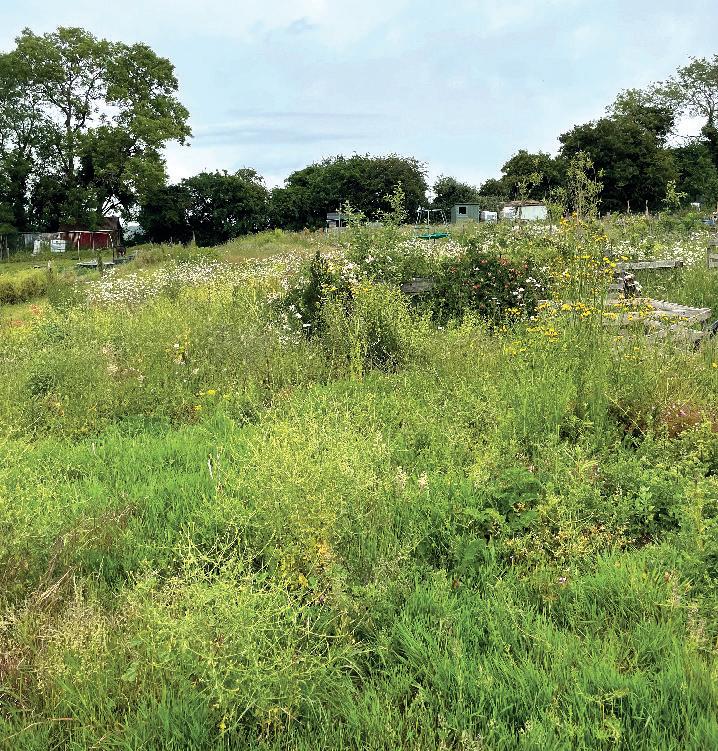
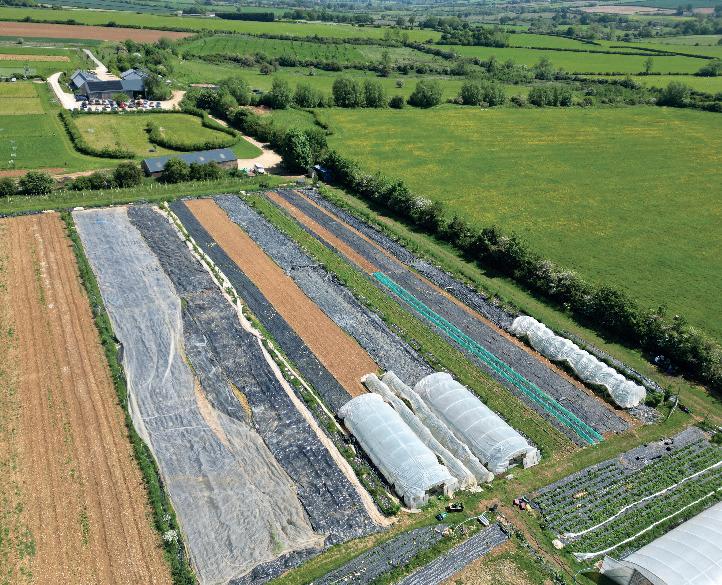
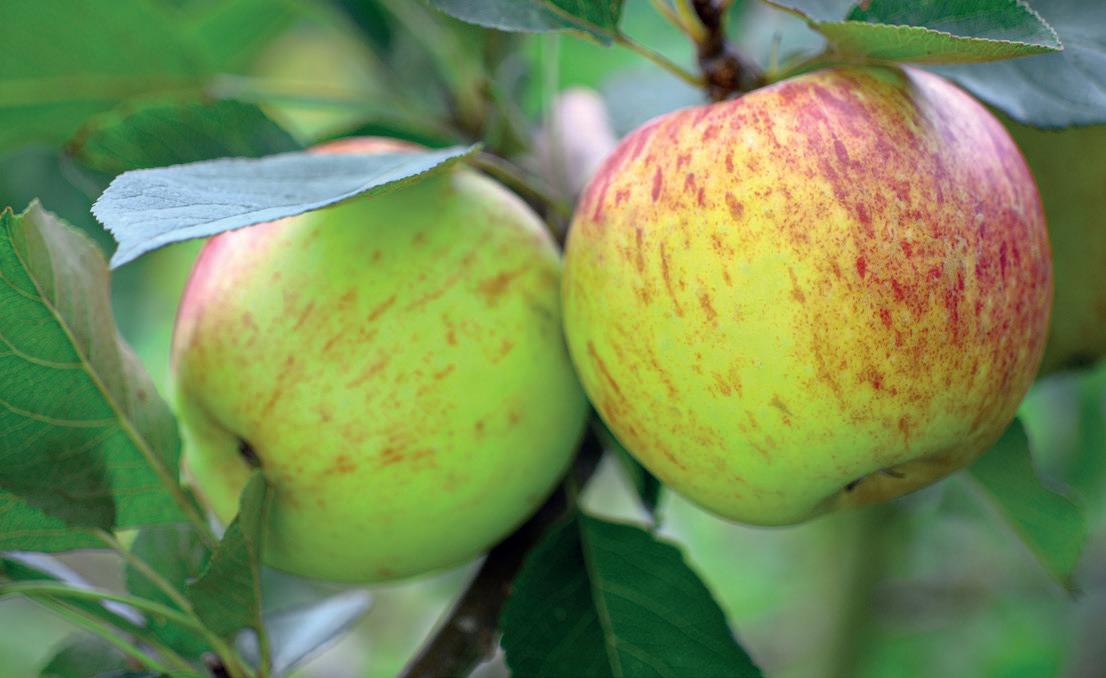
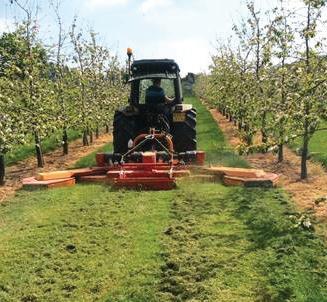
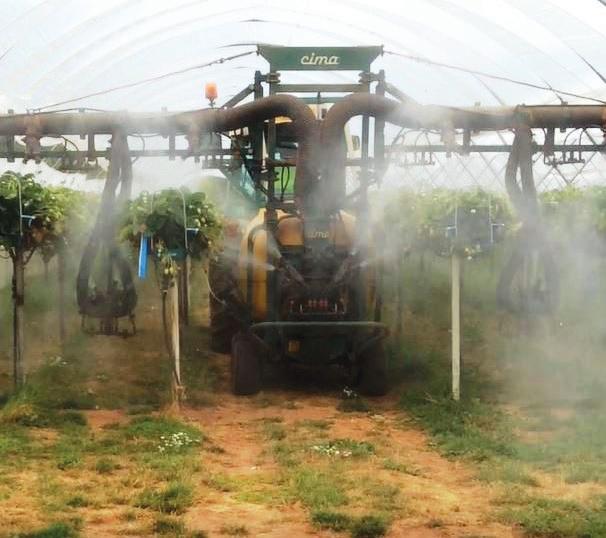
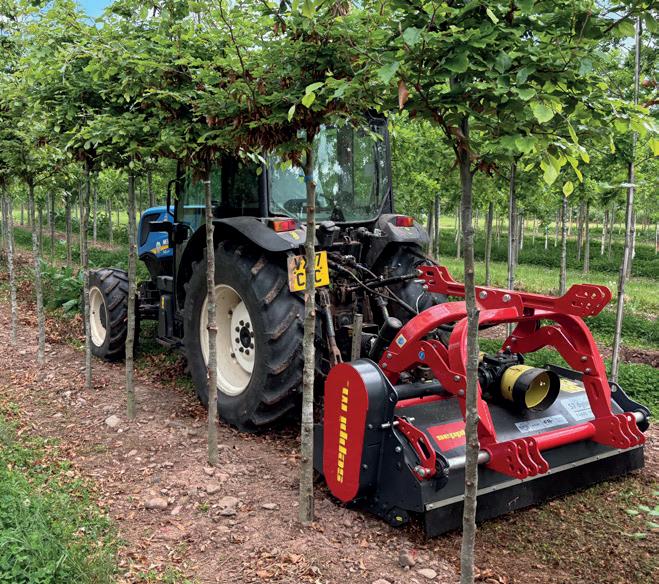
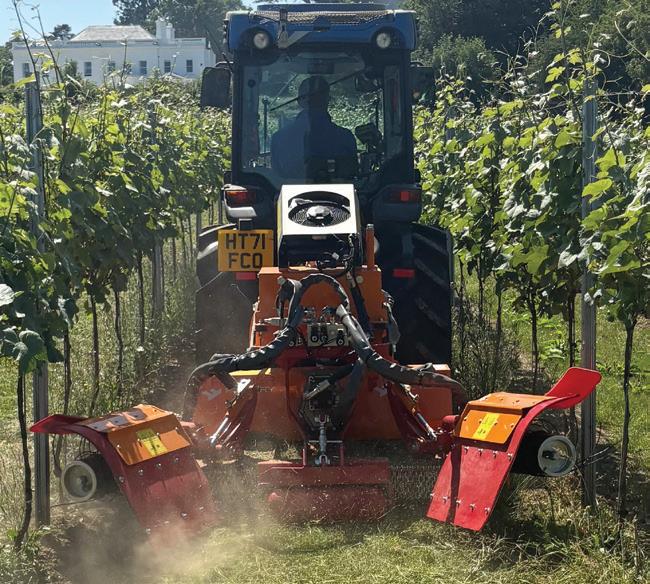
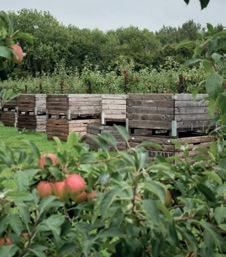
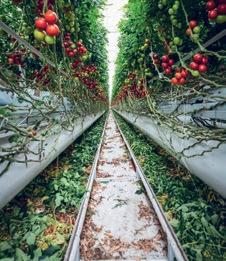
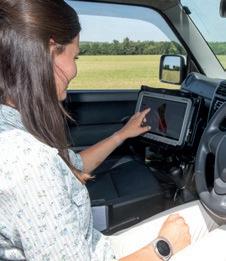
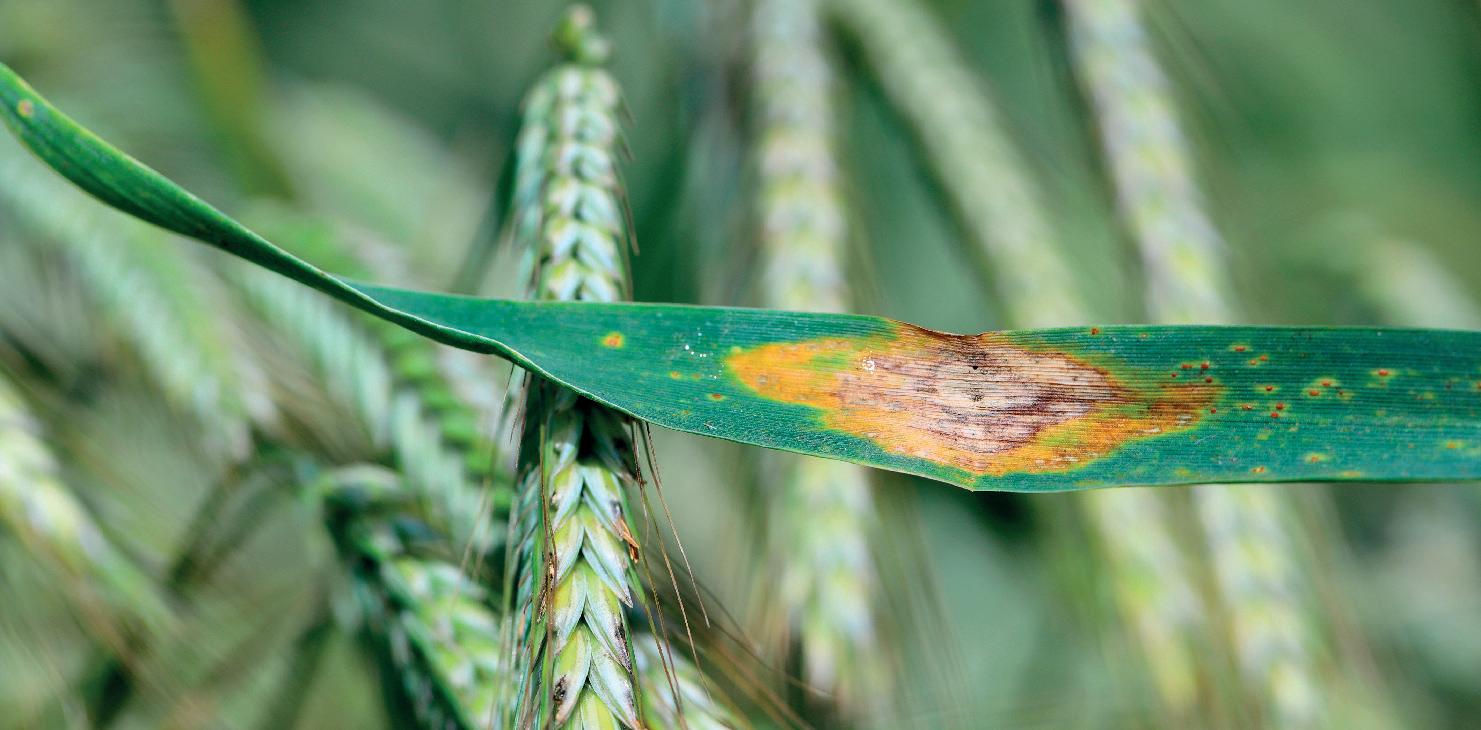
FRUIT CORRESPONDENT SARAH CALCUTT LOOKS FORWARD TO AN APPLE TREE WITHOUT CANKER
INSIDE
History and nostalgia with a clear nod to the future of farming Niab 'research hours' among the innovations at this year's Fruit Focus event
A family-run dairy farm, artisan cheesemaker and raw milk producer is adding value to milk
Legal services for farmers & rural businesses
How to remove an AOC in ‘two-steps’
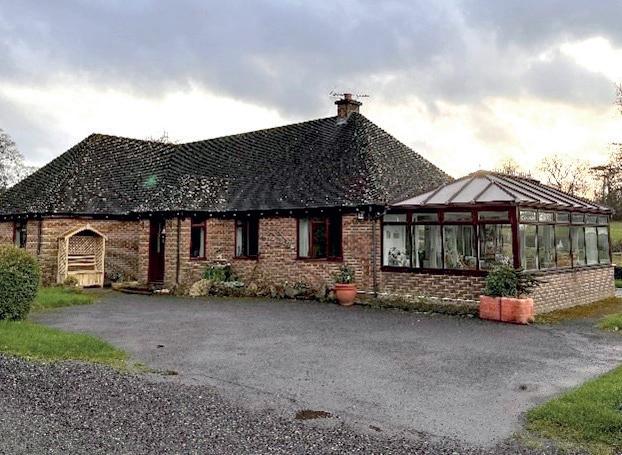
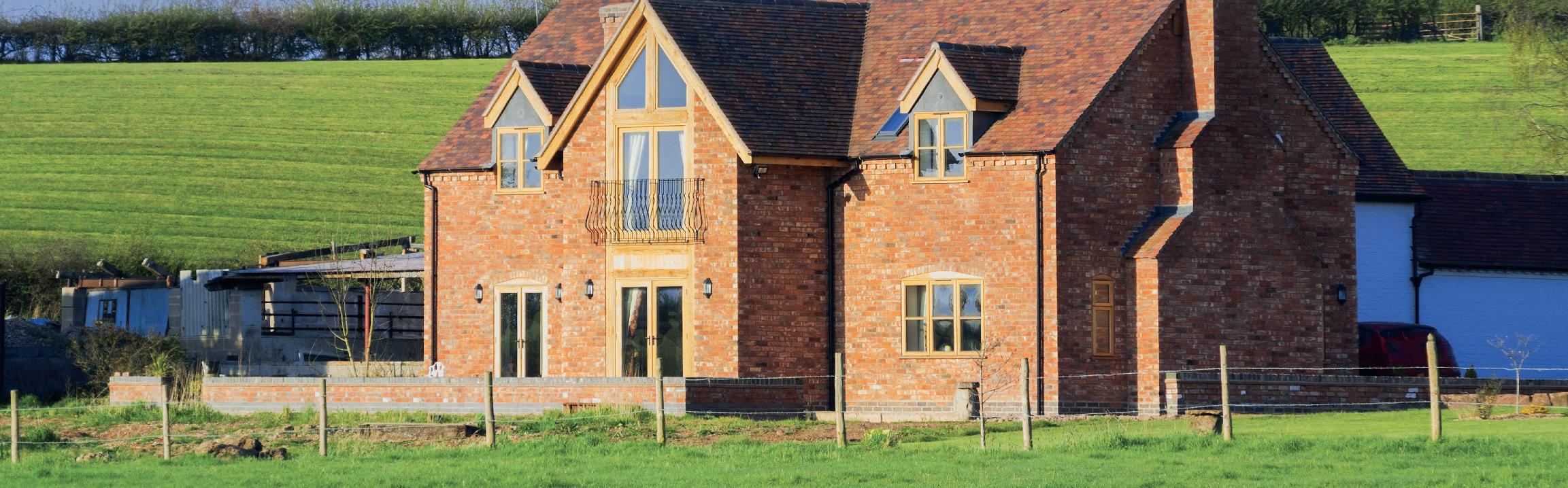
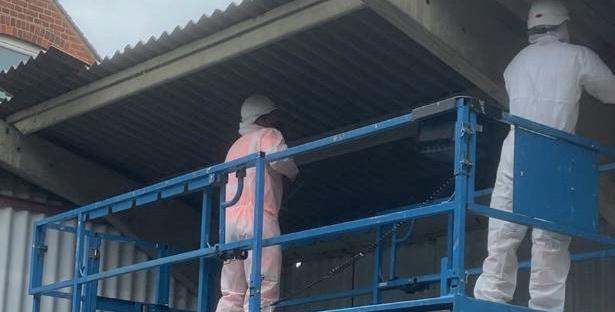
Removing an Agricultural Occupancy Condition (AOC) on tied dwellings is never a straightforward exercise, as the Local Planning Authority tend to resist the removal of these ‘Ag-Tags’ from their local housing stock which are specifically and solely aimed at agricultural workers. Bloomfields has recently successfully applied to remove a number of AOCs, usually where clients have been in breach of their property’s occupancy restriction. These cases take significant preparation and usually involve a ‘two-step process’.
of Lawfulness showing 10 year AOC Breach
Step 1
Application for a Lawful Development Certificate (LDC) to confirm a ten year period of non-compliance.
The LDC ‘Step 1’ requires the comprehensive demonstration of a consistent and uninterrupted breach of the AOC and the applicant must be able to prove this, unequivocally, to the Local Planning Authority. Usually this is through submitted evidence, such as Statutory Declarations or nonagricultural employment contracts, etc., which clearly show that the occupants have not been involved in, or received any income from, any agricultural or forestry business.
Step 2
Application to fully remove the condition.
Once a LDC has been issued, ‘Step 2’ is usually an application to the LPA to completely remove the condition. Typically, this requires a valuation exercise to show the value of the dwelling is such that it is unaffordable to a compliant farm worker, as well as a local farm workers survey to confirm there is no requirement for an AOC dwelling in the local area.
In summary
The necessary requirements will of course vary from case to case, as this depends on the exact wording of the condition and the specific circumstances. The clear benefit to this exercise is maximising the value of the property (in some cases up to 35%) which then becomes much more saleable as a result. Additionally, properties without an AOC can typically obtain a much larger extension or replacement dwelling, than if the condition was still in place.
The process is complex and full of peculiar planning nuances and so if you would like to discuss, in confidence, any planning breach which may result in the removal of your AOC, please feel free to contact us at our offices below to discuss further.
Certificate
Removal of 1960’s Agricultural Occupancy Condition
Certificate of Lawfulness on 1993 AOC
SOUTH EAST FARMER
Kelsey Media, The Granary, Downs Court Yalding Hill, Yalding, Maidstone, Kent, ME18 6AL 01959 541444
EDITORIAL
Editor: Malcolm Triggs
Email: sef.ed@kelsey.co.uk
Photography: Martin Apps, Countrywide Photographic
Farming leaders were left unimpressed by the announcement that £240 million will be allocated for new sustainable farming incentive (SFI) agreements during the current financial year.
Both the NFU and the Country Land and Business Association (CLA) were quick to point out that the sum was unlikely to be enough to meet demand from farmers keen to take advantage of environmental schemes to support their bottom line.
DEFRA said the £240m budget confirmed by Farming Minister Dame Angela Eagle would build on “around £560 million already committed to farmers delivering over 39,000 live SFI agreements”.
Up to £60 million of the total has been allocated to the first application window, which opens on 30 June and is restricted to small farms and those without an existing environmental land management agreement. The rest of the budget, including any window one underspend, will be available to the wider farming community from September 2026.
DEFRA pointed out that since most SFI26 agreements would last for three years, the total value of the new agreements entered into in the year to March 2027 would be around £720 million, assuming the whole budget is allocated.
After last year’s sudden unexpected closure of the scheme, DEFRA has said it will
publish updates when 25%, 50% and 75% of the budget for each of the two windows has been allocated.
CLA deputy president Joe Evans welcomed the announcement but warned the funding “may not stretch far enough”. He went on: “It is particularly important that farmers with agreements ending later this year are able to transition seamlessly into new agreements. With funding capped and application windows limited, there is a risk that some businesses will miss out, creating uncertainty at a crucial time.
“DEFRA must now ensure the application process runs smoothly and provide regular, transparent updates on the budget. If demand proves stronger than anticipated, ministers should be prepared to review the budget to avoid leaving viable applicants without access to the scheme.”
The NFU warned that funding was “falling short of farmers’ ambition to deliver for the environment” and was not enough to cover the investment farm businesses were making in protecting and enhancing the environment.
Vice-president Robyn Munt said that while the announcement provided “welcome certainty for farmers and growers, giving them a clearer basis to plan for their businesses”, it highlighted “a significant gap between government and farmers' ambition
for environmental land management and the funding to deliver it”.
He went on: “At a time when farm businesses are already hard pressed by the Middle East conflict, we urge DEFRA ministers to step up funding to meet demand from farmers to deliver for the environment and food security.
“With over 13,000 countryside stewardship mid-tier schemes ending this year, there is a real risk the budget won’t stretch far enough to support those already delivering for nature to move into SFI26.
“These are farmers who have spent years investing in hedgerows, looking after our waterways and creating habitats. This contract with government must not be broken at such a critical time, bearing in mind the legislative targets government itself has set for environment delivery.”
Charles Hesketh, NFU regional policy manager for the South East, pointed to the recent Big Farmland Bird Count as evidence of farmers’ support for the environment.
“More red-listed bird species, including starlings, lapwings, fieldfare and linnets, were seen on farms, and most of this was achieved through farmers working with SFI and countryside stewardship schemes,” he said.
“Farmers need the right support to be able to keep doing this and to help the Government achieve its own legally binding targets for wildlife conservation.”
CHARGES AMOUNTED TO AN UNLAWFUL TAX
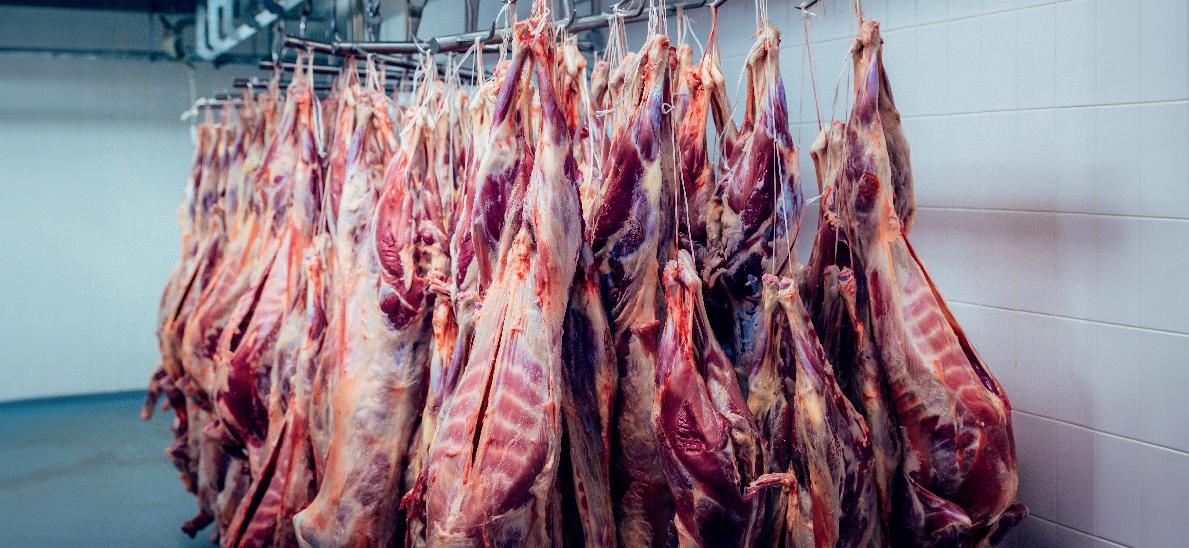
Campaigners are celebrating a High Court decision that the Food Standard Agency’s charges for official controls at slaughterhouses amounted to an unlawful tax.
The judgment by Mrs Justice Dias followed claims for judicial review brought by the Association of Independent Meat Suppliers (AIMS) and the British Meat Processors Association (BMPA).
The FSA is an independent, non-ministerial government department which is responsible for carrying out food hygiene and safety checks at slaughterhouses, with operators required by law to contribute towards the cost of those ‘official controls’.
A joint statement by the two organisations pointed out that the current annual cost of the controls is £64 million and had increased this year by 24%, endangering the viability of many slaughterhouses in England and Wales.
“In the judgment of Mrs Justice Dias, the FSA has been levying these charges unlawfully,” the statement pointed out. “The FSA has accepted that the court must quash the hourly rates for both official controls and enforcement as well as the cost data slides providing information on how those rates were calculated. The judge will now hear further argument on the precise terms of the court’s order.”
In practice, the organisations pointed out, the controls are carried out by private companies, a system they said was “a recipe for inefficiency when charges are time-based and profits of the contracted companies are dependent on maximising the hours charged for”.
The statement added: “The judgment has provided helpful clarification on what the FSA can lawfully charge for, both in terms of relevant activities and the personnel whose time can be charged for.
“The latter aspect related to the FSA seeking to charge for numerous improperly qualified veterinarians employed by its private contractors in relation to the controls that industry has long complained were not being carried out to a high standard.”
Peter Hewson, Veterinary Director of AIMS, said: “I have been telling the FSA for many years that they were charging industry unlawfully, but for the last two years they have totally refused to engage, saying they had to follow their Board’s instruction to focus on reducing the discount.
“The judgment makes clear that the FSA Board had got it horribly wrong, FSA has been levying unlawful charges on the industry, and the discount was not a subsidy but cover for that unlawful tax.”
New Prime Minister must move swiftly OPINION
I have been, if only figuratively, both poacher and gamekeeper during a career it astonishes no-one more than me to realise has now lasted almost half a century.
Originally a journalist who really did once chase a fire engine to the scene of a fire, and later the spokesman for a local council, I went from trying to sniff out front page leads, poacher-style, to trying to paint events in the best light possible as the authority’s gamekeeper.
Now, as the editor of a well-respected magazine, I receive the kind of press releases I used to write. In that role I am often impressed at the ingenuity shown by their creators, keen to promote their product, cause or organisation by coming up with a story that will appeal to a hardened hack and secure a few column inches in the next edition.
The Country Land and Business Association (CLA) team is particularly impressive at spotting an opening and is usually one of the first to respond to any news story with a comment that ties even the most obscure topic into the farming conversation.
That admirable skill was in evidence on the day a tearful Sir Keir Starmer finally read the writing that had been spray painted all over the wall for some considerable time, with the CLA responding within a couple of hours of the PM’s resignation by quoting president Gavin Lane as saying the change “must mark the beginning of a rural reset”.
He added that “the next leader” (no prizes for guessing who that might be, but Gavin didn’t commit himself) should “seize this opportunity to deliver an ambitious plan for the rural economy – one that backs investment, supports businesses and restores confidence across the countryside”.
It’s a call to action that we can surely all support, although the subsequent plea for the incoming PM to reverse the inheritance tax changes “hanging over farms and family businesses” will, I fear, fall on deaf ears. Much as we would all love to see it, I’m pretty sure that particular ship has sailed, although all credit must go to Gavin and his press team for keeping the issue in the public eye.
What is clear is that Mr Burnham (I’ll eat humble pie in the August edition if I’ve got that wrong) needs to move swiftly to get farmers and landowners on board and to provide clear leadership as to the future direction of the country and its custodians. Are we growing wheat or wildflowers? Rearing cattle or protecting corn buntings?
In short, are we aiming for food security or focusing on environmental schemes, and if the latter, could you please make sure the budget reflects the ambition?
EMAIL YOUR VIEWS, LETTERS OR OPINIONS TO: sef.ed@kelsey.co.uk or write to the address on page 3
® MALCOLM TRIGGS - EDITOR
Farmers, growers and foresters can now bid for support for larger, farmer-led innovation projects following a doubling of the maximum grant available under DEFRA’s ADOPT (Accelerating Development of Practices and Technologies) fund.
The maximum eligible project cost has increased from £100,000 to £200,000 and will enable more ambitious, on-farm trials that can involve a greater number of farmers and partners, generate more robust evidence and deliver wider benefits across the sector. The minimum eligible project cost remains £50,000.
The increased funding limit applies from Round 8, which is now open for applications, and comes alongside confirmation from DEFRA that the programme will continue beyond its original schedule. Funding opportunities are offered through a rolling programme, with a new application window opening approximately every eight to nine weeks once the previous round has closed.
DEFRA has announced two further funding rounds beyond those previously scheduled. While dates for Rounds 11 and 12 are yet to be confirmed, the announcement provides additional certainty for farmers, growers and foresters considering future innovation projects.
Delivered by Innovate UK, ADOPT supports practical, farmer-led projects that test new approaches, ideas and technologies to address on-farm challenges and improve farm productivity, sustainability and resilience.
Applicants also have access to free support and guidance through the ADOPT Support Hub, delivered by ADAS, UK Agri-
DOUBLING OF ADOPT FUND
Collaboration and knowledge sharing are core tenets of the ADOPT programme
Tech Centre and the Soil Association.
Thomas Slattery, engagement lead at the UK Agri-Tech Centre, said: "As the programme has developed, we've heard from farmers that some of the challenges they want to tackle require larger-scale trials involving more farms, more data and a broader range of expertise.
"We're pleased that DEFRA has increased the maximum eligible project costs to £200,000. The change will allow farmers to undertake more ambitious projects,
bring more partners together and generate stronger evidence that can be shared with others across the sector."
ADOPT is open to farmers, growers and foresters working collaboratively with others across the UK, but the lead farmer must be located in England. Projects should run for between six and 24 months and will receive funding for up to 80% of eligible costs, alongside facilitator support.
www.farmpep.net/adopt
RENEWED FOCUS FOR CONSERVATION TRUST
Ellie Burnage has been named as the new director of development at the Game & Wildlife Conservation Trust (GWCT).
Ellie will join the trust at the beginning of August, taking on the strategic leadership of the CWGT’s charitable income streams from Jeremy Payne, who is retiring as director of fundraising after nearly 10 years.
The new director of development role emphasises the GWCT’s renewed focus on its charitable income streams, fostering long-
term relationships with supporters and donors and, in the trust’s words, “making sure our fundraising benefits from a contemporary and data-driven approach”.
Ellie has spent the past decade working in communications and fundraising for rural and countryside organisations, most recently serving as head of external affairs at The Royal Countryside Fund. Before that she held a communications role at the Country Land and Business Association (CLA).
HISTORY AND NOSTALGIA WITH A CLEAR NOD TO THE FUTURE OF FARMING
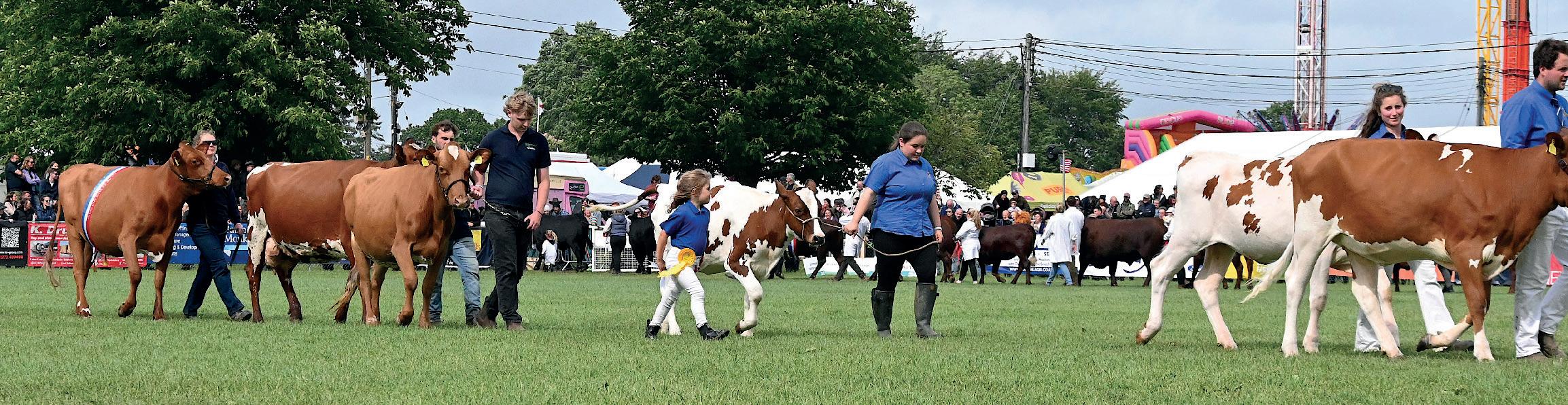
This year’s South of England Show combined the history and nostalgia for which such events are renowned with a clear nod to the future of farming.
As always, it combined livestock classes that showed off the best the industry can produce alongside equestrian and canine competitions, vintage machinery, retail therapy and arena events to delight the crowds that flocked to Ardingly in West Sussex.
A modern fairground, hands-on activities, plenty to eat and drink and a wide range of thought-provoking and entertaining stalls combined to create a family day out to rival any of the country’s theme parks.
New for 2026, the Living Land Theatre added a dedicated agricultural discussion platform to the show, exploring topics including the sustainable farming incentive, succession planning, diversification, skills and careers in agriculture, water resilience, environmental pressures and the future of profitable, sustainable farm businesses.
Livestock remained at the heart of the show, which this year featured more than 450 competitive classes across cattle, sheep, pigs and goats, attracting more than 1,000 entries. Alongside the judging rings, visitors were able to learn more about breed characteristics, farm practices, cuts of beef and livestock markets through demonstrations and mock auctions led by industry professionals.
While farming is firmly rooted in the region’s past, the show also looked to the future with the kind of optimism that only agriculture seems able to produce in the face of adversity.
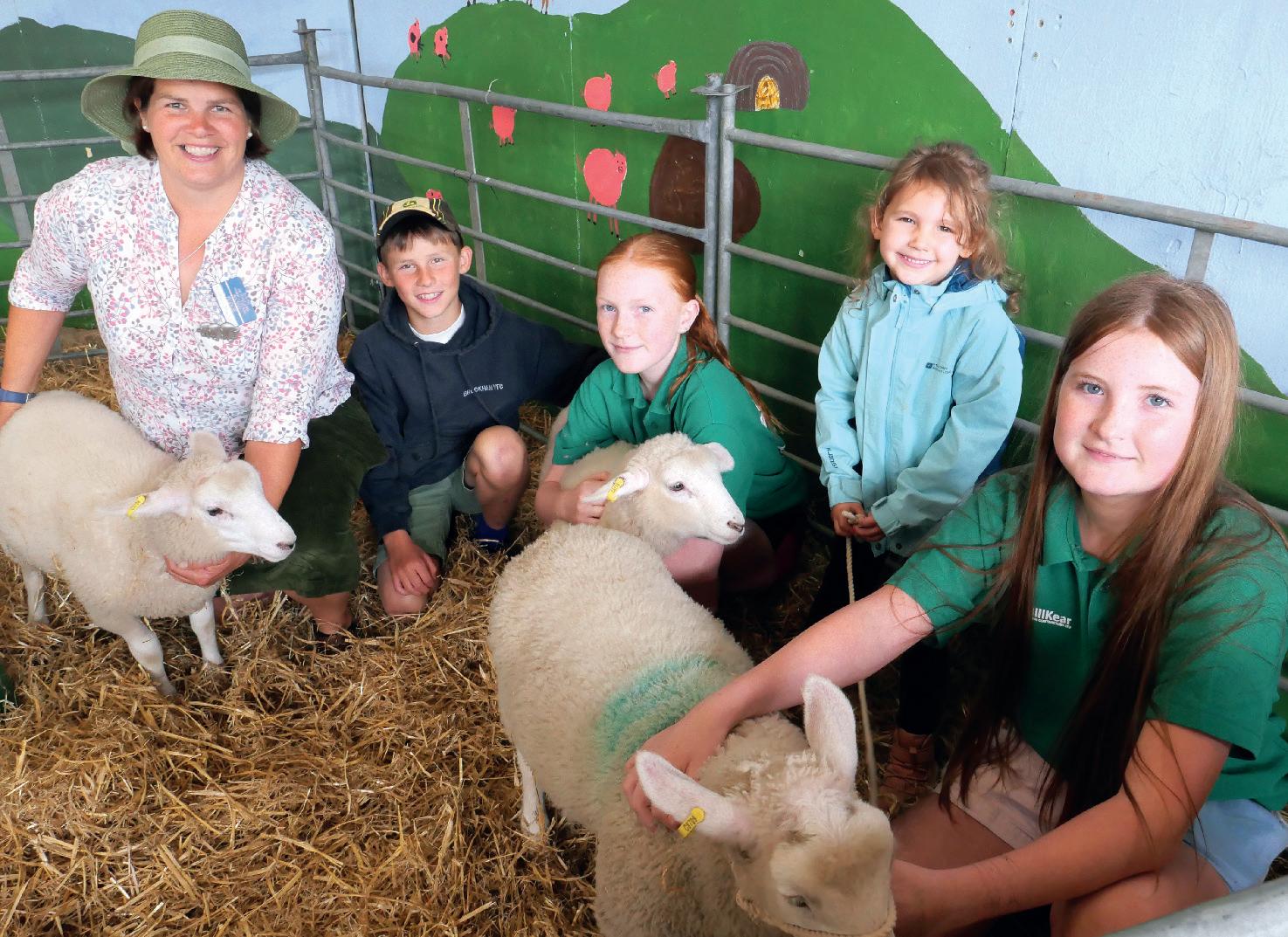
That approach was highlighted in the young farmers’ area, where the theme of the stand was Futuristic Farming. It featured a range of posters and inventions highlighting the potential future direction of farming, including a model cow attached to a device aimed at capturing methane emissions.
“Farming is changing, and that change is
bringing lots of opportunities,” explained Nellie Budd, a leader of Brockham Young Farmers and chair of Redhill Branch of the NFU.
“We are highlighting the future of farming and the options, particularly for young people, and encouraging them to take an interest in agriculture.”
Nellie pointed out that technology, new machinery and drones were all taking farming forward, while the futuristic display at the show included plans for a futuristic animal that would regrow its own meat and a tractor that could float over flooded fields.
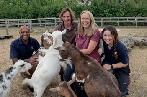
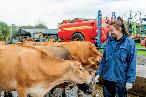
Nellie Budd with Monty, Maisie, Nelly and Poppy
SHOW RESULTS
LIVESTOCK CHAMPIONSHIP RESULTS
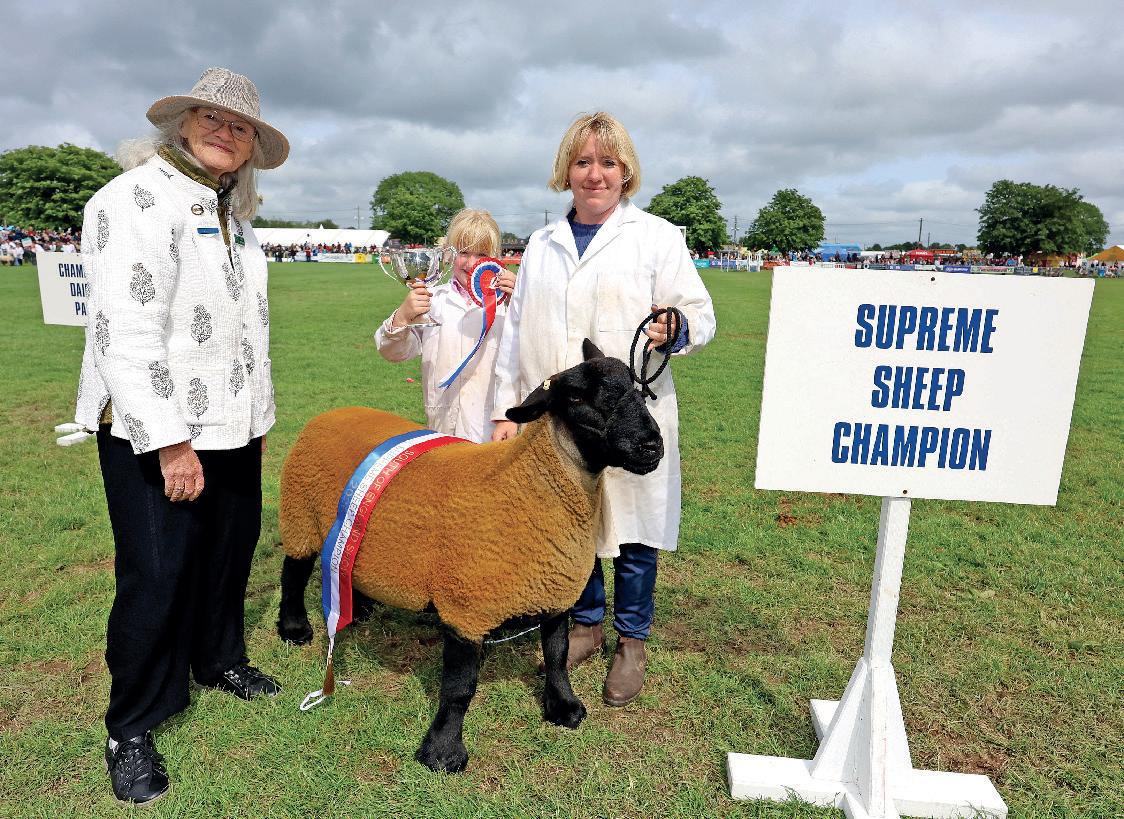
• Supreme Sheep Champion
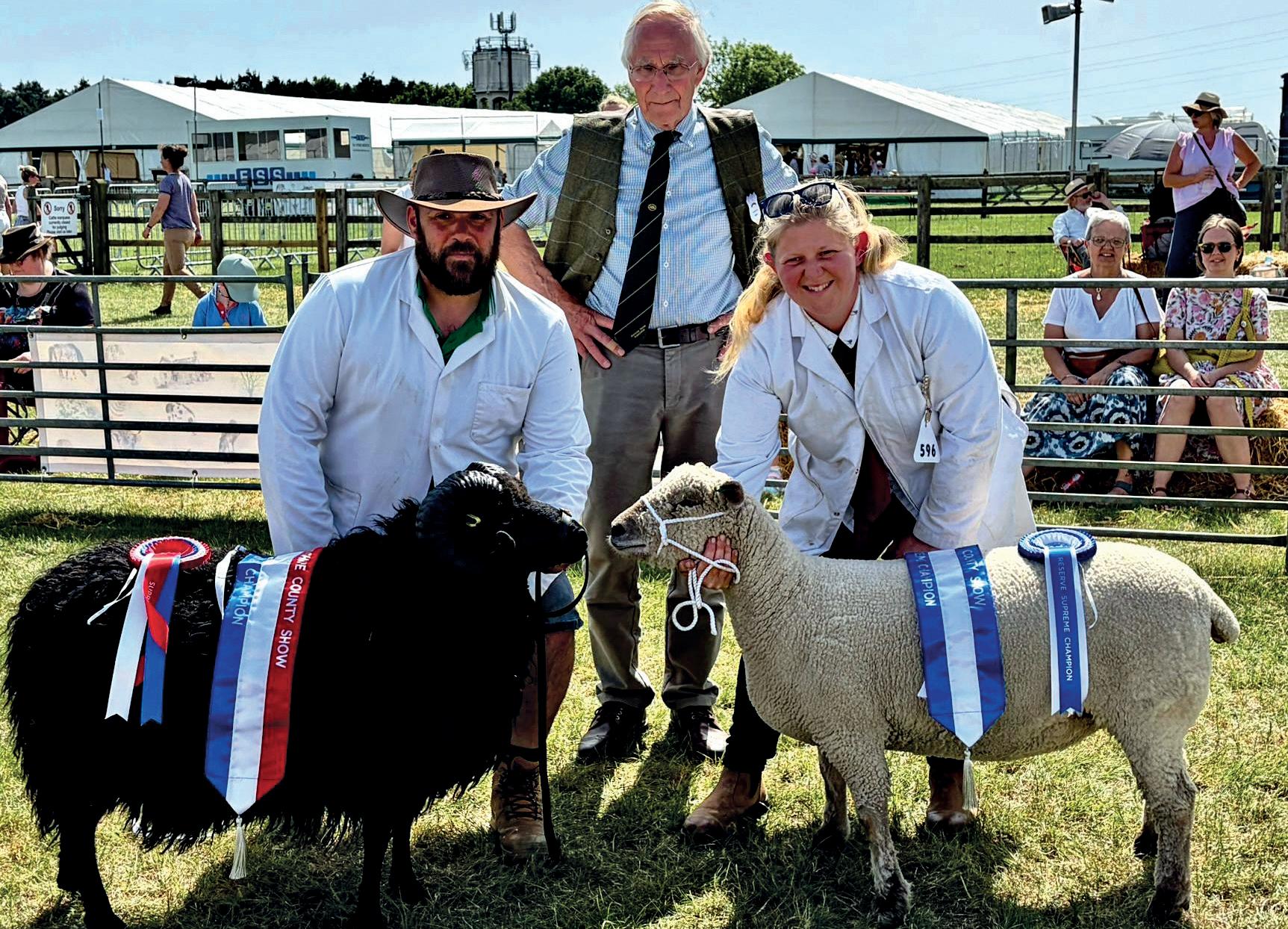
Mr & Mrs Hasemore – aged Suffolk ewe
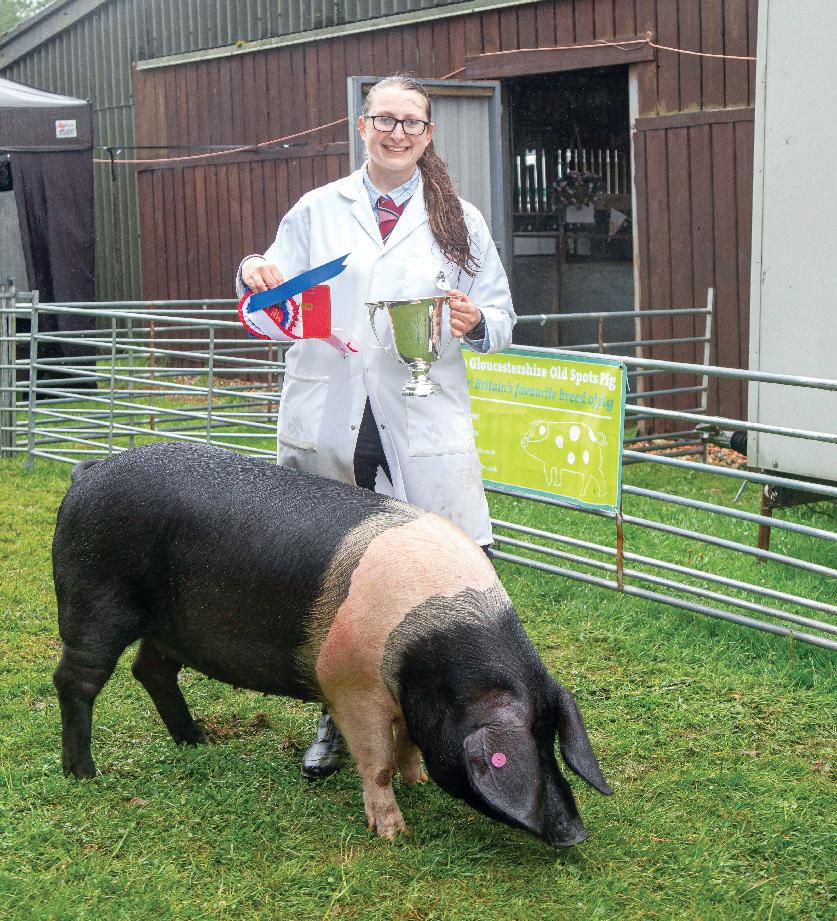
• Supreme Pig Champion
Emily Paddock – Lewin Lady 6 –Saddleback sow
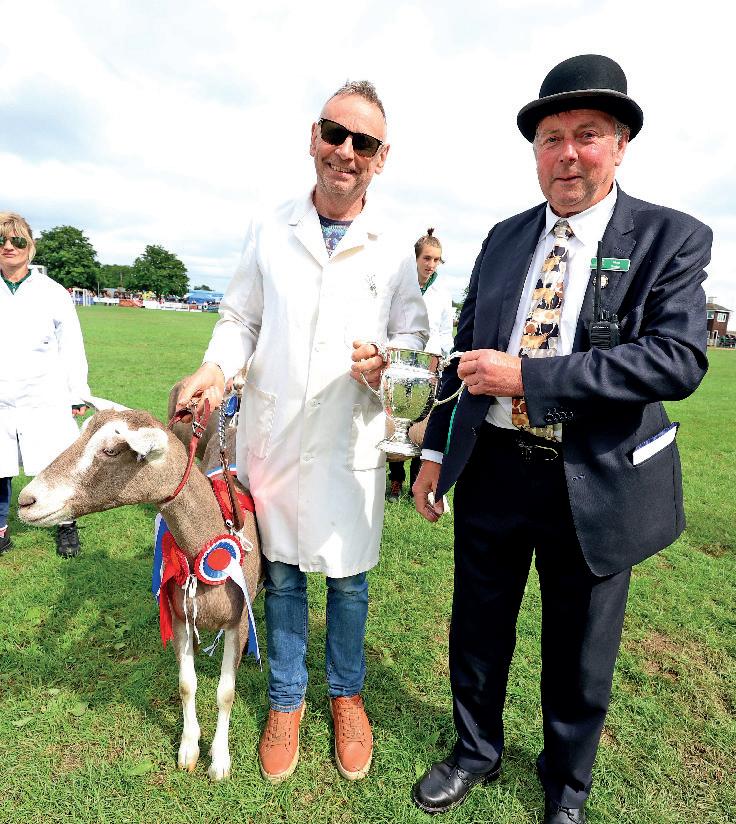
• Dairy Goat Champion Nick Parr
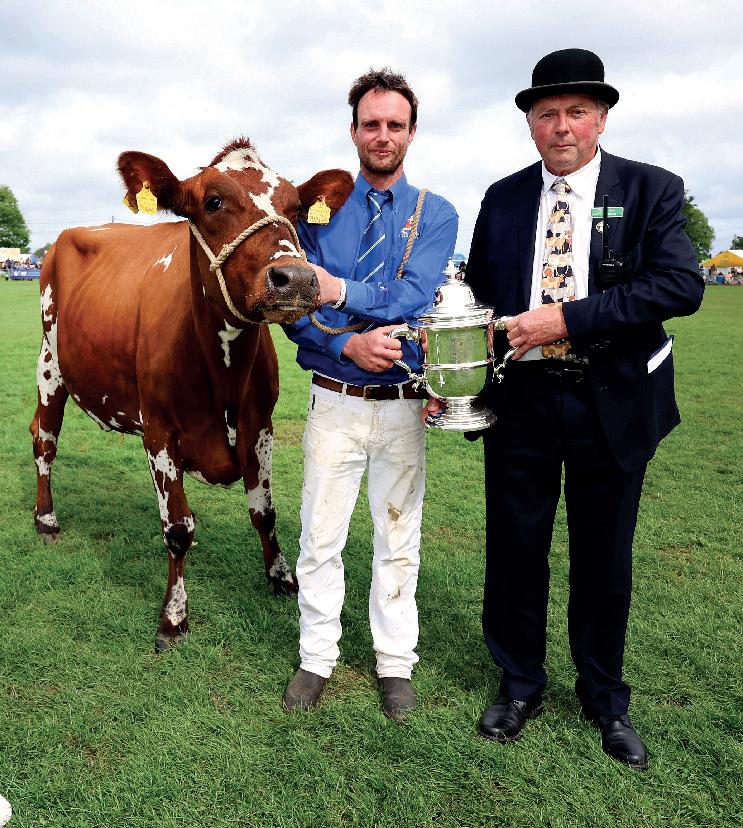
• Supreme Dairy Champion David Heasman –Pylon Bruno Crusader – Ayrshire
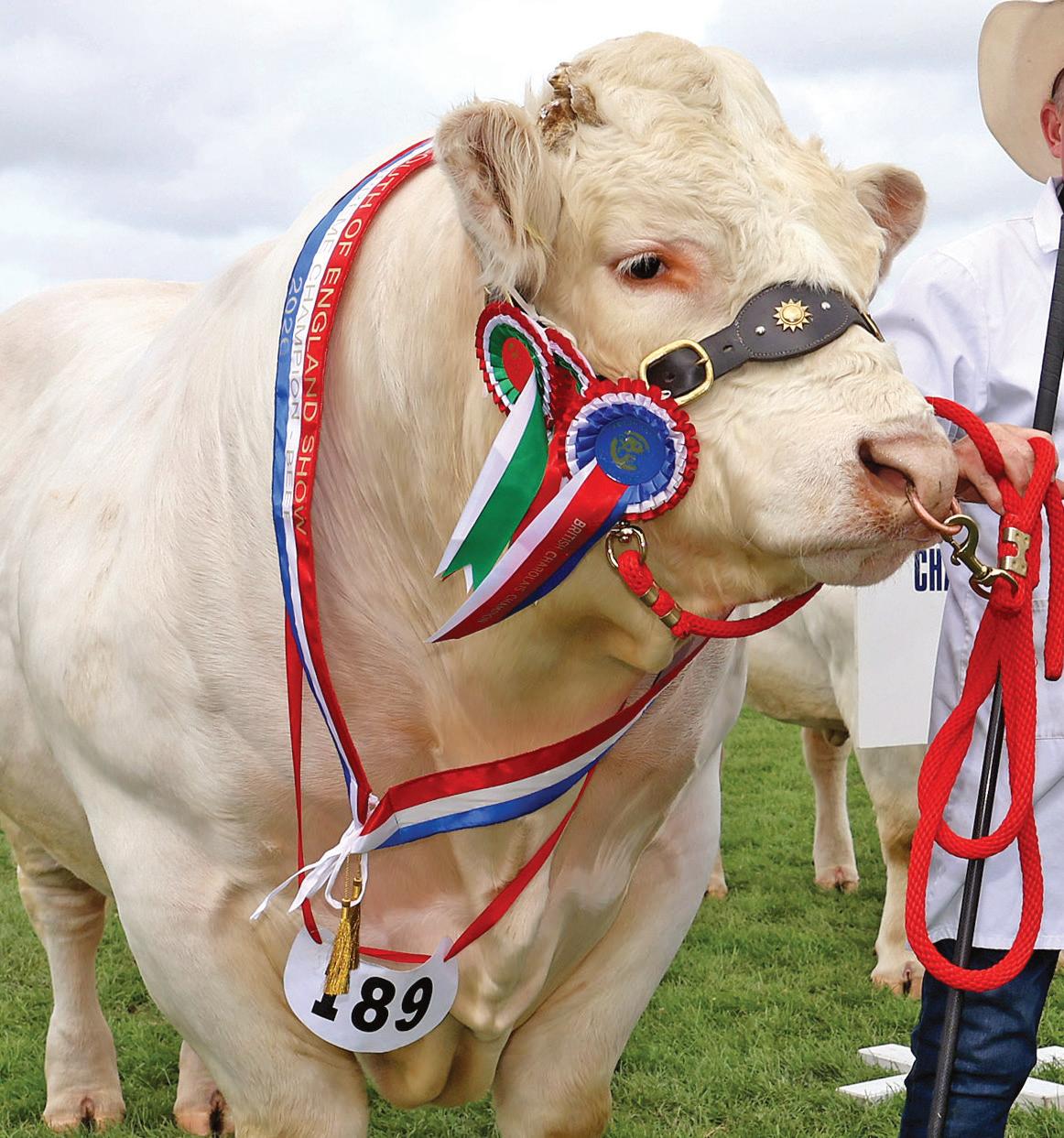
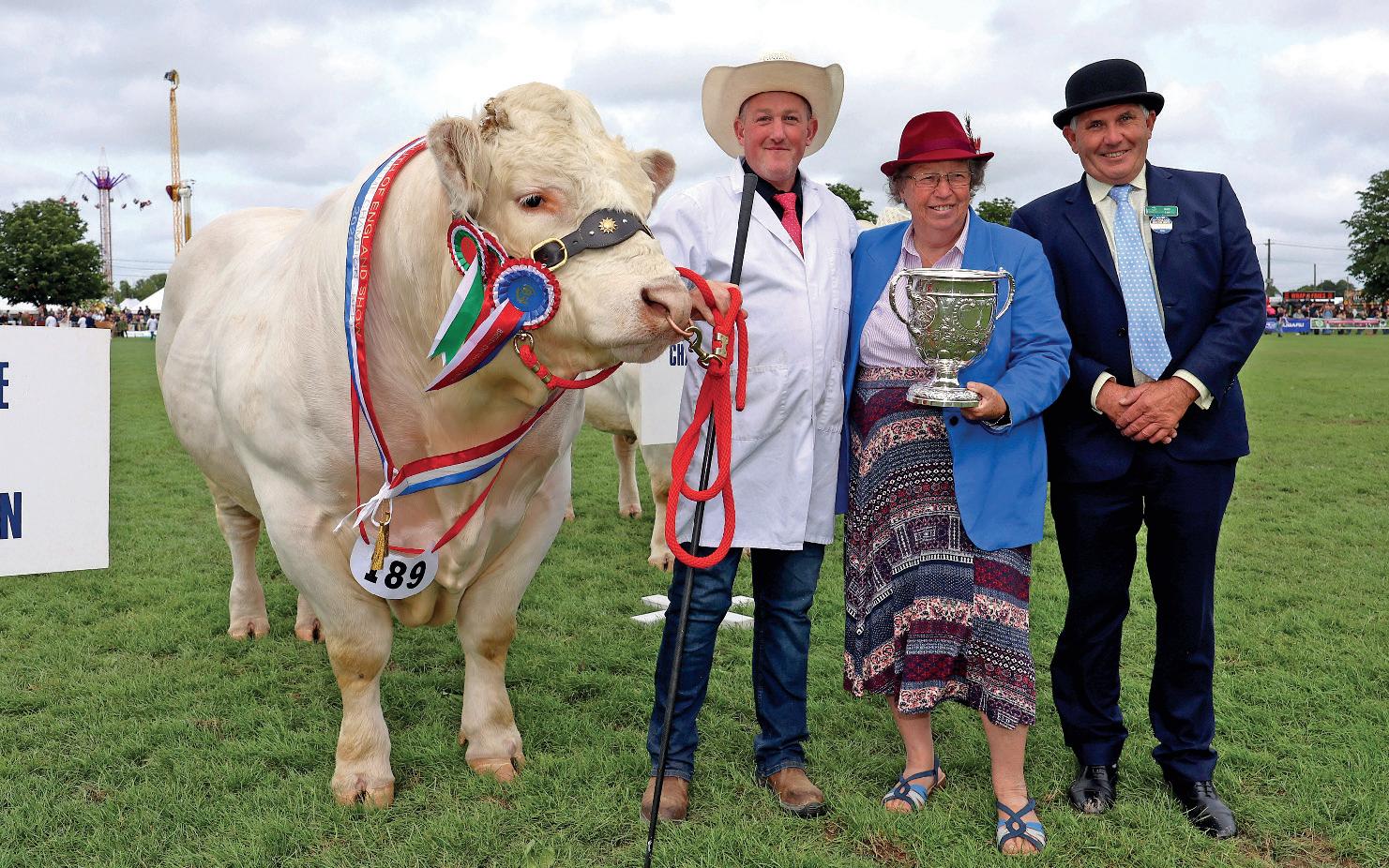
• Supreme Beef Champion and Beef Male Champion
Thor Atkinson –Goldstar Ulysses – Charolais
• Beef Female Champion
Thor Atkinson –Goldstar Une Star – Charolais
Also looking to the future earlier in the day was the Duke of Norfolk, guest speaker at a breakfast meeting hosted by the Country Land and Business Association (CLA) and sponsored by Batcheller Monkhouse and Warners Solicitors.
The Duke, who said that while global warming was a threat that needed to be tackled, species decline was equally important, told a fascinated audience about the success of the Peppering Biodiversity Project that has reintroduced the grey partridge to the South Downs.
Looking to create a future with more biodiversity, the Duke outlined the steps he had taken on his estate since Dick Potts, then with the Game Conservancy (now the Game & Wildlife Conservation Trust), warned him in 2003 that the grey partridge would be extinct within five years. “I said ‘not on my watch’,” he recalled.
With a focus on the bird’s needs for “habitat, insects and predator control”, the Duke
has planted 34 miles of hedges alongside wildflower strips, conservation headlands and “patchwork quilt planting” that makes farming complicated but supports wildlife.
The Duke highlighted the estate’s partnership working with DEFRA and Natural England and said he had enjoyed support from higher level environmental schemes and the sustainable farming incentive.
The estate has welcomed back 120 wild plants, none of them sown deliberately but reflecting the lack of herbicides used on the land. “Nature has rebounded,” he pointed out, adding that Peppering was also home to 105 “incredibly rare” insects and 66 types of pollinating bee. “If we go on killing pollinators, we are going to starve,” he warned.
Although the focus of his talk was on his conservation work, the Duke took aim at the Government over some of its policies, including inheritance tax changes, the expected ban on trail hunting and threats to the use of Larsen traps and humane cable restraints.
Later in the day, back at the CLA’s marquee, the association presented its annual awards aimed at recognising “the amazing achievements of individuals, communities and businesses in rural Sussex”.
William Coleman, chair of Chailey Commons Society and treasurer/membership secretary of the Friends of Markstakes Common, was presented with the President’s Cup, awarded in association with Action in Rural Sussex to an individual who has made a significant contribution to rural life in the county.
The Woodpecker Trophy was awarded to R N Sprackling Ltd, a family farm on the Hampshire/West Sussex border. The farm was nominated by the Farming & Wildlife Advisory Group (FWAG) in response to the family’s
success in putting the environment at the heart of its farming business.
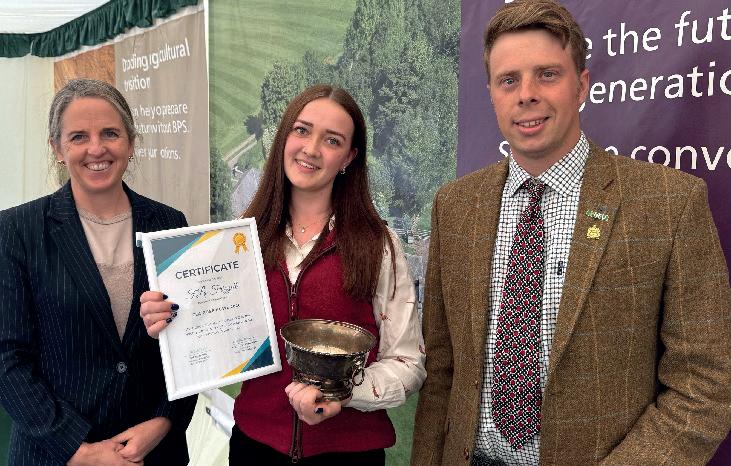
The Sussex Young Farmer of the Year award went to Flo Frizzell, who was awarded the CLA Rose Bowl on behalf of Sussex Young Farmers’ Club to recognise the impact she has had at club and county levels since joining just 18 months ago.
New NFU vice-president Robyn Munt, now three months into her role, said the show demonstrated that farming was still “full of innovation, ambition and ideas” and had the will to find ways to address the challenges it faced. Robyn was keen to stress the benefits or mixed farming and of collaboration, which she said could help create a mixed enterprise and was a good way to support and mentor
new entrants into the industry, such as when young shepherds needed access to grazing land. Collaboration and trust, she said, were vital in making such systems work successfully.
Of the event, she said: “I love seeing people engage with the industry. I particularly like seeing children finding farming exciting and realising that that’s where their food comes from.”
AWARD REFLECTS SIX DECADES OF DEDICATION TO HORTICULTURE
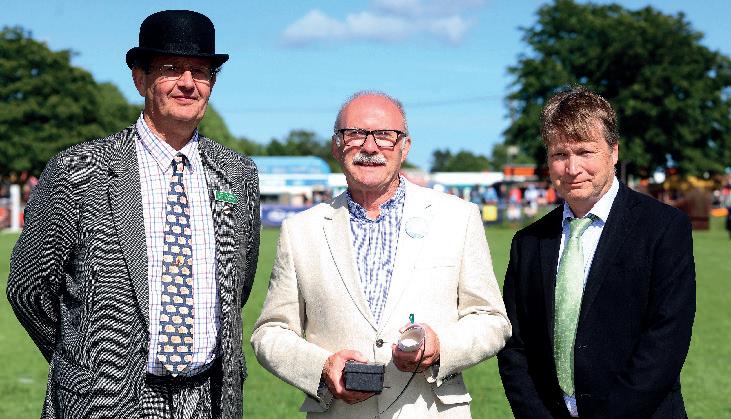
Long-serving NFU and West Sussex Growers’ Association (WSGA) member John Hall was awarded the 2026 South of England Agricultural Society Award of Honour in recognition of his lifetime of work supporting and championing horticultural businesses at the show.
From starting out as a teenager growing salad crops in Bognor Regis to supplying tomatoes to major supermarkets and holding leading roles in the industry, Mr Hall now uses his experience to work as an adviser to major growers across the country.
Mr Hall, from Felpham, West Sussex, began his horticulture career, aged 18, with
his first business growing salad crops at Shripney Nurseries, Bognor Regis in 1970. Twenty years later his company, John Hall Nurseries Ltd, was operating from one of the largest glasshouses in the country at Runcton Nurseries, Chichester, and supplying tomatoes to the UK’s leading supermarkets.
He founded John Hall Consulting Ltd in 1999 and established the consultancy firm Grow Partners in partnership with his daughter Rebecca Beveridge in 2024. He has served as president and chair of WSGA, a specialist horticultural branch of the NFU, and has been a member of the NFU since 1977.
John Hall, centre, receives his award at the South of England Show. He is pictured with South of England Agricultural Society president Charles Burgoyne, left, and the society’s Award of Honour chair Hugh Passmore
Flo Frizzell (centre) with her award
VOTERS NEED A LEADER WHO
ACKNOWLEDGES THE BIGGEST UK ELECTION
MANDATE EVER
Dear Sir,
The “get ‘Turn Again Starmer’ out of number 10" message rebounded on the Reform Party as the only way to remove him was to vote for the self-styled King of the North Andy Burnham.
Farmers have five-year plans, but since the average life of a Prime Minister is now 14 months (six PMs in seven years), Birdman could be winging his way north again by Autumn 2027 unless his efforts are rewarded by a perch in the House of Lords.
I was at the EU referendum count in Margate in the early hours of 23 June 2016 watching the results come in alongside the gentlemen of the press (there were no women journalists present), when the Sunderland result predicted a win for the leave campaign. To a man, they said: "We have lost" – and nothing has changed.
Guided by the ‘Sir Humphreys’ of Whitehall, the Oxbridge flock in the House of Remainers has culled seven Prime Ministers who thwarted the will of the people with backdoor attempts to pass the management of UK Ltd to Brussels bureaucrats.
Burnham believes in nationalisation and in higher tax rates than Rachel Reeves and has been quoted as saying "a land tax is an effective way to tax wealthy people" and "I think land is undertaxed." He is also a fan of the redistribution of wealth.
Is it a coincidence that all seven Prime Ministers since Brexit in 2016 have openly worked to prove that voters are stupid, and all have lost their jobs? I suspect the voters need a leader who acknowledges the biggest UK election mandate ever; until that happens, the revolving Brexit door will remind them that we did once have a Prime Minister who was NOT for turning.
David Steed, Manston, Kent
DON’T LOOK TO GOVERNMENT FOR HELP
Dear Sir,
After more than 60 years of political intervention, farmers are now freer to make their own business choices – provided we can get over the current crisis.
The Common Agricultural Policy paid people to occupy land that other people could farm better. Subsidies have cost us in productivity improvement, holding evolution back, but that dam of pent-up change is now breaking. We need to manage that change well and humanely, as the use of land moves to those who can make best use of it.
The Government, more troubled by food prices, has been largely absent from agricultural and environmental policy since October 2024. The industry needs to think afresh, with a major repositioning of how it sees itself. No longer beholden to subsidies, farmers can more easily –and must – take charge of their own business direction.
Farming is no longer about looking to the Government for direction. Farmers have to be the masters of their own destinies and manage what they can control, using technology to give them more time to focus on managing their businesses.
As the country gets progressively poorer in real terms, it is unrealistic to look to DEFRA for more funding. Where the Government can help is with better policy to encourage business growth and investment. This includes sensible tax reliefs, easing planning policies, encouraging more flexibility in land occupation, ensuring our ability to innovate and genuinely making business growth easier.
Schemes like the sustainable farming incentive are business options, not salvation. They are the Government saying: “We want to buy change from you”. More is being demanded with less being paid; the regulatory baseline is rising.
We need to recover productivity and build back with more resilience. For that, I urge government not to add burdens and complexity but to make doing business easier.
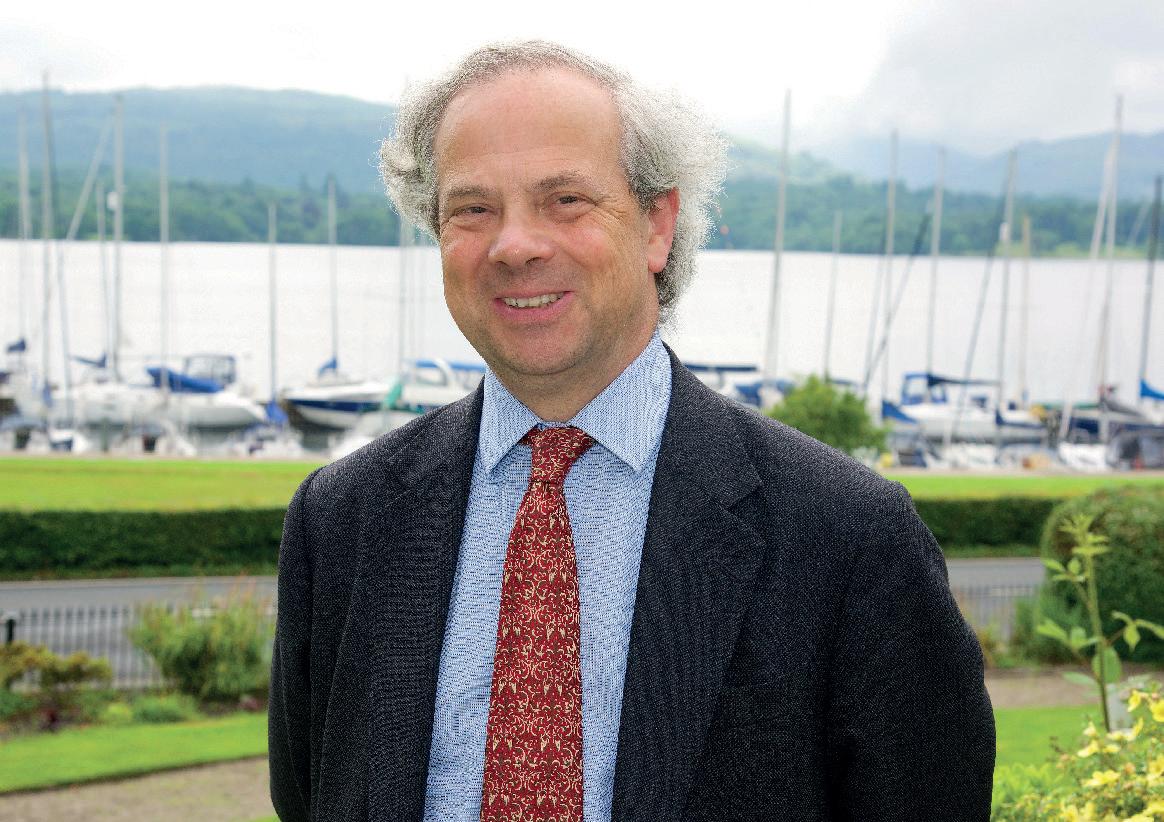
Jeremy Moody, Secretary and adviser, Central Association of Agricultural Valuers
Jeremy Moody
LETTERS
KEEPING BRITISH FOOD PRODUCTION ALIVE
Dear Sir,
Reading recent discussions about the pressures facing British farming, I feel compelled to add the perspective of a fruit grower.
For many years, British farmers have been asked to produce food to some of the highest standards in the world. We are proud to do so. However, rising labour costs, increasing regulation, expensive inputs and unpredictable weather are making it harder each year to remain profitable.
At the same time, the UK is becoming increasingly dependent on imported food. This should concern everyone. Recent global events have shown how quickly supply chains can be disrupted. Food security should be regarded as a matter of national importance, not something that can simply be outsourced to other countries.
Many growers are questioning whether it is worth continuing production when margins are squeezed from every direction. Once orchards are removed or farms cease production, rebuilding that capacity is neither quick nor easy.
Government support should focus on encouraging farmers to keep producing food in the UK. Investing in domestic agriculture is not only about supporting rural businesses; it is about maintaining our ability to feed ourselves in an uncertain world.
British farmers do not want handouts. What we need is a fair environment that recognises the value of home-grown food and gives growers confidence to invest for the future. If we continue down the current path, we risk losing more than farms and orchards. We risk losing a level of food independence that previous generations worked hard to build.
Artur Swakon
Greenway Fruit Farm, East Sussex
AN INTEGRAL SET OF VALUES AND PRINCIPLES
Dear Sir,
The High Court judgement against the Government’s deregulation of precision bred organisms (PBO), shows that ‘light touch’ policy decisions have no place in our food and farming systems. For the first time in case law, the court recognised that organic farming represents an integral set of values and principles beyond being a technical standard or certification scheme. Regulatory oversight and safeguards are key to protecting organic and must be properly accommodated in future regulatory frameworks.
Beyond GM’s legal challenge has delivered an important outcome on DEFRA’s accountability. Labelling, transparency and traceability are the foundations of public trust. It is essential that the integrity of organic and non-GM supply chains is protected and that farmers, food businesses and consumers can make informed choices.
Steve Clarkson
Chief
Executive, Organic Farmers & Growers
TRIBUTE TO REGEN FARMING PIONEER
Jason Lavender, co-director of the High Weald National Landscape Partnership, told South East Farmer:
“It was with great sadness that we learnt the news that Fergus Henderson, of Risden Farm, Kent, died on 24 May. Fergus had been seriously ill for several months, surrounded throughout by his large and remarkable family, whose love and support never left his side.
“In farming circles, whenever we think of Fergus, we also naturally think of his great friend David Cornforth. For many years, these two farming pioneers and neighbours quietly practiced adaptive multipaddock grazing on their farms and leant on and learnt from each another at a time when regenerative agriculture was little understood and routinely dismissed.
“Many of us felt the warmth that radiated from Fergus and David and experienced their unfailing generosity and the freely given guidance and encouragement which helped build firm foundations beneath the feet of those beginning their own regenerative farming journey.
“Fergus was one of the brightest guiding lights in British regenerative agriculture, respected, well known and widely celebrated. Together, Fergus and David brought about a lasting and significant change in livestock farming, particularly in the High and Low Weald of Kent and Sussex, and they showed so many of us the path towards a different farming future.
“Fergus was admired by us all. He inspired countless people; those just starting out and those already finding their way in regenerative agriculture – and this gave many the confidence to embrace this way of farming. His wisdom, kindness, and steady determination touched farming lives everywhere.
“Our thoughts are with his family, with David, and all those who knew and loved him. The greatest tribute we can give to honour Fergus and his extraordinary legacy is to continue his life’s work on the farms of Kent, Sussex and beyond, and to support each other in our shared efforts to grow real food in a way that’s good for the soil, good for the farmers and good for the planet.”
Fergus' son Ed said the tributes from regenerative farmers across the country had been “truly heartwarming”.
He went on: “The farming community has lost one of its most colourful characters; someone who cared deeply about his cattle and the land and habitats he was responsible for. Fergus was a mentor to a network of regenerative farmers in south east England and he was a trailblazer for farmers across the country.
“He dedicated the last 15 years of his life to nature-friendly livestock farming and generously shared his knowledge and advice to help others establish sustainable and resilient systems. This is his legacy and we couldn’t be prouder.”
Photo: Simon Heaton and High Weald National Landscape
Tributes have been paid to Fergus Henderson, one of the region’s first regenerative farmers, who has died at the age of 70.
BUILDING FOR THE FUTURE
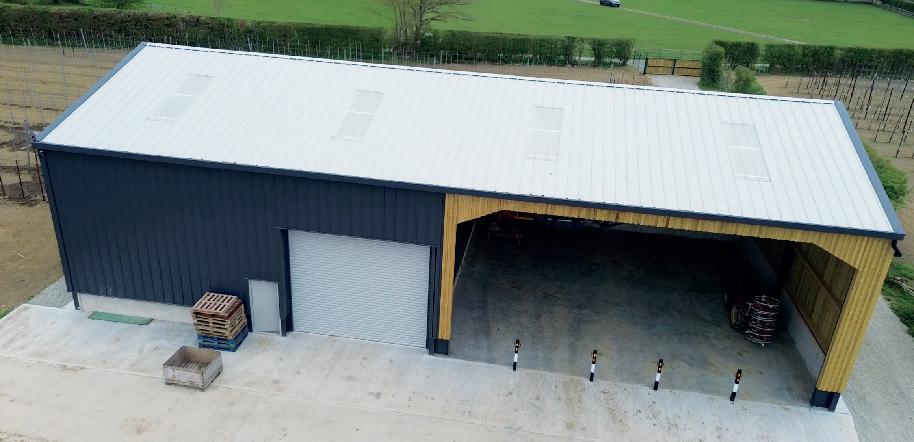
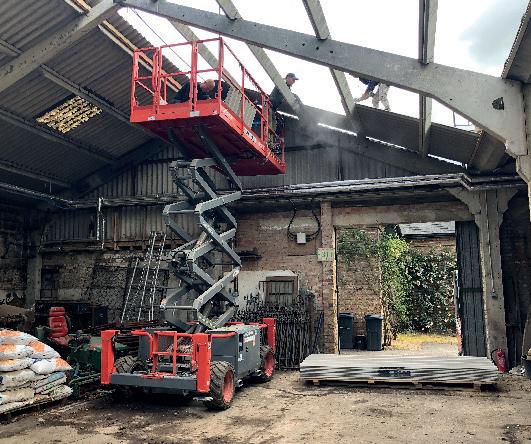
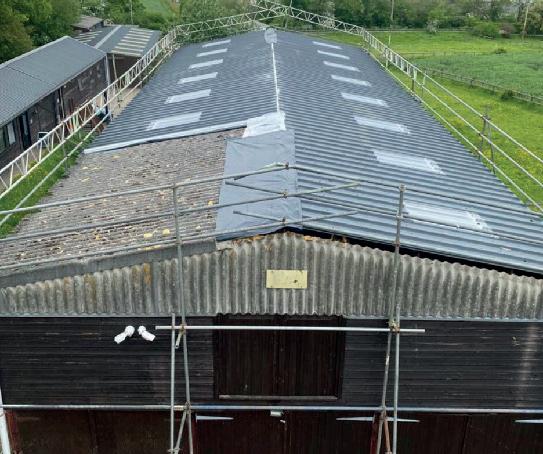
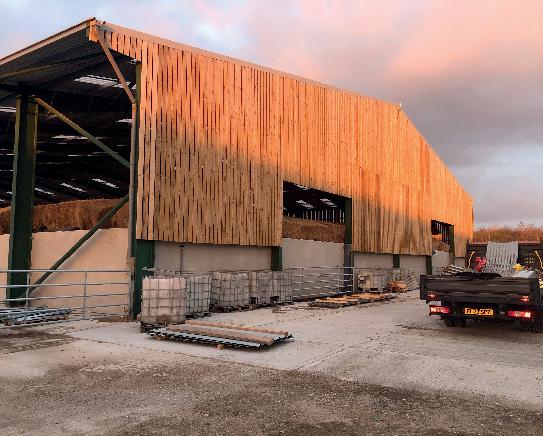
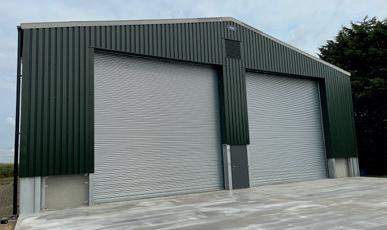
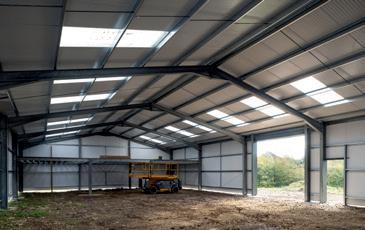
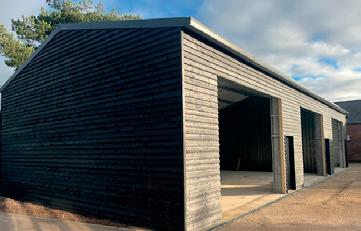
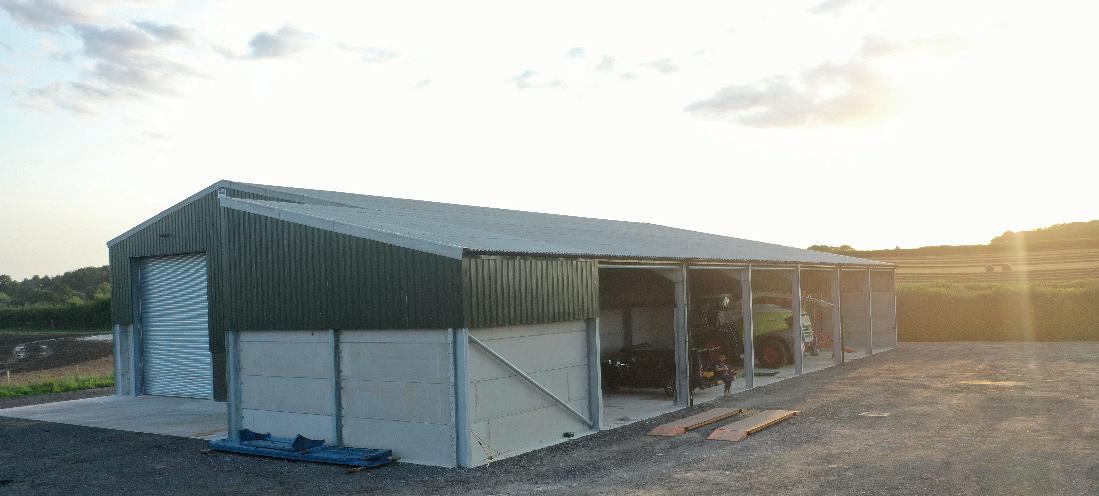
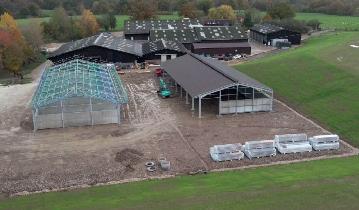
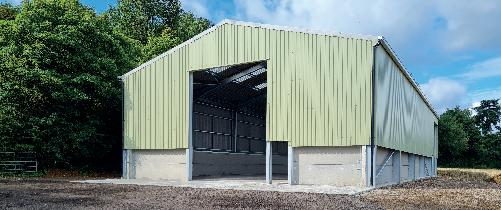
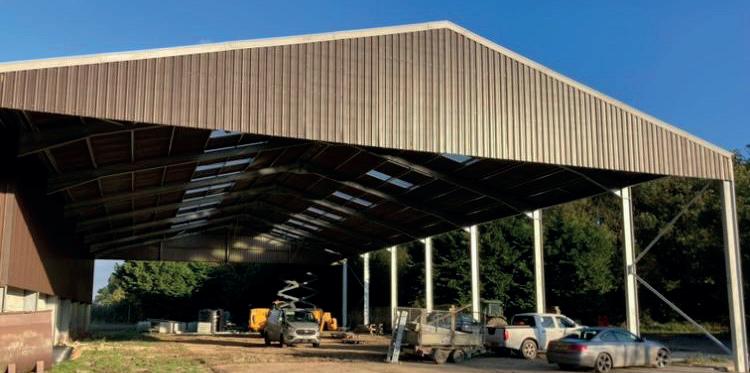
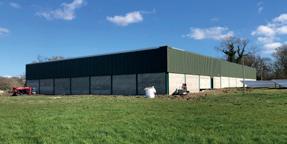
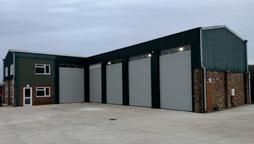
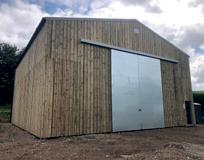
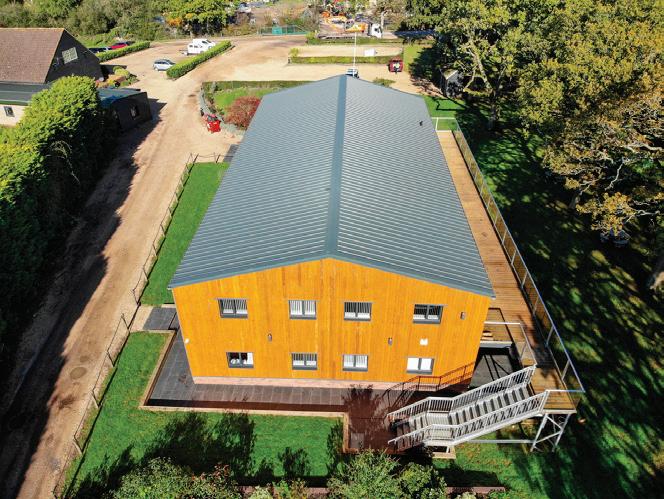
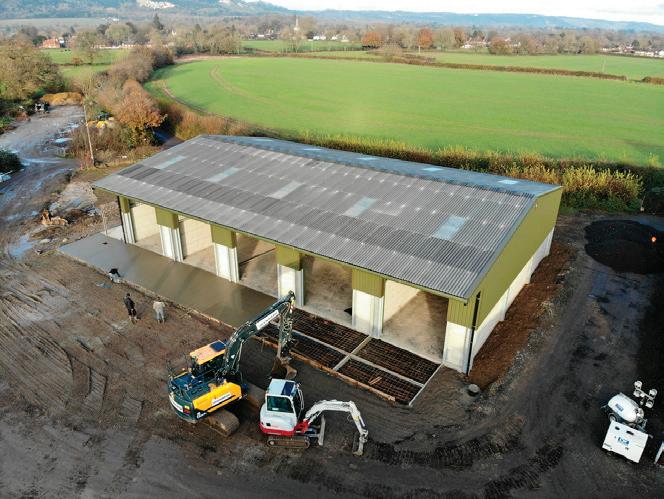
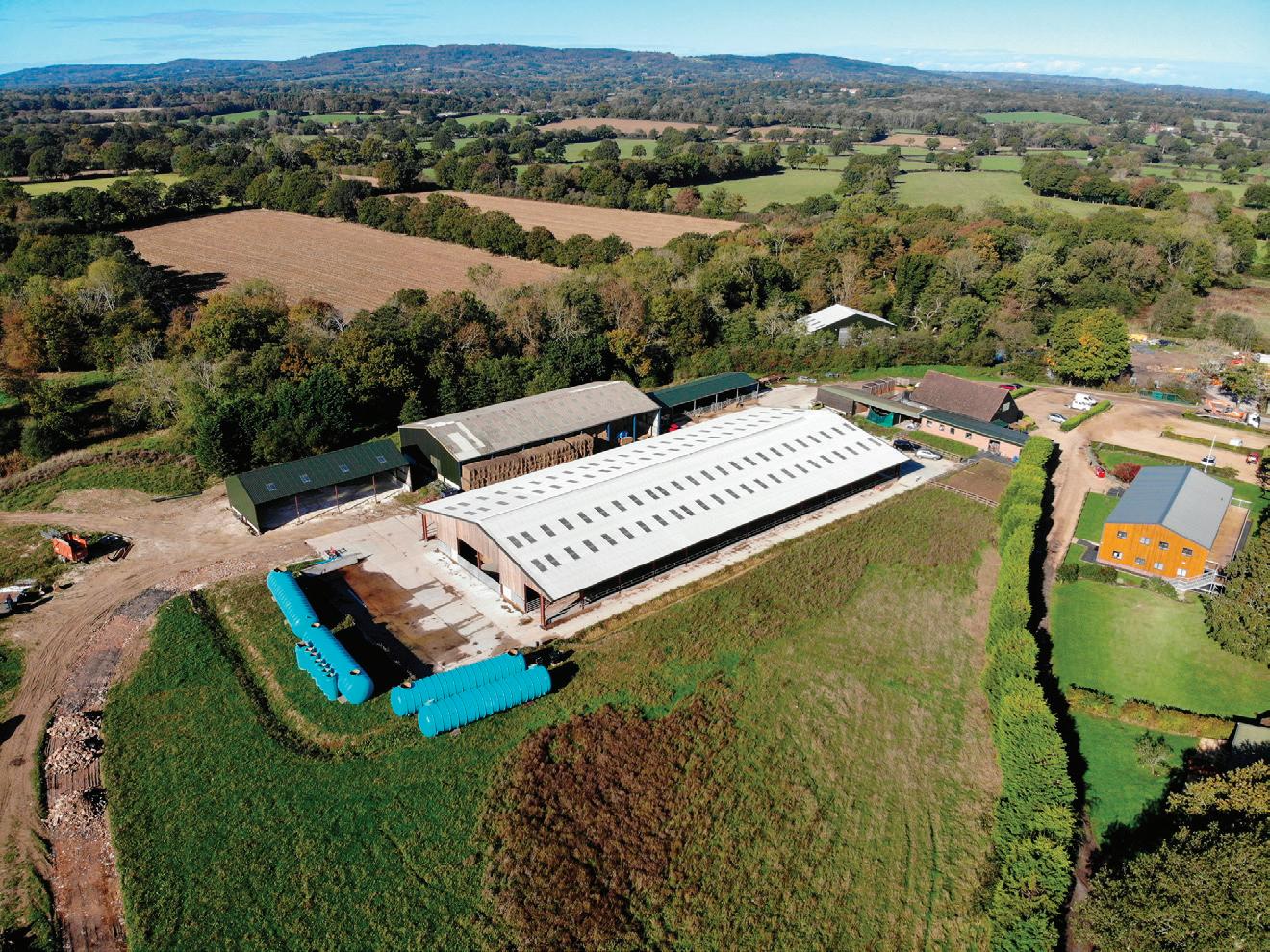
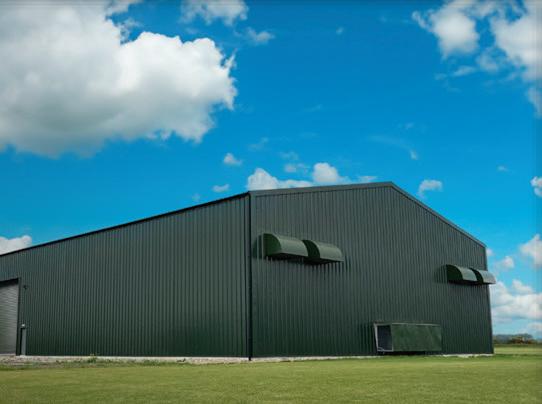
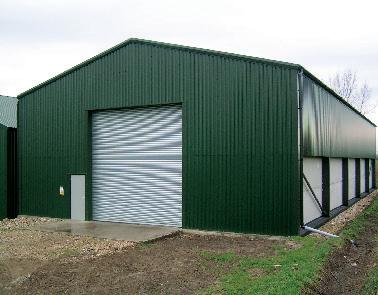
General purpose building constructed for Victoria Farm in Hadlow.
Smart CI Group is proud to support farming businesses across the South East, and found working with Victoria Farm in Hadlow a great project to be a part of.
A family-run operation for over 30 years, Victoria Farm grows a wide range of fruit, supplying supermarkets as well as local outlets. With harvesting running from late summer into autumn and packing continuing into spring, efficient infrastructure is essential to keep everything moving.
When the business approached Smart CI Group about delivering a new, generalpurpose agricultural building, the brief was for it to be a flexible facility, built for the demands of a modern fruit-growing enterprise.
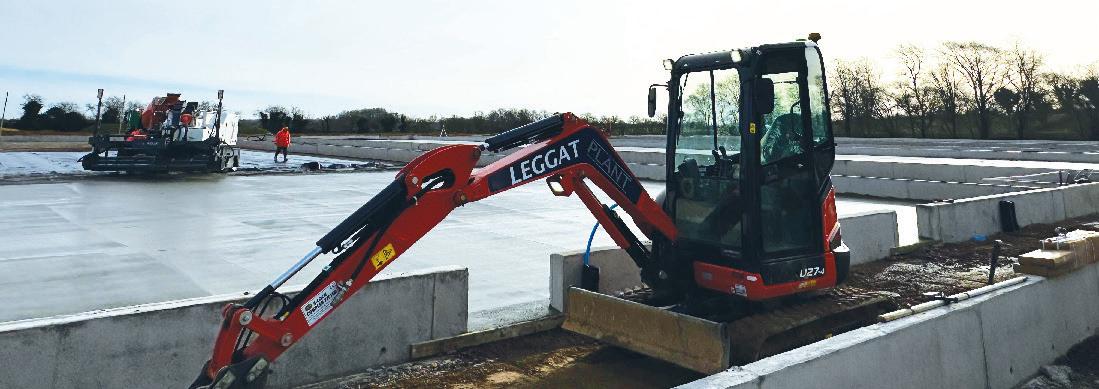
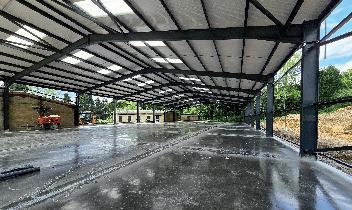
Smart CI Group managed the entire project from the ground up. Starting with site preparation, the company installed a geotextile membrane and compacted
sub-base to ensure long-term stability. Reinforced concrete foundations and a durable, power-floated floor slab provided a strong base, alongside an external apron designed for heavy vehicle use.
Drainage was a key priority, so Smart CI Group installed a stormwater system with pipework and soakaway to protect the building and surrounding yard.
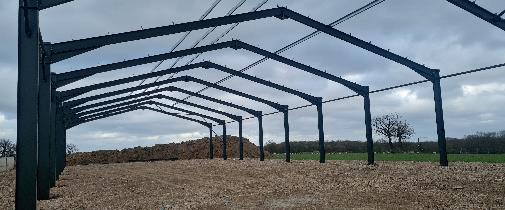
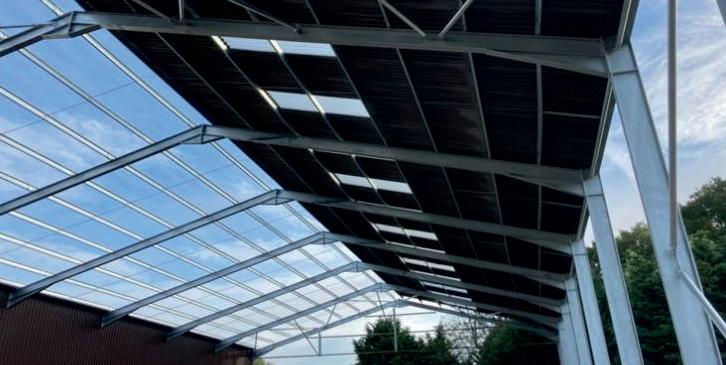
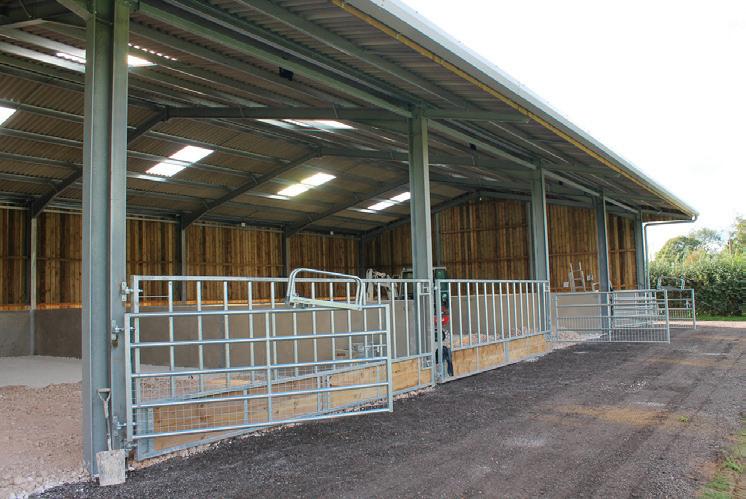
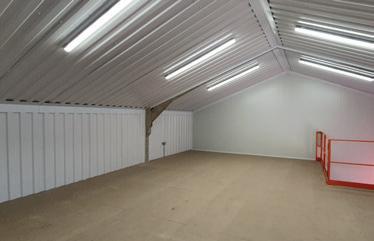
The structure itself is a 24m x 12m steel portal frame, designed for strength and efficiency. It features an insulated roof with
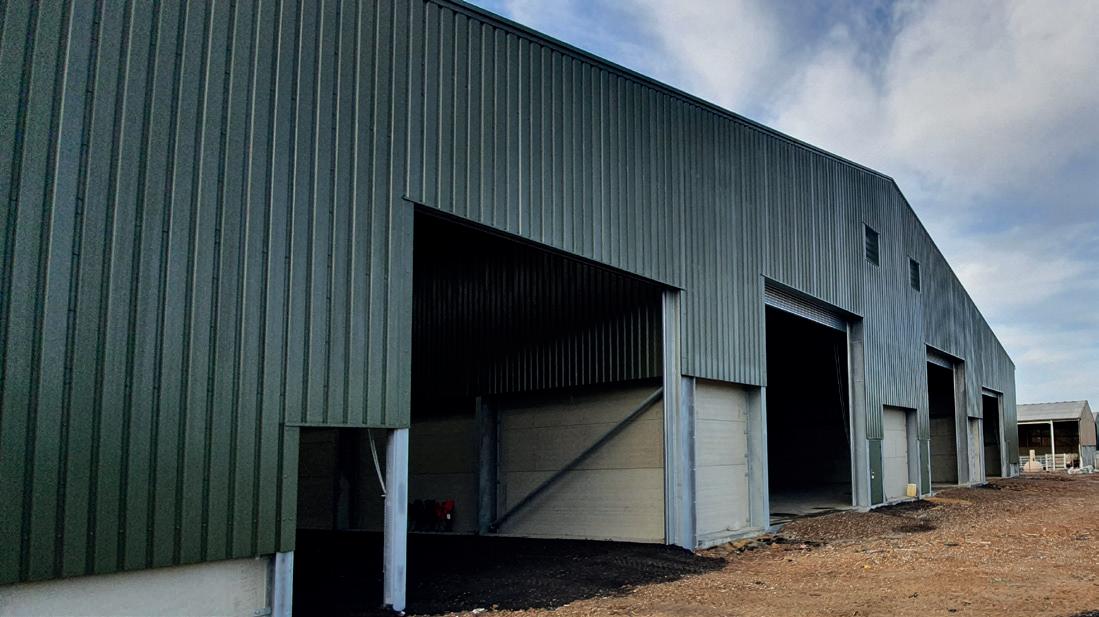
rooflights for natural light, a mix of cladding for durability and ventilation, and precast concrete panels for impact protection. The building was made solar-ready to support future sustainability plans.
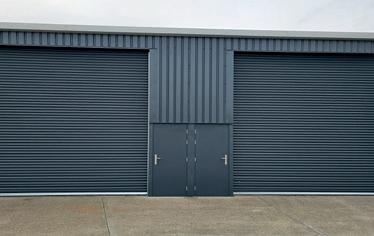
Completed with roller shutter access and quality finishing details, the result is a versatile, low-maintenance facility built to perform year-round.
From their base in Sittingbourne, Kent, Smart CI Group delivers fully integrated, bespoke solutions like this one all across the South East.
LANDRAI
› A new building?
› To build a noise bund?
› To create a hardstanding to store silage or straw?
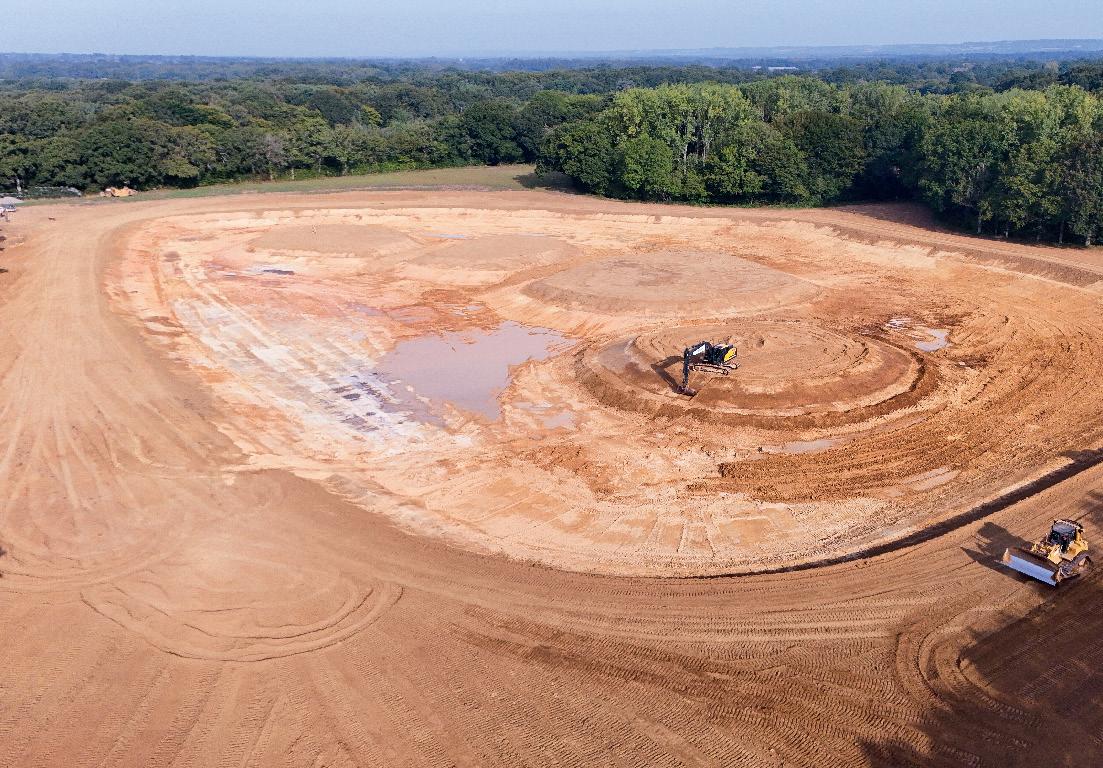
› To build up an area to prevent flooding
› To fill in an old lagoon?
BIOCHAR TRIAL AIMS TO STRENGTHEN RESILIENCE OF UK APPLE ORCHARDS
An on-farm trial is exploring whether or not biochar can improve the resilience, productivity and long-term viability of British apple orchards.
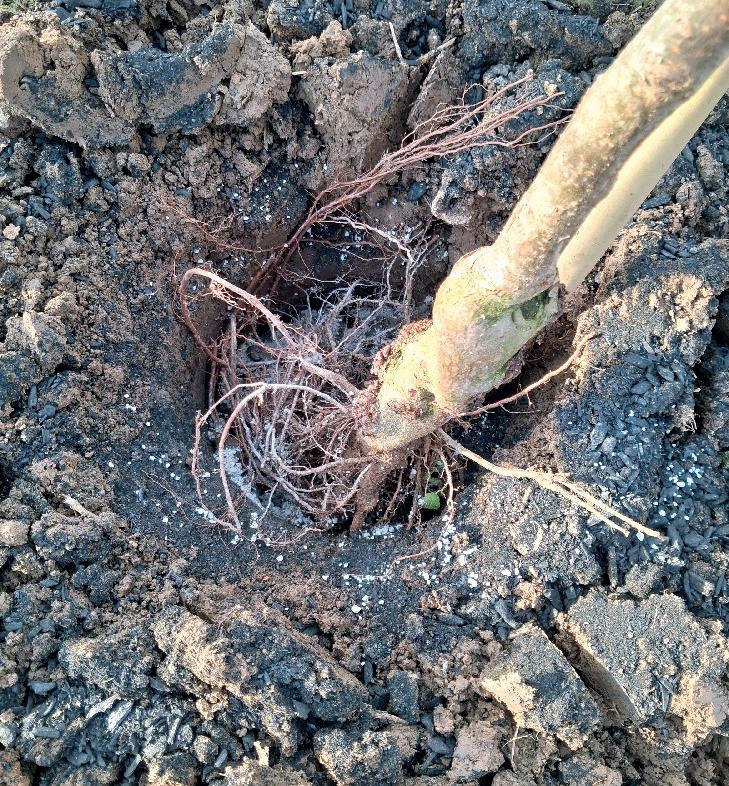
The project, funded through the ADOPT (Accelerating Development of Practices and Technologies) programme and led by British Apples and Pears, is being carried out at two contrasting sites, one run by Kent grower Nick Overy near Tonbridge and the other by Tom Hulme, one of the UK’s largest apple producers, near Canterbury.
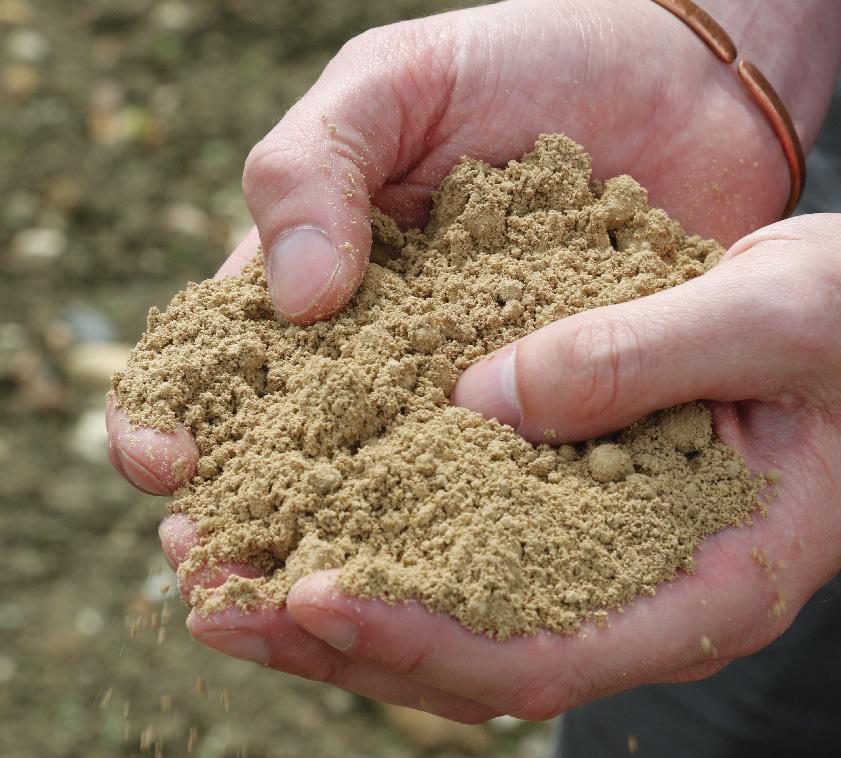
It is aiming to find out if adding ‘charged’ biochar, alongside beneficial fungi, to orchard planting holes can improve tree establishment, boost growth and help trees better withstand environmental pressures.
Nick, who grows apples, blackcurrants and arable crops, said the trial was particularly relevant given changing weather patterns and increasing pressure on water use.
“We don’t have any irrigation, so this is an ideal site for the trial. Biochar is very good at retaining water and acts like a sponge, helping to improve tree growth overall,” he commented.
With warmer, wetter winters and hotter, drier summers becoming more common, Nick believes solutions that improve soil moisture retention could become increasingly valuable.
“If biochar does what we hope, it could become invaluable in the future, especially as we’re getting less and less rain during the summer months,” he said.
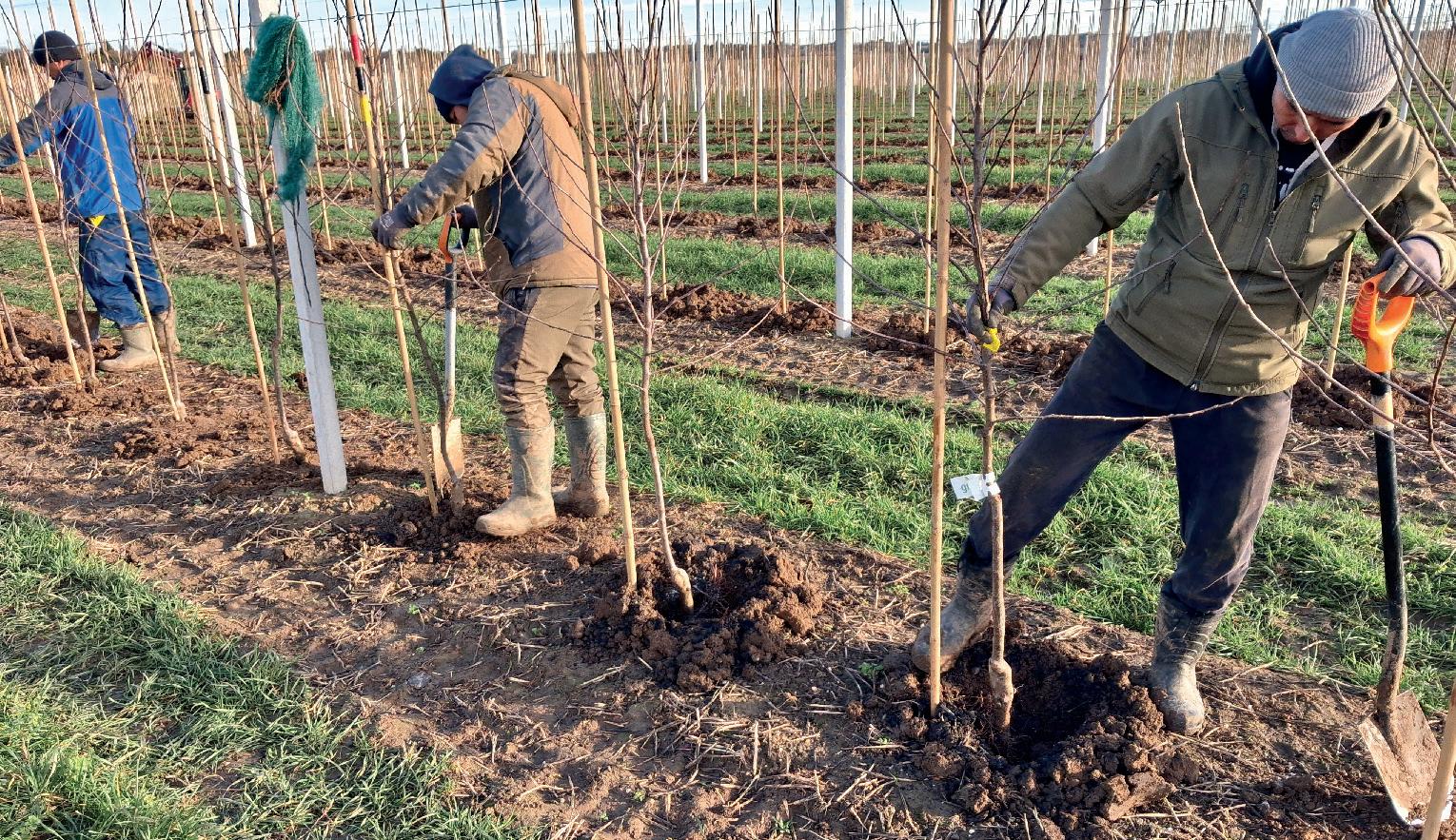
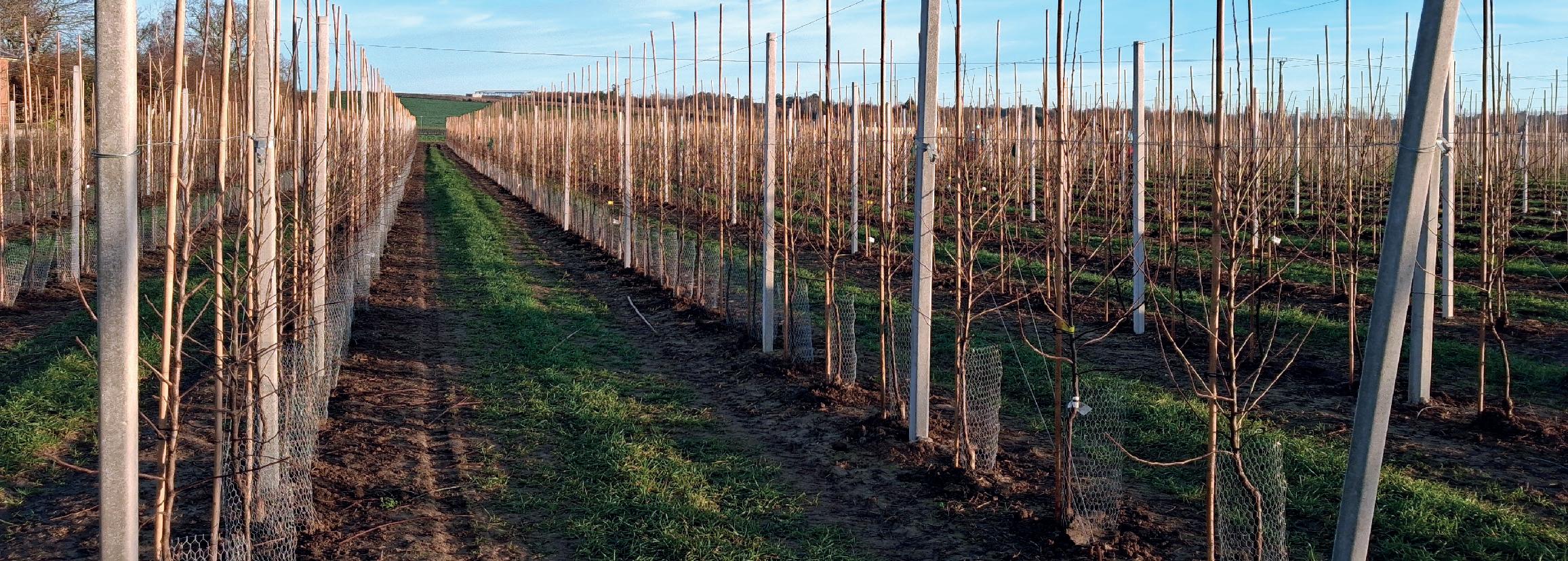
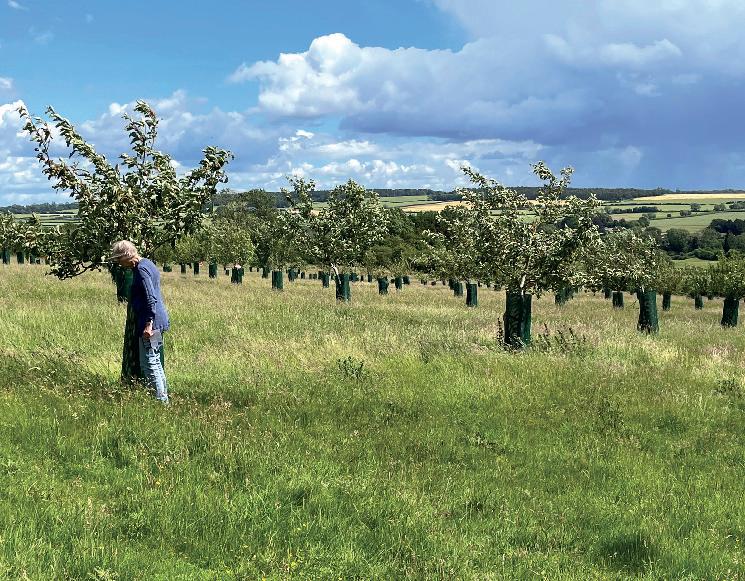
Trees were planted for the ADOPT project in December 2025
BUILDING ON EARLIER RESEARCH
The trial builds on earlier work led by British Apples and Pears which identified biochar as a potential solution to multiple challenges facing the sector.
Rachel McGauley, research programme manager and facilitator for the project, said the idea originally stemmed from concerns around orchard management and environmental impact.
“Historically, when orchards reached the end of their commercial life, the trees were grubbed up and burnt. That’s not great for the environment and is becoming less acceptable to neighbours and local authorities.” Research has now shown that grubbed trees could instead be used to create biochar.
At the same time, growers are dealing with more unpredictable weather, alongside rising input costs. “We’re seeing more extreme conditions, from heavy rainfall to long dry periods, and at the same time fertiliser costs are increasing. So we’re really interested in how we can improve soil resilience and water management," said Rachel.
A combination of soil amendments offers a way to address several of these issues at once, from improving soil structure and water retention to supporting carbon sequestration and nutrient efficiency.
Earlier, small-scale trials showed limited results, prompting the need for a more robust, longer-term study. The current project incorporates ‘charged’ biochar – which is
The trial is being done on two farms in Kent with differing conditions, farm size and infrastructure
Photos: Matevz Papp-Rupar, Niab
enriched with nutrients – as well as arbuscular mycorrhizal fungi (AMF) and Trichoderma to support tree health and disease resilience.
Around 1,600 Magic Star and Gala trees have been planted in four treatment groups: a control; with charged biochar alone; with charged biochar and AMF; with charged biochar, AMF and Trichoderma.
FASTER ESTABLISHMENT, STRONGER TREES
A focus of the trial is improving early-stage tree establishment, a critical factor in orchard profitability. “Establishing an orchard can cost £35,000 to £40,000 per hectare and takes around six years to reach full production,” Rachel explained.
“Anything we can do to improve establishment, reduce losses or help trees grow more quickly is going to have a big impact on profitability and the long-term sustainability of the industry.”
The trial will measure a range of indicators
indicators, yield, fruit quality, soil quality and nitrogen levels in leaves. An economic assessment will also be carried out to assess return on investment.
WHY ADOPT FUNDING MATTERS
Rachel highlighted the importance of ADOPT for enabling longer-term, growerfocused research. “I don’t think this project would have happened without the ADOPT funding,” she said. It’s quite an expensive piece of work, and our core funding tends to be focused on projects that deliver more immediate results. It’s enabled us to take a longer-term look at something that’s still really important for growers.”
FARMER-LED INNOVATION
The ADOPT programme, part of DEFRA’s Farming Innovation Programme, supports practical, farmer-led trials designed to tackle real-world challenges. It funds collaborative projects typically costing £50,000 to £100,000 and lasting between six and 24
The trial will measure the impact of charged biochar, AMF and Trichoderma on tree growth, soil structure, fruit quality and profitability
months, with additional support available for facilitators to manage applications, delivery and knowledge sharing.
For Nick, the potential benefits extend beyond his own farm. “We’re still in the early stages, but the plan is to have farm visits and share what we’re learning so other growers can come and see the trial for themselves,” he said.
FROM THE FRONT LINE
QUESTIONS, QUESTIONS
By
Martin Hole, who farms organic livestock with his family at Montague Farm, on the western edge of the Pevensey Levels Wetland of International Importance.
Open Farm Sunday, 7 June, will have passed by the time this article is read. Questions asked by visitors, however, may still be rattling around the frontal lobes. “How big is your farm?” and “What did that tractor cost?” vie with “What do you think about Jeremy Clarkson?” as the most frequent. Visitors often ask the weight of our bulls. “About a ton” one responds, before adding that this may be twice the weight of his youngest wives. This elicits a short pause as the physical considerations are imagined. Awe at cattle behaviour is probably mutual. Through the eyes of strangers can come refreshing admiration.
Most of the groups we show around want to see the special wildlife of the Pevensey Levels. In the winter we may trek to some pools to watch springs of teal. Their flight is like smoke swirling in a wind, hundreds shredding close to the ground, formation patterns adopted to thwart attendant peregrines.
Duck calls are diagnostic, teal deriving their latin name anas crecca from their croaky whistling. Sometimes the questions are slow coming. After all, the sight of these animals is wonderful to just contemplate quietly. I apologise to our visitors now for my oft-repeated interruptions, as further diversion into duck names will elicit the wigeon, anas Penelope, named after the loyal wife of Odysseus, who, according to the myth, when thrown into the sea as a baby was rescued by ducks. This fact was learnt from a knowledgeable guest many years ago, for the information flows both ways. It is a fun way to learn.
Last June we hosted a young lad from a nearby school. He is a butterfly nut. I took him to a part of the farm where creeping thistle competed well with lanky marsh thistles in thick rushes. A part of the farm where farming visitors would ask the inevitable: “What do you do about your thistles?” He simply wound down the window
and said: “Wow”. Clouds of meadow browns and common blues interspersed with peacocks, admirals, painted ladies, orange tips and fritillaries gave a thrilling display. No talk of ‘topping’ for this young man.
A question commonly forthcoming is the one asking: “What is your favourite bird?” Well, how long have you got? Of course, it’s the lapwing, no, swallows, or possibly the short eared owl. The magic of the swift. Yes that’s it. Or maybe long-tailed tits. Oh dear.
A brief answer is what was hoped for, so I have learned to turn the question around a bit. I currently observe that such a question is akin to asking someone gazing at a Constable painting: “Which of those colours do you like the most?” It’s the assemblage, the emotion, connections, the everything… maybe I should
wear a badge that just says: “Don’t ask him what his favourite bird is!”
People are usually too polite to ask what you earn, but if they do it tends to be towards the end of a visit. That is a relief, given that the response is slightly humiliating. We had a school from south London a few years ago, a bus load of nine year olds. They were entertained (once they had been de-bounced by running down then back up our ‘hill’) by a collie gathering lambs, which we penned for inspection.
“Any questions?” asked their teacher. “Yes,” came the eager voice of a cockney lad of nine. “Martin”, he said, omitting the ‘t’ altogether, “I’ve worked out wot all your land is worth, and the house, yer sheep and yer tractor, but to get me sums right, wot’s yer dog worth?”
OPEN FARM SUNDAY CELEBRATES TWO DECADES
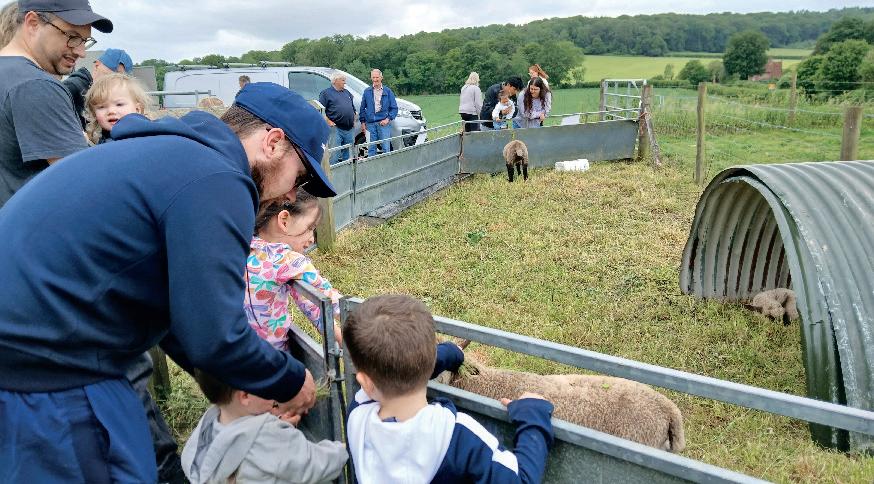
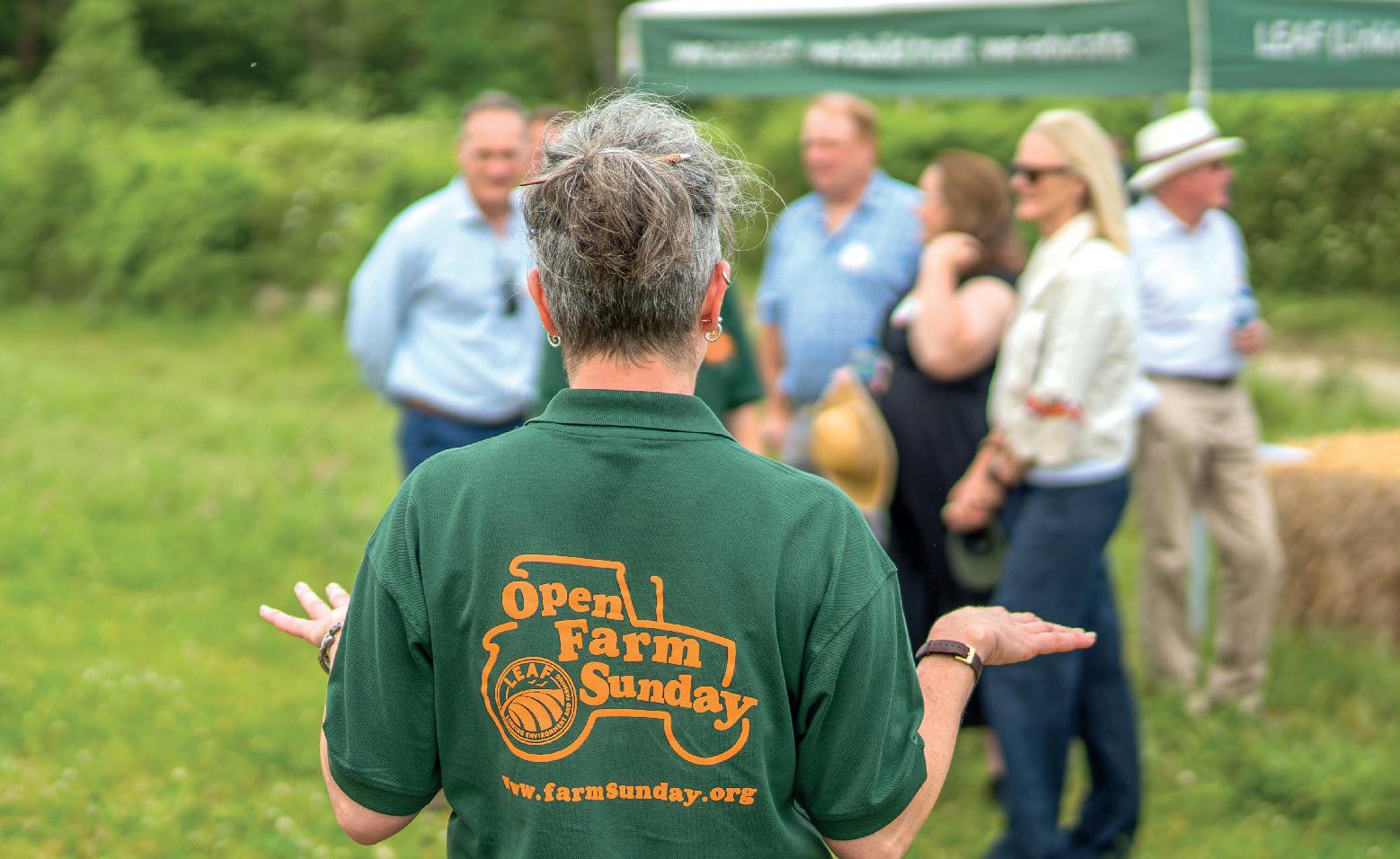
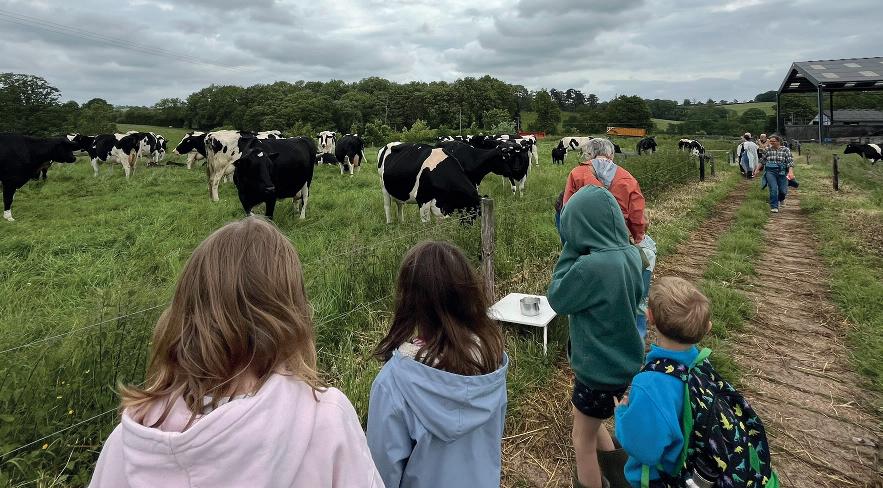
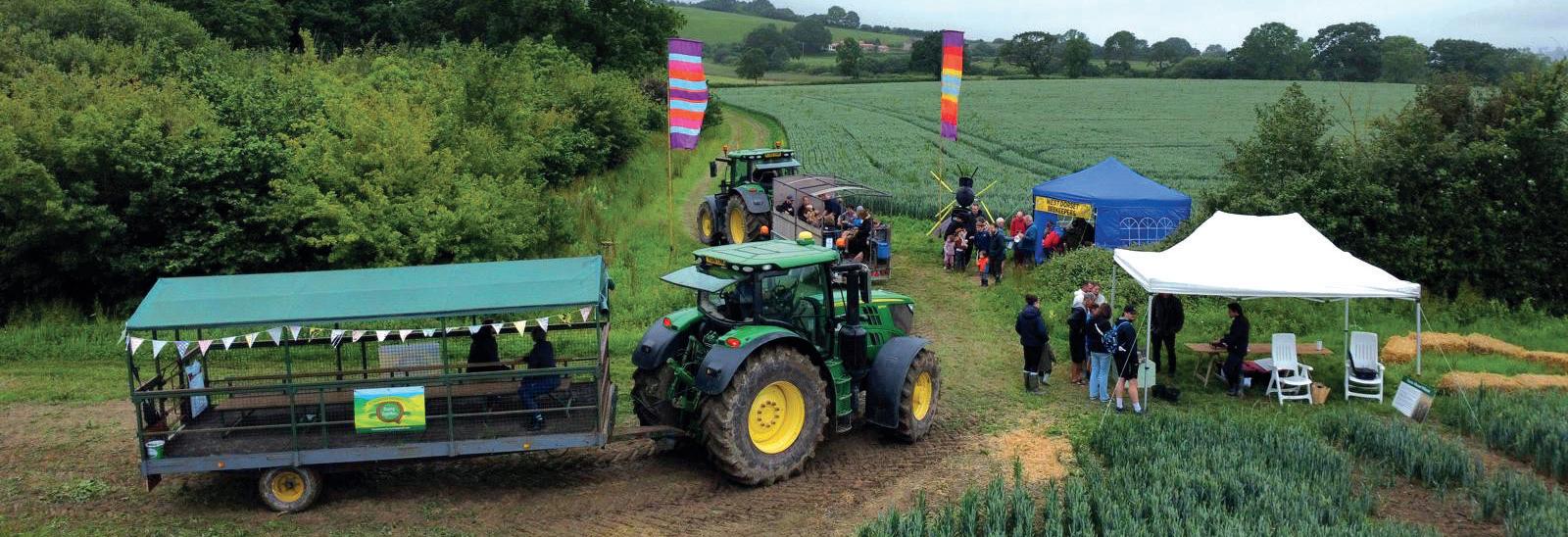
Hundreds of thousands of people flocked to celebrate Open Farm Sunday’s 20th anniversary, which was marked by a significant increase in host farms across the country opening their gates for the first time.
Established in 2006 by LEAF (Linking Environment And Farming), Open Farm Sunday has grown into one of British farming’s biggest public engagement success stories. Initial estimates suggested that almost 200,000 visitors were welcomed onto participating farms to learn more about food, farming and the environment.
A total of 283 farmers registered to host events, with a quarter taking part for the first time. Farmers were supported by volunteers, sponsors and the wider industry, giving visitors of all ages an opportunity
to experience nature-friendly farming firsthand.
Open Farm Sunday manager Annabel Shackleton said the milestone year showed the continued value of these events. “Open Farm Sunday continues to capture the public’s imagination, and they are so grateful for the chance to step beyond the farm gate and connect with the people that produce their food,” she commented.
“This year’s 20th anniversary has been a wonderful reminder of the pride, care and commitment that backs up British farming. We are enormously grateful to every farmer, volunteer, sponsor and supporter who helped make the day possible.”
New research commissioned by LEAF ahead of this year’s event shone a light on the importance the public places on
farming practices that prioritise both food production and the environment.
The survey of more than 2,000 people revealed that 93% believe it is important for the UK to maintain a strong level of food production capacity in an increasingly uncertain world, while 89% agreed with the importance of protecting nature on farms.
Annabel added: “These results show why Open Farm Sunday matters. It gives farmers the space to show how they care for soils, wildlife, water and the wider countryside, and a chance to have important conversations in a positive, engaging and practical way.”
Over the past 20 years, Open Farm Sunday has welcomed more than 3.65 million people onto farms. Next year’s event will take place on 13 June.
Buckmoorend Farm
Wicton Farm
Coppet Hill Farm
MONICA AKEHURST AT THE KITCHEN TABLE
Alleluia, we’ve had rain and the grass is growing. The cattle and sheep have plenty to eat. Now there’s a good crop to cut, but of course we need a dry, sunny spell for silaging and haymaking to begin. Perhaps it’s true that we’re never satisfied, but I suspect many of us won’t relax until our barns are restocked with enough fodder and bedding to see us through next winter.
It was tipping it down with rain this morning, so I decided it was kinder to leave the collies in their kennels. Yesterday we’d moved the flock to a fresh field; thinking they’d be happy, I convinced myself a quick look to check nothing was on its back after over-eating was all that was required. I’d be home in no time. But the ungrateful wretches had staged a massive breakout; some were hiding in a wood, while others had joined the cattle.
I phoned my other half to bring me the collies, who triumphantly rounded up those mischievous sheep. The dogs were well chuffed. Lesson learned: I can’t manage without dogs, and I’ll not leave them at home again. They didn’t even complain about fencing in the rain, but I did.
I’ve also learned to keep the container doors tightly closed, as our quad bike is essential and, despite taking precautions, I constantly worry about theft. I hadn’t, however, reckoned on the damage that can be inflicted by rather smaller uninvited visitors. I noticed our fuel usage was increasing, and there was a strong smell of petrol and heat close to my legs when I was driving the quad. Thankfully it was due for a service, whereupon it was revealed that rodents had nibbled through the fuel line,
I CAN’T MANAGE WITHOUT DOGS
which was liberally spraying petrol onto the exhaust pipe just below where I sit. Lucky I didn’t go up in smoke.
Barbecues and the May heatwave seem a distant memory, but during it I did shear my rams and a few of my ewe lambs who had heavy fleeces, as they looked so uncomfortable and one of them kept getting on her back. The rest of the flock have all had fly repellent applied. I hope the professional shearers will turn up in early July.
The Wool Board is encouraging farmers to send in their wool clip, claiming members’ returns will be significantly increased, with a typical rise of 60%. This is good news; however, it still barely covers the cost of shearing.
Wool seed trays and plant pots seem to me to be a great idea. They are a natural slug and snail deterrent, strong and durable, and eventually decompose into nutrient-rich plant food. They are relatively inexpensive and so much better than having to dispose of plastic. I use wool around some of my garden plants; during dry spells it helps them retain moisture.
Unbelievably, I still have one ewe yet to lamb. How much longer can she hang on? It’s always a worry that late lambers will get into a pickle when your back’s turned. Hopefully,
by the time you read this, our lambing will officially be over.
Dinky, the tiny ewe lamb’s offspring, gave me a scare by mysteriously disappearing during the heatwave. Her mother seemed unconcerned and received a stern reprimand when I couldn’t find Dinky. The next morning, Dinky’s mother rushed up to me bleating loudly. She nearly knocked me over in her distress. “It’s a bit late now,” I said. So, I was both delighted and horrified when a very weak Dinky emerged, tottering across the field. Dinky was scouring and consequently dehydrated, but worse than that, her rear end was covered in maggots. Dinky’s mother was very attentive while treatment was administered and the uninvited guests cleaned away. It did make me wonder about the pros and cons of breeding from ewe lambs, yet they are now thriving, a devoted family, out in the special-care field along with a few others. We had intended to take part in Open Farm Sunday on 7 June, but due to unforeseen circumstances we were unable to do so.
LEAF (Linking Environment And Farming) provides training, support and resources. Our son-in-law Martin and daughter Hazel attended the event at the local dairy farm that supplies them with milk, where they explained how they make cheese.
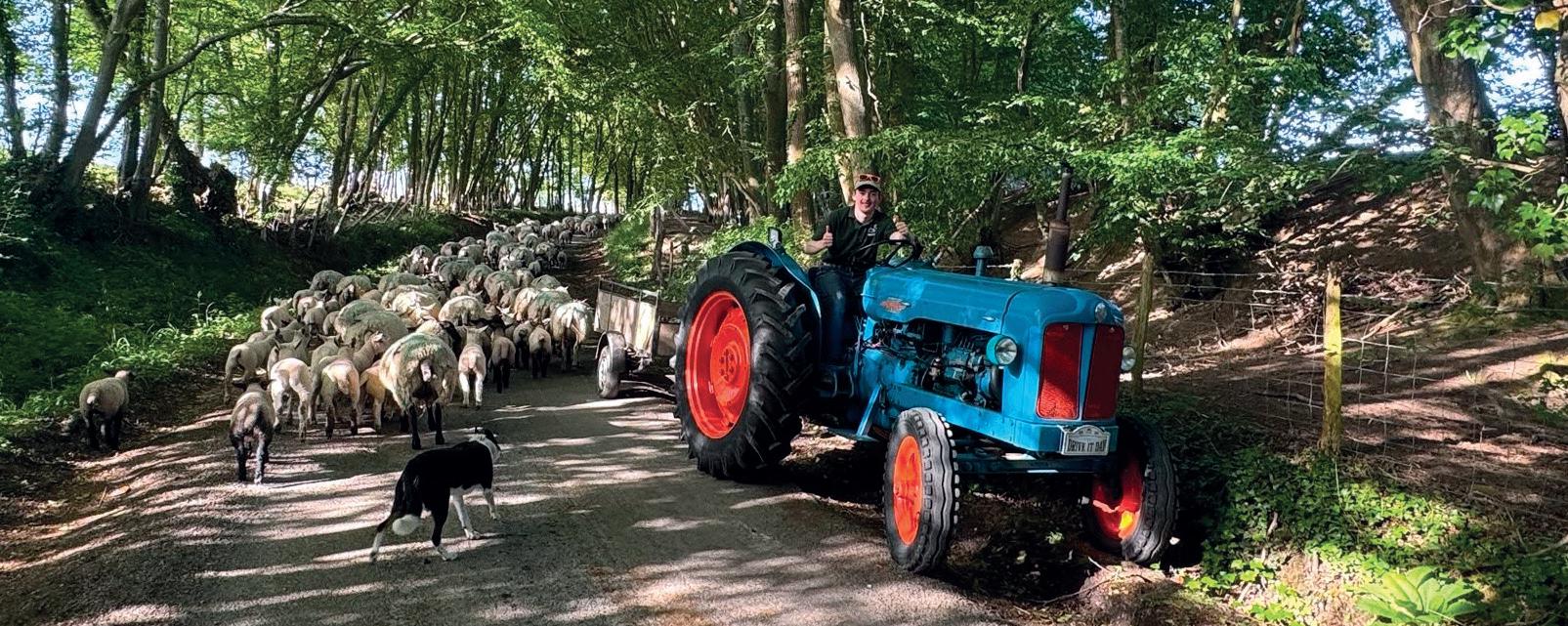
Rush hour in Tilley Lane
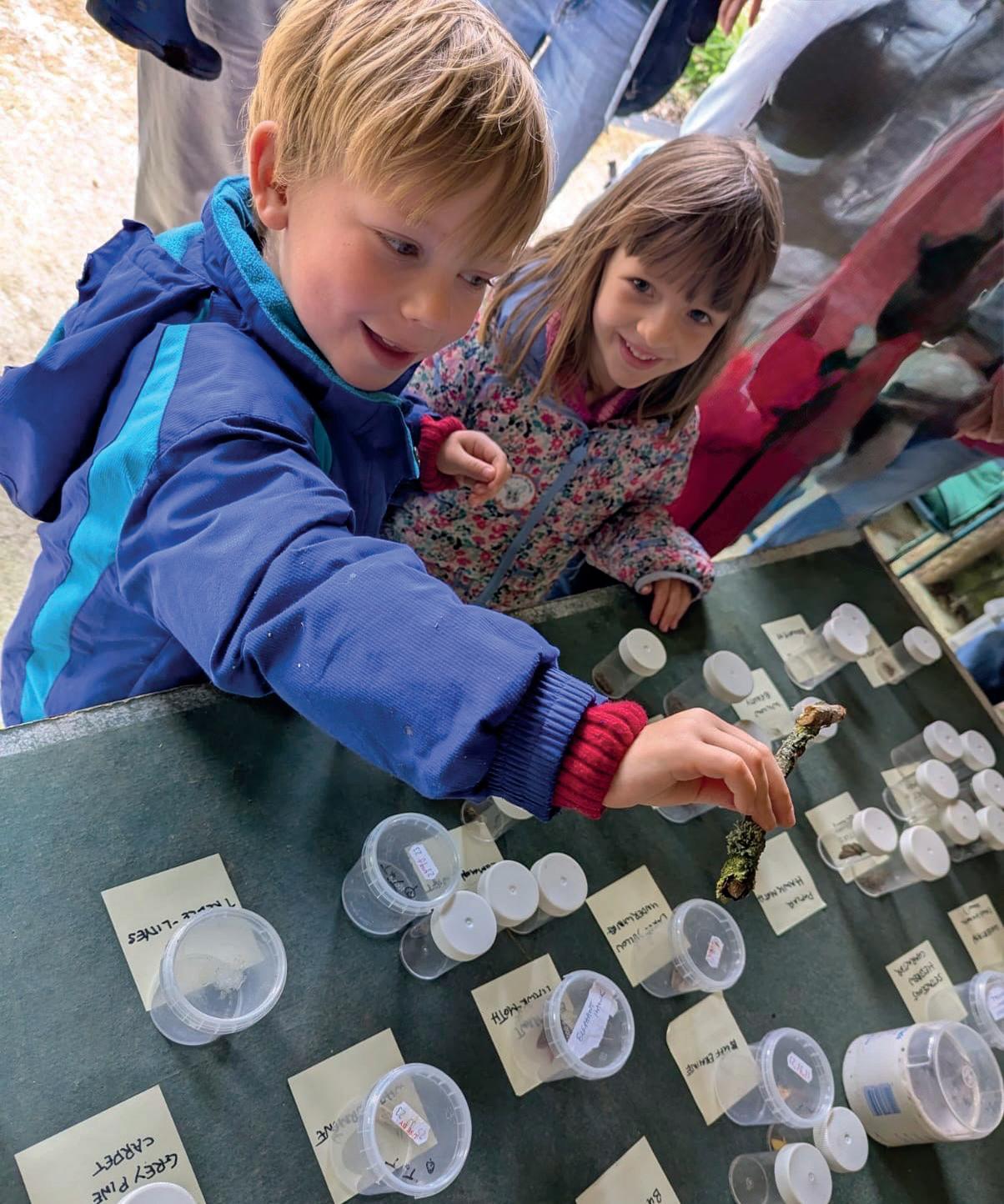
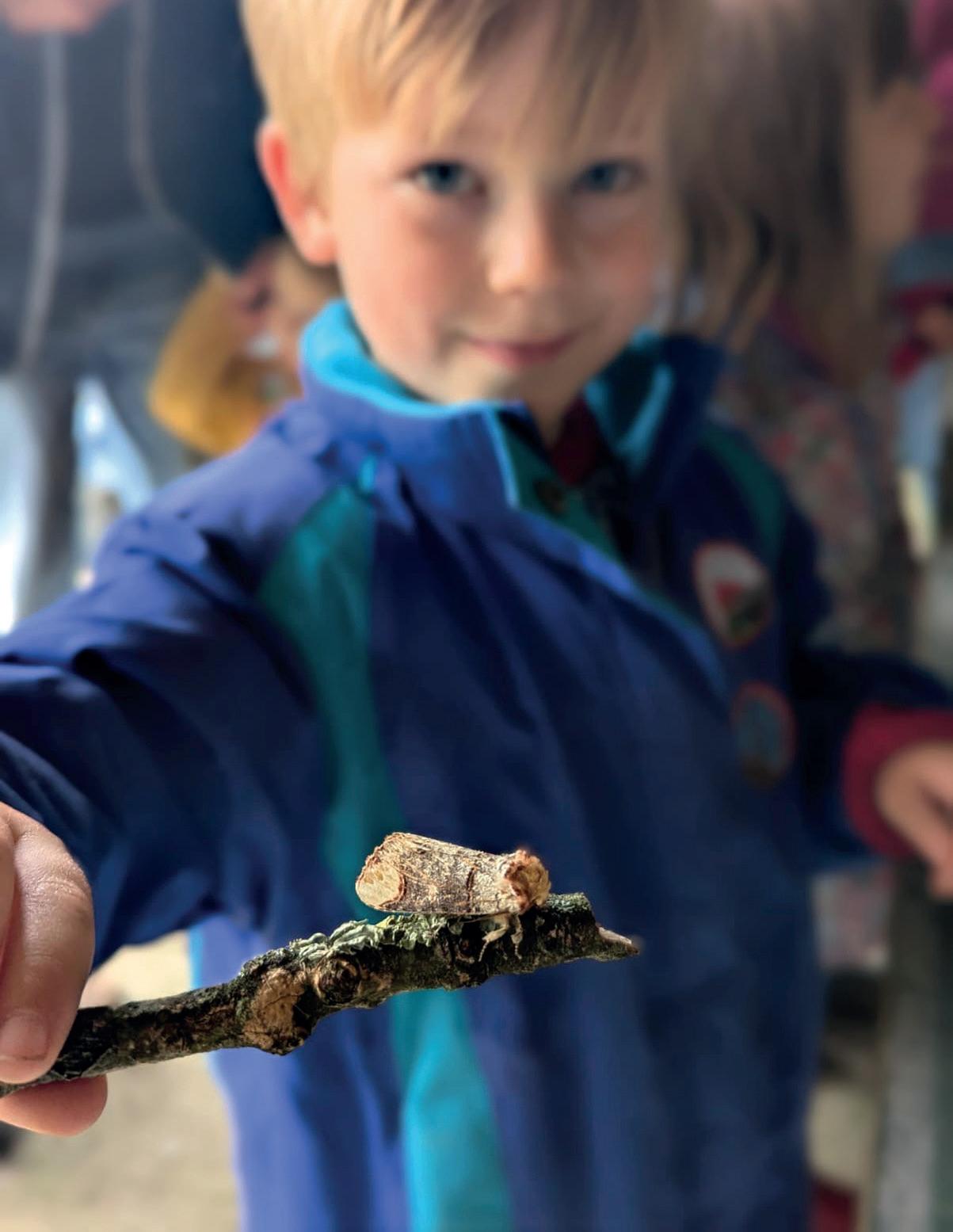
Angus and Anna checking out the moths
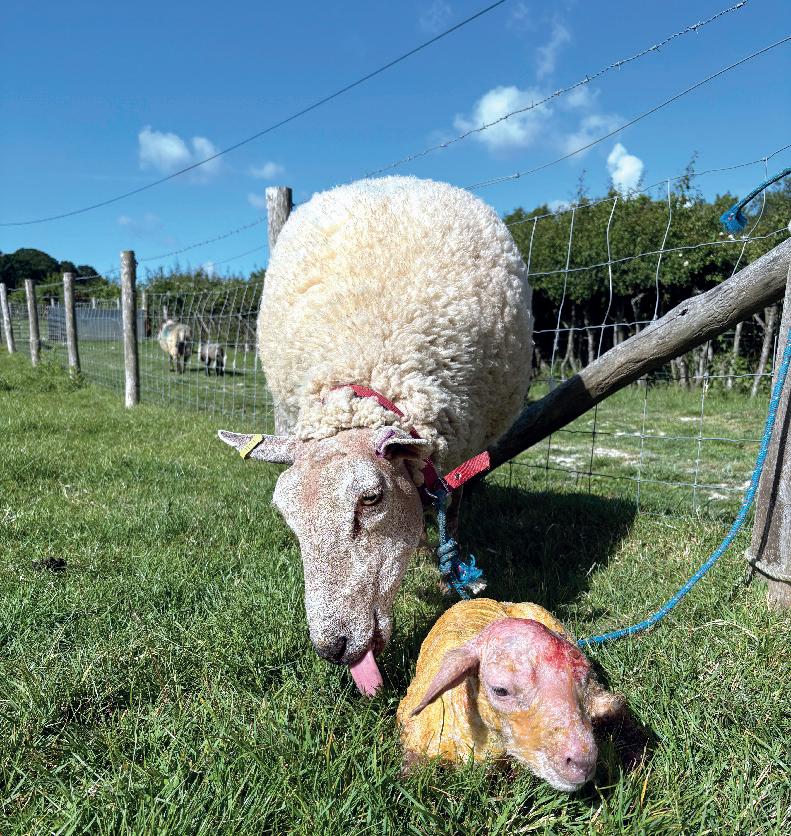
Youngest; mother’s not sure about the taste
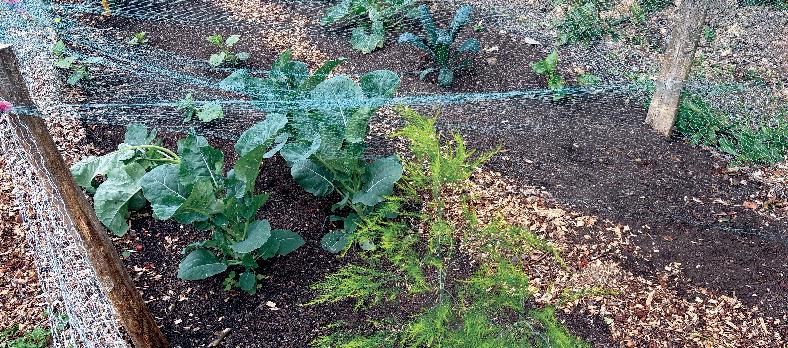
Protected plants thriving
Visitors also learned about yoghurt-making, milking cows and moths, and took part in a farm walk. Our grandchildren returned with an age-appropriate activity book, Farming Fun, published by the NFU, which looked excellent. Grandson Angus, aged six, particularly enjoyed looking at all the different moths captured in a moth trap. After studying these, he announced: “This is my best day ever.” Sorry folks, but he didn’t mention the cows. I guess it’s whatever floats your boat, although I’m sure the cows were the main attraction. It’s good for our consumers to learn about the complexities of farming and the many different elements involved in managing the land. Well done to all the farmers who
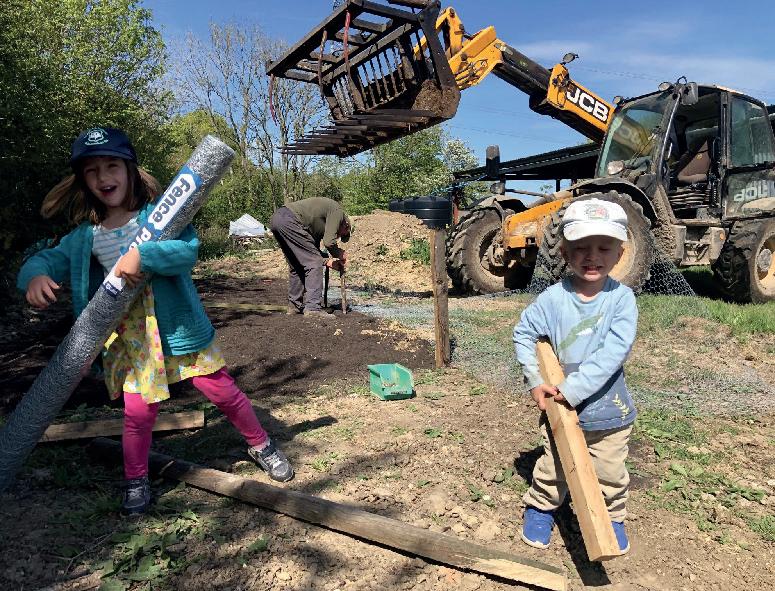
Fencing in progress
Oldest; growing up fast
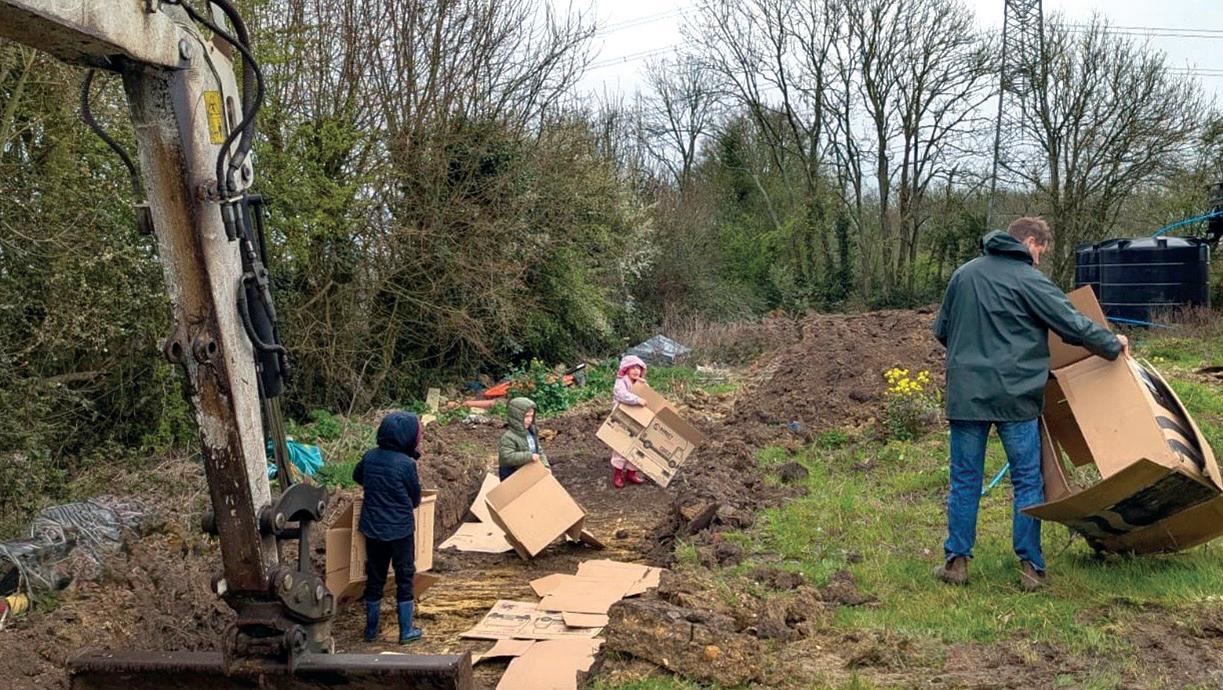
Garden preparation, laying the cardboard
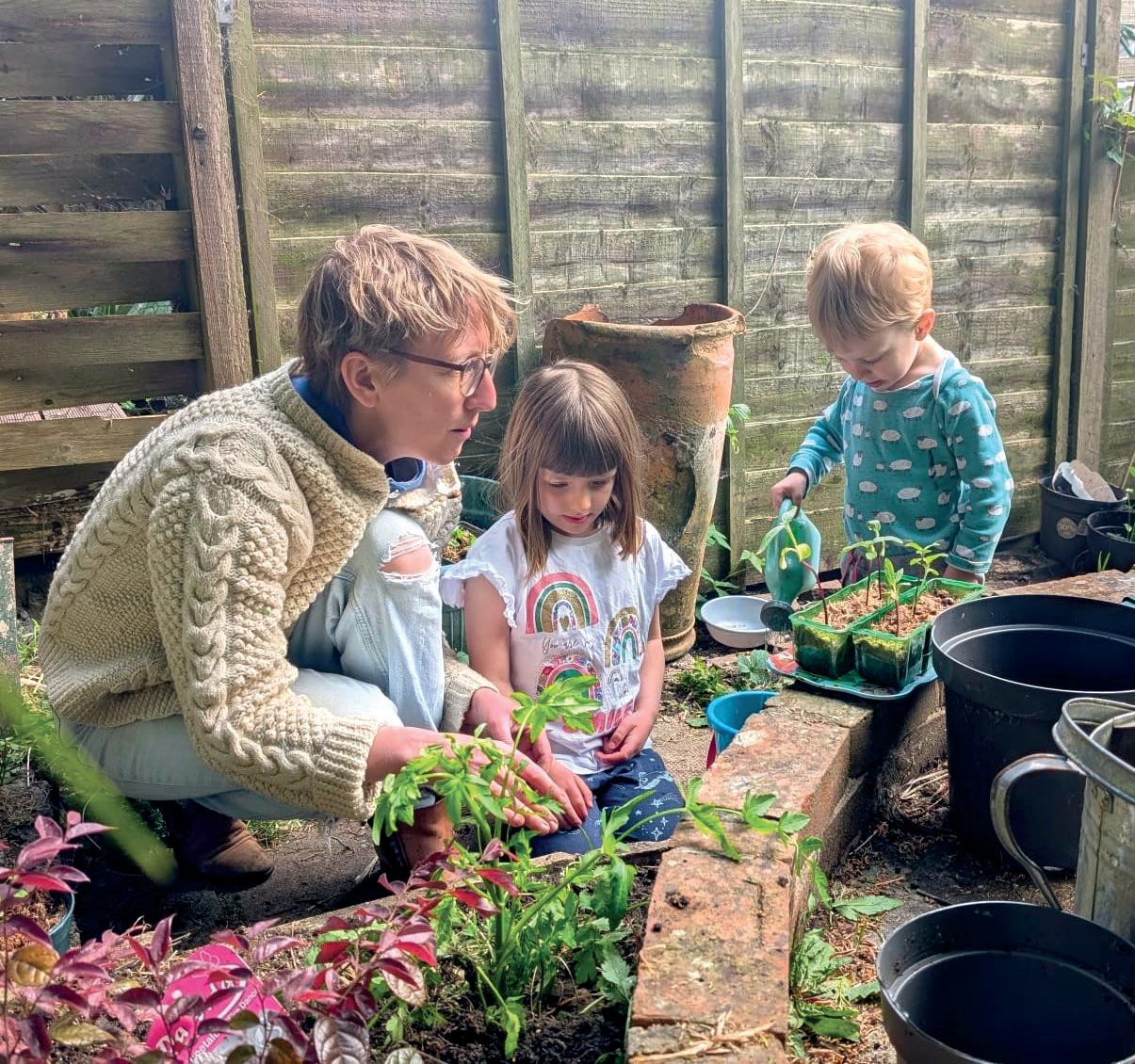
Growing vegetables and learning together
opened their farm.
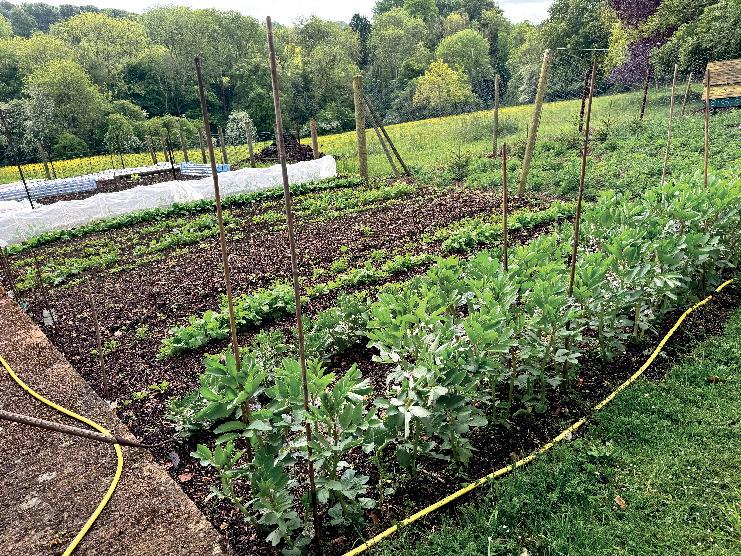
Still on educating children about food, Hazel announced earlier this year that she would like to establish a kitchen garden opposite their cheese rooms so that she and the children could learn about growing food. My other half used the digger to clear a patch, which was lined with cardboard. We supplied well-rotted dung, and compost was collected and mixed in. Tenderstem broccoli, asparagus, courgettes, cucumber, tomatoes, lettuces (little gem and baby leaves) cavolo nero, carrots, pumpkins, beetroot and parsnips were planted.
Initially, it wasn’t fenced. I did ask: “What about rabbits?” Hazel replied that she hadn’t
arriving at their destination
seen any. Clearly she hadn’t paid attention when I read Peter Rabbit to her. Woodchip was spread around the garden, and it was duly watered. Plants began to grow, then disappear. It turns out we do have rabbits – and pigeons. The garden is now fenced and netted, the grandchildren have had fun helping, and we’re looking forward to tasting some of its produce.
Why are DEFRA and the Food Standards Agency taking no action to help reduce abattoir costs? On 3 June, the High Court ruled that abattoirs were being overcharged for safety and hygiene checks. Local abattoirs are vital for livestock farmers supplying locally produced meat.
Angus showing us a buff tip moth
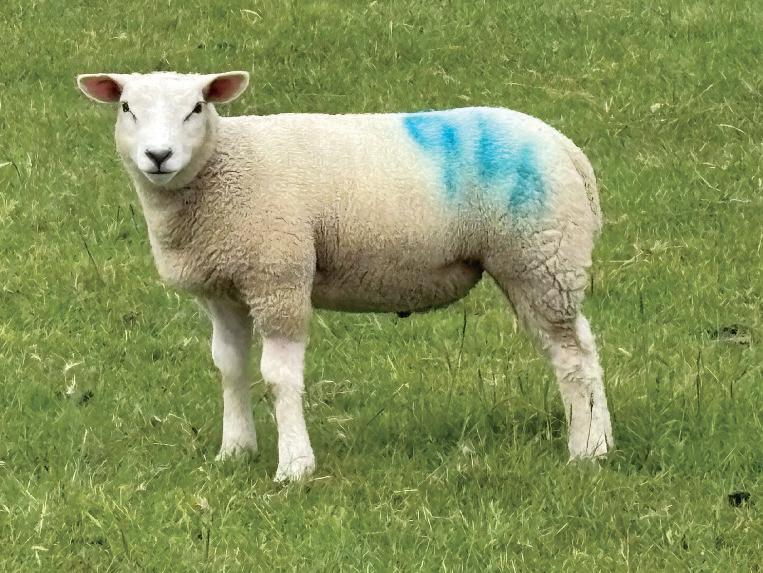
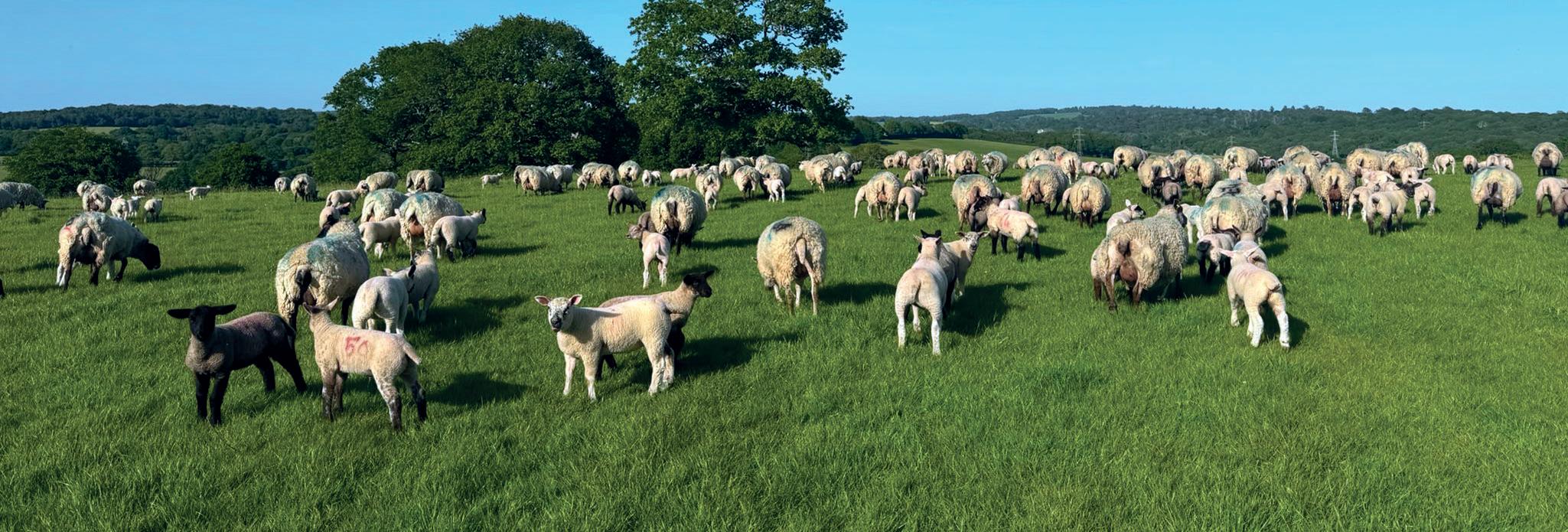
Flock
Recent political perturbations have produced rumblings in the farming press about food security. The NFU has urged government to increase self-sufficiency. Sounds sensible, but what does it really mean? What changes do they seek and how urgently?
Self-sufficiency is a subset of the umbrella that encompasses food security. A selfsufficient country feeds everyone reliably and well, all year round, without imports. Clearly the UK is not doing this, and indeed has not done so since the height of Empire. Our size, population, latitude, seasonality and the changing tastes of relatively affluent consumers mean we are now dependent upon imports for 40% of our food.
Climate change might help, but will more likely harm. May this year was the hottest ever recorded. The rate of climate change is increasing rather than stabilising. This has led Professor Bill McGuire, a specialist in geophysics and climate hazard, to predict that by 2052 summer temperatures of 40°C will be the norm, with profound effects on UK agriculture, not to mention ourselves. More of the planet will become uninhabitable, so the near future is uncertain and grim.
Any visit to a supermarket confirms that much fresh food comes from Europe and elsewhere. One can buy grapes and asparagus all year. Transnational corporations produce
WHAT DOES FOOD SECURITY REALLY MEAN?
most of the processed, packaged, foods. The principal drivers for retailers are price and availability, so countries with lower overheads and costs outcompete us.
Sometimes the shelves are empty. So food security is more a matter of secure logistics, stable politics and good governance, which also applies to many other sectors of daily life. Fuels are traded and priced globally and are highly responsive to political turmoil, as we have seen from the USA and Israel’s chaotic military adventure in the Middle East. Raw materials for farms are equally vulnerable. Bulk farm produce is in the same boat. Putin’s persistent push to take over Ukraine has seriously upset global flows of grains and oilseeds. So food security is mainly the domain of governments and not the remit
of farmers. Secure energy and inputs are, however, also essential for self-sufficiency.
So how may farmers address selfsufficiency? Despite ‘digging for Britain’ and rationing during World War Two, we still depended on the convoys to survive. We couldn’t stand alone then, so how could we do so now that our population has almost doubled to 70 million?
How many farms actually produce what we want, or need, to eat year-round and do it economically? Could we be self-sufficient for farm inputs? Do we have enough suitable land to produce what we want? Are we well primed to farm in a volatile climate? Unlikely; so to carry on producing more of the same just won’t cut it.
What can and should we therefore do to improve on the status quo and cater for the near future? Should we remain in the global market for bulk produce? Should we adopt Trump’s cavorting tariffs? What about papering over the cracks with subsidies, and if so, for what? That’s unlikely, and even the EU is abandoning them.
Should we still be growing crops to feed methane production on the back of generous subsidies? Should most of what we grow still go to feed animals? We are almost self sufficient in meat. Nevertheless, shouldn’t we be increasing tissue culture, at least for food processing, and reduce livestock numbers to free up better land for human crops?
Trade is a key variable for every nation’s food security. The Arabian Gulf desert States remain almost entirely dependent on imports despite costly innovations, whereas South Africa is self-sufficient. Many South Africans, however, suffer food insecurity because of poverty, lack of work and political capacity.
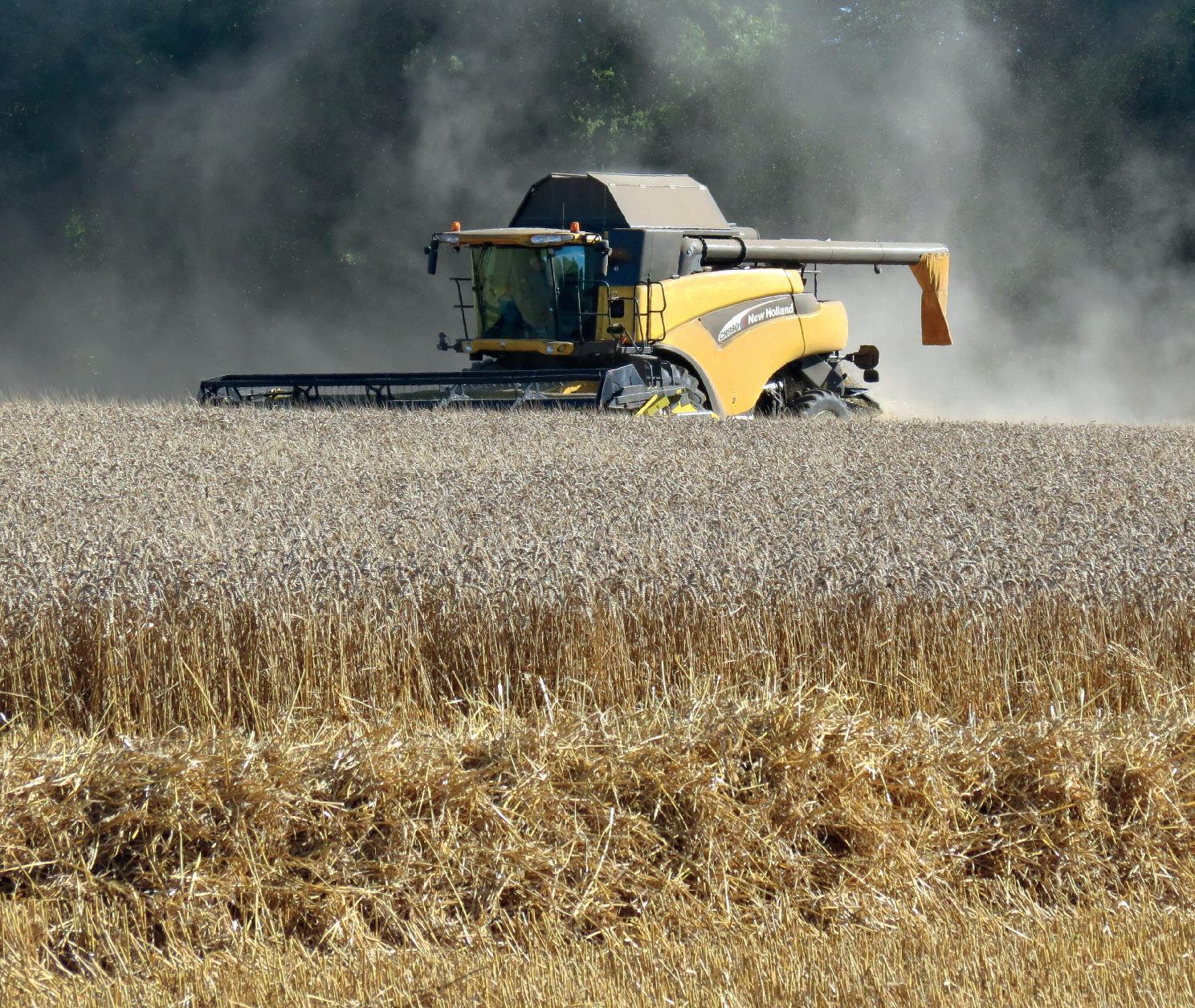
Feed wheat harvest
The same even applies to the USA. The UK produces much of what we require but not all we want and, while we have a mature welfare state, we still have some household poverty and food insecurity.
If we are to increase self-sufficiency, we need our politicians and civil servants to produce a clear, coherent policy for food security and for energy and water sufficiency, because they are so interdependent. It is profoundly ludicrous to pay wind farm companies to keep their generators idle, then have to generate more from gas because of insufficient grid capacity, while covering precious land, rather than roofs, with solar panels. Electricity generation is too fragmented, with divergent company objectives. The claim that the free market gets it right is palpable nonsense.
Improving self-sufficiency is certainly something farmers ought to tackle, but it won’t be easy. We currently produce what is practical and yields the best margin, which is mainly bulk cereals, oils and pulses, mostly for feeding livestock. This doesn’t help selfsufficiency.
Losing land annually to houses, reservoirs and solar panels adds difficulty. So we need a new vision. We should start by publicising the issue more and encouraging individual self-sufficiency wherever possible. The waiting list for allotments is huge, but not all are productive, including some on our land. Should new housing developments leave space for community allotments? Food and communities are vital for folk and so I believe the route to self-sufficiency is to localise more of our food production and processing.
We are least self-sufficient in fresh fruit and veg. The soft fruit and salad sectors have made great strides in output and length of season. Could we do the same for field vegetables? Probably, but it needs to be profitable and something akin to Guy Singh Watson’s Riverford collaborative company, perhaps with a shorter reach.
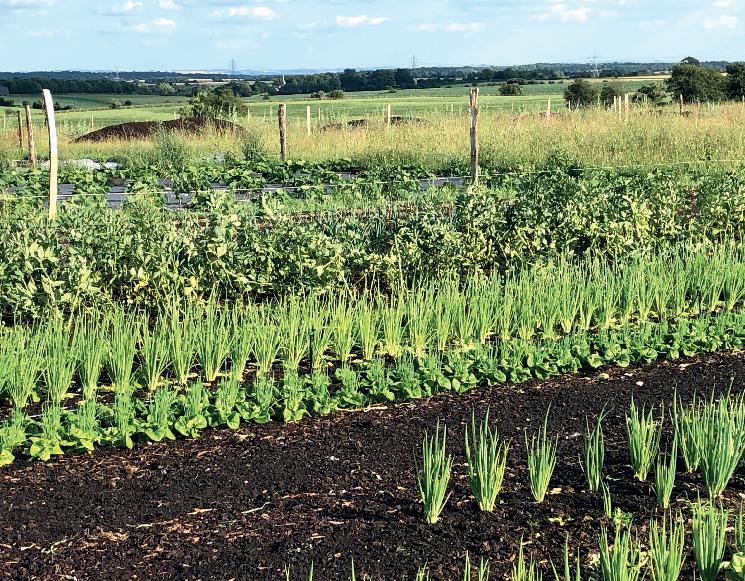
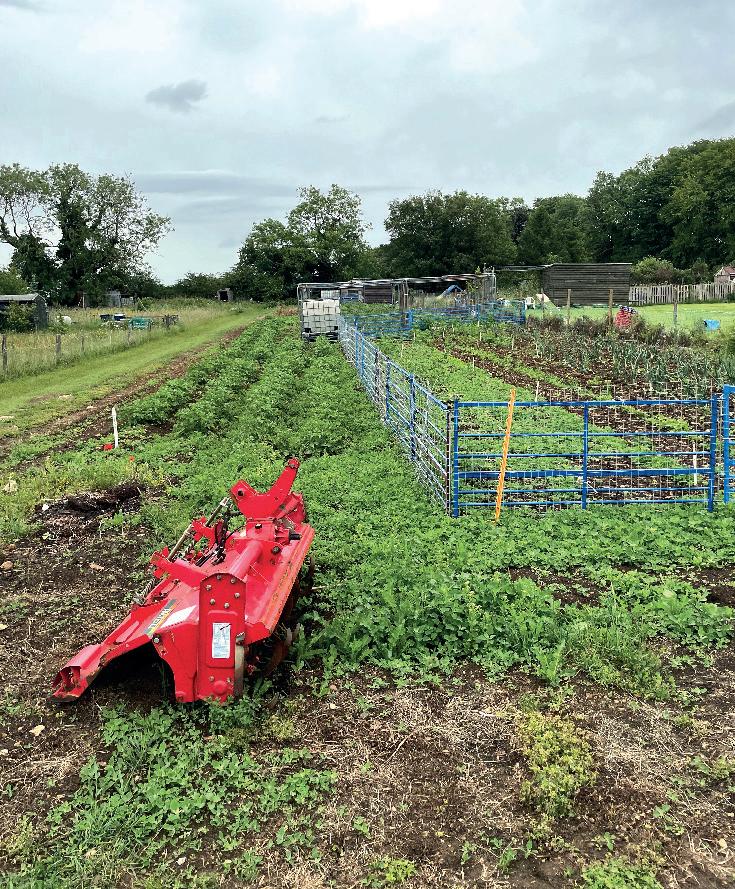
A cluster of farms, such as ours here in the North East Cotswolds, could persuade a number of its members to set aside a few acres of land for market gardening. These plots, run by one or more mobile market gardeners, could produce a wide range of top-class seasonal vegetables. Good Food Oxfordshire, supported by college chefs, is actively seeking
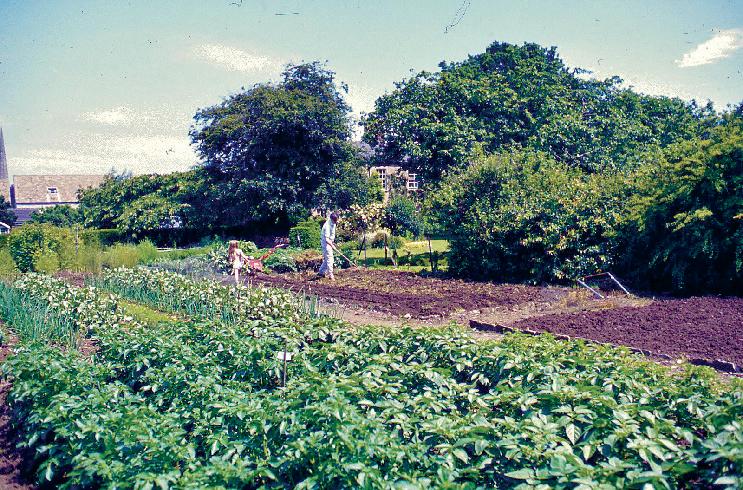
Domestic self sufficiency in 1978
Downsized in 2026 A well used
such growers to supply local institutions with low-mileage seasonal produce. The idea is gaining ground and could readily be scaled up with the right incentives. The model, adopted at Conygree Farm and FarmED, works well. Expanded successfully, it would meet most local needs with low carbon costs.
The same could apply to top-fruit growing, particularly as part of increased field tree planting to improve water and soil management. FarmEd, again, led the way with its community orchard. Vines, with their deep roots, can deliver enormously for the environment. At present, growing vines in the
UK is only economic when value is added by producing top quality wines, which adds work and community enjoyment.
These models are replicable, but success depends on work, commitment and leadership. The social and environmental gains, however, could be dramatic. Recent successful land resources planning shows it is achievable, but with the government trying to peg back food retail prices, we know who would carry much of the financial load. But, like the Hawkstone Farmers Choir, it is remarkable what farmers can achieve when they join together.
FarmED heritage orchard
Conygree market garden
An abused allotment
FarmED market garden
FROM THE CITY TO THE DAIRY
Following my satnav along Cranbrook Road near Staplehurst, I turned off the main road after spotting a roadside sign advertising raw milk. A tarmac driveway took me past the imposing Victorian brick buildings of Iden Manor, now a nursing home, before the farmyard opened up ahead.
To one side sat neat rows of wrapped silage
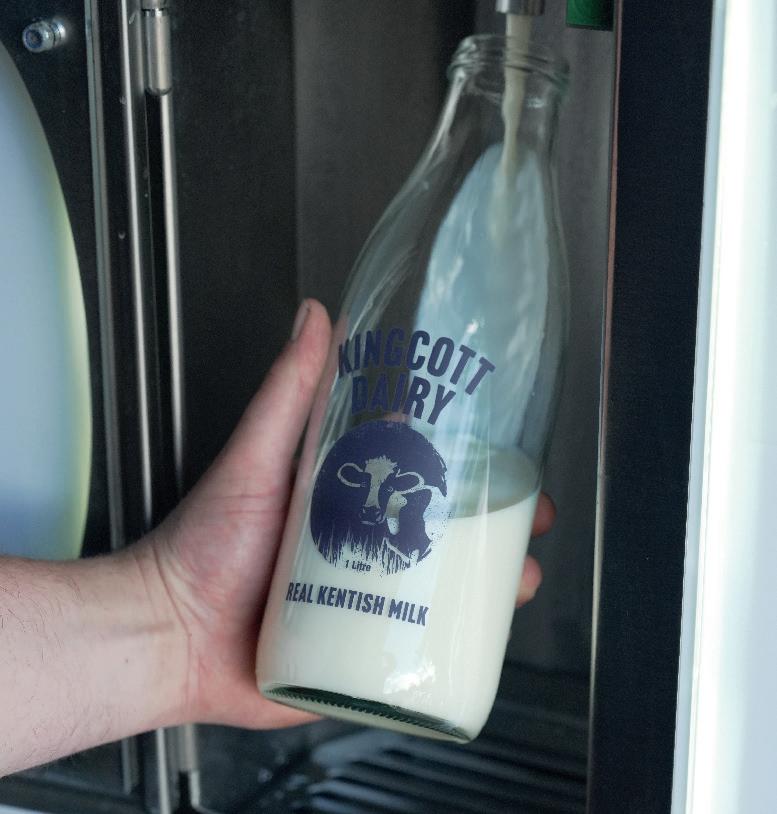
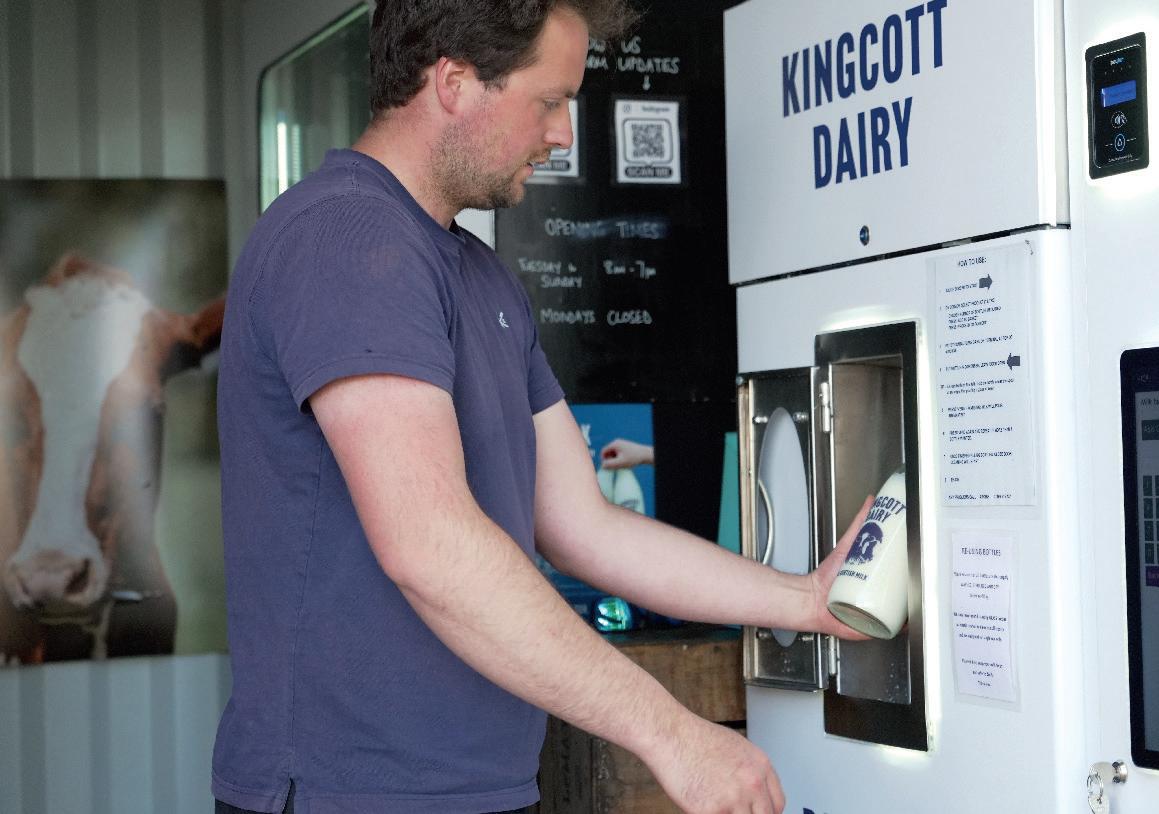
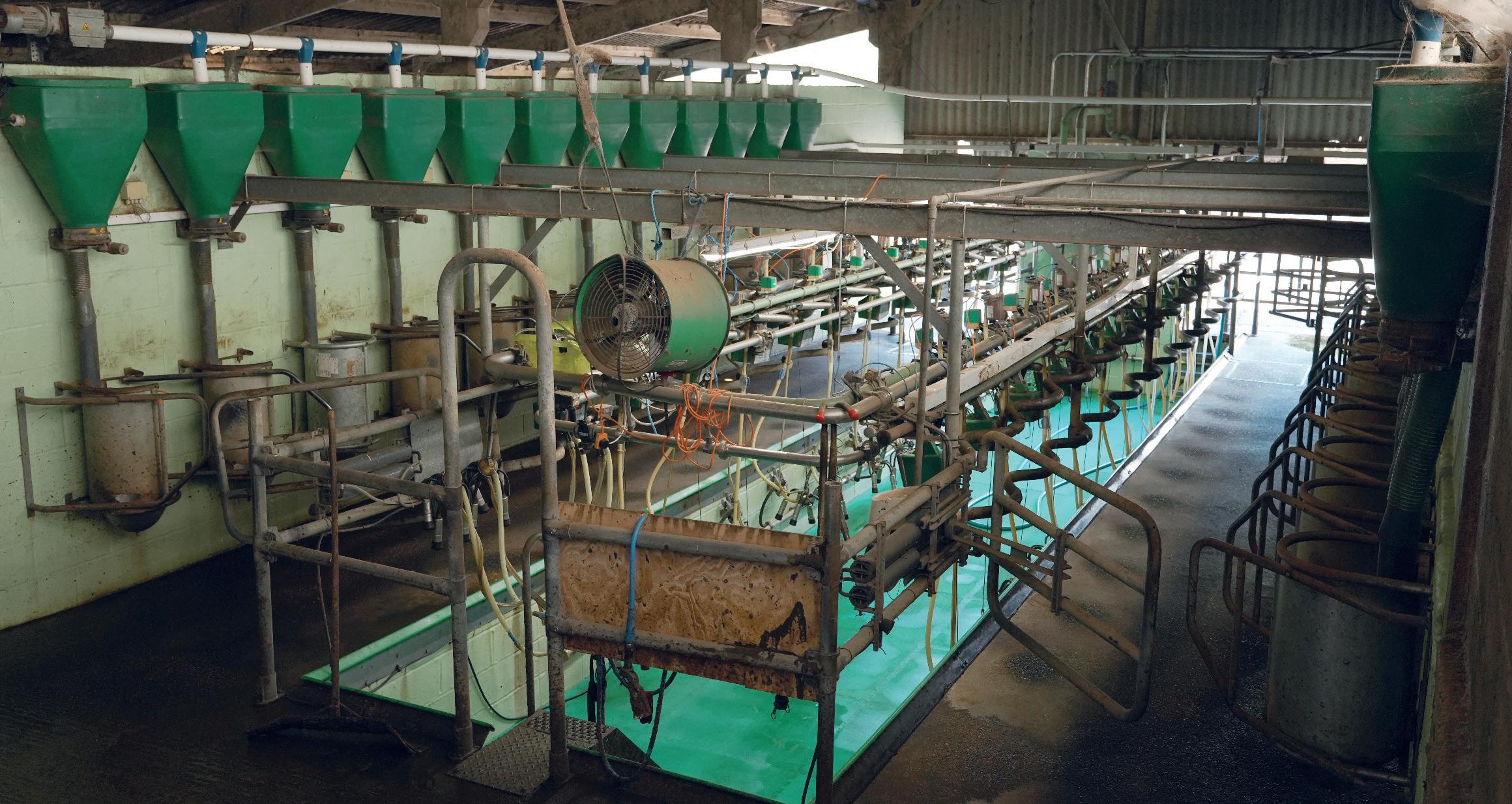
bales, while on the other stood a converted shipping container bearing the words The Milk Box, complete with its own parking area for customers stopping to buy fresh milk.
Even on a late Tuesday morning, customers were stopping by to fill bottles from The Milk Box or pick up cheese from the adjacent vending machine.
For a business built around a relatively
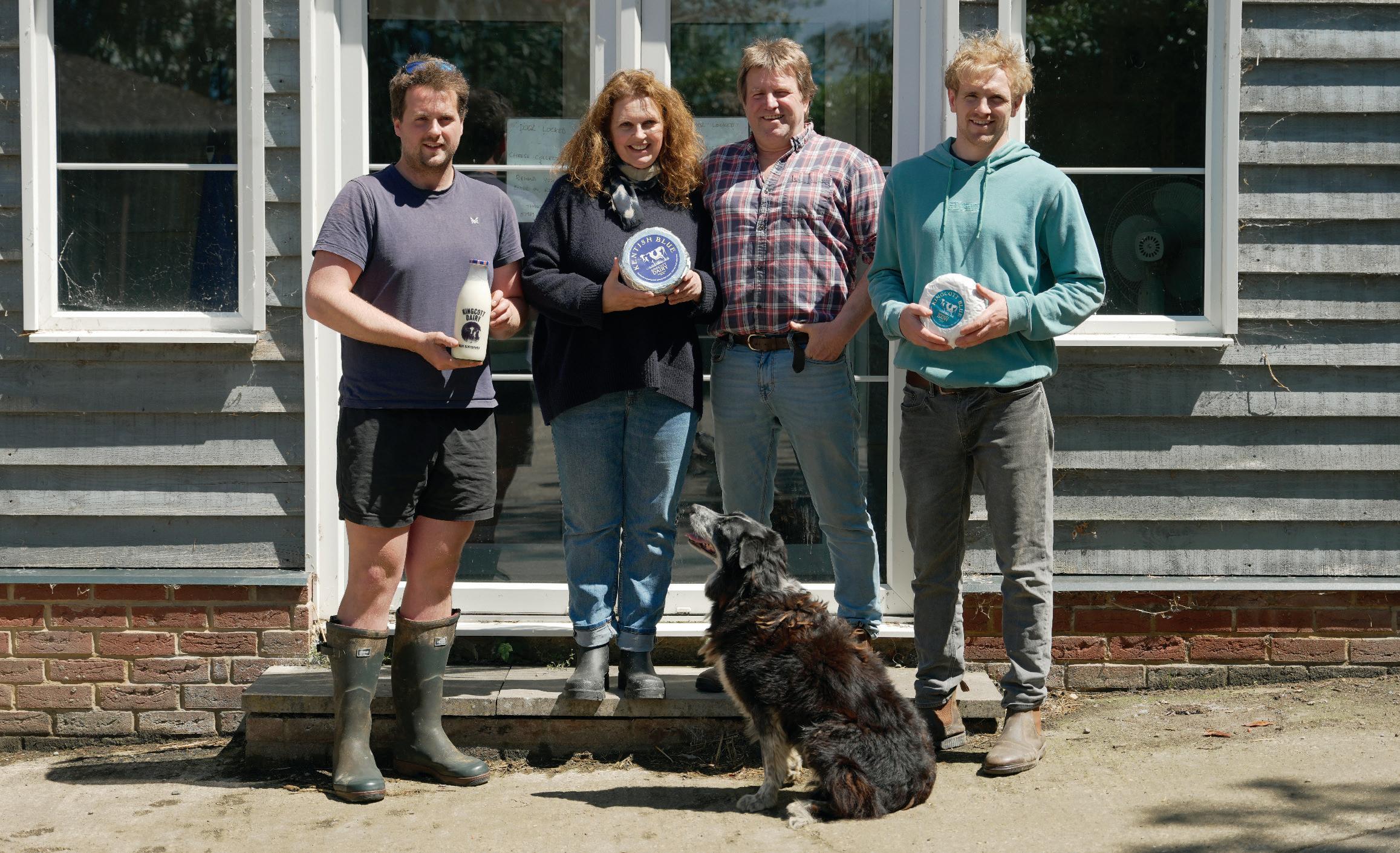
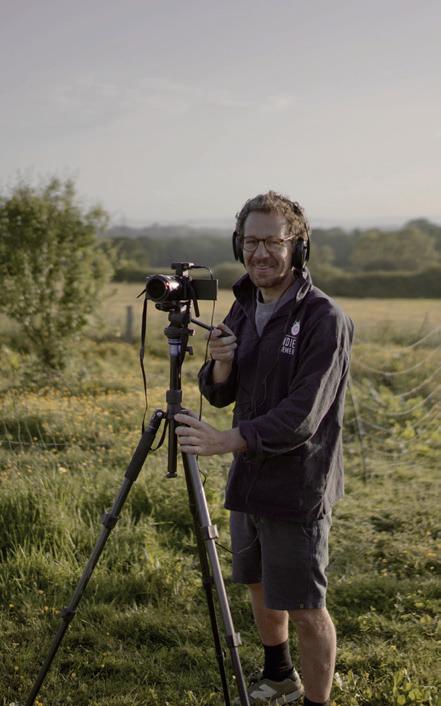
This month, Nigel Akehurst visited Kingcott Dairy, a family-run dairy farm, artisan cheesemaker and raw milk producer near Staplehurst, Kent. He caught up with Steve, Karen, Frank and Archie Reynolds to learn how the family has built a thriving business by adding value to their milk, embracing direct sales and preparing for the next generation.
modest dairy herd, it was a scene that perfectly captured how Kingcott Dairy has evolved over the past three decades. Today, Kingcott Dairy farms around 275 acres across two nearby holdings, produces award-winning artisan cheeses, sells raw milk directly to consumers and was named Kent Farm of the Year 2024 at the Taste of Kent Awards.
Archie, Karen, Steve and Frank Reynolds
FROM THE CITY TO FARMING
Sitting around the farmhouse kitchen table over coffee, Steve Reynolds reflected on the journey that brought him to Staplehurst.
"I wanted to farm, so I had to go and buy one," he recalled.
Although Steve came from a dairy farming family in Somerset, there was no farm available for him to inherit.
After spending 12 years working in the City as a money broker, he purchased the farm at the age of 28, and for a couple of years, life was a balancing act between finance and farming.
"I'd milk the cows in the morning, then come back and milk again in the evening, with help from local farmers Peter Forknall and Tim Mewett during the days," he said.
The days were long, but they laid the foundations for the business that exists today.
"At the time you just thought you were shattered," he laughed. “Looking back, it was probably the best part, really, because you were building something.”
Today the family farms approximately 100 acres surrounding the original holding, together with a further 175-acre block nearby. While the business has grown considerably, it remains firmly rooted in family involvement.
is supported by a small team of part-time staff who help with packing and preparing products for sale.
BUILDING VALUE FROM MILK
Like many dairy farmers, Steve has experienced the highs and lows of the milk market. Around 20 years ago, he began looking for ways to reduce the farm's reliance on volatile milk prices and create a more resilient business. "We went through some terrible milk prices and I thought ‘we've got to have some sort of cushion here’," he recalled.
That search led to cheesemaking. What started as a diversification project has since become the backbone of the business.
Today, Steve and son Frank are the principal cheesemakers, producing a range of award-winning blue cheeses from milk produced by the farm's own herd.
The majority of their cheese is sold through a network of farm shops, delicatessens and independent retailers across Kent and the South East.
KINGCOTT DAIRY AT A GLANCE
• Location: Staplehurst, Kent
• Farmed area: 275 acres across two nearby holdings, with additional rented land
• Owners: Steve and Karen Reynolds
• Family involvement: Sons Frank and Archie work full-time in the business
• Dairy herd: Around 80 Viking Red cows (previously ran Holsteins)
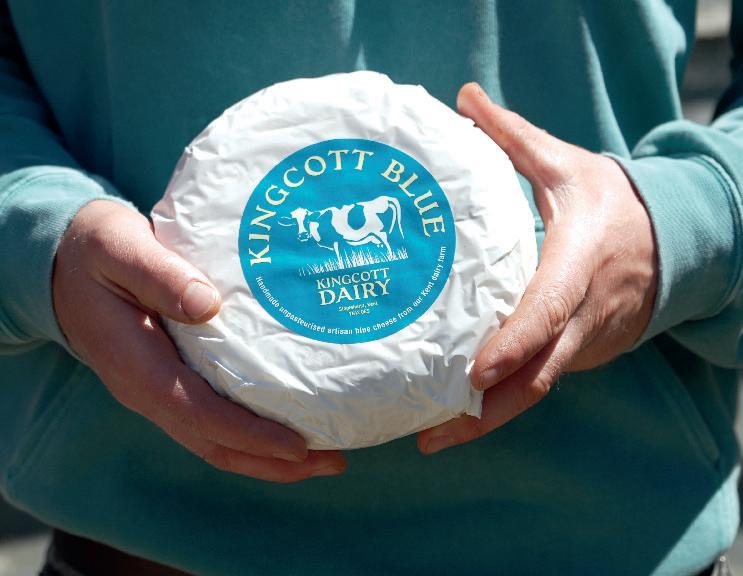
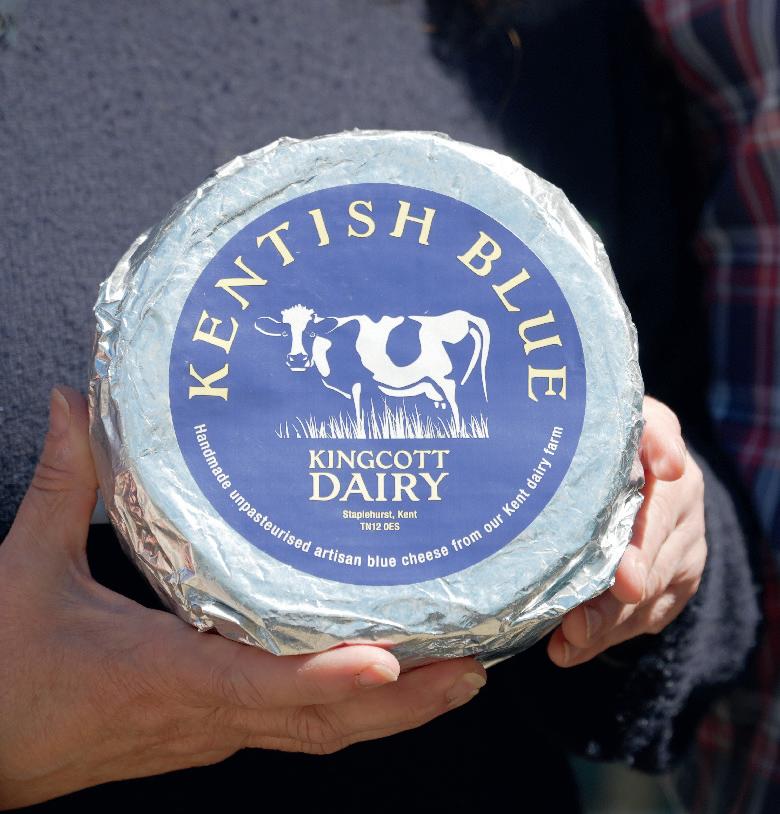
• Main products: Kentish Blue and Kingcott Blue cheeses
• Milk: Raw milk sold direct to consumers via The Milk Box, with remaining milk sold to Northiam Dairy
• Cheese sales: Farm shops, delicatessens, independent retailers and direct from the farm
• Award: Kent Farm of the Year 2024 (Taste of Kent Awards)
• TB status: Located within a TB4 area with annual testing due to raw milk sales
• Agricultural contractors: Andrew Moderski and John Emery
• Key challenge: Planning a new dairy unit and adapting to changing weather patterns
• Philosophy: Lower-input dairying focused on cow health, grazing and adding value to milk.
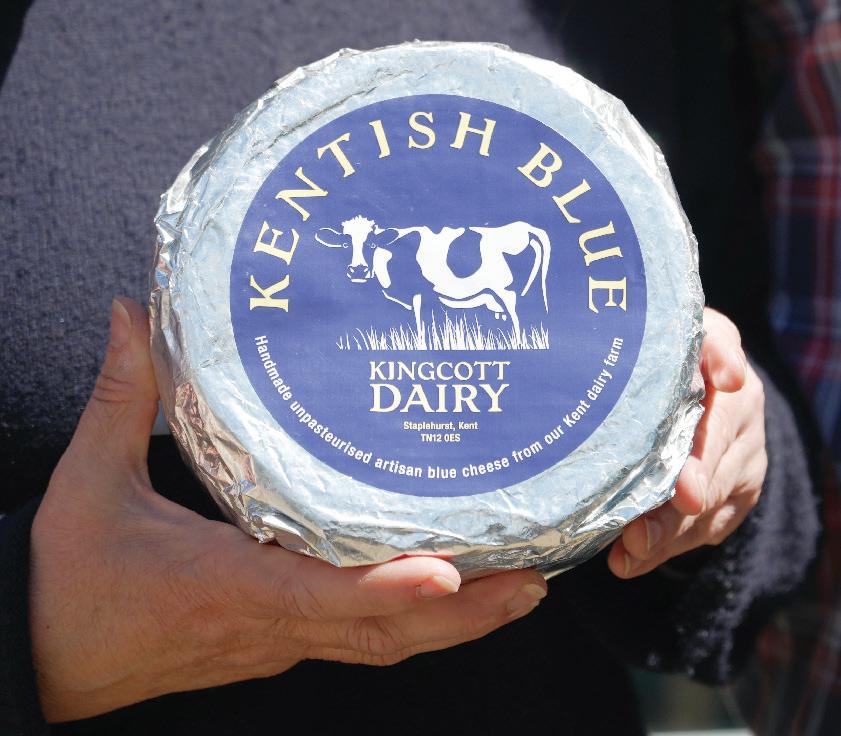
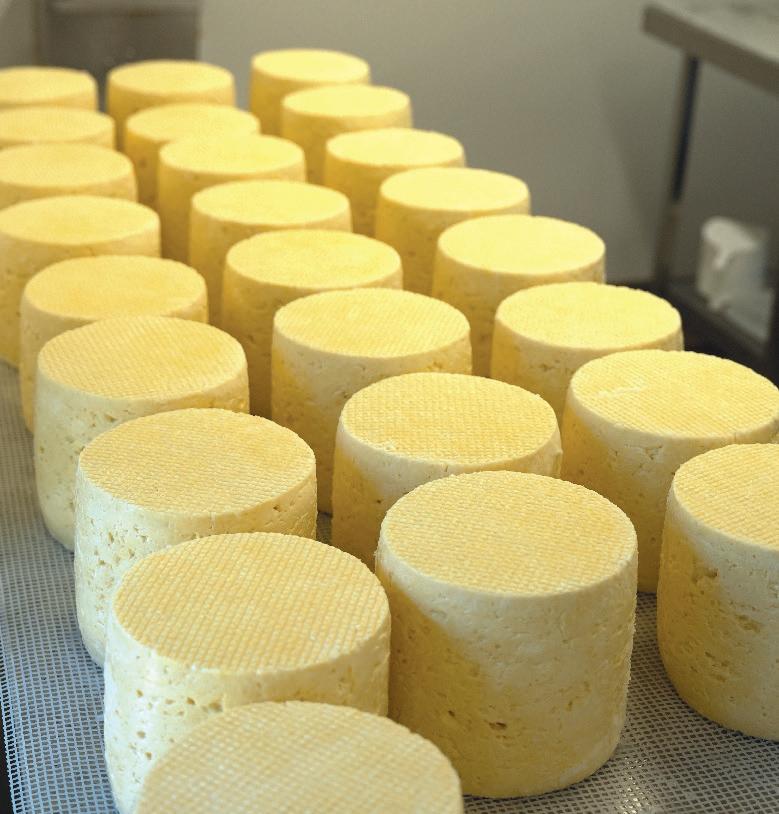
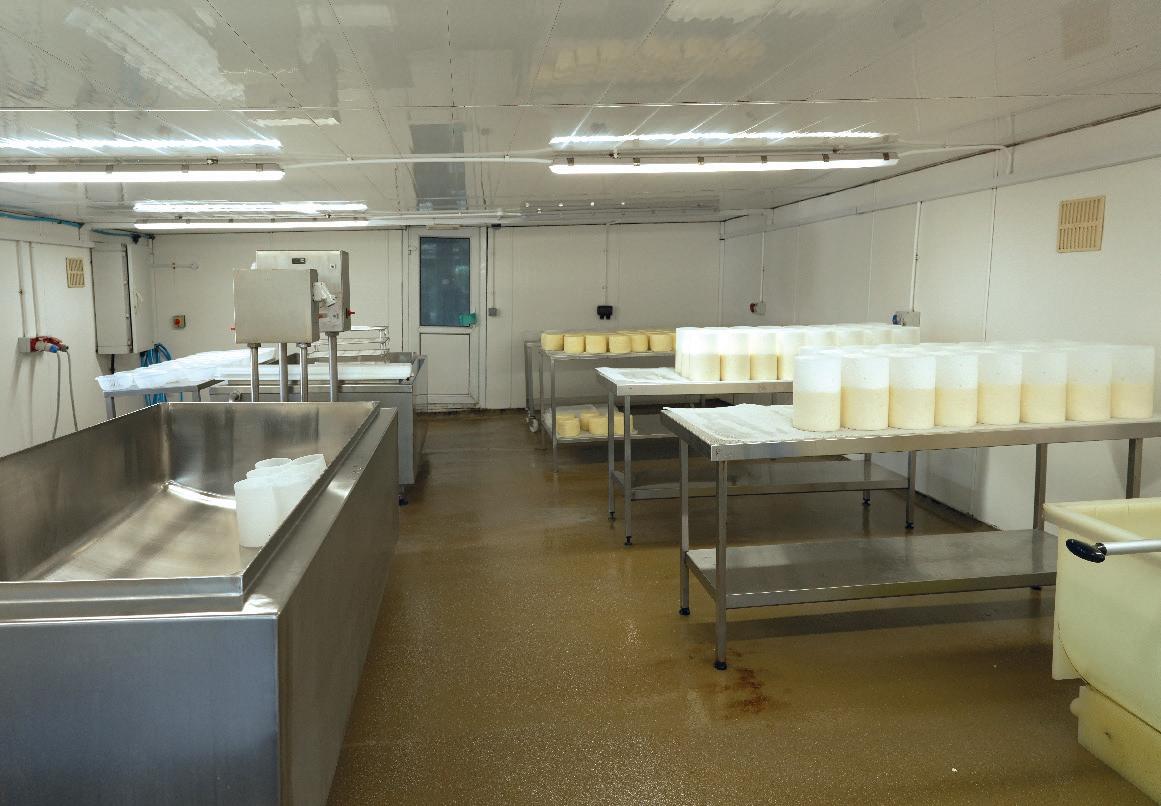
The family's first cheese, Kentish Blue, remains its signature product. "We wanted a local blue cheese which was a bit different from the usual Stilton varieties," explained Frank. Made using unpasteurised milk from the farm's own herd, the milk travels little more than 10 metres from the parlour to the cheesemaking room.
Steve still oversees the dairy herd, while >>
Yet its story began not with inheritance, but with determination.
wife Karen and sons Frank and Archie all play important roles within the business. The family
NIGEL AKEHURST VISITS: KINGCOTT DAIRY
In 2019, the family launched Kingcott Blue, a softer, creamier blue cheese developed by Frank as the next generation began putting its own stamp on the business.
"The idea was to offer a softer-textured blue cheese with smooth flavours," he said. "People of my age seemed to enjoy creamier, less strong cheese varieties.”
Producing the cheese presented its own challenges. The higher moisture content makes it more difficult to achieve consistent blue veining, and each cheese is made entirely by hand before maturing for around six weeks.
The gamble has paid off. Kingcott Blue has since won a Gold Award at the International Cheese & Dairy Awards and received two stars at the Great Taste Awards.
Today, both cheeses are available through farm shops across the region and directly from the farm itself via a vending machine. Most of the business's output is sold within the South East, helping maintain strong links with local retailers and consumers.
Karen plays a key role in the maturation process, turning and monitoring the cheeses as they develop their flavour and character, while the farm's small team of part-time staff assists with packing and preparation.
A DIFFERENT TYPE OF DAIRY COW
The success of the cheese business also allowed Steve to rethink his approach to dairying. At one stage, the farm milked around 140 to 150 Holsteins producing close to 10,000 litres per cow annually. However,
FARMING AND ENVIRONMENT FOCUSED CONTENT CREATION
Storytelling through interviews, features, case studies, photography and short films.
For enquiries contact Nigel Akehurst via email on nigel@indiefarmer.com
Instagram @indiefarmer www.indiefarmer.com
once the business was no longer dependent on maximising milk volume, he began questioning whether high-output cows were really the right fit.
"I didn't need the volume. I didn't need the 10,000 litre cows. I didn't need the Holstein breed," he said.
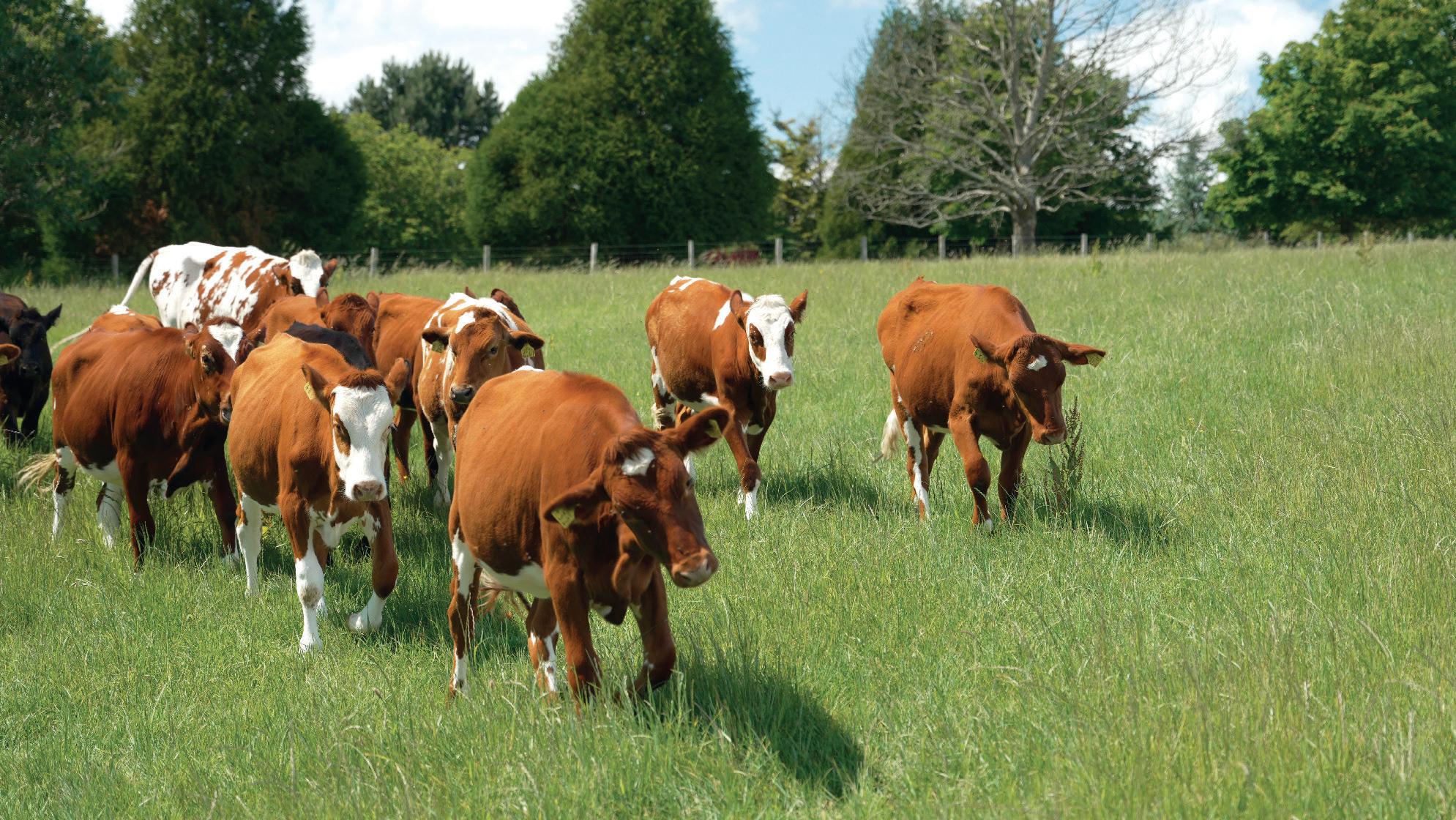
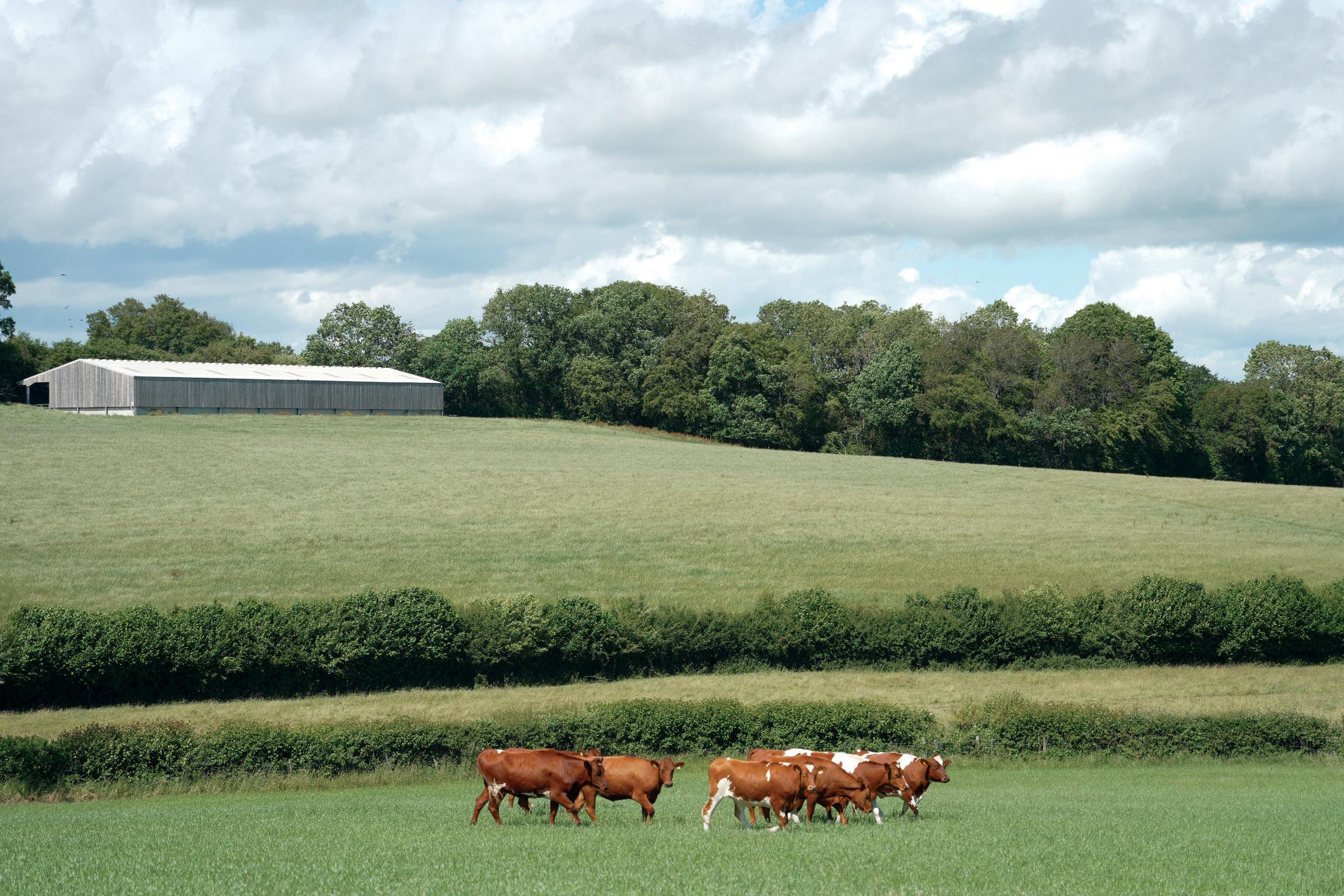
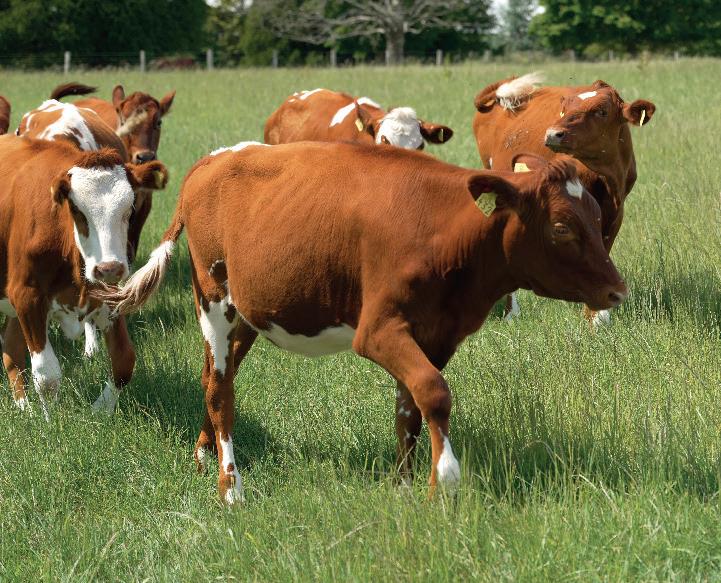
Since 2014, the farm has focused on rearing Viking Red cows, a Nordic breed chosen for its robustness, fertility and ability to thrive within a lower-input, forage-based system.
The herd grazes clover-rich pastures for much of the year, producing the rich, high-protein milk that forms the foundation of the cheesemaking business.
"They're about two-and-a-half thousand litres lower than the Holsteins," said Steve, "but they're healthier, lower input and they love grass.”
The difference extends beyond production figures. Veterinary costs are lower, the cows remain productive for longer and the family believes the herd is better suited to the type of farming they want to practise.
Walking among the herd with Steve and his two sons, he gestured across the cows. "Everyone knows every cow," he said. It was a simple comment, but one that neatly captured the ethos of Kingcott Dairy.
"We've got to this strange stage in Britain where we're trying to squeeze every last litre out of a cow. Sometimes that's at the cost of the cow, and at the cost of the farmer too," he added.
Maintaining a healthy herd is a constant priority, with the cows grazing outdoors on a daily rotation for much of the year.
Although Kingcott Dairy is located within a TB4 area, the farm undertakes annual TB testing because of its raw milk enterprise.
The farm's commitment to producing raw milk also brings additional responsibilities. For Steve and his sons, it is another reminder that maintaining consumer confidence begins with healthy cows and high standards of herd management.
Like many livestock farmers across the South East, he remains conscious of the ongoing threat posed by bovine tuberculosis. "Touch wood, we've been okay," he said.
THE NEXT GENERATION
Succession is often one of the biggest challenges facing family farms. At Kingcott Dairy, however, the next generation is already helping shape the future of the business.
Frank has become deeply involved in the cheesemaking operation, while Archie has developed a new direct-sales enterprise centred around raw milk and on-farm retailing.
Neither son attended agricultural college, instead choosing to join the business directly and learn on the job alongside their parents.
Earlier this year, Archie launched The Milk Box, an on-farm raw milk
vending machine that has quickly become a popular destination for local customers.
The milk travels only a matter of metres from the parlour before being cooled and made available for customers, who purchase a reusable glass bottle before filling it directly from the dispenser with fresh milk from the farm's Viking Red herd.
"For us, it's all about freshness and transparency," said Archie. "When you fill your bottle, you know exactly where the milk has come from – our fields, our cows, our farm." The response has been encouraging. "Most of the people who come here found us through social media or personal recommendation," Archie said.
Alongside The Milk Box sits a refrigerated cheese vending machine stocked with Kentish Blue and Kingcott Blue, giving customers access to the farm's products at a time that suits them.
Together, the two vending machines provide a modern shop window for the business, bringing consumers directly onto the farm and allowing them to buy food produced just a few metres away.
The family takes pride in controlling every stage of production, from managing the soil, grassland and dairy herd through to cheesemaking, maturation and direct sales.
NIGEL AKEHURST VISITS: KINGCOTT DAIRY
"Our cows are at the heart of everything we do," said Archie. "Relaxed, contented girls produce rich, creamy milk, and that quality shines through in our cheese.”
ADAPTING TO CHANGE
While diversification has strengthened the business, farming remains far from straightforward.
Like many livestock farmers, Steve cited planning, regulation and weather as some of the biggest challenges facing the sector.
The family has spent nearly two years pursuing plans for a new dairy unit on the larger of its two holdings.
The proposal would create a modern facility designed to improve efficiency, cow welfare and environmental management while allowing the business to continue evolving. The planning process, however, has proved both lengthy and costly. "We've spent a large amount of money on reports and surveys," said Steve.
At the same time, changing weather patterns are influencing how the farm manages its forage production.
The family works closely with local contractors Andrew Moderski and John Emery to carry out grass and maize silaging, allowing them to focus on livestock management, cheesemaking and direct sales while ensuring forage is harvested efficiently during increasingly
narrow weather windows.
Additional land has recently been secured to increase silage reserves and provide greater resilience against dry summers.
"We're thinking differently now," explained Steve. "Rather than the old one acre to a cow, nowadays it might need to be three.”
The aim is to secure a substantial first cut of silage early in the season before summer weather becomes unpredictable, a strategy that reflects the reality facing many livestock farmers across the South East.
LOOKING AHEAD
Despite the challenges, there was a strong sense of optimism at Kingcott Dairy. Three decades after buying a farm with no guarantee of success, Steve now finds himself working alongside the next generation in a business that has evolved far beyond milk production alone.
From Viking Red cows and artisan blue cheeses to raw milk vending and plans for further expansion, Kingcott Dairy offers a practical example of how a family farm can adapt without losing sight of what matters most.
It is a business built on adaptability, family involvement and adding value close to home; proof that even in a challenging agricultural climate there remains a future for smaller family dairy farms willing to innovate and connect directly with their customers.
ORGANISED CHAOS ANITA HICKSON
IS IT A VIABLE PROSPECT TO CONTINUE TO GROW FOOD?
To say we are proud is an understatement. Zara has been Longlisted for the GB Junior European Eventing Championships in Sweden later this year on two horses. Her hard work, dedication and determination are certainly paying off.
School is nearly finished for the summer holidays and Teddy will shortly be running the farm again in his alleged, self-appointed ‘farm manager’ role.
Tractors have been out in full force, and the boys and girls have been very busy. Second cut silage is finished and we are impressed with the analysis of the first cut silages so far.
We were privileged to have an announced visit by our friends from the Environment Agency in June. We know they are targeting dairy farms and so this was not entirely unexpected.
As with any inspection of this type, you can’t be certain who you will get or what they will find. It seems from talking to other dairy farmers that it depends on the individual inspector. Consistency in approach would be useful. Suffice it to say that the pettiness of certain aspects of the inspection never ceases to amaze.
Having claimed to be a dairy farmer’s son, we await our inspector’s report with bated breath. Grumpy is of the view that his father must be turning in his grave.
On a daily basis the wheels keep turning and the jobs are, albeit slowly, being ticked off the list. However, the current agricultural climate is undeniably under immense pressure, with a recent survey estimating that 74% of UK farmers are pessimistic about the future of farming today.
According to Emma Reynolds when DEFRA Secretary of State (she held the post for 296 days): “England’s farmers do not have to choose between food and nature.”
Well, I for one beg to differ. If a farmer would like to continue in business he must choose whether to lose money growing crops
or receive money for growing bird seed!
With wheat, milk and fertiliser prices at their current levels, farmers have to look seriously at whether it is a viable prospect to continue to grow food. Possibly first wheat on very good soil may continue to pay, but on marginal soils it most definitely becomes a different prospect.
The milk price is currently below the cost of production by some margin for a high majority of dairy farmers, and prospects in the short term look bleak.
Given the scenario, what are the options? An income for growing wildflowers, and
environmental schemes with a limited cost base to them, are looking more attractive than ever before. The UK’s food self-sufficiency indices look set to fall even further. Rest assured I am sure the Government has a plan. Possibly to import Russian wheat!
Until next time, stay safe.
ANITA HICKSON Farmer
Fruit Focus 2026 will give growers, agronomists and industry professionals direct access to the latest fruit research from the organisation as the event launches dedicated Niab ‘research hours’ as part of its expanded 40th anniversary programme.
Taking place on Wednesday, 8 July at Bradbourne House, East Malling, Kent, Fruit Focus will mark four decades as the UK’s premier technical event for the fruit sector with a renewed focus on knowledge exchange, innovation and practical insight for commercial growers.
Niab has been closely involved with Fruit Focus throughout its history, with the event long associated with the East Malling site and its world-renowned fruit research.
That relationship will continue this year in a refreshed format, with Niab’s scientists and technical specialists sharing research in a more accessible way through research hours, seminar sessions and activity on the Niab stand.
The new research hours will build on the popular Niab research tours that have previously been a key part of Fruit Focus. While past events have taken visitors out to see trials and facilities first-hand, the 2026 format will bring Niab’s latest research directly into the show programme, giving more visitors the opportunity to hear from researchers, ask questions and understand how new findings can be applied in commercial production.
Research hours will cover some of the most important issues facing the UK fruit and vine sector, including precision crop management, sustainable pest and disease control, advances in fruit breeding and propagation, postharvest quality, resource efficiency and the use of new technologies to support more resilient production systems.
INFO-CIRCLE MORE INFORMATION
More than 1,500 visitors and 150 exhibitors are expected to attend Fruit Focus 2026. To view the agenda or to register for tickets, visit www.fruitfocusevent.co.uk
NIAB RESEARCH HOURS LAUNCHED
Scott Raffle, knowledge exchange manager at Niab, said: “Fruit Focus has always been an important opportunity for Niab to share its work with the industry, and the research hours are designed to make that knowledge even more accessible to growers.
“The fruit sector is facing pressure from rising costs, labour challenges, changing pest and disease threats and the need to produce more sustainably. Niab’s role is to deliver robust, practical research that helps growers respond to those challenges, and Fruit Focus gives us a valuable platform to discuss the results directly with the people who can put them into practice.”
As well as benefitting from the Niab research hours, which begin at 12.10pm and 2.30pm, visitors will also be able to explore more Niab research with dedicated sessions on stand 628.
WHEN
In addition to the NFU Fruit Forum, this year’s event will feature new seminar stages covering agronomy, viticulture and post-harvest activity, including picking, packing and packaging. Visitors will be able to see live demonstrations of autonomous equipment and robotics, as well as attend networking events and collect BASIS and NRoSO points by following knowledge trails. Mario Caccamo, Niab CEO, said: “Forty years is a landmark achievement, and it reflects the resilience and constant evolution of the UK fruit sector. While we celebrate four decades of history, our focus remains firmly on the next forty years. Niab is proud to continue its long-standing partnership with Fruit Focus at the new Bradbourne House site, where we will showcase the world-class research and precision technology that will define the future of sustainable food production.”
Wednesday 8 July 2026, 9am to 5pm. Car parks open at 7am. Gates open at 8am, when caterers open for breakfast. Stands and features open at 9am.
WHERE
Bradbourne House, New Road, East Malling, Kent ME19 6DZ
Ticket-Alt TICKETS
Tickets are free of charge if pre-registered and cost £10 +VAT if purchased on the day. Please pre-register at www.fruitfocus.co.uk
DEMONSTRATING THE BREADTH OF THE OFFER
This year at Fruit Focus, Hutchinsons will be looking to share with growers the breadth of areas they are involved in and the work that goes on behind the scenes to bring new solutions to market.
As well as having the largest team of horticultural agronomists, out in orchards, vineyards and soft fruit businesses across the UK every day of the week, Hutchinsons is also leading the field in many other areas.
“Our specialist environmental, soils and digital services teams help support our agronomists to keep up with the ever-changing demands on growers,” said Phil Carpenter, Hutchinsons’ regional director, horticulture.
“Joining the Hutchinsons team on stand will be representatives from three of the many companies we work with. Our aim as an independent, family-owned distributor is to assess the products coming to market and bring forward those we think will be beneficial to growers and that we can integrate into our agronomy advice.”
As well as being able to learn about Hutchinsons’ farm management software Omnia and class-leading TerraMap highdefinition soil scanning, visitors to stand 322 will be able to talk to ICL, Glaia and Wolky Tolky.
Hutchinsons are working with ICL on a novel, wood fibre-based growing media which is showing great results in trials on soft fruit production and propagation. “This is a 100% UK-produced product, so in terms of sustainability it is a real step forward,” said Phil.
Glaia are introducing a novel technology for photosynthetic enhancement leading to increased production, especially in stress periods. Finally, Wolky Tolky will demonstrate a range of weather stations and talk about tools for on-farm monitoring, such as drain flow sensors.
Agronomy
Vines
BESPOKE PACKAGING BUILT FOR THE JOB
With over 40 years of experience supplying growers, packers and retailers across the fresh produce industry, Produce Packaging is delighted to be returning to Fruit Focus this year and can be found on stand 322 with their colleagues at Hutchinsons. The team will be on hand to discuss practical, reliable packaging solutions designed to get produce from field to shelf in the best possible condition.
This year Produce Packaging will be showcasing the company’s latest innovations, including the EverGrow® top seal paper punnet – a lightweight, fully recyclable format offering strong shelf appeal and efficient packing performance. Developed with both presentation and practicality in mind, EverGrow® is an excellent choice for growers and packers exploring fibre-based, printable options.
Produce Packaging will also be highlighting its expanding bespoke design and print capabilities, helping customers develop packaging tailored to their brand, product and target market. For visitors looking for recyclable transit packaging, eye-catching retail packs or something entirely new, the experienced team will be ready to listen and advise.
Fruit Focus is always a brilliant opportunity to reconnect and look ahead. If you're reviewing your current packaging or planning for the season ahead, Produce Packaging would love to see you.
Flail Mowers, Forestry Mulchers and Stone Crushers
Vari-Width Rotary Mowers, Vineyard Cultivators and Weeders
THREE OF THE BEST ITALIAN MANUFACTURERS
Arbor Agri is proud to represent three of the best manufacturers in Italy in the fruit and vineyard sector.
CIMA is a sprayer and duster manufacturer founded in 1974 which pioneered the Venturi sprayers, which offer fantastic coverage, much reduced water requirement and a phenomenal choice of spray heads that enable the spray to be directed at all the critical locations. A full range of electronic aids is available to help users set the machine up and report on its progress.
Fischer has been manufacturing rotary mowers since 1956 and offers a sturdy range covering all mowing requirements, from an impressive 8.7 metre cutting width down to variable width mowers with auto breakback as low as 95cm wide for in-tunnel work.
Seppi M manufactures flail mower and forestry mulchers and is well established in the supply of flail mowers for pruning and mulching. The Seppi M machines are ideal for root tilling and whole tree mulching, stone crushing, stump grinding and incorporating any woody material.
Arboragri – specialist supplier to the fruit, forestry, vineyard and amenity markets – is on stand 629 at Fruit Focus.
HOW TO TALK ABOUT SCIENTIFIC BREAKTHROUGHS
This month I have been scratching something of an academic itch. For the past nine months I have been involved in a piece of work with the University of Kent, making a very small contribution to the development of a relational map of plant synthetic biology in the UK.
The fruit sector, like med-tech and the other areas that have invested in gene mapping and CRISPR (a revolutionary, fast and highly precise genetic engineering tool that allows scientists to delete or correct precise regions of DNA), needs advancements in plant biology to be able to move forward as an industry.
Nirvana would be an apple tree without canker, would it not? The difference that it would make to the global industry would be staggering; in the UK and Europe Neonectria is estimated to affect 41 to 56% of orchards of vulnerable varieties, shortening the profitability window of several key varieties.
Elsewhere in the world, Valsa or Neonectria canker devastates orchards to a greater or lesser degree; in China Valsa runs at 25% to 65% of trees depending on the variety, in South Africa up to 90% of some varieties are infected with Neotectria, in Argentina 45% and in some regions of the USA it’s 35%.
Profitability of the sector would be transformed if we could purchase trees guaranteed to be canker free and resistant to any residual infection in orchards. This piece of work is a way off yet, and we have to traverse the difficulties caused by
public distrust of scientific advancements in genetics, but it is on the horizon. How we communicate and engage with all stakeholders so they can be part of the decision making will be key, and this is the root of the issue that the relational map is designed to help navigate.
The recent King's Speech included references to the Regulating for Growth Bill, aimed at removing barriers and increasing innovation; the hope is that the bill will embed ethics in how we design and deliver trusted policy around research.
We all have a role to play in what is
most beneficial to society, the systems and structures that need to be in place to support the science we need and to build public trust.
My reason for throwing myself at the project is the prevalence of negativity towards the scientific community, the proliferation of ‘Franken-foods’ headlines in response to crops engineered to be kinder to the environment, easier to grow and with the potential to deliver a healthy economic cycle in return for the investment made in their establishment.
The relational map is part of the Advanced Research + Invention Agency (ARIA)-funded Futuring Biological Commons project. It is designed to support the systematic tracking and analysis of emerging social, economic and political relationships among stakeholders, institutions and materials within the plant focussed subfield of synthetic biology. It aims to address concerns about synthetic plant biology that
Jon Williams, Sarah Calcutt, Penny Hundleby and Pat Thomas
SARAH CALCUTT ARA g S Chair, Fruiterers Awards Council
span ethical, environmental, economic, regulatory and scientific domains.
The first edition of the map was launched on 15 June at the Norwich Research park, with speakers including Danielle Hamm, director of the Nuffield Council on Bioethics, and Durham University’s Professor of Plant Molecular Biology Keith Lindsey, whose team has mapped the genetics of most of our crops.
We also heard from Mike Lewis, a Northumberland farmer, on the best ways to communicate with producers, Pat Thomas, a director of Beyond GM, Jon Williams from BASF and Penny Hundleby of the John Innes Centre and Sainsbury’s laboratory. I spoke about the economic impact of crop diseases, the need to increase profitability in farming, the impact of the cost-of-living crisis and the burden of obesity on the NHS.
The project lead, Professor Joy Zhang of the University of Kent, summed up the event by saying: “A clear message emerged from both the speakers and the audience: the future of engineering biology in plant science will be shaped as much by relationships as by technological breakthroughs.
“What made this especially powerful was that it came not from theory, but from lived experience across sectors and communities.”
One phrase that stuck in my mind was: “We stand in the Luddite legacy”, a quote from Tony O’Brien, who wrote about the trashing of GM crops at the height of the backlash against their trialling in the UK. The 1990s saw the start of opposition to scientific advancements which is mirrored in the rise of distrust and misinformation propagated by the popular press. Of the many papers published on GM crops, 95% state their safety and just 5% claim they are dangerous, but we all know which set is listened to.
I leave you with the thought that someone told me this week that I shouldn’t vaccinate my new puppies because the vaccines contain mRNA which is toxic to them… We have so much to do to inform the public.
NEXT PHASE OF GROWTH
Dr Katrina Hayter has been appointed as chief executive of UK crop science organisation Niab and will take on the role on 1 September.
She succeeds Professor Mario Caccamo, praised by the organisation for playing “a pivotal role in Niab’s transformation” and strengthening its position as a world-leading organisation driving innovation in agriculture and horticulture.
Dr Hayter’s most recent role was global head of sustainable agriculture, land use and food at HSBC’s Group Sustainability Centre of Excellence, where she helped shape international approaches to sustainable food systems, agricultural investment and climate resilience.
Dr Hayter will lead Niab through its next phase of growth and focus on priorities including advancing crop improvement through pre-breeding and precision plant breeding, delivering independent validation and certification of plant varieties and emerging technologies, and strengthening agricultural and horticultural systems through practical, science-led solutions that improve productivity, sustainability and profitability for farmers and growers.
She said: “Niab is uniquely positioned at the intersection of science, innovation and practical farming. It is a privilege to join the organisation at such an important time for agriculture and horticulture.
“Farmers and growers are facing significant challenges, but also major opportunities driven by innovation, technology and collaboration. I look forward to working with Niab colleagues, partners and stakeholders to accelerate impact, strengthen resilience across the food system and help deliver a productive and sustainable future for agriculture.”
Professor Caccamo said: “Leading Niab through this period of transformation and growth has been a privilege. I am immensely proud of what my colleagues have achieved together in strengthening the organisation and delivering impact for farmers and growers.
Professor Caccamo leaves Niab at the end of June, with John Sillitoe taking on the role of acting chief executive through July and August.
FOUR TIPS FOR EFFECTIVE OSR DESICCATION
Oilseed rape was one of the stand-out crops for many growers last season and could be again this year given promising potential through the growing season, but to maximise yield and minimise the risk of rejections, accurate desiccation timing is crucial.
Hutchinsons agronomist James Boswell, working out of the Canterbury depot, outlines four steps to effective desiccation this summer.
1. DO NOT GO TOO EARLY
Desiccating too early can damage the seed filling process, reducing yield and increasing the chance of red seeds due to uneven ripening. Anything more than 5% and growers will face rejection issues.
Crop appearance and seed colour are the best guide to determining the optimum desiccation spray timing, and a good rule of thumb is to wait until the canopy is roughly the colour of a hare’s back.
2. SAMPLE SEED CAREFULLY
When inspecting seed colour, always take samples from the main raceme (flower cluster on the main stem), as this will ripen first.
If, out of 20 sample pods, two-thirds have changed from green to brown, then this is the early desiccation timing, and from this stage apply glyphosate in the next four to seven days.
When swathing, Agriculture and Horticulture Development Board guidance says crops can be swathed around six weeks after the end of flowering, when seeds in the top third are green and green/brown, those in the middle third are green/brown, and those in the bottom third are dark brown/black.
3. USE THE MOST APPROPRIATE TOOLS
Desiccating with glyphosate is generally the preferred approach for many crops, although mechanical swathing still has a place, particularly in very thick and/or leaning crops. It may also be an option on seed crops, where pre-harvest glyphosate cannot be used.
When swathing, growers should leave a good stubble height (20cm to 30cm) to keep the swathed crop off the ground and aid air flow.
Pod sealants can be a useful addition to reduce the risks of pod
JAMES BOSWELL
Agronomist
T: 07721 888382
E: james.boswell@hlhltd.co.uk
Canterbury: 01227 830064 www.hutchinsons.co.uk
shatter where harvest is delayed due to the weather, or where growers have to wait to combine crops due to variable maturity, especially on more exposed sites.
Modern pod sealants provide a mesh-like structure around the developing pod. The optimum timing is before glyphosate is applied, although more generally, pod sealants are applied as part of a tank mix.
Pod sealants can also still give a yield benefit in varieties with pod shatter resistance, as this trait is not total.
4. FOLLOW GLYPHOSATE BEST PRACTICE
When using glyphosate to desiccate oilseed rape, growers should speak to their agronomist about which brand of product is most suitable and whether an adjuvant is required to improve efficacy.
Glyphosate is very susceptible to cations in the water, which can cause lock-up of the active ingredient and reduce the ability of the herbicide to work effectively.
It is also important to follow pre-harvest glyphosate best practice (https://ahdb.org.uk/pre-harvest-glyphosate), and maintain robust rates of active ingredient, applying in the morning to ensure better uptake through the plant’s stomata. Growers should then allow up to 21 days to harvest, depending on conditions.
In some situations, crops may be allowed to ripen naturally and combined directly, without desiccating or swathing, reducing costs and avoiding any risk of wheeling damage.
This can be an option for weed-free and uniform crops, and is useful for growers who have large areas and are trying to spread the harvest window. Remember, though, the crop will take longer to ripen, and it is not generally an option further north, due to lower temperatures and higher moisture content.
“MESSAGE OF HOPE” STEPHEN CARR
To the South of England Show for an early, full English breakfast kindly provided by the CLA and land agents Batcheller Monkhouse. Our after-breakfast speaker was the Duke of Norfolk, one of England’s most senior aristocrats, who lives in Arundel Castle.
His talk was about the crisis gripping the British countryside, which he told us “has one of the worst problems in the world in terms of nature collapse and species loss”, adding: “We have lost 50% of our farmland bird population since the 1960s.”
To do his bit to address the crisis, he has undertaken a higher-tier countryside stewardship agreement on his 4,500-acre estate which had turned him into “the largest hedge planter in the country”. Stewardship has also been instrumental in the recovery of the grey partridge on his land.
But grey partridge numbers can’t be restored in isolation. Partridge chicks need insects to eat from the moment they hatch, so a huge effort has also been put into creating habitats that encourage a wide variety of invertebrates using big headland margins, where no fertiliser is spread or agrichemicals sprayed.
Conservation of the grey partridge, he told us, is “a three-legged stool”, with the ‘legs’ being habitat, insects and predator control. He also said that the countryside should look like a “patchwork quilt” of fields, where the same crops never touch each other, giving the partridge the best chance of finding food all year round. This policy, he confided, is not easily implemented and “drives my farm manager mad” as “the combine goes everywhere” as some crop types ripen before others.
The Duke then detailed the work he has been doing to restore the curlew on his estate which, if nothing is done, “is headed for extinction”. He has imported eggs from a northern grouse moor, with the chicks then reared, tagged and released on his land.
So dedicated is the Duke to protecting these curlew that one of his gamekeepers slept close to one bird’s nest to keep the fox away. This year, he informed us, the first curlew chicks hatched on the South Downs “for over a century”. He has had similar success in bringing back the hare to his estate, and corn bunting numbers have also increased to over 100.
The Duke finished with a rousing “message of hope” for our countryside, declaring that “the 50,000 countrymen at this show can’t be walked over and must stand up and be counted!”.
As the applause died away, I drank my second cup of tea and looked out at the main ring of the show. The horse and carriage competition was by now in full swing, with participant horses in fine harnesses and drivers in fine hats, their polished carriages gleaming in the sun as they turned sharply around the course. Full English indeed.
Precision Soil Sampling
Accurately measure your soil pH, health, organic matter and nutrient
Soil
provides accurate and reliable measurements of soil health and fertility enabling the
and efficient use of fertilisers and
STEPHEN CARR
Stephen farms near Eastbourne in East Sussex in partnership with his wife and four of his daughters. The farm has a pub, the Sussex Ox at Milton Street, which serves the farm's pedigree Sussex beef, Southdown-cross lamb and fruit and vegetables from the farmhouse kitchen-garden.
IN CONJUNCTION WITH
TIME TO REFLECT
By Simon Roberts, managing director and senior agronomist, CCC Agronomy – members of the Association of Independent Crop Consultants (AICC).
As another season seems already to be hurtling towards harvesting it is healthy to take the time to review performance, assess what has worked well and build on these areas. It means looking at areas where small marginal gains can be made, whether it is in efficiencies in time, cost of inputs or sources of advice, all of which can add up to significant business improvements over the season.
There are some things we cannot control, like the weather, which can make a big difference to the final crop outcome. If only we could manage that better. So, it is best to focus on those areas you can influence and where you can make a difference.
Variable costs are one area where some of these small incremental savings can add up and make significant differences. It isn’t always about cutting out an application but about being more targeted. Product selection, rate and timing of application can improve the final outcome. If you add to this
potential savings that could be made where inputs are sourced more competitively, you start to make a noticeable difference.
What this season has highlighted is the need to be flexible, continually reviewing the situation and adapting the plan for the conditions. What started out looking like a potentially high septoria pressure year for some changed into a challenging, rustprone spring in some varieties. By sticking to the traditional spray timings, initially designed around septoria life cycle, a much shorter interval was required to keep pace with the quicker-cycling yellow rust.
Anything over an 18-day interval between fungicide applications where yellow rust was present resulted in another flare up of disease pressure, almost regardless of what product was used. It doesn’t seem to be sticking to the rule book and behaving how it used to, but seems to thrive in almost any weather condition.
If you take Crusoe this year, depending
CCC AGRONOMY
Chichester Crop Consultancy is a farmer member-run co-operative agronomy service that aims to deliver truly independent, research/ science-led agronomy advice with no commercial bias and now covers the South of England.
CCC works closely with Crop Advisors, which supplies independent group purchasing on crop inputs as well as sourcing cover crop/environmental scheme seed mixes.
on the location, drilling date and disease pressure, there could have been a difference of 20% to 30% spend on fungicides. The majority of farms with Crusoe have had brown rust present from early in the season; fungicide inputs could have been up to £120/ha, but were generally more in the region of £90/ha. On one farm, the crops have been particularly clean all season, with brown rust only appearing just as the ear spray was about to be applied.
Because of the low septoria pressure, the use of close monitoring and flexibility in timings, product choice and rate allowed us to make further significant savings over the rest of my usual Crusoe programs.
So, before we launch into a new season, take the time to review the one just gone. Make a note of areas to improve on, as we are no good at praising ourselves on what has gone well, and ready yourself for harvest, drilling and a list of what you will do differently this coming season! I wish you all a safe and plentiful harvest.
Simon Roberts
SOIL HEALTH
WHY THE CORRECT SOIL PH IS THE FOUNDATION FOR MAKING BIG SAVINGS ON FERTILISER
Fertiliser prices have surged since the start of the year due to unrest in the Middle East, with ammonium nitrate rising by over 32% according to GB fertiliser data from the Agriculture and Horticulture Development Board. Faced with this unpredictable challenge, farmers are exploring alternative ways to reduce their post-harvest input costs, and liming could be an effective solution to maximise fertiliser efficiency.
As most farmers know, soil pH is crucial to plant growth, with a neutral pH allowing the three major macronutrients, nitrogen, potassium and phosphate, to be more readily available to the crop.
When the pH is below the recommended level, though, it is not just the nutrients already in the soil that can be affected, but those in fertilisers as well, said Glenn Carlisle, Business Manager at LimeX.
“It’s essential to maximise the value of the nutrients already in the soil and any fertiliser by ensuring optimum pH levels, otherwise you’re not getting the most out of your fertiliser,” he explained. “Applying fertiliser without good soil pH is like throwing money down the drain.”
In the current landscape, ensuring maximum fertiliser effectiveness could therefore be key to reducing input costs.
INCREASING SOIL PH
To raise the soil pH and reduce acidity, a product capable of neutralising acidic hydrogen ions should be applied.
“LimeX is a calcium carbonate-based liming product. The carbonate
reacts with the acidic hydrogen ions in the soil to make neutral carbon dioxide and water, and what’s left is an abundance of calcium. So, by applying LimeX you’ve replaced the acidity in your soil with calcium, which is an essential macronutrient for all plants and also plays an important role in improving soil structure, aeration and drainage,” said Glenn.
MORE THAN JUST A NEUTRALISING PRODUCT
LimeX contains four essential nutrients, calcium, phosphate, magnesium and sulphur, as well as correcting soil pH.
Its most notable characteristic, however, is its very fine particle size, which enables it to quickly raise pH and provide lasting effects. Glenn explained that this was especially useful before spring planting because of its rapid action.
“LimeX has a very, very fine particle size, meaning that when you apply it to your soil, the pH rises very rapidly and the calcium is much more available than it is when using other coarser liming products on the market,” said Glenn.
The product also has an additional nutrient benefit: 9kg of phosphate, 8kg of magnesium and 7kg of sulphur per tonne (fertiliser equivalent). Glenn explained that this offered farmers an alternative source of nutrients, particularly when fertiliser prices were high.
“At a normal application rate of five to 10 tonnes per hectare, depending on the starting pH of your soil, this is a good dose of phosphate that you won't need to pay for out of a bag,” he commented.
LimeX is available nationwide. EMILY WHITMARSH
Technical Sales Manager GLENN CARLISLE
LimeX Sales Manager
www.limex.co.uk/contact-us
AT ASHFORD MARKET
JAMES COOK O’CONNELL ALAA
Auctioneer
T: 01233 502222
www.hobbsparker.co.uk
LOOKING AHEAD TO SUMMER
We are now into the summer months, which historically have been quieter for us as farmers focus on haymaking and harvest, but it is safe to say that this is not the case this year. Store and breeding cattle numbers have continued to trickle through, off-site sales are building and our Friday store and breeding sheep sales also start later this month.
The much-needed rainfall at the beginning of June lifted moods and set some mixed trading thoughts to rest with buyers back out in force for grazing stock. Store cattle have been a super trade in the past few months, which is a sign of positivity and renewed confidence, despite the recent negativity within the beef industry. Breeding cattle remain a strong trade, which is important with the national herd numbers reducing year on year.
From 6 January through to 2 June, we sold over 4,100 store and breeding cattle, which is very similar to the same period in 2025. The store cattle averaged a staggering
£1,514 per head, which is just over £250 per head more than the same period in 2025. Here’s hoping the trade remains strong for store and breeding cattle for the rest of the year, with a good number of highquality cattle expected to be seen in the ring through the autumn months.
Ewe and lamb outfits were later coming out this year, with many holding off following the strong cull ewe, hogget and recent lamb trade seen throughout the spring. Some of the first entries we saw looked well sold, with many £100 to £120 per life, and this has increased each week, reaching highs of £159 per life for commercial outfits.
We have seen an increased number of finished and cull cattle through the ring in the past six months as a result of falling deadweight prices. The live sale ring offers a varied customer base which can handle all sizes, breeds and weights, which is clearly driving numbers to market. With the deadweight price putting pressure on finishers, there is no doubt that liveweight
sales are ahead at the moment.
Our autumn store and breeding sheep sales start on Friday 31 July. With the current level of trade seen in the finished and cull sheep sections, it is no surprise that expectations are high. Our autumn sheep sales are always well supported by both vendors bringing strong entries forward and buyers travelling from far and wide looking to secure numbers. With a strong hogget trade through the spring, there was a number of ewe hoggets sold in this section, with the majority sold in excess of £200 per head. As a result, we could see a shortage of breeding tegs for sale through the autumn and potentially a knock-on lift in the trade as demand outweighs supply.
We will be having our annual off-site collective sale this month on Saturday 11 July at Charing Racecourse, commencing at 9.30am. We will be running two rings with live online bidding via MartEye available on the larger items. An online catalogue will be available in the lead up to the sale.
SHEEP TRADE AT RECORD LEVELS, BEEF TRADE STILL DIFFICULT
As reported last month, the beef trade continues to be difficult, with what appears to be an oversupply of beef in the market, which is surprising considering numbers are so short.
Reports of large quantities of imported beef are having a detrimental effect on the trade, with reports of Irish deadweight trade being 50p below the English and Scottish trade also worrying.
In the live markets, numbers steadily increased most weeks, as producers looked to cash cattle, with deadweight outlets limited and many having a long waiting list.
This is extremely frustrating. Only two months ago we were reporting numbers totally inadequate for the demand. Let us hope this is a short-term blip, but it is becoming worrying given how long it has been going on.
With store cattle prices having been so high in the autumn and spring, producers will be looking at negative returns if there is not an upturn in the trade.
Best prime cattle are still trading at 350p/kg to 390p/kg, with averages around 330p/kg most weeks. As also reported last month, this is well above two years ago, and that has to be remembered. However, we are fully conscious of the increased costs that all producers have, including fuel and labour, which are all reflected in the cost of production.
The over-age cattle and cull cow trade remains strong in comparison with the prime beef trade, but is still below where it was two months ago, although again well above those prices reported two years previously.
The store cattle trade remains strong compared with the finished cattle trade, which is hopefully giving an indication of long-term confidence.
The sheep market is completely opposite to the beef trade. Lambs are at record levels for the time of year, with many more required to satisfy the demand and numbers generally slow coming forward for new season lambs. The variable weather is also causing some issues with regard to finish on
the sheep, with several producers stating that lambs had gone backwards in the last few weeks at the beginning of June.
Old season lambs continue to sell at record levels for the time of year as numbers draw down, which is not unexpected. Cull ewes are also at good levels and wanted, and all easily sold.
A few store sheep are now coming forward. It will be interesting to see how that trade develops this year, with the high price for finished sheep no doubt buoying the enthusiasm for buyers. Hopefully with the rains at the beginning of June, seed beds for late summer and autumn drilled fodder crops will be improved following the dry spell in April and May.
We are in very interesting trading times, with confidence generally low in many sections of the farming industry. Let us hope, as we have stated many times within this report in the past, that the British public support the British producer for all commodities produced.
A GOOD REASON TO GET OUT OF BED
At the risk of being boring, the weather remains a persistent cause for some unease, sheep wise. Records from a nearby weather station confirm an unprecedented dry spring, with March to May rainfall totalling a meagre 34.5mm; as a result, the normal spring flush of grass never really materialised. Combined with last backend’s non-existent autumn flush, this represents an enormous loss of potential grazing over the past 10 months.
Probably some 50% of expected total annual yield simply didn’t happen; saying that things are a bit tight is an enormous understatement. Record temperatures for the last week in May certainly haven’t helped. Accumulated winter rainfall has, on our shallow soils, disappeared out of sight, way beyond the reach of all but the deepest rooting of forages, and grass was beginning to burn off at an alarming rate.
The first week in June produced a decent drop of rain, just short of the total for the preceding three months, sufficient to spark the grass up a bit and generate a short-term respite if nothing else. But we are not alone. Many arable producers in the area have similar concerns; even in the West country, an area one normally associates with an abundance of grass, things are not all plain sailing. Recent conversations with a fellow sheep breeder in mid-Devon flagged up similar concerns over grass supplies, only not so drastic; all, I’m sure, would have welcomed last week’s rain, excepting those that had planned to make hay, of course.
Although weather wise it is not a rosy a picture, there are positives. Sheep prices have remained strong, particularly for lambs, and, judging by early female trade in the West
ALAN WEST
Sheep farmer
Country, anyone with decent breeding ewes for sale should see a good trade this backend. The good finished lamb prices will no doubt help the latter in encouraging some to cash in on ewe tegs originally intended for the breeding sales, particularly if grass supplies remain fairly tight.
Another bonus is that our sheep continue to look remarkably well, both ewes and lambs, in spite of the fact that they are now beginning to chase grass around, shifts are rather too frequent, and time spent in each paddock is getting shorter; certainly not a sustainable situation. Not wanting to skew results, I resisted the temptation to introduce any creep feed until after recording eight-week weights, but now, with weighing all done, a bit of lamb creep has been introduced for strategic reasons, largely to take a bit of pressure off the ewes and avoid a check in lamb growth at weaning.
With the prospect of yet another lean summer, I really do not want ewes going back too far. Milking off their backs is fine, but there
are limits; if they drop too much condition, turning them around pre-tupping becomes rather more challenging. Putting a bit of feed directly into the lambs now is rather more efficient than putting a lot of supplementary feed into the ewes later in the season.
Away from our own flock, I was privileged to be invited to judge this year’s sheep championship at the Hertfordshire Show at the end of May; this is always a lovely, friendly show, where you know that judges are well looked after and that there will be a good selection of quality sheep forward; it’s a pleasant event and, as far as judging can be, a fairly relaxing day.
As expected, the range and quality of sheep forward for the championship did present a bit of a challenge but, after due deliberation, the two that I considered deserving of the champion spot were soon sorted; two quite different sheep. A very smart Hebridean ram and an equally good Southdown ewe presented
me with a difficult decision, but I eventually decided that the Hebridean just had the edge and went into the top spot, with the Southdown as reserve. It was a decision that I thought might be a bit controversial, but it was one that seemed to please both breeders, which is a positive; the icing on the cake, however, came when a spectator called me over, a commercial sheep breeder with no vested interest. He shook me by the hand and told me that he thought I had made a very brave, but correct decision in my final placings; the sort of comment that really does make it all worthwhile.
The following day, after a rather relaxing time judging at the Herts. It was back to the grindstone. The previous week I had a few lambs with scald, due probably to the coarsening grass rubbing between the cleats; I had been treating individually, but, with the bigger lambs becoming increasingly difficult to catch and treat in the field, the decision was made to footbath them all. I won’t say that we don’t have foot problems, but they had for several years been relatively few and far between. As a result, the footbath had not been required for probably five years, making foot bathing a rather novel experience for almost the whole flock, both ewes and lambs. Taking advantage of the cool of the morning, we started reasonably early (for a Sunday), but with novice and not very cooperative sheep, foot bathing developed into a bit of a skirmish; as a result, by the time the job was done, still mid-morning, temperatures had climbed into the upper twenties and we were, for want of a better word, knackered. The dog was also knackered, but the sheep were, feet treated, happy relaxing in the shade of an old oak tree; typical sheep.
After the challenges of last year and the prospect of an equally demanding season this year, I momentarily wondered: “Should I, in my late seventies, really be doing this?” Fortunately, it was only a passing thought; absolutely, of course I should.
The sheep provide a good reason to get out of bed for in the mornings, they keep me relatively, fit, I can still chuck 25kg bags of feed around with ease and, if required, will still knock the fleece off the odd ewe or two. They keep me out of trouble; what else would I be doing? They say sheep are addictive and they certainly are. What would I do without my daily sheep fix?
MY FIRST YEAR AS A FARM VET
I have now been part of the Cliffe Farm team for a year, and it has certainly been one to remember. There have been plenty of highlights along the way, especially the lambing and calving season. As all those reading will know, sleep quickly becomes a luxury at that time of year. There were plenty of late-night call outs followed by the alarm sounding far too early the following day.
I have found there is something wonderfully chaotic about trying to stitch up a caesarean section accompanied by curious lambs or calves who are so insistent on investigating everything. They almost seem determined to become part of the surgical team! Other calls, however, have been less glamorous. A day spent dehorning 25 yearlings ended up with me flat on my back at least five times. Thankfully my dignity was the only casualty that day.
But of course, farm practice is not always filled with routine visits and lighthearted mishaps. Over the past year I have also experienced some of the more difficult realities of working as a farm vet.
There have been days spent delivering disappointing news on TB tests, severe disease outbreaks at lambing/ calving, horrific dog attacks and
euthanising animals when treatment was unfortunately no longer an option. These moments are never easy, particularly when you know just how much hard work, money and time has been invested. They serve as a reminder of how emotionally challenging, as well as physically demanding, farming can be. I feel, however, that what has made the biggest difference has been getting to know the farmers I work with and their families. Conversations are becoming easier, and familiar faces now appear in the yard. I am grateful for the encouragement and patience that so many have shown me as I continue to learn.
As I begin my second year in practice I am looking forward to seeing what the next 12 months bring, although if it could include slightly more sleep, I certainly wouldn’t complain!
ADVICE FROM THE VET
COMBATING HEAT STRESS IN GRAZING LIVESTOCK
Weather hugely impacts the day-to-day running of a farm, and with extreme weather patterns fast becoming our new baseline, managing thermal stress in livestock is turning into a regular headache.
Historically, we relied on an upper critical threshold of 25°C for cattle and 29°C for shorn sheep. Current industry tracking suggests that because the UK routinely suffers high relative humidity, which frequently averages 60% to 80%, the temperature-humidity index (THI) climbs much faster than ambient temperature alone suggests. Cattle actually begin experiencing heat stress at a THI of 68, which can be triggered at ambient temperatures as low as 22°C. It has been suggested that these conditions now occur on roughly 30% of days between May and September.
EPIGENETICS AND LAMENESS
If you breathe a sigh of relief when weather cools down, look closer at your future performance metrics. Heifers born to dams that suffered heat stress during late pregnancy produce an average of 2.2kg less milk per day in their first lactation, a deficit that can widen to 6.5kg per day by their third lactation due to poor in-utero mammary development. Furthermore, the link between summer heat and autumn lameness is a major concern. When livestock are hot, they stand for prolonged periods to maximise their body surface area for cooling. This sustained
standing causes sole bruising, which may manifest as sole or heel ulcers eight to 12 weeks later. Early mobility scoring and proactive foot trimming to head this off are recommended following a hot spell.
SPOTTING THE SIGNS
What does heat stress look like in the field?
• Animals become lethargic and inactive
• Cows huddle tightly or attempt to splash water from troughs
• Panting and open-mouth breathing
• Rectal temperatures exceed 41°C. Without intervention, these animals can collapse. Even in sub-lethal cases, elevated core temperatures have impacts on feed intakes, growth rates, ovulation and ram or bull fertility.
Drop extra troughs into fields to prevent dominant animals blocking access, and scrub them regularly as algal growth reduces water consumption.
• Handling and shelter: Handle livestock quietly in the early morning or late evening. Lambs are far more susceptible than adult sheep, so give them priority. Provide natural shade via trees and hedges wherever possible, but bear in mind that this may put them at higher risk of fly worry, so ensure adequate protection.
If you would like to discuss anything covered in this article contact your local Westpoint practice
• Water: A milking cow requires 120l to 140l daily, and a lactating suckler needs 40l to 70l. In hot weather, these intakes spike by between 10% and 20%. Ensure an uncompromised supply of clean drinking water, ideally shaded.
• Nutrition: The rumen is a massive internal heat source, and forage intakes can plummet by 10% to 30%. Shift your feeding protocols; deliver supplementary forage or concentrates in the late afternoon or evening instead of the morning. This allows the heat produced from rumen fermentation to dissipate during the cooler night hours rather than compounding midday heat. Finally, protect yourself and your team. Sun protection, hydration and breaks in the shade are just as critical for humans to prevent heat stroke in the yard.
RURAL EDUCATION EXPERIENCE
Hadlow College is returning to the Edenbridge and Oxted Agricultural Show
TIME TO CELEBRATE STUDENT TALENT AS COLLEGE APPROACHES YEAR END
It is the end of another college year at Hadlow, but there has been plenty to celebrate over recent weeks as we head closer to the end of term and the start of the summer break.
In June, six level 3 animal management students were selected to take part in the UK’s first ever junior harris hawk race at Orpington, a landmark event celebrating the next generation of falconers.
There were rosettes and awards, too, at the RHS Chelsea Flower Show 2026, where Hadlow College’s innovative garden, inspired by mathematical patterns found in nature, earned our talented students and staff a silver medal at the prestigious London event.
At the inaugural Kent Apprenticeships Awards, Henry Stedman-Collins, a level 2 golf greenkeeping student and apprentice at Sene Valley Golf Club was named Apprentice of the Year in the land-based, environmental and animal care category.
Level 3 crop technician student and apprentice at Communigrow Logan Boorman and Holly Pound, a level 2 horticulture student and apprentice at Yotes Court, were
among the finalists invited to the gala awards evening at Priestfield, Gillingham.
The team has been busy promoting every aspect of learning at Kent’s only rural and land-based college at events including the County Show in Detling, and will be back on the road over the August Bank Holiday for the Edenbridge and Oxted Agricultural Show taking place at the Ardenrun Showground, Lingfield, on Sunday 30 and Monday 31 August.
Last month the college held a higher education open event to introduce prospective students looking to join from September 2027 for courses including commercial horticulture, equine training and management and animal management.
It gave potential students a great opportunity to explore Hadlow’s wonderful rural and land-based facilities and speak to our industry trained lecturers and our current students. This month the college will be hosting a taster event from 9 am to 12 noon on Thursday, 2 July for those interested in learning more about becoming a residential student.
Hadlow College offers a huge range of
courses covering agriculture, horticulture, gardening, agricultural engineering, aquaculture and fisheries management, equine, animal management and floristry. For those looking for a land-based career, there is nowhere quite like it.
As well as its own working farm and sustainable orchards and vineyard boasting the latest technology in production systems, Hadlow enjoys a groundbreaking partnership with leading industry grower Thanet Earth.
To find out more about Hadlow College and how we can help you succeed in farming and other land-based careers, visit www.hadlow.ac.uk/contact
Henry Stedman-Collins with his Kent Apprenticeship Award
The award-winning RHS Chelsea Flower Show 2026 garden
Legal services for farmers & rural businesses
Call us today or visit our website: 01227 763939 furleypage.co.uk
NAVIGATING THE LEGAL LANDSCAPE OF DIVERSIFICATION: FROM GLAMPING TO SOLAR FARMS
From holiday lets and farm shops to renewable energy schemes, diversification can provide much needed additional income. Diversification, though, is not simply a commercial decision but brings a complex legal landscape which, if not properly navigated, can undermine an otherwise sound project.
PLANNING – THE FIRST HURDLE
In most cases, diversification involves a change from agricultural use to something else, whether tourism, retail or energy generation. That change of use is often the trigger for planning control. Television’s Clarkson’s Farm highlighted this point and amplified that even relatively modest proposals, such as a campsite or café in a redundant barn, may require planning permission or approval.
Permitted development rights do allow for some flexibility. An example is short term camping or temporary recreational use of land. However, these rights are heavily conditional, limited in duration and may vary from location to location.
A common pitfall is assuming that ‘temporary’ arrangements will remain exempt. In practice, repeated or continuous use can amount to a permanent change, exposing the landowner to enforcement action. Take advice early to avoid the costs of enforcement action being taken.
RESTRICTIVE COVENANTS –THE HIDDEN OBSTACLE
Private restrictions, particularly restrictive covenants in title deeds, can be equally prohibitive. ‘Agricultural use only’ restrictions
can limit land use or restrict the type of development permitted. Importantly, a covenant can be enforceable even where planning permission has been granted. For example, a solar development may secure planning consent but still be blocked by a historic covenant restricting use to agricultural purposes. Early title review is therefore essential.
TAX IMPLICATIONS –OFTEN OVERLOOKED
Agricultural property relief (APR), a key inheritance tax (IHT) relief, generally applies only to land used for agricultural purposes, and so using it for holiday lets, solar installations or commercial activities may lead to loss of APR. While business property relief (BPR) may fill part of the gap, it depends on the activity being classified as a trading business rather than an investment. Holiday accommodation, in particular, can fall on the wrong side of that line.
Solar developments present their own challenges. Where land is leased to a developer, the agricultural trade may effectively cease on that land, again affecting tax treatment.
WORKING WITH THIRD PARTIES –STRUCTURE MATTERS
Many diversification projects involve third party operators, particularly in renewable energy or leisure ventures. The key legal question is whether the arrangement creates a lease, a licence or some other form of occupation.
This distinction is critical. A poorly drafted agreement may inadvertently grant security of tenure or restrict the landowner’s future
use of the land. In the context of solar farms, long term leases (often 25 to 40 years) are common, with rental income linked to project revenue.
Common pitfalls include:
• granting exclusive possession unintentionally
• failing to address decommissioning or reinstatement obligations
• unclear responsibility for planning and infrastructure costs.
Disputes frequently arise where expectations are not aligned from the outset. Clear drafting, supported by specialist advice, is essential.
To minimise risk, landowners should:
• undertake early planning and title due diligence
• assess tax implications before committing to a structure
• carefully consider whether to operate the venture themselves or through a third party
• ensure agreements clearly allocate risk and responsibility.
CONCLUSION
Diversification is rarely straightforward from a legal perspective, but with the right advice at the outset, most issues can be addressed, helping to ensure that diversification delivers long term value rather than unforeseen liability.
WHERE FARMING FAMILIES STAND AFTER THE LATEST REFORMS
The changes to agricultural property relief (APR) and business property relief (BPR) remain one of the most important issues facing farming families this year. These reliefs have traditionally allowed farms and rural businesses to be passed between generations with little or no inheritance tax, helping to protect family ownership.
New rules, however, place greater limits on the availability of these reliefs, meaning some farming and business assets may now be exposed to inheritance tax where they were previously fully protected. After months of uncertainty, the legal position is now clearer, with the new rules in force and the judicial review having had no impact. For farms across the South East, attention is now turning towards practical planning; how land, business interests and family arrangements are structured, and whether or not succession plans are still fit for purpose. With land values often exceeding national averages, more farms may be affected by these changes.
WHAT HAS CHANGED?
From 6 April 2026, 100% APR and BPR are no longer unlimited. Instead, a £2.5 million allowance applies to the combined value of qualifying agricultural and business property. Above that level, the relief drops to 50%, creating an effective inheritance tax
charge of up to 20% on any excess value. There are some measures designed to ease the impact. Any unused allowance can be transferred between spouses or civil partners, meaning couples may benefit from up to £5 million of relief. The rules also allow inheritance tax on APR or BPR assets to be paid by annual instalments over 10 years without interest, which may help where wealth is tied up in assets rather than cash. While some smaller farms may see limited impact, larger or more diversified businesses may face greater exposure.
THE JUDICIAL REVIEW
The judicial review focused on how the reforms were introduced, rather than challenging the tax changes themselves. The claim argued that the Government had not consulted properly before introducing the reforms.
At Brachers, we support farming families in reviewing succession plans and ownership structures under the new rules, working with tax and valuation advisers to provide clear, practical advice. Our agriculture and rural team can help protect your farm and estate.
In May 2026, the High Court refused permission for the claim to proceed. The court found there was no clear promise to consult, that the challenge had been brought too late, and that the issues were too closely linked to the budget process to allow court intervention. As a result, the reforms remain in force, and the focus is now on adapting to the new rules.
WHAT SHOULD FARMING FAMILIES DO NOW?
For many farming families, the key issue is preparedness. Wills, partnership agreements, company structures, trust arrangements and land ownership should be reviewed to ensure they support the wider aims of the family and the business. This is particularly important where land values are high but the business is cashpoor, as even a reduced inheritance tax exposure can present challenges.
LAND AND FARMS
An exceptional private estate nestled below the South Downs has come to market with Savills. The property includes a nine-bedroom historic manor house with leisure facilities including an indoor swimming pool and sauna, a three-bedroom lodge cottage, traditional outbuildings, farm buildings and stables, spread across 177.53 acres. Centred in its own land, the manor is approached via a long private drive with impressive views over the Downs towards Firle Beacon and Mount Caburn.
Grade II-listed Sherrington Manor is first mentioned in links to a Saxon nobleman named Haiming and is referenced in the Domesday book of 1086, when the manor or land was given to William de Cahaignes. The house features a 17th century or earlier west wing, with additions from the 18th century, Tudor, Georgian and Edwardian periods.
Set principally over two floors with a cellar and an attic, the manor house features an entrance hall, kitchen/breakfast room, gun room and utility areas which occupy the central and oldest part of the house. The fitted kitchen includes twin sinks, Neff ovens, a gas Aga and wine rack. There is an additional rear/prep kitchen. The downstairs cloakroom has a shower and a door which is thought to have led to a priest hole.
The south east wing accommodates six impressive reception spaces and the main staircase up to the first floor. The Old Hall is the centrepiece of this wing, with paneling,
RARE 177-ACRE PRIVATE ESTATE
sash windows, covered radiators and a magnificent, carved wooden arch over its inglenook fireplace. Across from the Old Hall is the drawing room and a snug, while the dining room leads through to a billiards room, complete with a bar, and a conservatory overlooking the gardens.
At the far end of the hallway, the New Hall wing was added in 1997. This can be accessed separately from outside and comprises an impressive galleried reception/entertaining hall, a wine store and two cloakrooms.
Upstairs there are nine double bedrooms, five of which are ensuite, and two additional bathrooms. Two central landings connect the accommodation across the first floor, with additional access at the end of the landing through to the library over the New Hall.
Outside, beautifully laid-out gardens encircle the manor house with a rich variety of planting and a beautiful lake attracting an abundance of wildlife. There are several areas of lawn and an orchard planted with a variety of fruit trees and a magnificent treehouse complete with electric Aga. Across
from the lake and driveway is a substantial walled garden with leisure facilities including an indoor swimming pool building with adjoining spa pool, sauna, bar and changing facilities. Adjacent to the pool is a tennis court, and an outdoor entertaining pavilion lies alongside the terrace with a barbecue, preparation area and roller doors on all four slides, allowing the space to be enclosed or open as the weather permits.
The estate has a multitude of outbuildings for alternative uses, including a traditional coach house and stable courtyard, and a substantial garage block with accommodation above currently used as an office space for estate administration, management or home working. Further traditional buildings include the remains of former glasshouses and two substantial brick structures in the walled garden, believed to have been fruit stores, and an attractive unconverted flint barn.
Sherrington Manor Lodge is an appealing detached house towards the top of the drive within its own gardens and estate fencing, with accommodation over two floors. It
Viewings are strictly by appointment with Chris Spofforth or Hannah Riches of Savills Rural Agency on 07812 965379 or 07967 555724
features two reception rooms, a kitchen, WC, boot room, three bedrooms and two bathrooms and is well located for estate management, staff and security use or as somewhere for guests or family to stay.
Finally, the farmstead consists of a range of farm and ancillary buildings including stables with three loose boxes, a feed store and tack room with paddocks beyond. There is a triple-span livestock, hay and machinery shed and a fully enclosed machinery barn/ workshop with sliding doors at either end. The ‘dairy barn’ has been used as a shoot room, general store and workshop and adjacent to that is a building with farm office, kitchen and stores.
The total farmland expands to approximately 166 acres and is mostly down to permanent pasture, with several belts of established woodland and shaws, together with a number of ponds. The holding offers a well-balanced mix of land suitable for grazing, conservation management and general estate or equestrian use.
Sherrington Manor Estate is in the historic, rural village of Selmeston at the foot of the South Downs and just eight miles to the east of Lewes. There are many cultural venues in the area including Charleston, a renowned cultural destination set across two sites. Glyndebourne, one of the world’s most famous opera houses, is approximately six miles from the village, and Eastbourne is home to the Towner Eastbourne art gallery, operated by an independent charitable trust. Sherrington Manor is available as a whole for a guide price of £6,650,000.
A WEALDEN FARM WITH SIGNIFICANT INCOME
Graywood Farm is a well located farm in delightful and peaceful rural surroundings. The farm extends to about 87 acres of predominantly arable in temporary grass, with a newly built and impressive detached farmhouse extending to some 4,467 sq ft, a traditional style four bedroom farmhouse built in 2005 (subject to an Agricultural Occupancy Condition (AOC)), three holiday let yurts in a secluded position away from the houses and a range of modern farm buildings which have mostly been converted for commercial uses such as high-end sports car storage and classic motor car storage and repair.
The sale of Graywood Farm through Savills presents an excellent opportunity to acquire an attractive grassland farm with the advantage of a substantial non-farming income.
Graywood House is an impressive, newly constructed farmhouse, comprising about 4,539 sq ft of light and spacious accommodation. The ground floor accommodation comprises two ensuite double bedrooms. On the first floor, there is a principle bedroom and two further double bedrooms, both ensuite.
Designed by Stephen Langer and built in 2005, Graywood Farmhouse is a traditional style farmhouse (subject to an AOC) and is
currently let providing additional income. The accommodation of about 2,554 sq ft is arranged over three floors.
Situated in a beautiful parkland setting sit three holiday let units, from which historically the vendors have run a successful holiday let business.
The yurts are approached down a separate driveway and are well located within the farm, well removed from the commercial enterprises and houses; each is set in a hedge-enclosed environment to provide privacy and seclusion.
These luxury yurts are produced in America and constructed of Douglas fir with specially treated insulated canvas. Each has a hot tub. The planning consent permits the yurts to be let from March to the end of October.
The farmyard comprises three commercial/ industrial units, currently used and equipped for high-end sports car storage and classic motor car restoration, alongside a large portal-framed agricultural hay barn.
The buildings extend to approximately 17,300 sq ft in total and provide an excellent income earning capability.
The land extends to 87 acres and is predominantly arable in temporary grass, with several belts of woodland and shaws, including a glen of willow along the stream that forms the eastern boundary.
About 235 77 acres
Billingshurst, West Sussex. Billingshurst: 2 miles Horsham: 8.4 miles
Six bedroom Grade II Listed farmhouse Extensive range of outbuildings with potential for alternative uses, subject to necessary consents A range of modern agricultural buildings Former equestrian facilities. Attractive water meadows, pasture and mixed woodland with some arable areas Frontage to the River Arun A pair of semi-detached cottages
Offers Over £5.1 million For sale as a whole or in 3 lots
Chris Spofforth
Hannah Riches
Ring-fenced
Chris
Chris Spofforth
ATTRACTIVE FARM WITH AMENITY, ENVIRONMENTAL AND SPORTING APPEAL
A ring-fenced farm of approximately 141.88 acres has come to the market in East Sussex between the High Weald National Landscape and the South Downs National Park.
Little Holmbush Farm is an attractive and versatile farm offering a combination of environmental, agricultural and sporting appeal, together with buildings offering potential for alternative uses.
The farmstead is situated at the entrance, with direct access off the A267, and is arranged around a practical concrete yard. The buildings, a combination of modern steel-framed structures and concrete block buildings, are useful and adaptable, with clear scope for reconfiguration or alternative uses, subject to the necessary consents.
Approximately 139.72 acres of Grade 3 classified land is arranged
in a single ring-fenced block behind the central farmstead and comprises predominantly temporary pasture with arable capability. It is interspersed with around 24 acres of established woodland belts and shaws, together with a number of ponds which enhance the landscape and its environmental interest.
The holding has previously supported a small, private shoot and offers clear potential for informal sporting use.
Situated approximately 1.3 miles north of Hellingly village, Little Holmbush Farm benefits from attractive rolling Wealden topography and Downland views.
The freehold property is offered for sale by private treaty as a whole for a guide price of £1,400,000.
more
Little Quarry Farm, Goudhurst, Kent
Guide Price £750,000
A fantastic opportunity to purchase a versatile smallholding comprising stables with permission to be converted to a dwelling, luxury glamping pods, further agricultural buildings, and equestrian grazing land extending in all to some 13.36 acres (5.40 hectares), situated in an accessible position on the outskirts of Goudhurst in Kent.
Contact Will Jex or Alan Mummery on 01892 832 325
FOR SALE
FOR SALE
Land at Romney Marsh, Kent
Guide Price £1,000,000
A productive block of 95.54 acres/38.66 hectares of Grade II arable land in 2 parcels, situated on the Romney Marsh in Kent. For sale by Contractual Tender, by joint instruction with Graham Boulden & Co.
Contact Will Jex or Alan Mummery on 01892 832 325
PROPERTY PROFESSIONALS FOR OVER 125 YEARS
Lower Farm Rd, Boughton Monchelsea
Guide Price £4,250,000
A rare opportunity to purchase a substantial Wealden Livestock and Arable farm with Grade II Listed Farmhouse, Cottage, extensive farm buildings, and land extending to some 211 acres / 85.30 hectares.
Contact Will Jex or Alan Mummery on 01892 832 325
BUILDING YOUR DREAM HOME IN THE COUNTRYSIDE
While many people dream of owning a home in the countryside, ever-tightening planning constraints and moves to protect the natural environment make building a new home in a rural location increasingly difficult.
Clare Bartlett, director at Batcheller Monkhouse, pointed out that councils’ determination to protect the countryside and its wildlife meant “simply building a house, even on land you own, is rarely going to be allowed”.
The good news is that there are alternatives, but navigating the options and achieving the right results needs professional advice. “We can advise clients on the approach that is most likely to succeed, as well as preventing them wasting money pursuing the wrong route,” Clare commented. The main options include:
CONVERT AN AGRICULTURAL BUILDING
One widely used route to residential development in the countryside is to apply for ‘Class Q’ permitted development, which allows an agricultural building to be converted to a home or homes, subject to approval, without the need for a full planning application.
The building must have been in agricultural use on or before 24 July 2023 and must be capable of conversion without significant rebuilding. Development is limited to up to 10 dwellings.
Using Class Q avoids testing the principle of new residential development in the countryside and the process is faster and more predictable than submitting a full planning application.
CONVERT A BUILDING OF ARCHITECTURAL OR HISTORIC MERIT
Where a building is of notable architectural or historic interest, it may be possible to secure planning permission to convert it to a home. The building must be structurally sound, and the conversion should typically respect the character of the building.
BUILD A HOME TO SUPPORT A RURAL BUSINESS
It is possible to obtain planning permission for a dwelling that is needed to support an existing rural enterprise, such as agriculture, forestry or another countryside-based business.
Applicants need to provide detailed business evidence to show there is a genuine need for a full-time worker on site to support a financially viable and established business.
BUILD A HOME OF EXCEPTIONAL QUALITY
BARTLETT MRTPI PISEP Director,
This is not an easy option, as Clare explained. “It is possible to obtain permission for an isolated new dwelling in the countryside if it is of exceptional quality, is truly outstanding and reflects the highest standards in architecture – but that’s a deliberately high bar,” she said. Any design meeting such a high bar will be expensive to build, and likely to be ‘quirky’, which could make selling it, or obtaining a mortgage on it, difficult. “A standard house design, however large and impressive, won’t pass the test, but in the right circumstances and with the right architect, this is a potential route to permission for a unique countryside home.”
LARGER DEVELOPMENTS IN THE COUNTRYSIDE
Landowners seeking to build a larger number of dwellings need to take a strategic approach, usually by promoting a site through a local or neighbourhood plan to establish the principle of development. The process typically starts with putting a site forward during a ‘call for sites’ and preparing technical evidence on such things as access, landscape and ecology.
Specialists in the Agricultural, Industrial and Equestrian sectors
Steel frame buildings.
Sheeting, cladding and oversheeting.
CWP fencing
Cleft post and rail
Gutter replacement, repairs and lining.
Steel frame, concrete frame alterations and repairs.
Asbestos removal.
Roof light and sheet changes.
Refurbishments and usage changes.
Demolition, groundworks and site clearance.
24 hour call out in the event of fire or break in.
Roller shutters, sliding and personnel doors.
Condition reports and dilapidation work before solar panel installation
Standing Sweet Chestnut Wanted
Standing Sweet Chestnut Wanted
Standing Sweet Chestnut Wanted
Cleft post and rail
Cleft post and rail
Cleft field gates
Cleft field gates
Cleft field gates
Fencing stakes
Fencing stakes
Fencing stakes
Straining posts
Straining posts
Straining posts
Chestnut fencing
Chestnut fencing
Chestnut fencing
Tel: 07985 298221 colin@cwpfencing.co.uk
Tel: 07985298221 colin@cwpfencing.co.uk
Tel: 07985298221 colin@cwpfencing.co.uk
Large Discounts
•
•
•
•
•
•
COMPLETE OUR CROSSWORD TO WIN
A bottle of Schönburger wine, a bottle of apple and strawberry juice with mint and a bottle of Gribble Bridge Rosé
28 ---- Marten, mustelid found in New Forest (4) DOWN
1 Device designed for particle separation (6)
2 Smallest amount (5)
3 Equestrian equipment (4)
4 Cocktail (7)
6 Dairy product (5)
7 Animal hide (7)
10 Grasp tightly (4)
13 Fencing weapon (4)
14 Village in Surrey (9)
15 The total sum of two numbers (3)
17 Head wear (3)
18 Row in a supermarket (5)
19 Rodent (3)
20 Cause something to catch fire (6)
22 Robbery (5)
23 Grief at a loss (5)
24 Cricket term (5)
LAST MONTH’S ANSWERS: LAST MONTH’S ANSWERS:
To enter, simply unscramble the anagram (9) using the green squares.
Email your replies with your name, address and phone number to sef.ed@kelsey.co.uk
Correct entries will be entered into a draw which will take place on 20 July. The winner will be announced in the August edition.
To combat the heatwave why not try something refreshing? A bottle of Schönburger wine, a bottle of apple and strawberry juice with mint and a bottle of Gribble Bridge Rosé. For more information about the vineyards, please visit www.biddendenvineyards.com or call 01580 291726.
*Subject to availability
Correct answer: Phomopsis asparagi
LAST MONTH’S WINNER: Eleanor Mullens from Newbury, Berkshire
Crossword by Rebecca Farmer, Broadstairs, Kent
PRIZE ANAGRAM: Symptom of plant stress (9)
Knowledge
Specialists in controlled atmosphere stores
Rapid chilling systems for soft fruit and fresh produce
Secondary cooling systems with energy efficient defrosting using air source heat pump technology
Retrofitting of existing high cost electrical defrost heaters with air source heat pumps
Electrical engineers and contracting
Refrigeration and Electrical service, maintenance, and breakdown cover
Testing and certification to NICEIC
Mains power solutions for distribution and installations
Temperature controlled wine storage solutions using DX or Secondary refrigeration with heating options
Qualified to install EV chargers
Refrigeration gas leak detection systems
F-gas compliance and record keeping
Refrigeration system controls with remote monitoring