the Women Future
Women across the cattle industry are shaping operations,
The idea that women “run the world” is often repeated, but in agriculture, it is less a slogan and more a reality the industry depends on.
Across the beef industry, women are not just participating— they are shaping operations, driving decisions and sustaining the culture that holds rural communities together. Their influence is both visible and foundational, spanning financial management, herd health and industry advocacy.
Women’s role in agriculture is not new. Research dating back to prehistoric societies shows women were central to early agricultural labor, playing a major role in food production. That legacy continues today, though it has evolved alongside the industry.
Modern agriculture demands more than physical labor. It calls for adaptability, business insight and precision— areas where women consistently deliver measurable value.
Historically, shifts in labor roles during periods of agricultural advancement redefined responsibilities on the farm. As mechanization and specialization increased, men often assumed more visible production roles, while women’s contributions became less recognized, though no less essential.
Driving of the Beef Industry
by Jane Doe for Red Angus Magazine
strengthening communities and redefining what leadership looks like in modern agriculture.
Mary Ford, mother of Henry Ford, illustrated this balance. Her daily responsibilities included cooking, milking cattle, tending chickens and educating children—both her own and those from neighboring farms. Her work bridged domestic life and agricultural production, reinforcing a model of shared responsibility that built strong rural communities.
That same spirit of connection continues today, particularly through organizations dedicated to supporting women in agriculture.
In 1939, a group of women at the Four Bar Ranch in Douglas, Arizona, formalized their role in the beef industry by organizing the “Cow Belles,” a group focused on beef promotion and fellowship. By 1951, the movement grew into a national organization now known as American National CattleWomen.
Today, the organization includes 24 state affiliates and numerous local chapters, all working to promote beef, support producers and strengthen agricultural communities.
Colorado offers a clear example of that impact. With 31 local chapters across the state, Colorado CattleWomen continues to expand its reach. In November, the Eastern Colorado CattleWomen hosted its inaugural meeting, bringing together producers from multiple counties for education, networking and collaboration.
For Sallie Miller of Croissant Red Angus, involvement in CattleWomen has had a significant impact.
“This group has helped me learn the value of being involved,” Miller said. “It has supported me through life changes, given me mentors and allowed me to pursue my passion for educating people about agriculture while maintaining a full-time career.”
That combination of professional growth and community connection is a defining feature of women’s leadership in agriculture.
At the Eastern Colorado meeting, attendees noted the benefits of involvement. For some, educational outreach and volunteer
efforts translated directly into increased direct-to-consumer beef sales. For others, youth programs such as Beef Ambassadors created opportunities to develop the next generation of industry advocates.
“The industry needs people to step up,” Miller said. “If we don’t advocate for ourselves, no one else will.”
If we don’t advocate for ourselves, no one else will. “ “
Advocacy is only one part of the equation. Women are also playing a critical role in improving operational efficiency through data management and financial oversight.
Ryan Rhoades, Ph.D., of Colorado State University, emphasized the importance of informed decision-making in the cow-calf sector.
“Optimization is not the same as maximizing,” Rhoades said, noting the importance of analyzing data, not just collecting it.
That distinction matters. Expanding herd size or assets can increase production, but it often requires significant capital. Improving internal systems—recordkeeping, financial tracking and performance analysis—can enhance profitability without major investment.
These are areas where women are often leading operations and making decisions that directly impact profitability.
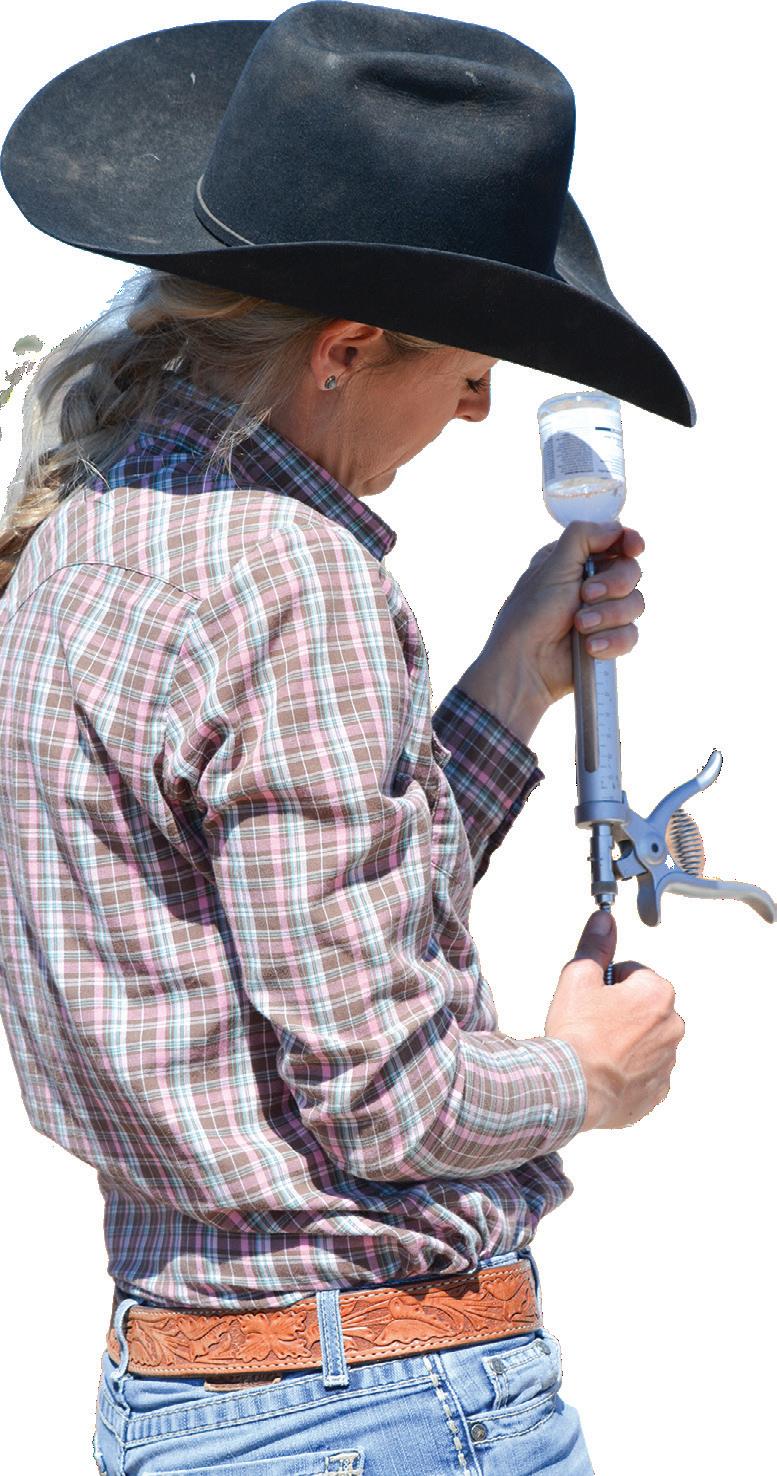
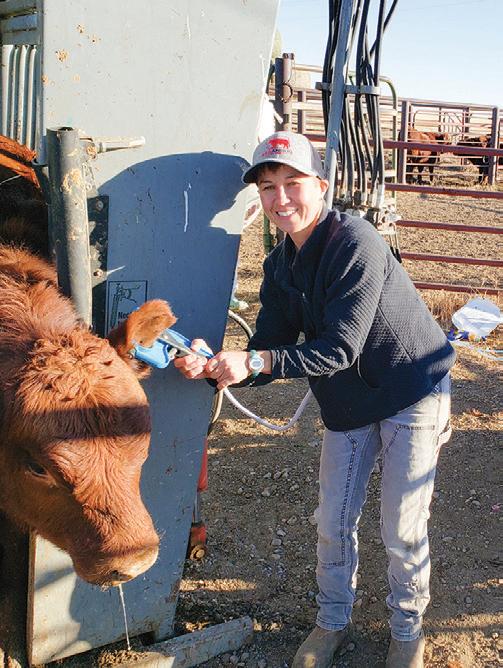
From chute-side recordkeeping to managing software such as QuickBooks, attention to detail can directly influence outcomes. Accurate data on weaning weights, pregnancy rates and herd performance informs better marketing and breeding decisions, particularly within programs such as Total Herd Reporting through the Red Angus Association of America.
LEADERSHIP in Practice
Beyond the numbers, women are often the driving force behind day-to-day operations.
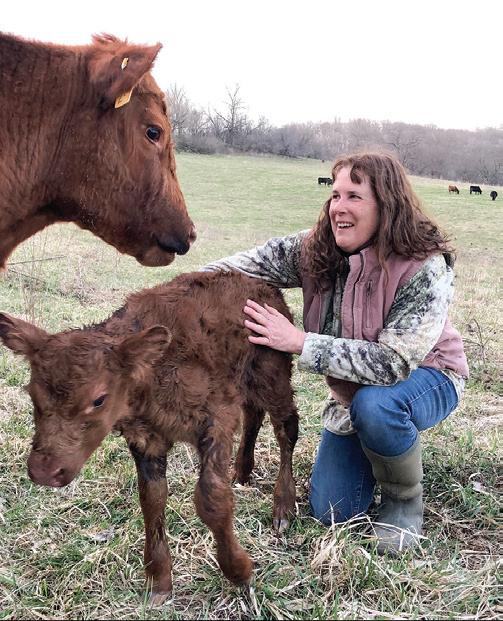
“Women can be found doing any job in agriculture,” Miller said. “But they also tend to pick up the everyday tasks—feeding the crew, organizing, keeping things running. They’re often the glue that holds everything together.”
That “glue” is increasingly being recognized for what it is: leadership.
In the United States, women now make up approximately 36% of agricultural producers and 26.4% of agricultural laborers— numbers that continue to rise. In response, federal programs and industry initiatives have expanded to support women through targeted funding, education and leadership development.
Within the Red Angus breed, women are also stepping into prominent leadership roles, including positions at the highest levels of the association.
The Red Angus Association of America has highlighted strong female leadership, with women serving in roles such as board president and executive director of operations. Beyond the association, Red Angus producers across the country demonstrate the strength and influence of cattlewomen within their communities.
Producers like Diana Wirth of Klamath Falls, Oregon, are helping drive that momentum. A fifth-generation rancher, Wirth was recently named incoming president of the Oregon Cattlemen’s Association. Alongside her family’s Red Angus operation, she remains active in youth programs and led relief efforts following the 2021 Bootleg Fire—a testament to the resilience and community leadership women bring to the industry.
They’re often the glue that “
The impact of cattlewomen extends beyond titles and statistics.
It is seen in conversations at local meetings, in classrooms where agricultural literacy is taught and in the quiet, consistent work of keeping operations moving forward.
At the Eastern Colorado gathering, one attendee noted that sustained beef demand may be tied, in part, to decades of promotion led by CattleWomen. Through education, outreach and advocacy, these groups have helped shape public perception and strengthen consumer trust.
“I originally joined because my mother told me to,” Miller said. “But once I got involved, I realized it was a group of women with a shared purpose—advocating, educating and promoting beef. I learned a lot about service and stewardship.”
That shared purpose defines what it means to be a cattlewoman today. It is not just about owning cattle. It is about leadership, resilience and shaping the future of the beef industry.
Women in agriculture are no longer operating behind the scenes. They are building networks, driving innovation and proving the future of the beef industry is already here—one decision, one connection and one generation at a time.
ONE Decision ONE Connection
ONE Generation at a Time