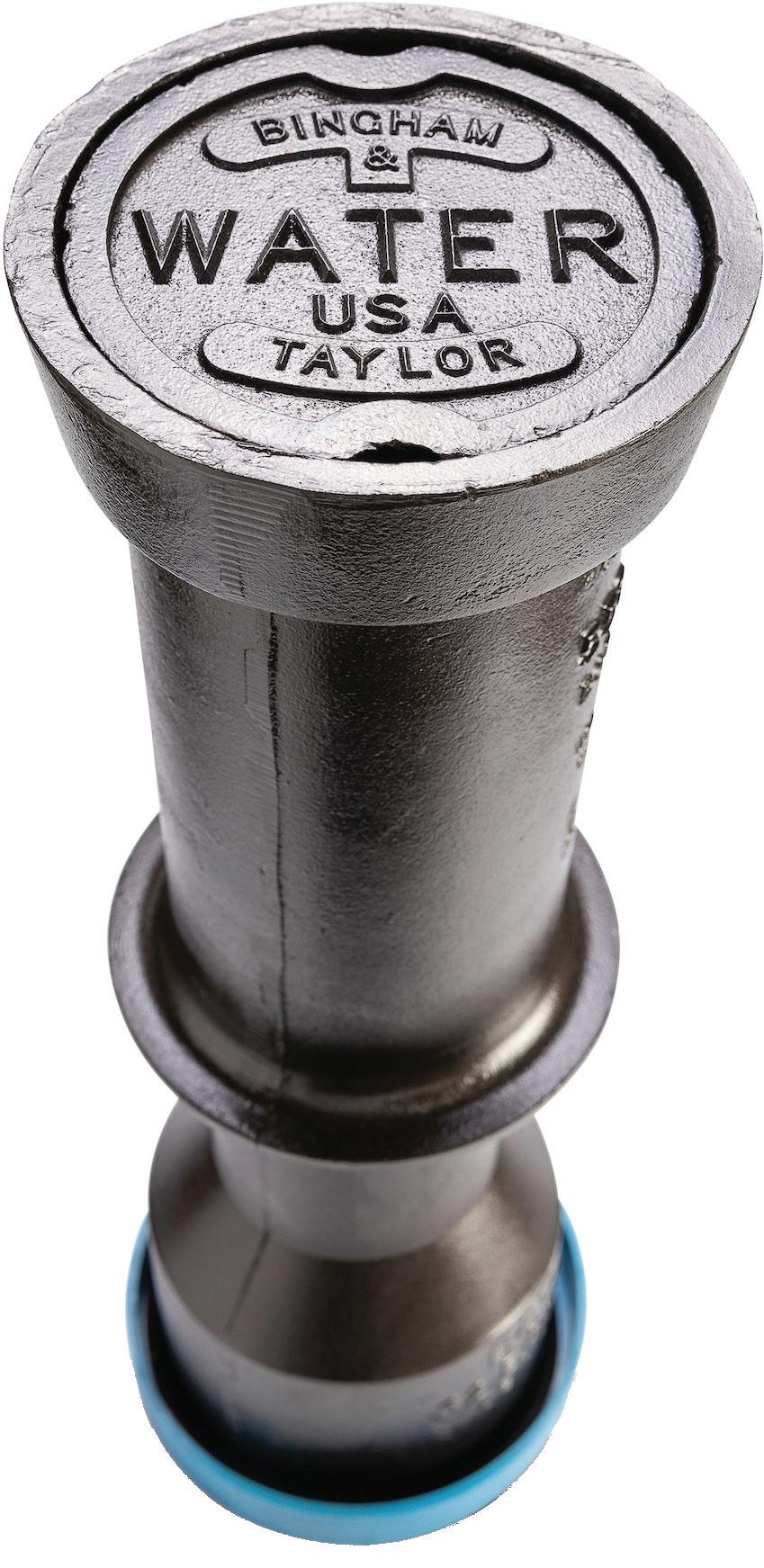
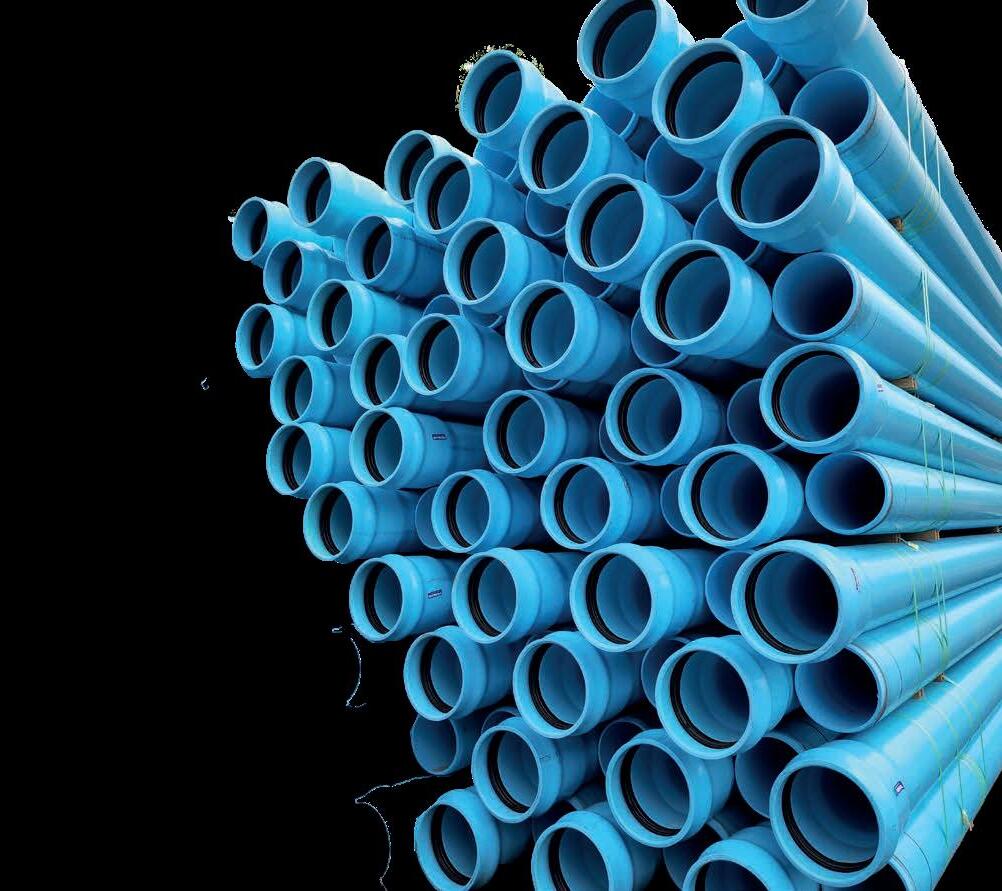
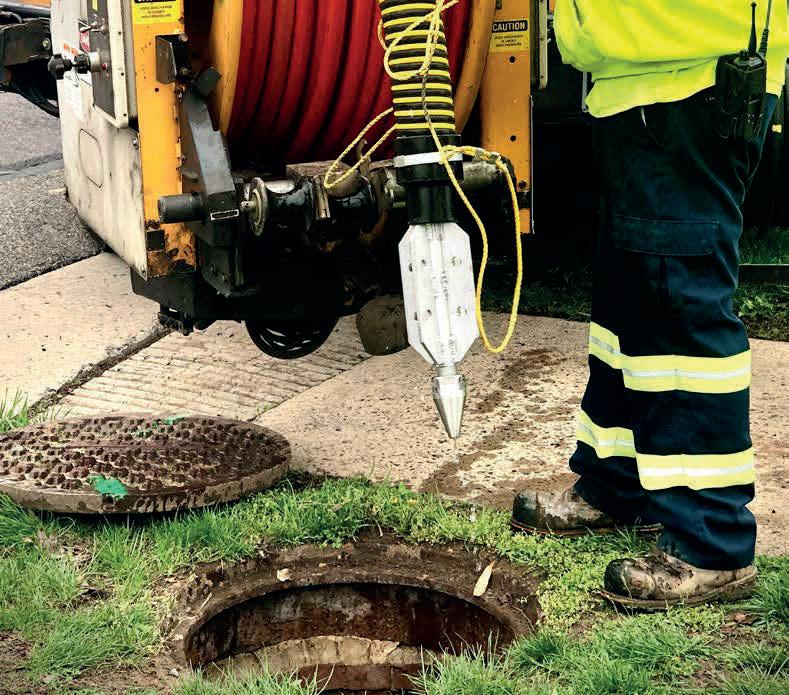
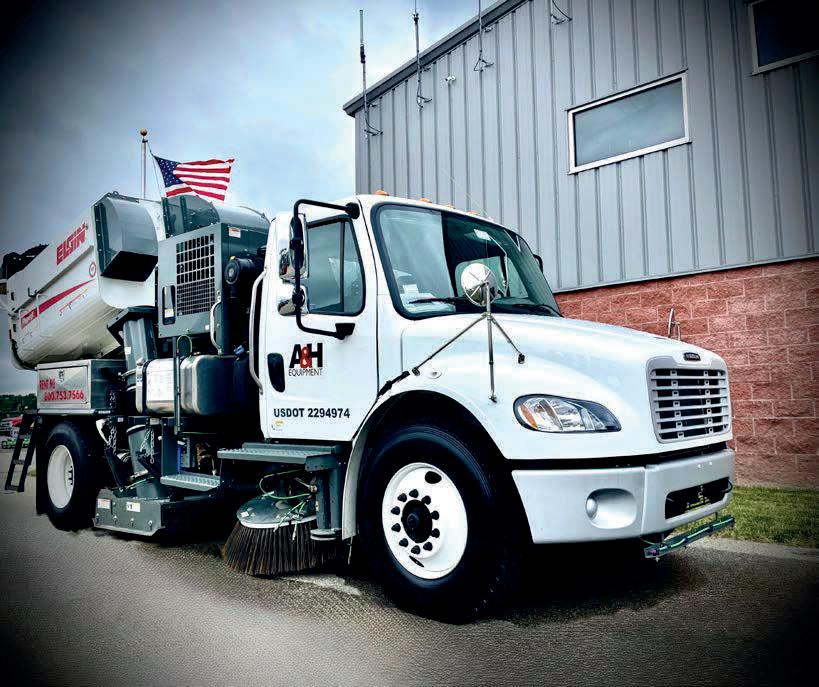
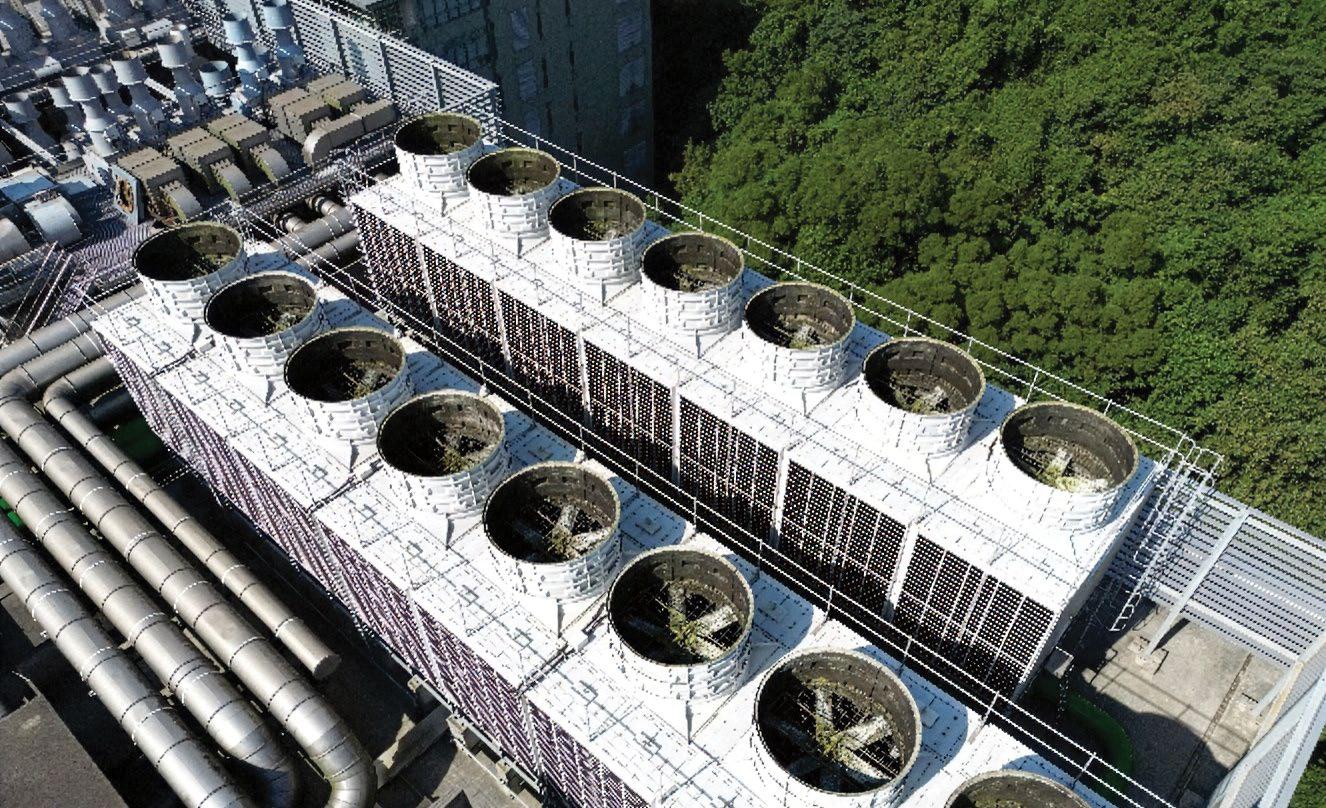
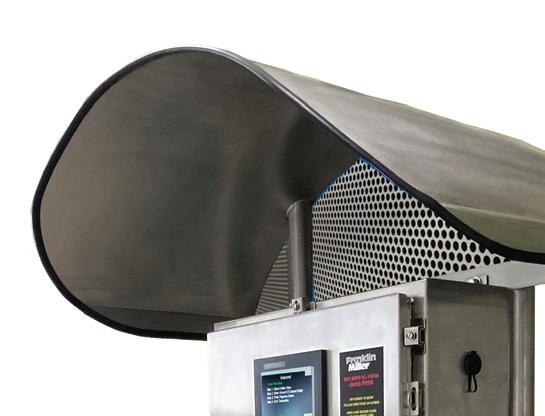
Bingham & Taylor offers a comprehensive line of underground utility access solutions—100% proudly made in the USA and fully compliant with BABA and AIS.
From cast iron and Bison™ valve and curb boxes to meter access solutions, our solutions offer the flexibility to meet each application—delivering long-term durability, stability, and safety.
For more than 175 years, we’ve set the standard for unmatched quality, integrity, and innovation.
Choose American craftsmanship. Choose Bingham & Taylor.
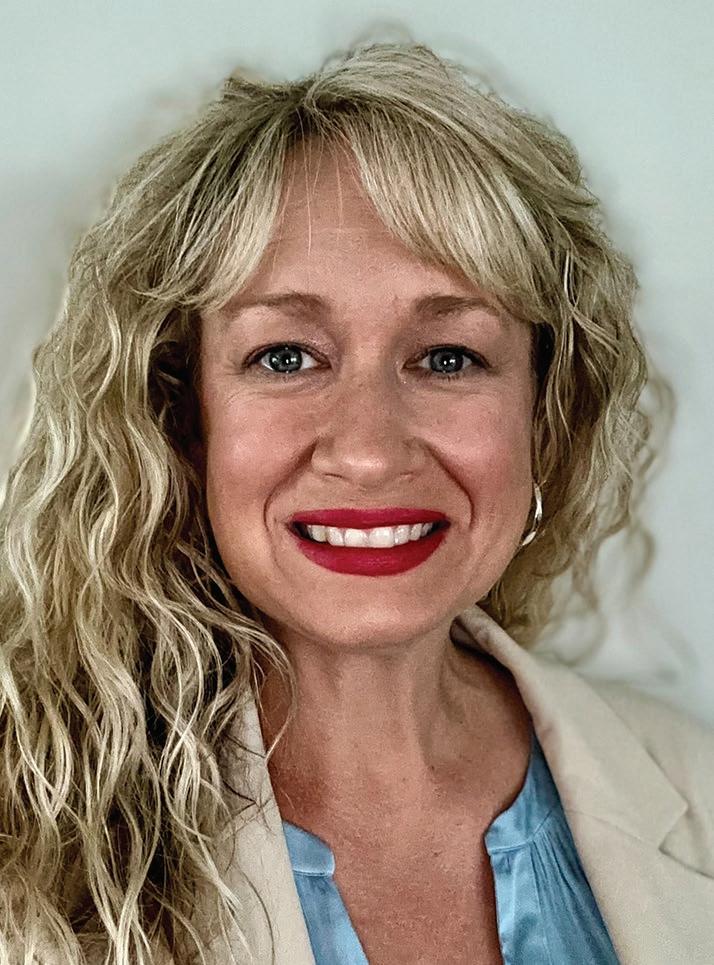
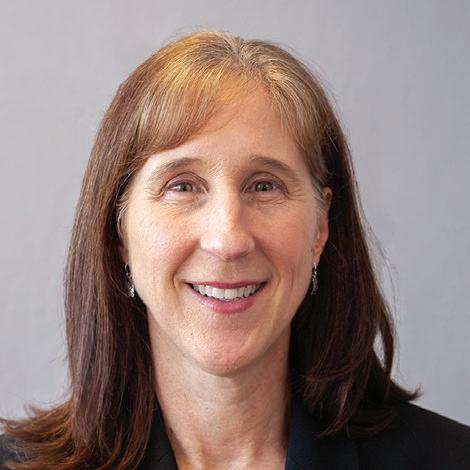
CHAIR
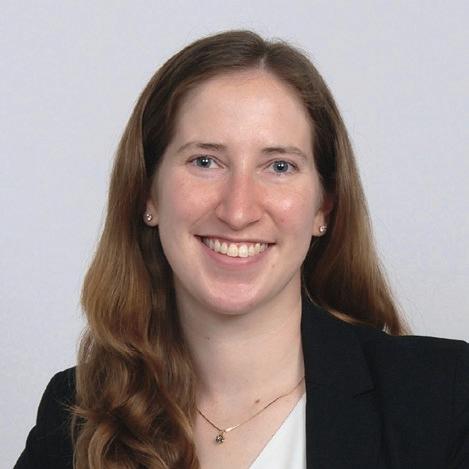
Valerie Copanic vcopanic@warren.org
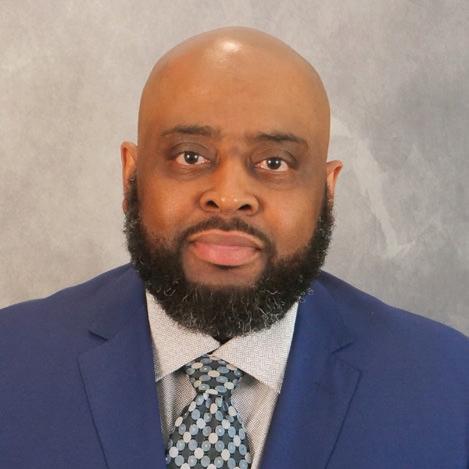
VICE-CHAIR
Denita Bonhart denita.bonhart@clevelandwater.com
AT-LARGE TRUSTEE
Matt Steele mksteele@columbus.gov
AT-LARGE TRUSTEE
Jennifer Webster jennifer.webster@arcadis.com
NE DISTRICT TRUSTEE
Annette Mollet annette.mollet@cantonohio.gov
NW DISTRICT TRUSTEE
Scott Ballenger sjballenger@aquaamerica.com
SE DISTRICT TRUSTEE Tyler York yorkta@bv.com
SW DISTRICT TRUSTEE Gina Hayes gina.hayes@epa.ohio.gov
Ohio Section American Water Works Association 260 South State Street, #310, Westerville, Ohio, 43086
Waves of Change
The evolution of water throughout my career has changed significantly both in the roles I have played in it and the regulations that have applied. My career in water started in May of 2006 at the City of Warren public water system. Being the laboratory supervisor allowed me to see the water treatment process from a regulatory standpoint. Parameters were enforced, samples were taken, analyzed, and values were reported. On-paper monthly operating reports were filled out by hand, contact time (CT) calculations were figured out manually, and trips to the post office were a common occurrence in order to meet deadlines for reporting. New regulations during that time required sampling and reporting for those in the water industry: Stage 2 Disinfectants and Disinfection Byproducts Rule, Long Term 2 Enhanced Surface Water Treatment Rule, Ground Water Rule, and more.
Unregulated Contaminant
Monitoring Rule 1 cycle had just ended, and I was involved in UCMR 2 (2007-2011) testing that looked at flame retardants and pesticides. Every five years, a new list of contaminants is examined: UCMR3 (2012-2015) studied metals, VOCs, hormones, and
1,4-dioxane while UCMR 4 (2018-2020) analyzed 30 chemical contaminants including metals, pesticides, and cyanotoxins. More recently, UCMR5 (2023–2025) gathered data on 29 PFAS chemicals and lithium. These rules, sampling guidelines, and results have marked their path along my journey also.
In 2011, I was promoted to Operations Supervisor with the City of Warren. This position allowed me to experience learning firsthand at Ohio State University’s Lake Erie campus, that has students focus on cyanobacteria and algae identification. During this time period, new and revised regulations saw lead and copper tiering, disruption of service, and harmful algal bloom rule implementation.
Since receiving my Class 4 Water Supply license in 2018, I have gone on to be promoted to Superintendent at the City of Warren Water Filtration Plant. I check in with operators, maintenance staff, construction staff and expand my workday with budgets, meetings, and regulatory compliance paperwork. Rules and regulations have continued to change as technology and the environment have produced better testing methods and elements to test for. I am appreciative of my
career, the environment in which I work in, and the support received from my coworkers and network.
During all of these changes and advancements in the water world, one thing has remained steady throughout my career: Ohio AWWA. It was during a round table in Akron, very early in my career, that someone suggested for me to join this group that would ‘review technical abstracts’ for a conference. I began attending workshops, contact hours, seminars, and conferences within OAWWA. I expanded my roles within the organization, volunteering where needed. As I sit here today as your current Chair, it gives me great pride to look back at where I started and where I’m going, due to the many connections and educational experiences I have had a chance to be a part of throughout my years within this organization. Water is also going in the right direction. The rules, regulations, required reporting and technological advances through the years have led us on the right path; one that takes water quality seriously and looks to always improve in every aspect. I hope you can look at your path in water and realize that every step can be in the right direction, with the right connections.
See you at One Water in Cincinnati to further your path in water!
VALERIE COPANIC
Redefining Water Treatment with Silicon Carbide Technology
Certified to NSF/ANSI 419
Certified to NSF/ANSI 61 MADE IN USA
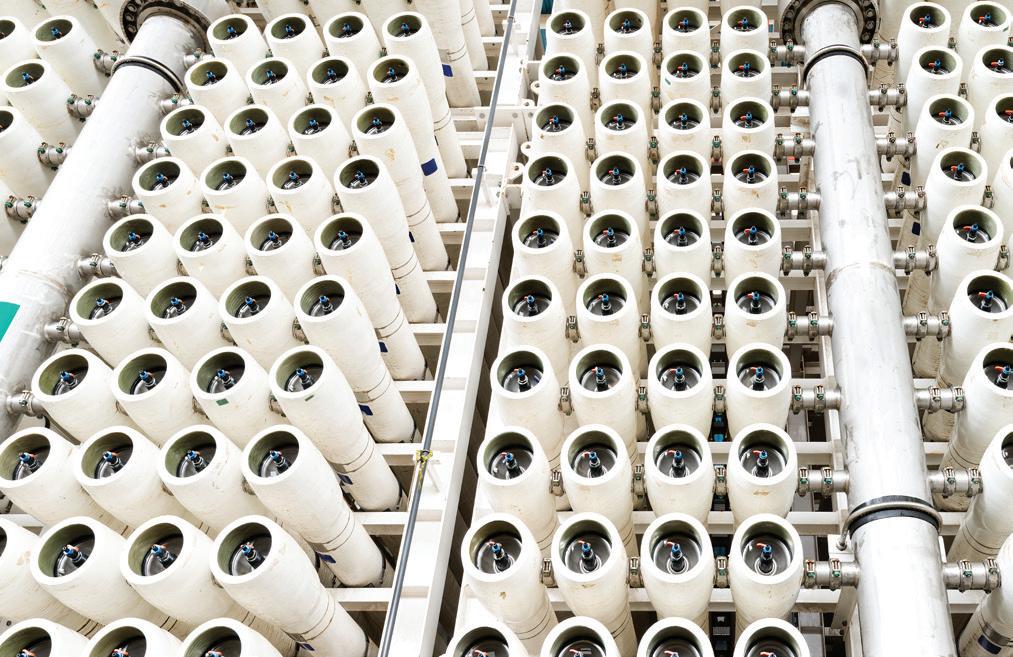
Proudly manufactured in Texas by Ovivo, our Silicon Carbide (SiC) ultrafiltration membranes are setting a new standard in water and wastewater treatment. Engineered for unmatched durability and performance, SiC technology is the trusted choice for municipalities seeking high reliability and future-ready solutions. Whether upgrading existing systems or tackling the toughest treatment challenges, Ovivo delivers innovation you can count on. Reach out to BL Anderson today to discuss how we can meet your water goals.
blanderson com ovivowater com
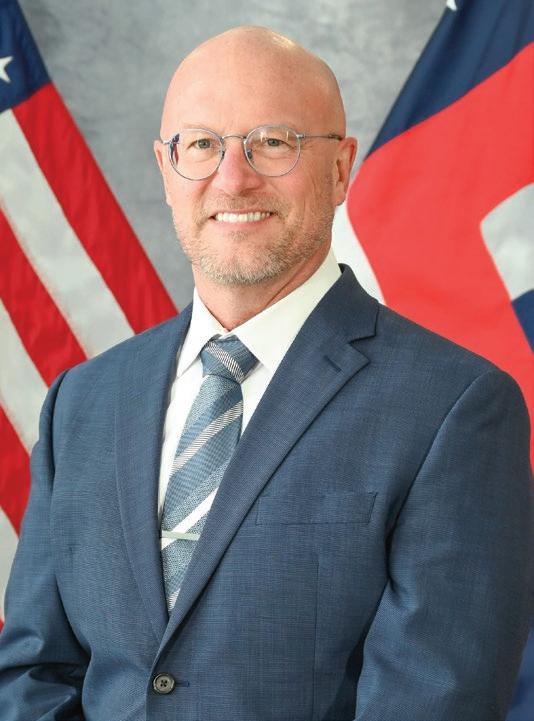
Gratitude for Time Well Spent
As my three-year term as Ohio Section Director draws to a close, I must say it’s been an honor and privilege to represent Ohio on the Association (national) AWWA Governing Board. Ohio is fortunate to have an exceptionally close knit, experienced, and dedicated group of drinking water professionals. Pound for pound, I’d match our team against any state in the union.
After 30 plus years of active involvement in the Ohio Section, I step away leaving you in outstanding hands. Incoming Director, Sierra McCreary, is dedicated, smart, organized, and has exceptional people skills. I have every confidence she’ll represent Ohio well as she transitions into the role of Ohio Section Director.
I also want you to have every confidence in the Ohio Section Governing Board of volunteers. Our new Ohio AWWA Chair, Denita Bonheart, is the Ohio Section’s first woman of color to hold this position as she continues to make her mark as an advocate for diversity, equity, inclusion and all things water. The seasoned leadership of Valerie Copanic will continue to benefit Ohio as she assumes the Past Chair role in support of Denita and the Governing Board.
The competition to fill the remaining board positions has been at an all-time high, leading to a governing board filled with an exceptional group of drinking water professionals and volunteers. Again, the Ohio Section remains strong and in very good hands moving forward.
Interact and network with your peers from other utilities, private sector experts, and the regulatory community. Learn. Grow. Contribute.
Finally, I’d be remiss if I didn't stick with my fundamental message on involvement with AWWA. There has been no greater learning and professional growth experience for me personally, than my volunteerism with AWWA. Especially at the grass-roots, district level. Get yourself and your colleagues out to these sponsored events. Interact and network with your peers from other utilities, private sector experts, and the regulatory community. Learn. Grow. Contribute.
TYLER S. CONVERSE
An Honor to Return and Serve
As I’m honored to return to serving AWWA as your Ohio Section Director. After completing my term as chair, I had planned to take a step back from volunteer commitments –but it didn’t take long to realize how much I value and miss this work. Over the past two years, I’ve had the opportunity to serve as the WateReuse Ohio Outreach Chair, helping support the establishment of their Ohio section. As that commitment ends, I’m grateful to re-engage with AWWA and contribute at the association (national) level. I participated in our strategy session this past spring, and it’s impressive to see how much progress has been made, along with the board’s vision and momentum for the work ahead. Looking forward, I am excited about the opportunities to contribute and make a meaningful impact over my three-year term as Director. Ohio’s water community faces important challenges – from workforce development to proactively managing our water resources as we continue to attract growth across the state. I’m committed to working alongside our board and members to tackle these challenges and help ensure a sustainable water future for our communities.
Tyler, thank you for your outstanding service to AWWA and our Ohio members. I appreciate your mentorship and encouragement over the years. Your leadership has left a meaningful and lasting impact on so many, and you will be deeply missed.
Our work would not be possible without the dedication of all our volunteers – thank you to everyone who contributes to this important mission. I look forward to seeing you all at One Water!
PERMA CLEAN 100 SINGLE LEG
50 mils per coat | 100% Solids | No Plural Required
Cost-Effective Single-Leg Application Less Waste, More Efficiency True Equivalency for Superior Performance
SIERRA MCCREARY
2 0 2 6
• Golf Outing
• River Clean-Up
August 17-20, 2026
First Financial Center, Cincinnati, OH
Visit www.onewaterohio.org for the most up to date information.
TUESDAY
• Kick-Off Breakfast & Keynote
Explore the 2026 Technical Program
• Exhibitor Move-In
• OWEA Challenges (Day 1)
• Pre-Conference Workshop: Water Reuse
• Welcome Mixer
KEYNOTE SPEAKER
• Exhibits
• OAWWA Competitions
WEDNESDAY
• Technical Sessions
• Exhibits
• OAWWA Member Appreciation Lunch
PRE-CONFERENCE WORKSHOP: Water Reuse
• OWEA Challenges (Day 2)
• Technical Sessions
• Women’s Networking Event
MONDAY, AUGUST 17 | 9:00 AM – 5:00 PM
• Happy Hour Networking Event
Additional registration required
• OWEA Awards Lunch
• Exhibit Hall Mixer
• Meet & Greet
This year’s technical program offers an in-depth look at the priorities shaping Ohio’s water sector from drinking water treatment and distribution to wastewater treatment, collection systems, and wetweather/stormwater solutions. Across more than 100 sessions, attendees will find practical takeaways on PFAS and lead compliance, water reuse, biosolids, utility management and finance, capital planning and construction, operations and maintenance, cybersecurity and cyber resilience, data/AI-enabled asset management, and workforce leadership.
9:00 AM –9:45 AM
EPA Update on Water Reuse
THURSDAY
Anne Vogel, USEPA; Tiffani Kavalec, Ohio EPA; Brian Coghlan, Del-Co Water
9:45 AM – 10:45 AM
• Technical Sessions: o Ohio EPA Updates o Ethics
Another Journey in the Midwest Illinois Water Reuse Section
11:00 AM – 12:00 PM
Why Ohio? Industry Growth and Water Reuse
Joshua Mazurek, Meta; Usman Khan Amazon
Mark Fisher, Chief Operating Officer
Sessions feature perspectives from utilities, Ohio EPA and other agencies, consultants, manufacturers, and researchers pairing regulatory insight with realworld case studies and hands on lessons learned. Whether you work in operations, engineering, planning, communications, or executive leadership, you’ll find content designed to help you navigate compliance and emerging risks, improve day-to-day performance, apply new tools and technologies, and make resilient, data-informed decisions.
1:30 PM – 2:30 PM
Transforming Water
Philip MacClellan, Hazen
2:30 PM – 3:30 PM
Michael McWhirter, V3
3:45 PM – 5:00 PM
Ohio Water Reuse Committee Updates
Various
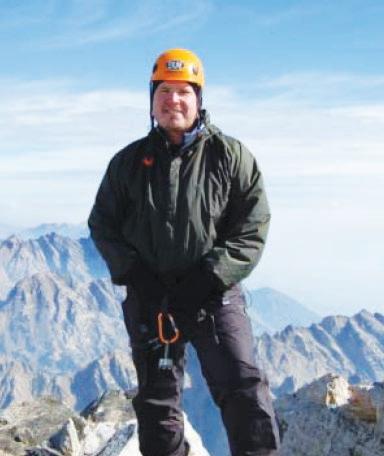
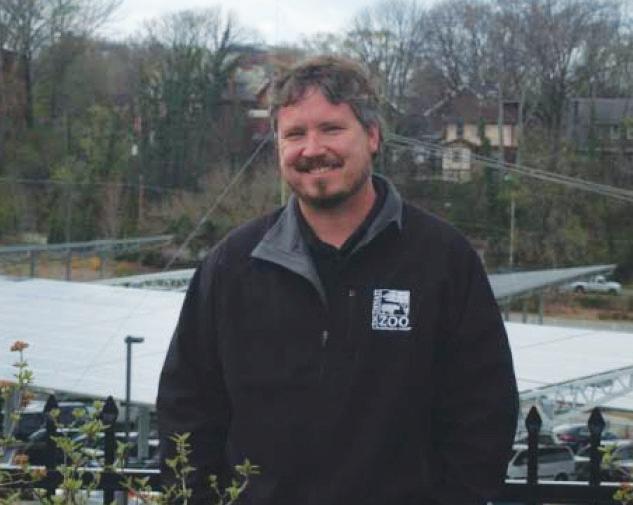
A product of the University of Cincinnati's Civil and Environmental Engineering program, Mark spent the first eleven years of his professional career working as a project manager for Turner Construction, a commercial construction company. Many of those years were spent at the Cincinnati Zoo, overseeing the construction of several major exhibits. In 2006, he came on board at the Zoo as the Senior Director of Facilities and Planning. In addition to the standard duties of a facilities manager, Mark is also the driving force behind the Zoo's sustainability movement. By implementing the most aggressive green building program in the nation, along with producing dramatic reductions in natural resource consumption, he has taken the Zoo from an organization that barely had a recycling program, to becoming the greenest Zoo in America. Outside of work, Mark most enjoys scrambling around the mountains of the American West with his wife and three young children.
From Wastewater to Resource: Overcoming Adversity and Innovation in Mongolia’s Recycled Water Journey
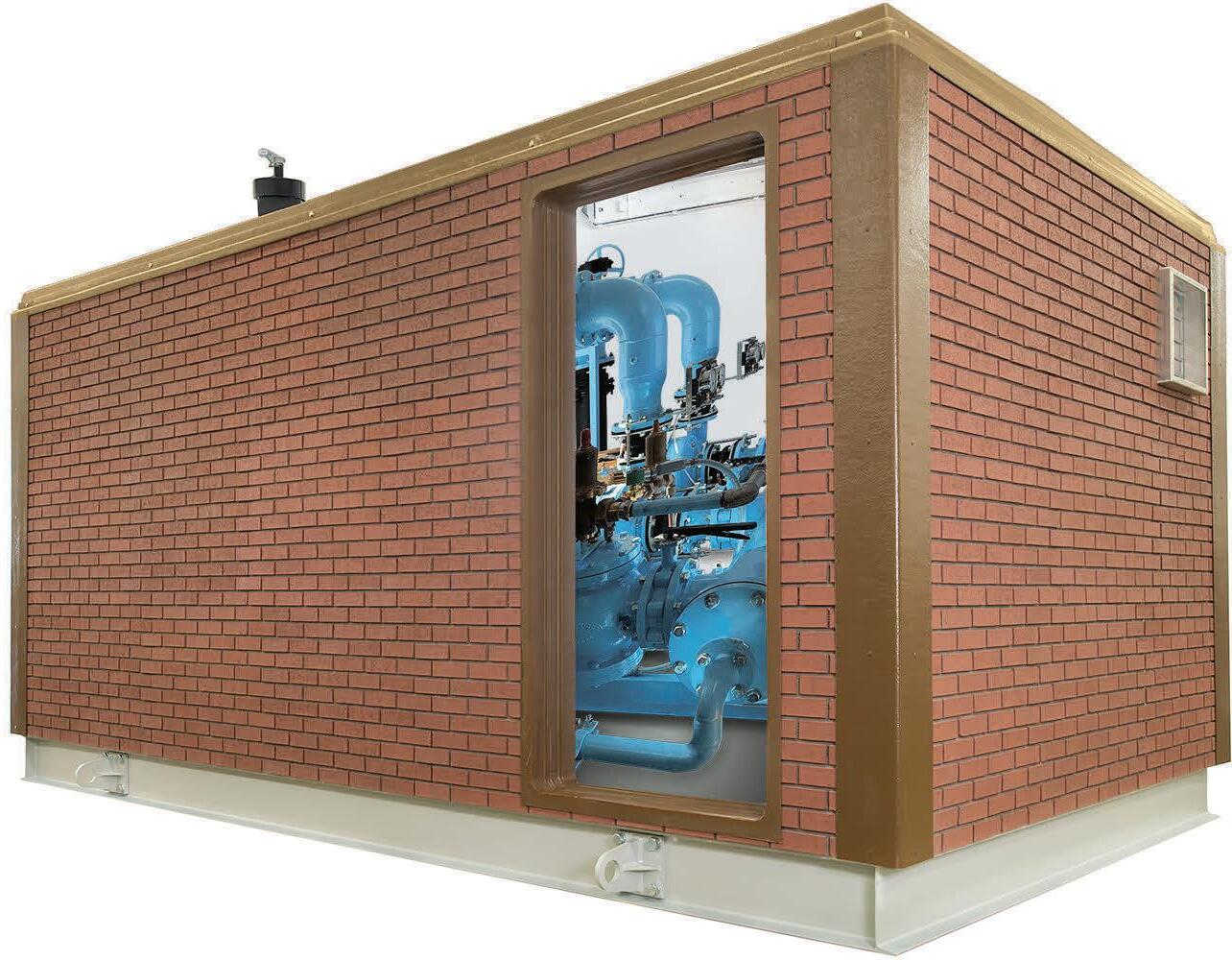
Gorman-Rupp pressure booster and water reuse stations come standard with an industry-leading five-year warranty.
Whether it’s boosting low line pressure or supplying sufficient high flow for irrigation and raw water transfer, Gorman-Rupp has you covered. We have been manufacturing water booster and reuse systems for over 40 years. Our complete line of stations include industry-leading pumps, enclosures, controls and valves — everything custom-designed and delivered to the job site ready to install. Each package is precisely engineered, inspected and tested to exacting standards before it leaves the factory. For all of your municipal water supply needs, you can count on Gorman-Rupp – guaranteed.
There’s
2026 OHIO SECTION GOVERNING BOARD SLATE
The Ohio Section Governing Board has approved the following slate of candidates for presentation to the membership for election at the 2026 Annual Business Meeting during the One Water Conference. Per Ohio Section bylaws, the individual elected as Vice Chair serves a three-year leadership progression consisting of one year each as Vice Chair, Chair, and Past Chair.
Vice Chair (2026–2029 Leadership Progression)
Glenn Marzluf CEO/General Manager, Del-Co Water
Secretary (2026–2029)
Jennifer Webster, PE Vice President, Arcadis U.S., Inc.
Northwest District Trustee (2026–2030)
Jack Evans Water Superintendent, City of Huron
Board Appointments
At Large Trustee (2026–2029)
Charles L. Moore, Jr., B.S. Water Maintenance Coordinator, Columbus Water and Power
Southwest District Trustee (2026–2029)
Gina Hayes Environmental Manager, Ohio EPA
The following individuals have recently been appointed to Board positions within the Ohio Section.
Assistant Secretary (2026–2028)
Megan Patterson, PE Environmental Engineer, Brown & Caldwell Effective March 13, 2026
Assistant Treasurer (2026–2028)
Jeremiah Stratton, Assoc. DBIA Business Development Manager, Bowen Engineering Corporation Term begins at the close of the 2026 Annual Business Meeting.
Emerging Leader (2026–2028)
Jake Logan Engineering Manager, Aqua Ohio Term begins at the close of the 2026 Annual Business Meeting.
Director Transition (2026-2029)
Sierra McCreary, PE Associate Vice President, Black & Veatch
Term began at ACE26 in June, in accordance with the AWWA governance calendar.
Many More Good Things to Come
As the Ohio Section AWWA moves into the second half of 2026, momentum continues to build across the organization, driven by the engagement of members, volunteers, and partners throughout the state.
The first half of the year has included a wide range of training, networking, and educational opportunities delivered through our districts and committees. Spring meetings, utility expos, and workshops have brought water professionals together to share knowledge, work through realworld challenges utilities are navigating across Ohio, and strengthen the relationships that support daytoday operations.
At the same time, efforts are underway to further strengthen the operational foundation of the Section. Planned enhancements to systems, coordination, and communications are focused on creating a more consistent and accessible experience for members, making it easier to engage with programs, connect with peers, and take full advantage of the value OAWWA provides. These efforts are intended to ensure the Section continues to deliver programs that members rely on for training, connection, and professional development.
A key development this year has been the addition of a new staff member, Leija Harris, who joined as Operations and Program Specialist and has quickly become integrated into supporting events, working with district leadership, and strengthening connections with volunteers and partners. This added capacity is already contributing to improved responsiveness and stronger overall program support.
Looking ahead, attention turns to Ohio’s premier water event in the state; the One Water Conference, taking place in August in Cincinnati. This annual event remains a cornerstone for Ohio’s water community, offering opportunities for technical education, leadership development, competitions, and peer connection, all of which directly support professional growth and utility performance.
Beyond the conference, the remainder of the year reflects a continued focus on delivering high-value programming across multiple formats. This includes the development of the One Water On Demand virtual program, targeted trainings such as the Asset Management Workshop and Distribution Seminar, and a summer webinar series addressing emerging topics such as data centers and other large users, and cybersecurity, providing practical insight into issues utilities are actively navigating today. Fall District Meetings and the third annual Ohio YP Summit will continue to create opportunities for engagement across all career stages, supporting both emerging leaders and experienced professionals.
In parallel with program delivery, leadership continues to focus on long-term priorities through strategic planning efforts and ongoing evaluation of programs and systems, ensuring the Section remains responsive to member needs while delivering relevant, high-impact programs that reflect the evolving demands of the water sector.
The progress made so far in 2026 reflects a shared commitment across the organization, and that momentum will continue as members engage, contribute, and lead, together shaping the future of Ohio’s water community.
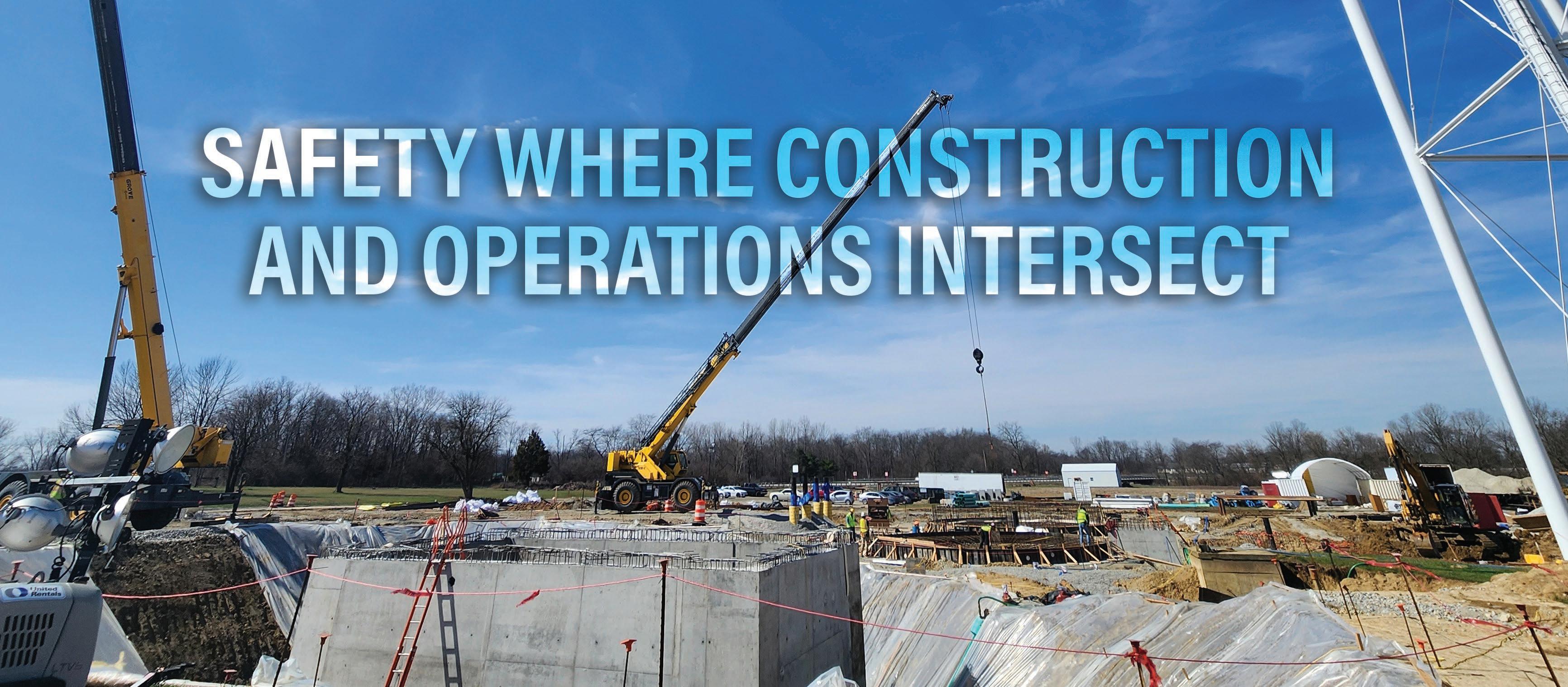
With an ever-expanding book of construction projects taking place at water and wastewater treatment facilities here in Ohio, it is imperative that we take a look at safety during these active projects to not only protect the legacy of the projects being built, but most importantly, protect the people that are involved on and off site every day. This is where Safety, Construction, and Operations Intersect. Whether you are an owner, operator, designer, contractor, or visitor to a project site; we are all in it together to ensure that every person returns home to their family and friends at the end of the day.
Managing Risk at Active Water and Wastewater Treatment Facilities
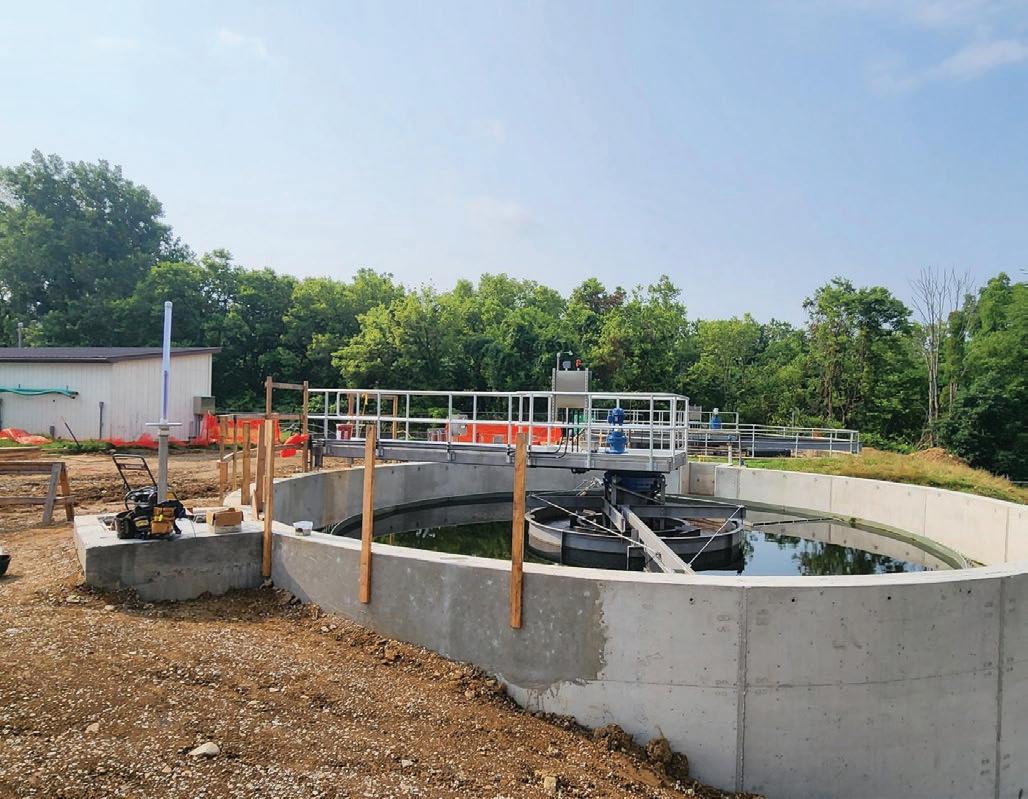
Construction at water and wastewater treatment facilities presents a unique set of safety challenges. Unlike traditional construction sites, these projects are often executed within fully operational plants where treatment processes must remain uninterrupted and plant personnel remain on site. In these environments, safety must be approached holistically protecting construction teams, plant staff, critical infrastructure, and public health simultaneously.
Successfully managing this complexity requires more than standard jobsite safety programs. It demands early planning, close coordination, and continuous communication between construction teams and plant operations.
Safety as the Foundation
At active treatment facilities, safety must be built into the project from the earliest stages. Effective risk management begins with deliberate planning that identifies hazards before work starts and establishes clear expectations for how activities will be executed.
Construction frequently occurs near live process piping, chemical feed systems, energized electrical equipment,
confined spaces, and operating personnel. When these conditions are not addressed upfront, uncertainty increases – and uncertainty is one of the greatest contributors to incidents in complex facilities. Proactive safety planning reduces that uncertainty and creates predictable work environments.
Protecting Plant Personnel
One of the defining characteristics of water and wastewater construction is the continued presence of operations and maintenance staff. These individuals may not be part of the construction scope, yet their safety can be affected by changing access routes, temporary systems, and evolving work zones.
Protecting onsite staff starts with collaboration. Plant personnel bring critical knowledge of facility operations, system constraints, and operational priorities. Incorporating this knowledge into construction planning helps ensure work activities align with plant needs and minimize risk.
By Jeremiah Stratton, Assoc. DBIA , Business Development Manager, Bowen Engineering Corporation
Clear separation of construction areas, controlled access points, and consistent daily communication further reduce the potential for unplanned interaction between plant staff and construction hazards – while maintaining operational continuity.
Planning for Facility-Specific Hazards
Water and wastewater treatment facilities introduce hazards that are not typically found on other construction projects. These can include chemical exposure risks, biological hazards, confined space entry, complex electrical systems, and the potential for process disruptions that could affect compliance or public health.
Addressing these risks requires task-level planning and thoughtful sequencing. Each activity should be evaluated not only for how it will be performed, but for how it may affect surrounding systems and personnel. Integrating safety into work sequencing helps create stable, controlled conditions and reduces the likelihood of last-minute changes.
This level of planning is especially important during tieins, phased renovations, and construction adjacent to active treatment processes.
A Culture of Engagement
A strong safety culture depends on active involvement from everyone on site. Construction professionals, supervisors, engineers, and plant personnel each play a role in identifying and managing risk.
At active treatment facilities, plant operators often have deep insight into system behavior and warning signs. Encouraging open communication allows potential issues to surface early, when they can be addressed collaboratively rather than after an incident occurs.
When safety concerns are raised and resolved in real time, overall project risk is reduced for all parties.
Planning Tools That Support Safety
Structured planning tools – such as detailed work plans, weekly coordination meetings, daily huddles, and end-ofshift reviews – serve as effective safety controls in operating facilities. These tools promote clarity, confirm readiness, and help align construction activities with plant operations.
Predictable workflows reduce last-minute decisions, which are a common source of safety incidents in complex environments. When work is well planned and communicated, both safety performance and operational reliability improve.
The Bottom Line
Construction within active water and wastewater treatment facilities demands a disciplined, collaborative approach to safety. Protecting people, infrastructure, and ongoing operations requires early planning, continuous communication, and shared responsibility.
integrating safety into every phase of project execution and recognizing the critical role of plant personnel, construction teams can successfully deliver projects while maintaining safe operations in facilities essential to public health and environmental protection.
By
PRICING WATER FOR DATA CENTERS
NAVIGATING THE NEW DEMAND: BY DELANEY RIDGELY
The rapid proliferation of data centers, driven by advancements in AI and cloud computing, presents both significant opportunities and complex challenges for water utilities. A single data center can consume as much as one to five million gallons of water per day, equivalent to the daily consumption of 10,000 to 50,000 people. While some facilities might have relatively uniform water usage, others exhibit significant peaking factors, with water use spiking during warmer months as cooling systems work harder. These demand profiles can strain existing resources and infrastructure, necessitating thoughtful and equitable pricing strategies. Critical considerations include cost recovery, equity, sustainability, and capacity planning. To address these considerations, utilities have a number of cost-recovery tools at their disposal, such as up-front capital contributions, system development fees, and customized rate structures.
1. Connection Charges and System Development Charges (SDCs)
Data centers often require substantial new infrastructure – transmission mains, storage tanks, or pump stations – just to connect to the system. These costs are
often site-specific, meaning they wouldn’t arise “but for” the data center project. Data center customers should fund the up-front capital project costs directly or through a reimbursement agreement.
Even when a customer funds 100% of the connection infrastructure, they often still use and benefit from the broader system capacity – such as water treatment, wastewater interceptors, or regional storage.
System Development Charges (SDCs) –sometimes referred to as capacity fees or impact fees – are one-time fees paid by new customers to recover a fair share of the cost of capacity in the existing or future facilities.
2. Setting SDCs to Protect Against Risk from Large, Changing Customers
Data centers can change their demand profile significantly over time. This volatility creates a risk for utilities trying to match infrastructure investment with future revenue. To manage this risk, utilities may want to consider some of the following best practices:
• Charge SDCs on a price-per-gallon basis, scaled to the estimated peak day or hour usage of the facility rather than relying on standardized methods like meter size or equivalent residential units (ERUs).
• Use an engineer’s estimate of demand during development review.
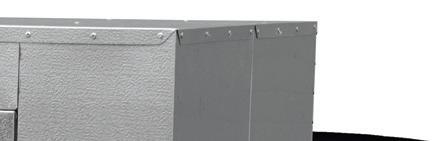
HAULERPORT ® Bulk Water Fill Stations
Smarter Water Access. Total Control.
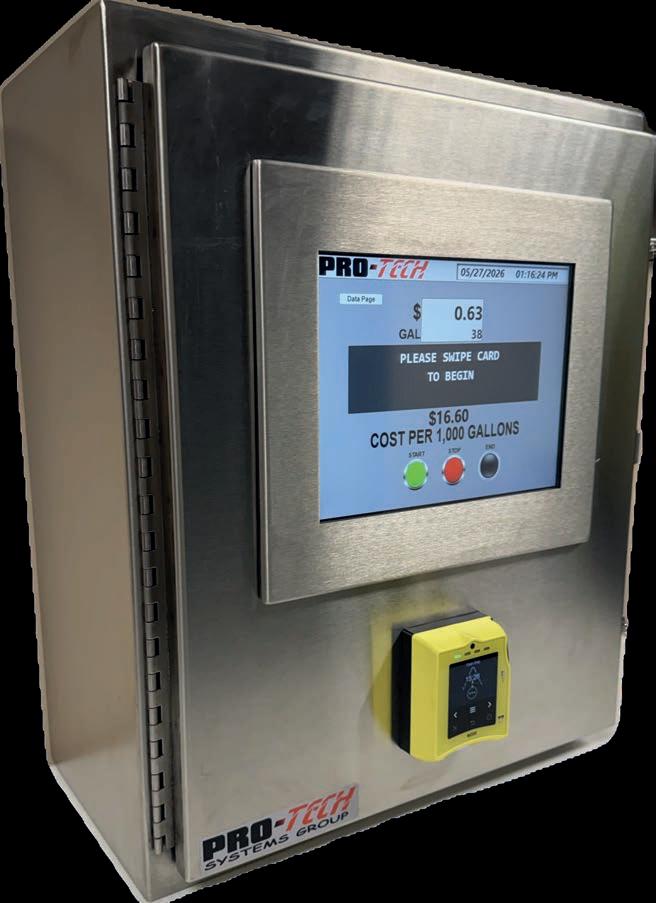
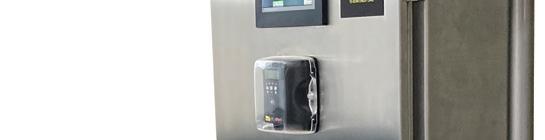
HAULERPORT® Bulk Water Fill Stations deliver secure, automated water dispensing –giving you full control of your water resources while providing 24/7 unattended access for authorized users.
HAULERPORT simplifies bulk water distribution, cuts administrative overhead, and boosts operational efficiency. The intuitive touchscreen HMI makes self-serve operation easy.
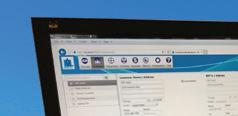
When integrated with our HaulerLogic® Software, you gain even more power to track activity and transactions, manage user accounts, set rates, invoice customers, and generate reports – all from the comfort of your office.
HAULERPORT is the only system on the market that supports both credit card and customer account transactions – giving you unmatched flexibility. To learn more, call us, or use the QR code to visit us online today.
• Include language allowing for ‘true-ups’ – if the facility exceeds its estimated peak demand after a set period (e.g., 2–3 years), the utility may assess additional SDCs to reflect the actual system impact.
3. Rate Structure:
Flat,
Discounted, or Tiered?
Once a data center connects to the water utility system and becomes operational, how should data centers be charged on an ongoing basis?
• Some utilities consider lower volumetric rates for large, flatload customers. However, a data center’s demand may be more variable than a typical large volume customer, so a customized higher volumetric rate may be appropriate.
• Others adopt seasonal or peakingbased pricing, particularly when customers impose high demands during peak summer months or specific operating hours.
• In some cases, demand charges or fixed minimums are introduced, based on committed capacity or historical peak usage.
There’s no one-size-fits-all answer. Utilities should weigh factors like infrastructure cost drivers and the broader pricing philosophy used across a utility’s customer classes.
4. Planning for Change:
Build in Reassessment Mechanisms
Utilities can reduce risk and improve fairness by incorporating periodic reassessments into their pricing frameworks. Options include:
• Reviewing capacity charges every three to five years based on actual usage.
• Revisiting demand-based pricing thresholds as new data becomes available.
• Conducting system-wide Cost-ofService studies every three to five years to ensure that user rates and rate structures align with cost.
5. Put It in Writing: How to Lock It All In
The strategies described above can be implemented in a variety of ways:
• Negotiated service agreements for individual projects.
• Development agreements tied to capital contributions and phased buildout.
• Local ordinances that include flexible SDC methodologies or rate charges.
Formalizing these mechanisms in advance provides predictability for both the utility and the customer.
Final Takeaways:
Keep It Fair, Keep It Flexible
Serving data centers presents both an opportunity and a challenge. With the right tools – flexible SDC frameworks, thoughtful rate structures, and proactive reassessment – utilities can recover their costs fairly while supporting economic growth. While there’s no universal pricing formula, building pricing structures that reflect actual usage, system impacts, and long-term risk can position utilities for sustainable success.
AWARD‑WINNING PROTECTION:
DAYTON’S REGIONAL COLLABORATION SETS NATIONAL STANDARD
By City of Dayton Department of Water
Beneath the surface of southwestern Ohio lies one of the region’s most powerful natural assets: the Great Miami Buried Valley Aquifer, a solesource water supply that sustains nearly one million people and anchors the local economy. For nearly four decades, the City of Dayton’s MultiJurisdictional Source Water Protection Program (SWPP) has quietly, consistently, and innovatively safeguarded this irreplaceable resource. This year, that longstanding commitment earned national recognition as the program received the 2025 Outstanding Groundwater Protection Award from the National Ground Water Association – an honor that reflects both the scale of the challenge and the strength of the regional partnership behind it.
The award celebrates a program built on collaboration. Water doesn’t stop at city limits, and neither does Dayton’s approach to protecting it. The SWPP brings together the City of Dayton, Harrison Township, the Cities of Riverside, Vandalia, and Huber Heights, and Public Health – Dayton & Montgomery County. Led by Dayton’s Division of Environmental Management, the partnership works with a shared purpose: to protect and preserve the groundwater that supplies the region’s drinking water. This groundwater resource is designated a solesource aquifer - which means that there is no practical alternative water supply. The partners have embraced that responsibility with exceptional dedication and support.
What sets the SWPP apart – and what ultimately earned it national recognition – is its comprehensive, proactive strategy. The program blends prevention and risk-reduction efforts designed to keep contaminants out of the groundwater before they become a threat. Its work spans business inspections, industrial chemical inventory reporting, groundwater monitoring, hydrogeological modeling, environmental investigations, emergency response, and community outreach. A dedicated Source Water Protection Fund ensures that riskreduction projects can be implemented across all participating jurisdictions, while Dayton’s investment in staffing – both within the
city and in partner communities – demonstrates a regional commitment backed by real resources.
The program’s vision extends beyond today’s challenges. Since 1997, the City of Dayton’s Children’s Water Festival has introduced fourthgrade students to the science and stewardship of water through hands-on learning. Nearly 50,000 children have participated, forming a new generation that understands the value of the aquifer and the importance of protecting it. This longterm educational investment is part of what makes the SWPP not just effective, but enduring.
Historically, source water protection has been viewed as the responsibility of state and federal agencies. Dayton’s program proves that local leadership – when paired with collaboration, technical expertise, and sustained commitment – can meet environmental challenges once thought too large for municipal action. Business leaders, educators, publichealth officials, and residents have all contributed to a program that is both practical and innovative, demonstrating what is possible when a region unites around a shared resource.
Receiving the 2025 Outstanding Groundwater Protection Award affirms what the Miami Valley has known for decades:
the MultiJurisdictional Source Water Protection Program is a national model for safeguarding drinking water. As it approaches its fourth decade, the program continues to evolve, strengthen, and lead with the same clarity of purpose that has guided it since 1988. The aquifer remains protected,
AWARD‑WINNING PROTECTION:
As it approaches its fourth decade, the program continues to evolve, strengthen, and lead with the same clarity of purpose that has guided it since 1988.
the region remains resilient, and the communities of southwestern Ohio continue to benefit from a partnership that understands the true value of the water beneath their feet.
To learn more about Dayton’s Source Water Protection Program, visit www.daytonohio.gov/154/source-water-protection-program.
Lessons Learned from Ohio’s Service Line Inventory Submissions
By Heather Jackson, Ohio EPA-DDAGW
Technical guidance and lessons learned for public water systems working under the Lead & Copper Rule Revisions (LCRR) and Lead & Copper Rule Improvements (LCRI)
Executive Summary
Ohio’s public water systems faced a unique data management and field-verification effort to meet the initial service line inventory requirement under the LCRR by October 16, 2024. The first wave of submissions revealed consistent drawbacks including fragmented records, inconsistent classifications, GIS/data linking issues. However, they also revealed consistent solutions like standardized data structures, cross-department coordination, probability modeling to target unknowns, and rigorous QA/QC. The lessons captured here are practical and scalable for systems of any size, while aligning with U.S. EPA guidance and Ohio-specific expectations.
Why
Ohio
Inventories Matter
(and What Hasn’t Changed Under LCRI)
U.S. EPA’s Guidance for Developing and Maintaining a Service Line Inventory provided ample guidance and expectations for water systems to include all water distribution service lines (both utility and customer side), and to classify each as lead, galvanized requiring replacement (GRR), non-lead, or unknown, and submit the inventory by the LCRR deadline. States were able to add procedural details, but the federal elements are common to all systems.
U.S. EPA finalized the LCRI on Oct. 30, 2024 (with a compliance date of Nov. 1, 2027) with requirements that included lowering the lead action level to 10 µg/L, strengthening sampling protocols, and requiring full lead service line (LSL) replacement within 10 years. However, U.S. EPA explicitly kept several LCRR requirements starting Oct. 16, 2024: initial inventories, service line inventory material notifications, and Tier 1 public notice for lead action level exceedances (ALEs).
Ohio EPA’s program communications mirrored these retained requirements: submit initial inventories by October 16, 2024, notify customers within 30 days of inventory submittal if their line is lead, GRR, or unknown, and keep inventories updated. Ohio EPA conducted many outreach efforts to assist water systems with questions they had about service line inventories. This was done in hopes of generating adequate compliance among water systems to meet the requirements of the LCRR, and to help set them up for success with service line inventory material notifications to customers. Although Ohio EPA and U.S. EPA had many resources available to assist water systems with completion of initial service line inventories, many still encountered data quality issues.
Common Data Quality Issues (and How to Fix Them) A. FRAGMENTED HISTORICAL RECORDS
Several systems had inconsistent or incomplete written records, and some did not understand what information should be treated as an official record, such as the state lead service line ban date or how to address unknown service lines after the ban. Many also failed to consider the full range of available record sources, such as as-builts, local ordinances, development plans, and meter replacement findings. In some cases, water systems kept billing and material records separate, creating additional consistency problems.
Fix: Water systems can address these issues by standardizing what qualifies as an official record, centralizing all documentation in one place, and training staff in consistent documentation practices. They can also improve accuracy by using all available record sources, including as-builts, ordinances, development plans, and meter replacement notes. Reconciling separate billing, GIS, and material records will also help prevent inconsistencies.
OHIO EPA UPDATE
B. MISCLASSIFICATION OF MATERIALS
(ESPECIALLY ‘UNKNOWN’ AND GRR)
U.S. EPA requires classification into lead, GRR, nonlead, or unknown for both sides of the service line. Overuse of ‘unknown’ inflated verification workloads and public notifications. Ohio EPA noted several problems with how systems were classifying service line materials, including uncertainty about what conditions make a line GRR, and systems classifying the overall service line based only on the system side or the customer side instead of considering both. Some systems were also using ‘unknown’ classifications when available information could have placed the line in a nonlead category, such as service lines installed after the state’s lead service line ban date.
Fix: Apply evidencebased rules (e.g., local lead ban dates, diameter thresholds, contractor eras) to reclassify obvious nonlead; then use probability modeling or other tools to direct field checks to the highestrisk unknowns. Track confidence levels and other documentation of each determination in the inventory to help guide future updates.
C. GIS AND ADDRESS LINKING PROBLEMS
Water systems found duplicative service line points, lingering inactive accounts, and issues with address normalization when tying billing records to GIS parcels. They were not always able to cleanly integrate the billing records into their GIS parcels. This required manual manipulation of the data, and added time, to correct the issues. To help with this issue, U.S. EPA encourages detailed location identifiers and public accessibility; ArcGIS solution patterns show how to build an inventory viewer, dashboards, and public maps to track and share progress.
Fix: Normalize addresses, assign unique service line IDs (utility-side and customer-side) and reconcile against available data (meter serial numbers). Use topology rules to prevent duplicates and enforce one-to-one relationships between service lines and customer locations.
What Worked Best for Water Systems
A. STANDARDIZED, STATE - ALIGNED TEMPLATE
Ohio EPA required use of a provided template or an approved CSV mapping system for inventory submittals. Systems that
OHIO EPA UPDATE
built their internal schema to mirror the Ohio EPA template fields encountered fewer revision requests, simpler QA/QC, and faster annual updates. Accurately utilizing the provided templates helped systems easily meet the LCRR requirements. Water systems that used another template, or created their own template, faced issues when attempting to revise and update their inventories for the approved Ohio EPA template.
B. PROBABILITY MODELS TO TARGET UNKNOWNS
Ohio EPA recognizes predictive/statistical modeling as a complementary tool to reduce unknowns and prioritize field verifications. Peer-reviewed work in Journal AWWA and U.S. EPA research briefs detail inputs for these tools (home age, parcel attributes, construction records) to assist water systems, but caution that state acceptance varies. Ohio EPA does not approve of specific models, but water systems were encouraged to explore many of the tools available to them. Water systems used models to sequence excavations and door-to-door inspections, achieving faster reduction of unknowns at lower cost.
C. FIELD VERIFICATION AT SCALE FOCUSED AND DOCUMENTED
U.S. EPA’s Get the Lead Out (GLO) case study in Sandusky shows how multi-day, large-team door-to-door campaigns can help verify hundreds to thousands of private-side lines when strongly planned (mapping routes, creating scripts for field teams, public notices displayed in commons areas through the city, and instant digital capture into GIS while in the field). Sandusky organized an effective five-day campaign that visited 2,880 residents and identified material for 433 service lines. After the initial five-day campaign, Sandusky was able to conduct four more additional multi-day door-to-door campaigns to identify over 1,300 service line materials. Water systems can adapt this method by prioritizing high-probability census blocks and maximizing crew consistency and documentation (photos, GPS points, site IDs).
D. CROSS - DEPARTMENT COORDINATION
The most successful water systems established adequate communication between different departments in their water departments/villages/cities/etc., including engineering, distribution operation and maintenance, customer service, IT/GIS, legal, and communications. This allowed:
• Consistent coding across IT systems.
• Fast resolution of address/linking issues.
• Coordinated customer notifications and media response.
• A single point of contact for questions.
A Phased Approach to Initial Inventory Improvement and Baseline Inventory Development
To help meet the LCRI baseline inventory requirement, Ohio EPA encourages water systems to continue to improve on their initial inventories through the steps below.
PHASE 1 DATA FOUNDATION
• Adopt the Ohio EPA template/CSV mapping as your official model; build a data integration process from billing, historical, and engineering records, and parcel data.
• Conduct a records audit and record obvious non-lead using evidence (ban dates, diameters, materials policies). Document every rule applied in water system records. If the records are only available in print format, it may be useful to digitize them.
• Build GIS dashboards and a public viewer available on the water system website to satisfy public accessibility and track progress.
PHASE 2 REDUCE UNKNOWNS
• Deploy predictive/statistical models to rank unknowns by likelihood of lead.
• Execute targeted field verification (vac/hydro-excavation, indoor visual inspections), starting with high-probability clusters; capture photo evidence and GPS points directly to service records.
• QA/QC loop: supervisory review of classifications, spot checks, and automated validations (e.g., disallow ‘unknown’ for post-ban installs when they can utilize ‘non-lead’ instead).
PHASE 3 NOTIFICATIONS & ANNUAL UPDATES
• Automate customer notification lists (lead, GRR, unknown) and build a delivery log to meet state reporting.
• Publish inventory updates and performance dashboards for transparency; track replacement progress and equity metrics.
• Integrate with asset management and construction planning, aligning with the LCRI’s 10-year replacement mandate and strengthened sampling requirements.
Notifications and Public Accessibility
Under the LCRR retained elements, systems were required to notify customers with lead, GRR, and unknown service
OHIO EPA UPDATE
lines shortly after inventory submittal and maintain public accessibility of inventory information. U.S. EPA and Ohio EPA resources provide templates, guidance, and fact sheets to assist with meeting the service line inventory materials notification requirement. Ohio EPA also stressed the importance of the requirement to send repeat annual notifications if the service line(s) remains lead, GRR, or unknown. For public accessibility of inventory information, water systems serving greater than 50,000 people must have their inventory information available online. Water systems serving less than 50,000 people must have their inventory information accessible to the public, but it was encouraged to post online if possible or physically post the information in common areas throughout the water systems service area.
PREPARING FOR THE LCRI
The LCRI brings many new requirements including:
• Achieving lead service line, and GRR service line replacement within 10 years.
• Locating legacy lead pipes.
• Improving tap sampling at distribution monitoring locations.
• Lowering the lead action level to 10 µg/L.
• Strengthening protections to reduce exposure to lead, especially in children.
• Communicating transparently and frequently. Water systems should leverage their inventories to create a service line replacement plan (requirement of the LCRI) that integrates asset management, equity prioritization, and construction sequencing, while making the plan available to the public. The service line replacement plan is due, alongside the baseline inventory, by Nov. 1, 2027. Ohio EPA will be releasing templates and guidance to assist with meeting these new requirements. These documents should help water systems meet the LCRI requirements, and improve internal processes to help with service line replacements.
Technical Tips That Could Save Time and Money
Documentation of connector materials is important. Even though this was not required in the initial inventory submittal, capture gooseneck/connector data now, as this is a requirement of the LCRI’s baseline inventory.
Use home/building age and other contractor information to help with identifications of service line materials. Home build year and known contractor practices are strong features in probability models; pair them with neighborhood-level patterns for targeting.
Organize evidence tiers. Distinguish documented vs. inferred (model-driven) service line material classifications and require physical verification to confirm any lead/GRR before replacement scheduling.
Treat ‘unknown’ as a managed backlog. Assign every unknown a next-action (records review, customer survey, indoor inspection, potholing), due date, and probability score.
U.S. EPA/RCAP guidance emphasizes methodical reduction of unknowns.
Public engagement improves response rates. Sandusky’s multi-day campaign and simple scripts pushed thousands of inspections with a manageable refusal rate, which is replicable at scale.
Important Compliance Touchstones
• Initial inventory submitted October 16, 2024; public availability required.
• Customer notifications for lead/GRR/unknown shortly after submission; Ohio EPA highlighted annual verification and encouraged updates when changes occur.
• Assistance programs available from Ohio EPA help systems complete inventories (trainings/webinars, inventory development, service line identifications). Leverage similar opportunities for ongoing updates.
• Under the LCRI, plan for 10-year LSL replacement, lower 10 µg/L action level, and enhanced sampling (among others) beginning with the LCRI compliance dates.
Key Takeaways
• Treat the inventory as a living asset dataset, not a one-time report; align structure with Ohio EPA templates and both U.S. EPA and Ohio EPA guidance to minimize potential revisions.
• Use predictive or statistical modeling to prioritize unknowns for verification, document assumptions, confidence, and validation.
• Execute large-scale verification with strong planning and documentation; integrate results directly into GIS with photos and coordinates.
• Automate notifications and public accessibility; use dashboards to show progress and build community trust.
• Prepare now for the LCRI and all the new requirements forthcoming.
Ohio EPA’s Underground Injection Control Program
By John Weaver, Ohio EPA – DDAGW
The Underground Injection Control (UIC) program at Ohio EPA is responsible for the regulation of Class I, IV, and V injection wells, and for assuring that their operation does not contaminate underground sources of drinking water. The UIC program was authorized under part C of the federal Safe Drinking Water Act and was established under the authority of Ohio Revised Code sections 6111.0443 through 6111.049. Regulation of Class I, IV, and V is achieved through implementation of Chapter 3745-34 of the Ohio Administrative Code (OAC).
What is Underground Injection
Underground injection is the emplacement of fluids into the ground via a well. A ‘well’ is defined as either a dug hole or a bored, drilled, or driven shaft whose depth is greater than the largest surface dimension through which fluids are being emplaced. The fluid can be a waste or a product, hazardous, or non-hazardous.
Types of Injection Wells and the Regulating Authority
• Class I – Deep Wells/hazardous and non-hazardous waste: Ohio EPA
• Class II – Oil & Gas Waste: Ohio Department of Natural Resources
• Class III – Solution Mining Wells: Ohio Department of Natural Resources
• Class IV – Shallow Wells/hazardous waste: Ohio EPA
• Class V – Shallow Wells/non-hazardous waste: Ohio EPA
• Class VI – Deep Wells/CO2:: U.S. EPA
Endangerment Standard for Injection
The injection of fluid into the subsurface cannot cause the exceedance of any primary drinking water standard
(established under OAC 3745-81) in an underground source of drinking water. An underground source of drinking water is defined as an aquifer capable of yielding enough water to be a supply of drinking water and containing less than 10,000 mg/l of total dissolved solids.
Permitting Basics
All Class I and Class V injection wells must submit a permit-to-drill and permit-to-operate application for review and approval by the UIC program prior to injection. There are a few exceptions where a permit is not required for certain Class V wells: large capacity septics, animal waste, stormwater drainage, and some types of remediation and drinking water treatment wells. These wells can be approved without a permit if the conditions specified by OAC 3745-34-11(H) are satisfied. Class IV wells inject hazardous waste into or above an underground source of drinking water. These types of wells are prohibited unless they are part of an approved RCRA or CERCLA remedial action plan.
Active Class I wells
• Cleveland Cliffs (former AK Steel Corp facility) –Butler County – two wells
• INEOS – Allen County – four wells
• Vickery Environmental Services – Sandusky County –five wells
• Lima Refining Company – Allen County – three wells
• Buckeye Brine – Coshocton County – two wells
Proposed Class I wells
• American Landfill – Stark County – one well
• Buckeye Brine – Coshocton County – one well
OHIO EPA UPDATE
Active Class V wells
There are over 23,000 active Class V injection wells operating in Ohio. The majority of these wells were permitted by rule and are used for remedial, septic, and stormwater injection.
UIC Program Roles and Responsibilities
The UIC program consists of three technical staff and one manager. Staff responsibilities support the determination of compliance with permits-to-drill and operate and applicable OAC rules.
• Review and process permit applications, monthly operating reports, and analytical testing results of injection fluids and groundwater.
• Perform inspections of active sites.
• Perform site visits to observe and document specific class I and class V well testing to verify integrity and functionality.
• Respond to internal and external requests for UIC information, data, and complaints.
• Maintain a UIC database including site and corresponding well activities/inventories.
• Assist in policy, procedure, guidance, and rule development.
• Collaborate with Ohio Department of Natural Resources to review/evaluate projects.
• Coordinate collection of permit-to-operate and disposal fees.
Resources
Please consult U.S. EPA’s web site for a complete description of the various classes of injection wells as well as a detailed overview of the U.S. EPA’s UIC program.
Underground Injection Control (UIC) Program, Ohio EPA
OAC 3745-34 Underground Injection Control requirements, Underground-Injection-Control-FullChapter.pdf
Contact the program or submit documents by emailing ddagwuic@epa.ohio.gov.
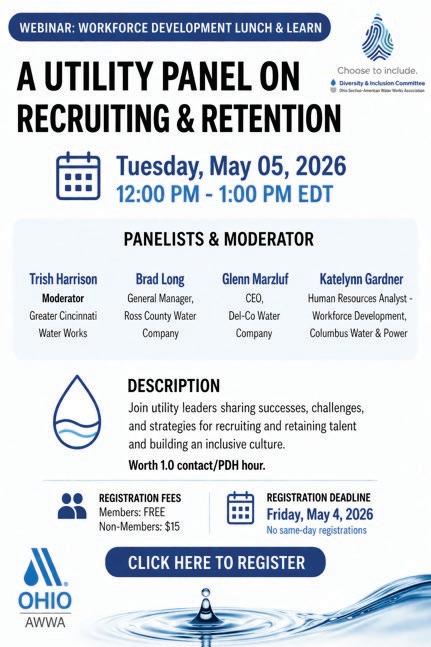
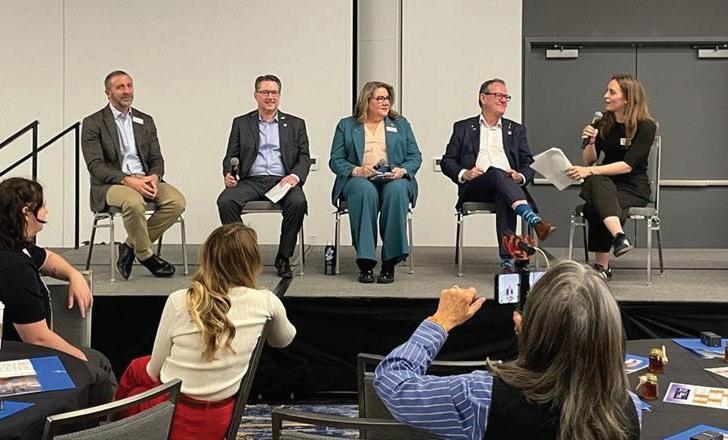
In celebration of AWWA’s National Drinking Water Week, the Ohio Section Diversity and Inclusion (D&I) Committee hosted an impactful Lunch n’ Learn webinar on May 5, 2026. The webinar was titled What We’ve Learned: A Utility Panel on Recruiting & Retention. This session brought together leaders from across the industry to tackle the most pressing challenge facing our sector: the future of the utility workforce.
The Panelists
Facilitated by Tricia Harrison (GCWW), the conversation featured diverse perspectives from various utility models:
• Katelynn Gardner | Human Resources Analyst - Workforce Development, Columbus Water & Power (Large Utility)
• Brad Long | General Manager, Ross County Water Company (Rural Water Communities)
• Glenn Marzluf | CEO, Del-Co Water Company (Private Utilities)
Strategies for Success
Despite their different utility sizes and structures, the panelists highlighted a shared mission to move the needle on workforce development. Key strategies discussed include:
• In-House Training: Bringing required training in-house to reduce costs per employee and significantly improve certification pass rates.
• Pathway Mapping: Laying out a clear promotional pathway for every position – showing employees where they start, where they can go, and exactly what is needed to get there.
• Perception: A major hurdle identified by the panel is the public perception of utility roles. Shifting the narrative from ‘low-skill’ to ‘highimpact.’ These are professional roles with real responsibility and great opportunities.
• Rural Utility Struggle: Small and rural utilities face the additional challenge of ‘brain drain,’ often losing trained employees to larger utilities within driving distance that can offer higher pay rates. Overall, the key points laid out by each panelist echoed the same sentiment which is consistent with the D&I Committee’s goals of valuing belonging. The panelists emphasized that culture and leadership are the bedrock of retention. To make employees feel valued and appreciated, utilities must provide:
• Competitive compensation and benefits.
• Access to resources for professional growth.
• Create and sustain a culture that would enable the employee to align with vision and strategy of the organization and choose to build a career with the organization
Diversity & Inclusion Committee Update
Key Takeaway
“Utilities cannot solve workforce issues through hiring alone; long-term success depends on developing, training, and retaining talent internally.”
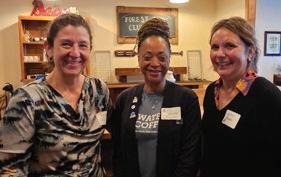
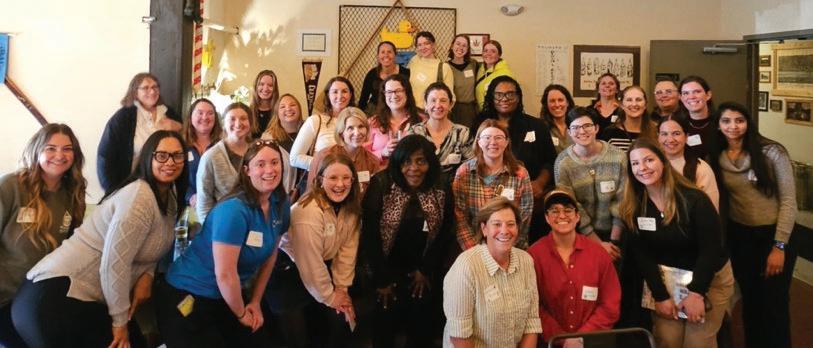
Ohio Section Women in Water Spotlight NE Ohio Women’s Networking Event Connection was the theme of the evening as nearly 50 women from across Northeast Ohio’s water industry gathered for the region’s inaugural Women in Water networking event at Forest City Brewery in Cleveland. Professionals representing drinking water, wastewater,
and stormwater organizations from the public, private, and nonprofit sectors came together to meet new colleagues, strengthen existing relationships, and share experiences across disciplines. The event demonstrated the power of bringing diverse perspectives together and laid the foundation for a growing network of women supporting one another throughout the region’s water community.
Join the Mission
The D&I Committee welcomes everyone who strives to become a changemaker in their workplace. If you would like to join the committee or participate in our next ‘Lunch n’ Learn,’ please contact the Committee Chair.
You’re facing challenges with lasting implications. We’re delivering world class solutions with lasting results. Tomorrow’s reality is unfolding today, and our forward-thinking approach will keep you one step ahead.
Know Your Member Benefits:
You’re a Member; Now Let Your Membership Work for You
Whether you joined to grow your network, sharpen your skills, or bring more value back to your organization, your membership opens the door to opportunities many members don’t fully take advantage of.
Here’s a quick look at three of the most valuable benefits available to you – and how to start using them right away.
Build Your Network (and Your Reputation)
Your membership connects you to a statewide and national network of water professionals who understand your challenges – and can help you solve them.
What this means for you:
• Meet peers, mentors, and future collaborators at section and national events
• Get involved in committees, districts, and councils shaping the industry
• Build visibility and leadership experience that supports career growth
Tip: Attending just one event or volunteering once a year can dramatically expand your professional circle.
Learn, Grow, and Stay Ahead
From frontline operators to executive leadership, members have access to highquality training and professional development designed specifically for the water sector.
Your benefits include:
• Member pricing on conferences, workshops, and webinars
• Access to technical resources, publications, and industry expertise
• Opportunities to present, publish, and share what you know Why it matters: Member discounts alone often offset the cost of dues, especially for training and events.
Maximize Value for Your Utility or Organization
If your employer is a utility or organization member, the value goes even further.
Organizational membership advantages include:
• Multiple included individual memberships that can transfer as staff change
• Member pricing for all employees, not just named members
• Access to utilityfocused resources, regulatory updates, and operational tools
Bottom line: One membership can benefit your entire team and support workforce development, retention, and compliance.
Start Using Your Benefits Today
Your membership is more than a line item; it’s a resource designed to support you and your organization
Explore upcoming training and events
Connect with a committee or district
Access memberonly tools and resources
Don’t leave value on the table. Visit the member welcome page to activate your benefits and find your next opportunity to get involved.
One membership can benefit your entire team and support workforce development, retention, and compliance.
Careers Start Here: YP Committee Update
National AWWA/WEF YP Summit 2026 – March 22–24, 2026
In March, around 400 YPs from across the country gathered for the two-day AWWA/WEF Young Professional Summit in Charlotte, North Carolina. Ohio Section AWWA had strong representation with 14 members in attendance. This year’s theme was ‘The Next Wave: Navigating Water Sector Currents.’ The summit focused on emerging topics within the water/wastewater industry and how YPs can better equip themselves to tackle challenges both within the industry and within their personal careers.
The event kicked off with a pre-summit tour of the McAlpine Creek Wastewater Management Facility. Built in the 1960s, the plant is the largest WWTP in North Carolina with an average day flow of 45 MGD and a peak flow of 215 MGD.
workplace dynamics, diversity and inclusion, burnout, emotional intelligence and the value of storytelling. Other sessions focused on trending technical issues within the water/wastewater industry including data centers, AI and water resource planning. YPs also participated in breakout sessions including the Emergency Action Plan challenge, where they collaborated on response strategies for a water main break from multiple perspectives, such as public relations, operations and maintenance, and engineering/regulatory.
YPC Past-Chair Dane Elliott moderating YP Summit panel ‘The Next Wave: Perspectives from WEF and AWWA Senior Leadership’ with John Albert, AWWA; Howard Carter, WEF; Heather Collins, AWWA; Ralph Exton, WEF (pictured left to right).
Another highlight of this year’s summit was the Water Circuit challenge, a fastpaced, experimental learning session with hands-on activities designed to expand participants’ technical knowledge while also networking with other YPs.
Check out some of the testimonials from several of our OAWWA YPs below:
“Attending the summit was a valuable experience that allowed me to continue my development of professional and leadership skills, as well as interpersonal relationships with others in the industry.
The Summit gets YPs excited about Water which attracts future young leaders to the industry who want to get more involved/give back to OAWWA.”
–Miranda Scheitlin
“Engaging with dedicated and passionate young professionals from across the country continues to give me confidence in the future of our industry. Despite ongoing challenges such as lead, PFAS, workforce shortages, and emerging issues yet to be identified, it is clear that the next generation of leaders is prepared to collaborate, innovate, and address these obstacles head-on.” –Jake Logan
District Events
SE District
Happy Hour at Seventh Son Brewing –April 2, 2026
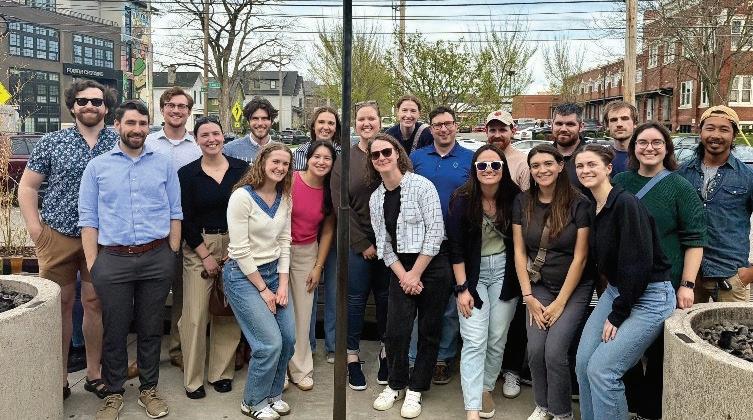
In April the SE District YPs hosted an evening happy hour for YPs to network and connect with each other.
SE District YPs connecting at Seventh Son Brewing in Columbus.
YPs heard from industry leaders on navigating career challenges including leadership, growth, generational and
“It was a fantastic opportunity to network with others from around the country and understand how others approach emerging challenges. I also was able to talk about water reuse with people from states with more developed regulations, which was very helpful for me as I dive into reuse along with many in Ohio. I made sure to get contact information to follow up and stay in contact!” –Matous Becker
Columbus Zoo Tour – May 12, 2026
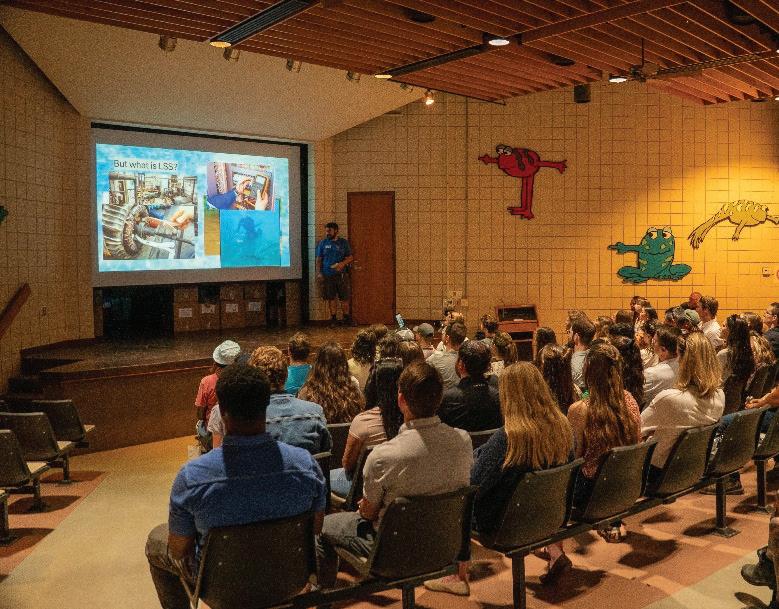
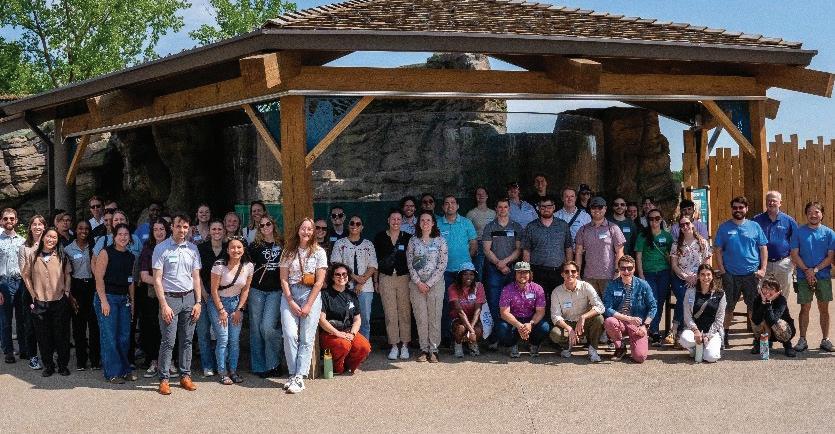
In May YPs attended a tour of the Columbus Zoo North American Trek Exhibit. The event included a presentation on the essential Life Support Systems that are in place to ensure animals thrive in their aquatic habitats. After the presentation, YPs toured the water treatment systems in place for the North American River Otter exhibit.
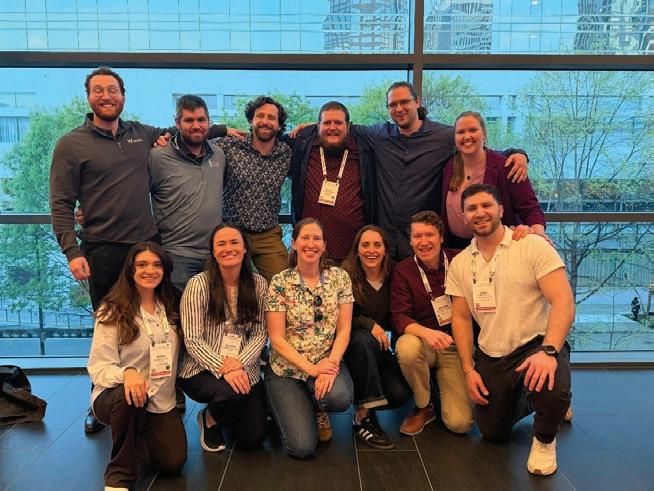
OAWWA YP members at the WEF/AWWA YP Summit in Charlotte, NC.
Effluent discharge at McAlpine Creek Wastewater Management Facility, Charlotte, NC.
OAWWA
Careers Start Here: YP Committee Update
SW District
GCWW Bolton Treatment Plant Tour –February 19, 2026
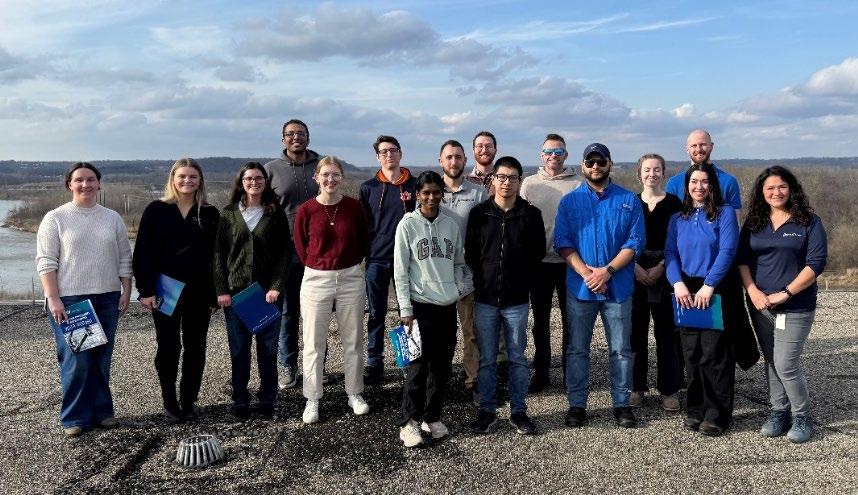
In February, SW District YPs attended a tour of the GCWW Bolton Treatment Plant. This groundwater facility draws from the Great Miami aquifer and supplies about 12% of GCWW’s drinking water.
NW District
Ottawa County Regional WTP Tour –March 27, 2026
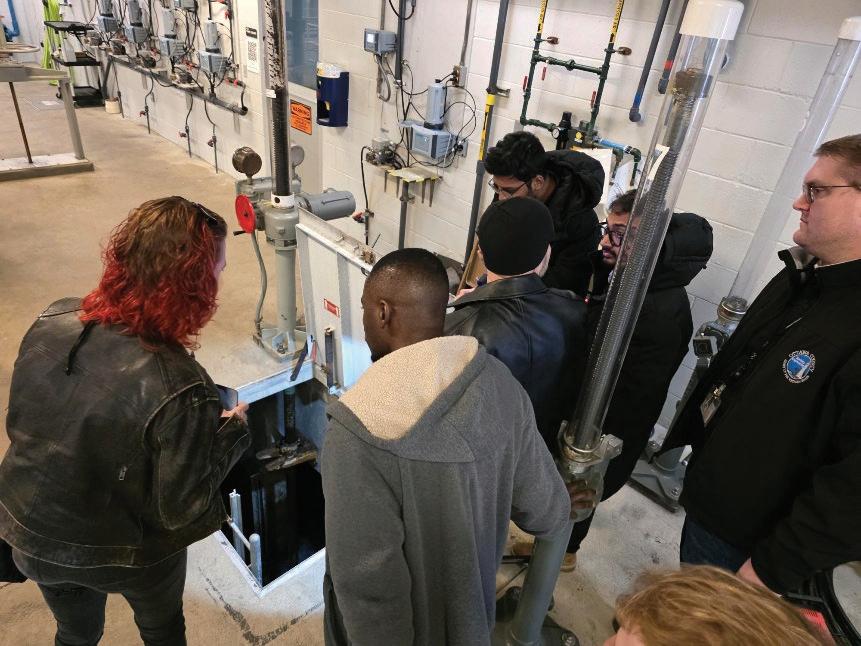
In March, the NW District organized a tour of the Ottawa County Regional WTP. The tour highlighted the various treatment technologies used to provide water to Ottawa County.
NE District
Akron Public Schools STEM EXPO Judging – March 7, 2026
In March, NE District YPs volunteered to judge the 70th Annual STEM EXPO hosted by Akron Public Schools. Volunteers had the privilege of interacting with a variety of student projects including a water filter, data center cooling prototype, and solarpowered lantern.
CVNP YP Hike – May 9, 2026
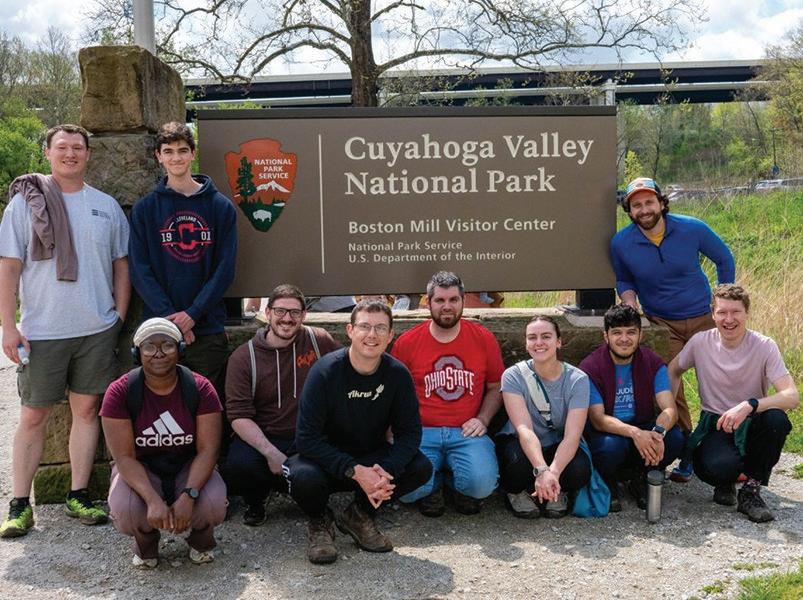
In May, the NE district hosted a social hike through the Cuyahoga Valley National Park and enjoyed the beautiful spring weather!
SE District YPs learning about the Life Support Systems at Columbus Zoo North American Trek Exhibit.
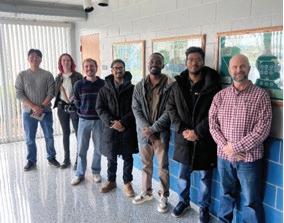
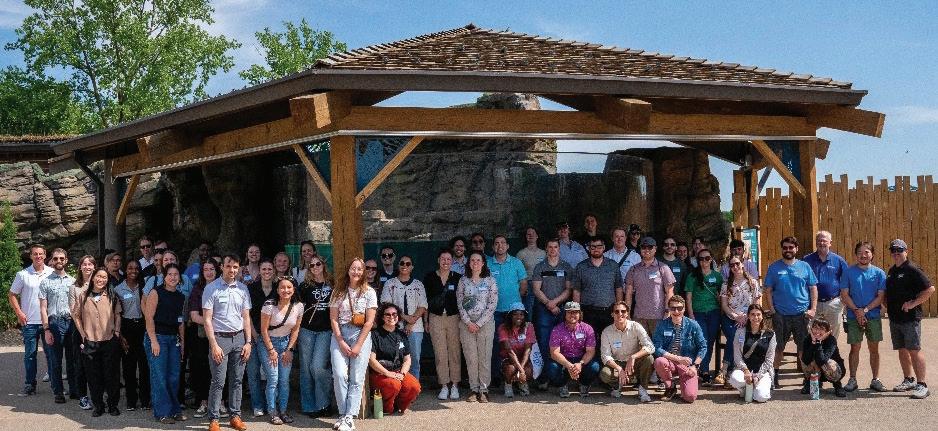
SE District YPs gather in front of the river otter exhibit at the Columbus Zoo.
SW District YPs at the GCWW Bolton Treatment Plant Tour.
NW District YPs at the Ottawa County Regional WTP.
NW District YPs get a behind-the-scenes look at WTP operations.
Student project booths at the STEM EXPO.
NW District YPs gather for a hike through Cuyahoga Valley National Park.
SE District YPs gather in front of the river otter exhibit at the Columbus Zoo.
Got an Idea?
Get Published in Waterfront!
Do you have a fresh perspective, a success story, or a challenge you’ve tackled in the water industry? Waterfront, the Ohio Section AWWA newsletter, is looking for contributors like you! Whether you’re an industry veteran or a first-time writer, this is your opportunity to share insights, highlight innovations, and spark discussions that move the water sector forward.
What We’re Looking For
You don’t need to be a professional writer, just someone with experience, research, or insight to share. Articles should provide valuable industry insights, technical expertise, or real-world experiences, focusing on knowledge-sharing rather than product promotion or marketing. We welcome a wide range of topics, including:
• Technical Innovations & Industry Trends –Emerging technologies, case studies, and research
• Leadership & Workforce Development –Training, mentorship, and talent retention
• Community Engagement & Public Trust –Outreach, customer education, and partnerships
• Policy & Economics of Water – Infrastructure funding, regulatory updates, and industry challenges
If you have an interesting project, unique perspective, or valuable lesson learned, we want to hear from you!
Submission Categories – Choose What Works for You!
We offer flexible options to match your topic and level of detail.
• Quick Takes (500–1,000 words, one to two pages): Brief insights, industry observations, or lessons learned, such as case studies, emerging trends, or practical best practices.
• Feature Articles (1,500–2,500 words, three to five pages): In-depth explorations of projects, workforce challenges, leadership strategies, or policy insights.
• In-Depth Reports (2,500–3,000 words, five to six pages): Comprehensive research, major case studies, or data-driven analyses with visuals and technical details.
Upcoming Deadlines
Want to be featured in an upcoming issue? Plan ahead with these key dates:
Submissions are reviewed on a rolling basis but earlier is always better to ensure consideration.
Why Contribute?
• Share your perspective with Ohio’s water professionals
• Gain visibility in the industry and establish yourself as a thought leader
• Help shape the future by inspiring discussions on key issues
First-Time Writers Welcome!
Never written for a publication before? No problem! We encourage first-time contributors and can help guide you through the process. We welcome submissions from professionals at all levels. Contact the Waterfront editor at julia@kelman.ca if you need assistance in writing or idea workshopping.
How to Get Started
Have an idea but not sure where to start? Let’s talk! Submit a brief summary of your idea to info@oawwa.org and we’ll help you bring it to life.
Take this opportunity to share your voice, make an impact, and get published in Waterfront!
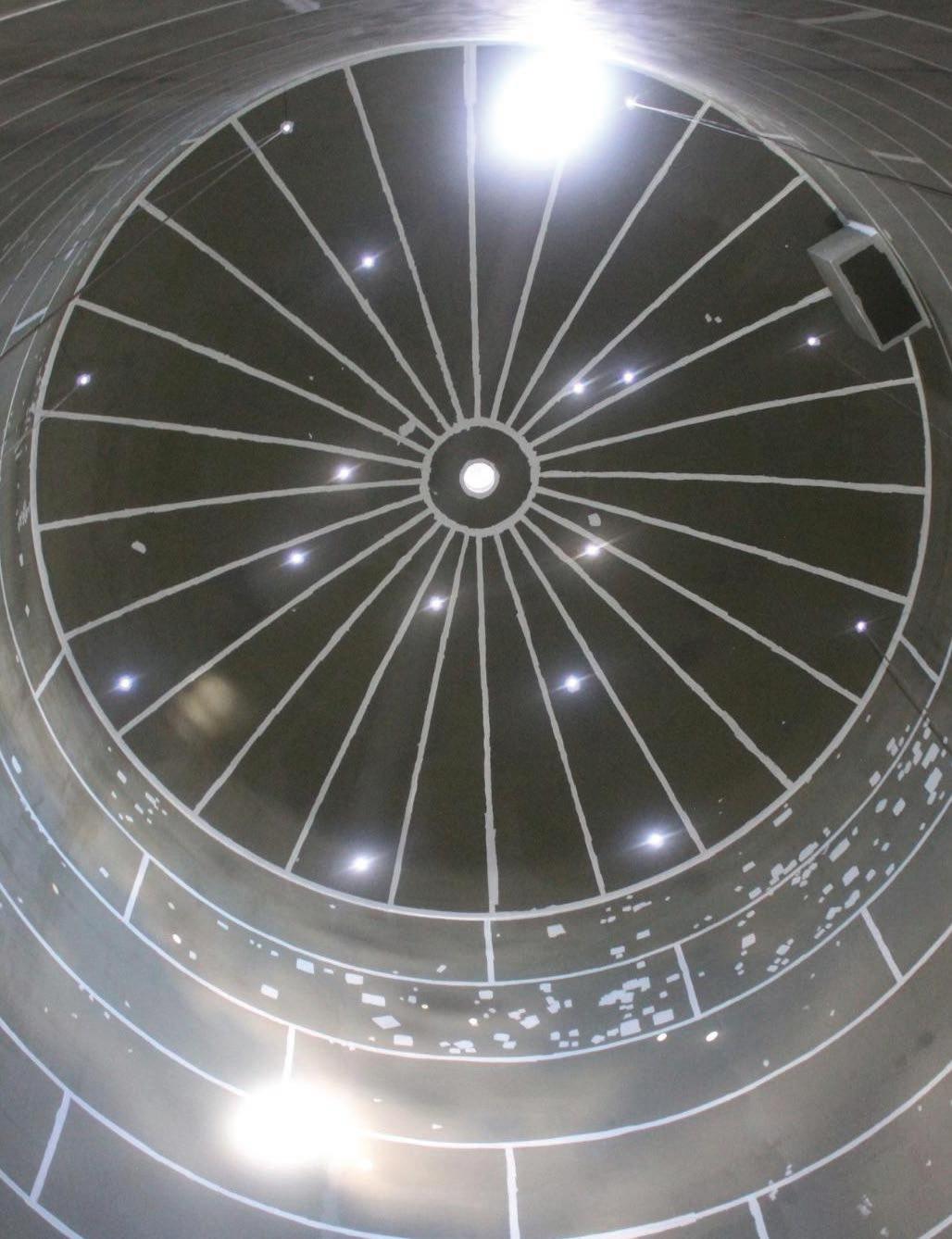
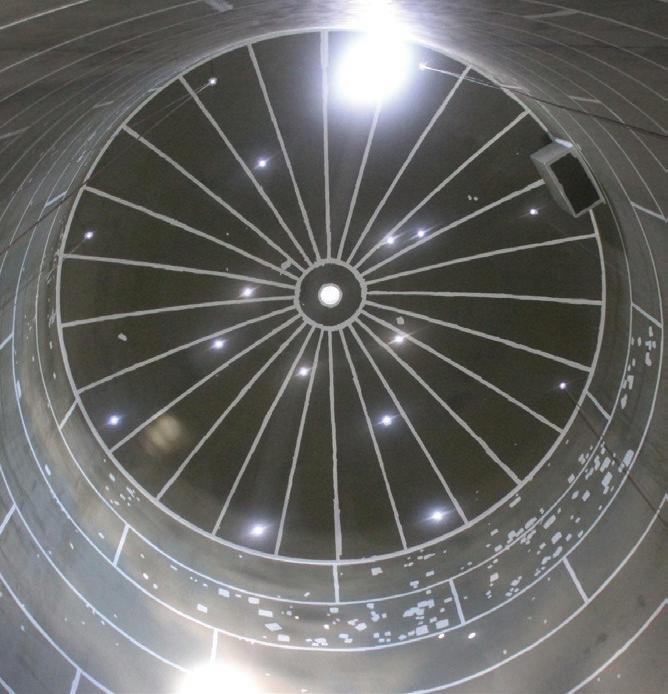
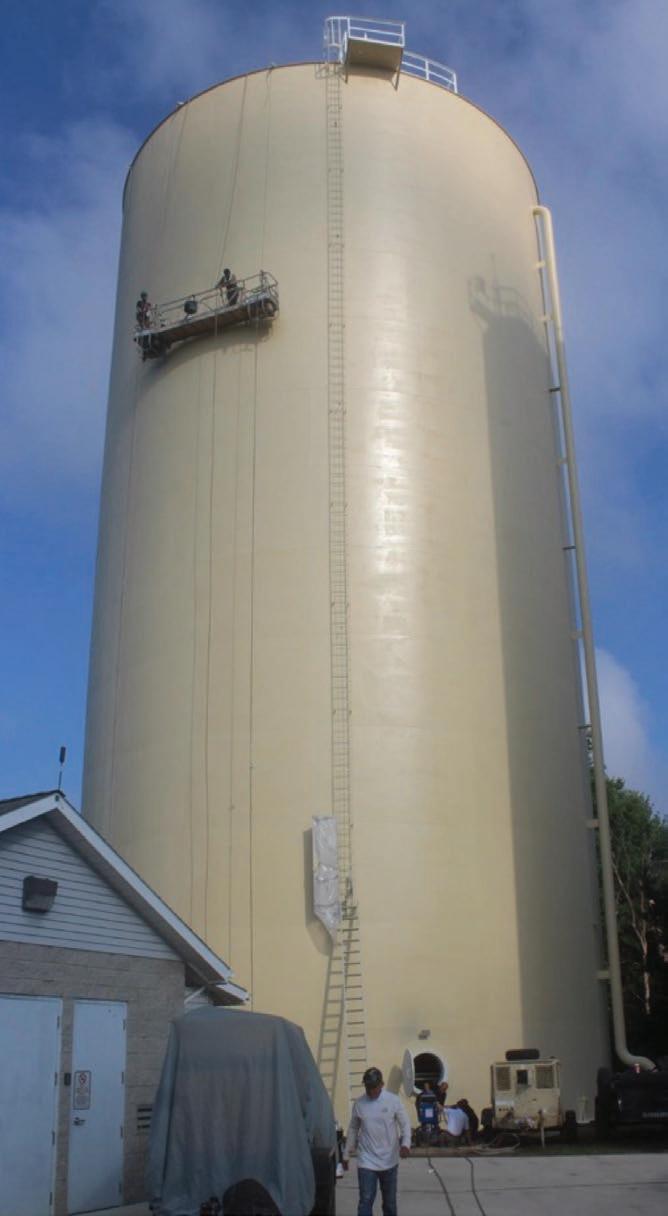
Re thinking Efficiency on a Two-Million-Gallon Tank Recoat
By Rob Burckley, Induron Technical Sales & Service Manager
Large-scale water infrastructure projects rarely leave much room for inefficiency. When Aqua Ohio scheduled a full blast and recoat of its two-milliongallon Mentor Baxter West standpipe, the scope alone set the tone: tens of thousands of square feet, tight timelines, and the expectation of long-term performance in a critical asset.
For the crew at Seven Brothers Painting, the challenge wasn’t just the size of the structure – it was navigating the practical realities that come with applying thick-film, high-performance coatings in the field.
The Reality of High-Solids Coatings in the Field
Within the coatings industry, 100% solids epoxy systems are widely recognized for their durability and barrier protection. But their application often comes with tradeoffs that contractors know all too well.
Plural-component spray systems, commonly required for these materials, introduce a layer of complexity that can quickly impact a project’s schedule and budget.
As a result, crews are often forced to weigh performance benefits against logistical risk.
A Shift in Approach
On the Mentor Baxter West project, the coatings system followed a familiar structure: a multi-layered exterior system designed for durability, paired with a corrosion-resistant interior lining intended to protect the tank’s long-term integrity.
• Exterior: Spot PE70, full coat PE70, followed by two coats of Indurathane 6600+
• Interior: Indurazinc MC67, stripe coat PE70, and finished with PermaClean 100 SL
• Foundation: Two coats of PE70 What stood out wasn’t necessarily the specification itself, but how the interior lining was applied.
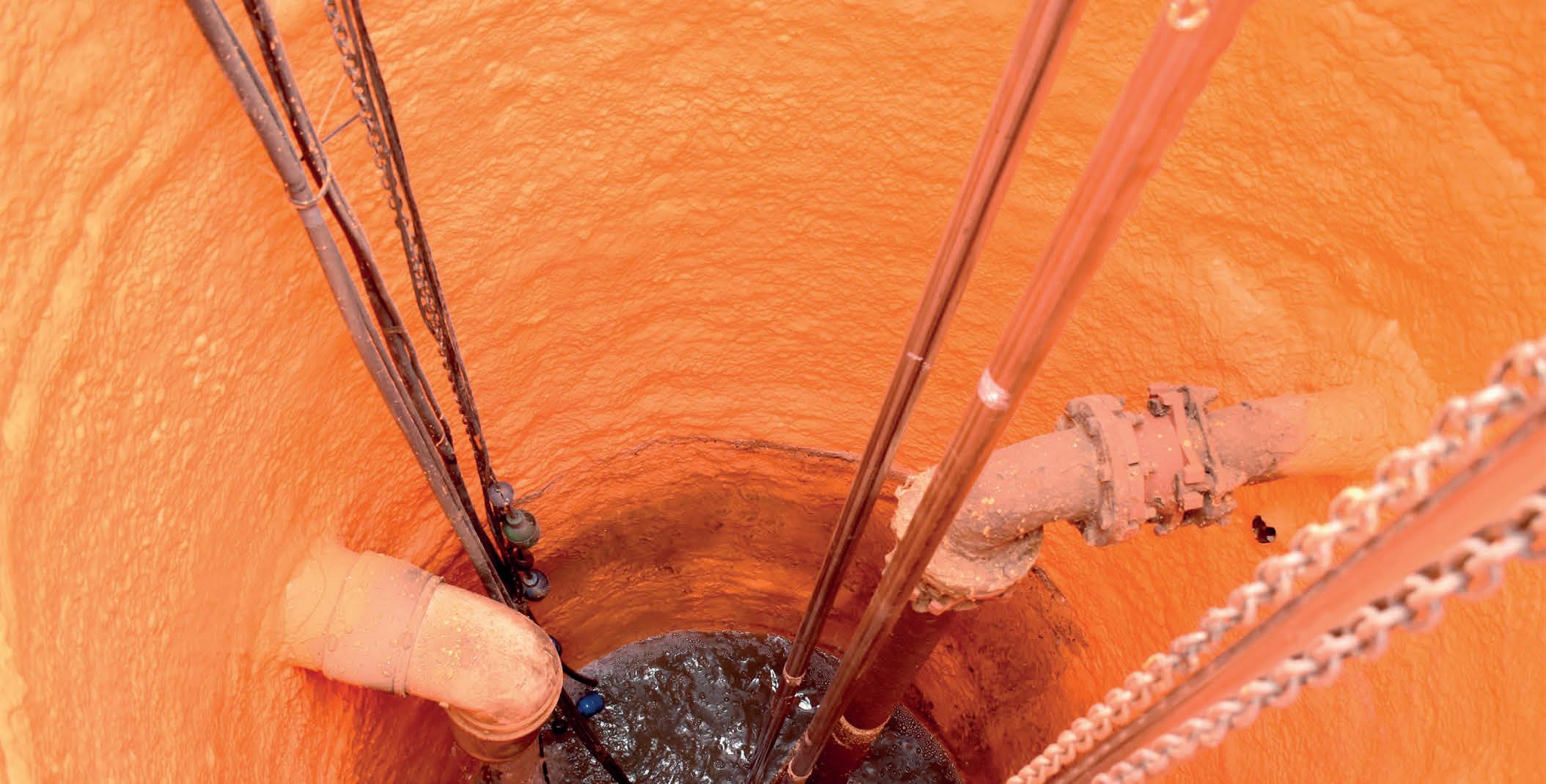
By using Induron’s Perma-Clean 100 SL, the team avoided thousands of dollars in pump and technician fees –while still getting the long-term barrier protection their assets demand.
Rather than relying on more complex spray equipment, the crew was able to complete the application using standard airless spray systems already on hand. That shift removed several common variables – no additional equipment mobilization, no calibration concerns, and fewer potential points of failure.
One Day, 25,500 Square Feet
With staging complete and conditions favorable, the Seven Brothers Painting team moved forward with the interior lining application.
By the end of the day, approximately 25,500 square feet of interior surface area had been coated inside the standpipe.
Fewer technical hurdles can translate directly into increased productivity –especially when crews are working in challenging conditions, including high temperatures that can complicate timing and workflow.
The Bigger Picture Projects like this highlight an ongoing shift within the protective coatings industry. While performance will always remain the top priority, there’s growing recognition that application efficiency plays a critical role in overall project success.
Reducing complexity doesn’t just make life easier for contractors – it can also help owners better manage costs, minimize downtime, and extend the lifecycle of critical infrastructure without introducing unnecessary risk.
In the case of Aqua Ohio’s Mentor Baxter West standpipe, the result was a straightforward, well-executed recoat –one where the process aligned as well as the performance.
And in an industry where so many variables are outside of your control, those are the jobs that tend to stand out.
Subject to change. Check www.oawwa.org/calendar-of-events for the most up-to-date information.
Advertiser Product & Service Center
A&H Equipment Co.
Waterfront is made possible by the companies below who convey their important messages on our pages. We thank them for their support of OAWWA and its publication and encourage you to contact them when making your purchasing decisions. To make it easier to contact these companies, we have included the page number of their advertisement, their phone number, and, where applicable, their website.
AUMA Actuators, Inc. 9 724-743-2862 www.auma.com B.L. Anderson 8 513-889-4746 https://blanderson.com
Bennett & Williams Environmental Consultants, Inc. 43 614-882-9122 www.bennettandwilliams.com
Best Management Products, Inc. 12 888-434-0277 https://bmpinc.com Bingham and Taylor LLC 4 540-825-8334 bandt-us.com
BissNuss, Inc. 43 330-533-5531 www.bissnussinc.com
CDM Smith, Inc. 38 312-346-5000 cdmsmith.com
Cla-Val 3 440-523-0496 www.cla-val.com Commerce Controls, Inc. 10 248-476-1442 www.commercecontrols.com/index.html
Dixon Engineering, Inc. 43 800-327-1578 www.dixonengineering.net
Fishbeck 36 800-456-3824 https://fishbeck.com
Franklin Miller, Inc. 24 973-535-9200 www.franklinmiller.com
Garney Construction 34 816-741-4600 www.garney.com
Giant Maintenance & Restoration, Inc. 48 847-566-9188 www.giant2u.com
Gorman-Rupp Company 14 419-755-1011 www.gormanrupp.com/en/gorman-rupp
GPD Group 48 800-955-4731 https://gpdgroup.com
Hawkins Water Treatment Group 16 877-839-3777 www.hawkinsinc.com/groups/water-treatment
Hazen and Sawyer 31 513-469-2750 www.hazenandsawyer.com
HDR Engineering, Inc. 48 614-839-5770 www.hdrinc.com
Induron Coatings, Inc. 11, 45 800-324-9584 502 548-2518 www.induron.com
Jacobs 36 614-888-3100 www.jacobs.com
Jones & Henry Engineers, Ltd. 44 419-473-9611 https://jheng.com
LB Water Service, Inc. 16 570-374-2355 https://www.lbh2o.com