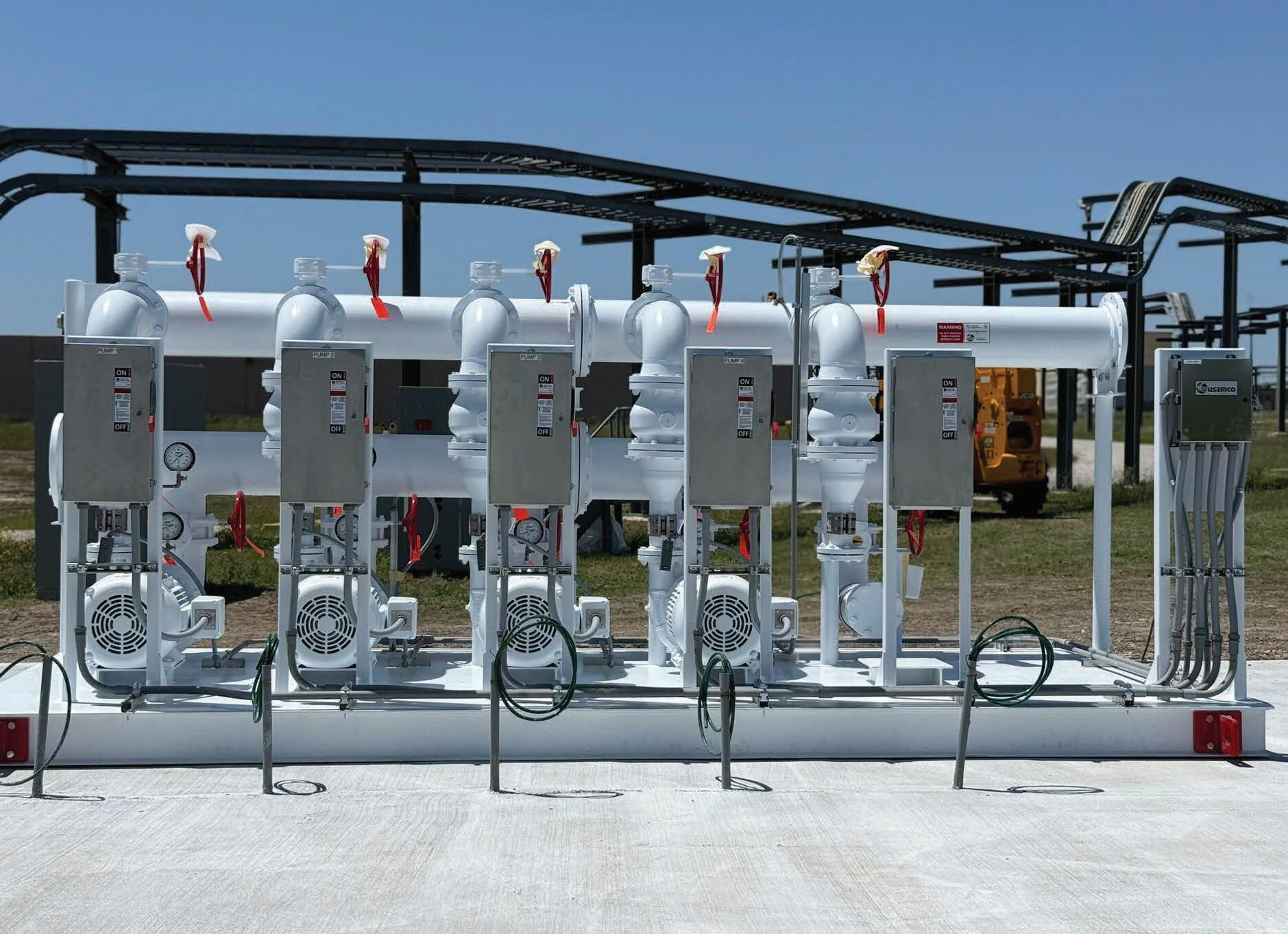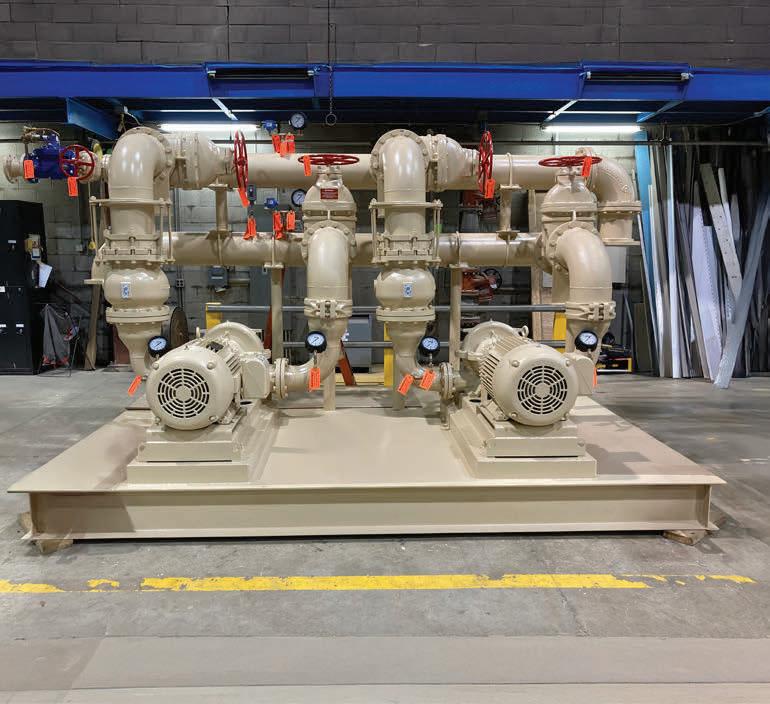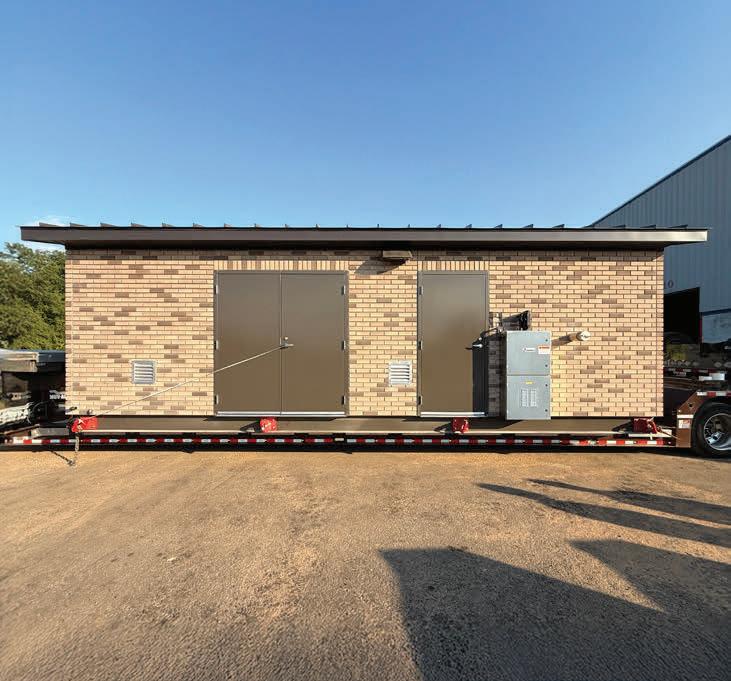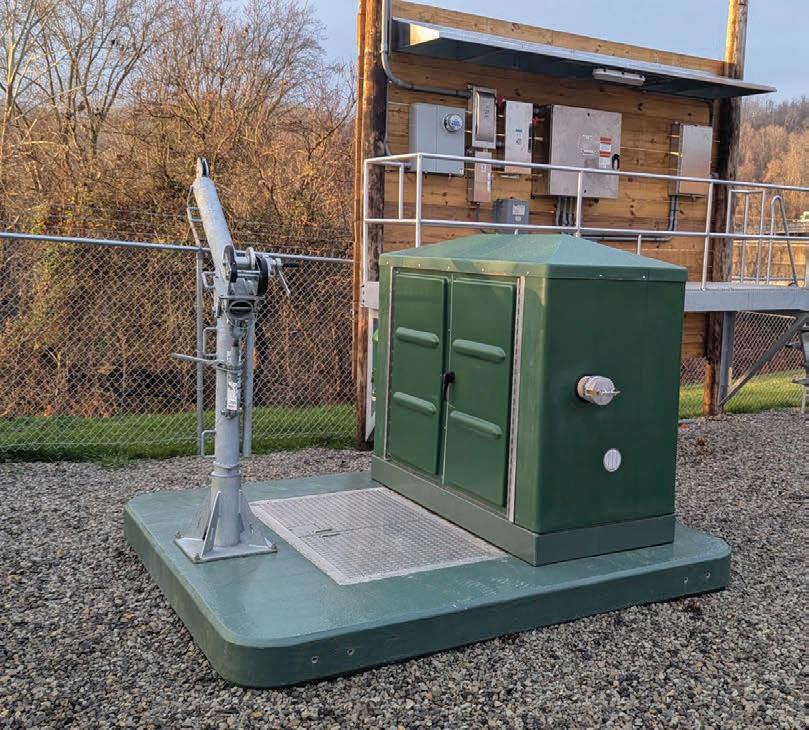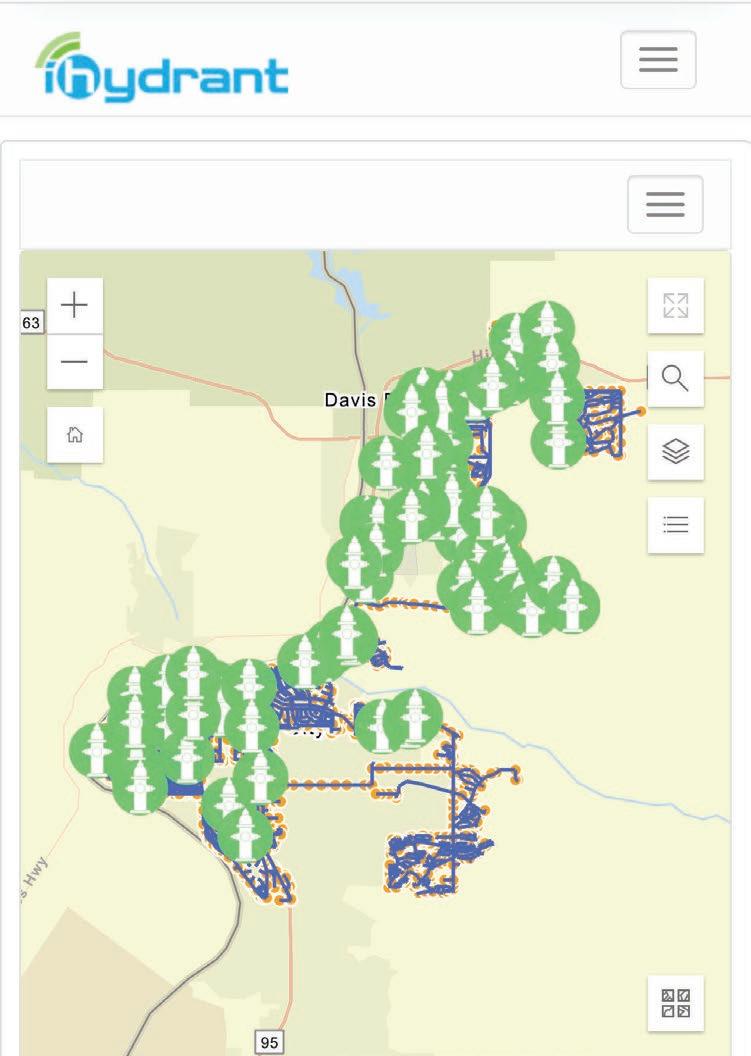
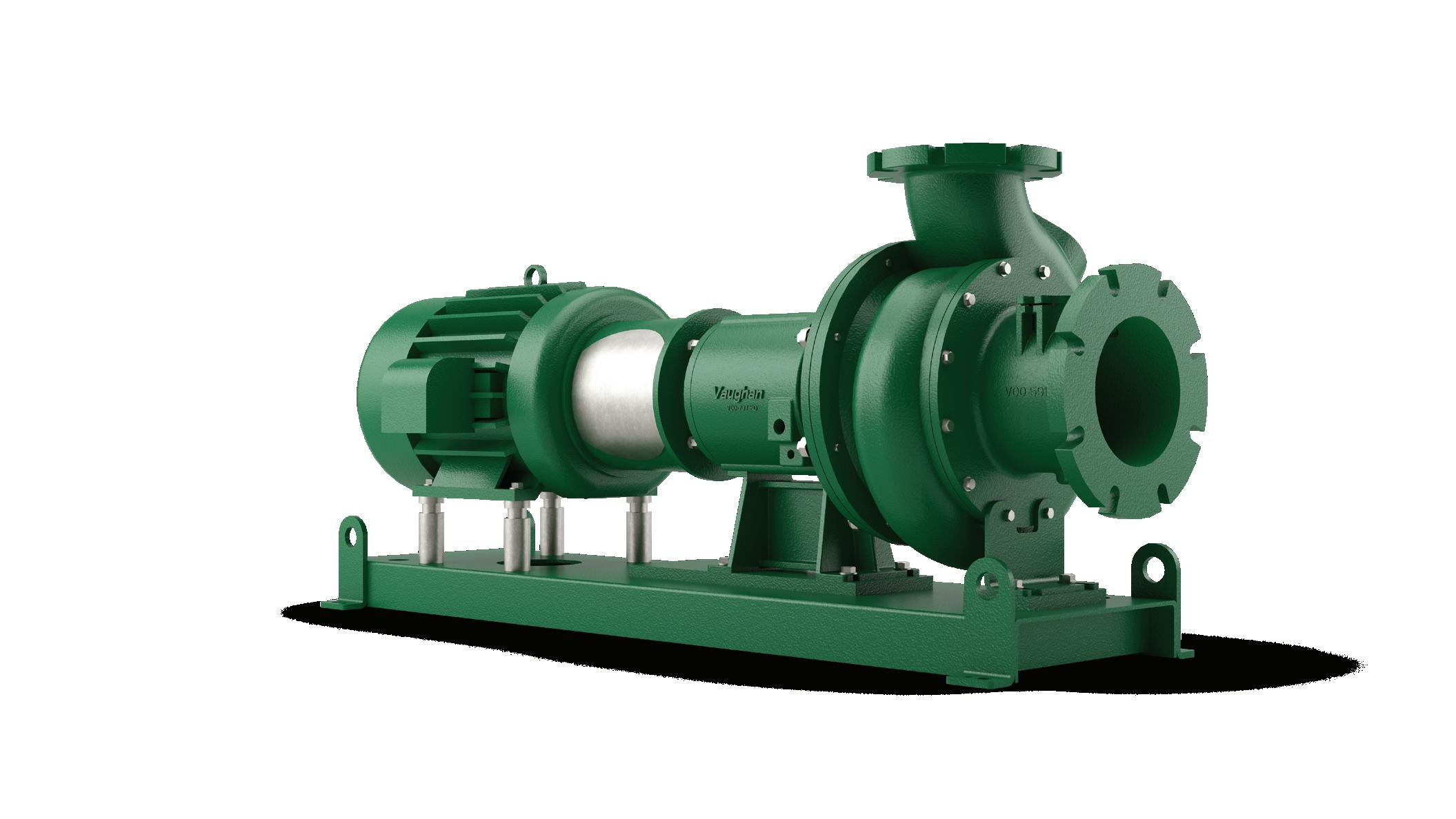
At Johnston Pump, reliability isn’t a feature, it’s our foundation. Since 1907, we’ve delivered rugged, high-performance pumps that keep systems running smoothly and customers worry-free.
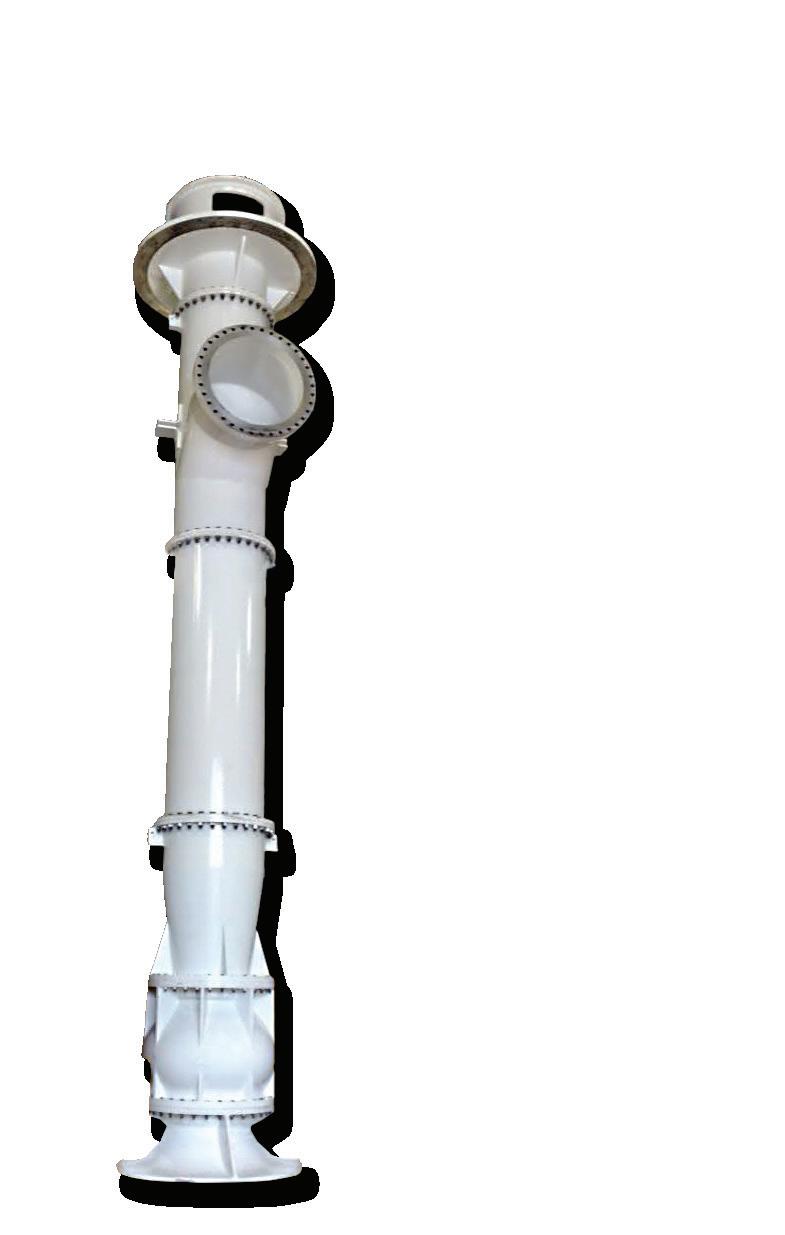
We understand what’s at stake, which is why every Johnston pump is engineered for durability, backed by expert support, and available as Build America, Buy America compliant so you can move forward with confidence and compliance from day one.
Learn more about Johnston Pump trusted-johnston

Represented locally by: Phone: 800-749-3669
Website: www.hydraservice.net
Email: trey@hydraservice.net
Debris, deterioration and hard water make water meters unreliable over time. New smart meters can quickly detect leaks and provide precise readings for more accurate billing, but the upfront purchase and installation costs can be daunting. Leasing can help.
Leasing lowers the initial cash outlay for your project with payments spread out over a 10-year period, making it more budget friendly while aligning with most meter warranties. Leasing allows you to start and finish your project sooner so you can increase your revenue faster.
Learn how leasing water meters and other equipment can make a difference.
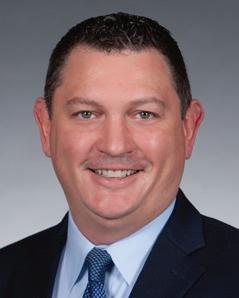
Michael Griffiths Senior Relationship Manager









Alabama Rural Water Association is a non-profit organization representing water and wastewater systems serving rural communities and towns and commercial firms which support these systems.
We provide assistance to comply with State and Federal regulations, to help with management and operational problems, and to stimulate training initiatives.
The Waterline is published by: Tel: 866-985-9780
Fax: 866-985-9799
www.kelmanonline.com
Managing Editor: Lauren Drew, lauren@kelman.ca
Layout & Design: Kiersten Drysdale
Marketing Manager: Rod Evason, rod@kelman.ca
Advertising Coordinator: Stefanie Hagidiakow
©2026 Craig Kelman & Associates. All rights reserved. The contents of this publication may not be reproduced in whole or in part without the express consent of the publisher.


ROB WHITE, EXECUTIVE DIRECTOR, ALABAMA RURAL WATER ASSOCIATION
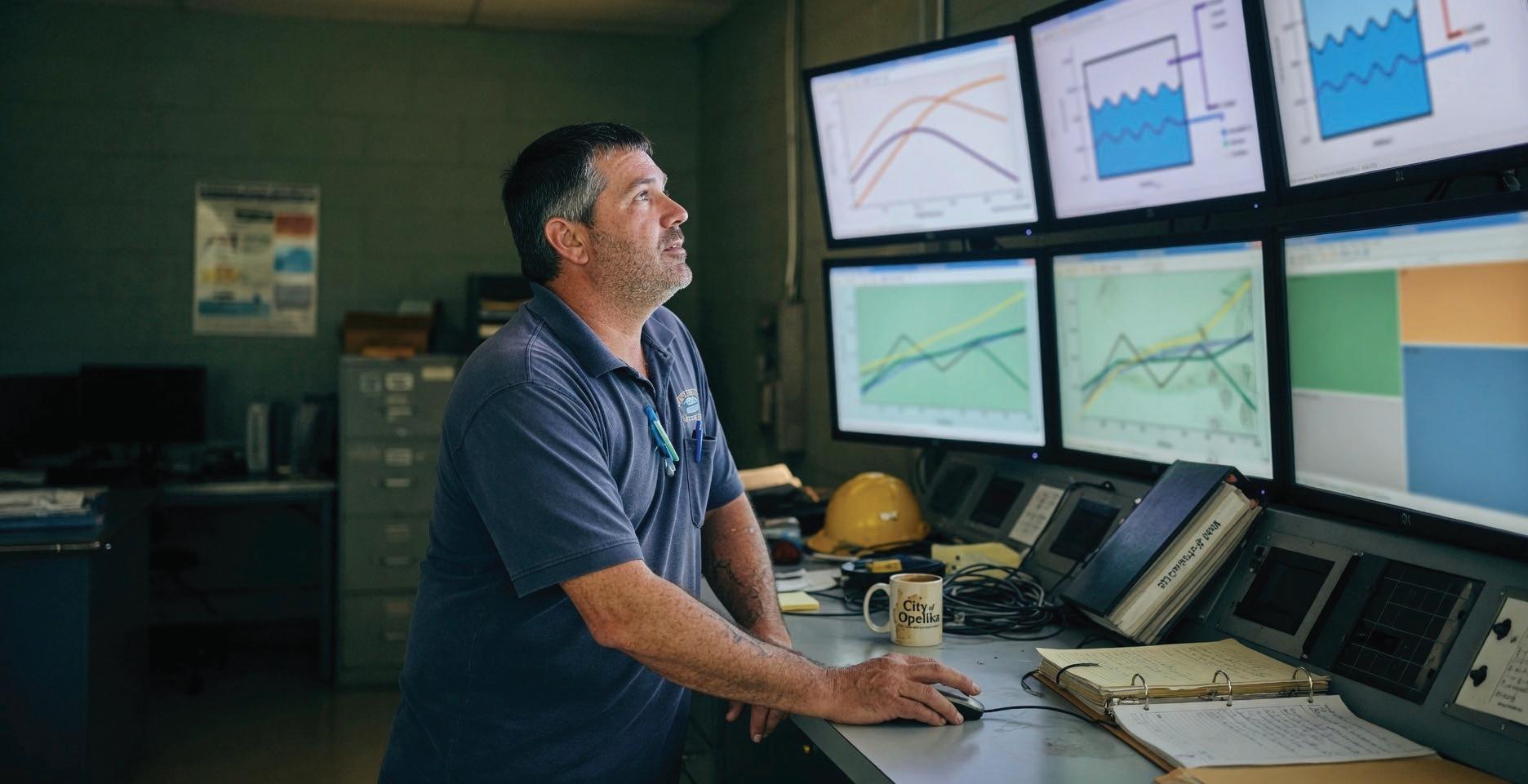
Afew years ago, “artificial intelligence” was something most of us associated with science fiction or Silicon Valley. Today it’s in the software that runs our SCADA systems, in the customer-service chatbots on utility websites, in the phones in our pockets, and increasingly in the products our vendors are bringing to market. Whether or not your system has gone looking for AI, AI is coming to your system. So, I want to use this space to talk plainly about what that means for rural water in Alabama: the real promise, the real dangers, and the handful of things every one of us should be doing about it right now.
Let me start with the good news, because there is plenty of it.
The honest truth is that “AI” is mostly a fancy name for software that finds patterns in data faster than a person can. And our industry runs on data: flows, pressures, chemical feed rates, run times, energy use, water quality results. When you point pattern-finding software at that data, useful things start to happen.
The clearest example is predictive maintenance . Instead of running a pump until it fails at 2 am on a holiday weekend, sensors and analytics can flag the vibration or temperature changes that warn of trouble days or weeks ahead, letting you schedule the repair on your terms instead of the failure’s. The same
idea applies to leak detection and non-revenue water : acoustic sensors paired with smart analysis can pinpoint a leak in a buried main long before it surfaces in the road, saving water, money, and a lot of overtime.
AI is also getting good at process optimization , fine-tuning chemical dosing and pumping schedules to hold your water quality while trimming the chemical and energy bills, which for many systems are the two biggest line items after payroll. And it can take a real bite out of paperwork: pulling monthly operating reports together, drafting Consumer Confidence Reports, and flagging compliance issues before they become violations.
AI is mostly a fancy name for software that finds patterns in data faster than a person can. And our industry runs on data.
But the application I think about most has nothing to do with chemicals or pumps. It’s knowledge . Our industry is staring down a workforce cliff: a generation of operators and managers who carry decades of hard-won, undocumented know-how is heading for retirement, and they’re walking out the door faster than we’re replacing them. Used wisely, these tools can help us capture some of that institutional memory and put it within reach of the new operator who’s three weeks into the job and standing in front of a plant nobody had time to fully explain. That’s not replacing people. That’s helping people.
Now the dangers, and the biggest one is not what you’d expect
For all that promise, I’d be doing you a disservice if I painted only the rosy picture. The dangers are real, and the biggest one is cybersecurity
Water and wastewater systems are designated critical infrastructure, and that makes us targets. This isn’t theoretical. In 2021, an attacker remotely accessed the controls at a treatment plant in Oldsmar, Florida, and tried to spike the sodium hydroxide to dangerous levels, caught only because an operator happened to be watching his screen. In late 2023, a water authority in Aliquippa, Pennsylvania, had a pressure-control station hijacked by an attacker exploiting an internet-exposed industrial controller. Federal agencies have warned repeatedly that small utilities are being probed because attackers know we’re often short on IT staff and budget. Here’s where AI changes the math: it lowers the barrier for the attacker.
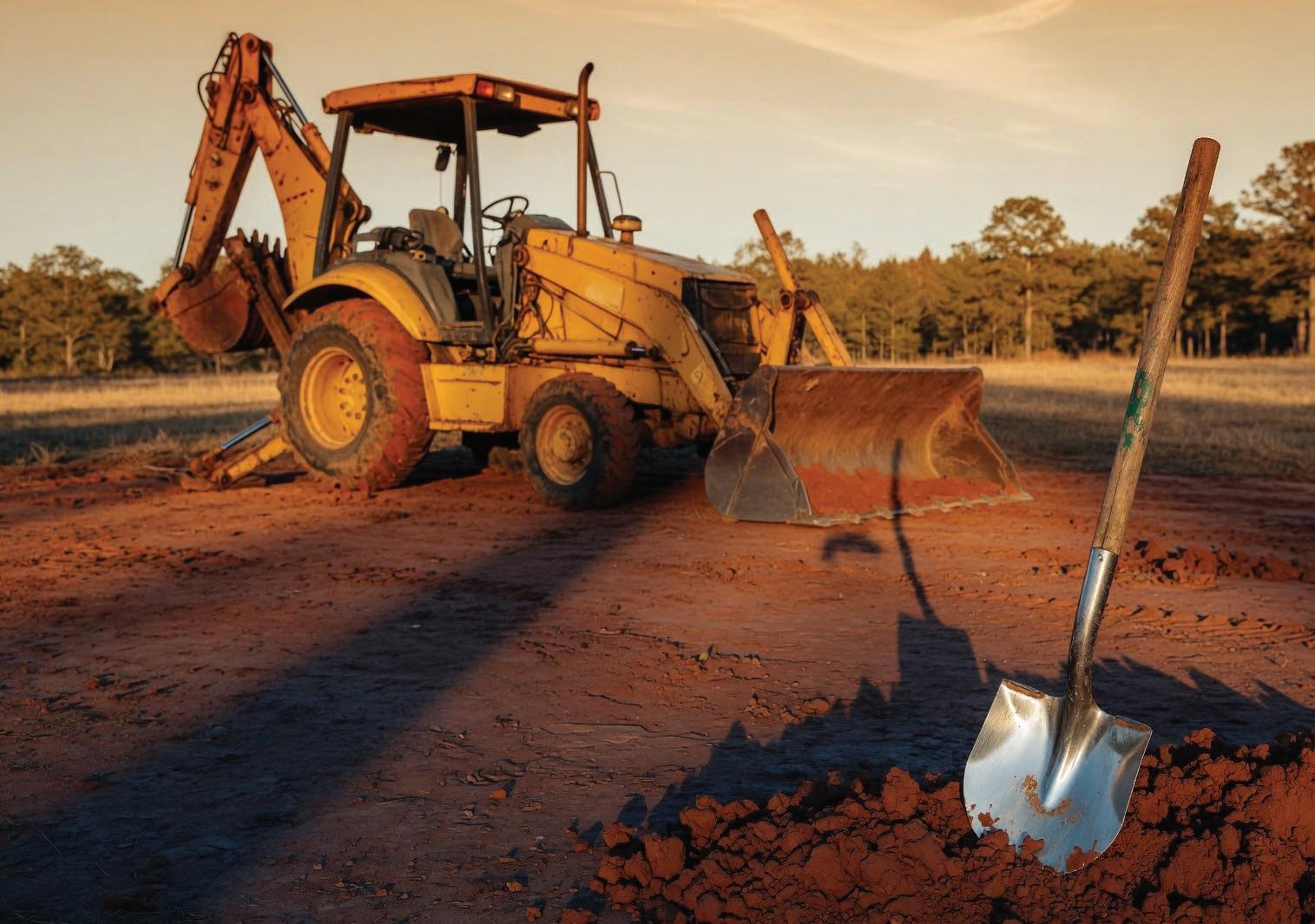
AI doesn’t replace your judgment. It hands you a bigger shovel.
Nobody climbs through a perfectly good backhoe to dig with a shovel. A better tool has never once diminished the hand that runs it.
The same pattern-finding power that helps us also helps them, automating the hunt for exposed systems, writing more convincing phishing emails, even cloning a voice. Picture a call to your office that sounds exactly like a manager or a trusted vendor, instructing a clerk to change a setting or wire a payment. That technology exists today, and it’s getting cheaper and better.
The second danger is quieter but just as important: over-reliance . AI tools sound confident even when they’re wrong. They will give you a clean, well-written answer to a regulatory question that is flatly incorrect. They will optimize a process beautifully based on a sensor that’s been drifting out of calibration for a month. Garbage in, garbage out. And here’s the part no software vendor will put in their brochure: when something goes wrong, the AI doesn’t lose its license. You do. The certified operator is still the person legally and morally responsible for the water leaving that plant. A tool can inform your
The same pattern-finding power that helps us also helps the people trying to get into our systems. AI lowers the barrier for the attacker.
judgment. It can never replace it, and it will never be the one holding the license.
There’s an opposite mistake I see just as often, and it’s worth naming. Some of the best operators I know want nothing to do with new tools, because they worry that leaning on technology somehow makes them less skilled, less valuable, less needed. I understand the instinct, but it’s backwards. A better tool has never once diminished the person running it. Nobody thinks less of the hand who digs with a backhoe instead of a shovel. Climbing through a perfectly good backhoe to grab a shovel because the backhoe feels like cheating doesn’t make you a better operator. It just gets you a smaller hole and a longer day. AI is the same. It doesn’t replace your judgment; it hands you a bigger shovel. The operator who learns to use these tools well becomes more valuable to a system, not less, because judgment applied to good information is worth far more than judgment applied to a guess.
I’ll say the same thing about the services this Association offers, because I run into the exact same thinking. Turning down help that would make you better at your job has never once made anyone better at their job. Using the best tool available is not a knock on your ability. It is your ability.
What every system should be doing right now
I don’t say any of this to scare you off technology. I say it because the systems that come through this era strongest will be the ones that adopt these tools deliberately, not blindly. A few practical things: Get the cyber basics right first. You don’t need to understand AI to defend against it. Use multi-factor authentication. Change default passwords. Do not expose your control systems directly to the internet. Keep your operational technology network separate from your office network. These unglamorous steps stop the overwhelming majority of attacks.
Keep a human in the loop. Let AI recommend; let your licensed operator decide. Build in the habit of verifying what the software tells you against your own instruments and your own experience. Lean on the resources you already pay for. ARWA’s Circuit Riders are here to help you think through these decisions,
The systems that come through this era strongest will be the ones that adopt new tools deliberately, not blindly, and that never stop investing in their people.
and we’ll be expanding our training in this area. Nationally, the EPA, CISA, and WaterISAC offer free cybersecurity assessments and guidance built specifically for small water systems. And if you’re a system required to keep your Risk and Resilience Assessment current under America’s Water Infrastructure Act, this is exactly the kind of risk it’s meant to address. Call us before you sign a contract, not after.
Where that leaves us
I’ll be straight with you: that’s a lot landing on the desks of utilities that, in many cases, are run by a handful of dedicated people wearing every hat there is. But I’ve spent enough years around Alabama’s rural water professionals to bet on you every single time. New tools don’t change what this

Get the Best Treatment™ from a partner who has served the industry since 1991.
• Over 57,000 products from leading brands
• Fast nationwide shipping
• Unsurpassed customer service
• Free expert technical advice
• Satisfaction guarantee
In the lab, plant and field, USABlueBook is your trusted ally in all things water and wastewater.
work has always been about: protecting public health, being good stewards of our customers’ money, and showing up when the community needs us.
AI is going to be an enormous help to those goals if we’re smart about it, and a real hazard if we’re careless. The difference will come down to the same thing it always has: trained, thoughtful people making good decisions. That’s exactly what this Association exists to support, and it’s exactly what we intend to keep doing.
As always, we’re here. Call us.
Quality on tap,
Rob White Executive Director Alabama Rural Water Association


























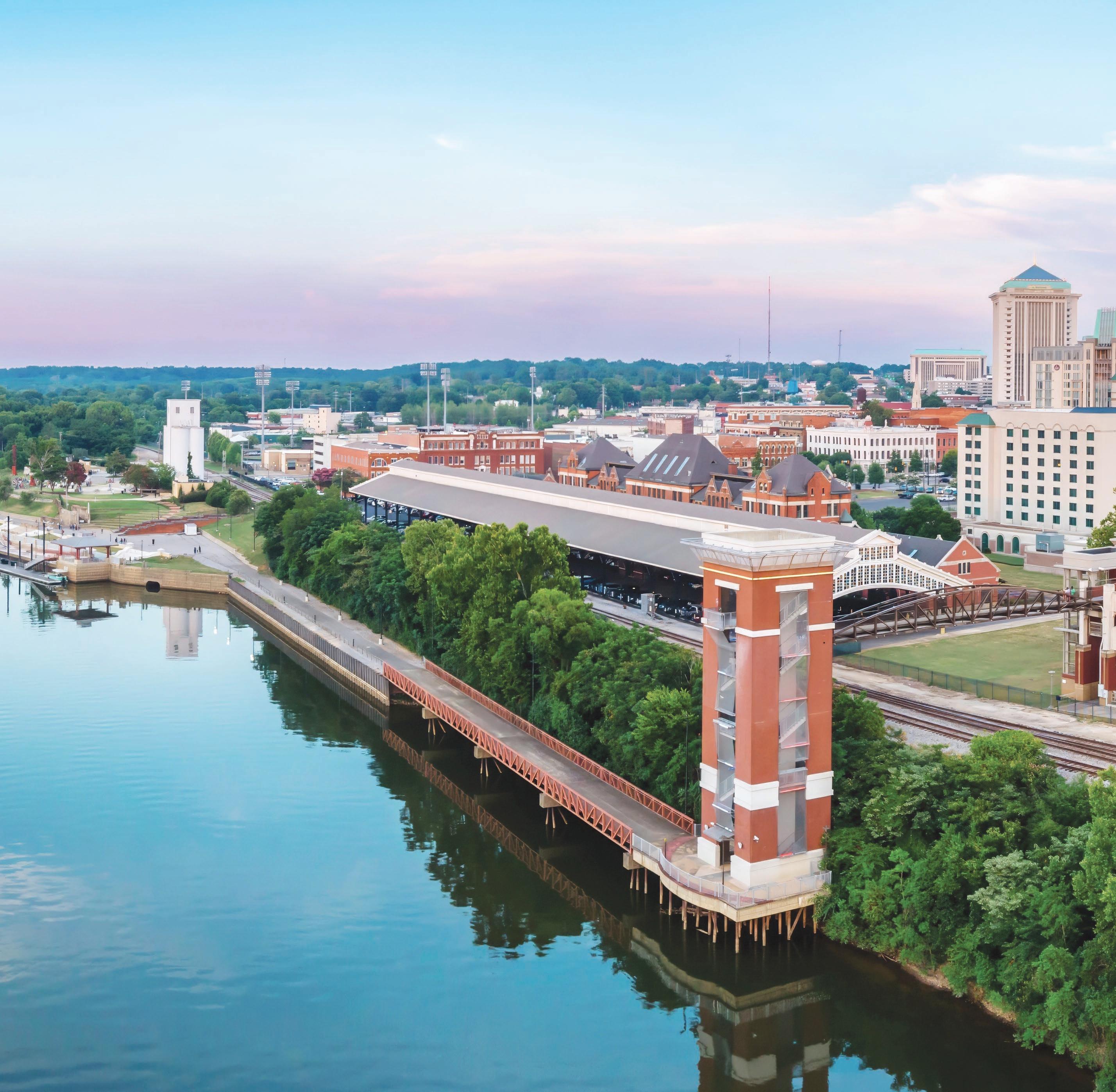
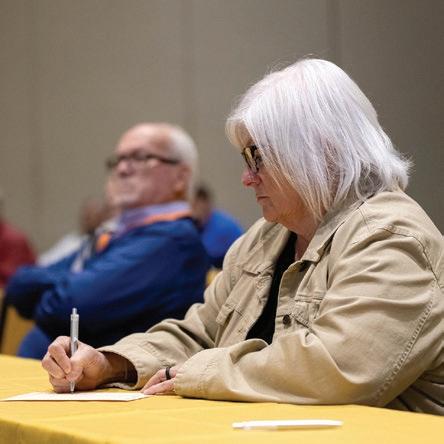
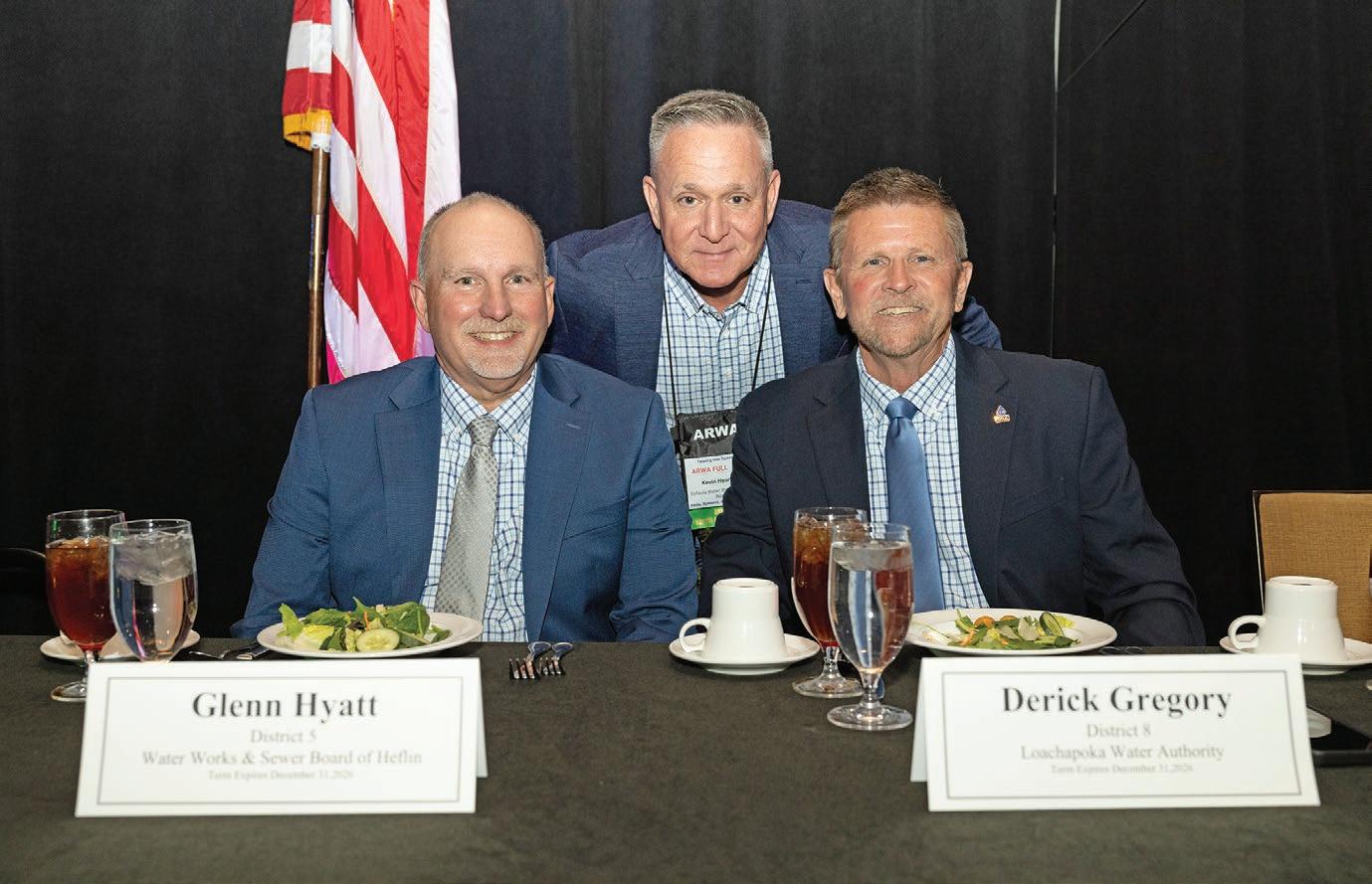
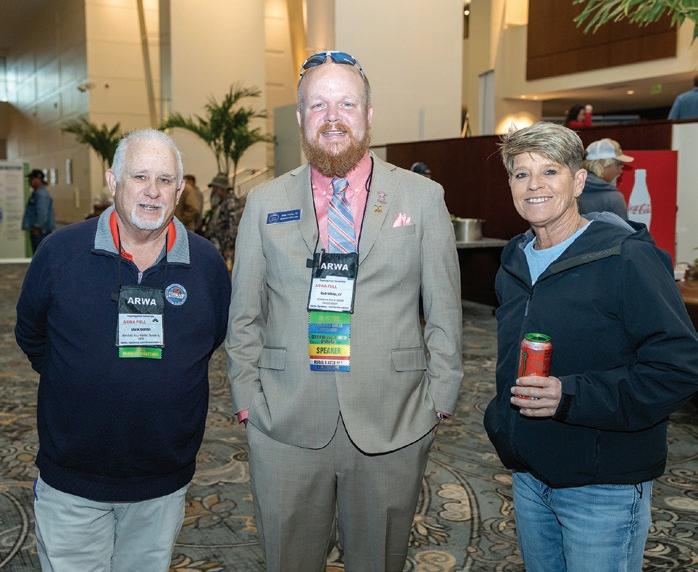
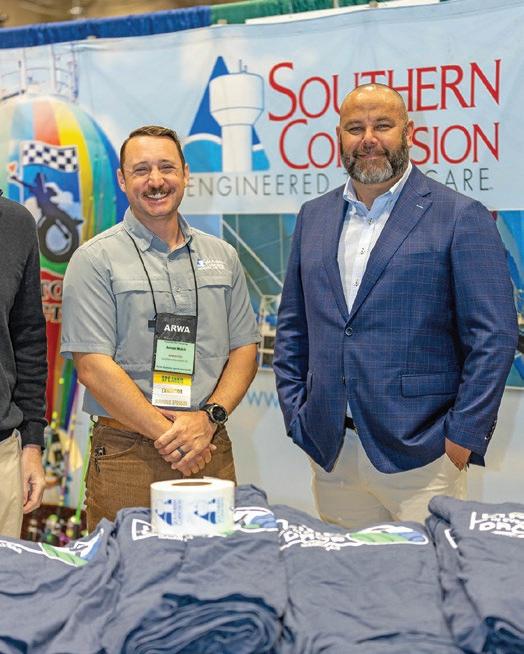
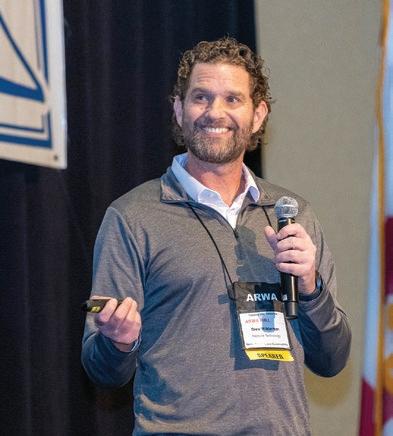
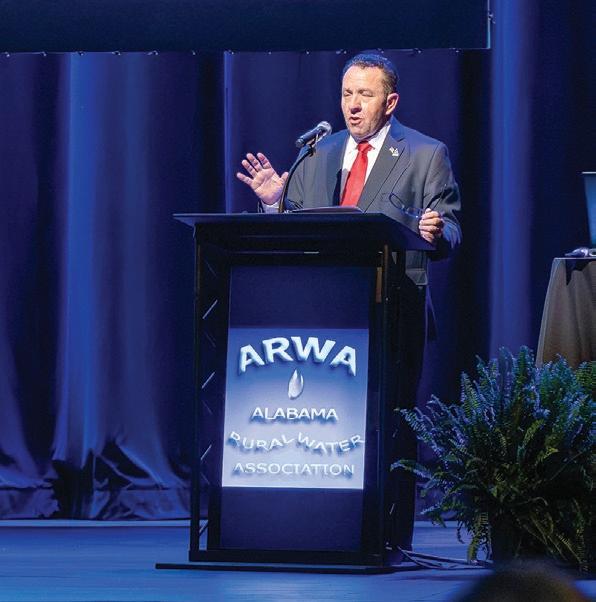
From March 15–18, 2026, water, wastewater, and industry professionals from across Alabama and beyond gathered in the capital city for the highly anticipated 48th Annual Alabama Rural Water Association Technical Training Conference. Held at the Renaissance Montgomery Hotel and Spa and the adjoining Convention Center, the event welcomed over 1,000 attendees for four full days of learning, networking, and camaraderie.
This year’s theme, “Tapping into Tomorrow: Skills, Systems, and Sustainability” set the tone for a dynamic program focused on the future. From the opening session to the final handshake on closing day, the program reflected a commitment to the technical excellence, operational resilience, and professional growth that Alabama’s rural water and wastewater systems rely on every day.
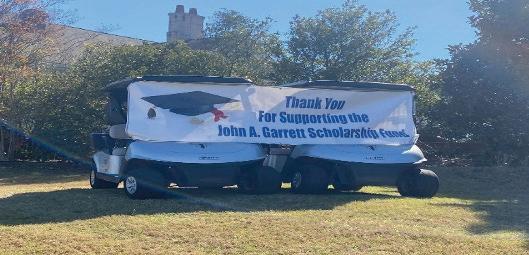
The conference featured a full slate of events and activities, including the 29th Annual John A. Garrett (J.A.G.) Memorial Golf Tournament, a bustling Exhibit Hall showcasing the latest in water and wastewater products and services, the ever-popular Water Taste Test, the 2nd Annual Women in Water Luncheon, and the Cornhole Tournament benefiting the John A. Garrett Scholarship Fund. On the training side, attendees had access to dozens of technical sessions across four dedicated tracks: Leadership and Decision-Maker,
Utility Clerk, Water Technical, and Wastewater Technical. Raffles ran throughout the week, capped once again by the always-coveted four-wheeler giveaway.
What keeps attendees coming back year after year? The answer, time and
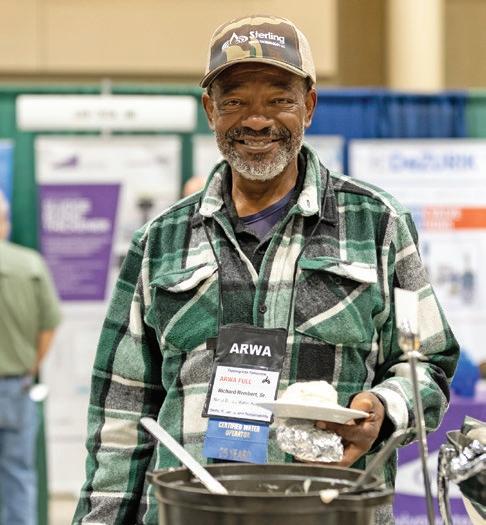
again, is the people. ARWA takes pride in the quality, integrity, and dedication of the professionals who make up Alabama’s water and wastewater industry, and is honored to host a premier event that reflects those values. The relationships

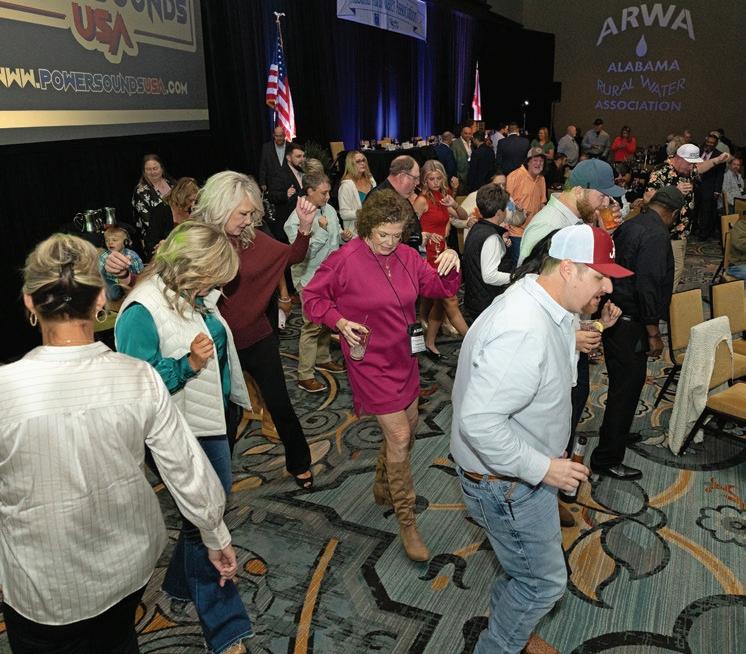
formed in training rooms, exhibit halls, and hallway conversations are every bit as valuable as the continuing education hours earned, and often far more lasting.
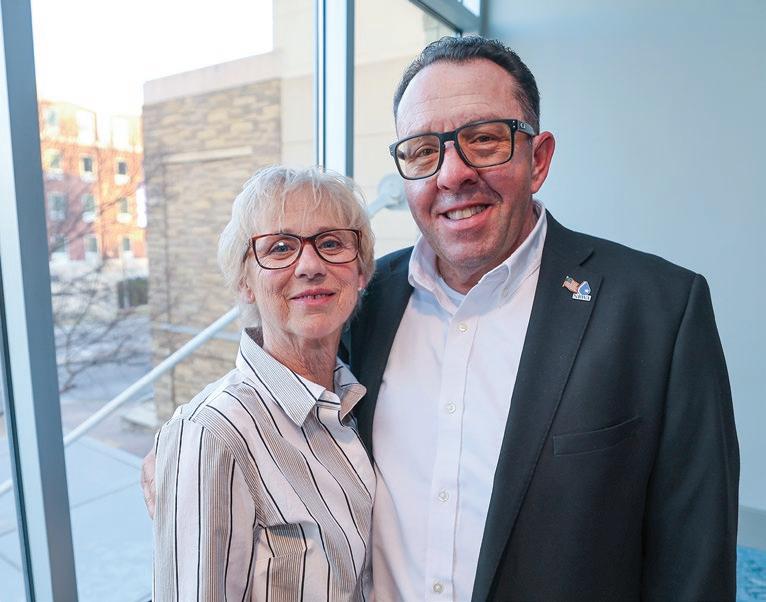
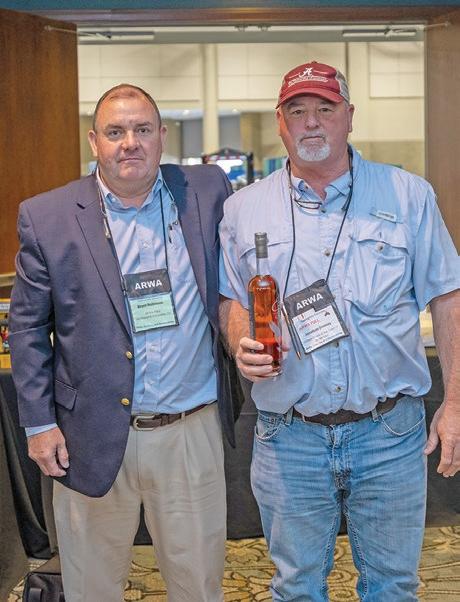
ARWA was honored this year to host National Rural Water Association (NRWA) Board Member Jimmy Folco and his wife Lori, who traveled to Alabama from Rhode Island for their first visit to the state. Jimmy represents rural water systems at the national level, advocating for the federal programs, workforce initiatives, and funding streams that make the work of state associations like ARWA possible. Having him in Montgomery for the week was a tremendous honor and a reminder that rural water is a national family, not just a state industry.
The Folcos were welcomed with Alabama hospitality from the moment they arrived. Over the course of the week, they had the opportunity to meet Alabama’s rural water professionals, experience the spirit of the conference, and see firsthand the work being done across the state. Jimmy brought perspective from the national stage, and Alabama had the chance to share its story with him in return. Conversations spanned federal policy, workforce development, emergency response, and the day-to-day realities of running
a rural utility, the kind of exchange that strengthens the bond between state and national associations and ultimately benefits every system and every community we serve.

ARWA extends its deepest thanks to Jimmy and Lori for making the trip to Alabama, and to everyone who helped make their first visit a memorable one. We look forward to welcoming them back.
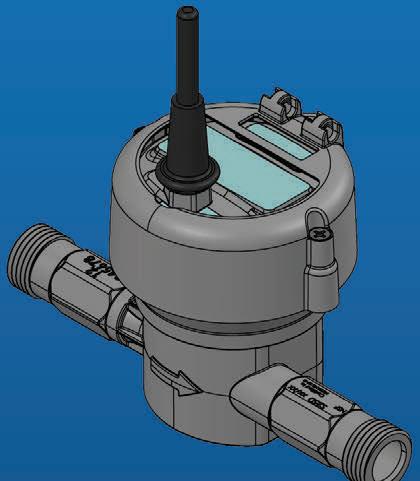





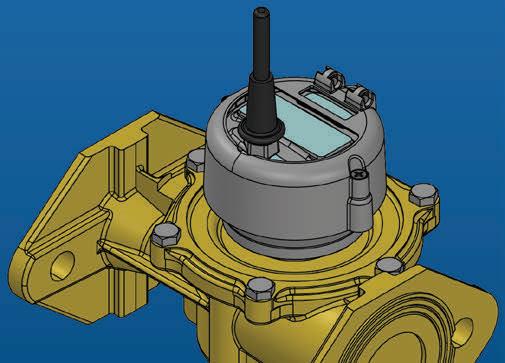

All our meters are cellular-connected, reliably uploading accurate one-minute water data to WaterScope® for analytics and billing.

“Wright”
for municipal process applications.
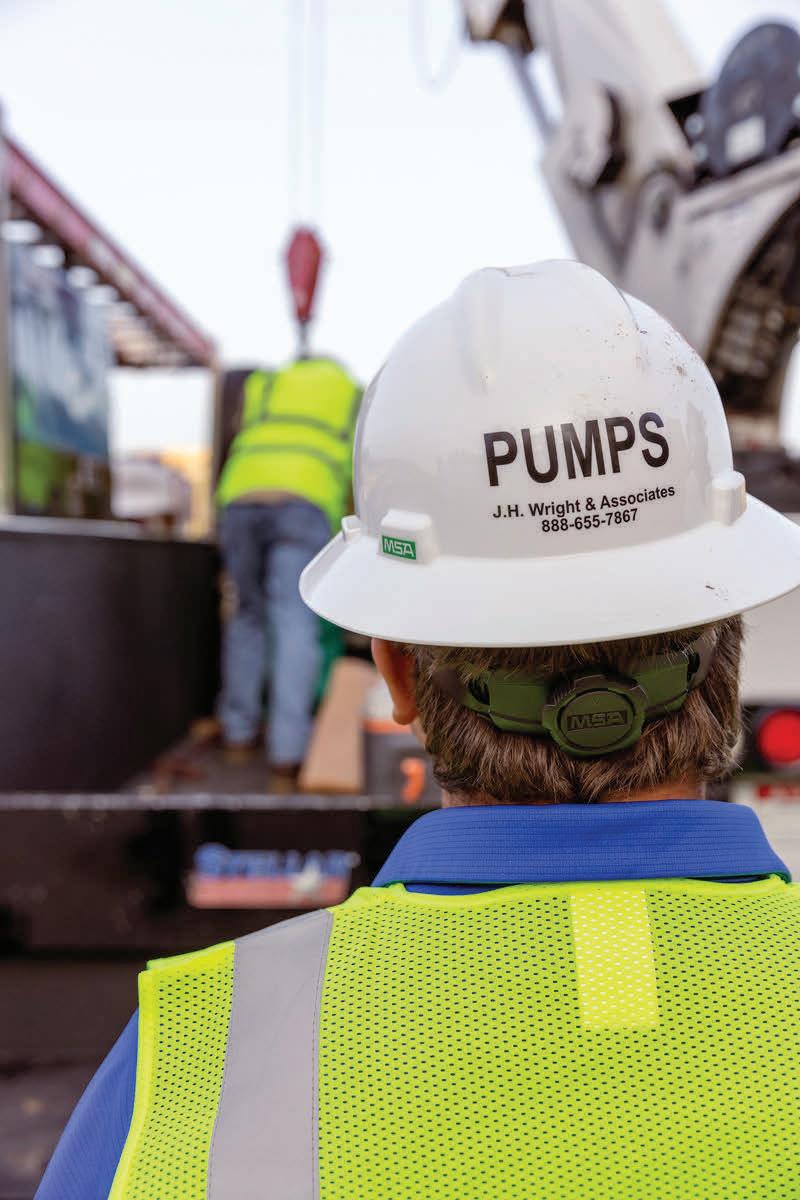
For over 60 years JH Wright has been delivering municipal and process fluid handling solutions to customers throughout the southeast. We pride ourselves on dependable service with integrity. We provide technical expertise, 24-hour service and on-time delivery, so whatever your fluid-handling needs - we`ve got the “Wright” solution.

YOU
who make this conference possible!


GOLD SPONSORS
AmeriFirst Bank
Central Pipe Supply, Inc.
Donald Smith Company, Inc.
J. H. Wright
Jim House & Associates, Inc.
Southeastern Tank, Inc.
Utility Engineering Consultants LLC
SILVER SPONSORS
Computer Network, Inc.
Control Systems, Inc.
Empire Pipe & Supply Company
Energy Systems Southeast, LLC
Environmental Resource Analysts, Inc.
Financial Imaging, LLC
BRONZE SPONSORS
Alabama 811
American Tank Maintenance, LLC
Cowin Equipment Company, Inc.
David Hicks & Associates, Inc.
Ditch Witch of Alabama
Electric Machine Control, Inc.
Harcros Chemicals Inc.
Hydra Service, Inc.
Inman & Associates, Inc.
Southern Engineering Solutions, Inc.
National Water Services LLC
Neptune Technology
OpenGov
Templeton & Associates Equipment Sales, Inc.
Thompson Tractor Company, Inc.
TEAM Support, Inc.
The Sherwin-Williams Company
Timberline Construction Group, LLC
Walker360
Zenner USA
By Derek Pierce, Program Manager
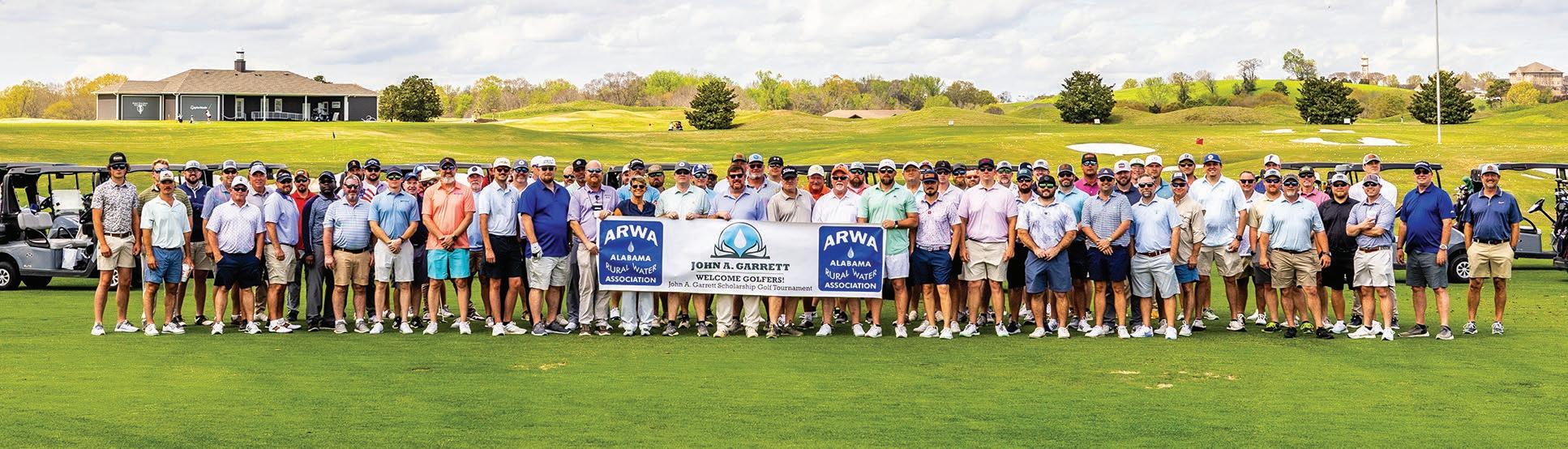
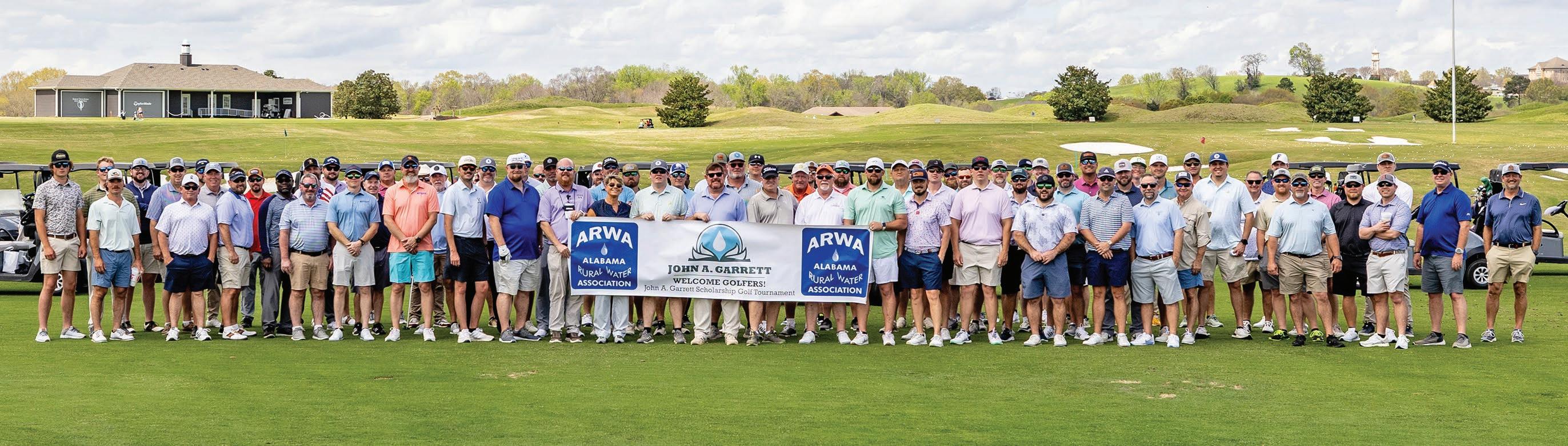
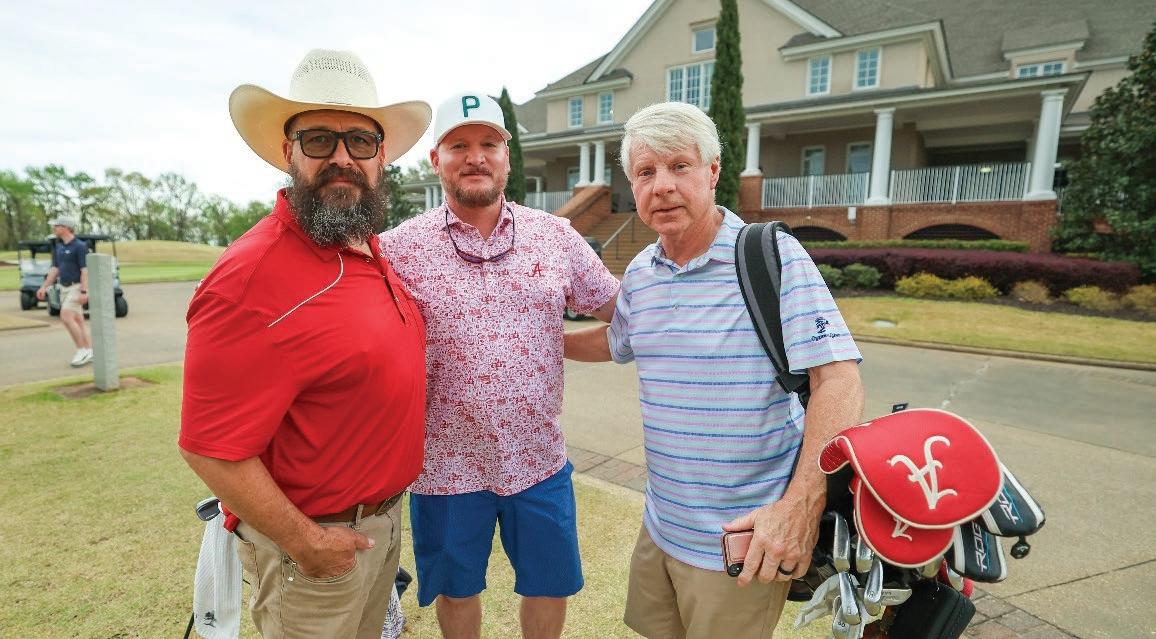
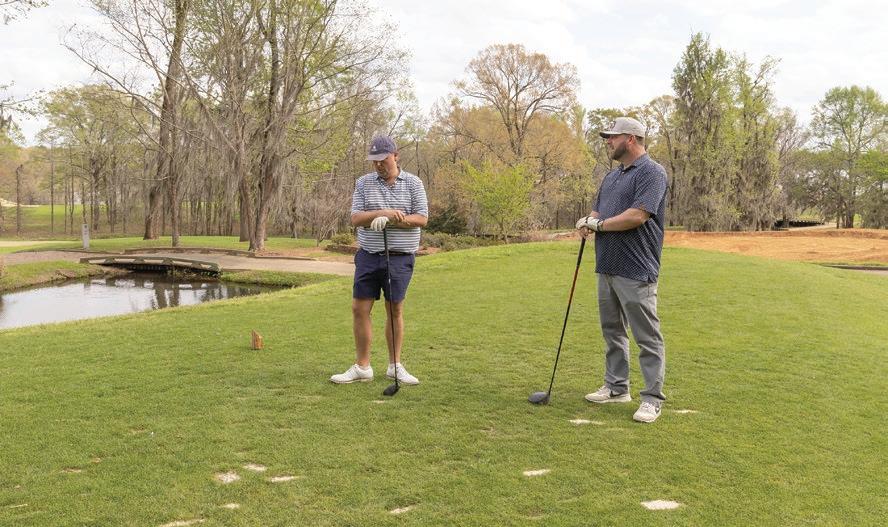
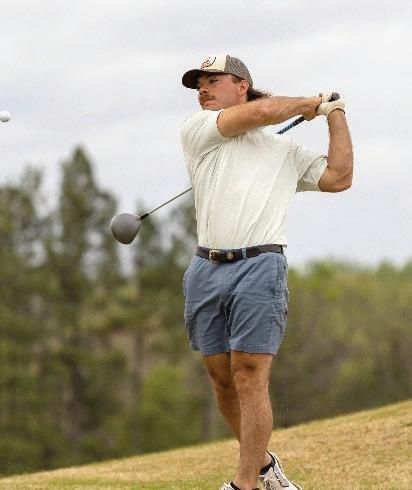
The Alabama Rural Water Association’s Annual John A. Garrett Scholarship Fund Golf Tournament was organized in 1997 to award annual scholarships to qualifying and deserving individuals. Currently, six $750 scholarships are awarded annually. Two recipients are selected from each of three regions, North, Central, and South Alabama. Assisting with this year’s Golf Tournament was the Golf Tournament Steering Committee; Kevin Smith (Neptune Technologies), Nick Bryant (G & C Supply Company, Inc.) and Todd Keffaber (Ford Meter Box). This group of individuals contribute their time throughout the year to ensure a quality event that will benefit the Scholarship Fund while providing a fun-filled day to all participants.
March 15, 2026, began on this beautiful cool spring day as many of our past golf tournaments have with contestants registering for the tournament and participating in the putting competition. Ford Meter Box Company sponsored a beautiful and tasty lunch that our golfers were able to enjoy before heading to tee off at the 1:00 pm shotgun start. Everyone set out for a grand day on the course, the day was a beautiful day with blue skies. Everyone enjoyed some great fellowship with friends, and we raised some money for a great cause.
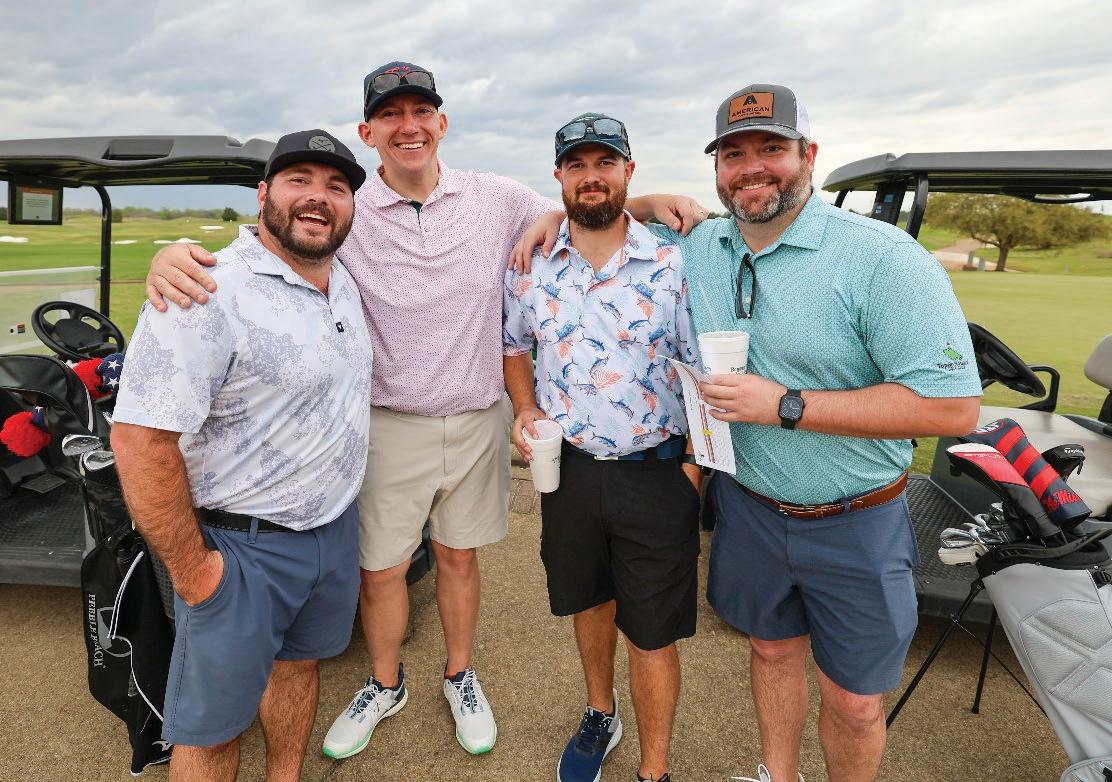





The ARWA Annual Golf Tournament awarded prizes to first place finishers in three flights, as well as an award for ‘Longest Drive,’ ‘Closest to the Pin’ and ‘Putting Competition Winner.’ The prizes for the ‘Closest to the Pin Challenge’ and the ‘Longest Drive’ were trophies recognizing each golfer and one dozen Titleist golf balls. Also, each member of the winning team of each flight received a $75.00 gift card to any Robert Trent Jones Course. The Putting Competition that was available to every golfer automatically when they registered that morning, and the prize was a trophy recognizing the contest along with golf balls as well.
Congratulations to all our winners and especially to all who participated in making this tournament another successful event!
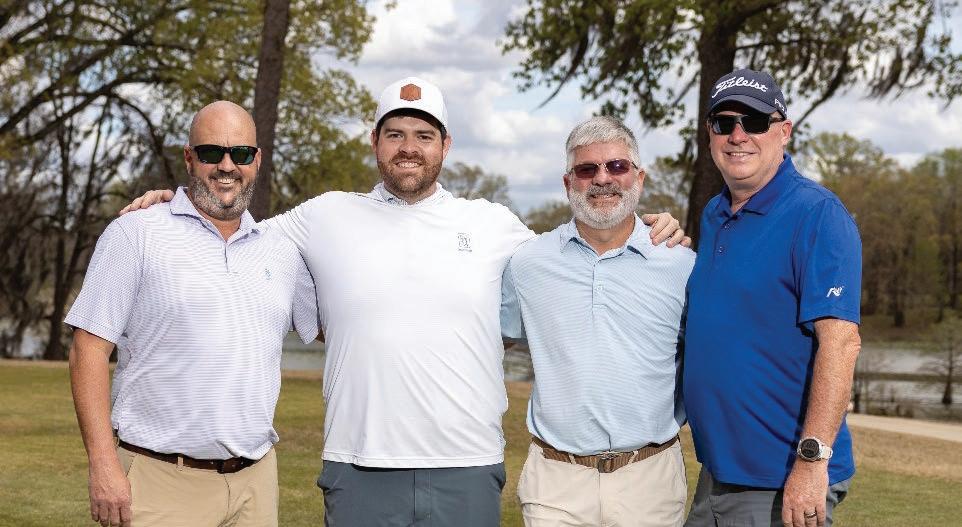

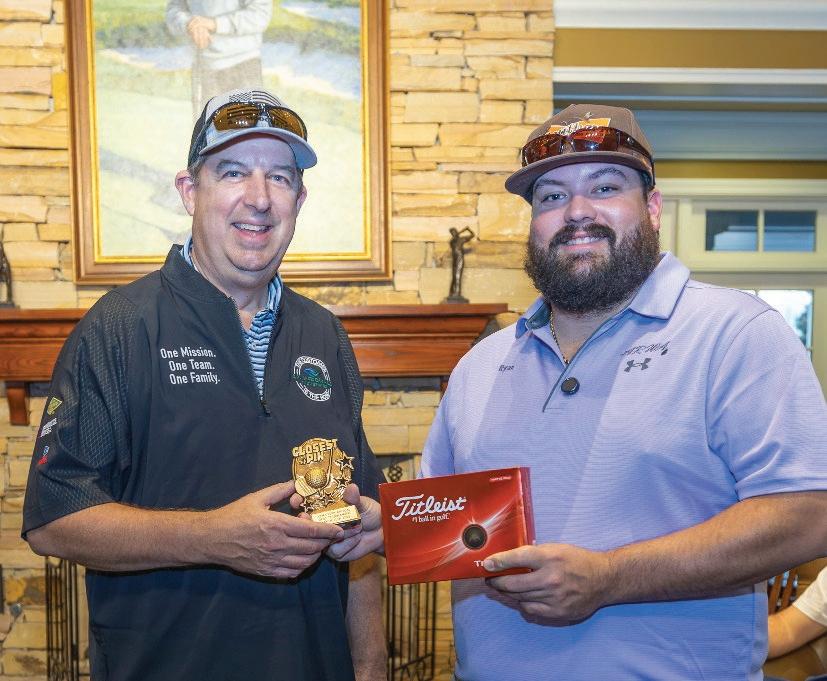

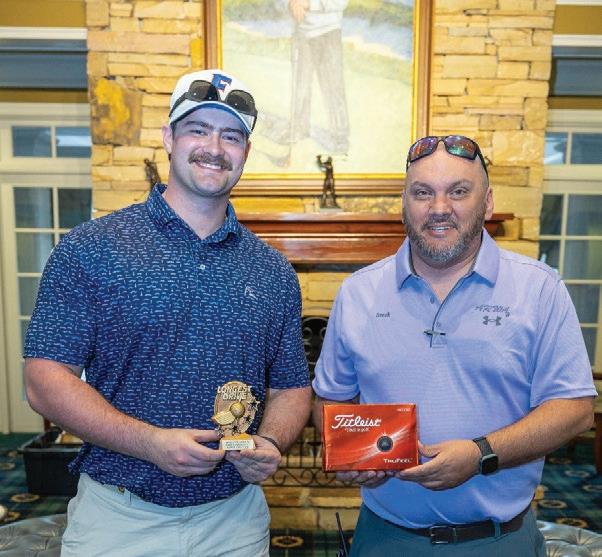
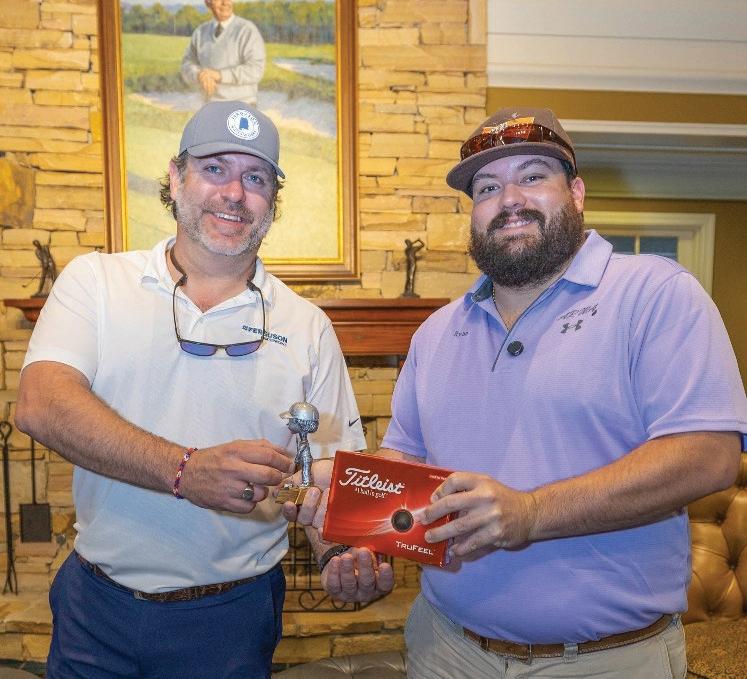
Here



Cornerstone H2O

A.Y. McDonald Manufacturing, Co.
Aqua Smart, Inc.
Aqualine Infrastructure Group LLC
Central Pipe Supply, Inc.
Control Systems, Inc.
Core & Main
Cousins Insurance Agency, Inc.
Cowin Equipment Company, Inc.
Dixie Electric Cooperative
Ferguson Waterworks
G & C Supply Company, Inc.
Hydra Service, Inc.
Tyler Union Lunch provided by Ford Meter Box Company, Inc. Putting Competition sponsored by Hawkins, Inc. HOLE SPONSORS
American Flow Control
Inman & Associates, Inc.
KADE Accounting and Tax Service
Neptune Technology
Smith-Blair, Inc.
Southeastern Tank, Inc.
Southern Pipe & Supply Co., Inc.
Thompson Power Systems
Three Notch Group
Utility Engineering Consultants LLC
Veridian Plumbing & Infrastructure Group
Water Treatment & Controls Company

Bingham & Taylor Corporation
Central Pipe Supply, Inc. – 2
CoBank
Consolidated Pipe & Supply, Inc.
Empire Pipe & Supply Company
Ferguson Waterworks – 2
G & C Supply Company, Inc.
Hawkins, Inc.
Jay Industrial Repair
Krebs Engineering, Inc.
Max Credit Union
Morrow Water Technologies, Inc.
Neptune Technology
Russellville Water & Sewer Board
South Alabama Kubota
Southern Corrosion Inc.
Templeton & Associates Engineering Sales

When Jerena Webb, Chief of Staff at the Alabama Rural Water Association (ARWA), first envisioned the Women in Water Luncheon, she saw something that the industry had been quietly missing. For generations, women have been central to the work of delivering safe, reliable water and wastewater service across Alabama. They have run the offices, operated the plants, served the customers, and guided the boards. And yet, for all of that contribution, there were few dedicated spaces for women in this industry to connect with one another, share what they have learned, and be recognized for the role they play. Jerena set out to change that.
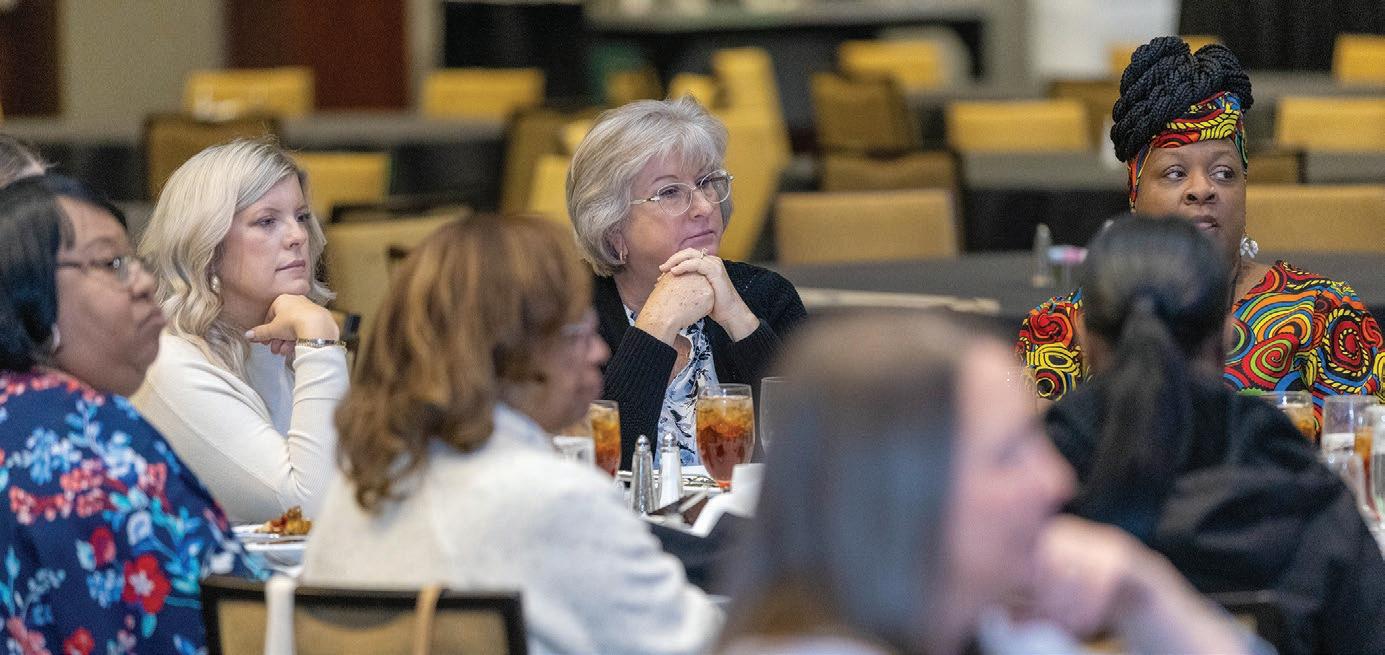
For the second year, ARWA hosted the Women in Water Luncheon during its 48th Annual Technical Training Conference, held March 15–18, 2026, at the Renaissance Montgomery Hotel and Spa. Jerena again served as the luncheon’s hostess, welcoming 100 women water professionals from across Alabama and beyond. What began as an idea has grown into one of the most anticipated gatherings on the annual conference program.
The water industry has long been built on the quiet dedication of its professionals, and women have been part of that story in roles that have too often gone unseen. Office managers who keep the day-to-day running. Operators who carry Grade certifications and run the plants. Clerks who are the first voice a customer hears in a moment of trouble. Superintendents, general managers, and board members who guide their utilities through every storm,
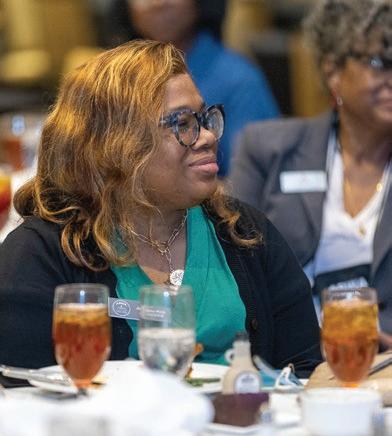
every audit, and every regulatory challenge. The Women in Water Luncheon exists to recognize that reality, to celebrate the progress already made, and to create space for the next generation of women leaders to see themselves clearly in this work.
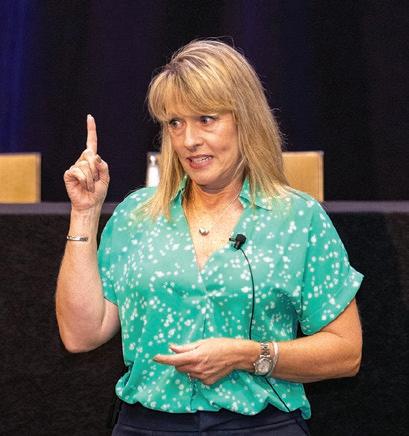
This year’s keynote speaker, Vallie Collins, survivor of US Airways flight 1549 that crashed into the Hudson River shared her story. Her remarks on facing an unexpected challenge, reminding the room that time is limited and to savor every moment. The message landed with an audience of women that knows firsthand both the weight and the reward of resilience.
Beyond the keynote, the luncheon offered the kind of atmosphere that attendees consistently describe as one of the highlights of the conference week.
Women from small rural systems sat alongside leaders from large utilities, engineering firms, and industry partners, sharing stories, exchanging ideas, and building the kind of professional
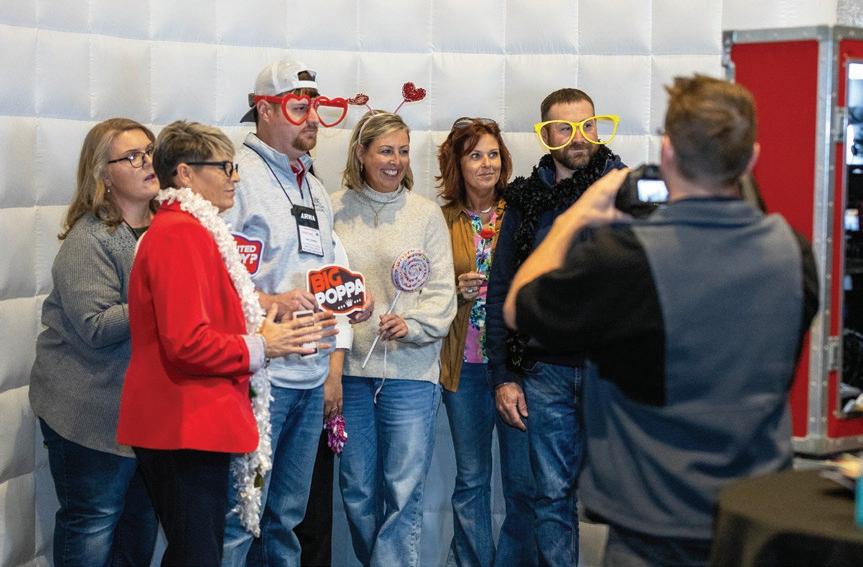
relationships that carry on long after the conference ends. For younger women just entering the field, it was a chance to meet role models who have already walked the path. For seasoned professionals, it was a chance to pass along the lessons of a long career and to be reminded that their example matters.
The Women in Water Luncheon is more than a networking event. It is a celebration of progress, resilience, and the growing representation of women shaping the future of the water industry in Alabama and across the country. Each year the room grows a little larger, the conversations grow a little deeper, and the ripple effects carry back into utilities large and small. ARWA looks forward to continuing this tradition and expanding it in the years ahead.
Thank you to our sponsors for making this event possible.
CoBank Control Systems, Inc.
Environmental Resource Analysts, Inc.
Jackson Morgan Southern Cream
Pace Analytical Services, LLC
ServLine by HomeServe USA
Water Management Services, Inc.
By Derek Pierce, Program Manager
The Annual Water Taste Test competition, hosted at the Alabama Rural Water Association’s Annual Technical Training Conference, is a celebration of dedication of Alabama’s water systems to providing safe, clean, and great-tasting water to their communities.
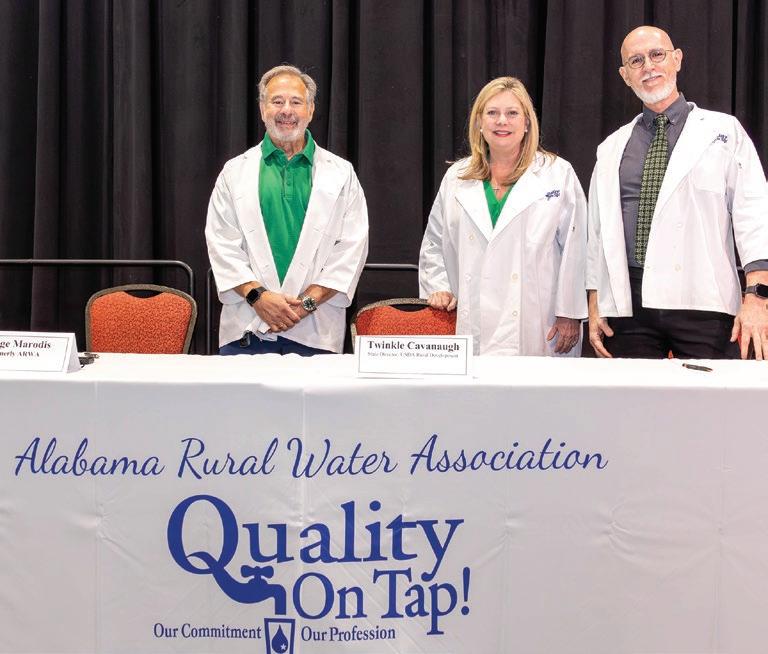
Participants competed to have their water judged on clarity, taste, and odor by an esteemed panel of judges, which included George Marodis, Jim Grassiano with Goodwyn, Mills & Caywood, Inc., and Twinkle Cavanaugh with the USDA Rural Development. These criteria highlight the high standards maintained by Alabama’s water systems and the exceptional skill of their teams in providing this.
2026 Finalists: Columbiana Water Works Board, Oneonta Utility Board, Riverview Water System, Inc., Utilities Board of the Town of Grove Hill, West Etowah County Water Authority and Whorton Bend Water Authority.
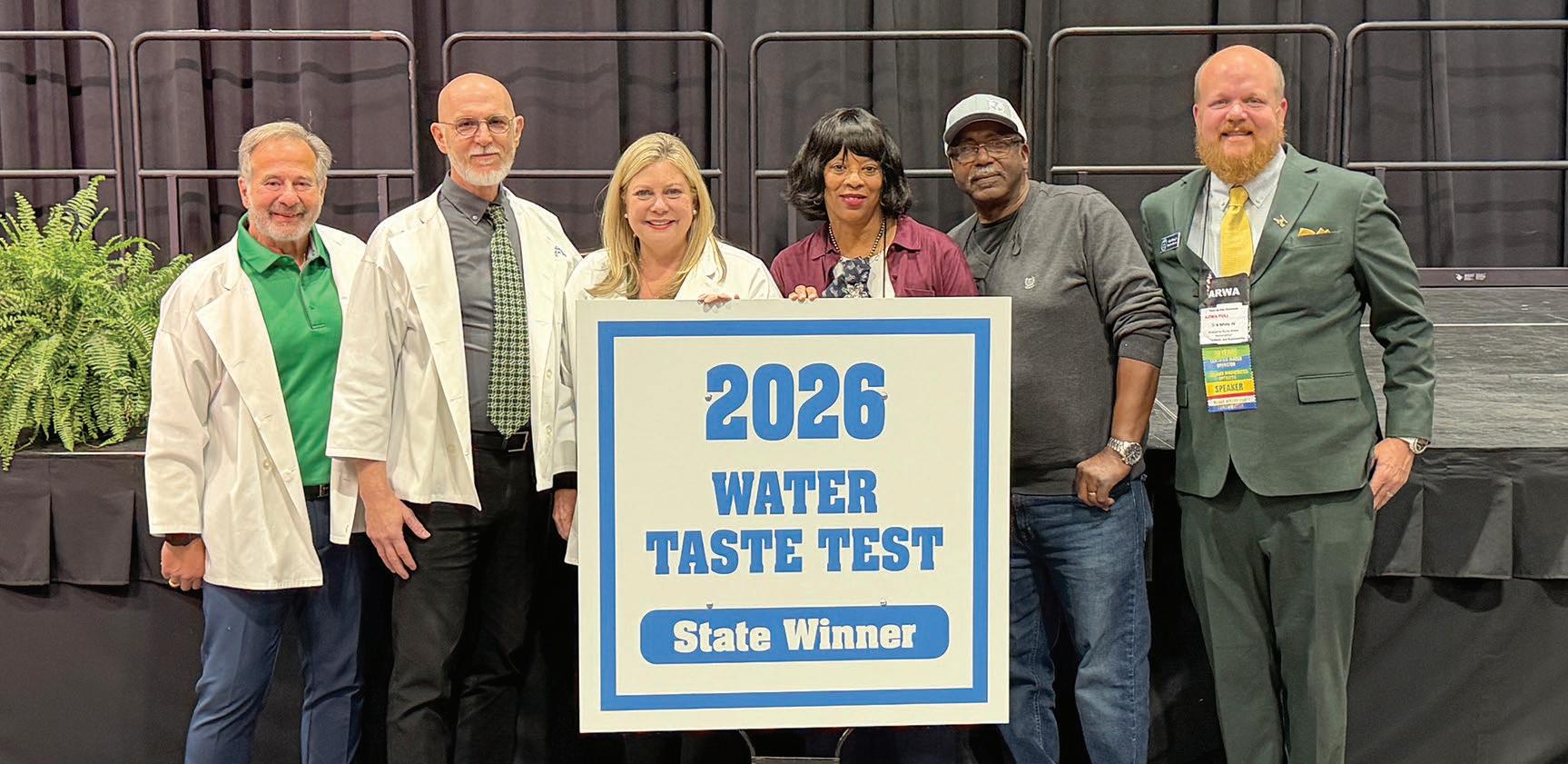
After much deliberation, Whorton Bend Water Authority emerged as the winner. The Board provides water services to more than 2,100 individual customers in Gadsden, AL, in Etowah County.
The Whorton Bend Water Authority is governed by:
• James Gann
• Gary Whorton
• James Kilgore
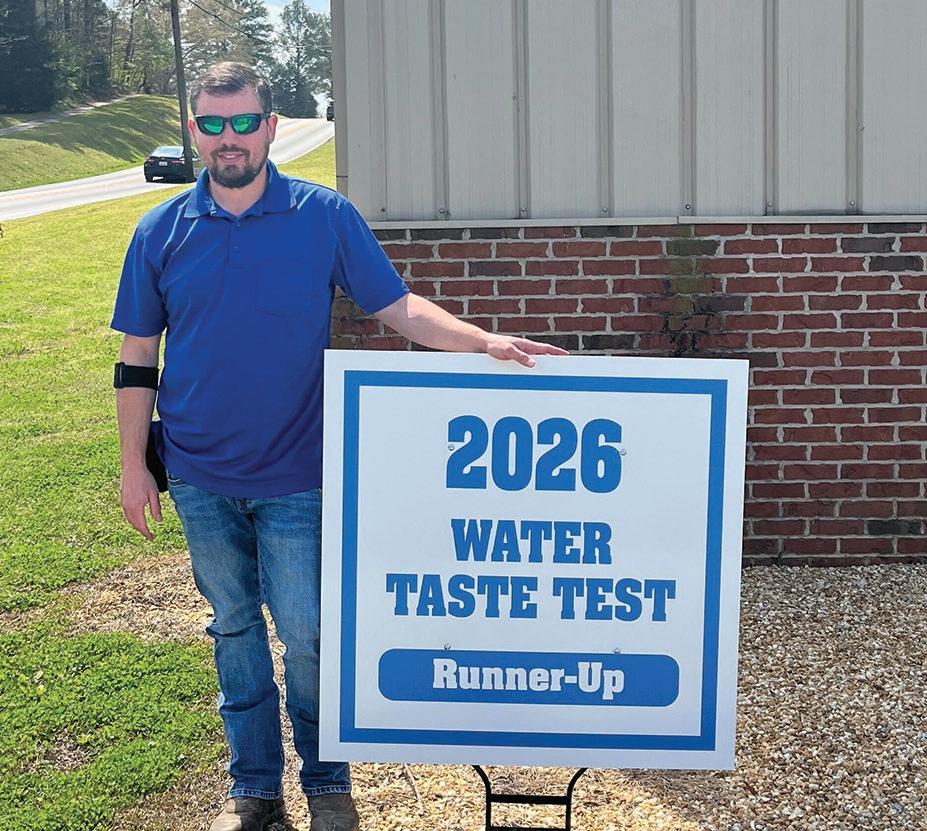
Congratulations to Whorton Bend Water Authority for their achievement! Their victory earns them the honor of representing Alabama at the National Rural Water Taste Test competition in Washington, DC, in February 2027.
If the winning utility cannot attend the national competition, the runner-up, Columbiana Water Works Board, will have the opportunity to represent Alabama.
This acknowledgment reflects the exceptional quality of their water and dedication to serving their community.
The competition proudly celebrates the legacy of excellence established by past winners. Over the years, utilities such as Freemanville Water System, West Etowah County Water Authority, and City of Fairhope Public Utilities have consistently demonstrated exceptional performance. Their recognition as multiple-time winners or finalists reflects a sustained commitment to quality and innovation, and their achievements continue to inspire water systems across the state to strive for excellence.
The Water Taste Test competition goes beyond recognizing quality – it motivates water systems to pursue the highest standards in water management. By including this recognition in the rally package, we aim to:
1. Showcase Success Stories – Highlight the dedication, expertise, and innovation of Alabama’s water systems.
2. Promote Peer Learning – Encourage other systems to adopt proven best practices demonstrated by award recipients.
3. Encourage Participation – Increase engagement in future competitions and industry events.
4. Celebrate the Industry – Foster pride in the essential work performed by water systems throughout the state.
As we look toward the National Rural Water Taste Test competition in Washington, DC, we celebrate not only the winners but also the broader impact of this event. The dedication, skill, and passion of Alabama’s water professionals ensure access to clean, great-tasting water for generations to come. Together, we are leading the next wave of excellence in water management.
Public water utility professionals play a vital role in ensuring the smooth operation of water and wastewater systems across our rural communities. From the clerks and office staff who provide excellent customer service, to the operators who maintain efficient and compliant systems, to the general managers, board members, and industry partners who guide their organizations with vision and expertise, these dedicated professionals ensure that safe, reliable water flows when and where we need it most.
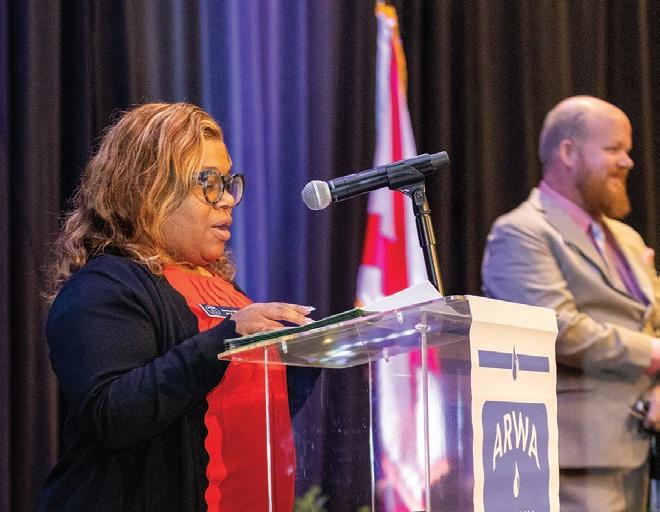
The Alabama Rural Water Association (ARWA) recognized these exceptional individuals and utilities at its 48th Annual Technical Training Conference in Montgomery, Alabama, held March 15–18, 2026, at the Renaissance Montgomery Hotel & Spa, celebrating their outstanding contributions to the water and wastewater industry.
OFFICE WORKER OF THE YEAR AWARD
The Office Worker of the Year Award recognizes an administrative employee for outstanding performance in office management and procedures.
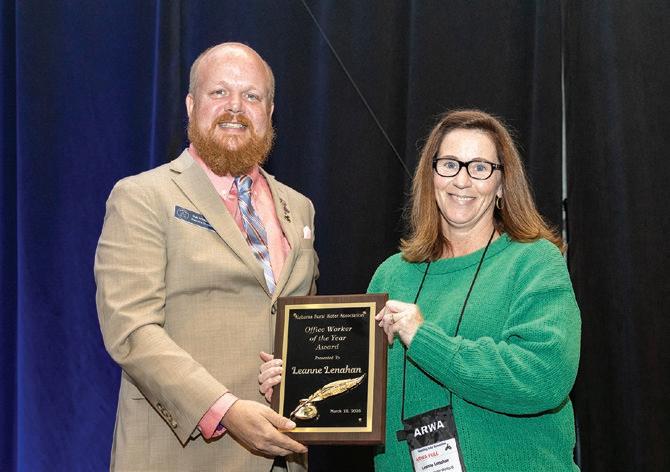
The winner of the 2026 ARWA Office Worker of the Year Award is Leanne Lenahan of the Winfield Water Works and Sewer Board. Leanne grew up in the water business. Her mother served as office manager at the same utility for thirty years, and Leanne trained alongside her for two years before stepping into the role herself, carrying on a family legacy that now spans more than half a century at the same system. For twenty-five years, Leanne has served as the backbone of her utility, managing payroll, financials, grant administration, billing, and customer service, and serving as the liaison between the superintendent, board, and engineers
on every project. When a customer cannot pay a bill, she connects the family with the Christian Center of Concern or Community Action and sets up payment plans to ease the burden. Her young operators call her at all hours, not just about work, but about life. Outside the office, Leanne chairs her city’s Park and Recreation Board and serves as Secretary of the Chamber of Commerce. In 2022, the Alabama Recreation and Parks Association recognized her with the Chester Freeman Outstanding Service Award. Congratulations to Leanne Lenahan of the Winfield Water Works and Sewer Board.
The Water Operator of the Year Award recognizes a State of Alabama Certified Water Treatment Operator with outstanding leadership abilities and accomplishments in water utility operations.
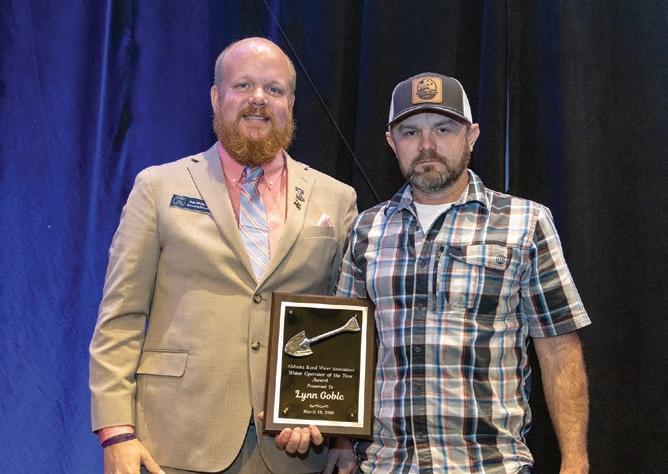
Lynn Goble has given twenty-one years to the Blountsville Utility Board, earning dual certifications as both a Water Grade II and Wastewater Grade II operator. As Senior Field Operator, Lynn oversees every well and lagoon in the system, assigns daily tasks, manages equipment, oversees meter reading and inventory, and conducts the safety meetings. In the past year alone, he has completed training in fire hydrants, pumps, and PFAS, always looking for ways to do the job better. When his utility faced a lagoon crisis, Lynn did not wait for someone else to figure it out. He picked up the phone, drew on the relationships he had built over two decades in this business, secured the equipment and materials needed for emergency repairs, and got the system back on track. Outside of work, he volunteers at the local elementary school, helping with the color run and speaking to students on career day about what it means to serve in this industry. Over twenty-one years, Lynn has learned every aspect of the operation, and his utility is now preparing him to serve as its next General Manager. As his own team put it: you could not find a better person. Congratulations to Lynn Goble of the Blountsville Utility Board.
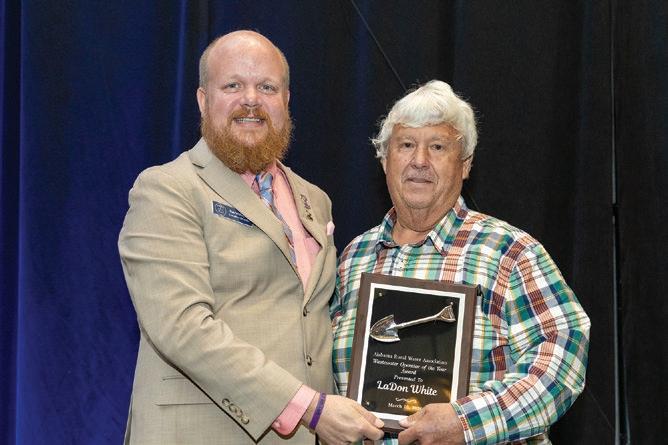
The Wastewater Operator of the Year Award recognizes a State of Alabama Certified Wastewater Treatment Operator with outstanding leadership abilities and accomplishments in wastewater utility operations.
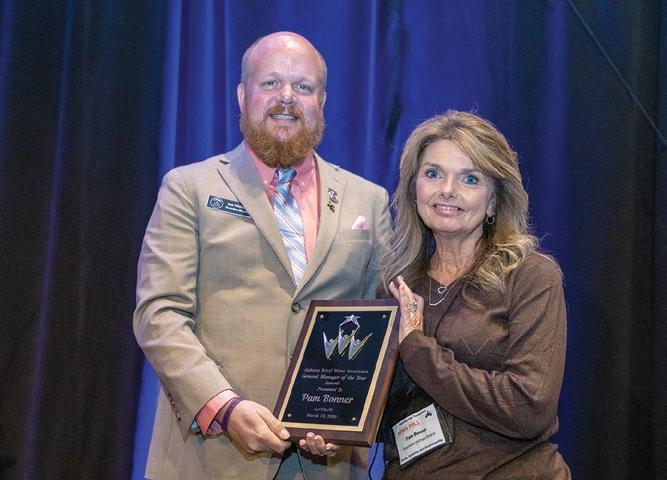
The General Manager of the Year Award recognizes an individual who demonstrates outstanding leadership and exemplary performance in the overall management of the utility’s operation.
The Board Member/Director of the Year Award recognizes an individual who serves as a board member; responsible for governing decisions resulting in significant contributions towards the success, growth, and customer satisfaction of the utility.
Richard Ladon White came to the water industry the hard way. Before ever walking through a utility door, he spent years laying pipe, fitting meters, building ponds, and running heavy equipment. By the time he joined his utility, he already understood water and sewer infrastructure from the ground up, because he had literally been in the ground building it. Ladon has given twenty-six years to the Eufaula Water Works and Sewer Board, where he serves as head of field operations. He built the preventative maintenance programs for the entire distribution and collection system, manages a crew of six, and holds a CDL Class A along with Water Grade II and Wastewater Grade II certifications. He has been named Employee of the Year on multiple occasions. His General Manager calls him the backbone of their field operations, and his Maintenance Chief, with a long career of his own, describes Ladon as the most talented heavy equipment operator and the hardest worker he has ever seen. When a young woman joined the organization in a field dominated by men, Ladon took her under his wing, taught her the trade, and pushed her toward certifications and training. Today she serves as a crew leader and says Ladon is the best boss she has ever had. Six colleagues wrote letters on his behalf, and each one echoed the same sentiment: he is the first one in the ditch and the last one to leave.
Congratulations to Richard Ladon White of the Eufaula Water Works and Sewer Board.
In the fall of 1999, a small Alabama utility was rebuilding from the ground up. The board hired a young woman from a local furniture store to answer phones at the front desk. She had no background in water, but she had a work ethic that would not quit. Twenty-six years later, Pam Bonner is still there, and today she leads the organization. Pam started as a customer service representative and quickly took on more than her role required. When the office manager position opened in 2010, leadership did not have to look far. When the general manager departed in 2021, the board again knew exactly who had been holding the utility together. Pam cross-trains every employee, assists the water and wastewater plants with operational reporting, and is on call twenty-four hours a day. When a main breaks at midnight and the crew is out in the cold, she is the one who shows up with food and drinks. Her customers know her voice, calm and always with a smile, and she treats every person who walks through the door like they matter. She puts the utility in local parades, hands out candy at community Halloween events, and volunteers in support of local youth sports. Through multiple leadership transitions, Pam has been the constant. Congratulations to Pam Bonner of Roanoke Utilities.
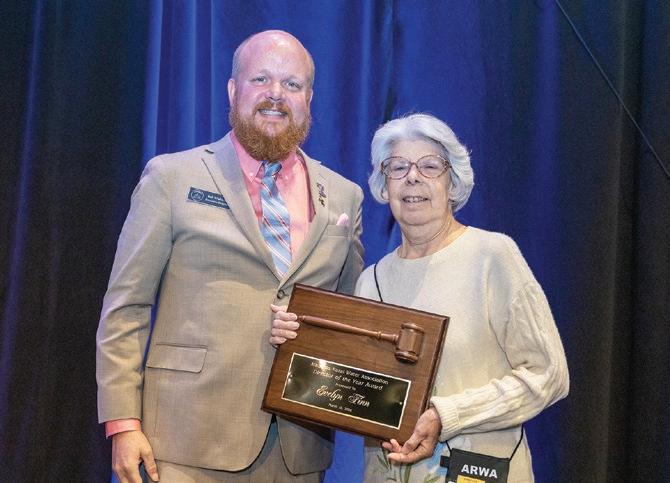
Evelyn Finn first walked into a water utility office in the late 1970s, helping her aunt and learning how things worked. Something about it stuck. She became a clerk, and the water business became part of who she is. Life took her into banking for a time, but in 2004 the industry called her back. She became office manager at a local water system and ran that office for the next fifteen years, handling the books, serving the customers, and keeping the operation on track day after day. For the past seven years, Evelyn has served as Secretary and Treasurer of the Vincent Water Board. She is the person who shows up when she is needed, whether that means reviewing budgets, attending meetings, or dropping everything to help the staff work through a problem. Her colleagues say she is always the first to ask what is best for the customers. A member of ARWA since 2010, Evelyn has attended the Annual Conference nearly every year. She also serves her community on the Housing Authority Board, the Industrial Development Board, and the Planning and Zoning Board. All told, Evelyn has given more than forty-five years to the water industry and to public service. That is not a career. That is a calling. Congratulations to Evelyn Finn of the Vincent Water Board.
The Soaring Star Award is one of ARWA’s premier recognitions, honoring a career that rose through the ranks and exemplifies the perseverance, continuous learning, and commitment to service that define our industry.
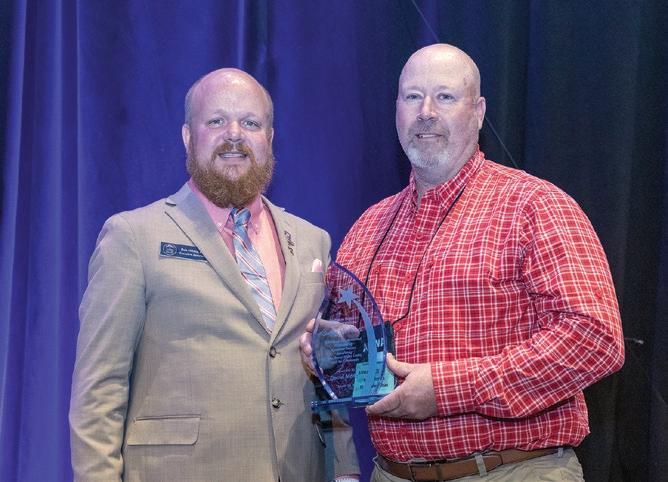
Twenty-seven years ago, David McAlpin started at the Blountsville Utility Board as an operator. No title, no office, just a man who showed up, did the work, and paid attention. He learned the wells, the lines, and the lagoons, and then he kept learning. He earned his Water Grade II and his Wastewater Grade II. He moved from operator to lead person, and eventually the utility named him General Manager, because by that point no one knew the system better than he did. Once in charge, David brought a new 800 gallon per minute well online, installed a new water tank system, and implemented automatic meter reading across the entire operation. Then came the test every manager dreads. A sinkhole opened in one of the wastewater lagoon cells, releasing approximately eleven million gallons into the ground. David did not panic. He contacted ADEM immediately, brought in engineers, underground formation experts, and civil contractors, and managed the entire response from start to finish. The repair was completed with zero permit violations and with full ADEM support. Other utility managers across the region regularly seek his guidance, and David does not just advise over the phone. He drives to their systems and helps them work through the problem in person. As his board put it plainly: you could not find a more dedicated, knowledgeable, or respected leader in rural water. Congratulations to David McAlpin of the Blountsville Utility Board.
The Vision Award recognizes a water or wastewater utility that has demonstrated outstanding vision, leadership, and commitment in addressing the infrastructure needs of its community. This year, ARWA is proud to honor four Alabama utilities with the Vision Award.
In October 2020, Hurricane Zeta knocked out electrical power at the City of Clanton’s sole raw water intake, leaving the community less than thirty hours from losing its water supply entirely. That crisis became the catalyst for transformation. Working with a new Director of Utilities, the Board commissioned a full vulnerability assessment and identified critical risks across the entire system. Rather than patching a single problem, Clanton pursued three major projects: a complete rebuild of the raw water intake, including three new high capacity pumps, a new motor control center, and a full capacity backup generator ($3.7 million); a comprehensive wastewater treatment plant upgrade with a new clarifier, new electrical switchgear, and modernized SCADA ($12.3 million); and backup generators, SCADA, and modernization at all twelve sewer lift stations ($1.9 million). In total, Clanton secured nearly $18 million in infrastructure improvements, assembled from six different funding sources including ARPA, BIL, ADEM State Revolving Fund grants and loans, an ADECA Urgent Need Grant, and FEMA Hazard Mitigation funding. Congratulations to the City of Clanton Water Works and Sewer Board.
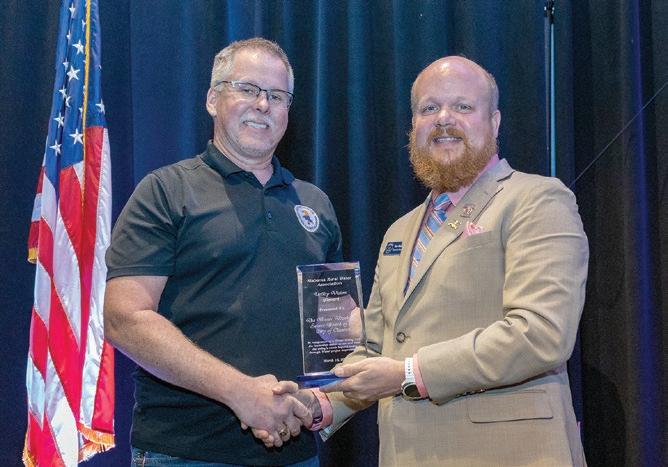
The Town of Kinsey, in Houston County, took on one of the most ambitious wastewater projects a small community can undertake. Working with USDA Rural Development, Kinsey committed to constructing a brand new, centralized wastewater treatment plant designed to handle an average daily flow of approximately 360,000 gallons with peak capacity of 680,000 gallons, while simultaneously rehabilitating the existing collection system to address the inflow and infiltration challenges that have been straining the system for years. More than 1,200 residents depend on this system. When complete, the project will eliminate longstanding health and safety concerns, protect local waterways, and provide the foundation for the kind of future development a growing community needs. Congratulations to the Town of Kinsey.
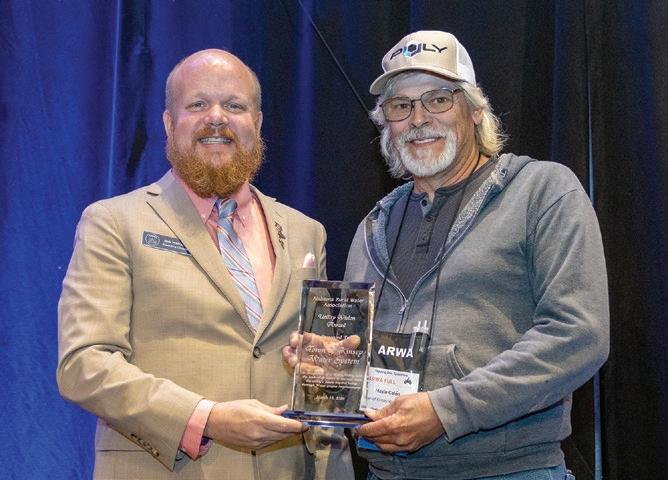
The City of Loxley, in Baldwin County, took a proactive approach that too few utilities embrace. Rather than waiting for failure, Loxley recognized that its gravity sewer lines, manholes, and residential connections were nearing the end of their design life and secured a Community Development Block Grant through ADECA to act before a crisis occurred. The project rehabilitated nearly 5,000 feet of gravity sanitary sewer lines, almost a mile, along with 20 manholes and 43 residential lateral connections, using Cured-in-Place Pipe lining on every line and connection and epoxy liners on every manhole. Work began in January 2025 and received final inspection by November of the same year. No emergency. No consent order. Just a utility director and city leadership team that understood their
responsibility and delivered a project that will protect their community for years to come. Congratulations to the City of Loxley.
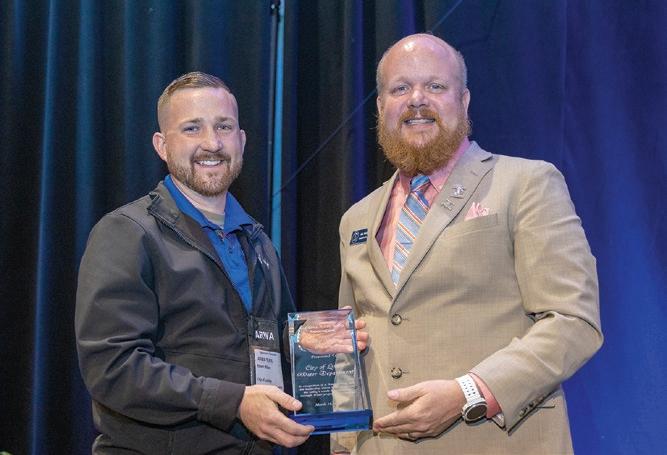
In western Dallas County, families in the Bogue Chitto area had no connection to a regulated public water system. Testing by the Alabama Department of Public Health found coliform contamination in three of five private wells, with one well testing positive for E. coli. The area also had no fire hydrants and no adequate water supply for fire protection. The West Dallas Water Authority, working with USDA Rural Development, secured loan and grant funding to extend regulated public water service to Bogue Chitto, replace aging infrastructure, reduce water loss and disinfection byproducts, and add the transmission main redundancy the system needed. A second project in the McKinley area will install new water mains, 31 modern fire hydrants, a 200,000 gallon elevated water storage tank, and a new booster station. Together, these improvements will connect 115 new residences, many of them for the very first time, to a safe and sustainable source of drinking water and dependable fire protection. Congratulations, the West Dallas Water Authority.
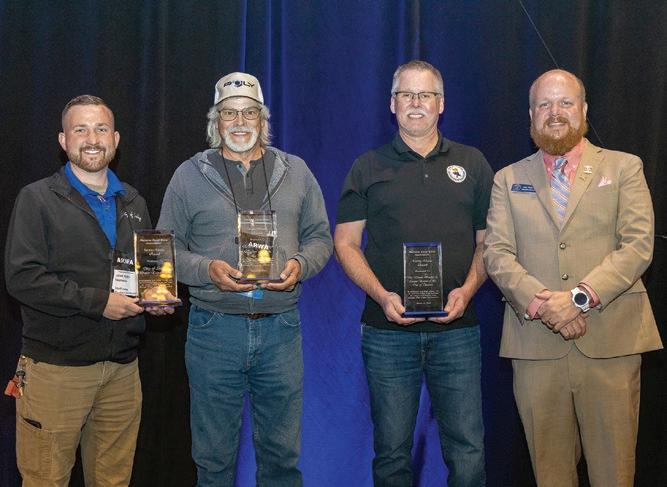
The John A. Garrett Outstanding Service Award is the highest individual honor this association bestows. It recognizes an individual who has made significant contributions throughout the State in support of water and wastewater needs during his or her career. This award offers an opportunity to nominate a professional individual such as an Alabama Department of Environmental Management staff member, USDA Rural Development staff member, Alabama Department of Economic and Community Affairs staff member, Alabama Congressional Member, State of Alabama Legislator, Engineer, or other professional who has been instrumental to the success of utility growth and progress in Alabama.
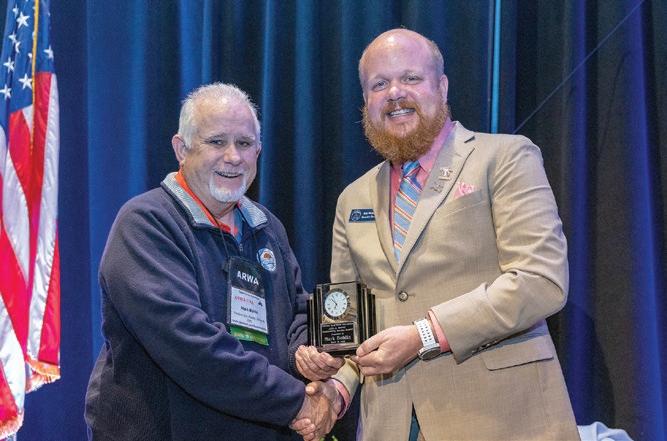
Mark D. Bohlin’s story begins with service to his country. He spent four years in the United States Air Force as an Aerospace Ground Equipment Technician, bringing home the electrical and mechanical skills that would define the rest of his career. After working in Texas and Florida, Mark came to Alabama and took over a small rural water district in 1998. At the time, the system served approximately 600 customers. Today, the Perdido Bay Water, Sewer, and Fire Protection District serves 4,400 connections and a population of more than 13,000. Mark holds a Grade IV Water Operator certification, the highest level the state issues, along with a State Certified Electrician license. Under his leadership, the district has replaced every meter, renovated all three elevated storage tanks, and implemented AMR/AMI metering, GIS mapping, hydraulic modeling, and fully integrated billing and financial systems, transforming a basic rural water system into a modern, technology-driven utility.
But managing his own district has never been the limit of Mark’s work. When Hurricane Ivan hit and only three of his employees were available, he personally hauled diesel fuel seven miles to keep the emergency generator running so his community would not lose water. When Hurricane Sally came through, he opened his facility as a multi-state emergency command center and coordinated mutual aid response with rural water associations from Oklahoma, Louisiana, Mississippi, Georgia, and Florida, restoring every affected system within a week. When COVID-19 hit, he helped coordinate statewide PPE distribution, delivering 38,675 masks to 557 water and wastewater entities across Alabama. Mark was also among the first to step up when ARWA launched its Registered Apprenticeship Program, opening his district as one of the first participating employers because he believes the future of this industry depends on investing in the next generation.
In July 2024, Mark sat before the United States Senate Committee on Agriculture, Nutrition, and Forestry, Subcommittee on Rural Development and Energy, and testified on behalf of this association, the National Rural Water Association, and every rural water system in the country. He advocated for the Rural Water System Disaster Preparedness and Assistance Act and carried Alabama’s voice to Washington.
Mark has served on the ARWA Board since 2009, including service as Secretary/Treasurer, and today serves as the Association’s Board President. He has been married to his wife Camilla for more than forty years, and together they have two children and three grandchildren. Congratulations, Mark D. Bohlin of the Perdido Bay Water, Sewer, and Fire Protection District.
ARWA congratulates all of this year’s award recipients. Their dedication, expertise, and service reflect the very best of Alabama’s rural water community and inspire every utility working to deliver safe, reliable water and wastewater service to the people they serve.
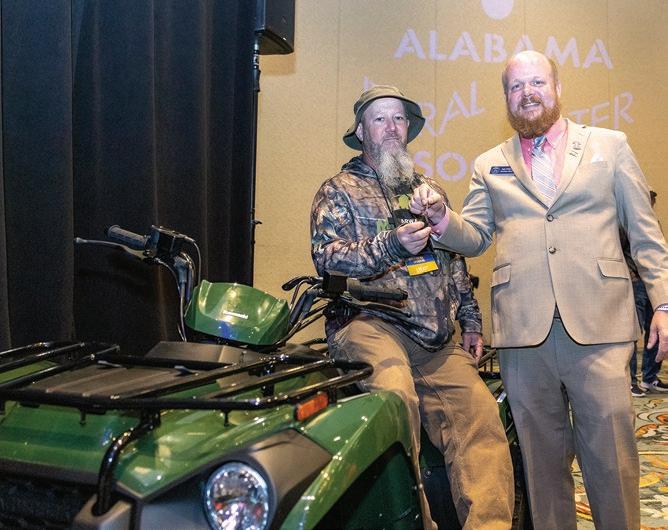
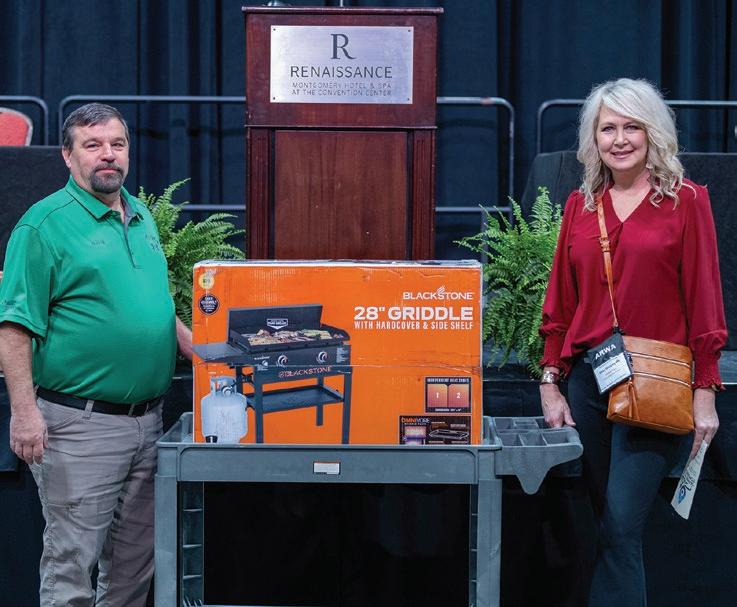
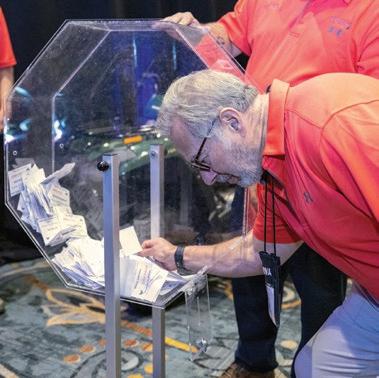
Each year, ARWA members in good standing who preregister for the Annual Technical Training Conference with a paid full registration are automatically entered into the four-wheeler raffle, one of the most anticipated drawings of the entire conference week. The winner is announced on the final day of the conference during the Awards Luncheon, and attendees must be present to win. For many, the four-wheeler giveaway has become a signature moment of the week, and the room grows noticeably louder the closer we get to the drawing.
The lucky winner for 2026 was Billy Patterson, Hokes Bluff Water Board.
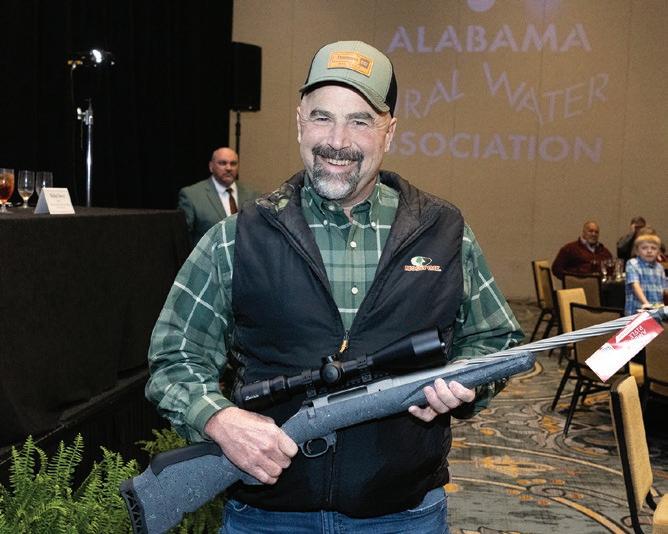
The Alabama Rural Water Association hosts a year-long gun raffle, with a limited number of tickets available each year. Tickets are $10 each, and all proceeds benefit the National Rural Water Association Political Advocacy Fund, which supports federal advocacy on behalf of rural water systems across the country. The winner is drawn each year at ARWA’s Annual Technical Training Conference. Attendees do not need to be present to win.
The lucky winner for 2026 was Ryan Wallace, City of Florence Water & Wastewater Department.
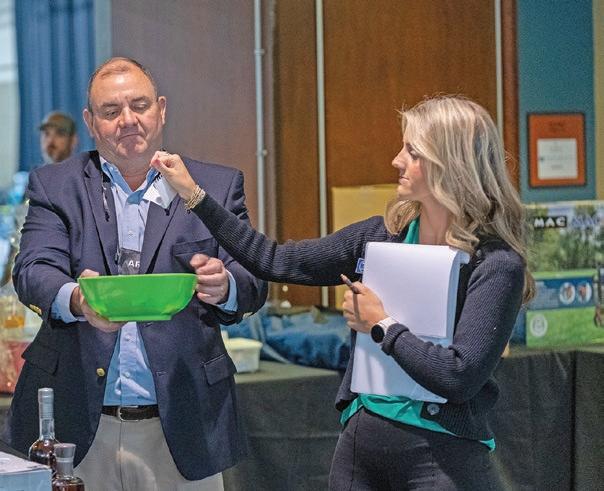
Each year, ARWA and generous member utilities donate a wide array of prizes for the PAC Raffle, held in support of the Alabama Rural Water Association Political Action Committee. Attendees purchase tickets throughout the conference and enter drawings for the items that catch their eye, from tools and equipment to gift cards and one-of-akind finds. The PAC Raffle has become one of the most lively traditions of the conference week, friendly competition for a good cause, and every dollar raised supports ARWA’s advocacy for rural water systems across Alabama.
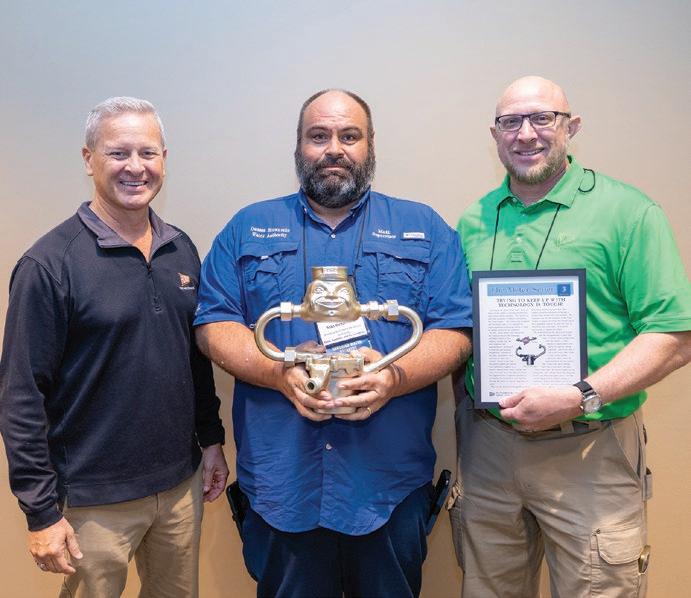









By Brian Faucett, ARWA Apprenticeship Coordinator
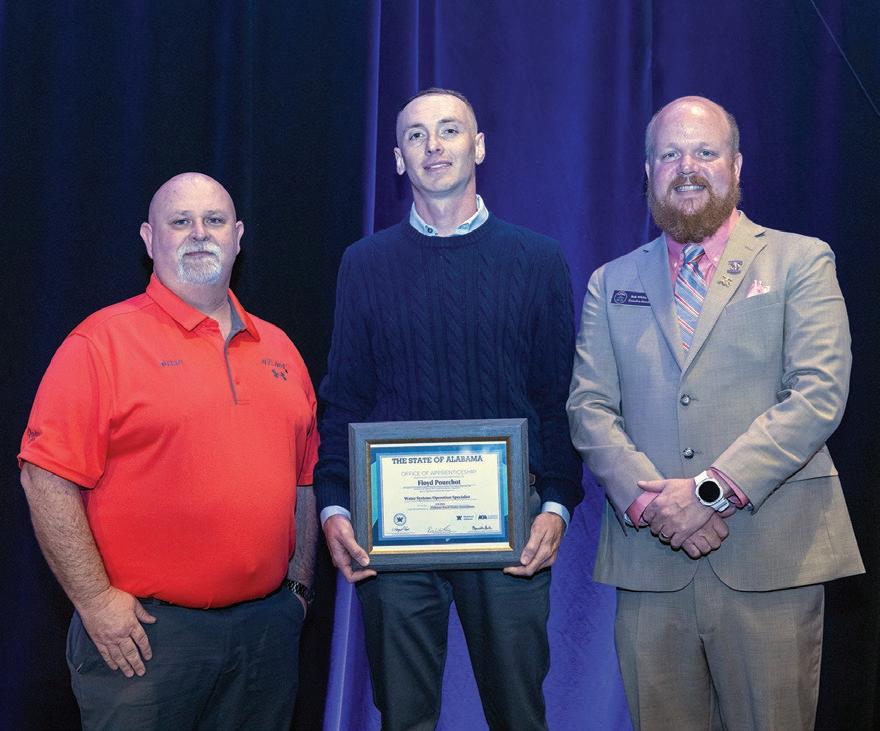
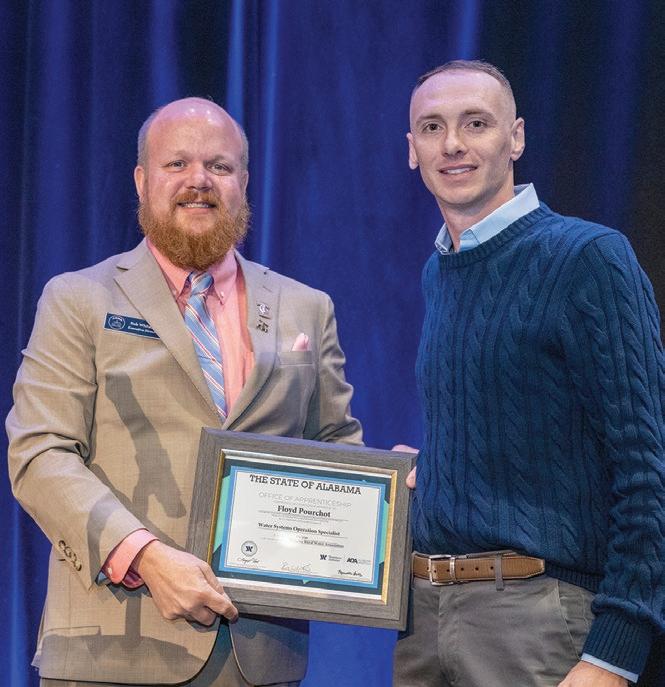
Let’s give a big round of applause to Mr. Floyd Pourchot of the Eufaula Water and Sewer Board for achieving a truly historic milestone. Floyd has earned the distinction of being the first-ever graduate of the Alabama Rural Water Association Apprenticeship Program –and, more specifically, the first individual to successfully complete the Water Operator Apprenticeship Program.
According to his management team at Eufaula Water and Sewer, Floyd is known as a true go-getter and an asset to the organization. His dedication, work ethic, and commitment to excellence have set a high standard for others to follow.
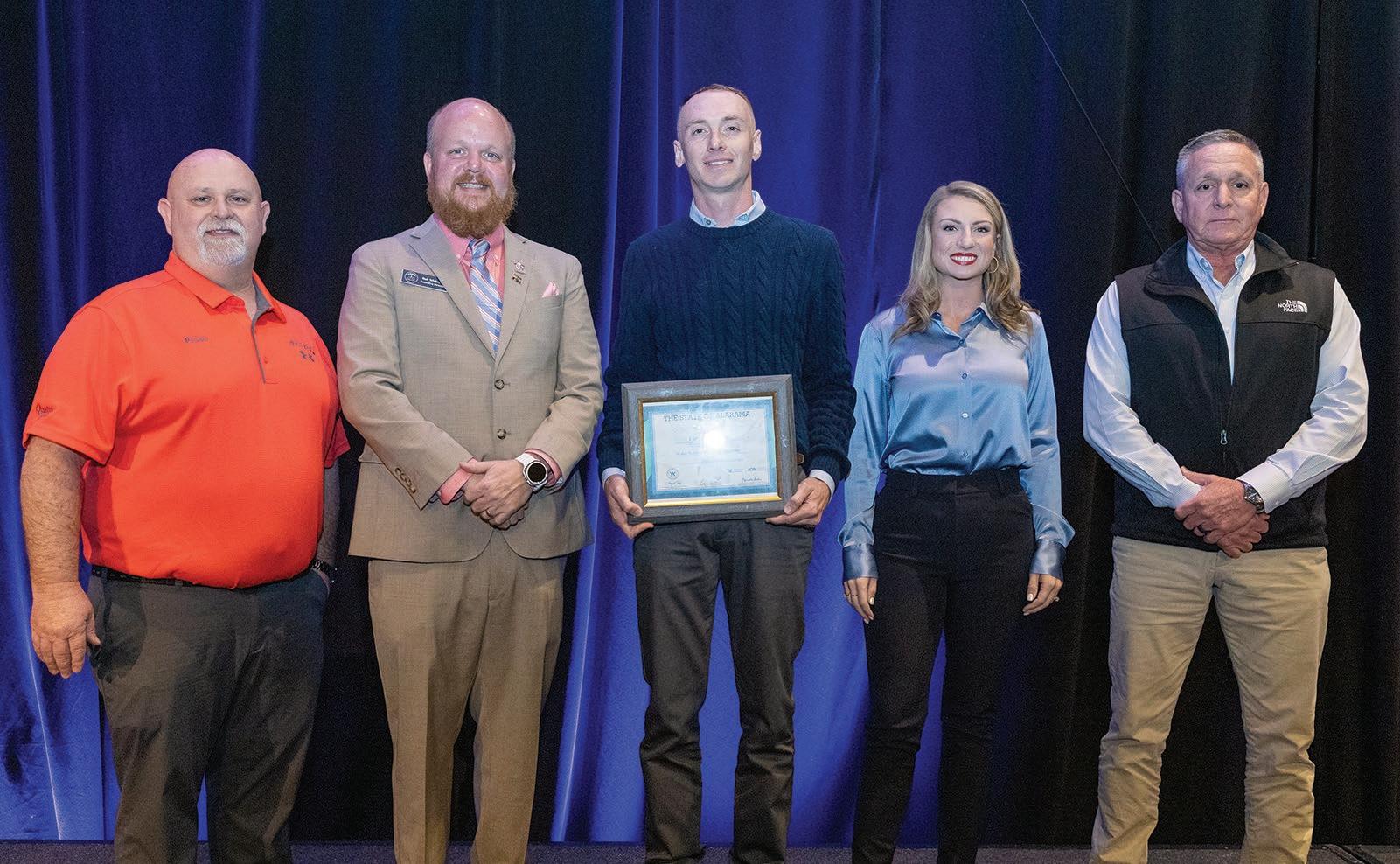
Mr. Pourchot successfully completed all program requirements and was formally recognized on March 18 at the ARWA 48th Annual Technical Conference. During the event, Executive Director Robert White honored Floyd as the program’s first graduate, marking a significant
moment, not only for Floyd, but for the Apprenticeship Program itself.
In addition to this groundbreaking accomplishment, Rob also announced that Floyd was named the Southeast Alabama Region Apprentice of the Year by the Alabama Office of Apprenticeship –another testament to his hard work and outstanding performance.
Despite these achievements, Floyd isn’t slowing down. He has already set his sights on his next goal: obtaining his wastewater license. His determination to continue growing professionally reflects the same drive that helped him reach this milestone.
Congratulations, Mr. Pourchot, on your remarkable accomplishments. Your success is an inspiration, and your journey is just getting started.
Apprenticeship programs, such as the one at Alabama Rural Water, are needed to help ensure a steady flow of
Water/Wastewater operators for years to come. Mr. Pourchot blazed the path for many more to come. Thank you, Floyd, for helping us in building the future of the water industry!




FBY RYAN LAVENDER, ARWA WATER CIRCUIT RIDER
or those who may not be aware, Andrew Crawford, the former Circuit Rider for Central Alabama, retired at the end of 2025 after more than 20 years of dedicated service. In every system I’ve visited so far, I’ve heard the same phrase: “You have some big shoes to fill.”
There’s no question that statement is true. Andrew was not only highly skilled and knowledgeable, but he genuinely cared about the water systems he served. He went above and beyond to help wherever he could, and his impact across the state is undeniable.
When I hear those words – “big shoes to fill” – I don’t see them as pressure. I see them as something to strive toward. The Circuit Riders before me have set a high standard, and my goal is not only to meet that standard, but to build upon it.
My name is Ryan Lavender, and I am a Grade 2 water operator with nearly 10 years of experience. I’m from Moundville, Alabama, just south of Tuscaloosa. I come from a sixth-generation farming family, where my dad and I operate a small cattle farm spanning about 340 acres. Growing up on the farm instilled in me a strong work ethic, resilience, and a deep appreciation for God’s creation.
A career in the water industry wasn’t something I initially planned. After graduating from Southern Academy in 2015, I knew only one thing for certain –I wanted to work outdoors. That led me to a summer job with the City of Moundville,
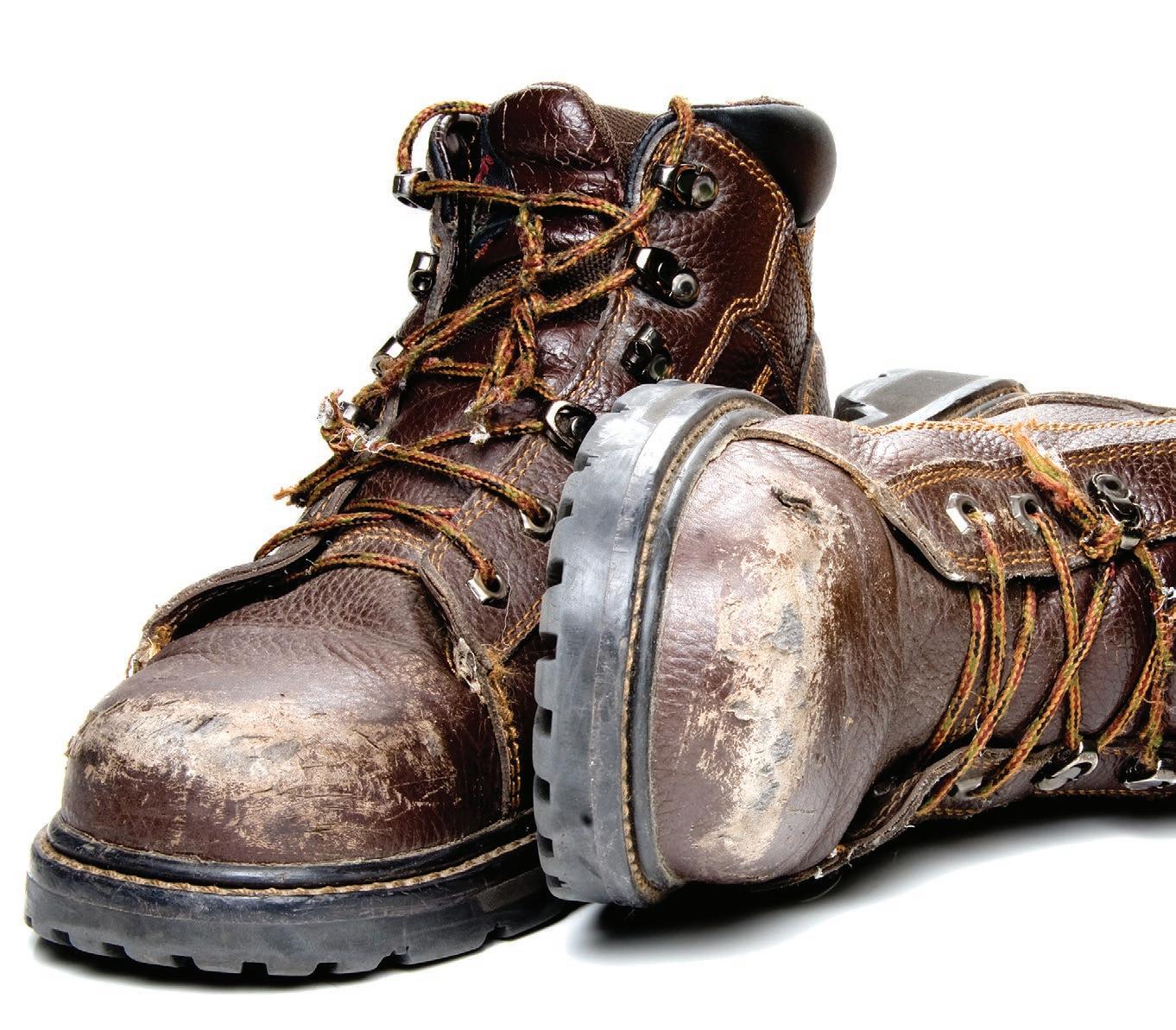
When I hear those words – “big shoes to fill” –I don’t see them as pressure. I see them as something to strive toward. The Circuit Riders before me have set a high standard , and my goal is not only to meet that standard, but to build upon it .
where I worked under Daniel Fowler. What started as a temporary position turned into a meaningful connection, as Daniel became both a mentor and a close family friend.
After a brief time working with my dad and in landscaping, I received a call from Mr. Fowler about an opportunity at a nearby water system. I applied, was hired, and on July 31, 2017, I began working at Englewood Hulls Water System – a purchase system supplied by the City of Tuscaloosa. I remained there until December 2025.
During my time at Englewood Hulls, I had the privilege of working alongside outstanding individuals and gaining invaluable experience. I owe a great deal of gratitude to that organization and especially to my former supervisor, Darren Rice. The knowledge, mentorship, and life lessons I gained there have had a lasting impact on both my career and my personal growth.
Leaving Englewood Hulls was one of the most difficult decisions I’ve ever made. I relied heavily on guidance from my dad and others I’ve met throughout my time in this industry. When I joined the Alabama Rural Water Association on January 5, 2026, I’ll admit – I was nervous. That feeling didn’t last long.
The team at ARWA has been incredibly welcoming, knowledgeable, and always willing to lend a hand. In a short amount of time, I’ve already learned so much and had the opportunity to meet many great people across the state. What I enjoy most about this role is the ability to continuously learn, build relationships, and provide meaningful assistance to others – and that’s exactly what this position allows me to do.
I look forward to meeting many more of you and supporting your systems in any way I can. There’s no doubt I have big shoes to fill – but I’m excited for the opportunity and ready for the challenge.

BY DARRELL BREWER, ARWA WATER CIRCUIT RIDER, AKA
Now, I don’t know about you, but every morning when I stumble into my kitchen still half-asleep, looking a little dead, I turn the faucet on and out comes something downright remarkable. Cold, clear water, like you just fetched it straight from the spring at the foothills of the Appalachian Mountains. And I didn’t have to walk a mile to a creek with a bucket or draw it from a well with a foot of snow on the ground. I don’t have to boil it on the stove or pray it don’t make me sick. I just turn a handle, and there it is, water finer than a frog hair split both ways. But here’s the thing most folks never stop to ponder while they’re brushing their teeth or filling up the pitcher for some sweet tea: where on God’s green earth did that water coming from the faucet come from?
Well, pull up a chair, Cuz, because we’re fixin’ to take a little ride through the hills and hollers, and across the ridges of North Alabama, cause up here the water ain’t just “water” – it’s a journey. In the coming issues, I’m going to do a series of articles leading you through this journey, from raindrops to the kitchen sink. So, kick back, and let’s talk a little bit about where our water comes from.
The Tennessee River:
The Big Dog of North Alabama Water
Let’s travel the Tennessee River for a spell. The Tennessee River is the backbone of this entire region, snaking some odd 650 miles across seven states. From Knoxville, Tennessee, it bends south out of the Appalachian Mountains, it cuts across the Northern quarter of Alabama, and then North to join the Ohio River in Kentucky, carrying enough water to make your head spin like a June bug on a fishing line.
The Tennessee Valley Authority (TVA) gets an “attaboy” for building all those dams back in the day, taming that wild, flood-prone river. Before the dams were built, it was called the Cherokee River. Cherokee villages were set up along the river, and settlers farmed the fertile river bottom land until it was submerged by the dams. Navigation was hard due to shallow, intense rapids, and settlers had to use flatboats to transport livestock and goods through these rapids. Settlers used water carried from springs in buckets, dug wells by hand, or built cisterns to catch rainwater in. Some water was contaminated, so they would boil it before using it. Once the dams were completed many of the settlers lost ancestral homes, while the Cherokee people faced further disruption to their ancestral lands.
By building these dams, TVA formed many, many lakes and reservoirs along the way that now serve as some of the finest
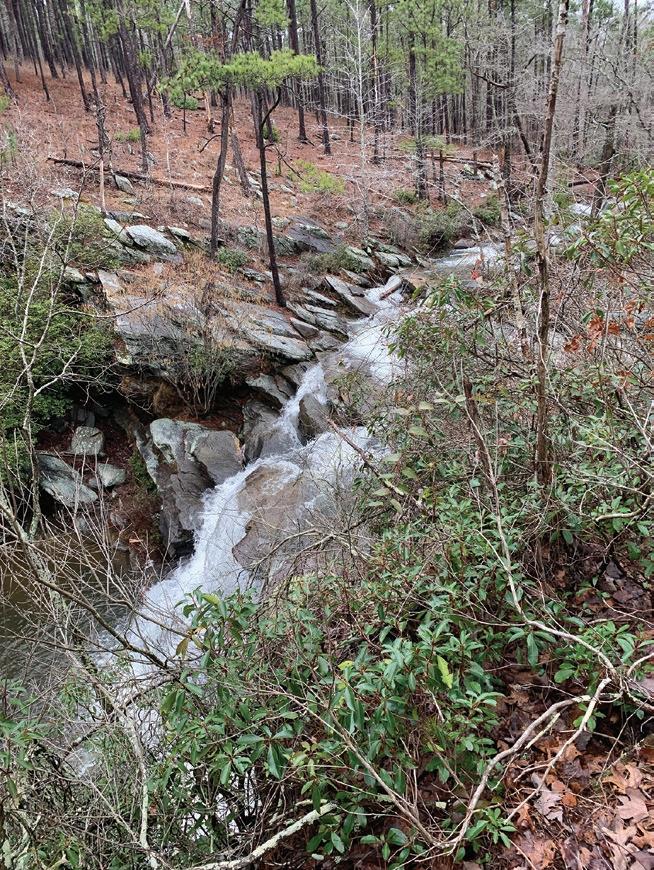
fishing, recreational, and drinking water reservoirs you’ll find anywhere in the country. It also provides us the way of life as we know it. And right here in North Alabama, we sit smack dab in the middle of it all.
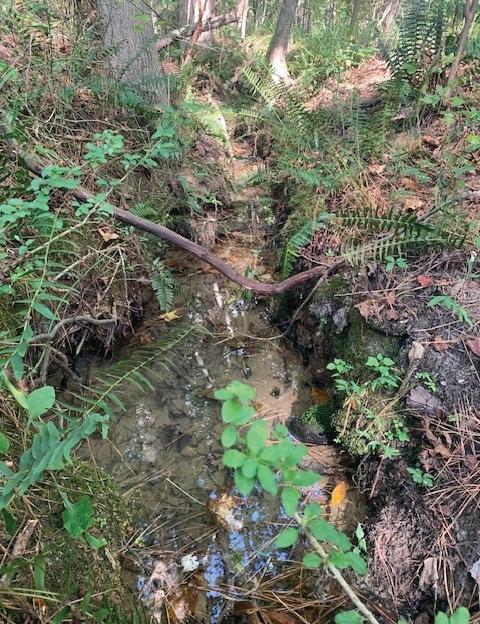
I remember as a kid coming up going coon hunting with my Daddy. We’d walk a few hollers over where the hounds had treed, and we would get so thirsty down in them hollers on warm nights with no air a stirring. But there was always a “sprang” (in my holler that’s what we called them) running a branch nearby. I remember stopping at branch, hunkering down, scooping the water up with our hands and drinking. We walked upstream about a hundred yards or so and there was a dead coyote laying in that same branch. Now that about made me sick, but all my Daddy said was “Boy, water ain’t no good lest it’s filtered through a dead critter.”

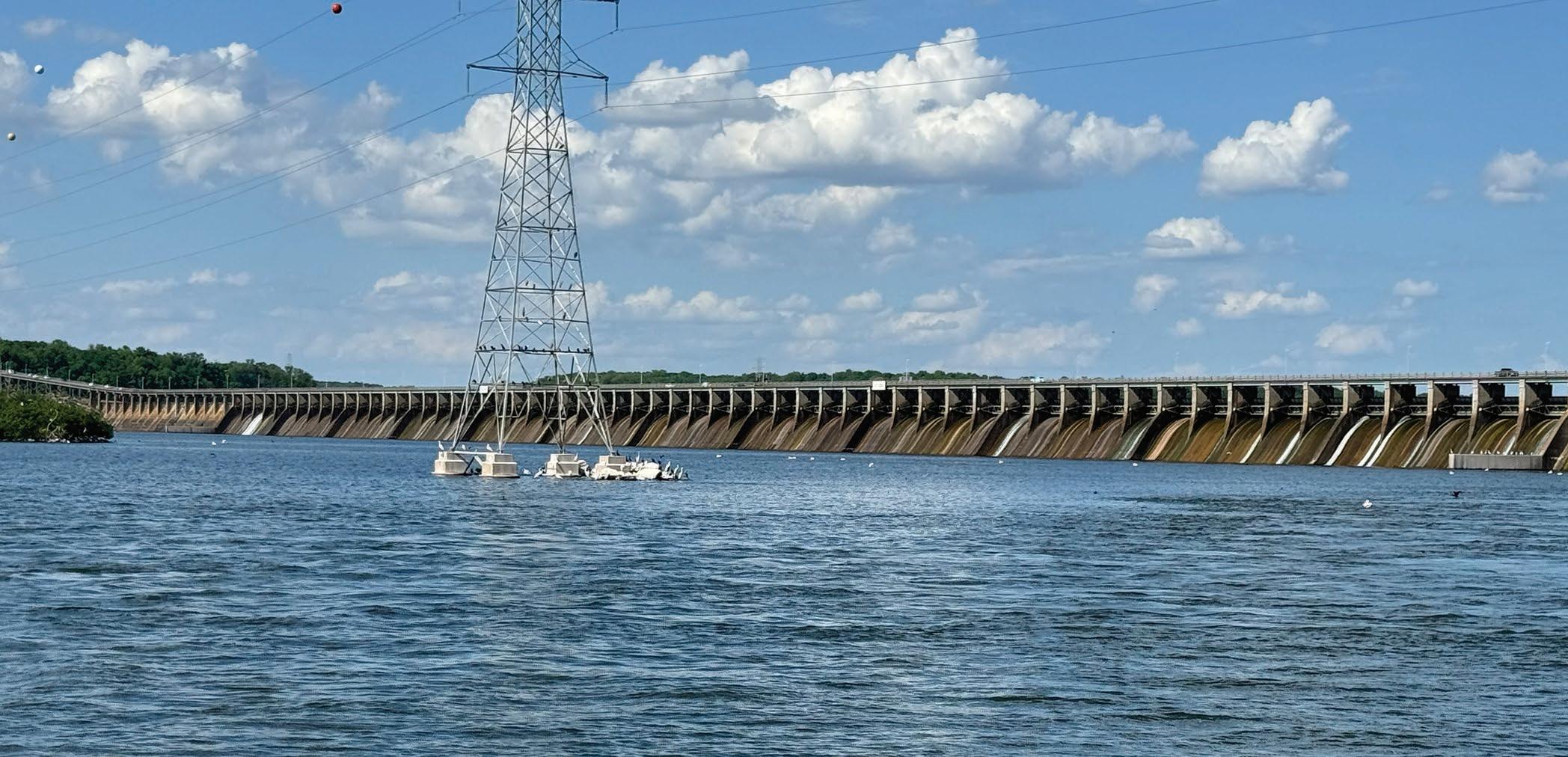
Lakes and Reservoirs: The Tennessee Valley’s Big Ol’ Water Tanks
Think of a reservoir like your grandma’s pressure cooker and her canning, setting aside food for the winter or when hard times come calling. These reservoirs are like that, storing millions of gallons of drinking water for when the rain stops for a while. North Alabama’s TVA reservoirs are the primary surface water sources for communities across the region, and they are something to behold.
In the 1920’s, the Tennessee Valley Authority (TVA) started constructing the dam system along the Tennessee River. Once the dams were completed by the 1940’s TVA had not only created a way of producing hydroelectric power, but TVA had also created lakes and reservoirs well needed for the way of life throughout the Tennessee Valley. From navigating goods and supplies, to irrigation, to harnessing
rain for drinking water. These lakes offer some of the best fishing and recreational activities in this doggone country, bringing in billions of dollars in revenue.
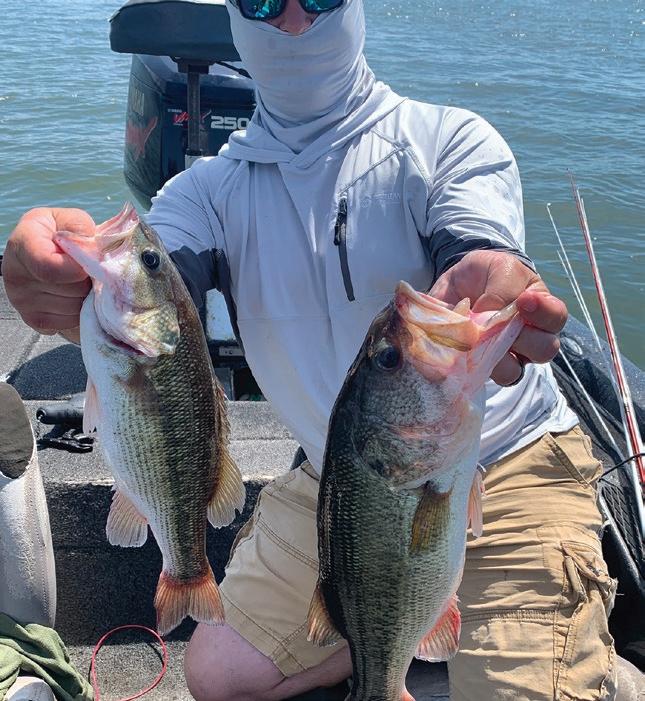
Let’s head on up yonder to Wheeler Lake. First, let me tell you about snag fishing up at Wheeler Dam. As a teenager, me and my buddies would use a three-prong hook with a chunk of lead, cast it out and snatch it back, hooking fish wherever we could. We’d stay up all night melting down used tar weights and pouring them into molds to make our own snag hooks. You’d lose a heap of hooks, but you’d snag a heap of fish. Just watch out if your buddy snagged you. Your night was over and you had to go get’er cut out. Believe you me, that ain’t no fun. FYI – snag fishing in Alabama is illegal on public waterways now.
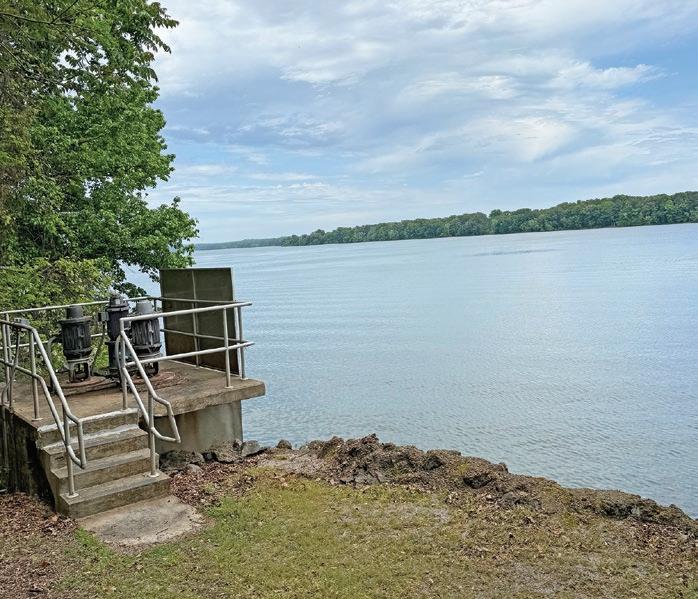
With the completion of Wheeler Dam, Wheeler Lake was formed, and is one of
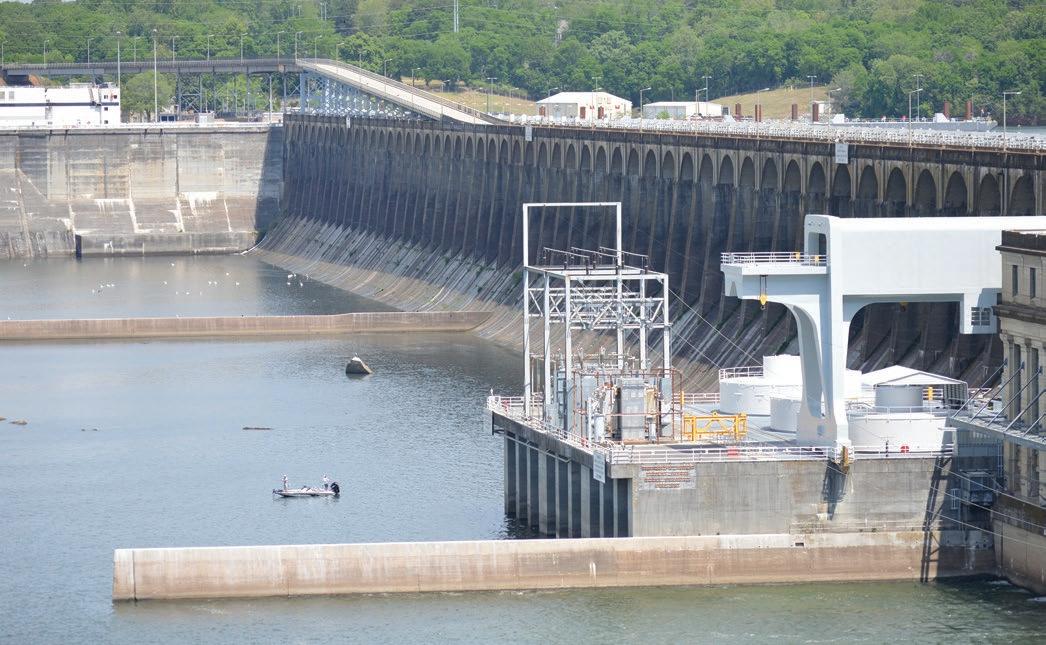
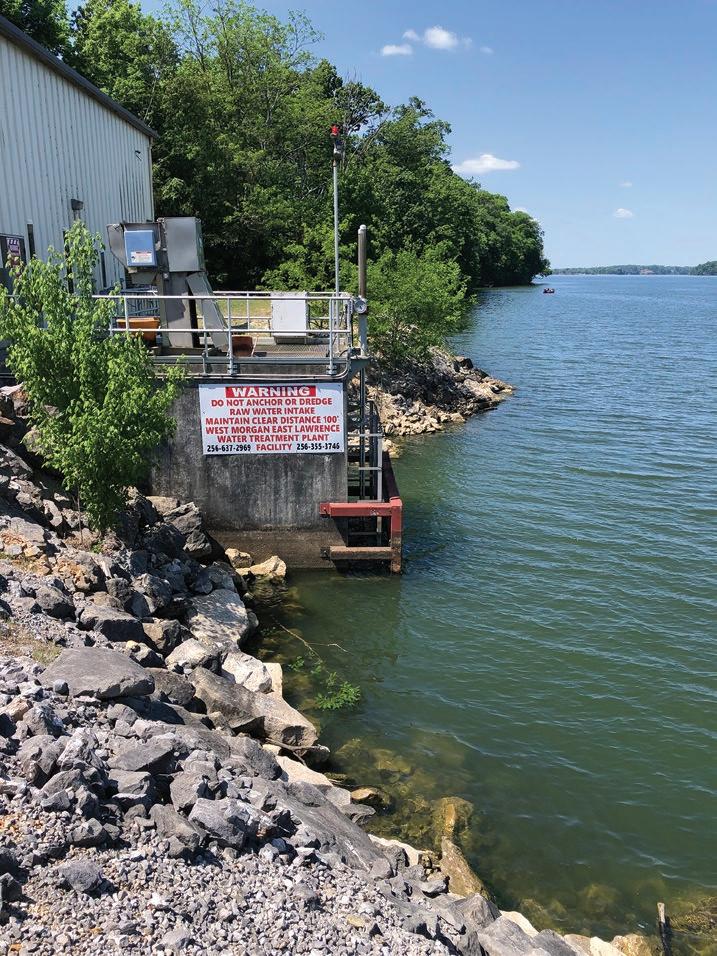
the grandest bodies of water in North Alabama. Wheeler Lake feeds drinking water treatment plants across Lawrence, Limestone, and Morgan Counties. When you’re filling up your coffee pot in Decatur or Town Creek, there’s a solid chance that water started its day out on Wheeler Lake. And think of this tidbit; Wheeler Dam was
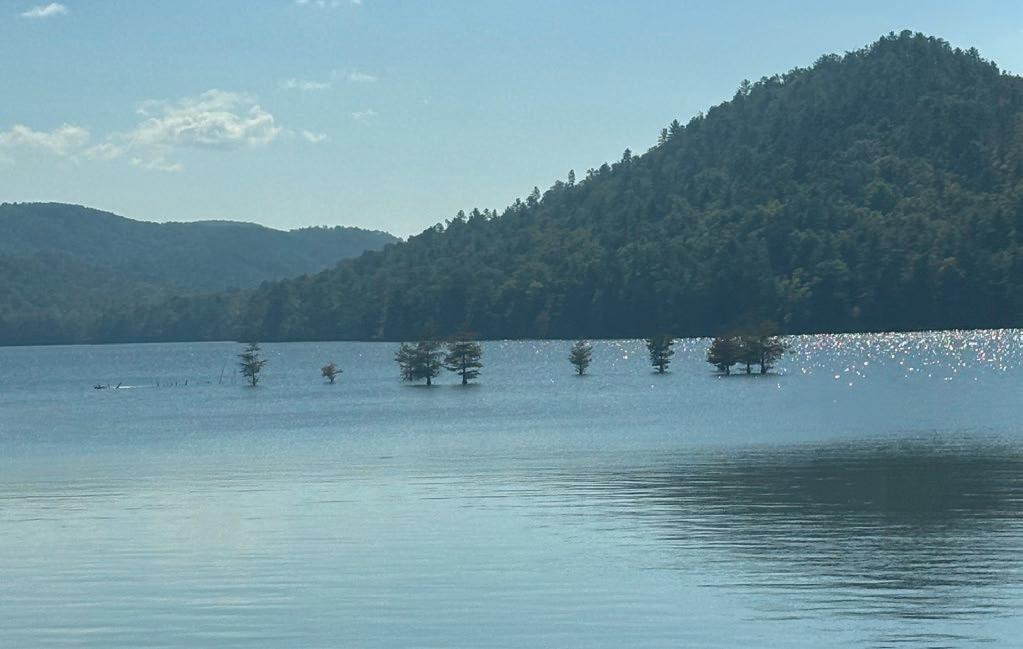
named after a Civil War General “fighting Joe,” General Joseph Wheeler. Wheeler Lake is also home to a national wildlife refuge established by President Roosevelt. Chew on that awhile. With that being said about Wheeler Dam let’s head on down the river to Wilson Lake and Pickwick Lake.
Wilson Lake and Pickwick Lake
Over in the Shoals area – that stretch of Colbert, Lauderdale, and Lawrence Counties –they rock as hard as any place in America. Known as little Nashville (and they also have the Swampers), it has given the world more music than it has any right to. Wilson Lake and Pickwick Lake also provide drinking water to communities around Florence, Sheffield, Tuscumbia, and Muscle Shoals. Your morning glass of water in the Shoals comes with a hint of history thrown in for free. Hold on to your hat we’re going to hammer down all the way up to Guntersville Lake.
Lake Guntersville
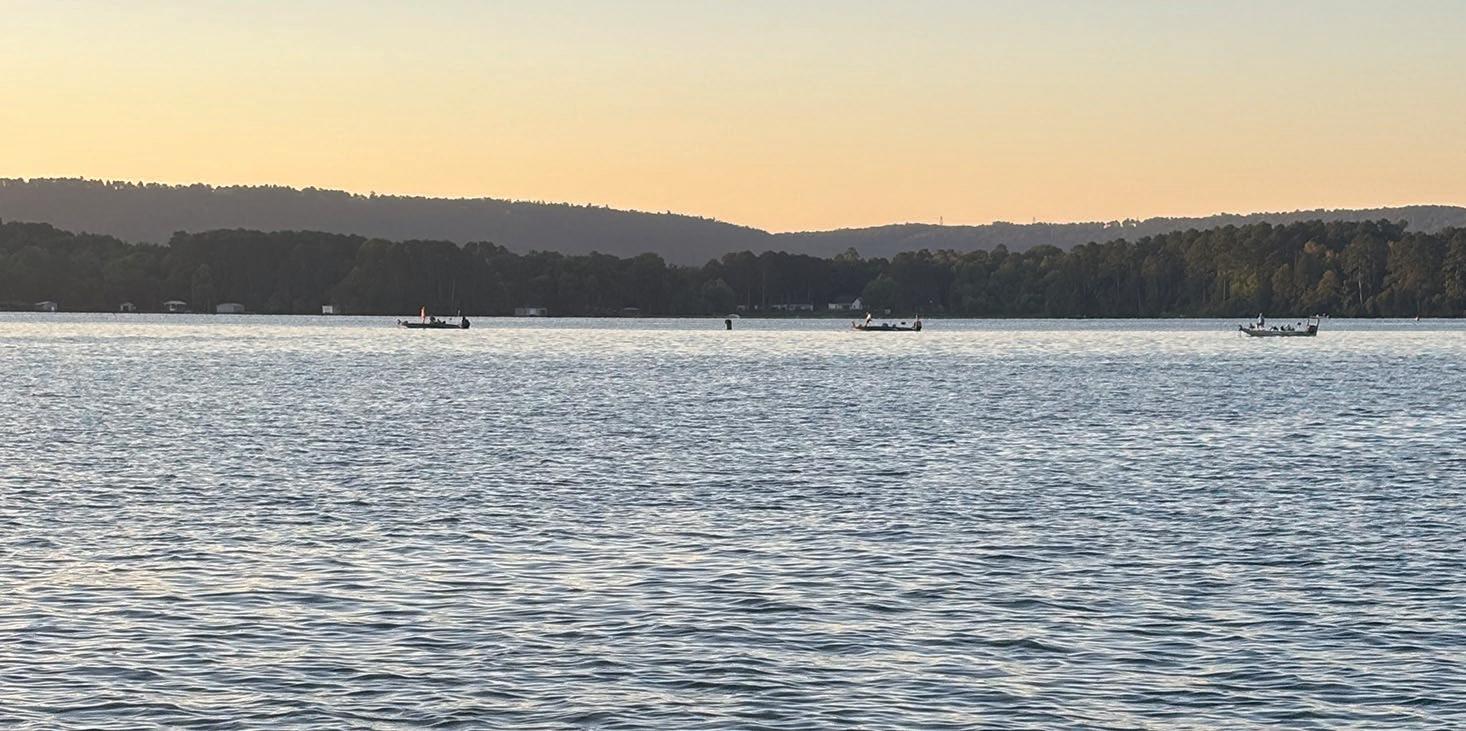
Lake Guntersville is up in Marshall County. It is the largest lake in Alabama, sitting between the ridges of the southern Appalachians. Guntersville Dam is both a world-famous bass fishing destination for pro anglers (where they have fishing tournaments near about every weekend),
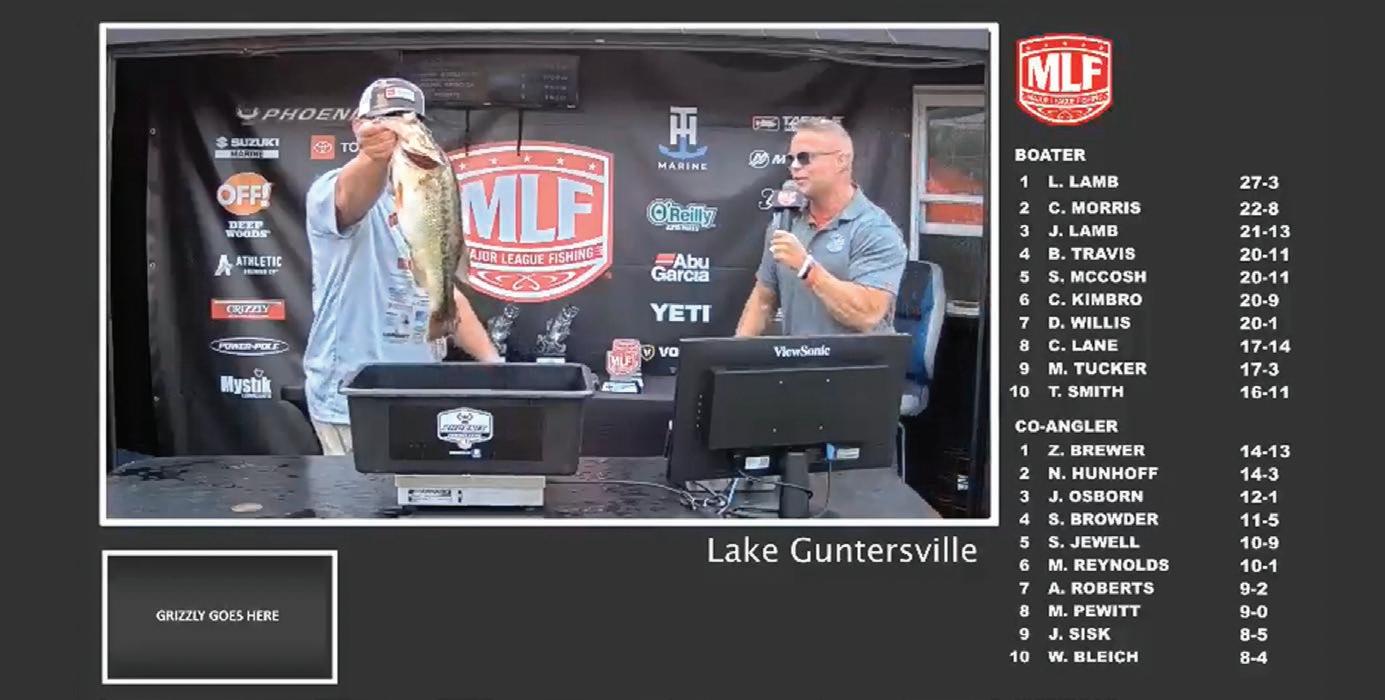
and a valuable drinking water source for the City of Guntersville and surrounding areas. Lake Guntersville collects water from over 8,000 square miles of watershed. That means rain falling on a ridge in Tennessee, trickling through hollers and creek beds, eventually winds up in Lake Guntersville and, eventually, in your sweet tea glass.
We’ve been up and down the Tennessee River and we ain’t even touched the Coosa River or the Black Warrior River, Smith Lake nor Bear Creek Lake. For now, let’s turn around and get off the river and get back on dry land. We figured out that as it rains, we get runoff coming from the hills around
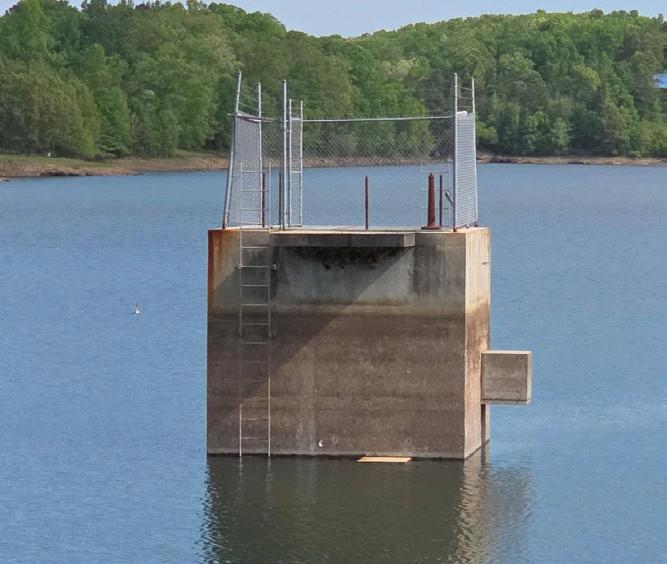
North Alabama, and rivers and waterways bringing water out of Georgia, Tennessee and surrounding areas, replenishing our lakes and reservoirs, so we can have the way of life we have now. The way I figure, if TVA hadn’t built the dams, we would probably still be walking for a mile to a creek with a bucket to fetch some water, or drawing up water from a well in a foot of snow, because, listen here, we wouldn’t have power either.
Moral of the story is that, around here, water coming out that faucet is not just a convenience, it’s something worth appreciating. Because up here in North Alabama we don’t just have water… we have GOOD WATER
Rivers and lakes ain’t just the only place we get our water. Next issue we’re going underground, Cuz, to talk about what’s going on under your feet.
Credits:
• Wikipedia
• Muscle Shoals Heritage Area
• TVA.com
• Someone who genuinely cares about North Alabama!


By Emily Ward ARWA Intern, Publication and Policy
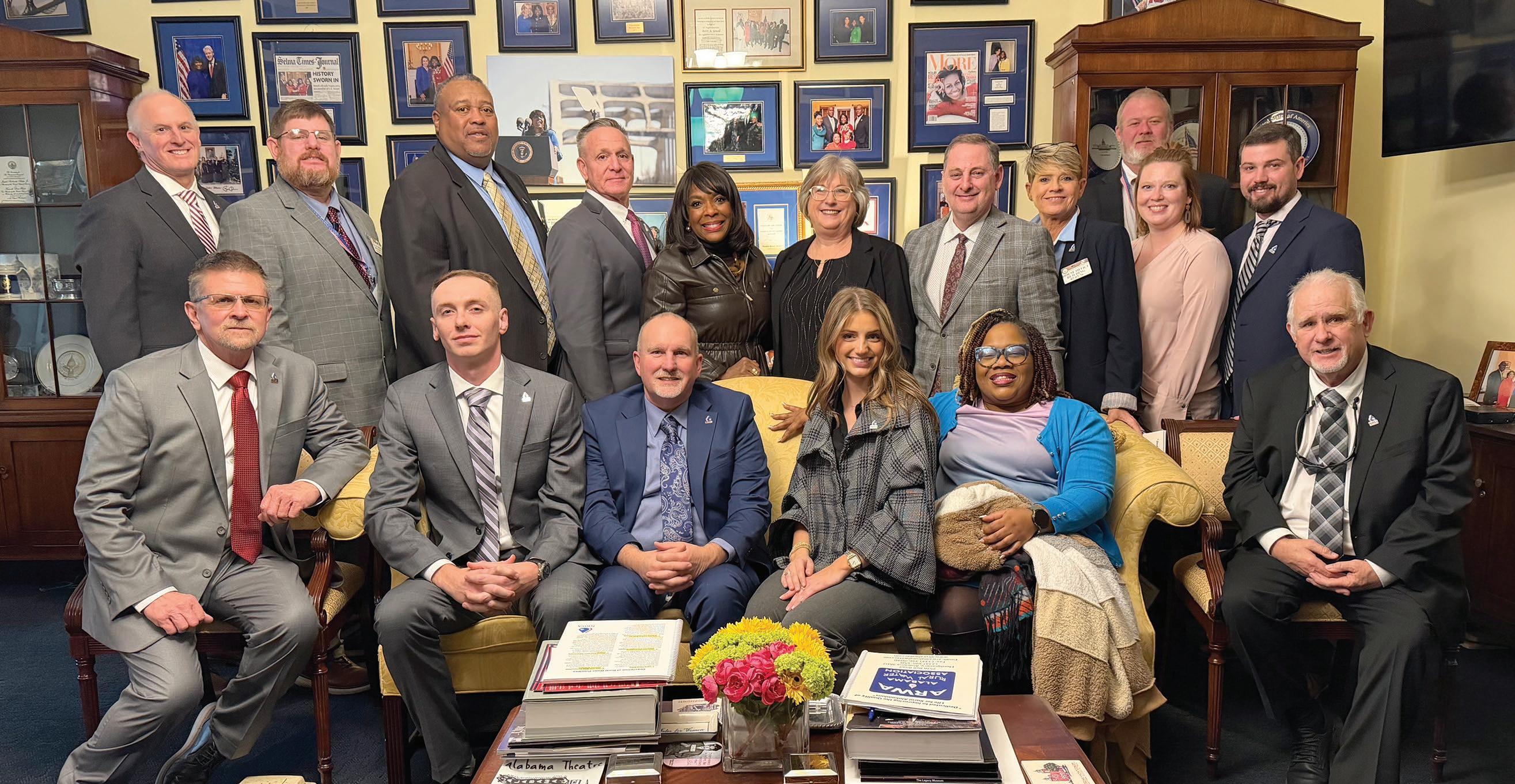
Each year, all 50 states gather in Washington, DC for the annual National Rural Water Association (NRWA) Rural Water Rally. During this time, we celebrate the work we’ve done and advocate for continued funding to support the impact we make. Each state meets with its congressional delegation, both House and Senate. In these meetings, we steward existing relationships, highlight our statewide impact on rural water systems, and share personal testimonies that bring our work to life.
My preparation before traveling to DC involves gathering and organizing data that tells the story of our impact. I pull reports on the populations we serve, the number of Consumer Confidence Reports (CCRs) we’ve assisted with, the on-site hours we’ve logged, the number of system contacts we’ve made, and the training classes we’ve taught. All of this is compiled into a booklet that clearly shows our leaders that the work we do has a real, measurable impact on rural Alabamians.
As a young professional, this experience is incredibly unique. The workforce gap in our industry is real. Many professionals are reaching retirement age, and they are not being replaced at the rate they are leaving. We are the next generation, and
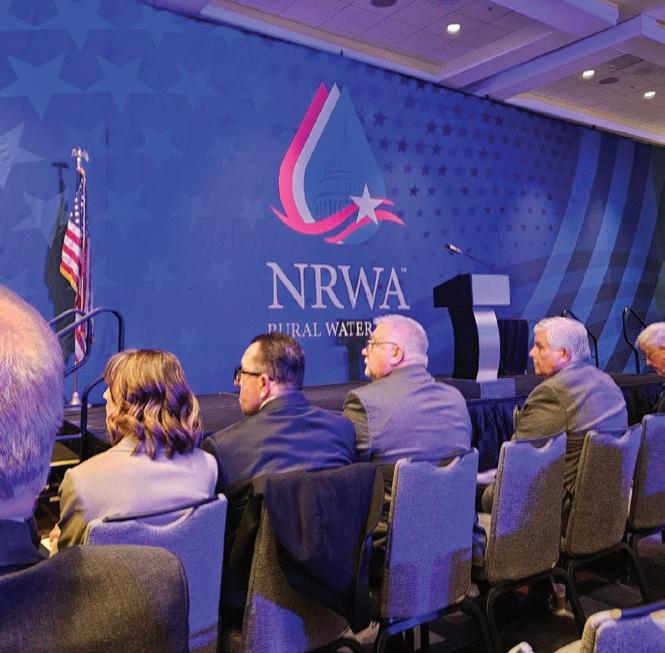
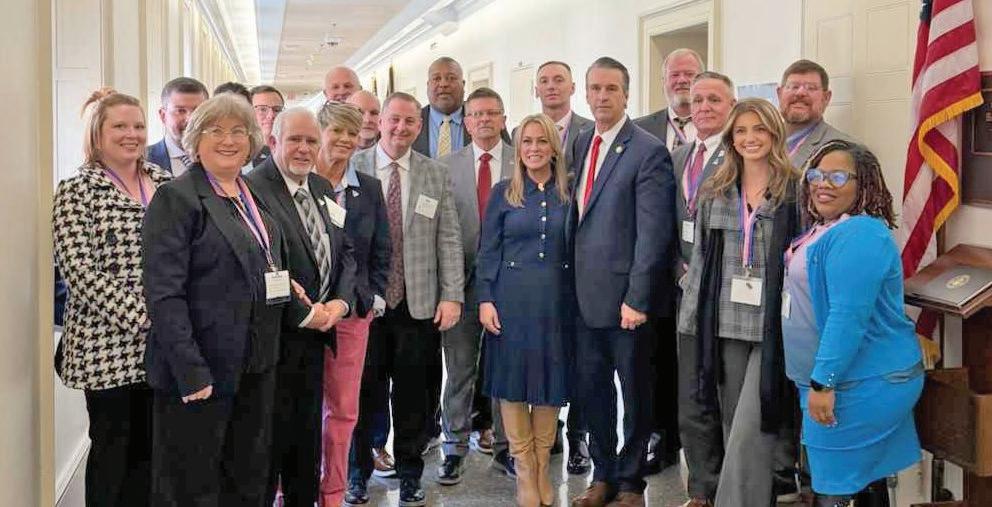
rural water systems cannot stop providing water simply because there is a shortage in the workforce. Our nationally funded Apprenticeship Program is working to fill that gap. This year, we were able to bring Floyd Pourchot from Eufaula Water Works and Sewer Board, our first graduate of the program, with us to DC Showing our lawmakers that these are real people, and that their success is made possible by the funding we receive is what makes this experience so meaningful.
At the opening session of the Rally, the NRWA team presented a Circuit Rider video.
I am always deeply moved by these videos because I know the real work, sacrifice, and heart behind those short clips. Our Alabama Circuit Riders, Darrell Brewer, Justin Gardner, and Ryan Lavender (formerly Andrew Crawford) are often the first to respond to a call and the last to leave. Seeing this level of dedication from Circuit Riders across the country reinforces just how essential this federally funded program is to rural America. These five-minute videos capture only a small glimpse of the work that so often goes unseen.
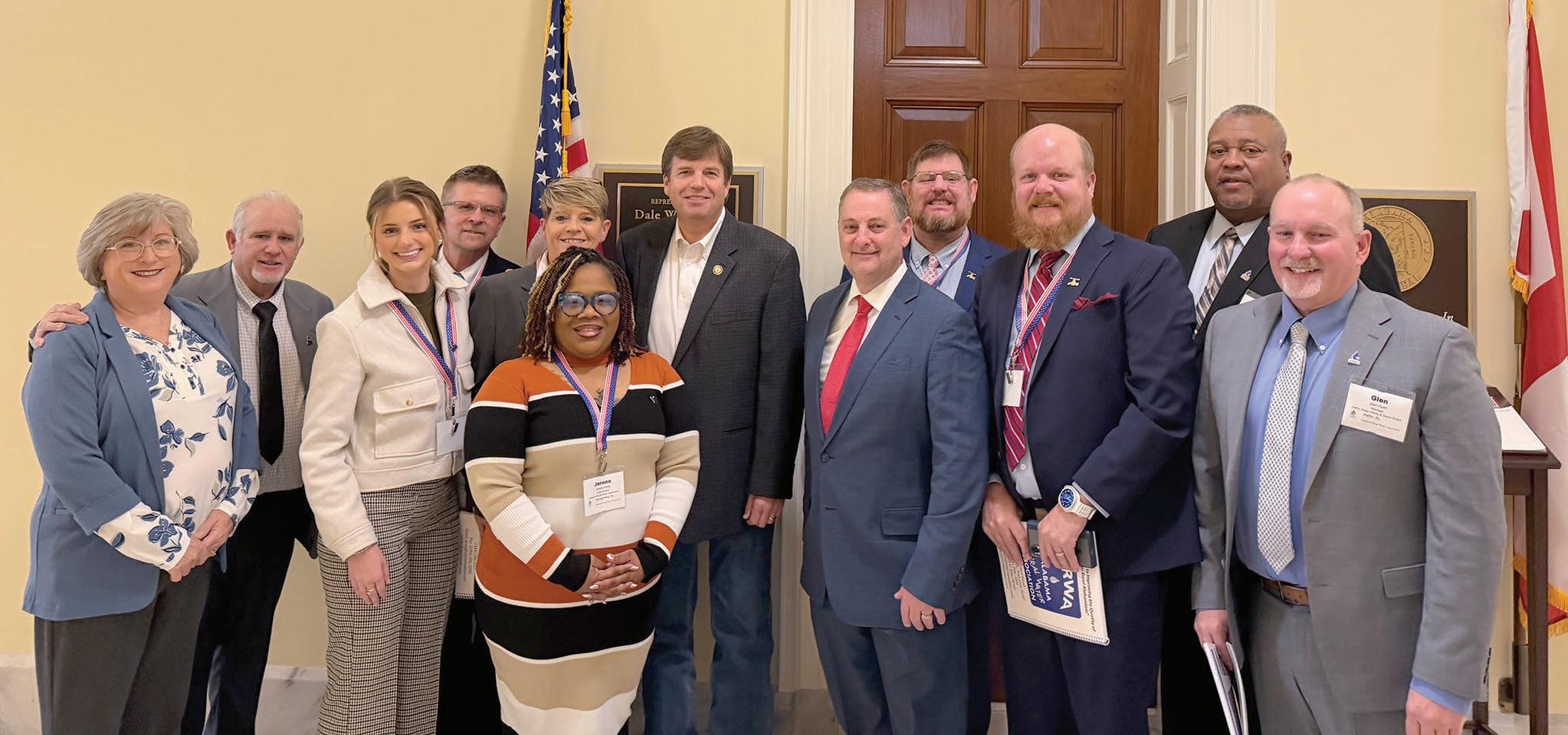

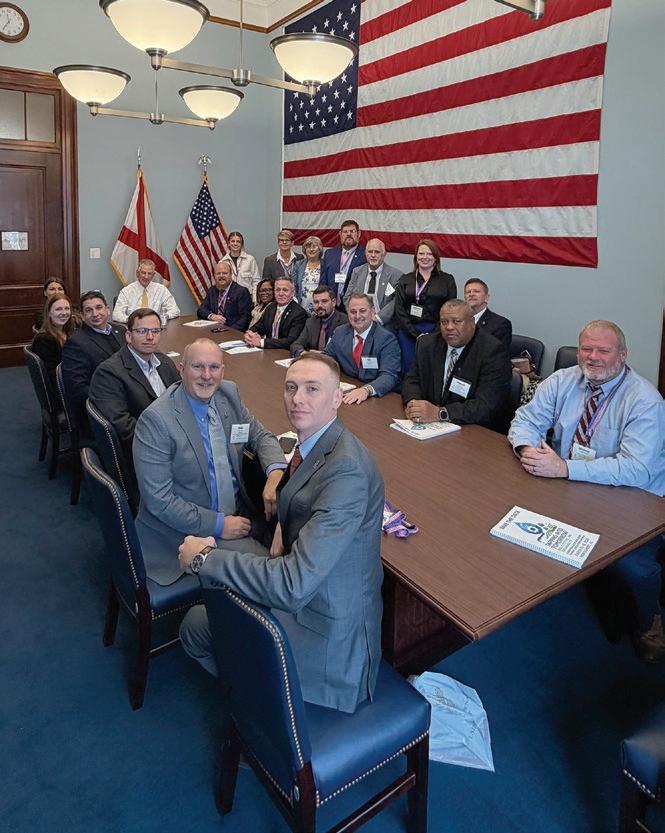
Through my trips to DC, I’ve learned just how important it is to advocate and make your voice heard. Meeting with our lawmakers, the individuals who help ensure our funding goes further and supports our projects is how we do that. Having them take the time to listen to our needs is powerful. It makes our work feel seen. Traveling with the Alabama Rural Water Association to Capitol Hill over the past two years is something I will never forget. Being able to speak up in congressional meetings because I know the numbers, because I’ve seen how our team shows up, and because I understand how much these systems rely on us has instilled a
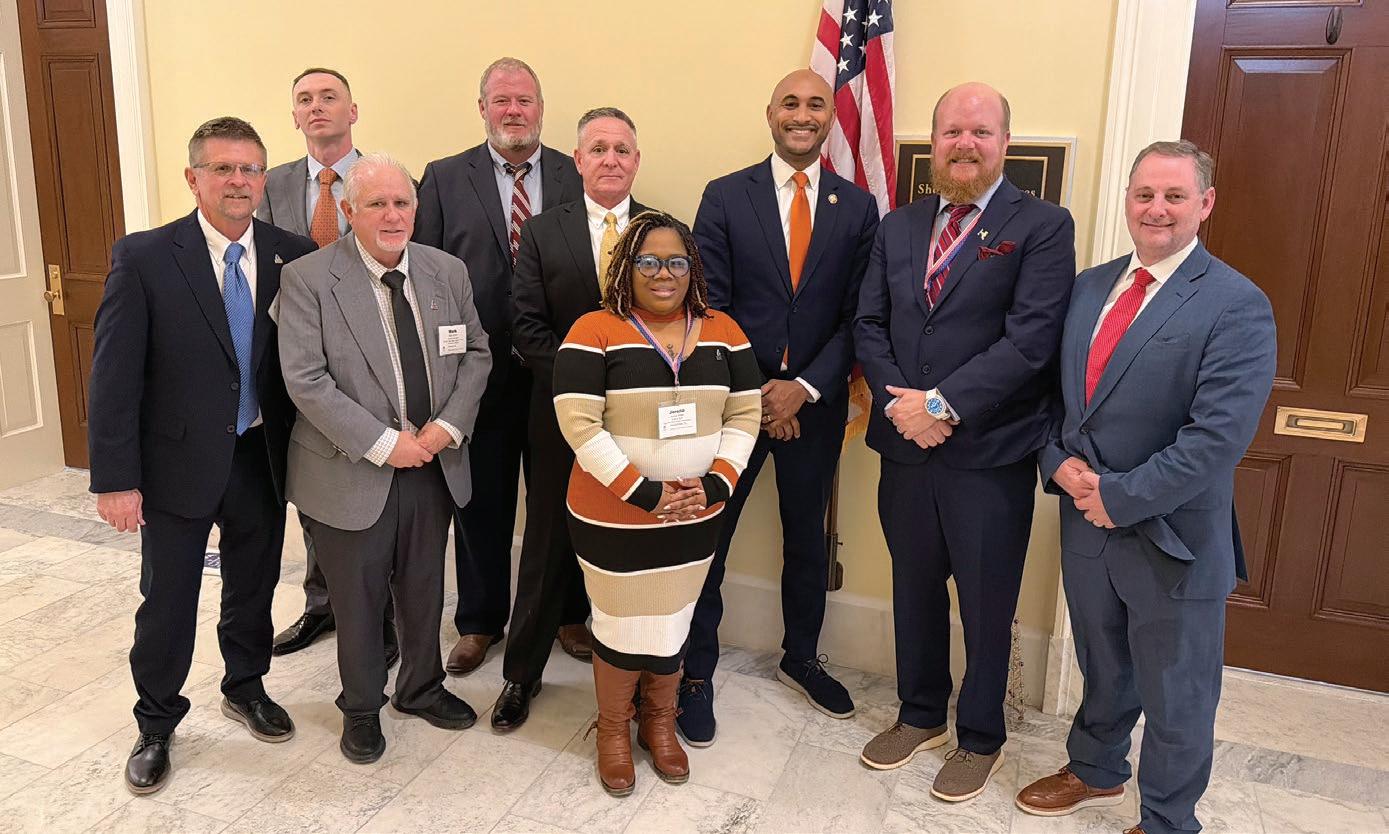
deep sense of pride in me. I am incredibly thankful for the opportunity to go, but the impact it has had on me is even greater.
The rural water family is like no other. The people I met at the Rally were welcoming and excited to see a young, eager face participating in an event of this scale. Gathering to celebrate our work is something I genuinely looked forward to returning to this year.
I believe it is incredibly important for young professionals to engage in the political climate surrounding their industry. There is so much happening beyond our day-to-day responsibilities, and having congressional staff who will meet with you
and advocate for your work truly makes a difference.
I left Washington, DC after my first Rally with a newfound understanding and a sense of patriotism I hadn’t experienced before. Regardless of political affiliation, the people in DC are working for Americans. Being part of that process, even in a small way, is something that will stay with me. More importantly, it showed me that the numbers we present, the stories we share, and the people we advocate for are all connected and that the work we do, made possible through this funding, has a real and lasting impact on communities across rural Alabama.
By Kaylen Branen Snow
On February 24, Eric Hill, Russellville Water & Sewer Board General Manager and National Rural Water Association (NRWA) Board Member from Alabama, testified before the U.S. House Committee on Energy and Commerce, Subcommittee on the Environment. The hearing was entitled: From Source to Tap: A Hearing to Examine Challenges and Opportunities for Safe, Reliable, and Affordable Drinking Water
With more than 30 years of experience in the water and wastewater sector, Hill knows firsthand the tasks and challenges utilities face in delivering safe drinking water and providing clean wastewater services to his customers. As the general manager, he oversees a drinking water plant, a well source, a wastewater treatment facility, and 26 employees. Like many small and rural systems in the U.S., these employees handle treatment, distribution, collection, maintenance, compliance, billing, customer service, and emergency response.
“There’s no in-house engineer, no compliance officer, and no attorney on staff,” Hill said. “When a water main breaks at 2:00 am, the same people who read your meter that morning are the ones responding.”
Similar to Hill’s utility, a vast majority of the community water systems in the U.S. are small and operate with limited staff and budgets.
“Ninety-one percent of the nation’s roughly 50,000 community water systems serve populations of 10,000 or fewer. These systems face the same federal mandates as the largest utilities in the country, with a fraction of the staff, budget, and technical capacity,” Hill stated.
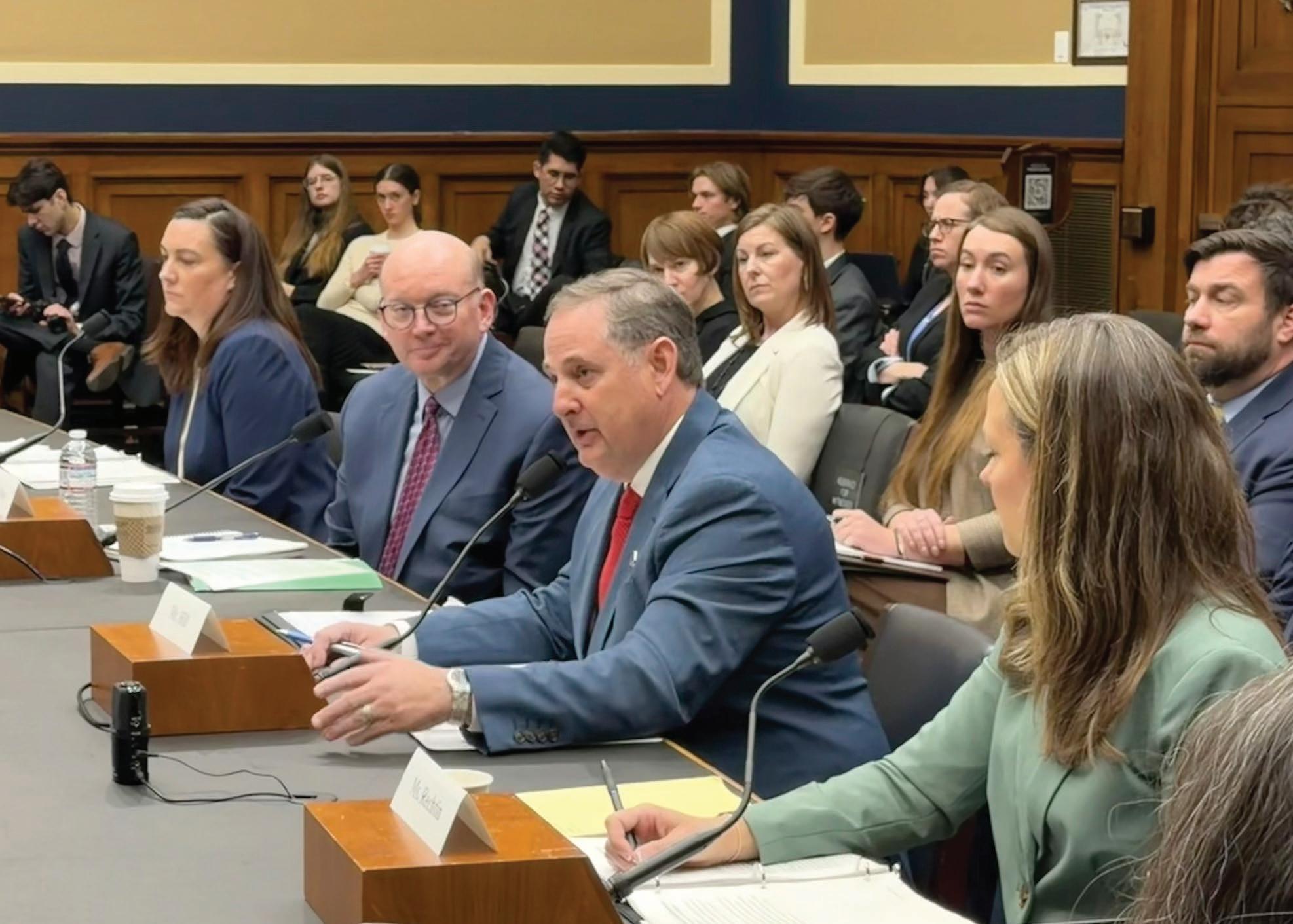
Leaning on his own experience, Hill testified to the committee that the “State Revolving Fund (SRF) is one of the most effective tools Congress has created for public water infrastructure.”
Currently, Hill is managing $2 million in SRF projects through Alabama’s Department of Environmental Management, $1 million in Drinking Water SRF, and $1 million in Clean Water SRF for his utility. These funds have enabled his system to replace a 25-year-old telemetry system with a modern SCADA system, including firewalls, VPN access, and multi-factor authentication; repair a water main that was separated in a creek bed; and clean two filter waste ponds, all of which are essential to treatment capacity.
Additionally, the utility plans to upgrade the booster station pump, enabling it to comply with a new state regulation requiring a five-year tank washout.
“This is what $1 million in SRF funding buys for a small community: a comprehensive program of repairs and upgrades that improves public health, reliability, cybersecurity, and compliance all at once. Without those favorable loan terms, most of those projects would still be sitting on a wish list,” Hill testified.
While SRF funding is a tremendous tool for small and rural communities, Hill did voice concerns to the committee about accessing funds.
“But I have to be honest with this committee, the process of accessing those
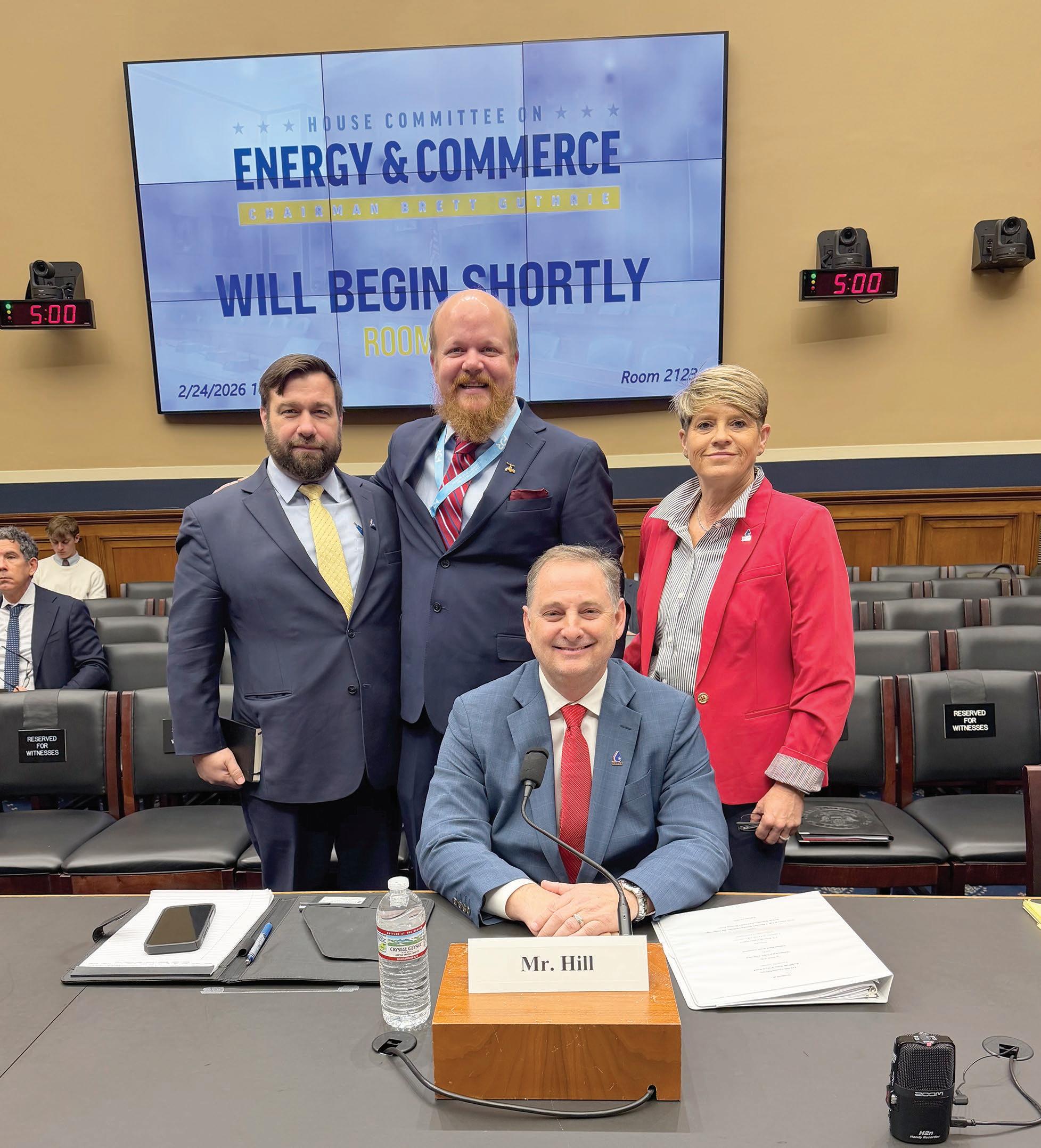
funds is harder than it should be,” Hill said. “Application complexity, Davis-Bacon and BABA compliance costs, and scoring systems favoring large-scale create real barriers for systems like ours. I urge the committee to adopt flexible principal forgiveness, extend project time frames, simplify reporting, and provide targeted waivers for small projects.”
During questioning after the verbal testimony, Hill provided more details on how the application process affects small and rural utilities.
“The biggest problem is when systems like us, who applied [for SRF funding] in 2022, and we’re just now getting some of those funds. The prices have been driven up substantially due to that delay in getting those funds out, but we were blessed to get those funds. The biggest drawback is the timely manner in which they got them delivered to the communities in need.”
Next, Hill discussed his concerns regarding the future of the water workforce.
“Up to half the water workforce will leave the industry within the next 10 years,” he said. “I was fortunate to learn on the job, earn my certifications, and build a career without leaving home. NRWA’s Registered Apprenticeship Program is now replicating that pathway in 35 states with over 1,200 apprentices enrolled or graduated so far. That program needs continued federal support.”
In addition to federal support for NRWA’s Apprenticeship Program, Hill also testified that NRWA’s training and technical assistance programs need support, as they are vital to helping small and rural communities with every aspect of operating, managing, and financing water and wastewater utilities.
In one instance, technical assistance through the Alabama Rural Water Association (ARWA) prevented a crisis in an Alabama community.
“Last year, the town of Hodges, Alabama, population roughly 2,400,
suddenly lost its certified operator when he was seriously injured in a car accident. Overnight, no one knew how to run the water system,” Hill said. “Within one hour of being contacted, an ARWA specialist was on-site. We coordinated with the state, and connected the system with a temporary operative record, and assisted the system until permanent coverage was arranged. The community never lost service and never violated its permit. That only happened because a trusted local provider was already in place.”
Moving forward in his testimony, Hill turned his attention to other concerns utilities face in the future, including compliance with PFAS in drinking water standards.
“On PFAS, water systems are passive receivers,” Hill said. “Passive receivers of contamination, not polluters. The entire water sector supports H.R. 1267 [the Water Systems PFAS Liability Protection Act], and I urge this committee to pass it.”
Later during the Q&A portion of the hearing, Hill emphasized the “polluter pays” principle when it comes to PFAS remediation.
“We want PFAS removed, but the financial burden that it will pass along to these systems is detrimental,” he testified. “Taking it out of the water is only half of the problem. Once you get it out, the problem is getting rid of that source. There’s hopefully some destruction techniques that will come out soon that will benefit that, but these small systems cannot afford to remove PFAS.”
Finally, Hill concluded his verbal testimony with support for the Safe Drinking Water Act and praise for the committee’s work to help systems, while offering future assistance to ensure the tools implemented help rural communities.
“On the regulatory landscape, I support the Safe Drinking Water Act and every public health protection it requires. I simply ask that when new rules are implemented, the one-size-fitsall approach is neither affordable nor feasible. The tools this committee has created are working in rural American communities just like mine. I am here to tell you where they can work better and ask for your continued partnership.”
To listen to Hill’s testimony, please visit https://www.youtube.com/live/vsz4CQ0UVQ. His remarks begin at 44:22.






Visit us online at www.alruralwater.com/WEB/about/classifieds/index.php to view the ARWA Classifieds.
To post in our Classifieds, please call us at 334-369-5511 or email arwa@alruralwater.com for more information. All members may list items for sale.

made possible
the companies below who convey their important