The Pelican


Wastewater Sampling Made Easy
The WAVE Vacuum Sampler
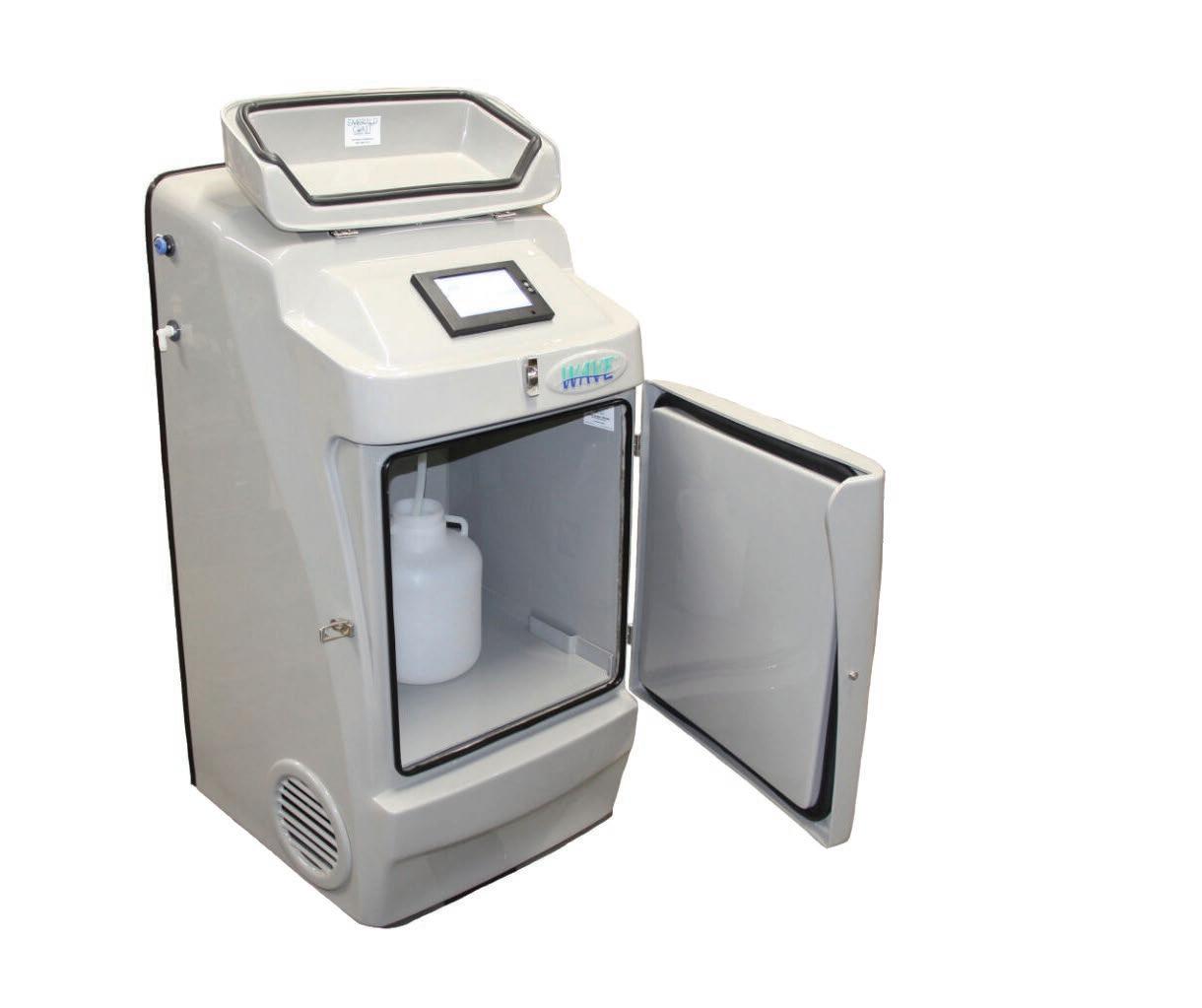
An all-weather wastewater sampler built to handle extremes in any environment – hot or cold – while delivering pinpoint accuracy and minimal maintenance.
• Vacuum Powered System delivers a more representative sample. Draws with vertical lifts of nearly 30 ft and 200 ft horizontally.
• Exceeds EPA Standards: High-velocity purges (>3.75 FPS) remove contamination and ensure reliable transport of suspended solids.
• Low Maintenance Design: Eliminates costly roller and tube replacements – no more frequent, expensive downtime.
• Intuitive Controls: 7” full-color touchscreen for easy programming of sample size (20-500 mL), flow/time intervals, and temperature.
• Built for Extremes: Rugged high-impact acrylic/ABS body –weatherproof outdoors, whisper-quiet indoors.
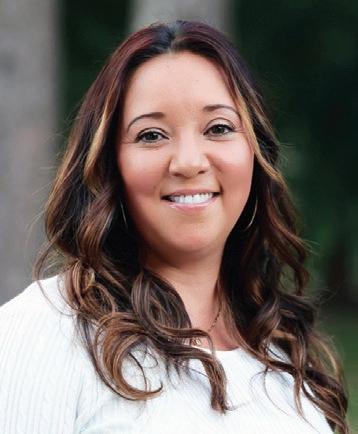
Looking Ahead: Building on Momentum for Louisiana’s Water Professionals
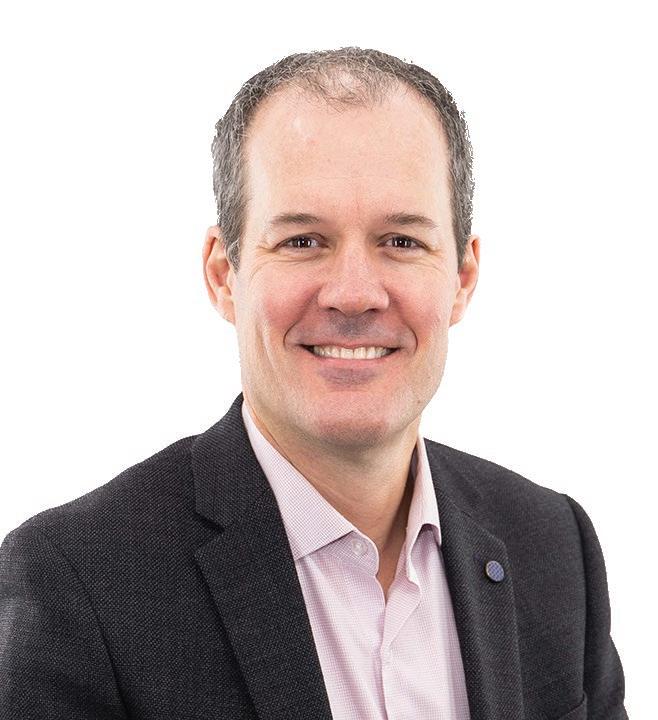
Brenda Faz-Cresie, President, The Clean Water Professionals of Louisiana
As we move into the second half of the year, The Clean Water Professionals of Louisiana (CWPLa) continues to build momentum through leadership development, professional engagement, and opportunities for our members to connect and grow. It has been exciting to see the dedication of our members and volunteers as we work together to strengthen our association and serve Louisiana’s water community.
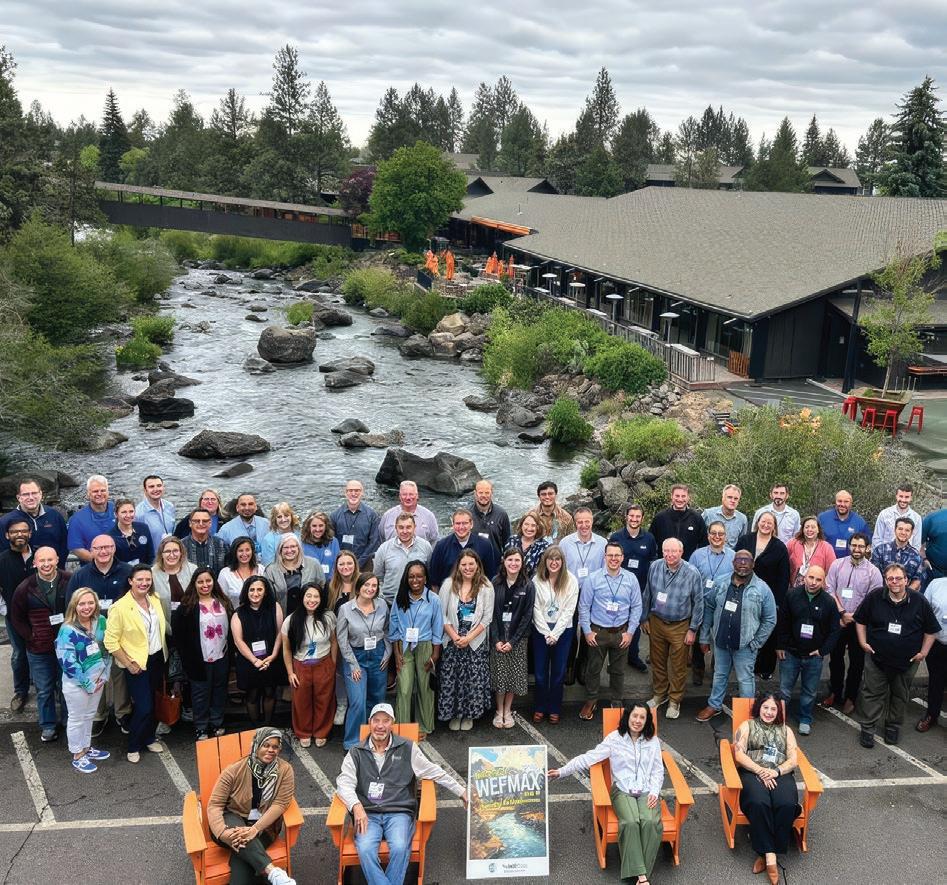
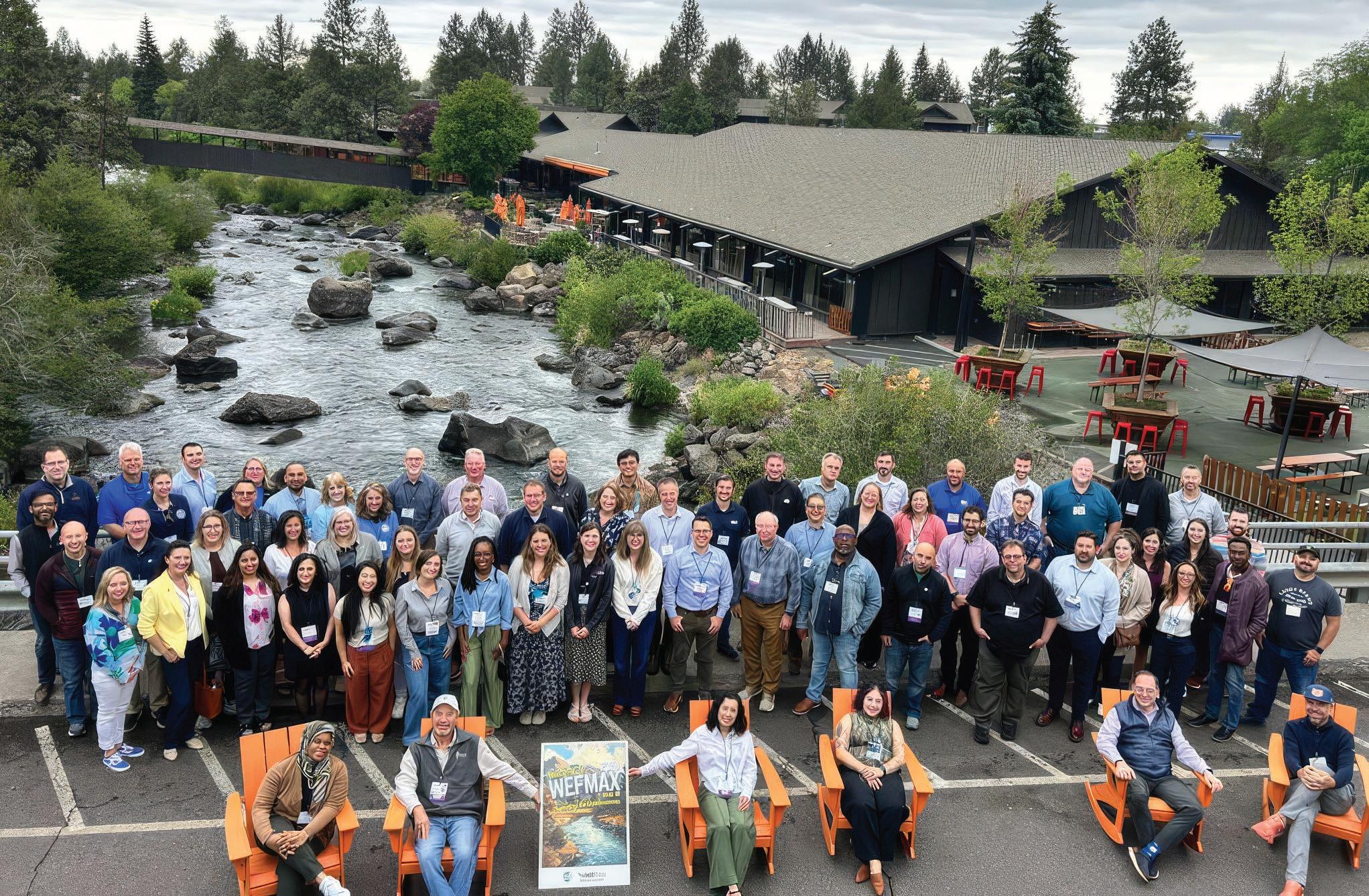
In May, several members of CWPLa had the opportunity to attend the Water Environment Federation’s Member Association Exchange (WEFMAX) in Bend, Oregon. WEFMAX provides a valuable forum for Member Association leaders from across North America to collaborate, share ideas, and learn from one another’s successes and challenges. Our representatives returned with new perspectives and innovative ideas that can help make CWPLa even stronger. Through discussions with other Member Associations, we explored programs and initiatives designed to increase member engagement, enhance professional development opportunities, and provide greater value to our membership. We look forward to incorporating many of these ideas into our future activities. Looking ahead, our annual Board Meeting will be held in July. This meeting
serves as an important opportunity for strategic planning, leadership development, and setting priorities for the coming year. Please watch our website and social media channels for additional details as they become available.
The July meeting will also mark an important leadership transition for our organization. We would like to thank Devon Ducote for her outstanding service as President and welcome her into her new role as Past President. At the same time, I am honored to step into the role of President, and Hannah Orgeron will step into the position of President-Elect. Strong leadership is essential to the continued success of our organization, and we are grateful for the many volunteers who contribute their time and expertise to CWPLa.
As we look toward the future, we encourage members to become more involved with the organization. Our Board and committees provide excellent opportunities to network, develop leadership skills, and help shape the future of Louisiana’s water profession. Whether you are a longtime member or new to the industry, we welcome your participation and fresh ideas.
One of the most exciting events on the horizon is WEFTEC 2026, which will be held right here in our backyard
in New Orleans. Having the water sector’s premier technical conference and exhibition in Louisiana presents a unique opportunity for our members to participate, connect with industry leaders, and showcase the strength of our state’s water community.
To celebrate this special occasion, CWPLa is planning a joint social event with the Texas Water Environment Association (WEAT) on Monday evening during WEFTEC. This event will provide an excellent opportunity to network with colleagues from both states and strengthen regional relationships within the water industry. Please keep an eye on our website and LinkedIn page for additional information, including registration details and instructions for signing up to attend.
In the coming year, CWPLa plans to expand opportunities for member engagement through additional training sessions, social gatherings, professional development events, and networking opportunities. Our goal is to continue providing meaningful value to our members while supporting the growth and success of Louisiana’s water professionals.
Thank you for your continued support and involvement in CWPLa. We look forward to another great year of growth, collaboration, and service to Louisiana’s water community.
“Our Board and committees provide excellent opportunities to network, develop leadership skills, and help shape the future of Louisiana’s water profession. Whether you are a longtime member or new to the industry, we welcome your participation and fresh ideas.”





Meet Your CWPLa Treasurer

“What makes this organization strong is the community behind it, professionals who are engaged, knowledgeable, and committed to doing things the right way.”
Get to Know
JOSEPH DUPEPE, EI
Working as an environmental consultant focused on industrial water compliance, I’ve seen how closely water quality is tied to the health of our communities and the success of our industries. It’s a responsibility that goes beyond regulations; it’s about protecting a resource that defines life in Louisiana.
Living in South Louisiana, water has always been a central part of my life. As an avid fisherman, I see firsthand how important clean water is, not just environmentally, but to our way of life. It’s something we depend on every day, and something worth being intentional about protecting.
As Treasurer of CWPLa, I manage the financial side of the organization, helping ensure we have the resources to support our members and continue growing our impact. I’m excited about the direction CWPLa is heading and the opportunity for it to become an even more influential voice for water quality across the state.
What makes this organization strong is the community behind it, professionals who are engaged, knowledgeable, and committed to doing things the right way. Continued involvement and collaboration will be key to building on that momentum.
I look forward to contributing to CWPLa’s continued growth and supporting its mission in the years ahead.
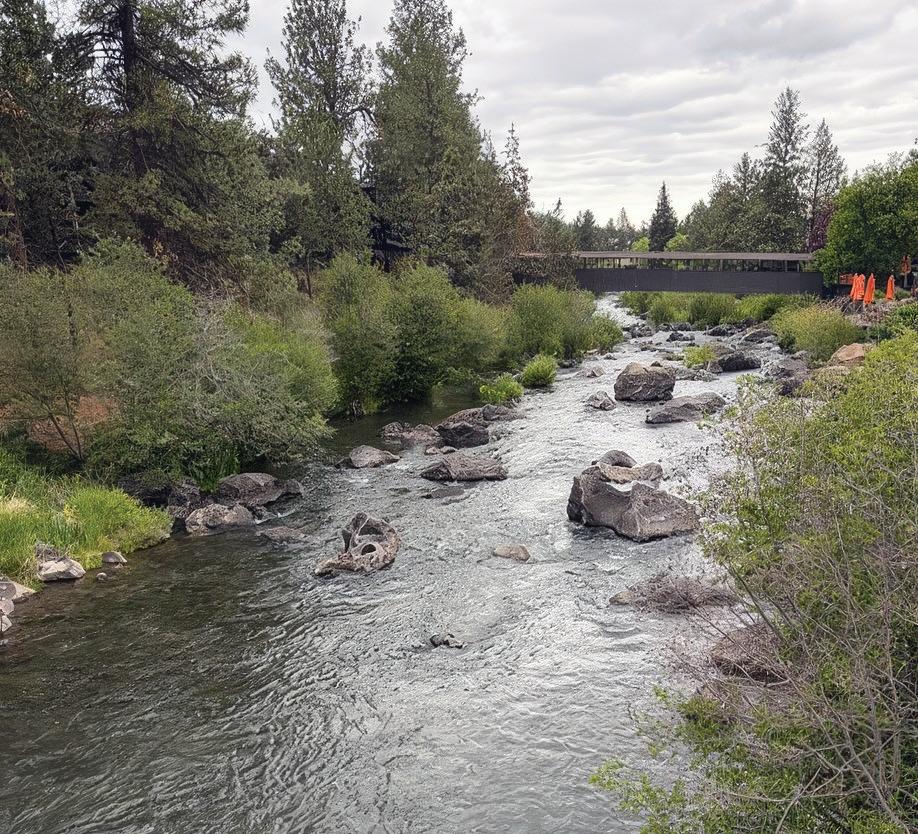
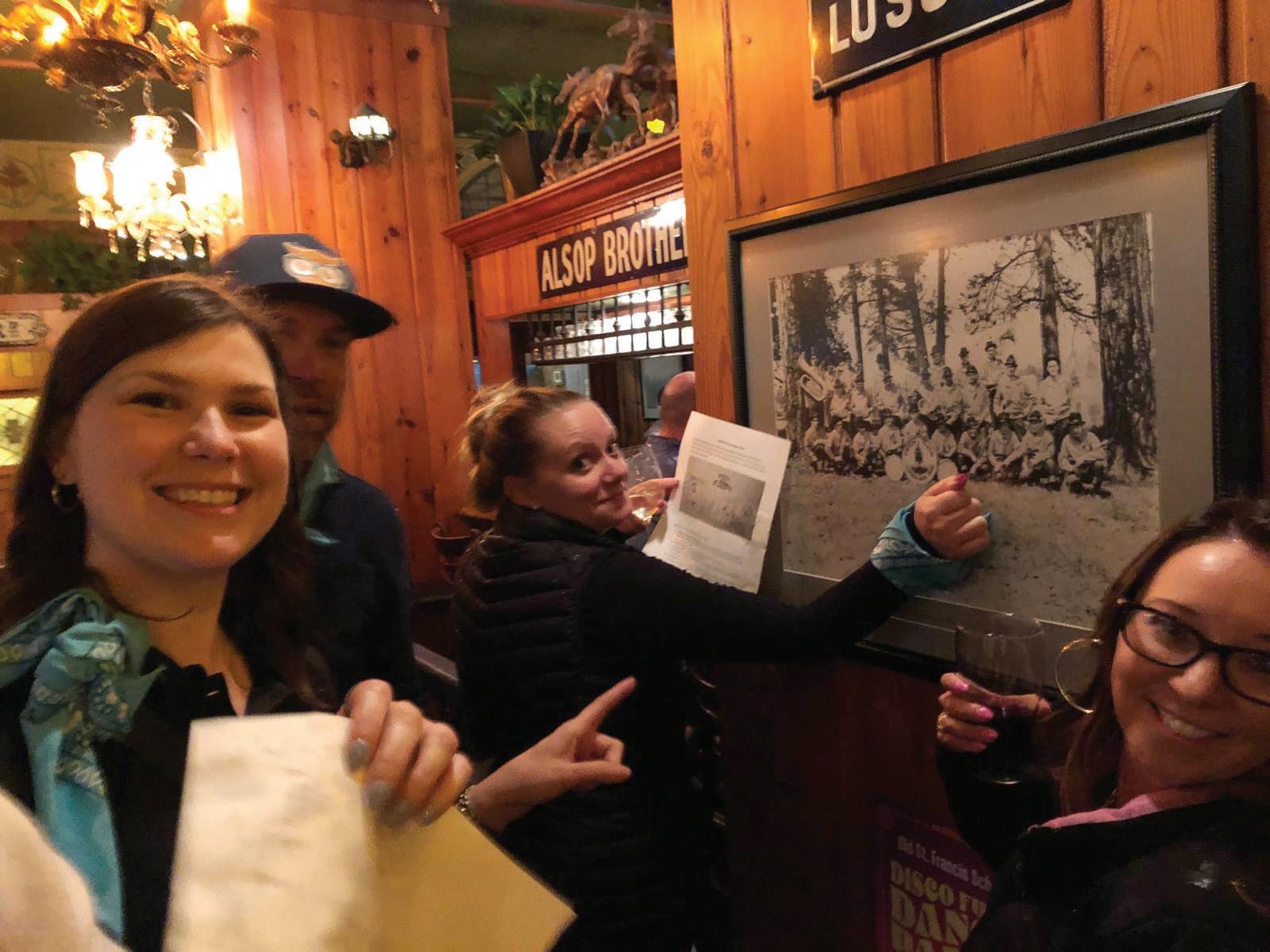
2026 WEFMAX Recap – Bend, Oregon
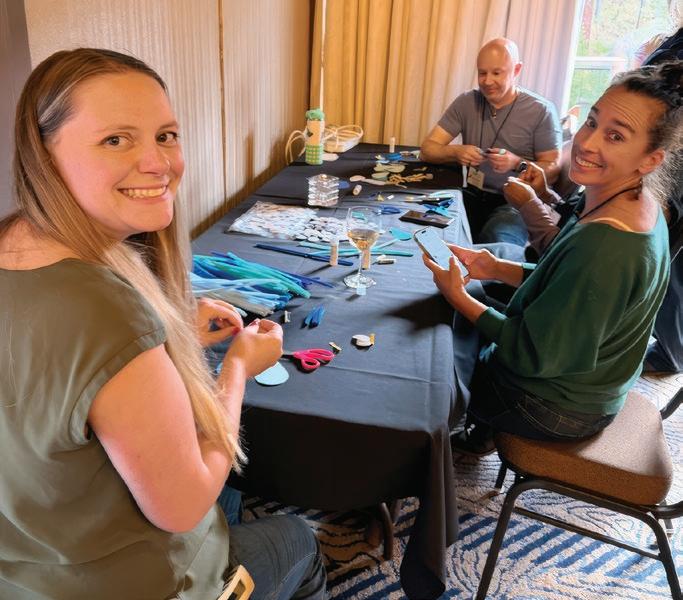
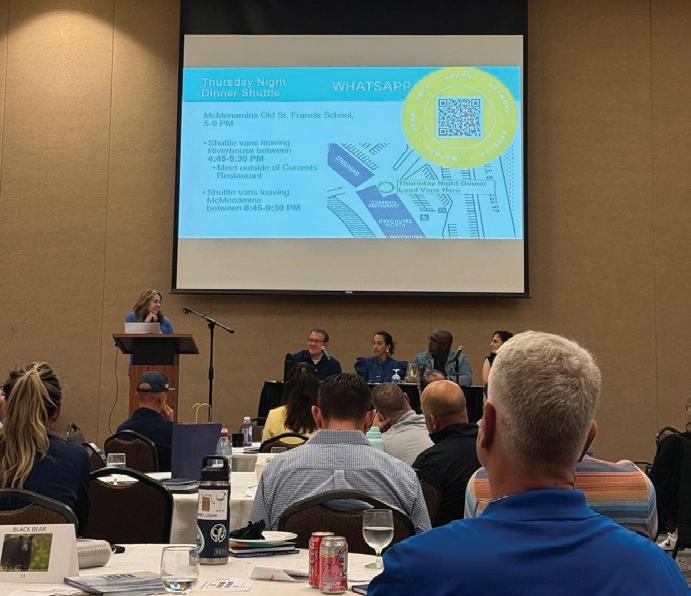
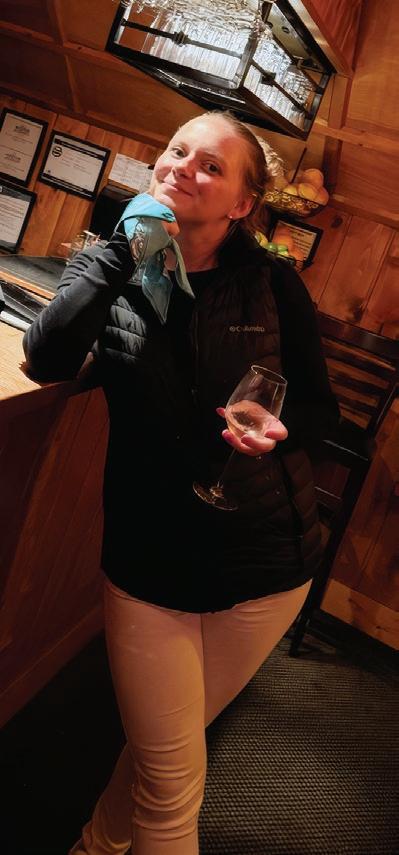
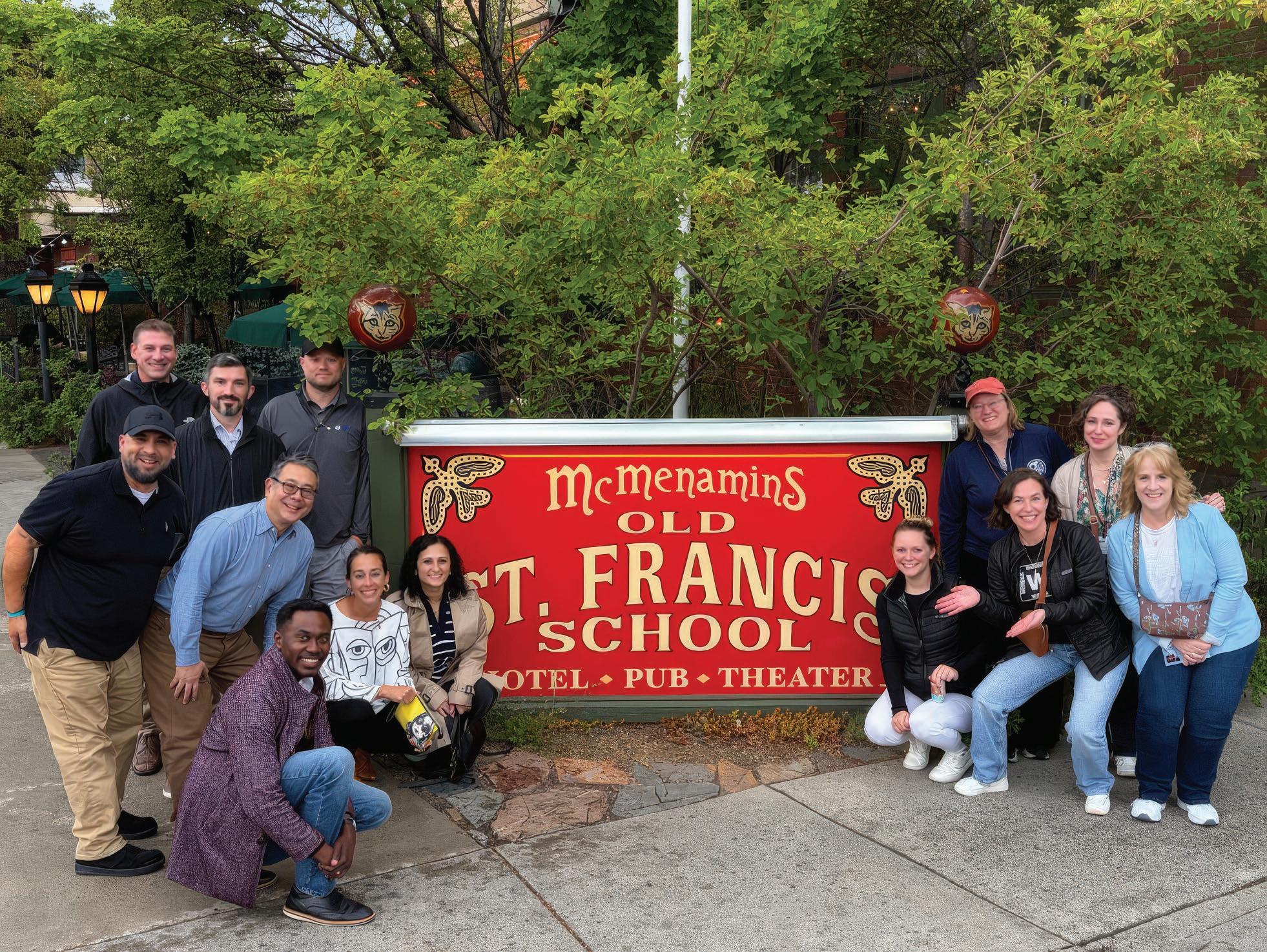
We were honored to attend WEFMAX in Bend alongside other WEF leaders from across the country and learning from the ideas, experiences, and innovations being shared throughout the week.
Excited to bring back new opportunities, fresh perspectives, and stronger connections that can help support and grow the water professionals and organizations we serve in Louisiana.
Thanks for a great week of collaboration and leadership development!
Water Leaders, Politicians Discuss Key Issues During Water Week
Where water flows, food grows.”
Those words began an address from United States Rep. Jim Costa (D–California) during an ASTERRAsponsored press conference at Water Week in Washington, DC, on April 15.
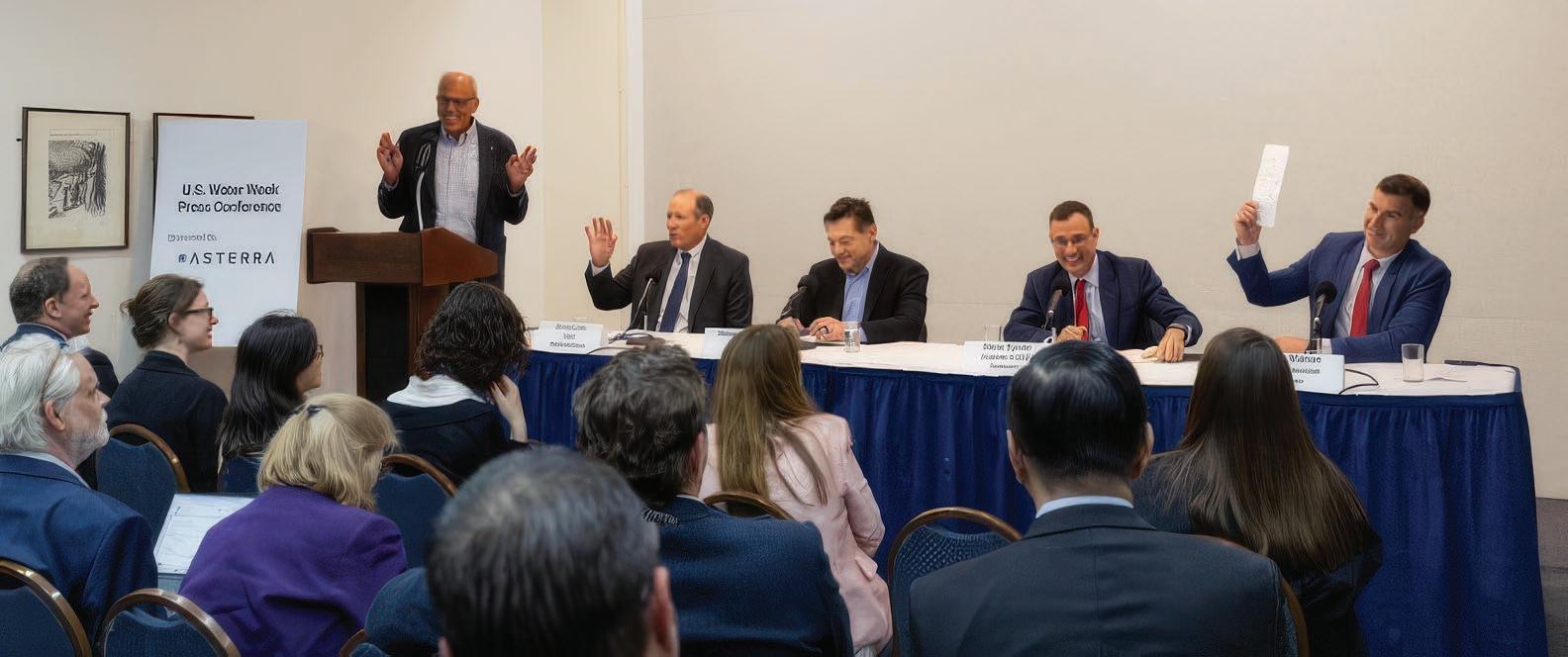
Joined by US Rep. Greg Stanton (D-Arizona), Costa’s words kicked off a series of four panels moderated by Paul Gagliardo, principal consultant at Gagliacqua and host of The Water Entrepreneur podcast, highlighting water sector challenges and opportunities.
Stanton and Costa served on the first panel of the day, followed by a “presidents’ panel” that included voices from industry associations, including Water Environment Federation Presidentelect Paul Schuler; American Public Works Association President-elect Robert Garland; and the Director of Water at EPIC, Denis Schmidt. The third panel focused on utilities, featuring speakers Cynthia Baughman, water utilities technology director at the city of Garland; George Hawkins, founder and CEO of Moonshot Missions; OJ McFoy, city engineer for the city of Houston; and Kendra Morris, CEO and president of regulated water business for Veolia, North America. The fourth and final panel focused on solution providers and featured Chris Tynan, founder and CEO of Burnham; Slava Libman, CEO of FTD Solutions; Street Lee, president and CEO of McKim & Creed; and Josh Mahan, senior director at Xylem.
To begin, Costa and Stanton touched on conservation as a foundation for the water sector. Costa said much more needs to be done in terms of climate change, while Stanton specifically
pointed to the West’s water challenges, saying that they directly impact all of America, and noting that the Colorado River is a diminishing water source.
With both representatives coming from Western states – specifically, states within the lower basin of the Colorado River – Stanton said their respective states are on the same team.
“We have to look into the mirror and ask, ‘What else can we do in Arizona?’” Stanton said, noting that the state uses less water now than it did 50 years ago.
And while their specific water challenges may be regional, Stanton emphasized that what happens in the Western region eventually impacts all of America directly.
Despite multiple panels, key themes arose naturally in each: funding, resiliency and workforce.
Funding
When it comes to the looming end of the 2021 Infrastructure Investment and Jobs Act (IIJA) funding slated to end on September 30, Stanton noted that if there
is a deal that would renew that funding in some way, especially one that includes notable public transportation funding, Congress should take it.
Pointing to the American Society of Civil Engineers’ Report Card for America’s Infrastructure, which found a USD $3.7 trillion water funding gap, Garland said the IIJA was a jump start –but still not enough.
And Schuler shared that if IIJA funding is indeed going to end, there has to be a way to continue funding alreadyestablished programs.
Schmidt highlighted how earmarks are impacting the State Revolving Funds (SRFs). At times, earmarks are being used to divert some of the Clean Water SRFs and Drinking Water SRFs appropriations into one-time grants. Because grants do not need to be repaid, this reduces the SRF program’s longterm capacity.
“When you take money out of a revolving system, it stops revolving,” she said. Put simply, Garland likens the necessity of funding to filling gas tanks.
The US Water Week press conference highlighted key water sector challenges and solutions. Photo Credit Deanna Kizer (Asterra)
“How do you keep a car running when running out of fuel?” he asked. “How do you keep infrastructure running without funding?”
Resiliency and Workforce
When it comes to the future of the water sector, two key topics repeatedly came up – resiliency and the aging water workforce.
Garland noted that resiliency funding, especially before and after natural disasters, is crucial, while Costa said the US population and water workforce need to get better and smarter when it comes to climate change.
With a changing climate, increasing storm frequency and severity, and a widening funding gap, a strong workforce is more necessary than ever. However, the water workforce represents a challenge in itself.
Garland cited that one in three engineering jobs is unfilled, and 50% of utility professionals are aged 50 or older and near retirement. This gap could result in the sector losing key institutional knowledge.
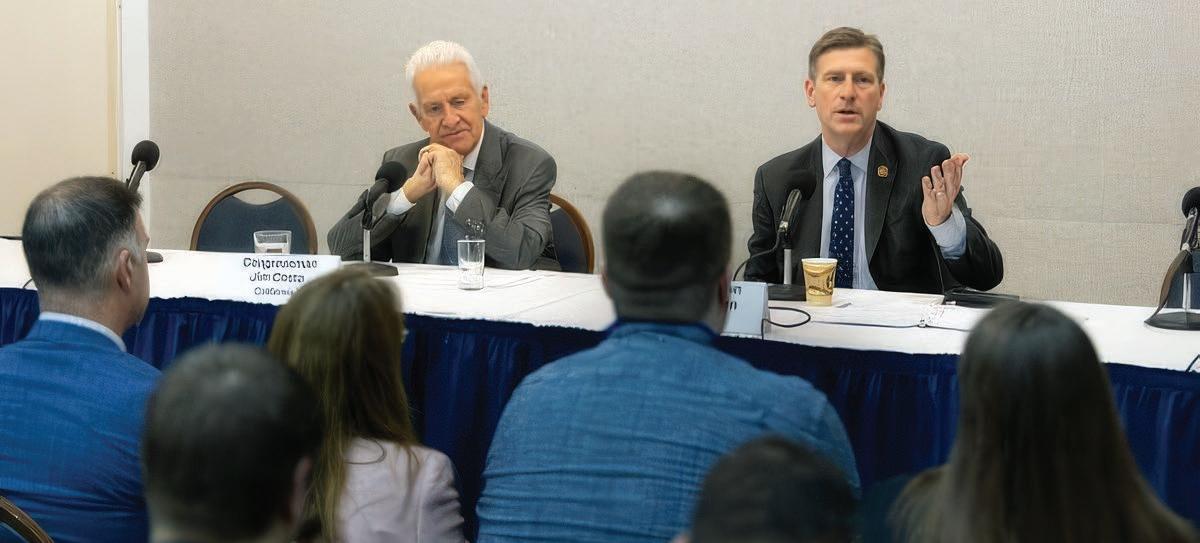
United States Reps. Jim Costa (D–California) and Greg Stanton (D–Arizona) address attendees during the US Water Week press conference. Photo Credit Deanna Kizer (Asterra)
During Water Week, the US Environmental Protection Agency announced plans to revitalize the 2020 Workforce Initiative. An agency release explained that this effort will map collaboration with those in the sector to support the nation’s water workforce.
With a lot on the line for water, many speakers talked about the resource as a great unifier, saying it should be a non-partisan issue.
“Water is a local issue at the end of the day,” Schuler said.
Those in the sector know this to be true, and Costa’s motto about food growing where water flows is just the beginning of what the resource does. But, to those outside the sector, it may not be as obvious. To lighten the load, Stanton closed his remarks by adding to Costa’s food thoughts.
“If you like salad, you better hope we work out our water issues,” he said.
“During Water Week, the US Environmental Protection Agency announced plans to revitalize the 2020 Workforce Initiative. An agency release explained that this effort will map collaboration with those in the sector to support the nation’s water workforce.”


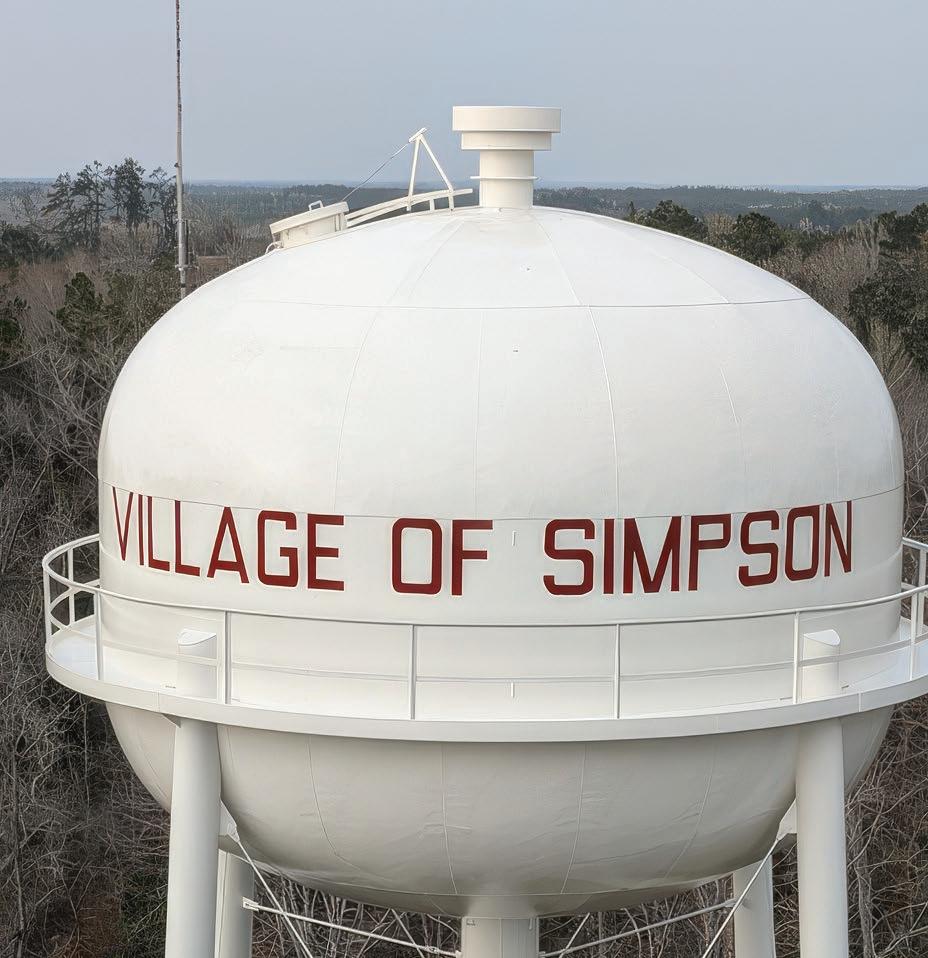
Proactive Water tank rehabilitation in rural louisiana: A Case Study from the Village of Simpson
Nick Jones, Sales & Service Representative, Induron
In rural communities across Louisiana, water infrastructure is more than a utility. Water infrastructure is a direct reflection of public health, regulatory compliance, and community pride. For small systems with limited resources, maintaining aging assets while meeting increasing regulatory expectations can be a constant balancing act.
The Village of Simpson, Louisiana, offers a compelling example of
how proactive planning, strategic partnerships, and well-executed rehabilitation can extend the life of critical infrastructure while supporting long-term system performance. Faced with an aging elevated water storage tank in need of attention, the Village of Simpson took a forward-looking approach to prioritize rehabilitation before failure, rather than reacting to costly emergency repairs.
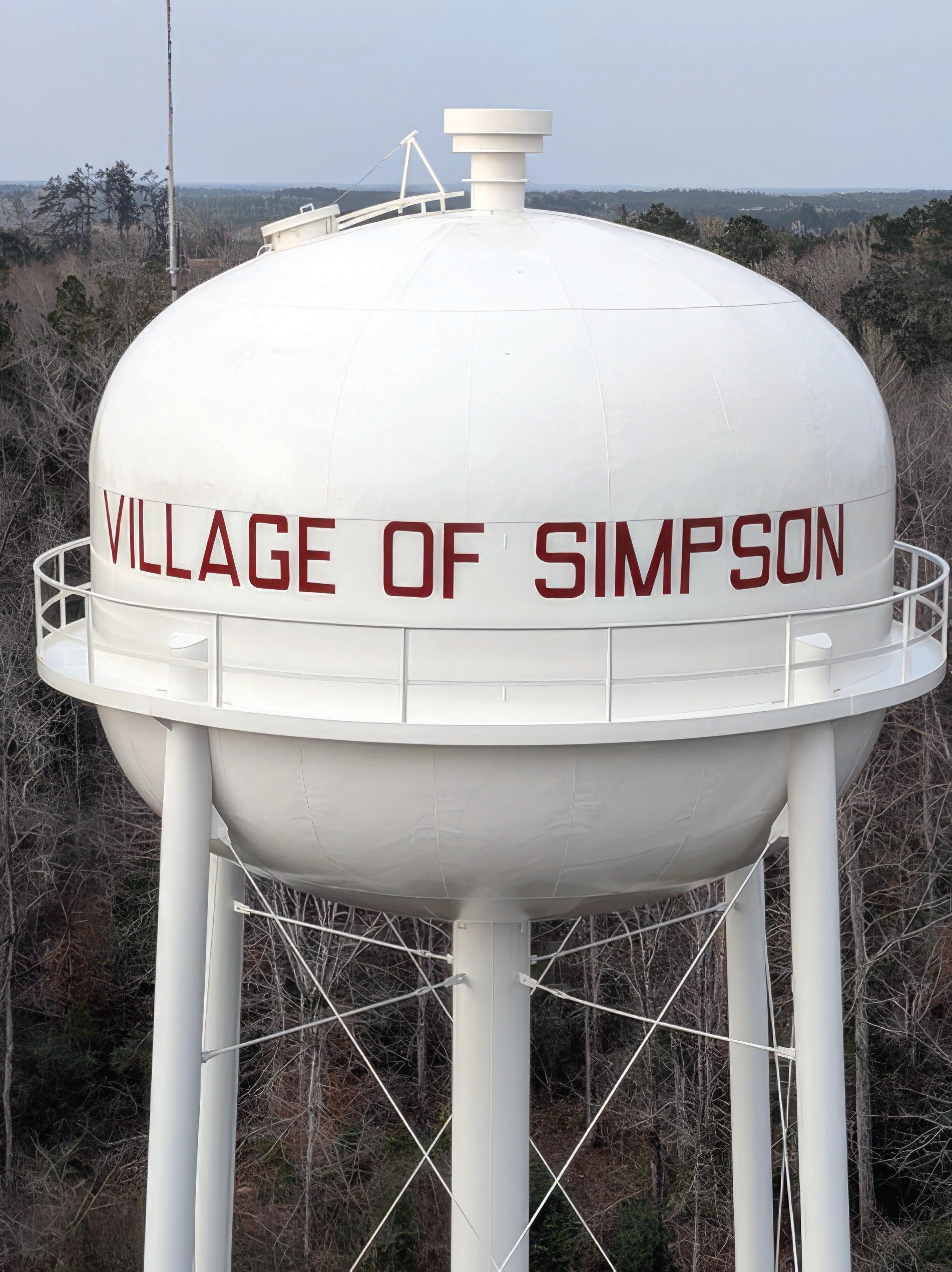
A Critical Asset in Need of Rehabilitation
The Village of Simpson relies on its elevated water storage tank to deliver safe, clean drinking water to residents. Like many small systems across the state, the tank had reached a point where continued serviceability depended on intervention.
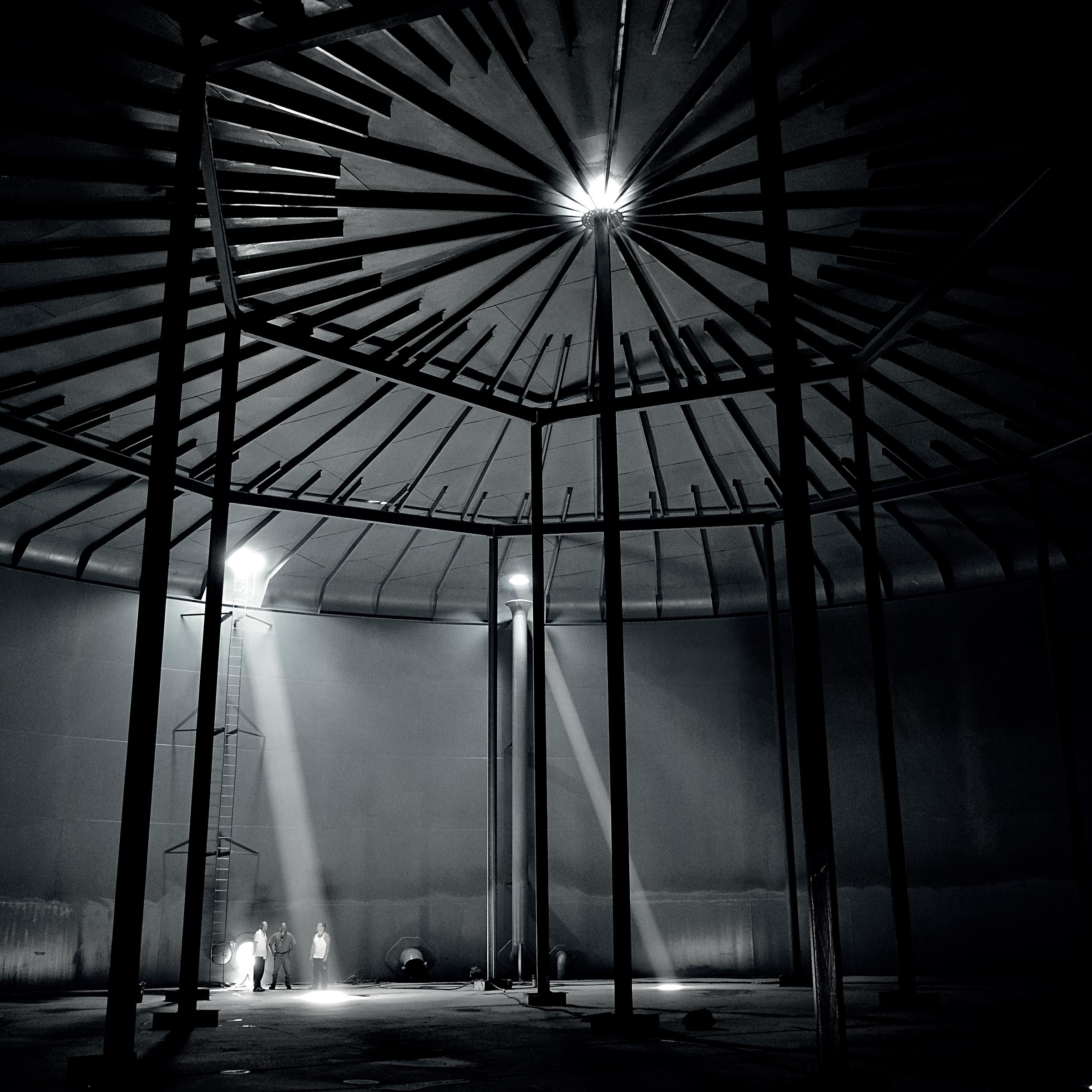
Over time, interior and exterior coatings on steel water tanks degrade due to constant exposure to moisture, oxygen, UV radiation, and environmental contaminants. Without proper protection, corrosion can compromise both water quality and structural integrity.
In the Village of Simpson’s case, the rehabilitation project was not only about preserving infrastructure but also essential for maintaining compliance with sanitary survey requirements and protecting the Village’s “A” water system rating. These ratings are critical indicators of system performance and directly impact public trust and regulatory standing.
From Inspection to Action: The Value of Planning Ahead
A key differentiator in the Village of Simpson project was the emphasis on proactive inspection and planning. Rather than waiting for visible failure or emergency conditions, the Village of Simpson worked in partnership with Maguire to assess the condition of the tank and develop a rehabilitation strategy.
This approach reflects a broader best practice in water system management: routine inspections paired with long-term asset planning. Early identification of coating breakdown, corrosion, or structural concerns allows municipalities to:
• Budget more effectively for capital improvements.
• Avoid unplanned outages or emergency repairs.
• Maintain compliance with regulatory standards.
• Extend the service life of existing assets.
For smaller Louisiana communities, where funding is often limited, this proactive model can make the difference between manageable maintenance and disruptive, high-cost failures.
As Teddy Krein, Maguire Tank Expert for East Texas and Louisiana, explained: “In this region, the systems that stay ahead of problems are the ones that prioritize routine inspections and planned maintenance. Once corrosion becomes visible, you’re already behind. Proactive rehabilitation allows communities to control costs, maintain compliance, and extend the life of assets that are critical to everyday service.”
Coating Systems Designed for Performance and Compliance
At the core of the rehabilitation effort was the application of high-performance coating systems specified by Induron Protective Coatings to protect both the interior and exterior of the tank.
Interior: Protecting Water Quality
For the steel interior in contact with potable water, a ceramic epoxy system was specified to provide long-term corrosion protection while meeting strict regulatory requirements. The system incorporated Induron’s Ceramaprime ® ceramic epoxy primer, followed by a highbuild epoxy lining using Induron’s PE-70 NSF-certified epoxy system. The full system included:
• Surface Preparation: SSPC-SP10 Near White Blast Cleaning to ensure optimal adhesion.
• Primer: Ceramaprime applied at 3.0-4.0 mils dry film thickness (DFT), providing a durable, surfacetolerant foundation.
• Stripe Coat: PE-70 applied to welds, seams, and edges to reinforce critical areas prone to premature failure.
• Finish Coat: PE-70 applied to achieve a total system thickness of approximately 8.0 mils.
Both coatings are ANSI/NSF 61/600 certified, ensuring compliance for potable water contact applications. This multicoat, thin-film system provides a barrier against corrosion while maintaining water quality, which is an essential combination for municipalities working to meet both operational and regulatory expectations.
Exterior: Durability and Aesthetics
On the exterior, the tank was coated with a mastic epoxy and aliphatic polyurethane system, utilizing Induron’s Induramastic ® 85 and Indurathane ® 6600. The system included:
• Surface Preparation: Pressure washing to remove contaminants and prepare the substrate.
• Primer and Spot Treatment:
Induramastic 85 applied at 3-5 mils DFT, offering strong adhesion and
surface tolerance for aged steel.
• Intermediate/Build Coat: Additional application of Induramastic 85 to reinforce film build and corrosion resistance.
• Finish Coat: Indurathane 6600 applied at 2.0-3.0 mils DFT, delivering longterm UV resistance, color retention, and durability.
This combination provides excellent protection against Louisiana’s harsh environmental conditions, including
PERMA CLEAN 100 SINGLE LEG
50 mils per coat | 100% Solids | No Plural Required
Cost-Effective Single-Leg Application Less Waste, More Efficiency True Equivalency for Superior Performance

intense sunlight, humidity, and frequent rainfall. Equally important, the polyurethane finish enhanced the visual appearance of the structure. Located directly behind the Village Hall, the water tower is a prominent feature of the community. Its restoration not only protects the asset but also contributes to the overall aesthetic of the area.
Balancing Budget, Performance, and Community Impact
One of the most significant challenges for small water systems is completing necessary infrastructure work within tight financial constraints. In the
Village of Simpson, the project team focused on delivering a solution that was both cost-effective and sustainable. By selecting proven coating systems, the Village of Simpson invested in materials designed to maximize service life and minimize future maintenance needs. Additionally, addressing the tank’s condition before major deterioration occurred helped the Village of Simpson avoid more extensive (and expensive) repairs. Careful planning also minimized operational disruptions, ensuring continued water service to residents throughout the project.
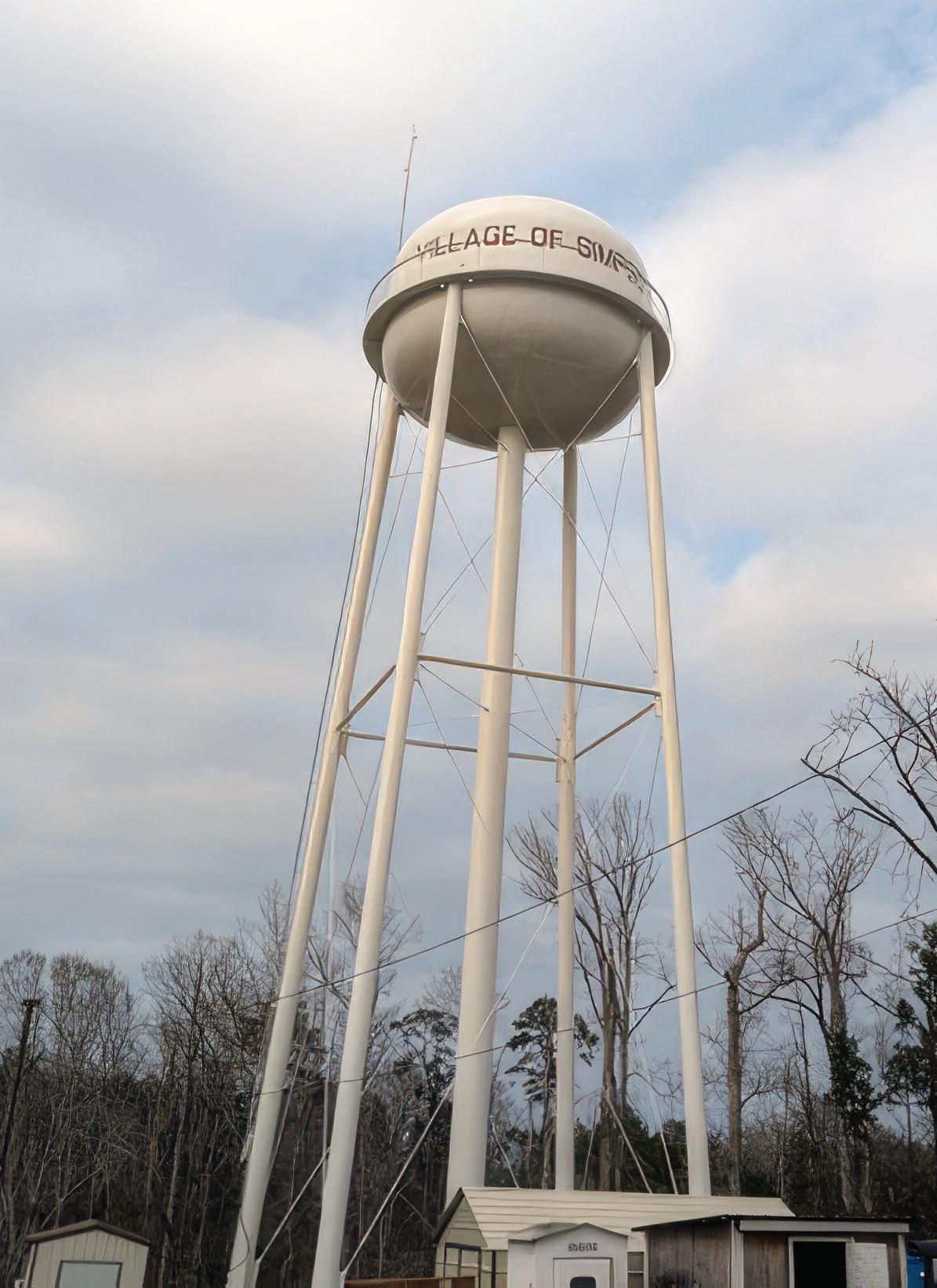
This balance between cost, performance, and service continuity is essential for rural systems, where even minor disruptions can have outsized impacts on the community.
The Role of Partnerships in Successful Rehabilitation
Overall, the Village of Simpson project underscores the importance of strong partnerships between municipalities, contractors, and technical experts. Rather than approaching the project as a onetime construction effort, the collaboration between the Village of Simpson and Maguire emphasized:
• Clear communication throughout the project lifecycle.
• Thorough inspection and documentation of existing conditions.
• Tailored recommendations based on system needs and budget.
• Execution aligned with long-term asset management goals. By incorporating coating expertise into the planning phase, not just the application phase, the team was able to align material selection and specifications with the Village of Simpson’s long-term performance goals.
Mayor Vickie Standifer emphasized the importance of this collaborative approach, noting: “Such a knowledgeable, professional team to work with; love our working partnership with Maguire.”
Lessons for Rural Water Systems Across Louisiana
The challenges faced by the Village of Simpson are not unique. Across Louisiana, many small and rural systems are navigating:
• Aging infrastructure approaching or exceeding design life.
• Limited funding for capital improvements.
• Increasing regulatory oversight and compliance requirements.
• Environmental conditions that accelerate asset deterioration.
The Village of Simpson project offers several key takeaways for similar communities:
1. Prioritize Routine Inspections: Regular inspections provide critical insight into the asset’s condition and allow for early intervention.
As Louisiana’s water systems continue to evolve, the importance of proactive asset management will only grow. Rehabilitation projects like the one in the Village of Simpson demonstrate that even small communities can successfully navigate infrastructure challenges with the right approach.
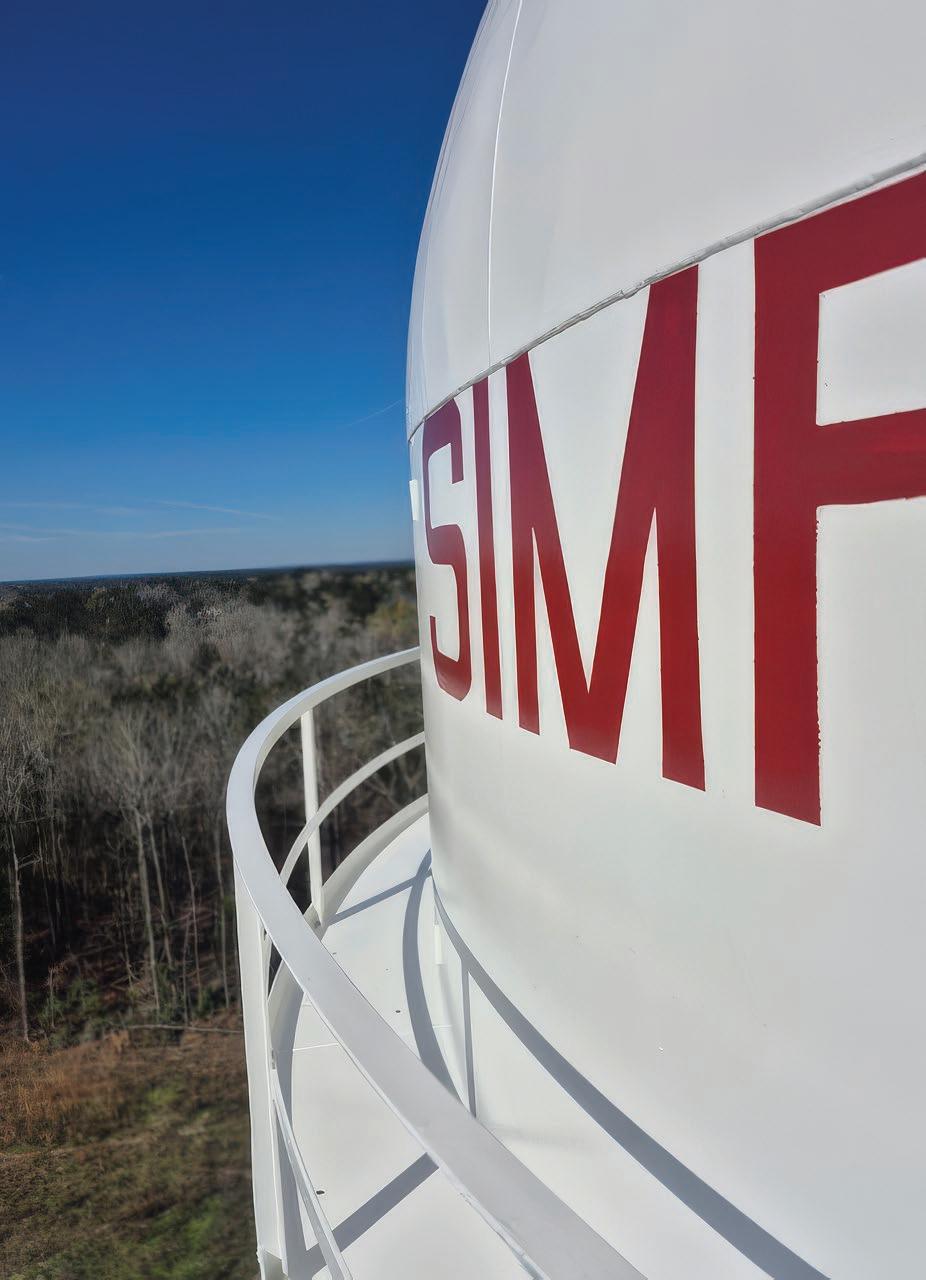
2. Plan for Rehabilitation, Not Replacement : Coating rehabilitation, particularly with high-performance epoxy and polyurethane systems, can significantly extend the life of existing infrastructure at a fraction of the cost of replacement.
3. Align Projects with Regulatory Goals: Using NSF-certified coating systems supports compliance with sanitary surveys and helps maintain high system ratings.
4. Invest in Proven Materials: Fieldtested systems like ceramic epoxies and high-solids polyurethane topcoats
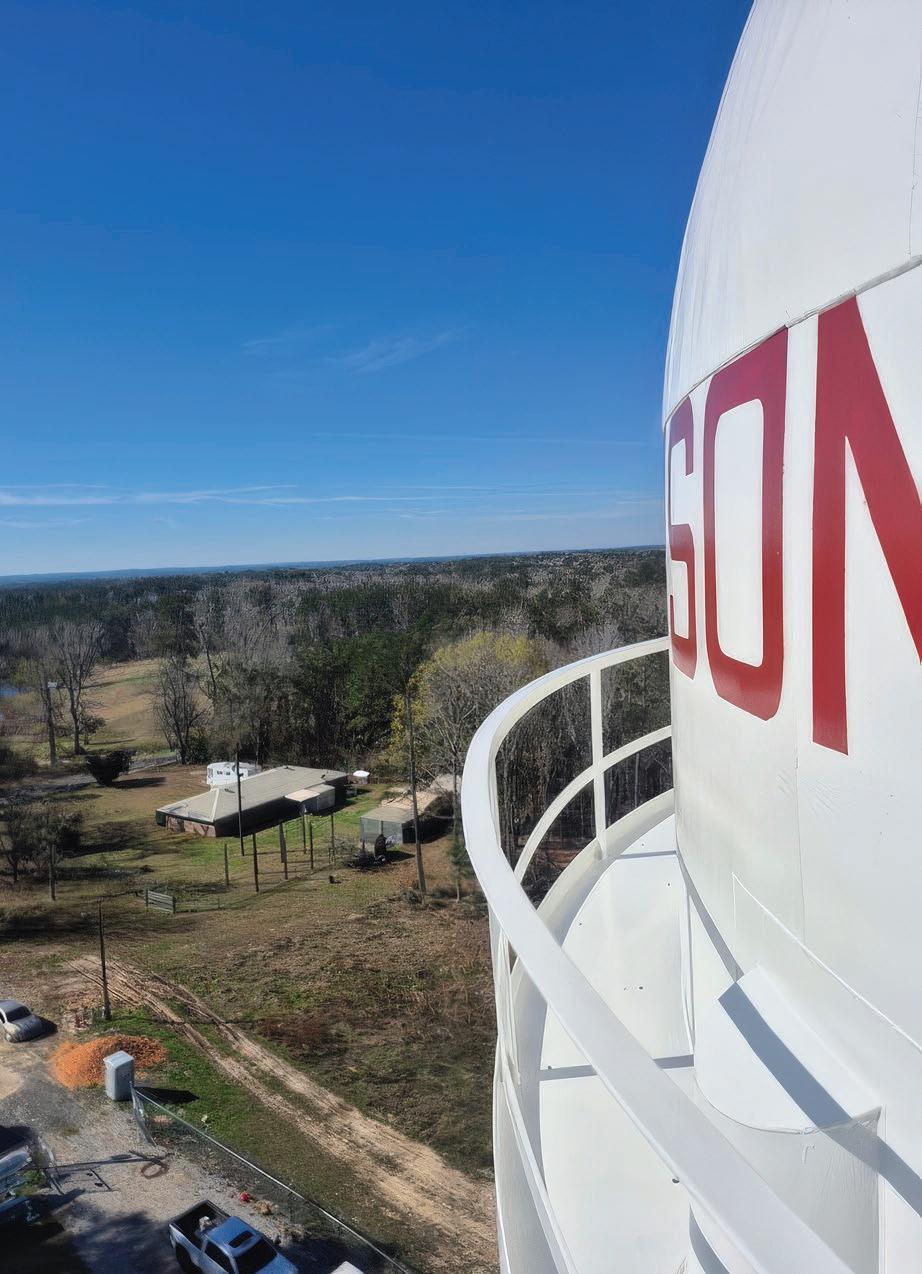
provide long-term durability in demanding environments.
5. Work with Experienced Partners: Collaborative teams that bring technical expertise and practical experience can help guide projects from inspection through full rehabilitation.
Looking Ahead:
Building Resilient Water Systems
As Louisiana’s water systems continue to evolve, the importance of proactive asset management will only grow. Rehabilitation projects like the one in the Village of Simpson demonstrate that
even small communities can successfully navigate infrastructure challenges with the right approach.
By combining routine inspection, strategic planning, and high-quality coating systems, municipalities can extend the life of critical assets, maintain regulatory compliance, and deliver reliable service to their residents.
In the end, projects like the Village of Simpson’s are about more than coatings or construction. They are about sustaining the infrastructure that communities depend on every day, safely, efficiently, and for the long term.

Brunswick-Glynn Joint Water and Sewer Commission
Getting the Most out of an AMI Transition
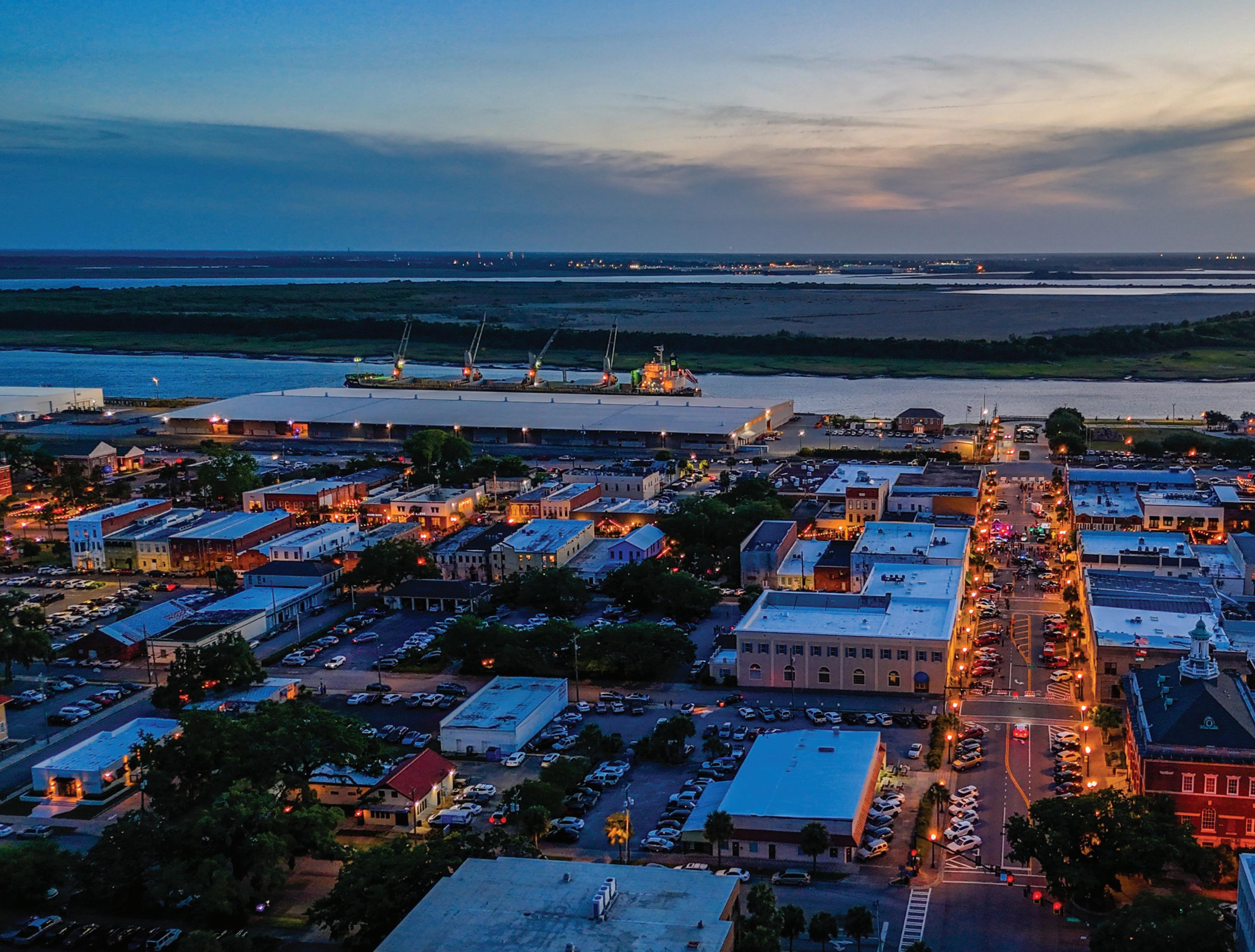
When the Brunswick-Glynn Joint Water and Sewer Commission (BGJWSC) was formed in 2008, they had the unique task of joining together two separate municipalities, comprised of the City of Brunswick and Glynn County.
Located between Savannah, Georgia and Jacksonville, Florida. BGJWSC has approximately 32,000 meters within its system across a 439 square mile service area.
Since 2008, BGJWSC had been running a drive-by AMR system to capture meter data. However, over the years, the process slowly became more and more difficult. Frustrated by numerous maintenance
disruptions and issues reading the meters, BGJWSC decided it was time to find a new meter provider.
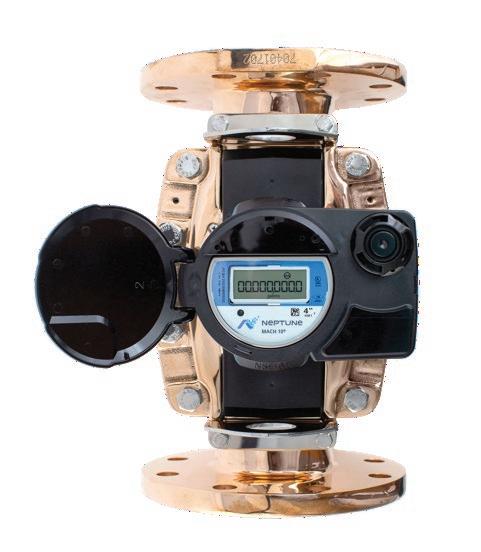
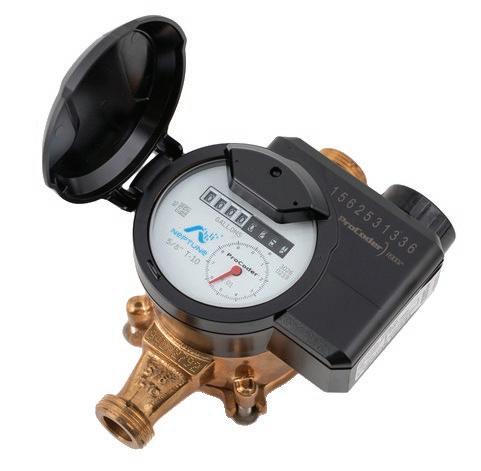
As part of the new partner selection process, Neptune listened to the Commission’s needs and crafted a metering system to address and resolve each of their pain points. Neptune was able to offer a mix of T-10 ® mechanical meters for residential purposes and C&I MACH 10® ultrasonic meters for their larger customers. The meters were coupled with the R900® System endpoints featuring a LoRaWAN network sending all of their data securely into the Neptune® 360™ data management platform. Every component
played a role allowing BGJWSC to optimize their capital and operational expenses and make deployment smooth.
TIME TO UPGRADE AN AGING SYSTEM
LaDonnah Roberts, Deputy Executive Director of the utility, shared the challenges their utility faced. With 32,000 meters, nothing is going to work perfectly all the time, and with a four-person field crew, it took all month to handle the billing cycle.
As BGJWSC’s AMR system aged and got less reliable, they had occasional issues reading meters during drive-by readings. Normally this isn’t the end of the world but with some of meters they
had, there was not an alternative back up reading option.
“Worst case scenario, you lift the lid, and you read it off the meter itself,” Roberts explained. “This particular meter didn’t have even that option. When the meter died, it was a paper weight. At that point, it was of no use to us whatsoever.”
When BGJWSC was unable to read a meter, they charged a flat fee to the customer, leaving money on the table.
SUCCESS WITH NEPTUNE® MECHANICAL METERS AND THE R900® SYSTEM
Roberts says they started their partnership with Neptune with a residential pilot program in September of 2020. BGJWSC installed 250 Neptune T-10 mechanical meters specifically in the area where previous meters had failed to “quickly recover the revenue that was lost from those.”
And Roberts confirmed that is what happened – the T-10 meters successfully logged water flow (and revenue), which previous meters from BGJWSC failed to achieve.
After the initial success of the pilot program, BGJWSC opted for a full installation plan with residential and intermediate T-10 meters, and Commercial and Industrial sized MACH 10 ultrasonic meters for their larger customers, such as the Federal Law Enforcement Training Center and an incoming Buc-ee’s.
The meters were coupled with R900 System LoRaWAN radios and gateways, reliably communicating data and insights to Neptune 360. They initially encountered
some signal issues due to their unique geography, but Neptune and Distribution partner Delta Municipal Supply were able to assess and then resolve the issue by installing a higher gain antenna, restoring the connection.
Roberts said in addition to the improved meter accuracy, the R900 AMI system drastically reduced the need for their technicians to do drive-by meter readings, freeing up their time to focus on other projects. So much so, that the commission encouraged its meter technicians to pursue IT certification, which they received, making them that much more valuable to the utility.
The new AMI system also encouraged water conservation efforts through the usage monitoring available in Neptune 360. BGJWSC was able to quickly alert customers to issues, resulting in smaller volumes of water loss and fewer days of continuous consumption, along with fewer leak adjustments needed. The data insights provided by Neptune 360 helped meet the requirements from the State necessary for project funding and to uphold the Commission’s values of good water stewardship.
CONTINUING TO EVOLVE
The success of the Neptune partnership has encouraged BGJWSC to plan for new applications and improvements to their system. BGJWSC is exploring the use of Neptune meters for District Metering Areas and Water Loss.
Audit analysis, evaluating the use of Neptune R900 System endpoints to
CUSTOMER
Brunswick-Glynn Joint Water and Sewer Commission SERVICE TERRITORY
32,000 meters across 439 square miles SOLUTION BENEFITS
• Increased meter accuracy and revenue, accelerated billing cycles, and eliminated estimated reads with T-10 ® mechanical and MACH 10 ® ultrasonic meters
• Meters coupled with R900 ® System LoRaWAN radios and gateways reliably communicate data and insights to Neptune ® 360™ software
• R900 AMI drastically reduced drive-by meter readings, freeing up technicians for IT certification
• Encouraged water conservation through usage monitoring in Neptune 360
• Neptune ® My360™ consumer portal empowers customers to monitor water use themselves, minimizing staff work
remotely monitor sewer flow meters, and in December of 2024 they implemented the Neptune® My360™ consumer portal, which now provides consumption data directly to customers to monitor water use themselves, minimizing some of the work required for their staff.
“Neptune has provided a quality product with dependable functionality that supports BGJWSC in our commitment to our customers and our community,” Roberts said. “Their team members are knowledgeable and professional, and they understand the needs of a utility.”
Channel Monster® Delivers Reliability North Kansas City, Missouri, Can Depend On
Problem: Frequent
failures and maintenance issues with grinders in the city’s main pumping station caused downtime and frustration
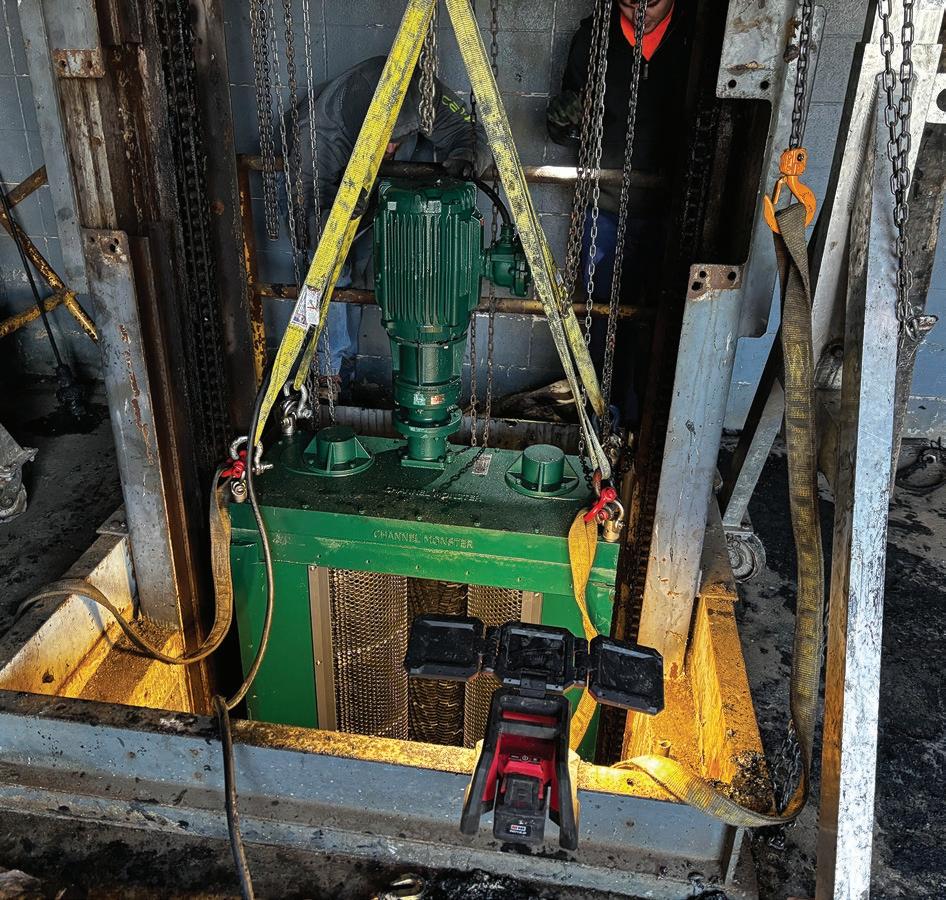
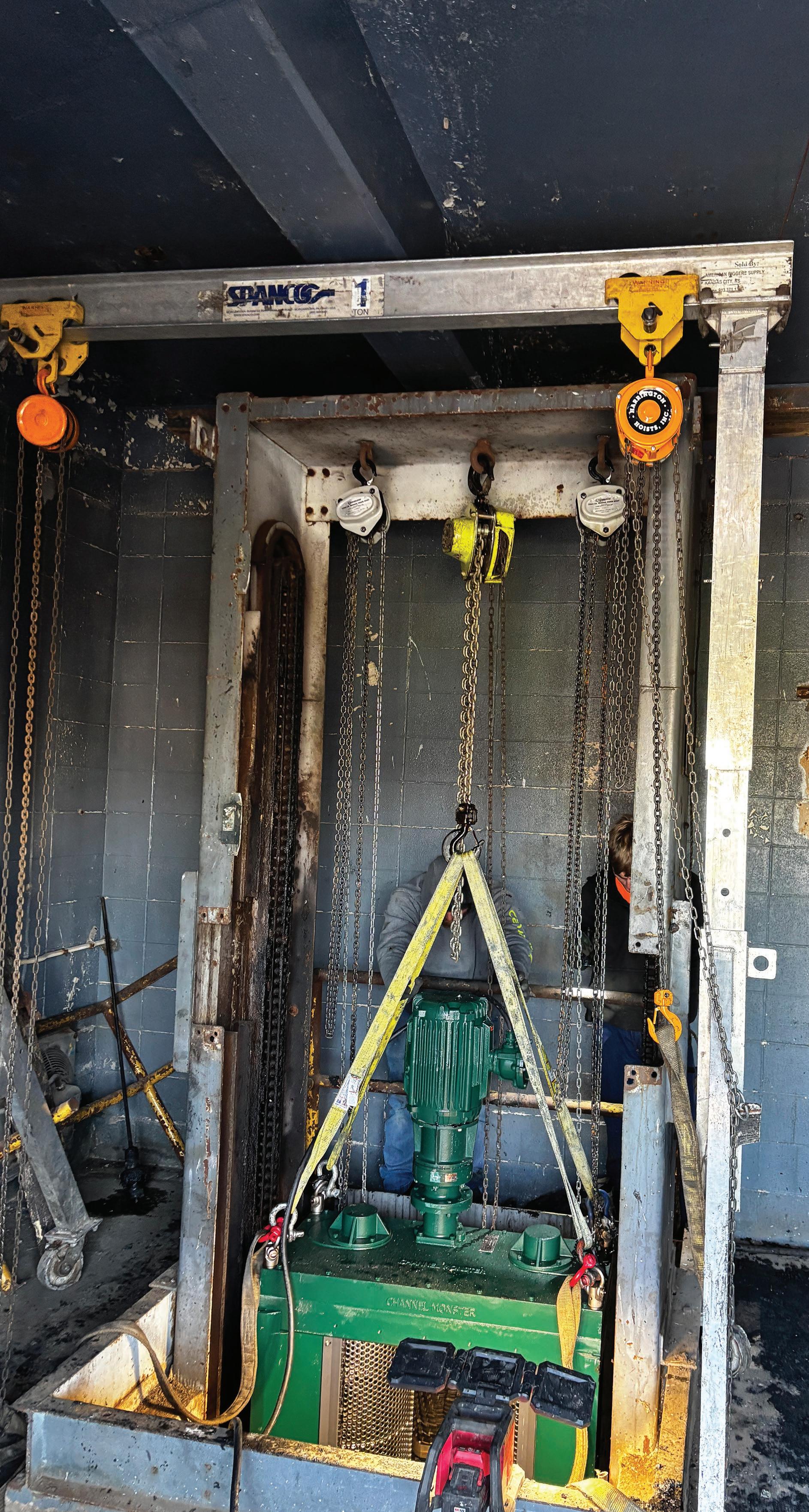
Solution: Channel Monster high-flow sewer grinder
Covering about four-and-a-half square miles, North Kansas City, Missouri, is home to about 5,000 people. Surrounded by the Missouri River, the city depends on levees and pumping stations to protect residents and businesses from flooding.
Built in the 1950s, the Bedford Pumping Station is the main receiving station, handling about two million gallons a day. The water department is working with the North Kansas City Council to explore the feasibility of overhauling the Bedford station or building a new pumping station. However, the projected timelines for both projects were about three years out.
The pumping station was operating with two welded metal grinders that were experiencing frequent failures and maintenance issues. “We’ve kept the station running band-aided, if you will,” explains John Sponsler, Water and Wastewater Services Superintendent for North Kansas City Water.
The Problems Stack Up
For the city, it seemed like the current grinders were doomed from the start. According to Brad Saul, Service Manager at Letts Van Kirk & Associates, “Immediately after installing the first grinder, I noticed the manufacturer had sent the control panels with incorrectly sized overloads, so it kept tripping out.”
Saul resolved that initial issue, only to face more problems. “The grinder has a bearing assembly that bolts on to the bottom of the unit to hold the grinder in place, but it fell off,” he explained. “The stainless-steel bolts on the brush screens kept backing out, which meant the screen would peel
away and hit the grinder. The motors for each drum kept failing, and it took three to four months to get replacements.”
Having had enough of the nearconstant issues, Saul and Sponsler set out to find a much more reliable solution.
The city’s 19th Street Pumping Station used grinders from JWC Environmental. “They don’t fail,” explained Sponsler. “These grinders are really pretty good. I’ve had them at facilities I previously worked at and was really impressed.”
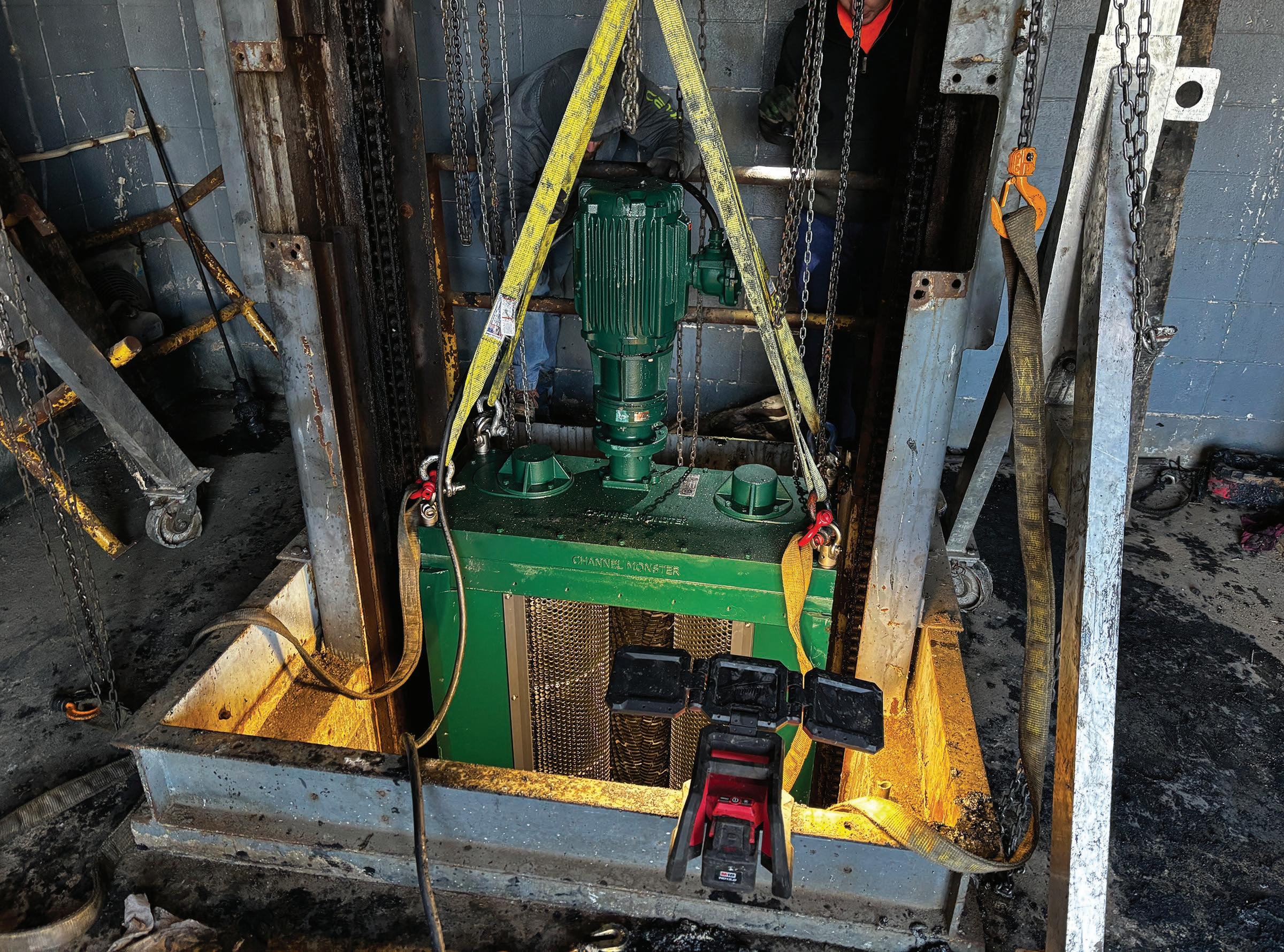
The city decided it was time for a replacement. They selected a Channel Monster with 11-tooth cam cutters –specialized, hardened-steel cutting components designed for heavy-duty, industrial-scale shredding. The Channel Monster uses high-flow screening drums that prevent unshredded solids from bypassing the grinder without compromising flow.
Dependability from the start
Unlike the previous grinder, which failed two weeks after installation, the Channel
Monster has been going strong since it began operating in late 2025. “We expected dependability, no downtime,” explained Sponsler. “We get a lot of cloth, rags, and stuff like that. We expect it to pass through the blades and teeth with no defects or obstructions, if you will. Obviously, if we get a large chunk of metal, things might change a little bit, but the Muffin Monster is good for about any application.”
Saul added, “The old grinder had cast cutters, so it was a complete cutter stack. The JWC has individual cutters and spacers, so tolerances are tighter. For solids conditioning, we won’t have larger solids that pass through. We can do a better job of grinding and avoid the risk of solids reconfiguring downstream.”
The Channel Monster is made from ductile iron and hardened steel, not welded iron. That means it won’t rust if the paint chips or wears away.
The Channel Monster’s robust construction gives Sponsler peace of mind. “I’m sure it’ll probably last for our
timeline. And Brad and the team at Letts Van Kirk & Associates are very good about servicing things. They’re very dependable and responsive to our needs, whether it’s water or wastewater.”
Looking ahead
North Kansas City intends to replace the second grinder at the Bedford Station with another Channel Monster within the coming year. Additionally, as plans for the new pumping station progress, Sponsler and Saul hope their recent experience will be taken into account.
“Everything’s up to the design team and engineers, but we hope to have our two cents worth in what type of equipment is chosen,” explained Sponsler. “And we’d like to have the Muffin Monster.”
“The dependability, cost-efficiency, and everything of the [Channel Monster] are top-notch for both stations,” Sponsler said. “The reputation is outstanding. We haven’t had any problems with the JWC units since we had them installed.”

Call for Articles!
CWPLa is looking for articles for future issues of The Pelican. We want to highlight people, projects, and facilities in the State of Louisiana. Please get in touch with Mathias Leiendecker at mathias@kelman.ca for more information or to submit your article for consideration. Thank you so much for your contribution to The Pelican!
Upcoming WEF Events

OCTOBER
SEPTEMBER

The Pelican is made possible by the companies below who convey their important messages on our pages. We thank them for their support of the CWPLa and its publication and encourage you to contact them when making your purchasing decisions. To make it easier to contact these companies, we have included the page number of their advertisement, their phone number, and, where applicable, their website.
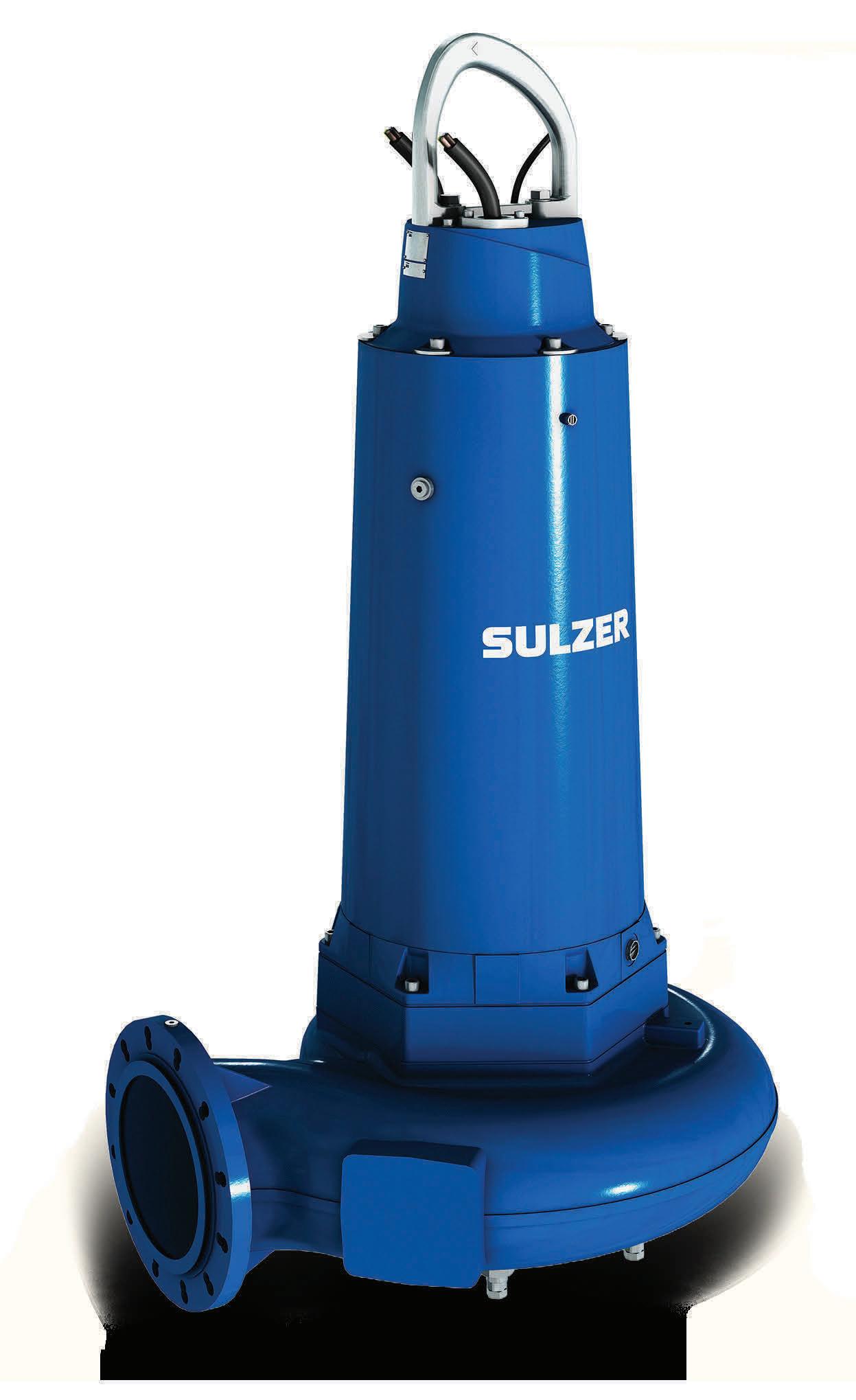
Built for solids. Designed to perform.
You can’t control what comes through your system, but you can control how your pump handles it. The Sulzer XFP submersible pump with the ContraBlock impeller keeps things moving with fewer clogs and less maintenance.
Built to meet BABA requirements and equipped with premium motors for greater energy savings, high performance, and reliability, it is a solution you can count on day in and day out.
go.sulzer.com/xfp-performance