ROCKY MOUNTAIN SEPTEMBER-OCTOBER
2026
CO LO R A D O | N E W M E X I CO | W YO M I N G
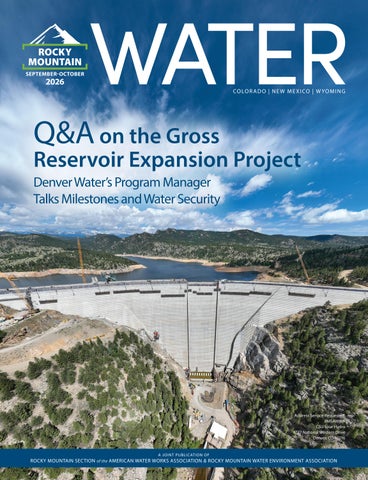
Q&A on the Gross
Reservoir Expansion Project Denver Water’s Program Manager Talks Milestones and Water Security
Address Service Requested. RMSAWWA CSU Spur Hydro 4777 National Western Drive Denver, CO 80216
A JOINT PUBLICATION OF
ROCKY MOUNTAIN SECTION of the AMERICAN WATER WORKS ASSOCIATION & ROCKY MOUNTAIN WATER ENVIRONMENT ASSOCIATION
Conquer your engineering and construction challenges with our design-build solutions
EXPLORE OUR SOLUTIONS
ContraBlock Evo The ultimate solids handling system Maximize efficiency in wastewater operations with the ContraBlock Evo hydraulic system. Designed for superior clog-free performance, it handles challenging solids with ease, reducing downtime, lowering energy costs, and maintaining consistent pump performance. Count on reliable operation. Count on proven performance.
Authorized Representative
FALCON E N V I R O N M E N T A L
Falcon Environmental (303) 833-9998 www.fecal.us info@fecal.us
Advanced solutions for stronger communities With more than a decade of experience in water and wastewater design, Greta Stetson is deeply invested in her clients’ systems and facilities. And she dives into their data, processes, and constraints to deliver solutions that fit.
Greta Stetson, PE Team Leader for Western Colorado
GarverUSA.com
Vol. 58 NO. 98 A JOINT PUBLICATION OF ROCKY MOUNTAIN SECTION of the AMERICAN WATER WORKS ASSOCIATION & ROCKY MOUNTAIN WATER ENVIRONMENT ASSOCIATION
ROCKY MOUNTAIN SEPTEMBER – OCTOBER
2026
CO LO R AD O | N E W M E XI CO | W YO M I N G
Features
Rocky Mountain Water Magazine Group The following volunteers support RMSAWWA and RMWEA with content collection, management, editing, and reviewing the magazine. BLAIR CORNING bcorning@englewoodco.gov ANDREW DUGAN andrew@runwithpuma.com KARI LARESE klarese@hrwater.org
23
From Snapshots to Continuous Understanding: Rethinking Off-Gas Testing for Aeration Performance
29
Concerns and Opportunities with Using Artificial Intelligence (AI) in Water/Wastewater Industry
30
From Data Manager to Decision Maker: How AI Middleware Is Reshaping Water Engineering
ASHLEY DENAULT ashley.denault@denverwater.org RMSAWWA Communications Committee ASHLEY DENAULT, Chair ashley.denault@denverwater.org RMWEA Communications Committee
Columns ROCKY MOUNTAIN VIEW From the RMSAWWA Chair......................................7
JORI NELSON, Chair jori.nelson@hdrinc.com
From the RMWEA President....................................9
MARY SHAW, Marketing Lead mshaw544@gmail.com
COMMITTEE SPOTLIGHT Rocky Mountain Student Conference: 2026 Recap.....................13 MANAGEMENT PIPELINE Innovation Begins with Seeing the Work Clearly..............................19
Published by
Tel: 866-985-9780 info@kelman.ca
Fax: 866-985-9799 www.kelman.ca
Managing Editor: Mathias Leiendecker Marketing Manager: Chad Morrison Design/Layout: Tabitha Robin Advertising Coordinator: Sabrina Simmonds © 2026 Craig Kelman & Associates Ltd. All rights reserved. The contents of this publication may not be reproduced by any means, in whole or in part, without the prior written consent of the publisher. Address Service Requested. RMSAWWA CSU Spur Hydro, 4777 National Western Drive, Denver, CO 80216
HOT TOPICS Q&A on the Gross Reservoir Expansion Project.................................37 Building Resilience with Green Stormwater Infrastructure and Nature-Based Solutions – Part 2..............41
SCIENCE, RESEARCH, AND TECHNOLOGY Electro Ceramic Desalination – An Emerging Technology’s Role in Helping Industries Meet Emerging Water Regulations.................44 Controlling Aeration: A National Workshop Comes to Colorado...........................46 COMMITTEE CORNER Building our Water Workforce with “Potential Pipeline Partners”......................49 OPERATIONS The Impact of Unstable Redox Reactions on Complex Water Treatment Systems......................................53 OF SPECIAL NOTE RMWEA Celebrates 90th Anniversary............57 JVA, Inc. Announces Leadership Transitions and New President...........................62 ADVERTISER PRODUCT & SERVICE CENTER..............................................65
Bridging the gap between idea + achievement
Through smart design and high-performance infrastructure we’re helping our clients push open doors to what’s possible, every day.
HDR Colorado
Colorado Springs | Denver | Durango Englewood | Fort Collins | Grand Junction
HDR New Mexico Albuquerque
HDR Wyoming
Cheyenne | Gillette | Lander
Kay Dry, Water Program Lead | 303.764.1520 | hdrinc.com
ROCKY MOUNTAIN VIE W
FROM THE RMSAWWA CHAIR
The Future Flows from Here Brett Pugh, RMSAWWA Chair, Project Manager, Burns & McDonnell
I
t is with a mix of pride, excitement and not a small amount of nostalgia that I sit down to write my final article as chair of the Rocky Mountain Section. Serving as the Section Chair has been an honor. I am grateful and humbled that I was elected as an officer of the Section, and I hope the membership has found value in what the board, staff, committee chairs and our ever-eager volunteers accomplished together this year. I have benefited immensely from the experience, forming lasting relationships and learning from all of you across Colorado, Wyoming and New Mexico. This year is significant, as we celebrate 100 years of the Rocky Mountain Section of AWWA. Founded in 1926, our section has stood for a century as a nonprofit, scientific and educational membership association dedicated to managing our water. It bears repeating the section’s mission to provide solutions for our members to effectively manage water, the world’s most important resource, and connect you with the full suite of AWWA resources and opportunities. Together, our work is driven by a powerful vision: A better world through better water. As we look back on who we are and what we have built, I cannot help but wonder where the next 100 years will take us. What will the water industry look like in the year 2126? The answer to that question lies right in the theme of this issue: Innovation and Technology. The pace of change is accelerating, and here in our region, we are
seeing advancements coming into broader knowledge. As we look ahead, here are but a few emerging innovations that are reshaping the water sector today across our three states: • Direct Potable Reuse: Driven by increasing water scarcity and challenging source water conditions, advanced purification processes are making direct potable reuse a safe, sustainable and critical reality for long-term supply resilience. • Brackish Water Desalination and Advanced Reverse Osmosis: A vital technology for New Mexico’s Strategic Water Supply, helping to treat and utilize alternative water sources to expand our usable supply. • Advanced PFAS Destruction: Moving beyond simply capturing “forever chemicals” to actual destruction through innovative technologies. • AI-Driven Watershed and Wildfire Resilience: Utilizing remote sensing, satellite data and predictive analytics to proactively manage forest health, monitor early wildfire threats, and mitigate postfire runoff and sediment erosion in vital drinking water watersheds. • Satellite Leak Detection: Using satellite imagery and advanced algorithms to identify hidden distribution system leaks across vast, remote geographies. • Localized Drought Response: Secure, transparent digital ledgers for tracking temporary water use agreements, which is particularly relevant in agriculturalheavy areas adapting to drought.
• Atmospheric Water Harvesting: Leveraging emerging decentralized technologies to extract drinking water directly from the air, offering supplemental solutions for our most arid, drought-prone communities. Navigating these new technologies requires a strong, unified foundation. That is why it was such a privilege to work alongside our dedicated board of trustees and section staff as we developed our new five-year strategic plan. Built around three main goals – Organizational Alignment, Knowledge Creation and Exchange, and Water Policy Leadership – this plan is officially in motion. I am proud to report that we are making tangible progress on each of these fronts. I am excited to see how aligning our efforts around these strategic goals will enhance our services, and where this direction will lead the section, with your continuous input and engagement. As I sign off, my final message to you remains the same as my first: Get Involved, Bring a Friend. Membership is what drives us as an organization. We want to harness your experience, dedication and passion to help us achieve our goals. There are so many ways to get involved, whether that is joining one of our committees, presenting a paper, or simply bringing a colleague to their first conference or section event. Thank you again for this opportunity and for your dedication to our shared mission. Here is to the next 100 years!
Founded in 1926, our section has stood for a century as a nonprofit, scientific and educational membership association dedicated to managing our water. RETURN TO CONTENTS
ROCKY MOUNTAIN WATER SEPTEMBER – OCTOBER 2026 | 7
ROCKY MOUNTAIN VIE W
FROM THE RMWEA PRESIDENT
“To Grok” Kristin Johansen, RMWEA President, Senior Project Manager, Stantec
I
n his 1961 science-fiction novel, Stranger in a Strange Land, author Robert A. Heinlein coined the Martian term “to grok” which literally means “to drink” and is used to describe becoming one with a subject as you come to understand it on a deep and empathetic level. As I reflect on my term as RMWEA President, what stands out as a common theme is how our members truly “grok” water – they embody how it flows and is conveyed, how to treat it, the value of resources associated with water such as heat and nutrients, what it means for each user and customer, how it affects the environment, and the meaning of water to their communities whether it is for drinking water and sanitation, habitat, agriculture, recreation, industry, or traditional and spiritual practices. Our members and volunteers profoundly and intuitively understand water on a molecular level, not just as a job or profession, but as life. Their work is driven by a deep passion for water. That is what I find unique and special about our industry and our membership, and it inspires me and gives me daily hope for the future. I know that as I pass the Presidency baton to Kacie Allard, RMWEA will be in good hands with her leadership and the dedicated work of our incredible group of volunteers.
RETURN TO CONTENTS
As I reflect on my term as RMWEA President, what stands out as a common theme is how our members truly “grok” water. It has been a vibrant year for RMWEA highlighted by: • A successful annual Rocky Mountain Water Conference held in concert with RMSAWWA in Keystone, Colorado, with record-breaking registration numbers and sponsorships! • New Mexico and Grand Junction Conferences held with RMSAWWA. • Filming our Value of Water documentary with Denver Film Company. • Attendance of the National Water Policy Fly-In to Washington, DC by our Government Affairs Committee with Colorado, Wyoming, and New Mexico represented. • Updated Career Center webpage and newsletter. • Kickoff to RMWEA’s Mentorship and Hydro Heroes programs. • Unprecedented RMWEA sweep of the Operations Challenge Competition at WEFTEC in Chicago. • RMWEA’s largest Operations Challenge Regional Competition held at Adams County Fairgrounds with six RMWEA teams competing and six other teams from around the country. • Record attendance at our Beginning, Intermediate, and Advanced Operator Schools. • Professional Water Operator (PWO) Seminars and Technical Activities Committee (TAC) Luncheons held throughout the year. • Successful Biosolids, Innovative Water Technology, Collections, and Lab Practices workshops and seminars. • RMWEA’s 90th Anniversary Membership Celebration at the Denver Botanic Gardens. • And an incredibly bright and motivated group of young professionals and students who hosted the Student Design Competition, Student Conference, and fun events including the Water for People Softball Fundraiser this month and facility tours throughout the year! • And much more…! ROCKY MOUNTAIN WATER SEPTEMBER – OCTOBER 2026 | 9
ROCKY MOUNTAIN VIE W
Our members and volunteers profoundly and intuitively understand water on a molecular level, not just as a job or profession, but as life. Their work is driven by a deep passion for water. That is what I find unique and special about our industry and our membership, and it inspires me and gives me daily hope for the future. On the industry side, this year has been marked by severe drought across our region and the world, with rivers running dry, extreme fires and flooding, aquifer supplies dwindling, more species becoming extinct or endangered, and increasing industry and population demands on ever-limited water supplies and infrastructure. This summer, RMWEA had to make the difficult decision to cancel our Leadville Operator School due to the Willow Fire. I want to acknowledge the Leadville School Committee for all their work organizing this event and keeping everyone’s safety top of mind, as well as making sure local Leadville community resources went towards the emergency. Looking out my window at the dry riverbed of the Rio Grande here in Albuquerque, I cannot help but think about the role of innovation and technology in solving these increasingly urgent environmental challenges. Our RMWEA members play a key role in deploying solutions to the difficult water challenges of today and the future. Our annual Shark Tank Competition and Student
What happens NEXT is happening NOW.
TM
Let’s shape your NOW together.
You’re facing challenges with lasting implications. We’re delivering world class solutions with lasting results. Tomorrow’s reality is unfolding today, and our forward-thinking approach will keep you one step ahead.
cdmsmith.com/NEXTisNOW
10 | ROCKY MOUNTAIN WATER SEPTEMBER – OCTOBER 2026
Conference showcase the latest innovative ideas, and our Women in Water Conference, PWO Seminars, Communications Seminar, Utility Management training, and Innovative Water Technology seminars offer our members platforms to explore and exchange ideas with other industry professionals about different innovations and technologies. An essential element to innovation and technology advancement is considering how to engage different geographical regions in outreach and implementation. At RMWEA’s Summer Planning Meeting in July, we discussed the tactics behind the implementation of our Five-Year Strategic Plan. One of those tactics is improving our outreach and collaboration with communities that tend to have less access to RMWEA resources. Our students and young professionals plan to connect with community colleges and technical schools across Colorado, Wyoming, and New Mexico to engage them with the Student Conference, Operations Challenge, Mentorship, and Workforce Development. Our Professional Water/Wastewater Operator Seminar Committee will also be launching a traveling seminar with a first stop in the Four Corners area. No discussion about innovation and technology of late is devoid of AI. In a recent RMWEA task force meeting, someone mentioned that we could use AI to complete a simple task. Another member quickly jumped in to say, “Do you know how many gallons of water that would take?” This is the type of questioning and thinking that will drive water innovation in the future! As AI gains quick momentum, our members are going to be the leading experts on how to implement, navigate, manage, regulate, innovate, and ask the tough questions about AI-based systems. That is where “grok” comes back into play. AI will have everexpanding capabilities, much like a sci-fi novel – but AI has yet to have the passion and humanity that our water industry professionals possess. In a course I recently attended at MIT, Dr. Joel Schindall (professor emeritus, Senior VP and Chief Engineer for Globalstar – the first satellite mobile phone system, and “grok” aficionado) said that what differentiates leaders in technology and innovation is their ability to make their passion a core part of who they are and what they do. In five years, we will be having vastly different conversations about technology, but I foresee our members’ passion for water as a consistent, critical industry thread for years to come. I hope this brings you a sense of optimism, empowerment, and esteem for your vital role in the water industry. And with that – thank you for a fantastic year, RMWEA! RETURN TO CONTENTS
All trademarks owned by Lakeside Equipment Corporation. © 2026 Lakeside Equipment Corporation.
WE TAILOR OUR SCREENING EQUIPMENT TO FIT YOUR NEEDS. All wastewater treatment plants are not alike. That’s why plant designers prefer our Raptor® line of screening products, the innovative all-in-one units that screen, wash, convey and dewater screenings efficiently, capturing more fine solids and long fibers than other available screens. Raptor® products are adaptable to a wide range of configurations, giving you more choices for better performance in your unique application. They are preferred among plant operators for their simple operation, ease of use, and minimal maintenance. When performance counts, count on the industry leader for more than 90 years—Lakeside Equipment Corporation.
REPRESENTED LOCALLY BY: Goble Sampson Associates 6355 Ward Road, Suite 200 Arvada, CO 80004 (303) 770-6418
Cleaner Water for a Brighter Future® Speak to one of our experts at 630.837.5640, email us at sales@lakeside-equipment.com or visit lakeside-equipment.com for more product information.
Raptor® Screening Products Fine Screen Micro Strainer Rotating Drum Screen Septage Acceptance Plant Septage Complete Plant Complete Plant Multi-Rake Bar Screen FalconRake® Bar Screen Rotary Strainer Screen Wash Press
* ENGINEERED VAULT APPLICATIONS *
Features and Benefits:
• Easy Installation • Water Tight Seals • Quick-Connections • Pressure Tested • Coatings Available • Fully Engineered
• Pressure Reducing • Pressure Sustaining • Pressure Relief • Altitude Control • Booster Pump
® SLIDE GATE VALVES MPI -MCWANE
When Failure is NOT an Option Fabricated Slide Gates
Radial (Tainter) Gates AWWA DEX Double Plunger Valves Eccentric BFV Energy Dissipation, Flow Non-Rubbing Design Control, Zero Leakage Dry Shaft, Welded Seat
HAX Hydrant Air Exhaust - Use the HAX to relieve air when you find pressure spikes in your system.
SDX Sliding Disc Check
AIR VALVES CLEAN - WASTEWATER
Quality AWWA Valve Products — for over 100 Years! KENNEDY VALVE AWWA VALVE PRODUCTS
Butterfly Valves
Plug Valves
Swing Check Valves Rubber Disk Check Valves Rotating Disc Gate
Caden Carwile
R Gate Valves
Colorado Municipal Sales Mgr. 1310 So. Swaner Rd. Salt Lake City, Utah 84104 TOLL FREE:
Colorado Cell: (806) 392-2201
844-630-7841
COMMIT TEE SPOTLIGHT
Rocky Mountain Student Conference: 2026 Recap Stephanie Espinoza, P.E., Assistant Department Manager for Drinking Water, Burns & McDonnell, and Andrew Kowalkowski, P.E., Water and Wastewater Project Engineer, Kennedy Jenks
T
he 21st Annual Rocky Mountain Region Student Conference began Friday morning, May 29, bringing students from across the region to Albuquerque, New Mexico, to present their work and compete in the RMSAWWA Fresh Ideas Poster Competition. The University of New Mexico hosted students who presented on a variety of water and wastewater treatment concepts, including treatment of emerging contaminants, enhanced flocculation, and advanced treatment techniques, among other topics. The conference technical committee received more than 25 abstracts, which led to a full day of presentations and poster reviews. The top three student presentations and posters were awarded cash prizes, and Hugh McCurren, a senior at Colorado State University and the Fresh Ideas Poster winner, went on to present at the national ACE26 conference this past June. CONFERENCE HIGHLIGHTS One of the highlights of this year’s conference was the depth and variety of student work presented throughout the day. Students shared research and project work on topics ranging from emerging contaminants and enhanced flocculation to advanced treatment approaches, demonstrating technical curiosity and a strong connection to the challenges facing water professionals across the region. The oral presentations and poster competition gave students a chance to explain their work, respond to questions, and engage directly with practicing professionals in a supportive setting. Other award winners included Ashley Bradshaw from New Mexico Tech, Eric Joseph, and Lina Rodriguez in the oral presentation competition, along with RETURN TO CONTENTS
Attendees at the 21st annual Rocky Mountain Student Conference. Farzaneh Soltani and Jaime Ritchie in the poster competition. The program also featured Elizabeth Anderson, New Mexico State Engineer, as the keynote speaker, bringing local experience and technical knowledge to a crowd of more than 70 attendees. Her remarks focused on New Mexico’s water challenges and the importance of longterm water supply planning in a region facing drought, growth, and complex water rights considerations. She also shared perspective on the priorities of the State Engineer’s Office and the role that engineers, planners, utilities, and future water professionals will play in helping communities navigate these challenges. The professional development panel and evening networking event rounded out the student experience. The panel gave students an opportunity to hear from professionals across the water sector and learn about different career paths, while the networking event created a more informal setting to continue conversations and celebrate the technical work shared throughout the day.
WHY THIS CONFERENCE MATTERS The Rocky Mountain Student Conference plays an important role in connecting students with the broader water and wastewater community. For many students, it is one of their first opportunities to present technical work outside of a classroom setting, receive feedback from practicing professionals, and begin building relationships with peers, utilities, consultants, and industry leaders. That early exposure helps students see how their academic work connects to real-world challenges across the region and gives them a stronger sense of belonging in the profession. Just as importantly, the conference helps strengthen the future of the Rocky Mountain water industry. By creating a welcoming space for students to share ideas, ask questions, and engage with professionals, RMSAWWA and RMWEA are investing in the next generation of engineers, operators, researchers, and leaders. Continued support for student-focused events like this helps build the workforce, technical curiosity, and professional connections needed to address the region’s evolving water challenges.
ROCKY MOUNTAIN WATER SEPTEMBER – OCTOBER 2026 | 13
COMMIT TEE SPOTLIGHT CONFERENCE PLANNING AND COLLABORATION Planning for the 2026 Student Conference reflected a strong partnership among RMSAWWA, RMWEA, and the UNM student chapter, with contributions from student leaders, faculty advisors, young professionals, and industry volunteers across the Rocky Mountain region. Together, the planning team coordinated the pieces
needed to create a complete conference experience, including abstract solicitation, oral and poster presentations, sponsorship outreach, registration, food and logistics, equipment needs, professional development programming, and networking opportunities. The group also worked to make the event visible and accessible to students throughout the region. Conference announcements, registration details,
THE DIFFERENCE ISN’T THE PUMP.
IT’S WHO RESPONDS WHEN IT FAILS. APSCO and DXP provide complete pump solutions backed by local specialists, responsive service, and access to leading manufacturers. When uptime matters, you need
LET’S TALK BEFORE YOUR NEXT CHALLENGE BECOMES YOUR NEXT OUTAGE.
a partner who can act quickly, solve problems, and keep your operation moving.
apsco-llc.com 303-524-0920 Expert Repair Services for Pumps and Rotating Equipment 14 | ROCKY MOUNTAIN WATER SEPTEMBER – OCTOBER 2026
abstract deadlines, sponsorship information, and reminders about available student chapter funding were shared with chapters and faculty advisors in Colorado, New Mexico, and Wyoming. This coordinated outreach helped encourage participation from both active and re-emerging student chapters and reinforced the shared goal of connecting students with RMSAWWA and RMWEA resources beyond a single event. That shared planning effort resulted in a student-led conference supported by a broad professional network. UNM students helped lead the organizing effort on campus, while RMSAWWA and RMWEA volunteers supported promotion, sponsorship coordination, student chapter outreach, professional engagement, and post-conference communications. The collaboration reflected the broader partnership between the two organizations and the shared commitment to supporting students as they move from academic programs into the water profession. The planning team also appreciated the support and attendance of Natalie Gayoso and Tyler Robinson, the Young Professionals Chairs for RMSAWWA and RMWEA, whose involvement helped strengthen the connection between students and young professionals throughout the event. REFLECTIONS FROM THE CONFERENCE From Stephanie’s perspective as an onsite attendee and judge, one of the most rewarding parts of the conference was seeing how much thought and effort the students put into their work. Students explained their research, answered questions, and connected their technical findings to practical water and wastewater challenges. The presentations showed not only strong technical ability, but also the confidence and communication skills students are developing as they prepare to enter the profession. The well-attended networking happy hour gave students, young professionals, and industry representatives a relaxed setting to continue conversations after the technical program and build connections beyond the formal sessions. RETURN TO CONTENTS
professional associations, and industry partners together in support of the next generation of water professionals. Through technical presentations, professional development, and networking, the conference gave students meaningful opportunities to share their work, build confidence, and connect with the broader water community. As planning begins for 2027, continued investment in student engagement, regional participation, and chapter support will help build a strong, connected, and prepared water workforce for the Rocky Mountain region. Students, universities, utilities, consultants, and industry partners are encouraged to reach out to Stephanie or Andrew to learn how to get involved, support future student conference efforts, and help create more opportunities for students to connect with the water community.
Scene from the Professional Development Panel. FUTURE CONFERENCE PLANNING Looking ahead, momentum from this year’s conference is already carrying into planning for next year. UNM is preparing a conference debrief and knowledge share presentation to transfer lessons learned, planning tools, and practical recommendations to the next host chapter. This shared resource will help make future conferences easier to plan and give student leaders a stronger starting point as the event continues to rotate across the Rocky Mountain region. Metropolitan State University of Denver has agreed to host the 2027 Student Conference, and early planning is already underway. Hosting the conference in Denver creates an opportunity to build on this year’s success, increase participation from Colorado schools, and continue strengthening relationships among student chapters, young professionals, utilities, consultants, and academic advisors. It also provides a natural opportunity to connect students with other regional activities, including the Rocky Mountain Water Conference, student design competition efforts, facility tours, technical speakers, and networking events. Beyond the annual conference, RMSAWWA and RMWEA are continuing to strengthen student chapter support across the region. RETURN TO CONTENTS
As planning begins for 2027, continued investment in student engagement, regional participation, and chapter support will help build a strong, connected, and prepared water workforce for the Rocky Mountain region. The re-established student chapter liaison effort will help connect chapters with reimbursement funding, guest speakers, tours, professional panels, and industry contacts before the school year begins. These efforts will help active chapters grow, support reactivation at schools that have not recently participated, and create more consistent pathways for students to stay engaged with the water community throughout the year. CONCLUSION The 2026 Rocky Mountain Student Conference demonstrated the impact of bringing students, universities,
Stephanie Espinoza, P.E., is the Assistant Department Manager for Drinking Water for Burns & McDonnell’s Mountain Region Water group. She supports planning, design, and delivery of water and wastewater projects throughout the Rocky Mountain region and serves as the RMSAWWA Student Activities Committee Chair. She can be reached at 720-440-7731 or smespinoza@ burnsmcd.com. Andrew Kowalkowski, P.E., is a water and wastewater project engineer with Kennedy Jenks. He has eight years of experience in design and delivery of water and wastewater treatment projects. Andrew received his M.S. from the University of Colorado Boulder. He is the RMWEA Student Chapters Chair. He can be reached at 720-779-1026 or andrewkowalkowski@kennedyjenks.com.
ROCKY MOUNTAIN WATER SEPTEMBER – OCTOBER 2026 | 15
AquaNereda® Installation: Whitefish WWTP at Whitefish, MT
THE ONE AND ONLY.
TRUE AEROBIC GRANULAR SLUDGE TECHNOLOGY With over two decades of installed experience at more than 100 facilities worldwide, Nereda® technology is the One and Only true aerobic granular sludge on the market today. Since its introduction to the U.S. and Canada in 2017, more than 40 AquaNereda® plants are currently in design, under construction or in operation throughout North America. Consultants and end-users continue to realize the process and cost saving benefits associated with AquaNereda technology through on-site pilot testing, installation visits and technical seminars.
ADVANTAGES OF AQUANEREDA® TRUE AGS TECHNOLOGY: SVI5 comparison of aerobic granular sludge (left) and conventional activated sludge (right)
• Design MLSS of 8,000 mg/l greatly reduces footprint • Capable of enhanced nutrient removal • Suitable for retrofits and greenfield sites • Exceptional effluent without chemical addition
• Robust process that adapts to changing conditions • Applicable for municipal and industrial waste streams • Significantly less construction cost compared to conventional treatment • Energy and chemical savings results in lowest cost of ownership
AquaNereda.com | 815.654.2501
Represented by: Bill Peretti P 303.956.8642 bill@chcwater.com
Jason Morgan P 801.691.4000 jmorgan@chcwater.com
Aqua-Aerobic Systems, Inc. is the exclusive U.S. and Canada provider of Nereda ® technology developed by Haskoning.
Southeast SWTF (54 MGD BAF) Fresno, CA
Colorado Springs Utilites EW Bailey WTP El Paso County, CO
7
WHY CHOOSE ORTHOS FOR BAFS & BACS?
Orthos has demonstrated a long track record of success in BAFs and BACs, and with our monolithic design, repeatedly responds scan for more info to utilities’ demands of resiliency, reliability, and permanency.
3 clear reasons to choose orthos RESILIENCY
reliability
MORE SELECTION
Superior resistance against biological fouling and uplift
Repeatable results through excellent distribution and broad operational range
Over a million nozzle design combinations optimize facility performance
WATER TREATMENT BAFFLED TROUGHS
BAF/BAC
GAC & IX
MEMBRANE PRETREATMENT
New Mexico www.orthosfilters.com
WASTEWATER DENITE
Colorado & wyoming dbertschmna@goblesampson.com 480.969.3667
fhenderson@cogentcompanies.com 303.584.9000
MANAGEMENT PIPELINE
Innovation Begins with Seeing the Work Clearly Maureen Mulcahy, Industrial Pretreatment Administrator, South Platte Renew
O
ne of the most persistent challenges in managing utility programs is not a lack of effort – it is a lack of visibility. Managers are rarely short on activity. Teams are completing inspections and sampling events, enforcing compliance deadlines and regulatory requirements, and advancing program initiatives. Yet despite the work being done, or possibly because of the volume of work being completed, it is often difficult to answer a simple question at any given moment: Where do things currently stand? At South Platte Renew, our Industrial Pretreatment Program is responsible for overseeing 20 permitted industrial users and tracking nearly 8,000 businesses within our service area, with roughly 2,000 of these facilities falling within sector control categories. In addition to routine permit and sector control program management activities, we also coordinate across departments on ongoing program development activities, including collaborative work through SPR’s Pilot and Research Center (PARC) to better identify,
RETURN TO CONTENTS
Rather than simply tracking assignments, we began using the platform as a centralized system for managing program work. That shift changed how we operate. characterize, and track PFAS sources within our service area and at the plant. As the scope of responsibilities expanded, we found that traditional tracking methods – spreadsheets, email threads, shared calendars, and individual task lists – were no longer sufficient to maintain a clear, real-time understanding of program status across the team. Several years ago, SPR adopted Monday.com as a project management platform. Like many teams, Pretreatment initially used it as a digital task list. Over time, however, our approach evolved. Rather than simply tracking assignments, we began using the platform as a centralized system for managing program work. That shift changed how we operate. Today, monday.com is used to organize and manage a wide range of pretreatment
activities, including inspections, sampling schedules, industrial user reporting requirements, permit actions, annual reporting tasks, and internal program initiatives. Work that was once distributed across multiple systems is now visible in a single, shared environment. The most significant improvement has not been efficiency in completing individual tasks – it has been visibility across the program. A strong example of this came during regulatory follow-up work following a 2025 EPA Pretreatment program audit. The process required coordination across multiple staff members, documentation updates, and structured tracking of ongoing program improvements. Rather than managing these activities through separate spreadsheets and email chains, the team created a centralized project
ROCKY MOUNTAIN WATER SEPTEMBER – OCTOBER 2026 | 19
MANAGEMENT PIPELINE board to organize responsibilities, deadlines, and progress in one place. This approach allowed everyone involved to clearly understand status without relying on repeated status updates or individual check-ins. It also provided management with a real-time view of progress and helped ensure that work remained coordinated across multiple contributors.
We applied the same structure to our annual EPA reporting process. With multiple contributors responsible for different sections and supporting data, the platform allowed us to assign tasks, track completion, and maintain visibility into overall progress from start to finish. What became clear through these applications is that the greatest value of the platform is not task management – it is operational awareness.
American Excellence Quality & Safety You Can Trust American-Made Utility Access Solutions
Bingham & Taylor offers a comprehensive line of underground utility access solutions—100% proudly made in the USA and fully compliant with BABA and AIS. From cast iron and Bison™ valve boxes to meter pits, frames, lids, and boxes, our solutions offer the flexibility to meet each application—delivering long-term durability, stability, and safety.
C A BUY
AM
BUI
49
ICA 18
A
M
T.
GH
20 | ROCKY MOUNTAIN WATER SEPTEMBER – OCTOBER 2026
ERI
BIN
sales@bandt-us.com | (540) 825-8334 | www.bandt-us.com
AM
ER
CONTACT US TODAY TO LEARN MORE:
LD
Bingham & Taylor — Trusted for generations.
&T
AYLOR
•E
S
When work is visible, the nature of communication changes. Conversations shift away from “What is the status?” and toward “What are the risks, priorities, and next steps?” Teams spend less time reporting progress and more time solving problems. Managers spend less time gathering information and more time supporting staff and removing barriers. While Monday.com is the tool we use, the broader lesson is not tied to any specific software platform. Whether organizations use project management software, shared dashboards, or more traditional systems, the principle remains the same: visibility drives better management. In utility operations, it is easy for critical work to become fragmented across systems and individuals. As regulatory requirements and program complexity continue to grow, this fragmentation can make it difficult to maintain a clear operational picture. Building systems that consolidate and clarify work is, in itself, a form of innovation. It does not require new infrastructure or complex technology. Often, it requires only a shift in how existing tools are used. At South Platte Renew, moving from task tracking to program-wide visibility has strengthened coordination, improved accountability, and helped ensure that important work remains aligned across the team. Often, the most meaningful innovation comes from seeing our work clearly and acting on what it reveals. Maureen Mulcahy is the Industrial Pretreatment Administrator at South Platte Renew, where she guides program operations, advances strategic initiatives, and oversees a pretreatment program that monitors thousands of businesses in the service area. She is committed to strengthening team performance through clear processes, data-informed decisions, and practical tools that support effective work.
RETURN TO CONTENTS
Innovation
is just a buzzword.
Until it has proven impact. Talk is easy. Impact is earned. At Carollo, we approach innovation as something to be built, tested, and proven in the field, not just imagined. From breakthroughs like XBAT, Blue Plan-It®, and I-FLOAT® to integrated AI/ML solutions, we focus ingenuity where it matters most: solving water challenges for our clients and communities. The result is progress you can measure in real terms—protecting public health, strengthening ecosystems, and delivering resilience that lasts. That’s Carollo Innovation.
800.523.5826 / carollo.com
Littleton - 720.344.7771 Durango - 970.903.0783 Vail/Avon - 303.913.9217 Grand Jct. - 970.47.1650
➢ ENGINEERING:
Electrical Design Controls Design-Build
➢ INDUSTRY EXPERTS IN: SCADA PLC/HMI Programming ICS Network Design Leased Systems
➢ CUSTOM FABRICATION: 508A & 698A Certified Panel Shop
➢ FIELD SERVICE & SUPPORT:
Industrial Control Systems - Startup, Commission, Troubleshoot Single Source Provider Emergency Service
info@brownshilleng.com
www. brownshilleng.com
Littleton Durango Grand Junction Vail-Avon
SCHED U LE A VA LV E
HEALTH CHECK Wi t h You r C la -Va l Au th o r ize d Se r vi ce and Equ i p m e nt Su p p l ie r
CALL WITH YOUR MODEL AND TAG NUMBER Call Us: (303) 579-9658 Email Us: info@pipestoneeq.com Visit PipestoneEq.com
22 | ROCKY MOUNTAIN WATER SEPTEMBER – OCTOBER 2026
RETURN TO CONTENTS
FEATURE Figure 1: Photo of the Inflatable Self-Ballasting Off-gas Hood Used at The Robert W. Hite Water Treatment Facility.
FROM SNAPSHOTS TO CONTINUOUS UNDERSTANDING:
Rethinking Off-Gas Testing for Aeration Performance
Sam Reifsnyder, Wastewater R&D Innovation Manager, Carollo Engineers, Brian Marron, Associate Wastewater Process Engineer, Metro Water Recovery, Rudy Maltos, Technology & Innovation Department, Metro Water Recovery
AERATION: THE HIDDEN ENERGY DRIVER Aeration is the workhorse of biological wastewater treatment. It supplies oxygen to microorganisms that remove organic matter and nutrients, sustaining the core treatment process at water resource recovery facilities (WRRFs). But this essential function comes at a cost: aeration systems are typically the single largest energy consumer at a facility. Blowers and diffusers drive much of that demand, yet only a fraction of the oxygen delivered actually RETURN TO CONTENTS
dissolves into the wastewater. This fraction, known as oxygen transfer efficiency (OTE), is a critical performance metric. It represents how effectively oxygen moves from air bubbles into the liquid phase, where it becomes available for biological treatment. Under ideal clean water conditions, oxygen transfer can be relatively predictable. But in real wastewater systems, that efficiency is influenced by a range of factors: • Wastewater composition and surfactants • Mixed liquor suspended solids (MLSS) concentration
• Diffuser condition and fouling • Airflow and mixing dynamics As a result, aeration performance fluctuates throughout the day and across operating conditions. To account for the difference between clean water and process conditions, engineers rely on the alpha fouling factor (αF). This parameter describes the reduction in oxygen transfer efficiency of an aeration system in wastewater relative to clean water and plays a critical role in aeration system design and operation.
ROCKY MOUNTAIN WATER SEPTEMBER – OCTOBER 2026 | 23
FEATURE Understanding how αF factor varies under real operating conditions is essential. The lower the αF, the more air is required to transfer a given amount of oxygen. QUANTIFYING PERFORMANCE: THE ROLE OF OFF-GAS TESTING To move beyond assumptions, facilities rely on off-gas testing, a direct method for measuring oxygen transfer performance in operating aeration basins. By capturing and analyzing the gas rising from the surface, off-gas testing provides insight into how much oxygen is transferred, how much escapes, and how efficiently the system is operating. This information allows utilities to: • Benchmark aeration efficiency • Estimate αF factor under process conditions • Optimize blower operation • Identify opportunities for energy savings • Evaluate diffuser performance and maintenance needs In principle, off-gas testing offers a powerful foundation for both design and operations. It connects real system behavior to engineering decisions that directly impact energy consumption, aeration design and treatment performance. A PRACTICAL CHALLENGE: THE LIMITS OF TRADITIONAL TESTING Despite its value, full-scale off-gas testing has seen limited adoption and is typically reserved for larger utilities or major aeration system upgrades where the cost can be justified. A key barrier is logistics. Traditional off-gas hoods are often bulky and difficult to assemble, install, and reposition. Deployment may require multiple staff, heavy equipment, or crane support, making testing labor-intensive and expensive. Another challenge lies in how the data are collected. Historically, off-gas testing is performed using a spatial “sweep” approach, where a hood is moved between locations in an aeration basin. At each position, measurements are collected over a short duration – often on the order of 30 minutes
to an hour – to develop a performance profile across the tank. While this approach provides useful spatial resolution, it introduces an important limitation: it captures only a snapshot in time. Aeration systems operate under dynamic conditions. Influent loading, airflow rates, and biological activity can vary significantly over the course of a day. When measurements are limited to short testing windows, the resulting αF factor values may not reflect typical or extreme operating conditions. In practice, this creates a risk: design or operational decisions may be based on data that are not fully representative of system behavior under various operating conditions. A SHIFT IN APPROACH: ENABLING CONTINUOUS MONITORING Recent innovations in off-gas testing technology are helping overcome many of the traditional barriers to implementation. Portable inflatable hood systems developed through recent applied research can be transported in compact cases, rapidly deployed, and stabilized using water ballast, eliminating the need for heavy structural components and extensive setup. At the same time, advances in analyzer systems enable continuous monitoring of key parameters, including oxygen transfer and, in some cases, greenhouse gas emissions such as nitrous oxide (N₂O). Together, these developments address two major limitations of conventional off-gas testing: the cost and effort required to perform testing, and the limited insight provided by snapshot measurements. By enabling rapid deployment and continuous, high-resolution monitoring, facilities can collect more representative datasets with less mobilization effort. This shift fundamentally changes the value of off-gas testing. Instead of asking: “What was the αF factor at this location during this test?” Utilities can begin to ask: “How do aeration performance and emissions vary over time, and how do they respond to changing operating conditions?”
24 | ROCKY MOUNTAIN WATER SEPTEMBER – OCTOBER 2026
CASE STUDY: CONTINUOUS OFF-GAS TESTING AT METRO WATER RECOVERY At Metro Water Recovery’s Robert W. Hite Water Treatment Facility in Denver, Colorado, their full-scale, 10 MGD densified activated sludge (DAS) pilot was used to illustrates the value of this approach. This work represents the first-of-its-kind application of continuous off-gas monitorin to compare the aeration performance in densified and conventional activated sludge systems. The off-gas testing was conducted in two parallel trains. The control train operated in a conventional activated sludge (CAS) configuration using a Modified Ludzack-Ettinger (MLE) process, while the DAS train operated in an AnaerobicAnoxic-Oxic (A2O) configuration. Using a portable off-gas testing system, continuous measurements were collected at multiple basin locations over extended periods, with two side-by-side hoods simultaneously capturing off-gas from the conventional and densified systems. As shown in Figure 1, the inflatable hood system simplified field deployment considerably. The hoods were transported to the site in compact cases and could typically be unfolded, inflated, ballasted with on-site water within 10 to 20 minutes. Rather than relying on short-duration sampling, the program captured variable αF values based on the variable operating conditions throughout the day, including changes in loading, airflow, and process dynamics.
By enabling rapid deployment and continuous, high-resolution monitoring, facilities can collect more representative datasets with less mobilization effort. This shift fundamentally changes the value of off-gas testing. RETURN TO CONTENTS
is typically possible with conventional testing. Figure 2 provides a schematic of the sampling locations for both CAS and DAS. Three zones for each basins were sampled (Zone A6, B4 and C4). Figure 2 shows the layout of the various zones, along with the hood sampling locations.
Figure 3 shows the continuous αF-factor profile measured in Zone A6 for both CAS and DAS systems over a 24-hour period. αF profiles for the DAS and CAS closely matched in this high-airflux zone. Although the average αF-factor for both was approximately 0.42, values fluctuated between 0.29 and 0.50, demonstrating that aeration performance responds dynamically to changing process conditions throughout the day. This variability has important implications for how off-gas test results are interpreted and applied. For example, when considering the DAS profiles, a snapshot test conducted at approximately 7:00 AM would have measured an αF-factor of 0.54 (blue line, Fig. 3), while a test conducted only a few hours later at 10:40 AM would have yielded 0.40 (red line, Fig. 3). Both measurements accurately represent system performance at that moment, yet neither reflects the average conditions observed over the full monitoring period. The practical consequences can be significant. Relative to the average αF factor of 0.42, using the higher snapshot value of 0.54 for aeration design calculations would underestimate aeration demand by approximately 22%, while using the lower value of 0.40 would increase estimated demand by approximately 5%. In other words, two short-duration tests conducted within the same day could lead to substantially different conclusions regarding blower capacity, energy consumption, and system performance. Rather than indicating that either measurement is incorrect, these results highlight a fundamental limitation of conventional snapshot testing. Because aeration systems operate under continuously changing loading, airflow, and biological conditions, a single measurement may capture either a favorable or unfavorable operating period. Continuous monitoring provides a more representative picture of aeration performance and the variability that influences design and operational decisions.
WHAT CONTINUOUS DATA REVEALS The results highlight a key insight: aeration performance is highly variable, even within a single basin.
WHERE DAS AND CAS PERFORM SIMILARLY In the upstream aerobic zone (A6), which operated at higher air flux, the two systems
Figure 2: Photo of the Inflatable Self-Ballasting Off-gas Hood Used at The Robert W. Hite Water Treatment Facility.
Figure 3: Continuous αF Monitoring Aerobic Zone A6 Showing Substantial Diurnal Variability. The testing program was structured to: • Deploy two hoods in parallel • Monitor several basin locations simultaneously • Alternate measurements between zones at regular intervals • Capture data over multi-day testing periods This approach provided both spatial and temporal resolution for the two basins simultaneously, allowing for a deeper understanding of aeration performance than RETURN TO CONTENTS
ROCKY MOUNTAIN WATER SEPTEMBER – OCTOBER 2026 | 25
FEATURE including MLSS concentration, extracellular polymeric substances, or floc structure. While further study is needed, the results suggest that MLSS characteristics in densified systems may influence oxygen transfer under low-airflow conditions.
Figure 4: Observed αF Values as a Function of Air Flux for the Zones Tested (A6, B4 and C4). behaved remarkably similarly. Oxygen transfer efficiencies (OTE) were nearly identical, and αF values averaged approximately 0.42 in both systems (Fig. 4). These results suggest that, under high-load, high-air-demand conditions, DAS and CAS can achieve comparable aeration performance, indicating that conventional design assumptions for DAS may remain applicable in upstream zones.
WHERE DIFFERENCES BEGIN TO EMERGE In Zone B4, the only zone with paired DAS and CAS data at low air flux, the two systems diverged. Average αF for CAS was approximately 0.91, compared with approximately 0.72 for DAS under comparable air flux. Additionally, DAS air flux had a larger range than CAS (Fig. 4). The cause of this difference was not definitively identified but may be related to differences in mixed liquor characteristics,
IMPLICATIONS FOR DESIGN AND OPERATIONS While preliminary, these results highlight several important considerations for aeration system design, operation, and performance assessment: • Performance assessment: Because αF varies with loading and air flux, singlepoint off-gas measurements may not fully represent long-term performance. This has important implications for how aeration data are interpreted and applied to blower sizing, air distribution design, and energy projections. • Aeration demand: DAS and CAS performed similarly under higher loading and air flux, but diverged in downstream zones operating at low air flux. In this case study, DAS required approximately 15–20% greater aeration capacity to achieve comparable oxygen transfer rates. Further work is warranted to confirm this observation and identify the factors driving the increased demand. LOOKING AHEAD Off-gas testing has long been a valuable tool for evaluating aeration performance. What is changing is not the value of the tool itself, but the breadth of information it can provide.
MAKING IDEAS WORK ENGINEERING WITH IMPACT HUFFMANENG.COM PHARMACEUTICALS | LIFE SCIENCES WATER | WASTEWATER FOOD | BEVERAGE ELECTRIC UTILITIES | COMPRESSED NATURAL GAS MANUFACTURING | MATERIAL HANDLING NETWORKING | DATA ANALYTICS | CYBERSECURITY
• Lagoon & Digester Cleaning • Transportation & Land Application
• Biosolids Management • Mobile & Passive Dewatering www.denalicorp.com | (970) 456-3535
26 | ROCKY MOUNTAIN WATER SEPTEMBER – OCTOBER 2026
RETURN TO CONTENTS
Advances in portable hood designs, analyzer technology, and continuous monitoring are expanding off-gas testing beyond traditional snapshot measurements. Continuous monitoring provides a more representative view of aeration performance over time, while modern analyzers can simultaneously measure oxygen transfer and greenhouse gas emissions, including carbon dioxide (CO₂), methane (CH₄), and nitrous oxide (N₂O). As utilities place greater emphasis on process intensification, energy efficiency, and greenhouse gas management, off-gas testing is evolving from a periodic assessment tool into a broader process and emissions monitoring platform. Rather than providing a single αF value, future monitoring programs may deliver continuous insight into both aeration performance and emissions, supporting more informed operational, design, and environmental decisions.
RETURN TO CONTENTS
Sam Reifsnyder is the Wastewater R&D Innovation Manager at Carollo Engineers specializing in biological process optimization, aeration performance and process emissions monitoring. His work focuses on process modeling, full-scale testing and application of advanced monitoring tools to improve treatment and energy efficiency. Brian Marron is an Associate Wastewater Process Engineer in the Technology and Innovation Department at Metro Water Recovery. Current work focuses on nutrient recovery, process optimization, and the underlying factors contributing to struvite formation to support more effective mitigation strategies for nuisance struvite. Rudy Maltos works in the Technology & Innovation Department at Metro Water Recovery in Denver, Colorado, specializing in biological nutrient removal, densified activated sludge systems, and phosphorus recovery. His work focuses on full-scale process research, advanced instrumentation, and collaborative technical projects to improve treatment performance and water quality.
ROCKY MOUNTAIN WATER SEPTEMBER – OCTOBER 2026 | 27
Johnston Pump
Your Trusted Partner Reliability You Can Trust At Johnston Pump, reliability isn’t a feature, it’s our foundation. Since 1907, we’ve delivered rugged, high-performance pumps that keep systems running smoothly and customers worry-free. We understand what’s at stake, which is why every Johnston pump is engineered for durability, backed by expert support, and available as Build America, Buy America compliant so you can move forward with confidence and compliance from day one. Learn more about Johnston Pump go.sulzer.com/trusted-johnston
FALCON E N V I R O N M E N T A L
Represented locally by:
Falcon Environmental Phone: (303) 833-9998 Website: www.fecal.us Email: info@fecal.us
FEATURE
CONCERNS and OPPORTUNITIES
with Using Artificial Intelligence (AI) in Water/Wastewater Industry Ayush Shahi, EIT, Civil Engineering Consultant, WSP
AI
is a buzzword we hear everywhere these days, and water and wastewater engineering is no different. When we hear AI, there is often fear, skepticism, mistrust, and excitement as well. After the explosion of ChatGPT, large language models such as Gemini, Claude, Copilot, and Grok, to name a few, have become accessible to the general population and are now frequently used by people from all walks of life. Despite this rapid growth, we should not forget that AI is just another tool, and it requires human supervision and validation. With the increasing use of AI, there are numerous concerns, but it may also open pathways to new opportunities. One of the biggest concerns with applying AI in engineering and utility operations is treating it as a “black box.” AI outputs are only as good as the data, assumptions, and prompts behind them, so “garbage in, garbage out” can result in inappropriate engineering solutions. Even with the use of AI, engineering oversight and supervision are always necessary. Another concern with the use of AI in water and wastewater utilities is data
Image generated using Nano Banana RETURN TO CONTENTS
privacy and ethics. User and operational data can be sensitive; guardrails must be put in place to protect it. Cybersecurity risks and threats can be concerning for utilities, and they must take active steps to manage cybersecurity risks. This can be especially challenging for smaller or resource-limited systems. Beyond technical risks, successful AI adoption also depends on people. Workforce mistrust and fear of replacement can slow adoption. Every now and then, we hear mass layoffs tied to the AI boom, which creates a sense of uncertainty and anxiety amongst the workforce and may result in resistance toward incorporating AI into day-to-day use. At the same time, AI has the potential to create meaningful opportunities in water and wastewater engineering. AI tools can be used to scale routine tasks, such as summarizing documents, drafting reports, extracting requirements, checking calculations, and searching large libraries of standards, permits, and historical records. With the use of these AI tools, engineers can focus on quality assurance, supervision and higher-level decision-making. However, engineers and operators should still be responsible for quality checks and ensure that ethical, factual and critical services and deliverables are provided to end users. We cannot deny that AI in engineering creates a lot of uncertainty, but as water professionals, it is important that we remain flexible. Systems within organizations have to learn to adapt and update procedures to better position themselves to use AI safely and effectively. Ethical AI use is not going to be the sole responsibility of one person or one organization. As an industry, we need to rely on one another to make collaborative and
Image generated using Nano Banana collective decisions on how AI will shape our professional lives and the services we provide. One thing that sets humans apart from AI is our emotional intelligence. Compassion, empathy, and relationship-building help us better understand the communities we serve and enable us to make decisions that truly benefit them. An AI model cannot replicate that. Through close interactions with communities, we can support them in ways that no AI model can predict. Human emotional intelligence is not something that can be replaced by technology. Ultimately, it is this human connection that ensures our work remains meaningful, responsible, and centered on the people we serve. Ayush Shahi, EIT, is a civil engineering consultant at WSP. He works on water/wastewater projects in New Mexico and Navajo Nation. He is interested in the incorporation of AI in the field of water engineering. The content in this article is his personal thoughts and opinions.
ROCKY MOUNTAIN WATER SEPTEMBER – OCTOBER 2026 | 29
FEATURE
FROM DATA MANAGER TO DECISION MAKER:
How AI Middleware Is Reshaping Water Engineering Ashwin Dhanasekar, Brown and Caldwell, and Tim Medearis, Autodesk
W
ater engineers are trained to solve complex problems: sizing a pump station, evaluating pipe failure risk, modeling chlorine decay through a distribution network. Yet for many engineers today, a significant portion of the workday is spent on tasks that have little to do with engineering judgment. They reconcile conflicting data between a design model and a maintenance record. They write scripts to pull sensor readings into a spreadsheet. They manually search through years of as-built drawings to answer a single operations question. The problem is not a shortage of data. It is a shortage of tools that make that data accessible and useful without requiring engineers to become data scientists in the process.
Artificial intelligence, specifically systems designed to bridge the gap between static design information and live operational data, is beginning to change that. This article explores what that shift looks like in the water and wastewater sector, why it matters for regional utilities, and where the real opportunities and risks lie. THE DESIGN-OPERATIONS DATA GAP Most water utilities manage two fundamentally different categories of information that rarely speak to each other. On one side is static design data: engineering drawings, hydraulic models, specifications, asset registers, geographic information systems, and Building Information Modeling (BIM) files. These
30 | ROCKY MOUNTAIN WATER SEPTEMBER – OCTOBER 2026
represent what a system was designed to be. On the other side is live operational data: readings from SCADA systems, flow and pressure sensors, automated meter infrastructure, work orders in a CMMS, and maintenance logs. These represent what the system is doing right now. The gap between these two worlds is wide. A pump that was designed to operate at a certain efficiency curve may have been modified in the field three years ago, and that change may exist only in a paper markup stored in a project closeout binder. A hydraulic model built during a capital project may never have been updated with the physical changes that occurred during construction. When operators or engineers need to make a decision under pressure, RETURN TO CONTENTS
Figure 1: For Aurora Water, the next step is IoT Sensor Data
they are often working with fragmented information and relying on institutional memory that retires when experienced staff do. The Water Research Foundation, in its Intelligent Water Systems research program, identifies this fragmentation as one of the core barriers to realizing value from digital investments in the water sector. Utilities are data-rich but insight-poor, in part because the systems that generate data were never designed to integrate. WHAT INTELLIGENT MIDDLEWARE ACTUALLY DOES The term “middleware” in this context refers to software that sits between existing systems and translates, contextualizes, and routes information between them. AI-powered middleware adds a layer of reasoning on top of that translation. Rather than simply moving data from one system to another, it can interpret a sensor anomaly in the context of the asset’s design history, flag a discrepancy between a field reading and a model prediction, or answer a naturallanguage question from an engineer by RETURN TO CONTENTS
retrieving relevant information from multiple disconnected sources simultaneously. One of the most practical implementations of this concept is Retrieval-Augmented Generation, or RAG. In a RAG system, an AI model does not rely solely on its pre-trained knowledge. Instead, when a question is asked, the system searches a defined set of documents, databases, or data feeds in real time and uses what it finds to construct a grounded, specific answer. For a water utility, that retrieval set might include treatment plant design specifications, historical laboratory data, regulatory permit conditions, and current SCADA readings, all queried at once in response to a single engineer’s question. The practical effect is that an engineer asking, “what is the design capacity of this clarifier under cold-weather conditions, and how does that compare to what we are seeing this week?” no longer needs to open four separate systems to answer that question. The middleware surfaces the relevant design parameters, pulls the current operational data, and presents both in context.
While a RAG system could be established using several different technologies, Application Programming Interfaces (API), Model Context Protocols (MCPs), and other cloud-linked data models have become popular methods for governing this middleware layer. Whatever the data connection approach, it’s important to make it sustainable and structured so that the RAG system can repeatedly produce consistent answers and gain long-term trust. When a treatment plant project transitions from design to construction to operations phases, trust is necessary in the proceeding step to firmly move onto the next step. An example of this can be seen in how Autodesk solutions like Tandem or Info360 have surfaced and structured the design and construction data to allow for a more seamless transition to operate and maintain. At Aurora Water, 2D drawings were converted into a living digital twin, which can now be easily queried via API and MCP protocols to answer specific questions which may combine design and operations information.
ROCKY MOUNTAIN WATER SEPTEMBER – OCTOBER 2026 | 31
FEATURE
Figure 2: Expanding data to a fourth stage: Operation BIM AS A FOUNDATION, NOT A DESTINATION Building Information Modeling has been widely adopted in building construction and is gaining ground in water infrastructure design. BIM provides a structured, geometry-linked data model of a facility that goes far beyond traditional 2D drawings. When a pump station is modeled in BIM, the model contains not just the geometry but also the specifications, manufacturer data, and spatial relationships between components. The challenge is that BIM has largely functioned as a design-phase tool. Once construction is complete, the model is often handed over to operations staff who lack the software, training, or workflow to keep it current. A 2022 study published in Automation in Construction found that information loss at the design-tooperations handover remains one of the most significant barriers to lifecycle asset management in infrastructure projects. The model that was carefully maintained through design and construction becomes a static artifact rather than a living record. AI middleware changes the value proposition of BIM by making it possible to connect the model to operational systems
without manual updating. When sensor data can be linked back to a specific asset in the BIM model, and when that model can be queried in plain language, the design information embedded in BIM becomes accessible to field engineers and operators in a way it never was before. This also provides an opportunity for engineers, architects, and designers to better ‘warranty’ their constructed designs and for owners to ensure a smooth experience during operation. Who better to monitor the operations of the actual BIM model than the creator who designed or constructed it and installed it for the owner? In the past, the challenge to this option has been experience, skill set, or data management, but with intelligent middleware designed to ease those burdens, an entirely new and hopefully higher level of service is available to owners. No longer should a pump station or clarifier be thoroughly designed and built over thousands of hours and then verified for operational performance with a single spreadsheet check one-to-two months after being put into operation. The performance of hard-earned, costly infrastructure improvements can be warrantied and validated for effectiveness and efficiency in
The engineers who will benefit most are those who treat AI tools as a means to get back to the work they were trained to do: analyzing, designing, and deciding, rather than searching, reconciling, and reformatting. 32 | ROCKY MOUNTAIN WATER SEPTEMBER – OCTOBER 2026
near real time by the same organizations who designed it. Plan-Design-Build is becoming Plan-Design-Build-Operate. PROS, CONS, AND REALISTIC EXPECTATIONS The benefits of this approach are real, but so are the risks of overstating them. On the benefit side, engineers who spend less time retrieving and reconciling data spend more time on the judgmentintensive work that their training prepared them for. A 2023 study in the Journal of Construction Engineering and Management found that engineers in infrastructure roles spend an estimated 30–40% of their time on information retrieval and coordination tasks rather than analysis and design. Reducing that fraction even modestly has meaningful implications for project throughput, staff satisfaction, and the quality of technical decisions made under time pressure. There is also a workforce continuity argument. As experienced engineers retire, the institutional knowledge they carry, including undocumented decisions, informal system behaviors, and hard-won operational insight, leaves with them. AI systems that have ingested historical records, maintenance logs, and design documents can help retain some of that context in a form that is query-able by the next generation of engineers. The risks deserve equal attention. AI systems that retrieve and synthesize information are only as reliable as the RETURN TO CONTENTS
faster. While this approach doesn’t include LLMs or introduce revolutionary middleware, it demonstrates that even smaller projects with more simplified data structures can be optimized and made more informative for downstream operational workflows.
Figure 3: Results of customer time savings survey for an 80-hour drainage project benchmark
data they are built on. If as-built drawings are incomplete, if SCADA historian data has gaps, or if design models were never updated to reflect field changes, the middleware will surface that inaccurate information with apparent confidence. The engineer’s role does not disappear; it shifts toward verifying and interpreting what the system produces rather than gathering raw information. That is a meaningful change, but it requires engineers to develop new critical skills around AI output validation. There is also an equity dimension for smaller utilities. The Rocky Mountain region includes large municipal systems and very small rural water providers. The latter often lack the staff, budget, or data infrastructure to benefit from AI middleware in the near term. Investments in data standardization and basic digitization may need to precede AI adoption for a significant portion of the regional utility landscape. THE COST CASE Quantifying the return on AI investments in infrastructure is difficult, and published figures should be viewed with appropriate skepticism. That said, the Water Research Foundation’s analysis of digital twin implementations across utilities found measurable reductions in unplanned downtime, energy costs, and emergency maintenance spending in systems where design and operational data were integrated, with cost savings in the range RETURN TO CONTENTS
of 10–20% of annual operations and maintenance expenditure in documented case studies. The more immediate cost case for many utilities is workforce productivity. When an engineer can answer an operational question in minutes rather than hours, the savings accumulate quickly across a project team. For capital projects, improved access to as-built and operational data during design reduces rework and change orders, which the Construction Industry Institute has consistently identified as among the largest sources of cost growth in water infrastructure delivery. Whether the project is large or small, design-focused or operational, or involved RAG/AI or not, when data ‘flows’ (pardon the water pun) across systems, efficiencies and savings are generated. For example, Stantec and Wellington Water realized 20% in electricity cost savings by utilizing middleware to better blend their operational SCADA data and their BIM data. By integrating the design parameters and actual operating points, the team was able to optimize not only pump efficiency but also asset life. For smaller stormwater drainage design projects, cost-saving efficiencies are also very possible. According to a report by Bluefield Research, by better integrating BIM/CAD design and hydraulic calculations for sizing pipe and storage, which are sometimes done in separate applications, stormwater design can be completed 21%
WHAT THIS MEANS FOR US IN THE ROCKY MOUNTAIN REGION? The shift underway is not about replacing engineering expertise with automation. It is about removing the data-management burden that has quietly expanded the engineer’s job description over the past two decades. The engineers who will benefit most are those who treat AI tools as a means to get back to the work they were trained to do: analyzing, designing, and deciding, rather than searching, reconciling, and reformatting. For utilities considering where to start, the foundational step is not an AI purchase. It is a data audit. Understanding what information exists, where it lives, how current it is, and whether it is structured in a way that a machine can use is a prerequisite to any meaningful integration. Without that foundation, middleware has nothing to work with. The water sector, specifically here in the region, faces real and growing challenges: aging infrastructure, workforce shortages, regulatory complexity, and climate-driven demand variability. The tools to address those challenges more intelligently are becoming available. Using them well will require engineers who understand both the technical possibilities and the limits of what these systems can reliably do. Ashwin Dhanasekar is the AI practice leader at Brown and Caldwell and can be reached at adhanasekar@ brwncald.com. Tim Medearis is a technical specialist for water solutions at Autodesk and can be reached at Timothy. medearis@autodesk.com.
ROCKY MOUNTAIN WATER SEPTEMBER – OCTOBER 2026 | 33
DISCOVER THE HASKELL ADVANTAGE
100%
COLLABORATIVE DELIVERY Paula Jimeno Haskell Superintendent
CREATING THE FUTURE OF WATER At Haskell, we believe in breaking barriers and creating opportunities. By supporting and empowering women in the water construction industry, we are fostering a more inclusive and dynamic environment where everyone can thrive. Together, we are building a world where clean water is accessible to every person, everywhere.
Scan to learn more about our commitment to you. We Create Things That Matter.
H OT TO P I C S
Q&A on the Gross Reservoir Expansion Project Denver Water’s Program Manager Talks Milestones and Water Security Jay Adams, Content Producer, Denver Water
C
ompletion of the dam-raising phase of the Gross Reservoir Expansion Project in Boulder County marks a significant engineering feat for Denver Water, one that highlights the utility’s ongoing work to ensure water security for 1.5 million people in Denver and surrounding suburbs. As Denver Water marks the construction milestone, Jeff Martin, the Program Manager for the Gross Reservoir Expansion Project, gave an update on the work and discussed the benefits of the project designed to nearly triple the storage capacity of Gross Reservoir. WHAT MILESTONE FOR THE GROSS RESERVOIR EXPANSION PROJECT OCCURRED IN JUNE? Raising Gross Dam is an incredible engineering and construction feat that Denver Water’s been pursuing for over 20 years. On June 3, 2026, Denver Water marked a major milestone by topping out the roller-compacted concrete portion of the expansion project, raising the dam 470 vertical feet from the valley floor to the top; that’s 130 feet higher than the old dam. WHAT WORK IS STILL LEFT TO DO? Denver Water has about a year and a half worth of work to do to complete the dam construction phase of the expansion project. The remaining work includes adding one foot of protective, conventional concrete to the top of the roller-compacted concrete, installing a water gate, completing the spillway crest, building a bridge over the spillway itself, and finishing the stilling basin at the bottom. RETURN TO CONTENTS
Gross Dam on June 2, on the final day of roller-compacted concrete work. The dam is now 130 feet taller than the original structure. A final foot of concrete will be placed on top over the coming months to reach the final height of 471 feet. Photo credit: Denver Water. WHAT IS THE BENEFIT OF A LARGER RESERVOIR FOR DENVER WATER? The new reservoir is designed to boost Denver Water’s overall water storage capacity by 11%. The expanded reservoir is capable of holding an additional 25 billion gallons of water. This project provides water security and reliability for 1.5 million people around Denver and our surrounding communities by nearly tripling the size of Gross Reservoir behind the new dam. The northern part of Denver Water’s collection system needs more water storage, and that’s because we have an imbalance with 90% of the utility’s water stored on the
south side of the collection system, while just 10% is able to be stored on the north end. This project is going to help us balance that out by allowing us to store more water on the north side, which will help provide a secure water future to Denver. HOW WOULD A LARGER RESERVOIR HELP DURING DROUGHTS? Denver Water is coming off one of the worst snowpacks on record and one of the most memorable droughts in over 20 years. This project is a critical part of how Denver Water will manage through future droughts. The expanded reservoir will allow more water to be stored in our system when it’s available, for use
ROCKY MOUNTAIN WATER SEPTEMBER – OCTOBER 2026 | 37
H OT TO P I C S
Denver Water has a water storage imbalance, with 90% of its storage on the south side of its collection system and only 10% on the northern side. Expanding Gross Reservoir will add more balance to the overall water storage system. Image credit: Denver Water. when it’s needed. This new storage will provide flexibility and resilience for how we collect, treat and deliver water to our customers. HOW DOES THE PROJECT HELP DENVER WATER PREPARE FOR THE IMPACTS SURROUNDING CLIMATE CHANGE? As Denver Water plans for the uncertainty of climate change, including more variability and extremes in weather patterns, we know that a bigger bucket allows us to capture and store more water, which provides more flexibility. In really wet years, Denver Water can capture more water to offset dry years. The bigger reservoir allows us the flexibility to maneuver and work with our changing climate. HOW HAS DENVER WATER ADDRESSED THE ENVIRONMENTAL IMPACTS OF THE EXPANSION PROJECT? Denver Water worked with stakeholders on the West and East slopes of the Continental Divide to identify ways to make this project a net environmental benefit.
Gross Reservoir on Nov. 13, 2002. During Colorado’s last major drought in 2002-03, water levels in Gross Reservoir dropped to 32% of capacity, meaning the utility’s northern collection system was dangerously close to running out of water. An expanded reservoir will be capable of storing more water, collected during wet years, and used to get through times of drought. Photo credit: Denver Water.
38 | ROCKY MOUNTAIN WATER SEPTEMBER – OCTOBER 2026
RETURN TO CONTENTS
Denver Water completed a stream restoration project on South Boulder Creek in Boulder County in 2019. Photo credit: Denver Water.
Restoration of the Fourmile Fen on Denver Water property in Park County is an example of an environmental mitigation effort. Photo credit: Denver Water.
RETURN TO CONTENTS
Over the 20-year process of permitting and building Gross Dam, we’ve made major commitments to provide environmental enhancements and mitigation for this project, including committing $30 million to over 60 different environmental enhancement projects to offset impacts of the Gross Reservoir Expansion Project. One of the goals of expanding Gross Reservoir was to improve stream health on some of the streams the project touches, including stream restorations on the Williams Fork and Fraser rivers in Grand County and South Boulder Creek in Boulder County. Denver Water also set aside ecologically sensitive fens and wetlands to compensate for the wetlands that were disturbed during the project. The full interview is available on YouTube on Denver Water’s channel titled, “Why is Denver Water expanding Gross Reservoir?” To learn more about the Gross Reservoir Expansion Project, visit the project website: denverwater.org/grossreservoir. Jay Adams is a content producer who loves telling a good story. He brings a news background to TAP as a multimedia journalist, producing stories and videos about employees, projects and water industry news. Adams worked as a broadcast news producer in Denver before joining the Denver Water team.
ROCKY MOUNTAIN WATER SEPTEMBER – OCTOBER 2026 | 39
ROTARY LOBE PUMPS & MACERATING TECHNOLOGY
TOUGH TERRAIN. TOUGHER EQUIPMENT. BUILT FOR WASTEWATER. ROTARY LOBE PUMPS AND GRINDERS ENGINEERED TO REDUCE DOWNTIME AND PROTECT YOUR SYSTEM. Maintenance in Place (MIP®) for fast service Replace Wear Parts — Not the Pump Handles Rags, Grit & Sludge Protects Downstream Equipment Designed for Long Equipment Life
FALCON E N V I R O N M E N T A L
REPRESENTED BY:
FALCON ENVIRONMENTAL FECAL.US
303.833.9998 INFO FECAL.US
H OT TO P I C S
Building Resilience with Green Stormwater Infrastructure and NatureBased Solutions – Part 2 Rethinking Stream and River Restoration Jessica Metcalf, Water Resources and Environmental Engineer, Water Research Foundation (WRF), Research Manager, and Ashwin Dhanasekar, Principal, Brown & Caldwell
S
tream restoration – the practice of returning degraded channels and riparian zones to a healthier state – is another arena of nature-based water work. In principle, restoring streams can reduce erosion, improve habitat, and reconnect rivers to their floodplains. However, recent studies underscore that not all restoration is equally effective, especially when measured by biological outcomes. A 2023 study by University of Georgia researchers examined hundreds of compensatory mitigation sites, wetland and stream projects done under the Clean Water Act. They found that, although restored channels initially saw higher fish abundance and diversity, these ecological gains “were temporary, with numbers reverting to baseline within seven years.” In other words, conventional stream fixes, often designed to mitigate development impacts, may not provide lasting benefits to fish or other organisms. This calls into question the long-term efficacy of common “natural channel design” methods when used in isolation. The lessons from such research are guiding new thinking. For one, allowing natural dynamics appears crucial. A US case study found that a passive approach – fencing out cattle and letting a stream rebuild its banks naturally – led to greater floodplain connectivity than two actively engineered sections that were dug and reshaped. In the untreated area (with cattle excluded), the stream autogenically formed inset floodplains, increasing overbank flow RETURN TO CONTENTS
In practice, water managers are taking note. Instead of always rebuilding channels from scratch, many projects now emphasize preserving or reconnecting floodplain wetlands, reforesting riparian buffers, and removing old dams to revive natural processes. and storage. The other sections, by contrast, saw much less bank migration because they had been regraded and stabilized. This suggests that low-intervention restorations can sometimes foster more resilient riverfloodplain systems than heavy-handed bank armoring. The study concludes that measures enabling a river to “self-adjust” can enhance its natural flood buffering and habitat complexity. In practice, water managers are taking note. Instead of always rebuilding channels from scratch, many projects now emphasize preserving or reconnecting floodplain wetlands, reforesting riparian buffers, and removing old dams to revive natural processes. Even small steps like adding large woody debris to creeks or replanting native vegetation can create lasting change if they encourage a stream to re-establish dynamic equilibrium. At larger scales, programs such as those in Europe, which often target entire catchments, are being adapted by US agencies. For example, the Federal Emergency Management Agency (FEMA) and the United States Army Corps of Engineers (USACE) are now piloting
combined “engineering plus ecology” projects in which levee setbacks go hand-in-hand with riparian restoration, so flood control measures have greater environmental co-benefits. INTERNATIONAL PERSPECTIVES AND CASE EXAMPLES To put these US trends in context, consider notable global projects. As noted, the Netherlands has been a pioneer in integrating nature-based solutions (NBS) into flood planning. The Room for the River examples (Grensmaas, Noordwaard, etc.) demonstrate how entire landscapes can be reconfigured for safety. Similarly, East Asian cities have experimented extensively with what are known as “sponge city” techniques – systematically increasing green space and infiltration in dense urban areas. While details vary, the common outcome is an expanded capacity to absorb heavy rains using soil and vegetation rather than storm sewers alone. The World Bank and international research communities have also been documenting costs and outcomes of NBS. An IFC “Nature-Based Solutions
ROCKY MOUNTAIN WATER SEPTEMBER – OCTOBER 2026 | 41
H OT TO P I C S Catalogue” (2023) provides real-world figures. For instance, it reports that a constructed wetland (horizontal levee) cost 40% less than a conventional waterfront floodwall. It also emphasizes ancillary benefits (recreation, fisheries, pollution control). These global studies reinforce US findings that NBS can yield high return on investment. Notably, The Nature Conservancy’s 2025 report highlights that governments are the primary drivers of NBS funding worldwide (97% of the $49B), and that even private investment in NBS is growing rapidly, as shown in Figure 1-2. By comparison, many US water utilities are just starting to capture that trend through green financing mechanisms and publicprivate partnerships. A few concrete international case studies illustrate best practices. In the Philippines and Vietnam, for example, tidal mangrove restoration projects have been shown to cut coastal flooding and increase fishery yields. In Western Africa, small-scale rainwater harvesting “bunds” on farms boost groundwater recharge and soil moisture. These examples, while outside the US, share a lesson: design solutions that align with local ecosystems often deliver compound benefits. While the specific ecology differs, the approach – assess local conditions and “work with nature,” is universal.
CONCLUSION Moving forward, water planners must continue to integrate these insights. This means setting explicit targets for GI/NBS in watershed plans, securing dedicated funding (for example, stormwater utilities or environmental bonds), and updating codes to encourage infiltration and greenspace. It also means engaging communities in codesigning solutions that serve neighborhood needs while managing water. In the US, projects such as WRF Project 5253 (Natural Assets & GI) and others (WRF Project 5075 Stream Restoration as a BMP: Creating Guidance, and WRF Project 5248 Integrating Nature-based Solutions and Gray Infrastructure to Optimize Treatment Performance) will produce practical guidance for utilities. Combined with federal support – the 2022 NBS roadmap and recent Corps directives – these efforts signal a supportive policy landscape. In summary, the latest research paints an optimistic picture: green stormwater infrastructure and nature-based solutions are moving from pilot stage to mainstream practice in American water management. When deployed at scale and guided by science, these approaches enhance climate resilience, improve water quality, and often at a lower lifecycle cost than purely gray infrastructure.
Figure 1-2. Growth in Investment in Nature-Based Solutions for Water Security by Geography, 2013-2023. Source: “State of Investment in Nature-Based Solutions for Water Security.” The Nature Conservancy, 2025. 42 | ROCKY MOUNTAIN WATER SEPTEMBER – OCTOBER 2026
As one synthesis notes, wellplanned green/blue infrastructure helps cities “develop more holistic and sustainable flood management strategies” than traditional storm drains alone. By continuing to advance the science – through peer-reviewed studies, government reports, and collaborative learning, the water community can ensure these nature-based investments yield maximum benefit for utilities and the public. Jessica Metcalf, ENV SP, is a water resources and environmental engineer who works for The Water Research Foundation (WRF) as a Research Manager, where she helps drive pioneering research in sustainable water management. She leads and supports efforts focused on collection-system integrity and water quality impacts, water reuse, and water resources building on her Master of Science in Water Resources and Environmental Engineering from Villanova University. Dedicated to advancing the water sector through innovative, sciencebased solutions, Jessica brings strong technical and project-management expertise to support meaningful industry progress. Ashwin Dhanasekar is a Principal with Brown & Caldwell. He serves as a strategy leader in BC’s Research & Innovation and Digital Solutions teams. He has over 15 years of experience working on a variety of topics including the energy-water nexus, research and innovation in the water sector, biosolids, climate change and resilience. He has a B.S in Chemical Engineering from India and an M.S in Environmental Engineering from Colorado State University.
RETURN TO CONTENTS
PEOPLE YOU CAN TRUST, A FUTURE YOU CAN BUILD ON Successful projects deliver lasting impact. At PCL Construction, we don’t just build resilient water infrastructure for the future; we build trusted partnerships that evolve with our clients’ needs and provide reliable support beyond project completion.
SCIENCE, RESEARCH, AND TECHNOLOGY
Electro Ceramic Desalination An Emerging Technology’s Role in Helping Industries Meet Emerging Water Regulations Greg Newbloom, CEO, Membrion
I
ndustrial operators are facing increasing pressure to make the most out of their facility’s water. Source water volatility and the increasing frequency of severe weather events are disrupting historic weather patterns, all while we are placing increased demand on our water sources for industry, data centers and residential use. As a result, states and communities are becoming increasingly concerned with water use, with some states fighting over rights to major sources like the Colorado River. This increasing pressure from states and communities is expected to pressure industrial operators to make the most of their water and to adopt water reuse technologies. To meet this need, deploying improved water reuse and reclamation systems has become a top priority for industrial operators. Traditional water treatment methods like filtration may not be enough to meet emerging regulatory requirements, and operators will need to look at new technologies for their treatment solutions. As industrial
operators move towards zero liquid discharge goals, more efficient water reuse systems and reduced water needs, they will need to understand how specific solutions, like electro ceramic desalination (ECD) membranes, can help treat complex wastewater. WHAT IS AN ELECTRO CERAMIC DESALINATION MEMBRANE? ECD uses ceramic membranes and an applied electrical field to actively transport dissolved ions out of wastewater as it flows through the system. Instead of relying on pressure, chemical precipitation or ion exchange, the electrical field drives targeted ions across the membrane into a small, concentrated side stream. In essence, where a traditional membrane traps contaminants like a coffee filter, which eventually leads to fouling and performance decline, ECD membranes function like a kidney, continuously separating dissolved metals and salts into a concentrated side stream so treatment performance remains stable.
Because ECD membranes are ceramic, they have higher innate tolerances for harsh waste streams. As a result, the technology has seen use across a wide array of industries, including semiconductor manufacturing, metal finishing and food and beverage. This durability also allows the system to remain stable in aggressive wastewater environments including strong acids and oxidizers where conventional polymer membranes often degrade. THE ROLE OF AN ECD MEMBRANE IN SUPPORTING WATER REUSE Most facilities already treat wastewater, but scaling, fouling, and the accumulation of dissolved salts and metals can make wastewater unstable and harder to treat. By removing these contaminants from the main waste stream, an ECD system can increase and preserve the effectiveness of other water treatment systems. This will allow operators to use their preexisting infrastructure to move closer toward their water reuse goals, without
We’re Where You Are.
Asset failures don’t announce when they’re on the way, but our data does. Merrick’s asset management specialists use predictive analytics and intuitive tools to map conditions, assess risk, and plan smarter. Because aging infrastructure doesn’t have to mean budget surprises. www.merrick.com
44 | ROCKY MOUNTAIN WATER SEPTEMBER – OCTOBER 2026
RETURN TO CONTENTS
having to rely on additional chemicals to maintain treatment effectiveness. However, an ECD membrane does not replace a water reuse system. Rather, it increases the effectiveness of other systems by removing specific contaminants from wastewater. Operators looking to implement a new water reclamation system will need to fully examine their wastewater before installing a reuse system. If the water holds a large amount of dissolved metals or salts, it will quickly cause a reclamation system to foul. In this case, an ECD system may be a good way to prepare the wastewater for later reuse treatment. It should be noted that in the absence of a water reuse system, ECD membranes are still effective at concentrating hazardous wastewater. The technology can even be used as a part of a resource recovery treatment train for facilities looking to reclaim dissolved metals like copper, nickel, tin and cobalt.
LOOKING BEYOND WATER REUSE While ZLD and closed-loop water systems are a priority for many industries, some industries still need to rely on discharge into public wastewater treatment systems or trucking hazardous wastewater to specialized facilities for treatment. This is often costly, particularly for operators in remote or highly regulated areas. Technologies like ECD can help in these situations by concentrating harsh wastewater into smaller waste streams for trucking. Often, this brings the main wastewater stream into compliance for discharge – significantly reducing disposal costs for operators. Ultimately, technology is changing how industrial operators handle their wastewater by creating new options for treatment, reuse and discharge. This change is ultimately born of necessity as regulations change and water sources become increasingly protected, but it also represents an opportunity for
operators to fully incorporate water reuse and reclamation into their facility operations. While ECD is one of many technologies that are creating new opportunities for operators, it may help operators who are looking to save on wastewater disposal costs or get the most out of their existing reuse treatment systems. Greg Newbloom is the founder and CEO of Membrion, an industrial wastewater treatment company focused on solving challenges surrounding the capacity, reliability, adaptability, compliance and sustainability of facilities that generate harsh and challenging wastewater. Greg brings 20+ years of experience in advanced materials and holds a PhD in Chemical Engineering from the University of Washington.
Trusted equipment manufacturers representative since 1985
420 Corporate Cir., Suite H Golden, CO 80401
RETURN TO CONTENTS
canyonsystemsinc.com 303.987.3838
ROCKY MOUNTAIN WATER SEPTEMBER – OCTOBER 2026 | 45
SCIENCE, RESEARCH, AND TECHNOLOGY
Controlling Aeration: A National Workshop comes to Colorado
C
onversation hummed, and every corner of the conference room was filled with eager operators, engineers, and scientists – some piling stacks of fruit beside the burritos on their plates. The excitement that morning was warranted: the Instrumentation & Controls Aeration Workshop was moments away from starting. Aerating wastewater for the biological removal of carbon, ammonium, and phosphorus requires large blowers, which are the single largest energy consumer at water resource reclamation facilities (WRRFs). Accordingly, wastewater professionals were eager to dig in and learn how to cut not just their electricity bill, but the greenhouse gas emissions that come with it. The Aeration Control Workshop was hosted by the RMWEA Innovative Water Technology Committee (IWT) and held at Metro Water Recovery’s (MWR) Northern Treatment Plant (NTP). This workshop was a unique collaboration between IWT – led by Anna Scopp and Carolyn Coffey – and the WEF Municipal Resource Recovery Design Community – led by Bryan Coday and Ian Myers – to bring a popular
2026 I&C Instrumentation Workshop group photo WEFTEC workshop to Colorado’s Front Range community. The value of allowing regional experts to bring WEFTEC content to member associations like RMWEA is clear – judging by the packed room and the highly engaged audience. With breakfast in the rearview mirror, Jen Murphy (Parametrix) kicked off the workshop by laying the foundation for aeration control. The opening remarks emphasized the importance of dissolved oxygen (DO) control for energy savings and achieving stable effluent water quality.
Brian Coday presents poster 46 | ROCKY MOUNTAIN WATER SEPTEMBER – OCTOBER 2026
Aerating only to the extent required to nitrify ammonium into nitrate can achieve significant energy savings – a simple concept with a complicated implementation. Methods like ammonium-based aeration control (ABAC) and ammonium vs. nitrate (AvN) require a dizzying array of probes, analyzers, airflow meters, and programming that’s both clever and finicky. The overview set the stage for more detailed discussions throughout the day. After a quick break to refill coffee cups, attendees dove into the first technical session: instrumentation and analyzers, which serve as the nervous system of any good aeration control strategy. Speakers from Badger Meter (Shaun Thompson), In-Situ (Scott Kahle), ambientH2O (Sakan Gerjarusak), and Hach (Cory Taylor and Justin Williams) highlighted hardware and mounting solutions, sample conditioning techniques, and best practices for ensuring reliable monitoring data. Presentations broke down the duality between ionselective electrode sensors (for measuring ammonium and nitrate) and UV optical sensors (for measuring DO) and discussed maintenance and calibration procedures as well as operational considerations. Attendees left with a toolkit of tricks for keeping sensors from fouling – automated wipers, air cleaning, and ultrasonic highRETURN TO CONTENTS
vibration cleaning among them. However, the most memorable lesson of the session may have been the least technical one: beware “emotional calibration.” If it looks good, walk away. This session concluded with a lively panel discussion where attendees and panelists swapped stories and fixes for instrumentation headaches they had faced back home. From there, the workshop shifted gears into a series of interactive poster sessions – part science fair, part speed-dating for control strategies. Attendees broke into smaller groups to engage directly with subject matter experts and explore specific technologies, applications, and operational approaches in greater detail. Various clusters of posters spanned topics including blower technologies, instrumentation, basic control strategies, advanced control strategies, and model predictive control as the room buzzed with the kind of cross-organization notes comparison that only happens when operators, process engineers, and controls engineers get to geek out together in person. Following a lunch break, the afternoon program focused on case studies of aeration control strategies. Nohemi Almaraz (Metro Water Recovery) shared insights from implementation of a model predictive control system to optimize their ABAC system. Brad Janoka (City of Boulder) followed with a candid look back at their low DO and simultaneous nitrificationdenitrification (SND) process, including an important lesson to ensure proper mixing in aeration basins during periods of low-load when airflow dips below its daytime values. The afternoon lull was overcome with a lively hands-on simulation session using SimuWorks software. Spencer Snowling led participants through operational scenarios designed to demonstrate the impact of control decisions on aeration performance and treatment outcomes. The interactive exercise allowed attendees to apply concepts discussed earlier in the day and gain a deeper understanding of process dynamics. Competitive energy took over the room as each group tried to find the optimal operating parameters for RETURN TO CONTENTS
Nohemi Almaraz presenting
Brad Janoka presenting Boulder's low DO data a low DO ABAC system. Who could come up with the lowest operating cost scenario? I’m happy to say that my group saved my virtual community $20,000 a year in blower operating costs! A debrief session provided an opportunity to review results, compare approaches, and discuss best practices. As the closing remarks wrapped up the workshop, there was plenty of gratitude to go around – for attendees who showed up ready to learn, for presenters who made complex control strategies feel approachable, and for organizers who pulled off a successful day of regional
knowledge-sharing. IWT committee updates rounded out the evening, outlining future opportunities for collaboration, training, and industry engagement. If the workshop proved anything, it’s that you don’t need to travel to a national conference to get national conference quality content. Look out for details on upcoming IWT tours and workshops this fall and the Annual Innovation Seminar in February 2027! If you would like to be the first to know about these events, please reach out to iwt@rmwea.org to get more involved.
ROCKY MOUNTAIN WATER SEPTEMBER – OCTOBER 2026 | 47
CO M M I T T E E CO R N E R
Building our Water Workforce with “Potential Pipeline Partners” Heidi Hurtado, Business Operations Manager, St. Vrain Sanitation District, Brian Tracy, Deputy Director of Public Works, City of Golden, and Jim Ginley, Trustee, RMSAWWA Board
W
elcome back! This is the second article – in a series of three articles – to share the results of the RMSAWWA Sustainable Workforce Committee’s workshop, called: “Convening 3.0 – You’re Hired!”The workshop was originally scheduled for May 5 and 6, but due to weather, Day 1 was completed on May 5, and Day 2 was postponed until July 27, 2026. In the first article, we shared the results of the morning of Day 1 – held on that very snowy Cinco de Mayo. In brief, that covered some of the challenges that water sector organizations are facing in finding and hiring employees to fill the many diverse and challenging roles needed to protect public health and the environment (and all that goes with it). We also learned about some unique approaches to finding and attracting candidates, including updating your website and modifying the wording – both for job postings and your organization overall. In this second article, we will be focusing primarily on the afternoon of Day 1, where we had a chance to both hear from and engage with six organizations that are already helping create pathways into the workforce. We will also give you a preview of what to expect from Day 2 (scheduled for May 27). POTENTIAL PARTNERS IN WORKFORCE DEVELOPMENT After lunch on Day 1, we turned to the people already doing the hard work of building the talent pipeline from the ground up. Six organizations shared what they’re doing and, more importantly, how utilities like yours can plug in. Here’s what caught our attention: A library where you can test-drive a water career. Your next great operator might be sitting in a library right now – trying RETURN TO CONTENTS
One of the biggest takeaways from Day 1 of Convening 3.0 was that no single organization can solve workforce challenges alone. Utilities need partnerships. Schools need industry involvement. Workforce agencies need employer engagement. Everyone has a piece of the puzzle. on the job through a virtual reality headset. Carbon Valley Regional Library in Firestone offers Transfr career simulators that let job seekers explore more than 150 careers in minutes, and yes, wastewater treatment operator is one of them. Career and workforce development librarian Cassandra Bland also runs free services like Workforce Wednesdays and “Book a Librarian” sessions. Job-ready young adults looking for a path. Mile High Youth Corps works with 18-to-24-year-olds on the skills every employer wishes came standard: communication, goal-setting, conflict resolution, and what it means to show up on time and own your work. Jason Vaughn and Angelo Fernandez made a compelling case that the right young person matched with the right water sector opportunity is a career waiting to happen. Free help building your own apprenticeship program. Red Rocks Community College’s Water Quality Management AAS degree has been feeding the Denver-area water industry for years, with hands-on labs and curriculum built alongside industry partners (plus an Industrial Control and Instrumentation degree covering PLCs and SCADA). But the most under-utilized offering? RRCC will help employers build Registered Apprenticeship Programs from scratch – registration, curriculum, compliance reporting. The City
of Westminster has already done exactly that, pairing its Utilities Operations apprenticeship with RRCC coursework. Chris Madsen, RRCC’s Director of Skilled Trades, is the person to call. 95%-plus job placement – and students who earn while they learn. Emily Griffith Technical College’s accelerated 11-month Water Quality Management Program has placed more than 95% of its graduates over the past five years – a number that climbed dramatically after instructor Matthew McFadden’s program traded traditional lectures for immersive, projectbased learning. Next up: four Registered Apprenticeship tracks in drinking water and wastewater treatment and collection, where students earn a paycheck while they learn and utilities serve as training partners. High schoolers who saved a city time and money. When Longmont’s Water Quality Lab needed to assess an algae problem in a reservoir, a robotics team of high school students from the St. Vrain Valley Innovation Center deployed a submersible drone – and saved the City substantial time and money over the alternatives. Lynn Eckart and Jamie Carius showed how the Innovation Center introduces students to water and environmental careers through more than a dozen emerging-technology focus areas, planting the seed years before these kids ever fill out a job application. Put that on your resume, future water professionals!
ROCKY MOUNTAIN WATER SEPTEMBER – OCTOBER 2026 | 49
CO M M I T T E E CO R N E R A workforce center in every county – and funding on the table. Rebecca Post and Noelle Glasser of the Adams County Workforce Center rounded out the afternoon with tools utilities can use right now. The big one: “sector partnerships,” where workforce centers (every county has one, and they all work together) team up with employers in a sector – like, say, our utilities, service providers, and consultants – to leverage resources and even funding for programs that benefit everyone involved. The common thread? Every one of these organizations is looking for utility partners. The pipeline is being built – the question is whether your organization is connected to it. DIGGING DEEPER And if the six presentations weren’t informative enough, we then proceeded with one of the most energizing segments of the day: a “Round Robin Networking” session featuring the six workforce pipeline partners. Simply, each organization was assigned a table or a nearby meeting room and all of the workshop participants split up and visited an organization. After a 10 to 15-minute conversation, folks were encouraged to go visit a different table – and so they did. We repeated the roundrobin a few times, allowing workshop participants to visit as many as they liked. Simple concept, but it resulted in a highly engaging and very informational session,
both for the workshop participants and organizations. They could have talked all afternoon, but it was snowing… in May… so we brought things to a close. TAKEAWAYS AND LESSONS LEARNED One of the biggest takeaways from Day 1 of Convening 3.0 was that no single organization can solve workforce challenges alone. Utilities need partnerships. Schools need industry involvement. Workforce agencies need employer engagement. Everyone has a piece of the puzzle. That collaborative approach is reflected throughout the Sustainable Workforce Committee’s broader work plan, which outlines five major focus areas: workplace culture, awareness and exploration, recruiting bridges, hiring, and career pathways. The plan recognizes that workforce sustainability is not just about filling vacancies today. It is about creating long-term systems that help people discover, enter, and grow within the profession over time. WHAT’S NEXT? The conversations that began in Frederick on Day 1/May 5 will continue on Day 2 – which is scheduled for July 27. We will pick up where Day 1 left off: moving from inspiration to implementation, from ideas to infrastructure, and from individual commitments to a coordinated regional strategy. We will hear some success stories to counter the challenges posed on Day 1,
as well as hear firsthand from newly hired water sector professionals on how they learned about, got connected to, and then HIRED by their respective organizations. We will also get an update on overall workforce trends through the eyes of one of our potential partners at the Arapahoe/ Douglas County Workforce Center. For more information about the RMSAWWA Sustainable Workforce Committee, contact RMSAWWA or visit rmsawwa.org. Heidi Hurtado is Business Operations Manager at St. Vrain Sanitation District. She is an active member of the Sustainable Workforce Committee and a worldclass host. Brian Tracy is the Deputy Director of Public Works for the City of Golden and the Co-Chair of the Sustainable Workforce Committee. Jim Ginley is a Trustee of the RMSAWWA Board and Liaison to the Sustainable Workforce Committee.
Dedicated to Water, Driven by Design Helping water utilities thrive through practical and reliable solutions
Master Planning
Conveyance
Treatment
www.providenceic.com
50 | ROCKY MOUNTAIN WATER SEPTEMBER – OCTOBER 2026
RETURN TO CONTENTS
AN ENR TOP 200
CONTRACTOR Nationally Ranked
#
12 WATER TREATMENT
WASTEWATER # TREATMENT
19
24 WATER SUPPLY
#
28
SEWER & # WATER
ricelake.org
rlwest.org
The choice of long-term thinkers everywhere
Customized. Collaborative. Sustainable. Reliable. AMERICAN-USA.COM
Made in America. By AMERICAN.
RETURN TO CONTENTS
ROCKY MOUNTAIN WATER SEPTEMBER – OCTOBER 2026 | 51
O P E R AT I O N S
The Impact of Unstable Redox Reactions on Complex Water Treatment Systems Les Flynn, President, Cape HydroTek
E
very treatment plant depends on thousands of chemical reactions occurring every second. When those reactions become unstable, operators often see the symptoms first – increasing chemical demand, inconsistent treatment performance, scaling, fouling, corrosion and more frequent process adjustments. One of the common reasons is instability in the water’s reductionoxidation (redox) chemistry. Redox reactions, in which electrons are transferred between chemicals, are the underlying mechanism behind processes like chlorination, ozonation and permanganate treatment. In most treatment systems, redox reactions are managed indirectly through chemical addition, pH adjustment and process configuration. But when redox conditions fluctuate, even the best designed systems can become unstable. Initial symptoms of this instability include rising chemical demand, persistent fouling and scaling, inconsistent solids formation, declining filtration performance and increasing
In most treatment systems, redox reactions are managed indirectly through chemical addition, pH adjustment and process configuration. But when redox conditions fluctuate, even the best designed systems can become unstable.
RETURN TO CONTENTS
maintenance requirements. The typical response is incremental: more chemical dosing, more adjustment, more intervention. These actions can restore compliance temporarily but typically fail to address the underlying cause, which often is instability in systemwide redox conditions. One highly effective approach is catalytic water treatment. WHY REDOX STABILITY MATTERS Unstable redox reactions occur when water experiences pH extremes, reactive metals, oxidizing agents or other conditions that influence how dissolved minerals, metals, and particles behave in water. As the instability develops, more particulates drop out of suspension, which leads to scaling, biofilm development and fouling. This effect creates a feedback loop, where particles drop out of solution and decrease the effectiveness of water treatment systems, which worsens the unstable reaction and leads to more particles dropping out of solution. Unfortunately, traditional water treatment systems primarily focus on the symptoms of an unstable redox environment in water, not the conditions that are causing an unstable environment to occur. CATALYTIC WATER CONDITIONING SETS THE TONE OF REDOX BEHAVIOR In catalytic systems, water passes through a catalytic module designed to facilitate surface-mediated electron transfer reactions. Rather than adding chemicals, the system accelerates and guides naturally occurring redox reactions, shifting the water into a more
ROCKY MOUNTAIN WATER SEPTEMBER – OCTOBER 2026 | 53
O P E R AT I O N S stable oxidative state. This results in faster and more controlled oxidation of reduced species (such as dissolved iron), reduced cycling between soluble and particulate forms and lower availability of reduced compounds that drive fouling and biological activity. Instead of reacting to instability downstream, catalytic conditioning works upstream, shaping how water behaves throughout the system. REDOX STABILITY CALMS THE FULL TREATMENT TRAIN Traditional optimization strategies focus on pH, coagulant dose and solids separation. While effective, these controls operate around redox chemistry rather than directly on it. Redox conditions, by contrast, govern metal speciation and precipitation behavior, coagulation and floc formation dynamics, biological metabolism and biofilm development and oxidant demand and utilization efficiency. When redox conditions are unstable, systems tend to require higher chemical inputs to maintain performance, experience erratic solids formation, accumulate fouling and scale and show variability in downstream processes. One of the more important shifts enabled by catalytic technology is operational. Instead of continuously adjusting chemical inputs to chase performance, operators can establish a more stable starting condition. This reduces the need for compensatory dosing and minimizes the feedback loops that often drive long-term degradation. Observed system-level impacts of catalytic redox stabilization include sustained reductions in chemical demand, lower scaling and fouling rates, improved consistency in coagulation and filtration and enhanced oxidant efficiency in disinfection and advanced treatment. SCALING, CORROSION AND BIOFILM FORMATION CANNOT GAIN A FOOTHOLD Fouling is frequently treated as a mechanical or chemical issue, but it is often rooted in redox-driven biological and mineral processes that evolve together. Under suboptimal redox conditions, systems tend to favor ironcycling bacteria and other redox-active microbial communities, biofilm persistence, and repeated cycling of metals between soluble and particulate forms. These same conditions also promote instability in mineral behavior, increasing the likelihood of both scaling and corrosion. Reduced species, such as ferrous iron or sulfides, can drive deposition, under-deposit corrosion, and the formation of heterogeneous surfaces that accelerate further fouling. At the same time, fluctuating chemistry can lead to inconsistent precipitation, creating loosely bound or poorly controlled scaling that is difficult to manage.
Catalytic redox stabilization shifts the system toward a more controlled oxidative regime by facilitating electron transfer reactions at the water-surface interface. This reduces the availability of reduced species that fuel biological activity and destabilize mineral equilibria. These effects are not achieved through continuous chemical suppression, but through stabilization of the underlying conditions that allow fouling, scaling, and corrosion to develop. The result is a shift from a reactive system that forces operators to respond to symptoms to inherent system stability, where the conditions that enable these problems are minimized from the outset. This can significantly reduce chemical demand, maintenance frequency and overall operational complexity while improving longterm reliability. DOWNSTREAM TREATMENT PERFORMANCE GETS A BOOST Advanced treatment processes, particularly oxidation-dependent systems such as advanced oxidation (AOP), are highly sensitive to upstream variability. Small increases in particulate load, dissolved metals, or biologically derived material can reduce UV transmittance, increase oxidant demand and decrease overall treatment efficiency. By stabilizing redox conditions upstream, catalytic water conditioning provides a more consistent influent to these processes. This improves reliability and allows downstream systems to operate closer to their intended design performance. OPERATORS CAN GET FIRMER CONTROL OF THE ENTIRE SYSTEM The implications of catalytic water technology are system wide. Incorporating catalytic redox stabilization into treatment design and optimization strategies can reduce lifecycle chemical consumption, improve operational predictability, lower fouling and scaling pressure and enhance performance of existing infrastructure. For both municipal and industrial systems, especially those treating iron-rich or biologically active waters, this represents a shift toward system-level control of water behavior, rather than process-by-process adjustment. Les Flynn is President of CAPE HydroTek, a catalytic water conditioning and treatment technology solutions provider with a mission to deliver scalable, sustainable, and compliant water management technologies that solve urgent environmental challenges. He can be reached at lflynn@cape-inc.com.
The implications of catalytic water technology are system wide. Incorporating catalytic redox stabilization into treatment design and optimization strategies can reduce lifecycle chemical consumption, improve operational predictability, lower fouling and scaling pressure and enhance performance of existing infrastructure. 54 | ROCKY MOUNTAIN WATER SEPTEMBER – OCTOBER 2026
RETURN TO CONTENTS
ACCESS NO-COST TECHNICAL ASSISTANCE FOR WATER AND WASTEWATER SYSTEMS Our team of partners can help you tackle your Technical, Managerial, and Financial (TMF) challenges head-on.
Reach out today, so we can assist your system to: Develop an asset ana e ent plan Update your lead service line inventory Return to re ulatory co pliance Apply for fundin opportunities Develop a workforce and succession plan
Don't see your challenge listed? Contact us to discuss how our no-cost assistance can support your system's unique challenges.
efcnetwork.org/get help -
Complete Billing in Hours. Not Days. With Muni-Link’s cloud-based software, you can save time on billing and optimize utility operations: • Easy-to-use, intuitive system • Everything you need in one place • Unlimited support
Learn more at muni-link.com/automation
56 | ROCKY MOUNTAIN WATER SEPTEMBER – OCTOBER 2026
RETURN TO CONTENTS
OF SPECIAL NOTE
Rocky Mountain Water Environment Association
Celebrates 90 Years!
F
or the Rocky Mountain Water Environment Association (RMWEA), nine decades represents generations of water professionals working together to protect public health, advance the water and wastewater profession, and strengthen the communities they serve. Founded in 1936 as the Rocky Mountain Sewage Works Association, RMWEA has evolved alongside the water industry itself. What began as a regional organization focused on sewage works has grown into a modern professional association serving water and wastewater professionals throughout Colorado, New Mexico and Wyoming. Today, RMWEA provides technical education, training, networking and leadership opportunities to the people responsible for cleaning water and safely returning it to the environment.
FROM “RUMBLES” TO ROCKY MOUNTAIN WATER One of the most charming pieces of RMWEA history is the association’s original newsletter, Rumbles. The first issue was published in March 1962, more than 25 years after the organization was founded. According to RMWEA’s anniversary materials, the publication was originally intended to be called Rumblings, but a spelling error turned it into Rumbles and the mistake was never corrected. RETURN TO CONTENTS
The inaugural issue captures a very different water industry. The publication was informal and community-focused, encouraging members to share news, ideas, humour and developments from
their communities. It also reflected the changing identity of the organization. By 1962, the association had become the Rocky Mountain Water Pollution Control Association.
ROCKY MOUNTAIN WATER SEPTEMBER – OCTOBER 2026 | 57
OF SPECIAL NOTE
Then & Now RMWEA THEN 1936 – Founded as the Rocky Mountain Sewage Works Association 1940 – Membership cost just $3 1946 – New Mexico Operator School founded; the annual conference was held in Santa Fe 1962 – First issue of Rumbles published 1967 – Annual meeting held at Jackson Lake Lodge, Wyoming
RMWEA has spent nine decades adapting to an industry that has changed enormously. The terminology has changed. Technology has changed. Regulations have changed. The size of treatment facilities, the sophistication of laboratory practices and the challenges facing water professionals have all evolved. The name would change again over the years before eventually becoming the Rocky Mountain Water Environment Association, a reflection of the profession’s own evolution from a focus primarily on sewage and wastewater treatment toward a broader understanding of water quality and environmental stewardship. The organization’s history is still visible in its changing logos. Anniversary materials showcase several versions used throughout the decades, each reflecting the era in which RMWEA operated. Yet through every name and logo change, the central purpose remained consistent; bringing water professionals together to learn, share
knowledge and improve the work being done across the region. Flip through the pages of an old Rumbles issue or annual meeting program and the differences between then and now are immediately apparent. A 1962 fall section meeting program, for example, included technical presentations, luncheons, plant tours and social activities. Attendees could take part in everything from technical sessions on water and wastewater treatment to a golf tournament, a football game and even a tournament involving “kissing camels.” The 1967 annual meeting at Jackson Lake Lodge in Wyoming offered another glimpse into the era. Attendees could sign up for
1976 – Membership reached 1,000 1977–78 – Annual budget: $4,900
RMWEA NOW 3 states – Colorado, New Mexico and Wyoming 1,500+ – Attendees at the 2025 Rocky Mountain Water Conference 1993-present – RMWEA has competed nationally in Operations Challenge 6 issues/year – Rocky Mountain Water magazine 2026 – 90th anniversary Next 90 – Continued investment in education, training, leadership, young professionals and the future of the water profession
58 | ROCKY MOUNTAIN WATER SEPTEMBER – OCTOBER 2026
RETURN TO CONTENTS
a $5 breakfast ride, a $10, 30-mile float trip, boat tours of Jackson Lake, horse trips and other excursions. The program encouraged members to attend in an effort to break the previous attendance record, which stood at 195 men and 90 ladies. The scale of RMWEA’s events has changed considerably since then. In 2025, the Rocky Mountain Water Conference welcomed more than 1,500 attendees, a remarkable contrast to the gatherings of RMWEA’s early decades. An archived 1977-1978 budget shows the organization operating on total annual income of just $4,900. Yearly dues accounted for $2,900 of that amount, with the remainder coming from new members, the annual meeting, miscellaneous income and a waters fund. The budget even reveals how the organization prioritized its resources at the time. Publications represented a $1,200 expense, while business luncheons, postage and reproduction, insurance, the membership directory and certification materials made up much of the remainder. Today, the scale is dramatically different. RMWEA’s 2026 budget projects annual income of more than $578,000, supported largely by major programs such as the Rocky Mountain Water Conference, Operations Challenge and operator training schools. That growth reflects not only the expansion of the organization but also the increasing complexity and importance of the water profession. RMWEA’s anniversary quiz offers another measure of that growth: the organization reached 1,000 members in 1976. Membership today connects professionals across three states and provides opportunities ranging from operator schools and conferences to committees, professional development, leadership and networking. RMWEA has spent nine decades adapting to an industry that has changed enormously. The terminology has changed. Technology has changed. Regulations have changed. The size of treatment facilities, the sophistication of laboratory practices and the challenges facing water professionals have all evolved. From the professionals gathering at early annual meetings to today’s operators, engineers, scientists, utility managers, consultants, students and young professionals, RMWEA has always been built around people sharing a common responsibility. RETURN TO CONTENTS
ROCKY MOUNTAIN WATER SEPTEMBER – OCTOBER 2026 | 59
OF SPECIAL NOTE
RMRMWEA 90th Anniversary Celebration Ninety years is a significant milestone worth celebrating. On August 13, RMWEA members gathered at the Denver Botanic Gardens to commemorate the association’s 90th anniversary and to express thanks to the professionals who have advanced its mission. The evening featured delicious food, words of wisdom from some of RMWEA’s past presidents, opportunities to catch up with colleagues and meet new friends, and a stroll through the gardens. Many guests embraced the theme by wearing their best ‘90s attire. Thank you to everyone who attended and to all who have contributed over the past 90 years. Here’s to the future of the water community across the region!
60 | ROCKY MOUNTAIN WATER SEPTEMBER – OCTOBER 2026
RETURN TO CONTENTS
ASSESSING
’
&
PRESERVING
THE NATION S INFRASTRUCTURE
SINCE 1953 AWWA D110 PRESTRESSED CONCRETE TANKS Type I, Type II, Type III, & Type IV Clearwells Digesters
AWWA D100/ D103 TANKS
Pictured: (3) 11MG PCT Tanks
INDUSTRY LEADING QUALIFICATIONS
&
CERTIFICATIONS
AMPP QP8 Accredited Contractor AMPP Certified Inspectors OSHA Trained Inspectors ACI Certified Shotcreters
Glass Fused-To-Steel Bolted Welded Steel/Bolted Steel
ACI 3 0
ENVIRONMENTAL STRUCTURES Headworks Aeration Structures Biological Nutrient Removal Cast-in-Place Clarifiers Flow Equalization
OTHER INFRASTRUCTURE Lift/Pump Stations Stadiums Bridges Parking Structures Tunnels Dams Highways
(352) 372-3436 www.cromcorp.com
OF SPECIAL NOTE
JVA, Inc. Announces Leadership Transitions and New President
J
VA, Inc. is pleased to announce leadership transitions that continue the firm’s long-standing commitment to thoughtful succession planning, technical excellence, and client service. Effective May 12, 2026, Josh McGibbon, P.E., has been named President of JVA, succeeding Kevin Tone, P.E., LEED AP, who will transition into the role of Principal for JVA’s Civil and Environmental Departments. Since 1956, JVA has provided innovative engineering solutions and exceptional service to clients throughout Colorado and beyond, building a proud 70-year legacy. As an employee-owned firm with a strong and inclusive culture, JVA has built its reputation on leadership continuity, professional development, and long-term client relationships. McGibbon brings 25 years of engineering experience to the role, including 19 years with JVA. Josh worked closely with Kevin to start the Environmental Department in 2010 which has grown from five employees to 55, including multi-disciplines for full-service project delivery. Since becoming Vice President in 2014, he has taken a major role in starting JVA’s
Josh McGibbon
Glenwood Springs, Denver, and Cheyenne, Wyoming offices. On the technical side he has demonstrated exceptional leadership in water and wastewater funding, permitting, design, and construction. He has developed strong relationships with state and federal regulatory agencies while leading successful projects for municipalities and special districts throughout the region. Throughout his career at JVA, McGibbon has earned a reputation for delivering high-quality solutions, fostering long-term client partnerships, and ensuring projects are completed to the highest standards of service. Kevin Tone has served as President since 2017 and has played a significant role in JVA’s continued growth and success. Since joining the firm in 1999 to start the civil department, the firm expanded its capabilities while strengthening its commitment to quality, collaboration, and client-focused service. With 41 years of consulting engineering experience, his role as Principal will be to continue providing project leadership and technical guidance to JVA’s Civil and Environmental teams while supporting strategic initiatives and mentoring future leaders within the organization. “Leading JVA has been an incredible honor,” said Tone. “I am proud of what our teams have accomplished together and confident in Josh’s leadership as he guides the firm into its next chapter. JVA’s culture, technical excellence, and commitment to our clients remain stronger than ever.” Also transitioning from the role of Vice President is Cindy Ward, the firm’s Administrative Director. Cindy has been with JVA since 1986 and has been instrumental in the success and growth of the company. As JVA’s first female Officer and Chair of the Board, she developed and expanded the firm’s operational department into a strong team of 17 professionals. Cindy will continue serving JVA as a Principal, providing guidance and mentorship to the growing team.
62 | ROCKY MOUNTAIN WATER SEPTEMBER – OCTOBER 2026
Kevin Tone
Leading JVA has been an incredible honor. I am proud of what our teams have accomplished together and confident in Josh’s leadership as he guides the firm into its next chapter. – Kevin Tone JVA benefits from having an experienced and unified Officer team. The remaining five Vice Presidents will continue in their positions as corporate leaders. Derek Pedersen has 26 years at JVA; he is the Director of Structural Engineering. Kevin Vecchiarelli joined the firm in 2005; he is a leader in the Civil Engineering Department. Cody Gratny joined JVA in 2011, has 20 years of experience, and is the Director of Civil Engineering. Andrew Sparn has been with JVA for 15 years and is a leader in the Environmental Department. Paul Hause RETURN TO CONTENTS
joined the firm in 2019; with 43 years of experience Paul is a leader in the Structural Engineering Department. With offices across Colorado and a newly opened office in Cheyenne, Wyoming, JVA continues to provide structural, civil, and environmental engineering services to communities throughout the region. The firm remains committed to innovation, employee development, and delivering exceptional results for its clients and partners. ABOUT JVA, INC. JVA is an employee-owned structural, civil, and environmental consulting engineering firm headquartered in Boulder, Colorado, with offices in Fort Collins, Winter Park, Glenwood Springs, Denver, Colorado, and Cheyenne, Wyoming. JVA has a 70-year history of providing consulting engineering services to municipalities, owners, and architects on projects throughout the Rocky Mountain region and nationwide. For more information, please visit www.jvajva.com.
Pictured from left to right: Derek Pedersen, Kevin Vecchiarelli, Andrew Sparn, Cody Gratny, Paul Hause, Josh McGibbon
NOW SERVING WYOMING, FROM WYOMING
216 W Lincolnway, Suite #23 Cheyenne, WY 82001 jvajva.com
Boulder
RETURN TO CONTENTS
Fort Collins
Winter Park
Glenwood Springs
Denver
Cheyenne
ROCKY MOUNTAIN WATER SEPTEMBER – OCTOBER 2026 | 63
PaxxoInc. Inc. Paxxo 1924 FarmerRoad, Road,Newnan, Newnan, GA 30263 1924 Millard Millard Farmer GA 30263 www.paxxo.com. www.paxxo.com. Phone. +1 770 770 502 5020055 0055Fax. Fax.+ +1 1770 770 502 0088 Phone. +1 502 0088
The closed bag system The closed bag system The closed bag system The closed bag The closed bag system The closed bag system The closed bagsystem system The closed bag system The closed bag system The closed bag system The closed bag system The closed bag system closed bag system TheThe closed bag system The closed bag system The closed bag system Thescreenings closed bag system for and grit. The closed bag system The closed bag system for screenings and grit. The closed bag system The closed bag system The closed bag system The closed bag system for screenings and grit. The closed bag system for screenings and grit. The closed bag system for screenings and grit. The closed bag system The closed bag system for screenings and grit. The closed bag system for screenings and grit. The closed bag system for screenings and grit. for screenings and grit. The closed system The closed bag system for screenings and grit. The closed bag system The closed bag system The closed bag system for screenings and grit. The closed bag system for screenings and grit. for screenings and grit. The closed bag system The closed bag system The closed bag system The closed bag system forforscreenings and grit. The closed bag system for screenings and grit. The closed system screenings and grit. forbag screenings and grit.
The closed bag system The closed bag system The closed bag system for screenings and grit. The closed bag system for screenings and grit. The closed bag system The closed bag system for screenings and grit. The closed bag system for screenings and grit. The closed bag system screenings and grit. The closed bag system The closed bag system The closed bag system for screenings and grit. The closed bag system The closed bag system for screenings and grit. The closed bag system The closed bag system for screenings and grit. The closed bag system The closed bag system for screenings and grit. closed bag system The closed bag system The closed bag system •for Mounts to existing equipment screenings and grit. The closed bag system for screenings grit. for screenings and grit. for screenings and grit. to existing equipment The closed bag system The closed bag system for screenings and grit. The closed bag system Mounts to existing equipment for screenings and grit. The closed bag system The closed bag system for screenings and grit. The closed bag system for screenings and grit. Mounts tofor existing equipment for screenings and grit. for screenings and grit. The closed bag system The closed bag system The closed bag system for screenings and grit. The closed bag system for screenings and grit. ••• Mounts Mounts to existing equipment for screenings and grit. for screenings and grit. for screenings and grit. ••• for Mounts to existing equipment for screenings and grit. The closed bag system The closed bag system The closed bag system for screenings and grit. for screenings and grit. forThe screenings and grit. for screenings and grit. for screenings and grit. for screenings and grit. for screenings and grit. for screenings and grit. The closed bag system for screenings and grit. Mounts to existing equipment The closed bag system The closed bag system for screenings and grit. Mounts to existing equipment The closed bag system The closed bag system for screenings and grit. for screenings and grit. closed bag system The closed bag system • Mounts to existing equipment • Mounts to existing equipment screenings and grit. screenings and grit. • Mounts to existing equipment for screenings and grit. • Increased odor control • Mounts to existing equipment The closed bag system • Mounts to existing equipment for screenings and grit. • Mounts to existing equipment The closed bag system for screenings and grit. for screenings and grit. Mounts to existing equipment • Mounts to existing equipment • Mounts to existing equipment The closed bag system for screenings and grit. for screenings and grit. for screenings and grit. The closed bag system • Increased odor control Increased odor control for screenings and grit. for screenings and grit. The closed bag system for screenings and grit. The closed bag system Increased odor control The closed bag system • Mounts to existing equipment • for Mounts to existing equipment • Mounts to existing equipment • Mounts to existing equipment The closed bag system • Mounts to existing equipment The closed bag system for screenings and grit. for screenings and grit. The closed bag system for screenings and grit. for screenings and grit. • Mounts to existing equipment The closed bag system • Mounts to existing equipment • Mounts to existing equipment • Increased odor control • Increased odor control for screenings and grit. for screenings and grit. for screenings and grit. The closed bag system screenings and grit. • Mounts to existing equipment Mounts to existing equipment The closed bag system for screenings and grit. •existing Mounts to existing equipment The closed bag system for screenings and grit. for screenings and grit. for screenings and grit. •••existing Increased odor control The closed bag system The closed bag system • Increased odor control • Mounts to existing equipment for screenings and grit. Mounts to existing equipment • Mounts to equipment for screenings and grit. The closed bag system Mounts to existing equipment for screenings and grit. • Increased odor control Mounts to existing equipment Minimized mess • Mounts to existing equipment •• Mounts to existing equipment The closed bag system • Mounts existing equipment Increased odor control for screenings and grit. • Mounts to existing equipment • Increased odor control for screenings and grit. • Increased odor control • Mounts to existing equipment for screenings and grit. • Mounts to equipment The closed bag system • Increased odor control for screenings and grit. Increased odor control • Increased odor control Minimized mess Mounts to existing equipment • Mounts to equipment Mounts to existing equipment Minimized mess •bag Mounts to existing equipment for screenings and grit. and grit. •screenings Increased odor control Mounts to existing equipment Increased odor control The closed bag system Increased odor control for screenings and grit. Minimized mess for and grit. screenings and grit. The closed bag system Mounts toIncreased equipment Increased odor control The closed bag system Mounts existing equipment • Mounts existing equipment Mounts to existing equipment •screenings Mounts to existing equipment •for Increased odor control • Mounts to existing equipment The closed system •screenings odor control Minimized mess for screenings and grit. screenings and grit. ••••• Increased Increased odor control Mounts to existing equipment for• and grit. • Increased odor control Mounts to existing equipment Mounts to existing equipment • Mounts to equipment Mounts to existing equipment Mounts to existing equipment Increased odor control ••existing Minimized mess ••to Increased odor control for screenings and grit. Increased odor control Mounts to existing equipment for and grit. Mounts to existing equipment ••for Mounts to existing equipment ••to Mounts to existing equipment The closed bag system odor control Minimized mess for screenings and grit. Increased odor control Mounts existing equipment for screenings and grit. Mounts existing equipment ••existing Mounts to existing equipment Increased odor control Increased odor control • Mounts to existing equipment existing equipment The closed bag system Mounts to existing equipment •existing Increased odor control for screenings and grit. Very robust, 90m, (295’) long •to Minimized mess mess Increased odor control for screenings and grit. Mounts to existing equipment Mounts to existing equipment Minimized mess Increased odor control Mounts existing equipment screenings and grit. ••••odor Increased odor control Increased odor control ••to Mounts to equipment odor control Mounts to existing equipment Increased odor control Minimized mess for and grit. • Increased odor control ••••Mounts Increased Very robust, 90m, (295’) long Very robust, 90m, (295’) long mess Minimized mess •screenings Minimized mess ••Minimized Mounts to existing equipment Minimized mess Increased odor control Increased odor control ••screenings Increased odor control Mounts to existing equipment Minimized mess Mounts to Mounts to existing equipment The closed bag system for screenings and grit. for screenings and grit. ••control Increased odor control Increased odor control • Increased odor control Mounts to existing equipment Increased odor control Very robust, 90m, (295’) long •control Minimized mess Mounts to existing equipment Minimized mess •• •Increased Increased Very robust, 90m, (295’) long for screenings and grit. for screenings and grit. • Mounts to existing equipment • Increased odor control Increased odor control Minimized mess Mounts existing equipment ••for Minimized mess Increased odor control Increased odor control •Minimized Minimized mess • Minimized mess •Minimized Mounts to existing equipment •••to Increased odor control Mounts existing equipment Increased odor control • Increased odor control • Increased odor control •••odor Very robust, 90m, (295’) long Minimized mess •to Mounts to existing equipment ••Increased Mounts to existing equipment • Minimized mess • Mounts to existing equipment • Increased control ••equipment Increased odor control Increased odor control Very robust, 90m, (295’) long • Mounts existing equipment • Minimized mess for screenings and grit. Increased odor control Minimized mess • Increased odor control Minimized mess • Increased odor control Mounts to existing equipment Mounts to existing equipment • Increased odor control • Mounts to existing equipment Minimized mess • mess Minimized mess Mounts to existing equipment Mounts to existing equipment • odor control Increased odor control • Very robust, 90m, (295’) long continuous feed, non-porous, for screenings and grit. • Very robust, 90m, (295’) long • Mounts to existing equipment Increased odor control Increased odor control Minimized mess Mounts to existing equipment • Increased odor control • Minimized mess Minimized mess Increased odor control Very robust, 90m, (295’) long • Increased odor control • Minimized mess • Minimized mess • Minimized mess continuous feed, non-porous, Mounts to existing equipment • Increased odor control continuous feed, non-porous, • Very robust, 90m, (295’) long Mounts to existing Minimized mess Minimized mess mess Mounts to existing equipment •continuous odor control Very robust, 90m, (295’) long Very robust, 90m, (295’) long Minimized mess ••Increased Increased odor control Increased odor control Very robust, (295’) long Minimized mess Increased odor control Very robust, (295’) long ••mess Very robust, 90m, (295’) long • Minimized mess continuous feed, non-porous, screenings and grit. ••90m, Mounts to existing equipment •odor Minimized mess Increased odor control control Mounts to existing equipment Increased odor control Minimized mess Minimized mess ••feed, Very robust, 90m, (295’) long Increased odor control Very robust, 90m, (295’) long • Very robust, (295’) long ••robust, Minimized mess •• ••Minimized Minimized • Minimized mess feed, non-porous, ••for Very robust, 90m, (295’) long odor control •••equipment Minimized mess Mounts to existing equipment •••equipment Minimized mess •to Minimized mess Minimized Minimized mess •Increased Very robust, 90m, (295’) long to existing • Increased odor control Increased odor control Increased odor control Very robust, 90m, (295’) long •Increased Mounts to existing Increased odor control •••equipment Minimized mess Mounts to existing equipment continuous Increased odor control Very robust, 90m, (295’) long • Increased odor control Minimized mess continuous feed, non-porous, Minimized mess Minimized mess ••Very Increased odor control Increased odor control Very robust, 90m, (295’) long Very robust, 90m, (295’) long Very robust, (295’) long robust, 90m, (295’) long •Mounts Very robust, 90m, (295’) long ••non-porous, Minimized mess Mounts to existing equipment Minimized mess Increased odor control • Minimized continuous feed, non-porous, Increased odor control • Increased odor control continuous feed, non-porous, Increased control Mounts to existing equipment polythene bag • Mounts existing equipment •• Minimized Minimized mess •continuous mess ••Minimized Minimized mess Very 90m, (295’) long Minimized mess • odor Minimized mess Mounts to existing equipment Increased odor control Minimized mess •mess Very robust, 90m, (295’) long Very robust, 90m, (295’) long ••feed, Very robust, 90m, (295’) long • Very robust, (295’) long ••• Very robust, 90m, (295’) long polythene bag Increased odor control continuous feed, non-porous, polythene bag Minimized mess • Very robust, 90m, (295’) long feed, non-porous, Increased odor control Very robust, 90m, (295’) long • Minimized mess • Minimized mess •90m, Minimized mess Minimized mess Increased odor control continuous non-porous, • Very robust, 90m, (295’) long continuous feed, non-porous, • Minimized mess • Very robust, 90m, (295’) long polythene bag • Increased odor control robust, (295’) long • Mounts to existing equipment • Very robust, 90m, (295’) long continuous feed, non-porous, Very 90m, (295’) long Minimized mess • Very robust, 90m, (295’) long continuous non-porous, Increased odor control • Very robust, (295’) long continuous feed, non-porous, Minimized mess Very robust, 90m, (295’) long continuous non-porous, 90m, continuous feed, non-porous, • Very robust, 90m, (295’) long Minimized mess Minimized mess • Minimized mess continuous feed, non-porous, • Minimized mess • Very robust, 90m, (295’) long Very robust, 90m, (295’) long •• •Very Very robust, 90m, (295’) long • Mounts to existing equipment • Increased odor control • Very 90m, (295’) long continuous feed, non-porous, • Minimized mess • Very robust, 90m, (295’) long polythene bag continuous feed, non-porous, • Very robust, 90m, (295’) long Increased odor control Minimized mess Increased odor control ••continuous Increased odor control •polythene Minimized mess • Minimized mess Very robust, 90m, (295’) long •to Minimized mess polythene bag Very robust, 90m, (295’) long polythene bag Minimized mess Very robust, 90m, (295’) long continuous feed, non-porous, Minimized mess Minimized mess Very robust, (295’) long Very robust, 90m, (295’) long continuous feed, non-porous, Increased odor control continuous non-porous, non-porous, polythene bag ••••Very Very robust, 90m, (295’) long Mounts existing equipment continuous feed, non-porous, Minimized mess Minimized mess • Increased odor control bag Minimized mess ••robust, Very robust, 90m, (295’) long continuous feed, non-porous, Increased odor control robust, 90m, (295’) Very robust, 90m, (295’) long •feed, Very robust, 90m, (295’) long Increased odor control robust, 90m, (295’) long Minimized mess continuous non-porous, continuous feed, non-porous, continuous feed, non-porous, continuous feed, non-porous, Minimized mess robust, 90m, (295’) long Minimized mess bag continuous feed, non-porous, ••feed, Very robust, 90m, (295’) long Very 90m, (295’) long continuous feed, non-porous, Very robust, (295’) long Minimized continuous feed, non-porous, •••Very Very robust, 90m, (295’) ••••• Very robust, 90m, (295’) long Very robust, 90m, (295’) long continuous feed, non-porous, continuous feed, non-porous, ••polythene Very robust, 90m, (295’) long polythene bag 20,000 installations Very robust, 90m, (295’) long ••polythene Minimized mess continuous feed, non-porous, bag ••Very Increased odor control ••• Very robust, 90m, (295’) long polythene bag continuous feed, non-porous, ••continuous Minimized mess More than 20,000 installations Very robust, 90m, (295’) long continuous Minimized mess polythene bag feed, non-porous, continuous feed, non-porous, non-porous, More than 20,000 installations polythene bag ••mess Very robust, (295’) long polythene bag continuous feed, non-porous, polythene bag Very robust, 90m, (295’) long •non-porous, Very robust, 90m, (295’) long continuous feed, non-porous, polythene bag ••bag Very robust, 90m, (295’) long continuous feed, non-porous, More than 20,000 installations •polythene Very robust, 90m, (295’) long continuous feed, non-porous, continuous feed, • Very robust, 90m, (295’) long Increased odor control Minimized mess continuous feed, non-porous, polythene bag continuous feed, non-porous, • Minimized mess polythene bag continuous feed, non-porous, Minimized mess Very robust, 90m, (295’) long Very robust, (295’) long polythene bag continuous feed, non-porous, continuous feed, non-porous, • Minimized mess • Very robust, 90m, (295’) long • Very robust, 90m, (295’) long • Very robust, 90m, (295’) long • Very robust, 90m, (295’) long polythene bag continuous feed, non-porous, continuous feed, non-porous, Very robust, 90m, (295’) long Minimized mess continuous feed, non-porous, Increased odor control polythene bag bag • Very robust, 90m, (295’) long • Minimized mess • Very robust, 90m, (295’) long polythene bag • Very robust, 90m, (295’) long continuous feed, non-porous, continuous feed, non-porous, continuous feed, non-porous, continuous feed, non-porous, • Minimized mess polythene bag polythene continuous feed, non-porous, Minimized mess • Very robust, 90m, (295’) long Very robust, 90m, (295’) long • Very robust, 90m, (295’) long More than 20,000 installations polythene bag continuous feed, non-porous, • More than 20,000 installations continuous feed, non-porous, polythene bag polythene bag • Very robust, 90m, (295’) long • More than 20,000 installations continuous feed, non-porous, polythene bag continuous feed, non-porous, continuous feed, non-porous, More than 20,000 installations continuous non-porous, polythene bag Very 90m, (295’) long continuous feed, non-porous, polythene bag polythene bag ••feed, Very robust, 90m, (295’)long long More than 20,000 installations continuous non-porous, polythene bag ••continuous Minimized mess continuous non-porous, polythene bag •(295’) More than 20,000 installations polythene bag feed, non-porous, polythene bag polythene bag continuous non-porous, Very robust, 90m, (295’) long continuous feed, non-porous, continuous feed, non-porous, ••polythene Very robust, robust, 90m, (295’) long polythene bag worldwide continuous non-porous, continuous feed, non-porous, polythene bag worldwide continuous feed, non-porous, continuous feed, non-porous, polythene bag bag More than 20,000 installations polythene bag polythene bag continuous feed, non-porous, continuous feed, non-porous, Minimized mess Very robust, 90m, (295’) ••feed, Very robust, 90m, (295’) long continuous non-porous, More than 20,000 installations Very robust, 90m, (295’) continuous feed, non-porous, continuous feed, non-porous, polythene bag More than 20,000 installations polythene bag polythene continuous feed, non-porous, polythene bag More than 20,000 continuous feed, non-porous, •20,000 More than 20,000 installations Very robust, 90m, long continuous feed, non-porous, polythene bag •(295’) Very robust, 90m, (295’) long Minimized mess continuous feed, non-porous, continuous feed, non-porous, •bag More than 20,000 installations polythene bag • Very robust, 90m, continuous feed, non-porous, More than 20,000 installations polythene bag More than 20,000 installations polythene bag polythene bag continuous feed, non-porous, More than 20,000 installations bag polythene bag continuous feed, non-porous, ••polythene Very robust, 90m, (295’) long •installations More than 20,000 installations continuous feed, non-porous, • More than 20,000 installations Very robust, 90m, (295’) long continuous feed, non-porous, worldwide •than More than 20,000 installations continuous feed, non-porous, polythene bag worldwide polythene bag polythene bag polythene bag bag polythene bag More than 20,000 installations More installations worldwide continuous feed, non-porous, continuous feed, non-porous, ••polythene Very robust, 90m, (295’) long polythene bag worldwide • More than 20,000 installations •feed, More than 20,000 installations worldwide polythene bag worldwide continuous feed, non-porous, polythene bag More than 20,000 installations polythene bag polythene More 20,000 installations continuous feed, non-porous, • More than 20,000 installations • More 20,000 installations polythene bag polythene bag More than 20,000 installations polythene bag polythene bag polythene bag continuous non-porous, polythene bag More than 20,000 installations polythene bag continuous feed, non-porous, worldwide • More than installations Very robust, 90m, (295’) long continuous feed, non-porous, polythene bag worldwide • More than 20,000 installations 20,000 polythene bag More than 20,000 installations continuous feed, non-porous, polythene bag polythene bag polythene bag bag polythene bag More than 20,000 installations •bag More than 20,000 installations More than 20,000 installations worldwide continuous feed, non-porous, polythene bag worldwide •polythene Very robust, 90m, long polythene bag ••(295’) More than 20,000 installations continuous feed, non-porous, polythene bag More 20,000 installations continuous feed, non-porous, polythene bag •polythene More than 20,000 installations More than 20,000 installations worldwide polythene bag More than 20,000 installations worldwide worldwide •worldwide More than 20,000 installations polythene bag polythene bag worldwide Contact chris.pettigrew@paxxo.com than installations Contact chris.pettigrew@paxxo.com continuous feed, non-porous, continuous feed, non-porous, worldwide polythene bag More than 20,000 installations polythene •bag More than 20,000 installations worldwide • More More than 20,000 installations More than 20,000 installations worldwide worldwide worldwide polythene bag chris.pettigrew@paxxo.com chris.pettigrew@paxxo.com More than 20,000 installations continuous feed, non-porous, worldwide worldwide More than 20,000 installations polythene bag More than 20,000 installations More than 20,000 installations •than More than 20,000 installations worldwide worldwide • More 20,000 installations • worldwide More than 20,000 installations polythene bag More than 20,000 installations worldwide worldwide polythene bag polythene bag worldwide than 20,000 installations ••installations More than 20,000 installations polythene bag •20,000 More than 20,000 polythene continuous feed, non-porous, polythene bag •bag More than 20,000 installations worldwide worldwide worldwide More than 20,000 installations More than 20,000 installations polythene bag worldwide polythene bag worldwide •More More than 20,000 installations than 20,000 installations continuous feed, non-porous, More than 20,000 installations More than 20,000 installations chris.pettigrew@paxxo.com Contact chris.pettigrew@paxxo.com worldwide polythene bag More than 20,000 installations worldwide • More than 20,000 installations •than More than 20,000 installations • More More than 20,000 installations polythene bag worldwide •worldwide More than 20,000 installations More than 20,000 installations More than 20,000 installations More than 20,000 installations Contact chris.pettigrew@paxxo.com Contact chris.pettigrew@paxxo.com worldwide More than 20,000 installations polythene bag polythene bag worldwide • More than 20,000 installations •than More than 20,000 installations • More than 20,000 installations worldwide •Contact More than 20,000 installations worldwide worldwide More than 20,000 installations Contact chris.pettigrew@paxxo.com worldwide worldwide Contact chris.pettigrew@paxxo.com for more information worldwide polythene bag worldwide More than 20,000 installations for more information More than 20,000 installations worldwide More than 20,000 installations • More than 20,000 installations for more information Contact chris.pettigrew@paxxo.com worldwide Contact chris.pettigrew@paxxo.com • More than 20,000 installations • More than 20,000 installations • More 20,000 installations More than installations More 20,000 installations worldwide worldwide worldwide • More than 20,000 installations • More than installations worldwide worldwide worldwide Contact chris.pettigrew@paxxo.com Contact chris.pettigrew@paxxo.com worldwide polythene bag worldwide worldwide Contact chris.pettigrew@paxxo.com worldwide Contact chris.pettigrew@paxxo.com More than 20,000 installations worldwide polythene bag worldwide worldwide • worldwide More than 20,000 installations for more information Contact chris.pettigrew@paxxo.com worldwide Contact chris.pettigrew@paxxo.com worldwide for more information More than 20,000 installations 20,000 installations worldwide Contact chris.pettigrew@paxxo.com More than 20,000 installations Contact chris.pettigrew@paxxo.com worldwide Contact chris.pettigrew@paxxo.com Contact chris.pettigrew@paxxo.com worldwide Contact chris.pettigrew@paxxo.com More 20,000 installations worldwide Contact chris.pettigrew@paxxo.com •more More than 20,000 installations • More More than than 20,000 installations •than More than 20,000 installations for more information worldwide Contact chris.pettigrew@paxxo.com Contact chris.pettigrew@paxxo.com for more information More than 20,000 installations worldwide Contact chris.pettigrew@paxxo.com Contact chris.pettigrew@paxxo.com worldwide and cassette bag reorders. worldwide worldwide worldwide Contact chris.pettigrew@paxxo.com worldwide Contact chris.pettigrew@paxxo.com worldwide Contact chris.pettigrew@paxxo.com worldwide Contact chris.pettigrew@paxxo.com More than 20,000 installations worldwide worldwide worldwide for more information worldwide for information More than 20,000 installations worldwide for more information • ••worldwide More than 20,000 installations for more information Contact chris.pettigrew@paxxo.com Contact chris.pettigrew@paxxo.com worldwide Contact chris.pettigrew@paxxo.com Contact chris.pettigrew@paxxo.com More than 20,000 installations Contact chris.pettigrew@paxxo.com Contact chris.pettigrew@paxxo.com worldwide Contact chris.pettigrew@paxxo.com worldwide worldwide Contact chris.pettigrew@paxxo.com for more information worldwide for more information for more information worldwide more information worldwide Contact chris.pettigrew@paxxo.com Contact chris.pettigrew@paxxo.com More than 20,000 installations worldwide for more information for more information worldwide for more information worldwide for more information for more information • More than 20,000 installations worldwide for more information Contact chris.pettigrew@paxxo.com worldwide Contact chris.pettigrew@paxxo.com Contact chris.pettigrew@paxxo.com Contact chris.pettigrew@paxxo.com Contact chris.pettigrew@paxxo.com worldwide Contact chris.pettigrew@paxxo.com Contact chris.pettigrew@paxxo.com Contact chris.pettigrew@paxxo.com for more information for more information worldwide Contact chris.pettigrew@paxxo.com Contact chris.pettigrew@paxxo.com for more information for more information forContact more information worldwide Contact chris.pettigrew@paxxo.com for more information Contact chris.pettigrew@paxxo.com for more information for more information more information worldwide for more information worldwide Contact chris.pettigrew@paxxo.com worldwide Contact chris.pettigrew@paxxo.com Contact chris.pettigrew@paxxo.com worldwide Contact chris.pettigrew@paxxo.com for more information chris.pettigrew@paxxo.com Contact chris.pettigrew@paxxo.com for more information Contact chris.pettigrew@paxxo.com Contact chris.pettigrew@paxxo.com for more information Contact chris.pettigrew@paxxo.com more information Contact chris.pettigrew@paxxo.com for more information more Contact chris.pettigrew@paxxo.com Contact chris.pettigrew@paxxo.com Contact chris.pettigrew@paxxo.com for moreinformation information Contact chris.pettigrew@paxxo.com for more information Contact chris.pettigrew@paxxo.com Contact chris.pettigrew@paxxo.com Contact chris.pettigrew@paxxo.com Contact chris.pettigrew@paxxo.com for more information Contact chris.pettigrew@paxxo.com Contact chris.pettigrew@paxxo.com Contact chris.pettigrew@paxxo.com Contact chris.pettigrew@paxxo.com worldwide for more information Contact chris.pettigrew@paxxo.com worldwide Contact chris.pettigrew@paxxo.com Contact chris.pettigrew@paxxo.com Contact chris.pettigrew@paxxo.com for more information for more information Contact chris.pettigrew@paxxo.com Contact chris.pettigrew@paxxo.com Contact chris.pettigrew@paxxo.com Contact chris.pettigrew@paxxo.com for more information for more information forContact moreinformation information for more information for more for more information Contact chris.pettigrew@paxxo.com Contact chris.pettigrew@paxxo.com for more information Contact chris.pettigrew@paxxo.com for more information Contact chris.pettigrew@paxxo.com for more information for more information Paxxo Inc. for more information for more information for more information for more information chris.pettigrew@paxxo.com for more information for more information chris.pettigrew@paxxo.com for more information information Contact chris.pettigrew@paxxo.com Contact chris.pettigrew@paxxo.com for more information Paxxo Inc. for more information for information Contact chris.pettigrew@paxxo.com for more information Contact chris.pettigrew@paxxo.com for more information Contact chris.pettigrew@paxxo.com Contact chris.pettigrew@paxxo.com for more information Contact chris.pettigrew@paxxo.com for more information Contact chris.pettigrew@paxxo.com for more information for more information Contact chris.pettigrew@paxxo.com more information for more information Contact Contact chris.pettigrew@paxxo.com for more information for more information for more information for more information for more information Contact chris.pettigrew@paxxo.com Contact chris.pettigrew@paxxo.com Paxxo Inc. for more information Contact chris.pettigrew@paxxo.com Contact1924 chris.pettigrew@paxxo.com more information more information for more information for more information for more information Paxxo Inc. Paxxo Inc. Contact chris.pettigrew@paxxo.com Contact chris.pettigrew@paxxo.com Paxxo Inc. for more information for more information Millard Farmer Road, Newnan, GA 30263 Contact chris.pettigrew@paxxo.com Contact chris.pettigrew@paxxo.com for more information for moreinformation information for more information for more 1924 Millard Farmer Road, Newnan, GA 30263 for more information Paxxo Inc. for more information Paxxo Inc. for more more information for more information for information for more information Paxxo Inc. for more moreinformation information for more information 1924 Millard Farmer Road, Newnan, GA 30263 more information Paxxo for more information Paxxo Inc. for for more information Paxxo Inc. for more information Paxxo Inc. Paxxo Inc. for more information 1924 Millard Farmer Road, Newnan, GA 30263 1924 Millard Farmer Road, Newnan, GA 30263 Paxxo Inc. 1924 Millard Farmer Road, Newnan, GA 30263 www.paxxo.com. for more information Paxxo Inc. for more information Paxxo Inc. 1924 Millard Farmer Road, Newnan, GA 30263 for more information Paxxo Inc. Paxxo Inc. for more information Paxxo Inc. Paxxo Inc. www.paxxo.com. Paxxo Inc. 1924 Millard Farmer Road, Newnan, GA 30263 Paxxo Inc. Paxxo Inc. Paxxo Inc. Paxxo Inc. Paxxo Inc. Paxxo Inc. 1924 Millard Farmer Road, Newnan, GA 30263 Paxxo Inc. Paxxo Inc. Paxxo 1924 Millard Farmer Road, Newnan, GA 30263 www.paxxo.com. 1924 Millard Farmer Road, Newnan, GA 30263 Paxxo Inc. 1924 Millard Farmer Road, Newnan, GA 30263 1924 Millard Farmer Road, Newnan, GA 30263 1924 Millard Farmer Road www.paxxo.com. 1924 Millard Farmer Road, Newnan, GA 30263 1924 Millard Farmer Road, Newnan, GA 30263 www.paxxo.com. 3 1924 Millard Farmer Road, Newnan, GA 30263 1924 Millard Farmer Road, Newnan, GA 30263 Phone. +1 Inc. 770 502 0055 Fax. +1 1770 770 502 0088 www.paxxo.com. 1924 Millard Farmer Road www.paxxo.com. 1924 Millard Farmer Road, Newnan, GA 30263 1924 Millard Farmer Road, Newnan, GA 30263 1924 Millard Farmer Road, Newnan, GA 30263 1924 Millard Farmer Road, Newnan, GA 30263 Paxxo Inc. 3 Phone. +1 770 502 0055 Fax. + 502 0088 Paxxo Inc. Paxxo Inc. Paxxo Paxxo Inc. www.paxxo.com. 1924 Millard Farmer Newnan, GA 30263 1924 Millard Farmer Road, Newnan, GA 30263 1924 Millard Farmer Road, Newnan, GA 30263 Paxxo Inc. 1924 Millard Farmer Road, Newnan, GA 30263 Paxxo Inc. 1924 Millard Farmer Road, Newnan, GA 30263 1924 Millard Farmer Road, Newnan, GA 30263 1924 Millard Farmer Road, Newnan, GA 30263 www.paxxo.com. Paxxo Inc. Paxxo Inc. Paxxo Inc. Paxxo Inc. 1924 Millard Farmer Newnan, GA 30263 1924 Millard Farmer Road, Newnan, GA 30263 Phone. +1Inc. 770 502 0055 Fax. + 1770 770 502 Paxxo Inc. Paxxo Inc. 1924 Millard Farmer Road 1924 Millard Farmer Newnan, GA 30263 1924www.paxxo.com. Millard Farmer Road, Newnan, GA 30263 www.paxxo.com. www.paxxo.com. www.paxxo.com. www.paxxo.com. Paxxo Inc. www.paxxo.com. Newnan, GA 30263 Paxxo Inc. 3 Phone. +1 770 502 0055 Fax. +1 0088 1770 770 502 0088 Paxxo Inc. Paxxo Inc. Paxxo Phone. +1 770 502 0055 Fax. +0055 1+Road, 502 0088 Paxxo Inc. Paxxo Inc. www.paxxo.com. www.paxxo.com. www.paxxo.com. Paxxo Inc. Paxxo Inc. Paxxo Inc. www.paxxo.com. Paxxo Inc. Paxxo Inc. Paxxo Inc. Paxxo Inc. Phone. +1 770 502 Fax. +Newnan, 502 0088 Newnan, GA 30263 Phone. +1 770 502 0055 Fax. 1 770 502 0088 Paxxo Inc. www.paxxo.com. Paxxo Inc. Paxxo Inc. www.paxxo.com. Paxxo Inc. Paxxo Inc. Paxxo Inc. Paxxo Inc. www.paxxo.com. www.paxxo.com. Paxxo Inc. 1924 Millard Farmer Road, Newnan, GA 30263 www.paxxo.com. Paxxo Inc. www.paxxo.com. 1924 Millard Farmer Road, Newnan, GA 30263 Phone. +1 770 502 0055 Fax. + 1 770 502 0088 www.paxxo.com. Paxxo Inc. Paxxo Inc. 1924 Millard Farmer Road, GA 30263 1924 Millard Farmer Road, Newnan, GA 30263 1924 Millard Farmer Road, Newnan, GA 30263 Phone. 770 502 0055 Fax. + 1 770 502 0088 www.paxxo.com. www.paxxo.com. www.paxxo.com. Paxxo Inc. 1924 Millard Farmer Road, Newnan, GA 30263 www.paxxo.com. www.paxxo.com. Paxxo Inc. www.paxxo.com. 1924 Millard Farmer Road, Newnan, GA 30263 www.paxxo.com. www.paxxo.com. Newnan, GA 30263 1924 Millard Farmer Road, Newnan, GA 30263 1924 Millard Farmer Road, Newnan, GA 30263 1924 Millard Farmer Road, Newnan, GA 30263 Phone. 770 502 0055 + 1 770 502 0088 Phone. +1 770 502 0055 Fax. + 1 502 0088 www.paxxo.com Phone. +1 770 502 0055 Fax. + 1 770 502 0088 www.paxxo.com. Phone. +1 770 502 0055 Fax. + 1 770 502 0088 www.paxxo.com. Paxxo Inc. 1924 Millard Farmer Road, Newnan, GA 30263 Phone. +1 770 502 0055 Fax. + 1 770 502 0088 1924 Millard Farmer Road, Newnan, GA 30263 www.paxxo.com. www.paxxo.com. 1924 Millard Farmer Road, Newnan, GA 30263 Phone. +1 770 502 0055 Fax. + 1 770 502 0088 Paxxo Inc. 1924 Millard Farmer Road, Newnan, GA 30263 Phone. +1 770 502 0055 Fax. + 1 770 502 0088 Phone. +1 770 502 0055 Fax. + 1 770 502 0088 1924 Millard Farmer Road, Newnan, GA 30263 Phone. +1 770 502 0055 1 770 502 0088 www.paxxo.com. www.paxxo.com. Paxxo Inc. 1924 Millard Farmer Road, Newnan, GA 30263 Phone. 770 502 0055 Fax. + 1 770 502 0088 1924 Millard Farmer Road, Newnan, GA 30263 www.paxxo.com 1924 Millard Farmer Road, Newnan, GA 30263 1924 Millard Farmer Road, Newnan, GA 30263 Paxxo Inc. Phone. +1 770 502 0055 Fax. + 1 770 502 0088 Paxxo Inc. Phone. +1 770 502 0055 Fax. + 1 770 502 0088 Phone. +1 770 502 0055 Fax. + 1 770 502 0088 1924 Millard Farmer Road, Newnan, GA 30263 1924 Millard Farmer Road, Newnan, GA 30263 1924 Millard Farmer Road, Newnan, GA 30263 Paxxo Inc. Phone. 770 502 0055 Fax. + 1 770 502 0088 1924 Millard Farmer Road, Newnan, GA 30263 1924 Millard Farmer Road, Newnan, GA 30263 Phone. +1 770 0055 Fax. + 1 770 502 0088 Paxxo Inc. Paxxo Inc. www.paxxo.com. 1924 Millard Farmer Road, Newnan, GA 30263 502 Phone. +1 770 502 0055 Fax. + 1 770 502 0088 Paxxo Inc. 1924 Millard Farmer Road, Newnan, GA 30263 Phone. +1 770 502 0055 Fax. + 1 770 502 0088 1924 Millard Farmer Road, Newnan, GA 30263 www.paxxo.com. 1924 Millard Farmer Road, Newnan, GA 30263 1924 Millard Farmer Road, Newnan, GA 30263 www.paxxo.com. Phone. 770 502 0055 Fax. + 1 770 502 0088 1924 Millard Farmer Road, Newnan, GA 30263 Phone. +1 770 502 0055 Fax. + 1 770 502 0088 Paxxo Inc. Paxxo Inc. 1924 Millard Farmer Road, Newnan, GA 30263 Phone. +1 770 502 0055 Fax. 1770 502 0088 Phone. +1 770 502 0055 Fax. + 1770 770 502 0088 1924 Millard Farmer Newnan, GA 30263 www.paxxo.com. www.paxxo.com. www.paxxo.com. 1924 Millard Farmer Newnan, GA 30263 Phone. +1 770 502 0055 Fax. + 1770 770 502 Phone. +1 770 502 Fax. + 10088 770 502 0088 1924 Millard Farmer Road, Newnan, GA 30263 www.paxxo.com Phone. +1 770 502 0055 Fax. 770 502 Phone. +1 770 0055 Fax. 110088 770 502 0088 Inc. Phone. +1 770 502 0055 Fax. + 1Road, 770 502 www.paxxo.com. 770 502 0055 Paxxo Inc. Phone. +1Millard 770 502 0055 Fax. +Phone. 1Newnan, 770 502 0088 1924 Millard Farmer Road, Newnan, GA 30263 Phone. +1 770 502 0055 Fax. + 1 770 502 0088 Phone. +1 770 Fax. + 1770 770 502 0088 Phone. +1 770 502 0055 Fax. +0088 502 0088 www.paxxo.com. www.paxxo.com. Phone. +1 770 502 0055 Fax. ++ 11Road, 502 Phone. +1 770 502 0055 Fax. +0088 1+++0088 502 0088 www.paxxo.com. Paxxo Inc. www.paxxo.com. www.paxxo.com. 1924 Millard Farmer Road, Newnan, GA 30263 Phone. +1 770 502 0055 Fax. +Inc. 10055 770 502 Paxxo Inc. Phone. +1 770 502 0055 Fax. + 1Paxxo 502 0088 Phone. +1 770 502 0055 Fax. 1GA 770 502 0088 Phone. 770 502 0055 www.paxxo.com. 1924 Farmer Road, GA 30263 www.paxxo.com. Phone. 770 502 0055 Fax. +Paxxo 1770 770 502 0088 Paxxo Inc. www.paxxo.com. www.paxxo.com. Paxxo Inc. www.paxxo.com. 1924 Farmer Road, Newnan, GA 30263 www.paxxo.com. 1924 Millard Farmer Road, Newnan, GA 30263 1924 Millard Road, GA 30263 Phone. +1 770 502 0055 Fax. 1770 770 502 0088 1924 Millard Farmer Road, Newnan, 30263 www.paxxo.com. www.paxxo.com. Phone. +1 770 502 0055 Fax. ++1 770 502 0088 0088 www.paxxo.com. www.paxxo.com. Phone. +1 770 502 0055 Fax. +Newnan, 502 0088 1924 Millard Millard Road, Newnan, GA 30263 www.paxxo.com. 1924 Millard Farmer Road, GA 30263 www.paxxo.com. www.paxxo.com. Phone. +1 770 502 0055 Fax. 1770 770 502 0088 1924 Millard Farmer Road, Newnan, GA 30263 Phone. 770 502 0055 Phone. +1 770 770Farmer 502 0055 Fax. +1 1Farmer 770 502 0088 Phone. +1 770 502 0055 Fax. + 770 502 0088 Phone. 770 502 0055 Fax. + 1 770 502 0088 770.502.0055 1924 Millard Farmer Road, Newnan, GA 30263 88 www.paxxo.com. www.paxxo.com. Phone. +1 770 502 0055 Fax. +Newnan, 1111+1770 502 0088 0088 www.paxxo.com. Phone. +1 770 502 0055 Fax. + 770 502 0088 1924 Millard Farmer Road, Newnan, GA 30263 Phone. +1 770 502 0055 Fax. +10055 1Fax. 770 502 0088 Phone. +1 502 0055 Fax. + 770 502 0088 Phone. +1 502 0055 + 1 770 502 0088 Phone. 770 502 0055 Fax. + 1 770 502 0088 1924 Millard Farmer Road, Newnan, GA 30263 88 www.paxxo.com. Phone. +1 770 502 Fax. + 1 770 502 0088 Phone. +1 770 502 0055 Fax. + 770 502 0088 1924 Millard Farmer Road, Newnan, GA 30263 Phone. +1 770 502 0055 Fax. + 770 502 0088 1924 Millard Farmer Road, Newnan, GA 30263 1924 Millard Farmer Road, Newnan, GA 30263 0088 Phone. +1 770 502 0055 Fax. + 1 770 502 0088 www.paxxo.com. www.paxxo.com. Phone. +1 770 502 Fax. 130263 770 502 Phone. +1 770 502 0055 1770 770 502 0088 Phone. +1Fax. 770 502 0055 Fax. +1 1770 770 502 0088 1924 Millard Farmer GA 30263 +1 Farmer 770 502770 0055 Fax. +502 10055 770 502 0088 Phone. +1 770 502 0055 Fax. + 502 0088 www.paxxo.com. 1924Phone. Millard Road, Newnan, GA 88 www.paxxo.com. Phone. +1 502 0055 Fax. + 1+770 770 502 0088 Phone. +1 770 502 0055 + 1Newnan, 770 502 Phone. +1 770 0055 Fax. +1502 1Fax. 770 502 0088 Phone. +1 770 502 0055 Fax. 502 0088 www.paxxo.com. Phone. +1 770 0055 Fax. ++0088 1+10088 770 502 0088 www.paxxo.com. Phone. +1 770 502 0055 Fax. + 1 0088 Phone. +1 770 502 0055 Fax. + 770 502 0088 Phone. +1 770 502 0055 Fax. + 1 770 502 0088 www.paxxo.com. www.paxxo.com. Phone. +1 770 0055 Fax. + 1 0055 770 502 0088+ 1 770 502 0088 www.paxxo.com. Phone. +1 770 770 502 502 0055Fax. Fax. 1770 770 502 0088 www.paxxo.com. www.paxxo.com. www.paxxo.com. Phone. +1 0055 + +1502 502 0088 Phone. +1 770 502 Fax.
www.paxxo.com. Phone. +1 770 1 770 502 0088 Phone. 770 502 5020055 0055Fax. Fax.+ 770 502 0088 Phone.+1 +1 770 502 0055 Fax. +++ 111 502 0088 Phone. +1 770 502 0055 1770 770 502 0088 Phone. +1770 770 502 0055 Fax. ++ 1770 770 502 0088 Phone. 502 Fax. 502 0088 Phone. +1 770 502 0055 +0088 10088 770 502 0088 Phone. +1 770 770 5020055 0055 Fax. 1770 770 502 Phone. +1 502 Fax. + +10055 502
contact us at sehinc.com or 800.325.2055
LEADERS IN WATER AND WASTEWATER SYSTEM SERVICES IN COLORADO, NATIONWIDE, AND INTERNATIONALLY 303.431.6100 martinmartin.com 64 | ROCKY MOUNTAIN WATER SEPTEMBER – OCTOBER 2026
where innovation meets impact.
explore what’s possible.
engineers architects planners scientists
clean water better places infrastructure renewal mobility
RETURN TO CONTENTS
ADVERTISER PRODUC T & SERVICE CENTER Rocky Mountain Water is made possible by the companies below who convey their important messages on our pages. We thank them for their support of RMSAWWA and RMWEA and its publication and ADVERTISER PRODUC T & SERVICE CENTRE encourage you to contact them when making your purchasing decisions. To make it easier to contact these companies, we have included the page number of their advertisement, their phone number, and, where applicable, their website. COMPANY AE2S American Ductile Iron Pipe Bingham & Taylor | Charlotte Pipe and Foundry Infrastructure Division Boerger, LLC Browns Hill Engineering & Controls Burns & McDonnell Canyon Systems, Inc. Carollo Engineers CDM Smith Cogent, Inc. Coombs-Hopkins Company Corrosion Probe Inc. CROM Denali Water Solutions DXP Enterprises Environmental Finance Center Network Flomatic Valves Garney Construction Garver Harmsco Filtration Products Haskell Company HDR Engineering Hensel Phelps Water Huffman Engineering, Inc. Intermountain Electric, Inc. Johnston Pump JVA, Inc. Lakeside Equipment Corporation Martin/Martin, Inc. Merrick & Company Neptune Technology Group Inc. Orthos Liquid Systems Inc. PAXXO PCL Construction, Inc. Pipestone Equipment Plummer Providence Infrastructure Consultants Rice Lake West Rocky Mountain Valves & Automation Inc. Short Elliott Hendrickson Inc. Smith & Loveless Inc. Spectrashield Sulzer Sunrise Engineering, Inc. RETURN TO CONTENTS
WEBSITE
PAGE
303-503-8307 205-325-7701
PHONE
ae2s.com american-usa.com
67 51
540-825-8334
charlottepipe.com/Infrastructure
20
303-833-9998 720-344-7771 303-721-9292 303-987-3838 303-980-8260 303-383-2300 303-584-9000 303-477-1970 860-767-4402 800-956-5598 303-886-0572 714-779-0911 315-443-1846 800-833-2040 303-791-3600 303-721-6932 800-327-3248 904-791-4500 303-764-1520 720-592-2000 303-376-6280 303-733-7248 877-763-9570 303-444-1951 630-837-5640 303-431-6100 303-964-3333 800-633-8754 843-987-7200 770-502-0055 480-829-6333 303-579-9658 303-300-3464 303-997-5035 218-545-2909 844-630-7841 800-325-2055 800-898-9122 303-378-1101 888-390-8588 970-372-2255
boerger.com brownshilleng.com burnsmcd.com canyonsystemsinc.com carollo.com cdmsmith.com cogentcompanies.com coombshopkins.com cpiengineering.com cromcorp.com denaliwater.com dxppacific.com efcnetwork.org flomatic.com garney.com garverusa.com harmsco.com haskell.com hdrinc.com henselphelps.com huffmaneng.com imelect.com johnstonpump.com jvajva.com lakeside-equipment.com martinmartin.com merrick.com neptunetg.com/home orthosfilters.com paxxo.com pcl.com pipestoneeq.com plummer.com providenceic.com rlwest.org rockymtvalves.com sehinc.com smithandloveless.com spectrashield.com go.sulzer.com/trusted-xfp sunrise-eng.com
40 22 2 45 21 10 55 16, 17 39 61 26 14 56 8 52 4 64 36 6 19 26 51 28 63 11 64 44 56 18 64 43 22, 68 27 50 51 12 64 48 34, 35 3 53
ROCKY MOUNTAIN WATER SEPTEMBER – OCTOBER 2026 | 65
Our concern for the environment is more than just talk As we continue to deliver valuable information through the pages of this magazine, in a printed format that is appealing, reader-friendly and not lost in the proliferation of electronic messages that are bombarding our senses, we are also well aware of the need to be respectful of our environment. That is why we are committed to publishing the magazine in the most environmentally-friendly process possible.
So enjoy this magazine... and keep thinking green.
At our very core, AE2S is all about people. Beyond engineering, we are committed to empowering our clients, employee-owners, and all those around us to develop a vision for a better tomorrow.
Water Engineering and Beyond www.ae2s.com Award-Winning Best Place to Work