


Conquer your engineering and construction challenges with our design-build solutions
EXPLORE OUR SOLUTIONS



Conquer your engineering and construction challenges with our design-build solutions
EXPLORE OUR SOLUTIONS
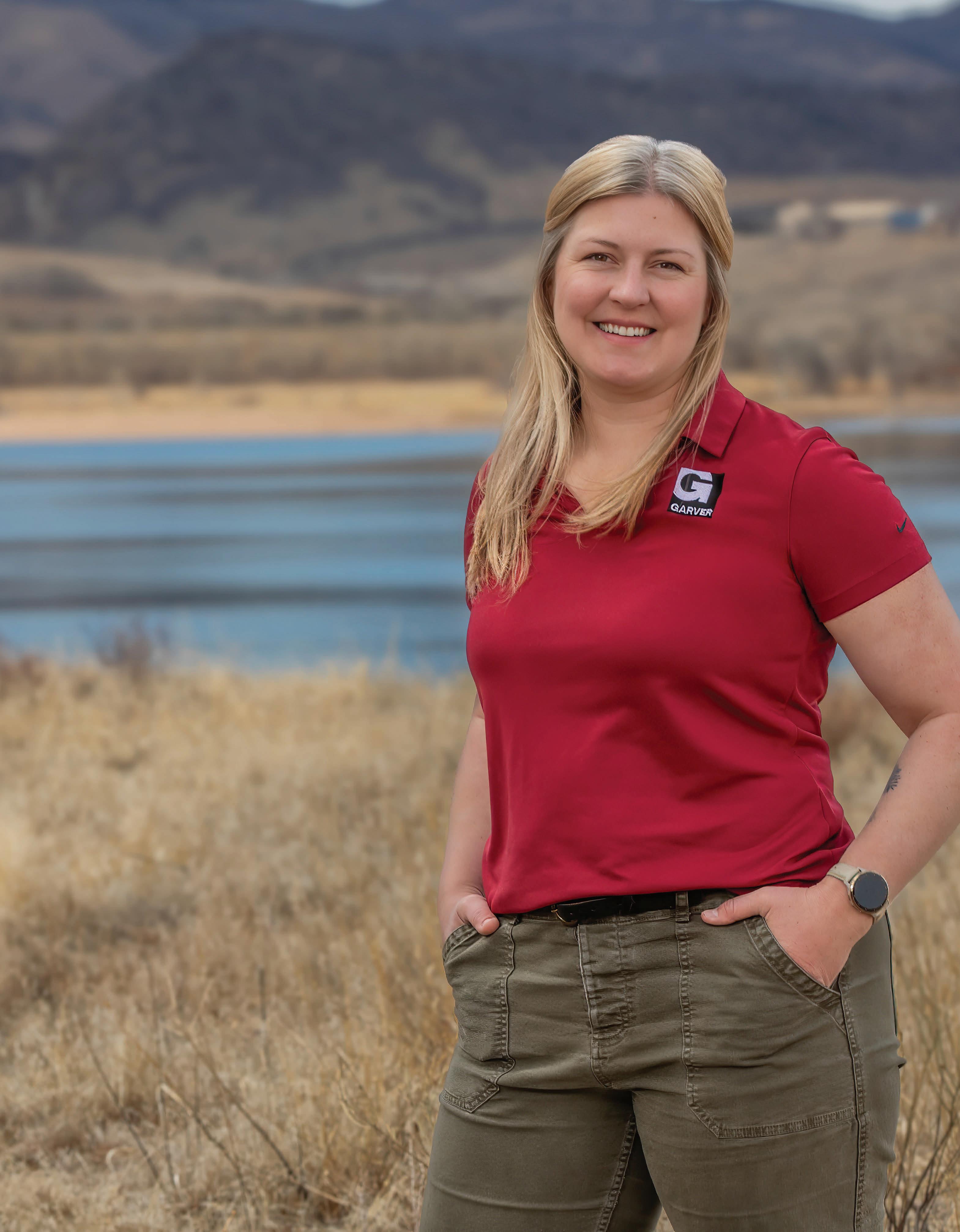
With more than a decade of experience in water and wastewater design, Greta Stetson is deeply invested in her clients’ systems and facilities. And she dives into their data, processes, and constraints to deliver solutions that fit.
Greta Stetson, PE Team Leader for
Western Colorado

Rocky Mountain Water Magazine Group
The following volunteers support RMSAWWA and RMWEA with content collection, management, editing, and reviewing the magazine.
BLAIR CORNING bcorning@englewoodco.gov
ANDREW DUGAN andrew.dugan@waterwrites.co
KARI LARESE klarese@hrwater.org
ASHLEY DENAULT ashley.denault@denverwater.org
RMSAWWA Communications Committee
KARI LARESE, Chair klarese@hrwater.org
ASHLEY DENAULT, Vice Chair ashley.denault@denverwater.org
RMWEA Communications Committee
JORI NELSON, Chair jori.nelson@hdrinc.com
MARY SHAW, Marketing Lead mshaw544@gmail.com
Dueling Data Center Legislation: Balancing Growth, Water, and Grid Reliability in Colorado
Rethinking General Permits for Small Systems
Reflection From a YP Scholarship Recipient and RMWEA Member From Their First Fly-In
RMSAWWA Participates in Inaugural Colorado Water Day at the Capitol
ROCKY MOUNTAIN VIEW
COMMITTEE SPOTLIGHT
Wyoming Water Committee Spotlight: Built by Operators, for Operators 13 MANAGEMENT PIPELINE
Charting
Tel: 866-985-9780 Fax: 866-985-9799 info@kelman.ca www.kelman.ca
Managing Editor: Mathias Leiendecker
Marketing Manager: Chad Morrison Design/Layout: Kiersten Drysdale
Advertising Coordinator: Sabrina Simmonds

Learn from our experts at HDR presenting on the following topics:
MONDAY, AUGUST 31
What Do You Mean I Need to Model My System for 5 days? Lessons Learned in Converting a Collection System Model from Steady-State to Dynamic | Rachel VanWormer
Navigating Water Quality Standards Through Strategic, Flexible Clean Water Act Tools | Chris Parton & Trent Stober
Breaking Ground, Not Trust: Community-First Planning for Water Facilities | Aimee Housh & Sara Stiehl (City of Westminster)
Water Lessons that Last: Designing Awareness Campaigns that Stick for Life | Alexandra Smoldt
It’s All Downhill From Here: Replacing an Interceptor through a Colorado Ski Town | Alexander Pooley & Nicole Bogenschuetz (Mt. Crested Butte Water & Sanitation District)
Pulling 1000 Levers: One District’s Journey to Self-Optimizing DO, N, and P | Dmitriy Zinchenko & Taylor Giarritano (St. Vrain Sanitation District)
TUESDAY, SEPTEMBER 1
The Missing Piece! Optimizing Polymer to Reduce Coagulant Demand While Improving Conventional Pretreatment and Filter Performance | Jennifer Stillman & Gregg McLeod (Marmac Water)
Horses, Plums and Creeks – Maybe We Should Tunnel This? Aurora Water’s Rampart Pipeline Crossing of Plum Creek | Maddie Endris, Brad Reiner & Nate Soule (GEI)
Revolutionizing Asset Management: Harnessing Smart Tools to Transform Reactive Maintenance to Proactive Planning | Holly Curry
WEDNESDAY, SEPTEMBER 2
A Review of Intensification Technologies for a Sustainable Future | Dillon Devitt
Enhancing Water and Wastewater Facility Resiliency to Natural Disasters and Power Outages | Matt Gough
From Slow Sand Filtration to Membranes: Design of the New Minturn Water Treatment Plant | Sean Schumacher & Abby Dodd
Assessing Opportunities and Applications for High Recovery RO | Mark Beebe
Prediction to Reality – How Surge Modeling and Testing Provides System Resiliency | Michael Sabon, Abby Dodd & Emilie Abbott (Parker Water & Sanitation District)
Not Just Thick: Rethinking Sludge Hydraulics with Measured Rheology | Sarah Maaz
Conceptualizing Utility Operated GAC Reactivation in Colorado | Ryan Rhoades & Kevin Linder (Aurora Water)
Utility-Led Migration to the Esri Utility Network: A Phased, Data-Driven Approach at Parker Water & Sanitation District | Joel Griffin, Brann Greager & David Hugens (Parker Water & Sanitation District)
FROM THE RMWEA PRESIDENT
Kristin Johansen, RMWEA President, Senior Project Manager, Stantec
It’s summertime, and I hope you have set aside moments to enjoy the beautiful Rocky Mountain outdoors with hiking in the mountains, fishing by the river, boating at the lake, or relaxing poolside! Water professionals in our region are keenly aware that we are facing dire drought conditions this year. We can all be mindful of our personal water consumption and be proud that each of us makes a positive impact on water resources in our communities just by virtue of our careers in water. Hats off, fellow water professionals!
This month’s issue focuses on the regulatory landscape of the water industry. As I write this article far past the deadline (much to the chagrin of the editor!), I am treading water with long days fueled by coffee and rapid-response engineering to help a community navigate emergency water-quality issues and challenges to meet regulatory requirements. As a former regulator at the Colorado Department of Public Health and the Environment, I know that developing regulations and creating a fair and impactful regulatory environment is challenging and requires consideration of public health, protecting the environment, cost challenges, navigating emerging contaminants, technology capabilities, deregulation considerations, and understanding when to enforce and when to assist. It is not an easy balance, but conversations with regulators, community engagement, and industry participation in government affairs keep communication channels open and inch the regulatory needle along in the right direction. I would be curious what regulations you want to see
implemented or improved, and which ones are challenging your utilities and clients the most. How do these regulations and future regulations drive technological innovation and technology adoption?
RMWEA had an eventful first half of the year with Fundamentals and Intermediate/Advanced Operator Training Schools, Innovative Water Technology Seminar, DC Water Fly-In, 27th Annual Operations Challenge Golf Tournament, Collections Conference, Colorado Analytical Laboratory PFAS Tour, Greeley and Grand Junction PWO Seminars, and Biosolids Agronomy Workshop, just to name a few. We also had representatives attend WEFMAX (Water Environment Federation Membership Exchange) events in Montreal, Pittsburgh, and Bend, where we exchanged ideas with other member associations across the United States, Canada, and Mexico. Our Students and Young Professionals Committee (SYPC) planned and hosted the Student Design Competition, where the University of Colorado Boulder “Bio Buffs” team (Jenna Blatchford, Elyse Panagakos, Colin Yeh, Julia Dykstra, Molly Monroe) took first place and will represent RMWEA at WEFTEC in New Orleans. SYPC also hosted the Student Conference at the University of New Mexico, where Hugh McCurren from Colorado State University won first place in the Fresh Ideas Poster Competition, and Ashley Bradshaw from New Mexico Institute of Mining and Technology won first place in the Oral Presentation Competition.
Most recently, our RMWEA Operations Challenge Teams competed at IFAT,
the world’s largest trade show for environmental technologies held in Munich, Germany, where they secured second place!
RMWEA will mark our 90th anniversary with a celebration at the Denver Botanic Gardens on August 13, 2026. Stay tuned for more information – we hope to see many of you there!
You may have noticed our Communications Committee and Denver Film Company out and about filming our Value of Water Documentary. The committee has traveled to Green River, Wyoming, the Navajo Nation in New Mexico, and utilities in Denver and southern Colorado. We are excited to share these water stories and more with the Rocky Mountain Region and beyond! Looking forward to the Rocky Mountain Water Conference in Keystone, August 30 to September 2, we have a fantastic technical lineup anticipated and a full suite of vendors scheduled at the exhibition hall. The Is Your Toilet Running 5K, Shark Tank Competition, Toilet Bowl Trivia, and Operations Challenge exhibition are some of my favorite events at the conference. RMWEA welcomes you to join our RMWEA Luncheon, where we will report on our yearly activities, transition leadership, and announce award winners. As you plan your conference schedule, I challenge you to be inquisitive – learn about a new topic and meet someone new. While the world may be shifting to robots and virtual interactions, this conference is all about the humanity of the water industry and leaning into our shared passion for water! See you in Keystone!

FROM THE RMSAWWA CHAIR
Brett Pugh, RMSAWWA Chair, Project Manager, Burns & McDonnell
Greetings all! As we dive into the heart of summer, this issue’s theme is a topic that touches every aspect of our daily work: the Regulatory Landscape.
In recent years, there has been plenty of discussion around PFAS and microplastics across the industry, and rightly so. These emerging contaminants increase health risks and pose significant technical and financial challenges for utilities of all sizes. However, I want to highlight other regulatory items that are perhaps less talked about but are certainly worth raising awareness of within our membership here in the region. Across Colorado, New Mexico and Wyoming, we are witnessing legislative and regulatory shifts concerning water quality, water resources, water conservation and permitting that will impact how we do business for decades to come.
Here are several notable regulatory items currently reshaping our work in the Rocky Mountain region:
COLORADO’S WATER QUALITY
PERMITTING EFFICIENCY (SB25-305):
Passed as an effort to make Colorado's water quality permitting process more transparent and responsive, this legislation directly addresses permit backlogs. It introduces mechanisms to speed up technical reviews. This means critical water and wastewater infrastructure projects can move from the drawing board to construction much more efficiently, while also increasing safe drinking water program inspections to keep our communities protected.
NEW MEXICO’S EXPANDED SURFACE WATER PROTECTIONS (SB 21):
Following the Supreme Court's Sackett v. EPA decision, which narrowed federal protections, New Mexico took action to modernize its Water Quality Act. This state-level legislation restores protections for intermittent streams and wetlands. It aims to protect the headwaters and surface waters that our communities rely on to remain safe from contamination and pollution, keeping local control over water quality.
Wyoming recently expanded its temporary water use agreements. The new law extends temporary water rights from two to five years and broadens their allowed beneficial uses. This change gives water managers and agricultural users flexibility to navigate prolonged
drought conditions and share resources, all while protecting existing water rights holders and allowing irrigation demands to adapt to changing conditions.
New Mexico has established a $75 million program to treat and use brackish water to combat increasing water scarcity. By directing this alternative water source toward manufacturing and clean energy, the state is proactively preserving its limited freshwater supplies for community drinking water. The legislation also provides unprecedented resources for aquifer mapping, giving us better data to manage our resources effectively.

Navigating these changing rules and standards can feel daunting, but remember: the Rocky Mountain Section is here to support our members. We view these challenges as opportunities for education and advocacy.
COLORADO’S PROHIBITION ON NON-FUNCTIONAL TURF (SB24-005):
Starting in January 2026, this legislation restricts the installation of non-functional turf, artificial turf and invasive plant species in commercial, institutional, industrial and HOA properties. By limiting high-water landscaping in areas where grass serves purely aesthetic purposes, Colorado will reduce irrigation demand while still allowing functional turf for parks and sports fields.
Currently advancing in the state landscape, this pilot program allows water rights holders in Wyoming’s portion of the Colorado River basin – particularly the Green River basin – to voluntarily implement water conservation projects. Users could be compensated for fallowing fields or reducing irrigation. This proactive, voluntary measure is a vital tool for Wyoming to manage its consumptive water use.
(HB 423):
This recent legislation appropriates $62 million to the Office of the State Engineer to support local planning and water data management. Crucially, $30 million of this is allocated to provide grants to regional water planning entities, bolstering the state's capacity to manage irrigation limits and secure drought resiliency. It also earmarks funds to enforce water rights along the Rio Grande.
Navigating these changing rules and standards can feel daunting, but remember: the Rocky Mountain Section is here to support our members. We view these challenges as opportunities for education and advocacy. Our committees are integrating these regulatory updates into our training programs to help prepare you for what is coming.
A fantastic place to dive into these topics is the Rocky Mountain Water Conference, August 30 to September 2, in Keystone, Colorado. This is our flagship event and an unmatched place to learn, share, network, build business and deepen friendships. Whether you are seeking technical insights on the new conservation rules or looking to collaborate with peers facing similar compliance challenges, the conference is the place to be.
Furthermore, as outlined in our 2030 Strategic Plan, our new water policy task force, alongside the Colorado Water Utility Council, is dedicated to using our members' collective experience to inform decision-makers. This is the intent of the Water Policy Leadership strategic goal as proof in action. Read more inside this issue about how this strategic vision is moving forward.
As we face these regulatory hurdles, my message remains the same: "Get Involved, Bring a Friend." Engagement is the key to mastering these changes. Are you currently navigating a complex permitting process or evaluating a new conservation mandate? Share your knowledge by joining a committee or presenting a paper. Bring a younger professional or a colleague along with you to a section event.
Thank you for your continued dedication to our industry and the communities we serve. I look forward to seeing you at our upcoming events as we tackle the regulatory landscape together.




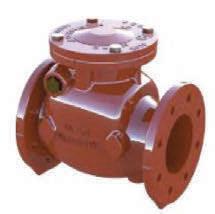
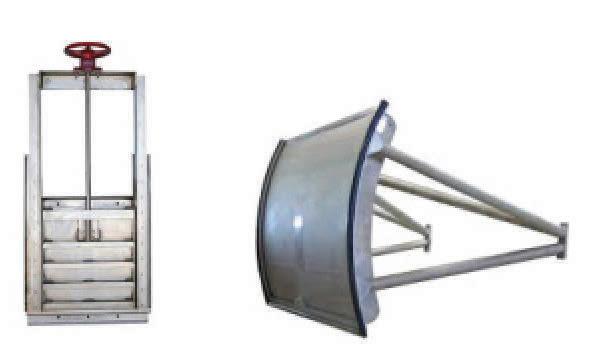
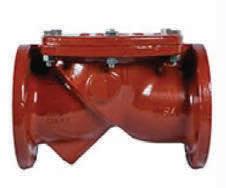
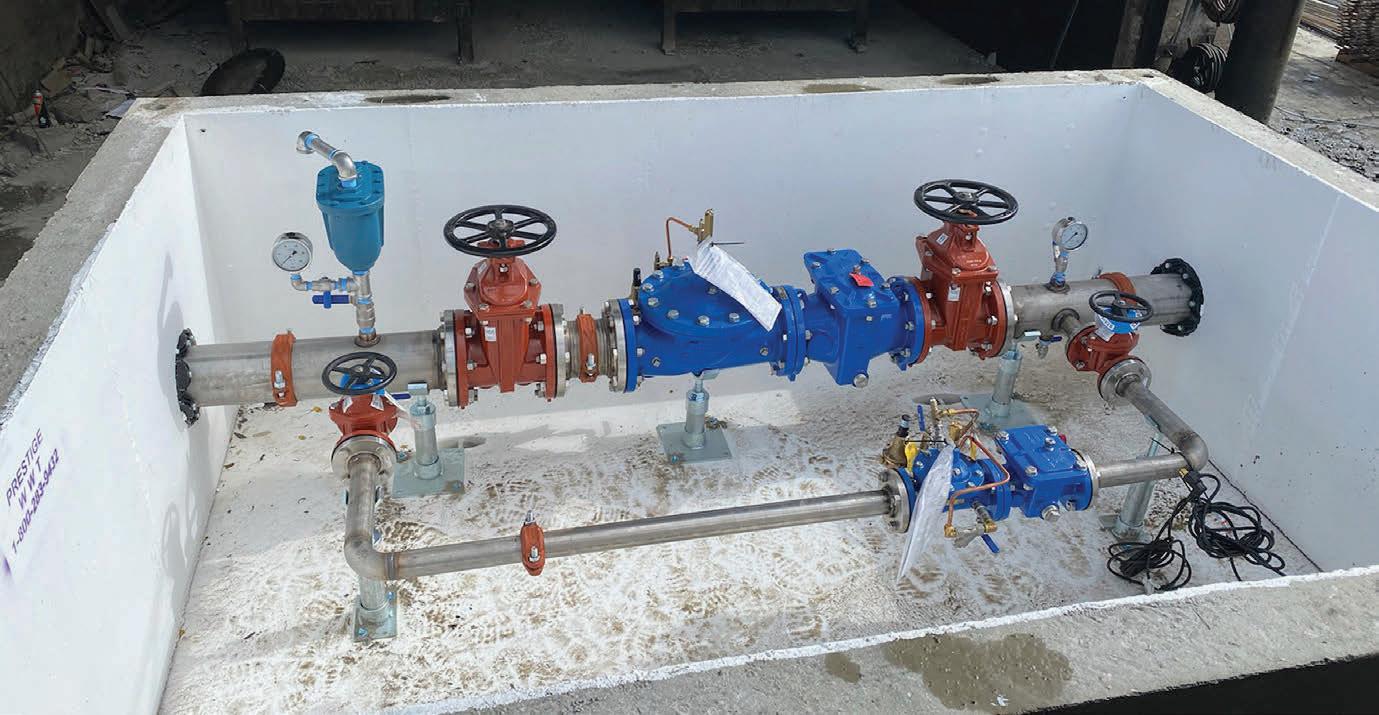
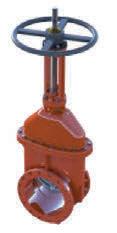
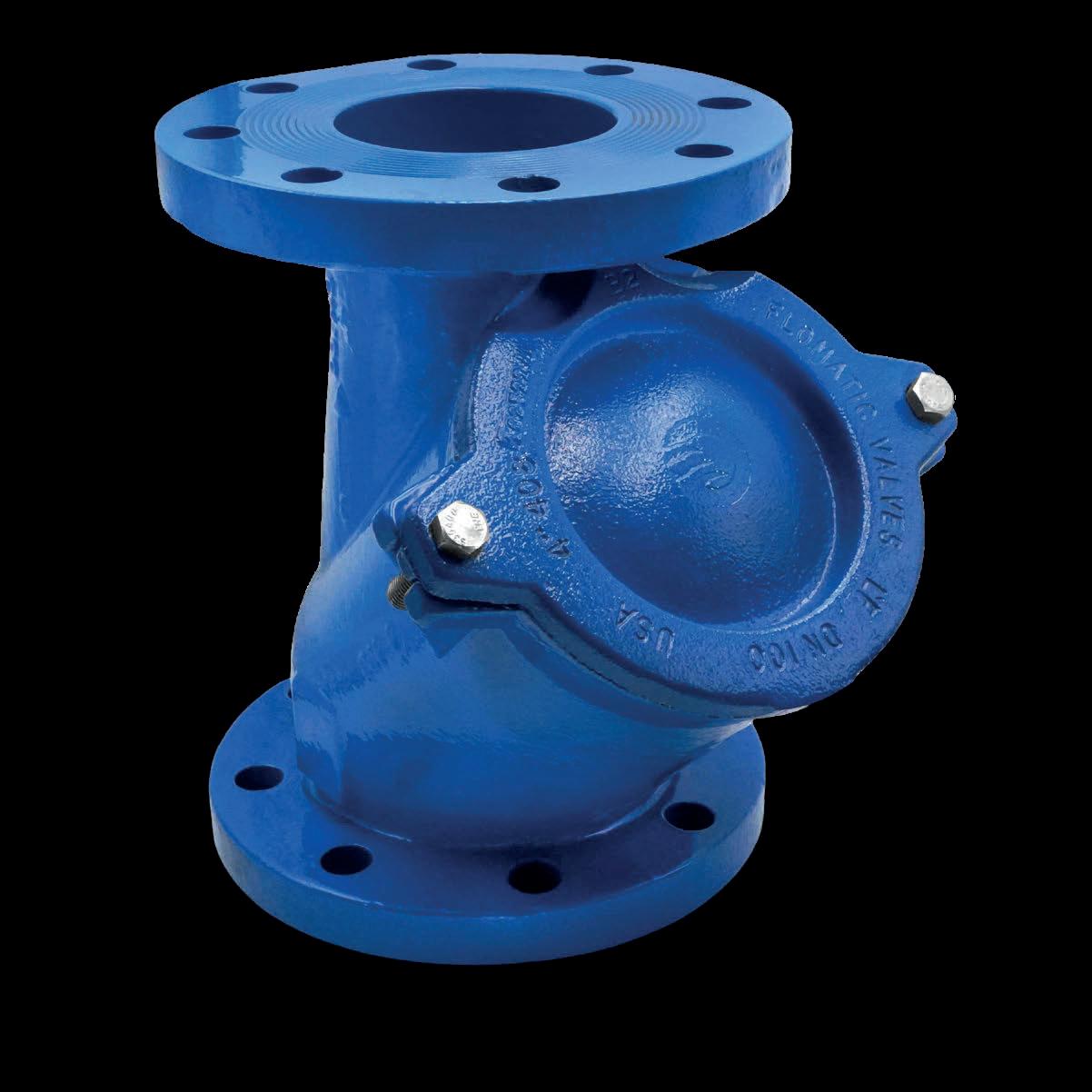
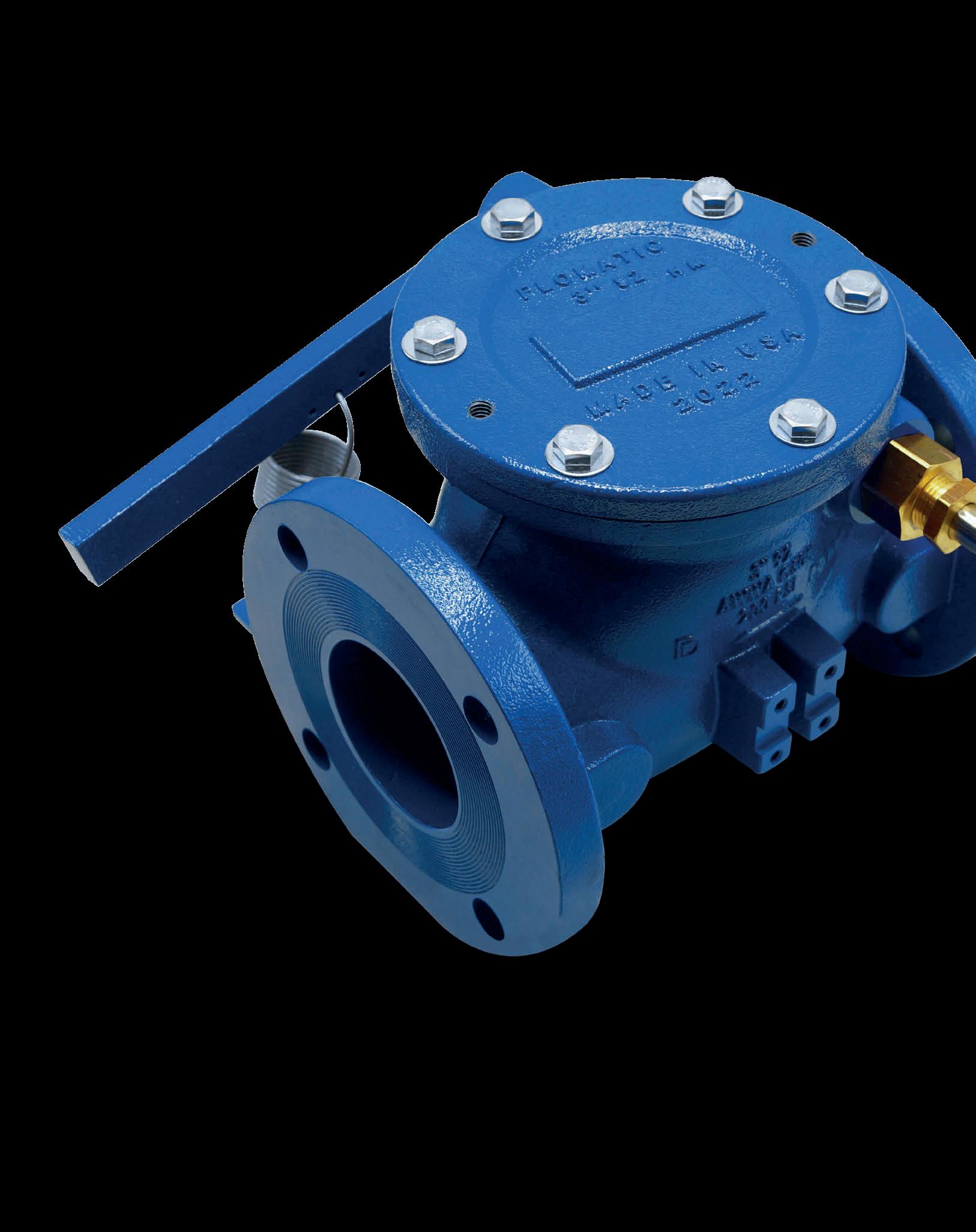
Built by American hands that take pride in every detail, our AIS‑compliant check valve lineup is engineered to perform long after installation. Three field‑ready solutions—crafted with precision, tested for reliability, and supported by a team that stands behind the work—so your wastewater system keeps flowing efficiently, project after project. The AIS-compliant partner you can rely on.

Alexis Spray, Chairman, Wyoming Water Committee
If you work in water in Wyoming, you already know this isn’t a one-size-fits-all job. What works in one system might not work in another. Weather, source water, aging infrastructure, staffing – it all plays a role.
That’s exactly where the Wyoming Water Committee comes in. This committee isn’t just a group that meets and checks boxes. It’s made up of people who are out in the field, in the plants and in the labs. People who understand the day-to-day challenges because they’re living them too. The goal is simple: support operators across the state with real-world tools, training and connections that actually make a difference.
At its core, the Wyoming Water Committee exists to support operators-plain and simple. Our work focuses on:
• Providing relevant, hands-on training that applies to real systems, not just textbooks.
• Sharing practical knowledge and troubleshooting strategies that operators can take back to their plants.
• Encouraging workforce development and helping bring new operators into the industry.
• Building a strong network where operators can reach out, ask questions and learn from each other.
• Advocating the needs of Wyoming systems, especially those facing unique challenges.
Because let’s be honest. Sometimes the best solution isn’t in a manual. It comes from another operator who’s already dealt with the same issue at two in the morning.
This committee isn’t just a group that meets and checks boxes. It’s made up of people who are out in the field, in the
plants and in the labs. People who understand the day-to-day challenges because they’re living them too.
Looking ahead to 2026, the committee is focused on continuing to build practical support for operators across Wyoming.
Key priorities include:
• Expanding hands-on and exam prep training, especially for operators working toward higher-level certifications.
• Reaching more operators across the state, including smaller and rural systems that don’t always have easy access to resources.
• Creating trainings that reflect real-world challenges, from troubleshooting processes to lab work and system optimization.
• Strengthening communication and collaboration between operators, management and regulatory agencies.
• Encouraging more operator involvement so the committee continues to reflect the people it serves.
The goal isn’t just to offer training; it’s to make sure that training actually helps when you’re back at your plant trying to figure something out.
If you’ve ever thought about getting more involved, this is a good place to start.
Top five reasons to join the Wyoming Water Committee:
1. Be part of something that actually makes a difference: Your input can directly impact training and resources across the state.
2. Learn from other operators: Not just theory, but real experience from people doing the job every day.
3. Build connections: Having a network makes a big difference when you run into something new or unexpected.
4. Grow your skills and confidence: Especially if you’re working toward higher certifications.
5. Help shape the future of the industry in Wyoming: The committee is only as strong as the people involved. We have an amazing group of people on the committee already, but we would love to have anyone join!
You don’t need to have decades of experience to contribute. Sometimes the most valuable perspective comes from someone who just figured something out the hard way.
Water systems don’t run themselves. Behind every system is an operator making decisions, solving problems and keeping things moving, often without much recognition.
The Wyoming Water Committee is working on several training sessions throughout 2026 aimed at equipping operators with tools they can use right away. Planned and potential topics include:
• Treatment process optimization.
• Lab procedures and sampling techniques.
• Troubleshooting operational issues.
• Certification exam preparation.
• New and emerging technologies in water treatment. These trainings are also a chance to connect with other operators. Some of the best takeaways don’t come from a presentation. They come from the conversations during breaks. We are hoping to have two to three in-person training sessions, as well as some virtual
training hours. If there are any topics you would like us to cover, please let us know! We want the training to be beneficial to you as operators, not just to give you CEU’s for your licenses.
Water systems don’t run themselves. Behind every system is an operator making decisions, solving problems and keeping things moving, often without much recognition. The Wyoming Water Committee exists to support those operators.
Whether it’s through training, shared knowledge or just knowing there’s someone else out there who’s dealt with the same issue, the goal is to make the job a little more manageable and a little less isolating.
If you’re interested in getting involved or attending a training, we encourage you to reach out. The more operators involved, the stronger the support system becomes!
Alexis Spray is a water and wastewater operator for the City of Green River, WY. She has also been the chairman of the Wyoming Water Committee since 2024.











































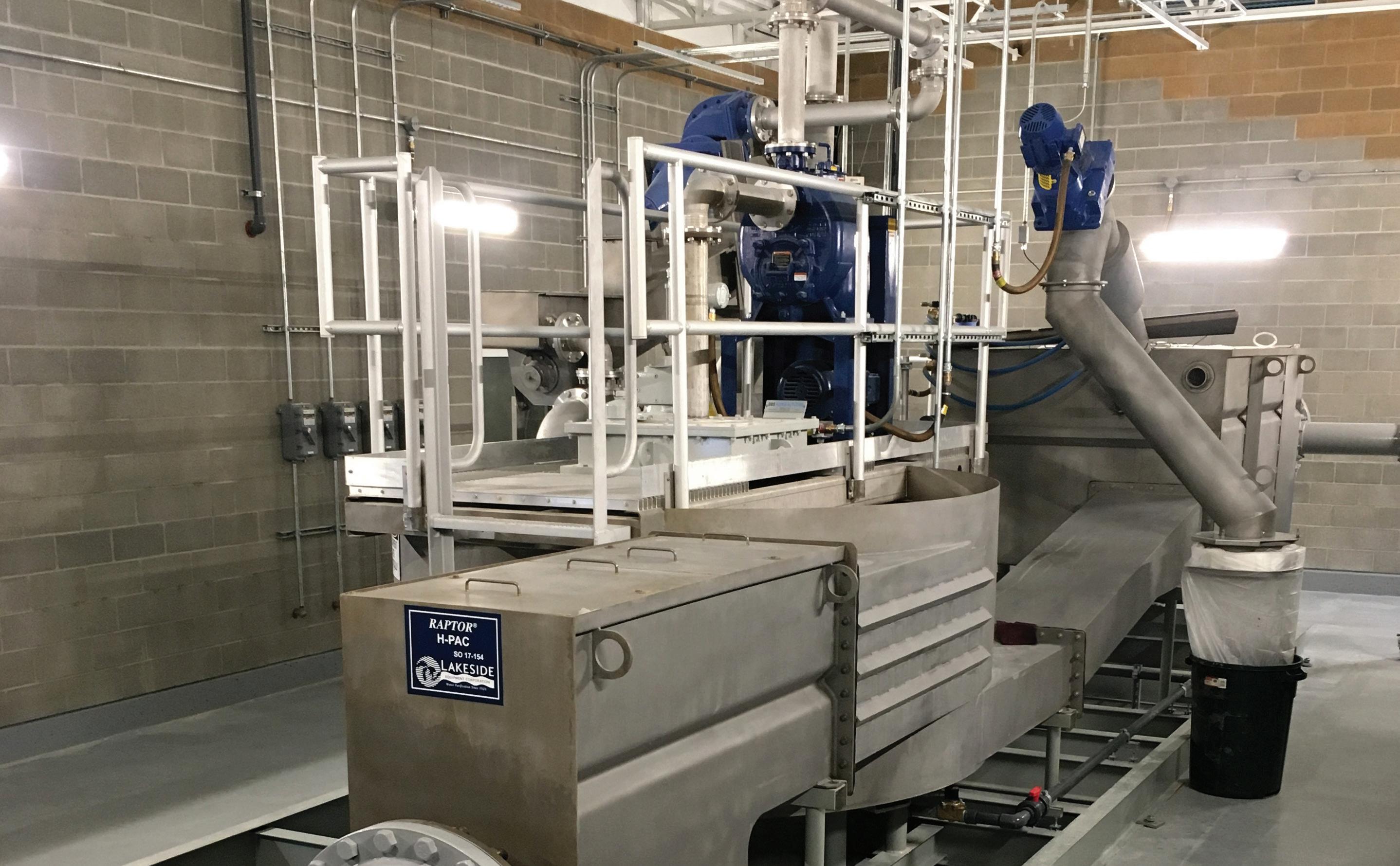
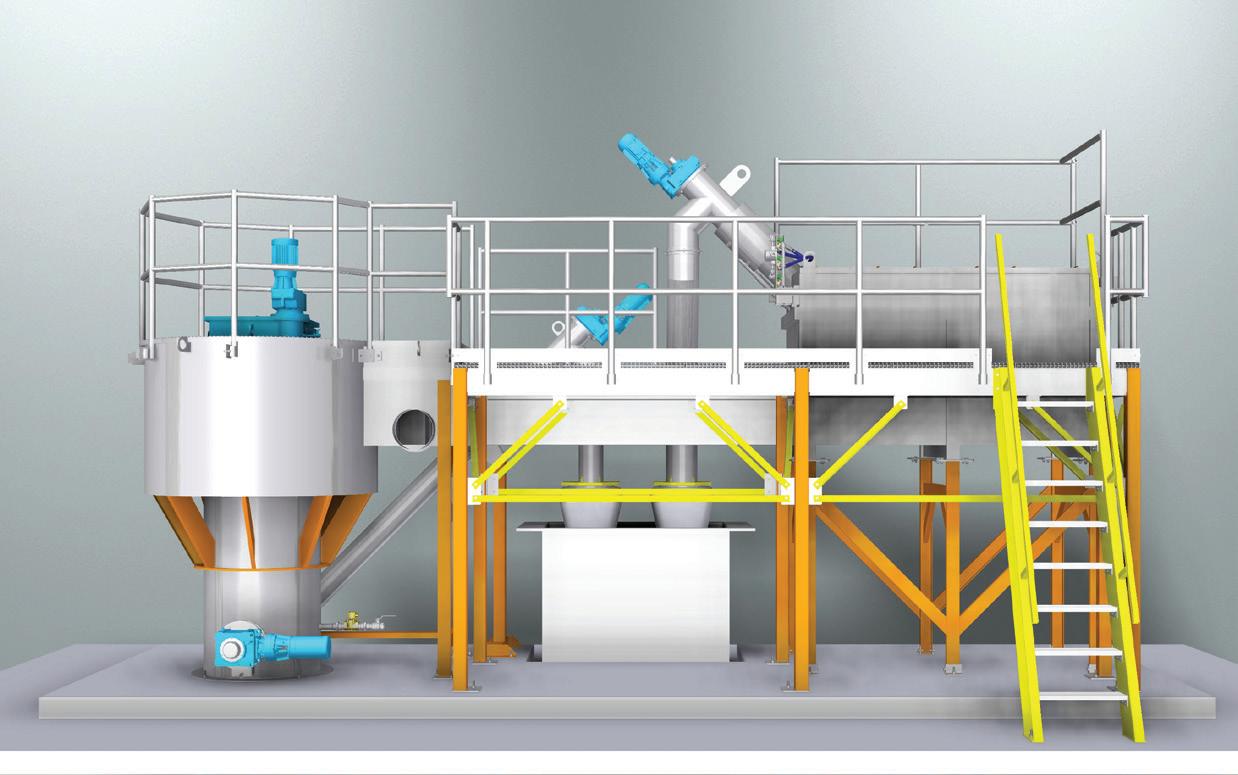
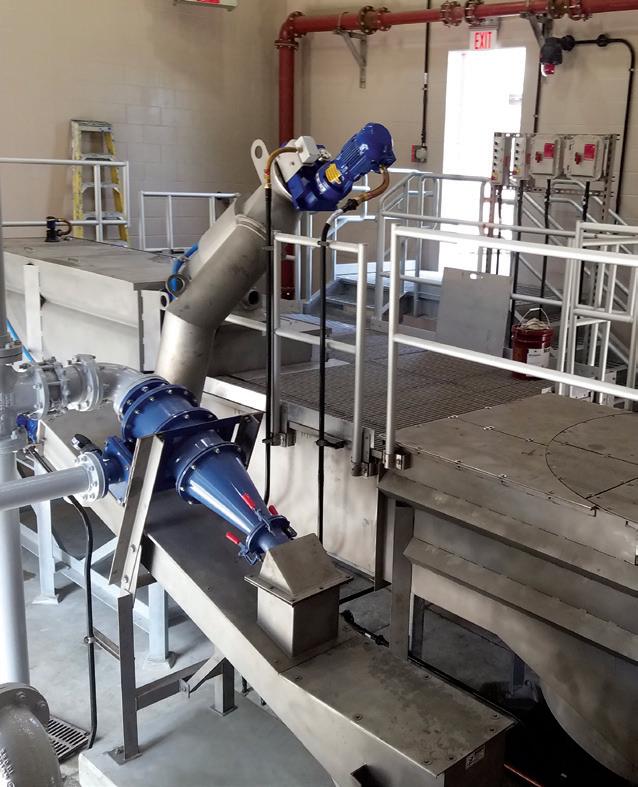
Our Headworks Packaged System – H-PAC® – combines our Raptor ® or Hydronic T Screening product line with our SpiraGrit® Vortex Grit Chamber in an elevated pre-engineered headworks system. Capable of handling flows as high as 12 mgd, the H-PAC can be installed above or below ground and its compact design uses less space and costs less than other packaged systems. For more than 90 years, Lakeside has provided solutions for treatment plant designers and engineers. Lakeside’s H-PAC offers the highest quality screens and grit removal systems, with the dependability and reliability expected of a trusted and proven leader in the industry. Contact us for a better solution!
Speak to one of our experts at 630.837.5640, email us at sales@lakeside-equipment.com or visit lakeside-equipment.com for more product information.
Dan DeLaughter, Data & Regulatory Programs Manager, South Platte Renew
Ihave a confession to make – I like being known as an “expert.” It is natural to feel good when people seek out advice, and I enjoy being asked to offer my opinions, present to groups, and share ideas. However, regulatory and other wastewater professionals need to be careful not to let our expertise in some areas create blind spots in others. We also need to proactively recognize and fully utilize the power of our networks.
With ChatGPT and other AI tools, it is an easy trap for regulatory professionals to want to learn everything about everything, to become the ultimate gurus in our fields. It can be tempting to work in an echo chamber, furthering the good of our own organizations without looking more broadly. Many of us are solidly introverted scientists and engineers who might be pretty happy researching and talking to AI for the better part of our days, but it is critical that we look externally to share ideas, address risks, and identify opportunities for collective action.
Water and wastewater treatment is a heavily regulated industry, so it will always be important to maintain and update knowledge relevant to our jobs. However, regulations change quickly and often, and implementation can vary depending on who is in charge. Reaching outside of our organizations and forming relationships with other experts is a necessity for a well-run regulatory program. It can be uncomfortable, but it pays off in ways that we can’t even anticipate. Knowing the strengths of other experts applies within our organizations also. Your staff and those in other workgroups have unique strengths and responsibilities. I am truly grateful for the team I have in place, and would not be able to manage a successful regulatory program without them.
When talking to regulatory counterparts and managers in other organizations,

I am constantly impressed by the depth of knowledge individuals have in the many facets of water, stormwater, biosolids, and air regulations. No two facilities face the exact same set of regulations or permitting requirements, but we can all learn valuable lessons from facilities that have been through a permitting process most recently or have found ways to innovate within the constraints of defined standards and policies. The strength of our networks and relationships we build becomes a part of a resilient and well-functioning regulatory program.
Colorado utilities have done an excellent job recently of pooling resources to participate in state and federal efforts through trade groups such as RMWEA and WEF, the Colorado Wastewater Utility Council (CWWUC), and the National Association of Clean Water Agencies (NACWA). Collaboration with regulators, environmental groups and other stakeholders has been highly effective through the Water Quality Forum workgroups and the Colorado
Monitoring Framework. We have led the way nationally, in partnership with CDPHE, on the statewide approach to nutrients, and the continued nutrients feasibility work being conducted by the National Water Research Institute (NWRI). Over the past several years, we have grappled with new regulations for lake nutrients, PFAS monitoring for biosolids, TENORM, and many other changes.
Yet we have big challenges still ahead of us to address changing water quality standards for temperature, arsenic, and salinity. Things are also heating up with new air regulations, and public pressure has grown to address risks from PFAS and other emerging contaminants. The state’s permitting section has increased monitoring for many parameters while shortening the length of some compliance schedules. It has adopted new antidegradation policies that have led to more stringent permit limits, and is working through a significant permitting backlog and trying to improve its communication processes. These are challenges that
are best faced with collective efforts and the shared wisdom of many experts working together.
1. To Quote Kendrick Lamar – “Be Humble” You can not know it all. Get curious about why rules and policies are structured the way they are. The status quo can often be changed, and asking questions of peers at other utilities, regulators, and consultants can often lead to significant “aha!” moments and positive changes.
2. Get Involved!
One of the fastest ways to learn is to join and actively participate in one or more organizations. RMWEA’s Government Affairs Committee and CWWUC are great places to start, and volunteer and networking opportunities abound. By committing a little time to attend meetings, you can learn a lot, and the more you put in, the more you will get out.
These organizations do important work for the industry, and the more visible you become, the more their influence can help your utility to succeed.
3. Get to Know the Other Experts!
People in the water/wastewater industry, and especially in the Rocky Mountain region, are very generous with their time. It is likely that other utilities have faced some of your challenges in the past, and there is an entire community of smart people who want to work together to
obtain regulatory certainty and flexibility. It can be enlightening to see how other states address regulations for a certain water quality parameter, or how a utility in a different region of your state is applying a tool like integrated planning or discharger-specific variances.
The next time you feel the desire to be the expert, think about stepping back and leveraging or expanding your network instead. In fact, that might be the quickest path to truly becoming the expert.
Dan is the Data & Regulatory Programs Manager at South Platte Renew, where he manages permitting and regulatory work across water, air, and biosolids, helping to protect the environment in the South Platte River watershed. Dan is currently Vice-Chair of the Water Environment Federation’s Regulatory Subgroup of the Government Affairs Committee and a Director of the Colorado Wastewater Utility Council. He earned a Bachelor of Science in Civil Engineering from Union College and a Master of Science in Civil Engineering from Colorado State University.



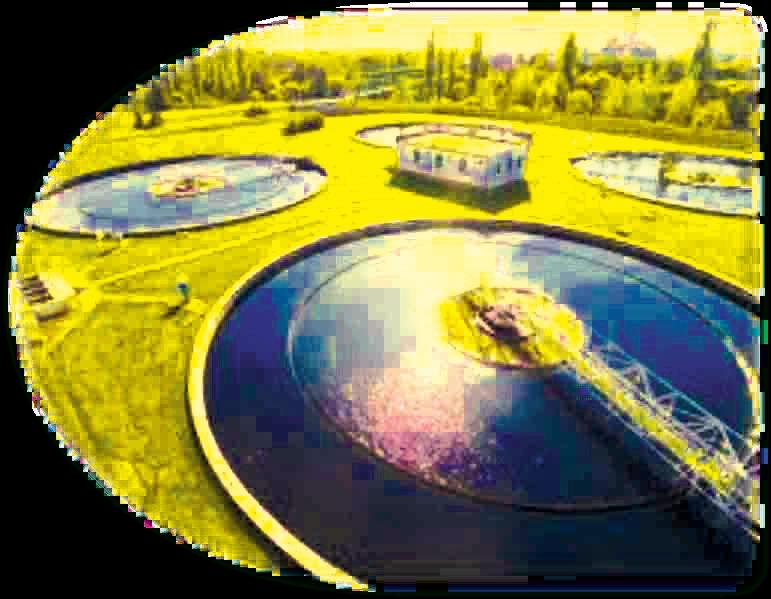



Colorado finds itself at a pivotal moment in shaping how it will accommodate one of the fastest-growing forms of infrastructure in the modern economy: data centers. These facilities, which power everything from cloud computing to artificial intelligence, are expanding rapidly across the United States, and Colorado is a prime target for data center development. In response, state policymakers are weighing two competing legislative approaches that reflect fundamentally different priorities.
On one side, Senate Bill 26-102 emphasizes environmental safeguards, infrastructure accountability, and long-term grid reliability. On the other hand, House Bill 26-1030 focuses on economic development, offering substantial tax incentives to attract largescale investment. For water providers, particularly those serving fast-growing regions along the Front Range, this is more than a policy debate. It is a question of how to sustainably manage finite water resources in the face of new, highdemand users.
Colorado’s legislative landscape mirrors a broader “carrot versus stick” debate playing out nationwide. Senate Bill 26-102 takes a regulatory approach, targeting large-load data centers, generally defined as facilities with peak energy demand exceeding 30 megawatts. Its provisions include requirements for 100% renewable energy sourcing by 2031, hourly energy matching, and developer-funded grid infrastructure upgrades. Importantly for water providers, the bill also introduces water efficiency standards and mandates transparent reporting of water use.
House Bill 26-1030, by contrast, seeks to position Colorado as a competitive hub for data center development through aggressive financial incentives. These include potential exemptions of up to 100% from state sales and use taxes, with benefits extending for up to 20 years. Supporters argue that such incentives are necessary to attract investment and job creation in an increasingly competitive national landscape. Yet as of early May 2026, both bills have faced delays, reflecting ongoing disagreements about whether economic growth or resource protection should take precedence.
For water utilities, the stakes are particularly high. Data centers introduce a new category of demand that differs significantly from traditional municipal or industrial users. Cooling systems, especially those relying on evaporative processes, can consume millions of gallons of water each day. In a semi-arid region like Colorado, where water supplies are already stretched, this level of demand raises immediate concerns.
The challenges extend beyond consumption alone. Data center operations produce wastewater, which contains elevated concentrations of dissolved solids and chemical additives used in cooling systems. This can strain existing treatment processes and complicate compliance with discharge permits. In some cases, thermal discharges may also affect receiving waters, adding another layer of regulatory and environmental complexity.
For members of the South Metro Water Supply Authority (SMWSA), these impacts are not hypothetical. Concentrated development of large-load facilities has the potential to

stress both water supply and wastewater treatment capacity. While mitigation strategies such as water reuse systems or on-site treatment technologies are available, they are not consistently implemented. In many cases, adoption depends on clear regulatory requirements and enforceable standards.
From this perspective, the framework outlined in Senate Bill 26-102 aligns more closely with the priorities of sustainable water management. Its emphasis on accountability, efficiency, and transparency reflects a recognition that growth must be managed, not simply encouraged. Requiring developers to fund necessary grid and infrastructure upgrades also helps ensure that existing ratepayers are not left to subsidize the costs of large industrial users.
At the same time, effective implementation will be critical. Water-related provisions must be clearly defined and coordinated with local providers to ensure they are practical and enforceable. Without this level of detail, even well-intentioned policies risk falling short of their goals.
House Bill 26-1030 presents a different set of considerations. Its focus on economic incentives acknowledges the potential benefits of attracting data center investment, including job creation and increased long-term tax revenue. However, without corresponding requirements related to water use and infrastructure impacts, these incentives could accelerate development in ways that place additional strain on local systems.
The concern for water providers is not opposition to growth, but rather the conditions under which that growth occurs. Incentives alone do not guarantee efficient water use, responsible wastewater management, or equitable distribution of infrastructure costs. Without safeguards, the burden may ultimately fall on existing communities and ratepayers.
In weighing these approaches, a balanced path forward becomes increasingly compelling. Senate Bill 26-102 provides a strong foundation for managing the resource impacts of data centers, while elements of House Bill 26-1030 could enhance Colorado’s economic competitiveness if integrated thoughtfully. A hybrid model – pairing targeted incentives with clear, enforceable environmental and infrastructure standards –may offer the most sustainable solution.
The decisions made in this legislative session will shape Colorado’s water and energy landscape for decades to come. For SMWSA and other water providers,
the priority remains clear: growth must be aligned with the realities of limited water resources. By adopting policies that encourage innovation while safeguarding essential infrastructure, Colorado has the opportunity to lead in sustainable development.
In a state defined by both its natural resources and its economic ambitions, the challenge is not choosing between growth and protection. It ensures that the two move forward together.
Despite both HB26-1030 and SB26-102 being postponed indefinitely, SMWSA successfully advocated for the inclusion of wastewater provisions in both bills. SMWSA anticipates that legislation regarding data centers will continue into the next legislative session and is well-positioned to continue advocating for its members and for a balanced approach to data center siting in Colorado.
The South Metro Water Supply Authority (SMWSA) was established in 2004 to help transition the South Denver metropolitan region from a reliance on non-renewable groundwater to a sustainable, renewable water supply. The organization fosters regional collaboration among water providers to advance long-term water security. South Metro Water supports its members, partners, and the communities they serve by championing sustainable water development, facilitating cooperation on innovative projects and initiatives, and delivering effective programs and services.
Lisa brings more than 25 years of experience in Colorado water resources to her role as Executive Director of South Metro Water.
Prior to joining South Metro Water, she managed the South Platte River Program for Aurora Water, the state's third-largest water utility, where she was one of the key leaders who developed the Water Infrastructure and Supply Efficiency (WISE) Project, a model in regional cooperation on water issues facing the region. She is also a leader in Colorado water planning, serving on Colorado's Interbasin Compact Committee and the South Platte Basin Roundtable.
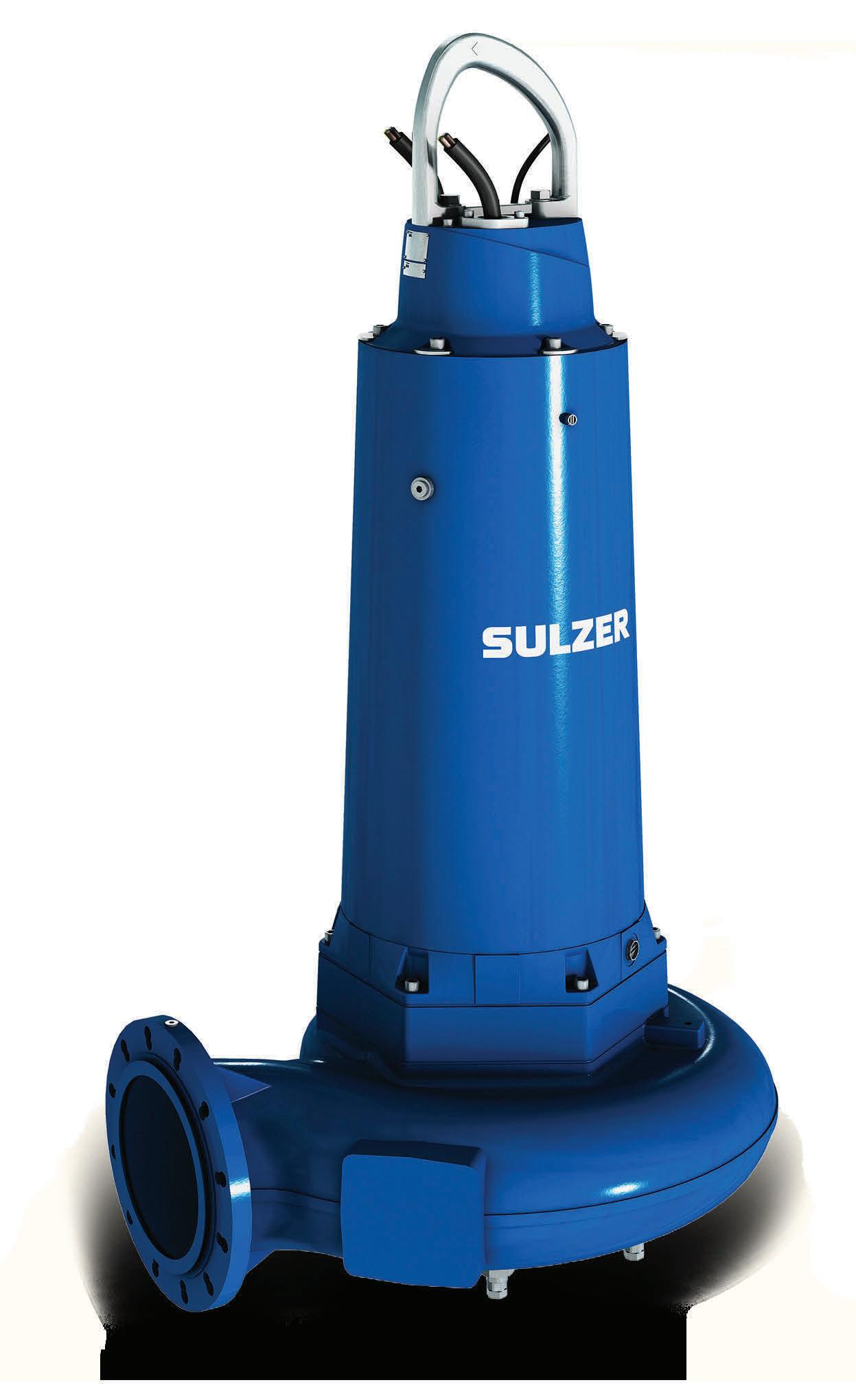
You can’t control what comes through your system, but you can control how your pump handles it. The Sulzer XFP submersible pump with the ContraBlock impeller keeps things moving with fewer clogs and less maintenance.
Built to meet BABA requirements and equipped with premium motors for greater energy savings, high performance, and reliability, it is a solution you can count on day in and day out.
go.sulzer.com/xfp-performance








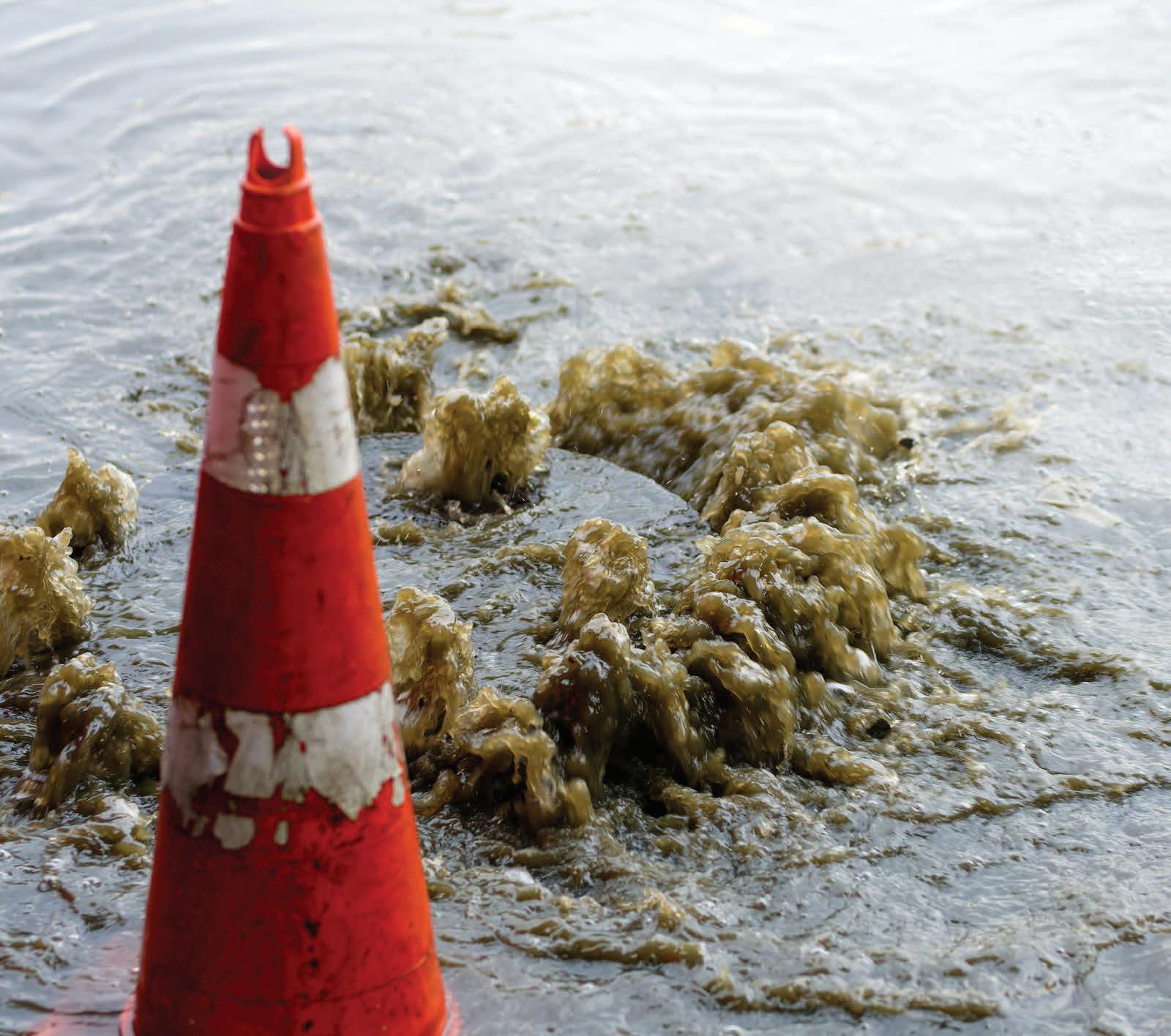
National Pollutant Discharge Elimination System (NPDES) permits were designed to improve human health and environmental quality, but for small systems, each permit requirement represents a disproportionately high operational and financial burden. Every domestic wastewater treatment plant, regardless of its size, is required to treat its wastewater to applicable water quality standards to protect the receiving water.
Regulatory agencies have long used general permits to efficiently regulate many similar, often simple or smaller, facilities. However, these general permits have evolved into increasingly complex and monitoring-intensive regulatory tools that increasingly resemble an individual permit. The current implementation of general permits creates an operational and financial burden on small systems, which typically lack staffing, budget flexibility and the operational flexibility needed to address increasingly complex permit requirements.
In turn, these complex general permits have also increased the resources the Colorado Department of Public Health & Environment (CDPHE) needs to manage and review the impact these general permits have on the operability of
General permits are a useful tool meant to streamline permitting for discharges with similar characteristics while maintaining compliance with water quality standards. They promote standardization, consistency and compliance expectations.
small systems. These issues do not have to be challenges, though: Through engagement and coordination within wastewater communities, they can become an opportunity to work together and develop strong solutions.
General permits are a useful tool meant to streamline permitting for discharges with similar characteristics while maintaining compliance with water quality standards. They promote standardization, consistency and compliance expectations. Most importantly, the general permits create a consistent framework for both regulatory review and permit implementation. However, implementing a general permit for a small system looks very different in actuality than on paper.
Over the past two decades, Colorado’s general permit for domestic wastewater
facilities discharging less than one million gallons per day has evolved from a simple, streamlined permit to something more complex, which resembles an individual permit in technical detail and monitoring expectations. New requirements, including more intensive sampling, metals testing, nutrient testing, whole effluent toxicity (WET) testing, per- and polyfluoroalkyl substances (PFAS) testing, site-specific receiving water considerations, and increasingly nuanced water quality-based effluent limits, have complicated the general permit framework.
Additionally, the general permit applies broadly across facilities with different discharge environments and treatment technologies. As water quality standards continually evolve, small systems are being asked to comply with requirements that do
As permits become more complex and site-specific, implementation approaches should evolve to account for changes in the environment, technology and the reality facing operators. A more balanced approach could provide greater flexibility and spacing of monitoring requirements, considerations of the discharge environment and expanded technical and financial support for small systems.
not always reflect the actual receiving water risk posed by their facility. As a result, the general permit regulatory framework has become more site-specific, but operates under the general permit structure.
In reality, a small wastewater treatment plant operates with minimal staff, and the operator often has multiple duties in addition to operating the facility, including compliance management, maintenance, lab coordination, administrative duties and emergency response. With the shift in NPDES permit complexity, even more requirements fall on the operator.
In addition, a small system also means a limited ratepayer base. This means that the small system must adequately plan for long-term projects and acquire funding ahead of time. Unexpected permit requirements disrupt this process that operators have been managing for decades. For a small system operating with two certified operators, the addition of WET testing, PFAS testing and expanded metals testing can quickly translate to tens of
thousands of dollars in unplanned annual costs. These systems also often have aging infrastructure and systems are incrementally upgraded over many years, requiring additional costs to hire consultants to help with engineering evaluations, permit compliance and other specialized conditions. While large systems face similar challenges, their larger ratepayer base also distributes the increased cost among a larger population.
Not only do smaller systems experience operational and cost difficulties, general permits can also result in a compliance burden. Increased sampling frequency, specialized testing, administrative reporting and dependency on consultants to help negotiate permits pose additional burdens for small systems. Often, applicants are caught off-guard by permit conditions and must defer maintenance projects and capital improvement projects in order to reallocate funding to meet new permit requirements. For larger systems, these changes may represent an administrative
burden and shuffling of that year’s fiscal spending. However, for small systems, they become an operational challenge resulting in enforcement and compliance actions which add even more costs. Costs come from many areas, such as operator and administrator salaries, operator training and certification, sampling, laboratories, engineering support and equipment and software. Surprises and significant financial changes are not incorporated into the planning horizon for small utilities and they often have to re-prioritize spending when unexpected changes occur.
As general permits become increasingly complex, it is important that smaller utilities have discussions around rule implementation, regionalization and long-term solutions. Although general permits must provide an equivalent level of protection as an individual permit, they also need streamlined implementation or they are no different than an individual permit. As permits become more complex and site-specific, implementation approaches

should evolve to account for changes in the environment, technology and the reality facing operators. A more balanced approach could provide greater flexibility and spacing of monitoring requirements, considerations of the discharge environment and expanded technical and financial support for small systems.
Regionalization is another potential solution in some cases. A shared service with cooperative compliance and consolidation of resources allows small systems to behave as a larger system. The distribution of costs among a larger ratepayer base helps distribute the financial and operational burden. There is common and very real constraints to regionalization, including geography, distance between rural systems and infrastructure capacities; however, where practical, regionalization has the potential to help support compliance efforts.
Additionally, small systems need representation in rulemaking discussions,
permit development, stakeholder efforts and industry associations. Regulatory decisions are often made to address broad environmental goals, and if small systems are not represented, practical realities will be overlooked. Greater participation by and outreach to small systems during rulemaking and permit development can help regulations be both protective and practical. At the same time, adequate technical and financial support is required.
Programs like state revolving fund loans, grants, infrastructure funding initiatives and compliance assistance programs need to evolve alongside the change in regulatory requirements. Without investment in and support of Colorado’s small systems, ratepayer fees increase and small systems struggle.
While general permits serve an important purpose, small systems are disproportionately impacted by their requirements. Small systems are committed to compliance and environmental and

human health protection, but lack the same resources that a larger system may have. A long-term successful solution involves collaborative approaches like regionalization, representation and participation by the small system in regulations, outreach to small systems, and sustained support and expanded funding and technical assistance options.
Kristin is a Project Manager on the Water Quality/Permitting Team for Plummer Associates, Inc. and is based in Denver. Her experience includes water quality and nutrient modeling, NPDES permitting and special water quality studies. She can be reached at karnold@plummer.com or 720-774-6142.


Chloe Prayon, Environmental Regulatory Specialist, Boxelder Sanitation District
As a recipient of the Water Environment Federation (WEF) and Rocky Mountain Water Environment Association (RMWEA) Young Professional scholarship, this was my first time participating in the Water Policy Fly-In in Washington, D.C. Having recently reached the six-month mark as an environmental regulatory specialist, this experience was an important step in becoming active within the complex regulatory landscape of water.
I was especially proud to advocate for policy solutions that directly impact utility affordability for low-income families. Our discussions focused on securing a permanent federal assistance program to prevent service shutoffs for struggling households and increasing federal infrastructure grants to keep local water rates stable.
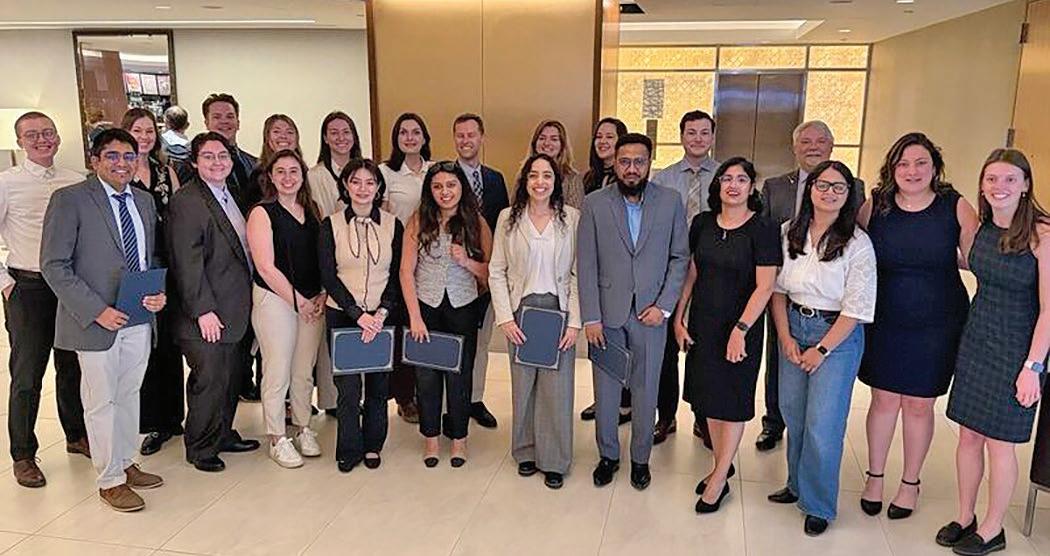
We also advocated for liability protections to ensure the cost of addressing emerging contaminants like PFAS falls on the original polluters rather than being passed down to ratepayers. Ultimately, this
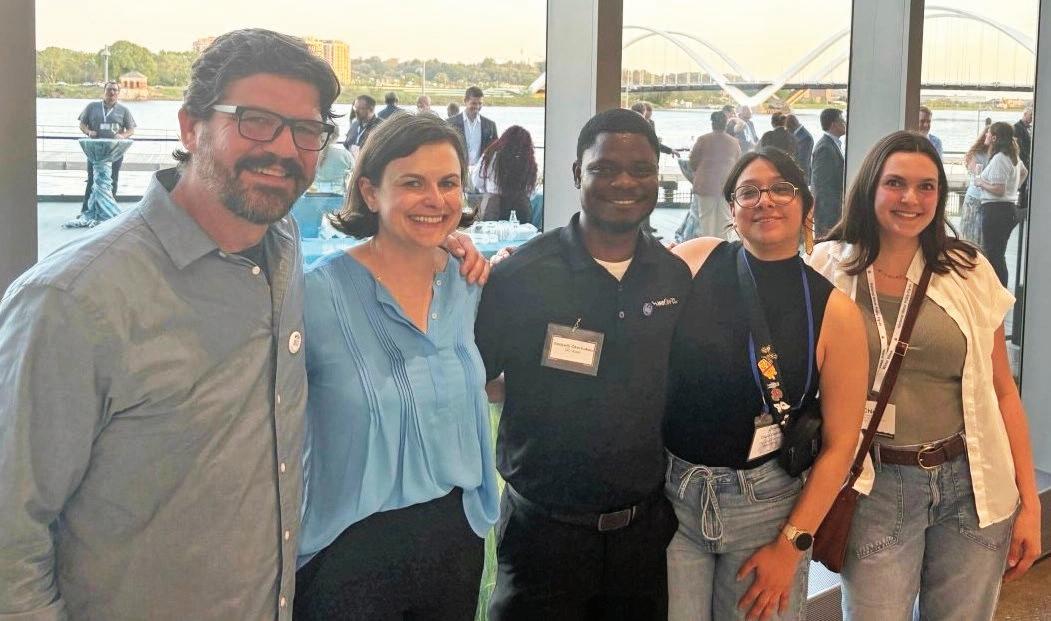
work is about ensuring families in Colorado and across the country never have to choose between paying for water and other essential needs. It was a privilege to work with the experienced professionals at RMWEA and WEF who have spent so much of their time being advocates for clean, affordable water. I couldn’t recommend this experience more to anyone with an interest in becoming more involved with water policy.
While the policy discussions and advocacy efforts were the centerpiece of the Fly-In, one of the most valuable aspects of the experience was connecting with water professionals from across the country. To gain additional perspective on the event and its long-term impact, I spoke with Carol Martinson, a process engineer at Providence Engineering and Environmental Group who has participated in the DC Fly-In for six consecutive years. She shared insights on why the experience remains valuable and how it has shaped her involvement in water policy advocacy.

Q&A with Carol Martinson, process engineer at Providence Engineering and Environmental Group and a six-year participant of the DC Fly-In.
Chloe: What is the most valuable lesson learned from attending the Fly-In this year?
Carol: This year really highlighted how important it is to keep showing up consistently. It’s been a few years of us really pushing hard, but the WIPPES Act (Wastewater Infrastructure Pollution Prevention and Environmental Safety Act) just passed the Senate. So, this process does work but takes time and tenacity!
Chloe: In your experience, what is the long game of these trips? Have you seen conversations from past Fly-Ins turn into a legislative win down the line?
Carol: I have seen my legislators sign on to co-sponsor bills I’ve asked them to support. And I’ve seen bills get passed, which is really encouraging!
Chloe: If you could go back to your first Fly-In, what is the one piece of advice you’d give yourself about how to handle a short meeting with a legislator that could change how they view water infrastructure and funding?
Carol: I think the art of having a concise elevator pitch is so important, and it really takes practice. You don’t get a lot of time or words, so you have to nail it. Also, just be yourself and let your passion come through. That’s what they’re going to remember and will make your message stick.
Chloe: What are the most rewarding and most challenging aspects of water advocacy?
Carol: The amount of patience needed is a challenge for me since I like to work at a fast pace. But being able to meet with fellow advocates and share that heavy lift is hugely rewarding!
Chloe: How do you feel your experience as an engineer has helped you in your water advocacy?
Carol: My experience lends confidence, which helps the message and trust sink in on the receiving side of my legislators. I also have firsthand experience to share on water-industry topics that we bring up, and that goes a long way.
Chloe: As an experienced water professional, how do you simplify the very technical information in the water industry into a message that resonates with a less technical staffer or legislator?
Carol: There are a lot of things we do that can be very technical. But when you really understand the details, we should be able to simplify a topic into concepts anyone can understand. Also, doing volunteer work with kids occasionally really helps too, because you get fluent in how to get messages across to all ages. And if you can get comfortable explaining something to a
third grader, you should be able to take that message pretty much anywhere!
Chloe: How can RMWEA members get involved in water advocacy?
Carol: The simplest way for anyone to get involved is to sign up to be a water advocate, which makes it easy to send a cohesive message to your legislators on important topics that have some momentum in Congress right now. https://www.votervoice.net/wef/home and join the Government Affairs Committee if you’d really like to dig in more!
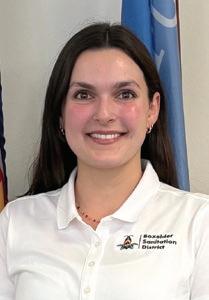
Chloe Prayon is an Environmental Regulatory Specialist for Boxelder Sanitation District in Fort Collins, CO. Carol Martinson is a Process Engineer at Providence Engineering and Environmental Group in Wyoming.


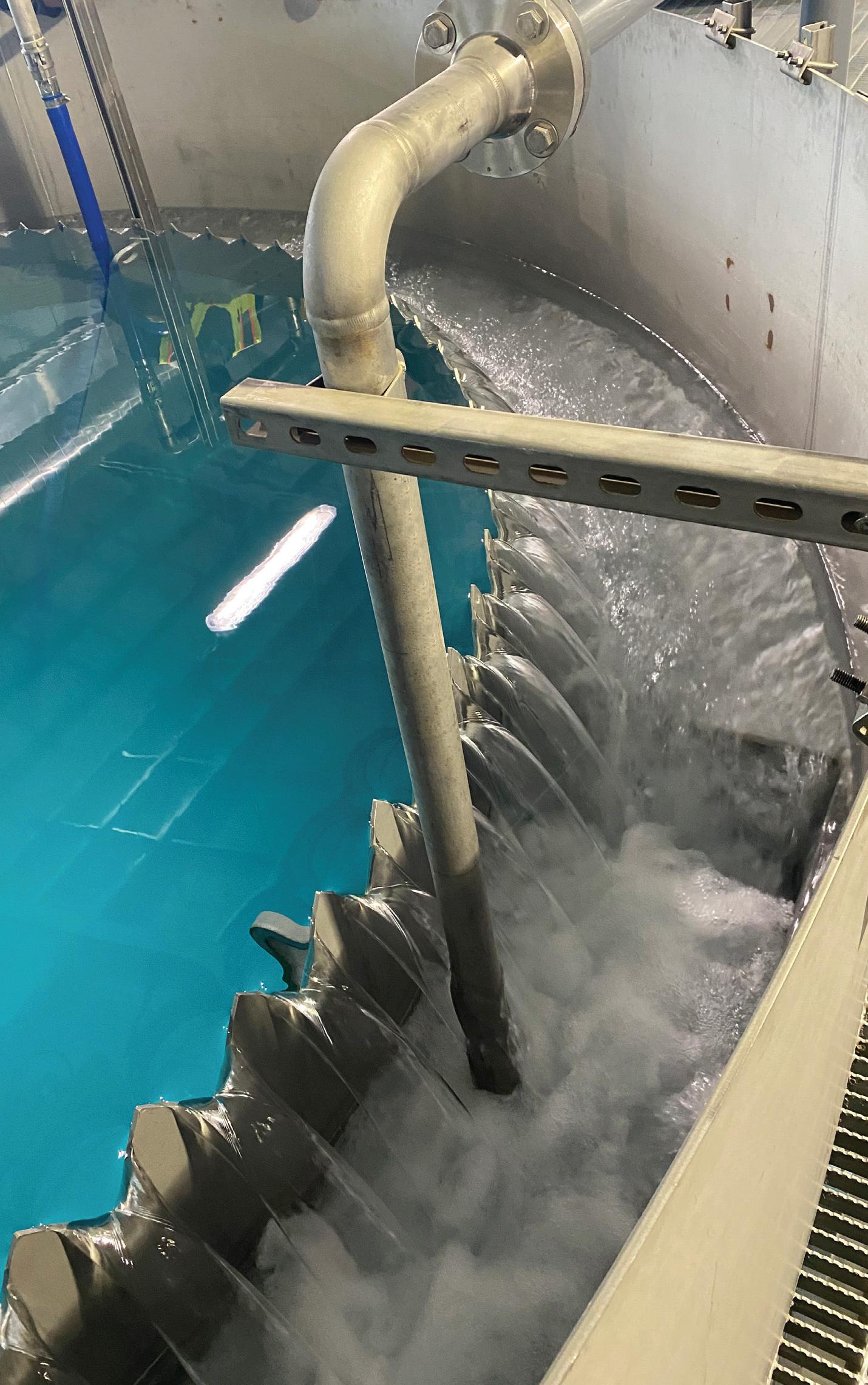
Softening technology features no mechanical components inside the reactor and requires no additional waste or sludge thickening/dewatering. Waste pellets can be repurposed or disposed of in multiple ways, leading to increased global ecological transformation. > Saves energy > Easy and cost effective to operate > Compact, robust, and reliable > Removes calcium hardness, iron and manganese
www.veoliawatertech.com
Devon Buckels, Executive Director, RMSAWWA
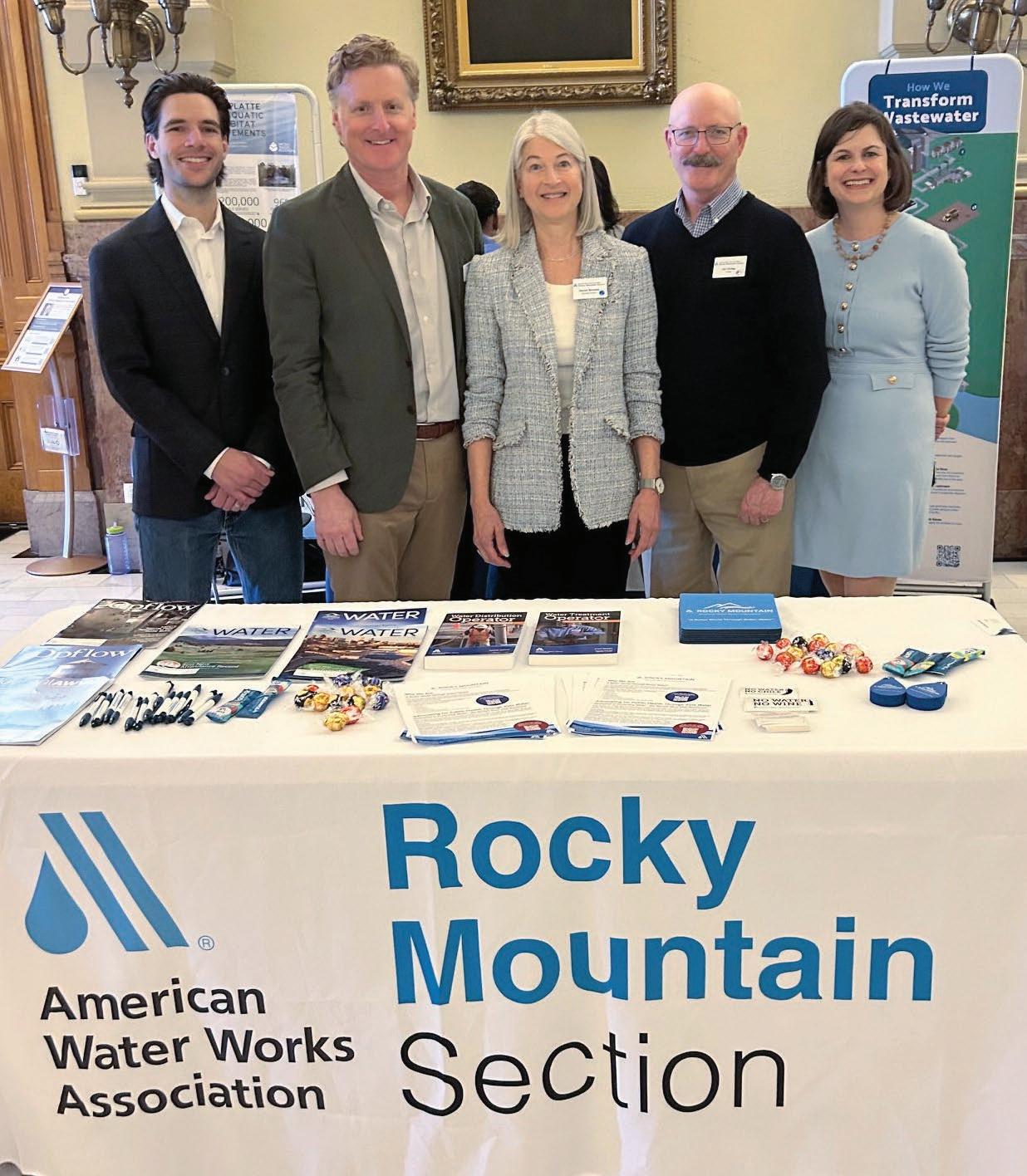
On March 11, 2026, RMSAWWA joined more than 30 organizations from across the state for the first Colorado Water Day at the Colorado State Capitol, a new event designed to strengthen connections between Colorado’s water community and state policymakers. To commemorate what organizers envision as an annual event, Governor Jared Polis issued a proclamation designating March 11, 2026, as Colorado Water Day. The gathering, coordinated by the Colorado Water Congress, brought together representatives from municipal water providers, agricultural organizations, conservation groups, educational institutions, state agencies, and other water-related entities. Throughout the morning, legislators, legislative staff, and members of the public met directly with water professionals to learn more about the issues affecting Colorado’s water resources.
For RMSAWWA, participation aligned closely with priorities outlined in our recently adopted five-year Strategic Plan. A major focus of that plan is increasing our engagement in legislative and regulatory policy discussions and contributing to conversations that will help shape Colorado’s water future. The event provided an opportunity to introduce ourselves as a resource for legislators and their staff, strengthen our relationship with Colorado Water Congress, and connect with organizations working across a variety of water-related disciplines.
One of the most valuable aspects of the event was the opportunity for direct, informal interaction with policymakers and fellow water professionals. Colorado Water Day created an environment where conversations could take place outside the formal structure of legislative hearings, helping build relationships, trust, and collaboration. RMSAWWA volunteers discussed a range of topics with attendees, including water supply, conservation, treatment, infrastructure, drought, and issues affecting the Colorado River Basin.
The event also supported RMSAWWA’s broader goal of increasing public awareness about the value of safe, reliable drinking water. In a region where communities regularly face drought, population growth, and competing demands on limited water supplies, it is important for residents and policymakers to understand both the importance of dependable water systems and the investments required to maintain them. Public education and outreach help build appreciation for the infrastructure, treatment processes, watershed protection efforts, and highly trained professionals who ensure safe, clean water is available every day. By increasing visibility around these issues, RMSAWWA can encourage informed public dialogue about policy challenges affecting our members and the broader water community.
For RMSAWWA, participating in Colorado Water Day represented an important step in advancing our commitment to policy leadership, education, and collaboration while building relationships that will support our mission in the years ahead. We were honored to take part in this inaugural event and look forward to continuing the conversations that began at the Colorado State Capitol.
Devon Buckels is the Executive Director of RMSAWWA. Devon is a civic-minded Denver native with experience across the public, private, and nonprofit sectors, dedicated to advancing healthy, sustainable communities through the integration of urban planning, environmental stewardship, and public engagement. She holds a Master of Urban and Regional Planning from the University of Colorado Denver and a Certificate in Sustainability Leadership and Implementation from the Daniels College of Business.
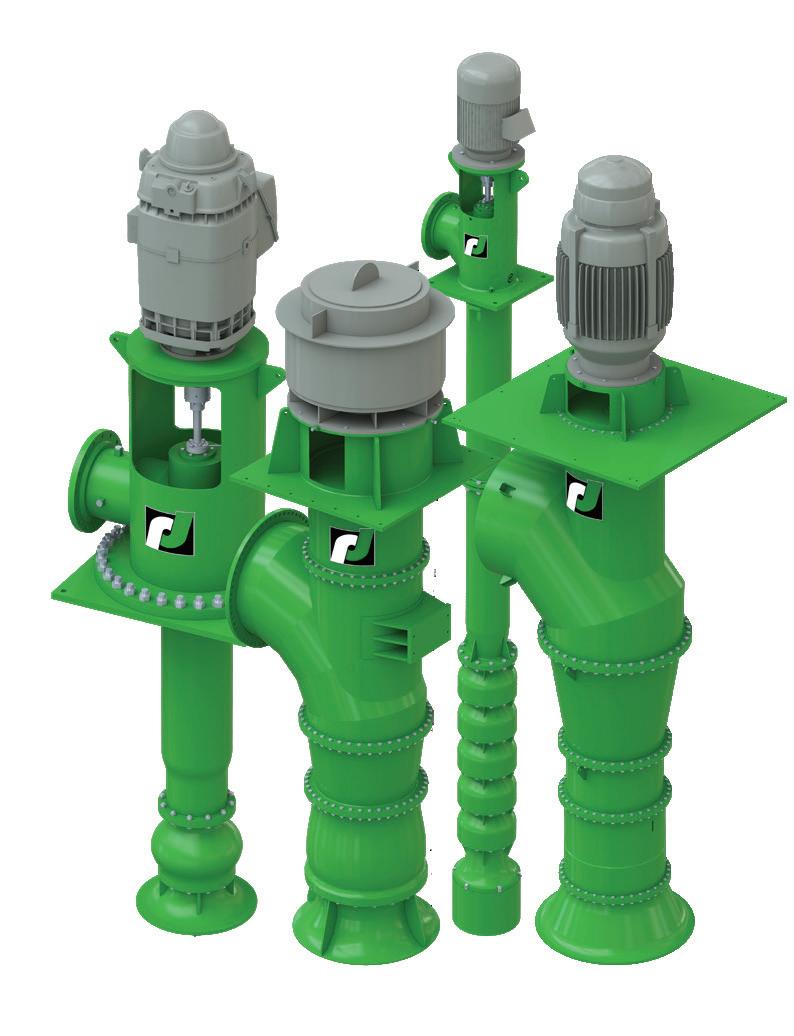
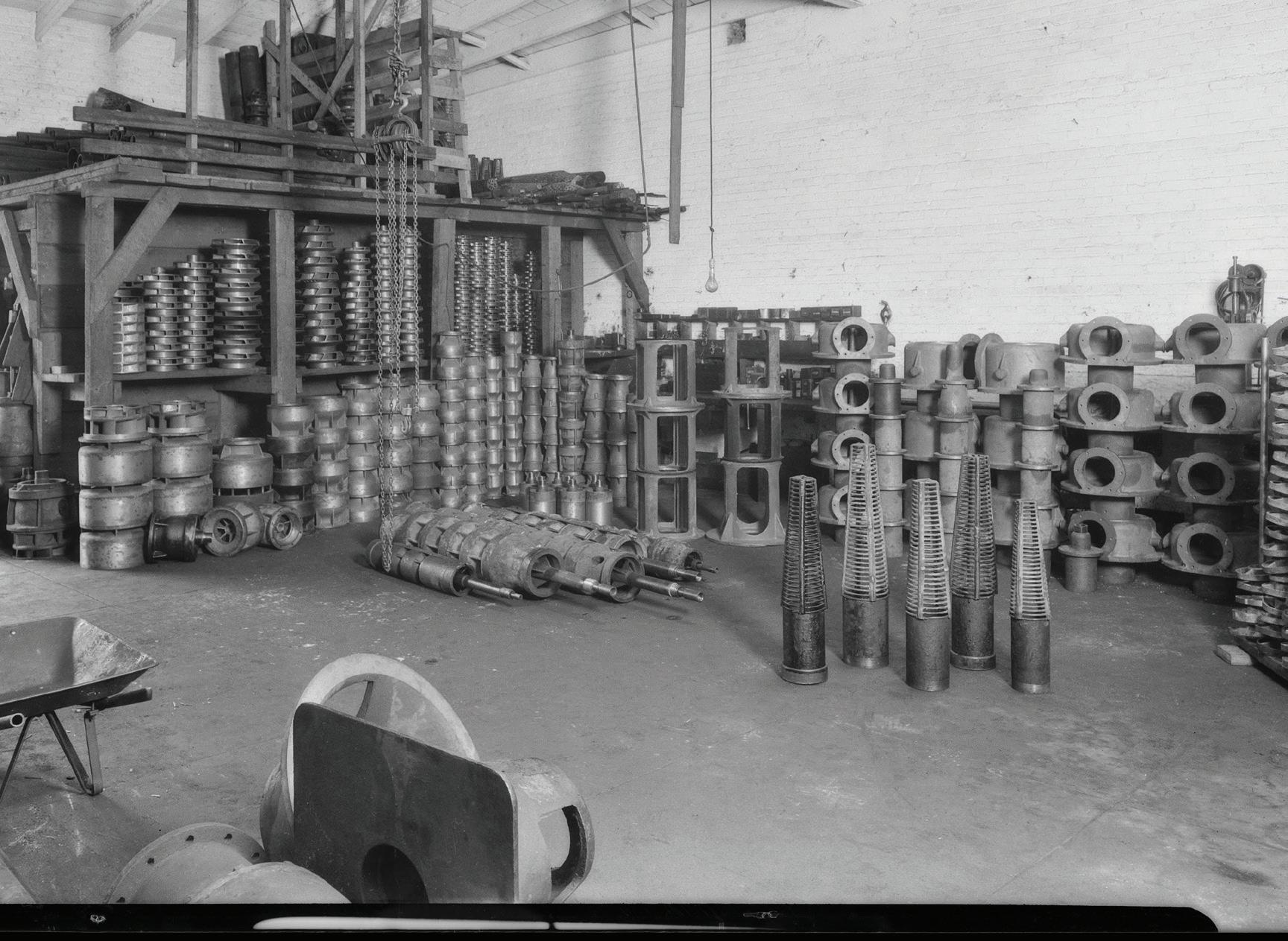
Johnston Pump was founded on the promise of delivering reliable vertical pumps and attentive service. Now, more than 100 years later, our name is synonymous with quality, performance, and dependability.
Engineered for durability and backed by expert support, our pumps are customized to meet the specific demands of your water system, so you get the features and performance you need to stay running.
When it comes to quality, there’s one pump that municipalities have asked for by name for more than a century: Johnston Pump.
Learn why Johnston Pump is your trusted partner go.sulzer.com/Johnston-still-trusted
Rocky Mountain Section of the American Water Works Association
Water management across Colorado, New Mexico and Wyoming has never been more complex. As our three states face evolving regulatory landscapes and resource pressures, the Rocky Mountain Section of the American Water Works Association (RMSAWWA) must evolve alongside the professionals we serve. To remain your primary resource, we are taking a strategic look at our programs, governance and member benefits to meet modern on-theground challenges.
Just as a successful utility tracks its infrastructure and service delivery, the section evaluated our organizational assets, including our committees, conferences, training programs, communications, volunteer engagement and regional presence. This assessment allowed us to pinpoint where we can improve and better align our budget and volunteer hours. By looking inward, we guide our resources to provide high value to every member in our region.
As we chart our course for the Rocky Mountain region, we look to our parent organization and align our vision with the national AWWA’s 2030 Strategic Plan. AWWA built its foundation on protecting public health, strengthening public trust and inspiring innovation. By adopting these principles, we connect our regional efforts with a proven national model.
This alignment focuses our work on key areas: member experience, organizational stewardship, knowledge creation and water policy leadership. Using AWWA’s
Using AWWA’s framework to shape our objectives helps us deliver locally relevant solutions, enhance professional development and navigate an increasingly complex water industry.
framework to shape our objectives helps us deliver locally relevant solutions, enhance professional development and navigate an increasingly complex water industry.
Recent surveys and member feedback revealed pressing issues for our region's water professionals: an aging and declining workforce, training gaps and evolving leadership challenges. While our foundation remains strong, bolstered by high-quality events, valuable networking and a dedicated volunteer base, we must actively address these vulnerabilities to secure the future of our industry.
To gain an objective view of these realities and properly reflect our membership's needs, we partnered with an external facilitator to review recent AWWA data alongside targeted interviews with our board and volunteer leaders. Armed with this clear analysis, our strategic planning committee and staff leadership convened to establish priority areas of focus. This datadriven approach shapes a strategic plan that is a responsive, actionable roadmap designed to directly tackle these urgent challenges and serve you better.
A strategic plan was developed around three goals that will define our priorities
through 2030. These objectives provide the framework for our growth and support of the regional water community.
The first pillar of our 2030 strategy focuses on Organizational Alignment. We must align our governance, programs and resources to serve you effectively and foster an engaged water community. By considering our governance framework, we are prioritizing accountability, effective decision-making and deep member engagement. This means routinely evaluating our activities to check that they reflect our shared mission and anticipate your needs. We are dedicated to strengthening our regional presence, striving to help every member across Colorado, New Mexico and Wyoming feel connected and supported. Our goal is to build an operational structure that allows our membership to thrive today and well into the future.
Our second strategic priority is Knowledge Creation and Exchange. We seek to elevate the water industry through inclusive, accessible and relevant knowledge exchange. To achieve this, we are developing a cohesive section
education business plan designed to expand training options and integrate innovative technologies. We aim to be the preferred training provider for our members, offering programs that meet your evolving professional needs. By establishing a robust structure to coordinate educational efforts, we aim to preserve and seamlessly transfer institutional knowledge to the next generation. This goal looks to enhance training quality and aims to provide the resources and opportunities required for continuous professional growth and sustained success in our rapidly changing sector.
Water professionals in Colorado, New Mexico and Wyoming face unprecedented challenges from persistent scarcity and a complex regulatory landscape. RMSAWWA is uniquely positioned to lead because our members possess the technical knowledge and on-the-ground experience that decision makers require. Hence, the third core
focus is Water Policy Leadership. We are committed to translating this knowledge into a powerful, unified voice for our region’s water industry.
Alongside the Colorado Water Utility Council, we are forming a policy task force to establish a clear legislative agenda based on credible science. Through targeted outreach to elected officials and a new public awareness campaign, we will champion sustainable water solutions and build public trust. By engaging directly in the policy process, we protect our communities and the vital resources they depend on. While we are launching this effort in Colorado, we will scale the initiative to align with and support ongoing policy activities across Wyoming and New Mexico.
As we look towards 2030, this strategic plan represents a promise to you. Our goal is to serve our membership with excellence, providing the tools and advocacy you need
to thrive. However, this vision requires your participation to succeed.
We welcome your involvement in ways that fit your interests and schedule, so please get involved in any capacity that works for you. If you are looking for a place to start, we have a specific need for volunteers in three key areas:
• Policy task force – Join our new task force to shape the legislative agenda for our region.
• Education business plan – Lend experience to our education committees to help refine our training curriculum.
• Volunteer engagement – View upcoming regional events and committee activities on our website.
Together, we can build a robust workforce and support a sustainable water future for our communities. We encourage you to step forward, share your voice and help turn this vision into our everyday reality. We are committed to supporting our members now and into the next decade. Connect with us at rmsawwa.org or chair@rmsawwa.org

Align governance, programs, and resources to foster an engaged water community and deliver value to our members.
Design and advance a streamlined governance framework to support accountability, effective decision making, strategic priorities, and member engagement.
Strengthen the Section’s regional presence by deepening engagement across our geographic boundary and fostering a connected water community.
Routinely evaluate programs and activities to reflect the Section’s mission and priorities, anticipate member needs, and advance a shared long-term vision. Strategically prioritize where to invest financial, staff, and volunteer resources for high-impact initiatives.
Elevate the water industry through inclusive, accessible, and relevant knowledge exchange that powers the water workforce.
Develop and deliver a cohesive Section Education Business Plan.
Establish a structure for coordinating and executing the Education Business Plan.




Erika Donaghy, Senior Grants Professional, Carollo Engineers
For more than 50 years, the Clean Water Act has served as the foundation of water quality protection in the United States, driving improvements to wastewater treatment, stormwater management and environmental restoration. But as water infrastructure ages, regulations evolve, and communities face new challenges from population growth and climate impacts, the cost of maintaining compliance and protecting waterways continues to rise. In fact, the 2025 Report Card for America’s Infrastructure estimates that approximately $1.7 trillion will be needed by 2033 to modernize and improve the nation's aging water, wastewater and stormwater infrastructure. For many communities, funding these critical projects can feel out of reach.
This is where the Clean Water State Revolving Fund (CWSRF) plays an important role. The CWSRF program was established in 1987 through amendments to the Clean Water Act to provide low-interest financing to help communities invest in wastewater, stormwater and other water quality improvement projects. Since its creation, CWSRF has provided $181.4 billion through 51,000 low-cost loans across the country.
Securing a CWSRF loan could be the answer for funding your next capital project, but how do you access these funds? Each state administers its own CWSRF program, resulting in significant variation in available funding, application procedures, loan terms and program priorities across the country. One requirement is the same across all states: The entity that manages the state’s program must publish an annual Intended Use Plan (IUP) that describes the way they intend to use the funds. The state’s IUP lays out the following details for the upcoming
The CWSRF program was established in 1987 through amendments to the Clean Water Act to provide low-interest financing to help communities invest in wastewater, stormwater and other water quality improvement projects. Since its creation, CWSRF has provided $181.4 billion through 51,000 low-cost loans across the country.
fiscal year: funding priorities, a ranked list of projects to be funded in that year, funding distribution and program management details.
To help navigate differences across each state’s IUP, the following sections highlight key aspects of the CWSRF programs in the Rocky Mountain region, including important considerations and when to apply within each state.
In Wyoming, the CWSRF is managed by the Wyoming Department of Environmental Quality (DEQ). Wyoming prioritizes sanitary sewer treatment and collection, stormwater control, landfill water pollution control and other water pollution control projects. To be eligible for funding in the following fiscal year, applicants must complete the state’s needs survey, which is typically open from December 1 through mid-January (Wyoming’s fiscal year begins July 1 and ends June 30). The program has two separate surveys and project ranking criteria: one for nonpoint source projects and the other for treatment works projects. To view these surveys and scoring criteria, email the program contacts to request the current IUP.
Wyoming’s SRF loans are generally at a 2.5% interest rate for a loan term of up to 20 years. In specific cases, loans may be given at a lower interest rate and/or include principal forgiveness. The DEQ suggests beginning the loan process at least six to 12 months before bidding on the project. The State Loan and Investment Board has final approval authority and considers loans at its regular meetings held every two months.
For more information, see the program website: deq.wyoming.gov/water-quality/ water-wastewater/state-revolving-loan-fund
In Colorado, the CWSRF is referred to as the Water Pollution Control Revolving Fund (WPCRF). The WPCRF is jointly managed by the Colorado Department of Public Health and Environment (CDPHE), the Department of Local Affairs (DOLA) and the Colorado Water Resources and Power Development Authority (CWRPDA). The program prioritizes projects that improve water quality by addressing water quality impairments, correcting a source of pollution from an individual sewage system or implementing an approved total maximum daily load. In Colorado, projects serving communities with a population
of 10,000 people or less that meet certain financial criteria are prioritized and may receive reduced interest rates and/or other benefits. The primary factors considered to determine whether a community qualifies as disadvantaged include the median household income, median home value and the 24-month unemployment rate.
The first step towards securing a WPCRF loan in Colorado is to complete the annual eligibility survey, which is open between May 1 and June 30 each year. From there, applicants must complete a pre-qualification form and a project needs assessment before beginning the loan application. Colorado has seven loan deadlines throughout the year, each with specific eligibility requirements. Contact the program staff to determine which deadline your project is eligible for. Interest rates range from as low as 1.5% up to 3.5%, and loan terms of up to 30 years are available (the lowest interest rates are available to disadvantaged communities).
For more information, see the program website: cdphe.colorado.gov/state-revolvingfund-information
New Mexico’s CWSRF is managed by the New Mexico Environment Department (NMED). The program prioritizes projects that make the greatest impact on protecting water quality or restoration.
The loan process begins with a short application, available on the program’s website. Applications are accepted yearround, and the list of fundable projects is updated on a quarterly basis.
Loan terms may be up to 30 years, with repayment beginning one year after the project is completed. New Mexico’s CWSRF loans are offered at interest rates of 2.375% or less.
For more information, see the program website: env.nm.gov/funding-opportunities/
As these programs are highly competitive, here are a few key things to remember when you begin the application process to increase your chances of success.
• Cash flow can make or break a schedule. State Revolving Fund programs generally work on a reimbursement basis and have very specific requirements for reimbursement requests. Preparing for this in advance can prevent delays in your reimbursements.
• Federal requirements can affect costs and procurement. Even though these are state-managed programs, they receive federal funding. Federal procurement and sourcing requirements often apply, which can impact costs and timelines.
• Competitiveness depends on strict alignment with scoring criteria. Your state’s CWSRF IUP should include the


specific scoring criteria that your project will be evaluated against. Review this in advance to ensure your project is competitive by aligning closely with these criteria.
• Timing is critical. Contact your state’s CWSRF program staff to discuss the timing of your project in comparison with the deadlines and review processes of your state’s CWSRF. Understanding these timelines in advance can help prevent project delays when progress must await a funding decision. This funding can provide a low-cost avenue for financing your critical wastewater and stormwater projects. Meeting with program staff to ensure you clearly understand all requirements and preparing for this process early in your project timeline can help increase the likelihood of a favorable funding decision for your project.

Erika Donaghy has over a decade of experience securing funding for a wide range of endeavors, from supporting Water for People’s work across the globe to helping secure funding for water and wastewater infrastructure projects.
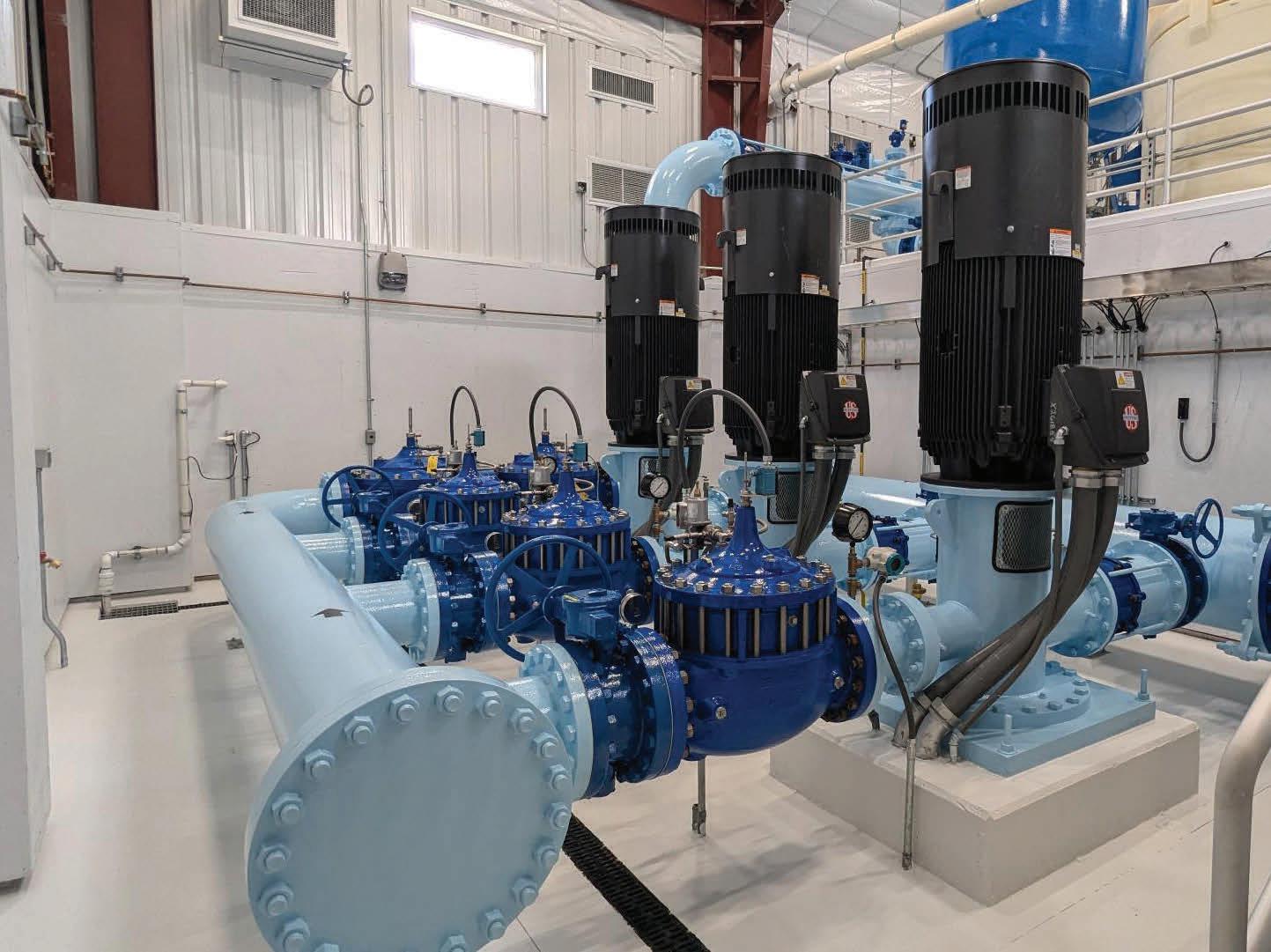

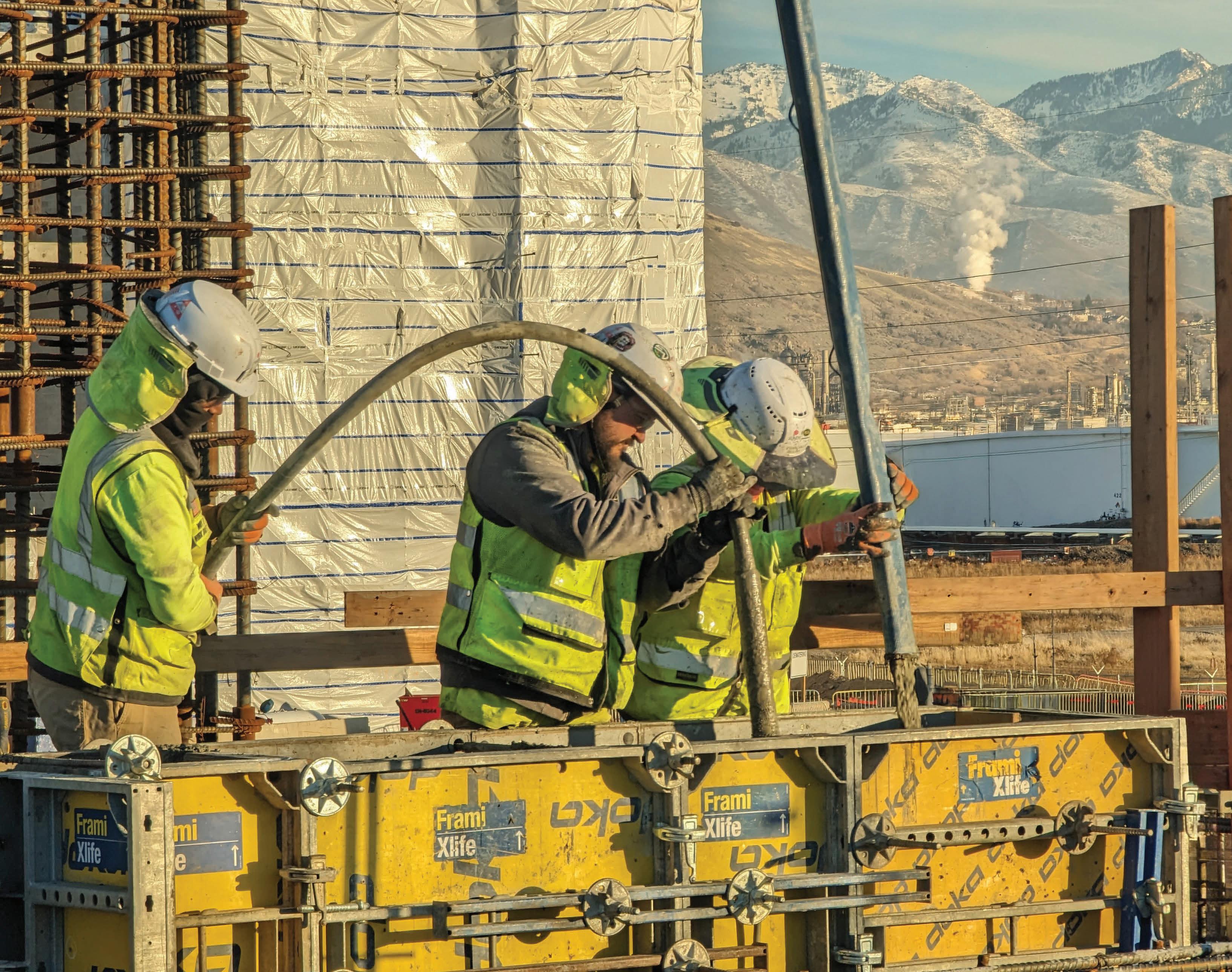

Successful projects deliver lasting impact. At PCL Construction, we don’t just build resilient water infrastructure for the future; we build trusted partnerships that evolve with our clients’ needs and provide reliable support beyond project completion.

Kacie Allard, Deputy Director of Business Solutions, South Platte Renew

It’s 11 pm on April 17. My bags are half-packed, my alarm is set for an early morning flight back to Denver, and I’m hoping for a few hours of sleep. But sleep doesn’t come easily. The last three days, 550 miles across the Navajo Nation, stretching through Arizona and New Mexico, keep replaying in my mind.
We were there filming the Rocky Mountain Water Environment Association documentary, “Value of Water” with Denver Film Company. What I expected was a demanding work trip. What I experienced was something far more lasting:
An encounter that will define my career and shape how I understand water, community and responsibility.
From the moment we arrived in Albuquerque, the pace was relentless. Long hours on the road, more than 10 interviews and stories that refused to leave me once I heard them. It was exhausting, but more than that, it was deeply humbling.
At the center of it all was Crystal Tulley-Cordova, principal hydrologist for the Navajo Nation’s Department of Water Resources, our organizer and guide, and a remarkably generous host. She thoughtfully
curated every moment, connecting us with tribal leadership, water professionals and utility workers, including a visit to farmland run by the Navajo Agricultural Products Industry (NAPI). Through her, we were invited not just to observe, but to listen.
The Navajo Nation is the largest Indigenous Nation in the United States, providing government services to 425,000 tribal members. It is a reservation roughly the size of West Virginia that spans New Mexico, Arizona and Utah. But its scale is not what defines it.
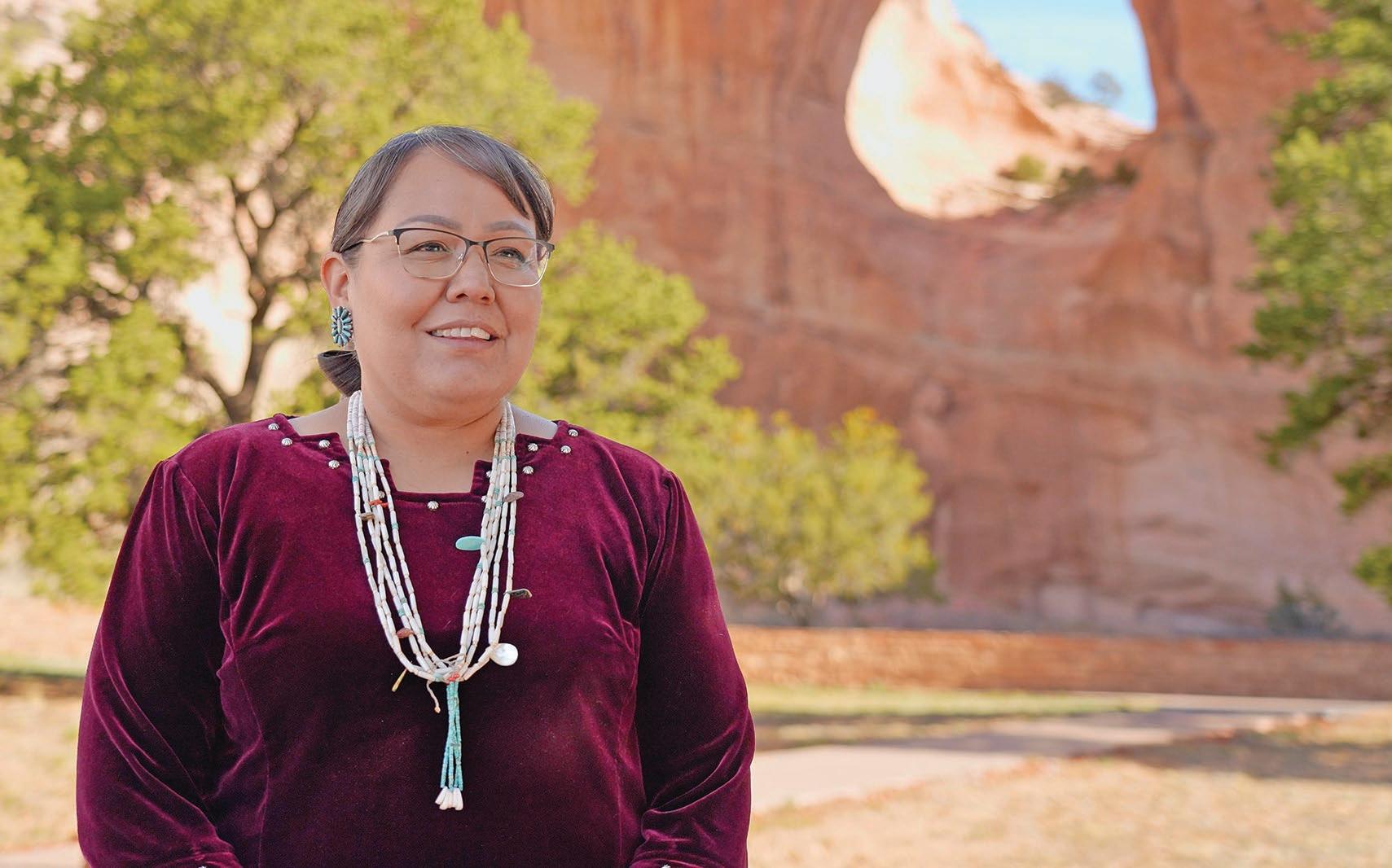
What defines the Navajo Nation is connection.
In Western culture, introductions often begin with what we do, our job titles and our organizations. In Navajo culture, identity is rooted in something deeper. People introduce themselves through their four clans, grounding their identities in ancestry, community and place. It reflects a worldview in which land, water, animals and people are not separate, but interconnected.
So, when Navajo people speak about water, they do so as something inseparable from life itself.
“Tó éí iiná áté” – Water is Life.
Crystalyne Curley, speaker for the 25th Navajo Nation Council, described it in a way that stayed with me: Water is our first home in the womb. Our bodies are made mostly of it. It sustains not only individuals but entire communities. Water is not a resource. It is a relative. And that is what makes the water reality so difficult to grasp.
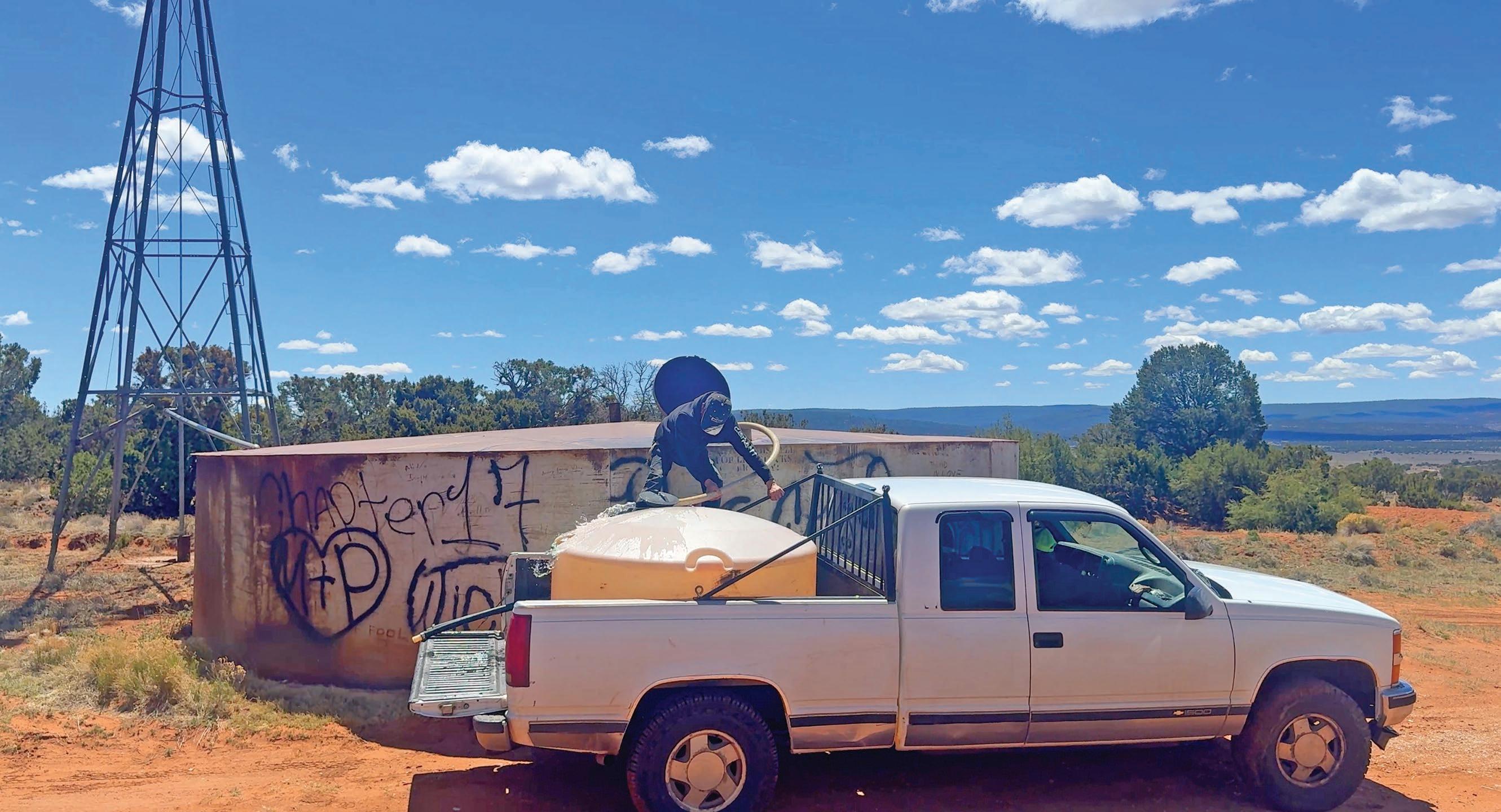
Speaker Curley also shared that one in three households on the Navajo Nation lacks access to running water. It’s a number that feels almost impossible. More than 30% of families cannot turn on a tap, cannot flush a toilet, cannot rely on water being there when they need it. Instead, many drive, sometimes up to 100 miles, just to fill containers with water
for drinking, cooking, cleaning, bathing and livestock. Water becomes something to ration, to plan around, to worry about.
The cost is not just financial, though it can reach hundreds of dollars a month when factoring in fuel, vehicle wear and time. The cost is also measured in hours lost, strain carried, and the quiet weight of uncertainty week after week. This reality shaped every conversation we had.
Jason John, director of the Navajo Nation’s Department of Water Resources,
spoke about a project decades in the making, delivering water from Albuquerque to To’hajiilee, a Navajo community west of the city. Initiated in 2005, it is only now nearing completion. Imagine: 20 years of persistence, advocacy and belief in something that many communities elsewhere never have to think about. As he spoke, the emotion was unmistakable. It was not abstract or distant, but immediate and personal. The kind that comes from carrying both the burden of responsibility and the hope of what will finally be possible.
That same emotion surfaced again and again.
Rex Kontz, retired Navajo Tribal Utility Authority (NTUA) deputy general manager and current advisor, described what it feels like to bring water to a home for the first time. He spoke about families turning on a faucet and the moments that follow. The pause. Then disbelief. Then joy. Tears. Laughter. Relief.
Generations of hauling water were replaced, in an instant, by something as simple and as profound as a steady stream from a tap.
It’s easy to think of running water as a convenience. But here, it is stability, opportunity and dignity.
It is also health.
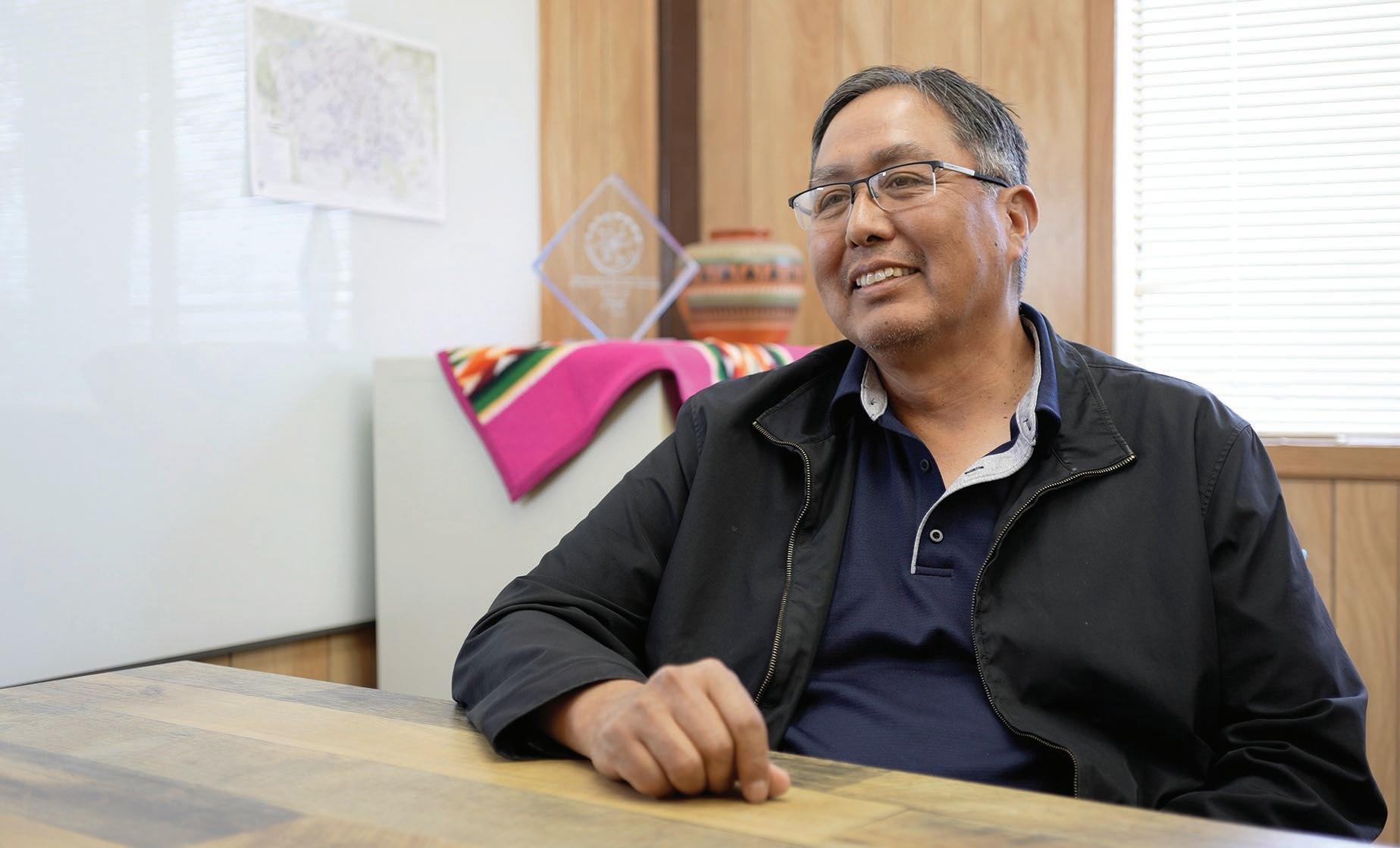
Bidtah Becker, chief legal counsel at the Office of the President and Vice President, reflected on how the COVID-19 pandemic brought national attention to the Navajo Nation’s water challenges. Infection and mortality rates were among the highest in the country and were later linked, in part, to the lack of access to clean, reliable water.
Something as basic as handwashing and safe sanitation practices, among the most fundamental public health protections, were not always possible.
At the core of these challenges is a complex reality: Water rights that were never fully secured, infrastructure that is difficult and costly to build across vast and rural lands and funding that has not kept pace with the need.
President Dr. Buu Nygren spoke candidly about this. Water, he emphasized, is a priority, not just as a resource, but as a right. The Navajo Nation was excluded from early negotiations on the Colorado River Compact. While progress has been made in Utah and New Mexico, significant challenges remain in securing water access in Arizona. Negotiations are ongoing, and so is the
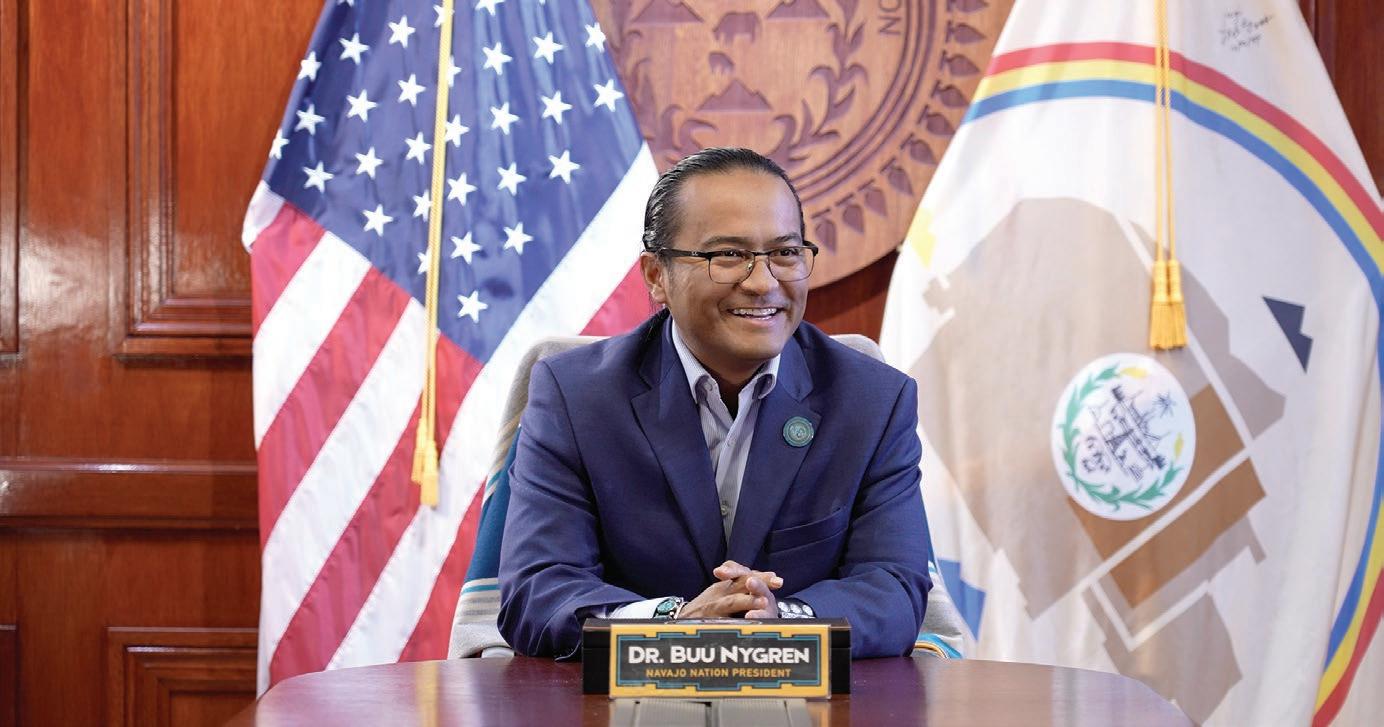
At the core of these challenges is a complex reality: Water rights that were never fully secured, infrastructure that is difficult and costly to build across vast and rural lands and funding that has not kept pace with the need.
willingness to fight for what is necessary because this work is not abstract. It is about whether families have water in their homes and whether communities can thrive.
The Navajo water professionals we met are public servants in the truest sense. Like water professionals across the country, they are committed to protecting public health and delivering essential services. But here, their work carries an added urgency because, for so many, access to water is still not guaranteed. Their work is not just about infrastructure. It is about life.
As President Nygren said, the health and future of the Navajo people depend on it.
This is one story, one reality, that has been captured through the RMWEA documentary “Value of Water,” a project focused on telling the honest, human-centered stories of
those who protect public health, steward the environment and sustain our shared water resources.
We were welcomed into these stories with trust and generosity. That trust matters because once you’ve heard these voices –Crystal Tulley-Cordova, Crystalyne Curley, Jason John, Rex Kontz, Bidtah Becker, President Nygren – you understand that this is not just a story about water: It is a story about people.
And once you understand that water is life, the question is no longer whether it matters. It’s what we choose to do next.
Stories like this are only possible through partnership. RMWEA extends sincere thanks to our Champion Sponsors – Denver Film Company, Garney Construction, Metro Water Recovery, PCL, and RMSAWWA – for supporting efforts to elevate the value of
water and the voices of communities like the Navajo Nation. Those interested in supporting this work can learn more by emailing valueofwater@rmwea.org
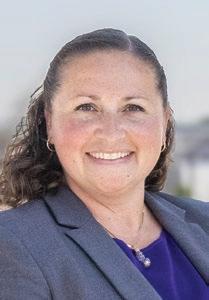
Kacie Allard is the Deputy Director of Business Solutions for South Platte Renew, Colorado's third-largest wastewater treatment plant, and RMWEA’s current Vice President. She has 19 years of experience in municipal government, 12 of which have been in the water sector. Kacie is an expert communicator, change leader, novice gardener and devoted wife and mother.





Dr. Michael Welsh, Author
Public works agencies rarely have time to reflect on their accomplishments and lessons learned, as they pursue their operations, maintenance, and plans for future growth on a daily basis. Yet that retrospective is what the City of Greeley Water Utilities Department, with its century and one-half of service to the community, decided to engage with the research and publication of Confluence: The Story of Greeley Water (2020).
Harold Evans, chairman of the Greeley Water and Sewer Board for the past two decades, believed those whom the utility served would benefit from a comprehensive analysis of the origins and development of an organization that began before Colorado statehood, and one that has grown over time by addressing the cycles of abundance and scarcity of water that define the headwaters state.
Joining the team of researchers and writers in 2015 were Gregory J. Hobbs, Jr., a retired associate justice of the Colorado State Supreme Court, often considered the most knowledgeable member of the high court in matters of water law and policy, and Michael Welsh, a professor of history at the University of Northern Colorado, whose decades of teaching and scholarship included studies of the US Army Corps of Engineers in the Southwest and on the West Coast.
This team explored the range of issues and tasks of a municipal water system that began in the summer of 1870 with a single irrigation ditch on the Cache la Poudre River that conveyed water to the fledgling Union Colony (later to become the town of Greeley). As the population increased and the economy evolved, the Greeley water utility added a community artesian
From the leadership of water pioneer W.D. Farr to today, with Harold Evans, who has a background in civil engineering, the board possessed expertise and foresight that contributed to Greeley’s good fortune with its most precious resource.
well (1884); a mountain water treatment facility above Fort Collins at Bellevue (1907); and a storage facility on the North Fork of the Poudre River known as Milton Seaman Reservoir (1945); the latter two remaining operational over a century later.
Residents of the colony, and their policies and regulations, also played an important role in the development of statewide and interstate water law. One example would be the enshrining in Colorado’s 1876 constitution of the “prior-appropriation doctrine.” In addition, a Greeley native, Delph Carpenter, who had been employed as a youth inspecting the community’s ditch system to guard against violation of its rules, became an authority on the collaborative features of western water law. Carpenter would be tasked by US Commerce Secretary Herbert Clark Hoover with a key role in drafting the Colorado River Compact.
That agreement would permit a group of Greeley and Colorado water professionals, a decade later, to approach the US Bureau of Reclamation to confront the severity of the Great Depression and the Dust Bowl by means of the Colorado-Big Thompson Project, a multipurpose facility that secured the future for farmers and ranchers of the South Platte River basin, and later the urban growth of the Front Range.
The Greeley Water & Sewer Board, originating in 1958 from the idea that local decisions in water belong with the people, and guided by those who understood and
appreciated what water meant to Greeley, established the nonpartisan principles that inform the acquisition and development of water facilities. From the leadership of water pioneer W.D. Farr to today, with Harold Evans, who has a background in civil engineering, the board possessed expertise and foresight that contributed to Greeley’s good fortune with its most precious resource.
What began with that first ditch has now become a network of multiple reservoirs in four river basins and prize-winning water pollution-control facilities. The City of Greeley also has taken the lead in water efficiency and quality, working with state and federal partners to replace aging lead pipes and to institute an advanced metering system and residential and commercial water budgets that keep utility customers informed of their use patterns and the value of conservation in times of drought.
Once the first volume on the story of Greeley Water appeared, the water utility continued to provide domestic water and wastewater treatment to its network of communities. The city also pursued regional cooperation with the municipalities of Fort Collins, Loveland, Windsor, and Evans. Greeley maintained its partnership with Northern Water, in particular its Chimney Hollow Reservoir, which will store additional supplies for a dozen water organizations that own water rights in the Colorado Big Thompson system that are not reliably accessible in times of need.
From that recognition in 2020 that the story of Greeley Water had not ended came a new edition in the summer of 2026, written to incorporate the purchase of water rights to the vast underground aquifer in far northern Colorado known as the Terry Ranch Project. Other dimensions of the utility’s operations addressed in the second edition of Confluence are the expansion of the non-potable water system for use in public and private spaces; the application of sophisticated information technology; and the advanced-planning functions of the Integrated Water Resources Program, which identifies scenarios and options for a wide variety of challenges and opportunities in water-resource management decades into the future.
It is our hope that this new look at an old story helps residents and businesses of Greeley and surrounding communities realize how important their water supplies are to their security and prosperity. In 1941, in the midst of a world at war,
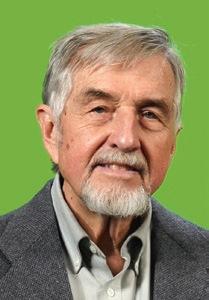
and as the decade of the Dust Bowl neared an end, Greeley’s leaders embraced a simple but compelling idea: “To plan for others as others have planned for you.” Wise words for their time, and wise words for ours now.
Michael Welsh is the co-author of Confluence: The Story of Greeley Water (2020), along with Gregory J. Hobbs, Jr., formerly an Associate Justice of the Colorado State Supreme Court. He received his doctorate in history from the University of New Mexico and taught for 35 years at the University of Northern Colorado. He is the author of several books on America’s national parks and has written historical studies of the US Army Corps of Engineers for their Albuquerque and San Francisco districts, as well as their South Pacific Division. He served as the lead author on the second edition of Confluence, to be released in the summer of 2026.









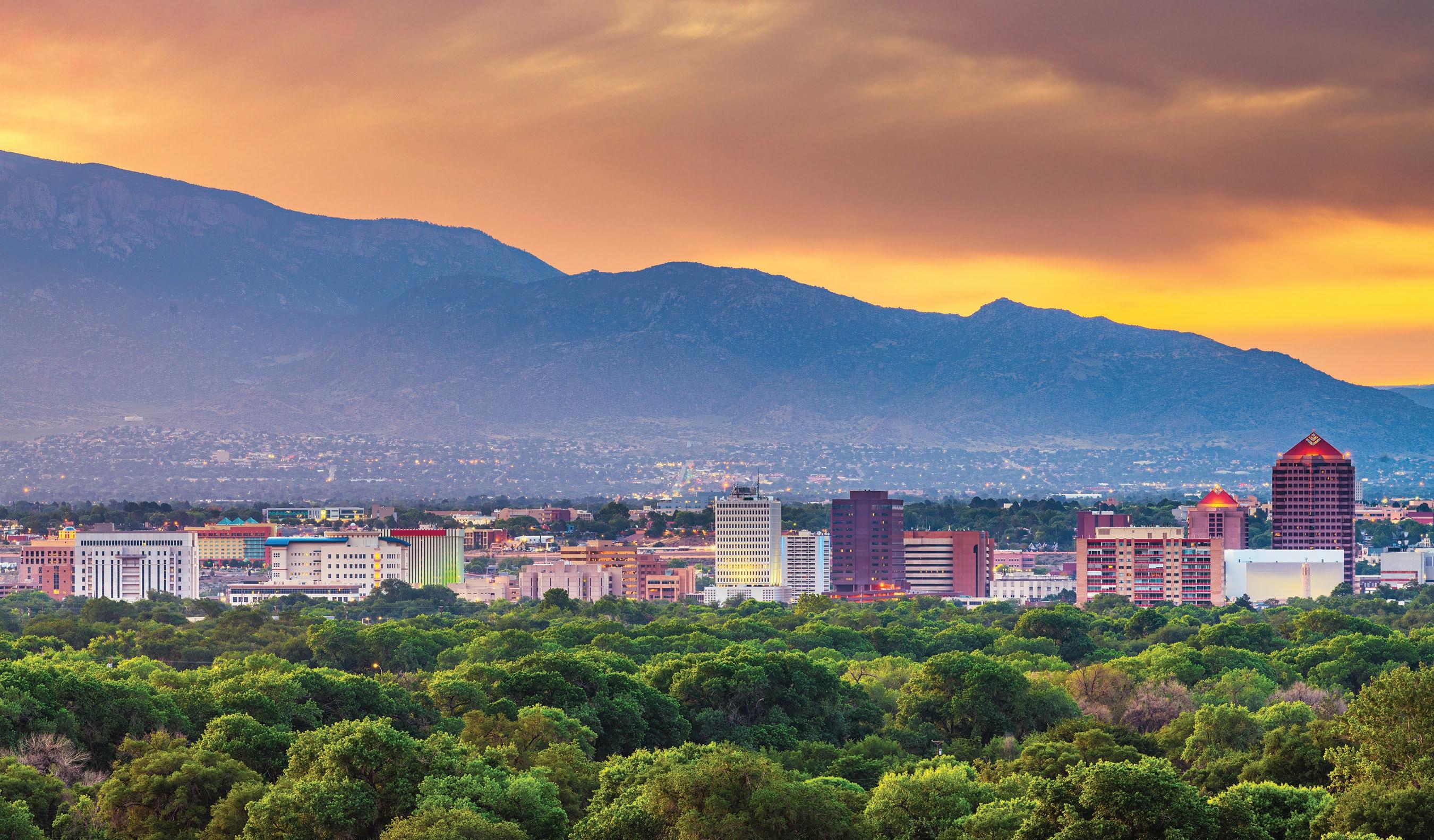
The New Mexico Water Summit (NMWS) took place on Wednesday and Thursday, April 8-9, 2026, at Hotel Albuquerque, which did not disappoint with its hospitality and food. Each day began with an opening session, followed by technical presentations, networking opportunities, and exhibitor visits. A social event was held on Wednesday and provided a great time to catch up with colleagues and meet new people in the local water industry.
RMSAWWA’s Section Chair-elect Josh Shackleford and RMWEA’s President Kristin Johansen began each day with opening remarks. Keynote speakers for each opening session were Jason Herman from the New Mexico Environment Department Groundwater Quality Bureau
and Elizabeth Anderson, the current New Mexico State Engineer.
The NMWS featured a total of 43 technical sessions with categories covering water and wastewater treatment, source water supply and protection, water distribution, reuse water, wastewater collection systems, management, and operations. Several takeaways include the following:
• Water and wastewater treatment had a strong showing at the summit with topics ranging from arsenic removal to filter pilot studies to membrane filtration for reuse.
• Discussions on management and workforce development have been and continue to be great topics to explore and share ideas.
The NMWS committee welcomed more than 260 participants, which proved to
be right in line with typical attendance numbers. The numbers have proven that the NMWS continues to be a triedand-true event for water professionals in New Mexico. 32 exhibitors and 19 sponsoring organizations joined us for the summit. This was a banner year with the number of exhibitors and sponsors that participated, and the committee could not be more grateful. The platinum sponsors for 2026 included Azuria, Carollo, Crom/MW, D&R Tank, Jacobs, and Stantec. The NMWS committee and RMSAWWA sincerely thank all the sponsors of the summit.
A big thank you goes out to all the planning committee volunteers for providing a successful event. Join us next year in 2027 at the next NMWS.

Biochemical Oxygen Demand
Total Suspended Solids
Ammonia-Nitrogen
Nitrate and Nitrite Nitrogen
Kjeldahl-Nitrogen (TKN)
E-Coli, Total Coliform
Metals by ICP-MS and ICP-OES
SOC/VOC
Biosolids-503 Regs/Fecal Coliform
NPDES Requirements
DMRQA Study Participant

Organic Contaminants (SOC/VOC)
DBP (THM/HAA, TOC/ALK)
Inorganic Contaminants (Metals)
Nitrate and Nitrite Nitrogen
Copper and Lead
Total Coliform
Fluoride
Metals by ICP-MS and ICP-OES
Compliance Auto-Ship Bottle Program
VISITONEOFOURCONVENIENTLOCATIONS FOR MODERNDAYTECHNOLOGYAND OLD-FASHIONED SERVICE!
Commerce Cit y Laboratory 10411 Heinz Way Commerce City, CO 80640
Lakewood S ervice Cent er
610 Garrison St. Unit E Lakewood, CO 80215
Contact us
303.659.2313 www.coloradolab.com info@coloradolab.com
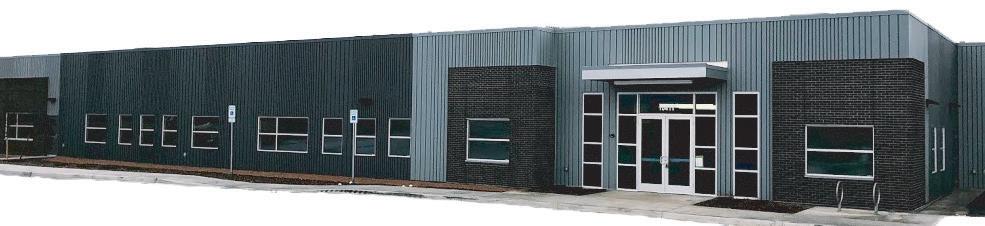
Sanne Godfrey, Marketing and Business Development Coordinator, Romtec Utilities
Public agencies and federal facilities are facing a common challenge: how to modernize aging or inadequate wastewater infrastructure while balancing cost, constructability, regulatory oversight and long-term reliability. Military installations face an added level of complexity, where operational continuity, environmental protection and strict federal review processes shape every design decision.
These challenges were clear during the development of the new Helo Maintenance Facility at Francis E. Warren Air Force Base in Cheyenne, Wyoming. The project required a dependable sanitary lift station to serve a mission-critical Air Force facility, while navigating difficult site conditions and extensive review by the US Army Corps of Engineers (USACE).
Through collaboration between the civil engineer, contractors, equipment supplier and federal stakeholders, the team ultimately delivered a practical and cost-effective solution. The way the project came about offers valuable insights for utilities and engineers throughout the Rocky Mountain region.
The new Helo Maintenance Facility was designed to support helicopter operations, including hangar space, a repair facility and maintenance functions. Like many modern military projects, it required infrastructure upgrades that could integrate with existing systems while meeting current design and regulatory standards.
During a March 2023 groundbreaking ceremony, US Army Col. Mark Himes, commander of the USACE Omaha District, recognized the coordinated effort to build the facility. “We have a team here of engineers, contractors, designers and other personnel who are going to build a first-class facility,” Himes said. “Our chief engineer defines winning by safely constructing high-quality facilities on time and on budget, and that’s what we’re going to do here with this facility.” Construction on the facility was completed in late 2025.
Initial civil plans called for a deep gravity sewer routed long distances across the site. While technically feasible, this approach quickly became cost-prohibitive due to the need for deep trenching, constructability risks and long-term maintenance concerns.
Recognizing these issues, the project’s civil engineer began evaluating alternative approaches.
Separating the lift station and force main design from the broader civil plan allowed for a more focused evaluation of system hydraulics, maintenance considerations and constructability. This approach enabled a more flexible and iterative design process.
A key shift in the project came through value engineering of the wastewater conveyance system. Rather than relying on deep gravity infrastructure, the team began to explore a pumping solution that could better accommodate site conditions.
“The lift station and force main concept was something used on a nearby project, so it was a good fit for our project,” said Travis Jonson, project manager for contractor Mechanical Systems Inc. “Romtec Utilities was a vital part of the team in tailoring the system to the client’s needs and ensuring we had a workable system to install.”
Separating the lift station and force main design from the broader civil plan allowed for a more focused evaluation of system hydraulics, maintenance considerations and constructability. This approach enabled a more flexible and iterative design process.
From a constructability standpoint, the benefits were immediate:
• Elimination of extensive deep trenching.
• Reduced excavation risk in challenging soils.
• Faster installation timelines.
• Improved long-term maintenance access.
A pump system quickly proved to be the most economical and practical option, provided it could address federal concerns related to reliability and solids management.
Despite its advantages, the pumping approach presented its own challenges.
1. Long force main and elevation change: The system required a 7,500-foot downhill force main, creating conditions that
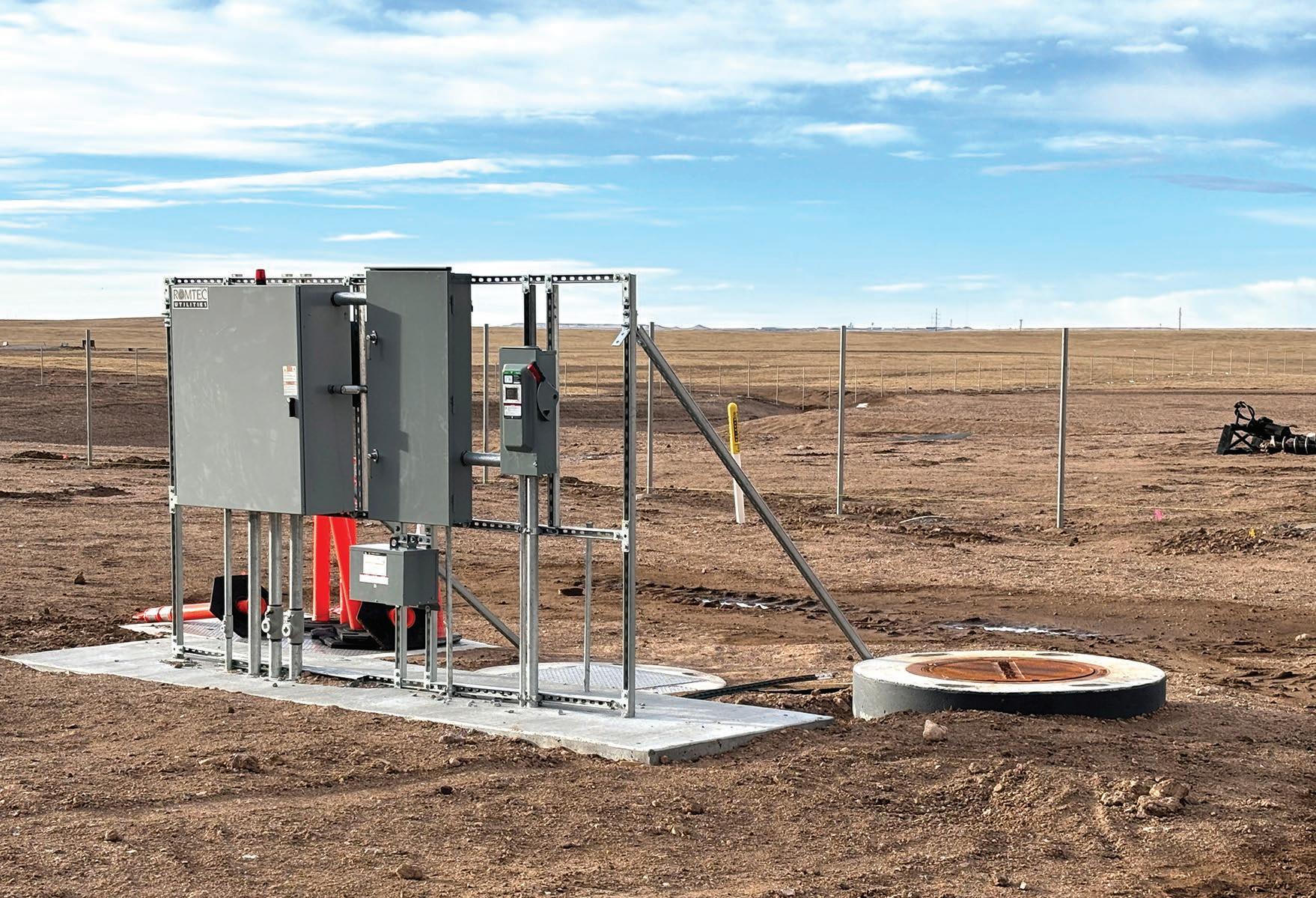
demanded careful hydraulic modeling. High velocities, potential settling and maintenance access were all concerns during the USACE review.
2. Federal review and oversight: Unlike municipal projects, all design decisions were subject to detailed USACE evaluation. Review comments drove multiple revisions, particularly around system reliability and long-term maintenance scenarios.
3. Solids management: Helicopter maintenance facilities generate variable wastewater flows and solids content. Direct pumping of raw sewage over long distances raised concerns about pump wear, blockages and lifecycle costs.
After several design iterations and close coordination between all stakeholders, the team arrived at a Septic Tank Effluent Pumping (STEP)-style lift station. This configuration addressed all USACE concerns while improving operational reliability.
A 1,500-gallon septic tank was incorporated upstream of the wet well to allow solids to settle before pumping. This approach:
• Reduces solids loading on pumps.
• Minimizes wear and clogging risks.
• Improves performance over long force mains.
• Provides buffering during intermittent use.
The lift station includes a four-foot-diameter precast wet well, approximately 14.6 feet deep, paired with an adjacent valve vault housing, plug valves, check valves with position indicators, an air-release valve and maintenance access features.
Precast construction allowed for faster installation, an important consideration on a secure military site with limited access windows.
Two, five-horsepower explosion-proof submersible pumps were selected to meet the required duty point of 52 gallons per minute at 67 feet of total dynamic head. A UL-listed control panel with pressure transducer sensing, float backup and alarm features provides reliable, straightforward operation without the need for custom programming.
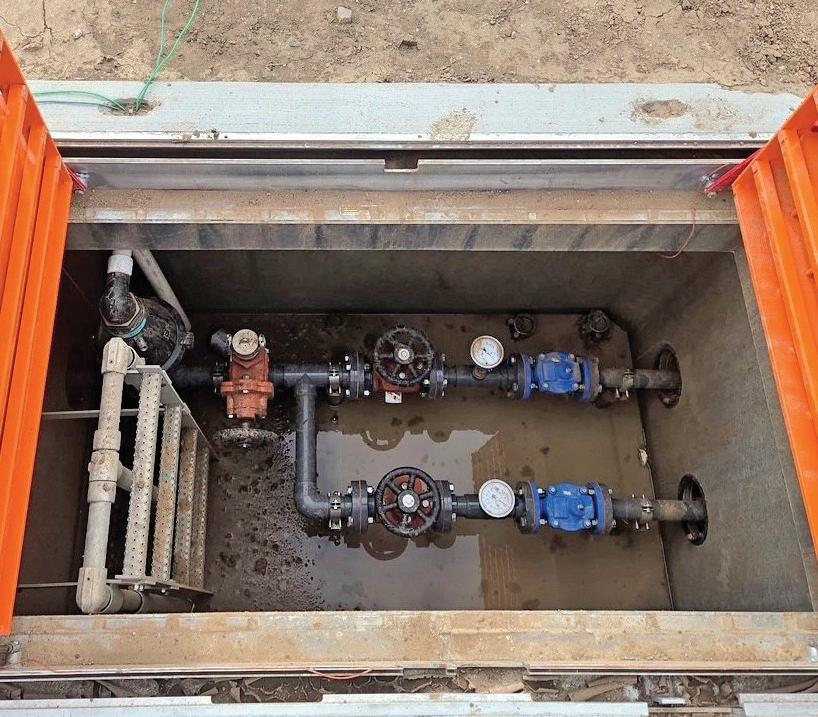
One of the project’s biggest successes was the level of coordination required between the engineer, supplier, contractor and federal reviewers.
“Early coordination allowed the team to adapt the system to both site conditions and federal requirements without overcomplicating the design,” said Gerard Webber, project manager for package pump station provider Romtec Utilities. “This was critical to keeping the project practical and buildable.”
This project highlights several takeaways relevant to public agencies across the Rocky Mountain region:
• Value-engineering early can significantly reduce cost and risk.
• STEP systems are effective tools for managing solids over long force mains.
• Prefabricated, packaged systems can improve constructability and schedule certainty.

• Lagoon & Digester Cleaning
• Transportation & Land Application
• Biosolids Management
• Mobile & Passive Dewatering www.denalicorp.com | (970) 456-3535
The lift station at Helo Maintenance Facility shows how thoughtful engineering and collaborative problem-solving can overcome site constraints, regulatory complexity and budget pressures.
• Iterative review with regulators leads to stronger final designs.
• Clear coordination across disciplines is essential for success.
The lift station at Helo Maintenance Facility shows how thoughtful engineering and collaborative problem-solving can overcome site constraints, regulatory complexity and budget pressures. By replacing deep gravity infrastructure with a modern, STEP-style pumping system, the project delivered a reliable, maintainable solution aligned with long-term operational needs.
As utilities and agencies throughout the Rocky Mountain region continue to modernize wastewater systems under increasingly complex conditions, this project provides a practical blueprint. It highlights the value of adaptable design approaches and reinforces the importance of coordination in delivering resilient infrastructure.
Sanne Godfrey is the marketing and business development coordinator for Romtec Utilities. Romtec Utilities is a national design-build firm based in Roseburg, Oregon, specializing in engineered, site-specific pumping systems for water, wastewater, stormwater, industrial applications, and booster stations.





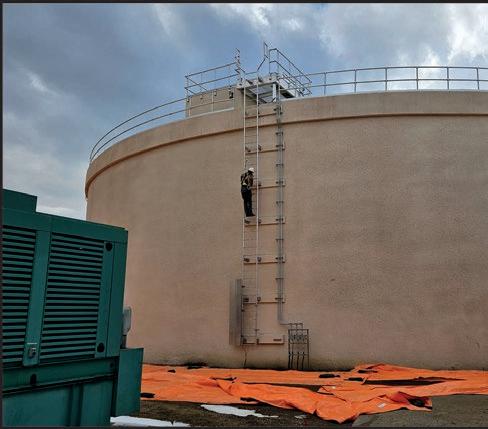


100%
COLLABORATIVE DELIVERY



At Haskell, we believe in breaking barriers and creating opportunities. By supporting and empowering women in the water construction industry, we are fostering a more inclusive and dynamic environment where everyone can thrive. Together, we are building a world where clean water is accessible to every person, everywhere.

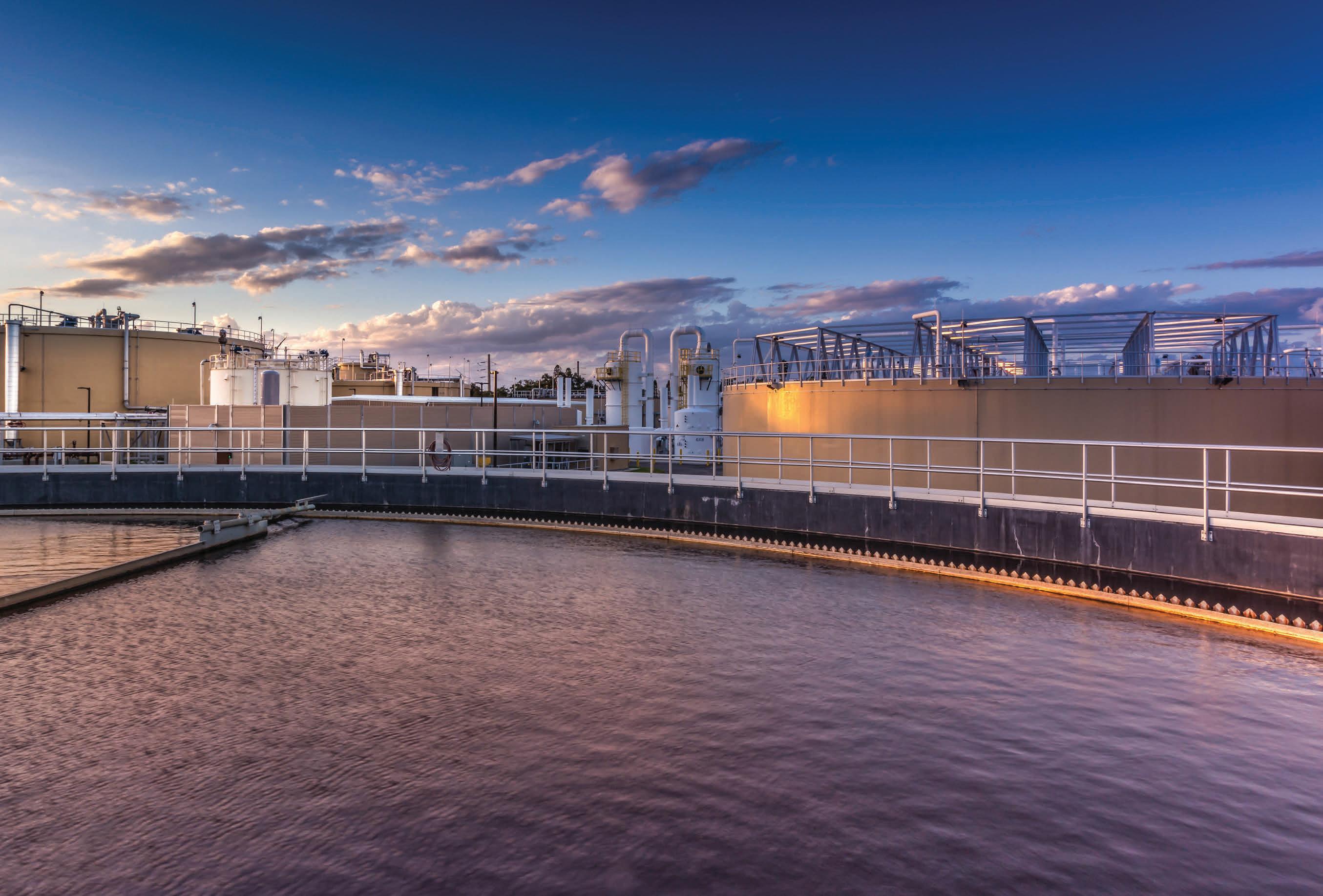
Scan to learn more about our commitment to you. We Create Things That Matter.
RMSAWWA Sustainable Workforce Committee
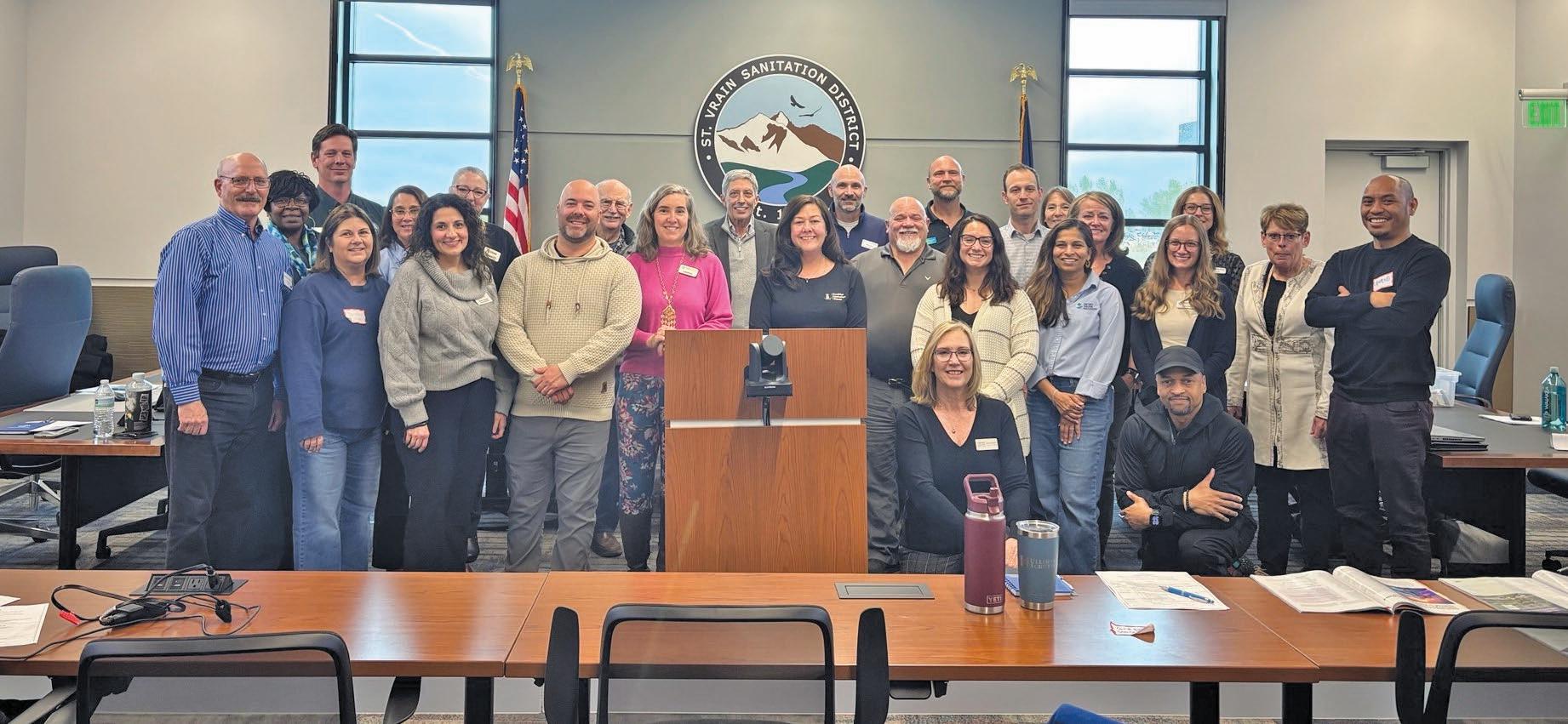
Did you know every time you turn on your tap or flush a toilet, a certified operator somewhere in your community is responsible for making sure that water is safe, clean and going exactly where it should? But here is the uncomfortable truth: the people doing that work are retiring quickly, and there aren’t enough new workers to replace them.
This challenge is why nearly two dozen water and wastewater professionals from across Colorado gathered in Frederick, CO, on May 5, 2026, for the Rocky Mountain Section AWWA Sustainable Workforce Convening 3.0, where the theme was: You're Hired!
This was the third workforce convening organized through the Sustainable Workforce Committee, building on the momentum and ideas generated during previous workforce convenings in 2022 and 2024.
Previous discussions focused broadly on culture, leadership and workforce sustainability. This latest session narrowed the focus to something utilities across the region are wrestling with every day: recruiting, hiring and helping people discover careers in water and wastewater.
Hosted by the St. Vrain Sanitation District in Frederick, CO, the event brought together utility leaders, educators, workforce organizations, communicators and community partners to continue an important conversation about finding and developing the next generation of professionals who will carry this work forward.
Among the participants were 14 water workforce professionals representing 11 different water sector utilities from around Colorado. They were joined by service providers, a graduate student, a few consultants who are members of the Sustainable Workforce Committee, and a representative from AWWA.
The workshop-style event was originally planned as a two-day gathering but, due to Colorado’s unpredictable spring weather, the second day was postponed to late July. At that time, the committee and convening participants will dive deeper into how to take the program forward and turn the ideas sparked at this convening into lasting, regional action. More on that later –but for now, here is what we shared and learned on that first snowy morning.
The water profession offers something many careers cannot: meaningful work tied directly to public health, environmental stewardship and community well-being. The challenge is not whether the work matters. The challenge is making sure more people know these careers exist in the first place.
The numbers behind this workforce crisis are sobering. Nationally, about 88% of water treatment plant operators are age 45 or older, and only 4.5% of the workforce is under 25, meaning the industry's incoming talent pipeline is nearly bone dry. The Bureau of Labor Statistics projects roughly 10,700 job openings in water and wastewater annually through 2034, driven almost entirely by retirements, not new positions.
Here in Colorado, the situation mirrors the national trend. The state has just 5,668 certified water and wastewater operators on record, of which an estimated 1,700 to 2,800 will be retirementeligible in the next five-10 years. Even more alarming, the statewide pass rate for the wastewater treatment certification exam is just 42%, and just 25% of test-takers pass the advanced wastewater collection exam.
In sum, every utility in Colorado, from major cities to small rural districts, draws from the same small and slowly growing talent pool. As one presenter said, "Poaching each other doesn't solve it."
To help address the situation, we convened – and what made the day especially meaningful was the mix of perspectives in the room.
The morning began with a panel discussion featuring Dave Irish from Southgate Water and Sanitation Districts, Angela Sims-Ceja from Aurora Water, Chris Kampmann and Heidi Hurtado from St. Vrain Sanitation District, and Sheri Kangas from Distribution Systems Resources. Each speaker shared observations about the realities that utilities are facing right now. Some talked about the difficulty of attracting applicants in an increasingly competitive job market, while others spoke to the challenge of helping younger workers understand the long-term opportunities available in the industry. Both the panelists and audience agreed that workforce expectations have changed over the years, and that utilities must continue adapting if they hope to remain competitive employers.

At the same time, there was a strong sense of optimism throughout the discussion. The water profession offers something many careers cannot: meaningful work tied directly to public health, environmental stewardship and community well-being. The challenge is not whether the work matters. The challenge is making sure more people know these careers exist in the first place.

One of the most compelling messages came from Chris Kampmann, who made a case for looking in places the water industry has historically ignored. His presentation, "Non-Traditional Backgrounds: An Asset, Not a Liability," challenged attendees to rethink who belongs in a water career. Auto mechanics, oil and gas field technicians, military veterans and pharmaceutical lab workers all bring mechanical aptitude, a safety mindset and hands-on problem-solving skills that translate directly to water operations.
He noted that the industry's habit of requiring pre-existing water certifications in job postings unnecessarily locks out a huge pool of capable candidates. Kampmann urged every manager in the room to pull out their three most common job postings, count the hard barriers that screen people out and ask whether those requirements are truly essential or simply habit. He also emphasized that paying competitive wages matters: replacing just one operator costs an organization over $64,000 in onboarding alone, making higher upfront pay a smart long-term investment.
Another standout presentation came from Lori Jones, President and CEO of Avocet Communications. Her presentation, "Best Practices for Talent Recruiting Through a Marketing Lens,"
highlighted that water utilities do not have a hiring problem; they have a visibility and positioning problem. Research shows that 81% of people must trust an organization before they even consider working there, and 70% research an employer's reputation before applying. Yet most water sector job postings read like legal documents: long, generic and full of jargon that tells a candidate nothing about why the work matters or what the job actually feels like.
Jones shared examples of how rewriting a job posting to include a clear hook, a sense of mission, and human language can completely change who applies. She also challenged utilities to stop hiding their workplace culture behind vague phrases like "great team environment," and instead show it through photos, social media and employee stories.
Her closing thought landed hard: if you want better candidates, you have to become a better story. People want to understand purpose. They want to hear authentic stories. They want to know what it feels like to work somewhere – and why the work matters.
Jones challenged attendees to think more intentionally about communication, outreach, branding and storytelling. For some utilities, those ideas may still feel unfamiliar, but it was clear during the conversation that they are quickly becoming essential for any organization hoping to compete for talent in the years ahead.
As we broke for lunch, there was a clear sense or “vibe” in the room that this was not simply a gathering of utility managers talking to other utility managers. The event intentionally brought together people from different backgrounds and organizations who all play a role in workforce development, even if they approach it from different angles. And after lunch, it got even better.
But with that, we need to bring this first segment (of three) to a close. In the next article, we will share highlights from the afternoon of day one, where we had a chance to learn from and interact with six unique and special organizations – all of which show great potential as partners and collaborators in helping all of us build our water workforce – now and in the future.

On February 23, 1926, the Conference of Water Superintendents from Wyoming, Colorado and New Mexico met in Denver and voted to form the Rocky Mountain Section AWWA. By June of that year, AWWA had approved the Rocky Mountain Section, bringing the total number of AWWA Sections to 14. 100 years later, RMSAWWA proudly celebrates a century of advancing safe, reliable drinking water throughout the Rocky Mountain region.
As the Section marks this milestone anniversary in 2026, it is an opportunity to reflect on the people, partnerships and purpose that have defined RMSAWWA for generations.
The original Rocky Mountain Section represented Colorado, New Mexico and Wyoming, with some reports showing participation by other nearby states over the years. Today, RMSAWWA continues its mission serving its original membership, a testament to the enduring strength and collaboration of the region’s water community.
While much about the organization’s earliest years has been lost to time, newspaper accounts from the late 1920s provide a fascinating glimpse into the priorities and challenges facing water professionals nearly a century ago.
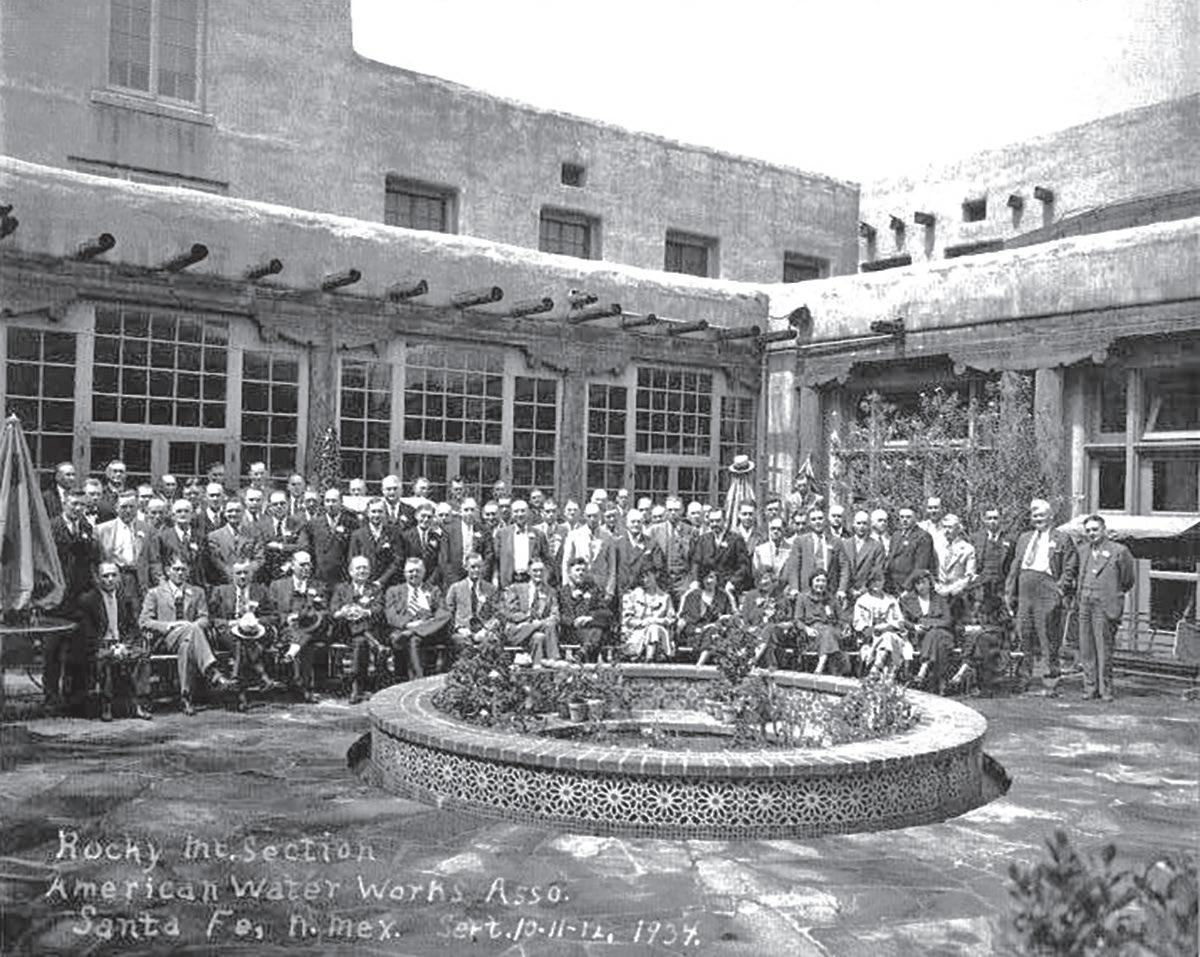
The first annual convention of the Rocky Mountain Section was held in Denver in February 1927, with Denver Mayor Benjamin F. Stapleton opening the gathering. At the time, the association was described as being comprised of “city water superintendents and water engineers.” Early officers included Chairman
Paul E. Strouse of Rocky Ford, Vice Chairman A.W. Stedman of Canon City, and SecretaryTreasurer D.E. Kepner.
Even in those earliest meetings, the themes sound remarkably familiar to today’s water professionals: public health, water quality, treatment innovation and protecting communities.

RMSAWWA’s centennial is more than a celebration of longevity; it is a recognition of generations of dedication, innovation and service. From the earliest water superintendents and engineers of the 1920s to today’s highly skilled water professionals, the mission has remained constant: safeguarding public health through safe and reliable water.
One newspaper account from February 1928 reported that conference speakers emphasized the importance of frequent bacteriological testing of water supplies and called for increased funding for sanitary oversight. Dr. Ivan C. Hall, professor of bacteriology at the University of Colorado, urged daily water testing and frequent sanitary surveys to guard against contamination.
Conference topics also included water softening, chlorination, sewage treatment and disposal – issues that continue to evolve but remain central to the water industry today.
Perhaps most striking was one observation made during the conference discussions: speakers stressed that the “waterworks man” carried the health of the community in his hands every day, while a doctor guarded public health only occasionally.
Nearly 100 years later, that statement still captures the essential role of water professionals. Every day, often behind the scenes and unnoticed by the public, operators, engineers, scientists, utility leaders, and field crews work tirelessly to protect public health and ensure safe drinking water reaches homes and businesses across the Rocky Mountain region.
RMSAWWA’s centennial is more than a celebration of longevity; it is a recognition of generations of dedication, innovation and service. From the earliest water superintendents and engineers of the 1920s to today’s highly skilled water professionals, the mission has remained constant: safeguarding public health through safe and reliable water.
As RMSAWWA enters its second century, the Section continues to support education, collaboration, leadership development
and technical excellence across the water industry. The challenges facing water utilities today, aging infrastructure, water supply pressures, emerging contaminants, cybersecurity and workforce development, may look different than those discussed in 1927, but the commitment to protecting communities remains unchanged.
The story of RMSAWWA is ultimately the story of the people who have dedicated their careers to water service throughout the Rocky Mountain West. And while some parts of that history may still be missing,
the impact of those professionals over the last 100 years is undeniable.
As RMSAWWA celebrates this historic anniversary, the Section invites members and partners to help preserve its legacy. Anyone with photographs, documents or stories related to RMSAWWA history is encouraged to share them by emailing info@rmsawwa.org
Here’s to 100 years of protecting public health, advancing the water profession and serving our communities and to the century ahead.

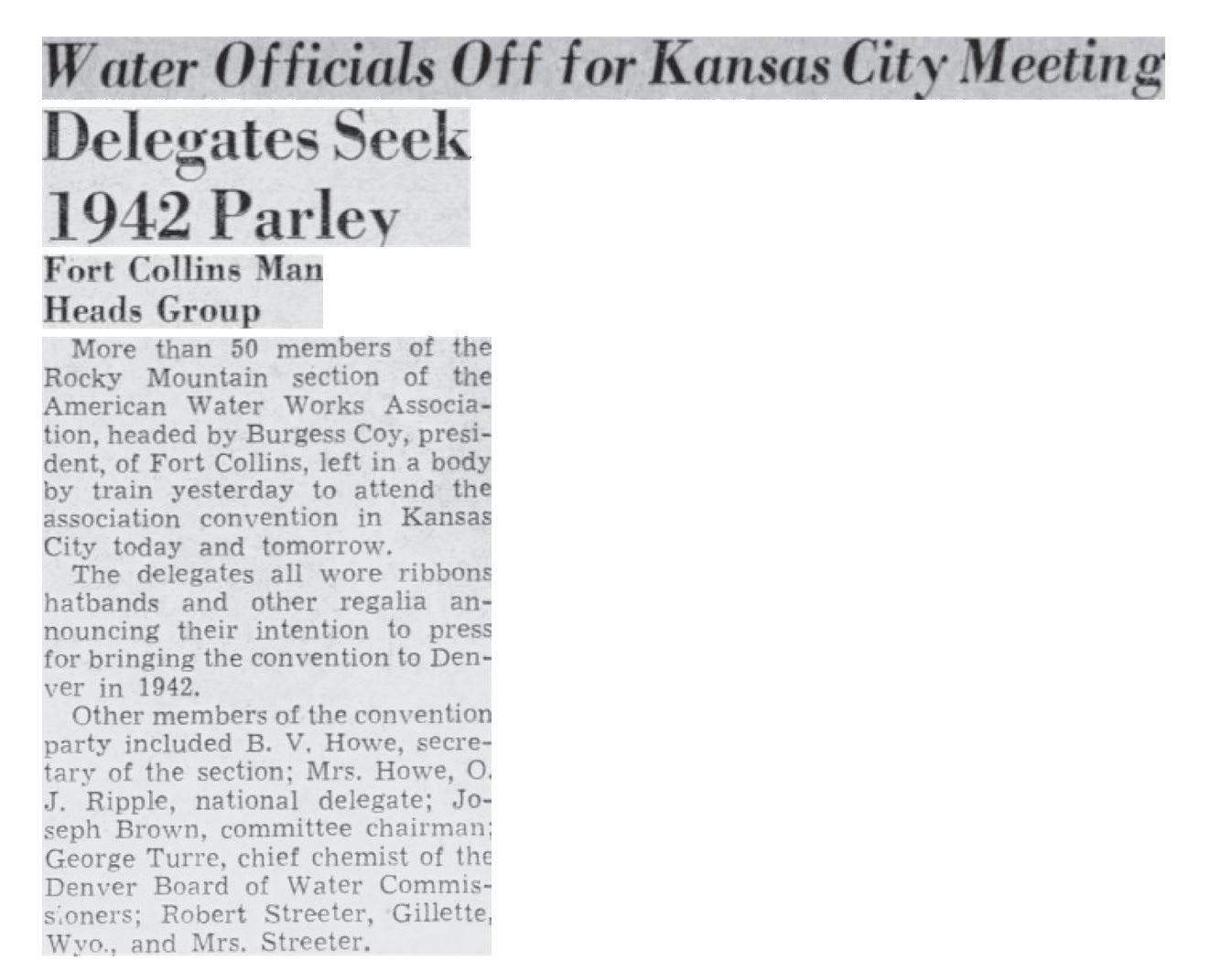
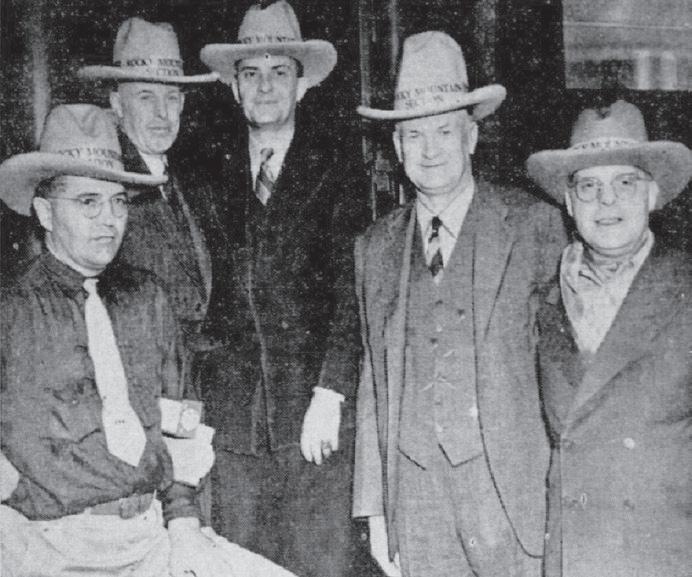

Colorado-Israel Chamber of Commerce
Rocky Mountain Water magazine sat down with Jeremiah Baronberg and Jordan Kastrinsky to discuss how CO-IL is helping connect Colorado’s water sector with Israeli innovation. Based in Denver, Jeremiah serves as CO-IL’s Colorado Director and is also a Denver native, having attended Graland Country Day School and Manual High School before graduating from CU Boulder. Jordan, now based in Tel Aviv, serves as CO-IL’s Israel Director and is also originally from Colorado, born and raised in Denver and a graduate of Cherry Creek High School. Together, they are helping build partnerships that connect Colorado utilities, engineering firms, agricultural organizations, and technology companies with Israeli companies developing proven solutions in water reuse, drought resilience, leak detection, agricultural efficiency, and infrastructure management.
For readers who may not be familiar with CO-IL, can you explain the organization and its role in connecting Colorado and Israel?
The Colorado-Israel Chamber of Commerce, CO-IL, is a 501(c)(6) and 501(c)(3) nonprofit organization built to advance bilateral business, trade, and innovation between Colorado and Israel. We launched roughly three months after October 7, and in the time since, we have hosted five delegations spanning water, energy security, aerospace, and health-tech, facilitated more than a dozen bilateral partnerships, hosted 15 individual companies and VCs in Colorado, and secured the state a BIRD Foundation grant under our representation. Our work runs on two simultaneous tracks: surfacing
Israeli technology that solves real Colorado problems, and opening the Israeli market to Colorado companies, capital, and talent.
Why is water such a natural area of focus for collaboration between Colorado and Israel?
Colorado and Israel sit on opposite ends of the same hydrological reality. Both operate in climates where water is a problem, like high elevation or in desert topography, both depend on snowpack or rainfall they cannot fully control, and both have built sophisticated water economies around scarcity rather than abundance. Israel’s unique geopolitical reality, coupled with general water scarcity, pushed it to innovate its national water grid to the point that it recycles roughly 90% of its wastewater for agricultural use and has created a domestic surplus in drinking water through desalination on the Mediterranean coast and other methods, the highest figures in the world. The operating posture where every drop is accounted for is the posture Colorado utilities and basin authorities are increasingly moving toward as the Colorado River compact tightens and population pressure grows.
Colorado and Israel both face major water challenges, including arid conditions, growing demand, and limited supply. What makes Israel’s experience especially relevant to Colorado water professionals?
Israel’s relevance has moved beyond theory and is already operational and validated. The country has spent over five decades
treating water as a national security asset, which forced early adoption of dripirrigation technology, pressure-managed networks, AI-driven crop monitoring and leak detection, decentralized reuse, and precision delivery solutions at an agricultural scale. Colorado professionals working on the Front Range corridor, the Western Slope, or the agricultural districts of the eastern plains are wrestling with the same constraints that Israeli engineers solved a generation earlier under harsher conditions. The technology has been pressure-tested in the field, which happens to be one of the most water-stressed advanced economies on earth.
What types of Israeli water technologies are you seeing that could be especially useful for Colorado utilities, municipalities, engineers, and agricultural users?
Four categories consistently translate well into Colorado conditions. The first is non-revenue water management, where Israeli platforms use acoustic and pressure analytics to identify leaks before they surface, directly relevant to the aging distribution networks across Denver Water, Aurora Water, and smaller municipalities. The second is potable and non-potable reuse, where Israeli engineering on membrane treatment and aquifer recharge maps cleanly onto Colorado’s evolving Regulation 84 framework. Beyond those two, we are seeing a strong fit in precision agriculture and fertigation systems that could be relevant for the South Platte and Arkansas basins, where every saved acrefoot matters, and in real-time water quality

monitoring with AI-driven anomaly detection for utilities concerned about source-water security. Along those lines, just this year we hosted an Israeli cyber resilience company, SIGA OT Solutions, which met with local water utilities to discuss implementing their solution and setting up pilot projects. The companies we work with are not pre-revenue concepts; they are deployed, referenced, and ready for US pilots.
Many readers are focused on drought resilience, aging infrastructure, water reuse, leak detection, and operational efficiency. How can CO-IL help connect them with Israeli companies working in those areas?
CO-IL functions as a curated bridge rather than a directory. When a utility, engineering firm, or grower describes a specific operational problem, we work backward from that problem into the Israeli ecosystem through our umbrella partnership with groups like IATI, Israel Advanced Technologies Industries, and our direct relationships with founders, water authorities, and government innovation arms. From there, we shape a tech-scouting engagement, a targeted delegation, or a one-to-one introduction depending on the maturity of the need.
Can you tell us about the Water-Tech delegation CO-IL brought to Colorado and what came out of those meetings with Colorado water sector leaders?
Our Water-Tech delegation brought a vetted cohort of Israeli founders into

direct meetings with Denver Water, Aurora Water, and several engineering and agricultural stakeholders across the Front Range. The agenda was deliberately operator-to-operator: pilot scoping, integration pathways, regulatory questions, and procurement timelines. Several advanced into follow-up discussions to move toward a defined pilot, and we are now structuring a follow-on delegation calibrated to the gaps Colorado partners surfaced during those meetings.
CO-IL is also the official Colorado representative for the BIRD Foundation. How does that relationship help Colorado companies explore joint US-Israel R&D opportunities, including potential non-dilutive funding?
BIRD, the Binational Industrial Research and Development Foundation, has funded joint US-Israel R&D since 1977, and CO-IL is its official Colorado representative. The mechanism is nondilutive: a Colorado company partners with an Israeli counterpart on a defined commercial product, and BIRD can fund up to 50% of the joint development cost, capped at $1.5 million, with no equity taken and no repayment required unless the product reaches commercialization. We help Colorado companies identify the right Israeli partner, scope the project to BIRD’s commercial-readiness standard, and navigate the application cycle. FieldLine Industries in Louisville closed a
BIRD grant under our representation, and the pipeline for water, energy, and medical applications is now active.
For a utility, engineering firm, technology company, or agricultural organization interested in learning more, what is the best first step, whether that’s joining a future Water-Tech delegation or exploring a tech scouting engagement? The first step is a conversation. Reach out through coloradoisrael.org or directly to us, and we will scope whether your need fits a delegation track, a tech-scouting engagement, a BIRD application pathway, or a membership relationship that gives you sustained access to the ecosystem. Bring the operational problem, and we will work the rest from there.
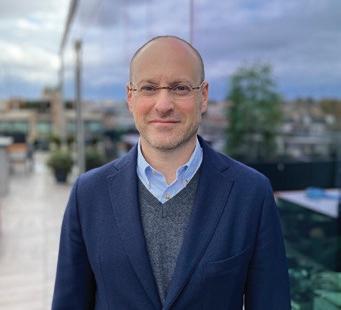
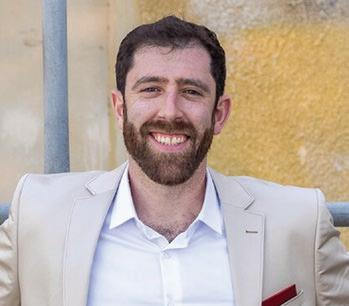
https://coloradoisrael.org info@coloradoisrael.org
Rocky Mountain Water is made possible by the companies below who convey their important messages on our pages. We thank them for their support of RMSAWWA and RMWEA and its publication and encourage you to contact them when making your purchasing decisions. To make it easier to contact these companies, we have included the page number of their advertisement, their phone number, and, where applicable, their website.

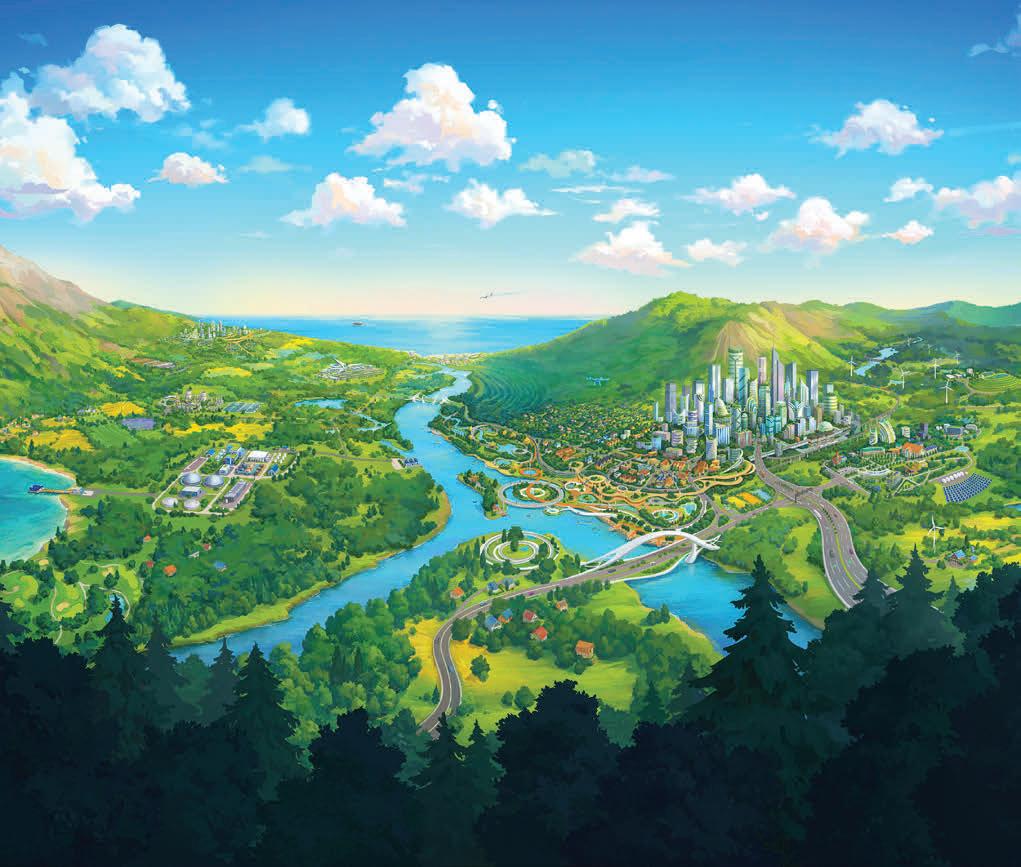


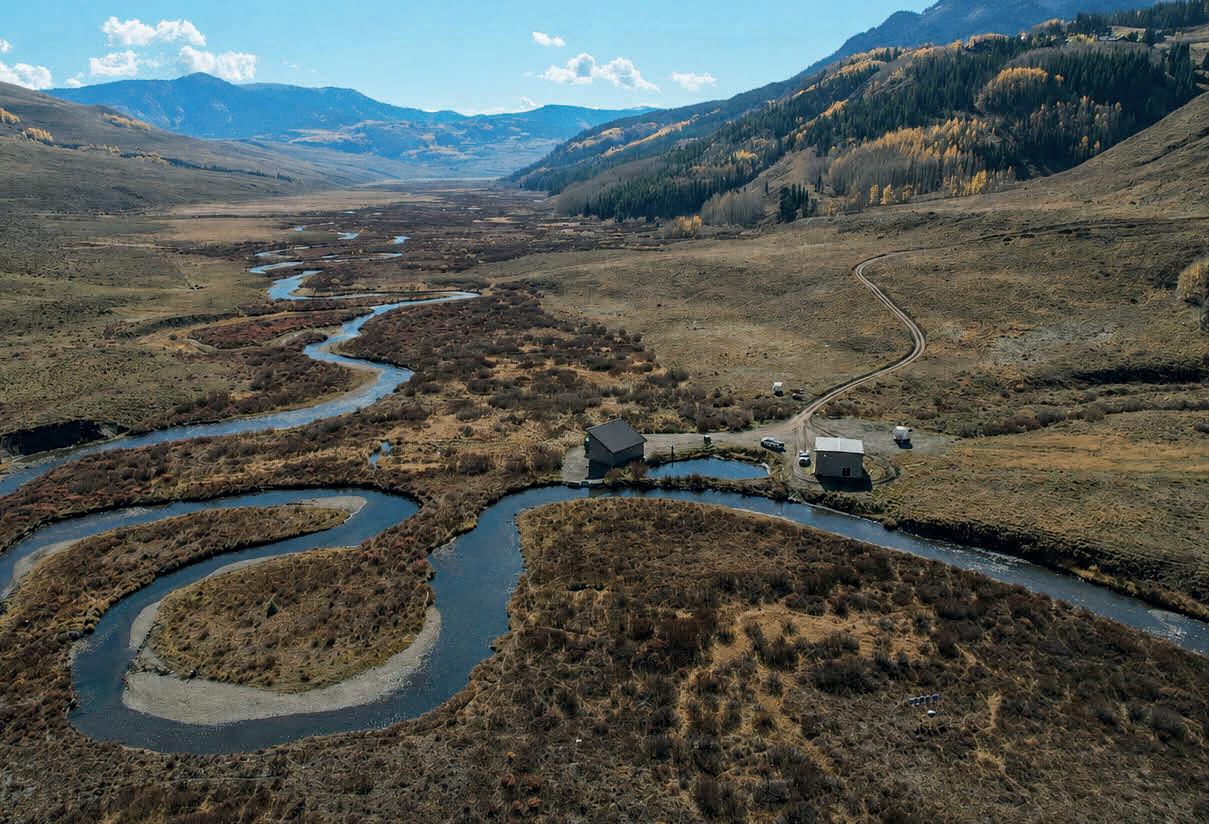

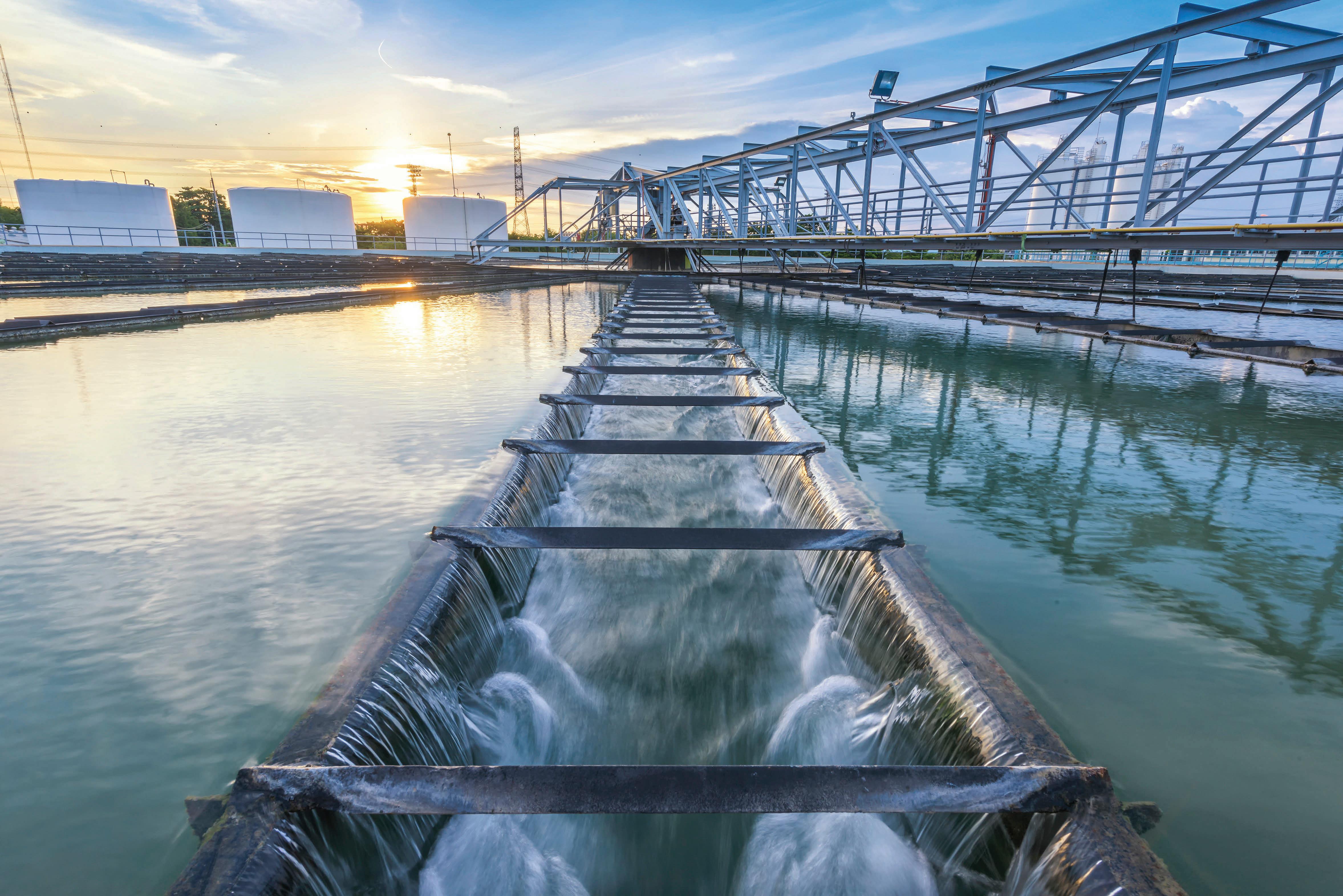
At our very core, AE2S is all about people. Beyond engineering, we are committed to empowering our clients, employee-owners, and all those around us to develop a vision for a better tomorrow.