CL ARIFIER



www.hawkinsinc.com
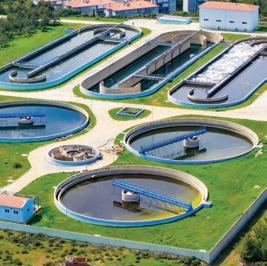

Hawkins Products:
• Phosphorus removal
• Corrosion control
•Zebra mussel control
• Bioaugmentation, biological controls
•Settling aids
• Disinfection chemicals
• Odor control chemicals
• Dechlorination chemicals
• TSS (Total Suspended Solids) control
• Lagoon sludge reduction
•Dewatering polymers and so much more
•Antifoams
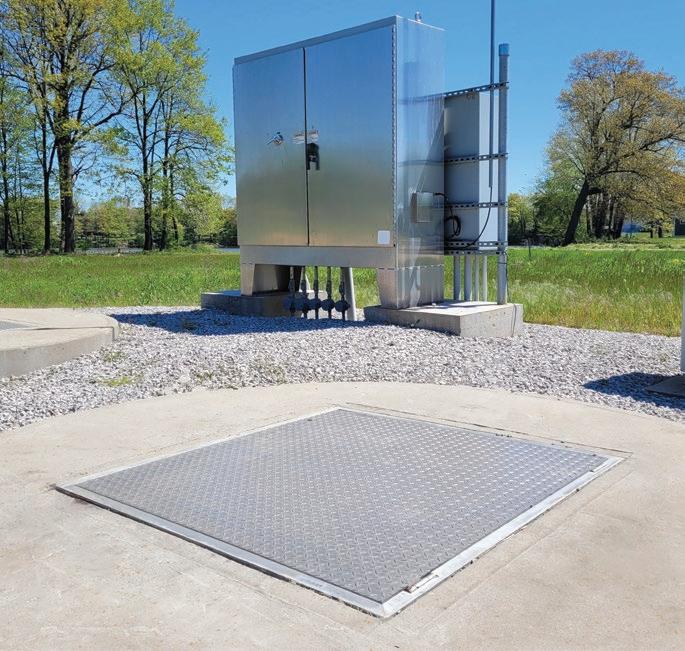
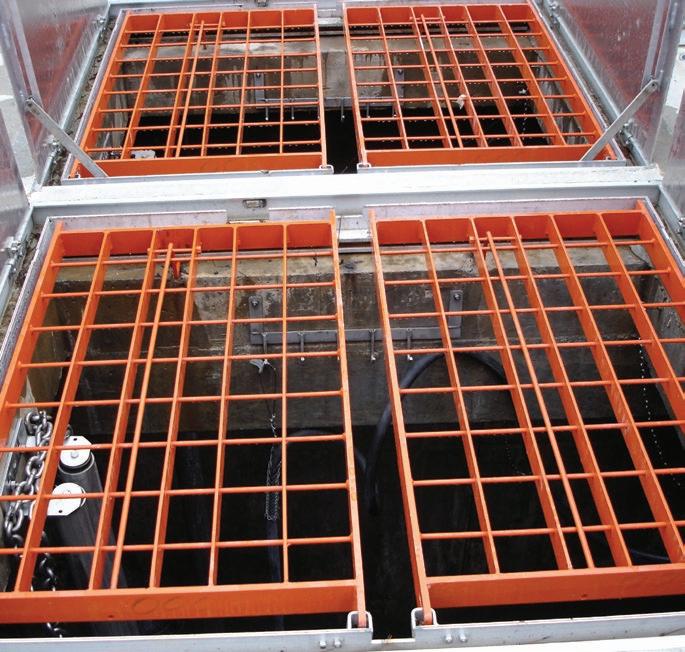

Municipal systems rely on strong front-line protection. In collections and headworks, even small debris can clog pumps, damage equipment, and disrupt operations. JWC Environmental (JWC) technologies are built to stop problems early. From reliable grinders to precise screening systems, JWC solutions protect downstream processes and keep operations running smoothly.
MICHIGAN RURAL WATER ASSOCIATION
2127 University Park Drive, Suite 340 Okemos, MI 48864
P: 517-657-2601 www.mrwa.net
PRESIDENT
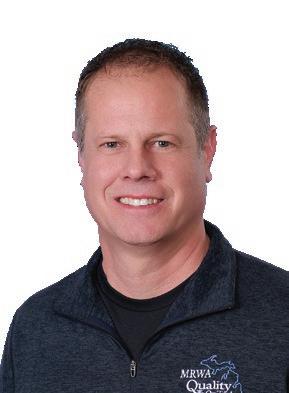
Todd Hackenberg, Village of Lawton
VICE PRESIDENT
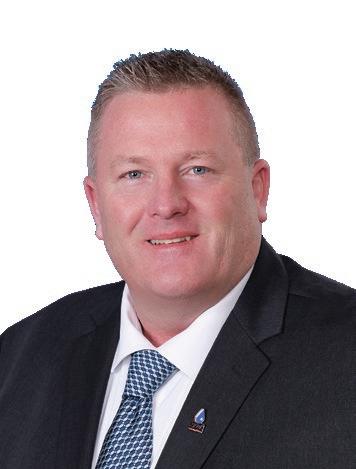
Ron Bogart, City of Leslie
SECRETARY/ TREASURER
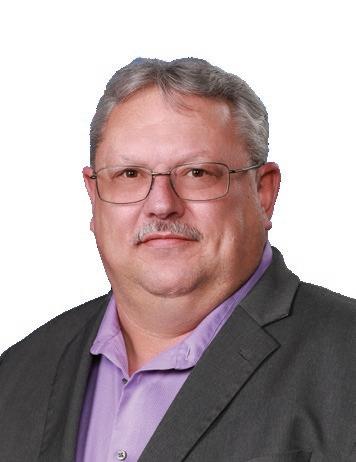
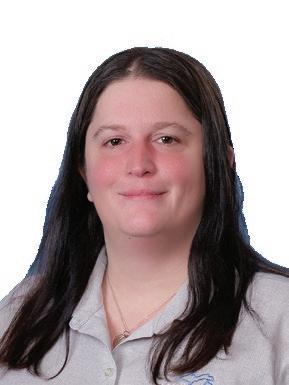
Michelle Thibideau, Village of Centreville
DIRECTORS
Tom Anthony, Village of Mattawan
Darin Dood, Village of Lakeview
Andrea Schroeder, City of Davison
Randy Seida, Lansing Charter Township
ASSOCIATE DIRECTORS
Bob Masters, Peerless-Midwest, Inc.
Dale Stewart, Northern Pump and Well Company
NATIONAL DIRECTOR
Chris Kenyon, City of lonia
MRWA A DMINISTRATIVE STAFF
Tim Neumann, Executive Director
Mike Engels, Director of Training/ Assistant Director
Melisa Lincoln, Membership & Marketing Director
Jennifer Lewis, Finance Director
PUBLISHED FOR MRWA BY:

P: 866.985.9780 info@kelman.ca www.kelmanonline.com
MANAGING EDITOR Lauren Drew
DESIGN/ LAYOUT Kiersten Drysdale
MARKETING MANAGER Al Whalen
ADVERTISING COORDINATOR Sabrina Simmonds

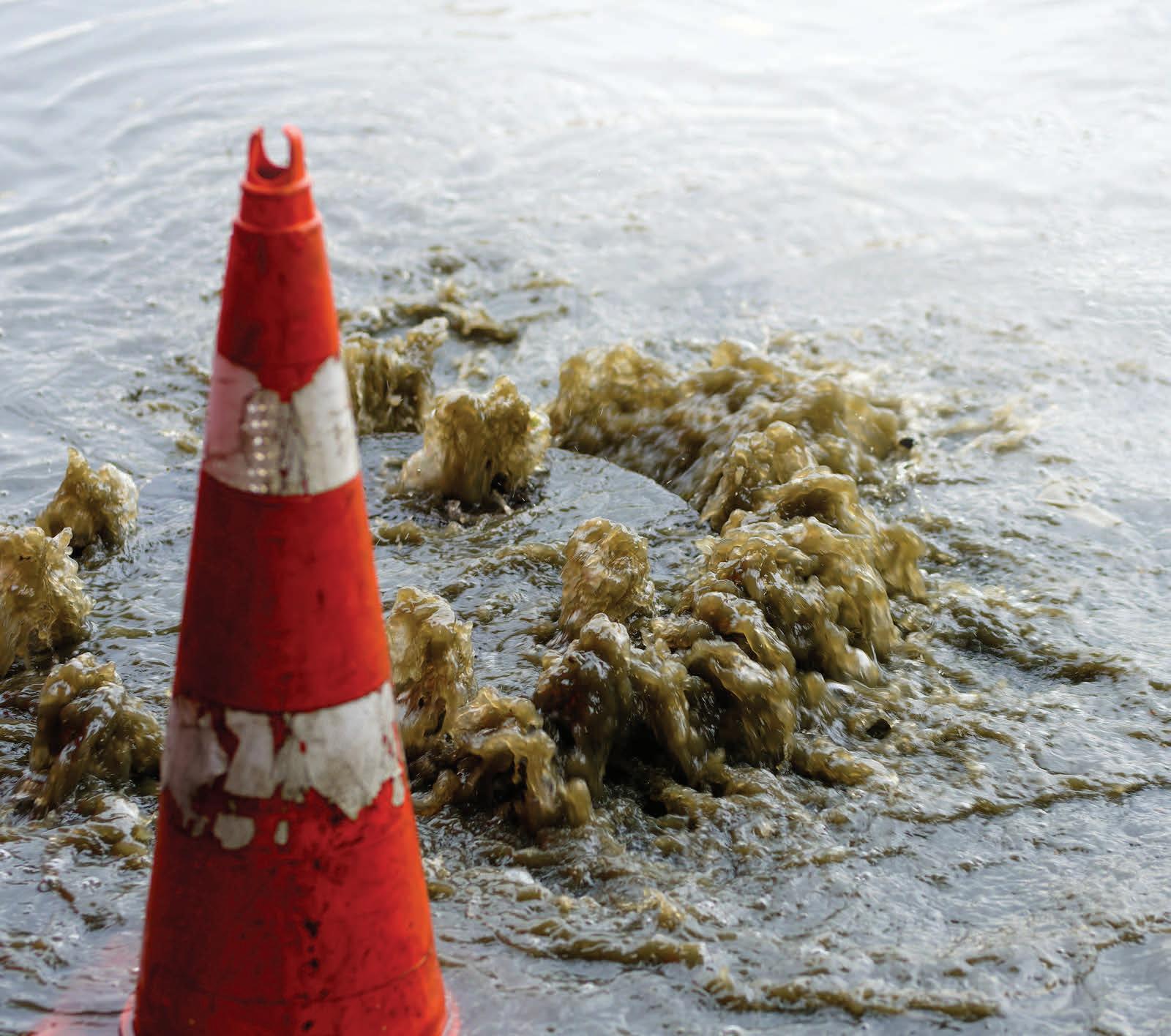
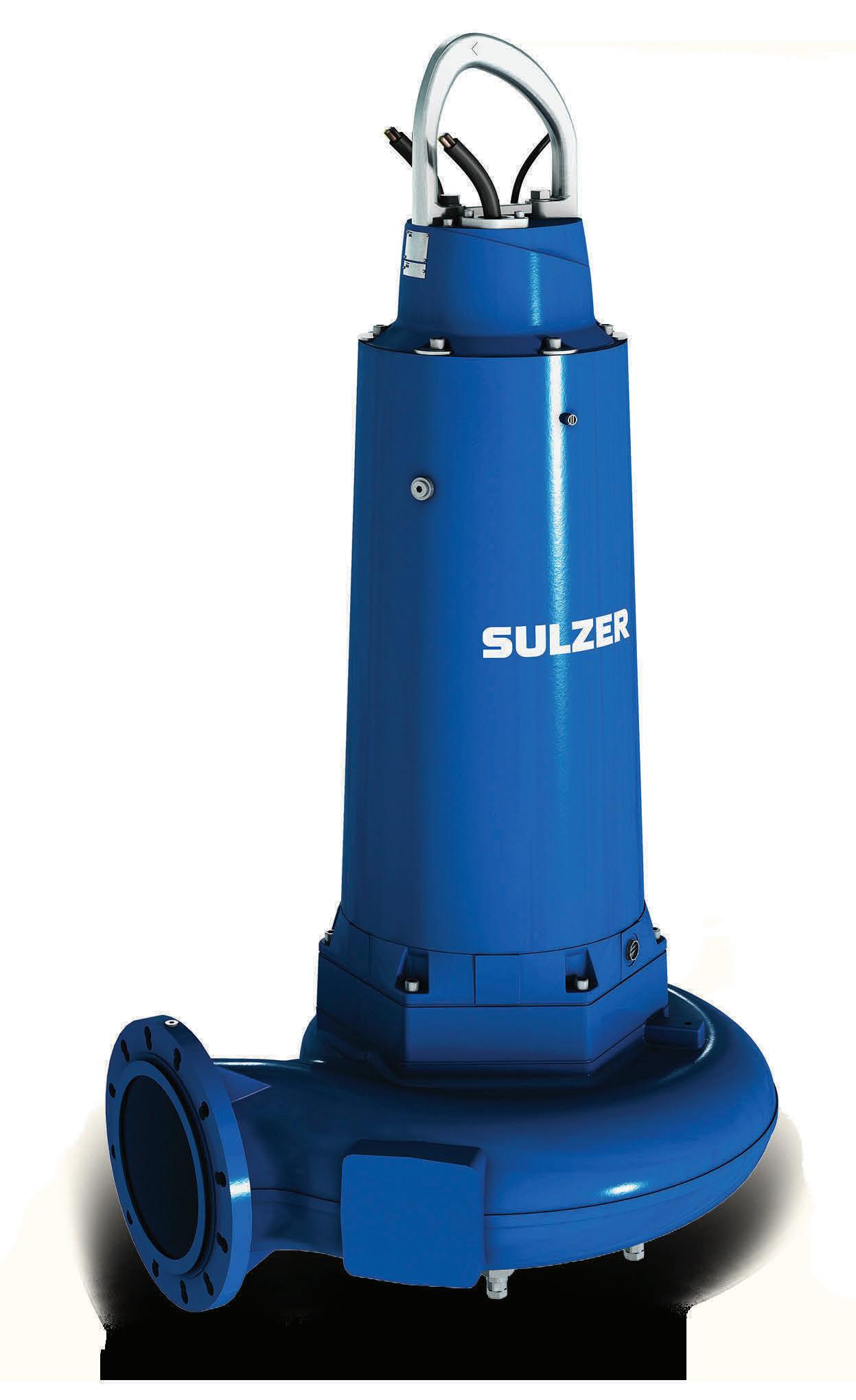
You can’t control what comes through your system, but you can control how your pump handles it. The Sulzer XFP submersible pump with the ContraBlock impeller keeps things moving with fewer clogs and less maintenance.
Built to meet BABA requirements and equipped with premium motors for greater energy savings, high performance, and reliability, it is a solution you can count on day in and day out.
go.sulzer.com/xfp-performance









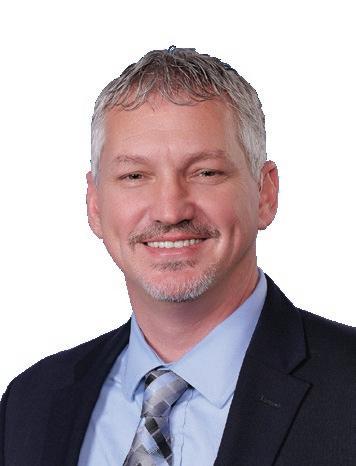
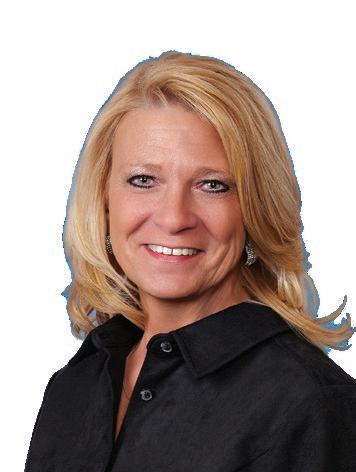
PRESIDENT EXECUTIVE COMMITTEE
CHAIR/STANDING MEMBER ON ALL COMMITTEES
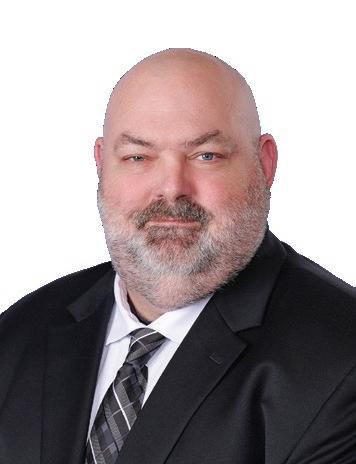
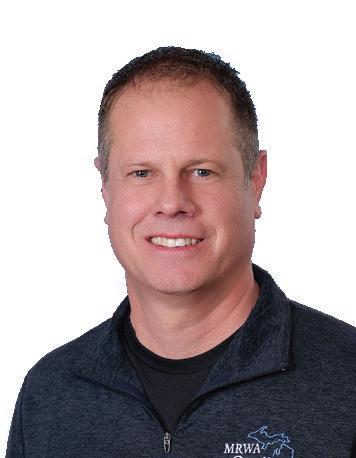
Todd Hackenberg, Village of Lawton
125 S Main Street
Lawton, MI 49065
Phone: 269-624-6406
Phone: 269-624-6401 hackenbergt@lawtonmi.gov
VICE PRESIDENT
Ron Bogart, City of Leslie 602 W Bellevue Street PO Box 496
Leslie, MI 49251
Phone: 517-589-8236
Phone: 517-257-3094
manager@cityofleslie.org
SECRETARY/TREASURER
Michelle Thibideau
Village of Centreville 221 Main Street Centreville, MI 49032
Phone: 269-467-6409
Phone: 269-506-6800
mthibideaucentreville@gmail.com
DIRECTOR/PAST PRESIDENT
Tom Anthony, Village of Mattawan
24221 Front Avenue
Mattawan, MI 49071
Phone: 269-668-2300
Phone: 269-217-4921 tom@mattawanmi.com
DIRECTOR
Darin Dood, Village of Lakeview
208 S Lincon Street Lakeview, MI 48850
Phone: 989-352-6322
Phone: 989-289-3110 manager@villageoflakeview.org
DIRECTOR
Andrea Schroeder, City of Davison
200 E Flint Street, Suite 2
Davison, MI 48423
Phone: 810-653-2191
Phone: 810-845-1682 aschroeder@cityofdavison.org
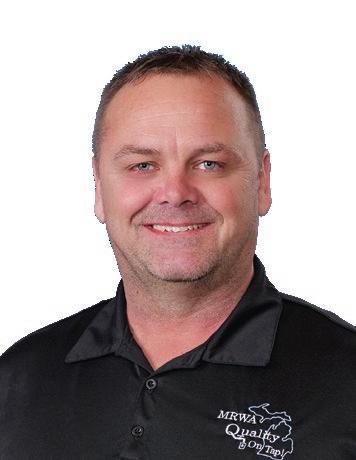
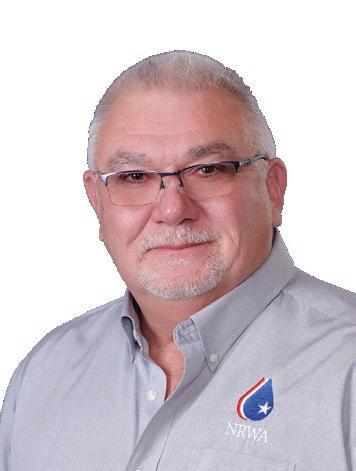

DIRECTOR
Randy Seida, Lansing Charter Township
3209 W Michigan Avenue Lansing, MI 48917
Phone: 517-485-5476
Phone: 517-819-8720
seidar@westsidewater.com
NATIONAL DIRECTOR
Chris Kenyon, City of Ionia DPU 720 Wells Street Ionia, MI 48846
Phone: 616-523-0165
Phone: 616-813-1263
ckenyon@ci.ionia.mi.us
ASSOCIATE DIRECTOR
Bob Masters, Peerless-Midwest, Inc.
505 Apple Tree Drive Ionia, MI 48846
Phone: 616-527-0050
Phone: 616-690-8139
bob.masters@peerlessmidwest.com
ASSOCIATE DIRECTOR
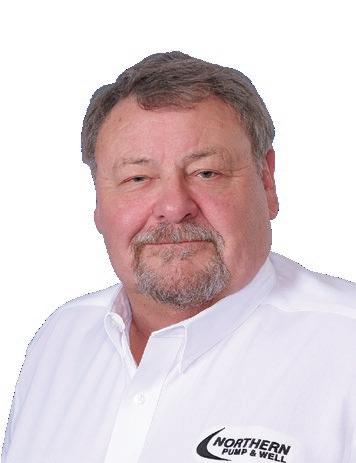
Dale Stewart, Northern Pump & Well 6837 W Grand River Avenue Lansing, MI 48906
Phone: 517-322-0219
Phone: 517-242-8949 dstewart@northernpumppwco.com
EXECUTIVE DIRECTOR
Tim Neumann
Michigan Rural Water Association 2127 University Park Drive, Suite 340 Okemos MI 48864
Phone: 616-401-5436
tneumann@mrwa.net
Todd Hackenberg, President, Michigan Rural Water Association
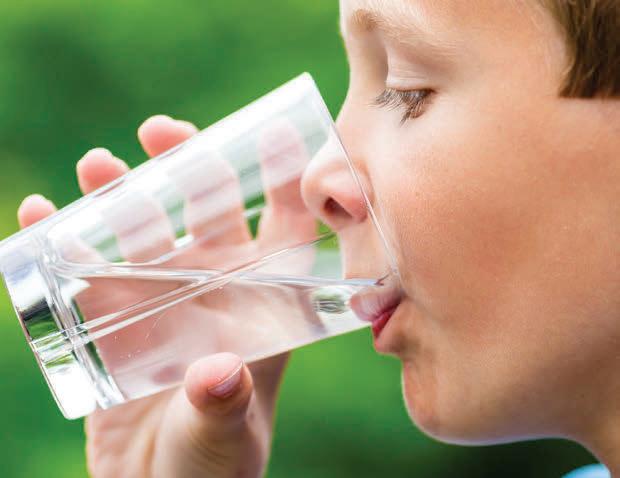
Protecting drinking water is one of the most important responsibilities of any water system, and one of the most common threats comes from something known as a cross connection.
A cross connection is any physical link between a potable (safe drinking) water supply and a source of contamination. This could be as simple as a garden hose submerged in a pool, a boiler system connected without proper protection, or irrigation systems that allow fertilizers or chemicals to flow back into the water supply. When pressure changes occur – such as during a water main break or heavy usage –
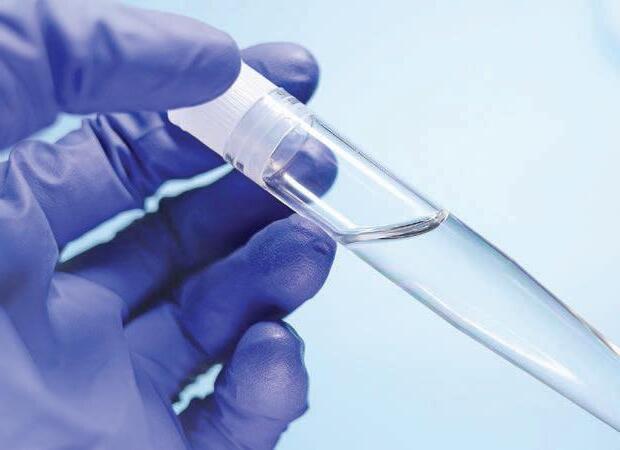
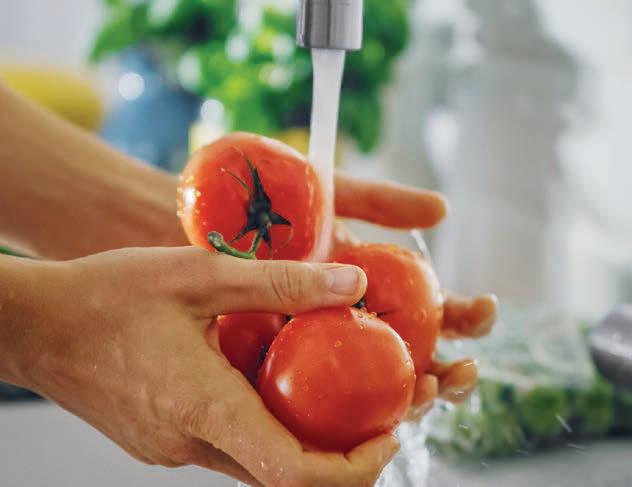
these connections can allow contaminants to be siphoned back into the drinking water system, a process known as backflow.
Cross connections pose serious health risks, potentially introducing bacteria, chemicals, or other harmful substances into the public water supply. Because many of these risks occur on private property, they can often go unnoticed without proper oversight.
To prevent these issues, water systems implement cross connection control programs. These programs typically include inspections, testing of backflow prevention devices, and public education. Devices such as reduced pressure zone (RPZ) valves and

double check assemblies are commonly installed to ensure that water flows in only one direction – keeping contaminants out of the drinking water system.
Public awareness is also key. Simple actions, like not leaving hoses submerged in water or ensuring proper backflow devices are installed on irrigation systems, can go a long way in protecting water quality.
Ultimately, preventing cross connections is a shared responsibility between water utilities, businesses, and residents. Through proactive measures and education, communities can safeguard their drinking water and ensure it remains clean and safe for everyone.



MRWA OFFICE
2127 University Park Drive
Suite 340
Okemos, MI 48864
Phone: 517-657-2601 www.mrwa.net

EXECUTIVE DIRECTOR
Tim Neumann
Phone: 616-401-5436 tneumann@mrwa.net
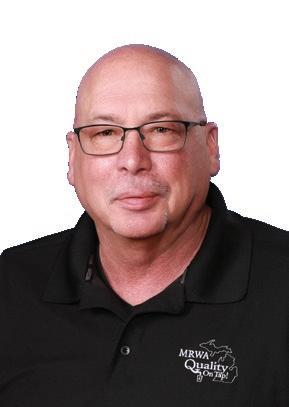
DIRECTOR OF TRAINING/ ASSISTANT DIRECTOR
Mike Engels Phone: 231-878-3285 mengels@mrwa.net

FINANCE DIRECTOR
Jennifer Lewis Phone: 517-657-2601 finance@mrwa.net
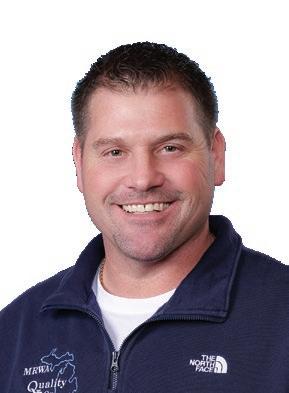
MEMBERSHIP/ MARKETING DIRECTOR
Melisa Lincoln Phone: 517-657-2601 membersvcs@mrwa.net
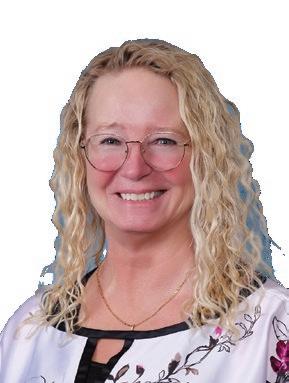
MEMBERSHIP/ MARKETING ASSISTANT
Cheri Laverty Phone: 517-657-2601 training@mrwa.net
COMMUNITY WATER AND WASTEWATER SPECIALIST
Kyle Bond Phone: 989-745-4405 kbond@mrwa.net
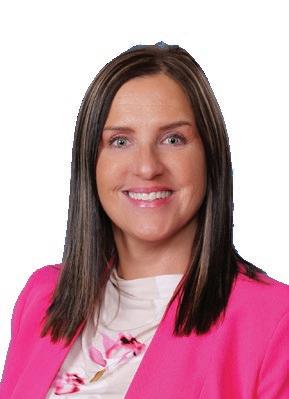
WATER CIRCUIT RIDER
John Monsees Phone: 989-529-1342 jmonsees@mrwa.net
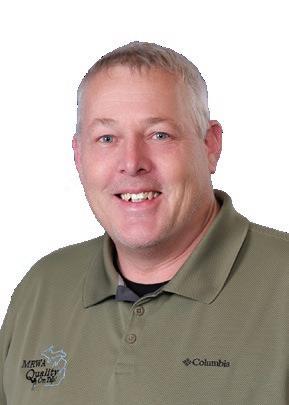
WATER CIRCUIT RIDER
Jonathan Edwards Phone: 231-429-3289 jedwards@mrwa.net

WATER CIRCUIT RIDER
Troy Weiss Phone: 989-621-1057 tweiss@mrwa.net


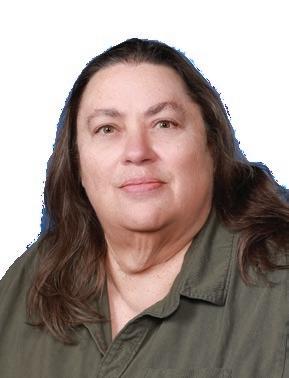
WATER QUALITY
ACTION SPECIALIST
John Holland Phone: 989-506-0439 jholland@mrwa.net
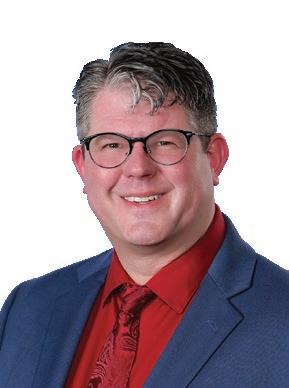
SOURCE WATER PROTECTION SPECIALIST
Kelly Hon Phone: 989-621-2361 khon@mrwa.net
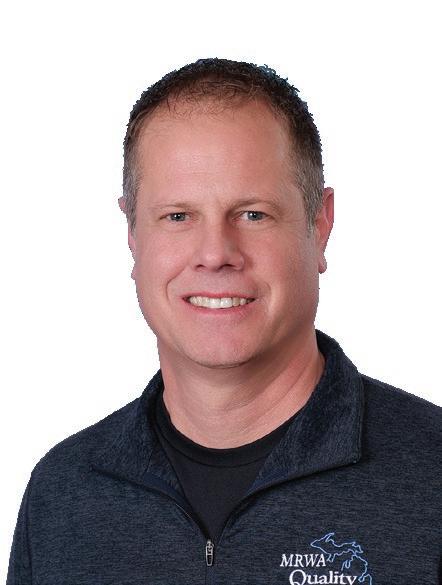
WASTEWATER TECHNICIAN
Matt Lumbert Phone: 269-908-3792 mlumbert@mrwa.net
EPA TRAINING SPECIALIST
Joe VanDommelen Phone: 517-525-4553 jvandommelen@mrwa.net
WASTEWATER TECHNICIAN
Amanda White Phone: 616-633-4070 awhite@mrwa.net
ENERGY EFFICIENCY TECHNICIAN
Ginger Van Conet Phone: 517-444-1321 ggrant@mrwa.net
APPRENTICESHIP COORDINATOR
Rob Splane Phone: 586-596-0005 rsplane@mrwa.net
Tim Neumann, Executive Director, Michigan Rural Water Association
It has been an eventful and productive first third of the year at MRWA, and it’s hard to believe how quickly the months have passed. Between national advocacy efforts, our annual conference, policy engagement, and the many trainings we continue to deliver across the state, our team has remained focused on supporting Michigan’s water and wastewater utilities.
In February, I had the opportunity to join our delegation at the National Rural Water Rally in Washington, D.C. This annual event brings together Rural Water associations from across the country to advocate for the needs of small and rural systems. In addition to celebrating excellence through the Great American Water Taste Test, the Rally provides a critical platform to meet directly with members of Congress and their staff.
Our message this year remained consistent: the importance of continued investment in technical assistance programs and infrastructure funding. These programs –including the USDA Water and Waste Disposal Loan and Grant Program and the Drinking Water and Clean Water State Revolving Funds –are essential tools that allow communities to maintain and improve their systems while keeping services affordable.
With the release of the President’s proposed budget, we are seeing mixed results. While some programs received the funding levels we advocated for, others –particularly the USDA loan and grant program and the revolving funds – were proposed at significantly reduced levels compared to prior years. As the appropriations process moves forward, MRWA will continue working closely with NRWA and our partners in Congress to advocate for restoring these critical funding sources. Your voice is an important part of that effort, and I strongly encourage you to reach out to your Congressional representatives to share how these programs impact your community.
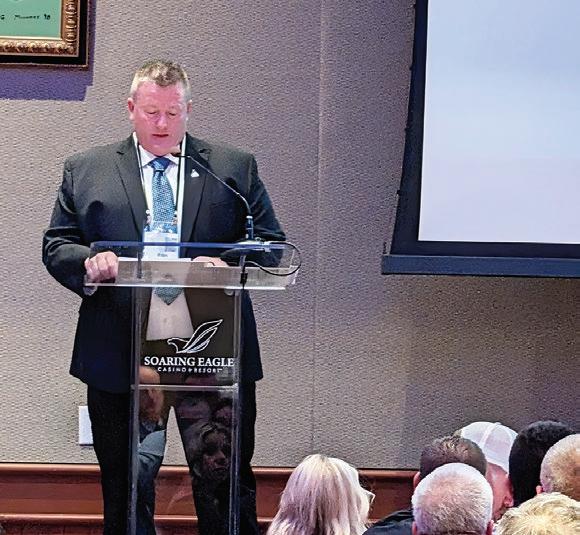
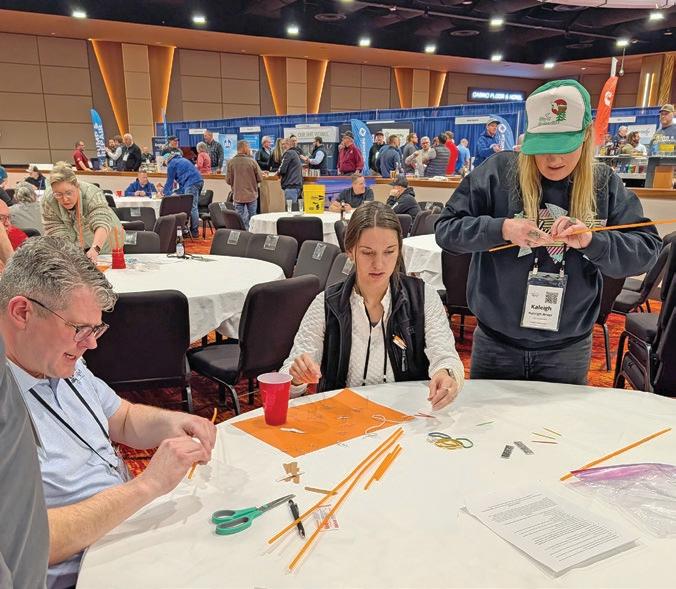
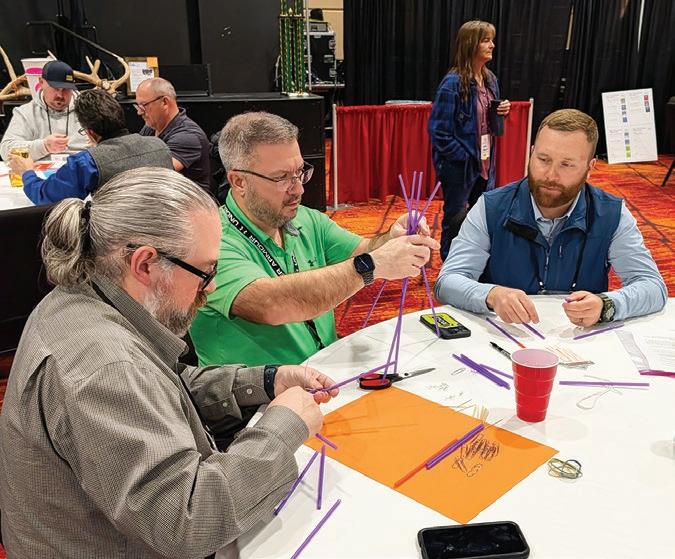
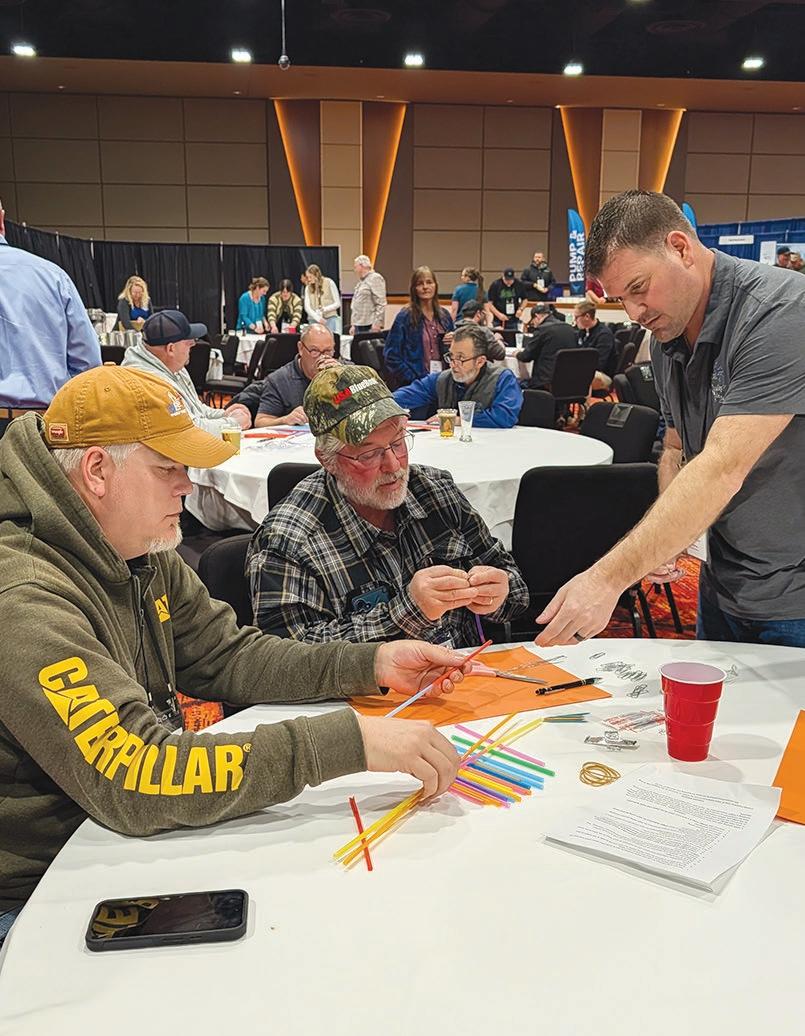
In March, we welcomed members and partners to our Annual Management and Technical Conference at the Soaring Eagle
BEYOND THE NUMBERS, WHAT CONTINUES TO STAND OUT IS THE VALUE OF CONNECTION – OPERATORS, MANAGERS, AND INDUSTRY PARTNERS COMING TOGETHER TO SHARE EXPERIENCES, CHALLENGES, AND SOLUTIONS. THESE INTERACTIONS ARE WHAT STRENGTHEN OUR INDUSTRY AND ENSURE WE CONTINUE TO MOVE FORWARD TOGETHER.
Resort in Mt. Pleasant. This year’s conference was a tremendous success, bringing together 324 attendees and 104 exhibitors. With 40 technical sessions and pre-conference opportunities, participants were able to earn up to 1.7 CECs while gaining valuable knowledge and insights across a wide range of topics.
Beyond the numbers, what continues to stand out is the value of connection –operators, managers, and industry partners coming together to share experiences, challenges, and solutions. These interactions are what strengthen our industry and ensure we continue to move forward together. We are already looking ahead to 2027 and hope to see you in Traverse City at the Grand Traverse Resort, March 23–26.
In April, I also had the opportunity to attend NRWA’s second annual Rural Water Policy Forum. This event is becoming increasingly important as we navigate a rapidly evolving landscape in the water sector.
Panel discussions highlighted practical, community-driven approaches to regional partnerships, demonstrated the proven success of small systems, and reinforced that the viability of rural water systems is not only achievable but already happening across the country. These conversations are critical as we continue to advocate for policies and programs that recognize and support the unique needs of rural communities.
As we move into the remainder of the year, MRWA remains committed to providing high-quality training, responsive technical assistance, and strong advocacy

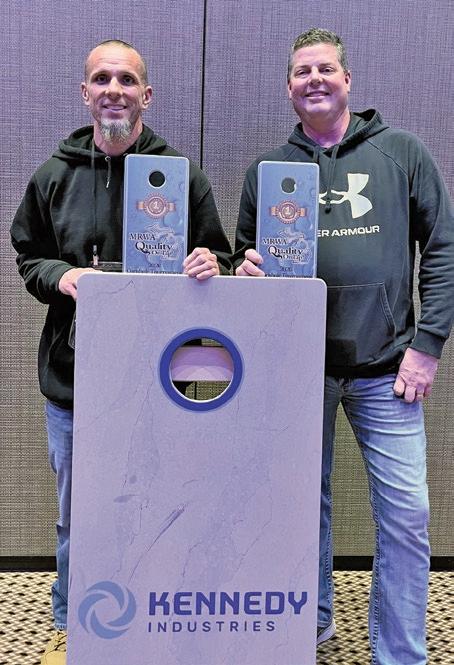
MARCH 17–20, 2026 • SOARING EAGLE, MT. PLEASANT




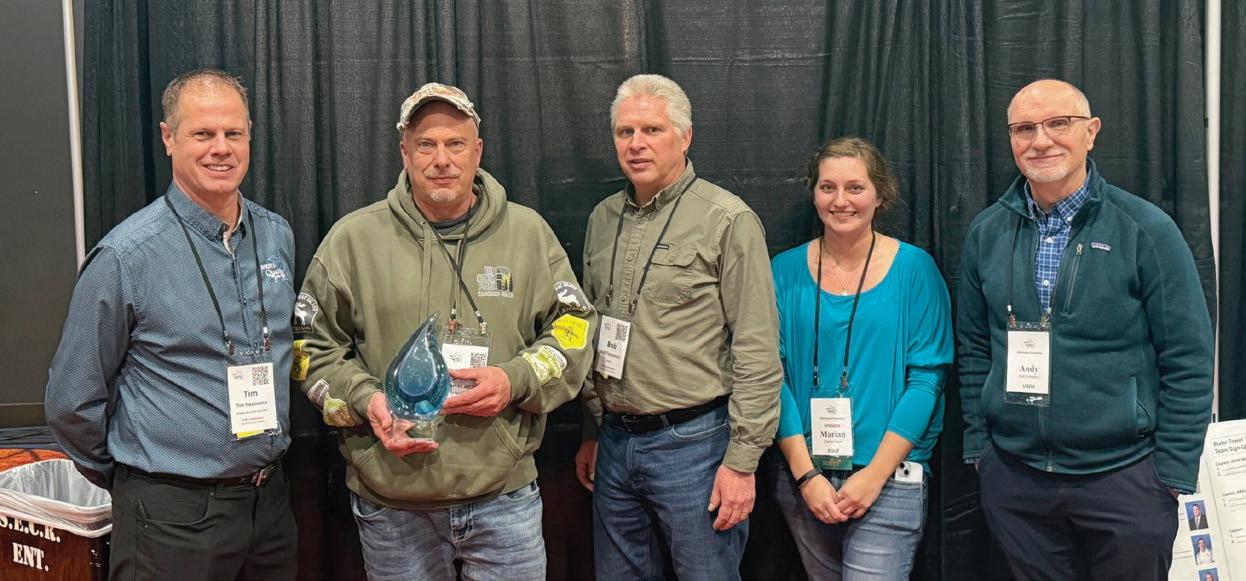
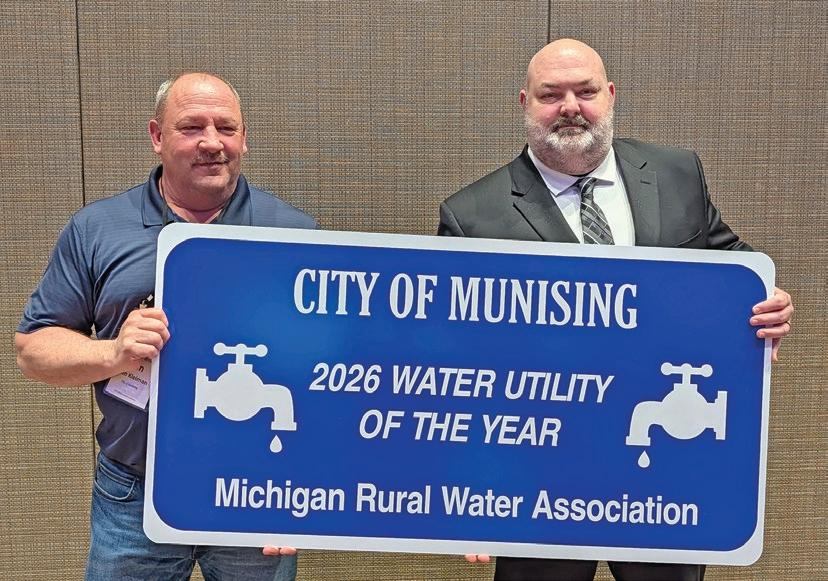
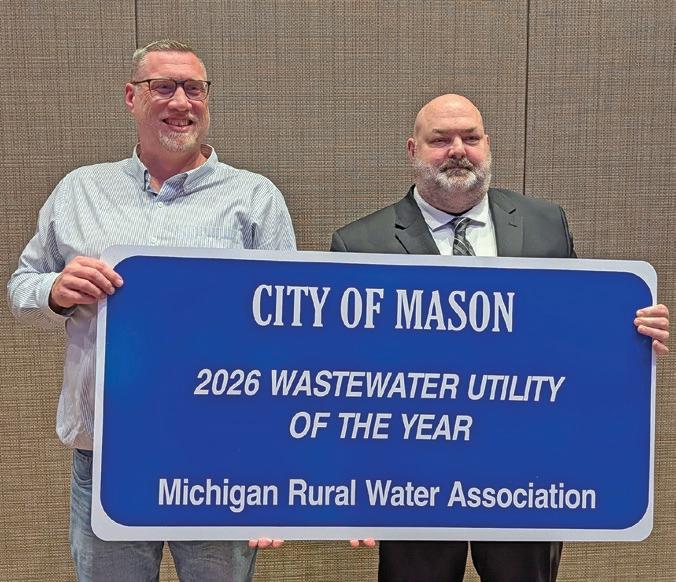
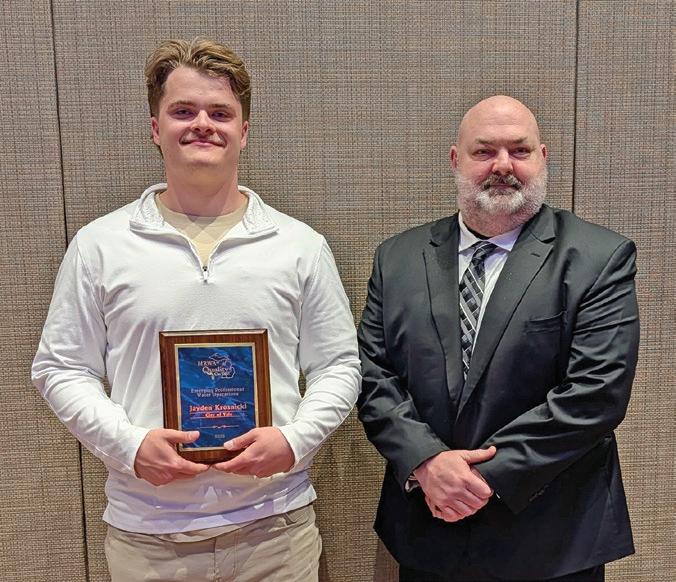
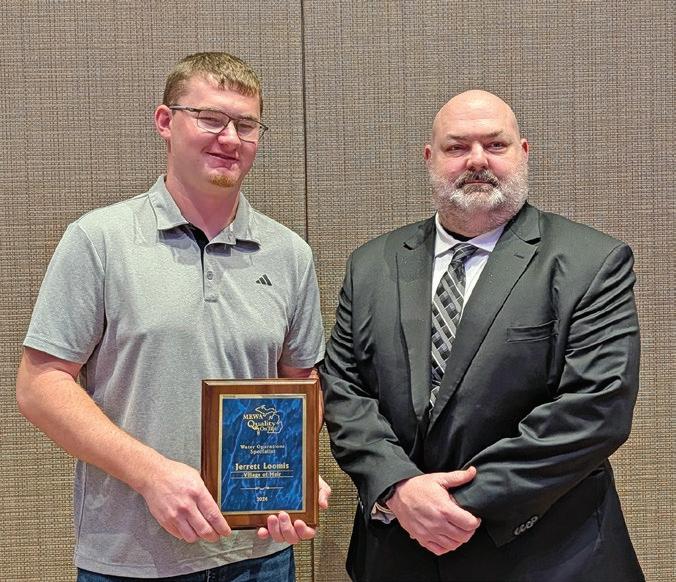

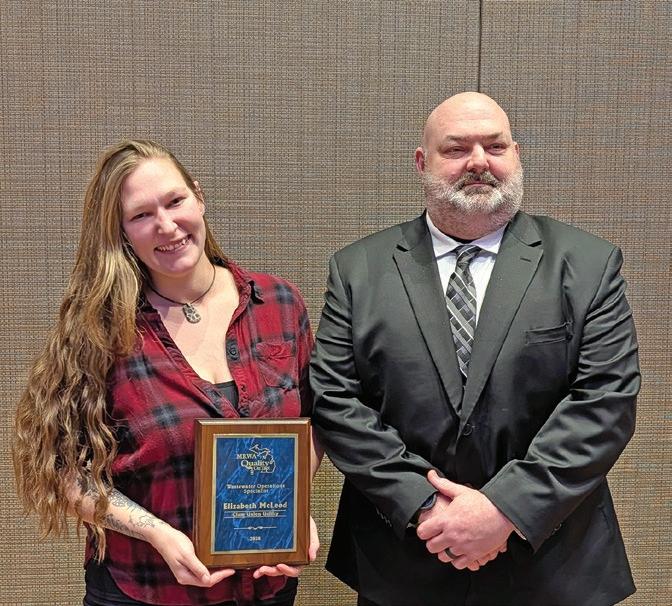
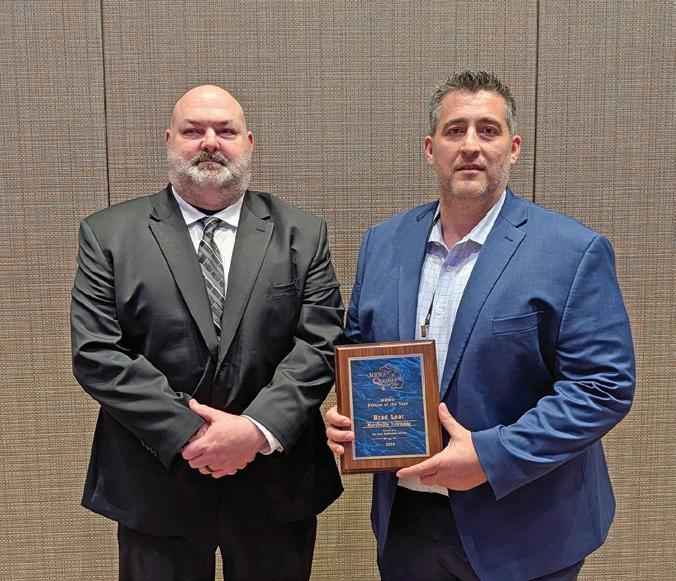
WASTEWATER OPERATIONS SPECIALIST
McLeod, Clam Union Utility
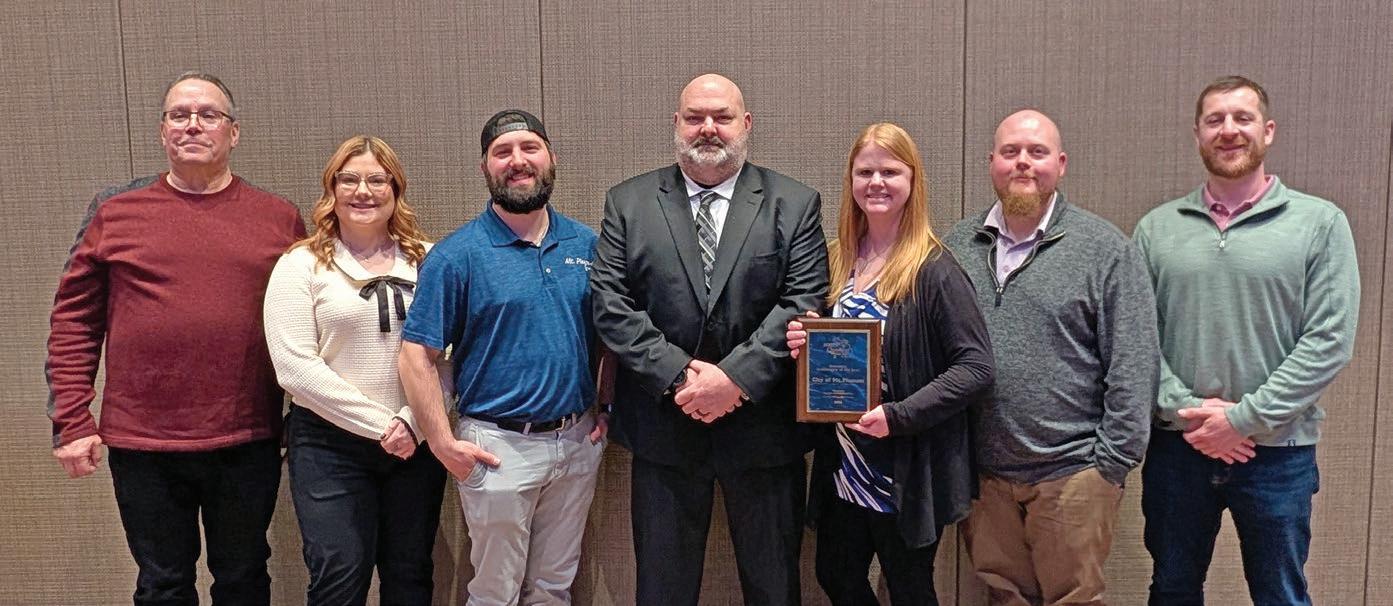
ASSOCIATE COMMUNITY (POPULATION OVER 15,000) City of Mt. Pleasant
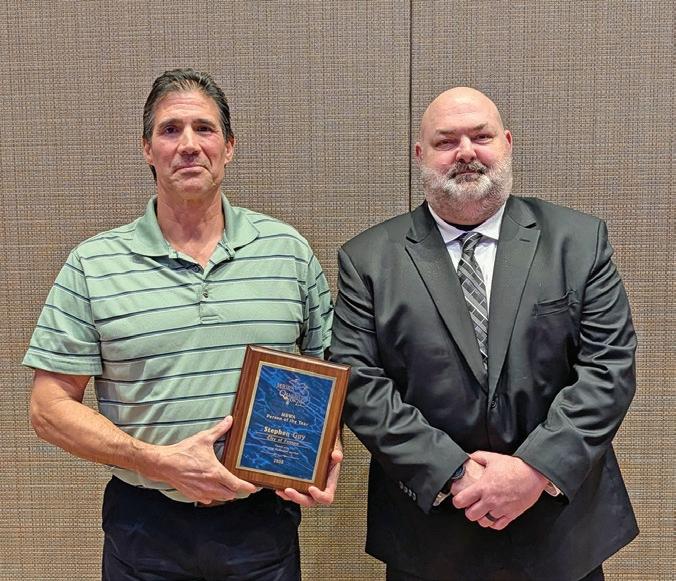
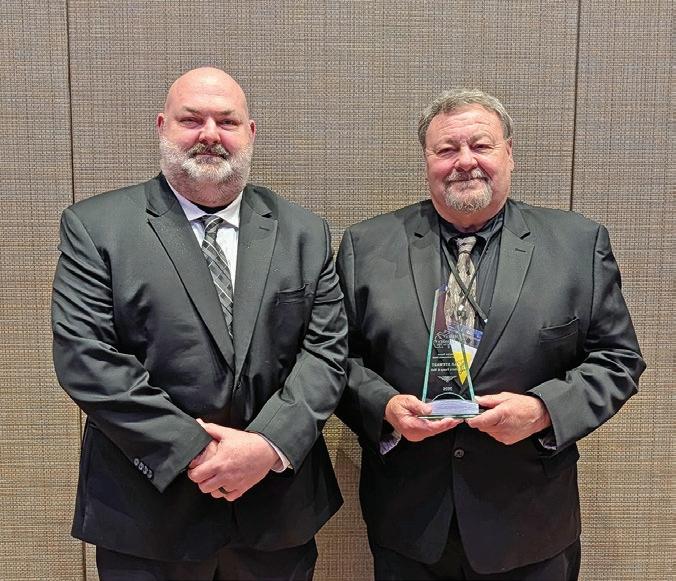
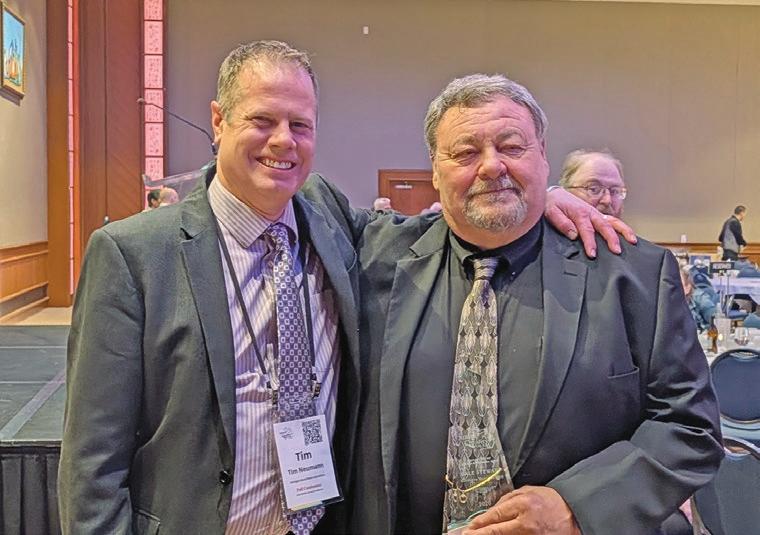
PARTNER LIFETIME ACHIEVEMENT AWARD
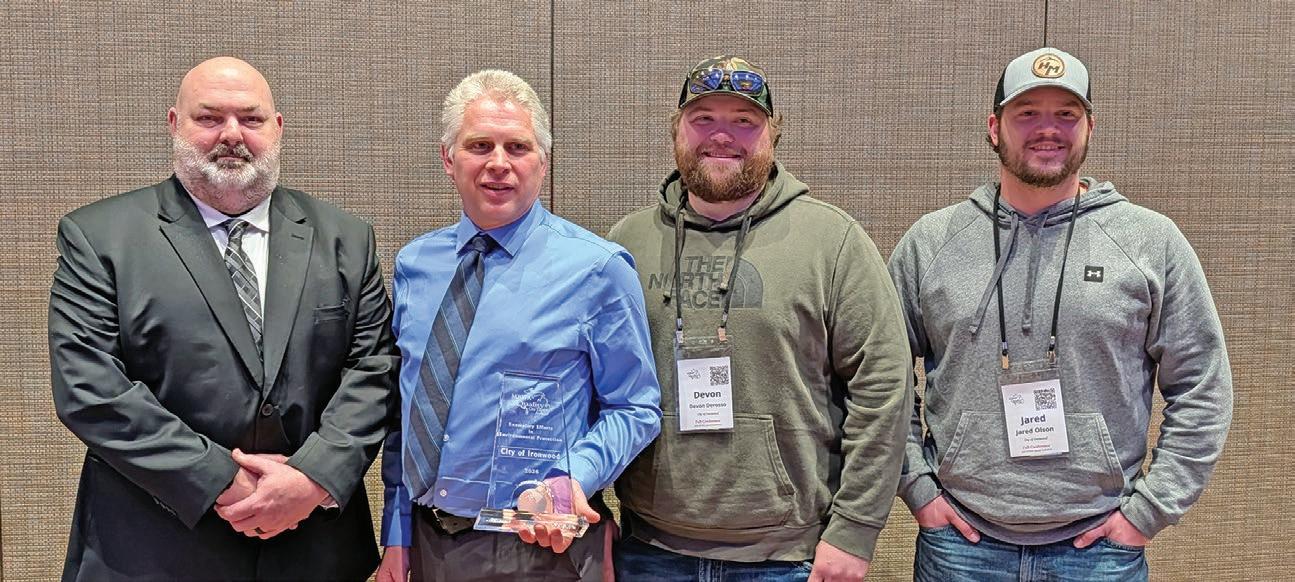
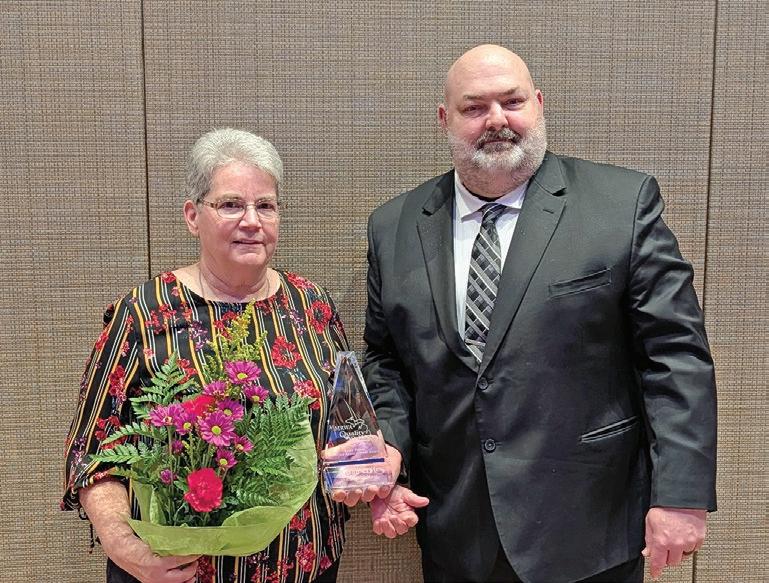
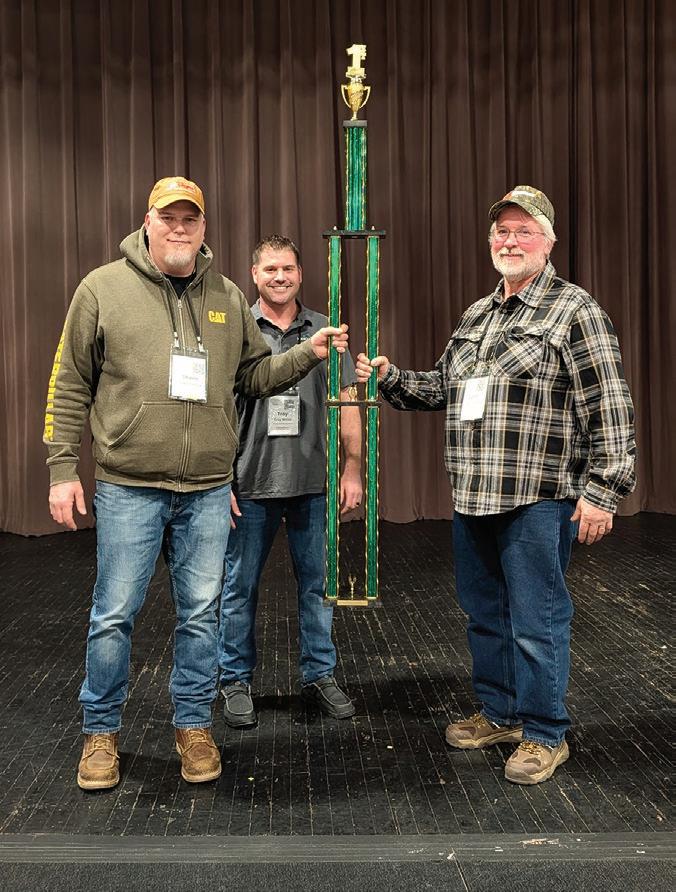
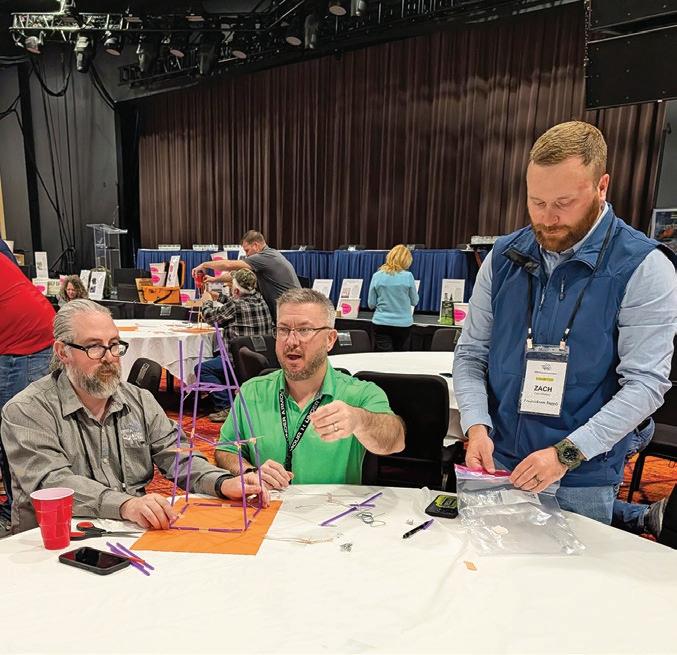
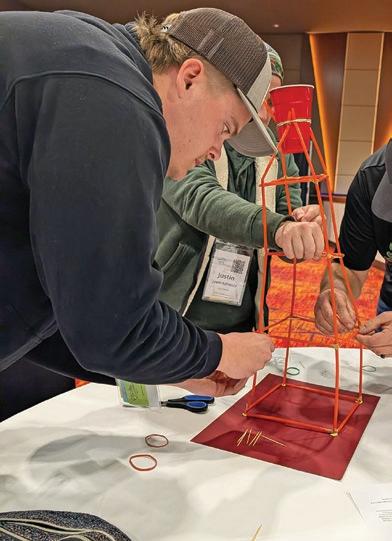
1st Place
Brandon Smith, City of Ithaca
2nd Place
3rd Place
Jerry
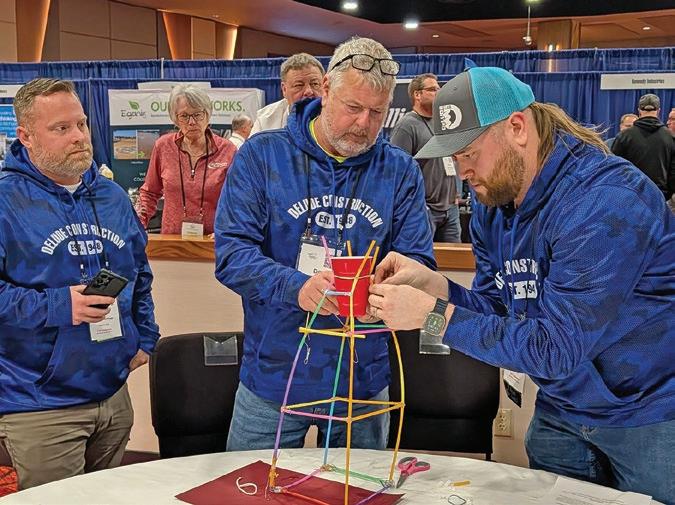
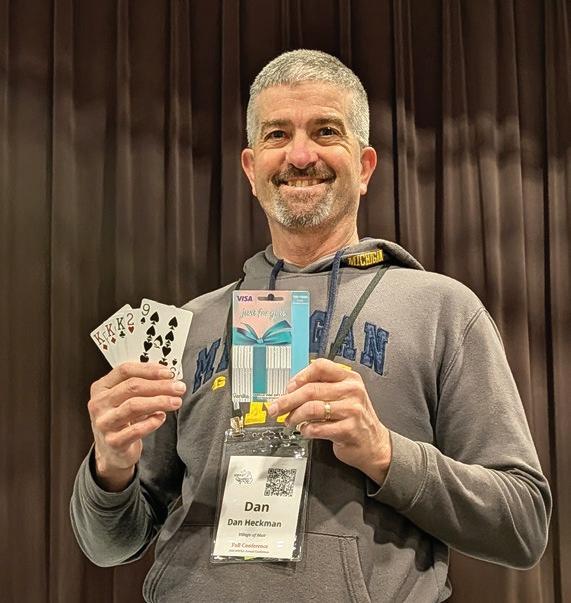
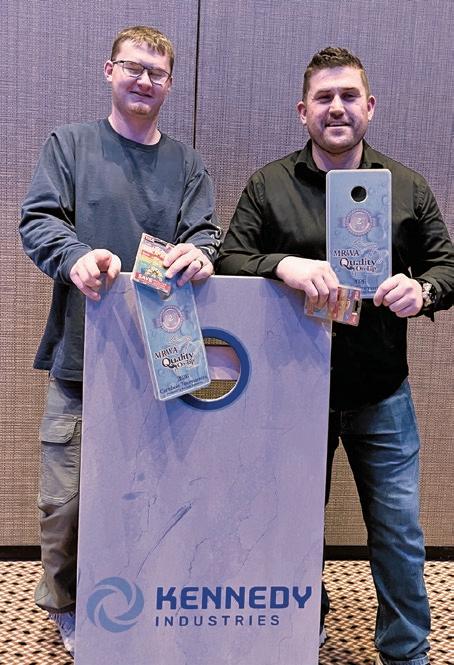
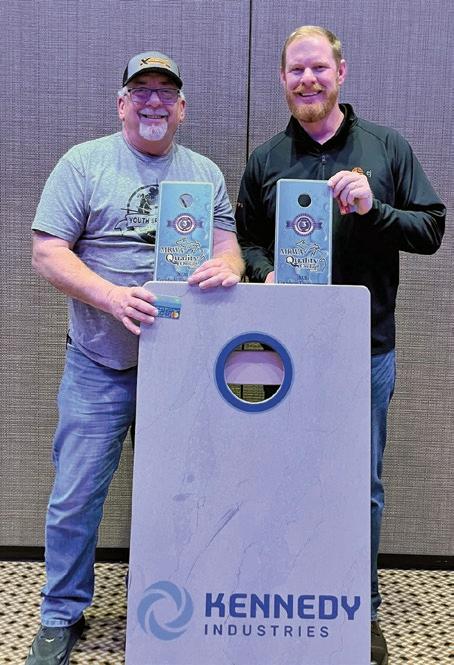
THANK YOU TO OUR 2026 ANNUAL CONFERENCE SPONSORS






Jonathan Edwards, MRWA Water Circuit Rider
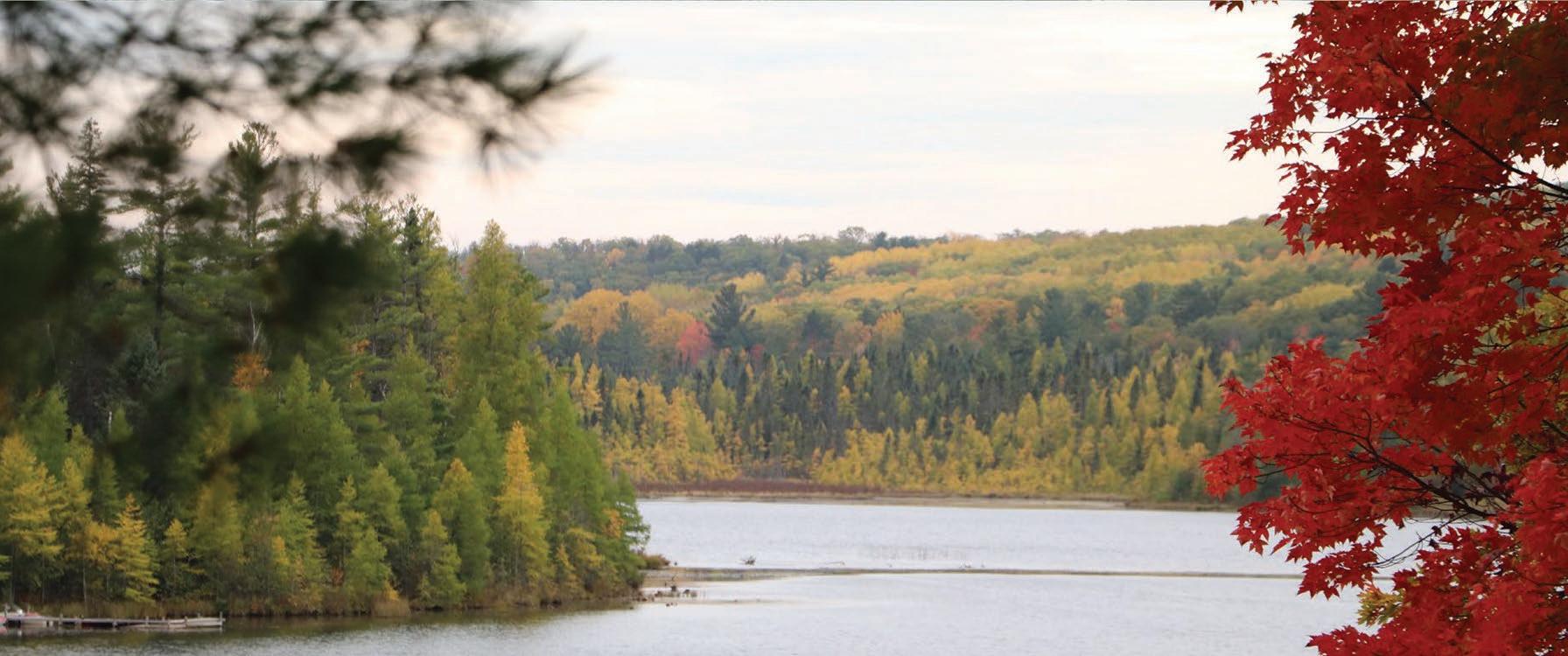
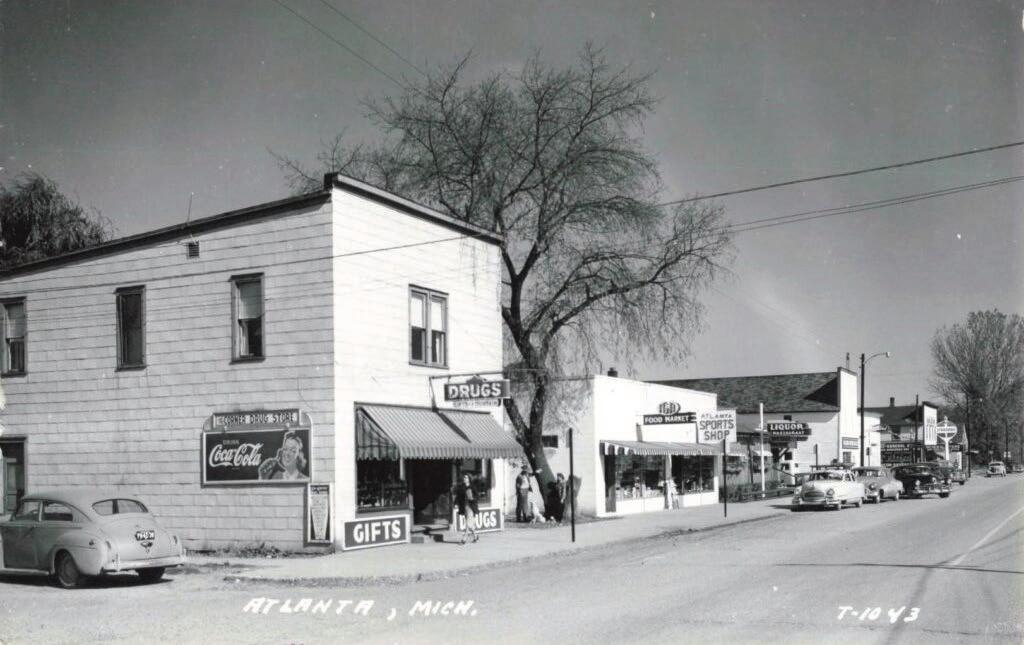
Situated in the heart of Montmorency County, Briley Township is a scenic and vibrant community in northern Michigan. Established in 1881, the township covers more than 68 square miles of forests, rivers, and lakes. It includes the community of Atlanta, the county seat, and an area proudly known as the “Elk Capital of Michigan.”
Anchored by small town charm, abundant wildlife, and year round outdoor pursuits, Briley Township draws residents and visitors seeking natural beauty, friendly faces, and authentic northern Michigan experiences.
Briley Township was one of the original townships formed when Montmorency County was organized, and it quickly became a center for settlement and community life in the region.
The community of Atlanta was first established in 1881 by Civil War veteran Alfred J. West, who named it after Atlanta, Georgia. The area’s growth was driven initially by lumbering and agriculture, two industries that shaped much of northern Michigan’s early
economy. Later, Atlanta was designated the county seat by popular vote in 1893, helping cement Briley Township’s role as a civic hub.
Over the decades, the region transitioned beyond its logging roots. With the reforestation of cutover lands and the expansion of roadways, communities like Atlanta and the township at large became known for recreation, hunting, and the natural landscapes that define the area today.
Briley Township’s rolling hills, dense woodlands, and waterways make it a haven for outdoor enthusiasts. From spring through winter, residents and visitors enjoy hiking, fishing, snowmobiling, and exploring miles of trails through state and national forests. Elk and white tailed deer roam freely in the surrounding landscape, and wildlife viewing is a popular activity year round.
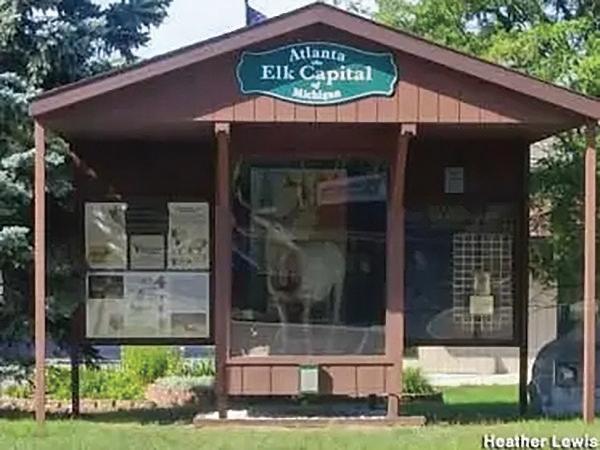
Atlanta proudly calls itself the Elk Capital of Michigan, a distinction officially recognized by the state legislature in 1986 due to the unusually large elk population found in the surrounding forests.
Winter brings a particularly exciting tradition to the area: the Sno*Drift Rally. Held annually in Montmorency County with its headquarters in Atlanta, this rally competition is the first major event of the American Rally Association national season and is known for its challenging snow and gravel courses. Competitors, including notable racers like Travis Pastrana, have taken part in this demanding winter rally.
Whether it’s fishing for trout in crystal clear streams, chasing fall colors on an ATV trail, or watching rally cars roar through snowy forests, Briley Township offers year round outdoor adventure.

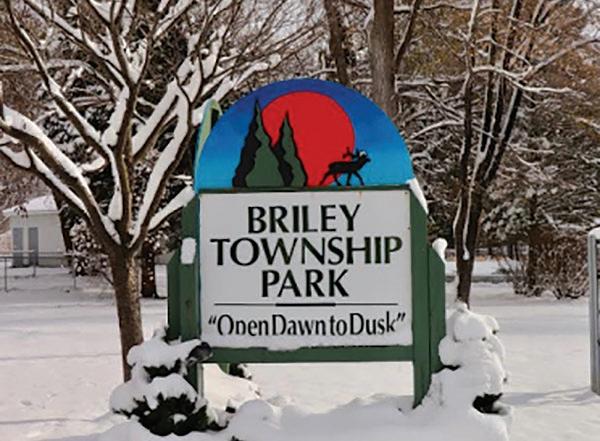
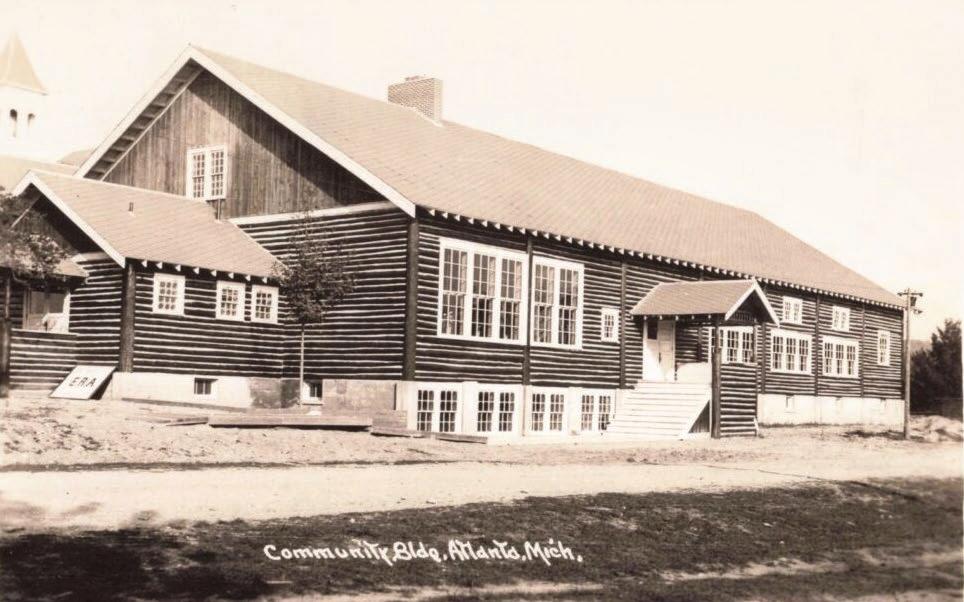
Briley Township thrives on the spirit of its residents. The community reflects a deep connection to the land and to one another, where neighbors gather for seasonal festivals, wildlife events, and local traditions. Small businesses, from diners and shops in Atlanta to outfitters and service providers throughout the township, help sustain the local economy and add to the area’s character.
Annual events help bring the community together and showcase
local pride. The Elk Festival, for example, highlights both the local wildlife and community spirit, drawing visitors from across the region to celebrate northern Michigan’s culture and natural heritage.
An essential part of life in Briley Township is its dependable water system, which supports homes, businesses, and seasonal visitors. The township’s water infrastructure draws from local groundwater and is treated to
meet state and federal quality standards for safe drinking water. Routine monitoring and system maintenance ensure a reliable supply for residents and local events alike –including large gatherings associated with the Sno*Drift Rally and other community activities. This dependable water service is vital to both daily life and the economic vitality of the township.
Briley Township and its central community of Atlanta may be small in size, but they offer a rich tapestry of history, nature, and community pride. From its roots in Michigan’s logging past to its modern identity as a destination for wildlife lovers and rally fans, the township celebrates both its heritage and its landscapes. Whether you’re drawn here for the thrill of winter racing, the peaceful trails in autumn, or the welcoming spirit of a small northern community, Briley Township stands as a testament to the enduring appeal of Michigan’s Northwoods.



By John Holland, Water Quality Action Specialist, Michigan Rural Water Association and Ginger Van Conet, Energy Efficiency Technician, Michigan Rural Water Association
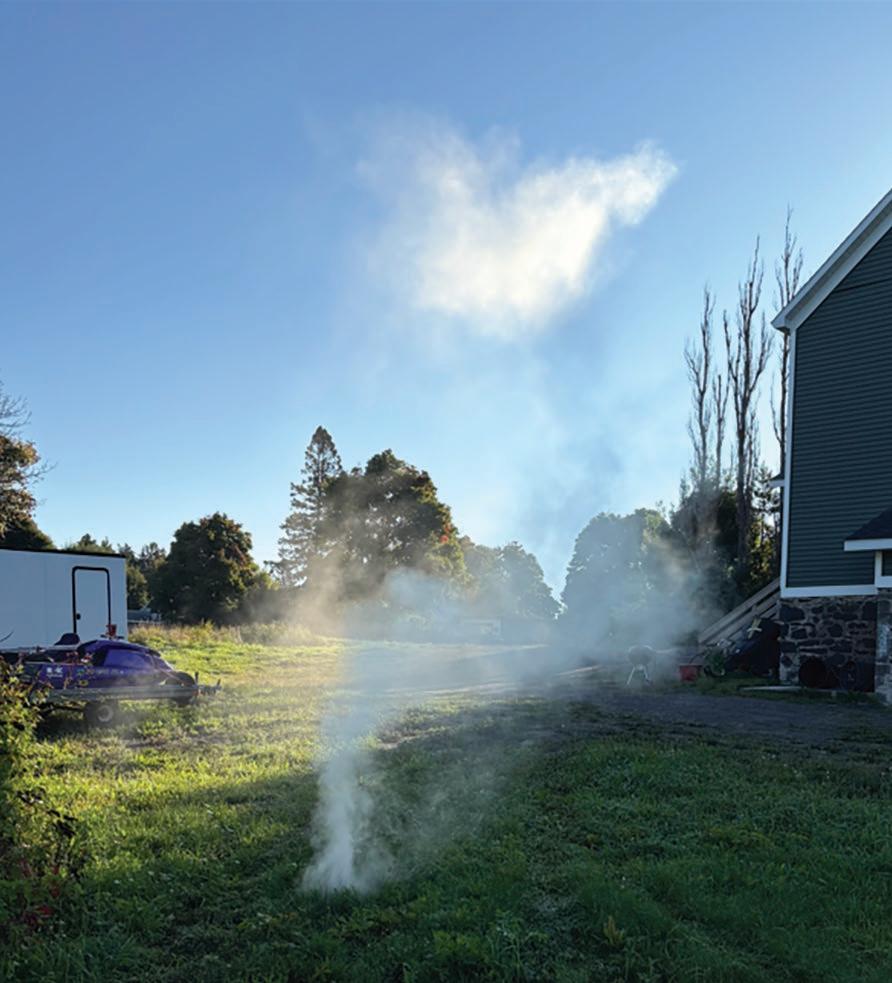
Inflow and Infiltration or I&I is the process where water from sources other than domestic wastewater enter the sanitary system. Inflow sources are direct connections into the sanitary system. Typical inflow sources include sump pumps, roof drains and cache basins. Infiltration is groundwater entering sanitary sewers through areas such as defective pipe joints, manhole joints and broken pipes. Separating the amount of water caused from inflow versus infiltration can be quite difficult. However, once in the system the effects are rather similar in nature. One of the primary effects on the system is that of increased energy costs.
Inflow enters the system quite rapidly, while infiltration enters slowly over time. A quick and dirty estimation of I&I entering a system is by comparing the drinking water pumping. While not 100% accurate it does give an operator somewhat of an estimate.

Depending on the system the costs can vary. Systems with mechanical wastewater plants will have additional pumping at the headworks high service pumps, higher RAS pumping in activated sludge plants, higher recirculation rates in trickling filter plants, and could increase energy costs associated with having to run UV systems at higher intensities due to high flows. In the collection system, lift and pump stations are the most affected by energy costs.
MRWA staff have encountered many systems in the state that have significant I&I flows. An example encountered on a system showed an estimated seven-year average was 74% of the WWTP influent was I&I, while another WWTP had an estimated flow of 50%. While these are somewhat extreme examples, these numbers are not uncommon. Nationwide the sanitary sewer infrastructure is aging with an estimated 50% of the collection systems being more than 45 years old.
A crack in your sewer line is not costing your community very much money when you look at an individual hourly amount, but when you look at a bigger picture you might want to reconsider and look at it with this information.
A 5 hp submersible pump for a wastewater lift station on average uses 3.73 kw of energy in an hour at 100 % efficiency. You get this by using a known conversion factor of 1 hp=746watts.
Therefore 5 hp x 746 watts = 3.73 kw at 100% efficiency.
Most pumps and motors operate at 85% to 90% efficiency even when they are new. It will become much less when you consider that they are processing fats, oils, grease and sharps.
A 5 hp pump operating at 85% efficiency will use 4.39 kw to operate for one hour. When you look at many communities here in Michigan, they are averaging about $0.18 per kwh for their energy cost.
When you take the 4.39 kw of energy used for that hour and multiply it by the cost of $0.18, it costs $0.79 to operate that pump for an hour. Multiply that out to a cost per month and you will get $0.79 per hour X 24 hours per day = $18.96 per day X 30 days per month = $568.80.

This same 5 hp pump operating at 90% efficiency will use 4.14 kw to operate for one hour. This may not look like a very big difference, but when you look at the numbers it shows that the 5% difference of the higher efficiency will save you 4.14 kw X $0.18 = $0.745 per hour X 24 hours per day = $17.88 X 30 days per month = $536.40 for the month to operate. Therefore, when you compare an 85% efficient pump to the same pump operating at 90% efficiency you will save $1.08 per day or $32.40 per month. Additionally, if this was a lift station on one of the examples above, reducing pumping by 50–75% would save $194.40 to $291.60 a year in energy costs.

The above information not only shows you the possible cost per month, but it also shows you why it is important to track the hours a pump operates or the meter readings daily on your energy meter to know if you are using more energy due to a float getting stuck or an impeller wearing out on your pump.
When you are considering looking at possible infiltration to your sewer system this simple cost explanation may help you understand why it is important to upgrade your pumps to a higher efficiency or to complete that sewer project to reduce infiltration.


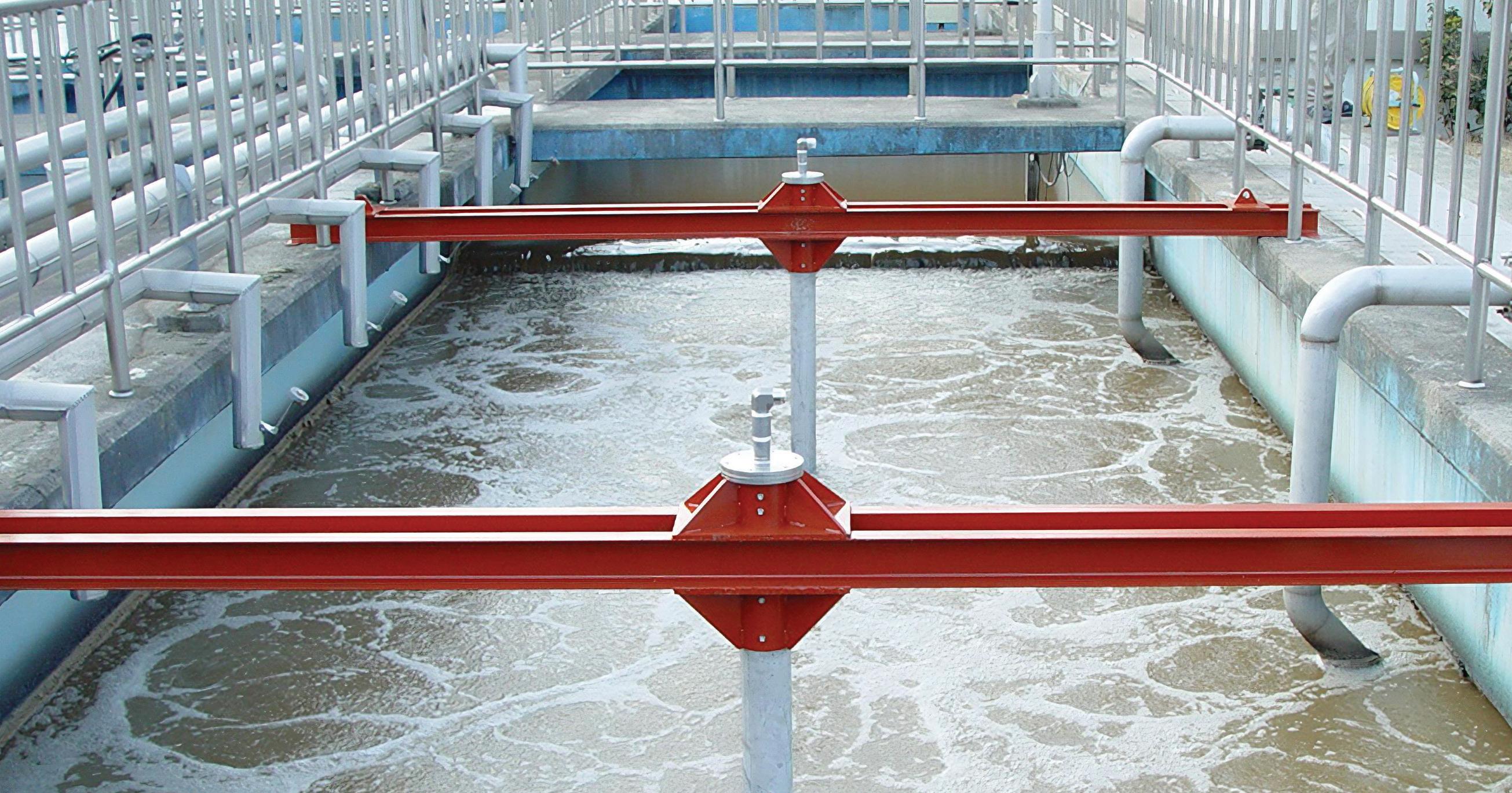

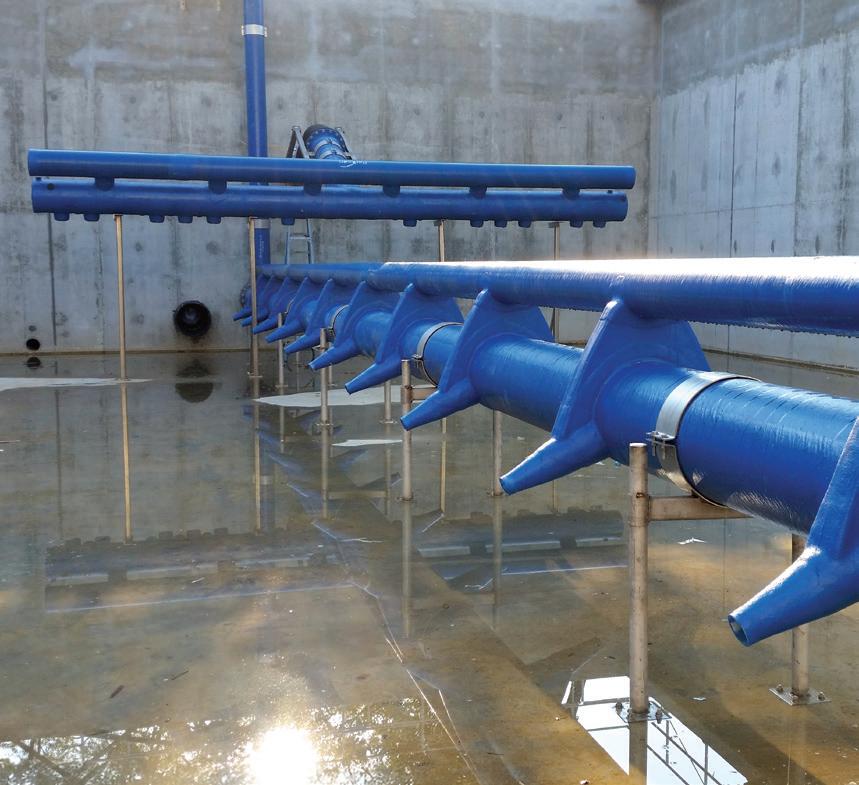
All your water and wastewater treatment needs can be found at Parkson thru their local rep Kennedy Industries.

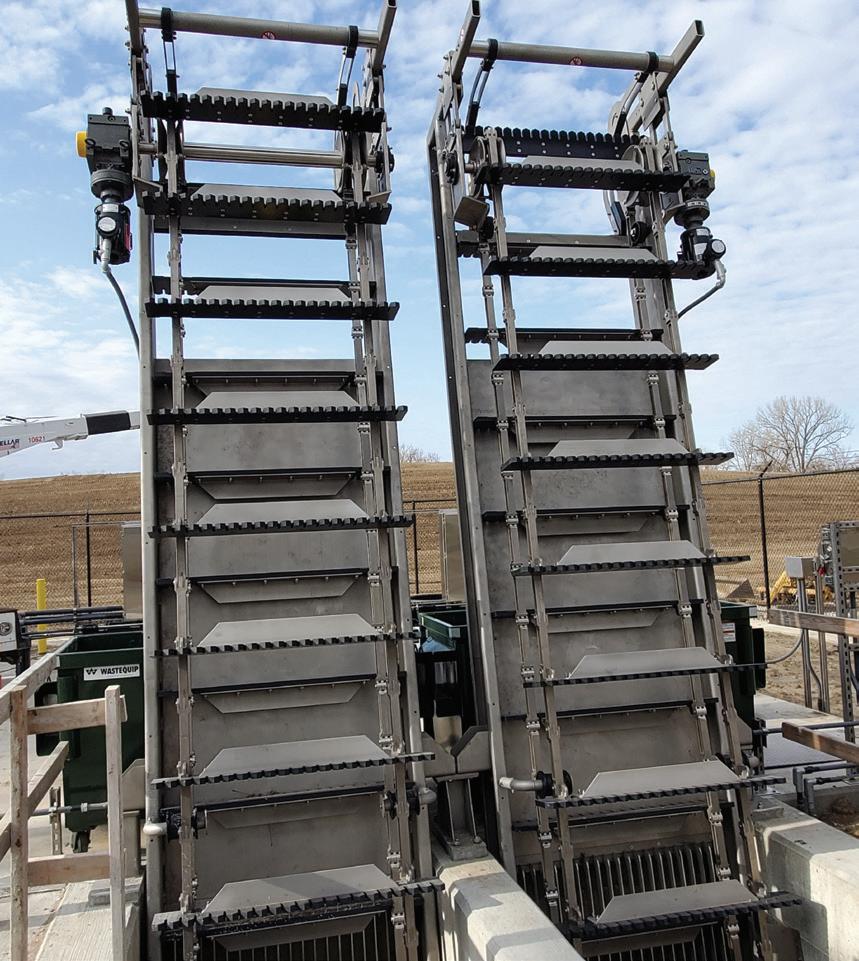

Screens, Headworks and Thickening
Aqua Guard®, Aqua Caiman®, RotoShear®, Rotorstrainer®, Helisieve®, Aqua WashPress®, ThickTech™
Separations, Clarification and ENR DynaSand®, DynaSand® Denite Filter, Lamella EcoFlow®, Oil/Water Separator Systems
Biological Treatment
Granite AGS™, VariOx™, DynaCanter™, EcoCycle SBR™, Biolac®
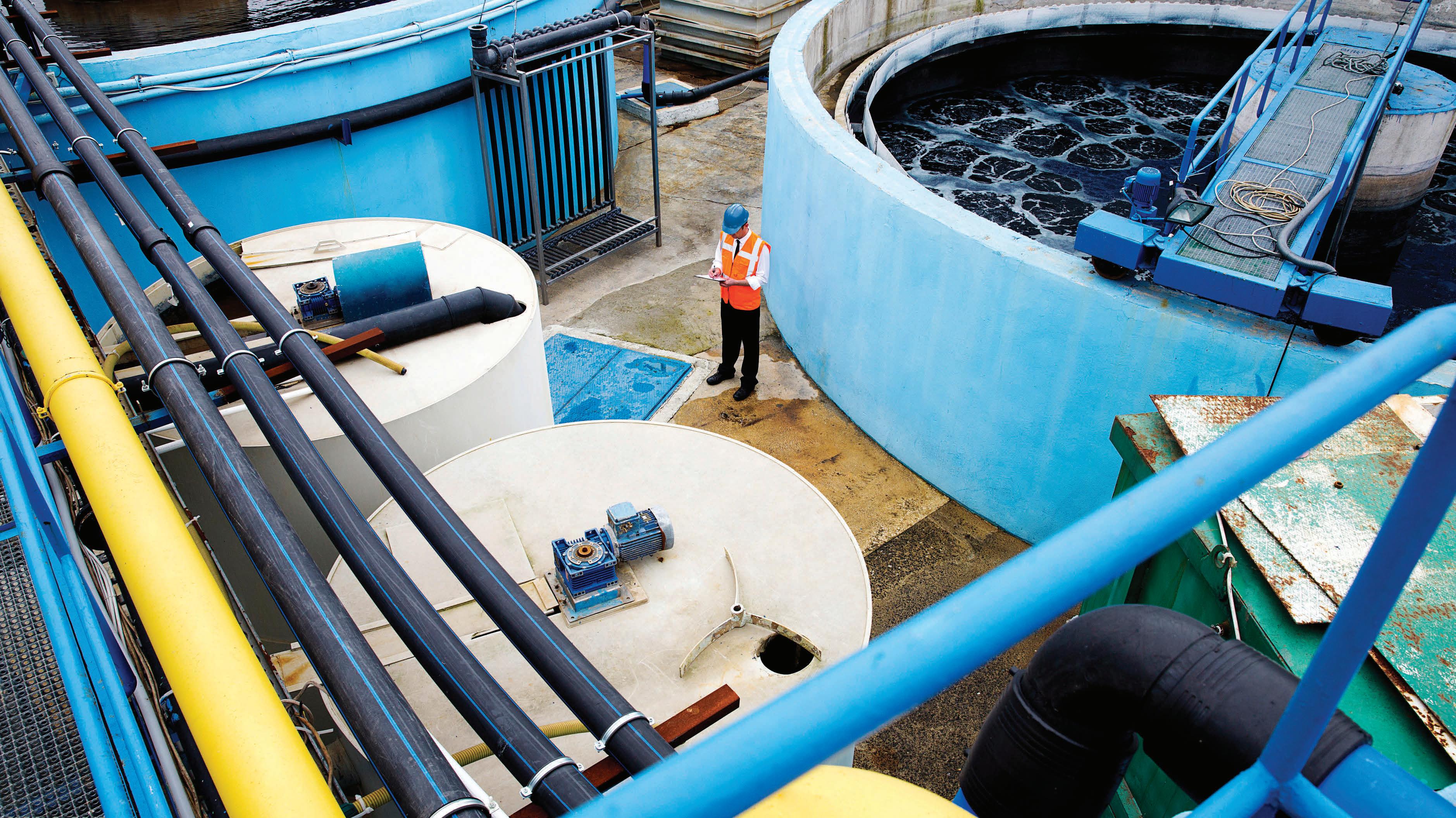
When your water systems are creating headaches everyone feels, Blue-Water Solutions partners with municipal water leaders to deliver proven systems and service that restore performance and trust.
Defining system decisions backed by pilots and references
Proven performance at scale trusted by municipalities
Immediate, reliable service that supports you long after installation



By John Monsees, Water Circuit Rider, Michigan Rural Water Association
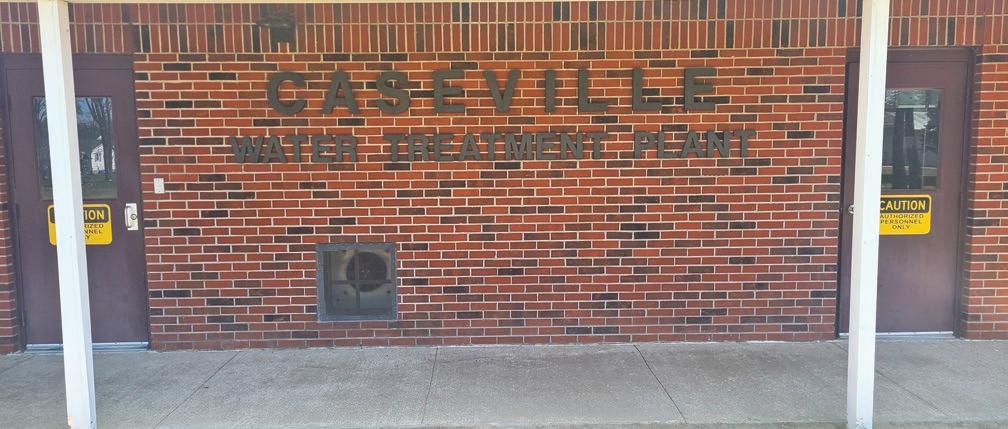
Over the years, I have had numerous conversations with the City of Caseville about the colorization of drinking water. They were heartfelt about what can be done to correct the problem. In early 2000, some of the conversations were about what ideas did the Department of Environment, Great Lakes, and Energy (EGLE) have to recommend. At that time EGLE didn’t offer a lot of insight as to why the finished drinking water in the summers would have color for usually two to three months. The City was following all drinking water standards and was sampling excessively to ensure the water was safe to drink. Over the years in my conversations with Troy Hartz, DPW Supervisor, and the water plant team along with the staff in the DPW, we would throw ideas out –flushing was a first thought to help. Maybe there was something in the water mains – possibly cast-iron, chlorine, or could be oxidation of the iron turning the water color (the water did resemble what oxidize iron looks like). But flushing only seemed to make the water more colored, and when doing iron sampling while flushing there was no presence of iron throughout the city. Again, what was going on for two to three months in the summer to have colorization in the drinking water? Some years had more color than others. Around 2023–2024 there were more meetings with EGLE, with recommendations for an engineering study; the City was already in contact with their engineer. I stopped in to the water plant after the summer of 2024; Troy was frustrated with all the concerns and complaints that he takes very seriously. The conservation again was about why the drinking water has color in it in the summers. Troy started talking about the clear well and the sedimentation and who can sample. We talked about what the water treatment plant (WTP) could sample for that they have not already done. Trace Analytical Laboratories was suggested to sample the clear well sedimentation and it was suggested to sample the water when there is no color and then sample again when there is color, and compare the samples. Dan Sorka was contacted with Trace Analytical Laboratories for sample bottles and what tests should be performed; Dan had me talk to Jon Mink, their chief chemist. We received the sample bottles and the WTP team collected the samples to be sent back to the lab.
Caseville water plant received the results back from the labs. I can’t remember all the parameters that the lab tested for but there were
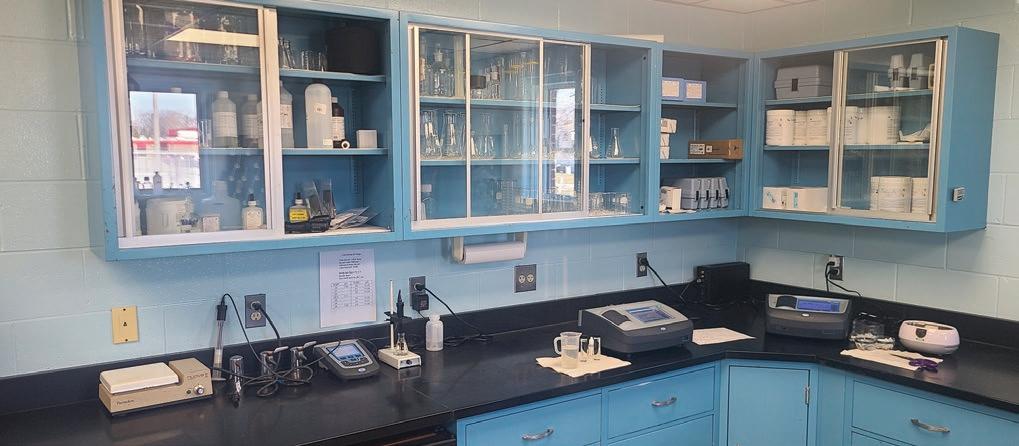
three that had my interest: manganese, phytoplankton (algae), and water hardness and why. Remember, Caseville water plant is surface water; yes, I would expect algae, but where was the manganese coming from that exceeded the secondary Maximum Contaminant Level of 0.05 ppm and then the hardness of water that is in a category of ‘very hard.’ I know the water plant team and DPW staff personally and they are very dedicated and show professionalism in their jobs, working to find a solution. I talked with Troy and the WTP team about instead of using chlorine in the low lift where the intake is located, switch to potassium permanganate which would oxidize the manganese better than chlorine and help decrease the disinfection by-product. And we talked about using powder activation carbon (PAC) for treatment for color and taste. When Caseville WTP team started researching PAC for treatment, the research showed that the PAC would obstruct the membrane filters.
The first idea everyone had was: did the manganese and hardness come from Pigeon River? And they started testing the river. The Pigeon River results showed the presence of manganese and the water was hard. The test results did not match the raw water intake test results that are significantly higher at times, primarily in the summer.
At the start of summer 2024, the water became warmer and the increase of chlorine was needed for disinfection of the drinking water. Concerns and complaints started to be a daily occurrence for the Health Department, EGLE, and the City along with the local newspaper and TV station. Not only does the City follow up with the concerns, EGLE and the Health Department also follow up with the residents. I was given some examples of residents’ worries.
• There is no reason that this (yellow water) continues year after year.
• Our water in Caseville/Pigeon area is brown/yellow all summer and tastes funky. Nothing be done about it. We pay good money.
• Recently (within last three months) water is brownish and tastes rusty.
• Brownish water. Told it is rust. Why are we drinking rusty water? This needs to be fixed. Tired of band aids. We pay good money for it to be rusty or brownish.
• Discoloured water.
This is just five of 21 concerns shared with me, with more complains that EGLE received and more with the City of Caseville and the state.
From a document from EGLE:
Troy Hartz City of Caseville
DEPARTMENT OF ENVIRONMENT, GREAT LAKES, AND ENERGY WARREN DISTRICT OFFICE
September 12, 2024
6767 West Main Street P.O. Box 1049 Caseville, Michigan 48725
Dear Troy Hartz: WSSN: 01190 County: Huron PHILLIP D. ROOS DIRECTOR
SUBJECT: City of Caseville Discoloration Issue – Engineering Study Recommendation
This letter confirms the Department of Environment, Great Lakes, and Energy (EGLE) has been made aware of numerous complaints in conjunction with the seasonal discoloration issue in the City of Caseville water system. The complaints have been aesthetic concerns primarily with a few claiming illnesses due to the water. EGLE met with City officials and consultants on August 29, 2024, to inspect the water system and gather information, and continues to monitor and respond to customer complaints to better understand the nature of the problem. From the data shared with EGLE to date, there is evidence that the City’s Lake Huron/Saginaw Bay source is being influenced from another source such as ground water or river water. While the seasonal discoloration issue is concerning, all water quality monitoring and monthly operation reports continue to show the water is meeting primary health standards and required treatment techniques. EGLE has been in frequent contact with City staff to help understand and respond to the discoloration issue. Given the numerous complaints and customers’ hesitation to consume the water, it is imperative the City perform a comprehensive engineering study to diagnose the problem and propose solutions. EGLE and/or U.S. EPA’s Compliance Assistance Program are available to assist with developing the study scope and a request for proposal, if needed. EGLE funding may also be available to help with study costs. Please contact this office by September 27, 2024, to acknowledge receipt of this letter and to respond to the recommendations provided. The study should be completed within 12 months of the date of this letter. If you have any questions, please contact me by telephone at 586-506-6137, or by email at johnsons18@michigan.gov
Sincerely,
Stephanie Johnson, P.E.
Surface Water Treatment Specialist
City of Caseville did request help from the EPA Compliance Assistance Program, which was approved.
When talking with the WTP team trying to put something together for this article, I got an email from the team –this is a small portion of the data that I can share.
The Caseville Water Treatment Plant personnel began collecting data, as requested by EGLE, on January 16, 2025. Alkalinity, hardness, manganese, iron, and dissolved oxygen were to be checked on a weekly basis. Dissolved oxygen wasn’t checked until January 30. Most of the data collected between the dates of January 16 and February 21 appear to be poor data due to variables exposed while learning how to execute the test procedures properly. Current sample tests appear to align more with samples sent to Trace Analytical Laboratories. Manganese is between 30–40 parts per billion higher than that of Trace Analytical Laboratories.
In late February, the raw water was analyzed for hardness and alkalinity. The results of this led to the discovery of a large slug of elevated hardness that is entering the plant. The slug of elevated hardness was captured from the raw plant tap and test results were 850 mg/L of CaCO3. The following week the slug of elevated hardness was captured at the low lift station, raw plant tap, and Unit 1 filtrate sample port. This test was conducted on the date of 3/3/2025 and the following list contains times and levels:
The Low Lift and Unit 1 Filtrate, and Pigeon River water samples were sent to Trace Analytical Laboratories. The results are listed below.
Further sampling and testing continued after 3/3/25, which verified some of the assumptions that were developed after discovery of the slug of elevated hardness. One of the observations made was that when the slug entered the plant and passed through the Clearwell, a drop in chlorine was observed on the online monitor. The hardness tested at this point from the Clearwell, or plant tap would test at an elevated level. Manganese and Iron were tested during this period and found to be lower than what had come in the slug but still elevated. After the slug had passed through the Clearwell the Chlorine and hardness would return to values that are anticipated. Hardness values are generally 230 to 270 mg/l.
Raw Tap 0712 3/12/25 258 mg/L Not Tested Not Tested
Raw Tap 0758 3/12/25 254 mg/L Not Tested Not Tested
Raw Tap 0818 3/12/25 256 mg/L Not Tested Not Tested
Raw Tap 0828 3/12/25 406 mg/L Not Tested Not Tested
Raw Tap 0833 3/12/25 964 mg/L Not Tested Not Tested
Raw Tap 0838 3/12/25 906 mg/L .28 mg/L .113 mg/L
Raw Tap 0843 3/12/25 684 mg/L Not Tested Not Tested
Raw Tap 0848 3/12/25 546 mg/L Not Tested Not Tested
Raw Tap 0856 3/12/25 424 mg/L Not Tested Not Tested
Raw Tap 0913 3/12/25 362 mg/L Not Tested Not Tested
Raw Tap 1300 3/12/25 275 mg/L .07 mg/L .025 mg/L
Data below was obtained on 3/18/25.
Tap 0720
Plant Tap 0856 3/12/25 350 mg/L Not Tested Not Tested 1.80
Plant Tap 0902 3/12/25 530 mg/L Not Tested Not
Plant Tap 1300 3/12/25 266 mg/L Not Detected .025 mg/L 1.93 mg/L
Note: Yellow highlighted values more than likely would be Non-Detect with EGLE or Trace Analytical Laboratory procedures.
From the chart above and data collected 3/3/25, that is not listed, we can roughly calculate the size of the elevated hardness slug. The slug appears to last between 20–30 minutes, if we multiply this amount of time by an average speed of 816 gallons per minute, we find the slug is estimated to be between 16,320–24,480 gallons. We can also see that there are detectable amounts of iron contained in our raw water, that appears to oxidize from the chlorine addition at the low lift and is removed from by micro filter membranes. The traceable amount of manganese also appears to be oxidizing and removed somewhat by the micro filter membranes. Dissolved Oxygen was also tested on the slug of elevated hardness and found to be at 11.20 mg/L. Many of these tests were performed too in subsequent days and the elevated slug was found to be repeatable.
Note: Yellow highlighted values more than likely would be Non-Detect with EGLE or Trace Analytical Laboratory procedures.
The table above only seemed to confirm earlier observations; we know the rough timing of the slug. Testing shows it has elevated hardness or at least something that mimics hardness. We know the slug has iron and manganese at what would be traceable levels with independent laboratories. We found the iron and some manganese is oxidizing and removed by the micro filter membranes. It also appears as if something contained within the slug is causing a decrease in chlorine as it flows into and through the Clearwell, possibly precipitates out in the Clearwell.
All data in the tables are only applicable when the plant speed is at 1.1 million gallons a day or 816 gallons per minute. The slug of elevated hardness is suspected to change in the time of arrival and size when the plant speed is increased or decreased. With the plant speed change, we expect to see changes in how much of the iron and manganese is oxidized. If there is too little contact time from the low lift to the plant the chlorine will not have the contact time to oxidize as much of the iron or manganese. Some or more will pass through the micro filter membranes, due to a more soluble state, and possibly oxidize in the Clearwell or in the distribution system. There are also concerns about feeding excessive amounts of Chlorine and the possible creation of trihalomethanes. Chlorine is dosed at the low lift station at a constant rate. The raw water pumped to the water plant, was a constant flow rate throughout testing. It was noted that during the slug, the chlorine from the low lift was almost completely consumed by the high demand of what is assumed to be iron and manganese. Chlorine is also dosed at the filtrate confluent as it enters the water plant clear well. The dosing rate also remained constant on testing days. Observing the online chlorine monitor you can see the chlorine demand increase and the free residual chlorine drops significantly. The only thing that changed with the water, plant set-up, and chlorine was the slug of elevated hardness and what is contained within the slug. The assumption that the iron and manganese caused the increase in demand that caused our chlorine free residual to drop. Now the testing is moving into a stage of verifying the existence of the slug throughout changes in plant operation speeds and seasons.
The hardness could cause several operational issues for our water plant, including but not limited to increased chemical usage for cleaning, decreased membrane efficiency, and possible premature membrane failure.
We are also watching for changes in iron and manganese throughout the day, for example, we always see elevated levels the closer we get to the summer months. Hardness, although not causing the discoloration of the water that is seen in the summer months, is a concern due to the staining or white/gray spots it leaves behind. Hard water is generally not considered a health concern but may cause dry itchy skin and dry scalp, there is no MCL for hardness. The water coming into our water plant is considered very hard by most standards. The hardness could cause several operational issues for our water plant, including but not limited to increased chemical usage for cleaning, decreased membrane efficiency, and possible premature membrane failure. All hardness values contained in this report are to read or recorded as mg/L of Calcium Carbonate or CaCO3
To convert this to grains of hardness simply divide the mg/L value by 17.12.
An example would be 258 mg/L / 17.12=15.07 grains of hardness.
Iron and manganese are tested with a Hach DR3900 photo spectrometer. The test procedure for used for iron is EPA approved and appears to be accurate. The method for manganese is not EPA approved and the values obtained are used only for internal
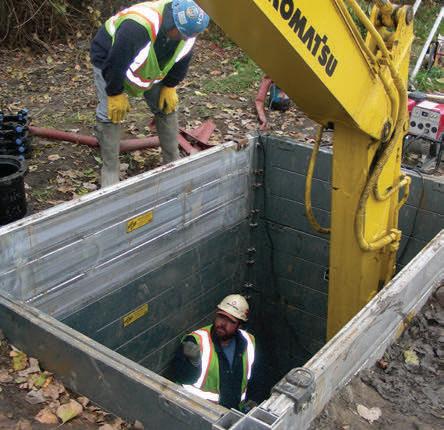
The Competent Person is required to identify potential dangers of all excavation worksites and enforce trench safety best practices. FIRST WEDNESDAY OF THE MONTH
reference. Water plant personnel are currently evaluating different methods to test the manganese to make it align with tests completed by EGLE and Trace Analytical Laboratories.
Dissolved oxygen is not tested on a regular basis currently. Every test performed for dissolved oxygen has been in the range of 8 mg/L to 11 mg/L. A current theory is that there is a hypoxic or anoxic area in or above the bed causing the iron, manganese, and other items to be more soluble due to change in the oxidized state. It has been proposed that the stones in the bed and possibly the soil below the bed be analyzed for the metal/mineral composition. Another proposal is a dissolved oxygen monitor directly above or in the bed.
In an attempt to locate where the slug of elevated hardness was coming from, we calculated the volume of all the main or pipe between the low lift station and the header of the bed, between the low lift and the plant, and then the bed itself.
The calculation used to determine the volume of a cylinder was: Cylinder: V = 0.785 x D2 x H, then the result was multiplied by 7.48 gallons to determine how many gallons contained by one foot of pipe, this number was then multiplied by the feet of appropriate main to equal total volume. Using an average 816 gpm flow rate we can determine an approximate origan of the elevated slug of hardness. From this we could calculate the amount of time between each specific location.
Low Lift to Header of the Bed – 16 inch main @ 2,963 feet
.785x1.33x1.33x2963=4114ft3
4114x7.48=30772.72 gallons
30772.72/816 gpm=37.71 minutes
Low Lift to the Plant – 12 inch main @ 4,838 feet
.785x1x1x4838=3797.83ft3
3797.83x7.48=28407.77 gallons
28407.77/816gpm=34.81 minutes
Bed Capacity – consists of 18 laterals of 8 inches x 240 feet
18 x ( (.66' x .66' x .785) x 240')
18 x 82.07= 1477.2ft3 x 7.48 = 11050 gallons in laterals
2 manifolds 16" x 290'
2 x (1.33' x 1.33' x .785) x 290' = 805.4 ft3 x 7.48= 6024.3 gal in manifold
Total Bed Capacity of 17,075 Gallons
CONCLUSION
With pipe capacities / flow rate we are able to consistently capture water from slug.
Bed to low lift 30,772 gal / 816 gpm = 38 minutes (captured 40 minutes after start up)
REGISTER: safety.efficiencyproduction.com

Low lift to plant 28,407 gal / 816 gpm = 35 minutes (captured 80 to 90 minutes after start up)
Slug is lasting 20 to 30 minutes. The hardness spikes quickly and takes time to return to normal.
Bed capacity of 17,075 gallons (17,075/816 gpm= 20.93 minutes.
Water blending in transmission water is the main reason for taking time to return to normal.
There are more data points available upon request.
Along with the City of Caseville, the Health Department collected water samples from the residents. I don’t have any data from the Health Department sampling results, but I’m sure the data can be obtained by a request.
CASEVILLE, Mich., May 27, 2025
The City of Caseville Department of Public Works (DPW), the Huron County Health Department, and the Michigan Department of Health and Human Services (MDHHS) are working together to address discoloration in the drinking water in the Caseville area.
Beginning June 3, staff from both the DPW and MDHHS will be in the City of Caseville, Caseville Township, and the Village of Pigeon knocking on doors of homes with connections to the City of Caseville drinking water distribution system to ask residents for drinking water samples from a faucet inside their home. This sampling will be done free of charge.
The drinking water sample will be taken from a faucet that is frequently used, like a kitchen or a bathroom faucet. Residents will be asked to grant the sampling team’s approval to access their home, and an adult must be present during sampling.
All MDHHS staff conducting samplings will have state issued vehicles, visible MDHHS identification and will be wearing MDHHS logoed attire. MDHHS staff will be accompanied by DPW staff.
Residents have noted that a discoloration event occurs annually. The goal of this initial drinking water sampling is to assess the drinking water quality before the discoloration begins. MDHHS plans for additional drinking water sampling during a discoloration event, likely in the summer months of June–August 2025.
This sampling effort is different from the engineering study and monitoring that is being completed by the Michigan Department of Environment, Great Lakes, and Energy (EGLE) and the Environmental Protection Agency (EPA).
If you have any questions about water sampling, please call MDHHS at 800-648-6942.
Troy Hartz
DPW Supervisor
City of Caseville
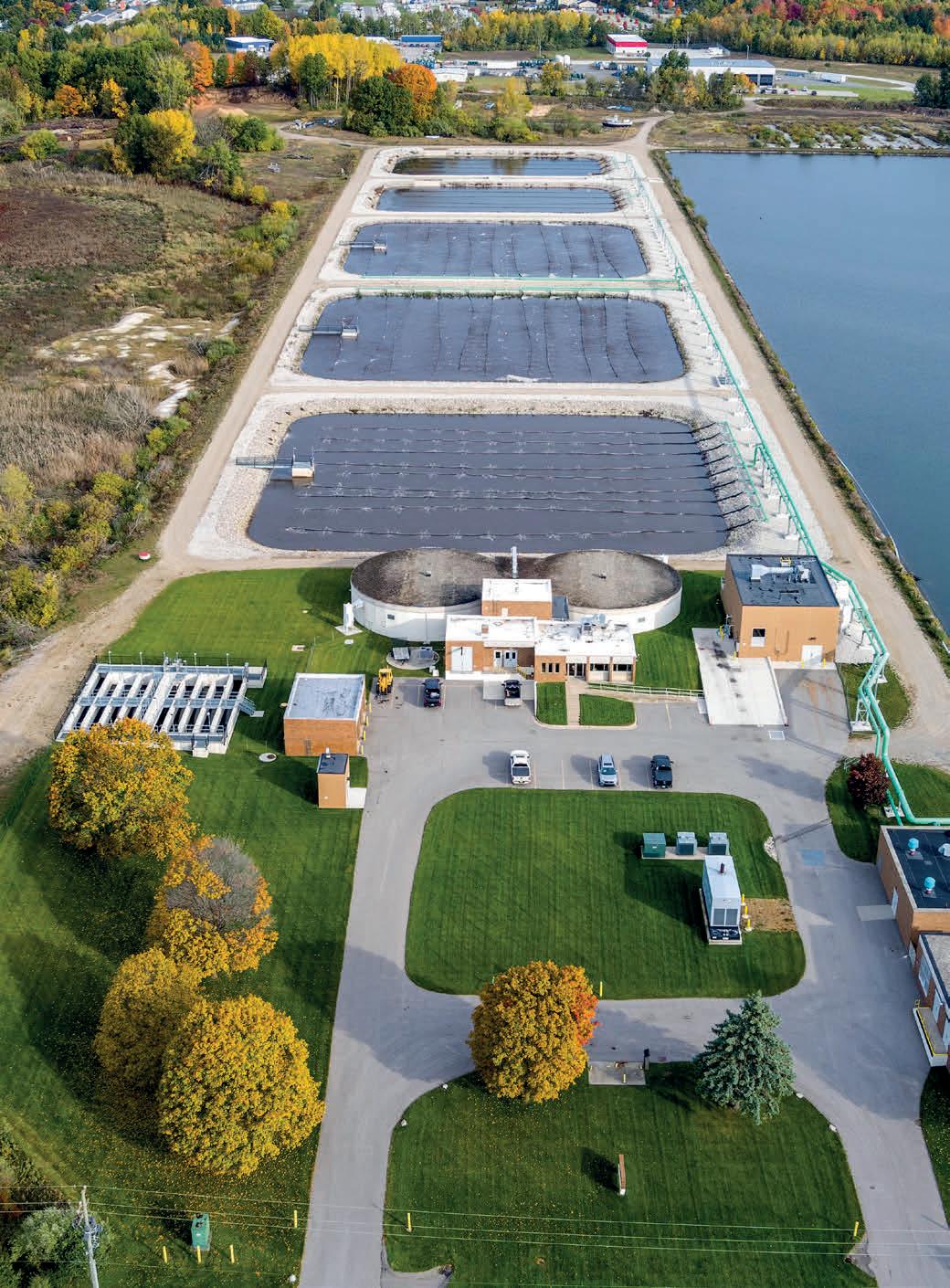
Jacobs Engineering was hired to perform the study for treatment concepts for the City of Caseville Water Treatment Plant. The engineering firm started the study in the fall of 2024 and submitted their proposed treatment in March 2026.
Preliminary Engineering Report
Caseville, Michigan
Revision: Draft March 9, 2026
Caseville has been facing water quality changes during the summer, which resulted in water discoloration during this period. The discoloration typically occurs annually for two to three months. Sampling results from summer 2025 indicated an exceedance of the EPA’s secondary Maximum Contaminant Level (sMCL) for manganese in the distribution system with a high level of water hardness in the raw water and/or in the distribution system. In addition, the raw water contains extremely high levels of phytoplankton density and total algae. Four alternatives were documented, and three alternatives were evaluated in this PER for Caseville as follows:
• Alternative 0 (for documentation only): Regionalization; New Intake Pipeline and Crib; Groundwater Supply; and Lime Softening Treatment
• The cost estimates provided in Table 4-2 represent ballpark numbers which were generated from estimation from other EPA WaterTA projects and an inhouse cost estimating model.
• Alternative 1: Treatment 1 – Greensand Filtration + Ion Exchange Softening + Residual Management after Microfiltration
• Table 4-6 shows the estimated construction cost for Alternative 1. These costs include greensand filtration without pilot study, an IX softening unit, a waste holding tank, and intake bed maintenance modifications. The total estimated construction cost is $11,073,000.
4-6. Estimated Construction Cost – Alternative 1: Treatment 1 –Greensand Filtration + Ion Exchange (IX) Softening + Residual Management after Microfiltration
• Alternative 2: Treatment 2 – Intake Bed Bypass Modifications with Pre-oxidation and Dissolved Air Flotation (DAF) with Coagulant Prior to Microfiltration
• Table 4-9 shows the estimated construction cost for Alternative 2.
These costs include two DAF units with pilot study, pre-oxidation chemical feed storage, rapid mix basin, flocculation basin, liquid chemical feed system for coagulant, as well as intake bypass modifications. The total estimated construction cost is $13,568,000.
Table 4-9. Estimated Construction Cost – Alternative 2: Treatment 2 –Intake Bed Bypass Modifications with Pre-oxidation and Dissolved Air Flotation (DAF) with Coagulant Prior to Microfiltration
Alternatives
Alt 2 - DAF Pilot study
Alt 2 - Chemical Feed Storage – Pre-oxidation (KMnO4)
Alt 2 - Two (2) Rapid Mix basin
Alt 2 - Two (2) Flocculation Basin
Alt 2 - Liquid Chemical Feed – Coagulant
Alt 2 - Two (2) DAF Units
Alt 2 - Intake bypass modification –42-INCH DIAMETER X 2 FT TALL CYLINDER SCREEN
• *The pilot study is only included in the Total Estimated Construction Cost.
Our concern for the environment is more than just talk
We are committed to publishing the magazine in the most environmentally-friendly process possible. So enjoy this magazine... and keep thinking green.

• Alternative 3: Intake Bed Maintenance Modifications with Pre-oxidation and Finished Water Sequestration
• Table 4-12 shows the estimated construction cost for Alternative 3.
These costs include intake maintenance modification, pre-oxidation, sequestration processes and chemical storage tanks. The total estimated construction cost is $2,045,000.
Table 4-12. Estimated Construction Cost – Alternative 3: Intake Bed Maintenance Modifications with Pre-oxidation and Finished Water Sequestration
The alternatives were evaluated based on a combination of non-monetary factors (Ease of Operation, Residual Management, Permit Needs, Longevity, and Ability to Meet Current or Future Regulations) and financial considerations, including construction cost and 20-year life-cycle cost.
In response to water quality challenges, implementing Alternative 2 is recommended as a long-term solution to address the impaired raw water intake bed and associated water quality challenges it creates. This alternative bypasses the intake bed with a new intake structure designed for shallow waters. Bypassing the intake will reduce water hardness, iron, and manganese levels in the raw water by pulling directly from Lake Huron. Without the intake bed, pretreatment for the microfiltration membranes is required to remove solids in the source water and maintain operational efficiency and effectiveness of the membranes. Due to the elevated levels of phytoplankton, dissolved air flotation (DAF) is recommended over conventional sedimentation to allow the phytoplankton to be removed by floating and skimming the solids from the water stream. Since DAF has not been installed in Michigan, pilot testing is required to verify its performance.
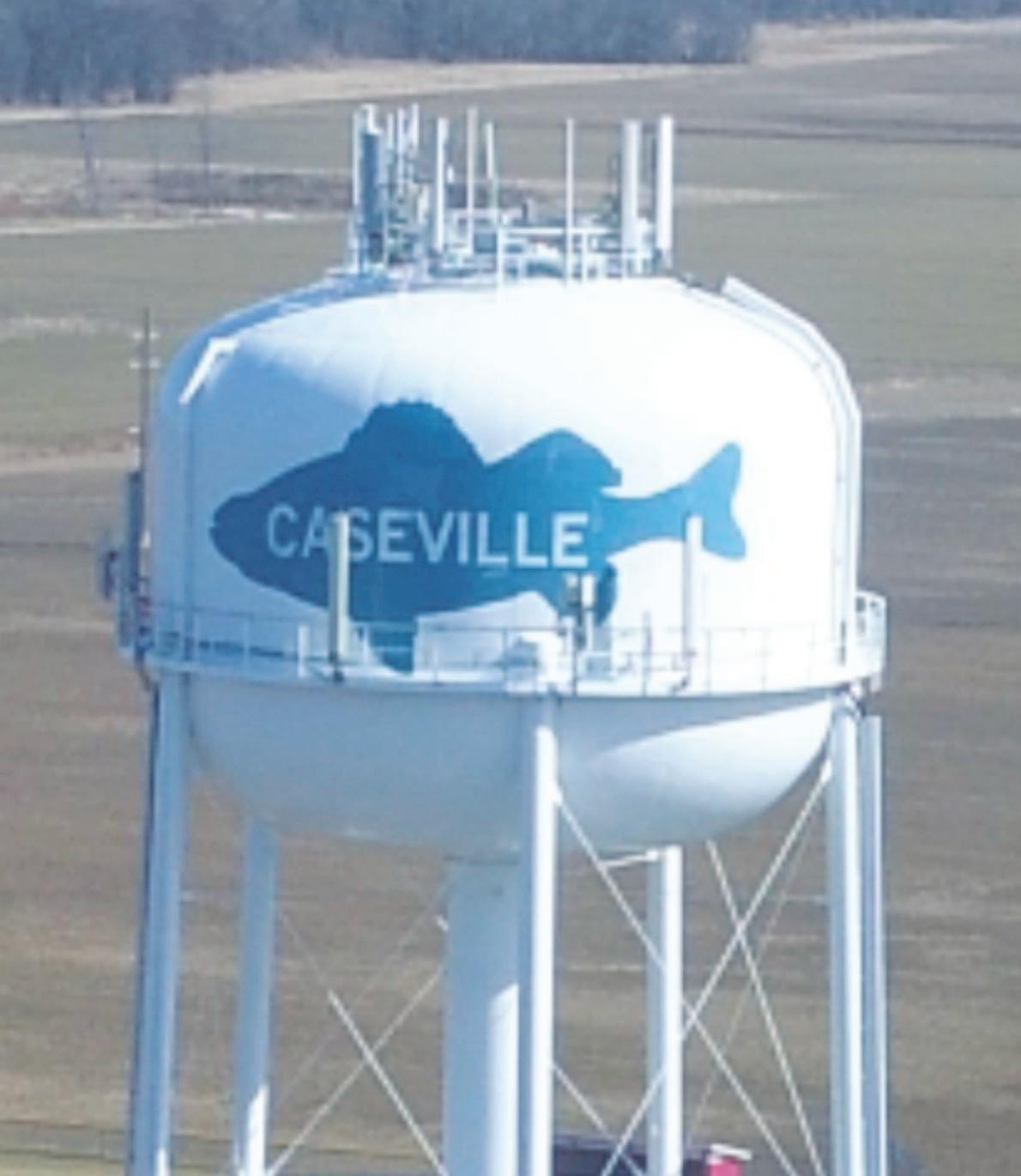
The City of Caseville is working with Fleis & Vanderbrink for chemical feed system design and permitting with added DWSRF project plan and application. The City wants to start piloting feeding sodium permanganate at the low lift pump station. The water study from Cadmus-Jacobs recommends evaluating another oxidant such as permanganate to increase manganese oxidation. The proposed pilot study sides with the recommendation and the City can apply the new system with hopes to remove the color in the distribution system.

▶
Letters regarding the assistance you have received from MRWA are useful in discussing with our lawmakers the need for water programs for small communities. If you

Michigan Rural Water Circuit Rider
Tom Anthony <tom@mattawanmi.com>
To: "customersatisfaction@nrwa.org" <customersatisfaction@nrwa.org>
Cc: Tim Neumann <tneumann@mrwa.net>
Jonathan is a fantastic, well-dressed clean-cut hard-working person who holds the Distribution S-3 and Limited Treatment D-2 that the Village of Mattawan needed for a temporary operator in charge. I had to have surgery that requires me to be off work for four months. Between the great staff that I have (who have taken many of the Training Courses offered through MRWA), and Jonathan (who has been coming in to do the Monthly Operation Report and helping our new manager do a rate study), I can recuperate without the worry of being in violation.

Where would we be without them? None of our surrounding communities do the treatment that we do. Thanks to the EPA and the USDA and National Rural Water for their help as well.
Forever Grateful
Tom Anthony Village of Mattawan Public Works Superintendent (269) 668-2300 Sun, Mar 8, 2026 at 1:44 PM



For more than 100 years, DLZ professionals have focused on protecting our water resources.
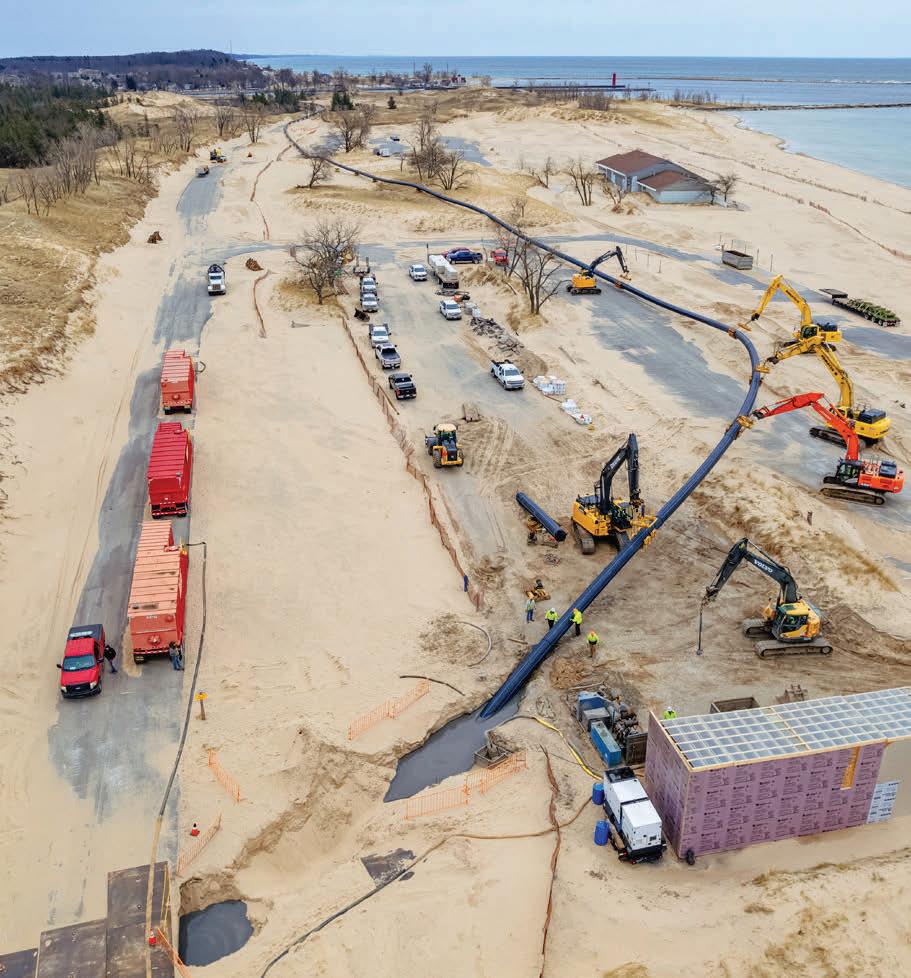
With comprehensive expertise across water and wastewater services, DLZ is a leading design and consulting firm. Our team of more than 950 engineers, environmental specialists, and designers supports a fully integrated, multidisciplinary approach to water infrastructure projects.

Joe Vandommelen
Art Kale <manager@homermichigan.org>
To: tneumann@mrwa.net
Cc: Joe Vandommelen <jvandommelen@mrwa.net>, Brent Michael <brent.l.michael@saint-gobain.com>
Good afternoon, Tim.
Mon, Apr 13, 2026 at 1:34 PM
Please know that our Homer Village Council has made it very clear that they wanted me to send a letter of commendation to you about Joe Vandommelen. He has been here a couple times, and even presented to our Council as we reviewed our water and sewer rates for this Spring. Actually, Joe will be here tonight for a Workshop and also plans to present at our May 4 Council Meeting. He comes across with so much more credibility than I could ever present.
I have been here for over ten years as Village Manager and never has the Council, in unison, ask that I send a letter to a “vendors” Manager expressing our gratitude for this work and effort. Joe has presented himself professionally and is obviously very knowledgeable. He is indeed a great asset for Michigan Rural Water Association.
Thank you for your time and I remain available to discuss further if you would like.
Regards,
Art Kale
Village Manager Homer, Michigan 49245 Manager@homermichigan.org 517-568-4321 Office 517-206-0871 Cell



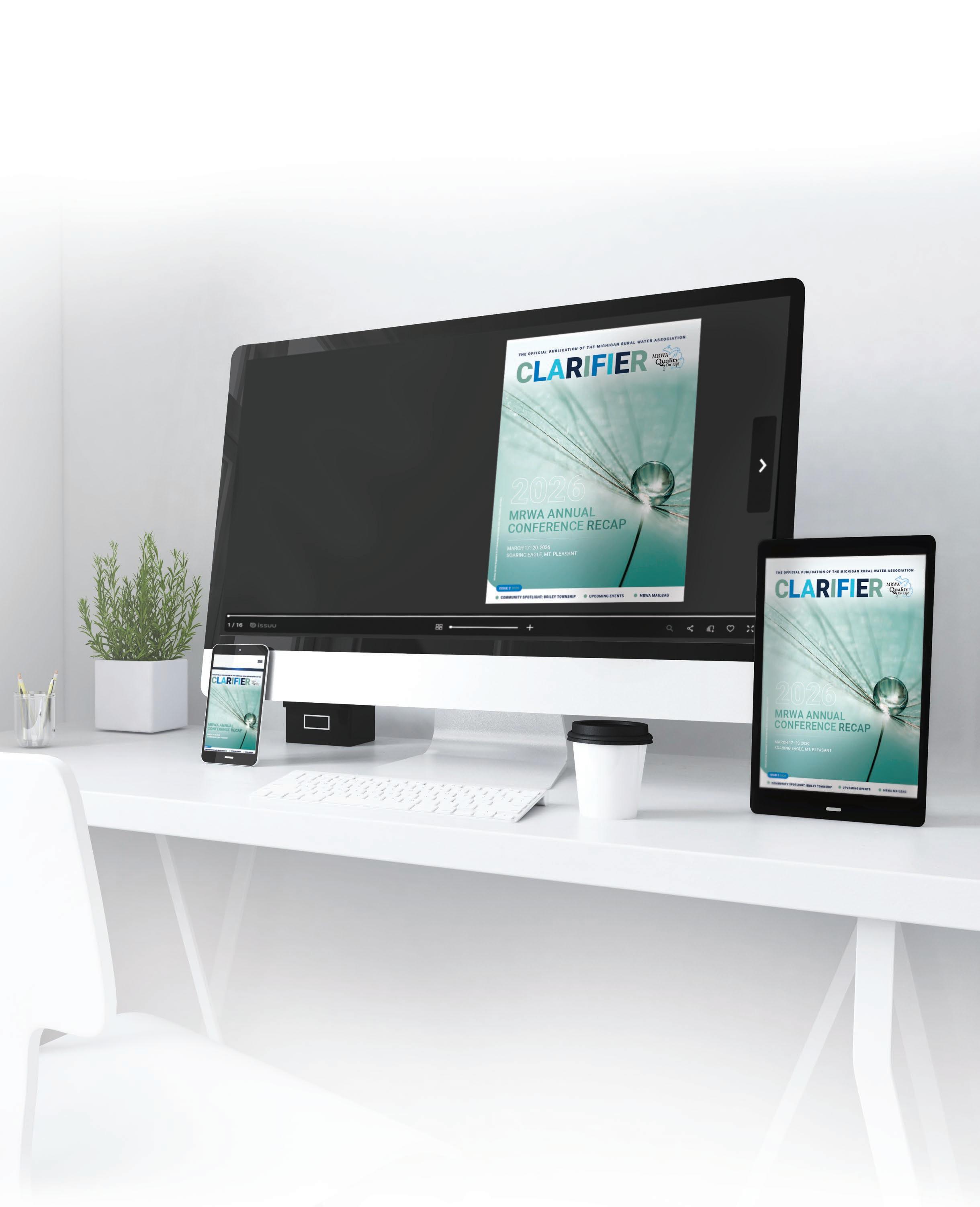
Staying connected and in the know has never been easier with both print and digital editions of Clarifier.
Make sure to check out our highly interactive, mobile-optimized edition.


CLARIFIER is made possible by the companies that convey their important messages on our pages. We thank them for their support of the Michigan Rural Water Association and its publication, and encourage you to contact them when making your purchasing decisions. To make it easier to contact these companies, we have included the page numbers of their advertisements, their phone numbers, and, where applicable, their websites.
Blue Water Solutions
Core & Main
Dixon Engineering, Inc.
Fishbeck
Fleis & Vandenbrink
Giant Maintenance & Restoration, Inc.
Hawkins Water Treatment 3 877-355-7876 www.hawkinsinc.com/groups/water-treatment
Headwater Companies
L.D. Docsa
Northern Pump & Well
Peerless Midwest