
WELCOME
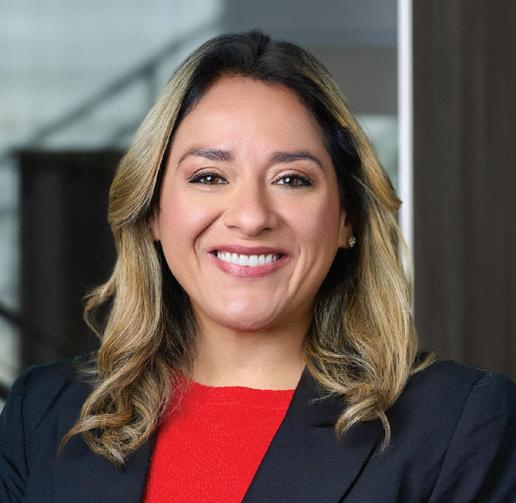
Elizabeth A. Yohe Editor, and Business Unit Leader/Partner
“A closed claim is always the best claim”
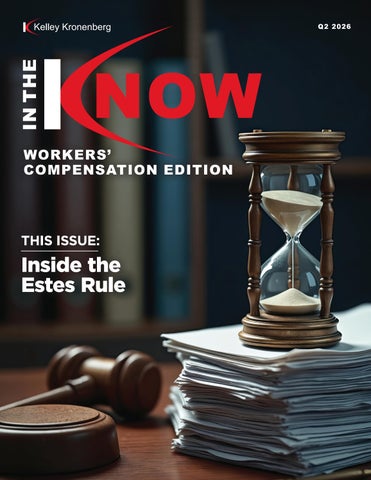
Welcome to the Q2 2026 Issue of In the Know: Workers’ Compensation Edition
The response to our inaugural issue was genuinely gratifying. Hearing you found value in the practical guidance we put together and meeting the attorneys who lead our workers’ compensation practice confirmed what we hoped from the start: that we are answering a real need.
We promised to keep expanding, and this issue delivers that. Q2 brings voices from our New York, Illinois, and Indiana teams alongside our Florida attorneys, reflecting the depth and geographic reach of our practice.
Florida practitioners and the adjusters handling Florida claims will want to pay close attention to our feature on the Estes decision and its implications for the statute of limitations. It is the case generating the most conversation right now, and our team breaks down what it means for handling and defending claims going forward.
The Adjuster’s Edge article tackles mediation preparation, a topic that directly affects outcomes. The attorney who wrote it brings a perspective you won’t find everywhere: he is also a certified mediator, which means his guidance reflects both sides of the table.
Fraud detection and defense remains a firm-wide priority, and our Fraud Fighters Team is a reflection of that commitment. In this issue, Jose Zalduondo from our New York team shares insights on identifying and defending against fraud, the kind of practical, field-tested guidance that makes a difference in how claims are evaluated and handled.
In our Building Bridges feature, I share why the professional standing your defense attorneys carry into every case is a strategic asset, not just a soft credential, and what to look for when evaluating outside counsel.
We also address the current state of Medicare SetAsides, an area where the regulatory environment continues to evolve and where the stakes for improperly handled claims remain high.
In the Know is a collaborative effort across our workers’ compensation teams, and this issue reflects that. If there are topics you would like us to cover or cases worth analyzing, we would love to hear from you.
Thank you for reading.

BUILDING BRIDGES
FRAUD UNMASKED WHEN

Example of How the Estes Rule Works

730 DAYS
Date of Accident: 1/1/2023
Treats each year until 2/5/25
Assume the injured worker stops treating for 1 year as of 2/1/26, then we can drink from the glass again until he starts treatment under worker’s compensation again.
Then, if today is 6/16/26 - 134 sips (days) of water have been taken.

596 DAYS LEFT
CASE CLOSED
Case Summaries
By Your KK Workers’ Comp Team
Estes v. Palm Beach County School District, First District Court of Appeal, decided March 23, 2026, under Florida Statute 440.19(2).
On March 23, 2026, the Florida Court of Appeal, First District, sitting en banc, issued a decision that fundamentally changes how the statute of limitations (SOL) defense operates in workers’ compensation claims under Florida Statute 440.19(2).
Claimant Nancy Estes, a teacher with the Palm Beach County School District, tripped and fell at work on September 30, 2021. The employer/carrier accepted the claim, paid benefits through January 26, 2023, and then issued a notice of denial. The claimant filed a petition for benefits (PFB) in June 2024, seventeen months after the last benefit payment. The JCC denied it as untimely as over one year had passed from the last payment of benefits was received by the injured worker.
The First District reversed. For more than two decades, courts treated the tolling provision of the statute of limitations as a one-year extension running from the date of the last payment, with the two-year clock never pausing. The en banc majority concluded that interpretation was wrong.
Under the Court’s new reading, the twoyear SOL clock suspends each time when 1) benefits are paid; and/or, 2) treatment is authorized. This clock does not restart until one year after the last benefit or treatment, and the remaining time is effectively “banked.” The Court found her PFB timely because she filed her PFB with time remaining on the two-year SOL clock which had started counting down again since her one-year clock had expired by the time she had filed her PFB. This holding overturns 26 years of precedent and could significantly reduce the effectiveness of the SOL defense in most cases.
What This Means for Your Files
The math on every file where you were relying on an SOL defense has changed, and it has changed in the claimant’s favor. The straightforward calculation you used before no longer applies.
Here is how it works: the two-year SOL clock starts at the date of the accident. Every time a benefit is paid or treatment is authorized, that clock stops. It does not restart until one year after the last benefit payment or treatment. Whatever time remained on the two-year clock is “banked” and resumes running after the one-year tolling period expires.
Example of the New Calculation
Injury: January 1, 2022. The two-year SOL clock begins running.
First Benefit Paid: February 1, 2022. The twoyear clock stops. One month has come off the two-year bank (31 days used).
Benefits Continue: The employer/carrier pays medical and indemnity benefits through June 30, 2023. The two-year clock remains stopped the entire time benefits are being paid.
Last Payment : June 30, 2023. The one-year tolling clock begins.
No Further Benefits: The one-year tolling clock runs through June 30, 2024, without any additional payment or treatment.
Two-Year Clock Resumes: July 1, 2024. The two-year SOL resumes, but only 31 days have been used. The claimant has approximately 699 days remaining in the two-year bank.
SOL Expires: Approximately May 2026, nearly four years after the date of accident.
Practical Implications:
Immediate Impact : Employers and carriers face higher risks of “stale” claims being reopened.
Defenses: Defenses that seemed airtight (based on the old 1-year-from-last-payment rule) may no longer be valid.
Record Keeping : Carriers must now track two clocks: the 2-year filing window and the 1-year tolling period.
The SOL defense you had confidence in on a file last month may look very different today. Before you rely on it, the timeline needs to be rebuilt from scratch under this framework. It is best to consult an experienced Florida workers’ compensation attorney on files where the SOL is in play. Our team is ready to help you.
Leighton
v. Kratos Logistics, LLC
and Ascendant Claims Services First District Court of Appeal | May 6, 2026
On May 6, 2026, the First District Court of Appeal issued a decision expanding the ruling in Estes v. Palm Beach County School District and continues to change how the SOL is calculated in workers’ compensation claims.
Brian Leighton was injured on February 9, 2022, while working as a delivery driver. The employer/carrier accepted the claim and paid benefits through August 1, 2022, the last date of authorized treatment. On May 9, 2023, Leighton sought reimbursement for care received February 12, 2022, before the employer/carrier had knowledge of the workplace accident. That reimbursement was issued the following day, May 10, 2023. Leighton filed a petition for benefits on March 1, 2024.
The employer/carrier asserted the claim was barred by the SOL. The Judge of Compensation Claims agreed, finding that the reimbursement for previously sought medical care did not constitute the provision of benefits and ruling the petition untimely. The First District reversed.
Under the court’s reading of Estes, the twoyear SOL suspends each time benefits are paid or care is authorized and does not begin to run again until one year after the last payment of benefits or authorized treatment. Because benefits began February 9, 2022 and ended August 1, 2022, the SOL tolled until August 1, 2023, at which point the two-year clock resumed. The petition filed March 1, 2024 fell within that window and was timely.
The court declined to address whether the May 2023 reimbursement independently constituted furnishing of benefits, finding it unnecessary given the outcome.
What This Means for Your Files
What does the new calculation require?
Determining whether a claim is timely now involves four dates: when the accident occurred, when benefit payments are paid or authorized care began, when payments or authorized care ceased, and when the petition for benefits was filed. The prior two-year calculation no longer applies.
How does this affect open exposure?
Because the SOL tolls for the entire period benefits are being paid or care is authorized, claims can remain open significantly longer. The longer the benefit period, the longer the effective filing window.
What steps should be considered? Any file where the SOL may be in play should have its timeline rebuilt under this framework. These calculations can be tricky. Kelley Kronenberg’s Florida workers’ compensation attorneys can assist in helping you develop and preserve your SOL defense.
Publix Super Markets, Inc. v. Department of Financial Services, Case No. 1D2023-0941, decided February 25, 2026.
Earlier this year, the Florida First District Court of Appeal issued a ruling that physicians and other registered dispensing practitioners are not considered pharmacists under Chapter 440, Florida Statutes.
This recent Order negates a prior rule proposed and authored by the Florida
Department of Financial Services (DFS) which would extend a portion of Section 440.13, Florida Statutes, by allowing for in-office physician dispensing of medication used to treat compensable workers’ compensation claims.
Under Section 440.13(3)(j), Florida Statutes, injured workers are guaranteed the “absolute choice” with regard to determining which pharmacy or pharmacist they could select to fill their work-related prescriptions. The proposed DFS rule equated dispensing doctors with traditional pharmacies under that provision.
Following the filing of an administrative petition by a group of companies affected by the proposed rule change, the First DCA decided that Section 440.13 does not extend to doctor’s offices. Workers’ compensation claimants retain the right to choose only an established and traditional pharmacy to dispense their medically necessary medication. Physicians may continue to prescribe medications as part of their authorized treatment, but payment
for medications dispensed directly by the physician is not guaranteed by the employer/carrier and may require additional authorization.
What This Means for Your Files
This ruling draws a clear line between prescribing and dispensing. A physician’s authority to treat a claimant does not automatically extend to billing for medications dispensed out of that same office.
In practice, carriers are already issuing letters to physician practices advising that requests for reimbursement of dispensed medications may be denied without prior authorization. If you receive a bill for medications dispensed directly by a treating physician rather than filled at a licensed pharmacy, review it carefully before issuing payment. Reimbursement is not required under the fee schedule where the dispensing falls outside the scope of what the statute covers. Your Kelley Kronenberg’s workers’ compensation team is always ready to discuss personalized strategies to address this issue on your files.


BUILDING BRIDGES
It Is Not Who You Know. It Is How You Are Known.
By Elizabeth A. Yohe
KK Takeaway: In high-volume workers’ compensation defense, the professional relationships your defense attorneys carry into every case have a direct impact on resolution speed, litigation costs, and outcomes. Legal skill is assumed. This is what differentiates.
Workers’ compensation is a repeat-player environment. The same judges, mediators, opposing counsel, and co-counsel appear across hundreds of cases over the course of a career. That is not incidental to how this practice works. It is central to it. And for carriers, TPAs, and self-insured employers managing high volumes of claims, the professional relationships your defense attorneys bring to that environment are not a soft credential. They are a strategic asset with a direct bearing on how your cases are handled and resolved.
Negotiation and Resolution at Scale
Carriers and large employers are not managing one case. They are managing portfolios, and resolution speed compounds across that portfolio in ways that matter significantly to the bottom line.
When defense attorneys have established professional respect with opposing counsel, conversations move differently. Reasonable positions get identified earlier. Candid exchanges happen before formal proceedings rather than during them. Litigation that could have been avoided gets avoided because both sides trust that the other is negotiating in good faith rather than positioning for leverage.
Without that relationship, the dynamic defaults to something slower and more expensive. More posturing. More procedural maneuvering. More time spent establishing credibility that an existing professional relationship would have provided from day one. Across a portfolio of cases, that friction has real cost implications, and it is largely avoidable when your defense counsel is wellconnected with claimant counsel.
That value added benefit is then multiplied exponentially when your defense attorney also leverages claim intelligence acquired from our colleagues on this side of the table.
You expect your defense counsel to be able to effectively negotiate with opposing counsels. But what about defense attorneys working together? Having that strategic insight, experience and relationship depth to reach out to for support on a novel claim or to address new trends is how we can pivot quickly. When you reach a KK workers’ compensation defense attorney, you are gaining our invaluable insight and expertise, individually, as well as those of our network.
After looking at a claim where several other defense firms handled similar claims for the
same employer based on very similar injuries, there seemed to be a story to tell. A story that our regular objective tools couldn’t tell. Prior claim reports, dockets, and pleadings couldn’t tell me what was going on. Adjusters had changed, but defense counsels had remained consistent. After reaching out to my fellow panelists, we were better armed with the “soft” story and learned what was underlying the new surge in claims. With that information, we were able to reach resolutions pretty quickly, under authority, and kept litigation to a minimum.
Venue and Forum Intelligence
Published opinions and statutes tell you what the law says. They do not tell you how a particular judge approaches evidentiary disputes, how medical records are evaluated or weighed, or how a mediator behaves when negotiations get tough. That intelligence comes from experience and from the kind of peer exchange that only happens when attorneys are genuinely embedded in their professional community.
A well-connected defense attorney walks into a hearing already knowing the room. That knowledge shapes case strategy in ways that research alone cannot replicate. It informs how arguments get framed, which issues get pressed and which get conceded, and how settlement conversations are positioned. For clients, this is not abstract value. It shows up in outcomes.
Reputation as a Negotiating Asset
In a close-knit practice area, reputation precedes every interaction. How opposing counsel perceives your attorney affects how
they approach your case before a single filing is made. An attorney with a strong standing in the defense community commands a different dynamic at the negotiating table than one whose reputation is unknown or unfavorable. Your dense attorney who can bridge the arc with other defense attorneys is in a unique and, arguably, is in a better prepared position.
This is not about relationships replacing legal skill. Skill is the baseline requirement. Reputation amplifies it. An attorney who is known for being prepared, straightforward, and consistent in their positions creates an environment where opposing counsel is less likely to test the case and more likely to engage seriously from the start. That translates to a faster resolution, less unnecessary litigation, and outcomes that reflect the actual merits of the case rather than the friction surrounding it.
When you retain outside counsel, you are retaining their standing in the professional community along with their legal ability. Both matter.
What This Means in Practice
The attorneys handling your cases at Kelley Kronenberg are active participants in the Florida workers’ compensation defense community, with relationships built across years of practice in the venues, with the mediators, and alongside the opposing counsel your cases regularly involve. That is not a marketing point. It is a practical one, and it is reflected in how cases move.
What to Look for in Outside Counsel
Legal skill is the baseline expectation when evaluating defense counsel. It should be assumed. What distinguishes firms at the level where outcomes actually differ is the depth of their professional relationships and the reputation they hold among peers in the venues where your cases are resolved.
When you are assessing outside counsel, ask how long they have been practicing in the specific jurisdictions where your claims are concentrated. Ask whether they know the judges and mediators assigned to your matters. Ask how they approach co-counsel situations when employer and carrier interests diverge. The answers will tell you a great deal about whether their professional network is an asset your cases can draw on or a gap your cases will absorb.
The relationship advantage is real. At the volume most carriers and employers are managing, it is also measurable.
If you would like to discuss how we approach case handling, we welcome that conversation.

THE ADJUSTER’S EDGE Preparing for Mediation: What Employers and Adjusters Need to Know
By Justin T. Nestor
Workers’ compensation mediations do not resolve themselves. As both a defense attorney and a trained workers’ compensation mediator, I have seen the process from every angle. I have sat at the defense table, I have served as the neutral in the room, and I have watched what happens when one side walks in unprepared. The cases that settle well are almost always the ones where the employer and adjuster came in ready and engaged. The ones that
do not settle, or that settle for more than they should have, are usually the ones where someone was counting on the mediator to carry the weight. That is a role the mediator cannot play.
Whether you are in Indiana, Illinois, Florida, New York, or anywhere else, the fundamentals of a productive mediation are the same. Here is what I tell my clients.
1. Know Your File Before You Walk In
Before mediation, you should be able to answer a few basic questions without having to look anything up: What is the nature of the injury? What has been paid to date? What is the current medical status? What is the reserve? What exposure exists if the case does not settle?
Review the file thoroughly in the days before mediation, not the morning of. Talk to your defense attorney. Make sure there are no surprises waiting for you in the room. The more familiar you are with the details going in, the more confidently you can negotiate once you get there. I treat my preparation for mediation just as I would for trial, both as defense counsel and as the mediator.
2. Understand What You Are Actually Resolving
Mediation is not just about the indemnity number. Depending on the state, you may be looking at open medical, future treatment, prescription exposure, and potential bad faith considerations. In both Indiana and Illinois, Medicare compliance requirements can significantly affect what a full and final settlement looks like. Know what you are
resolving and what you are leaving open, if anything, before you sit down.
Having a clear picture of the full exposure going in is one of the most important things you can do to set yourself up for a productive mediation.
3. Know Your Range and Set Up Your Authority in Advance
Every organization handles settlement authority differently, and that is completely fine. What matters is that you sort it out before you walk into the room. If your company requires approvals at certain thresholds, talk to the right people ahead of time. Establish your opening number, your target, and your walk-away point in conversation with your attorney before mediation day.
When authority questions are handled in advance, you can focus on negotiating rather than on logistics. That keeps the process moving and signals to everyone in the room that you are there to get something done.
4. Respect the Process
Mediation works when both sides engage in good faith. That means your opening position should be reasonable enough to keep the other side at the table and the conversation productive.
A mediator’s job is to facilitate resolution, not to decide the case. The best mediators are skilled at finding common ground, but they can only do that when both sides are genuinely working toward it. Trust the process and let it do what it is designed to do.
5. Prepare the Claimant’s Side of the Equation
I do not mean prepare it for them. I mean understand it. What are they looking for? What matters to them beyond the dollar amount? Sometimes a claimant wants a structured settlement. Sometimes they want their medical kept open. Sometimes they have concerns about a Medicare lien. Understanding what is driving the other side gives you flexibility and options you would not otherwise have.
Your attorney should be able to give you a read on this before you walk in. It is worth asking.
6. Communicate in Real Time
During mediation, things move. New information comes out. The mediator may share something from the other side that changes your view of the case. Stay in close communication with your attorney throughout the session so that decisions are being made with full information.
This is especially important in cases with complex Medicare considerations or multiparty exposure, which come up regularly in Indiana and Illinois practice but are by no means limited to those states.
7. Be Ready to Make a Decision
At some point, mediation puts a number in front of you. The adjusters and employers who get the best outcomes are the ones who come in knowing what resolution looks like for them and can act on it when the moment arrives. If the number is within your range and reflects a fair resolution of the exposure, take it. If it is not, say so clearly and explain why.
Mediators respond well to people who are decisive and direct. It moves the process forward and tells everyone in the room that you are serious about getting the claim resolved. If you have questions about how to approach an upcoming mediation, I am always happy to talk it through with clients ahead of time. A short conversation about expectations and the ultimate goal before mediation day can make a real difference in how it goes.
Mediation is one of the most cost-effective tools in workers’ compensation case management. Used well, it resolves claims before they continue in litigation and keep costs from compounding. Experienced mediators will tell you that a truly successful resolution often leaves both sides feeling like they conceded a little more than they wanted to. That is usually a sign the outcome was fair. Show up prepared, engage in good faith, and trust the process to do its job.

FRAUD UNMASKED
When the Camera Doesn’t Lie: Leveraging Surveillance Evidence to Combat Claimant Fraud
By Jose Zalduondo
Fraud in the workers’ compensation system costs carriers and self-insureds millions of dollars each year in benefits paid to claimants who are not entitled to them driving up the
costs of claims handling, settlements, in addition to causing increased premiums.
In New York, Workers’ Compensation Law Section 114-a(1) provides the tools to disqualify a claimant should they be found to have committed fraud. Most states have equivalent statutory or common law mechanisms that serve the same function: when properly developed and presented, a finding of misrepresentation can result in the mandatory rescission of benefits attributable to the fraud and, in egregious cases, a discretionary penalty that disqualifies a claimant from all future wage replacement benefits.
But the statute does not enforce itself. Building a successful case requires preparation, documentation, and an understanding of what the Board actually looks for when making its determination.
What the Statute Requires
WCL 114-a(1) provides that a claimant may be disqualified from receiving compensation benefits if he or she knowingly made a material misrepresentation in order to obtain those benefits or to influence any determination regarding their receipt. The courts have interpreted “material misrepresentation” broadly. It can include an outright false statement, an omission of relevant fact, the exaggeration of symptoms to a physician conducting a disability evaluation, or the failure to affirmatively disclose the full extent of one’s activities to an examining doctor. Carriers in other jurisdictions will find analogous standards under their own state frameworks, with similar fact patterns driving similar outcomes.
The Court has found that a material misrepresentation can be based upon the exaggeration of symptoms to a physician who is making a determination regarding the claimant’s degree of disability. See Matter of Michaels v. Towne Ford, 9 AD3d 733 [2004]; see also Matter of Bowes v. Gulinello’s Town & Country, 3 AD3d 805 [2004].
Critically, the misrepresentation does not need to have actually succeeded in securing additional benefits to be deemed material. The intent and the conduct are what matter.
The Role of Surveillance
Surveillance evidence is the foundation of most fraud cases. When a claimant represents total disability to his physicians while simultaneously performing manual labor, driving for extended periods, or
engaging in activities that require physical capacity he claims not to have, that contradiction is precisely what these statutes are designed to address.
The value of surveillance depends entirely on how it is developed and introduced into the record. Timing matters. Surveillance conducted during a period when the claimant is actively receiving benefits and making representations about his condition to treating physicians carries the most weight. The further removed the footage is from those representations, the easier it becomes for claimant’s counsel to argue that the condition changed over time.
Documentation must be thorough. The investigator’s testimony is not a formality. It is a necessary component of authenticating the footage and establishing its accuracy. The Board will scrutinize how the evidence was gathered and certified. Procedural gaps give the Law Judge reason to minimize the footage’s significance even when the underlying conduct is apparent on screen.
Compliance with exchange requirements is non-negotiable. Any direction from the tribunal to exchange surveillance evidence with the parties must be followed precisely and on time. Failure to comply does not just create procedural problems, it undermines the carrier’s good faith posture, which matters when credibility is being weighed.
Credibility Is the Central Issue
When a claimant’s physical capabilities as captured on video are inconsistent with what he has reported to his physicians, the Board is tasked with resolving that
credibility question. Under established case law, questions of credibility and the relative weight to be given to conflicting evidence fall within the Board’s exclusive province. This principle holds across jurisdictions.
The Board is looking at the full picture: what the claimant told his treating doctors, what he told the carrier’s consultants, what he testified to at hearing, and what the surveillance shows. Each of those data points either reinforces or undercuts his account.
Surveillance is most effective when it captures behavior that directly contradicts what the claimant has reported to his physicians, his attorneys, or the Board. Common red flags include a claimant who reported pain that is out of line with what is expected, attributed additional injuries to the accepted condition, or used an unprescribed assistive device at the independent medical examination. When surveillance documents functional capacity that materially contradicts those representations, the Board has something concrete to weigh.
Sanctions and Disqualification
When the Board finds a violation, it is required to rescind benefits directly attributable to the misrepresentation. Beyond that mandatory penalty, the Board has discretion to impose an additional sanction equal to the mandatory amount or to disqualify the claimant from all future wage replacement benefits.
That discretionary penalty requires justification. The Board must find that the deception was egregious or severe, or
that there were no meaningful mitigating circumstances. Carriers seeking the maximum penalty should build the record accordingly, not just with the surveillance footage itself, but with documentation of how persistent the claimant’s misrepresentations were over time, across multiple physicians and examinations.
The Defense Advantage
Fraud defense is not a peripheral skill in workers’ compensation. It is a discipline that requires familiarity with surveillance protocols, evidentiary standards, tribunal procedure, and the specific fact patterns that tend to move adjudicators. Attorneys who handle these cases regularly develop pattern recognition that general practitioners simply do not have experience with. They know which inconsistencies are worth pursuing, how to build the evidentiary record from the outset, and how to present the case in a way that holds up under scrutiny.
At Kelley Kronenberg, workers’ compensation defense attorneys who focus specifically on fraud detection and litigation operate as part of a coordinated Fraud Fighters team. That structure means adjusters and claims professionals are working with counsel who has handled these cases across multiple jurisdictions, understands the procedural requirements that vary by state, and brings a level of preparation to each matter that directly affects outcomes.
Practical Takeaways
For adjusters managing claims where fraud is suspected, regardless of jurisdiction: begin surveillance when inconsistencies between reported limitations and observed behavior first emerge. Ensure investigators are prepared to testify and certify the accuracy of their footage. Comply with all tribunal directions on evidence exchange without exception. Document the full timeline of the claimant’s representations across every medical report, IME, and recorded statement throughout the life of the claim.
These fraud statutes exist for a reason. Used correctly, and with counsel who knows how to deploy them, they protect the integrity of the system and the resources of the carriers and self-insureds who fund it.
MSA/SETTLEMENTS
Medicare SetAsides in 2026: The Rules Have Changed, and CMS Is Watching
By Elizabeth A. Yohe and Nikoleta S. Barr
KK Takeaway: Medicare Set-Aside compliance has moved from a best practice to an enforced obligation with real financial consequences. The changes that took effect in 2024 and 2025 have fundamentally shifted how carriers, self-insureds, and employers must approach settlements involving Medicare beneficiaries. Understanding what is required now is not optional.
A Brief History Worth Knowing
The Medicare Secondary Payer Act has been on the books since 1980, but meaningful enforcement was limited for decades. Congress strengthened the Act in 2003, and the Medicare, Medicaid, and SCHIP Extension Act of 2007 created mandatory reporting requirements for carriers and selfinsureds. Reporting went live in 2010. For years, there was still no penalty for failing to comply. That changed.
What Changed and When
On October 11, 2024, CMS began enforcing civil monetary penalties for failure to report: $250 per day for reporting one to two years late, $500 per day for two to three years, and $1,000 per day beyond that, capped at $365,000 per instance. Audits began in April 2026. Effective April 4, 2025, CMS expanded Section 111 reporting to require MSA data fields for all workers’ compensation settlements involving Medicare beneficiaries, regardless of settlement amount, including claims where no formal MSA was obtained and claims where CMS approval was not pursued. When CMS says all, it means all. The agency now has visibility into every workers’ compensation settlement involving
a Medicare beneficiary that it never had before.
The Non-Submit Question
Non-submit MSAs became popular partly because submission was voluntary and partly because counter-highs, where CMS recommends an amount higher than proposed, have run as high as 22% of submitted files in recent years. The calculus was that avoiding CMS review reduced the risk of a costly counter-determination.
That calculus now carries different risk. CMS can see which settlements included a non-submit MSA and has authority under its Reference Guide to make its own determination of allocation insufficiency. Whether the agency actively pursues enforcement against non-submitted MSAs remains to be seen, but the infrastructure to do so now exists. Carriers and self-insureds who have relied heavily on non-submit approaches should be reviewing their protocols.
Zero-Dollar MSAs Are No Longer a Safe Harbor
Effective July 17, 2025, CMS no longer accepts or reviews MSA proposals with a zero-dollar allocation. A CMS-approved zerodollar MSA previously offered meaningful finality. That protection is gone. Zero-dollar MSAs remain permissible in appropriate circumstances, but the burden of supporting them now rests entirely with the parties. Strong documentation is no longer a best practice in these situations. It is the only protection available.
What This Means for Adjusters, Carriers, and Self-Insureds
The practical implications run throughout the claims lifecycle, not just at settlement.
Identification has to happen earlier. Whether a claimant is a Medicare beneficiary or has a reasonable expectation of becoming one within 30 months is a question that should be answered early in the life of a claim. CMS review thresholds have not changed, but the reporting requirements surrounding them have expanded significantly.
Conditional payments require active management. Any payments Medicare made on a conditional basis for treatment workers’ compensation should have covered must be identified and resolved before settlement closes. That exposure does not disappear at closing. This search must cover both traditional Medicare and Medicare Advantage plans. Many carriers rely on vendors who check one box but not the other, leaving Medicare Advantage conditional payment exposure unresolved at settlement. Medicare Advantage plans carry the same recovery rights as traditional Medicare under the MSP Act, and plan sponsors are increasingly aggressive in pursuing them. A conditional payment search that does not include both is incomplete.
Post-settlement administration deserves more attention than it typically receives. An MSA is not a transaction that ends at settlement. Funds must be properly used and documented, and for larger or more complex claims, professional administration reduces the risk of improper fund use and the downstream consequences that follow. Your reporting obligations are now broader than your MSA decisions. Even settlements below voluntary submission thresholds, or where no MSA was incorporated, are subject to Section 111 reporting if a Medicare beneficiary is involved. The reporting obligation and the MSA decision are separate questions requiring separate analysis.
The Bigger Picture
The compliance environment has shifted from one where non-compliance was rarely pursued to one where CMS has the data infrastructure, the enforcement mechanisms, and the stated intent to use both. Claims professionals managing high volumes of files need documented protocols for Medicare status identification, conditional payment resolution, MSA allocation decisions, and post-settlement administration. Our workers’ compensation team handles these issues across Florida, New York, Indiana, and Illinois. If you have questions about how these changes affect your current practices, we welcome the conversation.

Get to Know Our Team : OFF THE RECORD

INDIRA MARIN ERRICHETTI Partner
Fort Lauderdale, FL 954-370-9970 | imarin@kklaw.com

What drew you to this particular area of law initially?
I was drawn to this area of the law because of how intertwines legal analysis, healthcare, and business. I think there are a lot of moving pieces and I enjoyed being able to help clients navigate through complex situations.
What’s a common misconception clients have about your practice area?
I think there is an assumption that you can have a “one size fits all” approach in workers’ compensation. However, that is far from the truth. Each claim requires thoughtful and strategic handling, with a careful analysis of the specific facts at issue.
What do you find most rewarding about working with clients?
Worker’s Compensation can be overwhelming, so being able to guide them through the process, solve problems efficiently, and ultimately reach a resolution is really fulfilling.
What’s your guilty pleasure or something you unapologetically love?
I love to watch pretty much all of the Real Housewives franchises!
What’s your favorite vacation spot, and why?
At this stage of life—with two kids under four—I’m a big Disney person. I finally understand the magic of it all.
What’s one book, podcast, or resource you recommend to others?
NPR’s This American Life typically has well produced podcasts with great stories.
LIST OF
CEU s

2024LawandEthicsUpdate
AStatutoryandCaseLawAnalysis
Accident Investigation
Adjuster Depositions
“Arising Out Of” and in the “Course and Scope” of Employment –How These Similar Legal Concepts are Totally Separate and Distinct
Burdens of Proof for Compensability in Workers’ Compensation Claims
DenialsforPre-ExistingConditions
DWC Forms and Key Documents: The Descriptions, Details, and Directions
Establishing Compensability and the Exceptions Thereto
Florida Workers’ Compensation 101
Major Contributing Cause in Florida Workers’ Compensation
Misrepresentation Defenses: The Practical Considerations
Return To Work Policies Make Cents
The Challenges of the One Time Change Statute
Traumatic Brain Injury
Valuing Claims- Categories, Components, and Calculations
WC Coverage Through PEOS and Staffing Agencies
Workers Compensation 101: What You Need to Know to Effectively Handle Any Claim
MEET THE
CONTRIBUTORS

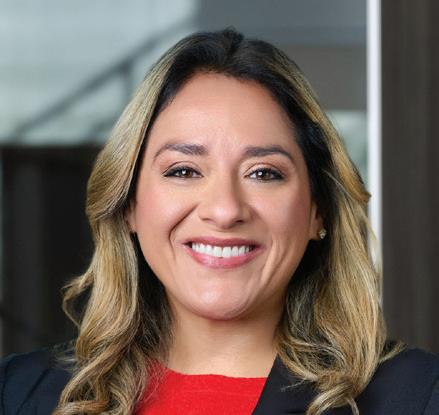
Elizabeth A. Yohe Editor and Partner/Busines Unit Leader
Email Elizabeth A. Yohe
Elizabeth Yohe is a Partner and Business Unit Leader at Kelley Kronenberg, where her practice is dedicated to the defense of workers’ compensation matters. She serves as a Team Lead on the firm’s Fraud Fighters Team. She brings extensive experience in all phases of workers’ compensation litigation from inception through trial, representing carriers, third-party administrators, and employers ranging from major corporations to small businesses.
Prior to joining Kelley Kronenberg, Elizabeth opened and led a new Florida office for a national firm handling workers’ compensation cases. She previously served as a Partner at another law firm, where she gained comprehensive experience in workers’ compensation litigation, effectively negotiating settlements to mitigate risk exposure and implementing proactive communication strategies with clients. Her unique background also includes serving as Associate General Counsel and
Director of Enforcement for E-Commerce, where she prepared foundational policies and agreements based on intellectual property and antitrust law. Additionally, she served as an Intelligence Analyst for the Federal Bureau of Investigation and as an Investigator for the United States Department of Labor, where she researched and analyzed complex criminal, civil, and regulatory matters.
Elizabeth earned her bachelor’s degree from DePaul University. She received her Juris Doctor from Tulane Law School.
Elizabeth has received numerous awards recognizing her superior service, including multiple commendations from FBI personnel, a letter of commendation from the Assistant Director of the FBI Directorate of Intelligence, and a National Award from the Secretary of Labor. She was nominated by judges to participate in the Florida Office of Judges of Compensation Claims’ extended education program, recognizing her professionalism, community commitment, and potential to contribute to and lead the practice of workers’ compensation law. Her diverse background in federal law enforcement, intellectual property, and workers’ compensation litigation provides her with a comprehensive understanding of complex legal matters and investigative techniques that enhance her approach to workers’ compensation defense.
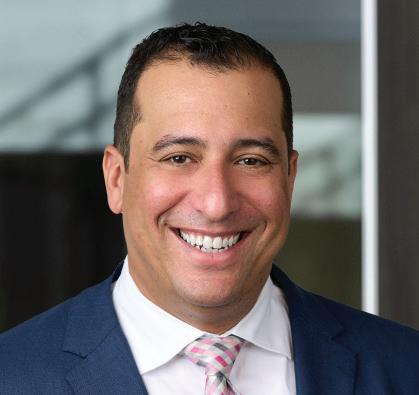
Jose J. Zalduondo Partner/Busines Unit Leader
Email Jose J. Zalduondo
Jose Zalduondo is a Partner and Business Unit Leader at Kelley Kronenberg, serving as a Team Lead on the firm’s Fraud Fighters Team. With over sixteen years of experience handling workers’ compensation matters, he specializes in defending controverted cases, pursuing fraud, and bringing claims to a quick closure through court-rendered decisions or negotiated settlements.
His client representation includes employers, insurance carriers, and third-party administrators in New York and Florida. His practice focuses on representing large contractors, construction managers, and owners in workers’ compensation claims within the construction industry, as well as representing municipalities in various matters. Jose has extensive experience in representing clients in trials, motion hearings, pre-trial conferences, and settlement conferences.
Jose earned his Juris Doctorate from Hofstra University Maurice A. Deane School of Law and his Bachelor of Arts in International Economics from American University. He is fluent in both Spanish and Portuguese..
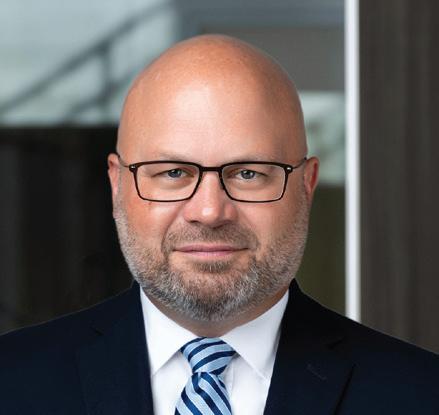
Justin Nestor Partner/Business Unit Leader
Email Justin Nestor
Justin Nestor is a Partner and Business Unit Leader at Kelley Kronenberg focusing his multi-state practice on workers’ compensation defense throughout Indiana and Illinois. He also serves as a mediator for Workers’ Compensation claims. Justin’s extensive expertise allows him to handle cases at all levels up to the Appellate Court. His client base spans across various industries, representing construction and trucking companies,
commercial contract carriers, retailers, manufacturers, municipalities, and self-insureds. He also works closely with third-party administrators and insurance carriers.
In addition, Justin boasts experience in subrogation, personal injury, and premises liability defense and defending unemployment claims.
Before pursuing his legal career, Justin dedicated eight years of service to the Lowell Police Department in Indiana as a municipal officer, ultimately earning the esteemed rank of Corporal.
Justin holds a Bachelor of Arts in Criminal Justice & Criminology from Ball State University and earned his Juris Doctor from Valparaiso University School of Law.
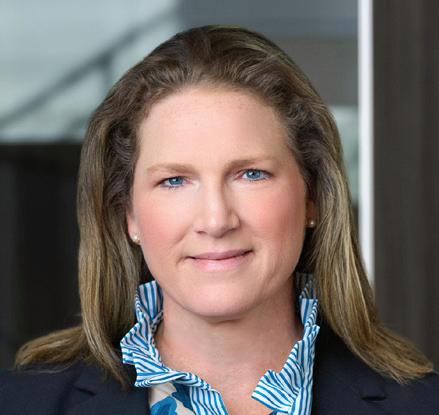
Carla Wester Partner
Email Carla Wester
Carla Wester is a Partner in Kelley Kronenberg’s Workers’ Compensation Division, rejoining the firm where she previously practiced in the mid-2000’s. She brings nearly 25 years of comprehensive experience in workers’ compensation defense and litigation.
Prior to rejoining Kelley Kronenberg, Carla served as a Lead Attorney for various nationwide defense firms, where she represented employers and insurance carriers in workers’ compensation matters throughout every District in the State of Florida. She previously worked as Staff Counsel for AmTrust Financial, representing the insurance company directly and its insureds in workers’ compensation claims across the entire State.

Nikoleta S. Barr Practice Partner
Email Nikoleta S. Barr
Nikoleta Barr is a Practice Partner at Kelley Kronenberg, focusing her practice on workers’ compensation defense. Prior to joining Kelley Kronenberg, Nikoleta served as a senior associate attorney at a workers’ compensation defense firm, where she independently managed a highvolume caseload and developed comprehensive defense strategies based on case facts, statutory interpretation, and risk evaluation. She successfully resolved complex claims involving employee misrepresentation, major contributing cause, and other statutory defenses through strategic depositions and targeted discovery. Her experience also includes serving as a supervising attorney for a healthcare company, where she oversaw attorneys
Her experience also includes serving as Lead Litigation Attorney for a boutique Jacksonville-based law firm, where she represented both injured parties and selfinsured employers in various matters including workers’ compensation and personal injury cases, as well as assisting Jacksonville-area residents in various family law matters. She has also worked as a Managing Attorney for an Atlanta-based firm, overseeing firm operations in their Florida offices, while also maintaining relationships with claims adjusters and employer representatives through marketing initiatives and continuing education programs.
Carla earned her Bachelor of Arts in English from Florida State University in 1996, where she was a member of the Phi Mu sorority, as well as playing in the drum line, known as Big 8, for the Florida State University Marching Chiefs. She went on to receive her Juris Doctor from Florida Coastal School of Law in 2000, where she participated in the Association of Trial Lawyers of America, Student Bar Association, Honor Court, and Phi Delta Phi.
and legal assistants handling pre-litigation healthcare, workers’ compensation, and third-party reimbursement claims, and trained team members to improve efficiency and case outcomes. She has also worked as a staff attorney providing legal services to healthcare clients helping them resolve disputed insurance and workers’ compensation reimbursement claims, and as an associate attorney conducting legal research and representing clients at hearings and settlement conferences.
Nikoleta graduated magna cum laude from Queens College, City University of New York with a Bachelor of Arts in Accounting and Economics, where she was recognized on the Dean’s List and graduated with High Honors while working full-time as a paralegal. She earned her Juris Doctor from New York Law School, where she was recognized on the Dean’s List, received High Honors, and served as Senator for the Evening Student Bar Association while working full-time in the tax compliance department of a major accounting firm.
She is fluent in Russian and proficient in Hebrew.
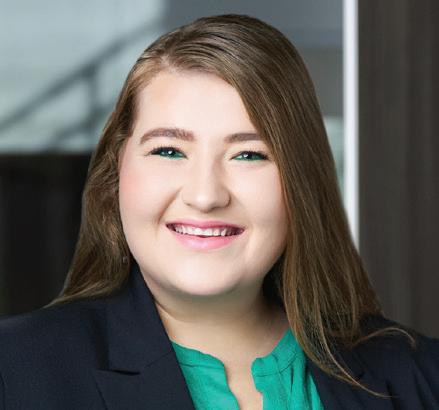
Callina B. Harmon Attorney
Email Callina B. Harmon
Callina Harmon is an Attorney at Kelley Kronenberg, focusing her practice on workers’ compensation defense.
Prior to joining Kelley Kronenberg, Callina worked as an associate attorney at a personal injury law firm, where she conducted legal research, drafted pleadings and motions, managed the discovery process, and participated in
settlement negotiations. She previously worked as a paralegal and legal assistant at a law firm managing a highvolume caseload, conducting legal research, drafting legal documents, assisting with trial preparation, and liaising with clients and opposing counsel.
Callina received a Bachelor’s Degree in Legal Studies from the University of Central Florida. Thereafter, she earned her Juris Doctor from Barry University School of Law. During law school, she worked as a legal assistant at a tax law firm and for the Office of the Public Defender, where she managed client records, assisted attorneys with complex cases, handled office scheduling, and maintained litigation dockets for multiple attorneys.
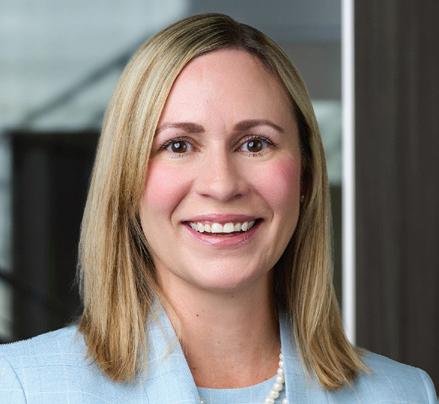
Traci R. Dishman Attorney
Email Traci R. Dishman
Traci R. Dishman is an Attorney with Kelley Kronenberg, focusing her practice on workers’ compensation defense.
Prior to joining the firm, Traci served as Deputy Chief of the Special Victims Unit at the State Attorney’s
Office, where she managed a team of attorneys while prosecuting complex criminal cases. Her extensive litigation background includes managing a felony division as a Public Defender, where she handled high-stakes cases including death penalty matters. Throughout her career, she has successfully tried numerous jury trials, conducted depositions, and managed comprehensive case preparation and motion practice.
Traci received her Bachelor of Arts in Social Anthropology from the University of Michigan. She went on to earn her Juris Doctor from Southwestern Law School.

ACCOLADES AWARDS AND FIRM AWARDS
Kelley Kronenberg has been the recipient of numerous awards and honors both firm-wide and for a number of our practices, including individual accolades. Below is a select list of recognition and awards:












WC ATTORNEY AWARDS AND RECOGNITIONS

Martindale Hubbell AV Preeminent Rating
Karen M. Gilmartin
Amy Siegel Oran
Executive Women of the Palm Beaches Foundation Women in Leadership
Amy Siegel Oran


Best Lawyers in America: Ones to Watch
Amy Siegel Oran
South Florida Legal Guide “Top Lawyers”
Amy Siegel Oran
Karen Gilmartin

Best Lawyers “Women in the Law”
Amy Siegel Oran WOMEN IN THE LAW
FWCI
Florida Workers’ Compensation Institute
Florida Workers’ Compensation Hall of Fame
Karen M. Gilmartin

Best Lawyers
Justin T. Nestor
Carol J. Sangster
Girl Scouts of Southeast Florida, Emerald Award, “Risk Taker”
Amy Siegel Oran
Florida Bar Board Certification in Workers Compensation
Don W. Allen
more than with over the convenience of
Employees Attorneys Locations
Founded in 1980, Kelley Kronenberg is an award winning, multi-practice national law firm with 516 employees, 237 attorneys, and 19 locations throughout Florida and the United States. We are privileged to represent large public and private companies, small businesses, and individuals nationwide. With more than 40 practice areas, and growth on the horizon, we offer a comprehensive catalog of legal services to protect your legal interests in business and at home. Our firm is progressive and technologically advanced, while remaining true to our customer service heritage: integrity, ingenuity, and sincerity. Ever mindful of our history, but intensely committed to our future, we offer our clients a small firm feel with large firm resources.

LOCATIONS

FORT LAUDERDALE
10360 W. State Road 84
Fort Lauderdale, FL 33324
Phone: (954) 370-9970
ORLANDO
20 North Orange Avenue, Suite 704
Orlando, FL 32801
Phone: (407) 648-9450
TAMPA
1511 North Westshore Blvd., Suite 400
Tampa, FL 33607
Phone: (813) 223-1697
DAYTONA
128 Orange Avenue, Unit 306
Daytona Beach, FL 32114
Phone: (754) 888-5437
BUFFALO
50 Fountain Plaza
Buffalo, NY 14202
Phone: (716) 647-7254
NEW YORK CITY
111 Broadway, Suite 1205
New York, NY 10006
Phone: (845) 306-7867
CHICAGO
20 N. Clark Street, Suite 1150
Chicago, IL 60602
Phone: (312) 216-8828
JACKSONVILLE
10245 Centurion Parkway N, Suite 100
Jacksonville, FL 32256
Phone: (904) 549-7700
MERRILLVILLE
233 E. 84th Drive, Suite 200
Merrillville, IN 46410
Phone: (317) 731-6243
MIAMI
220 Alhambra Circle, Suite 410
Coral Gables, FL 33134
Phone: (305) 503-0850
NEW ORLEANS
400 Poydras Street, Suite 2400
New Orleans, Louisiana 70130
Phone: (504) 208-9055
TALLAHASSEE
6267 Old Water Oak Road, Suite 250
Tallahassee, FL 32312
Phone: (850) 577-1301
DALLAS
5956 Sherry Lane, 20th Floor
Dallas, TX 75225
Phone: (983) 999-4640
BY APPOINTMENT ONLY
ALBANY
401 New Karner Road. Suite 301
Albany, NY 12205
Phone: (845) 306-7867
ATLANTA
1100 Peachtree Street NE, Suite 200
Atlanta, GA 30309
Phone: (404) 990-4972
WEST PALM BEACH
1501 Belvedere Road, Suite 500-504
West Palm Beach, FL 33406
Phone: (561) 684-5956
INDIANAPOLIS
10475 Crosspoint Blvd., Suite 218
Indianapolis, IN 46256
Phone: (317) 731-6243
NAPLES
3080 Tamiami Trail E., Suite 322
Naples, FL 34112
Phone: (239) 990-6490
SHORT HILLS
51 John F. Kennedy Parkway
First Floor West
Short Hills, NJ 07078
Phone: (862) 421-3155