Keith Brautigam Highlights Why Strong Leadership Matters in IT and Cybersecurity Teams
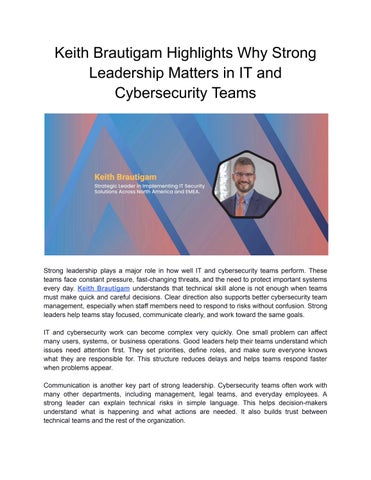
Strong leadership plays a major role in how well IT and cybersecurity teams perform. These teams face constant pressure, fast-changing threats, and the need to protect important systems every day. Keith Brautigam understands that technical skill alone is not enough when teams must make quick and careful decisions. Clear direction also supports better cybersecurity team management, especially when staff members need to respond to risks without confusion. Strong leaders help teams stay focused, communicate clearly, and work toward the same goals. IT and cybersecurity work can become complex very quickly. One small problem can affect many users, systems, or business operations. Good leaders help their teams understand which issues need attention first. They set priorities, define roles, and make sure everyone knows what they are responsible for. This structure reduces delays and helps teams respond faster when problems appear. Communication is another key part of strong leadership. Cybersecurity teams often work with many other departments, including management, legal teams, and everyday employees. A strong leader can explain technical risks in simple language. This helps decision-makers understand what is happening and what actions are needed. It also builds trust between technical teams and the rest of the organization.
Good leaders also create a culture where team members feel comfortable sharing concerns. In cybersecurity, hiding a mistake or delaying a warning can make a problem much worse. Leaders should encourage honest communication and quick reporting. When employees know they will be treated fairly, they are more likely to raise issues early. This allows the team to fix problems before they become larger threats. Another important part of leadership is helping employees grow. Technology changes quickly, so IT professionals need to keep learning. Leaders can support training, certifications, and practical learning opportunities. They can also encourage team members to share knowledge with one another. This creates a stronger group that can handle new tools, new systems, and new security threats with greater confidence. Strong leaders also help teams manage stress. Cybersecurity incidents can happen at any time, and some situations require long hours or fast decisions. Leaders should remain calm, provide clear instructions, and avoid creating unnecessary pressure. A steady leader can help the entire team think more clearly during difficult situations. This improves both performance and morale. Trust is also essential. Leaders must trust skilled employees to do their jobs, while team members must trust their leaders to make fair and informed decisions. Micromanagement can slow down technical work and reduce motivation. Effective leaders provide guidance but also give employees enough freedom to solve problems. This balance helps teams become more confident and efficient. Leadership also affects long-term planning. IT and cybersecurity should not focus only on immediate problems. Strong leaders look ahead and prepare for future risks. They review security policies, update systems, plan budgets, and prepare for possible incidents. This forward-thinking approach helps organizations become more resilient and reduces the chance of being caught unprepared. A strong IT leadership strategy can improve security, teamwork, and overall business stability. Effective leaders give their teams clear goals, support professional growth, and create an environment where communication stays open. They also help technical staff work well with other parts of the organization. In a field where risks can change quickly, strong leadership gives IT and cybersecurity teams the direction they need to protect systems and perform at their best.