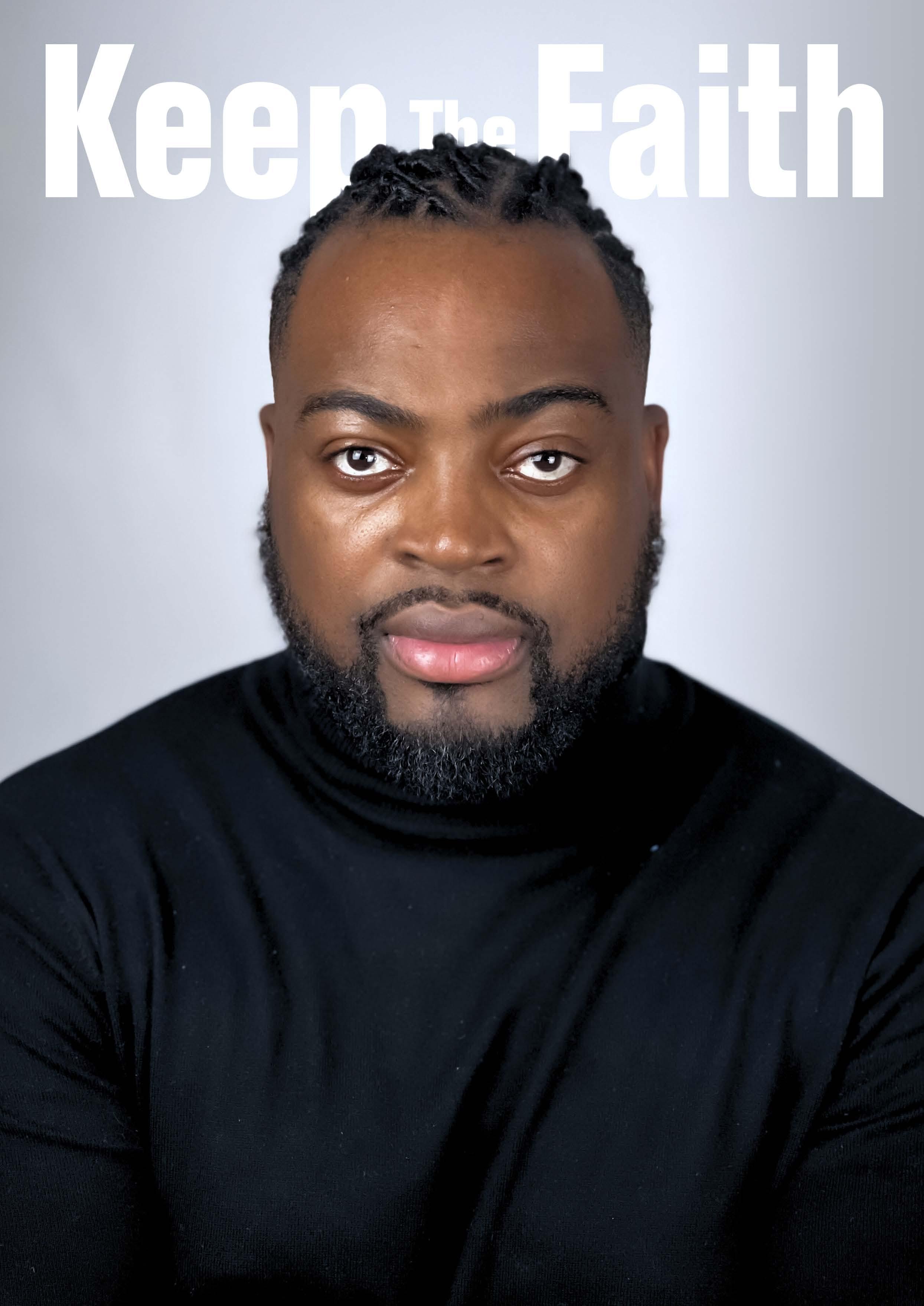
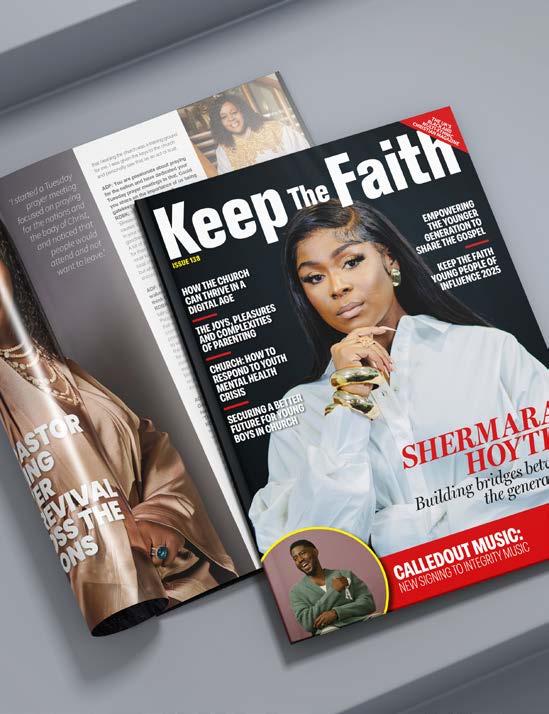
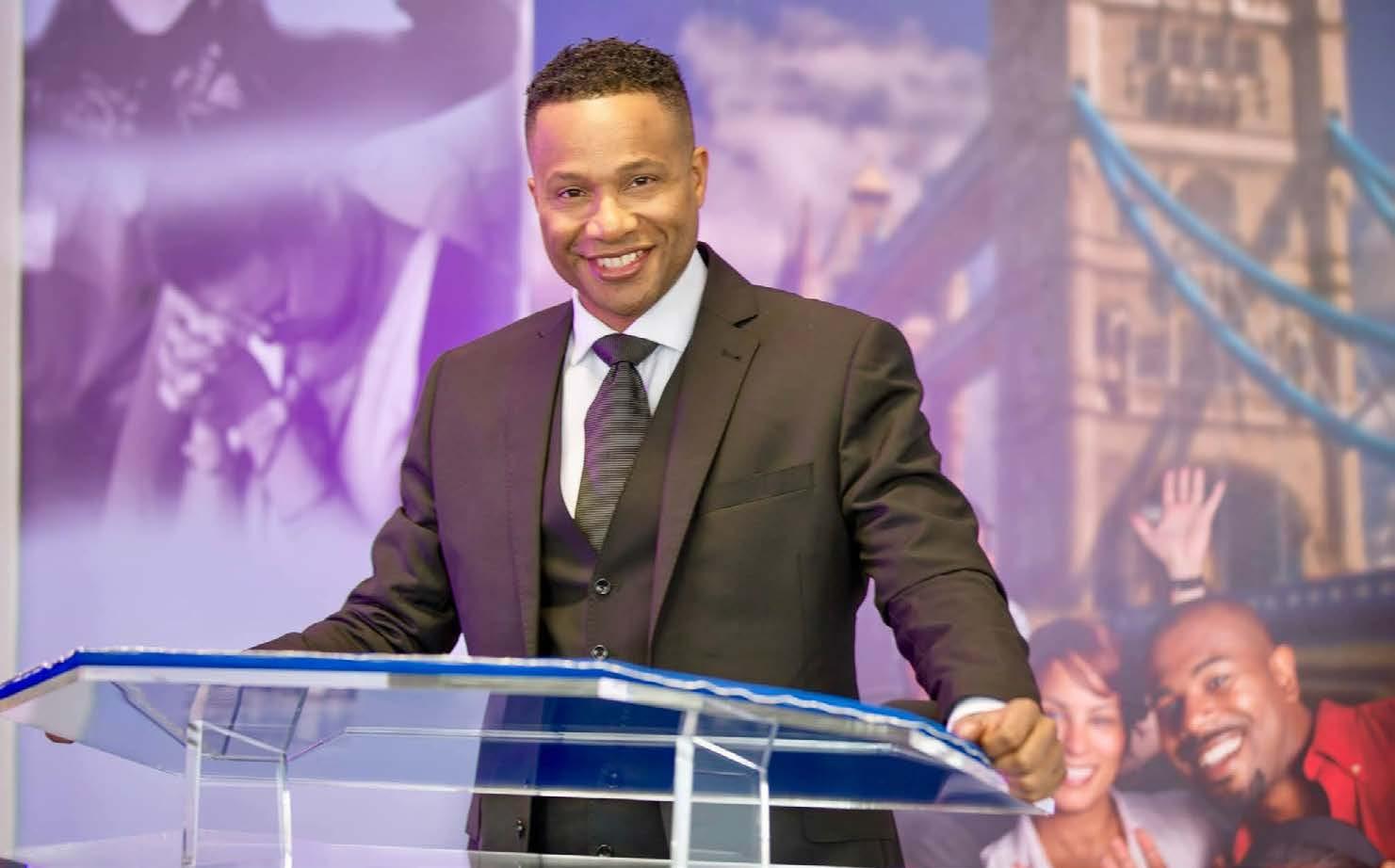
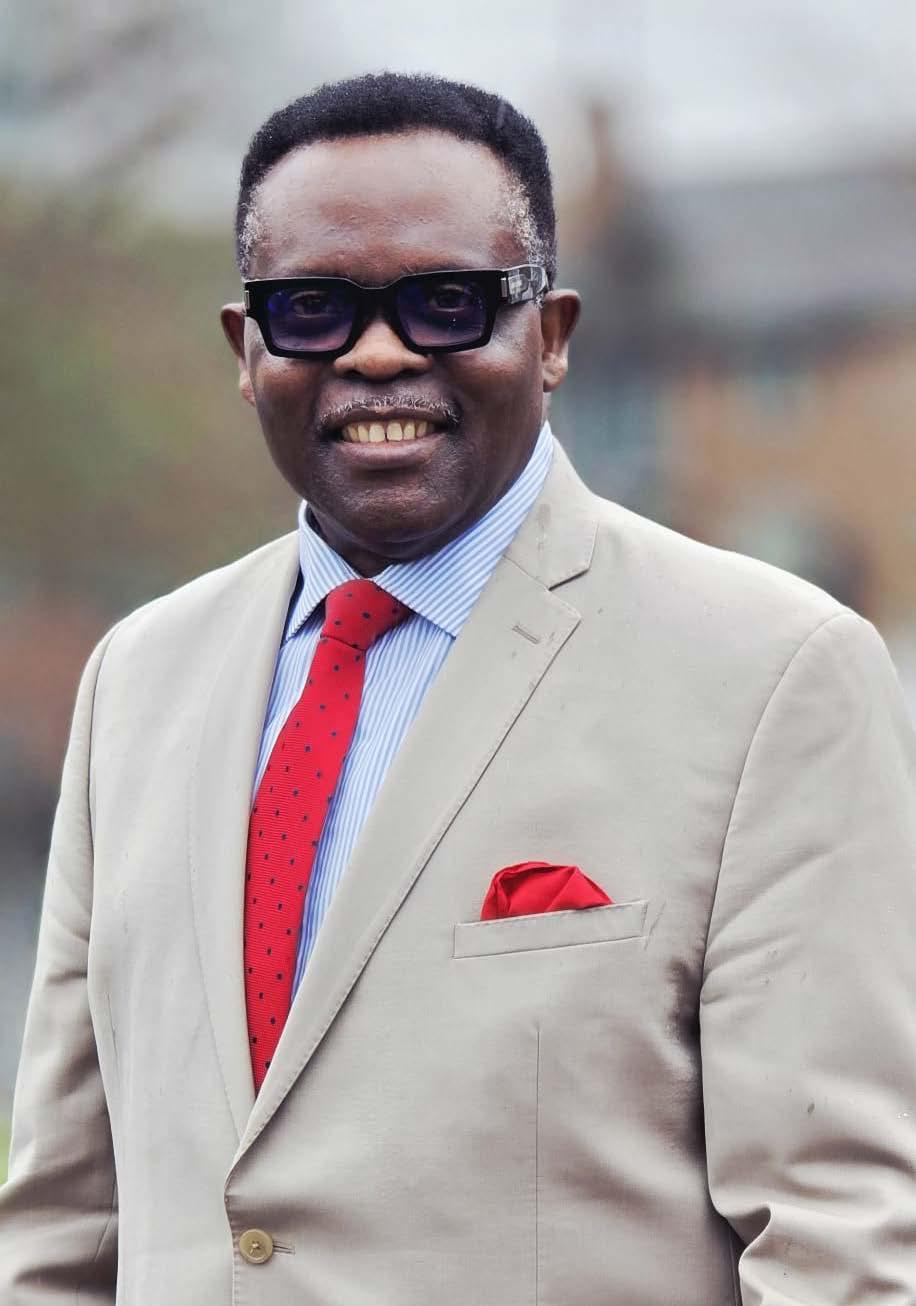
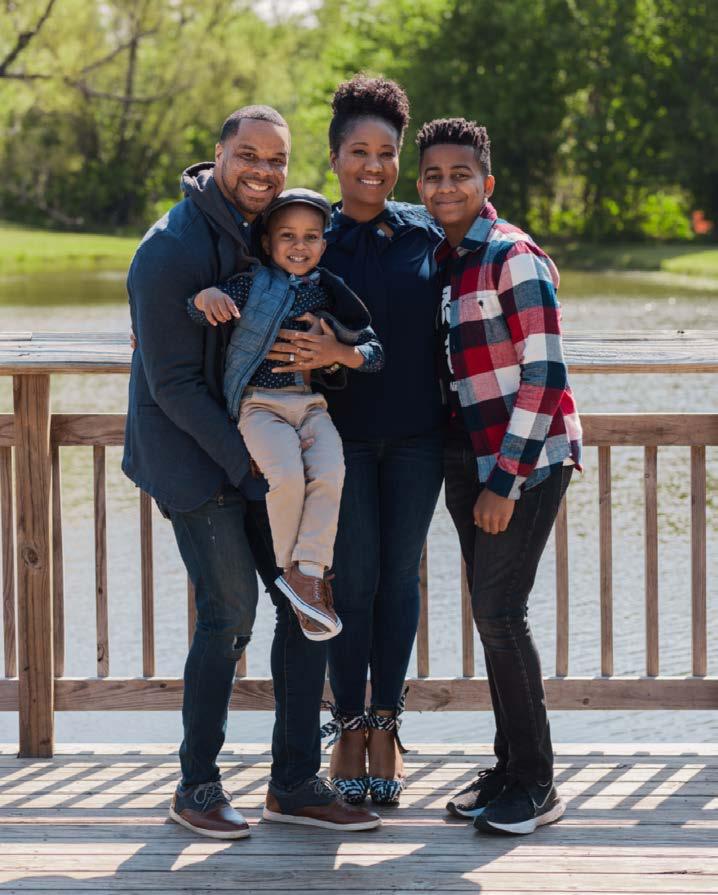
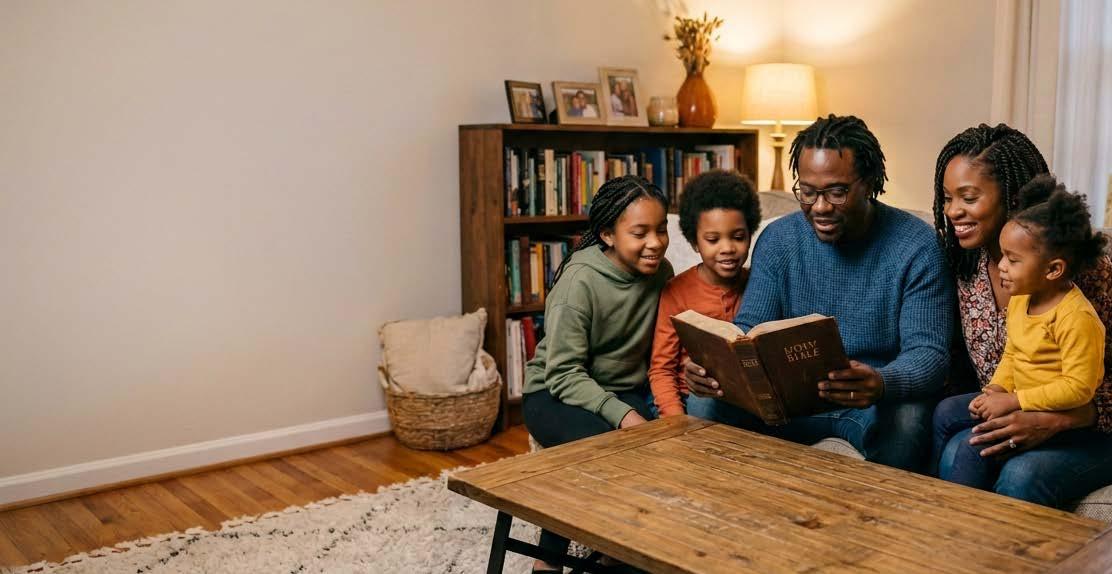
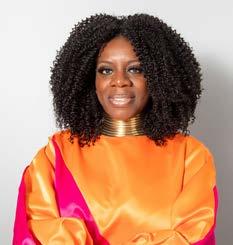
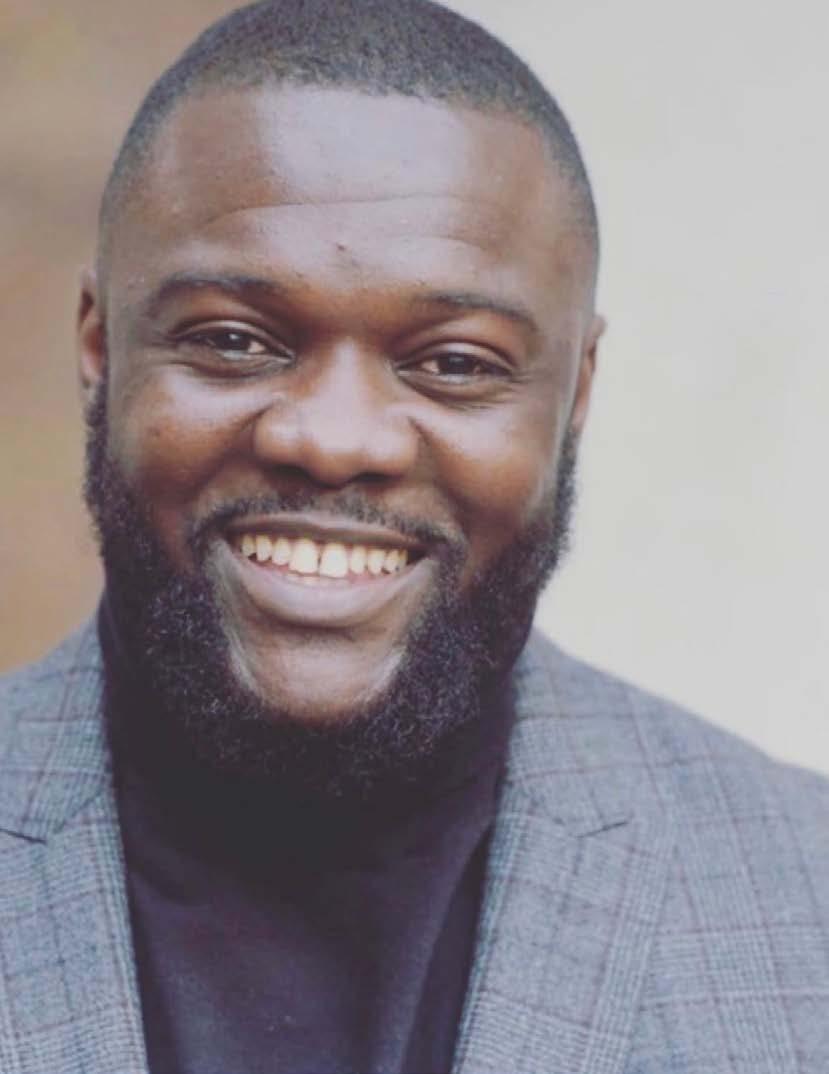
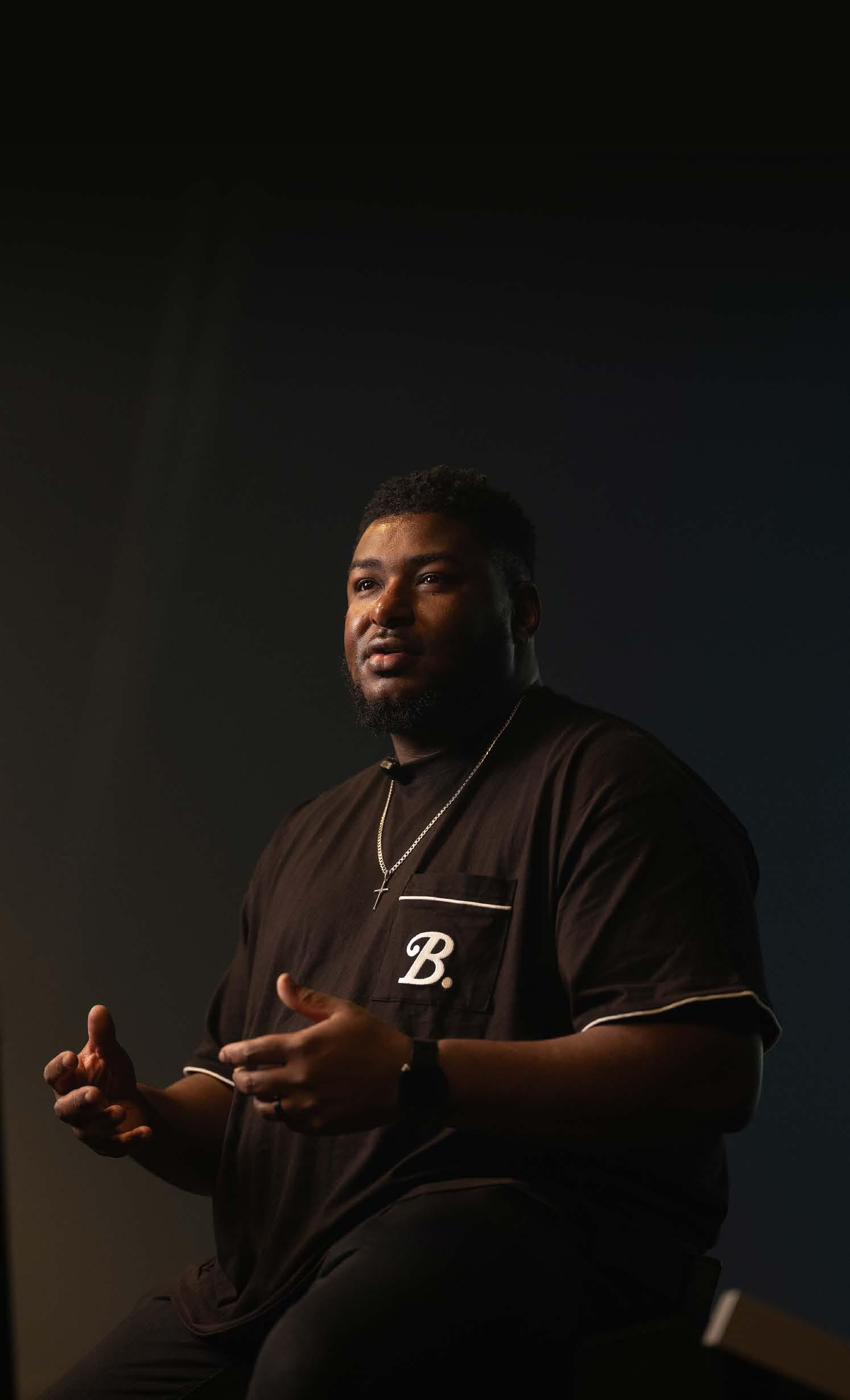
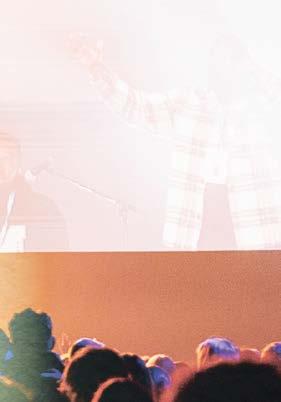
THE IKHINMWINS: LOVING GOD, THEIR SIX CHILDREN AND EACH OTHER
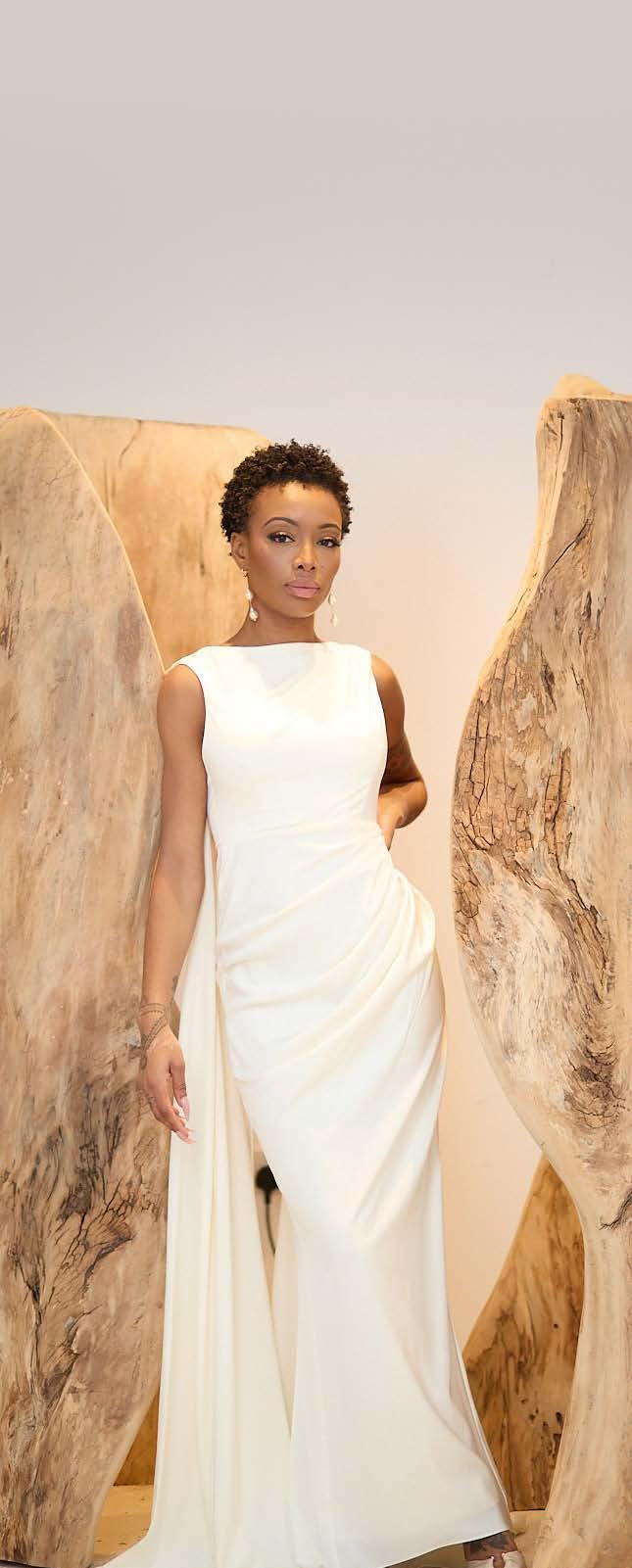
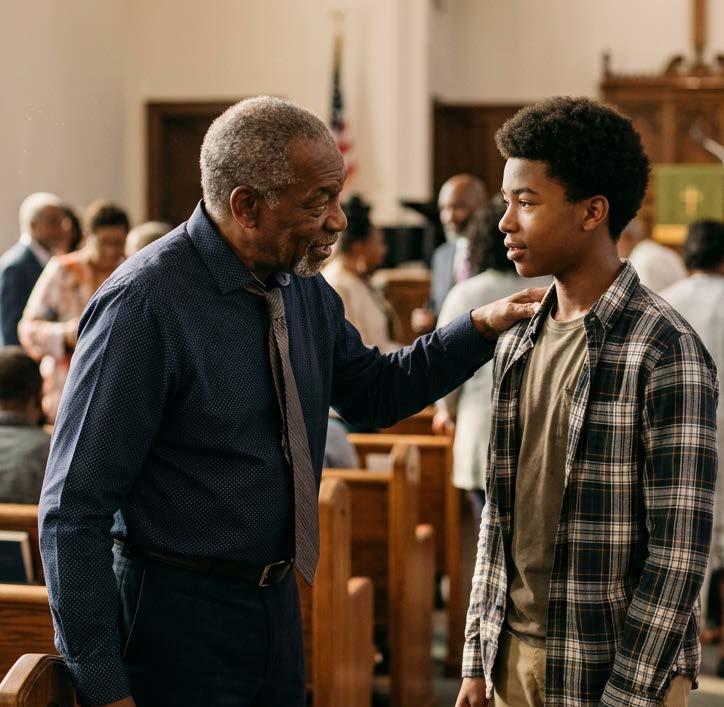
ADOPTING CHRISTLIKE PARENTING WHEN MARRIAGE FAILS
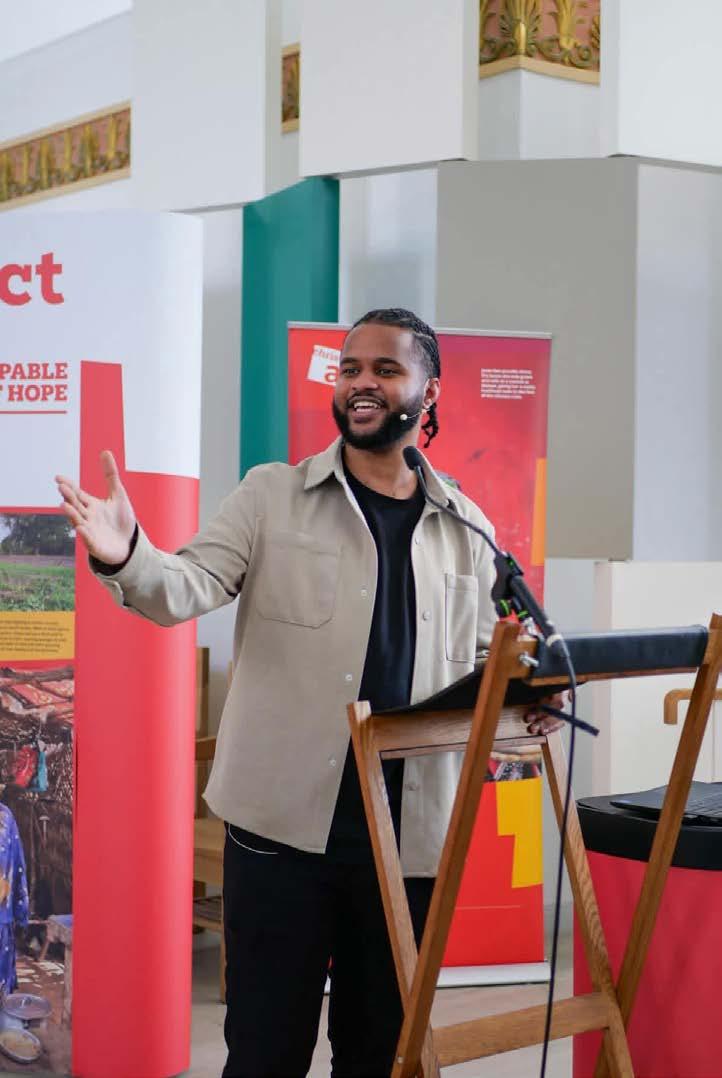
10 IMPORTANT LESSONS YOUNG PREACHERS NEED TO KNOW CAMBRIDGE
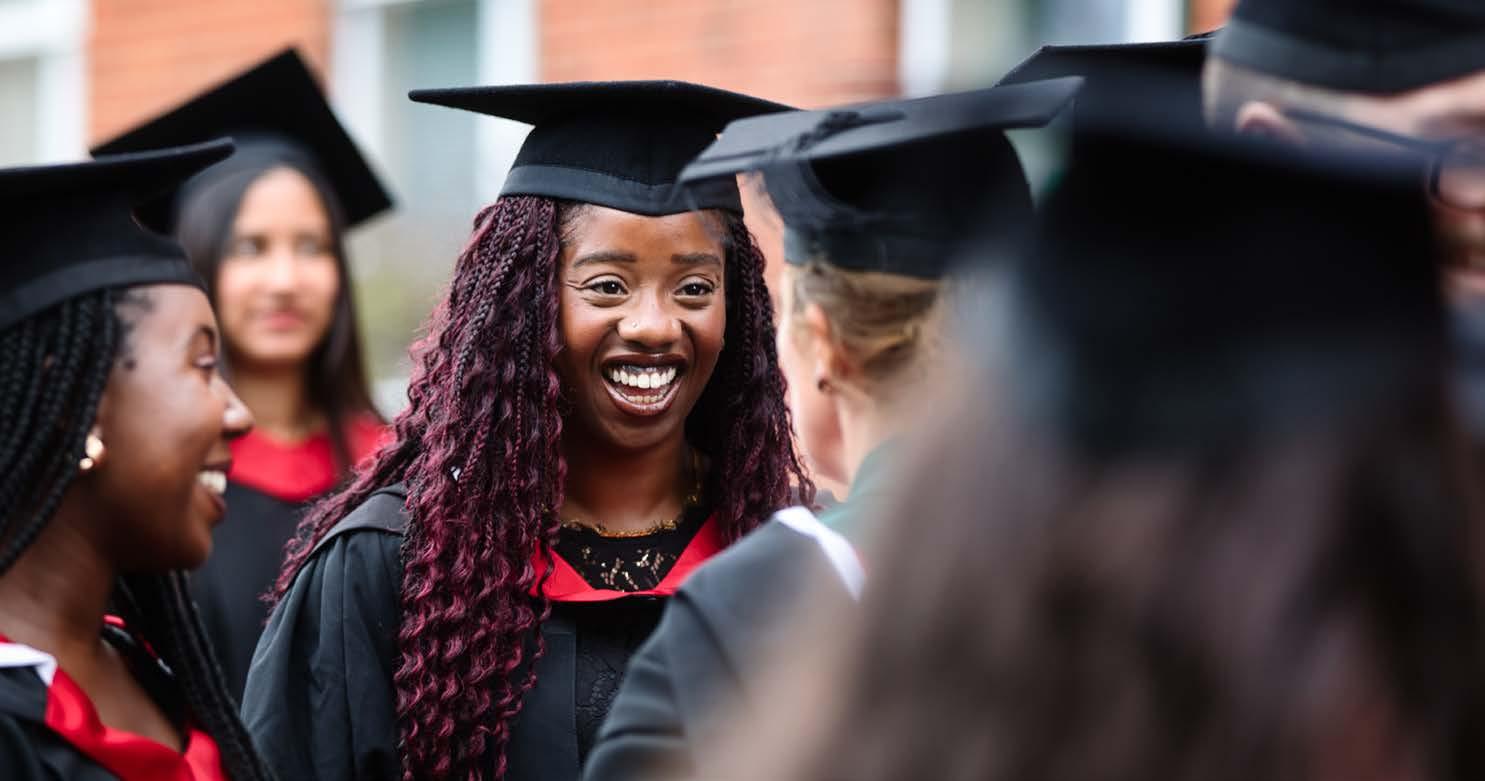
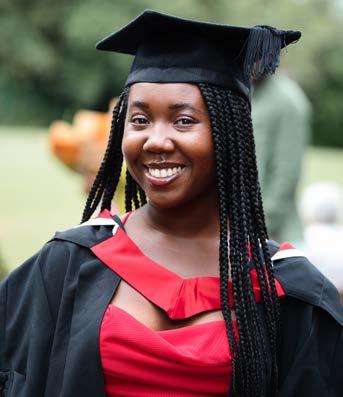
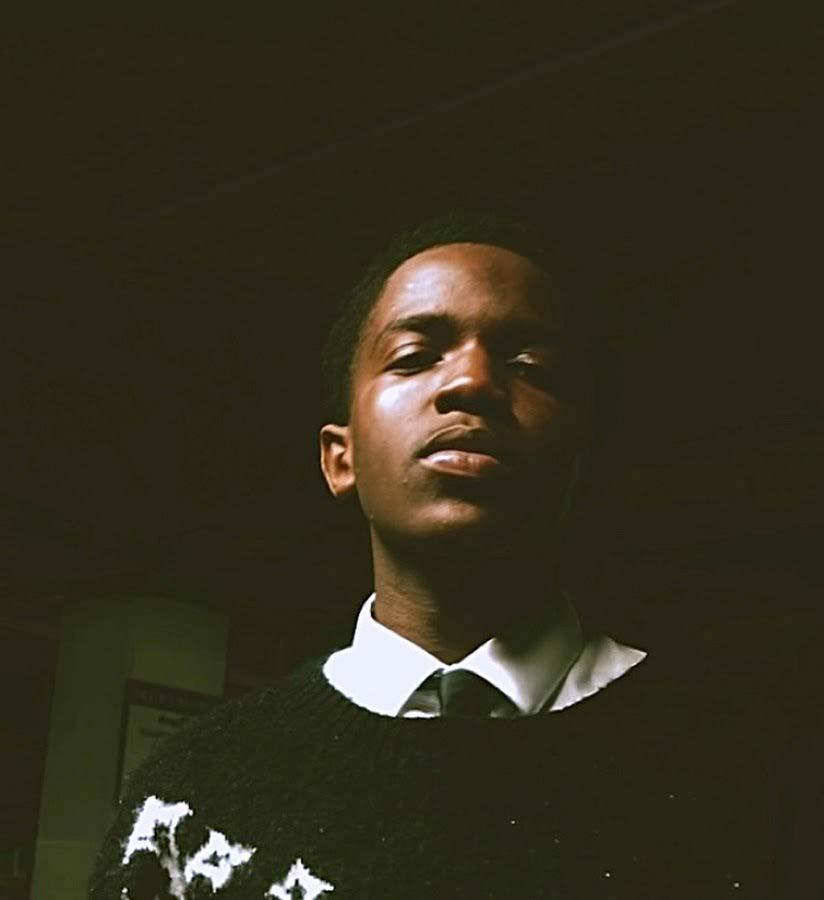
GRADUATE: A STORMZY SCHOLARSHIP CHANGED MY LIFE
DECONSTRUCTION: A CHALLENGE AND OPPORTUNITY FOR THE CHURCH
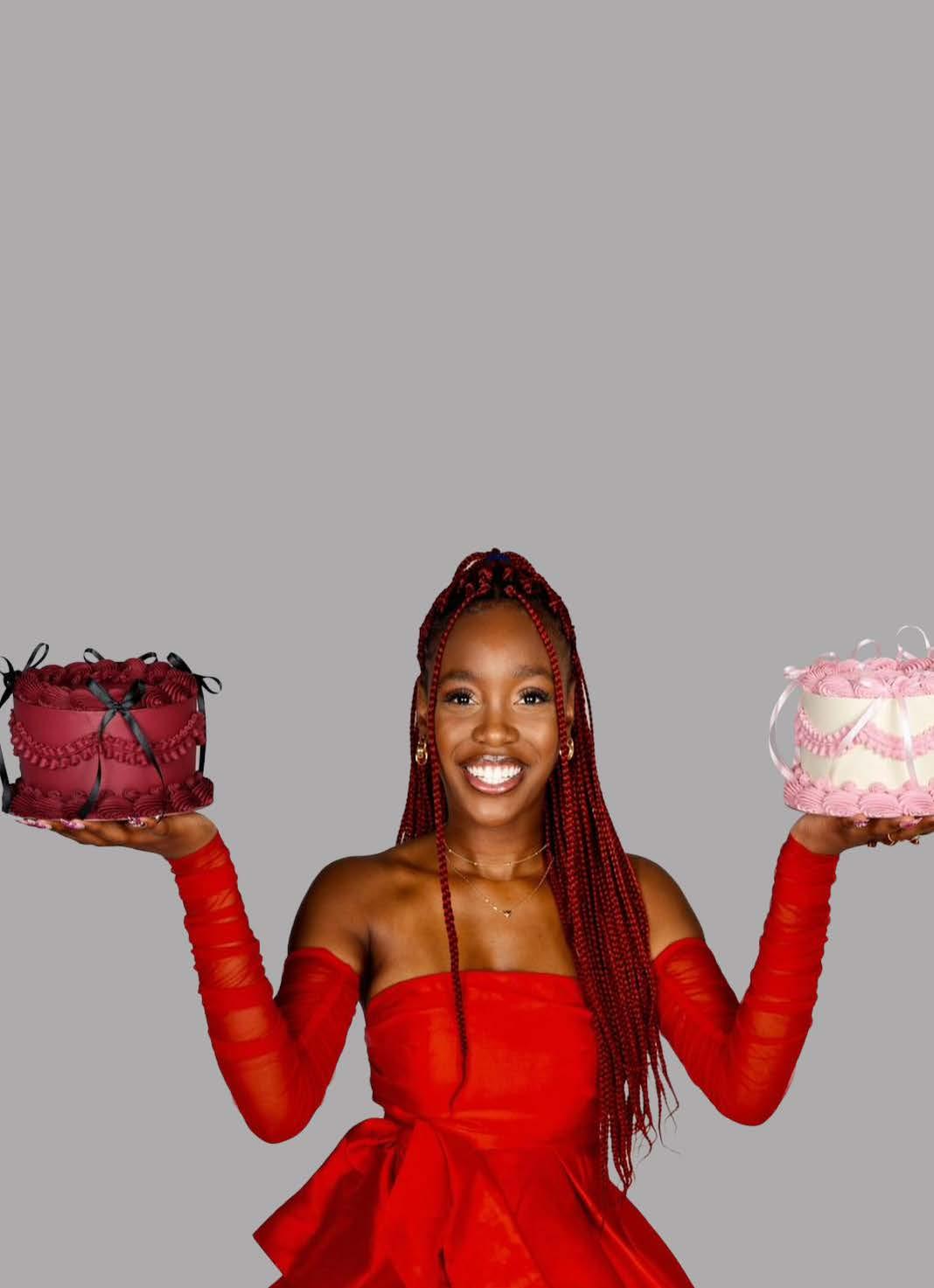
KEEP THE FAITH’S LIST OF YOUNG CHRISTIANS MAKING AN IMPACT HOW TO MAKE MONEY AS AN AUTHOR
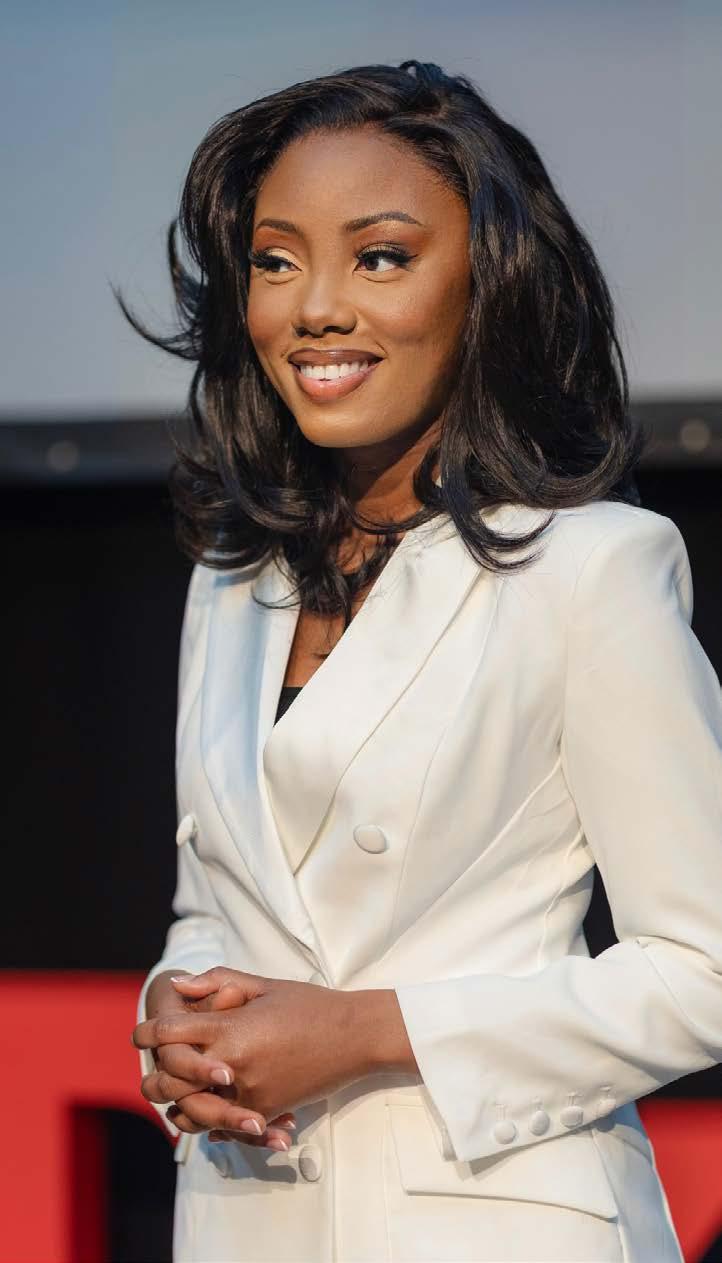
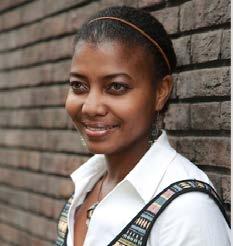
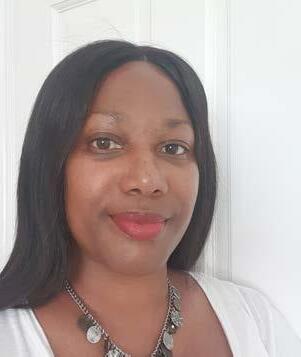
THE POWELL SISTERS: CHARITY FOUNDERS EMPOWERING BLACK GIRLS
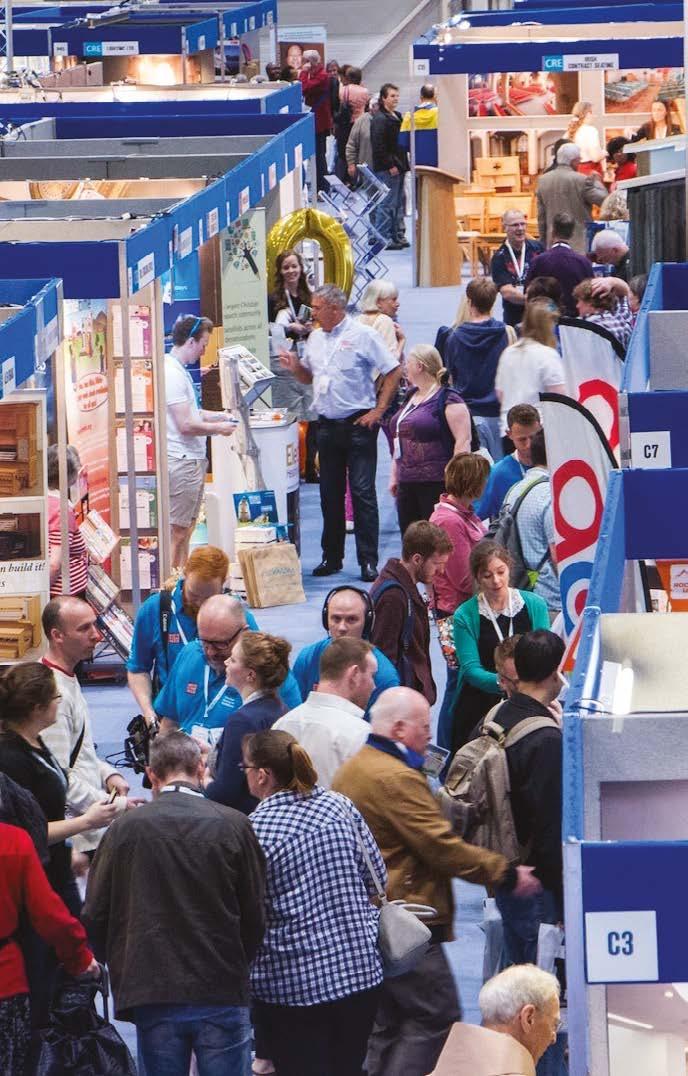
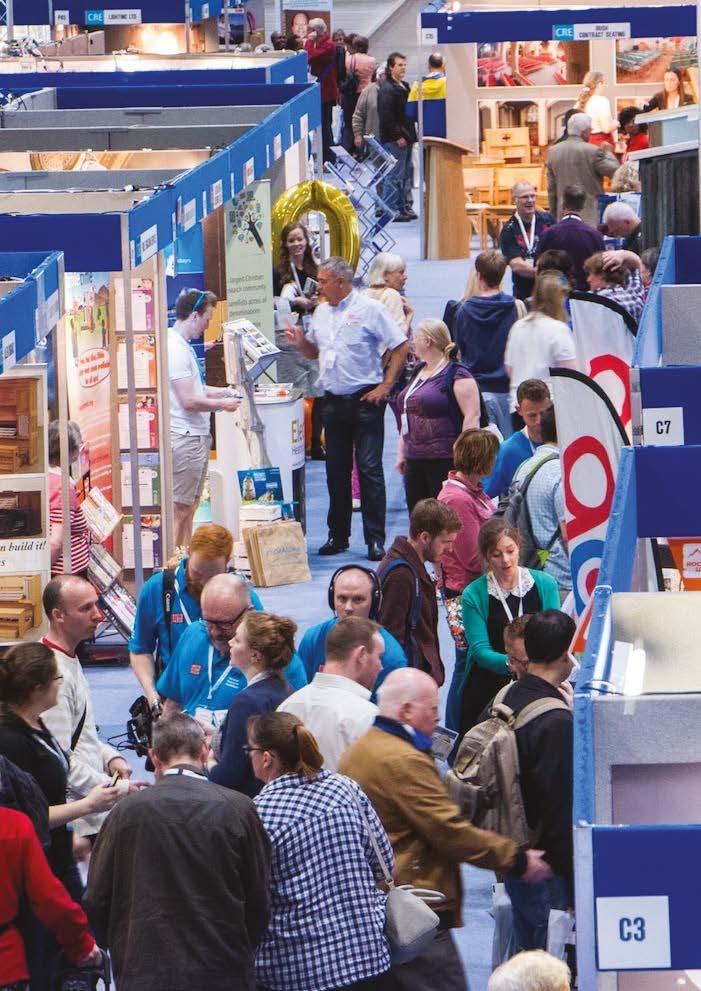
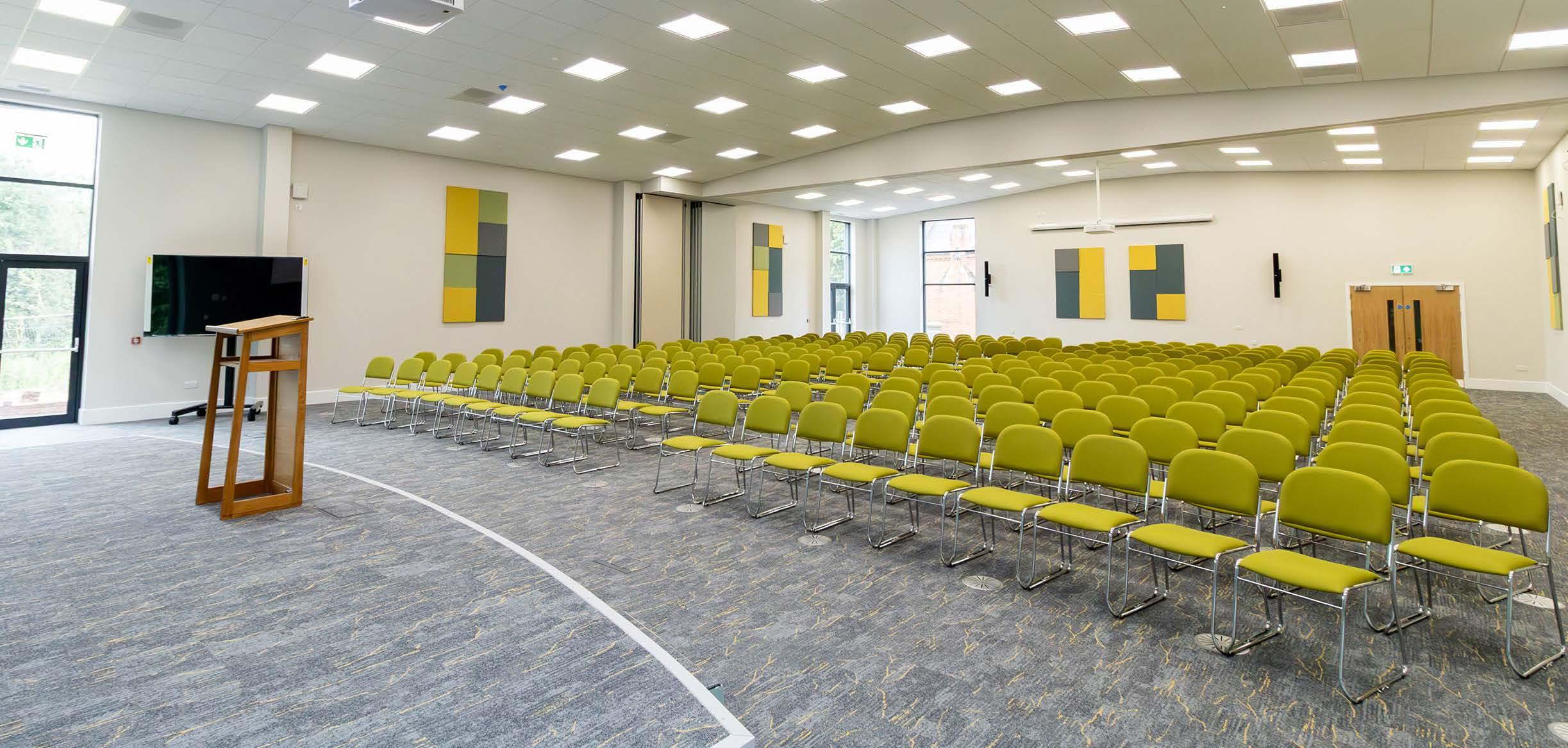
Join thousands of church leaders and ministry teams at CRE — the UK’s leading event for church resources, ideas and inspiration.
From architectural design and technology to governance, outreach and worship, CRE is where vision meets action – helping your church build stronger foundations for faith and service.
EDITOR
Marcia Dixon MBE editor@keepthefaith.co.uk
GRAPHIC DESIGNER
Becky Wybrow
SUB-EDITOR
Jackie Raymond ADVERTISING
Valerie San Pedro advertising@keepthefaith.co.uk T: 0203 868 0664
MARKETING
Karen Seronay karen@keepthefaith.co.uk
Mairem Honrada-Magarro mairem@keepthefaith.co.uk
ACCOUNTS AND SUBSCRIPTIONS finance@keepthefaith.co.uk
PUBLISHED BY
MTD Publishing Ltd 71 -73 Sheldon Street London WC2H 9JQ T: 0845 193 4431 www.keepthefaith.co.uk
Facebook keepthefaithmag X @keepthefaithmag Instagram keepthefaithmag
THE PUBLISHER WOULD LIKE TO THANK:
Dr T Ayodele Ajayi, Shirley Anstis, Revd Dr Sheila Belgrave, Gary Clayton, Akosua DF, Leondre Douglas, Chioma Fanawopo, Juliet Fletcher, Vanessa Grossett, Shermara Hoyte, Esther Kuku, Dr Jacky McLeod, Mercy Myles-Jenkins, Revd Ronald Nathan, Jacqui O’Donnell, Jessica Rogers, Simone S Smart, Kirly Sue, Revd Nathan Turner, Joseph Vambe, Verona White, our advertisers and supporters
The opinions expressed in this publication are not necessarily those of the Publisher.
Editor’s Note
Dear Reader
I hope you have been enjoying our lovely summer. Although it’s making us all a little sweaty (!), it is lovely to wake up to blue skies and warm weather. It gives us another opportunity to thank God for this beautiful world He has created and for another chance to live out His purposes – in spite of the challenges, obstacles and life difficulties we encounter.
I have been producing faith-based content for over three decades and, even though it’s sometimes a struggle, I still love doing so. It’s an honour for me to publish and edit this magazine.
If this is your first time reading Keep The Faith, welcome. I hope you enjoy the faith-inspired articles and, if you’re a regular reader, I believe you’ll continue to appreciate the lovingly compiled content.
Some of the articles – including our annual list of young adults making a difference – focus
on Christians aged 39 and under, who are impacting the Church and wider society – whether as parents, leaders or creatives. Do check out our profile of church leader and choir director Volney Morgan, who is making waves in Europe; have a read of our interview with the Powell sisters – founders of £1million charity BelEve; and hear marital and family wisdom from Samuel and Robbi Ikhinmwin – parents to six children.
My hope, as you read this edition of Keep The Faith, is that you will be inspired by the articles, that they will help you draw closer to God, and that you will be thankful to Him for His manifold blessings.
Happy reading!
If you enjoy reading this magazine, do consider supporting us by subscribing. It costs just £25 for an individual subscription, or perhaps consider giving a donation. Our account details are:
Account name: MTD Publishing Ltd
Account no: 30121325
Sort code: 06-04-05
Bank: Tide (Clearbank)
Once you’ve made a payment, email your postal address to finance@keepthefaith.co.uk and we will set up your subscription.
12 18 14 24
05-07 Latest news
08 Leading Midlands charity celebrates 40th anniversary in style
10 Michael Bethany: Encouraging intimacy with God via music By Akosua DF
12 Volney Morgan: The artist making waves in Europe and the UK By Juliet Fletcher
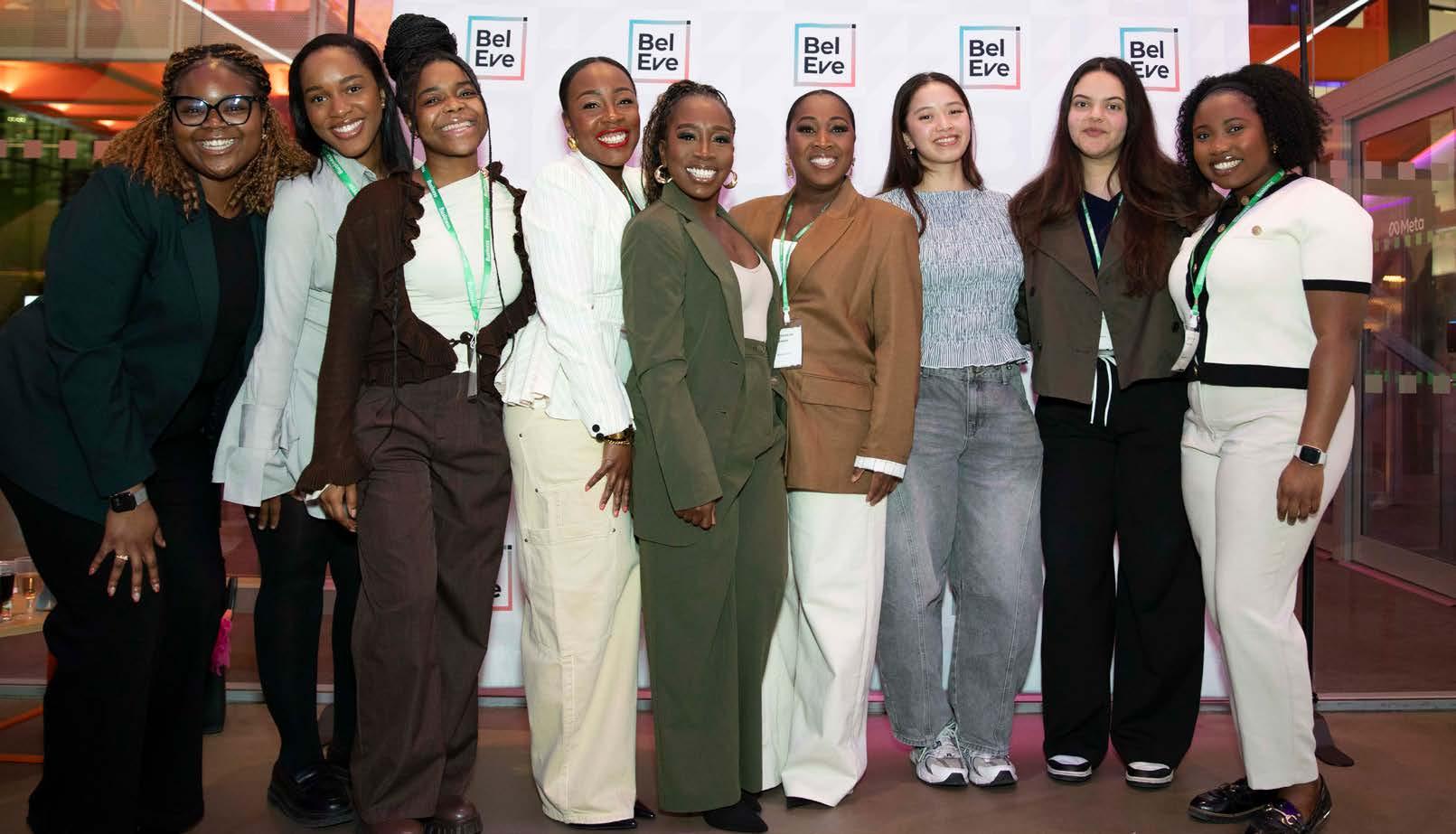
14 BelEve: The charity empowering young girls to lead By Marcia Dixon MBE
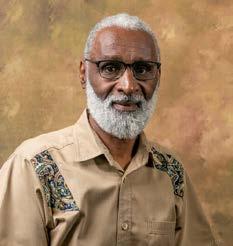
18 The Ikhinmwins: Loving God, their children and each other By Marcia Dixon MBE
20 More than a memory: Continuing the legacy of Revd Dr Io Smith MBE By Revd Dr Sheila Belgrave and Jacqui O’Donnell
21 Facing the storms of life By Gary Clayton
22 Young Preacher: 10 lessons I wish I’d known By Revd Nathan Turner
23 Cultivating the gift of prophecy in your church, life and community By Mercy Myles-Jenkins
24 Keep The Faith’s young people of influence By Marcia Dixon MBE
30 Trusting the voice within: How faith anchors those who lead By Jessica Rogers
31 Reconciling adult children who have stopped talking to their parents By Chioma Fanawopo
32 Theology and science: Can they coexist or am I betraying God? By Minister Shermara Hoyte
34 The Black Church: Why it must tell its own story By Revd Ronald A. Nathan
35 Deconstruction: A challenge and an opportunity for the Black-majority Church By Leondre Douglas
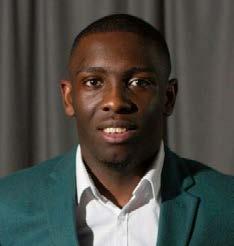
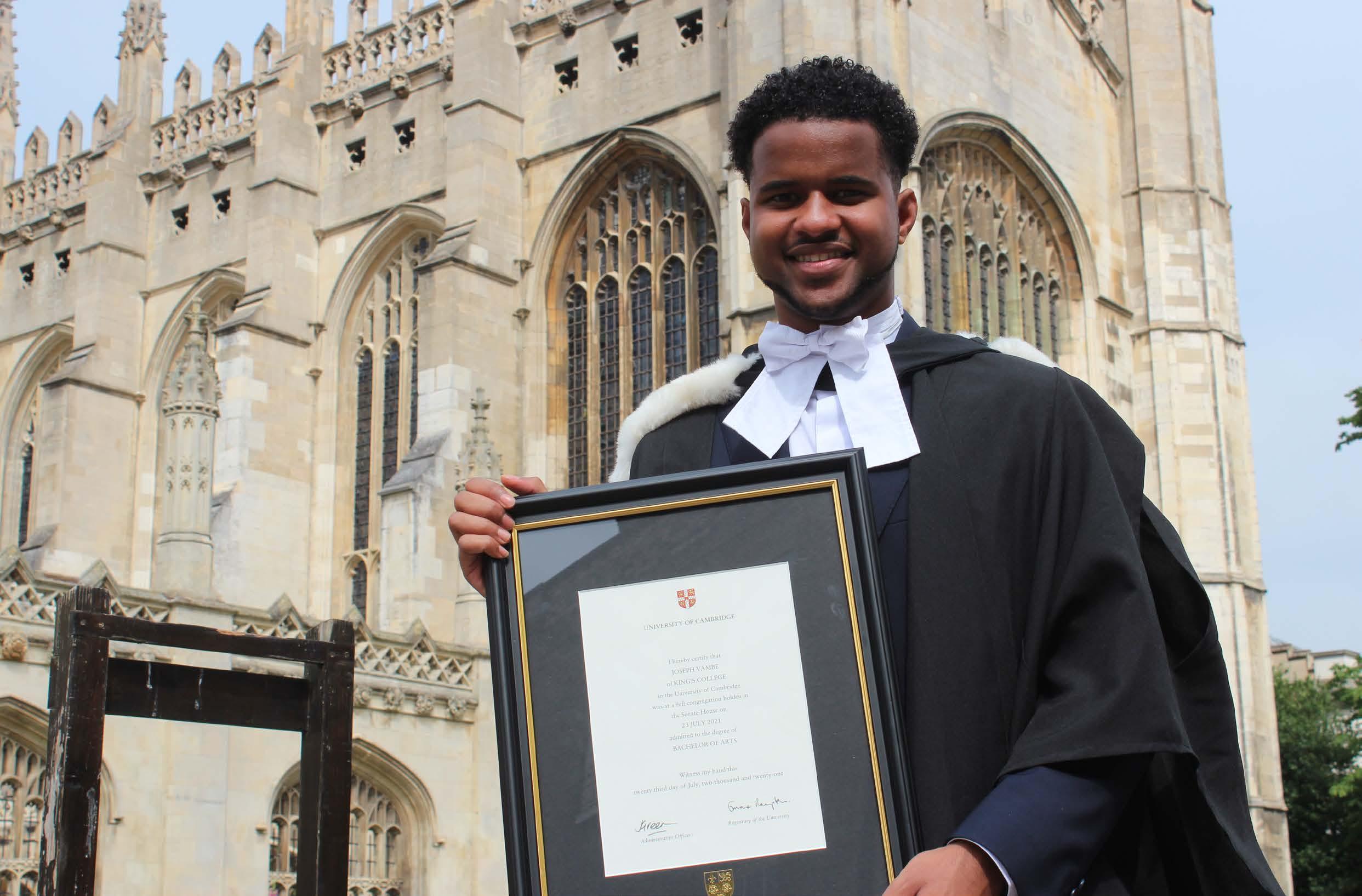
36 From south London to Cambridge University: The scholarship that changed my life By Joseph Vambe
38 Lessons learned on the journey of life By Simone S Smart
39 Food 4 Thought By Marcia Dixon MBE
40 Mastering anxiety with science and Scripture By Dr T Ayodele Ajayi
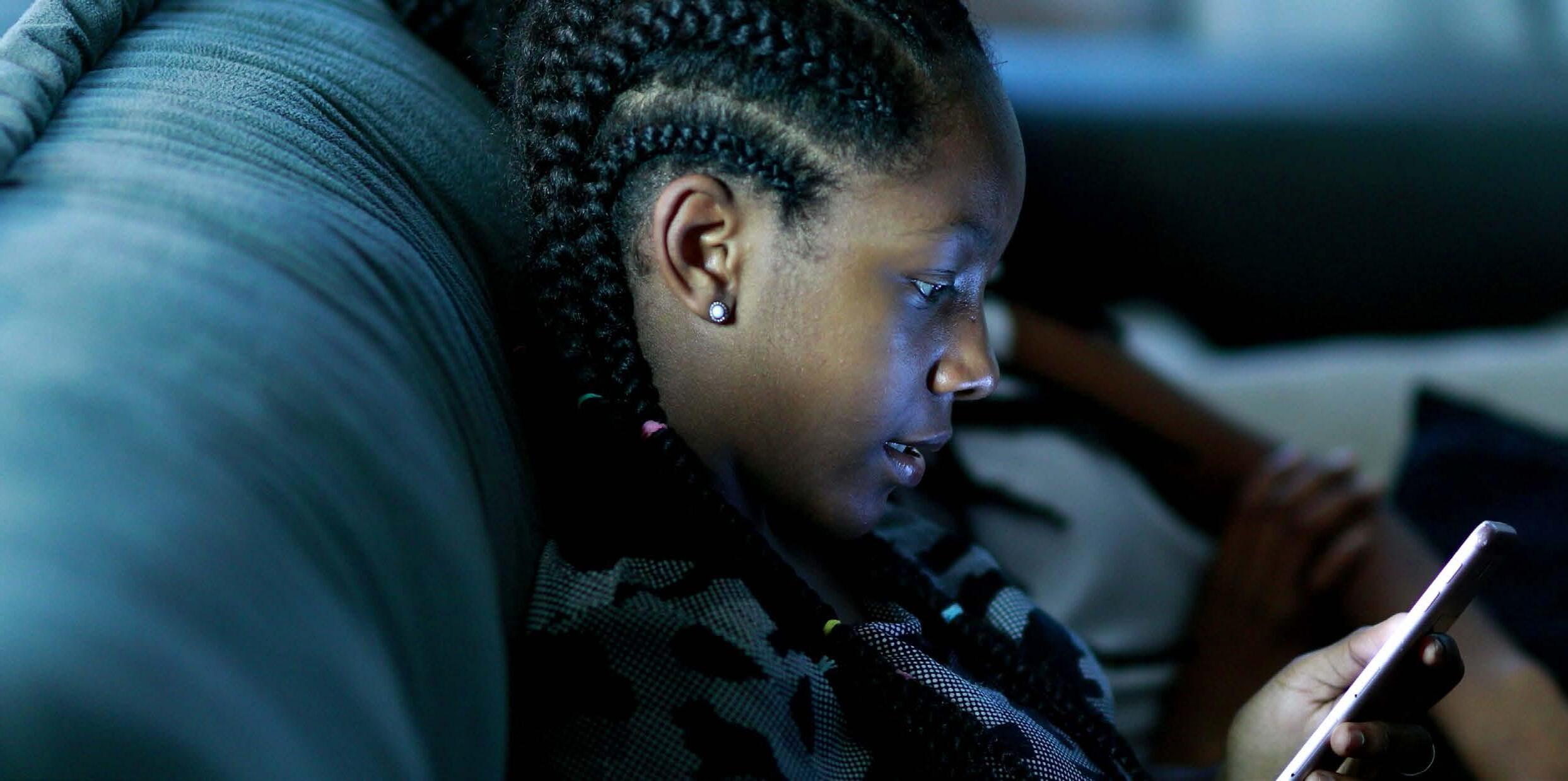
41 Young people and social media: Always connected, seldom connecting By Shirley Anstis
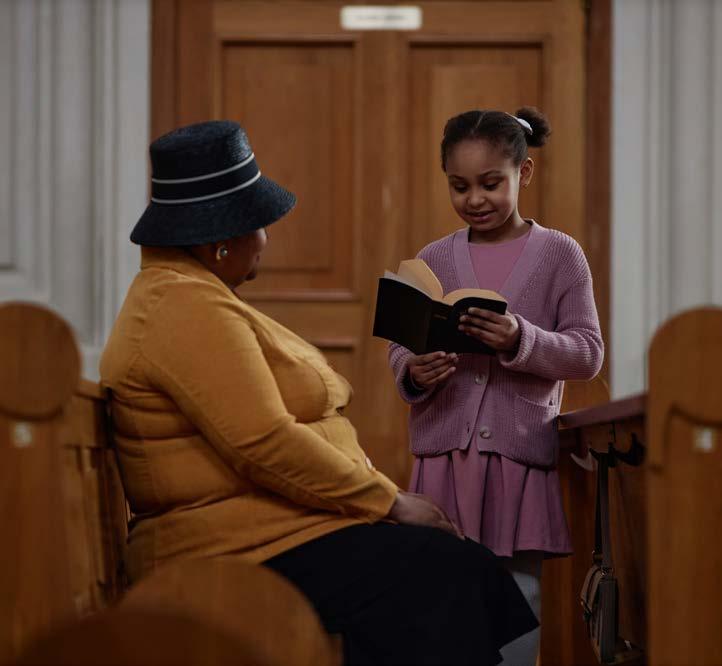
42 Christlike co-parenting: Reflecting Jesus when marriage fails By Esther Kuku
44 The importance of creating healthy habits during your youth By Dr Jacky McLeod
45 A healthy scalp = healthy hair By Verona White
46 Alternative ways for authors to make money By Vanessa Grossett
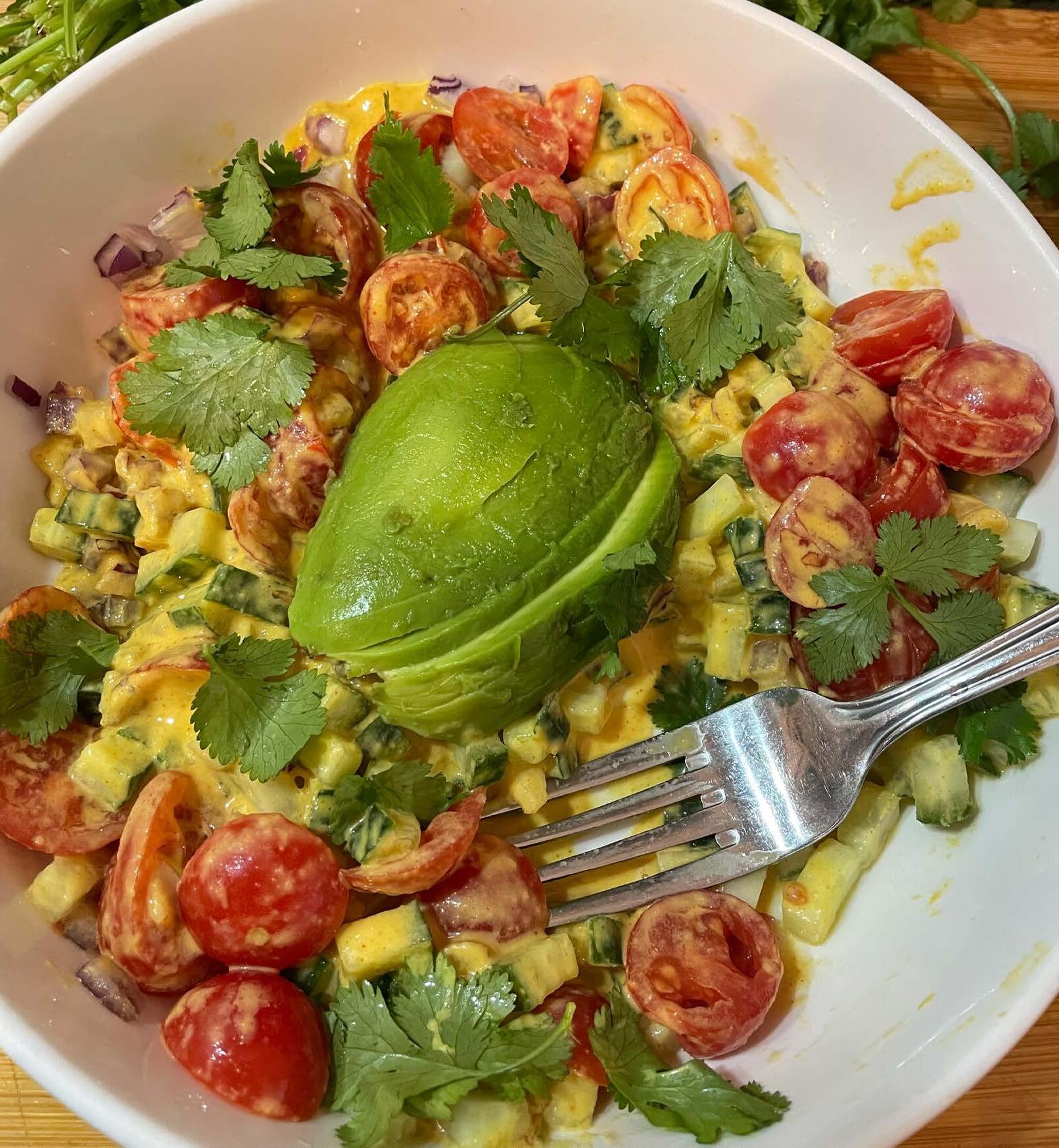
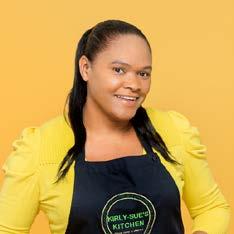
47 Kirly-Sue’s Kitchen: Vegan food column By Kirly-Sue
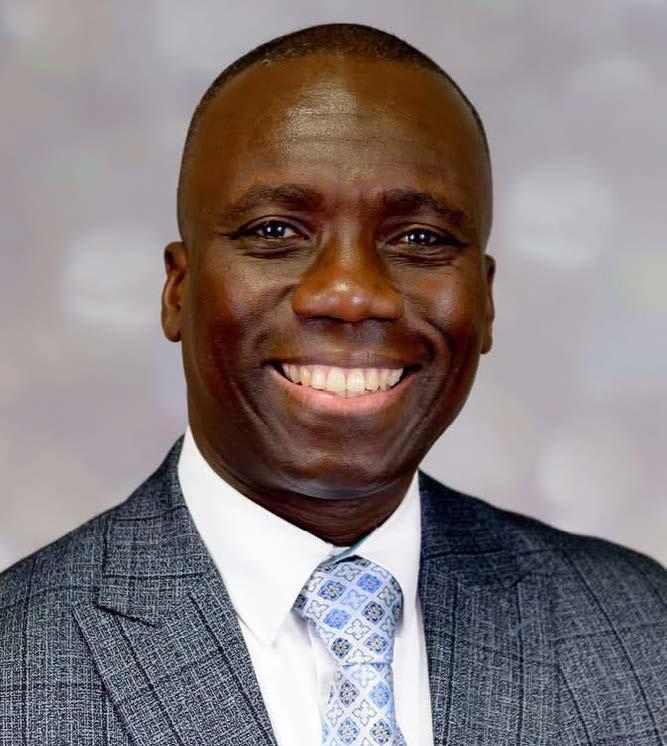
DR KIRK THOMAS ELECTED TO LEAD UK’S SEVENTH-DAY ADVENTIST CHURCH
The Seventh-Day Adventist Church in Britain and Ireland has a new national leader.
During their recent British Union Conference (BUC), held at the Atrium Hotel, Heathrow, Dr Kirk Thomas was elected as their new President.
Dr Thomas assumes the role, following his service as President of the South England Conference (SEC) in September 2023.
He is a seasoned pastor, with more than 30 years of pastoral experience, having previously served in the Inter-American Division of the Seventh-Day Adventist Church before pastoring in the Willesden district of churches in West London, then as Personal Ministries Director in the SEC, and Evangelism Director in the BUC.
Dr Thomas is widely recognised for his commitment to evangelism, leadership development and equipping church members for effective mission. His vision is to empower every member with practical tools to share the Gospel, while strengthening the Church’s commitment to biblical discipleship and community impact.
Dr Thomas holds degrees from the University of the Southern Caribbean, Inter-American Adventist Theological Seminary (IATS) and Andrews University (in Michigan). He is also a board-certified clinical pastoral chaplain and a Level 3-trained counsellor.
He has been married to his wife, Carol, a radiographer, for 31 years. Together, they have four children.
ART EXHIBITION AIMS TO INSPIRE RACIAL HEALING
Christian artist and minister Cornelius Blake is preparing to stage an exhibition of his artwork at the Waiting Room, Peckham Rye Station, London SE15 4RX.
The exhibition, entitled The Weight We Carry, will feature artwork that depicts the themes of racism, trauma and healing. A book with the same name will also be launched.
Cornelius, who, alongside his wife Christina, a psychiatrist, runs The Mind Cafe – a non-profit Christian mental health organisation providing Christ-centred, psychological support – hopes the exhibition will play a part in healing the racial trauma people have experienced. For more details about the exhibition and book launch, visit https://bit.ly/BlkBodExhibition
A LEGACY OF MUSIC, INNOVATION AND FAITH: CLIVE McKINLEY
The UK Gospel community has lost a talented musician and innovator, with the passing of guitarist Clive McKinley aka “The Duke” aka “Vanbrugh Hill” on July 20 after a period of illness.
Clive was born in London, UK to Jamaican parents. His love for music developed through church, inspired by gospel pioneers, such as Andraé Crouch, and encouraged by parents who valued both faith and worship.
His musicianship was honed playing in church – namely the New Testament Church of God – and in other churches, including the Assemblies of God Church on Dennett Rd, Croydon, where he transformed their worship by introducing electric instruments. The legacy continues today.
Clive was a founding member of UK gospel group Qwest, which regularly ministered at NTCG national conventions during the 80s and 90s. A gifted songwriter, his composition ‘Yesterday, Today, Tomorrow’ became an anthem at NTCG National Youth Conventions and was later revived to celebrate the church’s history. He toured internationally with the London Gospel Community Choir; performed with gospel group Nu Colours; taught young musicians; and played for numerous gospel artists and leading music artists, including Ne-Yo, Jamie Cullum and Phil Collins for the BBC.
Tony Harrison, a spokesperson for the McKinley family shared: “The UK Gospel community will greatly miss Clive. Those of us, who had the pleasure of knowing him, will remember him as an all-round creative, a man of faith, and someone with an infectious sense of humour who regularly would have the room in fits of laughter.”
Clive is survived by his mother, his two brothers, two daughters and his nieces and nephews.
THE PASTOR FEEDING BODY AND SOUL
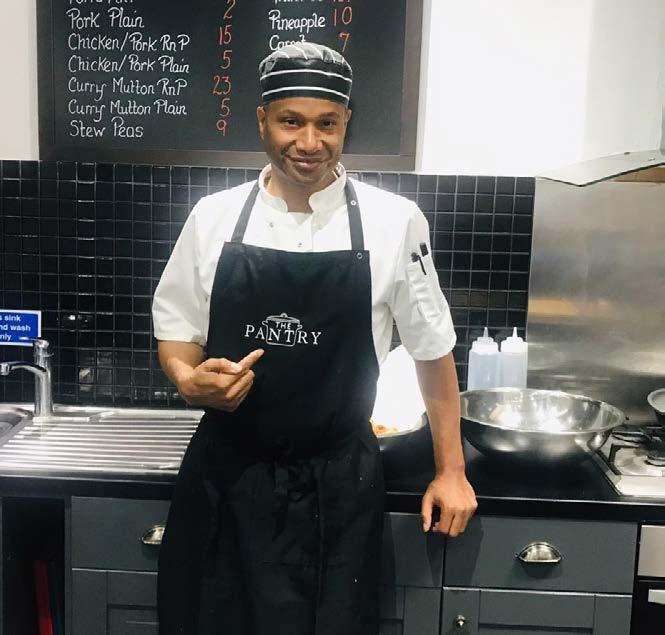
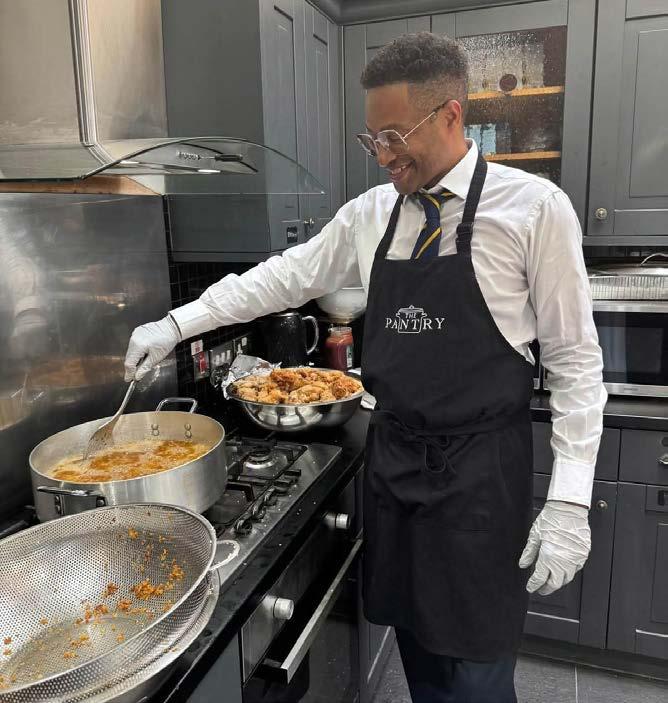
Church leader Revd Dr Kevin Kerr is using his love for cooking to provide spiritual and physical nutrition for the local community.
But it’s not just any food: it’s Caribbean food – including vegan options – deliciously enhanced via Dr Kerr’s cordon bleu training. It’s distributed for free, as well as sold, at The Pantry – a food hub, based at the Liberty Church, Norbury, south London, which Dr Kerr founded in 2011.
The Pantry was born during the 2020 pandemic, after Dr Kerr learned some people in his congregation couldn’t afford to eat. He recalled: “I opened up the church myself with two other volunteers and used our kitchen to cook a Meals-on-Wheelsstyle box dinner that contained protein, carbohydrates and vegetables. They were given away free of charge.”
Dr Kerr and his team cooked throughout the pandemic, distributing 7,814 meals –some to the congregation and the rest were handed out by church members to the local community.
Dr Kerr’s love of cooking started at 12, whilst growing up with his mother, a nurse. When she came home from work, she was often too tired to cook, so Dr Kerr took the initiative and began cooking after his mother had taught him how. Soon, he was cooking
all the meals – and even cooked when his mother brought her fellow nurses home for Friday evening get-togethers.
As Dr Kerr got older, he found himself doing the catering at his places of work and at churches he was part of. It made sense, then, that during the pandemic, he took a diploma course at (Prue) Leiths Culinary School to further enhance his skills. To date, The Pantry has cooked and distributed or sold 23,262 meals.
Dr Kerr has big hopes for The Pantry. It’s his desire to turn it into a business and to have outlets across London, as well as continue its charitable arm to provide meals to those in need.
And The Pantry is making great impact. Some people have joined the church as a result of receiving meals, and, since they have started posting details on social media, Dr Kerr has had people tell him they’ll be joining the church because of the work he is doing.
He is taking all the interest shown in The Pantry and the church in his stride. “You know, I’m here to serve the community, and it doesn’t always have to be from the pulpit.”
The Christian community is mourning the passing of Apostle Tunde Balogun, founder and senior pastor of the Kingsborough Centre in Uxbridge, Middlesex.
Known as a community champion, Apostle Tunde founded the Kingsborough Centre in 2003 in a family living room. It is now a thriving church and community hub, serving people across the London Borough of Hillingdon and beyond.
Under Apostle Tunde’s leadership, the church established Hillingdon Foodbank and founded Coat of Many Colours Nurseries, creating high-quality childcare provision. An advocate for community cohesion, Apostle Tunde worked closely with local authorities, churches, faith groups and community organisations. In 2023, he was appointed as Chaplain to the Mayor of Hillingdon.
Born in Nigeria in 1968 to HRH Oba Ebenezer Adetayo Balogun JP (Olusomiro I), the Olu of Ajura, Apostle Tunde became a Christian in 1987 whilst studying Sociology and Anthropology at Obafemi Awolowo University. He came to Britain in 1994 and joined Jesus House in Brent, north London. He was ordained as a pastor in 1996, and later served as an assistant pastor, earning the respect and admiration of many for his dedication and compassion.
Apostle Tunde will be remembered for his faith, integrity, generosity, wisdom and unwavering commitment to people.
LEADING MIDLANDS CHARITY CELEBRATES 40TH ANNIVERSARY IN STYLE
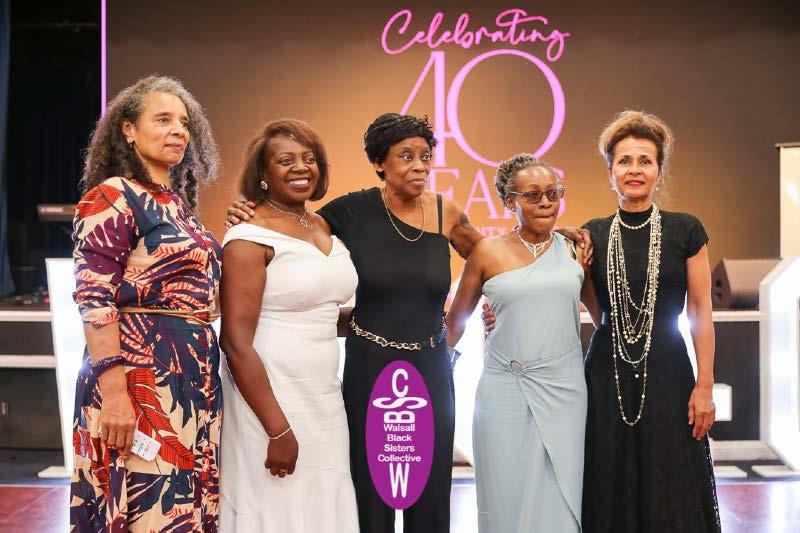
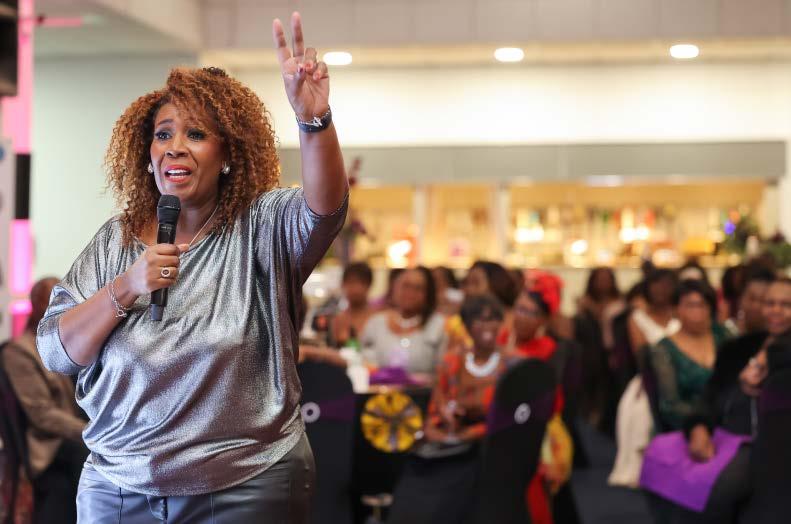
Founders, well-wishers, civic guests and service users past and present attended the 40th anniversary celebration of the Walsall Black Sisters Collective (WBSC), held at The Jimmy Walker Suite at the Bescot Stadium, Walsall.
Launched by six women in 1986, to campaign and advocate for Black communities following the aftermath of the Midland riots, the WBSC continues its mission, alongside running community projects. The 40th anniversary celebrations reminded the packed audience of this.
Nikki Tapper MBE served as a bubbly and humorous host. Outgoing WBSC chair, Wendy Angus-Bovell, opened the celebration with a well-received speech, setting the tone for what was an uplifting event.
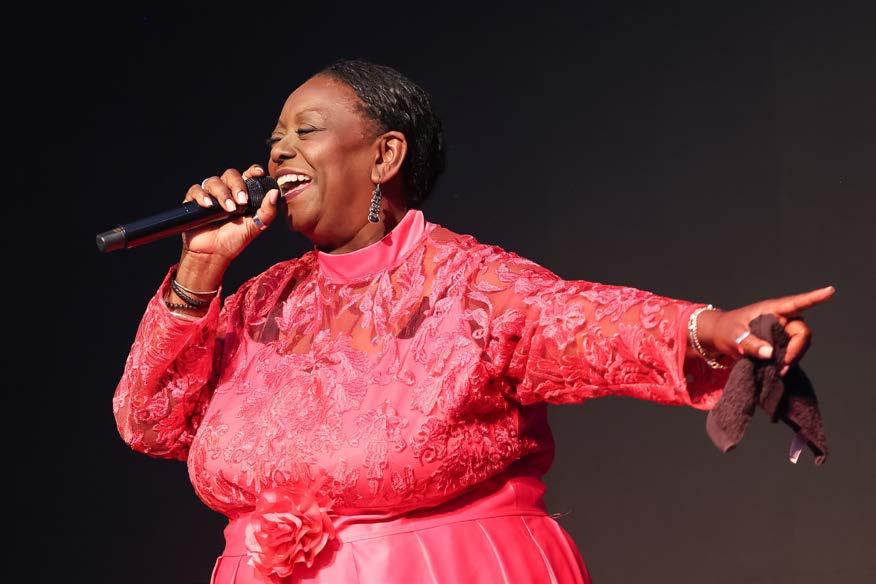
Throughout the evening, the audience learned about WBSC’s work, its early history, its future plans and current projects via video presentations and speeches. They also experienced enjoyable entertainment, which included youth dance outfit, Eloquent Dance; gospel singer Tracey Riggan, who brought the house down; contemporary vocalist Bianca
Passelle-Reid; and spoken word artist Derrion Wilson, whose poems touched on the strength of Windrush women.
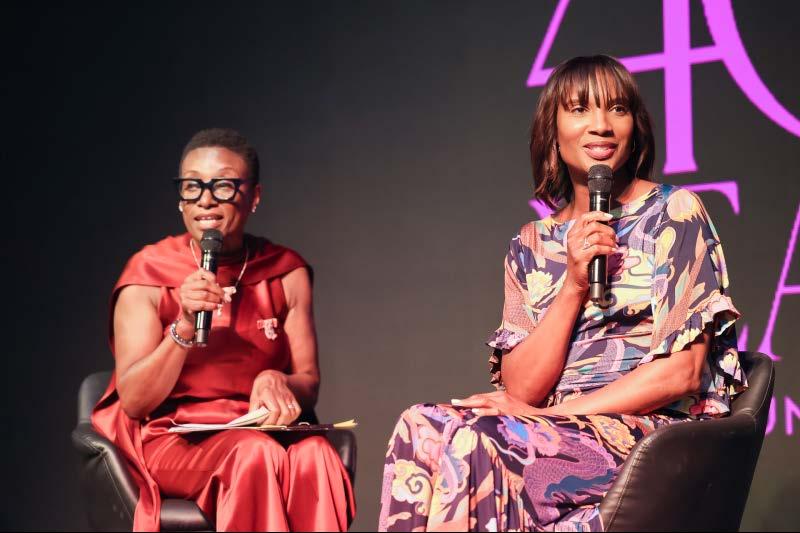
Nikki had a fireside chat with special guest, Olympian Dame Denise Lewis, who shared how she has been heavily influenced by the strong women in her family. The audience also heard from WBSC founder members who were present.
They were featured in a video presentation, where they reflected on WSBC’s early years,
their experiences, achievements and hopes for its future. The audience also learned about the charity’s heritage project, which celebrates Black British history created by the Windrush Generation.
The evening was brought to a humorous close by comedian Angie Le Mar, who got the audience laughing with her stories about Jamaica, parenting young people, and the Church.
Maureen Lewis, WBSC CEO, said: “WSBC’s journey over the past 40 years has been a remarkable one, and it was great that we were able to celebrate this landmark in style, with the founders present. We look forward to what the future holds.”
Marcia Dixon MBE, Publisher of Keep The Faith, said: “It was an honour to be a media sponsor of WBSC’s 40th anniversary celebrations. KTF loves to support organisations that provide valuable services in their local communities. WBSC does this and more. We pray that as WBSC moves forward, they will continue to have community impact.”
Visit www.walsallbsc.com
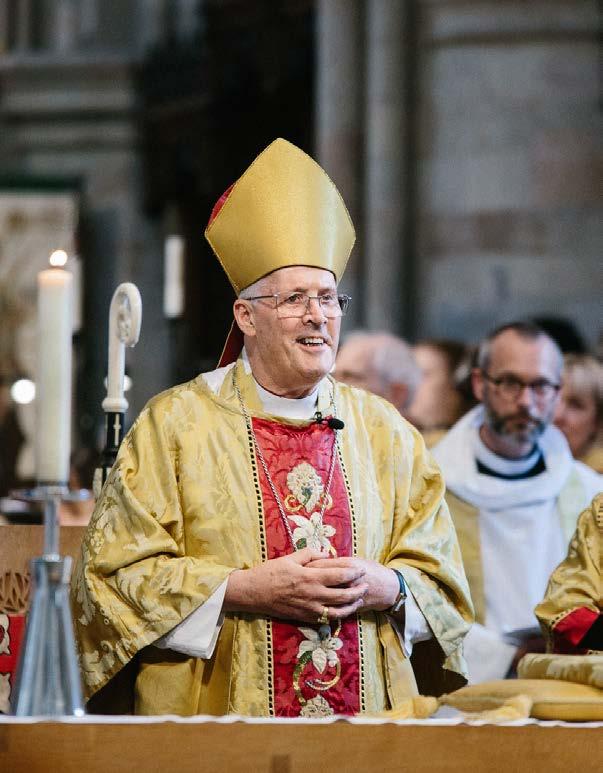
SOUTHWARK DIOCESE BIDS FAREWELL TO BISHOP CHRISTOPHER
The Diocese of Southwark has given thanks for the ministry of The Rt Revd Christopher Chessun, as he prepares to retire from his role. The special valedictory eucharist, at which Bishop Christopher presided and preached, recently took place at Southwark Cathedral.
“As a person approaches retirement, there are inevitably plenty of opportunities to say goodbye – but there are rarely enough opportunities to express appreciation and gratitude,” said Bishop Christopher in his sermon. “So, the first and most important thing I wish to say today is ‘Thank you.’ Thank you for who you are, and for all that you give. I retire with a deep and heartfelt sense of gratitude for the joy of walking alongside you as fellow pilgrims in the way of Christ, and for all of us working together for the common good.”
During the service, Bishop Christopher handed on the Diocesan Crozier to The Rt Revd Dr Rosemarie Mallett, Bishop of Croydon, who will serve as Acting Bishop of Southwark until a new Diocesan Bishop is appointed.
Bishop Christopher began public ministry as the tenth Bishop of Southwark in March 2011. He will retire on his 70th birthday in August 2026, after 43 years in ordained ministry.
London School of Theology is an independent and interdenominational Theological College with externally validated degrees.
For over 80 years, London School of Theology has been dedicated to delivering a high level of education for individuals, equipping local churches, and engaging in leading research. The college provides practice-led theological and interdisciplinary education within Christian community, both on campus and online.
Our programmes are designed to equip your faith and apply academic theology to your ministry context. Offering accessible study options, our programmes are available to study:
• Full-time or part-time
On campus, Online, Mixed-Mode Certificate, Diploma or Degree level.
“My decision to study at the London School of Theology was born out of a deep desire to integrate academic theology with the practical demands of Pentecostal leadership.
As a church leader and practitioner within the charismatic-Pentecostal tradition, I recognised the need for a robust theological framework that could ground and sustain my ministry in today’s complex ecclesial and cultural landscape.”
Oscar Guobadia, MA Practical theology and ministry Student
APPLY NOW FOR 2026 ENTRY
Discover our range of unique and integrative programmes* with flexible study options:
Undergraduate:
• Theology
• Theology and Counselling
• Theology and Worship studies
• Theology and Liberal Arts
Postgraduate Taught:
• MA Practical Theology and Ministry
• MA Theological Studies
• MA Biblical Studies.
Postgraduate Research:
• Master of Theology (MTh)
• Master of Philosophy (MPhil)
• Doctor of Philosophy (PhD)
* London School of Theology’s undergraduate and postgraduate programmes are quality assured by Middlesex University and students will receive a Middlesex award on successful completion.
Research programmes are a collaborative research initiative between London School of Theology and Middlesex University.
To find out more or join us for your next open event, visit: www.lst.ac.uk
Want to consider hiring London School of Theology for your next conference or event? Please get in touch for more information or arrange a visit!
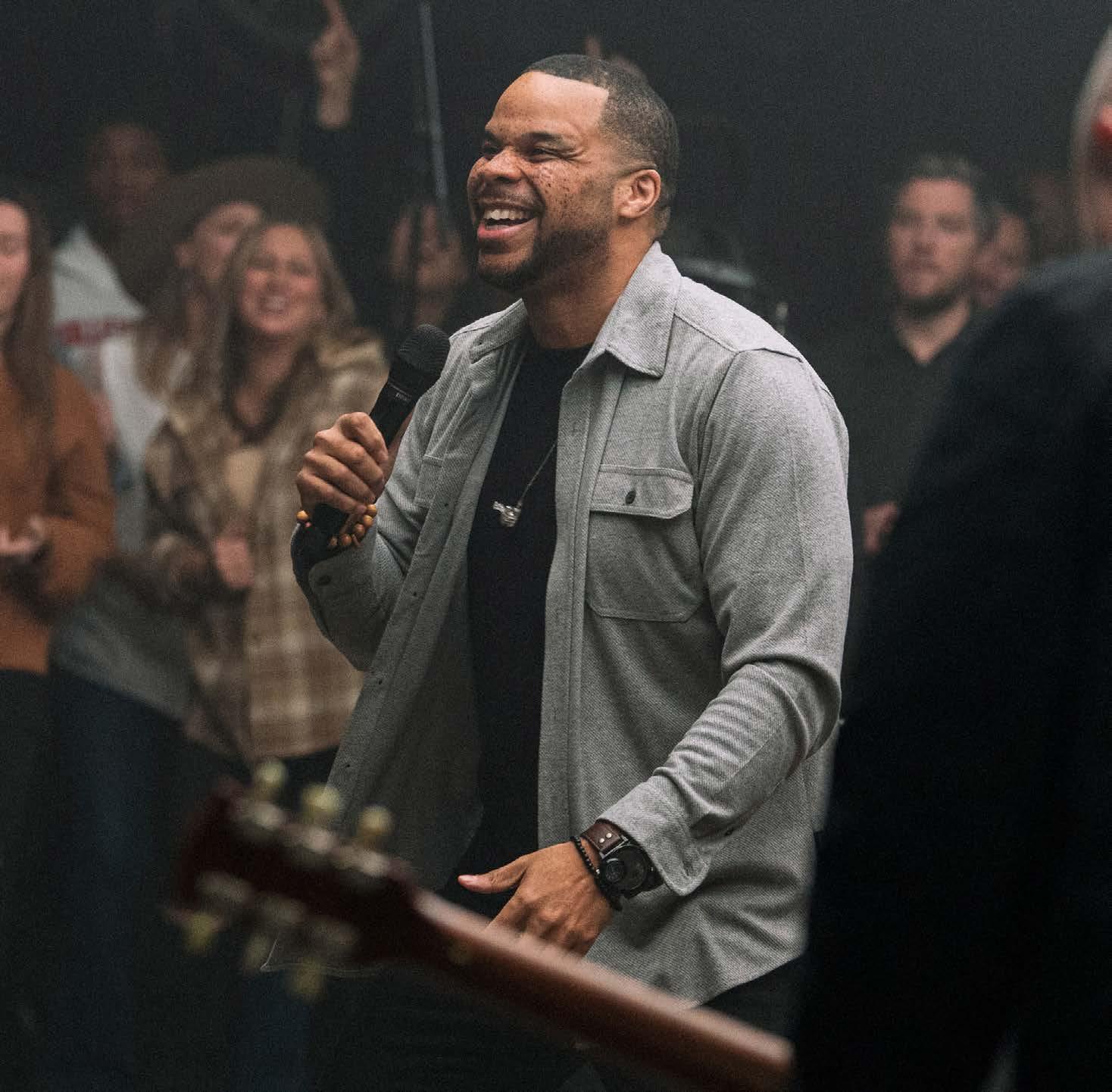
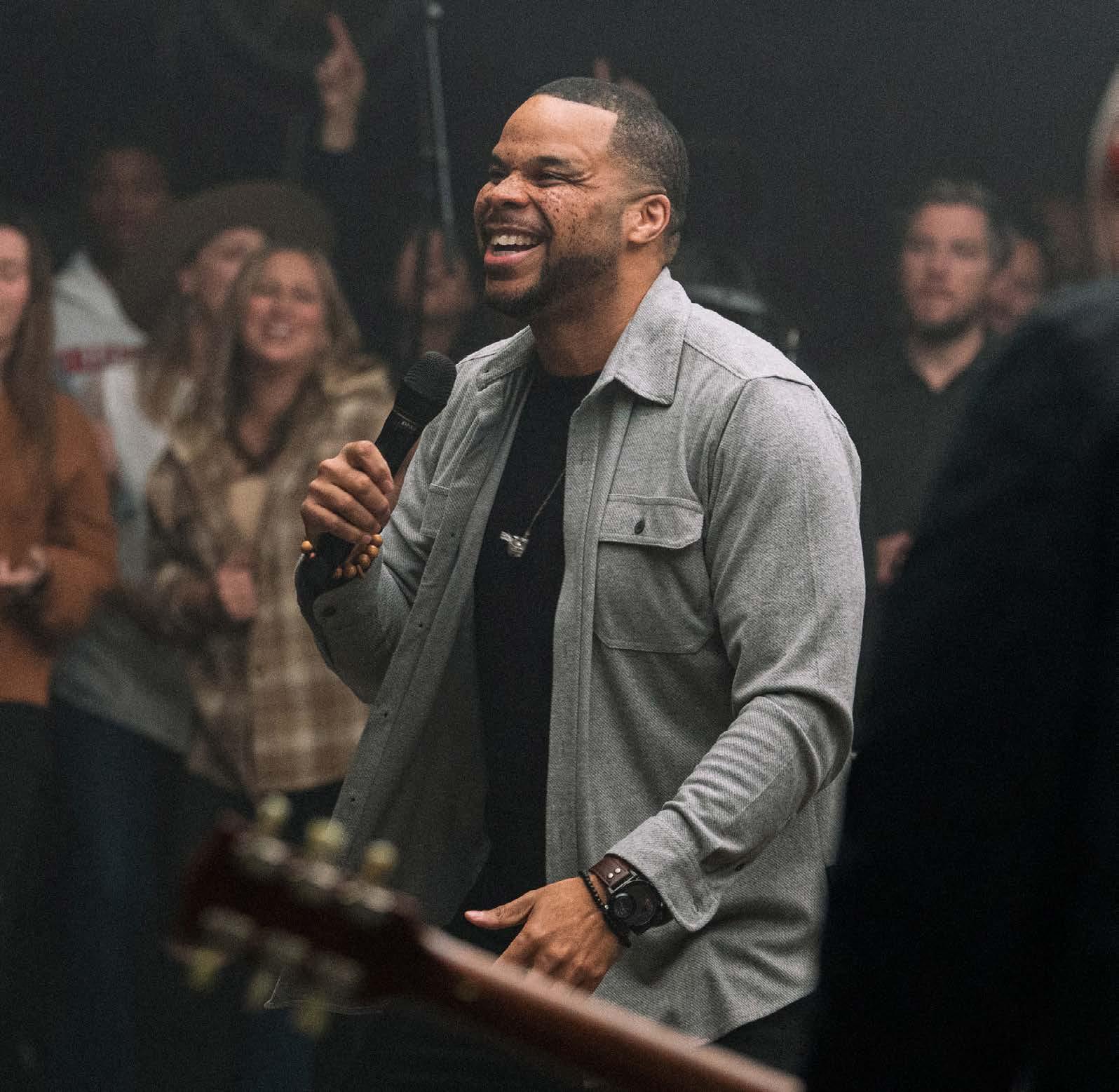
From powerful corporate spaces to quiet secret places, Michael Bethany’s music has the power to set atmospheres. A worship artist, who has sung with gospel luminaries such as Kirk Franklin and Fred Hammond, Akosua DF caught up with him to talk all things ministry, family and his new album Sanctuary.
Akosua DF (ADF): Welcome to Keep The Faith, Michael. For anyone who is unfamiliar with your story, please tell us a little bit about yourself.
Michael Bethany (MB): I grew up as a pastor’s kid, and my father introduced me to Jesus when I was about eight or nine years old. Both my parents were incredibly musical: my dad was a musician and songwriter, and my mum was a singer and songwriter. Naturally, I followed in their footsteps, making music in the church from a young age. I didn’t realise that the level of preparation I was developing was setting me up for the future. It was preparing me for the day I would meet Fred Hammond and be truly ready to serve his vision. Fred Hammond was the first major artist in the national and international gospel music space to give me a chance. We met in 2006, and I worked on his Free Worship album. From there, the rest is history. That opportunity opened doors for me to work, write and produce alongside incredible artists, like Marvin Sapp and Kirk Franklin. It truly launched my journey.
ADF: Let’s talk about your newest project, Sanctuary, which focuses on the believer being the dwelling place of the Holy Spirit. A couple of the tracks on this project are intentionally long, immersive and deep. In this era of short attention spans and radio edits, why was it important for you to keep those extended moments of worship intact? MB: It all started during a worship service, when the Lord gave me a song called ‘Sanctuary’. Intimacy with God is huge for me, and I wanted to write songs that help the Church to see themselves as the dwelling place of the Holy Spirit. We often talk about the ‘prayer closet’ or the ‘secret place’. I used to take that literally and pray in my actual clothes closet! But I realised the secret place isn’t a physical address; it’s a spiritual one. You can access it anywhere – in a bedroom, a car or a closet. Too often, we view the church building or the pastor as
MICHAEL BETHANY
Encouraging intimacy with God via music
sacred, but we don’t see ourselves as sacred. God lives in you. That’s why how we live matters. He wants to express His character through us, and that is the essence of this album. Regarding the track lengths, something powerful happens when we gather in the presence of God. We’ve all been in a service where a song is flowing, you’re deeply caught up in it, you feel the weight lifting and then it suddenly ends. You’re left wishing it would just keep going. We had those beautiful, extended moments during the recording, and I felt led to keep them intact. This album was created for sanctuaries. If you are having a profound sanctuary moment at home or in your car, I don’t want to interrupt that for the sake of a format. We did create four-minute edits for radio stations, but for people watching the full experience on YouTube globally, there’s no reason to stop the song. If you are entering into the secret place, I want you to have the full experience of what the Lord has planned for you, not my programme.
ADF: You’ve mentioned working with legendary artists, like Fred Hammond and Kirk Franklin. What is the most important lesson you learned from those veterans that you now try to pass down to the creatives you mentor?
MB: The first thing that comes to mind is work ethic. People like Fred Hammond and Kirk Franklin are some of the hardest-working individuals you will ever meet. What’s interesting is that they aren’t just working hard to fulfil someone else’s directives; they are quintessential creatives. They are constantly making things no one asked for, but they have found a way to marry their work ethic with their creativity to create demand. That is incredibly powerful.
A lot of creatives make things, but their work ethic is low. We create, but we don’t do much with what we make, and we don’t truly invest in our craft. These guys never stop short. For example, Fred built an entire studio inside a warehouse. That’s where the concept of ‘warehouse worship’ originated. I was working with him when he created it. We recorded a whole series of songs from his catalogue, in a warehouse that he bought specifically for that purpose. Seeing Fred’s drive to fight for his vision, and watching how diligent and hardworking Kirk is, taught me an invaluable lesson: if you are really going to pursue this path, you must be willing to put in the time, the effort and the financial investment. Even when it doesn’t immediately give you the return you want, that dedication eventually pays off.
ADF: You are blessed with a beautiful family, and you’ve often credited them as your primary support. How do you balance and
navigate family life, whilst being a soughtafter worship leader and worship pastor? MB: Here is a simple way of looking at it: I have a covenant with my wife, and I am not covenant-committed to any other person on this planet. That covenant is a mirror image of my relationship with God, which gives it immense, godly significance. Having that clear revelation tells me exactly what my priorities ought to be. Here is the second thing I always consider: I can lead worship or preach, and if I don’t show up, someone else will step in and do it. But absolutely no one else can stand in for me to be a husband to my wife and a father to my children. I am the only person on earth who can fulfil those roles. When I travel, I try my best to bring my family with me; I try to be incredibly intentional about keeping them involved in everything I do.
For example, I told my 8-year-old son ahead of time: “Son, I have a trip coming up to Nigeria and London.” I wanted him to be fully aware of it and talk about it with me. When I leave, he understands exactly what I am doing, and he gets regular updates. It’s almost like I am asking him for permission – though I’m not! I just want him to have a complete understanding.
We recently dedicated two water wells in Nigeria. My 8-year-old understood exactly why I went, because I’d included him in those early conversations. I told him: “I am representing you and our family in Nigeria. When I walk up to those water wells to dedicate them and pray over them, I am representing what we have built together as a family.” Because of that, he is just as much a part of it as I am. That is simply how I look at life. I try my absolute best. It is never a perfect balance, but it is a daily, intentional effort.
ADF: If someone listens to a Michael Bethany album and walks away with one revelation, what do you want that to be? MB: I would love everyone to walk away with a revelation and a value for the secret place. Visit www.michaelbethany.com
AKOSUA DF
VOLNEY MORGAN THE ARTIST MAKING WAVES IN EUROPE AND THE UK
Juliet Fletcher talks with choir director and church leader Volney Morgan, and shares why he’s an artist making a major difference on the gospel landscape
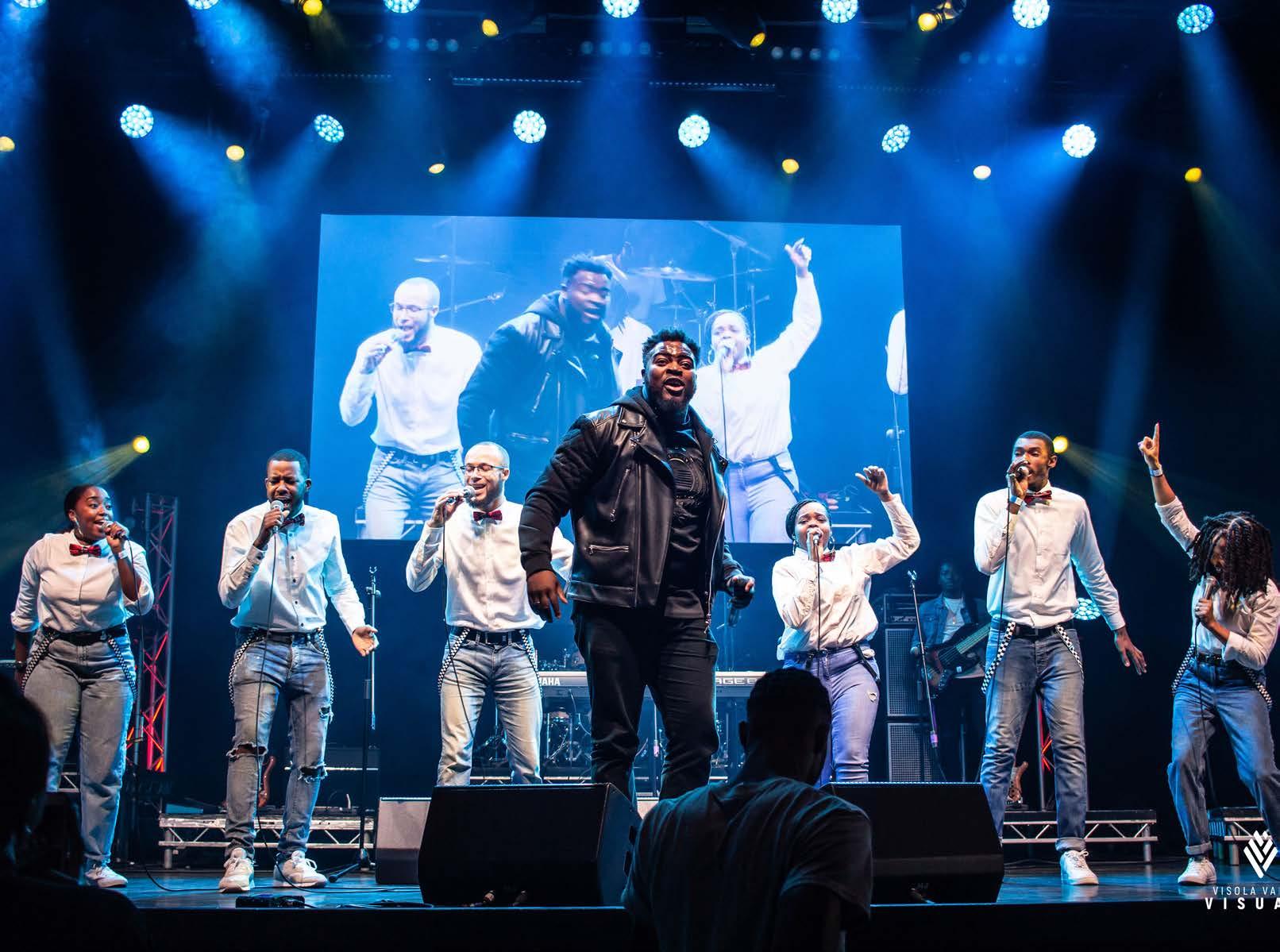
Ifirst saw Volney and New Ye in action at the New Testament Assembly, Tooting, south London. This dynamic group were jumping and leaping – while singing and staying harmonically in tune! I was bedazzled. Since exploding onto the scene in 2006, international stages , broadcast films, multiple awards and accolades galore have ensued. When it comes to choral works and songwriting that reflects the gospel sound, form and delivery, Volney Morgan represents everything I’m enjoying that is British Gospel, and what it needs to be in this 21st century. As New Ye prepares for a landmark 20th anniversary tour, here are five reasons why I rate Volney Morgan to be one of the most important leaders of his generation.
1. FROM A YOUTH
Volney was just 16 years old when, in 2006, he gathered a group of singers and musicians and began what would become New Ye. What drove a teenager to take on such a vision? The
answer, Volney says, was inseparable from where he grew up in the Firstborn Church of the Living God – a church that his mother, Faye Morgan, has pastored for almost 20 years. “It was real,” he says of his faith journey. “I couldn’t explain it to people. When people used to ask: ‘Why do you do this?’ I’d say: ‘It’s just the way I want to express what is within me, the way I give God glory.’” That early conviction never dimmed.
Even as a young choir member, Volney recalls the house of God being a place of genuine sanctuary, noting that, while knife crime and street violence claimed young lives outside, he and his peers were always found in church. Volney explained: “The generation that was constantly looking at us and praying for us, they were saying: ‘They could be elsewhere, but they’re in the house of God, giving God praise.’ That rootedness in both community and conviction is the bedrock upon which everything New Ye is built. New Ye prepared me to be the pastor I am today.”
2. MENTORS AND TRANSFORMERS
Ask Volney about his inspirations, and three names rise immediately: Clive Brown, Bishop John Francis, and the late Solomon Facey. It was Clive Brown and the Shekinah Singers, who first captured the young Volney’s imagination so completely that he became one of their dancers – a detail he shares with a laugh, noting that those VHS tapes have long since been destroyed (he hopes!). He travelled with the choir to Poland – his first time abroad – simply to be close to the ministry and watch how it moved. Bishop John Francis, a second cousin on his mother’s side, provided a further layer of aspiration – not least through an EP whose cassette Volney played so relentlessly that the reel eventually came loose from the tape. Solomon Facey, directing the mass choir at conventions for the Ministry of Praise events, completed his formative trio. “Those three, I would say, have been my greatest inspirations in the UK,” he reflects.
Across the Atlantic, Kirk Franklin, Hezekiah
Walker, Fred Hammond and Donald Lawrence also fed his imagination. But it was the American choir director Tye Tribbett, who crystallised something essential. Watching Tribbett move, stage-diving into the tenor section, erupting with physicality... Volney saw his own instincts validated. “Every idea I had that I thought was crazy, he (Tye) just made me make sense.”
3. THE NEW YE SOUND
New Ye is not simply a choir. It is a sound. At its core is a commitment to originality, rather than the endless repetition of American covers. Volney is passionate on this point and is measured in how he raises it: “I won’t say it upsets me, but it makes me question. Some of my friends in the gospel industry write such amazing songs, and then they’ll go out and won’t sing one of them.”
His answer has been to model the alternative – writing, recording and championing original works. He also believes that songs should be freely shared. Taking inspiration from his mentor Noel Robinson, who, he says, freely invites others to put their own spin on his compositions, Volney has woven fragments of classic British Gospel – for example, by including a segment of Bishop John Francis’s ‘Broken Pieces’ – into his own recordings; another is ‘Into My Heart’, incorporating a popular British Sunday School chorus ‘Come Into My Heart, Lord Jesus’. “The next generation should use these songs,” he says. “They’re still relevant.”
Volney regularly leads workshops in a number of European countries, including Germany, Poland and Denmark, often hosting thousands at a time. He says many of these events are not staged by churches and are
specifically promoted for the public. For three consecutive years, Volney’s Swedish tour has opened with his songs appearing in a shared sheet music book distributed to thousands of choirs across the country – an organised, grassroots network, singing from the same page, quite literally. “It really opened my eyes up to a singing community,” he says. “When you get a community that says: ‘These are some amazing songs, let’s sing them,’ you then see the impact it has. And that’s what’s been blowing my mind in Europe.”
4. MINISTRY AND PERFORMANCE
“The upcoming 2027 tour promises to be different from anything that has come before”, explains Volney. “We recently completed a BBC Radio 4 Sunday Worship from our Alive City Church for Pentecost. The producer is asking why gospel music, particularly what we do, is drawing such extraordinary responses across Europe, including communities that are mainly Catholic or Protestant and largely non-Black audiences.”
He continued: “Not only that, but we’re literally seeing people give their lives to Christ. Many of these people are starting to watch our services on stream and relate to our church because of the message they’re getting from the workshops we do. It’s kind of like a revival.” He is careful to articulate what the music must do beyond its joyful surface. When asked about the balance between exuberance and the weightier call to surrender one’s life to Christ, he reaches for Scripture: ‘Make a joyful noise unto the Lord, serve him with gladness’ (Psalm 100:1-2) and notes that there is a crucial difference between mere noise and joyful noise. He sees the Manchester-based Warehouse
Worship gatherings and their thousands of young attendees as echoes of his own generation’s mass meetings. “History only repeats itself,” he smiles. “We had our joyful noise from then to now.” He has now established a diverse cultural and colour ensemble called the Bridge Gospel Paris Choir. They’re making an impact – and it looks like a template for a major activity across Europe to me.
5. FAMILY AND CHURCH
At the heart of Volney Morgan’s story is his wife and creative partner, Angel. Together, they form a pairing of rare complementarity – his expansive, exuberant vision held in dynamic tension with her deep love of hymns, rooted in a faith inherited from her late father, Pastor Isaac Babajide, which spawned the anthemic song ‘I Will Not Fail’. Volney speaks of a hymns project he believes Angel is carrying within her – one he is gently pressing her towards. “When she does it, I think it’s going to be absolutely amazing,” he says. “That’s also judging the impact to her rendition of ‘How Deep the Father’s Love’ (Stuart Townend)”. Faith, family and calling are not separate compartments for Volney Morgan; they are one continuous thread. I love the way he handles his social media, and integrates his children, Volney Jr and Zoe, and wider family with a balance of the right levity, gravitas and wholesomeness.
As he prepares to mark 20 years of New Ye, he does so as someone who began as a 16-year-old, dancing in someone else’s choir, dreaming of a sound that did not yet exist. That sound, unmistakably, is now his own. Visit www.alivecityuk.org and www.vmandnewye.com
JULIET FLETCHER Creative Director of Green Tree Productions and Windrush Church and Music. She is also
BelEve: The charity empowering young girls to lead
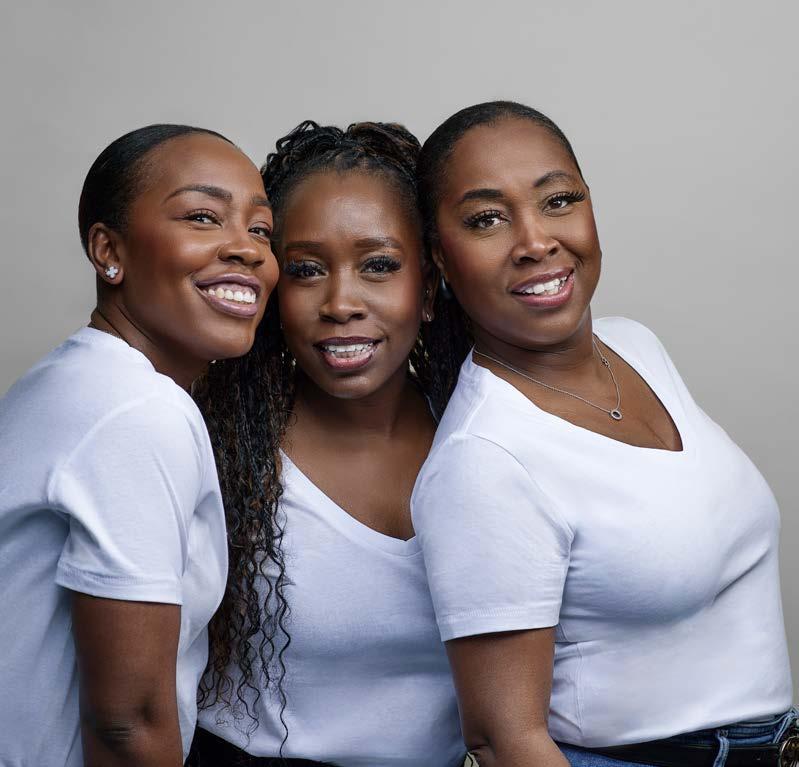
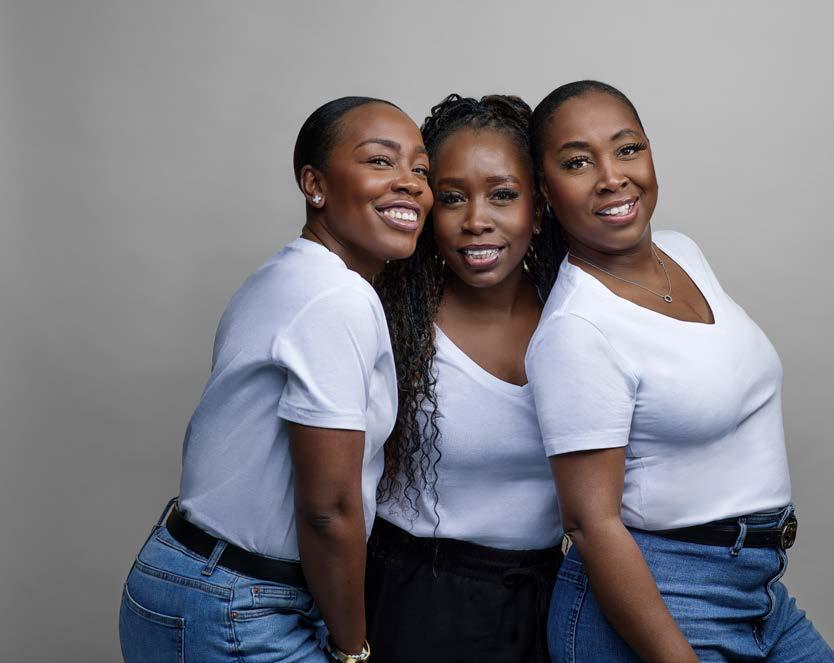
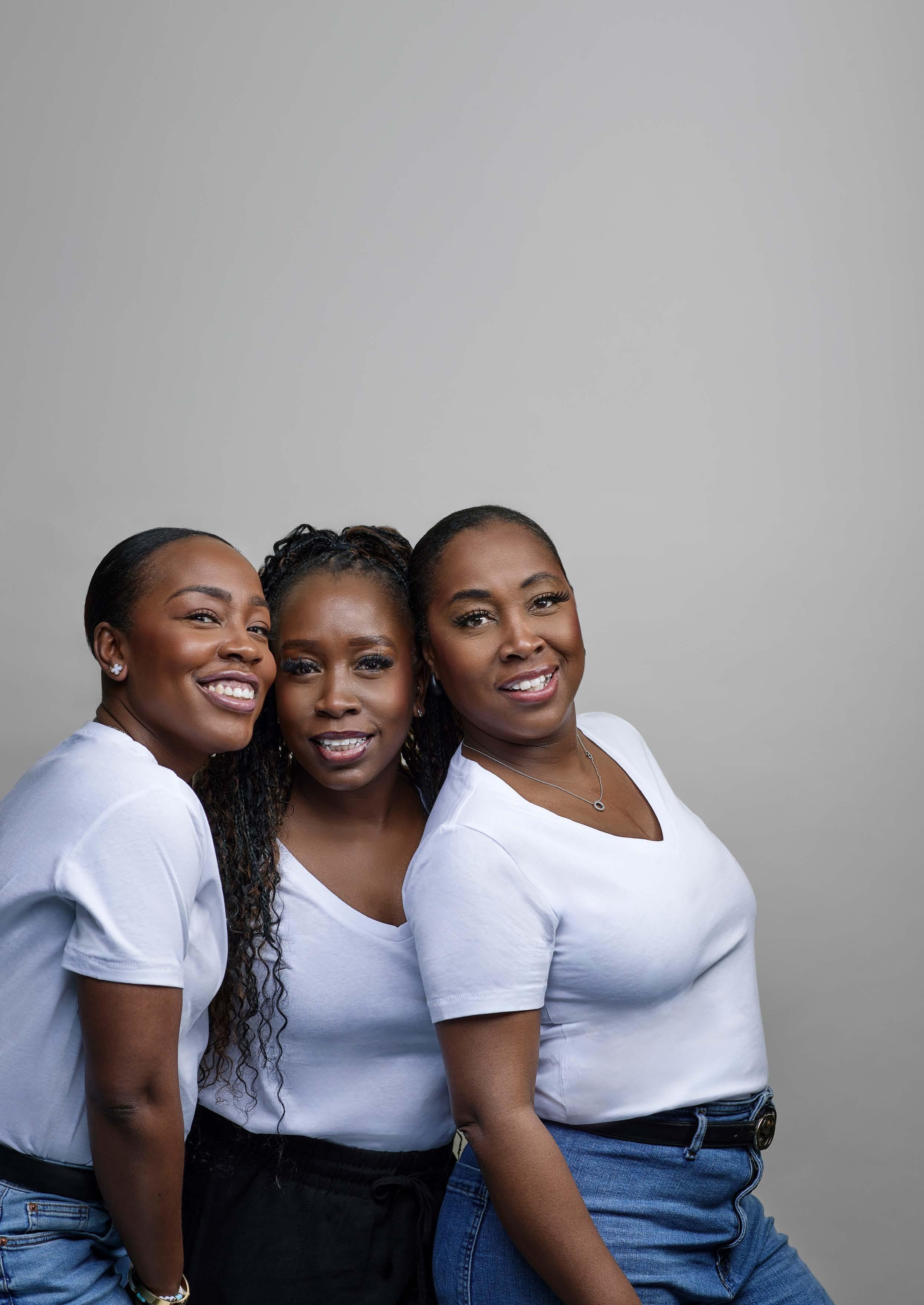
Following the sudden death of their mother, three sisters – Marsha, Chyloe and Rochelle Powell – felt inspired to start BelEve, a charity that empowers young Black girls to dream, fulfil their potential and become leaders. Since its launch in 2012, BelEve has grown into a charity that runs numerous programmes, has generated over £1million and has, over the years, supported 30,000 young girls. Keep The Faith spoke with Marsha Powell about BelEve’s origins, its impact on young girls’ lives and her hopes for the future.
KEEP THE FAITH (KTF): Your mother’s passing was the catalyst for creating BelEve UK. Can you share how that personal loss inspired the vision for the charity and transformed your grief into purpose?
MARSHA POWELL (MP): Losing our mum was the most devastating experience of our lives. She was only 52 when she passed away, and suddenly my sisters and I found ourselves navigating adulthood without the person who had always been our greatest source of love, guidance and belief.
In the midst of that grief, we kept returning to one question: What happens to girls who don’t have someone in their corner? Our mum believed fiercely in us. She taught us to dream bigger than our circumstances, and to never allow anyone to define our potential. We realised that not every girl has that voice of encouragement in her life.
BelEve was born from that realisation. What started as a way to honour our mother’s legacy became a movement dedicated to ensuring girls have access to the support, opportunities and role models they need to thrive.
KTF: You speak about the importance of having a positive female role model. What were some of the most important lessons your mother instilled in you that helped shape BelEve’s mission today?
MP: Our mum taught us that who you are matters more than what you have. She raised us to be resilient, compassionate and ambitious. She believed education was a pathway to opportunity and constantly reminded us that our circumstances should never determine our future.
Perhaps the greatest lesson she taught us was the power of service. That philosophy sits at the heart of BelEve today. She also taught us to lead with integrity. At BelEve, we don’t simply want girls to achieve success; we want them to become confident, emotionally healthy leaders who lift others as they climb. Everything we do is rooted in the values she modelled every day.
KTF: BelEve UK supports girls and teens through mentoring, leadership programmes, clubs and workshops. What are some of the success stories you’ve witnessed over the years?
MP: There are so many stories that stay with me. I’ve seen girls who arrived, unable to make eye contact, go on to become youth ambassadors, university students, and leaders in their communities. I’ve watched young women, who doubted their abilities, secure internships at major organisations, gain employment, and develop careers they once thought were out of reach. One of the most powerful transformations is often invisible. It’s the girl who learns to use her voice. The girl who begins to believe she belongs in the room. The girl who starts making decisions
based on her own aspirations rather than other people’s expectations.
Over the years, we’ve supported more than 30,000 girls and young women. While the statistics matter, it’s those individual journeys of confidence, identity and self-belief that remind me why this work is so important.
KTF: Young girls today are navigating pressures from social media, identity, mental health challenges and peer influence. In your view, what are the greatest challenges facing girls today, and how does BelEve help them overcome those obstacles?
MP: Social media has created opportunities for connection, but it has also intensified comparison, anxiety and unrealistic expectations. Many girls are struggling with confidence, belonging, emotional well-being and a sense of identity.
At BelEve, we focus on what we call readiness. We help girls develop the emotional, social and leadership skills they need to navigate life’s transitions with confidence. We create safe spaces where girls can explore who they are, build healthy relationships, learn to advocate for themselves, and develop a strong
sense of purpose. Our goal isn’t simply to help girls cope with challenges. It’s to equip them to thrive despite them.
KTF: Your charity has grown into a major organisation with a turnover approaching £1 million. What were some of the key decisions, sacrifices or breakthroughs that helped you scale BelEve from an idea into a nationally recognised charity?
MP: One of the biggest lessons I’ve learnt is that passion alone is not enough. To create lasting impact, you need systems, strategy and sustainability.
We made a conscious decision to move beyond delivering programmes and focus on building an organisation that could create long-term change. That meant investing in governance, strengthening our team, improving our impact measurement, and developing strategic partnerships. The biggest breakthrough came when we stopped thinking about how many girls we could reach and started thinking about how we could transform the systems around them. That shift has helped position BelEve as a trusted voice in conversations about girls, leadership, education and readiness for the future.
‘At the heart of it all is love, trust and a shared belief in the mission.’
KTF: How do you maintain your sisterly bond while also managing the demands of leadership and decision-making together?
MP: Working with my sisters is one of the greatest privileges of my life. We share a common purpose, a deep trust and a commitment to honouring our mother’s legacy. Like any leadership team, we don’t always agree. Healthy challenge is part of effective leadership. What helps us is having clear roles, mutual respect and a shared understanding that we’re all working towards the same outcome.
We’ve learnt that family and business require different conversations. Sometimes, we need to put our leadership hats on, and sometimes, we simply need to be sisters. At the heart of it all is love, trust and a shared belief in the mission.
KTF: What role has faith played in your personal journey and in sustaining the work of BelEve UK?
MP: Faith has been an important anchor throughout my life. It has helped me navigate loss, uncertainty and some of the most challenging moments of my leadership journey.
For me, faith is not simply about belief; it’s about purpose, hope and service. It reminds me that leadership is about stewardship and that the work we do should ultimately be in service of others.
There have been many moments when the challenges felt bigger than the resources available, yet doors continued to open and opportunities continued to emerge. Faith has given me the resilience to keep going and the perspective to remember that impact is often built one life at a time.
KTF: Mentorship is central to your programmes. Why is it so important for young girls to have access to women who can guide, encourage and champion them?
MP: You cannot aspire to what you cannot see. Mentors provide something incredibly powerful: possibility. They help young people see a future version of themselves that may not yet feel achievable.
For many girls, particularly those who may face barriers linked to race, gender or socioeconomic background, access to strong female role models can be transformational. Mentorship helps bridge the gap between potential and opportunity.
KTF: For readers who may be raising daughters, mentoring young people, or working in communities, what practical advice would you give about helping girls build confidence, self-worth and leadership skills?
MP: First, focus on who girls are becoming – not simply what they achieve. Second, create opportunities for them to make decisions, solve problems and learn from mistakes. Confidence is built through experience, not praise alone.
‘I want BelEve to help shape national conversations about what girls need to thrive in school, work and life.’
Third, expose them to diverse role models and experiences that expand their sense of what’s possible. Finally, listen. Many young people don’t need adults to have all the answers. They need adults who are willing to hear them, value their perspective and walk alongside them. Confidence grows when girls feel seen, heard and believed in.
KTF: What are your hopes for BelEve UK in the next five to ten years, and what legacy do you hope the charity will leave for the next generation of girls and young women? MP: My hope is that BelEve becomes recognised not only for empowering girls but for fundamentally changing how we support
them. I want BelEve to help shape national conversations about what girls need to thrive in school, work, and life.
In five to ten years, I hope we have influenced systems, strengthened communities, and supported many more thousands of girls and young women. The legacy I hope we leave is simple: a generation of girls who know their worth, understand their power, and have the confidence, skills and opportunities to lead their worlds.
If BelEve helps create that future, then we will have honoured both our mother’s legacy and the potential of every girl we serve.
Visit www.beleveuk.org
CARRY THE LIGHT – CHANGE THE WORLD
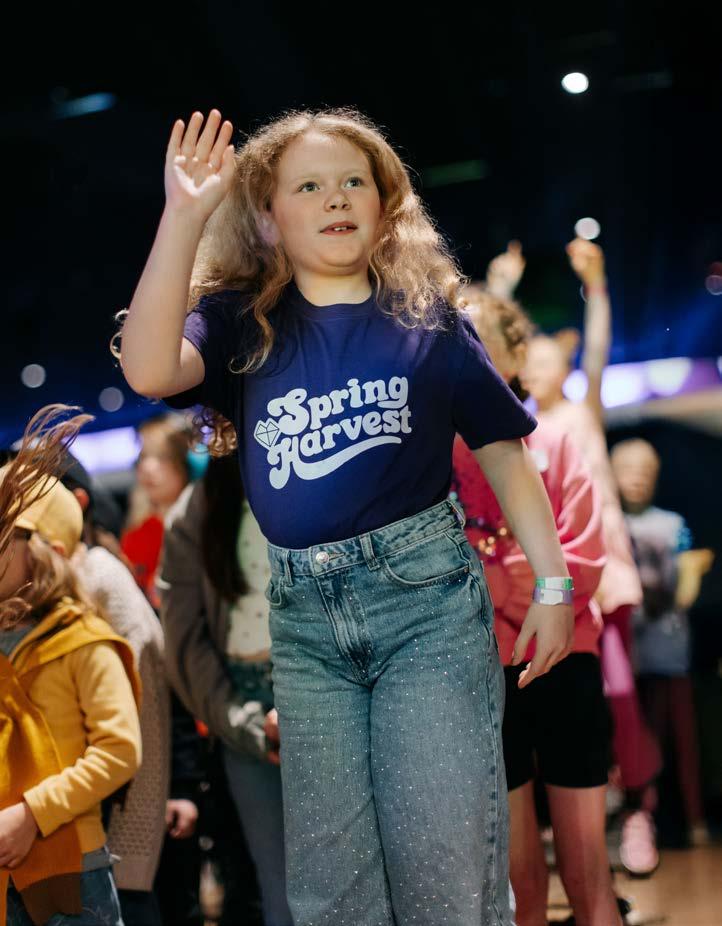
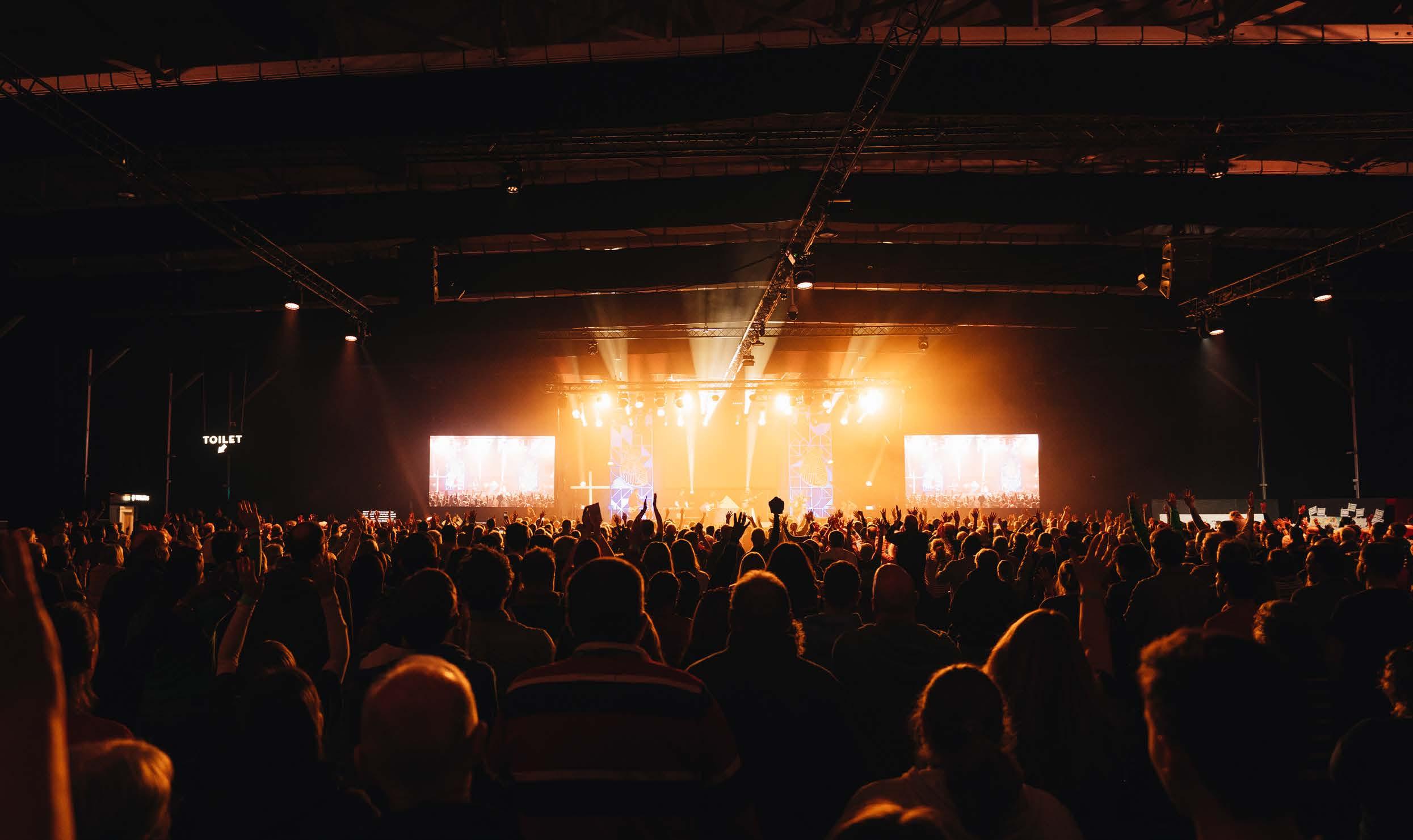
Amazing things happen when we gather, when we connect with one common purpose. This Easter, 11 thousand people across two weeks gathered for Spring Harvest for powerful teaching, intergenerational worship and creative space to receive from the Holy Spirit.
For nearly 50 years, Spring Harvest has existed to equip the Church for mission and ministry.
We come as families, multiple generations but in one space. We come as individuals arriving solo but leaving with a family! We come as churches, diverse in our expressions and from every denomination but finding unity in the Name of Jesus.
But Spring Harvest is not just a two week event at Butlins, the impact continues long after the lights go out, the guests go home and the stages are packed down. Spring Harvest is a catalyst for what God will do next. Year after year, we hear testimonies of all that was begun at Spring Harvest, the ripples reaching out into the communities we returned to. There are stories of families transformed, leadership callings confirmed, outreach ministries begun and life-changing decisions made.
In a world desperate for mountain-top moments and the next ‘spiritual fix’ Spring Harvest has at its heart a desire to not only create a great event but even more, to allow the Spirit to do something ‘Beyond Butlins’ – to start a conversation, open a heart, unblock a path, break a chain. God does immeasurably more than we can ask or imagine – not only at the event but also after it.
And that’s why we are so excited for 2027’s ‘No greater adventure’. We will be diving deep into Acts 1:8 and the call to be witnesses in Jerusalem, Judea, Samaria and to the ends of the earth or, simply, here, there and everywhere.
When we think of Mission we are often thinking of overseas ministry, or something fantastic, extraordinary, even dramatic. But what if mission was also close by, on our doorstep? What if the end-of-the-world witness we are called to was in our own marriage? To our kids, with our friends? What if reaching others with Jesus wasn’t always miles away in a far off land but at the school gate, at the work canteen? And yes, what if God is calling us out of our everyday to somewhere new, somewhere different?
Light is a familiar concept in Scripture – the first of God’s creative activities declared by him as good (Genesis 1: 3-4). In John 1: 4-5 it’s used to describe Jesus: ‘In him was life, and the life was the light of men. The light shines in the darkness and the darkness has not overcome it’. I don’t know about you but that assurance – that the light we carry, the light of Jesus cannot be overcome – sustains me in this increasingly challenging, divided world. But so what? What do we do with this light?
Matthew 5: 14-16 records Jesus’ guidance to his disciples, the first light-carriers: ‘ You are the light of the world. A city on a hill cannot
be hidden. Nor do people light a lamp and put it under a basket, but on a stand, where it gives light to the whole house. In the same way let your light shine before others, so that they might see your good works and give glory to your Father who is in heaven.’
We are a living testimony, a walking witness, and we are called to go to the places and the people who need him most. Jerusalem, Judea, Samaria and the ends of the earth. Here, there, and everywhere.
God has a purpose for us all, a place he is calling us to shine into, not for our own glory but for the only one worthy of the praise.
Whether you are a family, a single person, a church group, there is a place for you to explore this calling, there is a Spring Harvest family ready to welcome you – or welcome you back – and a community ready to stand with you as we gather together for the next catalyst moment God has in store.
Join us in 2027 and be part of the adventure to find your edge of the world, to find your next opportunity to carry the light and change the world.
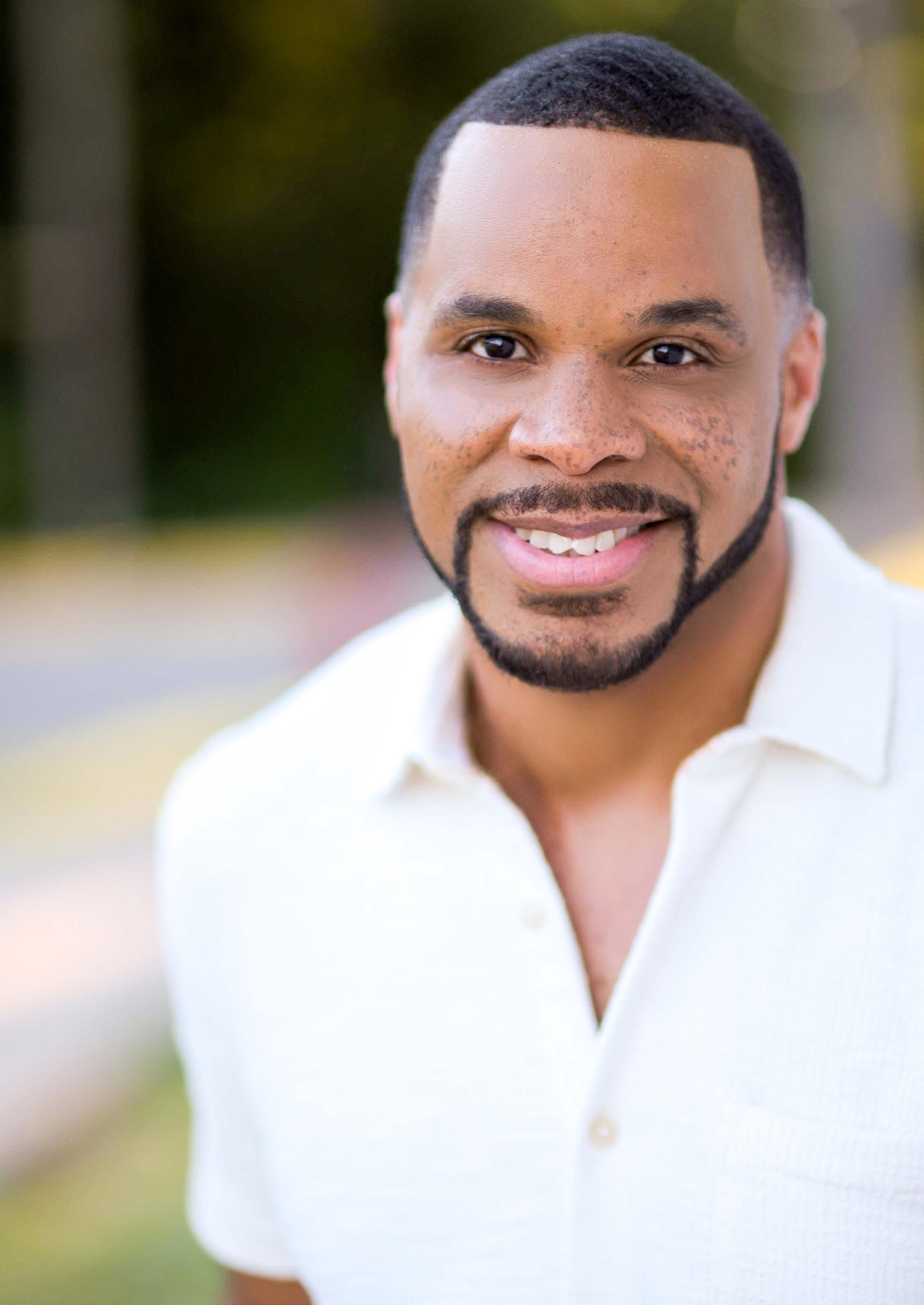
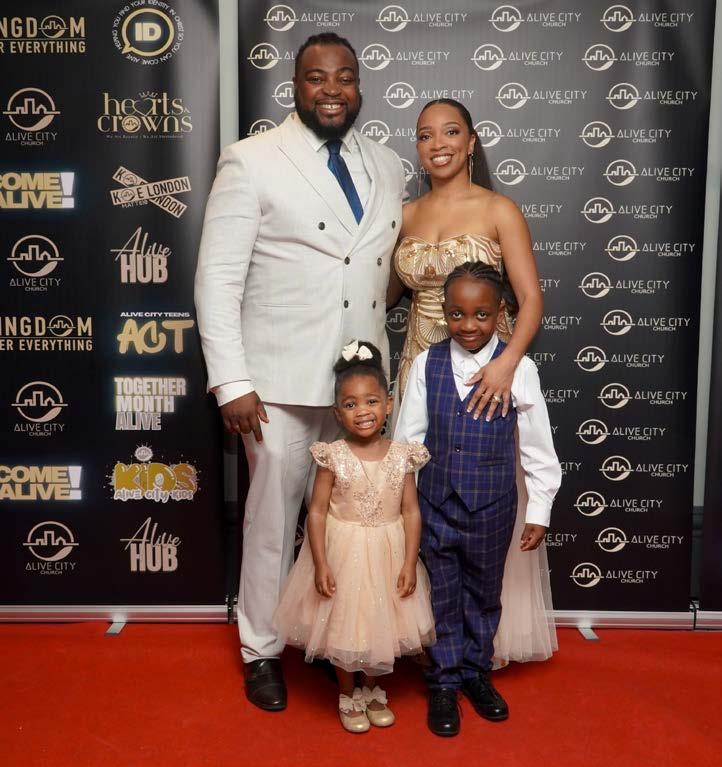
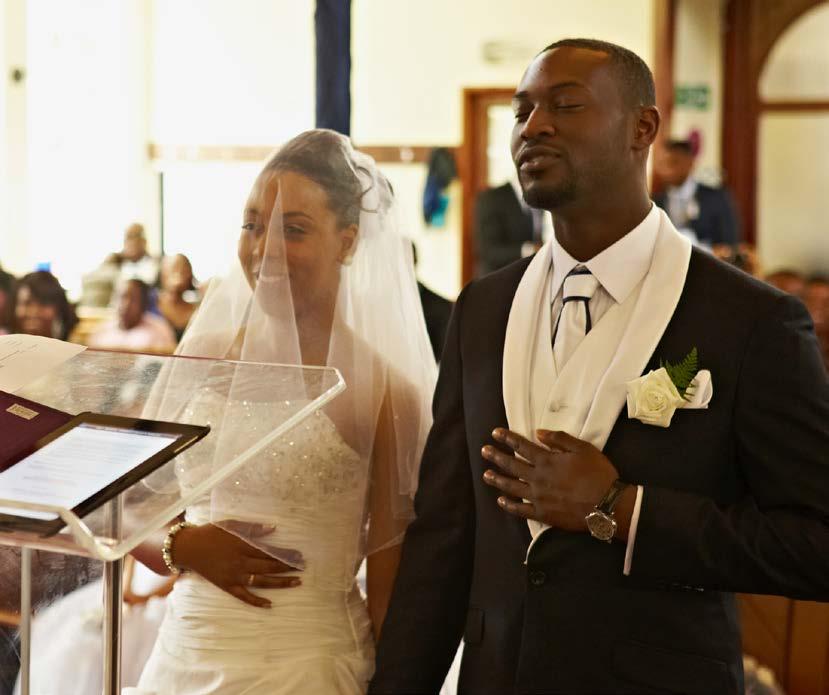
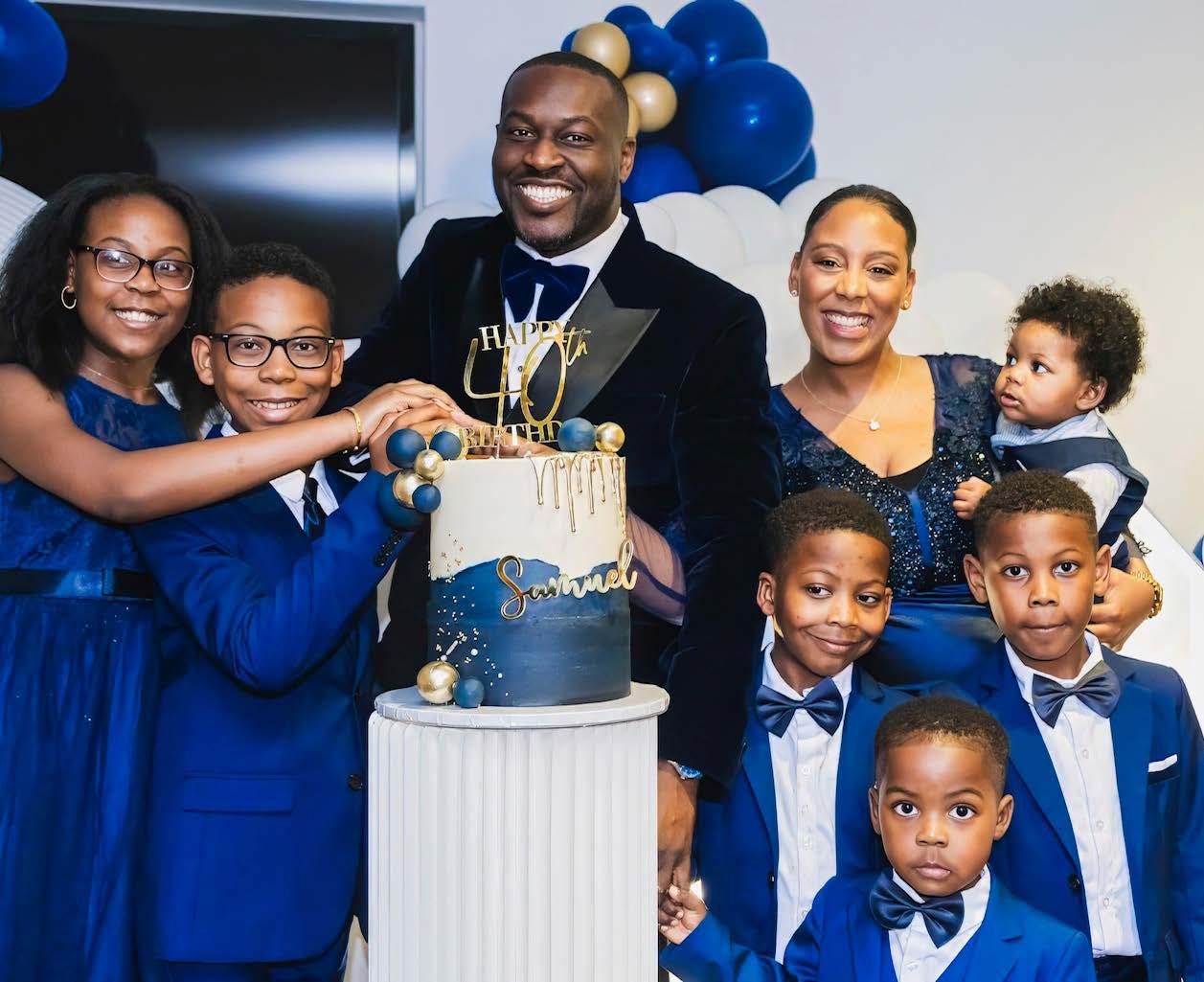
One Christian couple building a strong family and setting an example for others are Samuel and Robbi Ikhinmwin who have six children. They spoke to Keep The Faith about how they met; dealing with the challenges of a cross-cultural marriage; raising faith-filled children; and their plans to support families across the world.
KEEP THE FAITH (KTF): Can you take us back to how you met and what first drew you to one another?
SAMUEL IKHINMWIN (SI): We first met on a bus at the end of 2008. At the time, I was engaged to someone else. I don’t remember seeing Robbi specifically, but I remember meeting a group of four people and we spoke about things of God. Then, in early 2010, we had our second encounter when I joined a gym. I met Robbi there, as she was the receptionist. A lot happened thereafter, but my simple answer would be that God literally drew us to each other.
ROBBI IKHINMWIN (RI): Samuel ended up dropping me home and we spoke for about two hours. His engagement had ended. By the end of 2010, we were making plans towards getting married.
KTF: When did you realise you were meant to build a life together, and what qualities convinced you that you were the right match?
SI: It was the point where I could clearly hear God talking to me about myself in relation to my relationship with Robbi. Remember, I was building a relationship prior, and over the five years of that relationship, it didn’t feel easy. But here, I was speaking to Robbi and it was the complete opposite. I remember telling God: “This just feels too easy.” That’s when I knew. In terms of qualities, I was looking for a wife. Robbi was great at listening, open to suggestions, and willing to get involved with what I had going on at the time.
THE IKHINMWINS LOVING
GOD, THEIR CHILDREN AND EACH OTHER
RI: After previous failed relationships, I remember crying on my bedroom floor and saying: “God, I’m done with relationships. I’m not getting into anymore unless You say so, because this is tiring.” I prayed and, like Gideon, I got specific and said: “God, when my husband arrives, please tell my mum first.” Then one day, Samuel met my mum. I wasn’t there, but after their conversation she said: “Robbi, that man is your husband. God told me I had to give my daughter to that man!” God had answered my prayer. I didn’t need convincing in terms of character traits; I just needed God’s leading. I did have a list, though, and Samuel ticked everything on my list.
KTF: What principles have helped you maintain a strong Christian marriage?
SI: The most important principle is to put God first. One of the best habits we exercise is having regular goals workshops. Before we got married, we did a goals workshop, and it was extremely pivotal in our union and building of our future, as we could see we had so much alignment. When you see that level of alignment, it’s easy to understand that this is someone who’s a part of your assignment.
KTF: How have you overcome the challenges of your different cultural backgrounds?
SI: We navigated the challenges of culture by choosing a culture that supersedes and is superior to either of our cultures. Our culture has always been: “What is the culture of Christ?” For us, if it isn’t in the Word, we’re not on it. It’s easy to shed cultural ideas when you are subscribing to a Kingdom culture above any other culture.
RI: Agreed. There were times when differences came up because Caribbean culture is quite different to African culture. However, I was raised around a lot of Africans growing up and loved it, so the culture was not something I was oblivious to, and it was something I desired to have for my children. Whenever challenges came up due to our different upbringings or culture, it would eventually come down to: “Okay, what does the Word of God say?”
KTF: What inspired your decision to have a large family, and how has the journey shaped you?
SI: In our first goals workshop, before getting married, we had each written down that we wanted three children. It seems like what’s happened currently is that we’ve got three plus three, making six in total. There was no original goal of having six or more children, but there was the original goal of just allowing God to reign in our relationship. God didn’t tell us to slow down or stop, and hasn’t caused functional parts to drop. I would assume it’s as challenging as someone with one child or four children, because when you have that, you deal with that. We’re grateful to have six children and, for those who don’t know, Robbi wants eight! God is at the centre and is the key to overcoming and navigating all challenges.
KTF: Samuel, what does a wealth consultant do and how do you balance career, ministry, marriage and parenting?
SI: I am a wealth consultant who has the skill set of recognising patterns in people’s financial behaviour – or any behaviour that impacts their finances – which results in their wealth or lack thereof. What that looks like for me is working with people and helping them see how they can create wealth with longevity. I’m able to do that with the Word of God, because that’s
where I find the principles and practices I use. I create my own schedule, and that puts me in a position to ensure that Christ can come first, and there can be a healthy amount of time for my family, my wife and my life.
KTF: How do you incorporate faith into your children’s everyday upbringing?
SI: It’s easy to do when it’s a way of life rather than a good idea. Our children observe us daily, and, as a result, it creates opportunities for them to ask questions, participate and engage with us. More is caught than is taught, so as a family we pray together, have times of fasting together and devotion – all of which are part of our lifestyle, but to get to that place, it took diligence.
RI: We teach our children to read from very young, so they have access to the Bible for themselves, and now they are independent with their own devotion and prayer time. We also raise our children on a Bible-based curriculum and purposefully abstain from secularism in our house. Our desire is that our children are trained in the way that they should go (Proverbs 22:6) and have their own relationship with the Creator.
KTF: Robbi, what message do you hope people take from your ‘Faith-Filled Wife’ platform and your family’s example?
RI: My desire is to demonstrate that you can be happily and successfully married as a Kingdom woman. I was once single and believed I would NEVER be married, and that even if I did marry, it would be miserable and end quickly in divorce, because that’s what I witnessed. From the beginning of our relationship, integrity has been a major
foundation of who and how we are as people. Growing up, I didn’t see many examples of this and I wasn’t raised in a household that was integrally Christ-centred.
I wanted my home to be a home of integrity, where what we preached and taught others was something that we practised at home. My life demonstrates the goodness of God, and I am truly blessed to be married to a man of God who encourages me to be a woman of God and raise children in the midst of that.
I gave my life to Jesus at an early age and allowed Him to write my story, so I share that online to encourage others in believing that it is also possible for them to have a Kingdomcultured relationship.
KTF: What are your hopes and prayers for your marriage, children and legacy?
SI: My hope and prayer for my family is that we will continue to keep Christ at the centre and have Christ as the culture we subscribe to above all else. Our vision is to create a federation of schools which teach a Christian curriculum, supplemented by entrepreneurship and enterprise, in which we equip children to use biblical principles to engage with the current landscape of this world and win. We desire to do that here in the UK, on the continent of Africa and in the Caribbean. Additionally, God has given us a vision to support 300 families through ministry and other assistive endeavours, for them to grow and live in faith every day.
Follow Samuel Ikhinmwin on Instagram @samuelicanwin and Robbi on Instagram @robbiicanwin
More than a memory: Continuing the legacy of Revd Dr Io Smith MBE
Revd Dr Sheila Belgrave and Jacqui O’Donnell share their plans to build on the legacy of their mother, Black Church pioneer Revd Dr Io Smith MBE
Eighteen years have passed since our mother, Revd Dr Io Smith MBE, entered into eternal rest, yet her influence continues to shape lives, communities and generations. Some people leave memories; others leave movements. Our mother left a legacy.
With an unwavering faith in God and an unshakeable belief that the Church should transform the communities it serves, she devoted more than five decades to ministry, education, justice and community service, becoming one of Britain’s pioneering Black Christian leaders.
A founding member of Black Pentecostal denomination the New Testament Assembly (NTA), Revd Dr Io Smith helped shape the growth and influence of the Black-led Church in Britain. She pioneered the purchase of one of the denomination’s earliest church buildings in Leyton – where the congregation flourished under her leadership – and established the London Youth Mass Choir, recognising the importance of investing in the next generation. She believed education was a powerful tool for transformation. After studying at London Bible College and later obtaining her doctorate, she founded the Institute of Christian Training, whose theological courses were validated by the University of Lampeter. In Ghana, she established the Mother Smith School, which continues to educate children today – a lasting testimony that true legacy
is measured not simply by what we achieve, but by what continues long after we are gone.
Her ministry reached across Europe, Africa, North America, the Caribbean, and the United Kingdom. She served faithfully as a formidable and anointed pastor, prison, hospital and immigration chaplain, authored a book An Ebony Cross, and worked tirelessly to develop leaders, strengthen churches and build bridges across denominations.
Revd Dr Io Smith was also a fearless advocate for justice. Following the New Cross Fire tragedy, she stood alongside church leaders, politicians and community organisations, marching for racial equality and becoming a respected voice for those too often unheard. She believed that faith demanded action, that preaching the Gospel and serving the community could never be separated.
Her outstanding contribution to church and community was recognised nationally, when she was awarded the MBE by Her Majesty Queen Elizabeth II in 1994. Yet, despite her many achievements, she never sought recognition. Her greatest passion was serving God by serving people.
As we reflected on her extraordinary life, one question remained with us:
How do you preserve a legacy without allowing it to become merely history? The answer was simple: You continue the work.
That conviction has led to the establishment of the Revd Dr Io Smith MBE Foundation, an organisation created by my sister Jacqui O’Donnell and myself not simply to honour an exceptional woman, but to continue the values that defined her life.
The Foundation exists because many of the challenges our mother confronted still exist today. Young people need hope and positive role models. Churches need courageous and equipped leaders. Communities long for greater unity. Women in ministry continue to seek encouragement. Black Christian heritage deserves to be preserved, and society still needs leaders whose lives are marked by integrity, compassion, justice and faith.
The Foundation will invest in leadership development, youth empowerment, community transformation, heritage preservation, and collaborative partnerships that strengthen both Church and society. Alongside the Foundation, we are launching the Revd Dr Io Smith Legacy Awards. These Awards will recognise individuals whose lives reflect the same values our mother embodied. They are not simply awards; they are an investment in the people who are shaping a better future for others.
On Saturday 19th September 2026, family, friends, church leaders and members of the wider community will gather to celebrate not only the life of Revd Dr Io Smith MBE, but also the beginning of a new chapter, as her vision is carried forward through the Foundation and Legacy Awards. The service will be held at New Testament Assembly Leyton, 214 Langthorne Road, Leytonstone, London E11 4HS.
Revd Dr Io Smith MBE showed us that faith can transform lives, education can unlock potential, justice can strengthen communities, and servant leadership can change generations. The greatest tribute we can pay to those who have gone before us is not simply to remember them, but to continue what they started. The Foundation now exists to ensure that her legacy continues to do exactly that.
REVD DR SHEILA BELGRAVE & JACQUI O’DONNELL MSC, BA HONS, FCIPD Foundation founders, and daughters of Revd Dr Io Smith
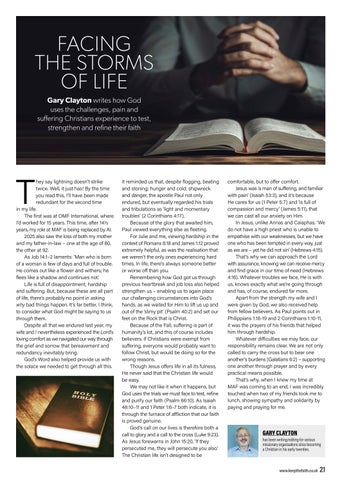
FACING THE STORMS OF LIFE
Gary Clayton writes how God uses the challenges, pain and suffering Christians experience to test, strengthen and refine their faith
They say lightning doesn’t strike twice. Well, it just has! By the time you read this, I’ll have been made redundant for the second time in my life.
The first was at OMF International, where I’d worked for 15 years. This time, after 14½ years, my role at MAF is being replaced by AI. 2025 also saw the loss of both my mother and my father-in-law – one at the age of 80, the other at 92.
As Job 14:1–2 laments: ‘Man who is born of a woman is few of days and full of trouble. He comes out like a flower and withers; he flees like a shadow and continues not.’
Life is full of disappointment, hardship and suffering. But, because these are all part of life, there’s probably no point in asking why bad things happen. It’s far better, I think, to consider what God might be saying to us through them.
Despite all that we endured last year, my wife and I nevertheless experienced the Lord’s loving comfort as we navigated our way through the grief and sorrow that bereavement and redundancy inevitably bring.
God’s Word also helped provide us with the solace we needed to get through all this.
It reminded us that, despite flogging, beating and stoning; hunger and cold; shipwreck and danger, the apostle Paul not only endured, but eventually regarded his trials and tribulations as ‘light and momentary troubles’ (2 Corinthians 4:17).
Because of the glory that awaited him, Paul viewed everything else as fleeting.
For Julie and me, viewing hardship in the context of Romans 8:18 and James 1:12 proved extremely helpful, as was the realisation that we weren’t the only ones experiencing hard times. In life, there’s always someone better or worse off than you.
Remembering how God got us through previous heartbreak and job loss also helped strengthen us – enabling us to again place our challenging circumstances into God’s hands, as we waited for Him to lift us up and out of the ‘slimy pit’ (Psalm 40:2) and set our feet on the Rock that is Christ.
Because of the Fall, suffering is part of humanity’s lot, and this of course includes believers. If Christians were exempt from suffering, everyone would probably want to follow Christ, but would be doing so for the wrong reasons.
Though Jesus offers life in all its fulness, He never said that the Christian life would be easy.
We may not like it when it happens, but God uses the trials we must face to test, refine and purify our faith (Psalm 66:10). As Isaiah 48:10–11 and 1 Peter 1:6–7 both indicate, it is through the furnace of affliction that our faith is proved genuine.
God’s call on our lives is therefore both a call to glory and a call to the cross (Luke 9:23).
As Jesus forewarns in John 15:20, ‘If they persecuted me, they will persecute you also.’ The Christian life isn’t designed to be
comfortable, but to offer comfort.
Jesus was ‘a man of suffering, and familiar with pain’ (Isaiah 53:3), and it’s because He cares for us (1 Peter 5:7) and ‘is full of compassion and mercy’ (James 5:11), that we can cast all our anxiety on Him.
In Jesus, unlike Annas and Caiaphas, ‘We do not have a high priest who is unable to empathise with our weaknesses, but we have one who has been tempted in every way, just as we are – yet he did not sin’ (Hebrews 4:15).
That’s why we can approach the Lord with assurance, knowing we can receive mercy and find grace in our time of need (Hebrews 4:16). Whatever troubles we face, He is with us, knows exactly what we’re going through and has, of course, endured far more.
Apart from the strength my wife and I were given by God, we also received help from fellow believers. As Paul points out in Philippians 1:18-19 and 2 Corinthians 1:10-11, it was the prayers of his friends that helped him through hardship.
Whatever difficulties we may face, our responsibility remains clear. We are not only called to carry the cross but to bear one another’s burdens (Galatians 6:2) – supporting one another through prayer and by every practical means possible.
That’s why, when I knew my time at MAF was coming to an end, I was incredibly touched when two of my friends took me to lunch, showing sympathy and solidarity by paying and praying for me.
GARY CLAYTON
has been writing/editing for various missionary organisations since becoming a Christian in his early twenties.
YOUNG PREACHER: 10 LESSONS I WISH I’D KNOWN
Seasoned church leader and preacher Revd Nathan Turner shares some advice for young preachers starting their preaching journey
Every week, another young preacher uploads a sermon clip. A reel goes viral. A podcast gains thousands of views. I celebrate the digital age, as the Gospel should be heard wherever people are listening. But a platform is not the same as a pulpit. A good media set-up can amplify your voice, but it cannot form your ministry. I always knew I would be a preacher. I loved Sunday school and was good at Bible drills and quizzes. At 11 years old, I recall being in ‘the front room’ at my parents’ house, reading from a huge white Bible:
‘This is a true saying, If a man desires the office of a bishop, he desireth a good work’ (1 Timothy 3:1).
The call to church leadership resonated with me. I was teased by my peers in Sunday school around my enthusiasm for the Bible and somehow this Scripture reading made it all worthwhile. I thought: “Well, someone has to be a pastor, so why not me?”
Sunday school success gave rise to preaching from the age of 15. When I first stepped into the pulpit, I was passionate and knew I was called to preach. With little training, I preached as the Spirit led. Thirty years later, after many sermons (good and bad), theological study and honest peer critique, here are ten lessons I wish someone had taught me when I started my preaching journey.
1. Calling needs cultivating I sensed God’s call at 11, while reading 1 Timothy 3 in my parents’ hallowed front room. Know you are called to preach, and nurture the calling into confidence that God is with you.
2. Preach with authenticity
Be yourself. Learn from others, but don’t imitate them. God has given you a unique personality, style and perspective. Let the Holy Spirit shape who you are, rather than who others expect you to be.
3. Master exegesis
Understand the context of the Scripture you preach from for the first hearers, and the meaning of the message for that time. Having a firm grasp of this will enable you to have a solid foundation to build your message on.
4. Learn hermeneutics
Once you understand the text, build a bridge between the ancient world and today’s world. Faithful preaching helps people see that Scripture still speaks to contemporary circumstances.
5. Develop your homiletics
Learn how to structure a sermon and deliver it well as a specialised speech. Acknowledge your physical presentation and be objective about its impact on your sermon.
6. Choose your sermon type
There are several types of sermon, including expository, illustrative and topical. A key one to master is the evangelistic sermon. Each sermon, regardless of the type, should have an element of gospel presentation to the unsaved.
7. Know your audience
Take the time to understand your community and learn what are the major issues they are dealing with. Effective preaching is relevant for the audience being preached to.
8. Start your sermon before you enter the pulpit
Arrive early. Greet people. Learn names and make a connection with the congregation. Ministry begins long before the first Bible verse is read.
9. Be creative
When you know your audience, you can better adapt your style to be creative in your presentation. Use a story, visual, testimony or some humour. Creativity should
never distract from the message; it should enhance it.
10. Respect the clock
We should never blame “the Spirit” for poor time management. Honouring the congregation’s time is an act of care.
‘Our churches need preachers who are Spirit-filled, biblically rooted and culturally aware.’
In my twenties, I realised passion alone wasn’t enough, so I enrolled to study theology. Doing so taught me to think more deeply about Scripture and introduced me to tools that improved my preaching.
Encouragingly, initiatives, such as the New Testament Church of God and Church of God of Prophecy partnership with St Mellitus, are investing in future leaders so that tools for ministry are introduced early. We need more churches to identify young preachers, nurture their gifts, and help fund their theological education.
The Black Pentecostal tradition has always combined spiritual passion with scholarly resistance. The next generation deserves the same investment. Our churches need preachers who are Spirit-filled, biblically rooted and culturally aware.
Young preacher, make the effort to develop your craft. Read deeply. Pray fervently. Learn continually.
REVD NATHAN TURNER Senior Pastor, New Testament Church of God, Muntz Street, Birmingham Visit www.ntcgmuntzst.org.uk
CULTIVATING
THE
GIFT OF PROPHECY IN YOUR CHURCH, LIFE AND COMMUNITY
Mercy Myles-Jenkins provides insight on how to develop and apply the prophetic gift in the Church and wider world
As believers, we must intentionally cultivate the gift of prophecy within our congregations so we can speak life over one another and over our families. Too often, we reserve prophecy for a single anointed voice, while the congregation sits hungry for direction yet leaves unchanged. What’s missing is not more gifted ministers but a culture where every believer grows in hearing and declaring God’s voice.
The prophetic gift is nurtured in community, where we learn to grow and are developed under the guidance of mature prophets, seers and those seasoned in hearing God’s voice. It is cultivated as we pray, study the Word, and practise speaking life over one another. In this kind of environment, believers learn how to discern God’s voice with wisdom and humility. Paul reminds us that prophecy is given for edification, exhortation and comfort, strengthening the Church as believers minister to one another (1 Corinthians 14:3 NKJV).
Scripture gives us a powerful picture of this in the life of Saul. When he came among the prophets, the Spirit of God came upon him and he began to prophesy, and the people said: “Is Saul also among the prophets?” (1 Samuel 10:11 NKJV). Saul was activated in community, among people already carrying a prophetic culture. This atmosphere was cultivated not by one person but by many. This is why building a prophetic culture matters. It is not for performance, but for strengthening the Body of Christ.
The gift of prophecy builds faith, sharpens discernment and helps us understand the times and seasons. It provides covering and protection from wolves. And, when we prophesy, we release life, the breath of God, divine insight and strategy into situations
that appear dead, stagnant or without hope. Without it, spiritual dryness is allowed to remain.
Ezekiel saw Israel’s dry bones. God made him face the devastation, then commanded him to prophesy. As he released the word of the Lord, there was a sound, a shaking, and the breath of God entered what was dead, and life returned (Ezekiel 37:1–10 NKJV). This is the power of prophecy.
How to cultivate a prophetic culture
So, how do you begin building this culture practically? Start where you are. If your church does not yet have a prophetic community, begin in your home. Gather your family and speak Scripture over one another. Let your children hear you declare God’s promises aloud. As families begin to prophesy faith, peace and restoration, atmospheres shift, and what once carried tension becomes a place of covering and stability.
Create space in small groups or Bible studies for believers to practise sharing what they sense God is saying. Build accountability with mature voices who can provide correction and encouragement. Scripture teaches us not to despise prophecy, but to test all things, so the community stays healthy (1 Thessalonians 5:20–21 NKJV).
From your home and church, extend that atmosphere outward. Speak over your neighbourhood, city and nation. Let your declarations align with God’s Word, and watch peace, hope and restoration take root where it is needed most.
Declarations to prophesy
Here are three declarations you can prophesy
over your life, family and church:
1. I prophesy a healthy, unified and expanding family. I prophesy wholeness in our bodies, soundness in our minds, strength in our relationships, and longevity in our bloodline (3 John 2).
2. I prophesy a strengthened Church with resources for outreach. I prophesy increased labourers, increased provision and increased impact, so the Gospel is seen, felt and preached (Luke 10:2; 2 Corinthians 9:8).
3. I prophesy that what God has spoken concerning me shall stand, and no false narrative shall rewrite my story. His Word will accomplish what He pleases, and it shall prosper in the thing for which He sent it (Isaiah 55:11).
Prophecy is not just a gift; it is a tool God uses to bring life, clarity and direction. If we neglect it, we lose a God-given means to strengthen His people.
The same Spirit who moved in the valley of dry bones is still speaking today, still breathing life, and still strengthening His people through His Word.
The dry bones in your life, your family and your church are waiting for a word. You do not have to wait for someone else to speak it. Open your mouth, release what God has placed in you and watch what begins to move.
MYLES-JENKINS
YOUNG PEOPLE OF INFLUENCE
Young Christians can be found in all spheres of society. Inspired by their faith, and fuelled by the belief they are called to make a difference, young believers are making an impact in the Church and in the world of music, as well making inroads as content creators, entrepreneurs and leaders. Have a read and by inspired by Keep The Faith’s list of young people of influence.
DR STEPHEN ADDISON
Founder and CEO, BoxUp Crime and BoxUp Gyms Dr Stephen Addison BEM is Founder and CEO of BoxUp Crime, a social enterprise launched in 2013 to encourage young people who were vulnerable to gangs and crime to focus on boxing, education and mentoring. Stephen was inspired to set up BoxUp Crime due to his own personal involvement in the gang lifestyle before becoming a Christian in 2010. He had also seen his friends lose their lives due to being on a path of crime and violence. BoxUp Crime currently operates eight branches in London with one in Switzerland, and has helped over 50,000 young people. Aside from offering young people opportunities to learn how to box, BoxUp Crime has a mentoring and leadership toolkit for young people that also addresses challenging behaviours; has music production studios; supports youth who want to set up businesses; and assists with career development. BOXUP Gyms is a commercial fitness brand that combines fitness with social impact. Stephen received a BEM award in 2019 for his work with young people.
Visit www.boxupcrime.org
MATTHEW BROOKS
Musician; CEO, 87 Music Ltd
Matthew Brooks is an in-demand musician. Matt, as he is affectionally called, honed his drumming skills in church, and they are currently being used to great effect, playing in the band of music star Raye – a role he has held for the past nine years. Matt’s years of experience as a touring drummer and working with all kinds of artists at different stages in their journey inspired him to create 87 Music Ltd, a company that services the music industry with musical direction, programming/ backing tracks, playback solutions, band staffing, budgeting and project management. It focuses on building and directing teams to work on music shows. Matt is described as a “solid, musical, pocket drummer” and has developed a reputation as a musical director, programmer and project manager. He also has his own YouTube channel, where he talks about music, drumming and mentoring.
Visit www.87music.co.uk
RENÉE DAVIS
Founder, Black at Work; journalist; consultant
Renée Davis is an award-winning founder, creative communications consultant, community builder and journalist, who believes that stories can change lives. She is the founder of Out The Box (OTB), a creative communications agency and cultural consultancy; and Black at Work, a global community platform for majority professionals and allies navigating the workplace. Together, these platforms have empowered over 5,000 Black creatives and professionals through events, workshops and partnerships with organisations, including Google Digital Garage, M&C Saatchi Saturday School, and Mentor Black Business. She spent seven years as a journalist at War Cry, one of Britain’s long-standing Christian publications.
She has also written for outlets like Blavity and Pride Magazine. Renée has won numerous awards, including a Wise Women Award; has been recognised in the Top 25 Black Entrepreneurs to Watch by the UK Black Business Show and HSBC’s Black Entrepreneurs to Watch; and was recently featured in OK! Magazine as an influential speaker. Visit www.outtheboxuk.com
DC3
Gospel rapper
Daniel Chenjerai, aka DC3, is one of Britain’s foremost Christian artists. Based in Northampton, DC3 is the son of a Zimbabwean pastor. He started recording music and utilising video in 2020, and has seen his audience grow steadily. He has over one million followers on Instagram, 136k subscribers on YouTube, and 526.7k followers on TikTok. His music – a mixture of gospel, hip hop and jazz, paired with Christian-inspired lyrics – is loved by his primary audience: young people. They also love his videos, which get millions of views. Earlier this year, DC3 became the first Christian artist to win the MOBO Newcomers Award alongside his Best Gospel Act Award and, in September 2025, he walked away with Premier Gospel Best Newcomer Award. His MOBO win has served to add more people to his fanbase. Follow on Instagram @dc3media
JOSHUA DOGBEY
Synergy Network Lead
Joshua Dogbey is Lead for Synergy Network (SN) – an organisation that brings together churches and parachurch organisations to devise strategies to tackle youth violence. SN also engages with government bodies and public services to advocate for more responsive youth provision. Joshua delivers training, workshops and campaigns that equip young people and youth workers to tackle violence in their communities, and serves as the National Coordinator of Ascension Trust’s School Pastors initiative, where trained individuals go into schools to hear young people’s concerns and to mentor them. This scheme is currently operational in 32 communities across the UK, Jamaica, and Trinidad and Tobago. Joshua also trains new school pastors. Prior to taking up his current roles, Joshua served with the United Nations Development Programme (UNDP) country office in Ghana, where he worked to tackle violence across different contexts. He holds master’s degrees in Peace and Conflict Studies, and in Intercultural Management. Visit www.wearesynergy.org.uk
ZARAH
HENRY
Founder of Heaven’s Delight; musician; young leader Zarah Henry is a teenager who is involved in several initiatives that have enabled her to develop leadership and business skills. She is Founder and CEO of Heaven’s Delights – a business she started aged seven, where she baked cakes to raise money for charitable causes. By age 11, Zarah had written her first business plan, and her journey has been featured in The Voice and on BBC Radio and BRMB Radio. In 2025, she was announced as the Midlands Winner of the Peter Jones Foundation Young Entrepreneur of the Year Competition and was appointed Head Girl for 2026 at Swanshurst School, Birmingham. Zarah has led a number of major initiatives, including her school’s largest Black History Month celebration, a week-long International Women’s Day programme, and a 450-person Grand Iftar. Alongside leading children’s ministry, worship, and national church events, Zarah serves as an ambassador for the 21Up Movement and the Roy Anthony Reid Foundation.
Visit www.heavensdelight.co.uk
APRIL LAMAI
Award-winning barrister; TEDx speaker; author April Lamai is a young barrister making an impact in the legal world and on social media. Specialising in personal injury and criminal law, she completed her pupillage at the Crown Prosecution Service.
Alongside her personal injury practice, based at No5 Barristers’ Chambers, April maintains a criminal practice, prosecuting and defending in the Crown Court and Magistrates’ Court. She is Founder of ‘Life Lessons from a Lawyer’, sharing legal insights and life lessons to over 40,000 people on social media. In late 2025, she was appointed to the Bar Council’s Young Barristers’ Committee, representing the interests of the Junior Bar. She also received the Law & Social Impact Award at the Black Futures Awards in October 2025.
Follow on Instagram @aprildivine
PAIGE LEWIN
Founder, Team Texture; CEO, Lewin Consulting; author; podcaster Paige Lewin has taken social media by storm during the past two years. A believer, she is an entrepreneur, author and podcaster. A former award-winning sales director, she generated over £10m in sales scaling global tech brands before leaving the boardroom to build Team Texture. She grew this company to over 8,000 customers in under two years, entirely bootstrapped. She later founded Lewin Consulting, teaching founders cold email outreach and brand sponsorship strategy. Paige is also a respected advocate for afro hair and representation, helping women embrace their natural hair with confidence while challenging long-standing beauty standards. She is the author of How to Love Your Afro (Bloomsbury); host of the Texture Talks podcast; and creator of an independently produced anime series with over 8,000,000 views across social media. With a combined social reach exceeding half a million, Paige speaks on identity, entrepreneurship, DEI and the creator economy.
Follow on Instagram paigelewinofficial
ScancodeforFREETicket
BROOKE ODUN JOHN
Founder, Pump & Praise; coach; speaker
Brooke Odun is Founder of Pump & Praise – a faith-led movement empowering women in mind, body and spirit through worship and live workout events held in London, Birmingham, Manchester and Liverpool. Hundreds of people attend Brooke’s live sessions to work out to gospel music. A wellness and performance coach since 2021 – following her own post-COVID body transformation – and a gut health practitioner since 2024, Brooke believes wellness isn’t just about how you look; it’s about how you live, lead and love. Her heart is for helping women become the best version of themselves, and she has been honoured to walk this journey with hundreds of clients worldwide. Outside of her coaching practice, Brooke is a regular voice on stages, panels and screens – partnering with brands, speaking at conferences, leading retreats, and showing up wherever there’s an opportunity to inspire, equip or empower.
Visit www.pumpandpraise.com
AYOKUNU ODUNIYI
EMMANUEL ONAPA
Photographer; Co-founder, A New Thing; Founder, 4:12MEN; podcaster
Ayokunu Oduniyi is a man of many talents. A photographer with his own studios, his work has appeared in various national UK newspapers, as well as the New York Times, Essence and others. He serves as Senior Leader of growing church A New Thing and is the founder of a thriving men’s ministry called 4:12MEN (Four12Men).
Founded in 2017, it brings men together at regular meetings to talk about issues of concern and to discuss what it means to be a godly man in the 21st century. Topics covered include fatherhood, friendship, faith and finances. During this past year, 4:12MEN has reached an even larger audience, due to increased social media activity.
Ayo also presents a podcast called 4MAN Up. In July 2026, Ayo was named in the annual UK Black Business Show and HSBC List of as one of 25 Black business owners to watch.
Visit www.anewthing.london and www.four12men.com
Local councillor, London Borough of Hackney; journalist; researcher Emmanuel Onapa is a Christian who is active in local politics. A Green Party member, he was elected to serve as a councillor on Hackney Council in the May elections. Emmanuel is a trustee director for the Alliance for Youth Justice and Chair of the Health in Hackney Scrutiny Commission Committee. He is also a multimedia journalist, who has written on a range of issues for over 30 publications/online platforms, including The Independent, Evening Standard, Rolling Stone UK, and Metro. Emmanuel has also appeared on broadcast radio as an expert. He is skilled at developing stakeholder relationships through an earlier role as a campaigns manager, focusing on reducing inequality and driving systemic change. He has also conducted successful digital campaigns, and has collaborated with diverse stakeholders to deliver initiatives, including Leroy Logan MBE, Diane Abbott MP, Sir Nicholas Dakin MP, Jake Richards MP and American actor Jay Ellis.
Y SHADEY
Christian rapper; content creator
Y Shadey is a UK-based Christian rapper, speaker and content creator from south London, whose mission is to use music to inspire faith, hope and positive change. Known for combining hard-hitting tracks with bold Christian messages, Y Shadey has built a growing audience both in the UK and internationally through impactful music, live performances, school tours, youth events and faith-based festivals. His music addresses real-life challenges, faith, identity and perseverance, encouraging listeners to develop a deeper relationship with God while navigating everyday life. Through his ministry and music, he has performed across churches, conferences, schools and community events, reaching thousands of young people with a message of hope and purpose. Y Shadey continues to use his platform to make Christian faith accessible and relevant to a new generation, inspiring young people to live boldly for Christ.
Follow on Instagram @y.shadey
PASTOR PETER USIKPO
Church planter; teacher; leadership advocate
Pastor Peter Usikpo is a young minister making an impact. Ordained in his native Nigeria in 2020, he relocated to Britain in February 2021 to help
establish Celebration Church International (CCI) across the nation. Under his leadership, the ministry has grown to nine campuses across the UK – three in London, two in Birmingham, two in the Greater Manchester area, one in Coventry and one in Glasgow. Pastor Peter is also CCI’s Chair of Trustees and Resident Pastor of CCI Southeast London. Beyond pastoral ministry, Peter is the founder of Serve & Lead – a platform dedicated to the intersection of service, leadership and habits. He is also the founder of Kainos Music – a ministry committed to creating music that points people to Christ and fosters an atmosphere of worship. His wife, Pastor Ukeme Usikpo, also serves alongside him and, together, they are devoted to raising disciples, strengthening local churches, and advancing the Kingdom of God through faithful leadership and service.
Visit www.london.joincci.org
Trusting the voice within: How faith anchors those who lead
Jessica Rogers looks at the role of faith in leadership and how it can provide inner strength and direction for leaders whenever times get hard
I’ve come to understand that how we lead outwardly is deeply influenced by what keeps us steady on the inside, yet this is rarely discussed in leadership development. We talk about strategy, capability, presence –these are all important – but we often sidestep the deeper question: what is it that holds you when the ground shifts?
In my work as an executive coach, I regularly speak with leaders about trusting their instincts – leaning into their gut when the data isn’t clear, finding their inner compass when the path isn’t obvious. What I didn’t fully realise, even to myself, was where that instinct came from for me personally.
It took a significant life crisis to bring it into focus.
When the ground shifted beneath me, what held me was my faith – not in a dramatic or performative way but quietly and steadily – like an anchor that had always been there, that I hadn’t needed to name until I truly needed it to hold.
What I have witnessed, across more than 17 years of coaching, is that the leaders who navigate uncertainty with the most grace are almost always drawing on something deeper than strategy. They possess an internal steadiness – a grounding that doesn’t depend on external conditions being right.
Faith, resilience and leading through adversity
Something has shifted in recent years. Across my leadership programmes, participants are increasingly open about how their beliefs shape how they lead – not just in theory, but in everyday practice. People share how prayer is their morning anchor; how faith guides their decisions under pressure; and how a sense of higher purpose keeps them going when things get hard. With hybrid working dissolving the old boundary between home and professional life, more of who we are – including our faith – has become visible and I think that’s a good thing.
The research on faith and resilience supports what I’ve been seeing in practice. During the pandemic, studies found that people who drew on spirituality or religious faith as a coping mechanism experienced significantly lower levels of psychological distress and were better able to maintain hope and purpose when others were struggling. A
2022 study in Frontiers in Psychology found that religious and spiritual belief predicted better coping and mental health outcomes during COVID-19, with faith acting as a meaningful buffer against distress – especially during prolonged uncertainty.
For leaders, this matters enormously. The ability to hold a team steady when things feel uncertain doesn’t come from having all the answers. It comes from having something to stand on and, for many of the most grounded, effective leaders I have worked with, that something has a name.
What this looks like in practice
When I talk about faith in a leadership context, I am not suggesting that everyone needs to share my beliefs or adopt the same practices. When I speak of my own faith, I mean my Christian faith – a trust in God’s presence and plan, even when I cannot see it. When I speak of faith more broadly, I mean whatever it is that gives you that settled, grounded sense that things will be okay, that you are not navigating this alone, that there is a bigger story at play.
For some people that is prayer. For others, it is a deep trust in community, in nature or in something they might simply call “the universe”. I have worked with leaders who would describe themselves as entirely non-religious, and yet they possess a profound inner steadiness. They have found their anchor, even if they have not named it as faith. What unites them is not doctrine; it is a relationship with something beyond the immediate and the visible.
Having a strong internal grounding is a key quality for any leader. It influences how you make choices when things get tough; how you support your team when things are uncertain; and how you keep showing up – with kindness, honesty and hope – even on the hardest days.
In recent years, as I have become more open about where my own steadiness comes from, something unexpected has happened: the conversations have deepened; I have connected more authentically with people
who share a similar grounding; and I have been able to offer something meaningful to those who perhaps hadn’t considered it before –not by pushing a particular perspective, but because naming it honestly seems to give others permission to do the same.
The leaders who hold their teams steadiest in a storm are rarely the ones who have all the answers. They are the ones who have learnt to trust something beyond what is immediately visible. They have done the quiet inner work. They have named the anchor. And when the waves come, they hold on to it.
Leadership coach and author of Healing & Hopeful Visit www.jessicavrogers.co.uk
JESSICA ROGERS
Reconciling adult children who have stopped talking to their parents
Chioma Fanawopo explores the modern phenomenon of adults having no contact with their parents and shares how parents and children can rebuild a broken relationship
In recent years, a growing number of parents have found themselves facing a painful reality: a son or daughter who no longer wants contact with them.
This topic has been discussed widely, including on programmes hosted by media personality Oprah Winfrey, where families shared stories of estrangement, hurt and broken relationships. While every situation is different, one common theme often emerges: parents and children can experience the same childhood very differently.
I know of a family where someone has chosen not to speak to their mother because of how they felt growing up. The parents are deeply hurt and confused. They sacrificed so much for their child, worked hard, provided opportunities and did their best. Yet the child carries unresolved pain and believes they were not understood. The truth is that both experiences can be valid.
Parents may remember the sacrifices they made. Children may remember the emotional impact of certain words, actions or experiences. One does not necessarily cancel out the other.
As Christians, we are called to pursue reconciliation wherever possible. Jesus said in Matthew 5:23–24: “Therefore, if you are offering your gift at the altar and there remember that your brother or sister has something against you, leave your gift there in front of the altar. First go and be reconciled to them; then come and offer your gift.”
This Scripture reminds us that relationships matter deeply to God. Reconciliation is not always easy, and it is not always immediate, but it should be something we actively seek. One of the biggest barriers to reconciliation can be pride.
Many parents, particularly within African and Caribbean communities, were raised to
believe that children should simply obey and respect their elders without question. Saying sorry to a child can feel uncomfortable or even unnecessary. Some may view it as a sign of weakness. However, humility is one of the greatest strengths we can demonstrate.
Jesus, the Son of God, humbled Himself and washed His disciples’ feet (John 13:1–17). If Christ could serve others in such a humble way, surely we can humble ourselves enough to apologise when we have caused hurt.
An apology does not mean you were a bad parent. It simply acknowledges that your child experienced something differently from how you intended. I have had to learn this lesson myself.
Recently, my 14-year-old son and I agreed the night before what he would wear to church. The next morning, after waking up, he refused to wear what we had discussed. As the clock ticked on, I became frustrated and worried that we would be late. Instead of responding calmly, I shouted.
Even though we made it to church and later attended a birthday party, I could see that he was still upset. During the journey, I reflected on my behaviour and realised I had overreacted. I apologised to him.
Did he make a good choice that morning? Probably not. But my response was not helpful either.
As parents, many of us are carrying enormous pressures. We are balancing work, finances, housing concerns, school issues, caring responsibilities and countless other demands. Sometimes, we react rather than respond. The challenge is that while we may forget these moments, our children often do not.
One harsh comment may seem insignificant to us, but, repeated over months or years, similar experiences can accumulate. Over time,
resentment can build. Eventually, some young people decide that distancing themselves from their parents is the only way to protect their emotional well-being. I know several families who have experienced this painful reality.
So, how can we begin to repair these relationships? First, listen without becoming defensive. Allow your child to share their experience – even if you remember events differently. Second, acknowledge their feelings. You do not have to agree with every detail to recognise their hurt. Third, apologise where appropriate. A sincere “I’m sorry” can be incredibly powerful. Fourth, consider involving a trusted mediator, such as a pastor, counsellor, family therapist or respected family member. Sometimes, difficult conversations need a safe and neutral space.
Finally, pray. Ask God to soften hearts, heal wounds and provide wisdom for the next steps.
Reconciliation is rarely achieved through proving who was right. More often, it comes through humility, understanding, forgiveness and love.
Our children do not need perfect parents. They need parents who are willing to learn, grow and repair relationships whenever things go wrong.
As Christians, we have been given the ministry of reconciliation (2 Corinthians 5:18). May we be courageous enough to extend that reconciliation within our own families – one conversation, one apology and one act of grace at a time.
CHIOMA FANAWOPO
Certified, award-winning parent-and-teen coach, and mother of teenage children. Visit www.chiomafanawopo.com
THEOLOGY AND SCIENCE: CAN THEY COEXIST OR AM I BETRAYING GOD?
Minister Shermara Hoyte explores the tensions that arise between Christianity and science, concluding both are needed to advance our understanding of our world
My vocation sits within the world of theology rather than the laboratory. My work is concerned with Scripture, Christian thought and the ways faith helps us make sense of ourselves, our communities and the world around us.
Yet that has only deepened my conviction that faith and science should not be presented as opponents in a contest where one must defeat the other.
I have spoken with gifted, God-loving and intellectually curious young adults, who have sometimes felt as though they were being forced to make a choice: pursue a scientific career or hold on to their faith. As if the mind God gave them – and the God who gave it – were somehow incompatible.
I have also spoken with Christians, who wrestle with different but equally real tensions. Faced with illness, they wonder whether to place their trust in medical treatment or in prayer. Many have seen medicine bring healing, while others have witnessed remarkable recoveries attributed to God’s intervention. Questions about faith and science are not abstract debates; for many Christians, they are part of everyday life.
What I have come to understand is that faith and science often ask different kinds of questions. Science seeks to understand how the world works through observation, testing and discovery. Theology wrestles with meaning, purpose, value and our relationship with God. These are complementary ways of understanding the same reality.
Daniel: The scholar who never lost his God
When I think about a biblical model for a young person pursuing science, research or other fields of intellectual knowledge, I think of Daniel. He was placed in Babylon, one of the great intellectual and cultural centres of the ancient world. It functioned as the political and economic hub of Mesopotamia, pioneering monumental law codes, advanced mathematics and astronomy.
Scripture tells us that God gave Daniel and his friends knowledge and skill in all literature and wisdom (Daniel 1:17). Daniel became more, not less, useful to God, because he was willing to be both faithful and educated. He never confused Babylon with home, nor did he allow its worldview to replace his own. Instead, God
used his learning and integrity to place him in rooms he would never have reached otherwise and become a witness in a prideful system.
We were never meant to fear questions
One of the saddest things I encounter in some expressions of Christian culture is a fear of questions – as though asking how something works is a sign of weak faith. Yet Scripture is full of questions. God has never been threatened by sincere enquiry.
The tensions that sometimes arise between faith and science often emerge from differing assumptions about the nature and limits of knowledge. Some faith communities may treat biblical texts as scientific accounts rather than theological proclamations. Some scientific perspectives may assume that only what can be measured is meaningful, leaving little room for questions of purpose, morality or transcendence.
But what if both are forms of overreach? What if both close doors that God has left open? You do not have to let someone else’s overreach become your crisis.
Faith and science need each other
Some of the greatest scientific minds in history were people of faith. Isaac Newton is said to have written more theology than science. Johannes Kepler, who formulated the Three Laws of Planetary Motion, spoke of his discoveries as “thinking God’s thoughts after Him”. Francis Collins described mapping the human genome as feeling like a glimpse of God’s mind. These are giants in their scientific fields, and they believed.
The wonder that drives a believer to worship can be the same wonder that drives a scientist to ask questions. Theology offers a moral framework to guide that work. We need both scientific innovation and theological wisdom to meet the challenges of our time.
To every young person reading this: what if your curiosity is not a crisis to be managed but a calling to be embraced? The desire to explore, discover and understand is not evidence that your faith is failing; it may be evidence of a gift God has placed within you. So, walk into your science class, medical school, engineering programme or research facility with confidence. Ask the hard questions and do the difficult work. And, when you make a discovery – however small – offer it back to the One who put the curiosity in you in the first place.
‘The heavens declare the glory of God; and the firmament shows His handiwork’ (Psalm 19:1).
MINISTER SHERMARA HOYTE
Member of ECLAS Steering Group on Black-majority churches
Tickets Go Live for CRE 2026 – Free access for Keep The Faith readers
Tickets are now officially live for the Church Resources Exhibition (CRE) 2026, taking place on 14–15 October 2026 at Sandown Park, Esher, Surrey – bringing together church leaders, decision-makers and suppliers for two days of inspiration, innovation and practical support.
Tickets are free for Keep the Faith readers using the code CRE26KTF when booking. For all other attendees, tickets are £5 each, with 100% of the proceeds donated to charitable causes, ensuring every ticket purchased makes a meaningful difference in local communities.
This year’s chosen beneficiaries include Epsom and Ewell Foodbank, Glass Door, Just Finance Foundation, and Princess Alice Hospice.
Tony Crinion, Managing Director of CRE owners Quartz Business Media, comments: “CRE 2026 is designed to deliver real, practical value for churches. Whether you’re leading a congregation, managing a building or exploring new ways to engage your community, the event brings together the ideas, expertise and suppliers you need in one place. We’re also proud that every ticket sold will support vital charitable work, extending the impact of CRE far beyond Sandown Park.”
One ticket, full access
A CRE ticket offers comprehensive access across the entire event, including the CRE Exhibition of 150+ organisations resourcing churches nationwide, the all-new Church Leaders Conference, The Building Resources Conference, and the Music Stage in association with MTS Live.
Visitors can explore a diverse mix of content, suppliers and live experiences, all designed to equip churches for mission, growth and sustainability.
EVENT HIGHLIGHTS
The Exhibition
At the heart of CRE is a vibrant exhibition floor featuring leading suppliers and organisations supporting every aspect of church life – from audio-visual technology and building solutions to finance, digital tools and community outreach.
Church Leaders Conference
Hosted by Andy Flannagan, Executive Director of Christians in Politics, the Church Leaders Conference is a two-day programme at CRE designed to address the real-world challenges and opportunities facing church leadership teams today and equipping them with practical insight and inspiration for growth, ministry and engagement.
Key highlights include:
• Leadership panel discussions featuring experienced practitioners from across the Church
• A keynote from renowned evangelist J.John
• Sessions on mental health, worship, theology, and church operations
• Insight into digital ministry, community engagement and leadership development
The programme brings together influential voices and thought leaders to address both strategic and day-to-day leadership issues. Other speakers include: Bejoy Pal, Director of Development, Ascension Trust; Patrick Regan OBE, Founder and Director, Brighter Days; Dr. Lisa Pal, Head of Racial Justice, Diocese of London; and Noel Robinson, Founder, The Kingdom Worship Movement.
Building Resources Conference
Running alongside the leadership programme, this dedicated conference focuses on the
stewardship, development and future of church buildings.
Highlights include:
• Practical sessions on maintenance, conservation and accessibility upgrades
• Expert guidance on heating, energy efficiency and net zero strategies
• A keynote speech from Claire Walker, Chief Executive of the National Churches Trust, exploring the future of church buildings and design innovation
• Advice on funding, grants and project delivery
• Case studies showing how buildings can become community hubs and mission assets
The conference is tailored for anyone responsible for church property, facilities and long-term planning.
Music Stage
CRE has partnered with MTS Live to deliver a new Music Stage at Sandown Park, bringing live performance and production expertise to the heart of the event. Located in the Grand Foyer, the space will feature a live stage showcasing emerging Christian artists, alongside an interactive area where churches can explore sound, lighting and AV solutions. Designed to create a striking first impression, the Music Stage will add energy and highlight the role of music and production in church life.
REGISTER NOW
Tickets are free for all Keep the Faith magazine readers when you register using the discount code CRE26KTF at the checkout. Register today at https://www.creonline.co.uk/register.
Seventy-eight years after the arrival of the HMT Empire Windrush, Britain continues to celebrate the contribution of Caribbean migrants to national life. Public commemorations rightly honour labour, music, sport, activism, and the struggle against racism. Yet one of the most influential institutions in Black British life remains insufficiently documented: the Black Church.
This silence matters even more in today’s political climate. Across the United States, the backlash against what critics call “woke culture” has fuelled attempts to restrict the teaching of Black history, race theory and African American literature. Similar currents are visible in Britain, where discussions of colonialism, racism, reparative justice and Black identity are increasingly dismissed as divisive or ideological. The danger is not simply disagreement, but erasure.
When societies begin questioning the legitimacy of Black history and Black intellectual traditions, the responsibility for preservation cannot be left solely to external institutions. The Black Church must become intentional about documenting its own story, preserving its theology, recording its migration experiences, and building structures capable of sustaining a long-term writing and publishing tradition.
As a student at an Oxford University college in the 1990s, I remember a professor telling me that Black Christian leaders do not write and that my proposed area of study would therefore suffer from a lack of available literature.
The issue was never an absence of thought, theology or scholarship. Over time, I discovered numerous books written by Black Christian leaders. The deeper problem was that many were self-published, produced in small print runs, poorly archived and rarely republished. They circulated within churches and communities but seldom entered mainstream academic systems or public memory.
The Black Church in Britain has shaped generations of families through worship, counselling, youth work, social care, political activism and spiritual formation. Yet much of that contribution remains scattered across sermons, conference recordings, personal testimonies and fragile church newsletters, rather than preserved within permanent archives.
The Black Church has also played a critical role in helping Caribbean and African migrants navigate life in Britain. In many communities, church was not simply a place of worship but also a social centre, a counselling service, a community organiser and a source of emotional survival.
Part of the challenge lies in how knowledge is valued. Academic institutions have historically privileged certain forms of writing and documentation, while dismissing
The Black Church: Why it must tell its own story
Revd Ronald A Nathan shares why it’s more important than ever for the Black Church to share, write, preserve and pass on their stories and experiences
oral traditions and lived experience. Black churches frequently communicated theology through preaching, testimony, music and collective memory rather than through formal publishing structures. That does not make the intellectual tradition weaker; it simply means that its methods of transmission have differed.
However, the modern world increasingly depends on digital records, searchable archives and published scholarship. If stories are not preserved in accessible forms, future generations may struggle to understand the depth and diversity of Black religious life in Britain. Younger people growing up in an age of rapid information may inherit fragments of history rather than a coherent account of the sacrifices, faith and resilience that shaped their communities.
This is why intentional preservation matters. Churches should not wait for universities, museums or broadcasters to decide which stories deserve attention. Congregations can begin recording oral histories, digitising photographs, archiving sermons, publishing memoirs and supporting younger writers and researchers. Seminaries and theological colleges can encourage Black theological scholarship that reflects the experiences of diasporic communities in Britain. Pastors and church leaders can mentor emerging thinkers whose voices might otherwise remain unheard.
The task is not only historical but spiritual. In many biblical traditions, remembering is an
act of faith. Communities are repeatedly instructed to recall journeys, struggles, victories and covenant relationships, so that future generations understand who they are and where they come from. Forgetting weakens identity; remembrance strengthens it.
The Black Church, therefore, stands at an important crossroads. It can allow its history to remain scattered, vulnerable and easily overlooked, or it can commit itself to building a durable intellectual and cultural legacy. The next generation deserves more than fragments. It deserves access to the testimonies, theology, creativity and leadership that helped shape Black British Christianity across the 20th and 21st centuries.
Telling these stories is not an exercise in nostalgia or self-congratulation. It is an act of cultural stewardship. In an era when historical narratives are increasingly contested, communities that preserve their own voices are better equipped to resist distortion and erasure. The Black Church has already transformed countless lives. The challenge now is to ensure that its history, wisdom and witness are preserved with the seriousness they deserve.
REVD RONALD A. NATHAN
Deconstruction: A challenge and an opportunity for the Black-majority Church
Leondre Douglas explains what deconstruction is, its impact on the Church, how it can facilitate discussion about Christianity and help people deepen their faith
Over the past few years, one word has become increasingly difficult to avoid within Christian circles: deconstruction.
For some, the term immediately raises concerns. Stories of prominent Christians abandoning the faith; social media influencers rejecting orthodox doctrine; and younger generations distancing themselves from church have led many to view deconstruction as little more than a pathway to unbelief.
Yet I am not convinced the conversation is quite that simple.
As a pastor, I have encountered an increasing number of Christians – particularly younger believers – who are wrestling with questions about faith, church, leadership, culture and identity. Some are asking questions they have carried for years but never felt able to voice. Others are attempting to reconcile the faith they inherited with the realities of the world they inhabit.
The question is not whether deconstruction exists. The question is what we mean when we use the term.
What is deconstruction?
In its simplest form, deconstruction is the process of examining beliefs, assumptions and practices that have previously been accepted without question.
At its best, it is an attempt to distinguish between what is biblical and what is merely traditional. It asks whether certain convictions are rooted in Scripture or simply inherited from family, culture, denomination or church experience.
For some, deconstruction results in a rejection of Christianity altogether. For others, it leads to a deeper and more mature faith. Much depends upon what is being deconstructed and what authority ultimately replaces it.
Perhaps that distinction is particularly important within the Black-majority Church (BMC).
More than theology
For many within Black-majority churches, faith has never been simply a set of beliefs.
Church was where community was found; migrant families built support networks; children discovered identity and belonging; and people found hope in the face of racism, economic hardship and social exclusion.
As a result, theology, culture, family expectations and church traditions often became deeply intertwined.
This has many strengths. It can also create challenges.
When faith and culture become tightly connected, questioning one can sometimes feel like questioning the other. Questions about a church tradition may be interpreted as a challenge to biblical authority itself and be viewed as signs of rebellion rather than opportunities for discipleship.
Where the Church must be careful
The presence of questions does not necessarily indicate the absence of faith. Sometimes, it indicates the pursuit of deeper faith, therefore church leaders must avoid the temptation to respond defensively.
When people begin questioning long-held assumptions, it can feel threatening. We may fear where those questions will lead. Yet, if people cannot ask difficult questions within the Church, they will ask them elsewhere.
The digital age has ensured that every question will find an audience. The challenge for the Church is not to eliminate questions but to provide a biblical framework for engaging them.
At the same time, we should acknowledge that not every form of deconstruction is healthy.
When personal experience becomes the highest authority, Scripture inevitably becomes secondary. When every institution, tradition and source of authority is rejected, there is often little left from which to rebuild.
Deconstruction without reconstruction rarely produces spiritual maturity.
An opportunity for the Black-majority Church
I believe the Black-majority Church is uniquely positioned for this moment.
Many of our churches have historically emphasised a living encounter with God through the Holy Spirit, vibrant worship, fervent prayer and a deep expectation of God’s activity in everyday life. Christianity has never been presented merely as intellectual assent, but as a relationship with the living Christ that transforms lives and communities.
Yet experience alone is not enough. The future requires Black-majority churches that combine spiritual passion with theological
depth, where people are encouraged to think as well as feel, where difficult conversations are met with patience rather than suspicion. It requires churches that are confident enough in the truth of the Gospel to engage difficult questions rather than fear them.
The answer is not less conviction. Nor is it uncritical accommodation to culture. Rather, it is helping people build a faith rooted so deeply in Christ and Scripture that it can withstand scrutiny, disappointment, doubt and challenge.
Looking forward
Every generation must decide whether its faith is genuinely its own. That process is rarely comfortable.
Some who begin deconstructing will unfortunately walk away from the faith. But many others are seeking something different. They are not abandoning Jesus. They are trying to separate Him from assumptions, traditions and experiences that may have obscured Him.
The task before the Church is not simply to condemn deconstruction or celebrate it, but to disciple people through it.
If we can create churches where questions are welcomed, Scripture remains central, and Christ is faithfully proclaimed, deconstruction need not be the end of faith.
For many, it may become the beginning of a deeper one.
LEONDRE DOUGLAS Preacher, faith adviser & chaplaincy development officer. Connect on LinkedIn @Leondre Douglas
From South London to Cambridge University: The scholarship that changed my life
Joseph Vambe was one of the first cohort of students to receive a Stormzy Scholarship for Cambridge University. He shares how studying at Cambridge changed his life and impacted his faith
Ihave always found the process of making wine interesting. Wine does not just appear beautifully bottled on a table somewhere. It starts with grapes being crushed. There is a pressing, a breaking down, a process that probably does not look very glamorous at the beginning. But somehow, through that crushing, something rich and meaningful is produced. That is probably the best way I can describe my journey to Cambridge.
Before moving there, I had only visited Cambridge once, and that was for my interview. I did not grow up walking around Cambridge or places like it, imagining that one day I would belong there. It felt very far away from my life in London.
By the time I found out I was receiving the Stormzy Scholarship, about a month before I moved to Cambridge, I had been through a lot. I had been excluded while I was in my first year of Sixth Form. I was dealing with heavy bereavements amongst family and friends.
There were things I had experienced that had left me feeling quite crushed, even if I did not always have the language for it at the time.
When the Cambridge offer, followed by the scholarship, came, it felt like God was doing something with all of that. It felt like I had gone from crushed grapes into wine. Not finished or perfect wine, but wine that was ready for something new. Ready to step into the world with a sense of purpose and allow God to continue the work He had started in me.
Whenever I’ve read the Bible, I have always been drawn to people who had gone through adversity. People like Joseph, who was crushed terribly during his childhood, betrayed by his brothers, sold, imprisoned and forgotten, but still went on to do some great things. I do not think those stories are there just to inspire. They show us something real about God –that what breaks us does not have to be the end of us.
By the time I arrived in Cambridge, I was
ready to leave some of the difficulty, the pain, the instability, and all the things I had been dealing with, in London. I arrived with optimism, hope and a real sense of opportunity.
Cambridge felt alien to me, but I was excited. It was now going to become my home for the next four years.
At first, it felt like the culmination of all those crushed grapes. Like I had arrived. But I did not realise that Cambridge was not the end of the process. It was the beginning of a new one.
I was suddenly surrounded by people from all walks of life. Many came from very privileged backgrounds. Some had gone to elite schools across the world. Some had parents who were prime ministers, CEOs, senior leaders in major companies, and people I had only read about or seen from a distance. Cambridge was just an hour away from London, but everything about it felt like a long way from home. The architecture, the history, the rooms, the traditions, the way people spoke, the confidence people carried... It was a lot.
In many ways, I was about to experience a new type of crushing. Feelings of isolation. Managing the workload. Figuring out who I was. Figuring out whether I belonged. Trying to make sense of being in a place that was both a blessing and a challenge.
Cambridge is a very difficult place to study at. If you are going to study at one of the most prestigious academic institutions in the world, it should push you. And it did. It was rigorous, demanding and often overwhelming. Many students struggle to cope with it, and I understood why. You are constantly being stretched intellectually, emotionally and personally.
I studied Human, Social and Political Sciences at King’s College, Cambridge, for three years. After graduating, I stayed for an additional year to study a Master’s in Politics and International Studies, also at King’s. Those four years shaped me deeply.
What Cambridge gave me more than anything was not just an academic education, the network, the access or the name on the CV – although all of those things do matter. The biggest thing Cambridge gave me was belief – that I could become the wine that came from crushed grapes.
It gave me a confidence I did not have before. A sense that I did not need to shrink myself in certain rooms. I did not need to wait for permission to speak. I did not need to assume that leadership was for other people from other backgrounds.
As I was coming to the end of my Master’s in 2022, I was elected as one of the youngest councillors in Southwark, London, where I served for four years. I also worked for a brief period in Parliament, when Keir
Starmer was Leader of the Opposition, before leaving to join Christian Aid. I have now worked in different roles at Christian Aid and currently serve as Church Relations Manager.
A lot of what I learned at Cambridge has helped me in my working life. It helped me think critically, write clearly, analyse complex issues and speak with more confidence. But more than that, it helped me understand systems. Power. Inequality. History. Politics. It helped me understand that poverty is not just bad luck, and injustice is not just unfortunate. These things are often created, protected and repeated by systems.
That understanding shapes the way I work at Christian Aid, whose work is about justice and standing with people experiencing poverty and injustice across the world – not as an act of pity, but as an act of solidarity. My education helped me connect my faith, my politics and my own story in a deeper way. It helped me understand that building God’s Kingdom and helping bring about a more just world are not two separate things. For me, they have always belonged together.
Whenever I think about being a ‘Stormzy Scholar’, I do not just think about the money or the opportunity, although both changed
my life. I think about what it represented. It was a sign that somebody saw value in people like me. It was a sign that young Black people from different backgrounds should not have to beg to be seen as brilliant, capable or worthy of investment.
I still feel like I am in the process of becoming. I do not think the crushing ever fully stops. Life continues to challenge you. Work challenges you. Faith challenges you. Leadership definitely challenges you. But I now understand the crushing differently. Sometimes, it is part of the process of God producing something deeper, stronger and more useful in you.
My journey to Cambridge was not straightforward. My journey since Cambridge has not been straightforward either. But I am grateful for all of it – the exclusion, the grief, the scholarship, the isolation, the confidence, the politics, the Church, Christian Aid, all of it. Because somehow, through all of that, God has been making new wine.
JOSEPH VAMBE
British Church Relations Manager, Christian Aid. Connect on
LESSONS LEARNED ON THE JOURNEY OF LIFE
Simone S Smart shares some of the lessons learned over the years that have helped in her quest to become all that God has called her to be
Have you ever reflected on those ordinary sayings that, when acted on, lead to extraordinary results?
Growing up as a little girl, having my grandma come to stay with my parents and I for a significant period of time – and effectively being nurtured by two sagacious matriarchs – was such a blessing.
“Give the world the sunshine; tell Jesus the rest” was one of Grandma’s favourite sayings and, as a cheeky five-year-old, hanging on to the hem of her skirt at every turn, I regarded my gran as a bit of an enigma. Back then, I used to wonder who is this ‘Jesus’ character she’d refer to, but little did I know that the words – and many others I grew up with – were taking hold of my soul.
Living in an age of constant notifications, endless comparisons to carefully airbrushed images, and the pressure to keep up with today’s microwave-quick, societal demands, we need to know that it is OK to stop, breathe and compartmentalise; know when to offer that ray of sunshine to a friend in need; and know when to surrender those burdens at the altar to Jesus.
Giving light to the world does not deny difficulty; it offers a way of living through it. However, let me be clear, where those burdens are particularly heavy – for instance, relating to issues like addiction, childhood abuse, domestic violence or any similar emotionally or psychologically heavy problems – it is important, firstly, to recognise them for what they are and seek professional help. Know that there is no shame in the game when dealing with matters affecting your mental health and
well-being, because attaining healing and wholesomeness is priceless. Never hide pain behind the smile, because what is not tackled today will certainly tackle your tomorrow.
And, on the topic of pain, if handled correctly, it is the very thing that can lead to your gain. Disappointment can teach resilience, and mistakes, when meditated on, can reveal wisdom and, in some cases, shine a light on the path ahead. “The history is in your mystery” – the words of my spiritual adviser and mentor, Bishop Dr Wayne Malcolm – ring true so loudly to anyone willing to hear.
Having traversed some valleys in life, including reversing stage 4 endometriosis symptoms, it was when my mindset went from “Woe is me” to “Wow is me” that the scales fell from my eyes and I could start to see how adversity can lead to advantage, trials lead to triumph, and pain lead to purpose.
Many years ago, I had a strong desire to start to self-actualise, realising one day that life, as we know it, isn’t it. There is a better way of living for God; there is a better way of loving, selflessly like Jesus did; and there is a better way to make a living – the Holy Spirit, purpose-led way.
Your history is not there to imprison you, but to impress upon you that sometimes life’s hardest lessons come to show us an alternative way to do life.
So, how can we elevate our thinking? I offer a three-fold premise for your consideration: de-layering, un-layering and re-layering – effectively removing those die-hard habits that no longer serve us, and rebuilding them with faith, wisdom and authenticity. Consider
the butterfly that naturally undergoes metamorphosis in order to grow and develop; we humans are no different. It can be a painful process, though, and requires deep introspection and honesty with self, and then a willingness to actually take that next step.
“Life has been, and continues to be, my greatest teacher.”
This point requires underlining, because how many people do we know who would pontificate all day long, yet, when it comes to opening up their minds to an unconventional way of ‘doing life’ – like watching that thought leader on YouTube or taking that health check and booking the doctor’s appointment – all of a sudden, the prevaricating begins? If it becomes clear that something is not working out, and you are doing the same thing over and over again but expecting a different result, it may be time to try something, er, different! I have learnt that life has been, and continues to be, my greatest teacher. It is only when I have been willing to open my mind to new possibilities that I have discovered who and whose I am, but, more importantly, I have discovered who I am becoming.
SIMONE S SMART Radio presenter, story-selling strategist, public speaker, and author of Life Lessons Learned: The Journey from Girlhood to Womanhood. Available on Amazon.
FOOD THOUGHT
BY MARCIA DIXON MBE
4
Ministering and working together across the age divide
The older I get, the more I recognise the importance of young and older Christians working together.
The Bible is full of examples of the great things that can be achieved – personally, politically and spiritually – when believers from both different generations join forces to work together, share experiences or provide guidance.
Just think Moses and Joshua, Naomi and Ruth, Paul and Timothy, Mordecai and Esther and, most notably, Jesus and His disciples.
Mature Christians can pass on their insights, wisdom, advice and experience. Young people can keep the older generation informed of new ways of doing things, and approach tasks with boldness, energy and strength.
Working transgenerationally is particularly important for church leadership teams, because any church that wants to reach young people needs input and directives from young leaders.
In my mind, the generational divide in the Church is a misnomer if the Church is to be considered a family. Everyone – from the youngest child to the oldest adult – has a
Love
God-given assignment and has a part to play in fulfilling God’s purposes. Serving the Lord is something we must all do – whatever our age – until we leave this earth. Not only that, everyone in the Church, no matter their age, should be held in high esteem and treated with respect.
There are a few things churches can and
should do to bridge the age divide within their congregations if they aren’t doing so already:
• Members should be encouraged to connect with and form friendships with people of all ages.
• Mentorship schemes should be a normal part of church life – whether informal or formalised – so that people can get guidance and wisdom from those who have walked the road they plan to walk on.
• Churches should host events where members can share their testimonies, life experiences and challenges in order to increase understanding between the generations.
• Lastly, when organising community initiatives, such as food banks, prison visitations, mission trips or visits to care homes, churches should make every effort to ensure people of all ages are encouraged to participate.
Church is a family, and everyone – whatever their age – has a part to play and should be made to feel they are a member of it.
Protects: An Opportunity to Celebrate the Heart of Your Church
When you love someone, protecting them isn’t a duty – it’s instinctive.
Our churches have long been places that seek to offer love, welcome and support at the heart of our communities. They are places where people find belonging, healing, guidance and hope. This autumn offers a unique opportunity to celebrate and strengthen that vital ministry.
On 15 November 2026, thousands of churches across the UK will take part in
Safeguarding Sunday, a national awareness campaign led by the charity Thirtyone:eight. Last year, more than 5,400 churches joined together to demonstrate their commitment to creating safer places for everyone in their care.
This year’s theme, Love Protects, is rooted in the words of 1 Corinthians 13: “Love always protects.” It reminds us that safeguarding isn’t simply about policies and procedures. It is a practical expression of Christian love in action.
Safeguarding Sunday provides churches with a chance to celebrate the positive work already taking place, thank those who serve in safeguarding roles, raise awareness and show our communities that safety, care and dignity matter. It is also an opportunity to build trust and demonstrate that creating safer places is central to the Church’s mission and witness.
The impact can be profound. One church reported that a visitor, inspired by
their Safeguarding Sunday service, felt able to speak up about their experience and begin a journey of healing. Another described the day as “a powerful service” that reinforced the culture they wanted to create and sparked important conversations across the congregation. Whether through a whole service or a simple moment of reflection, your church can be part of a movement that is helping create safer places across the UK.
Mastering anxiety with science and Scripture
Dr T Ayodele Ajayi
shares insights gleaned from science and Scripture on how to overcome anxiety
Anxiety is one of the most common human experiences. We have all felt that knot in the stomach before a job interview, the racing thoughts at three in the morning, or the low hum of worry that just will not quit. The Bible is filled with men and women who wrestled with fear and dread – from David crying out in the Psalms to Paul writing to Timothy about not having a spirit of fear, but of power, love and a sound mind. If you have ever felt gripped by anxiety, you are not alone, and there is both science and Scripture to help you find your way through.
What is anxiety?
At its most basic, anxiety is your body’s built-in alarm system. It is the sympathetic nervous system – the part responsible for the “fight, flight, freeze or fawn” response – kicking into gear whenever it senses a threat. In small doses, anxiety is not just normal; it is actually helpful. Research shows there is an optimal level of anxiety that sharpens focus and boosts performance. Think of the alertness you feel before giving a presentation at church or sitting an important exam. That ‘edge’ is your body doing exactly what God designed it to do. The trouble starts when the alarm will not switch off. Anxiety becomes a disorder when it is persistent, irrational, intense and begins interfering with daily life. In England alone, six people in every hundred are diagnosed with generalised anxiety disorder each week, and over 8 million people across the UK are living with an anxiety disorder at any given time. Yet fewer than half of those affected ever access treatment.
The roots run deep
What causes the alarm system to get stuck? Science points to a combination of factors. Genetics play a role. If a close family member has generalised anxiety, your own risk increases fivefold. Childhood experiences matter enormously too: chaotic parenting, overprotection, early trauma, such as loss or separation, and growing up with anxious caregivers can all lay the groundwork. In fact, 50% of mental health conditions are
diagnosable by age 14, and 75% emerge by the mid-20s. Ongoing life stressors –relationship difficulties, financial pressure, health problems – can trigger and sustain anxiety long into adulthood.
Where science meets Scripture
Here is where it gets truly fascinating. Modern neuroscience has produced undeniable evidence that meditation – the habitual practice of training your mind to focus and redirect your thoughts – physically changes the brain. Regular meditation thickens the frontal lobe – the area responsible for emotional regulation and reasoning. It shrinks the amygdala, the brain’s threat detector and fear alarm. And it strengthens the hippocampus, which governs memory and emotional balance. Scientists call this neuroplasticity: the brain’s remarkable ability to rewire itself.
Now consider what Scripture has been saying all along. Isaiah 26:3 promises: ‘You will keep in perfect peace those whose minds are steadfast, because they trust in you’. Psalm 46:10 invites us to “Be still, and know that I am God”. Joshua 1:8 instructs us to meditate on God’s Word day and night. Proverbs 4:21–22 tells us to keep God’s words before our eyes and in our heart, ‘for they are life to those who find them and health to one’s whole body’. Long before brain scans existed, God had
prescribed the very practice that science now confirms rewires the anxious brain.
Practical steps you can take today
Understanding anxiety is the first step; acting on that understanding is the next. One powerful tool is the 4–7–8 breathing method, where you breathe in for four seconds, hold for seven, and exhale for eight. This activates the vagus nerve, which triggers the parasympathetic nervous system – your body’s natural calming response. You can stimulate the vagus nerve in other ways too: singing, humming, gargling and even hearty laughter.
Grounding techniques, progressive muscle relaxation, regular physical exercise, time in nature, and gratitude journalling are all evidence-based strategies that help settle an overactive nervous system. Cognitive behavioural therapy (CBT), widely available through NHS Talking Therapies, teaches you to identify and challenge toxic thinking patterns, breaking the cycle of anxious thoughts.
And do not underestimate the power of community. Co-regulation – when someone else’s calm presence helps settle your own nervous system through empathy, tone and gentle cues – is both biblical fellowship and brain science in action.
A word of hope
Anxiety does not have to have the final word. Whether you begin with a breathing exercise, open your Bible to Isaiah 26, or pick up the phone to talk to someone you trust, the journey toward peace starts with a single step. God designed your brain to heal and adapt, and He gave you His Word to anchor your mind. Science and Scripture are not in competition here – they are two voices telling the same story of hope.
DR T AYODELE AJAYI MBChB FRCPsych
Consultant psychiatrist, founder and convenor of the Tripart Care Emotional Wellbeing Hub. Instagram @tayodeleajayi
YOUNG PEOPLE AND SOCIAL MEDIA: ALWAYS CONNECTED, SELDOM CONNECTING
Shirley Anstis explores social media’s impact on young people and shares how to help them reduce their use of it, so they can spend more time engaging in the real world
Young people going through adolescence are trying to discover what they are interested in and to make sense of the world around them. It is a tender and confusing time as their brains and bodies change. At a time when they should be beginning to explore how they feel about their experiences, they are being bombarded with the opinions of the world.
In his book, The Anxious Generation, Jonathan Haidt interrogates the increased use of social media amongst young people and the rise in mental illness for the same group over the same period.
He reports an increase in conditions related to depression and anxiety from 2010, as young people began to spend more time online. The UK is no exception. For example, self-harm for boys (ages 13-16) increased 134% since 2010 and 78% for girls. The book is packed with data all pointing towards the same thing: increased online social media activity is a significant contributor to an increase in mental illness.
Social media involves using various apps, such as Facebook, Instagram, TikTok and Snapchat, on your mobile phone. He refers to it as the “phone-based childhood”. There is also continuous growth in online gaming by teenage boys and girls. Some teens can be on socials more than 40 hours per week!
As well as mental health challenges, constant extensive hours of social media use has other negative consequences for developing brains.
• Social media use leads to sleep deprivation, social deprivation and attention fragmentation.
• Many downsides to young people sharing personal information and unformed opinions, desperation for likes and followers, and constant social comparison. This is damaging to self-confidence.
• Instead of making and hanging out with friends or doing an activity, many spend time scrolling and friendships become strained.
• It encourages passive viewing and less participation in real life.
• It keeps viewers feeling overwhelmed and distracted, struggling to make decisions.
• Social media is addictive, and the apps send frequent notifications to keep users engaged.
• There is the big issue of misinformation and, more recently, complete fabrications.
• Young teens have not yet learnt extended focus; how to write essays; how to memorise for exams; and those things that stretch their mental capacity, but social media use is shaping their brains.
Jonathan Haidt, in a review of the research, points to the rise in anxiety, depression, feelings of helplessness and narcissism for children, adolescents and young adults, as connected to the rise of overprotective parenting and the decline of free play.
THE DECLINE OF FREE PLAY
As part of healthy development, children benefit from free play. Jonathan Haidt uses developmental psychologist Peter Gray’s definition of free play: “an activity that is freely chosen and directed by participants and undertaken for its own sake, not consciously pursued to achieve ends that are distinctive from the activity itself.”
He refers to several benefits of free play for individuals, namely they can:
• practise skills that are essential to their survival and reproduction
• learn to cope physically and emotionally with the unexpected, and potentially harmful events
• generate new, sometimes useful creations
• reduce hostility and enable cooperation
• develop the courage, confidence and physical abilities to face life’s inevitable challenges and emergencies
• pursue goals and ignore distractions, due to enhanced brain structure and function
This is some of what is lost when free play is replaced by social media.
REDUCING SOCIAL MEDIA FOR YOUNG PEOPLE
Haidt suggests that parents get together and agree to delay giving their kids smart phones until their mid-teens. That way, their child should have other kids to play with and shouldn’t feel left out. I wish I had come across this advice a few years ago.
As parents, we can encourage phone-free family time, which means we put our phones away too. Several schools have banned mobile phones during the school day, so kids can be switched on to their environment, play and create memories.
Community and faith groups need to involve young people to help design the spaces that would keep them engaged. Because of what young people experience online, they are more fragile, more fearful and find less meaning in life. How could we provide enticing opportunities for them to build friendships, take risks and have fun?
Perhaps we could remember what it was like to be a teenager and encourage their uniqueness as they fumble towards maturity.
SHIRLEY ANSTIS
Christlike co-parenting: Reflecting Jesus when marriage fails
Esther Kuku looks at how the Church can help believers remain Christlike whilst negotiating the emotional and challenging terrain of co-parenting
We walk into marriage, believing it will last a lifetime. That hope is sincere and rooted in God’s design for covenant. Yet, the reality is that some marriages can and do fail. When this happens, the question for believers is not simply: “What went wrong?” but “How do we reflect Christ now?” Now, in the co-parenting. Now, in the rebuilding. Now, in the blending of new families and the healing of old wounds.
I have been a stepmum for 14 years –as well as a parent to two – and, over that time, I have become passionate about the intricacies of blended families. This is not about lowering the standard of marriage; it is about raising the standard of compassion.
Christlike co-parenting begins with a simple but challenging truth: children are not responsible for adult decisions, and they should never carry the emotional weight of them. When a relationship ends, the call to love, patience, gentleness and self control does not. In fact, it becomes even more essential. Co-parenting is one of the most practical arenas where the fruit of the Spirit is tested and displayed.
‘But the fruit of the Spirit is love, joy, peace, forgiveness, kindness, faithfulness, gentleness
and self-control. Against such there is no law’ (Galatians 5:22).
Early on in my marriage, I used to have contact with my husband’s first wife – strictly in relation to logistics around children. It soon became clear that wasn’t going to be effective, and that she didn’t need access to my heart. My husband and I had two children together over the first three years of our marriage. I needed to protect my heart to support my own children and family – including my stepchildren. We agreed that I would support my husband with the communication and he would be the sole contact with his ex-wife, in order to manage the logistics of shared parenting.
To this day, we have never spoken negatively about my stepchildren’s mother. She is not the subject of our conversation outside of the regular transactional discussions that co-parenting brings. In fact, we have always honoured her role – both in front of her children and when they are not around. We have been consistent around never allowing any bitterness to take root.
To co-parent like Christ is to choose peace over point scoring, humility over hostility, and long term stability over short term emotion. It is refusing to weaponise children, refusing to rewrite history, and refusing to let bitterness become the loudest voice in the room. It is
remembering that your child’s identity is shaped not only by what you say about their other parent, but by how you behave toward them.
Christlike co-parenting is not only about behaviour; it is about posture. It’s about acknowledging that healing takes time, forgiveness is a process, and boundaries are sometimes necessary. It is about allowing God to reshape your heart so that your home –whether single parent, co-parenting or blended – becomes a place where grace is normal and love is not conditional.
This is where the Church has a vital role to play.
Too often, churches are well equipped to celebrate weddings but less prepared to support those navigating divorce, co-parenting or remarriage. Yet, these families are part of the body too. They need discipleship, not judgment. They need community, not silence. They need teaching that helps them break unhealthy patterns rather than repeat them in the next relationship.
Imagine if churches offered pastoral pathways for those transitioning out of marriage – spaces to grieve, accountability, counselling and spiritual rebuilding. Imagine if remarried couples were supported with wisdom on blending families, managing expectations and honouring previous commitments. Imagine if co-parents were taught biblical conflict resolution, emotional regulation and how to create child centred routines that reflect stability and love.
When the Church embraces families in all their complexity, it mirrors the heart of Christ, who meets people where they are, not where we wish they were. And, when parents commit to co-parenting with integrity, humility and grace, they give their children a living testimony of God’s redemptive power.
Marriage may not always last, but the call to Christlikeness does. And when we choose to reflect Him – especially in the hardest seasons – we build homes where healing is possible, hope is restored, and generational patterns are rewritten in the light of God’s love.
ESTHER KUKU
of Stepping Up: A Devotional for Stepfamilies, a resource for churches and stepfamilies. Pre-order on Amazon
Author
NEW £3 MILLION AUDITORIUM OPENS AS CHRISTIAN LEADERS GATHER TO SHAPE THE FUTURE
More than 150 senior Christian leaders from churches, charities and ministries across the UK gathered at High Leigh Conference Centre in Hertfordshire this month for a landmark national leadership event and the official opening of a brand-new 320-seat auditorium.
The event, Transforming Tomorrow: Christian Leadership for Today, marked the first national leadership gathering hosted by Christian Conference Trust and provided a day of worship, fellowship, teaching and discussion on some of the key challenges facing the Church today.
At the heart of the day was the official opening and dedication of Kinton Hall, a new state-of-the-art auditorium that increases High Leigh’s meeting capacity by nearly 50%, enabling many more Christians to gather for conferences, training events, worship and fellowship.
The £3 million development was made possible through a generous donation from a longstanding supporter of Christian Conference Trust, and includes additional meeting and breakout facilities, and a new al fresco dining terrace.
The opening ceremony was led by Bishop Mike Royal, General Secretary of Churches Together in England, who dedicated the new facility to God in prayer and gave thanks for what it will mean for future generations of believers.
The new auditorium has been named Kinton Hall, in recognition of more than 50 years of faithful service and vision from Mike Kinton, a former director and trustee, who officially opened the new facility.
The leadership event featured keynote addresses from Rev Les Isaac OBE, founder of Street Pastors, and Professor Glynn Harrison, who challenged leaders to consider the pastoral impact of the digital age and the growing pressures facing younger generations.
Worship was led by Lou Fellingham and her band, while a panel discussion brought together Christian leaders from across the UK to explore the changing face of the Church and how Christians can remain both relevant and distinctive in today’s culture.
Bishop Mike Royal said: “It was a privilege to dedicate Kinton Hall and
pray for all that God will do through it in the years ahead. As the Church seeks to encourage, equip and unite believers, places like this play an important role.”
“High Leigh has long been a place where Christian leaders and ministries can gather, fellowship and grow together. Churches Together in England has benefited greatly from its excellent facilities and hospitality, and I look forward to returning to Kinton Hall and seeing how it strengthens the Church’s work and witness across the nation.”
High Leigh Conference Centre is one of three centres operated by Christian Conference Trust and is used exclusively by Christian churches, charities and organisations from across the UK.
Visit www.cct.org.uk
THE IMPORTANCE OF CREATING HEALTHY HABITS DURING YOUR YOUTH
Dr Jacky McLeod shares health tips young people can adopt to maintain good physical and mental health
You are in the prime years of your life. Your body is resilient, your brain is constantly learning, and you have a unique opportunity to build habits that can benefit you for years to come. Making the most of this time is not about being perfect. It is about creating healthy routines, making informed choices, and taking care of your physical and mental well-being. Small actions, repeated consistently, can have a powerful impact on your future health, confidence and success.
MOVE YOUR BODY, FUEL YOUR MIND
Your body is designed to move. Getting at least 60 minutes of physical activity each day does far more than improve fitness. It strengthens muscles and bones, supports heart health, improves sleep, and helps maintain a healthy weight.
Physical activity also benefits mental well-being by releasing endorphins – natural chemicals that help improve mood and reduce stress. Exercise increases blood flow to your brain, helping concentration, memory and learning. This can make a real difference at school, college, university or work.
You do not need gym membership to stay active. Take regular movement breaks from screens, follow online workouts, dance to your favourite music, walk, cycle or scoot for short journeys. Find activities you enjoy. The best exercise is the one you can do regularly.
SLEEP AND NUTRITION: YOUR ULTIMATE FUEL
A healthy, productive life requires a balance of activity and rest. Most young people need 7–9 hours of quality sleep each night to allow the body to recover and the brain to recharge. Creating a calm, comfortable, tech-free
bedroom can help improve sleep quality.
Your young body has high nutritional demands. Fuel it with real food: plenty of fruit, vegetables, lean protein, whole grains and water. Cutting back on sugary drinks and fast food can improve energy levels and long-term health. Avoid smoking, vaping, drugs and excessive alcohol – they can rob you of years.
A daily Vitamin D3 supplement (1,000 IU) is vital all year round to boost your energy, mood and immunity. For young women, iron is especially important, because it is lost during menstruation. Good sources include leafy green vegetables, beans, lentils, oily fish and lean red meat. If you experience heavy periods, unusual tiredness, dizziness or low energy, ask your GP about having your iron levels checked. If pregnancy is a possibility, a daily 400mcg folic acid supplement is recommended to support healthy development in a future baby.
If you follow a vegetarian or vegan diet, make sure you get enough Vitamin B12, calcium, and iron through fortified foods or supplements to protect your bones, nervous system and prevent deficiencies.
SMART MOVES FOR YOUR HEALTH
• Register with a local GP practice and download the NHS App to access appointments, health information and talking therapies
• If you need urgent physical or mental health advice when your GP is unavailable, contact NHS 111.
• Check your records or take a blood test to know your sickle-cell status – this is vital knowledge for planning a future family. Also, ensure your vaccinations are up to date, including the MMR which protects future fertility and HPV which helps prevent cancers.
• Access regular NHS dental and eye checks. These are free for under-19s in full-time education.
• Take a few moments each month to check for any unusual lumps or changes in your breasts or testicles – it could save your life.
• Healthy relationships require wisdom and intentionality, but if you have had a casual sexual encounter, arrange a sexual health check. Many infections, including HIV, show zero symptoms at first, but can affect long-term health.
MIND MATTERS: PROTECT YOUR PEACE
Your mental health is just as important as your physical health. Social media can be useful, but it can also expose you to constant comparison, unrealistic expectations and harmful content, so limit your screen time
Everyone experiences stress, worry or difficult emotions at times. Reaching out for support is a sign of strength. Talking with a trusted family member, friend, mentor, counsellor or healthcare professional can make a huge difference. If you prefer digital support, Kooth and The Mix provide confidential help and advice 24/7.
EDUCATION MATTERS: STAY IN THE GAME
Education and training offer much more than qualifications. They provide structure, purpose, social connection, opportunities for personal growth, and open doors to opportunities
Leaving education early can make life much more difficult in the long term. Young people who leave school before completing their studies are more likely to experience isolation, loneliness and fewer opportunities in the future. They may face unemployment, low-paid work, poor housing and ongoing stress – all of which can have a negative impact on health and well-being
Every healthy choice you make today is an investment in your future. Fuel your prime, make the most of your potential, and lay the foundations for a healthy, confident and successful life!
DR JACKY McLEOD
Senior GP, educator and Chair of The Gratitude Initiative
A healthy scalp = healthy hair
Verona White shares her hair industry experience, her personal hair journey, and the reasons why she is now focused on helping improve her clients’ scalp health
As I celebrate 35 years in the hair industry, I have found myself reflecting on the people I have met, the hairstyles I have created and, most importantly, the lessons I have learnt. Working in the hair industry has opened incredible doors for me, but this stage of my journey is no longer just about creating beautiful hairstyles; it is about helping people understand that healthy hair begins with a healthy scalp.
People often ask me how, at 57 years old, I have managed to maintain healthy hair. What they do not always see is the journey behind that answer.
As a young woman, I lived with anaemia, epilepsy and severe eczema. My hair broke easily, my scalp became inflamed, and there were moments when I wondered whether things would ever improve. Later, after losing my mother, I experienced alopecia during one of the most difficult seasons of my life. Those experiences taught me that what is happening inside our bodies can influence our hair, and that understanding our health is just as important as choosing the right hairstyle.
Instead of accepting defeat, I became determined to learn. I asked questions, listened to healthcare professionals, learned about my medication, and became more intentional about looking after my overall well-being. At the same time, my Christian faith became my anchor. Jeremiah 29:11 reminded me that God has plans to give us hope and a future. Faith encouraged me to keep believing, while knowledge helped me make wiser decisions.
I believe it is also time to have an important conversation about hair. Too many people are concentrating on how we should wear our hair, while not enough attention is being given to the health of our scalp. Hairstyles will change with fashion and personal choice, but a healthy scalp never goes out of style.
Think of your scalp as the soil and your hair as the plant. Rich, healthy soil gives a plant the best opportunity to flourish. In the same way, a healthy scalp creates the environment where healthier hair has the best opportunity to grow.
One of my greatest joys has been teaching my three children about the importance of caring for their scalp. They each wear different hairstyles that reflect their own personalities, yet one lesson has remained the same: whatever style they choose, their scalp comes first.
Watching them grow into adults with healthy hair has confirmed my belief that the habits we build today can influence the health of our hair tomorrow.
Throughout my career, I have met countless people who simply wanted someone to listen, explain what might be happening, and help them move forward with confidence. They were not just searching for another product. They wanted understanding, encouragement and a realistic plan.
That is why I am proud to work alongside Nourri Healthy Scalp Clinic. We begin with understanding. Through a detailed scalp analysis, we help clients understand what is happening beneath the surface before creating a personalised treatment plan and practical daily routine. I often describe it as personal training for your scalp. Healthy scalp care is not about quick fixes. It is about consistency, patience, education and commitment.
While you are waiting for your healthy hair journey to unfold, remember that you can still feel confident. Protective styles, wigs, braids, twists and wraps can all help you express yourself while continuing to care for your scalp.
If there is one message I hope you remember, it is this: never give up on your hair and never ignore your scalp. Ask questions. Learn about your health. Find professionals who genuinely care. Trust the process and hold on to hope.
Scalp matters. You matter. Visit www.nourri.shop to discover our products or to book a professional scalp analysis appointment.
Your hair has a story. Start at the R.O.O.T. with this acronym:
RESPECT your scalp.
OBSERVE changes.
OPTIMISE your scalp care.
TRUST the process.
Our heritage is our crown, but our scalp is its foundation. Protect the foundation and you give healthy hair every opportunity to flourish, because healthy hair starts with a healthy scalp.
My mission today is simple: to encourage families, salons and communities to value scalp health as highly as beautiful styling. When we change that mindset together, we leave a healthier legacy for the next generation with faith, knowledge, compassion and purpose – one scalp at a time.
VERONA WHITE Hair stylist, wig technician, author and educator. Follow on Instagram @afrohairgrowthchallenge
ALTERNATIVE WAYS FOR AUTHORS TO MAKE MONEY
Vanessa Grossett shares how authors can create multiple streams of income
As a writer, waiting for the next royalty payment can be a long, drawn-out process, especially if the earnings aren’t high. You want to be a full-time author but with the royalties coming in you can’t survive and thrive on it.
Other than taking a day job, you may be wondering what else you could do to sustain yourself and whether there is another way as an author you can make money. Well, there is.
Many authors are now diversifying – and not just waiting for the royalties. When you’re an author you are a business, so it is only right you put on your entrepreneurial hat – especially with so many opportunities available to create more income. Here are some of the other ways as an author you can make money.
This is very common, and it is many authors’ first choice in promoting their book. However, not many see it as a career. As an author, you have a wealth of knowledge you can bring to your audience, and your advice is needed.
Now, you may not want to charge initially, just to get your name out there, but eventually you can start charging. With public speaking, there could be array of things you may be an expert in – especially if you are a nonfiction writer.
Also, the more bookings you get as a public speaker, the more your profile increases, and you could eventually join a speaking agency.
This involves offering your expertise to another author and seeing them through the whole publishing process. You will be reading through their manuscript, making suggestions, checking on them to see how they are doing,
as well as helping them put a marketing plan in place for book promotion.
A lot of seasoned authors are doing this with other writers and are making money. Plus, you get the satisfaction of helping another author who may be new to the industry and needs support.
An example of an author, who has successfully established a book festival, is Selina Brown. In fact, her festival, the Black British Book Festival, is one of the largest in the UK, and the largest celebration of Black literature in Europe. It’s a great way to connect with other authors as well as with publishers.
If you see a niche in the market and believe you can host your own festival – even a workshop – then go for it. There is always a need for authors – especially new authors – to learn about the publishing industry.
Also, as stated before, workshops and festivals are a great way for writers to connect with other authors, as the writing world can be isolating. By hosting workshops and organising festivals, you are bringing people together who can create networks.
This is very common, especially among Black authors, because of the lack of opportunities available from mainstream traditional publishing houses to authors from different backgrounds. Authors have taken matters into their own hands by giving others a chance to get their work published.
If you have been a self-published author, you have the advantage of knowing the industry and are aware of how publishing works. There are authors who have successfully
turned their publishing company into a six-figure business. Not only do you have a second income, but you are giving unknown authors a chance to get their books published and be seen by the world.
Screenwriting and producers
Authors are now becoming screenwriters and producers. Rather than wait for a TV production company to offer option rights, authors are learning about the TV industry and doing their own production.
Yes, this will initially require funding, but if the movie is popular, it will be beneficial financially. Plus, there are many online streaming platforms where authors can post their work, such as YouTube. Also, once you have acquired the knowledge of screenwriting, you can actually start pitching your work to other producers and get paid.
There are other things that authors do, like lecturing. Nonfiction authors can lecture in their field, and even host events for other authors.
The author world is very advanced now. Gone are the days of just writing a manuscript, submitting to publishers, and waiting for royalty payments. As a writer, you need to publicise your own book and build your own brand. Why not start diversifying and create multiple sources of income?
Happy writing!
FRESH, COLOURFUL AND FULL OF LIFE
By Susanne “Kirly-Sue” Kirlew
One of the greatest misconceptions about healthy eating is that it has to be complicated. In reality, some of the most nutritious and delicious meals can be prepared in just a few minutes, using fresh, wholesome ingredients.
Salads often get a bad reputation for being boring, but with a little creativity they can become the star of any meal. A colourful salad is not only visually appealing, but also provides a wide range of vitamins, minerals, antioxidants and fibre that support overall health and well-being.
This month, I’m sharing one of my favourite quick-and-easy recipes: Cucumber and Tomato Salad with a Mango Dressing. It combines the refreshing crunch of cucumber, the sweetness of cherry tomatoes, creamy avocado and a vibrant mango dressing that brings everything together beautifully.
Mangoes are rich in vitamins A and C, which support the immune system and
healthy skin. Cucumbers are hydrating and low in calories, while tomatoes provide lycopene – a powerful antioxidant linked to heart health. Avocados contribute healthy fats that help keep us satisfied and support nutrient absorption.
What I love most about this recipe is its versatility. It works perfectly as a light lunch, a side dish for a family meal, or a colourful addition to a summer gathering. The dressing can also be used as a dip, drizzled over grain bowls or served alongside roasted vegetables.
As we seek to care for our bodies, it’s worth remembering that healthy eating doesn’t need to be expensive or time-consuming. Choosing fresh fruits, vegetables and plant-based ingredients can help us nourish our bodies, while enjoying a variety of delicious flavours.
Why not challenge yourself this week to add more colour to your plate? Nature provides an abundance of vibrant foods that not only taste wonderful but help us thrive.
CUCUMBER & TOMATO SALAD WITH MANGO DRESSING
SALAD
• 1 large red onion
1 large cucumber
• 1–2 handfuls cherry tomatoes
• 1–2 avocados
MANGO
DRESSING
• 1/4 cup fresh lime juice
• 1 cup fresh mango
• 2 tsp pure maple syrup
• 1 clove garlic, minced
• 1 tsp apple cider vinegar
• 1 tsp ground turmeric
• 1/2 tsp pink Himalayan salt
• 1/2 cup olive oil
• 1/2 tsp paprika
METHOD
1. Slice the red onion, cucumber and cherry tomatoes.
2. Dice the avocado and place all salad ingredients into a serving bowl.
3. Add all dressing ingredients to a high-speed blender.
4. Blend until smooth.
5. Drizzle over the salad and serve immediately.
Storage tip: Store any leftover dressing in a glass or BPA-free jar in the refrigerator for up to six days.
For more recipes, scan the QR code here and subscribe to my YouTube channel today.
KIRLY-SUE
Specialises in cooking vegan food. Find her on social media @KirlySuesKitchen