Efforts to identify murdered Jewish woman in Arizona
Firefighter Theory
Why the Rebbe compared modern Jewish life to a fire
The Jews of Crimea
One of Judaism’s oldest forgotten communities
Chocolate Cornflakes
The simple family recipe everyone asks for
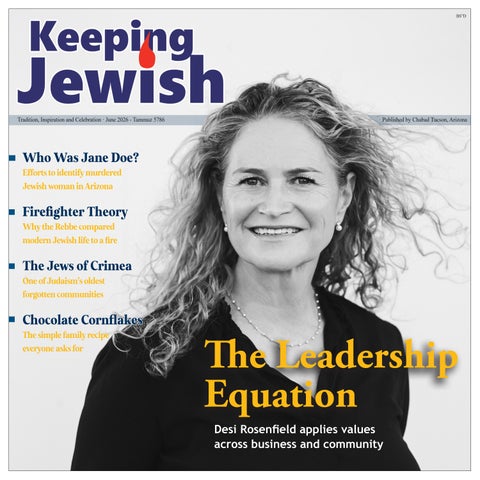
The Leadership Equation
Desi Rosenfield applies values across business and community
Tradition, Inspiration and Celebration · June
- Tammuz 5786
Published by Chabad Tucson, Arizona
EXECUTIVE DIRECTOR
Rabbi Yossie Shemtov
REBBETZIN
Chanie Shemtov
OUTREACH DIRECTOR
Rabbi Yehuda Ceitlin
PROGRAM DIRECTOR
Feigie Ceitlin
Affiliates: Congregation Young Israel, Chabad at the University of Arizona, Chabad on River, Chabad of Oro Valley, Chabad of Sierra Vista, Chabad of Vail and Lamplighter Chabad Day School of Tucson
EDITOR
Rabbi Yehuda Ceitlin
COPY EDITOR
Suzanne Cummins
CONTRIBUTING WRITERS
Feigie Ceitlin, Aviva Farkas, Sari Kopitnikoff, Menachem Posner, Mendel Super, Lilian Wasserman, Benjamin Weiss
PHOTOS
Unsplash.com
SPECIAL THANKS Chabad.org
EDITORIAL & ADVERTISING
Phone: 520-881-7956 #12
Email: info@ChabadTucson.com
SUBSCRIPTION: ChabadTucson.com/SubscribePrint
Keeping Jewish is published in print periodically by Chabad Tucson and is distributed free in Tucson and Southern Arizona.
Chabad Tucson does not endorse the people, establishments, products or services reported about or advertised in Keeping Jewish unless specifically noted. The acceptance of advertising in Keeping Jewish does not constitute a recommendation, approval, or other representation of the quality of products or services, or the credibility of any claims made by advertisers, including, but not limited to, the kashrus of advertised food products. The use of any products or services advertised in Keeping Jewish is solely at the user’s risk and Chabad Tucson accepts no responsibility or liability in connection therewith.
Note: “G-d” and “L-rd” are written with a hyphen instead of an “o .” This is one way we accord reverence to the sacred divine name. This also reminds us that, even as we seek G-d, He transcends any human effort to describe His reality.
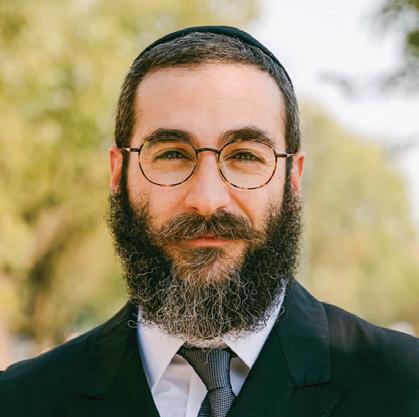
The Rebbe’s Firefighter Philosophy
In preparation for the anniversary of the Rebbe’s passing on Gimmel Tammuz (June 18, 2026), I traveled to Washington, DC, for the Living Legacy International Conference. The conference explores the Rebbe’s teachings and leadership and their continued relevance.
On the morning of the conference, I visited the Chabad East DC Jewish Center, run by my brother and sister-in-law, Rabbi Yitzy and Shana Ceitlin. From their center in the Capitol Hill neighborhood, they serve young families through prayer services, classes, and community programs.
As we sat there talking, loud sirens pierced through the air. Then it happened again. Wondering whether something unusual was unfolding nearby, I asked my brother what was going on. He smiled and pointed next door. Their Chabad center sits beside a Washington, DC Fire & EMS station.
I watched as firefighters sat outside in the driveway on plastic chairs. They talked casually, moved equipment around, and waited. Then the alarm sounded. Within seconds, firefighters climbed aboard their trucks and headed onto Pennsylvania Avenue with focus and urgency.
It struck me that, in a certain sense, Chabad operates similarly.
To an outside observer, a class, a Shabbat dinner, a conversation over coffee, a pair of tefillin, or a children’s program may seem
By Rabbi Yehuda Ceitlin
routine. Beneath all of it is a readiness to respond when someone is searching, disconnected, grieving, curious, or simply looking for a point of entry into Jewish life.
That urgency was articulated repeatedly by the Rebbe himself. In a 1952 letter, the Rebbe addressed someone who questioned whether he should focus first on his own spiritual growth or devote energy to helping strengthen Jewish life in others.
The Rebbe answered with a metaphor.
When there is a fire, he wrote, there is no time to gather everyone and explain how the fire engines work, why the hoses are built a certain way, or the science behind extinguishing flames. A fire spreads quickly, and every moment lost means more destruction.
The Rebbe applied that image to the Jewish condition of the post-Holocaust era. He described a generation in which the fire of exile was actively spreading and argued that waiting until one reaches complete understanding or personal perfection before helping others risks confusing preparation with responsibility.
Instead, he pointed to what the Israelites committed to at Mount Sinai: first, “we will do,” and only afterward, “we will understand.”
At the same time, the Rebbe insisted on an equally important qualification.
He once quoted a teaching of the Previous Chabad Rebbe. Someone had argued that when extinguishing a fire, one should not become overly concerned with the quality of the water being used. The response was that this is true only if it is actually water. Kerosene only intensifies the fire.
The point is that urgency does not eliminate standards. Outreach, education, and engagement cannot be detached from the values they are intended to strengthen. Otherwise, efforts intended to repair can unintentionally deepen the harm.
If one looks at rising loneliness, social isolation, declining trust, and growing despair across American life, the Rebbe’s metaphor of a fire feels more relevant than it once did.
While there is no quick fix for every social challenge, Chabad is guided by a conviction: that faith, community, care, and a sense of purpose remain among the forms of water our society needs more of, not less.
The Rebbe’s deeper point: moments of need demand engagement and initiative, but they also demand confidence that the tools being used will extinguish the fire rather than feed it.
- Rabbi Yehuda Ceitlin is the Outreach Director of Chabad Tucson, the Jewish network of Southern Arizona
The Jewish outreach and education network of Southern Arizona 2443 E 4th Street, Tucson, AZ 85719
Search for a Murdered Jewish Woman’s Identity
DNA testing revealed Jane Doe, murdered in remote Arizona in 1989, was Jewish
By Rabbi Mendel Super - Chabad of Lake Havasu, AZ
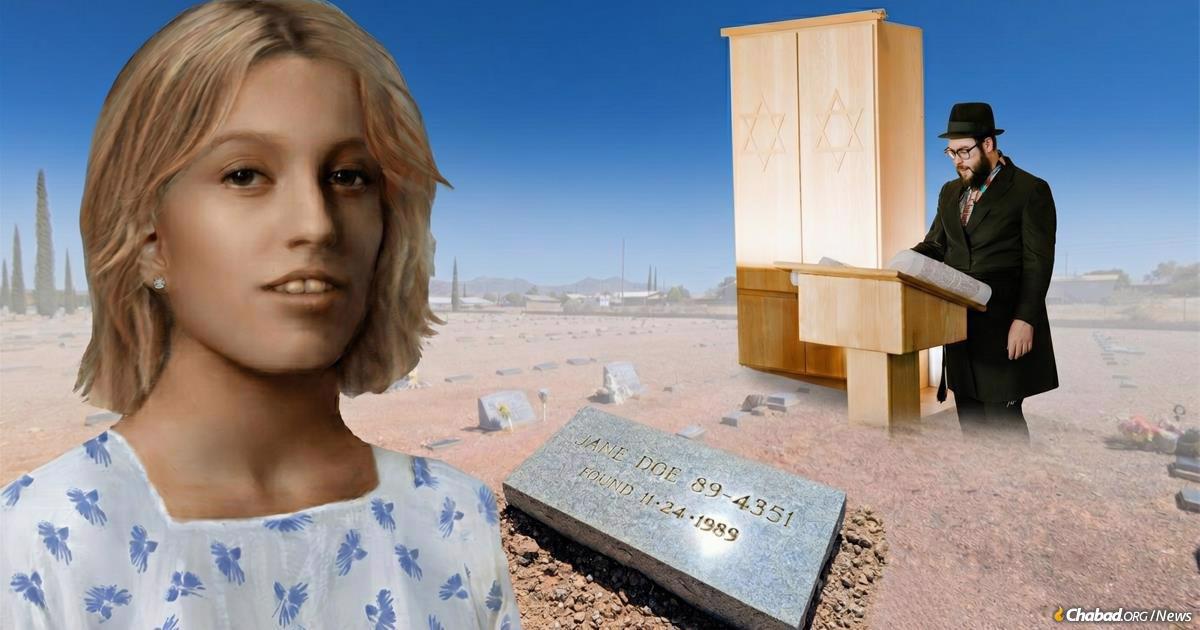
Under the rural northwestern Arizona scorching sun, I trekked through the dusty red rows of the cemetery, looking for a grave with no name. The investigator had told me that the deceased person I was looking for rested at the end of a row in the county section. I walked past Jane and John Does in the county section of Mountain View Cemetery in Kingman, Arizona.
Then I found her:
Jane Doe 89-4351
Found 11.24.1989
I recited some Psalms (Tehillim), likely the first time Jewish prayers were said at her resting place, noting that the silence of the vast desert belied the secrets beneath its surface.
What was I doing here?
Let me explain: I’m the only rabbi in Mohave County, Arizona, the fifth-largest county in the country geographically, but isolated and sparsely populated. We’ve been here since 2022, when my wife, Itta, and I moved to the county’s largest city, Lake Havasu City, to open the first Chabad center in the region. Today, Jews from Havasu, Kingman, Bullhead City and the smaller towns in between are active in the Jewish community. The city’s former Reform temple is now home to Chabad of Lake Havasu City.
Early on in my career in Mohave County, I found myself occupied with what Judaism calls a meit mitzvah – an abandoned Jewish body that had no one
to attend to its proper burial. Now, I was involved in yet another case.
On a Friday in 1989, the day after Thanksgiving, a couple walking their dog in the desert made a gruesome discovery in the brush just over a mile off the highway south of Kingman. It was a body. Deputies from the Mohave County Sheriff’s Office arrived and found that the body was that of a woman. Markings in the dirt indicated a scuffle, and foot tracks showed she had been dragged to the area where she was discovered. A single tire mark was also evident.
The autopsy revealed she was between 25 and 30 and had been brutally beaten to death. Besides the red nail polish on her fingers and toes, her earrings, and a handmade blouse and sunglasses found several days later in the brush, investigators had little to go on. Newspaper reports and law enforcement bulletins provided no meaningful leads. Fingerprints, difficult to obtain from her body by that point, brought no hits from state and national databases.
And so for decades, the young woman with blonde hair remained known only as Mohave County Jane Doe, resting in a grave at the edge of the cemetery. All that was known about her sat in a box on a shelf at the sheriff’s office.
But in recent months, there was a breakthrough in the long-cold case. Genetic work done by a lab in Texas showed that her DNA indicated she was 96 percent Ashkenazi Jew, the daughter of two Jewish parents. Her profile is now being studied by investigative genetic genealogists at New Jersey’s Ramapo College, who will try to build her family tree and discover her name.
Ashkenazi family ancestry is particularly difficult to determine because of the very limited databases available to law enforcement. It is also problematic for historical reasons. For centuries, Ashkenazi communities in Europe practiced endogamy, meaning they often married within their own communities. This has resulted in ancestors appearing multiple times on different branches of a family tree,
effectively making large swaths of Ashkenazi individuals genetic cousins.
After reading a press release from the Mohave County Sheriff’s Office, I reached out to Sheriff Doug Schuster, a friend of our community. The sheriff put me in touch with the lead investigator of the cold case unit, Lori Miller. I met with her and told her I’d do anything I could do to help.
“For the first time in six years of working on this case, I’m optimistic,” the investigator told me.
We discussed some new theories, and with the help of ZAKA, an Israel-based international organization that works to identify and recover the remains of Jews killed in terrorist attacks and accidents, we were able to send the fingerprints to Israeli authorities.
There is more work to be done, and I share this story in the hope that someone reading it might be able to help.
First off, if you have a family member or know of a young woman who disappeared in 1989, please reach out to the Mohave County Sheriff’s Office. The number of their Special Investigation Unit is 928-753-0753 ext. 4408. Reference DR# 89-4531.
Second, please consider uploading your DNA profile to GEDMatch to give investigators more Ashkenazi DNA to work with and help build Jane’s family tree.
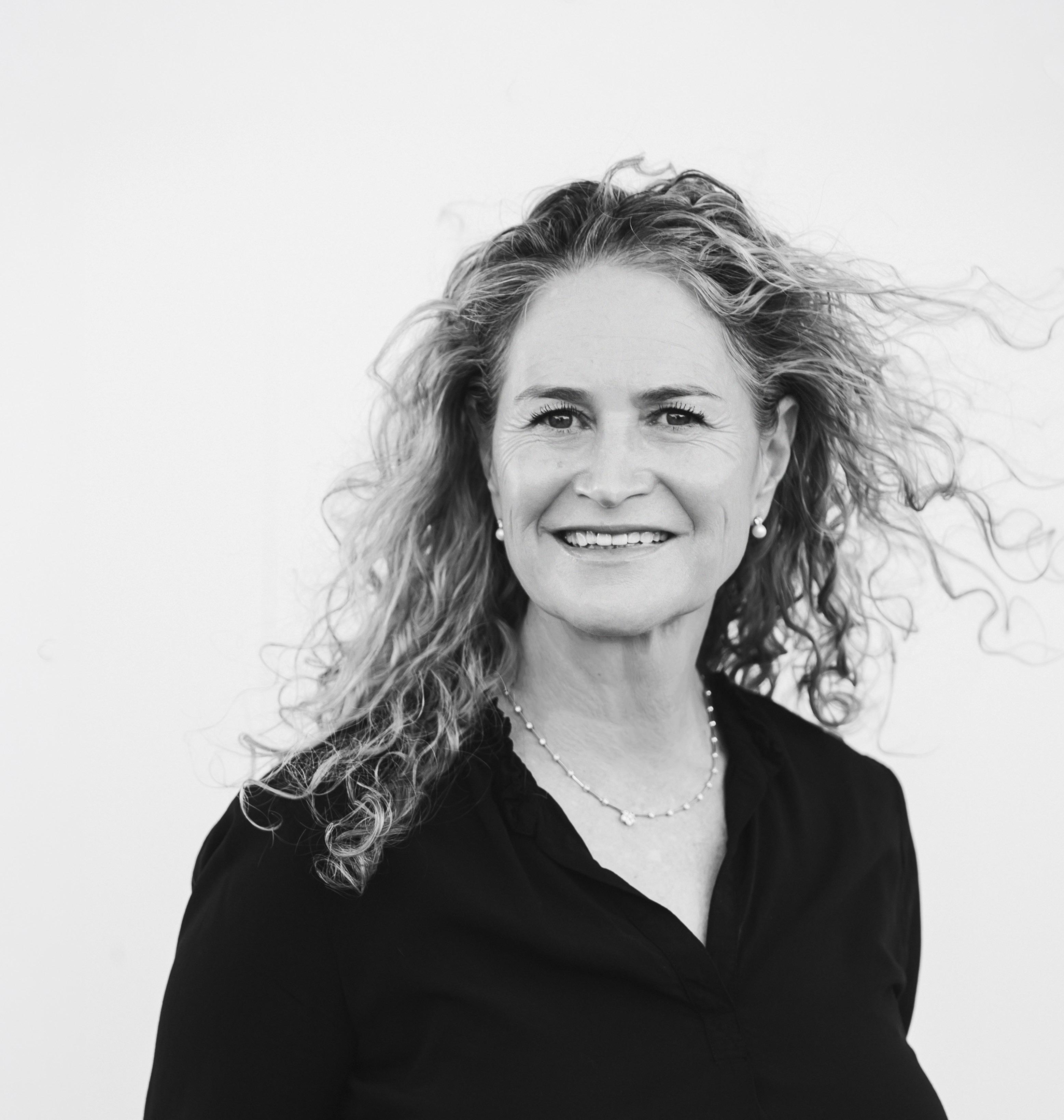
The Leadership Equation
How Desi Rosenfield applies purpose and values across business and community
By Lillian Wasserman
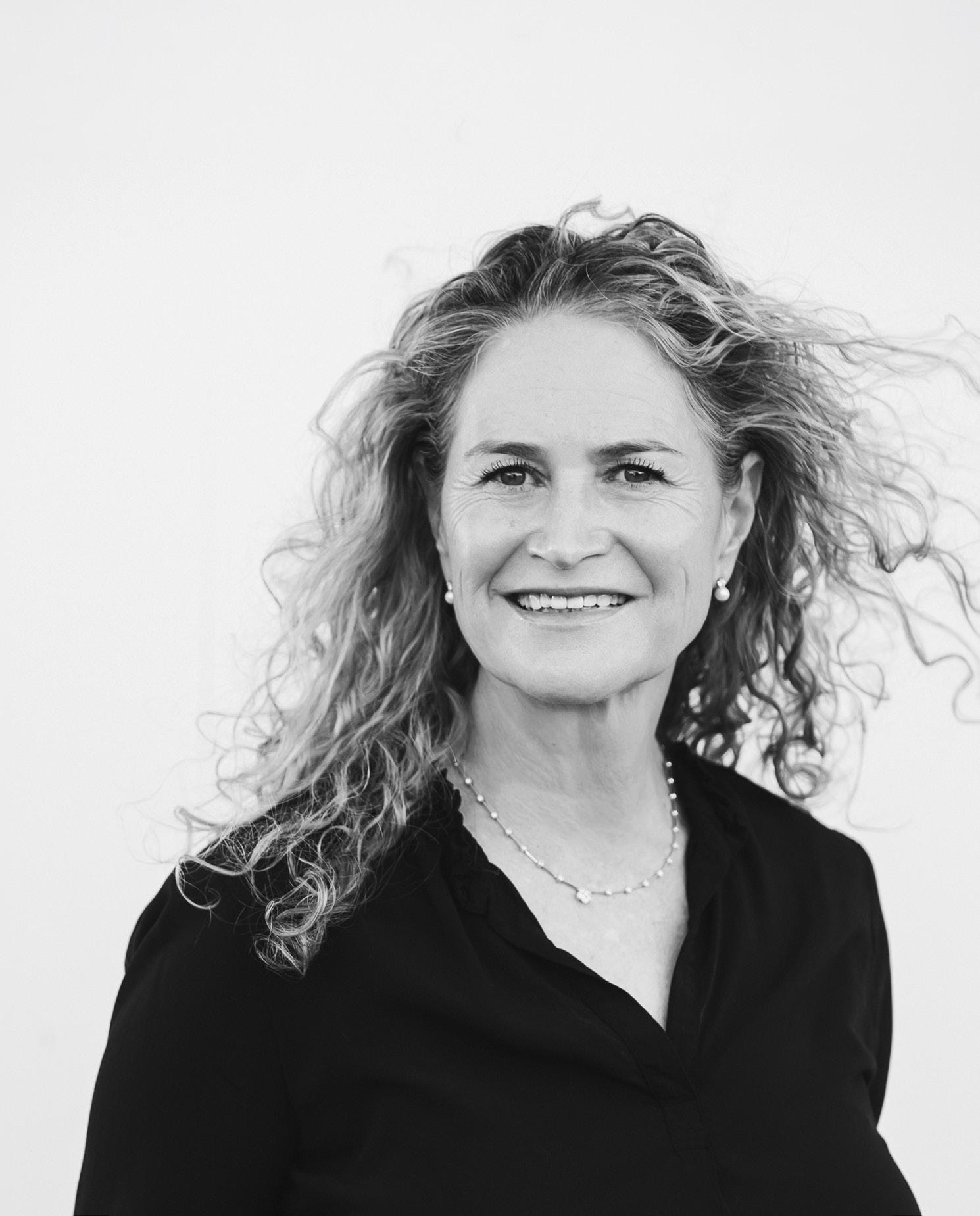
Desi Rosenfield has advised executives on five continents, helped launch one of Tucson’s most beloved bars, and built a music festival that draws 13,000 people. Yet on a typical Shabbat morning, she’s in shul, praying alongside her two sisters.
Those sisters, Sharon Rosenfield and Linda Cohen, are fixtures at Chabad Tucson-Young Israel in their own right. Sharon is a geriatric psychiatric nurse who advocates tirelessly for elderly patients, fighting to ensure they are
treated with dignity and compassion. Linda is a trusted accountant and financial advisor to clients across Tucson.
The three grew up in a traditional Jewish home in South Africa, where religious observance carried a deeper rigor than is typical in non-Chassidic households in the United States. A brother lives in Los Angeles. In time, all the siblings chose to stay in the same country, and eventually three of them landed in the same city, drawn together by loyalty and by Desi.
After Desi moved to Tucson for her husband, Dr. Jerry Winter, a cardiologist who practiced here for 45 years, her sisters followed. Desi is the only one of the three with children, two sons, Edan, now in college, and Itai, who will soon begin that journey, and her siblings have been deeply woven into their lives. Tucson became the beneficiary of a family’s decision to stay close.
A Career Built on Shifting Ground
Desi attended the University of the
Witwatersrand in Johannesburg, earning a postgraduate degree in Economics and Econometrics along with credentials in Finance. She began her career as an analyst at Deloitte. Two years in, the political landscape began to shift. As South Africa moved to dismantle Apartheid, many skilled professionals emigrated, opening senior positions to those who remained.
In 1990, at just 24, Desi was appointed Chief Economist at SEBO, a firm responsible for investing and managing
state pension funds. “This would never have happened under ordinary circumstances,” she says, but she seized the opportunity, excelled in the role, and it prepared her for everything that followed.
In 1993, Desi joined Rabbi David Lapin’s leadership and strategy consulting firm, which would become Lapin International. She became president in 2006 and has held that role for the past twenty years.
Lapin International works at the intersection of leadership, strategy, and culture, helping organizations, teams, and individuals strengthen themselves from within. The firm’s methodology is grounded in Rabbi Lapin’s book Lead by Greatness, which holds that every organization possesses a corporate soul, an identity that determines its capacity for excellence.
Rabbi Lapin once brought his philosophy to the Lubavitcher Rebbe, who listened and then pushed him further. The exchange, recounted in the book, offers a window into the scale of impact Desi has spent her career pursuing:
“You see, you are thinking of your interactions with others like a chemical reaction, changing one molecule at a time… but you are a spiritual being and every time you meet someone a nuclear reaction occurs. A nuclear chain reaction can release several million times more energy than a chemical reaction. Each person on whom you have some impact can in turn affect the lives of countless others. The effect is exponential.”
That vision of exponential impact shapes how Lapin International approaches its work. Today, the firm helps clients understand their true identity, discover their higher purpose, and reach the level of mastery required for exceptional results. Desi, partnering with Rabbi Lapin and the other Lapin consultants, teaches leaders how to use their
character to power their success.
Using proprietary tools developed through decades of research and global client engagements, the firm helps organizations align strategy, leadership, and culture, the combination, Desi argues, that produces both exceptional performance and superior financial results.
She has worked everywhere. In the early years after immigrating, she managed clients across America, Asia, Australia, and South Africa. One particularly demanding year required five aroundthe-world trips. Lapin’s client base spans
confined to the consulting room. Together with longtime partner Page Repp of Repp McLain Design and Construction, she has co-founded and invested in a range of Tucson ventures. The standard for any investment is consistent: it must elevate the city and contribute meaningfully to the community.
In 2014, Desi, Repp, and Rick McLain opened Sidecar, a cocktail lounge on Broadway. The concept was deliberate: an upscale neighborhood bar free from sports broadcasts and scrolling screens, built for conversation and genuine connection. Expertly crafted cocktails made with freshly squeezed juices and herbs have helped earn it the title of Tucson’s number one date night bar. But regulars will tell you the real draw is the atmosphere, a place warm enough that almost everyone knows the bartenders by name.
industries, because as Desi puts it, any company that relies on people to drive results is a potential client.
The rise of AI has only sharpened the firm’s focus. Rather than retreating from the technology, Lapin International is helping leaders lean into what machines cannot replicate. “Purpose and values are even more important today than when we started the business,” Desi says. “We are in uncharted territory, and things are changing fast.”
Building Tucson
Desi’s ambitions have never been
Two years later, Desi helped launch the Dusk Music Festival with Repp, John Rallis, and Pete Turner. Held over Veterans Day weekend, the festival transforms Downtown Tucson for two incredible nights, drawing internationally recognized talent and, last year, more than 13,000 attendees. It has become a significant economic engine for the city, generating over five million dollars in local revenue. Desi’s role is primarily as an investor and strategic advisor, but her enthusiasm for what Dusk has become is genuine. “It brings joy, energy, and connection to everyone involved,” she says. She loves what it has grown into, not only as a business, but as a gift to the city.
When asked to define her higher purpose, Desi doesn’t hesitate: to drive leaders who do not yet fully grasp the fullness of their potential to boldly elevate and impact their lives. On Shabbat morning, she takes her seat between her sisters. The rest of the week, she’s changing the calculus for leaders around the world.
Is It a Mitzvah to Help an Elderly Person Cross the Street?
By Aviva Farkas
I recently attended a talk given by a prominent speaker at a Jewish elementary school. The thesis of the talk was that when people refer to mundane actions as mitzvot, they are speaking imprecisely. It is true, he conceded, that something like helping an elderly person cross the street might be a nice thing to do. It might even seem as if it should be a mitzvah—one of the 613 commandments communicated by G-d to the Jewish People at Sinai. But is it in the Torah? Is it codified in Jewish law?
Since the answers to these questions are both negative, the speaker concluded, we must resist the temptation to conflate “good deeds” with mitzvot. In fact, he argued, such conflation is a symptom of an insidious trend that accords less authority to our holy texts and more to subjective, feel-good morality derived from external cultural trends.
Could it be true, I wondered, that there really is no mitzvah to help people? I tried to consider how what I already knew (or thought I knew) fit in with the speaker’s narrative.
An initial survey of the literature does yield disappointing results. There is no verse in the Torah that discusses elderly people crossing streets. Not only that, but browsing medieval “mitzvah counting” literature likewise does not lead to an entry such as “Mitzvah 50: Help
the Torah?
(Counting the mitzvot was a popular activity among medieval rabbis. Although all agreed that there are 613 in total, there was some disagreement about precisely which mitzvot count, which are subsumed under the headings of other mitzvot, which are statutes instituted by the rabbis, etc.)
So, is that it? Does the absence of an explicit reference to helping an elderly person cross the street constitute the proverbial nail in the coffin of the possibility that it might in fact be a “real” mitzvah? Is it indeed the case that my previous assumption was truly derived from a modern innovation, with no source in the classic texts that authoritatively establish what is and is not included in the 613 mitzvot of
As it turns out, a more careful reading of the relevant sources yields an entirely different picture. To begin with, a number of important medieval authorities, including Maimonides, count the Torah’s injunction to “walk in His ways” as a mitzvah: “Mitzvah eight is that we have been commanded to emulate Him (may He be exalted) to the best of our ability … just as the Holy One blessed be He is called gracious, so too you must be gracious; just as He is called merciful, so too you must be merciful; just as He is called pious, so too you must be pious.”
Helping an elderly person cross the street safely—an act that involves graciousness and mercy—clearly qualifies.
But the fact that helping an elderly person across the street fulfills one mitzvah does not mean we should stop there. The Mishnah features a fascinating hypothetical about a single action that entails the transgression of the greatest possible number of commandments (a kohen who is also a nazir plows a graveyard on a holiday during a shemitah year, violating eight commandments at the same time). Just as it is possible to commit many transgressions with one act, it is possible to fulfill many mitzvot with one act.
There are, in fact, a number of additional commandments which can be fulfilled by helping an elderly person to cross the street, including “Stand up before the white-haired and respect an elder.” The Talmud quotes Issi ben Yehuda, who interprets the verse to mean that even elderly people who are not learned must be honored.
Maimonides rules accordingly: “We should stand before an old person of exceedingly advanced age, even if he is not a sage. Even a sage who is young should stand before an old person of exceedingly advanced age … Even an old gentile should be addressed with words of respect, and a hand should be extended to support him, as [the Torah states], “Stand up before the white-haired.” Every white-haired person is included therein.”
As several commentators observe,
Photo: Stephane Juban/Unsplash
an elderly person safely cross the street.”
this obviously applies equally to both elderly men and elderly women. We can safely assume, therefore, that extending a hand to support any elderly person is a fulfillment of the mitzvah to “stand up before the white-haired.”
Also relevant is the mitzvah to love one’s fellow Jew:
Mitzvah 206 is that we are commanded to love each other as we love ourselves, and that his love and his mercy for his brother should be like his love and mercy for himself, with his money and with his body and all that is within his domain.
This commandment clearly includes using our bodies to help the elderly cross the street, just as we would hope others would help us if we needed it.
Finally, we are commanded to honor our parents (mitzvah 210), so if the elderly person is also one’s mother or father, one would be fulfilling no less than five Torah commandments through this single act!
The above analysis shows that, depending on the status of the particular elderly person in question, helping him or her to cross the street would involve, according to Maimonides, a bare minimum of two mitzvot (if not Jewish) and up to a grand total of five mitzvot (and possibly more that I have missed) if he or she is your parent as well as a convert to Judaism.
So how was it possible for the speaker that I heard to classify such a mitzvah-heavy, holy action as purely secular and mundane?
Contemplating this question, the following story came to mind:
While on a journey, Rabbi Yosef Yitzchak Schneersohn, the sixth rebbe of Chabad, was sitting in a
hotel lobby. He was approached by a Jew who asked him to explain what the Chassidic movement purported to be about. “Does Chassidism contribute something new? If so, how can such newness be consistent with the eternity of the immutable Torah?”
The Rebbe pointed toward the ceiling of the hotel lobby and made an observation about a detail in the mural that was painted there. He asked his interlocutor whether he had noticed the detail. When the latter impatiently replied that he hadn’t, the Rebbe explained that just as it is possible to overlook the finer details in a work of art, it was possible for people to overlook certain mitzvot in the Torah. Chassidism, however, shines a light on these fine details and “rediscovers” otherwise neglected mitzvot that had been there all along.
What were these neglected mitzvot? They include the theological commandments that some medieval authorities call “duties of the heart,” and others categorize as “constant commandments,” since, unlike most other mitzvot, they are relevant at all times of day and night. These include non-ritualistic obligations such as “loving G-d,” “fearing G-d,” and “having faith in G-d.”
The Baal Shem Tov, founder of Chassidism, brought these commandments back to the forefront of Jewish life. But he was perhaps most well known for promoting the commandment to love one’s fellow Jew as oneself.
These old-new teachings might be thought of as what is nowadays called a “reality check.” Sometimes it is possible to become so intellectually absorbed in complex narratives and intricate minutiae that we lose track of the relatively simple truths that have been there
all along. A reality check gives us the perspective to acknowledge these fundamental facts, some of which might be even more important than
the non-obvious trains of thought we might pursue in the course of sophisticated Torah study.
Sale! Summer Summer
AT THE
Feels like pool splashes, court camaraderie, sunny smiles, lasting friendships!
What does your perfect summer feel like? Stay active, engaged, and connected all summer long at the J!
1/2 OFF JOIN FEE
+ 1/2 OFF FIRST MONTH’S DUES Sale applies to 6 + 12 month memberships. Half-off dues applies to first full month. Scan the QR code or visit tucsonjcc.org/join
1. What do you do in a nutshell?
At Work: Michael Haber
I help people plan their vacation getaways, including cruises and land packages. Through our broader connections and position as one of the larger sellers of cruises worldwide, we’re often able to pull strings and arrange experiences people might not otherwise have access to.
2. What got you into this line of work?
My wife and I love to travel, and she suggested finding a way to make it pay for itself. Before this, I owned two mortgage companies. When we retired from Seattle, this became the next chapter.
3. What’s your favorite part of the job?
Helping people do what they couldn’t do themselves and then watching them come home with a smile. I also love the travel itself, especially being on the high seas. I love being at sea.
4. What’s your tip for avoiding seasickness?
Premedicate before the trip. It seems to work.
5. Share a memorable travel moment.
The single best travel experience for me was going from Hawaii to Australia. We traveled south, crossed the equator, stopped in Tahiti and French Polynesia, and then continued west to Australia.
Vacation Specialist at Dream Vacations
The greenery on the mountains in Tahiti was unbelievable. The pointed peaks jutted out of the ground in bright emerald green, almost velvety. You see G-d’s work. It seemed out of this world.
6. What’s the state of the travel industry today?
The bounce back from COVID was remarkable. But now, with war, rising fuel costs, and uncertainty around the world, some are afraid to travel.
7. How does being Jewish influence your work?
I can arrange kosher travel experiences, including kosher river cruises to places like Japan, South Korea, and the Netherlands.
8. What destinations do you recommend?
I recommend Italy, Greece, and Mediterranean cruises. For younger and more adventurous travelers, I’d suggest Antarctica, Southeast Asia, and the Vietnamese delta.
9. What destination do you want to visit?
Israel. I’ve never been, and I think there is something fundamentally wrong with not going, so I hope to do that soon.
10. What do you love most about Tucson?
I love the people and, believe it or not, the weather. I think Tucson is the bestkept secret. I remember coming from Seattle, watching the traffic report on TV, and laughing because there was nothing to report.
11. What’s your Jewish name?
Menachem Mendel. My aunt’s father was a Torah scholar from Poland who later moved to Brooklyn, and my mother wanted to name me after him.
12. What’s your go-to comfort food? I’m not much of an eater. I’m the only one who comes back lighter from a cruise.
13. What’s a piece of advice you live by? Honor your father and your mother. I like to think I’ve never faltered from that.
Michael Haber, CCC can be reached at 253335-1070 or mahaber@dreamvacations.com
Chocolate Cornflakes
By Feigie Ceitlin
Some recipes become part of family memory not because they are elaborate, but because they are simple, dependable, and always disappear quickly. These chocolate cornflakes are one of those treats. Crisp cornflakes coated in a rich chocolate mixture create an easy dessert that is especially fun to prepare and share.
INGREDIENTS:
1 cup Karo corn syrup
1 cup sugar
1 stick margarine
4 tablespoons cocoa powder
4–6 cups cornflakes
INSTRUCTIONS:
1. Line a muffin tin with cupcake holders or prepare paper liners on a tray.
2. In a pot over low heat, melt the margarine.
3. Once melted, stir in the sugar and syrup until fully combined.
4. Add the cocoa powder and mix until smooth.
5. Remove from the heat and gradually add the cornflakes, stirring gently as you go until evenly coated. Use more or fewer cornflakes depending on how heavily you prefer them coated.
6. Scoop portions into the cupcake holders and allow to cool and set completely before serving.
Blessed are You, L-rd our G-d, King of the universe, by Whose word all things came to be.
— Rebbetzin Feigie Ceitlin is the program director of Chabad Tucson and head of school of Lamplighter Chabad Day School.
14 Facts About the Krymchak Jews of Crimea
By Yehuda Altein
The Krymchaks are an ancient Jewish community centered in the Crimean Peninsula. They adopted the language, lifestyle, and mode of dress of their Tatar/Central Russian neighbors, while remaining steadfast in their Jewish beliefs and practices.
1. Jews First Settled There in Greek Times
The ancient Greeks established settlements on the northern coast of the Black Sea, including the Crimean Peninsula. These trading ports attracted Jewish settlers, who established communities there as early as the 1st century CE—as evidenced
by inscriptions discovered on marble tablets and Jewish motifs on ancient gravestones. In the centuries that followed, many more Jews joined them. Some found refuge there from persecution in their home countries, while others were drawn by the area’s shipping and trade opportunities.
2. They Came From All Over
Jews came to Crimea from all sorts of places: Persia, Babylonia, the Byzantine Empire, Italy, and later from Germany and Poland. By the 13th century, Crimean Jews had formed a distinct identity, shaped by their diverse origins and a strong Tatar cultural influence on
developed their own dialect of Crimean Tatar. They themselves called their dialect Chagatai, which was written using the Hebrew alphabet and incorporated many Hebrew loanwords. Tragically, the decimation of so many Krymchaks during the Holocaust, combined with the Russification policies of Soviet rule, rendered the language nearly extinct.
5. They Lived Alongside the Karaites
The Karaites were a group of Jews who broke with mainstream Judaism in the early medieval period, accepting the Written Torah but rejecting the Oral Torah. A large neo-Karaite community lived in Crimea alongside the Krymchaks. The Krymchaks did not consider the Karaites fully Jewish due to their divergent beliefs and refused to intermarry with them or pray in their synagogues. Yet the two groups managed to live side by side peacefully and even cooperated in certain communal activities.
In later centuries, the Karaites actively sought to be excluded from the category of “Jew” in the eyes of the authorities, hoping to avoid Russian (and later Nazi) anti-Jewish policies. This drove the final wedge between them and the traditional Krymchaks.
6.
You Can Tell Them by Their “Tzadi”
their speech and dress.
3. They Were Known by Several Names
These unique Jews originally called themselves Srel Balalary, “Children of Israel.” In time, they came to be known as Krymchaks, meaning “Crimeans” in Russian. The Crimean Tatars had a third name for them yet: Zülüflü Chufutlar, “Jews with sidelocks”—in contrast to the Karaites (see below), whom they called Zülüfsüz Chufutlar, “Jews without sidelocks.”
4. They Have Their
Own Language
Over time, the Krymchak Jews
You can tell a Krymchak by how he pronounces the Hebrew alphabet! The letter tzadi, which most Jews pronounce as “tz,” is pronounced by Krymchaks as “ch,” as in “chalk.” So a righteous man is a chaddik, charity is chedakah, and on Passover they eat machah.
All other letters were pronounced in the Sephardic tradition, except that Krymchaks also distinguished between the letters tav and sav—a feature more common among Ashkenazi Jews.
7.
An Exiled Rabbi Brought Harmony
In the early 16th century, discord broke
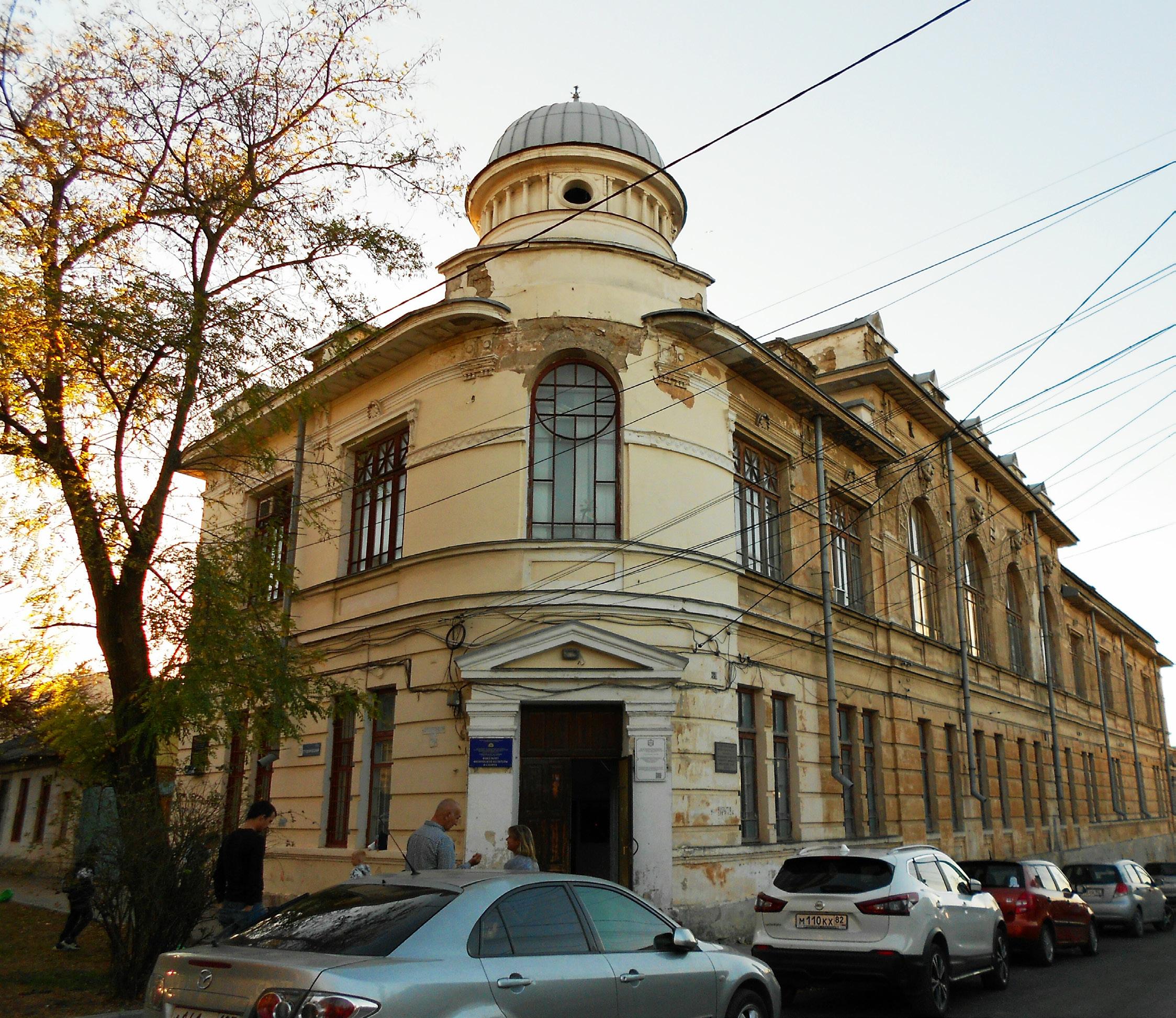
The Talmud Torah school of Simferopol, built in 1913-1915 and recently returned to the Jewish community. Photo: R.V.Foto
out in Kaffa (modern-day Theodosia), one of the main Krymchak centers. The disagreement was over prayer liturgy, with different segments of the community championing the Babylonian rite (the community’s historical practice), the Romaniote rite (brought by arrivals from Byzantium after its fall to the Turks), and the Ashkenazi rite (introduced by more recent Ashkenazi settlers).
Into this situation stepped an illustrious scholar, Rabbi Moshe of Kyiv, who had been captured by the Tatars and exiled to Crimea in 1506. He established communal policies and crafted a unified liturgy for the community known as “the Kaffa rite,” which became the standard Krymchak prayer tradition for centuries to come.
8. They Would Bring Live Chickens to Weddings
The Krymchak Jews developed many customs over the centuries. Here’s one of them: Under the wedding canopy, a live hen and rooster would be circled seven times above the heads of the bride and groom as a symbol of fertility. The birds would then be slaughtered, koshered, and enjoyed.
9.
A Turkish Rabbi Rejuvenated Jewish Life
Though the Krymchak Jews were deeply committed to traditional Jewish life, they did not always have local rabbis to guide them. In 1867, a Krymchak merchant traveling in Constantinople approached a prominent local rabbi, Rabbi Chaim Chizkiah Medini, and asked him to relocate to his hometown of Karasubazaar to serve as the Krymchak spiritual leader. The rabbi agreed. For the next 33 years, Rabbi Medini— celebrated for his monumental halachic encyclopedia, Sdei Chemed—elevated Jewish life in Crimea, establishing schools and teaching Torah. He remained a beloved and venerated figure among Krymchak Jews for generations.
COMMUNITIES
Fun fact: In 1949, the Lubavitcher Rebbe reprinted the Sdei Chemed at the behest of his father-in-law, Rabbi Yosef Yitzchak Schneersohn. As part of the project, the Rebbe—who had grown up in Nikolayev (Mykolaiv), not far from Karasubazaar—compiled a brief biography of Rabbi Medini, portraying him in glowing terms.
10. Ashkenazi Arrivals Created New Communities
In 1783, Catherine the Great captured Crimea from the Tatars and annexed it to the Russian Empire. In the decades that followed, many Ashkenazi Jews from Russia settled in the region, eventually far outnumbering the native Krymchaks. These newcomers established their own communities in cities like Theodosia, Kerch, Simferopol, and Sevastopol.
11. Yalta Was a Resort Destination
In addition to permanent settlers, many Jewish visitors came to Crimea for health reasons. The coastal city of Yalta was a celebrated resort town, making it an ideal destination for those who needed fresh air and a change of climate. Among them was the Fifth Rebbe, Rabbi Sholom Dovber Schneersohn of Lubavitch, who spent an extended stay there in 1886 with his family.
12. The Soviets Encouraged Jewish Settlement
In the 1920s, the Soviet government established Jewish farming settlements in Crimea, funded in part by the American Jewish Joint Distribution Committee. Many Jews moved to the region and took up agricultural work. To tend to their religious and spiritual needs, Chabad sent Rabbi Peretz Mockin, a chossid and schochet, to the area to strengthen Jewish life.
13. The Holocaust Dealt a Tragic Blow
When the Nazis occupied Crimea in late 1941, approximately 6,500 Krymchak
Jews lived in the region (alongside many more Ashkenazi Jews). While the Germans were initially uncertain how to classify them ethnically, they ultimately concluded that the Krymchaks were Jews and subject to their racial policies. Well over three-quarters of the Krymchak population was annihilated.
14. Krymchak Jews Today
Today, small Krymchak communities can be found in Crimea, Israel, and the United States. In Israel, the community
established a synagogue in Tel Aviv that operated for many years. And today, there are Chabad centers in Sevastopol and Simferopol, ensuring that Jewish life on the Crimean Peninsula continues to flourish.
- Much of the information in this article was culled from Yahadut Krim M’kadmutah V’ad Hashoah (Heb., Jerusalem, 1981)
What Does Mamash Mean?
By Chabad.org
Mamash is a Hebrew (Yiddish) word that means “substance” and denotes that something is really, really real. You can use this word wherever you’d use the English words “really,” “very,” or “truly.”
In Yiddish, it is pronounced MAH-mish.
In modern Hebrew, it is pronounced mah-MASH.
For example, if your daughter cooks the most delicious chicken soup and kneidelach, you can tell her, “Shayne punim (pretty face), that was mamash geshmak (tasty).”
On the other hand, if your daughter is a klutz (awkward) and the soup spills on the way to the table, you can comfort her by telling her it was mamash not her fault that her little brother chose to leave a tchotchke (toy) on the dining room floor.
In its original context, mamash is something tangible that can be touched and felt (related to mishush or mishmush, Hebrew for “touch” or “grope”).
Thus, the sages described the Plague of Darkness, which was so thick that people could not even move, as “darkness that had mamash.”
Conversely, things that are fake were described as “without mamash.”
For example, people who did not believe
Staff
in idol worship but chose to go along with its rites and beliefs for the sexual licentiousness that came along with it were described as knowing that idolatry “has no mamash.”
As you can see from both examples, the original mamash is a property (“tangibility”). Its current use as an adverb probably came about in Yiddish and then transferred back into Hebrew.
An example would be in the second chapter of Tanya, where the G-dly soul is described as “a part of G-d above, mamash.”
The irony of describing something super-spiritual with a word that means super-physical was not lost on astute Tanya students. They understood this to mean that the purpose of the G-dly, ethereal soul is to transform this earthly and physical world (mamash) into something Divine.
The Blessing of Mamash
In Judaism, there are all kinds of things that exist on a spiritual plane. For example, a person’s good deeds can be seen as spiritual children, and blessings can manifest in ways not apparent to us. But that’s not enough; we want the real deal.
When expressing his fervent wish for the arrival of Moshiach, the Rebbe often said that it should happen teikef umiyad mamash, “right away, immediately, mamash!”
The times dedication faltered. Ladies what “the transpire The funds continue need.
Therese Germany, early but in 1878. met same Aaron Israel, San She hatmaker, move what where Their Charles Isadore Freudenthal-Solomon. Clara, teacher Bloom was In 1884, together an organization members planning Benevolent Therese members.
PIONEERS
She Was Called “The Angel of Tucson”
Therese Marx-Ferrin (1846-1911)
By Benjamin Weiss
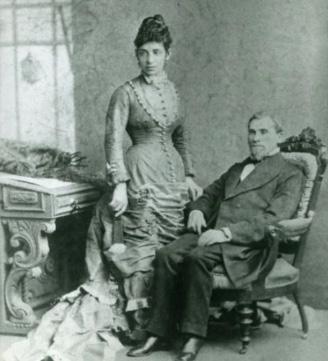
Therese Marx was born in Frankfurt, Germany, on June 26, 1846. Much of her early life in Germany remains unknown, but she immigrated to the United States in 1878. She arrived in California and met her husband, Joseph Ferrin, that same year. They were married by Rabbi Aaron J. Messing of Congregation Beth Israel, an Orthodox synagogue in the San Francisco Bay Area.
She worked briefly as a milliner, or hatmaker, before the couple decided to move to Tucson, Arizona. They settled in what would later become Barrio Viejo, where they raised their three children. Their first, Hattie, born in 1879, married Charles Solomon, son of Jewish pioneers Isadore Elkan Solomon and Anna Freudenthal-Solomon. Their second, Clara, born in 1881, became a Tucson teacher and married merchant David W. Bloom in 1912. Their youngest, Arthur, was born in 1884.
In 1884, a group of Jewish women came together with the shared goal of forming an organization to assist community members in need. After six weeks of planning and collaboration, the Hebrew Benevolent Society was formed, with Therese Ferrin listed among its founding members.
The group changed its name multiple times throughout its existence, but its dedication to helping those in need never faltered. In March 1886, the Hebrew Ladies Benevolent Society hosted what the Tucson Citizen described as “the most brilliant social event to ever transpire in Tucson,” a Purim ball. The event was a great success, and the funds raised enabled the organization to continue supporting local Tucsonans in need.
In 1887, Ferrin was elected President of the Hebrew Ladies Benevolent Society. She served multiple terms, reflecting both her leadership and her deep dedication to Tucson’s Jewish community. Then, in March 1904, a new sisterhood, the Hebrew Ladies Aid Society, was formed. Ferrin was its first president.
Like many of her peers, Ferrin was involved in a variety of organizations.
She served on the Board of Directors for the Arizona Health League alongside her daughter Clara. The Arizona Health League supported those who had fallen ill, particularly with tuberculosis, a common ailment in Arizona during the late 1800s and early 1900s. In addition to helping patients recover at home, the organization helped them secure employment once they regained their strength.
Ferrin’s care extended beyond
philanthropy. A self-trained holistic practitioner and herbologist, she was called “The Angel of Tucson” for her healing abilities with bones, fevers, and childbirth pain. She would accompany physician John C. Handy on emergency calls. Her daughter Clara said she dreaded the sound of the buggy that would come and take her mother away in the middle of the night “to nurse some sick friends.”
Ferrin was 63 years old when, on October 24, 1909, she placed an advertisement in the Arizona Daily Star urging Tucson’s Jewish residents to attend a meeting about constructing a synagogue. The meeting was held in the Ferrin home. She was determined to establish the first Jewish house of worship in the Arizona Territory.
Her devotion came to fruition on June 20, 1910, when the first cornerstone of the Stone Avenue Temple was laid by the masons of Lodge 4, Tucson. Just five months later, the Temple officially opened for High Holy Day services on Erev Rosh Hashana, October 3, 1910.
On February 25, 1911, Ferrin passed away at the age of 64. She is buried in the B’nai B’rith section of Evergreen Cemetery in Tucson. The building that originally housed the Temple is now home to the Tucson Jewish Museum & Holocaust Center. It stands less than half a mile from Therese and Joseph Ferrin’s house at the corner of South Meyer Avenue and West Cushing Street.
–Presented in collaboration with the Tucson Jewish Museum to honor the city of Tucson’s 250th anniversary. For the full biography, visit tjmhc.org/profiles
The Great Lemonade Standoff
By Mordechai Schmutter
Now that it’s summer, it’s important to stay hydrated. It’s always important to stay hydrated, but it’s a lot easier during the winter, when, if you don’t want to dehydrate, just stand outside and freeze. Nothing will evaporate.
#1: Keep drinking.
But don’t drive. Cars are very hot, especially when you first get into them. They’re basically greenhouses that move around by burning fuel. Unfortunately, cars are also our main way of getting to the store to buy drinks.
#2: Drink Water.
Experts say everyone should drink water, because otherwise no one would drink water. Water has no taste. And yes, there are people who talk about how a specific water tastes great. But at best, they’re saying that there’s nothing in it that makes it taste bad. It’s supposed to taste like nothing. Ideally, at least while drinking it, you don’t want to have to think about the taste of water. That’s like having to think about the smell of tissues.
#3: The more you drink stuff that isn’t water, the more stuff you have to schlep into the house.
Drinks are heavy. And it’s hard to keep schlepping drinks in from the car because if you have to shlep a lot of it, you can get dehydrated.
Sure, we could leave the drinks in the car until the kids get home, and then make them shlep them in. But then they might drink it all before it gets in the house, or they might get dehydrated.
So, personally, it’s a lot easier if the kids drink tap water, or at least drink things we can make from tap water (filtered, of course).
#4: Make your own drinks. Lemonade, for example.
We used to make lemonade with tap water and a yellow-green powder whose primary ingredients were sugar and floor cleaner, but at some point, my wife decided it had far too much sugar relative to the floor cleaner. Or something. So now we make lemonade the old-fashioned way – by stepping on lemons with our feet.
Okay, the slightly less old-fashioned way.
We mix lemon juice, water, and some sugar. Although that’s three ingredients instead of two, which means the kids have to fight over who has to do it. But I like the whole lemonade option – it is a lot lighter to carry those ingredients from the car.
#5: Talk about it as a family.
Every night we sit down for a nice, peaceful family supper, which we’re supposed to eat together because that teaches good family values such as discussing your day and asking people to please pass the lemonade. Except that there’s usually no lemonade. Instead, there is the ever-engaging topic of whose turn it is to make the lemonade, with each child insisting that he or she was
the last one to make it, so he or she can’t possibly do it now. And my wife and I have to sit there and listen to this even though I have no idea whose turn it is to make lemonade. I have plenty of other things going on in my brain, such as who – me or my wife – last cleaned the bathroom.
#6: Nitpick about this while everyone dies of thirst.
It turns out that making lemonade is actually more than 3 steps, at least in our house. We keep the lemon juice in the fridge, but the sugar is in the baking cabinet, which we keep near the stove. And then we have to retrieve the measuring cup and the funnel. If we accidentally pour the lemon juice through the funnel and then pour in the sugar, we end up with a funnel full of wet sugar. And after all the fumbling around with the lemon juice, sugar, funnel, and stuff, there is a big mess, so you have to clean up the kitchen. So really it’s more than 3 steps. But I don’t really care – I just want lemonade.
#7: Just make the drink already!
So I get up to make lemonade, and by the time I come back, the kids have already left the table, although they do come back for two minutes to finish the entire bottle of lemonade. Standing up. But at least making it gets me out of sitting there listening to them argue. That’s my wife’s problem. After all, this was her bright idea to make it the “old-fashioned way,” although she doesn’t really care whether we drink lemonade, because she gets to sit there with her seltzer, which nobody else drinks. Why would they when they could have lemonade?
Take the 12 Tribes Quiz
By Menachem Posner
1. The 12 Tribes descended from whose 12 sons?
A. Abraham
B. Isaac
C. Jacob
2. Which tribe was split into two by Jacob?
A. Joseph became Manasseh and Ephraim
B. Reuben became Shimon and Levi
C. Gad became Asher and Avremi
3. Who were the four female progenitors of the 12 Tribes?
A. Deborah, Jael, Leah and Sarah
B. Rachel, Rebecca, Miriam and Jochebed
C. Leah, Rachel, Bilhah and Zilpah
4. Which tribe did Jacob compare to a lion?
A. Judah, the progenitor of the Davidic kings
B. Reuben, the oldest and boldest of the brothers
C. Benjamin, which often fought with the other tribes
5. Which tribe was famed for producing itinerant scribes and schoolteachers?
A. Shimon
B. Levi
C. Naphtali
6. Which tribe did Jacob bless with success as seafaring merchants?
A. Dan
B. Zebulon
C. Asher
7. Which tribe was selected to serve G-d in the Tabernacle and then the Holy Temple?
A. Joseph
B. Levi
C. Zebulon
8. Which tribe produced many kings of the (10 Tribes of) Israel?
A. Ephraim
B. Judah
C. Issachar
9. Which tribe produced both King Saul and Mordechai?
A. Judah
B. Joseph
C. Benjamin
10. To which tribe does a child belong?
A. His father’s
B. His mother’s
C. Whichever tribe whose territory he is born in
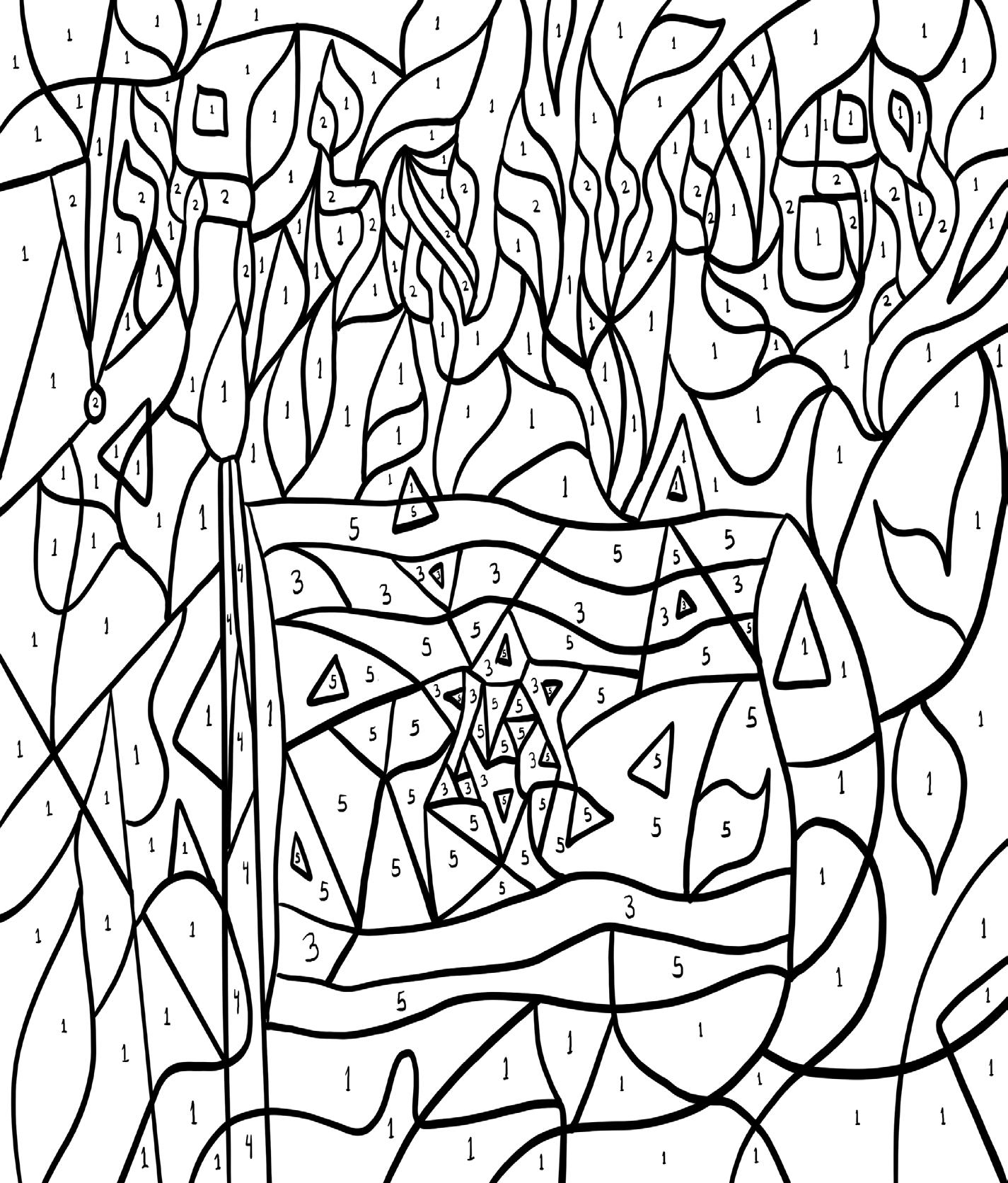
Color by Number
Use these color codes to celebrate the Jewish nation: 1-yellow, 2-green, 3-blue, 4-gray, 5-white