Tradition, Inspiration and Celebration · May 2026 - Iyar 5786
d by Chabad Tucson, Arizona
EXECUTIVE DIRECTOR
Rabbi Yossie Shemtov
REBBETZIN
Chanie Shemtov
OUTREACH DIRECTOR
Rabbi Yehuda Ceitlin
PROGRAM DIRECTOR
Feigie Ceitlin
Affiliates: Congregation
zona, Chabad on River, Chabad of Oro Valley, Chabad of Sierra Vista, Chabad of Vail and Lamplighter Chabad Day School of Tucson
EDITOR
Rabbi Yehuda Ceitlin
COPY EDITOR
Suzanne Cummins
CONTRIBUTING WRITERS
Feigie Ceitlin, Louis Keene, Doron Kornbluth, Sari Kopitnikoff, Menachem Posner, Mordechai Schmutter, Lilian Wasserman, Benjamin Weiss
PHOTOS
Unsplash.com
SPECIAL THANKS Chabad.org
EDITORIAL & ADVERTISING
Phone: 520-881-7956 #12
Email: info@ChabadTucson.com
SUBSCRIPTION: ChabadTucson.com/SubscribePrint
Keeping Jewish is published in print periodically by Chabad Tucson and is distributed free in Tucson and Southern Arizona.
Chabad Tucson does not endorse the people, establishments, products or services reported about or advertised in Keeping Jewish unless specifically noted. The acceptance of advertising in Keeping Jewish does not constitute a recommendation, approval, or other representation of the quality of products or services, or the credibility of any claims made by advertisers, including, but not limited to, the kashrus of advertised food products. The use of any products or services advertised in Keeping Jewish is solely at the user’s risk and Chabad Tucson accepts no responsibility or liability in connection therewith.
Note: “G-d” and “L-rd” are written with a hyphen instead of an “o .” This is one way we accord reverence to the sacred divine name. This also reminds us that, even as we seek G-d, He transcends any human effort to describe His reality.
Shukran From the Jewish Community
By Rabbi Yehuda Ceitlin
When the owners of Al Basha Grocery, a Muslim-owned market specializing in Middle Eastern products, announced that it would be closing its store on Tucson’s Grand Road, members of the Jewish community felt the loss.
“So sorry to hear this, we will really miss you,” Ann wrote in the Facebook group Kosher in Tucson. Simon commented, “Another loss for the community.” Aaron added, “Thanks for your service; may you prosper in your next venture.”
Local Jews took the closure personally, in large part because the grocery maintained a dedicated aisle for kosher goods that are often difficult to find in a city like Tucson.
For one regular, a Friday shopping loop in preparation for Shabbat included a stop at Al Basha to get cookies from Brooklyn and sour pickles from Israel. For another, it was the place to find tea, kosher deli meats, or a conversation that would not have happened elsewhere. The store created overlap in a city where communities often run on parallel tracks.
From the outset, its owners, Ghufran Almusawi and her husband Anas Elazrag, envisioned it as a kind of
meeting ground. Offering both halal and kosher foods was a deliberate way to draw different communities into the same space. Customers recall conversations that began with questions about ingredients and turned into exchanges about practice, identity, and daily life. At times, shoppers would step in to answer one another, creating small, unscripted moments of connection.
That dynamic was not always simple. During outbreaks of violence between Israel and Hamas, Almusawi had customers challenge her decision to continue carrying kosher products, questioning how she could do so at that time. The pushback came from both directions. Some Muslims were uncomfortable with the store’s outreach to Jews, and some Jews hesitated because the store was Muslim-owned.
Still, Almusawi kept her focus on those who showed up in the spirit she intended. “What both religions teach is peace,” she said. “We’re welcoming of everybody. We don’t want to make anybody feel uncomfortable and anybody is welcome to shop. And if any items are missing that they are looking for, we’re always willing to bring it in.”
What ultimately brought that to an end was not a geopolitical crisis or a breakdown in relations. It was the ongoing construction on Grant Road. Months of limited access and reduced foot traffic made it difficult for the business to sustain itself, Elazrag told me.
As sad as the closure is, there is something sobering in that. We tend to think that large forces shape the life of a community. Sometimes they do. But just as often, it is the smaller, more mundane disruptions that determine whether spaces of connection can endure. A construction project reroutes traffic, and with it, the steady flow of human encounters that quietly build understanding.
A road is designed to get us from one point to another, but a community is built in the stops we make along the way. Al Basha was one of those essential stops. For that, the Jewish community offers a heartfelt shukran (thank you) to Almusawi and Elazrag for the service and the common ground they provided.
- Rabbi Yehuda Ceitlin is the Outreach Director of Chabad Tucson, the Jewish network of Southern Arizona
The Jewish outreach and education network of Southern Arizona 2443 E 4th Street, Tucson, AZ 85719
Young Israel, Chabad at the University of Ari-
Orthodox Jewish Dunker Aims to Break Division I Barriers
By Louis Keene - The Forward
A yarmulke-wearing basketball prospect who gained online fans with highlightreel dunks announced his next major leap Wednesday: He’ll try to be the first Orthodox player to play four years of Division-I men’s college basketball.
Chaim Galbut, a 6-foot-7 wing who played high school basketball for Miami Country Day School, a nondenominational K-12 school, before graduating in 2025, announced in an Instagram post that he will attend Duquesne University in the fall.
A post from the basketball outlet DraftExpress reported that Duquesne, a Catholic university in Pittsburgh, had discovered Galbut on social media.
Galbut said last year that his refusal to compete on Shabbat had meant turning down offers from other colleges.
“I’m like, I don’t play on Shabbos, they’re like, ‘Well, we don’t want you,’” Galbut told the Yeshiva League Pass Tip Off podcast in September. “It’s happened so many times, I can’t tell you. I’m like, ‘All right, that’s cool. Like, don’t worry, you’ll see me soon.’”
Largely unknown outside of the Orthodox world during high school, Galbut’s moment in the spotlight did not come until after he graduated, when video of him throwing down dunks on the summer travel circuit, posted by a popular basketball channel, received more than 100,000 likes on TikTok.
He spent the next school year studying at a yeshiva in Israel.
Galbut would join Naama Shafir, an Orthodox Jewish woman who plays basketball for the University of Toledo, in the Division I ranks. At least one other Orthodox hooper has played in Division I men’s basketball: Tamir Goodman, who started his career at Towson University in 2000 but left the program after two years.
And other Orthodox players have played for Christian schools in Division III or played in Division I in other sports.
Duquesne finished last season with 18 wins and 15 losses. The university last appeared in the NCAA Tournament in 2024, when they lost in the round of 32.
Chaim Galbut’s dunking videos went viral in 2025. Screenshot of YouTube/GREATONE MEDIA
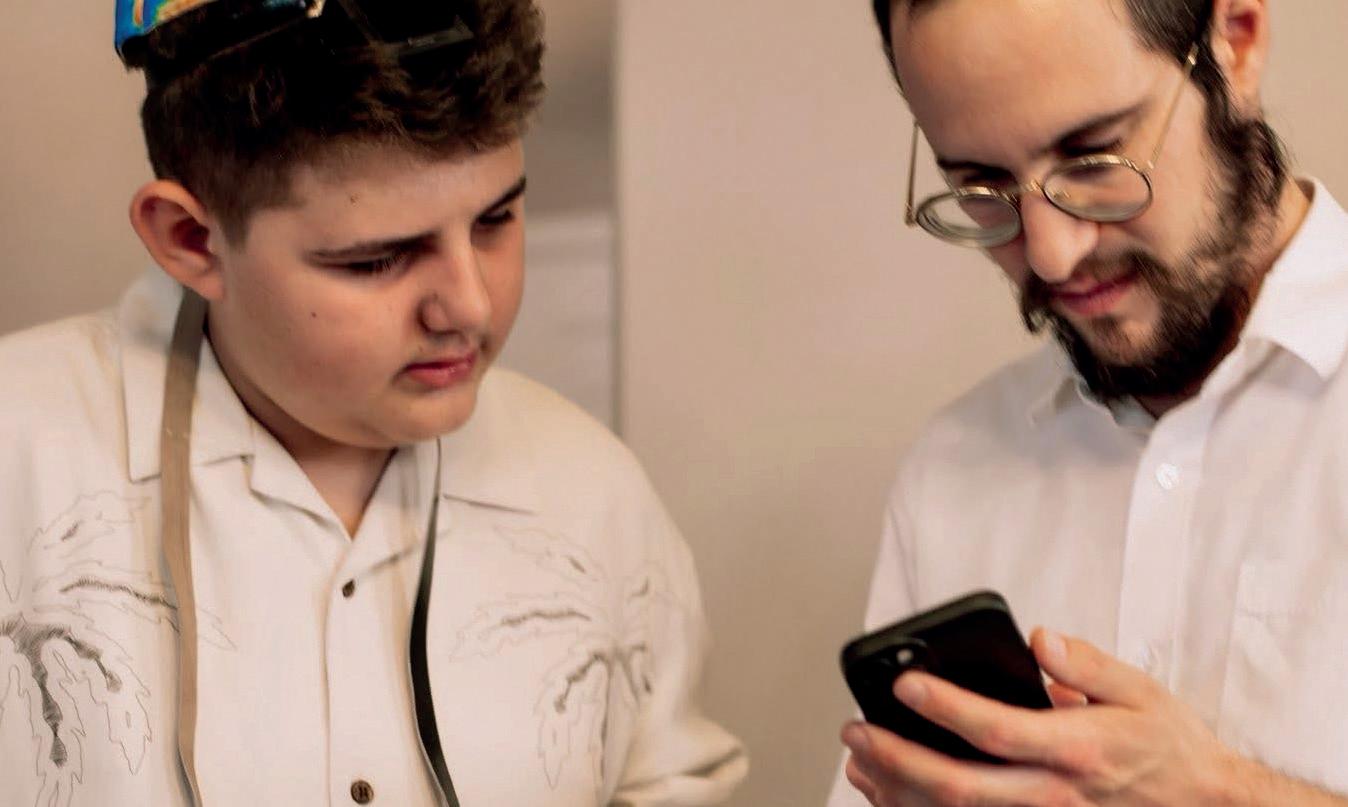
Rabbi Sruly Shemtov helps 13-year-old Paxton Ray put on tefflin for his first time and celebrate his Bar Mitzvah at Chabad of Vail, Arizona
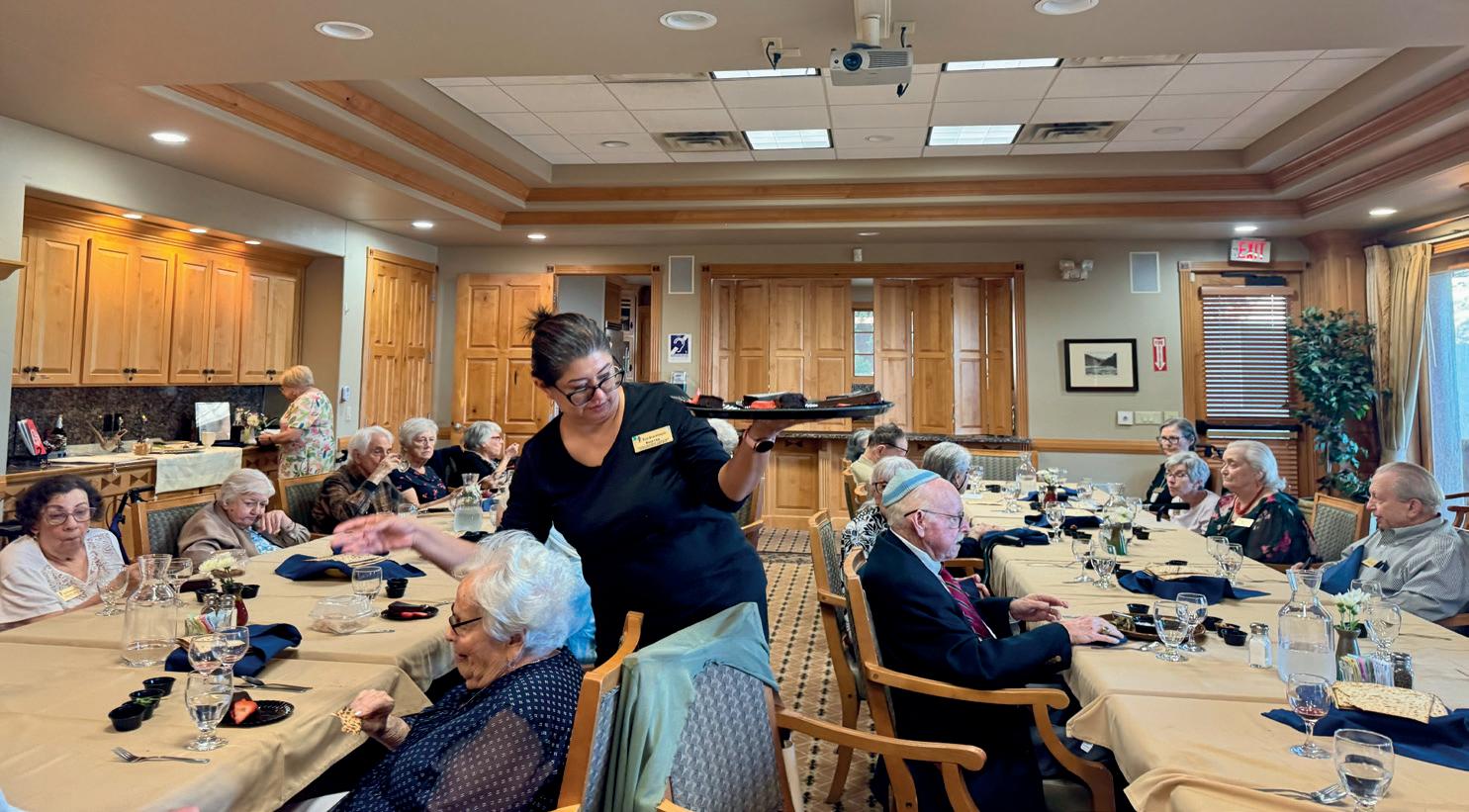
Residents of The Fountains at La Cholla retirement community celebrate Passover with a Seder led by Chabad Tucson
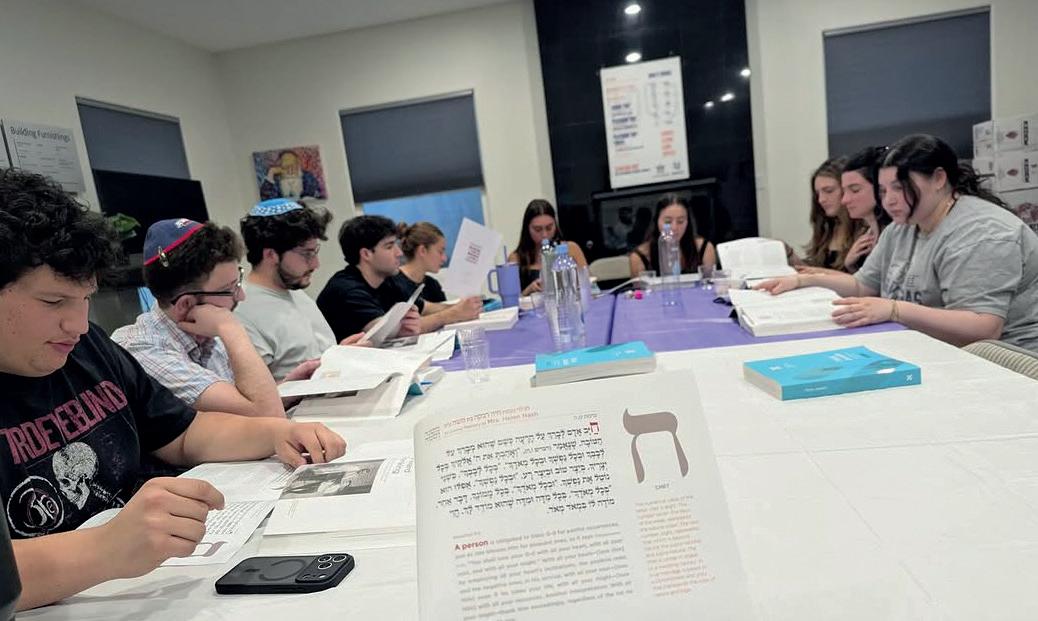
Students join a Mishna study session at Chabad at the University of Arizona
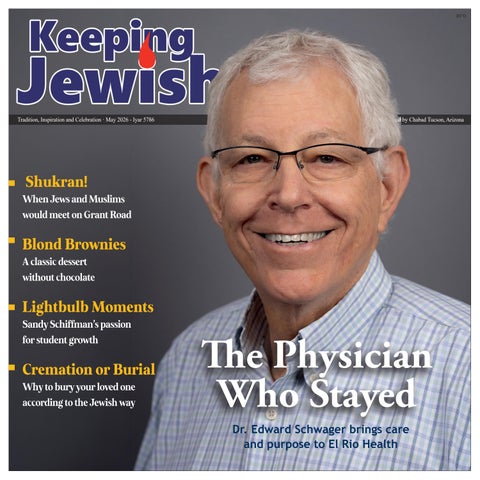
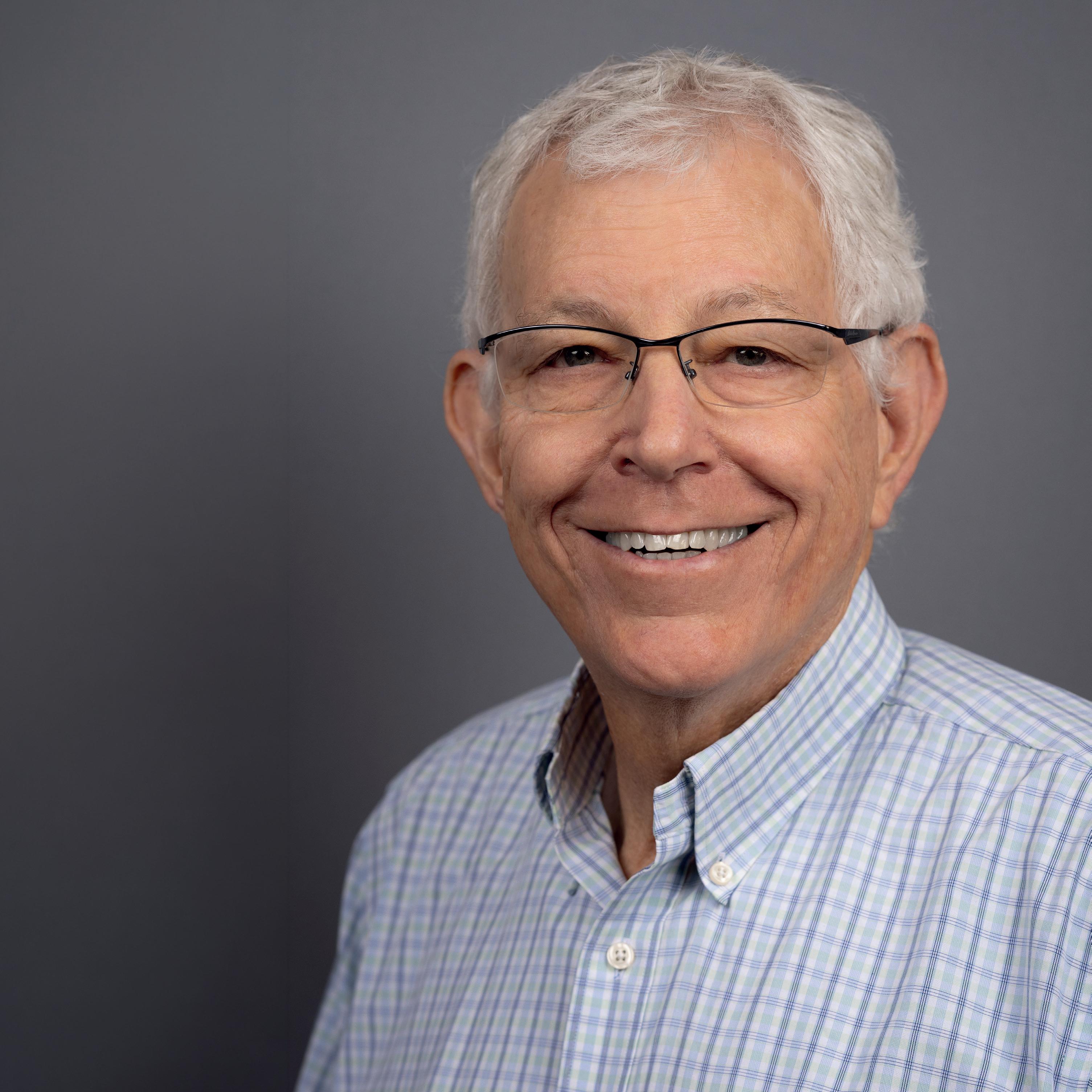
The Physician Who Stayed
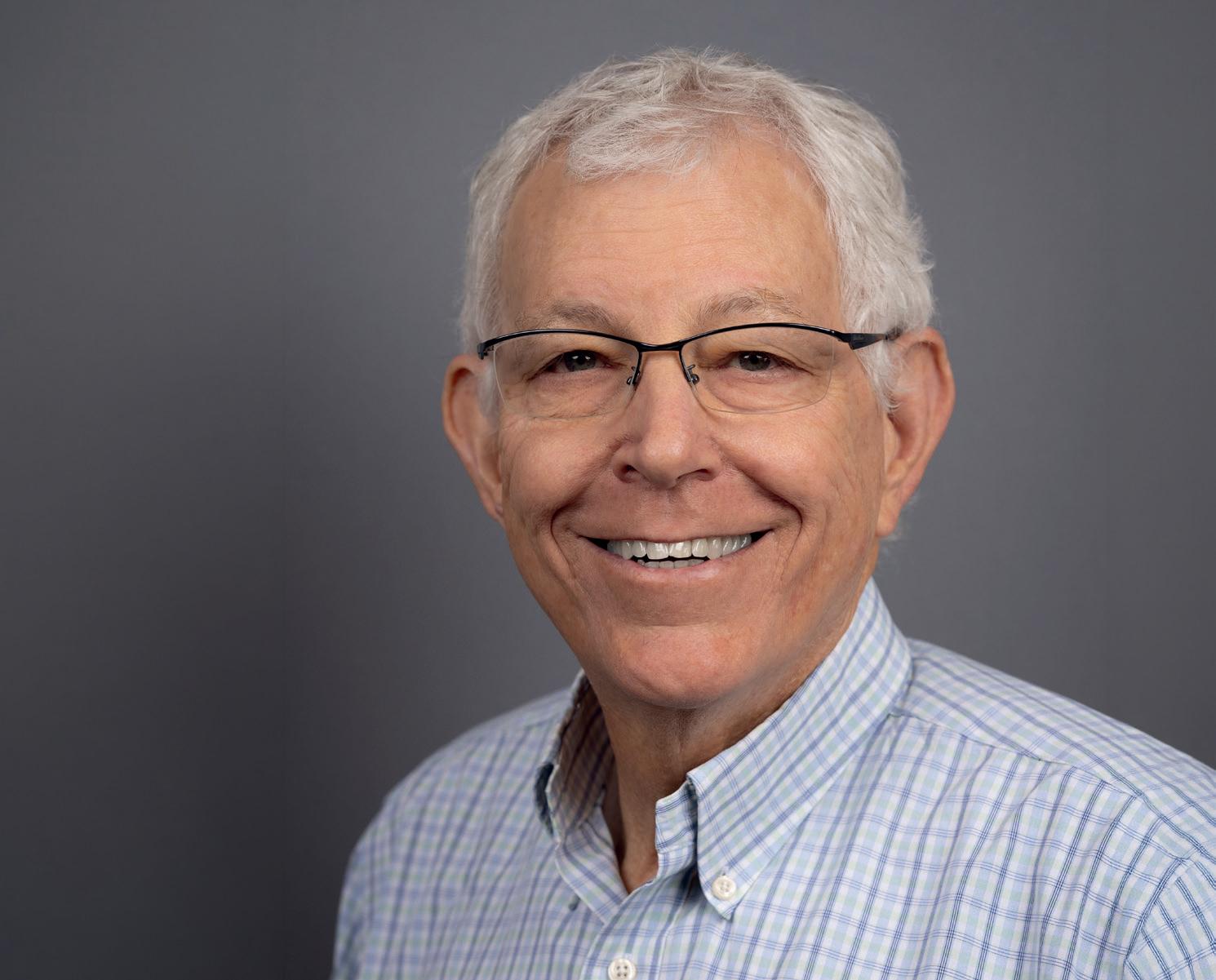
Dr. Edward Schwager brings a lifetime of care, and Jewish purpose, to Tucson’s El Rio Health
By Lillian Wasserman
As a child growing up in Tucson, Arizona, Edward Schwager watched his mother, Ruth Selznick Schwager, do something most children never see. She would stand over a pot of boiling water, carefully sterilizing syringes and needles before administering her insulin.
Her diabetes was severe. Managing it was not routine. It was constant, demanding, and at times overwhelming. The illness, along with its many complications, played a very prominent role in the household, and for young Ed, it became impossible to ignore.
“I remember all of it,” he said. “That was just part of life.”
He watched her cope with complications, endure setbacks, and push forward anyway. There was no single moment when he decided to become a doctor. Over time, the impression settled into something deeper, a desire to help, to understand, and eventually, to treat.
That desire never left him.
Today, Dr. Schwager is a family physician who has treated patients in Tucson for nearly forty years. He specializes in family medicine with additional certification in geriatrics, caring for patients across generations. Many of his patients have been with him for decades. Some are children of patients he once treated when they were young.
“Family medicine is about relationships,” he said. “You’re there over time.”
He still sees patients every day. In recent years, his role has expanded.
At El Rio Health, he now serves as Program Director of the Family Medicine Residency, training the next generation of physicians in Southern Arizona.
He describes it simply. “It’s the capstone of my career.”
Jewish Roots, Lasting Values
As a teenager, he was active in B’nai B’rith’s Jewish youth programs, and after high school, he spent time in the holy land of Israel. Those experiences, he says, stayed with him. “They inform what I do,” he noted.
That influence is not overt, but it is constant. The idea of responsibility to others, of caring for people regardless of background or circumstance, became central to how he approached medicine.
Schwager was raised in a Reform Jewish home and attended Temple Emanu-El. His childhood was shaped by Jewish life, holidays, community, and a strong sense of identity that extended beyond ritual into values.
His mother passed away in 1983 at the age of 54, just two weeks into his medical internship. The loss was profound.
By then, his path was already set. “It reinforced why I was doing this,” he said.
A Career in Tucson
Dr. Schwager is something of a rarity, a native Tucsonan who built his career in the city where he was born. Even after time spent elsewhere, he and his siblings all returned to live in Tucson, reinforcing that connection to place.
Over the decades, he has earned the respect of both patients and colleagues, known not only for his clinical skill but as a dedicated patient advocate. He has been recognized repeatedly in regional “Best Doctors” listings for more than twenty years.
Recognition has never been his focus. “It’s about taking care of people,” he pointed out.
The field itself has changed significantly over that time. Earlier in his career, family physicians often treated patients both in hospitals and in outpatient settings. Today, those roles are more divided, with hospitalists managing inpatient care and primary care physicians focusing on preventing hospitalizations and continuing care after discharge.
Dr. Schwager has adapted, but he has not lowered his expectations for what a family doctor should know. “I want residents to see everything they can,” he said. “They need that breadth.”
That philosophy aligns closely with the mission of El Rio Health. Founded in the 1960s, El Rio emerged from a local effort to address a healthcare crisis affecting Tucson’s underserved communities. At the time, nearly 10,000 residents lacked access to adequate care, particularly on the south and west sides of the city.
At the same time, the University of Arizona’s medical school was developing a model that emphasized real-world training in community settings. Its founding dean, Dr. Merlin Duval,
believed that bringing students into the community would produce better doctors and give them a deeper sense of purpose.
Federal funding made the vision possible. El Rio became Tucson’s first community health center, serving patients while also training physicians. Today, it continues to do both. A significant portion of its patients live at or below the federal poverty line, and no one is turned away.
For Schwager, the connection is clear.
“In Judaism, we talk about tikun olam, repairing the world,” he said. “That’s what this is.”
It is not an abstract idea. It plays out in exam rooms, in long-term care, and in the training of young doctors who will carry that work forward.
Training the Next Generation
El Rio’s Family Medicine Residency is a recent development, but it builds on years of experience. For 14 years, El Rio trained family medicine residents through an outside national program before launching its own. The organization received accreditation in
preparedness. “You want them ready,” Dr. Schwager said.
A Life of Continuity
Despite his leadership role, Dr. Schwager has not stepped away from patient care. He continues to practice, teach, and administer, all at once.
“If you’re not seeing patients, you lose something,” he said.
That balance reflects the same principle that has guided his career from the beginning: medicine as a continuous relationship, not a series of isolated encounters.
2024, and its first class of residents began in 2025.
Dr. Schwager helped lead that effort from the beginning. “It was important to build something here,” he said.
The impact is expected to extend well beyond the program itself. Studies show that most physicians end up practicing near where they complete their residency. By training doctors locally, especially in a community health setting, El Rio is increasing the likelihood that more physicians will remain in Southern Arizona and serve its growing population.
There is another factor as well. Physicians trained in federally qualified health centers like El Rio are more likely to go on to serve underserved communities.
“Everyone benefits from that,” he said.
Residents at El Rio are trained to handle a wide range of medical issues, with exposure to the kinds of cases they are likely to encounter in real practice. The goal is not just competence, but
Over time, that approach has created a quiet continuity. Patients return. Families grow. And now, residents train under him, some of whom may go on to practice in the same community he has served for decades.
He is also focused on what comes next. Part of his work now is training those who will follow him, building a program that can sustain itself and continue long after he steps away.
Dr. Schwager’s story is closely tied to Tucson. He was born here, and he raised a family here. He and his wife Robyn are parents to three daughters and grandchildren. He also built his career here and now helps shape its future through the physicians he trains.
El Rio shares that same identity, rooted in the community, built to serve it.
If the residency program succeeds, its impact will not be immediate or dramatic. It will be gradual, with more doctors staying in the region, more patients receiving consistent care, and stronger access to primary medicine across Southern Arizona.
That kind of change is easy to overlook. But it lasts.
Cremation or Burial?
Why you should bury your loved one the Jewish
way
In normal circumstances, children must respect the wishes of their parents. There are exceptions, however, and one of them includes going against a parent’s final wishes. According to Jewish law (halacha), if a parent instructs children that he or she wants to be cremated, the children must ignore the command and provide a traditional Jewish burial for their parents.
To understand this, we must first answer: Are funerals for the living or for the dead?
Consider this: Each of us has a “part of G‑d,” so to speak, inside of us. It is the neshamah, the soul. It is pure, untainted, and closely connected to its source, the source of all knowledge—G‑d Himself. Deep down, when we connect with
By Doron Kornbluth
our soul, we access this source of knowledge. We sense what is true, what is right and what is holy. But it is not easy to access that deep source of knowledge. Our souls are kept prisoner in our bodies. The body is not an enemy, of course, as it enables us to help others and fix the world. But it does limit the soul. Base desires, ego, fears and confusion make it extremely difficult for “me” to know what is really going on, what is really important and what path I should follow.
Things change when the body dies. The soul is released. It is immediately closer to G‑d, the true source of knowledge. The “me” suddenly has much clearer access to Him. Still, the soul does not leave its body immediately. Could a loving wife immediately leave her husband
after decades of loving togetherness?
The soul stays close by, “ascending on high” slowly, stage by stage.
Immediately after death, in the very first stage of its ascent, the soul’s main concern is that “its” body—its partner over many decades—receive a proper Jewish burial. The soul cries out in pain if its body is treated disrespectfully, and screams in unimaginable horror if its beloved body, a holy vessel, is put to the flame. When the body is alive, the body feels pain. When the body can no longer feel pain—i.e., when it dies—the soul feels its partner’s “physical” pain at a highly spiritual level.
This is why children must disregard their parents’ request for cremation. Now, right now, the parents know
far more than they knew when alive. Now, right now, the parents’ souls are literally begging their children for a traditional Jewish burial. The child is listening to the parents’ wishes—their unstated, unrealized, true wishes.
Cremation Misconceptions
The question of what to do with the body of a loved one—or, when the time comes, one’s own—is not theoretical. Cremation is getting more and more popular today in the Western world, and over one third of all Jewish dead in North America in 2011 were cremated.
Why the trend? Here are a few examples of the “conventional wisdom” . . . and some facts.
alive.
children The unrealized, the of in
1. “Cremation is better for the environment.”
Actually, it isn’t. Cremation uses a tremendous amount of fossil fuels, and releases toxins—including mercury—into the air. This misconception is probably caused by environmental opposition to embalming and metal caskets. Because of cremation’s negative environmental impact and modern burial’s problematic practices, environmentalists favor “green burial,” with no embalming or metal caskets. Sound familiar? Jewish tradition forbids cremation, metal caskets and embalming—and our burial tradition to use plain wooden caskets is known to be eco-friendly.
2. “There isn’t enough land for cemeteries.”
Actually, there is. Living in urban centers and paying high rents, it is understandable why we feel that there isn’t any land available. But the numbers show just the opposite. Even if every American death were followed by burial, it would take over 10,000 years just to use up one percent of America’s landmass! And, presumably, few if any cemeteries would survive that long anyway. Burials take up very little land, and there is plenty available—usually within an hour or two of urban centers.
3. “No one will visit the grave anyway, so why have one?”
Actually, although visiting a grave is both important and beautiful, it has absolutely nothing to do with the obligation to bury. At the end of the Torah, G-d Himself buries Moses and hides the location forever (in order to avoid it becoming a place of idol worship). Although no one will ever visit his place of eternal rest, G-d chose burial over the multitude of options available.
4. “Decomposition is disgusting.”
Actually, while decomposition is hardly a sight to behold, cremation hardly seems any better. Despite the advertisements, the process is neither quick nor clean. An average body takes 1.5–2 hours to burn in the oven, with larger bodies taking even longer. During the process, the body moves back and forth, crackles and sizzles. The brain bubbles. Think of the stench of burning hair and flesh. Once the oven (a.k.a. retort, chamber or incinerator) has finished its gruesome task, the remains are not yet “ashes.” What is left in the oven are actually dry bone fragments. They are manually swept out and placed into a machine where they are ground up (a.k.a. pulverized, cremulated, or
children to a decent school, rather than “going cheap” and putting them in a bad environment. Similarly, burial is worth the extra cash.
(That being said, the Jewish community in Tucson does assist with covering burial expenses. For more, email: info@ChabadTucson. com)
As we have seen, burial is better for the environment. But the reasons are much deeper. The soul needs burial, as described above. Cremation causes tremendous pain, more than we can imagine.
Also, the body deserves burial. Note that Eastern religions usually require cremation. This is not surprising: they view the body as an enemy to be fought, and spirituality consists of separation from the physical. Their leaders are celibate and ascetic (think of the image of the guru on the mountaintop, completely detached from worldly life).
processed) for about 20 minutes, in order to fit the remains into a small urn. The point is not whether burial or cremation is more disgusting. The point is that cremation is not pleasant—it is a loud, violent, repulsive and artificial process. On the other hand, decomposition, while not pretty, is a biological process and the natural way of every living being.
5. “Cremation is cheaper.”
Actually, this piece of conventional wisdom is sometimes true. However, for some situations in life, it is certainly appropriate to go cheaply. Why not save money, especially in hard economic times? But not for all areas of life. For example, I will do whatever is necessary to send my
According to the Torah, however, the body is not the enemy: I couldn’t give charity without my hands, speak words of prayer without my mouth, or run to do a good deed without my legs. While the soul must remain in control, the body is a partner and deserves to be lovingly placed in the ground, not burnt like trash.
Finally, the Jew wants burial. No matter how Jewishly aware or active a person was during their lifetime, choosing a traditional Jewish burial declares, “I may not have been a perfect Jew, but I’m a proud one. And I want to be buried as Jews have been for thousands of years. I owe it to my ancestors. I owe it to my descendants. I owe it to my body—and I owe it to my soul.”
- Excerpt from Cremation or Burial? A Jewish View by Doron Kornbluth (Mosaica Press, 2012)
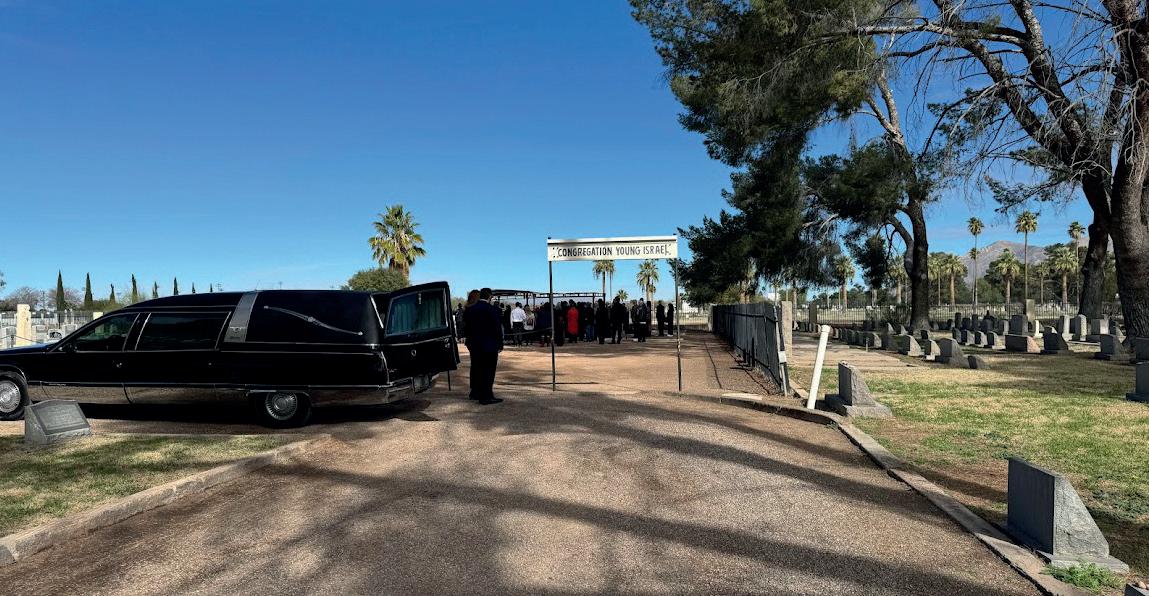
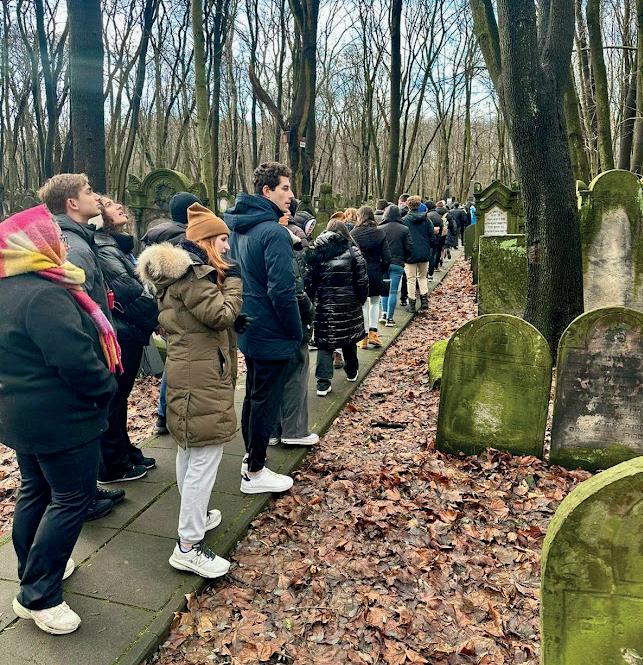
Visitors tour a historic Jewish cemetery in Europe which survived the Second World War
AT WORK
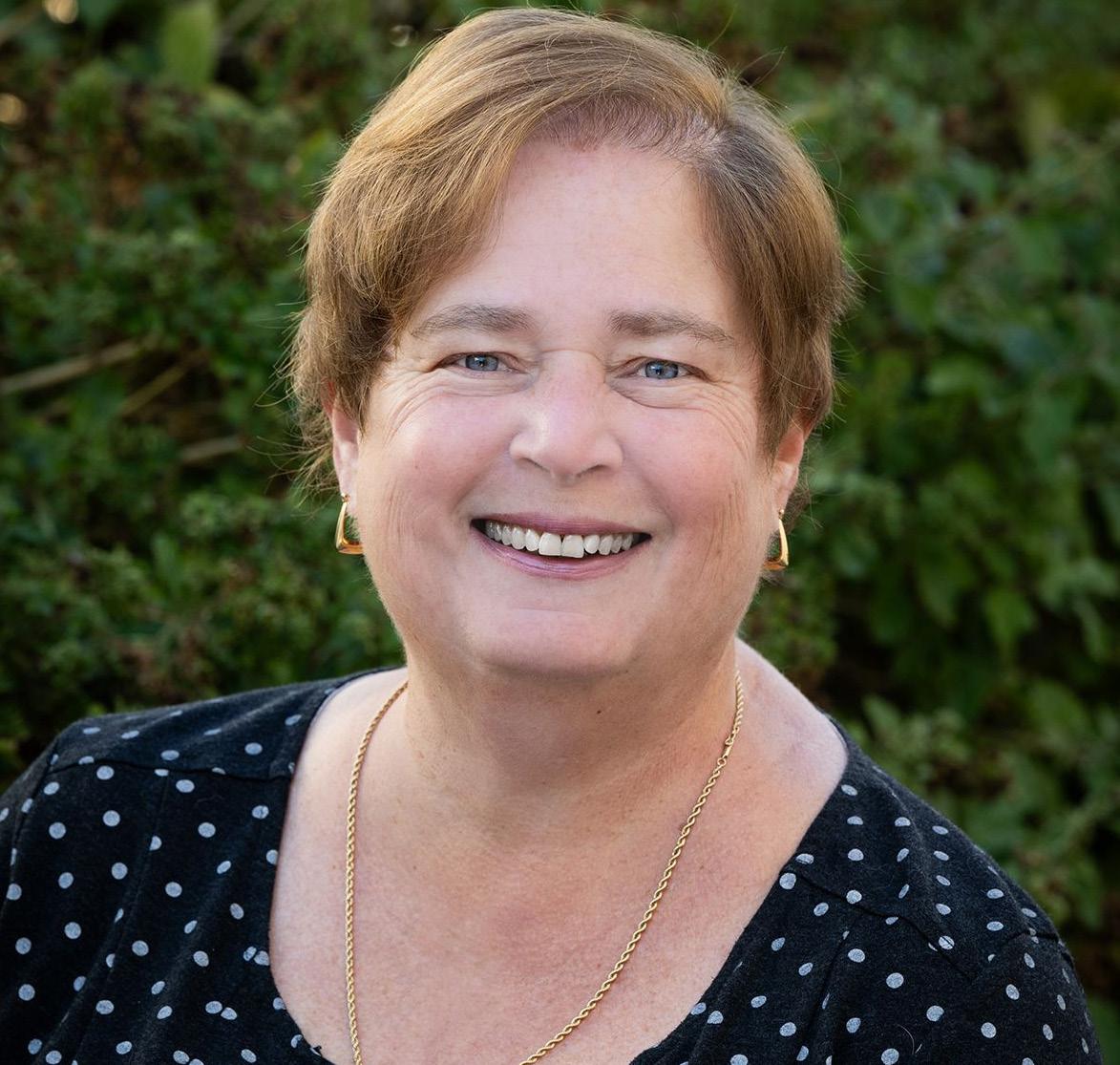
Sandy Schiffman
Third-grade secular studies teacher at Lamplighter Chabad Day School of Tucson
1. What got you into this line of work?
I was working as an administrative assistant when a friend asked if I wanted to teach Sunday school to kindergarteners at a Reform temple in Virginia. I fell in love with the kids and with the idea that I could make a difference in a child’s life. I went back to school to earn a Master’s in Elementary Education, and then began teaching in the public schools in Tucson.
2. How does being Jewish influence your work?
Working now at Lamplighter allows me to be more relaxed and to connect with my culture—whether that means speaking a bit of Yiddish (badly) or some Hebrew with the kids, and even getting the Jewish holidays off.
During my 25 years in Tucson public schools, I was often the only Jew on campus. There wasn’t much Yiddishkeit, and at holiday times I often felt isolated, as the focus was on Christmas and Easter. The students didn’t really understand what being Jewish was about.
3. What’s your favorite part of the job?
My favorite part of the job is seeing the “lightbulb” moment, when students get a concept, put it into action, and grow academically, socially, or emotionally.
4. What changed since you started teaching?
One major change in teaching has been the increased dependence on testing multiple times a year. In public schools,
it often felt like we were teaching for three quarters and testing for one. There is so much pressure on teachers and students to perform well on standardized tests that I feel we sometimes lose the joy of learning.
5. What’s your Jewish name?
My Jewish name is Sara Chaya. I was
never formally given a Jewish name, but rather a Yiddish one, which I somewhat translated into Hebrew—Sura Lang Laben, roughly “Sara to long life.”
6. What’s your go-to comfort food?
My go-to comfort food changes with the seasons and holidays. I tend to love sushi or Vietnamese pho, matzah brei after
Passover, and sufganiot at Chanukah.
7. Share a memorable moment.
My most memorable moment was visiting the Kotel for the first time. Whenever I go to Jerusalem, my first stop is always the Kotel. I feel closest to G-d there.
8. What’s been your biggest challenge?
My biggest challenge was reconnecting with Judaism and the Jewish community after moving to Tucson. Working at Lamplighter and being active with Chabad Oro Valley has made a significant difference in my life. I feel much more connected.
9. What do you love most about Tucson?
Five months out of the year, I enjoy the weather. More seriously, Tucson is a very friendly city with a wide range of activities, and it’s close to many places you can visit even on a day trip.
10. What do you do outside of work?
Outside of work, I spend time with friends, read, listen to audiobooks, play with my dogs, and volunteer at Chabad.
11. What’s something exciting on the horizon?
I’m hoping to take a trip this summer— I’m not sure where yet, but somewhere.
12. What’s a piece of advice you live by?
A piece of advice I try to live by is to connect with people on whatever level you can. They can make your life better.
Butterscotch Brownies
By Feigie Ceitlin
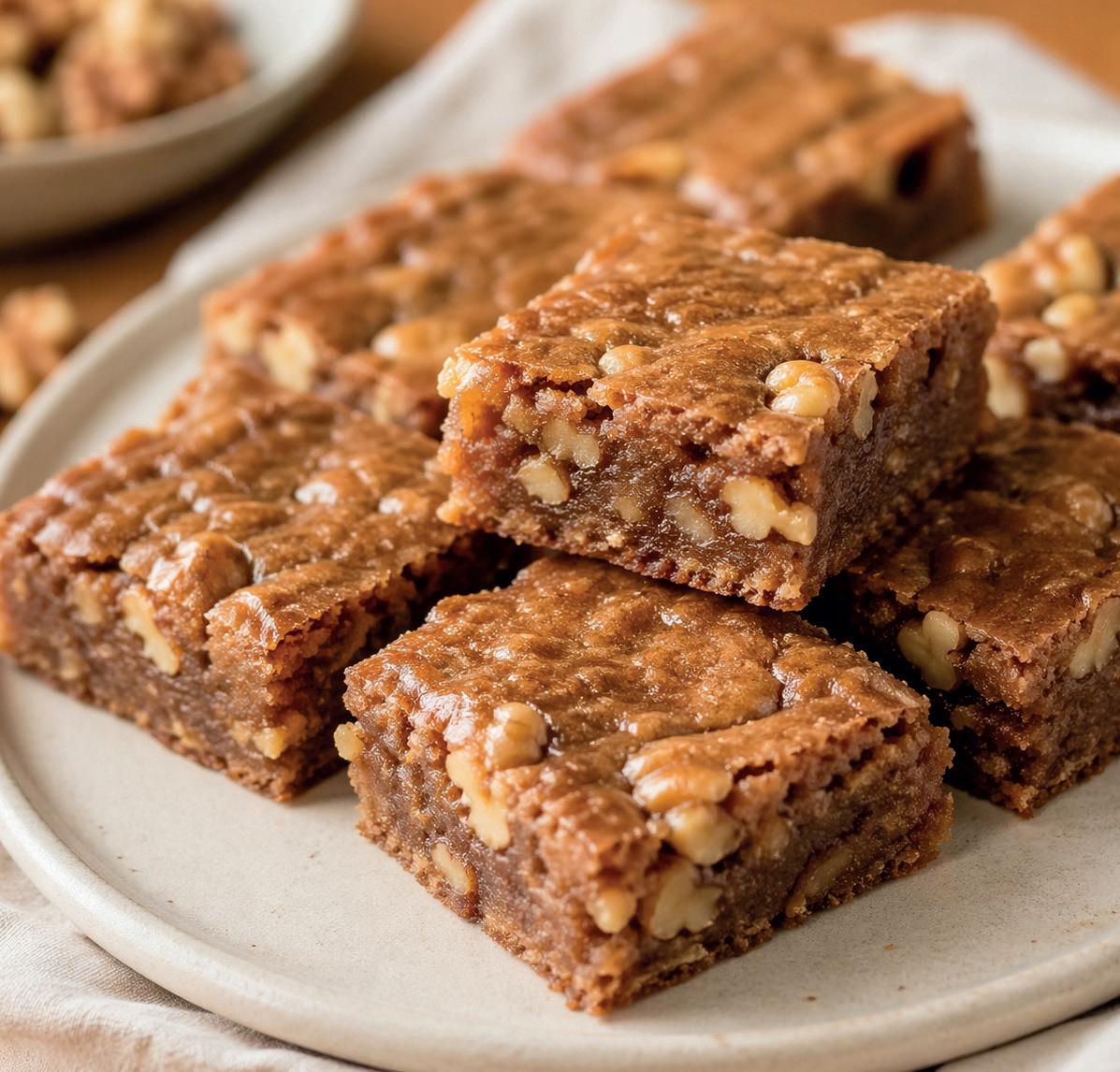
One way to highlight the uniqueness of Shabbat at home is by preparing something special in its honor. In our family, a consistent favorite is butterscotch brownies—often called blond brownies, since they contain no chocolate. This version is our adaptation of a recipe from the classic and well-loved Spice and Spirit cookbook.
INGREDIENTS:
1 egg
1 cup brown sugar, firmly packed
1½ teaspoons vanilla paste
½ cup flour
¼ teaspoon salt
¼ teaspoon baking soda
1 tablespoon cornstarch
1 cup walnuts, coarsely chopped
INSTRUCTIONS:
1. Preheat oven to 350°F.
2. Lightly grease an 8-inch square pan.
3. In a mixing bowl, stir together the egg, brown sugar, and vanilla paste until well combined.
4. Add the flour, salt, baking soda, and cornstarch, and mix until a smooth batter forms. Fold in the chopped walnuts.
5. Spread the batter evenly into the prepared pan. Bake for 18–20 minutes, until the top is set but the center remains soft and gooey. Allow to cool before cutting into squares.
Blessed are you L-rd our G-d, King of the Universe, Who creates various kinds of sustenance.
— Rebbetzin Feigie Ceitlin is the program director of Chabad Tucson and head of school of Lamplighter Chabad Day School.
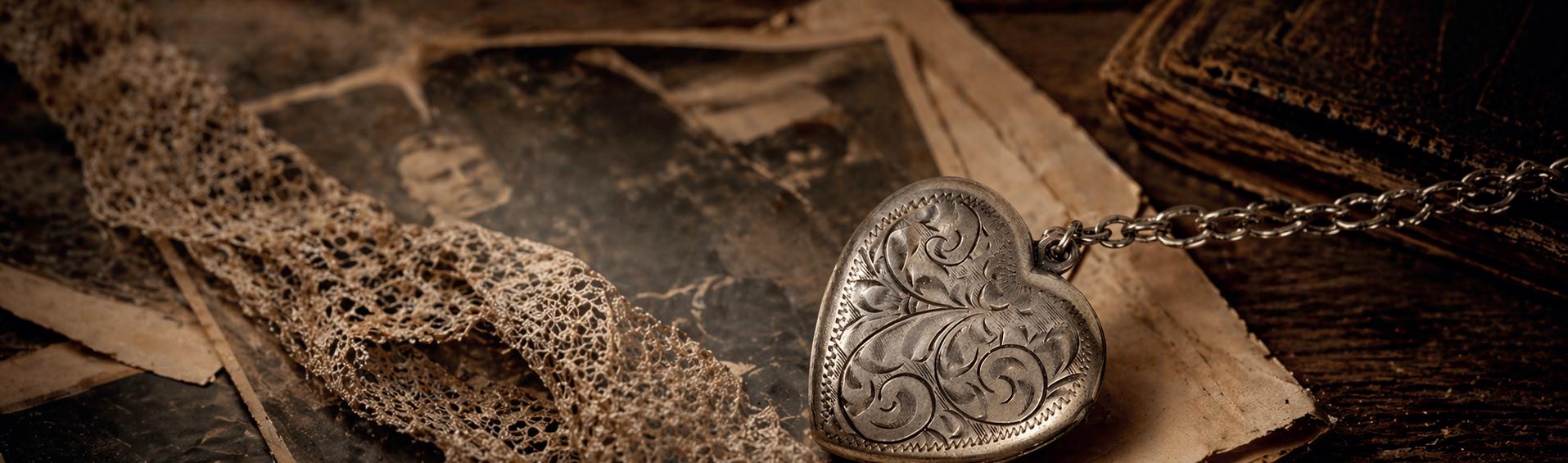
The Heart Necklace
A lesson in tradition
By Blumie Abend
Grandma fingered the delicate silver chain and looked up at me with dewy blue eyes. Pops kindly offered her a tissue, but she declined, instead withdrawing a lace-edged handkerchief from somewhere deep within the confines of her pocket. Ever wellmannered, Grandma managed to turn even nose-blowing into an act of etiquette. She softly blew once, then twice, into her piece of cloth, then dabbed daintily at the remains.
“Are you sure you want to do this, Grandma?” I asked her, with a glance at Pops.
“Oh yes,” she said quite firmly, her voice unwavering despite the underlying emotions. “It’s a tradition, you know.”
I did know. It’s all I’d been told about since I was old enough to understand that word—tradition.
Even Pops was looking misty-eyed.
“Now, I was slightly younger than you are, of course. At eighteen, I was barely out of school, you know.” I nodded appropriately, my face a picture of interest and curiosity. I had lost count of the number of times I had heard this story. Each time, Grandma told it as if it had only just happened. Today was special, though. Today, the story actually held significance.
“But times were tough. I wanted to help my father financially, so I took a job at
a clothing factory nearby. It was twelve hours a day sitting by a sewing machine, but who cared then? It was wartime, you know?”
Yes. Wartime. My head bobbed accordingly.
“Then the bombing began. First the Germans bombed the schools, then the hospitals, then the factories! No more work, not for me, not for Father, not for your great-uncle Harry and not for my sister Roberta, G d rest her soul. Poppa wanted to move to the country, but who had the money for that? No money, no move, you know?”
Uh-huh. I smiled sadly. Pops winked at me from his position on the kitchen table.
“Then Momma said, why don’t we sell my jewelry? That will fetch enough money for the fare to the country, and maybe even a little cottage. So, Poppa gathered the diamond ring, the gold bangles, the pearl earrings with their matching bracelet—and the heart necklace.”
I gasped, as I do every time at this point in the story, and Grandma raised her eyebrows in grave approval.
“Poppa took Momma with him to the pawnshop and laid everything out on the counter. One by one, the pawnbroker weighed the items to discern their value. But when he picked up the heart
necklace—Momma suddenly let out a shout, ‘No!’”
“No?”
“‘No!’ Momma grabbed the necklace out of the pawnbroker’s clammy hands. ‘It’s been in the family for four generations,’ she said, clutching it to her chest, ‘passed on from grandmother to granddaughter on the day of their wedding. This one,’ she said sternly, having regained her composure, ‘stays with me!’”
“She kept it?”
“She did!” Grandma’s face fell somewhat. “Sadly, Momma died two years later from double pneumonia, and when we divided up her possessions, I got the necklace.”
Her blue eyes gazed into mine. “It skipped a generation; the pattern isn’t perfect. But does it matter?”
“No,” I whispered.
“You know, Dorothy”—she never called me Dobra, even though Mum and Pops had learned to use the name quite naturally now—“you’re not the oldest granddaughter. There’s your cousin Charlotte, of course, and Rosalyn, her sister. But times have changed, Dorothy.” She looked sad. “How long has that Jeremy boy been dating our Char? Three years now?”
“Something like that,” Pops said heartily, eyeing me with undeniable pride.
“You, Dorothy—you turned into someone my grandmother would have been proud of. Even Momma, though she kept very little, would have understood enough to know you’ve made some good choices, my darling.”
Her hands trembling now, she unfastened the silver chain.
“Ha-yim . . .”
I smiled. “Chaim.”
“Chayeem. He will make you happy. I can feel it, you know.”
I turned around so that my back was facing her, and my eyes fastened on the wall. There hung a picture of my great-grandmother on her wedding day, staring solemnly at the camera, flanked by her religious-looking parents. They most definitely did not look approving of her uncovered hair and low-cut neckline, where the heart lay just before the dress began. My hand traced its way up the lacy cream pattern of my dress to skim the collarbone, neatly covered by the lace finish. I fingered the silver heart that now rested against my chest, separated only by a thin layer of material. It felt like the heart was embedding itself into my body, engraving its message onto my very skin.
Grandma came round to stand beside me, and Pops lowered himself off the table to flank my other side. Together, we gazed at the picture on the wall.
“It’s been through a lot, but we still have it, don’t we?” Soft tears were falling down her cheeks, caressing her wrinkles.
“We always will,” Pops said gruffly, uncomfortably shifting the white kippah that graced his head like fresh snow atop a mountain.
“Thank you, Grandma,” I managed, my vision suddenly blurry.
She squeezed my arm and pointed to the frame again. “It’s tradition. Traditions somehow pull through. There’s no stopping tradition, you know?”
Slowly, a smile spread across my face until I was positively beaming. “You’re right,” I said, thinking of Chaim and his warm smile, his endearing beard, the singsong of his learning. “It’s tradition. And there’s no stopping tradition.”
What Is the Meaning of “Balagan”?
By Chabad.org Staff
Balagan is a word with a history. It came to Yiddish via the Slavic languages, where it was borrowed from the Persians. In common Yiddish (and, by extension, English and Hebrew) parlance, balagan is a state of chaos, disarray, and confusion.
The word traces back to the Persian bālākhāna, meaning “upper room” or “loft.” Related to the English word “balcony” (both sharing roots in the concept of an elevated structure), the original balagan was the wagon or booth used by traveling performers. Harkavy’s 1928 Yiddish-English-Hebrew Dictionary defines it as a “show booth” or “tent.”
In Russia, the balagan was a beloved cultural institution — the festive street theater booths that filled public squares during fairs and holiday celebrations, particularly around Maslenitsa. These booths were raucous, joyful, and gloriously disorganized. It is from this vivid world of loud spectacle and cheerful disorder that the word drew its lasting connotations.
In time, balagan came to refer to
anything as wild and disorganized as the traveling stage — not unlike the English word “circus,” also used to describe a chaotic scene. This term was so popular among Yiddish speakers that it has even crept into Modern Hebrew. In Israeli slang, it remains extremely alive: ze balagan gadol (“this is a big mess”) or the warning al ta’aseh balagan (“don’t make a mess”) are heard in households and workplaces. In Israel, it’s also used in the phrase “yallah, balagan!” as a call to kick off the party or festivities.
A balagan can be referred to as a chazer shtahl, the equivalent of the English term “pigsty.” Another term associated with a balagan is hekdesh (lit. “sacred [space]”), the public facilities that Jewish communities made available to traveling visitors. Since these places would often be left in dismal states of disarray, hekdesh came to refer to any place that appeared to be a balagan. The word is connected to the broader concept of hekdesh tziburi — communal property held in trust — a reminder that even sacred or shared spaces are not immune to disorder.
Rose Austria, Jewish firsthand. swept young to evade escaped finally
Rose’s toward He recognizing challenge. was her Turkey, in Hebrew, by age Rose Detroit, James she to the of Law she man.” graduated the from No they’d away own that included soldiers find most notorious 1932.
PIONEERS
First Female Attorney for Pima County
Rose Silver (1907-1994)
By Benjamin Weiss
Rose Sosnowski was born in Vienna, Austria, on June 10, 1907, into a Jewish family that understood survival firsthand. When antisemitic pogroms swept through Europe, the family hid young Rose beneath blankets in a chest to evade threatening soldiers. They escaped to Paris, then Canada, and finally settled in Detroit, Michigan.
Rose’s father pushed his daughter toward the best education available. He steered her toward law school, recognizing that her mind needed a real challenge. Her intellectual foundation was already broad. Years of travel with her grandmother across Paris, Russia, Turkey, and England had left her fluent in Hebrew, French, Russian, and English by age ten.
Rose enrolled at the University of Detroit, but when her future husband, James Silver, fell ill with tuberculosis, she followed him to Tucson. She applied to the University of Arizona College of Law and was told by the dean that she would be “taking the place of a man.” She was eventually admitted and graduated in 1930 with high honors — the second woman to earn a law degree from the University of Arizona.
No firm would hire her. One told her they’d have to keep her in a back room away from the public. She rented her own office space and took every case that came through the door. Her clients included bootleggers, African American soldiers at Fort Huachuca who could find no other legal representation, and, most famously, John Dillinger, the notorious gangster arrested in Tucson in 1932. Rose won his case by arguing the $20,000 found on him couldn’t be proven
to have come from a bank robbery. Dillinger paid her fee and left her his car, which she later discovered was packed with machine guns behind the
back seat.
Throughout her career, Rose reflected a commitment to representing the
overlooked and discarded — a value rooted in her Jewish upbringing and the immigrant experience that shaped her family. She fought for a sick child’s right to attend school. She asked persistently, “Who worries for the victims of crimes?” — anticipating victim advocacy programs years before they existed in Arizona.
In 1969, Rose was appointed Pima County Attorney, the first woman to hold that office in Arizona. She served until 1972, then became legal advisor to the Pima County Board of Supervisors, mentoring young attorneys until her retirement in 1987. When she was offered that advisor role, her salary was set at $7,000 less than her male predecessor’s — a disparity she did not quietly accept.
She was blessed with five children. Rose once pulled her daughters out of school to observe a trial, insisting it was real education. When the principal objected, she shot back, “What makes you think learning only takes place in your four walls?”
She passed on December 12, 1994, at the age of 90, and was buried at Evergreen Cemetery in Tucson. Her tombstone reads: Wit, Wisdom and Strength. Her legacy carried forward through hundreds of students she taught and mentored, and through two generations of her own family who followed her into the law.
–Presented in collaboration with the Tucson Jewish Museum to honor the city of Tucson’s 250th anniversary. For the full biography, visit tjmhc.org/profiles
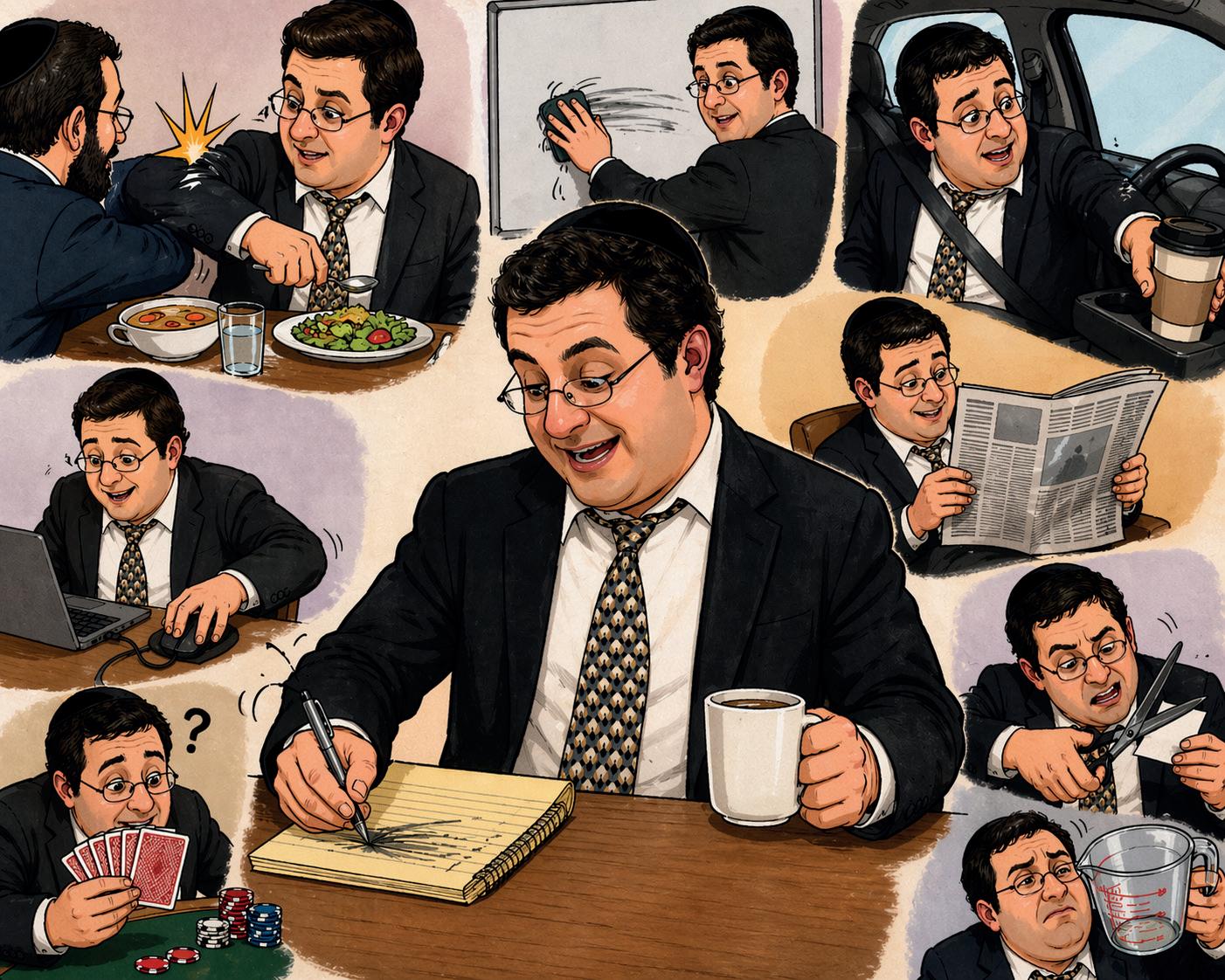
Whenever people realize I’m a lefty, they always feel the need to mention someone else they know who’s a lefty, like we might know each other. Like there’s some kind of club. Lefties only. The doors open the wrong way, the pencil sharpeners are backward, and we can all arm wrestle fairly and not have a hard time finding someone to borrow tefillin from.
But there’s no club. Probably because we have no money.
Yes, according to a recent Harvard study, lefties earn less per year than righties.
Well, that explains it. I thought it was because I was a writer and a teacher.
Though I wouldn’t put too much stock in these studies. For example, there’s a study that says lefties drink more, but I barely drink at all. Where am I going to drink? There’s no club.
But it could be true if there’s a real reason behind it. So why don’t we get the higher-paying jobs? I guess one reason could be the job interview, when we walk up to the interviewer, right off the bat, and attempt to shake his left hand.
Every lefty knows there are disadvantages. For example, I cannot use a dry-erase board. If I’m not careful, I take the words off as fast as I write them. This may not seem like a major deal to you, but I’m a teacher. Though I imagine Jewish studies teachers have the same problem writing Hebrew on the board, so they have my sympathies. I should have been a Hebrew teacher. Or maybe I should teach my subject in Hebrew. (My subject is English Grammar.)
On the Other Hand
What’s left when you’re a lefty
By Mordechai Schmutter
But most things aren’t as inconvenient as people make them sound. Yes, it’s harder to use a mouse with my left hand, especially when it’s sitting to the right of the keyboard, so I use it with my right. My mother-in-law, who’s also a lefty, sometimes uses a lefty mouse, but I can’t even use hers. I just learned from the outset to use a mouse with my right hand. The upside, though, is I can use my mouse and eat at the same time, which I do almost exclusively.
Also, if you fan out playing cards with your left hand, you can’t see the numbers. Yes, I can buy left-handed playing cards for more money, but who am I going to play with? My mother-inlaw?
Maybe I can pull it out at the lefties club.
Another inconvenience is that, according to studies, lefties live an average of 9 years less than righties. Probably because of scissors. Life’s too short to spend cutting paper correctly. Another reason we die sooner, I’m guessing, is accidentally drinking from someone else’s glass at the dinner table.
Which brings us to another historic inconvenience -- The Battle of Elbows. I bump elbows with people at meals all the time, which might explain why the elbows on my shirts wear out so fast. I kind of have to link elbows like I’m helping an old lady across the street, and
that makes people very uncomfortable.
Not to mention that basically all the cup holders in my car are on the right side. So maybe we’re dying early from dehydration.
It’s not as bad as it used to be. One big disadvantage of being a lefty used to be that teachers would beat you for it, probably using a ruler designed for right-handed people. Because to me, the numbers are upside down, or I have to start at the 12 and measure backward. Also, I like using clear measuring cups, because otherwise I can never read the lines without turning them around. I have to read them through the cup. Also, the logo on every pen is upside down, we have to hold our watches upside down when we change the time, we flip through magazines backward, and don’t even get me started on e-books.
So no wonder we make less money; we’re less efficient at operating the world (despite being good at multitasking, according to the study). While righthanded architects are hard at work, planning their buildings, we’re still trying to figure out if the wall is 6 feet or 9 feet.
But I guess there are advantages too. We lefties buy mugs with funny slogans that only we get to read. Maybe that’s why people think we’re insane, sipping our coffee by ourselves and laughing hysterically. Especially since no one sits near us. They sit across from us, and we sit across from them and read their newspapers.
Save us the job ads.
Take the Pesach Sheni Quiz
By Menachem Posner
1. What is Pesach Sheni?
A. The second Passover
B. The final door [to repentance]
C. The original Mother’s Day
D. The scarlet Passover
2. What is eaten on Pesach Sheni these days?
A. Bitter herbs
B. Raisins
C. Egg-free challah
D. Matzah
3. On which day of the month is Pesach Sheni observed?
A. Iyar 13 (bar mitzvah)
B. Iyar 14 (a month after the Passover sacrifice was brought)
C. Iyar 15 (a month after the first Seder)
D. Iyar 16 (a month after the second Seder)
4. Must chametz be disposed of before Pesach Sheni?
A. Yes
B. No
C. Only in Temple times
D. Only among some Yemenites
5. How was Pesach Sheni established?
A. People who had been impure on (the first) Passover petitioned Moses
B. There were not enough goats for everyone in the desert
C. King David, the “master of repentance,” instituted it
D. The origins are not known
6. There is also a Sukkot Sheni one month after Sukkot.
True
False
7. Who could bring a sacrifice on Pesach Sheni?
A. Only those whose animals died on the morning of the first Passover
B. People with license plates starting with odd numbers
C. Levites and Reubenites
D. Those who were impure or far from Jerusalem the first time around
8. Pesach Sheni is an auspicious time for second marriages.
True
False
9. On Pesach Sheni, morning services are:
A. Longer than usual
B. Shorter than usual
C. The same as usual
D. Highly unusual
10. Which special day comes four days after Pesach Sheni?
A. Chol Hamoed Sheni
B. Shavuot
C. Lag BaOmer
D. My birthday
Secret Code
Use the decoder below to solve the following riddle: What did the bow say to the arrow?