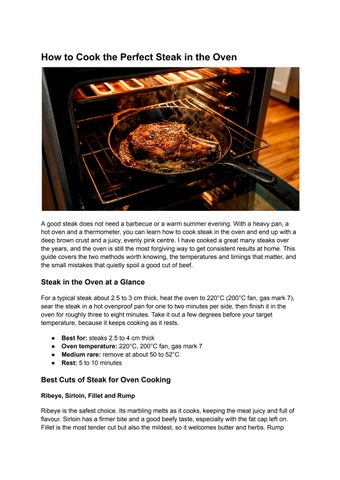
How to Cook the Perfect Steak in the Oven
A good steak does not need a barbecue or a warm summer evening. With a heavy pan, a hot oven and a thermometer, you can learn how to cook steak in the oven and end up with a deep brown crust and a juicy, evenly pink centre. I have cooked a great many steaks over the years, and the oven is still the most forgiving way to get consistent results at home. This guide covers the two methods worth knowing, the temperatures and timings that matter, and the small mistakes that quietly spoil a good cut of beef.
Steak in the Oven at a Glance For a typical steak about 2.5 to 3 cm thick, heat the oven to 220°C (200°C fan, gas mark 7), sear the steak in a hot ovenproof pan for one to two minutes per side, then finish it in the oven for roughly three to eight minutes. Take it out a few degrees before your target temperature, because it keeps cooking as it rests. ● ● ● ●
Best for: steaks 2.5 to 4 cm thick Oven temperature: 220°C, 200°C fan, gas mark 7 Medium rare: remove at about 50 to 52°C Rest: 5 to 10 minutes
Best Cuts of Steak for Oven Cooking Ribeye, Sirloin, Fillet and Rump Ribeye is the safest choice. Its marbling melts as it cooks, keeping the meat juicy and full of flavour. Sirloin has a firmer bite and a good beefy taste, especially with the fat cap left on. Fillet is the most tender cut but also the mildest, so it welcomes butter and herbs. Rump
costs less and has more chew, though the flavour is excellent as long as you do not overcook it. Why Thickness Matters Thickness matters more than the cut itself. Anything under 2.5 cm can overcook before the crust has a chance to form, so ask your butcher for thicker steaks if you can. For reverse searing, aim for 4 cm or more.
What You Need Before You Start Equipment An ovenproof pan is essential. Cast iron holds heat brilliantly and gives the best crust, though heavy stainless steel works well too. Avoid non-stick pans, which are not designed for the heat a proper sear needs. You will also want tongs and, for the reverse method, a wire rack set over a baking tray. Above all, buy an instant-read thermometer. Steak timings are only estimates, and a thermometer takes the guesswork out. Ingredients Keep it simple: coarse salt, black pepper, an oil with a high smoke point such as rapeseed or groundnut, a knob of butter, a couple of garlic cloves and a few sprigs of thyme or rosemary. If you are wondering whether olive oil will do the job, our guide on [can you use olive oil for steak] explains which types cope with the heat.
How to Prep Your Steak Bring It to Room Temperature Take the steak out of the fridge 20 to 30 minutes before cooking. It will not truly reach room temperature in that time, but the chill comes off, which helps it cook more evenly and brown better. Pat Dry and Season Surface moisture turns to steam and stops browning, so dry the steak thoroughly with kitchen paper. Season generously with salt on all sides, including the edges. If you have time, salt it an hour or more ahead and leave it uncovered in the fridge. This dry brining seasons the meat more deeply and dries the surface even further.
Method 1: Sear, Then Finish in the Oven This is the method I reach for on a weeknight. It suits steaks 2.5 to 4 cm thick and puts dinner on the table in about 20 minutes. Step-by-Step
1. Place your ovenproof pan in the oven and preheat it to 220°C (200°C fan, gas mark 7). 2. Rub the steak with a little oil and season it. Carefully move the hot pan onto the hob over a high heat. The handle will be scorching, so use an oven glove. 3. Lay the steak in the pan, away from you, and leave it alone for one to two minutes until deeply browned. Turn it and sear the other side. Use tongs to brown the edges and fat cap as well. 4. Add a knob of butter, crushed garlic, and herbs. Tilt the pan and spoon the foaming butter over the steak for about 30 seconds. 5. Transfer the pan to the oven. Start checking the temperature after three minutes, with the thermometer in the thickest part. 6. Remove the steak when it is a few degrees below your target and let it rest. Oven Time by Thickness
Steak thickness
Approximate oven time (medium rare, after searing)
2.5 cm
3 to 5 minutes
3.5 cm
5 to 8 minutes
5 cm
8 to 12 minutes
Treat these as guides. Your oven, your pan, and the steak's starting temperature all change the result, so trust the thermometer over the clock.
Method 2: Reverse Sear in the Oven Reverse searing flips the order. The steak cooks slowly in a low oven first and gets its crust at the end. It takes longer but is more forgiving, and it suits thick cuts of 4 cm or more. Step-by-Step Heat the oven to between 120 and 135°C (roughly 100 to 115°C fan). Season the steak, then set it on a wire rack over a baking tray so the hot air circulates all round. Cook until the centre is about 8°C below your target. For medium rare, that means around 46 to 48°C. A 4 cm steak often takes about 30 minutes, while a 5 cm steak can need 45 to 55 minutes, so begin checking early. Rest the steak for five to ten minutes. Meanwhile, heat your pan until it is almost smoking, add a little oil,l and sear for 45 to 60 seconds per side. A spoonful of butter and a quick baste in the final moments adds richness. Why Reverse Sear Gives a Better Crust The low heat dries the surface while the inside comes up to temperature gently. A dry surface browns quickly, so the sear is short and the grey band beneath the crust stays thin.
Bake vs Grill: Which Is Better for Steak?
Baking surrounds the steak with dry heat and needs little attention. Grilling, which American recipes call broiling, blasts heat from above. It cooks faster, but it can burn the top before the middle is ready, and you have to stand over it. If you have no ovenproof pan, a preheated tray under a hot grill will work, with the steak turned halfway through. For crust and control, I would still choose one of the pan-based methods.
Steak Doneness and Temperature Chart Internal Temperature Guide Measure in the thickest part of the steak, away from any bone. Doneness
Final temperature
°F
Rare
50 to 52°C
120 to 125°F
Medium rare
54 to 57°C
130 to 135°F
Medium
60 to 63°C
140 to 145°F
Medium well
65 to 68°C
150 to 155°F
Well done
71°C and above
160°F and above
Medium rare gives many people the best balance of tenderness and flavour, but the right steak cooking level is the one you enjoy. Carryover Cooking and Resting Heat Steak keeps heating for a few minutes after it leaves the pan or oven, and thicker steaks climb further. Pull sear-then-oven steaks about 3 to 5°C early. With reverse searing, stop the oven stage around 8°C early, since the sear adds heat too.
How to Rest, Slice and Serve Rest the steak for five to ten minutes on a warm board, loosely tented with foil. This gives the juices time to settle, so they stay in the meat instead of running across the board. Add a pat of butter on top if you like. Slice against the grain in thin strips, which shortens the muscle fibres and makes each bite more tender. Spoon over any pan juices. Chips, roast potatoes, a peppercorn sauce or a sharp green salad all suit it well.
Common Oven Steak Mistakes Overcrowding the Pan Too many steaks at once drops the pan temperature, and the meat steams and turns grey. Cook in batches or use two pans.
Skipping the Thermometer Judging by the clock or by pressing the meat is unreliable, especially in an unfamiliar oven. A thermometer costs little and saves an expensive cut. Cutting Too Soon Slicing straight out of the pan sends the juices onto the board. Patience for five minutes pays off. Using a Non-Stick Pan Non-stick coatings are not made for very high heat, and they rarely produce a proper crust. Stick with cast iron or stainless steel.
Final Thoughts Cooking steak in the oven comes down to three things: a hot pan, a dry surface, and a thermometer. Choose sear-then-oven when you want speed, reverse sear for thick cuts, and always give the meat time to rest. Once you have found the timings that suit your oven, you can start experimenting with different cuts, herb butters and pan sauces.
FAQs What temperature should I cook steak in the oven? For the sear-then-oven method, 220°C (200°C fan, gas mark 7). For reverse searing, use a low oven between 120 and 135°C. How long does steak take in the oven? It depends on thickness and doneness. A 2.5 to 3 cm steak usually needs three to eight minutes after searing, while a thick steak can take 30 minutes or more in a low oven. Use a thermometer to be sure. Do I need to sear steak before oven cooking? Not strictly, but oven heat alone leaves the steak pale. Searing before the oven, or after it with the reverse method, gives you the browned crust that makes steak taste like steak. Should I cover steak in the oven? No. Covering traps steam and softens the crust. Only tent it loosely with foil while it rests. Is it better to cook steak in the oven or on the hob? Thin steaks can cook entirely on the hob. For thicker steaks, finishing in the oven gives you more control over the centre and less risk of a burnt outside. Can I cook frozen steak in the oven?
It is possible with a low oven followed by a sear, but the results are less predictable. Thawing overnight in the fridge is the better option.