How to Make Gravy for Steak (Easy Pan Gravy in 15 Minutes)
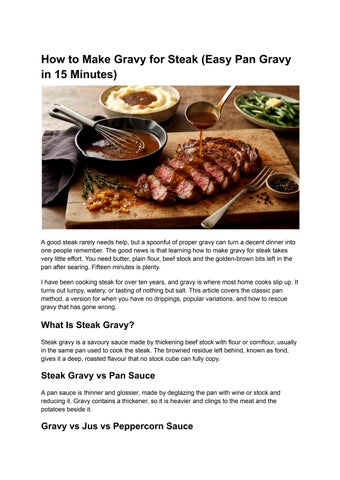
A good steak rarely needs help, but a spoonful of proper gravy can turn a decent dinner into one people remember. The good news is that learning how to make gravy for steak takes very little effort. You need butter, plain flour, beef stock and the golden-brown bits left in the pan after searing. Fifteen minutes is plenty. I have been cooking steak for over ten years, and gravy is where most home cooks slip up. It turns out lumpy, watery, or tasting of nothing but salt. This article covers the classic pan method, a version for when you have no drippings, popular variations, and how to rescue gravy that has gone wrong.
What Is Steak Gravy? Steak gravy is a savoury sauce made by thickening beef stock with flour or cornflour, usually in the same pan used to cook the steak. The browned residue left behind, known as fond, gives it a deep, roasted flavour that no stock cube can fully copy.
Steak Gravy vs Pan Sauce A pan sauce is thinner and glossier, made by deglazing the pan with wine or stock and reducing it. Gravy contains a thickener, so it is heavier and clings to the meat and the potatoes beside it.
Gravy vs Jus vs Peppercorn Sauce
Jus is a light, concentrated stock reduction with no flour. Peppercorn sauce is cream-based and finished with crushed peppercorns, often with a splash of brandy. Gravy sits between the two: richer than jus, less indulgent than a creamy peppercorn sauce.
Best Steak Cuts to Serve with Gravy Gravy suits almost any cut, but it does the most good on leaner or thinner steaks such as sirloin, rump or minute steak. Budget-friendly cuts like round steak also become far more enjoyable with a generous spoonful. Richer, well-marbled cuts like ribeye need less help, though plenty of people still love the pairing.
Ingredients You Need for Steak Gravy Core Ingredients This makes enough for four servings. ● ● ● ● ●
2 tablespoons steak drippings or unsalted butter 2 tablespoons plain flour 300 ml good-quality beef stock, warmed 1 teaspoon Worcestershire sauce Salt and freshly ground black pepper
Optional Flavour Boosters A crushed garlic clove, a few thyme leaves, half a teaspoon of Dijon mustard, a splash of soy sauce or a teaspoon of balsamic vinegar all add depth. Add them one at a time and taste as you go, because gravy can lose its balance quickly.
Best Stock for Steak Gravy Homemade stock gives the best flavour and body, but it is not always practical on a weeknight. A good ready-made liquid stock or bone broth works well. Stock cubes are fine too, though many are heavily salted, so hold back on seasoning until the end. A mix of beef and chicken cubes gives a balanced flavour, and the beef cube adds a richer brown colour.
Best Fat to Use Steak drippings are ideal because they carry the flavour of the meat. If you grilled or oven-cooked the steak and have none, unsalted butter is the next best choice.
How to Make Gravy for Steak (Step by Step) These steps assume you have just pan-fried your steak.
Step 1: Cook and Rest the Steak
Cook the steak to your preferred doneness, then move it to a warm plate. Resting matters, because cutting too early lets the juices run out. A thick ribeye needs longer than a thin sirloin, and knowing the right resting time for a steak makes a noticeable difference to how juicy the meat turns out. Leave the pan on the hob and do not wash it.
Step 2: Keep the Fond in the Pan
What Are Browned Bits and Why They Matter Those dark, sticky patches on the base of the pan are fond: caramelised proteins and sugars from the meat. They are concentrated flavour. Pour off all but about two tablespoons of fat, but leave every scrap of fond behind. If it looks black and burnt instead of deep brown, wipe the pan clean and start with butter, as burnt fond makes gravy bitter.
Step 3: Make the Roux Turn the heat to medium and whisk the flour into the fat. Cook for one to two minutes, until the mixture smells nutty and turns light golden. This removes the raw taste of the flour. For a darker gravy, go a little longer, but keep whisking so nothing catches.
Step 4: Deglaze the Pan Add a small splash of warm stock and scrape the base of the pan with a wooden spoon or whisk. The fond dissolves into the liquid, and the mixture will thicken almost at once.
Step 5: Whisk in the Stock Pour in the rest of the stock gradually, a splash at a time, whisking constantly. Adding it slowly and warm is the best protection against lumps. Stir in the Worcestershire sauce and any extra flavourings.
Step 6: Simmer Until Thickened Bring the gravy to a gentle simmer for three to five minutes. It is ready when it looks glossy and coats the back of a spoon. Run a finger across the spoon, and if the line holds, you are there.
Step 7: Season and Finish with Butter Taste before you season. Take the pan off the heat and whisk in a small knob of cold butter for gloss. Pour in any juices that have collected on the resting plate, then serve.
How to Make Steak Gravy Without Drippings Steak cooked on the grill or in the oven leaves little behind, but you can still make a very good gravy.
Using Butter and Stock
Melt two tablespoons of butter in a pan, add a finely chopped shallot if you have one, and follow steps three to seven. A little extra Worcestershire sauce and a dash of soy sauce help replace the savoury depth that drippings would have supplied.
Using a Cornflour Slurry (Gluten-Free Option) Heat 300 ml of stock with your flavourings until simmering. Mix one tablespoon of cornflour with two tablespoons of cold water until smooth, whisk it into the stock, and simmer for a minute or two. The result is glossier and slightly clearer than a flour-based gravy. Check the stock label if you are cooking for someone avoiding gluten, as some brands contain it.
Steak Gravy Variations Mushroom Gravy for Steak Sauté sliced chestnut mushrooms in butter until deeply golden and their moisture has cooked off, then add the flour and carry on as normal. A splash of red wine or a sprig of thyme works nicely here.
Onion Gravy for Steak Cook thinly sliced onions slowly for 15 to 20 minutes until soft and sweet. A pinch of sugar and a teaspoon of balsamic vinegar balance the richness.
Peppercorn Gravy Crush black peppercorns coarsely and toast them briefly in the pan before building the gravy on top. A spoonful of cream at the end softens the heat.
Red Wine Gravy Deglaze with about 100 ml of red wine and let it reduce by half before adding the stock. Use a wine you would happily drink, since cooking concentrates whatever is in the bottle.
Creamy Garlic Gravy Cook two crushed garlic cloves for 30 seconds before adding the flour, then stir in two to three tablespoons of double cream at the end. Avoid boiling the gravy once the cream is in.
How to Thicken Steak Gravy Method
Texture
Best for
Flour roux
Rich, velvety, opaque
Classic pan gravy
Cornflour slurry
Glossy, lighter
Gluten-free cooking, last-minute fixes
Reduction
Concentrated, thinner
Jus-style sauces, small batches
A roux gives the most traditional result and helps balance the richness of the meat. Cornflour thickens faster and lets you rescue a thin gravy at the last minute. Reduction only works with a good stock, because boiling it down concentrates the salt as well as the flavour.
Common Steak Gravy Problems and How to Fix Them Lumpy Gravy Pour it through a fine sieve or blitz it with a stick blender for a few seconds. Next time, add the stock more slowly.
Gravy Too Thin Simmer for a few more minutes, or whisk in a cornflour slurry. Give it a minute to thicken before adding more.
Gravy Too Thick Whisk in warm stock, a splash at a time, until it flows easily off the spoon.
Bland Gravy Blandness usually needs acidity or savoury depth more than salt. A dash of Worcestershire sauce, soy sauce or a few drops of vinegar will wake it up.
Too Salty Gravy Loosen it with unsalted stock or water, and add a small splash of cream or a pinch of sugar to soften the edge.
Gravy Not Brown Enough Cook the roux a little longer, or add a few drops of soy sauce or a beef stock cube.
What to Serve with Steak and Gravy Mashed potatoes are the obvious partner, but roast potatoes, buttered green beans, tenderstem broccoli, honey-glazed carrots and Yorkshire puddings all soak up gravy well.
Storing and Reheating Steak Gravy Fridge and Freezer Storage
Let the gravy cool quickly, then keep it in an airtight container in the fridge for up to two days. It freezes well for up to three months.
How to Reheat Without Splitting Warm it gently in a pan over a low heat, stirring often. If it has thickened in the fridge, loosen it with a splash of stock or water. Make sure it is steaming hot all the way through, but avoid a hard boil, especially if it contains cream.
Expert Tips for the Best Steak Gravy ● Warm the stock before adding it. Cold liquid hitting a hot roux is the main cause of lumps. ● Season at the end. Stock reduces and concentrates, so early salt can leave the gravy too sharp. ● Keep whisking until the first splash of stock is fully absorbed. ● Let the finished gravy sit for two minutes off the heat. It thickens slightly as it cools and the flavours settle.
Conclusion The secret to good steak gravy is simple: keep the fond, cook the flour properly, and add warm stock slowly. Once you have the basic method, you can adapt it with mushrooms, onions, red wine or peppercorns to suit whatever is on the plate. Get those few points right and you will never reach for a packet mix again.
FAQs Can you make gravy from steak drippings? Yes, and it is the best way to do it. Drippings and fond carry the flavour of the steak, so the gravy tastes like it belongs with the meat.
What is the best thickener for steak gravy? Plain flour, cooked into a roux, gives the classic result. Cornflour is the best alternative if you need a gluten-free option.
How do you make steak gravy without flour? Use a cornflour slurry, or reduce a good-quality stock until it becomes syrupy. The reduced version will be thinner and closer to a jus.
Can I make steak gravy ahead of time? Yes. Make it up to two days in advance, store it in the fridge, and reheat gently with a splash of stock to loosen it.
What can I use instead of beef stock? Chicken stock works well, as does mushroom stock or water mixed with a good stock cube. The flavour will be lighter, so add a little Worcestershire or soy sauce to bring back depth.
Why is my steak gravy not thickening? It has usually not simmered long enough, or there is too much liquid for the amount of flour. Simmer it for a few more minutes, or add a cornflour slurry.
Is gravy good on ribeye or sirloin? Both work. Sirloin benefits most because it is leaner, while a richer ribeye usually needs a lighter spoonful.